AB 2453: Air pollution: schools.
- Session Year: 2017-2018
- House: Assembly
- Latest Version Date: 2018-09-23
(1)Existing law, the Leroy F. Greene School Facilities Act of 1998, requires the State Allocation Board to allocate to applicant school districts prescribed per-unhoused-pupil state funding for the construction and modernization of school facilities, including hardship funding, and supplemental funding for site development and acquisition.
This bill would authorize a grant for modernization under the act to be used to limit pupil exposure to harmful air pollutants by updating air filtration systems and would specify that this is declaratory of existing law.
(2)The Air Toxics Hot Spots Information and Assessment Act of 1987 requires the State Air Resources Board to compile a list of substances that present a chronic or acute threat to public health when present in the ambient air, subjects certain facilities to the act according to a schedule, and requires the operator of a subject facility to prepare and submit to an air pollution control or air quality management district a proposed comprehensive emissions inventory plan, for approval by the air district.
The act also requires the state board to prepare a statewide strategy to reduce emissions of toxic air contaminants and criteria air pollutants in communities identified as being affected by a high cumulative exposure burden, to select locations around the state for the preparation of community emissions reduction programs, and to provide grants to community-based organizations for technical assistance and to support community participation in the programs. The act requires an air district containing a selected location, within one year of the state boards selection, to adopt a community emissions reduction program.
This bill would authorize schools and school districts located in communities with a high cumulative exposure burden, as identified as part of the statewide strategy to reduce emissions of toxic air contaminants and criteria air pollutants, to work with air districts to identify school sites in need of air quality improvements and to be eligible for a grant as part of a community emissions reduction program to implement air quality mitigation efforts, as specified.
(1)Existing law, the Leroy F. Greene School Facilities Act of 1998, requires the State Allocation Board to allocate to applicant school districts prescribed per-unhoused-pupil state funding for the construction and modernization of school facilities, including hardship funding, and supplemental funding for site development and acquisition.
This bill would authorize a grant for modernization under the act to be used to limit pupil exposure to harmful air pollutants by updating air filtration systems and would specify that this is declaratory of existing law.
(2)The Air Toxics Hot Spots Information and Assessment Act of 1987 requires the State Air Resources Board to compile a list of substances that present a chronic or acute threat to public health when present in the ambient air, subjects certain facilities to the act according to a schedule, and requires the operator of a subject facility to prepare and submit to an air pollution control or air quality management district a proposed comprehensive emissions inventory plan, for approval by the air district.
The act also requires the state board to prepare a statewide strategy to reduce emissions of toxic air contaminants and criteria air pollutants in communities identified as being affected by a high cumulative exposure burden, to select locations around the state for the preparation of community emissions reduction programs, and to provide grants to community-based organizations for technical assistance and to support community participation in the programs. The act requires an air district containing a selected location, within one year of the state boards selection, to adopt a community emissions reduction program.
This bill would authorize schools and school districts located in communities with a high cumulative exposure burden, as identified as part of the statewide strategy to reduce emissions of toxic air contaminants and criteria air pollutants, to work with air districts to identify school sites in need of air quality improvements and to be eligible for a grant as part of a community emissions reduction program to implement air quality mitigation efforts. efforts, as specified.
(1)Existing law, the Leroy F. Greene School Facilities Act of 1998, requires the State Allocation Board to allocate to applicant school districts prescribed per-unhoused-pupil state funding for the construction and modernization of school facilities, including hardship funding, and supplemental funding for site development and acquisition.
This bill would authorize a grant for modernization under the act to be used to limit pupil exposure to harmful air pollutants by updating air filtration systems and would specify that this is declaratory of existing law.
(2)The Air Toxics Hot Spots Information and Assessment Act of 1987 requires the State Air Resources Board to compile a list of substances that present a chronic or acute threat to public health when present in the ambient air, subjects certain facilities to the act according to a schedule, and requires the operator of a subject facility to prepare and submit to an air pollution control or air quality management district a proposed comprehensive emissions inventory plan, for approval by the air district.
The act also requires the state board to prepare a statewide strategy to reduce emissions of toxic air contaminants and criteria air pollutants in communities identified as being affected by a high cumulative exposure burden, to select locations around the state for the preparation of community emissions reduction programs, and to provide grants to community-based organizations for technical assistance and to support community participation in the programs. The act requires an air district containing a selected location, within one year of the state boards selection, to adopt a community emissions reduction program.
This bill would authorize schools and school districts located in communities with a high cumulative air pollution exposure burden, as identified as part of the statewide strategy to reduce emissions of toxic air contaminants and criteria air pollutants, to work with air districts to identify school sites for in need of air quality adaptation efforts improvements and to be eligible for a grant as part of a community emissions reduction program to implement air quality mitigation efforts.
(1) Existing law, the Leroy F. Greene School Facilities Act of 1998, requires the State Allocation Board to allocate to applicant school districts prescribed per-unhoused-pupil state funding for the construction and modernization of school facilities, including hardship funding, and supplemental funding for site development and acquisition.
This bill would authorize a grant for modernization under the act to be used to limit pupil exposure to harmful air pollutants by updating air filtration systems and would specify that this is declaratory of existing law.
(2)The Air Toxics Hot Spots Information and Assessment Act of 1987 requires the State Air Resources Board to compile a list of substances that present a chronic or acute threat to public health when present in the ambient air, subjects certain facilities to the act according to a schedule, and requires the operator of a subject facility to prepare and submit to an air pollution control or air quality management district a proposed comprehensive emissions inventory plan, for approval by the air district.
The act also requires the state board to prepare a statewide strategy to reduce emissions of toxic air contaminants and criteria air pollutants in communities identified as being affected by a high cumulative exposure burden, to select locations around the state for the preparation of community emissions reduction programs, and to provide grants to community-based organizations for technical assistance and to support community participation in the programs. The act requires an air district containing a selected location, within one year of the state boards selection, to adopt a community emissions reduction program.
This bill would authorize schools and school districts located in communities with facilities a high cumulative air pollution exposure burden, as identified under the act as a source of toxic air contaminants as part of the statewide strategy to reduce emissions of toxic air contaminants and criteria air pollutants, to work with air districts to identify school sites for air quality adaptation efforts. The bill also would authorize schools located near a facility designated by an air district as a high priority category efforts and to be eligible for a grant as part of a community emissions reduction program to implement air quality mitigation efforts.
(1) Existing law, the Leroy F. Greene School Facilities Act of 1998, requires the State Allocation Board to allocate to applicant school districts prescribed per-unhoused-pupil state funding for the construction and modernization of school facilities, including hardship funding, and supplemental funding for site development and acquisition.
This bill would authorize a grant for modernization under the act to be used to limit pupil exposure to harmful air pollutants by updating air filtration systems. systems and would specify that this is declaratory of existing law.
(2)The Air Toxics Hot Spots Information and Assessment Act of 1987 requires the State Air Resources Board to compile a list of substances that present a chronic or acute threat to public health when present in the ambient air, subjects certain facilities to the act according to a schedule, and requires the operator of a subject facility to prepare and submit to an air pollution control or air quality management district a proposed comprehensive emissions inventory plan, for approval by the air district.
The act also requires the state board to select locations around the state for the preparation of community emissions reduction programs, and to provide grants to community-based organizations for technical assistance and to support community participation in the programs. The act requires an air district containing a selected location, within one year of the state boards selection, to adopt a community emissions reduction program.
This bill would authorize schools located in communities with facilities identified under the act as a source of toxic air contaminants to work with air districts to identify school sites for air quality adaptation efforts. The bill also would authorize schools located near a facility designated by an air district as a high priority category to be eligible for a grant as part of a community emissions reduction program to implement air quality mitigation efforts.
(1) Existing law, the Leroy F. Greene School Facilities Act of 1998, requires the State Allocation Board to allocate to applicant school districts prescribed per-unhoused-pupil state funding for the construction and modernization of school facilities, including hardship funding, and supplemental funding for site development and acquisition.
This bill would authorize a grant for modernization under the act to be used to limit pupil exposure to harmful air pollutants by updating air filtration systems.
(2)The Air Toxics Hot Spots Information and Assessment Act of 1987 requires the State Air Resources Board to compile a list of substances that present a chronic or acute threat to public health when present in the ambient air, subjects certain facilities to the act according to a schedule, and requires the operator of a subject facility to prepare and submit to an air pollution control or air quality management district a proposed comprehensive emissions inventory plan, for approval by the air district.
The act also requires the state board to select locations around the state for the preparation of community emissions reduction programs, and to provide grants to community-based organizations for technical assistance and to support community participation in the programs. The act requires an air district containing a selected location, within one year of the state boards selection, to adopt a community emissions reduction program.
This bill would authorize schools located in communities with facilities identified under the act as a source of toxic air contaminants to work with air districts to identify school sites for air quality adaptation efforts. The bill also would authorize schools located near a facility designated by an air district as a high priority category to be eligible for a grant as part of a community emissions reduction program to implement air quality mitigation efforts.
Existing law imposes various limitations on emissions of air contaminants for the control of air pollution from vehicular and nonvehicular sources. Existing law generally designates the State Air Resources Board as the state agency with the primary responsibility for the control of vehicular air pollution, and air pollution control and air quality management districts with the primary responsibility for the control of air pollution from all sources other than vehicular sources.This bill would state the intent of the Legislature to enact legislation that enacts the School Climate and Pollution Resilience Act of 2018 that, among other things, would direct school districts to work with air districts to develop and implement comprehensive plans for updating school infrastructure to limit pupil air pollution exposure.Existing law imposes various limitations on emissions of air contaminants for the control of air pollution from vehicular and nonvehicular sources. Existing law generally designates the State Air Resources Board as the state agency with the primary responsibility for the control of vehicular air pollution, and air pollution control and air quality management districts with the primary responsibility for the control of air pollution from all sources other than vehicular sources.
This bill would state the intent of the Legislature to enact legislation that enacts the School Climate and Pollution Resilience Act of 2018 that, among other things, would direct school districts to work with air districts to develop and implement comprehensive plans for updating school infrastructure to limit pupil air pollution exposure.
(a)A modernization apportionment may be used for an improvement to extend the useful life of, or to enhance the physical environment of, the school. The improvement may only include the cost of design, engineering, testing, inspection, plan checking, construction management, demolition, construction, the replacement of portable classrooms, necessary utility costs, utility connection and other fees, the purchase and installation of air-conditioning equipment and insulation materials and related costs, furniture and equipment, including telecommunication equipment to increase school security, fire safety improvements, playground safety improvements, the identification, assessment, or abatement of hazardous asbestos, seismic safety improvements, and the upgrading of electrical systems or the wiring or cabling of classrooms in order to accommodate educational technology. A modernization grant may not be used for costs associated with acquisition and development of real property or for routine maintenance and repair.
(b)A modernization apportionment may also be used for the cost of designs and materials that promote the efficient use of energy and water, the maximum use of natural lighting and indoor air quality, the use of recycled materials and materials that emit a minimum of toxic substances, the use of acoustics conducive to teaching and learning, and other characteristics of high-performance schools.
(c)(1)A modernization apportionment may be used to limit pupil exposure to harmful air pollutants by updating air filtration systems.
(2)(A)This subdivision is declaratory of existing law.
(B)It is the intent of the Legislature in enacting the act amending this section in the 201718 Regular Session to encourage school districts to add air filtration systems to applications for modernization apportionments when air pollution occasionally or regularly exceeds levels known to be harmful to public health.
SEC. 2.Section 44391.3 is added to the Health and Safety Code, to read:44391.3.A school or school district located in a community with a high cumulative exposure burden, as identified pursuant to Section 44391.2, may do both of the following:
(a)Work with districts to identify school sites in need of air quality improvements.
(b)Be eligible for a grant as part of a community emissions reduction program, adopted pursuant to Section 44391.2, to implement air quality mitigation efforts, including, but not limited to, either of the following:
(1)Air filter upgrades or installations.
(2)Vegetation buffer planting.
(c)This section shall be implemented only if an appropriation for this purpose is made in the annual Budget Act or other statute.
(a)A modernization apportionment may be used for an improvement to extend the useful life of, or to enhance the physical environment of, the school. The improvement may only include the cost of design, engineering, testing, inspection, plan checking, construction management, demolition, construction, the replacement of portable classrooms, necessary utility costs, utility connection and other fees, the purchase and installation of air-conditioning equipment and insulation materials and related costs, furniture and equipment, including telecommunication equipment to increase school security, fire safety improvements, playground safety improvements, the identification, assessment, or abatement of hazardous asbestos, seismic safety improvements, and the upgrading of electrical systems or the wiring or cabling of classrooms in order to accommodate educational technology. A modernization grant may not be used for costs associated with acquisition and development of real property or for routine maintenance and repair.
(b)A modernization apportionment may also be used for the cost of designs and materials that promote the efficient use of energy and water, the maximum use of natural lighting and indoor air quality, the use of recycled materials and materials that emit a minimum of toxic substances, the use of acoustics conducive to teaching and learning, and other characteristics of high-performance schools.
(c)(1)A modernization apportionment may be used to limit pupil exposure to harmful air pollutants by updating air filtration systems.
(2)(A)This subdivision is declaratory of existing law.
(B)It is the intent of the Legislature in enacting the act amending this section in the 201718 Regular Session to encourage school districts to add air filtration systems to applications for modernization apportionments when air pollution occasionally or regularly exceeds levels known to be harmful to public health.
SEC. 2.Section 44391.3 is added to the Health and Safety Code, to read:44391.3.A school or school district located in a community with a high cumulative air pollution exposure burden, as identified pursuant to Section 44391.2, may do both of the following:
(a)Work with districts to identify school sites for in need of air quality adaptation efforts. improvements.
(b)Be eligible for a grant as part of a community emissions reduction program, adopted pursuant to Section 44391.2, to implement air quality mitigation efforts, including, but not limited to, either of the following:
(1)Air filter upgrades or installations.
(2)Vegetation buffer planting.
(a)A modernization apportionment may be used for an improvement to extend the useful life of, or to enhance the physical environment of, the school. The improvement may only include the cost of design, engineering, testing, inspection, plan checking, construction management, demolition, construction, the replacement of portable classrooms, necessary utility costs, utility connection and other fees, the purchase and installation of air-conditioning equipment and insulation materials and related costs, furniture and equipment, including telecommunication equipment to increase school security, fire safety improvements, playground safety improvements, the identification, assessment, or abatement of hazardous asbestos, seismic safety improvements, and the upgrading of electrical systems or the wiring or cabling of classrooms in order to accommodate educational technology. A modernization grant may not be used for costs associated with acquisition and development of real property or for routine maintenance and repair.
(b)A modernization apportionment may also be used for the cost of designs and materials that promote the efficient use of energy and water, the maximum use of natural lighting and indoor air quality, the use of recycled materials and materials that emit a minimum of toxic substances, the use of acoustics conducive to teaching and learning, and other characteristics of high-performance schools.
(c)(1)A modernization apportionment may be used to limit pupil exposure to harmful air pollutants by updating air filtration systems.
(2)This subdivision is declaratory of existing law.
SEC. 2.Section 44391.3 is added to the Health and Safety Code, to read:44391.3.(a)Schools located in communities with facilities identified pursuant to Section 44391.2 may work with districts to identify school sites for air quality adaptation efforts.(b)Schools located near a facility designated by a district as a high priority category may be eligible for a grant as part of a community emissions reduction program, adopted pursuant to Section 44391.2, to implement air quality mitigation efforts, including, but not limited to, either of the following:A school or school district located in a community with a high cumulative air pollution exposure burden, as identified pursuant to Section 44391.2, may do both of the following:
(a)Work with districts to identify school sites for air quality adaptation efforts.
(b)Be eligible for a grant as part of a community emissions reduction program, adopted pursuant to Section 44391.2, to implement air quality mitigation efforts, including, but not limited to, either of the following:
(1)Air filter upgrades or installations.
(2)Vegetation buffer planting.
REVISIONS: HeadingLine 2.(a)A modernization apportionment may be used for an improvement to extend the useful life of, or to enhance the physical environment of, the school. The improvement may only include the cost of design, engineering, testing, inspection, plan checking, construction management, demolition, construction, the replacement of portable classrooms, necessary utility costs, utility connection and other fees, the purchase and installation of air-conditioning equipment and insulation materials and related costs, furniture and equipment, including telecommunication equipment to increase school security, fire safety improvements, playground safety improvements, the identification, assessment, or abatement of hazardous asbestos, seismic safety improvements, and the upgrading of electrical systems or the wiring or cabling of classrooms in order to accommodate educational technology. A modernization grant may not be used for costs associated with acquisition and development of real property or for routine maintenance and repair.
(b)A modernization apportionment may also be used for the cost of designs and materials that promote the efficient use of energy and water, the maximum use of natural lighting and indoor air quality, the use of recycled materials and materials that emit a minimum of toxic substances, the use of acoustics conducive to teaching and learning, and other characteristics of high-performance schools.
(c)(1)A modernization apportionment may be used to limit pupil exposure to harmful air pollutants by updating air filtration systems.
(2)This subdivision is declaratory of existing law.
SEC. 2.Section 44391.3 is added to the Health and Safety Code, to read:44391.3.(a)Schools located in communities with facilities identified pursuant to Section 44391.2 may work with districts to identify school sites for air quality adaptation efforts.
(b)Schools located near a facility designated by a district as a high priority category may be eligible for a grant as part of a community emissions reduction program, adopted pursuant to Section 44391.2, to implement air quality mitigation efforts, including, but not limited to, either of the following:
(1)Air filter upgrades or installations.
(2)Vegetation buffer planting.
(a)A modernization apportionment may be used for an improvement to extend the useful life of, or to enhance the physical environment of, the school. The improvement may only include the cost of design, engineering, testing, inspection, plan checking, construction management, demolition, construction, the replacement of portable classrooms, necessary utility costs, utility connection and other fees, the purchase and installation of air-conditioning equipment and insulation materials and related costs, furniture and equipment, including telecommunication equipment to increase school security, fire safety improvements, playground safety improvements, the identification, assessment, or abatement of hazardous asbestos, seismic safety improvements, and the upgrading of electrical systems or the wiring or cabling of classrooms in order to accommodate educational technology. A modernization grant may not be used for costs associated with acquisition and development of real property or for routine maintenance and repair.
(b)A modernization apportionment may also be used for the cost of designs and materials that promote the efficient use of energy and water, the maximum use of natural lighting and indoor air quality, the use of recycled materials and materials that emit a minimum of toxic substances, the use of acoustics conducive to teaching and learning, and other characteristics of high-performance schools.
(c)A modernization apportionment may be used to limit pupil exposure to harmful air pollutants by updating air filtration systems.
SEC. 2.Section 44391.3 is added to the Health and Safety Code, to read:44391.3.(a)Schools located in communities with facilities identified pursuant to Section 44391.2 may work with districts to identify school sites for air quality adaptation efforts.
(b)Schools located near a facility designated by a district as a high priority category may be eligible for a grant as part of a community emissions reduction program, adopted pursuant to Section 44391.2, to implement air quality mitigation efforts, including, but not limited to, either of the following:
(1)Air filter upgrades or installations.
(2)Vegetation buffer planting.
SECTION 1.It is the intent of the Legislature to enact legislation that enacts the School Climate and Pollution Resilience Act of 2018 to do all of the following:(a)Directs school districts to develop and implement a plan for updating school infrastructure to mitigate the negative impacts of air quality and reduce diesel emissions on school campuses in disadvantaged communities, as identified pursuant to Section 39711 of the Health and Safety Code.(b)Directs school districts to compile a list of existing schools in disadvantaged communities that are situated within 1,000 feet of freeways and other major contributors to air pollution in the community, such as oil refineries and heavy industry.(c)Directs school districts to work with air pollution control and air quality management districts to develop and implement comprehensive plans for updating school infrastructure to limit pupil air pollution exposure, with interventions including, but not limited to, funding for campus vegetated buffer planting, HVAC air filtration system updates, and schoolbus electrification.(d)Allocates, beginning in the 201819 fiscal year, 10 percent of the moneys collected annually pursuant to Proposition 39, approved by the voters at November 6, 2012, statewide general election, toward air pollution mitigation efforts on school campuses in disadvantaged communities.It is the intent of the Legislature to enact legislation that enacts the School Climate and Pollution Resilience Act of 2018 to do all of the following:
(a)Directs school districts to develop and implement a plan for updating school infrastructure to mitigate the negative impacts of air quality and reduce diesel emissions on school campuses in disadvantaged communities, as identified pursuant to Section 39711 of the Health and Safety Code.
(b)Directs school districts to compile a list of existing schools in disadvantaged communities that are situated within 1,000 feet of freeways and other major contributors to air pollution in the community, such as oil refineries and heavy industry.
(c)Directs school districts to work with air pollution control and air quality management districts to develop and implement comprehensive plans for updating school infrastructure to limit pupil air pollution exposure, with interventions including, but not limited to, funding for campus vegetated buffer planting, HVAC air filtration system updates, and schoolbus electrification.
(d)Allocates, beginning in the 201819 fiscal year, 10 percent of the moneys collected annually pursuant to Proposition 39, approved by the voters at November 6, 2012, statewide general election, toward air pollution mitigation efforts on school campuses in disadvantaged communities.
|
Date
|
Status
|
|---|---|
| Sep 23, 2018 | Chaptered by Secretary of State - Chapter 714, Statutes of 2018. |
| Sep 23, 2018 | Approved by the Governor. |
| Sep 7, 2018 | Enrolled and presented to the Governor at 2:30 p.m. |
| Aug 29, 2018 | Senate amendments concurred in. To Engrossing and Enrolling. |
| Aug 27, 2018 | In Assembly. Concurrence in Senate amendments pending. May be considered on or after August 29 pursuant to Assembly Rule 77. |
| Aug 27, 2018 | Read third time. Passed. Ordered to the Assembly. |
| Aug 20, 2018 | Read second time. Ordered to third reading. |
| Aug 17, 2018 | From committee: Amend, and do pass as amended. (Ayes 7. Noes 0.) (August 16). |
| Aug 6, 2018 | In committee: Referred to APPR. suspense file. |
| Jun 25, 2018 | Read second time and amended. Re-referred to Com. on APPR. |
| Jun 21, 2018 | From committee: Amend, and do pass as amended and re-refer to Com. on APPR. with recommendation: To Consent Calendar. (Ayes 7. Noes 0.) (June 20). |
| Jun 13, 2018 | From committee: Do pass and re-refer to Com. on EQ. with recommendation: To Consent Calendar. (Ayes 7. Noes 0.) (June 13). Re-referred to Com. on EQ. |
| Jun 7, 2018 | Referred to Coms. on ED. and EQ. |
| May 31, 2018 | In Senate. Read first time. To Com. on RLS. for assignment. |
| May 30, 2018 | Read third time. Passed. Ordered to the Senate. |
| May 25, 2018 | Coauthors revised. |
| May 16, 2018 | In committee: Set, first hearing. Referred to APPR. suspense file. |
| Apr 30, 2018 | Re-referred to Com. on APPR. |
| Apr 26, 2018 | Read second time and amended. |
| Apr 25, 2018 | From committee: Amend, and do pass as amended and re-refer to Com. on APPR. (Ayes 10. Noes 0.) (April 23). |
| Apr 17, 2018 | Re-referred to Com. on NAT. RES. |
| Apr 16, 2018 | Read second time and amended. |
| Apr 12, 2018 | From committee: Amend, and do pass as amended and re-refer to Com. on NAT. RES. with recommendation: To Consent Calendar. (Ayes 7. Noes 0.) (April 11). |
| Apr 9, 2018 | Assembly Rule 56 suspended. |
| Mar 19, 2018 | Re-referred to Com. on ED. |
| Mar 15, 2018 | Referred to Coms. on ED. and NAT. RES. |
| Feb 15, 2018 | From printer. May be heard in committee March 17. |
| Feb 14, 2018 | Read first time. To print. |
|
Date
|
Description
|
Location
|
Votes
|
|
|---|---|---|---|---|
| Aug 29, 2018 | AB 2453 GARCIA, E. Concurrence in Senate Amendments | Assembly Floor |
Passed |
|
| Aug 27, 2018 | Assembly 3rd Reading AB2453 Eduardo Garcia et al. By Lara | Senate Floor |
Passed |
|
| Aug 16, 2018 | Do pass as amended | Senate Standing Committee on Appropriations |
Passed |
|
| Aug 6, 2018 | Placed on suspense file | Senate Standing Committee on Appropriations |
Passed |
|
| Jun 20, 2018 | Do pass as amended, but first amend, and re-refer to the Committee on [Appropriations] with the recommendation: To Consent Calendar | Senate Standing Committee on Environmental Quality |
Passed |
|
| Jun 13, 2018 | Do pass, but first be re-referred to the Committee on [Environmental Quality] with the recommendation: To Consent Calendar | Senate Standing Committee on Education |
Passed |
|
| May 30, 2018 | AB 2453 GARCIA, E. Assembly Third Reading | Assembly Floor |
Passed |
|
| May 25, 2018 | Do pass. | Assembly Standing Committee on Appropriations |
Passed |
|
| Apr 23, 2018 | Do pass as amended and be re-referred to the Committee on [Appropriations] | Assembly Standing Committee on Natural Resources |
Passed |
|
| Apr 11, 2018 | Do pass as amended, and be re-referred to the Committee on [Natural Resources] with recommendation: To Consent Calendar | Assembly Standing Committee on Education |
Passed |
This list shows positions taken on this bill by organizations on the date displayed, which is linked to the original source.
Positions by individuals are not included.
|
Organization
|
Position
|
Date
|
|---|---|---|
| American Academy of Pediatrics | ** Support | Aug 19, 2018 |
| California School Employees Association | ** Support | Aug 19, 2018 |
| Comite Civico del Valle, Inc. | ** Support | Aug 19, 2018 |
| Environmental Defense Fund | ** Support | Aug 19, 2018 |
| Sierra Club California | * Support | Apr 23, 2018 |
CONCURRENCE IN SENATE AMENDMENTS
CSA1 Bill Id:AB 2453
Author:(Eduardo Garcia)
As Amended Ver:August 17, 2018
Majority vote
ASSEMBLY: | 77-0 | (May 30, 2018) | SENATE: | 39-0 | (August 27, 2018) |
Original Committee Reference: ED.
SUMMARY: Authorizes a modernization apportionment from state school facilities bond funds to be used for air filtration systems. Authorizes a school or school district located in a community with a high cumulative exposure burden, as specified, to be eligible for grants as part of a community emissions reduction program to implement air quality mitigation efforts. Specifically, this bill:
- Specifies that a modernization apportionment may be used to limit pupil exposure to harmful air pollutants by updating air filtration systems.
- Authorizes a school or school district located in a community with schools located in communities high cumulative exposure burden to do both of the following:
- Work with an air quality management district to identify school sites in need air quality improvements.
- Be eligible for a grant as part of a community emissions reduction program (CERP) to implement air quality mitigation efforts, including, but not limited to, either of the following:
- Air filter upgrades or installations.
- Vegetation buffer planting.
The Senate amendments:
- Express the intent of the Legislature to encourage school districts to add air filtration systems to applications for modernization apportionments when air pollution occasionally or regularly exceeds levels known to be harmful to public health.
- Specify that the provision authorizing a school district to be eligible for a CERP grant shall be implemented only if an appropriation for this purpose is made in the annual Budget Act or other statute.
FISCAL EFFECT: According to the Senate Appropriations Committee:
- While the bill's provisions would be contingent upon an appropriation, it could result in General Fund or special fund cost pressure for air filter installations and upgrades and vegetation buffer plantings as part of a community emissions reduction program. A precise amount is unknown, but the cost to fund the program could range in the hundreds of thousands to low millions of dollars.
- This bill could also result in similar cost pressure on existing or future bond funds used for school modernization projects under the School Facilities Program.
- While the bill does not specify the administering agency, to the extent that it is the California Air Resources Board (ARB), there could be additional unknown costs to administer the proposed grant program (special fund). Additionally, if AB 32 cap-and-trade auction revenues are used as the program's funding source, there would likely be additional workload to the ARB even if it is not the administering agency.
COMMENTS: Air pollution, particularly ozone and particulate pollution, poses significant risks to human health including premature death, reproductive harm, asthma, lung cancer, cardiovascular disease, and more. Children are also generally more active than adults and are outside for more hours per day on average, increasing their exposure to air pollution. The Southern California Children's Health study tracked 1,759 children between the ages of 10 and 18 from 1993 to 2001 and found that the decrease in lung function associated with growing up in polluted areas was similar to that of children raised in households with parents who smoked. A follow-up study of 863 children in the same area between the years of 2007 and 2011, when air quality had significantly improved compared to the period from 1993 to 2001, found that the population studied had significantly greater lung function than the first study cohort, demonstrating the impact that air quality improvements can have on human health.
Pollution exposure also increases the probability that children will develop other respiratory symptoms or suffer from impaired development of their nervous, endocrine, and immune systems. These health risks are often disproportionately concentrated in low-income areas and communities of color. A 2015 study on school campuses in the Sacramento region found that increased student exposure to emissions from road traffic was positively correlated with the percentage of the student population that was non-white or low income.
The author states, "Children of color and low-income children are more likely to be attending a school with high exposure to pollution. There are currently no statewide programs designed to reduce exposure to air pollutants at existing school sites. In addition to school siting guidance to reduce pollution exposure (SB 352 (Escutia), Chapter 668, Statutes of 2003), studies have examined the effectiveness of interventions for existing schools sited near a major source of pollution. The United States Environmental Protection Agency has identified several best practices, including indoor air filtration and vegetative barriers, and the South Coast Air Quality Management District has studied specific air filters to determine the best available technologies for reducing air pollutants in classrooms."
This bill has two parts in an effort to provide schools and school districts with resources to improve air quality at schools.
School facilities/school bond funding. The construction and modernization of public kindergarten through grade 12 (K-12) facilities are funded by a combination of state and local general obligation bonds, developer's fees and local assessments such as Mello Roos community facilities districts. California voters have approved $42.4 billion in state general obligation bonds since 1998 for the School Facility Program (SFP), including $7 billion for K-12 and $2 billion for California Community Colleges facilities approved by voters in November 2016 through Proposition 51.
The SFP provides a per-pupil grant for the construction of new schools that requires a 50% local match. Modernization funds are provided for the rehabilitation of permanent buildings that are at least 25 years old and portable buildings that are at least 20 years old and require a 40% local match. Among other things, modernization funds can be used for efficiency and environmental improvement projects, including improving indoor air quality.
To be eligible for state school facilities bond funds, school districts must receive approval from the California Department of Education for a review of the site selection and to ensure that the facility will meet the education plan of the school; the Division of State Architect, to ensure structural safety, including seismic safety; and the Office of Public School Construction (OPSC), for funding eligibility. Existing law also prescribes parameters for siting of a school, including limiting a school from being located on land that was previously a hazardous waste disposal site, that contains pipelines that carry hazardous substances, or that is near a freeway and other busy traffic corridors and railyards that have the potential to expose students and school staff to hazardous air emissions.
This bill expands the use of modernization funds to include air filtration systems. The 2006 state school facility bond, Proposition 1D, included $100 million to encourage school districts to incorporate high performance strategies in the design of school facilities. Those funds are exhausted; however, language was incorporated in the funding of modernization projects to include "cost of designs and materials that promote the efficient use of energy and water, the maximum use of natural lighting and indoor air quality, the use of recycled materials and materials that emit a minimum of toxic substances, the use of acoustics conducive to teaching and learning, and other characteristics of high-performance schools." According to the OPSC, which administers the SFP, an air filtration system is an authorized use of modernization funds pursuant to this provision.
Proposition 51, approved by voters in November 2016, provides $3 billion for modernization projects. The initiative specifies that the funds are to be used for the purposes of the SFP as it read on January 1, 2015. While this bill is consistent with the SFP, it is unclear whether the provisions governing the SFP can be modified.
Community Emissions Reduction Programs. The ARB is charged with developing a statewide strategy to reduce emissions of toxic air contaminants and criteria air pollutants in communities affected by a high cumulative exposure burden. A high cumulative exposure burden is determined by the following:
- Concentrations of smog, particle pollution, and toxic air pollutants from measurements, air quality modeling, or other information quantifying air pollution exposure burden.
- Density of air pollution sources and the amount of emissions within the community from mobile, area-wide, and stationary pollution sources.
- Cancer risk estimates based on existing or new air quality monitoring that characterizes the burden faced by the community.
- Sensitive populations including children and the elderly at schools, hospitals, and day care centers that sit close to mobile and stationary emissions sources of concern, including roadways.
By October 1, 2018, the ARB is required to develop a strategy for the development of CERPs, including identification of communities with high cumulative exposure burdens to toxic air contaminants and criteria air pollutants, a methodology for assessing and identifying responsible stationary and mobile sources, and assessments of the options available to air districts to reduce pollution. By July 1, 2019, air districts are required to deploy air monitoring systems in communities identified by the process. The first year of CERP implementation will include roughly 10 communities across the state. Currently, communities being considered for CERPs do not have the explicit ability to apply for funds to mitigate air quality in community schools. This bill would clarify the ability of schools and school districts to apply for air pollution mitigation funding as part of a CERP if an appropriation is made in the annual Budget Act or other statute.
Analysis Prepared by: Sophia Kwong Kim / ED. / (916) 319-2087 FN: 0004323
Office of Senate Floor Analyses (916) 651-1520 Fax: (916) 327-4478 | AB |
THIRD READING
Bill No: AB 2453
Author: Eduardo Garcia (D), et al.
:
SENATE EDUCATION COMMITTEE: 7-0, 6/13/18
AYES: Allen, Wilk, Galgiani, Leyva, McGuire, Pan, Vidak
SENATE ENVIRONMENTAL QUALITY COMMITTEE: 7-0, 6/20/18
AYES: Wieckowski, Stone, Gaines, Hill, Lara, Skinner, Stern
SENATE APPROPRIATIONS COMMITTEE: 7-0, 8/16/18
AYES: Portantino, Bates, Beall, Bradford, Hill, Nielsen, Wiener
ASSEMBLY FLOOR: 77-0, 5/30/18 - See last page for vote
DIGEST:
This bill authorizes a school or school district located in a community with a high cumulative air pollution exposure burden to work with an air pollution control district or an air quality management district to identify school sites in need of air quality improvements and to be eligible for a community emissions reduction program grant to implement air quality mitigation efforts.
Existing law:
1) Requires, under the Leroy F. Greene School Facilities Act of 1998, the State Allocation Board (SAB) to allocate to applicant school districts, prescribed per-unhoused-pupil state funding for construction and modernization of school facilities, including hardship funding, and supplemental funding for site development and acquisition. (Education Code Section 17070.10)
2) Provides that a school district is eligible to receive an apportionment for the modernization of a permanent school building that is more than 25 years old or a portable classroom that is at least 20 years old. A school district is eligible to receive an additional apportionment for modernization of a permanent school building every 25 years after the date of the previous apportionment or a portable classroom every 20 years after the previous apportionment. (EC Section 17073.15)
3) Specifies that a modernization apportionment may be used for an improvement to extend the useful life of, or to enhance the physical environment of, the school. The improvement may only include the cost of design, engineering, testing, inspection, plan checking, construction management, demolition, construction, the replacement of portable classrooms, necessary utility costs, utility connection and other fees, the purchase and installation of air-conditioning equipment and insulation materials and related costs, furniture and equipment, including telecommunication equipment to increase school security, fire safety improvements, playground safety improvements, the identification, assessment, or abatement of hazardous asbestos, seismic safety improvements, and the upgrading of electrical systems or the wiring or cabling of classrooms in order to accommodate educational technology. A modernization grant may not be used for costs associated with acquisition and development of real property or for routine maintenance and repair. (EC Section 17074.25)
4) Specifies that a modernization apportionment may also be used for the cost of designs and materials that promote the efficient use of energy and water, the maximum use of natural lighting and indoor air quality, the use of recycled materials and materials that emit a minimum of toxic substances, the use of acoustics conducive to teaching and learning, and other characteristics of high-performance schools. (EC Section 17074.25)
5) Requires the Air Resources Board (ARB) to develop a statewide strategy to reduce emissions of toxic air contaminants and criteria air pollutants in communities affected by a high cumulative exposure burden.
6) Requires, by October 1, 2018, the developed strategy to include criteria for the development of community emissions reductions programs (CERPs), and requires the criteria to include, but not be limited to:
a) An assessment and identification of communities with high cumulative exposure burdens for toxic air contaminants and criteria air pollutants.
b) A methodology for assessing and identifying the contributing sources, including, but not limited to, stationary and mobile sources.
c) An assessment of whether an air district should update and implement the risk reduction audit and emissions reduction plan for any facility to achieve emissions reductions commensurate with its relative contribution, if the facility’s emissions either cause or significantly contribute to a material impact on a sensitive receptor location or disadvantaged community.
d) An assessment of the existing and available measures for reducing emissions from contributing sources.
7) Requires, by July 1, 2019, an air district to deploy community air monitoring systems in communities identified by the process described above that have high exposure burdens for toxic air contaminants and criteria air pollutants.
8) Defines disadvantaged communities, for investment opportunities related to Greenhouse Gas Reduction Fund investments, based on geographic socioeconomic, public health, and environmental hazard criteria.
9) Defines sensitive receptors as schools, daycare centers, hospitals, and other locations an air district or ARB may determine.
This bill authorizes a school or school district located in a community with a high cumulative air pollution exposure burden to work with an air pollution control district or an air quality management district to identify school sites in need of air quality improvements and to be eligible for a community emissions reduction program grant to implement air quality mitigation efforts. Specifically, this bill:
1) States, expressly, as declaratory of existing law that a modernization apportionment may be used to limit pupil exposure to harmful air pollutants by updating air filtration systems.
2) Authorizes a school or school district located in a community with a high cumulative air pollution exposure burden to do both of the following:
a) Work with an air pollution control district or an air quality management district to identify school sites for air quality adaptation efforts.
b) Be eligible for a grant as part of a community emissions reduction program to implement air quality mitigation efforts, including, but not limited to, either of the following:
i) Air filter upgrades or installations.
ii) Vegetation buffer planting.
3) Specifies that the bill shall be implemented only if an appropriation for this purpose is made in the annual Budget Act or other statute.
Comments
1) Need for the bill. According to the author, “A joint investigation from the Center for Public Integrity and Reveal from the Center for Investigative Reporting found the one in 11 public schools in America is within 500 feet of freeways, truck routes, and other roads with significant traffic, putting roughly 4.4 million students in harm’s way. Students of color and students who qualify for free and reduced priced lunches are more likely to be in high-risk areas. For example, 15 percent of schools with more than three-quarters students of color are located near a busy road, versus just four percent of schools with more than where the demographics are reversed.
“In addition to school siting guidance to reduce pollution exposure (SB 352, Escutia, 2003), studies have examined the effectiveness of interventions for existing schools sited near a major source of pollution. The United States Environmental Protection Agency has identified several best practices, including indoor air filtration and vegetative barriers, and the South Coast Air Quality Management District has studied specific air filters to determine the best available technologies for reducing air pollutants in classrooms.”
2) School modernization. The construction and modernization of public kindergarten through grade 12 (K-12) facilities are funded by a combination of state and local general obligation bonds, developer's fees and local assessments such as Mello Roos community facilities districts. The school facilities program provides a per-pupil grant for the construction of new schools that requires a 50 percent local match. Modernization funds are provided for the rehabilitation of permanent buildings that are at least 25 years old and portable buildings that are at least 20 years old and require a 40 percent local match. Among other things, modernization funds can be used for efficiency and environmental improvement projects, including improving indoor air quality. Proposition 51, approved by voters in November 2016, provides $3 billion for modernization projects. As noted by the Assembly Education Committee analysis, according to the Office of Public School Construction, which administers the school facility program, an air filtration system is an authorized use of modernization funds.
3) Children’s Health and Air Pollution. As described in the Assembly Health Committee’s analysis, “air pollution, particularly ozone and particulate pollution, poses significant risks to human health including premature death, reproductive harm, asthma, lung cancer, cardiovascular disease, and more. Eighty percent of a child’s alveoli, where the transfer of oxygen to blood occurs, develop after birth, and lungs and alveoli aren’t fully developed until adulthood. Children are also generally more active than adults and are outside for more hours per day on average, increasing their exposure to air pollution. The Southern California Children’s Health study tracked 1,759 children between the ages of 10 and 18 from 1993 to 2001 and found that the decrease in lung function associated with growing up in polluted areas was similar to that of children raised in households with parents who smoked. A follow-up study of 863 children in the same area between the years of 2007 and 2011, when air quality had significantly improved compared to the period from 1993 to 2001, found that the population studied had significantly greater lung function than the first study cohort, demonstrating the impact that air quality improvements can have on human health. Pollution exposure also increases the probability that children will develop other respiratory symptoms or suffer from impaired development of their nervous, endocrine, and immune systems. These health risks are often disproportionately concentrated in low-income areas and communities of color. A 2015 study on school campuses in the Sacramento region found that increased student exposure to emissions from road traffic was positively correlated with the percentage of the student population that was non-white or low income.”
4) CERPs. By October 1, 2018, ARB is required to develop a strategy for the development of CERPs, including identification of communities with high cumulative exposure burdens to toxic air contaminants and criteria air pollutants, a methodology for assessing and identifying responsible stationary and mobile sources, and assessments of the options available to air districts to reduce pollution. By July 1, 2019, air districts are required to deploy air monitoring systems in communities identified by the process. According to the Assembly Natural Resources Committee analysis, “the first year of CERP implementation will include roughly 10 communities across the state. Currently, communities being considered for CERPs do not have the explicit ability to apply for funds to mitigate air quality in community schools. This bill would clarify the ability of schools and school districts to apply for air pollution mitigation funding as part of a CERP.”
FISCAL EFFECT: Appropriation: Fiscal Com.: Local:
According to the Senate Appropriations Committee:
- While the bill’s provisions would be contingent upon an appropriation, it could result in General Fund or special fund cost pressure for air filter installations and upgrades and vegetation buffer plantings as part of a community emissions reduction program. A precise amount is unknown, but the cost to fund the program could range in the hundreds of thousands to low millions of dollars.
- This bill could also result in similar cost pressure on existing or future bond funds used for school modernization projects under the School Facilities Program.
- While the bill does not specify the administering agency, to the extent that it is the California ARB, there could be additional unknown costs to administer the proposed grant program (special fund). Additionally, if AB 32 cap-and-trade auction revenues (GGRF) are used as the program’s funding source, there would likely be additional workload to the ARB even if it is not the administering agency.
American Academy of Pediatrics
California School Employees Association
Comite Civico Del Valle, Inc.
Environmental Defense Fund
OPPOSITION: (Verified 8/17/18)
None received
ASSEMBLY FLOOR: 77-0, 5/30/18
AYES: Acosta, Aguiar-Curry, Travis Allen, Arambula, Baker, Berman, Bigelow, Bloom, Bonta, Brough, Burke, Caballero, Calderon, Carrillo, Cervantes, Chau, Chávez, Chen, Chiu, Choi, Chu, Cooley, Cooper, Cunningham, Dahle, Daly, Eggman, Flora, Fong, Frazier, Friedman, Gallagher, Cristina Garcia, Eduardo Garcia, Gipson, Gloria, Gonzalez Fletcher, Gray, Grayson, Harper, Holden, Irwin, Jones-Sawyer, Kalra, Kamlager-Dove, Kiley, Lackey, Levine, Limón, Low, Maienschein, Mathis, Mayes, McCarty, Medina, Melendez, Mullin, Muratsuchi, Nazarian, Obernolte, O'Donnell, Quirk, Quirk-Silva, Reyes, Rodriguez, Rubio, Salas, Santiago, Steinorth, Mark Stone, Thurmond, Ting, Voepel, Waldron, Weber, Wood, Rendon
NO VOTE RECORDED: Patterson
8/19/18 13:26:08
**** END ****
SENATE COMMITTEE ON APPROPRIATIONS
Senator Anthony Portantino, Chair
2017 - 2018 Regular Session
AB 2453 (Eduardo Garcia) - Air pollution: schools
Version: June 25, 2018 | Policy Vote: ED. 7 - 0, E.Q. 7 - 0 |
Urgency: No | Mandate: No |
Hearing Date: August 16, 2018 | Consultant: Lenin Del Castillo |
Bill Summary:
This bill authorizes a school or school district located in a community with a high cumulative exposure burden to work with an air pollution control district or an air quality management district to identify school sites in need of air quality improvements and to be eligible for a community emissions reduction program grant to implement air quality mitigation efforts.
*********** ANALYSIS ADDENDUM – SUSPENSE FILE ***********
The following information is revised to reflect amendments
adopted by the committee on August 16, 2018
Fiscal Impact:
- While the bill’s provisions would be contingent upon an appropriation, it could result in General Fund or special fund cost pressure for air filter installations and upgrades and vegetation buffer plantings as part of a community emissions reduction program. A precise amount is unknown, but the cost to fund the program could range in the hundreds of thousands to low millions of dollars.
- This bill could also result in similar cost pressure on existing or future bond funds used for school modernization projects under the School Facilities Program
- While the bill does not specify the administering agency, to the extent that it is the California Air Resources Board (ARB), there could be additional unknown costs to administer the proposed grant program (special fund). Additionally, if AB 32 cap-and-trade auction revenues (GGRF) are used as the program’s funding source, there would likely be additional workload to the ARB even if it is not the administering agency.
Committee Amendments:
Make provisions contingent upon an appropriation.
-- END --
SENATE COMMITTEE ON APPROPRIATIONS
Senator Anthony Portantino, Chair
2017 - 2018 Regular Session
AB 2453 (Eduardo Garcia) - Air pollution: schools
Version: June 25, 2018 | Policy Vote: ED. 7 - 0, E.Q. 7 - 0 |
Urgency: No | Mandate: No |
Hearing Date: August 6, 2018 | Consultant: Lenin Del Castillo |
This bill meets the criteria for referral to the Suspense File.
Bill Summary:
This bill authorizes a school or school district located in a community with a high cumulative exposure burden to work with an air pollution control district or an air quality management district to identify school sites in need of air quality improvements and to be eligible for a community emissions reduction program grant to implement air quality mitigation efforts.
Fiscal Impact:
- While the bill does not identify a funding mechanism, it could result in General Fund or special fund cost pressure for air filter installations and upgrades and vegetation buffer plantings as part of a community emissions reduction program. A precise amount is unknown, but the cost to fund the program could range in the hundreds of thousands to low millions of dollars.
- This bill could also result in similar cost pressure on existing or future bond funds used for school modernization projects under the School Facilities Program
- While the bill does not specify the administering agency, to the extent that it is the California Air Resources Board (ARB), there could be additional unknown costs to administer the proposed grant program (special fund). Additionally, if AB 32 cap-and-trade auction revenues (GGRF) are used as the program’s funding source, there would likely be additional workload to the ARB even if it is not the administering agency.
Background:
Existing law establishes the Leroy F. Greene School Facilities Act of 1998 which provides applicant school districts with state funding for the new construction and modernization of school facilities, including hardship funding, and supplemental funding for site development and acquisition. A school district is eligible to receive an apportionment for the modernization of a permanent school building that is more than 25 years old or a portable classroom that is at least 20 years old. A school district is eligible to receive an additional apportionment for modernization of a permanent school building every 25 years after the date of the previous apportionment or a portable classroom every 20 years after the previous apportionment.
Existing law specifies that a modernization apportionment may be used for an improvement to extend the useful life of, or to enhance the physical environment of, the school. The improvement may only include the cost of design, engineering, testing, inspection, plan checking, construction management, demolition, construction, the replacement of portable classrooms, necessary utility costs, utility connection and other fees, the purchase and installation of air-conditioning equipment and insulation materials and related costs, furniture and equipment, including telecommunication equipment to increase school security, fire safety improvements, playground safety improvements, the identification, assessment, or abatement of hazardous asbestos, seismic safety improvements, and the upgrading of electrical systems or the wiring or cabling of classrooms in order to accommodate educational technology. A modernization grant may not be used for costs associated with acquisition and development of real property or for routine maintenance and repair.
Modernization apportionments may also be used for the cost of designs and materials that promote the efficient use of energy and water, the maximum use of natural lighting and indoor air quality, the use of recycled materials and materials that emit a minimum of toxic substances, the use of acoustics conducive to teaching and learning, and other characteristics of high-performance schools.
Existing law requires the ARB to develop a statewide strategy to reduce emissions of toxic air contaminants and criteria air pollutants in communities affected by a high cumulative exposure burden. It also requires, by October 1, 2018, the developed strategy to include criteria for the development of community emissions reductions programs, and requires the criteria to include, but not be limited to an assessment and identification of communities with high cumulative exposure burdens for toxic air contaminants and criteria air pollutants and a methodology for assessing and identifying the contributing sources, including, but not limited to, stationary and mobile sources.
Existing law requires, by July 1, 2019, an air district to deploy community air monitoring systems in communities identified by the process described above that have high exposure burdens for toxic air contaminants and criteria air pollutants.
Proposed Law:
This bill states as declaratory of existing law that a modernization apportionment may be used to limit pupil exposure to harmful air pollutants by updating air filtration systems.
This bill authorizes a school or school district located in a community with a high cumulative exposure burden to work with an air pollution control district or an air quality management district to identify school sites in need of air quality improvements. This bill also allows them to be eligible for a grant as part of a community emissions reduction program to implement air quality mitigation efforts, including, but not limited to, air filter upgrades or installations and vegetation buffer planting.
-- END --
SENATE COMMITTEE ON ENVIRONMENTAL QUALITY
Senator Wieckowski, Chair
2017 - 2018 Regular
Bill No: AB 2453
Author: | Eduardo Garcia | ||
Version: | 4/26/2018 | Hearing Date: | 6/20/2018 |
Urgency: | No | Fiscal: | Yes |
Consultant: | David Ernest García | ||
SUBJECT: Air pollution: schools
ANALYSIS:
Existing law:
- Establishes the Air Resources Board (ARB) as the air pollution control agency in California and requires ARB, among other things, to control emissions from a wide array of mobile sources and coordinate, encourage, and review the efforts of all levels of government as they affect air quality. (Health and Safety Code (HSC) §39500 et seq.)
- Requires ARB to establish Community Emissions Reductions Programs (CERP) for the purposes of reducing emissions of toxic air contaminants and criteria air pollutants, as specified. (HSC §44391.2)
- Establishes school modernization appointment funds, as specified, which may be used for improvements to extend the useful life of, or to enhance the physical environment of, the school, including, but not limited to, maximizing indoor air quality, but may not be used for routine maintenance and repair. (Education Code § 17074.25)
This bill:
- Clarifies that a modernization apportionment may be used to limit pupil exposure to harmful air pollutants by updating air filtration systems and affirms that the clarification is declaratory of existing law.
- Permits a school or school district located in a community identified as a qualifying community for a CERP to:
- Work with local air districts to identify school sites for air quality adaptation efforts.
- Be eligible for a grant, as a part of a CERP, that implements air quality mitigation efforts, including, but not limited to, air filter upgrades or installations and vegetation buffer planting.
- Work with local air districts to identify school sites for air quality adaptation efforts.
Background
- Indoor air quality. According to the US Environmental Protection Agency (US EPA), indoor air quality refers to the air quality within and around buildings and structures, especially as it relates to the health and comfort of building occupants. Some health effects may show up shortly after a single exposure or repeated exposures to a pollutant. These include irritation of the eyes, nose, and throat, headaches, dizziness, and fatigue. Such immediate effects are usually short-term and treatable. Sometimes the treatment is simply eliminating the source of the pollution. Soon after exposure to some indoor air pollutants, symptoms of some diseases such as asthma may show up, be aggravated, or worsened.
The likelihood of immediate reactions to indoor air pollutants depends on several factors including age and preexisting medical conditions. In some cases, whether a person reacts to a pollutant depends on individual sensitivity, which varies tremendously from person to person. Some people can become sensitized to biological or chemical pollutants after repeated or high level exposures.
Other health effects may show up either years after exposure has occurred or only after long or repeated periods of exposure. These effects, which include some respiratory diseases, heart disease and cancer, can be severely debilitating or fatal. Common indoor air pollutants include second-hand smoke, radon, molds and other allergens, carbon monoxide, volatile organic compounds, legionella and other bacteria, asbestos fibers, carbon dioxide, ozone, and particulate matter (PM).
In July of 2005, ARB reported to the Legislature, pursuant to AB 1173 (Keeley, Chapter 987, Statutes of 2002), that indoor air pollution causes significant health effects that cost Californians at least $45 billion annually. ARB noted that there are numerous sources of pollutants in indoor environments, and because people spend most of their time indoors, the risk from indoor air pollution is substantial. Californians, like others in industrialized nations, average about 87% of their time indoors. Indoor emissions are partially trapped inside buildings, and people’s activities put them very near indoor sources. Consequently, some scientists estimate that pollutants emitted indoors are about 1,000 times more likely to be inhaled than comparable outdoor emissions. - Health impacts of air pollution. When not adequately controlled, air pollution has dire consequences on the health and safety of both people and the environment. Poor air quality causes the lungs to constrict, resulting in wheezing, shortness of breath and chest tightness, especially during exercise or physical activity.
It is well known that air pollution causes asthma. According to the Centers for Disease Control and Prevention, nationwide 7.4% of adults and 8.6% of children have been diagnosed with asthma. In California, the numbers are significantly higher: 13.1% of adults and 12.5% of children have been diagnosed with asthma. Lower income and minority groups are disproportionately affected by asthma due to their increased exposure to air pollution.
Depending on exposure, air pollution alone can cause an increased risk of cardiovascular and respiratory illness, lung disease, cancerous tumors, birth defects, premature births, developmental disorders, central nervous system damage, intellectual disability, persistent memory impairments, epilepsy, dementia, and premature death.
The Lancet, a U.K.-based medical journal, recently published that 9 million people died in 2015 from all sources of pollution, which cost $4.6 trillion in economic damage. Air pollution accounted for approximately 6.5 million of the 9 million deaths.
A June 2017 study published by Harvard researchers in the New England Journal of Medicine found that there is no safe level of long-term exposure to PM 2.5 (PM that is less than 2.5 micrometers in diameter) and ozone below which there is no risk of premature death. The study followed over 60 million Americans over 65 years old for seven years. Two key findings in the study are that reducing PM 2.5 concentrations by 1 microgram per cubic meter nationwide would save about 12,000 lives each year and that reducing ozone concentrations by 1 part per billion nationwide would save about 1,900 lives each year. - Community Emissions Reductions Programs (CERPs). By October 1, 2018, ARB is required to develop a strategy for the development of CERPs, including identification of communities with high cumulative exposure burdens to toxic air contaminants and criteria air pollutants, a methodology for assessing and identifying responsible stationary and mobile sources, and assessments of the options available to air districts to reduce pollution.
By July 1, 2019, air districts are required to deploy air monitoring systems in communities identified by the process. The first year of CERP implementation will include roughly 10 communities across the state. Currently, communities being considered for CERPs do not have the explicit ability to apply for funds to mitigate air quality in community schools. - Modernization apportionment. The construction and modernization of public kindergarten through grade 12 (K-12) facilities are funded by a combination of state and local general obligation bonds, developer’s fees, and other local assessments (e.g., through the Mello Roos Act). California voters have approved $42.4 billion in state general obligation bonds since 1998 for the School Facility Program (SFP), including $7 billion for K-12 and $2 billion for California Community Colleges facilities approved by voters in November 2016 through Proposition 51. The SFP provides a per-pupil grant for the construction of new schools that requires a 50% local match.
Modernization funds are provided for the rehabilitation of permanent buildings that are at least 25 years old and portable buildings that are at least 20 years old and require a 40% local match. Among other things, modernization funds can be used for efficiency and environmental improvement projects, including improving indoor air quality.
Comments
- Purpose of Bill. According to the author, “research has shown that air pollution is bad for our health, and has a particularly harmful effect on sensitive receptors like children. However, research also shows that many schools are located near high-capacity roads or other major sources of pollution – particularly schools with high concentrations of students of color and students who qualify for free or reduced-price lunch. Communities like those in my district have been well-served by educational programs like the air quality flag program and other related efforts led by Comite Civico del Valle – the sponsor of this bill – but more work needs to be done to ensure those children have safe places to learn and play when the air quality is unhealthy. AB 2453 directs air districts to proactively work with school districts located in highly polluted areas identified through implementation of AB 617 to identify interventions that may reduce pollution exposure. Any funding received for AB 617 implementation could be used for those mitigation measures if it’s a local priority to do so. While we must continue to work to identify and address the root causes of air quality concerns, those solutions take time. AB 2453 makes simple changes to help reduce exposure to air pollution right now, and for our most important constituency: our children.”
- Declaratory of existing law. Section 1 of AB 2453 is a declaratory statute. Declaratory statutes are typically enacted to clarify prior law by reconciling conflicting judicial decisions or by explaining the meaning of a prior statute. A declaratory statute merely declares the existing law without proposing any additions or changes.
There is no ambiguity in the meaning of existing law regarding the fact that school modernization apportionments may be used to limit pupil exposure to harmful air pollutants by updating air filtration systems, nor is there any conflicting case law regarding this point. As such, this Committee would typically require the removal of Section 1 from the bill altogether.
The author, however, does not want to remove this unnecessary language from AB 2453 and contends that his intent in enacting this declaratory statute is to encourage schools to use their modernization apportionments for the purpose of limiting pupil exposure to harmful air pollutants by updating air filtration systems.
As such, the author would like to offer the following amendment to paragraph (2) of subdivision (c) in section 1 of AB 2453:
(2) This subdivision is declaratory of existing law. In enacting this statute, it is the intent of the Legislature to encourage school districts to add air filtration systems to applications for modernization apportionments when air pollution occasionally or regularly exceeds levels known to be harmful to public health. - Technical and clarifying amendment. Subdivision (a) of Section 2 of AB 2453 permits schools or school districts to “work with [local air] districts to identify school sites for air quality adaptation efforts.” The word “adaptation” is strongly tied to the scientific fact of climate change. While there are efforts to mitigate climate change, such as reducing the emissions of greenhouse gases (GHGs), there are also efforts to adapt to the unavoidable impacts of climate change that are a result of GHGs already emitted.
While adapting to the air quality impacts of climate change is critical, it is clearly not the author’s intent that only air quality impacts related to climate change be considered as a part of this bill, nor would doing so be good public policy.
Therefore, the following technical and clarifying amendment is needed:
(a) Work with districts to identify school sitesforin need of air qualityadaptation effortsimprovements.
Related/Prior Legislation
AB 617 (C. Garcia, Chapter 136, Statutes of 2017) requires, among other things, ARB to establish Community Emissions Reductions Programs for the purposes of reducing emissions of toxic air contaminants and criteria air pollutants, as specified.
DOUBLE REFERRAL:
This measure was heard in Senate Education Committee on June 13, 2018, and passed out of committee with a vote of 7-0.
SOURCE:
Comite Civico del Valle
SUPPORT:
American Academy of Pediatrics, California
Environmental Defense Fund
OPPOSITION:
None received
-- END --
SENATE COMMITTEE ON EDUCATION
Senator Benjamin Allen, Chair
2017 - 2018 Regular
Bill No: Hearing Date: June 13, 2018
Author: | Eduardo Garcia | ||
Version: |
| ||
Urgency: | Fiscal: | ||
Consultant: | |||
Subject:
Note: This bill has been referred to the Committees on Education and Environmental Quality. A "do pass" motion should include referral to the Committee on Environmental Quality.
SUMMARY
This bill authorizes a school or school district located in a community with a high cumulative air pollution exposure burden to work with an air pollution control district or an air quality management district to identify school sites for air quality adaption efforts and to be eligible for a community emissions reduction program grant to implement air quality mitigation efforts.
BACKGROUND
Existing law:
1) Requires, under the Leroy F. Greene School Facilities Act of 1998, the State Allocation Board (SAB) to allocate to applicant school districts, prescribed per-unhoused-pupil state funding for construction and modernization of school facilities, including hardship funding, and supplemental funding for site development and acquisition. (Education Code Section 17070.10)
2) Provides that a school district is eligible to receive an apportionment for the modernization of a permanent school building that is more than 25 years old or a portable classroom that is at least 20 years old. A school district is eligible to receive an additional apportionment for modernization of a permanent school building every 25 years after the date of the previous apportionment or a portable classroom every 20 years after the previous apportionment. (EC Section 17073.15)
3) Specifies that a modernization apportionment may be used for an improvement to extend the useful life of, or to enhance the physical environment of, the school. The improvement may only include the cost of design, engineering, testing, inspection, plan checking, construction management, demolition, construction, the replacement of portable classrooms, necessary utility costs, utility connection and other fees, the purchase and installation of air-conditioning equipment and insulation materials and related costs, furniture and equipment, including telecommunication equipment to increase school security, fire safety improvements, playground safety improvements, the identification, assessment, or abatement of hazardous asbestos, seismic safety improvements, and the upgrading of electrical systems or the wiring or cabling of classrooms in order to accommodate educational technology. A modernization grant may not be used for costs associated with acquisition and development of real property or for routine maintenance and repair. (EC Section 17074.25)
4) Specifies that a modernization apportionment may also be used for the cost of designs and materials that promote the efficient use of energy and water, the maximum use of natural lighting and indoor air quality, the use of recycled materials and materials that emit a minimum of toxic substances, the use of acoustics conducive to teaching and learning, and other characteristics of high-performance schools. (EC Section 17074.25)
5) Requires the Air Resources Board (ARB) to develop a statewide strategy to reduce emissions of toxic air contaminants and criteria air pollutants in communities affected by a high cumulative exposure burden.
6) Requires, by October 1, 2018, the developed strategy to include criteria for the development of community emissions reductions programs (CERPs), and requires the criteria to include, but not be limited to:
a) An assessment and identification of communities with high cumulative exposure burdens for toxic air contaminants and criteria air pollutants.
b) A methodology for assessing and identifying the contributing sources, including, but not limited to, stationary and mobile sources.
c) An assessment of whether an air district should update and implement the risk reduction audit and emissions reduction plan for any facility to achieve emissions reductions commensurate with its relative contribution, if the facility’s emissions either cause or significantly contribute to a material impact on a sensitive receptor location or disadvantaged community.
d) An assessment of the existing and available measures for reducing emissions from contributing sources.
7) Requires, by July 1, 2019, an air district to deploy community air monitoring systems in communities identified by the process described above that have high exposure burdens for toxic air contaminants and criteria air pollutants.
8) Defines disadvantaged communities, for investment opportunities related to Greenhouse Gas Reduction Fund investments, based on geographic socioeconomic, public health, and environmental hazard criteria.
9) Defines sensitive receptors as schools, daycare centers, hospitals, and other locations an air district or ARB may determine.
ANALYSIS
This bill authorizes a school or school district located in a community with a high cumulative air pollution exposure burden to work with an air pollution control district or an air quality management district to identify school sites for air quality adaption efforts and to be eligible for a community emissions reduction program grant to implement air quality mitigation efforts. Specifically, this bill:
1) Expressly states as declaratory of existing law that a modernization apportionment may be used to limit pupil exposure to harmful air pollutants by updating air filtration systems.
2) Authorizes a school or school district located in a community with a high cumulative air pollution exposure burden to do both of the following:
a) Work with an air pollution control district or an air quality management district to identify school sites for air quality adaptation efforts.
b) Be eligible for a grant as part of a community emissions reduction program to implement air quality mitigation efforts, including, but not limited to, either of the following:
i) Air filter upgrades or installations.
ii) Vegetation buffer planting.
STAFF COMMENTS
1) Need for the bill. According to the author, “A joint investigation from the Center for Public Integrity and Reveal from the Center for Investigative Reporting found the one in 11 public schools in America is within 500 feet of freeways, truck routes, and other roads with significant traffic, putting roughly 4.4 million students in harm’s way. Students of color and students who qualify for free and reduced priced lunches are more likely to be in high-risk areas. For example, 15 percent of schools with more than three-quarters students of color are located near a busy road, versus just four percent of schools with more than where the demographics are reversed.
In addition to school siting guidance to reduce pollution exposure (SB 352, Escutia, 2003), studies have examined the effectiveness of interventions for existing schools sited near a major source of pollution. The United States Environmental Protection Agency has identified several best practices, including indoor air filtration and vegetative barriers, and the South Coast Air Quality Management District has studied specific air filters to determine the best available technologies for reducing air pollutants in classrooms.”
2) School modernization. The construction and modernization of public kindergarten through grade 12 (K-12) facilities are funded by a combination of state and local general obligation bonds, developer's fees and local assessments such as Mello Roos community facilities districts. The school facilities program provides a per-pupil grant for the construction of new schools that requires a 50 percent local match. Modernization funds are provided for the rehabilitation of permanent buildings that are at least 25 years old and portable buildings that are at least 20 years old and require a 40 percent local match. Among other things, modernization funds can be used for efficiency and environmental improvement projects, including improving indoor air quality. Proposition 51, approved by voters in November 2016, provides $3 billion for modernization projects. As noted by the Assembly Education Committee analysis, according to the Office of Public School Construction, which administers the school facility program(SFP), an air filtration system is an authorized use of modernization funds.
3) Children’s Health and Air Pollution. As described in the Assembly Health Committee’s analysis, “air pollution, particularly ozone and particulate pollution, poses significant risks to human health including premature death, reproductive harm, asthma, lung cancer, cardiovascular disease, and more. Eighty percent of a child’s alveoli, where the transfer of oxygen to blood occurs, develop after birth, and lungs and alveoli aren’t fully developed until adulthood. Children are also generally more active than adults and are outside for more hours per day on average, increasing their exposure to air pollution. The Southern California Children’s Health study tracked 1,759 children between the ages of 10 and 18 from 1993 to 2001 and found that the decrease in lung function associated with growing up in polluted areas was similar to that of children raised in households with parents who smoked. A follow-up study of 863 children in the same area between the years of 2007 and 2011, when air quality had significantly improved compared to the period from 1993 to 2001, found that the population studied had significantly greater lung function than the first study cohort, demonstrating the impact that air quality improvements can have on human health. Pollution exposure also increases the probability that children will develop other respiratory symptoms or suffer from impaired development of their nervous, endocrine, and immune systems. These health risks are often disproportionately concentrated in low-income areas and communities of color. A 2015 study on school campuses in the Sacramento region found that increased student exposure to emissions from road traffic was positively correlated with the percentage of the student population that was non-white or low income.”
4) Community Emissions Reduction Programs (CERPs). By October 1, 2018, Air Resources Board (ARB) is required to develop a strategy for the development of CERPs, including identification of communities with high cumulative exposure burdens to toxic air contaminants and criteria air pollutants, a methodology for assessing and identifying responsible stationary and mobile sources, and assessments of the options available to air districts to reduce pollution. By July 1, 2019, air districts are required to deploy air monitoring systems in communities identified by the process. According to the Assembly Natural Resources Committee analysis, “the first year of CERP implementation will include roughly 10 communities across the state. Currently, communities being considered for CERPs do not have the explicit ability to apply for funds to mitigate air quality in community schools. This bill would clarify the ability of schools and school districts to apply for air pollution mitigation funding as part of a CERP.”
SUPPORT
American Academy of Pediatrics
California School Employees Association
Comite Civico Del Valle, Inc.
Environmental Defense Fund
OPPOSITION
None received
-- END --
ASSEMBLY THIRD READING
ATR Bill Id:AB 2453
Author:(Eduardo Garcia)
As Amended Ver:April 26, 2018
Majority vote
Committee | Votes | Ayes | Noes |
Education | 7-0 | O'Donnell, Kiley, Kalra, McCarty, Steinorth, Thurmond, Weber | |
Natural Resources | 10-0 | Muratsuchi, Acosta, Chau, Eggman, Flora, Limón, McCarty, Melendez, Mark Stone, Reyes | |
Appropriations | 16-0 | Gonzalez Fletcher, Bigelow, Bloom, Bonta, Calderon, Carrillo, Chau, Eggman, Fong, Friedman, Gallagher, Eduardo Garcia, Nazarian, Obernolte, Quirk, Reyes |
|
SUMMARY: Authorizes a modernization apportionment from state school facility bond funds to be used for air filtration systems. Authorizes a school or school district located in a community with a high cumulative air pollution exposure burden to be eligible for grants as part of a community emissions reduction program to implement air quality mitigation efforts. Specifically, this bill:
- Specifies that a modernization apportionment may be used to limit pupil exposure to harmful air pollutants by updating air filtration systems.
- Authorizes a school or school district located in a community with schools located in communities high cumulative air pollution exposure burden to do both of the following:
- Work with an air quality management district to identify school sites for air quality adaptation efforts.
- Be eligible for a grant as part of a community emissions reduction program (CERP) to implement air quality mitigation efforts, including, but not limited to, either of the following:
- Air filter upgrades or installations.
- Vegetation buffer planting.
FISCAL EFFECT: According to the Assembly Appropriations Committee:
- No fiscal effect on state school facility bond funds. This bill may change the use of funds, to the extent schools apply for and receive bond funds to install air filtration systems at schools, but it would not change the overall amount of funding available.
- Unknown, likely significant, costs pressures (General Fund or special fund) for grants for air filter installations and upgrades and vegetation buffer plantings.
This bill does not identify an administering agency or funding source. If the California Air Resources Board (ARB) is the implementing agency, there will be an additional workload. If AB 32 cap-and-trade auction revenues (GGRF) are used as the funding source, ARB will also have an additional workload even if ARB is not the implementing agency. Typically, administrative costs for grant programs range between 3% to 5% of the total grant program.
COMMENTS: Air pollution, particularly ozone and particulate pollution, poses significant risks to human health including premature death, reproductive harm, asthma, lung cancer, cardiovascular disease, and more. Children are also generally more active than adults and are outside for more hours per day on average, increasing their exposure to air pollution. The Southern California Children’s Health study tracked 1,759 children between the ages of 10 and 18 from 1993 to 2001 and found that the decrease in lung function associated with growing up in polluted areas was similar to that of children raised in households with parents who smoked. A follow-up study of 863 children in the same area between the years of 2007 and 2011, when air quality had significantly improved compared to the period from 1993 to 2001, found that the population studied had significantly greater lung function than the first study cohort, demonstrating the impact that air quality improvements can have on human health.
Pollution exposure also increases the probability that children will develop other respiratory symptoms or suffer from impaired development of their nervous, endocrine, and immune systems. These health risks are often disproportionately concentrated in low-income areas and communities of color. A 2015 study on school campuses in the Sacramento region found that increased student exposure to emissions from road traffic was positively correlated with the percentage of the student population that was non-white or low income.
The author states, "Children of color and low-income children are more likely to be attending a school with high exposure to pollution. There are currently no statewide programs designed to reduce exposure to air pollutants at existing school sites. In addition to school siting guidance to reduce pollution exposure (SB 352, Escutia, 2003), studies have examined the effectiveness of interventions for existing schools sited near a major source of pollution. The United States Environmental Protection Agency has identified several best practices, including indoor air filtration and vegetative barriers, and the South Coast Air Quality Management District has studied specific air filters to determine the best available technologies for reducing air pollutants in classrooms."
This bill has two parts in an effort to provide schools and school districts with resources to improve air quality at schools.
School facilities/school bond funding. The construction and modernization of public kindergarten through grade 12 (K-12) facilities are funded by a combination of state and local general obligation bonds, developer's fees and local assessments such as Mello Roos community facilities districts. California voters have approved $42.4 billion in state general obligation bonds since 1998 for the School Facility Program (SFP), including $7 billion for K-12 and $2 billion for California Community Colleges facilities approved by voters in November 2016 through Proposition 51.
The SFP provides a per-pupil grant for the construction of new schools that requires a 50% local match. Modernization funds are provided for the rehabilitation of permanent buildings that are at least 25 years old and portable buildings that are at least 20 years old and require a 40% local match. Among other things, modernization funds can be used for efficiency and environmental improvement projects, including improving indoor air quality.
To be eligible for state school facility bond funds, school districts must receive approval from the California Department of Education for a review of the site selection and to ensure that the facility will meet the education plan of the school; the Division of State Architect, to ensure structural safety, including seismic safety; and the Office of Public School Construction (OPSC), for funding eligibility. Existing law also prescribes parameters for siting of a school, including limiting a school from being located on land that was previously a hazardous waste disposal site, that contains pipelines that carry hazardous substances, or that is near a freeway and other busy traffic corridors and railyards that have the potential to expose students and school staff to hazardous air emissions.
This bill expands the use of modernization funds to include air filtration systems. The 2006 state school facility bond, Proposition 1D, included $100 million to encourage school districts to incorporate high performance strategies in the design of school facilities. Those funds are exhausted; however, language was incorporated in the funding of modernization projects to include "cost of designs and materials that promote the efficient use of energy and water, the maximum use of natural lighting and indoor air quality, the use of recycled materials and materials that emit a minimum of toxic substances, the use of acoustics conducive to teaching and learning, and other characteristics of high-performance schools." According to the OPSC, which administers the SFP, an air filtration system is an authorized use of modernization funds pursuant to this provision.
Proposition 51, approved by voters in November 2016, provides $3 billion for modernization projects. The initiative specifies that the funds are to be used for the purposes of the SFP as it read on January 1, 2015. While this bill is consistent with the SFP, it is unclear whether the provisions governing the SFP can be modified.
Community Emissions Reduction Programs. The ARB is charged with developing a statewide strategy to reduce emissions of toxic air contaminants and criteria air pollutants in communities affected by a high cumulative exposure burden. A high cumulative exposure burden is determined by the following:
- Concentrations of smog, particle pollution, and toxic air pollutants from measurements, air quality modeling, or other information quantifying air pollution exposure burden.
- Density of air pollution sources and the amount of emissions within the community from mobile, area-wide, and stationary pollution sources.
- Cancer risk estimates based on existing or new air quality monitoring that characterizes the burden faced by the community.
- Sensitive populations including children and the elderly at schools, hospitals, and day care centers that sit close to mobile and stationary emissions sources of concern, including roadways.
By October 1, 2018, the ARB is required to develop a strategy for the development of CERPs, including identification of communities with high cumulative exposure burdens to toxic air contaminants and criteria air pollutants, a methodology for assessing and identifying responsible stationary and mobile sources, and assessments of the options available to air districts to reduce pollution. By July 1, 2019, air districts are required to deploy air monitoring systems in communities identified by the process. The first year of CERP implementation will include roughly 10 communities across the state. Currently, communities being considered for CERPs do not have the explicit ability to apply for funds to mitigate air quality in community schools. This bill would clarify the ability of schools and school districts to apply for air pollution mitigation funding as part of a CERP.
Analysis Prepared by: Sophia Kwong Kim / ED. / (916) 319-2087 FN: 0003338
Date of Hearing: May 16, 2018
ASSEMBLY COMMITTEE ON APPROPRIATIONS
Lorena Gonzalez Fletcher, Chair
ABPCA Bill Id:AB 2453
Author:(Eduardo Garcia) – As Amended Ver:April 26, 2018
Policy Committee: | Education | Vote: | 7 - 0 |
Natural Resources | 10 - 0 | ||
|
|
Urgency: No State Mandated Local Program: No Reimbursable: No
SUMMARY:
This bill authorizes a modernization apportionment from state school facility bond funds to be used for air filtration systems at schools and authorizes schools located in communities burdened by air pollution to receive funding for air quality improvements. Specifically, this bill:
- Allows schools to apply for state school facility bonds to modernize their air filtration systems with the goal of limiting student exposure to harmful air pollutants.
- Allows schools or school districts located in communities with high cumulative air pollution burdens (CERPs) to work with local air districts to identify school sites for air quality adaptation efforts.
- Provides school districts are eligible to receive funding for air filter upgrades and installations and vegetation buffer plantings.
FISCAL EFFECT:
- No fiscal effect on state school facility bond funds. This bill may change the use of funds, to the extent schools apply for and receive bond funds to install air filtration systems at schools, but it would not change the overall amount of funding available.
- Unknown, likely significant, costs pressures (GF or special fund) for grants for air filter installations and upgrades and vegetation buffer plantings.
This bill does not identify an administering agency or funding source. If the California Air Resources Board (ARB) is the implementing agency, there will be an additional workload. If AB 32 cap-and-trade auction revenues (GGRF) are used as the funding source, ARB will also have an additional workload even if ARB is not the implementing agency. Typically, administrative costs for grant programs range between 3% to 5% of the total grant program.
COMMENTS:
- Funds for School Construction and Modernization. The construction and modernization of public school facilities are funded by a combination of state and local general obligation bonds, developer's fees, and local assessments. California voters have approved $42.4 billion in state general obligation bonds since 1998 for the School Facility Program. Most recently, voters approved Proposition 51, which includes $7 billion for public schools facilities. Modernization funds are provided through the program for the rehabilitation of permanent buildings that are at least 25 years old and portable buildings that are at least 20 years old. Modernization funds require locals to provide a 40% match. Modernization funds can be used for, among other things, efficiency and environmental improvement projects, including improving indoor air quality. In addition to funding for new construction, the school facilities program provides per-pupil grants to schools for modernization projects of permanent buildings that are at least 25 years old and portable buildings that are at least 20 years old. These projects also require a 40% local match. Funds can be used for various modernization projects, including efficiency and environmental improvement projects.
This bill expands the use of modernization funds to include air filtration systems.
- Community Emissions Reduction Programs. By October 1, 2018, ARB is required to develop a statewide strategy to reduce emissions of toxic air contaminants and criteria air pollutants in communities affected by a high cumulative exposure burden. By July 1, 2019, local air districts will deploy air monitoring systems in communities identified by the process. The first year of CERP implementation will include roughly 10 communities across the state. Currently, communities being considered for CERPs do not have the explicit ability to apply for funds to mitigate air quality in community schools. This bill would clarify the ability of schools and school districts to apply for air pollution mitigation funding as part of a CERP.
Analysis Prepared by: Natasha Collins and Jennifer Galehouse / APPR. / (916) 319-2081
Date of Hearing: April 23, 2018
ASSEMBLY COMMITTEE ON NATURAL RESOURCES
Al Muratsuchi, Acting Chair
ABPCA Bill Id:AB 2453 (
Author:Eduardo Garcia) – As Amended Ver:April 16, 2018
SUBJECT: Air pollution: schools
SUMMARY: Specifies that schools in communities with high-risk pollution sources may be eligible for grants as part of a community emissions reduction program to implement air quality mitigation efforts.
EXISTING LAW:
- Prohibits the construction of a school in the following locations; on the site of a current or former hazardous or solid waste disposal site, a hazardous substance release site identified by the Department of Toxic Substances Control, a site that contains one or more pipelines that carry hazardous substances, a site within 500 feet of the edge of the closest traffic lane of a freeway or other busy traffic corridor.
- Requires the Air Resources Board (ARB) to develop a statewide strategy to reduce emissions of toxic air contaminants and criteria air pollutants in communities affected by a high cumulative exposure burden.
- Requires, by October 1, 2018, the developed strategy to include criteria for the development of community emissions reductions programs (CERPs), and requires the criteria to include, but not be limited to:
- An assessment and identification of communities with high cumulative exposure burdens for toxic air contaminants and criteria air pollutants.
- A methodology for assessing and identifying the contributing sources, including, but not limited to, stationary and mobile sources.
- An assessment of whether an air district should update and implement the risk reduction audit and emissions reduction plan for any facility to achieve emissions reductions commensurate with its relative contribution, if the facility’s emissions either cause or significantly contribute to a material impact on a sensitive receptor location or disadvantaged community.
- An assessment of the existing and available measures for reducing emissions from contributing sources.
- Requires, by July 1, 2019, an air district to deploy community air monitoring systems in communities identified by the process described above that have high exposure burdens for toxic air contaminants and criteria air pollutants.
- Defines disadvantaged communities, for investment opportunities related to Greenhouse Gas Reduction Fund investments, based on geographic socioeconomic, public health, and environmental hazard criteria.
- Defines sensitive receptors as schools, daycare centers, hospitals, and other locations an air district or ARB may determine.
- Establishes school modernization appointment funds, which may be used for improvements to extend the useful life of, or to enhance the physical environment of, the school.
THIS BILL:
- Specifies that a school in a community with facilities emitting significant pollution and identified for a CERP are eligible for grants as a part of the CERP to implement air quality mitigation efforts including, but not limited to, air filter upgrades or installations, and vegetation buffer planting.
- Authorizes the use of a school modernization apportionment to limit pupil exposure to harmful air pollutants by updating air filtration systems.
FISCAL EFFECT: Unknown
COMMENTS:
- Authors Statement.
Existing law requires air districts to develop plans to reach attainment of Federal and State Clean Air Act standards for air quality. These standards are science-based and intended to reduce exposure to improve public health. In addition to enforcing those standards, the California Air Resources Board has set forth multiple programs designed to reduce air pollution, which have resulted in significant improvements in air quality.
Despite these efforts, air pollution across California still poses significant threats to public health. The American Lung Association’s 2017 “State of the Air” report puts 8 California cities in the top 10 hot spots for annual particulate pollution and finds that 90% of Californians live in counties with unhealthy air during certain parts of the year. According to research compiled by the California Air Resources Board, exposure to particulate matter can cause cardiovascular and respiratory distress, and contribute to premature death.
According to the California Environmental Protection Agency’s Office of Environmental Health Hazard Assessment and the American Lung Association of California, children are believed to be at greater risk of these health impacts than adults. A joint investigation from the Center for Public Integrity and Reveal from The Center for Investigative Reporting found that one in 11 public schools in America are within 500 feet of freeways, truck routes, and other roads with significant traffic, putting roughly 4.4 million students in harm’s way nationwide. Students of color and students who qualify for free and reduced-priced lunches are more likely to be in these high-risk areas.
- Children’s Health and Air Pollution. Air pollution, particularly ozone and particulate pollution, poses significant risks to human health including premature death, reproductive harm, asthma, lung cancer, cardiovascular disease, and more. Eighty percent of a child’s alveoli, where the transfer of oxygen to blood occurs, develop after birth, and lungs and alveoli aren’t fully developed until adulthood. Children are also generally more active than adults and are outside for more hours per day on average, increasing their exposure to air pollution. The Southern California Children’s Health study tracked 1,759 children between the ages of 10 and 18 from 1993 to 2001 and found that the decrease in lung function associated with growing up in polluted areas was similar to that of children raised in households with parents who smoked. A follow-up study of 863 children in the same area between the years of 2007 and 2011, when air quality had significantly improved compared to the period from 1993 to 2001, found that the population studied had significantly greater lung function than the first study cohort, demonstrating the impact that air quality improvements can have on human health. Pollution exposure also increases the probability that children will develop other respiratory symptoms or suffer from impaired development of their nervous, endocrine, and immune systems. These health risks are often disproportionately concentrated in low-income areas and communities of color. A 2015 study on school campuses in the Sacramento region found that increased student exposure to emissions from road traffic was positively correlated with the percentage of the student population that was non-white or low income.
- Road Proximity and Air Pollution Exposure. Proximity to freeways and busy roads increases exposure to hazardous particulate air pollution, subsequently increasing health risks. SB 352 (Escutia) Chapter 668, Statutes of 2003, prohibited the construction of new schools within 500 feet of freeways or other major roadways, but did not outline plans to address schools located in this area prior to 2003. Further, recent research shows that air pollution can still be present at hazardous levels far outside the 500 foot buffer, and that pollution levels also depend on air circulation patterns, geography, time of day and other factors. To mitigate the risks of air pollution, the cities of Los Angeles and San Francisco require high-efficiency air filters to be installed on new homes built near freeways, and the California Energy Commission is considering regulations to require MERV 13 air filtration systems in the construction of all new homes starting in 2020. In its current form, the bill is focused on schools located near stationary sources (facilities), and would benefit from expanding this language to include areas identified as having a “high cumulative air pollution burden,” which would include areas subject to mobile emissions sources.
- Air Filtration. In 2008 The South Coast Air Quality Management District partnered with the University of California, Riverside’s Center for Environmental Research and Technology on a pilot project to research the efficacy of 15 different air filtration technologies. The study findings identified technologies capable of removing over 90% of ultrafine particulate matter, and the best performing units have subsequently been installed in 72 schools and related facilities across the district since 2008. In schools without modern mechanical central air systems, stand-alone filters that re-circulate air in classrooms can be an effective means of improving air quality if windows and doors are closed. This work has been funded on a project-by-project basis using fees assessed for pollution violations in the district, and there is a persistent and ongoing need to update facilities to mitigate pollution exposure.
In addition to air filtration systems, a 2015 U.S. Environmental Protection Agency report highlights the potential for vegetative buffers to help mitigate air pollution. Trees and other types of vegetation can reduce particle concentrations by acting as a physical barrier between a pollution source like a road and school facilities. Leaves and branches have high surface area to volume ratios that allow for the effective accumulation of particles. The report specifies that vegetative buffers are most efficient when located close to pollution sources and when wind speeds are low. The transport of airborne particles is dependent on their size and mass, which means that different pollutants travel at different elevation. Dense buffers, approximately 20 feet wide or more, with vegetation coverage that extends from ground level to the top of the tree canopy are recommended to maximize the ability to trap pollutants.
- Community Emissions Reduction Programs. By October 1, 2018, ARB is required to develop a strategy for the development of CERPs, including identification of communities with high cumulative exposure burdens to toxic air contaminants and criteria air pollutants, a methodology for assessing and identifying responsible stationary and mobile sources, and assessments of the options available to air districts to reduce pollution. By July 1, 2019, air districts are required to deploy air monitoring systems in communities identified by the process. The first year of CERP implementation will include roughly 10 communities across the state. Currently, communities being considered for CERPs do not have the explicit ability to apply for funds to mitigate air quality in community schools. This bill would clarify the ability of schools and school districts to apply for air pollution mitigation funding as part of a CERP.
- Suggested Amendments. The author and committee may wish to update language that refers to “facilities” to include more comprehensive language that addresses the cumulative pollution burden faced by communities identified for a CERP.
- Double referral. This bill was heard in Assembly Education Committee and passed out with a vote of 7-0.
REGISTERED SUPPORT / OPPOSITION:
Support
Comite Civico Del Valle (sponsor)
Environmental Defense Fund
Opposition
None on file
Analysis Prepared by: Dylan Chapple / NAT. RES. /
Date of Hearing: April 11, 2018
ASSEMBLY COMMITTEE ON EDUCATION
Patrick O'Donnell, Chair
ABPCA Bill Id:AB 2453 (
Author:Eduardo Garcia) – As Amended Ver:March 15, 2018
[Note: This bill is doubled referred to the Assembly Natural Resources Committee and will be heard as it relates to issues under its jurisdiction.]
SUBJECT: Air pollution: schools
SUMMARY: Authorizes a modernization apportionment from state school facility bond funds to be used for air filtration systems. Authorizes schools located in disadvantaged communities as defined by the California Air Resources Board to work with and seek funding from air quality management districts. Specifically, this bill:
- Specifies that a modernization apportionment may be used to limit pupil exposure to harmful air pollutants by updating air filtration systems.
- Authorizes schools located in communities with facilities identified pursuant to Section 44391.2 of the Health and Safety Code to work with air quality management districts to identify school sites for air quality adaptation efforts.
- Authorizes schools located near a facility designated by an air quality management district as a high priority category to be eligible for a grant as part of a community emissions reduction program, adopted pursuant to Section 44391.2 of the Health and Safety Code, to implement air quality mitigation efforts, including, but not limited to, either of the following:
- Air filter upgrades or installations.
- Vegetation buffer planting.
EXISTING LAW:
- Requires, under the Leroy F. Greene School Facilities Act of 1998, the State Allocation Board (SAB) to allocate to applicant school districts, prescribed per-unhoused-pupil state funding for construction and modernization of school facilities, including hardship funding, and supplemental funding for site development and acquisition. (Education Code (EC) Section 17070.10)
- Provides that a school district is eligible to receive an apportionment for the modernization of a permanent school building that is more than 25 years old or a portable classroom that is at least 20 years old. A school district is eligible to receive an additional apportionment for modernization of a permanent school building every 25 years after the date of the previous apportionment or a portable classroom every 20 years after the previous apportionment. (EC Section 17073.15)
- Specifies that a modernization apportionment may be used for an improvement to extend the useful life of, or to enhance the physical environment of, the school. The improvement may only include the cost of design, engineering, testing, inspection, plan checking, construction management, demolition, construction, the replacement of portable classrooms, necessary utility costs, utility connection and other fees, the purchase and installation of air-conditioning equipment and insulation materials and related costs, furniture and equipment, including telecommunication equipment to increase school security, fire safety improvements, playground safety improvements, the identification, assessment, or abatement of hazardous asbestos, seismic safety improvements, and the upgrading of electrical systems or the wiring or cabling of classrooms in order to accommodate educational technology. A modernization grant may not be used for costs associated with acquisition and development of real property or for routine maintenance and repair. (EC Section 17074.25)
- Specifies that a modernization apportionment may also be used for the cost of designs and materials that promote the efficient use of energy and water, the maximum use of natural lighting and indoor air quality, the use of recycled materials and materials that emit a minimum of toxic substances, the use of acoustics conducive to teaching and learning, and other characteristics of high-performance schools. (EC Section 17074.25)
FISCAL EFFECT: Unknown
COMMENTS: The construction and modernization of public kindergarten through grade 12 (K-12) facilities are funded by a combination of state and local general obligation bonds, developer's fees and local assessments such as Mello Roos community facilities districts. California voters have approved $42.4 billion in state general obligation bonds since 1998 for the School Facility Program (SFP), including $7 billion for K-12 and $2 billion for California Community Colleges facilities approved by voters in November 2016 through Proposition 51.
The SFP provides a per-pupil grant for the construction of new schools that requires a 50% local match. Modernization funds are provided for the rehabilitation of permanent buildings that are at least 25 years old and portable buildings that are at least 20 years old and require a 40% local match. Among other things, modernization funds can be used for efficiency and environmental improvement projects, including improving indoor air quality.
To be eligible for state school facility bond funds, school districts must receive approval from the California Department of Education for a review of the site selection and to ensure that the facility will meet the education plan of the school; the Division of State Architect, to ensure structural safety, including seismic safety; and the Office of Public School Construction (OPSC), for funding eligibility. Existing law also prescribes parameters for siting of a school, including limiting a school from being located on land that was previously a hazardous waste disposal site, that contains pipelines that carry hazardous substances, or that is near a freeway and other busy traffic corridors and railyards that have the potential to expose students and school staff to hazardous air emissions.
This bill expands the use of modernization funds to include air filtration systems. The 2006 state school facility bond, Proposition 1D, included $100 million to encourage school districts to incorporate high performance strategies in the design of school facilities. Those funds are exhausted; however, language was incorporated in the funding of modernization projects to include “cost of designs and materials that promote the efficient use of energy and water, the maximum use of natural lighting and indoor air quality, the use of recycled materials and materials that emit a minimum of toxic substances, the use of acoustics conducive to teaching and learning, and other characteristics of high-performance schools.” According to the OPSC, which administers the SFP, an air filtration system is an authorized use of modernization funds pursuant to this provision.
Proposition 51, approved by voters in November 2016, provides $3 billion for modernization projects. The initiative specifies that the funds are to be used for the purposes of the SFP as it read on January 1, 2015. While this bill is consistent with the SFP, it is unclear whether the provisions governing the SFP can be modified. To clarify that the proposed use of funds in this bill is consistent with the purposes of the SFP, staff recommends an amendment specifying that the provision in the bill authorizing modernization funds to be used for an air filtration system is declarative of existing law.
The author states, “Children of color and low-income children are more likely to be attending a school with high exposure to pollution. There are currently no statewide programs designed to reduce exposure to air pollutants at existing school sites. In addition to school siting guidance to reduce pollution exposure (SB 352, Escutia, 2003), studies have examined the effectiveness of interventions for existing schools sited near a major source of pollution. The United States Environmental Protection Agency has identified several best practices, including indoor air filtration and vegetative barriers, and the South Coast Air Quality Management District has studied specific air filters to determine the best available technologies for reducing air pollutants in classrooms.”
REGISTERED SUPPORT / OPPOSITION:
Support
Environmental Defense Fund
Comite Civico Del Valle, Inc.
Opposition
None on file
Analysis Prepared by: Sophia Kwong Kim / ED. / (916) 319-2087
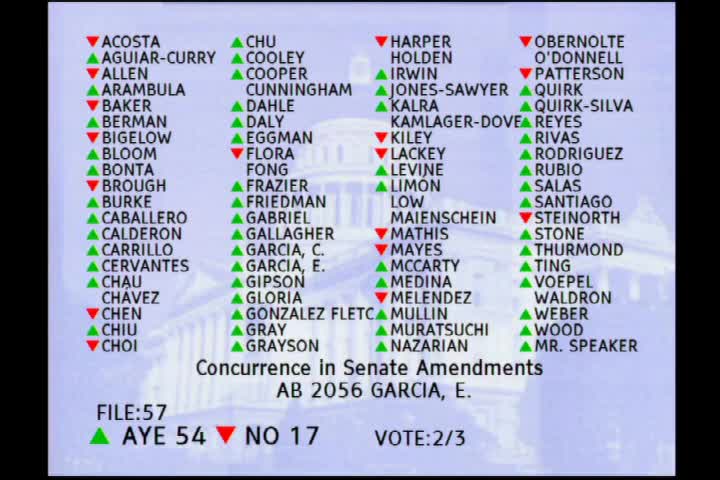

Bill Author


