AB 2456: Arts Council: peer review groups.
- Session Year: 2017-2018
- House: Assembly
- Latest Version Date: 2018-09-28
The Dixon-Zenovich-Maddy California Arts Act of 1975 establishes the Arts Council, consisting of 11 appointed members. The act specifies the duties of the council, including providing for the exhibition of art works in public buildings throughout California.
This bill would authorize the council to appoint peer review panels and would authorize members of those panels to, at the discretion of the council, receive a per diem, an honorarium, and reimbursement for expenses.
Existing law authorizes the legislative body of any city, county, or city and county, to adopt an ordinance that requires any coin-operated viewing machine, as defined, to have a permanently attached tally counter that will count each coin, as specified.This bill would make nonsubstantive changes to this provision.Existing law authorizes the legislative body of any city, county, or city and county, to adopt an ordinance that requires any coin-operated viewing machine, as defined, to have a permanently attached tally counter that will count each coin, as specified.
This bill would make nonsubstantive changes to this provision.
The council shall:
(a)Encourage artistic awareness, participation and expression.
(b)Help independent local groups develop their own art programs.
(c)Promote the employment of artists and those skilled in crafts in both the public and private sector.
(d)Provide for the exhibition of art works in public buildings throughout California.
(e)Enlist the aid of all state agencies in the task of ensuring the fullest expression of our artistic potential.
(f)Adopt regulations in accordance with the provisions of the Administrative Procedure Act necessary for proper execution of the powers and duties granted to the council by this chapter.
(g)Employ such administrative, technical, and other personnel as may be necessary.
(h)Fix the salaries of the personnel employed pursuant to this chapter which salaries shall be fixed as nearly as possible to conform to the salaries established by the State Personnel Board for classes of positions in the state civil service involving comparable duties and responsibilities.
(i)Appoint advisory committees whenever necessary. Members of an advisory committee shall serve without compensation, but each may be reimbursed for necessary traveling and other expenses incurred in the performance of official duties.
(j)Request and obtain from any department, division, board, bureau, commission, or other agency of the state such assistance and data as will enable it properly to carry on its power and duties.
(k)Hold hearings, execute agreements, and perform any acts necessary and proper to carry out the purposes of this chapter.
(l)Accept federal grants, for any of the purposes of this chapter.
(m)Accept only unrestricted gifts, donations, bequests, or grants of funds from private sources and public agencies, for any of the purposes of this chapter. However, the council shall give careful consideration to any donor requests concerning specific dispositions.
(n)Establish grant application criteria and procedure.
(o)Award prizes or direct grants to individuals or organizations in accordance with such regulations as the council may prescribe. In awarding prizes or directing grants, the council shall notify the offices of the legislators in whose district the recipient resides.
(p)Have the authority to appoint peer review panels whenever necessary. Each member of a peer review panel may, at the discretion of the council, receive a per diem and honorarium for each day of service and be reimbursed for necessary travel and other expenses incurred in the performance of official duties.
SECTION 1.Section 50028 of the Government Code is amended to read:50028.(a)The legislative body of any county, city, or city and county, whether general law or chartered, may adopt, by ordinance, any rules and regulations as it deems necessary that require any coin-operated viewing machine to have a permanently attached tally counter that will count each coin, and accumulate that count or the accumulated amount of money, deposited in the coin-operated viewing machine. The tally counter shall be resistant to tampering, shall not be capable of being reset to a lower number, and shall display the count in a manner so that the accumulated total is readily visible near the coin insertion slot or opening.(b)For purposes of this section, the following terms have the following meanings:(1)Coin-operated viewing machine means any projector, machine, television, or other device that displays for viewing motion pictures, projection slides, filmstrips, photographic pictures, video recordings, or drawings, and that is operated by the viewer, or for the viewer, by means of inserting a coin into the device, an attachment thereto, an enclosure surrounding the device, or any other device electrically or mechanically connected thereto. Coin-operated viewing machine does not include an electronic video game of skill wherein the image is created, generated, or synthesized electronically, or coin-operated television receivers that display commercial or public service broadcasts.(2)Coin means any physical object, including, but not limited to, a piece of metal issued by the federal government as money.(c)Notwithstanding any other provision of law, any county ordinance adopted pursuant to this section shall be enforceable within the incorporated, as well as the unincorporated, area of the county, whether general law or chartered, unless a city ordinance in direct conflict with that county ordinance has been adopted, in which case the county ordinance shall be enforceable in the area of the county outside the city.(d)(1)Any person who violates the provisions of the ordinance adopted pursuant to this section shall be subject to a civil penalty not to exceed ten thousand dollars ($10,000) for each machine and each day in which a violation occurs.(2)In determining the amount of the penalty, the court shall take into consideration all relevant circumstances, including, but not limited to, the frequency of inspection, the cashflow through the machine, the amount of revenue derived by other machines in the vicinity, prior revenues generated, the nature and persistence of the violation, and prior violations by the same person or establishment.(e)No peace officer, as defined in Section 830 of the Penal Code, shall check tally counters, provided, however, that an ordinance adopted pursuant to this section may provide for checking of tally counters by a person or persons employed by the adopting county, city, or city and county, other than a peace officer, on a predetermined schedule.(f)This section shall not be construed to limit, or otherwise affect, any other power of a county, city, or city and county to license, tax, or regulate business or commercial enterprises or property within their jurisdiction, but shall be in addition to those powers.(a)The legislative body of any county, city, or city and county, whether general law or chartered, may adopt, by ordinance, such any rules and regulations as it deems necessary, which that require any coin-operated viewing machine to have a permanently attached thereto a tally counter that will count each coin, and accumulate that count or the accumulated amount of money, deposited in the coin-operated viewing machine. The tally counter shall be resistant to tampering, and shall not be capable of being reset to a lower number, and shall display the count in such a manner so that the accumulated total is readily visible near the coin insertion slot or opening. For
(b)For purposes of this section, coin-operated the following terms have the following meanings:
(1)Coin-operated viewing machine means any projector, machine, television, or other device that displays for viewing motion pictures, projection slides, filmstrips, photographic pictures, video recordings, or drawings, and that is operated by the viewer, or for the viewer, by means of inserting a coin into the device, an attachment thereto, an enclosure surrounding the device, or any other device electrically or mechanically connected thereto. For purposes of this section, coin Coin-operated viewing machine does not include an electronic video game of skill wherein the image is created, generated, or synthesized electronically, or coin-operated television receivers that display commercial or public service broadcasts.
(2)Coin means any physical object, including, but not limited to, a piece of metal issued by the federal government as money. Coin-operated viewing machine does not include an electronic video game of skill wherein the image is created, generated, or synthesized electronically, or coin-operated television receivers that display commercial or public service broadcasts.
(b)(c)Notwithstanding any other provision of law, any county ordinance adopted pursuant to this section shall be enforceable within the incorporated, as well as the unincorporated, area of the county, whether general law or chartered, unless a city ordinance in direct conflict with that county ordinance has been adopted, in which case the county ordinance shall be enforceable in the area of the county outside the city.
(c)(d)(1)Any person who violates the provisions of the ordinance adopted pursuant to this section shall be subject to a civil penalty not to exceed ten thousand dollars ($10,000) for each machine and each day in which a violation occurs.
(2)In determining the amount of the penalty, the court shall take into consideration all relevant circumstances, including, but not limited to, the frequency of inspection, the cashflow through the machine, the amount of revenue derived by other machines in the vicinity, prior revenues generated, the nature and persistence of the violation, and prior violations by the same person or establishment.
(d)(e)No peace officer, as defined in Section 830 of the Penal Code, shall check tally counters, provided, however, that an ordinance adopted pursuant to this section may provide for checking of tally counters by a person or persons employed by the adopting county, city, or city and county, other than a peace officer, on a predetermined schedule.
(e)The provisions of this(f)This section shall not be construed to limit, or otherwise affect, any other power of a county, city, or city and county to license, tax, or regulate business or commercial enterprises or property within their jurisdiction, but shall be in addition to those powers.
|
Date
|
Status
|
|---|---|
| Sep 28, 2018 | Chaptered by Secretary of State - Chapter 869, Statutes of 2018. |
| Sep 28, 2018 | Approved by the Governor. |
| Aug 20, 2018 | Enrolled and presented to the Governor at 3 p.m. |
| Aug 14, 2018 | In Assembly. Ordered to Engrossing and Enrolling. |
| Aug 13, 2018 | Read third time. Passed. Ordered to the Assembly. |
| Jul 3, 2018 | Read second time. Ordered to third reading. |
| Jul 2, 2018 | From committee: Be ordered to second reading pursuant to Senate Rule 28.8. |
| Jun 21, 2018 | In committee: Hearing postponed by committee. |
| Jun 12, 2018 | From committee: Do pass and re-refer to Com. on APPR. (Ayes 10. Noes 0.) (June 12). Re-referred to Com. on APPR. |
| May 30, 2018 | Referred to Com. on G.O. |
| May 17, 2018 | In Senate. Read first time. To Com. on RLS. for assignment. |
| May 17, 2018 | Read third time. Passed. Ordered to the Senate. |
| May 10, 2018 | Read second time. Ordered to Consent Calendar. |
| May 9, 2018 | From committee: Do pass. To Consent Calendar. (Ayes 16. Noes 0.) (May 9). |
| Apr 25, 2018 | From committee: Do pass and re-refer to Com. on APPR. (Ayes 7. Noes 0.) (April 25). Re-referred to Com. on APPR. |
| Apr 2, 2018 | Re-referred to Com. on A.,E.,S.,T., & I.M. |
| Mar 22, 2018 | From committee chair, with author's amendments: Amend, and re-refer to Com. on A.,E.,S.,T., & I.M. Read second time and amended. |
| Feb 15, 2018 | From printer. May be heard in committee March 17. |
| Feb 14, 2018 | Read first time. To print. |
|
Date
|
Description
|
Location
|
Votes
|
|
|---|---|---|---|---|
| Aug 13, 2018 | Assembly 3rd Reading AB2456 Bloom By Allen | Senate Floor |
Passed |
|
| Jun 12, 2018 | Do pass, but first be re-referred to the Committee on [Appropriations] | Senate Standing Committee on Governmental Organization |
Passed |
|
| May 17, 2018 | AB 2456 BLOOM Consent Calendar Second Day Regular Session | Assembly Floor |
Passed |
|
| May 9, 2018 | Do pass. To Consent Calendar. | Assembly Standing Committee on Appropriations |
Passed |
|
| Apr 25, 2018 | Do pass and be re-referred to the Committee on [Appropriations] | Assembly Standing Committee on Arts, Entertainment, Sports, Tourism, and Internet Media |
Passed |
This list shows positions taken on this bill by organizations on the date displayed, which is linked to the original source.
Positions by individuals are not included.
|
Organization
|
Position
|
Date
|
|---|---|---|
| California Alliance For Arts Education | ** Support | Jul 16, 2018 |
| California Arts Advocates | ** Support | Jul 16, 2018 |
| California Arts Council | ** Support | Jul 16, 2018 |
| There is no support on file. | ** Support | Apr 24, 2018 |
Office of Senate Floor Analyses (916) 651-1520 Fax: (916) 327-4478 | AB |
THIRD READING
Bill No: AB 2456
:
SENATE GOVERNMENTAL ORG. COMMITTEE: 10-0, 6/12/18
AYES: Dodd, Wilk, Cannella, Gaines, Galgiani, Glazer, Hill, Hueso, Portantino, Vidak
NO VOTE RECORDED: Bradford, Lara
SENATE APPROPRIATIONS COMMITTEE: Senate Rule 28.8
ASSEMBLY FLOOR: 73-0, 5/17/18 (Consent) - See last page for vote
SOURCE: California Arts Council
DIGEST:
This bill authorizes the California Arts Council (CAC) to appoint peer review panels and authorizes members of those panels to, at the discretion of CAC, receive a per diem, an honorarium, and reimbursement for expenses.
Existing law:
- Establishes, pursuant to The Dixon-Zenovich-Maddy California Arts Act of 1975, the CAC, consisting of 11 appointed members who serve four-year staggered terms. Nine members are appointed by the Governor, subject to Senate confirmation, and the Speaker of the Assembly and the Senate Committee on Rules appoint one member each.
- Directs the CAC to encourage artistic awareness, participation, and expression; help independent local groups develop their own art programs; promote the employment of artists and those skilled in crafts in both the public and private sector; provide for the exhibition of art works in public buildings throughout California; and, enlist the aid of all state agencies in the task of ensuring the fullest expression of our artistic potential.
- Permits the CAC to appoint advisory committees whenever necessary; and, specifies that members of an advisory committee shall serve without compensation, but each member may be reimbursed for necessary traveling and other expenses incurred in the performance of official duties.
This bill:
- Authorizes the CAC to appoint peer review panels whenever necessary.
- Specifies that each member of a peer review panel may, at the discretion of the CAC, receive a per diem and honorarium for each day of service, and be reimbursed for necessary travel and other expenses incurred in the performance of official duties.
Background
Purpose of the bill. According to the author, “AB 2456 is necessary as it seeks to authorize the CAC to compensate peer review panelists (via what are referred to as “honoraria”) for their time spent reviewing and convening to discuss grant program applications. Serving on a peer review panel is a powerful learning experience and takes a serious commitment of time. By providing support to the arts and culture community throughout the state, panelists are participating in cultural policy in action.”
California Arts Council. The CAC was created in 1975 under then Governor Jerry Brown to increase access to the arts for all Californians. To that end, among other things, the CAC invests in California nonprofit organizations and units of government via competitive grant programs, administered through a year-long, multistep public process, which begins with the publication of guidelines and applications in the fall, and concludes with the ranking of grants by peer review panels, and the approval and dissemination of grants by the CAC the following summer.
Advisory panels. The CAC has occasionally used advisory panels to help direct the CAC on how a program’s guidelines are functioning. Advisory panels may recommend changes to programs or the need for staff to provide technical assistance to the arts field. Advisory panels are policy advisors, typically serving to direct the CAC in a broad manner, providing guidance, rather than the specific task of evaluation and detailed ranking of numerous applications.
Grant program peer review panels. Grant program peer review panels are not policy advisors, but rather, experts in their fields who commit significant time to review and assign a rank to applications for Arts Council funding. Peer review panels are convened annually in Sacramento for each grant program. Panelists are required to travel to Sacramento for one to three days, read an average of 60 applications as assigned, review all work samples, and establish themselves as fully prepared to discuss the applications with the other panel members to ensure that programmatic guidelines and standards of program merit and artistic evaluation are maintained. This year the CAC expects the need for the services of 80 Grant Program Peer Review Panelists.
The CAC indicates that it plans to compensate panelists via honoraria of $100 per day using funds from the sale of the California Arts Plate or from the federal National Endowment for the Arts. Further, the CAC states that it is committed to ensuring diversity on peer review panels and overcoming financial barriers to their members’ service, and believes that AB 2456 will help them achieve this goal.
Related/Prior Legislation
SB 503 (Newman, Chapter 519, Statutes of 2017), among other things, renamed and extended the sunset date, until January 1, 2025, for the Keep Arts in Schools Voluntary Tax Contribution Fund.
SB 571 (Price, Chapter 430, Statutes of 2013) allowed taxpayers to make voluntary contributions to the CAC Fund on their state personal income tax returns.
SB 1024 (Zenovich, Chapter 1192, Statutes of 1975), the Dixon-Zenovich-Maddy California Arts Act of 1975, established the CAC; and, included Legislative findings and declarations stating that the “source of art is in the natural flow of the human mind. Realizing craft and beauty is demanding, however, the people of the state desire to encourage and nourish these skills wherever they occur, to the benefit of all.”
FISCAL EFFECT: Appropriation: Fiscal Com.: Local:
California Arts Council (source)
California Alliance for Arts Education
California Arts Advocates
None received
ARGUMENTS IN SUPPORT: According to the CAC, “[p]eer-review panels are at the core of the work done by the California Arts Council. Peer-review panels are an essential component of a multistep public grant making process reviewing in detail all grant applications.”
Further, the CAC argues that “[p]eer panelists ensure that the Arts Council’s grant application review process is democratic, fair and representative of California’s diverse geography; wealth of organizations; age, racial, ethnic and gender identities; perspectives and knowledge. In addition, panelists have in-depth experience in various art practices and disciplines, including arts-learning for PreK-12 students, cultural development, juvenile and social justice, nonprofit management, media and technology, working with veteran populations and people with disabilities, and other related fields.”
ASSEMBLY FLOOR: 73-0, 5/17/18
AYES: Acosta, Aguiar-Curry, Travis Allen, Arambula, Baker, Berman, Bigelow, Bloom, Bonta, Brough, Burke, Caballero, Calderon, Carrillo, Cervantes, Chau, Chávez, Chen, Chiu, Choi, Chu, Cooley, Cooper, Cunningham, Dahle, Daly, Eggman, Flora, Fong, Frazier, Friedman, Gallagher, Eduardo Garcia, Gipson, Gloria, Gonzalez Fletcher, Gray, Grayson, Harper, Holden, Irwin, Jones-Sawyer, Kalra, Kamlager-Dove, Kiley, Lackey, Levine, Limón, Low, Maienschein, Mathis, Mayes, McCarty, Medina, Mullin, Nazarian, Obernolte, O'Donnell, Patterson, Quirk, Quirk-Silva, Reyes, Rodriguez, Rubio, Salas, Mark Stone, Thurmond, Ting, Voepel, Waldron, Weber, Wood, Rendon
NO VOTE RECORDED: Cristina Garcia, Melendez, Muratsuchi, Santiago, Steinorth
7/16/18 9:38:52
SENATE COMMITTEE ON GOVERNMENTAL ORGANIZATION
Senator Bill Dodd
Chair
2017 - 2018 Regular
Bill No: AB Hearing Date: 6/12/2018
Author: | Bloom | ||
Version: | Amended | ||
Urgency: | Fiscal: | ||
Consultant: | |||
SUBJECT:
DIGEST: This bill authorizes the California Arts Council (CAC) to appoint peer review panels and authorizes members of those panels to, at the discretion of CAC, receive a per diem, an honorarium, and reimbursement for expenses.
ANALYSIS:
Existing law:
- The Dixon-Zenovich-Maddy California Arts Act of 1975 established the CAC, consisting of 11 appointed members who serve four-year staggered terms. Nine members are appointed by the Governor, subject to Senate confirmation, and the Speaker of the Assembly and the Senate Committee on Rules appoint one member each.
- Directs the CAC to encourage artistic awareness, participation, and expression; help independent local groups develop their own art programs; promote the employment of artists and those skilled in crafts in both the public and private sector; provide for the exhibition of art works in public buildings throughout California; and, enlist the aid of all state agencies in the task of ensuring the fullest expression of our artistic potential.
- Authorizes the CAC to hold hearings, execute agreements, and perform any acts necessary and proper to carry out its designated purposes.
- Permits the CAC to appoint advisory committees whenever necessary; and, specifies that members of an advisory committee shall serve without compensation, but each member may be reimbursed for necessary traveling and other expenses incurred in the performance of official duties.
- Authorizes the CAC to accept federal grants, and to accept only unrestricted gifts, donations, bequests, or grants of funds from private sources and public agencies.
- Permits the CAC to establish grant application criteria and procedure, and to award prizes or direct grants to individuals or organizations, as specified.
This bill:
- Authorizes the CAC to appoint peer review panels whenever necessary.
- Specifies that each member of a peer review panel may, at the discretion of the CAC, receive a per diem and honorarium for each day of service, and be reimbursed for necessary travel and other expenses incurred in the performance of official duties.
Background
Purpose of the bill. According to the author, “AB 2456 is necessary as it seeks to authorize the CAC to compensate peer review panelists (via what are referred to as “honoraria”) for their time spent reviewing and convening to discuss grant program applications. Serving on a peer review panel is a powerful learning experience and takes a serious commitment of time. By providing support to the arts and culture community throughout the state, panelists are participating in cultural policy in action.”
California Arts Council. The CAC was created in 1975 under then Governor Jerry Brown to increase access to the arts for all Californians. To that end, among other things, the CAC invests in California nonprofit organizations and units of government via competitive grant programs, administered through a year-long, multistep public process, which begins with the publication of guidelines and applications in the fall, and concludes with the ranking of grants by peer review panels, and the approval and dissemination of grants by the CAC the following summer.
Advisory panels. The CAC has occasionally used advisory panels to help direct the CAC on how a program’s guidelines are functioning. Advisory panels may recommend changes to programs or the need for staff to provide technical assistance to the arts field. Advisory panels are policy advisors, typically serving to direct the CAC in a broad manner, providing guidance, rather than the specific task of evaluation and detailed ranking of numerous applications.
Grant program peer review panels. Grant program peer review panels are not policy advisors, but rather, experts in their fields who commit significant time to review and assign a rank to applications for Arts Council funding. Peer review panels are convened annually in Sacramento for each grant program. Panelists are required to travel to Sacramento for one to three days, read an average of 60 applications as assigned, review all work samples, and establish themselves as fully prepared to discuss the applications with the other panel members to ensure that programmatic guidelines and standards of program merit and artistic evaluation are maintained. This year the CAC expects the need for the services of 80 Grant Program Peer Review Panelists.
According to the CAC’s Internet Web site, peer review panelists “should have in-depth experience in various art practices and disciplines, including arts-learning for PreK-12 students, creative placemaking a cultural development, juvenile and social justice, nonprofit management, working with veteran populations and people with disabilities, and/or related fields.” The author argues that the time and financial burden of serving as a review panelist are the most significant barriers for panelists to serve; and that, compensation for review panelists via honoraria has become increasingly accepted as a best practice, adopted by a number of other states’ arts agencies and other local art agencies.
The CAC indicates that it plans to compensate panelists via honoraria of $100 per day using funds from the sale of the California Arts Plate or from the federal National Endowment for the Arts. Further, the CAC states that it is committed to ensuring diversity on peer review panels and overcoming financial barriers to their members’ service, and believes that AB 2456 will help them achieve this goal.
Prior/Related Legislation
AB 119 (Committee on Budget, Chapter 21, Statutes of 2017) among other things, required the Governor to appoint the director of the CAC.
SB 503 (Newman, Chapter 519, Statutes of 2017) among other things, renamed and extended the sunset date, until January 1, 2025, for the Keep Arts in Schools Voluntary Tax Contribution Fund.
AB 1625 (Nazarian, Chapter 102, Statutes of 2014) established the California Arts Council Contribution and Donations Fund to receive monies donated to the CAC.
SB 571 (Price, Chapter 430, Statutes of 2013) allowed taxpayers to make voluntary contributions to the California Arts Council Fund on their state personal income tax returns.
AB 2610 (Niello, Chapter 100, Statutes of 2010) required the CAC to hire its own director, who shall be responsible for, among other things, hiring staff in support of the CAC.
SB 1024 (Zenovich, Chapter 1192, Statutes of 1975) the Dixon-Zenovich-Maddy California Arts Act of 1975 established the CAC; and, included Legislative findings and declarations stating that the “source of art is in the natural flow of the human mind. Realizing craft and beauty is demanding, however, the people of the state desire to encourage and nourish these skills wherever they occur, to the benefit of all.”
FISCAL EFFECT: Appropriation: No Fiscal Com.: Yes Local: No
SUPPORT:
California Arts Council (Source)
California Arts Advocates
OPPOSITION:
None received
ARGUMENTS IN SUPPORT: According to the CAC, “[p]eer-review panels are at the core of the work done by the California Arts Council. Peer-review panels are an essential component of a multistep public grant making process reviewing in detail all grant applications.”
Further, the CAC argues that “[p]eer panelists ensure that the Arts Council’s grant application review process is democratic, fair and representative of California’s diverse geography; wealth of organizations; age, racial, ethnic and gender identities; perspectives and knowledge. In addition, panelists have in-depth experience in various art practices and disciplines, including arts-learning for PreK-12 students, cultural development, juvenile and social justice, nonprofit management, media and technology, working with veteran populations and people with disabilities, and other related fields.”
Date of Hearing: May 9, 2018
ASSEMBLY COMMITTEE ON APPROPRIATIONS
Lorena Gonzalez Fletcher, Chair
ABPCA Bill Id:AB 2456
Author:(Bloom) – As Amended Ver:March 22, 2018
Policy Committee: | Arts, Entertainment, Sports, Tourism, and Internet Media | Vote: | 7 - 0 |
Urgency: No State Mandated Local Program: No Reimbursable: No
SUMMARY:
This bill allows the California Arts Council to appoint peer review panels and allows members of those panels to receive compensation, as specified.
FISCAL EFFECT:
Estimated costs of $25,000-$30,000 annually (federal/special funds).
COMMENTS:
Purpose and Background. This bill is intended to allow the Arts Council to compensate peer reviewers, who have in-depth experience in various disciplines. Grant program peer review panelists are experts in their fields who commit significant time to review and rank applications for Arts Council funding. The Arts Council explains compensating peer review panelists is a best practice among other states' and local art agencies. It reduces financial burden, which can be a barrier to participation. The Arts Council indicates it plans to compensate panelists via honoraria of $100 per day using funds from the sale of the California Arts Plate or from the federal National Endowment for the Arts.
Analysis Prepared by: Lisa Murawski / APPR. / (916) 319-2081
Date of Hearing: April 25, 2018
ASSEMBLY COMMITTEE ON ARTS, ENTERTAINMENT, SPORTS, TOURISM, AND INTERNET MEDIA
Kansen Chu, Chair
ABPCA Bill Id:AB 2456 (
Author:Bloom) – As Amended Ver:March 22, 2018
SUBJECT: Arts Council: paid peer review groups.
SUMMARY: This bill would authorize the California Arts Council (CAC) to appoint peer review panels and would authorize members of those panels to receive compensation, as specified. Specifically, this bill:
- Provides that the California Arts Council shall have the authority to appoint peer review panels whenever necessary.
- Further provides that each member of a peer review panel may, at the discretion of the council, receive a per diem and honorarium for each day of service and be reimbursed for necessary travel and other expenses incurred in the performance of official duties.
EXISTING LAW:
- Creates the CAC, consisting of 11-members who serve four-year, staggered terms. Nine members are appointed by the Governor, subject to Senate confirmation, and the Speaker of the Assembly and the Senate Committee on Rules appoint one member each.
- Directs CAC to encourage artistic awareness, participation, and expression; to help independent local groups develop their own arts programs; to promote employment of artists and those skilled in crafts in the public and private sector; to provide for exhibition of artistic works in public buildings; and, to enlist the aid of all state agencies in the task of ensuring the fullest expression of artistic potential.
- Authorizes CAC to hold hearings, execute agreements, and perform any acts necessary and proper to carry out their designated purposes.
- Permits the CAC to appoint advisory committees whenever necessary.
- Specifies that members of an advisory committee shall serve without compensation, but each may be reimbursed for necessary traveling and other expenses incurred in the performance of official duties.
FISCAL EFFECT: Unknown. This measure has been keyed fiscal by the Legislative Counsel.
COMMENTS:
- Author's statement in support: Meeting quality and diversity goals in peer review panelists requires financial support. According to the author, "Current law does not definitively speak about 'peer review panelists,' as these panelists were not likely used when the current enabling legislation was created. Presently, the Arts Council uses peer review panelists for every grant panel, however, the CAC does not have the authority to compensate grant program peer review panelists, who are experts in their artistic fields, for the time-consuming but important work of reviewing and making recommendations on grant program applications. These peer review panels serve as the core of all that the California Arts Council does. They ensure that the Council’s application review process is fair and representative of California’s diverse geography and population; it’s wealth of organizations; and it's racial, ethnic and gender identities."
The author recognizes that current law allows the CAC to appoint unpaid advisory panels, but believes the differences in duration and function of their tasks requires peer reviewers to be treated differently. Key distinctions the author draws include:
a) Advisory panels: The Arts Council has occasionally used advisory panels to help direct the Council on how a program’s guidelines are functioning and advisory panels may recommend changes to programs or the need to for staff to provide technical assistance to the arts field. Advisory panels are policy advisors, typically serving to direct the Council in a broad manner, providing guidance, rather than the specific task of evaluation and detailed ranking of numerous applications.
b) Grant program peer review: Grant program peer review panels are not policy advisors, but rather, experts in their fields who commit significant time to review and assign a rank to applications for Arts Council funding. Peer review panels are convened annually in Sacramento for each grant program. Panelists are required to read an average of 60 applications as assigned, review all work samples, and establish themselves as fully prepared to discuss the applications with the other panel members to ensure that programmatic guidelines and standards of program merit and artistic evaluation are maintained. This year the Arts Council expects the need for the services of 80 Grant Program Peer Review Panelists.
According to information supplied by the author, "Peer review panelists have greater in-depth experience in various art practices and disciplines, including arts-learning for PreK-12 students, cultural development, juvenile and social justice, nonprofit management, working with veteran populations and people with disabilities, and related fields. Compensating via honoraria, review panelists has become increasingly accepted as a best practice, adopted by other States’ arts agencies and local arts agencies, as well as other grant making institutions. The CA Arts Council has discovered that the time and financial burden are the most significant barriers for panelists to serve." The CA Arts Council is committed to ensuring diversity on peer review panels and overcoming financial barriers to their members’ service and believes that AB 2456 will help them achieve this goal.
- Background:
- California Arts Council: The California Arts Council was created in 1975 under then Governor Jerry Brown to increase access to the arts for all Californians. Over the course of 25+ years, the CAC’s impact has grown, especially through efforts that brought arts programming to underserved communities and populations across the state (such as rural communities, inner city neighborhoods, prisons and schools).
Examples of programs the CAC has offered over the years include:
- Artists in Schools – Support for arts organizations that partner with schools and/or school districts to facilitate artists-in-residence activities in the classroom and afterschool programs.
- Creating Public Value – Support for arts organizations in rural or underserved areas to implement projects making a positive contribution to their communities.
- Statewide Service Networks – Support for discipline-based arts service organizations and statewide arts networks to strengthen their constituencies and promote the public value of the arts in their communities.
- State-Local Partnerships– Support for local arts agencies designated by county boards of supervisors to provide arts in local communities.
- My California Story Slam – Encourages educators to explore creative writing in their high school classrooms and to draw upon the expressive skills of their students.
- Poetry Out Loud – National recitation contest that encourages high school students to experience poetry through memorization, performance, and competition. Poetry Out Loud is an initiative of the National Endowment for the Arts (NEA).
- California Music Project – To help restore music education in public schools,
K-12.
- Convenings – Annual statewide arts conference, professional development sessions, with the multicultural infrastructure and statewide service network organizations.
- Poet Laureate – Overview, nomination process, eligibility and criteria for two-year gubernatorial appointment to the position of Poet Laureate and related literary tour.
- Marketing: Public Awareness – Using social change models, marketing & advocacy to reframe the arts as a public value--essential to a healthy society, as critical as free speech.
- Cultural District Programs – Marketing program for local cultural districts which are well-recognized, labeled areas of a city and in which a high concentration of cultural facilities and programs serve as the main anchor of attraction and business development.
REGISTERED SUPPORT / OPPOSITION:
Support
There is no support on file.
Opposition
There is no opposition on file.
Analysis Prepared by: Dana Mitchell / A.,E.,S.,T., & I.M. / (916) 319-3450
Discussed in Hearing
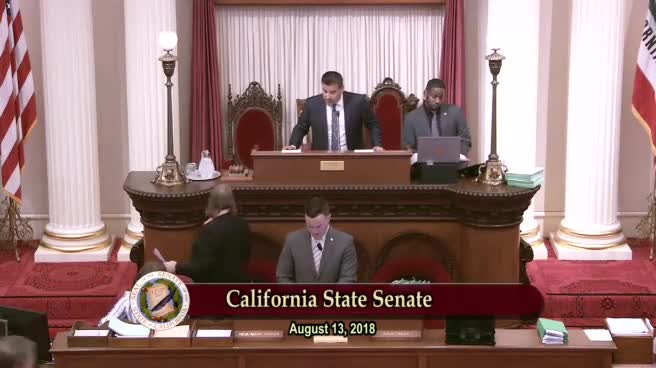 1MIN
Senate Floor
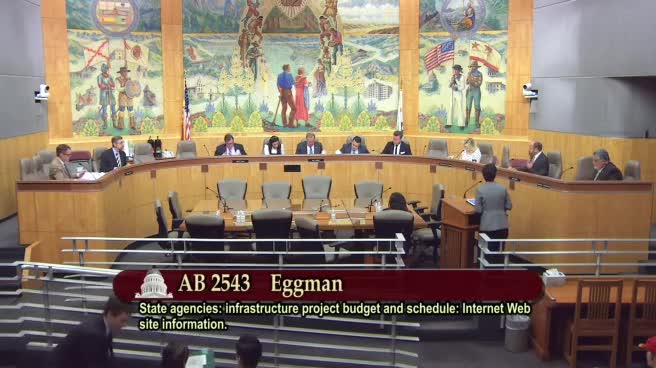 4MIN
Senate Standing Committee on Governmental Organization
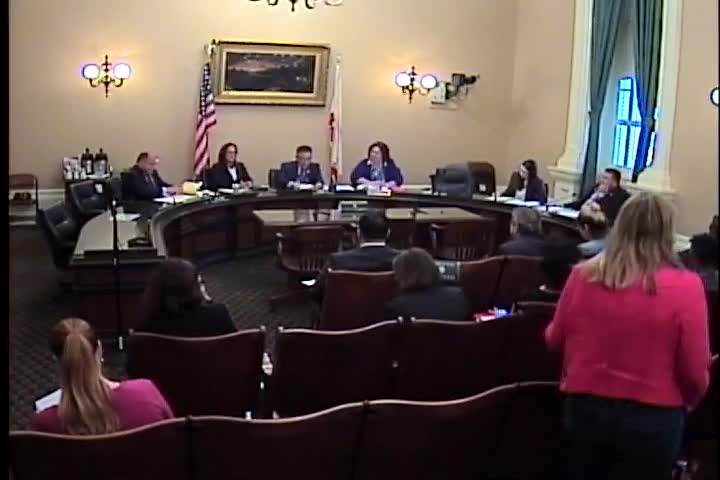 12MIN
Assembly Standing Committee on Arts, Entertainment, Sports, Tourism, and Internet Media
Bill Author

Bill Co-Author(s):