AB 2461: Criminal history information: subsequent arrest notification: State Department of Social Services.
- Session Year: 2017-2018
- House: Assembly
- Latest Version Date: 2018-09-07
Existing law authorizes the Department of Justice to provide subsequent state or federal arrest or disposition notification to an entity authorized by state or federal law to receive state or federal summary criminal history information to assist in fulfilling employment, licensing, or certification duties, or the duties of approving relative caregivers, nonrelative extended family members, and resource families upon the arrest or disposition of a person whose fingerprints are maintained on file at the Department of Justice or the Federal Bureau of Investigation as the result of an application for licensing, employment, certification, or approval.
This bill would require the department to provide that subsequent arrest or disposition notification to the State Department of Social Services, the Medical Board of California, and the Osteopathic Medical Board of California.
Existing law authorizes the Department of Justice to provide subsequent state or federal arrest or disposition notification to an entity authorized by state or federal law to receive state or federal summary criminal history information to assist in fulfilling employment, licensing, or certification duties, or the duties of approving relative caregivers, nonrelative extended family members, and resource families upon the arrest or disposition of a person whose fingerprints are maintained on file at the Department of Justice or the Federal Bureau of Investigation as the result of an application for licensing, employment, certification, or approval.
This bill would require the department to provide that information. subsequent arrest or disposition notification to the State Department of Social Services, the Medical Board of California, and the Osteopathic Medical Board of California.
Existing law authorizes the Department of Justice to provide subsequent state or federal arrest or disposition notification to an entity authorized by state or federal law to receive state or federal summary criminal history information to assist in fulfilling employment, licensing, certification duties, or the duties of approving relative caregivers, nonrelative extended family members, and resource families upon the arrest or disposition of a person whose fingerprints are maintained on file at the Department of Justice or the Federal Bureau of Investigation as the result of an application for licensing, employment, certification, or approval.
This bill would require the department to provide that information.
(a)(1)The Department of Justice shall provide to the State Department of Social Services, the Medical Board of California, and the Osteopathic Medical Board of California, pursuant to state or federal law authorizing those departments to receive state or federal summary criminal history information, and may provide to any other entity authorized by state or federal law to receive state or federal summary criminal history information, subsequent state or federal arrest or disposition notification to assist in fulfilling employment, licensing, or certification duties, or the duties of approving relative caregivers, nonrelative extended family members, and resource families upon the arrest or disposition of any person whose fingerprints are maintained on file at the Department of Justice or the Federal Bureau of Investigation as the result of an application for licensing, employment, certification, or approval. This section does not authorize the notification of a subsequent disposition pertaining to a disposition that does not result in a conviction, unless the department has previously received notification of the arrest and has previously lawfully notified a receiving entity of the pending status of that arrest. If the department supplies subsequent arrest or disposition notification to a receiving entity, the entity shall, at the same time, expeditiously furnish a copy of the information to the person to whom it relates if the information is a basis for an adverse employment, licensing, or certification decision. If the copy is not furnished in person, the copy shall be delivered to the last contact information provided by the applicant.
(2)An entity that submits the fingerprints of applicants for licensing, employment, or certification, or approval to the Department of Justice for the purpose of establishing a record of the applicant to receive notification of subsequent state or federal arrests or dispositions pursuant to paragraph (1) shall comply with subdivision (d).
(b)For purposes of this section, approval means those duties described in subdivision (d) of Section 309 of the Welfare and Institutions Code for approving the home of a relative caregiver or of a nonrelative extended family member for placement of a child supervised by the juvenile court, and those duties in Section 16519.5 of the Welfare and Institutions Code for resource families.
(c)An entity, other than a law enforcement agency employing peace officers as defined in Section 830.1, subdivisions (a) and (e) of Section 830.2, subdivision (a) of Section 830.3, subdivisions (a) and (b) of Section 830.5, and subdivision (a) of Section 830.31, shall enter into a contract with the Department of Justice in order to receive notification of subsequent state or federal arrests or dispositions for licensing, employment, or certification purposes.
(d)An entity that submits the fingerprints of applicants for licensing, employment, certification, or approval to the Department of Justice for the purpose of establishing a record of the applicant to receive notification of subsequent state or federal arrests or dispositions shall immediately notify the department when the employment of the applicant is terminated, when the applicants license or certificate is revoked, when the applicant may no longer renew or reinstate the license or certificate, or when a relative caregivers or nonrelative extended family members approval is terminated. The Department of Justice shall terminate state or federal subsequent notification on any applicant upon the request of the licensing, employment, certifying, or approving authority.
(e)An entity that receives a notification of a state or federal subsequent arrest or disposition for a person unknown to the entity, or for a person no longer employed by the entity, or no longer eligible to renew the certificate or license for which subsequent notification service was established shall immediately return the subsequent notification to the Department of Justice, informing the department that the entity is no longer interested in the applicant. The entity shall not record or otherwise retain any information received as a result of the subsequent notice.
(f)An entity that submits the fingerprints of an applicant for employment, licensing, certification, or approval to the Department of Justice for the purpose of establishing a record at the department or the Federal Bureau of Investigation to receive notification of subsequent arrest or disposition shall immediately notify the department if the applicant is not subsequently employed, or if the applicant is denied licensing certification, or approval.
(g)An entity that fails to provide the Department of Justice with notification as set forth in subdivisions (c), (d), and (e) may be denied further subsequent notification service.
(h)Notwithstanding subdivisions (c), (d), and (f), subsequent notification by the Department of Justice and retention by the employing agency shall continue as to retired peace officers listed in subdivision (c) of Section 830.5.
(a)(1)The Department of Justice shall provide to the State Department of Social Services, the Medical Board of California, and the Osteopathic Medical Board of California, pursuant to state or federal law authorizing those departments to receive state or federal summary criminal history information, and may provide to any other entity authorized by state or federal law to receive state or federal summary criminal history information, subsequent state or federal arrest or disposition notification to any entity authorized by state or federal law to receive state or federal summary criminal history information to assist in fulfilling employment, licensing, or certification duties, or the duties of approving relative caregivers, nonrelative extended family members, and resource families upon the arrest or disposition of any person whose fingerprints are maintained on file at the Department of Justice or the Federal Bureau of Investigation as the result of an application for licensing, employment, certification, or approval. This section does not authorize the notification of a subsequent disposition pertaining to a disposition that does not result in a conviction, unless the department has previously received notification of the arrest and has previously lawfully notified a receiving entity of the pending status of that arrest. If the department supplies subsequent arrest or disposition notification to a receiving entity, the entity shall, at the same time, expeditiously furnish a copy of the information to the person to whom it relates if the information is a basis for an adverse employment, licensing, or certification decision. If the copy is not furnished in person, the copy shall be delivered to the last contact information provided by the applicant.
(2)An entity that submits the fingerprints of applicants for licensing, employment, or certification, or approval to the Department of Justice for the purpose of establishing a record of the applicant to receive notification of subsequent state or federal arrests or dispositions pursuant to paragraph (1) shall comply with subdivision (d).
(b)For purposes of this section, approval means those duties described in subdivision (d) of Section 309 of the Welfare and Institutions Code for approving the home of a relative caregiver or of a nonrelative extended family member for placement of a child supervised by the juvenile court, and those duties in Section 16519.5 of the Welfare and Institutions Code for resource families.
(c)An entity, other than a law enforcement agency employing peace officers as defined in Section 830.1, subdivisions (a) and (e) of Section 830.2, subdivision (a) of Section 830.3, subdivisions (a) and (b) of Section 830.5, and subdivision (a) of Section 830.31, shall enter into a contract with the Department of Justice in order to receive notification of subsequent state or federal arrests or dispositions for licensing, employment, or certification purposes.
(d)An entity that submits the fingerprints of applicants for licensing, employment, certification, or approval to the Department of Justice for the purpose of establishing a record of the applicant to receive notification of subsequent state or federal arrests or dispositions shall immediately notify the department when the employment of the applicant is terminated, when the applicants license or certificate is revoked, when the applicant may no longer renew or reinstate the license or certificate, or when a relative caregivers or nonrelative extended family members approval is terminated. The Department of Justice shall terminate state or federal subsequent notification on any applicant upon the request of the licensing, employment, certifying, or approving authority.
(e)An entity that receives a notification of a state or federal subsequent arrest or disposition for a person unknown to the entity, or for a person no longer employed by the entity, or no longer eligible to renew the certificate or license for which subsequent notification service was established shall immediately return the subsequent notification to the Department of Justice, informing the department that the entity is no longer interested in the applicant. The entity shall not record or otherwise retain any information received as a result of the subsequent notice.
(f)An entity that submits the fingerprints of an applicant for employment, licensing, certification, or approval to the Department of Justice for the purpose of establishing a record at the department or the Federal Bureau of Investigation to receive notification of subsequent arrest or disposition shall immediately notify the department if the applicant is not subsequently employed, or if the applicant is denied licensing certification, or approval.
(g)An entity that fails to provide the Department of Justice with notification as set forth in subdivisions (c), (d), and (e) may be denied further subsequent notification service.
(h)Notwithstanding subdivisions (c), (d), and (f), subsequent notification by the Department of Justice and retention by the employing agency shall continue as to retired peace officers listed in subdivision (c) of Section 830.5.
(a)The Department of Justice may shall provide subsequent state or federal arrest or disposition notification to any entity authorized by state or federal law to receive state or federal summary criminal history information to assist in fulfilling employment, licensing, certification duties, or the duties of approving relative caregivers, nonrelative extended family members, and resource families upon the arrest or disposition of any person whose fingerprints are maintained on file at the Department of Justice or the Federal Bureau of Investigation as the result of an application for licensing, employment, certification, or approval. Nothing in this section shall This section does not authorize the notification of a subsequent disposition pertaining to a disposition that does not result in a conviction, unless the department has previously received notification of the arrest and has previously lawfully notified a receiving entity of the pending status of that arrest. When If the department supplies subsequent arrest or disposition notification to a receiving entity, the entity shall, at the same time, expeditiously furnish a copy of the information to the person to whom it relates if the information is a basis for an adverse employment, licensing, or certification decision. When If the copy is not furnished other than in person, the copy shall be delivered to the last contact information provided by the applicant.
(b)For purposes of this section, approval means those duties described in subdivision (d) of Section 309 of the Welfare and Institutions Code for approving the home of a relative caregiver or of a nonrelative extended family member for placement of a child supervised by the juvenile court, and those duties in Section 16519.5 of the Welfare and Institutions Code for resource families.
(c)Any An entity, other than a law enforcement agency employing peace officers as defined in Section 830.1, subdivisions (a) and (e) of Section 830.2, subdivision (a) of Section 830.3, subdivisions (a) and (b) of Section 830.5, and subdivision (a) of Section 830.31, shall enter into a contract with the Department of Justice in order to receive notification of subsequent state or federal arrests or dispositions for licensing, employment, or certification purposes.
(d)Any An entity that submits the fingerprints of applicants for licensing, employment, certification, or approval to the Department of Justice for the purpose of establishing a record of the applicant to receive notification of subsequent state or federal arrests or dispositions shall immediately notify the department when the employment of the applicant is terminated, when the applicants license or certificate is revoked, when the applicant may no longer renew or reinstate the license or certificate, or when a relative caregivers or nonrelative extended family members approval is terminated. The Department of Justice shall terminate state or federal subsequent notification on any applicant upon the request of the licensing, employment, certifying, or approving authority.
(e)Any An entity that receives a notification of a state or federal subsequent arrest or disposition for a person unknown to the entity, or for a person no longer employed by the entity, or no longer eligible to renew the certificate or license for which subsequent notification service was established shall immediately return the subsequent notification to the Department of Justice, informing the department that the entity is no longer interested in the applicant. The entity shall not record or otherwise retain any information received as a result of the subsequent notice.
(f)Any An entity that submits the fingerprints of an applicant for employment, licensing, certification, or approval to the Department of Justice for the purpose of establishing a record at the department or the Federal Bureau of Investigation to receive notification of subsequent arrest or disposition shall immediately notify the department if the applicant is not subsequently employed, or if the applicant is denied licensing certification, or approval.
(g)An entity that fails to provide the Department of Justice with notification as set forth in subdivisions (c), (d), and (e) may be denied further subsequent notification service.
(h)Notwithstanding subdivisions (c), (d), and (f), subsequent notification by the Department of Justice and retention by the employing agency shall continue as to retired peace officers listed in subdivision (c) of Section 830.5.
|
Date
|
Status
|
|---|---|
| Sep 7, 2018 | Chaptered by Secretary of State - Chapter 300, Statutes of 2018. |
| Sep 7, 2018 | Approved by the Governor. |
| Aug 30, 2018 | Enrolled and presented to the Governor at 4:30 p.m. |
| Aug 24, 2018 | In Assembly. Ordered to Engrossing and Enrolling. |
| Aug 24, 2018 | Read third time. Passed. Ordered to the Assembly. |
| Aug 21, 2018 | Ordered to special consent calendar. |
| Aug 17, 2018 | From committee: Do pass. (Ayes 7. Noes 0.) (August 16). |
| Aug 6, 2018 | In committee: Referred to APPR. suspense file. |
| Jun 26, 2018 | From committee: Do pass and re-refer to Com. on APPR. (Ayes 7. Noes 0.) (June 26). Re-referred to Com. on APPR. |
| Jun 7, 2018 | Referred to Com. on PUB. S. |
| May 31, 2018 | In Senate. Read first time. To Com. on RLS. for assignment. |
| May 30, 2018 | Read third time. Passed. Ordered to the Senate. |
| May 29, 2018 | Read second time. Ordered to third reading. |
| May 25, 2018 | From committee: Amend, and do pass as amended. (Ayes 16. Noes 0.) (May 25). |
| Apr 4, 2018 | In committee: Set, first hearing. Referred to suspense file. |
| Mar 21, 2018 | From committee: Do pass and re-refer to Com. on APPR. with recommendation: To Consent Calendar. (Ayes 7. Noes 0.) (March 20). Re-referred to Com. on APPR. |
| Mar 5, 2018 | Referred to Com. on PUB. S. |
| Feb 15, 2018 | From printer. May be heard in committee March 17. |
| Feb 14, 2018 | Read first time. To print. |
|
Date
|
Description
|
Location
|
Votes
|
|
|---|---|---|---|---|
| Aug 24, 2018 | Special Consent AB2461 | Senate Floor |
Passed |
|
| Aug 16, 2018 | Do pass | Senate Standing Committee on Appropriations |
Passed |
|
| Aug 6, 2018 | Placed on suspense file | Senate Standing Committee on Appropriations |
Passed |
|
| Jun 26, 2018 | Do pass, but first be re-referred to the Committee on [Appropriations] | Senate Standing Committee on Public Safety |
Passed |
|
| May 30, 2018 | AB 2461 FLORA Assembly Third Reading | Assembly Floor |
Passed |
|
| May 25, 2018 | Do pass as amended. | Assembly Standing Committee on Appropriations |
Passed |
|
| Mar 20, 2018 | Do pass and be re-referred to the Committee on [Appropriations] with recommendation: To Consent Calendar | Assembly Standing Committee on Public Safety |
Passed |
This list shows positions taken on this bill by organizations on the date displayed, which is linked to the original source.
Positions by individuals are not included.
|
Organization
|
Position
|
Date
|
|---|---|---|
| Medical Board of California | ** Support | Aug 18, 2018 |
Office of Senate Floor Analyses (916) 651-1520 Fax: (916) 327-4478 | AB |
THIRD READING
Bill No: AB 2461
:
SENATE PUBLIC SAFETY COMMITTEE: 7-0, 6/26/18
AYES: Skinner, Anderson, Bradford, Jackson, Mitchell, Stone, Wiener
SENATE APPROPRIATIONS COMMITTEE: 7-0, 8/16/18
AYES: Portantino, Bates, Beall, Bradford, Hill, Nielsen, Wiener
ASSEMBLY FLOOR: 75-1, 5/30/18 - See last page for vote
SOURCE: Medical Board of California
DIGEST:
This bill requires the Department of Justice (DOJ) to continually update authorized entities with information about new arrests and convictions for people who have their fingerprints on file with the DOJ or the Federal Bureau of Investigation (FBI) as a result of applying for a job, license, or certification.
Existing law:
- Requires DOJ to furnish state summary criminal history information to specified entities, if needed in the course of their duties, provided that when information is furnished to assist an agency, officer, or official of state or local government, a public utility, or any other entity in fulfilling employment, certification, or licensing duties, specified restrictions listed in the Labor Code are followed. (Penal Code § 11105 (b).)
- Allows DOJ to furnish state summary criminal history information to specified entities and, when specifically authorized, federal-level criminal history information upon a showing of a compelling need, provided that when information is furnished to assist an agency, officer, or official of state or local government, a public utility, or any other entity in fulfilling employment, certification, or licensing duties, specified restrictions listed in the Labor Code are followed. (Penal Code § 11105 (c).)
- Permits DOJ to provide subsequent state or federal arrest or disposition notification to any entity authorized by state or federal law to receive such information to assist in fulfilling employment, licensing, certification duties, or the duties of approving relative caregivers, nonrelative extended family members, and resource families upon the arrest or disposition of any person whose fingerprints are maintained on file at the DOJ or the FBI as the result of an application for licensing, employment, certification, or approval. (Penal Code § 11105.2.)
- Authorizes, notwithstanding any other law, a human resource agency or an employer to request from DOJ records of all convictions or any arrest pending adjudication involving the offenses specified of a person who applies for a license, employment, or volunteer position, in which he or she would have supervisory or disciplinary power over a minor or any person under his or her care. Requires DOJ to furnish the information to the requesting employer and also send a copy of the information to the applicant. (Penal Code § 11105.3 (a).)
- Requires a local criminal justice agency to furnish local summary criminal history information to a list of specified entities, and authorizing the local criminal justice agency to furnish this information to any of a list of specified entities upon a showing of a compelling need, provided that when information is furnished to assist an agency, officer, or official of state or local government, a public utility, or any other entity in fulfilling employment, certification, or licensing duties, specified restrictions listed in the Labor Code are followed. (Penal Code § 13300.)
This bill:
- Requires DOJ to provide subsequent state or federal arrest or disposition notification to the California Department of Social Services (CDSS), the Medical Board of California, and the Osteopathic Medical Board of California to assist in fulfilling employment, licensing, certification duties, or the duties of approving relative caregivers, nonrelative extended family members, and resource families upon the arrest or disposition of any person whose fingerprints are maintained on file at the DOJ or the FBI as the result of an application for licensing, employment, certification, or approval.
- Specifies that an entity that submits the fingerprints of applicants for licensing, employment, certification, or approval to the DOJ for the purpose of establishing a record of the applicant to receive subsequent state or federal arrests or dispositions shall immediately notify the DOJ when the employment of the applicant is terminated, when the applicant’s license or certificate is revoked, when the applicant may no longer renew or reinstate the license or certificate, or when a relative caregiver’s or nonrelative extended family member’s approval is terminated.
Background
CDSS is in charge of some 70,000 community care facilities in the state (Audit at 5). These facilities are responsible for taking care of vulnerable populations, including minor children and the elderly. It is therefore necessary to vet the backgrounds of individuals who have access to the community care facilities, such as volunteers and employees. In order to do so, CDSS has established the Caregiver Background Check Bureau (CBCB) which reviews whether a potential employee or volunteer is fit to work within its care facilities. One important part of the CBCB check is a review of the summary criminal history information received from DOJ.
When a person applies to be a volunteer or an employee at a community care facility, existing law requires the DOJ to provide information regarding every conviction, every arrest for which the individual is awaiting trial, sex offender registration status, and every arrest for crimes specified in the Health and Safety Code Section 1522(a)(1), which includes murder, elder abuse, and assault. (See Penal Code § 11105(m).) If DOJ does not have records of a disposition for the arrest, it must make a genuine effort to determine the disposition. (Id.) Once a person has been granted access to a facility, however, DOJ can, but is not required to pass along subsequent arrest and conviction information. (See Penal Code § 11105.2 (a).) This bill makes it a requirement for DOJ to pass along all subsequent arrest and conviction information to CDSS, the Medical Board of California, the Osteopathic Medical Board of California when they had lawfully requested and received such information, including CDSS.
FISCAL EFFECT: Appropriation: Fiscal Com.: Local:
According to the Senate Appropriations Committee:
- Ongoing costs in the hundreds of thousands of dollars annually to DOJ for 5.0 additional Program Technician IIIs to analyze, prepare, and disseminate subsequent in-state, out-of-state, and federal arrest and disposition notifications to the specified entities. (Special fund*)
- CDSS anticipates minor and absorbable costs.
* Fingerprint Fees Account
Medical Board of California (source)
OPPOSITION: (Verified 8/16/18)
None received
ASSEMBLY FLOOR: 75-1, 5/30/18
AYES: Acosta, Travis Allen, Arambula, Baker, Berman, Bigelow, Bloom, Bonta, Brough, Burke, Caballero, Calderon, Carrillo, Cervantes, Chau, Chávez, Chen, Chiu, Choi, Chu, Cooley, Cooper, Cunningham, Dahle, Daly, Eggman, Flora, Fong, Frazier, Friedman, Gallagher, Cristina Garcia, Eduardo Garcia, Gipson, Gloria, Gonzalez Fletcher, Gray, Grayson, Harper, Holden, Irwin, Jones-Sawyer, Kalra, Kiley, Lackey, Levine, Limón, Low, Maienschein, Mathis, Mayes, Medina, Melendez, Mullin, Muratsuchi, Nazarian, Obernolte, O'Donnell, Patterson, Quirk, Quirk-Silva, Reyes, Rodriguez, Rubio, Salas, Santiago, Steinorth, Mark Stone, Thurmond, Ting, Voepel, Waldron, Weber, Wood, Rendon
NOES: Kamlager-Dove
NO VOTE RECORDED: Aguiar-Curry, McCarty
8/18/18 13:49:54
**** END ****
SENATE COMMITTEE ON APPROPRIATIONS
Senator Anthony Portantino, Chair
2017 - 2018 Regular Session
AB 2461 (Flora) - Criminal history information: subsequent arrest notification: State Department of Social Services
Version: May 25, 2018 | Policy Vote: PUB. S. 7 - 0 |
Urgency: No | Mandate: No |
Hearing Date: August 6, 2018 | Consultant: Shaun Naidu |
This bill meets the criteria for referral to the Suspense File.
Bill Summary:
AB 2461 would require the Department of Justice (DOJ) to provide continual updates the Department of Social Services (DSS), the Medical Board of California, and the Osteopathic Medical Board of California with subsequent state and federal arrest and disposition notifications, as specified.
Fiscal Impact:
- Ongoing costs in the hundreds of thousands of dollars annually to DOJ for 5.0 additional Program Technician IIIs to analyze, prepare, and disseminate subsequent in-state, out-of-state, and federal arrest and disposition notifications to the specified entities. (Special fund*)
- The Department of Social Services anticipates minor and absorbable costs.
*Fingerprint Fees Account
Background:
According to the analysis of this bill by the Senate Committee on Public Safety:
DSS is in charge of some 70,000 community care facilities in the state (Audit at 5). These facilities are responsible for taking care of vulnerable populations, including minor children and the elderly. It is therefore necessary to vet the backgrounds of individuals who have access to the community care facilities, such as volunteers and employees. In order to do so, DSS has established the Caregiver Background Check Bureau (CBCB) which reviews whether a potential employee or volunteer is fit to work within its care facilities. One important part of the CBCB check is a review of the summary criminal history information received from DOJ.
When a person applies to be a volunteer or an employee at a community care facility, existing law requires the DOJ to provide information regarding every conviction, every arrest for which the individual is awaiting trial, sex offender registration status, and every arrest for crimes specified in the Health and Safety Code section 1522(a)(1), which includes murder, elder abuse, and assault. (See Penal Code § 11105(m).) If DOJ does not have records of a disposition for the arrest, it must make a genuine effort to determine the disposition. (Id.) Once a person has been granted access to a facility, however, DOJ can, but is not required to pass along subsequent arrest and conviction information. (See Penal Code § 11105.2 (a).)
Proposed Law:
This bill would require DOJ to provide continual updates the DSS, the Medical Board of California, and the Osteopathic Medical Board of California with information about subsequent state or federal arrests or disposition notifications to assist in fulfilling employment, licensing, or certification duties or duties related to approving relative caregivers, nonrelative extended family members, and resource families upon the arrest or disposition of any person whose fingerprints are maintained on file at DOJ or the Federal Bureau of Investigation as the result of an application for licensing, employment, certification, or approval. It also would require the entity that would receive subsequent notifications to immediately notify DOJ when the employment of the applicant is terminated, when the applicant’s license or certificate is revoked, when the applicant may no longer renew or reinstate the license or certificate, or when a relative caregiver’s or nonrelative extended family member’s approval is terminated, in which case DOJ must terminate the subsequent notification.
-- END --
SENATE COMMITTEE ON PUBLIC SAFETY
Senator Nancy Skinner, Chair
2017 - 2018 Regular
Bill No: AB 2461 Hearing Date: June 26, 2018
Author: | Flora | ||
Version: | May 25, 2018 | ||
Urgency: | No | Fiscal: | Yes |
Consultant: | MK | ||
Subject: Criminal History Information: Subsequent Arrest Notification: State Department of Social Services
HISTORY
Source: The Medical Board of California
Prior Legislation: None
Support: Unknown
Opposition: None known
Assembly Floor Vote: 75 - 1
PURPOSE
The purpose of this bill is to require the Department of Justice (DOJ) to continually update authorized entities with information about new arrests and convictions for people who have their fingerprints on file with the DOJ or the Federal Bureau of Investigation (FBI) as a result of applying for a job, license, or certification.
Existing law requires DOJ to maintain state summary criminal history information. (Penal Code § 11105 (a).)
Existing law requires DOJ to furnish state summary criminal history information to specified entities, if needed in the course of their duties, provided that when information is furnished to assist an agency, officer, or official of state or local government, a public utility, or any other entity in fulfilling employment, certification, or licensing duties, specified restrictions listed in the Labor Code are followed. (Penal Code § 11105 (b).)
Existing law allows DOJ to furnish state summary criminal history information to specified entities and, when specifically authorized, federal-level criminal history information upon a showing of a compelling need, provided that when information is furnished to assist an agency, officer, or official of state or local government, a public utility, or any other entity in fulfilling employment, certification, or licensing duties, specified restrictions listed in the Labor Code are followed. (Penal Code § 11105 (c).)
Existing law permits DOJ to provide subsequent state or federal arrest or disposition notification to any entity authorized by state or federal law to receive such information to assist in fulfilling employment, licensing, certification duties, or the duties of approving relative caregivers, nonrelative extended family members, and resource families upon the arrest or disposition of any person whose fingerprints are maintained on file at the DOJ or the FBI as the result of an application for licensing, employment, certification, or approval. (Penal Code § 11105.2.)
Existing law authorizes, notwithstanding any other law, a human resource agency or an employer to request from DOJ records of all convictions or any arrest pending adjudication involving the offenses specified of a person who applies for a license, employment, or volunteer position, in which he or she would have supervisory or disciplinary power over a minor or any person under his or her care. Requires DOJ to furnish the information to the requesting employer and also send a copy of the information to the applicant. (Penal Code § 11105.3 (a).)
Existing law requires a local criminal justice agency to furnish local summary criminal history information to a list of specified entities, and authorizing the local criminal justice agency to furnish this information to any of a list of specified entities upon a showing of a compelling need, provided that when information is furnished to assist an agency, officer, or official of state or local government, a public utility, or any other entity in fulfilling employment, certification, or licensing duties, specified restrictions listed in the Labor Code are followed. (Penal Code § 13300.)
This bill requires DOJ to provide subsequent state or federal arrest or disposition notification to the State Department of Social Services, the Medical Board of California, and the Osteopathic Medical Board of California to assist in fulfilling employment, licensing, certification duties, or the duties of approving relative caregivers, nonrelative extended family members, and resource families upon the arrest or disposition of any person whose fingerprints are maintained on file at the DOJ or the Federal Bureau of Investigation (FBI) as the result of an application for licensing, employment, certification, or approval.
This bill specifies that an entity that submits the fingerprints of applicants for licensing, employment, certification, or approval to the DOJ for the purpose of establishing a record of the applicant to receive subsequent state or federal arrests or dispositions shall immediately notify the DOJ when the employment of the applicant is terminated, when the applicant’s license or certificate is revoked, when the applicant may no longer renew or reinstate the license or certificate, or when a relative caregiver’s or nonrelative extended family member’s approval is terminated.
COMMENTS
1. Need for This Bill:
According to the author:
Although a change to state law in 2013 allows DOJ to provide entities—such as DSS—with subsequent criminal history information from the Federal Bureau of Investigation (FBI), once an individual passes the background check and has been given access to a licensed care facility, DOJ is no longer required to inform DSS of subsequent criminal activity. This means that Social Services—and other entities in California that rely on this information—may not be aware of critical criminal history information once someone has already been hired.
AB 2461 will ensure that the Department of Social Services is aware of the complete criminal history of every individual working in community care facilities across California. Without this legislation we cannot fully ensure the safety of vulnerable individuals living in community care facilities
2. Subsequent Arrest Information
DSS is in charge of some 70,000 community care facilities in the state (Audit at 5). These facilities are responsible for taking care of vulnerable populations, including minor children and the elderly. It is therefore necessary to vet the backgrounds of individuals who have access to the community care facilities, such as volunteers and employees. In order to do so, DSS has established the Caregiver Background Check Bureau (CBCB) which reviews whether a potential employee or volunteer is fit to work within its care facilities. One important part of the CBCB check is a review of the summary criminal history information received from DOJ.
When a person applies to be a volunteer or an employee at a community care facility, existing law requires the DOJ to provide information regarding every conviction, every arrest for which the individual is awaiting trial, sex offender registration status, and every arrest for crimes specified in the Health and Safety Code section 1522(a)(1), which includes murder, elder abuse, and assault. (See Penal Code § 11105(m).) If DOJ does not have records of a disposition for the arrest, it must make a genuine effort to determine the disposition. (Id.) Once a person has been granted access to a facility, however, DOJ can, but is not required to pass along subsequent arrest and conviction information. (See Penal Code § 11105.2 (a).) This bill would make it a requirement for DOJ to pass along all subsequent arrest and conviction information to the Department of Social Services, the Medical Board of California, the Osteopathic Medical Board of California when they had lawfully requested and received such information, including DSS.
-- END –
ASSEMBLY THIRD READING
ATR Bill Id:
Author:(Flora and Obernolte)
As Amended Ver:May 25, 2018
Majority vote
Committee | Votes | Ayes | Noes |
Public Safety | 7-0 | Jones-Sawyer, Lackey, Carrillo, Gonzalez Fletcher, Kiley, Quirk, Santiago | |
Appropriations | 16-0 | Gonzalez Fletcher, Bigelow, Bloom, Bonta, Calderon, Carrillo, Chau, Eggman, Fong, Friedman, Gallagher, Eduardo Garcia, Nazarian, Obernolte, Quirk, Reyes |
|
SUMMARY: Requires the Department of Justice (DOJ) to continually update the State Department of Social Services, the Medical Board of California, and the Osteopathic Medical Board of California with information about new arrests and convictions for people who have their fingerprints on file with the DOJ or the Federal Bureau of Investigation (FBI) as a result of applying for a job, license, or certification. Specifically, this bill:
- Requires DOJ to provide subsequent state or federal arrest or disposition notification to the State Department of Social Services, the Medical Board of California, and the Osteopathic Medical Board of California to assist in fulfilling employment, licensing, certification duties, or the duties of approving relative caregivers, nonrelative extended family members, and resource families upon the arrest or disposition of any person whose fingerprints are maintained on file at the DOJ or the Federal Bureau of Investigation (FBI) as the result of an application for licensing, employment, certification, or approval.
- Specifies that an entity that submits the fingerprints of applicants for licensing, employment, certification, or approval to the DOJ for the purpose of establishing a record of the applicant to receive subsequent state or federal arrests or dispositions shall immediately notify the DOJ when the employment of the applicant is terminated, when the applicant’s license or certificate is revoked, when the applicant may no longer renew or reinstate the license or certificate, or when a relative caregiver’s or nonrelative extended family member’s approval is terminated.
EXISTING LAW:
- Requires DOJ to maintain state summary criminal history information.
- Requires DOJ to furnish state summary criminal history information to specified entities, if needed in the course of their duties, provided that when information is furnished to assist an agency, officer, or official of state or local government, a public utility, or any other entity in fulfilling employment, certification, or licensing duties, specified restrictions listed in the Labor Code are followed.
- Allows DOJ to furnish state summary criminal history information to specified entities and, when specifically authorized, federal-level criminal history information upon a showing of a compelling need, provided that when information is furnished to assist an agency, officer, or official of state or local government, a public utility, or any other entity in fulfilling employment, certification, or licensing duties, specified restrictions listed in the Labor Code are followed.
- Permits DOJ to provide subsequent state or federal arrest or disposition notification to any entity authorized by state or federal law to receive such information to assist in fulfilling employment, licensing, certification duties, or the duties of approving relative caregivers, nonrelative extended family members, and resource families upon the arrest or disposition of any person whose fingerprints are maintained on file at the DOJ or the FBI as the result of an application for licensing, employment, certification, or approval.
- Authorizes, notwithstanding any other law, a human resource agency or an employer to request from DOJ records of all convictions or any arrest pending adjudication involving the offenses specified of a person who applies for a license, employment, or volunteer position, in which he or she would have supervisory or disciplinary power over a minor or any person under his or her care. Requires DOJ to furnish the information to the requesting employer and also send a copy of the information to the applicant.
- Requires a local criminal justice agency to furnish local summary criminal history information to a list of specified entities, and authorizing the local criminal justice agency to furnish this information to any of a list of specified entities upon a showing of a compelling need, provided that when information is furnished to assist an agency, officer, or official of state or local government, a public utility, or any other entity in fulfilling employment, certification, or licensing duties, specified restrictions listed in the Labor Code are followed.
FISCAL EFFECT: According to the Assembly Appropriations Committee, unknown, potentially significant costs, likely not to exceed a few hundred thousand dollars annually, for DOJ to prepare and distribute subsequent arrest and conviction notifications.
COMMENTS:
- Author's Statement: According to the author, "AB 2461 will ensure that the Department of Social Services is aware of the complete criminal history of every individual working in community care facilities across California. Without this legislation we cannot fully ensure the safety of vulnerable individuals living in community care facilities.''
- This Bill may Overreach its Intended Goal: As written, this bill would require the DOJ to indefinitely provide subsequent arrest information to every entity which has at some point been lawfully provided with the information for the purposes of fulfilling employment, licensing, certification duties, or the duties of approving relative caregivers, nonrelative extended family members, etc. There is therefore a concern about how long DOJ must continue to provide this information and to which entities. There may be situations in which this bill would be impractical because DOJ’s obligation to provide information would outlive the person’s employment with DSS.
Please see the policy committee analysis for a full discussion of this bill.
Analysis Prepared by: Matthew Fleming / PUB. S. / (916) 319-3744 FN: 0003228
Date of Hearing: April 4, 2018
ASSEMBLY COMMITTEE ON APPROPRIATIONS
Lorena Gonzalez Fletcher, Chair
ABPCA Bill Id:AB 2461
Author:(Flora) – As Introduced Ver:February 14, 2018
Policy Committee: | Public Safety | Vote: | 7 - 0 |
|
| ||
|
|
Urgency: No State Mandated Local Program: No Reimbursable: No
SUMMARY:
This bill requires the Department of Justice (DOJ) to continually update authorized entities with information about new arrests and convictions for people who have their fingerprints on file with the DOJ or the Federal Bureau of Investigation (FBI) as a result of applying for a job, license, certification, or for approving caregivers and resource families.
FISCAL EFFECT:
Significant GF costs for DOJ to prepare and distribute subsequent arrest and conviction notifications. Specifically, DOJ reports costs of $556,000 in 2018-19, $831,000 in 2019-20, and $739,000 in 2020-21 and ongoing, for five additional staff positions.
COMMENTS:
- Background. Existing law allows DOJ to provide subsequent state or federal arrest and conviction information for people who have fingerprints on file with DOJ. However, under existing law DOJ is not required to provide this subsequent information.
- Purpose. This bill appears to respond to an audit that found shortcomings in the way in which information is shared between DOJ and the Department of Social Services (DSS) related to community care facilities. Specifically, the State Auditor found that DSS was not informed about new convictions for employees, including those relevant to an individual’s job as a caregiver. For example, two employees were convicted of either child abuse or inflicting pain on an elderly adult and DSS was not notified. According to the author:
AB 2461 will ensure that the Department of Social Services is aware of the complete criminal history of every individual working in community care facilities across California. Without this legislation we cannot fully ensure the safety of vulnerable individuals living in community care facilities.
- Broad nature of the bill contributes to high costs. This bill requires DOJ to report all subsequent arrests and convictions for all individuals that at one time had a DOJ background check. This would appear to include individuals who are no longer employed at the job for which the background check was required. By requiring DOJ to provide subsequent information for all individuals, even when this information is not useful, the workload to DOJ to administer this bill is significant. The author may want to consider limiting the scope of this bill to focus on the individuals where information about subsequent arrests and convictions is most critical in order to limit the costs of this bill.
Analysis Prepared by: Jessica Peters / APPR. / (916) 319-2081
Date of Hearing: March 20, 2018
Counsel: Matthew Fleming
ASSEMBLY COMMITTEE ON
Reginald Byron Jones-Sawyer, Sr., Chair
ABPCA Bill Id:
Author:() – As Ver:
SUMMARY:
Requires the Department of Justice (DOJ) to continually update authorized entities with information about new arrests and convictions for people who have their fingerprints on file with the DOJ or the Federal Bureau of Investigation (FBI) as a result of applying for a job, license, or certification. Specifically, this bill:
- Requires DOJ to provide subsequent state or federal arrest or disposition notification to any entity authorized by state or federal law to receive state or federal summary criminal history information to assist in fulfilling employment, licensing, certification duties, or the duties of approving relative caregivers, nonrelative extended family members, and resource families upon the arrest or disposition of any person whose fingerprints are maintained on file at the DOJ or the Federal Bureau of Investigation (FBI) as the result of an application for licensing, employment, certification, or approval.
- Does not authorize the notification of a subsequent disposition pertaining to a disposition that does not result in a conviction, unless the department has previously received notification of the arrest and has previously lawfully notified a receiving entity of the pending status of that arrest.
EXISTING LAW:
- Requires DOJ to maintain state summary criminal history information. (Pen. Code, § 11105, subd. (a).)
- Requires DOJ to furnish state summary criminal history information to specified entities, if needed in the course of their duties, provided that when information is furnished to assist an agency, officer, or official of state or local government, a public utility, or any other entity in fulfilling employment, certification, or licensing duties, specified restrictions listed in the Labor Code are followed. (Pen. Code, § 11105, subd. (b).)
- Allows DOJ to furnish state summary criminal history information to specified entities and, when specifically authorized, federal-level criminal history information upon a showing of a compelling need, provided that when information is furnished to assist an agency, officer, or official of state or local government, a public utility, or any other entity in fulfilling employment, certification, or licensing duties, specified restrictions listed in the Labor Code are followed. (Pen. Code, § 11105, subd. (c).)
- Permits DOJ to provide subsequent state or federal arrest or disposition notification to any entity authorized by state or federal law to receive such information to assist in fulfilling employment, licensing, certification duties, or the duties of approving relative caregivers, nonrelative extended family members, and resource families upon the arrest or disposition of any person whose fingerprints are maintained on file at the DOJ or the FBI as the result of an application for licensing, employment, certification, or approval. (Pen. Code § 11105.2.)
- Authorizes, notwithstanding any other law, a human resource agency or an employer to request from DOJ records of all convictions or any arrest pending adjudication involving the offenses specified of a person who applies for a license, employment, or volunteer position, in which he or she would have supervisory or disciplinary power over a minor or any person under his or her care. Requires DOJ to furnish the information to the requesting employer and also send a copy of the information to the applicant. (Pen. Code, § 11105.3, subd. (a).)
- Requires a local criminal justice agency to furnish local summary criminal history information to a list of specified entities, and authorizing the local criminal justice agency to furnish this information to any of a list of specified entities upon a showing of a compelling need, provided that when information is furnished to assist an agency, officer, or official of state or local government, a public utility, or any other entity in fulfilling employment, certification, or licensing duties, specified restrictions listed in the Labor Code are followed. (Pen. Code, § 13300.)
FISCAL EFFECT:
Unknown
COMMENTS:
- Author's Statement: According to the author, "AB 2461 will ensure that the Department of Social Services is aware of the complete criminal history of every individual working in community care facilities across California. Without this legislation we cannot fully ensure the safety of vulnerable individuals living in community care facilities.”
- State Summary Criminal History Information: State "summary criminal history information" is the master record of information compiled by DOJ pertaining to the identification and criminal history of any person, such as name, date of birth, physical description, fingerprints, photographs, arrests, dispositions and similar data. (Pen. Code, § 11105, subd. (a).) State summary criminal history information commonly is referred to as a "RAP sheet." RAP is short for Report of Arrests and Prosecutions.
- Background Checks for Staffing Department of Social Services (DSS) Community Care Facilities: DSS is in charge of some 70,000 community care facilities in the state. (Audit at 5). These facilities are responsible for taking care of vulnerable populations, including minor children and the elderly. It is therefore necessary to vet the backgrounds of individuals who have access to the community care facilities, such as volunteers and employees. In order to do so, DSS has established the Caregiver Background Check Bureau (CBCB) which reviews whether a potential employee or volunteer is fit to work within its care facilities. One important part of the CBCB check is a review of the summary criminal history information received from DOJ.
When a person applies to be a volunteer or an employee at a community care facility, existing law requires the DOJ to provide information regarding every conviction, every arrest for which the individual is awaiting trial, sex offender registration status, and every arrest for crimes specified in the Health and Safety Code section 1522(a)(1), which includes murder, elder abuse, and assault. (See Pen. Code § 11105 subd. (m).) If DOJ does not have records of a disposition for the arrest, it must make a genuine effort to determine the disposition. (Id.) Once a person has been granted access to a facility, however, DOJ can, but is not required to pass along subsequent arrest and conviction information. (See Pen. Code § 11105.2 subd. (a).) This bill would make it a requirement for DOJ to pass along all subsequent arrest and conviction information to any entity who had lawfully requested and received such information, including DSS.
- State Auditor’s Report regarding criminal history information: This bill appears to be the product of a recent report by the State Auditor regarding DOJ’s provision of summary criminal history information to the licensing division of the Department of Social Services (DSS). (See California State Audit Report 2016-216, March 2017, available at <https://www.bsa.ca.gov/pdfs/reports/2016-126.pdf> [as of March 15, 2018], (“Audit” hereafter).) That report found a number of problems with the way in which summary criminal history information is being shared and used in relation to the people who are present and working at DSS facilities.
The audit discovered several breakdowns with the way in which information is shared between DOJ to DSS. For example, one finding of the Audit was that DSS was not informed that people on its facilities had been convicted of new offenses since the time of their initial background check. (Audit at 13.) Particularly troubling is the fact that two of these individuals had been convicted of either child abuse or inflicting pain on an elderly or dependent adult. (Id. at 13-14.) Both of those convictions would have disqualified the individuals from ever being granted access to DSS community care facilities, but because DOJ did not pass along the information, they may have remained at the facility for as long as six months following the disqualifying conviction. (Id.)
Ultimately, the Audit recommended that the Legislature make changes to help prevent similar situations from occurring in the future:
The Legislature should amend state law to require Justice to send Social Services all necessary information for making exemption decisions. It should also expand the list of crimes that are considered nonexemptible and require that Social Services wait for California and out‑of‑state criminal histories before granting an individual access to a licensed facility. Finally, it should require Social Services and the four other departments it has interagency agreements with to provide each other information about administrative actions they take against individuals. (Id. at 3.)
- This Bill may Overreach its Intended Goal: This bill would change something that the DOJ is currently allowed to do under state law into something that it must do. As written, this bill would require the DOJ to indefinitely provide subsequent arrest information to every entity which has at some point been lawfully provided with the information for the purposes to assist in fulfilling employment, licensing, certification duties, or the duties of approving relative caregivers, nonrelative extended family members, etc. There is therefore a concern about how long DOJ must continue to provide this information and to which entities.
There may be situations in which this bill would be impractical because DOJ’s obligation to provide information would outlive the person’s employment with DSS. For example, if a person is given a position as caretaker in 2018, quits working for DSS in 2019, and then is convicted of child abuse in 2020, it makes little sense for DOJ to be required to transmit the information pertaining to the conviction to DSS because he or she is no longer working with that agency.
Furthermore, the Audit was not tasked with reporting on agencies other than DSS, but this bill seemingly applies to any entity that has previously been given summary criminal history information for the purposes specified. It is unclear at this time exactly how large of an undertaking it would be to require DOJ to provide subsequent criminal history information to every entity entitled to receive it pursuant to this bill.
If put into effect, this bill would almost certainly address the problem of DSS not receiving information regarding subsequent arrests and convictions of the people present in its community care facilities. However, it would also require DOJ to provide hundreds, if not thousands of reports and information that is likely irrelevant or even unwanted by the receiving entity. Moving forward, amendments should be considered to limit either the length of time that DOJ is obligated to continue to provide summary criminal history information, or the entities to which it has this continuing obligation, or both.
- Related Legislation: AB 1914 (Flora), would expand the number of offenses that disqualify a person from being granted access to a community care facility. AB 1914 is pending in the Assembly Committee on Human Services.
REGISTERED SUPPORT / OPPOSITION:
Support
None
Opposition
None
Analysis Prepared by:
Discussed in Hearing
View Older Hearings
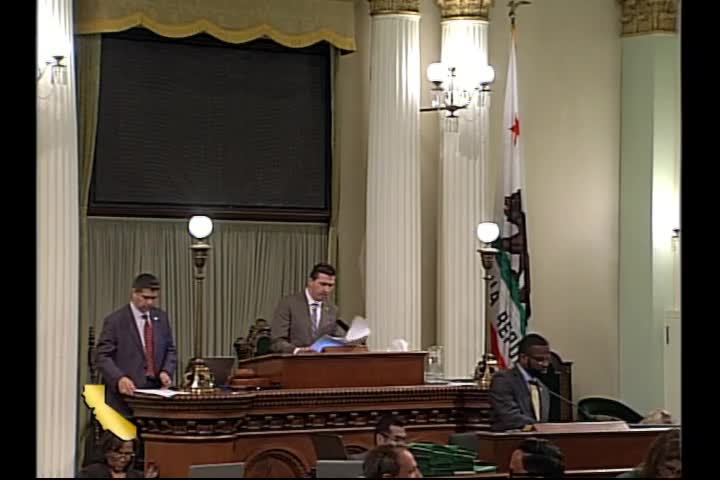


Bill Co-Author(s):