AB 253: Tribal gaming: compact ratification.
- Session Year: 2017-2018
- House: Assembly
- Latest Version Date: 2017-10-03
Existing federal law, the Indian Gaming Regulatory Act of 1988, provides for the negotiation and execution of tribal-state gaming compacts for the purpose of authorizing certain types of gaming on Indian lands within a state. The California Constitution authorizes the Governor to negotiate and conclude tribal-state gaming compacts, subject to ratification by the Legislature. Existing law expressly ratifies a number of tribal-state gaming compacts, and amendments of tribal-state gaming compacts, between the State of California and specified Indian tribes.
The California Environmental Quality Act (CEQA) requires a lead agency to prepare, or cause to be prepared, and certify the completion of, an environmental impact report on a project, as defined, that it proposes to carry out or approve that may have a significant effect on the environment, as defined, or to adopt a negative declaration if it finds that the project will not have that effect.
This bill would ratify the tribal-state gaming compact entered into between the State of California and the Tuolumne Band of Me-Wuk Indians, executed on August 18, 2017. The bill would provide that, in deference to tribal sovereignty, certain actions related to that compact are not projects for purposes of CEQA.
This bill would declare that it is to take effect immediately as an urgency statute.
The Horse Racing Law authorizes a thoroughbred racing association or fair to distribute the audiovisual signal and accept wagers on the results of out-of-state thoroughbred races conducted in the United States during the calendar period the association or fair is conducting a race meeting, including days on which there is no live racing being conducted by the association or fair, without the consent of the organization that represents horsemen and horsewomen participating in the race meeting and without regard to the amount of purses. Under that law, the total number of thoroughbred races imported by associations or fairs on a statewide basis under these provisions are required to not exceed 50 per day on days when live thoroughbred or fair racing is being conducted in the state, with the exception of prescribed races, including races imported that are part of the race card of the Kentucky Derby, the Kentucky Oaks, the Preakness Stakes, the Belmont Stakes, the Jockey Club Gold Cup, the Travers Stakes, the Arlington Million, the Breeders Cup, the Dubai Cup, the Arkansas Derby, the Apple Blossom Handicap, or the Haskell Invitational.This bill would exempt from the 50 imported race per day limitation, races imported that are part of the race card of the Florida Derby.The Horse Racing Law authorizes a thoroughbred racing association or fair to distribute the audiovisual signal and accept wagers on the results of out-of-state thoroughbred races conducted in the United States during the calendar period the association or fair is conducting a race meeting, including days on which there is no live racing being conducted by the association or fair, without the consent of the organization that represents horsemen and horsewomen participating in the race meeting and without regard to the amount of purses. Under that law, the total number of thoroughbred races imported by associations or fairs on a statewide basis under these provisions are required to not exceed 50 per day on days when live thoroughbred or fair racing is being conducted in the state, with the exception of prescribed races, including races imported that are part of the race card of the Kentucky Derby, the Kentucky Oaks, the Preakness Stakes, the Belmont Stakes, the Jockey Club Gold Cup, the Travers Stakes, the Arlington Million, the Breeders Cup, the Dubai Cup, the Arkansas Derby, the Apple Blossom Handicap, or the Haskell Invitational.
This bill would exempt from the 50 imported race per day limitation, races imported that are part of the race card of the Florida Derby.
The existing federal Indian Gaming Regulatory Act of 1988 authorizes the negotiation and execution of tribal-state gaming compacts for the purpose of authorizing certain types of gaming on Indian lands within a state. The California Constitution authorizes the Governor to negotiate and conclude compacts, subject to ratification by the Legislature. Existing law ratifies the tribal-state gaming compact entered into between the State of California and the United Auburn Indian Community, executed on August 14, 2015.This bill would make a technical, nonsubstantive change to those provisions.The existing federal Indian Gaming Regulatory Act of 1988 authorizes the negotiation and execution of tribal-state gaming compacts for the purpose of authorizing certain types of gaming on Indian lands within a state. The California Constitution authorizes the Governor to negotiate and conclude compacts, subject to ratification by the Legislature. Existing law ratifies the tribal-state gaming compact entered into between the State of California and the United Auburn Indian Community, executed on August 14, 2015.
This bill would make a technical, nonsubstantive change to those provisions.
(a)The tribal-state gaming compact entered into in accordance with the federal Indian Gaming Regulatory Act of 1988 (18 U.S.C. Secs. 1166 to 1168, inclusive, and 25 U.S.C. Sec. 2701 et seq.) between the State of California and the Tuolumne Band of Me-Wuk Indians, executed on August 18, 2017, is hereby ratified.
(b)(1)In deference to tribal sovereignty, none of the following shall be deemed a project for purposes of the California Environmental Quality Act (Division 13 (commencing with Section 21000) of the Public Resources Code):
(A)The execution of an amendment to the tribal-state gaming compact ratified by this section.
(B)The execution of the tribal-state gaming compact ratified by this section.
(C)The execution of an intergovernmental agreement between a tribe and a county or city government negotiated pursuant to the express authority of, or as expressly referenced in, the tribal-state gaming compact ratified by this section.
(D)The execution of an intergovernmental agreement between a tribe and the Department of Transportation, or other state agency, negotiated pursuant to the express authority of, or as expressly referenced in, the tribal-state gaming compact ratified by this section.
(E)The on-reservation impacts of compliance with the terms of the tribal-state gaming compact ratified by this section.
(2)Except as expressly provided in this section, this subdivision does not exempt a city, county, or city and county, or the Department of Transportation, or any state agency or local jurisdiction, from the requirements of the California Environmental Quality Act.
SEC. 2.This act is an urgency statute necessary for the immediate preservation of the public peace, health, or safety within the meaning of Article IV of the California Constitution and shall go into immediate effect. The facts constituting the necessity are:
In order to enhance, at the earliest possible time, the economic development, long-term stability, and self-sufficiency of the Tuolumne Band of Me-Wuk Indians, and to protect the interests of the tribe and its members, the surrounding community, and the California public, it is necessary for this act to take effect immediately.
SECTION 1.Section 19596.2 of the Business and Professions Code is amended to read:19596.2.(a)Notwithstanding any other law and except as provided in Section 19596.4, a thoroughbred racing association or fair may distribute the audiovisual signal and accept wagers on the results of out-of-state thoroughbred races conducted in the United States during the calendar period the association or fair is conducting a race meeting, including days on which there is no live racing being conducted by the association or fair, without the consent of the organization that represents horsemen and horsewomen participating in the race meeting and without regard to the amount of purses. Further, the total number of thoroughbred races imported by associations or fairs on a statewide basis under this section shall not exceed 50 per day on days when live thoroughbred or fair racing is being conducted in the state. The limitation of 50 imported races per day does not apply to any of the following:(1)Races imported for wagering purposes pursuant to subdivision (c).(2)Races imported that are part of the race card of the Kentucky Derby, the Kentucky Oaks, the Preakness Stakes, the Belmont Stakes, the Jockey Club Gold Cup, the Travers Stakes, the Arlington Million, the Breeders Cup, the Dubai World Cup, the Arkansas Derby, the Florida Derby, the Apple Blossom Handicap, or the Haskell Invitational.(3)Races imported into the northern zone when there is no live thoroughbred or fair racing being conducted in the northern zone.(4)Races imported into the combined central and southern zones when there is no live thoroughbred or fair racing being conducted in the combined central and southern zones.(b)Any thoroughbred association or fair accepting wagers pursuant to subdivision (a) shall conduct the wagering in accordance with the applicable provisions of Sections 19601, 19616, 19616.1, and 19616.2.(c)No thoroughbred association or fair may accept wagers pursuant to this section on out-of-state races commencing after 7 p.m., Pacific standard time, without the consent of the harness or quarter horse racing association that is then conducting a live racing meeting in Orange or Sacramento Counties.(a)Notwithstanding any other law and except as provided in Section 19596.4, a thoroughbred racing association or fair may distribute the audiovisual signal and accept wagers on the results of out-of-state thoroughbred races conducted in the United States during the calendar period the association or fair is conducting a race meeting, including days on which there is no live racing being conducted by the association or fair, without the consent of the organization that represents horsemen and horsewomen participating in the race meeting and without regard to the amount of purses. Further, the total number of thoroughbred races imported by associations or fairs on a statewide basis under this section shall not exceed 50 per day on days when live thoroughbred or fair racing is being conducted in the state. The limitation of 50 imported races per day does not apply to any of the following:
(1)Races imported for wagering purposes pursuant to subdivision (c).
(2)Races imported that are part of the race card of the Kentucky Derby, the Kentucky Oaks, the Preakness Stakes, the Belmont Stakes, the Jockey Club Gold Cup, the Travers Stakes, the Arlington Million, the Breeders Cup, the Dubai World Cup, the Arkansas Derby, the Florida Derby, the Apple Blossom Handicap, or the Haskell Invitational.
(3)Races imported into the northern zone when there is no live thoroughbred or fair racing being conducted in the northern zone.
(4)Races imported into the combined central and southern zones when there is no live thoroughbred or fair racing being conducted in the combined central and southern zones.
(b)Any thoroughbred association or fair accepting wagers pursuant to subdivision (a) shall conduct the wagering in accordance with the applicable provisions of Sections 19601, 19616, 19616.1, and 19616.2.
(c)No thoroughbred association or fair may accept wagers pursuant to this section on out-of-state races commencing after 7 p.m., Pacific standard time, without the consent of the harness or quarter horse racing association that is then conducting a live racing meeting in Orange or Sacramento Counties.
SECTION 1.Section 12012.68 of the Government Code is amended to read:12012.68.(a)The tribal-state gaming compact entered into in accordance with the federal Indian Gaming Regulatory Act of 1988 (18 U.S.C. Sec. 1166 to 1168, inclusive, and 25 U.S.C. Sec. 2701 et seq.) between the State of California and the United Auburn Indian Community, executed on August 14, 2015, is hereby ratified.(b)(1)In deference to tribal sovereignty, any of the following shall not be deemed a project for purposes of the California Environmental Quality Act (Division 13 (commencing with Section 21000) of the Public Resources Code):(A)The execution of an amendment to the tribal-state gaming compact ratified by this section.(B)The execution of the tribal-state gaming compact ratified by this section.(C)The execution of an intergovernmental agreement between a tribe and a county or city government negotiated pursuant to the express authority of, or as expressly referenced in, the tribal-state gaming compact ratified by this section.(D)The execution of an intergovernmental agreement between a tribe and the Department of Transportation negotiated pursuant to the express authority of, or as expressly referenced in, the tribal-state gaming compact ratified by this section.(E)The on-reservation impacts of compliance with the terms of the tribal-state gaming compact ratified by this section.(F)The sale of compact assets, as defined in subdivision (a) of Section 63048.6, or the creation of the special purpose trust established pursuant to Section 63048.65.(2)Except as expressly provided herein, this subdivision does not exempt a city, county, or city and county, or the Department of Transportation, from the requirements of the California Environmental Quality Act.(a)The tribal-state gaming compact entered into in accordance with the federal Indian Gaming Regulatory Act of 1988 (18 U.S.C. Sec. 1166 to 1168, inclusive, and 25 U.S.C. Sec. 2701 et seq.) between the State of California and the United Auburn Indian Community, executed on August 14, 2015, is hereby ratified.
(b)(1)In deference to tribal sovereignty, none of any of the following shall not be deemed a project for purposes of the California Environmental Quality Act (Division 13 (commencing with Section 21000) of the Public Resources Code):
(A)The execution of an amendment to the tribal-state gaming compact ratified by this section.
(B)The execution of the tribal-state gaming compact ratified by this section.
(C)The execution of an intergovernmental agreement between a tribe and a county or city government negotiated pursuant to the express authority of, or as expressly referenced in, the tribal-state gaming compact ratified by this section.
(D)The execution of an intergovernmental agreement between a tribe and the Department of Transportation negotiated pursuant to the express authority of, or as expressly referenced in, the tribal-state gaming compact ratified by this section.
(E)The on-reservation impacts of compliance with the terms of the tribal-state gaming compact ratified by this section.
(F)The sale of compact assets, as defined in subdivision (a) of Section 63048.6, or the creation of the special purpose trust established pursuant to Section 63048.65.
(2)Except as expressly provided herein, this subdivision does not exempt a city, county, or city and county, or the Department of Transportation, from the requirements of the California Environmental Quality Act.
|
Date
|
Status
|
|---|---|
| Oct 3, 2017 | Chaptered by Secretary of State - Chapter 437, Statutes of 2017. |
| Oct 3, 2017 | Approved by the Governor. |
| Sep 20, 2017 | Enrolled and presented to the Governor at 4:30 p.m. |
| Sep 12, 2017 | Urgency clause adopted. Senate amendments concurred in. To Engrossing and Enrolling. |
| Sep 12, 2017 | Assembly Rule 77(a) suspended. |
| Sep 11, 2017 | In Assembly. Concurrence in Senate amendments pending. May be considered on or after September 13 pursuant to Assembly Rule 77. |
| Sep 11, 2017 | Read third time. Urgency clause adopted. Passed. Ordered to the Assembly. |
| Sep 7, 2017 | Read second time. Ordered to third reading. |
| Sep 6, 2017 | Withdrawn from committee. |
| Aug 30, 2017 | From committee chair, with author's amendments: Amend, and re-refer to committee. Read second time, amended, and re-referred to Com. on G.O. |
| May 24, 2017 | Referred to Com. on G.O. |
| May 11, 2017 | In Senate. Read first time. To Com. on RLS. for assignment. |
| May 11, 2017 | Read third time. Passed. Ordered to the Senate. (Ayes 77. Noes 0. Page 1491.) |
| May 8, 2017 | Read second time. Ordered to Consent Calendar. |
| May 4, 2017 | From committee: Do pass. To Consent Calendar. (Ayes 20. Noes 0.) (May 3). |
| Mar 27, 2017 | Re-referred to Com. on G.O. |
| Mar 23, 2017 | From committee chair, with author's amendments: Amend, and re-refer to Com. on G.O. Read second time and amended. |
| Mar 23, 2017 | Referred to Com. on G.O. |
| Feb 1, 2017 | From printer. May be heard in committee March 3. |
| Jan 31, 2017 | Read first time. To print. |
|
Date
|
Description
|
Location
|
Votes
|
|
|---|---|---|---|---|
| Sep 12, 2017 | AB 253 BIGELOW Concurrence - Urgency Added | Assembly Floor |
Passed |
|
| Sep 11, 2017 | Assembly 3rd Reading AB253 Bigelow By Berryhill Urgency Clause | Senate Floor |
Passed |
|
| May 11, 2017 | AB 253 BIGELOW Consent Calendar Second Day Regular Session | Assembly Floor |
Passed |
|
| May 3, 2017 | Do pass. To Consent Calendar. | Assembly Standing Committee on Governmental Organization |
Passed |
This list shows positions taken on this bill by organizations on the date displayed, which is linked to the original source.
Positions by individuals are not included.
|
Organization
|
Position
|
Date
|
|---|---|---|
| California Nations Indian Gaming Association | ** Support | Sep 11, 2017 |
| Tuolumne County Board of Supervisors | ** Support | Sep 11, 2017 |
Office of Senate Floor Analyses (916) 651-1520 Fax: (916) 327-4478 | AB |
THIRD READING
Bill No: AB 253
:
NOTE: On September 6, 2017, the Senate Governmental Organization Committee held an informational hearing on the tribal-state gaming compact between the State of California and the Tuolumne Band of Me-Wuk Indians, executed on August 18, 2017.
DIGEST:
This bill ratifies the tribal-state compact (Compact) entered into between the State of California and the Tuolumne Band of Me-Wuk Indians (hereafter “Tribe”) executed on August 18, 2017.
Existing law:
- Provides, under the Indian Gaming Regulatory Act (IGRA), for the negotiation and conclusion of compacts between federally recognized Indian tribes and the State for the purpose of conducting Class III gaming activities on Indian lands within a State as a means of promoting tribal economic development, self-sufficiency, and strong tribal governments.
- Authorizes expressly a number of tribal-state gaming compacts between the State of California and specified Indian tribes.
- Authorizes the conduct of Class III gaming activities to the extent such activities are permitted by state law, a gaming compact has been concluded by a federally recognized tribe and the State, and the compact has been approved by the Secretary of the Interior.
- Limits the operation of Class III gaming activities to Indian lands acquired on or before October 17, 1988. Provides for certain exceptions to conduct gaming activities on Indian lands acquired after October 17, 1988.
- Defines “Indian lands” to mean all lands within the limits of any Indian reservation, and any lands title to which is either held in trust by the United States for the benefit of any Indian tribe, or individual, or held by any Indian tribe or individual subject to restriction by the U.S. against alienation and over which an Indian tribe exercises governmental power.
- Requires the State to negotiate to conclude a compact in good faith with an Indian tribe having jurisdiction over the Indian lands upon which the Class III gaming activity is to be conducted. Provides the U.S. district courts with jurisdiction over any cause of action initiated by a tribal government alleging that the State failed to negotiate in good faith to conclude a compact. Prescribes the remedy, mediation supervised by the courts, if it is found that the State failed to negotiate in good faith to conclude a compact.
- Authorizes the Governor, under the California Constitution, to negotiate and conclude compacts, subject to ratification by the Legislature.
This bill:
- Ratifies the Compact between the State of California and the Tribe executed on August 18, 2017.
- Provides that in deference to tribal sovereignty, certain actions are not deemed projects for purposes of the California Environmental Quality Act (CEQA).
- Stipulates, except as expressly provided, that none of the provisions shall be construed to exempt a city, county, or city, and county, or the Department of Transportation, or any state agency or local jurisdictions, from CEQA requirements.
- Contains an urgency clause.
Background
The Tribal-State Gaming Compact between the State of California and the Tribe was executed on August 18, 2017.
The Compact authorizes the Tribe to operate a maximum of 2,000 slot machines at no more than two gaming facilities located on eligible Indian lands held in trust for the Tribe, and located within the boundaries of the Tribe’s reservation.
The Tribe has agreed to pay the State its pro rata share of costs the State incurs for the performance of its duties under the Compact. The Tribe will contribute to the Revenue Sharing Trust Fund (RSTF) and the Tribal Nation Grant Fund (TNGF). For the first five years of the compact, the Tribe will pay $750,000 to these funds. After the initial five years, the payment will be 2% of Net Win, as defined, as long as the Tribe maintains its current agreement with the County of Tuolumne (County).
In 2001, the Tribe and the County entered into a Memorandum of Understanding (MOU). The MOU is a binding and enforceable agreement that reflects the respectful and cooperative relationship between the Tribe and the County. In the area of law enforcement, the Tribe and County agreed to develop protocols to ensure smooth and effective interface between the Sheriff’s Department and Tribal security operations. The Tribe also agreed to pay $300,000 annually to the Sheriff’s Department for services.
The MOU establishes procedures for Fire and Life Safety Inspections and provides for annual payments by the Tribe of $400,000 to the Tuolumne Fire Protection District and $40,000 to the County Fire Department. The Tribe has also agreed to provide $10,000 per year each to the County Office of Emergency Services and County Emergency Medical Services. The Tribe provides $120,000 annually in payments to the County for traffic mitigation and $15,000 to the Tuolumne County Mental Health for problem gaming services. The MOU also establishes a cooperative framework in a range of other areas including hazardous materials and food safety.
According to the Governor’s Office, certain terms of the Compact related to licensing, regulatory, environmental mitigation, patron protection, labor, public health and safety provisions are substantially the same as recent compacts.
The Tribe currently operates the Black Oak Casino (Casino) in Tuolumne which consists of approximately 1,300 slot machines. The Casino also includes 24 tables games, four restaurants, three bars, a lounge nightclub, bowling and family fun center. The gaming facility employees about 900 individuals.
Once effective (legislative ratification and federal approval required), this Compact will be in full force and effect for 25 years following the effective date.
Brief History of the Tuolumne Band of Me-Wuk Indians. The Tuolumne Band of Me-Wuk Indians is a federally recognized Indian tribe located in the foothills of the Sierra Nevada in Tuolumne County, California. The Tuolumne Rancheria was purchased on October 26, 1910 and established as one of the two local reservations for landless Indians. According to the Tribe, the total enrolled population of the Tribe is approximately 500 members and its reservation is comprised of 1,775 acres.
In January 2005, the Tribe opened the Tuolumne Me-Wuk Indian Health Center. It is a tribally owned and operated primary care health center located in the City of Tuolumne. According to the Tribe, it provides pediatric, obstetric, psychiatric, general medical care, minor surgery, and general health education. An on-site pharmacy was opened in September 2006, followed by a new, state-of-the-art Dental Clinic in 2008. An additional Tuolumne Me-Wuk Indian Health Center was opened in Sonoma County in 2013.
In 2009, the Casino added a six-story, 1,000 space parking garage and smoke-free skywalk gaming area. The Bear Creek convenience store and gas station opened in 2011. The “Black Oak Casino and Resort,” was created in 2012 with the additional of an 18 room hotel, outdoor pool, spa, exercise room, conference center and banquet facilities.
The Tribe is the second largest employer in the County, including approximately 900 gaming facility employees. The Tribe states that they donate approximately $250,000 in annual charitable contributions to various organizations and events in the County and the greater Central Valley region.
KEY PROVISIONS OF THE COMPACT
Scope of Class III Gaming Authorized. The Tribe is authorized to operate up to 2,000 gaming devices, banking or percentage card games, and any devices or games that are authorized under state law to the California State Lottery, provided that the Tribe will not offer such games through use of the Internet unless others in the state not affiliated with or licensed by the California State Lottery are permitted to do so under state and federal law. The Tribe shall not engage in Class III Gaming that is not expressly authorized in the Compact.
Authorized Gaming Facility. The Tribe may establish and operate no more than two gaming facilities and engage in Class III gaming only on eligible Indian lands held in trust for the Tribe, located within the boundaries of the Tribe’s reservation.
Payments to the Special Distribution Fund (SDF). The Tribe shall pay to the State, on a pro rata basis, the costs the State incurs for the performance of all its duties under this Compact, as established by the monies appropriated in the annual Budget Act for the performance of their duties under the Class III Gaming Compacts.
Payments to the RSTF or the TNGF. The Tribe shall pay $750,000 annually to the State Gaming Agency for deposit into the RSTF or the TNGF for five years after the effective date of this Compact. After the initial give years, if the Tribe operates more than 350 slot machines, the Tribe shall pay 2% of its Net Win from the operation of slot machines for deposit into the RSTF and or the TNGF.
ADDITIONAL COMPACT COMPONENTS
Gaming Ordinance and Regulations. All gaming activities conducted under this Compact shall, at a minimum, comply with a gaming ordinance duly adopted by the Tribe and approved in accordance with IGRA and all applicable rules, regulations, procedures, specifications, and standards duly adopted by the National Indian Gaming Commission, the Tribal Gaming Agency, and the State Gaming Agency, and with the provisions of this Compact, as specified.
Prohibitions Regarding Minors. The Tribe shall prohibit persons under the age 18 years from being present in any room or area in which gaming activities are being conducted unless the person is en route to a non-gaming area of the gaming facility, or is employed at the gaming facility in a capacity other than as a gaming employee. If the Tribe permits the consumption of alcoholic beverages in the Gaming Facility, the Tribe shall prohibit persons under the age of 21 from purchasing, consuming, or possessing alcoholic beverages. The Tribe shall also prohibit persons under the age of 21 from being present in any room or area in which alcoholic beverages may be consumed.
Licensing Requirements and Procedures. All persons in any way connected with the gaming operation or gaming facility who are required to be licensed or to submit to a background investigation under IGRA, and any others required to be licensed under this Compact, including, without limitation, all gaming employees, gaming resource suppliers, financial sources, and any other person having a significant influence over the gaming operation, must be licensed by the Tribal Gaming Agency. Also, every gaming employee must obtain, and thereafter maintain current, a valid tribal gaming license, as specified.
Problem Gambling. The gaming operation must establish a program, approved by the Tribal Gaming Agency, to mitigate pathological and problem gaming by implementing specified measures.
Environmental Protections. The Tribe is required to prepare a comprehensive and adequate tribal environmental impact report (TEIR), analyzing the potentially significant off-reservation environmental impacts of the project. Failure to prepare the TEIR that satisfies the requirements and standards set forth in this Compact may be deemed a breach of this Compact and shall be grounds for issuance of an injunction or other appropriate equitable relief.
Tobacco Provisions. The Tribe agrees to provide a non-smoking area in the gaming facility and to utilize a ventilation system throughout the gaming facility that exhausts tobacco smoke to the extent reasonably feasible under state-of-the-art technology existing as of the date of the construction or significant renovation of the gaming facility, and further agrees not to offer or sell tobacco products to anyone younger than the minimum age specified in state law to legally purchase tobacco products.
Alcohol Provisions. Makes it explicit that the purchase, sale, and service of alcoholic beverages shall be subject to state law – the Alcoholic Beverage Control Act.
Labor Provisions. Provides that the gaming activities authorized by this Compact may only commence after the Tribe has adopted an ordinance identical to the Tribal Labor Relations Ordinance (TRLO), referenced as Appendix C of the Compact, and the gaming activities may only continue as long as the Tribe maintains the ordinance. If the Tribe employs 250 or more persons in a tribal casino facility, then the provisions of the TLRO become effective. The TLRO provides for a secret ballot election and union neutrality. After the certification that 30% of the eligible employees in a bargaining unit have expressed an interest in the union, a notice of election shall be issued and the election shall be concluded within 30 calendar days thereafter. Employees may mail in ballots provided they are received by election day. Union representation requires an affirmative vote of 50% plus one of all votes cast.
Effective Date. This Compact shall not be effective unless and until all of the following have occurred: the Compact is ratified by statute in accordance with state law and notice of approval or constructive approval is published in the Federal Register. Once effective, this Compact shall be in full force and effect for 25 years following the effective date.
ADDITIONAL BACKGROUND INFORMATION
Indian Gaming Regulatory Act. In 1988, Congress enacted IGRA to provide a statutory basis for the operation and regulation of gaming on Indian lands. IGRA provides that an Indian tribe may conduct gaming activity on Indian lands if the activity “is not specifically prohibited by federal law and is conducted within a State which does not prohibit such gaming activity.”
IGRA distinguishes between three classes of gaming (Class I, Class II, and Class III) and provides for different forms of regulation for each class. Class I gaming includes “social games” for minor prizes or “traditional forms of Indian gaming.” Class II gaming is defined to include bingo and card games that are explicitly authorized by the laws of the state, or that are not explicitly prohibited by the laws of the state and are played at any location in the State, so long as the card games are played in conformity with those laws and regulations. Class III gaming includes such things as slot machines, casino games, and banked card games such as black jack and baccarat. Class III gaming may only be conducted under terms of a compact negotiated between an Indian tribe and a State.
IGRA was enacted against a legal background in which Indian tribes and individuals generally are exempt from state taxation within their own territory. IGRA provides that with the exception of assessments permitted under the statute, to defray the State’s costs of regulating gaming activity, IGRA shall not be interpreted as conferring upon a State authority to impose any tax, fee, charge, or other assessment upon an Indian tribe to engage in Class III activity. Nor may a State refuse to enter into negotiations based on the lack of authority to impose such a tax, fee, charge, or other assessment.
When a tribe requests negotiations for a Class III compact, IGRA requires the State to negotiate with the Indian tribe in good faith. IGRA provides a comprehensive process to prevent an impasse in compact negotiations, which is triggered when a tribe files suit alleging that the State has refused to negotiate or has failed to negotiate in good faith.
Before 2000, the California Constitution prohibited Class III gaming. In 2000, California voters approved Proposition 1A, which had been proposed by the Governor and passed by the Legislature. Proposition 1A amended the California Constitution to permit the State to negotiate compacts with federally recognized Indian tribes for certain Class III gaming activities. Because non-Indian parties were still forbidden from operating gaming facilities, Proposition 1A granted Indian tribes a “constitutionally protected monopoly on most types of Class III games in California.”
Special Distribution Fund. Existing law creates the SDF in the State Treasury for the receipt of revenue contributions made by tribal governments pursuant to the terms of the 1999 model Tribal-State Gaming Compacts and authorizes the Legislature to appropriate money from the SDF for the following purposes: grants for programs designed to address gambling addiction; grants for the support of state and local government agencies impacted by tribal government gaming; compensation for regulatory costs incurred by the CGCC and DOJ in connection with the implementation and administration of compacts; payment of shortfalls that may occur in the RSTF; disbursements for the purpose of implementing the terms of tribal labor relations ordinances promulgated in accordance with the terms of the 1999 compacts; and, any other purpose specified by law. (Pursuant to compact renegotiations that took place with several of the larger gaming tribes during the Schwarzenegger administration, revenue from those tribes is directed into the state General Fund, instead of the SDF.)
Current law establishes a method of calculating the distribution of appropriations from the SDF for grants to local government agencies impacted by tribal gaming. This method includes a requirement that the State Controller, in consultation with the CGCC, deposit funds into County Tribal Casino Accounts and Individual Tribal Casino Accounts based upon a process that takes into consideration whether the county has tribes that pay, or do not pay, into the SDF.
Revenue Sharing Trust Fund. Existing law creates in the State Treasury the RSTF for the receipt and deposit of moneys derived from gaming device license fees that are paid into the RSTF pursuant to the terms of specified tribal-state gaming compacts for the purpose of making distributions to non-compacted California tribes (e.g., federally-recognized non-gaming tribes and tribes that operate casinos with fewer than 350 slot machines). Revenue in the RSTF is available to CGCC, upon appropriation by the Legislature, for making distributions of $1.1 million annually to non-compact tribes. The RSTF was created as part of the 1999 compacts, which, in conjunction with the passage of Proposition 1A, created gaming compacts with approximately 60 California tribes. Non-compact tribes are considered third-party beneficiaries of the 1999 compacts.
Tribal Nation Grant Fund. This particular fund (referenced in recent compacts) was created to complement the RSTF and provides for the distribution of funds to non-gaming tribes, upon application of such tribes for purposes related to effective self-governance, self-determined community, and economic development. Payments from this fund are intended to be made to non-gaming tribes on a “need” basis, upon application. Payments from the TNGF are expected to begin in 2018.
Related/Prior Legislation
SB 6 (Hueso, 2017) ratifies the tribal-state gaming compact entered into between the State of California and the Quechan Tribe of the Fort Yuma Indian Reservation. (Pending on the Assembly Floor)
SB 626 (Dodd, 2017) ratifies the amendment to the tribal-state gaming compact entered into between the State of California and the Federated Indians of Graton Rancheria, executed on August 18, 2017. (Pending on the Governor’s Desk)
AB 174 (Bigelow, 2017) ratifies the tribal-state gaming compact entered into between the State of California and the United Auburn Indian Community, executed on August 18, 2017. (Pending on the Assembly Floor)
AB 394 (Mathis, 2017) ratifies the tribal-state gaming compact entered into between the State of California and the Tule River Indian Tribe of California, executed on August 31, 2017. (Pending on the Senate Floor)
AB 891 (Mathis, 2017) ratifies the tribal-state gaming compact entered into between the State of California and the Morongo Band of Mission Indians, executed on September 6, 2017. (Pending on the Senate Floor)
AB 1606 (Cooper) ratifies the tribal-state gaming compact entered into between the State of California and the Wilton Rancheria, executed on July 19, 2017. (Pending on the Governor’s Desk)
AB 1378 (Gray, 2017) ratifies the amendment to the tribal-state gaming compact entered into between the State of California and the San Manuel Band of Mission Indians executed on August 18, 2017. (Pending on the Assembly Floor)
FISCAL EFFECT: Appropriation: Fiscal Com.: Local:
California Nations Indian Gaming Association
Tuolumne County Board of Supervisors
None received
9/11/17 14:14:48
**** END ****
CONCURRENCE IN SENATE AMENDMENTS
CSA1 Bill Id:AB 253
Author:(Bigelow)
As Amended Ver:August 30, 2017
2/3 vote. Urgency
ASSEMBLY: |
| (May 11, 2017) | SENATE: | 39-0 | (September 11, 2017) |
(vote not relevant)
Original Committee Reference: G.O.
SUMMARY: Ratifies a tribal-state Class III gaming compact (Compact) entered into between the State of California (State) and the Tuolumne Band of Me-Wuk Indians (Tribe), executed on August 18, 2017. Additionally, this bill provides that, in deference to tribal sovereignty, certain actions are not deemed projects for purposes of the California Environmental Quality Act (CEQA); and, stipulates, except as expressly provided, that none of the provisions shall be construed to exempt a city, county, or city and county, or the Department of Transportation from CEQA requirements.
The Senate amendments delete the Assembly version of this bill, and instead:
- Ratify a tribal-state Class III gaming compact entered into between the State of California and the Tuolumne Band of Me-Wuk Indians, a federally recognized Indian tribe, executed on August 18, 2017.
- Authorize the Tribe to operate a maximum of 2,000 gaming devices (slot machines) at no more than two gaming facilities on eligible Indian lands held in trust for the Tribe, as specified.
- Under the terms of the Compact, the Tribe will pay into the Special Distribution Fund (SDF), its pro-rata share of costs the State incurs for the performance of its duties under the Compact, as specified. The Tribe is not required under its 1999 Compact to make payments to offset the State's regulatory costs.
- The Tribe will contribute to the Revenue Sharing Trust Fund (RSTF) and the Tribal Nation Grant Fund (TNGF). For the first five years of the Compact, the Tribe will pay $750,000 to these funds. After the initial five years, the payment will be 2% of "Net Win" as long as the Tribe maintains its current agreement with the Tuolumne County (County). The County memorandum of understanding (MOU) Agreement provides for payments from the Tribe to the County for fire/law enforcement/emergency medical services, among other things.
- The licensing, regulatory, environmental mitigation, patron protection, labor, public health and safety provisions are substantially the same as recent compacts.
- The Compact: a) provides a regulatory framework that respects the role of the Tribal Gaming Agency as the primary regulator while also ensuring that state gaming regulators fulfill their responsibilities; b) requires the Tribe to conduct its gaming activities pursuant to an internal control system that implements minimum internal controls that are no less stringent than those in federal regulations; c) requires the Tribe to adopt a Tribal Labor Relations Ordinance, as specified; and, d) contains provisions to protect the health and safety of patrons, guests, and employees.
- The Compact shall be in full force and effect until 25 years (2042) following the effective date.
- Provide that, in deference to tribal sovereignty, certain actions are not deemed projects for purposes of the California Environmental Quality Act (CEQA); and, stipulate, except as expressly provided, that none of the provisions shall be construed to exempt a city, county, or city and county, or the Department of Transportation from CEQA requirements.
- Contain an urgency clause, allowing this bill to take effect immediately upon enactment.
EXISTING LAW:
- Provides, under the Indian Gaming Regulatory Act (IGRA), for the negotiation and conclusion of compacts between federally recognized Indian tribes and the State for the purpose of conducting Class III gaming activities on Indian lands within a State as a means of promoting tribal economic development, self-sufficiency, and strong tribal governments.
- Authorizes expressly a number of tribal-state gaming compacts between the State of California and specified Indian tribes.
- Authorizes the conduct of Class III gaming activities to the extent such activities are permitted by state law, a gaming compact has been concluded by a federally recognized tribe and the State, and the compact has been approved by the Secretary of the Interior.
- Limits the operation of Class III gaming activities to Indian lands acquired on or before October 17, 1988. Provides for certain exceptions to conduct gaming activities on Indian lands acquired after October 17, 1988.
- Defines Indian lands to mean all lands within the limits of any Indian reservation, and any lands title to which is either held in trust by the United States (U.S.) for the benefit of any Indian tribe, or individual, or held by any Indian tribe or individual subject to restriction by the U.S. against alienation and over which an Indian tribe exercises governmental power.
- Requires the State to negotiate to conclude a compact in good faith with an Indian tribe having jurisdiction over the Indian lands upon which the Class III gaming activity is to be conducted. Provides the U.S. district courts with jurisdiction over any cause of action initiated by a tribal government alleging that the State failed to negotiate in good faith to conclude a compact. Prescribes the remedy, mediation supervised by the courts, if it is found that the State failed to negotiate in good faith to conclude a compact.
- Authorizes the Governor, under the California Constitution, to negotiate and conclude compacts, subject to ratification by the Legislature.
FISCAL EFFECT: Unknown
COMMENTS: On September 6, 2017, the Assembly Governmental Organization Committee held an informational hearing on the tribal-state gaming compact between the State of California and the Tuolumne Band of Me-Wuk Indians, executed on August 18, 2017.
Brief History and Background:
According to information provided by the Tribe, the Tuolumne Band of Me-Wuk Indians has a total enrolled population of approximately 500 members and its reservation is comprised of 1,775 acres in Tuolumne County. The Tribe has a stable government and exceptionally strong ties with the local community. The Tribal Chairman has served in that position for over 22 years. Since 2001, the Tribe has operated a medium sized gaming facility, subject to the terms of a 1999 Compact, known as the "Black Oak Casino and Resort". The gaming facility features four restaurants, a lounge nightclub, bowling alley and family fun center, along with 1,300 Class III gaming machines and 20 table games. The casino also includes a 148-room hotel, outdoor pool, spa, conference center and banquet facilities. The gaming facility has enabled the Tribe to broaden the range of services not only offered to the Indian community, but the broader community at large. The Tribe donates approximately $250,000 in annual charitable contributions to various organizations and events in Tuolumne County and the greater Central Valley region. The Tribe is the second largest employer in County, including approximately 900 gaming facility employees.
In addition, the Tribe operates a convenience store and gas station and the Four Seasons Native Plant Nursery, which is located on the Tuolumne Rancheria.
In January of 2005, the Tribe opened the Tuolumne Me-Wuk Indian Health Center. It is a tribally owned and operated primary care health center located on the former Westside Property in the city of Tuolumne. It provides pediatric, obstetric, psychiatric, general medical care, minor surgery, and general health education. The Tribe continues to grow to meet the needs of the community, by offering an on-site pharmacy and dental clinic.
In 2010, the Tribe celebrated the 100-year anniversary of the Tuolumne Rancheria. The Tribe continues to fight assimilation and advocates for cultural event participation, knowledge and utilization of traditional methodology, self-determination and Indian sovereignty. The Tribal Vision Statement accurately expresses this sentiment. It states, "The Tuolumne Band of Me-Wuk Indians is a sovereign nation that is dedicated to upholding social and economic stability through self-reliance and to promote the health, safety and welfare of our Indian people."
The Compact's preamble states, "the Tribe and the State share an interest in mitigating the off-reservation impacts of the Gaming Facility, affording meaningful consumer and employee protections in connection with the operations of the gaming facility, fairly regulating the gaming activities conducted at the gaming facility, and fostering a good-neighbor relationship.
Key Provisions of the Compact:
Scope of Class III Gaming Authorized: The Tribe is authorized to operate up to 2,000 gaming devices (slot machines), banking or percentage card games, and any devices or games that are authorized under state law to the California State Lottery, provided that the Tribe will not offer such games through use of the Internet unless others in the state are permitted to do so under state and federal law. The Tribe shall not be prohibited from offering Class II gaming or precluded from negotiating a separate compact governing the conduct of off-track wagering at the Tribe's gaming facility. The Tribe shall not engage in Class III gaming that is not expressly authorized in the Compact.
Authorized Gaming Facility: The Tribe may establish and operate not more than two gaming facilities and engage in Class III gaming only on eligible Indian lands held in trust for the Tribe, located within the boundaries of the Tribe's reservation and certain trust lands as those boundaries exist as of the execution date of this Compact and on which Class III gaming may lawfully be conducted under IGRA, as described in and represented on the map at Appendix A hereto. The Tribe retains the right to acquire additional eligible Indians lands under IGRA and, subject to the provisions of Section 15.0 (Amendments; Renegotiations), to request negotiation of an amendment to this Compact to authorize gaming on the subsequently acquired eligible land.
Exclusivity: Provides that in the event the exclusive right of Indian tribes to operate Class III gaming in California pursuant to the California Constitution is lost and other non-Indian entities are able to engage in Class III gaming the Tribe shall have the right to terminate this Compact, in which case the Tribe will lose the right to operate Class III gaming authorized by this Compact; or continue under this Compact, as defined.
Tribal Ownership, Management, and Control of Gaming Operation: The gaming operation authorized under this Compact shall be owned solely by the Tribe.
Payments to the RSTF or the TNGF: For the first five years of this Compact, the Tribe shall pay $750,000 annually to the CGCC for deposit into the Revenue Sharing Trust Fund or the Tribal Nation Grant Fund for five years from the effective date of the Compact.
After the first five years from the effective date of the Compact, if the Tribe operates more than 350 gaming devices at any time in a given calendar year, it shall pay to the California Gambling Control Commission (CGCC), for deposit into the Revenue Sharing Trust Fund or the Tribal Nation Grant Fund, 2.0% of its "Net Win" from the operation of gaming devices in excess of 350, as defined.
The Compact defines "Net Win" to mean the "drop from gaming devices, plus the redemption value of expired tickets, less fills, less payouts, less that portion of the gaming operation's payments to a third-party wide-area progressive jackpot system provider that is contributed only to the progressive jackpot amount."
While the Tribe and the County and the Tuolumne Fire Protection District shall have the discretion to amend their existing agreements to address evolving needs and circumstances in a manner that is mutually beneficial, the Tribe's obligation to contribute to the RSTF or the TNGF as specified, shall be subject to renegotiation if the Tribe's obligation to make payments to the County or the Tuolumne Fire Protection District pursuant to a binding enforceable agreement is no longer in effect.
Payments to the Special Distribution Fund: The Tribe shall pay to the State on a pro rata basis the State's costs incurred for purposes consistent with IGRA, including the performance of all its duties under this Compact, the administration and implementation of tribal-state Class III gaming compacts, and funding for the Office of Problem Gambling, as determined by the monies appropriated in the annual Budget Act each fiscal year to carry out those purposes.
The Tribe's pro rata share of the State's costs in any given year this Compact is in effect may not be increased more than 5% per year and shall be calculated using the following equation: "The maximum number of gaming devices operated in the gaming facility during the previous State fiscal year as determined by the CGCC, divided by the maximum number of gaming devices operated by all federally recognized tribes in California pursuant to tribal-state Class III gaming compacts during the previous State fiscal year, multiplied by the Appropriation, equals the Tribe's pro rata share."
Under its 1999 Compact, the Tribe is not required to make payments to offset the State's regulatory costs.
Cost Reimbursement and Mitigation to Local Governments: The Tribe has entered into and shall maintain a binding enforceable agreement with Tuolumne County for such undertakings and services that mitigate the impacts of the gaming facility. This agreement is distinct from those agreements associated with a specific Project and required by Section 11.0 (Off-Reservation Environmental and Economic Impacts).
The Tribe and Tuolumne County will maintain their current 2001 Memorandum of Understanding (MOU), which includes:
The Tribe provides $300,000 annually to the Tuolumne Sheriff's Department
The Tribe provides $400,000 annually to the Tuolumne Fire Protection District
The Tribe provides $40,000 annually to the Tuolumne County Fire Department
The Tribe provides $15,000 annually to the County Office of Emergency Services
The Tribe provides $15,000 annually to the County Emergency Medical Services.
The Tribe provides $120,000 annually in payments for County traffic mitigation
The Tribe provides $10,000 annually for mental and problem gaming services
Establishment of procedures for handling hazardous materials and food safety
Additional Compact Components:
Gaming Ordinance and Regulations: All gaming activities conducted under this Compact shall, at a minimum, comply with: 1) a gaming ordinance duly adopted by the Tribe and approved in accordance with IGRA, 2) all rules, regulations, procedures, specifications, and standards duly adopted by the National Indian Gaming Commission (NIGC), the Tribal Gaming Agency, and the California Gambling Control Commission (CGCC), and 3) the provisions of this Compact, as specified.
Licensing Requirements and Procedures: All persons in any way connected with the gaming operation or gaming facility who are required to be licensed or to submit to a background investigation under IGRA, and any others required to be licensed under this Compact, including, without limitation, all gaming employees, gaming resource suppliers, financial sources, and any other person having a significant influence over the gaming operation, must be licensed by the Tribal Gaming Agency and cannot have had any determination of suitability denied or revoked by the Commission. In addition, every gaming employee must obtain, and thereafter maintain current, a valid tribal gaming license, as specified.
Minimum Internal Control Standards: The Compact requires the Tribe to conduct its gaming activities pursuant to an internal control system that implements MICS that are no less stringent than specified MICS of the NIGC. It requires gaming to operate pursuant to a written internal control system that reasonably assures that assets are safeguarded and accountability over assets is maintained, liabilities are properly recorded and contingent liabilities are properly disclosed, financial records are accurate and reliable, transactions are performed in accordance with the Tribe's authorization.
The Tribe is required to provide to the CGCC, upon written request, a copy of the independent certified public accountant agreed-upon procedures report conducted annually for submission to the NIGC pursuant to federal law. This report verifies that the gaming operation is in compliance with the NIGC's minimum internal control standards.
Patron Disputes: A patron who makes an oral or written complaint to personnel of the gaming operation over the play or operation of any game within five days of the play or operation at issue shall be notified in writing of the patron's right to request in writing, within five days of the gaming operation's written notification to the patron of that right, resolution of the dispute by the Tribal Gaming Agency or through a three-member tribal claims commission consisting of a representative of the tribal government and at least one non-tribal commissioner. The decision shall be issued within 15 days of the patron's request. If dissatisfied with the resolution, or no decision is rendered within 15 days of submission, the patron may seek resolution either in the Tribe's tribal court system, once a tribal court system is established, or before a three-member tribal claims commission. Any party dissatisfied with the award of the arbitrator may at the party's election invoke the JAMS Optional Arbitration Appeal Procedure. The cost and expenses of arbitration shall be initially borne equally by the Tribe and the patron but the JAMS arbitrator shall award to the prevailing party its costs and expenses (but no attorney fees). The Tribe consents to the jurisdiction of the tribal court, tribal claims commission, JAMS Optional Appeal Procedure and any action to enforce their judgments or the obligations in this section.
Public and Workplace Liability: Requires the Tribe to obtain and maintain a commercial general liability insurance policy which provides coverage of no less than $10 million and adopt a Tort Liability Ordinance stipulating that California tort law governs claims. Also, provides that California tort law shall apply to specified claims if the Tribe fails to adopt a Tort Liability Ordinance.
The Tribe must consent to jurisdiction in the Tribe's tribal court system, once a tribal court system is established, or before a three-member tribal claims commission. Any party dissatisfied with the award of the tribal venue may invoke the JAMS Optional Arbitration Appeal Procedure. The appeal will be based solely on the record developed in the tribal court or tribal claims commission proceedings. Factual determinations will not be set aside if supported by substantial evidence. The cost and expenses of arbitration shall be initially borne equally by the parties but the JAMS arbitrator shall award to the prevailing party its costs and expenses (but no attorney fees). The Tribe consents to the jurisdiction of the tribal court, tribal claims commission, JAMS Optional Appeal Procedure and any action to enforce their judgments or the obligations, as defined.
Environmental Protections: The Tribe must prepare a Tribal Environmental Impact Report (TEIR) and negotiate mitigation of any off-reservation impacts, including an evaluation of energy efficiency, prior to initiating the development of a project for a facility. The Compact provides procedures regarding the 1) Notice of Preparation of Draft TEIR, 2) Notice of Completion of Draft TEIR, and 3) Issuance of Final TEIR. The Tribe's failure to prepare an adequate TEIR when required may warrant an injunction where appropriate. Before commencement of a Project, and no later than the issuance of the final TEIR, the Tribe shall negotiate an intergovernmental agreement with the California Department of Transportation if state roads are impacted. A binding agreement must also be negotiated with Tuolumne County to, amongst other things, provide for the timely mitigation of any significant effect on the off-reservation environment. This includes provisions relating to compensation for law enforcement, fire protection, emergency medical services and any other public services to be provided by the County to the Tribe as a consequence of the project.
The Tribe must prepare a Tribal Environmental Impact Report (TEIR) and negotiate mitigation of any off-reservation impacts, including an evaluation of energy efficiency, prior to initiating the development of a project for a facility. The Compact provides procedures regarding the 1) Notice of Preparation of Draft TEIR, 2) Notice of Completion of Draft TEIR, and 3) Issuance of Final TEIR.
Health and Safety Standards: The Tribe has agreed to comply with federal water quality and safe drinking water standards applicable in California. The Tribe has agreed to adopt and comply with tribal health standards for food and beverage handling that is no less stringent than State public health standards. The Tribe must also adopt and comply with federal and state laws forbidding harassment, including sexual harassment, discrimination and retaliation. In addition, the Tribe must maintain a $3 million insurance policy for these purposes and adopt an ordinance that includes a dispute resolution process.
Building Codes and Fire Safety: In order to assure the protection of the health and safety of all gaming facility patrons, guests, and employees, the Tribe shall adopt and shall maintain throughout the term of this Compact, an ordinance that requires any covered gaming facility construction to meet or exceed the applicable codes. Gaming facility construction, expansion, improvement, modification or renovation must also comply with the federal Americans with Disabilities Act.
Emergency Services Accessibility: The Tribe must make reasonable provisions for adequate emergency fire, medical, and related relief and disaster services for patrons and employees.
Enhanced Audit and Compliance Review Procedures: In addition to providing for an annual independent audit, the Compact allows the state to conduct its own annual audit and compact compliance review of the gaming operation, gaming facility, and gaming activities to ensure compliance with all provisions of this compact.
Inspection and Testing of Slot Machines: Gaming devices will have to be tested, approved and certified by an independent gaming test laboratory or state governmental gaming test laboratory to ensure they are being operated according to specified technical standards. Also, requires the CGCC to maintain adequate records that demonstrate compliance with software and hardware specifications. The CGCC would be authorized to annually conduct up to four random inspections of slot machines in operation to confirm that the slot machines are operating in conformance with these standards.
Labor Provisions: The Compact provides that the gaming activities authorized by this compact may only commence after the Tribe has adopted an ordinance identical to the Tribal Labor Relations Ordinance (TRLO) provided for in Appendix C of the Compact, and the gaming activities may only continue as long as the Tribe maintains the ordinance. If the Tribe employs 250 or more persons in a tribal casino facility, then the provisions of the TLRO become effective. The TLRO provides for a secret ballot election.
The TLRO provides for union neutrality. The Tribe will not oppose union but can advocate the benefits of working for the Tribe. A union must issue a Notice of Intent or Organize (NOIO). For a period of 365 days following delivery of a NOIO, the union shall not engage in strikes, picketing, boycotts, attack websites, or other economic activity at or in relation to the tribal casino or related facility. During the 365 days after the Tribe received the NOIO, the union must collect dated and signed authorization cards and complete the secret ballot election. Failure to complete the secret ballot election within 365 days shall preclude the union from delivering another NOIO for a period of 730 days.
After the certification that 30 percent of the employees have expressed an interest in the union, a notice of election shall be issues and the election shall be concluded within 30 calendar days thereafter. Secret ballot elections shall be held at workplace and at least one neutral location. Employee may mail ballots so long as received by election day. Union representation requires an affirmative vote of 50% plus one of all votes cast.
Mediation for any collective bargaining agreement impasse shall be resolved exclusively through the binding dispute resolution by three members of the Tribal Labor Panel, consisting of ten arbitrators appointed by a mutual selection of the parties. However, if arbitrator schedules cannot be coordinated within 30 days of submission, a single arbitrator shall decide the dispute. The arbitrators will generally follow the American Arbitration Association's procedural rules relating to labor dispute resolution.
Workers' Compensation: The Tribe agrees to participate in the state's workers' compensation program with respect to employees at the casino. All disputes arising from the workers' compensation laws shall be heard by the State Workers' Compensation Appeals Board pursuant to the California Labor Code. In lieu of participating in the State's workers' compensation system, the Tribe may create and maintain a system that provides redress for employee work-related injuries through requiring insurance or self-insurance, which system must include a scope of coverage, provision of up to $10,000 in medical treatment for an alleged injury until the date that liability for the claim is accepted or rejected. Furthermore, the Tribe agrees that it will participate in the state's unemployment compensation program for providing benefits and unemployment compensation disability benefits to employees at the gaming facility. The Tribe shall withhold all taxes due to the state, except for Tribal members living on the Tribe's reservation, and forward such amounts to the state.
Prohibitions Regarding Minors: The Tribe shall prohibit persons under the age of 21 years from being present in any room or area in which gaming activities are being conducted unless the person is en-route to a non-gaming area of the gaming facility, or is employed at the gaming facility in a capacity other than as a gaming employee. If the Tribe permits the consumption of alcoholic beverages in the gaming facility, the Tribe shall prohibit persons under the age of 21 years from purchasing, consuming, or possessing alcoholic beverages. The Tribe shall also prohibit persons under the age of 21 years from being present in any room or area in which alcoholic beverages may be consumed, except to the extent permitted by the Department of Alcoholic Beverage Control (ABC) for other commercial establishments serving alcoholic beverages.
Problem Gambling: The gaming operation must establish a program, approved by the Tribal Gaming Agency, to mitigate pathological and problem gaming by implementing specified measures.
Tobacco Provisions: The Tribe agrees to provide a non-smoking area in the gaming facility and to utilize a ventilation system throughout the gaming facility that exhausts tobacco smoke to the extent reasonably feasible. The Tribe agrees not to offer or sell tobacco or e-cigarettes to anyone younger than the minimum age specified in state law.
Amendment by Agreement: The terms and conditions of the Compact may be amended at any time by the mutual and written agreement of both parties, provided that each party voluntarily consents to such negotiations in writing. Any amendments to the Compact shall be deemed to supersede, supplant and extinguish all previous understandings and agreements on the subject.
Effective Date: The Compact shall not be effective unless and until all of the following have occurred: 1) the Compact is ratified by statute in accordance with state law and, 2) notice of approval or constructive approval is published in the Federal Register. Once effective, this Compact shall be in full force and in effect until 25 years (2041) following the effective date.
Additional Background Information:
Compact Ratification: The State Constitution, as amended by Proposition 1A of March 2000, permits Indian tribes to conduct and operate slot machines, lottery games, and banked and percentage card games on Indian land. These gambling activities shall only occur if:
- The Governor and an Indian tribe reach agreement on a compact;
- The Legislature approves the compact, and
- The federal government approves the compact.
The Governor is the designated State officer responsible for negotiating and executing, on behalf of the State, Tribal-State gaming compacts with federally recognized Indian tribes located within the State of California. Following completion of negotiations, the Governor shall submit a copy of any executed Tribal-State compact to both houses of the Legislature for ratification and shall submit a copy of the executed compact to the Secretary of State. This Compact provides that it shall not be presented to the Legislature for a ratification vote until the Tribe has provided the written proof and will provide written proof to the Governor the tribal governing body has ratified it.
The Federal Indian Gaming Regulatory Act (IGRA) of 1988: In 1988, Congress enacted the Indian Gaming Regulatory Act (IGRA) to provide a statutory basis for the operation and regulation of gaming on Indian lands. IGRA provides that an Indian tribe may conduct gaming activity on Indian lands if the activity "is not specifically prohibited by federal law and is conducted within a State which does not prohibit such gaming activity."
IGRA distinguishes between three classes of gaming (Class I, Class II, and Class III) and provides for different forms of regulation for each class. Class I gaming includes "social games" for minor prizes or "traditional forms of Indian gaming." Class II gaming is defined to include bingo and card games that are explicitly authorized by the laws of the state, or that are not explicitly prohibited by the laws of the state and are played at any location in the State, so long as the card games are played in conformity with those laws and regulations. Class III gaming includes such things as slot machines, casino games and banked card games such as black jack and baccarat. Class III gaming may only be conducted under terms of a compact negotiated between an Indian tribe and a State.
IGRA was enacted against a legal background in which Indian tribes and individuals generally are exempt from state taxation within their own territory. IGRA provides that with the exception of assessments permitted under the statute, to defray the State's costs of regulating gaming activity, IGRA shall not be interpreted as conferring upon a State authority to impose any tax, fee, charge, or other assessment upon an Indian tribe to engage in Class III activity. Nor may a State refuse to enter into negotiations based on the lack of authority to impose such a tax, fee, charge, or other assessment.
When a tribe requests negotiations for a Class III compact, IGRA requires the State to negotiate with the Indian tribe in good faith. IGRA provides a comprehensive process to prevent an impasse in compact negotiations, which is triggered when a tribe files suit alleging that the State has refused to negotiate or has failed to negotiate in good faith.
Rincon Decision: In 2004, the Rincon Band of Mission Indians sued the State in federal court after negotiations for a new gambling agreement with then-Governor Schwarzenegger came to a standstill. The Tribe believed the Governor was violating federal law by insisting that tribes pay money into the state's General Fund in exchange for more slot machines.
In July 2011, the United States Supreme Court declined to review a Ninth Circuit Court's decision that ruled the state could not require the Rincon Band tribe to pay a percentage of slot machine revenue into California's General Fund for more gaming devices. The Ninth Circuit had affirmed a lower court decision that the new financial concessions were nothing more than a state tax on tribal casino revenues, which is prohibited by IGRA. The court concluded that a "non-negotiable, mandatory payment of 10% of net win into the State treasury for unrestricted use yields public revenue and is [therefore] a tax and that the court was therefore required to consider the State's demand as evidence of bad faith under IGRA's statutes."
The Rincon decision has changed the dynamics of tribal-state compact negotiations in California.
Special Distribution Fund: Existing law creates the SDF in the State Treasury for the receipt of revenue contributions made by tribal governments pursuant to the terms of the 1999 model Tribal-State Gaming compacts and authorizes the Legislature to appropriate money from the SDF for the following purposes: 1) grants for programs designed to address gambling addiction; 2) grants for the support of state and local government agencies impacted by tribal government gaming; 3) compensation for regulatory costs incurred by CGCC and the DOJ in connection with the implementation and administration of compacts; 4) payment of shortfalls that may occur in the Indian Gaming RSTF; 5) disbursements for the purpose of implementing the terms of tribal labor relations ordinances promulgated in accordance with the terms of the 1999 compacts; and, 6) any other purpose specified by law. The distribution formula "sunsets" on January 1, 2021.
Revenue Sharing Trust Fund: Existing law also creates in the State Treasury the RSTF for the receipt and deposit of moneys derived from gaming device license fees that are paid into the RSTF pursuant to the terms of specified tribal-state gaming compacts for the purpose of making distributions to non-compacted tribes (e.g., federally-recognized non-gaming and tribes that operate casinos with fewer than 350 slot machines). Revenue in the RSTF is available to CGCC, upon appropriation by the Legislature, for making distributions of $1.1 million annually to non-compact tribes. The RSTF was created as part of the 1999 compacts, which, in conjunction with the passage of Proposition 1A (2000), created gaming compacts with approximately 60 California tribes. Non-compact tribes are considered third-party beneficiaries of the 1999 compacts.
Tribal Nation Grant Fund: The TNGF was created in the Graton Rancheria compact (AB 517 (Hall), Chapter 12, Statutes of 2012), as a new destination for gaming revenue for distribution of funds to non-gaming and limited-gaming tribes, upon application of such tribes for purposes related to effective self-governance, self-determined community, and economic development. The fund is designed to be fluid and payments are intended to be made to non-gaming tribes on a "need" basis, upon application by non-gaming tribes. The TNGF currently does not receive funding.
Related legislation: SB 6 (Hueso) of the current legislative session, would ratify the amendment to the tribal-state gaming compact entered into between the State of California and the Quechan Tribe of the Fort Yuma Indian Reservation, executed on August 31, 2017.
SB 626 (Dodd) of the current legislative session, would ratify the amendment to the tribal-state gaming compact entered into between the State of California and the Federated Indians of Graton Rancheria, executed on August 18, 2017.
SB 585 (McGuire) of the current legislative session, would ratify the amendment to the tribal-state gaming compact entered into between the State of California and the Dry Creek Rancheria Band of Pomo Indians, executed on August 18, 2017.
AB 174 (Bigelow) of the current legislative session, would ratify the tribal-state gaming compact entered into between the State of California and the United Auburn Indian Community, executed on August 18, 2017.
AB 394 (Mathis) of the current legislative session, would ratify the tribal-state gaming compact entered into between the State of California and the Tule River Indian Tribe of California.
AB 891 (Mayes) of the current legislative session, would ratify the tribal-state gaming compact entered into between the State of California and the Morongo Band of Mission Indians, executed on September 6, 2017.
AB 1606 (Cooper) of the current legislative session, would ratify the tribal-state gaming compact entered into between the State of California and the Wilton Rancheria, executed on July 19, 2017.
AB 1378 (Gray) of the current legislative session, would ratify an amendment to the tribal-state gaming compact entered into between the State of California and the San Manuel Band of Mission Indians, executed on August 18, 2017.
Prior legislation: SB 470 (Ducheny), Chapter 527, Statutes of 2006, ratified the first amendment to the compact between the State and the Quechan Tribe of the Fort Yuma Reservation (Quechan).
Proposition 1A (Adopted by the People of California on March 7, 2000) modified the prohibition against casinos and lotteries in the California Constitution to authorize the Governor to negotiate compacts, subject to legislative ratification, for the operation of slot machines, lottery games, and banking and percentage card games by federally recognized Indian tribes on Indian lands in California, in accordance with federal law. Authorized slot machines, lottery games, and banking and percentage card games to be conducted and operated on Indian lands subject to the compacts.
AB 1385 (Battin), Chapter 874, Statutes of 1999, designated the Governor as the state officer responsible for negotiating and executing compacts between the state and federally recognized Indian tribes located in the state. Also, ratified 57 compacts and created two special funds in the State Treasury (SDF and RSTF), as specified.
Proposition 5 (Adopted by the People of California on November 3, 1998) specified the terms and conditions of mandatory compacts between the State and tribal governments for class III gambling on Indian lands; amended California law to allow slot machines and banked card games at tribal casinos; provided for contributions to trust funds benefiting non-gaming tribes, statewide emergency medical care programs, and programs benefiting communities near tribes; and, allowed tribes to retain a monopoly on authorized gambling. Proposition 5 was found to be unconstitutional because it amended a provision of the Government Code and did not amend the Constitution. The proposition was invalidated in its entirety, save the final sentence of Government Code Section 98005, containing the state's consent to federal suits brought by California tribes pursuant to IGRA.
SB 287 (Burton), Chapter 409, Statutes of 1998, ratified 11 compacts negotiated between the State of California and Indian tribes that permitted class III video gaming devices on tribal lands and established a process for ratifying other compacts.
Analysis Prepared by: Eric Johnson / G.O. / (916) 319-2531 FN: 0002256
Date of Hearing: May 3, 2017
ASSEMBLY COMMITTEE ON GOVERNMENTAL ORGANIZATION
Adam Gray, Chair
ABPCA Bill Id:AB 253 (
Author:Bigelow) – As Amended Ver:March 23, 2017
SUBJECT: Horse racing: out-of-state thoroughbred races: Florida Derby
SUMMARY: This bill adds the "Florida Derby" to the group of stake races in Horse Racing Law which are exempt from the 50-race per day limit on imported races.
EXISTING LAW:
- Provides that the California Horse Racing Board (CHRB) shall regulate the various forms of horse racing authorized in this state.
- Limits the number of races that may be imported by associations and fairs to no more than 50 races per day on days when live thoroughbred or fair racing is being conducted in this state, with specified exceptions.
- Exempts from that 50 race per day limit races imported that are part of the race card of certain prominent races, including the Kentucky Derby, the Kentucky Oaks, the Preakness Stakes, the Belmont Stakes, the Jockey Club Gold Cup, the Travers Stakes, the Arlington Million, the Breeders' Cup, the Dubai Cup, the Arkansas Derby, the Apple Blossom Handicap or the Haskell Invitational.
- Authorizes thoroughbred racing associations or fairs to distribute the audiovisual signal and accept wagers on the results of out-of-state and international thoroughbred races during the calendar period the association or fair is conducting live racing, including days on which there is no live racing being conducted by the association or fair.
FISCAL EFFECT: This bill is keyed non-fiscal by the Legislative Counsel.
COMMENTS:
Purpose of this bill. The Florida Derby is an American Thoroughbred horse race for three-year-old horses held annually in April at Gulfstream Park in Hallandale Beach, Florida. The Florida Derby was first run in 1952. The Florida Derby is biggest race day of the year in South Florida, the race is a showcase of the world's best horses and jockeys. The Florida Derby’s reputation as the most prolific prep for the spring classics was only strengthened by the 2016 victory by Nyquist, who went on to victory in the Kentucky Derby.
This bill provides that all races imported by a thoroughbred association or fair that are part of the race card of the overall Florida Derby day would be exempted from the 50-race per day limit, as defined in current law. Over the years, this law has been amended to allow specific notable races to be imported outside of this cap for promotional and financial reasons.
The author’s office notes that this measure is intended to help increase public interest and participation at California racetracks and satellite wagering facilities. The satellite importation of this historic and prestigious race will allow California racetracks to remain competitive, increase the wagering handle on this specific race day and will lead to increased purses, racetrack revenue, and breeders' awards in this state.
Satellite Wagering. Satellite wagering via an off-track facility has been legal in California since 1985. It was authorized at a time when California racetracks were beginning to experience declining attendance and handle figures. The industry believed that making the product easier to access not only would expose and market horse racing to potential customers, but also would make it more convenient for the existing patrons to wager more often.
Simulcasting. Simulcasting is the process of transmitting the audio and video signal of a live racing performance from one facility to a satellite for re-transmission to other locations or venues where pari-mutuel wagering is permitted. Simulcasting provides racetracks with the opportunity to increase revenues by exporting their live racing content to as many wagering locations as possible, such as other racetracks, fair satellite facilities and Indian casinos. Revenues are increased because simulcasting provides racetracks that export their live content with additional customers in multiple locations who would not have otherwise been able to place wagers on the live racing event.
Racetrack Attendance. Over the past 25 years, the industry has witnessed a general decline in the number of people attending and wagering at live horse racetracks in California due to a number of factors, including increased competition from other forms of gaming, unwillingness of customers to travel a significant distance to racetracks and the availability of off-track wagering. The declining attendance at live horse racing events has prompted racetracks to rely on revenues from in-state and out-of-state satellite wagering and account wagering.
Prior legislation. AB 2655 (Hall), Chapter 149, Statutes of 2014. Added the "Apple Blossom Handicap" to the group of stake races in Horse Racing Law which are exempt from the 50-race per day limit on imported races.
AB 2693 (Governmental Organization Committee), Chapter 350, Statutes of 2012. Among other things, added the “Arkansas Derby” to the group of stake races in Horse Racing Law which are exempt from the 50-race per day limit on imported races.
AB 2520 (Hall), Chapter 347, Statutes of 2012. Increased the number of races quarter or harness racing associations are allowed to import for simulcast wagering purposes from eight to 10 per day on live racing days.
AB 707 (Garrick), Chapter 84, Statutes of 2011. Increased from 32 to 50, the limitation on the total number of out-of-state thoroughbred races that may be imported per day by a thoroughbred association or fair that is conducting a live race meet with approval by the CHRB.
AB 2790 (Governmental Organization Committee), Chapter 141, Statutes of 2010. Added the "Arlington Million" to the list of imported races not subject to the limitation of 32 races per day.
SB 899 (Denham), Chapter 279, Statutes of 2010. Deleted the statewide cap on the number of out-of-country thoroughbred races that a thoroughbred racing association or fair may import, simulcast, and on which wagers may be accepted statewide in any given year.
AB 136 (Silva), Chapter 221, Statutes of 2009. Deleted the limitation on the total number of out-of-state or out-of-country harness or quarter horse races that may be imported in a calendar year by a harness or quarter horse racing association.
AB 763 (Chesbro), Chapter 122, Statutes of 2009. Authorized the Humboldt County Fair to offer satellite wagering on eight out-of-state races during the August days when the fair is offering live racing, if specified conditions are met.
AB 3074 (Governmental Organization Committee), Chapter 508, Statutes of 2008. Authorized the CHRB to allow harness racing tracks to accept wagers during the Kentucky Futurity and increased from 23 to 32 the total number of thoroughbred races that may be imported statewide for satellite wagering by associations or fairs.
SB 379 (Denham), Chapter 443, Statutes of 2007. Added the “Dubai World Cup” to a specified day of races that would be exempted from the 23-race day limit on imported races for satellite wagering.
AB 765 (Evans), Chapter 613, Statutes of 2007. Among other things, reauthorized horse racing's Advance Deposit Wagering law, which was due to "sunset" on January 1, 2008.
REGISTERED SUPPORT / OPPOSITION:
Support
None on file
Opposition
None on file
Analysis Prepared by: Eric Johnson / G.O. / (916) 319-2531
Discussed in Hearing
View Older Hearings
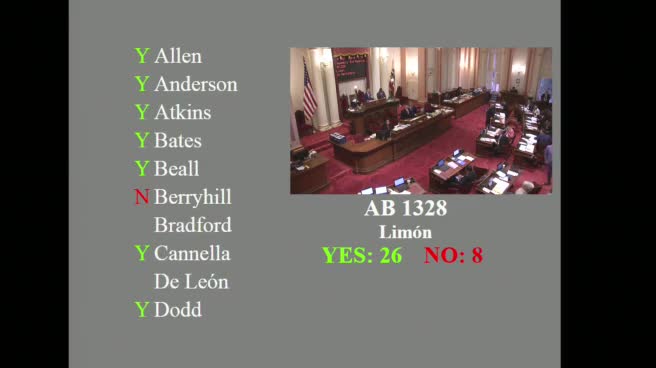
Bill Author

Bill Co-Author(s):