AB 2558: County officers.
- Session Year: 2017-2018
- House: Assembly
- Latest Version Date: 2018-06-27
(1)Existing law sets forth the officers of a county and authorizes the board of supervisors of a county to consolidate, separate, and reconsolidate their duties, as specified. Existing law further authorizes the board to consolidate the offices of auditor, controller, treasurer, tax collector, and director of finance.
This bill would prohibit the board of supervisors from consolidating an elective office with an appointed office pursuant to these provisions, or separating those offices once combined, except through a specified election process.
(2)Existing law authorizes the board of supervisors of a county to establish the office of director of finance by submitting the question of whether the office should be established to the voters. Existing law additionally authorizes the board of supervisors, at that election, to submit to the voters the question of whether the office, if established, will be elective or appointed by the board of supervisors.
This bill would require the question of whether the office, if established, will be elective or appointed by the board of supervisors to be submitted to the voters. The bill would additionally set forth the language required to appear on the ballot.
(3)Existing law sets forth the qualifications for the office of county auditor, county treasurer, county tax collector, or county treasurer-tax collector.
This bill would require any person appointed or elected to the combined office of auditor-controller-treasurer-tax collector-director of finance to meet those qualifications.
(4)Existing law authorizes the board of supervisors of certain counties to consolidate the duties of the offices of auditor-controller and treasurer-tax collector into the elected office of auditor-controller-treasurer-tax collector.
This bill would make nonsubstantive changes to that provision.
(4)(5)Existing law authorizes the board of supervisors to, by adoption of a resolution passed by a unanimous vote of the board of supervisors at a regular meeting at which all members are present, create the office of controller which is held ex officio by the county auditor, as specified. Existing law provides that a resolution adopted pursuant to these provisions may be repealed by the board of supervisors at any time by a 3/5 vote.
This bill would provide that if the office of auditor-controller is appointive, a resolution adopted pursuant to the above provisions may be repealed by the board of supervisors at any time by a 3/5 vote, and if the office of auditor-controller is elective, a resolution adopted pursuant to the above provisions may be repealed by the voters at any primary or general election.
(1)Existing law sets forth the officers of a county and authorizes the board of supervisors of a county to consolidate, separate, and reconsolidate their duties, as specified. Existing law further authorizes the board to consolidate the offices of auditor, controller, treasurer, tax collector, and director of finance.
This bill would prohibit the board of supervisors from consolidating an elective office with an appointed office pursuant to these provisions, or separating those offices once combined, except through a specified election process.
(2)Existing law authorizes the board of supervisors of a county to establish the office of director of finance by submitting the question of whether the office should be established to the voters. Existing law additionally authorizes the board of supervisors, at that election, to submit to the voters the question of whether the office, if established, will be elective or appointed by the board of supervisors.
This bill would require the question of whether the office, if established, will be elective or appointed by the board of supervisors to be submitted to the voters. The bill would additionally set forth the language required to appear on the ballot.
(3)Existing law sets forth the qualifications for the office of county auditor, county treasurer, county tax collector, or county treasurer-tax collector.
This bill would require any person appointed or elected to the combined office of auditor-controller-treasurer-tax collector-director of finance to meet those qualifications.
(4)Existing law authorizes the board of supervisors to, by adoption of a resolution passed by a unanimous vote of the board of supervisors at a regular meeting at which all members are present, create the office of controller which is held ex officio by the county auditor, as specified. Existing law provides that a resolution adopted pursuant to these provisions may be repealed by the board of supervisors at any time by a 3/5 vote.
This bill would provide that if the office of auditor-controller is appointive, a resolution adopted pursuant to the above provisions may be repealed by the board of supervisors at any time by a 3/5 vote, and if the office of auditor-controller is elective, a resolution adopted pursuant to the above provisions may be repealed by the voters at any primary or general election.
Existing law authorizes the board of supervisors of a county to consolidate the duties of various officers, as specified. Existing law additionally provides that the board of supervisors may separate the duties of officers that have been consolidated, and reconsolidate them in any manner authorized by statute or provide that the duties of each office are to be performed by a separate person, as specified.This bill would make nonsubstantive changes to the provision relating to separating and reconsolidating the duties of officers that have been previously consolidated.Existing law authorizes the board of supervisors of a county to consolidate the duties of various officers, as specified. Existing law additionally provides that the board of supervisors may separate the duties of officers that have been consolidated, and reconsolidate them in any manner authorized by statute or provide that the duties of each office are to be performed by a separate person, as specified.
This bill would make nonsubstantive changes to the provision relating to separating and reconsolidating the duties of officers that have been previously consolidated.
(a)(1)In addition to the duties of the county offices that may be consolidated under the provisions of Section 24300, the board of supervisors may by ordinance consolidate the offices of auditor, controller, treasurer, tax collector, and director of finance.
(2)The board of supervisors shall not consolidate an elective office with an appointed office pursuant to subdivision (a), except through an election that complies with subdivision (b) of Section 24009 and subdivision (b) of Section 26980.
(b)Any person elected or appointed to the combined office of auditor-controller-treasurer-tax collector-director of finance shall meet the qualifications set forth in Sections 26945 or Section 27000.7.
SEC. 2.Section 24301 of the Government Code is amended to read:24301.(a)Except as provided in subdivision (b), if the duties of officers are consolidated pursuant to this chapter, the board of supervisors, by ordinance, may, if it deems the change to be in the public interest, separate the duties that have been consolidated, and reconsolidate them in any other manner permitted by this chapter or separate the duties without reconsolidation, and provide that the duties of each office shall be performed by a separate person.
(b)If the duties of the offices of auditor, controller, treasurer, tax collector, and director of finance are consolidated pursuant to Section 24300.5, the board of supervisors shall only separate those offices through an election that complies with subdivision (b) of Section 24009 and subdivision (b) of Section 26980.
SEC. 3.Section 24304.2 of the Government Code is amended to read:24304.2.(a)Notwithstanding Section 24300, in the Counties of Mendocino, Santa Cruz, Sonoma, Trinity, and Tulare, the board of supervisors, by ordinance, may consolidate the duties of the offices of auditor-controller and treasurer-tax collector into the elected office of auditor-controller-treasurer-tax collector.
(b)Notwithstanding Section 24300, in the Counties of Mendocino, Santa Cruz, Sonoma, Trinity, and Tulare, the duties of the offices of auditor-controller, treasurer-tax collector, and director of finance may be consolidated into the elected office of auditor-controller-treasurer-tax collector-director of finance through an election that complies with subdivision (b) of Section 24009 and subdivision (b) of Section 26980.SEC. 4.Section 26885 of the Government Code is amended to read:26885.(a)The provisions of this chapter shall become operative only upon their adoption by a resolution passed by a unanimous vote of the board of supervisors at a regular meeting at which all members are present.
(b)(1)If the office of auditor-controller is appointive, a resolution adopted pursuant to this section may be repealed by the board of supervisors at any time by a three-fifths vote.
(2)If the office of auditor-controller is elective, a resolution adopted pursuant to this section may be repealed by the voters at any primary or general election.
SEC. 5.Section 26980 of the Government Code is amended to read:26980.The board of supervisors of any county may establish the office of director of finance.
(a)The board of supervisors shall submit to the electors of the county the question of whether the office of director of finance shall be established. If a majority of the voters voting on the question at that election favor the establishment of the office, the board of supervisors shall, by ordinance, create the office.
(b)(1)The board of supervisors at that election shall also submit to the voters the question of whether the office, if so established, shall be elective, or appointed by the board of supervisors. The ballot label for this question shall read as follows:
If the office of director of finance is established, shall the office be elected by the voters or be appointed by the board of supervisors?
The ballot label shall be followed by the words Elected and Appointed, from which the person voting may cast their choice as to whether the office shall be elective or appointive.
(2)If a majority of the voters voting on the question favor making the office elective, the board of supervisors shall, in the ordinance creating the office, make it an elective one.
(c)Any person may be appointed by the board of supervisors, or be a candidate for election, to the office of director of finance, consolidated from other offices pursuant to this chapter, if he or she meets the qualifications set forth in Section 26945 or Section 27000.7.
SEC. 6.Section 26981 of the Government Code is amended to read:26981.(a)The office of director of finance shall be consolidated with the offices of auditor, controller, tax collector, and treasurer and the director of finance shall have all the powers and duties of the offices so consolidated together with any other powers and duties as the board of supervisors may provide.
(b)Any person elected or appointed to the combined office of auditor-controller-treasurer-tax collector-director of finance shall meet the qualifications set forth in Sections 26945 or Section 27000.7.
(a)(1)In addition to the duties of the county offices that may be consolidated under the provisions of Section 24300, the board of supervisors may by ordinance consolidate the offices of auditor, controller, treasurer, tax collector, and director of finance.
(2)The board of supervisors shall not consolidate an elective office with an appointed office pursuant to subdivision (a), except through an election that complies with subdivision (b) of Section 24009 and subdivision (b) of Section 26980.
(b)Any person elected or appointed to the combined office of auditor-controller-treasurer-tax collector-director of finance shall meet the qualifications set forth in Sections 26945 or Section 27000.7.
SEC. 2.Section 24301 of the Government Code is amended to read:24301.(a)Except as provided in subdivision (b), if the duties of officers are consolidated pursuant to this chapter, the board of supervisors, by ordinance, may, if it deems the change to be in the public interest, separate the duties that have been consolidated, and reconsolidating reconsolidate them in any other manner permitted by this chapter or separate the duties without reconsolidation, and provide that the duties of each office shall be performed by a separate person.
(b)If the duties of the offices of auditor, controller, treasurer, tax collector, and director of finance are consolidated pursuant to Section 24300.5, the board of supervisors shall only separate those offices through an election that complies with subdivision (b) of Section 24009 and subdivision (b) of Section 26980.
SEC. 3.Section 24304.2 of the Government Code is amended to read:24304.2.(a)Notwithstanding Section 24300, in the counties Counties of Mendocino, Santa Cruz, Sonoma, Trinity, and Tulare, the board of supervisors, by ordinance, may consolidate the duties of the offices of auditor-controller and treasurer-tax collector into the elected office of auditor-controller-treasurer-tax collector.
(b)Notwithstanding Section 24300, in the counties Counties of Mendocino, Santa Cruz, Sonoma, Trinity, and Tulare, the duties of the offices of auditor-controller, treasurer-tax collector, and director of finance may be consolidated into the elected office of auditor-controller-treasurer-tax collector-director of finance by through an election that complies with subdivision (b) of Section 24009 and subdivision (b) of Section 26980.
SEC. 4.Section 26885 of the Government Code is amended to read:26885.(a)The provisions of this chapter shall become operative only upon their adoption by a resolution passed by a unanimous vote of the board of supervisors at a regular meeting at which all members are present.
(b)(1)If the office of auditor-controller is appointive, a resolution adopted pursuant to this section may be repealed by the board of supervisors at any time by a three-fifths vote.
(2)If the office of auditor-controller is elective, a resolution adopted pursuant to this section may be repealed by the voters at any primary or general election.
SEC. 5.Section 26980 of the Government Code is amended to read:26980.The board of supervisors of any county may establish the office of director of finance.
(a)The board of supervisors shall submit to the electors of the county the question of whether the office of director of finance shall be established. If a majority of the voters voting on the question at that election favor the establishment of the office, the board of supervisors shall, by ordinance, create the office.
(b)(1)The board of supervisors at that election shall also submit to the voters the question of whether the office, if so established, shall be elective, or appointed by the board of supervisors. The ballot label for this question shall read as follows:
If the office of director of finance is established, shall the office be elected by the voters or be appointed by the board of supervisors?
The ballot label shall be followed by the words Elected and Appointed, from which the person voting may cast their choice as to whether the office shall be elective or appointive.
(2)If a majority of the voters voting on the question favor making the office elective, the board of supervisors shall, in the ordinance creating the office, make it an elective one.
(c)Any person may be appointed by the board of supervisors, or be a candidate for election, to the office of director of finance, consolidated from other offices pursuant to this chapter, if he or she meets the qualifications set forth in Section 26945 or Section 27000.7.
SEC. 6.Section 26981 of the Government Code is amended to read:26981.(a)The office of director of finance shall be consolidated with the offices of auditor, controller, tax collector, and treasurer and the director of finance shall have all the powers and duties of the offices so consolidated together with any other powers and duties as the board of supervisors may provide.
(b)Any person elected or appointed to the combined office of auditor-controller-treasurer-tax collector-director of finance shall meet the qualifications set forth in Sections 26945 or Section 27000.7.
(a)(1)In addition to the duties of the county offices that may be consolidated under the provisions of Section 24300, the board of supervisors may by ordinance consolidate the offices of auditor, controller, treasurer, tax collector, and director of finance.
(2)The board of supervisors shall not consolidate an elective office with an appointed office pursuant to subdivision (a), except through an election that complies with subdivision (b) of Section 24009 and subdivision (b) of Section 26980.
(b)Any person elected or appointed to the combined office of auditor-controller-treasurer-tax collector-director of finance shall meet the qualifications set forth in Sections 26945 and or Section 27000.7.
SEC. 2.Section 24301 of the Government Code is amended to read:24301.(a)Except as provided in subdivision (b), if the duties of officers are consolidated pursuant to this chapter, the board of supervisors, by ordinance, may, if it deems the change to be in the public interest, separate the duties that have been consolidated, and reconsolidating them in any other manner permitted by this chapter or separate the duties without reconsolidation, and provide that the duties of each office shall be performed by a separate person.
(b)If the duties of the offices of auditor, controller, treasurer, tax collector, and director of finance are consolidated pursuant to Section 24300.5, the board of supervisors shall only separate those offices through an election that complies with subdivision (b) of Section 24009 and subdivision (b) of Section 26980.
SEC. 3.Section 24304.2 of the Government Code is amended to read:24304.2.(a)Notwithstanding Section 24300, the counties of Mendocino, Santa Cruz, Sonoma, Trinity, and Tulare, the board of supervisors, by ordinance, may consolidate the duties of the offices of auditor-controller and treasurer-tax collector into the elected office of auditor-controller-treasurer-tax collector.
(b)Notwithstanding Section 24300, in the counties of Mendocino, Santa Cruz, Sonoma, Trinity, and Tulare, the duties of the offices of auditor-controller, treasurer-tax collector, and director of finance may be consolidated into the elected office of auditor-controller-treasurer-tax collector-director of finance by through an election that complies with subdivision (b) of Section 24009 and subdivision (b) of Section 26980.
SEC. 4.Section 26885 of the Government Code is amended to read:26885.(a)The provisions of this chapter shall become operative only upon their adoption by a resolution passed by a unanimous vote of the board of supervisors at a regular meeting at which all members are present.
(b)(1)If the office of auditor-controller is appointive, a resolution adopted pursuant to this section may be repealed by the board of supervisors at any time by a three-fifths vote.
(2)If the office of auditor controller auditor-controller is elective, a resolution adopted pursuant to this section may be repealed by the voters at any primary or general election.
SEC. 5.Section 26980 of the Government Code is amended to read:26980.The board of supervisors of any county may establish the office of director of finance.
(a)The board of supervisors shall submit to the electors of the county the question of whether the office of director of finance shall be established. If a majority of the voters voting on the question at that election favor the establishment of the office, the board of supervisors shall, by ordinance, create the office.
(b)(1)The board of supervisors at that election shall also submit to the voters the question of whether the office, if so established, shall be elective, or appointed by the board of supervisors. The ballot label for this question shall read as follows:
If the office of director of finance is established, shall the office be elected by the voters or be appointed by the board of supervisors?
The ballot label shall be followed by the words Elected and Appointed, from which the person voting may cast their choice as to whether the office shall be elective or appointive.
(2)If a majority of the voters voting on the question favor making the office elective, the board of supervisors shall, in the ordinance creating the office, make it an elective one.
(c)Any person may be appointed by the board of supervisors, or be a candidate for election, to the office of director of finance, consolidated from other offices pursuant to this chapter, if he or she meets the qualifications set forth in Section 26945 or Section 27000.7.
SEC. 6.Section 26981 of the Government Code is amended to read:26981.(a)The office of director of finance shall be consolidated with the offices of auditor, controller, tax collector, and treasurer and the director of finance shall have all the powers and duties of the offices so consolidated together with any other powers and duties as the board of supervisors may provide.
(b)Any person elected or appointed to the combined office of auditor-controller-treasurer-tax collector-director of finance shall meet the qualifications set forth in Sections 26945 and or Section 27000.7.
(a)(1)In addition to the duties of the county offices which that may be consolidated under the provisions of Section 24300, the board of supervisors may by ordinance consolidate the offices of auditor, controller, treasurer, tax collector, and director of finance.
(2)The board of supervisors shall not consolidate an elective office with an appointed office pursuant to subdivision (a), except through an election that complies with subdivision (b) of Section 24009 and subdivision (b) of Section 26980.
(b)Any person elected or appointed to the combined office of auditor-controller-treasurer-tax collector-director of finance shall meet the qualifications set forth in Sections 26945 and Section 27000.7.
SECTION 1.SEC. 2.Section 24301 of the Government Code is amended to read:24301.If (a)Except as provided in subdivision (b), if the duties of officers are consolidated pursuant to this chapter, the board of supervisors, by ordinance, may, if it deems the change to be in the public interest, separate the duties that have been consolidated, and reconsolidate reconsolidating them in any other manner permitted by this chapter or separate the duties without reconsolidation, and provide that the duties of each office shall be performed by a separate person.
(b)If the duties of the offices of auditor, controller, treasurer, tax collector, and director of finance are consolidated pursuant to Section 24300.5, the board of supervisors shall only separate those offices through an election that complies with subdivision (b) of Section 24009 and subdivision (b) of Section 26980.
SEC. 3.Section 24304.2 of the Government Code is amended to read:24304.2.(a)Notwithstanding Section 24300, in Mendocino County, Santa Cruz County, Sonoma County, Trinity County, and Tulare County, the counties of Mendocino, Santa Cruz, Sonoma, Trinity, and Tulare, the board of supervisors, by ordinance, may consolidate the duties of the offices of Auditor-Controller auditor-controller and Treasurer-Tax Collector treasurer-tax collector into the elected office of Auditor-Controller-Treasurer-Tax Collector. auditor-controller-treasurer-tax collector.
(b)Notwithstanding Section 24300, in the counties of Mendocino, Santa Cruz, Sonoma, Trinity, and Tulare, the duties of the offices of auditor-controller, treasurer-tax collector, and director of finance may be consolidated into the elected office of auditor-controller-treasurer-tax collector-director of finance by through an election that complies with subdivision (b) of Section 24009 and subdivision (b) of Section 26980.
SEC. 4.Section 26885 of the Government Code is amended to read:26885.(a)The provisions of this chapter shall become operative only upon their adoption by a resolution passed by a unanimous vote of the board of supervisors at a regular meeting at which all members are present. Any
(b)(1)If the office of auditor-controller is appointive, a resolution adopted pursuant to this section may be repealed by the board of supervisors at any time by a three-fifths vote.
(2)If the office of auditor controller is elective, a resolution adopted pursuant to this section may be repealed by the voters at any primary or general election.
SEC. 5.Section 26980 of the Government Code is amended to read:26980.The board of supervisors of any county may establish the office of director of finance.
(a)The board of supervisors shall submit to the electors of the county the question of whether the office of director of finance shall be established. If a majority of the voters voting on the question at that election favor the establishment of the office, the board of supervisors shall, by ordinance, create the office.
(b)(1)The board of supervisors at that election may shall also submit to the voters the question of whether the office, if so established, shall be elective, or appointed by the board of supervisors. If The ballot label for this question shall read as follows:
If the office of director of finance is established, shall the office be elected by the voters or be appointed by the board of supervisors?
The ballot label shall be followed by the words Elected and Appointed, from which the person voting may cast their choice as to whether the office shall be elective or appointive.
(2)If a majority of the voters voting on the question favor making the office elective, the board of supervisors shall, in the ordinance creating the office, make it an elective one.
(c)Any person may be appointed by the board of supervisors, or be a candidate for election, to the office of director of finance, consolidated from other offices pursuant to this chapter, if he or she meets the qualifications set forth in Section 26945 or Section 27000.7.
SEC. 6.Section 26981 of the Government Code is amended to read:26981.(a)The office of director of finance shall be consolidated with the offices of auditor, controller, tax collector, and treasurer and the director of finance shall have all the powers and duties of such the offices so consolidated together with such any other powers and duties as the board of supervisors may provide.
(b)Any person elected or appointed to the combined office of auditor-controller-treasurer-tax collector-director of finance shall meet the qualifications set forth in Sections 26945 and Section 27000.7.
If the duties of officers are consolidated pursuant to this chapter, the board of supervisors, by ordinance, may elect to may, if it deems the change to be in the public interest, separate the duties so that have been consolidated, and reconsolidate them in any other manner permitted by this chapter or separate the duties without reconsolidation, and provide that the duties of each office shall be performed by a separate person, if it deems the change to be in the public interest. person.
|
Date
|
Status
|
|---|---|
| Aug 27, 2018 | Read third time. Refused passage. (Ayes 19. Noes 12.). |
| Jul 5, 2018 | Read third time. Refused passage. |
| Jun 27, 2018 | Read second time and amended. Ordered to third reading. |
| Jun 26, 2018 | From committee: Amend, and do pass as amended. (Ayes 5. Noes 1.) (June 20). |
| Jun 7, 2018 | Referred to Com. on GOV. & F. |
| May 31, 2018 | In Senate. Read first time. To Com. on RLS. for assignment. |
| May 30, 2018 | Read third time. Passed. Ordered to the Senate. |
| May 25, 2018 | Read third time and amended. Ordered to third reading. |
| May 14, 2018 | Read second time. Ordered to third reading. |
| May 10, 2018 | From committee: Do pass. (Ayes 9. Noes 0.) (May 9). |
| Apr 9, 2018 | Re-referred to Com. on L. GOV. |
| Apr 5, 2018 | From committee chair, with author's amendments: Amend, and re-refer to Com. on L. GOV. Read second time and amended. |
| Apr 2, 2018 | Re-referred to Com. on L. GOV. |
| Mar 22, 2018 | Referred to Com. on L. GOV. |
| Feb 16, 2018 | From printer. May be heard in committee March 18. |
| Feb 15, 2018 | Read first time. To print. |
|
Date
|
Description
|
Location
|
Votes
|
|
|---|---|---|---|---|
| Aug 27, 2018 | Assembly 3rd Reading AB2558 Brough By Galgiani | Senate Floor |
Passed |
|
| Jul 5, 2018 | Assembly 3rd Reading AB2558 Brough By Galgiani Reconsider | Senate Floor |
Passed |
|
| Jul 5, 2018 | Assembly 3rd Reading AB2558 Brough By Galgiani | Senate Floor |
Passed |
|
| Jun 20, 2018 | Do pass as amended | Senate Standing Committee on Governance and Finance |
Passed |
|
| May 30, 2018 | AB 2558 BROUGH Assembly Third Reading | Assembly Floor |
Passed |
|
| May 9, 2018 | Do pass. | Assembly Standing Committee on Local Government |
Passed |
This list shows positions taken on this bill by organizations on the date displayed, which is linked to the original source.
Positions by individuals are not included.
|
Organization
|
Position
|
Date
|
|---|---|---|
| Amador County Auditor-Controller Tacy Oneto Rouen | ** Support | Jul 5, 2018 |
| Assembly Floor: 73-2, 5 | ** Against | Jul 5, 2018 |
| Calaveras County Auditor-Controller Rebecca Callen | ** Support | Jul 5, 2018 |
| Califorina State Auditor | * Support | May 9, 2018 |
| California Association of County Treasurers and Tax Collectors | ** Support | Jul 5, 2018 |
| California State Association Of Counties | ** Against | Jul 5, 2018 |
| Kern County Auditor-Controller-County Clerk Mary B. Bedard | ** Support | May 8, 2018 |
| Kern County Auditor-Controller-County Clerk Mary Bedard | ** Support | Jul 5, 2018 |
| Lassen County Auditor-Controller Diana Wemple | ** Support | Jul 5, 2018 |
| Mendocino County Auditor-Controller Lloyd B. Weer | ** Support | May 8, 2018 |
| Mendocino County Auditor-Controller Lloyd Weer | ** Support | Jul 5, 2018 |
| Napa County Auditor-Controller Tracy A. Schulze | ** Support | May 8, 2018 |
| Napa County Auditor-Controller Tracy Schulze | ** Support | Jul 5, 2018 |
| No Vote Recorded: Dahle, Friedman, Muratsuchi | ** Against | Jul 5, 2018 |
| Noes: Frazier, Mark Stone | ** Against | Jul 5, 2018 |
| Orange County Auditor-Controller Eric H. Woolery [Co-Sponsor] | ** Support | May 8, 2018 |
| Orange County Auditor-Controller Eric Woolery | ** Support | Jul 5, 2018 |
| Rural County Representatives of California | ** Against | Jul 5, 2018 |
| San Benito County Auditor-Controller Joe Paul Gonzalez | ** Support | Jul 5, 2018 |
| San Bernardino County Auditor-Controller | ** Support | Jul 5, 2018 |
| State Association Of County Auditors | ** Support | Jul 5, 2018 |
| Tax Collector Oscar Valdez | ** Support | May 8, 2018 |
| Tehama County Auditor-Controller Leroy M. Anderson | ** Support | May 8, 2018 |
| Treasurer | ** Support | Jul 5, 2018 |
| Urban Counties of California | ** Against | Jul 5, 2018 |
| Yuba County Auditor-Controller Richard Eberle | ** Support | Jul 5, 2018 |
Office of Senate Floor Analyses (916) 651-1520 Fax: (916) 327-4478 | AB |
THIRD READING
Bill No: AB 2558
:
SENATE GOVERNANCE & FIN. COMMITTEE: 5-1, 6/20/18
AYES: McGuire, Nguyen, Hernandez, Hertzberg, Lara
NOES: Moorlach
NO VOTE RECORDED: Beall
ASSEMBLY FLOOR: 73-2, 5/30/18 - See last page for vote
SENATE FLOOR: 17-8, 7/5/18 (FAIL)
AYES: Anderson, Atkins, Bates, Beall, Bradford, Cannella, Chang, Gaines, Galgiani, Hueso, Leyva, McGuire, Monning, Nguyen, Roth, Vidak, Wilk
NOES: Allen, Dodd, Glazer, Hill, Mitchell, Moorlach, Morrell, Wiener
NO VOTE RECORDED: Berryhill, De León, Fuller, Hernandez, Hertzberg, Jackson, Lara, Nielsen, Pan, Portantino, Skinner, Stern, Stone, Wieckowski
DIGEST:
This bill makes changes to county office consolidation law to require voter approval.
Existing law:
- Provides for two types of counties: general law counties and charter counties.
- Requires some county officers to be elected in all counties: members of the board of supervisors, sheriffs, district attorneys, and assessor.
- Allows charter counties a limited degree of "home rule" authority:
- For the election, compensation, terms, removal, and salary of the governing board;
- For the election or appointment, compensation, terms, and removal of all county officers (except the sheriff, district attorney, and assessor, who must be elected);
- For the powers and duties of all officers; and
- For consolidation and segregation of county offices.
- Sets the number and duties of county elected officials in general law counties, including.
- Requires additional elected officers in general law counties: treasurers, county clerks, auditors, tax collectors, recorders, public administrators, and coroners.
- Allows a county board of supervisors to convert an elected office to an appointed office with voter approval.
- Permits county boards of supervisors to adopt ordinances to consolidate many county offices in one or more of 18 specified combinations, including the offices of auditor, controller, treasurer, tax collector, and director of finance. A board of supervisors can also separate or recombine offices it previously consolidated.
- Makes available additional combinations for medium- and small-sized counties.
- Allows county boards of supervisors to consolidate the duties and functions of county offices, but prohibits the transfer of any duties and responsibilities from constitutionally-required officials as part of the board’s consolidation of county services.
- Provides that ordinances consolidating county offices are subject to referendum and can be amended or repealed by local initiative.
- Contains dozens of exceptions to the above requirements, such as:
- Allows a board of supervisors to establish the office of director of finance by submitting the question to the voters, and ask voters if the office should be elected or appointed.
- Permits all boards of supervisors to create the office of controller, which must be held ex officio by the county auditor, upon adoption of a resolution passed by a unanimous vote by a county board of supervisors. However, the board can repeal the resolution by a three-fifths vote.
This bill:
- Requires voter approval when:
- A county board of supervisors seeks to consolidate the office of auditor, controller, treasurer, tax collector, and director of finance when any of those offices are elected; and
- A county board wants to separate or separate and subsequently recombine the offices after consolidation of the offices of auditor, controller, treasurer, tax collector, and director of finance.
- Provides that when a board of supervisors creates the director of finance provision with voter approval, they are required, rather than allowed, to ask voters if the office should be elected or appointed.
- States that when a board of supervisors creates the office of controller by enacting an ordinance, the board cannot repeal the ordinance if the controller is elected unless approved by the voters at a primary or general election.
- Requires any person elected or appointed to the combined office of auditor-controller-treasurer-tax collector-director of finance must meet the qualifications required in law of auditors or tax collectors.
Background
Boards of supervisors can supervise the conduct of county officers and require them faithfully to discharge their duties, but a board cannot add to those duties or relieve the officers from these obligations. Boards cannot direct or control the day-to-day operations of a county department, or otherwise limit the exercise of discretion vested by law in a particular officer. However, state law allows boards of supervisors to consolidate offices by ordinance, which AB 2558 changes to require voter approval in some instances.
AB 2558 does not apply to the 14 counties that have adopted charters (Alameda, Butte, El Dorado, Fresno, Los Angeles, Orange, Placer, Sacramento, San Bernardino, San Diego, San Francisco, San Mateo, Santa Clara, and Tehama). These counties’ charters vary significantly in how they address the consolidation of county offices. Some county charters grant county supervisors broad authority to restructure county offices by passing ordinances. In other counties, voter-approved charter amendments are required to consolidate offices, making the charter, in some cases, more restrictive than general law.
FISCAL EFFECT: Appropriation: Fiscal Com.: Local:
Amador County Auditor-Controller Tacy Oneto Rouen
Calaveras County Auditor-Controller Rebecca Callen
California Association of County Treasurers and Tax Collectors
Kern County Auditor-Controller-County Clerk Mary Bedard
Lassen County Auditor-Controller Diana Wemple
Mendocino County Auditor-Controller Lloyd Weer
Napa County Auditor-Controller Tracy Schulze
Orange County Auditor-Controller Eric Woolery
San Benito County Auditor-Controller Joe Paul Gonzalez
San Bernardino County Auditor-Controller/Treasurer/Tax Collector Oscar Valdez Tehama County Auditor-Controller LeRoy M. Anderson
State Association of County Auditors
Yuba County Auditor-Controller Richard Eberle
OPPOSITION: (Verified 6/27/18)
California State Association of Counties
Rural County Representatives of California
Urban Counties of California
ARGUMENTS IN SUPPORT: According to the author, “The stated goal of this bill is to protect and promote the good governance that the offices of auditor-controller and treasurer-tax collector provide to Californians. AB 2558 will disallow the consolidation of elective offices by the board of supervisors unless consolidation is put forth to the voters. By clarifying that consolidation must require the vote of the electorate it allows the voting public a say on how their government is structured and ensures transparency. Fiscal responsibility and transparency is at the core of county governments’ role. That responsibility and transparency is called into question when counties propose changing the roles of elected offices to an appointed or consolidated position without voter approval. AB 2558 helps to ensure that public funds put in the hands of local governments is managed to the highest standards of integrity, professionalism and impartiality.”
ARGUMENTS IN OPPOSITION: According to the Rural County Representatives of California, “AB 2558 would require a county BOS [board of supervisors] that seeks to consolidate the office of county Treasurer-Tax Collector with the county Auditor-Controller to place that matter before the voters. It also requires that a county have voters decide if the Director of Finance position should be elected or appointed at the time of that position being created through an affirmative voter action. Existing law through the Ralph M. Brown Act (open meetings) and California Public Records Act provides opportunities for public access and public engagement to county BOS meetings where resolutions seeking to modify county offices and their officers are considered. In addition, state statute requires delays in implementation before ordinances can take effect. Furthermore, existing law also provides a path for local voters to overturn a county ordinance. AB 2558 undermines the authority of each and every county BOS and opens the door to a larger policy discussion that should consider the implications for other county offices that can be filled by elected or appointed officials. AB 2558 is one of several bills in recent years that shifts non-constitutional office authority closer to that of constitutional officers such as Sheriffs, District Attorneys, Assessors in a piecemeal fashion without taking into account local conditions.”
ASSEMBLY FLOOR: 73-2, 5/30/18
AYES: Acosta, Aguiar-Curry, Travis Allen, Arambula, Baker, Berman, Bigelow, Bloom, Bonta, Brough, Burke, Caballero, Calderon, Carrillo, Cervantes, Chau, Chávez, Chen, Chiu, Choi, Chu, Cooley, Cooper, Cunningham, Daly, Eggman, Flora, Fong, Gallagher, Cristina Garcia, Eduardo Garcia, Gipson, Gloria, Gonzalez Fletcher, Gray, Grayson, Harper, Holden, Irwin, Jones-Sawyer, Kalra, Kamlager-Dove, Kiley, Lackey, Levine, Limón, Low, Maienschein, Mathis, Mayes, McCarty, Medina, Melendez, Mullin, Nazarian, Obernolte, O'Donnell, Patterson, Quirk, Quirk-Silva, Reyes, Rodriguez, Rubio, Salas, Santiago, Steinorth, Thurmond, Ting, Voepel, Waldron, Weber, Wood, Rendon
NOES: Frazier, Mark Stone
NO VOTE RECORDED: Dahle, Friedman, Muratsuchi
7/5/18 15:05:25
**** END ****
SENATE COMMITTEE ON GOVERNANCE AND FINANCE
Senator Mike McGuire, Chair
2017 - 2018 Regular
Bill No: | AB 2558 | Hearing Date: | 6/20/18 |
Author: | Brough | Tax Levy: | No |
Version: | 5/25/18 | Fiscal: | No |
Consultant: | Grinnell | ||
County officers
Makes changes to county office consolidation law to require voter approval.
Background
The California Constitution recognizes two types of counties: general law counties and charter counties. General law counties adhere to state law as to the number and duties of county elected officials. Charter counties have a limited degree of "home rule" authority that may provide for the election, compensation, terms, removal, and salary of the governing board; for the election or appointment, compensation, terms, and removal of all county officers (except the sheriff, district attorney, and assessor, who must be elected); for the powers and duties of all officers; and for consolidation and segregation of county offices.
Fourteen counties have adopted charters (Alameda, Butte, El Dorado, Fresno, Los Angeles, Orange, Placer, Sacramento, San Bernardino, San Diego, San Francisco, San Mateo, Santa Clara, and Tehama). These charters vary significantly in how they address the consolidation of county offices. Some county charters grant county supervisors broad authority to restructure county offices by passing ordinances. In other counties, voter-approved charter amendments are required to consolidate offices, making the charter, in some cases, more restrictive than general law.
The state laws governing California’s 44 non-charter counties recognize dozens of different county officers. Sections One and Four of Article XI of the California Constitution require some county officers to be elected in all counties: members of the board of supervisors, sheriffs, district attorneys, and assessors. State law requires additional elected officers: treasurers, county clerks, auditors, tax collectors, recorders, public administrators, and coroners. With voter approval, an elected office can become an appointed office.
Counties regularly consider consolidating offices to save money, improve the administration of county programs, or both. As the State Supreme Court wrote in its 1856 Merril v. Gorham decision upholding the consolidation of the offices of San Francisco Sheriff and Tax Collector:
…motives of prudence and economy may often require the consolidation of different offices of the same character, and we would be reluctant to adopt a rule of construction, which would effectually block the wheels of progress and reform…
County boards of supervisors can adopt ordinances to consolidate many county offices in one or more of 18 specified combinations, including the offices of auditor, controller, treasurer, tax collector, and director of finance. Additional combinations are also available to medium- and small-sized counties. A board of supervisors can also separate or recombine offices it previously consolidated. Additionally, a board of supervisors can consolidate duties and functions of county offices, although any duties and responsibilities of elected county officials mandated by the California Constitution or statute may not be transferred away from such officials as part of the board’s consolidation of county services. Ordinances consolidating county offices are subject to referendum and can be amended or repealed by local initiative.
However, the Legislature has enacted dozens of exceptions to the above requirements. Some apply to all counties, such as allowing a board of supervisors to establish the office of director of finance by submitting the question to the voters, and ask voters if the office should be elected or appointed. All boards of supervisors can also create the office of controller, which must be held ex officio by the county auditor, upon adoption of a resolution passed by a unanimous vote by a county board of supervisors. However, the board can repeal the resolution by a 3/5 vote. Other exceptions are specific to certain counties. In particular, the Counties of Mendocino, Santa Cruz, Sonoma, Trinity, and Tulare can consolidate the offices of auditor- controller and treasurer-tax collector into the elective office of auditor-controller-treasurer-tax collector.
Seeking additional public oversight, the California Association of County Treasurer-Tax Collectors and Orange County Auditor Eric Woolery want to require voter approval for consolidations of specific offices, and make other changes.
Proposed Law
AB 2558 makes changes to county office consolidation law to require voter approval when:
- A county board of supervisors seeks to consolidate the office of auditor, controller, treasurer, tax collector, and director of finance, and one of those offices are elected;
- After consolidation of the offices of auditor, controller, treasurer, tax collector, and director of finance, the county board wants to separate or separate and subsequently recombine the offices; and
- If the counties of Mendocino, Santa Cruz, Sonoma, Trinity, and Tulare seek to consolidate the offices of auditor-controller, treasurer-tax collector, and director of finance into the elected office of auditor-controller-treasurer-tax collector-director of finance.
This bill also requires that when a board of supervisors creates the director of finance provision with voter approval, they are required, rather than allowed, to ask voters if the office should be elected or appointed. The measure further states that when a board of supervisors creates the office of controller by enacting an ordinance, the board cannot repeal the ordinance if the controller is elected unless approved by the voters at a primary or general election. Lastly, any person elected or appointed to the combined office of auditor-controller-treasurer-tax collector-director of finance must meet the qualifications required in law of auditors or tax collectors.
State Revenue Impact
No estimate.
Comments
1. Purpose of the bill. According to the author, “The stated goal of this bill is to protect and promote the good governance that the offices of auditor-controller and treasurer-tax collector provide to Californians. AB 2558 will disallow the consolidation of elective offices by the board of supervisors unless consolidation is put forth to the voters. By clarifying that consolidation must require the vote of the electorate it allows the voting public a say on how their government is structured and ensures transparency. Fiscal responsibility and transparency is at the core of county governments’ role. That responsibility and transparency is called into question when counties propose changing the roles of elected offices to an appointed or consolidated position without voter approval. AB 2558 helps to ensure that public funds put in the hands of local governments is managed to the highest standards of integrity, professionalism and impartiality.”
2. Who’s in charge? Boards of supervisors can supervise the conduct of county officers and require them faithfully to discharge their duties, but a board cannot add to those duties or relieve the officers from these obligations. Boards cannot direct or control the day-to-day operations of a county department, or otherwise limit the exercise of discretion vested by law in a particular officer. However, state law allows boards of supervisors to consolidate offices by ordinance, which AB 2558 would change to require voter approval in some instances. Counties argue that the measure limits the flexibility of county boards of supervisors, who are ultimately the ones voters elect to run county government. Rural counties argue that this limitation particularly affects them because of limited resources.
3. Home rule. As mentioned above, counties can adopt voter-approved charters to gain more local control over their governance and employees. Voters in any county can adopt a charter that combines or separates county officials and duties, or changes positions from appointed to elected, or vice versa. If local voters don’t support these changes, why should legislators change it for them? AB 2558 may not be consistent with the home-rule purpose of county charters.
4. Come together? In 2010, the Committee on Local Government, the predecessor to this Committee held an informational hearing entitled “Prudence and Economy: Rethinking State Limits on County Offices,” where both county supervisors and other county officials provided testimony regarding whether the state law should require the election of county officers who are not required to be elected by the State Constitution. The Committee found that:
- Some county officials said that counties would benefit from having greater flexibility to convert elective offices into appointed positions. Elected county officers opposed such changes.
- There was general agreement that the statutory authority to consolidate county offices should not differ based on a county’s population.
- County officials and elected county officers disagreed over whether the state law should require the election of county officers who are not required to be elected by the State Constitution. Some county officials said that counties would benefit from having greater flexibility to convert elective offices into appointed positions. Elected county officers opposed such changes.
- Opinions varied widely about:
- Whether counties would benefit from a simplified and standardized statute governing the consolidation of county offices.
- What issues relating to county office consolidations should be addressed by state law and what issues should be left to county officials and voters.
- Whether county office consolidations save money or improve service.
- What role voters should play in consolidating county offices.
- Whether state law should authorize different consolidations in charter counties and general law counties.
- How state law should ensure that officeholders possess the specialized qualifications necessary for some county offices.
- Opinions were particularly divided on whether state law should still allow the consolidation of auditor-controller and treasurer-tax collector offices. Some county officials argued for the benefits of those consolidated offices and described the oversight and internal control policies that counties use to address concerns about incompatibility. Other county officials argued that the auditor’s function is inherently incompatible with the treasurer-tax collector’s responsibilities and asked legislators to repeal the statutes authorizing those office consolidations.
The lack of unanimity, consensus, or even broad agreement on most issues discussed at the hearing suggests that any successful legislative effort to restructure the statutes governing county office consolidations will require focused legislative leadership and concerted efforts to build coalitions among county officials.
5. Rinse and repeat. While no consensus was reached at the informational hearing, the Committee found that this issue is itself as old as the State. Since the early years of statehood, state law governing the consolidation of county offices has been shaped by a tension between the Legislature’s power to structure county offices and the goal of providing counties with broad, uniform authority to organize in ways that best meet disparate local needs. Laws passed by California’s first Legislature recognized several county offices. Subsequent special bills specified how counties could combine different offices. By the time the Legislature codified relevant statutes in 1872, numerous special provisions limited both the types of offices that could be consolidated and the counties within which specific consolidations were authorized. In response to the complexity produced by special legislation, the California Constitution of 1879 prohibited most kinds of special legislation, including special legislation regulating county business. However, this constitutional prohibition did not stop legislation relating narrowly to specific offices in specific counties. Shortly after the new constitution, legislators began to circumvent the prohibition on special legislation by introducing bills that applied “generally” to a “class” of counties that actually included only a single county. Legislation enacted in 1880 repealed many of the special statutory provisions relating to county offices and, instead, listed twelve county officers and granted county supervisors broad authority to consolidate, by ordinance, the duties of two or more county offices (Felton, AB 519, 1880). The Supreme Court later ruled, on grounds not related to office consolidations, that the Felton bill was in conflict with the California Constitution and voided its provisions.
A century ago, the Legislature’s practice of structuring county offices through special legislation was a catalyst for the county charter government movement. In 1911, California voters approved a “County Home Rule” constitutional amendment (Proposition 2), which provided for greater local control over county governance through the adoption of county charters. The ballot argument in favor of the 1911 proposition specifically noted the lack of uniformity and local control that resulted from the Legislature’s sorting counties into separate classes and passing special legislation relating to county officers.
6. The general and the specific. As noted above, existing law regarding county office consolidation is a tangle: general statutes apply, but the Legislature has added a myriad of specific combinations and exemptions, such as the authority for the Counties of Mendocino, Santa Cruz, Sonoma, Trinity, and Tulare to consolidate the offices of auditor- controller and treasurer-tax collector into the elective office of auditor-controller-treasurer-tax collector. The Legislature added this exemption in 2005 for Sonoma and Tulare Counties (AB 1318, Evans), before adding Mendocino (SB 144, Committee on Local Government, 2007), Trinity (SB 567, Aanestad, 2007), and Santa Cruz counties (AB 546, Stone, 2013). It’s unclear why this specific consolidation should be subject to voter approval, while the bill doesn’t affect any of the others, especially when the person holding the position must be elected by voters. The Committee may wish to consider amending AB 2558 to delete its change to the authority for the Counties of Mendocino, Santa Cruz, Sonoma, Trinity, and Tulare to consolidate the offices of auditor- controller and treasurer-tax collector into the elective office of auditor-controller-treasurer-tax collector-director of finance to require voter approval.
Assembly Actions
Assembly Local Government Committee: 9-0
Assembly Floor: 73-2
Support and Opposition
(6/15/18)
Support: Amador County Auditor-Controller Tacy Oneto Rouen, Calaveras County Auditor-Controller Rebecca Callen, Kern County Auditor-Controller-County Clerk Mary Bedard, Lassen County Auditor-Controller Diana Wemple, Mendocino County Auditor-Controller Lloyd Weer, Napa County Auditor-Controller Tracy Schulze, Orange County Auditor-Controller Eric Woolery, San Benito County Auditor-Controller Joe Paul Gonzalez, San Bernardino County Auditor-Controller/Treasurer/Tax Collector Oscar Valdez, Tehama County Auditor-Controller LeRoy M. Anderson, Yuba County Auditor-Controller Richard Eberle, California Association of County Treasurers and Tax Collectors, State Association of County Auditors
Opposition: California State Association of Counties, Rural County Representatives of California, Urban Counties of California.
-- END --
ASSEMBLY THIRD READING
ATR Bill Id:AB 2558
Author:(Brough)
As Amended Ver:May 25, 2018
Majority vote
Committee | Votes | Ayes | Noes |
Local Government | 9-0 | Aguiar-Curry, Waldron, Bloom, Caballero, Cooley, Grayson, Lackey, Voepel, Mullin |
|
SUMMARY: Makes a number of changes to law governing the county offices of auditor, controller, treasurer, tax collector, and director of finance. Specifically, this bill:
- Prohibits a county board of supervisors from consolidating elective offices of auditor, controller, treasurer, tax collector, and director of finance with appointed offices of auditor, controller, treasurer, tax collector, and director of finance, except through an election, as specified.
- Requires any person elected or appointed to the combined office of auditor-controller-treasurer-tax collector-director of finance to meet the qualifications required for a county auditor, treasurer, tax collector, or treasurer-tax collector, as specified.
- Requires, if the duties of auditor, controller, treasurer, tax collector, and director of finance are consolidated, the board of supervisors to separate those offices through an election, as specified.
- Allows, in the counties of Mendocino, Santa Cruz, Sonoma, Trinity, and Tulare, the offices of auditor-controller, treasurer-tax collector, and director of finance to be consolidated into the elected office of auditor-controller-treasurer-tax collector-director of finance through an election, as specified.
- Allows a resolution adopted by a board of supervisors to create the office of auditor-controller to be repealed as follows:
- If the office of auditor-controller is appointive, the resolution may be repealed by a 3/5 vote of the board at any time; and,
- If the office of auditor-controller is elective, the resolution may be repealed by the voters at any primary or general election.
- Requires, rather than allows, a board of supervisors at an election asking voters if the office of director of finance shall be established to also submit to the voters the question of whether the office shall be elective or appointed by the board.
- Requires, for the question of whether the office of director of finance shall be established, the ballot label to read as follows: "If the office of director of finance is established, shall the office be elected by the voters or be appointed by the board of supervisors?" The ballot label shall be followed by the words "Elected" and "Appointed," from which the person voting may cast their choice as to whether the office shall be elective or appointive.
- Makes conforming changes.
FISCAL EFFECT: None
COMMENTS:
- Author's Statement. According to the author, "Fiscal responsibility and transparency is at the core of county governments' role. That responsibility and transparency is called into question when counties propose changing the roles of elected offices to an appointed or consolidated position without voter approval. Few realize that this action threatens the balance of power that is the foundation of democracy and good governance, which is the hallmark of well-managed counties.
"There is great risk involved when there is a concentration of financial power. When independence and accountability are removed from the financial management of counties there is a perceived loss of impartiality and motivation to disclose deficiencies, or to raise a flag when numbers don't add up or intentions are questionable. County residents and voters deserve better. AB 2558 helps to ensure that the money taxpayers put in the hands of local government is managed to the highest standards of integrity, professionalism and impartiality."
- Background. California law establishes more than 20 specified county officers, as well as "such other officers as are provided by law." The California Constitution requires members of the board of supervisors, sheriffs, district attorneys, and assessors to be elected in all counties. Statutes generally require the following additional county officers to be elected: treasurers, county clerks, auditors, tax collectors, recorders, public administrators, and coroners. However, state law also generally allows an elected office to become an appointed office with voter approval, and to be changed back to an elected office in the same manner. Despite these general requirements, there are multiple statutes allowing specified counties to appoint specified offices by ordinance, thereby avoiding the election requirement.
State law also generally allows county boards of supervisors via ordinance to consolidate county offices in one or more of 18 specified combinations, with additional combinations available to medium- and small-sized counties. There are also numerous statutes tailored to individual counties or a group of specified counties allowing them to consolidate offices in additional various specified combinations. Statutes contain dozens of exceptions to these general provisions. Ordinances consolidating county offices are subject to referendum and can be amended or repealed by local initiative.
- Board Supervision of County Officers. A board of supervisors may supervise the official conduct of county officers and require them faithfully to discharge their duties, but a board cannot add to those duties or relieve the officers from these obligations. A board may not direct or control the day-to-day operations of a county department, or otherwise limit the exercise of discretion vested by law in a particular officer.
The supervision of elected officers by a board of supervisors is somewhat more limited. For example, the district attorney, as public prosecutor, is a state or quasi-state officer and is under the direct supervision of the attorney general. As such, a board of supervisors does not have supervisory authority over the district attorney's prosecutorial duties. However, a board has general supervisory authority over the district attorney to the extent that the district attorney functions as a county officer.
- Bill Summary. This bill makes the following changes to current law governing county offices of auditor, controller, treasurer, tax collector, and director of finance:
- Auditor-Controller-Treasurer-Tax Collector-Director of Finance. Current law allows a board of supervisors to establish the office of director of finance by submitting the question to the voters, and allows the board to ask voters if the office should be elected or appointed. This bill requires, rather than allows, the board to ask voters if the office should be elected or appointed. It also requires the ballot label to specifically state, "If the office of director of finance is established, shall the office be elected by the voters or be appointed by the board of supervisors?" This question is to be followed by the words "Elected" and "Appointed," from which the voter may choose.
Current law also allows a county board, by ordinance, to consolidate the offices of auditor, controller, treasurer, tax collector, and director of finance. This bill specifies that a board shall not consolidate any of these offices that are elective with any that are appointed, except through an election. It also requires any subsequent separation of these offices to be accomplished through an election. This bill also requires a person elected or appointed to this combined office to meet the qualifications that are required for a county auditor, treasurer, tax collector, or treasurer-tax collector.
- Auditor-Controller. Existing law provides for the creation of the office of controller, which shall be held ex officio by the county auditor, upon adoption of a resolution passed by a unanimous vote by a county board of supervisors. Existing law allows such a resolution to be repealed by a 3/5 vote. This bill alters the repeal process as follows:
- If the office of auditor-controller is appointive, the resolution may be repealed by a 3/5 vote of the board; and,
- If the office of auditor-controller is elective, the resolution may be repealed by the voters at any primary or general election.
- Mendocino, Santa Cruz, Sonoma, Trinity and Tulare Counties. Existing law allows the boards of supervisors in Mendocino, Santa Cruz, Sonoma, Trinity and Tulare counties to consolidate the offices of auditor-controller and treasurer-tax collector into the combined elected office of auditor-controller-treasurer-tax collector via ordinance. This bill allows these counties to consolidate the offices of auditor-controller, treasurer-tax collector, and director of finance into the elected office of auditor-controller-treasurer-tax collector-director of finance through an election.
- Auditor-Controller. Existing law provides for the creation of the office of controller, which shall be held ex officio by the county auditor, upon adoption of a resolution passed by a unanimous vote by a county board of supervisors. Existing law allows such a resolution to be repealed by a 3/5 vote. This bill alters the repeal process as follows:
This bill also makes additional conforming changes.
This bill is sponsored by the California Association of County Treasurers and Tax Collectors (CACTTC) and Orange County Auditor-Controller Eric Woolery.
- Arguments in Support. Orange County Auditor-Controller Eric H. Woolery, co-sponsor of this bill, writes, "Under existing law, if the county board of supervisors wishes to consolidate the elected county auditor-controller, elected county treasurer-tax collector, and appointed county director of finance, the board must submit the question to the voters. However, boards generally have had the question simply ask if the elected offices will be consolidated into the appointed office, without giving the voters the option as to whether the consolidated office will be elected or appointed. AB 2558 solves this problem by making this a separate question…
"Existing law allows the board of supervisors to repeal the controller function of the county auditor-controller, but existing law does not permit the board to transfer the controller to another officer. In other words, the board can only abolish the controller. For most counties, the controller function is the majority of the staff of the office of the auditor-controller. My office, the Orange County Auditor, became the Orange County Auditor-Controller in 1959. Repealing the controller function after nearly 60 years would wreak havoc upon my county. AB 2558 safeguards the controller function in any county with an elected auditor-controller by ensuring that the controller can only be abolished by a vote of the people."
CACTTC, co-sponsor of this bill, also notes, "The Association wishes to observe to the Committee that, unlike almost any other elected office at the local, state or national level, the majority of California's elected treasurer-tax collectors are women. CACTTC also believes it is worth noting that the leadership of CACTTC right now is composed of five elected women treasurer-tax collectors and two elected men treasurer-tax collectors. By contract, when treasurer-tax collectors have become appointed or consolidated, this trend is reversed; men comprise the majority of those holding the appointed position."
- Arguments in Opposition. The California State Association of Counties and Urban Counties of California, in opposition, state, "Existing law through the Ralph M. Brown Act (open meetings) and California Public Records Act provides opportunities for public access and public engagement to county (board of supervisor) meetings where resolutions seeking to modify county offices and their officers are considered. In addition, state statute requires delays in implementation before ordinances can take effect. Furthermore, existing law also provides a path for local voters to overturn a county ordinance.
"AB 2558 undermines the authority of each and every county (board of supervisors) and opens the door to a larger policy discussion that should consider the implications for other county offices that can be filled by elected or appointed officials. AB 2558 is one of several bills in recent years that shift non-constitutional office authority closer to that of constitutional officers such as Sheriffs, District Attorneys, Assessors in a piecemeal fashion without taking into account local conditions."
Analysis Prepared by: Angela Mapp / L. GOV. / (916) 319-3958 FN: 0003002
ASSEMBLY THIRD READING
ATR Bill Id:AB 2558
Author:(Brough)
As Amended Ver:April 5, 2018
Majority vote
Committee | Votes | Ayes | Noes |
Local Government | 9-0 | Aguiar-Curry, Waldron, Bloom, Caballero, Cooley, Grayson, Lackey, Voepel, Mullin |
SUMMARY: Makes a number of changes to law governing the county offices of auditor, controller, treasurer, tax collector, and director of finance. Specifically, this bill:
- Prohibits a county board of supervisors from consolidating elective offices of auditor, controller, treasurer, tax collector, and director of finance with appointed offices of auditor, controller, treasurer, tax collector, and director of finance, except through an election, as specified.
- Requires any person elected or appointed to the combined office of auditor-controller-treasurer-tax collector-director of finance to meet the qualifications required for a county auditor, treasurer, tax collector, or treasurer-tax collector, as specified.
- Requires, if the duties of auditor, controller, treasurer, tax collector, and director of finance are consolidated, the board of supervisors to separate those offices through an election, as specified.
- Allows, in the counties of Mendocino, Santa Cruz, Sonoma, Trinity, and Tulare, the offices of auditor-controller, treasurer-tax collector, and director of finance to be consolidated into the elected office of auditor-controller-treasurer-tax collector-director of finance through an election, as specified.
- Allows a resolution adopted by a board of supervisors to create the office of auditor-controller to be repealed as follows:
- If the office of auditor-controller is appointive, the resolution may be repealed by a 3/5 vote of the board at any time; and,
- If the office of auditor-controller is elective, the resolution may be repealed by the voters at any primary or general election.
- Requires, rather than allows, a board of supervisors at an election asking voters if the office of director of finance shall be established to also submit to the voters the question of whether the office shall be elective or appointed by the board.
- Requires, for the question of whether the office of director of finance shall be established, the ballot label to read as follows: "If the office of director of finance is established, shall the office be elected by the voters or be appointed by the board of supervisors?" The ballot label shall be followed by the words "Elected" and "Appointed," from which the person voting may cast their choice as to whether the office shall be elective or appointive.
- Makes conforming changes.
FISCAL EFFECT: None
COMMENTS:
- Author's Statement. According to the author, "Fiscal responsibility and transparency is at the core of county governments' role. That responsibility and transparency is called into question when counties propose changing the roles of elected offices to an appointed or consolidated position without voter approval. Few realize that this action threatens the balance of power that is the foundation of democracy and good governance, which is the hallmark of well-managed counties.
"There is great risk involved when there is a concentration of financial power. When independence and accountability are removed from the financial management of counties there is a perceived loss of impartiality and motivation to disclose deficiencies, or to raise a flag when numbers don't add up or intentions are questionable. County residents and voters deserve better. AB 2558 helps to ensure that the money taxpayers put in the hands of local government is managed to the highest standards of integrity, professionalism and impartiality."
- Background. California law establishes more than 20 specified county officers, as well as "such other officers as are provided by law." The California Constitution requires members of the board of supervisors, sheriffs, district attorneys, and assessors to be elected in all counties. Statutes generally require the following additional county officers to be elected: treasurers, county clerks, auditors, tax collectors, recorders, public administrators, and coroners. However, state law also generally allows an elected office to become an appointed office with voter approval, and to be changed back to an elected office in the same manner. Despite these general requirements, there are multiple statutes allowing specified counties to appoint specified offices by ordinance, thereby avoiding the election requirement.
State law also generally allows county boards of supervisors via ordinance to consolidate county offices in one or more of 18 specified combinations, with additional combinations available to medium- and small-sized counties. There are also numerous statutes tailored to individual counties or a group of specified counties allowing them to consolidate offices in additional various specified combinations. Statutes contain dozens of exceptions to these general provisions. Ordinances consolidating county offices are subject to referendum and can be amended or repealed by local initiative.
- Board Supervision of County Officers. A board of supervisors may supervise the official conduct of county officers and require them faithfully to discharge their duties, but a board cannot add to those duties or relieve the officers from these obligations. A board may not direct or control the day-to-day operations of a county department, or otherwise limit the exercise of discretion vested by law in a particular officer.
The supervision of elected officers by a board of supervisors is somewhat more limited. For example, the district attorney, as public prosecutor, is a state or quasi-state officer and is under the direct supervision of the attorney general. As such, a board of supervisors does not have supervisory authority over the district attorney's prosecutorial duties. However, a board has general supervisory authority over the district attorney to the extent that the district attorney functions as a county officer.
- Bill Summary. This bill makes the following changes to current law governing county offices of auditor, controller, treasurer, tax collector, and director of finance:
- Auditor-Controller-Treasurer-Tax Collector-Director of Finance. Current law allows a board of supervisors to establish the office of director of finance by submitting the question to the voters, and allows the board to ask voters if the office should be elected or appointed. This bill requires, rather than allows, the board to ask voters if the office should be elected or appointed. It also requires the ballot label to specifically state, "If the office of director of finance is established, shall the office be elected by the voters or be appointed by the board of supervisors?" This question is to be followed by the words "Elected" and "Appointed," from which the voter may choose.
Current law also allows a county board, by ordinance, to consolidate the offices of auditor, controller, treasurer, tax collector, and director of finance. This bill specifies that a board shall not consolidate any of these offices that are elective with any that are appointed, except through an election. It also requires any subsequent separation of these offices to be accomplished through an election. This bill also requires a person elected or appointed to this combined office to meet the qualifications that are required for a county auditor, treasurer, tax collector, or treasurer-tax collector.
- Auditor-Controller. Existing law provides for the creation of the office of controller, which shall be held ex officio by the county auditor, upon adoption of a resolution passed by a unanimous vote by a county board of supervisors. Existing law allows such a resolution to be repealed by a 3/5 vote. This bill alters the repeal process as follows:
- If the office of auditor-controller is appointive, the resolution may be repealed by a 3/5 vote of the board; and,
- If the office of auditor-controller is elective, the resolution may be repealed by the voters at any primary or general election.
- Mendocino, Santa Cruz, Sonoma, Trinity and Tulare Counties. Existing law allows the boards of supervisors in Mendocino, Santa Cruz, Sonoma, Trinity and Tulare counties to consolidate the offices of auditor-controller and treasurer-tax collector into the combined elected office of auditor-controller-treasurer-tax collector via ordinance. This bill allows these counties to consolidate the offices of auditor-controller, treasurer-tax collector, and director of finance into the elected office of auditor-controller-treasurer-tax collector-director of finance through an election.
- Auditor-Controller. Existing law provides for the creation of the office of controller, which shall be held ex officio by the county auditor, upon adoption of a resolution passed by a unanimous vote by a county board of supervisors. Existing law allows such a resolution to be repealed by a 3/5 vote. This bill alters the repeal process as follows:
This bill also makes additional conforming changes.
This bill is sponsored by the California Association of County Treasurers and Tax Collectors (CACTTC) and Orange County Auditor-Controller Eric Woolery.
- Arguments in Support. Orange County Auditor-Controller Eric H. Woolery, co-sponsor of this bill, writes, "Under existing law, if the county board of supervisors wishes to consolidate the elected county auditor-controller, elected county treasurer-tax collector, and appointed county director of finance, the board must submit the question to the voters. However, boards generally have had the question simply ask if the elected offices will be consolidated into the appointed office, without giving the voters the option as to whether the consolidated office will be elected or appointed. AB 2558 solves this problem by making this a separate question…
"Existing law allows the board of supervisors to repeal the controller function of the county auditor-controller, but existing law does not permit the board to transfer the controller to another officer. In other words, the board can only abolish the controller. For most counties, the controller function is the majority of the staff of the office of the auditor-controller. My office, the Orange County Auditor, became the Orange County Auditor-Controller in 1959. Repealing the controller function after nearly 60 years would wreak havoc upon my county. AB 2558 safeguards the controller function in any county with an elected auditor-controller by ensuring that the controller can only be abolished by a vote of the people."
CACTTC, co-sponsor of this bill, also notes, "The Association wishes to observe to the Committee that, unlike almost any other elected office at the local, state or national level, the majority of California's elected treasurer-tax collectors are women. CACTTC also believes it is worth noting that the leadership of CACTTC right now is composed of five elected women treasurer-tax collectors and two elected men treasurer-tax collectors. By contract, when treasurer-tax collectors have become appointed or consolidated, this trend is reversed; men comprise the majority of those holding the appointed position."
- Arguments in Opposition. The California State Association of Counties and Urban Counties of California, in opposition, state, "Existing law through the Ralph M. Brown Act (open meetings) and California Public Records Act provides opportunities for public access and public engagement to county (board of supervisor) meetings where resolutions seeking to modify county offices and their officers are considered. In addition, state statute requires delays in implementation before ordinances can take effect. Furthermore, existing law also provides a path for local voters to overturn a county ordinance.
"AB 2558 undermines the authority of each and every county (board of supervisors) and opens the door to a larger policy discussion that should consider the implications for other county offices that can be filled by elected or appointed officials. AB 2558 is one of several bills in recent years that shift non-constitutional office authority closer to that of constitutional officers such as Sheriffs, District Attorneys, Assessors in a piecemeal fashion without taking into account local conditions."
Analysis Prepared by: Angela Mapp / L. GOV. / (916) 319-3958 FN: 0002888
Date of Hearing: May 9, 2018
ASSEMBLY COMMITTEE ON LOCAL GOVERNMENT
Cecilia Aguiar-Curry, Chair
ABPCA Bill Id:AB 2558 (
Author:Brough) – As Amended Ver:April 5, 2018
SUBJECT: County officers.
SUMMARY: Makes a number of changes to law governing the county offices of auditor, controller, treasurer, tax collector, and director of finance. Specifically, this bill:
- Prohibits a county board of supervisors from consolidating elective offices of auditor, controller, treasurer, tax collector, and director of finance with appointed offices of auditor, controller, treasurer, tax collector, and director of finance, except through an election, as specified.
- Requires any person elected or appointed to the combined office of auditor-controller-treasurer-tax collector-director of finance to meet the qualifications required for a county auditor, treasurer, tax collector, or treasurer-tax collector, as specified.
- Requires, if the duties of auditor, controller, treasurer, tax collector, and director of finance are consolidated, the board of supervisors to separate those offices through an election, as specified.
- Allows, in the counties of Mendocino, Santa Cruz, Sonoma, Trinity, and Tulare, the offices of auditor-controller, treasurer-tax collector, and director of finance to be consolidated into the elected office of auditor-controller-treasurer-tax collector-director of finance through an election, as specified.
- Allows a resolution adopted by a board of supervisors to create the office of auditor-controller to be repealed as follows:
- If the office of auditor-controller is appointive, the resolution may be repealed by a 3/5 vote of the board at any time; and,
- If the office of auditor-controller is elective, the resolution may be repealed by the voters at any primary or general election.
- Requires, rather than allows, a board of supervisors at an election asking voters if the office of director of finance shall be established to also submit to the voters the question of whether the office shall be elective or appointed by the board.
- Requires, for the question of whether the office of director of finance shall be established, the ballot label to read as follows: "If the office of director of finance is established, shall the office be elected by the voters or be appointed by the board of supervisors?" The ballot label shall be followed by the words "Elected" and "Appointed," from which the person voting may cast their choice as to whether the office shall be elective or appointive.
- Makes conforming changes.
FISCAL EFFECT: None
COMMENTS:
- Author's Statement. According to the author, "Fiscal responsibility and transparency is
at the core of county governments’ role. That responsibility and transparency is called into question when counties propose changing the roles of elected offices to an appointed or consolidated position without voter approval. Few realize that this action threatens the balance of power that is the foundation of democracy and good governance, which is the hallmark of well-managed counties.
"There is great risk involved when there is a concentration of financial power. When independence and accountability are removed from the financial management of counties there is a perceived loss of impartiality and motivation to disclose deficiencies, or to raise a flag when numbers don’t add up or intentions are questionable. County residents and voters deserve better. AB 2558 helps to ensure that the money taxpayers put in the hands of local government is managed to the highest standards of integrity, professionalism and impartiality."
- Background. California law establishes more than 20 specified county officers, as well as "such other officers as are provided by law." The California Constitution requires members of the board of supervisors, sheriffs, district attorneys, and assessors to be elected in all counties. Statutes generally require the following additional county officers to be elected: treasurers, county clerks, auditors, tax collectors, recorders, public administrators, and coroners. However, state law also generally allows an elected office to become an appointed office with voter approval, and to be changed back to an elected office in the same manner. Despite these general requirements, there are multiple statutes allowing specified counties
to appoint specified offices by ordinance, thereby avoiding the election requirement.
State law also generally allows county boards of supervisors via ordinance to consolidate county offices in one or more of 18 specified combinations, with additional combinations available to medium- and small-sized counties. There are also numerous statutes tailored to individual counties or a group of specified counties allowing them to consolidate offices in additional various specified combinations. Statutes contain dozens of exceptions to these general provisions. Ordinances consolidating county offices are subject to referendum and can be amended or repealed by local initiative.
- General Law Counties and Charter Counties. The California Constitution recognizes two types of counties: general law counties and charter counties. General law counties adhere to state law as to the number and duties of county elected officials. Charter counties have a limited degree of "home rule" authority that may provide for the election, compensation, terms, removal, and salary of the governing board; for the election or appointment, compensation, terms, and removal of all county officers (except the sheriff, district attorney, and assessor, who must be elected); for the powers and duties of all officers; and for consolidation and segregation of county offices.
According to briefing paper published in 2010 by the Senate Local Government Committee, "Charter counties vary significantly in how they address the consolidation of county offices. Some county charters grant county supervisors broad authority to restructure county offices by passing ordinances. In other counties, voter-approved charter amendments are required
to consolidate offices, making the charter, in some cases, more restrictive than general law."
There are 44 general law counties and 14 charter counties, as follows:
General Law Counties: Alpine, Amador, Calaveras, Colusa, Contra Costa, Del Norte, Glenn, Humboldt, Imperial, Inyo, Kern, Kings, Lake, Lassen, Madera, Marin, Mariposa, Mendocino, Merced, Modoc, Mono, Monterey, Napa, Nevada, Plumas, Riverside, San Benito, San Joaquin, San Luis Obispo, Santa Barbara, Santa Cruz, Shasta, Sierra, Siskiyou, Solano, Sonoma, Stanislaus, Sutter, Trinity, Tulare, Tuolumne, Ventura, Yolo, and Yuba.
Charter Counties: Alameda, Butte, El Dorado, Fresno, Los Angeles, Orange, Placer, Sacramento, San Bernardino, San Diego, San Francisco, San Mateo, Santa Clara, and Tehama.
- Board Supervision of County Officers. A board of supervisors may supervise the official conduct of county officers and require them faithfully to discharge their duties, but a board cannot add to those duties or relieve the officers from these obligations. A board may not direct or control the day-to-day operations of a county department, or otherwise limit the exercise of discretion vested by law in a particular officer.
The supervision of elected officers by a board of supervisors is somewhat more limited.
For example, the district attorney, as public prosecutor, is a state or quasi-state officer and is under the direct supervision of the attorney general. As such, a board of supervisors does not have supervisory authority over the district attorney’s prosecutorial duties. However, a board has general supervisory authority over the district attorney to the extent that the district attorney functions as a county officer.
- Bill Summary. This bill makes the following changes to current law governing county offices of auditor, controller, treasurer, tax collector, and director of finance:
- Auditor-Controller-Treasurer-Tax Collector-Director of Finance. Current law allows a board of supervisors to establish the office of director of finance by submitting the question to the voters, and allows the board to ask voters if the office should be elected or appointed. This bill requires, rather than allows, the board to ask voters if the office should be elected or appointed. It also requires the ballot label to specifically state, "If the office of director of finance is established, shall the office be elected by the voters or be appointed by the board of supervisors?" This question is to be followed by the words "Elected" and "Appointed," from which the voter may choose.
Current law also allows a county board, by ordinance, to consolidate the offices of auditor, controller, treasurer, tax collector, and director of finance. This bill specifies that a board shall not consolidate any of these offices that are elective with any that are appointed, except through an election. It also requires any subsequent separation of these offices to be accomplished through an election. This bill also requires a person elected or appointed to this combined office to meet the qualifications that are required for a county auditor, treasurer, tax collector, or treasurer-tax collector.
- Auditor-Controller. Existing law provides for the creation of the office of controller, which shall be held ex officio by the county auditor, upon adoption of a resolution passed by a unanimous vote by a county board of supervisors. Existing law allows such a resolution to be repealed by a 3/5 vote. This bill alters the repeal process as follows:
- If the office of auditor-controller is appointive, the resolution may be repealed
by a 3/5 vote of the board; and, - If the office of auditor-controller is elective, the resolution may be repealed
by the voters at any primary or general election.
- If the office of auditor-controller is appointive, the resolution may be repealed
- Mendocino, Santa Cruz, Sonoma, Trinity and Tulare Counties. Existing law allows the boards of supervisors in Mendocino, Santa Cruz, Sonoma, Trinity and Tulare counties to consolidate the offices of auditor-controller and treasurer-tax collector into the combined elected office of auditor-controller-treasurer-tax collector via ordinance. This bill allows these counties to consolidate the offices of auditor-controller, treasurer-tax collector, and director of finance into the elected office of auditor-controller-treasurer-tax collector-director of finance through an election.
- Auditor-Controller. Existing law provides for the creation of the office of controller, which shall be held ex officio by the county auditor, upon adoption of a resolution passed by a unanimous vote by a county board of supervisors. Existing law allows such a resolution to be repealed by a 3/5 vote. This bill alters the repeal process as follows:
This bill also makes additional conforming changes.
This bill is sponsored by the California Association of County Treasurers and Tax Collectors (CACTTC) and Orange County Auditor-Controller Eric Woolery.
- Arguments in Support. Orange County Auditor-Controller Eric H. Woolery, co-sponsor of this bill, writes, "Under existing law, if the county board of supervisors wishes to consolidate the elected county auditor-controller, elected county treasurer-tax collector, and appointed county director of finance, the board must submit the question to the voters. However, boards generally have had the question simply ask if the elected offices will be consolidated into the appointed office, without giving the voters the option as to whether the consolidated office will be elected or appointed. AB 2558 solves this problem by making this a separate question…
"Existing law allows the board of supervisors to repeal the controller function of the county auditor-controller, but existing law does not permit the board to transfer the controller to another officer. In other words, the board can only abolish the controller. For most counties, the controller function is the majority of the staff of the office of the auditor-controller. My office, the Orange County Auditor, became the Orange County Auditor-Controller in 1959. Repealing the controller function after nearly sixty years would wreak havoc upon my county. AB 2558 safeguards the controller function in any county with an elected auditor-controller by ensuring that the controller can only be abolished by a vote of the people."
CACTTC, co-sponsor of this bill, also notes, "The Association wishes to observe to the Committee that, unlike almost any other elected office at the local, state or national level, the majority of California's elected treasurer-tax collectors are women. CACTTC also believes it is worth noting that the leadership of CACTTC right now is composed of five elected women treasurer-tax collectors and two elected men treasurer-tax collectors. By contract, when treasurer-tax collectors have become appointed or consolidated, this trend is reversed; men comprise the majority of those holding the appointed position."
- Arguments in Opposition. The California State Association of Counties and Urban Counties of California, in opposition, state, "Existing law through the Ralph M. Brown Act (open meetings) and California Public Records Act provides opportunities for public access and public engagement to county (board of supervisor) meetings where resolutions seeking to modify county offices and their officers are considered. In addition, state statute requires delays in implementation before ordinances can take effect. Furthermore, existing law also provides a path for local voters to overturn a county ordinance.
"AB 2558 undermines the authority of each and every county (board of supervisors) and opens the door to a larger policy discussion that should consider the implications for other county offices that can be filled by elected or appointed officials. AB 2558 is one of several bills in recent years that shift non-constitutional office authority closer to that of constitutional officers such as Sheriffs, District Attorneys, Assessors in a piecemeal fashion without taking into account local conditions."
REGISTERED SUPPORT / OPPOSITION:
Support
California Association of County Treasurers and Tax Collectors [CO-SPONSOR]
Orange County Auditor-Controller Eric H. Woolery [CO-SPONSOR]
Amador County Auditor-Controller Tacy Oneto Rouen
Calaveras County Auditor-Controller Rebecca Callen
Kern County Auditor-Controller-County Clerk Mary B. Bedard
Lassen County Auditor-Controller Diana Wemple
Mendocino County Auditor-Controller Lloyd B. Weer
Napa County Auditor-Controller Tracy A. Schulze
San Benito County Auditor-Controller Joe Paul Gonzalez
San Bernardino County Auditor-Controller/Treasurer/Tax Collector Oscar Valdez
State Association of County Auditors
Tehama County Auditor-Controller LeRoy M. Anderson
Yuba County Auditor-Controller Richard Eberle
Opposition
California State Association of Counties
Rural County Representatives of California
Urban Counties of California
Analysis Prepared by: Angela Mapp / L. GOV. / (916) 319-3958
Discussed in Hearing
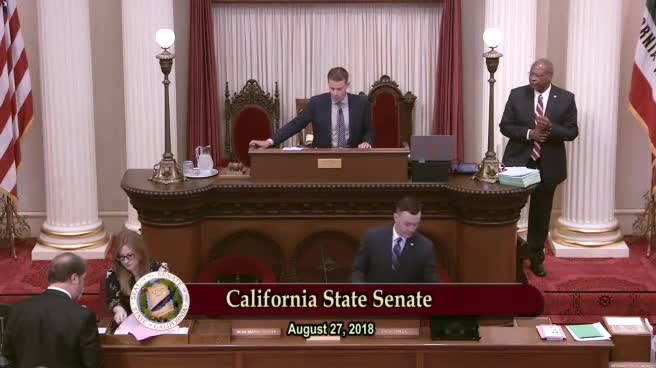 6MIN
Senate Floor
 1MIN
Assembly Floor
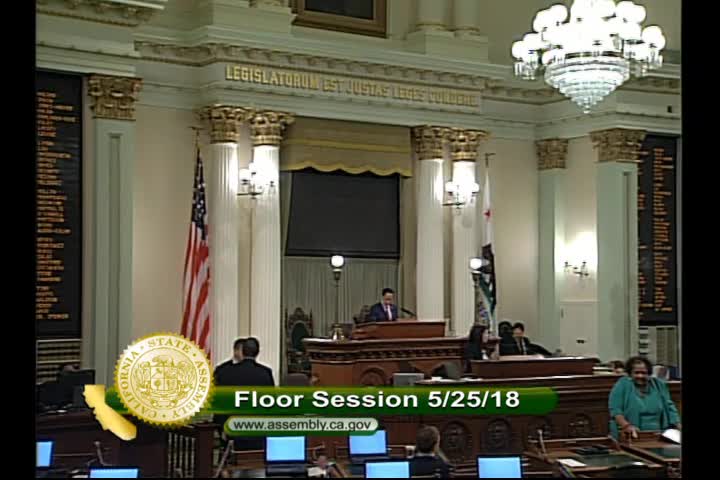 56SEC
Assembly Floor
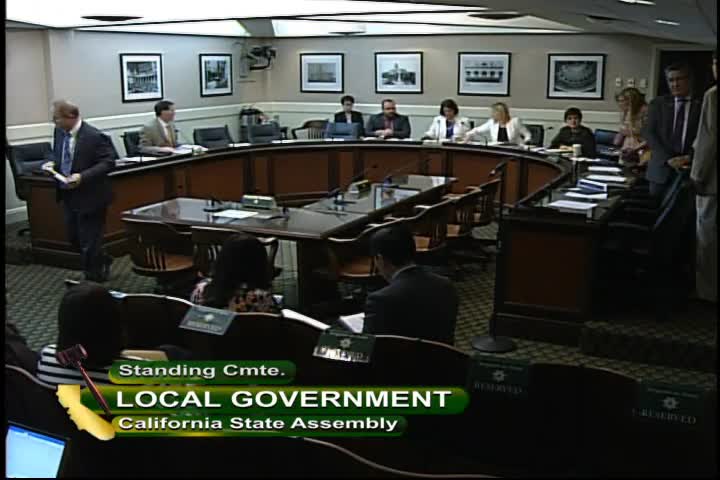 14MIN
Assembly Standing Committee on Local Government
Bill Author

Bill Co-Author(s):