AB 260: Human trafficking.
- Session Year: 2017-2018
- House: Assembly
- Latest Version Date: 2017-10-07
Existing law requires specified businesses and other establishments to post a notice, as specified, that contains information related to slavery and human trafficking, including information related to specified nonprofit organizations that provide services in support of the elimination of slavery and human trafficking. Existing law makes a violation of this requirement punishable by a civil penalty.
This bill would additionally require hotels, motels, and bed and breakfast inns, as defined, not including personal residences, to post the notice relating to slavery and human trafficking, as specified.
This bill would incorporate additional changes to Section 52.6 of the Civil Code proposed by SB 225 that would become operative if this bill and SB 225 are enacted and this bill is enacted last.
Existing law requires specified businesses and other establishments to post a notice, as specified, that contains information related to slavery and human trafficking, including information related to specified nonprofit organizations that provide services in support of the elimination of slavery and human trafficking. Existing law makes a violation of this requirement punishable by a civil penalty.
This bill would additionally require hotels, motels, and bed and breakfasts inns, and other similar transient lodging establishments, other than breakfast inns, as defined, not including personal residences, to post the notice relating to slavery and human trafficking, as specified.
Existing law requires specified businesses and other establishments to post a notice, as specified, that contains information related to slavery and human trafficking, including information related to specified nonprofit organizations that provide services in support of the elimination of slavery and human trafficking. Existing law makes a violation of this requirement punishable by a civil penalty.
This bill would additionally require hotels, motels, inns, bed and breakfasts, and other locations that provides transient lodging, bed and breakfasts inns, and other similar transient lodging establishments, other than personal residences, to post the notice relating to slavery and human trafficking, as specified.
Existing law requires specified businesses and other establishments to post a notice, as specified, that contains information related to slavery and human trafficking, including information related to specified nonprofit organizations that provide services in support of the elimination of slavery and human trafficking. Existing law makes a violation of this requirement punishable by a civil penalty.
This bill would additionally require hotels, motels, inns, bed and breakfasts, and other locations that provides transient lodging, other than personal residences, to post the notice relating to slavery and human trafficking, as specified.
(a)Each of the following businesses and other establishments shall, upon the availability of the model notice described in subdivision (d), post a notice that complies with the requirements of this section in a conspicuous place near the public entrance of the establishment or in another conspicuous location in clear view of the public and employees where similar notices are customarily posted:
(1)On-sale general public premises licensees under the Alcoholic Beverage Control Act (Division 9 (commencing with Section 23000) of the Business and Professions Code).
(2)Adult or sexually oriented businesses, as defined in subdivision (a) of Section 318.5 of the Penal Code.
(3)Primary airports, as defined in Section 47102(16) of Title 49 of the United States Code.
(4)Intercity passenger rail or light rail stations.
(5)Bus stations.
(6)Truck stops. For purposes of this section, truck stop means a privately owned and operated facility that provides food, fuel, shower or other sanitary facilities, and lawful overnight truck parking.
(7)Emergency rooms within general acute care hospitals.
(8)Urgent care centers.
(9)Farm labor contractors, as defined in subdivision (b) of Section 1682 of the Labor Code.
(10)Privately operated job recruitment centers.
(11)Roadside rest areas.
(12)Businesses or establishments that offer massage or bodywork services for compensation and are not described in paragraph (1) of subdivision (b) of Section 4612 of the Business and Professions Code.
(13)Hotels, motels, and bed and breakfast inns, as defined in subdivision (b) of Section 24045.12 of the Business and Professions Code, not including personal residences.
(b)The notice to be posted pursuant to subdivision (a) shall be at least eight and one-half inches by 11 inches in size, written in a 16-point font, and shall state the following:
If you or someone you know is being forced to engage in any activity and cannot leavewhether it is commercial sex, housework, farm work, construction, factory, retail, or restaurant work, or any other activitycall the National Human Trafficking Resource Center at 1-888-373-7888 or the California Coalition to Abolish Slavery and Trafficking (CAST) at 1-888-KEY-2-FRE(EDOM) or 1-888-539-2373 to access help and services. | ||
Victims of slavery and human trafficking are protected under United States and California law. | ||
| ||
Available 24 hours a day, 7 days a week. | ||
Toll-free. | ||
Operated by nonprofit, nongovernmental organizations. | ||
Anonymous and confidential. | ||
Accessible in more than 160 languages. | ||
Able to provide help, referral to services, training, and general information. | ||
(c)The notice to be posted pursuant to subdivision (a) shall be printed in English, Spanish, and in one other language that is the most widely spoken language in the county where the establishment is located and for which translation is mandated by the federal Voting Rights Act (42 U.S.C. Sec. 1973 et seq.), as applicable. This section does not require a business or other establishment in a county where a language other than English or Spanish is the most widely spoken language to print the notice in more than one language in addition to English and Spanish.
(d)On or before April 1, 2013, the Department of Justice shall develop a model notice that complies with the requirements of this section and make the model notice available for download on the departments Internet Web site.
(e)A business or establishment that fails to comply with the requirements of this section is liable for a civil penalty of five hundred dollars ($500) for a first offense and one thousand dollars ($1,000) for each subsequent offense. A government entity identified in Section 17204 of the Business and Professions Code may bring an action to impose a civil penalty pursuant to this subdivision against a business or establishment if a local or state agency with authority to regulate that business or establishment has satisfied both of the following:
(1)Provided the business or establishment with reasonable notice of noncompliance, which informs the business or establishment that it is subject to a civil penalty if it does not correct the violation within 30 days from the date the notice is sent to the business or establishment.
(2)Verified that the violation was not corrected within the 30-day period described in paragraph (1).
SEC. 1.5.Section 52.6 of the Civil Code is amended to read:52.6.(a)Each of the following businesses and other establishments shall, upon the availability of the model notice described in subdivision (d), post a notice that complies with the requirements of this section in a conspicuous place near the public entrance of the establishment or in another conspicuous location in clear view of the public and employees where similar notices are customarily posted:
(1)On-sale general public premises licensees under the Alcoholic Beverage Control Act (Division 9 (commencing with Section 23000) of the Business and Professions Code).
(2)Adult or sexually oriented businesses, as defined in subdivision (a) of Section 318.5 of the Penal Code.
(3)Primary airports, as defined in Section 47102(16) of Title 49 of the United States Code.
(4)Intercity passenger rail or light rail stations.
(5)Bus stations.
(6)Truck stops. For purposes of this section, truck stop means a privately owned and operated facility that provides food, fuel, shower or other sanitary facilities, and lawful overnight truck parking.
(7)Emergency rooms within general acute care hospitals.
(8)Urgent care centers.
(9)Farm labor contractors, as defined in subdivision (b) of Section 1682 of the Labor Code.
(10)Privately operated job recruitment centers.
(11)Roadside rest areas.
(12)Businesses or establishments that offer massage or bodywork services for compensation and are not described in paragraph (1) of subdivision (b) of Section 4612 of the Business and Professions Code.
(13)Hotels, motels, and bed and breakfast inns, as defined in subdivision (b) of Section 24045.12 of the Business and Professions Code, not including personal residences.
(b)The notice to be posted pursuant to subdivision (a) shall be at least 81/2 inches by 11 inches in size, written in a 16-point font, and shall state the following:
If you or someone you know is being forced to engage in any activity and cannot leavewhether it is commercial sex, housework, farm work, construction, factory, retail, or restaurant work, or any other activitytext 233-733 (Be Free) or call the National Human Trafficking Hotline at 1-888-373-7888 or the California Coalition to Abolish Slavery and Trafficking (CAST) at 1-888-KEY-2-FRE(EDOM) or 1-888-539-2373 to access help and services. | ||
Victims of slavery and human trafficking are protected under United States and California law. | ||
| ||
Available 24 hours a day, 7 days a week. | ||
Toll-free. | ||
Operated by nonprofit, nongovernmental organizations. | ||
Anonymous and confidential. | ||
Accessible in more than 160 languages. | ||
Able to provide help, referral to services, training, and general information. | ||
(c)The notice to be posted pursuant to subdivision (a) shall be printed in English, Spanish, and in one other language that is the most widely spoken language in the county where the establishment is located and for which translation is mandated by the federal Voting Rights Act (42 U.S.C. Sec. 1973 et seq.), as applicable. This section does not require a business or other establishment in a county where a language other than English or Spanish is the most widely spoken language to print the notice in more than one language in addition to English and Spanish.
(d)(1)On or before April 1, 2013, the Department of Justice shall develop a model notice that complies with the requirements of this section and make the model notice available for download on the departments Internet Web site.
(2)On or before January 1, 2019, the Department of Justice shall revise and update the model notice to comply with the requirements of this section and make the updated model notice available for download on the departments Internet Web site. A business or establishment required to post the model notice shall not be required to post the updated model notice until on and after January 1, 2019.
(e)A business or establishment that fails to comply with the requirements of this section is liable for a civil penalty of five hundred dollars ($500) for a first offense and one thousand dollars ($1,000) for each subsequent offense. A government entity identified in Section 17204 of the Business and Professions Code may bring an action to impose a civil penalty pursuant to this subdivision against a business or establishment if a local or state agency with authority to regulate that business or establishment has satisfied both of the following:
(1)Provided the business or establishment with reasonable notice of noncompliance, which informs the business or establishment that it is subject to a civil penalty if it does not correct the violation within 30 days from the date the notice is sent to the business or establishment.
(2)Verified that the violation was not corrected within the 30-day period described in paragraph (1).
SEC. 2.Section 1.5 of this bill incorporates amendments to Section 52.6 of the Civil Code proposed by both this bill and Senate Bill 225. That section shall only become operative if (1) both bills are enacted and become effective on or before January 1, 2018, (2) each bill amends Section 52.6 of the Civil Code, and (3) this bill is enacted after Senate Bill 225, in which case Section 1 of this bill shall not become operative.
(a)Each of the following businesses and other establishments shall, upon the availability of the model notice described in subdivision (d), post a notice that complies with the requirements of this section in a conspicuous place near the public entrance of the establishment or in another conspicuous location in clear view of the public and employees where similar notices are customarily posted:
(1)On-sale general public premises licensees under the Alcoholic Beverage Control Act (Division 9 (commencing with Section 23000) of the Business and Professions Code).
(2)Adult or sexually oriented businesses, as defined in subdivision (a) of Section 318.5 of the Penal Code.
(3)Primary airports, as defined in Section 47102(16) of Title 49 of the United States Code.
(4)Intercity passenger rail or light rail stations.
(5)Bus stations.
(6)Truck stops. For purposes of this section, truck stop means a privately owned and operated facility that provides food, fuel, shower or other sanitary facilities, and lawful overnight truck parking.
(7)Emergency rooms within general acute care hospitals.
(8)Urgent care centers.
(9)Farm labor contractors, as defined in subdivision (b) of Section 1682 of the Labor Code.
(10)Privately operated job recruitment centers.
(11)Roadside rest areas.
(12)Businesses or establishments that offer massage or bodywork services for compensation and are not described in paragraph (1) of subdivision (b) of Section 4612 of the Business and Professions Code.
(13)Hotels, motels, and bed and breakfast inns, as defined in subdivision (b) of Section 24045.12 of the Business and Professions Code, not including personal residences.
(b)The notice to be posted pursuant to subdivision (a) shall be at least eight and one-half inches by 11 inches in size, written in a 16-point font, and shall state the following:
If you or someone you know is being forced to engage in any activity and cannot leavewhether it is commercial sex, housework, farm work, construction, factory, retail, or restaurant work, or any other activitycall the National Human Trafficking Resource Center at 1-888-373-7888 or the California Coalition to Abolish Slavery and Trafficking (CAST) at 1-888-KEY-2-FRE(EDOM) or 1-888-539-2373 to access help and services. | ||
Victims of slavery and human trafficking are protected under United States and California law. | ||
| ||
Available 24 hours a day, 7 days a week. | ||
Toll-free. | ||
Operated by nonprofit, nongovernmental organizations. | ||
Anonymous and confidential. | ||
Accessible in more than 160 languages. | ||
Able to provide help, referral to services, training, and general information. | ||
(c)The notice to be posted pursuant to subdivision (a) shall be printed in English, Spanish, and in one other language that is the most widely spoken language in the county where the establishment is located and for which translation is mandated by the federal Voting Rights Act (42 U.S.C. Sec. 1973 et seq.), as applicable. This section does not require a business or other establishment in a county where a language other than English or Spanish is the most widely spoken language to print the notice in more than one language in addition to English and Spanish.
(d)On or before April 1, 2013, the Department of Justice shall develop a model notice that complies with the requirements of this section and make the model notice available for download on the departments Internet Web site.
(e)A business or establishment that fails to comply with the requirements of this section is liable for a civil penalty of five hundred dollars ($500) for a first offense and one thousand dollars ($1,000) for each subsequent offense. A government entity identified in Section 17204 of the Business and Professions Code may bring an action to impose a civil penalty pursuant to this subdivision against a business or establishment if a local or state agency with authority to regulate that business or establishment has satisfied both of the following:
(1)Provided the business or establishment with reasonable notice of noncompliance, which informs the business or establishment that it is subject to a civil penalty if it does not correct the violation within 30 days from the date the notice is sent to the business or establishment.
(2)Verified that the violation was not corrected within the 30-day period described in paragraph (1).
SEC. 1.5.Section 52.6 of the Civil Code is amended to read:52.6.(a)Each of the following businesses and other establishments shall, upon the availability of the model notice described in subdivision (d), post a notice that complies with the requirements of this section in a conspicuous place near the public entrance of the establishment or in another conspicuous location in clear view of the public and employees where similar notices are customarily posted:
(1)On-sale general public premises licensees under the Alcoholic Beverage Control Act (Division 9 (commencing with Section 23000) of the Business and Professions Code).
(2)Adult or sexually oriented businesses, as defined in subdivision (a) of Section 318.5 of the Penal Code.
(3)Primary airports, as defined in Section 47102(16) of Title 49 of the United States Code.
(4)Intercity passenger rail or light rail stations.
(5)Bus stations.
(6)Truck stops. For purposes of this section, truck stop means a privately owned and operated facility that provides food, fuel, shower or other sanitary facilities, and lawful overnight truck parking.
(7)Emergency rooms within general acute care hospitals.
(8)Urgent care centers.
(9)Farm labor contractors, as defined in subdivision (b) of Section 1682 of the Labor Code.
(10)Privately operated job recruitment centers.
(11)Roadside rest areas.
(12)Businesses or establishments that offer massage or bodywork services for compensation and are not described in paragraph (1) of subdivision (b) of Section 4612 of the Business and Professions Code.
(13)Hotels, motels, and bed and breakfast inns, as defined in subdivision (b) of Section 24045.12 of the Business and Professions Code, not including personal residences.
(b)The notice to be posted pursuant to subdivision (a) shall be at least eight and one-half 81/2 inches by 11 inches in size, written in a 16-point font, and shall state the following:
If you or someone you know is being forced to engage in any activity and cannot leavewhether it is commercial sex, housework, farm work, construction, factory, retail, or restaurant work, or any other activitycall activitytext 233-733 (Be Free) or call the National Human Trafficking Resource Center Hotline at 1-888-373-7888 or the California Coalition to Abolish Slavery and Trafficking (CAST) at 1-888-KEY-2-FRE(EDOM) or 1-888-539-2373 to access help and services. | ||
Victims of slavery and human trafficking are protected under United States and California law. | ||
| ||
Available 24 hours a day, 7 days a week. | ||
Toll-free. | ||
Operated by nonprofit, nongovernmental organizations. | ||
Anonymous and confidential. | ||
Accessible in more than 160 languages. | ||
Able to provide help, referral to services, training, and general information. | ||
(c)The notice to be posted pursuant to subdivision (a) shall be printed in English, Spanish, and in one other language that is the most widely spoken language in the county where the establishment is located and for which translation is mandated by the federal Voting Rights Act (42 U.S.C. Sec. 1973 et seq.), as applicable. This section does not require a business or other establishment in a county where a language other than English or Spanish is the most widely spoken language to print the notice in more than one language in addition to English and Spanish.
(d)(1)On or before April 1, 2013, the Department of Justice shall develop a model notice that complies with the requirements of this section and make the model notice available for download on the departments Internet Web site.
(2)On or before January 1, 2019, the Department of Justice shall revise and update the model notice to comply with the requirements of this section and make the updated model notice available for download on the departments Internet Web site. A business or establishment required to post the model notice shall not be required to post the updated model notice until on and after January 1, 2019.
(e)A business or establishment that fails to comply with the requirements of this section is liable for a civil penalty of five hundred dollars ($500) for a first offense and one thousand dollars ($1,000) for each subsequent offense. A government entity identified in Section 17204 of the Business and Professions Code may bring an action to impose a civil penalty pursuant to this subdivision against a business or establishment if a local or state agency with authority to regulate that business or establishment has satisfied both of the following:
(1)Provided the business or establishment with reasonable notice of noncompliance, which informs the business or establishment that it is subject to a civil penalty if it does not correct the violation within 30 days from the date the notice is sent to the business or establishment.
(2)Verified that the violation was not corrected within the 30-day period described in paragraph (1).
SEC. 2.Section 1.5 of this bill incorporates amendments to Section 52.6 of the Civil Code proposed by both this bill and Senate Bill 225. That section shall only become operative if (1) both bills are enacted and become effective on or before January 1, 2018, (2) each bill amends Section 52.6 of the Civil Code, and (3) this bill is enacted after Senate Bill 225, in which case Section 1 of this bill shall not become operative.
(a)Each of the following businesses and other establishments shall, upon the availability of the model notice described in subdivision (d), post a notice that complies with the requirements of this section in a conspicuous place near the public entrance of the establishment or in another conspicuous location in clear view of the public and employees where similar notices are customarily posted:
(1)On-sale general public premises licensees under the Alcoholic Beverage Control Act (Division 9 (commencing with Section 23000) of the Business and Professions Code).
(2)Adult or sexually oriented businesses, as defined in subdivision (a) of Section 318.5 of the Penal Code.
(3)Primary airports, as defined in Section 47102(16) of Title 49 of the United States Code.
(4)Intercity passenger rail or light rail stations.
(5)Bus stations.
(6)Truck stops. For purposes of this section, truck stop means a privately owned and operated facility that provides food, fuel, shower or other sanitary facilities, and lawful overnight truck parking.
(7)Emergency rooms within general acute care hospitals.
(8)Urgent care centers.
(9)Farm labor contractors, as defined in subdivision (b) of Section 1682 of the Labor Code.
(10)Privately operated job recruitment centers.
(11)Roadside rest areas.
(12)Businesses or establishments that offer massage or bodywork services for compensation and are not described in paragraph (1) of subdivision (b) of Section 4612 of the Business and Professions Code.
(13)Hotels, motels, and bed and breakfasts inns, and other similar lodging establishments, other than breakfast inns, as defined in subdivision (b) of Section 24045.12 of the Business and Professions Code, not including personal residences.
(b)The notice to be posted pursuant to subdivision (a) shall be at least eight and one-half inches by 11 inches in size, written in a 16-point font, and shall state the following:
If you or someone you know is being forced to engage in any activity and cannot leavewhether it is commercial sex, housework, farm work, construction, factory, retail, or restaurant work, or any other activitycall the National Human Trafficking Resource Center at 1-888-373-7888 or the California Coalition to Abolish Slavery and Trafficking (CAST) at 1-888-KEY-2-FRE(EDOM) or 1-888-539-2373 to access help and services. | ||
Victims of slavery and human trafficking are protected under United States and California law. | ||
| ||
Available 24 hours a day, 7 days a week. | ||
Toll-free. | ||
Operated by nonprofit, nongovernmental organizations. | ||
Anonymous and confidential. | ||
Accessible in more than 160 languages. | ||
Able to provide help, referral to services, training, and general information. | ||
(c)The notice to be posted pursuant to subdivision (a) shall be printed in English, Spanish, and in one other language that is the most widely spoken language in the county where the establishment is located and for which translation is mandated by the federal Voting Rights Act (42 U.S.C. Sec. 1973 et seq.), as applicable. This section does not require a business or other establishment in a county where a language other than English or Spanish is the most widely spoken language to print the notice in more than one language in addition to English and Spanish.
(d)On or before April 1, 2013, the Department of Justice shall develop a model notice that complies with the requirements of this section and make the model notice available for download on the departments Internet Web site.
(e)A business or establishment that fails to comply with the requirements of this section is liable for a civil penalty of five hundred dollars ($500) for a first offense and one thousand dollars ($1,000) for each subsequent offense. A government entity identified in Section 17204 of the Business and Professions Code may bring an action to impose a civil penalty pursuant to this subdivision against a business or establishment if a local or state agency with authority to regulate that business or establishment has satisfied both of the following:
(1)Provided the business or establishment with reasonable notice of noncompliance, which informs the business or establishment that it is subject to a civil penalty if it does not correct the violation within 30 days from the date the notice is sent to the business or establishment.
(2)Verified that the violation was not corrected within the 30-day period described in paragraph (1).
(a)Each of the following businesses and other establishments shall, upon the availability of the model notice described in subdivision (d), post a notice that complies with the requirements of this section in a conspicuous place near the public entrance of the establishment or in another conspicuous location in clear view of the public and employees where similar notices are customarily posted:
(1)On-sale general public premises licensees under the Alcoholic Beverage Control Act (Division 9 (commencing with Section 23000) of the Business and Professions Code).
(2)Adult or sexually oriented businesses, as defined in subdivision (a) of Section 318.5 of the Penal Code.
(3)Primary airports, as defined in Section 47102(16) of Title 49 of the United States Code.
(4)Intercity passenger rail or light rail stations.
(5)Bus stations.
(6)Truck stops. For purposes of this section, truck stop means a privately owned and operated facility that provides food, fuel, shower or other sanitary facilities, and lawful overnight truck parking.
(7)Emergency rooms within general acute care hospitals.
(8)Urgent care centers.
(9)Farm labor contractors, as defined in subdivision (b) of Section 1682 of the Labor Code.
(10)Privately operated job recruitment centers.
(11)Roadside rest areas.
(12)Businesses or establishments that offer massage or bodywork services for compensation and are not described in paragraph (1) of subdivision (b) of Section 4612 of the Business and Professions Code.
(13)Hotels, motels, inns, bed and breakfasts, and locations that provide transient lodging, bed and breakfasts inns, and other similar lodging establishments, other than personal residences.
(b)The notice to be posted pursuant to subdivision (a) shall be at least eight and one-half inches by 11 inches in size, written in a 16-point font, and shall state the following:
If you or someone you know is being forced to engage in any activity and cannot leavewhether it is commercial sex, housework, farm work, construction, factory, retail, or restaurant work, or any other activitycall the National Human Trafficking Resource Center at 1-888-373-7888 or the California Coalition to Abolish Slavery and Trafficking (CAST) at 1-888-KEY-2-FRE(EDOM) or 1-888-539-2373 to access help and services. | ||
Victims of slavery and human trafficking are protected under United States and California law. | ||
| ||
Available 24 hours a day, 7 days a week. | ||
Toll-free. | ||
Operated by nonprofit, nongovernmental organizations. | ||
Anonymous and confidential. | ||
Accessible in more than 160 languages. | ||
Able to provide help, referral to services, training, and general information. | ||
(c)The notice to be posted pursuant to subdivision (a) shall be printed in English, Spanish, and in one other language that is the most widely spoken language in the county where the establishment is located and for which translation is mandated by the federal Voting Rights Act (42 U.S.C. Sec. 1973 et seq.), as applicable. This section does not require a business or other establishment in a county where a language other than English or Spanish is the most widely spoken language to print the notice in more than one language in addition to English and Spanish.
(d)On or before April 1, 2013, the Department of Justice shall develop a model notice that complies with the requirements of this section and make the model notice available for download on the departments Internet Web site.
(e)A business or establishment that fails to comply with the requirements of this section is liable for a civil penalty of five hundred dollars ($500) for a first offense and one thousand dollars ($1,000) for each subsequent offense. A government entity identified in Section 17204 of the Business and Professions Code may bring an action to impose a civil penalty pursuant to this subdivision against a business or establishment if a local or state agency with authority to regulate that business or establishment has satisfied both of the following:
(1)Provided the business or establishment with reasonable notice of noncompliance, which informs the business or establishment that it is subject to a civil penalty if it does not correct the violation within 30 days from the date the notice is sent to the business or establishment.
(2)Verified that the violation was not corrected within the 30-day period described in paragraph (1).
(a)Each of the following businesses and other establishments shall, upon the availability of the model notice described in subdivision (d), post a notice that complies with the requirements of this section in a conspicuous place near the public entrance of the establishment or in another conspicuous location in clear view of the public and employees where similar notices are customarily posted:
(1)On-sale general public premises licensees under the Alcoholic Beverage Control Act (Division 9 (commencing with Section 23000) of the Business and Professions Code).
(2)Adult or sexually oriented businesses, as defined in subdivision (a) of Section 318.5 of the Penal Code.
(3)Primary airports, as defined in Section 47102(16) of Title 49 of the United States Code.
(4)Intercity passenger rail or light rail stations.
(5)Bus stations.
(6)Truck stops. For purposes of this section, truck stop means a privately owned and operated facility that provides food, fuel, shower or other sanitary facilities, and lawful overnight truck parking.
(7)Emergency rooms within general acute care hospitals.
(8)Urgent care centers.
(9)Farm labor contractors, as defined in subdivision (b) of Section 1682 of the Labor Code.
(10)Privately operated job recruitment centers.
(11)Roadside rest areas.
(12)Businesses or establishments that offer massage or bodywork services for compensation and are not described in paragraph (1) of subdivision (b) of Section 4612 of the Business and Professions Code.
(13)Hotels, motels, inns, bed and breakfasts, and locations that provide transient lodging, other than personal residences.
(b)The notice to be posted pursuant to subdivision (a) shall be at least eight and one-half inches by 11 inches in size, written in a 16-point font, and shall state the following:
If you or someone you know is being forced to engage in any activity and cannot leavewhether it is commercial sex, housework, farm work, construction, factory, retail, or restaurant work, or any other activitycall the National Human Trafficking Resource Center at 1-888-373-7888 or the California Coalition to Abolish Slavery and Trafficking (CAST) at 1-888-KEY-2-FRE(EDOM) or 1-888-539-2373 to access help and services. | ||
Victims of slavery and human trafficking are protected under United States and California law. | ||
| ||
Available 24 hours a day, 7 days a week. | ||
Toll-free. | ||
Operated by nonprofit, nongovernmental organizations. | ||
Anonymous and confidential. | ||
Accessible in more than 160 languages. | ||
Able to provide help, referral to services, training, and general information. | ||
(c)The notice to be posted pursuant to subdivision (a) shall be printed in English, Spanish, and in one other language that is the most widely spoken language in the county where the establishment is located and for which translation is mandated by the federal Voting Rights Act (42 U.S.C. Sec. 1973 et seq.), as applicable. This section does not require a business or other establishment in a county where a language other than English or Spanish is the most widely spoken language to print the notice in more than one language in addition to English and Spanish.
(d)On or before April 1, 2013, the Department of Justice shall develop a model notice that complies with the requirements of this section and make the model notice available for download on the departments Internet Web site.
(e)A business or establishment that fails to comply with the requirements of this section is liable for a civil penalty of five hundred dollars ($500) for a first offense and one thousand dollars ($1,000) for each subsequent offense. A government entity identified in Section 17204 of the Business and Professions Code may bring an action to impose a civil penalty pursuant to this subdivision against a business or establishment if a local or state agency with authority to regulate that business or establishment has satisfied both of the following:
(1)Provided the business or establishment with reasonable notice of noncompliance, which informs the business or establishment that it is subject to a civil penalty if it does not correct the violation within 30 days from the date the notice is sent to the business or establishment.
(2)Verified that the violation was not corrected within the 30-day period described in paragraph (1).
REVISIONS: HeadingLine 2.|
Date
|
Status
|
|---|---|
| Oct 7, 2017 | Chaptered by Secretary of State - Chapter 547, Statutes of 2017. |
| Oct 7, 2017 | Approved by the Governor. |
| Sep 12, 2017 | Enrolled and presented to the Governor at 2:30 p.m. |
| Sep 5, 2017 | Senate amendments concurred in. To Engrossing and Enrolling. (Ayes 77. Noes 0.). |
| Aug 31, 2017 | In Assembly. Concurrence in Senate amendments pending. May be considered on or after September 2 pursuant to Assembly Rule 77. |
| Aug 31, 2017 | Read third time. Passed. Ordered to the Assembly. |
| Aug 23, 2017 | Ordered to special consent calendar. |
| Aug 22, 2017 | Read second time. Ordered to third reading. |
| Aug 21, 2017 | Read third time and amended. Ordered to second reading. |
| Jul 6, 2017 | From Consent Calendar. |
| Jul 5, 2017 | Read second time and amended. Ordered to consent calendar. |
| Jul 3, 2017 | From committee: Amend, and do pass as amended. To Consent Calendar. (Ayes 6. Noes 0.) (June 27). |
| Jun 13, 2017 | In committee: Set, second hearing. Hearing canceled at the request of author. |
| Jun 1, 2017 | In committee: Set, first hearing. Hearing canceled at the request of author. |
| May 10, 2017 | Referred to Com. on JUD. |
| Mar 23, 2017 | In Senate. Read first time. To Com. on RLS. for assignment. |
| Mar 23, 2017 | Read third time. Passed. Ordered to the Senate. (Ayes 71. Noes 0. Page 723.) |
| Mar 20, 2017 | Read second time. Ordered to third reading. |
| Mar 16, 2017 | Read second time and amended. Ordered returned to second reading. |
| Mar 15, 2017 | From committee: Amend, and do pass as amended. (Ayes 11. Noes 0.) (March 14). |
| Mar 13, 2017 | Coauthors revised. |
| Feb 13, 2017 | Referred to Com. on JUD. |
| Feb 1, 2017 | From printer. May be heard in committee March 3. |
| Jan 31, 2017 | Read first time. To print. |
|
Date
|
Description
|
Location
|
Votes
|
|
|---|---|---|---|---|
| Sep 5, 2017 | AB 260 SANTIAGO Concurrence in Senate Amendments | Assembly Floor |
Passed |
|
| Aug 31, 2017 | Special Consent AB260 | Senate Floor |
Passed |
|
| Jun 27, 2017 | Do pass as amended, and be ordered to the Consent Calendar | Senate Standing Committee on Judiciary |
Passed |
|
| Mar 23, 2017 | AB 260 SANTIAGO Assembly Third Reading | Assembly Floor |
Passed |
|
| Mar 14, 2017 | Do pass as amended. | Assembly Standing Committee on Judiciary |
Passed |
This list shows positions taken on this bill by organizations on the date displayed, which is linked to the original source.
Positions by individuals are not included.
|
Organization
|
Position
|
Date
|
|---|---|---|
| Alameda County District Attorney Nancy O'Malley | ** Support | Mar 10, 2017 |
| Association For Los Angeles Deputy Sheriffs | ** Support | Aug 22, 2017 |
| Bet Tzedek Legal Services | ** Support | Aug 22, 2017 |
| California Association Of Code Enforcement Officers | ** Support | Aug 22, 2017 |
| California Catholic Conference | ** Support | Aug 22, 2017 |
| California College And University Police Chiefs Association | ** Support | Aug 22, 2017 |
| California Conference of Bar Associations | ** Support | Aug 22, 2017 |
| California District Attorneys Association | ** Support | Aug 22, 2017 |
| California Hotel and Lodging Association | * For If Amend | Mar 14, 2017 |
| California Hotel and Lodging Association | * Indeterminate | Mar 14, 2017 |
| California Labor Federation | ** Support | Aug 22, 2017 |
| California Narcotics Officers Association | ** Support | Aug 22, 2017 |
| City Of Los Angeles | ** Support | Aug 22, 2017 |
| City Of Oakland | ** Support | Aug 22, 2017 |
| Coalition to Abolish Slavery & Trafficking | ** Support | Aug 22, 2017 |
| Junior League of Orange County | ** Support | Aug 22, 2017 |
| Los Angeles County Professional Peace Officers Association | ** Support | Aug 22, 2017 |
| Los Angeles Police Protective League | ** Support | Aug 22, 2017 |
| nancy o'malley, district attorney of alameda county | ** Support | Aug 22, 2017 |
| National Association of Social Workers California Chapter | ** Support | Aug 22, 2017 |
| National Council of Jewish Women, California | ** Support | Aug 22, 2017 |
| Peace Officers Research Association Of California | ** Support | Aug 22, 2017 |
| Polaris | ** Support | Aug 22, 2017 |
| Riverside Sheriff's Association | ** Support | Aug 22, 2017 |
| Solano County Board of Supervisors | ** Support | Aug 22, 2017 |
| Women Lawyers Association of Los Angeles | ** Support | Aug 22, 2017 |
| Women Lawyers of Sacramento | ** Support | Aug 22, 2017 |
CONCURRENCE IN SENATE AMENDMENTS
CSA1 Bill Id:AB 260
Author:(Santiago)
As Amended Ver:August 21, 2017
Majority vote
ASSEMBLY: | 71-0 | (March 23, 2017) | SENATE: | 37-0 | (August 31, 2017) |
Original Committee Reference: JUD.
SUMMARY: Increases the number of businesses and other establishments that are required to post a notice on their premises related to slavery and human trafficking, including information related to specified nonprofit organizations that provide services in support of the elimination of slavery and human trafficking. Specifically, this bill adds hotels, motels, bed and breakfast inns, as defined in subdivision (b) of Section 24045.12 of the Business and Professions Code, other than personal residences, to the list of businesses and other establishments that are required to post information about human trafficking on their premises.
The Senate amendments:
- Add a definition for "bed and breakfast inns" that refers to the definition for that term in subdivision (b) of Section 24045.12 of the Business and Professions Code.
- Incorporate chaptering-out amendments reflecting changes to Section 52.6 of the Civil Code that are proposed by SB 225 (Stern) of the current legislative session and that would become operative if this bill and SB 225 are both enacted.
FISCAL EFFECT: None
COMMENTS: This bill represents a small but helpful step in the Legislature's continuing efforts to battle the tragedy of human trafficking. Hotels and motels, like mass transit locations, are high-risk areas for human trafficking in both sexual and labor trafficking.
Scope of the human trafficking problem in general and in the hotel and motel industry in particular. Human trafficking is a major problem in the United States, especially in the State of California, where there were more reports of human trafficking in 2016 than any other state in the nation. The National Human Trafficking Hotline (NHTH) reports that it received 26,727 calls about human trafficking in 2016. 1,434 cases of human trafficking in hotels and motels were reported to the NHTH and an emergency texting helpline between 2007 and 2015. Nationwide, according to the NHTH, more than 7,500 human trafficking cases were reported last year. More than 1,300 of those reports – nearly twice the number of any other state – were from California. (https://humantraffickinghotline.org/states)
According to Polaris, a nonprofit organization dedicated to the reduction of human trafficking and slavery:
Hotels are one of many venues that traffickers use to exploit their victims. As a result, industry leaders are increasingly recognizing the unique role they can play in preventing and disrupting this crime. . . .We know that pimps and traffickers use hotel and motel rooms when setting up so-called 'dates' between victims of sex trafficking and those individuals purchasing sex. We also know labor trafficking is present in both the hotel industry's work force and in the supply chain of its products.
Existing California law requires specified businesses and other establishments to post a model notice that contains information related to slavery and human trafficking, including contact information for specified nonprofit organizations that provide services in support of the elimination of slavery and human trafficking. However, hotels, motels, and other commercial lodging establishments are not included in the list of businesses and other establishments, even though statistics compiled by the National Human Trafficking Hotline show that these establishments are among the top venues/industries for sex trafficking.
This bill would address this oversight by adding hotels, motels, bed and breakfast inns, as defined in subdivision (b) of Section 24045.12 of the Business and Professions Code, other than personal residence, to the list of establishments that are required to post these notices. In support of this bill, the author states the following:
The evidence shows that lodging businesses are prime locations for human trafficking. However, current California law does not require commercial lodging businesses to post notices required of other businesses. These life-saving notices will provide victims of human trafficking with crucial information that can lead to rescue and follow-up services.
In support for this bill, the author also provides background from Polaris, which has developed – with the input of survivors, industry leaders, and subject matter experts – a set of policy recommendations that it believes can help raise awareness, and in turn equip and empower hotel owners and employees to help put a stop to human trafficking. (https://polarisproject.org/sites/default/files/human-trafficking-hotel-industry-recommendations.pdf)
It is noteworthy that Polaris does not recommend that hotels and motels post a model notice on their premises that is similar to the one required to be posted by this bill. Furthermore, none of the recommendations made by Polaris are required, or even encouraged, by the bill. Nevertheless, the bill appears to be a small step forward in the effort to increase awareness of the existence of human trafficking and about resources that are available to victims of human trafficking that could be the foundation for more substantive legislative requirements in the future.
Analysis Prepared by: Alison Merrilees / JUD. / (916) 319-2334 FN: 0001367:
Office of Senate Floor Analyses (916) 651-1520 Fax: (916) 327-4478 | AB |
THIRD READING
Bill No: AB 260
: in Senate
SENATE JUDICIARY COMMITTEE: 6-0, 6/27/17
AYES: Jackson, Moorlach, Anderson, Hertzberg, Stern, Wieckowski
NO VOTE RECORDED: Monning
ASSEMBLY FLOOR: 71-0, 3/23/17 - See last page for vote
SOURCE: California Conference of Bar Associations
National Council of Jewish Women, California
DIGEST:
This bill includes hotels, motels, and bed and breakfast inns, not including personal residences, on the list of establishments that must post notices containing resources for potential victims of human trafficking and slavery.
Senate Floor Amendments of 8/21/17 add language to avoid chaptering out issues arising from changes made to Section 52.6 of the Civil Code by both SB 225 (Stern) and this bill.
Existing law:
- Provides that any person who deprives or violates the personal liberty of another with the intent to obtain forced labor or services is guilty of the crime of human trafficking. (Pen. Code Sec. 236.1.)
- Requires specified businesses and establishments to post notices in a conspicuous place near the public entrance of the establishment or in another conspicuous location in clear view of the public and employees where similar notices are customarily posted. (Civ. Code Sec. 52.6.)
- Requires the notices to include specific language regarding hotlines to contact if one is aware of or is a victim of human trafficking. The Department of Justice is required to and has created a model notice that can be used by businesses and establishments to meet the posting requirement. (Civ. Code Sec. 52.6.)
This bill requires hotels, motels, and bed and breakfast inns, as defined in Business and Professions Code Section 24045.12(b), not including personal residences, to post notices in a conspicuous place near the public entrance of the establishment or in another conspicuous location in clear view of the public and employees where similar notices are customarily posted. It also includes language to avoid chaptering out issues should both SB 225 (Stern) and this bill be enacted.
Background
Human trafficking is the world’s fastest growing criminal enterprise, bringing in annual profits in the tens of billions of dollars. Human trafficking is generally defined as the use of force, coercion, or fraud to obtain coerced labor or personal services. Existing law provides that any person who deprives or violates the personal liberty of another with the intent to obtain forced labor or services is guilty of the crime of human trafficking. A recent report by the National Institute of Justice found that approximately 20 million people are victims of some form of human trafficking worldwide. The U.S. State Department estimates that 14,500 - 17,500 people are trafficked into the United States annually. However, estimates indicate that there are hundreds of thousands of victims in the United States. Over 80 percent of reported trafficking cases are sex trafficking, rather than labor or other forms. Sex trafficking can and does take place in every community, no matter the cultural makeup, the affluence, or the location of a community.
According to the National Human Trafficking Hotline (NHTH) (previously the National Human Trafficking Resource Center), over 1,300 human trafficking cases were reported in California in 2016 alone, vastly more than any other state. Since 2007, the hotline has received 19,000 calls from California with over 5,000 cases reported. The reported cases nationwide overwhelmingly involved female victims with nearly a third of victims being minors. Traffickers look for people who are susceptible for a variety of reasons, including psychological or emotional vulnerability, economic hardship, lack of a social safety net, natural disasters, or political instability. Human trafficking is a hidden crime as victims rarely come forward to seek help because of language barriers, fear of the traffickers, and/or fear of law enforcement.
Based on NHTH call data for 2015, of the substantive calls from California dealing with sex trafficking, the trafficking venue with the highest percentage of calls was hotels and motels. In fact, reports suggest that the commercial sex industry has moved off the street and, in large part, into hotels. According to a report on the fight against human trafficking in San Diego, the majority of arrests for these crimes took place in hotels and motels. Even the individuals who are facilitators of these crimes identified hotels and motels as the most common site for commercial sexual activity. A 2012 report by the California Attorney General found that human trafficking can be facilitated by those operating the hotels and motels.
To increase awareness of human trafficking and provide support to victims, Civil Code Section 52.6 currently requires certain businesses and establishments, including truck stops, health facilities, massage parlors, and transit centers, to post notices encouraging victims of human trafficking and those who suspect human trafficking to contact one of several hotlines to access help and services. In response to the data that hotels and motels are one of the most common venues for the human trafficking industry, this bill amends Civil Code Section 52.6 to include hotels, motels, and bed and breakfast inns among the businesses that must post signage regarding resources and reporting options for victims and witnesses of human trafficking.
Comments
The author writes:
The evidence shows that lodging businesses are prime locations for human trafficking. However, current California law does not require commercial lodging businesses to post notices required of other businesses. These life-saving notices will provide victims of human trafficking with crucial information that can lead to rescue and follow-up services.
Hotels and motels are sensible targets for increased awareness and training
The data from studies and reports conducted nationally clearly suggests that the human trafficking industry is increasingly run through or making contact with hotels and motels across the country. Specifically, studies indicate that the commercial sex industry has moved off the street and, in large part, into hotels. A 2012 report by the California Attorney General reveals that human trafficking can be facilitated by those operating the hotels and motels.
The trends stay true here in California. Based on hotline call data from NHTH for 2015, of the substantive calls from California dealing with sex trafficking, the venue of potential trafficking with the highest percentage of calls was hotels and motels. According to a report conducted in San Diego, the majority of arrests for these crimes took place in hotels and motels. The authors of the report interviewed the individual facilitators of these crimes, and they identified hotels and motels as the most common site for commercial sexual activity. Therefore, extending the law to require notices to be posted in hotels, motels, and other lodging establishments is strategically sound.
California would join a growing list of governmental entities to focus on these establishments
The overwhelming data suggests that any successful anti-human trafficking strategy must incorporate hotels and motels. This is evidenced by the growing number of programs being implemented on the federal, state, and local levels that include hotels, motels, and other lodging.
One of the strongest programs on this front is found in Connecticut, where the state has enacted legislation that requires each hotel, motel, inn, or similar lodging to train each of its employees at the time of hire on (1) the recognition of potential victims of human trafficking, and (2) the activities commonly associated with human trafficking. In addition, these businesses must conduct ongoing awareness campaigns for employees on the activities commonly associated with human trafficking.
Across the nation, a dozen states have enacted laws that specifically include hotels and motels, providing for increased awareness at venues that are most likely to be involved in the human trafficking industry. This bill adds California to the growing list by requiring hotels, motels, and bed and breakfast inns to post information regarding resources that are available to victims of human trafficking.
FISCAL EFFECT: Appropriation: Fiscal Com.: Local:
California Conference of Bar Associations (co-source)
National Council of Jewish Women, California (co-source)
Association for Los Angeles Deputy Sheriffs
Bet Tzedek Legal Services
California Association of Code Enforcement Officers
California Catholic Conference
California College and University Police Chiefs Association
California District Attorneys Association
California Labor Federation
California Narcotics Officers Association
City of Los Angeles
City of Oakland
Coalition to Abolish Slavery & Trafficking
Junior League of Orange County
Los Angeles County Professional Peace Officers Association
Los Angeles Police Protective League
Nancy O’Malley, District Attorney of Alameda County
National Association of Social Workers California Chapter
Peace Officers Research Association of California
Polaris
Riverside Sheriff’s Association
Solano County Board of Supervisors
Women Lawyers Association of Los Angeles
Women Lawyers of Sacramento
OPPOSITION: (Verified 8/21/17)
None received
ARGUMENTS IN SUPPORT: Polaris writes in support: “AB 260 represents an important step in the ongoing effort to combat human trafficking.”
ASSEMBLY FLOOR: 71-0, 3/23/17
AYES: Acosta, Aguiar-Curry, Arambula, Baker, Berman, Bigelow, Bloom, Bocanegra, Bonta, Brough, Caballero, Calderon, Cervantes, Chau, Chávez, Chen, Chiu, Chu, Cooley, Cooper, Cunningham, Dahle, Daly, Eggman, Flora, Fong, Frazier, Friedman, Gallagher, Cristina Garcia, Eduardo Garcia, Gipson, Gloria, Gomez, Gonzalez Fletcher, Gray, Grayson, Harper, Holden, Irwin, Kalra, Kiley, Lackey, Levine, Limón, Low, Maienschein, Mathis, Mayes, McCarty, Medina, Melendez, Mullin, Muratsuchi, Nazarian, Obernolte, O'Donnell, Quirk, Quirk-Silva, Rodriguez, Rubio, Salas, Santiago, Steinorth, Mark Stone, Thurmond, Ting, Waldron, Weber, Wood, Rendon
NO VOTE RECORDED: Travis Allen, Burke, Choi, Dababneh, Jones-Sawyer, Patterson, Reyes, Ridley-Thomas, Voepel
8/22/17 11:15:15
**** END ****
Office of Senate Floor Analyses (916) 651-1520 Fax: (916) 327-4478 | AB |
THIRD READING
Bill No: AB 260
: in Senate
SENATE JUDICIARY COMMITTEE: 6-0, 6/27/17
AYES: Jackson, Moorlach, Anderson, Hertzberg, Stern, Wieckowski
NO VOTE RECORDED: Monning
ASSEMBLY FLOOR: 71-0, 3/23/17 - See last page for vote
SOURCE: California Conference of Bar Associations
National Council of Jewish Women, California
DIGEST:
This bill includes hotels, motels, and bed and breakfast inns, not including personal residences, on the list of establishments that must post notices containing resources for potential victims of human trafficking and slavery.
Existing law:
- Provides that any person who deprives or violates the personal liberty of another with the intent to obtain forced labor or services is guilty of the crime of human trafficking. (Pen. Code Sec. 236.1.)
- Requires specified businesses and establishments to post notices in a conspicuous place near the public entrance of the establishment or in another conspicuous location in clear view of the public and employees where similar notices are customarily posted. (Civ. Code Sec. 52.6.)
- Requires the notices to include specific language regarding hotlines to contact if one is aware of or is a victim of human trafficking. The Department of Justice is required to and has created a model notice that can be used by businesses and establishments to meet the posting requirement. (Civ. Code Sec. 52.6.)
This bill requires hotels, motels, and bed and breakfast inns, as defined in Business and Professions Code Section 24045.12(b), not including personal residences, to post notices in a conspicuous place near the public entrance of the establishment or in another conspicuous location in clear view of the public and employees where similar notices are customarily posted.
Background
Human trafficking is the world’s fastest growing criminal enterprise, bringing in annual profits in the tens of billions of dollars. Human trafficking is generally defined as the use of force, coercion, or fraud to obtain coerced labor or personal services. Existing law provides that any person who deprives or violates the personal liberty of another with the intent to obtain forced labor or services is guilty of the crime of human trafficking. A recent report by the National Institute of Justice found that approximately 20 million people are victims of some form of human trafficking worldwide. The U.S. State Department estimates that 14,500 - 17,500 people are trafficked into the United States annually. However, estimates indicate that there are hundreds of thousands of victims in the United States. Over 80 percent of reported trafficking cases are sex trafficking, rather than labor or other forms. Sex trafficking can and does take place in every community, no matter the cultural makeup, the affluence, or the location of a community.
According to the National Human Trafficking Hotline (NHTH) (previously the National Human Trafficking Resource Center), over 1,300 human trafficking cases were reported in California in 2016 alone, vastly more than any other state. Since 2007, the hotline has received 19,000 calls from California with over 5,000 cases reported. The reported cases nationwide overwhelmingly involved female victims with nearly a third of victims being minors. Traffickers look for people who are susceptible for a variety of reasons, including psychological or emotional vulnerability, economic hardship, lack of a social safety net, natural disasters, or political instability. Human trafficking is a hidden crime as victims rarely come forward to seek help because of language barriers, fear of the traffickers, and/or fear of law enforcement.
Based on NHTH call data for 2015, of the substantive calls from California dealing with sex trafficking, the trafficking venue with the highest percentage of calls was hotels and motels. In fact, reports suggest that the commercial sex industry has moved off the street and, in large part, into hotels. According to a report on the fight against human trafficking in San Diego, the majority of arrests for these crimes took place in hotels and motels. Even the individuals who are facilitators of these crimes identified hotels and motels as the most common site for commercial sexual activity. A 2012 report by the California Attorney General found that human trafficking can be facilitated by those operating the hotels and motels.
To increase awareness of human trafficking and provide support to victims, Civil Code Section 52.6 currently requires certain businesses and establishments, including truck stops, health facilities, massage parlors, and transit centers, to post notices encouraging victims of human trafficking and those who suspect human trafficking to contact one of several hotlines to access help and services. In response to the data that hotels and motels are one of the most common venues for the human trafficking industry, this bill amends Civil Code Section 52.6 to include hotels, motels, and bed and breakfast inns among the businesses that must post signage regarding resources and reporting options for victims and witnesses of human trafficking.
Comments
The author writes:
The evidence shows that lodging businesses are prime locations for human trafficking. However, current California law does not require commercial lodging businesses to post notices required of other businesses. These life-saving notices will provide victims of human trafficking with crucial information that can lead to rescue and follow-up services.
Hotels and motels are sensible targets for increased awareness and training
The data from studies and reports conducted nationally clearly suggests that the human trafficking industry is increasingly run through or making contact with hotels and motels across the country. Specifically, studies indicate that the commercial sex industry has moved off the street and, in large part, into hotels. A 2012 report by the California Attorney General reveals that human trafficking can be facilitated by those operating the hotels and motels.
The trends stay true here in California. Based on hotline call data from NHTH for 2015, of the substantive calls from California dealing with sex trafficking, the venue of potential trafficking with the highest percentage of calls was hotels and motels. According to a report conducted in San Diego, the majority of arrests for these crimes took place in hotels and motels. The authors of the report interviewed the individual facilitators of these crimes, and they identified hotels and motels as the most common site for commercial sexual activity. Therefore, extending the law to require notices to be posted in hotels, motels, and other lodging establishments is strategically sound.
California would join a growing list of governmental entities to focus on these establishments
The overwhelming data suggests that any successful anti-human trafficking strategy must incorporate hotels and motels. This is evidenced by the growing number of programs being implemented on the federal, state, and local levels that include hotels, motels, and other lodging.
One of the strongest programs on this front is found in Connecticut, where the state has enacted legislation that requires each hotel, motel, inn, or similar lodging to train each of its employees at the time of hire on (1) the recognition of potential victims of human trafficking, and (2) the activities commonly associated with human trafficking. In addition, these businesses must conduct ongoing awareness campaigns for employees on the activities commonly associated with human trafficking.
Across the nation, a dozen states have enacted laws that specifically include hotels and motels, providing for increased awareness at venues that are most likely to be involved in the human trafficking industry. This bill adds California to the growing list by requiring hotels, motels, and bed and breakfast inns to post information regarding resources that are available to victims of human trafficking.
FISCAL EFFECT: Appropriation: Fiscal Com.: Local:
California Conference of Bar Associations (co-source)
National Council of Jewish Women, California (co-source)
Association for Los Angeles Deputy Sheriffs
Bet Tzedek Legal Services
California Association of Code Enforcement Officers
California Catholic Conference
California College and University Police Chiefs Association
California District Attorneys Association
California Labor Federation
California Narcotics Officers Association
City of Los Angeles
City of Oakland
Coalition to Abolish Slavery & Trafficking
Junior League of Orange County
Los Angeles County Professional Peace Officers Association
Los Angeles Police Protective League
Nancy O’Malley, District Attorney of Alameda County
National Association of Social Workers California Chapter
Peace Officers Research Association of California
Polaris
Riverside Sheriff’s Association
Solano County Board of Supervisors
Women Lawyers Association of Los Angeles
Women Lawyers of Sacramento
None received
ARGUMENTS IN SUPPORT: Polaris writes in support: “AB 260 represents an important step in the ongoing effort to combat human trafficking.”
ASSEMBLY FLOOR: 71-0, 3/23/17
AYES: Acosta, Aguiar-Curry, Arambula, Baker, Berman, Bigelow, Bloom, Bocanegra, Bonta, Brough, Caballero, Calderon, Cervantes, Chau, Chávez, Chen, Chiu, Chu, Cooley, Cooper, Cunningham, Dahle, Daly, Eggman, Flora, Fong, Frazier, Friedman, Gallagher, Cristina Garcia, Eduardo Garcia, Gipson, Gloria, Gomez, Gonzalez Fletcher, Gray, Grayson, Harper, Holden, Irwin, Kalra, Kiley, Lackey, Levine, Limón, Low, Maienschein, Mathis, Mayes, McCarty, Medina, Melendez, Mullin, Muratsuchi, Nazarian, Obernolte, O'Donnell, Quirk, Quirk-Silva, Rodriguez, Rubio, Salas, Santiago, Steinorth, Mark Stone, Thurmond, Ting, Waldron, Weber, Wood, Rendon
NO VOTE RECORDED: Travis Allen, Burke, Choi, Dababneh, Jones-Sawyer, Patterson, Reyes, Ridley-Thomas, Voepel
7/6/17 11:26:06
**** END ****
Senator Hannah-Beth Jackson, Chair
2017-2018 Regular Session
Bill No: AB 260 (Author:Santiago)
Version: March 16, 2017
Hearing Date: June 27, 2017
Fiscal: No
Urgency: No
Consultant: CK
SUBJECT
Human trafficking
DESCRIPTION
This bill would include hotels, motels, bed and breakfasts inns, and other similar lodging establishments, other than personal residences, on the list of establishments that must post notices containing resources for potential victims of human trafficking and slavery.
BACKGROUND
Human trafficking is the world’s fastest growing criminal enterprise, bringing in annual profits in the tens of billions of dollars. Human trafficking is generally defined as the use of force, coercion, or fraud to obtain coerced labor or personal services. Existing law provides that any person who deprives or violates the personal liberty of another with the intent to obtain forced labor or services is guilty of the crime of human trafficking. A recent report by the National Institute of Justice found that approximately 20 million people are victims of some form of human trafficking worldwide. The U.S. State Department estimates that 14,500 - 17,500 people are trafficked into the United States annually. However, estimates indicate that there are hundreds of thousands of victims in the United States. Over 80 percent of reported trafficking cases are sex trafficking, rather than labor or other forms. Sex trafficking can and does take place in every community, no matter the cultural makeup, the affluence, or the location of a community.
According to the National Human Trafficking Hotline (NHTH) (previously the National Human Trafficking Resource Center), over 1,300 human trafficking cases were reported in California in 2016 alone, vastly more than any other state. Since 2007, the hotline has received 19,000 calls from California with over 5,000 cases reported. The reported cases nationwide overwhelmingly involved female victims with nearly a third of victims being minors. Traffickers look for people who are susceptible for a variety of reasons, including psychological or emotional vulnerability, economic hardship, lack of a social safety net, natural disasters, or political instability. Human trafficking is a hidden crime as victims rarely come forward to seek help because of language barriers, fear of the traffickers, and/or fear of law enforcement.
Based on NHTH call data for 2015, of the substantive calls from California dealing with sex trafficking, the trafficking venue with the highest percentage of calls was hotels and motels. In fact, reports suggest that the commercial sex industry has moved off the street and, in large part, into hotels. According to a report on the fight against human trafficking in San Diego, the majority of arrests for these crimes took place in hotels and motels. Even the individuals who are facilitators of these crimes identified hotels and motels as the most common site for commercial sexual activity. A 2012 report by the California Attorney General found that human trafficking can be facilitated by those operating the hotels and motels.
To increase awareness of human trafficking and provide support to victims, Civil Code Section 52.6 currently requires certain businesses and establishments, including truck stops, health facilities, massage parlors, and transit centers, to post notices encouraging victims of human trafficking and those who suspect human trafficking to contact one of several hotlines to access help and services. In response to the data that hotels and motels are one of the most common venues for the human trafficking industry, this bill seeks to amend Civil Code Section 52.6 to include hotels, motels, bed and breakfast inns, and other lodging establishments among the businesses that must post signage regarding resources and reporting options for victims and witnesses of human trafficking.
CHANGES TO EXISTING LAW
Existing law provides that any person who deprives or violates the personal liberty of another with the intent to obtain forced labor or services is guilty of the crime of human trafficking. (Pen. Code Sec. 236.1.)
Existing law requires specified businesses and establishments to post notices in a conspicuous place near the public entrance of the establishment or in another conspicuous location in clear view of the public and employees where similar notices are customarily posted. (Civ. Code Sec. 52.6.)
Existing law requires the notices to include specific language regarding hotlines to contact if one is aware of or is a victim of human trafficking. The Department of Justice is required to and has created a model notice that can be used by businesses and establishments to meet the posting requirement. (Civ. Code Sec. 52.6.)
This bill would require hotels, motels, bed and breakfast inns, and other lodging establishments, other than personal residences, to post notices in a conspicuous place near the public entrance of the establishment or in another conspicuous location in clear view of the public and employees where similar notices are customarily posted.
COMMENT
1. Stated need for this bill
According to the author:
The evidence shows that lodging businesses are prime locations for human trafficking. However, current California law does not require commercial lodging businesses to post notices required of other businesses. These life-saving notices will provide victims of human trafficking with crucial information that can lead to rescue and follow-up services.
2. Hotels and motels are sensible targets for increased awareness and training
The data from studies and reports conducted nationally clearly suggests that the human trafficking industry is increasingly run through or making contact with hotels and motels across the country. Specifically, studies indicate that the commercial sex industry has moved off the street and, in large part, into hotels. A 2012 report by the California Attorney General reveals that human trafficking can be facilitated by those operating the hotels and motels.
The trends stay true here in California. Based on hotline call data from NHTH for 2015, of the substantive calls from California dealing with sex trafficking, the venue of potential trafficking with the highest percentage of calls was hotels and motels. According to a report conducted in San Diego, the majority of arrests for these crimes took place in hotels and motels. The authors of the report interviewed the individual facilitators of these crimes, and they identified hotels and motels as the most common site for commercial sexual activity. Therefore, extending the law to require notices to be posted in hotels, motels, and other lodging establishments is strategically sound.
3. California would join a growing list of governmental entities to focus on these establishments
The overwhelming data suggests that any successful anti-human trafficking strategy must incorporate hotels and motels. This is evidenced by the growing number of programs being implemented on the federal, state, and local levels that include hotels, motels, and other lodging.
One of the strongest programs on this front is found in Connecticut, where the state has enacted legislation that requires each hotel, motel, inn, or similar lodging to train each of its employees at the time of hire on (1) the recognition of potential victims of human trafficking, and (2) the activities commonly associated with human trafficking. In addition, these businesses must conduct ongoing awareness campaigns for employees on the activities commonly associated with human trafficking.
Across the nation, a dozen states have enacted laws that specifically include hotels and motels, providing for increased awareness at venues that are most likely to be involved in the human trafficking industry. This bill would add California to the growing list by requiring hotels, motels, bed and breakfast inns, and other similar lodging establishments to post information regarding resources that are available to victims of human trafficking.
4. Clarity on the establishments covered by this bill
This bill would extend the notice requirements to “[h]otels, motels, bed and breakfasts inns, and other similar lodging establishments, other than personal residences.” Some concerns have been raised about the clarity of the new provision. To address any ambiguities, the author would like to take the following amendment:
Author Amendment
On page 2, strike lines 34-35 and insert:
and bed and breakfast inns, as defined in subdivision (b) of Section 24045.12 of the Business and Professions Code, not including personal residences.
Support: Association for Los Angeles Deputy Sheriffs; Bet Tzedek Legal Services; California Association of Code Enforcement Officers; California Catholic Conference; California College and University Police Chiefs Association; California District Attorneys Association; California Labor Federation; California Narcotics Officers Association; City of Los Angeles; City of Oakland; Coalition to Abolish Slavery & Trafficking; Junior League of Orange County; Los Angeles County Professional Peace Officers Association; Los Angeles Police Protective League; Nancy O’Malley, District Attorney of Alameda County; National Association of Social Workers California Chapter; Peace Officers Research Association of California; Polaris; Riverside Sheriff’s Association; Solano County Board of Supervisors; Women Lawyers Association of Los Angeles; Women Lawyers of Sacramento
Opposition: None Known
HISTORY
Source: California Conference of Bar Associations; National Council of Jewish Women, California
Related Pending Legislation:
SB 270 (Atkins, 2017) would require hotels and motels in the state to train their employees in recognizing the signs of human trafficking and how to report those signs. It would also require the Department of Justice to develop an approved training program. This bill is currently in the Senate Appropriations Committee.
SB 225 (Stern, 2017) would update language that is required to be included in notices certain businesses must post. It would update the name of one of the hotlines and would include a special textline that can be texted for services and support. This bill is currently on the Assembly Floor.
SB 597 (Leyva, 2017) would allow victims of human trafficking to participate in the Secretary of State’s Safe at Home program. This bill is currently on the Assembly Floor.
AB 223 (Eggman, 2017) would establish pilot projects aimed at serving youth victims of human trafficking. This bill is currently in the Assembly Appropriations Committee.
AB 229 (Baker, 2017) would award funds to district attorney offices that employ a vertical prosecution methodology for the prosecution of human trafficking crimes and require a report on the results of recipients’ cases. This bill is currently in the Senate Public Safety Committee.
AB 704 (Grayson, 2017) would provide for the establishment of human trafficking multidisciplinary personnel teams within counties to allow agencies to share confidential information in order to investigate reports of suspected human trafficking. This bill is currently in the Assembly Public Safety Committee.
AB 1227 (Bonta, 2017) would require human trafficking prevention education in schools; amend the term “child abuse and neglect” to include human trafficking; and provide for increases in funding and education around the issue of human trafficking. This bill is currently in the Senate Education Committee.
Prior Legislation:
SB 1193 (Steinberg, Ch. 515, Stats. 2012) added Section 52.6 to the Civil Code.
AB 1942 (Garcia, 2016) would have required hotels and motels in the state to train their employees in recognizing the signs of human trafficking and how to report those signs. It would also have required the Department of Justice to develop guidelines for such trainings. The bill died in the Assembly Appropriations Committee.
AB 1595 (Campos, 2016) would have required businesses that provide mass transportation services, such as buses, trains, and light rail, to train their employees in recognizing the signs of human trafficking and how to report those signs to the appropriate law enforcement agency. The bill died in the Assembly Appropriations Committee.
Prior Vote:
Assembly Floor (Ayes 71, Noes 0)
Assembly Judiciary Committee (Ayes 11, Noes 0)
**************
ASSEMBLY THIRD READING
ATR Bill Id:AB 260
Author:(Santiago)
As Amended Ver:March 16, 2017
Majority vote
Committee | Votes | Ayes | Noes |
Judiciary | 11-0 | Mark Stone, Cunningham, Chau, Chiu, Cristina Garcia, Holden, Kalra, Kiley, Maienschein, Reyes, Ting |
|
SUMMARY: Increases the number of businesses and other establishments that are required to post a notice on their premises related to slavery and human trafficking, including information related to specified nonprofit organizations that provide services in support of the elimination of slavery and human trafficking. Specifically, this bill adds hotels, motels, bed and breakfast inns, and similar transient lodging establishments, other than personal residences, to the list of businesses and other establishments that are required to post information about human trafficking on their premises.
FISCAL EFFECT: None
COMMENTS: This bill represents a small but helpful step in the Legislature's continuing efforts to battle the tragedy of human trafficking. Hotels and motels, like mass transit locations, are high-risk areas for human trafficking in both sexual and labor trafficking.
Scope of the human trafficking problem in general and in the hotel and motel industry in particular. Human trafficking is a major problem in the United States, especially in the State of California, where there were more reports of human trafficking in 2016 than any other state in the nation. The National Human Trafficking Hotline (NHTH) reports that it received 26,727 calls about human trafficking in 2016. 1,434 cases of human trafficking in hotels and motels were reported to the NHTH and an emergency texting helpline between 2007 and 2015. Nationwide, according to the NHTH, more than 7,500 human trafficking cases were reported last year. More than 1,300 of those reports—nearly twice the number of any other state—were from California. (https://humantraffickinghotline.org/states)
According to Polaris, a nonprofit organization dedicated to the reduction of human trafficking and slavery:
Hotels are one of many venues that traffickers use to exploit their victims. As a result, industry leaders are increasingly recognizing the unique role they can play in preventing and disrupting this crime. . . .We know that pimps and traffickers use hotel and motel rooms when setting up so-called 'dates' between victims of sex trafficking and those individuals purchasing sex. We also know labor trafficking is present in both the hotel industry's work force and in the supply chain of its products.
Existing California law requires specified businesses and other establishments to post a model notice that contains information related to slavery and human trafficking, including contact information for specified nonprofit organizations that provide services in support of the elimination of slavery and human trafficking. However, hotels, motels, and other commercial lodging establishments are not included in the list of businesses and other establishments, even though statistics compiled by the National Human Trafficking Hotline show that these establishments are among the top venues/industries for sex trafficking.
This bill would address this oversight by adding hotels, motels, bed and breakfast inns, and other similar lodging establishments, other than personal residence, to the list of establishments that are required to post these notices. In support of this bill, the author states the following:
The evidence shows that lodging businesses are prime locations for human trafficking. However, current California law does not require commercial lodging businesses to post notices required of other businesses. These life-saving notices will provide victims of human trafficking with crucial information that can lead to rescue and follow-up services.
In support for this bill, the author also provides background from Polaris, which has developed—with the input of survivors, industry leaders, and subject matter experts—a set of policy recommendations that it believes can help raise awareness, and in turn equip and empower hotel owners and employees to help put a stop to human trafficking. (https://polarisproject.org/sites/default/files/human-trafficking-hotel-industry-recommendations.pdf)
It is noteworthy that Polaris does not recommend that hotels and motels post a model notice on their premises that is similar to the one required to be posted by this bill. Furthermore, none of the recommendations made by Polaris are required, or even encouraged, by the bill. Nevertheless, the bill appears to be a small step forward in the effort to increase awareness of the existence of human trafficking and about resources that are available to victims of human trafficking that could be the foundation for more substantive legislative requirements in the future.
Analysis Prepared by: Alison Merrilees / JUD. / (916) 319-2334 FN: 0000037
Date of Hearing: March 14, 2017
ASSEMBLY COMMITTEE ON JUDICIARY
Mark Stone, Chair
ABPCA Bill Id:AB 260 (
Author:Santiago) – As Introduced Ver:January 31, 2017
As Proposed to be Amended
SUBJECT: HUMAN TRAFFICKING
KEY ISSUE: GIVEN THAT HOTELS, MOTELS, BED AND BREAKFAST INNS, AND SIMILAR TRANSIENT LODGING ESTABLISHMENTS ARE HIGH-RISK AREAS FOR THE CRIME OF HUMAN TRAFFICKING, SHOULD THEY, LIKE A NUMBER OF OTHER BUSINESSES AND OTHER ESTABLISHMENTS THAT ARE HIGH-RISK AREAS FOR SUCH ACTIVITY, BE REQUIRED TO POST A MODEL NOTICE ON THEIR PREMISES THAT PROVIDES INFORMATION RELATED TO SLAVERY AND HUMAN TRAFFICKING?
SYNOPSIS
Existing California law requires specified businesses and other establishments to post a model notice that contains information related to slavery and human trafficking, including contact information for specified nonprofit organizations that provide services in support of the elimination of slavery and human trafficking. However, even though hotels, motels, and other commercial lodging establishments are high-risk areas for human trafficking in both sexual and labor trafficking, they are not included in the list of businesses and other establishments that are required to post the model notice on their premises. This oversight is surprising, given that statistics compiled by the National Human Trafficking Hotline show that these establishments are among the top venues and industries for sex trafficking. AB 260 would address this oversight by adding hotels, motels, bed and breakfast inns, and other similar lodging establishments, other than personal residence, to the list of establishments that are required to post the notices. Although AB 260 does not require or even encourage any of the practices that have been recommended for the hotel and motel industry by Polaris, a non-profit organization advocating on behalf of victims of human trafficking, it represents a small but helpful step in the Legislature’s continuing efforts to battle the tragedy of human trafficking. In order to make the language of the bill that describes lodging establishments which are subject to the posting requirement of the bill consistent with existing statutory language, the author proposes a minor technical amendment. The amended language is reflected in this analysis. AB 260 is supported by a number of law enforcement organizations and victim advocates. It has no opposition on file.
SUMMARY: Increases the number of businesses and other establishments that are required to post a notice on their premises related to slavery and human trafficking, including information related to specified nonprofit organizations that provide services in support of the elimination of slavery and human trafficking. Specifically, this bill adds hotels, motels, bed and breakfast inns, and similar transient lodging establishments, other than personal residences, to the list of businesses and other establishments that are required to post information about human trafficking on their premises.
EXISTING LAW:
- Establishes, under federal law, the crimes of kidnapping in interstate or foreign commerce, peonage, slavery and trafficking in persons, and provides for criminal and civil penalties. (18 U.S.C. Secs. 1201, 1581-1595.)
- Provides, under the federal Victims of Trafficking and Violence Protection Act of 2000, the crime of human trafficking, and delineates various federal actions to combat trafficking, punish perpetrators, and provide services to victims of trafficking. (22 U.S.C. Sec. 7100 et seq.)
- Provides, under state law, that any person who deprives or violates the personal liberty of another with the intent to effect or maintain prostitution, child pornography, extortion, or to obtain forced labor or services is guilty of human trafficking. (Penal Code Sec. 236.1.)
- Provides, under state law, for mandatory restitution and allows trafficking victims to bring a civil action against his or her trafficker. (Civil Code Sec. 52.5. All further statutory references are to the California Civil Code, unless otherwise indicated.)
- Provides, under state law, that any provision of a contract that purports to allow a deduction from a person’s wages for the cost of emigrating and transporting that person to the United States would be void as against public policy. (Section 1670.7.)
- Mandates, under state law, that all retailers and manufacturers doing business in the state and who generate in excess of one hundred million dollars in “gross receipts” to publicly “disclose its efforts to eradicate slavery and human trafficking from their direct supply chains for tangible goods offered for sale.” (Section 1714.43.)
- Allows, under state law, for the seizure of any real property that is used to facilitate human trafficking. (Penal Code Sec. 236.3.)
- Requires the operators of bars, adult or sexually oriented businesses, massage businesses that are not licensed by a central massage licensing authority, airports, rail stations, bus stations, highway truck stops, emergency rooms, urgent care centers, farm labor contractors, privately operated job recruitment centers, and roadside rest stops to post a conspicuous notice publicizing human trafficking resources. (Section 52.6 (a).)
- Requires the Department of Justice to develop a model notice that complies with 8), above, and to make a model notice available on the Department of Justice’s website. (Section 52.6 (d).)
- Provides that a business or establishment that fails to comply with the above posting requirements is liable for a civil penalty of five hundred dollars ($500) for a first offense and one thousand dollars ($1,000) for each subsequent offense. (Section 52.6 (e).)
- Allows a government entity to bring an action to impose a civil penalty pursuant to this subdivision against a business or establishment if a local or state agency with authority to regulate that business or establishment has satisfied both of the following:
- Provided the business or establishment with reasonable notice of noncompliance, which informs the business or establishment that it is subject to a civil penalty if it does not correct the violation within 30 days from the date the notice is sent to the business or establishment.
- Verified that the violation was not corrected within the 30-day period. (Section 52.6 (e).)
FISCAL EFFECT: As currently in print this bill is keyed non-fiscal.
COMMENTS: This bill represents a small but helpful step in the Legislature’s continuing efforts to battle the tragedy of human trafficking. Hotels and motels, like mass transit locations, are high-risk areas for human trafficking in both sexual and labor trafficking.
Scope of the human trafficking problem in general and in the hotel and motel industry in particular. Human trafficking is a major problem in the United States, especially in the State of California, where there were more reports of human trafficking in 2016 than any other state in the nation. The National Human Trafficking Hotline (NHTH) reports that it received 26,727 calls about human trafficking in 2016. 1,434 cases of human trafficking in hotels and motels were reported to the NHTH and an emergency texting helpline between 2007 and 2015. Nationwide, according to the NHTH, more than 7,500 human trafficking cases were reported last year. More than 1,300 of those reports—nearly twice the number of any other state—were from California. (https://humantraffickinghotline.org/states)
According to Polaris, a nonprofit organization dedicated to the reduction of human trafficking and slavery:
Hotels are one of many venues that traffickers use to exploit their victims. As a result, industry leaders are increasingly recognizing the unique role they can play in preventing and disrupting this crime. . . .We know that pimps and traffickers use hotel and motel rooms when setting up so-called ‘dates’ between victims of sex trafficking and those individuals purchasing sex. We also know labor trafficking is present in both the hotel industry’s work force and in the supply chain of its products.
Existing California law (Section 52.6) requires specified businesses and other establishments to post a model notice that contains information related to slavery and human trafficking, including contact information for specified nonprofit organizations that provide services in support of the elimination of slavery and human trafficking. However, hotels, motels, and other commercial lodging establishments are not included in the list of businesses and other establishments, even though statistics compiled by the National Human Trafficking Hotline show that these establishments are among the top venues/industries for sex trafficking.
AB 260 would address this oversight by adding hotels, motels, bed and breakfast inns, and other similar lodging establishments, other than personal residence, to the list of establishments that are required to post these notices. In support of this bill, the author states the following:
The evidence shows that lodging businesses are prime locations for human trafficking. However, current California law does not require commercial lodging businesses to post notices required of other businesses. These life-saving notices will provide victims of human trafficking with crucial information that can lead to rescue and follow-up services.
In support for this bill, the author also provides background from Polaris, which has developed—with the input of survivors, industry leaders, and subject matter experts—a set of policy recommendations that it believes can help raise awareness, and in turn equip and empower hotel owners and employees to help put a stop to human trafficking:
- Formally adopt company-wide anti-trafficking policy. Adopt a policy that articulates your company’s commitment to combating all forms of human trafficking (sex and labor, adult and minor victims, US citizen and foreign national victims) at all levels of your business. The Code of Conduct for the Protection of Children from Sexual Exploitation in Travel and Tourism and the United Nations Guiding Principles on Business and Human Rights, are good places to start. Once adopted, the policy should be clearly communicated and implemented at all levels, to ensure there is no human trafficking on-site, within your workforce, or within your company’s sourcing/procurement supply chains.
- Train staff on what to look for and how to respond. Training is essential to identify and respond to human trafficking in your business. Education should occur annually, at the point of hire, and include staff at all levels (property owners, general managers, and line staff), to identify when a suspicious situation may be human trafficking. Trainings should incorporate internal processes and protocols for how to respond to and report human trafficking.
- Establish a safe and secure reporting mechanism. Frontline staff, franchisees and vendors/suppliers need a safe and secure method to report concerns as they arise without fear of retaliation.
- Develop a response plan for your business. Concerns of human trafficking or severe labor exploitation need to be taken seriously, investigated in a timely fashion, and remediated as quickly as possible. Develop an internal process for responding to and reporting human trafficking when it is suspected on-site, within your workforce, or within your supply chains.
- Directly hire employees whenever possible. It is well documented that the more removed or tenuous an employment relationship is, the more vulnerable workers are to abuse, including debt bondage and forced labor –two forms of human trafficking that have been found in the hotel industry. If it’s not possible to directly hire, know your subcontractors and their recruitment practices well; don’t tolerate abusive practices.
- Work with suppliers and vendors who responsibly source their products. Human trafficking can occur within your hotel’s procurement or vendor’s supply chains. Whenever possible, strive to purchase from businesses using fair trade and responsible sourcing models, such as GoodWeave, The Fair Food Program, and Servv. Hotels can start by switching to fair trade certified coffee, or inviting these alternative businesses to attend your next trade show.
- Contact the National Human Trafficking Resource Center (1-888-373-7888) Hotline and BeFree (233733) Texting Helpline. These national resources are available nationwide, toll-free, 24 hours a day, with tele-interpreting in over 170 languages for help or to report a situation of trafficking. Our trained call specialists are equipped to assess, provide safety planning, and refer to our network of trafficking experts across the United States for a targeted, victim-centered response. (https://polarisproject.org/sites/default/files/human-trafficking-hotel-industry-recommendations.pdf)
It is noteworthy that Polaris does not recommend that hotels and motels post a model notice on their premises that is similar to the one required to be posted by this bill. Furthermore, none of the recommendations made by Polaris are required, or even encouraged, by the bill. Nevertheless, the bill appears to be a small step forward in the effort to increase awareness of the existence of human trafficking and about resources that are available to victims of human trafficking that could be the foundation for more substantive legislative requirements in the future.
Lodging establishments subject to the requirement of this bill. State law requires certain lodging establishments to have fire retardant mattresses, but exempts the following businesses that have an automatic fire extinguishing system: “hotel, motel, bed and breakfast, inn, or similar transient lodging” (BPC 19161).
Current law also requires a manufacturer or distributor of touch-screen devices used for the purpose of self-service check-in at a hotel to offer for availability touch-screen self-service check-in devices that contain specific technology, and defines “hotel” to mean “any hotel, motel, bed and breakfast inn, or other similar transient lodging establishment, but it does not include any residential hotel as defined in Section 50519 of the Health and Safety Code.” (Section 54.9.)
The language used in the bill as it is now in print to describe the types of lodging establishments required to comply with the notice posting requirement, on the other hand, is unique. For example, no other code section referring to lodging establishments uses (or defines) the term “bed and breakfasts.” While presumably that particular term is commonly known or reasonably understood, it is inconsistent with the terminology used in other existing statutes. In order to make the language of this bill consistent with provisions of existing law, the author has agreed to make the following minor change to the description of commercial lodging establishments which are required to comply with the notice requirements of the bill:
On Page 2, at line 28, strike out “inns, bed and breakfasts, and locations that” and insert the following: “bed and breakfast inns, and other similar transient lodging establishments,”
On Page 2, at line 29, strike out “provide transient lodging,”
PENDING SIMILAR LEGISLATION: SB 225 (Stern) of the current session makes substantially the same changes proposed by this bill, but also requires the AG to update the model notice to reflect the changes made by the bill. SB 225 is pending a hearing in the Senate Judiciary Committee.
SB 270 (Atkins) of the current session, similar to last session’s AB 1942 (C. Garcia), requires a hotel or motel that provides lodging services in the state to train its employees who are likely to interact or come into contact with victims of human trafficking in recognizing the signs of human trafficking and reporting those signs to an appropriate law enforcement agency. SB 270 is pending a hearing in the Senate Judiciary Committee.
RECENT SIMILAR LEGISLATION: AB 1595 (Campos, 2016) would have required training for private and public employers that provide mass transportation services in recognizing the signs of human trafficking and how to report those signs to the appropriate law enforcement agency. AB 1595 died in the Assembly Appropriations Committee after being referred to the suspense file.
AB 22 (Lieber, Chapter 240, Statutes of 2005) enacted the California Trafficking Victims Protection Act, which established civil and criminal penalties for human trafficking and allowed for forfeiture of assets derived from human trafficking.
AB 1942 (C. Garcia, 2016) would have required hotel and motel employees who are likely to come into contact with victims of human trafficking in recognizing the signs of human trafficking and how to report those signs to the appropriate law enforcement agency. AB 1942 died in the Assembly Appropriations Committee after being referred to the suspense file.
SB 180 (Kuehl, Chapter 239, Statutes of 2005) also established the California Alliance to Combat Trafficking and Slavery (California ACTS) Task Force.
SB 657 (Steinberg, Chapter 556, Statutes of 2012), the California Transparency in Supply Chains Act, encourages large businesses to voluntarily take steps to use their substantial economic leverage to deter forced labor from being used in their supply chains.
SB 1230 (DeSaulnier, 2010) would have required public postings regarding human trafficking for specified businesses. This bill passed the Legislature in 2010, but was vetoed.
REGISTERED SUPPORT / OPPOSITION:
Support
Conference of California Bar Association (sponsor)
Alameda County District Attorney Nancy O'Malley
Association for Los Angeles Deputy Sheriffs
California Association of Code Enforcement Officers
California Catholic Conference, Inc.
California College and University Police Chiefs Association
California Labor Federation
California Narcotics Officers Association
Los Angeles Police Protective League
National Council of Jewish Women, California
Peace Officers Research Association of California
Riverside Sheriff’s Association
Opposition
None on file
Analysis Prepared by: Alison Merrilees / JUD. / (916) 319-2334
Discussed in Hearing
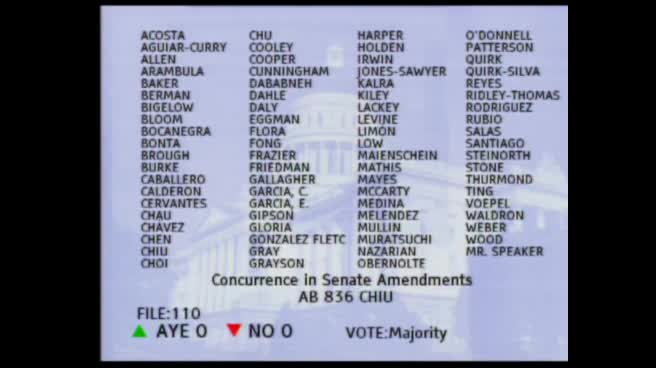 1MIN
Assembly Floor
 2MIN
Assembly Floor
 25MIN
Assembly Standing Committee on Judiciary
 25MIN
Assembly Standing Committee on Judiciary
Bill Author



