AB 2608: Licensed Mental Health Service Provider Education Program: former foster youth.
- Session Year: 2017-2018
- House: Assembly
- Latest Version Date: 2018-09-20
Existing law authorizes any licensed mental health service provider, as defined, including a marriage and family therapist, associate marriage and family therapist, licensed clinical social worker, and associate clinical social worker, who provides direct patient care in a publicly funded facility or a mental health professional shortage area, as defined, to apply for grants under the Licensed Mental Health Service Provider Education Program to reimburse his or her educational loans related to a career as a licensed mental health service provider, as specified. Existing law establishes the Mental Health Practitioner Education Fund and provides that moneys in that fund are available, upon appropriation by the Legislature, for purposes of the Licensed Mental Health Service Provider Education Program.
This bill would require an account to be created within the Mental Health Practitioner Education Fund and, upon appropriation by the Legislature, would require moneys in that account to be used solely to fund grants to repay educational loans for applicants who commit to practice in specified facilities for at least 24 months, who are marriage and family therapists, associate marriage and family therapists, licensed clinical social workers, associate clinical social workers, licensed professional clinical counselors, or associate professional clinical counselors, and who were formerly in Californias foster youth care system.
Existing law authorizes any licensed mental health service provider, as defined, including a marriage and family therapist, associate marriage and family therapist, licensed clinical social worker, and associate clinical social worker, who provides direct patient care in a publicly funded facility or a mental health professional shortage area, as defined, to apply for grants under the Licensed Mental Health Service Provider Education Program to reimburse his or her educational loans related to a career as a licensed mental health service provider, as specified. Existing law establishes the Mental Health Practitioner Education Fund and provides that moneys in that fund are available, upon appropriation by the Legislature, for purposes of the Licensed Mental Health Service Provider Education Program.
The Licensed Marriage and Family Therapist Act, the Clinical Social Worker Practice Act, and the Licensed Professional Clinical Counselor Act make the Board of Behavioral Sciences responsible for the licensure and regulation of marriage and family therapists, associate marriage and family therapists, clinical social workers, associate clinical social workers, licensed professional clinical counselors, and associate professional clinical counselors, respectively. Those acts require the board to establish and assess biennial license renewal fees, as specified. Those acts also require the board to collect an additional fee at the time of renewal of those licenses and direct the deposit of that additional fee into the Mental Health Practitioner Education Fund.This bill, commencing on July 1, 2019, would also require the Board of Behavioral Sciences to collect an additional ($5) fee for deposit into the bill would require an account to be created within the Mental Health Practitioner Education Fund. The bill would require the ($5) fee Fund and, upon appropriation by the Legislature, would require moneys in that account to be used solely to fund grants to repay educational loans for applicants who commit to practice in specified facilities for at least 24 months, who are marriage and family therapists, associate marriage and family therapists, licensed clinical social workers, associate clinical social workers, licensed professional clinical counselors, or associate professional clinical counselors, and who were formerly in Californias foster youth care system.
This bill would include a change in state statute that would result in a taxpayer paying a higher tax within the meaning of Section 3 of Article XIIIA of the California Constitution, and thus would require for passage the approval of 2/3 of the membership of each house of the Legislature.Existing law authorizes any licensed mental health service provider, as defined, including a marriage and family therapist, associate marriage and family therapist, licensed clinical social worker, and associate clinical social worker, who provides direct patient care in a publicly funded facility or a mental health professional shortage area, as defined, to apply for grants under the Licensed Mental Health Service Provider Education Program to reimburse his or her educational loans related to a career as a licensed mental health service provider, as specified. Existing law establishes the Mental Health Practitioner Education Fund and provides that moneys in that fund are available, upon appropriation by the Legislature, for purposes of the Licensed Mental Health Service Provider Education Program.
The Licensed Marriage and Family Therapist Act, the Clinical Social Worker Practice Act, and the Licensed Professional Clinical Counselor Act make the Board of Behavioral Sciences responsible for the licensure and regulation of marriage and family therapists, associate marriage and family therapists, clinical social workers, associate clinical social workers, licensed professional clinical counselors, and associate professional clinical counselors, respectively. Those acts require the board to establish and assess biennial license renewal fees, as specified. Those acts also require the board to collect an additional fee at the time of renewal of those licenses and direct the deposit of that additional fee into the Mental Health Practitioner Education Fund.
This bill, commencing on July 1, 2019, would also require the Board of Behavioral Sciences to collect an additional ($5) fee for deposit into the Mental Health Practitioner Education Fund. The bill would require the ($5) fee to be used solely to fund grants to repay educational loans for applicants who commit to practice in specified facilities for at least 24 months, who are marriage and family therapists, associate marriage and family therapists, licensed clinical social workers, associate clinical social workers, licensed professional clinical counselors, or associate professional clinical counselors, and who were formerly in Californias foster youth care system. The bill would authorize those grants to be combined with other grants provided under the Licensed Mental Health Service Provider Education Program to provide up to $20,000 in grant funding per applicant.
This bill would include a change in state statute that would result in a taxpayer paying a higher tax within the meaning of Section 3 of Article XIIIA of the California Constitution, and thus would require for passage the approval of 2/3 of the membership of each house of the Legislature.
Existing law authorizes any licensed mental health service provider, as defined, including a marriage and family therapist, associate marriage and family therapist, licensed clinical social worker, and associate clinical social worker, who provides direct patient care in a publicly funded facility or a mental health professional shortage area, as defined, to apply for grants under the Licensed Mental Health Service Provider Education Program to reimburse his or her educational loans related to a career as a licensed mental health service provider, as specified. Existing law establishes the Mental Health Practitioner Education Fund and provides that moneys in that fund are available, upon appropriation by the Legislature, for purposes of the Licensed Mental Health Service Provider Education Program.
The Licensed Marriage and Family Therapist Act and Act, the Clinical Social Worker Practice Act, and the Licensed Professional Clinical Counselor Act make the Board of Behavioral Sciences responsible for the licensure and regulation of marriage and family therapists, associate marriage and family therapists, clinical social workers, and associate clinical social workers, licensed professional clinical counselors, and associate professional clinical counselors, respectively. Those acts require the board to establish and assess biennial license renewal fees, as specified. Those acts also require the board to collect an additional fee at the time of renewal of those licenses and directs direct the deposit of that additional fee into the Mental Health Practitioner Education Fund.
With respect to grants funded with that fee under the Licensed Mental Health Service Provider Education Program, the bill would require applicants who were formerly in Californias foster youth care system to receive priority over other applicants. This bill bill, commencing on July 1, 2019, would also require the Board of Behavioral Sciences to collect an additional $10 ($5) fee for deposit into the Mental Health Practitioner Education Fund. The bill would require the $10 ($5) fee to be used solely to fund grants to repay educational loans for applicants who commit to practice in specified facilities for at least 24 months, who are marriage and family therapists, associate marriage and family therapists, licensed clinical social workers, or associate clinical social workers, licensed professional clinical counselors, or associate professional clinical counselors, and who were formerly in Californias foster youth care system. The bill would authorize those grants to be combined with other grants provided under the Licensed Mental Health Service Provider Education Program to provide up to $20,000 in grant funding per applicant.
This bill would include a change in state statute that would result in a taxpayer paying a higher tax within the meaning of Section 3 of Article XIIIA of the California Constitution, and thus would require for passage the approval of 2/3 of the membership of each house of the Legislature.
Existing law authorizes any licensed mental health service provider, as defined, including a marriage and family therapist, associate marriage and family therapist, licensed clinical social worker, and associate clinical social worker, who provides direct patient care in a publicly funded facility or a mental health professional shortage area, as defined, to apply for grants under the Licensed Mental Health Service Provider Education Program to reimburse his or her educational loans related to a career as a licensed mental health service provider, as specified. Existing law establishes the Mental Health Practitioner Education Fund and provides that moneys in that fund are available, upon appropriation by the Legislature, for purposes of the Licensed Mental Health Service Provider Education Program.
The Licensed Marriage and Family Therapist Act and the Clinical Social Worker Practice Act make the Board of Behavioral Sciences responsible for the licensure and regulation of marriage and family therapists, associate marriage and family therapists, clinical social workers, and associate clinical social workers, respectively. Those acts require the board to establish and assess biennial license renewal fees, as specified. Those acts also require the board to collect an additional fee at the time of renewal of those licenses and directs the deposit of that additional fee into the Mental Health Practitioner Education Fund.
With respect to grants funded with that fee under the Licensed Mental Health Service Provider Education Program, the bill would require applicants who were formerly in Californias foster youth care system to receive priority over other applicants. This bill would also require the Board of Behavioral Sciences to collect an additional $10 fee for deposit into the Mental Health Practitioner Education Fund. The bill would require the $10 fee to be used solely to fund grants to repay educational loans for applicants who commit to practice in specified facilities for up to at least 24 months, who are marriage and family therapists, associate marriage and family therapists, licensed clinical social workers, or associate clinical social workers, and who were formerly in Californias foster youth care system. The bill would authorize those grants to be combined with other grants provided under the Licensed Mental Health Service Provider Education Program to provide up to $20,000 in grant funding per applicant.
This bill would include a change in state statute that would result in a taxpayer paying a higher tax within the meaning of Section 3 of Article XIIIA of the California Constitution, and thus would require for passage the approval of 2/3 of the membership of each house of the Legislature.
Existing law authorizes any licensed mental health service provider, as defined, including a marriage and family therapist, associate marriage and family therapist, licensed clinical social worker, and associate clinical social worker, who provides direct patient care in a publicly funded facility or a mental health professional shortage area, as defined, to apply for grants under the Licensed Mental Health Service Provider Education Program to reimburse his or her educational loans related to a career as a licensed mental health service provider, as specified. Existing law establishes the Mental Health Practitioner Education Fund and provides that moneys in that fund are available, upon appropriation by the Legislature, for purposes of the Licensed Mental Health Service Provider Education Program.
The Licensed Marriage and Family Therapist Act and the Clinical Social Worker Practice Act make the Board of Behavioral Sciences responsible for the licensure and regulation of marriage and family therapists, associate marriage and family therapists, clinical social workers, and associate clinical social workers, respectively. Those acts require the board to establish and assess biennial license renewal fees, as specified. Those acts also require the board to collect an additional fee at the time of renewal of those licenses and directs the deposit of that additional fee into the Mental Health Practitioner Education Fund.
With respect to grants funded with that fee under the Licensed Mental Health Service Provider Education Program, the bill would require applicants who were formerly in Californias foster youth care system to receive priority over other applicants. This bill would also require the Board of Behavioral Sciences to collect an additional $10 fee for deposit into the Mental Health Practitioner Education Fund. The bill would require the $10 fee to be used solely to fund grants to repay educational loans for applicants who commit to practice in specified facilities for up to 24 months, who are marriage and family therapists, associate marriage and family therapists, licensed clinical social workers, or associate clinical social workers, and who were formerly in Californias foster youth care system. The bill would authorize those grants to be combined with other grants provided under the Licensed Mental Health Service Provider Education Program to provide up to $20,000 in grant funding per applicant.
This bill would include a change in state statute that would result in a taxpayer paying a higher tax within the meaning of Section 3 of Article XIIIA of the California Constitution, and thus would require for passage the approval of 2/3 of the membership of each house of the Legislature.
Existing law provides for the establishment of a statewide electronic benefits transfer (EBT) system, administered by the State Department of Social Services, for the purpose of providing financial and food assistance benefits. This bill would make technical, nonsubstantive changes to those provisions.Existing law provides for the establishment of a statewide electronic benefits transfer (EBT) system, administered by the State Department of Social Services, for the purpose of providing financial and food assistance benefits.
This bill would make technical, nonsubstantive changes to those provisions.
An account shall be created within the Mental Health Practitioner Education Fund and, upon appropriation by the Legislature, moneys in that account shall be used solely to fund grants, consistent with this article, to repay educational loans for applicants who meet all of the following requirements:
(a)Commit to provide direct patient care in a publicly funded facility or a mental health professional shortage area for at least 24 months.
(b)Are marriage and family therapists, associate marriage and family therapists, licensed clinical social workers, associate clinical social workers, licensed professional clinical counselors, or associate professional clinical counselors.
(c)Were formerly in Californias foster youth care system.
The moneys deposited in An account shall be created within the Mental Health Practitioner Education Fund pursuant to subdivision (b) of Section 4984.75 of, subdivision (b) of Section 4996.65 of, and subdivision (b) of Section 4999.121 of, the Business and Professions Code and, upon appropriation by the Legislature, moneys in that account shall be used solely to fund grants, consistent with this article, to repay educational loans for applicants who meet all of the following requirements:
(a)Commit to provide direct patient care in a publicly funded facility or a mental health professional shortage area for at least 24 months.
(b)Are marriage and family therapists, associate marriage and family therapists, licensed clinical social workers, associate clinical social workers, licensed professional clinical counselors, or associate professional clinical counselors.
(c)Were formerly in Californias foster youth care system.
(a)In addition to the fees charged pursuant to Section 4984.7 for the biennial renewal of a license pursuant to Section 4984, the board shall collect an additional fee of twenty dollars ($20) at the time of renewal. The board shall transfer this amount to the Controller who shall deposit the funds in the Mental Health Practitioner Education Fund established under Section 128458 of the Health and Safety Code.
(b)Commencing on July 1, 2019, in addition to the fees charged pursuant to Section 4984.7 for the biennial renewal of a license, and in addition to the fee charged pursuant to subdivision (a), the board shall collect an additional fee of five dollars ($5) at the time of renewal. The board shall transfer this amount to the Controller who shall deposit the funds in the Mental Health Practitioner Education Fund established under Section 128458 of the Health and Safety Code.
(c)This section shall become operative on July 1, 2018.
SEC. 2.Section 4996.65 of the Business and Professions Code, as added by Section 6 of Chapter 557 of the Statutes of 2017, is amended to read:4996.65.(a)In addition to the fees charged pursuant to Section 4996.3 for the biennial renewal of a license pursuant to Section 4996.6, the board shall collect an additional fee of twenty dollars ($20) at the time of renewal. The board shall transfer this amount to the Controller who shall deposit the funds in the Mental Health Practitioner Education Fund established under Section 128458 of the Health and Safety Code.
(b)Commencing on July 1, 2019, in addition to the fees charged pursuant to Section 4996.3 for the biennial renewal of a license pursuant to Section 4996.6, and in addition to the fee charged pursuant to subdivision (a), the board shall collect an additional fee of five dollars ($5) at the time of renewal. The board shall transfer this amount to the Controller who shall deposit the funds in the Mental Health Practitioner Education Fund established under Section 128458 of the Health and Safety Code.
(c)This section shall become operative on July 1, 2018.
SEC. 3.Section 4999.121 of the Business and Professions Code is amended to read:4999.121.(a)In addition to the fees charged pursuant to Section 4999.120 for the biennial renewal of a license pursuant to Section 4999.102, the board shall collect an additional fee of twenty dollars ($20) at the time of renewal. The board shall transfer this amount to the Controller who shall deposit the funds in the Mental Health Practitioner Education Fund established under Section 128458 of the Health and Safety Code.
(b)Commencing on July 1, 2019, in addition to the fees charged pursuant to Section 4999.120 for the biennial renewal of a license pursuant to Section 4999.102, and in addition to the fee charged pursuant to subdivision (a), the board shall collect an additional fee of five dollars ($5) at the time of renewal. The board shall transfer this amount to the Controller who shall deposit the funds in the Mental Health Practitioner Education Fund established under Section 128458 of the Health and Safety Code.
(c)This section shall become operative on July 1, 2018.
SEC. 4.Section 128455 is added to the Health and Safety Code, to read:128455.(a)The moneys deposited in the Mental Health Practitioner Education Fund pursuant to subdivision (b) of Section 4984.75 of, subdivision (b) of Section 4996.65 of, and subdivision (b) of Section 4999.121 of, the Business and Professions Code shall be used solely to fund grants, consistent with this article, to repay educational loans for applicants who meet all of the following requirements:
(1)(a)Commit to provide direct patient care in a publicly funded facility or a mental health professional shortage area for at least 24 months.
(2)(b)Are marriage and family therapists, associate marriage and family therapists, licensed clinical social workers, associate clinical social workers, licensed professional clinical counselors, or associate professional clinical counselors.
(3)(c)Were formerly in Californias foster youth care system.
(b)A grant provided to an applicant pursuant to subdivision (a) may be combined with other grants provided to the applicant under this article to provide a total of up to twenty thousand dollars ($20,000) in grant funding per applicant.(a)In addition to the fees charged pursuant to Section 4984.7 for the biennial renewal of a license pursuant to Section 4984, the board shall collect an additional fee of twenty dollars ($20) at the time of renewal. The board shall transfer this amount to the Controller who shall deposit the funds in the Mental Health Practitioner Education Fund. Fund established under Section 128458 of the Health and Safety Code.
(b)Commencing on January July 1, 2019, in addition to the fees charged pursuant to Section 4984.7 for the biennial renewal of a license, and in addition to the fee charged pursuant to subdivision (a), the board shall collect an additional fee of ten five dollars ($10) ($5) at the time of renewal. The board shall transfer this amount to the Controller who shall deposit the funds in the Mental Health Practitioner Education Fund. Fund established under Section 128458 of the Health and Safety Code.
(c)This section shall become operative on July 1, 2018.
SEC. 2.Section 4996.65 of the Business and Professions Code, as added by Section 6 of Chapter 557 of the Statutes of 2017, is amended to read:4996.65.(a)In addition to the fees charged pursuant to Section 4996.3 for the biennial renewal of a license pursuant to Section 4996.6, the board shall collect an additional fee of twenty dollars ($20) at the time of renewal. The board shall transfer this amount to the Controller who shall deposit the funds in the Mental Health Practitioner Education Fund. Fund established under Section 128458 of the Health and Safety Code.
(b)Commencing on January July 1, 2019, in addition to the fees charged pursuant to Section 4996.3 for the biennial renewal of a license pursuant to Section 4996.6, and in addition to the fee charged pursuant to subdivision (a), the board shall collect an additional fee of ten five dollars ($10) ($5) at the time of renewal. The board shall transfer this amount to the Controller who shall deposit the funds in the Mental Health Practitioner Education Fund. Fund established under Section 128458 of the Health and Safety Code.
(c)This section shall become operative on July 1, 2018.
SEC. 3.Section 4999.121 of the Business and Professions Code is amended to read:4999.121.(a)In addition to the fees charged pursuant to Section 4999.120 for the biennial renewal of a license pursuant to Section 4999.102, the board shall collect an additional fee of twenty dollars ($20) at the time of renewal. The board shall transfer this amount to the Controller who shall deposit the funds in the Mental Health Practitioner Education Fund. Fund established under Section 128458 of the Health and Safety Code.
(b)Commencing on July 1, 2019, in addition to the fees charged pursuant to Section 4999.120 for the biennial renewal of a license pursuant to Section 4999.102, and in addition to the fee charged pursuant to subdivision (a), the board shall collect an additional fee of five dollars ($5) at the time of renewal. The board shall transfer this amount to the Controller who shall deposit the funds in the Mental Health Practitioner Education Fund established under Section 128458 of the Health and Safety Code.
(b)(c)This section shall become operative on July 1, 2018.
SEC. 3.SEC. 4.Section 128455 is added to the Health and Safety Code, to read:128455.(a)(1)The moneys deposited in the Mental Health Practitioner Education Fund pursuant to subdivision (b) of Section 4984.75 of, and subdivision (b) of Section 4996.65 of, and subdivision (b) of Section 4999.121 of, the Business and Professions Code shall be used solely to fund grants, consistent with this article, to repay educational loans for applicants who meet all of the following requirements:
(A)(1)Commit to provide direct patient care in a publicly funded facility or a mental health professional shortage area for at least 24 months.
(B)(2)Are marriage and family therapists, associate marriage and family therapists, licensed clinical social workers, or associate clinical social workers. workers, licensed professional clinical counselors, or associate professional clinical counselors.
(C)(3)Were formerly in Californias foster youth care system.
(2)(b)A grant provided to an applicant pursuant to paragraph (1) subdivision (a) may be combined with other grants provided to the applicant under this article to provide a total of up to twenty thousand dollars ($20,000) in grant funding per applicant.
(b)An applicant for a grant under this article, from the moneys deposited in the Mental Health Practitioner Education Fund pursuant to subdivision (a) of Section 4984.75 of, and subdivision (a) of Section 4996.65 of, the Business and Professions Code, who is a marriage and family therapist, associate marriage and family therapist, licensed clinical social worker, or an associate clinical social worker and who was formerly in Californias foster youth care system shall be given priority over other grant applicants within the corresponding licensed provider group.(a)In addition to the fees charged pursuant to Section 4984.7 for the biennial renewal of a license pursuant to Section 4984, the board shall collect an additional fee of twenty dollars ($20) at the time of renewal. The board shall transfer this amount to the Controller who shall deposit the funds in the Mental Health Practitioner Education Fund.
(b)Commencing on January 1, 2019, in addition to the fees charged pursuant to Section 4984.7 for the biennial renewal of a license, and in addition to the fee charged pursuant to subdivision (a), the board shall collect an additional fee of ten dollars ($10) at the time of renewal. The board shall transfer this amount to the Controller who shall deposit the funds in the Mental Health Practitioner Education Fund.
(c)This section shall become operative on July 1, 2018.
SEC. 2.Section 4996.65 of the Business and Professions Code, as added by Section 6 of Chapter 557 of the Statutes of 2017, is amended to read:4996.65.(a)In addition to the fees charged pursuant to Section 4996.3 for the biennial renewal of a license pursuant to Section 4996.6, the board shall collect an additional fee of twenty dollars ($20) at the time of renewal. The board shall transfer this amount to the Controller who shall deposit the funds in the Mental Health Practitioner Education Fund.
(b)Commencing on January 1, 2019, in addition to the fees charged pursuant to Section 4996.3 for the biennial renewal of a license pursuant to Section 4996.6, and in addition to the fee charged pursuant to subdivision (a), the board shall collect an additional fee of ten dollars ($10) at the time of renewal. The board shall transfer this amount to the Controller who shall deposit the funds in the Mental Health Practitioner Education Fund.
(c)This section shall become operative on July 1, 2018.
SEC. 3.Section 128455 is added to the Health and Safety Code, to read:128455.(a)(1)The moneys deposited in the Mental Health Practitioner Education Fund pursuant to subdivision (b) of Section 4984.75 of, and subdivision (b) of Section 4996.65 of, the Business and Professions Code shall be used solely to fund grants, consistent with this article, to repay educational loans for applicants who meet all of the following requirements:
(A)Commit to provide direct patient care in a publicly funded facility or a mental health professional shortage area for up to at least 24 months.
(B)Are marriage and family therapists, associate marriage and family therapists, licensed clinical social workers, or associate clinical social workers.
(C)Were formerly in Californias foster youth care system.
(2)A grant provided to an applicant pursuant to paragraph (1) may be combined with other grants provided to the applicant under this article to provide a total of up to twenty thousand dollars ($20,000) in grant funding per applicant.
(b)An applicant for a grant under this article, from the moneys deposited in the Mental Health Practitioner Education Fund pursuant to subdivision (a) of Section 4984.75 of, and subdivision (a) of Section 4996.65 of, the Business and Professions Code, who is a marriage and family therapist, associate marriage and family therapist, licensed clinical social worker, or an associate clinical social worker and who was formerly in Californias foster youth care system shall be given priority over other grant applicants within the corresponding licensed provider group.
(a)In addition to the fees charged pursuant to Section 4984.7 for the biennial renewal of a license pursuant to Section 4984, the board shall collect an additional fee of twenty dollars ($20) at the time of renewal. The board shall transfer this amount to the Controller who shall deposit the funds in the Mental Health Practitioner Education Fund.
(b)Commencing on January 1, 2019, in addition to the fees charged pursuant to Section 4984.7 for the biennial renewal of a license, and in addition to the fee charged pursuant to subdivision (a), the board shall collect an additional fee of ten dollars ($10) at the time of renewal. The board shall transfer this amount to the Controller who shall deposit the funds in the Mental Health Practitioner Education Fund.
(b)(c)This section shall become operative on July 1, 2018.
SEC. 2.Section 4996.65 of the Business and Professions Code, as added by Section 6 of Chapter 557 of the Statutes of 2017, is amended to read:4996.65.(a)In addition to the fees charged pursuant to Section 4996.3 for the biennial renewal of a license pursuant to Section 4996.6, the board shall collect an additional fee of twenty dollars ($20) at the time of renewal. The board shall transfer this amount to the Controller who shall deposit the funds in the Mental Health Practitioner Education Fund.
(b)Commencing on January 1, 2019, in addition to the fees charged pursuant to Section 4996.3 for the biennial renewal of a license pursuant to Section 4996.6, and in addition to the fee charged pursuant to subdivision (a), the board shall collect an additional fee of ten dollars ($10) at the time of renewal. The board shall transfer this amount to the Controller who shall deposit the funds in the Mental Health Practitioner Education Fund.
(b)(c)This section shall become operative on July 1, 2018.
SEC. 3.Section 128455 is added to the Health and Safety Code, to read:128455.(a)(1)The moneys deposited in the Mental Health Practitioner Education Fund pursuant to subdivision (b) of Section 4984.75 of, and subdivision (b) of Section 4996.65 of, the Business and Professions Code shall be used solely to fund grants, consistent with this article, to repay educational loans for applicants who meet all of the following requirements:
(A)Commit to provide direct patient care in a publicly funded facility or a mental health professional shortage area for up to 24 months.
(B)Are marriage and family therapists, associate marriage and family therapists, licensed clinical social workers, or associate clinical social workers.
(C)Were formerly in Californias foster youth care system.
(2)A grant provided to an applicant pursuant to paragraph (1) may be combined with other grants provided to the applicant under this article to provide a total of up to twenty thousand dollars ($20,000) in grant funding per applicant.
(b)An applicant for a grant under this article, from the moneys deposited in the Mental Health Practitioner Education Fund pursuant to subdivision (a) of Section 4984.75 of, and subdivision (a) of Section 4996.65 of, the Business and Professions Code, who is a marriage and family therapist, associate marriage and family therapist, licensed clinical social worker, or an associate clinical social worker and who was formerly in Californias foster youth care system shall be given priority over other grant applicants within the corresponding licensed provider group.
SECTION 1.Section 10072 of the Welfare and Institutions Code is amended to read:10072.The electronic benefits transfer system required by this chapter shall be designed to do, but not be limited to, all of the following:(a)To the extent permitted by federal law and the rules of the program providing the benefits, recipients who are required to receive their benefits using an electronic benefits transfer system shall be permitted to gain access to the benefits in any part of the state where electronic benefits transfers are accepted. All electronic benefits transfer systems in this state shall be designed to allow recipients to gain access to their benefits by using every other electronic benefits transfer system.(b)To the maximum extent feasible, electronic benefits transfer systems shall be designed to be compatible with the electronic benefits transfer systems in other states.(c)All reasonable measures shall be taken in order to ensure that recipients have access to electronically issued benefits through systems, including, but not limited to, automated teller machines, point-of-sale devices, or other devices that accept electronic benefits transfer transactions. Benefits provided under Chapter 2 (commencing with Section 11200) of Part 3 shall be staggered over a period of three calendar days, unless a county requests a waiver from the department and the waiver is approved, or in cases of hardship pursuant to subdivision (p).(d)The system shall provide for reasonable access to benefits to recipients who demonstrate an inability to use an electronic benefits transfer card or other aspect of the system because of disability, language, lack of access, or other barrier. These alternative methods shall conform to the requirements of the federal Americans with Disabilities Act of 1990 (42 U.S.C. Sec. 12101, et seq.), including reasonable accommodations for recipients who, because of physical or mental disabilities, are unable to operate or otherwise make effective use of the electronic benefits transfer system.(e)The system shall permit a recipient the option to choose a personal identification number, also known as a PIN number, to assist the recipient to remember his or her number in order to allow access to benefits. Whenever an institution, authorized representative, or other third party not part of the recipient household or assistance unit has been issued an electronic benefits transfer card, either in lieu of, or in addition to, the recipient, the third party shall have a separate card and personal identification number. At the option of the recipient, he or she may designate whether restrictions apply to the third partys access to the recipients benefits. At the option of the recipient head of household or assistance unit, the county shall provide one electronic benefits transfer card to each adult member to enable them to access benefits.(f)The system shall have a 24-hour per day toll-free telephone hotline for the reporting of lost or stolen cards that will provide recipients, at no additional cost to the recipient, with information on how to have the card and personal identification number replaced, and that will allow an authorized representative or head of household to access, over the telephone, the transaction history detail for at least the last 10 transactions and to request that the transaction history detail for at least the past two months be sent by mail.(g)The system shall have an Internet Web site that will provide recipients, at no additional cost to the recipient, with information on how to have the card and personal identification number replaced, and that will allow an authorized representative or head of household to view the transaction history detail for at least the last 10 transactions and to request that the transaction history detail for at least the past two months be sent by mail.(h)In addition to the ability to receive transaction history detail pursuant to subdivisions (f) and (g), a county human services agency shall make available to an authorized representative or head of household, at no additional cost to the authorized representative or head of household, all electronic benefit transaction history details that are available to the county human services agency within 10 business days after a request has been received by the agency.(i)(1)A recipient shall not incur any loss of electronic benefits after reporting that his or her electronic benefits transfer card or personal identification number has been lost or stolen. The system shall provide for the prompt replacement of lost or stolen electronic benefits transfer cards and personal identification numbers. Electronic benefits for which the case was determined eligible and that were not withdrawn by transactions using an authorized personal identification number for the account shall also be promptly replaced.(2)A recipient shall not incur any loss of cash benefits that are taken by an unauthorized withdrawal, removal, or use of benefits that does not occur by the use of a physical electronic benefits transfer card issued to the recipient or authorized third party to directly access the benefits. Benefits taken as described in this paragraph shall be promptly replaced in accordance with the protocol established by the department pursuant to paragraph (3).(3)The State Department of Social Services shall establish a protocol for recipients to report electronic theft of cash benefits that minimizes the burden on recipients, ensures prompt replacement of benefits in order to minimize the harm to recipients, and ensures program integrity. This protocol may include the automatic replacement of benefits without the need for recipient reporting and verification.(j)Electronic benefits transfer system consumers shall be informed on how to use electronic benefits transfer cards, how to protect their cards from misuse, and where consumers can use their cards to withdraw benefits without incurring a fee, charge, or surcharge.(k)The electronic benefits transfer system shall be designed to inform recipients when the electronic benefits transfer system does not function or is expected not to function for more than a one-hour period between 6 a.m. and midnight during any 24-hour period. This information shall be made available in the recipients preferred language if the electronic benefits transfer system vendor contract provides for services in that language.(l)Procedures shall be developed for error resolution.(m)A fee shall not be charged by the state, a county, or an electronic benefits processor certified by the state to retailers participating in the electronic benefits transfer system.(n)Except for CalFresh transactions, a recipient may be charged a fee, not to exceed the amount allowed by applicable state and federal law and customarily charged to other customers, for cash withdrawal transactions that exceed four per month.(o)The electronic benefits transfer system shall be designed to ensure that recipients of benefits under Chapter 2 (commencing with Section 11200) of Part 3 have access to using or withdrawing benefits with minimal fees or charges, including an opportunity to access benefits with no fee or charges.(p)A county shall exempt an individual from the three-day staggering requirement under subdivision (c) on a case-by-case basis for hardship. Hardship includes, but is not limited to, the incurrence of late charges on an individuals housing payments.(q)A county shall use information provided by the department to inform recipients of benefits under Chapter 2 (commencing with Section 11200) of Part 3 of all of the following:(1)The methods of electronic delivery of benefits available, including distribution of benefits through the electronic benefits transfer system or direct deposit pursuant to Section 11006.2.(2)Applicable fees and charges, including surcharges, consumer and privacy protections, and liability for theft associated with the electronic benefits transfer system.(3)How to avoid fees and charges, including opting for delivery of benefits by direct deposit and using the electronic benefits transfer card solely at surcharge free locations.(4)Where to withdraw benefits without a surcharge when using the electronic benefits transfer system.(5)That a recipient may authorize any available method of electronic delivery of benefits and instructions regarding how the recipient may select or change his or her preferred method of electronic delivery of benefits and that the recipient shall be given the opportunity to select the method prior to the first payment.(6)That a recipient may be entitled to an alternative method of delivery if the recipient demonstrates an inability to use an electronic benefits transfer card or other aspect of the system because of disability, language, lack of access, or other barrier pursuant to subdivision (d) and instructions regarding how to determine whether the recipient qualifies for an alternative method of delivery.(7)That a recipient may be entitled to an exemption from the three-day staggering requirement under subdivision (c) on a case-by-case basis for hardship pursuant to subdivision (o) and instructions regarding how to determine whether the recipient qualifies for the exemption.(r)A county is in compliance with subdivision (q) if it provides the recipient a copy of the information developed by the department. A county may provide a recipient information, in addition to the copy of the information developed by the department, pursuant to subdivision (q), either verbally or in writing, if the county determines the additional information will benefit the recipients understanding of the information provided.The electronic benefits transfer system required by this chapter shall be designed to do, but not be limited to, all of the following:
(a)To the extent permitted by federal law and the rules of the program providing the benefits, recipients who are required to receive their benefits using an electronic benefits transfer system shall be permitted to gain access to the benefits in any part of the state where electronic benefits transfers are accepted. All electronic benefits transfer systems in this state shall be designed to allow recipients to gain access to their benefits by using every other electronic benefits transfer system.
(b)To the maximum extent feasible, electronic benefits transfer systems shall be designed to be compatible with the electronic benefits transfer systems in other states.
(c)All reasonable measures shall be taken in order to ensure that recipients have access to electronically issued benefits through systems such as systems, including, but not limited to, automated teller machines, point-of-sale devices, or other devices that accept electronic benefits transfer transactions. Benefits provided under Chapter 2 (commencing with Section 11200) of Part 3 shall be staggered over a period of three calendar days, unless a county requests a waiver from the department and the waiver is approved, or in cases of hardship pursuant to subdivision (p).
(d)The system shall provide for reasonable access to benefits to recipients who demonstrate an inability to use an electronic benefits transfer card or other aspect of the system because of disability, language, lack of access, or other barrier. These alternative methods shall conform to the requirements of the federal Americans with Disabilities Act of 1990 (42 U.S.C. Sec. 12101, et seq.), including reasonable accommodations for recipients who, because of physical or mental disabilities, are unable to operate or otherwise make effective use of the electronic benefits transfer system.
(e)The system shall permit a recipient the option to choose a personal identification number, also known as a PIN number, to assist the recipient to remember his or her number in order to allow access to benefits. Whenever an institution, authorized representative, or other third party not part of the recipient household or assistance unit has been issued an electronic benefits transfer card, either in lieu of, or in addition to, the recipient, the third party shall have a separate card and personal identification number. At the option of the recipient, he or she may designate whether restrictions apply to the third partys access to the recipients benefits. At the option of the recipient head of household or assistance unit, the county shall provide one electronic benefits transfer card to each adult member to enable them to access benefits.
(f)The system shall have a 24-hour per day toll-free telephone hotline for the reporting of lost or stolen cards that will provide recipients, at no additional cost to the recipient, with information on how to have the card and personal identification number replaced, and that will allow an authorized representative or head of household to access, over the telephone, the transaction history detail for at least the last 10 transactions and to request that the transaction history detail for at least the past two months be sent by mail.
(g)The system shall have an Internet Web site that will provide recipients, at no additional cost to the recipient, with information on how to have the card and personal identification number replaced, and that will allow an authorized representative or head of household to view the transaction history detail for at least the last 10 transactions and to request that the transaction history detail for at least the past two months be sent by mail.
(h)In addition to the ability to receive transaction history detail pursuant to subdivisions (f) and (g), a county human services agency shall make available to an authorized representative or head of household, at no additional cost to the authorized representative or head of household, all electronic benefit transaction history details that are available to the county human services agency within 10 business days after a request has been received by the agency.
(i)(1)A recipient shall not incur any loss of electronic benefits after reporting that his or her electronic benefits transfer card or personal identification number has been lost or stolen. The system shall provide for the prompt replacement of lost or stolen electronic benefits transfer cards and personal identification numbers. Electronic benefits for which the case was determined eligible and that were not withdrawn by transactions using an authorized personal identification number for the account shall also be promptly replaced.
(2)A recipient shall not incur any loss of cash benefits that are taken by an unauthorized withdrawal, removal, or use of benefits that does not occur by the use of a physical EBT electronic benefits transfer card issued to the recipient or authorized third party to directly access the benefits. Benefits taken as described in this paragraph shall be promptly replaced in accordance with the protocol established by the department pursuant to paragraph (3).
(3)The State Department of Social Services shall establish a protocol for recipients to report electronic theft of cash benefits that minimizes the burden on recipients, ensures prompt replacement of benefits in order to minimize the harm to recipients, and ensures program integrity. This protocol may include the automatic replacement of benefits without the need for recipient reporting and verification.
(j)Electronic benefits transfer system consumers shall be informed on how to use electronic benefits transfer cards, how to protect their cards from misuse, and where consumers can use their cards to withdraw benefits without incurring a fee, charge, or surcharge.
(k)The electronic benefits transfer system shall be designed to inform recipients when the electronic benefits transfer system does not function or is expected not to function for more than a one-hour period between 6 a.m. and midnight during any 24-hour period. This information shall be made available in the recipients preferred language if the electronic benefits transfer system vendor contract provides for services in that language.
(l)Procedures shall be developed for error resolution.
(m)No A fee shall not be charged by the state, a county, or an electronic benefits processor certified by the state to retailers participating in the electronic benefits transfer system.
(n)Except for CalFresh transactions, a recipient may be charged a fee, not to exceed the amount allowed by applicable state and federal law and customarily charged to other customers, for cash withdrawal transactions that exceed four per month.
(o)The electronic benefits transfer system shall be designed to ensure that recipients of benefits under Chapter 2 (commencing with Section 11200) of Part 3 have access to using or withdrawing benefits with minimal fees or charges, including an opportunity to access benefits with no fee or charges.
(p)A county shall exempt an individual from the three-day staggering requirement under subdivision (c) on a case-by-case basis for hardship. Hardship includes, but is not limited to, the incurrence of late charges on an individuals housing payments.
(q)A county shall use information provided by the department to inform recipients of benefits under Chapter 2 (commencing with Section 11200) of Part 3 of all of the following:
(1)The methods of electronic delivery of benefits available, including distribution of benefits through the electronic benefits transfer system or direct deposit pursuant to Section 11006.2.
(2)Applicable fees and charges, including surcharges, consumer and privacy protections, and liability for theft associated with the electronic benefits transfer system.
(3)How to avoid fees and charges, including opting for delivery of benefits by direct deposit and using the electronic benefits transfer card solely at surcharge free locations.
(4)Where to withdraw benefits without a surcharge when using the electronic benefits transfer system.
(5)That a recipient may authorize any available method of electronic delivery of benefits and instructions regarding how the recipient may select or change his or her preferred method of electronic delivery of benefits and that the recipient shall be given the opportunity to select the method prior to the first payment.
(6)That a recipient may be entitled to an alternative method of delivery if the recipient demonstrates an inability to use an electronic benefits transfer card or other aspect of the system because of disability, language, lack of access, or other barrier pursuant to subdivision (d) and instructions regarding how to determine whether the recipient qualifies for an alternative method of delivery.
(7)That a recipient may be entitled to an exemption from the three-day staggering requirement under subdivision (c) on a case-by-case basis for hardship pursuant to subdivision (o) and instructions regarding how to determine whether the recipient qualifies for the exemption.
(r)A county is in compliance with subdivision (q) if it provides the recipient a copy of the information developed by the department. A county may provide a recipient information, in addition to the copy of the information developed by the department, pursuant to subdivision (q), either verbally or in writing, if the county determines the additional information will benefit the recipients understanding of the information provided.
|
Date
|
Status
|
|---|---|
| Sep 20, 2018 | Chaptered by Secretary of State - Chapter 585, Statutes of 2018. |
| Sep 20, 2018 | Approved by the Governor. |
| Sep 5, 2018 | Enrolled and presented to the Governor at 3 p.m. |
| Aug 27, 2018 | Senate amendments concurred in. To Engrossing and Enrolling. |
| Aug 22, 2018 | In Assembly. Concurrence in Senate amendments pending. May be considered on or after August 24 pursuant to Assembly Rule 77. |
| Aug 21, 2018 | Read third time. Passed. Ordered to the Assembly. |
| Aug 7, 2018 | Read second time. Ordered to third reading. |
| Aug 6, 2018 | From committee: Be ordered to second reading pursuant to Senate Rule 28.8. |
| Jul 5, 2018 | From committee chair, with author's amendments: Amend, and re-refer to committee. Read second time, amended, and re-referred to Com. on APPR. |
| Jun 28, 2018 | From committee: Do pass and re-refer to Com. on APPR. (Ayes 6. Noes 2.) (June 27). Re-referred to Com. on APPR. |
| Jun 20, 2018 | Read second time and amended. Re-referred to Com. on HEALTH. |
| Jun 19, 2018 | From committee: Amend, and do pass as amended and re-refer to Com. on HEALTH. (Ayes 6. Noes 0.) (June 18). |
| Jun 14, 2018 | From committee chair, with author's amendments: Amend, and re-refer to committee. Read second time, amended, and re-referred to Com. on B., P. & E.D. |
| Jun 13, 2018 | Referred to Coms. on B., P. & E.D. and HEALTH. |
| Jun 4, 2018 | In Senate. Read first time. To Com. on RLS. for assignment. |
| May 31, 2018 | Read third time. Passed. Ordered to the Senate. |
| May 25, 2018 | Read second time. Ordered to third reading. |
| May 9, 2018 | In committee: Set, first hearing. Referred to APPR. suspense file. |
| Apr 24, 2018 | From committee: Do pass and re-refer to Com. on APPR. (Ayes 11. Noes 4.) (April 24). Re-referred to Com. on APPR. |
| Apr 4, 2018 | Re-referred to Com. on B. & P. |
| Apr 3, 2018 | From committee chair, with author's amendments: Amend, and re-refer to Com. on B. & P. Read second time and amended. |
| Mar 19, 2018 | Re-referred to Com. on B. & P. |
| Mar 15, 2018 | Referred to Com. on B. & P. |
| Feb 16, 2018 | From printer. May be heard in committee March 18. |
| Feb 15, 2018 | Read first time. To print. |
|
Date
|
Description
|
Location
|
Votes
|
|
|---|---|---|---|---|
| Aug 27, 2018 | AB 2608 STONE Concurrence in Senate Amendments | Assembly Floor |
Passed |
|
| Aug 21, 2018 | Assembly 3rd Reading AB2608 Mark Stone et al. By Beall | Senate Floor |
Passed |
|
| Jun 27, 2018 | Do pass, but first be re-referred to the Committee on [Appropriations] | Senate Standing Committee on Health |
Passed |
|
| Jun 18, 2018 | Do pass as amended, but first amend, and re-refer to the Committee on [Health] | Senate Standing Committee on Business, Professions and Economic Development |
Passed |
|
| May 31, 2018 | AB 2608 STONE Assembly Third Reading | Assembly Floor |
Passed |
|
| May 25, 2018 | Do pass. | Assembly Standing Committee on Appropriations |
Passed |
|
| Apr 24, 2018 | Do pass and be re-referred to the Committee on [Appropriations] | Assembly Standing Committee on Business and Professions |
Passed |
This list shows positions taken on this bill by organizations on the date displayed, which is linked to the original source.
Positions by individuals are not included.
|
Organization
|
Position
|
Date
|
|---|---|---|
| An individual | ** Support | Jun 15, 2018 |
| Anti-Recidivism Coalition | * Support | Jun 27, 2018 |
| ASPIRANET | ** Support | Aug 8, 2018 |
| Board of Behavioral Sciences | ** Against | Aug 8, 2018 |
| Crittention | ** Support | Aug 8, 2018 |
| Echoes of Hope | ** Support | Aug 8, 2018 |
| Inside Out Writers | ** Support | Aug 8, 2018 |
| Journey House | ** Support | Aug 8, 2018 |
CONCURRENCE IN SENATE AMENDMENTS
CSA1 Bill Id:AB 2608
Author:(Mark Stone)
As Amended Ver:July 5, 2018
Majority vote
ASSEMBLY: | 54-24 | (May 31, 2018) | SENATE: | 32-4 | (August 21, 2018) |
Original Committee Reference: B. & P.
SUMMARY: Creates a new account within the Mental Health Practitioner Education Fund, where future appropriations by the Legislature could be deposited to a fund grant program to repay educational loans for applicants who were formerly in California's foster youth care system and commit to provide direct patient care in a publicly funded facility or a mental health professional shortage area for at least 24 months as marriage and family therapists (LMFTs), associate marriage and family therapists (AMFTs), licensed clinical social workers (LFSWs), associate clinical social workers (ACSWs), licensed professional clinical counselors (LPCCs), or associate professional clinical counselors (APCCs).
The Senate amendments delete the bill's specified fee increases for Board of Behavioral Sciences (BBS) licensees, which would have established a revenue stream for the former foster youth education grant program, and instead simply create a framework for future budget appropriations to fund the grant program.
EXISTING LAW:
- Establishes the Board of Behavioral Sciences (BBS) within the Department of Consumer Affairs. (Business and Professions Code (BPC) Section 4990 et seq.)
- Establishes the Licensed Mental Health Service Provider Education Program within the Health Professions Education Foundation. (Health and Safety Code (HSC) Section 128454)
- Defines "licensed mental health service provider" as:
- A specified licensee under the Board of Psychology;
- An LMFT or AMFT;
- An LCSW or ACSW; and
- After July 1, 2018, an LPCC or APCC.
(HSC Section 128454(b)(1))
- Authorizes a licensed mental health service provider who provides direct patient care in a publicly funded facility or a mental health professional shortage area to apply for grants under the loan repayment program to reimburse related educational loans. (HSC Section 128454(c))
- Requires the BBS to collect, as of July 1, 2018, a fee of $20 to be deposited in the Mental Health Practitioner Education Fund. (BPC Section 4984.75, 4996.65)
FISCAL EFFECT: According to the Senate Appropriations Committee, pursuant to Senate Rule 28.8, negligible state costs.
COMMENTS:
Purpose. This bill is sponsored by Journey House. According to the author:
Although over 93% of foster youth aspire to get a college degree, only 3% will ever earn a Bachelor's degree, and less than 1% will get a Masters or a Doctorate. Given the exceptional disadvantages, dismal educational outcomes that foster youth are facing today, and the obligation of the State to support foster youth as they transition into adulthood, California needs to provide increased support to youth, especially those who aim to work with the same communities they may have originated. AB 2608 creates a fund that has the ability to specifically target former foster youth who are earning graduate degrees to become social workers to better provide them with opportunities to succeed.
Background. The Licensed Mental Health Service Provider Education Program (LMHSPEP) is one of several scholarship and loan repayment programs administered by the Health Professions Education Foundation (HPEF) under the Office of Statewide Health Planning and Development (OSHPD). Like other HPEF programs, the LMHSPEP was statutorily created to encourage individuals from underrepresented communities to become health professionals and increase access to health providers in medically underserved areas.
According to the HPEF, an awardee under the LMHSPEP may receive up to $15,000 to repay educational loans in exchange for not less than a 12-month commitment to practicing and providing direct patient care in an eligible site. Qualified facilities include publicly funded or public mental health facilities, non-profit mental health facilities that contract with a county entity to provide mental health services, and designated mental health professions shortage areas.
The state has long made investments into programs designed to provide long-term economic opportunities to former foster youth. This vulnerable population is often deprived of the resources necessary to successfully pursue a college education and begin a professional career, despite the fact that the overwhelming majority of foster youth wish to do so. For many former foster youth who interacted with social workers throughout their early years and who wish to provide the same service to others in their situation, a degree and career in social work is frequently identified as a natural goal. However, this demographic is all too often unable to afford the costs of a graduate education program necessary to effectuate this objective.
By leveraging an existing program to make education loan repayment grants to those who enter into the mental health profession, this bill would attempt to assist former foster youth with becoming graduate level social workers. This effort would no longer receive dedicated funding through the bill; however, a special fund account would be created for the deposit of any future appropriations, allowing for a grant program to be swiftly implemented. The author and sponsor indicate that such an investment would be worthwhile as more social workers would be available in high-need communities that would benefit from licensees who have personal experience with the foster system.
Analysis Prepared by: Robert Sumner / B. & P. / (916) 319-3301 FN: 0003954
Office of Senate Floor Analyses (916) 651-1520 Fax: (916) 327-4478 | AB |
THIRD READING
Bill No: AB 2608
:
SENATE BUS., PROF. & ECON. DEV. COMMITTEE: 6-0, 6/18/18
AYES: Hill, Allen, Dodd, Galgiani, Glazer, Hernandez
NO VOTE RECORDED: Fuller, Pan, Wilk
SENATE HEALTH COMMITTEE: 6-2, 6/27/18
AYES: Beall, Hernandez, Leyva, Mitchell, Monning, Roth
NOES: Nguyen, Nielsen
NO VOTE RECORDED: Pan
SENATE APPROPRIATIONS COMMITTEE: Senate Rule 28.8
ASSEMBLY FLOOR: 54-24, 5/31/18 - See last page for vote
DIGEST:
This bill requires an account to be created within the Mental Health Practitioner Education Fund to fund grants to repay educational loans for applicants who were formerly in California’s foster youth care system and commit to provide direct patient mental health care in a publicly funded facility or a mental health professional shortage area for at least 24 months.
Existing law:
- Establishes the Board of Behavioral Sciences (BBS) within the Department of Consumer Affairs (DCA) to administer the Marriage and Family Therapist (MFT) Act, the Educational Psychologist (EP) Practice Act, the Clinical Social Worker (CSW) Practice Act, and the Licensed Professional Clinical Counselor (PCC) Act. (Business and Professions Code (BPC) § 4990.12)
- Requires the BBS to collect until July 1, 2018, a $10 fee at the time of a licensee’s renewal and to transfer the fee to the Controller for deposit in the Mental Health Practitioner Education Fund. After July 1, 2018, the fee increases to $20. (BPC §§ 4984.75, 4996.65)
- Defines the practice of professional clinical counseling to mean the application of counseling interventions and psychotherapeutic techniques to identify and remediate cognitive, mental, and emotional issues, including personal growth, adjustment to disability, crisis intervention, and psychosocial and environmental problems, and the use, application, and integration of required coursework and training. (BPC § 4999.20)
- Defines the practice of clinical social work as a service in which a special knowledge of social resources, human capabilities, and the part that unconscious motivation plays in determining behavior, is directed at helping people to achieve more adequate, satisfying, and productive social adjustments. (BPC § 4996.9)
- Defines the practice of marriage and family therapy to mean that service performed with individuals, couples, or groups wherein interpersonal relationships are examined for the purpose of achieving more adequate, satisfying, and productive marriage and family adjustments. This practice includes relationship and premarriage counseling. (BPC § 4980.02)
- Establishes the Health Professions Education Foundation (HPEF) within the Office of Statewide Health Planning and Development (OSHPD) to administer the Health Professions Education Fund (Fund) and related scholarship and loan programs for students from underrepresented groups. (Health and Safety Code (HSC) §§ 128330, 128371)
- Establishes the Licensed Mental Health Service Provider Education Program (Program) that provides licensed mental health service providers with grants to reimburse his or her educational loans related to a career as a licensed mental health service provider. (HSC § 128454)
- Defines a “licensed mental health service provider” as a licensed psychologist, registered psychologist, postdoctoral psychological assistant, postdoctoral psychology trainee, MFT, associate MFT, licensed CSW, associate CSW, licensed PCC, and associate PCC. (HSC § 128454)
- Requires a licensed mental health service provider, in order to be eligible for a grant, to be employed at a publicly funded mental health facility, a public or nonprofit private mental health facility that contracts with a county mental health entity or facility to provide mental health services, who provides direct patient care in a publicly funded facility or a mental health professional shortage area. (HSC § 128454)
This bill requires an account to be created within the Mental Health Practitioner Education Fund and, upon appropriation by the Legislature, moneys in that account shall be used solely to fund grants to repay educational loans for applicants who meet all of the following requirements:
- Commit to provide direct patient care in a publicly funded facility or a mental health professional shortage area for at least 24 months.
- Are MFTs, associate MFTs, licensed CSWs, associate CSWs, licensed PCCs, or associate PCCs.
- Were formerly in California’s foster youth care system.
Background
HPEF and the Program. HPEF was established in 1987 to encourage persons from underrepresented communities to become health professionals and increase access to health providers in medically underserved areas. Supported by grants, donations, licensing fees, and special funds, HPEF provides scholarship, loan repayment and programs to students and graduates who agree to practice in California's medically underserved communities.
The Program is administered by the Health Professions Education Foundation and became operational in 2005. An awardee may receive up to $15,000 to repay educational loans for not less than a 12-month commitment practicing and providing direct client care in an eligible site. Eligible sites include publicly funded or public mental health facilities, non-profit mental health facilities that contract with a county entity to provide mental health services, and/or designated mental health professions shortage areas. The United States Department of Health and Human Services develops shortage designation criteria to determine whether a geographic area, population group or facility is a Health Professional Shortage Area (HPSA) or a Medically Underserved Area/Population (MUA/P). HPSAs may be designated as having a shortage of primary medical care, dental or mental health providers. They may be urban or rural areas, population groups, or medical or other public facilities. MUAs may be a whole county or a group of contiguous counties, a group of counties or civil divisions, or a group of urban census tracts in which residents have a shortage of health services. MUPs may include groups of persons who face economic, cultural or linguistic barriers to health care.
According to the HPEF, award selection is based solely on the information and documents contained in the Program application. Selection for awards is based on work experience, cultural and linguistic competence, career goals, community background, and fluency in a language other than English. HPEF indicates that priority is given to individuals whose community background and commitment indicates the likelihood of long-term employment in a qualified facility even after the service obligation has ended. A Program recipient may receive up to three awards from HPEF.
Comments
Foster youth. According to the author’s office, “When most foster youth age out of the foster care system, they are academically unprepared for college, they lack family support, financial, emotional or otherwise, and many of them struggle with mental health issues. All these factors make it challenging for youths to meet their independent living needs, let alone the costs associated with attending graduate school.
“When California foster youth age out from the foster care system, 36% will become homeless within a year and a half, and 25% of them will be incarcerated within two years. Although more than 93% of foster youth aspire to get a college degree, they are unlikely to have access to postsecondary education. Less than half of foster youth will ever graduate from high school, and only 20% will move on to attend college (compared to 60% of the general youth population). And even when a former foster youth successfully makes the uphill climb to attend college, most will never see graduation. Only 3% will earn a Bachelor’s degree, and less than 1% will earn a Master or Doctoral degree.
“Although the problems of student debt and the rapidly rising cost of postsecondary education are not specific to foster youth, they are uniquely impeded by these issues. As the burden for paying for college has shifted from the state and federal government to the family and the student, foster youth have found that the burden rests squarely on their shoulders.”
Policy considerations. The author has not demonstrated why former foster youth need a separate grant fund under the existing Program. While the author’s office paints an unfortunate picture of foster youth outcomes, there is no indication that the Program has specifically failed these individuals to date -- no information has been provided that foster youth are presently denied access to Program funding at all, or at rates higher than the general applicant population. HPEF notes that selection for current awards is based on many factors, including cultural and linguistic competence, career goals, and community background – factors that may already favor a former foster youth’s application.
It is also unclear why this bill does not include all the license types presently considered as licensed mental health service provider – it does not include psychologists.
FISCAL EFFECT: Appropriation: Fiscal Com.: Local:
Journey House (source)
Aspiranet
Crittention
Echoes of Hope
Inside Out Writers
One individual
Board of Behavioral Sciences
ARGUMENTS IN SUPPORT: Journey House writes, “By reducing and alleviating the costs for foster youth to become social workers, the state would allow for people who have lived through the foster care system to become leaders in the field and in return strengthening the profession as a whole.”
ARGUMENTS IN OPPOSITION: The Board of Behavioral Sciences writes, “While the Board is fully supportive of foster youth and their efforts to further their education and careers, it has concerns about the precedent this bill sets by granting one particular group a separate grant fund and special priority, when there are other existing groups that are equally disadvantaged and who also have limited opportunity.”
ASSEMBLY FLOOR: 54-24, 5/31/18
AYES: Aguiar-Curry, Arambula, Berman, Bloom, Bonta, Burke, Caballero, Calderon, Carrillo, Cervantes, Chau, Chiu, Chu, Cooley, Cooper, Daly, Eggman, Frazier, Friedman, Cristina Garcia, Eduardo Garcia, Gipson, Gloria, Gonzalez Fletcher, Gray, Grayson, Holden, Irwin, Jones-Sawyer, Kalra, Kamlager-Dove, Levine, Limón, Low, Maienschein, McCarty, Medina, Mullin, Muratsuchi, Nazarian, O'Donnell, Quirk, Quirk-Silva, Reyes, Rodriguez, Rubio, Salas, Santiago, Mark Stone, Thurmond, Ting, Weber, Wood, Rendon
NOES: Acosta, Travis Allen, Baker, Bigelow, Brough, Chávez, Chen, Choi, Cunningham, Dahle, Flora, Fong, Gallagher, Harper, Kiley, Lackey, Mathis, Mayes, Melendez, Obernolte, Patterson, Steinorth, Voepel, Waldron
8/8/18 12:40:07
**** END ****
SENATE COMMITTEE ON HEALTH
Senator Dr. Richard Pan, Chair
BILL NO: AB 2608
AUTHOR: | Mark Stone | ||
VERSION: | June 20, 2018 | ||
HEARING DATE: | June 27, 2018 | ||
CONSULTANT: | Reyes Diaz | ||
SUBJECT: Licensed Mental Health Service Provider Education Program: former foster youth.
SUMMARY:
Adds $5, commencing July 1, 2019, to the biennial license renewal fees for specified licensed mental health (LMH) service providers for purposes of the LMH Service Provider Education Program (LMH Program) for applicants who meet specified requirements, particularly those who were formerly in California’s foster youth care system.
Existing law:
- Establishes the Board of Behavioral Sciences (BBS) within the Department of Consumer Affairs (DCA) to administer the Marriage and Family Therapist (LMFT) Act, the Educational Psychologist Practice Act, the Clinical Social Worker (LCSW) Practice Act, and the Professional Clinical Counselor (LPCC) Act. [BPC §4990.12]
- Requires the BBS to collect an additional $10 fee from an LMFT and LCSW at the time of licensure renewal for transfer to the Mental Health Practitioner Education Fund (MHPEF). [BPC §4984.75 and 4996.65]
- Requires, beginning July, 1, 2018, the BBS to collect an additional $20 fee from an LPCC at the time of licensure renewal for transfer to the MHPEF. [BPC §4999.121]
- Establish the Health Professions Education Foundation (HPEF) within the Office of Statewide Health Planning and Development (OSHPD) to administer the Health Professions Education Fund (Fund) and related scholarship and loan programs for students from underrepresented groups. [HSC §128330 and 128371]
- Establishes the LMH Program that provides LMH service providers with grants to reimburse educational loans related to a career as a LMH service provider. [HSC §128454]
- Defines a “LMH service provider” as a licensed psychologist, registered psychologist, postdoctoral psychological assistant, postdoctoral psychology trainee, LMFT, associate MFT, LCSW, and associate CSW. [HSC §128454]
- Requires a LMH service provider, in order to be eligible for a grant, to be employed at a publicly funded mental health facility, a public or nonprofit private mental health facility that contracts with a county mental health entity or facility to provide mental health services, who provides direct patient care in a publicly funded facility or a mental health professional shortage area. [HSC §128454]
This bill: Adds $5, commencing July 1, 2019, to the biennial license renewal fees for LMFTs, LCSWs, and LPCCs for transfer to the MHPEF to be used solely to repay educational loans, for purposes of the LMH Program, for applicants who meet all of the following requirements:
- Commit to provide direct patient care in a publicly funded facility or a mental health professional shortage area for at least 24 months;
- Are LMFTs, associate MFTs, LCSWs, associate CSWs, LPCCs, or associate PCCs; and,
- Were formerly in California’s foster youth care system.
FISCAL EFFECT:
According to the Assembly Appropriations Committee:
- One-time information technology costs to the Board of Behavioral Sciences (BBS) in the range of $20,000 (Behavioral Sciences Fund).
- Minor and absorbable ongoing costs to the BBS to collect the additional revenue are expected to be minor and absorbable (Behavioral Sciences Fund).
- Minor one-time costs to the Health Professions Educational Foundation within the Office of Statewide Health Planning and Development (OSHPD) to develop application materials and processes specific to the program created under this bill (Mental Health Practitioner Education Fund).
- About $260,000 in additional revenue annually to the Mental Health Practitioner Education Fund, of which about $235,000 "which this analysis assumes" will be spent on additional grants and $25,000 on administrative costs to the Health Professions Educational Foundation within OSHPD (Mental Health Practitioner Education Fund).
PRIOR VOTES:
Assembly Floor: | 54 - 24 |
Assembly Appropriations Committee: | 12 - 3 |
Assembly Business and Professions Committee: | 11 - 4 |
COMMENTS:
- Author’s statement. According to the author, although over 93% of foster youth aspire to get a college degree, only 3% ever earn a bachelor’s degree, and less than 1% earn a master’s or doctorate. Given the exceptional disadvantages and dismal educational outcomes that foster youth face today, and the obligation of the state to support foster youth as they transition into adulthood, California needs to provide increased support to youth, especially those who aim to work with the same communities they may have originated from. This bill will provide much needed financial support to former foster youth who are earning graduate degrees to become mental health professionals in underserved areas. This bill will create a sub-fund under the MHPEF earmarked specifically for loan repayment for former foster youth. Former foster youth are uniquely positioned to provide tremendous support and perspective to their communities and other children in the child welfare system. This bill will not only incentivize former foster youth to reach graduate school and become LCSWs but will also provide the social services system with an incredible resource of qualified and dedicated mental health professionals.
- LMH Program. AB 938 (Yee, Chapter 437, Statutes of 2003) established the LMH Program, which became operational in 2005. The LMH Program is administered by HPEF and is supported by grants, donations, licensing fees, and special funds. HPEF provides scholarship and loan repayment programs to students and graduates who agree to practice in California's medically underserved communities. For a 24-month service obligation in a medically underserved area, providing a minimum of 32 hours of direct patient care, an individual may receive up to $15,000 for loan repayment for practicing and providing direct care in a publicly funded or public mental health facility, a non-profit mental health facility, or a MHPSA. Applicants can receive three awards for a total possible award of up to $45,000 for loan repayment. Selection for awards is based on the following criteria: work experience; cultural and linguistic competence; career goals; community service; community background; and, fluency in a language other than English. Priority is given to individuals whose community background and commitment indicates the likelihood of long-term employment in a qualified facility even after the service obligation has ended.
- LMH Program additional fee increase. AB 1188 (Nazarian, Chapter 557, Statutes of 2017) increases, beginning July 1, 2018, from $10 to $20 the additional license renewal fee collected by the BOP from licensed psychologists and by the BBS from LMFTs and LCSWs for the LMH Program. AB 1188 also adds, beginning July 1, 2018, LPCCs to the definition of “LMH service provider” for participation in the LMH Program and requires the BBS to collect the additional $20 licensure renewal fee from LPCCs.
- Behavioral health workforce in California. According to the March 2018 California Health Care Foundation (CHCF) Almanac, Mental Health in California: For Too Many, Care Not There, in 2016 California had about 75,000 licensed mental health professionals, with marriage and family therapists (31,349) comprising the greatest share, almost double the number of licensed psychologists (16,683). This workforce does not reflect the racial and ethnic diversity of the state, and many professionals, particularly psychiatrists (5,806) and psychologists will reach retirement age within the next decade (45% of psychiatrists and 37% of psychologists are over age 60.) Per-population rates of behavioral health professionals varied by California region: the Greater Bay Area’s rates were 38% to 67% greater than the state average while the Inland Empire and San Joaquin Valley regions had rates that were 39% to 88% lower than average. The Northern and Sierra regions had rates of psychiatrists and psychologists that were at least 40% lower than average. Under the Health Professional Shortage Area (HPSA) designation, areas are identified as having a shortage of primary care, dental care, or mental health providers. For mental health providers, the shortage is based on the availability of psychiatrists and other mental health professionals. Approximately 16% of Californians live in a mental health HPSA. According to OSHPD’s Web site, to qualify for designation as a mental health HPSA, an area must be a rational service area; the population-to-core mental health professional and/or the population-to-psychiatrist ratio meet established shortage criteria; and there is a lack of access to mental health care in surrounding areas because of excessive distance, overutilization, or access barriers.
- Foster youth challenges. According to the U.S. Department of Education, there are approximately 400,000 children and youth in foster care today, and each year about 20,000 of these students age out of foster care. A positive pre-kindergarten to grade 12 education experience has the potential to be a powerful counterweight to the abuse, neglect, separation, impermanence, and other barriers these vulnerable students face. Participation in and persistence to a postsecondary credential can enhance their well-being, help them make more successful transitions to adulthood, and increase their chances for personal fulfillment and economic self-sufficiency. According to a September 2017 report by California College Pathways, “Stepping up for Foster Youth,” while 93% of foster youth state they want to attend college, just 4% of former foster youth obtain a bachelor’s degree by age 26, as compared to 50% of the same-age, non-foster youth population. For those fortunate enough to attend college, there are many challenges that make earning a degree difficult, as most of them lack financial resources, have little to no family support, are academically underprepared, struggle with mental health issues, and often lack the emotional support of a caring adult.
- Double referral. This bill was heard in the Senate Business, Professions, and Economic Development Committee on June 18, 2018, and passed with a 6-0 vote.
- Related legislation. AB 2143 (Caballero) expands the definition of a LMH service provider to include a LMH service provider who is currently fully licensed by his or her respective board and who has subsequently attained further education and now practices as either a psychiatric mental health nurse practitioner or a physician assistant, as specified. AB 2143 is set to be heard in this Committee on June 27, 2018.
- Prior legislation. AB 1188 increases from $10 to $20 the additional license renewal fee for purposes of the LMH Program, and expanded the types of professionals on whom the fee is assessed.
AB 938 established the LMH Program.
- Support. Journey House, the sponsor of this bill, and the other supporters state that child welfare is a program area of the social work profession that has proven to be ineffective in California, and workers with cultural competency are more effective in investigating cases of abuse, conducting assessments, and helping foster youth prepare for their transition out of foster care and into adulthood. Supporters argue that low wages and high degree costs discourage people from entering social work, and turnover rates for social workers have reached up to 75% in some California counties. Supporters argue that individuals who have personally experienced the child welfare system are particularly suited to increase the effectiveness of the field and have unique insight on the policies and programs that affect social work practice, as well as understand the challenges foster children face.
- Oppose unless amended. The BBS states that it has concerns about the precedent this bill sets by granting one particular group a separate grant fund and special priority when there are other existing groups that are equally disadvantaged and who also have limited opportunities. The BBS requests this bill be amended to instead permit an applicant’s history as a foster youth to be considered as a factor when awarding the loan repayment grant.
SUPPORT AND OPPOSITION:
Support: Journey House (sponsor)
Aspiranet
One individual
Oppose: Board of Behavioral Sciences (unless amended)
-- END --
SENATE COMMITTEE ON
BUSINESS, PROFESSIONS AND ECONOMIC DEVELOPMENT
Senator Jerry Hill, Chair
2017 - 2018 Regular
Bill No: AB 2608 Hearing Date: June 18, 2018
Author: | Mark Stone | ||
Version: | Amended | ||
Urgency: | Fiscal: | ||
Consultant: | |||
Subject: Licensed Mental Health Service Provider Education Program: former foster youth
SUMMARY:
Adds five dollars to specified mental health license renewal fees to create a special fund within the Licensed Mental Health Service Provider Education Program to benefit former foster youth in repaying educational loans.
Existing law:
- Establishes the Board of Behavioral Sciences (BBS) within the Department of Consumer Affairs (DCA) to administer the Marriage and Family Therapist (MFT) Act, the Educational Psychologist (EP) Practice Act, the Clinical Social Worker (CSW) Practice Act, and the Licensed Professional Clinical Counselor (PCC) Act. (Business and Professions Code (BPC) § 4990.12)
- Requires the BBS to collect until July 1, 2018, a $10 fee at the time of a licensee’s renewal and to transfer the fee to the Controller for deposit in the Mental Health Practitioner Education Fund. After July 1, 2018, the fee increases to $20.
(BPC §§ 4984.75, 4996.65) - Defines the practice of professional clinical counseling to mean the application of counseling interventions and psychotherapeutic techniques to identify and remediate cognitive, mental, and emotional issues, including personal growth, adjustment to disability, crisis intervention, and psychosocial and environmental problems, and the use, application, and integration of required coursework and training.
(BPC § 4999.20) - Defines the practice of clinical social work as a service in which a special knowledge of social resources, human capabilities, and the part that unconscious motivation plays in determining behavior, is directed at helping people to achieve more adequate, satisfying, and productive social adjustments. (BPC § 4996.9)
- Defines the practice of marriage and family therapy to mean that service performed with individuals, couples, or groups wherein interpersonal relationships are examined for the purpose of achieving more adequate, satisfying, and productive marriage and family adjustments. This practice includes relationship and premarriage counseling. (BPC § 4980.02)
- Establish the Health Professions Education Foundation (HPEF) within the Office of Statewide Health Planning and Development (OSHPD) to administer the Health Professions Education Fund (Fund) and related scholarship and loan programs for students from underrepresented groups. (Health and Safety Code (HSC) §§ 128330, 128371)
- Establishes the Licensed Mental Health Service Provider Education Program (Program) that provides licensed mental health service providers with grants to reimburse his or her educational loans related to a career as a licensed mental health service provider. (HSC § 128454)
- Defines a “licensed mental health service provider” as a licensed psychologist, registered psychologist, postdoctoral psychological assistant, postdoctoral psychology trainee, MFT, associate MFT, licensed CSW, associate CSW, licensed PCC, and associate PCC. (HSC § 128454)
- Requires a licensed mental health service provider, in order to be eligible for a grant, to be employed at a publicly funded mental health facility, a public or nonprofit private mental health facility that contracts with a county mental health entity or facility to provide mental health services, who provides direct patient care in a publicly funded facility or a mental health professional shortage area.
(HSC § 128454)
This bill:
- Adds $5 to the biennial license renewal fees for MFTs, CSWs, and PCCs which shall be transferred to the Mental Health Practitioner Education Fund to be used solely to repay educational loans for applicants who meet all of the following requirements:
- Commit to provide direct patient care in a publicly funded facility or a mental health professional shortage area for at least 24 months.
- Are MFTs, associate MFTs, licensed CSWs, associate clinical social workers, licensed PCCs, or associate PCCs.
- Were formerly in California’s foster youth care system.
- States that a grant may be combined with other HPEF grants to provide a total of up to twenty thousand dollars ($20,000) in grant funding per applicant.
FISCAL EFFECT:
This bill is keyed fiscal by the Legislative Counsel. According to the Assembly Appropriations Committee analysis dated May 9, 2018, this bill has the following costs:
- One-time information technology costs to the BBS in the range of $20,000 (Behavioral Sciences Fund).
- Minor and absorbable ongoing costs to the BBS to collect the additional revenue are expected to be minor and absorbable (Behavioral Sciences Fund).
- Minor one-time costs to HPEF within OSHPD to develop application materials and processes specific to the program created under this bill (Mental Health Practitioner Education Fund).
- About $260,000 in additional revenue annually to the Fund, of which about $235,000 “which this analysis assumes” will be spent on additional grants and $25,000 on administrative costs to HPEF within OSHPD (Mental Health Practitioner Education Fund).
COMMENTS:
- Purpose. This bill is sponsored by Journey House. According to the Author’s office, “Former foster youth who are attending graduate school have already struggled to beat the odds and have usually done so with minimal support. By increasing the amount of financial support California offers to graduate students who are former foster youth, the state can improve their quality of life, equip them for success, and enable them to give back to their community. Given the poor outcomes that most emancipated youth are currently experiencing, expanding financial support to former foster youth as they pursue their graduate degrees will make a significant difference in their futures.”
- HPEF and the Program. HPEF was established in 1987 to encourage persons from underrepresented communities to become health professionals and increase access to health providers in medically underserved areas. Supported by grants, donations, licensing fees, and special funds, HPEF provides scholarship, loan repayment and programs to students and graduates who agree to practice in California's medically underserved communities.
The Program is administered by the Health Professions Education Foundation and became operational in 2005. An awardee may receive up to $15,000 to repay educational loans for not less than a 12-month commitment practicing and providing direct client care in an eligible site. Eligible sites include publicly funded or public mental health facilities, non-profit mental health facilities that contract with a county entity to provide mental health services, and/or designated mental health professions shortage areas. The United States Department of Health and Human Services develops shortage designation criteria to determine whether a geographic area, population group or facility is a Health Professional Shortage Area (HPSA) or a Medically Underserved Area/Population (MUA/P). HPSAs may be designated as having a shortage of primary medical care, dental or mental health providers. They may be urban or rural areas, population groups, or medical or other public facilities. MUAs may be a whole county or a group of contiguous counties, a group of counties or civil divisions, or a group of urban census tracts in which residents have a shortage of health services. MUPs may include groups of persons who face economic, cultural or linguistic barriers to health care.
According to the Health Professions Education Foundation, award selection is based solely on the information and documents contained in the Program application. Selection for awards is based on work experience, cultural and linguistic competence, career goals, community background, and fluency in a language other than English. HPES indicates that priority is given to individuals whose community background and commitment indicates the likelihood of long-term employment in a qualified facility even after the service obligation has ended. A Program recipient may receive up to three awards from HPEF.
- Foster Youth. According to the Author’s office, “When most foster youth age out of the foster care system, they are academically unprepared for college, they lack family support, financial, emotional or otherwise, and many of them struggle with mental health issues. All these factors make it challenging for youths to meet their independent living needs, let alone the costs associated with attending graduate school.
“When California foster youth age out from the foster care system, 36% will become homeless within a year and a half, and 25% of them will be incarcerated within two years. Although more than 93% of foster youth aspire to get a college degree, they are unlikely to have access to postsecondary education. Less than half of foster youth will ever graduate from high school, and only 20% will move on to attend college (compared to 60% of the general youth population). And even when a former foster youth successfully makes the uphill climb to attend college, most will never see graduation. Only 3% will earn a Bachelor’s degree, and less than 1% will earn a Master or Doctoral degree.
“Although the problems of student debt and the rapidly rising cost of postsecondary education are not specific to foster youth, they are uniquely impeded by these issues. As the burden for paying for college has shifted from the state and federal government to the family and the student, foster youth have found that the burden rests squarely on their shoulders.”
- Related Legislation This Session. AB 2143 (Caballero) of 2018 clarifies that specified licensed mental health professionals who are also licensed as a certified nurse practitioner or physician assistant are eligible for scholarship and loan programs through the Licensed Mental Health Service Provider Education Program (Program).
- Prior Related Legislation. AB 1188 (Nazarian, Chapter 557, Statutes of 2017), increased from $10 to $20 the additional license renewal fee for purposes of the Program and expanded the types of professionals on whom the fee is assessed.
AB 938 (Yee, Chapter 437, Statutes of 2003), established the Program, which became operational in 2005.
- Arguments in Support. Journey House writes, “By reducing and alleviating the costs for foster youth to become social workers, the state would allow for people who have lived through the foster care system to become leaders in the field and in return strengthening the profession as a whole.”
- Arguments in Opposition. BBS writes, “While the Board is fully supportive of foster youth and their efforts to further their education and careers, it has concerns about the precedent this bill sets by granting one particular group a separate grant fund and special priority, when there are other existing groups that are equally disadvantaged and who also have limited opportunity.”
- Policy Considerations. The Author has not demonstrated why former foster youth need a separate grant fund under the existing Program. While the Author’s office paints an unfortunate picture of foster youth outcomes, there is no indication that the Program has specifically failed these individuals to date -- no information has been provided that foster youth are presently denied access to Program funding at all, or at rates higher than the general applicant population. HPEF notes that selection for current awards is based on many factors, including cultural and linguistic competence, career goals, and community background – factors that may already favor a former foster youth’s application.
Alarmingly, the fund created by this bill may inadvertently disadvantage recipients. This bill authorizes grant recipients to combine other HPEF awards up to $20,000. However, the current Program does not place a ceiling on the potential funds to be awarded, but rather limits grant recipients to three HPEF awards. Under existing law, a mental health licensee targeted by this program could take advantage of both the Program, which provides up to $15,000, and HPEF’s Mental Health Loan Assumption Program, which provides up to $10,000, for a total of $25,000. A beneficiary of this bill is only eligible for $20,000 – a loss of $5,000 for an individual already struggling to fund his or her education.
It is also unclear why this bill does not include all the license types presently considered as licensed mental health service provider – it does not include psychologists.
- Author’s Proposed Amendments. In consideration of the restricted funds issue noted above, the Author is proposing the following amendment to delete the $20,000 cap on awards. This would allow recipients to be eligible for the existing limit of 3 total HPEF awards.
On page 7, delete lines 2-5.
NOTE:
Double-referral to Senate Committee on Health.
SUPPORT AND OPPOSITION:
Support:
Journey House (Sponsor)
An individual
Aspiranet
Crittention
Echoes of Hope
Inside Out Writers
Opposition:
Board of Behavioral Sciences
-- END --
ASSEMBLY THIRD READING
ATR Bill Id:AB 2608
Author:(Mark Stone)
As Amended Ver:April 3, 2018
2/3 vote
Committee | Votes | Ayes | Noes |
Business & Professions | 11-4 | Low, Arambula, Bloom, Chiu, Eggman, Gipson, Grayson, Holden, Irwin, Mullin, Ting | Brough, Baker, Chen, Cunningham |
Appropriations | 12-3 | Gonzalez Fletcher, Bloom, Bonta, Calderon, Carrillo, Chau, Eggman, Friedman, Eduardo Garcia, Nazarian, Quirk, Reyes | Bigelow, Gallagher, Obernolte |
SUMMARY: Increases revenue for the Mental Health Practitioner Education Program to fund prioritized grants for former foster youth to repay educational loans for graduate social work education in exchange for a grantee's commitment to provide direct patient care in a publicly funded facility or a mental health professional shortage area for at least 24 months. Specifically, this bill:
- Collects an additional $10 fee from biennial licensed marriage and family therapist (LMFT), associate marriage and family therapist (AMFT), licensed clinical social worker (LCSW), and associate clinical social workers (ACSW) license renewals for the Mental Health Practitioner Education Fund.
- States that funds collected from this additional fee shall be used solely to fund grants to repay educational loans for applicants who meet all of the following requirements:
- Commit to provide direct patient care in a publicly funded facility or a mental health professional shortage area for at least 24 months.
- Are LMFTs, AMFTs, LCSWs, or ACSWs.
- Were formerly in California's foster youth care system.
- Allows grants provided under this newly established program to be combined with other grants for a maximum of $20,000 in funding per applicant.
- Prioritizes grant funding for applicants who qualify under this bill.
FISCAL EFFECT: According to the Assembly Appropriations Committee:
- One-time information technology costs to the Board of Behavioral Sciences (BBS) in the range of $20,000 (Behavioral Sciences Fund).
- Minor and absorbable ongoing costs to the BBS to collect the additional revenue are expected to be minor and absorbable (Behavioral Sciences Fund).
- Minor one-time costs to the Health Professions Educational Foundation within the Office of Statewide Health Planning and Development (OSHPD) to develop application materials and processes specific to the program created under this bill (Mental Health Practitioner Education Fund).
- About $260,000 in additional revenue annually to the Mental Health Practitioner Education Fund, of which about $235,000 "which this analysis assumes" will be spent on additional grants and $25,000 on administrative costs to the Health Professions Educational Foundation within OSHPD (Mental Health Practitioner Education Fund).
COMMENTS:
Purpose. This bill is sponsored by Journey House. According to the author:
Although over 93% of foster youth aspire to get a college degree, only 3% will ever earn a Bachelor's degree, and less than 1% will get a Masters or a Doctorate. Given the exceptional disadvantages, dismal educational outcomes that foster youth are facing today, and the obligation of the State to support foster youth as they transition into adulthood, California needs to provide increased support to youth, especially those who aim to work with the same communities they may have originated. AB 2608 will provide much needed financial support to former foster youth who are earning graduate degrees to become social workers. This bill will increase the loan-repayment grant funding available to foster youth and will prioritize them in the application process for the Licensed Mental Health Service Provider Education Program. Former foster youth are uniquely positioned to provide tremendous support and perspective to their communities and other children in the system. This bill will not only provide former foster youth incentive to reach graduate school and to become a social worker but will provide the social services system with an incredible resource.
Background. The LMHSPEP is one of several scholarship and loan repayment programs administered by the Health Professions Education Foundation (HPEF) under OSHPD. Like other HPEF programs, the LMHSPEP was statutorily created to encourage individuals from underrepresented communities to become health professionals and increase access to health providers in medically underserved areas.
The state has long made investments into programs designed to provide long-term economic opportunities to former foster youth. This vulnerable population is often deprived of the resources necessary to successfully pursue a college education and begin a professional career, despite the fact that the overwhelming majority of foster youth wish to do so. For many former foster youth who interacted with social workers throughout their early years and who wish to provide the same service to others in their situation, a degree and career in social work is frequently identified as a natural goal. However, this demographic is all too often unable to afford the costs of a graduate education program necessary to effectuate this objective.
By leveraging an existing program to make education loan repayment grants to those who enter into the mental health profession, this bill would attempt to assist former foster youth with becoming graduate level social workers. This effort would be funded through additional license fees. The author and sponsor indicate that the investment would be worthwhile as more social workers would be available in high-need communities that would benefit from licensees who have personal experience with the foster system.
Analysis Prepared by: Robert Sumner / B. & P. / (916) 319-3301 FN: 0003331
Date of Hearing: May 9, 2018
ASSEMBLY COMMITTEE ON APPROPRIATIONS
Lorena Gonzalez Fletcher, Chair
ABPCA Bill Id:AB 2608
Author:(Mark Stone) – As Amended Ver:April 3, 2018
Policy Committee: | Business and Professions | Vote: | 11 - 4 |
Urgency: No State Mandated Local Program: No Reimbursable: No
SUMMARY:
This bill adds an additional $10 fee on biennial license renewal for Licensed Marriage and Family Therapists (LMFTs) and Licensed Clinical Social Workers (LCSWs). The bill dedicates the revenue to a grant program to repay educational loans for former foster youth in these professions who commit to working in a publicly funded facility or a mental health professional shortage area for at least 24 months.
It also gives former foster youth priority over other grant applicants for the existing mental health loan repayment program.
FISCAL EFFECT:
- One-time information technology costs to the Board of Behavioral Sciences (BBS) in the range of $20,000 (Behavioral Sciences Fund).
- Minor and absorbable ongoing costs to the BBS to collect the additional revenue are expected to be minor and absorbable (Behavioral Sciences Fund).
- Minor one-time costs to the Health Professions Educational Foundation within the Office of Statewide Health Planning and Development (OSHPD) to develop application materials and processes specific to the program created under this bill (Mental Health Practitioner Education Fund).
- About $260,000 in additional revenue annually to the Mental Health Practitioner Education Fund, of which about $235,000 “which this analysis assumes” will be spent on additional grants and $25,000 on administrative costs to the Health Professions Educational Foundation within OSHPD (Mental Health Practitioner Education Fund).
COMMENTS:
- Purpose. According to Journey House, the sponsor of this legislation, less than 1% of former foster youth will earn a master's degree or a doctorate. This bill is intended to provide financial support to former foster youth who are earning graduate degrees to become social workers.
- Background. The Licensed Mental Health Service Provider Education Program (mental health loan repayment program) is currently funded through license fees on mental health professionals and administered by the Health Professions Education Foundation within OSHPD. The program awards up to $15,000 in loan repayment, on a competitive basis, to qualified applicants who work in specified publicly funded mental health facilities or in a provider shortage area for two years. The program was created by AB 938 (Yee), Chapter 437, Statutes of 2003, and has been modified and expanded several times since then. This bill would augment the program by setting aside revenue for awards to otherwise qualified former foster youth and would also prioritize former foster youth for awards through the existing program.
- Related Legislation. AB 2143 (Caballero), pending in this committee, adds physician assistants who specialize in mental health services and psychiatric-mental health nurse practitioners to the list of licensed mental health service providers eligible for educational loan repayment grants under the existing mental health loan repayment program.
- Prior Legislation. AB 1188 (Nazarian), Chapter 557, Statutes of 2017, increased from $10 to $20 the additional license renewal fee for purposes of the mental health loan repayment program and expanded the types of professionals on which the fee is assessed.
Analysis Prepared by: Lisa Murawski / APPR. / (916) 319-2081
Date of Hearing: April 24, 2018
ASSEMBLY COMMITTEE ON BUSINESS AND PROFESSIONS
Evan Low, Chair
ABPCA Bill Id:AB 2608
Author:(Mark Stone) – As Amended Ver:April 3, 2018
SUBJECT: Licensed Mental Health Service Provider Education Program: former foster youth.
SUMMARY: Increases revenue for the Mental Health Practitioner Education Program to fund prioritized grants for former foster youth to repay educational loans for graduate social work education in exchange for a grantee’s commitment to provide direct patient care in a publicly funded facility or a mental health professional shortage area for at least 24 months.
EXISTING LAW:
- Establishes the Board of Behavioral Sciences (BBS) within the Department of Consumer Affairs. (Business and Professions Code (BPC) § 4990 et seq.)
- Provides for the licensure of Licensed Marriage and Family Therapists (LMFTs) by the BBS following completion of required hours of supervised experience as a registered associate, as specified. (BPC § 4980 et seq.)
- Provides for the licensure of Licensed Clinical Social Workers (LCSWs) by the BBS following completion of required hours of supervised experience as a registered associate, as specified. (BPC § 4996 et seq.)
- Requires the Office of Statewide Health Planning and Development (OSHPD) to establish the Health Professions Education Foundation, a nonprofit public benefit corporation, to administer the Health Professions Education Fund and related scholarship and loan programs for students from underrepresented groups. (Health and Safety Code (HSC) §§ 128330 – 128371)
- Establishes the Licensed Mental Health Service Provider Education Program (LMHSPEP) within the Health Professions Education Foundation (HPEF). (HSC § 128454)
- Defines “licensed mental health service provider” as:
- A specified licensee under the Board of Psychology (BOP);
- An LMFT or associate marriage and family therapist (AMFT);
- An LCSW or associate clinical social worker (ACSW); and
- After July 1, 2018, a licensed professional clinical counselor or associate professional clinical counselor. (HSC § 128454(b)(1))
- Authorizes a licensed mental health service provider who provides direct patient care in (1) a publicly funded facility or (2) a mental health professional shortage area to apply for grants under the loan repayment program to reimburse related educational loans. (HSC § 128454(c))
- Requires the BBS to collect, until July 1, 2018, a $10 fee from biennial LMFT and LCSW license renewals and transfers the fee to the Controller for deposit in the Mental Health Practitioner Education Fund. After July 1, 2018, the fee increases to $20. (BPC §§ 4984.75, 4996.65)
THIS BILL:
- Collects an additional $10 fee from biennial LMFT and LCSW license renewals for the Mental Health Practitioner Education Fund.
- States that funds collected from this additional fee shall be used solely to fund grants to repay educational loans for applicants who meet all of the following requirements:
- Commit to provide direct patient care in a publicly funded facility or a mental health professional shortage area for at least 24 months.
- Are marriage and family therapists, associate marriage and family therapists, licensed clinical social workers, or associate clinical social workers.
- Were formerly in California’s foster youth care system.
- Allows grants provided under this newly established program to be combined with other grants for a maximum of $20,000 in funding per applicant.
- Prioritizes grant funding for applicants who are LMFTs, AMFTs, LCSWs, or ACSWs who were formerly in California’s foster youth care system.
FISCAL EFFECT: Unknown; this bill is keyed fiscal by the Legislative Counsel.
COMMENTS:
Purpose. This bill is sponsored by Journey House. According to the author:
Although over 93% of foster youth aspire to get a college degree, only 3% will ever earn a Bachelor’s degree, and less than 1% will get a Masters or a Doctorate. Given the exceptional disadvantages, dismal educational outcomes that foster youth are facing today, and the obligation of the State to support foster youth as they transition into adulthood, California needs to provide increased support to youth, especially those who aim to work with the same communities they may have originated. AB 2608 will provide much needed financial support to former foster youth who are earning graduate degrees to become social workers. This bill will increase the loan-repayment grant funding available to foster youth and will prioritize them in the application process for the Licensed Mental Health Service Provider Education Program. Former foster youth are uniquely positioned to provide tremendous support and perspective to their communities and other children in the system. This bill will not only provide former foster youth incentive to reach graduate school and to become a social worker but will provide the social services system with an incredible resource.
Background. The LMHSPEP is one of several scholarship and loan repayment programs administered by the HPEF under OSHPD. Like other HPEF programs, the LMHSPEP was statutorily created to encourage individuals from underrepresented communities to become health professionals and increase access to health providers in medically underserved areas.
According to the HPEF, an awardee under the LMHSPEP may receive up to $10,000 to repay educational loans for up to a 24-month commitment practicing and providing direct patient care in a qualified facility. Qualified facilities include publicly funded or public mental health facilities, non-profit mental health facilities that contract with a county entity to provide mental health services, and designated mental health professions shortage areas.
The state has long made investments into programs designed to provide long-term economic opportunities to former foster youth. This vulnerable population is often deprived of the resources necessary to successfully pursue a college education and begin a professional career, despite the fact that the overwhelming majority of foster youth wish to do so. For many former foster youth who interacted with social workers throughout their early years and who wish to provide the same service to others in their situation, a degree and career in social work is frequently identified as a natural goal. However, this demographic is all too often unable to afford the costs of a graduate education program necessary to effectuate this objective.
By leveraging an existing program to make education loan repayment grants to those who enter into the mental health profession, this bill would attempt to assist former foster youth with becoming graduate level social workers. This effort would be funded through additional license fees. The author and sponsor indicate that the investment would be worthwhile as more social workers would be available in high-need communities that would benefit from licensees who have personal experience with the foster system.
Current Related Legislation. AB 2117 (Arambula) would make clarifications and technical changes to the licensing process for LMFTs and LCSWs.
AB 2143 (Caballero) would add physician assistants who specialize in mental health services and psychiatric-mental health nurse practitioners to the list of licensed mental health service providers eligible for educational loan repayment grants under the LMHSPEP.
Prior Related Legislation. AB 1188 (Nazarian, Chapter 557, Statutes of 2017) increased from $10 to $20 the additional license renewal fee collected by the BOP from psychologists and by the BBS from LMFTs and LCSWs for the Licensed Mental Health Service Provider Education Program; added LPCCs to the definition of “licensed mental health service provider” for participation in the Licensed Mental Health Service Provider Education Program (Loan Program); and required the BBS to collect the additional $20 licensure renewal fee from Licensed Professional Clinical Counselors (LPCCs).
SB 1204 (Hernandez) of 2016, would have increased from $10 to $20 the additional licensure renewal fee for Psychologists, LMFTs, and LCSWs, and required the BBS to collect the additional $20 renewal fee from LPCCs for deposit and participation in the Loan Program and would have increased the license application and renewal charge from $25 to $50 for physicians and osteopathic physicians to fund the Steven M. Thompson Physician Corps Loan Repayment Program. This bill was held in the Senate Committee on Business, Professions and Economic Development.
AB 1852 (Yee, Chapter 557, Statutes of 2006) revised the definition of “licensed mental health care practitioner” related to the Loan Program to include a marriage and family therapist intern, associate clinical social worker, a psychologist licensed by the BOP, and a registered psychologist, postdoctoral psychological assistant, or postdoctoral psychology trainee employed in an exempt setting, as specified.
AB 938 (Yee, Chapter 437, Statutes of 2003) established the Licensed Mental Health Provider Education Program, to be developed by the Health Professions Education Foundation after soliciting advice from specified boards and agencies, to provide grants to specified practicing mental health providers in return for service in medically underserved areas. The Loan Program became operational January 1, 2005 and funded by a $10 surcharge on specified mental health professionals’ licensing fees, which would be deposited in the Mental Health Practitioner Education Fund.
REGISTERED SUPPORT:
Journey House (Sponsor)
REGISTERED OPPOSITION:
None on file.
Analysis Prepared by: Robert Sumner / B. & P. / (916) 319-3301
Discussed in Hearing
 50SEC
Assembly Floor
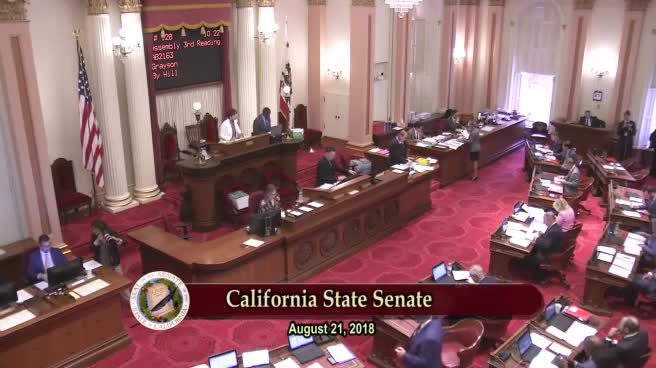 3MIN
Senate Floor
 12MIN
Senate Standing Committee on Health
 11MIN
Senate Standing Committee on Business, Professions and Economic Development
 4MIN
Assembly Floor
 11MIN
Assembly Standing Committee on Business and Professions
Bill Author

Bill Co-Author(s):
