AB 2622: After School Education and Safety Program.
- Session Year: 2017-2018
- House: Assembly
- Latest Version Date: 2018-09-05
Existing law, the After School Education and Safety Program Act of 2002, establishes the After School Education and Safety Program to serve pupils in kindergarten and grades 1 to 9, inclusive, at participating public elementary, middle, junior high, and charter schools, as specified. Existing law requires every after school component of a program to operate a minimum of 15 hours per week and at least until 6 p.m. on every regular schoolday.
Existing law prohibits a program established pursuant to the act located off school grounds from being approved unless safe transportation is provided to the pupils enrolled in the program. Existing law authorizes additional funding to be provided for transportation, as specified, if a program is operated at a schoolsite located in an area that has a population density of less than 11 persons per square mile.
This bill would authorize a program that operates at a schoolsite located in an area with the above-specified low population density to end operating hours not earlier than 5 p.m.
Existing law provides that each school establishing a program pursuant to the act is eligible to receive a 3-year after school grant, as provided, and establishes maximum total grant amounts for schools. Existing law requires the State Department of Education to adjust the grant level of any school within the program that is under its targeted attendance level by more than 15% in each of 2 consecutive years. Existing law also requires the department to review a program if the actual attendance level of a school within the program falls below 75% of the target attendance level in any year after the initial grant year, and to adjust the grant level as the department deems appropriate.
This bill would require the department to adjust the grant level of a program that operates at a schoolsite located in an area with the above-specified low population density, for falling below 35% of its target attendance level in each of 2 consecutive years. This bill would require the department to review a program that operated in an area with the above-specified low population density, if the actual attendance level of a school within the program falls below 55%, and to adjust the grant level as the department deems appropriate.
Existing law provides that after technical assistance has been provided, the department may terminate the grant of a school in a program, at any time, if the school fails for 3 consecutive years to meet either the requirement to demonstrate measurable program outcomes, or to attain 75% of its proposed attendance level after having its program reviewed and its grant level adjusted.
This bill would provide that a program that operates at a schoolsite located in an area with the above-specified low population density may be terminated if the school fails for 3 consecutive years to meet either the requirement to demonstrate measurable program outcomes, or to attain 55% of its proposed attendance level after having its program reviewed and its grant level adjusted.
Existing law authorizes a grantee to allocate, with approval of the department, up to 125% of the maximum total grant amount for an individual school, so long as the maximum total grant amount for all school programs administered by the program grantee is not exceeded. Existing law requires a grantee that transfers funds to have an established waiting list for enrollment and to transfer only from another school program that has met a minimum of 70% of its attendance goal.
This bill would exempt, for purposes of allocating up to 125% of the maximum total grant amount for an individual school, a program that operates at a schoolsite located in an area with the above-specified low population density from the requirement to have an established waiting list for enrollment and to transfer funds only from another school program that has met a minimum of 70% of its attendance goal.
This bill would make conforming and nonsubstantive changes and would correct existing law.
Existing law, the After School Education and Safety Program Act of 2002, establishes the After School Education and Safety Program to serve pupils in kindergarten and grades 1 to 9, inclusive, at participating public elementary, middle, junior high, and charter schools, as specified. Existing law requires every after school component of a program to operate a minimum of 15 hours per week and at least until 6 p.m. on every regular schoolday.
Existing law prohibits a program established pursuant to the act located off school grounds from being approved unless safe transportation is provided to the pupils enrolled in the program. Existing law authorizes additional funding to be provided for transportation, as specified, if a program is operated at a schoolsite located in an area that has a population density of less than 11 persons per square mile.
This bill would authorize a program that operates at a schoolsite located in an area with the above-specified low population density to end operating hours not earlier than 5 p.m.
Existing law provides that each school establishing a program pursuant to the act is eligible to receive a 3-year after school grant, as provided, and establishes maximum total grant amounts for schools. Existing law requires the State Department of Education to adjust the grant level of any school within the program that is under its targeted attendance level by more than 15% in each of 2 consecutive years. Existing law also requires the department to review a program if the actual attendance level of a school within the program falls below 75% of the target attendance level in any year after the initial grant year, and to adjust the grant level as the department deems appropriate.
This bill would require the department to adjust the grant level of a program that operates at a schoolsite located in an area with the above-specified low population density, for falling below 35% of its target attendance level in each of 2 consecutive years. This bill would require the department to review a program that operated in an area with the above-specified low population density, if the actual attendance level of a school within the program falls below 55%, and to adjust the grant level as the department deems appropriate.
Existing law provides that after technical assistance has been provided, the department may terminate the grant of a school in a program, at any time, if the school fails for 3 consecutive years to meet either the requirement to demonstrate measurable program outcomes, or to attain 75% of its proposed attendance level after having its program reviewed and its grant level adjusted.
This bill would provide that a program that operates at a schoolsite located in an area with the above-specified low population density may be terminated if the school fails for 3 consecutive years to meet either the requirement to demonstrate measurable program outcomes, or to attain 55% of its proposed attendance level after having its program reviewed and its grant level adjusted.
Existing law authorizes a grantee to allocate, with approval of the State Department of Education, up to 125% of the maximum total grant amount for an individual school, so long as the maximum total grant amount for all school programs administered by the program grantee is not exceeded. Existing law requires a grantee that transfers funds to have an established waiting list for enrollment and to transfer only from another school program that has met a minimum of 70% of its attendance goal.
This bill would exempt, for purposes of allocating up to 125% of the maximum total grant amount for an individual school, a program that operates at a schoolsite located in an area with the above-specified low population density from the requirement to have an established waiting list for enrollment and to transfer funds only from another school program that has met a minimum of 70% of its attendance goal.
This bill would make conforming and nonsubstantive changes and would correct existing law.
Existing law, the After School Education and Safety Program Act of 2002, establishes the After School Education and Safety Program to serve pupils in kindergarten and grades 1 to 9, inclusive, at participating public elementary, middle, junior high, and charter schools, as specified. Existing law requires every after school component of a program to operate a minimum of 15 hours per week and at least until 6 p.m. on every regular schoolday.
Existing law prohibits a program established pursuant to the act located off school grounds from being approved unless safe transportation is provided to the pupils enrolled in the program. Existing law authorizes additional funding to be provided for transportation, as specified, if a program is operated at a schoolsite located in an area that has a population density of less than 11 persons per square mile.
This bill would authorize a program that operates at a schoolsite located in an area with the above-specified low population density to end operating hours not earlier than 5 p.m.
Existing law provides that each school establishing a program pursuant to the act is eligible to receive a 3-year after school grant, as provided, and establishes maximum total grant amounts for schools. Existing law requires the State Department of Education to adjust the grant level of any school within the program that is under its targeted attendance level by more than 15% in each of 2 consecutive years. Existing law also requires the department to review a program if the actual attendance level of a school within the program falls below 75% of the target attendance level in any year after the initial grant year, and to adjust the grant level as the department deems appropriate.
This bill would exempt require the department to adjust the grant level of a program that operates at a schoolsite located in an area with the above-specified low population density from grant adjustment density, for falling below 15% 35% of its target attendance level, and from level in each of 2 consecutive years. This bill would require the department to review of its program and the related grant level adjustment. a program that operated in an area with the above-specified low population density, if the actual attendance level of a school within the program falls below 55%, and to adjust the grant level as the department deems appropriate.
Existing law provides that after technical assistance has been provided, the department may terminate the grant of a school in a program, at any time, if the school fails for 3 consecutive years to meet either the requirement to demonstrate measurable program outcomes, or to attain 75% of its proposed attendance level after having its program reviewed and its grant level adjusted.
This bill would provide that a program that operates at a schoolsite located in an area with the above-specified low population density shall not be reduced below the minimum grant amount specified in the program for failing to meet either above-mentioned requirement. may be terminated if the school fails for 3 consecutive years to meet either the requirement to demonstrate measurable program outcomes, or to attain 55% of its proposed attendance level after having its program reviewed and its grant level adjusted.
Existing law authorizes a grantee to allocate, with approval of the State Department of Education, up to 125% of the maximum total grant amount for an individual school, so long as the maximum total grant amount for all school programs administered by the program grantee is not exceeded. Existing law requires a grantee that transfers funds to have an established waiting list for enrollment and to transfer only from another school program that has met a minimum of 70% of its attendance goal.
This bill would exempt, for purposes of allocating up to 125% of the maximum total grant amount for an individual school, a program that operates at a schoolsite located in an area with the above-specified low population density from the requirement to have an established waiting list for enrollment and to transfer funds only from another school program that has met a minimum of 70% of its attendance goal.
This bill would make conforming and nonsubstantive changes and would correct existing law.
Existing law, the After School Education and Safety Program Act of 2002, establishes the After School Education and Safety Program to serve pupils in kindergarten and grades 1 to 9, inclusive, at participating public elementary, middle, junior high, and charter schools, as specified. Existing law requires every after school component of a program to operate a minimum of 15 hours per week and at least until 6 p.m. on every regular schoolday.
Existing law prohibits a program established pursuant to the act located off school grounds from being approved unless safe transportation is provided to the pupils enrolled in the program. Existing law authorizes additional funding to be provided for transportation, as specified, if a program is operated at a schoolsite located in an area that has a population density of less than 11 persons per square mile.
This bill would authorize a program that operates at a schoolsite located in an area with the above-specified low population density to end operating hours not earlier than 5 p.m.
Existing law provides that each school establishing a program pursuant to the act is eligible to receive a 3-year after school grant, as provided, and establishes maximum total grant amounts for schools. Existing law requires the State Department of Education to adjust the grant level of any school within the program that is under its targeted attendance level by more than 15 percent 15% in each of two 2 consecutive years. Existing law also requires the department to review a program if the actual attendance level of a school within the program falls below 75% of the target attendance level in any year after the initial grant year, and to adjust the grant level as the department deems appropriate.
This bill would exempt a program that operates at a schoolsite located in an area with the above-specified low population density from grant adjustment for falling below 15% of its target attendance level, and from department review of its program and the related grant level adjustment.
Existing law provides that after technical assistance has been provided, the department may terminate the grant of a school in a program, at any time, if the school fails for 3 consecutive years to meet either the requirement to demonstrate measurable program outcomes, or to attain 75% of its proposed attendance level after having its program reviewed and its grant level adjusted.
This bill would provide that a program that operates at a schoolsite located in an area with the above-specified low population density shall not be reduced below the minimum grant amount specified in the program for failing to meet either above-mentioned requirement.
Existing law authorizes a grantee to allocate, with approval of the State Department of Education, up to 125% of the maximum total grant amount for an individual school, so long as the maximum total grant amount for all school programs administered by the program grantee is not exceeded. Existing law requires a grantee that transfers funds to have an established waiting list for enrollment and to transfer only from another school program that has met a minimum of 70% of its attendance goal.
This bill would exempt, for purposes of allocating up to 125% of the maximum total grant amount for an individual school, a program that operates at a schoolsite located in an area with the above-specified low population density from the requirement to get departmental approval, requirement to have an established waiting list for enrollment, enrollment and to transfer funds only from another school program that has met a minimum of 70% of its attendance goal.
This bill would make conforming and nonsubstantive changes and would correct existing law.
Existing law, the After School Education and Safety Program Act of 2002, establishes the After School Education and Safety Program to serve pupils in kindergarten and grades 1 to 9, inclusive, at participating public elementary, middle, junior high, and charter schools, as specified. Existing law requires every after school component of a program to operate a minimum of 15 hours per week and at least until 6 p.m. on every regular schoolday.
Existing law prohibits a program established pursuant to the act located off school grounds from being approved unless safe transportation is provided to the pupils enrolled in the program. Existing law authorizes additional funding to be provided for transportation, as specified, if a program is operated at a schoolsite located in an area that has a population density of less than 11 persons per square mile.
This bill would authorize a program that operates at a schoolsite located in an area with the above-specified low population density to end operating hours at or before not earlier than 5 p.m.
Existing law provides that each school establishing a program pursuant to the act is eligible to receive a 3-year after school grant, as provided, and establishes maximum total grant amounts for schools. Existing Existing law requires the State Department of Education to adjust the grant level of any school within the program that is under its targeted attendance level by more than 15 percent in each of two consecutive years. Existing law also requires the department to review a program if the actual attendance level of a school within the program falls below 75% of the target attendance level in any year after the initial grant year, and to adjust the grant level as the department deems appropriate.
This bill would exempt a program that operates at a schoolsite located in an area with the above-specified low population density from grant adjustment for falling below 15% of its target attendance level, and from department review of its program and the related grant level adjustment.
Existing law provides that after technical assistance has been provided, the department may terminate the grant of a school in a program, at any time, if the school fails for 3 consecutive years to meet either the requirement to demonstrate measurable program outcomes, or to attain 75% of its proposed attendance level after having its program reviewed and its grant level adjusted.
This bill would provide that a program that operates at a schoolsite located in an area with the above-specified low population density shall not be reduced below the minimum grant amount specified in the program for failing to meet either above-mentioned requirement.
Existing law authorizes a grantee to allocate, with approval of the State Department of Education, up to 125% of the maximum total grant amount for an individual school, so long as the maximum total grant amount for all school programs administered by the program grantee is not exceeded. Existing law requires a grantee that transfers funds to have an established waiting list for enrollment and to transfer only from another school program that has met a minimum of 70% of its attendance goal.
This bill would exempt, for purposes of allocating up to 125% of the maximum total grant amount for an individual school, a program that operates at a schoolsite located in an area with the above-specified low population density from the requirement to get departmental approval, to have an established waiting list for enrollment, and to transfer funds only from another school program that has met a minimum of 70% of its attendance goal.
This bill would make conforming and nonsubstantive changes and would correct existing law.
Existing law, the After School Education and Safety Program Act of 2002, establishes the After School Education and Safety Program to serve pupils in kindergarten and grades 1 to 9, inclusive, at participating public elementary, middle, junior high, and charter schools, as specified. Existing law requires every after school component of a program to operate a minimum of 15 hours per week and at least until 6 p.m. on every regular schoolday.
Existing law prohibits a program established pursuant to the act located off school grounds from being approved unless safe transportation is provided to the pupils enrolled in the program. Existing law authorizes additional funding to be provided for transportation, as specified, if a program is operated at a schoolsite located in an area that has a population density of less than 11 persons per square mile.
This bill would authorize a program that operates at a schoolsite located in an area with the above-specified low population density to end operating hours at or before 5 p.m.
Existing law provides that each school establishing a program pursuant to the act is eligible to receive a 3-year after school grant, as provided, and establishes maximum total grant amounts for schools. Existing law authorizes a grantee to allocate, with approval of the State Department of Education, up to 125% of the maximum total grant amount for an individual school, so long as the maximum total grant amount for all school programs administered by the program grantee is not exceeded. Existing law requires a grantee that transfers funds to have an established waiting list for enrollment and to transfer only from another school program that has met a minimum of 70% of its attendance goal.
This bill would exempt, for purposes of allocating up to 125% of the maximum total grant amount for an individual school, a program that operates at a schoolsite located in an area with the above-specified low population density from the requirement to get departmental approval, to have an established waiting list for enrollment, and to transfer funds only from another school program that has met a minimum of 70% of its attendance goal.
This bill would make conforming and nonsubstantive changes and would correct existing law.
(a)(1)(A)(i)Every after school component of a program established pursuant to this article shall commence immediately upon the conclusion of the regular schoolday, and operate a minimum of 15 hours per week, and at least until 6 p.m. on every regular schoolday.
(ii)Notwithstanding clause (i), a program that operates at a schoolsite located in an area that has a population density of less than 11 persons per square mile may end operating hours not earlier than 5 p.m.
(B)Every after school component of the program shall establish a policy regarding reasonable early daily release of pupils from the program. For those programs or schoolsites operating in a community where the early release policy does not meet the unique needs of that community or school, or both, documented evidence may be submitted to the department for an exception and a request for approval of an alternative plan.
(2)It is the intent of the Legislature that elementary school and middle school or junior high school pupils participate in the full day of the program every day during which pupils participate, except as allowed by the early release policy pursuant to subparagraph (B) of paragraph (1) of this section or paragraph (2) of subdivision (f) of Section 8483.76.
(3)In order to develop an age-appropriate after school program for pupils in middle school or junior high school, programs established pursuant to this article may implement a flexible attendance schedule for those pupils.
(b)The administrators of a program established pursuant to this article have the option of operating during any combination of summer, intersession, or vacation periods for a minimum of three hours per day for the regular school year pursuant to Section 8483.7.
(c)(1)Priority for enrollment of pupils in an after school program shall be as follows:
(A)First priority shall go to pupils who are identified by the program as homeless youth, as defined by the federal McKinney-Vento Homeless Assistance Act (42 U.S.C. Sec. 11434a), at the time that they apply for enrollment or at any time during the school year, and to pupils who are identified by the program as being in foster care.
(B)For programs serving middle and junior high school pupils, second priority shall go to pupils who attend daily.
(2)Nothing in this subdivision shall be construed to require a program to verify, or a school district to disclose to an after school program, that a pupil applying for or participating in the program is a homeless youth or a foster youth.
(3)Nothing in this subdivision shall be construed to require or authorize the disenrollment of a current participant in order to secure the enrollment of a pupil who has priority for enrollment.
(d)A program shall inform the parent or caregiver of a pupil of the right of homeless children and foster children to receive priority enrollment and how to request priority enrollment.
(e)For purposes of identifying a pupil who is eligible for priority enrollment pursuant to subdivision (c), the administrators of a program shall allow self-certification of the pupil as a homeless youth or a foster youth. Administrators of a program may also obtain this information through the school district liaison designated for homeless children if the school district has a waiver on file allowing for the release of this information.
(f)This section shall become operative on July 1, 2017.
SEC. 3.Section 8483.7 of the Education Code is amended to read:8483.7.(a)(1)(A)Each school that establishes a program pursuant to this article is eligible to receive a three-year after school grant, that shall be awarded in three one-year increments and is subject to semiannual attendance reporting and requirements as described in Section 8482.3 once every three years.
(B)The department shall provide technical support for development of a program improvement plan for grantees under the following conditions:
(i)If actual pupil attendance falls below 75 percent of the target attendance level in any year of the grant.
(ii)If the grantee fails, in any year of the grant, to demonstrate measurable outcomes pursuant to Section 8484.
(C)(i)Except as provided in clause (ii), the department shall adjust the grant level of any school within the program that is under its targeted attendance level by more than 15 percent in each of two consecutive years.
(ii)For a program that operates at a schoolsite located in an area that has a population density of less than 11 persons per square mile, the department shall adjust the grant level of any school within the program that is under its targeted attendance level by more than 35 percent in each of two consecutive years.
(D)(i)Except as provided in clause (ii), in any year after the initial grant year, if the actual attendance level of a school within the program falls below 75 percent of the target attendance level, the department shall perform a review of the program and adjust the grant level as the department deems appropriate.
(ii)For a program that operates at a schoolsite located in an area that has a population density of less than 11 persons per square mile, the department shall perform a review of the program and adjust the grant level as the department deems appropriate, if, in any year after the initial grant year, the actual attendance level of a school within the program falls below 55 percent of the target attendance level.
(E)The department shall create a process to allow a grantee to voluntarily lower its annual grant amount if one or more sites are unable to meet the proposed pupil attendance levels by the end of the second year of the grant.
(F)A grantee who has had its grant amount reduced may subsequently request an increase in funding up to the maximum grant amounts provided under this subdivision.
(G)The department may withhold or terminate the grant allocation of any site or program that does not comply with audit resolutions, fiscal reporting, attendance reporting, or outcomes reporting requirements required by the department.
(H)Notwithstanding any other provision of this subdivision or any other law, after the technical support required under subparagraph (B) has been provided, the department may at any time terminate the grant of a school in a program that fails for three consecutive years to meet either of the following requirements:
(i)Demonstrate measurable program outcomes pursuant to Section 8484.
(ii)(I)Except as provided in subclause (II), attain 75 percent of its proposed attendance level after having had its program reviewed and grant level adjusted by the department.
(II)For a program that operates at a schoolsite located in an area that has a population density of less than 11 persons per square mile, attain 55 percent of its proposed attendance level after having had its program reviewed and grant level adjusted by the department.
(I)After school grants may be awarded to applicants that have demonstrated readiness to begin operation of a program or to expand existing programs.
(J)The maximum total after school grant amount awarded annually pursuant to this paragraph shall be one hundred twelve thousand five hundred dollars ($112,500) for each regular school year for each elementary school and one hundred fifty thousand dollars ($150,000) for each regular school year for each middle or junior high school. The Superintendent shall determine the total annual after school grant amount for which a site is eligible based on a formula of seven dollars and fifty cents ($7.50) per pupil per day of pupil attendance that the program plans to serve, with a maximum total grant of thirty-seven dollars and fifty cents ($37.50) per projected pupil per week, and a formula of seven dollars and fifty cents ($7.50) per projected pupil per day of staff development, with a maximum of three staff development days per year. A program may provide the three days of staff development during regular program hours using funds from the total grant award.
(2)For large schools, the maximum total grant amounts described in paragraph (1) may be increased based on the following formulas, up to a maximum amount of twice the respective limits specified in subparagraph (J) of paragraph (1):
(A)For elementary schools, multiply one hundred thirteen dollars ($113) by the number of pupils enrolled at the schoolsite for the normal schoolday program that exceeds 600.
(B)For middle schools, multiply one hundred thirteen dollars ($113) by the number of pupils enrolled at the schoolsite for the normal schoolday program that exceeds 900.
(3)The maximum total grant amounts set forth in subparagraph (J) of paragraph (1) may be increased from any funds made available for this purpose in the annual Budget Act for participating schools that have pupils on waiting lists for the program. Grants may be increased by the lesser of an amount that is either 25 percent of the current maximum total grant amount or equal to the proportion of pupils unserved by the program as measured by documented waiting lists as of January 1 of the previous grant year, compared to the actual after school enrollment on the same date. The amount of the required cash or in-kind matching funds shall be increased accordingly. First priority for an increased maximum grant pursuant to this paragraph shall be given to schools that qualify for funding pursuant to subdivision (b) of Section 8482.55. Second priority shall be given to schools that receive funding priority pursuant to subdivision (f) of Section 8482.55.
(4)The minimum total after school grant amount for each schoolsite that may be awarded pursuant to this section shall be computed by multiplying the applicable rate per pupil per day of pupil attendance by 20 pupils being served for 180 regular schooldays.
(5)Additional funding may be made available for transportation in programs that meet the requirements of Section 8484.65, in an amount not to exceed fifteen thousand dollars ($15,000) per site, per school year, as funds are available, in accordance with the local community after school program needs as determined by the department. Programs shall submit to the department for consideration evidence of the need for after school transportation funds specific to after school programs pursuant to this article. Funding under this paragraph may be used to supplement, but not supplant, local transportation services.
(6)Each program shall provide an amount of cash or in-kind local funds equal to not less than one-third of the total grant from the school district, governmental agencies, community organizations, or the private sector. Facilities or space usage may fulfill not more than 25 percent of the required local contribution.
(7)(A)A grantee may allocate, with departmental approval, up to 125 percent of the maximum total grant amount for an individual school, so long as the maximum total grant amount for all school programs administered by the program grantee is not exceeded.
(B)A program grantee that transfers funds for purposes of administering a program pursuant to subparagraph (A) shall have an established waiting list for enrollment, and may transfer only from another school program that has met a minimum of 70 percent of its attendance goal. This subparagraph does not apply to a program that operates at a schoolsite located in an area that has a population density of less than 11 persons per square mile.
(b)The administrator of a program established pursuant to this article may supplement, but not supplant, existing funding for after school programs with grant funds awarded pursuant to this article. State categorical funds for remedial education activities shall not be used to make the required contribution of local funds for those after school programs.
(c)Up to 15 percent of the initial years grant amount for each grant recipient may be used for startup costs. Under no circumstance shall funding for startup costs result in an increase in the grant recipients total funding above the approved grant amount.
(d)For each year of the grant, the department shall award the total grant amount for that year not later than 30 days after the date the grantee accepts the grant.
(e)The department may adjust the amount of a direct grant, awarded to a new applicant pursuant to this section, on the basis of the program start date, as determined by the department.
(a)(1)(A)(i)Every after school component of a program established pursuant to this article shall commence immediately upon the conclusion of the regular schoolday, and operate a minimum of 15 hours per week, and at least until 6 p.m. on every regular schoolday.
(ii)Notwithstanding clause (i), a program that operates at a schoolsite located in an area that has a population density of less than 11 persons per square mile may end operating hours not earlier than 5 p.m.
(B)Every after school component of the program shall establish a policy regarding reasonable early daily release of pupils from the program. For those programs or schoolsites operating in a community where the early release policy does not meet the unique needs of that community or school, or both, documented evidence may be submitted to the department for an exception and a request for approval of an alternative plan.
(2)It is the intent of the Legislature that elementary school and middle school or junior high school pupils participate in the full day of the program every day during which pupils participate, except as allowed by the early release policy pursuant to subparagraph (B) of paragraph (1) of this section or paragraph (2) of subdivision (f) of Section 8483.76.
(3)In order to develop an age-appropriate after school program for pupils in middle school or junior high school, programs established pursuant to this article may implement a flexible attendance schedule for those pupils.
(b)The administrators of a program established pursuant to this article have the option of operating during any combination of summer, intersession, or vacation periods for a minimum of three hours per day for the regular school year pursuant to Section 8483.7.
(c)(1)Priority for enrollment of pupils in an after school program shall be as follows:
(A)First priority shall go to pupils who are identified by the program as homeless youth, as defined by the federal McKinney-Vento Homeless Assistance Act (42 U.S.C. Sec. 11434a), at the time that they apply for enrollment or at any time during the school year, and to pupils who are identified by the program as being in foster care.
(B)For programs serving middle and junior high school pupils, second priority shall go to pupils who attend daily.
(2)Nothing in this subdivision shall be construed to require a program to verify, or a school district to disclose to an after school program, that a pupil applying for or participating in the program is a homeless youth or a foster youth.
(3)Nothing in this subdivision shall be construed to require or authorize the disenrollment of a current participant in order to secure the enrollment of a pupil who has priority for enrollment.
(d)A program shall inform the parent or caregiver of a pupil of the right of homeless children and foster children to receive priority enrollment and how to request priority enrollment.
(e)For purposes of identifying a pupil who is eligible for priority enrollment pursuant to subdivision (c), the administrators of a program shall allow self-certification of the pupil as a homeless youth or a foster youth. Administrators of a program may also obtain this information through the school district liaison designated for homeless children if the school district has a waiver on file allowing for the release of this information.
(f)This section shall become operative on July 1, 2017.
SEC. 3.Section 8483.7 of the Education Code is amended to read:8483.7.(a)(1)(A)Each school that establishes a program pursuant to this article is eligible to receive a three-year after school grant, that shall be awarded in three one-year increments and is subject to semiannual attendance reporting and requirements as described in Section 8482.3 once every three years.(B)The department shall provide technical support for development of a program improvement plan for grantees under the following conditions:(i)If actual pupil attendance falls below 75 percent of the target attendance level in any year of the grant.(ii)If the grantee fails, in any year of the grant, to demonstrate measurable outcomes pursuant to Section 8484.(C)(i)Except as provided in clause (ii), the department shall adjust the grant level of any school within the program that is under its targeted attendance level by more than 15 percent in each of two consecutive years.(ii)For a program that operates at a schoolsite located in an area that has a population density of less than 11 persons per square mile, the department shall adjust the grant level of any school within the program that is under its targeted attendance level by more than 35 percent in each of two consecutive years.(D)(i)Except as provided in clause (ii), in any year after the initial grant year, if the actual attendance level of a school within the program falls below 75 percent of the target attendance level, the department shall perform a review of the program and adjust the grant level as the department deems appropriate.(ii)For a program that operates at a schoolsite located in an area that has a population density of less than 11 persons per square mile, the department shall perform a review of the program and adjust the grant level as the department deems appropriate, if, in any year after the initial grant year, the actual attendance level of a school within the program falls below 55 percent of the target attendance level.(E)The department shall create a process to allow a grantee to voluntarily lower its annual grant amount if one or more sites are unable to meet the proposed pupil attendance levels by the end of the second year of the grant.(F)A grantee who has had its grant amount reduced may subsequently request an increase in funding up to the maximum grant amounts provided under this subdivision.(G)The department may withhold or terminate the grant allocation of any site or program that does not comply with audit resolutions, fiscal reporting, attendance reporting, or outcomes reporting requirements required by the department.(H)Notwithstanding any other provision of this subdivision or any other law, after the technical support required under subparagraph (B) has been provided, the department may at any time terminate the grant of a school in a program that fails for three consecutive years to meet either of the following requirements:(i)Demonstrate measurable program outcomes pursuant to Section 8484.(ii)(I)Except as provided in subclause (II), attain 75 percent of its proposed attendance level after having had its program reviewed and grant level adjusted by the department.(II)For a program that operates at a schoolsite located in an area that has a population density of less than 11 persons per square mile, attain 55 percent of its proposed attendance level after having had its program reviewed and grant level adjusted by the department.(I)After school grants may be awarded to applicants that have demonstrated readiness to begin operation of a program or to expand existing programs.(J)The maximum total after school grant amount awarded annually pursuant to this paragraph shall be one hundred twelve thousand five hundred dollars ($112,500) for each regular school year for each elementary school and one hundred fifty thousand dollars ($150,000) for each regular school year for each middle or junior high school. The Superintendent shall determine the total annual after school grant amount for which a site is eligible based on a formula of seven dollars and fifty cents ($7.50) per pupil per day of pupil attendance that the program plans to serve, with a maximum total grant of thirty-seven dollars and fifty cents ($37.50) per projected pupil per week, and a formula of seven dollars and fifty cents ($7.50) per projected pupil per day of staff development, with a maximum of three staff development days per year. A program may provide the three days of staff development during regular program hours using funds from the total grant award.(2)For large schools, the maximum total grant amounts described in paragraph (1) may be increased based on the following formulas, up to a maximum amount of twice the respective limits specified in subparagraph (J) of paragraph (1):(A)For elementary schools, multiply one hundred thirteen dollars ($113) by the number of pupils enrolled at the schoolsite for the normal schoolday program that exceeds 600.(B)For middle schools, multiply one hundred thirteen dollars ($113) by the number of pupils enrolled at the schoolsite for the normal schoolday program that exceeds 900.(3)The maximum total grant amounts set forth in subparagraph (J) of paragraph (1) may be increased from any funds made available for this purpose in the annual Budget Act for participating schools that have pupils on waiting lists for the program. Grants may be increased by the lesser of an amount that is either 25 percent of the current maximum total grant amount or equal to the proportion of pupils unserved by the program as measured by documented waiting lists as of January 1 of the previous grant year, compared to the actual after school enrollment on the same date. The amount of the required cash or in-kind matching funds shall be increased accordingly. First priority for an increased maximum grant pursuant to this paragraph shall be given to schools that qualify for funding pursuant to subdivision (b) of Section 8482.55. Second priority shall be given to schools that receive funding priority pursuant to subdivision (f) of Section 8482.55.(4)The minimum total after school grant amount for each schoolsite that may be awarded pursuant to this section shall be computed by multiplying the applicable rate per pupil per day of pupil attendance by 20 pupils being served for 180 regular schooldays.(5)A school that establishes a program pursuant to this section is eligible to receive a summer grant to operate the program in excess of 180 regular schooldays or during any combination of summer, intersession, or vacation periods for a maximum of the lesser of the following amounts:(A)Seven dollars and fifty cents ($7.50) per day per pupil.(B)Thirty percent of the total grant amount awarded to the school per school year pursuant to subparagraph (J) of paragraph (1).(C)Notwithstanding subparagraphs (A) and (B), the maximum total summer grant that may be awarded annually pursuant to this paragraph shall be thirty-three thousand seven hundred fifty dollars ($33,750) for each regular school year for each elementary school and forty-five thousand dollars ($45,000) for each regular school year for each middle or junior high school.(6)Additional funding may be made available for transportation in programs that meet the requirements of Section 8484.65, in an amount not to exceed fifteen thousand dollars ($15,000) per site, per school year, as funds are available, in accordance with the local community after school program needs as determined by the department. Programs shall submit to the department for consideration evidence of the need for after school transportation funds specific to after school programs pursuant to this article. Funding under this paragraph may be used to supplement, but not supplant, local transportation services.(7)Each program shall provide an amount of cash or in-kind local funds equal to not less than one-third of the total grant from the school district, governmental agencies, community organizations, or the private sector. Facilities or space usage may fulfill not more than 25 percent of the required local contribution.(8)(A)A grantee may allocate, with departmental approval, up to 125 percent of the maximum total grant amount for an individual school, so long as the maximum total grant amount for all school programs administered by the program grantee is not exceeded.(B)A program grantee that transfers funds for purposes of administering a program pursuant to subparagraph (A) shall have an established waiting list for enrollment, and may transfer only from another school program that has met a minimum of 70 percent of its attendance goal. This subparagraph does not apply to a program that operates at a schoolsite located in an area that has a population density of less than 11 persons per square mile.(b)The administrator of a program established pursuant to this article may supplement, but not supplant, existing funding for after school programs with grant funds awarded pursuant to this article. State categorical funds for remedial education activities shall not be used to make the required contribution of local funds for those after school programs.(c)Up to 15 percent of the initial years grant amount for each grant recipient may be used for startup costs. Under no circumstance shall funding for startup costs result in an increase in the grant recipients total funding above the approved grant amount.(d)For each year of the grant, the department shall award the total grant amount for that year not later than 30 days after the date the grantee accepts the grant.(e)The department may adjust the amount of a direct grant, awarded to a new applicant pursuant to this section, on the basis of the program start date, as determined by the department.SEC. 3.Section 8483.7 of the Education Code is amended to read:8483.7.(a)(1)(A)Each school that establishes a program pursuant to this article is eligible to receive a three-year after school grant, that shall be awarded in three one-year increments and is subject to semiannual attendance reporting and requirements as described in Section 8482.3 once every three years.
(i)(B)The department shall provide technical support for development of a program improvement plan for grantees under the following conditions:
(I)(i)If actual pupil attendance falls below 75 percent of the target attendance level in any year of the grant.
(II)(ii)If the grantee fails, in any year of the grant, to demonstrate measurable outcomes pursuant to Section 8484.
(ii)The(C)(i)Except as provided in clause (ii), the department shall adjust the grant level of any school within the program that is under its targeted attendance level by more than 15 percent in each of two consecutive years.
(ii)For a program that operates at a schoolsite located in an area that has a population density of less than 11 persons per square mile, the department shall adjust the grant level of any school within the program that is under its targeted attendance level by more than 35 percent in each of two consecutive years.
(iii)In(D)(i)Except as provided in clause (ii), in any year after the initial grant year, if the actual attendance level of a school within the program falls below 75 percent of the target attendance level, the department shall perform a review of the program and adjust the grant level as the department deems appropriate.
(ii)For a program that operates at a schoolsite located in an area that has a population density of less than 11 persons per square mile, the department shall perform a review of the program and adjust the grant level as the department deems appropriate, if, in any year after the initial grant year, the actual attendance level of a school within the program falls below 55 percent of the target attendance level.
(iv)(E)The department shall create a process to allow a grantee to voluntarily lower its annual grant amount if one or more sites are unable to meet the proposed pupil attendance levels by the end of the second year of the grant.
(v)(F)A grantee who has had its grant amount reduced may subsequently request an increase in funding up to the maximum grant amounts provided under this subdivision.
(vi)(G)The department may withhold or terminate the grant allocation of any site or program that does not comply with audit resolutions, fiscal reporting, attendance reporting, or outcomes reporting requirements required by the department.
(vii)(H)Notwithstanding any other provision of this subdivision or any other law, after the technical support required under clause (i) subparagraph (B) has been provided, the department may at any time terminate the grant of a school in a program that fails for three consecutive years to meet either of the following requirements:
(I)(i)Demonstrate measurable program outcomes pursuant to Section 8484.
(II)Attain(ii)(I)Except as provided in subclause (II), attain 75 percent of its proposed attendance level after having had its program reviewed and grant level adjusted by the department.
(II)For a program that operates at a schoolsite located in an area that has a population density of less than 11 persons per square mile, attain 55 percent of its proposed attendance level after having had its program reviewed and grant level adjusted by the department.
(B)(I)After school grants may be awarded to applicants that have demonstrated readiness to begin operation of a program or to expand existing programs.
(C)(J)The maximum total after school grant amount awarded annually pursuant to this paragraph shall be one hundred twelve thousand five hundred dollars ($112,500) for each regular school year for each elementary school and one hundred fifty thousand dollars ($150,000) for each regular school year for each middle or junior high school. The Superintendent shall determine the total annual after school grant amount for which a site is eligible based on a formula of seven dollars and fifty cents ($7.50) per pupil per day of pupil attendance that the program plans to serve, with a maximum total grant of thirty-seven dollars and fifty cents ($37.50) per projected pupil per week, and a formula of seven dollars and fifty cents ($7.50) per projected pupil per day of staff development, with a maximum of three staff development days per year. A program may provide the three days of staff development during regular program hours using funds from the total grant award.
(2)For large schools, the maximum total grant amounts described in paragraph (1) may be increased based on the following formulas, up to a maximum amount of twice the respective limits specified in subparagraph (J) of paragraph (1):
(A)For elementary schools, multiply one hundred thirteen dollars ($113) by the number of pupils enrolled at the schoolsite for the normal schoolday program that exceeds 600.
(B)For middle schools, multiply one hundred thirteen dollars ($113) by the number of pupils enrolled at the schoolsite for the normal schoolday program that exceeds 900.
(3)The maximum total grant amounts set forth in subparagraph (C) (J) of paragraph (1) may be increased from any funds made available for this purpose in the annual Budget Act for participating schools that have pupils on waiting lists for the program. Grants may be increased by the lesser of an amount that is either 25 percent of the current maximum total grant amount or equal to the proportion of pupils unserved by the program as measured by documented waiting lists as of January 1 of the previous grant year, compared to the actual after school enrollment on the same date. The amount of the required cash or in-kind matching funds shall be increased accordingly. First priority for an increased maximum grant pursuant to this paragraph shall be given to schools that qualify for funding pursuant to subdivision (b) of Section 8482.55. Second priority shall be given to schools that receive funding priority pursuant to subdivision (f) of Section 8482.55.
(4)The minimum total after school grant amount for each schoolsite that may be awarded pursuant to this section shall be computed by multiplying the applicable rate per pupil per day of pupil attendance by 20 pupils being served for 180 regular schooldays.
(5)Additional funding may be made available for transportation in programs that meet the requirements of Section 8484.65, in an amount not to exceed fifteen thousand dollars ($15,000) per site, per school year, as funds are available, in accordance with the local community after school program needs as determined by the department. Programs shall submit to the department for consideration evidence of the need for after school transportation funds specific to after school programs pursuant to this article. Funding under this paragraph may be used to supplement, but not supplant, local transportation services.
(6)Each program shall provide an amount of cash or in-kind local funds equal to not less than one-third of the total grant from the school district, governmental agencies, community organizations, or the private sector. Facilities or space usage may fulfill not more than 25 percent of the required local contribution.
(7)(A)A grantee may allocate, with departmental approval, up to 125 percent of the maximum total grant amount for an individual school, so long as the maximum total grant amount for all school programs administered by the program grantee is not exceeded.
(B)A program grantee that transfers funds for purposes of administering a program pursuant to subparagraph (A) shall have an established waiting list for enrollment, and may transfer only from another school program that has met a minimum of 70 percent of its attendance goal. This subparagraph does not apply to a program that operates at a schoolsite located in an area that has a population density of less than 11 persons per square mile.
(b)The administrator of a program established pursuant to this article may supplement, but not supplant, existing funding for after school programs with grant funds awarded pursuant to this article. State categorical funds for remedial education activities shall not be used to make the required contribution of local funds for those after school programs.
(c)Up to 15 percent of the initial years grant amount for each grant recipient may be used for startup costs. Under no circumstance shall funding for startup costs result in an increase in the grant recipients total funding above the approved grant amount.
(d)For each year of the grant, the department shall award the total grant amount for that year not later than 30 days after the date the grantee accepts the grant.
(e)The department may adjust the amount of a direct grant, awarded to a new applicant pursuant to this section, on the basis of the program start date, as determined by the department.
(a)(1)(A)(i)Every after school component of a program established pursuant to this article shall commence immediately upon the conclusion of the regular schoolday, and operate a minimum of 15 hours per week, and at least until 6 p.m. on every regular schoolday.
(ii)Notwithstanding clause (i), a program that operates at a schoolsite located in an area that has a population density of less than 11 persons per square mile may end operating hours not earlier than 5 p.m.
(B)Every after school component of the program shall establish a policy regarding reasonable early daily release of pupils from the program. For those programs or schoolsites operating in a community where the early release policy does not meet the unique needs of that community or school, or both, documented evidence may be submitted to the department for an exception and a request for approval of an alternative plan.
(2)It is the intent of the Legislature that elementary school and middle school or junior high school pupils participate in the full day of the program every day during which pupils participate, except as allowed by the early release policy pursuant to subparagraph (B) of paragraph (1) of this section or paragraph (2) of subdivision (f) of Section 8483.76.
(3)In order to develop an age-appropriate after school program for pupils in middle school or junior high school, programs established pursuant to this article may implement a flexible attendance schedule for those pupils.
(b)The administrators of a program established pursuant to this article have the option of operating during any combination of summer, intersession, or vacation periods for a minimum of three hours per day for the regular school year pursuant to Section 8483.7.
(c)(1)Priority for enrollment of pupils in an after school program shall be as follows:
(A)First priority shall go to pupils who are identified by the program as homeless youth, as defined by the federal McKinney-Vento Homeless Assistance Act (42 U.S.C. Sec. 11434a), at the time that they apply for enrollment or at any time during the school year, and to pupils who are identified by the program as being in foster care.
(B)For programs serving middle and junior high school pupils, second priority shall go to pupils who attend daily.
(2)Nothing in this subdivision shall be construed to require a program to verify, or a school district to disclose to an after school program, that a pupil applying for or participating in the program is a homeless youth or a foster youth.
(3)Nothing in this subdivision shall be construed to require or authorize the disenrollment of a current participant in order to secure the enrollment of a pupil who has priority for enrollment.
(d)A program shall inform the parent or caregiver of a pupil of the right of homeless children and foster children to receive priority enrollment and how to request priority enrollment.
(e)For purposes of identifying a pupil who is eligible for priority enrollment pursuant to subdivision (c), the administrators of a program shall allow self-certification of the pupil as a homeless youth or a foster youth. Administrators of a program may also obtain this information through the school district liaison designated for homeless children if the school district has a waiver on file allowing for the release of this information.
(f)This section shall become operative on July 1, 2017.
SEC. 3.Section 8483.7 of the Education Code is amended to read:8483.7.(a)(1)(A)Each school that establishes a program pursuant to this article is eligible to receive a three-year after school grant, that shall be awarded in three one-year increments and is subject to semiannual attendance reporting and requirements as described in Section 8482.3 once every three years.
(B)The department shall provide technical support for development of a program improvement plan for grantees under the following conditions:
(i)If actual pupil attendance falls below 75 percent of the target attendance level in any year of the grant.
(ii)If the grantee fails, in any year of the grant, to demonstrate measurable outcomes pursuant to Section 8484.
(C)The (i)Except as provided in clause (ii), the department shall adjust the grant level of any school within the program that is under its targeted attendance level by more than 15 percent in each of two consecutive years.
(ii)For a program that operates at a schoolsite located in an area that has a population density of less than 11 persons per square mile, the department shall adjust the grant level of any school within the program that is under its targeted attendance level by more than 35 percent in each of two consecutive years.
(D)In (i)Except as provided in clause (ii), in any year after the initial grant year, if the actual attendance level of a school within the program falls below 75 percent of the target attendance level, the department shall perform a review of the program and adjust the grant level as the department deems appropriate.
(ii)For a program that operates at a schoolsite located in an area that has a population density of less than 11 persons per square mile, the department shall perform a review of the program and adjust the grant level as the department deems appropriate, if, in any year after the initial grant year, the actual attendance level of a school within the program falls below 55 percent of the target attendance level.
(E)Subparagraphs (C) and (D) do not apply to a program that operates at a schoolsite located in an area that has a population density of less than 11 persons per square mile.(F)(E)The department shall create a process to allow a grantee to voluntarily lower its annual grant amount if one or more sites are unable to meet the proposed pupil attendance levels by the end of the second year of the grant.
(G)(F)A grantee who has had its grant amount reduced may subsequently request an increase in funding up to the maximum grant amounts provided under this subdivision.
(H)(G)The department may withhold or terminate the grant allocation of any site or program that does not comply with audit resolutions, fiscal reporting, attendance reporting, or outcomes reporting requirements required by the department.
(I)(i)(H)Notwithstanding any other provision of this subdivision or any other law, after the technical support required under subparagraph (B) has been provided, the department may at any time terminate the grant of a school in a program that fails for three consecutive years to meet either of the following requirements:
(I)(i)Demonstrate measurable program outcomes pursuant to Section 8484.
(II)Attain(ii)(I)Except as provided in subclause (II), attain 75 percent of its proposed attendance level after having had its program reviewed and grant level adjusted by the department.
(ii)Notwithstanding clause (i), the department may reduce the grant of a program that operates at a schoolsite located in an area that has a population density of less than 11 persons per square mile, if it fails for three consecutive years to demonstrate measurable program outcomes pursuant to Section 8484, only to the level described in paragraph (4).(II)For a program that operates at a schoolsite located in an area that has a population density of less than 11 persons per square mile, attain 55 percent of its proposed attendance level after having had its program reviewed and grant level adjusted by the department.
(J)(I)After school grants may be awarded to applicants that have demonstrated readiness to begin operation of a program or to expand existing programs.
(K)(J)The maximum total after school grant amount awarded annually pursuant to this paragraph shall be one hundred twelve thousand five hundred dollars ($112,500) for each regular school year for each elementary school and one hundred fifty thousand dollars ($150,000) for each regular school year for each middle or junior high school. The Superintendent shall determine the total annual after school grant amount for which a site is eligible based on a formula of seven dollars and fifty cents ($7.50) per pupil per day of pupil attendance that the program plans to serve, with a maximum total grant of thirty-seven dollars and fifty cents ($37.50) per projected pupil per week, and a formula of seven dollars and fifty cents ($7.50) per projected pupil per day of staff development, with a maximum of three staff development days per year. A program may provide the three days of staff development during regular program hours using funds from the total grant award.
(2)For large schools, the maximum total grant amounts described in paragraph (1) may be increased based on the following formulas, up to a maximum amount of twice the respective limits specified in subparagraph (K) (J) of paragraph (1):
(A)For elementary schools, multiply one hundred thirteen dollars ($113) by the number of pupils enrolled at the schoolsite for the normal schoolday program that exceeds 600.
(B)For middle schools, multiply one hundred thirteen dollars ($113) by the number of pupils enrolled at the schoolsite for the normal schoolday program that exceeds 900.
(3)The maximum total grant amounts set forth in subparagraph (K) (J) of paragraph (1) may be increased from any funds made available for this purpose in the annual Budget Act for participating schools that have pupils on waiting lists for the program. Grants may be increased by the lesser of an amount that is either 25 percent of the current maximum total grant amount or equal to the proportion of pupils unserved by the program as measured by documented waiting lists as of January 1 of the previous grant year, compared to the actual after school enrollment on the same date. The amount of the required cash or in-kind matching funds shall be increased accordingly. First priority for an increased maximum grant pursuant to this paragraph shall be given to schools that qualify for funding pursuant to subdivision (b) of Section 8482.55. Second priority shall be given to schools that receive funding priority pursuant to subdivision (f) of Section 8482.55.
(4)The minimum total after school grant amount for each schoolsite that may be awarded pursuant to this section shall be computed by multiplying the applicable rate per pupil per day of pupil attendance by 20 pupils being served for 180 regular schooldays.
(5)A school that establishes a program pursuant to this section is eligible to receive a summer grant to operate the program in excess of 180 regular schooldays or during any combination of summer, intersession, or vacation periods for a maximum of the lesser of the following amounts:
(A)Seven dollars and fifty cents ($7.50) per day per pupil.
(B)Thirty percent of the total grant amount awarded to the school per school year pursuant to subparagraph (K) (J) of paragraph (1).
(C)Notwithstanding subparagraphs (A) and (B), the maximum total summer grant that may be awarded annually pursuant to this paragraph shall be thirty-three thousand seven hundred fifty dollars ($33,750) for each regular school year for each elementary school and forty-five thousand dollars ($45,000) for each regular school year for each middle or junior high school.
(6)Additional funding may be made available for transportation in programs that meet the requirements of Section 8484.65, in an amount not to exceed fifteen thousand dollars ($15,000) per site, per school year, as funds are available, in accordance with the local community after school program needs as determined by the department. Programs shall submit to the department for consideration evidence of the need for after school transportation funds specific to after school programs pursuant to this article. Funding under this paragraph may be used to supplement, but not supplant, local transportation services.
(7)Each program shall provide an amount of cash or in-kind local funds equal to not less than one-third of the total grant from the school district, governmental agencies, community organizations, or the private sector. Facilities or space usage may fulfill not more than 25 percent of the required local contribution.
(8)(A)A grantee may allocate, with departmental approval, up to 125 percent of the maximum total grant amount for an individual school, so long as the maximum total grant amount for all school programs administered by the program grantee is not exceeded.
(B)A program grantee that transfers funds for purposes of administering a program pursuant to subparagraph (A) shall have an established waiting list for enrollment, and may transfer only from another school program that has met a minimum of 70 percent of its attendance goal. This subparagraph does not apply to a program that operates at a schoolsite located in an area that has a population density of less than 11 persons per square mile.
(b)The administrator of a program established pursuant to this article may supplement, but not supplant, existing funding for after school programs with grant funds awarded pursuant to this article. State categorical funds for remedial education activities shall not be used to make the required contribution of local funds for those after school programs.
(c)Up to 15 percent of the initial years grant amount for each grant recipient may be used for startup costs. Under no circumstance shall funding for startup costs result in an increase in the grant recipients total funding above the approved grant amount.
(d)For each year of the grant, the department shall award the total grant amount for that year not later than 30 days after the date the grantee accepts the grant.
(e)The department may adjust the amount of a direct grant, awarded to a new applicant pursuant to this section, on the basis of the program start date, as determined by the department.
(a)(1)(A)(i)Every after school component of a program established pursuant to this article shall commence immediately upon the conclusion of the regular schoolday, and operate a minimum of 15 hours per week, and at least until 6 p.m. on every regular schoolday.
(ii)Notwithstanding clause (i), a program that operates at a schoolsite located in an area that has a population density of less than 11 persons per square mile may end operating hours not earlier than 5 p.m.
(B)Every after school component of the program shall establish a policy regarding reasonable early daily release of pupils from the program. For those programs or schoolsites operating in a community where the early release policy does not meet the unique needs of that community or school, or both, documented evidence may be submitted to the department for an exception and a request for approval of an alternative plan.
(2)It is the intent of the Legislature that elementary school and middle school or junior high school pupils participate in the full day of the program every day during which pupils participate, except as allowed by the early release policy pursuant to subparagraph (B) of paragraph (1) of this section or paragraph (2) of subdivision (f) of Section 8483.76.
(3)In order to develop an age-appropriate after school program for pupils in middle school or junior high school, programs established pursuant to this article may implement a flexible attendance schedule for those pupils.
(b)The administrators of a program established pursuant to this article have the option of operating during any combination of summer, intersession, or vacation periods for a minimum of three hours per day for the regular school year pursuant to Section 8483.7.
(c)(1)Priority for enrollment of pupils in an after school program shall be as follows:
(A)First priority shall go to pupils who are identified by the program as homeless youth, as defined by the federal McKinney-Vento Homeless Assistance Act (42 U.S.C. Sec. 11434a), at the time that they apply for enrollment or at any time during the school year, and to pupils who are identified by the program as being in foster care.
(B)For programs serving middle and junior high school pupils, second priority shall go to pupils who attend daily.
(2)Nothing in this subdivision shall be construed to require a program to verify, or a school district to disclose to an after school program, that a pupil applying for or participating in the program is a homeless youth or a foster youth.
(3)Nothing in this subdivision shall be construed to require or authorize the disenrollment of a current participant in order to secure the enrollment of a pupil who has priority for enrollment.
(d)A program shall inform the parent or caregiver of a pupil of the right of homeless children and foster children to receive priority enrollment and how to request priority enrollment.
(e)For purposes of identifying a pupil who is eligible for priority enrollment pursuant to subdivision (c), the administrators of a program shall allow self-certification of the pupil as a homeless youth or a foster youth. Administrators of a program may also obtain this information through the school district liaison designated for homeless children if the school district has a waiver on file allowing for the release of this information.
(f)This section shall become operative on July 1, 2017.
SEC. 3.Section 8483.7 of the Education Code is amended to read:8483.7.(a)(1)(A)Each school that establishes a program pursuant to this article is eligible to receive a three-year after school grant, that shall be awarded in three one-year increments and is subject to semiannual attendance reporting and requirements as described in Section 8482.3 once every three years.
(B)The department shall provide technical support for development of a program improvement plan for grantees under the following conditions:
(i)If actual pupil attendance falls below 75 percent of the target attendance level in any year of the grant.
(ii)If the grantee fails, in any year of the grant, to demonstrate measurable outcomes pursuant to Section 8484.
(C)The department shall adjust the grant level of any school within the program that is under its targeted attendance level by more than 15 percent in each of two consecutive years.
(D)In any year after the initial grant year, if the actual attendance level of a school within the program falls below 75 percent of the target attendance level, the department shall perform a review of the program and adjust the grant level as the department deems appropriate.
(E)Subparagraphs (C) and (D) do not apply to a program that operates at a schoolsite located in an area that has a population density of less than 11 persons per square mile.
(F)The department shall create a process to allow a grantee to voluntarily lower its annual grant amount if one or more sites are unable to meet the proposed pupil attendance levels by the end of the second year of the grant.
(G)A grantee who has had its grant amount reduced may subsequently request an increase in funding up to the maximum grant amounts provided under this subdivision.
(H)The department may withhold or terminate the grant allocation of any site or program that does not comply with audit resolutions, fiscal reporting, attendance reporting, or outcomes reporting requirements required by the department.
(I)(i)Notwithstanding any other provision of this subdivision or any other law, after the technical assistance support required under subparagraph (B) has been provided, the department may at any time terminate the grant of a school in a program that fails for three consecutive years to meet either of the following requirements:
(I)Demonstrate measurable program outcomes pursuant to Section 8484.
(II)Attain 75 percent of its proposed attendance level after having had its program reviewed and grant level adjusted by the department.
(ii)Notwithstanding clause (i), the department may reduce the grant of a program that operates at a schoolsite located in an area that has a population density of less than 11 persons per square mile, if it fails for three consecutive years to demonstrate measurable program outcomes pursuant to Section 8484, only to the level described in paragraph (4).
(J)After school grants may be awarded to applicants that have demonstrated readiness to begin operation of a program or to expand existing programs.
(K)The maximum total after school grant amount awarded annually pursuant to this paragraph shall be one hundred twelve thousand five hundred dollars ($112,500) for each regular school year for each elementary school and one hundred fifty thousand dollars ($150,000) for each regular school year for each middle or junior high school. The Superintendent shall determine the total annual after school grant amount for which a site is eligible based on a formula of seven dollars and fifty cents ($7.50) per pupil per day of pupil attendance that the program plans to serve, with a maximum total grant of thirty-seven dollars and fifty cents ($37.50) per projected pupil per week, and a formula of seven dollars and fifty cents ($7.50) per projected pupil per day of staff development, with a maximum of three staff development days per year. A program may provide the three days of staff development during regular program hours using funds from the total grant award.
(2)For large schools, the maximum total grant amounts described in paragraph (1) may be increased based on the following formulas, up to a maximum amount of twice the respective limits specified in subparagraph (K) of paragraph (1):
(A)For elementary schools, multiply one hundred thirteen dollars ($113) by the number of pupils enrolled at the schoolsite for the normal schoolday program that exceeds 600.
(B)For middle schools, multiply one hundred thirteen dollars ($113) by the number of pupils enrolled at the schoolsite for the normal schoolday program that exceeds 900.
(3)The maximum total grant amounts set forth in subparagraph (K) of paragraph (1) may be increased from any funds made available for this purpose in the annual Budget Act for participating schools that have pupils on waiting lists for the program. Grants may be increased by the lesser of an amount that is either 25 percent of the current maximum total grant amount or equal to the proportion of pupils unserved by the program as measured by documented waiting lists as of January 1 of the previous grant year, compared to the actual after school enrollment on the same date. The amount of the required cash or in-kind matching funds shall be increased accordingly. First priority for an increased maximum grant pursuant to this paragraph shall be given to schools that qualify for funding pursuant to subdivision (b) of Section 8482.55. Second priority shall be given to schools that receive funding priority pursuant to subdivision (f) of Section 8482.55.
(4)The minimum total after school grant amount for each schoolsite that may be awarded pursuant to this section shall be computed by multiplying the applicable rate per pupil per day of pupil attendance by 20 pupils being served for 180 regular schooldays.
(5)A school that establishes a program pursuant to this section is eligible to receive a summer grant to operate the program in excess of 180 regular schooldays or during any combination of summer, intersession, or vacation periods for a maximum of the lesser of the following amounts:
(A)Seven dollars and fifty cents ($7.50) per day per pupil.
(B)Thirty percent of the total grant amount awarded to the school per school year pursuant to subparagraph (K) of paragraph (1).
(C)Notwithstanding subparagraphs (A) and (B), the maximum total summer grant that may be awarded annually pursuant to this paragraph shall be thirty-three thousand seven hundred fifty dollars ($33,750) for each regular school year for each elementary school and forty-five thousand dollars ($45,000) for each regular school year for each middle or junior high school.
(6)Additional funding may be made available for transportation in programs that meet the requirements of Section 8484.65, in an amount not to exceed fifteen thousand dollars ($15,000) per site, per school year, as funds are available, in accordance with the local community after school program needs as determined by the department. Programs shall submit to the department for consideration evidence of the need for after school transportation funds specific to after school programs pursuant to this article. Funding under this paragraph may be used to supplement, but not supplant, local transportation services.
(7)Each program shall provide an amount of cash or in-kind local funds equal to not less than one-third of the total grant from the school district, governmental agencies, community organizations, or the private sector. Facilities or space usage may fulfill not more than 25 percent of the required local contribution.
(8)(A)A grantee may allocate, with departmental approval, up to 125 percent of the maximum total grant amount for an individual school, so long as the maximum total grant amount for all school programs administered by the program grantee is not exceeded. A program grantee that operates at a schoolsite located in an area that has a population density of less than 11 persons per square mile may allocate those funds without departmental approval.
(B)A program grantee that transfers funds for purposes of administering a program pursuant to subparagraph (A) shall have an established waiting list for enrollment, and may transfer only from another school program that has met a minimum of 70 percent of its attendance goal. This subparagraph does not apply to a program that operates at a schoolsite located in an area that has a population density of less than 11 persons per square mile.
(b)The administrator of a program established pursuant to this article may supplement, but not supplant, existing funding for after school programs with grant funds awarded pursuant to this article. State categorical funds for remedial education activities shall not be used to make the required contribution of local funds for those after school programs.
(c)Up to 15 percent of the initial years grant amount for each grant recipient may be used for startup costs. Under no circumstance shall funding for startup costs result in an increase in the grant recipients total funding above the approved grant amount.
(d)For each year of the grant, the department shall award the total grant amount for that year not later than 30 days after the date the grantee accepts the grant.
(e)The department may adjust the amount of a direct grant, awarded to a new applicant pursuant to this section, on the basis of the program start date, as determined by the department.
(a)(1)(A)(i)Every after school component of a program established pursuant to this article shall commence immediately upon the conclusion of the regular schoolday, and operate a minimum of 15 hours per week, and at least until 6 p.m. on every regular schoolday. A
(ii)Notwithstanding clause (i), a program that operates at a schoolsite located in an area that has a population density of less than 11 persons per square mile may end operating hours at or before not earlier than 5 p.m.
(B)Every after school component of the program shall establish a policy regarding reasonable early daily release of pupils from the program. For those programs or schoolsites operating in a community where the early release policy does not meet the unique needs of that community or school, or both, documented evidence may be submitted to the department for an exception and a request for approval of an alternative plan.
(2)It is the intent of the Legislature that elementary school and middle school or junior high school pupils participate in the full day of the program every day during which pupils participate, except as allowed by the early release policy pursuant to subparagraph (B) of paragraph (1) of this section or paragraph (2) of subdivision (f) of Section 8483.76.
(3)In order to develop an age-appropriate after school program for pupils in middle school or junior high school, programs established pursuant to this article may implement a flexible attendance schedule for those pupils.
(b)The administrators of a program established pursuant to this article have the option of operating during any combination of summer, intersession, or vacation periods for a minimum of three hours per day for the regular school year pursuant to Section 8483.7.
(c)(1)Priority for enrollment of pupils in an after school program shall be as follows:
(A)First priority shall go to pupils who are identified by the program as homeless youth, as defined by the federal McKinney-Vento Homeless Assistance Act (42 U.S.C. Sec. 11434a), at the time that they apply for enrollment or at any time during the school year, and to pupils who are identified by the program as being in foster care.
(B)For programs serving middle and junior high school pupils, second priority shall go to pupils who attend daily.
(2)Nothing in this subdivision shall be construed to require a program to verify, or a school district to disclose to an after school program, that a pupil applying for or participating in the program is a homeless youth or a foster youth.
(3)Nothing in this subdivision shall be construed to require or authorize the disenrollment of a current participant in order to secure the enrollment of a pupil who has priority for enrollment.
(d)A program shall inform the parent or caregiver of a pupil of the right of homeless children and foster children to receive priority enrollment and how to request priority enrollment.
(e)For purposes of identifying a pupil who is eligible for priority enrollment pursuant to subdivision (c), the administrators of a program shall allow self-certification of the pupil as a homeless youth or a foster youth. Administrators of a program may also obtain this information through the school district liaison designated for homeless children if the school district has a waiver on file allowing for the release of this information.
(f)This section shall become operative on July 1, 2017.
SEC. 3.Section 8483.7 of the Education Code is amended to read:8483.7.(a)(1)(A)Each school that establishes a program pursuant to this article is eligible to receive a three-year after school grant, that shall be awarded in three one-year increments and is subject to semiannual attendance reporting and requirements as described in Section 8482.3 once every three years.
(i)(B)The department shall provide technical support for development of a program improvement plan for grantees under the following conditions:
(I)(i)If actual pupil attendance falls below 75 percent of the target attendance level in any year of the grant.
(II)(ii)If the grantee fails, in any year of the grant, to demonstrate measurable outcomes pursuant to Section 8484.
(ii)(C)The department shall adjust the grant level of any school within the program that is under its targeted attendance level by more than 15 percent in each of two consecutive years.
(iii)(D)In any year after the initial grant year, if the actual attendance level of a school within the program falls below 75 percent of the target attendance level, the department shall perform a review of the program and adjust the grant level as the department deems appropriate.
(E)Subparagraphs (C) and (D) do not apply to a program that operates at a schoolsite located in an area that has a population density of less than 11 persons per square mile.
(iv)(F)The department shall create a process to allow a grantee to voluntarily lower its annual grant amount if one or more sites are unable to meet the proposed pupil attendance levels by the end of the second year of the grant.
(v)(G)A grantee who has had its grant amount reduced may subsequently request an increase in funding up to the maximum grant amounts provided under this subdivision.
(vi)(H)The department may withhold or terminate the grant allocation of any site or program that does not comply with audit resolutions, fiscal reporting, attendance reporting, or outcomes reporting requirements required by the department.
(vii)(I)(i)Notwithstanding any other provision of this subdivision or any other law, after the technical assistance required under clause (i) subparagraph (B) has been provided, the department may at any time terminate the grant of a school in a program that fails for three consecutive years to meet either of the following requirements:
(I)Demonstrate measurable program outcomes pursuant to Section 8484.
(II)Attain 75 percent of its proposed attendance level after having had its program reviewed and grant level adjusted by the department.
(ii)Notwithstanding clause (i), the department may reduce the grant of a program that operates at a schoolsite located in an area that has a population density of less than 11 persons per square mile, if it fails for three consecutive years to demonstrate measurable program outcomes pursuant to Section 8484, only to the level described in paragraph (4).
(B)(J)After school grants may be awarded to applicants that have demonstrated readiness to begin operation of a program or to expand existing programs.
(C)(K)The maximum total after school grant amount awarded annually pursuant to this paragraph shall be one hundred twelve thousand five hundred dollars ($112,500) for each regular school year for each elementary school and one hundred fifty thousand dollars ($150,000) for each regular school year for each middle or junior high school. The Superintendent shall determine the total annual after school grant amount for which a site is eligible based on a formula of seven dollars and fifty cents ($7.50) per pupil per day of pupil attendance that the program plans to serve, with a maximum total grant of thirty-seven dollars and fifty cents ($37.50) per projected pupil per week, and a formula of seven dollars and fifty cents ($7.50) per projected pupil per day of staff development, with a maximum of three staff development days per year. A program may provide the three days of staff development during regular program hours using funds from the total grant award.
(2)For large schools, the maximum total grant amounts described in paragraph (1) may be increased based on the following formulas, up to a maximum amount of twice the respective limits specified in subparagraph (K) of paragraph (1):
(A)For elementary schools, multiply one hundred thirteen dollars ($113) by the number of pupils enrolled at the schoolsite for the normal schoolday program that exceeds 600.
(B)For middle schools, multiply one hundred thirteen dollars ($113) by the number of pupils enrolled at the schoolsite for the normal schoolday program that exceeds 900.
(3)The maximum total grant amounts set forth in subparagraph (C) (K) of paragraph (1) may be increased from any funds made available for this purpose in the annual Budget Act for participating schools that have pupils on waiting lists for the program. Grants may be increased by the lesser of an amount that is either 25 percent of the current maximum total grant amount or equal to the proportion of pupils unserved by the program as measured by documented waiting lists as of January 1 of the previous grant year, compared to the actual after school enrollment on the same date. The amount of the required cash or in-kind matching funds shall be increased accordingly. First priority for an increased maximum grant pursuant to this paragraph shall be given to schools that qualify for funding pursuant to subdivision (b) of Section 8482.55. Second priority shall be given to schools that receive funding priority pursuant to subdivision (f) of Section 8482.55.
(4)The minimum total after school grant amount for each schoolsite that may be awarded pursuant to this section shall be computed by multiplying the applicable rate per pupil per day of pupil attendance by 20 pupils being served for 180 regular schooldays.
(5)A school that establishes a program pursuant to this section is eligible to receive a summer grant to operate the program in excess of 180 regular schooldays or during any combination of summer, intersession, or vacation periods for a maximum of the lesser of the following amounts:
(A)Seven dollars and fifty cents ($7.50) per day per pupil.
(B)Thirty percent of the total grant amount awarded to the school per school year pursuant to subparagraph (C) (K) of paragraph (1).
(C)Notwithstanding subparagraphs (A) and (B), the maximum total summer grant that may be awarded annually pursuant to this paragraph shall be thirty-three thousand seven hundred fifty dollars ($33,750) for each regular school year for each elementary school and forty-five thousand dollars ($45,000) for each regular school year for each middle or junior high school.
(6)Additional funding may be made available for transportation in programs that meet the requirements of Section 8484.65, in an amount not to exceed fifteen thousand dollars ($15,000) per site, per school year, as funds are available, in accordance with the local community after school program needs as determined by the department. Programs shall submit to the department for consideration evidence of the need for after school transportation funds specific to after school programs pursuant to this article. Funding under this paragraph may be used to supplement, but not supplant, local transportation services.
(7)Each program shall provide an amount of cash or in-kind local funds equal to not less than one-third of the total grant from the school district, governmental agencies, community organizations, or the private sector. Facilities or space usage may fulfill not more than 25 percent of the required local contribution.
(8)(A)A grantee may allocate, with departmental approval, up to 125 percent of the maximum total grant amount for an individual school, so long as the maximum total grant amount for all school programs administered by the program grantee is not exceeded. A program grantee that operates at a schoolsite located in an area that has a population density of less than 11 persons per square mile may allocate those funds without departmental approval.
(B)A program grantee that transfers funds for purposes of administering a program pursuant to subparagraph (A) shall have an established waiting list for enrollment, and may transfer only from another school program that has met a minimum of 70 percent of its attendance goal. This subparagraph does not apply to a program that operates at a schoolsite located in an area that has a population density of less than 11 persons per square mile.
(b)The administrator of a program established pursuant to this article may supplement, but not supplant, existing funding for after school programs with grant funds awarded pursuant to this article. State categorical funds for remedial education activities shall not be used to make the required contribution of local funds for those after school programs.
(c)Up to 15 percent of the initial years grant amount for each grant recipient may be used for startup costs. Under no circumstance shall funding for startup costs result in an increase in the grant recipients total funding above the approved grant amount.
(d)For each year of the grant, the department shall award the total grant amount for that year not later than 30 days after the date the grantee accepts the grant.
(e)The department may adjust the amount of a direct grant, awarded to a new applicant pursuant to this section, on the basis of the program start date, as determined by the department.
(a)(1)(A)Every after school component of a program established pursuant to this article shall commence immediately upon the conclusion of the regular schoolday, and operate a minimum of 15 hours per week, and at least until 6 p.m. on every regular schoolday. Every A program that operates at a schoolsite located in an area that has a population density of less than 11 persons per square mile may end operating hours at or before 5 p.m.
(B)Every after school component of the program shall establish a policy regarding reasonable early daily release of pupils from the program. For those programs or schoolsites operating in a community where the early release policy does not meet the unique needs of that community or school, or both, documented evidence may be submitted to the department for an exception and a request for approval of an alternative plan.
(2)It is the intent of the Legislature that elementary school and middle school or junior high school pupils participate in the full day of the program every day during which pupils participate, except as allowed by the early release policy pursuant to subparagraph (B) of paragraph (1) of this section or paragraph (2) of subdivision (f) of Section 8483.76.
(3)In order to develop an age-appropriate after school program for pupils in middle school or junior high school, programs established pursuant to this article may implement a flexible attendance schedule for those pupils.
(b)The administrators of a program established pursuant to this article have the option of operating during any combination of summer, intersession, or vacation periods for a minimum of three hours per day for the regular school year pursuant to Section 8483.7.
(c)(1)Priority for enrollment of pupils in an after school program shall be as follows:
(A)First priority shall go to pupils who are identified by the program as homeless youth, as defined by the federal McKinney-Vento Homeless Assistance Act (42 U.S.C. Sec. 11434a), at the time that they apply for enrollment or at any time during the school year, and to pupils who are identified by the program as being in foster care.
(B)For programs serving middle and junior high school pupils, second priority shall go to pupils who attend daily.
(2)Nothing in this subdivision shall be construed to require a program to verify, or a school district to disclose to an after school program, that a pupil applying for or participating in the program is a homeless youth or a foster youth.
(3)Nothing in this subdivision shall be construed to require or authorize the disenrollment of a current participant in order to secure the enrollment of a pupil who has priority for enrollment.
(d)A program shall inform the parent or caregiver of a pupil of the right of homeless children and foster children to receive priority enrollment and how to request priority enrollment.
(e)For purposes of identifying a pupil who is eligible for priority enrollment pursuant to subdivision (c), the administrators of a program shall allow self-certification of the pupil as a homeless youth or a foster youth. Administrators of a program may also obtain this information through the school district liaison designated for homeless children if the school district has a waiver on file allowing for the release of this information.
(f)This section shall become operative on July 1, 2017.
SEC. 3.Section 8483.7 of the Education Code is amended to read:8483.7.(a)(1)(A)Each school that establishes a program pursuant to this article is eligible to receive a three-year after school grant, that shall be awarded in three one-year increments and is subject to semiannual attendance reporting and requirements as described in Section 8482.3 once every three years.
(i)The department shall provide technical support for development of a program improvement plan for grantees under the following conditions:
(I)If actual pupil attendance falls below 75 percent of the target attendance level in any year of the grant.
(II)If the grantee fails, in any year of the grant, to demonstrate measurable outcomes pursuant to Section 8484.
(ii)The department shall adjust the grant level of any school within the program that is under its targeted attendance level by more than 15 percent in each of two consecutive years.
(iii)In any year after the initial grant year, if the actual attendance level of a school within the program falls below 75 percent of the target attendance level, the department shall perform a review of the program and adjust the grant level as the department deems appropriate.
(iv)The department shall create a process to allow a grantee to voluntarily lower its annual grant amount if one or more sites are unable to meet the proposed pupil attendance levels by the end of the second year of the grant.
(v)A grantee who has had its grant amount reduced may subsequently request an increase in funding up to the maximum grant amounts provided under this subdivision.
(vi)The department may withhold or terminate the grant allocation of any site or program that does not comply with audit resolutions, fiscal reporting, attendance reporting, or outcomes reporting requirements required by the department.
(vii)Notwithstanding any other provision of this subdivision or any other law, after the technical assistance required under clause (i) has been provided, the department may at any time terminate the grant of a school in a program that fails for three consecutive years to meet either of the following requirements:
(I)Demonstrate measurable program outcomes pursuant to Section 8484.
(II)Attain 75 percent of its proposed attendance level after having had its program reviewed and grant level adjusted by the department.
(B)After school grants may be awarded to applicants that have demonstrated readiness to begin operation of a program or to expand existing programs.
(C)The maximum total after school grant amount awarded annually pursuant to this paragraph shall be one hundred twelve thousand five hundred dollars ($112,500) for each regular school year for each elementary school and one hundred fifty thousand dollars ($150,000) for each regular school year for each middle or junior high school. The Superintendent shall determine the total annual after school grant amount for which a site is eligible based on a formula of seven dollars and fifty cents ($7.50) per pupil per day of pupil attendance that the program plans to serve, with a maximum total grant of thirty-seven dollars and fifty cents ($37.50) per projected pupil per week, and a formula of seven dollars and fifty cents ($7.50) per projected pupil per day of staff development, with a maximum of three staff development days per year. A program may provide the three days of staff development during regular program hours using funds from the total grant award.
(2)For large schools, the maximum total grant amounts described in paragraph (1) may be increased based on the following formulas, up to a maximum amount of twice the respective limits specified in paragraph (1):
(A)For elementary schools, multiply one hundred thirteen dollars ($113) by the number of pupils enrolled at the schoolsite for the normal schoolday program that exceeds 600.
(B)For middle schools, multiply one hundred thirteen dollars ($113) by the number of pupils enrolled at the schoolsite for the normal schoolday program that exceeds 900.
(3)The maximum total grant amounts set forth in subparagraph (C) of paragraph (1) may be increased from any funds made available for this purpose in the annual Budget Act for participating schools that have pupils on waiting lists for the program. Grants may be increased by the lesser of an amount that is either 25 percent of the current maximum total grant amount or equal to the proportion of pupils unserved by the program as measured by documented waiting lists as of January 1 of the previous grant year, compared to the actual after school enrollment on the same date. The amount of the required cash or in-kind matching funds shall be increased accordingly. First priority for an increased maximum grant pursuant to this paragraph shall be given to schools that qualify for funding pursuant to subdivision (b) of Section 8482.55. Second priority shall be given to schools that receive funding priority pursuant to subdivision (f) of Section 8482.55.
(4)The minimum total after school grant amount for each schoolsite that may be awarded pursuant to this section shall be computed by multiplying the applicable rate per pupil per day of pupil attendance by 20 pupils being served for 180 regular schooldays.
(5)A school that establishes a program pursuant to this section is eligible to receive a summer grant to operate the program in excess of 180 regular schooldays or during any combination of summer, intersession, or vacation periods for a maximum of the lesser of the following amounts:
(A)Seven dollars and fifty cents ($7.50) per day per pupil.
(B)Thirty percent of the total grant amount awarded to the school per school year pursuant to subparagraph (C) of paragraph (1).
(C)Notwithstanding subparagraphs (A) and (B), the maximum total summer grant that may be awarded annually pursuant to this paragraph shall be thirty-three thousand seven hundred fifty dollars ($33,750) for each regular school year for each elementary school and forty-five thousand dollars ($45,000) for each regular school year for each middle or junior high school.
(6)Additional funding may be made available for transportation in programs that meet the requirements of Section 8484.65, in an amount not to exceed fifteen thousand dollars ($15,000) per site, per school year, as funds are available, in accordance with the local community after school program needs as determined by the department. Programs shall submit to the department for consideration evidence of the need for after school transportation funds specific to after school programs pursuant to this article. Funding under this paragraph may be used to supplement, but not supplant, local transportation services.
(7)Each program shall provide an amount of cash or in-kind local funds equal to not less than one-third of the total grant from the school district, governmental agencies, community organizations, or the private sector. Facilities or space usage may fulfill not more than 25 percent of the required local contribution.
(8)(A)A grantee may allocate, with departmental approval, up to 125 percent of the maximum total grant amount for an individual school, so long as the maximum total grant amount for all school programs administered by the program grantee is not exceeded. A program grantee that operates at a schoolsite located in an area that has a population density of less than 11 persons per square mile may allocate those funds without departmental approval.
(B)A program grantee that transfers funds for purposes of administering a program pursuant to subparagraph (A) shall have an established waiting list for enrollment, and may transfer only from another school program that has met a minimum of 70 percent of its attendance goal. This subparagraph does not apply to a program that operates at a schoolsite located in an area that has a population density of less than 11 persons per square mile.
(b)The administrator of a program established pursuant to this article may supplement, but not supplant, existing funding for after school programs with grant funds awarded pursuant to this article. State categorical funds for remedial education activities shall not be used to make the required contribution of local funds for those after school programs.
(c)Up to 15 percent of the initial years grant amount for each grant recipient may be used for startup costs. Under no circumstance shall funding for startup costs result in an increase in the grant recipients total funding above the approved grant amount.
(d)For each year of the grant, the department shall award the total grant amount for that year not later than 30 days after the date the grantee accepts the grant.
(e)The department may adjust the amount of a direct grant, awarded to a new applicant pursuant to this section, on the basis of the program start date, as determined by the department.
|
Date
|
Status
|
|---|---|
| Sep 5, 2018 | Chaptered by Secretary of State - Chapter 265, Statutes of 2018. |
| Sep 5, 2018 | Approved by the Governor. |
| Aug 24, 2018 | Enrolled and presented to the Governor at 4:30 p.m. |
| Aug 20, 2018 | Senate amendments concurred in. To Engrossing and Enrolling. |
| Aug 14, 2018 | In Assembly. Concurrence in Senate amendments pending. May be considered on or after August 16 pursuant to Assembly Rule 77. |
| Aug 13, 2018 | Read third time. Passed. Ordered to the Assembly. |
| Aug 8, 2018 | Read second time. Ordered to third reading. |
| Aug 7, 2018 | Read third time and amended. Ordered to second reading. |
| Jul 3, 2018 | Read second time. Ordered to third reading. |
| Jul 2, 2018 | From committee: Be ordered to second reading pursuant to Senate Rule 28.8. |
| Jun 13, 2018 | Read second time and amended. Re-referred to Com. on APPR. |
| Jun 12, 2018 | From committee: Amend, and do pass as amended and re-refer to Com. on APPR. with recommendation: To Consent Calendar. (Ayes 6. Noes 0.) (June 6). |
| May 24, 2018 | Referred to Com. on ED. |
| May 10, 2018 | In Senate. Read first time. To Com. on RLS. for assignment. |
| May 10, 2018 | Read third time. Passed. Ordered to the Senate. |
| May 3, 2018 | Read second time. Ordered to Consent Calendar. |
| May 2, 2018 | From committee: Do pass. To Consent Calendar. (Ayes 17. Noes 0.) (May 2). |
| Apr 19, 2018 | Re-referred to Com. on APPR. |
| Apr 18, 2018 | Read second time and amended. |
| Apr 17, 2018 | From committee: Amend, and do pass as amended and re-refer to Com. on APPR. with recommendation: To Consent Calendar. (Ayes 7. Noes 0.) (April 11). |
| Mar 21, 2018 | Re-referred to Com. on ED. |
| Mar 20, 2018 | From committee chair, with author's amendments: Amend, and re-refer to Com. on ED. Read second time and amended. |
| Mar 8, 2018 | Referred to Com. on ED. |
| Feb 16, 2018 | From printer. May be heard in committee March 18. |
| Feb 15, 2018 | Read first time. To print. |
|
Date
|
Description
|
Location
|
Votes
|
|
|---|---|---|---|---|
| Aug 20, 2018 | AB 2622 DAHLE Concurrence in Senate Amendments | Assembly Floor |
Passed |
|
| Aug 13, 2018 | Assembly 3rd Reading AB2622 Dahle By Wilk | Senate Floor |
Passed |
|
| Jun 6, 2018 | Do pass as amended, but first amend, and re-refer to the Committee on [Appropriations] with the recommendation: To Consent Calendar | Senate Standing Committee on Education |
Passed |
|
| May 10, 2018 | AB 2622 DAHLE Consent Calendar Second Day Regular Session | Assembly Floor |
Passed |
|
| May 2, 2018 | Do pass. To Consent Calendar. | Assembly Standing Committee on Appropriations |
Passed |
|
| Apr 11, 2018 | Do pass as amended, and be re-referred to the Committee on [Appropriations] with recommendation: To Consent Calendar | Assembly Standing Committee on Education |
Passed |
This list shows positions taken on this bill by organizations on the date displayed, which is linked to the original source.
Positions by individuals are not included.
|
Organization
|
Position
|
Date
|
|---|---|---|
| Butte County Office Of Education | ** Support | Apr 9, 2018 |
| Julian Pathways | ** Support | Apr 9, 2018 |
| Julian Union Elementary School District | ** Support | Apr 9, 2018 |
| Lassen County Office of Education | ** Support | Aug 8, 2018 |
| Modoc County Office Of Education | ** Support | Aug 8, 2018 |
| Siskiyou County Office Of Education | ** Support | Aug 8, 2018 |
| Tehama County Department Of Education | ** Support | Apr 9, 2018 |
| Tehama County Office Of Education | ** Support | Aug 8, 2018 |
| the children's initiative | ** Support | Apr 9, 2018 |
| Trinity County Office Of Education | ** Support | Aug 8, 2018 |
CONCURRENCE IN SENATE AMENDMENTS
CSA1 Bill Id:AB 2622
Author:(Dahle)
As Amended Ver:August 7, 2018
Majority vote
ASSEMBLY: | 73-0 | (May 10, 2018) | SENATE: | 37-0 | (August 13, 2018) |
Original Committee Reference: ED.
SUMMARY: Limits the ability of the California Department of Education (CDE) to reduce or terminate grants for After School Safety and Education (ASES) programs that are located in a very low density area with a population density of less than 11 persons per square mile in certain instances; and exempts very low-density area ASES programs from certain requirements in order to transfer funds among schools; and authorizes very low density area ASES programs to close at 5:00 p.m.
The Senate amendments establish separate attendance percentage requirements for programs operating in very low density areas, rather than eliminating the attendance requirements completely. Specifically, the amendments:
- Authorize CDE to adjust the grant level of an ASES program operating at a schoolsite located in an area that has a population density of less than 11 persons per square mile, when the program is under its targeted attendance level by more than 35% (instead of 15%) in each of two consecutive years.
- Authorize the CDE to perform a review of the program and adjust the grant level as appropriate, if in any year after the initial grant year, the actual attendance level of a school within the program falls below 55% (instead of 75%) of the target attendance level, if that program is operating in an area with a population density of less than 11 persons per square mile.
- Authorize the CDE to, at any time, terminate the ASES grant of a school in a program, operating in an area that has a population density of less than 11 persons per square mile, that fails for three consecutive years to attain 55% (instead of 75%) of its proposed attendance level after having had its program reviewed and grant level adjusted by the CDE.
- Remove the exemption from requirements to meet specified targeted and actual attendance levels for programs operating in very low density areas.
- Resolve chaptering issues with AB 1808 (the education omnibus trailer bill), which became effective July 27, 2018.
EXISTING LAW:
- Establishes the ASES program through the 2002 voter approved initiative, Proposition 49. The ASES program funds the establishment of local before and after school education and enrichment programs, which are created through partnerships between schools and local community resources to provide literacy, academic enrichment and safe constructive alternatives for students in kindergarten through ninth grade.
- Requires that every after school component of an ASES program operate a minimum of 15 hours per week, and at least until 6 p.m. on every regular schoolday.
- Specifies that each school that establishes an ASES program is eligible to receive a three-year after school grant that shall be awarded in three one-year increments and is subject to semiannual attendance reporting and requirements. Also requires the CDE to provide technical support for development of a program improvement plan for grantees under the following conditions:
- If actual pupil attendance falls below 75% of the target attendance level in any year of the grant.
- If the grantee fails, in any year of the grant, to demonstrate specified measurable outcomes.
- Requires that CDE adjust the grant level of any school within the program that is under its targeted attendance level by more than 15% in each of two consecutive years
- Requires that if a program participant receives state funds to operate an ASES program that are in an amount in excess of the amount warranted, due to the program serving fewer pupils than planned, the CDE must reduce any subsequent allocations by an amount equal to that overpayment.
FISCAL EFFECT: According to the Senate Appropriations Committee, pursuant to Senate Rule 28.8, negligible state costs.
COMMENTS: According to the author, frontier ASES sites must have the flexibility to utilize the funds that have been granted to serve students by moving resources as needed. In many instances one family might move into a frontier area and this could establish the need for an additional staff member, more supplies, and resources for the site. Many times frontier sites are located remotely, with little to no cell phone reception or service, limited sheriff coverage, and require students to face long bus rides or walking home in the dark or inclement weather. Many times there is only one staff person on site. Removing the requirement of staying open an extra hour per day will help with safety as well as funding restraints. This bill will also increase the opportunity for frontier sites to keep their allotted money for the three-year duration of the grant unless they fall below specified attendance levels.
According to the Afterschool Alliance, America Special Report "The Growing Importance of Afterschool in Rural Communities", after school and summer learning programs are essential to rural communities. After school providers have reported that the largest challenge they face is funding and eight out of 10 parents support public funding for after school and summer learning programs. Over 70% of parents in rural communities reported that after school and summer learning helps their children develop social skills and reduce the likelihood of their youth engaging in risky behaviors. These programs also support working families in rural communities by giving parents peace of mind while they are at work.
Analysis Prepared by: Debbie Look / ED. / (916) 319-2087 FN: 0003889
Office of Senate Floor Analyses (916) 651-1520 Fax: (916) 327-4478 | AB |
THIRD READING
Bill No: AB 2622
:
SENATE EDUCATION COMMITTEE: 6-0, 6/6/18
AYES: Allen, Wilk, Galgiani, Leyva, Pan, Vidak
SENATE APPROPRIATIONS COMMITTEE: Senate Rule 28.8
ASSEMBLY FLOOR: 73-0, 5/10/18 (Consent) - See last page for vote
SOURCE: Lassen County Office of Education
Siskiyou County Office of Education
DIGEST:
This bill (1) reduces attendance percentage requirements for After School Safety and Education (ASES) programs that are located in an area that has a population density of less than 11 persons per square mile (very low-density areas), relative to authorizing the California Department of Education (CDE) to reduce or terminate grants in certain instances; (2) exempts very low-density area ASES programs from certain requirements in order to transfer funds among schools; and (3) authorizes very low density area ASES programs to close at 5 p.m.
Senate Floor Amendments of 8/7/18 resolve chaptering issues with AB 1808 (the education omnibus trailer bill), which became effective July 27, 2018.
Existing law:
1) Establishes the ASES program, passed by voters as Proposition 49 in 2002, Proposition 49. The ASES program funds the establishment of local before and after school education and enrichment programs, which are created through partnerships between schools and local community resources, to provide literacy, academic enrichment and safe constructive alternatives for students in kindergarten and grades 1 to 9, inclusive, at participating public elementary, middle, junior high, and charter schools. (Education Code §§ 8482, 8482.3)
2) Requires priority funding for ASES programs to be given to schools where a minimum of 50 percent of the pupils in elementary schools and 50 percent of the pupils in middle and junior high schools are eligible for free or reduced-cost meals. (EC § 8482.5)
3) Specifies that every pupil attending a school operating an ASES program is eligible to participate in the program, subject to program capacity, and authorizes ASES programs to charge family fees but to waive those fees students who are eligible for free or reduced-price meals. (EC § 8482.6)
4) Authorizes a grantee, if there is a significant barrier to participation in an ASES program at the school of attendance, to request approval from the CDE to transfer program services to another schoolsite within the same local educational agency. The schoolsite to which the program will be transferred must satisfy either of the following requirements:
a) The schoolsite agrees to receive pupils from, and have an existing grant of the same type as, the transferring school.
b) The schoolsite does not have a 10-percent lower percentage of pupils eligible for free or reduced-price meals than the transferring school. If the proposed schoolsite is not yet open, feeder school free or reduced-price meal data, as determined by the department, will be considered in evaluating the proposed transfer. (EC § 8482.8)
5) Requires an applicant that requests approval to transfer program services to describe how the applicant intends to provide safe, supervised transportation; ensure communication among teachers in the regular school program, staff in the before school and after school components of the program, and parents of pupils; and coordinate the educational and literacy component of the before and after school components of the program with the regular school programs of participating pupils. (EC § 8482.8)
6) Specifies that for the ASES program, a significant barrier to pupil participation in the before or after school component means any of the following:
a) Fewer than 20 pupils participating in the component of the program.
b) Extreme transportation constraints, including, but not limited to, desegregation bussing, bussing for magnet or open enrollment schools, or pupil dependence on public transportation.
c) A local education agency opens a new schoolsite and either merges an existing schoolsite into the new schoolsite or splits an existing schoolsite’s students with the new schoolsite so that the existing schoolsite before or after school component of the program is subject to a grant reduction. (EC § 8482.8)
7) Requires that every after school component of an ASES program to begin immediately upon the conclusion of the regular schoolday, and operate a minimum of 15 hours per week, and at least until 6 p.m. on every regular schoolday, and to establish a policy regarding reasonable early daily release of pupils from the program. (EC § 8483)
8) Authorizes documented evidence to be submitted to the CDE for an exception and a request for approval of an alternative plan for those programs or schoolsites operating in a community where the early release policy does not meet the unique needs of that community or school, or both. (EC § 8483)
9) Specifies that each school that establishes an ASES program is eligible to receive a three-year after-school grant that shall be awarded in three one-year increments and is subject to semiannual attendance reporting and requirements once every three years. (EC § 8483.7)
10) Requires the CDE to provide technical support for development of a program improvement plan for grantees under the following conditions:
a) If actual pupil attendance falls below 75 percent of the target attendance level in any year of the grant.
b) If the grantee fails, in any year of the grant, to demonstrate specified measurable outcomes. (EC § 8483.7)
11) Requires the CDE to adjust the grant level of any school within the program that is under its targeted attendance level by more than 15 percent in each of two consecutive years. (EC § 8483.7)
12) Requires the CDE, in any year after the initial grant year, if the actual attendance level of a school within the program falls below 75 percent of the target attendance level, to perform a review of the program and adjust the grant level as the department deems appropriate. (EC § 8483.7)
13) Authorizes the CDE, after it has provided the required technical assistance, to at any time terminate the grant of a school in a program that fails for three consecutive years to meet either of the following requirements:
a) Demonstrate measurable program outcomes.
b) Attain 75 percent of its proposed attendance level after having had its program reviewed and grant level adjusted by the CDE.
14) Authorizes a grantee, with CDE’s approval, to allocate up to 125 percent of the maximum grant amount for an individual school, so long as the maximum grant amount for all school programs administered by the program grantee is not exceeded only if it has an established waiting list for enrollment and if it transfers from another school program that has met a minimum of 70 percent of its attendance goal.
15) Requires the CDE, if a program participant receives state funds to operate an ASES program that are in an amount in excess of the amount warranted, due to the program serving fewer pupils than planned, raising an inadequate amount of matching funds, or for any other reason, to reduce any subsequent allocations by an amount equal to that overpayment. (EC 8483.8)
16) Authorizes an additional funding of a maximum of $15,000 per site to be provided for transportation if an ASES program is operated at a schoolsite located in an area that has a population density of less than 11 persons per square mile, provided that sufficient evidence is provided to the CDE of the need for the transportation funds for the ASES program. (EC §§ 8484.65 and 8483.7)
This bill (1) reduces attendance percentage requirements for After School Safety and Education (ASES) programs that are located in an area that has a population density of less than 11 persons per square mile (very low-density areas), relative to authorizing the California Department of Education (CDE) to reduce or terminate grants in certain instances; (2) exempts very low-density area ASES programs from certain requirements in order to transfer funds among schools; and (3) authorizes very low density area ASES programs to close at 5 p.m. Specifically, this bill, for programs that operate at a schoolsite located in an area that has a population density of less than 11 persons per square mile:
- Authorizes a program to end operating hours not earlier than 5 p.m.
- Requires the CDE to adjust the grant level of any school within the program that is under its targeted attendance level by more than 35 percent (instead of 15 percent) in each of two consecutive years.
- Requires the CDE to perform a review of the program and adjust the grant level as the department deems appropriate, if, in any year after the initial grant year, the actual attendance level of a school within the program falls below 55 percent (instead of 75 percent) of the target attendance level.
- Exempts a program that wants to allocate, still with CDE’s approval, up to 125 percent of the maximum total grant amount for an individual school, from both of the following requirements:
- The program grantee has an established waiting list.
- The transfer may only be from another school program that has met a minimum of 70 percent of its attendance goal.
Comments
1) Need for the bill. According to the author, “With fluctuating ADA at sites and the often transient population that desire to live in Frontier areas of the state, it is difficult to operate these programs with the financial piece being unstable and a moving target. The ability for a site to operate is imperative to help those students with both their academic support and the ability to offer quality enrichment opportunities to those that are enrolled and attending the program.
Frontier ASES sites and LEAs must have the flexibility to utilize the funds that have been granted to serve students by moving resources as needed on an immediate basis. They would need to supply justification to CDE. In many instances one family might move into a frontier area and this could establish the need for an additional staff member, more supplies, and resources for the site.
Many times frontier sites are located remotely, with little to no cell phone reception/service, limited sheriff coverage, long bus rides or walking home in often dark and inclement weather. Due to funding and the availability of staff, many times there is also only one staff person on site. Reducing frontier programs of the requirement of staying open an extra hour per day will help with safety as well as funding restraints.”
2) Small number of ASES programs impacted. According to the CDE, ASES programs are currently operating at 4,000 schoolsites serving over 400,000 students daily with approximately 650,000 students participating annually. Due to the low-density requirements of this bill, it is not expected to impact a significant number of programs.
3) Importance of after-school programs for rural communities. According to the Afterschool Alliance, America Special Report “The Growing Importance of Afterschool in Rural Communities”, after school and summer learning programs are essential to rural communities. After-school providers have reported that the largest challenge they face is funding and eight out of ten parents support public funding for after school and summer learning programs. Over 70 percent of parents in rural communities reported that after-school and summer learning helps their children develop social skills and reduce the likelihood of their youth engaging in risky behaviors. These programs also support working families in rural communities by giving parents peace of mind while they are at work.
Related/Prior Legislation
SB 78 (Leyva, 2017) would have required the Department of Finance to adjust the total ASES program funding level to reflect an increase in the daily per-pupil rate of 50 percent of each increase to the minimum wage implemented during the 2018-19 fiscal year and every fiscal year thereafter. SB 78 passed the Senate but was not heard in the Assembly, at the request of the author.
SB 645 (Hancock, 2016) would have authorized an ASES Program to suspend operation for up to five days in a fiscal year beginning January 1, 2016. SB 645 was held on the Suspense File in the Assembly Committee on Appropriations.
AB 1426 (Cooper, 2016), an urgency measure, would have increased the per-student daily and weekly rates for the ASES program, and eliminated the requirement for the after school component of the program to operate at least until 6 p.m. on regular schooldays. AB 1426 was held on the Suspense File in the Senate Committee on Appropriations.
AB 2663 (Cooper, 2016) would have continuously appropriated $73.3 million for the ASES beginning with the 2016-17 fiscal year and adjusted the appropriation annually thereafter based on the California Consumer Price Index. AB 2663 was held on the Suspense File in the Assembly Committee on Appropriations.
SB 1221 (Hancock, Chapter 370, Statutes of 2014) modified eligibility, types of grants, the amount of grants, and outcome measures of the ASES, the 21st Century Community Learning Centers, and the 21st Century After School Safety and Enrichment for Teens programs.
SB 429 (DeSaulnier, Chapter 626, Statutes of 2011) authorized an ASES program provider to use supplemental grant funds to operate a six-hour program and establishes other parameters for programs operating summer, intersession or vacation programs, including by authorizing a program to be conducted at an offsite location or at an alternate schoolsite and authorizing a supplemental grantee to open eligibility to every pupil attending a school in the district with priority for pupils enrolled in the school that receive a grant.
FISCAL EFFECT: Appropriation: Fiscal Com.: Local:
Lassen County Office of Education (co-source)
Siskiyou County Office of Education (co-source)
Modoc County Office of Education
Tehama County Office of Education
Trinity County Office of Education
None received
ASSEMBLY FLOOR: 73-0, 5/10/18
AYES: Acosta, Aguiar-Curry, Arambula, Baker, Berman, Bigelow, Bloom, Bonta, Brough, Burke, Caballero, Calderon, Carrillo, Cervantes, Chau, Chávez, Chen, Chiu, Choi, Chu, Cooper, Cunningham, Dahle, Daly, Eggman, Flora, Fong, Frazier, Gallagher, Eduardo Garcia, Gipson, Gloria, Gonzalez Fletcher, Gray, Grayson, Harper, Holden, Irwin, Jones-Sawyer, Kalra, Kamlager-Dove, Kiley, Lackey, Levine, Limón, Low, Maienschein, Mathis, Mayes, McCarty, Medina, Melendez, Mullin, Muratsuchi, Nazarian, O'Donnell, Patterson, Quirk, Quirk-Silva, Reyes, Rodriguez, Rubio, Salas, Santiago, Steinorth, Mark Stone, Thurmond, Ting, Voepel, Waldron, Weber, Wood, Rendon
NO VOTE RECORDED: Travis Allen, Cooley, Friedman, Cristina Garcia, Obernolte
8/8/18 12:45:34
Office of Senate Floor Analyses (916) 651-1520 Fax: (916) 327-4478 | AB |
THIRD READING
Bill No: AB 2622
:
SENATE EDUCATION COMMITTEE: 6-0, 6/6/18
AYES: Allen, Wilk, Galgiani, Leyva, Pan, Vidak
SENATE APPROPRIATIONS COMMITTEE: Senate Rule 28.8
ASSEMBLY FLOOR: 73-0, 5/10/18 (Consent) - See last page for vote
SOURCE: Lassen County Office of Education
Siskiyou County Office of Education
DIGEST:
This bill (1) reduces attendance percentage requirements for After School Safety and Education (ASES) programs that are located in an area that has a population density of less than 11 persons per square mile (very low-density areas), relative to authorizing the California Department of Education (CDE) to reduce or terminate grants in certain instances; (2) exempts very low-density area ASES programs from certain requirements in order to transfer funds among schools; and (3) authorizes very low density area ASES programs to close at 5 p.m.
Existing law:
1) Establishes the ASES program, passed by voters as Proposition 49 in 2002, Proposition 49. The ASES program funds the establishment of local before and after school education and enrichment programs, which are created through partnerships between schools and local community resources, to provide literacy, academic enrichment and safe constructive alternatives for students in kindergarten and grades 1 to 9, inclusive, at participating public elementary, middle, junior high, and charter schools. (Education Code §§ 8482, 8482.3)
2) Requires priority funding for ASES programs to be given to schools where a minimum of 50 percent of the pupils in elementary schools and 50 percent of the pupils in middle and junior high schools are eligible for free or reduced-cost meals. (EC § 8482.5)
3) Specifies that every pupil attending a school operating an ASES program is eligible to participate in the program, subject to program capacity, and authorizes ASES programs to charge family fees but to waive those fees students who are eligible for free or reduced-price meals. (EC § 8482.6)
4) Authorizes a grantee, if there is a significant barrier to participation in an ASES program at the school of attendance, to request approval from the CDE to transfer program services to another schoolsite within the same local educational agency. The schoolsite to which the program will be transferred must satisfy either of the following requirements:
a) The schoolsite agrees to receive pupils from, and have an existing grant of the same type as, the transferring school.
b) The schoolsite does not have a 10-percent lower percentage of pupils eligible for free or reduced-price meals than the transferring school. If the proposed schoolsite is not yet open, feeder school free or reduced-price meal data, as determined by the department, will be considered in evaluating the proposed transfer. (EC § 8482.8)
5) Requires an applicant that requests approval to transfer program services to describe how the applicant intends to provide safe, supervised transportation; ensure communication among teachers in the regular school program, staff in the before school and after school components of the program, and parents of pupils; and coordinate the educational and literacy component of the before and after school components of the program with the regular school programs of participating pupils. (EC § 8482.8)
6) Specifies that for the ASES program, a significant barrier to pupil participation in the before or after school component means any of the following:
a) Fewer than 20 pupils participating in the component of the program.
b) Extreme transportation constraints, including, but not limited to, desegregation bussing, bussing for magnet or open enrollment schools, or pupil dependence on public transportation.
c) A local education agency opens a new schoolsite and either merges an existing schoolsite into the new schoolsite or splits an existing schoolsite’s students with the new schoolsite so that the existing schoolsite before or after school component of the program is subject to a grant reduction. (EC § 8482.8)
7) Requires that every after school component of an ASES program to begin immediately upon the conclusion of the regular schoolday, and operate a minimum of 15 hours per week, and at least until 6 p.m. on every regular schoolday, and to establish a policy regarding reasonable early daily release of pupils from the program. (EC § 8483)
8) Authorizes documented evidence to be submitted to the CDE for an exception and a request for approval of an alternative plan for those programs or schoolsites operating in a community where the early release policy does not meet the unique needs of that community or school, or both. (EC § 8483)
9) Specifies that each school that establishes an ASES program is eligible to receive a three-year after-school grant that shall be awarded in three one-year increments and is subject to semiannual attendance reporting and requirements once every three years. (EC § 8483.7)
10) Requires the CDE to provide technical support for development of a program improvement plan for grantees under the following conditions:
a) If actual pupil attendance falls below 75 percent of the target attendance level in any year of the grant.
b) If the grantee fails, in any year of the grant, to demonstrate specified measurable outcomes. (EC § 8483.7)
11) Requires the CDE to adjust the grant level of any school within the program that is under its targeted attendance level by more than 15 percent in each of two consecutive years. (EC § 8483.7)
12) Requires the CDE, in any year after the initial grant year, if the actual attendance level of a school within the program falls below 75 percent of the target attendance level, to perform a review of the program and adjust the grant level as the department deems appropriate. (EC § 8483.7)
13) Authorizes the CDE, after it has provided the required technical assistance, to at any time terminate the grant of a school in a program that fails for three consecutive years to meet either of the following requirements:
a) Demonstrate measurable program outcomes.
b) Attain 75 percent of its proposed attendance level after having had its program reviewed and grant level adjusted by the CDE.
14) Authorizes a grantee, with CDE’s approval, to allocate up to 125 percent of the maximum grant amount for an individual school, so long as the maximum grant amount for all school programs administered by the program grantee is not exceeded only if it has an established waiting list for enrollment and if it transfers from another school program that has met a minimum of 70 percent of its attendance goal.
15) Requires the CDE, if a program participant receives state funds to operate an ASES program that are in an amount in excess of the amount warranted, due to the program serving fewer pupils than planned, raising an inadequate amount of matching funds, or for any other reason, to reduce any subsequent allocations by an amount equal to that overpayment. (EC 8483.8)
16) Authorizes an additional funding of a maximum of $15,000 per site to be provided for transportation if an ASES program is operated at a schoolsite located in an area that has a population density of less than 11 persons per square mile, provided that sufficient evidence is provided to the CDE of the need for the transportation funds for the ASES program. (EC §§ 8484.65 and 8483.7)
This bill (1) reduces attendance percentage requirements for After School Safety and Education (ASES) programs that are located in an area that has a population density of less than 11 persons per square mile (very low-density areas), relative to authorizing the California Department of Education (CDE) to reduce or terminate grants in certain instances; (2) exempts very low-density area ASES programs from certain requirements in order to transfer funds among schools; and (3) authorizes very low density area ASES programs to close at 5 p.m. Specifically, this bill, for programs that operate at a schoolsite located in an area that has a population density of less than 11 persons per square mile:
- Authorizes a program to end operating hours not earlier than 5 p.m.
- Requires the CDE to adjust the grant level of any school within the program that is under its targeted attendance level by more than 35 percent (instead of 15 percent) in each of two consecutive years.
- Requires the CDE to perform a review of the program and adjust the grant level as the department deems appropriate, if, in any year after the initial grant year, the actual attendance level of a school within the program falls below 55 percent (instead of 75 percent) of the target attendance level.
- Exempts a program that wants to allocate, still with CDE’s approval, up to 125 percent of the maximum total grant amount for an individual school, from both of the following requirements:
- The program grantee has an established waiting list.
- The transfer may only be from another school program that has met a minimum of 70 percent of its attendance goal.
Comments
1) Need for the bill. According to the author, “With fluctuating ADA at sites and the often transient population that desire to live in Frontier areas of the state, it is difficult to operate these programs with the financial piece being unstable and a moving target. The ability for a site to operate is imperative to help those students with both their academic support and the ability to offer quality enrichment opportunities to those that are enrolled and attending the program.
Frontier ASES sites and LEAs must have the flexibility to utilize the funds that have been granted to serve students by moving resources as needed on an immediate basis. They would need to supply justification to CDE. In many instances one family might move into a frontier area and this could establish the need for an additional staff member, more supplies, and resources for the site.
Many times frontier sites are located remotely, with little to no cell phone reception/service, limited sheriff coverage, long bus rides or walking home in often dark and inclement weather. Due to funding and the availability of staff, many times there is also only one staff person on site. Reducing frontier programs of the requirement of staying open an extra hour per day will help with safety as well as funding restraints.”
2) Small number of ASES programs impacted. According to the CDE, ASES programs are currently operating at 4,000 schoolsites serving over 400,000 students daily with approximately 650,000 students participating annually. Due to the low-density requirements of this bill, it is not expected to impact a significant number of programs.
3) Importance of after-school programs for rural communities. According to the Afterschool Alliance, America Special Report “The Growing Importance of Afterschool in Rural Communities”, after school and summer learning programs are essential to rural communities. After-school providers have reported that the largest challenge they face is funding and eight out of ten parents support public funding for after school and summer learning programs. Over 70 percent of parents in rural communities reported that after-school and summer learning helps their children develop social skills and reduce the likelihood of their youth engaging in risky behaviors. These programs also support working families in rural communities by giving parents peace of mind while they are at work.
Related/Prior Legislation
SB 78 (Leyva, 2017) would have required the Department of Finance to adjust the total ASES program funding level to reflect an increase in the daily per-pupil rate of 50 percent of each increase to the minimum wage implemented during the 2018-19 fiscal year and every fiscal year thereafter. SB 78 passed the Senate but was not heard in the Assembly, at the request of the author.
SB 645 (Hancock, 2016) would have authorized an ASES Program to suspend operation for up to five days in a fiscal year beginning January 1, 2016. SB 645 was held on the Suspense File in the Assembly Committee on Appropriations.
AB 1426 (Cooper, 2016), an urgency measure, would have increased the per-student daily and weekly rates for the ASES program, and eliminated the requirement for the after school component of the program to operate at least until 6 p.m. on regular schooldays. AB 1426 was held on the Suspense File in the Senate Committee on Appropriations.
AB 2663 (Cooper, 2016) would have continuously appropriated $73.3 million for the ASES beginning with the 2016-17 fiscal year and adjusted the appropriation annually thereafter based on the California Consumer Price Index. AB 2663 was held on the Suspense File in the Assembly Committee on Appropriations.
SB 1221 (Hancock, Chapter 370, Statutes of 2014) modified eligibility, types of grants, the amount of grants, and outcome measures of the ASES, the 21st Century Community Learning Centers, and the 21st Century After School Safety and Enrichment for Teens programs.
SB 429 (DeSaulnier, Chapter 626, Statutes of 2011) authorized an ASES program provider to use supplemental grant funds to operate a six-hour program and establishes other parameters for programs operating summer, intersession or vacation programs, including by authorizing a program to be conducted at an offsite location or at an alternate schoolsite and authorizing a supplemental grantee to open eligibility to every pupil attending a school in the district with priority for pupils enrolled in the school that receive a grant.
FISCAL EFFECT: Appropriation: Fiscal Com.: Local:
Lassen County Office of Education (co-source)
Siskiyou County Office of Education (co-source)
Modoc County Office of Education
Tehama County Office of Education
Trinity County Office of Education
None received
ASSEMBLY FLOOR: 73-0, 5/10/18
AYES: Acosta, Aguiar-Curry, Arambula, Baker, Berman, Bigelow, Bloom, Bonta, Brough, Burke, Caballero, Calderon, Carrillo, Cervantes, Chau, Chávez, Chen, Chiu, Choi, Chu, Cooper, Cunningham, Dahle, Daly, Eggman, Flora, Fong, Frazier, Gallagher, Eduardo Garcia, Gipson, Gloria, Gonzalez Fletcher, Gray, Grayson, Harper, Holden, Irwin, Jones-Sawyer, Kalra, Kamlager-Dove, Kiley, Lackey, Levine, Limón, Low, Maienschein, Mathis, Mayes, McCarty, Medina, Melendez, Mullin, Muratsuchi, Nazarian, O'Donnell, Patterson, Quirk, Quirk-Silva, Reyes, Rodriguez, Rubio, Salas, Santiago, Steinorth, Mark Stone, Thurmond, Ting, Voepel, Waldron, Weber, Wood, Rendon
NO VOTE RECORDED: Travis Allen, Cooley, Friedman, Cristina Garcia, Obernolte
7/3/18 15:35:57
SENATE COMMITTEE ON EDUCATION
Senator Benjamin Allen, Chair
2017 - 2018 Regular
Bill No: Hearing Date: June 6, 2018
Author: | Dahle | ||
Version: |
| ||
Urgency: | Fiscal: | ||
Consultant: | |||
Subject:
SUMMARY
This bill: (1) limits the ability of the California Department of Education (CDE) to reduce or terminate grants for After School Safety and Education (ASES) programs that are located in an area that has a population density of less than 11 persons per square mile (very low-density areas) in certain instances; (2) exempts very low-density area ASES programs from certain requirements in order to transfer funds among schools; and (3) authorizes very low density area ASES programs to close at 5 p.m.
BACKGROUND
Existing law:
1) Establishes the ASES program, passed by voters as Proposition 49 in 2002, Proposition 49. The ASES program funds the establishment of local before and after school education and enrichment programs, which are created through partnerships between schools and local community resources, to provide literacy, academic enrichment and safe constructive alternatives for students in kindergarten and grades 1 to 9, inclusive, at participating public elementary, middle, junior high, and charter schools. (Education Code §§ 8482, 8482.3)
2) Requires priority funding for ASES programs to be given to schools where a minimum of 50 percent of the pupils in elementary schools and 50 percent of the pupils in middle and junior high schools are eligible for free or reduced-cost meals. (EC § 8482.5)
3) Specifies that every pupil attending a school operating an ASES program is eligible to participate in the program, subject to program capacity, and authorizes ASES programs to charge family fees but to waive those fees students who are eligible for free or reduced-price meals. (EC § 8482.6)
4) Authorizes a grantee, if there is a significant barrier to participation in an ASES program at the school of attendance, to request approval from the CDE to transfer program services to another schoolsite within the same local educational agency. The schoolsite to which the program will be transferred must satisfy either of the following requirements:
a) The schoolsite agrees to receive pupils from, and have an existing grant of the same type as, the transferring school.
b) The schoolsite does not have a 10-percent lower percentage of pupils eligible for free or reduced-price meals than the transferring school. If the proposed schoolsite is not yet open, feeder school free or reduced-price meal data, as determined by the department, will be considered in evaluating the proposed transfer. (EC § 8482.8)
5) Requires an applicant that requests approval to transfer program services to describe how the applicant intends to provide safe, supervised transportation; ensure communication among teachers in the regular school program, staff in the before school and after school components of the program, and parents of pupils; and coordinate the educational and literacy component of the before and after school components of the program with the regular school programs of participating pupils. (EC § 8482.8)
6) Specifies that for the After School Safety and Education (ASES) program, a significant barrier to pupil participation in the before or after school component means any of the following:
a) Fewer than 20 pupils participating in the component of the program.
b) Extreme transportation constraints, including, but not limited to, desegregation bussing, bussing for magnet or open enrollment schools, or pupil dependence on public transportation.
c) An Local Education Agency opens a new schoolsite and either merges an existing schoolsite into the new schoolsite or splits an existing schoolsite’s students with the new schoolsite so that the existing schoolsite before or after school component of the program is subject to a grant reduction. (EC § 8482.8)
7) Requires that every after school component of an ASES program to begin immediately upon the conclusion of the regular schoolday, and operate a minimum of 15 hours per week, and at least until 6 p.m. on every regular schoolday, and to establish a policy regarding reasonable early daily release of pupils from the program. (EC § 8483)
8) For those programs or schoolsites operating in a community where the early release policy does not meet the unique needs of that community or school, or both authorizes documented evidence to be submitted to the California Department of Education (CDE) for an exception and a request for approval of an alternative plan. (EC § 8483)
9) Specifies that each school that establishes an ASES program is eligible to receive a three-year after-school grant that shall be awarded in three one-year increments and is subject to semiannual attendance reporting and requirements once every three years. (EC § 8483.7)
10) Requires the CDE to provide technical support for development of a program improvement plan for grantees under the following conditions:
a) If actual pupil attendance falls below 75 percent of the target attendance level in any year of the grant.
b) If the grantee fails, in any year of the grant, to demonstrate specified measurable outcomes. (EC § 8483.7)
11) Requires the California Department of Education (CDE) to adjust the grant level of any school within the program that is under its targeted attendance level by more than 15 percent in each of two consecutive years. (EC § 8483.7)
12) Requires the CDE, in any year after the initial grant year, if the actual attendance level of a school within the program falls below 75 percent of the target attendance level, to perform a review of the program and adjust the grant level as the department deems appropriate. (EC § 8483.7)
13) Authorizes the CDE, after it has provided the required technical assistance, to at any time terminate the grant of a school in a program that fails for three consecutive years to meet either of the following requirements:
a) Demonstrate measurable program outcomes.
b) Attain 75 percent of its proposed attendance level after having had its program reviewed and grant level adjusted by the CDE.
14) Authorizes a grantee, with CDE’s approval, to allocate up to 125 percent of the maximum grant amount for an individual school, so long as the maximum grant amount for all school programs administered by the program grantee is not exceeded only if it has an established waiting list for enrollment and if it transfers from another school program that has met a minimum of 70 percent of its attendance goal.
15) Requires the CDE, if a program participant receives state funds to operate an After School Safety and Education (ASES) program that are in an amount in excess of the amount warranted, due to the program serving fewer pupils than planned, raising an inadequate amount of matching funds, or for any other reason, to reduce any subsequent allocations by an amount equal to that overpayment. (EC 8483.8)
16) Authorizing an additional funding of a maximum of $15,000 per site to be provided for transportation if an ASES program is operated at a schoolsite located in an area that has a population density of less than 11 persons per square mile, provided that sufficient evidence is provided to the CDE of the need for the transportation funds for the ASES program. (EC §§ 8484.65 and 8483.7)
ANALYSIS
This bill: (1) limits the ability of the CDE to reduce or terminate grants for ASES programs that are located in an area that has a population density of less than 11 persons per square mile (very low-density areas) in certain instances; (2) exempts very low-density area ASES programs from certain requirements in order to transfer funds among schools; and (3) authorizes very low density area After School Safety and Education (ASES) programs to close at 5 p.m. Specifically, this bill:
1) Authorizes a program that operates at a schoolsite located in an area that has a population density of less than 11 persons per square mile to end operating hours not earlier than 5 p.m.
2) Specifies that both of the following potential reductions to grant amounts by the California Department of Education (CDE) do not apply to a program that operates at a schoolsite located in an area that has a population density of less than 11 persons per square mile:
a) An adjustment to the grant level of any school within the program that is under its targeted attendance level by more than 15 percent in each of two consecutive years.
b) An adjustment to the grant level, as deemed appropriate after a review of the program, in any year after the initial grant year, if the actual attendance level of a school within the program falls below 75 percent of the target attendance level.
3) For programs that operate at a schoolsite located in an area that has a population density of less than 11 persons per square mile:
a) Notwithstanding the CDE’s authority to at any time terminate the grant of a school in a program that fails for three consecutive years to demonstrate measurable program outcomes or attain 75 percent of its proposed attendance level.
b) Instead only authorizes the CDE to reduce the grant of a school if it fails for three consecutive years to demonstrate measurable program outcomes, and only down to the minimum total after school grant amount.
4) Exempts a program that operates at a schoolsite located in an area that has a population density of less than 11 persons per square mile that wants to allocate, still with CDE’s approval, up to 125 percent of the maximum total grant amount for an individual school, from both of the following requirements:
a) The program grantee has an established waiting list.
b) The transfer may only be from another school program that has met a minimum of 70 percent of its attendance goal.
STAFF COMMENTS
- Need for the bill. According to the author, “With fluctuating ADA at sites and the often transient population that desire to live in Frontier areas of the state, it is difficult to operate these programs with the financial piece being unstable and a moving target. The ability for a site to operate is imperative to help those students with both their academic support and the ability to offer quality enrichment opportunities to those that are enrolled and attending the program.
Frontier ASES sites and LEAs must have the flexibility to utilize the funds that have been granted to serve students by moving resources as needed on an immediate basis. They would need to supply justification to CDE. In many instances one family might move into a frontier area and this could establish the need for an additional staff member, more supplies, and resources for the site.
Many times frontier sites are located remotely, with little to no cell phone reception/service, limited sheriff coverage, long bus rides or walking home in often dark and inclement weather. Due to funding and the availability of staff, many times there is also only one staff person on site. Reducing frontier programs of the requirement of staying open an extra hour per day will help with safety as well as funding restraints.”
- Small number of After School Safety and Education (ASES) programs impacted. According to California Department of Education, ASES programs are currently operating at 4,000 school sites serving over 400,000 students daily with approximately 650,000 students participating annually. Due to the low-density requirements of this bill, it is not expected to impact a significant number of programs.
- Importance of after-school programs for rural communities. According to the Afterschool Alliance, America Special Report “The Growing Importance of Afterschool in Rural Communities”, after school and summer learning programs are essential to rural communities. After school providers have reported that the largest challenge they face is funding and eight out of ten parents support public funding for after school and summer learning programs. Over 70 percent of parents in rural communities reported that after-school and summer learning helps their children develop social skills and reduce the likelihood of their youth engaging in risky behaviors. These programs also support working families in rural communities by giving parents peace of mind while they are at work.
- Maintain accountability but provide flexibility. This bill aims to provide ASES programs located in low-density areas more flexibility regarding attendance minimums in order to preserve their limited funding levels, as these sites can have their attendance percentage impacted significantly by minimal turnover. However, eliminating all attendance requirements could result in continued funding for very low attended programs. Staff recommends that the bill be amended to establish separate attendance percentage requirements for these programs, rather than eliminate the attendance requirements completely, as shown below:
On page 5, lines 8 to 18:
“(C) (i) Except as provided in clause (ii), the department shall adjust the grant level of any school within the program that is under its targeted attendance level by more than 15 percent in each of two consecutive years.
(ii) For programs that are located in an area that has a population density of less than 11 persons per square mile, the department shall adjust the grant level of any school within the program that is under its targeted attendance level by more than 35 percent in each of two consecutive years.
(D) (i) Except as provided in clause (ii), in any year after the initial grant year, if the actual attendance level of a school within the program falls below 75
percent of the target attendance level, the department shall perform
a review of the program and adjust the grant level as the department
deems appropriate.
(ii) For programs that are located in an area that has a population density of less than 11 persons per square mile, in any year after the initial grant year, if the actual attendance level of a school within the program falls below 55
percent of the target attendance level, the department shall perform
a review of the program and adjust the grant level as the department
deems appropriate.
(E) Subparagraphs (C) and (D) do not apply to a program that
operates at a schoolsite located in an area that has a population
density of less than 11 persons per square mile.
On page 5, lines 38 to 40, inclusive, and on page 6, lines 1 to 6, inclusive:
(II) (i) Except as provided in clause (ii), attain 75 percent of its proposed attendance level after having had its program reviewed and grant level adjusted by the department.
(ii) For programs that are located in an area that has a population density of less than 11 persons per square mile, attain 55 percent of its proposed attendance level after having had its program reviewed and grant level adjusted by the department.
(ii) Notwithstanding clause (i), the department may reduce the
grant of a program that operates at a schoolsite located in an area
that has a population density of less than 11 persons per square
mile, if it fails for three consecutive years to demonstrate
measurable program outcomes pursuant to Section 8484, only to
the level described in paragraph (4).
- Previous legislation. SB 78 (Leyva, 2017) would have required the Department of Finance to adjust the total After School Education and Safety (ASES) program funding level to reflect an increase in the daily per-pupil rate of 50 percent of each increase to the minimum wage implemented during the 2018-19 fiscal year and every fiscal year thereafter. SB 78 passed the Senate but was not heard in the Assembly, at the request of the author.
SB 645 (Hancock, 2016) would have authorized an ASES Program to suspend operation for up to five days in a fiscal year beginning January 1, 2016. SB 645 was held on the Suspense File in the Assembly Committee on Appropriations.
AB 1426 (Cooper, 2016), an urgency measure, would have increased the per-student daily and weekly rates for the ASES program, and eliminated the requirement for the after school component of the program to operate at least until 6 p.m. on regular schooldays. AB 1426 was held on the Suspense File in the Senate Committee on Appropriations.
AB 2663 (Cooper, 2016) would have continuously appropriated $73.3 million for the After School Education and Safety (ASES) beginning with the 2016-17 fiscal year and adjusted the appropriation annually thereafter based on the California Consumer Price Index. AB 2663 was held on the Suspense File in the Assembly Committee on Appropriations.
SB 1221 (Hancock, Ch. 370, Stats. 2014) modified eligibility, types of grants, the amount of grants, and outcome measures of the ASES, the 21st Century Community Learning Centers, and the 21st Century After School Safety and Enrichment for Teens programs.
SB 429 (DeSaulnier, Ch. 626, Stats. 2011), authorized an ASES program provider to use supplemental grant funds to operate a six-hour program and establishes other parameters for programs operating summer, intersession or vacation programs, including by authorizing a program to be conducted at an offsite location or at an alternate schoolsite and authorizing a supplemental grantee to open eligibility to every pupil attending a school in the district with priority for pupils enrolled in the school that receive a grant.
SUPPORT
Lassen County Office of Education
Modoc County Office of Education
Siskiyou County Office of Education
Tehama County Office of Education
Trinity County Office of Education
OPPOSITION
None received
-- END --
Date of Hearing: May 2, 2018
ASSEMBLY COMMITTEE ON APPROPRIATIONS
Lorena Gonzalez Fletcher, Chair
ABPCA Bill Id:AB 2622
Author:(Dahle) – As Amended Ver:April 18, 2018
Policy Committee: | Education | Vote: | 7 - 0 |
Urgency: No State Mandated Local Program: No Reimbursable: No
SUMMARY: This bill modifies operating requirements and funding allocations for After School Education and Safety programs (ASES) operating at a school in an area with a population density of less than 11 persons per square mile. Specifically, this bill makes changes to existing law for these “frontier” programs:
- Allows frontier programs to end operating hours at 5 p.m.
- Specifies a frontier program will not have its grant amount adjusted by the California Department of Education (CDE) if the program is under its target attendance level by more than 15% for two consecutive years.
- Specifies a frontier program will not be subject to a CDE performance review and adjusted grant levels if the program’s attendance level falls below 75% of the target attendance level.
- Allows CDE to reduce a frontier program’s grant if the program fails to demonstrate measureable program outcomes for three consecutive years.
FISCAL EFFECT:
No additional cost.
COMMENTS:
- Current Law. Current law requires all ASES grantees to begin immediately upon the conclusion of the regular school day and stay open until at least until 6 p.m. It requires the CDE to (a) adjust the grant level of any grantee that is under its targeted attendance level by more than 15% for two consecutive years and (b) perform a review of a program and adjust the grant level if its attendance level falls below 75% of the target attendance level.
- After School Education and Safety Program. Proposition 49 of 2002 created the ASES program, which provides funding to schools to establish after school education and enrichment programs for students in kindergarten through ninth grade. Programs generally operate through partnerships between schools and community-based organizations. CDE awards renewable grants in three-year cycles, subject to reporting requirements. The specific funding amount for each school is calculated from the number of students a program proposes to serve, the number of days a program will operate, and the funding formula of $8.19 per student, per day, with a minimum total grant amount of $27,000 per school. In addition, schools are required to provide a local match of one-third of the state grant. If a school does not meet its “attendance targets” (the number of students it proposes to serve when applying for a grant), its grant award is reduced.
The 2017-18 budget provides $542 million in Proposition 98 General Fund for the ASES program. About 4,000 schools participate in the program, serving over 400,000 students on average daily. About 100 ASES programs are frontier programs.
- Purpose. According to the author:
Many times frontier sites are located remotely, with little to no cell phone reception or service, limited sheriff coverage, and require students to face long bus rides or walking home in the dark or inclement weather. Many times there is only one staff person on site. Removing the requirement of staying open an extra hour per day will help with safety as well as funding restraints.
This bill will allow frontier sites to keep their allotted money for the three-year duration of the grant without being penalized financially during that time.
Analysis Prepared by: Natasha Collins / APPR. / (916) 319-2081
Date of Hearing: April 11, 2018
ASSEMBLY COMMITTEE ON EDUCATION
Patrick O'Donnell, Chair
ABPCA Bill Id:AB 2622 (
Author:Dahle) – As Amended Ver:March 20, 2018
SUBJECT: After School Education and Safety Program
SUMMARY: Modifies operating requirements and funding allocations for After School Education and Safety Programs (ASES) operating at a schoolsite in an area that has a population density of less than 11 persons per square mile. Specifically, this bill:
- Requires an After School Education and Safety Program (ASES) operating at a schoolsite in an area that has a population density of less than 11 persons per square mile to end operating hours no earlier than 5 p.m.
- Specifies that the following provisions do not apply to ASES programs operating at a schoolsite that has a population density of less than 11 persons per square mile:
- The California Department of Education (CDE) will adjust the grant level of any school within the program that is under its targeted attendance level by more than 15 percent in each of two consecutive years.
- In any year after the initial grant year, if the actual attendance level of a school within the program falls below 75 percent of the target attendance level, the CDE will perform a review of the program and adjust the grant level as appropriate.
- Authorizes the CDE to reduce the grant of a program operating at a schoolsite located in an area that has a population density of less than 11 persons per square mile if it fails for three consecutive years to demonstrate measureable program outcomes.
- Authorizes a program grantee that operates at a schoolsite located in an area that has a population density of less than 11 persons per square mile to allocate up to 125 percent of the maximum total grant amount, without CDE approval, for an individual school as long as the maximum total grant amount for all school programs administered is not exceeded.
- Specifies that, for programs operating at schoolsites located in an area that has a population density of less than 11 persons per square mile, the transfer of funds between program sites in (4) above is not subject to the requirement that such transfers may only take place when the program has an established waiting list and that the transfer come from another school program that has met a minimum of 70 percent of its attendance goal.
EXISTING LAW:
- Establishes the ASES program through the 2002 voter approved initiative, Proposition 49. The ASES program funds the establishment of local before and after school education and enrichment programs, which are created through partnerships between schools and local community resources to provide literacy, academic enrichment and safe constructive alternatives for students in kindergarten through ninth grade (EC 8482).
- Specifies that priority for funding ASES programs must be given to schools where a minimum of 50 percent of the pupils in elementary schools and 50 percent of the pupils in middle and junior high schools are eligible for free or reduced cost meals. Also specifies that every ASES program be planned through a collaborative process that includes parents, youth, and representatives of participating public schools, governmental agencies, such as city and county parks and recreation departments, local law enforcement, community organizations, and the private sector (EC 8482.5).
- Specifies that every pupil attending a school operating an ASES program is eligible to participate in the program, subject to program capacity (EC 8482.6).
- Specifies that if there is a significant barrier to pupil participation in an ASES program at the school of attendance, a grantee may request approval from the CDE to transfer program services to another schoolsite within the same local educational agency (LEA). The schoolsite to which the program will be transferred must satisfy either of the following requirements:
- The schoolsite agrees to receive pupils from, and have an existing grant of the same type as, the transferring school.
- The schoolsite does not have a 10-percent lower percentage of pupils eligible for free or reduced-price meals than the transferring school. If the proposed schoolsite is not yet open, feeder school free or reduced-price meal data, as determined by the department, will be considered in evaluating the proposed transfer.
An applicant that requests approval to transfer program services must describe how the applicant intends to provide safe, supervised transportation; ensure communication among teachers in the regular school program, staff in the before school and after school components of the program, and parents of pupils; and coordinate the educational and literacy component of the before and after school components of the program with the regular school programs of participating pupils (EC 8482.8).
- Specifies that for the ASES program, a significant barrier to pupil participation in the before or after school component means any of the following:
- Fewer than 20 pupils participating in the component of the program.
- Extreme transportation constraints, including, but not limited to, desegregation bussing, bussing for magnet or open enrollment schools, or pupil dependence on public transportation.
- A LEA opens a new schoolsite and either merges an existing schoolsite into the new schoolsite or splits an existing schoolsite’s pupils with the new schoolsite so that the existing schoolsite before or after school component of the program is subject to a grant reduction (EC 8482.8).
- Requires that every after school component of an ASES program to begin immediately upon the conclusion of the regular schoolday, and operate a minimum of 15 hours per week, and at least until 6 p.m. on every regular schoolday. Every after school component of the program must establish a policy regarding reasonable early daily release of pupils from the program.
For those programs or schoolsites operating in a community where the early release policy does not meet the unique needs of that community or school, or both, documented evidence may be submitted to the CDE for an exception and a request for approval of an alternative plan (EC 8483).
- Specifies that each school that establishes an ASES program is eligible to receive a three-year after school grant that shall be awarded in three one-year increments and is subject to semiannual attendance reporting and requirements. Also requires the CDE to provide technical support for development of a program improvement plan for grantees under the following conditions:
- If actual pupil attendance falls below 75 percent of the target attendance level in any year of the grant.
- If the grantee fails, in any year of the grant, to demonstrate specified measurable outcomes.
Requires that CDE adjust the grant level of any school within the program that is under its targeted attendance level by more than 15 percent in each of two consecutive years (EC 8483.7).
- Requires that if a program participant receives state funds to operate an ASES program that are in an amount in excess of the amount warranted, due to the program serving fewer pupils than planned, to raising an inadequate amount of matching funds, or for any other reason, the CDE must reduce any subsequent allocations by an amount equal to that overpayment (EC 8483.8).
- If an ASES program is operated at a schoolsite located in an area that has a population density of less than 11 persons per square mile, additional funding of a maximum of $15,000 per site may be provided for transportation, provided that sufficient evidence is provided to CDE of the need for the transportation funds for the ASES program. (EC 8484.65 and 8483.7).
FISCAL EFFECT: Unknown
COMMENTS: Need for the bill. According to the author,
“Frontier ASES sites must have the flexibility to utilize the funds that have been granted to serve students by moving resources as needed on an immediate basis without having to supply a justification to CDE. In many instances one family might move into a frontier area and this could establish the need for an additional staff member, more supplies, and resources for the site.
Many times frontier sites are located remotely, with little to no cell phone reception or service, limited sheriff coverage, and require students to face long bus rides or walking home in the dark or inclement weather. Many times there is only one staff person on site. Removing the requirement of staying open an extra hour per day will help with safety as well as funding restraints.
This bill will allow frontier sites to keep their allotted money for the three-year duration of the grant without being penalized financially during that time. This bill does not ask for any extra money. It is asking for money to stay put for the three-year cycle of the grant at frontier sites.”
The After School Education and Safety Program (ASES). The ASES program is the result of the 2002 voter-approved initiative, Proposition 49. The ASES Program funds the establishment of local after school education and enrichment programs. These programs are created through partnerships between schools and local community resources to provide literacy, academic enrichment and safe constructive alternatives for students in kindergarten through ninth grade. Funding is designed to: (1) maintain existing before and after school program funding; and (2) provide eligibility to all elementary and middle schools that submit quality applications throughout California. The current funding level for the ASES program is $550 million or $8.16 per student per day.
The ASES program involves collaboration among parents, youth, representatives from schools and governmental agencies, such as local law enforcement and local parks and recreation departments, and individuals from community-based organizations and the private sector. Programs are created through partnerships between schools and local community resources to provide literacy, academic enrichment, and safe, constructive alternatives for students in grades K-9.
After school programs must consist of the two elements below and ASES program leaders work closely with school site principals and staff to integrate both elements with the school's curriculum, instruction, and learning support activities.
- An educational and literacy element must provide tutoring and/or homework assistance designed to help students meet state standards in one or more of the following core academic subjects: reading/language arts, mathematics, history and social studies, or science. A broad range of activities may be implemented based on local student needs and interests.
- The educational enrichment element must offer an array of additional services, programs, and activities that reinforce and complement the school’s academic program. Educational enrichment may include but is not limited to, positive youth development strategies, recreation and prevention activities. Such activities might involve the visual and performing arts, music, physical activity, health/nutrition promotion, and general recreation; career awareness and work preparation activities; community service-learning; and other youth development activities based on student needs and interests. Enrichment activities may be designed to enhance the core curriculum.
ASES operating requirements. All staff members who directly supervise pupils must meet the minimum qualifications, hiring requirements, and procedures for an instructional aide in the school district. School site principals approve site supervisors for the after school program and ensure that the program maintains a pupil-to-staff member ratio of no more than 20 to 1.
After School Program grantees are required to operate programs a minimum of 15 hours per week beginning immediately upon conclusion of the regular school day and at least until 6:00 p.m... Programs must plan to operate every regular school day during the regular school year.
Number of ASES programs. According to CDE, ASES programs are currently operating at 4,000 school sites serving over 400,000 students daily with approximately 650,000 students participating annually.
Importance of after school programs for rural communities. According to the Afterschool Alliance, America Special Report “The Growing Importance of Afterschool in Rural Communities”, after school and summer learning programs are essential to rural communities. After school providers have reported that the largest challenge they face is funding and eight out of ten parents support public funding for after school and summer learning programs. Over 70 percent of parents in rural communities reported that after school and summer learning helps their children develop social skills and reduce the likelihood of their youth engaging in risky behaviors. These programs also support working families in rural communities by giving parents peace of mind while they are at work.
Committee staff recommends that the bill be amended to retain the requirement to seek approval from CDE to transfer ASES grant funds between schools in order to allow CDE to track funding and ensure that funding is aligned with the conditions of the grant.
Arguments in support. Supporters note that with unstable finances due to fluctuating average daily attendance (ADA) at sites and the often transient population who desire to live in frontier areas of the state, it is difficult to operate ASES programs. The ability for a frontier site to operate is imperative to help the students with academic support and quality enrichment opportunities. AB 2622 will make it possible for frontier sites to operate for three full years without fear of losing funding. The bill will also make it possible for frontier ASES sites the opportunity to end operating hours at 5:00 pm rather than the current requirement of 6:00 pm. This is important for safety reasons as well as financial savings to the programs. Being allowed to close our programs at 5:00 pm would improve student safety as well as family and staff safety.
Similar and prior legislation. AB 1744 (McCarty) of this session authorizes the California Department of Health Care Services (DHCS) to consider after school programs in allocating funds generated from an excise tax on the retail sale of cannabis for youth education, prevention and treatment efforts. The bill is pending before this committee.
AB 2615 (Wood), Chapter 470, Statutes of 2016 makes a number of revisions to the 21st Century High School After School Safety and Enrichment for Teens program (ASSETs), the After School Education and Safety program (ASES), and the 21st Century Community Learning Centers (21st CCLC) program.
SB 1221 (Hancock), Chapter 370, Statutes of 2014 included provisions to assist small/rural programs, such as establishing a new minimum grant for ASES, and authorizing transportation funding for ASES programs in an extreme rural census tract.
AB 1426 of the 2015-16 Session, increases the per-student daily and weekly rates for the ASES program, and eliminates the requirement for the after school component of the program to operate at least until 6 p.m. on regular schooldays. This bill was held in Senate Appropriations.
REGISTERED SUPPORT / OPPOSITION:
Support
Butte County Office of Education
Lassen County Office of Education
Modoc County Office of Education
Siskiyou County Office of Education
Tehama County Department of Education
Trinity County Office of Education
The Children’s Initiative
Julian Union Elementary School District
Julian Pathways
Opposition
None on file
Analysis Prepared by: Debbie Look / ED. / (916) 319-2087
Discussed in Hearing
View Older Hearings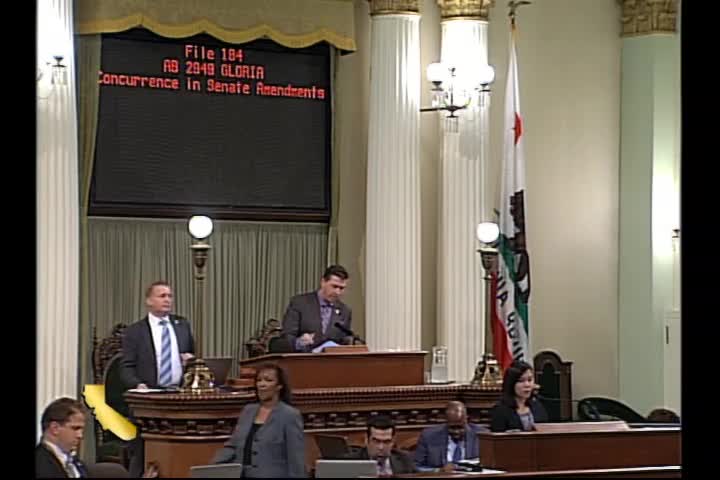
Bill Author

Bill Co-Author(s):