AB 2665: Absentee ballots: processing.
- Session Year: 2017-2018
- House: Assembly
- Latest Version Date: 2018-09-06
Existing law authorizes any jurisdiction having the necessary computer capability to start to process vote by mail ballots on the 10th business day before the election. Processing vote by mail ballots includes opening vote by mail ballot return envelopes, removing ballots, duplicating any damaged ballots, and preparing the ballots to be machine read, or machine reading them.
This bill would specify that machine reading of vote by mail ballots for these purposes includes processing write-in votes so that they can be tallied by the machine.
(a)Any jurisdiction in which vote by mail ballots are cast may begin to process vote by mail ballot return envelopes beginning 29 days before the election. Processing vote by mail ballot return envelopes may include verifying the voters signature on the vote by mail ballot return envelope pursuant to Section 3019 and updating voter history records.
(b)Any jurisdiction having the necessary computer capability may start to process vote by mail ballots on the 10th business day before the election. Processing vote by mail ballots includes opening vote by mail ballot return envelopes, removing ballots, duplicating any damaged ballots, and preparing the ballots to be machine read, or machine reading them, including processing write-in votes so that they can be tallied by the machine, but under no circumstances may a vote count be accessed or released until 8 p.m. on the day of the election. All other jurisdictions shall start to process vote by mail ballots at 5 p.m. on the day before the election.
(c)Results of any vote by mail ballot tabulation or count shall not be released before the close of the polls on the day of the election.
|
Date
|
Status
|
|---|---|
| Sep 6, 2018 | Chaptered by Secretary of State - Chapter 282, Statutes of 2018. |
| Sep 6, 2018 | Approved by the Governor. |
| Aug 20, 2018 | Enrolled and presented to the Governor at 3 p.m. |
| Aug 14, 2018 | In Assembly. Ordered to Engrossing and Enrolling. |
| Aug 13, 2018 | Read third time. Passed. Ordered to the Assembly. |
| Aug 1, 2018 | Ordered to special consent calendar. |
| Jul 5, 2018 | Read second time. Ordered to third reading. |
| Jul 3, 2018 | From committee: Do pass. (Ayes 4. Noes 0.) (July 3). |
| May 30, 2018 | Referred to Com. on E. & C.A. |
| May 17, 2018 | In Senate. Read first time. To Com. on RLS. for assignment. |
| May 17, 2018 | Read third time. Passed. Ordered to the Senate. |
| May 10, 2018 | Read second time. Ordered to Consent Calendar. |
| May 9, 2018 | From committee: Do pass. To Consent Calendar. (Ayes 7. Noes 0.) (May 9). |
| Mar 8, 2018 | Referred to Com. on E. & R. |
| Feb 16, 2018 | From printer. May be heard in committee March 18. |
| Feb 15, 2018 | Read first time. To print. |
|
Date
|
Description
|
Location
|
Votes
|
|
|---|---|---|---|---|
| Aug 13, 2018 | Special Consent AB2665 | Senate Floor |
Passed |
|
| Jul 3, 2018 | Do pass | Senate Standing Committee on Elections and Constitutional Amendments |
Passed |
|
| May 17, 2018 | AB 2665 SALAS Consent Calendar Second Day Regular Session | Assembly Floor |
Passed |
|
| May 9, 2018 | Do pass. To Consent Calendar. | Assembly Standing Committee on Elections and Redistricting |
Passed |
This list shows positions taken on this bill by organizations on the date displayed, which is linked to the original source.
Positions by individuals are not included.
|
Organization
|
Position
|
Date
|
|---|---|---|
| California Association of Clerks and Elections Officials | ** Support | Aug 1, 2018 |
| Kern County Board of Supervisors | ** Support | Aug 1, 2018 |
| Tehama County Board of Supervisors | ** Support | Aug 1, 2018 |
Office of Senate Floor Analyses (916) 651-1520 Fax: (916) 327-4478 | AB |
THIRD READING
Bill No: AB 2665
:
SENATE ELECTIONS & C.A. COMMITTEE: 4-0, 7/3/18
AYES: Stern, Anderson, Allen, Hertzberg
NO VOTE RECORDED: Leyva
ASSEMBLY FLOOR: 73-0, 5/17/18 (Consent) - See last page for vote
SOURCE: California Association of Clerks and Elections Officials
DIGEST:
This bill clarifies that any jurisdiction having the necessary computer capability may start processing write-in votes on vote by mail (VBM) ballots on the 10th business day before an election for the purpose of tallying the votes.
Existing law:
- Permits any registered voter to apply for, receive, and cast a VBM ballot.
- Provides that except for a voter-nominated office at a general election, each voter is entitled to write on the ballot the name of any candidate for any public office, including that of President and Vice President of the United States, as specified.
- Requires every person who desires to be a write-in candidate and have his or her name as written on the ballot of an election counted for a particular office to file a statement of write-in candidacy, as specified, and to collect the requisite number of signatures otherwise required on nomination papers for the office.
- Permits any jurisdiction in which VBM ballots are cast to begin to process VBM return envelopes beginning 29 days before the election. Provides that processing VBM return envelopes may include verifying the voter’s signature on the VBM return envelope and updating voter history records.
- Permits any jurisdiction having the necessary computer capability may start to process VBM ballots on the 10th business day before the election. Provides that processing VBM ballots includes opening VBM ballot return envelopes, removing ballots, duplicating any damaged ballots, and preparing the ballots to be machine read, or machine reading them.
- Prohibits a jurisdiction who may process VBM ballots prior to the Election Day from accessing or releasing the count until 8 p.m. on the day of the election.
- Prohibits the results of any VBM ballot tabulation or count from being released before the close of the polls on the day of the election.
This bill permits any jurisdiction having the necessary computer capability to start processing write-in votes on VBM ballots on the 10th business day before an election for the purpose of tallying the votes by the machine.
Background
Vote by Mail Statistics. In 2001, the Legislature approved and Governor Davis signed AB 1520 (Shelley, Chapter 922, Statutes of 2001), which authorized, among other provisions, any voter to become a permanent absentee voter (currently known as a permanent VBM voter). As a result, California voters have increasingly used VBM ballots to vote in elections. Since 2012, a majority of ballots cast in either a primary or general election were done using a VBM ballot. For the 2016 general election, over 8 million ballots or approximately 57.8 percent of the total votes cast were VBM ballots.
Vote Tabulation and Adjudication. Beginning 29 days prior to the election, the elections official can begin to verify signatures on the VBM ballot return envelopes against signatures on the voters' affidavits of registration, signatures appearing on forms issued by the elections official that are part of the voters' registration records, or facsimiles of the voters' signatures. If the elections official determines that the signature on the VBM return envelope is an accurate comparison to the signature on file in the voter's record, the elections official will place the unopened VBM ballot in a container in their office to be processed later. If the elections official determines that the signature on the VBM return envelope does not compare with the signature on file in the voter's record, the VBM ballot will remain unopened and a notation will be written across its face detailing the reason for it being rejected.
On the 10th day before Election Day, jurisdictions that possess the necessary computer capability are permitted to begin preparing VBM ballots to become part of the semifinal official canvass. This process includes opening VBM ballot return envelopes, removing ballots, duplicating any damaged ballots, and preparing the ballots to be machine read, or machine reading them. However, even though write-in votes must be manually processed, newer tabulating machines make it possible to electronically process VBM ballots that include write-in votes. When a VBM ballot is run through the tabulator, a screenshot is recorded and interpreted by the tabulator to indicate a write-in vote. The screenshot is saved for a process called adjudication where a person reviews the screen shot to determine the intent of the voter and matches the write-in to a qualified name in order to accept the write-in vote as-is or reject as invalid.
Comments
- According to the author, voting system technology has significantly evolved. In newer voting systems, including the system used in Kern County, this new technology allows for digital images with the audit trail (physical paper records of voter ballots as voters have cast them on an electronic voting system) to be applied to the image itself eliminating the need to sort out the write-in ballots and tally them manually.
AB 2665 would allow county elections officials having the necessary computer technology to start processing write-in votes beginning on the 10th business day before the election in conjunction with the VBM processing, thus reducing costs and improving Election Day efficiency results.
Related/Prior Legislation
SB 29 (Correa, Chapter 618, Statutes of 2014), among other provisions, permitted any jurisdiction having the necessary computer capability to begin processing VBM ballots on the 10th business day before the election. At the time, existing law permitted jurisdictions to begin processing VBM ballots on the seventh business day prior to the election.
FISCAL EFFECT: Appropriation: Fiscal Com.: Local:
California Association of Clerks and Elections Officials (source)
Kern County Board of Supervisors
Tehama County Board of Supervisors
None received
ASSEMBLY FLOOR: 73-0, 5/17/18
AYES: Acosta, Aguiar-Curry, Travis Allen, Arambula, Baker, Berman, Bigelow, Bloom, Bonta, Brough, Burke, Caballero, Calderon, Carrillo, Cervantes, Chau, Chávez, Chen, Chiu, Choi, Chu, Cooley, Cooper, Cunningham, Dahle, Daly, Eggman, Flora, Fong, Frazier, Friedman, Gallagher, Eduardo Garcia, Gipson, Gloria, Gonzalez Fletcher, Gray, Grayson, Harper, Holden, Irwin, Jones-Sawyer, Kalra, Kamlager-Dove, Kiley, Lackey, Levine, Limón, Low, Maienschein, Mathis, Mayes, McCarty, Medina, Mullin, Nazarian, Obernolte, O'Donnell, Patterson, Quirk, Quirk-Silva, Reyes, Rodriguez, Rubio, Salas, Mark Stone, Thurmond, Ting, Voepel, Waldron, Weber, Wood, Rendon
NO VOTE RECORDED: Cristina Garcia, Melendez, Muratsuchi, Santiago, Steinorth
8/1/18 12:12:03
**** END ****
SENATE COMMITTEE ON
ELECTIONS AND CONSTITUTIONAL AMENDMENTS
Senator Henry Stern, Chair
2017 - 2018 Regular
Bill No: 2665 Hearing Date: 7/3/18
Author: | Salas | ||
Version: |
| ||
Urgency: | Fiscal: | ||
Consultant: | |||
Subject:
DIGEST
This bill clarifies that any jurisdiction having the necessary computer capability may start processing write-in votes on vote by mail (VBM) ballots on the 10th business day before an election for the purpose of tallying the votes.
ANALYSIS
Existing law:
- Permits any registered voter to apply for, receive, and cast a VBM ballot.
- Provides that except for a voter-nominated office at a general election, each voter is entitled to write on the ballot the name of any candidate for any public office, including that of President and Vice President of the United States, as specified.
- Requires every person who desires to be a write-in candidate and have his or her name as written on the ballot of an election counted for a particular office to file a statement of write-in candidacy, as specified, and to collect the requisite number of signatures otherwise required on nomination papers for the office.
- Permits any jurisdiction in which VBM ballots are cast to begin to process VBM return envelopes beginning 29 days before the election. Provides that processing VBM return envelopes may include verifying the voter’s signature on the VBM return envelope and updating voter history records.
- Permits any jurisdiction having the necessary computer capability may start to process VBM ballots on the 10th business day before the election. Provides that processing VBM ballots includes opening VBM ballot return envelopes, removing ballots, duplicating any damaged ballots, and preparing the ballots to be machine read, or machine reading them.
- Prohibits a jurisdiction who may process VBM ballots prior to the Election Day from accessing or releasing the count until 8 p.m. on the day of the election.
- Prohibits the results of any VBM ballot tabulation or count from being released before the close of the polls on the day of the election.
This bill:
- Permits any jurisdiction having the necessary computer capability to start processing write-in votes on VBM ballots on the 10th business day before an election for the purpose of tallying the votes by the machine.
BACKGROUND
Vote by Mail Statistics. In 2001, the Legislature approved and Governor Davis signed AB 1520 (Shelley), Chapter 922, Statutes of 2001, which authorized, among other provisions, any voter to become a permanent absentee voter (currently known as a permanent VBM voter). As a result, California voters have increasingly used VBM ballots to vote in elections. Since 2012, a majority of ballots cast in either a primary or general election were done using a VBM ballot. For the 2016 general election, over 8 million ballots or approximately 57.8 percent of the total votes cast were VBM ballots.
Vote Tabulation and Adjudication. Beginning 29 days prior to the election, the elections official can begin to verify signatures on the VBM ballot return envelopes against signatures on the voters' affidavits of registration, signatures appearing on forms issued by the elections official that are part of the voters' registration records, or facsimiles of the voters' signatures. If the elections official determines that the signature on the VBM return envelope is an accurate comparison to the signature on file in the voter's record, the elections official will place the unopened VBM ballot in a container in their office to be processed later. If the elections official determines that the signature on the VBM return envelope does not compare with the signature on file in the voter's record, the VBM ballot will remain unopened and a notation will be written across its face detailing the reason for it being rejected.
On the 10th day before Election Day, jurisdictions that possess the necessary computer capability are permitted to begin preparing VBM ballots to become part of the semifinal official canvass. This process includes opening VBM ballot return envelopes, removing ballots, duplicating any damaged ballots, and preparing the ballots to be machine read, or machine reading them. However, even though write-in votes must be manually processed, newer tabulating machines make it possible to electronically process VBM ballots that include write-in votes. When a VBM ballot is run through the tabulator, a screenshot is recorded and interpreted by the tabulator to indicate a write-in vote. The screenshot is saved for a process called adjudication where a person reviews the screen shot to determine the intent of the voter and matches the write-in to a qualified name in order to accept the write-in vote as-is or reject as invalid.
COMMENTS
- According to the author: Voting system technology has significantly evolved. In newer voting systems, including the system used in Kern County, this new technology allows for digital images with the audit trail (physical paper records of voter ballots as voters have cast them on an electronic voting system) to be applied to the image itself eliminating the need to sort out the write-in ballots and tally them manually.
AB 2665 would allow county elections officials having the necessary computer technology to start processing write-in votes beginning on the 10th business day before the election in conjunction with the VBM processing, thus reducing costs and improving Election Day efficiency results.
- Argument in Support. As a sponsor of AB 2665, the California Association of Clerks and Elections Officials states:
AB 2665 will permit counties to count write-in votes in conjunction with vote by mail ballot processing. This change will allow counties to fully process vote by mail ballots with qualified write-in candidates, creating a fuller picture of how voters voted during the vote by mail period.
Under the current law vote by mail ballots can be processed starting 10 business days prior to the election. Processing includes verifying the vote by mail signature, extracting the ballot from the envelope, and reviewing the ballot for rips, tears, erroneous marks, and other problems that may cause the ballot to not be tallied accurately. Ballots that cannot be tallied correctly may be duplicated during this period so on election night the results may contain these votes.
Also under current law, ballots that contain write-in votes must be segregated for a hand tally in the semi-official canvass which occurs during the 30-day period after Election Day. On election night incomplete vote results are posted because these write-in candidate tallies cannot be included, even if the county registrar had the time on or before Election Day to perform this function.
AB 2665 allows these write-in tallies to be processed in conjunction with the vote by mail ballots, meaning that ballots containing votes for qualified write-in candidates can be hand-tallied and credited to a write-in candidate at the time of processing rather than waiting until after the post-election canvass for the results. [AB 2665] gives counties the ability to give up-to-date results for all candidates, including write-in candidates, on election night and during each subsequent vote tally update. This will provide for clear and concise reporting of all votes cast during an election.
RELATED/PRIOR LEGISLATION
SB 29 (Correa), Chapter 618, Statutes of 2014, among other provisions, permitted any jurisdiction having the necessary computer capability to begin processing VBM ballots on the 10th business day before the election. At the time, existing law permitted jurisdictions to begin processing VBM ballots on the seventh business day prior to the election.
PRIOR ACTION
Assembly Floor: | 73 - 0 |
Assembly Committee: | 7 - 0 |
POSITIONS
Sponsor: California Association of Clerks and Elections Officials
Support: Kern County Board of Supervisors
Tehama County Board of Supervisors
Oppose: None received
-- END --
Date of Hearing: May 9, 2018
ASSEMBLY COMMITTEE ON ELECTIONS AND REDISTRICTING
Marc Berman, Chair
ABPCA Bill Id:AB 2665 (
Author:Salas) – As Introduced Ver:February 15, 2018
SUBJECT: Absentee ballots: processing.
SUMMARY: Permits any jurisdiction having the necessary computer capability to start processing write-in votes on vote by mail (VBM) ballots on the 10th business day before an election for the purpose of tallying the votes.
EXISTING LAW:
- Provides that any jurisdiction in which VBM ballots are cast may begin to process VBM ballot return envelopes beginning 29 days prior to the election.
- Requires the elections official to compare the signature on the VBM identification envelope with the signature appearing on the voter's affidavit of registration, or the signature appearing on a form issued by an elections official that contains the voter's signature and is part of the voter's registration record. Provides that the elections official may use facsimiles of voters' signatures as specified. If upon comparison the elections official determines that the signatures compare, he or she will deposit the ballot, still in its identification envelope, into the ballot container in his or her office. If it is determined that the signatures do not compare, the identification envelope will remain unopened and the ballot will not be counted. The cause of the rejection will be written on the face of the identification envelope.
- Provides that any jurisdiction having the necessary computer capability may begin to process VBM ballots on the 10th business day before the election and specifies that processing VBM ballots shall include opening VBM ballot return envelopes, removing ballots, duplicating any damaged ballots, and preparing the ballots to be machine read, or machine reading them.
- Provides that except for a voter-nominated office at a general election, each voter is entitled to write on the ballot the name of any candidate for any public office, including that of President and Vice President of the United States, as specified.
- Requires every person who desires to be a write-in candidate and have his or her name as written on the ballot of an election counted for a particular office to file a statement of write-in candidacy, as specified, and to collect the requisite number of signatures otherwise required on nomination papers for the office.
- Prohibits a vote count from being accessed or released until 8 p.m. on the day of the election.
- Requires all other jurisdictions to start to process VBM ballots at 5 p.m. on the day before the election.
FISCAL EFFECT: None. This bill is keyed non-fiscal by the Legislative Counsel.
COMMENTS:
- Purpose of the Bill: According to the author:
Voting system technology has significantly evolved. In some of the newer voting systems, including the system used in Kern County, processing of voter mismarks no longer requires a pen-to-paper ballot duplication process. The process is still executed by teams, but the determinations are made to digital images and the audit trail is applied to the image itself. This process includes crediting the voters choice of write-in candidate to the image/audit trail during that processing, thus eliminating the need to out-sort those ballots and tally them manually during the canvass.
Election officials want to provide the most complete and accurate results possible on election night and to do so in the most efficient manner possible. AB 2665 would allow election officials to use the tools made available by existing technology to process VBM write-in votes and provide the most complete accurate tally possible on election night and eliminate the cost and time involved in secondary processing and the manual tally of write-in votes.
- Vote Tabulation and Adjudication: Between the 29th day and the 11th day prior to the election, the elections official can begin to verify the signatures on the VBM ballot return envelopes against signatures on the voters' affidavits of registration, signatures appearing on forms issued by the elections official that are part of the voters' registration records, or facsimiles of the voters' signatures. If the elections official determines that the signature on the VBM return envelope is an accurate comparison to the signature on file in the voter's record, the elections official will place the unopened VBM ballot in a container in their office to be processed later. If the elections official determines that the signature on the VBM return envelope does not compare with the signature on file in the voter's record, the VBM ballot will remain unopened and a notation will be written across its face detailing the reason for it being rejected.
On the 10th day before the election, jurisdictions who have the necessary computer capability can begin preparing VBM ballots to become part of the semifinal official canvass by opening VBM ballot return envelopes, removing ballots, duplicating any damaged ballots, and preparing the ballots to be machine read, or machine reading them. Write-in votes must be manually processed. Newer tabulating machines make it possible to process VBM ballots that include write-in votes electronically. When a VBM ballot is run through the tabulator it records a screen shot and when that screenshot is interpreted by the tabulator to include a write-in vote, it is saved for a process called adjudication. During adjudication, a person will review the screen shot to determine the intent of the voter and match the write-in to a qualified name, reject the write-in as invalid, or accept it as-is.
- Arguments in Support: In support of this bill, the California Association of Clerks and Election Officials writes:
AB 2665 will permit counties to count write-in votes in conjunction with vote by mail ballot processing. This change will allow counties to fully process vote by mail ballots with qualified write-in candidates, creating a fuller picture of how voters voted during the vote by mail period.
Under the current law vote by mail ballots can be processed starting 10 days prior to the election. Processing includes verifying the vote by mail signature, extracting the ballot from the envelope, and reviewing the ballot for rips, tears, erroneous marks, and other problems that may cause the ballot to not be tallied accurately. Ballots that cannot be tallied correctly may be duplicated during this period so on election night the results may contain these votes.
Also under current law, ballots that contain write-in votes must be segregated for a hand tally in the semi-official canvass which occurs during the 30-day period after Election Day. On election night incomplete vote results are posted because these write-in candidate tallies cannot be included, even if the county registrar had the time on or before Election Day to perform this function.
AB 2665 allows these write-in tallies to be processed in conjunction with the vote by mail ballots, meaning that ballots containing votes for qualified write-in candidates can be hand-tallied and credited to a write-in candidate at the time of processing rather than waiting until after the post-election canvass for the results.
REGISTERED SUPPORT / OPPOSITION:
Support
California Association of Clerks and Election Officials (Sponsor)
Kern County Board of Supervisors
Opposition
None on file.
Analysis Prepared by: Lori Barber / E. & R. / (916) 319-2094
Discussed in Hearing
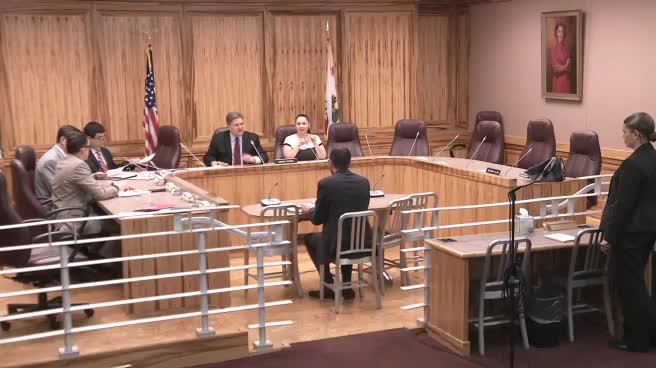 8MIN
Senate Standing Committee on Elections and Constitutional Amendments
Bill Author

Bill Co-Author(s):