AB 2667: State Capitol Building Annex: historic symbols.
- Session Year: 2017-2018
- House: Assembly
- Latest Version Date: 2018-09-06
Existing law, known as the State Capitol Building Annex Act of 2016, authorizes the Joint Rules Committee to pursue the construction of a state capitol building annex or the restoration, rehabilitation, renovation, or reconstruction of the State Capitol Building Annex, to be administered and supervised by the Department of General Services, as provided.
This bill would require that any work of construction, restoration, rehabilitation, renovation, or reconstruction undertaken pursuant to these provisions (1) incorporate elements complementary to the historic State Capitol, elements to make the newly constructed state capitol building annex or the restored, rehabilitated, renovated, or reconstructed State Capitol Building Annex efficient and sustainable, and historic elements from the existing State Capitol Building Annex; (2) integrate design elements that educate and impress upon visitors the rich heritage of symbolism of the historic State Capitol design; and (3) incorporate symbolic treasures, as provided. The bill would make various findings and declarations as to the history and symbolism of the State Capitol and the intent of the Legislature as to the elements of any newly constructed state capitol building annex or the restored, rehabilitated, renovated, or reconstructed State Capitol Building Annex.
The Legislature finds and declares all of the following:
(a)When California was admitted to the Union as the 31st state of the United States on September 9, 1850, having being transferred from Mexico by the terms of the Treaty of Guadalupe Hidalgo, California stood out among the earliest states of the Union as not having been previously administered as a territory of the United States.
(b)As its state government became established, and in particular as Sacramento was settled upon as the location of the states capital, construction of a fitting capitol building began in earnest in 1860. The resulting State Capitol took shape as a tribute to American participatory democracy and the ideals of self-rule and was very clearly a symbol of self-rule first and a functioning building second.
(c)The symbols that early Californians incorporated into their capitol to convey key precepts of democracy are many and varied, and include the following:
(1)Governance safeguarding society. The story of the west pediment statuary group is the keystone of all the State Capitol Buildings symbols, enriching the meaning of the bears on our state flag, state seal, and in the west wing tile floors. The embellishments atop the pediment, depicting a grizzly bear attacking a Native American man on horseback and a buffalo charging a Native American maiden who is also atop a horse, make the point that there are hazards in the world that put people and communities at risk. The triangular pediment below, however, portrays civil society and the imposing central figure, Athena, also known as Minerva, depicts civil power, the offensive tool of a lance held at her right and a protective shield held at her left. The panoramas key lies below her shield, where the artist placed a subdued grizzly, brought to heel by civil authority, its head and muzzle barely peeking out for observers below.
(2)The California Brown Bear. The idea that civil government can tame lifes hazards reappears in the docile bears on the California state flag and seal and in the first floor tile corridors. Bears, all recognizably California brown bears, share with our state their important qualities of strength and independence, which support the vigor and pathfinding characteristic of California, even while, like the grizzly in the pediment, they do not appear as wild, but subdued, indeed walking as a dog might, controlled and under authority.
(3)The narrative of Athena, also known as Minerva. On the state seal, in the Capitols first floor tiles, as a face gazing outward from above each second floor rotunda entry, and high above the Senate dais are representations of a mythological figure, Athena, as she was known to the Greeks, or Minerva, as she was known to the Romans. In each tradition, Athena or Minerva was the goddess of wisdom, war, commerce, and art. She was adopted to symbolize the young state of California because she was never an infant, as she sprang into being full-grown from the head of her father, Zeus for Athena and Jupiter for Minerva, similar to Californias direct entry into the Union as a state on September 9, 1850.
(4)Frail democracys bundle of sticks. The most oft-repeated symbol in the Capitol and its surrounding park is the bundle of sticks, tied together, known as a fasces. The fasces had its origin in ancient Rome where it symbolized the magistrates power and jurisdiction. As used in the State Capitol, the symbol expresses the idea that, while a single person may be brittle and weak, when many are joined together, as in a democratic form of government, the whole possesses a strength and flexibility that surpasses that of an individual. In the State Capitol Building and its surrounding park, the symbol is present throughout the central and south monumental wooden staircases in the west wing, on the massive second floor doors through which visitors can view the Tower Bridge in the distance and cast in the iron of every lamp which dots the expanse of the park. For every Californian, the inspiring quality of this symbol is enriched by the fact that, in Washington, D.C., it appears throughout the United States Capitol and the Library of Congress in the same representative sense as in Sacramento, and also graces the Lincoln Memorial. On the Memorial, it adorns the great chair where Abraham Lincoln sits, appearing twice, below each hand, symbolizing his singular role in keeping the union together and not letting it be torn asunder by hate and factionalism.
(5)Union Forever and California enriching the Union. In the State Capitol, the importance of Californias participation in the Union that Lincoln preserved is symbolically emphasized by the similar, yet distinct, statuary that adorns the north- and south-facing porticos. On the south, two figures clasp their hands in a gesture of oneness in front of a shield topped by an eagle that together symbolize the American Union. On the north portico, two figures reappear, but now they hold papers of some apparent significance, and the eagle is again present, as is the barest glimpse of the underlying shield, which is now topped by the California state seal. Together, they honor the importance of Californias place within the larger union of states and of Californias addition in the years immediately after Marshalls discovery of gold. The importance of Californias role on its own behalf, and also as part of the larger national union, which is depicted in the north and south portico statuary, is also expressed in the oath of office sworn in the State Capitol, and for every other California public office, in the pledge and duty to support and defend the Constitution of the United States and the California Constitution.
(6)Owl of wisdom. Only one set of original entry doors remains in the west wing, which were for the originally intended grand second floor entry to the State Capitol Building. This set of entry doors richly conveys how important early Californians regarded the many west wing symbols. The doors incorporate the bundle of sticks, bears heads, and a beautifully modeled owl, an ancient symbol of wisdom.
(7)Grizzly bear safeguarding the public fisc. Above the vault entrance to the historic Treasurers office vault on the first floor of the west wing is a cast iron grizzly bear head with its long claws in the foreground. The bears left paw rests on the folds of a heavy canvas money bag and below its muzzle is a pile of gold coins. The symbol, conveying the responsibility to safeguard the public fisc, now adorns the second floor rotunda wall with 16 copies of the unique symbol looking down upon visitors to the State Capitol.
(8)The State Capitols status as Californias premier public building was emphasized by the Californians who built it by incorporating pineapples throughout. The democratic conception of a State Capitol open to all was important to the early Californians who built it. The west and south doors where the public would have originally entered led directly to monumental staircases that opened the building to them. On those staircases, pineapples are suspended overhead from the bottom of each newel post, a symbol of hospitality common in public buildings of this vintage. The association of this fruit with a welcoming hospitality arose in the 1800s, when to serve pineapple in ones home or establishment in the continental United States was seen as an act of extraordinary welcome and generosity since it had come to that table from the Hawaiian Islands.
(9)Light and views of the world outside the Capitol play an important role in the Capitols symbolism in celebrating the notions of accountability, transparency, and concern for the State of California outside the State Capitol in all Californias varied communities. Sixteen round windows, high on the rotunda wall, bring the outside light in, both directly and indirectly according to the time of day and the weather outside. Atop the rotunda, a large round window, known as the oculus, also adds to the experience of natural light within the historic wing. The historic wings second floor portico doors, and doors on the first floor, which offer openings to view the outside and symbolically bring the outside in to the heart of the State Capitol, again reflect the state governments place as part of society and connected to society as the purpose of its important stewardship of the public realm and public good. It is also worth noting that, during the State Capitol Building restoration that occurred from 1975 to 1982, inclusive, this opening of the building to light and views of the outside was embodied in the expansive skylights that dominate the central area of each north and south wing fourth floor workspaces. Such daylighting has become an architectural device of even greater design significance in the 21st century than it was in the 19th century.
(10)Californias agricultural productivity is celebrated throughout the historic west wing, notably in the 32 horns of plenty that emerge from the columns beneath the 16 round windows high on the rotunda wall to spill a cornucopia of agricultural produce from banners of food products to adorn the State Capitol. Banners of agricultural produce also appear on each leaf of the second wing west portico doors. Other symbols of Californias abundance are also sprinkled throughout the State Capitol Building, including bunches of grapes, which are a common motif that still convey the story of California.
SEC. 2.Section 9105.5 is added to the Government Code, to read:9105.5.(a)Any work of construction, restoration, rehabilitation, renovation, or reconstruction undertaken pursuant to Article 5.2 (commencing with Section 9112) shall do all of the following:
(1)Incorporate elements complementary to the historic State Capitol, elements to make the newly constructed state capitol building annex or the restored, rehabilitated, renovated, or reconstructed State Capitol Building Annex efficient and sustainable, and historic elements from the existing State Capitol Building Annex described in Section 9105.
(2)Integrate within its design elements that educate and impress upon visitors the rich heritage of symbolism that earlier generations of Californians made a vital part of the palette of the historic State Capitol design so as to convey the meaning of Californias self-governance and the states unique and ever-distinctive heritage.
(3)Incorporate symbolic treasures, as is befitting the heritage of symbols left by Californias founders for current and future generations to enjoy and explore, so as to ensure that the legislative and executive branch working spaces in the newly constructed state capitol building annex or the restored, rehabilitated, renovated, or reconstructed State Capitol Building Annex are no longer barren and devoid of the enriching presence of those symbols of self-governance.
(b)It is the intent of the Legislature that any newly constructed state capitol building annex or the restored, rehabilitated, renovated, or reconstructed State Capitol Building Annex be designed to welcome all visitors to a safe, healthful, accessible, and working State Capitol, including historic chambers supported by needed caucusing spaces, offices for the Chief Clerk of the Assembly, the Secretary of the Senate, and the Legislative Counsel; hearing spaces to facilitate the convenient conduct of hearings during sessions, and space for the Sergeants at Arms so that all Californians may effectively engage with their elected representatives and their state government in meaningful, participatory, and deliberative democracy.
REVISIONS: HeadingLine 2.|
Date
|
Status
|
|---|---|
| Sep 6, 2018 | Chaptered by Secretary of State - Chapter 283, Statutes of 2018. |
| Sep 6, 2018 | Approved by the Governor. |
| Aug 30, 2018 | Enrolled and presented to the Governor at 4:30 p.m. |
| Aug 24, 2018 | In Assembly. Ordered to Engrossing and Enrolling. |
| Aug 24, 2018 | Read third time. Passed. Ordered to the Assembly. |
| Aug 21, 2018 | Ordered to special consent calendar. |
| Aug 17, 2018 | From committee: Do pass. (Ayes 7. Noes 0.) (August 16). |
| Aug 6, 2018 | In committee: Referred to APPR. suspense file. |
| Jun 26, 2018 | From committee: Do pass and re-refer to Com. on APPR. with recommendation: To Consent Calendar. (Ayes 13. Noes 0.) (June 26). Re-referred to Com. on APPR. |
| Jun 7, 2018 | Referred to Com. on G.O. |
| May 30, 2018 | In Senate. Read first time. To Com. on RLS. for assignment. |
| May 29, 2018 | Read third time. Passed. Ordered to the Senate. |
| May 24, 2018 | Read second time. Ordered to Consent Calendar. |
| May 23, 2018 | From committee: Do pass. To Consent Calendar. (Ayes 16. Noes 0.) (May 23). |
| May 21, 2018 | Coauthors revised. |
| Apr 16, 2018 | Referred to Com. on RLS. |
| Feb 16, 2018 | From printer. May be heard in committee March 18. |
| Feb 15, 2018 | Read first time. To print. |
|
Date
|
Description
|
Location
|
Votes
|
|
|---|---|---|---|---|
| Aug 24, 2018 | Special Consent AB2667 | Senate Floor |
Passed |
|
| Aug 16, 2018 | Do pass | Senate Standing Committee on Appropriations |
Passed |
|
| Aug 6, 2018 | Placed on suspense file | Senate Standing Committee on Appropriations |
Passed |
|
| Jun 26, 2018 | Do pass, but first be re-referred to the Committee on [Appropriations] with the recommendation: To Consent Calendar | Senate Standing Committee on Governmental Organization |
Passed |
|
| May 29, 2018 | AB 2667 COOLEY Consent Calendar Second Day Regular Session | Assembly Floor |
Passed |
|
| May 23, 2018 | Do pass. To Consent Calendar. | Assembly Standing Committee on Appropriations |
Passed |
|
| May 21, 2018 | Do pass and be re-referred to the Committee on [Appropriations] | Assembly Standing Committee on Rules |
Passed |
This list shows positions taken on this bill by organizations on the date displayed, which is linked to the original source.
Positions by individuals are not included.
Office of Senate Floor Analyses (916) 651-1520 Fax: (916) 327-4478 | AB |
THIRD READING
Bill No: AB 2667
:
SENATE GOVERNMENTAL ORG. COMMITTEE: 13-0, 6/26/18
AYES: Dodd, Wilk, Bradford, Cannella, Gaines, Galgiani, Glazer, Hill, Hueso, Lara, Portantino, Vidak, Wiener
SENATE APPROPRIATIONS COMMITTEE: 7-0, 8/16/18
AYES: Portantino, Bates, Beall, Bradford, Hill, Nielsen, Wiener
ASSEMBLY FLOOR: 78-0, 5/29/18 (Consent) - See last page for vote
DIGEST:
This bill requires that any construction, restoration, rehabilitation, renovation or reconstruction of the State Capitol Building Annex (Annex) incorporate elements complementary to the historic State Capitol.
Existing law:
- Authorizes, under the State Capitol Building Annex Act of 2016, the Joint Rules Committee to pursue the construction of a state capitol building annex or the restoration, rehabilitation, renovation, or reconstruction of the Annex, to be administered and supervised by the Department of General Services (DGS), as provided.
- Establishes the Joint Rules Committee, and provides a continuing existence.
- Defines the “State Capitol Building Annex” as the annex to the historic State Capitol, constructed to the east of the original building, situated in the area bounded by 10th, L, 15th, and N Streets in the City of Sacramento.
This bill:
- Provides that any work of construction, restoration, rehabilitation, renovation, or reconstruction undertaken on the Annex shall do all of the following:
- Incorporate elements complementary to the historic State Capitol, efficient and sustainable elements, and historic elements from the existing Annex.
- Integrate within its design elements that educate and impress upon visitors the rich heritage of symbolism that earlier generations of Californians made a vital part of the palette of the historic State Capitol design so as to convey the meaning of California’s self-governance and the state’s unique and ever-distinctive heritage.
- Incorporate symbolic treasures, as is befitting the heritage of symbols left by California’s founders for current and future generations to enjoy and explore, so as to ensure that the legislative and executive branch working spaces are no longer barren and devoid of the enriching presence of those symbols of self-governance.
- States that it is the intent of the Legislature that any newly constructed state capitol building annex or the restored, rehabilitated, renovated, or reconstructed Annex be designed to welcome all visitors to a safe, healthful, accessible, and working State Capitol.
- Includes legislative findings and declarations pertaining to the rich history of California, and the State Capitol Building.
Comments
Purpose of this bill. According to the author, “the California State Capitol is a symbol of government first and a functional building second. Currently, the aesthetic connection between the historic West Wing and the Capitol Annex is very poor. The West Wing depicts many symbols that convey values that California was founded upon, including: the California brown bear, the State Seal, the Athena/Eureka logo, the golden poppy, bundles of sticks, the owl of wisdom, the pineapple of hospitality, and the cornucopia. The Capitol Annex is largely void of such symbols and there is no cohesiveness in design between the two joined buildings that make up the People’s House.”
Further, the author notes that, “AB 2667 requires that the heritage of symbols seen in the West Wing be incorporated in any constructed, renovated, or reconstructed Annex to promote education and hospitality to all who visit California’s People’s House. Incorporating design elements that complement the historic West Wing and convey the heritage of symbols left by California’s founders in a new Annex ensures that all who visit have the opportunity to learn about state government, the history of California, and creates a more dignified and hospitable Capitol.”
California’s State Capitol Complex. The Capitol Complex is comprised of two sections, the original west wing completed between 1860-1874, and the attached Annex constructed in 1952 which adjoins the historic west wing on its east side. The Annex is home to the Governor’s offices, 115 of California’s 120 lawmakers, and key legislative professional support offices. In 2016, the complex had nearly 2 million visitors, including tens of thousands of grade school children.
The Annex was built before the invention of a number of modern technologies or adoption of accessibility standards, and is faced with failing systems and infrastructure. In 2016, the Legislature approved and the Governor signed the State Capitol Building Annex Act which provides funding for a project to address deficiencies in the existing Annex. In 2017, the Joint Rules Committee contracted with an independent architectural and engineering firm to assess the current uses and further needs of the Annex, titled “The California State Capitol Annex Project Planning Study.” The findings of this study were presented at a February informational hearing held by the Joint Rules Committee.
Related/Prior Legislation
SB 836 (Committee on Budget and Fiscal Review, Chapter 31, Statutes of 2016) authorized the Joint Rules Committee to pursue the construction of a state capitol building annex or the restoration, rehabilitation, renovation, or reconstruction of the State Capitol Building Annex.
FISCAL EFFECT: Appropriation: Fiscal Com.: Local:
According to the Senate Appropriations Committee, unknown and potentially significant cost pressure to ensure that all design elements incorporate elements complementary to the historic State Capitol. It would be difficult to quantify the actual fiscal effect of this bill; however, costs could be impacted by a reduction in the pool of eligible design choices that fit the prescribed requirements of this bill.
None received
OPPOSITION: (Verified 8/16/18)
None received
ASSEMBLY FLOOR: 78-0, 5/29/18
AYES: Acosta, Aguiar-Curry, Travis Allen, Arambula, Baker, Berman, Bigelow, Bloom, Bonta, Brough, Burke, Caballero, Calderon, Carrillo, Cervantes, Chau, Chávez, Chen, Chiu, Choi, Chu, Cooley, Cooper, Cunningham, Dahle, Daly, Eggman, Flora, Fong, Frazier, Friedman, Gallagher, Cristina Garcia, Eduardo Garcia, Gipson, Gloria, Gonzalez Fletcher, Gray, Grayson, Harper, Holden, Irwin, Jones-Sawyer, Kalra, Kamlager-Dove, Kiley, Lackey, Levine, Limón, Low, Maienschein, Mathis, Mayes, McCarty, Medina, Melendez, Mullin, Muratsuchi, Nazarian, Obernolte, O'Donnell, Patterson, Quirk, Quirk-Silva, Reyes, Rodriguez, Rubio, Salas, Santiago, Steinorth, Mark Stone, Thurmond, Ting, Voepel, Waldron, Weber, Wood, Rendon
8/18/18 13:12:21
**** END ****
SENATE COMMITTEE ON APPROPRIATIONS
Senator Anthony Portantino, Chair
2017 - 2018 Regular Session
AB 2667 (Cooley) - State Capitol Building Annex: historic symbols
Version: February 15, 2018 | Policy Vote: G.O. 13 - 0 |
Urgency: No | Mandate: No |
Hearing Date: August 6, 2018 | Consultant: Debra Cooper |
This bill meets the criteria for referral to the Suspense File.
Bill Summary:
This bill would require that any construction, restoration, rehabilitation, renovation or reconstruction of the State Capitol Building Annex (Annex) incorporate elements complementary to the historic State Capitol.
Fiscal Impact:
Unknown, potentially significant cost pressure to ensure that all design elements incorporate elements complementary to the historic State Capitol. It would be difficult to quantify the actual fiscal effect of this bill; however, costs could be impacted by a reduction in the pool of eligible design choices that fit the prescribed requirements of this bill.
Background:
The Capitol Complex comprises two sections, the original west wing completed between 1860-1874, and the attached Annex constructed in 1952 which adjoins the historic west wing on its east side. The Annex is home to the Governor’s offices, 115 of California’s 120 lawmakers, and key legislative professional support offices. In 2016, the complex had nearly 2 million visitors, including tens of thousands of grade school children.
The Annex was built before the invention of a number of modern technologies or adoption of accessibility standards, and is faced with failing systems and infrastructure. In 2016, the Legislature approved and the Governor signed the State Capitol Building Annex Act which provides funding for a project to address deficiencies in the existing Annex. In 2017, the Joint Rules Committee contracted with an independent architectural and engineering firm to assess the current uses and further needs of the Annex, titled “The California State Capitol Annex Project Planning Study.” The findings of this study were presented at a February informational hearing held by the Joint Rules Committee.
Proposed Law:
This bill would provide that any work of construction, restoration, rehabilitation, renovation, or reconstruction of the Annex shall incorporate elements complementary to the historic State Capitol, efficient and sustainable elements, and historic elements from the existing State Capitol Building Annex; integrate within its design elements that educate and impress upon visitors the rich heritage of symbolism that earlier generations of Californians made a vital part of the palette of the historic State Capitol design; and incorporate symbolic treasures. This bill would also state Legislative intent that any newly constructed state capitol building annex or the restored, rehabilitated, renovated, or reconstructed State Capitol Building Annex be designed to welcome all visitors to a safe, healthful, accessible, and working State Capitol.
Related Legislation:
SB 836 (Committee on Budget and Fiscal Review, Chapter 31, Statutes of 2016) authorized the Joint Rules Committee to pursue the construction of a state capitol building annex or the restoration, rehabilitation, renovation, or reconstruction of the State Capitol Building Annex.
-- END --
SENATE COMMITTEE ON GOVERNMENTAL ORGANIZATION
Senator Bill Dodd
Chair
2017 - 2018 Regular
Bill No: 2667 Hearing Date: 6/26/2018
Author: | , et al. | ||
Version: | 2/15/2018 Introduced | ||
Urgency: | No | Fiscal: | Yes |
Consultant: | Brian Duke | ||
SUBJECT: State Capitol Building Annex: historic symbols
DIGEST: This bill requires that any construction, restoration, rehabilitation, renovation or reconstruction of the State Capitol Building Annex (Annex) incorporate elements complementary to the historic State Capitol.
ANALYSIS:
Existing law:
- The State Capitol Building Annex Act of 2016 authorizes the Joint Rules Committee to pursue the construction of a state capitol building annex or the restoration, rehabilitation, renovation, or reconstruction of the Annex, to be administered and supervised by the Department of General Services (DGS), as provided.
- Provides that the Annex is intended primarily for the use of the legislative department and, except as provided, shall be devoted exclusively to such use.
- Establishes the Joint Rules Committee, and provides a continuing existence.
- Defines the “State Capitol Building Annex” as the annex to the historic State Capitol, constructed to the east of the original building, situated in the area bounded by 10th, L, 15th, and N Streets in the City of Sacramento.
- Establishes the State Project Infrastructure Fund and continuously appropriates money in that fund for state projects, including the Annex.
This bill:
- Provides that any work of construction, restoration, rehabilitation, renovation, or reconstruction undertaken on the Annex shall do all of the following:
- Incorporate elements complementary to the historic State Capitol, efficient and sustainable elements, and historic elements from the existing Annex.
- Integrate within its design elements that educate and impress upon visitors the rich heritage of symbolism that earlier generations of Californians made a vital part of the palette of the historic State Capitol design so as to convey the meaning of California’s self-governance and the state’s unique and ever-distinctive heritage.
- Incorporate symbolic treasures, as is befitting the heritage of symbols left by California’s founders for current and future generations to enjoy and explore, so as to ensure that the legislative and executive branch working spaces are no longer barren and devoid of the enriching presence of those symbols of self-governance.
- States that it is the intent of the Legislature that any newly constructed state capitol building annex or the restored, rehabilitated, renovated, or reconstructed Annex be designed to welcome all visitors to a safe, healthful, accessible, and working State Capitol.
- Includes legislative findings and declarations pertaining to the rich history of California, and the State Capitol Building.
Background
Purpose of the bill. According to the author, “the California State Capitol is a symbol of government first and a functional building second. Currently, the aesthetic connection between the historic West Wing and the Capitol Annex is very poor. The West Wing depicts many symbols that convey values that California was founded upon, including: the California brown bear, the State Seal, the Athena/Eureka logo, the golden poppy, bundles of sticks, the owl of wisdom, the pineapple of hospitality, and the cornucopia. The Capitol Annex is largely void of such symbols and there is no cohesiveness in design between the two joined buildings that make up the People’s House.”
Further, the author notes that, “AB 2667 requires that the heritage of symbols seen in the West Wing be incorporated in any constructed, renovated, or reconstructed Annex to promote education and hospitality to all who visit California’s People’s House. Incorporating design elements that complement the historic West Wing and convey the heritage of symbols left by California’s founders in a new Annex ensures that all who visit have the opportunity to learn about state government, the history of California, and creates a more dignified and hospitable Capitol.”
California’s State Capitol Complex. The Capitol Complex is comprised of two sections, the original west wing completed between 1860-1874, and the attached Annex constructed in 1952 which adjoins the historic west wing on its east side. The Annex is home to the Governor’s offices, 115 of California’s 120 lawmakers, and key legislative professional support offices. In 2016, the complex had nearly 2 million visitors, including tens of thousands of grade school children.
The Annex was built before the invention of a number of modern technologies or adoption of accessibility standards, and is faced with failing systems and infrastructure. In 2016, the Legislature approved and the Governor signed the State Capitol Building Annex Act which provides funding for a project to address deficiencies in the existing Annex. In 2017, the Joint Rules Committee contracted with an independent architectural and engineering firm to assess the current uses and further needs of the Annex, titled “The California State Capitol Annex Project Planning Study.” The findings of this study were presented at a February informational hearing held by the Joint Rules Committee.
Prior/Related Legislation
AB 2036 (Gipson, 2018) provides that the various duties associated with the maintenance of the Mervyn Dymally bust in the Annex be the responsibility of the Mervyn M. Dymally African American Political and Economic Institute. (Pending in the Senate Governmental Organization Committee)
SB 1452 (Wilk, 2018) establishes the War on Terror Memorial Committee, and requires the Committee to review the feasibility and best practices for the construction of a War on Terror Memorial in or around the State Capitol Park. (Pending at the Assembly Desk)
AB 2704 (Gipson, Chapter 698, Statutes of 2016) authorized the construction and maintenance of a bust in the Annex to honor Mervyn Dymally, and provided that the Mervyn Dymally Memorial Capitol Foundation, upon establishment, with various duties and responsibilities associated with the bust.
SB 836 (Committee on Budget and Fiscal Review, Chapter 31, Statutes of 2016) authorized the Joint Rules Committee to pursue the construction of a state capitol building annex or the restoration, rehabilitation, renovation, or reconstruction of the State Capitol Building Annex.
AB 2358 (Hagman, Chapter 682, Statutes of 2012) authorized the creation of a privately funded statute to honor President Ronald Reagan in the State Capitol Building Annex; and, prohibited construction of the statue until the Joint Rules Committee approved and adopted the plan for the statue, and the Joint Rules Committee and the Department of Finance determined that sufficient private funding was available to construct and maintain the statue.
FISCAL EFFECT: Appropriation: Fiscal Com.: Local:
SUPPORT:
None received
OPPOSITION:
None received
Date of Hearing: May 23, 2018
ASSEMBLY COMMITTEE ON APPROPRIATIONS
Lorena Gonzalez Fletcher, Chair
ABPCA Bill Id:AB 2667
Author:(Cooley) – As Introduced Ver:February 15, 2018
Policy Committee: | Rules | Vote: | 9 - 0 |
|
| ||
|
|
Urgency: No State Mandated Local Program: No Reimbursable: No
SUMMARY:
This bill requires any construction, restoration or similar work on or to the State Capitol Building Annex to incorporate elements complementary to the historic State Capitol, integrate design elements from the latter and “symbolic treasures” so the annex’s working spaces are no longer “barren” and “devoid” of the enriching presence of symbols of self-governance, and be designed to achieve several goals, including the welcoming of visitors and creating a safe, healthful, accessible, and working State Capitol.
FISCAL EFFECT:
Unknown cost. Arguably, a building that includes symbolic treasures and fulfills various public purposes to, in sum, symbolize and celebrate self-governance will be more expensive to construct or achieve than a building that is barren and devoid of the enriching presence of the symbols of self-governance. However, this analysis makes no such argument. Presumably, designers and builders of a new, remodeled, or refurbished annex will have many design choices before them, some costly, some cheap. It is impossible to know the fiscal effect of the requirements of this bill.
COMMENTS:
Background and Purpose. SB 836 (Committee on Budget and Fiscal Review), Chapter 31, Statutes of 2016, authorized the Joint Rules Committee to pursue the construction of a state capitol building annex or the restoration, rehabilitation, renovation, or reconstruction of the State Capitol Building Annex. SB 836 also established the State Project Infrastructure Fund and appropriated funds for a report and other work related to the State Capitol Building Annex.
The author contends there is no symbolic cohesion between the historic State Capitol and the annex, and such cohesion is important for a variety of public purposes.
Analysis Prepared by: Jay Dickenson / APPR. / (916) 319-2081
Date of Hearing: May 21, 2018
ASSEMBLY COMMITTEE ON RULES
Ken Cooley, Chair
ABPCA Bill Id:AB 2667 (
Author:Cooley) – As Introduced Ver:February 15, 2018
SUBJECT: State Capitol Building Annex: historic symbols
SUMMARY: Requires that any construction, restoration, rehabilitation, renovation or reconstruction of the State Capitol Building Annex incorporate elements complementary to the historic State Capitol, integrate design elements that reflect the Capitol’s rich heritage of symbolism, and incorporate symbolic treasures. Specifically, this bill:
- Requires that any work of construction, restoration, rehabilitation, renovation, or reconstruction of the State Capitol Building Annex do all of the following:
- Incorporate elements complementary to the historic State Capitol, elements that make the annex efficient and sustainable, and historic elements from the existing State Capitol Building Annex.
- Integrate within the design elements that educate and impress upon visitors the rich heritage of symbolism that earlier generations of Californians made a vital part of the historic State Capitol design.
- Incorporate symbolic treasures to ensure the annex is no longer barren and devoid of the enriching presence of those symbols that represent California’s self-governance.
- Describes the symbols that early Californians incorporated into the capitol to convey key precepts of democracy, including: the California Brown Bear, Athena, the bundle of sticks, the owl of wisdom, the grizzly bear safeguarding the public fisc, pineapples as a symbol of hospitality, and numerous symbols that celebrate California’s agricultural productivity.
- States the intent of the Legislature that any newly constructed state capitol building annex or the existing State Capitol Building Annex, be designed to welcome all visitors to a safe, healthful, accessible, and working State Capitol; and, that the historic chambers account for needed caucusing spaces, offices for the Chief Clerk of the Assembly, the Secretary of the Senate, and the Legislative Counsel.
EXISTING LAW:
- Requires Joint Rules Committee to allocate space in the State Capitol Building Annex.
- Authorizes Joint Rules Committee to pursue the construction of a state capitol building annex or the restoration, rehabilitation, renovation, or reconstruction of the State Capitol Building Annex.
- Requires the Department of General Services to report to the Joint Rules Committee on the scope, budget, delivery method, and schedule for any space to be constructed, restored, rehabilitated, renovated, or reconstructed.
- Establishes the State Project Infrastructure Fund and continuously appropriates money in that fund for state projects, including the State Capitol Building Annex.
FISCAL EFFECT: Unknown
COMMENTS:
- Purpose of the bill: According to the author, this bill requires that the heritage of symbols seen in the West Wing be incorporated in any constructed, renovated, or reconstructed Capitol Annex to promote education and hospitality to all who visit California’s People’s House. Incorporating design elements that complement the historic West Wing and convey the heritage of symbols left by California’s founders in a revamped State Capitol Annex ensures that all who visit have the opportunity to learn about state government, the history of California, and creates a more dignified and hospitable Capitol.
- Need for the bill: According to the author, the California State Capitol is a symbol of government first and a functional building second. Currently, the aesthetic connection between the historic West Wing and the Capitol Annex is very poor. The Capitol Annex is largely void of the symbols depicted in the West Wing, and there is no cohesiveness in design between the two joined buildings that make up the “People’s House.”
- Prior legislation: SB 836 (Chapter 31, Statutes of 2016) authorized the Joint Rules Committee to pursue the construction of a state capitol building annex or the restoration, rehabilitation, renovation, or reconstruction of the State Capitol Building Annex. SB 836 also established the State Project Infrastructure Fund and appropriated funds for a report and other work related to the State Capitol Building Annex.
REGISTERED SUPPORT / OPPOSITION:
Support
None on file
Opposition
None on file
Analysis Prepared by: Michael Erke / RLS. / (916) 319-2800
Discussed in Hearing
 1H
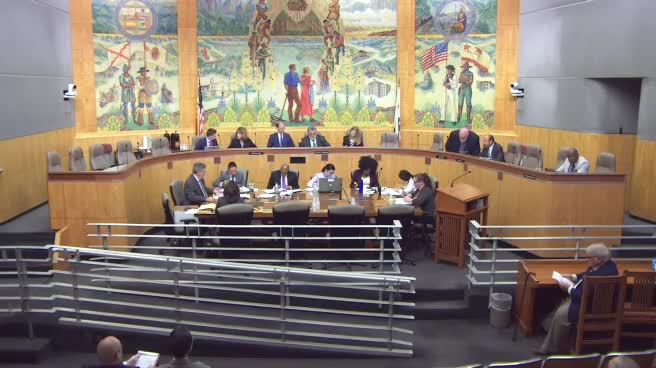
Senate Standing Committee on Appropriations
 4MIN
Senate Standing Committee on Appropriations
Bill Author




