AB 2669: Peace officers: communications.
- Session Year: 2017-2018
- House: Assembly
- Latest Version Date: 2018-08-20
Existing law establishes various prohibitions against eavesdropping and recording or intercepting certain communications. Violations of these prohibitions are crimes. Under existing law, specified law enforcement officers are not prohibited by those provisions from overhearing or recording any communication that they could lawfully overhear or record prior to January 1, 1968.
This bill would add peace officers of the Office of Internal Affairs of the Department of Corrections and Rehabilitation to the list of law enforcement officers to whom the prohibitions described above do not apply.
Existing law establishes various prohibitions against eavesdropping and recording or intercepting certain communications. Violations of these prohibitions are crimes. Under existing law, specified law enforcement officers are not prohibited by those provisions from overhearing or recording any communication that they could lawfully overhear or record prior to January 1, 1968.
This bill would add peace officers of the Office of Correctional Safety and the Office of Internal Affairs of the Department of Corrections and Rehabilitation to the list of law enforcement officers to whom the prohibitions described above do not apply.
Existing law establishes various prohibitions against eavesdropping and recording or intercepting certain communications. Violations of these prohibitions are crimes. Under existing law, specified law enforcement officers are not prohibited by those provisions from overhearing or recording any communication that they could lawfully overhear or record prior to the enactment of those prohibitions. January 1, 1968.
This bill would add peace officers of the Office of Correctional Safety and the Office of Internal Affairs of the Department of Corrections and Rehabilitation to the list of law enforcement officers to whom the prohibitions described above do not apply.
Existing law establishes various prohibitions against eavesdropping and recording or intercepting certain communications. Violations of these prohibitions are crimes. Under existing law, specified law enforcement officers are not prohibited by those provisions from overhearing or recording any communication that they could lawfully overhear or record prior to the enactment of those prohibitions.
This bill would add peace officers of the Department of Corrections and Rehabilitation to the list of law enforcement officers to whom the prohibitions described above do not apply.
(a)Nothing in Section 631, 632, 632.5, 632.6, or 632.7 prohibits the Attorney General, any district attorney, or any assistant, deputy, or investigator of the Attorney General or any district attorney, any officer of the California Highway Patrol, any peace officer of the Office of Internal Affairs of the Department of Corrections and Rehabilitation, any chief of police, assistant chief of police, or police officer of a city or city and county, any sheriff, undersheriff, or deputy sheriff regularly employed and paid in that capacity by a county, police officer of the County of Los Angeles, or any person acting pursuant to the direction of one of these law enforcement officers acting within the scope of his or her authority, from overhearing or recording any communication that they could lawfully overhear or record prior to January 1, 1968.
(b)Nothing in Section 631, 632, 632.5, 632.6, or 632.7 renders inadmissible any evidence obtained by the above-named persons by means of overhearing or recording any communication that they could lawfully overhear or record prior to January 1, 1968.
(a)Nothing in Section 631, 632, 632.5, 632.6, or 632.7 prohibits the Attorney General, any district attorney, or any assistant, deputy, or investigator of the Attorney General or any district attorney, any officer of the California Highway Patrol, any peace officer of the Office of Correctional Safety of the Department of Corrections and Rehabilitation, any peace officer of the Office of Internal Affairs of the Department of Corrections and Rehabilitation, any chief of police, assistant chief of police, or police officer of a city or city and county, any sheriff, undersheriff, or deputy sheriff regularly employed and paid in that capacity by a county, police officer of the County of Los Angeles, or any person acting pursuant to the direction of one of these law enforcement officers acting within the scope of his or her authority, from overhearing or recording any communication that they could lawfully overhear or record prior to January 1, 1968.
(b)Nothing in Section 631, 632, 632.5, 632.6, or 632.7 renders inadmissible any evidence obtained by the above-named persons by means of overhearing or recording any communication that they could lawfully overhear or record prior to January 1, 1968.
(a)Nothing in Section 631, 632, 632.5, 632.6, or 632.7 prohibits the Attorney General, any district attorney, or any assistant, deputy, or investigator of the Attorney General or any district attorney, any officer of the California Highway Patrol, any peace officer of the Department of Corrections and Rehabilitation, Office of Correctional Safety of the Department of Corrections and Rehabilitation, any peace officer of the Office of Internal Affairs of the Department of Corrections and Rehabilitation, any chief of police, assistant chief of police, or police officer of a city or city and county, any sheriff, undersheriff, or deputy sheriff regularly employed and paid in that capacity by a county, police officer of the County of Los Angeles, or any person acting pursuant to the direction of one of these law enforcement officers acting within the scope of his or her authority, from overhearing or recording any communication that they could lawfully overhear or record prior to the effective date of this chapter. January 1, 1968.
(b)Nothing in Section 631, 632, 632.5, 632.6, or 632.7 renders inadmissible any evidence obtained by the above-named persons by means of overhearing or recording any communication that they could lawfully overhear or record prior to the effective date of this chapter. January 1, 1968.
(a)Nothing in Section 631, 632, 632.5, 632.6, or 632.7 prohibits the Attorney General, any district attorney, or any assistant, deputy, or investigator of the Attorney General or any district attorney, any officer of the California Highway Patrol, any peace officer of the Department of Corrections and Rehabilitation, any chief of police, assistant chief of police, or police officer of a city or city and county, any sheriff, undersheriff, or deputy sheriff regularly employed and paid in that capacity by a county, police officer of the County of Los Angeles, or any person acting pursuant to the direction of one of these law enforcement officers acting within the scope of his or her authority, from overhearing or recording any communication that they could lawfully overhear or record prior to the effective date of this chapter.
Nothing
(b)Nothing in Section 631, 632, 632.5, 632.6, or 632.7 renders inadmissible any evidence obtained by the above-named persons by means of overhearing or recording any communication that they could lawfully overhear or record prior to the effective date of this chapter.
|
Date
|
Status
|
|---|---|
| Aug 20, 2018 | Chaptered by Secretary of State - Chapter 175, Statutes of 2018. |
| Aug 20, 2018 | Approved by the Governor. |
| Aug 9, 2018 | Enrolled and presented to the Governor at 11:30 a.m. |
| Aug 6, 2018 | Senate amendments concurred in. To Engrossing and Enrolling. |
| Jul 5, 2018 | In Assembly. Concurrence in Senate amendments pending. May be considered on or after August 3 pursuant to Assembly Rule 77. |
| Jul 5, 2018 | Read third time. Passed. Ordered to the Assembly. |
| Jun 20, 2018 | Read second time and amended. Ordered to third reading. |
| Jun 19, 2018 | From committee: Amend, and do pass as amended. (Ayes 5. Noes 0.) (June 12). |
| May 15, 2018 | In committee: Set, first hearing. Hearing canceled at the request of author. |
| Apr 19, 2018 | Referred to Com. on PUB. S. |
| Apr 9, 2018 | In Senate. Read first time. To Com. on RLS. for assignment. |
| Apr 9, 2018 | Read third time. Passed. Ordered to the Senate. |
| Apr 5, 2018 | Read second time. Ordered to third reading. |
| Apr 4, 2018 | From committee: Do pass. (Ayes 6. Noes 0.) (April 3). |
| Apr 2, 2018 | Re-referred to Com. on PUB. S. |
| Mar 23, 2018 | From committee chair, with author's amendments: Amend, and re-refer to Com. on PUB. S. Read second time and amended. |
| Mar 8, 2018 | Referred to Com. on PUB. S. |
| Feb 16, 2018 | From printer. May be heard in committee March 18. |
| Feb 15, 2018 | Read first time. To print. |
|
Date
|
Description
|
Location
|
Votes
|
|
|---|---|---|---|---|
| Aug 6, 2018 | AB 2669 JONES-SAWYER Concurrence in Senate Amendments | Assembly Floor |
Passed |
|
| Jul 5, 2018 | Assembly 3rd Reading AB2669 Jones-Sawyer By Wiener | Senate Floor |
Passed |
|
| Jun 12, 2018 | Do pass as amended | Senate Standing Committee on Public Safety |
Passed |
|
| Apr 9, 2018 | AB 2669 JONES-SAWYER Assembly Third Reading | Assembly Floor |
Passed |
|
| Apr 3, 2018 | Do pass. | Assembly Standing Committee on Public Safety |
Passed |
This list shows positions taken on this bill by organizations on the date displayed, which is linked to the original source.
Positions by individuals are not included.
|
Organization
|
Position
|
Date
|
|---|---|---|
| American Civil Liberties Union | ** Against | Jun 20, 2018 |
| American Civil Liberties Union; California Public Defenders Association | ** Against | Jun 11, 2018 |
| Assembly Floor Vote: 72 - 0 | ** Against | Jun 11, 2018 |
| Assembly Floor: 72-0, 4 | ** Against | Jun 20, 2018 |
| Association for Deputy District Attorneys | * Support | Apr 3, 2018 |
| Association of Deputy District Attorneys | ** Support | Jun 20, 2018 |
| California Association Of Code Enforcement Officers | ** Support | Jun 20, 2018 |
| California College And University Police Chiefs Association | ** Support | Jun 20, 2018 |
| California Correctional Supervisors Organization | ** Support | Jun 20, 2018 |
| California District Attorneys Association | ** Support | Jun 20, 2018 |
| California Narcotic Officers Association | ** Support | Jun 20, 2018 |
| California Police Chiefs Association | ** Support | Jun 20, 2018 |
| California Public Defenders Association | ** Against | Jun 20, 2018 |
| California State Sheriffs' Association | ** Support | Jun 20, 2018 |
| Los Angeles County Professional Peace Officers Association | ** Support | Jun 20, 2018 |
CONCURRENCE IN SENATE AMENDMENTS
CSA1 Bill Id:AB 2669
Author:(Jones-Sawyer)
As Amended Ver:June 20, 2018
Majority vote
ASSEMBLY: | 72-0 | (April 9, 2018) | SENATE: | 35-0 | (July 5, 2018) |
Original Committee Reference: PUB. S.
SUMMARY: Authorizes any peace officer of the Office of Internal Affairs of California Department of Corrections and Rehabilitation (CDCR) acting in the scope of his or her authority, to overhear or record any communication they could lawfully hear prior to the enactment of unauthorized eavesdropping provisions.
The Senate amendment deletes the CDCR Office of Correctional Safety from this bill.
EXISTING LAW:
- Allows the Attorney General, any district attorney, or any assistant, deputy, or investigator of the Attorney General, or any district attorney, any officer of the California Highway Patrol, any chief of police, or police officer of a city or city and county, any sheriff, undersheriff, or deputy sheriff regularly employed and paid in that capacity by a county, police officer of the County of Los Angeles, or any person acting at the direction of one of those law enforcement officers acting in the scope of his or her authority, to overhear or record any communication they could lawfully hear prior to the enactment of unauthorized eavesdropping provisions.
- Provides that eavesdropping provisions do not prohibit one party to a confidential communication from recording the communication for the purpose of obtaining evidence reasonably believed to relate to the commission by another party to the communication of the crime of extortion, kidnapping, bribery, any felony involving violence against the person, including, but not limited to human trafficking, annoying telephone calls, or domestic violence. Eavesdropping prohibitions do not render any evidence so obtained inadmissible in a prosecution for extortion, kidnapping, bribery, any felony involving violence against the person, including, but not limited to human trafficking, annoying telephone calls, or domestic violence.
- States that the Legislature hereby declares that advances in science and technology have led to the development of new devices and techniques for the purpose of eavesdropping upon private communications and that the invasion of privacy resulting from the continual and increasing use of such devices and techniques has created a serious threat to the free exercise of personal liberties and cannot be tolerated in a free and civilized society. The Legislature by this chapter intends to protect the right of privacy of the people of this state. The Legislature recognizes that law enforcement agencies have a legitimate need to employ modern listening devices and techniques in the investigation of criminal conduct and the apprehension of lawbreakers. Therefore, it is not the intent of the Legislature to place greater restraints on the use of listening devices and techniques by law enforcement agencies than existed prior to the effective date of this chapter.
- Provides that every person who, without the consent of all parties to a communication, intercepts or receives and intentionally records, or assists in the interception or reception and intentional recordation of, a communication transmitted between two cellular radio telephones, a cellular radio telephone and a landline telephone, two cordless telephones, a cordless telephone and a landline telephone, or a cordless telephone and a cellular radio telephone, shall be punished by a fine not exceeding $2,500, or by imprisonment in a county jail not exceeding one year, or in the state prison, or by both that fine and imprisonment. If the person has been convicted previously of a violation of specified unauthorized recording sections, the person shall be punished by a fine not exceeding $10,000, by imprisonment in a county jail not exceeding one year, or in the state prison, or by both that fine and imprisonment. Exempts the following from these provisions:
- Any public utility engaged in the business of providing communications services and facilities, or to the officers, employees, or agents thereof, where the acts otherwise prohibited are for the purpose of construction, maintenance, conduct, or operation of the services and facilities of the public utility;
- The use of any instrument, equipment, facility, or service furnished and used pursuant to the tariffs of the public utility; and,
- Any telephonic communication system used for communication exclusively within a state, county, city and county, or city correctional facility.
- Provides that every person who, intentionally and without the consent of all parties to a confidential communication, by means of any electronic amplifying or recording device, eavesdrops upon or records the confidential communication, whether the communication is carried on among the parties in the presence of one another or by means of a telegraph, telephone, or other device, except a radio, shall be punished by a fine not exceeding $2,500, or imprisonment in the county jail not exceeding one year, or in the state prison, or by both that fine and imprisonment. If the person has previously been convicted of a violation of specified eavesdropping sections, the person shall be punished by a fine not exceeding $10,000, by imprisonment in the county jail not exceeding one year, or in the state prison, or by both that fine and imprisonment.
- Specifies that the term "person" includes an individual, business association, partnership, corporation, limited liability company, or other legal entity, and an individual acting or purporting to act for or on behalf of any government or subdivision thereof, whether federal, state, or local, but excludes an individual known by all parties to a confidential communication to be overhearing or recording the communication;
- States that the term "confidential communication" includes any communication carried on in circumstances as may reasonably indicate that any party to the communication desires it to be confined to the parties thereto, but excludes a communication made in a public gathering or in any legislative, judicial, executive or administrative proceeding open to the public, or in any other circumstance in which the parties to the communication may reasonably expect that the communication may be overheard or recorded;
- Provides that except as proof in an action or prosecution for violation of this section, no evidence obtained as a result of eavesdropping upon or recording a confidential communication in violation of this section shall be admissible in any judicial, administrative, legislative, or other proceeding;
- States that this section does not apply to:
- Any public utility engaged in the business of providing communications services and facilities, or to the officers, employees or agents thereof, where the acts otherwise prohibited by this section are for the purpose of construction, maintenance, conduct or operation of the services and facilities of the public utility; or
- To the use of any instrument, equipment, facility, or service furnished and used pursuant to the tariffs of a public utility; or
- To any telephonic communication system used for communication exclusively within a state, county, city and county, or city correctional facility.
- Provides that this section does not apply to the use of hearing aids and similar devices, by persons afflicted with impaired hearing, for the purpose of overcoming the impairment to permit the hearing of sounds ordinarily audible to the human ear.
AS PASSED BY THE ASSEMBLY, this bill authorized any peace officer of the Office of Correctional Safety of the Department of Corrections and Rehabilitation (CDCR), and any peace officer of the Office of Internal Affairs of CDCR acting in the scope of his or her authority, to overhear or record any communication they could lawfully hear prior to the enactment of unauthorized eavesdropping provisions.
FISCAL EFFECT: Unknown. This bill is keyed non-fiscal by the Legislative Counsel.
COMMENTS: According to the author, "Currently, the Peace Officers of Correctional Safety, ( Special Services Unit, SSU) and the Office of Internal Affairs (OIA) within the California Department of Corrections and Rehabilitation (CDCR) is not listed in PC [Penal Code Section] 633 but most peace officer agencies are. Therefore, much of the evidence gathered by SSU is subject to the local District Attorney after the fact the evidence was obtain while undercover or happenstance and therefore not legal evidence because SSU and OIA are not listed in PC 633. Many times evidence comes to these officers while performing their duties and this evidence just happened to be revealed accidently, without pre-planning. Other agencies can use this type of evidence, because they are listed in PC 633. SSU and OIA are restricted from using this evidence because they needed the local District Attorney's warrant prior to gaining the evidence. This problem is why most Peace Officer agencies are listed in PC 633 and why SSU and OIA need to be added."
Analysis Prepared by: Gregory Pagan / PUB. S. / (916) 319-3744 FN: 0003564
Office of Senate Floor Analyses (916) 651-1520 Fax: (916) 327-4478 | AB |
THIRD READING
Bill No: AB 2669
:
SENATE PUBLIC SAFETY COMMITTEE: 5-0, 6/12/18
AYES: Skinner, Anderson, Bradford, Jackson, Wiener
NO VOTE RECORDED: Mitchell, Stone
ASSEMBLY FLOOR: 72-0, 4/9/18 - See last page for vote
SOURCE: California Correctional Supervisors Organization
DIGEST:
This bill authorizes any peace officer in the Office of Internal Affairs of the Department of Corrections and Rehabilitation (CDCR) acting in the scope of his or her authority, to overhear or record any communication they could lawfully hear prior to the enactment of unauthorized eavesdropping provisions.
Existing law:
- Declares legislative intent to protect the right of privacy of the People of California and recognizes that law enforcement agencies have a legitimate need to employ modern listening devices and techniques to investigate criminal conduct. (Penal Code § 630.)
- Prohibits, generally, wiretapping, eavesdropping, and using electronic devices to record or amplify a confidential communication. Provides that any evidence so obtained is inadmissible in any judicial, administrative, or legislative proceeding. (Penal Code §§ 631, 632, 632.5, 632.6, and 632.7.)
- Permits one party to a confidential communication to record the communication for the purpose of obtaining evidence reasonably believed to relate to the commission by another party to the communication of the crime of extortion, kidnapping, bribery, any felony involving violence against the person, or a violation of the law against obscene, threatening, or annoying phone calls. Provides that any evidence so obtained is admissible in a prosecution for such crimes. (Penal Code § 633.5.)
- Provides that notwithstanding prohibitions eavesdropping, etc., upon the request of a victim of domestic violence who is seeking a domestic violence restraining order, a judge issuing the order may include a provision in the order that permits the victim to record any prohibited communication made to him or her by the perpetrator. (Penal Code § 633.6.)
- Exempts the Attorney General, any district attorney, specified peace officers such as city police and county sheriffs, and a person acting under the direction of an exempt agency from the prohibitions against wiretapping and other related activities to the extent that they may overhear or record any communication that they were lawfully authorized to overhear or record prior to the enactment of the prohibitions. Provides that any evidence so obtained is admissible in any judicial, administrative, or legislative proceeding. (Penal Code § 633.)
This bill adds any peace officer of the Office of Internal Affairs of the CDCR to the exemption allowing specified peace officers to record communications.
Background
Current law declares that “advances in science and technology have led to the development of new devices and techniques for the purpose of eavesdropping upon private communications and that the invasion of privacy resulting from the continual and increasing use of such devices and techniques has created a serious threat to the free exercise of personal liberties and cannot be tolerated in a free and civilized society.” (Penal Code § 630.) Current law also recognizes that “law enforcement agencies have a legitimate need to employ modern listening devices and techniques in the investigation of criminal conduct and the apprehension of lawbreakers.” (Id.)
The legislative history of this provision indicates that the author of legislation that created Penal Code Section 633, Speaker Unruh, described his reasons for introducing the Invasion of Privacy Act, Penal Code Sections 631 et seq. in a letter to the editor of the California Law Review stating: “I introduced the measure primarily because of a strong personal concern over the growth of electronic eavesdropping equipment of a highly sophisticated and miniaturized nature, and its ready availability on the market. A personal experience which I had my office ‘bugged’ by an opponent during a political campaign initially interested me in this problem.”
Penal Code Section 631 et seq. sets forth a comprehensive statutory scheme protecting the right of privacy by prohibiting unlawful wiretapping and other forms of illegal electronic eavesdropping. Unless a specific exception applies, persons may not intercept, record, or listen to confidential communications whether on a conventional, cordless, or cellular telephone. A significant exception is described in Penal Code Section 633. The Attorney General, any district attorney, specified peace officers, and any person acting pursuant to the direction of a law enforcement officer may lawfully overhear or record certain communications. For example, a peace officer may authorize an informant to record conversations relating to purchasing or selling narcotics.
This bill adds any peace officer of the Office of Internal Affairs of the CDCR to the exemption allowing specified peace officers to record communications.
FISCAL EFFECT: Appropriation: Fiscal Com.: Local:
California Correctional Supervisors Organization (source)
Association of Deputy District Attorneys
California Association of Code Enforcement Officers
California College and University Police Chiefs Association
California District Attorneys Association
California Narcotic Officers Association
California Police Chiefs Association
California State Sheriffs’ Association
Los Angeles County Professional Peace Officers Association
OPPOSITION: (Verified 6/19/18)
American Civil Liberties Union
California Public Defenders Association
ARGUMENT IN SUPPORT: According to the sponsor, the California Correctional Supervisors Organization: “Under current law, virtually all front line public safety officers are enumerated in Penal Code Section 633 as being able to directly or with any person acting pursuant to the direction of one of these law enforcement officers acting within the scope of his or her authority, to overhear or record any communication that they could lawfully overhear or record prior to the effective date of this chapter. Not included among this array of front line law enforcement officers, however, are peace officers of the office of Correctional Safety (Special Services Unit, SSU). As a result of this exclusion, much of the evidence gathered by peace officers of the office of Correctional Safety cannot be efficiently utilized by local prosecutorial agencies.”
ARGUMENT IN OPPOSITION: The American Civil Liberties Union opposes this bill stating:
Fifty years ago, California put into place extensive protections for the privacy of its residents against non-consensual eavesdropping on or recording of confidential communications – such as the private conversations we all have every day, in person or by telephone. Many law enforcement officers, including police officers and deputy sheriffs, were expressly allowed under the statute to continue to overhear or record communications that they could lawfully overhear or record prior to the enactment of the new restrictions – but only those officers specified in statute were granted this exemption. (Penal Code §633).
The right to privacy is fundamental and preserved in both state and federal constitutions. It should not be restricted without a compelling justification. For fifty years, the peace officers of the CDCR’s Office of Correctional Safety and Office of Internal Affairs, like many other kinds of peace officers not exempted under Penal Code §633, have been doing their jobs without the power to overhear or record conversations as proposed in this bill. There is simply no reason to chip away at California’s statutory privacy protections by newly granting them this power after all this time.
ASSEMBLY FLOOR: 72-0, 4/9/18
AYES: Acosta, Aguiar-Curry, Travis Allen, Arambula, Baker, Berman, Bigelow, Bloom, Bonta, Brough, Burke, Caballero, Calderon, Carrillo, Cervantes, Chau, Chávez, Chiu, Choi, Chu, Cooley, Cooper, Cunningham, Dahle, Daly, Eggman, Flora, Fong, Frazier, Friedman, Gallagher, Eduardo Garcia, Gipson, Gloria, Gonzalez Fletcher, Gray, Grayson, Harper, Holden, Irwin, Jones-Sawyer, Kalra, Kiley, Lackey, Levine, Limón, Low, Maienschein, Mathis, Mayes, McCarty, Medina, Melendez, Mullin, Muratsuchi, Nazarian, O'Donnell, Patterson, Quirk, Quirk-Silva, Reyes, Rodriguez, Rubio, Salas, Steinorth, Mark Stone, Thurmond, Ting, Voepel, Waldron, Weber, Rendon
NO VOTE RECORDED: Chen, Cristina Garcia, Obernolte, Santiago, Wood
Prepared by: Mary Kennedy / PUB. S. /
6/20/18 15:07:44
**** END ****
SENATE COMMITTEE ON PUBLIC SAFETY
Senator Nancy Skinner, Chair
2017 - 2018 Regular
Bill No: AB 2669 Hearing Date: June 12, 2018
Author: | Jones-Sawyer | ||
Version: | March 23, 2018 | ||
Urgency: | No | Fiscal: | No |
Consultant: | MK | ||
Subject: Peace Officers: Communications
HISTORY
Source: California Correctional Supervisors Organization
Prior Legislation: AB 1520 (Portantino) Failed Senate Public Safety 2007
AB 2356 (Negrete McLeod) Failed Senate Public Safety 2006
AB 1884 (Spitzer) Vetoed 2004
AB 1647 (John Campbell) Failed Assembly Public Safety 2001
Support: Association of Deputy District Attorneys; California Association of Code Enforcement Officers; the California College and University Police Chiefs Association; California District Attorneys Association; the California Narcotic Officers Association; California Police Chiefs Association; California State Sheriffs’ Association; the Los Angeles County Professional Peace Officers
Opposition: American Civil Liberties Union; California Public Defenders Association
Assembly Floor Vote: 72 - 0
PURPOSE
The purpose of this bill is to authorize any peace officer of the Office of Correctional Safety of the Department of Corrections and Rehabilitation (CDCR), and any peace officer of the Office of Internal Affairs of CDCR acting in the scope of his or her authority, to overhear or record any communication they could lawfully hear prior to the enactment of unauthorized eavesdropping provisions.
Existing law declares legislative intent to protect the right of privacy of the People of California and recognizes that law enforcement agencies have a legitimate need to employ modern listening devices and techniques to investigate criminal conduct. (Penal Code § 630.)
Existing law generally prohibits wiretapping, eavesdropping, and using electronic devices to record or amplify a confidential communication. Provides that any evidence so obtained is inadmissible in any judicial, administrative, or legislative proceeding. (Penal Code §§ 631, 632, 632.5, 632.6, and 632.7.)
Existing law permits one party to a confidential communication to record the communication for the purpose of obtaining evidence reasonably believed to relate to the commission by another party to the communication of the crime of extortion, kidnapping, bribery, any felony involving violence against the person, or a violation of the law against obscene, threatening, or annoying phone calls. Provides that any evidence so obtained is admissible in a prosecution for such crimes. (Penal Code § 633.5.)
Existing law provides that notwithstanding prohibitions eavesdropping, etc., upon the request of a victim of domestic violence who is seeking a domestic violence restraining order, a judge issuing the order may include a provision in the order that permits the victim to record any prohibited communication made to him or her by the perpetrator. (Penal Code § 633.6.)
Existing law exempts the Attorney General, any district attorney, specified peace officers such as city police and county sheriffs, and a person acting under the direction of an exempt agency from the prohibitions against wiretapping and other related activities to the extent that they may overhear or record any communication that they were lawfully authorized to overhear or record prior to the enactment of the prohibitions. Provides that any evidence so obtained is admissible in any judicial, administrative, or legislative proceeding. (Penal Code § 633.)
This bill adds a peace officer with the Office of Correctional Safety of the Department of Corrections and Rehabilitation and any peace officer of the Office of Internal Affairs of the Department of Corrections and Rehabilitation to the exemption allowing specified peace officers to record communications.
COMMENTS
1. Need for This Bill
According to the author:
Currently, the Peace Officers of Correctional Safety, (Special Services Unit, SSU) and the Office of Internal Affairs (OIA) within the California Department of Corrections and Rehabilitation (CDCR) is not listed in PC 633 but most peace officer agencies are. Therefore, much of the evidence gathered by SSU is subject to the local District Attorney after the fact the evidence was obtain while undercover or happenstance and therefore not legal evidence because SSU and OIA are not listed in PC 633. Many times evidence comes to these officers while performing their duties and this evidence just happened to be revealed accidently, without pre-planning. Other agencies can use this type of evidence, because they are listed in PC 633. SSU and OIA are restricted from using this evidence because they needed the local District Attorney’s warrant prior to gaining the evidence. This problem is why most Peace Officer agencies are listed in PC 633 and why SSU and OIA need to be added.
2. Legislative History and Intent
Current law declares that "advances in science and technology have led to the development of new devices and techniques for the purpose of eavesdropping upon private communications and that the invasion of privacy resulting from the continual and increasing use of such devices and techniques has created a serious threat to the free exercise of personal liberties and cannot be tolerated in a free and civilized society." (Penal Code § 630.) Current law also recognizes that "law enforcement agencies have a legitimate need to employ modern listening devices and techniques in the investigation of criminal conduct and the apprehension of lawbreakers." (Id.)
The legislative history of this provision indicates that the author of legislation that created Penal Code Section 633, Speaker Unruh, described his reasons for introducing the Invasion of Privacy Act, Penal Code Sections 631 et seq. in a letter to the editor of the California Law Review stating: "I introduced the measure primarily because of a strong personal concern over the growth of electronic eavesdropping equipment of a highly sophisticated and miniaturized nature, and its ready availability on the market. A personal experience which I had my office 'bugged' by an opponent during a political campaign initially interested me in this problem."
3. Exception to Prohibition on Unlawful Eavesdropping
Penal Code section 631 et seq. sets forth a comprehensive statutory scheme protecting the right of privacy by prohibiting unlawful wiretapping and other forms of illegal electronic eavesdropping. Unless a specific exception applies, persons may not intercept, record, or listen to confidential communications whether on a conventional, cordless, or cellular telephone. A significant exception is described in Penal Code section 633. The Attorney General, any district attorney, specified peace officers, and any person acting pursuant to the direction of a law enforcement officer may lawfully overhear or record certain communications. For example, a peace officer may authorize an informant to record conversations relating to purchasing or selling narcotics.
This bill would add a peace officer of the Office of Correctional Safety of the Department of Corrections and Rehabilitation and any peace officer of the Office of Internal Affairs of the Department of Corrections and Rehabilitation to the exemption allowing specified peace officers to record communications.
4. Argument in Support
According to the sponsor the California Correctional Supervisors Association:
Under current law, virtually all front line public safety officers are enumerated in Penal Code Section 633 as being able to directly or with any person acting pursuant to the direction of one of these law enforcement officers acting within the scope of his or her authority, to overhear or record any communication that they could lawfully overhear or record prior to the effective date of this chapter. Not included among this array of front line law enforcement officers, however, are peace officers of the office of Correctional Safety (Special Services Unit, SSU). As a result of this exclusion, much of the evidence gathered by peace officers of the office of Correctional Safety cannot be efficiently utilized by local prosecutorial agencies.
5. Argument in Opposition
The American Civil Liberties Union opposes this bill stating:
Fifty years ago, California put into place extensive protections for the privacy of its residents against non-consensual eavesdropping on or recording of confidential communications – such as the private conversations we all have every day, in person or by telephone. Many law enforcement officers, including police officers and deputy sheriffs, were expressly allowed under the statute to continue to overhear or record communications that they could lawfully overhear or record prior to the enactment of the new restrictions – but only those officers specified in statute were granted this exemption. (Penal Code §633).
The right to privacy is fundamental and preserved in both state and federal constitutions. It should not be restricted without a compelling justification. For fifty years, the peace officers of the CDCR’s Office of Correctional Safety and Office of Internal Affairs, like many other kinds of peace officers not exempted under Penal Code §633, have been doing their jobs without the power to overhear or record conversations as proposed in this bill. There is simply no reason to chip away at California’s statutory privacy protections by newly granting them this power after all this time.
-- END –
SENATE COMMITTEE ON PUBLIC SAFETY
Senator Nancy Skinner, Chair
2017 - 2018 Regular
Bill No: AB 2669 Hearing Date: May 15, 2018
Author: | Jones-Sawyer | ||
Version: | March 23, 2018 | ||
Urgency: | No | Fiscal: | No |
Consultant: | MK | ||
Subject: Peace Officers: Communications
HISTORY
Source: California Correctional Supervisors Organization
Prior Legislation: AB 1520 (Portantino) Failed Senate Public Safety 2007
AB 2356 (Negrete McLeod) Failed Senate Public Safety 2006
AB 1884 (Spitzer) Vetoed 2004
AB 1647 (John Campbell) Failed Assembly Public Safety 2001
Support: Association of Deputy District Attorneys; California Association of Code Enforcement Officers; the California College and University Police Chiefs Association; California District Attorneys Association; the California Narcotic Officers Association; California State Sheriffs’ Association; the Los Angeles County Professional Peace Officers
Opposition: American Civil Liberties Union; California Public Defenders Association
Assembly Floor Vote: 72 - 0
PURPOSE
The purpose of this bill is to authorize any peace officer of the Office of Correctional Safety of the Department of Corrections and Rehabilitation (CDCR), and any peace officer of the Office of Internal Affairs of CDCR acting in the scope of his or her authority, to overhear or record any communication they could lawfully hear prior to the enactment of unauthorized eavesdropping provisions.
Existing law declares legislative intent to protect the right of privacy of the People of California and recognizes that law enforcement agencies have a legitimate need to employ modern listening devices and techniques to investigate criminal conduct. (Penal Code § 630.)
Existing law generally prohibits wiretapping, eavesdropping, and using electronic devices to record or amplify a confidential communication. Provides that any evidence so obtained is inadmissible in any judicial, administrative, or legislative proceeding. (Penal Code §§ 631, 632, 632.5, 632.6, and 632.7.)
Existing law permits one party to a confidential communication to record the communication for the purpose of obtaining evidence reasonably believed to relate to the commission by another party to the communication of the crime of extortion, kidnapping, bribery, any felony involving violence against the person, or a violation of the law against obscene, threatening, or annoying phone calls. Provides that any evidence so obtained is admissible in a prosecution for such crimes. (Penal Code § 633.5.)
Existing law provides that notwithstanding prohibitions eavesdropping, etc., upon the request of a victim of domestic violence who is seeking a domestic violence restraining order, a judge issuing the order may include a provision in the order that permits the victim to record any prohibited communication made to him or her by the perpetrator. (Penal Code § 633.6.)
Existing law exempts the Attorney General, any district attorney, specified peace officers such as city police and county sheriffs, and a person acting under the direction of an exempt agency from the prohibitions against wiretapping and other related activities to the extent that they may overhear or record any communication that they were lawfully authorized to overhear or record prior to the enactment of the prohibitions. Provides that any evidence so obtained is admissible in any judicial, administrative, or legislative proceeding. (Penal Code § 633.)
This bill adds a peace officer with the Office of Correctional Safety of the Department of Corrections and Rehabilitation and any peace officer of the Office of Internal Affairs of the Department of Corrections and Rehabilitation to the exemption allowing specified peace officers to record communications.
COMMENTS
1. Need for This Bill
According to the author:
Currently, the Peace Officers of Correctional Safety, (Special Services Unit, SSU) and the Office of Internal Affairs (OIA) within the California Department of Corrections and Rehabilitation (CDCR) is not listed in PC 633 but most peace officer agencies are. Therefore, much of the evidence gathered by SSU is subject to the local District Attorney after the fact the evidence was obtain while undercover or happenstance and therefore not legal evidence because SSU and OIA are not listed in PC 633. Many times evidence comes to these officers while performing their duties and this evidence just happened to be revealed accidently, without pre-planning. Other agencies can use this type of evidence, because they are listed in PC 633. SSU and OIA are restricted from using this evidence because they needed the local District Attorney’s warrant prior to gaining the evidence. This problem is why most Peace Officer agencies are listed in PC 633 and why SSU and OIA need to be added.
2. Legislative History and Intent
Current law declares that "advances in science and technology have led to the development of new devices and techniques for the purpose of eavesdropping upon private communications and that the invasion of privacy resulting from the continual and increasing use of such devices and techniques has created a serious threat to the free exercise of personal liberties and cannot be tolerated in a free and civilized society." (Penal Code § 630.) Current law also recognizes that "law enforcement agencies have a legitimate need to employ modern listening devices and techniques in the investigation of criminal conduct and the apprehension of lawbreakers." (Id.)
The legislative history of this provision indicates that the author of legislation that created Penal Code Section 633, Speaker Unruh, described his reasons for introducing the Invasion of Privacy Act, Penal Code Sections 631 et seq. in a letter to the editor of the California Law Review stating: "I introduced the measure primarily because of a strong personal concern over the growth of electronic eavesdropping equipment of a highly sophisticated and miniaturized nature, and its ready availability on the market. A personal experience which I had my office 'bugged' by an opponent during a political campaign initially interested me in this problem."
3. Exception to Prohibition on Unlawful Eavesdropping
Penal Code section 631 et seq. sets forth a comprehensive statutory scheme protecting the right of privacy by prohibiting unlawful wiretapping and other forms of illegal electronic eavesdropping. Unless a specific exception applies, persons may not intercept, record, or listen to confidential communications whether on a conventional, cordless, or cellular telephone. A significant exception is described in Penal Code section 633. The Attorney General, any district attorney, specified peace officers, and any person acting pursuant to the direction of a law enforcement officer may lawfully overhear or record certain communications. For example, a peace officer may authorize an informant to record conversations relating to purchasing or selling narcotics.
This bill would add a peace officer of the Office of Correctional Safety of the Department of Corrections and Rehabilitation and any peace officer of the Office of Internal Affairs of the Department of Corrections and Rehabilitation to the exemption allowing specified peace officers to record communications.
4. Argument in Support
According to the sponsor the California Correctional Supervisors Association:
Under current law, virtually all front line public safety officers are enumerated in Penal Code Section 633 as being able to directly or with any person acting pursuant to the direction of one of these law enforcement officers acting within the scope of his or her authority, to overhear or record any communication that they could lawfully overhear or record prior to the effective date of this chapter. Not included among this array of front line law enforcement officers, however, are peace officers of the office of Correctional Safety (Special Services Unit, SSU). As a result of this exclusion, much of the evidence gathered by peace officers of the office of Correctional Safety cannot be efficiently utilized by local prosecutorial agencies.
5. Argument in Opposition
The American Civil Liberties Union opposes this bill stating:
Fifty years ago, California put into place extensive protections for the privacy of its residents against non-consensual eavesdropping on or recording of confidential communications – such as the private conversations we all have every day, in person or by telephone. Many law enforcement officers, including police officers and deputy sheriffs, were expressly allowed under the statute to continue to overhear or record communications that they could lawfully overhear or record prior to the enactment of the new restrictions – but only those officers specified in statute were granted this exemption. (Penal Code §633).
The right to privacy is fundamental and preserved in both state and federal constitutions. It should not be restricted without a compelling justification. For fifty years, the peace officers of the CDCR’s Office of Correctional Safety and Office of Internal Affairs, like many other kinds of peace officers not exempted under Penal Code §633, have been doing their jobs without the power to overhear or record conversations as proposed in this bill. There is simply no reason to chip away at California’s statutory privacy protections by newly granting them this power after all this time.
-- END –
ASSEMBLY THIRD READING
ATR Bill Id:AB 2669
Author:(Jones-Sawyer)
As Amended Ver:March 23, 2018
Majority vote
Committee | Votes | Ayes | Noes |
Public Safety | 6-0 | Jones-Sawyer, Lackey, Carrillo, Gonzalez Fletcher, Kiley, Quirk |
SUMMARY: Authorizes any peace officer of the Office of Correctional Safety of the Department of Corrections and Rehabilitation (CDCR), and any peace officer of the Office of Internal Affairs of CDCR acting in the scope of his or her authority, to overhear or record any communication they could lawfully hear prior to the enactment of unauthorized eavesdropping provisions.
EXISTING LAW:
- Allows the Attorney General, any district attorney, or any assistant, deputy, or investigator of the Attorney General, or any district attorney, any officer of the California Highway Patrol, any chief of police, or police officer of a city or city and county, any sheriff, undersheriff, or deputy sheriff regularly employed and paid in that capacity by a county, police officer of the County of Los Angeles, or any person acting at the direction of one of those law enforcement officers acting in the scope of his or her authority, to overhear or record any communication they could lawfully hear prior to the enactment of unauthorized eavesdropping provisions.
- Provides that eavesdropping provisions do not prohibit one party to a confidential communication from recording the communication for the purpose of obtaining evidence reasonably believed to relate to the commission by another party to the communication of the crime of extortion, kidnapping, bribery, any felony involving violence against the person, including, but not limited to human trafficking, annoying telephone calls, or domestic violence. Eavesdropping prohibitions do not render any evidence so obtained inadmissible in a prosecution for extortion, kidnapping, bribery, any felony involving violence against the person, including, but not limited to human trafficking, annoying telephone calls, or domestic violence.
- States that the Legislature hereby declares that advances in science and technology have led to the development of new devices and techniques for the purpose of eavesdropping upon private communications and that the invasion of privacy resulting from the continual and increasing use of such devices and techniques has created a serious threat to the free exercise of personal liberties and cannot be tolerated in a free and civilized society. The Legislature by this chapter intends to protect the right of privacy of the people of this state. The Legislature recognizes that law enforcement agencies have a legitimate need to employ modern listening devices and techniques in the investigation of criminal conduct and the apprehension of lawbreakers. Therefore, it is not the intent of the Legislature to place greater restraints on the use of listening devices and techniques by law enforcement agencies than existed prior to the effective date of this chapter.
- Provides that every person who, without the consent of all parties to a communication, intercepts or receives and intentionally records, or assists in the interception or reception and intentional recordation of, a communication transmitted between two cellular radio telephones, a cellular radio telephone and a landline telephone, two cordless telephones, a cordless telephone and a landline telephone, or a cordless telephone and a cellular radio telephone, shall be punished by a fine not exceeding $2,500, or by imprisonment in a county jail not exceeding one year, or in the state prison, or by both that fine and imprisonment. If the person has been convicted previously of a violation of specified unauthorized recording sections, the person shall be punished by a fine not exceeding $10,000, by imprisonment in a county jail not exceeding one year, or in the state prison, or by both that fine and imprisonment. Exempts the following from these provisions:
- Any public utility engaged in the business of providing communications services and facilities, or to the officers, employees, or agents thereof, where the acts otherwise prohibited are for the purpose of construction, maintenance, conduct, or operation of the services and facilities of the public utility;
- The use of any instrument, equipment, facility, or service furnished and used pursuant to the tariffs of the public utility; and,
- Any telephonic communication system used for communication exclusively within a state, county, city and county, or city correctional facility.
- Provides that every person who, intentionally and without the consent of all parties to a confidential communication, by means of any electronic amplifying or recording device, eavesdrops upon or records the confidential communication, whether the communication is carried on among the parties in the presence of one another or by means of a telegraph, telephone, or other device, except a radio, shall be punished by a fine not exceeding $2,500, or imprisonment in the county jail not exceeding one year, or in the state prison, or by both that fine and imprisonment. If the person has previously been convicted of a violation of specified eavesdropping sections, the person shall be punished by a fine not exceeding $10,000, by imprisonment in the county jail not exceeding one year, or in the state prison, or by both that fine and imprisonment.
- Specifies that the term "person" includes an individual, business association, partnership, corporation, limited liability company, or other legal entity, and an individual acting or purporting to act for or on behalf of any government or subdivision thereof, whether federal, state, or local, but excludes an individual known by all parties to a confidential communication to be overhearing or recording the communication;
- States that the term "confidential communication" includes any communication carried on in circumstances as may reasonably indicate that any party to the communication desires it to be confined to the parties thereto, but excludes a communication made in a public gathering or in any legislative, judicial, executive or administrative proceeding open to the public, or in any other circumstance in which the parties to the communication may reasonably expect that the communication may be overheard or recorded;
- Provides that except as proof in an action or prosecution for violation of this section, no evidence obtained as a result of eavesdropping upon or recording a confidential communication in violation of this section shall be admissible in any judicial, administrative, legislative, or other proceeding;
- States that this section does not apply to:
- Any public utility engaged in the business of providing communications services and facilities, or to the officers, employees or agents thereof, where the acts otherwise prohibited by this section are for the purpose of construction, maintenance, conduct or operation of the services and facilities of the public utility; or
- To the use of any instrument, equipment, facility, or service furnished and used pursuant to the tariffs of a public utility; or
- To any telephonic communication system used for communication exclusively within a state, county, city and county, or city correctional facility.
- Provides that this section does not apply to the use of hearing aids and similar devices, by persons afflicted with impaired hearing, for the purpose of overcoming the impairment to permit the hearing of sounds ordinarily audible to the human ear.
FISCAL EFFECT: Unknown. This bill is keyed non-fiscal by the Legislative Counsel.
COMMENTS:
Author's Statement: According to the author, "Currently, the Peace Officers of Correctional Safety, ( Special Services Unit, SSU) and the Office of Internal Affairs (OIA) within the California Department of Corrections and Rehabilitation (CDCR) is not listed in PC [Penal Code Section] 633 but most peace officer agencies are. Therefore, much of the evidence gathered by SSU is subject to the local District Attorney after the fact the evidence was obtain while undercover or happenstance and therefore not legal evidence because SSU and OIA are not listed in PC 633. Many times evidence comes to these officers while performing their duties and this evidence just happened to be revealed accidently, without pre-planning. Other agencies can use this type of evidence, because they are listed in PC 633. SSU and OIA are restricted from using this evidence because they needed the local District Attorney's warrant prior to gaining the evidence. This problem is why most Peace Officer agencies are listed in PC 633 and why SSU and OIA need to be added."
Please see the policy committee analysis for a full discussion of this bill.
Analysis Prepared by: Gregory Pagan / PUB. S. / (916) 319-3744 FN: 0002656
Date of Hearing: April 3, 2018
Chief Counsel: Gregory Pagan
ASSEMBLY COMMITTEE ON
Reginald Byron Jones-Sawyer, Sr., Chair
ABPCA Bill Id:
Author:() – As Ver:
SUMMARY:
Authorizes any peace officer of the Office of Correctional Safety of the Department of Corrections and Rehabilitation (CDCR), and any peace officer of the Office of Internal Affairs of CDCR acting in the scope of his or her authority, to overhear or record any communication they could lawfully hear prior to the enactment of unauthorized eavesdropping provisions.
EXISTING LAW:
- Allows the attorney General, any district attorney, or any assistant, deputy, or investigator of the Attorney General, or any district attorney, any officer of the California Highway Patrol, any chief of police, or police officer of a city or city and county, any sheriff, undersheriff, or deputy sheriff regularly employed and paid in that capacity by a county, police officer of the County of Los Angeles, or any person acting at the direction of one of those law enforcement officers acting in the scope of his or her authority, to overhear or record any communication they could lawfully hear prior to the enactment of unauthorized eavesdropping provisions. (Pen. Code, § 633.)
- Provides that eavesdropping provisions do not prohibit one party to a confidential communication from recording the communication for the purpose of obtaining evidence reasonably believed to relate to the commission by another party to the communication of the crime of extortion, kidnapping, bribery, any felony involving violence against the person, including, but not limited to human trafficking, annoying telephone calls, or domestic violence. Eavesdropping prohibitions do not render any evidence so obtained inadmissible in a prosecution for extortion, kidnapping, bribery, any felony involving violence against the person, including, but not limited to human trafficking, annoying telephone calls, or domestic violence. (Pen. Code, § 633.5. )
- States that the Legislature hereby declares that advances in science and technology have led to the development of new devices and techniques for the purpose of eavesdropping upon private communications and that the invasion of privacy resulting from the continual and increasing use of such devices and techniques has created a serious threat to the free exercise of personal liberties and cannot be tolerated in a free and civilized society. The Legislature by this chapter intends to protect the right of privacy of the people of this state. The Legislature recognizes that law enforcement agencies have a legitimate need to employ modern listening devices and techniques in the investigation of criminal conduct and the apprehension of lawbreakers. Therefore, it is not the intent of the Legislature to place greater restraints on the use of listening devices and techniques by law enforcement agencies than existed prior to the effective date of this chapter. (Pen. Code, § 630.)
- Provides that every person who, without the consent of all parties to a communication, intercepts or receives and intentionally records, or assists in the interception or reception and intentional recordation of, a communication transmitted between two cellular radio telephones, a cellular radio telephone and a landline telephone, two cordless telephones, a cordless telephone and a landline telephone, or a cordless telephone and a cellular radio telephone, shall be punished by a fine not exceeding two thousand five hundred dollars ($2,500), or by imprisonment in a county jail not exceeding one year, or in the state prison, or by both that fine and imprisonment. If the person has been convicted previously of a violation of specified unauthorized recording sections, the person shall be punished by a fine not exceeding ten thousand dollars ($10,000), by imprisonment in a county jail not exceeding one year, or in the state prison, or by both that fine and imprisonment. (Pen. Code, § 632.7.) Exempts the following from these provisions:
- Any public utility engaged in the business of providing communications services and facilities, or to the officers, employees, or agents thereof, where the acts otherwise prohibited are for the purpose of construction, maintenance, conduct, or operation of the services and facilities of the public utility;
- The use of any instrument, equipment, facility, or service furnished and used pursuant to the tariffs of the public utility; and,
- Any telephonic communication system used for communication exclusively within a state, county, city and county, or city correctional facility.
- Any public utility engaged in the business of providing communications services and facilities, or to the officers, employees, or agents thereof, where the acts otherwise prohibited are for the purpose of construction, maintenance, conduct, or operation of the services and facilities of the public utility;
- Provides that every person who, intentionally and without the consent of all parties to a confidential communication, by means of any electronic amplifying or recording device, eavesdrops upon or records the confidential communication, whether the communication is carried on among the parties in the presence of one another or by means of a telegraph, telephone, or other device, except a radio, shall be punished by a fine not exceeding two thousand five hundred dollars ($2,500), or imprisonment in the county jail not exceeding one year, or in the state prison, or by both that fine and imprisonment. If the person has previously been convicted of a violation of specified eavesdropping sections, the person shall be punished by a fine not exceeding ten thousand dollars ($10,000), by imprisonment in the county jail not exceeding one year, or in the state prison, or by both that fine and imprisonment. (Pen. Code, § 632.)
- Specifies that the term "person" includes an individual, business association, partnership, corporation, limited liability company, or other legal entity, and an individual acting or purporting to act for or on behalf of any government or subdivision thereof, whether federal, state, or local, but excludes an individual known by all parties to a confidential communication to be overhearing or recording the communication; (Pen. Code, § 632, subd. (b).)
- States that the term "confidential communication" includes any communication carried on in circumstances as may reasonably indicate that any party to the communication desires it to be confined to the parties thereto, but excludes a communication made in a public gathering or in any legislative, judicial, executive or administrative proceeding open to the public, or in any other circumstance in which the parties to the communication may reasonably expect that the communication may be overheard or recorded; (Pen. Code, § 632, subd. (c).)
- Provides that except as proof in an action or prosecution for violation of this section, no evidence obtained as a result of eavesdropping upon or recording a confidential communication in violation of this section shall be admissible in any judicial, administrative, legislative, or other proceeding; (Pen. Code, § 632, subd. (d).)
- States that this section does not apply to: (Pen. Code, § 632, subd. (e).)
- Any public utility engaged in the business of providing communications services and facilities, or to the officers, employees or agents thereof, where the acts otherwise prohibited by this section are for the purpose of construction, maintenance, conduct or operation of the services and facilities of the public utility; or
- To the use of any instrument, equipment, facility, or service furnished and used pursuant to the tariffs of a public utility; or
- To any telephonic communication system used for communication exclusively within a state, county, city and county, or city correctional facility.
- Any public utility engaged in the business of providing communications services and facilities, or to the officers, employees or agents thereof, where the acts otherwise prohibited by this section are for the purpose of construction, maintenance, conduct or operation of the services and facilities of the public utility; or
- Provides that this section does not apply to the use of hearing aids and similar devices, by persons afflicted with impaired hearing, for the purpose of overcoming the impairment to permit the hearing of sounds ordinarily audible to the human ear. (Pen. Code, § 632, subd. (f).)
- Specifies that the term "person" includes an individual, business association, partnership, corporation, limited liability company, or other legal entity, and an individual acting or purporting to act for or on behalf of any government or subdivision thereof, whether federal, state, or local, but excludes an individual known by all parties to a confidential communication to be overhearing or recording the communication; (Pen. Code, § 632, subd. (b).)
FISCAL EFFECT:
Unknown
COMMENTS:
- Author's Statement: According to the author, "Currently, the Peace Officers of Correctional Safety, ( Special Services Unit, SSU) and the Office of Internal Affairs (OIA) within the California Department of Corrections and Rehabilitation (CDCR) is not listed in PC 633 but most peace officer agencies are. Therefore, much of the evidence gathered by SSU is subject to the local District Attorney after the fact the evidence was obtain while undercover or happenstance and therefore not legal evidence because SSU and OIA are not listed in PC 633. Many times evidence comes to these officers while performing their duties and this evidence just happened to be revealed accidently, without pre-planning. Other agencies can use this type of evidence, because they are listed in PC 633. SSU and OIA are restricted from using this evidence because they needed the local District Attorney’s warrant prior to gaining the evidence. This problem is why most Peace Officer agencies are listed in PC 633 and why SSU and OIA need to be added.”
- Argument in Support: According to the California Correctional Supervisors Association states, "Under current law, virtually all front line public safety officers are enumerated in Penal Code Section 633 as being able to directly or with any person acting pursuant to the direction of one of these law enforcement officers acting within the scope of his or her authority, to overhear or record any communication that they could lawfully overhear or record prior to the effective date of this chapter. Not included among this array of front line law enforcement officers, however, are peace officers of the office of Correctional Safety (Special Services Unit, SSU). As a result of this exclusion, much of the evidence gathered by peace officers of the office of Correctional Safety cannot be efficiently utilized by local prosecutorial agencies."
- Argument in Opposition: According to the American Civil Liberties Union states, "Fifty years ago, California put into place extensive protections for the privacy of its residents against non-consensual eavesdropping on or recording of confidential communications – such as the private conversations we all have every day, in person or by telephone. Many law enforcement officers, including police officers and deputy sheriffs, were expressly allowed under the statute to continue to overhear or record communications that they could lawfully overhear or record prior to the enactment of the new restrictions – but only those officers specified in statute were granted this exemption. (Penal Code §633).
"The right to privacy is fundamental and preserved in both state and federal constitutions. It should not be restricted without a compelling justification. For fifty years, the peace officers of the CDCR’s Office of Correctional Safety and Office of Internal Affairs, like many other kinds of peace officers not exempted under Penal Code §633, have been doing their jobs without the power to overhear or record conversations as proposed in this bill. There is simply no reason to chip away at California’s statutory privacy protections by newly granting them this power after all this time."
REGISTERED SUPPORT / OPPOSITION:
Support
California Correctional Supervisors (Sponsor)
California Association of Code Enforcement Officers
California College and University Police Chiefs Association
California District Attorneys Association
California Narcotics Officers Association
California Police Chiefs Association
Opposition
American Civil Liberties Union
Analysis Prepared by:
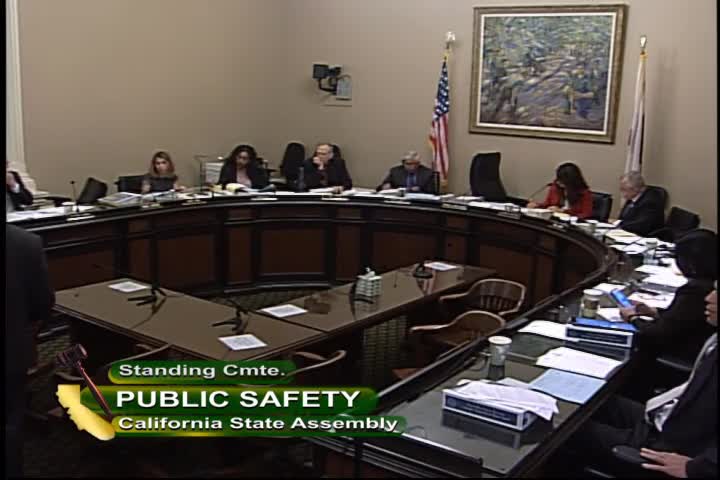
Bill Author

Bill Co-Author(s):