AB 2719: Aging.
- Session Year: 2017-2018
- House: Assembly
- Latest Version Date: 2018-08-24
Existing law requires the California Department of Aging to administer the federal Older Americans Act in California and the Mello-Granlund Older Californians Act, and imposes various functions and duties on the department with respect to the administration and development of programs for older individuals. Existing law requires the department, in allocating specified state and federal funding to older individuals, to ensure that priority consideration is given to elderly individuals identified as in greatest economic or social need. Existing law defines greatest social need for purposes of the act to mean the need caused by noneconomic factors, that include physical and mental disabilities, language barriers, cultural or social isolation, including that caused by racial and ethnic status, that restrict an individuals ability to perform normal daily tasks or that threaten his or her capacity to live independently.
This bill would revise this definition to include cultural or social isolation caused by sexual orientation, gender identity, or gender expression.
Greatest social need means the need caused by noneconomic factors that restrict an individuals ability to perform normal daily tasks or that threaten his or her capacity to live independently. These factors include physical or mental disability, language barriers, and cultural or social isolation caused by, among other things, racial and ethnic status, sexual orientation, gender identity, or gender expression.
Greatest social need means the need caused by noneconomic factors that restrict an individuals ability to perform normal daily tasks or that threaten his or her capacity to live independently. These factors include physical or mental disability, language barriers, and cultural or social isolation caused by, among other things, racial and ethnic status, sexual orientation, gender identity, or gender expression.
Greatest social need means the need caused by noneconomic factors, that include physical and mental disabilities, language barriers, cultural or social isolation, including that caused by racial and ethnic status (for example, Black, Hispanic, American Indian, and Asian American), that restrict an individuals ability to perform normal daily tasks or that threaten his or her capacity to live independently. factors that restrict an individuals ability to perform normal daily tasks or that threaten his or her capacity to live independently. These factors include physical or mental disability, language barriers, and cultural or social isolation caused by, among other things, racial and ethnic status, sexual orientation, gender identity, or gender expression.
|
Date
|
Status
|
|---|---|
| Aug 24, 2018 | Chaptered by Secretary of State - Chapter 202, Statutes of 2018. |
| Aug 24, 2018 | Approved by the Governor. |
| Aug 13, 2018 | Enrolled and presented to the Governor at 3 p.m. |
| Aug 7, 2018 | In Assembly. Ordered to Engrossing and Enrolling. |
| Aug 6, 2018 | Read third time. Passed. Ordered to the Assembly. |
| Jul 3, 2018 | Read second time. Ordered to Consent Calendar. |
| Jul 2, 2018 | From committee: Be ordered to second reading file pursuant to Senate Rule 28.8 and ordered to Consent Calendar. |
| Jun 21, 2018 | In committee: Hearing postponed by committee. |
| Jun 13, 2018 | From committee: Do pass and re-refer to Com. on APPR. with recommendation: To Consent Calendar. (Ayes 6. Noes 0.) (June 12). Re-referred to Com. on APPR. |
| May 24, 2018 | Referred to Com. on HUMAN S. |
| May 10, 2018 | In Senate. Read first time. To Com. on RLS. for assignment. |
| May 10, 2018 | Read third time. Passed. Ordered to the Senate. |
| May 3, 2018 | Read second time. Ordered to Consent Calendar. |
| May 2, 2018 | From committee: Do pass. To Consent Calendar. (Ayes 17. Noes 0.) (May 2). |
| Apr 18, 2018 | From committee: Do pass and re-refer to Com. on APPR. (Ayes 6. Noes 0.) (April 17). Re-referred to Com. on APPR. |
| Mar 15, 2018 | Referred to Com. on AGING & L.T.C. |
| Feb 16, 2018 | From printer. May be heard in committee March 18. |
| Feb 15, 2018 | Read first time. To print. |
|
Date
|
Description
|
Location
|
Votes
|
|
|---|---|---|---|---|
| Aug 6, 2018 | Consent Calendar AB2719 Irwin | Senate Floor |
Passed |
|
| Jun 12, 2018 | Do pass, but first be re-referred to the Committee on [Appropriations] with the recommendation: To Consent Calendar | Senate Standing Committee on Human Services |
Passed |
|
| May 10, 2018 | AB 2719 IRWIN Consent Calendar Second Day Regular Session | Assembly Floor |
Passed |
|
| May 2, 2018 | Do pass. To Consent Calendar. | Assembly Standing Committee on Appropriations |
Passed |
|
| Apr 17, 2018 | Do pass and be re-referred to the Committee on [Appropriations] | Assembly Standing Committee on Aging and Long-Term Care |
Passed |
This list shows positions taken on this bill by organizations on the date displayed, which is linked to the original source.
Positions by individuals are not included.
|
Organization
|
Position
|
Date
|
|---|---|---|
| California Assisted Living Association | ** Support | Jul 3, 2018 |
| California Commission on Aging | ** Support | Jul 3, 2018 |
| Congress of California Seniors | ** Support | Jul 3, 2018 |
| Equality California | * Support | Apr 17, 2018 |
| Justice in Aging | ** Support | Jul 3, 2018 |
| MAZON | ** Support | Jul 3, 2018 |
| Mazon: A Jewish Response to Hunger | ** Support | Apr 16, 2018 |
| National Association Of Social Workers, California Chapter | ** Support | Jul 3, 2018 |
| Sage Advocacy & Services For Lgbt Elders | ** Support | Apr 16, 2018 |
Office of Senate Floor Analyses (916) 651-1520 Fax: (916) 327-4478 | AB |
CONSENT
Bill No: AB 2719
:
SENATE HUMAN SERVICES COMMITTEE: 6-0, 6/12/18
AYES: Wiener, Glazer, Leyva, McGuire, Nguyen, Portantino
NO VOTE RECORDED: Berryhill
SENATE APPROPRIATIONS COMMITTEE: Senate Rule 28.8
ASSEMBLY FLOOR: 73-0, 5/10/18 (Consent) - See last page for vote
DIGEST:
This bill expands the definition of “greatest social need,” as used by the California Department of Aging (CDA) in their allocation of state and federal funds to programs for older individuals, to include cultural and social isolation caused by sexual orientation, gender identity, or gender expression.
Existing law:
- Establishes, pursuant to the Mello-Granlund Older Californians Act, the CDA and states that the mission of the department is to provide leadership to the area agencies on aging in developing systems of home and community-based services that maintain individuals in their own homes or least-restrictive homelike environments. (WIC 9000 et seq.)
- Requires the department, in allocating specified state and federal funding to older individuals, to ensure that priority consideration is given to elderly individuals identified as in greatest economic or social need. (WIC 9111)
- Defines “greatest economic need” as meaning the need resulting from an income level at or below the poverty threshold established by the Bureau of the Census. (WIC 9014)
- Defines “greatest social need” as meaning the need caused by noneconomic factors that include physical and mental disabilities, language barriers, cultural or social isolation, including that caused by racial and ethnic status, that restrict an individual’s ability to perform normal daily tasks or that threaten his or her capacity to live independently. (WIC 9015)
This bill defines “greatest social need” as meaning the need caused by noneconomic factors that restrict an individual’s ability to perform normal daily tasks or that threaten his or her capacity to live independently. These factors include physical or mental disability, language barriers, and cultural or social isolation caused by, among other things, racial and ethnic status, sexual orientation, gender identity, or gender expression.
Background
Services available for California’s Seniors
The Federal Older Americans Act, enacted in 1965, funds various programs and services for older adults including meals, job training, senior centers, caregiver support, transportation, health promotion, and benefits enrollment. CDA helps administer these programs and California’s policy directives for the state’s senior population through matching state and local funds.
At this time, existing law requires the CDA, in allocating specified state and federal funding to older individuals, to ensure that priority consideration is given to elderly individuals identified as in greatest economic or social need. “Greatest social need” is currently defined as meaning the need caused by noneconomic factors, that include physical and mental disabilities, language barriers, cultural or social isolation, including that caused by racial and ethnic status, that restrict an individual’s ability to perform normal daily tasks or that threaten his or her capacity to live independently. The applicable statute currently lists “Black, Hispanic, American Indian, and Asian American” as examples of racial and ethnic status, which may qualify as having greatest social need.
Disparities among LGBTQ Seniors
In 2013, the San Francisco LGBT Aging Policy Task Force commissioned a report by Professor Karen Fredriksen-Goldsen looking at the needs of older LGBTQ adults in San Francisco. This report found that nearly 60 percent of the study participants lived alone, that only 15 percent of them had children and of that 15 percent, 60 percent believed their children would not be available to assist them. Many of those surveyed additionally reported poor physical and mental health, with one-third of all respondents reporting poor general health, just under half of all respondents reporting one or more disabilities, and one-third of male respondents reporting they were living with HIV or AIDS. These findings indicate that many LGBT seniors have a heightened need for care when compared to seniors in San Francisco generally, but often lack the family support networks available to non-LGBT seniors.[1]
Additionally, a 2013 National Institutes of Health and the National Institute on Aging funded study found that LGBTQ seniors had higher risks of disability, poor mental health, and smoking than did heterosexuals. Lesbian and bisexual women were found to have a higher risk of cardiovascular disease and obesity, while gay and bisexual men were found to have higher risk of poor physical health and more likely to be living alone than heterosexuals. Additionally, the study found that transgender older adults face greater risk of suicidal ideation, disability, and depression compared to their peers.[2] Lastly, despite their need to rely on providers for services because of their truncated support networks, LGBT older adults were found to lack access to LGBT-culturally competent care and services. LGBTQ seniors are also more likely to fear accessing needed services because of a fear of discrimination,[3] as well as more likely to experience discrimination from service providers.[4]
Comments
Purpose of the bill
According to the author, it is estimated that there will be roughly 10.9 million adults in California over the age of 60 by 2030. The author notes, that while it is difficult to provide an accurate count of Lesbian, Gay, Bisexual, Transgender, and Queer (LGBTQ) individuals, some studies approximate that roughly five to 10 percent of the U.S. population identifies as LGBTQ. This would mean there are currently 380,000 to 760,000 LGBTQ older Californians, with that number expected to double by 2030. These numbers are those used by the CDA in their State Plan on Aging.
Per the author, a 2013 report by the National Gay and Lesbian Task Force identified several unique barriers to service and discrimination experienced by the older LGBTQ community. Specifically, LGBTQ individuals may face employment discrimination that can contribute to their risk of economic insecurity and lack of adequate health care. Yet, at this time, neither state nor federal law includes LGBTQ seniors in their populations prioritized as having the “greatest social need” of services. “AB 2719 works to continue California’s efforts to recognize the unique needs of elderly LGBTQ individuals, by ensuring this community is included as part of the population of ‘greatest social need’ to secure priority for programs and services administered through the California department of aging,” states the author.
Related/Prior Legislation
SB 219 (Wiener, Chapter 483, Statutes of 2017) created an LGBT Long-Term Care Facility Residents’ Bill of Rights to prohibit discrimination based on actual or perceived sexual orientation, gender identity, or HIV status.
AB 959 (Chiu, Chapter 565, Statutes of 2015) required the CDA to collect demographic data from LGBTQ individuals to assess health and welfare disparities specific to the elderly LGBTQ community.
FISCAL EFFECT: Appropriation: Fiscal Com.: Local:
California Assisted Living Association
California Commission on Aging
Congress of California Seniors
Justice in Aging
MAZON
National Association of Social Workers, California Chapter
SAGE
None received
ASSEMBLY FLOOR: 73-0, 5/10/18
AYES: Acosta, Aguiar-Curry, Arambula, Baker, Berman, Bigelow, Bloom, Bonta, Brough, Burke, Caballero, Calderon, Carrillo, Cervantes, Chau, Chávez, Chen, Chiu, Choi, Chu, Cooper, Cunningham, Dahle, Daly, Eggman, Flora, Fong, Frazier, Gallagher, Eduardo Garcia, Gipson, Gloria, Gonzalez Fletcher, Gray, Grayson, Harper, Holden, Irwin, Jones-Sawyer, Kalra, Kamlager-Dove, Kiley, Lackey, Levine, Limón, Low, Maienschein, Mathis, Mayes, McCarty, Medina, Melendez, Mullin, Muratsuchi, Nazarian, O'Donnell, Patterson, Quirk, Quirk-Silva, Reyes, Rodriguez, Rubio, Salas, Santiago, Steinorth, Mark Stone, Thurmond, Ting, Voepel, Waldron, Weber, Wood, Rendon
NO VOTE RECORDED: Travis Allen, Cooley, Friedman, Cristina Garcia, Obernolte
7/3/18 15:40:28
**** END ****
Karen Fredriksen-Goldsen, et el., Addressing the Needs of LGBT Older Adults in San Francisco: Recommendations for the Future (2013) <http://www.asaging.org/blog/future-lgbt-aging-blueprint-action-services-policies-and-research> (as of May 31, 2018). ↑
Karen Fredriksen-Goldsen, Charles Emlet, and Charles Hoy-Ellis, The Aging and Health Report: Disparities and Resilience among Lesbian, Gay, Bisexual, and Transgender Older Adults (2011) < http://age-pride.org/ wordpress/wp-content/uploads/2012/10/Full-report10-25-12.pdf> (as of May 31, 2018). ↑
National Senior Citizens Law Center, LGBT Older Adults in Long-Term Care Facilities: Stories from the Field (2011).) ↑
Ibid. ↑
SENATE COMMITTEE ON HUMAN SERVICES
Senator Wiener, Chair
2017 - 2018 Regular
Bill No: AB 2719
Author: | Irwin | ||
Version: | February 15, 2018 | Hearing Date: | June 12, 2018 |
Urgency: | No | Fiscal: | Yes |
Consultant: | Marisa Shea | ||
Subject: Aging
SUMMARY
This bill expands the definition of “greatest social need,” as used by the California Department of Aging (CDA) in their allocation of state and federal funds to programs for older individuals, to include cultural and social isolation caused by sexual orientation, gender identity, or gender expression.
ABSTRACT
Existing law:
- The Mello-Granlund Older Californians Act establishes the CDA and states that the mission of the department is to provide leadership to the area agencies on aging in developing systems of home and community-based services that maintain individuals in their own homes or least-restrictive homelike environments. (WIC 9000 et seq.)
- Requires the department, in allocating specified state and federal funding to older individuals, to ensure that priority consideration is given to elderly individuals identified as in greatest economic or social need. (WIC 9111)
- Defines “greatest economic need” as meaning the need resulting from an income level at or below the poverty threshold established by the Bureau of the Census. (WIC 9014)
- Defines “greatest social need” as meaning the need caused by noneconomic factors that include physical and mental disabilities, language barriers, cultural or social isolation, including that caused by racial and ethnic status, that restrict an individual’s ability to perform normal daily tasks or that threaten his or her capacity to live independently. (WIC 9015)
This bill:
Defines “greatest social need” as meaning the need caused by noneconomic factors that restrict an individual’s ability to perform normal daily tasks or that threaten his or her capacity to live independently. These factors include physical or mental disability, language barriers, and cultural or social isolation caused by, among other things, racial and ethnic status, sexual orientation, gender identity, or gender expression.
FISCAL IMPACT
According to the Assembly Committee on Appropriations this bill has negligible fiscal effects.
BACKGROUND AND DISCUSSION
Purpose of the bill:
According to the author, it is estimated that there will be roughly 10.9 million adults in California over the age of 60 by 2030. The author notes, that while it is difficult to provide an accurate count of Lesbian, Gay, Bisexual, Transgender, and Queer (LGBTQ) individuals, some studies approximate that roughly five to ten percent of the U.S. population identifies as LGBTQ. This would mean there are currently 380,000 to 760,000 LGBTQ older Californians, with that number expected to double by 2030. These numbers are those used by the CDA in their State Plan on Aging.
Per the author, a 2013 report by the National Gay and Lesbian Task Force identified several unique barriers to service and discrimination experienced by the older LGBTQ community. Specifically, LGBTQ individuals may face employment discrimination that can contribute to their risk of economic insecurity and lack of adequate health care. Yet, at this time, neither state nor federal law includes LGBTQ seniors in their populations prioritized as having the “greatest social need” of services. “AB 2719 works to continue California’s efforts to recognize the unique needs of elderly LGBTQ individuals, by ensuring this community is included as part of the population of “greatest social need” to secure priority for programs and services administered through the California department of aging,” states the author.
Services available for California’s Seniors
The Federal Older Americans Act (OAA), enacted in 1965, funds various programs and services for older adults including meals, job training, senior centers, caregiver support, transportation, health promotion, and benefits enrollment. CDA helps administer these programs and California’s policy directives for the state’s senior population through matching state and local funds.
At this time, existing law requires the CDA, in allocating specified state and federal funding to older individuals, to ensure that priority consideration is given to elderly individuals identified as in greatest economic or social need. “Greatest social need” is currently defined as meaning the need caused by noneconomic factors, that include physical and mental disabilities, language barriers, cultural or social isolation, including that caused by racial and ethnic status, that restrict an individual’s ability to perform normal daily tasks or that threaten his or her capacity to live independently. The applicable statute currently lists “Black, Hispanic, American Indian, and Asian American” as examples of racial and ethnic status, which may qualify as having greatest social need.
Disparities among LGBTQ Seniors
In 2013, the San Francisco LGBT Aging Policy Task Force commissioned a report by Professor Karen Fredriksen-Goldsen looking at the needs of older LGBTQ adults in San Francisco. This report found that nearly 60 percent of the study participants lived alone, that only 15 percent of them had children and of that 15 percent, 60 percent believed their children would not be available to assist them. Many of those surveyed additionally reported poor physical and mental health, with one-third of all respondents reporting poor general health, just under half of all respondents reporting one or more disabilities, and one-third of male respondents reporting they were living with HIV or AIDS. These findings indicate that many LGBT seniors have a heightened need for care when compared to seniors in San Francisco generally, but often lack the family support networks available to non-LGBT seniors.[1]
Additionally, a 2013 National Institutes of Health (NIH) and the National Institute on Aging (NIA) funded study found that LGBTQ seniors had higher risks of disability, poor mental health, and smoking than did heterosexuals. Lesbian and bisexual women were found to have a higher risk of cardiovascular disease and obesity, while gay and bisexual men were found to have higher risk of poor physical health and more likely to be living alone than heterosexuals. Additionally, the study found that transgender older adults face greater risk of suicidal ideation, disability, and depression compared to their peers.[2] Lastly, despite their need to rely on providers for services because of their truncated support networks, LGBT older adults were found to lack access to LGBT-culturally competent care and services. LGBTQ seniors are also more likely to fear accessing needed services because of a fear of discrimination,[3] as well as more likely to experience discrimination from service providers.[4]
Related legislation:
SB 219 (Wiener, Chapter 483, Statutes of 2017) created an LGBT Long-Term Care Facility Residents’ Bill of Rights to prohibit discrimination based on actual or perceived sexual orientation, gender identity, or HIV status.
AB 959 (Chiu, Chapter 565, Statutes of 2015) required the CDA to collect demographic data from LGBTQ individuals to assess health and welfare disparities specific to the elderly LGBTQ community.
COMMENTS
The CDA produces a State Plan on Aging every four years, with the most recent plan having been created for the years 2017-2021. This plan specifically notes that efforts have been made to address the unique needs and experiences of California’s LGBTQ senior population. Despite these efforts, the plan notes that “lifelong fears or experiences of discrimination have caused some of these older adults to remain invisible, preferring to go without much-needed social, health, and mental health services.” This suggests that more could be done to ensure California’s LGBTQ seniors are receiving the supports and services they need, this bill seems to be a step in that direction.
PRIOR VOTES
Assembly Floor: | 73 - 0 |
Assembly Appropriations Committee: | 17 - 0 |
Assembly Aging and Long Term Care Committee: | 6 - 0 |
POSITIONS
Support:
California Assisted Living Association
California Commission on Aging
Congress of California Seniors
Justice in Aging
MAZON
SAGE
The National Association of Social Workers, California Chapter
Oppose:
None received
-- END --
Karen Fredriksen-Goldsen, et el., Addressing the Needs of LGBT Older Adults in San Francisco: Recommendations for the Future (2013) <http://www.asaging.org/blog/future-lgbt-aging-blueprint-action-services-policies-and-research> (as of May 31, 2018). ↑
Karen Fredriksen-Goldsen, Charles Emlet, and Charles Hoy-Ellis, The Aging and Health Report: Disparities and Resilience among Lesbian, Gay, Bisexual, and Transgender Older Adults (2011) < http://age-pride.org/wordpress/wp-content/uploads/2012/10/Full-report10-25-12.pdf> (as of May 31, 2018). ↑
National Senior Citizens Law Center, LGBT Older Adults in Long-Term Care Facilities: Stories from the Field (2011).) ↑
Ibid. ↑
Date of Hearing: May 2, 2018
ASSEMBLY COMMITTEE ON APPROPRIATIONS
Lorena Gonzalez Fletcher, Chair
ABPCA Bill Id:AB 2719
Author:(Irwin) – As Introduced Ver:February 15, 2018
Policy Committee: | Aging and Long Term Care | Vote: | 6 - 0 |
Urgency: No State Mandated Local Program: No Reimbursable: No
SUMMARY:
For purposes of prioritizing the distribution of funds to programs serving the aged, this bill adds social or cultural isolation caused by sexual orientation, gender identity, or gender expression to the definition of "greatest social need."
FISCAL EFFECT:
Negligible.
COMMENTS:
- Purpose. This bill seeks to recognize and prioritize the unique needs of LGBTQ seniors when Department of Aging is making funding decisions.
- Background. Current law requires the Department of Aging, in allocating specified state and federal funding to older individuals, to ensure that priority consideration is given to elderly individuals identified as in greatest economic or social need. “Greatest social need” is currently defined as need caused by noneconomic factors that include physical and mental disabilities, language barriers, cultural or social isolation, including that caused by racial and ethnic status, that restrict an individual’s ability to perform normal daily tasks or that threaten their capacity to live independently. Given discrimination faced by many LGBTQ seniors throughout their lives, higher rates of disconnection from family members, and lower rates of children to provide assistance, research indicates LGBTQ seniors face a number of barriers to successful aging.
Analysis Prepared by: Lisa Murawski / APPR. / (916) 319-2081
Date of Hearing: April 17, 2018
ASSEMBLY COMMITTEE ON AGING AND LONG-TERM CARE
Ash Kalra, Chair
ABPCA Bill Id:AB 2719 (
Author:Irwin) – As Introduced Ver:February 15, 2018
SUBJECT: Aging.
SUMMARY: This bill would revise this definition to include cultural or social isolation caused by sexual orientation, gender identity, or gender expression.
EXISTING LAW:
- Requires the California Department of Aging (the department) to administer the federal Older American’s Act in California and the Mello-Granlund Older Californians Act, and imposes various functions and duties on the department with respect to the administration and development of programs for older individuals.
- Requires the department, in allocating specified state and federal funding to older individuals, to ensure that priority consideration is given to elderly individuals identified as in greatest economic or social need.
- Defines “greatest social need” for purposes of the act to mean the need caused by noneconomic factors, that include physical and mental disabilities, language barriers, cultural or social isolation, including that caused by racial and ethnic status, that restrict an individual’s ability to perform normal daily tasks or that threaten his or her capacity to live independently.
FISCAL EFFECT: This bill has not yet been analyzed by a fiscal committee.
COMMENTS:
Author’s Statement: “Federal and state law funds various programs and services for older adults including meals, job training, senior centers, caregiver support, transportation, health promotion, and benefits enrollment. California prioritizes certain groups that are deemed in “greatest social need” of services for older adults based on factors such as disabilities, language barriers, and cultural or social isolation.
“A 2013 report by the National Gay and Lesbian Task Force identified several unique barriers to service and discrimination experienced by the older LGBTQ community. Specifically, LGBTQ individuals may face employment discrimination that can contribute to their risk of economic insecurity and lack of adequate health care. As California has moved toward recognizing the unique needs of elderly LGBTQ individuals, AB 2719 continues this effort by ensuring that this community is included as part of the population of “greatest social need” to secure priority for programs and services administered through the California Department of Aging.”
BACKGROUND:
The Federal Older Americans Act (OAA), enacted in 1965, funds various services for older adults including meals, job training, senior centers, caregiver support, transportation, health promotion, and benefits enrollment. California’s Department of Aging helps administer these programs and California’s policy directives for the state’s elderly population through matching state and local funds.
It is estimated that there will be roughly 10.9 million adults in California over the age of 60 by 2030. While it is difficult to provide an accurate count of Lesbian, Gay, Bisexual, Transgender, and Queer (LGBTQ) individuals, some studies approximate that roughly 5-10% of the U.S. population identifies as LGBTQ. This would mean there are currently 380,000-760,000 older LGBTQ in California, with that number expected to double by 2030.
Current law recognizes that the proportion of older individuals in California is growing and specific programs and services must be provided for this population. Federal law in the OAA emphasizes that these services should be targeted to elderly adults with the “greatest social need” which includes various characteristics such as physical or mental disability, language barriers, and cultural, social, or geographic isolation caused by race or ethnicity. Given the unique barriers faced by elderly LGBTQ individuals, it is important that California law expand the definition of “greatest social need” to include these individuals as meriting targeted services.
While not law, the California Department of Aging (CDA) produces a State Plan on Aging every four years, most recently for the years 2017-2021. In this document, it presents its state purpose and vision for elderly Californians. It states that beyond the federally required information, California’s State Plan outlines additional target populations that CDA seeks to better serve through more culturally competent outreach including Lesbian, Gay, Bisexual, Transgender, Queer, Questioning and Intersex (LGBTQI) older adults. It is significant that such an addition is included in the State Plan, but this bill would codify California’s commitment to elderly LGBTQI individuals and their unique circumstances.
Data, research, and the experience of SAGE, its affiliates, and its partners across the country confirm that LGBT older adults face a number of barriers to successful aging. First, LGBT older adults face higher rates of social isolation and have thinner support networks than their non-LGBT peers. They are up to twice as likely to live alone, half as likely to have close relatives to call for help, and four times less likely to have children to assist them. They are also much more likely to be disconnected from families of origin. Second, LGBT older adults face higher poverty rates than their non-LGBT peers. Nearly sixteen percent of single gay men over 65 live in poverty, compared to just 9.7 percent of single heterosexual men their age. Further, six percent of lesbian couples age 65 and older have incomes below the poverty line, compared to 3.5 percent for heterosexual married couples in the same age group. Third, LGBT older adults face pronounced health disparities compared to their non-LGBT peers. HIV impacts the LGBT community disproportionately, and it is affecting an increasing number of older adults.
The National Institutes of Health (NIH) and National Institute on Aging (NIA)-funded Aging and Health Report outlines a number of other disparities, including: lesbian, gay and bisexual (LGB) older adults face higher rates of disability and mental health challenges; older bisexual and gay men face higher rates of physical health challenges; bisexual and lesbian older women have higher obesity rates and higher rates of cardiovascular disease; and transgender older adults face greater risk of suicidal ideation, disability, and depression compared to their peers. Lastly, despite their need to rely on providers for services because of their truncated support networks, LGBT older adults lack access to LGBT-culturally competent care and services.
Previous Legislation: AB 959 (Chiu), Chapter 565, Statutes of 2015, required the Department of Aging to collect demographic data from LGBTQ individuals to assess health and welfare disparities specific to the elderly LGBTQ community.
SB 219 (Wiener), Chapter 483, Statutes of 2017, created an LGBT Long-Term Care Facility Residents’ Bill of Rights to prohibit discrimination based on actual or perceived sexual orientation, gender identity, or HIV status. California has moved toward recognizing the unique needs of elderly LGBTQ individuals.
Argument in Support: Sage states in their letter, …“a 2001 U.S. Administration on Aging study found that LGBT older adults are 20 percent less likely than other older adults to access government services such as housing assistance, meal programs, food stamps, and senior centers.7 Despite this disconnect, most State Units on Aging are not making any systematic effort to assess and address the needs of this population.8 The aforementioned data emphasizes the need for the California Department of Aging to be a leader in providing LGBT-inclusive services.”
Argument in Opposition: None.
REGISTERED SUPPORT / OPPOSITION:
Support
California Assisted Living Association (CALA)
Justice in Aging
MAZON: A Jewish Response to Hunger
SAGE Advocacy & Services for LGBT Elders
Opposition
None on file.
Analysis Prepared by: Barry Brewer / AGING & L.T.C. / (916) 319-3990
_____________________________
7LGBT Movement Advancement Project & Services and Advocacy for Gay, Lesbian, Bisexual and Transgender Elders (MAP & SAGE), Improving the Lives of LGBT Older Adults. 2010. Available at http://www.lgbtmap.org/file/improving-the-lives-of-lgbt-older-dults.pdf
8A SAGE report found that: State Plans filed by 29 States make no reference whatsoever to LGBT older adults; an additional 12 State Plans have isolated references to LGBT older adults, but do not address specific actions being taken to reach and target this population; and only nine States, and the District of Columbia, specifically address efforts to reach out and target LGBT older adults.
Discussed in Hearing
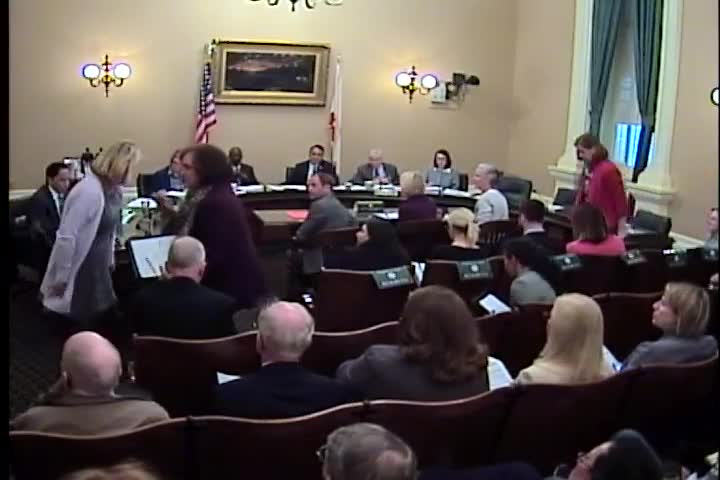 4MIN
Assembly Standing Committee on Aging and Long-Term Care
Bill Author

Bill Co-Author(s):