AB 2721: Cannabis: testing laboratories.
- Session Year: 2017-2018
- House: Assembly
- Latest Version Date: 2018-09-19
Existing law, the Medicinal and Adult-Use Cannabis Regulation and Safety Act (MAUCRSA), which includes the Control, Regulate and Tax Adult Use of Marijuana Act (AUMA), enacted by the voters at the November 8, 2016, statewide general election, provides for the licensure and regulation of commercial cannabis activity, including testing laboratories. Existing law prohibits the sale of cannabis or cannabis products unless a representative sample of the cannabis or cannabis product has been tested by a testing laboratory. Existing law authorizes testing laboratories to receive and test samples of cannabis or cannabis products from a qualified patient or primary caregiver only if the qualified patient or primary caregiver presents the qualified patients valid physicians recommendation for cannabis for medicinal purposes. Existing law prohibits testing laboratories from certifying samples from a qualified patient or primary caregiver for resale or transfer to another party or licensee. Existing law requires all tests performed by a testing laboratory for a qualified patient or primary caregiver to be recorded with the name of the qualified patient or primary caregiver and the amount of cannabis or cannabis product received.
This bill would authorize a testing laboratory to receive and test samples of cannabis or cannabis products from a person over 21 years of age when the cannabis has been grown by that person and will be used solely for his or her personal use pursuant to AUMA. The bill would prohibit a testing laboratory from certifying samples from the person over 21 years of age for resale or transfer to another person. The bill would require all tests pursuant to these provisions to be recorded with the name of the person submitting the sample and the amount of cannabis or cannabis product received.
The Control, Regulate and Tax Adult Use of Marijuana Act (AUMA), an initiative measure approved as Proposition 64 at the November 8, 2016, statewide general election, authorizes a person who obtains a state license under AUMA to engage in commercial adult-use cannabis activity pursuant to that license and applicable local ordinances. The Medicinal and Adult-Use Cannabis Regulation and Safety Act (MAUCRSA), among other things, consolidates the licensure and regulation of commercial medicinal and adult-use cannabis activities. MAUCRSA requires cannabis batches to be subject to quality assurance and testing prior to sale at a retailer, microbusiness, or nonprofit, except as specified.This bill would make nonsubstantive changes to the quality assurance and testing requirement.The Control, Regulate and Tax Adult Use of Marijuana Act (AUMA), an initiative measure approved as Proposition 64 at the November 8, 2016, statewide general election, authorizes a person who obtains a state license under AUMA to engage in commercial adult-use cannabis activity pursuant to that license and applicable local ordinances. The Medicinal and Adult-Use Cannabis Regulation and Safety Act (MAUCRSA), among other things, consolidates the licensure and regulation of commercial medicinal and adult-use cannabis activities. MAUCRSA requires cannabis batches to be subject to quality assurance and testing prior to sale at a retailer, microbusiness, or nonprofit, except as specified.
This bill would make nonsubstantive changes to the quality assurance and testing requirement.
(a)A licensed testing laboratory shall, in performing activities concerning cannabis and cannabis products, comply with the requirements and restrictions set forth in applicable law and regulations.
(b)The bureau shall develop procedures to do all of the following:
(1)Ensure that testing of cannabis and cannabis products occurs prior to distribution to retailers, microbusinesses, or nonprofits licensed under Section 26070.5.
(2)Specify how often licensees shall test cannabis and cannabis products, and that the cost of testing cannabis shall be borne by the licensed cultivators and the cost of testing cannabis products shall be borne by the licensed manufacturer, and that the costs of testing cannabis and cannabis products shall be borne by a nonprofit licensed under Section 26070.5.
(3)Require destruction of harvested batches whose testing samples indicate noncompliance with health and safety standards required by the bureau, unless remedial measures can bring the cannabis or cannabis products into compliance with quality assurance standards as specified by law and implemented by the bureau.
(4)Ensure that a testing laboratory employee takes the sample of cannabis or cannabis products from the distributors premises for testing required by this division and that the testing laboratory employee transports the sample to the testing laboratory.
(c)Except as provided in this division, a testing laboratory shall not acquire or receive cannabis or cannabis products except from a licensee in accordance with this division, and shall not distribute, sell, or dispense cannabis or cannabis products, from the licensed premises from which the cannabis or cannabis products were acquired or received. All transfer or transportation shall be performed pursuant to a specified chain of custody protocol.
(d)A testing laboratory may receive and test samples of cannabis or cannabis products from a qualified patient or primary caregiver with a valid physicians recommendation for cannabis for medicinal purposes. A testing laboratory shall not certify samples from a qualified patient or primary caregiver for resale or transfer to another person or licensee. All tests performed by a testing laboratory for a qualified patient or primary caregiver shall be recorded with the name of the qualified patient or primary caregiver and the amount of cannabis or cannabis product received.
(e)A testing laboratory may receive and test samples of cannabis or cannabis products from a person over 21 years of age when the cannabis has been grown by that person and will be used solely for his or her personal use, as authorized pursuant to Section 11362.1 of the Health and Safety Code. A testing laboratory shall not certify samples from the person over 21 years of age for resale or transfer to another person or licensee. All tests recorded pursuant to this subdivision shall be recorded with the name of the person submitting the sample and the amount of cannabis or cannabis product received.
(a)A licensed testing laboratory shall, in performing activities concerning cannabis and cannabis products, comply with the requirements and restrictions set forth in applicable law and regulations.
(b)The bureau shall develop procedures to do all of the following:
(1)Ensure that testing of cannabis and cannabis products occurs prior to distribution to retailers, microbusinesses, or nonprofits licensed under Section 26070.5.
(2)Specify how often licensees shall test cannabis and cannabis products, and that the cost of testing cannabis shall be borne by the licensed cultivators and the cost of testing cannabis products shall be borne by the licensed manufacturer, and that the costs of testing cannabis and cannabis products shall be borne by a nonprofit licensed under Section 26070.5.
(3)Require destruction of harvested batches whose testing samples indicate noncompliance with health and safety standards required by the bureau, unless remedial measures can bring the cannabis or cannabis products into compliance with quality assurance standards as specified by law and implemented by the bureau.
(4)Ensure that a testing laboratory employee takes the sample of cannabis or cannabis products from the distributors premises for testing required by this division and that the testing laboratory employee transports the sample to the testing laboratory.
(c)Except as provided in this division, a testing laboratory shall not acquire or receive cannabis or cannabis products except from a licensee in accordance with this division, and shall not distribute, sell, or dispense cannabis or cannabis products, from the licensed premises from which the cannabis or cannabis products were acquired or received. All transfer or transportation shall be performed pursuant to a specified chain of custody protocol.
(d)A testing laboratory may receive and test samples of cannabis or cannabis products from a qualified patient or primary caregiver only if the qualified patient or primary caregiver presents the qualified patients with a valid physicians recommendation for cannabis for medicinal purposes. A testing laboratory shall not certify samples from a qualified patient or primary caregiver for resale or transfer to another party person or licensee. All tests performed by a testing laboratory for a qualified patient or primary caregiver shall be recorded with the name of the qualified patient or primary caregiver and the amount of cannabis or cannabis product received.
(e)A testing laboratory may receive and test samples of cannabis or cannabis products from a person over 21 years of age when the cannabis has been grown by that person and will be used solely for his or her personal use, as authorized pursuant to Section 11362.1 of the Health and Safety Code. A testing laboratory shall not certify samples from the person over 21 years of age for resale or transfer to another person or licensee. All tests recorded pursuant to this subdivision shall be recorded with the name of the person submitting the sample and the amount of cannabis or cannabis product received.
SECTION 1.Section 26110 of the Business and Professions Code is amended to read:26110.(a)Cannabis batches shall be subject to quality assurance and testing prior to sale at a retailer, microbusiness, or nonprofit licensed under Section 26070.5, except for immature cannabis plants and seeds, as provided for in this division.(b)A licensee that holds a valid distributor license may act as the distributor for the licensees cannabis and cannabis products.(c)The distributor shall store, as determined by the bureau, the cannabis batches on the premises of the distributor before testing and continuously until either of the following occurs:(1)The cannabis batch passes the testing requirements pursuant to this division and is transported to a licensed retailer.(2)The cannabis batch fails the testing requirements pursuant to this division and is destroyed or transported to a manufacturer for remediation as allowed by the bureau or the State Department of Public Health.(d)The distributor shall arrange for a testing laboratory to obtain a representative sample of each cannabis batch at the distributors licensed premises. After obtaining the sample, the testing laboratory representative shall maintain custody of the sample and transport it to the testing laboratory.(e)Upon issuance of a certificate of analysis by the testing laboratory that the cannabis batch has passed the testing requirements pursuant to this division, the distributor shall conduct a quality assurance review before distribution to ensure the labeling and packaging of the cannabis and cannabis products conform to the requirements of this division.(f)(1)There shall be a quality assurance compliance monitor who is an employee or contractor of the bureau and who shall not hold a license in any category or own or have an ownership interest in a licensee or the premises of a licensee.(2)The quality assurance compliance monitor shall conduct random quality assurance reviews at a distributors licensed premises before distribution to ensure the labeling and packaging of the cannabis and cannabis products conform to the requirements of this division.(3)The quality assurance compliance monitor shall have access to all records and test results required of a licensee by law in order to conduct quality assurance analysis and to confirm test results. All records of inspection and verification by the quality assurance compliance monitor shall be provided to the bureau. Failure to comply shall be noted by the quality assurance compliance monitor for further investigation. Violations shall be reported to the bureau. The quality assurance compliance monitor shall also verify the tax payments collected and paid under Sections 34011 and 34012 of the Revenue and Tax Code are accurate. The monitor shall also have access to the inputs and assumptions in the track and trace system and shall be able to verify the accuracy of those and that they are commensurate with the tax payments.(g)After testing, all cannabis and cannabis products fit for sale may be transported only from the distributors premises to the premises of a licensed retailer, microbusiness, or nonprofit.(h)A licensee is not required to sell cannabis or cannabis products to a distributor and may directly contract for sale with a licensee authorized to sell cannabis and cannabis products to purchasers.(i)A distributor performing services pursuant to this section may collect a fee from the licensee for the services provided. The fee may include, but is not limited to, the costs incurred for laboratory testing. A distributor may also collect applicable state or local taxes and fees.(j)This section does not prohibit a licensee from performing testing on the licensees premises for the purposes of quality assurance of the product in conjunction with reasonable business operations. The testing conducted on the licensees premises by the licensee does not meet the testing requirements pursuant to this division.(a)Cannabis batches are shall be subject to quality assurance and testing prior to sale at a retailer, microbusiness, or nonprofit licensed under Section 26070.5, except for immature cannabis plants and seeds, as provided for in this division.
(b)A licensee that holds a valid distributor license may act as the distributor for the licensees cannabis and cannabis products.
(c)The distributor shall store, as determined by the bureau, the cannabis batches on the premises of the distributor before testing and continuously until either of the following occurs:
(1)The cannabis batch passes the testing requirements pursuant to this division and is transported to a licensed retailer.
(2)The cannabis batch fails the testing requirements pursuant to this division and is destroyed or transported to a manufacturer for remediation as allowed by the bureau or the State Department of Public Health.
(d)The distributor shall arrange for a testing laboratory to obtain a representative sample of each cannabis batch at the distributors licensed premises. After obtaining the sample, the testing laboratory representative shall maintain custody of the sample and transport it to the testing laboratory.
(e)Upon issuance of a certificate of analysis by the testing laboratory that the cannabis batch has passed the testing requirements pursuant to this division, the distributor shall conduct a quality assurance review before distribution to ensure the labeling and packaging of the cannabis and cannabis products conform to the requirements of this division.
(f)(1)There shall be a quality assurance compliance monitor who is an employee or contractor of the bureau and who shall not hold a license in any category or own or have an ownership interest in a licensee or the premises of a licensee.
(2)The quality assurance compliance monitor shall conduct random quality assurance reviews at a distributors licensed premises before distribution to ensure the labeling and packaging of the cannabis and cannabis products conform to the requirements of this division.
(3)The quality assurance compliance monitor shall have access to all records and test results required of a licensee by law in order to conduct quality assurance analysis and to confirm test results. All records of inspection and verification by the quality assurance compliance monitor shall be provided to the bureau. Failure to comply shall be noted by the quality assurance compliance monitor for further investigation. Violations shall be reported to the bureau. The quality assurance compliance monitor shall also verify the tax payments collected and paid under Sections 34011 and 34012 of the Revenue and Tax Code are accurate. The monitor shall also have access to the inputs and assumptions in the track and trace system and shall be able to verify the accuracy of those and that they are commensurate with the tax payments.
(g)After testing, all cannabis and cannabis products fit for sale may be transported only from the distributors premises to the premises of a licensed retailer, microbusiness, or nonprofit.
(h)A licensee is not required to sell cannabis or cannabis products to a distributor and may directly contract for sale with a licensee authorized to sell cannabis and cannabis products to purchasers.
(i)A distributor performing services pursuant to this section may collect a fee from the licensee for the services provided. The fee may include, but is not limited to, the costs incurred for laboratory testing. A distributor may also collect applicable state or local taxes and fees.
(j)This section does not prohibit a licensee from performing testing on the licensees premises for the purposes of quality assurance of the product in conjunction with reasonable business operations. The testing conducted on the licensees premises by the licensee does not meet the testing requirements pursuant to this division.
|
Date
|
Status
|
|---|---|
| Sep 19, 2018 | Chaptered by Secretary of State - Chapter 546, Statutes of 2018. |
| Sep 19, 2018 | Approved by the Governor. |
| Aug 27, 2018 | Enrolled and presented to the Governor at 3 p.m. |
| Aug 20, 2018 | In Assembly. Ordered to Engrossing and Enrolling. |
| Aug 20, 2018 | Read third time. Passed. Ordered to the Assembly. |
| Jun 26, 2018 | Read second time. Ordered to third reading. |
| Jun 25, 2018 | From committee: Be ordered to second reading pursuant to Senate Rule 28.8. |
| Jun 11, 2018 | From committee: Do pass and re-refer to Com. on APPR. (Ayes 7. Noes 0.) (June 11). Re-referred to Com. on APPR. |
| May 24, 2018 | Referred to Com. on B., P. & E.D. |
| May 10, 2018 | In Senate. Read first time. To Com. on RLS. for assignment. |
| May 10, 2018 | Read third time. Passed. Ordered to the Senate. |
| May 3, 2018 | Read second time. Ordered to third reading. |
| May 2, 2018 | From committee: Do pass. (Ayes 16. Noes 0.) (May 2). |
| Apr 17, 2018 | From committee: Do pass and re-refer to Com. on APPR. (Ayes 15. Noes 0.) (April 17). Re-referred to Com. on APPR. |
| Apr 2, 2018 | Re-referred to Com. on B. & P. |
| Mar 23, 2018 | From committee chair, with author's amendments: Amend, and re-refer to Com. on B. & P. Read second time and amended. |
| Mar 22, 2018 | Referred to Com. on B. & P. |
| Feb 16, 2018 | From printer. May be heard in committee March 18. |
| Feb 15, 2018 | Read first time. To print. |
|
Date
|
Description
|
Location
|
Votes
|
|
|---|---|---|---|---|
| Aug 20, 2018 | Assembly 3rd Reading AB2721 Quirk By Wiener | Senate Floor |
Passed |
|
| Jun 11, 2018 | Do pass, but first be re-referred to the Committee on [Appropriations] | Senate Standing Committee on Business, Professions and Economic Development |
Passed |
|
| May 10, 2018 | AB 2721 QUIRK Assembly Third Reading | Assembly Floor |
Passed |
|
| May 2, 2018 | Do pass. | Assembly Standing Committee on Appropriations |
Passed |
|
| Apr 17, 2018 | Do pass and be re-referred to the Committee on [Appropriations] | Assembly Standing Committee on Business and Professions |
Passed |
This list shows positions taken on this bill by organizations on the date displayed, which is linked to the original source.
Positions by individuals are not included.
|
Organization
|
Position
|
Date
|
|---|---|---|
| California Cannabis Industry Association | ** Support | Jun 27, 2018 |
| California NORML | ** Support | Jun 27, 2018 |
| Cw Analytical Laboratories | ** Support | Jun 27, 2018 |
Office of Senate Floor Analyses (916) 651-1520 Fax: (916) 327-4478 | AB |
THIRD READING
Bill No: AB 2721
:
SENATE BUS., PROF. & ECON. DEV. COMMITTEE: 7-0, 6/11/18
AYES: Hill, Dodd, Galgiani, Glazer, Hernandez, Pan, Wilk
NO VOTE RECORDED: Fuller, Newman
SENATE APPROPRIATIONS COMMITTEE: Senate Rule 28.8
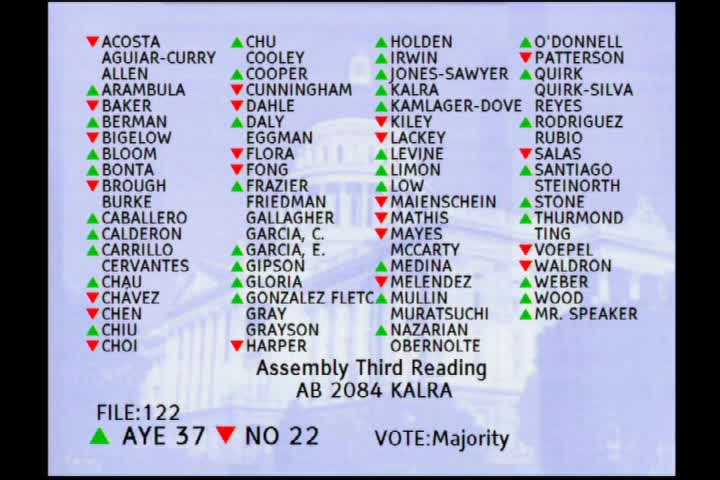
ASSEMBLY FLOOR: 67-0, 5/10/18 - See last page for vote
DIGEST:
This bill authorizes cannabis testing laboratories to receive and test samples for cannabis or cannabis products from a person over 21 years of age when the cannabis has been grown by that person and will be used solely for his or her personal use.
Existing law:
- Establishes the Bureau of Cannabis Control (Bureau) under the Department of Consumer Affairs (DCA) to regulate the medical and recreational cannabis industry. (Business and Professions Code (BPC) § 26010)
- Establishes various licenses for the purposes of regulating the recreational and medical cannabis industry, including a Type 8 license for a medical and recreational cannabis testing laboratory. (BPC § 26050)
- Requires all commercial cannabis activity to be conducted between licensees, with specified exemptions. (BPC § 26053)
- Prohibits any cannabis or cannabis product from being sold unless a representative sample of the cannabis or cannabis product has been tested by a licensed testing laboratory, unless otherwise provided by law. (BPC § 26100)
- Permits a licensee to perform testing on the licensee’s premises for the purposes of quality assurance of cannabis or a cannabis product in conjunction with reasonable business operations, and permits a licensee to perform testing on cannabis or cannabis products obtained from another licensee. However, onsite testing by the licensee shall not be certified by the Bureau and does not exempt the licensee from the requirements of quality assurance testing at a testing laboratory. (BPC § 26100 (k))
- Specifies the procedures by which a testing laboratory acquires or receives cannabis or cannabis products. (BPC § 26104(c))
- Permits a testing laboratory to receive and test samples of cannabis or cannabis product from a qualified patient or primary caregiver if presented with the qualified patient’s valid physician’s recommendation for medicinal cannabis; prohibits a testing laboratory from certifying samples from a qualified patient or primary caregiver for resale or transfer to another party or license; and requires the name of the qualified patient or primary caregiver and the amount of cannabis or cannabis product received to be recorded for all tests done by a testing laboratory. (BPC § 26104(c))
- Permits a person 21 years of age or older to possess, process, transport, purchase, obtain, or give away to a person 21 years of age or older not more than 28.5 grams of cannabis, not in the form of concentrate. (Health and Safety Code (HSC) § 11362.1(a))
- Permits a person 21 years of age or older to possess, plant, cultivate, harvest, dry, or process not more than six living cannabis plants and possess the cannabis produced by the plants. (HSC 11362.1(b))
This bill:
- Permits a testing laboratory to receive and test samples of cannabis or cannabis product from a person over 21 years of age when the cannabis has been grown by that person for his or her personal use.
- Prohibits a testing laboratory from certifying samples for the person over 21 years of age for resale or transfer to another person or licensee.
- Requires all tests to be recorded with the name of the person submitting the sample and the amount of cannabis or cannabis product received.
- Makes technical changes.
Background
According to the author, “AB 2721 remedies ambiguity in current law by explicitly allowing cannabis testing laboratories to accept cannabis or cannabis products from people 21 and over who grow cannabis for their own personal, recreational use….Through making this minor regulatory change, more cannabis consumers in the state will have the opportunity to access valuable information about what they consume and protect them from ingesting potentially hazardous materials.
“According to the World Health Organization, the presence of potentially hazardous materials, such as mold, account for a majority of adverse reactions to marijuana…However, current law does not authorize cannabis testing laboratories to test cannabis from consumers who grow it for personal recreational use. This prevents those consumers from accessing necessary information about the safety of the cannabis they will be consuming, and increases the likelihood of consumers experiencing adverse reactions by inadvertently ingesting harmful contaminates, such as mold, hazardous chemicals, or dirt and debris.”
California’s Cannabis Regulatory Background. In 1996, California became the first state to legalize medical cannabis when voters approved Proposition 215, the Compassionate Use Act, which exempted patients and their primary caregivers from criminal liability under state law for the possession and cultivation of cannabis. In 2015, the Legislature passed a series of bills establishing the Medical Marijuana Regulation and Safety Act (MMRSA), which created a comprehensive state licensing system for the commercial cultivation, manufacture, retail sale, transport, distribution, delivery, and testing of medical cannabis. In 2016, California voters passed Proposition 64, the Control, Regulate and Tax Adult Use of Marijuana Act (AUMA), legalizing the distribution, sale, and possession of cannabis for adult use. In June 2017, MCRSA and AUMA were combined to form one system for the regulation of Cannabis, the Medicinal and Adult-Use Cannabis Regulation and Safety Act (MAUCRSA).
Testing Requirements and Benefits of Testing. Cannabis testing laboratories are required to evaluate the levels of contaminants on cannabis samples, including residual solvent, processing chemicals, foreign material (such as hair and insects) and microbiological impurities. These contaminants can have harmful effects for users, as illustrated in the 2017 UC Davis study, A Microbiome Assessment of Medical Marijuana, which found potentially lethal bacteria and mold on samples from 20 northern California cannabis growers and dispensaries.
Current law only authorizes licensed testing laboratories to test cannabis from other licensees or medicinal cannabis consumers. This bill also allows individuals over 21 years old to submit their cannabis grown for personal use for testing. This would allow the full spectrum of legal users to find out what exactly they are consuming by a state certified facility.
FISCAL EFFECT: Appropriation: Fiscal Com.: Local:
California Cannabis Industry Association
California Chapter of the National Organization for the Reform of Marijuana Laws
California NORML
CW Analytical Laboratories
OPPOSITION: (Verified 6/26/18)
None received
ARGUMENTS IN SUPPORT: The California Cannabis Industry Association writes in support, stating “AB 2721 promotes health and safety. California consumers that are of age and in compliance with the law have a right to access the same testing facilities as licensed businesses to ensure the products they are cultivating and consuming meet their own standards. AB 2721 does not allow testing lab certification to perpetuate illicit market sales and consumption. This piece of legislation would prohibit a testing laboratory from certifying samples from a person over 21 years of age for resale or transfer to another person.
AB 2721 documents testing activity to curb illicit activity. All tests will be recorded with the name of the person submitting the sample and the amount of cannabis or cannabis product received. Such documentation will dissuade black market operators from using testing to attempt to legitimize their product.”
According to the California Chapter of the National Organization for the Reform of Marijuana Laws, “testing is an important service to consumers because it lets them evaluate the potency, ingredients and purity of their crop. Testing is necessary to measure the THC potency of the plant, as well as the presence of other useful cannabinoids such as CBD. Testing is also used to measure terpenes, odoriferous compounds that contribute to a plant’s taste, smell and activity.... AB 2721 involves just a minor change in current law but would benefit all adult consumers who wish to grow cannabis at home but don’t have a doctor’s recommendation.”
CW Analytical Laboratories writes that “current law requires that cannabis be tested, but cannabis testing laboratories can only accept cannabis from either licensed commercial entities or from primary caregivers or patients who grow cannabis from either licensed commercial entities or from primary caregivers or patients who grow cannabis from their own medical use. This prevents these consumers from accessing necessary information about the safety of the cannabis they will be consuming and increases the likelihood of consumers experiencing adverse reactions by inadvertently ingesting harmful contaminants, such as mold, hazardous chemicals, or dirt and debris.”
ASSEMBLY FLOOR: 67-0, 5/10/18
AYES: Acosta, Aguiar-Curry, Arambula, Baker, Berman, Bigelow, Bloom, Bonta, Brough, Burke, Caballero, Calderon, Carrillo, Cervantes, Chau, Chávez, Chen, Chiu, Chu, Cooper, Cunningham, Dahle, Daly, Eggman, Frazier, Gallagher, Eduardo Garcia, Gipson, Gloria, Gonzalez Fletcher, Gray, Grayson, Harper, Holden, Irwin, Jones-Sawyer, Kalra, Kamlager-Dove, Lackey, Levine, Limón, Low, Maienschein, Mathis, Mayes, McCarty, Medina, Melendez, Mullin, Muratsuchi, Nazarian, O'Donnell, Quirk, Quirk-Silva, Reyes, Rodriguez, Rubio, Salas, Santiago, Steinorth, Mark Stone, Thurmond, Ting, Waldron, Weber, Wood, Rendon
NO VOTE RECORDED: Travis Allen, Choi, Cooley, Flora, Fong, Friedman, Cristina Garcia, Kiley, Obernolte, Patterson, Voepel
6/27/18 10:28:20
**** END ****
SENATE COMMITTEE ON
BUSINESS, PROFESSIONS AND ECONOMIC DEVELOPMENT
Senator Jerry Hill, Chair
2017 - 2018 Regular
Bill No: Hearing Date: June 11, 2018
Author: | |||
Version: | March 23, 2018 | ||
Urgency: | No | Fiscal: | Yes |
Consultant: | Sarah Huchel and Anissa Badea | ||
Subject:
SUMMARY:
Authorizes cannabis testing laboratories to receive and test samples for cannabis or cannabis products from a person over 21 years of age when the cannabis has been grown by that person and will be used solely for his or her personal use.
Existing law:
- Establishes the Bureau of Cannabis Control (Bureau) under the Department of Consumer Affairs (DCA) to regulate the medical and recreational cannabis industry. (Business and Professions Code (BPC) § 26010)
- Establishes various licenses for the purposes of regulating the recreational and medical cannabis industry, including a Type 8 license for a medical and recreational cannabis testing laboratory. (BPC § 26050)
- Requires all commercial cannabis activity to be conducted between licensees, with specified exemptions. (BPC § 26053)
- Prohibits any cannabis or cannabis product from being sold unless a representative sample of the cannabis or cannabis product has been tested by a licensed testing laboratory, unless otherwise provided by law. (BPC § 26100)
- Permits a licensee to perform testing on the licensee’s premises for the purposes of quality assurance of cannabis or a cannabis product in conjunction with reasonable business operations, and permits a licensee to perform testing on cannabis or cannabis products obtained from another licensee. However, onsite testing by the licensee shall not be certified by the Bureau and does not exempt the licensee from the requirements of quality assurance testing at a testing laboratory. (BPC § 26100 (k))
- Specifies the procedures by which a testing laboratory acquires or receives cannabis or cannabis products. (BPC § 26104(c))
- Permits a testing laboratory to receive and test samples of cannabis or cannabis product from a qualified patient or primary caregiver if presented with the qualified patient’s valid physician’s recommendation for medicinal cannabis; prohibits a testing laboratory from certifying samples from a qualified patient or primary caregiver for resale or transfer to another party or license; and requires the name of the qualified patient or primary caregiver and the amount of cannabis or cannabis product received to be recorded for all tests done by a testing laboratory.
(BPC § 26104(c)) - Permits a person 21 years of age or older to possess, process, transport, purchase, obtain, or give away to a person 21 years of age or older not more than 28.5 grams of cannabis, not in the form of concentrate. (Health and Safety Code (HSC) § 11362.1(a))
- Permits a person 21 years of age or older to possess, plant, cultivate, harvest, dry, or process not more than six living cannabis plants and possess the cannabis produced by the plants. (HSC 11362.1(b))
This bill:
- Permits a testing laboratory to receive and test samples of cannabis or cannabis product from a person over 21 years of age when the cannabis has been grown by that person for his or her personal use.
- Prohibits a testing laboratory from certifying samples for the person over 21 years of age for resale or transfer to another person or licensee.
- Requires all tests to be recorded with the name of the person submitting the sample and the amount of cannabis or cannabis product received.
- Makes technical changes.
FISCAL EFFECT:
This bill was keyed “fiscal” by Legislative Counsel. According to the Assembly Appropriations Committee analysis dated May 2, 2018, this bill would have a negligible fiscal effect.
COMMENTS:
- Purpose. The Author is the sponsor of this bill. According to the Author, “AB 2721 remedies ambiguity in current law by explicitly allowing cannabis testing laboratories to accept cannabis or cannabis products from people 21 and over who grow cannabis for their own personal, recreational use….Through making this minor regulatory change, more cannabis consumers in the state will have the opportunity to access valuable information about what they consume and protect them from ingesting potentially hazardous materials.
“According to the World Health Organization, the presence of potentially hazardous materials, such as mold, account for a majority of adverse reactions to marijuana…However, current law does not authorize cannabis testing laboratories to test cannabis from consumers who grow it for personal recreational use. This prevents those consumers from accessing necessary information about the safety of the cannabis they will be consuming, and increases the likelihood of consumers experiencing adverse reactions by inadvertently ingesting harmful contaminates, such as mold, hazardous chemicals, or dirt and debris.”
- California’s Cannabis Regulatory Background. In 1996, California became the first state to legalize medical cannabis when voters approved Proposition 215, the Compassionate Use Act, which exempted patients and their primary caregivers from criminal liability under state law for the possession and cultivation of cannabis. In 2015, the Legislature passed a series of bills establishing the Medical Marijuana Regulation and Safety Act (MMRSA), which created a comprehensive state licensing system for the commercial cultivation, manufacture, retail sale, transport, distribution, delivery, and testing of medical cannabis. In 2016, California voters passed Proposition 64, the Control, Regulate and Tax Adult Use of Marijuana Act (AUMA), legalizing the distribution, sale, and possession of cannabis for adult use. In June 2017, MCRSA and AUMA were combined to form one system for the regulation of Cannabis, the Medicinal and Adult-Use Cannabis Regulation and Safety Act (MAUCRSA).
- Testing Requirements and Benefits of Testing. Cannabis testing laboratories are required to evaluate the levels of contaminants on cannabis samples, including residual solvent, processing chemicals, foreign material (such as hair and insects) and microbiological impurities. These contaminants can have harmful effects for users, as illustrated in the 2017 UC Davis study, A Microbiome Assessment of Medical Marijuana, which found potentially lethal bacteria and mold on samples from 20 northern California cannabis growers and dispensaries.
Current law only authorizes licensed testing laboratories to test cannabis from other licensees or medicinal cannabis consumers. This bill would also allow individuals over 21 years old to submit their cannabis grown for personal use for testing. This would allow the full spectrum of legal users to find out what exactly they are consuming by a state certified facility.
- Related Legislation This Year. AB 1627 (Cooley) would transfer the regulation of testing laboratories under the Act from the State Department of Public Health to the Bureau. (Status: This bill is currently pending before the Senate Business, Professions and Economic Development Committee.)
- Prior Related Legislation. SB 94 (Committee on Budget and Fiscal Review, Chapter 27, Statutes of 2017) combined the AUMA and MCRSA into one system for the regulation of cannabis, resulting in MAUCRSA, and explicitly allowed a licensee to perform testing on the licensee’s premises of cannabis or cannabis products obtained from another licensee.
SB 837 (Budget and Fiscal Review, Chapter 32, Statutes of 2016) clarified that licensed operators may test cannabis and cannabis products in-house for quality assurance purposes.
AB 243 (Wood, Chapter 688, Statutes of 2015) requires CDFA, DPR, the State Department of Public Health, the Department of Fish and Wildlife, and the State Water Resources Control Board to promulgate regulations or standards relating to medical cannabis and its cultivation, as specified, and establishes licensing fees, fines, and penalties.
AB 266 (Bonta et al., Chapter 689, Statutes of 2015) established the Act for the licensure and regulation of medical cannabis and establishes the Bureau of Medical Cannabis Regulation within the DCA.
SB 643 (McGuire, Chapter 719, Statutes of 2015) set standards for the licensed cultivation and physician prescription of medical cannabis; establishes a track and trace program or the transportation of medical cannabis; and authorizes counties to impose a tax on medical cannabis.
- Arguments in Support. The California Cannabis Industry Association writes in support, stating “AB 2721 promotes health and safety. California consumers that are of age and in compliance with the law have a right to access the same testing facilities as licensed businesses to ensure the products they are cultivating and consuming meet their own standards. AB 2721 does not allow testing lab certification to perpetuate illicit market sales and consumption. This piece of legislation would prohibit a testing laboratory from certifying samples from a person over 21 years of age for resale or transfer to another person. AB 2721 documents testing activity to curb illicit activity. All tests will be recorded with the name of the person submitting the sample and the amount of cannabis or cannabis product received. Such documentation will dissuade black market operators from using testing to attempt to legitimize their product.”
According to the California Chapter of the National Organization for the Reform of Marijuana Laws, “testing is an important service to consumers because it lets them evaluate the potency, ingredients and purity of their crop. Testing is necessary to measure the THC potency of the plant, as well as the presence of other useful cannabinoids such as CBD. Testing is also used to measure terpenes, odoriferous compounds that contribute to a plant’s taste, smell and activity.... AB 2721 involves just a minor change in current law but would benefit all adult consumers who wish to grow cannabis at home but don’t have a doctor’s recommendation.”
CW Analytical Laboratories writes that “current law requires that cannabis be tested, but cannabis testing laboratories can only accept cannabis from either licensed commercial entities or from primary caregivers or patients who grow cannabis from either licensed commercial entities or from primary caregivers or patients who grow cannabis from their own medical use. This prevents these consumers from accessing necessary information about the safety of the cannabis they will be consuming and increases the likelihood of consumers experiencing adverse reactions by inadvertently ingesting harmful contaminants, such as mold, hazardous chemicals, or dirt and debris.”
SUPPORT AND OPPOSITION:
Support:
California Cannabis Industry Association
California Chapter of the National Organization for the Reform of Marijuana Laws
California NORML
CW Analytical Laboratories
Opposition:
None on file as of June 5, 2018.
-- END --
ASSEMBLY THIRD READING
ATR Bill Id:AB 2721
Author:(Quirk)
As Amended Ver:March 23, 2018
Majority vote
Committee | Votes | Ayes | Noes |
Business & Professions | 15-0 | Low, Brough, Arambula, Baker, Bloom, Chen, Chiu, Cunningham, Eggman, Gipson, Grayson, Holden, Irwin, Mullin, Ting | |
Appropriations | 16-0 | Gonzalez Fletcher, Bigelow, Bloom, Bonta, Brough, Calderon, Carrillo, Chau, Eggman, Friedman, Gallagher, Eduardo Garcia, Nazarian, Obernolte, Quirk, Reyes |
SUMMARY: This bill allows a cannabis testing laboratory to receive and test samples of cannabis or cannabis products from a person over 21 years of age when the cannabis has been grown by that person and will be used solely for his or her personal use.
Specifically, this bill:
- Authorizes a testing laboratory to receive and test samples of cannabis or cannabis products from a person over 21 years of age when the cannabis has been grown by that person and will be used solely for his or her personal use.
- Prohibits a testing laboratory from certifying samples from the person over 21 years of age for resale or transfer to another person or licensee.
- Requires all tests to be recorded with the name of the person submitting the sample and the amount of cannabis or cannabis product received.
CURRENT LAW:
- Authorizes a cannabis testing laboratory to receive and test samples of cannabis or cannabis products from a qualified patient or primary caregiver, only if the patient or caregiver presents a valid physician's recommendation for cannabis for medicinal purposes.
- Prohibits a testing laboratory from certifying samples from a qualified patient or primary caregiver for resale or transfer to another party or licensee.
- Requires all tests performed by a testing laboratory for a qualified patient or primary caregiver to be recorded with the name of the qualified patient or primary caregiver and the amount of cannabis or cannabis product received.
FISCAL EFFECT: According to the Assembly Appropriations Committee, negligible fiscal impact.
COMMENTS: Under current law, cannabis and cannabis products must be tested by licensed testing laboratories before they can be sold by a licensed retailer. Existing law generally requires cannabis licensees to only conduct business with other licensees (except final sales to consumers). Current law generally prohibits licensed testing laboratories from accepting cannabis or cannabis products from individual consumers. However, current law does authorize testing laboratories to accept and test cannabis and cannabis products from medicinal cannabis users with a doctor's recommendation.
Testing laboratories can provide information to licensees (or cannabis consumers) about the potency of a cannabis sample as well as any contamination by mold or pesticide residues.
This bill would allow adult-use cannabis consumers to have their own personal cannabis tested by a licensed testing laboratory, as is currently allowed for medicinal cannabis users.
Analysis Prepared by: Brendan McCarthy / B. & P. / (916) 319-3301 FN: 0002793
Date of Hearing: May 2, 2018
ASSEMBLY COMMITTEE ON APPROPRIATIONS
Lorena Gonzalez Fletcher, Chair
ABPCA Bill Id:AB 2721
Author:(Quirk) – As Amended Ver:March 23, 2018
Policy Committee: | Business and Professions | Vote: | 15 - 0 |
Urgency: No State Mandated Local Program: No Reimbursable: No
SUMMARY:
This bill allows a testing laboratory to receive and test samples of cannabis or cannabis products from a person over 21 years of age when the cannabis has been grown by that person and will be used solely for his or her personal use.
FISCAL EFFECT:
Negligible.
COMMENTS:
- Purpose. According to the author, by explicitly allowing cannabis testing laboratories to accept specimens from individuals who grow for personal recreational use, this bill grants personal growers the opportunity to access valuable information about what they ingest and ensures cannabis samples are recorded, tracked, and traced.
- Background. Voters approved Proposition 64 in 2016 to allow the recreational use of cannabis in the state. Under current law, cannabis and cannabis products must be tested by licensed testing laboratories before they can be sold by a licensed retailer. Existing law generally requires cannabis licensees to only conduct business with other licensees, aside from sales to consumers. Current law generally prohibits licensed testing laboratories from accepting cannabis or cannabis products from individual consumers. However, current law authorizes testing laboratories to accept and test cannabis and cannabis products from a medicinal cannabis user who has a doctor’s recommendation.
Analysis Prepared by: Lisa Murawski / APPR. / (916) 319-2081
Date of Hearing: April 17, 2018
ASSEMBLY COMMITTEE ON BUSINESS AND PROFESSIONS
Evan Low, Chair
ABPCA Bill Id:AB 2721 (
Author:Quirk) – As Amended Ver:March 23, 2018
SUBJECT: Cannabis: testing laboratories
SUMMARY: Would authorize a licensed cannabis testing laboratory to receive and test samples of cannabis or cannabis products from a person over 21 years of age, when the cannabis has been grown by that person and will be solely used for his or her personal use.
EXISTING LAW:
- Establishes the Bureau of Cannabis Control (Bureau) under the Department of Consumer Affairs (DCA), to establish a comprehensive system to control and regulate the distribution, transport, storage, and sale of cannabis products. (Business and Professions Code Section 26000 et seq.)
- Requires all commercial cannabis activity to be conducted between licenses, with specified exceptions. (Business and Professions Code Section 26053)
- Prohibits cannabis or cannabis products from being sold pursuant to a state cannabis license, unless a representative sample has been tested by a licensed testing laboratory. Requires a presale inspection, testing transfer, or transportation of cannabis products for the purpose of laboratory testing to conform to a specified chain of custody protocol. (Business and Professions Code Section 26100)
- Except as provided elsewhere in Division 10 of the Business and Professions Code, prohibits a testing laboratory from acquiring or receiving cannabis or cannabis products except from a licensee or from distributing, selling or dispensing cannabis or cannabis products from the licensed premises from which the cannabis or cannabis products were acquired or received. (Business and Professions Code Section 26104(c))
- Requires all transfer or transportation to be performed pursuant to a specified chain of custody. (Business and Professions Code Section 26104(c))
- Authorizes a testing laboratory to receive and test samples of cannabis or cannabis products from a qualified patient or primary caregiver, only if the qualifies patient or caregiver presents the qualified patient’s valid physician’s recommendation for cannabis for medicinal purposes. Prohibits a testing laboratory from certifying samples from a qualified patient or primary caregiver for resale or transfer to another party or licensee. Requires all tests performed by a testing laboratory for a qualified patient or primary caregiver to be recorded with the name of the qualified patient or primary caregiver and the amount of cannabis or cannabis product received. (Business and Professions Code Section 26104(d))
- Authorizes a person 21 years of age or older to possess, process transport, purchase, obtain, or give away to persons 21 years of age or older without compensation, not more than 28.5 grams of unconcentrated cannabis or 8 grams of concentrated cannabis. Authorizes a person 21 years of age or older to possess, plant, cultivate, harvest, dry, or process not more than six living cannabis plants and possess the cannabis produced by the plants. (Health and Safety Code Section 11362.1)
THIS BILL:
- Would authorize a testing laboratory to receive and test samples of cannabis or cannabis products from a person over 21 years of age when the cannabis has been grown by that person and will be used solely for his or her personal use.
- Would prohibit a testing laboratory from certifying samples from the person over 21 years of age for resale or transfer to another person or licensee.
- Would require all tests recorded pursuant to this subdivision to be recorded with the name of the person submitting the sample and the amount of cannabis or cannabis product received.
FISCAL EFFECT: Unknown. This bill has been keyed fiscal by Legislative Counsel.
COMMENTS:
Purpose. This bill is sponsored by the author. According to the author, “since California has legalized cannabis, our top priority has been consumer protection. This includes directing the Bureau of Cannabis Control to develop standards for examining potential contaminants in cannabis before it is consumed. AB 2721 fixes a flaw with respect to laboratory testing of cannabis. Under current law, only cannabis that is intended for medicinal use can be tested by a laboratory. By explicitly allowing cannabis testing laboratories to accept specimens from individuals who grow for personal recreational use, AB 2721 grants personal growers the opportunity to access valuable information about what they ingest and ensuring cannabis samples are recorded, tracked and traced”.
Background.
History of Legal Cannabis in California. In 1996, California voters passed Proposition 215, legalizing the use of medical cannabis in the state. In October 2015, nearly 20 years after the authorization of the use of MC, Governor Jerry Brown signed into law a trio of bills [AB 243 (Wood), Chapter 688, Statutes of 2015, AB 266 (Bonta, Cooley, Jones-Sawyer, Lackey, and Wood), Chapter 689, Statutes of 2015, and SB 643 (McGuire), Chapter 719, Statutes of 2015] collectively known as the Medical Cannabis Regulation and Safety Act (MCRSA). MCRSA established the state's first regulatory framework for medical cannabis. In 2016, the voters of California passed Proposition 64, the Adult Use of Marijuana Act (AUMA), to legalize the recreational use of cannabis in the state by 2018. In June 2017, MCRSA AUMA were combined via the budget process to form one system for the regulation of Cannabis, the Medicinal and Adult-Use Cannabis Regulation and Safety Act (MAUCRSA).
Testing of cannabis and cannabis products. Under current law, cannabis and cannabis products must be tested by licensed testing laboratories before they can be sold by a licensed retailer. Existing law generally requires cannabis licensees to only conduct business with other licensees (except final sales to consumers). Current law generally prohibits licensed testing laboratories from accepting cannabis or cannabis products from individual consumers. However, current law does authorize testing laboratories to accept and test cannabis and cannabis products from medicinal cannabis users with a doctor’s recommendation.
Testing laboratories can provide information to licensees (or medicinal cannabis consumers) about the potency of a cannabis sample as well as any contamination by mold or pesticide residues.
Track-and-Trace. MAUCRSA stipulates that the California Department of Food and Agriculture shall establish a track-and-trace program to support the effective regulation of cannabis plants at the cultivation site. This system must include unique identifiers that indicate the licensee and plant and allow it to be tracked through the system contracted by the state. While the details in statute are vague, emergency regulations issued by the Department of Food and Agriculture are more prescriptive. These regulations expire December 31, 2018 and the Department of Food and Agriculture is expected to issue permanent regulations that would take effect on January 1, 2019.
The regulations adopted by the Department of Food and Agriculture require transfers of cannabis products between licensees to be recorded in the track-and- trace system. Those regulations do not appear to require licensed testing laboratories to enter information into the track-and-trace system about cannabis or cannabis products received from a qualified patient or caregiver for testing. However, testing licensed laboratories are required to record the name of the patient or caregiver and the amount of cannabis or cannabis product received for testing. These same requirements would apply to adult-use cannabis or cannabis products received for testing under this bill.
Current Related Legislation. AB 1627 (Cooley) of the current legislative session, would transfer the regulation of cannabis testing laboratories from the Department of Public Health to the Bureau of Cannabis Control. NOTE: That bill is pending in the Senate Business, Professions and Economic Development Committee.
SB 311 (Pan) of the current legislative session, would authorize a cannabis licensee to perform testing on the licensee’s premises of cannabis or cannabis products obtained from another licensee for quality assurance purposes. NOTE: That bill is pending in this committee.
Prior Related Legislation. SB 94 (Committee on Budget and Fiscal Review, Chapter 27, Statutes of 2017) of the current legislative session, combined AUMA and MCRSA into one system for the regulation of cannabis, resulting in MAUCRSA.
ARGUMENTS IN SUPPORT:
The California Cannabis Industry Association writes in support, stating “California Consumers that are of an age and in compliance with the law have a right to access the same testing facilities as licensed businesses to ensure that the products they are cultivating and consuming meet their own standards.”
The California Chapter of the National Organization for the Reform of Marijuana Laws writes in support “testing is also essential for detecting potentially harmful contaminants in cannabis, such as bacteria, mold, and hazardous chemicals that could pose a risk to consumers’ health.”
CW Analytical Laboratories writes in support “AB 2721 is a minor change that will make a big difference in protecting Californians from potentially harmful contaminants associated with cannabis growth by giving growers the option to have their plants tested…”.
ARGUMENTS IN OPPOSITION:
None on file.
REGISTERED SUPPORT / OPPOSITION:
Support
The California Cannabis Industry Association
The California Chapter of the National Organization for the Reform of Marijuana Laws
CW Analytical Laboratories
Opposition
None on file.
Analysis Prepared by: Brendan McCarthy / B. & P. / (916) 319-3301
Discussed in Hearing
 3MIN
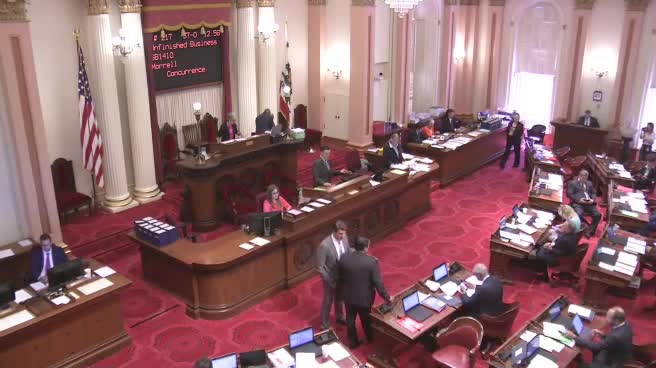
Senate Floor
 5MIN
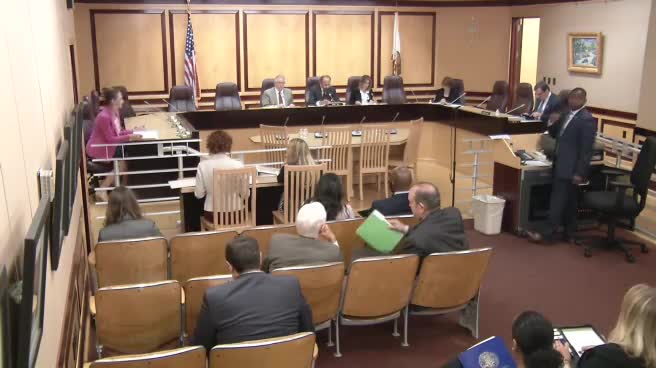
Senate Standing Committee on Business, Professions and Economic Development
 2MIN
Assembly Floor
 2MIN
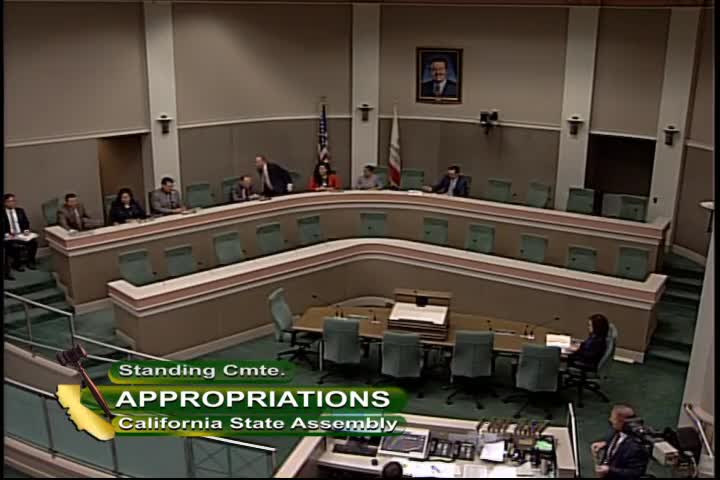
Assembly Standing Committee on Appropriations
 3MIN
Assembly Standing Committee on Business and Professions
Bill Author

Bill Co-Author(s):