AB 277: Water and Wastewater Loan and Grant Program.
- Session Year: 2017-2018
- House: Assembly
- Latest Version Date: 2017-10-03
Existing law, the Safe Drinking Water State Revolving Fund Law of 1997, establishes the Safe Drinking Water State Revolving Fund to provide grants or revolving fund loans for the design and construction of projects for public water systems that will enable those systems to meet safe drinking water standards.
This bill would, to the extent funding is made available, authorize the State Water Resources Control Board to establish the Water and Wastewater Loan and Grant Program to provide funding to eligible applicants for specified purposes relating to drinking water and wastewater treatment. This bill would authorize a county or qualified nonprofit organization to apply to the board for a grant to award loans or grants, or both, to an eligible applicant. The bill would authorize the board to use a funding source that is authorized for and consistent with the purposes of the program.
Existing law, the Safe Drinking Water State Revolving Fund Law of 1997, establishes the Safe Drinking Water State Revolving Fund to provide grants or revolving fund loans for the design and construction of projects for public water systems that will enable those systems to meet safe drinking water standards.
This bill would, to the extent funding is made available, authorize the State Water Resources Control Board to establish the Water and Wastewater Loan and Grant Program to provide funding to eligible applicants for specified purposes relating to drinking water and wastewater treatment. This bill would authorize a county or qualified nonprofit organization to apply to the board for a grant to award loans or grants, or both, and a qualified nonprofit organization to apply to the board for a grant to award grants to residents and to small water systems, as prescribed. To fund this program, the bill would authorize the board to use funding appropriated in an item of the Budget Act of 2016 from the State Water Quality Control Fund, or to use any other funding source to an eligible applicant. The bill would authorize the board to use a funding source that is authorized for and consistent with the purposes of the program. By expanding the purposes of an appropriation, the bill would make an appropriation.
Existing law, the Safe Drinking Water State Revolving Fund Law of 1997, establishes the Safe Drinking Water State Revolving Fund to provide grants or revolving fund loans for the design and construction of projects for public water systems that will enable those systems to meet safe drinking water standards.
This bill would, to the extent funding is made available, authorize the State Water Resources Control Board to establish the Water and Wastewater Loan and Grant Program to provide funding to eligible applicants for specified purposes relating to drinking water and wastewater treatment. This bill would authorize a county to apply to the board for a grant to award loans or grants, or both, and a qualified nonprofit organization to apply to the board for a grant to award grants to residents and to small water systems, as prescribed. To fund this program, the bill would authorize the board to use funding appropriated in an item of the Budget Act of 2016 from the State Water Quality Control Fund, or to use any other funding source consistent with the purposes of the program. By expanding the purposes of an appropriation, the bill would make an appropriation.
(a)To the extent that funding is made available, the state board may establish a program in accordance with this chapter to provide funding as described in subdivision (a) of Section 13487.5 to eligible applicants for any of the following purposes:
(1)Extending or connecting service lines from a water or wastewater system to the point of entry into a residential structure.
(2)Paying reasonable charges or fees for connecting to a water or wastewater system.
(3)Paying costs to properly abandon or destroy septic tanks and water wells, as necessary, to protect health and safety as required by local or state law.
(4)Improving, rehabilitating, replacing, or repairing existing water wells, including associated equipment.
(5)Installing a water treatment system if the groundwater exceeds a primary or secondary drinking water standard, as defined in Section 116275 of the Health and Safety Code.
(b)The state board may adopt any guidelines it determines are necessary to carry out the purposes of this chapter. A guideline adopted pursuant to this subdivision shall not be subject to the rulemaking requirements of Chapter 3.5 (commencing with Section 11340) of Part 1 of Division 3 of Title 2 of the Government Code.
13486.5.(a)As used in this chapter:
(1)Qualified nonprofit organization means an organization with experience in providing financial and technical assistance to disadvantaged communities that is qualified to operate in California and qualified for exempt status under Section 501(c)(3) of the Internal Revenue Code.
(2)Small water system means a system for the provision of piped water to the public for human consumption that serves at least two, but not more than 14, service connections and is not a public water system as defined in Section 116275 of the Health and Safety Code.
13487.(a)To fund the program authorized in this chapter, the state board may use a funding source that is authorized for and consistent with the purposes of this chapter.
(b)The state board shall use reasonable and feasible efforts to secure local matching funds for the purposes of funding projects pursuant to this chapter.
13487.5.(a)A county or qualified nonprofit organization may apply to the state board for a grant to award loans or grants, or both, to eligible applicants in the county in accordance with this chapter. The state board may award a grant to a qualified nonprofit organization only for a county that has not been awarded a grant pursuant to this subdivision.
(b)A county or qualified nonprofit organization that receives funding pursuant to this chapter shall annually provide the following information to the state board:
(1)The number of loans and grants awarded.
(2)The types of projects funded.
(3)Project costs.
(4)Whether there is demand for additional funding.
(c)The state board may advance funds pursuant to an agreement with a county or qualified nonprofit organization in accordance with this chapter. Section 11019 of the Government Code does not apply to an advance made pursuant to this subdivision.
13488.(a)An eligible applicant for a loan shall meet all of the following criteria:
(1)Have a household income at or below 120 percent of the statewide median household income or, for a small water system, serve households with a median household income at or below 120 percent of the statewide median household income.
(2)Have an ownership interest in the residence or small water system.
(3)Be unable to obtain financial assistance at reasonable terms and conditions from private lenders and lack the resources to undertake these improvements.
(4)Demonstrate an ability to repay the loan. This requirement may be satisfied by having another party join the application as a cosigner.
(b)Any loan provided shall be secured by appropriate collateral, which may include a mortgage on the residence and shall be repaid within 10 to 30 years in accordance with terms established by the state board. The interest rate on the loan shall not exceed 3 percent. Throughout the useful life of the improvement, a loan recipient shall furnish evidence of and continually maintain homeowners insurance on the security residence to protect the states interest in the residence.
(c)The county may enter into a contract with a private financial institution to provide loans consistent with the purposes of this chapter.
13489.(a)An eligible applicant for a grant shall meet all of the following criteria:
(1)Have a household income at or below 120 percent of the statewide median household income or, for a small water system, serve households with a median household income at or below 120 percent of the statewide median household income.
(2)Have an ownership interest in the residence or small water system.
(3)Be unable to obtain financial assistance at reasonable terms and conditions from private lenders and lack the resources to undertake these improvements.
(b)A grant recipient shall repay to the county or qualified nonprofit organization the grant amount in full if that recipient sells or transfers ownership of the residence or small water system less than five years from the date that the grant agreement was signed.
(a)To the extent that funding is made available, the state board may establish a program in accordance with this chapter to provide funding as described in subdivision (a) of Section 13487.5 to eligible applicants for any of the following purposes:
(1)Extending or connecting service lines from a water or wastewater system to the applicants residence or plumbing. point of entry into a residential structure.
(2)Paying reasonable charges or fees for connecting to a water or wastewater system.
(3)Paying costs to close abandoned properly abandon or destroy septic tanks and water wells, as necessary, to protect health and safety as required by local or state law.
(4)Improving, rehabilitating, replacing, or repairing existing groundwater water wells, including associated equipment.
(5)Installing a water treatment system if the groundwater exceeds a primary or secondary drinking water standard, as defined in Section 116275 of the Health and Safety Code.
(b)The state board may adopt any guidelines it determines are necessary to carry out the purposes of this chapter. A guideline adopted pursuant to this subdivision shall not be subject to the rulemaking requirements of Chapter 3.5 (commencing with Section 11340) of Part 1 of Division 3 of Title 2 of the Government Code.
13486.5.(a)As used in this chapter, qualified chapter:
(1)Qualified nonprofit organization means an organization with experience in providing financial and technical assistance to disadvantaged communities that is qualified to operate in California and qualified for exempt status under Section 501(c)(3) of the Internal Revenue Code.
(2)Small water system means a system for the provision of piped water to the public for human consumption that serves at least two, but not more than 14, service connections and is not a public water system as defined in Section 116275 of the Health and Safety Code.
13487.(a)To fund the program authorized in this chapter, the state board may use funding appropriated in Item 3940-101-0679 in the Budget Act of 2016 (Chapter 23 of the Statutes of 2016), or any other a funding source that is authorized for and consistent with the purposes of this chapter.
(b)The state board shall use reasonable and feasible efforts to secure local matching funds for the purposes of funding projects pursuant to this chapter.
13487.5.(a)A county or qualified nonprofit organization may apply to the state board for a grant to award loans or grants, or both, to residents of the county and to small water systems eligible applicants in the county in accordance with this chapter. A qualified nonprofit organization may apply to the board for a grant to award grants to residents of a county and to small water systems in a county in accordance with this chapter. The state board may award a grant to a qualified nonprofit organization only for a county that has not been awarded a grant pursuant to this subdivision.
(b)A county or qualified nonprofit organization that receives funding pursuant to this chapter shall annually provide the following information to the state board:
(1)The number of loans and grants awarded.
(2)The types of projects funded.
(3)Project costs.
(4)Whether there is demand for additional funding.
(c)The state board may advance funds pursuant to an agreement with a county or qualified nonprofit organization in accordance with this chapter. Section 11019 of the Government Code does not apply to an advance made pursuant to this subdivision.
13488.(a)An eligible applicant for a loan shall meet all of the following criteria:
(1)Have a household income at or below 120 percent of the statewide median household income or be a small water system of up to 15 connections that serves or, for a small water system, serve households with a median household income at or below 120 percent of the statewide median household income.
(2)Have an ownership interest in the residence or be a small water system.
(3)Be unable to obtain financial assistance at reasonable terms and conditions from private lenders and lack the resources to undertake these improvements.
(4)Demonstrate an ability to repay the loan. This requirement may be satisfied by having another party join the application as a cosigner.
(b)Any loan provided shall be secured by appropriate collateral, which may include a mortgage on the residence and shall be repaid within 10 to 30 years in accordance with terms established by the state board. The interest rate on the loan shall not exceed 3 percent. Throughout the useful life of the improvement, a loan recipient shall furnish evidence of and continually maintain homeowners insurance on the security residence to protect the states interest in the residence.
(c)The county may enter into a contract with a private financial institution to provide loans consistent with the purposes of this chapter.
13489.(a)An eligible applicant for a grant shall meet all of the following criteria:
(1)Have a household income that is at or below 120 percent or less of the statewide median household income or be a small water system that serves or, for a small water system, serve households with household incomes that are 120 percent or less a median household income at or below 120 percent of the statewide median household income.
(2)Have an ownership interest or a leasehold interest with full consent of all parties that have ownership interest in the residence or be a small water system.
(3)Be unable to obtain financial assistance at reasonable terms and conditions from private lenders and lack the resources to undertake these improvements.
(b)A grant recipient shall repay to the county or qualified nonprofit organization the grant amount in full if that recipient sells the residence less than five years from the date that the grant agreement was signed.
REVISIONS: HeadingLine 2.(a)To the extent that funding is made available, the board may establish a program in accordance with this chapter to provide funding as described in subdivision (a) of Section 13487.5 to eligible applicants for any of the following purposes:
(1)Extending or connecting service lines from a water or wastewater system to the applicants residence or plumbing.
(2)Paying reasonable charges or fees for connecting to a water or wastewater system.
(3)Paying costs to close abandoned septic tanks and water wells, as necessary, to protect health and safety as required by local or state law.
(4)Deepening an existing groundwater well.(5)Improving an existing groundwater well, including associated equipment.(4)Improving, rehabilitating, replacing, or repairing existing groundwater wells, including associated equipment.
(6)(5)Installing a water treatment system if the groundwater exceeds a primary or secondary drinking water standard, as defined in Section 116275 of the Health and Safety Code.
(b)The board may adopt any guidelines it determines are necessary to carry out the purposes of this chapter. A guideline adopted pursuant to this subdivision shall not be subject to the rulemaking requirements of Chapter 3.5 (commencing with Section 11340) of Part 1 of Division 3 of Title 2 of the Government Code.
13486.5.As used in this chapter, qualified nonprofit organization means an organization with experience in providing financial and technical assistance to disadvantaged communities that is qualified to operate in California and qualified for exempt status under Section 501(c)(3) of the Internal Revenue Code.
13487.(a)To fund the program authorized in this chapter, the board may use funding appropriated in Item 3940-101-0679 in the Budget Act of 2016 (Chapter 23 of the Statutes of 2016), or any other funding source that is consistent with the purposes of this chapter.
(b)The board shall use reasonable and feasible efforts to secure local matching funds for the purposes of funding projects pursuant to this chapter.
13487.5.(a)A county may apply to the board for a grant to award loans or grants, or both, to residents of the county and to small water systems in the county in accordance with this chapter. A qualified nonprofit organization may apply to the board for a grant to award grants to residents of a county and to small water systems in a county in accordance with this chapter. The board may award a grant to a qualified nonprofit organization only for a county that has not been awarded a grant pursuant to this subdivision.
(b)A county or qualified nonprofit organization that receives funding pursuant to this chapter shall annually provide the following information to the board:
(1)The number of loans and grants awarded.
(2)The types of projects funded.
(3)Project costs.
(4)Whether there is demand for additional funding.
(c)The board may advance funds pursuant to an agreement with a county or qualified nonprofit organization in accordance with this chapter. Section 11019 of the Government Code does not apply to an advance made pursuant to this subdivision.
13488.(a)An eligible applicant for a loan shall meet all of the following criteria:
(1)Have a household income at or below 120 percent of the statewide median household income or be a small water system of up to 15 connections that serves households at or below 120 percent of the statewide median household income.
(2)Have an ownership interest in the residence or be a small water system.
(3)Be unable to obtain financial assistance at reasonable terms and conditions from private lenders and lack the resources to undertake these improvements.
(4)Demonstrate an ability to repay the loan. This requirement may be satisfied by having another party join the application as a cosigner.
(b)Any loan granted provided shall be secured by appropriate collateral, which may include a mortgage on the residence and shall be repaid within 10 to 30 years in accordance with terms established by the board. The interest rate on the loan shall not exceed 3 percent. Throughout the useful life of the improvement, a loan recipient shall furnish evidence of and continually maintain homeowners insurance on the security residence to protect the states interest in the residence.
(c)The county may enter into a contract with a private financial institution to provide loans consistent with the purposes of this chapter.
13489.(a)An eligible applicant for a grant shall meet all of the following criteria:
(1)Have a household income that is 120 percent or less of the statewide median household income or be a small water system that serves households with household incomes that are 120 percent or less of the statewide median household income.
(2)Have an ownership interest or a leasehold interest with full consent of all parties that have ownership interest in the residence or be a small water system.
(3)Be unable to obtain financial assistance at reasonable terms and conditions from private lenders and lack the resources to undertake these improvements.
(b)A grant recipient shall repay to the county or qualified nonprofit organization the grant amount in full if that recipient sells the residence less than five years from the date that the grant agreement was signed.
(c)A grant recipient shall repay to the county or qualified nonprofit organization any unused grant funds.(a)To the extent that funding is made available, the board may establish a program in accordance with this chapter to provide funding as described in subdivision (a) of Section 13487.5 to eligible applicants for any of the following purposes:
(1)Extending or connecting service lines from a water or wastewater system to the applicants residence or plumbing.
(2)Paying reasonable charges or fees for connecting to a water or wastewater system.
(3)Paying costs to close abandoned septic tanks and water wells, as necessary, to protect health and safety as required by local or state law.
(4)Deepening an existing groundwater well.
(5)Improving an existing groundwater well, including associated equipment.
(6)Installing a water treatment system if the groundwater exceeds a primary or secondary drinking water standard, as defined in Section 116275 of the Health and Safety Code.
(b)The board may adopt any guidelines it determines are necessary to carry out the purposes of this chapter. A guideline adopted pursuant to this subdivision shall not be subject to the rulemaking requirements of Chapter 3.5 (commencing with Section 11340) of Part 1 of Division 3 of Title 2 of the Government Code.
13486.5.As used in this chapter,qualified nonprofit organization means an organization with experience in providing financial and technical assistance to disadvantaged communities that is qualified to operate in California and qualified for exempt status under Section 501(c)(3) of the Internal Revenue Code.
13487.(a)To fund the program authorized in this chapter, the board may use funding appropriated in Item 3940-101-0679 in the Budget Act of 2016 (Chapter 23 of the Statutes of 2016), or any other funding source that is consistent with the purposes of this chapter.
(b)The board shall use reasonable and feasible efforts to secure local matching funds for the purposes of funding projects pursuant to this chapter.
13487.5.(a)A county may apply to the board for a grant to award loans or grants, or both, to residents of the county and to small water systems in the county in accordance with this chapter. A qualified nonprofit organization may apply to the board for a grant to award grants to residents of a county and to small water systems in a county in accordance with this chapter. The board may award a grant to a qualified nonprofit organization only for a county that has not been awarded a grant pursuant to this subdivision.
(b)A county or qualified nonprofit organization that receives funding pursuant to this chapter shall annually provide the following information to the board:
(1)The number of loans and grants awarded.
(2)The types of projects funded.
(3)Project costs.
(4)Whether there is demand for additional funding.
(c)The board may advance funds pursuant to an agreement with a county or qualified nonprofit organization in accordance with this chapter. Section 11019 of the Government Code does not apply to an advance made pursuant to this subdivision.
13488.(a)An eligible applicant for a loan shall meet all of the following criteria:
(1)Have a household income at or below 120 percent of the statewide median household income or be a small water system of up to 15 connections that serves households at or below 120 percent of the statewide median household income.
(2)Have an ownership interest in the residence or be a small water system.
(3)Be unable to obtain financial assistance at reasonable terms and conditions from private lenders and lack the resources to undertake these improvements.
(4)Demonstrate an ability to repay the loan. This requirement may be satisfied by having another party join the application as a cosigner.
(b)Any loan granted shall be secured by a mortgage on the residence and repaid within 10 to 30 years in accordance with terms established by the board. The interest rate on the loan shall not exceed 3 percent. Throughout the useful life of the improvement, a loan recipient shall furnish evidence of and continually maintain homeowners insurance on the security residence to protect the states interest in the residence.
(c)The county may enter into a contract with a private financial institution to provide loans consistent with the purposes of this chapter.
13489.(a)An eligible applicant for a grant shall meet all of the following criteria:
(1)Have a household income that is 120 percent or less of the statewide median household income or be a small water system that serves households with household incomes that are 120 percent or less of the statewide median household income.
(2)Have an ownership interest in the residence or be a small water system.
(3)Be unable to obtain financial assistance at reasonable terms and conditions from private lenders and lack the resources to undertake these improvements.
(b)A grant recipient shall repay to the county or qualified nonprofit organization the grant amount in full if that recipient sells the residence less than five years from the date that the grant agreement was signed.
(c)A grant recipient shall repay to the county or qualified nonprofit organization any unused grant funds.
|
Date
|
Status
|
|---|---|
| Oct 3, 2017 | Chaptered by Secretary of State - Chapter 438, Statutes of 2017. |
| Oct 3, 2017 | Approved by the Governor. |
| Sep 25, 2017 | Enrolled and presented to the Governor at 12 p.m. |
| Sep 14, 2017 | In Assembly. Ordered to Engrossing and Enrolling. |
| Sep 14, 2017 | Read third time. Passed. Ordered to the Assembly. |
| Sep 12, 2017 | Ordered to special consent calendar. |
| Sep 5, 2017 | Read second time. Ordered to third reading. |
| Sep 1, 2017 | From committee: Do pass. (Ayes 7. Noes 0.) (September 1). |
| Jul 10, 2017 | In committee: Referred to APPR. suspense file. |
| Jun 21, 2017 | From committee: Do pass and re-refer to Com. on APPR. with recommendation: To Consent Calendar. (Ayes 6. Noes 0.) (June 21). Re-referred to Com. on APPR. |
| Jun 8, 2017 | Referred to Com. on EQ. |
| May 30, 2017 | In Senate. Read first time. To Com. on RLS. for assignment. |
| May 30, 2017 | Read third time. Passed. Ordered to the Senate. (Ayes 77. Noes 0. Page 1811.) |
| May 26, 2017 | From committee: Do pass. (Ayes 17. Noes 0.) (May 26). |
| Apr 5, 2017 | In committee: Set, first hearing. Referred to APPR. suspense file. |
| Mar 28, 2017 | Re-referred to Com. on APPR. |
| Mar 27, 2017 | From committee chair, with author's amendments: Amend, and re-refer to Com. on APPR. Read second time and amended. |
| Mar 21, 2017 | Coauthors revised. |
| Mar 14, 2017 | Re-referred to Com. on W.,P., & W. |
| Mar 13, 2017 | From committee chair, with author's amendments: Amend, and re-refer to Com. on W.,P., & W. Read second time and amended. |
| Feb 22, 2017 | Re-referred to Com. on W.,P., & W. |
| Feb 21, 2017 | From committee chair, with author's amendments: Amend, and re-refer to Com. on W.,P., & W. Read second time and amended. |
| Feb 13, 2017 | Referred to Com. on W.,P., & W. |
| Feb 2, 2017 | From printer. May be heard in committee March 4. |
| Feb 1, 2017 | Read first time. To print. |
|
Date
|
Description
|
Location
|
Votes
|
|
|---|---|---|---|---|
| Sep 14, 2017 | Special Consent Calendar # AB277 | Senate Floor |
Passed |
|
| Sep 1, 2017 | Do pass | Senate Standing Committee on Appropriations |
Passed |
|
| Jul 10, 2017 | Placed on suspense file | Senate Standing Committee on Appropriations |
Passed |
|
| Jun 21, 2017 | Do pass, but first be re-referred to the Committee on [Appropriations] with the recommendation: To Consent Calendar | Senate Standing Committee on Environmental Quality |
Passed |
|
| May 30, 2017 | AB 277 MATHIS Assembly Third Reading | Assembly Floor |
Passed |
|
| May 26, 2017 | Do pass. | Assembly Standing Committee on Appropriations |
Passed |
|
| Mar 21, 2017 | Do pass and be re-referred to the Committee on [Appropriations] | Assembly Standing Committee on Water, Parks, and Wildlife |
Passed |
This list shows positions taken on this bill by organizations on the date displayed, which is linked to the original source.
Positions by individuals are not included.
|
Organization
|
Position
|
Date
|
|---|---|---|
| Association Of California Water Agencies | ** Support | Sep 3, 2017 |
| California Association Of Realtors | ** Support | Sep 3, 2017 |
| Rural County Representatives of California | ** Support | Sep 3, 2017 |
Office of Senate Floor Analyses (916) 651-1520 Fax: (916) 327-4478 | AB |
THIRD READING
Bill No: AB 277
:
SENATE ENVIRONMENTAL QUALITY COMMITTEE: 6-0, 6/21/17
AYES: Wieckowski, Stone, Hill, Lara, Skinner, Stern
NO VOTE RECORDED: Gaines
SENATE APPROPRIATIONS COMMITTEE: 7-0, 9/1/17
AYES: Lara, Bates, Beall, Bradford, Hill, Nielsen, Wiener
ASSEMBLY FLOOR: 77-0, 5/30/17 - See last page for vote
DIGEST:
This bill authorizes the State Water Resources Control Board (SWRCB), to the extent funds are available, to implement low-interest loan and grant programs for counties and qualified nonprofit organizations to fund water and wastewater facilities and improvements for households and small water systems.
Existing law:
- Enacts the federal Clean Water Act, which:
- Establishes federal guidelines for surface water quality protection.
- Authorizes water quality programs; requires federal effluent limitations and state water quality standards; requires permits for the discharge of pollutants into navigable waters; provides enforcement mechanisms; and authorizes funding for wastewater treatment works, construction grants, and state revolving loan programs, as well as funding to states and tribes for their water quality programs.
- Establishes the Clean Water State Revolving Fund (CWSRF) to offer financial assistance for water quality projects.
- Enacts the federal Safe Drinking Water Act (SDWA), which:
- Establishes federal standards for contaminants in drinking water.
- Authorizes states to enter into primacy agreements with the federal United States Environmental Protection Agency (US EPA) to enforce SDWA if the state establishes drinking water standards that are at least as stringent as those developed by US EPA, as required by SDWA.
- Establishes the Safe Drinking Water State Revolving Fund (SDWSRF) to offer financial assistance for safe drinking water projects.
- Enacts the Porter-Cologne Water Quality Control Act, which:
- Establishes the SWRCB and Regional Water Quality Control Boards to regulate and protect water quality in California.
- Establishes the State Water Pollution Control Revolving Fund to, among other things, implement the federal CWSRF program.
- Transfers the Drinking Water Program and the SDWSRF from the Department of Public Health to SWRCB effective July 1, 2014.
- Enacts the California Safe Drinking Water Act, which:
- Requires SWRCB to protect the public from contaminants in drinking water.
- Establishes the SDWSRF which is partially capitalized by federal contributions from the federal Safe Drinking Water Act. Specifies that the SDWSRF provide funding for public water systems to correct deficiencies and problems that pose public health risks and to meet safe drinking water standards.
- Includes $260 million, pursuant to Proposition 1, the Water Quality, Supply, and Infrastructure Improvement Act of 2014 (Prop. 1), upon appropriation by the Legislature to the SWRCB to be placed in the CWSRF and used for grants for wastewater treatment projects. Proposition 1 also includes another $260 million, upon appropriation by the Legislature (recipient agency not specified) for public water system infrastructure improvements and related actions to meet safe drinking water standards, ensure affordable drinking water, or both.
- Appropriates $19 million to the SWRCB, pursuant to AB 91 (Committee on Budget, Chapter 1, Statutes of 2015), for grants and direct expenditures for emergency drinking water projects, including hauled water, bottled water, design and construction of connections to adjacent public water systems, new wells and well rehabilitation.
This bill authorizes the SWRCB to implement low-interest loan and grant programs for counties and qualified nonprofit organizations, as defined, to fund water and wastewater facilities and improvements for households and small water systems, to the extent funds are available. Specifically, this bill:
- Authorizes the SWRCB to establish a program of low-interest loans and grants for counties and qualified nonprofit organizations to provide funds to eligible applicants for any of the following:
- Extending or connecting service lines from a water or wastewater service to the point of entry into a residential structure.
- Paying reasonable charges or fees to connect to a water or wastewater system.
- Paying costs to properly abandon or destroy septic tanks and water wells, as necessary, to protect health and safety as required by law.
- Improving, rehabilitating, replacing, or repairing existing water wells, including associated equipment.
- Installing a water treatment system if the groundwater exceeds primary or secondary drinking water standards, as defined.
- Allows SWRCB to adopt guidelines, exempt from the Administrative Procedures Act, for administering the program.
- Requires SWRCB to use reasonable and feasible efforts to secure local matching funds for the purposes of this program.
- Allows a county or qualified nonprofit to apply to SWRCB for funds to award grants and/or loans to eligible applicants within the county. SWRCB may only award a grant to a nonprofit for a county if the county has not been awarded a grant.
- Requires counties or qualified nonprofits receiving funding to annually provide specified information to SWRCB regarding projects and funding recipients.
- Allows SWRCB to advance funding pursuant to agreements with counties or qualified nonprofits, as specified, without obtaining approval from the Department of Finance.
- Requires eligible loan applicants to meet the following criteria:
- Household income is at or below 120% of the statewide median, or for a small water system, serves households with a median household income at or below 120% of the statewide median household income.
- There is an ownership interest in the residence or small water system.
- Applicants are unable to obtain financial assistance at reasonable terms or conditions from private lenders and lack resources to undertake the improvements.
- Applicants are able to demonstrate the ability to repay the loan, including by having another party join the application as co-signer.
- Requires loans to be secured with appropriate collateral (which may include a mortgage on the residence) and be repaid within 10-30 years in accordance with terms established by SWRCB. Limits the loan interest rate to 3%. Requires loan recipients to maintain homeowners insurance during the life of the loan.
- Allows counties to enter into contracts with private financial institutions to provide loans as specified.
- Requires eligible grant recipients to meet the following criteria:
- Household income is at or below 120% of the statewide median household income or for a small water system, serves households with a median household income at or below 120% of the statewide median household income.
- There is an ownership interest in the residence or the small water system.
- Applicants are unable to obtain financial assistance at reasonable terms or conditions from private lenders and lack the resources to undertake the improvements.
- Requires grant recipients to repay the county in full if the recipient sells or transfers ownership of the residence or small water system in less than five years from signing the grant agreement.
Background
- Privately owned property is not eligible under CWSRF or SDWSRF. The CWSRF program provides low-interest loans and other financing mechanisms for publicly owned wastewater treatment facilities, local sewers, sewer interceptors, water recycling facilities, and storm water treatment facilities. The SDWSRF provides funding for public water systems. But improvements to those parts of the water and wastewater infrastructure that are on private property such as wells, sewer laterals, or septic systems have not been funded by the CWSRF or SDWSRF programs.
- AB 685 (Eng, Chapter 524, Statutes of 2012) declared that it is the established policy of the state that every human being has the right to safe, clean, affordable, and accessible water adequate for human consumption, cooking, and sanitary purposes and required all relevant state agencies, including the Department of Water Resources, SWRCB, and the State Department of Public Health, to consider this state policy when revising, adopting, or establishing policies, regulations, and grant criteria when those policies, regulations, and grant criteria are pertinent to the uses of water as specified.
- AB 1588 (Mathis, Alejo, 2016) to the extent funds are available, would have authorized SWRCB to implement low-interest loan and grant programs for counties and qualified nonprofit organizations, as defined, to fund water and wastewater facilities improvements. The bill was approved by the Legislature but vetoed by Governor Brown stating:
I am returning Assembly Bill 1588 without my signature.
This bill codifies the existing low-interest loans and grants being provided for local agencies, counties and qualified non-profits for drinking water or wastewater treatment projects. Unfortunately, there were some technical errors that would inadvertently limit the drought assistance we are currently providing.
I am directing the Water Board to work with the author to revised legislation next year.
AB 277 aims to address those errors and provide the authorization previously approved by the Legislature in AB 1588.
Comments
- Purpose of Bill. According to the author, “it is the policy of the state that every human being has the right to safe, clean, affordable, and accessible water adequate for human consumption, cooking, and sanitary purposes. Californians who are reliant on groundwater wells need access to low-interest financing and grants to undertake necessary repairs to provide, safe, reliable drinking water. There are many state and federal programs that provide financial assistance to communities to undertake water and wastewater infrastructure improvement project. Unfortunately, there are very few resources available to individual homeowners.”
Related/Prior Legislation
AB 1588 (Mathis, Alejo, 2016) to the extent funds are available, would have authorized SWRCB to implement low-interest loan and grant programs for counties and qualified nonprofit organizations, as defined, to fund water and wastewater facilities improvements. The bill was vetoed by Governor Brown.
AB 954 (Mathis, 2015) was held in the Senate Appropriations Committee. The bill is substantially similar to AB 277. The difference between the two bills is the process by which the SWRCB will establish the programs and reporting requirements under the programs to the SWRCB.
AB 91 (Committee on Budget, Chapter 1, Statutes of 2015) appropriated $19 million to SWRCB, for grants and direct expenditures for emergency drinking water projects, including hauled water, bottled water, design and construction of connections to adjacent public water systems, new wells and well rehabilitation.
AB 1471 (Rendon, Chapter 188, Statutes of 2014) placed Proposition 1, a $7.545 billion general obligation bond for water-related projects and programs on the November 4, 2014, ballot where it passed with 67% of the vote.
AB 964 (Huffman, 2011) sought to improve water quality by financing the installation of onsite sewer and septic improvements on private property including the conversion of a property from a septic system to community sewer collection and treatment service. AB 964 was later gutted and amended into a water rights bill concerning Small Irrigation Registrations after the federal Environmental Protection Agency interpreted private property improvements to be ineligible for CWSRF money.
FISCAL EFFECT: Appropriation: Fiscal Com.: Local:
According to the Senate Appropriations Committee:
Unknown cost pressures, likely in the tens of millions of dollars (General Fund or special fund) to fund the program.
Corresponding unknown SWRCB administrative costs, likely between 2.5% and 4% of the total appropriation (General Fund or special fund).
Association of California Water Agencies
California Association of Realtors
Rural County Representatives of California
OPPOSITION: (Verified 8/31/17)
None received
ASSEMBLY FLOOR: 77-0, 5/30/17
AYES: Acosta, Aguiar-Curry, Travis Allen, Arambula, Baker, Berman, Bigelow, Bloom, Bocanegra, Bonta, Brough, Burke, Caballero, Calderon, Cervantes, Chávez, Chen, Chiu, Chu, Cooley, Cooper, Cunningham, Dababneh, Dahle, Daly, Flora, Fong, Frazier, Friedman, Gallagher, Cristina Garcia, Eduardo Garcia, Gipson, Gloria, Gomez, Gonzalez Fletcher, Gray, Grayson, Harper, Holden, Irwin, Jones-Sawyer, Kalra, Kiley, Lackey, Levine, Limón, Low, Maienschein, Mathis, Mayes, McCarty, Medina, Melendez, Mullin, Muratsuchi, Nazarian, Obernolte, O'Donnell, Patterson, Quirk, Quirk-Silva, Reyes, Ridley-Thomas, Rodriguez, Rubio, Salas, Santiago, Steinorth, Mark Stone, Thurmond, Ting, Voepel, Waldron, Weber, Wood, Rendon
NO VOTE RECORDED: Chau, Choi, Eggman
9/3/17 18:18:27
**** END ****
SENATE COMMITTEE ON APPROPRIATIONS
Senator Ricardo Lara, Chair
2017 - 2018 Regular Session
AB 277 (Mathis) - Water and Wastewater Loan and Grant Program
Version: March 27, 2017 | Policy Vote: E.Q. 6 - 0 |
Urgency: No | Mandate: No |
Hearing Date: July 10, 2017 | Consultant: Narisha Bonakdar |
This bill meets the criteria for referral to the Suspense File.
Bill Summary:
AB 277 authorizes the State Water Resources Control Board (SWRCB), to the extent funds are available, to implement low-interest loan and grant programs for counties and qualified nonprofit organizations to fund water and wastewater facilities and improvements for households and small water systems.
Fiscal Impact:
Unknown cost pressures, likely in the tens of millions of dollars (General Fund or special fund) to fund the program.
Corresponding unknown SWRCB administrative costs, likely between 2.5% and 4% of the total appropriation (General Fund or special fund).
Background:
Existing law. Several state and federal statutes and regulations jointly work to protect the state’s water quality and ensure safe drinking water. In California, SWRCB is the delegate entity charged with program administration and enforcement at the state level. Other state and local entities may administer certain programs under their purview, in cooperation with the SWRCB.
The Safe Drinking Water Act. The federal Safe Drinking Water Act (SDWA) is the primary federal law that protects drinking water quality in the United States. Under SDWA, United States Environmental Protection Agency (US EPA) sets national health-based standards and testing requirements for drinking water quality and oversees the states, localities, and water suppliers who implement those standards. The SDWA also establishes requirements for the Underground Injection Control Program (UIC), which regulates the construction, operation, permitting and closure of injection wells that place fluids underground for storage or disposal. In cooperation with partner state entities, the US EPA also implements various technical and financial programs to ensure drinking water safety. The SDWA was amended in 1996 to include the Drinking Water State Revolving Fund (Drinking Water Fund) program for this purpose.
The Clean Water Act. The federal Clean Water Act (CWA) (previously the Federal Water Pollution Control Act) establishes the basic structure for regulating discharges of pollutants into the waters of the United States and regulating quality standards for surface waters. The CWA prohibits the discharge of any pollutant from a point source (a discrete conveyance such as a pipes or man-made ditches) into navigable waters without a permit. The US EPA’s National Pollutant Discharge Elimination System (NPDES) permit program controls discharges by establishing specific discharge limits, monitoring, and reporting requirements for wastewater discharges, and advising municipalities and state and federal permitting authorities on how to meet stormwater pollution control goals.
In 1987, the CWA was amended to authorize each state the opportunity to establish a Clean Water State Revolving Fund (Clean Water Fund) to provide technical and financial assistance in furtherance of CWA. The Clean Water Fund is capitalized with federal and state funds. As of June 30, 2016, the SWRCB has provided $8.338 billion in assistance from the Clean Water Fund.
The Ground Water Rule. The US EPA issued the Ground Water Rule (GWR) to improve drinking water quality and provide protection from disease-causing microorganisms. The GWR applies to public water systems that use ground water as a source of drinking water. The rule also applies to any system that delivers surface and ground water to consumers where the ground water is added to the distribution system without treatment.
The Porter-Cologne Water Quality Control Act. The Porter-Cologne Water Quality Control Act (Porter-Cologne) was established to protect the water quality as well as the beneficial uses of water. It applies to surface water, groundwater, wetlands and both point and nonpoint sources (diffuse sources such as land runoff, precipitation, and drainage) of pollution. The Act established the SWRCB and the nine Regional Water Quality Control Boards to adopt and enforce state and local water quality control plans that contain the guiding policies for water pollution management in California.
Proposed Law:
This bill:
- Authorizes the SWRCB to establish a low-interest loans and grants program for counties and qualified nonprofit organizations to provide funds for certain water and wastewater improvements.
- Allows the SWRCB to adopt guidelines, exempt from the Administrative Procedures Act (APA), for administering the program.
- Requires the SWRCB to use reasonable and feasible efforts to secure local matching funds for the purposes of this program.
- Allows a county or qualified nonprofit to apply to SWRCB for funds to award grants and/or loans to eligible applicants within the county. SWRCB may only award a grant to a nonprofit for a county if the county has not been awarded a grant.
- Requires counties or qualified nonprofits receiving funding to annually provide specified information to SWRCB regarding projects and funding recipients.
- Allows SWRCB to advance funding pursuant to agreements with counties or qualified nonprofits, as specified, without obtaining approval from the Department of Finance.
- Requires eligible loan applicants to meet the following criteria:
- Household income is at or below 120% of the statewide median, or for a small water system, serves households with a median household income at or below 120% of the statewide median household income.
- Ownership interest in the residence or small water system.
- Unable to obtain financial assistance at reasonable terms or conditions from private lenders and lack resources to undertake the improvements.
- Demonstrate the ability to repay the loan, including by having another party join the application as co-signer.
- Requires loans to be secured with appropriate collateral (which may include a mortgage on the residence) and be repaid within 10-30 years in accordance with terms established by SWRCB.
- Limits the loan interest rate to 3%, and requires loan recipients to maintain homeowners insurance during the life of the loan.
- Allows counties to enter into contracts with private financial institutions to provide loans as specified.
- Requires eligible grant recipients to meet the following criteria:
- Household income is at or below 120% of the statewide median household income or for a small water system, serves households with a median household income at or below 120% of the statewide median household income.
- Ownership interest in the residence or the small water system.
- Unable to obtain financial assistance at reasonable terms or conditions from private lenders and lack the resources to undertake the improvements.
- Requires grant recipients to repay the county in full if the recipient sells or transfers ownership of the residence or small water system in less than five years from signing the grant agreement.
Related Legislation:
AB 1588 (Mathis, Alejo, 2016) would have, to the extent funds are available, authorized the SWRCB to implement low-interest loan and grant programs for counties and qualified nonprofit organizations to fund water and wastewater facilities improvements. The bill was vetoed by Governor Brown, citing “technical errors that would inadvertently limit the drought assistance” currently being provided.
AB 685 (Eng, Chapter 524, Statutes of 2012) declares that it is the established policy of the state that every human being has the right to safe, clean, affordable, and accessible water adequate for human consumption, cooking, and sanitary purposes and required all relevant state agencies, including the Department of Water Resources, SWRCB, and the State Department of Public Health, to consider this state policy when revising, adopting, or establishing policies, regulations, and grant criteria when those policies, regulations, and grant criteria are pertinent to the uses of water as specified.
Staff Comments:
Appropriations to state water programs. Proposition 1, the Water Quality, Supply, and Infrastructure Improvement Act of 2014 (Prop. 1), authorized the issuance of $7.545 in General Obligation bonds. Prop. 1 included $520 million in for water projects ($260 million to the Clean Water Program for grants for wastewater treatment projects and $260 million for public water system infrastructure improvements).
AB 91 (Committee on Budget, Chapter 1, Statutes of 2015) appropriated $19 million to the SWRCB, for grants and direct expenditures for emergency drinking water projects, including hauled water, bottled water, design and construction of connections to adjacent public water systems, new wells and well rehabilitation.
Privately-owned property historically ineligible for financing…but a limited amount of funds may be available. The Clean Water Program provides low-interest loans and other financing mechanisms for publicly owned wastewater treatment facilities, local sewers, sewer interceptors, water recycling facilities, and storm water treatment facilities. The State Revolving Fund provides funding for public water systems. But improvements to those parts of the water and wastewater infrastructure that are on private property such as wells, sewer laterals, or septic systems have not been funded by existing programs.
While infrastructure on private property has historically not been eligible for financing, the 2016-17 Budget allocated $15 million to the SWRCB from the Clean-up and Abatement Account for Drought-related Interim Emergency Drinking Water, $5 million of which was reserved for the Household and Small Water System Drought Assistance Program (program). The program offers loans and grants to assist individual households (up to $45,000) and up to $100,000 for small water systems (serving less than 15 connections) in addressing their drought-related drinking water emergencies (e.g., new well construction, design of cost of necessary infrastructure, permit and connection fees, well rehabilitation/repair. The funds will be administered by three non-profit organizations: Self-Help Enterprises, Rural Community Assistance Corporation, and California Rural Water Association.
-- END --
SENATE COMMITTEE ON ENVIRONMENTAL QUALITY
Senator Wieckowski, Chair
2017 - 2018 Regular
Bill No: AB 277
Author: | Mathis | ||
Version: | 3/27/2017 | Hearing Date: | 6/21/2017 |
Urgency: | No | Fiscal: | Yes |
Consultant: | Rachel Machi Wagoner | ||
SUBJECT: Water and Wastewater Loan and Grant Program.
ANALYSIS:
Existing law:
- Under the federal Clean Water Act:
- Establishes federal guidelines for surface water quality protection.
- Authorizes water quality programs; requires federal effluent limitations and state water quality standards; requires permits for the discharge of pollutants into navigable waters; provides enforcement mechanisms; and authorizes funding for wastewater treatment works, construction grants, and state revolving loan programs, as well as funding to states and tribes for their water quality programs.
- Establishes the Clean Water State Revolving Fund (CWSRF) to offer financial assistance for water quality projects.
- Under the federal Safe Drinking Water Act (SDWA):
- Establishes federal standards for contaminants in drinking water.
- Authorizes states to enter into primacy agreements with the federal United States Environmental Protection Agency (US EPA) to enforce SDWA if the state establishes drinking water standards that are at least as stringent as those developed by US EPA, as required by SDWA.
- Establishes the Safe Drinking Water State Revolving Fund (SDWSRF) to offer financial assistance for safe drinking water projects.
- Under the Porter-Cologne Water Quality Control Act:
- Establishes the State Water Resources Control Board (SWRCB) and Regional Water Quality Control Boards to regulate and protect water quality in California.
- Establishes the State Water Pollution Control Revolving Fund to, among other things, implement the federal CWSRF program.
- Transferred the Drinking Water Program and the Safe Drinking Water State Revolving Fund (SDWSRF) from the Department of Public Health to SWRCB effective July 1, 2014.
- Under the California Safe Drinking Water Act,
- Requires SWRCB to protect the public from contaminants in drinking water.
- Establishes the SDWSRF which is partially capitalized by federal contributions from the federal Safe Drinking Water Act. Specifies that the SDWSRF provide funding for public water systems to correct deficiencies and problems that pose public health risks and to meet safe drinking water standards.
- Proposition 1, the Water Quality, Supply, and Infrastructure Improvement Act of 2014 (Prop. 1), includes $260 million, upon appropriation by the Legislature to the SWRCB to be placed in the CWSRF and used for grants for wastewater treatment projects. Prop. 1 also includes another $260 million, upon appropriation by the Legislature (recipient agency not specified) for public water system infrastructure improvements and related actions to meet safe drinking water standards, ensure affordable drinking water, or both.
- AB 91 (Committee on Budget, Chapter 1, Statutes of 2015) appropriates $19 million to the SWRCB, for grants and direct expenditures for emergency drinking water projects, including hauled water, bottled water, design and construction of connections to adjacent public water systems, new wells and well rehabilitation.
This bill: Authorizes the State Water Resources Control Board (SWRCB) to implement low-interest loan and grant programs for counties and qualified nonprofit organizations, as defined, to fund water and wastewater facilities and improvements for households and small water systems, to the extent funds are available. Specifically, this bill:
- Authorizes the SWRCB to establish a program of low-interest loans and grants for counties and qualified nonprofit organizations to provide funds to eligible applicants for any of the following:
- Extending or connecting service lines from a water or wastewater service to the point of entry into a residential structure.
- Paying reasonable charges or fees to connect to a water or wastewater system.
- Paying costs to properly abandon or destroy septic tanks and water wells, as necessary, to protect health and safety as required by law.
- Improving, rehabilitating, replacing, or repairing existing water wells, including associated equipment.
- Installing a water treatment system if the groundwater exceeds primary or secondary drinking water standards, as defined.
- Allows SWRCB to adopt guidelines, exempt from the Administrative Procedures Act (APA), for administering the program.
- Requires SWRCB to use reasonable and feasible efforts to secure local matching funds for the purposes of this program.
- Allows a county or qualified nonprofit to apply to SWRCB for funds to award grants and/or loans to eligible applicants within the county. SWRCB may only award a grant to a nonprofit for a county if the county has not been awarded a grant.
- Requires counties or qualified nonprofits receiving funding to annually provide specified information to SWRCB regarding projects and funding recipients.
- Allows SWRCB to advance funding pursuant to agreements with counties or qualified nonprofits, as specified, without obtaining approval from the Department of Finance.
- Requires eligible loan applicants to meet the following criteria:
- Household income is at or below 120% of the statewide median, or for a small water system, serves households with a median household income at or below 120% of the statewide median household income.
- There is an ownership interest in the residence or small water system.
- Applicants are unable to obtain financial assistance at reasonable terms or conditions from private lenders and lack resources to undertake the improvements.
- Applicants are able to demonstrate the ability to repay the loan, including by having another party join the application as co-signer.
- Requires loans to be secured with appropriate collateral (which may include a mortgage on the residence) and be repaid within 10-30 years in accordance with terms established by SWRCB. Limits the loan interest rate to 3%. Requires loan recipients to maintain homeowners insurance during the life of the loan.
- Allows counties to enter into contracts with private financial institutions to provide loans as specified.
- Requires eligible grant recipients to meet the following criteria:
- Household income is at or below 120% of the statewide median household income or for a small water system, serves households with a median household income at or below 120% of the statewide median household income.
- There is an ownership interest in the residence or the small water system.
- Applicants are unable to obtain financial assistance at reasonable terms or conditions from private lenders and lack the resources to undertake the improvements.
- Requires grant recipients to repay the county in full if the recipient sells or transfers ownership of the residence or small water system in less than five years from signing the grant agreement.
Background
- Privately owned property is not eligible under CWSRF or SDWSRF. The CWSRF program provides low-interest loans and other financing mechanisms for publicly owned wastewater treatment facilities, local sewers, sewer interceptors, water recycling facilities, and storm water treatment facilities. The SDWSRF provides funding for public water systems. But improvements to those parts of the water and wastewater infrastructure that are on private property such as wells, sewer laterals, or septic systems have not been funded by the CWSRF or SDWSRF programs.
- AB 685 (Eng, Chapter 524, Statutes of 2012) declares that it is the established policy of the state that every human being has the right to safe, clean, affordable, and accessible water adequate for human consumption, cooking, and sanitary purposes and required all relevant state agencies, including the Department of Water Resources, SWRCB, and the State Department of Public Health, to consider this state policy when revising, adopting, or establishing policies, regulations, and grant criteria when those policies, regulations, and grant criteria are pertinent to the uses of water as specified.
- AB 1588 (Mathis, Alejo, 2016) to the extent funds are available, would have authorized SWRCB to implement low-interest loan and grant programs for counties and qualified nonprofit organizations, as defined, to fund water and wastewater facilities improvements. This measure was approved by the Legislature but vetoed by Governor Brown stating:
I am returning Assembly Bill 1588 without my signature.
This bill codifies the existing low-interest loans and grants being provided for local agencies, counties and qualified non-profits for drinking water or wastewater treatment projects. Unfortunately, there were some technical errors that would inadvertently limit the drought assistance we are currently providing.
I am directing the Water Board to work with the author to revised legislation next year.
AB 277 aims to address those errors and provide the authorization previously approved by the Legislature in AB 1588.
Comments
- Purpose of Bill. According to the author, “it is the policy of the state that every human being has the right to safe, clean, affordable, and accessible water adequate for human consumption, cooking, and sanitary purposes. Californians who are reliant on groundwater wells need access to low-interest financing and grants to undertake necessary repairs to provide, safe, reliable drinking water. There are many state and federal programs that provide financial assistance to communities to undertake water and wastewater infrastructure improvement project. Unfortunately, there are very few resources available to individual homeowners.”
Related/Prior Legislation
AB 1588 (Mathis, Alejo, 2016) to the extent funds are available, would have authorized SWRCB to implement low-interest loan and grant programs for counties and qualified nonprofit organizations, as defined, to fund water and wastewater facilities improvements. This measure was vetoed by Governor Brown.
AB 954 (Mathis, 2015) was held in the Senate Appropriations Committee. This bill is substantially similar to AB 277. The difference between the two bills is the process by which the SWRCB will establish the programs and reporting requirements under the programs to the SWRCB.
AB 91 (Committee on Budget, Chapter 1, Statutes of 2015), appropriates $19 million to SWRCB, for grants and direct expenditures for emergency drinking water projects, including hauled water, bottled water, design and construction of connections to adjacent public water systems, new wells and well rehabilitation.
AB 1471 (Rendon, Chapter 188, Statutes of 2014), placed Proposition 1, a $7.545 billion general obligation bond for water-related projects and programs on the November 4, 2014, ballot where it passed with 67% of the vote.
AB 964 (Huffman, 2011) sought to improve water quality by financing the installation of onsite sewer and septic improvements on private property including the conversion of a property from a septic system to community sewer collection and treatment service. AB 964 was later gutted and amended into a water rights bill concerning Small Irrigation Registrations after the federal Environmental Protection Agency interpreted private property improvements to be ineligible for CWSRF money.
SOURCE:
Author
SUPPORT:
Association of California Water Agencies
California Association of Realtors
OPPOSITION:
None received
-- END --
ASSEMBLY THIRD READING
ATR Bill Id:AB 277
Author:(Mathis)
As Amended Ver:March 27, 2017
Majority vote
Committee | Votes | Ayes | Noes |
Water | 14-0 | Eduardo Garcia, Gallagher, Bigelow, Choi, Chu, Friedman, Gloria, Gomez, Harper, Levine, Mathis, Rubio, Salas, Wood | |
Appropriations | 17-0 | Gonzalez Fletcher, Bigelow, Bloom, Bocanegra, Bonta, Brough, Calderon, McCarty, Quirk, Fong, Friedman, Gallagher, Eduardo Garcia, Gray, Muratsuchi, Obernolte, Reyes |
|
SUMMARY: Authorizes the State Water Resources Control Board (SWRCB) to implement low-interest loan and grant programs for counties and qualified nonprofit organizations, as defined, to fund water and wastewater facilities and improvements for households and small water systems, to the extent funds are available. Specifically, this bill:
- Authorizes the SWRCB to establish a program of low-interest loans and grants for counties and qualified nonprofit organizations to provide funds to eligible applicants for any of the following:
- Extending or connecting service lines from a water or wastewater service to the point of entry into a residential structure.
- Paying reasonable charges or fees to connect to a water or wastewater system.
- Paying costs to properly abandon or destroy septic tanks and water wells, as necessary, to protect health and safety as required by law.
- Improving, rehabilitating, replacing, or repairing existing water wells, including associated equipment.
- Installing a water treatment system if the groundwater exceeds primary or secondary drinking water standards, as defined.
- Allows SWRCB to adopt guidelines, exempt from the Administrative Procedures Act (APA), for administering the program
- Requires SWRCB to use reasonable and feasible efforts to secure local matching funds for the purposes of this program.
- Allows a county or qualified nonprofit to apply to SWRCB for funds to award grants and/or loans to eligible applicants within the county. SWRCB may only award a grant to a nonprofit for a county if the county has not been awarded a grant.
- Requires counties or qualified nonprofits receiving funding to annually provide specified information to SWRCB regarding projects and funding recipients.
- Allows SWRCB to advance funding pursuant to agreements with counties or qualified nonprofits, as specified, without obtaining approval from the Department of Finance.
- Requires eligible loan applicants to meet the following criteria:
- Household income is at or below 120% of the statewide median, or for a small water system, serves households with a median household income at or below 120% of the statewide median household income.
- There is an ownership interest in the residence or small water system.
- Applicants are unable to obtain financial assistance at reasonable terms or conditions from private lenders and lack resources to undertake the improvements.
- Applicants are able to demonstrate the ability to repay the loan, including by having another party join the application as co-signer.
- Requires loans to be secured with appropriate collateral (which may include a mortgage on the residence) and be repaid within 10-30 years in accordance with terms established by SWRCB. Limits the loan interest rate to 3%. Requires loan recipients to maintain homeowners insurance during the life of the loan.
- Allows counties to enter into contracts with private financial institutions to provide loans as specified.
- Requires eligible grant recipients to meet the following criteria:
- Household income is at or below 120% of the statewide median household income or for a small water system, serves households with a median household income at or below 120% of the statewide median household income.
- There is an ownership interest in the residence or the small water system.
- Applicants are unable to obtain financial assistance at reasonable terms or conditions from private lenders and lack the resources to undertake the improvements.
- Requires grant recipients to repay the county in full if the recipient sells or transfers ownership of the residence or small water system in less than five years from signing the grant agreement.
EXISTING LAW:
- Under the federal Clean Water Act:
- Establishes federal guidelines for surface water quality protection.
- Among other things, authorizes funding for wastewater treatment works, construction grants, and state revolving loan programs, as well as funding to states and tribes for their water quality programs.
- Establishes the Clean Water State Revolving Fund (CWSRF) to offer financial assistance for water quality projects.
- Under the federal Safe Drinking Water Act (SDWA):
- Establishes federal standards for contaminants in drinking water.
- Authorizes states to enter into primacy agreements with the federal United States Environmental Protection Agency (US EPA) to enforce the SDWA if the state establishes drinking water standards that are at least as stringent as those developed by the US EPA, as required by the SDWA.
- Establishes the Safe Drinking Water State Revolving Fund (SDWSRF) to offer financial assistance for safe drinking water projects.
- Under the Porter-Cologne Water Quality Control Act:
- Establishes the State Water Resources Control Board (State Water Board) and Regional Water Quality Control Boards to regulate and protect water quality in California.
- Establishes the State Water Pollution Control Revolving Fund to, among other things, implement the federal CWSRF program.
- Under the California Safe Drinking Water Act:
- Requires the State Water Board to protect the public from contaminants in drinking water.
- Establishes the SDWSRF, which is partially capitalized by federal contributions from the federal Safe Drinking Water Act. Specifies that the SDWSRF provide funding for public water systems to correct deficiencies and problems that pose public health risks and to meet safe drinking water standards.
FISCAL EFFECT: According to the Assembly Appropriations Committee:
- Unknown cost pressures, likely in the tens of millions of dollars range (General Fund or special fund) to fund a meaningful water and wastewater loan and grant program at the SWRCB.
- Corresponding unknown SWRCB administrative costs likely between 2.5% and 4% of the total appropriation (General Fund or special fund) to effectively run the program.
COMMENTS: State programs exist for publicly-owned facilities, but privately-owned property is not eligible for low-interest loans and other financing mechanisms. For example, the CWSRF program provides low-interest loans and other financing mechanisms for publicly-owned wastewater treatment facilities, local sewers, sewer interceptors, water recycling facilities, and storm water treatment facilities. The SDWSRF provides funding for public water systems, but improvements to those parts of the water and wastewater infrastructure that are on private property, such as wells, sewer laterals, or septic systems have not been funded by either the CWSRF or the SDWSRF programs.
This bill represents the third attempt to provide state funding for water and wastewater improvements on private property. These improvements can include connecting private property to public systems. There have been significant efforts to fund water and wastewater improvements of public systems, but there are few tools available to assist those on private property. This bill would allow for the SWRCB, working with counties and nonprofits, to provide a tool for private property.
Analysis Prepared by: Ryan Ojakian / W., P., & W. / (916) 319-2096 FN: 0000562
Date of Hearing: April 5, 2017
ASSEMBLY COMMITTEE ON APPROPRIATIONS
Lorena Gonzalez Fletcher, Chair
ABPCA Bill Id:AB 277
Author:(Mathis) – As Amended Ver:March 27, 2017
Policy Committee: | Water, Parks and Wildlife | Vote: | 14 - 0 |
|
|
Urgency: No State Mandated Local Program: No Reimbursable: No
SUMMARY:
This bill authorizes the State Water Resources Control Board (SWRCB) to implement low-interest loan and grant programs for counties and qualified nonprofit organizations, as defined, to fund water and wastewaster facilities and improvements for households and small water systems, to the extent funds are available. Specifically, this bill:
- Authorizes SWRCB to establish a program of low-interest loans and grants for counties and qualified nonprofit organizations to provide funds to eligible applicants for any of the following:
- Extending or connecting service lines from a water or wastewater service to the point of entry into a residential structure.
- Paying reasonable charges or fees to connect to a water or wastewater system.
- Paying costs to properly abandon or destroy septic tanks and water wells, as necessary, to protect health and safety as required by law.
- Improving, rehabilitating, replacing, or repairing existing water wells, including associated equipment.
- Installing a water treatment system if the groundwater exceeds primary or secondary drinking water standards, as defined.
- Allows SWRCB to adopt guidelines, exempt from the Administrative Procedures Act (APA),
for administering the program
- Requires SWRCB to use reasonable and feasible efforts to secure local matching funds for the purposes of this program.
- Allows a county or qualified nonprofit to apply to SWRCB for funds to award grants and/or loans to eligible applicants within the county. SWRCB may only award a grant to a nonprofit for a county if the county has not been awarded a grant.
- Requires counties or qualified nonprofits receiving funding to annually provide specified information to SWRCB regarding projects and funding recipients.
- Allows SWRCB to advance funding pursuant to agreements with counties or qualified nonprofits, as specified, without obtaining approval from the Department of Finance.
- Requires eligible loan applicants to meet the following criteria:
- Household income is at or below 120% of the statewide median, or for a small water system, serves households with a median household income at or below 120% of the statewide median household income.
- There is an ownership interest in the residence or small water system.
- Applicants are unable to obtain financial assistance at reasonable terms or conditions from private lenders and lack resources to undertake the improvements.
- Applicants are able to demonstrate the ability to repay the loan, including by having another party join the application as co-signer.
- Requires loans to be secured with appropriate collateral (which may include a mortgage on the residence) and be repaid within 10-30 years in accordance with terms established by SWRCB. Limits the loan interest rate to 3%. Requires loan recipients to maintain homeowners insurance during the life of the loan.
- Allows counties to enter into contracts with private financial institutions to provide loans as specified.
- Requires eligible grant recipients to meet the following criteria:
- Household income is at or below 120% of the statewide median household income or for a small water system, serves households with a median household income at or below 120% of the statewide median household income.
- There is an ownership interest in the residence or the small water system.
- Applicants are unable to obtain financial assistance at reasonable terms or conditions from private lenders and lack the resources to undertake the improvements.
- Requires grant recipients to repay the county in full if the recipient sells or transfers ownership of the residence or small water system in less than five years from signing the grant agreement.
FISCAL EFFECT:
- Unknown cost pressures, likely in the tens of millions of dollars range (GF or special fund) to fund a meaningful water and wastewater loan and grant program at the SWRCB.
- Corresponding unknown SWRCB administrative costs likely between 2.5% and 4% of the total appropriation (GF or special fund) to effectively run the program.
COMMENTS:
- Purpose. According to the author, Californians who are reliant on groundwater wells need access to low-interest financing and grants to undertake necessary repairs to provide, safe, reliable drinking water. While there are many state and federal programs to provide financial assistance to communities to undertake water and wastewater infrastructure improvement projects, there are very few resources available to individual homeowners. This bill provides grants and loans for individual households and small water systems.
- Background. State programs exist for publicly-owned facilities, but privately-owned property is not eligible for low-interest loans and other financing mechanisms. For example, the Clean Water State Revolving Fund (CWSRF) program provides low-interest loans and other financing mechanisms for publicly-owned wastewater treatment facilities, local sewers, sewer interceptors, water recycling facilities, and storm water treatment facilities. The Safe Drinking Water State Revolving Fund (SDWSRF) provides funding for public water systems, but improvements to those parts of the water and wastewater infrastructure that are on private property, such as wells, sewer laterals, or septic systems have not been funded by either the CWSRF or the SDWSRF programs.
- Prior Legislative Efforts. This bill represents the third attempt to provide state funding for water and wastewater improvements on private property. These improvements can include connecting private property to public systems. There have been significant efforts to fund water and wastewater improvements of public systems, but there are few tools available to assist those on private property. This bill would allow for the SWRCB, working with counties and nonprofits, to provide a tool for private property.
Last year, AB 1588 (Mathis) of the 2015-16 Legislative Session was vetoed by the Governor. This bill is substantially similar to AB 1588. The Governor’s veto message stated there were some technical errors that would have inadvertently limited drought assistance. The Governor directed SWRCB to work with the author on revised legislation this year. AB 1588 passed this Committee and the Assembly floor with a $10 million GF appropriation that was later removed in Senate Appropriations Committee.
AB 954 (Mathis) of the 2015-16 Legislative Session was held in the Senate Appropriations Committee. AB 954 was similar to AB 1588 and this bill. AB 954 passed this Committee and the Assembly floor with a $10 million GF appropriation.
The author and Committee may wish to add an appropriation to this bill similar to what the Assembly has supported in the past.
Analysis Prepared by: Jennifer Galehouse / APPR. / (916) 319-2081
Date of Hearing: March 21, 2017
ASSEMBLY COMMITTEE ON WATER, PARKS, AND WILDLIFE
Eduardo Garcia, Chair
ABPCA Bill Id:AB 277 (
Author:Mathis) – As Amended Ver:March 13, 2017
SUBJECT: Water and Wastewater Loan and Grant Program
SUMMARY: To the extent funds are available, authorizes the State Water Resources Control Board (SWRCB) to implement low-interest loan and grant programs for counties and qualified nonprofit organizations, as defined, to fund water and wastewater facilities improvements for households and small water systems. Specifically, this bill:
- Permits the SWRCB to use funds authorized for, and consistent with, the purposes of this chapter. Requires the SWRCB to use reasonable and feasible efforts to secure local matching funds for the purposes of funding projects pursuant to this chapter.
- Authorizes the SWRCB to establish a program of low-interest loans and grants for counties and qualified nonprofit organizations to provide funds to eligible applicants for specified water or wastewater improvements.
- Defines the purposes that the low-interest loans and grants may be used to be:
- Extending or connecting water or wastewater service lines up to the point of entry into a residential structure.
- Paying reasonable charges for connecting to a water or wastewater system.
- Paying costs to properly abandoned or destroy septic tanks and water wells.
- Improving, rehabilitating, replacing, or repairing existing water wells.
- Installing a water treatment system if the groundwater exceeds drinking water standards.
- Allows the SWRCB to adopt any guidelines it determines are necessary to administer the program and exempts a guideline adopted for this chapter from the Administrative Procedures Act.
- Allows a county or qualified nonprofit organization to apply to the SWRCB for funds to award grants and/or loans to eligible applicants, as defined. Restricts the SWRCB from awarding qualified nonprofit funds if a county has been awarded funds.
- Requires counties or qualified nonprofit organizations receiving a grant or a loan under this chapter to annually provide specified information to the board regarding projects and funding.
- Defines eligible loan applicants to be a household with income at or below 120 percent of the statewide median household income, or to be a small water system that serves household with a median household income at or below 120 percent of the statewide median household income, among other requirements. Applicants must also meet the following loan repayment criteria:
- Requires loans to be secured by appropriate collateral, including a mortgage on the residence and be repaid within 10 to 30 years in accordance with terms established by the SWRCB. Specifies that the loan interest rate not exceed 3 percent. Requires loan recipients to maintain homeowners insurance during the life of the loan.
- Allows counties or qualified nonprofit organizations to enter into contracts with private financial institutions to provide loans consistent with the purposes of this chapter.
- Defines eligible grant recipients to have a household income that is at or below 120 percent of the statewide median household income, or to be a small water systems that serves households with a median household income at or below 120 percent of the statewide median household income, among other requirements. Grant recipients must repay the county or qualified nonprofit organization in full if the recipient sells the residence less than five years from signing the grant agreement.
EXISTING LAW:
- Under the federal Clean Water Act:
- Establishes federal guidelines for surface water quality protection.
- Among other things, authorizes funding for wastewater treatment works, construction grants, and state revolving loan programs, as well as funding to states and tribes for their water quality programs.
- Establishes the Clean Water State Revolving Fund (CWSRF) to offer financial assistance for water quality projects.
- Under the federal Safe Drinking Water Act (SDWA):
- Establishes federal standards for contaminants in drinking water.
- Authorizes states to enter into primacy agreements with the federal United States Environmental Protection Agency (US EPA) to enforce the SDWA if the state establishes drinking water standards that are at least as stringent as those developed by the US EPA, as required by the SDWA.
- Establishes the Safe Drinking Water State Revolving Fund (SDWSRF) to offer financial assistance for safe drinking water projects.
- Under the Porter-Cologne Water Quality Control Act:
- Establishes the State Water Resources Control Board (State Water Board) and Regional Water Quality Control Boards to regulate and protect water quality in California.
- Establishes the State Water Pollution Control Revolving Fund to, among other things, implement the federal CWSRF program.
- Under the California Safe Drinking Water Act:
- Requires the State Water Board to protect the public from contaminants in drinking water.
- Establishes the SDWSRF, which is partially capitalized by federal contributions from the federal Safe Drinking Water Act. Specifies that the SDWSRF provide funding for public water systems to correct deficiencies and problems that pose public health risks and to meet safe drinking water standards.
FISCAL EFFECT: Unknown.
COMMENTS: To the extent funds are available, authorizes the State Water Resources Control Board (SWRCB) to implement low-interest loan and grant programs for counties and qualified nonprofit organizations to fund water and wastewater facilities improvements.
- Author’s Statement. It is the policy of the state that every human being has the right to safe, clean, affordable, and accessible water adequate for human consumption, cooking, and sanitary purposes. Californians who are reliant on groundwater wells need access to low-interest financing and grants to undertake necessary repairs to provide, safe, reliable drinking water. There are many state and federal programs that provide financial assistance to communities to undertake water and wastewater infrastructure improvement project. Unfortunately, there are very few resources available to individual homeowners.
- Background. Human Right to water: It is the policy of the state that every human being has the right to safe, clean, affordable, and accessible water adequate for human consumption, cooking, and sanitary purposes. All relevant state agencies, including the State Water Board, must consider this policy when revising, adopting, or establishing policies, regulations, and grant criteria when those policies, regulations, and grant criteria are pertinent.
Privately-owned property is not eligible under the CWSRF nor the SDWSRF: The CWSRF program provides low-interest loans and other financing mechanisms for publicly-owned wastewater treatment facilities, local sewers, sewer interceptors, water recycling facilities, and storm water treatment facilities. The SDWSRF provides funding for public water systems, but improvements to those parts of the water and wastewater infrastructure that are on private property, such as wells, sewer laterals, or septic systems have not been funded by the CWSRF or the SDWSRF programs.
Expands access to assistance: This is the third attempt to provide state funding for water and wastewater improvements on private property. These improvements can include connecting private property to public systems. There have been significant efforts to fund water and wastewater improvements of public systems, but there are few tools available to assist those on private property. This bill would allow for the SWRCB working with counties and nonprofits, to provide a tool for private property.
- Prior and Related Legislation:
- AB 1588 (Mathis) of 2016 was vetoed by the Governor. This bill is substantially similar to AB 1588. The Governor’s veto message stated there were some technical errors that would have inadvertently limited drought assistance and directed the Water Board to work with the author on revised legislation this year. The final version of AB 1588 passed the legislature unanimously.
- AB 954 (Mathis) of 2015 was held in the Senate Appropriations Committee. AB 954 was similar to AB 1588 and this bill. A substantial difference between those bills and AB 954 was a lack of identified funding for the low-interest loans and grants programs. AB 954 passed this committee 15-0.
- SB 826 (Leno), Chapter 23, Statues of 2016, among other things, appropriates $15 million to the State Water Board, for grants and direct expenditure to fund actions to address drought-related drinking water emergencies.
- AB 91 (Committee on Budget), Chapter 1, Statutes of 2015, appropriates $19 million to the State Water Board, for grants and direct expenditures for emergency drinking water projects, including hauled water, bottled water, design and construction of connections to adjacent public water systems, new wells and well rehabilitation.
- AB 1471 (Rendon), Chapter 188, Statutes of 2014, placed Proposition 1, a $7.545 billion general obligation bond for water-related projects and programs on the November 4, 2014, ballot where it passed with 67 percent of the vote. Proposition 1, among other things, included $260 million for grants for wastewater treatment projects and $260 million for public water system infrastructure improvements and related actions, to meet safe drinking water standards, ensure affordable drinking water, or both.
- AB 964 (Huffman), as introduced February 18, 2011, sought to improve water quality by financing the installation of onsite sewer and septic improvements on private property including the conversion of a property from a septic system to community sewer collection and treatment service. AB 964 was later gutted and amended into a water rights bill concerning Small Irrigation Registrations after the federal Environmental Protection Agency interpreted private property improvements to be ineligible for CWSRF money.
REGISTERED SUPPORT / OPPOSITION:
Support
None on file
Opposition
None on file
Analysis Prepared by: Ryan Ojakian / W., P., & W. /
Discussed in Hearing
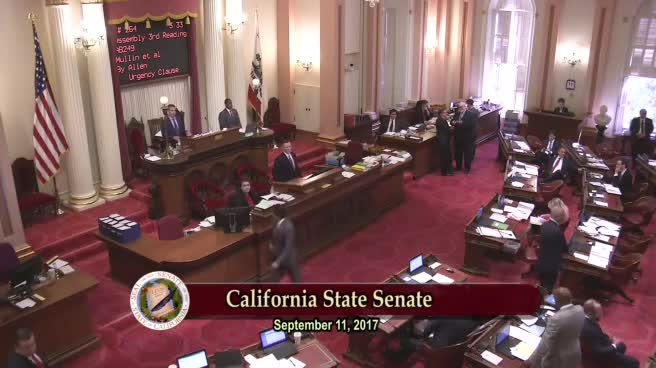 1MIN
Senate Floor
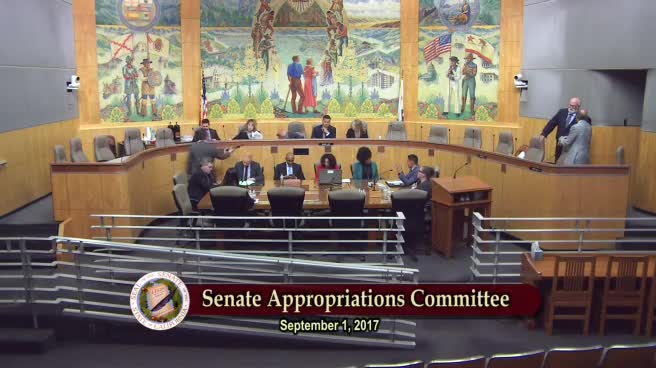 1H
Senate Standing Committee on Appropriations
 1MIN
Assembly Floor
 1H
Assembly Standing Committee on Appropriations
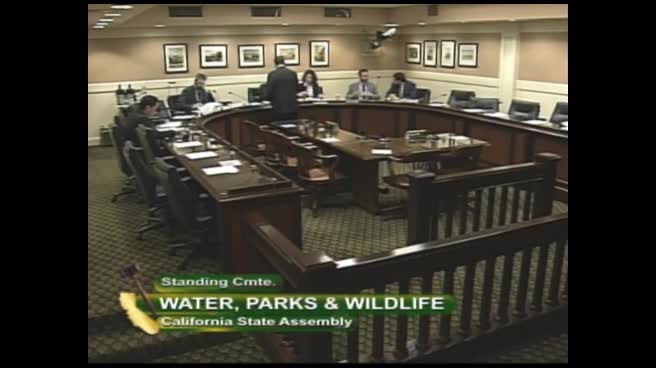 2MIN
Assembly Standing Committee on Water, Parks, and Wildlife
Bill Author

Bill Co-Author(s):






