AB 282: Aiding, advising, or encouraging suicide: exemption from prosecution.
- Session Year: 2017-2018
- House: Assembly
- Latest Version Date: 2018-09-05
Existing law, the End of Life Option Act, until January 1, 2026, authorizes an adult who meets certain qualifications and who has been determined by his or her attending physician to be suffering from a terminal disease to request a prescription for an aid-in-dying drug. The act, with some exceptions, provides immunity from civil or criminal liability for specified actions taken in compliance with the act. Actions taken in accordance with the act do not, for any purpose, constitute suicide, assisted suicide, homicide, or elder abuse under the law.
Existing law makes a person who deliberately aids, advises, or encourages another to commit suicide guilty of a felony.
This bill would prohibit a person whose actions are compliant with the End of Life Option Act from being prosecuted for deliberately aiding, advising, or encouraging suicide.
Existing law, the End of Life Option Act, until January 1, 2026, authorizes an adult who meets certain qualifications and who has been determined by his or her attending physician to be suffering from a terminal disease to request a prescription for an aid-in-dying drug. The act, with some exceptions, provides immunity from civil or criminal liability for specified actions taken in compliance with the act. Actions taken in accordance with the act do not, for any purpose, constitute suicide, assisted suicide, homicide, or elder abuse under the law.
Existing law makes a person who deliberately aids, advises, or encourages another to commit suicide guilty of a felony.
This bill would prohibit a person whose actions are authorized pursuant to compliant with the End of Life Option Act from being prosecuted for deliberately aiding, advising, or encouraging suicide.
Existing law, the End of Life Option Act, until January 1, 2026, authorizes an adult who meets certain qualifications and who has been determined by his or her attending physician to be suffering from a terminal disease to request a prescription for an aid-in-dying drug. The act, with some exceptions, provides immunity from civil or criminal liability for specified actions taken in compliance with the act. Actions taken in accordance with the act do not, for any purpose, constitute suicide, assisted suicide, homicide, or elder abuse under the law.
Existing law makes a person who deliberately aids, advises, or encourages another to commit suicide guilty of a felony.
This bill would prohibit a person whose actions are authorized pursuant to the End of Life Option Act from being prosecuted for deliberately aiding, advising, or encouraging suicide.
Existing law establishes the Commission on Peace Officer Standards and Training and requires it to develop and disseminate guidelines and training for law enforcement officers, as described.This bill would require the commission to develop and disseminate training for peace officers on principled policing, which would include the subjects of procedural justice and implicit bias, as defined. The bill would require this training for specified peace officers. The bill would also require the commission to certify and make training available to train peace officers to teach the course of training on principled policing to other officers in their agencies. The bill would require the commission to offer the principled policing course and the training course quarterly commencing in June 2018. The bill would require the commission, no later than June 1, 2019, to evaluate its current course of basic training and promulgate a plan to incorporate the concepts of principled policing into its course of basic training and would require each peace officer to complete a refresher course no less than every 5 years.By requiring additional training for peace officers, this bill would impose a state-mandated local program.The California Constitution requires the state to reimburse local agencies and school districts for certain costs mandated by the state. Statutory provisions establish procedures for making that reimbursement.This bill would provide that, if the Commission on State Mandates determines that the bill contains costs mandated by the state, reimbursement for those costs shall be made pursuant to the statutory provisions noted above.Existing law establishes the Commission on Peace Officer Standards and Training and requires it to develop and disseminate guidelines and training for law enforcement officers, as described.
This bill would require the commission to develop and disseminate training for peace officers on principled policing, which would include the subjects of procedural justice and implicit bias, as defined. The bill would require this training for specified peace officers. The bill would also require the commission to certify and make training available to train peace officers to teach the course of training on principled policing to other officers in their agencies. The bill would require the commission to offer the principled policing course and the training course quarterly commencing in June 2018. The bill would require the commission, no later than June 1, 2019, to evaluate its current course of basic training and promulgate a plan to incorporate the concepts of principled policing into its course of basic training and would require each peace officer to complete a refresher course no less than every 5 years.
By requiring additional training for peace officers, this bill would impose a state-mandated local program.
The California Constitution requires the state to reimburse local agencies and school districts for certain costs mandated by the state. Statutory provisions establish procedures for making that reimbursement.
This bill would provide that, if the Commission on State Mandates determines that the bill contains costs mandated by the state, reimbursement for those costs shall be made pursuant to the statutory provisions noted above.
(a)Any person who deliberately aids, advises, or encourages another to commit suicide is guilty of a felony.
(b)A person whose actions are compliant with the provisions of the End of Life Option Act (Part 1.85 (commencing with Section 443) of Division 1 of the Health and Safety Code) shall not be prosecuted under this section.
(a)Every Any person who deliberately aids, advises, or encourages another to commit suicide is guilty of a felony.
(b)A person whose actions are compliant with the provisions of the End of Life Option Act (Part 1.85 (commencing with Section 443) of Division 1 of the Health and Safety Code) shall not be prosecuted under this section.
(a)Every person who deliberately aids, advises, or encourages another to commit suicide is guilty of a felony.
(b)A person whose actions are authorized pursuant to compliant with the provisions of the End of Life Option Act (Part 1.85 (commencing with Section 443) of Division 1 of the Health and Safety Code) shall not be prosecuted under this section.
(a)Every person who deliberately aids, or advises, or encourages another to commit suicide, suicide is guilty of a felony.
(b)A person whose actions are authorized pursuant to the provisions of the End of Life Option Act (Part 1.85 (commencing with Section 443) of Division 1 of the Health and Safety Code) shall not be prosecuted under this section.
SECTION 1.The Legislature finds and declares all of the following:(a)The relationship between law enforcement and the communities they are sworn to protect must be grounded in trust in order to ensure safety and protection for all.(b)Despite the ongoing challenges to fostering strong relationships of trust between law enforcement and communities, the practice of principled policing, specifically procedural justice and implicit bias, is one strategy shown to improve police-community relationships.(c)It is in the interest of Californias communities and the thousands of men and women who are sworn to serve and protect the public that the State of California support evidence-based strategies to improve the relationship of trust between law enforcement and communities.(d)Understanding and implementing the practice of principled policing, specifically procedural justice and implicit bias, offers an opportunity for law enforcement and communities to collaboratively build trust and improve safety for all.SEC. 2.Section 13519.45 is added to the Penal Code, to read:13519.45.(a)(1)The commission shall develop and disseminate training on principled policing, specifically procedural justice and implicit bias, for all peace officers described in subdivision (a) of Section 13510.(2)Procedural justice means an approach to policing based on giving people the opportunity to tell their side of the story, remaining neutral in decisionmaking and behavior, treating people with respect, and explaining actions in a way that communicates caring for peoples concerns so as to demonstrate trustworthiness.(3)Implicit bias means thoughts or feelings about social groups that can influence peoples perceptions, decisions, and actions without awareness.(4)The course or courses of instruction shall stress procedural justice as a strategy for improving the relationship of trust between law enforcement and communities and how implicit bias can be a barrier to procedural justice.(b)The course of training for peace officers shall include adequate instruction on procedural justice and implicit bias in order to foster mutual respect and cooperation between law enforcement and communities. The curriculum shall be evidence-based and shall be developed in consultation with appropriate groups and individuals who have expertise in procedural justice or implicit bias, including, but not limited to, law enforcement agencies that have demonstrated experience in procedural justice or implicit bias training, university professors who specialize in addressing and reducing racial and identity bias towards individuals and groups, and community organizations or members who specialize in civil or human rights and criminal justice. The course of instruction shall include, but not be limited to, consideration of each of the following subjects:(1)Procedural justice as a strategy for improving the relationship of trust between law enforcement agencies and the communities they are sworn to serve.(2)Implicit bias as a barrier to procedural justice.(3)Historical and generational effects of policing.(4)Interactive nature of policing goals, procedural justice, and implicit bias.(c)The commission shall also certify and make training available to train peace officers to be able to effectively teach the course of training on principled policing. The training course shall be structured so that experts on procedural justice and implicit bias train law enforcement agencies to be able to effectively teach the concepts, principles, and research behind procedural justice and implicit bias to colleagues within their departments. Participating law enforcement agencies are encouraged to send at least one police executive or manager and one training officer to the training course. Law enforcement agencies are encouraged to attend the training course with at least one community member. Upon completion of the training course, peace officers from participating law enforcement agencies shall be qualified by the commission to conduct the course on principled policing for colleagues in their respective agencies.(d)The commission shall offer the course on principled policing and the training on a quarterly basis in regional training centers across the state commencing in June 2018.(e)No later than June 1, 2019, the commission shall evaluate its current course of basic training and promulgate a plan to incorporate the concepts of principled policing, as set forth in this section, into its course of basic training and shall require each peace officer described in subdivision (a) of Section 13510 to complete a refresher course no less frequently than every five years. Implementation of the plan is contingent upon appropriation of funds by the Legislature.SEC. 3.If the Commission on State Mandates determines that this act contains costs mandated by the state, reimbursement to local agencies and school districts for those costs shall be made pursuant to Part 7 (commencing with Section 17500) of Division 4 of Title 2 of the Government Code.The Legislature finds and declares all of the following:
(a)The relationship between law enforcement and the communities they are sworn to protect must be grounded in trust in order to ensure safety and protection for all.
(b)Despite the ongoing challenges to fostering strong relationships of trust between law enforcement and communities, the practice of principled policing, specifically procedural justice and implicit bias, is one strategy shown to improve police-community relationships.
(c)It is in the interest of Californias communities and the thousands of men and women who are sworn to serve and protect the public that the State of California support evidence-based strategies to improve the relationship of trust between law enforcement and communities.
(d)Understanding and implementing the practice of principled policing, specifically procedural justice and implicit bias, offers an opportunity for law enforcement and communities to collaboratively build trust and improve safety for all.
SEC. 2.Section 13519.45 is added to the Penal Code, to read:13519.45.(a)(1)The commission shall develop and disseminate training on principled policing, specifically procedural justice and implicit bias, for all peace officers described in subdivision (a) of Section 13510.
(2)Procedural justice means an approach to policing based on giving people the opportunity to tell their side of the story, remaining neutral in decisionmaking and behavior, treating people with respect, and explaining actions in a way that communicates caring for peoples concerns so as to demonstrate trustworthiness.
(3)Implicit bias means thoughts or feelings about social groups that can influence peoples perceptions, decisions, and actions without awareness.
(4)The course or courses of instruction shall stress procedural justice as a strategy for improving the relationship of trust between law enforcement and communities and how implicit bias can be a barrier to procedural justice.
(b)The course of training for peace officers shall include adequate instruction on procedural justice and implicit bias in order to foster mutual respect and cooperation between law enforcement and communities. The curriculum shall be evidence-based and shall be developed in consultation with appropriate groups and individuals who have expertise in procedural justice or implicit bias, including, but not limited to, law enforcement agencies that have demonstrated experience in procedural justice or implicit bias training, university professors who specialize in addressing and reducing racial and identity bias towards individuals and groups, and community organizations or members who specialize in civil or human rights and criminal justice. The course of instruction shall include, but not be limited to, consideration of each of the following subjects:
(1)Procedural justice as a strategy for improving the relationship of trust between law enforcement agencies and the communities they are sworn to serve.
(2)Implicit bias as a barrier to procedural justice.
(3)Historical and generational effects of policing.
(4)Interactive nature of policing goals, procedural justice, and implicit bias.
(c)The commission shall also certify and make training available to train peace officers to be able to effectively teach the course of training on principled policing. The training course shall be structured so that experts on procedural justice and implicit bias train law enforcement agencies to be able to effectively teach the concepts, principles, and research behind procedural justice and implicit bias to colleagues within their departments. Participating law enforcement agencies are encouraged to send at least one police executive or manager and one training officer to the training course. Law enforcement agencies are encouraged to attend the training course with at least one community member. Upon completion of the training course, peace officers from participating law enforcement agencies shall be qualified by the commission to conduct the course on principled policing for colleagues in their respective agencies.
(d)The commission shall offer the course on principled policing and the training on a quarterly basis in regional training centers across the state commencing in June 2018.
(e)No later than June 1, 2019, the commission shall evaluate its current course of basic training and promulgate a plan to incorporate the concepts of principled policing, as set forth in this section, into its course of basic training and shall require each peace officer described in subdivision (a) of Section 13510 to complete a refresher course no less frequently than every five years. Implementation of the plan is contingent upon appropriation of funds by the Legislature.
SEC. 3.If the Commission on State Mandates determines that this act contains costs mandated by the state, reimbursement to local agencies and school districts for those costs shall be made pursuant to Part 7 (commencing with Section 17500) of Division 4 of Title 2 of the Government Code.
|
Date
|
Status
|
|---|---|
| Sep 5, 2018 | Chaptered by Secretary of State - Chapter 245, Statutes of 2018. |
| Sep 5, 2018 | Approved by the Governor. |
| Aug 24, 2018 | Enrolled and presented to the Governor at 4:30 p.m. |
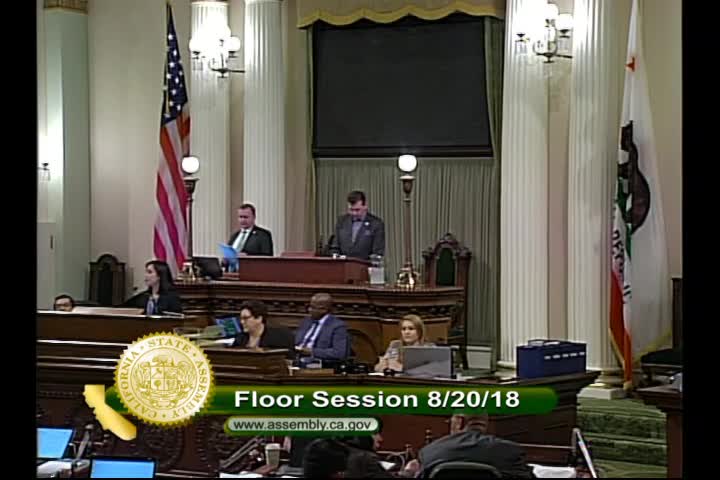
| Aug 20, 2018 | Senate amendments concurred in. To Engrossing and Enrolling. |
| Aug 7, 2018 | In Assembly. Concurrence in Senate amendments pending. May be considered on or after August 9 pursuant to Assembly Rule 77. |
| Aug 6, 2018 | Read third time. Passed. Ordered to the Assembly. |
| May 16, 2018 | Read second time and amended. Ordered to third reading. |
| Mar 15, 2018 | From committee chair, with author's amendments: Amend, and re-refer to committee. Read second time, amended, and re-referred to Com. on PUB. S. |
| May 15, 2018 | From committee: Amend, and do pass as amended. (Ayes 5. Noes 2.) (May 15). |
| Mar 15, 2018 | Referred to Com. on PUB. S. |
| Jan 18, 2018 | In Senate. Read first time. To Com. on RLS. for assignment. |
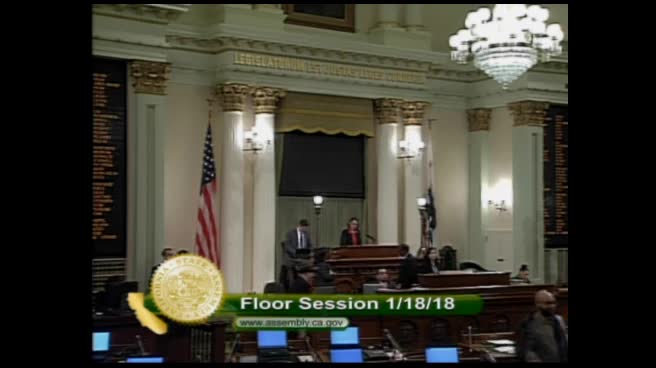
| Jan 18, 2018 | Read third time. Passed. Ordered to the Senate. |
| Jan 10, 2018 | Read second time. Ordered to third reading. |
| Jan 9, 2018 | From committee: Do pass. (Ayes 6. Noes 0.) (January 9). |
| Jan 4, 2018 | Re-referred to Com. on PUB. S. |
| Jan 3, 2018 | From committee chair, with author's amendments: Amend, and re-refer to Com. on PUB. S. Read second time and amended. |
| Mar 14, 2017 | In committee: Hearing postponed by committee. |
| Feb 13, 2017 | Referred to Com. on PUB. S. |
| Feb 3, 2017 | From printer. May be heard in committee March 5. |
| Feb 2, 2017 | Read first time. To print. |
|
Date
|
Description
|
Location
|
Votes
|
|
|---|---|---|---|---|
| Aug 20, 2018 | AB 282 JONES-SAWYER Concurrence in Senate Amendments | Assembly Floor |
Passed |
|
| Aug 6, 2018 | Assembly 3rd Reading AB282 Jones-Sawyer et al. By Monning | Senate Floor |
Passed |
|
| May 15, 2018 | Do pass as amended | Senate Standing Committee on Public Safety |
Passed |
|
| Jan 18, 2018 | Favorable With Amendment(s) (Children, Families & Seniors Subcommittee) | Assembly Floor |
Passed |
|
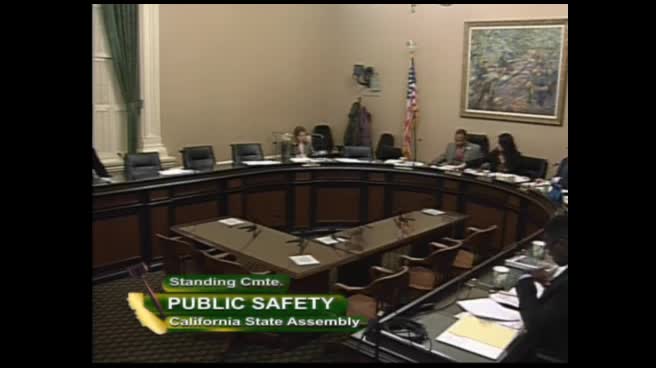
| Jan 9, 2018 | Do pass. | Assembly Standing Committee on Public Safety |
Passed |
This list shows positions taken on this bill by organizations on the date displayed, which is linked to the original source.
Positions by individuals are not included.
|
Organization
|
Position
|
Date
|
|---|---|---|
| American Civil Liberties Union | ** Support | Jun 19, 2018 |
| American Civil Liberties Union; California Public Defenders Association` | ** Support | May 14, 2018 |
| Assembly Floor Vote: 45-17 | ** Against | May 14, 2018 |
| Association For Los Angeles Deputy Sheriffs | ** Support | Mar 13, 2017 |
| Association of Deputy District Attorneys | ** Support | Mar 13, 2017 |
| California Association Of Code Enforcement Officers | ** Support | Mar 13, 2017 |
| California Attorneys For Criminal Justice | ** Support | Mar 13, 2017 |
| California College And University Police Chiefs Association | ** Support | Mar 13, 2017 |
| California Correctional Supervisors Association | ** Support | Mar 13, 2017 |
| California Narcotics Officers Association | ** Support | Mar 13, 2017 |
| California Police Chiefs Association | ** Support | May 16, 2018 |
| California ProLife Council | ** Against | Jun 19, 2018 |
| California Public Defenders Association | ** Support | Jun 19, 2018 |
| California Right to Life Committee, Inc. | ** Against | Jun 19, 2018 |
| California State Sheriff's Association | ** Against | Mar 13, 2017 |
| California State Sheriffs Association | ** Against | Mar 13, 2017 |
| Crusade For Life | ** Against | Jun 19, 2018 |
| Life Legal Defense Foundation | ** Against | Jun 19, 2018 |
| Los Angeles County Professional Peace Officers Association | ** Support | Mar 13, 2017 |
| Los Angeles Police Protective League | ** Support | Mar 13, 2017 |
| National Association Of Social Workers, California Chapter | ** Support | Mar 13, 2017 |
| Need For This Bill | ** Against | May 14, 2018 |
| Peace Officers Research Association Of California | ** Support | Mar 13, 2017 |
| PURPOSE | ** Against | May 14, 2018 |
| Riverside Sheriffs Association | ** Support | Mar 13, 2017 |
| Riverside Sheriffs' Association | ** Support | Mar 13, 2017 |
| Scholl Institute Of Bioethics | ** Against | Jun 19, 2018 |
| Seniors Against Suicide | ** Against | Jun 19, 2018 |
CONCURRENCE IN SENATE AMENDMENTS
CSA1 Bill Id:AB 282
Author:(Jones-Sawyer)
As Amended Ver:May 16, 2018
Majority vote
ASSEMBLY: | 45-17 | (January 18, 2018) | SENATE: | 25-9 | (August 6, 2018) |
Original Committee Reference: PUB. S.
SUMMARY: Clarifies that a person whose actions are compliant with the provisions of the End of Life Option Act (Act) cannot be prosecuted for the crime of assisted suicide.
The Senate amendments make technical, non-substantive changes.
EXISTING LAW:
- Makes it a felony to deliberately aid, advise, or encourage another person to commit suicide.
- Enacts the End of Life Option Act.
- Permits an individual who is an adult with the capacity to make medical decisions and with a terminal disease to request and receive a prescription for an aid-in-dying drug if all of the following conditions exist:
- The attending physician has diagnosed the individual with a terminal disease;
- The individual has voluntarily expressed the wish to receive a prescription for an aid in dying drug;
- The individual is a resident of California and is able to establish residency, as specified;
- The individual documents his or her request for aid-in-dying drug, as specified; and,
- The individual has the physical and mental ability to self-administer the aid-in-dying drug.
- States that death resulting from actions taken in accordance with the Act shall not, for any purposes, constitute suicide, assisted suicide, homicide, or elder abuse under the law.
- Prohibits a person from being subject to civil or criminal liability solely because the person was present when the qualified individual self-administers the prescribed aid-in-dying drug. A person may also, without civil or criminal liability, assist the qualified individual by preparing the aid-in-dying drug, as long as he or she does not assist the qualified patient in ingesting the aid-in-dying drug.
- Prohibits a health care provider from being subject to civil or criminal liability for actions authorized under the Act.
- Provides that knowingly altering or forging a request for an aid-in-dying drug to end an individual's life without his or her authorization or concealing or destroying a withdrawal or rescission of a request for an aid-in-dying drug is punishable as a felony if the act is done with the intent or effect of causing the individual's death.
- Provides that knowingly coercing or exerting undue influence on an individual to request or ingest an aid-in-dying drug for the purpose of ending his or her life or to destroy a withdrawal or rescission of a request, or to administer an aid-in-dying drug to an individual without his or her knowledge or consent, is punishable as a felony.
AS PASSED BY THE ASSEMBLY, this bill clarified that a person whose actions are compliant with the provisions of the End of Life Option Act (Act) cannot be prosecuted for the crime of assisted suicide.
FISCAL EFFECT: Unknown. This bill is keyed non-fiscal by the Legislative Counsel.
COMMENTS: According to the author, "AB 282 is a simple bill which provides technical clean up to the statute which makes it a felony to aid, advise, or encourage a suicide. In 2015, the Legislature passed the End of Life Option Act which allows a terminally ill adult with the capacity to make medical decisions to request a prescription for an aid in dying drug if certain conditions are met, including that the patient is able to self-administer the drug. The End of Life Option Act insulates a prescribing physician and a person who is present to assist the qualified patient in preparing the drug from criminal liability for actions which are authorized under the Act. However, when the End of Life Option Act was enacted, the Penal Code provision which makes it a crime to aid a suicide was not updated to reflect that change. This bill specifies that actions which are authorized under the End of Life Option Act cannot be prosecuted under the criminal statute."
Analysis Prepared by: Sandy Uribe / PUB. S. / (916) 319-3744 FN: 0002974
Office of Senate Floor Analyses (916) 651-1520 Fax: (916) 327-4478 | AB |
THIRD READING
Bill No: AB 282
:
SENATE PUBLIC SAFETY COMMITTEE: 5-2, 5/15/18
AYES: Skinner, Bradford, Jackson, Mitchell, Wiener
NOES: Anderson, Stone
ASSEMBLY FLOOR: 45-17, 1/18/18 - See last page for vote
DIGEST:
This bill prohibits persons whose actions are compliant with the End of Life Option Act from being prosecuted for deliberately aiding, advising, or encouraging suicide.
Existing law:
- Authorizes, as the End of Life Option Act (Act), an adult who meets certain qualifications and who has been determined by his or her attending physician to be suffering from a terminal disease to request a prescription for an aid-in-dying drug. The Act, with some exceptions, provides immunity from civil or criminal liability for specified actions taken in compliance with the Act. Actions taken in accordance with the Act do not, for any purpose, constitute suicide, assisted suicide, homicide, or elder abuse under the law. (Health & Saf. Code, § 443, et seq.)
- Provides that the Act expires on January 1, 2026. (Health & Saf. Code, § 443.215.)
- Specifies that a person who deliberately aids, advises, or encourages another person to commit suicide is guilty of a felony. (Pen. Code, § 401.)
This bill prohibits persons whose actions are compliant with the Act from being prosecuted for deliberately aiding, advising, or encouraging suicide.
Background
The Act prohibits a person from being subject to civil or criminal liability solely because the person was present when the qualified individual self-administers the prescribed aid-in-dying drug. The Act permits, without civil or criminal liability, a person who is present to assist the qualified individual by preparing the aid-in-dying drug so long as the person does not assist the qualified person in ingesting the drug. However, the Act did not amend the Penal Code, and aiding a person in the commission of suicide remains a felony.
This bill makes a necessary cross-reference to the Penal Code that states that so long as a person is compliant with the terms of the Act they cannot be prosecuted under the existing Penal Code Section 401 which specifies that a person who deliberately aids, advises, or encourages another person to commit suicide is guilty of a felony. This bill does not legalize “aiding, advising, or encouraging” another to commit suicide. This bill merely specifies that if a person was compliant with existing law under the Act, they are not guilty of violating Penal Code Section 401.
Specifically, this bill prohibits a person from being subject to criminal liability solely because the person was present when the qualified individual self-administers the prescribed aid-in-dying drug. Additionally, this bill permits, without criminal liability, a person who is present to assist the qualified individual by preparing the aid-in-dying drug so long as the person does not assist the qualified person in ingesting the drug. This bill has no other effect.
FISCAL EFFECT: Appropriation: Fiscal Com.: Local:
American Civil Liberties Union
California Public Defenders Association
OPPOSITION: (Verified 5/15/18)
California ProLife Council
California Right to Life Committee, Inc.
Crusade for Life
Life Legal Defense Foundation
Scholl Institute of Bioethics
Seniors Against Suicide
One individual
ARGUMENT IN SUPPORT: According to the American Civil Liberties Union, “In 2015, California took the humane step of authorizing qualified terminally ill persons to request a prescription for an aid-in-dying drug under the End of Life Option Act (“the Act”). Under the Act, a physician is authorized to prescribe an aid-in-dying drug under specified circumstances, and a person who assists the individual in preparing the drug is given civil and criminal immunity, so long as the person does not assist the person in ingesting the drug. However, the provisions of Penal Code section 401, which makes it a felony to assist someone in committing suicide, do not exempt the actions of physicians or other persons as allowed under the Act. AB 282 will correct this omission and protect those who assist persons who seek to end their lives, legally, on their own terms.”
ARGUMENT IN OPPOSITION: According to the Life Legal Defense Foundation, “Medical literature indicates that up to 77% of people diagnosed with a terminal illness suffer from major depression. A study published in the Journal of Clinical Psychology found a ‘statistically significant association between clinical depression and the desire for hastened death.’ Under AB 282, terminally ill patients-many of whom are suffering from depression, anxiety, and other mental health conditions-may be aided, advised, or encouraged to request and inject a lethal prescription. Decriminalizing behavior that may lead someone to be talked into committing suicide is in direct conflict with the State’s suicide prevention policies.”
ASSEMBLY FLOOR: 45-17, 1/18/18
AYES: Aguiar-Curry, Baker, Berman, Bloom, Burke, Caballero, Calderon, Carrillo, Cervantes, Chau, Chiu, Chu, Cooper, Cunningham, Daly, Frazier, Friedman, Cristina Garcia, Eduardo Garcia, Gloria, Gray, Grayson, Holden, Irwin, Jones-Sawyer, Kalra, Lackey, Levine, Limón, Low, Maienschein, McCarty, Medina, Muratsuchi, O'Donnell, Quirk, Reyes, Rubio, Salas, Santiago, Mark Stone, Ting, Weber, Wood, Rendon
NOES: Acosta, Travis Allen, Bigelow, Brough, Chávez, Chen, Choi, Dahle, Flora, Fong, Harper, Mathis, Melendez, Patterson, Steinorth, Voepel, Waldron
NO VOTE RECORDED: Arambula, Bonta, Cooley, Eggman, Gallagher, Gipson, Gonzalez Fletcher, Kiley, Mayes, Mullin, Nazarian, Obernolte, Quirk-Silva, Rodriguez, Thurmond
Prepared by: Gabe Caswell / PUB. S. /
6/19/18 13:09:02
**** END ****
SENATE COMMITTEE ON PUBLIC SAFETY
Senator Nancy Skinner, Chair
2017 - 2018 Regular
Bill No: AB 282 Hearing Date: May 15, 2018
Author: | Jones-Sawyer | ||
Version: | March 15, 2018 | ||
Urgency: | No | Fiscal: | No |
Consultant: | GC | ||
Subject: Aiding, Advising, or Encouraging Suicide: Exemption from Prosecution
HISTORY
Source: Author
Prior Legislation: AB 15 X2 (Eggman), Ch. 1, Stats. of 2015
SB 128 (Wolk), 2015, held in Assembly Health
AB 2139 (Eggman), Ch. 568, Stats. of 2014
AB 374 (Berg), 2007, failed Assembly floor
AB 654 (Berg), 2005, failed Assembly floor
Support: American Civil Liberties Union; California Public Defenders Association`
Opposition: California ProLife Council; California Right to Life Committee, Inc.; Crusade for Life; Life Legal Defense Foundation; Scholl Institute of Bioethics; Seniors Against Suicide; one private individual
Assembly Floor Vote: 45-17
PURPOSE
The purpose of this bill is to prohibit persons whose actions are compliant with the End of Life Option Act from being prosecuted for deliberately aiding, advising, or encouraging suicide.
Existing law, as the End of Life Option Act, authorizes an adult who meets certain qualifications and who has been determined by his or her attending physician to be suffering from a terminal disease to request a prescription for an aid-in-dying drug. The act, with some exceptions, provides immunity from civil or criminal liability for specified actions taken in compliance with the act. Actions taken in accordance with the act do not, for any purpose, constitute suicide, assisted suicide, homicide, or elder abuse under the law. (Health & Saf. Code, § 443, et seq.)
Existing law provides that the End of Life Option Act expires on January 1, 2026. (Health & Saf. Code, § 443.215.)
Existing law specifies that a person who deliberately aids, advises, or encourages another person to commit suicide is guilty of a felony. (Pen. Code, § 401.)
COMMENTS
- Need for This Bill
According to the author:
When California passed the End of Life Option Act in 2015, which permits an individual, who is an adult with the capacity to make medical decisions and with a terminal disease to request and receive a prescription for an aid-in-dying drug. It also states that death resulting from actions taken in accordance with the Act shall not, for any purposes, constitute suicide, assisted suicide, homicide, or elder abuse under the law if all of the following conditions exist:
- The attending physician has diagnosed the individual with a terminal disease;
- The individual has voluntarily expressed the wish to receive a prescription for an aid in dying drug;
- The individual is a resident of California and is able to establish residency, as specified;
- The individual documents his or her request for aid-in-dying drug, as specified; and,
- The individual has the physical and mental ability to self-administer the aid-in-dying drug. (Health & Saf. Code, § 443.2, subd. (a).
However, we did not make changes to Penal Code, § 401, which makes it a felony to deliberately aid, advise, or encourage another person to commit suicide. AB 282 will clarify that a person whose actions are authorized under the provisions of the End of Life Option Act cannot be prosecuted for the crime of assisted suicide.
- Effect of This Bill
The End of Life Option Act prohibits a person from being subject to civil or criminal liability solely because the person was present when the qualified individual self-administers the prescribed aid-in-dying drug. The act permits, without civil or criminal liability, a person who is present to assist the qualified individual by preparing the aid-in-dying drug so long as the person does not assist the qualified person in ingesting the drug. However, the End of Life Option Act did not amend the Penal Code, and aiding a person in the commission of suicide remains a felony.
This bill would make a necessary cross-reference to the Penal Code that states that so long as a person is compliant with the terms of the End of Life Option Act they cannot be prosecuted under the existing Penal Code § 401 which specifies that a person who deliberately aids, advises, or encourages another person to commit suicide is guilty of a felony. The bill would not legalize “aiding, advising, or encouraging” another to commit suicide. The bill would merely specify that if a person was compliant with existing law under the End of Life Option Act, they are not guilty of violating Penal Code § 401.
Specifically, the bill would prohibit a person from being subject to criminal liability solely because the person was present when the qualified individual self-administers the prescribed aid-in-dying drug. Additionally, the bill would permit, without criminal liability, a person who is present to assist the qualified individual by preparing the aid-in-dying drug so long as the person does not assist the qualified person in ingesting the drug. This bill has no other effect.
- End of Life Option Act of 2015
California passed the End of Life Option Act in 2015. The Act permits a competent, qualified individual who is an adult with a terminal disease to receive a prescription for an aid-in-dying drug if certain conditions are met, such as two oral requests, a minimum of 15 days apart, and a written request signed by two witnesses, is provided to his or her attending physician, the attending physician refers the patient to a consulting physician to confirm diagnosis and capacity to make medical decisions, and the attending physician refers the patient to a mental health specialist, if indicated. The provisions of the act sunset on January 1, 2026.
Prior to California’s passage, five states had authorized what is referred to as Death with Dignity or Aid-in-Dying. Oregon and Washington enacted their legislation through voter initiatives that took effect in 1997 and 2009, respectively. Vermont enacted legislation in 2013. In Montana and New Mexico, the courts have effectively authorized doctors to engage in the practice. Belgium, the Netherlands, Luxembourg, and Switzerland all allow for physician aid-in-dying, and next year Canada will implement the practice as well.
A 2014 report published by the Institute of Medicine, “Dying in America: Improving Quality and Honoring Individual Preferences Near the End of Life,” identified persistent major gaps in care near the end of life that require urgent attention. Understanding and perceptions of death and dying vary considerably across the population and are influenced by culture, socioeconomic status, and education, as well as by misinformation and fear. Engaging people in defining their own values, goals, and preferences concerning care at the end of life, and ensuring that their care team understands their wishes, has proven remarkably elusive and challenging. While the clinical fields of hospice and palliative care have become more established, the number of specialists in these fields is too small. Too few clinicians in the primary and specialty fields that entail caring for individuals with advanced serious illnesses are proficient in basic palliative care. Often, clinicians are reluctant to have honest and direct conversations with patients and families about end of life issues. Patients and families face additional difficulties presented by the health care system itself, which does not provide adequate financial or organizational support for the kinds of health care and social services that might truly make a difference to them. The report notes that a patient-centered, family-oriented approach to care near the end of life should be a high national priority and that compassionate, affordable, and effective care for these patients is an achievable goal.
In February of 2012 the California HealthCare Foundation published a survey, “Final Chapter: Californians' Attitudes and Experiences with Death and Dying”. The survey found that most Californians would prefer a natural death if they became severely ill, rather than have all possible care provided. We want to die at home rather than in a hospital or nursing home, and want to talk with our doctor about our wishes for end-of-life care. However, what we want isn't what we always get, as the survey numbers illustrate:
- Seventy percent of Californians would prefer to die at home; however of deaths in 2009, 32% occurred at home, 42% in a hospital, and 18% in a nursing home;
- Almost 80% say they definitely or probably would like to talk with a doctor about end of life wishes, but only 7% have had a doctor speak with them about it; and,
- The survey also found that what matters most at the end of life varies by race and ethnicity, for example, Latinos rate living as long as possible more highly than do other groups. African Americans and Latinos are much more likely to place importance on being at peace spiritually. Asians and white/non-Latinos place the least importance on living as long as possible. Sixty percent of all respondents say it is extremely important that their family not be burdened by decisions regarding their care.
The American Medical Association (AMA) code of medical ethics (opinion 2.201) states the duty to relieve pain and suffering is central to the physician’s role as healer and is an obligation physicians have to their patients. Palliative sedation to unconsciousness is the administration of sedative medication to the point of unconsciousness in a terminally ill patient. It is an intervention of last resort to reduce severe, refractory pain or other distressing clinical symptoms that do not respond to aggressive symptom-specific palliation. Palliative sedation is an accepted and appropriate component of end-of-life care under specific, relatively rare circumstances. Indeed, the AMA code states, when symptoms cannot be diminished through all other means of palliation, including symptom-specific treatments, it is the ethical obligation of a physician to offer palliative sedation to unconsciousness as an option for the relief of intractable symptoms.
Oregon's Death with Dignity Act (DWDA), enacted in late 1997, allows terminally-ill adult Oregonians to obtain and use prescriptions from their physicians for self-administered, lethal doses of medications. In 2011 the Oregon Public Health Division published a summary of DWDA activity up to 2010 which also examined the larger trends seen over 13 years of DWDA. The first prescriptions and deaths under DWDA occurred in 1998, with 24 prescriptions written and 16 self-administered deaths. At the end of 2010, a total of 821 prescriptions had been written and 525 patients had died from ingesting medication prescribed under DWDA. The report noted that demographic characteristics remained relatively unchanged over 13 years. Of the 65 patients who died under DWDA in 2010, most (70.8%) were over age 65; the median age was 72. One hundred percent of decedents were white, well-educated (42.2% had at least a baccalaureate degree), had cancer (78.5%), or amyotrophic lateral sclerosis (11%). As in previous years, the most commonly mentioned end of life concerns among those who died in 2010 were loss of autonomy (93.8%), decreasing ability to participate in activities that made life enjoyable (93.8%), and loss of dignity (78.5%). Since the law was passed in 1997, a total of 1,327 people have had DWDA prescriptions written and 859 patients have died from ingesting medications prescribed under DWDA. Over 90% of patients who used DWDA were enrolled in hospice.
- End of Life Drug
The following narrative describes how end of life drugs are prepared and ingested. It was received from a retired Oregon family physician who wrote approximately 15 prescriptions for aid-in-dying drugs over the course of his career:
The most common drug prescribed is 10 grams of secobarbital (Seconal). A standard size Seconal capsule is 100 mg. This drug was very commonly used as a sleeping pill before the invention of the benzodiazepines (e.g. Dalmane, or Valium) and then later zolpidem (Ambien). The 100 Seconal capsules are delivered in a bottle with a label stating they are for use in the Oregon Death with Dignity Law. In all of the cases I've been involved with, family members, volunteers, and hospice workers have all been very aware that the patient has been in possession of the medication, and I am not aware of a dose that is unaccounted for. In Oregon it is important to understand that it would be very unusual for a patient to actually obtain the drug and then not use it. It is much more common for the patient to request that the prescription be held on file at the pharmacy until they decide to use it. Pharmacies have been very willing to do this. When the patient decides to take the drug the capsules are opened and emptied by the pharmacist, a volunteer or family member, and the powder is mixed with about three ounces of liquid for use.
Seconal is not the only drug used in DWDA. According to the Oregon Public Health Division, DWDA 2013 annual report, since 2010, the trend has shifted to predominant use of pentobarbital (90% of all prescriptions in 2013). Patients are usually also prescribed an anti-nausea medication to take before ingesting an aid-in-dying drug.
- Argument in Support
According to the American Civil Liberties Union:
In 2015, California took the humane step of authorizing qualified terminally ill persons to request a prescription for an aid-in-dying drug under the End of Life Option Act (“the Act”). Under the Act, a physician is authorized to prescribe an aid-in-dying drug under specified circumstances, and a person who assists the individual in preparing the drug is given civil and criminal immunity, so long as the person does not assist the person in ingesting the drug. However, the provisions of Penal Code section 401, which makes it a felony to assist someone in committing suicide, do not exempt the actions of physicians or other persons as allowed under the Act. AB 282 will correct this omission and protect those who assist persons who seek to end their lives, legally, on their own terms.
Argument in Opposition
According to the Life Legal Defense Foundation:
Medical literature indicates that up to 77% of people diagnosed with a terminal illness suffer from major depression. A study published in the Journal of Clinical Psychology found a “statistically significant association between clinical depression and the desire for hastened death.” Under AB 282, terminally ill patients-many of whom are suffering from depression, anxiety, and other mental health conditions-may be aided, advised, or encouraged to request and inject a lethal prescription. Decriminalizing behavior that may lead someone to be talked into committing suicide is in direct conflict with the State’s suicide prevention policies.
-- END –
ASSEMBLY THIRD READING
ATR Bill Id:AB 282
Author:(Jones-Sawyer and Bonta)
As Amended Ver:January 3, 2018
Majority vote
Committee | Votes | Ayes | Noes |
Public Safety | 6-0 | Jones-Sawyer, Lackey, Carrillo, Gonzalez Fletcher, Quirk, Santiago |
SUMMARY: Clarifies that a person whose actions are authorized under the provisions of the End of Life Option Act (Act) cannot be prosecuted for the crime of assisted suicide.
EXISTING LAW:
- Makes it a felony to deliberately aid, advise, or encourage another person to commit suicide.
- Enacts the End of Life Option Act.
- Permits an individual who is an adult with the capacity to make medical decisions and with a terminal disease to request and receive a prescription for an aid-in-dying drug if all of the following conditions exist:
- The attending physician has diagnosed the individual with a terminal disease;
- The individual has voluntarily expressed the wish to receive a prescription for an aid in dying drug;
- The individual is a resident of California and is able to establish residency, as specified;
- The individual documents his or her request for aid-in-dying drug, as specified; and,
- The individual has the physical and mental ability to self-administer the aid-in-dying drug.
- States that death resulting from actions taken in accordance with the Act shall not, for any purposes, constitute suicide, assisted suicide, homicide, or elder abuse under the law.
- Prohibits a person from being subject to civil or criminal liability solely because the person was present when the qualified individual self-administers the prescribed aid-in-dying drug. A person may also, without civil or criminal liability, assist the qualified individual by preparing the aid-in-dying drug, as long as he or she does not assist the qualified patient in ingesting the aid-in-dying drug.
- Prohibits a health care provider from being subject to civil or criminal liability for actions authorized under the Act.
- Provides that knowingly altering or forging a request for an aid-in-dying drug to end an individual's life without his or her authorization or concealing or destroying a withdrawal or rescission of a request for an aid-in-dying drug is punishable as a felony if the act is done with the intent or effect of causing the individual's death.
- Provides that knowingly coercing or exerting undue influence on an individual to request or ingest an aid-in-dying drug for the purpose of ending his or her life or to destroy a withdrawal or rescission of a request, or to administer an aid-in-dying drug to an individual without his or her knowledge or consent, is punishable as a felony.
FISCAL EFFECT: None. This bill is keyed non-fiscal by the Legislative Counsel.
COMMENTS: According to the author, "AB 282 is a simple bill which provides technical clean up to the statute which makes it a felony to aid, advise, or encourage a suicide. In 2015, the Legislature passed the End of Life Option Act which allows a terminally ill adult with the capacity to make medical decisions to request a prescription for an aid in dying drug if certain conditions are met, including that the patient is able to self-administer the drug. The End of Life Option Act insulates a prescribing physician and a person who is present to assist the qualified patient in preparing the drug from criminal liability for actions which are authorized under the Act. However, when the End of Life Option Act was enacted, the Penal Code provision which makes it a crime to aid a suicide was not updated to reflect that change. This bill specifies that actions which are authorized under the End of Life Option Act cannot be prosecuted under the criminal statute."
Analysis Prepared by: Sandy Uribe / PUB. S. / (916) 319-3744 FN: 0002515
Date of Hearing: January 9, 2018
Counsel: Sandra Uribe
ASSEMBLY COMMITTEE ON
Reginald Byron Jones-Sawyer, Sr., Chair
ABPCA Bill Id:
Author:() – As Ver:
SUMMARY:
Clarifies that a person whose actions are authorized under the provisions of the End of Life Option Act cannot be prosecuted for the crime of assisted suicide.
EXISTING LAW:
- Makes it a felony to deliberately aid, advise, or encourage another person to commit suicide. (Pen. Code, § 401.)
- Enacts the End of Life Option Act. (Health & Saf. Code, § 443 et. seq.)
- Permits an individual who is an adult with the capacity to make medical decisions and with a terminal disease to request and receive a prescription for an aid-in-dying drug if all of the following conditions exist:
- The attending physician has diagnosed the individual with a terminal disease;
- The individual has voluntarily expressed the wish to receive a prescription for an aid in dying drug;
- The individual is a resident of California and is able to establish residency, as specified;
- The individual documents his or her request for aid-in-dying drug, as specified; and,
- The individual has the physical and mental ability to self-administer the aid-in-dying drug. (Health & Saf. Code, § 443.2, subd. (a).)
- The attending physician has diagnosed the individual with a terminal disease;
- States that death resulting from actions taken in accordance with the Act shall not, for any purposes, constitute suicide, assisted suicide, homicide, or elder abuse under the law. (Health & Saf. Code, § 443.18.)
- Prohibits a person from being subject to civil or criminal liability solely because the person was present when the qualified individual self-administers the prescribed aid-in-dying drug. A person may also, without civil or criminal liability, assist the qualified individual by preparing the aid-in-dying drug, as long as he or she does not assist the qualified patient in ingesting the aid-in-dying drug. (Health & Saf. Code, § 443.14, subd. (a).)
- Prohibits a health care provider from being subject to civil or criminal liability for actions authorized under the Act. (Health & Saf. Code, § 443.14, subd. (b).)
- Provides that knowingly altering or forging a request for an aid-in-dying drug to end an individual’s life without his or her authorization or concealing or destroying a withdrawal or rescission of a request for an aid-in-dying drug is punishable as a felony if the act is done with the intent or effect of causing the individual’s death. (Health & Saf. Code, § 443.17, subd. (a).)
- Provides that knowingly coercing or exerting undue influence on an individual to request or ingest an aid-in-dying drug for the purpose of ending his or her life or to destroy a withdrawal or rescission of a request, or to administer an aid-in-dying drug to an individual without his or her knowledge or consent, is punishable as a felony. (Health & Saf. Code, § 443.17, subd. (b).)
FISCAL EFFECT:
Unknown
COMMENTS:
- Author's Statement: According to the author, “AB 282 is a simple bill which provides technical clean up to the statute which makes it a felony to aid, advise, or encourage a suicide. In 2015, the Legislature passed the End of Life Option Act which allows a terminally ill adult with the capacity to make medical decisions to request a prescription for an aid in dying drug if certain conditions are met, including that the patient is able to self-administer the drug. The End of Life Option Act insulates a prescribing physician and a person who is present to assist the qualified patient in preparing the drug from criminal liability for actions which are authorized under the Act. However, when the End of Life Option Act was enacted, the Penal Code provision which makes it a crime to aid a suicide was not updated to reflect that change. This bill specifies that actions which are authorized under the End of Life Option Act cannot be prosecuted under the criminal statute.”
- End of Life Option Act: The End of Life Option Act “authorizes a terminally ill patient with the capacity to make medical decisions to request a prescription for a lethal dose of drugs, insulates a prescribing physician from criminal liability, and sets forth rigorous procedures and safeguards to protect against abuse.” (Donorovich-Odonnell v. Harris (2015) 241 Cal. App. 4th 1118, 1124.) A patient’s request for the drug and ingestion of the drug is not considered a suicide. (Health & Saf. Code, § 443.18.)
The Act provides physicians immunity from civil or criminal liability, censure, discipline, suspension, loss of license, or other penalties for participating in good faith compliance with the law. The Act also protects persons who are present or prepare the aid-in-dying drug, as long as they do not assist with the ingestion of the drug. (Health & Saf. Code, § 443.14.) - Elements of Assisted Suicide: Penal Code section 401 proscribes aiding, assisting, or encouraging a suicide. Although the statute appears to criminalize simply giving advice or encouragement, “’the courts have required something more than mere verbal solicitation of another person to commit a hypothetical act of suicide. The courts have interpreted the statute as proscribing the direct aiding and abetting of a specific suicidal act. Some active and intentional participation in the events leading to the suicide are required in order to establish a violation. Thus, to prove a violation of section 401 it is necessary to establish all of the following essential elements: (1) the defendant specifically intended the victim's suicide; (2) the defendant undertook some active and direct participation in bringing about the suicide, such as by furnishing the victim with the means of suicide; (3) the victim actually committed a specific, overt act of suicide.’” (Donorovich-O’Donnell v. Harris, supra, 241 Cal.App.4th 1118, 1127-1128, quoting In re Ryan N. (2001) 92 Cal.App.4th 1359, 1374-1375.)
This bill would clarify that a person who actions are authorized under the provisions of the End of Life Option Act cannot be prosecuted for the crime of assisted suicide. - Argument in Support: The American Civil Liberties Union of California states, “In 2015, California took the humane step of authorizing qualified terminally ill persons to request a prescription for an aid-in-dying drug under the End of Life Option Act (“the Act”). Under the Act, a physician is authorized to prescribe an aid-in-dying drug under specified circumstances, and a persons who assists the individual in preparing the drug is given civil and criminal immunity, so long as the person does not assist the person in ingesting the drug. However, the provisions of Penal Code section 401, which makes it a felony to assist someone in committing suicide, do not exempt the actions of physicians or other persons as authorized under the Act. AB 282 will correct this omission and protect those who assist persons who seek to end their lives, legally, on their own terms.”
- Prior Legislation:
- AB 15 X2 (Eggman), Chapter 1, Statutes of 2015, permits a competent, qualified individual who is an adult with a terminal disease to receive a prescription for an aid-in-dying drug if certain conditions are met.
- SB 128 (Wolk), of the 2015-2016 Legislative Session, was substantially similar to AB 15 X2. SB 128 was held in the Assembly Health Committee.
- AB 2139 (Eggman), Chapter 568, Statutes of 2014 requires a health care provider, when making a diagnosis that a patient has a terminal illness, to notify the patient of his or her right to comprehensive information and counseling regarding legal end-of-life options.
- AB 374 (Berg), of 2007-2008 Legislative Session, would have enacted the California Compassionate Choices Act, which would authorize competent adults who have been determined by two physicians to be suffering from a terminal disease to make a request for medication to hasten the end of their lives in a humane manner. AB 374 was moved to the inactive file on the Assembly Floor without a vote recorded.
- AB 651 (Berg), of the 2005-2006 Legislative Session, would have established a procedure for a competent adult person who is terminally ill and expected to die within six months to obtain from his or her physician a prescription for medication that he or she may self-administer in order to end his or her life. AB 651 failed passage in the Senate Judiciary Committee.
- AB 654 (Berg), of 2005-2006 Legislative Session, would have enacted the California Compassionate Choices Act, which would authorize competent adults who have been determined by two physicians to be suffering from a terminal disease to make a request for medication to hasten the end of their lives in a humane and dignified manner. AB 654 was moved to the inactive file on the Assembly Floor without a vote recorded.
- AB 15 X2 (Eggman), Chapter 1, Statutes of 2015, permits a competent, qualified individual who is an adult with a terminal disease to receive a prescription for an aid-in-dying drug if certain conditions are met.
REGISTERED SUPPORT / OPPOSITION:
Support
American Civil Liberties Union of California
Opposition
None
Analysis Prepared by:
Date of Hearing:
Chief Counsel: Gregory Pagan
ASSEMBLY COMMITTEE ON PUBLIC SAFETY
Reginald Byron Jones-Sawyer, Sr., Chair
ABPCA Bill Id:AB 282
Author:(Jones-Sawyer) – As Introduced Ver:February 2, 2017
SUMMARY:
Requires the Commission on Peace Officer Standards and Training (POST) to develop and disseminate training on procedural justice and implicit bias, as defined. Specifically, this bill:
- Requires POST to develop and disseminate guidelines and training on principled policing, specifically on “procedural justice” and “implicit bias”, as defined, for all peace officers, as provided.
- Defines “procedural justice” as “the procedures used by police officers where citizens are treated fairly and with proper respect as human beings.”
- Defines “implicit bias” as “thoughts or feelings about people of which one is unaware and can influence one’s own and others’ actions.”
- Requires the aforementioned POST courses to stress procedural justice as a strategy for improving the relationship of trust between law enforcement and communities and how implicit bias can be a barrier to procedural justice.
- Requires the aforementioned POST courses to:
- Be evidence-based;
- Be developed in consultation with law enforcement agencies, university professors and community groups with expertise in procedural justice or implicit bias; and
- Include the following subjects:
- Procedural justice as a strategy for improving the relationship of trust between law enforcement agencies and the communities they are sworn to serve;
- Implicit bias as a barrier to procedural justice;
- Historical and generational effects of policing; and the
- Interactive nature of policing goals, procedural justice, and implicit bias.
- Procedural justice as a strategy for improving the relationship of trust between law enforcement agencies and the communities they are sworn to serve;
- Be evidence-based;
- Requires POST to develop and disseminate guidelines and training to train peace officers to be able to effectively teach the course of basic training on principled policing.
- Requires participating law enforcement agencies to send at least one police executive and one training officer to the training course; and encourages law enforcement agencies to attend the training course with at least one community member.
- Requires, upon completion of the training course, peace officers from participating law enforcement agencies to be certified by POST to conduct the course of basic training on principled policing for colleagues in their respective agencies.
- Requires POST to offer the course of basic training on principled policing and the training course on a quarterly basis in regional training centers across the state commencing in June 2018.
- Provides that no later than June 1, 2019, the commission shall evaluate its current course of basic training and promulgate a plan to incorporate the concepts of principled policing, as set forth in this section, into its course of basic training and shall require specified peace officers to complete a refresher course no less frequently than every five years. Implementation of the plan is contingent upon appropriation of funds by the Legislature.
EXISTING LAW:
- Requires all peace officers to complete an introductory course of training prescribed by POST, demonstrated by passage of an appropriate examination developed by POST. (Pen. Code, § 832, subd. (a).)
- Establishes the Commission on Peace Officer Training and Standards. (Pen. Code, § 13500.)
- Empowers POST to develop and implement programs to increase the effectiveness of law enforcement. (Pen. Code, §13503.)
- Authorizes POST, for the purpose of raising the level of competence of local law enforcement officers, to adopt rules establishing minimum standards related to physical, mental and moral fitness and training that shall govern the recruitment of any peace officers in California. (Pen. Code, § 13510, subd. (a).)
- Requires POST to conduct research concerning job-related educational standards and job-related selection standards to include vision, hearing, physical ability, and emotional stability and adopt standards supported by this research. (Pen. Code, § 13510, subd. (b).)
- Requires POST to establish a certification program for peace officers, which shall be considered professional certificates. (Pen. Code, § 13510.1, subd. (a).)
- Requires that the course of basic training for law enforcement officers include adequate instruction on racial and cultural diversity in order to foster mutual respect and cooperation between law enforcement and members of all racial and cultural groups. (Pen. Code, § 13519.4, subd. (b).)
FISCAL EFFECT:
Unknown
COMMENTS:
- Author's Statement: According to the author, "Increasing trust between law enforcement and the communities they serve is a crucial component to maintaining public safety. Studies show that training peace officers on procedural justice and implicit bias has a direct and measurably positive effect on police-community relations.
“In an evaluation conducted by Stanford SPARQ, law enforcement officials who participated in racial bias and procedural justice training reported increased empathy toward community concerns and lauded the course for its usefulness. Participants also reported that the course increased their knowledge of procedural justice—an approach to policing that emphasizes the importance of treating everyone equally and with respect—and implicit bias, which are unconscious thoughts or feelings about social groups that can influence decisions or actions without awareness. Moreover, participants believed that the course could play a role in decreasing police-community tensions and increasing police-community trust.”
- Current POST Training: POST was created by the legislature in 1959 to set minimum selection and training standards for California law enforcement. According to the POST Web site, the Regular Basic Course Training includes 42 separate topics, ranging from juvenile law and procedure to search and seizure. [POST, Regular Basic Course Training Specifications; [<http://post.ca.gov/regular-basic-course-training-specifications.aspx>.] These topics are taught during a minimum of 664 hours of training. [POST, Regular Basic Course, Course Formats, available at: <http://post.ca.gov/regular-basic-course.aspx.>]
- POST currently provides specific training on racial profiling and cultural diversity in connection with the mandate of Penal Code section 13519.4. According to POST that curriculum consists of the following:
- Racial Profiling Training
- Part I – Initial* - 5 Hours
- Why Are We Here?
- Racial Profiling Defined
- Legal Considerations
- History of Civil Rights
- Impact of Racial Profiling
- Community Considerations
- Ethical Considerations
- Part II – Refresher** - 2 Hours
- Review of Applicable Initial Training
- Update on Changes in Law and Practices
- *Included in Basic Course after January 1, 2004.
- **To be completed every five years after initial training
- POST also provided a list of classes within their curriculum related to the constitutional legality of enforcement actions and impartial policing:
- Leadership, Professionalism and Ethics
- Policing the Community (Fair and impartial enforcement)
- Introduction to Criminal Law
- Laws of Arrest
- Search and Seizure
- Gang Awareness
- POST currently provides specific training on racial profiling and cultural diversity in connection with the mandate of Penal Code section 13519.4. According to POST that curriculum consists of the following:
- Procedural Justice: Procedural justice concerns the fairness and the transparency of the processes by which decisions are made. Hearing all parties before a decision is made is one step which would be considered appropriate to be taken in order that a process may then be characterized as procedurally fair. (www.post.ca.gov/procedural-justice-and-police-legitimacy.aspx.)
The four tenets of Procedural Justice include:
Voice (Listen)
Neutrality (Be fair)
Respectful treatment (Be respectful)
Trustworthiness (Trying to do what's best for the people)
Incorporating procedural justice into police practices is a way to increase the legitimacy of law enforcement and improve the relationship between police and the communities they serve. - Implicit Bias: Implicit bias is an unconscious psychological bias against individuals in certain racial, gender or other legally protected groups. If an individual has an implicit bias against any group, this does not mean that they necessarily have an explicit prejudice against that group. In fact, there is no correlation between implicit bias and explicit prejudice. In fact, research has shown that even members of minority groups often have an implicit bias against the minority group of which they are a member. This demonstrates the pervasiveness of implicit bias. But regardless of the individuals who have an implicit or why, implicit bias has been shown to create significant negative impacts for members of protected minority groups in housing, employment and other areas. (Bagnestos, Implicit Bias, “Science,” and Antidiscrimination Law (2007) 1 Harv. L. & Pol’y Rev. 477.)
There are scientifically proven methods to combat implicit bias. A recent Science journal article discussed findings that “deep canvassing” by in-group individuals to out-group individuals showed the out-group individuals changing their attitudes toward the in-group and maintaining their new attitude three months later. (Broockman & Kalla, Durably reducing transphobia: A field experiment on door-to-door canvassing (Apr. 8, 2016) Science, at pp. 220-224.) This study comes after, in 2014, a study published by different authors with similar findings was retracted due to manipulated data sets. However, the recent study was conducted by the individuals who uncovered the manipulation. Their study found even stronger effects than the prior study, demonstrating its reliability. - Potential Impacts of Implicit Bias on Policing: Numerous studies have shown that minority groups are treated differently within society as a whole, and in the criminal justice system in particular. (See Bobo & Fox, Race, Racism, and Discrimination: Bridging Problems, Methods, and Theory in Social Psychological Research (Dec. 2003) Social Science Quarterly, at pp. 319-332; and Rice & White, Race, Ethnicity and Policing: New and Essential Readings (2010).) For example, a recent report in California showed that African Americans were disproportionally stopped and arrested by law enforcement despite no documented difference in driving behavior. (White, Report: California traffic stops, arrests hit minorities harder, Sacramento Bee (April 10, 2016)
< http://www.sacbee.com/news/politics-government/capitol-alert/article71054277.html>.)
The strong scientific evidence of implicit bias and its potential to negatively impact protected minority groups shows how training peace officers in a way that reduces or eliminates any unconscious implicit bias those officers may have could assist law enforcement and communities to collaboratively build trust and improve safety for everyone involved.
- President’s Task Force on 21st Century Policing: The President’s Task Force on 21st Century Policing issued their final report in May of 2015. Part of the report focused on recommendations for officer training. One recommendation was that POSTs should ensure that basic officer training includes lessons to improve social interactions. The report identified topics such as critical thinking, social intelligence, implicit bias, fair and impartial policing, historical trauma, and other topics that address capacity to build trust and legitimacy in diverse communities and offer better skills for gaining compliance without the use of physical force. (Final Report President’s Task Force on 21st Century Policing, May 2015, p. 56-57.)
- Argument in Support: According to the Los Angeles County Professional Peace Officers Association, “The relationship between law enforcement and the communities they serve must be grounded in trust in order to ensure safety and protection for all. Recent events in California and across the nation have strained this relationship.
“As part of an ongoing commitment to identify strategies to strengthen trust between law enforcement and communities, the Department of Justice offered California law enforcement executives a course entitled Principle Policing in November 2015. Principled Policing was the first Commission on Peace Officer Standards and Training (POST)-certified course on procedural justice and implicit bias in the nation. Over 50 law enforcement executives from 28 departments across California participated in one-day trainings held in Sacramento and Los Angeles. The Department developed the training in partnership with Stanford SPARQ, the Oakland and Stockton and Stockton Police Departments, and the community organization California Partnership for Safer Communities.
“Stanford SPARQ evaluated the course. Key points from that evaluation are:
- Police executives found the training effective in advancing their knowledge of procedural justice and implicit bias.
- Police executives believed the training could help increase trust and decrease tension between police and community.
- The training increased confidence among police executives that better police-community relations are possible.
- The training helped police executives recognize multiple routes to positive change, including the role of diverse stakeholders.
- The training was well-received by agencies of varying size and geographic location.”
- Argument in Opposition: According to the California State Sheriffs’ Association, “It is our understanding that POST is currently working on implementing training similar to what is contemplated in this bill. To avoid mandating duplicative training that may soon be rolled out, we encourage you to amend your bill to reflect this training development.
“Additionally, given the cost of developing and providing training , as well as the costs of travel and officer backfill that are associated with most training, we are very concerned about the unfunded mandate this bill represents.” - Prior Legislation:
- SB 826 (Leno), Chapter 23, Statutes of 2016, appropriated $5,000,000 as part of the Budget Act of 2016-2017, to develop and provide implicit bias and procedural justice training programs that are certified by the Commission on Peace Officer Standards and Training and developed in consultation with the Department of Justice.
- AB 1118 (Bonta), of the 2015-16 Legislative Session, would have established the Procedural Justice Task Force, which would be administered by POST. The task force would provide for grant funding, to be awarded to local law enforcement departments for the purpose of implementing and enhancing procedural justice training and would have required the task force to manage these programs, monitor their implementation, and serve in an advisory capacity to sites leading implementation. AB 1118 was held on the Assembly Committee on Appropriations suspense file.
- AB 2626 (Jones-Sawyer), of the 2015-16 Legislative Session, would have required POST to develop and disseminate guidelines and training, for all peace officers, on principled policing, specifically, on “procedural justice” and “implicit bias”, as defined. AB 2626 was held on the Assembly Committee on Appropriations suspense file.
- SB 826 (Leno), Chapter 23, Statutes of 2016, appropriated $5,000,000 as part of the Budget Act of 2016-2017, to develop and provide implicit bias and procedural justice training programs that are certified by the Commission on Peace Officer Standards and Training and developed in consultation with the Department of Justice.
REGISTERED SUPPORT / OPPOSITION:
Support
Association for Los Angeles Deputy Sheriffs
Association of Deputy District Attorneys
California Association of Code Enforcement Officers
California Attorneys for Criminal Justice
California College and University Police Chiefs Association
California Correctional Supervisors Association
California Narcotics Officers Association
California Police Chiefs Association
California Public Defenders Association
Los Angeles County Professional Peace Officers Association
Los Angeles Police Protective League
Los Angeles County Deputy Probation Officers Union, AFSCME, Local 685
National Association of Social Workers, California Chapter
Peace Officers Research Association of California
Riverside Sheriffs’ Association
Opposition
California State Sheriff’s Association
Analysis Prepared by:
Gregory Pagan / PUB. S. /



Bill Co-Author(s):