AB 2830: County agencies: interns and student assistants: hiring preference.
- Session Year: 2017-2018
- House: Assembly
- Latest Version Date: 2018-09-28
Existing law authorizes state and local agencies to establish procedures governing employment within their respective jurisdictions, subject to applicable civil service rules. Existing law requires state agencies, when hiring for internships and student assistant positions, to give preference to a qualified applicant who is, or has been, a dependent child in foster care, a homeless youth, or a formerly incarcerated youth. Existing law requires the preference to be granted to applicants up to 26 years of age and requires county welfare departments, in connection with termination of dependency proceedings, to provide dependent children with information notifying them that they may be eligible for this preference.
This bill would similarly require each county to develop a hiring preference program for disadvantaged groups, as defined, when hiring for internship and student assistant positions. The bill would also require county welfare departments to notify dependent children, who are subject to termination of dependency proceedings, that they may be eligible for the program. By imposing new duties on counties, the bill would create a state-mandated local program.
The California Constitution requires the state to reimburse local agencies and school districts for certain costs mandated by the state. Statutory provisions establish procedures for making that reimbursement.
This bill would provide that, if the Commission on State Mandates determines that the bill contains costs mandated by the state, reimbursement for those costs shall be made pursuant to the statutory provisions noted above.
Existing law authorizes state and local agencies to establish procedures governing employment within their respective jurisdictions, subject to applicable civil service rules. Existing law requires state agencies, when hiring for internships and student assistant positions, to give preference to a qualified applicant who is, or has been, a dependent child in foster care, a homeless youth, or a formerly incarcerated youth. Existing law requires the preference to be granted to applicants up to 26 years of age, age and requires county welfare departments departments, in connection with termination of dependency proceedings, to provide dependent children with information notifying them that they may be eligible for this preference.
This bill would extend these preference requirements to county agencies similarly require each county to develop a hiring preference program for disadvantaged groups, as defined, when hiring for internship and student assistant positions. The bill would also require county welfare departments to notify dependent children, who are subject to termination of dependency proceedings, that they may be eligible for the program. By imposing new duties on counties, the bill would create a state-mandated local program.
The California Constitution requires the state to reimburse local agencies and school districts for certain costs mandated by the state. Statutory provisions establish procedures for making that reimbursement.
This bill would provide that, if the Commission on State Mandates determines that the bill contains costs mandated by the state, reimbursement for those costs shall be made pursuant to the statutory provisions noted above.
Existing law authorizes state and local agencies to establish procedures governing employment within their respective jurisdictions, subject to applicable civil service rules. Existing law requires state agencies, when hiring for internships and student assistant positions, to give preference to a qualified applicant who is, or has been, a dependent child in foster care, a homeless youth, or a formerly incarcerated youth. Existing law requires the preference to be granted to applicants up to 26 years of age, and requires county welfare departments to provide dependent children with information notifying them that they may be eligible for this preference.
This bill would extend these preference requirements to county agencies when hiring for internship and student assistant positions. By imposing new duties on counties, the bill would create a state-mandated local program.
The California Constitution requires the state to reimburse local agencies and school districts for certain costs mandated by the state. Statutory provisions establish procedures for making that reimbursement.
This bill would provide that, if the Commission on State Mandates determines that the bill contains costs mandated by the state, reimbursement for those costs shall be made pursuant to the statutory provisions noted above.
Existing law provides for a system of child welfare services administered by each county, with oversight by the State Department of Social Services. Existing law states the intent of the Legislature to use the strengths of families and communities to serve the needs of children who are alleged to be abused or neglected, as described, to reduce the necessity for removing these children from their home, to encourage speedy reunification of families when it can be safely accomplished, and to locate permanent homes and families for children who cannot return to their biological families, among other goals. In order to achieve those goals, existing law requires the state to encourage the development of approaches to child protection that, among other things, allow children to remain in their own schools, in close proximity to their families, and increase the number and quality of foster families available to serve these children.This bill would additionally require the state to encourage the development of approaches to child protection that ensure that children and youth are living in safety.Existing law provides for a system of child welfare services administered by each county, with oversight by the State Department of Social Services. Existing law states the intent of the Legislature to use the strengths of families and communities to serve the needs of children who are alleged to be abused or neglected, as described, to reduce the necessity for removing these children from their home, to encourage speedy reunification of families when it can be safely accomplished, and to locate permanent homes and families for children who cannot return to their biological families, among other goals. In order to achieve those goals, existing law requires the state to encourage the development of approaches to child protection that, among other things, allow children to remain in their own schools, in close proximity to their families, and increase the number and quality of foster families available to serve these children.
This bill would additionally require the state to encourage the development of approaches to child protection that ensure that children and youth are living in safety.
(a)Each county shall develop a program that gives a preference to qualified applicants who are members of a disadvantaged group for the hiring of internship and student positions. The county shall determine the criteria for county agencies to participate in the program in accordance with this section.
(b)Any application for an internship or student assistant position with a county agency participating in the hiring preference program shall allow the applicant to identify that the applicant is eligible for a preference under this section, but the application shall not require the applicant to identify the specific category that entitles him or her for eligibility.
(c)The preferred selection process shall include an assessment of the applicants ability to perform the duties of the desired position.
(d)For the purpose of this section, the following terms apply:
(1)Disadvantaged groups includes, but is not limited to, foster youth, homeless youth, formerly homeless youth, and formerly incarcerated youth.
(2)Foster youth means any individual who meets, or has ever met, either of the following criteria:
(A)A child who was the subject of a petition filed pursuant to Section 300 of the Welfare and Institutions Code and was removed from his or her home by the juvenile court pursuant to Section 319 or 361 of the Welfare and Institutions Code.
(B)A child who was the subject of a petition filed pursuant to Section 602 of the Welfare and Institutions Code and was removed from his or her home by the juvenile court pursuant to Section 727 of the Welfare and Institutions Code.
(3)Homeless youth means an applicant up to 26 years of age who has been verified as a homeless child or youth, as defined in subsection (2) of Section 725 of the federal McKinney-Vento Homeless Assistance Act (42 U.S.C. Sec. 11434a(2)), by a homeless services provider, as defined in paragraph (3) of subdivision (d) of Section 103577 of the Health and Safety Code.
(4)Formerly homeless youth means an individual up to 26 years of age who was previously a homeless youth.
(5)Formerly incarcerated youth means an individual who has been sentenced to be incarcerated in, or in the custody of, the Division of Adult Operations in the Department of Corrections and Rehabilitation, Division of Juvenile Justice in the Department of Corrections and Rehabilitation, or county jail and released from that incarceration or custody before the individual attained 21 years of age.
(6)Preference means priority over similarly qualified applicants for placement in the position.
(e)Nothing in this section creates a right to, or hiring preference for, a permanent civil service position.
(f)This section shall not apply to a charter county.
SEC. 2.Section 391 of the Welfare and Institutions Code is amended to read:391.(a)The dependency court shall not terminate jurisdiction over a nonminor unless a hearing is conducted pursuant to this section.
(b)At any hearing for a nonminor at which the court is considering termination of the jurisdiction of the juvenile court, the county welfare department shall do all of the following:
(1)Ensure that the dependent nonminor is present in court, unless the nonminor does not wish to appear in court, and elects a telephonic appearance, or document reasonable efforts made by the county welfare department to locate the nonminor when the nonminor is not available.
(2)Submit a report describing whether it is in the nonminors best interests to remain under the courts dependency jurisdiction, which includes a recommended transitional independent living case plan for the nonminor when the report describes continuing dependency jurisdiction as being in the nonminors best interest.
(3)If the county welfare department recommends termination of the courts dependency jurisdiction, submit documentation of the reasonable efforts made by the department to provide the nonminor with the assistance needed to meet or maintain eligibility as a nonminor dependent, as defined in paragraphs (1) to (5), inclusive, of subdivision (b) of Section 11403.
(4)If the nonminor has indicated that he or she does not want dependency jurisdiction to continue, the report shall address the manner in which the nonminor was advised of his or her options, including the benefits of remaining in foster care, and of his or her right to reenter foster care and to file a petition pursuant to subdivision (e) of Section 388 to resume dependency jurisdiction prior to attaining 21 years of age.
(c)(1)The court shall continue dependency jurisdiction over a nonminor who meets the definition of a nonminor dependent as described in subdivision (v) of Section 11400 unless the court finds either of the following:
(A)That the nonminor does not wish to remain subject to dependency jurisdiction.
(B)That the nonminor is not participating in a reasonable and appropriate transitional independent living case plan.
(2)In making the findings pursuant to paragraph (1), the court shall also find that the nonminor has been informed of his or her options including the benefits of remaining in foster care and the right to reenter foster care by filing a petition pursuant to subdivision (e) of Section 388 to resume dependency jurisdiction and by completing a voluntary reentry agreement pursuant to subdivision (z) of Section 11400, and has had an opportunity to confer with his or her counsel if counsel has been appointed pursuant to Section 317.
(d)(1)The court may terminate its jurisdiction over a nonminor if the court finds after reasonable and documented efforts the nonminor cannot be located.
(2)When terminating dependency jurisdiction, the court shall maintain general jurisdiction over the nonminor to allow for the filing of a petition to resume dependency jurisdiction under subdivision (e) of Section 388 until the nonminor attains 21 years of age, although no review proceedings shall be required. A nonminor may petition the court pursuant to subdivision (e) of Section 388 to resume dependency jurisdiction at any time before attaining 21 years of age.
(e)The court shall not terminate dependency jurisdiction over a nonminor who has attained 18 years of age until a hearing is conducted pursuant to this section and the department has submitted a report verifying that the following information, documents, and services have been provided to the nonminor, or in the case of a nonminor who, after reasonable efforts by the county welfare department, cannot be located, verifying the efforts made to make the following available to the nonminor:
(1)Written information concerning the nonminors case, including any known information regarding the nonminors Indian heritage or tribal connections, if applicable, his or her family history and placement history, any photographs of the nonminor or his or her family in the possession of the county welfare department, other than forensic photographs, the whereabouts of any siblings under the jurisdiction of the juvenile court, unless the court determines that sibling contact would jeopardize the safety or welfare of the sibling, directions on how to access the documents the nonminor is entitled to inspect under Section 827, and the date on which the jurisdiction of the juvenile court would be terminated.
(2)The following documents:
(A)Social security card.
(B)Certified copy of his or her birth certificate.
(C)Health and education summary, as described in subdivision (a) of Section 16010.
(D)Drivers license, as described in Section 12500 of the Vehicle Code, or identification card, as described in Section 13000 of the Vehicle Code.
(E)A letter prepared by the county welfare department that includes the following information:
(i)The nonminors name and date of birth.
(ii)The dates during which the nonminor was within the jurisdiction of the juvenile court.
(iii)A statement that the nonminor was a foster youth in compliance with state and federal financial aid documentation requirements.
(F)If applicable, the death certificate of the parent or parents.
(G)If applicable, proof of the nonminors citizenship or legal residence.
(H)An advance health care directive form.
(I)The Judicial Council form that the nonminor would use to file a petition pursuant to subdivision (e) of Section 388 to resume dependency jurisdiction.
(J)The written 90-day transition plan prepared pursuant to Section 16501.1.
(K)Written verification that the eligible nonminor is enrolled in Medi-Cal and the nonminors Medi-Cal Benefits Identification Card.
(3)Continued and uninterrupted enrollment in Medi-Cal for eligible nonminors pursuant to Section 14005.28 or 14005.285.
(4)Referrals to transitional housing, if available, or assistance in securing other housing.
(5)Assistance in obtaining employment or other financial support.
(6)Assistance in applying for admission to college or to a vocational training program or other educational institution and in obtaining financial aid, where appropriate.
(7)Assistance in maintaining relationships with individuals who are important to a nonminor who has been in out-of-home placement for six months or longer from the date the nonminor entered foster care, based on the nonminors best interests.
(8)For nonminors between 18 and 21 years of age, assistance in accessing the Independent Living Aftercare Program in the nonminors county of residence, and, upon the nonminors request, assistance in completing a voluntary reentry agreement for care and placement pursuant to subdivision (z) of Section 11400 and in filing a petition pursuant to subdivision (e) of Section 388 to resume dependency jurisdiction.
(9)Written information notifying the child that current or former dependent children who are or have been in foster care are granted a preference for student assistant or internship positions with state agencies pursuant to Section 18220 of the Government Code or participating county agencies pursuant to Section 31000.11 of the Government Code. The preference shall be granted to applicants up to 26 years of age.
(f)At the hearing closest to and before a dependent minors 18th birthday and every review hearing thereafter for nonminors, the department shall submit a report describing efforts toward completing the items described in paragraph (2) of subdivision (e).
(g)The Judicial Council shall develop and implement standards, and develop and adopt appropriate forms necessary to implement this provision.
SEC. 3.If the Commission on State Mandates determines that this act contains costs mandated by the state, reimbursement to local agencies and school districts for those costs shall be made pursuant to Part 7 (commencing with Section 17500) of Division 4 of Title 2 of the Government Code.
(a)Each county shall develop a program that gives a preference to qualified applicants who are members of a disadvantaged group for the hiring of internship and student positions. The county shall determine the criteria for county agencies to participate in the program in accordance with this section.
(b)Any application for an internship or student assistant position with a county agency participating in the hiring preference program shall allow the applicant to identify that the applicant is eligible for a preference under this section, but the application shall not require the applicant to identify the specific category that entitles him or her for eligibility.
(c)The preferred selection process shall include an assessment of the applicants ability to perform the duties of the desired position.
(d)For the purpose of this section, disadvantaged groups shall include, but not be limited to: the following terms apply:
(1)Disadvantaged groups includes, but is not limited to, foster youth, homeless youth, formerly homeless youth, and formerly incarcerated youth.
(2)Foster youth means any individual who meets, or has ever met, either of the following criteria:
(A)A child who was the subject of a petition filed pursuant to Section 300 of the Welfare and Institutions Code and was removed from his or her home by the juvenile court pursuant to Section 319 or 361 of the Welfare and Institutions Code.
(B)A child who was the subject of a petition filed pursuant to Section 602 of the Welfare and Institutions Code and was removed from his or her home by the juvenile court pursuant to Section 727 of the Welfare and Institutions Code.
(1)(3)Homeless youth means an applicant up to 26 years of age who has been verified as a homeless child or youth, as defined in subsection (2) of Section 725 of the federal McKinney-Vento Homeless Assistance Act (42 U.S.C. Sec. 11434a(2)), by a homeless services provider, as defined in paragraph (3) of subdivision (d) of Section 103577 of the Health and Safety Code.
(4)Formerly homeless youth means an individual up to 26 years of age who was previously a homeless youth.
(2)(5)Formerly incarcerated youth means an individual who has been sentenced to be incarcerated in, or in the custody of, the Division of Adult Operations in the Department of Corrections and Rehabilitation, Division of Juvenile Justice in the Department of Corrections and Rehabilitation, or county jail and released from that incarceration or custody before the individual attained 21 years of age.
(3)(6)Preference means priority over similarly qualified applicants for placement in the position.
(e)Nothing in this section creates a right to, or hiring preference for, a permanent civil service position.
(e)(f)This section shall not apply to a charter county.
SEC. 2.Section 391 of the Welfare and Institutions Code is amended to read:391.(a)The dependency court shall not terminate jurisdiction over a nonminor unless a hearing is conducted pursuant to this section.
(b)At any hearing for a nonminor at which the court is considering termination of the jurisdiction of the juvenile court, the county welfare department shall do all of the following:
(1)Ensure that the dependent nonminor is present in court, unless the nonminor does not wish to appear in court, and elects a telephonic appearance, or document reasonable efforts made by the county welfare department to locate the nonminor when the nonminor is not available.
(2)Submit a report describing whether it is in the nonminors best interests to remain under the courts dependency jurisdiction, which includes a recommended transitional independent living case plan for the nonminor when the report describes continuing dependency jurisdiction as being in the nonminors best interest.
(3)If the county welfare department recommends termination of the courts dependency jurisdiction, submit documentation of the reasonable efforts made by the department to provide the nonminor with the assistance needed to meet or maintain eligibility as a nonminor dependent, as defined in paragraphs (1) to (5), inclusive, of subdivision (b) of Section 11403.
(4)If the nonminor has indicated that he or she does not want dependency jurisdiction to continue, the report shall address the manner in which the nonminor was advised of his or her options, including the benefits of remaining in foster care, and of his or her right to reenter foster care and to file a petition pursuant to subdivision (e) of Section 388 to resume dependency jurisdiction prior to attaining 21 years of age.
(c)(1)The court shall continue dependency jurisdiction over a nonminor who meets the definition of a nonminor dependent as described in subdivision (v) of Section 11400 unless the court finds either of the following:
(A)That the nonminor does not wish to remain subject to dependency jurisdiction.
(B)That the nonminor is not participating in a reasonable and appropriate transitional independent living case plan.
(2)In making the findings pursuant to paragraph (1), the court shall also find that the nonminor has been informed of his or her options including the benefits of remaining in foster care and the right to reenter foster care by filing a petition pursuant to subdivision (e) of Section 388 to resume dependency jurisdiction and by completing a voluntary reentry agreement pursuant to subdivision (z) of Section 11400, and has had an opportunity to confer with his or her counsel if counsel has been appointed pursuant to Section 317.
(d)(1)The court may terminate its jurisdiction over a nonminor if the court finds after reasonable and documented efforts the nonminor cannot be located.
(2)When terminating dependency jurisdiction, the court shall maintain general jurisdiction over the nonminor to allow for the filing of a petition to resume dependency jurisdiction under subdivision (e) of Section 388 until the nonminor attains 21 years of age, although no review proceedings shall be required. A nonminor may petition the court pursuant to subdivision (e) of Section 388 to resume dependency jurisdiction at any time before attaining 21 years of age.
(e)The court shall not terminate dependency jurisdiction over a nonminor who has attained 18 years of age until a hearing is conducted pursuant to this section and the department has submitted a report verifying that the following information, documents, and services have been provided to the nonminor, or in the case of a nonminor who, after reasonable efforts by the county welfare department, cannot be located, verifying the efforts made to make the following available to the nonminor:
(1)Written information concerning the nonminors case, including any known information regarding the nonminors Indian heritage or tribal connections, if applicable, his or her family history and placement history, any photographs of the nonminor or his or her family in the possession of the county welfare department, other than forensic photographs, the whereabouts of any siblings under the jurisdiction of the juvenile court, unless the court determines that sibling contact would jeopardize the safety or welfare of the sibling, directions on how to access the documents the nonminor is entitled to inspect under Section 827, and the date on which the jurisdiction of the juvenile court would be terminated.
(2)The following documents:
(A)Social security card.
(B)Certified copy of his or her birth certificate.
(C)Health and education summary, as described in subdivision (a) of Section 16010.
(D)Drivers license, as described in Section 12500 of the Vehicle Code, or identification card, as described in Section 13000 of the Vehicle Code.
(E)A letter prepared by the county welfare department that includes the following information:
(i)The nonminors name and date of birth.
(ii)The dates during which the nonminor was within the jurisdiction of the juvenile court.
(iii)A statement that the nonminor was a foster youth in compliance with state and federal financial aid documentation requirements.
(F)If applicable, the death certificate of the parent or parents.
(G)If applicable, proof of the nonminors citizenship or legal residence.
(H)An advance health care directive form.
(I)The Judicial Council form that the nonminor would use to file a petition pursuant to subdivision (e) of Section 388 to resume dependency jurisdiction.
(J)The written 90-day transition plan prepared pursuant to Section 16501.1.
(K)Written verification that the eligible nonminor is enrolled in Medi-Cal and the nonminors Medi-Cal Benefits Identification Card.
(3)Continued and uninterrupted enrollment in Medi-Cal for eligible nonminors pursuant to Section 14005.28 or 14005.285.
(4)Referrals to transitional housing, if available, or assistance in securing other housing.
(5)Assistance in obtaining employment or other financial support.
(6)Assistance in applying for admission to college or to a vocational training program or other educational institution and in obtaining financial aid, where appropriate.
(7)Assistance in maintaining relationships with individuals who are important to a nonminor who has been in out-of-home placement for six months or longer from the date the nonminor entered foster care, based on the nonminors best interests.
(8)For nonminors between 18 and 21 years of age, assistance in accessing the Independent Living Aftercare Program in the nonminors county of residence, and, upon the nonminors request, assistance in completing a voluntary reentry agreement for care and placement pursuant to subdivision (z) of Section 11400 and in filing a petition pursuant to subdivision (e) of Section 388 to resume dependency jurisdiction.
(9)Written information notifying the child that current or former dependent children who are or have been in foster care are granted a preference for student assistant or internship positions with state agencies pursuant to Section 18220 of the Government Code or participating county agencies pursuant to Section 31000.11 of the Government Code. The preference shall be granted to applicants up to 26 years of age.
(f)At the hearing closest to and before a dependent minors 18th birthday and every review hearing thereafter for nonminors, the department shall submit a report describing efforts toward completing the items described in paragraph (2) of subdivision (e).
(g)The Judicial Council shall develop and implement standards, and develop and adopt appropriate forms necessary to implement this provision.
SEC. 3.If the Commission on State Mandates determines that this act contains costs mandated by the state, reimbursement to local agencies and school districts for those costs shall be made pursuant to Part 7 (commencing with Section 17500) of Division 4 of Title 2 of the Government Code.
(a)County agencies, when hiring for internships and student assistant positions, shall give preference to a qualified applicant who is, or has been, a dependent child in foster care, a homeless youth, or a formerly incarcerated youth. The preference shall be granted to applicants who are up to 26 years of age. Each county shall develop a program that gives a preference to qualified applicants who are members of a disadvantaged group for the hiring of internship and student positions. The county shall determine the criteria for county agencies to participate in the program in accordance with this section.
(b)Any application for an internship and or student assistant position with a county agency participating in the hiring preference program shall allow the applicant to identify that the applicant is eligible for a preference under this section, but the application shall not require the applicant to identify the specific category that entitles him or her for eligibility.
(c)Once the individual has successfully completed his or her intern program or student assistant position, that individual shall be considered for placement for a paid position, that is available, for which he or she applies.(d)(c)The preferred selection process shall include an assessment of the applicants ability to perform the duties of the desired position.
(e)(d)For the purpose of this section, the following definitions shall apply: disadvantaged groups shall include, but not be limited to:
(1)Homeless youth means an applicant up to 26 years of age who has been verified as a homeless child or youth, as defined in subsection (2) of Section 725 of the federal McKinney-Vento Homeless Assistance Act (42 U.S.C. Sec. 11434a(2)), by a homeless services provider, as defined in paragraph (3) of subdivision (d) of Section 103577 of the Health and Safety Code.
(2)Formerly incarcerated youth means an individual who has been sentenced to be incarcerated in, or in the custody of, the Division of Adult Operations in the Department of Corrections and Rehabilitation, Division of Juvenile Justice in the Department of Corrections and Rehabilitation, or county jail and released from that incarceration or custody before the individual attained 21 years of age.
(3)Preference means priority over similarly qualified applicants for placement in the position.
(f)(e)This section shall not apply to a charter county.
SEC. 2.Section 391 of the Welfare and Institutions Code is amended to read:391.(a)The dependency court shall not terminate jurisdiction over a nonminor unless a hearing is conducted pursuant to this section.
(b)At any hearing for a nonminor at which the court is considering termination of the jurisdiction of the juvenile court, the county welfare department shall do all of the following:
(1)Ensure that the dependent nonminor is present in court, unless the nonminor does not wish to appear in court, and elects a telephonic appearance, or document reasonable efforts made by the county welfare department to locate the nonminor when the nonminor is not available.
(2)Submit a report describing whether it is in the nonminors best interests to remain under the courts dependency jurisdiction, which includes a recommended transitional independent living case plan for the nonminor when the report describes continuing dependency jurisdiction as being in the nonminors best interest.
(3)If the county welfare department recommends termination of the courts dependency jurisdiction, submit documentation of the reasonable efforts made by the department to provide the nonminor with the assistance needed to meet or maintain eligibility as a nonminor dependent, as defined in paragraphs (1) to (5), inclusive, of subdivision (b) of Section 11403.
(4)If the nonminor has indicated that he or she does not want dependency jurisdiction to continue, the report shall address the manner in which the nonminor was advised of his or her options, including the benefits of remaining in foster care, and of his or her right to reenter foster care and to file a petition pursuant to subdivision (e) of Section 388 to resume dependency jurisdiction prior to attaining 21 years of age.
(c)(1)The court shall continue dependency jurisdiction over a nonminor who meets the definition of a nonminor dependent as described in subdivision (v) of Section 11400 unless the court finds either of the following:
(A)That the nonminor does not wish to remain subject to dependency jurisdiction.
(B)That the nonminor is not participating in a reasonable and appropriate transitional independent living case plan.
(2)In making the findings pursuant to paragraph (1), the court shall also find that the nonminor has been informed of his or her options including the benefits of remaining in foster care and the right to reenter foster care by filing a petition pursuant to subdivision (e) of Section 388 to resume dependency jurisdiction and by completing a voluntary reentry agreement pursuant to subdivision (z) of Section 11400, and has had an opportunity to confer with his or her counsel if counsel has been appointed pursuant to Section 317.
(d)(1)The court may terminate its jurisdiction over a nonminor if the court finds after reasonable and documented efforts the nonminor cannot be located.
(2)When terminating dependency jurisdiction, the court shall maintain general jurisdiction over the nonminor to allow for the filing of a petition to resume dependency jurisdiction under subdivision (e) of Section 388 until the nonminor attains 21 years of age, although no review proceedings shall be required. A nonminor may petition the court pursuant to subdivision (e) of Section 388 to resume dependency jurisdiction at any time before attaining 21 years of age.
(e)The court shall not terminate dependency jurisdiction over a nonminor who has attained 18 years of age until a hearing is conducted pursuant to this section and the department has submitted a report verifying that the following information, documents, and services have been provided to the nonminor, or in the case of a nonminor who, after reasonable efforts by the county welfare department, cannot be located, verifying the efforts made to make the following available to the nonminor:
(1)Written information concerning the nonminors case, including any known information regarding the nonminors Indian heritage or tribal connections, if applicable, his or her family history and placement history, any photographs of the nonminor or his or her family in the possession of the county welfare department, other than forensic photographs, the whereabouts of any siblings under the jurisdiction of the juvenile court, unless the court determines that sibling contact would jeopardize the safety or welfare of the sibling, directions on how to access the documents the nonminor is entitled to inspect under Section 827, and the date on which the jurisdiction of the juvenile court would be terminated.
(2)The following documents:
(A)Social security card.
(B)Certified copy of his or her birth certificate.
(C)Health and education summary, as described in subdivision (a) of Section 16010.
(D)Drivers license, as described in Section 12500 of the Vehicle Code, or identification card, as described in Section 13000 of the Vehicle Code.
(E)A letter prepared by the county welfare department that includes the following information:
(i)The nonminors name and date of birth.
(ii)The dates during which the nonminor was within the jurisdiction of the juvenile court.
(iii)A statement that the nonminor was a foster youth in compliance with state and federal financial aid documentation requirements.
(F)If applicable, the death certificate of the parent or parents.
(G)If applicable, proof of the nonminors citizenship or legal residence.
(H)An advance health care directive form.
(I)The Judicial Council form that the nonminor would use to file a petition pursuant to subdivision (e) of Section 388 to resume dependency jurisdiction.
(J)The written 90-day transition plan prepared pursuant to Section 16501.1.
(K)Written verification that the eligible nonminor is enrolled in Medi-Cal and the nonminors Medi-Cal Benefits Identification Card.
(3)Continued and uninterrupted enrollment in Medi-Cal for eligible nonminors pursuant to Section 14005.28 or 14005.285.
(4)Referrals to transitional housing, if available, or assistance in securing other housing.
(5)Assistance in obtaining employment or other financial support.
(6)Assistance in applying for admission to college or to a vocational training program or other educational institution and in obtaining financial aid, where appropriate.
(7)Assistance in maintaining relationships with individuals who are important to a nonminor who has been in out-of-home placement for six months or longer from the date the nonminor entered foster care, based on the nonminors best interests.
(8)For nonminors between 18 and 21 years of age, assistance in accessing the Independent Living Aftercare Program in the nonminors county of residence, and, upon the nonminors request, assistance in completing a voluntary reentry agreement for care and placement pursuant to subdivision (z) of Section 11400 and in filing a petition pursuant to subdivision (e) of Section 388 to resume dependency jurisdiction.
(9)Written information notifying the child that current or former dependent children who are or have been in foster care are granted a preference for student assistant or internship positions with state agencies pursuant to Section 18220 of the Government Code or participating county agencies pursuant to Section 31000.11 of the Government Code. The preference shall be granted to applicants up to 26 years of age.
(f)At the hearing closest to and before a dependent minors 18th birthday and every review hearing thereafter for nonminors, the department shall submit a report describing efforts toward completing the items described in paragraph (2) of subdivision (e).
(g)The Judicial Council shall develop and implement standards, and develop and adopt appropriate forms necessary to implement this provision.
SEC. 3.If the Commission on State Mandates determines that this act contains costs mandated by the state, reimbursement to local agencies and school districts for those costs shall be made pursuant to Part 7 (commencing with Section 17500) of Division 4 of Title 2 of the Government Code.
(a)County agencies, when hiring for internships and student assistant positions, shall give preference to a qualified applicant who is, or has been, a dependent child in foster care, a homeless youth, or a formerly incarcerated youth. The preference shall be granted to applicants who are up to 26 years of age.
(b)Any application for an internship and student assistant position with a county agency shall allow the applicant to identify that the applicant is eligible for a preference under this section, but the application shall not require the applicant to identify the specific category that entitles him or her for eligibility.
(c)Once the individual has successfully completed his or her intern program or student assistant position, that individual shall be considered for placement for a paid position, that is available, for which he or she applies.
(d)The preferred selection process shall include an assessment of the applicants ability to perform the duties of the desired position.
(e)For the purpose of this section, the following definitions shall apply:
(1)Homeless youth means an applicant up to 26 years of age who has been verified as a homeless child or youth, as defined in subsection (2) of Section 725 of the federal McKinney-Vento Homeless Assistance Act (42 U.S.C. Sec. 11434a(2)), by a homeless services provider, as defined in paragraph (3) of subdivision (d) of Section 103577 of the Health and Safety Code.
(2)Formerly incarcerated youth means an individual who has been sentenced to be incarcerated in, or in the custody of, the Division of Adult Operations in the Department of Corrections and Rehabilitation, Division of Juvenile Justice in the Department of Corrections and Rehabilitation, or county jail and released from that incarceration or custody before the individual attained 21 years of age.
(3)Preference means priority over similarly qualified applicants for placement in the position.
(f)This section shall not apply to a charter county.
SEC. 2.Section 391 of the Welfare and Institutions Code is amended to read:391.(a)The dependency court shall not terminate jurisdiction over a nonminor unless a hearing is conducted pursuant to this section.
(b)At any hearing for a nonminor at which the court is considering termination of the jurisdiction of the juvenile court, the county welfare department shall do all of the following:
(1)Ensure that the dependent nonminor is present in court, unless the nonminor does not wish to appear in court, and elects a telephonic appearance, or document reasonable efforts made by the county welfare department to locate the nonminor when the nonminor is not available.
(2)Submit a report describing whether it is in the nonminors best interests to remain under the courts dependency jurisdiction, which includes a recommended transitional independent living case plan for the nonminor when the report describes continuing dependency jurisdiction as being in the nonminors best interest.
(3)If the county welfare department recommends termination of the courts dependency jurisdiction, submit documentation of the reasonable efforts made by the department to provide the nonminor with the assistance needed to meet or maintain eligibility as a nonminor dependent, as defined in paragraphs (1) to (5), inclusive, of subdivision (b) of Section 11403.
(4)If the nonminor has indicated that he or she does not want dependency jurisdiction to continue, the report shall address the manner in which the nonminor was advised of his or her options, including the benefits of remaining in foster care, and of his or her right to reenter foster care and to file a petition pursuant to subdivision (e) of Section 388 to resume dependency jurisdiction prior to attaining 21 years of age.
(c)(1)The court shall continue dependency jurisdiction over a nonminor who meets the definition of a nonminor dependent as described in subdivision (v) of Section 11400 unless the court finds either of the following:
(A)That the nonminor does not wish to remain subject to dependency jurisdiction.
(B)That the nonminor is not participating in a reasonable and appropriate transitional independent living case plan.
(2)In making the findings pursuant to paragraph (1), the court shall also find that the nonminor has been informed of his or her options including the benefits of remaining in foster care and the right to reenter foster care by filing a petition pursuant to subdivision (e) of Section 388 to resume dependency jurisdiction and by completing a voluntary reentry agreement pursuant to subdivision (z) of Section 11400, and has had an opportunity to confer with his or her counsel if counsel has been appointed pursuant to Section 317.
(d)(1)The court may terminate its jurisdiction over a nonminor if the court finds after reasonable and documented efforts the nonminor cannot be located.
(2)When terminating dependency jurisdiction, the court shall maintain general jurisdiction over the nonminor to allow for the filing of a petition to resume dependency jurisdiction under subdivision (e) of Section 388 until the nonminor attains 21 years of age, although no review proceedings shall be required. A nonminor may petition the court pursuant to subdivision (e) of Section 388 to resume dependency jurisdiction at any time before attaining 21 years of age.
(e)The court shall not terminate dependency jurisdiction over a nonminor who has attained 18 years of age until a hearing is conducted pursuant to this section and the department has submitted a report verifying that the following information, documents, and services have been provided to the nonminor, or in the case of a nonminor who, after reasonable efforts by the county welfare department, cannot be located, verifying the efforts made to make the following available to the nonminor:
(1)Written information concerning the nonminors case, including any known information regarding the nonminors Indian heritage or tribal connections, if applicable, his or her family history and placement history, any photographs of the nonminor or his or her family in the possession of the county welfare department, other than forensic photographs, the whereabouts of any siblings under the jurisdiction of the juvenile court, unless the court determines that sibling contact would jeopardize the safety or welfare of the sibling, directions on how to access the documents the nonminor is entitled to inspect under Section 827, and the date on which the jurisdiction of the juvenile court would be terminated.
(2)The following documents:
(A)Social security card.
(B)Certified copy of his or her birth certificate.
(C)Health and education summary, as described in subdivision (a) of Section 16010.
(D)Drivers license, as described in Section 12500 of the Vehicle Code, or identification card, as described in Section 13000 of the Vehicle Code.
(E)A letter prepared by the county welfare department that includes the following information:
(i)The nonminors name and date of birth.
(ii)The dates during which the nonminor was within the jurisdiction of the juvenile court.
(iii)A statement that the nonminor was a foster youth in compliance with state and federal financial aid documentation requirements.
(F)If applicable, the death certificate of the parent or parents.
(G)If applicable, proof of the nonminors citizenship or legal residence.
(H)An advance health care directive form.
(I)The Judicial Council form that the nonminor would use to file a petition pursuant to subdivision (e) of Section 388 to resume dependency jurisdiction.
(J)The written 90-day transition plan prepared pursuant to Section 16501.1.
(K)Written verification that the eligible nonminor is enrolled in Medi-Cal and the nonminors Medi-Cal Benefits Identification Card.
(3)Continued and uninterrupted enrollment in Medi-Cal for eligible nonminors pursuant to Section 14005.28 or 14005.285.
(4)Referrals to transitional housing, if available, or assistance in securing other housing.
(5)Assistance in obtaining employment or other financial support.
(6)Assistance in applying for admission to college or to a vocational training program or other educational institution and in obtaining financial aid, where appropriate.
(7)Assistance in maintaining relationships with individuals who are important to a nonminor who has been in out-of-home placement for six months or longer from the date the nonminor entered foster care, based on the nonminors best interests.
(8)For nonminors between 18 and 21 years of age, assistance in accessing the Independent Living Aftercare Program in the nonminors county of residence, and, upon the nonminors request, assistance in completing a voluntary reentry agreement for care and placement pursuant to subdivision (z) of Section 11400 and in filing a petition pursuant to subdivision (e) of Section 388 to resume dependency jurisdiction.
(9)Written information notifying the child that current or former dependent children who are or have been in foster care are granted a preference for student assistant or internship positions with state agencies pursuant to Section 18220 of the Government Code. Code or county agencies pursuant to Section 31000.11 of the Government Code. The preference shall be granted to applicants up to 26 years of age.
(f)At the hearing closest to and before a dependent minors 18th birthday and every review hearing thereafter for nonminors, the department shall submit a report describing efforts toward completing the items described in paragraph (2) of subdivision (e).
(g)The Judicial Council shall develop and implement standards, and develop and adopt appropriate forms necessary to implement this provision.
SEC. 3.If the Commission on State Mandates determines that this act contains costs mandated by the state, reimbursement to local agencies and school districts for those costs shall be made pursuant to Part 7 (commencing with Section 17500) of Division 4 of Title 2 of the Government Code.
SECTION 1.Section 16500.1 of the Welfare and Institutions Code is amended to read:16500.1.(a)It is the intent of the Legislature to use the strengths of families and communities to serve the needs of children who are alleged to be abused or neglected, as described in Section 300, to reduce the necessity for removing these children from their home, to encourage speedy reunification of families if it can be safely accomplished, to locate permanent homes and families for children who cannot return to their biological families, to reduce the number of placements experienced by these children, to ensure that children leaving the foster care system have support within their communities, to improve the quality and homelike nature of out-of-home care, and to foster the educational progress of children in out-of-home care.(b)In order to achieve the goals specified in subdivision (a), the state shall encourage the development of approaches to child protection that do all of the following:(1)Allow children to remain in their own schools, in close proximity to their families.(2)Increase the number and quality of foster families available to serve these children.(3)Use a team approach to foster care that permits the biological and foster family and the child to be part of that team.(4)Use team decisionmaking in case planning.(5)Provide support to foster children and foster families.(6)Ensure that licensing requirements do not create barriers to recruitment of qualified, high-quality foster homes.(7)Provide training for foster parents and professional staff on working effectively with families and communities.(8)Encourage foster parents to serve as mentors and role models for biological parents.(9)Use community resources, including community-based agencies and volunteer organizations, to assist in developing placements for children and to provide support for children and their families.(10)Ensure an appropriate array of placement resources for children in need of out-of-home care.(11)Ensure that no child leaves foster care without a lifelong connection to a committed adult.(12)Ensure that children are actively involved in the case plan and permanency planning process.(13)Ensure that children and youth are living in safety.(c)(1)Each county shall provide the department with a disaster response plan describing how county programs assisted under Part B (commencing with Section 621) and Part E (commencing with Section 670) of Subchapter IV of Chapter 7 of Title 42 of the United States Code (Titles IV-B and IV-E of the Social Security Act) would respond to a disaster. The plan shall set forth procedures describing how each county will perform all of the following services:(A)Identify, locate, and continue availability of services for children under state care or supervision who are displaced or adversely affected by a disaster.(B)Respond, as appropriate, to new child welfare cases in areas adversely affected by a disaster, and provide services in those cases.(C)Remain in communication with caseworkers and other essential child welfare personnel who are displaced because of a disaster.(D)Preserve essential program records.(E)Coordinate services and share information with other counties.(2)The department shall review its disaster plan with respect to subparagraphs (A) to (E), inclusive, of paragraph (1), and shall revise the plan to clarify the role and responsibilities of the state in the event of a disaster.(3)The department shall consult with counties to identify opportunities for collaboration between counties, and between the county and the state, in the event of a disaster.(d)In carrying out the requirements of subdivisions (b) and (c), the department shall do all of the following:(1)Consider the existing array of program models provided in statute and in practice, including, but not limited to, wraparound services, as defined in Section 18251, childrens systems of care, as provided for in Section 5852, the Oregon Family Unity or Santa Clara County Family Conference models, which include family conferences at key points in the casework process, such as when out-of-home placement or return home is considered, and the Annie E. Casey Foundation Family to Family initiative, which uses team decisionmaking in case planning, community-based placement practices requiring that children be placed in foster care in the communities where they resided prior to placement, and involve foster families as team members in family reunification efforts.(2)Ensure that emergency response services, family maintenance services, family reunification services, and permanent placement services are coordinated with the implementation of the models described in paragraph (1).(3)Ensure consistency between child welfare services program regulations and the program models described in paragraph (1).(e)The department, in conjunction with stakeholders, including, but not limited to, county child welfare services agencies, foster parent and group home associations, the California Youth Connection, and other child advocacy groups, shall review the existing child welfare services program regulations to ensure that these regulations are consistent with the legislative intent specified in subdivision (a). This review shall also determine how to incorporate the best practice guidelines for assessment of children and families receiving child welfare and foster care services, as required by Section 16501.2.(f)The department shall report to the Legislature on the results of the actions taken under this section on or before January 1, 2002.(a)It is the intent of the Legislature to use the strengths of families and communities to serve the needs of children who are alleged to be abused or neglected, as described in Section 300, to reduce the necessity for removing these children from their home, to encourage speedy reunification of families when if it can be safely accomplished, to locate permanent homes and families for children who cannot return to their biological families, to reduce the number of placements experienced by these children, to ensure that children leaving the foster care system have support within their communities, to improve the quality and homelike nature of out-of-home care, and to foster the educational progress of children in out-of-home care.
(b)In order to achieve the goals specified in subdivision (a), the state shall encourage the development of approaches to child protection that do all of the following:
(1)Allow children to remain in their own schools, in close proximity to their families.
(2)Increase the number and quality of foster families available to serve these children.
(3)Use a team approach to foster care that permits the biological and foster family and the child to be part of that team.
(4)Use team decisionmaking in case planning.
(5)Provide support to foster children and foster families.
(6)Ensure that licensing requirements do not create barriers to recruitment of qualified, high-quality foster homes.
(7)Provide training for foster parents and professional staff on working effectively with families and communities.
(8)Encourage foster parents to serve as mentors and role models for biological parents.
(9)Use community resources, including community-based agencies and volunteer organizations, to assist in developing placements for children and to provide support for children and their families.
(10)Ensure an appropriate array of placement resources for children in need of out-of-home care.
(11)Ensure that no child leaves foster care without a lifelong connection to a committed adult.
(12)Ensure that children are actively involved in the case plan and permanency planning process.
(13)Ensure that children and youth are living in safety.
(c)(1)Each county shall provide the department with a disaster response plan describing how county programs assisted under Part B (commencing with Section 620) 621) and Part E (commencing with Section 670) of Subchapter IV of Chapter 7 of Title 42 of the United States Code (Titles IV-B and IV-E of the Social Security Act) would respond to a disaster. The plan shall set forth procedures describing how each county will perform all of the following services:
(A)Identify, locate, and continue availability of services for children under state care or supervision who are displaced or adversely affected by a disaster.
(B)Respond, as appropriate, to new child welfare cases in areas adversely affected by a disaster, and provide services in those cases.
(C)Remain in communication with caseworkers and other essential child welfare personnel who are displaced because of a disaster.
(D)Preserve essential program records.
(E)Coordinate services and share information with other counties.
(2)The department shall review its disaster plan with respect to subparagraphs (A) to (E), inclusive, of paragraph (1), and shall revise the plan to clarify the role and responsibilities of the state in the event of a disaster.
(3)The department shall consult with counties to identify opportunities for collaboration between counties, and between the county and the state, in the event of a disaster.
(d)In carrying out the requirements of subdivisions (b) and (c), the department shall do all of the following:
(1)Consider the existing array of program models provided in statute and in practice, including, but not limited to, wraparound services, as defined in Section 18251, childrens systems of care, as provided for in Section 5852, the Oregon Family Unity or Santa Clara County Family Conference models, which include family conferences at key points in the casework process, such as when out-of-home placement or return home is considered, and the Annie E. Casey Foundation Family to Family initiative, which uses team decisionmaking in case planning, community-based placement practices requiring that children be placed in foster care in the communities where they resided prior to placement, and involve foster families as team members in family reunification efforts.
(2)Ensure that emergency response services, family maintenance services, family reunification services, and permanent placement services are coordinated with the implementation of the models described in paragraph (1).
(3)Ensure consistency between child welfare services program regulations and the program models described in paragraph (1).
(e)The department, in conjunction with stakeholders, including, but not limited to, county child welfare services agencies, foster parent and group home associations, the California Youth Connection, and other child advocacy groups, shall review the existing child welfare services program regulations to ensure that these regulations are consistent with the legislative intent specified in subdivision (a). This review shall also determine how to incorporate the best practice guidelines for assessment of children and families receiving child welfare and foster care services, as required by Section 16501.2.
(f)The department shall report to the Legislature on the results of the actions taken under this section on or before January 1, 2002.
|
Date
|
Status
|
|---|---|
| Sep 28, 2018 | Chaptered by Secretary of State - Chapter 878, Statutes of 2018. |
| Sep 28, 2018 | Approved by the Governor. |
| Aug 29, 2018 | Enrolled and presented to the Governor at 4 p.m. |
| Aug 23, 2018 | Senate amendments concurred in. To Engrossing and Enrolling. |
| Aug 20, 2018 | In Assembly. Concurrence in Senate amendments pending. May be considered on or after August 22 pursuant to Assembly Rule 77. |
| Aug 20, 2018 | Read third time. Passed. Ordered to the Assembly. |
| Aug 17, 2018 | From committee: Do pass. (Ayes 5. Noes 2.) (August 16). |
| Aug 6, 2018 | In committee: Referred to APPR. suspense file. |
| Jun 27, 2018 | From committee: Do pass and re-refer to Com. on APPR. (Ayes 5. Noes 0.) (June 26). Re-referred to Com. on APPR. |
| Jun 18, 2018 | Read second time and amended. Re-referred to Com. on HUMAN S. |
| Jun 14, 2018 | From committee: Amend, and do pass as amended and re-refer to Com. on HUMAN S. (Ayes 4. Noes 0.) (June 11). |
| Jun 7, 2018 | Referred to Coms. on P.E. & R. and HUMAN S. |
| May 31, 2018 | In Senate. Read first time. To Com. on RLS. for assignment. |
| May 30, 2018 | Read third time. Passed. Ordered to the Senate. |
| May 29, 2018 | Read second time. Ordered to third reading. |
| May 25, 2018 | From committee: Amend, and do pass as amended. (Ayes 12. Noes 3.) (May 25). |
| May 2, 2018 | In committee: Set, first hearing. Referred to APPR. suspense file. |
| Apr 18, 2018 | From committee: Do pass and re-refer to Com. on APPR. (Ayes 5. Noes 1.) (April 18). Re-referred to Com. on APPR. |
| Apr 10, 2018 | In committee: Hearing postponed by committee. |
| Apr 5, 2018 | From committee: Be re-referred to Com. on P.E., R., & S.S. Re-referred. (Ayes 8. Noes 0.) (April 5). Re-referred to Com. on P.E., R., & S.S. |
| Apr 3, 2018 | Re-referred to Com. on RLS. |
| Apr 2, 2018 | From committee chair, with author's amendments: Amend, and re-refer to Com. on HUM. S. Read second time and amended. |
| Mar 8, 2018 | Referred to Com. on HUM. S. |
| Feb 17, 2018 | From printer. May be heard in committee March 19. |
| Feb 16, 2018 | Read first time. To print. |
|
Date
|
Description
|
Location
|
Votes
|
|
|---|---|---|---|---|
| Aug 23, 2018 | AB 2830 REYES Concurrence in Senate Amendments | Assembly Floor |
Passed |
|
| Aug 20, 2018 | Assembly 3rd Reading AB2830 Reyes By Wiener | Senate Floor |
Passed |
|
| Aug 16, 2018 | Do pass | Senate Standing Committee on Appropriations |
Passed |
|
| Aug 6, 2018 | Placed on suspense file | Senate Standing Committee on Appropriations |
Passed |
|
| Jun 26, 2018 | Do pass, but first be re-referred to the Committee on [Appropriations] | Senate Standing Committee on Human Services |
Passed |
|
| Jun 11, 2018 | Do pass as amended, but first amend, and re-refer to the Committee on [Human Services] | Senate Standing Committee on Public Employment and Retirement |
Passed |
|
| May 30, 2018 | AB 2830 REYES Assembly Third Reading | Assembly Floor |
Passed |
|
| May 25, 2018 | Do pass as amended. | Assembly Standing Committee on Appropriations |
Passed |
|
| Apr 18, 2018 | Do pass and be re-referred to the Committee on [Appropriations] | Assembly Standing Committee on Public Employees, Retirement, and Social Security |
Passed |
|
| Apr 5, 2018 | Be re-referred to the Committee on [Public Employees, Retirement, and Social Security] | Assembly Standing Committee on Rules |
Passed |
This list shows positions taken on this bill by organizations on the date displayed, which is linked to the original source.
Positions by individuals are not included.
|
Organization
|
Position
|
Date
|
|---|---|---|
| Journey House, Inc. | * Support | Jun 11, 2018 |
CONCURRENCE IN SENATE AMENDMENTS
CSA1 Bill Id:AB 2830
Author:(Reyes)
As Amended Ver:June 18, 2018
Majority vote
ASSEMBLY: | 52-23 | (May 30, 2018) | SENATE: | 27-11 | (August 20, 2018) |
Original Committee Reference: P.E.,R., & S.S.
SUMMARY: Require each county, except a charter county, to develop a program that gives a preference to qualified applicants who are members of a disadvantaged group defined as, but not limited to, a foster youth, homeless youth, formerly homeless youth, or formerly incarcerated youth for the hiring of internship and student assistant positions.
The Senate amendments:
1) Clarify that "disadvantaged groups" include, but is not limited to, foster youth, homeless youth, formerly homeless youth, and formerly incarcerated youth.
2) Define "foster youth" to mean an individual who was the subject of certain petitions filed pursuant to the Welfare and Institutions Code (WIC) or who was removed from his or her home by the juvenile court pursuant to the WIC.
3) Define "formerly homeless youth" to mean an individual up to 26 years of age who was previously a homeless youth.
4) Establish that these provisions do not create a right to, or a hiring preference for, a permanent county civil service position.
EXISTING LAW:
- Provides, pursuant to Article VII of the California Constitution, that the civil service includes every officer and employee of the state, except as otherwise provided, and that in the civil service, permanent appointment and promotion be made under a general system based on merit ascertained by competitive examination, and identifies certain groups of individuals who may receive preference.
- Permits counties to adopt a limited civil service system.
- Provides authority to counties to set qualifications or standards for any class or grade of employment, as long as the minimum qualifications or standards are not less than those prescribed for the class or grade by the Legislature.
- Requires state agencies, when hiring for internships and student assistant positions, to give preference to a qualified applicant who is, or has been, a dependent child in foster care, a homeless youth, or a formerly incarcerated youth, and further requires the preference be granted applicants who are up to 26 years of age.
FISCAL EFFECT: According to the Senate Appropriations Committee, "[b]y requiring counties to develop a specified hiring preference program, this bill creates a state-mandated local program. To the extent the Commission on State Mandates determines that the provisions of this bill create a new program or impose a higher level of service on local agencies, local agencies could claim reimbursement of those costs (General Fund). The magnitude of these one-time costs is potentially in the low millions of dollars."
COMMENTS: According to the author, "[e]mployment is essential and provides lasting benefits such as independence, self-worth, and confidence in one's economic future. However, seeking employment can be a daunting task for foster youth and can be especially challenging when navigating the workforce alone.
"The transition from adolescence to adulthood can be difficult and intimidating. Current and former foster youth are at a significant disadvantage. Studies of former foster youth who age out of care find that youth may experience high unemployment, unstable employment patterns, and earn very low incomes in the period between ages 18 and 21 years of age.
"Older and former foster youth are less likely to be employed than their peers in the general population. Nationally, close to 30,000 foster youth will age out of care every year and have to be self-sufficient at age 18, 19, 20, or 21. Within four years of emancipation, 50% of former foster youth will be unemployed or homeless.
"Providing employment support to young people transitioning out of foster care can connect them to meaningful employment and can also develop the skills necessary to succeed in the workplace and ensure lasting economic self-sufficiency. It is crucial that we serve our youth in the best way possible."
Analysis Prepared by: Michael Bolden / P.E.,R., & S.S. / (916) 319-3957 FN: 0004318
Office of Senate Floor Analyses (916) 651-1520 Fax: (916) 327-4478 | AB |
THIRD READING
Bill No: AB 2830
:
SENATE PUBLIC EMP. & RET. COMMITTEE: 4-0, 6/11/18
AYES: Pan, Leyva, Moorlach, Portantino
NO VOTE RECORDED: Morrell
SENATE HUMAN SERVICES COMMITTEE: 5-0, 6/26/18
AYES: Wiener, Glazer, Leyva, McGuire, Portantino
NO VOTE RECORDED: Berryhill, Nguyen
SENATE APPROPRIATIONS COMMITTEE: 5-2, 8/16/18
AYES: Portantino, Beall, Bradford, Hill, Wiener
NOES: Bates, Nielsen
ASSEMBLY FLOOR: 52-23, 5/30/18 - See last page for vote
DIGEST:
This bill requires each county to develop a program to give a hiring preference for internships and student positions to members of disadvantaged groups including, but not limited to, foster youth, homeless youth, formerly homeless youth, and formerly incarcerated youth, as specified. The bill does not apply to a charter county.
ANALYSIS:
Existing law:
- Provides that any person possessing all minimum qualification for any county employment is eligible for appointment to that employment, and neither the board of supervisors nor any other county officer or employee possessing appointment power shall adopt any written or unwritten rule that prohibits the employment of any person who is qualified in a county position, solely because of the individual’s age.
- Establishes, pursuant to Section 31100 of the Government Code, the County Civil Service Enabling Law which permits counties, as specified, to adopt a limited civil service system as is adaptable to size and type. The County Enabling Civil Service Enabling Law provides minimum qualifications for employment; establishment and authority of a civil service commission, and competitive examination, among other provisions relating to county civil service.
- Provides, pursuant to Section 1 of Article VII of the Constitution of California, that the civil service includes every officer and employee of the state except as otherwise provided, and that in the civil service, permanent appointment and promotion be made under a general system based on merit ascertained by competitive examination.
- Requires, pursuant to the Civil Service Act, state employment to be based on the merit principle; that appointments be based upon merit and fitness ascertained through practical and competitive examination; and that tenure of civil service employment is subject to good behavior. Also, identifies certain groups of individuals who receive additional points based on their status or prior experience, after becoming eligible for a hiring list by obtaining a passing score on an open, non-promotional exam.
- Requires state agencies to give a hiring preference to foster youth, homeless youth, and formerly incarcerated youth for internships and student assistant positons.
This bill:
- Requires each county to develop a program that gives a hiring preference to qualified applicants who are members of a disadvantaged group for internship and student positions.
- Requires the county to determine the criteria for county agencies to participate in the program in accordance with this bill.
- Provides that any application for an internship or student assistant position with a county agency participating in the hiring preference program shall allow the applicant to identify that the applicant is eligible for a preference under this section, but the application shall not require the applicant to identify the specific category that entitles him or her for eligibility.
- Provides that the selection process shall include an assessment of the applicant’s ability to perform the duties of the desired position.
- Defines “Disadvantaged groups” to include foster youth, homeless youth, formerly homeless youth, and formerly incarcerated youth.
- Defines “Foster youth” as any individual who meets, or has ever met, either of the following criteria:
- A child who was the subject of a petition filed pursuant to Section 300 of the Welfare and Institutions Code and was removed from his or her home by the juvenile court pursuant to Section 319 or 361 of the Welfare and Institutions Code.
- A child who was the subject of a petition filed pursuant to Section 602 of the Welfare and Institutions Code and was removed from his or her home by the juvenile court pursuant to Section 727 of the Welfare and Institutions Code.
- Defines the term “Homeless youth” to mean an applicant up to 26 years of age who has been verified as a homeless child or youth, as defined in subsection (2) of Section 725 of the federal McKinney-Vento Homeless Assistance Act (42 U.S.C. Sec. 11434a(2)), by a homeless services provider, as defined in paragraph (3) of subdivision (d) of Section 103577 of the Health and Safety Code.
- Defines the term “Formerly incarcerated youth” to mean an individual who has been sentenced to be incarcerated in, or in the custody of, the Division of Adult Operations in the Department of Corrections and Rehabilitation, Division of Juvenile Justice in the Department of Corrections and Rehabilitation, or county jail and released from that incarceration or custody before the individual attained 21 years of age.
- Defines “Preference” to mean priority over similarly qualified applicants for placement in the position.
- Exempts charter counties from the bill’s requirements.
- Clarifies that the bill does not create any right to or hiring preference for a permanent civil service position.
Related/Prior Legislation
AB 1840 (Gipson, Chapter 404, Statutes of 2016), which was not heard in Senate Committee on Public Employment and Retirement, added homeless youth, and formerly incarcerated youth to the requirement that state agencies give a hiring preference for internships and student assistant positions by state agencies to foster youth.
AB 735 (Mitchell, Chapter 464, Statutes of 2011), which was not heard in Senate Committee on Public Employment and Retirement, required state agencies to give a preference to dependent children in foster care, as defined, when hiring for internships and student assistant positions by state agencies.
FISCAL EFFECT: Appropriation: Fiscal Com.: Local:
According to Senate Appropriations Committee:
By requiring counties to develop a specified hiring preference program, this bill creates a state-mandated local program. To the extent the Commission on State Mandates determines that the provisions of this bill create a new program or impose a higher level of service on local agencies, local agencies could claim reimbursement of those costs (General Fund). The magnitude of these one-time costs is potentially in the low millions of dollars.
None received
OPPOSITION: (Verified 8/17/18)
None received
ARGUMENTS IN SUPPORT: According to the author, "[e]mployment is essential and provides lasting benefits such as independence, self-worth, and confidence in one's economic future. However, seeking employment can be a daunting task for foster youth and can be especially challenging when navigating the workforce alone.
'The transition from adolescence to adulthood can be difficult and intimidating. Current and former foster youth are at a significant disadvantage. Studies of former foster youth who age out of care find that youth may experience high unemployment, unstable employment patterns, and earn very low incomes in the period between ages 18 and 21 years of age.
'Older and former foster youth are less likely to be employed than their peers in the general population. Nationally, close to 30,000 foster youth will age out of care every year and have to be self-sufficient at age 18, 19, 20, or 21. Within four years of emancipation, 50 percent of former foster youth will be unemployed or homeless.
'Providing employment support to young people transitioning out of foster care can connect them to meaningful employment and can also develop the skills necessary to succeed in the workplace and ensure lasting economic self-sufficiency. It is crucial that we serve our youth in the best way possible."
ASSEMBLY FLOOR: 52-23, 5/30/18
AYES: Arambula, Berman, Bloom, Bonta, Burke, Caballero, Calderon, Carrillo, Cervantes, Chau, Chiu, Chu, Cooley, Cooper, Daly, Eggman, Frazier, Friedman, Cristina Garcia, Eduardo Garcia, Gipson, Gloria, Gonzalez Fletcher, Gray, Grayson, Holden, Irwin, Jones-Sawyer, Kalra, Kamlager-Dove, Levine, Limón, Low, McCarty, Medina, Mullin, Muratsuchi, Nazarian, O'Donnell, Quirk, Quirk-Silva, Reyes, Rodriguez, Rubio, Salas, Santiago, Mark Stone, Thurmond, Ting, Weber, Wood, Rendon
NOES: Acosta, Travis Allen, Baker, Bigelow, Brough, Chávez, Chen, Choi, Cunningham, Dahle, Fong, Gallagher, Harper, Kiley, Lackey, Maienschein, Mathis, Melendez, Obernolte, Patterson, Steinorth, Voepel, Waldron
NO VOTE RECORDED: Aguiar-Curry, Flora, Mayes
8/18/18 14:55:25
SENATE COMMITTEE ON APPROPRIATIONS
Senator Anthony Portantino, Chair
2017 - 2018 Regular Session
AB 2830 (Reyes) - County agencies: interns and student assistants: hiring preference
Version: June 18, 2018 | Policy Vote: P.E. & R. 4 - 0, HUMAN S. 5 - 0 |
Urgency: No | Mandate: Yes |
Hearing Date: August 6, 2018 | Consultant: Robert Ingenito |
This bill meets the criteria for referral to the Suspense File.
Bill Summary:
AB 2830 would require counties to develop a hiring preference program for qualified applicants who are members of a disadvantaged group when hiring for internship and student assistant positions, as provided.
Fiscal Impact:
By requiring counties to develop a specified hiring preference program, this bill creates a state-mandated local program. To the extent the Commission on State Mandates determines that the provisions of this bill create a new program or impose a higher level of service on local agencies, local agencies could claim reimbursement of those costs (General Fund). The magnitude of these one-time costs is potentially in the low millions of dollars.
Background:
Research indicates that the categories of individuals eligible for an internship or student assistant preference under this bill, including current or former foster youth, formerly incarcerated youth, and current or former homeless youth, are those that may face barriers to employment. Furthermore, these groups face a variety of other barriers further impeding their successful transition to adulthood.
Proposed Law:
This bill would, among other things, do the following:
- Require each county to adopt a program that gives a preference to qualified applicants who are members of a disadvantaged group, as defined, for the hiring of internship and student positions, with the criteria for county agency participation to be determined by that county.
- Require applications for an internship or student assistant position with a participating county agency to allow (but not require) the applicant to identify that they are eligible for a preference as provided.
- Require the preferred selection process to include an assessment of the applicant’s ability to perform the duties of the desired position.
- Define “preference” as meaning priority over similarly qualified applicants for placement in the position.
- Exclude charter counties from the application of this preference program.
- State that this preference program shall not create a right to or hiring preference for a permanent civil service position.
Related Legislation:
- AB 1840 (Gipson, Chapter 404, Statutes of 2016) added homeless youth, and formerly incarcerated youth to the requirement that state agencies give a hiring preference for internships and student assistant positions by state agencies to foster youth.
- AB 735 (Mitchell, Chapter 464, Statutes of 2011) required state agencies to give a preference to dependent children in foster care, as defined, when hiring for internships and student assistant positions by state agencies.
Staff Comments:
Current law requires state agencies to give preference to qualified applicants who are or have been a dependent child in foster care, a homeless youth, or a formerly incarcerated youth for internships and student assistant positions. This bill would expand those benefits by requiring non-charter counties to create similar preference programs.
The costs for each county to develop a requisite hiring preference program would vary. Some counties would need to work directly with local governing bodies to develop a program; conversely, others may be able to work within existing personnel policies. California has 44 non-charter counties; if each were to incur costs of $200,000 to develop and implement the hiring preference program specified by the bill, initial one-time reimbursable costs would be nearly $9 million.
-- END --
SENATE COMMITTEE ON HUMAN SERVICES
Senator Wiener, Chair
2017 - 2018 Regular
Bill No: AB 2830
Author: | Reyes | ||
Version: | June 18, 2018 | Hearing Date: | June 26, 2018 |
Urgency: | No | Fiscal: | Yes |
Consultant: | Marisa Shea | ||
Subject: County agencies: interns and student assistants: hiring preference
SUMMARY
This bill requires counties to develop a hiring preference program for qualified applicants who are members of a disadvantaged group when hiring for internship and student assistant positions, as provided.
ABSTRACT
Existing law:
- Provides that the civil service includes every officer and employee of the state, except as otherwise provided, and that in the civil service, permanent appointment and promotion be made under a general system based on merit ascertained by competitive examination. (Cal. Const., art. VII, Sec. 1)
- Permits counties to adopt a limited civil service system, as specified. (GOV 31100 et seq.)
- Provides counties with the authority to set qualifications or standards for any class or grade of employment, as long as the minimum qualifications or standards are not less than those prescribed for the class or grade by the Legislature. (GOV 31107)
- Requires, pursuant to the Civil Service Act, that state employment be based on the merit principle, that appointments be based upon merit and fitness ascertained through practical and competitive examination, and that tenure of civil service employment is subject to good behavior. Identifies certain groups of individuals who receive additional points based on their status or prior experience, after becoming eligible for a hiring list by obtaining a passing score on an open, nonpromotional exam. (GOV 18500 et seq.)
- Requires state agencies, when hiring for internships and student assistant positions, to give preference to a qualified applicant who is, or has been, a dependent child in foster care, a homeless youth, or a formerly incarcerated youth. Further requires the preference be granted applicants who are up to 26 years of age. (GOV 18220)
This bill:
- Requires each county to adopt a program that gives a preference to qualified applicants who are members of a disadvantaged group for the hiring of internship and student positions, with the criteria for county agency participation to be determined by that county.
- Requires applications for an internship or student assistant position with a participating county agency to allow the applicant to identify that they are eligible for a preference as provided, but shall not require the applicant to identify the specific category that entitles him or her for eligibility.
- Requires the preferred selection process to include an assessment of the applicant’s ability to perform the duties of the desired position.
- Defines “disadvantaged groups” as including, but not limited to:
- “Former or current foster youth” meaning any individual who meets or has ever met one of the following criteria:
- A child who was the subject of a petition filed pursuant to Section 300 of the Welfare and Institutions Code and removed from their home by the juvenile court, as provided; or
- A child who was the subject of a petition filed pursuant to Section 602 of the Welfare and Institutions Code and was removed from their home by the juvenile court, as provided;
- “Homeless youth,” meaning an applicant up to 26 years of age who has been verified as a homeless child or youth, as defined;
- “Formerly homeless youth,” meaning an individual up to the age of 26 who at one time was previously a homeless youth; and
- “Formerly incarcerated youth,” meaning an individual who has been sentenced to be incarcerated in, or in the custody of, the Division of Adult Operations in the Department of Corrections and Rehabilitation, Division of Juvenile Justice in the Department of Corrections and Rehabilitation, or county jail and released from that incarceration or custody before the individual attained 21 years of age.
- “Former or current foster youth” meaning any individual who meets or has ever met one of the following criteria:
- Defines “preference” as meaning priority over similarly qualified applicants for placement in the position.
- Excludes charter counties from the application of this preference program.
- States that this preference program shall not create a right to or hiring preference for a permanent civil service position.
- Makes other conforming changes.
FISCAL IMPACT
According to the Assembly Committee on Appropriations on May 2, 2018, this bill would result in significant and potentially reimbursable one-time costs for counties to develop hiring preference programs. The costs for each county will depend on its personnel policies: some counties will need to work directly with its local governing body to develop a program; whereas, others may be able to work within existing personnel policies. If, on average, it costs $200,000 for each of the 44 noncharter counties to develop and implement this hiring preference program, initial one-time reimbursable costs would be $8.8 million.
BACKGROUND AND DISCUSSION
Purpose of the bill:
According to the author, one of the biggest challenges faced by foster youth, formerly incarcerated youth, and homeless youth is their transition to adulthood. Specifically, the author notes, “that without proper tools to help bring these youth to self-sufficiency these youth are at risk of stopping their education, becoming homeless or facing continued homelessness, and possible dependency on other safety net programs for their survival. Many of these youth desire the opportunity to work, but, unlike their peers, may not have access to a professional network or a support system providing them guidance for entering the workforce.”
Thus this bill creates a preference program for county internships or student assistant positions for current or former foster youth, formerly incarcerated youth, homeless youth, and formerly homeless youth. The experience provided by these internships and student assistant positions will help develop the skills necessary to succeed in the workplace and ensure lasting economic self-sufficiency, per the author.
Child Welfare Services (CWS)
California’s CWS system is an essential component of the state’s safety net. Social workers in each county receive reports of abuse or neglect, investigate and resolve those reports. Abused and neglected children who have been removed from their homes fall under the jurisdiction of the County’s juvenile dependency court. The dependency court holds legal jurisdiction over the child, while the child is served by the CWS system social worker. This system seeks to ensure the safety and protection of these children, and where possible, preserve and strengthen families through visitation and family reunification. The CWS system provides multiple opportunities for the custody of the child, or the child’s placement outside of the home, to be evaluated, reviewed and determined by the judicial system, in consultation with the child’s social worker to help provide the best possible services to the child. It is the state’s goal to reunify a foster child or youth with their biological family whenever possible. In instances where reunification is not possible, it is the state’s goal to provide a permanent placement alternative, such as adoption or guardianship, with the second highest placement priority of the CWS system being to unite children with other relatives or nonrelative extended family members.
As of October 1, 2017, there were 60,354 children in California’s child welfare system.
Youth Homelessness
More than one-third of the nation’s homeless youth live in California – 15,458 youth, according to the 2017 Annual Homeless Assessment Report to Congress. This represents an increase of 26 percent in a single year, and 32 percent since 2015. California’s numbers are the highest in the nation – the second highest is in New York with 2,829 homeless youth – or fewer than 20 percent of California’s total.
The federal government defines a homeless youth as a minor younger than 18 or a young adult between 18 and 24 years old who is living individually without shelter. Homelessness is disproportionate. Studies show that up to 40 percent of homeless youth identify as lesbian, gay, bisexual or transgender. Additionally, youth of color, youth who are currently or formerly in the foster care system[1] and youth who have been in the juvenile justice system all have higher rates of homelessness.[2] Homelessness is growing among college students. One in 10 California State University system students[3] and one in five students in the Los Angeles Community College District[4] are homeless. Moreover, a 2015 report by the Los Angeles Homeless Services Authority found that 50 percent of chronically homeless adults experienced homelessness as transitional age youth, between the ages of 18 and 24. Experts say this data indicates that intervention targeted to this population could help prevent chronic homelessness among some adults.
Juvenile Justice System
The juvenile delinquency system not only has the goal of the safety and protection of the public, but also the goal of providing treatment and rehabilitation to juvenile offenders. Welfare and Institutions Code section 602 sets the jurisdiction of delinquency court by setting forth the general rule that a minor who commits a crime falls within the juvenile court’s jurisdiction and is deemed a ward of the court.
In 2015, there were 71,923 juvenile arrests in California.[5] Of those, approximately 58,000 were referred to probation, while approximately 12,000 were counseled and released. Once referred to probation, approximately 31,000 cases were closed at intake, about 2,000 received informal probation services, 5,000 were placed in diversion programs, and 44,000 had petitions filed.[6] Juvenile delinquency begins with the filing of the petition. It is at that time that a minor may be detained in juvenile hall or released, subject to certain restraints and requirements as provided.[7]
As written, this bill defines “formerly incarcerated youth” as meaning an individual who has been sentenced to be incarcerated in, or in the custody of, the Division of Adult Operations in the Department of Corrections and Rehabilitation, Division of Juvenile Justice in the Department of Corrections and Rehabilitation, or county jail and released from that incarceration or custody before the individual attained 21 years of age. This suggests that the preference created by this bill would not apply to those youth were arrested and then counseled and released, or those who had their cases closed at intake, but rather only those had their petitions filed and were then sentenced to be incarcerated or placed in custody. In 2015, 28,804 youth were in qualifying custody or incarceration, with 351 of those youth being in held in the adult corrections system.[8]
Related legislation:
AB 1840 (Gipson, Chapter 404, Statutes of 2016) added homeless youth, and formerly incarcerated youth to the requirement that state agencies give a hiring preference for internships and student assistant positions by state agencies to foster youth.
AB 735 (Mitchell, Chapter 464, Statutes of 2011) required state agencies to give a preference to dependent children in foster care, as defined, when hiring for internships and student assistant positions by state agencies.
COMMENTS
Research shows that the categories eligible for an internship or student assistant preference under this bill are those that may face barriers to employment. Furthermore, these groups face a variety of other barriers further impeding their successful transition to adulthood. Existing law requires state agencies give preference to qualified applicants who are or have been a dependent child in foster care, a homeless youth, or a formerly incarcerated youth for internships and student assistant positions. Thus, state law and policy has already recognized the benefit these youth gain through having a hiring preference in terms of internships and student assistant positions. This bill would simply expand those benefits by requiring noncharter counties create similar preference programs.
PRIOR VOTES
Assembly Floor: | 52 - 23 |
Assembly Appropriations Committee: | 12 - 3 |
Assembly Rules Committee: | 8 - 0 |
POSITIONS
Support:
None received
Oppose:
None received
-- END --
Dworsky, Amy, Laura Napolitano, Marc Courtney, Homelessness During the Transition From Foster Care to Adulthood, American Journal of Public Health (December 2013). ↑
Addressing the Intersections of Juvenile Justice Involvement and Youth Homelessnes: Principals for Change, Corporation for Supportive Housing (March 2017) <http://www.csh.org/2017/03/addressing-the-intersections-of-juvenile-justice-involvement-and-youth-homelessness-principles-for-change/> (as of June 6, 2018). ↑
Rashida Crutchfield, Serving Displaced and Food Insecure Students in the CSU, California State University (January 2016) <https://presspage-production-content.s3.amazonaws.com/uploads/1487/cohomelessstudy.pdf?10000> (as of June 6, 2018). ↑
Los Angeles Community College District: Survey of Student Basic Needs, Wisconsin HOPE Lab (Fall 2016) <http://www.wihopelab.com/publications/Wisconsin-HOPE-Lab-LA-CC-District-Report-Survey-Student-Needs.pdf> (as of June 6, 2018). ↑
Juvenile Justice in California, California Department of Justice (2015) <https://oag.ca.gov/sites/all/ files/agweb/pdfs/cjsc/publications/misc/jj15/jj15.pdf> (as of June 15, 2018). ↑
Id. ↑
How Can California Best Serve the Needs of Youth Involved with Both the Dependency and Delinquency Systems? Background Paper, Assembly Committees on Human Services, Judiciary, and Public Safety (February 22, 2017) <http://ajud.assembly.ca.gov/sites/ajud.assembly.ca.gov/files/Background%20paper%202.22.17.pdf> (As of June 7, 2018). ↑
Juvenile Justice in California, California Department of Justice (2015) <https://oag.ca.gov/sites/all/ files/agweb/pdfs/cjsc/publications/misc/jj15/jj15.pdf> (as of June 15, 2018). ↑
SENATE COMMITTEE ON
PUBLIC EMPLOYMENT AND RETIREMENT
Dr. Richard Pan, Chair
2017 - 2018 Regular
Bill No: AB 2830 Hearing Date: 6/11/18
Author: | Reyes | ||
Version: | 5/25/18 As amended | ||
Urgency: | No | Fiscal: | Yes |
Consultant: | Glenn Miles | ||
Subject: County agencies: interns and student assistants: hiring preference.
SOURCE: Author
ASSEMBLY VOTES:
Assembly Floor: | 52 - 23 |
Assembly Appropriations Committee: | 12 - 3 |
Assembly Rules Committee: | 8 - 0 |
DIGEST: This bill would require each county, except a charter county, to develop a program that gives a preference to qualified applicants who are members of a disadvantaged group defined as a homeless youth or formerly incarcerated youth for the hiring of internship and student positions.
ANALYSIS:
Existing law:
- Provides that any person possessing all minimum qualification for any county employment is eligible for appointment to that employment, and neither the board of supervisors nor any other county officer or employee possessing appointment power shall adopt any written or unwritten rule that prohibits the employment of any person who is qualified in a county position, solely because of the individual’s age.
- Establishes, pursuant to Section 31100 of the Government Code, the County Civil Service Enabling Law which permits counties, as specified, to adopt a limited civil service system as is adaptable to size and type. The County Enabling Civil Service Enabling Law provides minimum qualifications for employment; establishment and authority of a civil service commission, and competitive examination, among other provisions relating to county civil service.
- Provides, pursuant to Section 1 of Article VII of the Constitution of California, that the civil service includes every officer and employee of the state except as otherwise provided, and that in the civil service, permanent appointment and promotion be made under a general system based on merit ascertained by competitive examination.
- Requires, pursuant to the Civil Service Act, state employment to be based on the merit principle; that appointments be based upon merit and fitness ascertained through practical and competitive examination; and that tenure of civil service employment is subject to good behavior. Also, identifies certain groups of individuals who receive additional points based on their status or prior experience, after becoming eligible for a hiring list by obtaining a passing score on an open, nonpromotional exam.
- Requires state agencies to give a hiring preference to foster youth, homeless youth, and formerly incarcerated youth for internships and student assistant positons.
This bill:
- Requires each county to develop a program that gives a hiring preference to qualified applicants who are members of a disadvantaged group for internship and student positions.
- Requires the county to determine the criteria for county agencies to participate in the program in accordance with this bill.
- Provides that any application for an internship or student assistant position with a county agency participating in the hiring preference program shall allow the applicant to identify that the applicant is eligible for a preference under this section, but the application shall not require the applicant to identify the specific category that entitles him or her for eligibility.
- States that the preferred selection process shall include an assessment of the applicant’s ability to perform the duties of the desired position.
- Defines “disadvantaged groups” to include, but not be limited to the following categories:
- “Homeless youth” means an applicant up to 26 years of age who has been verified as a homeless child or youth, as defined in subsection (2) of Section 725 of the federal McKinney-Vento Homeless Assistance Act (42 U.S.C. Sec. 11434a(2)), by a homeless services provider, as defined in paragraph (3) of subdivision (d) of Section 103577 of the Health and Safety Code.
- “Formerly incarcerated youth” means an individual who has been sentenced to be incarcerated in, or in the custody of, the Division of Adult Operations in the Department of Corrections and Rehabilitation, Division of Juvenile Justice in the Department of Corrections and Rehabilitation, or county jail and released from that incarceration or custody before the individual attained 21 years of age.
- Defines “Preference” to mean priority over similarly qualified applicants for placement in the position.
- Exempts charter counties from the bill’s requirements.
Recommended Committee Amendments
The Committee recommends that the following amendment be adopted:
SECTION 1. Section 31000.11
(e) Nothing in this section shall create a right to or hiring preference for a permanent civil service position.
Related/Prior Legislation
AB 1840 (Gipson, Chapter 404, Statutes of 2016), which was not heard in Senate Public Employment and Retirement Committee, added homeless youth, and formerly incarcerated youth to the requirement that state agencies give a hiring preference for internships and student assistant positions by state agencies to foster youth.
AB 735 (Mitchell, Chapter 464, Statutes of 2011), which was not heard in Senate Public Employment and Retirement Committee, required state agencies to give a preference to dependent children in foster care, as defined, when hiring for internships and student assistant positions by state agencies.
FISCAL EFFECT: Appropriation: No Fiscal Com.: Yes Local: Yes
SUPPORT:
None received.
OPPOSITION:
None received.
ASSEMBLY THIRD READING
ATR Bill Id:AB 2830
Author:(Reyes)
As Amended Ver:May 25, 2018
Majority vote
Committee | Votes | Ayes | Noes |
Rules | 8-0 | Cooley, Cunningham, Carrillo, Cervantes, Grayson, Mayes, Salas, Waldron | |
Public Employees | 5-1 | Rodriguez, Cervantes, Cooley, Cooper, O'Donnell | Brough |
Appropriations | 12-3 | Gonzalez Fletcher, Bloom, Bonta, Calderon, Carrillo, Chau, Eggman, Friedman, Eduardo Garcia, Nazarian, Quirk, Reyes | Bigelow, Gallagher, Obernolte |
SUMMARY: Requires counties to develop a hiring preference program for qualified applicants who are members of a disadvantaged group when hiring for internship and student assistant positions, among other provisions. Specifically, this bill:
- Requires the county to determine the criteria for county agencies to participate in the program.
- Requires applications for these positions with a county agency participating in the hiring preference program to allow the applicant to identify eligibility. However, the application must not require the applicant to identify the specific category that entitles eligibility.
- Requires the preferred selection process to include an assessment of the applicant's ability to perform the duties of the desired position.
- Provides that "disadvantaged groups" include, but are not limited to, the following:
- "Homeless youth" to mean an applicant who is up to 26 years of age and who has been verified as a homeless child or youth, as defined by specified federal law, by a homeless services provider, as specified.
- "Formerly incarcerated youth" to mean an individual who has been sentenced to be incarcerated, or in the custody of the Division of Adult Operations in the Department of Corrections and Rehabilitation (Department), Division on Juvenile Justice in the Department, or county jail and released from that incarceration or custody before the individual attained 21 years of age.
- Defines "preference" to mean priority over similarly qualified applicants for placement in the position.
- Exempts application of its provisions to a charter county.
- Makes a technical change in existing law for purposes of implementation of these provisions.
- Provides for reimbursement to local agencies and school districts if the Commission on State Mandates determines that this act contains costs by the state.
EXISTING LAW:
- Provides that any person possessing all minimum qualifications for county employment is eligible for appointment, and prohibits the board of supervisors and any other county officer or employee possessing appointment power to adopt any rule that prohibits the employment of any person who is qualified in a county position solely because of the individual's age.
- Establishes, pursuant to the Government Code Section 31100, the County Civil Service Enabling Law which permits counties to adopt a limited civil service system as is adaptable to size and type. The County Enabling Civil Service Enabling Law provides minimum qualifications for employment; establishment and authority of a civil service commission; and, competitive examination, among other provisions relating to county civil service.
3) Requires state agencies to give preference to homeless and formerly incarcerated youth, and dependent children in foster care when hiring for internships and student assistant positions by state agencies.
FISCAL EFFECT: According to the Assembly Appropriations Committee, this bill would result in "significant and potentially reimbursable one-time costs for counties to develop hiring preference programs. The costs for each county will depend on its personnel policies: some counties will need to work directly with its local governing body to develop a program; whereas, others may be able to work within existing personnel policies. If, on average, it costs $200,000 for each of the 44 noncharter counties to develop and implement this hiring preference program, initial one-time reimbursable costs would be $8.8 million."
COMMENTS: According to the author, "[e]mployment is essential and provides lasting benefits such as independence, self-worth, and confidence in one's economic future. However, seeking employment can be a daunting task for foster youth and can be especially challenging when navigating the workforce alone.
'The transition from adolescence to adulthood can be difficult and intimidating. Current and former foster youth are at a significant disadvantage. Studies of former foster youth who age out of care find that youth may experience high unemployment, unstable employment patterns, and earn very low incomes in the period between ages 18 and 21 years of age.
'Older and former foster youth are less likely to be employed than their peers in the general population. Nationally, close to 30,000 foster youth will age out of care every year and have to be self-sufficient at age 18, 19, 20, or 21. Within four years of emancipation, 50% of former foster youth will be unemployed or homeless.
'Providing employment support to young people transitioning out of foster care can connect them to meaningful employment and can also develop the skills necessary to succeed in the workplace and ensure lasting economic self-sufficiency. It is crucial that we serve our youth in the best way possible."
Analysis Prepared by: Michael Bolden / P.E.,R., & S.S. / (916) 319-3957 FN: 0003146
Date of Hearing: May 2, 2018
ASSEMBLY COMMITTEE ON APPROPRIATIONS
Lorena Gonzalez Fletcher, Chair
ABPCA Bill Id:AB 2830
Author:(Reyes) – As Amended Ver:April 2, 2018
Policy Committee: | Public Employees, Retirement, and Social Security | Vote: | 5 - 1 |
|
|
Urgency: No State Mandated Local Program: Yes Reimbursable: Yes
SUMMARY:
This bill requires county agencies, except those in charter counties, to give hiring preference to a qualified applicant who is, or has been, a dependent child in foster care, homeless, or a formerly incarcerated youth, when hiring for internships and student assistant positions. Eligible applicants must be younger than 27 years, and once applicants complete the internship or student assistant position, they must be considered for placement for an available paid position for which they apply.
FISCAL EFFECT:
Significant and potentially reimbursable one-time costs for counties to develop hiring preference programs. The costs for each county will depend on its personnel policies: some counties will need to work directly with its local governing body to develop a program, whereas others may be able to work within existing personnel policies. If, on average, it costs $200,000 for each of the 44 non-charter counties to develop and implement this hiring preference program, initial one-time reimbursable costs would be $8.8 million. This scenario assumes that one governing body takes the lead in developing a program that is used by each county agency.
COMMENTS:
- Purpose. According to the author, AB 2830 will help connect young people, like former foster youth, to meaningful employment, which will help them develop the skills needed to succeed in the workplace. The author notes that former foster youth face challenges in securing work and they experience unstable employment patterns.
- Prior legislation. AB 2830 creates a hiring preference similar to what is available at state agencies. The state program was created by AB 735 (Mitchell), Chapter 464, Statutes of 2011, which required state agencies to give preference to dependent children in foster care, and then expanded by AB 1840 (Gipson), Chapter 404, Statutes of 2016, which extended that preference to homeless youth and formerly incarcerated youth.
- Existing programs. Some counties already have internship or employment programs dedicated to recruiting foster youth. For example, Los Angeles County offers a short-term paid internship for current and former foster youth. Interns are provided additional training, and county departments participate on a voluntary basis.
For the non-charter counties with such programs, AB 2830 still imposes requirements to expand them or extend them to each county agency.
- Scope. AB 2830 requires county agencies to create a hiring preference for identified groups of applicants. This mandate is likely to lead to significant costs and administrative problems. Conflicts with merit systems and the hiring processes of local public safety agencies are two examples
of possible implementation challenges. Giving counties more flexibility on how they can implement this hiring program, including the ability to apply the hiring preference to specific agencies, could ease the administrative complexity and the fiscal impact.
Analysis Prepared by: Luke Reidenbach / APPR. / (916) 319-2081
Date of Hearing: April 18, 2018
ASSEMBLY COMMITTEE ON PUBLIC EMPLOYEES, RETIREMENT, AND SOCIAL SECURITY
Freddie Rodriguez, Chair
ABPCA Bill Id:AB 2830 (
Author:Reyes) – As Amended Ver:April 2, 2018
SUBJECT: County agencies: interns and student assistants: hiring preference
SUMMARY: Extends hiring preference requirements to county agencies when hiring for internship and student assistant positions, among other provisions. Specifically, this bill:
1) Requires county agencies to give preference to a qualified applicant who is, or has been, a dependent child in foster care, homeless or formerly incarcerated youth, when hiring for internships and student assistant positions.
2) Specifies that the preference must be granted to applicants who are up to 26 years of age.
3) Requires applications for these positions with a county agency to allow the applicant to identify eligibility, as specified. However, the application must not require the applicant to identify the specific category that entitles eligibility.
4) Establishes that once the individual successfully completes the intern program or student assistant position, the individual must be considered for placement for an available paid position, for which the individual has applied.
5) Requires the preferred selection process to include an assessment of the applicant’s ability to perform the duties of the desired position.
6) Defines the following terms:
a) “Homeless youth” to mean an applicant who is up to 26 years of age and who has been verified as a homeless child or youth, as defined by specified federal law, by a homeless services provider, as specified.
b) “Formerly incarcerated youth” to mean an individual who has been sentenced to be incarcerated, or in the custody of the Division of Adult Operations in the Department of Corrections and Rehabilitation (Department), Division on Juvenile Justice in the Department, or county jail and released from that incarceration or custody before the individual attained 21 years of age.
c) “Preference” to mean priority over similarly qualified applicants for placement in the position.
7) Exempts application of its provisions to a charter county.
8) Makes a technical change in existing law for purposes of implementation of these provisions.
9) Provides for reimbursement for reimbursement to local agencies and school districts if the Commission on State Mandates determines that this act contains costs by the state.
EXISTING LAW:
1) Provides that any person possessing all minimum qualification for any county employment is eligible for appointment to that employment, and neither the board of supervisors nor any other county officer or employee possessing appointment power shall adopt any written or unwritten rule that prohibits the employment of any person who is qualified in a county position, solely because of the individual’s age.
2) Establishes, pursuant to Section 31100 of the Government Code, the County Civil Service Enabling Law which permits counties, as specified, to adopt a limited civil service system as is adaptable to size and type.
The County Enabling Civil Service Enabling Law provides minimum qualifications for employment; establishment and authority of a civil service commission, and competitive examination, among other provisions relating to county civil service.
3) Provides, pursuant to Section 1 of Article VII of the Constitution of California, that the civil service includes every officer and employee of the state except as otherwise provided, and that in the civil service, permanent appointment and promotion be made under a general system based on merit ascertained by competitive examination.
4) Requires, pursuant to the Civil Service Act, state employment to be based on the merit principle; that appointments are based upon merit and fitness ascertained through practical and competitive examination; and that tenure of civil service employment is subject to good behavior.
Also, identifies certain groups of individuals who receive additional points based on their status or prior experience, after becoming eligible for a hiring list by obtaining a passing score on an open, nonpromotional exam.
5) Requires state agencies to give preference to specified youth, pursuant to the following statutes:
a) Chapter 1840, Statutes of 2016 (Assembly Bill 1840, Gipson) regarding hiring for internships and student assistant positions by state agencies, and homeless youth and formerly incarcerated youth, as defined.
b) Chapter 464, Statutes of 2011 (Assembly Bill 735, Mitchell) regarding hiring for internships and student assistant positions by state agencies, and dependent children in foster care, as defined, and among other provisions.
FISCAL EFFECT: Unknown. This bill has been flagged as fiscal by Legislative Counsel.
COMMENTS: According to the author, “[e]mployment is essential and provides lasting benefits such as independence, self-worth, and confidence in one’s economic future. However, seeking employment can be a daunting task for foster youth and can be especially challenging when navigating the workforce alone.
‘The transition from adolescence to adulthood can be difficult and intimidating. Current and former foster youth are at a significant disadvantage. Studies of former foster youth who age out of care find that youth may experience high unemployment, unstable employment patterns, and earn very low incomes in the period between ages 18 and 21 years of age.
‘Older and former foster youth are less likely to be employed than their peers in the general population. Nationally, close to 30,000 foster youth will age out of care every year and have to be self-sufficient at age 18, 19, 20 or 21. Within four years of emancipation 50 percent of former foster youth will be unemployed or homeless.
‘Providing employment support to young people transitioning out of foster care can connect them to meaningful employment and can also develop the skills necessary to succeed in the workplace and ensure lasting economic self-sufficiency. It is crucial that we serve our youth in the best way possible.”
REGISTERED SUPPORT / OPPOSITION:
Support
None on file.
Opposition
None on file.
Analysis Prepared by: Michael Bolden / P.E.,R., & S.S. / (916) 319-3957
Discussed in Hearing
 1MIN
Assembly Floor
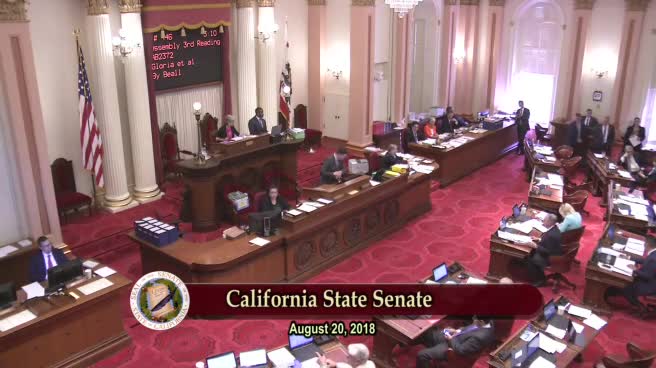 2MIN
Senate Floor
 1H
Senate Standing Committee on Appropriations
 10MIN
Senate Standing Committee on Public Employment and Retirement
 2MIN
Assembly Floor
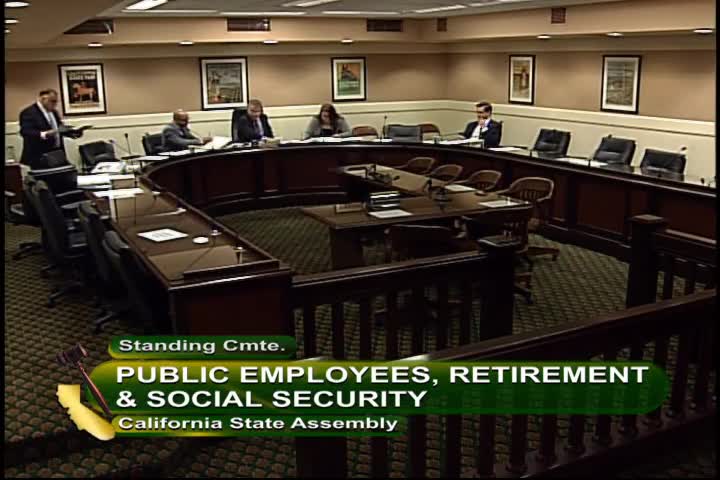 2MIN
Assembly Standing Committee on Public Employees, Retirement, and Social Security
Bill Author

Bill Co-Author(s):