AB 2864: Coastal resources: oil spills.
- Session Year: 2017-2018
- House: Assembly
- Latest Version Date: 2018-09-08
The California Coastal Act of 1976 provides for the regulation of development of certain lands within the coastal zone, as defined. Under the act, the California Coastal Commission generally has primary responsibility for the implementation of the act and is designated as the state coastal zone planning and management agency for any and all purposes, and is authorized to exercise any and all powers set forth in the federal Coastal Zone Management Act of 1972 or any other federal act that relates to the planning or management of the coastal zone.
The Lempert-Keene-Seastrand Oil Spill Prevention and Response Act provides that the administrator for oil spill response, subject to the Governor, has the primary authority to direct prevention, removal, abatement, response, containment, and cleanup efforts with regard to all aspects of any oil spill in waters of the state, in accordance with any applicable facility or vessel contingency plan and the California oil spill contingency plan. The act requires the administrator to coordinate all actions required by state or local agencies to assess injury to, and provide full mitigation for injury to, or to restore, rehabilitate, or replace, natural resources, including wildlife, fisheries, wildlife or fisheries habitat, beaches, and coastal areas, that are damaged by an oil spill.
This bill, for spills affecting coastal resources, would require the administrator to invite the California Coastal Commission or the San Francisco Bay Conservation and Development Commission, as applicable according to jurisdiction, to participate in the natural resource damage assessment process regarding injuries to coastal resources and potential restoration and mitigation measures for inclusion in the damage assessment and restoration plan.
The California Coastal Act of 1976 provides for the regulation of development of certain lands within the coastal zone, as defined. Under the act, the California Coastal Commission generally has primary responsibility for the implementation of the act and is designated as the state coastal zone planning and management agency for any and all purposes, and is authorized to exercise any and all powers set forth in the federal Coastal Zone Management Act of 1972 or any other federal act that relates to the planning or management of the coastal zone.
The Lempert-Keene-Seastrand Oil Spill Prevention and Response Act generally requires provides that the administrator for oil spill response, acting at the direction of subject to the Governor, to implement activities relating to oil spill response, including emergency drills and preparedness, and oil spill containment and cleanup. has the primary authority to direct prevention, removal, abatement, response, containment, and cleanup efforts with regard to all aspects of any oil spill in waters of the state, in accordance with any applicable facility or vessel contingency plan and the California oil spill contingency plan. The act requires the administrator to coordinate all actions required by state or local agencies to assess injury to, and provide full mitigation for injury to, or to restore, rehabilitate, or replace, natural resources, including wildlife, fisheries, wildlife or fisheries habitat, beaches, and coastal areas, that are damaged by an oil spill.
This bill, for spills affecting coastal resources, would require the administrator to request invite the California Coastal Commission or the San Francisco Bay Conservation and Development Commission, as applicable according to jurisdiction, to provide the state trustees with a written assessment of the extent, value, and level of damage or injury to coastal resources, including, but not limited to, public access, coastal wetlands and habitats, and coastal recreation. The bill would require, if the applicable commission elects to provide findings, (1) those findings to be integrated into the final damage assessment and restoration plan, and (2) the administrator to consult with the applicable commission on participate in the natural resource damage assessment process regarding injuries to coastal resources and potential restoration and mitigation measures for inclusion in the damage assessment and restoration plan.
The California Coastal Act of 1976 provides for the regulation of development of certain lands within the coastal zone, as defined. Under the act, the California Coastal Commission generally has primary responsibility for the implementation of the act and is designated as the state coastal zone planning and management agency for any and all purposes, and is authorized to exercise any and all powers set forth in the federal Coastal Zone Management Act of 1972 or any other federal act that relates to the planning or management of the coastal zone.
The Lempert-Keene-Seastrand Oil Spill Prevention and Response Act generally requires the administrator for oil spill response, acting at the direction of the Governor, to implement activities relating to oil spill response, including emergency drills and preparedness, and oil spill containment and cleanup. The act requires the administrator to coordinate all actions required by state or local agencies to assess injury to, and provide full mitigation for injury to, or to restore, rehabilitate, or replace, natural resources, including wildlife, fisheries, wildlife or fisheries habitat, beaches, and coastal areas, that are damaged by an oil spill.
This bill, for spills affecting coastal resources, would require the administrator to request that the California Coastal Commission or the San Francisco Bay Conservation and Development Commission, as applicable according to jurisdiction, to provide the state trustees with a written assessment of the extent, value, and level of damage or injury to coastal resources, including, but not limited to, public access, coastal wetlands and habitats, and coastal recreation. The bill would require require, if the applicable commissions commission elects to provide findings, (1) those findings to be integrated into the final damage assessment and restoration plan, and would require (2) the administrator to consult with the applicable commission on potential restoration and mitigation measures for inclusion in the plan.
The California Coastal Act of 1976 provides for the regulation of development of certain lands within the coastal zone, as defined. Under the act, the California Coastal Commission generally has primary responsibility for the implementation of the act and is designated as the state coastal zone planning and management agency for any and all purposes, and is authorized to exercise any and all powers set forth in the federal Coastal Zone Management Act of 1972 or any other federal act that relates to the planning or management of the coastal zone.
This bill would designate the commission as a trustee for coastal zone resources affected by oil spills and related responses.The Lempert-Keene-Seastrand Oil Spill Prevention and Response Act generally requires the administrator for oil spill response, acting at the direction of the Governor, to implement activities relating to oil spill response, including emergency drills and preparedness, and oil spill containment and cleanup. The act requires the administrator to coordinate all actions required by state or local agencies to assess injury to, and provide full mitigation for injury to, or to restore, rehabilitate, or replace, natural resources, including wildlife, fisheries, wildlife or fisheries habitat, beaches, and coastal areas, that are damaged by an oil spill.
This bill, for spills affecting coastal resources, would require the administrator to request that the California Coastal Commission or the San Francisco Bay Conservation and Development Commission, as applicable according to jurisdiction, provide the state trustees with a written assessment of the extent, value, and level of damage or injury to coastal resources, including, but not limited to, public access, coastal wetlands and habitats, and coastal recreation. The bill would require the applicable commissions findings to be integrated into the final damage assessment and restoration plan, and would require the administrator to consult with the applicable commission on potential restoration and mitigation measures for inclusion in the plan.
The California Coastal Act of 1976 provides for the regulation of development of certain lands within the coastal zone, as defined. Under the act, the California Coastal Commission generally has primary responsibility for the implementation of the act and is designated as the state coastal zone planning and management agency for any and all purposes, and is authorized to exercise any and all powers set forth in the federal Coastal Zone Management Act of 1972 or any other federal act that relates to the planning or management of the coastal zone.
This bill would designate the commission as a trustee for coastal zone resources affected by oil spills and related responses.
(a)The administrator, subject to the Governor, has the primary authority to direct prevention, removal, abatement, response, containment, and cleanup efforts with regard to all aspects of any oil spill in waters of the state, in accordance with any applicable facility or vessel contingency plan and the California oil spill contingency plan. The administrator shall cooperate with any federal on-scene coordinator, as specified in the National Contingency Plan.
(b)The administrator shall implement the California oil spill contingency plan, required pursuant to Section 8574.1, to the fullest extent possible.
(c)The administrator shall do both of the following:
(1)Be present at the location of any oil spill of more than 100,000 gallons in waters of the state, as soon as possible after notice of the discharge.
(2)Ensure that persons trained in oil spill response and cleanup, whether employed by the responsible party, the state, or another private or public person or entity, are onsite to respond to, contain, and clean up any oil spill in waters of the state, as soon as possible after notice of the discharge.
(d)Throughout the response and cleanup process, the administrator shall apprise the air quality management district or air pollution control district having jurisdiction over the area in which the oil spill occurred and the local government agencies that are affected by the spill.
(e)The administrator, with the assistance, as needed, of the Office of the State Fire Marshal, the Public Utilities Commission, the State Lands Commission, or other state agency, and the federal on-scene coordinator, shall determine the cause and amount of the discharge.
(f)The administrator shall have the state authority over the use of all response methods, including, but not limited to, in situ burning, dispersants, and any oil spill cleanup agents in connection with an oil discharge. The administrator shall consult with the federal on-scene coordinator prior to exercising authority under this subdivision.
(g)(1)The administrator shall conduct workshops, consistent with the intent of this chapter, with the participation of appropriate local, state, and federal agencies, including the State Air Resources Board, air pollution control and air quality management districts, and affected private organizations, on the subject of oil spill response technologies, including in situ burning. The workshops shall review the latest research and findings regarding the efficacy and toxicity of oil spill cleanup agents and other technologies, their potential public health and safety and environmental impacts, and any other relevant factors concerning their use in oil spill response. In conducting these workshops, the administrator shall solicit the views of all participating parties concerning the use of these technologies, with particular attention to any special considerations that apply to coastal areas and waters of the state.
(2)The administrator shall publish guidelines and conduct periodic reviews of the policies, procedures, and parameters for the use of in situ burning, which may be implemented in the event of an oil spill.
(h)(1)The administrator shall ensure that, as part of the response to any significant spill, biologists or other personnel are present and provided any support and funding necessary and appropriate for the assessment of damages to natural resources and for the collection of data and other evidence that may help in determining and recovering damages.
(2)(A)The administrator shall coordinate all actions required by state or local agencies to assess injury to, and provide full mitigation for injury to, or to restore, rehabilitate, or replace, natural resources, including wildlife, fisheries, wildlife or fisheries habitat, beaches, and coastal areas, that are damaged by an oil spill. For purposes of this subparagraph, actions required by state or local agencies include, but are not limited to, actions required by state trustees under Section 1006 of the Oil Pollution Act of 1990 (33 U.S.C. Sec. 2706) and actions required pursuant to Section 8670.61.5.
(B)For spills affecting coastal resources, the administrator shall invite the California Coastal Commission or the San Francisco Bay Conservation and Development Commission, as applicable according to jurisdiction, to participate in the natural resource damage assessment process regarding injuries to coastal resources and potential restoration and mitigation measures for inclusion in the damage assessment and restoration plan.
(C)The responsible party shall be liable for all coordination costs incurred by the administrator.
(3)This subdivision does not give the administrator any authority to administer state or local laws or to limit the authority of another state or local agency to implement and enforce state or local laws under its jurisdiction, nor does this subdivision limit the authority or duties of the administrator under this chapter or limit the authority of an agency to enforce existing permits or permit conditions.
(i)(1)The administrator shall enter into a memorandum of understanding with the executive director of the State Water Resources Control Board, acting for the State Water Resources Control Board and the California regional water quality control boards, and with the approval of the State Water Resources Control Board, to address discharges, other than dispersants, that are incidental to, or directly associated with, the response, containment, and cleanup of an existing or threatened oil spill conducted pursuant to this chapter.
(2)The memorandum of understanding entered into pursuant to paragraph (1) shall address any permits, requirements, or authorizations that are required for the specified discharges. The memorandum of understanding shall be consistent with requirements that protect state water quality and beneficial uses and with any applicable provisions of the Porter-Cologne Water Quality Control Act (Division 7 (commencing with Section 13000) of the Water Code) or the federal Clean Water Act (33 U.S.C. Sec. 1251 et seq.), and shall expedite efficient oil spill response.
(a)The administrator, subject to the Governor, has the primary authority to direct prevention, removal, abatement, response, containment, and cleanup efforts with regard to all aspects of any oil spill in waters of the state, in accordance with any applicable facility or vessel contingency plan and the California oil spill contingency plan. The administrator shall cooperate with any federal on-scene coordinator, as specified in the National Contingency Plan.
(b)The administrator shall implement the California oil spill contingency plan, required pursuant to Section 8574.1, to the fullest extent possible.
(c)The administrator shall do both of the following:
(1)Be present at the location of any oil spill of more than 100,000 gallons in waters of the state, as soon as possible after notice of the discharge.
(2)Ensure that persons trained in oil spill response and cleanup, whether employed by the responsible party, the state, or another private or public person or entity, are onsite to respond to, contain, and clean up any oil spill in waters of the state, as soon as possible after notice of the discharge.
(d)Throughout the response and cleanup process, the administrator shall apprise the air quality management district or air pollution control district having jurisdiction over the area in which the oil spill occurred and the local government agencies that are affected by the spill.
(e)The administrator, with the assistance, as needed, of the Office of the State Fire Marshal, the Public Utilities Commission, the State Lands Commission, or other state agency, and the federal on-scene coordinator, shall determine the cause and amount of the discharge.
(f)The administrator shall have the state authority over the use of all response methods, including, but not limited to, in situ burning, dispersants, and any oil spill cleanup agents in connection with an oil discharge. The administrator shall consult with the federal on-scene coordinator prior to exercising authority under this subdivision.
(g)(1)The administrator shall conduct workshops, consistent with the intent of this chapter, with the participation of appropriate local, state, and federal agencies, including the State Air Resources Board, air pollution control and air quality management districts, and affected private organizations, on the subject of oil spill response technologies, including in situ burning. The workshops shall review the latest research and findings regarding the efficacy and toxicity of oil spill cleanup agents and other technologies, their potential public health and safety and environmental impacts, and any other relevant factors concerning their use in oil spill response. In conducting these workshops, the administrator shall solicit the views of all participating parties concerning the use of these technologies, with particular attention to any special considerations that apply to coastal areas and waters of the state.
(2)The administrator shall publish guidelines and conduct periodic reviews of the policies, procedures, and parameters for the use of in situ burning, which may be implemented in the event of an oil spill.
(h)(1)The administrator shall ensure that, as part of the response to any significant spill, biologists or other personnel are present and provided any support and funding necessary and appropriate for the assessment of damages to natural resources and for the collection of data and other evidence that may help in determining and recovering damages.
(2)(A)The administrator shall coordinate all actions required by state or local agencies to assess injury to, and provide full mitigation for injury to, or to restore, rehabilitate, or replace, natural resources, including wildlife, fisheries, wildlife or fisheries habitat, beaches, and coastal areas, that are damaged by an oil spill. For purposes of this subparagraph, actions required by state or local agencies include, but are not limited to, actions required by state trustees under Section 1006 of the Oil Pollution Act of 1990 (33 U.S.C. Sec. 2706) and actions required pursuant to Section 8670.61.5.
(B)For spills affecting coastal resources, the administrator shall request invite the California Coastal Commission or the San Francisco Bay Conservation and Development Commission, as applicable according to jurisdiction, to provide the state trustees with a written assessment of the extent, value, and level of damage or injury to coastal resources, including, but not limited to, public access, coastal wetlands and habitats, and coastal recreation. If the applicable commission elects to provide findings, those findings shall be integrated into the final damage assessment and restoration plan. If the applicable commission elects to provide findings, the administrator shall consult with the applicable commission on participate in the natural resource damage assessment process regarding injuries to coastal resources and potential restoration and mitigation measures for inclusion in the damage assessment and restoration plan.
(C)The responsible party shall be liable for all coordination costs incurred by the administrator.
(3)This subdivision does not give the administrator any authority to administer state or local laws or to limit the authority of another state or local agency to implement and enforce state or local laws under its jurisdiction, nor does this subdivision limit the authority or duties of the administrator under this chapter or limit the authority of an agency to enforce existing permits or permit conditions.
(i)(1)The administrator shall enter into a memorandum of understanding with the executive director of the State Water Resources Control Board, acting for the State Water Resources Control Board and the California regional water quality control boards, and with the approval of the State Water Resources Control Board, to address discharges, other than dispersants, that are incidental to, or directly associated with, the response, containment, and cleanup of an existing or threatened oil spill conducted pursuant to this chapter.
(2)The memorandum of understanding entered into pursuant to paragraph (1) shall address any permits, requirements, or authorizations that are required for the specified discharges. The memorandum of understanding shall be consistent with requirements that protect state water quality and beneficial uses and with any applicable provisions of the Porter-Cologne Water Quality Control Act (Division 7 (commencing with Section 13000) of the Water Code) or the federal Clean Water Act (33 U.S.C. Sec. 1251 et seq.), and shall expedite efficient oil spill response.
(a)The administrator, subject to the Governor, has the primary authority to direct prevention, removal, abatement, response, containment, and cleanup efforts with regard to all aspects of any oil spill in waters of the state, in accordance with any applicable facility or vessel contingency plan and the California oil spill contingency plan. The administrator shall cooperate with any federal on-scene coordinator, as specified in the National Contingency Plan.
(b)The administrator shall implement the California oil spill contingency plan, required pursuant to Section 8574.1, to the fullest extent possible.
(c)The administrator shall do both of the following:
(1)Be present at the location of any oil spill of more than 100,000 gallons in waters of the state, as soon as possible after notice of the discharge.
(2)Ensure that persons trained in oil spill response and cleanup, whether employed by the responsible party, the state, or another private or public person or entity, are onsite to respond to, contain, and clean up any oil spill in waters of the state, as soon as possible after notice of the discharge.
(d)Throughout the response and cleanup process, the administrator shall apprise the air quality management district or air pollution control district having jurisdiction over the area in which the oil spill occurred and the local government agencies that are affected by the spill.
(e)The administrator, with the assistance, as needed, of the Office of the State Fire Marshal, the Public Utilities Commission, the State Lands Commission, or other state agency, and the federal on-scene coordinator, shall determine the cause and amount of the discharge.
(f)The administrator shall have the state authority over the use of all response methods, including, but not limited to, in situ burning, dispersants, and any oil spill cleanup agents in connection with an oil discharge. The administrator shall consult with the federal on-scene coordinator prior to exercising authority under this subdivision.
(g)(1)The administrator shall conduct workshops, consistent with the intent of this chapter, with the participation of appropriate local, state, and federal agencies, including the State Air Resources Board, air pollution control and air quality management districts, and affected private organizations, on the subject of oil spill response technologies, including in situ burning. The workshops shall review the latest research and findings regarding the efficacy and toxicity of oil spill cleanup agents and other technologies, their potential public health and safety and environmental impacts, and any other relevant factors concerning their use in oil spill response. In conducting these workshops, the administrator shall solicit the views of all participating parties concerning the use of these technologies, with particular attention to any special considerations that apply to coastal areas and waters of the state.
(2)The administrator shall publish guidelines and conduct periodic reviews of the policies, procedures, and parameters for the use of in situ burning, which may be implemented in the event of an oil spill.
(h)(1)The administrator shall ensure that, as part of the response to any significant spill, biologists or other personnel are present and provided any support and funding necessary and appropriate for the assessment of damages to natural resources and for the collection of data and other evidence that may help in determining and recovering damages.
(2)(A)The administrator shall coordinate all actions required by state or local agencies to assess injury to, and provide full mitigation for injury to, or to restore, rehabilitate, or replace, natural resources, including wildlife, fisheries, wildlife or fisheries habitat, beaches, and coastal areas, that are damaged by an oil spill. For purposes of this subparagraph, actions required by state or local agencies include, but are not limited to, actions required by state trustees under Section 1006 of the Oil Pollution Act of 1990 (33 U.S.C. Sec. 2706) and actions required pursuant to Section 8670.61.5.
(B)For spills affecting coastal resources, the administrator shall request that the California Coastal Commission or the San Francisco Bay Conservation and Development Commission, as applicable according to jurisdiction, to provide the state trustees with a written assessment of the extent, value, and level of damage or injury to coastal resources, including, but not limited to, public access, coastal wetlands and habitats, and coastal recreation. The applicable commissions If the applicable commission elects to provide findings, those findings shall be integrated into the final damage assessment and restoration plan. The If the applicable commission elects to provide findings, the administrator shall consult with the applicable commission on potential restoration and mitigation measures for inclusion in the plan.
(C)The responsible party shall be liable for all coordination costs incurred by the administrator.
(3)This subdivision does not give the administrator any authority to administer state or local laws or to limit the authority of another state or local agency to implement and enforce state or local laws under its jurisdiction, nor does this subdivision limit the authority or duties of the administrator under this chapter or limit the authority of an agency to enforce existing permits or permit conditions.
(i)(1)The administrator shall enter into a memorandum of understanding with the executive director of the State Water Resources Control Board, acting for the State Water Resources Control Board and the California regional water quality control boards, and with the approval of the State Water Resources Control Board, to address discharges, other than dispersants, that are incidental to, or directly associated with, the response, containment, and cleanup of an existing or threatened oil spill conducted pursuant to this chapter.
(2)The memorandum of understanding entered into pursuant to paragraph (1) shall address any permits, requirements, or authorizations that are required for the specified discharges. The memorandum of understanding shall be consistent with requirements that protect state water quality and beneficial uses and with any applicable provisions of the Porter-Cologne Water Quality Control Act (Division 7 (commencing with Section 13000) of the Water Code) or the federal Clean Water Act (33 U.S.C. Sec. 1251 et seq.), and shall expedite efficient oil spill response.
(a)The administrator, subject to the Governor, has the primary authority to direct prevention, removal, abatement, response, containment, and cleanup efforts with regard to all aspects of any oil spill in waters of the state, in accordance with any applicable facility or vessel contingency plan and the California oil spill contingency plan. The administrator shall cooperate with any federal on-scene coordinator, as specified in the National Contingency Plan.
(b)The administrator shall implement the California oil spill contingency plan, required pursuant to Section 8574.1, to the fullest extent possible.
(c)The administrator shall do both of the following:
(1)Be present at the location of any oil spill of more than 100,000 gallons in waters of the state, as soon as possible after notice of the discharge.
(2)Ensure that persons trained in oil spill response and cleanup, whether employed by the responsible party, the state, or another private or public person or entity, are onsite to respond to, contain, and clean up any oil spill in waters of the state, as soon as possible after notice of the discharge.
(d)Throughout the response and cleanup process, the administrator shall apprise the air quality management district or air pollution control district having jurisdiction over the area in which the oil spill occurred and the local government agencies that are affected by the spill.
(e)The administrator, with the assistance, as needed, of the Office of the State Fire Marshal, the Public Utilities Commission, the State Lands Commission, or other state agency, and the federal on-scene coordinator, shall determine the cause and amount of the discharge.
(f)The administrator shall have the state authority over the use of all response methods, including, but not limited to, in situ burning, dispersants, and any oil spill cleanup agents in connection with an oil discharge. The administrator shall consult with the federal on-scene coordinator prior to exercising authority under this subdivision.
(g)(1)The administrator shall conduct workshops, consistent with the intent of this chapter, with the participation of appropriate local, state, and federal agencies, including the State Air Resources Board, air pollution control and air quality management districts, and affected private organizations, on the subject of oil spill response technologies, including in situ burning. The workshops shall review the latest research and findings regarding the efficacy and toxicity of oil spill cleanup agents and other technologies, their potential public health and safety and environmental impacts, and any other relevant factors concerning their use in oil spill response. In conducting these workshops, the administrator shall solicit the views of all participating parties concerning the use of these technologies, with particular attention to any special considerations that apply to coastal areas and waters of the state.
(2)The administrator shall publish guidelines and conduct periodic reviews of the policies, procedures, and parameters for the use of in situ burning, which may be implemented in the event of an oil spill.
(h)(1)The administrator shall ensure that, as part of the response to any significant spill, biologists or other personnel are present and provided any support and funding necessary and appropriate for the assessment of damages to natural resources and for the collection of data and other evidence that may help in determining and recovering damages.
(2)(A)The administrator shall coordinate all actions required by state or local agencies to assess injury to, and provide full mitigation for injury to, or to restore, rehabilitate, or replace, natural resources, including wildlife, fisheries, wildlife or fisheries habitat, beaches, and coastal areas, that are damaged by an oil spill. For purposes of this subparagraph, actions required by state or local agencies include, but are not limited to, actions required by state trustees under Section 1006 of the Oil Pollution Act of 1990 (33 U.S.C. Sec. 2706) and actions required pursuant to Section 8670.61.5.
(B)For spills affecting coastal resources, the administrator shall request that the California Coastal Commission or the San Francisco Bay Conservation and Development Commission, as applicable according to jurisdiction, provide the state trustees with a written assessment of the extent, value, and level of damage or injury to coastal resources, including, but not limited to, public access, coastal wetlands and habitats, and coastal recreation. The applicable commissions findings shall be integrated into the final damage assessment and restoration plan. The administrator shall consult with the applicable commission on potential restoration and mitigation measures for inclusion in the plan.
(B)(C)The responsible party shall be liable for all coordination costs incurred by the administrator.
(3)This subdivision does not give the administrator any authority to administer state or local laws or to limit the authority of another state or local agency to implement and enforce state or local laws under its jurisdiction, nor does this subdivision limit the authority or duties of the administrator under this chapter or limit the authority of an agency to enforce existing permits or permit conditions.
(i)(1)The administrator shall enter into a memorandum of understanding with the executive director of the State Water Resources Control Board, acting for the State Water Resources Control Board and the California regional water quality control boards, and with the approval of the State Water Resources Control Board, to address discharges, other than dispersants, that are incidental to, or directly associated with, the response, containment, and cleanup of an existing or threatened oil spill conducted pursuant to this chapter.
(2)The memorandum of understanding entered into pursuant to paragraph (1) shall address any permits, requirements, or authorizations that are required for the specified discharges. The memorandum of understanding shall be consistent with requirements that protect state water quality and beneficial uses and with any applicable provisions of the Porter-Cologne Water Quality Control Act (Division 7 (commencing with Section 13000) of the Water Code) or the federal Clean Water Act (33 U.S.C. Sec. 1251 et seq.), and shall expedite efficient oil spill response.
SECTION 1.Section 30330 of the Public Resources Code is amended to read:30330.(a)The commission, unless specifically otherwise provided, shall have the primary responsibility for the implementation of this division and is designated as the state coastal zone planning and management agency for any and all purposes, and may exercise any and all powers prescribed in the federal Coastal Zone Management Act of 1972 (16 U.S.C. Sec. 1451, et seq.) or any amendment thereto or any other federal act heretofore or hereafter enacted that relates to the planning or management of the coastal zone.(b)In addition to any other authority, the commission may, except for a facility defined in Section 25110, grant or issue any certificate or statement required pursuant to any federal law described in subdivision (a) that an activity of any person, including any local, state, or federal agency, is in conformity with this division. With respect to any project outside the coastal zone that may have a substantial effect on the resources within the jurisdiction of the San Francisco Bay Conservation and Development Commission, established pursuant to Title 7.2 (commencing with Section 66600) of the Government Code, and for which any certification is required pursuant to the federal Coastal Zone Management Act of 1972 (16 U.S.C. Sec. 1451, et seq.), that certification shall be issued by the Bay Conservation and Development Commission; provided however, the commission may review and submit comments for any such project that affects resources within the coastal zone.(c)The commission shall be a trustee for coastal zone resources affected by oil spills and related responses.(a)The commission, unless specifically otherwise provided, shall have the primary responsibility for the implementation of the provisions of this division and is designated as the state coastal zone planning and management agency for any and all purposes, and may exercise any and all powers set forth prescribed in the Federal federal Coastal Zone Management Act of 1972 (16 U.S.C. Sec. 1451, et seq.) or any amendment thereto or any other federal act heretofore or hereafter enacted that relates to the planning or management of the coastal zone.
In(b)In addition to any other authority, the commission may, except for a facility defined in Section 25110, grant or issue any certificate or statement required pursuant to any such federal law described in subdivision (a) that an activity of any person, including any local, state, or federal agency, is in conformity with the provisions of this division. With respect to any project outside the coastal zone that may have a substantial effect on the resources within the jurisdiction of the San Francisco Bay Conservation and Development Commission, established pursuant to Title 7.2 (commencing with Section 66600) of the Government Code, and for which any certification is required pursuant to the Federal federal Coastal Zone Management Act of 1972 (16 U.S.C. Sec. 1451, et seq.), such that certification shall be issued by the Bay Conservation and Development Commission; provided however, the commission may review and submit comments for any such project which that affects resources within the coastal zone.
(c)The commission shall be a trustee for coastal zone resources affected by oil spills and related responses.
|
Date
|
Status
|
|---|---|
| Sep 8, 2018 | Chaptered by Secretary of State - Chapter 311, Statutes of 2018. |
| Sep 8, 2018 | Approved by the Governor. |
| Aug 27, 2018 | Enrolled and presented to the Governor at 3 p.m. |
| Aug 22, 2018 | In Assembly. Ordered to Engrossing and Enrolling. |
| Aug 22, 2018 | Read third time. Passed. Ordered to the Assembly. |
| Aug 17, 2018 | From committee: Do pass. (Ayes 6. Noes 1.) (August 16). |
| Aug 6, 2018 | In committee: Referred to APPR. suspense file. |
| Jun 26, 2018 | From committee: Do pass and re-refer to Com. on APPR. (Ayes 9. Noes 0.) (June 26). Re-referred to Com. on APPR. |
| Jun 7, 2018 | Referred to Com. on N.R. & W. |
| May 31, 2018 | In Senate. Read first time. To Com. on RLS. for assignment. |
| May 30, 2018 | Read third time. Passed. Ordered to the Senate. |
| May 29, 2018 | Read second time. Ordered to third reading. |
| May 25, 2018 | From committee: Amend, and do pass as amended. (Ayes 12. Noes 4.) (May 25). |
| May 9, 2018 | In committee: Set, first hearing. Referred to APPR. suspense file. |
| Apr 25, 2018 | In committee: Hearing postponed by committee. |
| Apr 25, 2018 | Re-referred to Com. on APPR. |
| Apr 24, 2018 | From committee chair, with author's amendments: Amend, and re-refer to Com. on APPR. Read second time and amended. |
| Apr 10, 2018 | From committee: Do pass and re-refer to Com. on APPR. (Ayes 7. Noes 3.) (April 9). Re-referred to Com. on APPR. |
| Apr 3, 2018 | Re-referred to Com. on NAT. RES. |
| Apr 2, 2018 | From committee chair, with author's amendments: Amend, and re-refer to Com. on NAT. RES. Read second time and amended. |
| Mar 8, 2018 | Referred to Com. on NAT. RES. |
| Feb 17, 2018 | From printer. May be heard in committee March 19. |
| Feb 16, 2018 | Read first time. To print. |
|
Date
|
Description
|
Location
|
Votes
|
|
|---|---|---|---|---|
| Aug 22, 2018 | Assembly 3rd Reading AB2864 Limón By Skinner | Senate Floor |
Passed |
|
| Aug 16, 2018 | Do pass | Senate Standing Committee on Appropriations |
Passed |
|
| Aug 6, 2018 | Placed on suspense file | Senate Standing Committee on Appropriations |
Passed |
|
| Jun 26, 2018 | Do pass, but first be re-referred to the Committee on [Appropriations] | Senate Standing Committee on Natural Resources and Water |
Passed |
|
| May 30, 2018 | AB 2864 LIMÓN Assembly Third Reading | Assembly Floor |
Passed |
|
| May 25, 2018 | Do pass as amended. | Assembly Standing Committee on Appropriations |
Passed |
|
| Apr 9, 2018 | Do pass and be re-referred to the Committee on [Appropriations] | Assembly Standing Committee on Natural Resources |
Passed |
This list shows positions taken on this bill by organizations on the date displayed, which is linked to the original source.
Positions by individuals are not included.
|
Organization
|
Position
|
Date
|
|---|---|---|
| Audubon California | ** Support | Aug 18, 2018 |
| Azul | * Support | Apr 9, 2018 |
| California Chamber Of Commerce | * Against Unless Amend | Apr 9, 2018 |
| California Coastal Commission | ** Support | Aug 18, 2018 |
| California Coastal Protection Network | ** Support | Aug 18, 2018 |
| California Coastkeeper Alliance | ** Support | Aug 18, 2018 |
| California Independent Petroleum Association | * Against Unless Amend | Apr 9, 2018 |
| California League Of Conservation Voters | ** Support | Aug 18, 2018 |
| California Manufacturers And Technology Association | * Against Unless Amend | Apr 9, 2018 |
| Center for Oceanic Awareness, Research, and Education | * Support | Apr 9, 2018 |
| Coalition for Humane Immigrant Rights of Los Angeles (CHIRLA) | * Support | Apr 17, 2018 |
| Coastal Commission | ** Support | Apr 6, 2018 |
| Donate Life California | * Support | Apr 17, 2018 |
| Environment California | ** Support | Aug 18, 2018 |
| Environmental Defense Center | ** Support | Aug 18, 2018 |
| Friends Of The Earth | ** Support | Aug 18, 2018 |
| Heal The Bay | * Support | Apr 9, 2018 |
| Natural Resource Defense Council | * Support | Apr 9, 2018 |
| Plastic Pollution Coalition | ** Support | Aug 18, 2018 |
| Seventh Generation Advisors | ** Support | Aug 18, 2018 |
| Sierra Club California | ** Support | Aug 18, 2018 |
| Sierra Donor Services | * Support | Apr 17, 2018 |
| Surfrider Foundation | ** Support | Aug 18, 2018 |
| The 5 Gyres Institute | ** Support | Aug 18, 2018 |
| Western States Petroleum Association | ** Against | Apr 6, 2018 |
Office of Senate Floor Analyses (916) 651-1520 Fax: (916) 327-4478 | AB |
THIRD READING
Bill No: AB 2864
:
SENATE NATURAL RES. & WATER COMMITTEE: 9-0, 6/26/18
AYES: Hertzberg, Stone, Allen, Hueso, Jackson, McGuire, Monning, Stern, Vidak
SENATE APPROPRIATIONS COMMITTEE: 6-1, 8/16/18
AYES: Portantino, Bates, Beall, Bradford, Hill, Wiener
NOES: Nielsen
ASSEMBLY FLOOR: 72-0, 5/30/18 - See last page for vote
DIGEST:
This bill requires, in the event of an oil spill affecting coastal resources, that the Administrator of the Office of Oil Spill Prevention and Response (OSPR) request that the California Coastal Commission or the San Francisco Bay Area Conservation and Development Commission (BCDC) provide state natural resources trustees with a written assessment of the extent, value, and level of damage or injury to coastal resources within their jurisdiction.
ANALYSIS: Existing federal law establishes several laws to prevent and respond to oil spills and prevent environmental degradation including the Oil Pollution Act of 1990 (OPA), the Clean Water Act, and others. These laws establish a national framework for addressing oil (and other hazardous waste) spills within the United States and its waters. The goal of the OPA is to make the environment and the public whole for injuries to natural resources and services resulting from an incident involving a discharge or substantial threat of discharge of oil.
Existing federal regulation establishes a framework for performing a Natural Resources Damage Assessment (NRDA) following an oil spill incident in order to meet the purposes of the OPA (see Title 15, Code of Federal Regulations, §§990.10 et seq.). The NRDA is intended to promote expeditious and cost-effective restoration of injured natural resources and services. The NRDA is distinct from immediate oil spill response efforts. Federal NRDA regulations provide for the designation of federal, state, and local officials (in certain circumstances) to act on behalf of the public as trustees for natural resources. Foreign officials and representatives of Indian tribes may also serve as trustees. Under federal law and regulations, trustees have certain obligations, and work cooperatively with the responsible party for the spill to assess natural resource injury and damages.
Existing state law:
- Establishes the OSPR in the California Department of Fish and Wildlife (CDFW) in order to help meet the state’s responsibilities for oil spill prevention and response established at the federal level.
- The OSPR administrator (administrator) is required to undertake certain duties related to oil spill prevention, planning and response, including emergency drills, oil spill preparedness, and oil spill containment and cleanup, among other things. The administrator is further required to coordinate all actions required by state or local agencies to assess injury to, and provide full mitigation for injury to, or to restore, rehabilitate, or replace, natural resources, including wildlife, fisheries, wildlife or fisheries habitat, beaches, and coastal areas, that are damaged by an oil spill (see Government Code §8670.61.5). These requirements undergird the NRDA process in state law.
- According to CDFW, natural resource damages are civil damages to compensate for injuries to wildlife and habitat as well as lost recreational use.
- Provides, pursuant to the California Coastal Act of 1976 (coastal act), for the regulation of development of certain lands within the coastal zone, as defined.
- The California Coastal Commission generally has primary responsibility for implementation of the coastal act, is designated as the state coastal zone planning and management agency, and is authorized to exercise any and all powers set forth in the federal Coastal Zone Management Act of 1972 and certain other federal laws, as specified.
- Establishes the BCDC as the state planning and regulatory agency with authority over the San Francisco Bay, the Bay’s shoreline band, and Suisun Marsh. BCDC predates the establishment of the Coastal Commission.
- Allows the Coastal Commission or BCDC to serve as a trustee in the NRDA process, although neither entity has been asked for the 18 NRDAs that involved damage to the state’s coastal resources.
This bill requires, for oil spills affecting coastal resources, that the OSPR administrator invite the Coastal Commission or BCDC, as applicable, to participate in the NRDA process regarding injuries to coastal resources and potential restoration and mitigation measures for inclusion in the damage assessment and restoration plan.
Background
According to the Coastal Commission, then-Governor Schwarzenegger designated the Secretary of the Natural Resources Agency as trustee for all natural resources in 2007. The Secretary further delegated this authority to CDFW and OSPR for oil spills. Other state entities that have served as trustees include the State Lands Commission, the California Department of Parks and Recreation (State Parks), the California Coastal Conservancy and the University of California.
An NRDA includes a pre-assessment phase (where trustees determine whether to pursue restoration), the restoration planning phase (where trustees evaluate information on potential injuries and determine restoration efforts), and the restoration implementation phase (where trustees ensure implementation of the restoration plan).
According to CDFW, NRDA claims have ranged from less than $1,000 to over $30 million throughout the state. Since OSPR’s inception, over $210 million in restoration projects have been funded through NRDA settlements. For small pollution events, CDFW may manage the NRDA process by itself. OSPR is responsible to see that the funds are used in a timely manner for the designated types of habitat restoration.
Comments
Potential permit streamlining. It is possible that earlier involvement by the Coastal Commission or BCDC in the NRDA process for applicable oil spills may help to facilitate subsequent project permitting by the two entities, if required. The Governor’s emergency proclamation regarding the 2015 Refugio Beach oil spill suspended the Coastal Commission’s project permitting requirements in response to the emergency. This waiver concerned many environmental advocates.
FISCAL EFFECT: Appropriation: Fiscal Com.: Local:
According to the Senate Appropriations Committee:
- The costs for the Coastal Commission and BCDC to provide state trustees with the specified findings are somewhere in the range of $80,000 to $120,000 per oil spill for each entity, should they elect to participate. Costs are ultimately reimbursable. However, reimbursement can take many years.
- Minor and absorbable costs for OSPR to integrate the findings into the final damage and restoration plan and consult with the Coastal Commission and BCDC on potential restoration and mitigation measures for the restoration plan.
The 5 Gyres Institute
Audubon California
California Coastal Commission
California Coastal Protection Network
California Coastkeeper Alliance
California League of Conservation Voters
COARE
Environment California
Environmental Defense Center
Friends of the Earth
Plastic Pollution Coalition
Seventh Generation Advisors
Sierra Club California
Surfrider Foundation
OPPOSITION: (Verified 8/16/18)
None received
ARGUMENTS IN SUPPORT: According to the author, “Assembly Bill 2864 would allow the state’s two coastal management agencies to provide critical technical, jurisdictional and resource assessment assistance to the Natural Resource Damage Assessment (NRDA) process in the event of an oil spill. Bringing the Commission’s expertise to bear would ensure that damages caused by oil spills are evaluated, recovered, and restored to their fullest potential.”
ASSEMBLY FLOOR: 72-0, 5/30/18
AYES: Acosta, Aguiar-Curry, Arambula, Baker, Berman, Bigelow, Bloom, Bonta, Burke, Caballero, Calderon, Carrillo, Cervantes, Chau, Chávez, Chen, Chiu, Choi, Chu, Cooley, Cunningham, Dahle, Daly, Eggman, Flora, Frazier, Friedman, Gallagher, Cristina Garcia, Eduardo Garcia, Gipson, Gloria, Gonzalez Fletcher, Gray, Grayson, Harper, Holden, Irwin, Jones-Sawyer, Kalra, Kamlager-Dove, Lackey, Levine, Limón, Low, Maienschein, Mathis, Mayes, McCarty, Medina, Melendez, Mullin, Muratsuchi, Nazarian, Obernolte, O'Donnell, Quirk, Quirk-Silva, Reyes, Rodriguez, Rubio, Salas, Santiago, Steinorth, Mark Stone, Thurmond, Ting, Voepel, Waldron, Weber, Wood, Rendon
NO VOTE RECORDED: Travis Allen, Brough, Cooper, Fong, Kiley, Patterson
8/18/18 13:55:32
**** END ****
SENATE COMMITTEE ON APPROPRIATIONS
Senator Anthony Portantino, Chair
2017 - 2018 Regular Session
AB 2864 (Limón) - Coastal resources: oil spills
Version: May 25, 2018 | Policy Vote: N.R. & W. 9 - 0 |
Urgency: No | Mandate: No |
Hearing Date: August 6, 2018 | Consultant: Ashley Ames |
This bill meets the criteria for referral to the Suspense File.
Bill Summary:
This bill would require the Administrator of the Office of Oil Spill Prevention and Response (OSPR), for oil spills affecting coastal resources, to request the Coastal Commission or the San Francisco Bay Area Conservation and Development Commission (BCDC) to provide state trustees with a written assessment of the extent, value, and level of damage or injury to costal resources within their jurisdictions
Fiscal Impact:
- The costs for the Coastal Commission and BCDC to provide state trustees with the specified findings are somewhere in the range of $80,000 to $120,000 per oil spill for each entity, should they elect to participate. Costs are ultimately reimbursable. However, reimbursement can take many years.
- Minor and absorbable costs for OSPR to integrate the findings into the final damage and restoration plan and consult with the Coastal Commission and BCDC on potential restoration and mitigation measures for the restoration plan..
Background: Under existing law, the OSPR administrator must coordinate all actions required by state or local agencies to assess injury to, and provide full mitigation for injury to, or to restore, rehabilitate, or replace, natural resources, including wildlife, fisheries, wildlife or fisheries habitat, beaches, and coastal areas, that are damaged by an oil spill.
Natural Resource Damage Assessment (NRDA) is the legal process federal and state agencies together with Indian tribes use to evaluate the impacts on natural resources of oil spills, hazardous waste sites, and ship groundings, both along the nation's coast and throughout its interior.
Proposed Law:
This bill would require the Administrator of OSPR to request the Coastal Commission or BCDC to provide state trustees with a written assessment of the extent, value, and level of damage or injury to costal resources within their jurisdictions for oil spills affecting coastal resources. Coastal resources include, but are not limited to, public access, coastal wetlands and habitats, and coastal recreation.
If the Coastal Commission or BCDC elect to provide findings, this bill would:
- Require the findings of the Coastal Commission or BCDC to be integrated into the final damage assessment and restoration plan.
- Require the OSPR administrator to consult with the Coastal Commission or BCDC on potential restoration and mitigation measures for inclusion in the plan.
-- END --
SENATE COMMITTEE ON NATURAL RESOURCES AND WATER
Senator Robert Hertzberg, Chair
2017 - 2018 Regular
Bill No: AB 2864 Hearing Date: June 26, 2018
Author: | Limón | ||
Version: | May 25, 2018 | ||
Urgency: | No | Fiscal: | Yes |
Consultant: | Katharine Moore | ||
Subject: Coastal resources: oil spills
BACKGROUND AND EXISTING LAW
In response to the significant 1989 oil spill from the Exxon Valdez that fouled the waters of Prince William Sound, a series of federal laws were established or amended including the Oil Pollution Act of 1990 (OPA), the Clean Water Act and others. These laws established a national framework for addressing oil (and other hazardous waste) spills within the United States and its waters. The goal of the OPA is to make the environment and the public whole for injuries to natural resources and services resulting from an incident involving a discharge or substantial threat of discharge of oil (see Title 15, Code of Federal Regulations, §990.10 or 15 CFR 990.10). This goal is achieved through the Natural Resource Damage Assessment (NRDA) that follows any incident. The NRDA is intended to promote expeditious and cost-effective restoration of injured natural resources and services. The NRDA is distinct from immediate oil spill response efforts.
At the state level, the Lempert-Keene-Seastrand Oil Spill Prevention and Response Act (act) (Chapter 1248, Statutes of 1990) established the Office of Oil Spill Prevention and Response (OSPR) in the California Department of Fish and Wildlife (CDFW) in order to help meet the state’s responsibilities for oil spill prevention and response established at the federal level. The OSPR administrator (administrator) is required to undertake certain duties related to oil spill prevention, planning and response, including emergency drills, oil spill preparedness, and oil spill containment and cleanup, among other things. The act requires the administrator to coordinate all actions required by state or local agencies to assess injury to, and provide full mitigation for injury to, or to restore, rehabilitate, or replace, natural resources, including wildlife, fisheries, wildlife or fisheries habitat, beaches, and coastal areas, that are damaged by an oil spill (see Government Code §8670.61.5). These act requirements undergird the NRDA process in state law.
Federal NRDA regulations provide for the designation of federal, state, and local officials (in certain circumstances) to act on behalf of the public as trustees for natural resources. Foreign officials and representatives of Indian tribes may also serve as trustees. Under federal law and regulations, trustees have certain obligations, and work cooperatively with the responsible party for the spill to assess natural resource injury and damages. According to CDFW, natural resource damages are civil damages to compensate for injuries to wildlife and habitat as well as lost recreational use.
CDFW is a designated natural resource trustee to assess and recover natural resource damages and to plan and implement restoration actions. In California, CDFW, the U.S. Fish and Wildlife Service (USFWS) and the National Oceanic and Atmospheric Administration (NOAA) often work together on NRDAs.
A NRDA includes a pre-assessment phase (where trustees determine whether to pursue restoration), the restoration planning phase (where trustees evaluate information on potential injuries and determine restoration efforts), and the restoration implementation phase (where trustees ensure implementation of the restoration plan).
A trustee council is established after a settlement is reached regarding damages. The trustee council is meant to accomplish restoration goals using awarded funds. Trustee agencies seek input on restoration project ideas from stakeholders, including the public, to compensate for impacts to different resource types. The trustee council will prepare a draft damage assessment and restoration plan. Following public input, the final plan is prepared and the implementation of the plan ensues. The trustee council selects various entities to implement the selected restoration projects.
According to CDFW, NRDA claims have ranged from less than $1,000 to over $30 million throughout the state. Since OSPR’s inception, over $210 million in restoration projects have been funded through NRDA settlements. For small pollution events, CDFW may manage the NRDA process by itself. OSPR is responsible to see that the funds are used in a timely manner for the designated types of habitat restoration.
Existing law, the California Coastal Act of 1976 (coastal act), provides for the regulation of development of certain lands within the coastal zone, as defined. The California Coastal Commission (Coastal Commission) generally has primary responsibility for implementation of the coastal act, is designated as the state coastal zone planning and management agency, and is authorized to exercise any and all powers set forth in the federal Coastal Zone Management Act of 1972 and certain other federal laws, as specified.
Existing law establishes the San Francisco Bay Conservation and Development Commission (BCDC) as the state planning and regulatory agency with authority over the San Francisco Bay, the Bay’s shoreline band, and Suisun Marsh. BCDC predates the establishment of the Coastal Commission
Existing law does not preclude the Coastal Commission or BCDC from acting as a trustee in the NRDA process, although neither entity has been asked for the 18 NRDAs that involved damage to the state’s coastal resources. Restoration efforts undertaken pursuant to the NRDA and under the jurisdiction of the Coastal Commission or BCDC would likely require appropriate permitting from each. Other state entities that have served as trustees include the State Lands Commission, the California Department of Parks and Recreation (State Parks), the California Coastal Conservancy and the University of California.
PROPOSED LAW
This bill would require, for oil spills affecting coastal resources, the administrator to invite the Coastal Commission or BCDC, as applicable, to participate in the NRDA process regarding injuries to coastal resources and potential restoration and mitigation measures for including in the damage assessment and restoration plan.
ARGUMENTS IN SUPPORT
According to the author, “Assembly Bill 2864 would allow the state’s two coastal management agencies to provide critical technical, jurisdictional and resource assessment assistance to the Natural Resource Damage Assessment (NRDA) process in the event of an oil spill. Bringing the Commission’s expertise to bear would ensure that damages caused by oil spills are evaluated, recovered, and restored to their fullest potential.”
ARGUMENTS IN OPPOSITION
None received
COMMENTS
Potential permit streamlining. It is possible that earlier involvement by the Coastal Commission or BCDC in the NRDA process for applicable oil spills may help to facilitate subsequent project permitting by the two entities, if required. The Governor’s emergency proclamation regarding the 2015 Refugio Beach oil spill suspended the Coastal Commission’s project permitting requirements in response to the emergency. This waiver concerned many environmental advocates.
State level trustee agencies. According to the Coastal Commission, then-Governor Schwarzenegger designated the Secretary of the Natural Resources Agency as trustee for all natural resources in 2007. The Secretary further delegated this authority to CDFW and OSPR for oil spills.
Recent NRDA examples. The container ship Cosco Busan hit a support tower of the Bay Bridge on November 7, 2007 that led to a spill of almost 54,000 gallons of fuel oil into the San Francisco Bay. Natural resource trustees for the NRDA were CDFW, the State Lands Commission, USFWS, the National Park Service (NPS), the federal Bureau of Land Management (BLM), and NOAA. In 2012, the NRDA was settled for $32.3 million for various activities including restoration and recreational improvements. As of the 10th anniversary, over $20 million had been spent on over 50 projects. The four year assessment period for the NRDA made it one of the fastest completed.
On May 19, 2015 an underground pipeline ruptured near Refugio State Beach spilling over 100,000 gallons of crude oil. Much of the spilled oil entered the ocean. The responsible party is Plains All American Pipelines, LP. Natural resource trustees include CDFW, State Parks, the State Lands Commission, the University of California, NOAA, USFWS, NPS, and BLM. The Refugio NRDA is still underway. Plant and animal impacts continue to be assessed, including to fish, invertebrates, birds, and marine mammals. Public input on potential restoration projects is being sought. A preliminary list of restoration project concepts is available. A draft plan is expected to be released in 2019 followed by a public comment period. Current estimates indicate that the final plan will be approved in 2020 and implementation will start thereafter. The trustees have formed multi-agency teams that include local experts, the County of Santa Barbara, the Cities of Goleta and Santa Barbara, other local cities and counties, the US Navy and several Chumash bands to provide advice.
SUPPORT
The 5 Gyres Institute
Audobon California
California Coastal Commission
California Coastal Protection Network
California Coastkeeper Alliance
California League of Conservation Voters
COARE
Environment California
Environmental Defense Center
Friends of the Earth
Plastic Pollution Coalition
Seventh Generation Advisors
Sierra Club California
Surfrider Foundation
OPPOSITION
None Received
-- END --
ASSEMBLY THIRD READING
ATR Bill Id:AB 2864
Author:(Limón)
As Amended Ver:May 25, 2018
Majority vote
Committee | Votes | Ayes | Noes |
Natural Resources | 7-3 | Muratsuchi, Chau, Eggman, Limón, McCarty, Mark Stone, Bloom | Acosta, Flora, Melendez |
Appropriations | 12-4 | Gonzalez Fletcher, Bloom, Bonta, Calderon, Carrillo, Chau, Eggman, Friedman, Eduardo Garcia, Nazarian, Quirk, Reyes | Bigelow, Fong, Gallagher, Obernolte |
SUMMARY: Requires, for spills affecting coastal resources, the Administrator of the Office of Spill Prevention and Response (OSPR) to invite the California Coastal Commission (Commission) or the San Francisco Bay Conservation and Development Commission (BCDC) to participate in the Natural Resource Damage Assessment (NRDA) process regarding injuries to coastal resources and potential restoration and mitigation measures.
EXISTING LAW, pursuant to the Lempert-Keene-Seastrand Oil Spill Prevention and Response Act (Act):
- Requires the Administrator of OSPR, acting at the direction of the Governor, to implement activities relating to oil spill response, including emergency drills and preparedness, and oil spill containment and clean up.
- Imposes various requirements relating to oil spill contingency planning, prevention, response, containment, and cleanup, including the obligation that a vessel operator or marine facility prepare and implement an oil spill contingency plan.
- Requires operators of specified vessels and facilities to submit to the Administrator an oil spill contingency plan. Requires the Administrator to determine whether the plan meets applicable requirements.
- Requires the Administrator to periodically evaluate the feasibility of requiring new technologies to aid prevention, response, containment, clean-up, and wildlife rehabilitation.
- Requires the Administrator, taking into consideration the facility or vessel contingency plan requirements of the State Lands Commission, the Office of the State Fire Marshal, the Coastal Commission, and other state and federal agencies, to adopt regulations governing the adequacy of oil spill contingency plans. Requires regulations to be developed in consultation with the Oil Spill Technical Advisory Committee, and not in conflict with the National Contingency Plan. Requires regulations to provide for the best achievable protection of waters and natural resources of the state, including standards set for response, containment, and clean up equipment and that operations are maintained and regularly improved to protect the resources of the state.
- Requires the Administrator to coordinate all actions required by state or local agencies to assess injury to, and provide full mitigation for injury to, or to restore, rehabilitate, or replace, natural resources, including wildlife, fisheries, wildlife or fisheries habitat, beaches, and coastal areas, that are damaged by an oil spill.
- Requires a responsible party to be strictly liable for penalties for a spill on a per gallon released basis.
FISCAL EFFECT: According to the Assembly Appropriations Committee:
- The costs for the Coastal Commission and BCDC to provide state trustees with the specified findings are somewhere in the range of $80,000 to $120,000 per oil spill for each entity, should they elect to participate. Costs are ultimately reimbursable, however this will take many years, during which time the responsible party may become financially insolvent.
- Costs for OSPR to integrate the findings into the final damage and restoration plan and consult with the Commission and BCDC on potential restoration and mitigation measures for the restoration plan are likely minor, but are also reimbursable.
COMMENTS:
- Background. The goal of the NRDA process is to make the environment and public whole for injuries to natural resources from incidents like oil spills. In this process there are both state and federal trustees. The Governor selects state trustees and can select local trustees. There is a lead trustee that coordinates the other trustees’ activities. Trustees must invite the responsible party to participate in the NRDA process. State and federal trustee agencies work cooperatively with local governments, local organizations, and the responsible party to assess ecological injuries and human use losses caused by spills.
The goals of the NRDA are to:
- Quantify the injuries to wildlife, habitat, and lost human use of those resources;
- Determine the amount of restoration necessary to restore the resources and compensate for the injuries and losses; and,
- Develop an appropriate Restoration Plan.
Injuries are quantified by sampling water, sediment and biota; tracking live and dead impacted wildlife; and, collecting other empirical data following a spill.
Human use losses are documented, including lost opportunities for recreation such as diminished beach, boat, and fishing use in the spill area. In the case of a large spill event, injury and human use information will be collected by scientists and field observers representing government, academia, non-government organizations, and the responsible party.
The trustee agencies will seek input on restoration project ideas to compensate for impacts to different resource types (e.g., bird losses, impacts to coastal habitats, losses of human recreational uses). Upon development of a Restoration Plan, trustees make a claim for funds from the responsible party to implement restoration projects designed to both restore and compensate for the injured resources and human use losses. If there is not a settlement between the trustees and the responsible party on the Restoration Plan, the issue can go to court.
- Refugio spill. On May 19, 2015, a pipeline owned by Houston-based Plains All American Pipeline ruptured, spilling approximately 140,000 gallons of heavy crude oil along the Gaviota coast in Santa Barbara County. It is estimated that 21,000 gallons of the oil went down a storm culvert onto cliffs and into the Pacific Ocean. The immediate oil spill area stretched over nine miles of California coastline, and tar balls have washed up as far as 100 miles from the spill site. The pipeline that ruptured, known as Line 901, is a common carrier pipeline that transports oil that was produced on platforms offshore in both state and federal waters to be refined in Santa Maria or Kern County. On May 20, 2015, Governor Brown issued an emergency proclamation for Santa Barbara County due to the effects of the oil spill. Refugio State Beach and El Capitan State Beach were closed for over a month because of the oil spill. Fisheries from Canada de Alegria to Coal Oil Point were also closed for over a month, which negatively impacted several commercial fisheries – including lobster, crab, shrimp, halibut, urchin, squid, whelk, and sea cucumber. The Oiled Wildlife Care Network recovered 195 dead birds and 106 dead marine mammals from the spill. Dead marine mammals recovered included dolphins, sea lions, and seals. Sensitive habitat of the California Least Tern and the Snowy Plover, birds protected by the Endangered Species Act, was damaged. Hotels, tour outfits, and other tourism businesses experienced cancelations and decreased bookings due to the spill. More than 1,000 workers from local, state and federal agencies worked to clean up the beaches. Over 14,000 gallons of oily water were recovered. The NRDA trustees selected were the California Department of Fish and Wildlife; California Department of Parks and Recreation; California State Lands Commission; University of California; National Oceanic and Atmospheric Administration; and the Department of Interior through the U.S. Fish and Wildlife Service, the National Park Service, and the Bureau of Land Management. The Refugio NRDA still has not been settled.
- Commission. The Commission has an Oil Spill Program that deals with spill prevention, preparedness, and immediate response. The Commission’s staff participates in oil spill drills, reviews regulations for oil spill prevention and response, and participates in the development of planning materials for oiled wildlife rehabilitation facilities located in the coastal zone. The Commission also reviews coastal development projects related to energy and oil infrastructure for compliance with the California Coastal Act and consistency with the Coastal Zone Management Act.
Analysis Prepared by: Michael Jarred / NAT. RES. / (916) 319-2092 FN: 0003424
Date of Hearing: May 9, 2018
ASSEMBLY COMMITTEE ON APPROPRIATIONS
Lorena Gonzalez Fletcher, Chair
ABPCA Bill Id:AB 2864
Author:(Limón) – As Amended Ver:April 24, 2018
Policy Committee: | Natural Resources | Vote: | 7 - 3 |
|
| ||
|
|
Urgency: No State Mandated Local Program: No Reimbursable: No
SUMMARY:
This bill requires the Administrator of the Office of Oil Spill Prevention and Response (OSPR), for oil spills affecting coastal resources, to request the Coastal Commission or the San Francisco Bay Area Conservation and Development Commission (BCDC) to provide state trustees with a written assessment of the extent, value, and level of damage or injury to costal resources within their jurisdictions. Coastal resources include, but are not limited to, public access, coastal wetlands and habitats, and coastal recreation.
If the Coastal Commission or BCDC elect to provide findings, this bill:
- Requires the findings of the Coastal Commission or BCDC to be integrated into the final damage assessment and restoration plan.
- Requires the OSPR administrator to consult with the Coastal Commission or BCDC on potential restoration and mitigation measures for inclusion in the plan.
FISCAL EFFECT:
- The costs for the Coastal Commission and BCDC to provide state trustees with the specified findings are somewhere in the range of $80,000 to $120,000 per oil spill for each entity, should they elect to participate. Costs are ultimately reimbursable, however this will take many years, during which time the responsible party may become financially insolvent.
- Costs for OSPR to integrate the findings into the final damage and restoration plan and consult with the Coastal Commission and BCDC on potential restoration and mitigation measures for the restoration plan are likely minor, but are also reimbursable.
COMMENTS:
Background and Purpose. Under existing law, the OSPR administrator must coordinate all actions required by state or local agencies to assess injury to, and provide full mitigation for injury to, or to restore, rehabilitate, or replace, natural resources, including wildlife, fisheries, wildlife or fisheries habitat, beaches, and coastal areas, that are damaged by an oil spill.
Natural Resource Damage Assessment (NRDA) is the legal process federal and state agencies together with Indian tribes use to evaluate the impacts on natural resources of oil spills, hazardous waste sites, and ship groundings, both along the nation's coast and throughout its interior.
The governor selects state trustees and may select local trustees. There is a lead trustee that coordinates the other trustees’ activities. Trustees must invite the responsible party to participate in the NRDA process. State and federal trustee agencies work cooperatively with local governments, local organizations, and the responsible party to assess ecological injuries and human use losses caused by spills. The goals of the NRDA are to: 1) quantify the injuries to wildlife, habitat, and lost human use of those resources; 2) determine the amount of restoration necessary to restore the resources and compensate for the injuries and losses; and 3) develop an appropriate Restoration Plan.
The trustee agencies will seek input on restoration project ideas to compensate for impacts to different resource types. Upon development of a restoration plan, trustees make a claim for funds from the responsible party to implement restoration projects designed to both restore and compensate for the injured resources and human use losses. If there is not a settlement between the trustees and the responsible party on the restoration plan, the issue will likely go to court.
This bill ensures the Coastal Commission and BCDC will have the opportunity to provide relevant information to be incorporated into the NRDA’s damage assessment and restoration plan regardless of whether the governor appoints either agency as state trustee.
Analysis Prepared by: Jennifer Galehouse / APPR. / (916) 319-2081
Date of Hearing: April 9, 2018
ASSEMBLY COMMITTEE ON NATURAL RESOURCES
Al Muratsuchi, Acting Chair
ABPCA Bill Id:AB 2864 (
Author:Limón) – As Amended Ver:April 2, 2018
SUBJECT: Coastal resources: oil spills
SUMMARY: Requires, for a spill affecting coastal resources, the Administrator of the Office of Spill Prevention and Response (OSPR) to request that the California Coastal Commission (Commission) or the San Francisco Bay Conservation and Development Commission (BCDC), depending on where the spill occurs, provide the state trustees with a written assessment of the extent, value, and level of damage or injury to costal resources.
EXISTING LAW, pursuant to the Lempert-Keene-Seastrand Oil Spill Prevention and Response Act (Act):
- Requires the Administrator of OSPR, acting at the direction of the Governor, to implement activities relating to oil spill response, including emergency drills and preparedness, and oil spill containment and clean up.
- Imposes various requirements relating to oil spill contingency planning, prevention, response, containment, and cleanup, including the obligation that a vessel operator or marine facility prepare and implement an oil spill contingency plan.
- Requires operators of specified vessels and facilities to submit to the Administrator an oil spill contingency plan. Requires the Administrator to determine whether the plan meets applicable requirements.
- Requires the Administrator to periodically evaluate the feasibility of requiring new technologies to aid prevention, response, containment, clean-up, and wildlife rehabilitation.
- Requires the Administrator, taking into consideration the facility or vessel contingency plan requirements of the State Lands Commission, the Office of the State Fire Marshal, the Coastal Commission, and other state and federal agencies, to adopt regulations governing the adequacy of oil spill contingency plans. Requires regulations to be developed in consultation with the Oil Spill Technical Advisory Committee, and not in conflict with the National Contingency Plan. Requires regulations to provide for the best achievable protection of waters and natural resources of the state, including standards set for response, containment, and clean up equipment and that operations are maintained and regularly improved to protect the resources of the state.
- Requires the Administrator to coordinate all actions required by state or local agencies to assess injury to, and provide full mitigation for injury to, or to restore, rehabilitate, or replace, natural resources, including wildlife, fisheries, wildlife or fisheries habitat, beaches, and coastal areas, that are damaged by an oil spill.
- Requires a responsible party to be strictly liable for penalties for a spill on a per gallon released basis.
THIS BILL:
- Requires the Administrator of OSPR to request that the Commission or BCDC, depending on where the spill occurs, provide the state trustees with a written assessment of the extent, value, and level of damage or injury to costal resources.
- Requires coastal resources to include, but not be limited to, public access, coastal wetlands and habitats, and coastal recreation.
- Requires the Commission or BCDC’s findings to be integrated into the final damage assessment and restoration plan.
- Requires the Administrator to consult with the Commission or BCDC on potential restoration and mitigation measures for inclusion in the plan.
FISCAL EFFECT: Unknown
COMMENTS:
- Background. The goal of the Natural Resource Damage Assessment (NRDA) process is to make the environment and public whole for injuries to natural resources from incidents like oil spills. In this process there are both state and federal trustees. The Governor selects state trustees and can select local trustees. There is a lead trustee that coordinates the other trustees’ activities. Trustees must invite the responsible party to participate in the NRDA process. State and federal trustee agencies work cooperatively with local governments, local organizations, and the responsible party to assess ecological injuries and human use losses caused by spills.
The goals of the NRDA are to:
- Quantify the injuries to wildlife, habitat, and lost human use of those resources;
- Determine the amount of restoration necessary to restore the resources and compensate for the injuries and losses; and,
- Develop an appropriate Restoration Plan.
- Quantify the injuries to wildlife, habitat, and lost human use of those resources;
Injuries are quantified by sampling water, sediment and biota; tracking live and dead impacted wildlife; and, collecting other empirical data following a spill.
Human use losses are documented, including lost opportunities for recreation such as diminished beach, boat, and fishing use in the spill area. In the case of a large spill event, injury and human use information will be collected by scientists and field observers representing government, academia, non-government organizations, and the responsible party.
The trustee agencies will seek input on restoration project ideas to compensate for impacts to different resource types (e.g., bird losses, impacts to coastal habitats, losses of human recreational uses). Upon development of a Restoration Plan, trustees make a claim for funds from the responsible party to implement restoration projects designed to both restore and compensate for the injured resources and human use losses. If there is not a settlement between the trustees and the responsible party on the Restoration Plan, the issue can go to court.
- Refugio spill. On May 19, 2015, a pipeline owned by Houston-based Plains All American Pipeline ruptured, spilling approximately 140,000 gallons of heavy crude oil along the Gaviota coast in Santa Barbara County. It is estimated that 21,000 gallons of the oil went down a storm culvert onto cliffs and into the Pacific Ocean. The immediate oil spill area stretched over nine miles of California coastline, and tar balls have washed up as far as 100 miles from the spill site. The pipeline that ruptured, known as Line 901, is a common carrier pipeline that transports oil that was produced on platforms offshore in both state and federal waters to be refined in Santa Maria or Kern County. On May 20, 2015, Governor Brown issued an emergency proclamation for Santa Barbara County due to the effects of the oil spill. Refugio State Beach and El Capitan State Beach were closed for over a month because of the oil spill. Fisheries from Canada de Alegria to Coal Oil Point were also closed for over a month, which negatively impacted several commercial fisheries – including lobster, crab, shrimp, halibut, urchin, squid, whelk, and sea cucumber. The Oiled Wildlife Care Network recovered 195 dead birds and 106 dead marine mammals from the spill. Dead marine mammals recovered included dolphins, sea lions, and seals. Sensitive habitat of the California Least Tern and the Snowy Plover, birds protected by the Endangered Species Act, was damaged. Hotels, tour outfits, and other tourism businesses experienced cancelations and decreased bookings due to the spill. More than 1,000 workers from local, state and federal agencies worked to clean up the beaches. Over 14,000 gallons of oily water were recovered. The NRDA trustees selected were the California Department of Fish and Wildlife; California Department of Parks and Recreation; California State Lands Commission; University of California; National Oceanic and Atmospheric Administration; and the Department of Interior through the U.S. Fish and Wildlife Service, the National Park Service, and the Bureau of Land Management. The Refugio NRDA still has not been settled.
- Commission. The Commission has an Oil Spill Program that deals with spill prevention, preparedness, and immediate response. The Commission’s staff participates in oil spill drills, reviews regulations for oil spill prevention and response, and participates in the development of planning materials for oiled wildlife rehabilitation facilities located in the coastal zone. The Commission also reviews coastal development projects related to energy and oil infrastructure for compliance with the California Coastal Act and consistency with the Coastal Zone Management Act.
During the Refugio Oil Spill the Governor’s emergency proclamation suspended the Commission’s requirement for a Coastal Development Permit for actions in response to the emergency. Many environmental groups sent a joint letter expressing concern about this suspension because they believe application of the Coastal Act would ensure response and clean-up activities are undertaken with environmental sensitivity and additional mitigation requirements could be required once the emergency passed. The Governor also did not select the Commission as a state trustee. This bill requires more formal consultation with the Commission. The bill also requires the Commission’s assessment to be incorporated into the NRDA’s damage assessment and restoration plan. The consultation requirement is for spills affecting coastal resources. It is unclear what level of impact would trigger the bill’s consultation requirement. As the bill moves forward the author may wish to clarify which spills require the Administrator to consult with the Commission.
REGISTERED SUPPORT / OPPOSITION:
Support
Audubon California
California Coastal Protection Network
California Coastkeeper Alliance
California League of Conservation Voters
COARE
Coastal Commission (staff recommendation)
Environment California
Friends of the Earth
Plastic Pollution Coalition
Seventh Generation Advisors
Sierra Club California
Surfrider Foundation
The 5 Gyres Institute
Opposition
California Chamber of Commerce
California Independent Petroleum Association
California Manufacturers and Technology Association
Western States Petroleum Association
Analysis Prepared by: Michael Jarred / NAT. RES. /
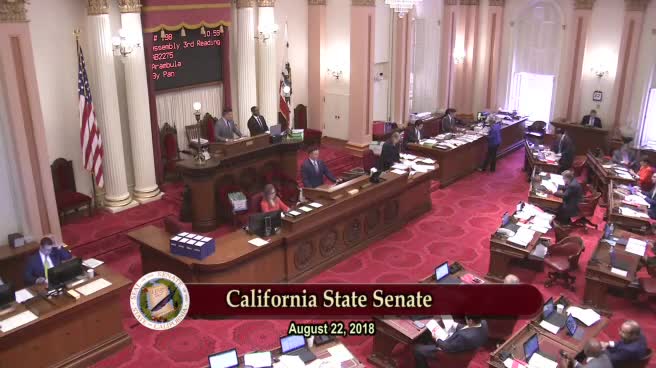

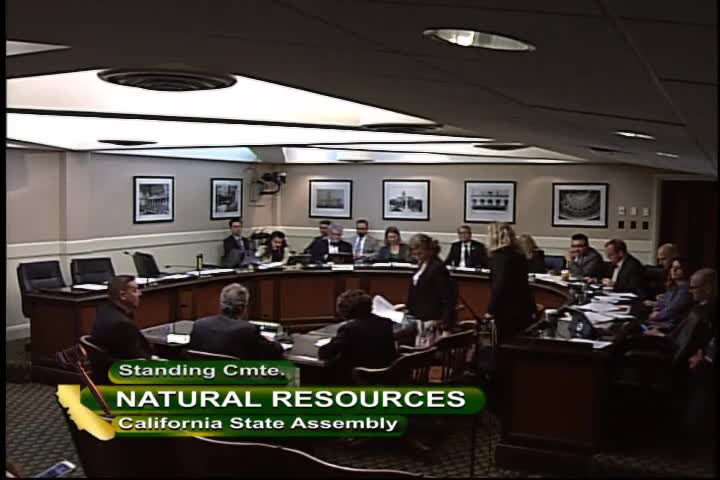
Bill Author

Bill Co-Author(s):