AB 2893: California Health Benefit Review Program: financial impacts.
- Session Year: 2017-2018
- House: Assembly
- Latest Version Date: 2018-09-10
Existing law requests the University of California to prepare a written analysis with relevant data on public health, medical, financial, and other impacts of legislation that proposes to mandate or repeal a mandated benefit or service, as specified. Existing law requests the University of California to provide the analysis to the appropriate policy and fiscal committees of the Legislature, as specified. Existing law establishes the Health Care Benefits Fund in the State Treasury to effectively support the University of California and its work in implementing these provisions.
This bill would additionally request the University of California to include in its analysis, as part of the financial impacts of that legislation, relevant data on the impact of coverage or repeal of coverage of the benefit or service on anticipated costs or savings estimated upon implementation for one subsequent calendar year, or, if applicable, 2 subsequent calendar years through a long-range estimate.
Existing law requests the University of California to prepare a written analysis with relevant data on public health, medical, financial, and other impacts of legislation that proposes to mandate or repeal a mandated benefit or service, as specified. Existing law requests the University of California to provide the analysis to the appropriate policy and fiscal committees of the Legislature, as specified. Existing law establishes the Health Care Benefits Fund in the State Treasury to effectively support the University of California and its work in implementing these provisions.
This bill would additionally request the University of California to include in its analysis, as part of the financial impacts of that legislation, relevant data on the impact of coverage or repeal of coverage of the benefit or service on anticipated costs or savings estimated upon implementation for one subsequent calendar year, or, if applicable, 2 subsequent calendar years through a long-range estimate.
Existing law requests the University of California to prepare a written analysis with relevant data on public health, medical, financial, and other impacts of legislation that proposes to mandate or repeal a mandated benefit or service, as specified. Existing law requests the University of California to provide the analysis to the appropriate policy and fiscal committees of the Legislature, as specified. Existing law establishes the Health Care Benefits Fund in the State Treasury to effectively support the University of California and its work in implementing these provisions.
This bill would additionally request the University of California to include in its analysis, as part of the financial impacts of that legislation, relevant data on the impact of coverage or repeal of coverage of the benefit or service on anticipated costs or savings estimated upon implementation for one subsequent state fiscal calendar year, or, if applicable, 2 subsequent state fiscal calendar years through a long-range estimate.
Existing law requests the University of California to prepare a written analysis with relevant data on public health, medical, financial, and other impacts of legislation that proposes to mandate or repeal a mandated benefit or service, as specified. Existing law requests the University of California to provide the analysis to the appropriate policy and fiscal committees of the Legislature, as specified. Existing law establishes the Health Care Benefits Fund in the State Treasury to effectively support the University of California and its work in implementing these provisions.
This bill would additionally request the University of California to include in its analysis, as part of the financial impacts of that legislation, relevant data on the impact of coverage or repeal of coverage of the benefit or service on anticipated costs or savings estimated upon implementation for the 2 state fiscal years that occur subsequent to the effective date of the legislation. one subsequent state fiscal year, or, if applicable, 2 subsequent state fiscal years through a long-range estimate.
Existing law requests the University of California to prepare a written analysis with relevant data on public health, medical, financial, and other impacts of legislation that proposes to mandate or repeal a mandated benefit or service, as specified. Existing law requests the University of California to provide the analysis to the appropriate policy and fiscal committees of the Legislature, as specified. Existing law establishes the Health Care Benefits Fund in the State Treasury to effectively support the University of California and its work in implementing these provisions.
This bill would additionally request the University of California to include in its analysis, as part of the financial impacts of that legislation, relevant data on the impact of coverage or repeal of coverage of the benefit or service on anticipated costs or savings estimated upon implementation for the 2 state fiscal years that occur subsequent to the effective date of the legislation.
Existing law sets forth provisions for the transfer of the duties, powers, purposes, functions, responsibilities, and jurisdiction of the former State Department of Alcohol and Drug Programs to the State Department of Health Care Services and the State Department of Public Health, as specified, on July 1, 2013. Existing law states that the transfer is designed to perform certain tasks, including, among others, consolidating within the State Department of Health Care Services all substance use disorder functions and programs from the former State Department of Alcohol and Drug Programs and promoting opportunities for the improvement of health care delivery, as specified.This bill would make a nonsubstantive change to those provisions.Existing law sets forth provisions for the transfer of the duties, powers, purposes, functions, responsibilities, and jurisdiction of the former State Department of Alcohol and Drug Programs to the State Department of Health Care Services and the State Department of Public Health, as specified, on July 1, 2013. Existing law states that the transfer is designed to perform certain tasks, including, among others, consolidating within the State Department of Health Care Services all substance use disorder functions and programs from the former State Department of Alcohol and Drug Programs and promoting opportunities for the improvement of health care delivery, as specified.
This bill would make a nonsubstantive change to those provisions.
(a)The Legislature hereby requests the University of California to establish the California Health Benefit Review Program to assess legislation proposing to mandate a benefit or service, as defined in subdivision (d), and legislation proposing to repeal a mandated benefit or service, as defined in subdivision (e), and to prepare a written analysis with relevant data on the following:
(1)Public health impacts, including, but not limited to, all of the following:
(A)The impact on the health of the community, including the reduction of communicable disease and the benefits of prevention such as those provided by childhood immunizations and prenatal care.
(B)The impact on the health of the community, including diseases and conditions where disparities in outcomes associated with the social determinants of health as well as gender, race, sexual orientation, or gender identity are established in peer-reviewed scientific and medical literature.
(C)The extent to which the benefit or service reduces premature death and the economic loss associated with disease.
(2)Medical impacts, including, but not limited to, all of the following:
(A)The extent to which the benefit or service is generally recognized by the medical community as being effective in the screening, diagnosis, or treatment of a condition or disease, as demonstrated by a review of scientific and peer-reviewed medical literature.
(B)The extent to which the benefit or service is generally available and utilized by treating physicians.
(C)The contribution of the benefit or service to the health status of the population, including the results of any research demonstrating the efficacy of the benefit or service compared to alternatives, including not providing the benefit or service.
(D)The extent to which mandating or repealing the benefits or services would not diminish or eliminate access to currently available health care benefits or services.
(3)Financial impacts, including, but not limited to, all of the following:
(A)The extent to which the coverage or repeal of coverage will increase or decrease the benefit or cost of the benefit or service.
(B)The extent to which the coverage or repeal of coverage will increase the utilization of the benefit or service, or will be a substitute for, or affect the cost of, alternative benefits or services.
(C)The extent to which the coverage or repeal of coverage will increase or decrease the administrative expenses of health care service plans and health insurers and the premium and expenses of subscribers, enrollees, and policyholders.
(D)The impact of this coverage or repeal of coverage on the total cost of health care.
(E)The impact of this coverage or repeal of coverage on anticipated costs or savings estimated upon implementation for one subsequent calendar year, or, if applicable, two subsequent calendar years through a long-range estimate.
(F)The potential cost or savings to the private sector, including the impact on small employers as defined in paragraph (1) of subdivision (l) of Section 1357, the Public Employees Retirement System, other retirement systems funded by the state or by a local government, individuals purchasing individual health insurance, and publicly funded state health insurance programs, including the Medi-Cal program and the Healthy Families Program.
(G)The extent to which costs resulting from lack of coverage or repeal of coverage are or would be shifted to other payers, including both public and private entities.
(H)The extent to which mandating or repealing the proposed benefit or service would not diminish or eliminate access to currently available health care benefits or services.
(I)The extent to which the benefit or service is generally utilized by a significant portion of the population.
(J)The extent to which health care coverage for the benefit or service is already generally available.
(K)The level of public demand for health care coverage for the benefit or service, including the level of interest of collective bargaining agents in negotiating privately for inclusion of this coverage in group contracts, and the extent to which the mandated benefit or service is covered by self-funded employer groups.
(L)In assessing and preparing a written analysis of the financial impact of legislation proposing to mandate a benefit or service and legislation proposing to repeal a mandated benefit or service pursuant to this paragraph, the Legislature requests the University of California to use a certified actuary or other person with relevant knowledge and expertise to determine the financial impact.
(4)The impact on essential health benefits, as defined in Section 1367.005 of this code and Section 10112.27 of the Insurance Code, and the impact on the California Health Benefit Exchange.
(b)The Legislature further requests that the California Health Benefit Review Program assess legislation that impacts health insurance benefit design, cost sharing, premiums, and other health insurance topics.
(c)The Legislature requests that the University of California provide every analysis to the appropriate policy and fiscal committees of the Legislature not later than 60 days, or in a manner and pursuant to a timeline agreed to by the Legislature and the California Health Benefit Review Program, after receiving a request made pursuant to Section 127661. In addition, the Legislature requests that the university post every analysis on the Internet and make every analysis available to the public upon request.
(d)As used in this section, legislation proposing to mandate a benefit or service means a proposed statute that requires a health care service plan or a health insurer, or both, to do any of the following:
(1)Permit a person insured or covered under the policy or contract to obtain health care treatment or services from a particular type of health care provider.
(2)Offer or provide coverage for the screening, diagnosis, or treatment of a particular disease or condition.
(3)Offer or provide coverage of a particular type of health care treatment or service, or of medical equipment, medical supplies, or drugs used in connection with a health care treatment or service.
(e)As used in this section, legislation proposing to repeal a mandated benefit or service means a proposed statute that would repeal an existing requirement that a health care service plan or a health insurer, or both, do any of the following:
(1)Permit a person insured or covered under the policy or contract to obtain health care treatment or services from a particular type of health care provider.
(2)Offer or provide coverage for the screening, diagnosis, or treatment of a particular disease or condition.
(3)Offer or provide coverage of a particular type of health care treatment or service, or of medical equipment, medical supplies, or drugs used in connection with a health care treatment or service.
(a)The Legislature hereby requests the University of California to establish the California Health Benefit Review Program to assess legislation proposing to mandate a benefit or service, as defined in subdivision (d), and legislation proposing to repeal a mandated benefit or service, as defined in subdivision (e), and to prepare a written analysis with relevant data on the following:
(1)Public health impacts, including, but not limited to, all of the following:
(A)The impact on the health of the community, including the reduction of communicable disease and the benefits of prevention such as those provided by childhood immunizations and prenatal care.
(B)The impact on the health of the community, including diseases and conditions where disparities in outcomes associated with the social determinants of health as well as gender, race, sexual orientation, or gender identity are established in peer-reviewed scientific and medical literature.
(C)The extent to which the benefit or service reduces premature death and the economic loss associated with disease.
(2)Medical impacts, including, but not limited to, all of the following:
(A)The extent to which the benefit or service is generally recognized by the medical community as being effective in the screening, diagnosis, or treatment of a condition or disease, as demonstrated by a review of scientific and peer-reviewed medical literature.
(B)The extent to which the benefit or service is generally available and utilized by treating physicians.
(C)The contribution of the benefit or service to the health status of the population, including the results of any research demonstrating the efficacy of the benefit or service compared to alternatives, including not providing the benefit or service.
(D)The extent to which mandating or repealing the benefits or services would not diminish or eliminate access to currently available health care benefits or services.
(3)Financial impacts, including, but not limited to, all of the following:
(A)The extent to which the coverage or repeal of coverage will increase or decrease the benefit or cost of the benefit or service.
(B)The extent to which the coverage or repeal of coverage will increase the utilization of the benefit or service, or will be a substitute for, or affect the cost of, alternative benefits or services.
(C)The extent to which the coverage or repeal of coverage will increase or decrease the administrative expenses of health care service plans and health insurers and the premium and expenses of subscribers, enrollees, and policyholders.
(D)The impact of this coverage or repeal of coverage on the total cost of health care.
(E)The impact of this coverage or repeal of coverage on anticipated costs or savings estimated upon implementation for one subsequent calendar year, or, if applicable, two subsequent calendar years through a long-range estimate.
(F)The potential cost or savings to the private sector, including the impact on small employers as defined in paragraph (1) of subdivision (l) of Section 1357, the Public Employees Retirement System, other retirement systems funded by the state or by a local government, individuals purchasing individual health insurance, and publicly funded state health insurance programs, including the Medi-Cal program and the Healthy Families Program.
(G)The extent to which costs resulting from lack of coverage or repeal of coverage are or would be shifted to other payers, including both public and private entities.
(H)The extent to which mandating or repealing the proposed benefit or service would not diminish or eliminate access to currently available health care benefits or services.
(I)The extent to which the benefit or service is generally utilized by a significant portion of the population.
(J)The extent to which health care coverage for the benefit or service is already generally available.
(K)The level of public demand for health care coverage for the benefit or service, including the level of interest of collective bargaining agents in negotiating privately for inclusion of this coverage in group contracts, and the extent to which the mandated benefit or service is covered by self-funded employer groups.
(L)In assessing and preparing a written analysis of the financial impact of legislation proposing to mandate a benefit or service and legislation proposing to repeal a mandated benefit or service pursuant to this paragraph, the Legislature requests the University of California to use a certified actuary or other person with relevant knowledge and expertise to determine the financial impact.
(4)The impact on essential health benefits, as defined in Section 1367.005 of this code and Section 10112.27 of the Insurance Code, and the impact on the California Health Benefit Exchange.
(b)The Legislature further requests that the California Health Benefit Review Program assess legislation that impacts health insurance benefit design, cost sharing, premiums, and other health insurance topics.
(c)The Legislature requests that the University of California provide every analysis to the appropriate policy and fiscal committees of the Legislature not later than 60 days, or in a manner and pursuant to a timeline agreed to by the Legislature and the California Health Benefit Review Program, after receiving a request made pursuant to Section 127661. In addition, the Legislature requests that the university post every analysis on the Internet and make every analysis available to the public upon request.
(d)As used in this section, legislation proposing to mandate a benefit or service means a proposed statute that requires a health care service plan or a health insurer, or both, to do any of the following:
(1)Permit a person insured or covered under the policy or contract to obtain health care treatment or services from a particular type of health care provider.
(2)Offer or provide coverage for the screening, diagnosis, or treatment of a particular disease or condition.
(3)Offer or provide coverage of a particular type of health care treatment or service, or of medical equipment, medical supplies, or drugs used in connection with a health care treatment or service.
(e)As used in this section, legislation proposing to repeal a mandated benefit or service means a proposed statute that would repeal an existing requirement that a health care service plan or a health insurer, or both, do any of the following:
(1)Permit a person insured or covered under the policy or contract to obtain health care treatment or services from a particular type of health care provider.
(2)Offer or provide coverage for the screening, diagnosis, or treatment of a particular disease or condition.
(3)Offer or provide coverage of a particular type of health care treatment or service, or of medical equipment, medical supplies, or drugs used in connection with a health care treatment or service.
(a)The Legislature hereby requests the University of California to establish the California Health Benefit Review Program to assess legislation proposing to mandate a benefit or service, as defined in subdivision (d), and legislation proposing to repeal a mandated benefit or service, as defined in subdivision (e), and to prepare a written analysis with relevant data on the following:
(1)Public health impacts, including, but not limited to, all of the following:
(A)The impact on the health of the community, including the reduction of communicable disease and the benefits of prevention such as those provided by childhood immunizations and prenatal care.
(B)The impact on the health of the community, including diseases and conditions where disparities in outcomes associated with the social determinants of health as well as gender, race, sexual orientation, or gender identity are established in peer-reviewed scientific and medical literature.
(C)The extent to which the benefit or service reduces premature death and the economic loss associated with disease.
(2)Medical impacts, including, but not limited to, all of the following:
(A)The extent to which the benefit or service is generally recognized by the medical community as being effective in the screening, diagnosis, or treatment of a condition or disease, as demonstrated by a review of scientific and peer-reviewed medical literature.
(B)The extent to which the benefit or service is generally available and utilized by treating physicians.
(C)The contribution of the benefit or service to the health status of the population, including the results of any research demonstrating the efficacy of the benefit or service compared to alternatives, including not providing the benefit or service.
(D)The extent to which mandating or repealing the benefits or services would not diminish or eliminate access to currently available health care benefits or services.
(3)Financial impacts, including, but not limited to, all of the following:
(A)The extent to which the coverage or repeal of coverage will increase or decrease the benefit or cost of the benefit or service.
(B)The extent to which the coverage or repeal of coverage will increase the utilization of the benefit or service, or will be a substitute for, or affect the cost of, alternative benefits or services.
(C)The extent to which the coverage or repeal of coverage will increase or decrease the administrative expenses of health care service plans and health insurers and the premium and expenses of subscribers, enrollees, and policyholders.
(D)The impact of this coverage or repeal of coverage on the total cost of health care.
(E)The impact of this coverage or repeal of coverage on anticipated costs or savings estimated upon implementation for one subsequent state fiscal calendar year, or, if applicable, two subsequent state fiscal calendar years through a long-range estimate.
(F)The potential cost or savings to the private sector, including the impact on small employers as defined in paragraph (1) of subdivision (l) of Section 1357, the Public Employees Retirement System, other retirement systems funded by the state or by a local government, individuals purchasing individual health insurance, and publicly funded state health insurance programs, including the Medi-Cal program and the Healthy Families Program.
(G)The extent to which costs resulting from lack of coverage or repeal of coverage are or would be shifted to other payers, including both public and private entities.
(H)The extent to which mandating or repealing the proposed benefit or service would not diminish or eliminate access to currently available health care benefits or services.
(I)The extent to which the benefit or service is generally utilized by a significant portion of the population.
(J)The extent to which health care coverage for the benefit or service is already generally available.
(K)The level of public demand for health care coverage for the benefit or service, including the level of interest of collective bargaining agents in negotiating privately for inclusion of this coverage in group contracts, and the extent to which the mandated benefit or service is covered by self-funded employer groups.
(L)In assessing and preparing a written analysis of the financial impact of legislation proposing to mandate a benefit or service and legislation proposing to repeal a mandated benefit or service pursuant to this paragraph, the Legislature requests the University of California to use a certified actuary or other person with relevant knowledge and expertise to determine the financial impact.
(4)The impact on essential health benefits, as defined in Section 1367.005 of this code and Section 10112.27 of the Insurance Code, and the impact on the California Health Benefit Exchange.
(b)The Legislature further requests that the California Health Benefit Review Program assess legislation that impacts health insurance benefit design, cost sharing, premiums, and other health insurance topics.
(c)The Legislature requests that the University of California provide every analysis to the appropriate policy and fiscal committees of the Legislature not later than 60 days, or in a manner and pursuant to a timeline agreed to by the Legislature and the California Health Benefit Review Program, after receiving a request made pursuant to Section 127661. In addition, the Legislature requests that the university post every analysis on the Internet and make every analysis available to the public upon request.
(d)As used in this section, legislation proposing to mandate a benefit or service means a proposed statute that requires a health care service plan or a health insurer, or both, to do any of the following:
(1)Permit a person insured or covered under the policy or contract to obtain health care treatment or services from a particular type of health care provider.
(2)Offer or provide coverage for the screening, diagnosis, or treatment of a particular disease or condition.
(3)Offer or provide coverage of a particular type of health care treatment or service, or of medical equipment, medical supplies, or drugs used in connection with a health care treatment or service.
(e)As used in this section, legislation proposing to repeal a mandated benefit or service means a proposed statute that would repeal an existing requirement that a health care service plan or a health insurer, or both, do any of the following:
(1)Permit a person insured or covered under the policy or contract to obtain health care treatment or services from a particular type of health care provider.
(2)Offer or provide coverage for the screening, diagnosis, or treatment of a particular disease or condition.
(3)Offer or provide coverage of a particular type of health care treatment or service, or of medical equipment, medical supplies, or drugs used in connection with a health care treatment or service.
(a)The Legislature hereby requests the University of California to establish the California Health Benefit Review Program to assess legislation proposing to mandate a benefit or service, as defined in subdivision (d), and legislation proposing to repeal a mandated benefit or service, as defined in subdivision (e), and to prepare a written analysis with relevant data on the following:
(1)Public health impacts, including, but not limited to, all of the following:
(A)The impact on the health of the community, including the reduction of communicable disease and the benefits of prevention such as those provided by childhood immunizations and prenatal care.
(B)The impact on the health of the community, including diseases and conditions where disparities in outcomes associated with the social determinants of health as well as gender, race, sexual orientation, or gender identity are established in peer-reviewed scientific and medical literature.
(C)The extent to which the benefit or service reduces premature death and the economic loss associated with disease.
(2)Medical impacts, including, but not limited to, all of the following:
(A)The extent to which the benefit or service is generally recognized by the medical community as being effective in the screening, diagnosis, or treatment of a condition or disease, as demonstrated by a review of scientific and peer-reviewed medical literature.
(B)The extent to which the benefit or service is generally available and utilized by treating physicians.
(C)The contribution of the benefit or service to the health status of the population, including the results of any research demonstrating the efficacy of the benefit or service compared to alternatives, including not providing the benefit or service.
(D)The extent to which mandating or repealing the benefits or services would not diminish or eliminate access to currently available health care benefits or services.
(3)Financial impacts, including, but not limited to, all of the following:
(A)The extent to which the coverage or repeal of coverage will increase or decrease the benefit or cost of the benefit or service.
(B)The extent to which the coverage or repeal of coverage will increase the utilization of the benefit or service, or will be a substitute for, or affect the cost of, alternative benefits or services.
(C)The extent to which the coverage or repeal of coverage will increase or decrease the administrative expenses of health care service plans and health insurers and the premium and expenses of subscribers, enrollees, and policyholders.
(D)The impact of this coverage or repeal of coverage on the total cost of health care.
(E)The impact of this coverage or repeal of coverage on anticipated costs or savings estimated upon implementation for the two state fiscal years that occur subsequent to the effective date of the legislation. one subsequent state fiscal year, or, if applicable, two subsequent state fiscal years through a long-range estimate.
(F)The potential cost or savings to the private sector, including the impact on small employers as defined in paragraph (1) of subdivision (l) of Section 1357, the Public Employees Retirement System, other retirement systems funded by the state or by a local government, individuals purchasing individual health insurance, and publicly funded state health insurance programs, including the Medi-Cal program and the Healthy Families Program.
(G)The extent to which costs resulting from lack of coverage or repeal of coverage are or would be shifted to other payers, including both public and private entities.
(H)The extent to which mandating or repealing the proposed benefit or service would not diminish or eliminate access to currently available health care benefits or services.
(I)The extent to which the benefit or service is generally utilized by a significant portion of the population.
(J)The extent to which health care coverage for the benefit or service is already generally available.
(K)The level of public demand for health care coverage for the benefit or service, including the level of interest of collective bargaining agents in negotiating privately for inclusion of this coverage in group contracts, and the extent to which the mandated benefit or service is covered by self-funded employer groups.
(L)In assessing and preparing a written analysis of the financial impact of legislation proposing to mandate a benefit or service and legislation proposing to repeal a mandated benefit or service pursuant to this paragraph, the Legislature requests the University of California to use a certified actuary or other person with relevant knowledge and expertise to determine the financial impact.
(4)The impact on essential health benefits, as defined in Section 1367.005 of this code and Section 10112.27 of the Insurance Code, and the impact on the California Health Benefit Exchange.
(b)The Legislature further requests that the California Health Benefit Review Program assess legislation that impacts health insurance benefit design, cost sharing, premiums, and other health insurance topics.
(c)The Legislature requests that the University of California provide every analysis to the appropriate policy and fiscal committees of the Legislature not later than 60 days, or in a manner and pursuant to a timeline agreed to by the Legislature and the California Health Benefit Review Program, after receiving a request made pursuant to Section 127661. In addition, the Legislature requests that the university post every analysis on the Internet and make every analysis available to the public upon request.
(d)As used in this section, legislation proposing to mandate a benefit or service means a proposed statute that requires a health care service plan or a health insurer, or both, to do any of the following:
(1)Permit a person insured or covered under the policy or contract to obtain health care treatment or services from a particular type of health care provider.
(2)Offer or provide coverage for the screening, diagnosis, or treatment of a particular disease or condition.
(3)Offer or provide coverage of a particular type of health care treatment or service, or of medical equipment, medical supplies, or drugs used in connection with a health care treatment or service.
(e)As used in this section, legislation proposing to repeal a mandated benefit or service means a proposed statute that would repeal an existing requirement that a health care service plan or a health insurer, or both, do any of the following:
(1)Permit a person insured or covered under the policy or contract to obtain health care treatment or services from a particular type of health care provider.
(2)Offer or provide coverage for the screening, diagnosis, or treatment of a particular disease or condition.
(3)Offer or provide coverage of a particular type of health care treatment or service, or of medical equipment, medical supplies, or drugs used in connection with a health care treatment or service.
(a)The Legislature hereby requests the University of California to establish the California Health Benefit Review Program to assess legislation proposing to mandate a benefit or service, as defined in subdivision (d), and legislation proposing to repeal a mandated benefit or service, as defined in subdivision (e), and to prepare a written analysis with relevant data on the following:
(1)Public health impacts, including, but not limited to, all of the following:
(A)The impact on the health of the community, including the reduction of communicable disease and the benefits of prevention such as those provided by childhood immunizations and prenatal care.
(B)The impact on the health of the community, including diseases and conditions where disparities in outcomes associated with the social determinants of health as well as gender, race, sexual orientation, or gender identity are established in peer-reviewed scientific and medical literature.
(C)The extent to which the benefit or service reduces premature death and the economic loss associated with disease.
(2)Medical impacts, including, but not limited to, all of the following:
(A)The extent to which the benefit or service is generally recognized by the medical community as being effective in the screening, diagnosis, or treatment of a condition or disease, as demonstrated by a review of scientific and peer-reviewed medical literature.
(B)The extent to which the benefit or service is generally available and utilized by treating physicians.
(C)The contribution of the benefit or service to the health status of the population, including the results of any research demonstrating the efficacy of the benefit or service compared to alternatives, including not providing the benefit or service.
(D)The extent to which mandating or repealing the benefits or services would not diminish or eliminate access to currently available health care benefits or services.
(3)Financial impacts, including, but not limited to, all of the following:
(A)The extent to which the coverage or repeal of coverage will increase or decrease the benefit or cost of the benefit or service.
(B)The extent to which the coverage or repeal of coverage will increase the utilization of the benefit or service, or will be a substitute for, or affect the cost of, alternative benefits or services.
(C)The extent to which the coverage or repeal of coverage will increase or decrease the administrative expenses of health care service plans and health insurers and the premium and expenses of subscribers, enrollees, and policyholders.
(D)The impact of this coverage or repeal of coverage on the total cost of health care.
(E)The impact of this coverage or repeal of coverage on anticipated costs or savings estimated upon implementation for the two state fiscal years that occur subsequent to the effective date of the legislation.
(E)(F)The potential cost or savings to the private sector, including the impact on small employers as defined in paragraph (1) of subdivision (l) of Section 1357, the Public Employees Retirement System, other retirement systems funded by the state or by a local government, individuals purchasing individual health insurance, and publicly funded state health insurance programs, including the Medi-Cal program and the Healthy Families Program.
(F)(G)The extent to which costs resulting from lack of coverage or repeal of coverage are or would be shifted to other payers, including both public and private entities.
(G)(H)The extent to which mandating or repealing the proposed benefit or service would not diminish or eliminate access to currently available health care benefits or services.
(H)(I)The extent to which the benefit or service is generally utilized by a significant portion of the population.
(I)(J)The extent to which health care coverage for the benefit or service is already generally available.
(J)(K)The level of public demand for health care coverage for the benefit or service, including the level of interest of collective bargaining agents in negotiating privately for inclusion of this coverage in group contracts, and the extent to which the mandated benefit or service is covered by self-funded employer groups.
(K)(L)In assessing and preparing a written analysis of the financial impact of legislation proposing to mandate a benefit or service and legislation proposing to repeal a mandated benefit or service pursuant to this paragraph, the Legislature requests the University of California to use a certified actuary or other person with relevant knowledge and expertise to determine the financial impact.
(4)The impact on essential health benefits, as defined in Section 1367.005 of this code and Section 10112.27 of the Insurance Code, and the impact on the California Health Benefit Exchange.
(b)The Legislature further requests that the California Health Benefit Review Program assess legislation that impacts health insurance benefit design, cost sharing, premiums, and other health insurance topics.
(c)The Legislature requests that the University of California provide every analysis to the appropriate policy and fiscal committees of the Legislature not later than 60 days, or in a manner and pursuant to a timeline agreed to by the Legislature and the California Health Benefit Review Program, after receiving a request made pursuant to Section 127661. In addition, the Legislature requests that the university post every analysis on the Internet and make every analysis available to the public upon request.
(d)As used in this section, legislation proposing to mandate a benefit or service means a proposed statute that requires a health care service plan or a health insurer, or both, to do any of the following:
(1)Permit a person insured or covered under the policy or contract to obtain health care treatment or services from a particular type of health care provider.
(2)Offer or provide coverage for the screening, diagnosis, or treatment of a particular disease or condition.
(3)Offer or provide coverage of a particular type of health care treatment or service, or of medical equipment, medical supplies, or drugs used in connection with a health care treatment or service.
(e)As used in this section, legislation proposing to repeal a mandated benefit or service means a proposed statute that, if enacted, would become operative on or after January 1, 2008, and that would repeal an existing requirement that a health care service plan or a health insurer, or both, do any of the following:
(1)Permit a person insured or covered under the policy or contract to obtain health care treatment or services from a particular type of health care provider.
(2)Offer or provide coverage for the screening, diagnosis, or treatment of a particular disease or condition.
(3)Offer or provide coverage of a particular type of health care treatment or service, or of medical equipment, medical supplies, or drugs used in connection with a health care treatment or service.
SECTION 1.Section 11750 of the Health and Safety Code is amended to read:11750.(a)It is the intent of the Legislature that the administrative and programmatic functions of the State Department of Alcohol and Drug Programs be transferred to the State Department of Health Care Services and the State Department of Public Health effective July 1, 2013. It is further the intent of the Legislature that this transfer happen efficiently and effectively, with no interruptions in service delivery. This transfer is designed to do all of the following:(1)Consolidate within a single state department, the State Department of Health Care Services, all substance use disorder functions and programs from the State Department of Alcohol and Drug Programs.(2)Align with federal and county partners by consolidating substance use disorder and community mental health functions and programs within one department.(3)Promote opportunities for the improvement of health care delivery by integrating the state-level administration of substance use disorders, community mental health, and physical health to the benefit of communities and consumers with substance use disorders and cooccurring disorders.(4)Ensure appropriate state oversight by consolidating the two key public funding sources, the Substance Abuse Prevention and Treatment Block Grant and the Drug Medi-Cal Treatment Program, for the substance use disorder system in one state department.(5)Provide effective state leadership on substance use disorder issues by positioning the State Department of Health Care Services to serve as a unified, strong voice to advocate, at both the state and federal levels, on behalf of the needs of communities, county partners, and consumers with substance use disorders.(b)Effective July 1, 2013, the administrative and programmatic functions that were previously performed by the State Department of Alcohol and Drug Programs are transferred to the State Department of Health Care Services and the State Department of Public Health in accordance with the act that added this section. Further, except as provided in Section 131055.2, any reference in state statute or regulation to the State Department of Alcohol and Drug Programs or the State Department of Alcohol and Drug Abuse shall refer to the State Department of Health Care Services.(a)It is the intent of the Legislature that the administrative and programmatic functions of the State Department of Alcohol and Drug Programs be transferred to the State Department of Health Care Services and the State Department of Public Health effective July 1, 2013. It is further the intent of the Legislature that this transfer happen efficiently and effectively, with no interruptions in service delivery. This transfer is designed to: to do all of the following:
(1)Consolidate within a single state department, the State Department of Health Care Services, all substance use disorder functions and programs from the State Department of Alcohol and Drug Programs.
(2)Align with federal and county partners by consolidating substance use disorder and community mental health functions and programs within one department.
(3)Promote opportunities for the improvement of health care delivery by integrating the state-level administration of substance use disorders, community mental health, and physical health to the benefit of communities and consumers with substance use disorders and cooccurring disorders.
(4)Ensure appropriate state oversight by consolidating the two key public funding sources, the Substance Abuse Prevention and Treatment Block Grant and the Drug Medi-Cal Treatment Program, for the substance use disorder system in one state department.
(5)Provide effective state leadership on substance use disorder issues by positioning the State Department of Health Care Services to serve as a unified, strong voice to advocate, at both the state and federal levels, on behalf of the needs of communities, county partners, and consumers with substance use disorders.
(b)Effective July 1, 2013, the administrative and programmatic functions that were previously performed by the State Department of Alcohol and Drug Programs are transferred to the State Department of Health Care Services and the State Department of Public Health in accordance with the act that added this section. Further, except as provided in Section 131055.2, any reference in state statute or regulation to the State Department of Alcohol and Drug Programs or the State Department of Alcohol and Drug Abuse shall refer to the State Department of Health Care Services.
|
Date
|
Status
|
|---|---|
| Sep 10, 2018 | Chaptered by Secretary of State - Chapter 326, Statutes of 2018. |
| Sep 10, 2018 | Approved by the Governor. |
| Aug 27, 2018 | Enrolled and presented to the Governor at 3 p.m. |
| Aug 20, 2018 | Senate amendments concurred in. To Engrossing and Enrolling. |
| Aug 14, 2018 | In Assembly. Concurrence in Senate amendments pending. May be considered on or after August 16 pursuant to Assembly Rule 77. |
| Aug 13, 2018 | Read third time. Passed. Ordered to the Assembly. |
| Aug 7, 2018 | Read second time. Ordered to Consent Calendar. |
| Aug 6, 2018 | From committee: Be ordered to second reading file pursuant to Senate Rule 28.8 and ordered to Consent Calendar. |
| Jul 2, 2018 | Read second time and amended. Re-referred to Com. on APPR. |
| Jun 28, 2018 | From committee: Amend, and do pass as amended and re-refer to Com. on APPR. with recommendation: To Consent Calendar. (Ayes 9. Noes 0.) (June 27). |
| Jun 13, 2018 | Referred to Com. on HEALTH. |
| May 31, 2018 | In Senate. Read first time. To Com. on RLS. for assignment. |
| May 30, 2018 | Read third time. Passed. Ordered to the Senate. |
| May 29, 2018 | Read second time. Ordered to third reading. |
| May 25, 2018 | From committee: Amend, and do pass as amended. (Ayes 16. Noes 0.) (May 25). |
| May 3, 2018 | Read second time. Ordered to Consent Calendar. |
| May 2, 2018 | In committee: Set, first hearing. Referred to APPR. suspense file. |
| Apr 25, 2018 | From committee: Do pass and re-refer to Com. on APPR. with recommendation: To Consent Calendar. (Ayes 15. Noes 0.) (April 24). Re-referred to Com. on APPR. |
| Mar 21, 2018 | Re-referred to Com. on HEALTH. |
| Mar 20, 2018 | From committee chair, with author's amendments: Amend, and re-refer to Com. on HEALTH. Read second time and amended. |
| Mar 19, 2018 | Referred to Com. on HEALTH. |
| Feb 17, 2018 | From printer. May be heard in committee March 19. |
| Feb 16, 2018 | Read first time. To print. |
|
Date
|
Description
|
Location
|
Votes
|
|
|---|---|---|---|---|
| Aug 20, 2018 | AB 2893 WALDRON Concurrence in Senate Amendments | Assembly Floor |
Passed |
|
| Aug 13, 2018 | Consent Calendar AB2893 | Senate Floor |
Passed |
|
| Jun 27, 2018 | Do pass as amended, but first amend, and re-refer to the Committee on [Appropriations] with the recommendation: To Consent Calendar | Senate Standing Committee on Health |
Passed |
|
| May 30, 2018 | AB 2893 WALDRON Assembly Third Reading | Assembly Floor |
Passed |
|
| May 25, 2018 | Do pass as amended. | Assembly Standing Committee on Appropriations |
Passed |
|
| Apr 24, 2018 | Do pass and be re-referred to the Committee on [Appropriations] with recommendation: To Consent Calendar | Assembly Standing Committee on Health |
Passed |
This list shows positions taken on this bill by organizations on the date displayed, which is linked to the original source.
Positions by individuals are not included.
|
Organization
|
Position
|
Date
|
|---|---|---|
| California Chronic Care Coalition | ** Support | Aug 8, 2018 |
CONCURRENCE IN SENATE AMENDMENTS
CSA1 Bill Id:AB 2893
Author:(Waldron)
As Amended Ver:July 2, 2018
Majority vote
ASSEMBLY: | 78-0 | (May 30, 2018) | SENATE: | 37-0 | (August 13, 2018) |
Original Committee Reference: HEALTH
SUMMARY: Requests the California Health Benefit Review Program (CHBRP), within the University of California, when assessing legislation proposing to mandate a benefit or service, to include in the financial impacts, one subsequent state fiscal year, or if applicable, the anticipated costs or savings upon estimated implementation for the subsequent two state fiscal years through a long-range estimate.
The Senate amendments revise language specifying the requirements of the financial impacts in the CHBRP analysis to be estimated upon implementation of a calendar year.
FISCAL EFFECT: According to the Senate Appropriations Committee, pursuant to Senate Rule 28.8, negligible state costs.
COMMENTS: According to the author, this bill would require the CHBRP analysis to consider a longer data evaluation for the costs or savings on coverage or repeal of coverage of a benefit or service for a period of two fiscal years. The author notes that limiting savings and cost estimates to a 12 month period does not accurately reflect the benefits or impact of the covered therapy. The author concludes, by simply looking at costs in one year this does not reflect the overall value impact for patient outcomes or the savings realized in a longer outlook.
CHBRP was established through AB 1996 (Thomson), Chapter 795, Statutes of 2002, to provide independent analysis of public health, medical, and financial impact of proposed health insurance benefit mandates or repeals. SB 125 (Hernandez), Chapter 9, Statutes of 2015, added an impact assessment on essential health benefits, and legislation that impacts health insurance benefit designs, cost sharing, premiums, and other health insurance topics. A typical report will summarize research regarding the medical effectiveness of the clinical interventions relevant to the proposed benefit mandate or repeal and estimate the cost and public health impacts for a one year timeframe. More specifically, for the projected cost impact CHBRP examines the following components: coverage for the specified benefit; utilization or benefit-relevant screening; diagnostic, treatment interventions; and the resulting cost of health insurance due to changes in benefit coverage and utilization. It is important to note that the CHBRP analyses do not make recommendations and defer all policy decisions to the Legislature.
A CHBRP analysis is generally projected out to a one year timeframe. However, when the expected benefits may not be realized within the one year timeframe as used in the cost and utilization analysis, the report then projects the long-term public health impacts beyond one year. CHBRP's analyses will include a projected fiscal impact beyond one year when the necessary data is available to support the projected fiscal impact. Long-term projected fiscal impact is not estimated because of the inherent difficulty in forecasting costs accurately.
The California Chronic Care Coalition (CCCC) writes in support of this bill, stating that a longer evaluation period would allow a more complete assessment of health outcomes, budget savings, and costs rather than limiting analyses to the current 12 month period. CCCC states that better assessments of patient health outcomes, costs of treatment and potential savings; this bill require CHBRP to consider a longer evaluation for a period of one, to up to two fiscal years, if appropriate.
There is no known opposition.
Analysis Prepared by: Monica Montano / HEALTH / (916) 319-2097 FN: 0003868
Office of Senate Floor Analyses (916) 651-1520 Fax: (916) 327-4478 | AB |
CONSENT
Bill No: AB 2893
:
SENATE HEALTH COMMITTEE: 9-0, 6/27/18
AYES: Pan, Nguyen, Beall, Hernandez, Leyva, Mitchell, Monning, Nielsen, Roth
SENATE APPROPRIATIONS COMMITTEE: Senate Rule 28.8
ASSEMBLY FLOOR: 78-0, 5/30/18 - See last page for vote
DIGEST: This bill adds to the financial impact analysis requested of the California Health Benefit Review Program (CHBRP) related to CHBRP’s assessment of health plan or health insurance mandate legislation, the impact of the coverage or repeal of coverage on anticipated costs or savings estimated upon implementation for one subsequent calendar year, or, if applicable, two subsequent calendar years through a long-range estimate.
Existing law:
- Requests the University of California (UC) to establish the CHBRP to assess, as specified and not later than 60 days from receiving a request by the Legislature, legislation proposing to mandate or repeal a health plan or health insurance benefit or service for public health, medical, and financial impacts. [HSC §127660]
- Requires, for the financial impacts analysis to include, but not be limited to, all of the following:
- The extent to which the coverage or repeal of coverage will increase or decrease the benefit or cost of the benefit or services;
- The extent to which the coverage or repeal of coverage will increase the utilization of the benefit or services, or will be a substitute for, or affect the cost of, alternative benefits or services;
- The extent to which the coverage or repeal of coverage will increase or decrease the administrative expenses of the health plans and health insurers and the premium and expenses of subscribers, enrollees, and policyholders;
- The impact of this coverage or repeal of coverage on the total cost of health care;
- The potential cost or savings to the private sector, including small employers, the California Public Employees’ Retirement System, other retirement systems funded by the state or local government, individuals purchasing individual health insurance, and publicly funded state health insurance programs;
- The extent to which costs resulting from lack of coverage or repeal of coverage are or would be shifted to other payers, including both public and private entities;
- The extent to which mandating or repealing the proposed benefit or service would not diminish or eliminate access to currently available health care benefits or services;
- The extent to which the benefit or service is generally utilized by a significant portion of the population;
- The extent to which the health care coverage for the benefit or service is already generally available; and,
- The level of public demand for health care coverage for the benefit or service, as specified.
- Requests UC use a certified actuary or other person with relevant knowledge and expertise to determine financial impact. [HSC §127660]
- Requires health plans, except specialized health plans, and health insurers, for fiscal years 2017-18 to 2019-20, to be assessed an annual fee to fund CHBRP, as specified, not to exceed $2 million. [HSC §127662]
- Sunsets CHBRP on June 30, 2020. [HSC §127665]
This bill adds to the financial impact analysis required of CHBRP, the impact of coverage or repeal of coverage on anticipated costs or savings estimated upon implementation for one subsequent calendar year, or, if applicable, two subsequent calendar years through a long-range estimate.
Comments
- Author’s statement. According to the author, this bill requires the CHBRP analysis to consider a longer data evaluation for the costs or savings on coverage or repeal of coverage of a benefit or service for a period of two calendar years, if applicable. Simply looking at costs in one year does not reflect the overall value impact for patient outcomes or the saving realized in a longer outlook. For example, initial costs of higher tier drugs may show substantial savings manifested after a 12-month estimate, including lower hospitalization rates, prevention of organ transplants and may result in better quality of life and health outcomes for the patient at lower costs in the long run. Additionally, many California public agencies have realized the benefits of longer outlook estimates in their budgeting processes and have instituted two year budget cycles. This allows these agencies to better plan, assess, program and facilitate the most efficient and cost effective results. This process would benefit cost/result and value efficiencies in our state for health care access and outcomes.
- CHBRP. CHBRP was established under AB 1996 which requested UC to assess legislation that proposes a mandated benefit or service (referred to as “mandate bills”) and prepare a timely written analysis within 60 days with relevant data on the medical, economic, and public health impacts of proposed health plan and health insurance benefit mandate legislation. Current law requires health plans, except specialized health plans, and health insurers, for fiscal years 2017-18 to 2019-20, to be assessed an annual fee to fund CHBRP, this amount is to not to exceed $2 million. CHBRP is administered in the UC Office of the President and has staff that supports a task force of faculty from six UC campuses (Berkeley, Davis, Irvine, Los Angeles, San Diego, and San Francisco) and three private universities (Loma Linda University, the University of Southern California, and Stanford University).
CHBRP quantifies changes in utilization of health care services, which are driven by several factors: changes in benefit levels; levels of cost-sharing; enrollee demand and awareness of benefit coverage; providers’ practice patterns; and level of health care management. CHBRP takes these factors into account when producing its estimates, and CHBRP determines the unit cost for each unit of the proposed mandate, and whether that would change postmandate if demand for the treatment or service is expected to change. Together, CHBRP’s projections of changes in cost and utilization provide an estimate of the incremental change a proposed mandate would have on the state-regulated health insurance market.
CHBRP uses a one year (from implementation) horizon for several reasons: (a) CHBRP cost impact models for premium and total expenditure estimates mimic most insurers’ internal processes for determining premium changes in a given year; (b) CHBRP has limited capacity for modeling the long-term cost and health consequences of benefit mandates. Conducting such analyses requires sophisticated, disease-specific simulation models that permit analysis of the progression of a disease (and the disease treatment’s technological advancement) over the course of individual lifetimes and allows for individual variability in disease progression, health outcomes, and subsequent costs; and (c) Given the specific nature of most mandates analyzed by CHBRP, the long-term cost or public health impact as a result of the mandate are not necessarily addressed in the literature. Given these constraints, CHBRP will provide a long-term cost estimate, when the literature (quality of evidence) and data permit.
FISCAL EFFECT: Appropriation: Fiscal Com.: Local:
California Chronic Care Coalition
None received
ARGUMENTS IN SUPPORT: The California Chronic Care Coalition writes that a longer evaluation period would allow a more complete assessment of health outcomes, budget savings, and costs rather than limiting analyses to the current 12-month period.
ASSEMBLY FLOOR: 78-0, 5/30/18
AYES: Acosta, Aguiar-Curry, Travis Allen, Arambula, Baker, Berman, Bigelow, Bloom, Bonta, Brough, Burke, Caballero, Calderon, Carrillo, Cervantes, Chau, Chávez, Chen, Chiu, Choi, Chu, Cooley, Cooper, Cunningham, Dahle, Daly, Eggman, Flora, Fong, Frazier, Friedman, Gallagher, Cristina Garcia, Eduardo Garcia, Gipson, Gloria, Gonzalez Fletcher, Gray, Grayson, Harper, Holden, Irwin, Jones-Sawyer, Kalra, Kamlager-Dove, Kiley, Lackey, Levine, Limón, Low, Maienschein, Mathis, Mayes, McCarty, Medina, Melendez, Mullin, Muratsuchi, Nazarian, Obernolte, O'Donnell, Patterson, Quirk, Quirk-Silva, Reyes, Rodriguez, Rubio, Salas, Santiago, Steinorth, Mark Stone, Thurmond, Ting, Voepel, Waldron, Weber, Wood, Rendon
8/8/18 10:34:46
**** END ****
SENATE COMMITTEE ON HEALTH
Senator Dr. Richard Pan, Chair
BILL NO: AB 2893
AUTHOR: | Waldron | ||
VERSION: | May 25, 2018 | ||
HEARING DATE: | June 27, 2018 |
| |
CONSULTANT: | Teri Boughton | ||
SUBJECT: California Health Benefit Review Program: financial impacts.
SUMMARY:
- Adds to the financial impact analysis requested of the California Health Benefit Review Program (CHBRP) related to CHBRP’s assessment of health plan or health insurance mandate legislation, the impact of the coverage or repeal of coverage on anticipated costs or savings estimated upon implementation for one subsequent state fiscal year, or, if applicable, two subsequent state fiscal years through a long-range estimate.
Existing law:
- Requests the University of California (UC) to establish the CHBRP to assess, as specified and not later than 60 days from receiving a request by the Legislature, legislation proposing to mandate or repeal a health plan or health insurance benefit or service for public health, medical, and financial impacts. [HSC §127660]
- Requires, for the financial impacts analysis to include, but not be limited to, all of the following:
- The extent to which the coverage or repeal of coverage will increase or decrease the benefit or cost of the benefit or services;
- The extent to which the coverage or repeal of coverage will increase the utilization of the benefit or services, or will be a substitute for, or affect the cost of, alternative benefits or services;
- The extent to which the coverage or repeal of coverage will increase or decrease the administrative expenses of the health plans and health insurers and the premium and expenses of subscribers, enrollees, and policyholders;
- The impact of this coverage or repeal of coverage on the total cost of health care;
- The potential cost or savings to the private sector, including small employers, the Public Employees’ Retirement System, other retirement systems funded by the state or local government, individuals purchasing individual health insurance, and publicly funded state health insurance programs;
- The extent to which costs resulting from lack of coverage or repeal of coverage are or would be shifted to other payers, including both public and private entities;
- The extent to which mandating or repealing the proposed benefit or service would not diminish or eliminate access to currently available health care benefits or services;
- The extent to which the benefit or service is generally utilized by a significant portion of the population;
- The extent to which the health care coverage for the benefit or service is already generally available; and,
- The level of public demand for health care coverage for the benefit or service, as specified.
- Requests UC use a certified actuary or other person with relevant knowledge and expertise to determine financial impact. [HSC §127660]
- Requires health plans, except specialized health plans, and health insurers, for fiscal years 2017-18 to 2019-20, to be assessed an annual fee to fund CHBRP, as specified, not to exceed $2 million. [HSC §127662]
- Sunsets CHBRP on June 30, 2020. [HSC §127665]
This bill: Adds to the financial impact analysis required of CHBRP, the impact of coverage or repeal of coverage on anticipated costs or savings estimated upon implementation for one subsequent state fiscal year, or, if applicable, two subsequent state fiscal years through a long-range estimate.
FISCL EFFECT:
According to the Assembly Appropriations Committee, this bill could result in an increase in modeling and analytic efforts, impacting actuarial, staff, and faculty time and result in costs as follows:
- One-time cost pressure to CHBRP of $150,000 to develop and test a customized cost simulation model.
- An estimated $100,000 per year in cost pressure for staff and contract costs to add the additional projections for each bill CHBRP analyzes.
The fund source is uncertain, as current funding provides only up to $2 million from an assessment on health plans and insurers (Health Care Benefits Fund). The increased costs would result in cost pressure to increase the assessment. Unless CHBRP's $2 million annual appropriation increases, this bill would result in less funding for CHBRP's other duties.
PRIOR VOTES:
Assembly Floor: | 78 - 0 |
Assembly Appropriations Committee: | 16 - 0 |
Assembly Health Committee: | 15 - 0 |
COMMENTS:
- Author’s statement. According to the author, this bill would require the CHBRP analysis to consider a longer data evaluation for the costs or savings on coverage or repeal of coverage of a benefit or service for a period of two fiscal years, if applicable. Simply looking at costs in one year does not reflect the overall value impact for patient outcomes or the saving realized in a longer outlook. For example, initial costs of higher tier drugs may show substantial savings manifested after a 12 month estimate, including lower hospitalization rates, prevention of organ transplants and may result in better quality of life and health outcomes for the patient at lower costs in the long run. Additionally, many California public agencies have realized the benefits of longer outlook estimates in their budgeting processes and have instituted two year fiscal budget cycles. This allows these agencies to better plan, assess, program and facilitate the most efficient and cost effective results. This process would benefit cost/result and value efficiencies in our state for health care access and outcomes.
- California Health Benefits Review Program. CHBRP was established under AB 1996 which requested UC to assess legislation that proposes a mandated benefit or service (referred to as “mandate bills”) and prepare a timely written analysis within 60 days with relevant data on the medical, economic, and public health impacts of proposed health plan and health insurance benefit mandate legislation. Current law requires health plans, except specialized health plans, and health insurers, for fiscal years 2017-18 to 2019-20, to be assessed an annual fee to fund CHBRP, this amount is to not to exceed $2 million. CHBRP is administered in the UC Office of the President and has staff that supports a task force of faculty from six UC campuses (Berkeley, Davis, Irvine, Los Angeles, San Diego, and San Francisco) and three private universities (Loma Linda University, the University of Southern California, and Stanford University).
CHBRP quantifies changes in utilization of health care services, which are driven by several factors: changes in benefit levels; levels of cost-sharing; enrollee demand and awareness of benefit coverage; providers’ practice patterns; and level of health care management. CHBRP takes these factors into account when producing its estimates, and CHBRP determines the unit cost for each unit of the proposed mandate, and whether that would change postmandate if demand for the treatment or service is expected to change. Together, CHBRP’s projections of changes in cost and utilization provide an estimate of the incremental change a proposed mandate would have on the state-regulated health insurance market.
CHBRP uses a one year (from implementation) horizon for several reasons: 1) CHBRP cost impact models for premium and total expenditure estimates mimic most insurers’ internal processes for determining premium changes in a given year. 2) CHBRP has limited capacity for modeling the long-term cost and health consequences of benefit mandates. Conducting such analyses requires sophisticated, disease-specific simulation models that permit analysis of the progression of a disease (and the disease treatment’s technological advancement) over the course of individual lifetimes and allows for individual variability in disease progression, health outcomes, and subsequent costs. 3) Given the specific nature of most mandates analyzed by CHBRP, the long-term cost or public health impact as a result of the mandate are not necessarily addressed in the literature. Given these constraints, CHBRP will provide a long-term cost estimate, when the literature (quality of evidence) and data permit.
- Related legislation. AB 1996 requests UC until January 1, 2007, to, within 60 days of receiving a request by the Legislature, review legislation proposing to mandate or repeal a health plan or health insurance benefit or service for public health, medical, and financial impacts.
SB 1704 (Kuehl, Chapter 684, Statutes of 2006) extended CHBRP’s sunset date to January 1, 2011 and added legislation proposing to repeal a mandated benefit or service to the types of legislation that the Legislature requests CHBRP assess.
AB 1540 (Committee on Health, Chapter 298, Statutes of 2009) extended CHBRP’s sunset date to June 30, 2015.
SB 1465 (Committee on Health, Chapter 442, Statutes of 2014) extended the CHBRP’s sunset date to December 31, 2015.
AB 1578 (Pan of 2014) would have extended CHBRP’s sunset date to June 30, 2016. AB 1578 died in the Assembly.
SB 125 (Hernandez, Chapter 9, Statutes of 2015) extended the sunset date of CHBRP to June 30, 2017 and makes changes to its analyses and timelines. Extended the fee assessed on health plans and insurers for this purpose until fiscal year 2016-17.
AB 114, (Committee on Budget, Public health, Chapter 38, Statutes of 2017) extends the fee assessed on health plans and insurers for the 2019–20 fiscal years and the CHBRP sunset date to June 30, 2020.
AB 1764 (Waldron of 2016) would have requested CHRBP, in assessing legislation that proposes to mandate a benefit or service, as specified, to include in the financial impacts of a benefit mandate or repeal, the anticipated costs or savings estimated upon implementation for the subsequent two state fiscal years, and if applicable, for the five subsequent state fiscal years. AB 1764 was held on the Assembly Committee Appropriations suspense file.
- Amendments. The author requests the Committee adopt an amendment to replace “state fiscal year” with “calendar year.” This amendment will make it easier for CHBRP to implement and CHBRP indicates it would be able to absorb the cost.
SUPPORT AND OPPOSITION:
Support: None received
Oppose: None received
-- END --
ASSEMBLY THIRD READING
ATR Bill Id:AB 2893
Author:(Waldron)
As Amended Ver:May 25, 2018
Majority vote
Committee | Votes | Ayes | Noes |
Health | 15-0 | Wood, Mayes, Aguiar-Curry, Bigelow, Bonta, Burke, Carrillo, Flora, Limón, McCarty, Nazarian, Rodriguez, Santiago, Thurmond, Waldron | |
Appropriations | 16-0 | Gonzalez Fletcher, Bigelow, Bloom, Bonta, Calderon, Carrillo, Chau, Eggman, Fong, Friedman, Gallagher, Eduardo Garcia, Nazarian, Obernolte, Quirk, Reyes |
|
SUMMARY: Requests the California Health Benefit Review Program (CHBRP), within the University of California (UC), when assessing legislation proposing to mandate a benefit or service, to include in the financial impacts, if applicable, the anticipated costs or savings upon estimated implementation for the subsequent two state fiscal years through a long-range estimate.
EXISTING LAW:
- Establishes CHBRP to assess legislation proposing to mandate a benefit or service and legislation proposing to repeal a mandated benefit or service, as specified.
- Requires the UC to provide every analysis to the appropriate policy and fiscal committees of the Legislature no later than 60 days and requires the UC to post every analysis on the Internet and make every analysis available to the public upon request.
FISCAL EFFECT: According to the Assembly Appropriations Committee, this bill could result in an increase in modeling and analytic efforts, impacting actuarial, staff, and faculty time and result in costs as follows:
- One-time cost pressure to CHBRP of $150,000 to develop and test a customized cost simulation model.
- An estimated $100,000 per year in cost pressure for staff and contract costs to add the additional projections for each bill CHBRP analyzes.
The fund source is uncertain, as current funding provides only up to $2 million from an assessment on health plans and insurers (Health Care Benefits Fund). The increased costs would result in cost pressure to increase the assessment. Unless CHBRP's $2 million annual appropriation increases, this bill would result in less funding for CHBRP's other duties.
COMMENTS: According to the author, this bill would require the CHBRP analysis to consider a longer data evaluation for the costs or savings on coverage or repeal of coverage of a benefit or service for a period of two fiscal years. The author notes that limiting savings and cost estimates to a 12 month period does not accurately reflect the benefits or impact of the covered therapy. The author concludes, by simply looking at costs in one year this does not reflect the overall value impact for patient outcomes or the savings realized in a longer outlook.
CHBRP was established through AB 1996 (Thomson), Chapter 795, Statutes of 2002, to provide independent analysis of public health, medical, and financial impact of proposed health insurance benefit mandates or repeals. SB 125 (Hernandez), Chapter 9, Statutes of 2015, added an impact assessment on essential health benefits, and legislation that impacts health insurance benefit designs, cost sharing, premiums, and other health insurance topics. A typical report will summarize research regarding the medical effectiveness of the clinical interventions relevant to the proposed benefit mandate or repeal and estimate the cost and public health impacts for a one year timeframe. More specifically, for the projected cost impact CHBRP examines the following components: coverage for the specified benefit; utilization or benefit-relevant screening; diagnostic, treatment interventions; and the resulting cost of health insurance due to changes in benefit coverage and utilization. It is important to note that the CHBRP analyses do not make recommendations and defer all policy decisions to the Legislature.
A CHBRP analysis is generally projected out to a one year timeframe. However, when the expected benefits may not be realized within the one year timeframe as used in the cost and utilization analysis, the report then projects the long-term public health impacts beyond one year. CHBRP's analyses will include a projected fiscal impact beyond one year when the necessary data is available to support the projected fiscal impact. Long-term projected fiscal impact is not estimated because of the inherent difficulty in forecasting costs accurately.
Analysis Prepared by: Monica Montano / HEALTH / (916) 319-2097 FN: 0003376
Date of Hearing: May 2, 2018
ASSEMBLY COMMITTEE ON APPROPRIATIONS
Lorena Gonzalez Fletcher, Chair
ABPCA Bill Id:AB 2893
Author:(Waldron) – As Amended Ver:March 20, 2018
Policy Committee: | Health | Vote: | 15 - 0 |
Urgency: No State Mandated Local Program: No Reimbursable: No
SUMMARY:
This bill requests the California Health Benefit Review Program (CHBRP) within the University of California (UC) to include, in its assessment of legislation related to health benefits, the anticipated costs or savings upon estimated implementation for a subsequent two state fiscal years.
FISCAL EFFECT:
This bill could result in an increase in modeling and analytic efforts, impacting actuarial, staff, and faculty time and result in costs as follows:
- One-time cost pressure to CHBRP of $150,000 to develop and test a customized cost simulation model.
- An estimated $200,000 per year in cost pressure for staff and contract costs to add the additional projections for each bill CHBRP analyzes.
The fund source is uncertain, as current funding provides only up to $2 million from an assessment on health plans and insurers (Health Care Benefits Fund). The increased costs would result in cost pressure to increase the assessment. Unless CHBRP’s $2 million annual appropriation increases, this bill would result in less funding for CHBRP's other duties.
COMMENTS:
- Purpose. According to the author, limiting savings and cost estimates to a 12-month period does not accurately reflect the benefits or impacts of the covered therapy. For example, the author notes treatment with high-cost drugs may show substantial savings—from reduced hospitalization, for example— that manifest after 12 months. This bill is author-sponsored.
- CHBRP. Housed in the University of California Office of the President, CHBRP responds to legislative requests to provide independent analysis of the medical, financial, and public health impacts of bills proposing to mandate–or repeal a mandate for coverage of health insurance benefits. A small analytic staff works with a task force of faculty from several UC campuses, as well as actuarial consultants, to analyze bills, usually before the Legislature begins formal consideration of such bills. CHBRP generally projects cost of a mandate for the 12-month period in which the mandate is implemented. CHBRP comments on potential long-term impacts when there is significant evidence supporting such impacts.
- CHBRP Comments. CHBRP notes the dynamism of health insurance design and states it is reasonable to hold constant factors such as technology, regulation, and population covered for a near-term projection. Projections for additional years will be less certain.
- Prior legislation.
- AB 114 (Committee on Budget), Chapter 38, Statutes of 2017, extends the sunset date of CHBRP until December 31, 2020, and authorizes the continued assessment of the annual charge on health care service places and health insurers.
- AB 1996 (Thomson), Chapter 795, Statutes of 2002, requested the UC to create CHBRP.
- Staff Comment. Legislation in recent years has expanded the topics CHBRP reviews. CHBRPS's statutory charge is generally discussed during consideration of legislation extending CHBRP's sunset.
Analysis Prepared by: Lisa Murawski / APPR. / (916) 319-2081
Date of Hearing: April 24, 2018
ASSEMBLY COMMITTEE ON HEALTH
Jim Wood, Chair
ABPCA Bill Id:AB 2893
Author:(Waldron) – As Amended Ver:March 20, 2018
SUBJECT: California Health Benefit Review Program: financial impacts.
SUMMARY: Requests the California Health Benefit Review Program (CHBRP), within the University of California (UC), to assess legislation proposing to mandate a benefit or service, as specified, to include the financial impacts of a benefit mandate or repeal, the anticipated costs or savings upon estimated implementation for the subsequent two state fiscal years.
EXISTING LAW:
- Establishes CHBRP to assess legislation proposing to mandate a benefit or service and legislation proposing to repeal a mandated benefit or service, as specified.
- Requires the UC to provide every analysis to the appropriate policy and fiscal committees of the Legislature no later than 60 days and requires the UC to post every analysis on the Internet and make every analysis available to the public upon request.
FISCAL EFFECT: This bill has not yet been analyzed by a fiscal committee.
COMMENTS:
- PURPOSE OF THIS BILL. According to the author, this bill would require the CHBRP analysis to consider a longer data evaluation for the costs or savings on coverage or repeal of coverage of a benefit or service for a period of two fiscal years. The author notes that limiting savings and cost estimates to a 12 month period does not accurately reflect the benefits or impact of the covered therapy. The author concludes, by simply looking at costs in one year this does not reflect the overall value impact for patient outcomes or the savings realized in a longer outlook.
- BACKGROUND. CHBRP was established through AB 1996 (Thomson), Chapter 795, Statutes of 2002, to provide independent analysis of public health, medical, and financial impact of proposed health insurance benefit mandates or repeals. SB 125 (Hernandez), Chapter 9, Statutes of 2015, added an impact assessment on essential health benefits, and legislation that impacts health insurance benefit designs, cost sharing, premiums, and other health insurance topics. A typical report will summarize research regarding the medical effectiveness of the clinical interventions relevant to the proposed benefit mandate or repeal and estimate the cost and public health impacts for a one year timeframe. More specifically, the cost impact CHBRP projects examines the following components: coverage for the specified benefit; utilization or benefit-relevant screening; diagnostic, treatment interventions, and the resulting cost of health insurance due to changes in benefit coverage and utilization. It is important to note that the CHBRP analyses do not make recommendations and defer all policy decisions to the Legislature.
A CHBRP analysis is generally projected out to a one year timeframe. However, when the expected benefits may not be realized within the one year time frame as used in the cost and utilization analyses, the report then projects the long-term public health impacts beyond one year. CHBRP’s analyses will include a projected fiscal impact beyond one year when the necessary data is available to support the projected fiscal impact. Long-term projected fiscal impact is not estimated because of the inherent difficulty in forecasting costs accurately.
- PREVIOUS LEGISLATION.
- AB 114 (Committee on Budget), Chapter 38, Statutes of 2017, extends the sunset date of CHBRP until December 31, 2020, and authorizes the continued assessment of the annual charge on health care service places and health insurers.
- AB 1764 (Waldron) of 2016, would have requested CHRBP, in assessing legislation that proposes to mandate a benefit or service, as specified, to include in the financial impacts of a benefit mandate or repeal, the anticipated costs or savings estimated upon implementation for the subsequent two state fiscal years, and if applicable, for the five subsequent state fiscal years. AB 1764 was held on suspense in the Assembly Appropriations Committee.
REGISTERED SUPPORT / OPPOSITION:
Support
None on file.
Opposition
None on file.
Analysis Prepared by: Monica Montano / HEALTH / (916) 319-2097
Discussed in Hearing
View Older Hearings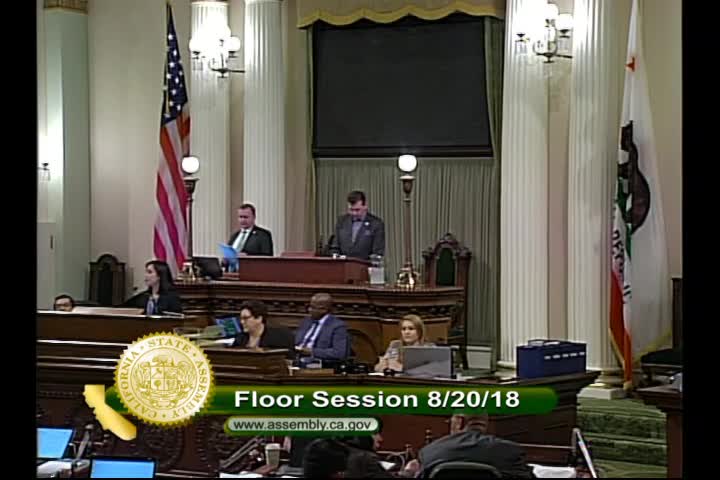
Bill Author

Bill Co-Author(s):