AB 290: Collateral recovery: repossession agencies.
- Session Year: 2017-2018
- House: Assembly
- Latest Version Date: 2017-09-25
Existing law, the Collateral Recovery Act, provides for the licensure and regulation of repossession agencies by the Bureau of Security and Investigative Services, which is under the supervision and control of the Director of Consumer Affairs, and, until January 1, 2018, defines repossession agency as not including certain persons and entities, such as a dealer regularly engaged in the sale of collateral designed primarily for agricultural use.
This bill would extend the above definition of repossession agency indefinitely.
Existing law, the Collateral Recovery Act, provides for the licensure and regulation of repossession agencies by the Bureau of Security and Investigative Services Services, which is under the supervision and control of the Director of Consumer Affairs Affairs, and, until January 1, 2018, defines repossession agency as not including certain persons and entities, such as a dealer regularly engaged in the sale of collateral designed primarily for agricultural use.
This bill would extend the above definition of repossession agency indefinitely.
Existing law, the Collateral Recovery Act, provides for the licensure and regulation of repossession agencies by the Bureau of Security and Investigative Services under the supervision and control of the Director of Consumer Affairs and, until January 1, 2018, defines repossession agency as not including certain persons and entities, such as a dealer regularly engaged in the sale of collateral designed primarily for agricultural use.
This bill would extend the above definition of repossession agency indefinitely.
(a)A repossession agency shall not include any of the following:
(1)Any bank subject to the jurisdiction of the Commissioner of the Department of Business Oversight of the State of California under Division 1 (commencing with Section 99) of the Financial Code or the Comptroller of the Currency of the United States.
(2)Any person organized, chartered, or holding a license or authorization certificate to make loans pursuant to the laws of this state or the United States who is subject to supervision by any official or agency of this state or the United States.
(3)An attorney at law in performing his or her duties as an attorney at law.
(4)The legal owner of collateral that is subject to a security agreement or a bona fide employee employed exclusively and regularly by the legal owner of collateral that is subject to a security agreement. With regard to collateral subject to registration under the Vehicle Code, the legal owner shall be the legal owner listed on the records of the Department of Motor Vehicles or the seller or lessor named on a valid conditional sales contract or rental or lease agreement if the seller or lessor is a licensed vehicle dealer as defined in Section 285 of the Vehicle Code.
(5)An officer or employee of the United States of America, or of this state or a political subdivision thereof, while the officer or employee is engaged in the performance of his or her official duties.
(6)A qualified certificate holder or a registrant when performing services for, or on behalf of, a licensee.
(7)A dealer, including its bona fide employees, regularly engaged in the sale of collateral designed primarily for agricultural use, as defined in subdivision (b) of Section 51201 of the Government Code, for use in the care of lawns and gardens, or for use as special construction equipment, as defined in subdivision (b) of Section 565 of the Vehicle Code, or for use in the production, generation, storage, or transmission of mechanical or electric energy, that is subject to a security agreement of the manufacturer or an affiliate of that manufacturer, provided the following requirements are met:
(A)The dealer or the secured party maintains adequate records of all repossessions.
(B)The dealer or the secured party completes a collateral condition report.
(C)The dealer or the secured party records any odometer or hour meter readings.
(D)The dealer or the secured party creates records of all transactions pertaining to the sale of the collateral, including, but not limited to, bids solicited and received, cash received, remittances to the seller, and allocation of any moneys not so remitted to appropriate ledger accounts.
(E)The dealer removes and stores any personal effects that were taken with the collateral for a minimum of 60 days in a secure manner, completes an inventory of the personal effects, and notes the date that inventory is taken.
(F)If personal effects that were taken with the collateral are to be released to someone other than the debtor, the dealer shall request written authorization to do so from the debtor. The dealer may dispose of personal effects after storing them for at least 60 days pursuant to subparagraph (E).
(b)Entities described in paragraph (7) of subdivision (a), or a debtor, lienholder, lessor, lessee, registered owner, or an agent thereof shall not by any means, directly or indirectly, expressed or implied, instruct, coerce, or attempt to coerce another person to violate any law, regulation, or rule regarding the recovery of collateral, including, but not limited to, the provisions of this chapter or Section 9609 of the Commercial Code.
(a)A repossession agency shall not include any of the following:
(1)Any bank subject to the jurisdiction of the Commissioner of Financial Institutions the Department of Business Oversight of the State of California under Division 1 (commencing with Section 99) of the Financial Code or the Comptroller of the Currency of the United States.
(2)Any person organized, chartered, or holding a license or authorization certificate to make loans pursuant to the laws of this state or the United States who is subject to supervision by any official or agency of this state or the United States.
(3)An attorney at law in performing his or her duties as an attorney at law.
(4)The legal owner of collateral that is subject to a security agreement or a bona fide employee employed exclusively and regularly by the legal owner of collateral that is subject to a security agreement. With regard to collateral subject to registration under the Vehicle Code, the legal owner shall be the legal owner listed on the records of the Department of Motor Vehicles or the seller or lessor named on a valid conditional sales contract or rental or lease agreement if the seller or lessor is a licensed vehicle dealer as defined in Section 285 of the Vehicle Code.
(5)An officer or employee of the United States of America, or of this state or a political subdivision thereof, while the officer or employee is engaged in the performance of his or her official duties.
(6)A qualified certificate holder or a registrant when performing services for, or on behalf of, a licensee.
(7)A dealer, including its bona fide employees, regularly engaged in the sale of collateral designed primarily for agricultural use, as defined in subdivision (b) of Section 51201 of the Government Code, for use in the care of lawns and gardens, or for use as special construction equipment, as defined in subdivision (b) of Section 565 of the Vehicle Code, or for use in the production, generation, storage, or transmission of mechanical or electric energy, that is subject to a security agreement of the manufacturer or an affiliate of that manufacturer, provided the following requirements are met:
(A)The dealer or the secured party maintains adequate records of all repossessions.
(B)The dealer or the secured party completes a collateral condition report.
(C)The dealer or the secured party records any odometer or hour meter readings.
(D)The dealer or the secured party creates records of all transactions pertaining to the sale of the collateral, including, but not limited to, bids solicited and received, cash received, remittances to the seller, and allocation of any moneys not so remitted to appropriate ledger accounts.
(E)The dealer removes and stores any personal effects that were taken with the collateral for a minimum of 60 days in a secure manner, completes an inventory of the personal effects, and notes the date that inventory is taken.
(F)If personal effects that were taken with the collateral are to be released to someone other than the debtor, the dealer shall request written authorization to do so from the debtor. The dealer may dispose of personal effects after storing them for at least 60 days pursuant to subparagraph (E).
(b)Entities described in paragraph (7) of subdivision (a), or a debtor, lienholder, lessor, lessee, registered owner, or an agent thereof shall not by any means, directly or indirectly, expressed or implied, instruct, coerce, or attempt to coerce another person to violate any law, regulation, or rule regarding the recovery of collateral, including, but not limited to, the provisions of this chapter or Section 9609 of the Commercial Code.
(a)A repossession agency shall not include any of the following:
(1)Any bank subject to the jurisdiction of the Commissioner of Financial Institutions of the State of California under Division 1 (commencing with Section 99) of the Financial Code or the Comptroller of the Currency of the United States.
(2)Any person organized, chartered, or holding a license or authorization certificate to make loans pursuant to the laws of this state or the United States who is subject to supervision by any official or agency of this state or the United States.
(3)An attorney at law in performing his or her duties as an attorney at law.
(4)The legal owner of collateral that is subject to a security agreement; agreement or a bona fide employee employed exclusively and regularly by the legal owner of collateral that is subject to a security agreement. With regard to collateral subject to registration under the Vehicle Code, the legal owner shall be the legal owner listed on the records of the Department of Motor Vehicles or the seller or lessor named on a valid conditional sales contract or rental or lease agreement if the seller or lessor is a licensed vehicle dealer as defined in Section 285 of the Vehicle Code.
(5)An officer or employee of the United States of America, or of this state or a political subdivision thereof, while the officer or employee is engaged in the performance of his or her official duties.
(6)A qualified certificate holder or a registrant when performing services for, or on behalf of, a licensee.
(7)A dealer, including its bona fide employees, regularly engaged in the sale of collateral designed primarily for agricultural use, as defined in subdivision (b) of Section 51201 of the Government Code, for use in the care of lawns and gardens, or for use as special construction equipment, as defined in subdivision (b) of Section 565 of the Vehicle Code, or for use in the production, generation, storage, or transmission of mechanical or electric energy, that is subject to a security agreement of the manufacturer or an affiliate of that manufacturer, provided the following requirements are met:
(A)The dealer or the secured party maintains adequate records of all repossessions.
(B)The dealer or the secured party completes a collateral condition report.
(C)The dealer or the secured party records any odometer or hour meter readings.
(D)The dealer or the secured party creates records of all transactions pertaining to the sale of the collateral, including, but not limited to, bids solicited and received, cash received, remittances to the seller, and allocation of any moneys not so remitted to appropriate ledger accounts.
(E)The dealer removes and stores any personal effects that were taken with the collateral for a minimum of 60 days in a secure manner, completes an inventory of the personal effects, and notes the date that inventory is taken.
(F)If personal effects that were taken with the collateral are to be released to someone other than the debtor, the dealer shall request written authorization to do so from the debtor. The dealer may dispose of personal effects after storing them for at least 60 days pursuant to subparagraph (E).
(b)Entities described in paragraph (7) of subdivision (a), or a debtor, lienholder, lessor or, lessor, lessee, registered owner, or an agent thereof shall not by any means, directly or indirectly, expressed or implied, instruct, coerce, or attempt to coerce another person to violate any law, regulation, or rule regarding the recovery of collateral, including, but not limited to, the provisions of this chapter or Section 9609 of the Commercial Code.
(a)A repossession agency shall not include any of the following:
(1)Any bank subject to the jurisdiction of the Commissioner of Financial Institutions of the State of California under Division 1 (commencing with Section 99) of the Financial Code or the Comptroller of the Currency of the United States.
(2)Any person organized, chartered, or holding a license or authorization certificate to make loans pursuant to the laws of this state or the United States who is subject to supervision by any official or agency of this state or the United States.
(3)An attorney at law in performing his or her duties as an attorney at law.
(4)The legal owner of collateral that is subject to a security agreement; or a bona fide employee employed exclusively and regularly by the legal owner of collateral that is subject to a security agreement. With regard to collateral subject to registration under the Vehicle Code, the legal owner shall be the legal owner listed on the records of the Department of Motor Vehicles or the seller or lessor named on a valid conditional sales contract or rental or lease agreement if the seller or lessor is a licensed vehicle dealer as defined in Section 285 of the Vehicle Code.
(5)An officer or employee of the United States of America, or of this state or a political subdivision thereof, while the officer or employee is engaged in the performance of his or her official duties.
(6)A qualified certificate holder or a registrant when performing services for, or on behalf of, a licensee.
(7)A dealer, including its bona fide employees, regularly engaged in the sale of collateral designed primarily for agricultural use, as defined in subdivision (b) of Section 51201 of the Government Code, for use in the care of lawns and gardens, or for use as special construction equipment, as defined in subdivision (b) of Section 565 of the Vehicle Code, or for use in the production, generation, storage, or transmission of mechanical or electric energy, that is subject to a security agreement of the manufacturer or an affiliate of that manufacturer, provided the following requirements are met:
(A)The dealer or the secured party maintains adequate records of all repossessions.
(B)The dealer or the secured party completes a collateral condition report.
(C)The dealer or the secured party records any odometer or hour meter readings.
(D)The dealer or the secured party creates records of all transactions pertaining to the sale of the collateral, including, but not limited to, bids solicited and received, cash received, remittances to the seller, and allocation of any moneys not so remitted to appropriate ledger accounts.
(E)The dealer removes and stores any personal effects that were taken with the collateral for a minimum of 60 days in a secure manner, completes an inventory of the personal effects, and notes the date that inventory is taken.
(F)If personal effects that were taken with the collateral are to be released to someone other than the debtor, the dealer shall request written authorization to do so from the debtor. The dealer may dispose of personal effects after storing them for at least 60 days pursuant to subparagraph (E).
(b)Entities described in paragraph (7) of subdivision (a), or a debtor, lienholder, lessor or, lessee, registered owner, or an agent thereof shall not by any means, directly or indirectly, expressed or implied, instruct, coerce, or attempt to coerce another person to violate any law, regulation, or rule regarding the recovery of collateral, including, but not limited to, the provisions of this chapter or Section 9609 of the Commercial Code.
(c)This section shall remain in effect only until January 1, 2018, and as of that date is repealed, unless a later enacted statute, that is enacted before January 1, 2018, deletes or extends that date. REVISIONS: HeadingLine 2.|
Date
|
Status
|
|---|---|
| Sep 25, 2017 | Chaptered by Secretary of State - Chapter 271, Statutes of 2017. |
| Sep 25, 2017 | Approved by the Governor. |
| Sep 12, 2017 | Enrolled and presented to the Governor at 2:30 p.m. |
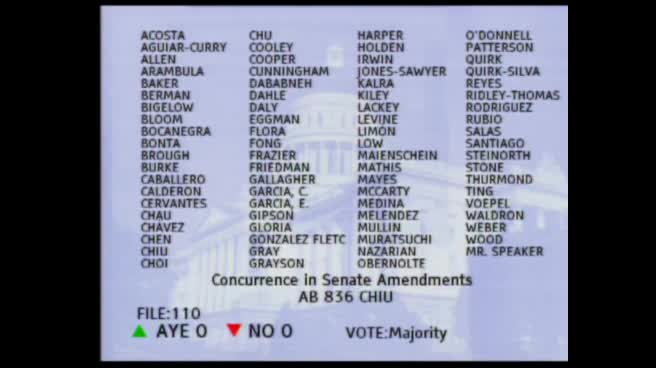
| Sep 5, 2017 | Senate amendments concurred in. To Engrossing and Enrolling. (Ayes 77. Noes 0.). |
| Aug 31, 2017 | In Assembly. Concurrence in Senate amendments pending. May be considered on or after September 2 pursuant to Assembly Rule 77. |
| Aug 31, 2017 | Read third time. Passed. Ordered to the Assembly. |
| Aug 21, 2017 | Read second time. Ordered to third reading. |
| Jul 20, 2017 | Read third time and amended. Ordered to second reading. |
| Jul 18, 2017 | Read second time. Ordered to third reading. |
| Jul 17, 2017 | From committee: Be ordered to second reading pursuant to Senate Rule 28.8. |
| Jun 27, 2017 | From committee: Do pass and re-refer to Com. on APPR. (Ayes 9. Noes 0.) (June 26). Re-referred to Com. on APPR. |
| Jun 20, 2017 | From committee chair, with author's amendments: Amend, and re-refer to committee. Read second time, amended, and re-referred to Com. on B., P. & E.D. |
| Jun 12, 2017 | In committee: Set, first hearing. Hearing canceled at the request of author. |
| May 18, 2017 | Referred to Com. on B., P. & E.D. |
| May 4, 2017 | In Senate. Read first time. To Com. on RLS. for assignment. |
| May 4, 2017 | Read third time. Passed. Ordered to the Senate. (Ayes 76. Noes 0. Page 1389.) |
| Apr 27, 2017 | Read second time. Ordered to Consent Calendar. |
| Apr 26, 2017 | From committee: Do pass. To Consent Calendar. (Ayes 16. Noes 0.) (April 26). |
| Mar 28, 2017 | Coauthors revised. |
| Mar 17, 2017 | Coauthors revised. |
| Mar 16, 2017 | Coauthors revised. |
| Feb 13, 2017 | Referred to Com. on B. & P. |
| Feb 3, 2017 | From printer. May be heard in committee March 5. |
| Feb 2, 2017 | Read first time. To print. |
|
Date
|
Description
|
Location
|
Votes
|
|
|---|---|---|---|---|
| Sep 5, 2017 | AB 290 SALAS Concurrence in Senate Amendments | Assembly Floor |
Passed |
|
| Aug 31, 2017 | Assembly 3rd Reading AB290 Salas et al. By Galgiani | Senate Floor |
Passed |
|
| Jun 26, 2017 | Do pass, but first be re-referred to the Committee on [Appropriations] | Senate Standing Committee on Business, Professions and Economic Development |
Passed |
|
| May 4, 2017 | AB 290 SALAS Consent Calendar Second Day Regular Session | Assembly Floor |
Passed |
|
| Apr 26, 2017 | Do pass. To Consent Calendar. | Assembly Standing Committee on Appropriations |
Passed |
|
| Mar 28, 2017 | Do pass and be re-referred to the Committee on [Appropriations] | Assembly Standing Committee on Business and Professions |
Passed |
This list shows positions taken on this bill by organizations on the date displayed, which is linked to the original source.
Positions by individuals are not included.
|
Organization
|
Position
|
Date
|
|---|---|---|
| Agricultural Council Of California | ** Support | Aug 22, 2017 |
| California Association Of Licensed Repossessors | ** Against | Aug 22, 2017 |
| California Farm Bureau | ** Support | Aug 22, 2017 |
| Caterpillar, Inc. | ** Support | Aug 22, 2017 |
| City Of Arvin | ** Support | Aug 22, 2017 |
| city of avenal | ** Support | Aug 22, 2017 |
| city of corcoran | ** Support | Aug 22, 2017 |
| City Of McFarland | ** Support | Aug 22, 2017 |
| city of wasco | ** Support | Aug 22, 2017 |
| Far West Equipment Dealers Association | ** Support | Aug 22, 2017 |
| greater lamont chamber of commerce | ** Support | Aug 22, 2017 |
| john deere | ** Support | Aug 22, 2017 |
| Pappas & Associates | * Support | Jun 26, 2017 |
| US Collections and Recovery Team | * Support | Jun 26, 2017 |
| Western Electrical Contractors Association Western Growers Association | * Support | Jun 26, 2017 |
| Western Growers Association | ** Support | Aug 22, 2017 |
CONCURRENCE IN SENATE AMENDMENTS
CSA1 Bill Id:AB 290
Author:(Salas)
As Amended Ver:July 20, 2017
Majority vote
ASSEMBLY: | 76-0 | (May 04, 2017) | SENATE: | 38-0 | (August 31, 2017) |
Original Committee Reference: B. & P.
SUMMARY: Removes the current January 1, 2018 sunset date that would return the statute to its pre-2012 prohibition on dealers of agriculture, forestry, lawn care, and construction equipment from directly repossessing financed equipment after default. Defines repossession agency as not including certain persons and entities and extends that definition indefinitely.
The Senate amendments exempt banks under the jurisdiction of the Commissioner of the Department of Business Oversight from the provisions of this bill.
EXISTING LAW:
- Establishes a definition for those that must register with the Bureau of Security and Investigative Services as a "repossession agency." (Business and Professions Code (BPC) Section 7500.2)
- Lists exclusions from established "repossession agency" definition with a repeal date of January 1, 2018, including dealers of collateral designed primarily for agriculture use. (BPC Section 7500.3)
- Lists exclusions from established "repossession agency" definition after the repeal date of January 1, 2018, does not include dealers of collateral designed primarily for agriculture use. (BPC Section 7500.3)
FISCAL EFFECT: According to Senate Committee on Appropriations, pursuant to Senate Rule 28.8, negligible state costs.
COMMENTS:
Purpose. This bill is sponsored by John Deere. According to the author, "Agricultural equipment dealers in California are currently allowed to work directly with customers to retrieve equipment if payments have been defaulted. Agriculture equipment dealers typically maintain good relationships with their customers. In most cases the two parties have been doing business together for years. Unfortunately, due to the cyclical nature of farming, there are times when repossession is necessary.
"These types of equipment sales, which include heavy agriculture, forestry, and construction equipment, can run in the hundreds of thousands of dollars. When a dealer is required to hire repossession agents, several thousand dollars are added to the amount a customer already owes.
"AB 290 removes the January 1, 2018 sunset date on an exemption that allows certain dealers of agriculture, forestry, lawn care, and construction equipment to retrieve equipment directly from customers in the case of a repossession. By continuing to provide this exemption, business practices can be streamlined and additional costs on consumers can be avoided."
Background. Under current law, agriculture equipment dealers have the ability to repossess collateral directly rather than hiring a repossession agency to do it for them or becoming licensed as a repossessor. However, the exemption that allows them to do so will expire on January 1, 2018. This bill would extend the exemption for these dealers indefinitely.
The current exemption for agriculture equipment dealers was created by AB 1877 (Ma) Chapter 476, Statutes of 2012. At the time, the sponsors, John Deere and Far West Equipment Dealers Association argued:
Currently, third party repossession and hauling fees creates an additional and unnecessary cost to the customer. Customers would prefer to work directly with a dealer rather than an unknown repossession agent, someone with whom they have had no previous relationship, and to which is attached a social stigma, both when a 'Repo Truck and Trailer' shows up at their home or business, and local law enforcement is notified…By exempting authorized dealers and financial entities from repossession licensing requirements, dealers are allowed to streamline their business practices and avoid or reduce expensive repossession and hauling fees that would have been passed on to the farmer. More importantly, dealers want to protect and preserve their relationships with their customers, especially those who are subjected to circumstances outside his or her control.
While repossession is not a large component of a dealer's business, the sponsor's believe that having the ability to work collaboratively with the customer when they must repossess an item allows them to maintain existing relationships and prevent unnecessary embarrassment for the customer.
AB 1877 was opposed by the California Association of Licensed Repossessors, who wrote in their letter that the bill "would undermine the licensed repossession industry" and "would also allow for non-voluntary repossessions conducted by non-licensed individuals that could potentially have violent felony convictions who would not pass the background check to which all licensed repossessors are subjected to."
According to the author, the current sunset date of January 1, 2018, was included to address concerns from opposition that the individuals carrying out repossessions for the dealer may cause problems since they are not licensed. As there have not been any major instances when this concern has been realized, the exemption is being made indefinite.
Analysis Prepared by: Jimmy Fremgen / B. & P. / (916) 319-3301 FN: 0001612
Office of Senate Floor Analyses (916) 651-1520 Fax: (916) 327-4478 | AB |
THIRD READING
Bill No: AB 290
:
SENATE BUS., PROF. & ECON. DEV. COMMITTEE: 9-0, 6/26/17
AYES: Hill, Fuller, Dodd, Galgiani, Glazer, Hernandez, Newman, Pan, Wilk
SENATE APPROPRIATIONS COMMITTEE: Senate Rule 28.8
ASSEMBLY FLOOR: 76-0, 5/4/17 (Consent) - See last page for vote
DIGEST:
This bill extends the current exemption for a dealer, or his or her bona fide employees, from licensure as a repossession agency if the dealer regularly sells specified collateral that is subject to a manufacturer’s security agreement, or the manufacturer’s affiliate, if specified conditions are met.
Senate Floor Amendments of 7/20/17 are technical and clarifying in nature.
Existing law:
- Establishes the Collateral Recovery Act (Act) governing collateral repossessions by a legal owner, lienholder, lessor or lessee, or the agent of any of them based on written authorization and a security agreement. (Business and Professions Code (BPC) § 7500 et seq.)
- Defines a “repossession agency” to mean and include any person who, for any consideration whatsoever, engages in business, or accepts employment, to locate or recover collateral, whether voluntary or involuntarily, including, but not limited to, collateral registered under the provisions of the Vehicle Code which is subject to a security agreement, as specified. (BPC § 7500.2(a))
- States that a repossession agency does not include: (BPC § 7500.03 (a))
- Any bank subject to the jurisdiction of the Commissioner of Financial Institutions, as specified;
- Any person organized, chartered, or holding a license or authorization certificate to make loans pursuant to the laws of this state or the United States who is subject to supervision by any official or agency of this state or the United States;
- An attorney at law, an specified;
- The legal owner of collateral that is subject to a security agreement;
- An officer or employee of the United States, as specified, while the officer or employee is engaged in the performance of his or her official duties;
- A qualified certificate holder or a registrant when performing services for, or on behalf of, a licensee; and,
- A dealer, including its bona fide employees, regularly engaged in the sale of collateral, designed primarily for agriculture use, as specified, for use in the care of lawns and gardens or for use as special construction equipment, as specified, or for use in the production, generation, storage, or transmission or mechanical or electric energy, that is subject to a security agreement of the manufacturer or an affiliate of that manufacturer, provided specified requirements are met.
- Sunsets the exemption for g), above, on January 1, 2018.
- Defines “agricultural use” to mean the use of land, including, but not limited to, greenhouses, for the purpose of producing an agricultural commodity for commercial purpose. (Government Code § 51201(b))
This bill deletes the current January 1, 2018, sunset date on the exemption for specified dealers from provisions of the Act; thereby extending the exemption indefinitely, and makes other minor and technical changes.
Background
Repossessors. The Bureau of Security and Investigative Services (BSIS), under the Department of Consumer Affairs (DCA), is responsible for enforcing the provisions of the Act which licenses and regulates repossessors and repossessor agencies in California. A licensed repossession agency contracts with the legal owner of property to locate and recover personal property sold under a security agreement. Under the Act, a security agreement is an obligation, pledge, mortgage, lease agreement, deposit or lien given by a debtor as a security for payment for his or her debt.
BPC § 7502 prohibits a person from engaging in the activities of a repossession agency unless they hold a valid repossession agency license or are exempted from licensure as specified in BPC §§ 7500.2 and 7500.3. Under current law, specified agriculture equipment dealers are permitted to repossess collateral directly rather than hiring a repossession agency to do it for them, or having the dealer or its’ employee becoming licensed as a repossessor. The current exemption which allows them to do so will expire on January 1, 2018. This bill extends the exemption for these dealers indefinitely.
Repossession. Under current law, a repossession licensee must comply with disclosure requirements prior to, and after, repossession has occurred and must report business-related and other pertinent information to the BSIS. Specifically, a licensee must maintain adequate records of all transactions, store and inventory the personal effects recovered during the repossession for 60 days and maintain the file for four years regarding the effects and the disposition of property, notify local law enforcement within one hour or repossessing a vehicle, report any violent acts regarding a licensee when acting in the course of business within seven days to the BSIS, and send a copy of a judgment from a civil court proceeding under specified conditions. All records are subject to BSIS review at any time.
Currently, a creditor may use a collection agency to recover loan payments in default from customers, and if that is unsuccessful, a repossession agency will attempt to recover viable collateral for resale, the proceeds of which will go towards the outstanding loan amount. While many car dealers offer financing on site at the dealership, the financing component is actually covered by a separate subsidiary or creditor, whose employees can repossess a vehicle. However, it is common practice for those creditors to hire repossession agencies to recover those vehicles instead of using its own employees.
Exemptions to the Act. Other entities exempt from licensure as a repossession agency include legal owners of collateral subject to a security agreement and their employees, banks, individuals licensed or authorized to issue loans, attorneys, and government employees. However, the exemption for agricultural dealers is the only exemption with a sunset clause in statute, and the only exemption which requires the dealers to meet certain conditions in order to maintain exemption.
In order for an agricultural dealer to be exempt, they must meet the following: (1) maintain adequate records of all repossessions; (2) complete a collateral condition report; (3) record any odometer or hour meter readings; (4) the dealer or secured party creates specified records of all transactions pertaining to the sale of the collateral; and, (5) the dealer removes and stores any personal effects for a minimum of 60 days and only releases to someone other than the debtor if a written authorization is provided. However, current law does not provide any mechanism for compliance. The BSIS reports that it has not received any complaints related to this specific exemption; however, it is unclear if exempted dealers are following the requirements which authorize their exemption as there is no enforceable mechanism to ensure compliance. In addition, consumers may be unaware of the BSIS’s jurisdiction over licensed repossession agencies.
The exemption for agriculture equipment dealers was created by AB 1877 (Ma, Chapter 476, Statutes of 2012). That legislation contained the January 1, 2018 sunset date, but did not include a mechanism to ensure compliance with the exemption requirements or to determine whether or not complaints or any issues were raised as a result of the process. While repossession is not a large component of a dealer’s business, the sponsor believes that having the ability to work collaboratively with the customer when they must repossess an item allows them to maintain existing relationships and prevent unnecessary embarrassment for the customer. Current law, as specified in the BPC, does not require exempt agricultural dealers to notify consumers prior to the repossession or after the repossession has occurred. According to the sponsor, they provide a notice to the consumer regarding their default status which informs the consumer that repossession is possible. When the repossession does occur by an exempt dealer, they are not required to notify local law enforcement.
FISCAL EFFECT: Appropriation: Fiscal Com.: Local:
John Deere (source)
Agricultural Council of California
California Farm Bureau
Caterpillar, Inc.
City of Arvin
City of Avenal
City of Corcoran
City of McFarland
City of Wasco
Far West Equipment Dealers Association
Greater Lamont Chamber of Commerce
Western Growers Association
OPPOSITION: (Verified 7/19/17)
California Association of Licensed Repossessors
ARGUMENTS IN SUPPORT: John Deere writes that “[This bill] will continue to save farmers and small businesses money and shields them from the embarrassment of having an unknown third party show up on their property and, seize the equipment, and then be reported to local law enforcement, which a licensed repossessor is required to do.”
Supporters note that when repossession of agricultural equipment becomes necessary dealers would prefer taking back the property themselves rather than involving a stranger from a repossession agency. Supporters also state that third party repossessions and hauling fees create an additional and unnecessary expense to the customer by increasing the total amount they owe above and beyond the original cost to of the equipment.
ARGUMENTS IN OPPOSITION: The California Association of Licensed Repossessors (CALR) opposes this bill, noting that the organization also opposed the law creating this specific exemption is concerned that removing this “consumer protection would be heightened by placing this exemption into law on a permanent basis.” CALR states that “the minor requirements set forth in the law are self-reporting and there is no state oversight or enforcement.”
ASSEMBLY FLOOR: 76-0, 5/4/17
AYES: Acosta, Aguiar-Curry, Arambula, Baker, Berman, Bloom, Bocanegra, Bonta, Brough, Burke, Caballero, Calderon, Cervantes, Chau, Chávez, Chen, Chiu, Choi, Chu, Cooley, Cooper, Cunningham, Dababneh, Dahle, Daly, Eggman, Flora, Fong, Frazier, Friedman, Gallagher, Eduardo Garcia, Gipson, Gloria, Gomez, Gonzalez Fletcher, Gray, Grayson, Harper, Holden, Irwin, Jones-Sawyer, Kalra, Kiley, Lackey, Levine, Limón, Low, Maienschein, Mathis, Mayes, McCarty, Medina, Melendez, Mullin, Muratsuchi, Nazarian, Obernolte, O'Donnell, Quirk, Quirk-Silva, Reyes, Ridley-Thomas, Rodriguez, Rubio, Salas, Santiago, Steinorth, Mark Stone, Thurmond, Ting, Voepel, Waldron, Weber, Wood, Rendon
NO VOTE RECORDED: Travis Allen, Bigelow, Cristina Garcia, Patterson
8/22/17 16:24:50
**** END ****
Office of Senate Floor Analyses (916) 651-1520 Fax: (916) 327-4478 | AB |
THIRD READING
Bill No: AB 290
:
SENATE BUS., PROF. & ECON. DEV. COMMITTEE: 9-0, 6/26/17
AYES: Hill, Fuller, Dodd, Galgiani, Glazer, Hernandez, Newman, Pan, Wilk
SENATE APPROPRIATIONS COMMITTEE: Senate Rule 28.8
ASSEMBLY FLOOR: 76-0, 5/4/17 (Consent) - See last page for vote
DIGEST:
This bill extends the current exemption for a dealer, or his or her bona fide employees, from licensure as a repossession agency if the dealer regularly sells specified collateral that is subject to a manufacturer’s security agreement, or the manufacturer’s affiliate, if specified conditions are met.
Existing law:
- Establishes the Collateral Recovery Act (Act) governing collateral repossessions by a legal owner, lienholder, lessor or lessee, or the agent of any of them based on written authorization and a security agreement. (Business and Professions Code (BPC) § 7500 et seq.)
- Defines a “repossession agency” to mean and include any person who, for any consideration whatsoever, engages in business, or accepts employment, to locate or recover collateral, whether voluntary or involuntarily, including, but not limited to, collateral registered under the provisions of the Vehicle Code which is subject to a security agreement, as specified. (BPC § 7500.2(a))
- States that a repossession agency does not include: (BPC § 7500.03 (a))
- Any bank subject to the jurisdiction of the Commissioner of Financial Institutions, as specified;
- Any person organized, chartered, or holding a license or authorization certificate to make loans pursuant to the laws of this state or the United States who is subject to supervision by any official or agency of this state or the United States;
- An attorney at law, an specified;
- The legal owner of collateral that is subject to a security agreement;
- An officer or employee of the United States, as specified, while the officer or employee is engaged in the performance of his or her official duties;
- A qualified certificate holder or a registrant when performing services for, or on behalf of, a licensee; and,
- A dealer, including its bona fide employees, regularly engaged in the sale of collateral, designed primarily for agriculture use, as specified, for use in the care of lawns and gardens or for use as special construction equipment, as specified, or for use in the production, generation, storage, or transmission or mechanical or electric energy, that is subject to a security agreement of the manufacturer or an affiliate of that manufacturer, provided specified requirements are met.
- Sunsets the exemption for g), above, on January 1, 2018.
- Defines “agricultural use” to mean the use of land, including, but not limited to, greenhouses, for the purpose of producing an agricultural commodity for commercial purpose. (Government Code § 51201(b))
This bill deletes the current January 1, 2018, sunset date on the exemption for specified dealers from provisions of the Act; thereby extending the exemption indefinitely, and makes other minor and technical changes.
Background
Repossessors. The Bureau of Security and Investigative Services (BSIS), under the Department of Consumer Affairs (DCA), is responsible for enforcing the provisions of the Act which licenses and regulates repossessors and repossessor agencies in California. A licensed repossession agency contracts with the legal owner of property to locate and recover personal property sold under a security agreement. Under the Act, a security agreement is an obligation, pledge, mortgage, lease agreement, deposit or lien given by a debtor as a security for payment for his or her debt.
BPC § 7502 prohibits a person from engaging in the activities of a repossession agency unless they hold a valid repossession agency license or are exempted from licensure as specified in BPC §§ 7500.2 and 7500.3. Under current law, specified agriculture equipment dealers are permitted to repossess collateral directly rather than hiring a repossession agency to do it for them, or having the dealer or its’ employee becoming licensed as a repossessor. The current exemption which allows them to do so will expire on January 1, 2018. This bill extends the exemption for these dealers indefinitely.
Repossession. Under current law, a repossession licensee must comply with disclosure requirements prior to, and after, repossession has occurred and must report business-related and other pertinent information to the BSIS. Specifically, a licensee must maintain adequate records of all transactions, store and inventory the personal effects recovered during the repossession for 60 days and maintain the file for four years regarding the effects and the disposition of property, notify local law enforcement within one hour or repossessing a vehicle, report any violent acts regarding a licensee when acting in the course of business within seven days to the BSIS, and send a copy of a judgment from a civil court proceeding under specified conditions. All records are subject to BSIS review at any time.
Currently, a creditor may use a collection agency to recover loan payments in default from customers, and if that is unsuccessful, a repossession agency will attempt to recover viable collateral for resale, the proceeds of which will go towards the outstanding loan amount. While many car dealers offer financing on site at the dealership, the financing component is actually covered by a separate subsidiary or creditor, whose employees can repossess a vehicle. However, it is common practice for those creditors to hire repossession agencies to recover those vehicles instead of using its own employees.
Exemptions to the Act. Other entities exempt from licensure as a repossession agency include legal owners of collateral subject to a security agreement and their employees, banks, individuals licensed or authorized to issue loans, attorneys, and government employees. However, the exemption for agricultural dealers is the only exemption with a sunset clause in statute, and the only exemption which requires the dealers to meet certain conditions in order to maintain exemption.
In order for an agricultural dealer to be exempt, they must meet the following: (1) maintain adequate records of all repossessions; (2) complete a collateral condition report; (3) record any odometer or hour meter readings; (4) the dealer or secured party creates specified records of all transactions pertaining to the sale of the collateral; and, (5) the dealer removes and stores any personal effects for a minimum of 60 days and only releases to someone other than the debtor if a written authorization is provided. However, current law does not provide any mechanism for compliance. The BSIS reports that it has not received any complaints related to this specific exemption; however, it is unclear if exempted dealers are following the requirements which authorize their exemption as there is no enforceable mechanism to ensure compliance. In addition, consumers may be unaware of the BSIS’s jurisdiction over licensed repossession agencies.
The exemption for agriculture equipment dealers was created by AB 1877 (Ma, Chapter 476, Statutes of 2012). That legislation contained the January 1, 2018 sunset date, but did not include a mechanism to ensure compliance with the exemption requirements or to determine whether or not complaints or any issues were raised as a result of the process. While repossession is not a large component of a dealer’s business, the sponsor believes that having the ability to work collaboratively with the customer when they must repossess an item allows them to maintain existing relationships and prevent unnecessary embarrassment for the customer. Current law, as specified in the BPC, does not require exempt agricultural dealers to notify consumers prior to the repossession or after the repossession has occurred. According to the sponsor, they provide a notice to the consumer regarding their default status which informs the consumer that repossession is possible. When the repossession does occur by an exempt dealer, they are not required to notify local law enforcement.
FISCAL EFFECT: Appropriation: Fiscal Com.: Local:
John Deere (source)
Agricultural Council of California
California Farm Bureau
Caterpillar, Inc.
City of Arvin
City of Avenal
City of Corcoran
City of McFarland
City of Wasco
Far West Equipment Dealers Association
Greater Lamont Chamber of Commerce
Western Growers Association
OPPOSITION: (Verified 7/18/17)
California Association of Licensed Repossessors
ARGUMENTS IN SUPPORT: John Deere writes that “[This bill] will continue to save farmers and small businesses money and shields them from the embarrassment of having an unknown third party show up on their property and, seize the equipment, and then be reported to local law enforcement, which a licensed repossessor is required to do.”
Supporters note that when repossession of agricultural equipment becomes necessary dealers would prefer taking back the property themselves rather than involving a stranger from a repossession agency. Supporters also state that third party repossessions and hauling fees create an additional and unnecessary expense to the customer by increasing the total amount they owe above and beyond the original cost to of the equipment.
ARGUMENTS IN OPPOSITION: The California Association of Licensed Repossessors (CALR) opposes this bill, noting that the organization also opposed the law creating this specific exemption is concerned that removing this “consumer protection would be heightened by placing this exemption into law on a permanent basis.” CALR states that “the minor requirements set forth in the law are self-reporting and there is no state oversight or enforcement.”
ASSEMBLY FLOOR: 76-0, 5/4/17
AYES: Acosta, Aguiar-Curry, Arambula, Baker, Berman, Bloom, Bocanegra, Bonta, Brough, Burke, Caballero, Calderon, Cervantes, Chau, Chávez, Chen, Chiu, Choi, Chu, Cooley, Cooper, Cunningham, Dababneh, Dahle, Daly, Eggman, Flora, Fong, Frazier, Friedman, Gallagher, Eduardo Garcia, Gipson, Gloria, Gomez, Gonzalez Fletcher, Gray, Grayson, Harper, Holden, Irwin, Jones-Sawyer, Kalra, Kiley, Lackey, Levine, Limón, Low, Maienschein, Mathis, Mayes, McCarty, Medina, Melendez, Mullin, Muratsuchi, Nazarian, Obernolte, O'Donnell, Quirk, Quirk-Silva, Reyes, Ridley-Thomas, Rodriguez, Rubio, Salas, Santiago, Steinorth, Mark Stone, Thurmond, Ting, Voepel, Waldron, Weber, Wood, Rendon
NO VOTE RECORDED: Travis Allen, Bigelow, Cristina Garcia, Patterson
7/19/17 15:19:53
**** END ****
SENATE COMMITTEE ON
BUSINESS, PROFESSIONS AND ECONOMIC DEVELOPMENT
Senator Jerry Hill, Chair
2017 - 2018 Regular
Bill No: AB 290 Hearing Date: June 26, 2017
Author: | Salas | ||
Version: |
| ||
Urgency: | Fiscal: | ||
Consultant: | |||
Subject: Collateral recovery: repossession agencies
SUMMARY:
Extends the current exemption for a dealer, or his or her bona fide employees, from licensure as a repossession agency if the dealer regularly sells specified collateral that is subject to a manufacturer’s security agreement, or the manufacturer’s affiliate, if specified conditions are met.
Existing law:
- Establishes the Collateral Recovery Act (Act) governing collateral repossessions by a legal owner, lienholder, lessor or lessee, or the agent of any of them based on written authorization and a security agreement. (Business and Professions Code (BPC) § 7500 et seq.)
- Defines a “repossession agency” to mean and include any person who, for any consideration whatsoever, engages in business, or accepts employment, to locate or recover collateral, whether voluntary or involuntarily, including, but not limited to, collateral registered under the provisions of the Vehicle Code (VC) which is subject to a security agreement, as specified. (BPC § 7500.2(a))
- Prohibits a repossession agency from allowing a person or entity other than the qualified certificate holder, or the owner or officer of the repossession agency, to manage the day-to-day operations, operate, control, or transact business covered by the Act. (BPC § 7500.2(c)).
- Defines “collateral” to mean any specific vehicle, trailer, boat, recreational vehicle, motor home, appliance, or other property that is subject to a security agreement. (BPC § 7500.1(e))
- Defines “assignment” or “repossession order” to mean any written authorization by the legal owner, lienholder, lessor, lessee, or registered owner, or the agent of any of them, to skip trace, locate or repossess any collateral, including but not limited to, collateral registered under the VC that is subject to a security agreement that contains a repossession clause, as specified. (BPC § 7500.1(b))
- Defines “Legal owner” to mean a person holding a security interest in any collateral where the collateral is subject to a security agreement, a lien against any collateral, an assignment or a repossession order, or an interest in any collateral that is subject to a lease agreement. (BPC § 7500.1(n))
- States that a repossession agency does not include: (BPC § 7500.03 (a))
- Any bank subject to the jurisdiction of the Commissioner of Financial Institutions, as specified;
- Any person organized, chartered, or holding a license or authorization certificate to make loans pursuant to the laws of this state or the United States who is subject to supervision by any official or agency of this state of the United States;
- An attorney at law, an specified;
- The legal owner of collateral that is subject to a security agreement;
- An officer or employee of the United States, as specified, while the officer or employee is engaged in the performance of his or her official duties;
- A qualified certificate holder or a registrant when performing services for, or on behalf of, a licensee; and,
- A dealer, including its bona fide employees, regularly engaged in the sale of collateral, designed primarily for agriculture use, as specified, for use in the care of lawns and gardens or for use as special construction equipment, as specified, or for use in the production, generation, storage, or transmission or mechanical or electric energy, that is subject to a security agreement of the manufacturer or an affiliate of that manufacturer, provided specified requirements are met.
- Sunsets the exemption for (g) above on January 1, 2018.
- Defines “agricultural use” to mean the use of land, including but not limited to greenhouses, for the purpose of producing an agricultural commodity for commercial purpose. (Government Code § 51201(b))
- Defines “special construction equipment” to mean any vehicle which is designed and used primarily for grading or paving of highways, or for construction or maintenance work on railroad rights-of-way, and which is not used primarily for the transportation of person or property and which is only incidentally operated or moved over the highway, as specified. (VC § 565(b))
This bill: Deletes the current January 1, 2018 sunset date on the exemption for specified dealers from the provisions of the Act; thereby extending the exemption indefinitely.
FISCAL EFFECT:
This bill is keyed fiscal by Legislative Counsel. According to the Assembly Appropriations Committee Analysis dated, April 26, 2017, this bill will result in “negligible fiscal impact to the Bureau of Security and Investigative Services (BSIS).”
COMMENTS:
- Purpose. This bill is sponsored by John Deere. According to the Author, “[This bill] removes the January 1, 2018 sunset date on an exemption that allows certain dealers of agriculture, forestry, lawn care, and construction equipment to retrieve equipment directly from customers that have defaulted on payments.”
- Repossessors. The BSIS, under the Department of Consumer Affairs (DCA) is responsible for enforcing the provisions of the Act which licenses and regulates repossessors and repossessor agencies in California.
A licensed repossession agency contracts with the legal owner of property to locate and recover personal property sold under a security agreement. Under the Act, a security agreement is an obligation, pledge, mortgage, lease agreement, deposit or lien given by a debtor as a security for payment for his or her debt. In order to be eligible for licensure as a repossession agency, a business must designate a “qualified manager” who is in active control of the business and meets the following criteria: 1) completes a background check; 2) has at least two years of compensated experience totaling not less than 4,000 hours either as an employee of a licensed California repossession agency or recent legally acquired experience recovering personal property while working as an employee of a financial institution or vehicle dealer; and, 3) passes an examination.
BPC § 7502 prohibits a person from engaging in the activities of a repossession agency unless they hold a valid repossession agency license or are exempted from licensure as specified in BPC §§ 7500.2 and 7500.3. Under current law, specified agriculture equipment dealers are permitted to repossess collateral directly rather than hiring a repossession agency to do it for them, or having the dealer or its’ employee becoming licensed as a repossessor. The current exemption which allows them to do so will expire on January 1, 2018. This bill would extend the exemption for these dealers indefinitely.
- Repossession. Under current law, a repossession licensee must comply with disclosure requirements prior to, and after, repossession has occurred and must report business-related and other pertinent information to the BSIS. Specifically, a repossessor licensee must maintain adequate records of all transactions, store and inventory the personal effects recovered during the repossession for 60 days and further maintain the file for four years regarding the effects and the disposition of property, notify local law enforcement within one hour or repossessing a vehicle, report any violent acts regarding a licensee when acting in the course of business within seven days to the BSIS, and send a copy of a judgment from a civil court proceeding under specified conditions. All records are subject to BSIS review at any time.
Currently, a creditor may use a collection agency to recover loan payments in default from customers, and if that is unsuccessful, a repossession agency will attempt to recover viable collateral for resale, the proceeds of which will go towards the outstanding loan amount. While many car dealers offer financing on site at the dealership, the financing component is actually covered by a separate subsidiary or creditor, whose employees can repossess a vehicle. However, it is common practice for those creditors to hire repossession agencies to recover those vehicles instead of using its own employees.
- Exemptions to the Act. Other entities exempt from licensure as a repossession agency include legal owners of collateral subject to a security agreement and their employees, banks, individuals licensed or authorized to issue loans, attorneys, and government employees. However, the exemption for agricultural dealers is the only exemption with a sunset clause in statute, and the only exemption which requires the dealers to meet certain conditions in order to maintain exemption.
In order for an agricultural dealer to meet the exemption requirements, they must meet the following: 1) maintain adequate records of all repossessions; 2) complete a collateral condition report; 3) record any odometer or hour meter readings; 4) the dealer or secured party creates specified records of all transactions pertaining to the sale of the collateral; and, 5) the dealer removes and stores any personal effects for a minimum of 60 days and only releases to someone other than the debtor if a written authorization is provided. However, current law does not provide any mandate for compliance to ensure the requirements are met in order to secure the exemption. The BSIS reports that it has not received any complaints related to this specific exemption; however, it is unclear if exempted dealers are following the requirements which authorize their exemption as there is no enforceable mechanism to ensure compliance. In addition, consumers may be unaware of the BSIS’s jurisdiction over licensed repossession agencies.
The current exemption for agriculture equipment dealers was created by AB 1877 (Ma, Chapter 476, Statutes of 2012). That legislation contained the January 1, 2018 sunset date, but did not include a mechanism to ensure compliance with the exemption requirements or to determine whether or not complaints or any issues were raised as a result of the process. While repossession is not a large component of a dealer’s business, the Sponsor’s believe that having the ability to work collaboratively with the customer when they must repossess an item allows them to maintain existing relationships and prevent unnecessary embarrassment for the customer.
Current law, as specified in the BPC, does not require exempt agricultural dealers to notify consumers prior to the repossession or after the repossession has occurred. According to the Sponsor, they provide a notice to the consumer regarding their default status which informs the consumer that repossession is possible. When the repossession does occur by an exempt dealer, they are not required to notify local law enforcement.
- Prior Related Legislation. AB 1877 (Ma, Chapter 476, Statutes of 2012) exempted a dealer and his or her bona fide employees from licensure as a repossession agency if they regularly sell specified collateral that is subject to a security agreement of the manufacturer or a manufacturer's affiliate.
SB 944 (Committee on Business, Professions and Economic Development, Chapter 432, Statutes of 2011) made several non-controversial, minor, non-substantive or technical changes to various miscellaneous provisions pertaining to regulatory boards of the Department of Consumer Affairs and professions including authorizing a person to work as a qualified repossessor certificate holder or as a registrant.
AB 515 (Hagman, Chapter 322, Statutes of 2009) made numerous revisions to the Collateral Recovery Act and Vehicle Code Sections relating to the impound of vehicles.
AB 659 (Ma, Chapter 192, Statutes of 2007) specifies that the legal owner of collateral registered under the Vehicle Code includes the seller or lessee named on a valid conditional sales contract or lease agreement and requires a licensed repossessor to provide details about the incident to the person who made the assignment. That person will then be required to notify a subsequent repossessor of that information at the time of making another assignment to skip trace, locate, or repossess that vehicle.
AB 2318 (Calderon, Chapter 418, Statutes of 2006) provides that a repossessor shall not be required to remove property that is attached to or that is on the collateral of being repossessed if the repossessor cannot determine whether or not the item is a "personal effect" (i.e., property that does not belong to the legal owner of the collateral) or a part of the collateral, except that the repossessor shall remove and inventory all items that can be removed without using tools, and increases the fine to $250 on a repossession agency that does not register repossessors with the BSIS in a timely fashion.
- Arguments in Support. John Deere writes in support, “[This bill] will continue to save farmers and small businesses money and shields them from the embarrassment of having an unknown third party show up on their property and, seize the equipment, and then be reported to local law enforcement, which a licensed repossessor is required to do.”
The California Farm Bureau writes in support, “When repossession of agricultural equipment becomes necessary dealers would prefer taking back the property themselves rather than involving a stranger from a repossession agency. Maintaining good relationships with their customers is especially important for dealers who live and operate their business in rural agricultural communities.”
Far West Equipment Dealers Association writes in support, “To the maximum extent feasible in repossession situations, our product dealers in California maintain good relationships with their customers. When a repossession action becomes necessary, dealers can currently handle taking back the property themselves rather than involving a third-party repossession agency should they choose.”
The Agricultural Council of California and the Western Growers Association of California write in support, “Third party repossessions and hauling fees create an additional and unnecessary expense to the customer by increasing the total amount they owe above and beyond the original cost to of the equipment.”
The Cities of Corcoran and Arvin write in support, “These types of equipment sales, which include heavy agriculture. Forestry, and construction equipment, can run in the hundreds of thousands of dollars. When a dealer is required to hire repossession agents, several thousand dollars are added to the amount a customer already owes. A dealer will also be more included to handle the repossession in a gentle manner because they know that when the farmer is financially healthy again, they will be back to buy more equipment.”
- Arguments in Opposition. The California Association of Licensed Repossessors writes in opposition, “CALR opposed AB 1877 Ma, Chapter 476, Statutes of 2012 that enacted this specific exemption into law, and our concerns with this removal of consumer protection would be heightened by placing this exemption into law on a permanent basis. The minor requirements set forth in the law are self-reporting and there is no state oversight or enforcement.”
- Policy Considerations. This bill would extend indefinitely, the current statutory exemption for agricultural dealers to continue to repossess specified agricultural equipment without a license as long as the dealer meets criteria set forth in the BPC. However, current law does not specify, or include any reporting or enforcement mechanisms, to ensure dealers are abiding by current law.
Further, unlike licensed repossessors, agricultural dealers do not have to report or inform consumers that repossession has occurred, although they are required to create records of all transactions pertaining to the sale of the collateral and store and inventory personal effects for 60 days. However, without notification to a consumer that the repossession has occurred and their personal effects have been secured, a consumer might be unaware of who is storing their personal effects and where they can retrieve such effects. In the agricultural industry, this could include large-scale equipment and tractor attachments. Finally, consumers might be unaware of where they can share complaints if there are any concerns during the repossession transaction for exempt dealers.
SUPPORT AND OPPOSITION:
Support:
Agricultural Council of California
California Farm Bureau
City of Arvin
City of Corcoran
Far West Equipment Dealers Association
John Deere
Opposition:
California Association of Licensed Repossessors
-- END --
Date of Hearing: April 26, 2017
ASSEMBLY COMMITTEE ON APPROPRIATIONS
Lorena Gonzalez Fletcher, Chair
ABPCA Bill Id:AB 290
Author:(Salas) – As Introduced Ver:February 2, 2017
Policy Committee: | Business and Professions | Vote: | 16 - 0 |
Urgency: No State Mandated Local Program: No Reimbursable: No
SUMMARY:
This bill deletes the January 1, 2018, sunset date, thus making the exemption from licensure as a repossession agency permanent for dealers of agriculture, forestry, lawn care, and construction equipment, if they sell equipment that is subject to a security agreement of the manufacturer or a manufacturer's affiliate.
FISCAL EFFECT:
Negligible fiscal impact to the Bureau of Security and Investigative Services (BSIS).
COMMENTS:
- Background and Purpose. The Collateral Recovery Act requires authorized dealers who repossess collateral to hold a repossession agency license issued by BSIS. A repossession agency is defined as any person paid or employed to locate or recover collateral, whether voluntarily or involuntarily, including, but not limited to, collateral registered under the provisions of a security agreement.
Existing law allows legal owners of collateral and their employees, banks, individuals licensed or authorized to issue loans, attorneys, government employees, and repossession agencies and their employees, to repossess collateral when enforcing the terms of a security agreement.
Existing law also allows certain dealers of agriculture, forestry, lawn care, and construction equipment to repossess equipment directly from customers rather than hiring a repossession agency or becoming licensed as a repossession agency, until January 1, 2018.
This bill removes the January 1, 2018 sunset date, giving this group a permanent exemption from the licensure requirement.
According to the sponsors, Deere & Company (John Deere Tractors), removing the sunset will "allow dealers to continue to handle the take back of equipment. Repossession agents have no relationship with the customer. Also, in many cases, they do not have the expertise or equipment to properly handle expensive heavy duty product like tractors and combines. As a result, [we] seek to remove the current sunset date to continue to allow for an exemption from the licensing mandate when a dealer is acting on behalf of a manufacturer that holds title to the property through a security agreement. California would be the only state in the country that mandates the involvement of repossession agents in our situation if the sunset is not removed."
- Prior Legislation. AB 1877 (Ma), Chapter 476, Statutes of 2012 established the exemption from licensure as a repossession agency for agricultural equipment dealers.
Analysis Prepared by: Jennifer Swenson / APPR. / (916) 319-2081
Date of Hearing: March 28, 2017
ASSEMBLY COMMITTEE ON BUSINESS AND PROFESSIONS
Rudy Salas, Chair
ABPCA Bill Id:AB 290
Author:(Salas) – As Introduced Ver:February 2, 2017
SUBJECT: Collateral recovery: repossession agencies.
SUMMARY: Removes the current January 1, 2018 sunset date that would return the statute to its pre-2012 prohibition on dealers of agriculture, forestry, lawn care, and construction equipment from directly repossessing financed equipment after default. Defines repossession agency as not including certain persons and entities and extends that definition indefinitely.
EXISTING LAW:
- Establishes a definition for those that must register with the Bureau of Security and Investigative Services as a “repossession agency.” (Business and Professions Code (BPC) Section 7500.2)
- Lists exclusions from established “repossession agency” definition with a repeal date of January 1, 2018, including dealers of collateral designed primarily for agriculture use. (BPC Section 7500.3)
- Lists exclusions from established “repossession agency” definition after the repeal date of January 1, 2018, does not include dealers of collateral designed primarily for agriculture use. (BPC Section 7500.3)
THIS BILL:
- Makes permanent the exclusion of agriculture, forestry, lawn care, and construction equipment dealers from “repossession agency.”
- Removes the sunset date of January 1, 2018, for this exclusion.
FISCAL EFFECT: Unknown. This bill is keyed fiscal by the Legislative Counsel.
COMMENTS:
Purpose. This bill is sponsored by John Deere. According to the author, “Agricultural equipment dealers in California are currently allowed to work directly with customers to retrieve equipment if payments have been defaulted. Agriculture equipment dealers typically maintain good relationships with their customers. In most cases the two parties have been doing business together for years. Unfortunately, due to the cyclical nature of farming, there are times when repossession is necessary.
These types of equipment sales, which include heavy agriculture, forestry, and construction equipment, can run in the hundreds of thousands of dollars. When a dealer is required to hire repossession agents, several thousand dollars are added to the amount a customer already owes.
AB 290 removes the January 1, 2018 sunset date on an exemption that allows certain dealers of agriculture, forestry, lawn care, and construction equipment to retrieve equipment directly from customers in the case of a repossession. By continuing to provide this exemption, business practices can be streamlined and additional costs on consumers can be avoided.”
Background. Under current law, agriculture equipment dealers have the ability to repossess collateral directly rather than hiring a repossession agency to do it for them or becoming licensed as a repossessor. However, the exemption that allows them to do so will expire on January 1, 2018. This bill would extend the exemption for these dealers indefinitely.
The current exemption for agriculture equipment dealers was created by AB 1877 (Ma) Chapter 476, Statutes of 2012. At the time, the sponsors, John Deere and Far West Equipment Dealers Association argued:
Currently, third party repossession and hauling fees creates an additional and unnecessary cost to the customer. Customers would prefer to work directly with a dealer rather than an unknown repossession agent, someone with whom they have had no previous relationship, and to which is attached a social stigma, both when a ‘Repo Truck and Trailer’ shows up at their home or business, and local law enforcement is notified…By exempting authorized dealers and financial entities from repossession licensing requirements, dealers are allowed to streamline their business practices and avoid or reduce expensive repossession and hauling fees that would have been passed on to the farmer. More importantly, dealers want to protect and preserve their relationships with their customers, especially those who are subjected to circumstances outside his or her control.
While repossession is not a large component of a dealer’s business, the sponsor’s believe that having the ability to work collaboratively with the customer when they must repossess an item allows them to maintain existing relationships and prevent unnecessary embarrassment for the customer.
AB 1877 was opposed by the California Association of Licensed Repossessors, who wrote in their letter that the bill “would undermine the licensed repossession industry” and “would also allow for non-voluntary repossessions conducted by non-licensed individuals that could potentially have violent felony convictions who would not pass the background check to which all licensed repossessors are subjected to.”
According to the author, the current sunset date of January 1, 2018, was included to address concerns from opposition that the individuals carrying out repossessions for the dealer may cause problems since they are not licensed. As there have not been any major instances when this concern has been realized, the exemption is being made indefinite.
Prior Related Legislation. AB 1877 (Ma), Chapter 476, Statutes of 2012 established the exemption for agricultural equipment dealers.
SB 944 (Committee on Business, Professions and Economic Development, Chapter 432, Statutes of 2011) made several non-controversial, minor, non-substantive or technical changes to various miscellaneous provisions pertaining to regulatory boards of the Department of Consumer Affairs and professions including authorizing a person to work as a qualified repossessor certificate holder or as a registrant.
AB 515 (Hagman, Chapter 322, Statutes of 2009) made numerous revisions to the Collateral Recovery Act and Vehicle Code Sections relating to the impound of vehicles.
AB 659 (Ma, Chapter 192, Statutes of 2007) specified that the legal owner of collateral registered under the Vehicle Code includes the seller or lessee named on a valid conditional sales contract or lease agreement and requires a licensed repossessor to provide details about the incident to the person who made the assignment. That person will then be required to notify a subsequent repossessor of that information at the time of making another assignment to skip trace, locate, or repossess that vehicle.
AB 2318 (Calderon, Chapter 418, Statutes of 2006) indicated that a repossessor shall not be required to remove property that is attached to or that is on the collateral of being repossessed if the repossessor cannot determine whether or not the item is a "personal effect" (i.e., property that does not belong to the legal owner of the collateral) or a part of the collateral, except that the repossessor shall remove and inventory all items that can be removed without using tools, and increases the fine to $250 on a repossession agency that does not register repossessors with the BSIS in a timely fashion.
ARGUMENTS IN SUPPORT:
John Deere, the sponsor of the bill, writes: “current statute allows us to be able to handle taking back the property ourselves rather than involving a third-party repossession agent. However, this exemption is currently set to sunset in January of 2018.
It is important the opportunity remains and the sunset is removed so our dealers, can continue to handle the take back of equipment, as repossession agents have no relationship with the customer. Also in many cases, they do not have the expertise or equipment to properly handle expensive heavy duty products like tractors and combines. As a result, the sponsors, along with the support of the farming community, seek to remove the current sunset date to continue to allow for an exemption from the licensing mandate when a dealer is acting on behalf of a manufacturer that holds title to the property through a security agreement. California would be the only state in the country that mandates the involvement of repossession agents in our situation if the sunset is not removed.”
ARGUMENTS IN OPPOSITION:
None on file.
REGISTERED SUPPORT:
John Deere (sponsor)
California Farm Bureau Federation
Far West Equipment Dealers Association
Agricultural Council of California
California Cattleman’s Association
Caterpillar Inc.
REGISTERED OPPOSITION:
None on file.
Analysis Prepared by: Jimmy Fremgen / B. & P. / 916 319 3301
Discussed in Hearing
 42SEC
Assembly Floor
 2MIN
Senate Floor
 8MIN
Senate Standing Committee on Business, Professions and Economic Development
 7MIN
Assembly Standing Committee on Business and Professions
Bill Author

Bill Co-Author(s):





