AB 291: Housing: immigration.
- Session Year: 2017-2018
- House: Assembly
- Latest Version Date: 2017-10-05
(1)Existing law, the State Bar Act, makes it a cause for suspension, disbarment, or other discipline for any member of the State Bar to report suspected immigration status or threaten to report suspected immigration status of a witness or party to a civil or administrative action or his or her family member, as defined, to a federal, state, or local agency because the witness or party exercises or has exercised a right related to his or her employment.
This bill would expand that provision to make it a cause for suspension, disbarment, or other discipline for a member of the State Bar to report suspected immigration status or threaten to report suspected immigration status of a witness or party to a civil or administrative action or his or her family member, as defined, to a federal, state, or local agency because the witness or party exercises or has exercised a right related to the hiring of residential real property.
(2)Existing law provides that a tenant of real property, property for a term less than life, or the executor of his or her estate, is guilty of unlawful detainer if, among other things, he or she continues in possession, in person or by subtenant, of the property or any part of the property, after the expiration of the term for which it is let to him or her, except as specified. Existing law authorizes a tenant of residential real property to assert as an affirmative defense in an unlawful detainer action based upon a default in the payment of rent that the lessor failed to comply with certain requirements relating to the safety and habitability of the dwelling.
This bill would prohibit a lessor from causing a tenant or occupant to quit involuntarily or bring an action to recover possession because of the immigration or citizenship status of a tenant, occupant, or other person known to the lessor to be associated with a tenant or occupant, unless the lessor is complying with any legal obligation under any federal government program that provides for rent limitations or rental assistance to a qualified tenant. The bill would authorize a tenant or occupant to assert as an affirmative defense in an unlawful detainer action that a lessor violated this provision. The bill would also establish a rebuttable presumption that an affirmative defense is successful if the lessor approved the tenant or occupant to take possession of the unit before filing the unlawful detainer action and included in the unlawful detainer action specified claims.
(3)Existing law makes it unlawful for a lessor to engage in specified activities for the purpose of influencing a lessee to vacate a dwelling, including using, or threatening to use, force, willful threats, or menacing conduct that interferes with the tenants quiet enjoyment of the premises and that would create an apprehension of harm in a reasonable person.
This bill would also prohibit a lessor from threatening to disclose information regarding or relating to the immigration status or citizenship status of a tenant, occupant, or other person associated with a tenant or occupant for the purpose of influencing a tenant to vacate a dwelling.
(4)Existing law prohibits a lessor, or an agent of a lessor, from making any inquiry regarding or based on the immigration or citizenship status of a tenant, prospective tenant, occupant, or prospective occupant of residential real property, or from requiring a tenant, prospective tenant, occupant, or prospective occupant of the rental property make any statement, representation, or certification concerning his or her immigration or citizenship status. Existing law provides that the prohibitions described above do not prohibit a lessor from complying with any legal obligation under federal law.
This bill would also prohibit a lessor, or an agent of a lessor, from disclosing to any person or entity information regarding or relating to the immigration or citizenship status of any tenant, prospective tenant, occupant, or prospective occupant of the rental property for the purpose of, or with the intent of, harassing or intimidating a tenant, prospective tenant, occupant, or prospective occupant, retaliating against a tenant or occupant for the exercise of his or her rights, influencing a tenant or occupant to vacate a dwelling, or recovering possession of the dwelling. The bill would clarify that the term federal law in the provision described above includes any legal obligation of a lessor under a federal government program that provides for rent limitations or rental assistance to a qualified tenant, and would broaden that provision to include any legal obligation of a lessor under a subpoena, warrant, or other order issued by a court.
This bill would make it unlawful for a lessor to disclose to any immigration authority, law enforcement agency, or local, state, or federal agency information regarding or relating to the immigration or citizenship status of any tenant, occupant, or other person known to the lessor to be associated with a tenant or occupant, as provided, for the purpose of, or with the intent of, harassing or intimidating a tenant or occupant, retaliating against a tenant or occupant for the exercise of his or her rights, influencing a tenant or occupant to vacate a dwelling, or recovering possession of the dwelling, unless the lessor is complying with any legal obligation under federal law, or a subpoena, warrant, or order issued by a court. The bill would require a court to order a lessor to pay specified civil penalties in the event of a violation of these provisions to the tenant, and to issue injunctive relief to prevent the lessor from engaging in similar conduct in the future, and would require the court to notify the district attorney of the county in which the real property for hire at issue was located of a potential violation of specified laws relating to extortion. The bill would also require a court to award attorney fees and costs to the prevailing party in an action under these provisions. The bill would prohibit a tenant, occupant, or person known to the landlord to be associated with a tenant or occupant, from waiving his or her rights under these provisions. The bill would authorize a nonprofit organization exempt from federal income taxation to bring an action for injunctive relief under these provisions.
(5)Existing law provides that, if a lessor retaliates against a lessee of a dwelling for exercising his or her rights or because of a complaint to an appropriate agency as to tenantability and if the lessee is not in default as to the payment of rent, the lessor may not recover possession, cause the lessee to quit involuntarily, increase the rent, or decrease any services within 180 days of the occurrence of specified events.
This bill would provide that a lessor would violate that prohibition if the lessor reported, or threatened to report, the lessee, or individuals known to the lessor to be associated with the lessee, to immigration authorities, but would provide that a lessor would not violate that prohibition if the lessor was complying with any legal obligation under any federal government program that provides for rent limitations or rental assistance to a qualified tenant.
(6)Existing law prohibits a lessor from retaliating against a lessee because he or she has lawfully organized or participated in a lessees association or an organization advocating lessees rights or has lawfully and peaceably exercised any rights under the law by increasing rent, decreasing services, causing a lessee to quit involuntarily, bringing an action to recover possession, or from threatening to do any of those acts.
This bill would provide that a lessor would violate that prohibition if the lessor reported, or threatened to report, the lessee, or individuals known to the lessor to be associated with the lessee, to immigration authorities, but would provide that a lessor would not violate that prohibition if the lessor was complying with any legal obligation under any federal government program that provides for rent limitations or rental assistance to a qualified tenant.
(7)Existing law declares that all protections, rights, and remedies available under state law are available to all individuals in the state who have applied for employment or are employed, regardless of immigration status, as specified. Existing law also declares, for the purposes of enforcing state labor, employment, civil rights, and employee housing laws, that a persons immigration status is irrelevant to the issue of liability and that discovery into a persons immigration status is prohibited unless the person seeking to make the inquiry has shown by clear and convincing evidence that the inquiry is necessary to comply with federal immigration law. Existing law also provides that the immigration status of a minor child seeking recovery under any applicable law is irrelevant to the issues of liability or remedy and would prohibit discovery or other inquiry in a civil action or proceeding into a minor childs immigration status, with specified exceptions.
This bill would declare that the immigration or citizenship status of any person is irrelevant to any issue of liability or remedy under specified provisions of law relating to the rights of tenants, and would prohibit inquiry being made in a civil action initiated to enforce those laws into a persons immigration or citizenship status unless 2 exceptions to that prohibition apply.
(8)This bill would incorporate additional changes to Section 1940.3 of the Civil Code proposed by AB 299 to be operative only if this bill and AB 299 are enacted and this bill is enacted last.
(1)Existing law, the State Bar Act, makes it a cause for suspension, disbarment, or other discipline for any member of the State Bar to report suspected immigration status or threaten to report suspected immigration status of a witness or party to a civil or administrative action or his or her family member, as defined, to a federal, state, or local agency because the witness or party exercises or has exercised a right related to his or her employment.
This bill would expand that provision to make it a cause for suspension, disbarment, or other discipline for a member of the State Bar to report suspected immigration status or threaten to report suspected immigration status of a witness or party to a civil or administrative action or his or her family member, as defined, to a federal, state, or local agency because the witness or party exercises or has exercised a right related to the hiring of residential real property.
(2)Existing law provides that a tenant of real property, property for a term less than life, or the executor of his or her estate, is guilty of unlawful detainer if, among other things, he or she continues in possession, in person or by subtenant, of the property or any part of the property, after the expiration of the term for which it is let to him or her, except as specified. Existing law authorizes a tenant of residential real property to assert as an affirmative defense in an unlawful detainer action based upon a default in the payment of rent that the lessor failed to comply with certain requirements relating to the safety and habitability of the dwelling.
This bill would prohibit a lessor from causing a tenant or occupant to quit involuntarily or bring an action to recover possession because of the immigration or citizenship status of a tenant, occupant, or other person known to the lessor to be associated with a tenant or occupant. occupant, unless the lessor is complying with any legal obligation under any federal government program that provides for rent limitations or rental assistance to a qualified tenant. The bill would authorize a tenant or occupant to assert as an affirmative defense in an unlawful detainer action that a lessor violated this provision. The bill would also establish a rebuttable presumption that an affirmative defense is successful if the lessor approved the tenant or occupant to take possession of the unit before filing the unlawful detainer action and included in the unlawful detainer action specified claims.
(3)Existing law makes it unlawful for a lessor to engage in specified activities for the purpose of influencing a lessee to vacate a dwelling, including using, or threatening to use, force, willful threats, or menacing conduct that interferes with the tenants quiet enjoyment of the premises and that would create an apprehension of harm in a reasonable person.
This bill would also prohibit a lessor from threatening to disclose information regarding or relating to the immigration status or citizenship status of a tenant, occupant, or other person associated with a tenant or occupant for the purpose of influencing a tenant to vacate a dwelling.
(4)Existing law prohibits a lessor, or an agent of a lessor, from making any inquiry regarding or based on the immigration or citizenship status of a tenant, prospective tenant, occupant, or prospective occupant of residential real property, or from requiring a tenant, prospective tenant, occupant, or prospective occupant of the rental property make any statement, representation, or certification concerning his or her immigration or citizenship status. Existing law provides that the prohibitions described above do not prohibit a lessor from complying with any legal obligation under federal law.
This bill would also prohibit a lessor, or an agent of a lessor, from disclosing to any person or entity information regarding or relating to the immigration or citizenship status of any tenant, prospective tenant, occupant, or prospective occupant of the rental property for the purpose of, or with the intent of, harassing or intimidating a tenant, prospective tenant, occupant, or prospective occupant, retaliating against a tenant or occupant for the exercise of his or her rights, influencing a tenant or occupant to vacate a dwelling, or recovering possession of the dwelling. The bill would provide that the prohibitions described above do not prohibit a lessor from complying with any legal obligation under clarify that the term federal law in the provision described above includes any legal obligation of a lessor under a federal government program that provides for rent limitations or rental assistance to a qualified tenant, and would broaden that provision to include any legal obligation of a lessor under a subpoena, warrant, or other order issued by a court.
This bill would make it unlawful for a lessor to disclose to any immigration authority, law enforcement agency, or local, state, or federal agency information regarding or relating to the immigration or citizenship status of any tenant, occupant, or other person known to the lessor to be associated with a tenant or occupant, as provided, for the purpose of, or with the intent of, harassing or intimidating a tenant or occupant, retaliating against a tenant or occupant for the exercise of his or her rights, influencing a tenant or occupant to vacate a dwelling, or recovering possession of the dwelling, unless the lessor is complying with any legal obligation under federal law, or a subpoena, warrant, or order issued by a court. The bill would require a court to order a lessor to pay specified civil penalties in the event of a violation of these provisions to the tenant, and to issue injunctive relief to prevent the lessor from engaging in similar conduct in the future, and would require the court to notify the district attorney of the county in which the real property for hire at issue was located of a potential violation of specified laws relating to extortion. The bill would also require a court to award attorney fees and costs to the prevailing party in an action under these provisions. The bill would prohibit a tenant, occupant, or person known to the landlord to be associated with a tenant or occupant, from waiving his or her rights under these provisions. The bill would authorize a nonprofit organization exempt from federal income taxation to bring an action for injunctive relief under these provisions.
(5)Existing law provides that, if a lessor retaliates against a lessee of a dwelling for exercising his or her rights or because of a complaint to an appropriate agency as to tenantability and if the lessee is not in default as to the payment of rent, the lessor may not recover possession, cause the lessee to quit involuntarily, increase the rent, or decrease any services within 180 days of the occurrence of specified events.
This bill would provide that a lessor would violate that prohibition if the lessor reported, or threatened to report, the lessee, or individuals known to the lessor to be associated with the lessee, to immigration authorities. authorities, but would provide that a lessor would not violate that prohibition if the lessor was complying with any legal obligation under any federal government program that provides for rent limitations or rental assistance to a qualified tenant.
(6)Existing law prohibits a lessor from retaliating against a lessee because he or she has lawfully organized or participated in a lessees association or an organization advocating lessees rights or has lawfully and peaceably exercised any rights under the law by increasing rent, decreasing services, causing a lessee to quit involuntarily, bringing an action to recover possession, or from threatening to do any of those acts.
This bill would provide that a lessor would violate that prohibition if the lessor reported, or threatened to report, the lessee, or individuals known to the lessor to be associated with the lessee, to immigration authorities. authorities, but would provide that a lessor would not violate that prohibition if the lessor was complying with any legal obligation under any federal government program that provides for rent limitations or rental assistance to a qualified tenant.
(7)Existing law declares that all protections, rights, and remedies available under state law are available to all individuals in the state who have applied for employment or are employed, regardless of immigration status, as specified. Existing law also declares, for the purposes of enforcing state labor, employment, civil rights, and employee housing laws, that a persons immigration status is irrelevant to the issue of liability and that discovery into a persons immigration status is prohibited unless the person seeking to make the inquiry has shown by clear and convincing evidence that the inquiry is necessary to comply with federal immigration law. Existing law also provides that the immigration status of a minor child seeking recovery under any applicable law is irrelevant to the issues of liability or remedy and would prohibit discovery or other inquiry in a civil action or proceeding into a minor childs immigration status, with specified exceptions.
This bill would declare that the immigration or citizenship status of any person is irrelevant to any issue of liability or remedy under specified provisions of law relating to the rights of tenants, and would prohibit inquiry being made in a civil action initiated to enforce those laws into a persons immigration or citizenship status unless 2 exceptions to that prohibition apply.
(8)This bill would incorporate additional changes to Section 1940.3 of the Civil Code proposed by AB 299 to be operative only if this bill and AB 299 are enacted and this bill is enacted last.
(1)Existing law, the State Bar Act, makes it a cause for suspension, disbarment, or other discipline for any member of the State Bar to report suspected immigration status or threaten to report suspected immigration status of a witness or party to a civil or administrative action or his or her family member, as defined, to a federal, state, or local agency because the witness or party exercises or has exercised a right related to his or her employment.
This bill would expand that provision to make it a cause for suspension, disbarment, or other discipline for a member of the State Bar to report suspected immigration status or threaten to report suspected immigration status of a witness or party to a civil or administrative action or his or her family member, as defined, to a federal, state, or local agency because the witness or party exercises or has exercised a right related to the hiring of residential real property.
(2)Existing law provides that a tenant of real property, property for a term less than life, or the executor of his or her estate, is guilty of unlawful detainer if, among other things, he or she continues in possession, in person or by subtenant, of the property or any part of the property, after the expiration of the term for which it is let to him or her, except as specified. Existing law authorizes a tenant of residential real property to assert as an affirmative defense in an unlawful detainer action based upon a default in the payment of rent that the lessor failed to comply with certain requirements relating to the safety and habitability of the dwelling.
This bill would prohibit a lessor from causing a tenant or occupant to quit involuntarily or bring an action to recover possession because of the immigration or citizenship status of a tenant, occupant, or other person known to the lessor to be associated with a tenant or occupant. The bill would authorize a tenant or occupant to assert as an affirmative defense in an unlawful detainer action that a lessor violated this provision. The bill would also establish a rebuttable presumption that an affirmative defense is successful if the lessor filed an unlawful detainer action after taking one of 2 actions after the tenancy that is at issue commenced. lessor approved the tenant or occupant to take possession of the unit before filing the unlawful detainer action and included in the unlawful detainer action specified claims.
(3)Existing law makes it unlawful for a lessor to engage in specified activities for the purpose of influencing a lessee to vacate a dwelling, including using, or threatening to use, force, willful threats, or menacing conduct that interferes with the tenants quiet enjoyment of the premises and that would create an apprehension of harm in a reasonable person.
This bill would also prohibit a lessor from threatening to disclose information regarding or relating to the immigration status or citizenship status of a tenant, occupant, or other person associated with a tenant or occupant for the purpose of influencing a tenant to vacate a dwelling.
(4)Existing law prohibits a lessor, or an agent of a lessor, from making any inquiry regarding or based on the immigration or citizenship status of a tenant, prospective tenant, occupant, or prospective occupant of residential real property, or from requiring a tenant, prospective tenant, occupant, or prospective occupant of the rental property make any statement, representation, or certification concerning his or her immigration or citizenship status. Existing law provides that the prohibitions described above do not prohibit a lessor from complying with any legal obligation under federal law.
This bill would also prohibit a lessor, or an agent of a lessor, from disclosing to any person or entity information regarding or relating to the immigration or citizenship status of any tenant, prospective tenant, occupant, or prospective occupant of the rental property for the purpose of, or with the intent of, harassing or intimidating a tenant, prospective tenant, occupant, or prospective occupant, retaliating against a tenant or occupant for the exercise of his or her rights, influencing a tenant or occupant to vacate a dwelling, or recovering possession of the dwelling. The bill would provide that the prohibitions described above do not prohibit a lessor from complying with any legal obligation under a subpoena, warrant, or other order issued by a court.
This bill would make it unlawful for a lessor to disclose to any immigration authority, law enforcement agency, or local, state, or federal agency information regarding or relating to the immigration or citizenship status of any tenant, occupant, or other person known to the lessor to be associated with a tenant or occupant, as provided, for the purpose of, or with the intent of, harassing or intimidating a tenant or occupant, retaliating against a tenant or occupant for the exercise of his or her rights, influencing a tenant or occupant to vacate a dwelling, or recovering possession of the dwelling, unless the lessor is complying with any legal obligation under federal law, or a subpoena, warrant, or order issued by a court. The bill would require a court to order a lessor to pay specified civil penalties in the event of a violation of these provisions to the tenant, and to issue injunctive relief to prevent the lessor from engaging in similar conduct in the future, and would require the court to notify the district attorney of the county in which the real property for hire at issue was located of a potential violation of specified laws relating to extortion. The bill would also require a court to award attorney fees and costs to the prevailing party in an action under these provisions. The bill would prohibit a tenant, occupant, or person known to the landlord to be associated with a tenant or occupant, from waiving his or her rights under these provisions. The bill would authorize a nonprofit organization exempt from federal income taxation to bring an action for injunctive relief under these provisions.
(5)Existing law provides that, if a lessor retaliates against a lessee of a dwelling for exercising his or her rights or because of a complaint to an appropriate agency as to tenantability and if the lessee is not in default as to the payment of rent, the lessor may not recover possession, cause the lessee to quit involuntarily, increase the rent, or decrease any services within 180 days of the occurrence of specified events.
This bill would provide that a lessor would violate that prohibition if the lessor reported, or threatened to report, the lessee, or individuals known to the lessor to be associated with the lessee, to immigration authorities.
(6)Existing law prohibits a lessor from retaliating against a lessee because he or she has lawfully organized or participated in a lessees association or an organization advocating lessees rights or has lawfully and peaceably exercised any rights under the law by increasing rent, decreasing services, causing a lessee to quit involuntarily, bringing an action to recover possession, or from threatening to do any of those acts.
This bill would provide that a lessor would violate that prohibition if the lessor reported, or threatened to report, the lessee, or individuals known to the lessor to be associated with the lessee, to immigration authorities.
(7)Existing law declares that all protections, rights, and remedies available under state law are available to all individuals in the state who have applied for employment or are employed, regardless of immigration status, as specified. Existing law also declares, for the purposes of enforcing state labor, employment, civil rights, and employee housing laws, that a persons immigration status is irrelevant to the issue of liability and that discovery into a persons immigration status is prohibited unless the person seeking to make the inquiry has shown by clear and convincing evidence that the inquiry is necessary to comply with federal immigration law. Existing law also provides that the immigration status of a minor child seeking recovery under any applicable law is irrelevant to the issues of liability or remedy and would prohibit discovery or other inquiry in a civil action or proceeding into a minor childs immigration status, with specified exceptions.
This bill would declare that the immigration or citizenship status of any person is irrelevant to any issue of liability or remedy under specified provisions of law relating to the rights of tenants, and would prohibit inquiry being made in a civil action initiated to enforce those laws into a persons immigration or citizenship status unless 2 exceptions to that prohibition apply.
(1)Existing law, the State Bar Act, makes it a cause for suspension, disbarment, or other discipline for any member of the State Bar to report suspected immigration status or threaten to report suspected immigration status of a witness or party to a civil or administrative action or his or her family member, as defined, to a federal, state, or local agency because the witness or party exercises or has exercised a right related to his or her employment.
This bill would expand that provision to make it a cause for suspension, disbarment, or other discipline for a member of the State Bar to report suspected immigration status or threaten to report suspected immigration status of a witness or party to a civil or administrative action or his or her family member, as defined, to a federal, state, or local agency because the witness or party exercises or has exercised a right related to the hiring of residential real property.
(2)Existing law provides that a tenant of real property, property for a term less than life, or the executor of his or her estate, is guilty of unlawful detainer if, among other things, he or she continues in possession, in person or by subtenant, of the property or any part of the property, after the expiration of the term for which it is let to him or her, except as specified. Existing law authorizes a tenant of residential real property to assert as an affirmative defense in an unlawful detainer action based upon a default in the payment of rent that the lessor failed to comply with certain requirements relating to the safety and habitability of the dwelling.
This bill would prohibit a lessor from causing a tenant or occupant to quit involuntarily or bring an action to recover possession because of the immigration or citizenship status or perceived immigration or citizenship status of a tenant, occupant, or other person known to the lessor to be associated with a tenant or occupant. The bill would authorize a tenant to assert as an affirmative defense in an unlawful detainer action that a lessor violated this provision. The bill would also establish a rebuttable presumption that an affirmative defense is successful if the lessor filed an unlawful detainer action after taking one of 2 actions after the tenancy that is at issue commenced.
(3)Existing law makes it unlawful for a lessor to engage in specified activities for the purpose of influencing a lessee to vacate a dwelling, including using, or threatening to use, force, willful threats, or menacing conduct that interferes with the tenants quiet enjoyment of the premises and that would create an apprehension of harm in a reasonable person.
This bill would also prohibit a lessor from threatening to disclose information regarding or relating to the immigration status or citizenship status or perceived immigration or citizenship status of a tenant, occupant, or other person associated with a tenant or occupant for the purpose of influencing a tenant to vacate a dwelling.
(4)Existing law prohibits a lessor, or an agent of a lessor, from making any inquiry regarding or based on the immigration or citizenship status of a tenant, prospective tenant, occupant, or prospective occupant of residential real property, or from requiring a tenant, prospective tenant, occupant, or prospective occupant of the rental property make any statement, representation, or certification concerning his or her immigration or citizenship status. Existing law provides that the prohibitions described above do not prohibit a lessor from complying with any legal obligation under federal law.
This bill would also prohibit a lessor, or an agent of a lessor, from disclosing to any person or entity information regarding or relating to the immigration or citizenship status of any tenant, prospective tenant, occupant, or prospective occupant of the rental property. property for the purpose of, or with the intent of, harassing or intimidating a tenant, prospective tenant, occupant, or prospective occupant, retaliating against a tenant or occupant for the exercise of his or her rights, influencing a tenant or occupant to vacate a dwelling, or recovering possession of the dwelling. The bill would provide that the prohibitions described above do not prohibit a lessor from complying with any legal obligation under a subpoena, warrant, or other order issued by a court.
This bill would make it unlawful for a lessor to willfully, recklessly, or intentionally disclose to any immigration authority, law enforcement agency, or local, state, or federal agency information regarding or relating to the immigration or citizenship status or perceived immigration or citizenship status of any tenant, occupant, or other person known to the lessor to be associated with a tenant or occupant, as provided, to any immigration authority, law enforcement agency, or other local, state, or federal agency, for the purpose of, or with the intent of, harassing or intimidating a tenant or occupant, retaliating against a tenant or occupant for the exercise of his or her rights, influencing a tenant or occupant to vacate a dwelling, or recovering possession of the dwelling, unless the lessor is complying with any legal obligation under federal law, or a subpoena, warrant, or order issued by a court. The bill would require a court to order a lessor to pay specified civil penalties in the event of a violation of these provisions to the tenant, and to issue injunctive relief to prevent the lessor from engaging in similar conduct in the future, and would require the court to notify the district attorney of the county in which the real property for hire at issue was located of a potential violation of specified laws relating to extortion. The bill would also require a court to award attorney fees and costs to the prevailing party in an action under these provisions. The bill would prohibit a tenant, occupant, or person known to the landlord to be associated with a tenant or occupant, from waiving his or her rights under these provisions. The bill would authorize a nonprofit organization exempt from federal income taxation to bring an action for injunctive relief under these provisions.
(5)Existing law provides that, if a lessor retaliates against a lessee of a dwelling for exercising his or her rights or because of a complaint to an appropriate agency as to tenantability and if the lessee is not in default as to the payment of rent, the lessor may not recover possession, cause the lessee to quit involuntarily, increase the rent, or decrease any services within 180 days of the occurrence of specified events.
This bill would provide that a lessor would violate that prohibition if the lessor reported, or threatened to report, the lessee, or individuals known to the lessor to be associated with the lessee, to immigration authorities.
(6)Existing law prohibits a lessor from retaliating against a lessee because he or she has lawfully organized or participated in a lessees association or an organization advocating lessees rights or has lawfully and peaceably exercised any rights under the law by increasing rent, decreasing services, causing a lessee to quit involuntarily, bringing an action to recover possession, or from threatening to do any of those acts.
This bill would provide that a lessor would violate that prohibition if the lessor reported, or threatened to report, the lessee, or individuals known to the lessor to be associated with the lessee, to immigration authorities.
(7)Existing law declares that all protections, rights, and remedies available under state law are available to all individuals in the state who have applied for employment or are employed, regardless of immigration status, as specified. Existing law also declares, for the purposes of enforcing state labor, employment, civil rights, and employee housing laws, that a persons immigration status is irrelevant to the issue of liability and that discovery into a persons immigration status is prohibited unless the person seeking to make the inquiry has shown by clear and convincing evidence that the inquiry is necessary to comply with federal immigration law. Existing law also provides that the immigration status of a minor child seeking recovery under any applicable law is irrelevant to the issues of liability or remedy and would prohibit discovery or other inquiry in a civil action or proceeding into a minor childs immigration status, with specified exceptions.
This bill would declare that the immigration or citizenship status of any person is irrelevant to any issue of liability or remedy under specified provisions of law relating to the rights of tenants, and would prohibit inquiry being made in a civil action initiated to enforce those laws into a persons immigration or citizenship status unless 2 exceptions to that prohibition apply.
(1)Existing law, the State Bar Act, makes it a cause for suspension, disbarment, or other discipline for any member of the State Bar to report suspected immigration status or threaten to report suspected immigration status of a witness or party to a civil or administrative action or his or her family member, as defined, to a federal, state, or local agency because the witness or party exercises or has exercised a right related to his or her employment.
This bill would expand that provision to make it a cause for suspension, disbarment, or other discipline for a member of the State Bar to report suspected immigration status or threaten to report suspected immigration status of a witness or party to a civil or administrative action or his or her family member, as defined, to a federal, state, or local agency because the witness or party exercises or has exercised a right related to the hiring of residential real property.
(2)Existing law provides that a tenant of real property, property for a term less than life, or the executor of his or her estate, is guilty of unlawful detainer if, among other things, he or she continues in possession, in person or by subtenant, of the property or any part of the property, after the expiration of the term for which it is let to him or her, except as specified. Existing law authorizes a tenant of residential real property to assert as an affirmative defense in an unlawful detainer action based upon a default in the payment of rent that the lessor failed to comply with certain requirements relating to the safety and habitability of the dwelling.
This bill would prohibit a lessor from serving a notice to quit the property or from initiating an unlawful detainer action on the basis causing a tenant or occupant to quit involuntarily or bring an action to recover possession because of the immigration or citizenship status or perceived immigration or citizenship status of a tenant, occupant, or other person known to the lessor to be associated with a tenant or occupant. The bill would authorize a tenant to assert as an affirmative defense in an unlawful detainer action that a lessor violated this provision. The bill would also establish a rebuttable presumption that an affirmative defense is successful if the lessor filed an unlawful detainer action after taking one of 2 actions after the tenancy that is at issue commenced.
(3)Existing law makes it unlawful for a lessor to engage in specified activities for the purpose of influencing a lessee to vacate a dwelling, including using, or threatening to use, force, willful threats, or menacing conduct that interferes with the tenants quiet enjoyment of the premises and that would create an apprehension of harm in a reasonable person.
This bill would also prohibit a lessor from threatening to disclose information regarding or relating to the immigration status or citizenship status or perceived immigration or citizenship status of a tenant, occupant, or other person associated with a tenant or occupant for the purpose of influencing a tenant to vacate a dwelling.
(4)Existing law prohibits a lessor, or an agent of a lessor, from making any inquiry regarding or based on the immigration or citizenship status of a tenant, prospective tenant, occupant, or prospective occupant of residential real property, or from requiring a tenant, prospective tenant, occupant, or prospective occupant of the rental property make any statement, representation, or certification concerning his or her immigration or citizenship status. Existing law provides that the prohibitions described above do not prohibit a lessor from complying with any legal obligation under federal law.
This bill would also prohibit a lessor, or an agent of a lessor, from disclosing to any person or entity information regarding or relating to the immigration or citizenship status of any tenant, prospective tenant, occupant, or prospective occupant of the rental property. The bill would provide that the prohibitions described above do not prohibit a lessor from complying with any legal obligation under a subpoena, warrant, or other order issued by a court.
This bill would make it unlawful for a lessor to willfully, recklessly, or intentionally disclose the immigration or citizenship status or perceived immigration or citizenship status of any tenant, occupant, or other person known to the lessor to be associated with a tenant or occupant occupant, as provided, to any immigration authority, law enforcement agency, or other local, state, or federal agency, unless the lessor makes that disclosure or engages in conduct at the express and specific direction or request of the federal government. is complying with any legal obligation under federal law, or a subpoena, warrant, or order issued by a court. The bill would require a court to order a lessor to pay specified civil penalties in the event of a violation of this section these provisions to the tenant, and to the Equal Access Fund, issue injunctive relief to prevent the lessor from engaging in similar conduct in the future, and would require the court to notify the district attorney of the county in which the real property for hire at issue was located of a potential violation of specified laws relating to extortion. The bill would also require a court to award attorney fees and costs to the prevailing party in an action under these provisions. The bill would prohibit a tenant, occupant, or person known to the landlord to be associated with a tenant or occupant, from waiving his or her rights under these provisions. The bill would authorize a nonprofit organization exempt from federal income taxation to bring an action for injunctive relief under these provisions.
(5)Existing law provides that, if a lessor retaliates against a lessee of a dwelling for exercising his or her rights or because of a complaint to an appropriate agency as to tenantability and if the lessee is not in default as to the payment of rent, the lessor may not recover possession, cause the lessee to quit involuntarily, increase the rent, or decrease any services within 180 days of the occurrence of specified events.
This bill, in addition, would prohibit a lessor that has retaliated against a lessee as described above, from reporting the lessee or individuals associated with the lessee to immigration authorities, serving a notice to cure or a notice to quit based on immigration or citizenship status or perceived immigration or citizenship status, or threatening to do any of those acts within 180 days of the occurrence of specified events.This bill would provide that a lessor would violate that prohibition if the lessor reported, or threatened to report, the lessee, or individuals known to the lessor to be associated with the lessee, to immigration authorities.
(6)Existing law prohibits a lessor from retaliating against a lessee because he or she has lawfully organized or participated in a lessees association or an organization advocating lessees rights or has lawfully and peaceably exercised any rights under the law by increasing rent, decreasing services, causing a lessee to quit involuntarily, bringing an action to recover possession, or from threatening to do any of those acts.
This bill, in addition, would prohibit a lessor from retaliating against a lessee for the reasons described above by reporting the lessee or individuals associated with the lessee to immigration authorities, serving a notice to cure or a notice to quit based on immigration or citizenship status or perceived immigration or citizenship status, or threatening to do any of those acts.This bill would provide that a lessor would violate that prohibition if the lessor reported, or threatened to report, the lessee, or individuals known to the lessor to be associated with the lessee, to immigration authorities.
(7)Existing law declares that all protections, rights, and remedies available under state law are available to all individuals in the state who have applied for employment or are employed, regardless of immigration status, as specified. Existing law also declares, for the purposes of enforcing state labor, employment, civil rights, and employee housing laws, that a persons immigration status is irrelevant to the issue of liability and that discovery into a persons immigration status is prohibited unless the person seeking to make the inquiry has shown by clear and convincing evidence that the inquiry is necessary to comply with federal immigration law. Existing law also provides that the immigration status of a minor child seeking recovery under any applicable law is irrelevant to the issues of liability or remedy and would prohibit discovery or other inquiry in a civil action or proceeding into a minor childs immigration status, with specified exceptions.
This bill would declare that the immigration or citizenship status of any person is irrelevant to any issue of liability or remedy under specified provisions of law relating to the rights of tenants, and would prohibit inquiry being made in a civil action initiated to enforce those laws into a persons immigration or citizenship status unless 2 exceptions to that prohibition apply.
(1)Existing law, the State Bar Act, makes it a cause for suspension, disbarment, or other discipline for any member of the State Bar to report suspected immigration status or threaten to report suspected immigration status of a witness or party to a civil or administrative action or his or her family member, as defined, to a federal, state, or local agency because the witness or party exercises or has exercised a right related to his or her employment.
This bill would expand that provision to make it a cause for suspension, disbarment, or other discipline for a member of the State Bar to report suspected immigration status or threaten to report suspected immigration status of a witness or party to a civil or administrative action or his or her family member, as defined, to a federal, state, or local agency because the witness or party exercises or has exercised a right related to the hiring of residential real property.
(2)Existing law provides that a tenant of real property, property for a term less than life, or the executor of his or her estate, is guilty of unlawful detainer if, among other things, he or she continues in possession, in person or by subtenant, of the property or any part of the property, after the expiration of the term for which it is let to him or her, except as specified. Existing law authorizes a tenant of residential real property to assert as an affirmative defense in an unlawful detainer action based upon a default in the payment of rent that the lessor failed to comply with certain requirements relating to the safety and habitability of the dwelling.
This bill would prohibit a lessor from serving a notice to quit the property or from initiating an unlawful detainer action on the basis of the immigration or citizenship status or perceived immigration or citizenship status of a tenant, occupant, or other person known to a tenant or occupant. The bill would authorize a tenant to assert as an affirmative defense in an unlawful detainer action that a lessor violated this provision. The bill would also establish a rebuttable presumption that an affirmative defense is successful if the lessor filed an unlawful detainer action after taking one of 2 actions after the tenancy that is at issue commenced.
(3)Existing law makes it unlawful for a lessor to engage in specified activities for the purpose of influencing a lessee to vacate a dwelling, including using, or threatening to use, force, willful threats, or menacing conduct that interferes with the tenants quiet enjoyment of the premises and that would create an apprehension of harm in a reasonable person.
This bill would also prohibit a lessor from threatening to disclose information regarding or relating to the perceived immigration or citizenship status of a tenant, occupant, or other person associated with a tenant or occupant for the purpose of influencing a tenant to vacate a dwelling.
(4)Existing law prohibits a lessor, or an agent of a lessor, from making any inquiry regarding or based on the immigration or citizenship status of a tenant, prospective tenant, occupant, or prospective occupant of residential real property, or from requiring a tenant, prospective tenant, occupant, or prospective occupant of the rental property make any statement, representation, or certification concerning his or her immigration or citizenship status.
This bill would also prohibit a lessor, or an agent of a lessor, from disclosing to any person or entity information regarding or relating to the immigration or citizenship status of any tenant, prospective tenant, occupant, or prospective occupant of the rental property.
This bill would make it unlawful for a lessor to disclose the immigration or citizenship status or perceived immigration or citizenship status of any tenant, occupant, or other person known to a tenant or occupant to any immigration authority, law enforcement agency, or other local, state, or federal agency, unless the lessor makes that disclosure or engages in conduct at the express and specific direction or request of the federal government. The bill would require a court to order a lessor to pay specified civil penalties in the event of a violation of this section to the tenant, and to the Equal Access Fund, and would require the court to notify the district attorney of the county in which the real property for hire at issue was located of a potential violation of specified laws relating to extortion. The bill would also require a court to award attorney fees and costs to the prevailing party in an action under these provisions.
(5)Existing law provides that, if a lessor retaliates against a lessee of a dwelling for exercising his or her rights or because of a complaint to an appropriate agency as to tenantability and if the lessee is not in default as to the payment of rent, the lessor may not recover possession, cause the lessee to quit involuntarily, increase the rent, or decrease any services within 180 days of the occurrence of specified events.
This bill, in addition, would prohibit a lessor that has retaliated against a lessee as described above, from reporting the lessee or individuals associated with the lessee to immigration authorities, serving a notice to cure or a notice to quit based on immigration or citizenship status or perceived immigration or citizenship status, or threatening to do any of those acts within 180 days of the occurrence of specified events.
(6)Existing law prohibits a lessor from retaliating against a lessee because he or she has lawfully organized or participated in a lessees association or an organization advocating lessees rights or has lawfully and peaceably exercised any rights under the law by increasing rent, decreasing services, causing a lessee to quit involuntarily, bringing an action to recover possession, or from threatening to do any of those acts.
This bill, in addition, would prohibit a lessor from retaliating against a lessee for the reasons described above by reporting the lessee or individuals associated with the lessee to immigration authorities, serving a notice to cure or a notice to quit based on immigration or citizenship status or perceived immigration or citizenship status, or threatening to do any of those acts.
(7)Existing law declares that all protections, rights, and remedies available under state law are available to all individuals in the state who have applied for employment or are employed, regardless of immigration status, as specified. Existing law also declares, for the purposes of enforcing state labor, employment, civil rights, and employee housing laws, that a persons immigration status is irrelevant to the issue of liability and that discovery into a persons immigration status is prohibited unless the person seeking to make the inquiry has shown by clear and convincing evidence that the inquiry is necessary to comply with federal immigration law. Existing law also provides that the immigration status of a minor child seeking recovery under any applicable law is irrelevant to the issues of liability or remedy and would prohibit discovery or other inquiry in a civil action or proceeding into a minor childs immigration status, with specified exceptions.
This bill would declare that the immigration or citizenship status of any person is irrelevant to any issue of liability or remedy under specified provisions of law relating to the rights of tenants, and would prohibit inquiry being made in a civil action initiated to enforce those laws into a persons immigration or citizenship status unless 2 exceptions to that prohibition apply.
It is cause for suspension, disbarment, or other discipline for any member of the State Bar to report suspected immigration status or threaten to report suspected immigration status of a witness or party to a civil or administrative action or his or her family member to a federal, state, or local agency because the witness or party exercises or has exercised a right related to his or her employment or hiring of residential real property, broadly interpreted. As used in this section, family member means a spouse, parent, sibling, child, uncle, aunt, niece, nephew, cousin, grandparent, or grandchild related by blood, adoption, marriage, or domestic partnership.
SEC. 2.Section 1940.05 is added to the Civil Code, immediately following Section 1940, to read:1940.05.For purposes of this chapter, immigration or citizenship status includes a perception that the person has a particular immigration status or citizenship status, or that the person is associated with a person who has, or is perceived to have, a particular immigration status or citizenship status.
SEC. 3.Section 1940.2 of the Civil Code is amended to read:1940.2.(a)It is unlawful for a landlord to do any of the following for the purpose of influencing a tenant to vacate a dwelling:
(1)Engage in conduct that violates subdivision (a) of Section 484 of the Penal Code.
(2)Engage in conduct that violates Section 518 of the Penal Code.
(3)Use, or threaten to use, force, willful threats, or menacing conduct constituting a course of conduct that interferes with the tenants quiet enjoyment of the premises in violation of Section 1927 that would create an apprehension of harm in a reasonable person. Nothing in this paragraph requires a tenant to be actually or constructively evicted in order to obtain relief.
(4)Commit a significant and intentional violation of Section 1954.
(5)Threaten to disclose information regarding or relating to the immigration or citizenship status of a tenant, occupant, or other person known to the landlord to be associated with a tenant or occupant. This paragraph does not require a tenant to be actually or constructively evicted in order to obtain relief.
(b)A tenant who prevails in a civil action, including an action in small claims court, to enforce his or her rights under this section is entitled to a civil penalty in an amount not to exceed two thousand dollars ($2,000) for each violation.
(c)An oral or written warning notice, given in good faith, regarding conduct by a tenant, occupant, or guest that violates, may violate, or violated the applicable rental agreement, rules, regulations, lease, or laws, is not a violation of this section. An oral or written explanation of the rental agreement, rules, regulations, lease, or laws given in the normal course of business is not a violation of this section.
(d)This section does not enlarge or diminish a landlords right to terminate a tenancy pursuant to existing state or local law; nor does this section enlarge or diminish any ability of local government to regulate or enforce a prohibition against a landlords harassment of a tenant.
SEC. 4.Section 1940.3 of the Civil Code is amended to read:1940.3.(a)A city, county, or city and county shall not, by statute, ordinance, or regulation, or by administrative action implementing any statute, ordinance, or regulation, compel a landlord or any agent of the landlord to make any inquiry, compile, disclose, report, or provide any information, prohibit offering or continuing to offer, accommodations in the property for rent or lease, or otherwise take any action regarding or based on the immigration or citizenship status of a tenant, prospective tenant, occupant, or prospective occupant of residential rental property.
(b)A landlord, or any agent of the landlord, shall not do any of the following:
(1)Make any inquiry regarding or based on the immigration or citizenship status of a tenant, prospective tenant, occupant, or prospective occupant of residential rental property.
(2)Require that any tenant, prospective tenant, occupant, or prospective occupant of the rental property make any statement, representation, or certification concerning his or her immigration or citizenship status.
(3)Disclose to any person or entity information regarding or relating to the immigration or citizenship status of any tenant, prospective tenant, occupant, or prospective occupant of the rental property for the purpose of, or with the intent of, harassing or intimidating a tenant, prospective tenant, occupant, or prospective occupant, retaliating against a tenant or occupant for the exercise of his or her rights, influencing a tenant or occupant to vacate a dwelling, or recovering possession of the dwelling.
(c)This section does not prohibit a landlord from doing any of the following:
(1)Complying with any legal obligation under federal law, including, but not limited to, any legal obligation under any federal government program that provides for rent limitations or rental assistance to a qualified tenant, or a subpoena, warrant, or other order issued by a court.
(2)Requesting information or documentation necessary to determine or verify the financial qualifications of a prospective tenant, or to determine or verify the identity of a prospective tenant or prospective occupant.
SEC. 4.5.Section 1940.3 of the Civil Code is amended to read:1940.3.(a)A public entity shall not, by ordinance, regulation, policy, or administrative action implementing any ordinance, regulation, policy, or administrative action, compel a landlord or any agent of the landlord to make any inquiry, compile, disclose, report, or provide any information, prohibit offering or continuing to offer, accommodations in the property for rent or lease, or otherwise take any action regarding or based on the immigration or citizenship status of a tenant, prospective tenant, occupant, or prospective occupant of residential rental property.
(b)A landlord, or any agent of the landlord, shall not do any of the following:
(1)Make any inquiry regarding or based on the immigration or citizenship status of a tenant, prospective tenant, occupant, or prospective occupant of residential rental property.
(2)Require that any tenant, prospective tenant, occupant, or prospective occupant of the rental property disclose or make any statement, representation, or certification concerning his or her immigration or citizenship status.
(3)Disclose to any person or entity information regarding or relating to the immigration or citizenship status of any tenant, prospective tenant, occupant, or prospective occupant of the rental property for the purpose of, or with the intent of, harassing or intimidating a tenant, prospective tenant, occupant, or prospective occupant, retaliating against a tenant or occupant for the exercise of his or her rights, influencing a tenant or occupant to vacate a dwelling, or recovering possession of the dwelling.
(c)This section does not prohibit a landlord from doing any of the following:
(1)Complying with any legal obligation under federal law, including, but not limited to, any legal obligation under any federal government program that provides for rent limitations or rental assistance to a qualified tenant, or a subpoena, warrant, or other order issued by a court.
(2)Requesting information or documentation necessary to determine or verify the financial qualifications of a prospective tenant, or to determine or verify the identity of a prospective tenant or prospective occupant.
(d)For purposes of this section, both of the following shall apply:
(1)Public entity includes the state, a city, county, city and county, district, public authority, public agency, and any other political subdivision or public corporation in the state.
(2)State includes any state office, department, division, bureau, board, or commission and the Trustees of the California State University and the California State University.
SEC. 5.Section 1940.35 is added to the Civil Code, immediately following Section 1940.3, to read:1940.35.(a)It is unlawful for a landlord to disclose to any immigration authority, law enforcement agency, or local, state, or federal agency information regarding or relating to the immigration or citizenship status of any tenant, occupant, or other person known to the landlord to be associated with a tenant or occupant, for the purpose of, or with the intent of, harassing or intimidating a tenant or occupant, retaliating against a tenant or occupant for the exercise of his or her rights, influencing a tenant or occupant to vacate a dwelling, or recovering possession of the dwelling, irrespective of whether the tenant or occupant currently resides in the dwelling.
(b)If a court of applicable jurisdiction finds a violation of this section in a proceeding initiated by a party or upon a motion of the court, the court shall do all of the following:
(1)For each person whose status was so disclosed, order the landlord to pay statutory damages in an amount to be determined in the courts discretion that is between 6 and 12 times the monthly rent charged for the dwelling in which the tenant or occupant resides or resided.
(2)Issue injunctive relief to prevent the landlord from engaging in similar conduct with respect to other tenants, occupants, and persons known to the landlord to be associated with the tenants or occupants.
(3)Notify the district attorney of the county in which the real property for hire is located of a potential violation of Section 519 of the Penal Code.
(c)A landlord is not in violation of this section if he or she is complying with any legal obligation under federal law, or subpoena, warrant, or order issued by a court.
(d)In making findings in a proceeding under this section, a court may take judicial notice under subdivision (d) of Section 452 of the Evidence Code of the proceedings and records of any federal removal, inadmissibility, or deportation proceeding.
(e)A court shall award to the prevailing party in an action under this section attorneys fees and costs.
(f)The remedies provided by this section shall be in addition to any other remedies provided by statutory or decisional law.
(g)Any waiver of a right under this section by a tenant, occupant, or person known to the landlord to be associated with a tenant or occupant shall be void as a matter of public policy.
(h)An action for injunctive relief pursuant to this section may be brought by a nonprofit organization exempt from federal income taxation under Section 501(c)(3) of the Internal Revenue Code, as amended. That organization shall be considered a party for purposes of this section.
SEC. 6.Section 1942.5 of the Civil Code is amended to read:1942.5.(a)If the lessor retaliates against the lessee because of the exercise by the lessee of his or her rights under this chapter or because of his complaint to an appropriate agency as to tenantability of a dwelling, and if the lessee of a dwelling is not in default as to the payment of his or her rent, the lessor may not recover possession of a dwelling in any action or proceeding, cause the lessee to quit involuntarily, increase the rent, or decrease any services within 180 days of any of the following:
(1)After the date upon which the lessee, in good faith, has given notice pursuant to Section 1942, has provided notice of a suspected bed bug infestation, or has made an oral complaint to the lessor regarding tenantability.
(2)After the date upon which the lessee, in good faith, has filed a written complaint, or an oral complaint which is registered or otherwise recorded in writing, with an appropriate agency, of which the lessor has notice, for the purpose of obtaining correction of a condition relating to tenantability.
(3)After the date of an inspection or issuance of a citation, resulting from a complaint described in paragraph (2) of which the lessor did not have notice.
(4)After the filing of appropriate documents commencing a judicial or arbitration proceeding involving the issue of tenantability.
(5)After entry of judgment or the signing of an arbitration award, if any, when in the judicial proceeding or arbitration the issue of tenantability is determined adversely to the lessor.
In each instance, the 180-day period shall run from the latest applicable date referred to in paragraphs (1) to (5), inclusive.
(b)A lessee may not invoke subdivision (a) more than once in any 12-month period.
(c)To report, or to threaten to report, the lessee or individuals known to the landlord to be associated with the lessee to immigration authorities is a form of retaliatory conduct prohibited under subdivision (a). This subdivision shall in no way limit the definition of retaliatory conduct prohibited under this section.
(d)Notwithstanding subdivision (a), it is unlawful for a lessor to increase rent, decrease services, cause a lessee to quit involuntarily, bring an action to recover possession, or threaten to do any of those acts, for the purpose of retaliating against the lessee because he or she has lawfully organized or participated in a lessees association or an organization advocating lessees rights or has lawfully and peaceably exercised any rights under the law. In an action brought by or against the lessee pursuant to this subdivision, the lessee shall bear the burden of producing evidence that the lessors conduct was, in fact, retaliatory.
(e)To report, or to threaten to report, the lessee or individuals known to the landlord to be associated with the lessee to immigration authorities is a form of retaliatory conduct prohibited under subdivision (d). This subdivision shall in no way limit the definition of retaliatory conduct prohibited under this section.
(f)This section does not limit in any way the exercise by the lessor of his or her rights under any lease or agreement or any law pertaining to the hiring of property or his or her right to do any of the acts described in subdivision (a) or (d) for any lawful cause. Any waiver by a lessee of his or her rights under this section is void as contrary to public policy.
(g)Notwithstanding subdivisions (a) to (f), inclusive, a lessor may recover possession of a dwelling and do any of the other acts described in subdivision (a) within the period or periods prescribed therein, or within subdivision (d), if the notice of termination, rent increase, or other act, and any pleading or statement of issues in an arbitration, if any, states the ground upon which the lessor, in good faith, seeks to recover possession, increase rent, or do any of the other acts described in subdivision (a) or (d). If the statement is controverted, the lessor shall establish its truth at the trial or other hearing.
(h)Any lessor or agent of a lessor who violates this section shall be liable to the lessee in a civil action for all of the following:
(1)The actual damages sustained by the lessee.
(2)Punitive damages in an amount of not less than one hundred dollars ($100) nor more than two thousand dollars ($2,000) for each retaliatory act where the lessor or agent has been guilty of fraud, oppression, or malice with respect to that act.
(i)In any action brought for damages for retaliatory eviction, the court shall award reasonable attorneys fees to the prevailing party if either party requests attorneys fees upon the initiation of the action.
(j)The remedies provided by this section shall be in addition to any other remedies provided by statutory or decisional law.
(k)A lessor does not violate subdivision (c) or (e) by complying with any legal obligation under any federal government program that provides for rent limitations or rental assistance to a qualified tenant.
SEC. 7.Section 3339.10 is added to the Civil Code, to read:3339.10.(a)The immigration or citizenship status of any person is irrelevant to any issue of liability or remedy under Chapter 2 (commencing with Section 1940) of Title 5 of Part 4 of Division 3, Chapter 2 (commencing with Section 789) of Title 2 of Part 2 of Division 2 of this code, or under Chapter 4 (commencing with Section 1159) of Title 3 of Part 3 of the Code of Civil Procedure, or in any civil action involving a tenants housing rights.
(b)(1)In proceedings or discovery undertaken in a civil action to enforce Chapter 2 (commencing with Section 1940) of Title 5 of Part 4 of Division 3, Chapter 2 (commencing with Section 789) of Title 2 of Part 2 of Division 2 of this code, or under Chapter 4 (commencing with Section 1159) of Title 3 of Part 3 of the Code of Civil Procedure, or in any civil action involving a tenants housing rights, no inquiry shall be permitted into a persons immigration or citizenship status, except as follows:
(A)The tenants claims or defenses raised place the persons immigration or citizenship status directly in contention.
(B)The person seeking to make this inquiry demonstrates by clear and convincing evidence that this inquiry is necessary in order to comply with federal immigration law.
(2)The assertion of an affirmative defense to an unlawful detainer action under Section 1161.4 of the Code of Civil Procedure does not constitute cause under this subdivision for discovery or other inquiry into that persons immigration or citizenship status.
SEC. 8.Section 1161.4 is added to the Code of Civil Procedure, to read:1161.4.(a)A landlord shall not cause a tenant or occupant to quit involuntarily or bring an action to recover possession because of the immigration or citizenship status of a tenant, occupant, or other person known to the landlord to be associated with a tenant or occupant, unless the landlord is complying with any legal obligation under any federal government program that provides for rent limitations or rental assistance to a qualified tenant.
(b)In an unlawful detainer action, a tenant or occupant may raise, as an affirmative defense, that the landlord violated subdivision (a).
(c)It is a rebuttable presumption that a tenant or occupant has established an affirmative defense under this section in an unlawful detainer action if the landlord did both of the following:
(1)Approved the tenant or occupant to take possession of the unit before filing the unlawful detainer action.
(2)Included in the unlawful detainer action a claim based on one of the following:
(A)The failure at any time of a previously approved tenant or occupant to provide a valid social security number.
(B)The failure at any time of a previously approved tenant or occupant to provide information required to obtain a consumer credit report under Section 1785.11 of the Civil Code.
(C)The failure at any time of a previously approved tenant or occupant to provide a form of identification deemed acceptable by the landlord.
(d)This section does not create a rebuttable presumption that a tenant or occupant has established an affirmative defense under this section if a landlord has requested the information described in paragraph (2) of subdivision (c) for the purpose of complying with any legal obligation under any federal government program that provides for rent limitations or rental assistance to a qualified tenant, or any other federal law, or a subpoena, warrant, or other order issued by a court.
(e)The rebuttable presumption in this section does not limit paragraph (2) of subdivision (c) of Section 1940.3 of the Civil Code.
(f)No affirmative defense is established under subdivision (b) if a landlord files an unlawful detainer action for the purpose of complying with any legal obligation under any federal government program that provides for rent limitations or rental assistance to a qualified tenant.
(g)For purposes of this section, immigration or citizenship status includes a perception that the person has a particular immigration status or citizenship status, or that the person is associated with a person who has, or is perceived to have, a particular immigration status or citizenship status.
SEC. 9.Section 4.5 of this bill incorporates amendments to Section 1940.3 of the Civil Code proposed by both this bill and Assembly Bill 299. That section shall only become operative if (1) both bills are enacted and become effective on or before January 1, 2018, (2) each bill amends Section 1940.3 of the Civil Code, and (3) this bill is enacted after Assembly Bill 299, in which case Section 4 of this bill shall not become operative.
It is cause for suspension, disbarment, or other discipline for any member of the State Bar to report suspected immigration status or threaten to report suspected immigration status of a witness or party to a civil or administrative action or his or her family member to a federal, state, or local agency because the witness or party exercises or has exercised a right related to his or her employment or hiring of residential real property, broadly interpreted. As used in this section, family member means a spouse, parent, sibling, child, uncle, aunt, niece, nephew, cousin, grandparent, or grandchild related by blood, adoption, marriage, or domestic partnership.
SEC. 2.Section 1940.05 is added to the Civil Code, immediately following Section 1940, to read:1940.05.For purposes of this chapter, immigration or citizenship status includes a perception that the person has a particular immigration status or citizenship status, or that the person is associated with a person who has, or is perceived to have, a particular immigration status or citizenship status.
SEC. 3.Section 1940.2 of the Civil Code is amended to read:1940.2.(a)It is unlawful for a landlord to do any of the following for the purpose of influencing a tenant to vacate a dwelling:
(1)Engage in conduct that violates subdivision (a) of Section 484 of the Penal Code.
(2)Engage in conduct that violates Section 518 of the Penal Code.
(3)Use, or threaten to use, force, willful threats, or menacing conduct constituting a course of conduct that interferes with the tenants quiet enjoyment of the premises in violation of Section 1927 that would create an apprehension of harm in a reasonable person. Nothing in this paragraph requires a tenant to be actually or constructively evicted in order to obtain relief.
(4)Commit a significant and intentional violation of Section 1954.
(5)Threaten to disclose information regarding or relating to the immigration or citizenship status of a tenant, occupant, or other person known to the landlord to be associated with a tenant or occupant. This paragraph does not require a tenant to be actually or constructively evicted in order to obtain relief.
(b)A tenant who prevails in a civil action, including an action in small claims court, to enforce his or her rights under this section is entitled to a civil penalty in an amount not to exceed two thousand dollars ($2,000) for each violation.
(c)An oral or written warning notice, given in good faith, regarding conduct by a tenant, occupant, or guest that violates, may violate, or violated the applicable rental agreement, rules, regulations, lease, or laws, is not a violation of this section. An oral or written explanation of the rental agreement, rules, regulations, lease, or laws given in the normal course of business is not a violation of this section.
(d)This section does not enlarge or diminish a landlords right to terminate a tenancy pursuant to existing state or local law; nor does this section enlarge or diminish any ability of local government to regulate or enforce a prohibition against a landlords harassment of a tenant.
SEC. 4.Section 1940.3 of the Civil Code is amended to read:1940.3.(a)A city, county, or city and county shall not, by statute, ordinance, or regulation, or by administrative action implementing any statute, ordinance, or regulation, compel a landlord or any agent of the landlord to make any inquiry, compile, disclose, report, or provide any information, prohibit offering or continuing to offer, accommodations in the property for rent or lease, or otherwise take any action regarding or based on the immigration or citizenship status of a tenant, prospective tenant, occupant, or prospective occupant of residential rental property.
(b)A landlord, or any agent of the landlord, shall not do any of the following:
(1)Make any inquiry regarding or based on the immigration or citizenship status of a tenant, prospective tenant, occupant, or prospective occupant of residential rental property.
(2)Require that any tenant, prospective tenant, occupant, or prospective occupant of the rental property make any statement, representation, or certification concerning his or her immigration or citizenship status.
(3)Disclose to any person or entity information regarding or relating to the immigration or citizenship status of any tenant, prospective tenant, occupant, or prospective occupant of the rental property for the purpose of, or with the intent of, harassing or intimidating a tenant, prospective tenant, occupant, or prospective occupant, retaliating against a tenant or occupant for the exercise of his or her rights, influencing a tenant or occupant to vacate a dwelling, or recovering possession of the dwelling.
(c)This section does not prohibit a landlord from doing any of the following:
(1)Complying with any legal obligation under federal law, including, but not limited to, any legal obligation under any federal government program that provides for rent limitations or rental assistance to a qualified tenant, or a subpoena, warrant, or other order issued by a court.
(2)Requesting information or documentation necessary to determine or verify the financial qualifications of a prospective tenant, or to determine or verify the identity of a prospective tenant or prospective occupant.
SEC. 4.5.Section 1940.3 of the Civil Code is amended to read:1940.3.(a)No city, county, or city and county shall, by statute, A public entity shall not, by ordinance, or regulation, policy, or by administrative action implementing any statute, ordinance, or regulation, policy, or administrative action, compel a landlord or any agent of the landlord to make any inquiry, compile, disclose, report, or provide any information, prohibit offering or continuing to offer, accommodations in the property for rent or lease, or otherwise take any action regarding or based on the immigration or citizenship status of a tenant, prospective tenant, occupant, or prospective occupant of residential rental property.
(b)No landlord A landlord, or any agent of the landlord landlord, shall not do any of the following:
(1)Make any inquiry regarding or based on the immigration or citizenship status of a tenant, prospective tenant, occupant, or prospective occupant of residential rental property.
(2)Require that any tenant, prospective tenant, occupant, or prospective occupant of the rental property disclose or make any statement, representation, or certification concerning his or her immigration or citizenship status.
(3)Disclose to any person or entity information regarding or relating to the immigration or citizenship status of any tenant, prospective tenant, occupant, or prospective occupant of the rental property for the purpose of, or with the intent of, harassing or intimidating a tenant, prospective tenant, occupant, or prospective occupant, retaliating against a tenant or occupant for the exercise of his or her rights, influencing a tenant or occupant to vacate a dwelling, or recovering possession of the dwelling.
(c)Nothing in this This section shall does not prohibit a landlord from either: doing any of the following:
(1)Complying with any legal obligation under federal law. law, including, but not limited to, any legal obligation under any federal government program that provides for rent limitations or rental assistance to a qualified tenant, or a subpoena, warrant, or other order issued by a court.
(2)Requesting information or documentation necessary to determine or verify the financial qualifications of a prospective tenant, or to determine or verify the identity of a prospective tenant or prospective occupant.
(d)For purposes of this section, both of the following shall apply:
(1)Public entity includes the state, a city, county, city and county, district, public authority, public agency, and any other political subdivision or public corporation in the state.
(2)State includes any state office, department, division, bureau, board, or commission and the Trustees of the California State University and the California State University.
SEC. 5.Section 1940.35 is added to the Civil Code, immediately following Section 1940.3, to read:1940.35.(a)It is unlawful for a landlord to disclose to any immigration authority, law enforcement agency, or local, state, or federal agency information regarding or relating to the immigration or citizenship status of any tenant, occupant, or other person known to the landlord to be associated with a tenant or occupant, for the purpose of, or with the intent of, harassing or intimidating a tenant or occupant, retaliating against a tenant or occupant for the exercise of his or her rights, influencing a tenant or occupant to vacate a dwelling, or recovering possession of the dwelling, irrespective of whether the tenant or occupant currently resides in the dwelling.
(b)If a court of applicable jurisdiction finds a violation of this section in a proceeding initiated by a party or upon a motion of the court, the court shall do all of the following:
(1)For each person whose status was so disclosed, order the landlord to pay statutory damages in an amount to be determined in the courts discretion that is between 6 and 12 times the monthly rent charged for the dwelling in which the tenant or occupant resides or resided.
(2)Issue injunctive relief to prevent the landlord from engaging in similar conduct with respect to other tenants, occupants, and persons known to the landlord to be associated with the tenants or occupants.
(3)Notify the district attorney of the county in which the real property for hire is located of a potential violation of Section 519 of the Penal Code.
(c)A landlord is not in violation of this section if he or she is complying with any legal obligation under federal law, or subpoena, warrant, or order issued by a court.
(d)In making findings in a proceeding under this section, a court may take judicial notice under subdivision (d) of Section 452 of the Evidence Code of the proceedings and records of any federal removal, inadmissibility, or deportation proceeding.
(e)A court shall award to the prevailing party in an action under this section attorneys fees and costs.
(f)The remedies provided by this section shall be in addition to any other remedies provided by statutory or decisional law.
(g)Any waiver of a right under this section by a tenant, occupant, or person known to the landlord to be associated with a tenant or occupant shall be void as a matter of public policy.
(h)An action for injunctive relief pursuant to this section may be brought by a nonprofit organization exempt from federal income taxation under Section 501(c)(3) of the Internal Revenue Code, as amended. That organization shall be considered a party for purposes of this section.
SEC. 6.Section 1942.5 of the Civil Code is amended to read:1942.5.(a)If the lessor retaliates against the lessee because of the exercise by the lessee of his or her rights under this chapter or because of his complaint to an appropriate agency as to tenantability of a dwelling, and if the lessee of a dwelling is not in default as to the payment of his or her rent, the lessor may not recover possession of a dwelling in any action or proceeding, cause the lessee to quit involuntarily, increase the rent, or decrease any services within 180 days of any of the following:
(1)After the date upon which the lessee, in good faith, has given notice pursuant to Section 1942, has provided notice of a suspected bed bug infestation, or has made an oral complaint to the lessor regarding tenantability.
(2)After the date upon which the lessee, in good faith, has filed a written complaint, or an oral complaint which is registered or otherwise recorded in writing, with an appropriate agency, of which the lessor has notice, for the purpose of obtaining correction of a condition relating to tenantability.
(3)After the date of an inspection or issuance of a citation, resulting from a complaint described in paragraph (2) of which the lessor did not have notice.
(4)After the filing of appropriate documents commencing a judicial or arbitration proceeding involving the issue of tenantability.
(5)After entry of judgment or the signing of an arbitration award, if any, when in the judicial proceeding or arbitration the issue of tenantability is determined adversely to the lessor.
In each instance, the 180-day period shall run from the latest applicable date referred to in paragraphs (1) to (5), inclusive.
(b)A lessee may not invoke subdivision (a) more than once in any 12-month period.
(c)To report, or to threaten to report, the lessee or individuals known to the landlord to be associated with the lessee to immigration authorities is a form of retaliatory conduct prohibited under subdivision (a). This subdivision shall in no way limit the definition of retaliatory conduct prohibited under this section.
(d)Notwithstanding subdivision (a), it is unlawful for a lessor to increase rent, decrease services, cause a lessee to quit involuntarily, bring an action to recover possession, or threaten to do any of those acts, for the purpose of retaliating against the lessee because he or she has lawfully organized or participated in a lessees association or an organization advocating lessees rights or has lawfully and peaceably exercised any rights under the law. In an action brought by or against the lessee pursuant to this subdivision, the lessee shall bear the burden of producing evidence that the lessors conduct was, in fact, retaliatory.
(e)To report, or to threaten to report, the lessee or individuals known to the landlord to be associated with the lessee to immigration authorities is a form of retaliatory conduct prohibited under subdivision (d). This subdivision shall in no way limit the definition of retaliatory conduct prohibited under this section.
(f)This section does not limit in any way the exercise by the lessor of his or her rights under any lease or agreement or any law pertaining to the hiring of property or his or her right to do any of the acts described in subdivision (a) or (d) for any lawful cause. Any waiver by a lessee of his or her rights under this section is void as contrary to public policy.
(g)Notwithstanding subdivisions (a) to (f), inclusive, a lessor may recover possession of a dwelling and do any of the other acts described in subdivision (a) within the period or periods prescribed therein, or within subdivision (d), if the notice of termination, rent increase, or other act, and any pleading or statement of issues in an arbitration, if any, states the ground upon which the lessor, in good faith, seeks to recover possession, increase rent, or do any of the other acts described in subdivision (a) or (d). If the statement is controverted, the lessor shall establish its truth at the trial or other hearing.
(h)Any lessor or agent of a lessor who violates this section shall be liable to the lessee in a civil action for all of the following:
(1)The actual damages sustained by the lessee.
(2)Punitive damages in an amount of not less than one hundred dollars ($100) nor more than two thousand dollars ($2,000) for each retaliatory act where the lessor or agent has been guilty of fraud, oppression, or malice with respect to that act.
(i)In any action brought for damages for retaliatory eviction, the court shall award reasonable attorneys fees to the prevailing party if either party requests attorneys fees upon the initiation of the action.
(j)The remedies provided by this section shall be in addition to any other remedies provided by statutory or decisional law.
(k)A lessor does not violate subdivision (c) or (e) by complying with any legal obligation under any federal government program that provides for rent limitations or rental assistance to a qualified tenant.
SEC. 7.Section 3339.10 is added to the Civil Code, to read:3339.10.(a)The immigration or citizenship status of any person is irrelevant to any issue of liability or remedy under Chapter 2 (commencing with Section 1940) of Title 5 of Part 4 of Division 3, Chapter 2 (commencing with Section 789) of Title 2 of Part 2 of Division 2 of this code, or under Chapter 4 (commencing with Section 1159) of Title 3 of Part 3 of the Code of Civil Procedure, or in any civil action involving a tenants housing rights.
(b)(1)In proceedings or discovery undertaken in a civil action to enforce Chapter 2 (commencing with Section 1940) of Title 5 of Part 4 of Division 3, Chapter 2 (commencing with Section 789) of Title 2 of Part 2 of Division 2 of this code, or under Chapter 4 (commencing with Section 1159) of Title 3 of Part 3 of the Code of Civil Procedure, or in any civil action involving a tenants housing rights, no inquiry shall be permitted into a persons immigration or citizenship status, except as follows:
(A)The tenants claims or defenses raised place the persons immigration or citizenship status directly in contention.
(B)The person seeking to make this inquiry demonstrates by clear and convincing evidence that this inquiry is necessary in order to comply with federal immigration law.
(2)The assertion of an affirmative defense to an unlawful detainer action under Section 1161.4 of the Code of Civil Procedure does not constitute cause under this subdivision for discovery or other inquiry into that persons immigration or citizenship status.
SEC. 8.Section 1161.4 is added to the Code of Civil Procedure, to read:1161.4.(a)A landlord shall not cause a tenant or occupant to quit involuntarily or bring an action to recover possession because of the immigration or citizenship status of a tenant, occupant, or other person known to the landlord to be associated with a tenant or occupant. occupant, unless the landlord is complying with any legal obligation under any federal government program that provides for rent limitations or rental assistance to a qualified tenant.
(b)In an unlawful detainer action, a tenant or occupant may raise, as an affirmative defense, that the landlord violated subdivision (a).
(c)It is a rebuttable presumption that a tenant or occupant has established an affirmative defense under this section in an unlawful detainer action if the landlord did both of the following:
(1)Approved the tenant or occupant to take possession of the unit before filing the unlawful detainer action.
(2)Included in the unlawful detainer action a claim based on one of the following:
(A)The failure at any time of a previously approved tenant or occupant to provide a valid Social Security social security number.
(B)The failure at any time of a previously approved tenant or occupant to provide information required to obtain a consumer credit report under Section 1785.11 of the Civil Code.
(C)The failure at any time of a previously approved tenant or occupant to provide a form of identification deemed acceptable by the landlord.
(d)This section does not create a rebuttable presumption that a tenant or occupant has established an affirmative defense under this section if a landlord has requested the information described in paragraph (2) of subdivision (c) for the purpose of complying with any legal obligation under any federal government program that provides for rent limitations or rental assistance to a qualified tenant, or any other federal law, or a subpoena, warrant, or other order issued by a court.
(e)The rebuttable presumption in this section does not limit paragraph (2) of subdivision (c) of Section 1940.3 of the Civil Code.
(f)No affirmative defense is established under subdivision (b) if a landlord files an unlawful detainer action for the purpose of complying with any legal obligation under any federal government program that provides for rent limitations or rental assistance to a qualified tenant.
(f)(g)For purposes of this section, immigration or citizenship status includes a perception that the person has a particular immigration status or citizenship status, or that the person is associated with a person who has, or is perceived to have, a particular immigration status or citizenship status.
SEC. 9.Section 4.5 of this bill incorporates amendments to Section 1940.3 of the Civil Code proposed by both this bill and Assembly Bill 299. That section shall only become operative if (1) both bills are enacted and become effective on or before January 1, 2018, (2) each bill amends Section 1940.3 of the Civil Code, and (3) this bill is enacted after Assembly Bill 299, in which case Section 4 of this bill shall not become operative.
It is cause for suspension, disbarment, or other discipline for any member of the State Bar to report suspected immigration status or threaten to report suspected immigration status of a witness or party to a civil or administrative action or his or her family member to a federal, state, or local agency because the witness or party exercises or has exercised a right related to his or her employment or hiring of residential real property, broadly interpreted. As used in this section, family member means a spouse, parent, sibling, child, uncle, aunt, niece, nephew, cousin, grandparent, or grandchild related by blood, adoption, marriage, or domestic partnership.
SEC. 2.Section 1940.05 is added to the Civil Code, immediately following Section 1940, to read:1940.05.For purposes of this chapter, immigration or citizenship status includes a perception that the person has a particular immigration status or citizenship status, or that the person is associated with a person who has, or is perceived to have, a particular immigration status or citizenship status.
SEC. 3.Section 1940.2 of the Civil Code is amended to read:1940.2.(a)It is unlawful for a landlord to do any of the following for the purpose of influencing a tenant to vacate a dwelling:
(1)Engage in conduct that violates subdivision (a) of Section 484 of the Penal Code.
(2)Engage in conduct that violates Section 518 of the Penal Code.
(3)Use, or threaten to use, force, willful threats, or menacing conduct constituting a course of conduct that interferes with the tenants quiet enjoyment of the premises in violation of Section 1927 that would create an apprehension of harm in a reasonable person. Nothing in this paragraph requires a tenant to be actually or constructively evicted in order to obtain relief.
(4)Commit a significant and intentional violation of Section 1954.
(5)Threaten to disclose information regarding or relating to the immigration or citizenship status of a tenant, occupant, or other person known to the landlord to be associated with a tenant or occupant. This paragraph does not require a tenant to be actually or constructively evicted in order to obtain relief.
(b)A tenant who prevails in a civil action, including an action in small claims court, to enforce his or her rights under this section is entitled to a civil penalty in an amount not to exceed two thousand dollars ($2,000) for each violation.
(c)An oral or written warning notice, given in good faith, regarding conduct by a tenant, occupant, or guest that violates, may violate, or violated the applicable rental agreement, rules, regulations, lease, or laws, is not a violation of this section. An oral or written explanation of the rental agreement, rules, regulations, lease, or laws given in the normal course of business is not a violation of this section.
(d)This section does not enlarge or diminish a landlords right to terminate a tenancy pursuant to existing state or local law; nor does this section enlarge or diminish any ability of local government to regulate or enforce a prohibition against a landlords harassment of a tenant.
SEC. 4.Section 1940.3 of the Civil Code is amended to read:1940.3.(a)A city, county, or city and county shall not, by statute, ordinance, or regulation, or by administrative action implementing any statute, ordinance, or regulation, compel a landlord or any agent of the landlord to make any inquiry, compile, disclose, report, or provide any information, prohibit offering or continuing to offer, accommodations in the property for rent or lease, or otherwise take any action regarding or based on the immigration or citizenship status of a tenant, prospective tenant, occupant, or prospective occupant of residential rental property.
(b)A landlord, or any agent of the landlord, shall not do any of the following:
(1)Make any inquiry regarding or based on the immigration or citizenship status of a tenant, prospective tenant, occupant, or prospective occupant of residential rental property.
(2)Require that any tenant, prospective tenant, occupant, or prospective occupant of the rental property make any statement, representation, or certification concerning his or her immigration or citizenship status.
(3)Disclose to any person or entity information regarding or relating to the immigration or citizenship status of any tenant, prospective tenant, occupant, or prospective occupant of the rental property for the purpose of, or with the intent of, harassing or intimidating a tenant, prospective tenant, occupant, or prospective occupant, retaliating against a tenant or occupant for the exercise of his or her rights, influencing a tenant or occupant to vacate a dwelling, or recovering possession of the dwelling.
(c)This section does not prohibit a landlord from doing any of the following:
(1)Complying with any legal obligation under federal law, or a subpoena, warrant, or other order issued by a court.
(2)Requesting information or documentation necessary to determine or verify the financial qualifications of a prospective tenant, or to determine or verify the identity of a prospective tenant or prospective occupant.
SEC. 5.Section 1940.35 is added to the Civil Code, immediately following Section 1940.3, to read:1940.35.(a)It is unlawful for a landlord to disclose to any immigration authority, law enforcement agency, or local, state, or federal agency information regarding or relating to the immigration or citizenship status of any tenant, occupant, or other person known to the landlord to be associated with a tenant or occupant, for the purpose of, or with the intent of, harassing or intimidating a tenant or occupant, retaliating against a tenant or occupant for the exercise of his or her rights, influencing a tenant or occupant to vacate a dwelling, or recovering possession of the dwelling, irrespective of whether the tenant or occupant currently resides in the dwelling.
(b)If a court of applicable jurisdiction finds a violation of this section in a proceeding initiated by a party or upon a motion of the court, the court shall do all of the following:
(1)For each person whose status was so disclosed, order the landlord to pay statutory damages in the an amount of to be determined in the courts discretion that is between 6 and 12 times the monthly rent charged for the dwelling in which the tenant or occupant resides or resided.
(2)Issue injunctive relief to prevent the landlord from engaging in similar conduct with respect to other tenants, occupants, and persons known to the landlord to be associated with the tenants or occupants.
(3)Notify the district attorney of the county in which the real property for hire is located of a potential violation of Section 519 of the Penal Code.
(c)A landlord is not in violation of this section if he or she is complying with any legal obligation under federal law, or subpoena, warrant, or order issued by a court.
(d)In making findings in a proceeding under this section, a court may take judicial notice under subdivision (d) of Section 452 of the Evidence Code of the proceedings and records of any federal removal, inadmissibility, or deportation proceeding.
(e)A court shall award to the prevailing party in an action under this section attorneys fees and costs.
(f)The remedies provided by this section shall be in addition to any other remedies provided by statutory or decisional law.
(g)Any waiver of a right under this section by a tenant, occupant, or person known to the landlord to be associated with a tenant or occupant shall be void as a matter of public policy.
(h)An action for injunctive relief pursuant to this section may be brought by a nonprofit organization exempt from federal income taxation under Section 501(c)(3) of the Internal Revenue Code, as amended. That organization shall be considered a party for purposes of this section.
SEC. 6.Section 1942.5 of the Civil Code is amended to read:1942.5.(a)If the lessor retaliates against the lessee because of the exercise by the lessee of his or her rights under this chapter or because of his complaint to an appropriate agency as to tenantability of a dwelling, and if the lessee of a dwelling is not in default as to the payment of his or her rent, the lessor may not recover possession of a dwelling in any action or proceeding, cause the lessee to quit involuntarily, increase the rent, or decrease any services within 180 days of any of the following:
(1)After the date upon which the lessee, in good faith, has given notice pursuant to Section 1942, has provided notice of a suspected bed bug infestation, or has made an oral complaint to the lessor regarding tenantability.
(2)After the date upon which the lessee, in good faith, has filed a written complaint, or an oral complaint which is registered or otherwise recorded in writing, with an appropriate agency, of which the lessor has notice, for the purpose of obtaining correction of a condition relating to tenantability.
(3)After the date of an inspection or issuance of a citation, resulting from a complaint described in paragraph (2) of which the lessor did not have notice.
(4)After the filing of appropriate documents commencing a judicial or arbitration proceeding involving the issue of tenantability.
(5)After entry of judgment or the signing of an arbitration award, if any, when in the judicial proceeding or arbitration the issue of tenantability is determined adversely to the lessor.
In each instance, the 180-day period shall run from the latest applicable date referred to in paragraphs (1) to (5), inclusive.
(b)A lessee may not invoke subdivision (a) more than once in any 12-month period.
(c)To report, or to threaten to report, the lessee or individuals known to the landlord to be associated with the lessee to immigration authorities is a form of retaliatory conduct prohibited under subdivision (a). This subdivision shall in no way limit the definition of retaliatory conduct prohibited under this section.
(d)Notwithstanding subdivision (a), it is unlawful for a lessor to increase rent, decrease services, cause a lessee to quit involuntarily, bring an action to recover possession, or threaten to do any of those acts, for the purpose of retaliating against the lessee because he or she has lawfully organized or participated in a lessees association or an organization advocating lessees rights or has lawfully and peaceably exercised any rights under the law. In an action brought by or against the lessee pursuant to this subdivision, the lessee shall bear the burden of producing evidence that the lessors conduct was, in fact, retaliatory.
(e)To report, or to threaten to report, the lessee or individuals known to the landlord to be associated with the lessee to immigration authorities is a form of retaliatory conduct prohibited under subdivision (d). This subdivision shall in no way limit the definition of retaliatory conduct prohibited under this section.
(f)This section does not limit in any way the exercise by the lessor of his or her rights under any lease or agreement or any law pertaining to the hiring of property or his or her right to do any of the acts described in subdivision (a) or (d) for any lawful cause. Any waiver by a lessee of his or her rights under this section is void as contrary to public policy.
(g)Notwithstanding subdivisions (a) to (f), inclusive, a lessor may recover possession of a dwelling and do any of the other acts described in subdivision (a) within the period or periods prescribed therein, or within subdivision (d), if the notice of termination, rent increase, or other act, and any pleading or statement of issues in an arbitration, if any, states the ground upon which the lessor, in good faith, seeks to recover possession, increase rent, or do any of the other acts described in subdivision (a) or (d). If the statement is controverted, the lessor shall establish its truth at the trial or other hearing.
(h)Any lessor or agent of a lessor who violates this section shall be liable to the lessee in a civil action for all of the following:
(1)The actual damages sustained by the lessee.
(2)Punitive damages in an amount of not less than one hundred dollars ($100) nor more than two thousand dollars ($2,000) for each retaliatory act where the lessor or agent has been guilty of fraud, oppression, or malice with respect to that act.
(i)In any action brought for damages for retaliatory eviction, the court shall award reasonable attorneys fees to the prevailing party if either party requests attorneys fees upon the initiation of the action.
(j)The remedies provided by this section shall be in addition to any other remedies provided by statutory or decisional law.
SEC. 7.Section 3339.10 is added to the Civil Code, to read:3339.10.(a)The immigration or citizenship status of any person is irrelevant to any issue of liability or remedy under Chapter 2 (commencing with Section 1940) of Title 5 of Part 4 of Division 3, Chapter 2 (commencing with Section 789) of Title 2 of Part 2 of Division 2 of this code, or under Chapter 4 (commencing with Section 1159) of Title 3 of Part 3 of the Code of Civil Procedure, or in any civil action involving a tenants housing rights.
(b)(1)In proceedings or discovery undertaken in a civil action to enforce Chapter 2 (commencing with Section 1940) of Title 5 of Part 4 of Division 3, Chapter 2 (commencing with Section 789) of Title 2 of Part 2 of Division 2 of this code, or under Chapter 4 (commencing with Section 1159) of Title 3 of Part 3 of the Code of Civil Procedure, or in any civil action involving a tenants housing rights, no inquiry shall be permitted into a persons immigration or citizenship status, except as follows:
(A)The tenants claims or defenses raised place the persons immigration or citizenship status directly in contention.
(B)The person seeking to make this inquiry demonstrates by clear and convincing evidence that this inquiry is necessary in order to comply with federal immigration law.
(2)The assertion of an affirmative defense to an unlawful detainer action under Section 1161.4 of the Code of Civil Procedure does not constitute cause under this subdivision for discovery or other inquiry into that persons immigration or citizenship status.
SEC. 8.Section 1161.4 is added to the Code of Civil Procedure, to read:1161.4.(a)A landlord shall not cause a tenant or occupant to quit involuntarily or bring an action to recover possession because of the immigration or citizenship status of a tenant, occupant, or other person known to the landlord to be associated with a tenant or occupant.
(b)In an unlawful detainer action, a tenant or occupant may raise, as an affirmative defense, that the landlord violated subdivision (a).
(c)It is a rebuttable presumption that a tenant has established an affirmative defense under this section in an unlawful detainer action if the landlord did one of the following after the tenancy had commenced:(1)Used a social security number or other information or documentation to request a consumer credit report under Section 1785.11 of the Civil Code regarding a tenant or occupant who is the subject of the unlawful detainer action.(2)Used information or documentation to verify the identity of a tenant or occupant who is the subject of the unlawful detainer action.(c)It is a rebuttable presumption that a tenant or occupant has established an affirmative defense under this section in an unlawful detainer action if the landlord did both of the following:
(1)Approved the tenant or occupant to take possession of the unit before filing the unlawful detainer action.
(2)Included in the unlawful detainer action a claim based on one of the following:
(A)The failure at any time of a previously approved tenant or occupant to provide a valid Social Security number.
(B)The failure at any time of a previously approved tenant or occupant to provide information required to obtain a consumer credit report under Section 1785.11 of the Civil Code.
(C)The failure at any time of a previously approved tenant or occupant to provide a form of identification deemed acceptable by the landlord.
(d)This section does not create a rebuttable presumption that a tenant or occupant has established an affirmative defense under this section if a landlord has requested the information described in paragraph (2) of subdivision (c) for the purpose of complying with any legal obligation under any government program that provides for rent limitations to a qualified tenant, or any other federal law, or a subpoena, warrant, or other order issued by a court.
(e)The rebuttable presumption in this section does not limit paragraph (2) of subdivision (c) of Section 1940.3 of the Civil Code.
(d)(f)For purposes of this section, immigration or citizenship status includes a perception that the person has a particular immigration status or citizenship status, or that the person is associated with a person who has, or is perceived to have, a particular immigration status or citizenship status.
It is cause for suspension, disbarment, or other discipline for any member of the State Bar to report suspected immigration status or threaten to report suspected immigration status of a witness or party to a civil or administrative action or his or her family member to a federal, state, or local agency because the witness or party exercises or has exercised a right related to his or her employment or hiring of residential real property, broadly interpreted. As used in this section, family member means a spouse, parent, sibling, child, uncle, aunt, niece, nephew, cousin, grandparent, or grandchild related by blood, adoption, marriage, or domestic partnership.
SEC. 2.Section 1940.05 is added to the Civil Code, immediately following Section 1940, to read:1940.05.For purposes of this chapter, immigration or citizenship status includes a perception that the person has a particular immigration status or citizenship status, or that the person is associated with a person who has, or is perceived to have, a particular immigration status or citizenship status.
SEC. 2.SEC. 3.Section 1940.2 of the Civil Code is amended to read:1940.2.(a)It is unlawful for a landlord to do any of the following for the purpose of influencing a tenant to vacate a dwelling:
(1)Engage in conduct that violates subdivision (a) of Section 484 of the Penal Code.
(2)Engage in conduct that violates Section 518 of the Penal Code.
(3)Use, or threaten to use, force, willful threats, or menacing conduct constituting a course of conduct that interferes with the tenants quiet enjoyment of the premises in violation of Section 1927 that would create an apprehension of harm in a reasonable person. Nothing in this paragraph requires a tenant to be actually or constructively evicted in order to obtain relief.
(4)Commit a significant and intentional violation of Section 1954.
(5)Threaten to disclose information regarding or relating to the immigration or citizenship status or perceived immigration or citizenship status of a tenant, occupant, or other person known to the landlord to be associated with a tenant or occupant. This paragraph does not require a tenant to be actually or constructively evicted in order to obtain relief.
(b)A tenant who prevails in a civil action, including an action in small claims court, to enforce his or her rights under this section is entitled to a civil penalty in an amount not to exceed two thousand dollars ($2,000) for each violation.
(c)An oral or written warning notice, given in good faith, regarding conduct by a tenant, occupant, or guest that violates, may violate, or violated the applicable rental agreement, rules, regulations, lease, or laws, is not a violation of this section. An oral or written explanation of the rental agreement, rules, regulations, lease, or laws given in the normal course of business is not a violation of this section.
(d)This section does not enlarge or diminish a landlords right to terminate a tenancy pursuant to existing state or local law; nor does this section enlarge or diminish any ability of local government to regulate or enforce a prohibition against a landlords harassment of a tenant.
SEC. 3.SEC. 4.Section 1940.3 of the Civil Code is amended to read:1940.3.(a)A city, county, or city and county shall not, by statute, ordinance, or regulation, or by administrative action implementing any statute, ordinance, or regulation, compel a landlord or any agent of the landlord to make any inquiry, compile, disclose, report, or provide any information, prohibit offering or continuing to offer, accommodations in the property for rent or lease, or otherwise take any action regarding or based on the immigration or citizenship status of a tenant, prospective tenant, occupant, or prospective occupant of residential rental property.
(b)A landlord, or any agent of the landlord, shall not do any of the following:
(1)Make any inquiry regarding or based on the immigration or citizenship status of a tenant, prospective tenant, occupant, or prospective occupant of residential rental property.
(2)Require that any tenant, prospective tenant, occupant, or prospective occupant of the rental property make any statement, representation, or certification concerning his or her immigration or citizenship status.
(3)Disclose to any person or entity information regarding or relating to the immigration or citizenship status or perceived immigration or citizenship status of any tenant, prospective tenant, occupant, or prospective occupant of the rental property. property for the purpose of, or with the intent of, harassing or intimidating a tenant, prospective tenant, occupant, or prospective occupant, retaliating against a tenant or occupant for the exercise of his or her rights, influencing a tenant or occupant to vacate a dwelling, or recovering possession of the dwelling.
(c)This section does not prohibit a landlord from doing any of the following:
(1)Complying with any legal obligation under federal law, or a subpoena, warrant, or other order issued by a court.
(2)Requesting information or documentation necessary to determine or verify the financial qualifications of a prospective tenant, or to determine or verify the identity of a prospective tenant or prospective occupant.
SEC. 4.SEC. 5.Section 1940.35 is added to the Civil Code, immediately following Section 1940.3, to read:1940.35.(a)It is unlawful for a landlord to willfully, recklessly, or intentionally disclose to any immigration authority, law enforcement agency, or local, state, or federal agency information regarding or relating to the immigration or citizenship status or perceived immigration or citizenship status of any tenant, occupant, or other person known to the landlord to be associated with a tenant or occupant, for the purpose of, or with the intent of, harassing or intimidating a tenant or occupant, retaliating against a tenant or occupant for the exercise of his or her rights, influencing a tenant or occupant to vacate a dwelling, or recovering possession of the dwelling, irrespective of whether the tenant or occupant currently resides in the dwelling, to any immigration authority, law enforcement agency, or local, state, or federal agency. dwelling.
(b)If a court of applicable jurisdiction finds a violation of this section in a proceeding initiated by a party or upon a motion of the court, the court shall do all of the following:
(1)For each person whose status was so disclosed, order the landlord to pay statutory damages in the amount of 12 times the monthly rent charged for the dwelling in which the tenant or occupant resides or resided.
(2)Issue injunctive relief to prevent the landlord from engaging in similar conduct with respect to other tenants, occupants, and persons known to the landlord to be associated with the tenants or occupants.
(3)Notify the district attorney of the county in which the real property for hire is located of a potential violation of Section 519 of the Penal Code.
(c)A landlord is not in violation of this section if he or she is complying with any legal obligation under federal law, or subpoena, warrant, or order issued by a court.
(d)In making findings in a proceeding under this section, a court may take judicial notice under subdivision (d) of Section 452 of the Evidence Code of the proceedings and records of any federal removal, inadmissibility, or deportation proceeding.
(e)A court shall award to the prevailing party in an action under this section attorneys fees and costs.
(f)The remedies provided by this section shall be in addition to any other remedies provided by statutory or decisional law.
(g)Any waiver of a right under this section by a tenant, occupant, or person known to the landlord to be associated with a tenant or occupant shall be void as a matter of public policy.
(h)An action for injunctive relief pursuant to this section may be brought by a nonprofit organization exempt from federal income taxation under Section 501(c)(3) of the Internal Revenue Code, as amended. That organization shall be considered a party for purposes of this section.
SEC. 5.SEC. 6.Section 1942.5 of the Civil Code is amended to read:1942.5.(a)If the lessor retaliates against the lessee because of the exercise by the lessee of his or her rights under this chapter or because of his complaint to an appropriate agency as to tenantability of a dwelling, and if the lessee of a dwelling is not in default as to the payment of his or her rent, the lessor may not recover possession of a dwelling in any action or proceeding, cause the lessee to quit involuntarily, increase the rent, or decrease any services within 180 days of any of the following:
(1)After the date upon which the lessee, in good faith, has given notice pursuant to Section 1942, has provided notice of a suspected bed bug infestation, or has made an oral complaint to the lessor regarding tenantability.
(2)After the date upon which the lessee, in good faith, has filed a written complaint, or an oral complaint which is registered or otherwise recorded in writing, with an appropriate agency, of which the lessor has notice, for the purpose of obtaining correction of a condition relating to tenantability.
(3)After the date of an inspection or issuance of a citation, resulting from a complaint described in paragraph (2) of which the lessor did not have notice.
(4)After the filing of appropriate documents commencing a judicial or arbitration proceeding involving the issue of tenantability.
(5)After entry of judgment or the signing of an arbitration award, if any, when in the judicial proceeding or arbitration the issue of tenantability is determined adversely to the lessor.
In each instance, the 180-day period shall run from the latest applicable date referred to in paragraphs (1) to (5), inclusive.
(b)A lessee may not invoke subdivision (a) more than once in any 12-month period.
(c)To report, or to threaten to report, the lessee or individuals known to the landlord to be associated with the lessee to immigration authorities is a form of retaliatory conduct prohibited under subdivision (a). This subdivision shall in no way limit the definition of retaliatory conduct prohibited under this section.
(d)Notwithstanding subdivision (a), it is unlawful for a lessor to increase rent, decrease services, cause a lessee to quit involuntarily, bring an action to recover possession, or threaten to do any of those acts, for the purpose of retaliating against the lessee because he or she has lawfully organized or participated in a lessees association or an organization advocating lessees rights or has lawfully and peaceably exercised any rights under the law. In an action brought by or against the lessee pursuant to this subdivision, the lessee shall bear the burden of producing evidence that the lessors conduct was, in fact, retaliatory.
(e)To report, or to threaten to report, the lessee or individuals known to the landlord to be associated with the lessee to immigration authorities is a form of retaliatory conduct prohibited under subdivision (d). This subdivision shall in no way limit the definition of retaliatory conduct prohibited under this section.
(f)This section does not limit in any way the exercise by the lessor of his or her rights under any lease or agreement or any law pertaining to the hiring of property or his or her right to do any of the acts described in subdivision (a) or (d) for any lawful cause. Any waiver by a lessee of his or her rights under this section is void as contrary to public policy.
(g)Notwithstanding subdivisions (a) to (f), inclusive, a lessor may recover possession of a dwelling and do any of the other acts described in subdivision (a) within the period or periods prescribed therein, or within subdivision (d), if the notice of termination, rent increase, or other act, and any pleading or statement of issues in an arbitration, if any, states the ground upon which the lessor, in good faith, seeks to recover possession, increase rent, or do any of the other acts described in subdivision (a) or (d). If the statement is controverted, the lessor shall establish its truth at the trial or other hearing.
(h)Any lessor or agent of a lessor who violates this section shall be liable to the lessee in a civil action for all of the following:
(1)The actual damages sustained by the lessee.
(2)Punitive damages in an amount of not less than one hundred dollars ($100) nor more than two thousand dollars ($2,000) for each retaliatory act where the lessor or agent has been guilty of fraud, oppression, or malice with respect to that act.
(i)In any action brought for damages for retaliatory eviction, the court shall award reasonable attorneys fees to the prevailing party if either party requests attorneys fees upon the initiation of the action.
(j)The remedies provided by this section shall be in addition to any other remedies provided by statutory or decisional law.
SEC. 6.SEC. 7.Section 3339.10 is added to the Civil Code, to read:3339.10.(a)The immigration or citizenship status of any person is irrelevant to any issue of liability or remedy under Chapter 2 (commencing with Section 1940) of Title 5 of Part 4 of Division 3, Chapter 2 (commencing with Section 789) of Title 2 of Part 2 of Division 2 of this code, or under Chapter 4 (commencing with Section 1159) of Title 3 of Part 3 of the Code of Civil Procedure, or in any civil action involving a tenants housing rights.
(b)(1)In proceedings or discovery undertaken in a civil action to enforce Chapter 2 (commencing with Section 1940) of Title 5 of Part 4 of Division 3, Chapter 2 (commencing with Section 789) of Title 2 of Part 2 of Division 2 of this code, or under Chapter 4 (commencing with Section 1159) of Title 3 of Part 3 of the Code of Civil Procedure, or in any civil action involving a tenants housing rights, no inquiry shall be permitted into a persons immigration or citizenship status, except as follows:
(A)The tenants claims or defenses raised place the persons immigration or citizenship status directly in contention.
(B)The person seeking to make this inquiry demonstrates by clear and convincing evidence that this inquiry is necessary in order to comply with federal immigration law.
(2)The assertion of an affirmative defense to an unlawful detainer action under Section 1161.4 of the Code of Civil Procedure does not constitute cause under this subdivision for discovery or other inquiry into that persons immigration or citizenship status.
SEC. 7.SEC. 8.Section 1161.4 is added to the Code of Civil Procedure, to read:1161.4.(a)A landlord shall not cause a tenant or occupant to quit involuntarily or bring an action to recover possession because of the immigration or citizenship status or perceived immigration or citizenship status of a tenant, occupant, or other person known to the landlord to be associated with a tenant or occupant.
(b)In an unlawful detainer action, a tenant may raise, as an affirmative defense, that the landlord violated subdivision (a).
(c)It is a rebuttable presumption that a tenant has established an affirmative defense under this section in an unlawful detainer action if the landlord did one of the following after the tenancy had commenced:
(1)Used a social security number or other information or documentation to request a consumer credit report under Section 1785.11 of the Civil Code regarding a tenant or occupant who is the subject of the unlawful detainer action.
(2)Used information or documentation to verify the identity of a tenant or occupant who is the subject of the unlawful detainer action.
(d)For purposes of this section, immigration or citizenship status includes a perception that the person has a particular immigration status or citizenship status, or that the person is associated with a person who has, or is perceived to have, a particular immigration status or citizenship status.
It is cause for suspension, disbarment, or other discipline for any member of the State Bar to report suspected immigration status or threaten to report suspected immigration status of a witness or party to a civil or administrative action or his or her family member to a federal, state, or local agency because the witness or party exercises or has exercised a right related to his or her employment or hiring of residential real property, broadly interpreted. As used in this section, family member means a spouse, parent, sibling, child, uncle, aunt, niece, nephew, cousin, grandparent, or grandchild related by blood, adoption, marriage, or domestic partnership.
SEC. 2.Section 1940.2 of the Civil Code is amended to read:1940.2.(a)It is unlawful for a landlord to do any of the following for the purpose of influencing a tenant to vacate a dwelling:
(1)Engage in conduct that violates subdivision (a) of Section 484 of the Penal Code.
(2)Engage in conduct that violates Section 518 of the Penal Code.
(3)Use, or threaten to use, force, willful threats, or menacing conduct constituting a course of conduct that interferes with the tenants quiet enjoyment of the premises in violation of Section 1927 that would create an apprehension of harm in a reasonable person. Nothing in this paragraph requires a tenant to be actually or constructively evicted in order to obtain relief.
(4)Commit a significant and intentional violation of Section 1954.
(5)Threaten to disclose information regarding or relating to the immigration or citizenship status or perceived immigration or citizenship status of a tenant, occupant, or other person associated with a tenant or occupant. This paragraph does not require a tenant to be actually or constructively evicted in order to obtain relief.
(b)A tenant who prevails in a civil action, including an action in small claims court, to enforce his or her rights under this section is entitled to a civil penalty in an amount not to exceed two thousand dollars ($2,000) for each violation.
(c)An oral or written warning notice, given in good faith, regarding conduct by a tenant, occupant, or guest that violates, may violate, or violated the applicable rental agreement, rules, regulations, lease, or laws, is not a violation of this section. An oral or written explanation of the rental agreement, rules, regulations, lease, or laws given in the normal course of business is not a violation of this section.
(d)This section does not enlarge or diminish a landlords right to terminate a tenancy pursuant to existing state or local law; nor does this section enlarge or diminish any ability of local government to regulate or enforce a prohibition against a landlords harassment of a tenant.
SEC. 3.Section 1940.3 of the Civil Code is amended to read:1940.3.(a)A city, county, or city and county shall not, by statute, ordinance, or regulation, or by administrative action implementing any statute, ordinance, or regulation, compel a landlord or any agent of the landlord to make any inquiry, compile, disclose, report, or provide any information, prohibit offering or continuing to offer, accommodations in the property for rent or lease, or otherwise take any action regarding or based on the immigration or citizenship status of a tenant, prospective tenant, occupant, or prospective occupant of residential rental property.
(b)A landlord, or any agent of the landlord, shall not do any of the following:
(1)Make any inquiry regarding or based on the immigration or citizenship status of a tenant, prospective tenant, occupant, or prospective occupant of residential rental property.
(2)Require that any tenant, prospective tenant, occupant, or prospective occupant of the rental property make any statement, representation, or certification concerning his or her immigration or citizenship status.
(3)Disclose to any person or entity information regarding or relating to the immigration or citizenship status or perceived immigration or citizenship status of any tenant, prospective tenant, occupant, or prospective occupant of the rental property.
(c)This section does not prohibit a landlord from either: doing any of the following:
(1)Complying with any legal obligation under federal law. law, or a subpoena, warrant, or other order issued by a court.
(2)Requesting information or documentation necessary to determine or verify the financial qualifications of a prospective tenant, or to determine or verify the identity of a prospective tenant or prospective occupant.
SEC. 4.Section 1940.35 is added to the Civil Code, immediately to follow following Section 1940.3, to read:1940.35.(a)It is unlawful for a landlord to willfully, recklessly, or intentionally disclose the immigration or citizenship status or perceived immigration or citizenship status of any tenant, occupant, or other person known to the landlord to be associated with a tenant or occupant occupant, irrespective of whether the tenant or occupant currently resides in the dwelling, to any immigration authority, law enforcement agency, or local, state, or federal agency.
(b)If a court of applicable jurisdiction finds a violation of this section in a proceeding initiated by a party or upon a motion of the court, the court shall do all of the following:
(1)Order For each person whose status was so disclosed, order the landlord to pay statutory damages in the amount of six 12 times the monthly rent charged for the dwelling in which the tenant or occupant resides or resided.
(2)Order the landlord to pay a fine to the Equal Access Fund administered by the Judicial Council in the amount of six times the monthly rent charged for the dwelling in which the tenant or occupant resides or resided.(2)Issue injunctive relief to prevent the landlord from engaging in similar conduct with respect to other tenants, occupants, and persons known to the landlord to be associated with the tenants or occupants.
(3)Notify the district attorney of the county in which the real property for hire is located of a potential violation of Section 519 of the Penal Code.
(c)A landlord is not in violation of this section if he or she engages in conduct at the express and specific direction or request of the federal government. is complying with any legal obligation under federal law, or subpoena, warrant, or order issued by a court.
(d)In making findings in a proceeding under this section, a court may take judicial notice under subdivision (d) of Section 452 of the Evidence Code of the proceedings and records of any federal removal, inadmissibility, or deportation proceeding.
(e)A court shall award to the prevailing party in an action under this section attorneys fees and costs.
(f)The remedies provided by this section shall be in addition to any other remedies provided by statutory or decisional law.
(g)Any waiver of a right under this section by a tenant, occupant, or person known to the landlord to be associated with a tenant or occupant shall be void as a matter of public policy.
(h)An action for injunctive relief pursuant to this section may be brought by a nonprofit organization exempt from federal income taxation under Section 501(c)(3) of the Internal Revenue Code, as amended. That organization shall be considered a party for purposes of this section.
SEC. 5.Section 1942.5 of the Civil Code is amended to read:1942.5.(a)If the lessor retaliates against the lessee because of the exercise by the lessee of his or her rights under this chapter or because of his complaint to an appropriate agency as to tenantability of a dwelling, and if the lessee of a dwelling is not in default as to the payment of his or her rent, the lessor may not report the lessee or individuals associated with the lessee to immigration authorities, serve a notice to cure or a notice to quit based on immigration or citizenship status or perceived immigration or citizenship status, or threaten to do any of those acts, recover possession of a dwelling in any action or proceeding, cause the lessee to quit involuntarily, increase the rent, or decrease any services within 180 days of any of the following:
(1)After the date upon which the lessee, in good faith, has given notice pursuant to Section 1942, has provided notice of a suspected bed bug infestation, or has made an oral complaint to the lessor regarding tenantability.
(2)After the date upon which the lessee, in good faith, has filed a written complaint, or an oral complaint which is registered or otherwise recorded in writing, with an appropriate agency, of which the lessor has notice, for the purpose of obtaining correction of a condition relating to tenantability.
(3)After the date of an inspection or issuance of a citation, resulting from a complaint described in paragraph (2) of which the lessor did not have notice.
(4)After the filing of appropriate documents commencing a judicial or arbitration proceeding involving the issue of tenantability.
(5)After entry of judgment or the signing of an arbitration award, if any, when in the judicial proceeding or arbitration the issue of tenantability is determined adversely to the lessor.
In each instance, the 180-day period shall run from the latest applicable date referred to in paragraphs (1) to (5), inclusive.
(b)A lessee may not invoke subdivision (a) more than once in any 12-month period.
(c)To report, or to threaten to report, the lessee or individuals known to the landlord to be associated with the lessee to immigration authorities is a form of retaliatory conduct prohibited under subdivision (a). This subdivision shall in no way limit the definition of retaliatory conduct prohibited under this section.
(c)(d)Notwithstanding subdivision (a), it is unlawful for a lessor to increase rent, decrease services, cause a lessee to quit involuntarily, bring an action to recover possession, report the lessee or individuals associated with the lessee to immigration authorities, serve a notice to cure or a notice to quit based on immigration or citizenship status or perceived immigration or citizenship status, or threaten to do any of those acts, for the purpose of retaliating against the lessee because he or she has lawfully organized or participated in a lessees association or an organization advocating lessees rights or has lawfully and peaceably exercised any rights under the law. In an action brought by or against the lessee pursuant to this subdivision, the lessee shall bear the burden of producing evidence that the lessors conduct was, in fact, retaliatory.
(e)To report, or to threaten to report, the lessee or individuals known to the landlord to be associated with the lessee to immigration authorities is a form of retaliatory conduct prohibited under subdivision (d). This subdivision shall in no way limit the definition of retaliatory conduct prohibited under this section.
(d)(f)This section does not limit in any way the exercise by the lessor of his or her rights under any lease or agreement or any law pertaining to the hiring of property or his or her right to do any of the acts described in subdivision (a) or (c) (d) for any lawful cause. Any waiver by a lessee of his or her rights under this section is void as contrary to public policy.
(e)(g)Notwithstanding subdivisions (a) to (d), (f), inclusive, a lessor may recover possession of a dwelling and do any of the other acts described in subdivision (a) within the period or periods prescribed therein, or within subdivision (c), (d), if the notice of termination, rent increase, or other act, and any pleading or statement of issues in an arbitration, if any, states the ground upon which the lessor, in good faith, seeks to recover possession, increase rent, or do any of the other acts described in subdivision (a) or (c). (d). If the statement is controverted, the lessor shall establish its truth at the trial or other hearing.
(f)(h)Any lessor or agent of a lessor who violates this section shall be liable to the lessee in a civil action for all of the following:
(1)The actual damages sustained by the lessee.
(2)Punitive damages in an amount of not less than one hundred dollars ($100) nor more than two thousand dollars ($2,000) for each retaliatory act where the lessor or agent has been guilty of fraud, oppression, or malice with respect to that act.
(g)(i)In any action brought for damages for retaliatory eviction, the court shall award reasonable attorneys fees to the prevailing party if either party requests attorneys fees upon the initiation of the action.
(h)(j)The remedies provided by this section shall be in addition to any other remedies provided by statutory or decisional law.
SEC. 6.Section 3339.10 is added to the Civil Code, to read:3339.10.(a)The immigration or citizenship status of any person is irrelevant to any issue of liability or remedy under Chapter 2 (commencing with Section 1940) of Title 5 of Part 4 of Division 3, Chapter 2 (commencing with Section 789) of Title 2 of Part 2 of Division 2 of this code, or under Chapter 4 (commencing with Section 1159) of Title 3 of Part 3 of the Code of Civil Procedure, or in any civil action involving a tenants housing rights.
(b)(1)In proceedings or discovery undertaken in a civil action to enforce Chapter 2 (commencing with Section 1940) of Title 5 of Part 4 of Division 3, Chapter 2 (commencing with Section 789) of Title 2 of Part 2 of Division 2 of this code, or under Chapter 4 (commencing with Section 1159) of Title 3 of Part 3 of the Code of Civil Procedure, or in any civil action involving a tenants housing rights, no inquiry shall be permitted into a persons immigration or citizenship status, except as follows:
(A)The tenants claims or defenses raised place the persons immigration or citizenship status directly in contention.
(B)The person seeking to make this inquiry demonstrates by clear and convincing evidence that this inquiry is necessary in order to comply with federal immigration law.
(2)The assertion of an affirmative defense to an unlawful detainer action under Section 1161.4 of the Code of Civil Procedure does not constitute cause under this subdivision for discovery or other inquiry into that persons immigration or citizenship status.
SEC. 7.Section 1161.4 is added to the Code of Civil Procedure, to read:1161.4.(a)A landlord shall not serve notice to quit the property or initiate an unlawful detainer action on the basis of cause a tenant or occupant to quit involuntarily or bring an action to recover possession because of the immigration or citizenship status or perceived immigration or citizenship status of a tenant, occupant, or other person known to the landlord to be associated with a tenant or occupant.
(b)In an unlawful detainer action, a tenant may raise, as an affirmative defense, that the landlord violated subdivision (a).
(c)It is a rebuttable presumption that a tenant has established an affirmative defense under this section in an unlawful detainer action if the landlord did either one of the following after the tenancy had commenced:
(1)Used a social security number or other information or documentation to request a consumer credit report under Section 1785.11 of the Civil Code regarding a tenant or occupant that who is the subject of the unlawful detainer action.
(2)Used information or documentation to verify the identity of a tenant or occupant who is the subject of the unlawful detainer action.
It is cause for suspension, disbarment, or other discipline for any member of the State Bar to report suspected immigration status or threaten to report suspected immigration status of a witness or party to a civil or administrative action or his or her family member to a federal, state, or local agency because the witness or party exercises or has exercised a right related to his or her employment, employment or hiring of residential real property, broadly interpreted. As used in this section, family member means a spouse, parent, sibling, child, uncle, aunt, niece, nephew, cousin, grandparent, or grandchild related by blood, adoption, marriage, or domestic partnership.
SEC. 2. Section 1940.2 of the Civil Code is amended to read: 1940.2.(a)It is unlawful for a landlord to do any of the following for the purpose of influencing a tenant to vacate a dwelling:
(1)Engage in conduct that violates subdivision (a) of Section 484 of the Penal Code.
(2)Engage in conduct that violates Section 518 of the Penal Code.
(3)Use, or threaten to use, force, willful threats, or menacing conduct constituting a course of conduct that interferes with the tenants quiet enjoyment of the premises in violation of Section 1927 that would create an apprehension of harm in a reasonable person. Nothing in this paragraph requires a tenant to be actually or constructively evicted in order to obtain relief.
(4)Commit a significant and intentional violation of Section 1954.
(5)Threaten to disclose information regarding or relating to the perceived immigration or citizenship status of a tenant, occupant, or other person associated with a tenant or occupant. This paragraph does not require a tenant to be actually or constructively evicted in order to obtain relief.
(b)A tenant who prevails in a civil action, including an action in small claims court, to enforce his or her rights under this section is entitled to a civil penalty in an amount not to exceed two thousand dollars ($2,000) for each violation.
(c)An oral or written warning notice, given in good faith, regarding conduct by a tenant, occupant, or guest that violates, may violate, or violated the applicable rental agreement, rules, regulations, lease, or laws, is not a violation of this section. An oral or written explanation of the rental agreement, rules, regulations, lease, or laws given in the normal course of business is not a violation of this section.
(d) Nothing in this This section shall does not enlarge or diminish a landlords right to terminate a tenancy pursuant to existing state or local law; nor shall does this section enlarge or diminish any ability of local government to regulate or enforce a prohibition against a landlords harassment of a tenant.
SEC. 3. Section 1940.3 of the Civil Code is amended to read: 1940.3.(a) No A city, county, or city and county shall, shall not, by statute, ordinance, or regulation, or by administrative action implementing any statute, ordinance, or regulation, compel a landlord or any agent of the landlord to make any inquiry, compile, disclose, report, or provide any information, prohibit offering or continuing to offer, accommodations in the property for rent or lease, or otherwise take any action regarding or based on the immigration or citizenship status of a tenant, prospective tenant, occupant, or prospective occupant of residential rental property.
(b) No landlord A landlord, or any agent of the landlord landlord, shall not do any of the following:
(1)Make any inquiry regarding or based on the immigration or citizenship status of a tenant, prospective tenant, occupant, or prospective occupant of residential rental property.
(2)Require that any tenant, prospective tenant, occupant, or prospective occupant of the rental property make any statement, representation, or certification concerning his or her immigration or citizenship status.
(3)Disclose to any person or entity information regarding or relating to the immigration or citizenship status or perceived immigration or citizenship status of any tenant, prospective tenant, occupant, or prospective occupant of the rental property.
(c) Nothing in this This section shall does not prohibit a landlord from either:
(1)Complying with any legal obligation under federal law.
(2)Requesting information or documentation necessary to determine or verify the financial qualifications of a prospective tenant, or to determine or verify the identity of a prospective tenant or prospective occupant.
SEC. 4. Section 1940.35 is added to the Civil Code, immediately to follow 1940.3, to read: 1940.35.(a)It is unlawful for a landlord to disclose the immigration or citizenship status or perceived immigration or citizenship status of any tenant, occupant, or other person known to a tenant or occupant to any immigration authority, law enforcement agency, or local, state, or federal agency.
(b)If a court of applicable jurisdiction finds a violation of this section in a proceeding initiated by a party or upon a motion of the court, the court shall do all of the following:
(1)Order the landlord to pay damages in the amount of six times the monthly rent charged for the dwelling in which the tenant or occupant resides or resided.
(2)Order the landlord to pay a fine to the Equal Access Fund administered by the Judicial Council in the amount of six times the monthly rent charged for the dwelling in which the tenant or occupant resides or resided.
(3)Notify the district attorney of the county in which the real property for hire is located of a potential violation of Section 519 of the Penal Code.
(c)A landlord is not in violation of this section if he or she engages in conduct at the express and specific direction or request of the federal government.
(d)In making findings in a proceeding under this section, a court may take judicial notice under subdivision (d) of Section 452 of the Evidence Code of the proceedings and records of any federal removal, inadmissibility, or deportation proceeding.
(e)A court shall award to the prevailing party in an action under this section attorneys fees and costs.
SEC. 5. Section 1942.5 of the Civil Code is amended to read: 1942.5.(a)If the lessor retaliates against the lessee because of the exercise by the lessee of his or her rights under this chapter or because of his complaint to an appropriate agency as to tenantability of a dwelling, and if the lessee of a dwelling is not in default as to the payment of his or her rent, the lessor may not report the lessee or individuals associated with the lessee to immigration authorities, serve a notice to cure or a notice to quit based on immigration or citizenship status or perceived immigration or citizenship status, or threaten to do any of those acts, recover possession of a dwelling in any action or proceeding, cause the lessee to quit involuntarily, increase the rent, or decrease any services within 180 days of any of the following:
(1)After the date upon which the lessee, in good faith, has given notice pursuant to Section 1942, has provided notice of a suspected bed bug infestation, or has made an oral complaint to the lessor regarding tenantability.
(2)After the date upon which the lessee, in good faith, has filed a written complaint, or an oral complaint which is registered or otherwise recorded in writing, with an appropriate agency, of which the lessor has notice, for the purpose of obtaining correction of a condition relating to tenantability.
(3)After the date of an inspection or issuance of a citation, resulting from a complaint described in paragraph (2) of which the lessor did not have notice.
(4)After the filing of appropriate documents commencing a judicial or arbitration proceeding involving the issue of tenantability.
(5)After entry of judgment or the signing of an arbitration award, if any, when in the judicial proceeding or arbitration the issue of tenantability is determined adversely to the lessor.
In each instance, the 180-day period shall run from the latest applicable date referred to in paragraphs (1) to (5), inclusive.
(b)A lessee may not invoke subdivision (a) more than once in any 12-month period.
(c)Notwithstanding subdivision (a), it is unlawful for a lessor to increase rent, decrease services, cause a lessee to quit involuntarily, bring an action to recover possession, report the lessee or individuals associated with the lessee to immigration authorities, serve a notice to cure or a notice to quit based on immigration or citizenship status or perceived immigration or citizenship status, or threaten to do any of those acts, for the purpose of retaliating against the lessee because he or she has lawfully organized or participated in a lessees association or an organization advocating lessees rights or has lawfully and peaceably exercised any rights under the law. In an action brought by or against the lessee pursuant to this subdivision, the lessee shall bear the burden of producing evidence that the lessors conduct was, in fact, retaliatory.
(d) Nothing in this This section shall be construed as limiting does not limit in any way the exercise by the lessor of his or her rights under any lease or agreement or any law pertaining to the hiring of property or his or her right to do any of the acts described in subdivision (a) or (c) for any lawful cause. Any waiver by a lessee of his or her rights under this section is void as contrary to public policy.
(e)Notwithstanding subdivisions (a) to (d), inclusive, a lessor may recover possession of a dwelling and do any of the other acts described in subdivision (a) within the period or periods prescribed therein, or within subdivision (c), if the notice of termination, rent increase, or other act, and any pleading or statement of issues in an arbitration, if any, states the ground upon which the lessor, in good faith, seeks to recover possession, increase rent, or do any of the other acts described in subdivision (a) or (c). If the statement is controverted, the lessor shall establish its truth at the trial or other hearing.
(f)Any lessor or agent of a lessor who violates this section shall be liable to the lessee in a civil action for all of the following:
(1)The actual damages sustained by the lessee.
(2)Punitive damages in an amount of not less than one hundred dollars ($100) nor more than two thousand dollars ($2,000) for each retaliatory act where the lessor or agent has been guilty of fraud, oppression, or malice with respect to that act.
(g)In any action brought for damages for retaliatory eviction, the court shall award reasonable attorneys fees to the prevailing party if either party requests attorneys fees upon the initiation of the action.
(h)The remedies provided by this section shall be in addition to any other remedies provided by statutory or decisional law.
SEC. 6. Section 3339.10 is added to the Civil Code, to read: 3339.10.(a)The immigration or citizenship status of any person is irrelevant to any issue of liability or remedy under Chapter 2 (commencing with Section 1940) of Title 5 of Part 4 of Division 3, Chapter 2 (commencing with Section 789) of Title 2 of Part 2 of Division 2 of this code, or under Chapter 4 (commencing with Section 1159) of Title 3 of Part 3 of the Code of Civil Procedure, or in any civil action involving a tenants housing rights.
(b)(1)In proceedings or discovery undertaken in a civil action to enforce Chapter 2 (commencing with Section 1940) of Title 5 of Part 4 of Division 3, Chapter 2 (commencing with Section 789) of Title 2 of Part 2 of Division 2 of this code, or under Chapter 4 (commencing with Section 1159) of Title 3 of Part 3 of the Code of Civil Procedure, or in any civil action involving a tenants housing rights, no inquiry shall be permitted into a persons immigration or citizenship status, except as follows:
(A)The tenants claims or defenses raised place the persons immigration or citizenship status directly in contention.
(B)The person seeking to make this inquiry demonstrates by clear and convincing evidence that this inquiry is necessary in order to comply with federal immigration law.
(2)The assertion of an affirmative defense to an unlawful detainer action under Section 1161.4 of the Code of Civil Procedure does not constitute cause under this subdivision for discovery or other inquiry into that persons immigration or citizenship status.
SEC. 7. Section 1161.4 is added to the Code of Civil Procedure, to read: 1161.4.(a)A landlord shall not serve notice to quit the property or initiate an unlawful detainer action on the basis of the immigration or citizenship status or perceived immigration or citizenship status of a tenant, occupant, or other person known to a tenant or occupant.
(b)In an unlawful detainer action, a tenant may raise, as an affirmative defense, that the landlord violated subdivision (a).
(c)It is a rebuttable presumption that a tenant has established an affirmative defense under this section in an unlawful detainer action if the landlord did either of the following after the tenancy had commenced:
(1)Used a social security number or other information or documentation to request a consumer credit report under Section 1785.11 of the Civil Code regarding a tenant or occupant that is the subject of the unlawful detainer action.
(2)Used information or documentation to verify the identity of a tenant or occupant is the subject of the unlawful detainer action.
REVISIONS: HeadingLines 1, 2, 4, and 5.|
Date
|
Status
|
|---|---|
| Oct 5, 2017 | Chaptered by Secretary of State - Chapter 489, Statutes of 2017. |
| Oct 5, 2017 | Approved by the Governor. |
| Sep 18, 2017 | Enrolled and presented to the Governor at 4 p.m. |
| Sep 11, 2017 | Senate amendments concurred in. To Engrossing and Enrolling. |
| Sep 6, 2017 | In Assembly. Concurrence in Senate amendments pending. May be considered on or after September 8 pursuant to Assembly Rule 77. |
| Sep 6, 2017 | Read third time. Passed. Ordered to the Assembly. |
| Aug 29, 2017 | Read second time. Ordered to third reading. |
| Aug 28, 2017 | Read third time and amended. Ordered to second reading. |
| Jun 22, 2017 | Read second time. Ordered to third reading. |
| Jun 21, 2017 | From committee: Do pass. (Ayes 5. Noes 2.) (June 20). |
| Jun 1, 2017 | Referred to Com. on JUD. |
| May 22, 2017 | In Senate. Read first time. To Com. on RLS. for assignment. |
| May 22, 2017 | Read third time. Passed. Ordered to the Senate. (Ayes 54. Noes 17. Page 1655.) |
| May 16, 2017 | Read second time. Ordered to third reading. |
| May 15, 2017 | Read second time and amended. Ordered returned to second reading. |
| May 11, 2017 | From committee: Amend, and do pass as amended. (Ayes 7. Noes 2.) (May 2). |
| Mar 30, 2017 | Re-referred to Com. on P. & C.P. |
| Mar 29, 2017 | Read second time and amended. |
| Mar 28, 2017 | From committee: Amend, and do pass as amended and re-refer to Com. on P. & C.P. (Ayes 7. Noes 1.) (March 21). |
| Mar 16, 2017 | Re-referred to Com. on JUD. |
| Mar 15, 2017 | From committee chair, with author's amendments: Amend, and re-refer to Com. on JUD. Read second time and amended. |
| Mar 1, 2017 | Coauthors revised. |
| Feb 13, 2017 | Referred to Coms. on JUD. and P. & C.P. |
| Feb 3, 2017 | From printer. May be heard in committee March 5. |
| Feb 2, 2017 | Read first time. To print. |
|
Date
|
Description
|
Location
|
Votes
|
|
|---|---|---|---|---|
| Sep 11, 2017 | AB 291 CHIU Concurrence in Senate Amendments | Assembly Floor |
Passed |
|
| Sep 6, 2017 | Assembly 3rd Reading AB291 Chiu et al. By Lara | Senate Floor |
Passed |
|
| Jun 20, 2017 | Do pass | Senate Standing Committee on Judiciary |
Passed |
|
| May 22, 2017 | AB 291 CHIU Assembly Third Reading | Assembly Floor |
Passed |
|
| May 2, 2017 | Do pass as amended. | Assembly Standing Committee on Privacy and Consumer Protection |
Passed |
|
| Mar 21, 2017 | Do pass as amended and be re-referred to the Committee on [Privacy and Consumer Protection] | Assembly Standing Committee on Judiciary |
Passed |
This list shows positions taken on this bill by organizations on the date displayed, which is linked to the original source.
Positions by individuals are not included.
|
Organization
|
Position
|
Date
|
|---|---|---|
| 319-2334 | ** Against | Mar 20, 2017 |
| AIDS Legal Referral Panel | ** Support | Aug 30, 2017 |
| Alameda County Board of Supervisors | ** Support | Aug 30, 2017 |
| Alliance Of Californians For Community Empowerment | ** Support | Aug 30, 2017 |
| American Civil Liberties Union of California | ** Support | Aug 30, 2017 |
| Apartment Association of Greater Los Angeles | * Against Unless Amend | May 2, 2017 |
| Apartment Association Of Orange County | ** Against | Apr 28, 2017 |
| Apartment Association, California Southern Cities | ** Against | Apr 28, 2017 |
| Asian Americans Advancing Justice | ** Support | Aug 30, 2017 |
| Bay Area Legal Aid | ** Support | Aug 30, 2017 |
| Bet Tzedek | ** Support | Aug 30, 2017 |
| California Apartment Association | ** Support | Aug 30, 2017 |
| California Association Of Realtors | ** Against | Apr 28, 2017 |
| California Employment Lawyers Association | ** Support | Aug 30, 2017 |
| California Federation of Teachers, AFT, AFL-CIO | ** Support | Aug 30, 2017 |
| California Immigrant Policy Center | ** Support | Aug 30, 2017 |
| California Labor Federation | ** Support | Aug 30, 2017 |
| California Right to Life Committee | ** Against | Aug 30, 2017 |
| California Rural Legal Assistance Foundation, Inc. | ** Support | Aug 30, 2017 |
| California School Employees Association, AFL-CIO | ** Support | Aug 30, 2017 |
| california state council, seiu | ** Support | Aug 30, 2017 |
| California Wic Association | ** Support | Aug 30, 2017 |
| City and County of San Francisco | ** Support | Aug 30, 2017 |
| City of East Palo Alto | ** Support | Aug 30, 2017 |
| Coalition for Humane Immigrant Rights of Los Angeles | ** Support | Aug 30, 2017 |
| Community Legal Services in East Palo Alto | ** Support | Aug 30, 2017 |
| Community Water Center | ** Support | Aug 30, 2017 |
| Council on America-Islamic Relations, California | ** Support | Aug 30, 2017 |
| Courage Campaign | ** Support | Aug 30, 2017 |
| East Bay Rental Housing Association | ** Against | Apr 28, 2017 |
| Equal Justice Society | ** Support | Aug 30, 2017 |
| Fair Housing Advocates of Northern California | ** Support | Aug 30, 2017 |
| Fair Housing Council of Orange County | ** Support | Aug 30, 2017 |
| Fathers & Families of San Joaquin | ** Support | Aug 30, 2017 |
| Filipino Advocates for Justice | ** Support | Aug 30, 2017 |
| Filipino Migrant Center | ** Support | Aug 30, 2017 |
| four individuals | ** Support | Aug 30, 2017 |
| Fresno Interdenominational Refugee Ministries | ** Support | Aug 30, 2017 |
| Golden State Manufactured-Home Owners League | ** Support | Aug 30, 2017 |
| Healthy Homes Collaborative | ** Support | Aug 30, 2017 |
| Housing and Economic Rights Advocates | ** Support | Aug 30, 2017 |
| In Support, The California Apartment Association Writes: | ** Against | Aug 30, 2017 |
| Inner City Law Center | ** Support | Aug 30, 2017 |
| Jewish Public Affairs Committee Of California | ** Support | Aug 30, 2017 |
| JUD. | ** Against | Mar 20, 2017 |
| Latino Coalition for a Healthy California | ** Support | Aug 30, 2017 |
| Law Foundation of Silicon Valley | ** Support | Aug 30, 2017 |
| Legal Aid Association Of California | ** Support | Aug 30, 2017 |
| Legal Aid Foundation of Los Angeles | ** Support | Aug 30, 2017 |
| Legal Aid Society of Orange County | ** Support | Aug 30, 2017 |
| Legal Aid Society of San Mateo County | ** Support | Aug 30, 2017 |
| Legal Services of Northern California | ** Support | Aug 30, 2017 |
| Mutual Housing California | ** Support | Aug 30, 2017 |
| National Association Of Social Workers, California Chapter | ** Support | Aug 30, 2017 |
| National Housing Law Project | ** Support | Aug 30, 2017 |
| Neighborhood Legal Services of Los Angeles County | ** Support | Aug 30, 2017 |
| Non-Profit Housing Association of Northern California | ** Support | Aug 30, 2017 |
| North Valley Property Owners Association | ** Against | Apr 28, 2017 |
| Oppose | ** Against | Mar 20, 2017 |
| Oppose Unless Amended | ** Support | Mar 20, 2017 |
| Pasadena Tenants Union | ** Support | Aug 30, 2017 |
| PolicyLink | ** Support | Aug 30, 2017 |
| Progressive Asian Network for Action | ** Support | Aug 30, 2017 |
| Project Sentinel | ** Support | Aug 30, 2017 |
| Public Advocates | ** Support | Aug 30, 2017 |
| Public Counsel | ** Support | Aug 30, 2017 |
| Public Law Center | ** Support | Aug 30, 2017 |
| San Diego County Apartment Association | ** Against | Apr 28, 2017 |
| San Diego Volunteer Lawyer Program, Inc. | ** Support | Aug 30, 2017 |
| Southeast Asia Resource Action Center | ** Support | Aug 30, 2017 |
| Strategic Actions for a Just Economy | ** Support | Aug 30, 2017 |
| Tenants Together | ** Support | Aug 30, 2017 |
| The Public Interest Law Project | ** Support | Aug 30, 2017 |
| University of California, Berkeley Planning Students Association | ** Support | Aug 30, 2017 |
| Unless Amended | ** Against | Mar 20, 2017 |
| Urban Habitat | ** Support | Aug 30, 2017 |
| Vietnamese Youth Development Center | ** Support | Aug 30, 2017 |
| western center on law and poverty | ** Support | Aug 30, 2017 |
CONCURRENCE IN SENATE AMENDMENTS
CSA1 Bill Id:AB 291
Author:(Chiu, et al.)
As Amended Ver:August 28, 2017
Majority vote
ASSEMBLY: | 54-17 | (May 22, 2017) | SENATE: | 28-11 | (September 6, 2017) |
Original Committee Reference: JUD.
SUMMARY: Enacts the Immigrant Tenant Protection Act of 2017, to establish various protections and safeguards against the unauthorized disclosure of tenants' immigration or citizenship status to federal immigration authorities or other parties, as well as potential harassment, retaliation, or discrimination against tenants based on their immigration or citizenship status, or perceived immigration or citizenship status. Specifically, this bill:
- Prohibits a landlord from threatening to disclose information regarding or relating to the immigration or citizenship status of a tenant, occupant, or other person known to the landlord to be associated with a tenant or occupant, for the purpose of influencing a tenant to vacate a dwelling.
- Prohibits a landlord from disclosing to any person or entity information regarding or relating to the immigration or citizenship status of any tenant, prospective tenant, occupant, or prospective occupant of the rental property, for the purpose of, or with the intent of: a) harassing or intimidating a tenant, prospective tenant, occupant, or prospective occupant; b) retaliating against a tenant or occupant for the exercise of his or her rights; c) influencing a tenant or occupant to vacate a dwelling; or d) recovering possession of the dwelling.
- Prohibits a landlord from disclosing to any immigration authority, law enforcement agency, or local, state, or federal agency information regarding or relating to the immigration or citizenship status of any tenant, occupant, or other person known to the landlord to be associated with a tenant or occupant, irrespective of whether the tenant or occupant currently resides in the dwelling, if the disclosure is for the purpose of, or with the intent of: a) harassing or intimidating a tenant or occupant; b) retaliating against a tenant or occupant for the exercise of his or her rights; c) influencing a tenant or occupant to vacate a dwelling, or d) recovering possession of the dwelling.
- Enables any person to file suit to enforce violations of 3) above, and requires the court, if it finds such a violation, to do all of the following:
- Order the landlord to pay statutory damages in an amount to be determined in the court's discretion that is between six and 12 times the monthly rent charged for the dwelling in which the tenant or occupant resides or resided, for each person whose status was so disclosed.
- Issue injunctive relief to prevent the landlord from engaging in similar conduct with respect to other tenants, occupants, and persons known to the landlord to be associated with the tenants or occupants.
- Notify the district attorney of the county in which the real property for hire is located of a potential violation of Penal Code Section 519 (prohibiting extortion.)
- Provides that a landlord is not in violation of either 2) or 3) above, if he or she is complying with any legal obligation under federal law, including, but not limited to, any legal obligation under any federal program that provides for rent limitations or rental assistance to qualified tenants, or a subpoena, warrant, or other order issued by a court.
- Allows a 501(c)(3) exempt nonprofit organization to have standing to bring an action for injunctive relief to enforce violations of 3) above, and requires an award of attorney's fees and costs to the prevailing party in any such action.
- Provides that if a tenant makes a complaint about the habitability of the rental property, then it is a prohibited form of retaliatory conduct for the landlord to report, or to threaten to report, the tenant or individuals known to the landlord to be associated with the tenant to immigration authorities.
- Provides that if a tenant has lawfully organized or participated in a lessees' association or an organization advocating lessees' rights, or has lawfully and peaceably exercised any rights under the law, then it is a prohibited form of retaliatory conduct for the landlord to report, or to threaten to report, the tenant or individuals known to the landlord to be associated with the tenant to immigration authorities.
- Codifies an existing defense to eviction by allowing a tenant to raise the affirmative defense that the unlawful detainer (UD) action is impermissibly based upon the immigration or citizenship status or perceived immigration or citizenship status of a tenant, occupant, or other person known to the landlord to be associated with a tenant or occupant.
- Provides that it is a rebuttable presumption that a tenant has established the affirmative defense in 9) above, if the landlord did both of the following: a) approved the tenant or occupant to take possession of the unit before filing the UD action; or b) included in the UD action a claim based on the failure at any time of a previously approved tenant or occupant to provide specified identifying or credit-related information.
- Provides that in specified types of civil actions relating to unlawful detainer and housing rights, the immigration or citizenship status of any person is irrelevant to any issue of liability or remedy, and no inquiry into a person's immigration or citizenship status shall be permitted, except as specified.
- Prohibits attorneys from reporting suspected immigration status or threatening to report suspected immigration status of a witness or party to a civil or administrative action or his or her family member to a federal, state, or local agency because that person exercised a right related to renting residential property. Subjects the attorney to suspension, disbarment, or other professional discipline for violations of this rule.
- Provides that, as used in this bill, the term "immigration or citizenship status" includes a perception that the person has a particular immigration status or citizenship status, or that the person is associated with a person who has, or is perceived to have, a particular immigration status or citizenship status (i.e. also includes "perceived immigration or citizenship status.")
The Senate amendments:
- Clarify that it is not a violation of this act if a landlord engages in otherwise prohibited acts of disclosure and retaliatory conduct described in Summary 2), 7), and 8), above, if the landlord is complying with any legal obligation under any federal program that provides for rent limitations or rental assistance to qualified tenants (e.g. the federal "Section 8" housing voucher program.)
- Clarify that no affirmative defense is established under Summary 9), above, if a landlord files an unlawful detainer action for the purpose of complying with any legal obligation under any federal government program that provides for rent limitations or rental assistance to a qualified tenant.
- Incorporate technical amendments to avoid a chaptering-out conflict with AB 299.
FISCAL EFFECT: None
COMMENTS: This bill would enact the Immigrant Tenant Protection Act of 2017 — a comprehensive act to establish numerous legal protections against the disclosure of tenants' immigration or citizenship status to federal immigration authorities or other parties. The bill proposes many safeguards against potential harassment, retaliation, or discrimination against tenants based on their immigration or citizenship status, whether real or perceived. The bill is supported by over three dozen legal aid organizations, tenant groups, and immigrant rights organizations that strongly believe legislation is needed to establish common-sense legal protections for tenants in response to widespread reports of abuse and discrimination against some tenants that have been documented by these advocates.
Existing law, Civil Code (CC) Section 1940.3, forbids landlords from making any inquiry regarding or based on the immigration or citizenship status, but contains an exception specifically allowing them to "request information or documentation necessary to determine or verify the financial qualifications of a prospective tenant, or to determine or verify the identity of a prospective tenant or prospective occupant." Consequently, landlords often obtain and place documents in a tenant's file that may be used to impute, with reasonable certainty, whether a tenant is undocumented or has a certain immigration status (e.g. a non-citizen AB 60 driver's license; financial or employment records of a tenant showing a duplicate social security number or an individual taxpayer identification number — both of which strongly suggest undocumented status.) As a result, the author contends, legally-obtained information in a landlord's file on a tenant may be used by an unscrupulous landlord against the tenant if the information were disclosed to another person, or in the worst case scenario, to federal immigration authorities.
Proponents of the bill contend that market pressures may create strong financial incentives for landlords to uproot tenants from housing in order to re-rent the property at higher amounts, or, alternatively, to minimize repair and maintenance costs in low-revenue properties. Unscrupulous landlords, armed with even a little information regarding a tenant's immigration or citizenship status, could threaten to report that information to immigration authorities in order to influence the tenant to vacate the property (i.e. to circumvent the eviction process), or perhaps to retaliate against a tenant who raises habitability or repair issues. While existing law in some cases provides immigrant tenants with modest protections from harassment and discrimination, proponents contend these protections are inadequate. Accordingly, this bill proposes a number of new measures to address these limitations, taking into account the many different ways in which discrimination, retaliation, and harassment based on immigration or citizenship status is still an issue for the immigrant community in California.
Measures to prohibit landlord issuing threats, especially threats to disclose information regarding immigration or citizenship status. Existing law prohibits a landlord from engaging in specified conduct for the purpose of influencing a tenant to vacate a dwelling, including "using, or threatening to use, force, willful threats, or menacing conduct constituting a course of conduct that interferes with the tenant's quiet enjoyment of the premises . . . that would create an apprehension of harm in a reasonable person." (CC Section 1940.2.) This bill amends the law to specifically prohibit a threat to disclose information related to immigration or citizenship status.
Measures to establish that reporting or threatening to report a tenant to immigration authorities is prohibited retaliatory conduct. Section 1942.5 codifies the common law defense of retaliatory eviction established by the California Supreme Court in Schweiger v. Superior Court (1970) 3 Cal. 3d 507. This bill seeks to expand the list of what constitutes retaliatory conduct prohibited under CC Section 1942.5. In short, if the tenant makes a complaint about habitability, then the landlord cannot report or threaten to report the lessee to immigration authorities. If the landlord does so, it would be considered to be prohibited retaliation. Similarly, if the tenant participates in a tenants' association or lawfully and peaceably exercises any rights, then it would be considered prohibited retaliation under the bill if the landlord were to report or threaten to report the tenant to immigration authorities. This bill does not increase current remedies available under CC Section 1942.5 for the new type of prohibited retaliation associated with reporting a person's immigration status. Existing violations of this section make the landlord liable for actual damages, moderate punitive damages from $100 to $2000 for each retaliatory act (if committed by fraud, oppression or malice), and reasonable attorney's fees.
Measures intended to deter landlords from reporting tenants to immigration authorities or disclosing tenant information regarding immigration status, as specified. This bill would enact strong measures intended to prevent and deter landlords from reporting tenants to immigration authorities or disclosing tenant information regarding immigration status. The bill clarifies that such disclosure is prohibited only "for the purpose of, or with the intent of," four specific things, namely: 1) harassing or intimidating a tenant or occupant; 2) retaliating against a tenant or occupant for the exercise of his or her rights; 3) influencing a tenant or occupant to vacate a dwelling; or 4) recovering possession of the dwelling. In each of these examples, disclosure is prohibited in order to deter conduct that may be harassing, intimidating, retaliatory, and likely unlawful or prohibited by law. Recent Senate amendments clarify that the bill's prohibitions on retaliatory conduct and disclosure of immigration status do not, however, prohibit a landlord from complying with any legal obligation under any federal program that provides for rent limitations or rental assistance to qualified tenants (e.g. the federal "Section 8" housing voucher program.)
The bill provides strong remedies and penalties for violations of the above provisions because its main purpose is to discourage and deter landlords from disclosure of immigration information to ICE (Immigration and Customs Enforcement) and other immigration authorities. The bill provides for statutory damages to be determined in the discretion of the court in an amount between six and 12 times the monthly rent of the premises.
Injunctive and other relief. In addition to the damages provisions discussed above, the bill requires the court to issue injunctive relief to protect other individuals from being similarly reported to immigration authorities. This bill would also grant nonprofit organizations standing to obtain such injunctive relief. According to co-sponsor Western Center on Law and Poverty (WCLP), the latter provision is intended to cover the situation, reported by their partner nonprofits, where a tenant is picked up by ICE and none of the remaining tenants or occupants in the unit, fearing that the landlord might report them as well, are willing to step forward and bring a lawsuit to enforce their rights under the law.
In addition, the bill requires that the court refer any landlord found to have violated these provisions to the local district attorney for potential criminal prosecution under Penal Code Section 519, which criminalizes extortion based on threats to report a person's immigration status or suspected immigration status. Finally, the bill would award attorney fees to the prevailing party — reducing the chances of frivolous claims since a prevailing landlord would also be entitled to attorney's fees.
Protections for immigrant tenants in court who are defending against eviction or seeking to enforce other housing rights. In addition to creating strong penalties to deter landlords from improperly disclosing tenant immigration status and other information to immigration authorities or other parties, this bill establishes a number of other protections for immigrant tenants in eviction proceedings or other housing-related proceedings.
- Affirmative defense to eviction based on immigration status, with rebuttable presumption. Many of the letters from legal aid providers received by the Committee described firsthand accounts of cases in which a landlord apparently targeted an immigrant tenant or family member for eviction based on a suspicion or perception that the tenant or family member was undocumented. According to WCLP, in rent-controlled jurisdictions these targeted evictions appear to be motivated by a desire to raise rents, while in non-rent controlled jurisdictions these evictions may be motivated by a desire to market apartments to new renters who might perceive a building with immigrant tenants as undesirable.
To counter this reported problem, this bill seeks to codify an affirmative defense to unlawful detainer based on actual or perceived immigration or citizenship status. According to the author, this existing defense is based on the Unruh Civil Rights Act (CC Sec. 51), which bars discrimination on the basis of immigration status, whether actual or perceived, in all business establishments of every kind. This bill simply articulates that defense more specifically and codifies it in a proposed new section of the Code of Civil Procedure. As recently amended, the bill provides that this affirmative defense is not established if a landlord files an eviction for the purpose of complying with any legal obligation under any federal program that provides for rent limitations or rental assistance to qualified tenants.
According to WCLP, tenant advocates report regular instances of landlords re-running credit checks on existing tenants and then serving a notice to quit based on the tenant's alleged provision of false information (typically, a duplicate or nonexistent social security number) on the rental application — even though the landlord had the pertinent information at the time the unit was originally rented. They also report regular instances of landlords attempting to intimidate tenants into moving out by suddenly demanding proof of identity, such as a passport or California driver's license, after the tenancy has already been established.
Accordingly, the bill provides that it is a rebuttable presumption that a tenant or occupant has established the affirmative defense described above, if the landlord did both of the following: a) approved the tenant or occupant to take possession of the unit before filing the UD action; or b) included in the UD action a claim based on the failure at any time of a previously approved tenant or occupant to provide specified identifying or credit-related information. In other words, if a tenant or occupant can establish that the landlord took both of these actions, then he or she would have a valid defense to the eviction and the burden would then shift to the landlord to rebut the presumption that the landlord's actions were lawful and that the eviction was not impermissibly based on the person's immigration status or perceived immigration status.
- Shielding immigration status from disclosure at trial or through discovery where not relevant. According to proponents, tenant attorneys report that tenants fear inquiry into, and disclosure of, their immigration status during litigation. They cite, for example, reported cases in which landlord attorneys have sought to undermine witness credibility by asking a witness why he had two social security numbers, even though this information was irrelevant to the case. To respond to these concerns, the bill would generally forbid any inquiry into a person's immigration or citizenship status in civil actions involving that person's housing rights, unless either the tenant's claims or defenses raised place his or her immigration status at issue, or the inquiry is proven by clear and convincing evidence to be necessary to comply with federal immigration law.
- Prohibiting threats by attorneys to report immigration status of tenants. According to the sponsor, tenant attorneys who work in unlawful detainer court in Los Angeles describe witnessing landlord attorneys threatening to report unrepresented tenants to federal immigration authorities if the tenants do not enter into settlement agreements offered by those attorneys. Accordingly this bill would prohibit attorneys from reporting, or threatening to report, a person's immigration status to any federal, state, or local agency in landlord-tenant cases, and would subject the attorney to suspension or other discipline by the State Bar for violating this prohibition.
Analysis Prepared by: Anthony Lew / JUD. / (916) 319-2334 FN: 0001540
Office of Senate Floor Analyses (916) 651-1520 Fax: (916) 327-4478 | AB |
THIRD READING
Bill No: AB 291
: in Senate
SENATE JUDICIARY COMMITTEE: 5-2, 6/20/17
AYES: Jackson, Hertzberg, Monning, Stern, Wieckowski
NOES: Moorlach, Anderson
ASSEMBLY FLOOR: 54-17, 5/22/17 - See last page for vote
SOURCE: California Rural Legal Assistance Foundation, Inc.
Western Center on Law and Poverty
DIGEST:
This bill provides a set of legal protections for tenants against unscrupulous landlords who might otherwise try to use immigration status as a way of intimidating tenants who have exercised, or who are about to exercise, their housing rights.
Senate Floor Amendments of 8/28/17 make two alterations to the bill. First, they make an exception to the bill’s general prohibition against inquiries and adverse action based on renter’s immigration status. The exception is for landlords who are acting in compliance with federal rental assistance programs. Second, the amendments incorporate the provisions of AB 299, which extend to all public entities the existing prohibitions against requiring landlords to inquire about or take action based on the immigration status of their renters.
Existing law:
- Establishes, under the Fair Employment and Housing Act, that it is unlawful to discriminate or harass any person with respect to housing because of the race, color, religion, sex, sexual orientation, marital status, national origin, ancestry, familial status, source of income, or disability of that person. (Gov. Code Sec. 12955(a).)
- Prohibits a landlord from doing any of the following for the purpose of influencing a tenant to vacate a dwelling, subject to liability for a civil penalty of $2,000 for each violation:
- Engaging in extortion, pursuant to Section 518 of the Penal Code;
- Engaging in theft, as set forth in Section 484(a) of the Penal Code;
- Using, or threatening to use, force, willful threats, or menacing conduct constituting a course of conduct that interferes with the tenant’s quiet enjoyment of the premises that would create an apprehension of harm in a reasonable person; or
- Commiting a significant and intentional violation of Section 1954 of the Civil Code, which bars a landlord from entering the tenant’s dwelling without consent, reasonable notice and a valid, specified reason, or justification based on emergency. (Civ. Code Sec. 1940.2(a).)
- Prohibits a landlord or the landlord’s agent from doing any of the following:
- Making any inquiry regarding or based on the immigration or citizenship status of a tenant, prospective tenant, occupant, or prospective occupant of residential rental property; or
- Requiring that any tenant, prospective tenant, occupant, or prospective occupant of the rental property make any statement, representation, or certification concerning his or her immigration or citizenship status. (Civ. Code Sec. 1940.3(b).)
- Provides that the general prohibitions on a landlord’s inquiry into immigration status does not prohibit a landlord from either complying with any legal obligation under federal law, or from requesting information or documentation necessary to determine or verify the financial qualifications of a prospective tenant, or to determine or verify the identity of a prospective tenant or prospective occupant. (Civ. Code Sec. 1940.3(c).)
- Prohibits a landlord from increasing rent, decreasing services, or terminating a tenancy within 180 days of the tenant making a complaint about habitability, if the landlord is retaliating against a tenant and if the tenant is not in default of the rent. (Civ. Code Sec. 1942.5(a).)
- Prohibits a landlord from increasing rent, decreasing services, causing a tenant to quit involuntarily, bringing an action to recover possession, or threatening to do any of those acts, for the purpose of retaliating against the tenant because he or she has lawfully organized or participated in a tenants’ association or an organization advocating tenants’ rights, or has lawfully and peaceably exercised any rights under the law. (Civ. Code Sec. 1942.5(c).)
- Specifies that all protections, rights, and remedies available under state law, except any reinstatement remedy prohibited by federal law, are available to all individuals, regardless of immigration status, who have applied for employment, or who are or who have been employed, in California. (Civ. Code Sec. 3339(a).)
- Subjects licensed attorneys in California to potential suspension, disbarment, or other professional discipline for reporting suspected immigration status, or threatening to report suspected immigration status, of a witness or party to a civil or administrative action, or his or her family member, to a federal, state, or local agency because the witness or party exercises or has exercised a right related to his or her employment. (Bus. & Prof. Code Sec. 6103.7.)
This bill:
- Prohibits a public entity, defined to include both state and local governments entities, from compelling a landlord to make any inquiry, compile, disclose, report, or provide any information, prohibit offering or continuing to offer, accommodations in the property for rent, or otherwise take any action regarding or based on the immigration or citizenship status of a tenant, prospective tenant, occupant, or prospective occupant of residential property.
- Prohibits a landlord from threatening to disclose information regarding or relating to the immigration or citizenship status of a tenant, occupant, or other person known to the landlord to be associated with a tenant or occupant, for the purpose of influencing a tenant to vacate a dwelling.
- Prohibits a landlord from disclosing to any person or entity information regarding or relating to the immigration or citizenship status of any tenant, prospective tenant, occupant, or prospective occupant of the rental property, for the purpose of, or with the intent of: harassing or intimidating a tenant, prospective tenant, occupant, or prospective occupant; retaliating against a tenant or occupant for the exercise of his or her rights; influencing a tenant or occupant to vacate a dwelling; or recovering possession of the dwelling.
- Prohibits a landlord from disclosing to any immigration authority, law enforcement agency, or local, state, or federal agency information regarding or relating to the immigration or citizenship status of any tenant, occupant, or other person known to the landlord to be associated with a tenant or occupant, irrespective of whether the tenant or occupant currently resides in the dwelling, if the disclosure is for the purpose of, or with the intent of: harassing or intimidating a tenant or occupant; retaliating against a tenant or occupant for the exercise of his or her rights; influencing a tenant or occupant to vacate a dwelling, or recovering possession of the dwelling.
- Enables any person to file suit to enforce violations of its terms, and requires the court, if it finds such a violation, to do all of the following:
- Order the landlord to pay statutory damages in an amount, to be determined in the court’s discretion, that is between six and 12 times the monthly rent charged for the dwelling in which the tenant or occupant resides or resided, for each person whose status was so disclosed;
- Issue injunctive relief to prevent the landlord from engaging in similar conduct with respect to other tenants, occupants, and persons known to the landlord to be associated with the tenants or occupants; and
- Notify the district attorney of the county in which the real property for hire is located of a potential violation of Penal Code Section 519 (prohibiting extortion).
- Provides that a landlord is not in violation of its terms if the landlord is complying with any legal obligation under federal law, or a subpoena, warrant, or other order issued by a court.
- Provides that a landlord is not in violation of its terms if the landlord is acting in compliance with any legal obligation under any federal government program that provides for rent limitations or rental assistance to a qualified tenant, or a subpoena, warrant, or other order issued by a court.
- Gives a 501(c)(3) exempt nonprofit organization standing to bring an action for injunctive relief to enjoin violations of this bill’s terms, and requires an award of attorney’s fees and costs to the prevailing party in any such action.
- Provides that if a tenant makes a complaint about the habitability of the rental property, then it is a prohibited form of retaliatory conduct for the landlord to report, or to threaten to report, the tenant or individuals known to the landlord to be associated with the tenant to immigration authorities.
- Provides that if a tenant has lawfully organized or participated in a lessees’ association or an organization advocating lessees’ rights, or has lawfully and peaceably exercised any rights under the law, then it is a prohibited form of retaliatory conduct for the landlord to report, or to threaten to report, the tenant or individuals known to the landlord to be associated with the tenant to immigration authorities.
- Codifies an existing defense to eviction by allowing a tenant to raise the affirmative defense that the eviction action (unlawful detainer [UD]) is impermissibly based upon the immigration or citizenship status or perceived immigration or citizenship status of a tenant, occupant, or other person known to the landlord to be associated with a tenant or occupant.
- Creates a rebuttable presumption that a tenant has established the affirmative defense set forth in this bill, if the landlord did both of the following: approved the tenant or occupant to take possession of the unit before filing the UD action; or included in the UD action a claim based on the failure at any time of a previously approved tenant or occupant to provide specified identifying or credit-related information.
- Provides that in specified types of civil actions relating to UD and housing rights, the immigration or citizenship status of any person is irrelevant to any issue of liability or remedy, and no inquiry into a person’s immigration or citizenship status shall be permitted, except as specified.
- Prohibits attorneys from reporting suspected immigration status or threatening to report suspected immigration status of a witness or party to a civil or administrative action or his or her family member to a federal, state, or local agency because that person exercised a right related to renting residential property. Attorneys would be subject to suspension, disbarment, or other professional discipline for violations of this rule.
- Provides that, as used in this bill, the term “immigration or citizenship status” includes a perception that the person has a particular immigration status or citizenship status, or that the person is associated with a person who has, or is perceived to have, a particular immigration status or citizenship status (i.e. also includes “perceived immigration or citizenship status”).
Examples of the problem this bill purports to address
The sponsors of this bill provide multiple examples of the problem this bill is intended to address, as reported by tenant advocates or the media:
- An Oakland landlord illegally locked the tenants out of their home and then threatened to call Immigration and Customs Enforcement (ICE) if they tried to reenter.
- A Central Valley landlord threatened to evict a married couple unless the wife would have sex with him, claiming that they were powerless to do anything to him since he could report them to ICE.
- A San Mateo property manager unlawfully tried to raise a domestic violence victim’s rent, threatening to call ICE if she didn’t sign a new contract.[1]
- A Redwood City landlord pursued an unlawful eviction, but the tenant gave up her rights to fight it in court when the landlord threatened to call ICE.[2]
- A Los Angeles landlord who had for years tried unsuccessfully to raise the rent of a tenant in a rent-stabilized unit began threatening to call ICE unless the tenant acceded to the increase.[3]
Matching tenant protections to existing workplace protections
The policy considerations motivating this bill and the mechanisms it would put in place to address them are not unprecedented. A similar dynamic plays out in the workplace, where employers become privy to information that may relate to a worker’s immigration status in the natural course of the relationship, much as landlords gain this knowledge about their tenants. Unscrupulous employers can hold this information over the heads of their workers who might otherwise exercise workplace rights, just as unscrupulous landlords can do with tenants with regard to their housing rights.
Recognizing this insidious dynamic in the employment context, the California Legislature has already enacted strong protections for immigrants in their role as employees, yet equivalent protections for tenants are not as robust. For example, SB 1818 (Romero, Chapter 1071, Statutes of 2002) clarified that, a person’s immigration status is irrelevant to the issue of liability and no inquiry shall be permitted into a person’s immigration status except when necessary to comply with federal immigration law, but limited it to for the purposes of enforcing state labor, employment, civil rights, and employee housing laws. More recently, SB 666 (Steinberg, Chapter 577, Statutes of 2013) enacted a series of protections for workers against employers and their legal counsel who seek to intimidate workers or retaliate against workers based the worker’s immigration status, in order to prevent them from exercising workplace rights.
Drawing from these precedents in the workplace and adapting them to the specific context of the landlord/tenant relationship, this bill attempts to do for tenants what California has already done for workers: ensure that intimidation and retaliation based on immigration status do not undermine the ability of all Californians to exercise the rights afforded to them by state laws.
FISCAL EFFECT: Appropriation: Fiscal Com.: Local:
California Rural Legal Assistance Foundation, Inc. (co-source)
Western Center on Law and Poverty (co-source)
AIDS Legal Referral Panel
Alameda County Board of Supervisors
Alliance of Californians for Community Empowerment
American Civil Liberties Union of California
Asian Americans Advancing Justice
Bay Area Legal Aid
Bet Tzedek
California Apartment Association
California Employment Lawyers Association
California Federation of Teachers, AFT, AFL-CIO
California Immigrant Policy Center
California Labor Federation
California School Employees Association, AFL-CIO
California State Council, SEIU
California WIC Association
City and County of San Francisco
City of East Palo Alto
Coalition for Humane Immigrant Rights of Los Angeles
Community Legal Services in East Palo Alto
Community Water Center
Council on America-Islamic Relations, California
Courage Campaign
Equal Justice Society
Fair Housing Advocates of Northern California
Fair Housing Council of Orange County
Fathers & Families of San Joaquin
Filipino Advocates for Justice
Filipino Migrant Center
Fresno Interdenominational Refugee Ministries
Golden State Manufactured-Home Owners League
Healthy Homes Collaborative
Housing and Economic Rights Advocates
Inner City Law Center
Jewish Public Affairs Committee of California
Latino Coalition for a Healthy California
Law Foundation of Silicon Valley
Legal Aid Association of California
Legal Aid Foundation of Los Angeles
Legal Aid Society of Orange County
Legal Aid Society of San Mateo County
Legal Services of Northern California
Mutual Housing California
National Association of Social Workers, California Chapter
National Housing Law Project
Neighborhood Legal Services of Los Angeles County
Non-Profit Housing Association of Northern California
Pasadena Tenants Union
PolicyLink
Progressive Asian Network for Action
Project Sentinel
Public Advocates
Public Counsel
Public Law Center
San Diego Volunteer Lawyer Program, Inc.
Southeast Asia Resource Action Center
Strategic Actions for a Just Economy
Tenants Together
The Public Interest Law Project
University of California, Berkeley City Planning + Public Health Master's Students Committee
University of California, Berkeley College of Environmental Design Students of Color
University of California, Berkeley Planning Students Association
Urban Habitat
Vietnamese Youth Development Center
Four individuals
OPPOSITION: (Verified 8/29/17)
California Right to Life Committee
ARGUMENTS IN SUPPORT: According to the author:
While the majority of landlords are law-abiding, some unscrupulous landlords seek to avoid their legal obligations by threatening to report tenants to immigration authorities. Landlords learn a lot about tenants: their social security numbers, the languages they speak, the times they’re at home, and the identities of their families. Tenants have virtually no protection against misuse of this information.
Advocates in Los Angeles, Orange County, the San Francisco Bay Area, the Central Coast, and the Central Valley share stories of landlords threatening to report tenants to immigration authorities unless they immediately move out. In many cases, these threats are made to retaliate against tenants for reporting habitability issues, such as exposed electrical wiring and vermin, which landlords are legally required to fix. In other cases, it’s to avoid the statutory eviction process, which ensures due process for tenants at risk of losing their homes. Threats are even made in connection with gentrification, when, in order to raise rents, long-time tenants are suddenly targeted for eviction based on their suspected immigration status. Undocumented tenants know their landlords have the power to destroy their lives with a single phone call. California renters should not have to fear intimidation and retaliation in their homes.
In support, the California Apartment Association (CAA) writes:
CAA members believe that tenants should be protected from an eviction that is based on their immigration or citizenship status. The organization does not support unscrupulous landlords who attempt to evict a tenant under the guise of a changed or updated “identification” policy. Just as California has adopted laws to protect immigrants in their role as employees, it is certainly consistent and reasonable to extend the same protections to immigrants when it comes to housing.
ARGUMENTS IN OPPOSITION: In opposition, the California Right to Life Committee (CRLC) writes:
CRLC, Inc. regards this effort as one more legal maneuver toward creating California as a sanctuary state where those who entered the State of California illegally are provided with significant benefits to the jeopardy of citizens and other legal residents.
[…][T]hese benefits would include ones that could preempt the property owner… from the ability to determine if certain tenants… should be evicted. Property owners would be restricted in how to solve tenant problems which may even have resulted in losing other tenants. Thus a loss of income for the lessor. He/she would have a very narrow avenue to follow to a court of law to determine the eviction of the tenant.
CRLC, Inc. believes AB 291 is protecting the wrong set of residents to the disadvantage of others. Homeowners are being discriminated against as a result.
ASSEMBLY FLOOR: 54-17, 5/22/17
AYES: Aguiar-Curry, Arambula, Berman, Bloom, Bocanegra, Burke, Caballero, Calderon, Cervantes, Chau, Chiu, Chu, Cooley, Cooper, Dababneh, Daly, Eggman, Frazier, Friedman, Cristina Garcia, Eduardo Garcia, Gipson, Gloria, Gomez, Gonzalez Fletcher, Gray, Grayson, Holden, Irwin, Jones-Sawyer, Kalra, Levine, Limón, Low, McCarty, Medina, Mullin, Muratsuchi, O'Donnell, Quirk, Quirk-Silva, Reyes, Ridley-Thomas, Rodriguez, Rubio, Salas, Santiago, Mark Stone, Thurmond, Ting, Voepel, Weber, Wood, Rendon
NOES: Acosta, Travis Allen, Baker, Bigelow, Brough, Choi, Dahle, Fong, Gallagher, Harper, Lackey, Mathis, Mayes, Melendez, Obernolte, Patterson, Waldron
NO VOTE RECORDED: Bonta, Chávez, Chen, Cunningham, Flora, Kiley, Maienschein, Nazarian, Steinorth
Prepared by: Timothy Griffiths / JUD. / (916) 651-4113
8/30/17 13:46:22
**** END ****
Capps, In California, Landlords Threaten Immigrant Tenants with Deportations (Apr. 5, 2017) City Lab <https://www.citylab.com/equity/2017/04/landlords-are-threatening-immigrant-tenants-with-ice-deportations/521370/> (as of June 10, 2017). ↑
Anderson, Unseen Exploitation: More California Landlords Are Threatening Undocumented Immigrants with Eviction If They Complain, Say Legal Aid Experts (Mar. 30, 2017) Sacramento News & Review <http://www.newsreview.com/sacramento/unseen-exploitation-more-california-landlords/content?oid=23996542> (as of June 10, 2017). ↑
Wick, L.A. Landlords Exploiting Immigration Fears To Threaten Tenants (Apr. 7, 2017) LAist <http://laist.com/2017/04/07/landlords_ice.php> (as of June 10, 2017). ↑
Office of Senate Floor Analyses (916) 651-1520 Fax: (916) 327-4478 | AB |
THIRD READING
Bill No: AB 291
:
SENATE JUDICIARY COMMITTEE: 5-2, 6/20/17
AYES: Jackson, Hertzberg, Monning, Stern, Wieckowski
NOES: Moorlach, Anderson
ASSEMBLY FLOOR: 54-17, 5/22/17 - See last page for vote
SOURCE: California Rural Legal Assistance Foundation, Inc.
Western Center on Law and Poverty
DIGEST:
This bill provides a set of legal protections for tenants against unscrupulous landlords who might otherwise try to use immigration status as a way of intimidating tenants who have exercised, or who are about to exercise, their housing rights.
Existing law:
- Establishes, under the Fair Employment and Housing Act, that it is unlawful to discriminate or harass any person with respect to housing because of the race, color, religion, sex, sexual orientation, marital status, national origin, ancestry, familial status, source of income, or disability of that person. (Gov. Code Sec. 12955(a).)
- Prohibits a landlord from doing any of the following for the purpose of influencing a tenant to vacate a dwelling, subject to liability for a civil penalty of $2,000 for each violation:
- Engaging in extortion, pursuant to Section 518 of the Penal Code;
- Engaging in theft, as set forth in Section 484(a) of the Penal Code;
- Using, or threatening to use, force, willful threats, or menacing conduct constituting a course of conduct that interferes with the tenant’s quiet enjoyment of the premises that would create an apprehension of harm in a reasonable person; or
- Commiting a significant and intentional violation of Section 1954 of the Civil Code, which bars a landlord from entering the tenant’s dwelling without consent, reasonable notice and a valid, specified reason, or justification based on emergency. (Civ. Code Sec. 1940.2(a).)
- Prohibits a landlord or the landlord’s agent from doing any of the following:
- Making any inquiry regarding or based on the immigration or citizenship status of a tenant, prospective tenant, occupant, or prospective occupant of residential rental property; or
- Requiring that any tenant, prospective tenant, occupant, or prospective occupant of the rental property make any statement, representation, or certification concerning his or her immigration or citizenship status. (Civ. Code Sec. 1940.3(b).)
- Provides that the general prohibitions on a landlord’s inquiry into immigration status does not prohibit a landlord from either complying with any legal obligation under federal law, or from requesting information or documentation necessary to determine or verify the financial qualifications of a prospective tenant, or to determine or verify the identity of a prospective tenant or prospective occupant. (Civ. Code Sec. 1940.3(c).)
- Prohibits a landlord from increasing rent, decreasing services, or terminating a tenancy within 180 days of the tenant making a complaint about habitability, if the landlord is retaliating against a tenant and if the tenant is not in default of the rent. (Civ. Code Sec. 1942.5(a).)
- Prohibits a landlord from increasing rent, decreasing services, causing a tenant to quit involuntarily, bringing an action to recover possession, or threatening to do any of those acts, for the purpose of retaliating against the tenant because he or she has lawfully organized or participated in a tenants’ association or an organization advocating tenants’ rights, or has lawfully and peaceably exercised any rights under the law. (Civ. Code Sec. 1942.5(c).)
- Specifies that all protections, rights, and remedies available under state law, except any reinstatement remedy prohibited by federal law, are available to all individuals, regardless of immigration status, who have applied for employment, or who are or who have been employed, in California. (Civ. Code Sec. 3339(a).)
- Subjects licensed attorneys in California to potential suspension, disbarment, or other professional discipline for reporting suspected immigration status, or threatening to report suspected immigration status, of a witness or party to a civil or administrative action, or his or her family member, to a federal, state, or local agency because the witness or party exercises or has exercised a right related to his or her employment. (Bus. & Prof. Code Sec. 6103.7.)
This bill:
- Prohibits a landlord from threatening to disclose information regarding or relating to the immigration or citizenship status of a tenant, occupant, or other person known to the landlord to be associated with a tenant or occupant, for the purpose of influencing a tenant to vacate a dwelling.
- Prohibits a landlord from disclosing to any person or entity information regarding or relating to the immigration or citizenship status of any tenant, prospective tenant, occupant, or prospective occupant of the rental property, for the purpose of, or with the intent of: harassing or intimidating a tenant, prospective tenant, occupant, or prospective occupant; retaliating against a tenant or occupant for the exercise of his or her rights; influencing a tenant or occupant to vacate a dwelling; or recovering possession of the dwelling.
- Prohibits a landlord from disclosing to any immigration authority, law enforcement agency, or local, state, or federal agency information regarding or relating to the immigration or citizenship status of any tenant, occupant, or other person known to the landlord to be associated with a tenant or occupant, irrespective of whether the tenant or occupant currently resides in the dwelling, if the disclosure is for the purpose of, or with the intent of: harassing or intimidating a tenant or occupant; retaliating against a tenant or occupant for the exercise of his or her rights; influencing a tenant or occupant to vacate a dwelling, or recovering possession of the dwelling.
- Enables any person to file suit to enforce violations of its terms, and requires the court, if it finds such a violation, to do all of the following:
- Order the landlord to pay statutory damages in an amount, to be determined in the court’s discretion, that is between six and 12 times the monthly rent charged for the dwelling in which the tenant or occupant resides or resided, for each person whose status was so disclosed;
- Issue injunctive relief to prevent the landlord from engaging in similar conduct with respect to other tenants, occupants, and persons known to the landlord to be associated with the tenants or occupants; and
- Notify the district attorney of the county in which the real property for hire is located of a potential violation of Penal Code Section 519 (prohibiting extortion).
- Provides that a landlord is not in violation of its terms if the landlord is complying with any legal obligation under federal law, or a subpoena, warrant, or other order issued by a court.
- Gives a 501(c)(3) exempt nonprofit organization standing to bring an action for injunctive relief to enjoin violations of this bill’s terms, and requires an award of attorney’s fees and costs to the prevailing party in any such action.
- Provides that if a tenant makes a complaint about the habitability of the rental property, then it is a prohibited form of retaliatory conduct for the landlord to report, or to threaten to report, the tenant or individuals known to the landlord to be associated with the tenant to immigration authorities.
- Provides that if a tenant has lawfully organized or participated in a lessees’ association or an organization advocating lessees’ rights, or has lawfully and peaceably exercised any rights under the law, then it is a prohibited form of retaliatory conduct for the landlord to report, or to threaten to report, the tenant or individuals known to the landlord to be associated with the tenant to immigration authorities.
- Codifies an existing defense to eviction by allowing a tenant to raise the affirmative defense that the eviction action (unlawful detainer [UD]) is impermissibly based upon the immigration or citizenship status or perceived immigration or citizenship status of a tenant, occupant, or other person known to the landlord to be associated with a tenant or occupant.
- Creates a rebuttable presumption that a tenant has established the affirmative defense set forth in this bill, if the landlord did both of the following: approved the tenant or occupant to take possession of the unit before filing the UD action; or included in the UD action a claim based on the failure at any time of a previously approved tenant or occupant to provide specified identifying or credit-related information.
- Provides that in specified types of civil actions relating to UD and housing rights, the immigration or citizenship status of any person is irrelevant to any issue of liability or remedy, and no inquiry into a person’s immigration or citizenship status shall be permitted, except as specified.
- Prohibits attorneys from reporting suspected immigration status or threatening to report suspected immigration status of a witness or party to a civil or administrative action or his or her family member to a federal, state, or local agency because that person exercised a right related to renting residential property. Attorneys would be subject to suspension, disbarment, or other professional discipline for violations of this rule.
- Provides that, as used in this bill, the term “immigration or citizenship status” includes a perception that the person has a particular immigration status or citizenship status, or that the person is associated with a person who has, or is perceived to have, a particular immigration status or citizenship status (i.e. also includes “perceived immigration or citizenship status”).
Examples of the problem this bill purports to address
The sponsors of this bill provide multiple examples of the problem this bill is intended to address, as reported by tenant advocates or the media:
- An Oakland landlord illegally locked the tenants out of their home and then threatened to call Immigration and Customs Enforcement (ICE) if they tried to reenter.
- A Central Valley landlord threatened to evict a married couple unless the wife would have sex with him, claiming that they were powerless to do anything to him since he could report them to ICE.
- A San Mateo property manager unlawfully tried to raise a domestic violence victim’s rent, threatening to call ICE if she didn’t sign a new contract.[1]
- A Redwood City landlord pursued an unlawful eviction, but the tenant gave up her rights to fight it in court when the landlord threatened to call ICE.[2]
- A Los Angeles landlord who had for years tried unsuccessfully to raise the rent of a tenant in a rent-stabilized unit began threatening to call ICE unless the tenant acceded to the increase.[3]
Matching tenant protections to existing workplace protections
The policy considerations motivating this bill and the mechanisms it would put in place to address them are not unprecedented. A similar dynamic plays out in the workplace, where employers become privy to information that may relate to a worker’s immigration status in the natural course of the relationship, much as landlords gain this knowledge about their tenants. Unscrupulous employers can hold this information over the heads of their workers who might otherwise exercise workplace rights, just as unscrupulous landlords can do with tenants with regard to their housing rights.
Recognizing this insidious dynamic in the employment context, the California Legislature has already enacted strong protections for immigrants in their role as employees, yet equivalent protections for tenants are not as robust. For example, SB 1818 (Romero, Chapter 1071, Statutes of 2002) clarified that, a person’s immigration status is irrelevant to the issue of liability and no inquiry shall be permitted into a person’s immigration status except when necessary to comply with federal immigration law, but limited it to for the purposes of enforcing state labor, employment, civil rights, and employee housing laws. More recently, SB 666 (Steinberg, Chapter 577, Statutes of 2013) enacted a series of protections for workers against employers and their legal counsel who seek to intimidate workers or retaliate against workers based the worker’s immigration status, in order to prevent them from exercising workplace rights.
Drawing from these precedents in the workplace and adapting them to the specific context of the landlord/tenant relationship, this bill attempts to do for tenants what California has already done for workers: ensure that intimidation and retaliation based on immigration status do not undermine the ability of all Californians to exercise the rights afforded to them by state laws.
FISCAL EFFECT: Appropriation: Fiscal Com.: Local:
California Rural Legal Assistance Foundation, Inc. (co-source)
Western Center on Law and Poverty (co-source)
AIDS Legal Referral Panel
Alameda County Board of Supervisors
Alliance of Californians for Community Empowerment
American Civil Liberties Union of California
Asian Americans Advancing Justice
Bay Area Legal Aid
Bet Tzedek
California Apartment Association
California Employment Lawyers Association
California Federation of Teachers, AFT, AFL-CIO
California Immigrant Policy Center
California Labor Federation
California School Employees Association, AFL-CIO
California State Council, SEIU
California WIC Association
City and County of San Francisco
City of East Palo Alto
Coalition for Humane Immigrant Rights of Los Angeles
Community Legal Services in East Palo Alto
Community Water Center
Council on America-Islamic Relations, California
Courage Campaign
Equal Justice Society
Fair Housing Advocates of Northern California
Fair Housing Council of Orange County
Fathers & Families of San Joaquin
Filipino Advocates for Justice
Filipino Migrant Center
Fresno Interdenominational Refugee Ministries
Golden State Manufactured-Home Owners League
Healthy Homes Collaborative
Housing and Economic Rights Advocates
Inner City Law Center
Jewish Public Affairs Committee of California
Latino Coalition for a Healthy California
Law Foundation of Silicon Valley
Legal Aid Association of California
Legal Aid Foundation of Los Angeles
Legal Aid Society of Orange County
Legal Aid Society of San Mateo County
Legal Services of Northern California
Mutual Housing California
National Association of Social Workers, California Chapter
National Housing Law Project
Neighborhood Legal Services of Los Angeles County
Non-Profit Housing Association of Northern California
Pasadena Tenants Union
PolicyLink
Progressive Asian Network for Action
Project Sentinel
Public Advocates
Public Counsel
Public Law Center
San Diego Volunteer Lawyer Program, Inc.
Southeast Asia Resource Action Center
Strategic Actions for a Just Economy
Tenants Together
The Public Interest Law Project
University of California, Berkeley City Planning + Public Health Master's Students Committee
University of California, Berkeley College of Environmental Design Students of Color
University of California, Berkeley Planning Students Association
Urban Habitat
Vietnamese Youth Development Center
Four individuals
OPPOSITION: (Verified 6/21/17)
California Right to Life Committee
ARGUMENTS IN SUPPORT: According to the author:
While the majority of landlords are law-abiding, some unscrupulous landlords seek to avoid their legal obligations by threatening to report tenants to immigration authorities. Landlords learn a lot about tenants: their social security numbers, the languages they speak, the times they’re at home, and the identities of their families. Tenants have virtually no protection against misuse of this information.
Advocates in Los Angeles, Orange County, the San Francisco Bay Area, the Central Coast, and the Central Valley share stories of landlords threatening to report tenants to immigration authorities unless they immediately move out. In many cases, these threats are made to retaliate against tenants for reporting habitability issues, such as exposed electrical wiring and vermin, which landlords are legally required to fix. In other cases, it’s to avoid the statutory eviction process, which ensures due process for tenants at risk of losing their homes. Threats are even made in connection with gentrification, when, in order to raise rents, long-time tenants are suddenly targeted for eviction based on their suspected immigration status. Undocumented tenants know their landlords have the power to destroy their lives with a single phone call. California renters should not have to fear intimidation and retaliation in their homes.
In support, the California Apartment Association (CAA) writes:
CAA members believe that tenants should be protected from an eviction that is based on their immigration or citizenship status. The organization does not support unscrupulous landlords who attempt to evict a tenant under the guise of a changed or updated “identification” policy. Just as California has adopted laws to protect immigrants in their role as employees, it is certainly consistent and reasonable to extend the same protections to immigrants when it comes to housing.
ARGUMENTS IN OPPOSITION: In opposition, the California Right to Life Committee (CRLC) writes:
CRLC, Inc. regards this effort as one more legal maneuver toward creating California as a sanctuary state where those who entered the State of California illegally are provided with significant benefits to the jeopardy of citizens and other legal residents.
[…][T]hese benefits would include ones that could preempt the property owner… from the ability to determine if certain tenants… should be evicted. Property owners would be restricted in how to solve tenant problems which may even have resulted in losing other tenants. Thus a loss of income for the lessor. He/she would have a very narrow avenue to follow to a court of law to determine the eviction of the tenant.
CRLC, Inc. believes AB 291 is protecting the wrong set of residents to the disadvantage of others. Homeowners are being discriminated against as a result.
ASSEMBLY FLOOR: 54-17, 5/22/17
AYES: Aguiar-Curry, Arambula, Berman, Bloom, Bocanegra, Burke, Caballero, Calderon, Cervantes, Chau, Chiu, Chu, Cooley, Cooper, Dababneh, Daly, Eggman, Frazier, Friedman, Cristina Garcia, Eduardo Garcia, Gipson, Gloria, Gomez, Gonzalez Fletcher, Gray, Grayson, Holden, Irwin, Jones-Sawyer, Kalra, Levine, Limón, Low, McCarty, Medina, Mullin, Muratsuchi, O'Donnell, Quirk, Quirk-Silva, Reyes, Ridley-Thomas, Rodriguez, Rubio, Salas, Santiago, Mark Stone, Thurmond, Ting, Voepel, Weber, Wood, Rendon
NOES: Acosta, Travis Allen, Baker, Bigelow, Brough, Choi, Dahle, Fong, Gallagher, Harper, Lackey, Mathis, Mayes, Melendez, Obernolte, Patterson, Waldron
NO VOTE RECORDED: Bonta, Chávez, Chen, Cunningham, Flora, Kiley, Maienschein, Nazarian, Steinorth
6/22/17 16:30:09
**** END ****
Capps, In California, Landlords Threaten Immigrant Tenants with Deportations (Apr. 5, 2017) City Lab <https://www.citylab.com/equity/2017/04/landlords-are-threatening-immigrant-tenants-with-ice-deportations/521370/> (as of June 10, 2017). ↑
Anderson, Unseen Exploitation: More California Landlords Are Threatening Undocumented Immigrants with Eviction If They Complain, Say Legal Aid Experts (Mar. 30, 2017) Sacramento News & Review <http://www.newsreview.com/sacramento/unseen-exploitation-more-california-landlords/content?oid=23996542> (as of June 10, 2017). ↑
Wick, L.A. Landlords Exploiting Immigration Fears To Threaten Tenants (Apr. 7, 2017) LAist <http://laist.com/2017/04/07/landlords_ice.php> (as of June 10, 2017). ↑
Senator Hannah-Beth Jackson, Chair
2017-2018 Regular Session
Bill No: AB 291 (Author:Chiu)
Version: May 15, 2017
Hearing Date: June 20, 2017
Fiscal: No
Urgency: No
Consultant: TSG
SUBJECT
Housing: immigration
DESCRIPTION
This bill would provide a set of legal protections for tenants against unscrupulous landlords who might otherwise try to use immigration status as a way of intimidating tenants who have exercised, or who are about to exercise, their housing rights.
BACKGROUND
Threatening to report an immigrant tenant to immigration enforcement officials is the slumlord’s trump card.
California law provides a number of basic protections to tenants without regard as to their immigration status: the right to minimally habitable conditions (Civ. Code Sec. 1941.1; Green v. Superior Court (1974) 10 Cal.3d 616.); the right to privacy (Civ. Code Sec. 1954); the right to quiet enjoyment of the premises (Civ. Code Sec. 1927), among others. California law also protects all tenants, regardless of immigration status, when they take legitimate action to enforce these rights; retaliation against a tenant for the exercise of the legal rights is prohibited and subjects the landlord to the possibility of civil liability. (Civ. Code Sec. 1942.5.) These anti-retaliation provisions are so strong that they can stop an eviction attempt. Thus, at least theoretically,[1] California law provides all the necessary protections for any tenant to stand up fearlessly against an unscrupulous landlord.
When the tenant is undocumented or is a documented immigrant with reason to worry about losing lawful status, an unscrupulous landlord can upend this entire legal regime by playing the trump card: either threatening to call immigration enforcement on the tenant or actually doing it. Even though such conduct would be unlawful under existing California civil rights law that prohibits discrimination based on immigration status (Civ. Code Sec. 51(a)), as practical matter, the tenant may very well be detained or deported long before the tenant can do anything about it. Both landlords and immigrant tenants are fully cognizant of this dynamic; all the more so since the Trump Administration has shifted from the narrowly targeted immigration enforcement priorities of its predecessor to a more aggressive and expansive approach.
This bill seeks to restore the protections that state law intends all California tenants to have against unscrupulous landlords. It would do so by imposing a clear set of rules against retaliation based on immigration status and buttressing them with an enforcement regime designed to ensure that a landlord who attempts to play the immigration status trump card will not ultimately carry the day.
CHANGES TO EXISTING LAW
Existing law, pursuant to the Unruh Civil Rights Act, provides that all persons within the jurisdiction of this state are free and equal, and no matter what their sex, race, color, religion, ancestry, national origin, disability, medical condition, marital status, or sexual orientation are entitled to the full and equal accommodations, advantages, facilities, privileges, or services in all business establishments of every kind whatsoever and prohibits other arbitrary discrimination. This protection against discrimination extends to a perception that the person has any particular characteristic or characteristics within the listed categories. (Civ. Code Sec. 51(b) and (g).)
Existing law, under the Fair Employment and Housing Act, provides that it is unlawful to discriminate or harass any person with respect to housing because of the race, color, religion, sex, sexual orientation, marital status, national origin, ancestry, familial status, source of income, or disability of that person. (Gov. Code Sec. 12955(a).)
Existing law prohibits a landlord to do any of the following for the purpose of influencing a tenant to vacate a dwelling, subject to liability for a civil penalty of $2,000 for each violation:
- engage in extortion, pursuant to Section 518 of the Penal Code;
- engage in theft, as set forth in Section 484(a) of the Penal Code;
- use, or threatening to use, force, willful threats, or menacing conduct constituting a course of conduct that interferes with the tenant’s quiet enjoyment of the premises that would create an apprehension of harm in a reasonable person; or
- commit a significant and intentional violation of Section 1954 of the Civil Code, which bars a landlord from entering the tenant’s dwelling without consent, reasonable notice and a valid, specified reason, or justification based on emergency. (Civ. Code Sec. 1940.2(a).)
Existing law prohibits a landlord or the landlord’s agent from doing any of the following:
- making any inquiry regarding or based on the immigration or citizenship status of a tenant, prospective tenant, occupant, or prospective occupant of residential rental property; or
- requiring that any tenant, prospective tenant, occupant, or prospective occupant of the rental property make any statement, representation, or certification concerning his or her immigration or citizenship status. (Civ. Code Sec. 1940.3(b).)
Existing law provides that the general prohibitions on a landlord’s inquiry into immigration status shall not prohibit a landlord from either complying with any legal obligation under federal law, or from requesting information or documentation necessary to determine or verify the financial qualifications of a prospective tenant, or to determine or verify the identity of a prospective tenant or prospective occupant. (Civ. Code Sec. 1940.3(c).)
Existing law provides that a landlord may not increase rent, decrease services, or terminate a tenancy within 180 days of the tenant making a complaint about habitability if the landlord is retaliating against a tenant and if the tenant is not in default of the rent. (Civ. Code Sec. 1942.5(a).)
Existing law prohibits a landlord from increasing rent, decreasing services, causing a tenant to quit involuntarily, bringing an action to recover possession, or threatening to do any of those acts, for the purpose of retaliating against the tenant because he or she has lawfully organized or participated in a tenants’ association or an organization advocating tenants’ rights, or has lawfully and peaceably exercised any rights under the law. (Civ. Code Sec. 1942.5(c).)
Existing law prohibits an employer or any other person or entity to engage in, or to direct another person or entity to engage in, unfair immigration-related practices against any person for the purpose of, or with the intent of, retaliating against any person for exercising any right protected under the Labor Code or by any local ordinance applicable to employees. It further provides that “unfair immigration-related practice” in this context includes threatening to contact or contacting immigration authorities, or filing or threatening to file a false report or complaint with any state or federal agency. (Lab. Code Sec. 1019.)
Existing law provides that in a civil action for personal injury or wrongful death, evidence of a person’s immigration status shall not be admitted into evidence, nor shall discovery into a person’s immigration status be permitted. (Evid. Code Sec. 351.2.)
Existing law specifies that all protections, rights, and remedies available under state law, except any reinstatement remedy prohibited by federal law, are available to all individuals, regardless of immigration status, who have applied for employment, or who are or who have been employed, in California. (Civ. Code Sec. 3339(a).)
Existing law states that, for purposes of enforcing state labor, employment, civil rights, and employee housing laws, a person’s immigration status is irrelevant to the issue of liability, and in proceedings or discovery undertaken to enforce those state laws, no inquiry shall be permitted into a person’s immigration status except where the person seeking to make this inquiry has shown by clear and convincing evidence that this inquiry is necessary in order to comply with federal immigration law. (Civ. Code Sec. 3339(b).)
Existing law subjects licensed attorneys in California to potential suspension, disbarment, or other professional discipline for reporting suspected immigration status, or threatening to report suspected immigration status, of a witness or party to a civil or administrative action, or his or her family member, to a federal, state, or local agency because the witness or party exercises or has exercised a right related to his or her employment. (Bus. & Prof. Code Sec. 6103.7.)
This bill would prohibit a landlord from threatening to disclose information regarding or relating to the immigration or citizenship status of a tenant, occupant, or other person known to the landlord to be associated with a tenant or occupant, for the purpose of influencing a tenant to vacate a dwelling.
This bill would prohibit a landlord from disclosing to any person or entity information regarding or relating to the immigration or citizenship status of any tenant, prospective tenant, occupant, or prospective occupant of the rental property, for the purpose of, or with the intent of: harassing or intimidating a tenant, prospective tenant, occupant, or prospective occupant; retaliating against a tenant or occupant for the exercise of his or her rights; influencing a tenant or occupant to vacate a dwelling; or recovering possession of the dwelling.
This bill would prohibit a landlord from disclosing to any immigration authority, law enforcement agency, or local, state, or federal agency information regarding or relating to the immigration or citizenship status of any tenant, occupant, or other person known to the landlord to be associated with a tenant or occupant, irrespective of whether the tenant or occupant currently resides in the dwelling, if the disclosure is for the purpose of, or with the intent of: harassing or intimidating a tenant or occupant; retaliating against a tenant or occupant for the exercise of his or her rights; influencing a tenant or occupant to vacate a dwelling, or recovering possession of the dwelling.
This bill would enable any person to file suit to enforce violations of its terms, and requires the court, if it finds such a violation, to do all of the following:
- order the landlord to pay statutory damages in an amount, to be determined in the court’s discretion, that is between six and 12 times the monthly rent charged for the dwelling in which the tenant or occupant resides or resided, for each person whose status was so disclosed;
- issue injunctive relief to prevent the landlord from engaging in similar conduct with respect to other tenants, occupants, and persons known to the landlord to be associated with the tenants or occupants; and
- notify the district attorney of the county in which the real property for hire is located of a potential violation of Penal Code Section 519 (prohibiting extortion).
This bill would provide that a landlord is not in violation of its terms if the landlord is complying with any legal obligation under federal law, or a subpoena, warrant, or other order issued by a court.
This bill would give a 501(c)(3) exempt nonprofit organization standing to bring an action for injunctive relief to enjoin violations of this bill’s terms, and requires an award of attorney’s fees and costs to the prevailing party in any such action.
This bill would provide that if a tenant makes a complaint about the habitability of the rental property, then it is a prohibited form of retaliatory conduct for the landlord to report, or to threaten to report, the tenant or individuals known to the landlord to be associated with the tenant to immigration authorities.
This bill would provide that if a tenant has lawfully organized or participated in a lessees’ association or an organization advocating lessees’ rights, or has lawfully and peaceably exercised any rights under the law, then it is a prohibited form of retaliatory conduct for the landlord to report, or to threaten to report, the tenant or individuals known to the landlord to be associated with the tenant to immigration authorities.
This bill would codify an existing defense to eviction by allowing a tenant to raise the affirmative defense that the eviction action (unlawful detainer) is impermissibly based upon the immigration or citizenship status or perceived immigration or citizenship status of a tenant, occupant, or other person known to the landlord to be associated with a tenant or occupant.
This bill would provide that it is a rebuttable presumption that a tenant has established the affirmative defense set forth in this bill, if the landlord did both of the following: approved the tenant or occupant to take possession of the unit before filing the UD action; or included in the UD action a claim based on the failure at any time of a previously approved tenant or occupant to provide specified identifying or credit-related information.
This bill would provide that in specified types of civil actions relating to unlawful detainer and housing rights, the immigration or citizenship status of any person is irrelevant to any issue of liability or remedy, and no inquiry into a person’s immigration or citizenship status shall be permitted, except as specified.
This bill would prohibit attorneys from reporting suspected immigration status or threatening to report suspected immigration status of a witness or party to a civil or administrative action or his or her family member to a federal, state, or local agency because that person exercised a right related to renting residential property. Attorneys would be subject to suspension, disbarment, or other professional discipline for violations of this rule.
This bill provides that, as used in this bill, the term “immigration or citizenship status” includes a perception that the person has a particular immigration status or citizenship status, or that the person is associated with a person who has, or is perceived to have, a particular immigration status or citizenship status (i.e. also includes “perceived immigration or citizenship status”).
COMMENT
1. Stated need for the bill
According to the author:
While the majority of landlords are law-abiding, some unscrupulous landlords seek to avoid their legal obligations by threatening to report tenants to immigration authorities. Landlords learn a lot about tenants: their social security numbers, the languages they speak, the times they’re at home, and the identities of their families. Tenants have virtually no protection against misuse of this information.
Advocates in Los Angeles, Orange County, the San Francisco Bay Area, the Central Coast, and the Central Valley share stories of landlords threatening to report tenants to immigration authorities unless they immediately move out. In many cases, these threats are made to retaliate against tenants for reporting habitability issues, such as exposed electrical wiring and vermin, which landlords are legally required to fix. In other cases, it’s to avoid the statutory eviction process, which ensures due process for tenants at risk of losing their homes. Threats are even made in connection with gentrification, when, in order to raise rents, long-time tenants are suddenly targeted for eviction based on their suspected immigration status. Undocumented tenants know their landlords have the power to destroy their lives with a single phone call. California renters should not have to fear intimidation and retaliation in their homes.
In support, the California Apartment Association writes:
CAA members believe that tenants should be protected from an eviction that is based on their immigration or citizenship status. The organization does not support unscrupulous landlords who attempt to evict a tenant under the guise of a changed or updated “identification” policy. Just as California has adopted laws to protect immigrants in their role as employees, it is certainly consistent and reasonable to extend the same protections to immigrants when it comes to housing.
In further support, Jennifer DeCoste-Lopez, M.D., writes:
As a pediatrician, my ability to keep patients safe and healthy relies on legal protections to ensure that the children under my care to have a safe environment in which to grow and thrive. Parents must feel safe asking their landlords to make medically necessary changes for their children’s health, whether it means replacing carpets to prevent severe asthma attacks, dealing with unsanitary pest problems, or fixing exposed wiring that could be deadly to infants and toddlers. Recently, a close colleague of mine had to remove a live cockroach from a 6-year-old child’s ear. The family’s landlord had refused to address the issue, and threatened to reveal the parents’ immigration status if they persisted in their complaint. Children should not be forced to live in unsafe homes because their parents fear immigration-related retaliation from landlords.
In further support, Bet Tzedek Legal Services writes:
By extending protections that currently exist for workers, to tenants, AB 291 protects immigrants in one of their most vulnerable settings – their homes. Bet Tzedek is acutely aware of the importance of such protections. Our employment rights project relies upon similar protections in the employment context to protect our clients exercising workplace rights like asking for earned overtime, organizing as workers, or making working conditions complaints.
AB 291 will act as a deterrent to unscrupulous landlords who, for example, want to influence a lessee to vacate so the landlord can raise rents in gentrifying neighborhoods, retaliate against those who raise habitability and repair issues, or circumvent the statutory eviction process. Most undocumented Californians are tenants, and targeting populations with immigration-based threats to get them to live with unaddressed habitability issues or to vacate their homes is relatively easy and without serious consequences under current law. For those living on the margins already, losing an apartment, like losing an earned paycheck, can put entire families at risk of debt, hunger, and even homelessness. AB 291 will help remedy this inequity.
As advocates who represent tenants against unjust and discriminatory evictions, AB 291 would provide us with a new tool to deter bad-actor landlords, and hold them accountable for misuse of immigration status information they might obtain in the regular course of business.
2. Examples of the problem this bill purports to address
The sponsors of this bill provide multiple examples of the problem this bill is intended to address, as reported by tenant advocates or the media:
- An Oakland landlord illegally locked the tenants out of their home and then threatened to call Immigration and Customs Enforcement (ICE) if they tried to reenter.
- A Los Angeles landlord served official notices on several tenants in an apartment complex demanding compliance with the landlord’s orders. When the tenants questioned the legal basis for the demands, the apartment manager said that she would call ICE on the tenants if they challenged the notices.
- A Central Valley landlord threatened to evict a married couple unless the wife would have sex with him, claiming that they were powerless to do anything to him since he could report them to ICE.
- A San Mateo property manager unlawfully tried to raise a domestic violence victim’s rent, threatening to call ICE if she didn’t sign a new contract.[2]
- A Redwood City landlord pursued an unlawful eviction, but the tenant gave up her rights to fight it in court when the landlord threatened to call ICE.[3]
- A Los Angeles landlord who had for years tried unsuccessfully to raise the rent of a tenant in a rent-stabilized unit began threatening to call ICE unless the tenant acceded to the increase.[4]
- A Concord building manager threatened to report tenants to ICE after they began organizing in response to repeated rent increases.[5]
3. Fierce urgency of now
The ability of unscrupulous landlords to take advantage of their undocumented tenants’ fear to intimidate those tenants out of exercising lawful housing rights has long been a problem. Nonetheless, two factors combine to make addressing this issue especially timely now.
The first is the intensity of California’s housing crisis. From the landlords’ perspective, skyrocketing market rents create a strong incentive – especially those in rent controlled jurisdictions – to drive out current tenants in order to raise rents freely. Even where a landlord is already drawing market rate rents, basic supply and demand economics explain why a landlord has little financial incentive, absent strong legal protections, to worry about respecting tenant rights in a hot market: no vacancy will last long. From the tenants’ perspective, the lack of affordable housing options makes having to move all the more challenging. In short, where the overall housing market is so inhospitable, tenants become even more vulnerable and tenant protections become even more important.
At the same time, the significant expansion in actual immigration enforcement, the widespread fear associated with it, and unchecked anti-immigrant rhetoric have all resulted in tremendous anxiety within immigrant communities. This both emboldens unscrupulous landlords to wield threats based on immigration status against their tenants and also heightens the effectiveness of such threats. Whereas, in the past, it was possible for tenants’ attorneys to reassure clients that Immigration and Customs Enforcement (ICE) was focused on dangerous criminals and had better things to do than respond to hotline “tips” from self-interested sources, such a statement would be irresponsible today. If California does not wish for unscrupulous landlords to escape compliance with the state’s housing laws, tenant protections such as those proposed by this bill are arguably more important now than ever.
4. A problem for all California tenants
The immigration-based retaliation by unscrupulous landlords that this bill seeks to address does not just impact immigrant tenants. While it is difficult to quantify and tricky to document, low-income tenants frequently report that some landlords prefer to rent to immigrants on the theory that immigrants are less likely to exercise their housing rights than their citizen counterparts, will be more compliant in the case of any dispute for fear of retaliation based on immigration status, and can be more easily intimidated into moving away in the event that the landlord has any trouble. As a result, the threat of immigration related retaliation by landlords not only harms immigrant tenants, it also results in discrimination against citizen tenants, making the already difficult matter of obtaining housing only more challenging. Of course, such national origin discrimination against citizens, like national origin discrimination against immigrants, is unlawful, but it is exceedingly difficult to prove and therefore goes largely unaddressed.
By shielding immigrant tenants against the prospect of retaliation based on their immigration status, this bill would permit immigrant tenants to feel equally empowered to demand basic standards of habitability and fair treatment from their landlords. In so leveling the playing field, this bill may have the impact not only of securing better conditions and greater dignity for California’s immigrant tenants, but may also reduce discrimination in access to housing among all Californians at the same time.
5. Matching tenant protections to existing workplace protections
The policy considerations motivating this bill and the mechanisms it would put in place to address them are not unprecedented. A similar dynamic plays out in the workplace, where employers become privy to information that may relate to a worker’s immigration status in the natural course of the relationship, much as landlords gain this knowledge about their tenants. Unscrupulous employers can hold this information over the heads of their workers who might otherwise exercise workplace rights, just as unscrupulous landlords can do with tenants with regard to their housing rights.
Recognizing this insidious dynamic in the employment context, the California Legislature has already enacted strong protections for immigrants in their role as employees, yet equivalent protections for tenants are not as robust. For example, Senate Bill 1818 (Romero, Ch. 1071, Stats. 2002) clarified that, a person’s immigration status is irrelevant to the issue of liability and no inquiry shall be permitted into a person’s immigration status except when necessary to comply with federal immigration law, but limited it to for the purposes of enforcing state labor, employment, civil rights, and employee housing laws. More recently, Senate Bill 666 (Steinberg, Ch. 577, Stats. 2013) enacted a series of protections for workers against employers and their legal counsel who seek to intimidate workers or retaliate against workers based the worker’s immigration status, in order to prevent them from exercising workplace rights.
Drawing from these precedents in the workplace and adapting them to the specific context of the landlord/tenant relationship, this bill would attempt to do for tenants what California has already done for workers: ensure that intimidation and retaliation based on immigration status do not undermine the ability of all Californians to exercise the rights afforded to them by state laws.
6. The function of 501(c)(3) standing to pursue injunctive relief as a party
The bill has a somewhat unique feature that gives a non-profit organization standing to pursue injunctive relief prohibiting a landlord who has called immigration enforcement on one tenant in retaliation for the exercise of housing rights from doing the same thing to other tenants. The purpose of the provision is to provide a tool for dealing with the chilling effect that the detention or deportation of one tenant can have on any remaining immigrant tenants.
Support: AIDS Legal Referral Panel; Alameda County Board of Supervisors; Alliance of Californians for Community Empowerment; American Civil Liberties Union of California; Asian Americans Advancing Justice; Bay Area Legal Aid; Bet Tzedek; California Apartment Association; California Employment Lawyers Association; California Federation of Teachers, AFT, AFL-CIO; California Immigrant Policy Center; California Labor Federation; California School Employees Association (CSEA), AFL-CIO; California State Council, Service Employees International Union (SEIU); California WIC Association (CWA); City of East Palo Alto; Coalition for Humane Immigrant Rights of Los Angeles (CHIRLA); Community Legal Services in East Palo Alto; Community Water Center; Council on America-Islamic Relations, California (CAIR-CA); Courage Campaign; Equal Justice Society; Fair Housing Advocates of Northern California; Fair Housing Council of Orange County; Fathers & Families of San Joaquin; Filipino Advocates For Justice; Filipino Migrant Center; Fresno Interdenominational Refugee Ministries (FIRM); Golden State Manufactured-Home Owners League (GSMOL); Healthy Homes Collaborative; Housing and Economic Rights Advocates (HERA); Inner City Law Center; Jewish Public Affairs Committee of California; Latino Coalition for a Healthy California; Law Foundation of Silicon Valley; Legal Aid Association of California; Legal Aid Foundation of Los Angeles (LAFLA); Legal Aid Society of Orange County; Legal Aid Society of San Mateo County; Legal Services of Northern California; Mutual Housing California; National Association of Social Workers, California Chapter; National Housing Law Project; Neighborhood Legal Services of Los Angeles County; Non-Profit Housing Association of Northern California (NPHANC); Pasadena Tenants Union; PolicyLink; Progressive Asian Network for Action (PANA); Project Sentinel; Public Advocates; Public Counsel; Public Law Center; San Diego Volunteer Lawyer Program, Inc.; Southeast Asia Resource Action Center; Strategic Actions for a Just Economy (SAJE); Tenants Together; The Public Interest Law Project; University of California, Berkeley City Planning + Public Health Master's Students Committee; University of California, Berkeley College of Environmental Design Students of Color; University of California, Berkeley Planning Students Association; Urban Habitat; Vietnamese Youth Development Center; 4 individuals
Opposition: California Right to Life Committee
HISTORY
Source: California Rural Legal Assistance Foundation, Inc. and Western Center on Law and Poverty
Related Pending Legislation:
SB 785 (Wiener, 2017) would require an in camera hearing and a determination that it is relevant and admissible before immigration status could be introduced into evidence or made part of the court file. SB 785 is currently pending consideration before the Senate Committee on the Judiciary.
AB 299 (Calderon, 2017) would expand to state entities the existing prohibition on California cities and counties from compelling a landlord or any agent of the landlord to take any action, as specified, based on the immigration or citizenship status of a tenant, prospective tenant, occupant, or prospective occupant of residential rental property. AB 299 is currently pending consideration before the Senate Committee on the Judiciary.
AB 450 (Chiu, 2017) would prohibit private employers from allowing Immigration and Customs Enforcement agents to have access to non-public parts of an employer’s worksite absent presentation of a court warrant ordering that such access be given. AB 450 is currently pending consideration before the Senate Committee on the Judiciary.
AB 1690 (Committee on the Judiciary, 2017) would extend to all consumer protection and housing cases the existing law that immigration status is presumptively irrelevant to the determination of liability in employment, labor, civil rights or employee housing cases and cannot be raised in discovery absent a clear and convincing showing that immigration status is relevant to the particular case. AB 1690 is currently pending consideration on the Senate Floor.
Prior Legislation:
AB 560 (Gomez, Chapter 151, Statutes of 2015) made the immigration status of a minor child seeking recovery under any applicable law irrelevant to the issues of liability or remedy and prohibited discovery or other inquiry in a civil action or proceeding into a minor child’s immigration status, with specified exceptions.
SB 666 (Steinberg, Chapter 577, Statutes of 2013) enacted a series of protections for workers against employers and their legal counsel who seek to intimidate workers or retaliate against workers based on the worker’s immigration status, in order to prevent them from exercising workplace rights.
AB 263 (Hernández, Chapter 732, Statutes of 2013) prohibited an employer or any other person or entity to engage in, or to direct another person or entity to engage in, unfair immigration-related practices against employees.
AB 976 (C. Calderon, Chapter 403, Statutes of 2007) preempted local governments from enacting laws that either prevent landlords from renting to undocumented immigrants or require landlords to collect or report immigration status information to government authorities.
SB 1818 (Romero, Chapter 1071, Statutes of 2002) declared that all protections, rights, and remedies available under state law, except as prohibited by federal law, are available to individuals regardless of immigration status who have applied for employment, or who are or who have been employed, in this state. SB 1818 also clarified that for the purposes of enforcing state labor, employment, civil rights, and employee housing laws, a person’s immigration status is irrelevant to the issue of liability and no inquiry shall be permitted into a person’s immigration status except when necessary to comply with federal immigration law.
Prior Vote:
Assembly Floor (Ayes 54, Noes 17)
Assembly Privacy and Consumer Protection Committee (Ayes 7, Noes 2)
Assembly Judiciary Committee (Ayes 7, Noes 1)
**************
In practice, finding an attorney willing to take on the case, having the extra time and energy to expend on the legal process, and overcoming the landlord’s almost certain response that the real reason for the eviction is something else, are all massive financial, logistical, and legal barriers to successfully asserting tenant’s rights in the face of a retaliatory landlord. Moreover, at least in the context of defense against eviction, the main prize to be “won” is the right to remain living in a home controlled by an unpleasant and now very angry landlord. ↑
Capps, In California, Landlords Threaten Immigrant Tenants with Deportations (Apr. 5, 2017) City Lab <https://www.citylab.com/equity/2017/04/landlords-are-threatening-immigrant-tenants-with-ice-deportations/521370/> (as of June 10, 2017). ↑
Anderson, Unseen Exploitation: More California Landlords Are Threatening Undocumented Immigrants with Eviction If They Complain, Say Legal Aid Experts (Mar. 30, 2017) Sacramento News & Review <http://www.newsreview.com/sacramento/unseen-exploitation-more-california-landlords/content?oid=23996542> (as of June 10, 2017). ↑
Wick, L.A. Landlords Exploiting Immigration Fears To Threaten Tenants (Apr. 7, 2017) LAist <http://laist.com/2017/04/07/landlords_ice.php> (as of June 10, 2017). ↑
Sciacca, Facing Threats From Landlords, Immigrants Push for Tenant Protections (May 23, 2017) San Jose Mercury News <http://www.mercurynews.com/2017/05/23/facing-threats-from-landlords-immigrants-push-for-tenant-protections/> (as of June 10, 2017). ↑
ASSEMBLY THIRD READING
ATR Bill Id:AB 291
Author:()
As Amended Ver:
Majority vote
Committee | Votes | Ayes | Noes |
Judiciary | 7-1 | Mark Stone, Chau, Chiu, Holden, Kalra, Reyes, Ting | Kiley |
Privacy | 7-2 | Chau, Berman, Calderon, Dababneh, Irwin, Kalra, Reyes | Baker, Obernolte |
SUMMARY: Enacts the Immigrant Tenant Protection Act of 2017, to establish various protections and safeguards against the unauthorized disclosure of tenants' immigration or citizenship status to federal immigration authorities or other parties, as well as potential harassment, retaliation, or discrimination against tenants based on their immigration or citizenship status, or perceived immigration or citizenship status. Specifically, this bill:
- Prohibits a landlord from threatening to disclose information regarding or relating to the immigration or citizenship status of a tenant, occupant, or other person known to the landlord to be associated with a tenant or occupant, for the purpose of influencing a tenant to vacate a dwelling.
- Prohibits a landlord from disclosing to any person or entity information regarding or relating to the immigration or citizenship status of any tenant, prospective tenant, occupant, or prospective occupant of the rental property, for the purpose of, or with the intent of: a) harassing or intimidating a tenant, prospective tenant, occupant, or prospective occupant; b) retaliating against a tenant or occupant for the exercise of his or her rights; c) influencing a tenant or occupant to vacate a dwelling; or d) recovering possession of the dwelling.
- Prohibits a landlord from disclosing to any immigration authority, law enforcement agency, or local, state, or federal agency information regarding or relating to the immigration or citizenship status of any tenant, occupant, or other person known to the landlord to be associated with a tenant or occupant, irrespective of whether the tenant or occupant currently resides in the dwelling, if the disclosure is for the purpose of, or with the intent of: a) harassing or intimidating a tenant or occupant; b) retaliating against a tenant or occupant for the exercise of his or her rights; c) influencing a tenant or occupant to vacate a dwelling, or d) recovering possession of the dwelling.
- Enables any person to file suit to enforce violations of 3) above, and requires the court, if it finds such a violation, to do all of the following:
- Order the landlord to pay statutory damages in an amount to be determined in the court's discretion that is between six and 12 times the monthly rent charged for the dwelling in which the tenant or occupant resides or resided, for each person whose status was so disclosed.
- Issue injunctive relief to prevent the landlord from engaging in similar conduct with respect to other tenants, occupants, and persons known to the landlord to be associated with the tenants or occupants.
- Notify the district attorney of the county in which the real property for hire is located of a potential violation of Penal Code Section 519 (prohibiting extortion.)
- Provides that a landlord is not in violation of either 2) or 3) above, if he or she is complying with any legal obligation under federal law, or a subpoena, warrant, or other order issued by a court.
- Allows a 501(c)(3) exempt nonprofit organization to have standing to bring an action for injunctive relief to enforce violations of 3) above, and requires an award of attorney's fees and costs to the prevailing party in any such action.
- Provides that if a tenant makes a complaint about the habitability of the rental property, then it is a prohibited form of retaliatory conduct for the landlord to report, or to threaten to report, the tenant or individuals known to the landlord to be associated with the tenant to immigration authorities.
- Provides that if a tenant has lawfully organized or participated in a lessees' association or an organization advocating lessees' rights, or has lawfully and peaceably exercised any rights under the law, then it is a prohibited form of retaliatory conduct for the landlord to report, or to threaten to report, the tenant or individuals known to the landlord to be associated with the tenant to immigration authorities.
- Codifies an existing defense to eviction by allowing a tenant to raise the affirmative defense that the unlawful detainer (UD) action is impermissibly based upon the immigration or citizenship status or perceived immigration or citizenship status of a tenant, occupant, or other person known to the landlord to be associated with a tenant or occupant.
- Provides that it is a rebuttable presumption that a tenant has established the affirmative defense in 9) above, if the landlord did both of the following: a) approved the tenant or occupant to take possession of the unit before filing the UD action; or b) included in the UD action a claim based on the failure at any time of a previously approved tenant or occupant to provide specified identifying or credit-related information.
- Provides that in specified types of civil actions relating to unlawful detainer and housing rights, the immigration or citizenship status of any person is irrelevant to any issue of liability or remedy, and no inquiry into a person's immigration or citizenship status shall be permitted, except as specified.
- Prohibits attorneys from reporting suspected immigration status or threatening to report suspected immigration status of a witness or party to a civil or administrative action or his or her family member to a federal, state, or local agency because that person exercised a right related to renting residential property. Subjects the attorney to suspension, disbarment, or other professional discipline for violations of this rule.
- Provides that, as used in this bill, the term "immigration or citizenship status" includes a perception that the person has a particular immigration status or citizenship status, or that the person is associated with a person who has, or is perceived to have, a particular immigration status or citizenship status (i.e. also includes "perceived immigration or citizenship status.")
FISCAL EFFECT: None
COMMENTS: This bill would enact the Immigrant Tenant Protection Act of 2017—a comprehensive act to establish numerous legal protections against the disclosure of tenants' immigration or citizenship status to federal immigration authorities or other parties. The bill proposes many safeguards against potential harassment, retaliation, or discrimination against tenants based on their immigration or citizenship status, whether real or perceived. According to the author:
While the majority of landlords are law-abiding, some unscrupulous landlords seek to avoid their legal obligations by threatening to report tenants to immigration authorities. . . Advocates in Los Angeles, Orange County, the San Francisco Bay Area, the Central Coast, and the Central Valley share stories of landlords threatening to report tenants to immigration authorities unless they immediately move out. In many cases, these threats are made to retaliate against tenants for reporting habitability issues, such as exposed electrical wiring and vermin, which landlords are legally required to fix. In other cases, it's to avoid the statutory eviction process, which ensures due process for tenants at risk of losing their homes. Threats are even made in connection with gentrification, when, in order to raise rents, long-time tenants are suddenly targeted for eviction based on their suspected immigration status. Undocumented tenants know their landlords have the power to destroy their lives with a single phone call. California renters should not have to fear intimidation and retaliation in their homes.
The bill is supported by over three dozen legal aid organizations, tenant groups, and immigrant rights organizations that strongly believe legislation is needed to establish common-sense legal protections for tenants in response to the pervasive abuse and discrimination against some tenants that advocates have observed.
Existing law, Civil Code (CC) Section 1940.3, forbids landlords from making any inquiry regarding or based on the immigration or citizenship status, but contains an exception specifically allowing them to "request information or documentation necessary to determine or verify the financial qualifications of a prospective tenant, or to determine or verify the identity of a prospective tenant or prospective occupant." Consequently, landlords often obtain and place documents in a tenant's file that may be used to impute, with reasonable certainty, whether a tenant is undocumented or has a certain immigration status (e.g. a non-citizen AB 60 driver's license; financial or employment records of a tenant showing a duplicate social security number or an individual taxpayer identification number—both of which strongly suggest undocumented status.) As a result, the author contends, legally-obtained information in a landlord's file on a tenant may be used by an unscrupulous landlord against the tenant if the information were disclosed to another person, or in the worst case scenario, to federal immigration authorities.
Proponents of the bill contend that market pressures may create strong financial incentives for landlords to uproot tenants from housing in order to re-rent the property at higher amounts, or, alternatively, to minimize repair and maintenance costs in low-revenue properties. Unscrupulous landlords, armed with even a little information regarding a tenant's immigration or citizenship status, could threaten to report that information to immigration authorities in order to influence the tenant to vacate the property (i.e. to circumvent the eviction process), or perhaps to retaliate against a tenant who raises habitability or repair issues. While existing law in some cases provides immigrant tenants with modest protections from harassment and discrimination, proponents contend these protections are inadequate. Accordingly, this bill proposes a number of new measures to address these limitations, taking into account the many different ways in which discrimination, retaliation, and harassment based on immigration or citizenship status is still an issue for the immigrant community in California.
Measures to prohibit landlord issuing threats, especially threats to disclose information regarding immigration or citizenship status. Existing law prohibits a landlord from engaging in specified conduct for the purpose of influencing a tenant to vacate a dwelling, including "using, or threatening to use, force, willful threats, or menacing conduct constituting a course of conduct that interferes with the tenant's quiet enjoyment of the premises . . . that would create an apprehension of harm in a reasonable person." (CC Section 1940.2.) This bill amends the law to specifically prohibit a threat to disclose information related to immigration or citizenship status.
Measures to establish that reporting or threatening to report a tenant to immigration authorities is prohibited retaliatory conduct. Section 1942.5 codifies the common law defense of retaliatory eviction established by the California Supreme Court in Schweiger v. Superior Court (1970) 3 Cal. 3d 507. This bill seeks to expand the list of what constitutes retaliatory conduct prohibited under CC Section 1942.5. In short, if the tenant makes a complaint about habitability, then the landlord cannot report or threaten to report the lessee to immigration authorities. If the landlord does so, it would be considered to be prohibited retaliation. Similarly, if the tenant participates in a tenants' association or lawfully and peaceably exercises any rights, then it would be considered prohibited retaliation under the bill if the landlord were to report or threaten to report the tenant to immigration authorities. This bill does not increase current remedies available under CC Section 1942.5 for the new type of prohibited retaliation associated with reporting a person's immigration status. Existing violations of this section make the landlord liable for actual damages, moderate punitive damages from $100 to $2000 for each retaliatory act (if committed by fraud, oppression or malice), and reasonable attorney's fees.
Measures intended to deter landlords from reporting tenants to immigration authorities or disclosing tenant information regarding immigration status, as specified. This bill would enact strong measures intended to prevent and deter landlords from reporting tenants to immigration authorities or disclosing tenant information regarding immigration status. The bill clarifies that such disclosure is prohibited only "for the purpose of, or with the intent of," four specific things, namely: 1) harassing or intimidating a tenant or occupant; 2) retaliating against a tenant or occupant for the exercise of his or her rights; 3) influencing a tenant or occupant to vacate a dwelling; or 4) recovering possession of the dwelling. In each of these examples, disclosure is prohibited in order to deter conduct that may be harassing, intimidating, retaliatory, and likely unlawful or prohibited by law.
The bill provides strong remedies and penalties for violations of the above provisions because its main purpose is to discourage and deter landlords from disclosure of immigration information to ICE (Immigration and Customs Enforcement) and other immigration authorities. Recent amendments moderate the damages provisions of the bill, which formerly required statutory damages in an amount of 12 times the monthly rent of the tenant's unit. Instead, the bill provides for statutory damages to be determined in the discretion of the court in an amount between six and 12 times the monthly rent of the premises.
Injunctive and other relief. In addition to the damages provisions discussed above, the bill requires the court to issue injunctive relief to protect other individuals from being similarly reported to immigration authorities. This bill would also grant nonprofit organizations standing to obtain such injunctive relief. According to co-sponsor Western Center on Law and Poverty (WCLP), the latter provision is intended to cover the situation, reported by their partner nonprofits, where a tenant is picked up by ICE and none of the remaining tenants or occupants in the unit, fearing that the landlord might report them as well, are willing to step forward and bring a lawsuit to enforce their rights under the law.
In addition, the bill requires that the court refer any landlord found to have violated these provisions to the local district attorney for potential criminal prosecution under Penal Code Section 519, which criminalizes extortion based on threats to report a person's immigration status or suspected immigration status. Finally, the bill would award attorney fees to the prevailing party— reducing the chances of frivolous claims since a prevailing landlord would also be entitled to attorney's fees.
Protections for immigrant tenants in court who are defending against eviction or seeking to enforce other housing rights. In addition to creating strong penalties to deter landlords from improperly disclosing tenant immigration status and other information to immigration authorities or other parties, this bill establishes a number of other protections for immigrant tenants in eviction proceedings or other housing-related proceedings.
- Affirmative defense to eviction based on immigration status, with rebuttable presumption. Many of the letters from legal aid providers received by the Committee described firsthand accounts of cases in which a landlord apparently targeted an immigrant tenant or family member for eviction based on a suspicion or perception that the tenant or family member was undocumented. According to WCLP, in rent-controlled jurisdictions these targeted evictions appear to be motivated by a desire to raise rents, while in non-rent controlled jurisdictions these evictions may be motivated by a desire to market apartments to new renters who might perceive a building with immigrant tenants as undesirable.
To counter this reported problem, this bill seeks to codify an affirmative defense to unlawful detainer based on actual or perceived immigration or citizenship status. According to the author, this existing defense is based on the Unruh Civil Rights Act (CC Sec. 51), which bars discrimination on the basis of immigration status, whether actual or perceived, in all business establishments of every kind. This bill simply articulates that defense more specifically and codifies it in a proposed new section of the Code of Civil Procedure.
According to WCLP, tenant advocates report regular instances of landlords re-running credit checks on existing tenants and then serving a notice to quit based on the tenant's alleged provision of false information (typically, a duplicate or nonexistent social security number) on the rental application—even though the landlord knew, or had the pertinent information, at the time the unit was originally rented. They also report regular instances of landlords attempting to intimidate tenants into moving out by suddenly demanding proof of identity, such as a passport or California driver's license, after the tenancy has already been established.
Recent amendments to the bill provides that it is a rebuttable presumption that a tenant or occupant has established the affirmative defense described above, if the landlord did both of the following: a) approved the tenant or occupant to take possession of the unit before filing the UD action; or b) included in the UD action a claim based on the failure at any time of a previously approved tenant or occupant to provide specified identifying or credit-related information. In other words, if a tenant or occupant can establish that the landlord took both of these actions, then he or she would have a valid defense to the eviction and the burden would then shift to the landlord to rebut the presumption that the landlord's actions were lawful and that the eviction was not impermissibly based on the person's immigration status or perceived immigration status.
- Shielding immigration status from disclosure at trial or through discovery where not relevant. According to proponents, tenant attorneys report that tenants fear inquiry into, and disclosure of, their immigration status during litigation. They cite, for example, reported cases in which landlord attorneys have sought to undermine witness credibility by asking a witness why he had two social security numbers, even though this information was irrelevant to the case. To respond to these concerns, the bill would generally forbid any inquiry into a person's immigration or citizenship status in civil actions involving that person's housing rights, unless either the tenant's claims or defenses raised place his or her immigration status at issue, or the inquiry is proven by clear and convincing evidence to be necessary to comply with federal immigration law.
- Prohibiting threats by attorneys to report immigration status of tenants. According to the sponsor, tenant attorneys who work in unlawful detainer court in Los Angeles describe witnessing landlord attorneys threatening to report unrepresented tenants to federal immigration authorities if the tenants do not enter into settlement agreements offered by those attorneys. Accordingly this bill would prohibit attorneys from reporting, or threatening to report, a person's immigration status to any federal, state, or local agency in landlord-tenant cases, and would subject the attorney to suspension or other discipline by the State Bar for violating this prohibition.
Analysis Prepared by: Anthony Lew / JUD. / (916) 319-2334 FN: 0000372
Date of Hearing: May 2, 2017
ASSEMBLY COMMITTEE ON PRIVACY AND CONSUMER PROTECTION
Ed Chau, Chair
ABPCA Bill Id:AB 291 (
Author:Chiu) – As Amended Ver:March 29, 2017
SUBJECT: Housing: immigration
SUMMARY: Enacts the Immigrant Tenant Protection Act of 2017, to establish various protections against the unauthorized disclosure of tenants' immigration or citizenship status to federal immigration authorities or other parties, as well as safeguards from potential harassment, retaliation, or discrimination against tenants based on immigration or citizenship status. Specifically, this bill:
- Prohibits a landlord from threatening to disclose information regarding or relating to the immigration or citizenship status of a tenant, occupant, or other person known to the landlord to be associated with a tenant or occupant, for the purpose of influencing a tenant to vacate a dwelling.
- Prohibits a landlord from disclosing to any person or entity information regarding or relating to the immigration or citizenship status of any tenant, prospective tenant, occupant, or prospective occupant of the rental property, for the purpose of, or with the intent of: (a) harassing or intimidating a tenant, prospective tenant, occupant, or prospective occupant; (b) retaliating against a tenant or occupant for the exercise of his or her rights; (c) influencing a tenant or occupant to vacate a dwelling; or (d) recovering possession of the dwelling.
- Prohibits a landlord from disclosing to any immigration authority, law enforcement agency, or local, state, or federal agency information regarding or relating to the immigration or citizenship status of any tenant, occupant, or other person known to the landlord to be associated with a tenant or occupant, irrespective of whether the tenant or occupant currently resides in the dwelling, if the disclosure is for the purpose of, or with the intent of: (a) harassing or intimidating a tenant or occupant; (b) retaliating against a tenant or occupant for the exercise of his or her rights; (c) influencing a tenant or occupant to vacate a dwelling, or (d) recovering possession of the dwelling.
- Enables a person to file suit to enforce violations of 3) above, and requires the court, if it finds such a violation, to do all of the following:
- Order the landlord to pay statutory damages in the amount of 12 times the monthly rent charged for the dwelling in which the tenant or occupant resides or resided, for each person whose status was so disclosed.
- Issue injunctive relief to prevent the landlord from engaging in similar conduct with respect to other tenants, occupants, and persons known to the landlord to be associated with the tenants or occupants.
- Notify the district attorney of the county in which the real property for hire is located of a potential violation of Section 519 of the Penal Code (prohibiting extortion.)
- Provides that a landlord is not in violation of either 2) or 3) above, if he or she is complying with any legal obligation under federal law, or a subpoena, warrant, or other order issued by a court.
- Allows a 501(c)(3) exempt nonprofit organization to have standing to bring an action for injunctive relief to enforce violations of 3) above, and requires an award of attorney's fees and costs to the prevailing party in any such action.
- Provides that if a tenant makes a complaint about the tenantability of the rental property, then it is a prohibited form of retaliatory conduct for the landlord to report, or to threaten to report, the tenant or individuals known to the landlord to be associated with the tenant to immigration authorities.
- Provides that if a tenant has lawfully organized or participated in a lessees’ association or an organization advocating lessees’ rights, or has lawfully and peaceably exercised any rights under the law, then it is a prohibited form of retaliatory conduct for the landlord to report, or to threaten to report, the tenant or individuals known to the landlord to be associated with the tenant to immigration authorities.
- Codifies an existing defense to eviction by allowing a tenant to raise the affirmative defense that the unlawful detainer (UD) action is impermissibly based upon the immigration or citizenship status or perceived immigration or citizenship status of a tenant, occupant, or other person known to the landlord to be associated with a tenant or occupant.
- Provides that it is a rebuttable presumption that a tenant has established the affirmative defense in 9) above, if the landlord did either one of the following after the tenancy had commenced: (a) used a Social Security number or other information or documentation to request a consumer credit report as specified regarding a tenant or occupant who is the subject of the UD action; or (b) used information or documentation to verify the identity of a tenant or occupant who is the subject of the UD action.
- Provides that in specified types of civil actions relating to unlawful detainer and housing rights, the immigration or citizenship status of any person is irrelevant to any issue of liability or remedy, and no inquiry into a person's immigration or citizenship status shall be permitted, except as specified.
- Prohibits attorneys from reporting suspected immigration status or threatening to report suspected immigration status of a witness or party to a civil or administrative action or his or her family member to a federal, state, or local agency because that person exercised a right related to renting residential property. Subjects the attorney to suspension, disbarment, or other professional discipline for violations of this rule.
- Provides that, as used in this bill, the term “immigration or citizenship status” includes a perception that the person has a particular immigration status or citizenship status, or that the person is associated with a person who has, or is perceived to have, a particular immigration status or citizenship status.
EXISTING LAW:
- Provides under the Unruh Civil Rights Act that all persons within the jurisdiction of this state are free and equal, and no matter what their sex, race, color, religion, ancestry, national origin, disability, medical condition, marital status, or sexual orientation are entitled to the full and equal accommodations, advantages, facilities, privileges, or services in all business establishments of every kind whatsoever and prohibits other arbitrary discrimination. Further clarifies the protection against discrimination extends to a perception that the person has any particular characteristic or characteristics within the listed categories. (Civil Code Section (CC) 51(b) and (g))
- Provides under the Fair Employment and Housing Act that it is unlawful to discriminate or harass any person with respect to housing because of the race, color, religion, sex, sexual orientation, marital status, national origin, ancestry, familial status, source of income, or disability of that person. (Government Code Section 12955 (a))
- Prohibits a landlord from various forms of conduct for the purpose of influencing a tenant to vacate a dwelling, including but not limited to:
- Extortion, pursuant to Section 518 of the Penal Code.
- Using, or threatening to use, force, willful threats, or menacing conduct constituting a course of conduct that interferes with the tenant’s quiet enjoyment of the premises that would create an apprehension of harm in a reasonable person. (CC 1940.2 (a))
- Prohibits a landlord or the landlord's agent from doing any of the following:
- Making any inquiry regarding or based on the immigration or citizenship status of a tenant, prospective tenant, occupant, or prospective occupant of residential rental property.
- Requiring that any tenant, prospective tenant, occupant, or prospective occupant of the rental property make any statement, representation, or certification concerning his or her immigration or citizenship status. (CC 1940.3 (b))
- Provides that nothing in 4) above, shall prohibit a landlord from either complying with any legal obligation under federal law, or from requesting information or documentation necessary to determine or verify the financial qualifications of a prospective tenant, or to determine or verify the identity of a prospective tenant or prospective occupant. (CC 1940.3 (c))
- Provides that a landlord may not increase rent, decrease services, or terminate a tenancy within 180 days of the tenant making a complaint about habitability if the landlord is retaliating against a tenant and if the tenant is not in default of the rent. (CC 1942.5 (a))
- Prohibits a landlord from increasing rent, decreasing services, causing a tenant to quit involuntarily, bringing an action to recover possession, or threatening to do any of those acts, for the purpose of retaliating against the tenant because he or she has lawfully organized or participated in a tenants’ association or an organization advocating tenants’ rights, or has lawfully and peaceably exercised any rights under the law. (CC 1942.5 (c))
- Prohibits an employer or any other person or entity to engage in, or to direct another person or entity to engage in, unfair immigration-related practices against any person for the purpose of, or with the intent of, retaliating against any person for exercising any right protected under the Labor Code or by any local ordinance applicable to employees. Further provides that “unfair immigration-related practice” in this context includes threatening to contact or contacting immigration authorities, or filing or threatening to file a false report or complaint with any state or federal agency. (Labor Code Section 1019)
- Provides that in a civil action for personal injury or wrongful death, evidence of a person’s immigration status shall not be admitted into evidence, nor shall discovery into a person’s immigration status be permitted. (Evidence Code Section 351.2)
- Subjects licensed attorneys in California to potential suspension, disbarment, or other professional discipline for reporting suspected immigration status, or threatening to report suspected immigration status, of a witness or party to a civil or administrative action, or his or her family member, to a federal, state, or local agency because the witness or party exercises or has exercised a right related to his or her employment. (Business and Professions Code Section 6103.7)
FISCAL EFFECT: None. This bill has been keyed nonfiscal by the Legislative Counsel.
COMMENTS:
- Purpose of this bill: This bill is intended to protect tenants from discrimination by establishing several safeguards against potential harassment, retaliation, or discrimination based on their real or perceived immigration or citizenship status. This bill is co-sponsored by the Western Center on Law and Poverty and the California Rural Legal Assistance Foundation.
- Author’s statement: According to the author's office, “While the majority of landlords are law-abiding, some unscrupulous landlords seek to avoid their legal obligations by threatening to report tenants to immigration authorities. Landlords learn a lot about tenants: their social security numbers, the languages they speak, the times they’re at home, and the identities of their families. Tenants have virtually no protection against misuse of this information.
“Advocates in Los Angeles, Orange County, the San Francisco Bay Area, the Central Coast, and the Central Valley share stories of landlords threatening to report tenants to immigration authorities unless they immediately move out. In many cases, these threats are made to retaliate against tenants for reporting habitability issues, such as exposed electrical wiring and vermin, which landlords are legally required to fix. In other cases, it’s to avoid the statutory eviction process, which ensures due process for tenants at risk of losing their homes. Threats are even made in connection with gentrification, when, in order to raise rents, long-time tenants are suddenly targeted for eviction based on their suspected immigration status. Undocumented tenants know their landlords have the power to destroy their lives with a single phone call. California renters should not have to fear intimidation and retaliation in their homes.”
- Discrimination, retaliation, and harassment of tenants in California: Advocates for immigrants and tenants and legal aid organizations that serve those communities contend that discrimination, retaliation, and harassment based on immigration or citizenship status (including perceived status) is a difficult and persistent problem for the immigrant community in California—most of whom rent from landlords rather than own their own homes. Reports of unscrupulous landlords threatening to "call ICE" (i.e. notify federal immigration authorities) on tenants who they know or suspect to be undocumented are commonplace, and these advocates observe that such threats are often used as part of a pattern of potential harassment that is designed to discourage tenants from making complaints about habitability or safety concerns of a property, or coerce tenants to vacate a property in the hopes of bypassing the statutory eviction process that affords due process rights to tenants. These advocates report that the problem appears to be growing after the election of President Trump, who has signaled his support for mass deportation of undocumented immigrants and harsh, anti-immigrant federal policies.
- Current law protects tenants from inquiries into immigration and citizenship status: California law forbids landlords from making any inquiry into the immigration or citizenship status of a prospective tenant. However, the law does allow landlords to verify creditworthiness, i.e., to "request information or documentation necessary to determine or verify the financial qualifications of a prospective tenant, or to determine or verify the identity of a prospective tenant or prospective occupant." (Civ. Code 1940.3(c))
However, landlords often obtain and place documents in a tenant's file that may be used to impute, with reasonable certainty, whether a tenant is undocumented or has a certain immigration status. For example, a landlord verifying a prospective tenant's creditworthiness may have financial or employment records of a tenant that shows he or she may have used a duplicate social security number or an individual taxpayer identification number—both of which strongly suggest the tenant’s undocumented status. The tenant's file may also contain records, such as a copy of a work visa or California driver's license (especially one issued to noncitizens pursuant to AB 60), that reveal immigration or citizenship status.
The bill’s sponsors contends that when this information is combined with stereotypical attitudes or assumptions based on a person's appearance or language proficiency, an unethical and non-law-abiding landlord could easily harass, retaliate, or discriminate against a tenant or prospective tenant based on immigration or citizenship status if inclined to do so. Thus, legally obtained information in a landlord's file on a tenant—obtained only through the landlord-tenant relationship—may be used against the tenant if the information were disclosed to another person, or in the worst case scenario, to federal immigration authorities.
The sponsors contend that market pressures may create strong financial incentives for landlords to uproot tenants from housing in order to re-rent the property at higher amounts, or, alternatively, to minimize repair and maintenance costs in low-revenue properties. Unscrupulous landlords, armed with even a little bit of information regarding a tenant’s immigration or citizenship status, could threaten to report that information to immigration authorities in order to influence the tenant to vacate the property (i.e. to circumvent the formal court-supervised eviction process), or perhaps to retaliate against a tenant who raises habitability or repair issues.
The sponsors contend that while existing law provides immigrant tenants with modest protections from harassment and discrimination, these protections are inadequate. Accordingly, this bill proposes a number of new measures to address these limitations, taking into account the many different ways in which discrimination, retaliation, and harassment based on immigration or citizenship status is still an issue for the immigrant community in California.
- This bill creates an additional set of protections for tenants: This bill establishes the Immigrant Tenant Protection Act of 2017 and would add the following protections to existing California laws that prohibit landlords from discriminating against tenants:
- Prohibit landlords from threatening to report tenants to immigration authorities, whether in retaliation for engaging in legally protected activities or to influence them to vacate.
- Bar landlords from disclosing information related to tenants’ immigration status.
- Give tenants the right to sue landlords who report them to immigration authorities.
- Prohibit questions about tenants’ immigration status in discovery or at trial.
- Prohibit attorneys from reporting, or threatening to report, the immigration status of people involved in housing cases.
- In an unlawful detainer (eviction) case, create a rebuttable presumption in favor of the tenant that a landlord has evicted the tenant based on immigration status if the landlord checked a tenant’s credit report after the tenant moved in.
- The bill prohibits landlords from reporting tenants to immigration authorities: This bill would enact strong measures intended to prevent and deter landlords from reporting tenants to immigration authorities or disclosing tenant information regarding immigration status. The bill allows tenants to sue landlords who violate this prohibition and sets statutory damages for violation at 12 times the tenant’s rent. Several regional apartment associations oppose the damages provision and as a result the author has agreed to significantly reduce the damages as described in item 8) below.
In addition to the damages discussed above, the bill requires the court to issue injunctive relief to protect other individuals from being reported to immigration authorities by the same landlord. The bill also allows nonprofit organizations standing to obtain injunctive relief on behalf of tenants. According to the bill’s sponsors, the latter provision is intended to cover the situation, reported by their partner nonprofits, where a tenant is picked up by ICE and none of the remaining tenants or occupants in the unit is willing to step forward and bring a lawsuit to enforce their rights under the law, because of a fear that the landlord might report the other tenants as well.
The bill also requires that the court refer any landlord found to have violated these provisions to the local district attorney for potential criminal prosecution for extortion based on threats to report a person's immigration status or suspected immigration status. Finally, the bill would award attorney fees to the prevailing party, which reduces the chances of frivolous claims since a prevailing landlord would also be entitled to attorney's fees.
- The author reached a compromise with several opponents on the penalty provisions: When this bill was heard in the Assembly Judiciary Committee, the author committed to work with opponents on reducing the penalty provisions of the bill. The author and the sponsors have since reached an agreement with several opponents to reduce the penalties in the bill from a mandatory 12 times the monthly rent to a penalty of between 6 and 12 times the rent, at the court’s discretion, as follows:
On Page 8, lines 6 through 9, inclusive, revise Section 1940.35(b)(1) as follows:
- For each person whose status was so disclosed, order the landlord to pay statutory damages in
thean amountofto be determined in the court’s discretion between 6 and 12 times the monthly rent charged for the dwelling in which the tenant or occupant resides or resided.
- For each person whose status was so disclosed, order the landlord to pay statutory damages in
- The author reached a compromise with opponents on the rebuttable presumption: Several apartment associations and the California Association of Realtors have expressed serious concerns about the bill’s provisions that would allow a tenant to defend himself in an eviction case by: 1) claiming as an affirmative defense that a landlord had evicted him because of his immigration or citizenship status; and 2) proving that affirmative defense by providing evidence that the landlord had checked the tenant’s credit report or verified a tenant’s identity after the tenant had moved into the rental unit.
While the bill allows a landlord to rebut this presumption, it would be difficult, and some opponents argue impossible, to prove an eviction was not because of the tenant’s immigration or citizenship status, since it is difficult to prove a negative. On the one hand, a landlord could bring evidence of other grounds on which the eviction occurred, such as nonpayment of rent, but on the other hand, it would be very difficult for the landlord to prove there was no discrimination involved, because there would be no evidence to present of something that does not exist.
The bill’s sponsors argue that it is also hard to prove that an eviction happened because of discrimination, which is why the bill contains the rebuttable presumption that discrimination did in fact occur if the landlord checked a tenant’s credit record or identity after the tenant moved in. The sponsors argue that tenant advocates report frequent instances of landlords re-running credit checks on existing tenants and then serving a notice to quit based on the tenant’s alleged provision of false information (typically, a duplicate or nonexistent Social Security number) on the rental application – even though the landlord knew, or had the pertinent information, at the time the unit was originally rented. They also report instances of landlords attempting to intimidate tenants into moving out by suddenly demanding proof of identity, such as a passport or California driver's license, after the tenancy has already been established.
Based on this information about the ways that landlords reportedly justify evictions based on immigration status, the bill seeks to create a rebuttable presumption that the affirmative defense has been established if, after the tenancy has commenced, the landlord checks a consumer credit report to verify the tenant’s identity. In other words, if a tenant can establish that the landlord took either of these two actions after the tenancy began, then the tenant would have a valid defense to the eviction and the burden would then shift to the landlord to rebut the presumption that the landlord's actions were lawful and that the eviction was not impermissibly based on the tenant's immigration status or perceived immigration status.
Opponents of the bill point out that landlords have a legal right under the federal Fair Credit Reporting Act to check a tenant’s credit record from time to time after the tenant has moved in, just as lenders have a right to monitor a debtor’s credit record over time to ensure the debtor is still a creditworthy customer. Opponents also point out that when a group of tenants move into a rental unit together and then one person in the group moves out and another moves in, as is common with college students and other low-income groups, landlords routinely run credit checks on all of the tenants to confirm creditworthiness going forward.
As a result, the author, the sponsors and several opponents have reached an agreement to remove and recast the rebuttable presumption language in the bill. Under the new rebuttable presumption, as drafted below, a tenant will only be able to use the rebuttable presumption if the landlord attempts to evict the tenant based on a tenant’s failure to provide a Social Security number or other information needed to run a credit check.
The author, the sponsor and the opponents agreed that the tenant should also not be able to use this rebuttable presumption if the landlord was required to ask for valid identification in order to qualify the tenant for low-income housing or was otherwise required by law or by subpoena, warrant or court order, to ask for a Social Security number or other identity information from the tenant.
Finally, the new rebuttable presumption language makes sure that landlords will still have the ability to request the Social Security number and other information in order to check a tenant’s creditworthiness. Below is the revised and recast rebuttable presumption language, which the author offers as an author’s amendment and which brings several opponents to a neutral position on the bill.
On Page 11, strike lines 34 to 39, inclusive, on page 12, strike lines 1 to 5, inclusive, and strike “(d) on line 6, and insert:
(c) It is a rebuttable presumption that a tenant or occupant has established an affirmative defense under this section in an unlawful detainer action if the landlord:
(1) Approved the tenant or occupant to take possession of the unit prior to the filing of the unlawful detainer action; and
(2) The unlawful detainer action includes a claim based on one of the following:
(i) The failure at any time of a previously-approved tenant or occupant to provide a valid Social Security number; or
(ii) The failure at any time of a previously-approved tenant or occupant to provide information required to obtain a consumer credit report under Section 1785.11 of the Civil Code; or
(iii) The failure at any time of a previously-approved tenant or occupant to provide a form of identification deemed acceptable by the landlord.
(d) Nothing in this section shall be construed as creating a rebuttable presumption that a tenant or occupant has established an affirmative defense under this section where a landlord has requested the information described in subdivisions (i)-(iii) of subsection (c) for the purpose of complying with any legal obligation under any government program that provides for rent limitations to a qualified tenant, or any other federal law, or a subpoena, warrant, or other order issued by a court.
(e) The rebuttable presumption in this section shall not be construed to limit Section 1940.3(c)(2) of the Civil Code.
(f)
- Arguments in support: The bill’s sponsors, Western Center on Law & Poverty and the California Rural Legal Assistance Foundation, state: “In recent years, the California Legislature has enacted strong protections for immigrants in their role as employees […] Yet there have been no corresponding protections enacted for immigrants in their role as tenants. This discrepancy is striking given that most undocumented individuals in California rent their homes. Such protections are long overdue.”
Community Legal Services in East Palo Alto (CLSEPA) writes: “Our immigration team is flooded with calls from residents with fears of removal and family separation. Just last week our staff assisted an immigrant tenant in Redwood City whose landlord repeatedly threatened to report her to immigration authorities to intimidate her into leaving her home. The landlord had served an invalid eviction notice on the tenant, and when the tenant asserted her rights and refused to vacate on the specified date, the landlord sent a text threatening that "if you still haven't moved everything out by that time, I will report to police and homeland security department (for illegal immigration)." When one of our attorneys discussed the matter with the landlord via phone, the landlord asserted it was her "duty" to call immigration authorities to report anyone who is undocumented, including her tenants [and] then attempted to undermine our attorney's representation of the tenant by threatening our staff member himself. In another text message to the tenant, the landlord threatened to file a complaint with the State Bar against our attorney . . . and concluded her text message by stating that "I believe the state bar of California will be interested into [sic] my complain, under the new leadership of our new president." This is merely one recent and salient example of the broader need for the protections proposed in AB 291, to curb landlord abuse of immigrant tenant that has already become more overt and insidious under the new administration.”
The Inner City Law Center (ICLC), headquartered on Los Angeles' Skid Row, states: “Since the November election, some unscrupulous landlords have been threatening to call ICE on immigrant tenants who complain. Even without direct landlord threats, since the November election many tenants are too afraid to complain about slum conditions or assert their rights because they think they will be deported. Here are some examples of what we are seeing: For two years, a young immigrant couple and their ten-month old daughter rented and lived in an illegally-converted garage. It has vermin but no heat, hot water, smoke detectors or other basic necessities, but it’s all they can afford. In December 2016, after many unanswered requests to the landlord, the family complained to the building department about the conditions. The building department cited the landlord for unpermitted electrical and plumbing and ordered the garage vacated as an illegal unit. In retaliation, the landlord tried to evict the family without the legally-required relocation assistance payment. ICLC successfully defended the eviction and the City Housing Department warned the landlord that the family was entitled to relocation assistance. Angered, the landlord threatened the family that unless they left immediately and without receiving a relocation payment, she would call ICE. The family stayed despite this threat. In March of this year, the landlord filed another eviction action. She is still trying to force the family to leave without receiving the legally required relocation assistance. Even though the law is on their side, the family is afraid of asserting their rights in court for fear that the landlord will have them deported.”
- Arguments in opposition: The Apartment Association, CA Southern Cities; East Bay Rental Housing Association; Apartment Association of Orange County; and the North Valley Property Owners Association state in opposition to this bill that, “The most problematic issue with [this bill] is Section 8, which would create an unnecessary, and overbroad affirmative defense and rebuttable presumption for tenants who allege they were evicted because of their immigration status. With respect to the affirmative defense, it provides tenants with an unjustified way to avoid paying past due rent, avoid evictions, and force unreasonable settlements with rental property owners. Unlike other affirmative defenses like retaliatory evictions and habitability defenses where a trail of physical evidence exists to prove the claim, allegations that a rental property owner brought an unlawful detainer action against a tenant because of the tenant’s immigration status may often come down to unverifiable “he said, she said” statements.
“We also object to the penalties portion of the bill which requires owners to pay 12 times the rent in damage with little proof and no verification by a third party who must be present at the time the alleged statement or demand is made. The absurdity of proposing the penalty of 12 times the rent is unprecedented in state and in U.S. law. This 'piling on' of penalties specifically targeted at rental property owners is therefore abusive and unfair."
San Diego County Apartment Association (SDCAA) states, “While SDCAA agrees that there should be a remedy for blatant and willful violations […], the proposed damages are excessive when compared to the damages provided by current law for violations of the retaliatory eviction statute. We would suggest that the same penalty apply to this section: "A tenant who prevails in a civil action, including an action in small claims court, to enforce his or her rights under this section is entitled to a civil penalty in an amount not to exceed two thousand dollars ($2,000) for each violation."
- Related legislation: AB 299 (Ian Calderon, 2017) expands a current law prohibition on cities and counties from compelling a landlord to take action based on a tenant’s immigration or citizenship status by applying it to any “public entity,” meaning a city, county, city and county, district, public authority, public agency, and any other political subdivision or public corporation in the state.
- Prior legislation: AB 560 (Gomez) Chapter 151, Statutes of 2015, required that the immigration status of a minor child seeking recovery under any applicable law is irrelevant to the issues of liability or remedy and would prohibit discovery or other inquiry in a civil action or proceeding into a minor child’s immigration status, with specified exceptions.
AB 263 (Hernández) Chapter 732, Statutes of 2013, made it unlawful for an employer or any other person or entity to engage in unfair immigration-related practices, including threatening to contact immigration authorities, against employees.
AB 976 (Charles Calderon) Chapter 403, Statutes of 2007, prohibited cities and counties from requiring a landlord to compile, disclose, report, provide, or otherwise take any action regarding a tenant or a prospective tenant based on the immigration or citizenship status of that tenant. The bill also prohibited a landlord from independently performing any of these acts.
REGISTERED SUPPORT / OPPOSITION:
Support
California Rural Legal Assistance Foundation (co-sponsor)
Western Center on Law and Poverty (co-sponsor)
AIDS Legal Referral Panel
Alliance of Californians for Community Empowerment
Bay Area Legal Aid
Bet Tzedek
California Apartment Association (as proposed to be amended)
California Employment Lawyers Association
California Federation of Teachers, AFT, AFL-CIO
California Immigrant Policy Center
California Labor Federation
California School Employees Association (CSEA), AFL-CIO
California State Council, Service Employees International Union (SEIU)
City of East Palo Alto
Coalition for Humane Immigrant Rights of Los Angeles (CHIRLA)
Community Legal Services in East Palo Alto
Council on America-Islamic Relations, California (CAIR-CA)
Courage Campaign
Equal Justice Society
Fair Housing Advocates of Northern California
Fair Housing Council of Orange County
Fresno Interdenominational Refugee Ministries (FIRM)
Healthy Homes Collaborative
Housing and Economic Rights Advocates (HERA)
Inner City Law Center
Jewish Public Affairs Committee of California
Latino Coalition for a Healthy California
Law Foundation of Silicon Valley
Legal Aid Association of California
Legal Aid Foundation of Los Angeles (LAFLA)
Legal Aid Society of Orange County
Legal Aid Society of San Mateo County
Legal Services of Northern California
Mutual Housing California
National Association of Social Workers, California Chapter
National Housing Law Project
Neighborhood Legal Services of Los Angeles County
Non-Profit Housing Association of Northern California (NPHANC)
Pasadena Tenants Union
PolicyLink
Progressive Asian Network for Action (PANA)
Project Sentinel
Public Advocates
Public Counsel
Public Law Center
San Diego Volunteer Lawyer Program, Inc.
Southeast Asia Resource Action Center
Strategic Actions for a Just Economy (SAJE)
Tenants Together
The Public Interest Law Project
University of California, Berkeley City Planning + Public Health Master's Students Committee
University of California, Berkeley College of Environmental Design Student of Color
University of California, Berkeley Planning Students Association
Urban Habitat
Opposition
Apartment Association of Orange County
Apartment Association, California Southern Cities
California Association of Realtors
East Bay Rental Housing Association
North Valley Property Owners Association
San Diego County Apartment Association (neutral as proposed to be amended)
Analysis Prepared by: Jennie Bretschneider / P. & C.P. /
Date of Hearing: March 21, 2017
ASSEMBLY COMMITTEE ON JUDICIARY
Mark Stone, Chair
ABPCA Bill Id:AB 291
Author:(Chiu) – As Amended Ver:March 15, 2017
As Proposed to be Amended
SUBJECT: HOUSING: IMMIGRATION
KEY ISSUE: should stronger legal protections be enacted to protect tenants from the actions of unscrupulous landlords who may disclose, or threaten to disclose, tenants' immigration or citizenship status to federal authorities or other parties as PART OF A pattern of potential harassment, retaliation, or discrimination based on immigration or citizenship status, WHETHER real or perceived?
SYNOPSIS
Advocates for immigrants and tenants and legal aid organizations that serve those communities contend that discrimination, retaliation, and harassment based on immigration or citizenship status (including perceived status) is a difficult and persistent problem for the immigrant community in California—most of whom rent from landlords rather than own their own homes. Reports of unscrupulous landlords threatening to "call ICE" (i.e. notify federal immigration authorities) on tenants who they know or suspect to be undocumented are commonplace, and these advocates observe that such threats are often used as part of a pattern of potential harassment that is designed to discourage tenants from making complaints about habitability or safety concerns of a property, or coerce tenants to vacate a property in the hopes of bypassing the statutory eviction process that affords due process rights to tenants. These advocates report that the problem appears to be growing after the election of President Trump, who has signaled his support for mass deportation of undocumented immigrants and harsh, anti-immigrant federal policies.
This bill, co-sponsored by the Western Center on Law and Poverty and the California Rural Legal Assistance Foundation, would enact the Immigrant Tenant Protection Act of 2017—a comprehensive act to establish numerous legal protections against the disclosure of tenants' immigration or citizenship status to federal immigration authorities and other parties. The bill proposes many safeguards against potential harassment, retaliation, or discrimination against tenants based on their immigration or citizenship status, real or perceived. Among other things, the bill prohibits landlords from threatening to report tenants to immigration authorities, whether in retaliation for engaging in legally protected activities, or to influence them to vacate their homes. The bill prohibits landlords from disclosing information relating to tenants' immigration status, and enables tenants to sue landlords for reporting them to immigration officials. In addition, the bill prohibits attorneys from reporting, or threatening to report, the immigration status of persons involved in housing cases, and prohibits inquiry about tenants' immigration status in discovery or at trial in certain types of civil cases, with limited exceptions. Finally, the bill codifies an affirmative defense to unlawful evictions based on immigration status—unlawful because such evictions violate the Unruh Civil Rights Act’s ban on discrimination by all public accommodations. Proposed amendments to the bill clarify the author's intent to prohibit disclosure of immigration status and related information in order to regulate conduct that may be harassing, intimidating, retaliatory, and/or prohibited by law. Additional author's amendments are technical and conforming in nature, including amendments to reflect the approach taken in the Unruh Act to equate discrimination based on immigration status with discrimination based on perceived immigration status.
Some apartment associations, including the California Apartment Association and the San Diego County Apartment Association, have taken a Support if Amended position on the bill. They express concern about provisions that create a rebuttable presumption that the affirmative defense to eviction has been established if, after the tenancy has commenced, the landlord either runs a credit check or requests to verify identification of the tenant. Proponents of the bill contend that evidence shows that landlords often do these things as a pretense for subsequent eviction of tenants based upon immigration status, while apartment associations and the Realtors contend that there are several legitimate reasons why a landlord would do this in the normal course of business without regard to the tenant’s immigration status. Other apartment associations, as well as the California Realtors Association, oppose the bill outright or oppose it unless it is amended. They express additional concerns that the stiff penalties proposed by the bill that are intended to deter landlords from disclosing immigration status to immigration authorities are unreasonable and represent an unfair target against landlords and property owners. Should this bill be approved by this Committee, it will next be referred to the Assembly Privacy Committee.
SUMMARY: Enacts the Immigrant Tenant Protection Act of 2017, to establish various protections and safeguards against the unauthorized disclosure of tenants' immigration or citizenship status to federal immigration authorities or other parties, as well as potential harassment, retaliation, or discrimination against tenants based on their immigration or citizenship status, or perceived immigration or citizenship status. Specifically, this bill:
- Prohibits a landlord from threatening to disclose information regarding or relating to the immigration or citizenship status of a tenant, occupant, or other person known to the landlord to be associated with a tenant or occupant, for the purpose of influencing a tenant to vacate a dwelling.
- Prohibits a landlord from disclosing to any person or entity information regarding or relating to the immigration or citizenship status of any tenant, prospective tenant, occupant, or prospective occupant of the rental property, for the purpose of, or with the intent of: (a) harassing or intimidating a tenant, prospective tenant, occupant, or prospective occupant; (b) retaliating against a tenant or occupant for the exercise of his or her rights; (c) influencing a tenant or occupant to vacate a dwelling; or (d) recovering possession of the dwelling.
- Prohibits a landlord from disclosing to any immigration authority, law enforcement agency, or local, state, or federal agency information regarding or relating to the immigration or citizenship status of any tenant, occupant, or other person known to the landlord to be associated with a tenant or occupant, irrespective of whether the tenant or occupant currently resides in the dwelling, if the disclosure is for the purpose of, or with the intent of: (a) harassing or intimidating a tenant or occupant; (b) retaliating against a tenant or occupant for the exercise of his or her rights; (c) influencing a tenant or occupant to vacate a dwelling, or (d) recovering possession of the dwelling.
- Enables any person to file suit to enforce violations of 3) above, and requires the court, if it finds such a violation, to do all of the following:
- Order the landlord to pay statutory damages in the amount of 12 times the monthly rent charged for the dwelling in which the tenant or occupant resides or resided, for each person whose status was so disclosed.
- Issue injunctive relief to prevent the landlord from engaging in similar conduct with respect to other tenants, occupants, and persons known to the landlord to be associated with the tenants or occupants.
- Notify the district attorney of the county in which the real property for hire is located of a potential violation of Section 519 of the Penal Code (prohibiting extortion.)
- Provides that a landlord is not in violation of either 2) or 3) above, if he or she is complying with any legal obligation under federal law, or a subpoena, warrant, or other order issued by a court.
- Allows a 501(c)(3) exempt nonprofit organization to have standing to bring an action for injunctive relief to enforce violations of 3) above, and requires an award of attorney's fees and costs to the prevailing party in any such action.
- Provides that if a tenant makes a complaint about the tenantability of the rental property, then it is a prohibited form of retaliatory conduct for the landlord to report, or to threaten to report, the tenant or individuals known to the landlord to be associated with the tenant to immigration authorities.
- Provides that if a tenant has lawfully organized or participated in a lessees’ association or an organization advocating lessees’ rights, or has lawfully and peaceably exercised any rights under the law, then it is a prohibited form of retaliatory conduct for the landlord to report, or to threaten to report, the tenant or individuals known to the landlord to be associated with the tenant to immigration authorities.
- Codifies an existing defense to eviction by allowing a tenant to raise the affirmative defense that the unlawful detainer (UD) action is impermissibly based upon the immigration or citizenship status or perceived immigration or citizenship status of a tenant, occupant, or other person known to the landlord to be associated with a tenant or occupant.
- Provides that it is a rebuttable presumption that a tenant has established the affirmative defense in 9) above, if the landlord did either one of the following after the tenancy had commenced: (a) used a social security number or other information or documentation to request a consumer credit report under Section 1785.11 of the Civil Code regarding a tenant or occupant who is the subject of the UD action; or (b) used information or documentation to verify the identity of a tenant or occupant who is the subject of the UD action.
- Provides that in specified types of civil actions relating to unlawful detainer and housing rights, the immigration or citizenship status of any person is irrelevant to any issue of liability or remedy, and no inquiry into a person's immigration or citizenship status shall be permitted, except as specified.
- Prohibits attorneys from reporting suspected immigration status or threatening to report suspected immigration status of a witness or party to a civil or administrative action or his or her family member to a federal, state, or local agency because that person exercised a right related to renting residential property. Subjects the attorney to suspension, disbarment, or other professional discipline for violations of this rule.
- Provides that, as used in this bill, the term “immigration or citizenship status” includes a perception that the person has a particular immigration status or citizenship status, or that the person is associated with a person who has, or is perceived to have, a particular immigration status or citizenship status (i.e. also includes "perceived immigration or citizenship status.")
EXISTING LAW:
- Provides under the Unruh Civil Rights Act that all persons within the jurisdiction of this state are free and equal, and no matter what their sex, race, color, religion, ancestry, national origin, disability, medical condition, marital status, or sexual orientation are entitled to the full and equal accommodations, advantages, facilities, privileges, or services in all business establishments of every kind whatsoever and prohibits other arbitrary discrimination. Further clarifies the protection against discrimination extends to a perception that the person has any particular characteristic or characteristics within the listed categories. (Civil Code Section 51, subd. (b) and (g). All further references are to this code unless otherwise stated.)
- Provides under the Fair Employment and Housing Act that it is unlawful to discriminate or harass any person with respect to housing because of the race, color, religion, sex, sexual orientation, marital status, national origin, ancestry, familial status, source of income, or disability of that person. (Government Code Section 12955 (a).)
- Prohibits a landlord from various forms of conduct for the purpose of influencing a tenant to vacate a dwelling, including but not limited to:
- Extortion, pursuant to Section 518 of the Penal Code.
- Using, or threatening to use, force, willful threats, or menacing conduct constituting a course of conduct that interferes with the tenant’s quiet enjoyment of the premises that would create an apprehension of harm in a reasonable person. (Section 1940.2 (a).)
- Prohibits a landlord or the landlord's agent from doing any of the following:
- Making any inquiry regarding or based on the immigration or citizenship status of a tenant, prospective tenant, occupant, or prospective occupant of residential rental property.
- Requiring that any tenant, prospective tenant, occupant, or prospective occupant of the rental property make any statement, representation, or certification concerning his or her immigration or citizenship status. (Section 1940.3 (b).)
- Provides that nothing in 4) above, shall prohibit a landlord from either complying with any legal obligation under federal law, or from requesting information or documentation necessary to determine or verify the financial qualifications of a prospective tenant, or to determine or verify the identity of a prospective tenant or prospective occupant. (Section 1940.3 (c).)
- Provides that a landlord may not increase rent, decrease services, or terminate a tenancy within 180 days of the tenant making a complaint about habitability if the landlord is retaliating against a tenant and if the tenant is not in default of the rent. (Section 1942.5 (a).)
- Prohibits a landlord from increasing rent, decreasing services, causing a tenant to quit involuntarily, bringing an action to recover possession, or threatening to do any of those acts, for the purpose of retaliating against the tenant because he or she has lawfully organized or participated in a tenants’ association or an organization advocating tenants’ rights, or has lawfully and peaceably exercised any rights under the law. (Section 1942.5 (c).)
- Prohibits an employer or any other person or entity to engage in, or to direct another person or entity to engage in, unfair immigration-related practices against any person for the purpose of, or with the intent of, retaliating against any person for exercising any right protected under the Labor Code or by any local ordinance applicable to employees. Further provides that “unfair immigration-related practice” in this context includes threatening to contact or contacting immigration authorities, or filing or threatening to file a false report or complaint with any state or federal agency. (Labor Code Section 1019.)
- Provides that in a civil action for personal injury or wrongful death, evidence of a person’s immigration status shall not be admitted into evidence, nor shall discovery into a person’s immigration status be permitted. (Evidence Code Section 351.2.)
- Subjects licensed attorneys in California to potential suspension, disbarment, or other professional discipline for reporting suspected immigration status, or threatening to report suspected immigration status, of a witness or party to a civil or administrative action, or his or her family member, to a federal, state, or local agency because the witness or party exercises or has exercised a right related to his or her employment. (Business and Professions Code Section 6103.7.)
FISCAL EFFECT: As currently in print this bill is keyed non-fiscal.
COMMENTS: This bill would enact the Immigrant Tenant Protection Act of 2017—a comprehensive act to establish numerous legal protections against the disclosure of tenants' immigration or citizenship status to federal immigration authorities or other parties. The bill proposes many safeguards against potential harassment, retaliation, or discrimination against tenants based on their immigration or citizenship status, whether real or perceived. According to the author:
While the majority of landlords are law-abiding, some unscrupulous landlords seek to avoid their legal obligations by threatening to report tenants to immigration authorities. . . Advocates in Los Angeles, Orange County, the San Francisco Bay Area, the Central Coast, and the Central Valley share stories of landlords threatening to report tenants to immigration authorities unless they immediately move out. In many cases, these threats are made to retaliate against tenants for reporting habitability issues, such as exposed electrical wiring and vermin, which landlords are legally required to fix. In other cases, it’s to avoid the statutory eviction process, which ensures due process for tenants at risk of losing their homes. Threats are even made in connection with gentrification, when, in order to raise rents, long-time tenants are suddenly targeted for eviction based on their suspected immigration status. Undocumented tenants know their landlords have the power to destroy their lives with a single phone call. California renters should not have to fear intimidation and retaliation in their homes.
Case studies and reported incidents of retaliation or discrimination establishing a need for stronger tenant protections based on immigration status. The bill is supported by over three dozen legal aid organizations, tenant groups, and immigrant rights organizations that strongly believe legislation is needed to establish common-sense legal protections for tenants in response to the pervasive abuse and discrimination against some tenants that advocates have observed. These supporters provide anecdotal evidence of harassment, retaliation, and discrimination against undocumented people—the vast majority of whom are tenants, not homeowners—which they contend are unfortunately quite commonplace in California, and they contend that the frequency of such misconduct is likely to increase because of the election of President Trump and his embrace of anti-immigrant federal policies.
The Committee has received many letters from legal aid providers recounting dozens of reported instances and experiences that support the author’s contention that the bill is a necessary response to increasingly common housing practices that discriminate against tenants on the basis of their real or perceived immigration status. For example, Community Legal Services in East Palo Alto (CLSEPA) writes:
Our immigration team is flooded with calls from residents with fears of removal and family separation. Just last week our staff assisted an immigrant tenant in Redwood City whose landlord repeatedly threatened to report her to immigration authorities to intimidate her into leaving her home. The landlord had served an invalid eviction notice on the tenant, and when the tenant asserted her rights and refused to vacate on the specified date, the landlord sent a text threatening that "if you still haven't moved everything out by that time, I will report to police and homeland security department (for illegal immigration)." When one of our attorneys discussed the matter with the landlord via phone, the landlord asserted it was her "duty" to call immigration authorities to report anyone who is undocumented, including her tenants [and] then attempted to undermine our attorney's representation of the tenant by threatening our staff member himself. In another text message to the tenant, the landlord threatened to file a complaint with the State Bar against our attorney . . . and concluded her text message by stating that "I believe the state bar of California will be interested into [sic] my complain, under the new leadership of our new president." This is merely one recent and salient example of the broader need for the protections proposed in AB 291, to curb landlord abuse of immigrant tenant that has already become more overt and insidious under the new administration.
The Inner City Law Center (ICLC), headquartered on Los Angeles' Skid Row, reports:
Since the November election, some unscrupulous landlords have been threatening to call ICE on immigrant tenants who complain. Even without direct landlord threats, since the November election many tenants are too afraid to complain about slum conditions or assert their rights because they think they will be deported. Here are some examples of what we are seeing:
For two years, a young immigrant couple and their ten-month old daughter rented and lived in an illegally-converted garage. It has vermin but no heat, hot water, smoke detectors or other basic necessities, but it’s all they can afford. In December 2016, after many unanswered requests to the landlord, the family complained to the building department about the conditions. The building department cited the landlord for unpermitted electrical and plumbing and ordered the garage vacated as an illegal unit. In retaliation, the landlord tried to evict the family without the legally-required relocation assistance payment. ICLC successfully defended the eviction and the City Housing Department warned the landlord that the family was entitled to relocation assistance.
Angered, the landlord threatened the family that unless they left immediately and without receiving a relocation payment, she would call ICE. The family stayed despite this threat. In March of this year, the landlord filed another eviction action. She is still trying to force the family to leave without receiving the legally required relocation assistance. Even though the law is on their side, the family is afraid of asserting their rights in court for fear that the landlord will have them deported.
How immigration status and personal information regarding immigration status is handled within the landlord-tenant relationship: a brief overview of legal and practical concerns. As a general matter, a person's immigration status or citizenship status (both legal statuses determined by the federal government) are irrelevant to a person's ability to rent an apartment in California. A person who is not authorized to be in the country may be a model tenant who pays rent when it is due and keeps the rental premises in excellent condition. Likewise, a person who is a U.S. citizen may be regularly delinquent in paying rent and habitually responsible for creating a nuisance or causing damage to rental property. In support of related legislation approved by this Committee earlier this year, landlord groups explained: "It’s not a landlord’s job to be an immigration agent. A person’s immigration status is of no significance to a landlord. . . [A] renter’s immigration status cannot be used to prevent them from being able to find housing that they would otherwise be qualified to obtain. . . Tenant leasing decisions would be based upon proper financial and personal qualifications and other health and safety standards."
At least in theory, discrimination against tenants and prospective tenants based on their immigration or citizenship status should me minimal because current law, Civil Code Section 1940.3 (b), forbids landlords from making any inquiry regarding or based on the immigration or citizenship status. However, subdivision (c) of Section 1940.3 specifically allows landlords to "request information or documentation necessary to determine or verify the financial qualifications of a prospective tenant, or to determine or verify the identity of a prospective tenant or prospective occupant." Consequently, landlords often obtain and place documents in a tenant's file that may be used to impute, with reasonable certainty, whether a tenant is undocumented or has a certain immigration status. For example, a landlord verifying a prospective tenant's creditworthiness may have financial or employment records of a tenant that shows he or she may have used a duplicate social security number or an individual taxpayer identification number—both of which strongly suggest the tenant’s undocumented status. The tenant's file may also contain records, such as a copy of a work visa or California driver's license (especially one issued to noncitizens pursuant to AB 60), that reveal immigration or citizenship status. Thus, when combined with stereotypical attitudes or assumptions based on a person's appearance or language proficiency, an unethical and non-law-abiding landlord could easily harass, retaliate, or discriminate against a tenant or prospective tenant based on immigration or citizenship status if inclined to do so. Thus, legally-obtained information in a landlord's file on a tenant—obtained only through the landlord-tenant relationship—may be used against the tenant if the information were disclosed to another person, or in the worst case scenario, to federal immigration authorities.
Proponents of the bill contend that market pressures may create strong financial incentives for landlords to uproot tenants from housing in order to re-rent the property at higher amounts, or, alternatively, to minimize repair and maintenance costs in low-revenue properties. Unscrupulous landlords, armed with even a little information regarding a tenant’s immigration or citizenship status, could threaten to report that information to immigration authorities in order to influence the tenant to vacate the property (i.e. to circumvent the eviction process), or perhaps to retaliate against a tenant who raises habitability or repair issues.
While existing law in some cases provides immigrant tenants with modest protections from harassment and discrimination, proponents contend these protections are inadequate. Accordingly, this bill proposes a number of new measures to address these limitations, taking into account the many different ways in which discrimination, retaliation, and harassment based on immigration or citizenship status is still an issue for the immigrant community in California.
Measures to prohibit landlord issuing threats, especially threats to disclose information regarding immigration or citizenship status. Existing law prohibits a landlord from engaging in specified conduct for the purpose of influencing a tenant to vacate a dwelling, including "using, or threatening to use, force, willful threats, or menacing conduct constituting a course of conduct that interferes with the tenant’s quiet enjoyment of the premises . . . that would create an apprehension of harm in a reasonable person." (Section 1940.2.) It is not clear whether this language would prohibit a threat to disclose information related to immigration status, so the bill seeks to add specific language that does so.
As proposed to be amended, this bill revises the prohibited conduct added by this bill to clarify that a landlord may not "[t]hreaten to disclose information relating to the immigration or citizenship status of a tenant, occupant or other person known to the landlord to be associated with a tenant or occupant." This proposed amendment also fixes two separate drafting inconsistencies.
It should be noted that because Section 1940.2 only applies to conduct "for the purpose of influencing a tenant to vacate a dwelling," it does not apply to threats to prospective tenants, only tenants, occupants and known associates. In addition, Section 1940.2 has a relatively weak enforcement mechanism; a tenant must bring a civil action to enforce his or her rights under the law, and is entitled to a civil penalty not to exceed $2000 per violation.
Measures to establish that reporting or threatening to report a tenant to immigration authorities is prohibited retaliatory conduct. Section 1942.5 codifies the common law defense of retaliatory eviction established by the California Supreme Court in Schweiger v. Superior Court (1970) 3 Cal. 3d 507. Subdivision (a) provides that a landlord may not increase rent, decrease services, or terminate a tenancy within 180 days of the tenant making a complaint about habitability if the landlord is retaliating against a tenant and if the tenant is not in default of the rent. Subdivision (c) prohibits landlords from increasing rent, decreasing services, or evicting a tenant for the purpose of retaliating against the tenant for participating in a tenants’ association or because the tenant has lawfully and peaceably exercised any rights under the law.
This bill seeks to expand the list of what constitutes retaliatory conduct prohibited under Section 1942.5. In short, if the tenant makes a complaint about tenantability (aka "habitability"), then the landlord cannot report or threaten to report the lessee to immigration authorities. If the landlord does so, it would be considered to be prohibited retaliation under Section 1942.5 (a). Similarly, the bill provides that if the tenant participates in a tenants’ association or lawfully and peaceably exercises any rights, then it would be prohibited retaliation under Section 1942.5 (c) if the landlord were to report or threaten to report the tenant to immigration authorities. This bill does not increase current remedies available under Section 1942.5 for the new type of prohibited retaliation associated with reporting a person's immigration status. Existing violations of this section make the landlord liable for actual damages, moderate punitive damages from $100 to $2000 for each retaliatory act (if committed by fraud, oppression or malice), and reasonable attorney's fees.
Landlords who oppose the bill, led by the Apartment Association, CA Southern Cities, argue that "California already has laws addressing the conduct at issue" and that much of this bill is unnecessary to punish or deter landlords who disclose tenants' immigration information with intent to discriminate, harass, or retaliate. They note that retaliation is already barred under Section 1942.5, and that under the Fair Employment and Housing Act, it is already illegal to discriminate against or harass a tenant because of race, ancestry, or national origin, among other characteristics. (Gov. Code Section 12955 (a).) With respect to whether FEHA is sufficient or not, Committee staff notes that neither immigration status nor citizenship status are specifically included as protected classes under Section 12955. Furthermore, fair housing laws, such as FEHA "invariably place the onus on the tenant to file an affirmative fair housing claim and allocate the burden of proving discrimination onto the tenant." (Bay Area Legal Aid; March 10, 2017 letter.) Because such claims routinely take months or years to adjudicate, tenant advocates note the remedy offered by FEHA is usually not fast enough to help an immigrant tenant avoid the more immediate problem of displacement from the family home and possible homelessness.
Measures intended to deter landlords from reporting tenants to immigration authorities or disclosing tenant information regarding immigration status, as specified. This bill would enact strong measures intended to prevent and deter landlords from reporting tenants to immigration authorities or disclosing tenant information regarding immigration status, as specified. After working with Committee staff to better reflect the stated intent of the bill and to achieve internal drafting consistency with the bill, the author proposes several amendments to Sections 1940.3 and 1940.35, as shown below.
As proposed to be amended, subdivision (b) of proposed Civil Code Section 1940.3 is rewritten as follows:
1940.3 (b) A landlord, or any agent of the landlord, shall not do any of the following:
(1) & (2) . . . [omitted ]
(3) Disclose to any person or entity information regarding or relating to the immigration or citizenship status or perceived immigration or citizenship status of any tenant, prospective tenant, occupant, or prospective occupant of the rental property for the purpose of, or with the intent of, harassing or intimidating a tenant, prospective tenant, occupant, or prospective occupant, retaliating against a tenant or occupant for the exercise of his or her rights, influencing a tenant or occupant to vacate a dwelling, or recovering possession of the dwelling.
As proposed to be amended, subdivision (a) of proposed Civil Code Section 1940.35 is rewritten as follows:
1940.35. (a) It is unlawful for a landlord to willfully, recklessly, or intentionally disclose to any immigration authority, law enforcement agency, or local, state, or federal agency information regarding or relating to the immigration or citizenship status or perceived immigration or citizenship status of any tenant, occupant, or other person known to the landlord to be associated with a tenant or occupant occupant, for the purpose of, or with the intent of, harassing or intimidating a tenant or occupant, retaliating against a tenant or occupant for the exercise of his or her rights, influencing a tenant or occupant to vacate a dwelling, or recovering possession of the dwelling, irrespective of whether the tenant or occupant currently resides in the dwelling, to any immigration authority, law enforcement agency, or local, state, or federal agency.
The proposed author's amendments accomplish several things. First, and most importantly, they represent the author's effort to better reflect the stated intent of the bill, namely to "protect immigrant tenants from intimidation and retaliation by landlords." Although both sections above prohibit the disclosure of "information regarding or relating to the immigration or citizenship status," the proposed author's amendments clarify that such disclosure is prohibited only "for the purpose of, or with the intent of," four specific things, namely: (1) harassing or intimidating a tenant or occupant; (2) retaliating against a tenant or occupant for the exercise of his or her rights; (3) influencing a tenant or occupant to vacate a dwelling; or (4) recovering possession of the dwelling. In each of these examples, disclosure is prohibited in order to deter conduct that may be harassing, intimidating, retaliatory, and likely unlawful or prohibited by law. Although there is likely no free speech right implicated when a landlord discloses a tenant's private information regarding immigration status to a third party, the author's proposed amendments appear to resolve that question.
Although they appear to be similar, a careful comparison of Sections 1940.3 and 1940.35 reveal that the two paragraphs serve overlapping but different purposes. First, Section 1940.3 prohibits disclosure to any person, whereas Section 1940.35 prohibits disclosure to law enforcement, public entities, and immigration authorities. Second, Section 1940.3 applies to prospective tenants and prospective occupants (in addition to tenants and occupants) whereas Section 1940.35 does not include prospective tenants or prospective occupants, just current ones, as well as other persons who the landlord knows to be associated with the tenant or occupant. Most noticeably, Section 1940.35 specifies a broad range of remedies against landlords for a violation of its terms, while Section 1940.3 by contrast does not appear to have any specific remedies, other than perhaps actual damages. In short, Section 1940.35 carries much stronger remedies and penalties because its main purpose is to discourage and deter landlords from disclosure of immigration information to ICE and other immigration authorities—a much narrower but more immediately problematic type of disclosure. The remedies portion of Section 1940.35 does not conflict with other sections because 1940.35 (f) provides, "The remedies provided by this section shall be in addition to any other remedies provided by statutory or decisional law."
Controversial damages provisions. The bill is opposed by several regional apartment associations, including the Apartment Association, CA Southern Cities, who state:
We also object to the penalties portion of the bill which requires owners to pay 12 times the rent in damage with little proof and no verification by a third party who must be present at the time the alleged statement or demand is made. The absurdity of proposing the penalty of 12 times the rent is unprecedented in state and in U.S. law. This 'piling on' of penalties specifically targeted at rental property owners is therefore abusive and unfair."
In response, the bill's co-sponsors explain the need for a set of such strong remedies as follows:
In [our] view, the only way to effectively deter landlords from reporting tenants to immigration authorities (and revealing the private and extremely personal information gleaned in the course of the tenancy) is to set clear, well-defined penalties for such disclosure. To that end, AB 291 would . . . mandate that damages of twelve times the monthly rent be assessed against a landlord found by a court to have reported a tenant or occupant to immigration authorities, for each tenant or occupant so reported. This provision is intended to provide landlords with a clear cost-benefit analysis of the minimum cost of reporting an individual’s status, and to provide a sizable penalty to deter such reports. We write “minimum” because remedies under the statute would be cumulative, and allow, for example, civil actions under the Unruh Act.
The San Diego County Apartment Association (SDCAA) has a Support If Amended position on the bill, expressing concern with how the penalties under the bill are potentially calculated. They write:
While SDCAA agrees that there should be a remedy for blatant and willful violations of [section 1940.35], the proposed damages are excessive when compared to the damages provided by current law for violations of the retaliatory eviction statute. We would suggest that the same penalty apply to this section: "A tenant who prevails in a civil action, including an action in small claims court, to enforce his or her rights under this section is entitled to a civil penalty in an amount not to exceed two thousand dollars ($2,000) for each violation."
Injunctive and other relief. In addition to the damages provisions discussed above, the bill requires the court to issue injunctive relief to protect other individuals from being similarly reported to immigration authorities. AB 291 would also grant nonprofit organizations standing to obtain such injunctive relief. According to co-sponsor WCLP, the latter provision is intended to cover the situation, reported by their partner nonprofits, where a tenant is picked up by ICE and none of the remaining tenants or occupants in the unit, fearing that the landlord might report them as well, are willing to step forward and bring a lawsuit to enforce their rights under the law.
In addition, the bill requires that the court refer any landlord found to have violated these provisions to the local district attorney for potential criminal prosecution under Penal Code Section 519, which criminalizes extortion based on threats to report a person's immigration status or suspected immigration status. Finally, the bill would award attorney fees to the prevailing party— reducing the chances of frivolous claims since a prevailing landlord would also be entitled to attorney's fees.
This bill strengthens protections for immigrant tenants in court who are defending against eviction or seeking to enforce other housing rights. In addition to creating strong penalties to deter landlords from improperly disclosing tenant immigration status and other information to immigration authorities or other parties, this bill establishes a number of other protections for immigrant tenants in eviction proceedings or other housing-related proceedings.
A. Affirmative defense to eviction based on immigration status, with rebuttable presumption.
Many of the letters from legal aid providers received by the Committee described firsthand accounts of cases in which a landlord apparently targeted an immigrant tenant or family member for eviction based on a suspicion or perception that the tenant or family member was undocumented. According to Western Center on Law and Poverty, in rent-controlled jurisdictions, these targeted evictions appear to be motivated by a desire to raise rents, while in non-rent controlled jurisdictions, these evictions may be motivated by a desire to market apartments to new renters who might perceive a building with immigrant tenants as undesirable.
To counter this reported problem, this bill seeks to codify an affirmative defense to unlawful detainer based on actual or perceived immigration or citizenship status. According to the author, this existing defense is based on the Unruh Civil Rights Act (Civil Code Sec. 51), which bars discrimination on the basis of immigration status, whether actual or perceived, in all business establishments of every kind. This bill simply articulates that defense more specifically and codifies it in a proposed new section of the Code of Civil Procedure.
According to Western Center, tenant advocates report regular instances of landlords re-running credit checks on existing tenants and then serving a notice to quit based on the tenant’s alleged provision of false information (typically, a duplicate or nonexistent social security number) on the rental application—even though the landlord knew, or had the pertinent information, at the time the unit was originally rented. They also report regular instances of landlords attempting to intimidate tenants into moving out by suddenly demanding proof of identity, such as a passport or California driver's license, after the tenancy has already been established.
Based on this information about the ways that landlords reportedly justify evictions based on immigration status, the bill seeks to create a rebuttable presumption that the affirmative defense has been established if, after the tenancy has commenced, the landlord does either of the following: (1) uses a social security number or other information or documentation to request a consumer credit report under Section 1785.11 of the Civil Code regarding a tenant or occupant who is the subject of the unlawful detainer action; or (2) uses information or documentation to verify the identity of a tenant or occupant who is the subject of the unlawful detainer action. In other words, if a tenant can establish that the landlord took either of these two actions after the tenancy began, then the tenant would have a valid defense to the eviction and the burden would then shift to the landlord to rebut the presumption that the landlord's actions were lawful and that the eviction was not impermissibly based on the tenant's immigration status or perceived immigration status.
The California Apartment Association (CAA) has taken a Support if Amended position on the bill, but expresses some concern about the rebuttable presumption provisions. They contend there are a number of legitimate reasons why a landlord would request qualifying information of a tenant and/or run a credit report after the tenancy has commenced that do not justify a presumption that shifts the burden of proof to landlords. CAA states:
(1) A landlord may ask for identifying information in order to comply with affordable housing tenant-recertification regulations and regulatory agreement requirements, typically done annually and when there has been a change in household income or composition;
(2) Upon request of an existing tenant or a new occupant/roommate who asks for a larger unit or wants to move to another property owned by the landlord, a landlord will collect updated information or documentation to verify the income and identity of a tenant or occupant/roommate;
(3) A landlord typically runs a credit report or asks for verifying information on a new roommate and/or the existing tenant to verify credit or the ability to meet the income standards when the tenant/occupant wants to move to a new property owned by the same landlord or wants to move to a larger unit.
(4) The landlord may ask for identifying information from a new occupant/roommate in order to ensure proper service of future documents provided to the named tenants.
If the landlord is unable to request this information – especially of a new roommate – the language of the bill may lead to landlords simply rejecting the new roommate, evicting the existing tenant for having unauthorized occupants, or refusing to offer new accommodations due to an inability to verify tenant information.
The California Association of Realtors opposes the bill unless amended to remove the rebuttable presumption and to require tenants to be current on rent when asserting the affirmative defense. They state: "Confirming a tenant's identity or running a credit check during tenancy is routine for landlords updating or renewing a lease. Furthermore, potential buyers of rental property seek information relating to existing tenants. These common business practices are conducted without regard to immigration status."
B. Shielding immigration status from disclosure at trial or through discovery where not relevant.
According to proponents, tenant attorneys report that tenants fear inquiry into, and disclosure of, their immigration status during litigation. They cite, for example, reported cases in which landlord attorneys have sought to undermine witness credibility by asking a witness why he had two social security numbers, even though this information was irrelevant to the case.
To respond to these concerns, the bill would generally forbid any inquiry into a person’s immigration or citizenship status in civil actions involving that person’s housing rights, unless either the tenant's claims or defenses raised place his or her immigration status at issue, or the inquiry is proven by clear and convincing evidence to be necessary to comply with federal immigration law.
The Committee notes that these provisions are modelled after recently enacted law (AB 560, Ch. 151 Stats. 2015) which established that the immigration status of a child under any applicable law is irrelevant, and that inquiry into the immigration status of a child in discovery is prohibited, unless certain exceptions apply. The exceptions in this bill are virtually identical to the exceptions enacted by AB 560.
C. Prohibiting threats by attorneys to report immigration status of tenants.
According to the sponsor, tenant attorneys who work in unlawful detainer court in Los Angeles describe witnessing landlord attorneys threatening to report unrepresented tenants to federal immigration authorities if the tenants do not enter into settlement agreements offered by those attorneys. Accordingly this bill would prohibit attorneys from reporting, or threatening to report, a person’s immigration status to any federal, state, or local agency in landlord-tenant cases, and would subject the attorney to suspension or other discipline by the State Bar for violating this prohibition.
Proposed technical amendments to clarify discrimination based on "perceived immigration or citizenship status." Like religion or sexual orientation, immigration status and citizenship status are often considered to be protected classes under various antidiscrimination laws, even though the person acting with discriminatory intent may not be certain that the target of discrimination has the specific protected status. For example, an employer may act with homophobic, discriminatory intent towards a job applicant because he or she "perceives" the applicant to be homosexual, even if the applicant is heterosexual. Under our state's landmark antidiscrimination law, the Unruh Act, if the applicant suffers discrimination because the employer perceives him to be gay, it is no defense for the employer if it turns out he was mistaken, and in fact the applicant is not gay (or Muslim, undocumented, and so on.) That is because the Unruh Act specifically establishes that discrimination based on "perceived" membership in a protected class is functionally equivalent to discrimination based upon membership in the protected class. In this manner, the Unruh Act bars discrimination based on immigration status and perceived immigration status.
According to the author, the use of the unwieldy phrase "immigration or citizenship status or perceived immigration or citizenship status" throughout the bill has no other purpose than to reflect the same principle contained in the Unruh Act, as described above. Therefore, in order to more closely track the Unruh approach and simplify the wording of the bill without changing any of its meaning, the author proposes technical and conforming amendments.
(1) Replace the phrase "immigration or citizenship status or perceived immigration or citizenship status" with the truncated phrase "immigration or citizenship status" at applicable locations throughout the bill
(2) Amend both Civil Code Section 1940 and Section 1161.4 of the Code of Civil Procedure to add the following language modeled after the Unruh Act (Section 51(g)):
For purposes of this [chapter/section], “immigration or citizenship status” includes a perception that the person has a particular immigration status or citizenship status, or that the person is associated with a person who has, or is perceived to have, a particular immigration status or citizenship status.
REGISTERED SUPPORT / OPPOSITION:
Support
Western Center on Law and Poverty (co-sponsor)
California Rural Legal Assistance Foundation (co-sponsor)
AIDS Legal Referral Panel
Alliance of Californians for Community Empowerment (ACCE)
Bay Area Legal Aid
Bet Tzedek
California Immigrant Policy Center (CIPC)
California State Council, Service Employees International Union
Coalition for Humane Immigrant Rights of Los Angeles (CHIRLA)
Community Legal Services in East Palo Alto
Council on America-Islamic Relations, California (CAIR-CA)
Courage Campaign
Equal Justice Society
Fair Housing Advocates of Northern California
Fair Housing Council of Orange County
Fresno Interdenominational Refugee Ministries (FIRM)
Healthy Homes Collaborative
Housing and Economic Rights Advocates (HERA)
Inner City Law Center
Law Foundation of Silicon Valley
Legal Aid Association of California
Legal Aid Foundation of Los Angeles (LAFLA)
Legal Aid Society of San Mateo County
Legal Services of Northern California
Mutual Housing California
National Housing Law Project
Neighborhood Legal Services of Los Angeles County
Non-Profit Housing Association of Northern California
PolicyLink
Progressive Asian Network for Action (PANA)
Project Sentinel
Public Advocates
Public Counsel
Public Law Center
Strategic Actions for a Just Economy (SAJE)
San Diego Volunteer Lawyer Program, Inc.
Tenants Together
The Public Interest Law Project
Urban Habitat
Support If Amended
California Apartment Association
San Diego County Apartment Association
Oppose Unless Amended
California Association of Realtors
Oppose
Apartment Association, California Southern Cities
Apartment Association of Orange County
East Bay Rental Housing Association
North Valley Property Owners Association
Analysis Prepared by: Anthony Lew / JUD. / (916) 319-2334
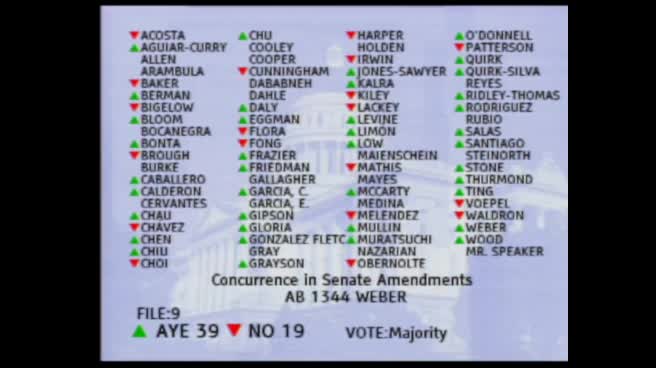




Bill Co-Author(s):







