AB 2914: Cannabis in alcoholic beverages.
- Session Year: 2017-2018
- House: Assembly
- Latest Version Date: 2018-09-27
The Medicinal and Adult-Use Cannabis Regulation and Safety Act, among other things, provides for the licensure and regulation of commercial cannabis activity, including cultivation, manufacturing, distribution, and retail sale. Existing law prohibits a commercial cannabis licensee from selling alcoholic beverages or tobacco products on or at any premises with a commercial cannabis license.
This bill would prohibit a licensee from selling, offering, or providing a cannabis product that is an alcoholic beverage, including, but not limited to, an infusion of cannabis or cannabinoids derived from industrial hemp into an alcoholic beverage.
Existing law, the Alcoholic Beverage Control Act, contains various provisions regulating the application for, the issuance of, the suspension of, and the conditions imposed upon, alcoholic beverage licenses by the Department of Alcoholic Beverage Control.
This bill would prohibit an alcoholic beverage licensee from, at its licensed premises, selling, offering, or providing cannabis or cannabis products, including an alcoholic beverage that contains cannabis or cannabis products, and would provide that no alcoholic beverage shall be manufactured, sold, or offered for sale if it contains tetrahydrocannabinol or cannabinoids, regardless of source. The bill would require the department to take disciplinary action against a licensee who does so, including, but not limited to, suspension or revocation of the license.
The Medicinal and Adult-Use Cannabis Regulation and Safety Act, among other things, provides for the licensure and regulation of commercial cannabis activity, including cultivation, manufacturing, distribution, and retail sale. Existing law prohibits a commercial cannabis licensee from selling alcoholic beverages or tobacco products on or at any premises with a commercial cannabis license.
This bill would prohibit a licensee from selling, offering, or providing a cannabis product that is an alcoholic beverage, including, but not limited to, an infusion of cannabis or cannabinoids derived from industrial hemp into an alcoholic beverage.
Existing law, the Alcoholic Beverage Control Act, contains various provisions regulating the application for, the issuance of, the suspension of, and the conditions imposed upon, alcoholic beverage licenses by the Department of Alcoholic Beverage Control.
This bill would prohibit an alcoholic beverage licensee from, at its licensed premises, selling, offering, or providing cannabis or cannabis products, including an alcoholic beverage that contains cannabis or cannabis products, and would provide that no alcoholic beverage shall be manufactured, sold, or offered for sale if it contains tetrahydrocannabinol or cannabichromene, cannabinoids, regardless of source. The bill would require the department to take disciplinary action against a licensee who does so, including, but not limited to, suspension or revocation of the license.
The Medicinal and Adult-Use Cannabis Regulation and Safety Act, among other things, provides for the licensure and regulation of commercial cannabis activity, including cultivation, manufacturing, distribution, and retail sale. Existing law prohibits a commercial cannabis licensee from selling alcoholic beverages or tobacco products on or at any premises with a commercial cannabis license.
This bill would prohibit a licensee from selling selling, offering, or providing a cannabis product that is an alcoholic beverage, including, but not limited to, an infusion of cannabis or cannabinoids derived from industrial hemp into an alcoholic beverage.
Existing law, the Alcoholic Beverage Control Act, contains various provisions regulating the application for, the issuance of, the suspension of, and the conditions imposed upon, alcoholic beverage licenses by the Department of Alcoholic Beverage Control.
This bill would prohibit an alcoholic beverage licensee from from, at its licensed premises, selling, offering, or providing cannabis or cannabis products, including an alcoholic beverage that contains cannabis or cannabis products, and would provide that no alcoholic beverage shall be manufactured, sold, or offered for sale if it contains tetrahydrocannabinol or cannabichromene, regardless of source. The bill would require the department to take disciplinary action against a licensee who does so, including, but not limited to, suspension or revocation of the license.
The Medicinal and Adult-Use Cannabis Regulation and Safety Act, among other things, provides for the licensure and regulation of commercial cannabis activity, including cultivation, manufacturing, distribution, and retail sale. Existing law prohibits a commercial cannabis licensee from selling alcoholic beverages or tobacco products on or at any premises with a commercial cannabis license.
This bill would prohibit a commercial cannabis licensee from also being licensed as a retailer of alcoholic beverages or tobacco products. The bill would prohibit a licensee from selling a cannabis product that is an alcoholic beverage, including, but not limited to, an infusion of cannabis into an alcoholic beverage.
Existing law, the Alcoholic Beverage Control Act, contains various provisions regulating the application for, the issuance of, the suspension of, and the conditions imposed upon, alcoholic beverage licenses by the Department of Alcoholic Beverage Control.
This bill would prohibit an alcoholic beverage licensee from selling, offering, or providing cannabis or cannabis products, including an alcoholic beverage that contains cannabis or cannabis products, and would require the department to take disciplinary action against a licensee who does so, including, but not limited to, suspension or revocation of the license.
(a)A licensee shall not, at its licensed premises, sell, offer, or provide cannabis or cannabis products, as defined in Section 26001, including an alcoholic beverage that contains cannabis or a cannabis product, and no alcoholic beverage shall be manufactured, sold, or offered for sale if it contains tetrahydrocannabinol or cannabinoids, regardless of source.
(b)The department shall take disciplinary action against a licensee that violates this section, including, but not limited to, suspension or revocation of the license.
SEC. 2.Section 26070.2 is added to the Business and Professions Code, to read:26070.2.A licensee shall not sell, offer, or provide a cannabis product that is an alcoholic beverage, including, but not limited to, an infusion of cannabis or cannabinoids derived from industrial hemp into an alcoholic beverage.
(a)A licensee shall not, at its licensed premises, sell, offer, or provide cannabis or cannabis products, as defined in Section 26001, including an alcoholic beverage that contains cannabis or a cannabis product, and no alcoholic beverage shall be manufactured, sold, or offered for sale if it contains tetrahydrocannabinol or cannabichromene, cannabinoids, regardless of source.
(b)The department shall take disciplinary action against a licensee that violates this section, including, but not limited to, suspension or revocation of the license.
SEC. 2.Section 26070.2 is added to the Business and Professions Code, to read:26070.2.A licensee shall not sell, offer, or provide a cannabis product that is an alcoholic beverage, including, but not limited to, an infusion of cannabis or cannabinoids derived from industrial hemp into an alcoholic beverage.
(a)A licensee shall not not, at its licensed premises, sell, offer, or provide cannabis or cannabis products, as defined in Section 26001, including an alcoholic beverage that contains cannabis or a cannabis product. product, and no alcoholic beverage shall be manufactured, sold, or offered for sale if it contains tetrahydrocannabinol or cannabichromene, regardless of source.
(b)The department shall take disciplinary action against a licensee that violates this section, including, but not limited to, suspension or revocation of the license.
SEC. 2.Section 26070.2 is added to the Business and Professions Code, to read:26070.2.A licensee shall not sell sell, offer, or provide a cannabis product that is an alcoholic beverage, including, but not limited to, an infusion of cannabis or cannabinoids derived from industrial hemp into an alcoholic beverage.
(a)A licensee shall not sell, offer, or provide cannabis or cannabis products, as defined in Section 26001, including an alcoholic beverage that contains cannabis or a cannabis product.
(b)The department shall take disciplinary action against a licensee that violates this section, including, but not limited to, suspension or revocation of the license.
SEC. 2.Section 26054 of the Business and Professions Code is amended to read:26054.(a)A licensee shall not also be licensed as a retailer of alcoholic beverages under Division 9 (commencing with Section 23000) or of tobacco products.(b)A premises licensed under this division shall not be located within a 600-foot radius of a school providing instruction in kindergarten or grades 1 to 12, inclusive, day care center, or youth center that is in existence at the time the license is issued, unless a licensing authority or a local jurisdiction specifies a different radius. The distance specified in this section shall be measured in the same manner as provided in subdivision (c) of Section 11362.768 of the Health and Safety Code unless otherwise provided by law.(c)It is not a violation of state or local law for a business engaged in the manufacture of cannabis accessories to possess, transport, purchase, or otherwise obtain small amounts of cannabis or cannabis products necessary to conduct research and development related to the cannabis accessories, provided the cannabis and cannabis products are obtained from a person licensed under this division permitted to provide or deliver the cannabis or cannabis products.(d)It is not a violation of state or local law for an agent of a licensing authority to possess, transport, or obtain cannabis or cannabis products necessary to conduct activities reasonably related to the duties of the licensing authority.SEC. 3.SEC. 2.Section 26070.2 is added to the Business and Professions Code, to read:26070.2.A licensee shall not sell a cannabis product that is an alcoholic beverage, including, but not limited to, an infusion of cannabis into an alcoholic beverage.
(a)A licensee shall not sell, offer, or provide cannabis or cannabis products, as defined in Section 26001, including an alcoholic beverage that contains cannabis or a cannabis product.
(b)The department shall take disciplinary action against a licensee that violates this section, including, but not limited to, suspension or revocation of the license.
SEC. 2.Section 26054 of the Business and Professions Code is amended to read:26054.(a)A licensee shall not sell alcoholic beverages or tobacco products on or at any premises licensed under this division. also be licensed as a retailer of alcoholic beverages under Division 9 (commencing with Section 23000) or of tobacco products.
(b)A premises licensed under this division shall not be located within a 600-foot radius of a school providing instruction in kindergarten or any grades 1 through to 12, inclusive, day care center, or youth center that is in existence at the time the license is issued, unless a licensing authority or a local jurisdiction specifies a different radius. The distance specified in this section shall be measured in the same manner as provided in subdivision (c) of Section 11362.768 of the Health and Safety Code unless otherwise provided by law.
(c)It shall not be is not a violation of state or local law for a business engaged in the manufacture of cannabis accessories to possess, transport, purchase, or otherwise obtain small amounts of cannabis or cannabis products as necessary to conduct research and development related to the cannabis accessories, provided the cannabis and cannabis products are obtained from a person licensed under this division permitted to provide or deliver the cannabis or cannabis products.
(d)It shall not be is not a violation of state or local law for an agent of a licensing authority to possess, transport, or obtain cannabis or cannabis products as necessary to conduct activities reasonably related to the duties of the licensing authority.
SEC. 3.Section 26070.2 is added to the Business and Professions Code, to read:26070.2.A licensee shall not sell a cannabis product that is an alcoholic beverage, including, but not limited to, an infusion of cannabis into an alcoholic beverage.
|
Date
|
Status
|
|---|---|
| Sep 27, 2018 | Chaptered by Secretary of State - Chapter 827, Statutes of 2018. |
| Sep 27, 2018 | Approved by the Governor. |
| Sep 7, 2018 | Enrolled and presented to the Governor at 2:30 p.m. |
| Aug 29, 2018 | Senate amendments concurred in. To Engrossing and Enrolling. |
| Aug 27, 2018 | In Assembly. Concurrence in Senate amendments pending. May be considered on or after August 29 pursuant to Assembly Rule 77. |
| Aug 27, 2018 | Read third time. Passed. Ordered to the Assembly. |
| Aug 22, 2018 | Read second time. Ordered to third reading. |
| Aug 21, 2018 | Read third time and amended. Ordered to second reading. |
| Aug 7, 2018 | Read second time. Ordered to third reading. |
| Aug 6, 2018 | From committee: Be ordered to second reading pursuant to Senate Rule 28.8. |
| Jul 2, 2018 | Read second time and amended. Re-referred to Com. on APPR. |
| Jun 28, 2018 | From committee: Amend, and do pass as amended and re-refer to Com. on APPR. (Ayes 13. Noes 0.) (June 26). |
| Jun 19, 2018 | From committee: Do pass and re-refer to Com. on G.O. (Ayes 8. Noes 0.) (June 18). Re-referred to Com. on G.O. |
| Jun 7, 2018 | Referred to Coms. on B., P. & E.D. and G.O. |
| May 30, 2018 | In Senate. Read first time. To Com. on RLS. for assignment. |
| May 29, 2018 | Read third time. Passed. Ordered to the Senate. |
| May 24, 2018 | Read second time. Ordered to Consent Calendar. |
| May 23, 2018 | From committee: Do pass. To Consent Calendar. (Ayes 16. Noes 0.) (May 23). |
| May 2, 2018 | Re-referred to Com. on APPR. |
| May 1, 2018 | Read second time and amended. |
| Apr 30, 2018 | From committee: Amend, and do pass as amended and re-refer to Com. on APPR. (Ayes 15. Noes 0.) (April 26). |
| Apr 18, 2018 | In committee: Hearing postponed by committee. |
| Apr 17, 2018 | From committee: Do pass and re-refer to Com. on G.O. with recommendation: To Consent Calendar. (Ayes 16. Noes 0.) (April 17). Re-referred to Com. on G.O. |
| Apr 16, 2018 | Joint Rule 62(a) suspended. |
| Mar 22, 2018 | Referred to Coms. on B. & P. and G.O. |
| Feb 17, 2018 | From printer. May be heard in committee March 19. |
| Feb 16, 2018 | Read first time. To print. |
|
Date
|
Description
|
Location
|
Votes
|
|
|---|---|---|---|---|
| Aug 29, 2018 | AB 2914 COOLEY Concurrence in Senate Amendments | Assembly Floor |
Passed |
|
| Aug 27, 2018 | Assembly 3rd Reading AB2914 Cooley By Cannella | Senate Floor |
Passed |
|
| Jun 26, 2018 | Do pass as amended, but first amend, and re-refer to the Committee on [Appropriations] | Senate Standing Committee on Governmental Organization |
Passed |
|
| Jun 18, 2018 | Do pass, but first be re-referred to the Committee on [Governmental Organization] | Senate Standing Committee on Business, Professions and Economic Development |
Passed |
|
| May 29, 2018 | AB 2914 COOLEY Consent Calendar Second Day Regular Session | Assembly Floor |
Passed |
|
| May 23, 2018 | Do pass. To Consent Calendar. | Assembly Standing Committee on Appropriations |
Passed |
|
| Apr 26, 2018 | Do pass as amended and be re-referred to the Committee on [Appropriations] | Assembly Standing Committee on Governmental Organization |
Passed |
|
| Apr 17, 2018 | Do pass and be re-referred to the Committee on [Governmental Organization] with recommendation: To Consent Calendar | Assembly Standing Committee on Business and Professions |
Passed |
This list shows positions taken on this bill by organizations on the date displayed, which is linked to the original source.
Positions by individuals are not included.
|
Organization
|
Position
|
Date
|
|---|---|---|
| Alcohol Justice | ** Support | Aug 22, 2018 |
| California Alcohol Policy Alliance | ** Support | Aug 22, 2018 |
| California Association Of Code Enforcement Officers | ** Support | Aug 22, 2018 |
| California College And University Police Chiefs Association | ** Support | Aug 22, 2018 |
| California Narcotic Officers Association | ** Support | Aug 22, 2018 |
| County Health Executives Association Of California | ** Support | Aug 22, 2018 |
| County Heath Executives Association Of California | ** Support | Apr 25, 2018 |
| Health Officers Association Of California | ** Support | Jun 25, 2018 |
| Los Angeles County Professional Peace Officers Association | ** Support | Aug 22, 2018 |
| Rural County Representatives of California | ** Support | Aug 22, 2018 |
CONCURRENCE IN SENATE AMENDMENTS
CSA1 Bill Id:AB 2914
Author:(Cooley)
As Amended Ver:August 21, 2018
Majority vote
ASSEMBLY: | 78-0 | (May 29, 2018) | SENATE: | 34-3 | (August 27, 2018) |
Original Committee Reference: B. & P.
SUMMARY: Prohibits an alcoholic beverage licensee from selling, offering, or providing cannabis or cannabis products, including the sale of an alcoholic beverage that contains cannabis, and clarifies existing law banning alcoholic beverages containing tetrahydrocannabinol or cannabinoids, regardless of source.
The Senate amendments restrict an alcoholic beverage licensee's prohibition on selling cannabis applies to sales on the licensee's licensed privileges, specify the cannabinoids that are banned from being added to alcoholic beverages, and extend the prohibition against licensees selling cannabis-infused alcoholic beverages to also ban offering or providing such beverages.
EXISTING LAW:
- Enacts the Medicinal and Adult-Use Cannabis Regulation and Safety Act to provide for a comprehensive regulatory framework for the cultivation, distribution, transport, storage, manufacturing, processing, and sale of medicinal and adult-use cannabis. (Business and Professions Code Section (BPC) 26000 et al.)
- Establishes the Bureau of Cannabis Control (BCC) within the Department of Consumer Affairs, previously named the Bureau of Marijuana Control, the Bureau of Medical Cannabis Regulation, and the Bureau of Medical Marijuana Regulation, for purposes of regulating microbusinesses, transportation, storage, distribution, testing, and sale of cannabis and cannabis products within the state. (BPC 26010)
- Provides the Department of Public Health with responsibility for regulating cannabis manufacturers. (BPC 26130)
- Prohibits a cannabis licensee from selling alcoholic beverages or tobacco products its premises. (BPC 26054)
- Authorizes a local jurisdiction to allow for cannabis use on the premises of a cannabis retailer or microbusiness that does not sell or allow for the consumption of alcohol or tobacco on the premises, among other restrictions. (BPC 26200(g))
- Establishes the Department of Alcohol Beverage Control with responsibility for ensuring a strict, honest, impartial, and uniform administration and enforcement of the liquor laws throughout the state. (BPC 23049 et seq.)
- Authorizes the Legislature to, by majority vote, enact laws to implement the state's regulatory scheme for cannabis, provided those laws are consistent with the purposes and intent of the Control, Regulate and Tax Adult Use of Marijuana Act (Proposition 64). (BPC 26000)
FISCAL EFFECT: According to the Senate Appropriations Committee, pursuant to Senate Rule 28.8, negligible state costs.
COMMENTS:
Purpose. This bill is sponsored by the author. According to the author:
Mixing alcohol and cannabis can lead to dangerous interactions, including a compounding impairment effect. This is why states that have legalized adult-use or medical-use cannabis strongly warn against the consumption of alcohol and cannabis at the same time.
AB 2914 codifies existing regulations and prohibitions issued by the Departments of Alcohol Beverage Control and Public Health on consumption and infusion of alcohol products with cannabis by retailers. As we move into this new legalized and regulated market, it is important we do all we can to protect consumer safety and the public at large while we continue to research the risks and side-effects of mixing alcohol and cannabis.
Background.
MCRSA. After several attempts to improve the state's regulation of cannabis, the Legislature passed the Medical Cannabis Regulation and Safety Act (MCRSA) in 2015. MCRSA consisted of a package of legislation: AB 243 (Wood), Chapter 688, Statutes of 2015; AB 266 (Bonta), Chapter 689, Statutes of 2015; and SB 643 (McGuire), Chapter 719, Statutes of 2015. MCRSA established, for the first time, a comprehensive statewide licensing and regulatory framework for the cultivation, manufacture, transportation, testing, distribution, and sale of medicinal cannabis to be administered by the newly established BCC within Department of Consumer Affairs, the Department of Public Health, and the Department of Food and Agriculture, with implementation relying on each agency's area of expertise.
MCRSA vested authority for:
- The BCC to issue licenses and regulate dispensaries, distributors, and transporters, and to provide oversight for the state's regulatory framework;
- The Department of Public Health to license and regulate testing laboratories and manufacturers; and
- The Department of Food and Agriculture to license and regulate cultivators.
While entrusting state agencies to promulgate extensive regulations governing the implementation of the state's cannabis laws, MCRSA fully preserved local control. Under MCRSA, local governments may establish their own ordinances to regulate medicinal cannabis activity. Local jurisdictions may also choose to ban cannabis altogether.
AUMA. Not long after the Legislature enacted MCRSA, California voters passed Proposition 64 of 2016, the Adult Use of Marijuana Act (AUMA). The passage of the AUMA legalized cannabis for non-medicinal adult use in a private home or licensed business, allowed adults 21 and over to possess and give away up to approximately one ounce of cannabis and up to eight grams of concentrate, and permitted the personal cultivation of up to six plants. The law sustained prohibitions against smoking in or operating a vehicle while under the effects of cannabis, possessing cannabis at a school or other child oriented facility while kids are present, growing in an unlocked or public place, and providing cannabis to minors.
MAUCRSA. In the spring of 2017, SB 94 (Budget and Fiscal Review Committee), Chapter 27, Statutes of 2017, was introduced to reconcile the distinct systems for the regulation, licensing, and enforcement of legal cannabis that had been established under the respective authorities of MCRSA and the AUMA. The single consolidated system established by the bill – known as the Medicinal and Adult-Use Cannabis Regulation and Safety Act (MAUCRSA) – created a unified series of cannabis laws and deleted redundant code sections no longer necessary due to the combination of the two systems. MAUCRSA also clarified a number of components, including but not limited to licensing, local control, taxation, testing, and edibles.
Cannabis and Alcohol. Federal prohibition of cannabis has historically stymied scientific research into issues involving the public health effects of cannabis consumption in certain contexts. However, there have long been concerns the implications of combining cannabis use and alcohol use. The American Association for Clinical Chemistry published a study indicating that any amount of alcohol used in conjunction with cannabis significantly increases the presence of THC in the person's blood. The evolving understanding is that alcohol and cannabis have "multiplier effects" on one another, resulting in higher levels of intoxication when both are ingested simultaneously. As a result, alcoholic beverages infused with cannabis have been consistently banned in state regulatory schemes authorizing cannabis sale and consumption, including under each iteration of California's legal cannabis laws.
Under the original language of MCRSA, cannabis licensees were prohibited from also being retailers licensed by the Department of Alcohol Beverage Control. The AUMA similarly prohibited cannabis licensees from also operating as a retailer of alcoholic beverages and additionally disallowed them from being licensed retailers of tobacco products. When MAUCRSA was passed to combine the two laws, statute was unintentionally changed to only prohibit the sale of alcohol or tobacco at the same location as a licensed cannabis business. This bill would state that an alcoholic beverage licensee is prohibited from selling cannabis or cannabis products on its licensed premises. This bill additionally codifies a version of regulations promulgated by the Department of Public Health prohibiting the sale of cannabis and cannabis products in alcoholic beverages.
Analysis Prepared by: Robert Sumner / B. & P. / (916) 319-3301 FN: 0004980
Office of Senate Floor Analyses (916) 651-1520 Fax: (916) 327-4478 | AB |
THIRD READING
Bill No: AB 2914
:
SENATE BUS., PROF. & ECON. DEV. COMMITTEE: 8-0, 6/18/18
AYES: Hill, Fuller, Dodd, Galgiani, Glazer, Hernandez, Pan, Wilk
NO VOTE RECORDED: Allen
SENATE GOVERNMENTAL ORG. COMMITTEE: 13-0, 6/26/18
AYES: Dodd, Wilk, Bradford, Cannella, Gaines, Galgiani, Glazer, Hill, Hueso, Lara, Portantino, Vidak, Wiener
SENATE APPROPRIATIONS COMMITTEE: Senate Rule 28.8
ASSEMBLY FLOOR: 78-0, 5/29/18 (Consent) - See last page for vote
DIGEST:
This bill prohibits an alcoholic beverage licensee from selling, offering, or providing cannabis or cannabis products at its licensed premises, and prohibits a cannabis licensee from selling, offering, or providing a cannabis product that is an alcoholic beverage, as specified.
Senate Floor Amendments of 8/21/18 correct a technical error; the original amendment request was for the term “CBD,” or cannabidiol, which is a type of cannabinoid. However, the amendments were drafted with the term “cannabichromene,” which is a different type of cannabinoid. These amendments change that term to “cannabinoid,” which is referenced elsewhere in the bill.
Existing law:
- Establishes the Bureau of Cannabis Control (Bureau) under the Department of Consumer Affairs to regulate cannabis by having the sole authority to create, issue, deny, renew, discipline, suspend, or revoke licenses for microbusinesses, transportation, storage unrelated to manufacturing activities, distribution, testing, and sale of cannabis and cannabis products within the state. (Business and Professions Code (BPC) §§ 26010, 26012 (a)(1))
- Establishes the Medicinal and Adult-Use Cannabis Regulation and Safety Act (MAUCRSA) to regulate the cultivation, distribution, transport, storage, manufacturing, processing, and sale of both medicinal cannabis and adult-use cannabis. (BPC § 26000)
- Defines “cannabis” to mean all parts of the plant Cannabis sativa Linnaeus, Cannabis indica, or Cannabis ruderalis, whether growing or not; the seeds thereof; the resin, whether crude or purified, extracted from any part of the plant; and every compound, manufacture, salt, derivative, mixture, or preparation of the plant, its seeds, or resin. “Cannabis” also means the separated resin, whether crude or purified, obtained from cannabis. “Cannabis” does not include the mature stalks of the plant, fiber produced from the stalks, oil or cake made from the seeds of the plant, any other compound, manufacture, salt, derivative, mixture, or preparation of the mature stalks (except the resin extracted therefrom), fiber, oil, or cake, or the sterilized seed of the plant which is incapable of germination. For the purpose of this division, “cannabis” does not mean “industrial hemp”. (BPC § 26001)
- Defines “premises” to mean the designated structure or structures and land specified in the application that is owned, leased, or otherwise held under the control of the applicant or licensee where the commercial cannabis activity will be or is conducted. The premises shall be a contiguous area and shall only be occupied by one licensee. (BPC § 26001)
- Prohibits a cannabis licensee from selling alcoholic beverages or tobacco products on or at any premises licensed under MAUCRSA. (BPC § 26054 (a))
- Establishes the Alcoholic Beverage Control Act, administered by the Department of Alcoholic Beverage Control (ABC), for the protection of the safety, welfare, health, peace, and morals of the people of the state, to eliminate the evils of unlicensed and unlawful manufacture, selling, and disposing of alcoholic beverages, and to promote temperance in the use and consumption of alcoholic beverages. (BPC §§ 23000, 23001, 23050)
- Defines an alcoholic beverage to include alcohol, spirits, liquor, wine, beer, and every liquid or solid containing alcohol, spirits, wine, or beer, and which contains one-half of one percent or more of alcohol by volume and which is fit for beverage purposes either alone or when diluted, mixed, or combined with other substances. (BPC § 23004)
- Prohibits beer to which caffeine has been directly added as a separate ingredient from being imported into California; produced, manufactured, or distributed within this state; or sold by a licensed alcohol retailer within California. (BPC § 25622 (a))
- Prohibits alcoholic beverages from being stored or consumed on a cannabis licensee’s premises. (Title 16, California Code of Regulations (CCR) § 5025 (d))
- Authorizes a cannabis retailer to sell non-cannabis products, except alcohol, alcohol products, tobacco, and tobacco products on a licensed premise if the licensee remains in compliance with any city, county, and state laws or regulations related to those products. (16 CCR § 5407)
- Prohibits the sale or consumption of alcohol or tobacco on the temporary cannabis event premises. (16 CCR § 5602 (e))
- Prohibits alcoholic beverages from being sold as cannabis products. (17 CCR § 40300)
This bill:
- Prohibits an alcoholic beverage licensee, at its licensed premises, from selling, offering, or providing cannabis or cannabis products, including an alcoholic beverage that contains cannabis or a cannabis product, and no alcoholic beverage shall be manufactured, sold, or offered for sale if it contains tetrahydrocannabinol or cannabichromene, regardless of source.
- Requires ABC to take disciplinary action against a licensee that violates this bill, including, but not limited to, suspension or revocation of the license.
- Prohibits a cannabis licensee from selling, offering, or providing a cannabis product that is an alcoholic beverage, including, but not limited to, an infusion of cannabis or cannabinoids derived from industrial hemp into an alcoholic beverage.
Background
Cannabis and alcohol. Although there is a limited amount of research available on the interactions between cannabis and alcohol due to federal restrictions, the federal Centers for Disease Control and Prevention cautions against mixing the two, stating, “Using alcohol and marijuana at the same time is likely to result in greater impairment than when using either one alone. Using marijuana and tobacco at the same time may also lead to increased exposure to harmful chemicals, causing greater risks to the lungs, and the cardiovascular system.”
Not all are heeding this message, however. Alcoholic drinks infused with CBD are emerging in bars across California. An April 18, 2018 article in LA Weekly, L.A.'s Mixologists Are Getting Creative With CBD Oil states, “Once considered an exotic and provocative ingredient, cannabidiol oil has become commonplace in Los Angeles restaurants. Spring Downtown [a LA restaurant] offers a delicious three-course prix fixe CBD Power Lunch for $37, which promises to lift your mood and give a boost to your day.” The article continues to recommend a half-dozen locations for such cocktails.
Cannabis regulatory background. Cannabis was first legalized in California for medical consumption by Proposition 215, also known as the Compassionate Use Act, in 1996. Proposition 215 protected qualified patients and primary caregivers from prosecution related to the possession and cultivation of cannabis for medicinal purposes.
The Legislature passed the Medical Cannabis Regulation and Safety Act (MCRSA) in 2015. MCRSA established, for the first time, a comprehensive statewide licensing and regulatory framework for the cultivation, manufacture, transportation, testing, distribution, and sale of medicinal cannabis to be administered by the newly established Bureau within Department of Consumer Affairs, the Department of Public Health, and the Department of Food and Agriculture, with implementation relying on each agency’s area of expertise. AB 266 (Bonta, Chapter 689, Statutes of 2015), one of the three bills comprising MCRSA, prohibited a medical cannabis licensee from also being licensed as a retailer of alcoholic beverages.
Shortly following the passage of MCRSA in November 2016, California voters passed Proposition 64, the "Control, Regulate and Tax Adult Use of Marijuana Act" (Prop 64), which legalized adult-use cannabis. The proposition stated in its “Purpose and Intent” to “prohibit the sale of nonmedical marijuana by businesses that also sell alcohol or tobacco.” It stated further that “a licensee shall not also be licensed as a retailer of alcoholic beverages [citation omitted] or of tobacco products.”
It appears in plain language that neither MCRSA nor Prop 64 intended to permit ownership of a cannabis license in combination with an alcohol license.
Less than a year later in June 2017, the California State Legislature passed a Budget Trailer Bill, SB 94 (Committee on Budget and Fiscal Review, Chapter 27, Statutes of 2017), that integrated MCRSA with Prop 64 to create MAUCRSA.
On January 1, 2018, the Bureau began issuing licenses for medicinal and adult-use cannabis activities relating to retail, distribution, microbusiness, testing laboratories, and cannabis events. These licensed commercial cannabis businesses are in operation under emergency regulations adopted on December 7, 2017, and readopted on June 6, 2017. On July 13, 2018, the Bureau published new proposed regulations for the non-emergency rulemaking process.
This bill codifies existing regulations by prohibiting the sale of a cannabis product that is an alcoholic beverage.
Comments
Cannabis is composed of hundreds of different compounds, known as “cannabinoids.” One of the most popular (and non-psychoactive) is cannabidiol, or CBD. CBD can also be derived from industrial hemp, which is not considered cannabis under current law. Thus, the CBD cocktails described above could remain legal if this bill were to pass. Industrial hemp also contains another cannabinoid, THC, which is psychoactive.
The LA Weekly article referenced above also noted that coffee shops are selling CBD-enhanced products – it is unclear whether these are cannabis or hemp-derived, but policymakers may wish to reconsider whether this broad exemption for all industrial hemp is justified.
FISCAL EFFECT: Appropriation: Fiscal Com.: Local:
Alcohol Justice
California Alcohol Policy Alliance
California Association of Code Enforcement Officers
California College and University Police Chiefs Association
California Narcotic Officers Association
County Health Executives Association of California
Los Angeles County Professional Peace Officers Association
Rural County Representatives of California
OPPOSITION: (Verified 8/21/18)
None received
ARGUMENTS IN SUPPORT: The County Health Executives Association of California writes, “Given the dearth of research on the effects of tetrahydrocannabinol (THC), the primary psychoactive chemical compound of cannabis, as well as cannabidiol (CBD), one of the other major chemical compounds in cannabis, prohibiting the inclusion of alcohol in cannabis products is prudent. There is very little science yet available on the ingestion of cannabis and its therapeutic efficacy, subjective effects, and safety on the human body. Combining the relatively unknown effects of cannabis with the known sedative effects of alcohol may have devastatingly unpredictable and harmful impacts on Californians.”
ASSEMBLY FLOOR: 78-0, 5/29/18
AYES: Acosta, Aguiar-Curry, Travis Allen, Arambula, Baker, Berman, Bigelow, Bloom, Bonta, Brough, Burke, Caballero, Calderon, Carrillo, Cervantes, Chau, Chávez, Chen, Chiu, Choi, Chu, Cooley, Cooper, Cunningham, Dahle, Daly, Eggman, Flora, Fong, Frazier, Friedman, Gallagher, Cristina Garcia, Eduardo Garcia, Gipson, Gloria, Gonzalez Fletcher, Gray, Grayson, Harper, Holden, Irwin, Jones-Sawyer, Kalra, Kamlager-Dove, Kiley, Lackey, Levine, Limón, Low, Maienschein, Mathis, Mayes, McCarty, Medina, Melendez, Mullin, Muratsuchi, Nazarian, Obernolte, O'Donnell, Patterson, Quirk, Quirk-Silva, Reyes, Rodriguez, Rubio, Salas, Santiago, Steinorth, Mark Stone, Thurmond, Ting, Voepel, Waldron, Weber, Wood, Rendon
8/22/18 14:36:45
**** END ****
Office of Senate Floor Analyses (916) 651-1520 Fax: (916) 327-4478 | AB |
THIRD READING
Bill No: AB 2914
:
SENATE BUS., PROF. & ECON. DEV. COMMITTEE: 8-0, 6/18/18
AYES: Hill, Fuller, Dodd, Galgiani, Glazer, Hernandez, Pan, Wilk
NO VOTE RECORDED: Allen
SENATE GOVERNMENTAL ORG. COMMITTEE: 13-0, 6/26/18
AYES: Dodd, Wilk, Bradford, Cannella, Gaines, Galgiani, Glazer, Hill, Hueso, Lara, Portantino, Vidak, Wiener
SENATE APPROPRIATIONS COMMITTEE: Senate Rule 28.8
ASSEMBLY FLOOR: 78-0, 5/29/18 (Consent) - See last page for vote
DIGEST:
This bill prohibits an alcoholic beverage licensee from selling, offering, or providing cannabis or cannabis products at its licensed premises, and prohibits a cannabis licensee from selling, offering, or providing a cannabis product that is an alcoholic beverage, as specified.
Existing law:
- Establishes the Bureau of Cannabis Control (Bureau) under the Department of Consumer Affairs to regulate cannabis by having the sole authority to create, issue, deny, renew, discipline, suspend, or revoke licenses for microbusinesses, transportation, storage unrelated to manufacturing activities, distribution, testing, and sale of cannabis and cannabis products within the state. (Business and Professions Code (BPC) §§ 26010, 26012 (a)(1))
- Establishes the Medicinal and Adult-Use Cannabis Regulation and Safety Act (MAUCRSA) to regulate the cultivation, distribution, transport, storage, manufacturing, processing, and sale of both medicinal cannabis and adult-use cannabis. (BPC § 26000)
- Defines the following terms:
- “Cannabis” means all parts of the plant Cannabis sativa Linnaeus, Cannabis indica, or Cannabis ruderalis, whether growing or not; the seeds thereof; the resin, whether crude or purified, extracted from any part of the plant; and every compound, manufacture, salt, derivative, mixture, or preparation of the plant, its seeds, or resin. “Cannabis” also means the separated resin, whether crude or purified, obtained from cannabis. “Cannabis” does not include the mature stalks of the plant, fiber produced from the stalks, oil or cake made from the seeds of the plant, any other compound, manufacture, salt, derivative, mixture, or preparation of the mature stalks (except the resin extracted therefrom), fiber, oil, or cake, or the sterilized seed of the plant which is incapable of germination. For the purpose of this division, “cannabis” does not mean “industrial hemp”.
- “License” means a state license issued pursuant to MAUCRSA.
- “Licensee” means any person holding a license issued under MAUCRSA.
- “Owner” means any of the following:
- A person with an aggregate ownership interest of 20 percent or more in the person applying for a license or a licensee, unless the interest is solely a security, lien, or encumbrance.
- The chief executive officer of a nonprofit or other entity.
- A member of the board of directors of a nonprofit.
- An individual who will be participating in the direction, control, or management of the person applying for a license.
- “Premises” means the designated structure or structures and land specified in the application that is owned, leased, or otherwise held under the control of the applicant or licensee where the commercial cannabis activity will be or is conducted. The premises shall be a contiguous area and shall only be occupied by one licensee. (BPC § 26001)
- Defines “cannabis product” to mean cannabis that has undergone a process whereby the plant material has been transformed into a concentrate, including, but not limited to, concentrated cannabis, or an edible or topical product containing cannabis or concentrated cannabis and other ingredients. (BPC § 26001 (i) and Health and Safety Code § 11018.1)
- Prohibits a cannabis licensee from selling alcoholic beverages or tobacco products on or at any premises licensed under MAUCRSA. (BPC § 26054 (a))
- Establishes the Alcoholic Beverage Control Act, administered by the Department of Alcoholic Beverage Control (ABC), for the protection of the safety, welfare, health, peace, and morals of the people of the State, to eliminate the evils of unlicensed and unlawful manufacture, selling, and disposing of alcoholic beverages, and to promote temperance in the use and consumption of alcoholic beverages. (BPC §§ 23000, 23001, 23050)
- Defines an alcoholic beverage to include alcohol, spirits, liquor, wine, beer, and every liquid or solid containing alcohol, spirits, wine, or beer, and which contains one-half of one percent or more of alcohol by volume and which is fit for beverage purposes either alone or when diluted, mixed, or combined with other substances. (BPC § 23004)
- Prohibits beer to which caffeine has been directly added as a separate ingredient from being imported into California; produced, manufactured, or distributed within this state; or sold by a licensed alcohol retailer within California. (BPC § 25622 (a))
- Prohibits alcoholic beverages from being stored or consumed on a cannabis licensee’s premises. (Title 16, California Code of Regulations (CCR) § 5025 (d))
- Authorizes a cannabis retailer to sell non-cannabis products, except alcohol, alcohol products, tobacco, and tobacco products on a licensed premise if the licensee remains in compliance with any city, county, and state laws or regulations related to those products. (16 CCR § 5407)
- Prohibits the sale or consumption of alcohol or tobacco on the temporary cannabis event premises. (16 CCR § 5602 (e))
- Prohibits alcoholic beverages from being sold as cannabis products. (17 CCR § 40300)
This bill:
- Prohibits an alcoholic beverage licensee, at its licensed premises, from selling, offering, or providing cannabis or cannabis products, including an alcoholic beverage that contains cannabis or a cannabis product, and no alcoholic beverage shall be manufactured, sold, or offered for sale if it contains tetrahydrocannabinol or cannabichromene, regardless of source.
- Requires ABC to take disciplinary action against a licensee that violates this bill, including, but not limited to, suspension or revocation of the license.
- Prohibits a cannabis licensee from selling, offering, or providing a cannabis product that is an alcoholic beverage, including, but not limited to, an infusion of cannabis or cannabinoids derived from industrial hemp into an alcoholic beverage.
Background
Cannabis and alcohol. Although there is a limited amount of research available on the interactions between cannabis and alcohol due to federal restrictions, the federal Centers for Disease Control and Prevention cautions against mixing the two, stating, “Using alcohol and marijuana at the same time is likely to result in greater impairment than when using either one alone. Using marijuana and tobacco at the same time may also lead to increased exposure to harmful chemicals, causing greater risks to the lungs, and the cardiovascular system.”
Not all are heeding this message, however. Alcoholic drinks infused with CBD are emerging in bars across California. An April 18, 2018 article in LA Weekly, L.A.'s Mixologists Are Getting Creative With CBD Oil states, “Once considered an exotic and provocative ingredient, cannabidiol oil has become commonplace in Los Angeles restaurants. Spring Downtown [a LA restaurant] offers a delicious three-course prix fixe CBD Power Lunch for $37, which promises to lift your mood and give a boost to your day.” The article continues to recommend a half-dozen locations for such cocktails.
Cannabis regulatory background. Cannabis was first legalized in California for medical consumption by Proposition 215, also known as the Compassionate Use Act, in 1996. Proposition 215 protected qualified patients and primary caregivers from prosecution related to the possession and cultivation of cannabis for medicinal purposes.
The Legislature passed the Medical Cannabis Regulation and Safety Act (MCRSA) in 2015. MCRSA established, for the first time, a comprehensive statewide licensing and regulatory framework for the cultivation, manufacture, transportation, testing, distribution, and sale of medicinal cannabis to be administered by the newly established Bureau within Department of Consumer Affairs, the Department of Public Health, and the Department of Food and Agriculture, with implementation relying on each agency’s area of expertise. AB 266 (Bonta, Chapter 689, Statutes of 2015), one of the three bills comprising MCRSA, prohibited a medical cannabis licensee from also being licensed as a retailer of alcoholic beverages.
Shortly following the passage of MCRSA in November 2016, California voters passed Proposition 64, the "Control, Regulate and Tax Adult Use of Marijuana Act" (Prop 64), which legalized adult-use cannabis. The proposition stated in its “Purpose and Intent” to “prohibit the sale of nonmedical marijuana by businesses that also sell alcohol or tobacco.” It stated further that “a licensee shall not also be licensed as a retailer of alcoholic beverages [citation omitted] or of tobacco products.”
It appears in plain language that neither MCRSA nor Prop 64 intended to permit ownership of a cannabis license in combination with an alcohol license.
Less than a year later in June 2017, the California State Legislature passed a budget trailer bill, SB 94 (Committee on Budget and Fiscal Review, Chapter 27, Statutes of 2017), that integrated MCRSA with Prop 64 to create MAUCRSA. Instead of banning the simultaneous licensure of cannabis and alcohol, MAUCRSA only prohibits a cannabis licensee from selling alcoholic beverages or tobacco products on or at any licensed premises. Thus, instead of focusing on the licensee, current law focuses on the premises.
On May 18, 2018, the Administration readopted emergency regulations implementing MAUCRSA that initially went into effect in December 2017. These regulations further clarify the ban on comingling alcohol and cannabis by prohibiting the storage of alcohol and cannabis on a cannabis licensee’s premises; prohibiting the sale or consumption of alcohol or tobacco on a temporary cannabis event premises; and prohibits alcoholic beverages from being sold as edible cannabis products.
This bill codifies existing regulations by prohibiting the sale of a cannabis product that is an alcoholic beverage.
Comments
Cannabis is composed of hundreds of different compounds, known as “cannabinoids.” One of the most popular (and non-psychoactive) is cannabidiol, or CBD. CBD can also be derived from industrial hemp, which is not considered cannabis under current law. Thus, the CBD cocktails described above could remain legal if this bill were to pass. Industrial hemp also contains another cannabinoid, THC, which is psychoactive.
The LA Weekly article referenced above also noted that coffee shops are selling CBD-enhanced products – it is unclear whether these are cannabis or hemp-derived, but policymakers may wish to reconsider whether this broad exemption for all industrial hemp is justified.
This bill contains a technical error in Section 1: “cannabichromene” should be replaced with “cannabidiol.” The author is aware of this error and plans to amend the bill.
FISCAL EFFECT: Appropriation: Fiscal Com.: Local:
Alcohol Justice
California Alcohol Policy Alliance
California Association of Code Enforcement Officers
California College and University Police Chiefs Association
California Narcotic Officers Association
County Health Executives Association of California
Los Angeles County Professional Peace Officers Association
Rural County Representatives of California
None received
ARGUMENTS IN SUPPORT: The County Health Executives Association of California writes, “Given the dearth of research on the effects of tetrahydrocannabinol (THC), the primary psychoactive chemical compound of cannabis, as well as cannabidiol (CBD), one of the other major chemical compounds in cannabis, prohibiting the inclusion of alcohol in cannabis products is prudent. There is very little science yet available on the ingestion of cannabis and its therapeutic efficacy, subjective effects, and safety on the human body. Combining the relatively unknown effects of cannabis with the known sedative effects of alcohol may have devastatingly unpredictable and harmful impacts on Californians.”
ASSEMBLY FLOOR: 78-0, 5/29/18
AYES: Acosta, Aguiar-Curry, Travis Allen, Arambula, Baker, Berman, Bigelow, Bloom, Bonta, Brough, Burke, Caballero, Calderon, Carrillo, Cervantes, Chau, Chávez, Chen, Chiu, Choi, Chu, Cooley, Cooper, Cunningham, Dahle, Daly, Eggman, Flora, Fong, Frazier, Friedman, Gallagher, Cristina Garcia, Eduardo Garcia, Gipson, Gloria, Gonzalez Fletcher, Gray, Grayson, Harper, Holden, Irwin, Jones-Sawyer, Kalra, Kamlager-Dove, Kiley, Lackey, Levine, Limón, Low, Maienschein, Mathis, Mayes, McCarty, Medina, Melendez, Mullin, Muratsuchi, Nazarian, Obernolte, O'Donnell, Patterson, Quirk, Quirk-Silva, Reyes, Rodriguez, Rubio, Salas, Santiago, Steinorth, Mark Stone, Thurmond, Ting, Voepel, Waldron, Weber, Wood, Rendon
8/8/18 12:40:05
**** END ****
SENATE COMMITTEE ON GOVERNMENTAL ORGANIZATION
Senator Bill Dodd
Chair
2017 - 2018 Regular
Bill No: 2914 Hearing Date: 6/26/2018
Author: | |||
Version: | 5/1/2018 Amended | ||
Urgency: | No | Fiscal: | Yes |
Consultant: | Felipe Lopez | ||
SUBJECT: Cannabis in alcoholic beverages
DIGEST: This bill prohibits the simultaneous ownership of alcohol and cannabis licenses and prohibits the sale of infusion of cannabis into an alcoholic beverage.
ANALYSIS:
Existing law:
- Establishes the Department of Alcoholic Beverage Control (ABC) and grants it exclusive authority to administer the provisions of the ABC Act in accordance with laws enacted by the Legislature. This involves licensing individuals and businesses associated with the manufacture, importation and sale of alcoholic beverages in this state and the collection of license fees for this purpose.
- Enacts the Medicinal and Adult-use Cannabis Regulation and Safety Act (MAUCRSA) to provide for a comprehensive regulatory framework for the cultivation, distribution, transport, storage, manufacturing, processing, and sale of medicinal and adult-use cannabis.
- Establishes the Bureau of Cannabis Control (BCC) within the Department of Consumer Affairs (DCA) for purposes of regulating microbusinesses, transportation, storage, distribution, testing, and sale of cannabis and cannabis products within the state.
- Defines “cannabis product” to mean cannabis that has undergone a process whereby the plant material has been transformed into a concentrate, including, but not limited to, concentrated cannabis, or an edible or topical product containing cannabis or concentrated cannabis and other ingredients.
- Defines “cannabis” to mean all parts of the plant Cannabis sativa Linnaeus, Cannabis indica, or Cannabis ruderalis, whether growing or not; the seeds thereof; the resin, whether crude or purified, extracted from any part of the plant; and every compound, manufacture, salt, derivative, mixture, or preparation of the plant, its seeds, or resin. “Cannabis” also means the separated resin, whether crude or purified, obtained from cannabis. “Cannabis” does not include the mature stalks of the plant, fiber produced from the stalks, oil or cake made from the seeds of the plant, any other compound, manufacture, salt, derivative, mixture, or preparation of the mature stalks (except the resin extracted therefrom), fiber, oil, or cake, or the sterilized seed of the plant which is incapable of germination. For the purpose of this division, “cannabis” does not mean “industrial hemp.”
- Prohibits a cannabis licensee from selling alcoholic beverages or tobacco products on or at any premises licensed under the MAUCRSA.
This bill:
- Prohibits an alcoholic beverage licensee from selling, offering, or providing cannabis or cannabis products, as defined, including an alcoholic beverage that contains cannabis or a cannabis product.
- Requires the Department of ABC to take disciplinary action against an alcohol beverage licensee who violates the provisions of this bill, including, but not limited to, suspension or revocation of the license.
- Prohibits a cannabis licensee from selling a cannabis product that is an alcoholic beverage, including, but not limited to, an infusion of cannabis into an alcoholic beverage.
Background
Purpose of the bill. According to the author’s office, “mixing alcohol and cannabis can lead to dangerous interactions, including a compounding impairment effect. This is why states that have legalized adult-use or medical-use cannabis strongly warn against the consumption of alcohol and cannabis at the same time. AB 2914 codifies existing regulations and prohibitions issued by the Department of ABC and Department of Public Health on consumption and infusion of alcohol products with cannabis retailers. As we move into this new legalized and regulated market, it is important we do all we can to protect consumer safety and the public at large while we continue to research the risks and side-effects of mixing alcohol and cannabis.”
Cannabis regulatory background. Cannabis was first legalized in California for medical consumption by Proposition 215, also known as the Compassionate Use Act, in 1996. Proposition 215 protected qualified patients and primary caregivers from prosecution related to the possession and cultivation of cannabis for medicinal purposes.
The Legislature passed the Medical Cannabis Regulation and Safety Act (MCRSA) in 2015. MCRSA established a comprehensive statewide licensing and regulatory framework for the cultivation, manufacture, transportation, testing, distribution, and sale of medicinal cannabis to be administered by the newly established BCC, the Department of Public Health (CDPH), and the Department of Food and Agriculture (CDFA), with implementation relying on each agency’s area of expertise. AB 266 (Bonta, Chapter 689, Statutes of 2015), one of the three bills comprising MCRSA, prohibited a medical cannabis licensee from also being licensed as a retailer of alcoholic beverages.
Shortly following the passage of MCRSA in November 2016, California voters passed Proposition 64, the "Control, Regulate and Tax Adult Use of Marijuana Act" which legalized adult-use cannabis. The proposition stated in its “Purpose and Intent” to “prohibit the sale of nonmedical marijuana by businesses that also sell alcohol or tobacco.” It stated further that “a licensee shall not also be licensed as a retailer of alcoholic beverages or of tobacco products.” It appears in plain language that neither MCRSA nor Prop 64 intended to permit ownership of a cannabis license in combination with an alcohol license.
Less than a year later in June 2017, the California State Legislature passed a budget trailer bill, SB 94 (Committee on Budget and Fiscal Review, Chapter 27, Statutes of 2017), that integrated MCRSA with Prop 64 to create MAUCRSA. Instead of banning the simultaneous licensure of cannabis and alcohol, MAUCRSA only prohibits a cannabis licensee from selling alcoholic beverages or tobacco products on or at any licensed premises. Thus, instead of focusing on the licensee, current law focuses on the premises.
On May 18, 2018, the Administration readopted emergency regulations implementing MAUCRSA. These regulations further clarify the ban on the commingling of alcohol and cannabis by prohibiting the storage of alcohol and cannabis on a cannabis licensee’s premises; prohibiting the sale or consumption of alcohol or tobacco on a temporary cannabis event premises; and prohibits alcoholic beverages from being sold as edible cannabis products.
Cannabis and alcohol. Federal prohibition of cannabis has historically hindered scientific research into issues involving the public health effects of cannabis consumption in certain contexts. However, there have long been concerns the implications of combining cannabis use and alcohol use. The American Association for Clinical Chemistry published a study indicating that any amount of alcohol used in conjunction with cannabis significantly increases the presence of THC in the person’s blood. The evolving understanding is that alcohol and cannabis have “multiplier effects” on one another, resulting in higher levels of intoxication when both are ingested simultaneously. As a result, alcoholic beverages infused with cannabis have been consistently banned in state regulatory schemes authorizing cannabis sale and consumption, including under each iteration of California’s legal cannabis laws.
ABC advisory. As proposed to be amended, this bill would align current law with a Department of ABC’s advisory which stated that individuals could hold alcohol beverage licenses with the Department of ABC and a cannabis licenses with the BBC simultaneously. The advisory also specified that cannabis and alcohol cannot be sold at the same location and alcohol beverage products cannot be infused or mixed with cannabis.
Author amendments. The author agreed to take the following amendments in the Senate Business, Professions, and Economic Development committee in order to clarify amendments that were taken in Assembly Governmental Organization Committee that were not intended to prevent an alcohol licensee from holding a cannabis license (and vice versa) – it was merely to prevent the sale of cannabis and cannabis products on an alcohol licensee’s premises, consistent with the structure of current law and regulations. As such, the Author agreed to amend the bill to restrict the sale of cannabis, cannabis products, and alcoholic beverages containing cannabis to a licensee’s premises. The Author also wishes to prohibit the sale of alcohol infused with industrial hemp-derived cannabinoids, as well.
- On page 2, line 3, after “not” insert “, at its licensed premises,”.
- On page 2, line 5, after “product” insert “and no alcoholic beverage may be manufactured, sold, or offered for sale if it contains any THC or CBD, regardless of source.”
- On page 3, line 6, after “sell” insert “, offer, or provide”.
- On page 3, line 8, after “cannabis” insert “or cannabinoids derived from industrial hemp”
Prior/Related Legislation
AB 2555 (Cooley, 2018) establishes the definition of “plant,” “immature plant,” and “mature cannabis plant” in relation to cannabis cultivation. (Pending in the Senate Business, Professions, and Economic Development Committee)
AB 266 (Bonta, Chapter 689, Statutes of 2015) established a comprehensive licensing and regulatory framework for the cultivation, manufacture, transportation, storage, distribution, and sale of medical marijuana to be administered by the Department of Consumer Affairs (DCA), Department of Food and Agriculture (CDFA) and Department of Public Health (CDPH) as specified.
AB 243 (Wood, Chapter 688, Statutes of 2015) established a regulatory program for the cultivation of medical cannabis, as part of the MAUCRSA.
SB 643 (McGuire, Chapter 719, Statutes of 2015) established a comprehensive licensing and regulatory framework for the cultivation, manufacture, transportation, storage, distribution, and sale of medical cannabis to be administered by DCA, CDFA, and CDPH, as specified.
SB 39 (Padilla, Chapter 140, Statutes of 2011) prohibited the importation, production, manufacture, distribution, or sale of beer to which caffeine has been directly added as a separate ingredient at retail locations in California, as defined.
FISCAL EFFECT: Appropriation: Fiscal Com.: Local:
SUPPORT:
Alcohol Justice
California Alcohol Policy Alliance
California Association of Code Enforcement Officers
California College and University Police Chiefs Association
California Narcotic Officers Association
County Health Executives Association of California
Health Officers Association of California
Los Angeles County Professional Peace Officers Association
Rural County Representatives of California
OPPOSITION:
None received
ARGUMENTS IN SUPPORT: According to the County Health Executives Association of California, “there is very little science yet available on the ingestion of cannabis and its therapeutic efficacy, subjective effects, and safety on the human body. Combining the relatively unknown effects of cannabis with the known sedative effects of alcohol may have devastatingly unpredictable and harmful impacts on Californians.”
DUAL REFERRAL: Senate Business, Professions and Economic Development Committee (8-1)
SENATE COMMITTEE ON
BUSINESS, PROFESSIONS AND ECONOMIC DEVELOPMENT
Senator Jerry Hill, Chair
2017 - 2018 Regular
Bill No: AB 2914 Hearing Date: June 18, 2018
Author: | Cooley | ||
Version: |
| ||
Urgency: | Fiscal: | ||
Consultant: | |||
Subject: Cannabis in alcoholic beverages
SUMMARY:
Prohibits simultaneous ownership of alcohol and cannabis licenses and prohibits the sale of an infusion of cannabis into an alcoholic beverage.
Existing law:
- Establishes the Bureau of Cannabis Control (Bureau) under the Department of Consumer Affairs to regulate cannabis by having the sole authority to create, issue, deny, renew, discipline, suspend, or revoke licenses for microbusinesses, transportation, storage unrelated to manufacturing activities, distribution, testing, and sale of cannabis and cannabis products within the state. (Business and Professions Code (BPC) §§ 26010, 26012 (a)(1))
- Establishes the Medicinal and Adult-Use Cannabis Regulation and Safety Act (MAUCRSA) to regulate the cultivation, distribution, transport, storage, manufacturing, processing, and sale of both medicinal cannabis and adult-use cannabis. (BPC § 26000)
- Defines the following terms:
- “Cannabis” means all parts of the plant Cannabis sativa Linnaeus, Cannabis indica, or Cannabis ruderalis, whether growing or not; the seeds thereof; the resin, whether crude or purified, extracted from any part of the plant; and every compound, manufacture, salt, derivative, mixture, or preparation of the plant, its seeds, or resin. “Cannabis” also means the separated resin, whether crude or purified, obtained from cannabis. “Cannabis” does not include the mature stalks of the plant, fiber produced from the stalks, oil or cake made from the seeds of the plant, any other compound, manufacture, salt, derivative, mixture, or preparation of the mature stalks (except the resin extracted therefrom), fiber, oil, or cake, or the sterilized seed of the plant which is incapable of germination. For the purpose of this division, “cannabis” does not mean “industrial hemp”.
- “License” means a state license issued pursuant to MAUCRSA.
- “Licensee” means any person holding a license issued under MAUCRSA.
- “Owner” means any of the following:
- A person with an aggregate ownership interest of 20 percent or more in the person applying for a license or a licensee, unless the interest is solely a security, lien, or encumbrance.
- The chief executive officer of a nonprofit or other entity.
- A member of the board of director’s of a nonprofit.
- An individual who will be participating in the direction, control, or management of the person applying for a license.
- “Premises” means the designated structure or structures and land specified in the application that is owned, leased, or otherwise held under the control of the applicant or licensee where the commercial cannabis activity will be or is conducted. The premises shall be a contiguous area and shall only be occupied by one licensee. (BPC § 26001)
- Defines “cannabis product” to mean cannabis that has undergone a process whereby the plant material has been transformed into a concentrate, including, but not limited to, concentrated cannabis, or an edible or topical product containing cannabis or concentrated cannabis and other ingredients. (BPC § 26001 (i) and Health and Safety Code § 11018.1)
- Prohibits a cannabis licensee from selling alcoholic beverages or tobacco products on or at any premises licensed under MAUCRSA. (BPC § 26054 (a))
- Establishes the Alcoholic Beverage Control Act, administered by the Department of Alcoholic Beverage Control (ABC), for the protection of the safety, welfare, health, peace, and morals of the people of the State, to eliminate the evils of unlicensed and unlawful manufacture, selling, and disposing of alcoholic beverages, and to promote temperance in the use and consumption of alcoholic beverages. (BPC §§ 23000, 23001, 23050)
- Defines an alcoholic beverage to include alcohol, spirits, liquor, wine, beer, and every liquid or solid containing alcohol, spirits, wine, or beer, and which contains one-half of 1 percent or more of alcohol by volume and which is fit for beverage purposes either alone or when diluted, mixed, or combined with other substances. (BPC § 23004)
- Prohibits beer to which caffeine has been directly added as a separate ingredient from being imported into California; produced, manufactured, or distributed within this state; or sold by a licensed alcohol retailer within California. (BPC § 25622 (a))
- Prohibits alcoholic beverages from being stored or consumed on a cannabis licensee’s premises. (Title 16, California Code of Regulations (CCR) § 5025 (d))
- Authorizes a cannabis retailer to sell non-cannabis products, except alcohol, alcohol products, tobacco, and tobacco products on a licensed premise if the licensee remains in compliance with any city, county, and state laws or regulations related to those products. (16 CCR § 5407)
- Prohibits the sale or consumption of alcohol or tobacco on the temporary cannabis event premises. (16 CCR § 5602 (e))
- Prohibits alcoholic beverages from being sold as edible cannabis products. (17 CCR § 40300)
This bill:
- Prohibits an alcoholic beverage licensee from selling, offering, or providing cannabis or cannabis products, including an alcoholic beverage that contains cannabis or a cannabis product.
- Requires ABC to take disciplinary action against an alcoholic beverage licensee who violates the provisions of this bill, including, but not limited to, suspension or revocation of the license.
- Prohibits a cannabis licensee from selling a cannabis product that is an alcoholic beverage, including, but not limited to, an infusion of cannabis into an alcoholic beverage.
FISCAL EFFECT:
This bill is keyed “fiscal” by the Legislative Counsel. According to the Assembly Appropriations analysis dated May 23, 2018, this bill has likely minor enforcement costs to ABC and the Bureau, if any (special funds).
COMMENTS:
- Purpose. This bill is Author sponsored. According to the Author’s office, “Studies show that any amount of alcohol used with cannabis significantly increases the presence of THC in the person’s blood. (American Association for Clinical Chemistry). "Any dose of alcohol combined with cannabis significantly increases levels of THC in blood." (ScienceDaily, May 27, 2015).
“These studies are ongoing, and will continue as more states legalize cannabis and more research is available on the effects of mixing alcohol and cannabis. What information we do know is that alcohol and cannabis have a multiplier effect, meaning that a person with a certain blood alcohol limit may be far more impaired if they are using cannabis at the same time.. [citation]
“The use of alcohol and cannabis concurrently heightens the risk to public safety and individual health; therefore it is important to place into statute that which is already in regulation under CDPH and ABC to prohibit the infusion or sale of mixed alcohol and cannabis drinks.”
- Cannabis and Alcohol. Although there is a limited amount of research available on the interactions between cannabis and alcohol due to federal restrictions, the federal Centers for Disease Control and Prevention cautions against mixing the two, stating, “Using alcohol and marijuana at the same time is likely to result in greater impairment than when using either one alone. Using marijuana and tobacco at the same time may also lead to increased exposure to harmful chemicals, causing greater risks to the lungs, and the cardiovascular system.”
Not all are heeding this message, however. Alcoholic drinks infused with CBD are emerging in bars across California. An April 18, 2018 article in LA Weekly, L.A.'s Mixologists Are Getting Creative With CBD Oil states, “Once considered an exotic and provocative ingredient, cannabidiol oil has become commonplace in Los Angeles restaurants. Spring Downtown [a LA restaurant] offers a delicious three-course prix fixe CBD Power Lunch for $37, which promises to lift your mood and give a boost to your day.” The article continues to recommend a half-dozen locations for such cocktails.
- Cannabis Regulatory Background. Cannabis was first legalized in California for medical consumption by Proposition 215, also known as the Compassionate Use Act, in 1996. Proposition 215 protected qualified patients and primary caregivers from prosecution related to the possession and cultivation of cannabis for medicinal purposes.
The Legislature passed the Medical Cannabis Regulation and Safety Act (MCRSA) in 2015. MCRSA established, for the first time, a comprehensive statewide licensing and regulatory framework for the cultivation, manufacture, transportation, testing, distribution, and sale of medicinal cannabis to be administered by the newly established Bureau within Department of Consumer Affairs, the Department of Public Health, and the Department of Food and Agriculture, with implementation relying on each agency’s area of expertise. AB 266 (Bonta, Chapter 689, Statutes of 2015), one of the three bills comprising MCRSA, prohibited a medical cannabis licensee from also being licensed as a retailer of alcoholic beverages.
Shortly following the passage of MCRSA in November 2016, California voters passed Proposition 64, the "Control, Regulate and Tax Adult Use of Marijuana Act" (Prop 64), which legalized adult-use cannabis. The proposition stated in its “Purpose and Intent” to “prohibit the sale of nonmedical marijuana by businesses that also sell alcohol or tobacco.” It stated further that “a licensee shall not also be licensed as a retailer of alcoholic beverages [citation omitted] or of tobacco products.”
It appears in plain language that neither MCRSA nor Prop 64 intended to permit ownership of a cannabis license in combination with an alcohol license.
Less than a year later in June 2017, the California State Legislature passed a budget trailer bill, SB 94 (Committee on Budget and Fiscal Review, Chapter 27, Statutes of 2017), that integrated MCRSA with Prop 64 to create MAUCRSA. Instead of banning the simultaneous licensure of cannabis and alcohol, MAUCRSA only prohibits a cannabis licensee from selling alcoholic beverages or tobacco products on or at any licensed premises. Thus, instead of focusing on the licensee, current law focuses on the premises.
On May 18, 2018, the Administration readopted emergency regulations implementing MAUCRSA that initially went into effect in December 2017. These regulations further clarify the ban on comingling alcohol and cannabis by prohibiting the storage of alcohol and cannabis on a cannabis licensee’s premises; prohibiting the sale or consumption of alcohol or tobacco on a temporary cannabis event premises; and prohibits alcoholic beverages from being sold as edible cannabis products.
This bill would reverse current policy allowing simultaneous licensure by prohibiting an alcohol licensee from selling cannabis regardless of the location. This would conform to the original language of Prop 64 and MRSA.
This bill also codifies existing regulations by prohibiting the sale of a cannabis product that is an alcoholic beverage.
- Related Legislation This Session. AB 2555 (Cooley) of 2018 modifies definitions of mature and immature plants currently in regulations. (Status: This bill is currently pending in Senate Business, Professions, and Economic Development Committee).
AB 3067 (Chau) of 2018 adds cannabis, cannabis products, cannabis businesses, and cannabis paraphernalia to the list of products subject to advertising restrictions in the Privacy Rights for the California Minors in the Digital World. (Status: This bill is currently pending in Senate Judiciary Committee).
- Prior Related Legislation. SB 94 (Committee on Budget and Fiscal Review, Chapter 27, Statutes of 2017) was the cannabis trailer bill for the Budget Act of 2017 and contains changes related to the Budget Act of 2017 that are necessary for state licensing entities to implement a regulatory framework pursuant to MCRSA, established by AB 266 (Bonta, Chapter 689, Statutes of 2015), AB 243 (Wood, Chapter 688, Statutes of 2015), SB 643 (McGuire, Chapter 719, Statutes of 2015), and SB 837 (Committee on Budget and Fiscal Review, Chapter 32, Statutes of 2016), and Prop 64. This bill conforms MCRSA and AUMA into a single system that prioritizing consumer safety, public safety and tax compliance. Among other things, the bill creates agricultural cooperatives, a method for collecting and remitting taxes, a process for testing and packaging, and a process for collecting data related to driving under the influence.
- Arguments in Support. The County Health Executives Association of California write, “Given the dearth of research on the effects of tetrahydrocannabinol (THC), the primary psychoactive chemical compound of cannabis, as well as cannabidiol (CBD), one of the other major chemical compounds in cannabis, prohibiting the inclusion of alcohol in cannabis products is prudent. There is very little science yet available on the ingestion of cannabis and its therapeutic efficacy, subjective effects, and safety on the human body. Combining the relatively unknown effects of cannabis with the known sedative effects of alcohol may have devastatingly unpredictable and harmful impacts on Californians.”
- Policy Considerations. Cannabis is composed of hundreds of different compounds, known as “cannabinoids.” One of the most popular (and non-psychoactive) is cannabidiol, or CBD. CBD can also be derived from industrial hemp, which is not considered cannabis under current law. Thus, the CBD cocktails described above could remain legal if this bill were to pass. Industrial hemp also contains another cannabinoid, THC, which is psychoactive.
The LA Weekly article referenced above also noted that coffee shops are selling CBD-enhanced products – it is unclear whether these are cannabis or hemp-derived, but policymakers may wish to reconsider whether this broad exemption for all industrial hemp is justified.
- Author’s Proposed Amendments. Amendments were taken in Assembly Governmental Organization Committee that were not intended to prevent an alcohol licensee from holding a cannabis license (and vice versa) – it was merely to prevent the sale of cannabis and cannabis products on an alcohol licensee’s premises, consistent with the structure of current law and regulations. As such, the Author is proposing to amend the bill to restrict the sale of cannabis, cannabis products, and alcoholic beverages containing cannabis to a licensee’s premises. The Author also wishes to prohibit the sale of alcohol infused with industrial hemp-derived cannabinoids, as well.
On page 2, line 3, after “not” insert “, at its licensed premises,”
On page 2, line 5, after “product” insert “and no alcoholic beverage may be manufactured, sold, or offered for sale if it contains any THC or CBD, regardless of source.”
On page 3, line 6, after “sell” insert “, offer, or provide”
On page 3, line 8, after “cannabis” insert “or cannabinoids derived from industrial hemp”
NOTE:
Double-referral to Senate Governmental Organization Committee, second.
SUPPORT AND OPPOSITION:
Support:
Alcohol Justice
California Alcohol Policy Alliance
California Association of Code Enforcement Officers
California College and University Police Chiefs Association
California Narcotic Officers Association
County Health Executives Association of California
Los Angeles County Professional Peace Officers Association
Rural County Representatives of California
Opposition:
None on file as of June 13, 2018.
-- END --
Date of Hearing: May 23, 2018
ASSEMBLY COMMITTEE ON APPROPRIATIONS
Lorena Gonzalez Fletcher, Chair
ABPCA Bill Id:AB 2914
Author:(Cooley) – As Amended Ver:May 1, 2018
Policy Committee: | Business and Professions | Vote: | 16 - 0 |
Governmental Organization | 15 - 0 |
Urgency: No State Mandated Local Program: No Reimbursable: No
SUMMARY:
This bill addresses cannabis and alcohol product sales. Specifically, this bill:
- Prohibits an alcohol licensee from selling, offering, or providing cannabis products and requires the Department of Alcoholic Beverage Control (ABC) to take disciplinary action against a licensee who does so, including, but not limited to, suspension or revocation of the license.
- Prohibits a commercial cannabis licensee from selling a cannabis product that is an alcoholic beverage, including, but not limited to, an infusion of cannabis into an alcoholic beverage.
FISCAL EFFECT:
Likely minor enforcement costs to ABC and the Bureau of Cannabis Control, if any (special funds).
COMMENTS:
- Purpose. This bill codifies existing regulations and prohibitions issued by state agencies on the sale of alcohol products with cannabis by retailers.
- Background. As of January 1, 2018, the state has begun issuing temporary licenses (adult-use and medicinal) to cannabis businesses as the state’s regulatory agencies work toward the finalization of their regulations. The Bureau of Cannabis Control, California Department of Food and Agriculture, and the California Department of Public Health (CDPH) share regulatory authority over various parts of the cannabis industry. ABC issues licenses in California for the legal manufacture and sale of alcoholic beverages.
It is understood that alcohol and cannabis may have “multiplier effects” on one another, resulting in higher levels of intoxication when both are ingested simultaneously. As a result, alcoholic beverages infused with cannabis have been consistently banned in state regulatory schemes authorizing cannabis sale and consumption, including under California’s legal cannabis laws. This bill codifies regulations promulgated by CDPH prohibiting the sale of edible cannabis products in alcoholic beverages.
Analysis Prepared by: Lisa Murawski / APPR. / (916) 319-2081
Date of Hearing: April 26, 2018
ASSEMBLY COMMITTEE ON GOVERNMENTAL ORGANIZATION
Adam Gray, Chair
ABPCA Bill Id:AB 2914 (
Author:Cooley) – As Introduced Ver:February 16, 2018
SUBJECT: Cannabis in alcoholic beverages
SUMMARY: Would prohibit a commercial cannabis licensee from also being licensed as a retailer of alcoholic beverages or tobacco products. Would prohibit a licensee from selling a cannabis product that is an alcoholic beverage, including, but not limited to, an infusion of cannabis into an alcoholic beverage. Would prohibit an alcoholic beverage licensee from selling, offering, or providing cannabis or cannabis products, including an alcoholic beverage that contains cannabis or cannabis products, and would require the Department of Alcoholic Beverage Control (ABC) to take disciplinary action against a licensee who does so, including, but not limited to, suspension or revocation of the license. Specifically, this bill:
1) Provides an ABC licensee shall not sell, offer, or provide cannabis or cannabis products, as defined, including an alcoholic beverage that contains cannabis or a cannabis product. ABC shall take disciplinary action against a licensee that violates this provision, including, but not limited to, suspension or revocation of the license.
2) Provides a commercial cannabis licensee shall not also be licensed as a retailer of alcoholic beverages under the Alcoholic Beverage Control Act (Division 9 - commencing with Section 23000) or of tobacco products.
3) Provides a commercial cannabis licensee shall not sell a cannabis product that is an alcoholic beverage, including, but not limited to, an infusion of cannabis into an alcoholic beverage.
4) Makes technical and clarifying amendments to current law.
EXISTING LAW:
- Enacts the Medicinal and Adult-Use Cannabis Regulation and Safety Act to provide for a comprehensive regulatory framework for the cultivation, distribution, transport, storage, manufacturing, processing, and sale of medicinal and adult-use cannabis. (Business and Professions Code (BPC) §§ 26000 et al.)
- Defines an “A-license” as a state license issued for cannabis or cannabis products intended for adults 21 years of age and older and “M-license” as a state license for commercial cannabis activity involving medicinal cannabis. (BPC § 26001)
- Provides for twenty total types of cannabis licenses including subtypes for cultivation, manufacturing, testing, retail, distribution, and microbusiness; requires each licensee except for testing laboratories to clearly designate whether their license is for adult-use or medicinal cannabis. (BPC § 26050)
- Establishes the Bureau of Cannabis Control (BCC) within the Department of Consumer Affairs, previously named the Bureau of Marijuana Control, the Bureau of Medical Cannabis Regulation, and the Bureau of Medical Marijuana Regulation, for purposes of regulating microbusinesses, transportation, storage, distribution, testing, and sale of cannabis and cannabis products within the state. (BPC § 26010)
- Requires the BCC to convene an advisory committee to advise state licensing authorities on the development of standards and regulations for legal cannabis, including best practices and guidelines that protect public health and safety while ensuring a regulated environment for commercial cannabis activity that does not impose such barriers so as to perpetuate, rather than reduce and eliminate, the illicit market for cannabis. (BPC § 26014)
- Provides the Department of Food and Agriculture with responsibility for regulating cannabis cultivators. (BPC § 26060)
- Provides the Department of Public Health with responsibility for regulating cannabis manufacturers. (BPC § 26130)
- Establishes grounds for disciplinary action against cannabis licensees, including failures to comply with state licensing requirements as well as local laws and ordinances. (BPC § 26030)
- Subjects cannabis businesses operating without a license to civil penalties of up to three times the amount of the license fee for each violation in addition to any criminal penalties. (BPC § 26038)
- Prohibits cannabis licensees from selling alcoholic beverages or tobacco products its premises. (BPC § 26054)
- Expresses that state cannabis laws shall not be interpreted to supersede or limit the authority of a local jurisdiction to adopt and enforce local ordinances to regulate cannabis businesses. (BPC § 26200)
- Authorizes a local jurisdiction to allow for cannabis use on the premises of a cannabis retailer or microbusiness that does not sell or allow for the consumption of alcohol or tobacco on the premises, among other restrictions. (BPC § 26200(g))
- Establishes the Department of Alcoholic Beverage Control (ABC) and grants it exclusive authority to administer the provisions of the Act in accordance with laws enacted by the Legislature. This involves licensing individuals and businesses associated with the manufacture, importation, and sale of alcoholic beverages in this state and the collection of license fees for this purpose.
- Separates the alcoholic beverage industry into three component parts, or tiers, of the manufacturer (including breweries, wineries, and distilleries), wholesaler, and retailer (both on-sale and off-sale). This is referred to as the “tied-house” law or “three-tier” system. Generally, other than exceptions granted by the Legislature, the holder of one type of license is not permitted to do business as another type of licensee within the “three-tier” system.
- Authorizes the Legislature to, by majority vote, enact laws to implement the state’s regulatory scheme for cannabis, provided those laws are consistent with the purposes and intent of the Control, Regulate and Tax Adult Use of Marijuana Act (Proposition 64). (BPC § 26000)
FISCAL EFFECT: Unknown
COMMENTS:
Purpose of the bill. According to the author, "mixing alcohol and cannabis can lead to dangerous interactions, including a compounding impairment effect. This is why states that have legalized adult-use or medical-use cannabis strongly warn against the consumption of alcohol and cannabis at the same time.
AB 2914 codifies existing regulations and prohibitions issued by the Departments of Alcohol Beverage Control and Public Health on consumption and infusion of alcohol products with cannabis by retailers. Additionally, the bill specifies in statute language passed by the voters in Proposition 64 prohibiting a person from obtaining a cannabis license if they already possess an alcohol or tobacco retail license. As we move into this new legalized and regulated market, it is important we do all we can to protect consumer safety and the public at large while we continue to research the risks and side effects of mixing alcohol and cannabis."
Background.
Early History of Cannabis Regulation in California. Consumption of cannabis (or “marijuana”) was first made lawful in California when voters approved Proposition 215 in 1996, also known as the Compassionate Use Act. Prop 215 protected qualified patients and primary caregivers from prosecution related to the possession and cultivation of cannabis for medicinal purposes, if recommended by a physician. The initiative prohibited physicians from being punished or denied any right or privilege for making a medicinal cannabis recommendation to a patient. Prop 215 also included findings and declarations, including encouragement of the federal and state government to implement a plan to provide for the safe and affordable distribution of cannabis to patients with medical needs.
The regulatory scheme for medicinal cannabis was further refined by SB 420 (Vasconcellos) in 2003, which established the state’s Medical Marijuana Program (MMP.) Under the MMP, qualified patients were eligible to obtain a voluntary medical marijuana patient card, which could be used to verify that the patient or a caregiver had authorization to cultivate, possess, transport, or use medicinal cannabis. Under the MMP, a patient would obtain a recommendation for medicinal cannabis from a physician and submit proof to their county of residence to receive a card. The MPP’s identification cards were intended to help law enforcement officers identify and verify that cardholders were allowed to cultivate, possess, and/or transport limited amounts of cannabis without being subject to arrest. The MMP also created protections for qualified patients and primary caregivers from prosecution for the formation of collectives and cooperatives for medicinal cannabis cultivation.
Since the state did not adopt a formal framework to provide for appropriate licensure and regulation of medicinal cannabis until late 2015, a proliferation of informally regulated cannabis collectives and cooperatives were largely left to the enforcement of local governments. As a result, a patchwork of local regulations was created with little statewide involvement. More restrictive laws and ordinances by cities and counties were ultimately upheld by the California Supreme Court in City of Riverside v. Inland Empire Patients (2013) 56 Cal. 4th 729, which held that state law did not expressly or implicitly limit the inherent authority of a local jurisdiction, by its own ordinances, to regulate the use of its land, including the authority to provide that facilities for the distribution of medicinal cannabis be prohibited from operating within its borders.
Even after several years of legal cannabis cultivation and consumption under state law, a lack of a uniform regulatory framework led to persistent problems across the state. Cannabis’s continued illegality under the federal Controlled Substances Act, which classifies cannabis as a Schedule I drug ineligible for prescription, generated periodic enforcement activities by the United States Department of Justice. The constant threat of action by the federal government created apprehension among California’s cannabis community.
A document issued by the United States Attorney General in 2013 known as the “Cole memorandum” indicated that the existence of a strong and effective state regulatory system, and a cannabis operation’s compliance with such a system, could allay the threat of federal enforcement interests. Federal prosecutors were urged under the memo to review cannabis cases on a case-by-case basis and consider whether a cannabis operation was in compliance with a strong and effective state regulatory system prior to prosecution. The memo was followed by Congress’s passage of the Rohrabacher-Farr amendment, which prohibits the United States Department of Justice from interceding in state efforts to implement medicinal cannabis.
MCRSA. After several attempts to improve the state’s regulation of cannabis, the Legislature passed the Medical Cannabis Regulation and Safety Act (MCRSA) in 2015. MCRSA consisted of a package of legislation: AB 243 (Wood); AB 266 (Bonta, Cooley, Jones-Sawyer, Lackey, and Wood); and SB 643 (McGuire). MCRSA established, for the first time, a comprehensive statewide licensing and regulatory framework for the cultivation, manufacture, transportation, testing, distribution, and sale of medicinal cannabis to be administered by the newly established BCC within Department of Consumer Affairs, the Department of Public Health, and the Department of Food and Agriculture, with implementation relying on each agency’s area of expertise.
MCRSA vested authority for:
- The BCC to issue licenses and regulate dispensaries, distributors, and transporters, and to provide oversight for the state’s regulatory framework;
- The Department of Public Health to license and regulate testing laboratories and manufacturers; and
- The Department of Food and Agriculture to license and regulate cultivators.
While entrusting state agencies to promulgate extensive regulations governing the implementation of the state’s cannabis laws, MCRSA fully preserved local control. Under MCRSA, local governments may establish their own ordinances to regulate medicinal cannabis activity. Local jurisdictions may also choose to ban cannabis altogether.
AUMA. Not long after the Legislature enacted MCRSA, California voters passed Proposition 64, the Adult Use of Marijuana Act (AUMA). The passage of the AUMA legalized cannabis for non-medicinal adult use in a private home or licensed business, allowed adults 21 and over to possess and give away up to approximately one ounce of cannabis and up to eight grams of concentrate, and permitted the personal cultivation of up to six plants. The law sustained prohibitions against smoking in or operating a vehicle while under the effects of cannabis, possessing cannabis at a school or other child oriented facility while kids are present, growing in an unlocked or public place, and providing cannabis to minors.
The proponents of the AUMA sought to make use of much of the regulatory framework and authorities set out by MCRSA while making a few notable changes to the structure still being implemented. In addition, the AUMA approved by the voters adopted the January 1, 2018 deadline for state implementation of non-medicinal cannabis in addition to the regulations required in MCRSA that are scheduled to take effect on the same date. The same agencies given authority under MCRSA remain responsible for implementing regulations for adult use.
Under the AUMA, the BCC within the Department of Consumer Affairs continues to serve as the lead regulatory agency for all cannabis, both medicinal and non-medicinal. The AUMA includes 19 different license types compared to the 17 in MCRSA and authorizes Department of Consumer Affairs (and the BCC) the exclusive authority to create and regulate a license for transportation of cannabis. The AUMA also allows for vertical integration models that allow the holding of multiple license types previously prohibited under MCRSA. Additionally, while MCRSA requires both a state and local license to operate, the AUMA only stipulates a state license; however, the state is also directed not to issue a license to an applicant if it would “violate the provisions of any local ordinance or regulation.”
The language of the AUMA allows for legislative modifications that “implement” or “give practical effect” to the law by a majority vote. However, the interpretation of what constitutes “implementing” has been interpreted to be very limited. Consequently, proposed changes on the whole, require a two-thirds vote and of those, some may be deemed to require subsequent voter approval.
MAUCRSA. In the spring of 2017, SB 94 (Committee on Budget and Fiscal Review) was introduced to reconcile the distinct systems for the regulation, licensing, and enforcement of legal cannabis that had been established under the respective authorities of MCRSA and the AUMA. The single consolidated system established by the bill—known as the Medicinal and Adult-Use Cannabis Regulation and Safety Act (MAUCRSA)—created a unified series of cannabis laws and deleted redundant code sections no longer necessary due to the combination of the two systems. MAUCRSA also clarified a number of components, including but not limited to licensing, local control, taxation, testing, and edibles.
As of January 1, 2018, the state has begun issuing temporary licenses (adult-use and medicinal) to cannabis businesses as the state’s regulatory agencies worked toward the finalization of their regulations. While an electronic Track-and-Trace system was implemented pursuant to MAUCRSA, it is not currently being used for temporary licensees. The state’s emergency regulations require temporary licensees to document all sales and transfers of cannabis and cannabis products between temporary licensees—or between temporary licensees and annual licensees—by using paper sales invoices or shipping manifests. Other licensing requirements will not be enforced until the completion of a grace period later in the year. Collectives and cooperatives previously authorized to engage in unlicensed cannabis cultivation are allowed to continue operating until January 9, 2019.
Cannabis and Alcohol. Federal prohibition of cannabis has historically stymied scientific research into issues involving the public health effects of cannabis consumption in certain contexts. However, there have long been concerns the implications of combining cannabis use and alcohol use. The American Association for Clinical Chemistry published a study indicating that any amount of alcohol used in conjunction with cannabis significantly increases the presence of THC in the person’s blood. The evolving understanding is that alcohol and cannabis have “multiplier effects” on one another, resulting in higher levels of intoxication when both are ingested simultaneously. As a result, alcoholic beverages infused with cannabis have been consistently banned in state regulatory schemes authorizing cannabis sale and consumption, including under each iteration of California’s legal cannabis laws.
Under the original language of MCRSA, cannabis licensees were prohibited from also being retailers licensed by ABC. AUMA similarly prohibited cannabis licensees from also operating as a retailer of alcoholic beverages and additionally disallowed them from being licensed retailers of tobacco products. When MAUCRSA was passed to combine the two laws, statute was changed to only prohibit the sale of alcohol or tobacco at the same location as a licensed cannabis business. This bill would restore the prior language in Prop 64 that prohibits either an alcohol retailer or tobacco retailer from also having a cannabis license. The bill additionally codifies regulations promulgated by the Department of Public Health prohibiting the sale of edible cannabis products in alcoholic beverages.
Alcoholic Beverage Control Licenses. ABC issues licenses in California for the legal manufacture and sale of alcoholic beverages. There are more than 80 different types of ABC licenses authorized in California. Each license has its own set of privileges and obligations specific to the category of license involved. The privileges of a license are expressly limited to those conferred by the specific type of license involved for the premises and time period covered by the license.
This bill could prohibit more than 70,000 licensed alcohol retailers from being licensed and participating in the commercial cannabis market, regardless of the location of the licenses.
Tobacco Licensing. In 2003, AB 71 (J. Horton, Chapter 890) enacted the Cigarette and Tobacco Products Licensing Act (Licensing Act), which established a statewide licensure program administered by BOE to help stem the tide of untaxed distributions and illegal sales of cigarettes and tobacco products. Prior to the bill, BOE's Investigations Division had been encountering a large number of cigarettes and tobacco product distributors who were unlicensed. The purpose for being unlicensed is to conceal the nature of their business and to evade the tax.
In 2017, the Legislature passed two laws —AB 102 and AB 131— that made major changes to tax administration and appeals in California. Prior to these laws, the Board of Equalization (BOE) had administrative and appeals responsibilities for many taxes and fees. The laws created two new departments—the California Department of Tax and Fee Administration (CDTFA) and the Office of Tax Appeals (OTA)—and transferred most of BOE’s duties to these departments. Among the duties transferred to CDTFA, were licensing of tobacco retailers, distributors and wholesalers.
Retailers of cigarettes and tobacco products in California must have a Cigarette and Tobacco Products Retailer's License. Effective January 1, 2017, any retailer that sells any product included in the expanded definition of tobacco products is required to obtain and maintain a Cigarette and Tobacco Products Retailer's License from the CDTFA in order to engage in the retail sale of these products. There are currently more than 38,000 licensed tobacco retailers in California.
This bill could prohibit more than 38,000 licensed tobacco retailers from being licensed and participating in the commercial cannabis market, regardless of the location of the licenses.
In support. The County Health Executives Association of California (CHEAC) supports AB 2914. CHEAC states, “Given the dearth of research on the effects of tetrahydrocannabinol (THC), the primary psychoactive chemical compound of cannabis, as well as cannabidiol (CBD) one of the other major chemical compounds in cannabis, prohibiting the inclusion of alcohol in cannabis products is prudent.” This argument is echoed by the Health Officers Association of California (HOAC), which states “health officers support a clear separation between alcoholic beverage and cannabis retailers.”
Policy considerations: What is the policy argument for amending Section 26054 of the Business and Professions Code back to the language in Proposition 64 of 2016 after it was deleted in last year's Cannabis Regulation Budget Trailer Bill (SB 94 - Committee on Budget and Fiscal Review)? How does this policy change protect public health and safety from an ownership standpoint, if the different licenses are held in separate cities or counties and/or not held at the same premises or adjacent to the designated retail license (cannabis, alcohol, and tobacco)?
The intent of last year's budget trailer bill (SB 94 - Committee on Budget and Fiscal Review) was to clarify and enhance both MCRSA and AUMA by allowing for a clear regulatory structure and eliminating ambiguity. The intent of the amendment to B & P Code Section 26054 in SB 94 was clearly to promote public safety by limiting cross consumption of alcohol and cannabis at the same location. How does the amendment proposed in this bill relating to ownership further that cause, considering that on January 18, 2018, the California Department of Alcoholic Beverage Control released an advisory that outlined the agency’s policies about legalized cannabis and marijuana relative to licensees that sell alcohol beverages. The advisory, titled “Cannabis and Alcoholic Beverages”, used a FAQ format to answer questions about what is permissible for alcohol licensees under MAUCRSA.
Key points from the California ABC’s advisory included the following:
- Individuals can hold alcohol beverage licenses with the ABC and cannabis licenses with California’s Bureau of Cannabis Control (BCC) simultaneously.
- Cannabis and alcohol cannot be sold at the same location.
- Cannabis cannot be consumed at restaurants and bars; it cannot be sold by the licensee, nor can consumers bring their own.
- Alcohol beverage products cannot be infused or mixed with cannabis.
What will happen if an alcohol retailer has already been licensed for both licenses (commercial cannabis and alcohol), under current law and this bill were to pass? What would be the next step? Would the licensee have to forfeit one of the licenses? Would the application/licenses fees be credited back to the affected parties? How would the licensee recoup the investment in their business that would now need to cease operations because of this bill?
If marijuana products are not sold on the same premises, why is it necessary to ban an individual from holding both an ABC license and commercial cannabis license at separate locations in the state? For instance, in current law, an individual can hold both an alcohol and tobacco retail license at different locations (grocery store and smoke shop).
Considering that, most tribal casinos sell alcohol on the premises for consumption, would this bill prohibit tribal entities that have an ABC retail license from also being licensed as a commercial cannabis licensee in the future? In addition, would it prohibit non-gaming tribes who also hold an ABC retail license from holding a commercial cannabis license?
Would this bill further insulate the retail marijuana industry from cross ownership by the alcohol and/or tobacco industry that maintains a well-defined network of ownership and distribution?
It should be noted that Oregon and Washington that also regulate the in-state purchase and use of recreational marijuana, cannabis retailers are allowed to hold alcohol retail licenses, if they are at different locations.
Suggested Amendment. Based on the discussion and issues raised in the “Policy Considerations”, the author and committee may wish to consider removing the change to BPC Sec. 26054 that prohibits a person from holding an alcohol/tobacco license and a commercial cannabis license, regardless if the licenses are in completely different locations. This amendment would revert BPC Sec. 26054 back to current law, as enacted in 2017 by SB 94, which allows a person to hold both an alcohol/tobacco license and a commercial cannabis license as long as the licenses are located on different premises.
Sec. 26054 (a) A licensee shall not sell alcoholic beverages or tobacco products on or at any premises licensed under this division. also be licensed as a retailer of alcoholic beverages under Division 9 (commencing with Section 23000) or of tobacco products.
Related legislation. AB 2555 (Cooley) of 2018, specifies the definition of “plant,” immature plant,” and “mature cannabis plant” in relation to cannabis cultivation. Clarifies that identification numbers on plant tags must be unique and non-repeating.
AB 3261 (Committee on Business and Professions) of 2018, would make various clarifying and technical changes to the state’s cannabis laws.
Prior legislation. SB 94 (Committee on Budget and Fiscal Review, Chapter 27, Statutes of 2017) of the current legislative session, combined AUMA and MCRSA into one system for the regulation of cannabis, resulting in MAUCRSA.
AB 266 (Bonta, et al.), Chapter 689, Statutes of 2015. Established a comprehensive licensing and regulatory framework for the cultivation, manufacture, transportation, storage, distribution, and sale of medical marijuana to be administered by the Department of Consumer Affairs (DCA), Department of Food and Agriculture (CDFA), and Department of Public Health (CDPH), as specified.
AB 243 (Wood), Chapter 688, Statutes of 2015. Establishes a regulatory program for the cultivation of medical cannabis, as part of the MMRSA.
SB 643 (McGuire), Chapter 719, Statutes of 2015. Establishes a comprehensive licensing and regulatory framework for the cultivation, manufacture, transportation, storage, distribution, and sale of medical cannabis to be administered by DCA, CDFA, and CDPH, as specified.
Double-referral. This bill was heard by the Assembly Committee on Business and Professions on April 17, 2018, and passed with a 16-0 vote.
REGISTERED SUPPORT / OPPOSITION:
Support
Alcohol Justice
California Alcohol Policy Alliance
County Heath Executives Association of California
Health Officers Association of California
Rural County Representatives of California
Opposition
None on file
Analysis Prepared by: Eric Johnson and Kenton Stanhope / G.O. / (916) 319-2531
Date of Hearing: April 18, 2018
ASSEMBLY COMMITTEE ON GOVERNMENTAL ORGANIZATION
Adam Gray, Chair
ABPCA Bill Id:AB 2914 (
Author:Cooley) – As Introduced Ver:February 16, 2018
SUBJECT: Cannabis in alcoholic beverages
SUMMARY: Would prohibit a commercial cannabis licensee from also being licensed as a retailer of alcoholic beverages or tobacco products. Would prohibit a licensee from selling a cannabis product that is an alcoholic beverage, including, but not limited to, an infusion of cannabis into an alcoholic beverage. Would prohibit an alcoholic beverage licensee from selling, offering, or providing cannabis or cannabis products, including an alcoholic beverage that contains cannabis or cannabis products, and would require the Department of Alcoholic Beverage Control (ABC) to take disciplinary action against a licensee who does so, including, but not limited to, suspension or revocation of the license. Specifically, this bill:
1) Provides an ABC licensee shall not sell, offer, or provide cannabis or cannabis products, as defined, including an alcoholic beverage that contains cannabis or a cannabis product. ABC shall take disciplinary action against a licensee that violates this provision, including, but not limited to, suspension or revocation of the license.
2) Provides a commercial cannabis licensee shall not also be licensed as a retailer of alcoholic beverages under the Alcoholic Beverage Control Act (Division 9 - commencing with Section 23000) or of tobacco products.
3) Provides a commercial cannabis licensee shall not sell a cannabis product that is an alcoholic beverage, including, but not limited to, an infusion of cannabis into an alcoholic beverage.
4) Makes technical and clarifying amendments to current law.
EXISTING LAW:
- Enacts the Medicinal and Adult-Use Cannabis Regulation and Safety Act to provide for a comprehensive regulatory framework for the cultivation, distribution, transport, storage, manufacturing, processing, and sale of medicinal and adult-use cannabis. (Business and Professions Code (BPC) §§ 26000 et al.)
- Defines an “A-license” as a state license issued for cannabis or cannabis products intended for adults 21 years of age and older and “M-license” as a state license for commercial cannabis activity involving medicinal cannabis. (BPC § 26001)
- Provides for twenty total types of cannabis licenses including subtypes for cultivation, manufacturing, testing, retail, distribution, and microbusiness; requires each licensee except for testing laboratories to clearly designate whether their license is for adult-use or medicinal cannabis. (BPC § 26050)
- Establishes the Bureau of Cannabis Control (BCC) within the Department of Consumer Affairs, previously named the Bureau of Marijuana Control, the Bureau of Medical Cannabis Regulation, and the Bureau of Medical Marijuana Regulation, for purposes of regulating microbusinesses, transportation, storage, distribution, testing, and sale of cannabis and cannabis products within the state. (BPC § 26010)
- Requires the BCC to convene an advisory committee to advise state licensing authorities on the development of standards and regulations for legal cannabis, including best practices and guidelines that protect public health and safety while ensuring a regulated environment for commercial cannabis activity that does not impose such barriers so as to perpetuate, rather than reduce and eliminate, the illicit market for cannabis. (BPC § 26014)
- Provides the Department of Food and Agriculture with responsibility for regulating cannabis cultivators. (BPC § 26060)
- Provides the Department of Public Health with responsibility for regulating cannabis manufacturers. (BPC § 26130)
- Establishes grounds for disciplinary action against cannabis licensees, including failures to comply with state licensing requirements as well as local laws and ordinances. (BPC § 26030)
- Subjects cannabis businesses operating without a license to civil penalties of up to three times the amount of the license fee for each violation in addition to any criminal penalties. (BPC § 26038)
- Prohibits cannabis licensees from selling alcoholic beverages or tobacco products its premises. (BPC § 26054)
- Expresses that state cannabis laws shall not be interpreted to supersede or limit the authority of a local jurisdiction to adopt and enforce local ordinances to regulate cannabis businesses. (BPC § 26200)
- Authorizes a local jurisdiction to allow for cannabis use on the premises of a cannabis retailer or microbusiness that does not sell or allow for the consumption of alcohol or tobacco on the premises, among other restrictions. (BPC § 26200(g))
- Establishes the Department of Alcohol Beverage Control with responsibility for ensuring a strict, honest, impartial, and uniform administration and enforcement of the liquor laws throughout the state. (BPC §§ 23049 et seq.)
- Authorizes the Legislature to, by majority vote, enact laws to implement the state’s regulatory scheme for cannabis, provided those laws are consistent with the purposes and intent of the Control, Regulate and Tax Adult Use of Marijuana Act (Proposition 64). (BPC § 26000)
FISCAL EFFECT: Unknown
COMMENTS:
Purpose of the bill. According to the author, "mixing alcohol and cannabis can lead to dangerous interactions, including a compounding impairment effect. This is why states that have legalized adult-use or medical-use cannabis strongly warn against the consumption of alcohol and cannabis at the same time.
AB 2914 codifies existing regulations and prohibitions issued by the Departments of Alcohol Beverage Control and Public Health on consumption and infusion of alcohol products with cannabis by retailers. Additionally, the bill specifies in statute language passed by the voters in Proposition 64 prohibiting a person from obtaining a cannabis license if they already possess an alcohol or tobacco retail license. As we move into this new legalized and regulated market, it is important we do all we can to protect consumer safety and the public at large while we continue to research the risks and side effects of mixing alcohol and cannabis."
Background.
Early History of Cannabis Regulation in California. Consumption of cannabis (or “marijuana”) was first made lawful in California when voters approved Proposition 215 in 1996, also known as the Compassionate Use Act. Prop 215 protected qualified patients and primary caregivers from prosecution related to the possession and cultivation of cannabis for medicinal purposes, if recommended by a physician. The initiative prohibited physicians from being punished or denied any right or privilege for making a medicinal cannabis recommendation to a patient. Prop 215 also included findings and declarations, including encouragement of the federal and state government to implement a plan to provide for the safe and affordable distribution of cannabis to patients with medical needs.
The regulatory scheme for medicinal cannabis was further refined by SB 420 (Vasconcellos) in 2003, which established the state’s Medical Marijuana Program (MMP.) Under the MMP, qualified patients were eligible to obtain a voluntary medical marijuana patient card, which could be used to verify that the patient or a caregiver had authorization to cultivate, possess, transport, or use medicinal cannabis. Under the MMP, a patient would obtain a recommendation for medicinal cannabis from a physician and submit proof to their county of residence to receive a card. The MPP’s identification cards were intended to help law enforcement officers identify and verify that cardholders were allowed to cultivate, possess, and/or transport limited amounts of cannabis without being subject to arrest. The MMP also created protections for qualified patients and primary caregivers from prosecution for the formation of collectives and cooperatives for medicinal cannabis cultivation.
Since the state did not adopt a formal framework to provide for appropriate licensure and regulation of medicinal cannabis until late 2015, a proliferation of informally regulated cannabis collectives and cooperatives were largely left to the enforcement of local governments. As a result, a patchwork of local regulations was created with little statewide involvement. More restrictive laws and ordinances by cities and counties were ultimately upheld by the California Supreme Court in City of Riverside v. Inland Empire Patients (2013) 56 Cal. 4th 729, which held that state law did not expressly or implicitly limit the inherent authority of a local jurisdiction, by its own ordinances, to regulate the use of its land, including the authority to provide that facilities for the distribution of medicinal cannabis be prohibited from operating within its borders.
Even after several years of legal cannabis cultivation and consumption under state law, a lack of a uniform regulatory framework led to persistent problems across the state. Cannabis’s continued illegality under the federal Controlled Substances Act, which classifies cannabis as a Schedule I drug ineligible for prescription, generated periodic enforcement activities by the United States Department of Justice. The constant threat of action by the federal government created apprehension among California’s cannabis community.
A document issued by the United States Attorney General in 2013 known as the “Cole memorandum” indicated that the existence of a strong and effective state regulatory system, and a cannabis operation’s compliance with such a system, could allay the threat of federal enforcement interests. Federal prosecutors were urged under the memo to review cannabis cases on a case-by-case basis and consider whether a cannabis operation was in compliance with a strong and effective state regulatory system prior to prosecution. The memo was followed by Congress’s passage of the Rohrabacher-Farr amendment, which prohibits the United States Department of Justice from interceding in state efforts to implement medicinal cannabis.
MCRSA. After several attempts to improve the state’s regulation of cannabis, the Legislature passed the Medical Cannabis Regulation and Safety Act (MCRSA) in 2015. MCRSA consisted of a package of legislation: AB 243 (Wood); AB 266 (Bonta, Cooley, Jones-Sawyer, Lackey, and Wood); and SB 643 (McGuire). MCRSA established, for the first time, a comprehensive statewide licensing and regulatory framework for the cultivation, manufacture, transportation, testing, distribution, and sale of medicinal cannabis to be administered by the newly established BCC within Department of Consumer Affairs, the Department of Public Health, and the Department of Food and Agriculture, with implementation relying on each agency’s area of expertise.
MCRSA vested authority for:
- The BCC to issue licenses and regulate dispensaries, distributors, and transporters, and to provide oversight for the state’s regulatory framework;
- The Department of Public Health to license and regulate testing laboratories and manufacturers; and
- The Department of Food and Agriculture to license and regulate cultivators.
While entrusting state agencies to promulgate extensive regulations governing the implementation of the state’s cannabis laws, MCRSA fully preserved local control. Under MCRSA, local governments may establish their own ordinances to regulate medicinal cannabis activity. Local jurisdictions may also choose to ban cannabis altogether.
AUMA. Not long after the Legislature enacted MCRSA, California voters passed Proposition 64, the Adult Use of Marijuana Act (AUMA). The passage of the AUMA legalized cannabis for non-medicinal adult use in a private home or licensed business, allowed adults 21 and over to possess and give away up to approximately one ounce of cannabis and up to eight grams of concentrate, and permitted the personal cultivation of up to six plants. The law sustained prohibitions against smoking in or operating a vehicle while under the effects of cannabis, possessing cannabis at a school or other child oriented facility while kids are present, growing in an unlocked or public place, and providing cannabis to minors.
The proponents of the AUMA sought to make use of much of the regulatory framework and authorities set out by MCRSA while making a few notable changes to the structure still being implemented. In addition, the AUMA approved by the voters adopted the January 1, 2018 deadline for state implementation of non-medicinal cannabis in addition to the regulations required in MCRSA that are scheduled to take effect on the same date. The same agencies given authority under MCRSA remain responsible for implementing regulations for adult use.
Under the AUMA, the BCC within the Department of Consumer Affairs continues to serve as the lead regulatory agency for all cannabis, both medicinal and non-medicinal. The AUMA includes 19 different license types compared to the 17 in MCRSA and authorizes Department of Consumer Affairs (and the BCC) the exclusive authority to create and regulate a license for transportation of cannabis. The AUMA also allows for vertical integration models that allow the holding of multiple license types previously prohibited under MCRSA. Additionally, while MCRSA requires both a state and local license to operate, the AUMA only stipulates a state license; however, the state is also directed not to issue a license to an applicant if it would “violate the provisions of any local ordinance or regulation.”
The language of the AUMA allows for legislative modifications that “implement” or “give practical effect” to the law by a majority vote. However, the interpretation of what constitutes “implementing” has been interpreted to be very limited. Consequently, proposed changes on the whole, require a two-thirds vote and of those, some may be deemed to require subsequent voter approval.
MAUCRSA. In the spring of 2017, SB 94 (Committee on Budget and Fiscal Review) was introduced to reconcile the distinct systems for the regulation, licensing, and enforcement of legal cannabis that had been established under the respective authorities of MCRSA and the AUMA. The single consolidated system established by the bill—known as the Medicinal and Adult-Use Cannabis Regulation and Safety Act (MAUCRSA)—created a unified series of cannabis laws and deleted redundant code sections no longer necessary due to the combination of the two systems. MAUCRSA also clarified a number of components, including but not limited to licensing, local control, taxation, testing, and edibles.
As of January 1, 2018, the state has begun issuing temporary licenses (adult-use and medicinal) to cannabis businesses as the state’s regulatory agencies worked toward the finalization of their regulations. While an electronic Track-and-Trace system was implemented pursuant to MAUCRSA, it is not currently being used for temporary licensees. The state’s emergency regulations require temporary licensees to document all sales and transfers of cannabis and cannabis products between temporary licensees—or between temporary licensees and annual licensees—by using paper sales invoices or shipping manifests. Other licensing requirements will not be enforced until the completion of a grace period later in the year. Collectives and cooperatives previously authorized to engage in unlicensed cannabis cultivation are allowed to continue operating until January 9, 2019.
Cannabis and Alcohol. Federal prohibition of cannabis has historically stymied scientific research into issues involving the public health effects of cannabis consumption in certain contexts. However, there have long been concerns the implications of combining cannabis use and alcohol use. The American Association for Clinical Chemistry published a study indicating that any amount of alcohol used in conjunction with cannabis significantly increases the presence of THC in the person’s blood. The evolving understanding is that alcohol and cannabis have “multiplier effects” on one another, resulting in higher levels of intoxication when both are ingested simultaneously. As a result, alcoholic beverages infused with cannabis have been consistently banned in state regulatory schemes authorizing cannabis sale and consumption, including under each iteration of California’s legal cannabis laws.
Under the original language of MCRSA, cannabis licensees were prohibited from also being retailers licensed by ABC. AUMA similarly prohibited cannabis licensees from also operating as a retailer of alcoholic beverages and additionally disallowed them from being licensed retailers of tobacco products. When MAUCRSA was passed to combine the two laws, statute was unintentionally changed to only prohibit the sale of alcohol or tobacco at the same location as a licensed cannabis business. This bill would restore prior language that more clearly prohibits either an alcohol retailer or tobacco retailer from also having a cannabis license. The bill additionally codifies regulations promulgated by the Department of Public Health prohibiting the sale of edible cannabis products in alcoholic beverages.
Related legislation. AB 2555 (Cooley) of 2018, specifies the definition of “plant,” immature plant,” and “mature cannabis plant” in relation to cannabis cultivation. Clarifies that identification numbers on plant tags must be unique and non-repeating.
AB 3261 (Committee on Business and Professions) of 2018, would make various clarifying and technical changes to the state’s cannabis laws.
Prior legislation. SB 94 (Committee on Budget and Fiscal Review, Chapter 27, Statutes of 2017) of the current legislative session, combined AUMA and MCRSA into one system for the regulation of cannabis, resulting in MAUCRSA.
In support. The County Health Executives Association of California (CHEAC) supports AB 2914. CHEAC states, “Given the dearth of research on the effects of tetrahydrocannabinol (THC), the primary psychoactive chemical compound of cannabis, as well as cannabidiol (CBD) one of the other major chemical compounds in cannabis, prohibiting the inclusion of alcohol in cannabis products is prudent.” This argument is echoed by the Health Officers Association of California (HOAC), which states “health officers support a clear separation between alcoholic beverage and cannabis retailers.”
Policy consideration. The Committee may wish to consider the following policy consideration: Should a retail alcohol licensee be prevented from possessing a commercial cannabis license, if the commercial cannabis license would not be at the same premises or adjacent to the retail alcohol license?
Technical amendment. In order to clarify the intent of the bill with respect to tobacco products, the Committee may wish to consider the following technical amendment:
On page 2, line 14: after tobacco products, add ... "under Division 8.6. - Cigarette and Tobacco Products Licensing Act of 2003."
Double-referral. This bill was heard by the Assembly Committee on Business and Professions on April 17, 2018, and passed with a 16-0 vote.
REGISTERED SUPPORT / OPPOSITION:
Support
Alcohol Justice
County Heath Executives Association of California
Health Officers Association of California
Rural County Representatives of California
Opposition
None on file
Analysis Prepared by: Eric Johnson / G.O. / (916) 319-2531
Date of Hearing: April 17, 2018
ASSEMBLY COMMITTEE ON BUSINESS AND PROFESSIONS
Evan Low, Chair
ABPCA Bill Id:AB 2914
Author:(Cooley) – As Introduced Ver:February 16, 2018
SUBJECT: Cannabis in alcoholic beverages.
SUMMARY: Reverts language in California’s cannabis laws to reflect that an alcohol or tobacco retailer may not also possess a cannabis license and codifies regulations prohibiting the sale of edible cannabis products that are alcoholic beverages.
EXISTING LAW:
- Enacts the Medicinal and Adult-Use Cannabis Regulation and Safety Act to provide for a comprehensive regulatory framework for the cultivation, distribution, transport, storage, manufacturing, processing, and sale of medicinal and adult-use cannabis. (Business and Professions Code (BPC) §§ 26000 et al.)
- Defines an “A-license” as a state license issued for cannabis or cannabis products intended for adults 21 years of age and older and “M-license” as a state license for commercial cannabis activity involving medicinal cannabis. (BPC § 26001)
- Provides for twenty total types of cannabis licenses including subtypes for cultivation, manufacturing, testing, retail, distribution, and microbusiness; requires each licensee except for testing laboratories to clearly designate whether their license is for adult-use or medicinal cannabis. (BPC § 26050)
- Establishes the Bureau of Cannabis Control (BCC) within the Department of Consumer Affairs, previously named the Bureau of Marijuana Control, the Bureau of Medical Cannabis Regulation, and the Bureau of Medical Marijuana Regulation, for purposes of regulating microbusinesses, transportation, storage, distribution, testing, and sale of cannabis and cannabis products within the state. (BPC § 26010)
- Requires the BCC to convene an advisory committee to advise state licensing authorities on the development of standards and regulations for legal cannabis, including best practices and guidelines that protect public health and safety while ensuring a regulated environment for commercial cannabis activity that does not impose such barriers so as to perpetuate, rather than reduce and eliminate, the illicit market for cannabis. (BPC § 26014)
- Provides the Department of Food and Agriculture with responsibility for regulating cannabis cultivators. (BPC § 26060)
- Provides the Department of Public Health with responsibility for regulating cannabis manufacturers. (BPC § 26130)
- Establishes grounds for disciplinary action against cannabis licensees, including failures to comply with state licensing requirements as well as local laws and ordinances. (BPC § 26030)
- Subjects cannabis businesses operating without a license to civil penalties of up to three times the amount of the license fee for each violation in addition to any criminal penalties. (BPC § 26038)
- Prohibits cannabis licensees from selling alcoholic beverages or tobacco products its premises. (BPC § 26054)
- Expresses that state cannabis laws shall not be interpreted to supersede or limit the authority of a local jurisdiction to adopt and enforce local ordinances to regulate cannabis businesses. (BPC § 26200)
- Authorizes a local jurisdiction to allow for cannabis use on the premises of a cannabis retailer or microbusiness that does not sell or allow for the consumption of alcohol or tobacco on the premises, among other restrictions. (BPC § 26200(g))
- Establishes the Department of Alcohol Beverage Control with responsibility for ensuring a strict, honest, impartial, and uniform administration and enforcement of the liquor laws throughout the state. (BPC §§ 23049 et seq.)
- Authorizes the Legislature to, by majority vote, enact laws to implement the state’s regulatory scheme for cannabis, provided those laws are consistent with the purposes and intent of the Control, Regulate and Tax Adult Use of Marijuana Act (Proposition 64). (BPC § 26000)
THIS BILL:
- Codifies existing regulations prohibiting the sale of edible cannabis products in alcoholic beverages.
- Reestablishes language clarifying that an alcohol retailer or tobacco retailer from also having a cannabis license.
FISCAL EFFECT: Unknown; this bill is keyed fiscal by the Legislative Counsel.
COMMENTS:
Purpose. This bill is sponsored by the author. According to the author:
Mixing alcohol and cannabis can lead to dangerous interactions, including a compounding impairment effect. This is why states that have legalized adult-use or medical-use cannabis strongly warn against the consumption of alcohol and cannabis at the same time.
AB 2914 codifies existing regulations and prohibitions issued by the Departments of Alcohol Beverage Control and Public Health on consumption and infusion of alcohol products with cannabis by retailers. Additionally, the bill specifies in statute language passed by the voters in Proposition 64 prohibiting a person from obtaining a cannabis license if they already possess an alcohol or tobacco retail license. As we move into this new legalized and regulated market, it is important we do all we can to protect consumer safety and the public at large while we continue to research the risks and side-effects of mixing alcohol and cannabis.
Background.
Early History of Cannabis Regulation in California. Consumption of cannabis (or “marijuana”) was first made lawful in California when voters approved Proposition 215 in 1996, also known as the Compassionate Use Act. Prop 215 protected qualified patients and primary caregivers from prosecution related to the possession and cultivation of cannabis for medicinal purposes, if recommended by a physician. The initiative prohibited physicians from being punished or denied any right or privilege for making a medicinal cannabis recommendation to a patient. Prop 215 also included findings and declarations, including encouragement of the federal and state government to implement a plan to provide for the safe and affordable distribution of cannabis to patients with medical needs.
The regulatory scheme for medicinal cannabis was further refined by SB 420 (Vasconcellos) in 2003, which established the state’s Medical Marijuana Program (MMP.) Under the MMP, qualified patients were eligible to obtain a voluntary medical marijuana patient card, which could be used to verify that the patient or a caregiver had authorization to cultivate, possess, transport, or use medicinal cannabis. Under the MMP, a patient would obtain a recommendation for medicinal cannabis from a physician and submit proof to their county of residence to receive a card. The MPP’s identification cards were intended to help law enforcement officers identify and verify that cardholders were allowed to cultivate, possess, and/or transport limited amounts of cannabis without being subject to arrest. The MMP also created protections for qualified patients and primary caregivers from prosecution for the formation of collectives and cooperatives for medicinal cannabis cultivation.
Since the state did not adopt a formal framework to provide for appropriate licensure and regulation of medicinal cannabis until late 2015, a proliferation of informally regulated cannabis collectives and cooperatives were largely left to the enforcement of local governments. As a result, a patchwork of local regulations was created with little statewide involvement. More restrictive laws and ordinances by cities and counties were ultimately upheld by the California Supreme Court in City of Riverside v. Inland Empire Patients (2013) 56 Cal. 4th 729, which held that state law did not expressly or implicitly limit the inherent authority of a local jurisdiction, by its own ordinances, to regulate the use of its land, including the authority to provide that facilities for the distribution of medicinal cannabis be prohibited from operating within its borders.
Even after several years of legal cannabis cultivation and consumption under state law, a lack of a uniform regulatory framework led to persistent problems across the state. Cannabis’s continued illegality under the federal Controlled Substances Act, which classifies cannabis as a Schedule I drug ineligible for prescription, generated periodic enforcement activities by the United States Department of Justice. The constant threat of action by the federal government created apprehension among California’s cannabis community.
A document issued by the United States Attorney General in 2013 known as the “Cole memorandum” indicated that the existence of a strong and effective state regulatory system, and a cannabis operation’s compliance with such a system, could allay the threat of federal enforcement interests. Federal prosecutors were urged under the memo to review cannabis cases on a case-by-case basis and consider whether a cannabis operation was in compliance with a strong and effective state regulatory system prior to prosecution. The memo was followed by Congress’s passage of the Rohrabacher-Farr amendment, which prohibits the United States Department of Justice from interceding in state efforts to implement medicinal cannabis.
MCRSA. After several attempts to improve the state’s regulation of cannabis, the Legislature passed the Medical Cannabis Regulation and Safety Act (MCRSA) in 2015. MCRSA consisted of a package of legislation: AB 243 (Wood); AB 266 (Bonta, Cooley, Jones-Sawyer, Lackey, and Wood); and SB 643 (McGuire). MCRSA established, for the first time, a comprehensive statewide licensing and regulatory framework for the cultivation, manufacture, transportation, testing, distribution, and sale of medicinal cannabis to be administered by the newly established BCC within Department of Consumer Affairs, the Department of Public Health, and the Department of Food and Agriculture, with implementation relying on each agency’s area of expertise.
MCRSA vested authority for:
- The BCC to issue licenses and regulate dispensaries, distributors, and transporters, and to provide oversight for the state’s regulatory framework;
- The Department of Public Health to license and regulate testing laboratories and manufacturers; and
- The Department of Food and Agriculture to license and regulate cultivators.
While entrusting state agencies to promulgate extensive regulations governing the implementation of the state’s cannabis laws, MCRSA fully preserved local control. Under MCRSA, local governments may establish their own ordinances to regulate medicinal cannabis activity. Local jurisdictions may also choose to ban cannabis altogether.
AUMA. Not long after the Legislature enacted MCRSA, California voters passed Proposition 64, the Adult Use of Marijuana Act (AUMA). The passage of the AUMA legalized cannabis for non-medicinal adult use in a private home or licensed business, allowed adults 21 and over to possess and give away up to approximately one ounce of cannabis and up to eight grams of concentrate, and permitted the personal cultivation of up to six plants. The law sustained prohibitions against smoking in or operating a vehicle while under the effects of cannabis, possessing cannabis at a school or other child oriented facility while kids are present, growing in an unlocked or public place, and providing cannabis to minors.
The proponents of the AUMA sought to make use of much of the regulatory framework and authorities set out by MCRSA while making a few notable changes to the structure still being implemented. In addition, the AUMA approved by the voters adopted the January 1, 2018 deadline for state implementation of non-medicinal cannabis in addition to the regulations required in MCRSA that are scheduled to take effect on the same date. The same agencies given authority under MCRSA remain responsible for implementing regulations for adult use.
Under the AUMA, the BCC within the Department of Consumer Affairs continues to serve as the lead regulatory agency for all cannabis, both medicinal and non-medicinal. The AUMA includes 19 different license types compared to the 17 in MCRSA and authorizes Department of Consumer Affairs (and the BCC) the exclusive authority to create and regulate a license for transportation of cannabis. The AUMA also allows for vertical integration models which allow the holding of multiple license types previously prohibited under MCRSA. Additionally, while MCRSA requires both a state and local license to operate, the AUMA only stipulates a state license; however, the state is also directed not to issue a license to an applicant if it would “violate the provisions of any local ordinance or regulation.”
The language of the AUMA allows for legislative modifications that “implement” or “give practical effect” to the law by a majority vote. However, the interpretation of what constitutes “implementing” has been interpreted to be very limited. Consequently, proposed changes on the whole, require a two-thirds vote and of those, some may be deemed to require subsequent voter approval.
MAUCRSA. In the spring of 2017, SB 94 (Committee on Budget and Fiscal Review) was introduced to reconcile the distinct systems for the regulation, licensing, and enforcement of legal cannabis that had been established under the respective authorities of MCRSA and the AUMA. The single consolidated system established by the bill—known as the Medicinal and Adult-Use Cannabis Regulation and Safety Act (MAUCRSA)—created a unified series of cannabis laws and deleted redundant code sections no longer necessary due to the combination of the two systems. MAUCRSA also clarified a number of components, including but not limited to licensing, local control, taxation, testing, and edibles.
As of January 1, 2018, the state has begun issuing temporary licenses (adult-use and medicinal) to cannabis businesses as the state’s regulatory agencies worked toward the finalization of their regulations. While an electronic Track-and-Trace system was implemented pursuant to MAUCRSA, it is not currently being used for temporary licensees. The state’s emergency regulations require temporary licensees to document all sales and transfers of cannabis and cannabis products between temporary licensees—or between temporary licensees and annual licensees—by using paper sales invoices or shipping manifests. Other licensing requirements will not be enforced until the completion of a grace period later in the year. Collectives and cooperatives previously authorized to engage in unlicensed cannabis cultivation are allowed to continue operating until January 9, 2019.
Cannabis and Alcohol. Federal prohibition of cannabis has historically stymied scientific research into issues involving the public health effects of cannabis consumption in certain contexts. However, there have long been concerns the implications of combining cannabis use and alcohol use. The American Association for Clinical Chemistry published a study indicating that any amount of alcohol used in conjunction with cannabis significantly increases the presence of THC in the person’s blood. The evolving understanding is that alcohol and cannabis have “multiplier effects” on one another, resulting in higher levels of intoxication when both are ingested simultaneously. As a result, alcoholic beverages infused with cannabis have been consistently banned in state regulatory schemes authorizing cannabis sale and consumption, including under each iteration of California’s legal cannabis laws.
Under the original language of MCRSA, cannabis licensees were prohibited from also being retailers licensed by the Department of Alcohol Beverage Control. The AUMA similarly prohibited cannabis licensees from also operating as a retailer of alcoholic beverages and additionally disallowed them from being licensed retailers of tobacco products. When MAUCRSA was passed to combine the two laws, statute was unintentionally changed to only prohibit the sale of alcohol or tobacco at the same location as a licensed cannabis business. This bill would restore prior language that more clearly prohibits either an alcohol retailer or tobacco retailer from also having a cannabis license. The bill additionally codifies regulations promulgated by the Department of Public Health prohibiting the sale of edible cannabis products in alcoholic beverages.
Current Related Legislation. AB 2555 (Cooley) would specifies the definition of “plant,” immature plant,” and “mature cannabis plant” in relation to cannabis cultivation and clarify that identification numbers on plant tags must be unique and non-repeating.
AB 3261 (Committee on Business and Professions) would make various clarifying and technical changes to the state’s cannabis laws.
Prior Related Legislation. SB 94 (Committee on Budget and Fiscal Review, Chapter 27, Statutes of 2017) of the current legislative session, combined AUMA and MCRSA into one system for the regulation of cannabis, resulting in MAUCRSA.
ARGUMENTS IN SUPPORT:
The County Health Executives Association of California (CHEAC) supports AB 2914. CHEAC states that “given the dearth of research on the effects of tetrahydrocannabinol (THC), the primary psychoactive chemical compound of cannabis, as well as cannabidiol (CBD) one of the other major chemical compounds in cannabis, prohibiting the inclusion of alcohol in cannabis products is prudent.” This argument is echoed by the Health Officers Association of California (HOAC), which states that “health officers support a clear separation between alcoholic beverage and cannabis retailers.”
ARGUMENTS IN OPPOSITION:
None on file.
REGISTERED SUPPORT:
Alcohol Justice
County Health Executives Association of California
Health Officers Association of California
Rural County Representatives of California
REGISTERED OPPOSITION:
None on file.
Analysis Prepared by: Robert Sumner / B. & P. / (916) 319-3301
Discussed in Hearing
 49SEC
Assembly Floor
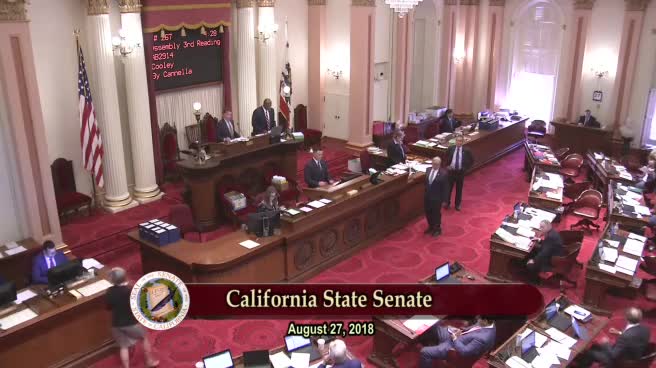 4MIN
Senate Floor
 6MIN
Senate Standing Committee on Business, Professions and Economic Development
 3MIN
Assembly Standing Committee on Governmental Organization
Bill Author

Bill Co-Author(s):