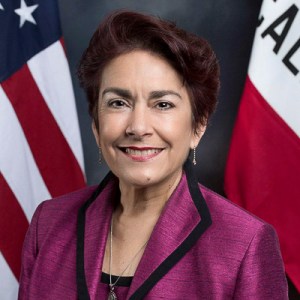
AB 2915: Workforce development boards: mutual disaster aid assistance: memorandum of understanding.
- Session Year: 2017-2018
- House: Assembly
- Latest Version Date: 2018-09-23
Existing law, the California Workforce Innovation and Opportunity Act, establishes the California Workforce Development Board as the body responsible for assisting the Governor in the development, oversight, and continuous improvement of Californias workforce investment system and the alignment of the education and workforce investment systems to the needs of the 21st century economy and workforce. That act prescribes specific tasks with which the board assists the Governor, including the development and updating of comprehensive state performance accountability measures, to assess the effectiveness of the core programs in the state as required under specific federal law. That act also requires the establishment of a local workforce development board in each local workforce development area of the state to, among other things, develop effective linkages with employers in the region to support employer utilization of the local workforce development system and to support local workforce investment activities.
The bill would require, by July 1, 2020, the California Workforce Development Board to develop, in conjunction with the Employment Development Department and with input from local workforce development boards, a policy regarding mutual aid agreements between and among local workforce development boards to enable them to effectively respond to disasters and that is consistent with applicable state and federal law.
Existing law, the California Workforce Innovation and Opportunity Act, establishes the California Workforce Development Board as the body responsible for assisting the Governor in the development, oversight, and continuous improvement of Californias workforce investment system and the alignment of the education and workforce investment systems to the needs of the 21st century economy and workforce. That act prescribes specific tasks with which the board assists the Governor, including the development and updating of comprehensive state performance accountability measures, to assess the effectiveness of the core programs in the state as required under specific federal law. That act also requires the establishment of a local workforce development board in each local workforce development area of the state to, among other things, develop effective linkages with employers in the region to support employer utilization of the local workforce development system and to support local workforce investment activities.
This bill would require the board, by April 1, 2019, to convene a working group to develop a memorandum of understanding to coordinate mutual aid assistance among local workforce development boards in the event that a local workforce development board needs additional assistance in disaster relief efforts or activities in that local workforce development area. The bill would require the working group to consist of local workforce development boards that choose to participate in it. This bill would require the memorandum of understanding to include best practices and baseline qualifications for employees of a local workforce development board who may be responding to a request for assistance in the event of a disaster.This bill, upon appropriation by the Legislature, would allocate an unspecified amount from the General Fund to the board for certain costs related to convening the working group.The bill would require, by July 1, 2020, the California Workforce Development Board to develop, in conjunction with the Employment Development Department and with input from local workforce development boards, a policy regarding mutual aid agreements between and among local workforce development boards to enable them to effectively respond to disasters and that is consistent with applicable state and federal law.
Existing law, the California Workforce Innovation and Opportunity Act, establishes the California Workforce Development Board as the body responsible for assisting the Governor in the development, oversight, and continuous improvement of Californias workforce investment system and the alignment of the education and workforce investment systems to the needs of the 21st century economy and workforce. That act requires the establishment of a local workforce development board in each local workforce development area of the state to, among other things, develop effective linkages with employers in the region to support employer utilization of the local workforce development system and to support local workforce investment activities.
This bill would authorize require the board to enter into board, by April 1, 2019, to convene a working group to develop a memorandum of understanding with the local workforce development boards in the state to coordinate mutual aid assistance between all among local workforce development boards in the event that any a local workforce development board needs additional assistance in disaster relief efforts or activities in that local workforce development area. The bill would require the working group to consist of local workforce development boards that choose to participate in it. This bill would require the memorandum of understanding to include best practices and baseline qualifications for employees of a local workforce development board who may be responding to a request for assistance in the event of a disaster.
This bill, upon appropriation by the Legislature, would allocate an unspecified amount from the General Fund to the board for certain costs involved in the creation of the memorandum of understanding, establishment of the best practices and baseline qualifications specified in the memorandum of understanding, and the training of employees of a local workforce development board to meet those best practices or baseline qualifications established in the memorandum of understanding. related to convening the working group.
Existing law, the California Workforce Innovation and Opportunity Act, establishes the California Workforce Development Board as the body responsible for assisting the Governor in the development, oversight, and continuous improvement of Californias workforce investment system and the alignment of the education and workforce investment systems to the needs of the 21st century economy and workforce. That act requires the establishment of a local workforce development board in each local workforce development area of the state to, among other things, develop effective linkages with employers in the region to support employer utilization of the local workforce development system and to support local workforce investment activities.
This bill would authorize the board to enter into a memorandum of understanding with the local workforce development boards in the state to coordinate mutual aid assistance between all local workforce development boards in the event that any local workforce development board needs additional assistance in disaster relief efforts or activities in that local workforce development area. This bill would require the memorandum of understanding to include best practices and baseline qualifications for employees of a local workforce development board who may be responding to a request for assistance in the event of a disaster.
This bill, upon appropriation by the Legislature, would allocate an unspecified amount from the General Fund to the board for costs involved in the creation of the memorandum of understanding, establishment of the best practices and baseline qualifications specified in the memorandum of understanding, and the training of employees of a local workforce development board to meet those best practices or baseline qualifications established in the memorandum of understanding.
The board shall assist the Governor in the following:
(a)Promoting the development of a well-educated and highly skilled 21st century workforce.
(b)Developing, implementing, and modifying the State Plan. The State Plan shall serve as the comprehensive framework and coordinated plan for the aligned investment of all federal and state workforce training and employment services funding streams and programs. To the extent feasible and when appropriate, the State Plan should reinforce and work with adult education and career technical education efforts that are responsive to labor market trends.
(c)The review of statewide policies, of statewide programs, and of recommendations on actions that should be taken by the state to align workforce, education, training, and employment funding programs in the state in a manner that supports a comprehensive and streamlined workforce development system in the state, including the review and provision of comments on the State Plan, if any, for programs and activities of one-stop partners that are not core programs.
(d)Developing and continuously improving the statewide workforce investment system, including:
(1)The identification of barriers and means for removing barriers to better coordinate, align, and avoid duplication among the programs and activities carried out through the system.
(2)The development of strategies to support the use of career pathways for the purpose of providing individuals, including low-skilled adults, youth, and individuals with barriers to employment, and including individuals with disabilities, with workforce investment activities, education, and supportive services to enter or retain employment. To the extent permissible under state and federal laws, these policies and strategies should support linkages between kindergarten and grades 1 to 12, inclusive, and community college educational systems in order to help secure educational and career advancement. These policies and strategies may be implemented using a sector strategies framework and should ultimately lead to placement in a job providing economic security or job placement in an entry-level job that has a well-articulated career pathway or career ladder to a job providing economic security.
(3)The development of strategies for providing effective outreach to and improved access for individuals and employers who could benefit from services provided through the workforce development system.
(4)The development and expansion of strategies for meeting the needs of employers, workers, and jobseekers, particularly through industry or sector partnerships related to in-demand industry sectors and occupations, including policies targeting resources to competitive and emerging industry sectors and industry clusters that provide economic security and are either high-growth sectors or critical to Californias economy, or both. These industry sectors and clusters shall have significant economic impacts on the state and its regional and workforce development needs and have documented career opportunities.
(5)Recommending adult and dislocated worker training policies and investments that offer a variety of career opportunities while upgrading the skills of Californias workforce. These may include training policies and investments pertaining to any of the following:
(A)Occupational skills training, including training for nontraditional employment.
(B)On-the-job training.
(C)Incumbent worker training in accordance with Section 3174(d)(4) of Title 29 of the United States Code.
(D)Programs that combine workplace training with related instruction, which may include cooperative education programs.
(E)Training programs operated by the private sector.
(F)Skill upgrading and retraining.
(G)Entrepreneurial training.
(H)Transitional jobs in accordance with Section 3174(d)(5) of Title 29 of the United States Code.
(I)Job readiness training provided in combination with any of the services described in subparagraphs (A) to (H), inclusive.
(J)Adult education and literacy activities provided in combination with any of the services described in subparagraphs (A) to (G), inclusive.
(K)Customized training conducted with a commitment by an employer or group of employers to employ an individual upon successful completion of the training.
(e)The identification of regions, including planning regions, for the purposes of Section 3121(a) of Title 29 of the United States Code, and the designation of local areas under Section 3121 of Title 29 of the United States Code, after consultation with local boards and chief elected officials.
(f)The development and continuous improvement of the one-stop delivery system in local areas, including providing assistance to local boards, one-stop operators, one-stop partners, and providers with planning and delivering services, including training services and supportive services, to support effective delivery of services to workers, job seekers, and employers.
(g)Recommending strategies to the Governor for strategic training investments of the Governors 15-percent discretionary funds.
(h)Developing strategies to support staff training and awareness across programs supported under the workforce development system.
(i)The development and updating of comprehensive state performance accountability measures, including state-adjusted levels of performance, to assess the effectiveness of the core programs in the state as required under Section 3141(b) of Title 29 of the United States Code. As part of this process the board shall do all of the following:
(1)Develop a workforce metrics dashboard, to be updated annually, that measures the states human capital investments in workforce development to better understand the collective impact of these investments on the labor market. The board shall determine the approach for measuring labor market impacts, provided that, to the extent feasible, the board uses statistically rigorous methodologies to estimate, assess, and isolate the impact of programs on participant outcomes. The workforce metrics dashboard shall be produced, to the extent feasible, using existing available data and resources that are currently collected and accessible to state agencies. The board shall convene workforce program partners to develop a standardized set of inputs and outputs for the workforce metrics dashboard. The workforce metrics dashboard shall do all of the following:
(A)Provide a status report on credential attainment, training completion, degree attainment, and participant earnings from workforce education and training programs. The board shall publish and distribute the final report.
(B)Provide demographic breakdowns, including, to the extent possible, race, ethnicity, age, gender, veteran status, wage and credential or degree outcomes, and information on workforce outcomes in different industry sectors.
(C)Measure, at a minimum and to the extent feasible with existing resources, the performance of the following workforce programs: community college career technical education, the Employment Training Panel, Title I and Title II of the federal Workforce Investment Act of 1998 (Public Law 105-220), Title I and Title II of the federal Workforce Innovation and Opportunity Act of 2014 (Public Law 113-128), Trade Adjustment Assistance, and state apprenticeship programs.
(D)Measure participant earnings in California, and to the extent feasible, in other states. The Employment Development Department shall assist the board by calculating aggregated participant earnings using unemployment insurance wage records, without violating any applicable confidentiality requirements.
(2)The State Department of Education is hereby authorized to collect the social security numbers of adults participating in adult education programs so that accurate participation in those programs can be represented in the workforce metrics dashboard. However, an individual shall not be denied program participation if he or she refuses to provide a social security number. The State Department of Education shall keep this information confidential, except, the State Department of Education is authorized to share this information, unless prohibited by federal law, with the Employment Development Department, the board, or the boards designee, who shall keep the information confidential and use it only to track the labor market and other outcomes described in subparagraph (A) of paragraph (1) of program participants in compliance with all applicable state and federal laws and mandates, including all performance reporting requirements under the Workforce Innovation and Opportunity Act.
(3)(A)Participating workforce programs, including, but not limited to, those specified in subparagraph (C) of paragraph (1), shall provide participant data in a standardized format to the Employment Development Department, the board, or the boards designee.
(B)The Employment Development Department, the board, or the boards designee, shall aggregate data provided by participating workforce programs and shall report the data, organized by demographics, earnings, and industry of employment, to the board to assist the board in producing the annual workforce metrics dashboard.
(4)The board shall ensure that a designee has the technical and operational capability of meeting appropriate privacy and security requirements.
(j)The identification and dissemination of information on best practices, including best practices for all of the following:
(1)The effective operation of one-stop centers, relating to the use of business outreach, partnerships, and service delivery strategies, including strategies for serving individuals with barriers to employment.
(2)The development of effective local boards, which may include information on factors that contribute to enabling local boards to exceed negotiated local levels of performance, sustain fiscal integrity, and achieve other measures of effectiveness.
(3)Effective training programs that respond to real-time labor market analysis, that effectively use direct assessment and prior learning assessment to measure an individuals prior knowledge, skills, competencies, and experiences, and that evaluate such skills, and competencies for adaptability, to support efficient placement into employment or career pathways.
(k)The development and review of statewide policies affecting the coordinated provision of services through the states one-stop delivery system described in Section 3151(e) of Title 29 of the United States Code, including the development of all of the following:
(1)Objective criteria and procedures for use by local boards in assessing the effectiveness and continuous improvement of one-stop centers described in Section 3151(e) of Title 29 of the United States Code.
(2)Guidance for the allocation of one-stop center infrastructure funds under Section 3151(h) of Title 29 of the United States Code.
(3)Policies relating to the appropriate roles and contributions of entities carrying out one-stop partner programs within the one-stop delivery system, including approaches to facilitating equitable and efficient cost allocation in such a system.
(l)The development of strategies for technological improvements to facilitate access to, and improve the quality of, services and activities provided through the one-stop delivery system, including such improvements to all of the following:
(1)Enhance digital literacy skills, as defined in Section 9101 of Title 20 of the United States Code, referred to in this division as digital literacy skills.
(2)Accelerate the acquisition of skills and recognized postsecondary credentials by participants.
(3)Strengthen the professional development of providers and workforce professionals.
(4)Ensure the technology is accessible to individuals with disabilities and individuals residing in remote areas.
(m)The development of strategies for aligning technology and data systems across one-stop partner programs to enhance service delivery and improve efficiencies in reporting on performance accountability measures, including the design and implementation of common intake, data collection, case management information, and performance accountability measurement and reporting processes and the incorporation of local input into such design and implementation, to improve coordination of services across one-stop partner programs.
(n)The development of allocation formulas for the distribution of funds for employment and training activities for adults, and youth workforce investment activities, to local areas as permitted under Sections 3163(b)(3) and 3173(b)(3) of Title 29 of the United States Code.
(o)The preparation of the annual reports described in paragraphs (1) and (2) of Section 3141(d) of Title 29 of the United States Code.
(p)The development of the statewide workforce and labor market information system described in Section 49l2(e) of Title 29 of the United States Code.
(q)By July 1, 2020, the development, in conjunction with the Employment Development Department and with input from local workforce development boards, of a policy regarding mutual aid agreements between and among local workforce development boards to enable them to effectively respond to disasters and that is consistent with applicable state and federal law.
(r)The development of other policies as may promote statewide objectives for, and enhance the performance of, the workforce development system in the state.
(s)Helping individuals with barriers to employment, including low-skill, low-wage workers, the long-term unemployed, and members of single-parent households, achieve economic security and upward mobility by implementing policies that encourage the attainment of marketable skills relevant to current labor market trends.
The board shall assist the Governor in the following:
(a)Promoting the development of a well-educated and highly skilled 21st century workforce.
(b)Developing, implementing, and modifying the State Plan. The State Plan shall serve as the comprehensive framework and coordinated plan for the aligned investment of all federal and state workforce training and employment services funding streams and programs. To the extent feasible and when appropriate, the State Plan should reinforce and work with adult education and career technical education efforts that are responsive to labor market trends.
(c)The review of statewide policies, of statewide programs, and of recommendations on actions that should be taken by the state to align workforce, education, training, and employment funding programs in the state in a manner that supports a comprehensive and streamlined workforce development system in the state, including the review and provision of comments on the State Plan, if any, for programs and activities of one-stop partners that are not core programs.
(d)Developing and continuously improving the statewide workforce investment system, including:
(1)The identification of barriers and means for removing barriers to better coordinate, align, and avoid duplication among the programs and activities carried out through the system.
(2)The development of strategies to support the use of career pathways for the purpose of providing individuals, including low-skilled adults, youth, and individuals with barriers to employment, and including individuals with disabilities, with workforce investment activities, education, and supportive services to enter or retain employment. To the extent permissible under state and federal laws, these policies and strategies should support linkages between kindergarten and grades 1 to 12, inclusive, and community college educational systems in order to help secure educational and career advancement. These policies and strategies may be implemented using a sector strategies framework and should ultimately lead to placement in a job providing economic security or job placement in an entry-level job that has a well-articulated career pathway or career ladder to a job providing economic security.
(3)The development of strategies for providing effective outreach to and improved access for individuals and employers who could benefit from services provided through the workforce development system.
(4)The development and expansion of strategies for meeting the needs of employers, workers, and jobseekers, particularly through industry or sector partnerships related to in-demand industry sectors and occupations, including policies targeting resources to competitive and emerging industry sectors and industry clusters that provide economic security and are either high-growth sectors or critical to Californias economy, or both. These industry sectors and clusters shall have significant economic impacts on the state and its regional and workforce development needs and have documented career opportunities.
(5)Recommending adult and dislocated worker training policies and investments that offer a variety of career opportunities while upgrading the skills of Californias workforce. These may include training policies and investments pertaining to any of the following:
(A)Occupational skills training, including training for nontraditional employment.
(B)On-the-job training.
(C)Incumbent worker training in accordance with Section 3174(d)(4) of Title 29 of the United States Code.
(D)Programs that combine workplace training with related instruction, which may include cooperative education programs.
(E)Training programs operated by the private sector.
(F)Skill upgrading and retraining.
(G)Entrepreneurial training.
(H)Transitional jobs in accordance with Section 3174(d)(5) of Title 29 of the United States Code.
(I)Job readiness training provided in combination with any of the services described in subparagraphs (A) to (H), inclusive.
(J)Adult education and literacy activities provided in combination with any of the services described in subparagraphs (A) to (G), inclusive.
(K)Customized training conducted with a commitment by an employer or group of employers to employ an individual upon successful completion of the training.
(e)The identification of regions, including planning regions, for the purposes of Section 3121(a) of Title 29 of the United States Code, and the designation of local areas under Section 3121 of Title 29 of the United States Code, after consultation with local boards and chief elected officials.
(f)The development and continuous improvement of the one-stop delivery system in local areas, including providing assistance to local boards, one-stop operators, one-stop partners, and providers with planning and delivering services, including training services and supportive services, to support effective delivery of services to workers, job seekers, and employers.
(g)Recommending strategies to the Governor for strategic training investments of the Governors 15-percent discretionary funds.
(h)Developing strategies to support staff training and awareness across programs supported under the workforce development system.
(i)The development and updating of comprehensive state performance accountability measures, including state-adjusted levels of performance, to assess the effectiveness of the core programs in the state as required under Section 3141(b) of Title 29 of the United States Code. As part of this process the board shall do all of the following:
(1)Develop a workforce metrics dashboard, to be updated annually, that measures the states human capital investments in workforce development to better understand the collective impact of these investments on the labor market. The board shall determine the approach for measuring labor market impacts, provided that, to the extent feasible, the board uses statistically rigorous methodologies to estimate, assess, and isolate the impact of programs on participant outcomes. The workforce metrics dashboard shall be produced, to the extent feasible, using existing available data and resources that are currently collected and accessible to state agencies. The board shall convene workforce program partners to develop a standardized set of inputs and outputs for the workforce metrics dashboard. The workforce metrics dashboard shall do all of the following:
(A)Provide a status report on credential attainment, training completion, degree attainment, and participant earnings from workforce education and training programs. The board shall publish and distribute the final report.
(B)Provide demographic breakdowns, including, to the extent possible, race, ethnicity, age, gender, veteran status, wage and credential or degree outcomes, and information on workforce outcomes in different industry sectors.
(C)Measure, at a minimum and to the extent feasible with existing resources, the performance of the following workforce programs: community college career technical education, the Employment Training Panel, Title I and Title II of the federal Workforce Investment Act of 1998 (Public Law 105-220), Title I and Title II of the federal Workforce Innovation and Opportunity Act of 2014 (Public Law 113-128), Trade Adjustment Assistance, and state apprenticeship programs.
(D)Measure participant earnings in California, and to the extent feasible, in other states. The Employment Development Department shall assist the board by calculating aggregated participant earnings using unemployment insurance wage records, without violating any applicable confidentiality requirements.
(2)The State Department of Education is hereby authorized to collect the social security numbers of adults participating in adult education programs so that accurate participation in those programs can be represented in the workforce metrics dashboard. However, an individual shall not be denied program participation if he or she refuses to provide a social security number. The State Department of Education shall keep this information confidential, except, the State Department of Education is authorized to share this information, unless prohibited by federal law, with the Employment Development Department, the board, or the boards designee, who shall keep the information confidential and use it only to track the labor market and other outcomes described in subparagraph (A) of paragraph (1) of program participants in compliance with all applicable state and federal laws and mandates, including all performance reporting requirements under the Workforce Innovation and Opportunity Act.
(3)(A)Participating workforce programs, including, but not limited to, those specified in subparagraph (C) of paragraph (1), shall provide participant data in a standardized format to the Employment Development Department, the board, or the boards designee.
(B)The Employment Development Department, the board, or the boards designee, shall aggregate data provided by participating workforce programs and shall report the data, organized by demographics, earnings, and industry of employment, to the board to assist the board in producing the annual workforce metrics dashboard.
(4)The board shall ensure that a designee has the technical and operational capability of meeting appropriate privacy and security requirements.
(j)The identification and dissemination of information on best practices, including best practices for all of the following:
(1)The effective operation of one-stop centers, relating to the use of business outreach, partnerships, and service delivery strategies, including strategies for serving individuals with barriers to employment.
(2)The development of effective local boards, which may include information on factors that contribute to enabling local boards to exceed negotiated local levels of performance, sustain fiscal integrity, and achieve other measures of effectiveness.
(3)Effective training programs that respond to real-time labor market analysis, that effectively use direct assessment and prior learning assessment to measure an individuals prior knowledge, skills, competencies, and experiences, and that evaluate such skills, and competencies for adaptability, to support efficient placement into employment or career pathways.
(k)The development and review of statewide policies affecting the coordinated provision of services through the states one-stop delivery system described in Section 3151(e) of Title 29 of the United States Code, including the development of all of the following:
(1)Objective criteria and procedures for use by local boards in assessing the effectiveness and continuous improvement of one-stop centers described in Section 3151(e) of Title 29 of the United States Code.
(2)Guidance for the allocation of one-stop center infrastructure funds under Section 3151(h) of Title 29 of the United States Code.
(3)Policies relating to the appropriate roles and contributions of entities carrying out one-stop partner programs within the one-stop delivery system, including approaches to facilitating equitable and efficient cost allocation in such a system.
(l)The development of strategies for technological improvements to facilitate access to, and improve the quality of, services and activities provided through the one-stop delivery system, including such improvements to all of the following:
(1)Enhance digital literacy skills, as defined in Section 9101 of Title 20 of the United States Code, referred to in this division as digital literacy skills.
(2)Accelerate the acquisition of skills and recognized postsecondary credentials by participants.
(3)Strengthen the professional development of providers and workforce professionals.
(4)Ensure the technology is accessible to individuals with disabilities and individuals residing in remote areas.
(m)The development of strategies for aligning technology and data systems across one-stop partner programs to enhance service delivery and improve efficiencies in reporting on performance accountability measures, including the design and implementation of common intake, data collection, case management information, and performance accountability measurement and reporting processes and the incorporation of local input into such design and implementation, to improve coordination of services across one-stop partner programs.
(n)The development of allocation formulas for the distribution of funds for employment and training activities for adults, and youth workforce investment activities, to local areas as permitted under Sections 3163(b)(3) and 3173(b)(3) of Title 29 of the United States Code.
(o)The preparation of the annual reports described in paragraphs (1) and (2) of Section 3141(d) of Title 29 of the United States Code.
(p)The development of the statewide workforce and labor market information system described in Section 49l2(e) of Title 29 of the United States Code.
(q)By July 1, 2020, the development, in conjunction with the Employment Development Department and with input from local workforce development boards, of a policy regarding mutual aid agreements between and among local workforce development boards to enable them to effectively respond to disasters and that is consistent with applicable state and federal law.
(q)(r)The development of such other policies as may promote statewide objectives for, and enhance the performance of, the workforce development system in the state.
(r)(s)Helping individuals with barriers to employment, including low-skill, low-wage workers, the long-term unemployed, and members of single-parent households, achieve economic security and upward mobility by implementing policies that encourage the attainment of marketable skills relevant to current labor market trends.
SECTION 1.Chapter 6 (commencing with Section 14580) is added to Division 7 of the Unemployment Insurance Code, to read:6.Mutual Disaster Aid Assistance14580.(a)(1)By April 1, 2019, the board shall convene a working group to develop a memorandum of understanding to coordinate mutual aid assistance among local workforce development boards in the event that a local workforce development board needs additional assistance in disaster relief efforts or activities in that local workforce development area. The working group shall consist only of local workforce development boards in the state that choose to participate in the development of the memorandum of understanding.(2)The board shall only provide the local workforce development boards with guidance to assist the boards in drafting a memorandum of understanding described in paragraph (1) that complies with state and federal law.(3)The goal of the working group shall be to have the participating local workforce development boards enter into the memorandum of understanding described in paragraph (1) by January 1, 2020.(b)Any memorandum of understanding entered into pursuant to this section shall be established consistent with the purpose of ensuring that services or aid to affected businesses and jobseekers in a disaster are provided in a manner that is consistent throughout the state.(c)Mutual aid assistance may include, but is not limited to, sending business services representatives or case managers into affected areas or making contact with business owners and jobseekers and making those owners and jobseekers aware of available services at local career centers.14581.(a)The memorandum of understanding described in Section 14580 shall include, but is not limited to, the following information:(1)A baseline understanding of services or aid to be provided in the event of a disaster in a local workforce development area and additional assistance that may be required by any local workforce board in that affected area.(2)Best practices and baseline qualifications for employees of a local workforce development board who may be responding to a request for assistance in the event of a disaster.(b)In establishing and setting forth the best practices and baseline qualifications for employees of a local workforce development board, the board and representatives from local workforce development boards may consider existing practices and qualifications currently utilized by local workforce development boards during disasters.14582.Upon appropriation by the Legislature, ____ dollars ($____) shall be allocated from the General Fund to the board for costs involved in the convening of the working group and providing the guidance described in subdivision (a) of Section 14580.(a)(1)By April 1, 2019, the board shall convene a working group to develop a memorandum of understanding to coordinate mutual aid assistance between all among local workforce development boards in the event that any a local workforce development board needs additional assistance in disaster relief efforts or activities in that local workforce development area. The working group shall consist only of local workforce development boards in the state that choose to participate in the development of the memorandum of understanding.
(2)The board shall only provide the local workforce development boards with guidance to assist the boards in drafting a memorandum of understanding described in paragraph (1) that complies with state and federal law.
(3)The goal of the working group shall be to have the participating local workforce development boards enter into the memorandum of understanding described in paragraph (1) by January 1, 2020.
(b)Any memorandum of understanding entered into pursuant to this section shall be established consistent with the purpose of ensuring that services or aid to affected businesses and jobseekers in a disaster are provided in a manner that is consistent throughout the state.
(c)Mutual aid assistance may include, but is not limited to, sending business services representatives or case managers into affected areas or making contact with business owners and jobseekers and making those owners and jobseekers aware of available services at local career centers.
14581.(a)The memorandum of understanding described in Section 14580 shall include, but is not limited to, the following information:
(1)A baseline understanding of services or aid to be provided in the event of a disaster in a local workforce development area and additional assistance that may be required by any local workforce board in that affected area.
(2)Best practices and baseline qualifications for employees of a local workforce development board who may be responding to a request for assistance in the event of a disaster.
(b)In establishing and setting forth the best practices and baseline qualifications for employees of a local workforce development board, the board and representatives from local workforce development boards may consider existing practices and qualifications currently utilized by local workforce development boards during disasters.
14582.Upon appropriation by the Legislature, ____ dollars ($____) shall be allocated from the General Fund to the board for costs involved in the creation of the memorandum of understanding authorized by the chapter, establishment of the best practices and baseline qualifications specified in the memorandum of understanding, and the training of employees of a local workforce development board to meet those best practices or baseline qualifications established in the memorandum of understanding. convening of the working group and providing the guidance described in subdivision (a) of Section 14580.
(a)The board may enter into a memorandum of understanding with the local workforce development boards in the state to coordinate mutual aid assistance between all local workforce development boards in the event that any local workforce development board needs additional assistance in disaster relief efforts or activities in that local workforce development area.
(b)Any memorandum of understanding entered into pursuant to this section shall be established consistent with the purpose of ensuring that services or aid to affected businesses and jobseekers in a disaster are provided in a manner that is consistent throughout the state.
(c)Mutual aid assistance may include, but is not limited to, sending business services representatives or case managers into affected areas or making contact with business owners and jobseekers and making those owners and jobseekers aware of available services at local career centers.
14581.(a)The memorandum of understanding shall include, but is not limited to, the following information:
(1)A baseline understanding of services or aid to be provided in the event of a disaster in a local workforce development area and additional assistance that may be required by any local workforce board in that affected area.
(2)Best practices and baseline qualifications for employees of a local workforce development board who may be responding to a request for assistance in the event of a disaster.
(b)In establishing and setting forth the best practices and baseline qualifications for employees of a local workforce development board, the board and representatives from local workforce development boards may consider existing practices and qualifications currently utilized by local workforce development boards during disasters.
14582.Upon appropriation by the Legislature, ____ dollars ($____) shall be allocated from the General Fund to the board for costs involved in the creation of the memorandum of understanding authorized by the chapter, establishment of the best practices and baseline qualifications specified in the memorandum of understanding, and the training of employees of a local workforce development board to meet those best practices or baseline qualifications established in the memorandum of understanding.
|
Date
|
Status
|
|---|---|
| Sep 23, 2018 | Chaptered by Secretary of State - Chapter 722, Statutes of 2018. |
| Sep 23, 2018 | Approved by the Governor. |
| Sep 5, 2018 | Enrolled and presented to the Governor at 3 p.m. |
| Aug 27, 2018 | Senate amendments concurred in. To Engrossing and Enrolling. |
| Aug 22, 2018 | In Assembly. Concurrence in Senate amendments pending. May be considered on or after August 24 pursuant to Assembly Rule 77. |
| Aug 21, 2018 | Ordered to special consent calendar. |
| Aug 17, 2018 | From committee: Do pass. (Ayes 7. Noes 0.) (August 16). |
| Aug 6, 2018 | In committee: Referred to APPR. suspense file. |
| Jun 28, 2018 | From committee: Do pass and re-refer to Com. on APPR. with recommendation: To Consent Calendar. (Ayes 5. Noes 0.) (June 27). Re-referred to Com. on APPR. |
| Jun 21, 2018 | From committee chair, with author's amendments: Amend, and re-refer to committee. Read second time, amended, and re-referred to Com. on L. & I.R. |
| Jun 18, 2018 | In committee: Set, first hearing. Hearing canceled at the request of author. |
| Jun 13, 2018 | Referred to Com. on L. & I.R. |
| May 31, 2018 | In Senate. Read first time. To Com. on RLS. for assignment. |
| May 30, 2018 | Read third time. Passed. Ordered to the Senate. |
| May 25, 2018 | From committee: Do pass. (Ayes 16. Noes 0.) (May 25). |
| Apr 18, 2018 | In committee: Set, first hearing. Referred to APPR. suspense file. |
| Apr 5, 2018 | From committee: Do pass and re-refer to Com. on APPR. (Ayes 7. Noes 0.) (April 4). Re-referred to Com. on APPR. |
| Apr 2, 2018 | Re-referred to Com. on L. & E. |
| Mar 22, 2018 | From committee chair, with author's amendments: Amend, and re-refer to Com. on L. & E. Read second time and amended. |
| Mar 8, 2018 | Referred to Com. on L. & E. |
| Feb 17, 2018 | From printer. May be heard in committee March 19. |
| Feb 16, 2018 | Read first time. To print. |
|
Date
|
Description
|
Location
|
Votes
|
|
|---|---|---|---|---|
| Aug 27, 2018 | AB 2915 CABALLERO Concurrence in Senate Amendments | Assembly Floor |
Passed |
|
| Aug 21, 2018 | Assembly 3rd Reading AB2915 Caballero et al. By Portantino | Senate Floor |
Passed |
|
| Aug 16, 2018 | Do pass | Senate Standing Committee on Appropriations |
Passed |
|
| Aug 6, 2018 | Placed on suspense file | Senate Standing Committee on Appropriations |
Passed |
|
| Jun 27, 2018 | Do pass, but first be re-referred to the Committee on [Appropriations] with the recommendation: To Consent Calendar | Senate Standing Committee on Labor and Industrial Relations |
Passed |
|
| May 30, 2018 | AB 2915 CABALLERO Assembly Third Reading | Assembly Floor |
Passed |
|
| May 25, 2018 | Do pass. | Assembly Standing Committee on Appropriations |
Passed |
|
| Apr 4, 2018 | Do pass and be re-referred to the Committee on [Appropriations] | Assembly Standing Committee on Labor and Employment |
Passed |
This list shows positions taken on this bill by organizations on the date displayed, which is linked to the original source.
Positions by individuals are not included.
|
Organization
|
Position
|
Date
|
|---|---|---|
| California EDGE Coalition | ** Support | Aug 18, 2018 |
| California Hospital Association | ** Support | Apr 2, 2018 |
| California Labor Federation, Afl-Cio | ** Support | Apr 2, 2018 |
| California Manufacturers And Technology Association | ** Support | Apr 2, 2018 |
| California Workforce Association | ** Support | Aug 18, 2018 |
| Career Ladders Project for the California Community Colleges | ** Support | Apr 2, 2018 |
| Golden Sierra Workforce Development Board | ** Support | Aug 18, 2018 |
| Los Angeles Area Chamber Of Commerce | ** Support | Apr 2, 2018 |
| PolicyLink | ** Support | Apr 2, 2018 |
| Selaco Workforce | ** Support | Aug 18, 2018 |
| State Building and Construction Trades of California | ** Support | Apr 2, 2018 |
| Unidosus | ** Support | Apr 2, 2018 |
| Workforce Alliance Of The North Bay | ** Support | Aug 18, 2018 |
| Workforce Development Board Of San Joaquin County | ** Support | Aug 18, 2018 |
CONCURRENCE IN SENATE AMENDMENTS
CSA1 Bill Id:AB 2915
Author:(Caballero)
As Amended Ver:June 21, 2018
Majority vote
ASSEMBLY: | 78-0 | (May 30, 2018) | SENATE: | 39-0 | (August 21, 2018) |
Original Committee Reference: L. & E.
SUMMARY: Requires the California Workforce Development Board (CWDB) to develop, in conjunction with the Employment Development Department and with input from local workforce development boards, a policy regarding mutual aid agreements between local boards to enable them to effectively respond to disasters.
The Senate amendments require CWDB to develop a policy regarding mutual aid agreements, rather than facilitating a workgroup to develop a memorandum of understanding regarding mutual aid agreements between local workforce development boards.
EXISTING LAW:
- Establishes the California Workforce Development Board (CWDB), whose members are appointed by the Governor and are representative of the areas of business, labor, public education, higher education, economic development, youth activities, employment and training, as well as the Legislature.
- Requires the establishment of local workforce development boards in each local workforce development area of the state to, among other things, develop effective linkages with employers in the region to support employer utilization of the local workforce development system and to support local workforce investment activities.
- Directs the CWDB to assist the Governor in the development, oversight, and continuous improvement of California's workforce investment system, including Local Workforce Development Boards (LWDB) and their alignment to the needs of the economy and the workforce.
- Mandates that the CWDB develop strategies for providing effective outreach to and improved access for individuals and employers who could benefit from services provided through the workforce development system.
- Requires that the CWDB assist the Governor in the development of allocation formulas for the distribution of funds for employment and training activities for adults, and youth workforce investment activities, to local areas as permitted under the Workforce Innovation and Opportunity Act (WIOA).
- Establishes the Employment Development Department as the entity responsible for administering the Workforce Innovation and Opportunity Act funds that must be spent consistent with the purposes of WIOA and the State Plan developed by the CWDB.
FISCAL EFFECT: According to the Senate Appropriations committee CWDB indicates that it would incur a cost of $125,000 over two years. The funding source is not determined, but could be the General Fund (see Staff Comments). EDD anticipates that its fiscal impact from the bill would be minor and absorbable within current resources.
COMMENTS: Local workforce development boards develop linkages between employees and employers and support local workforce investment activities. In the event of an emergency or natural disaster, local workforce development boards can assist in preventing layoffs, help newly unemployed workers, or assist businesses who need additional workers.
According to the sponsors, the California Workforce Association, as California has seen from the recent and regular natural disasters, there is an urgent need to help businesses recover, and to help workers who are displaced by such disasters. The sponsors write that the Federal Emergency Management Agency (FEMA) has found that 40-60% of businesses don't reopen after a disaster and 90% of small businesses fail within one year if they do not get support within five days of a disaster. Unfortunately, they argue, the 45 Local Boards are restricted by both capacity and the geographic scope of some disasters and there is no mechanism for other local areas to provide staff and support that could mean the difference between hundreds of jobs and business being permanently lost. Furthermore, they argue that the National Dislocated Worker Grant funds can take months to arrive. Proponents believe this bill will help provide the kind of flexibility local workforce boards need to ably assist their communities when a disaster occurs.
There is no known opposition to this measure.
Analysis Prepared by: Jennifer Richard / L. & E. / (916) 319-2091 FN: 0004578
Office of Senate Floor Analyses (916) 651-1520 Fax: (916) 327-4478 | AB |
THIRD READING
Bill No: AB 2915
:
SENATE LABOR & IND. REL. COMMITTEE: 5-0, 6/27/18
AYES: Lara, Stone, Jackson, Mitchell, Wieckowski
SENATE APPROPRIATIONS COMMITTEE: 7-0, 8/16/18
AYES: Portantino, Bates, Beall, Bradford, Hill, Nielsen, Wiener
ASSEMBLY FLOOR: 78-0, 5/30/18 - See last page for vote
SOURCE: California Workforce Association
DIGEST:
This bill requires the California Workforce Development Board to develop, in conjunction with the Employment Development Department and with input from local workforce development boards, a policy regarding mutual aid agreements between local boards to enable them to effectively respond to disasters.
Existing law:
- Establishes the Workforce Innovation and Opportunity Act (WIOA) of 2014 in order to help job seekers access employment, education, training, and support services to succeed in the labor market and to match employers with skilled workers. (Chapter 32 Title 29 of the United States Code)
- Establishes the California Workforce Development Board (CWDB) to assist the Governor in the development, oversight, and continuous improvement of California’s workforce investment system, including Local Workforce Development Boards (Local Boards) and their alignment to the needs of the economy and the workforce. (UI Code §14010 and §14013)
- Requires the establishment of Local Boards in each local workforce development area of the state to, among other things, develop effective linkages with employers in the region to support employer utilization of the local workforce development system and to support local workforce investment activities. (UI Code §14200 - §14206)
- Requires that the CWDB assist the Governor in the development of allocation formulas for the distribution of funds to local areas for employment and training activities for adults, and youth workforce investment activities per WIOA. (UI Code §14013)
- Establishes the Employment Development Department (EDD) as the entity responsible for administering WIOA funds that must be spent consistent with the purposes of WIOA and the State Plan. (UI Code §14004.5)
This bill requires CWDB to develop, by July 1, 2020, in conjunction with EDD and with input from Local Boards, a policy regarding mutual aid agreements between and among Local Boards to enable them to effectively respond to disasters and that is consistent with applicable state and federal law.
Background
CWDB guides the state’s workforce development strategy and policy to ensure that industry needs are met while creating career pathways that put unemployed and underemployed Californians back to work. There are 45 local workforce development areas, each with its own Local Board that works to oversee the delivery of workforce services relevant to their local residents and businesses. California receives WIOA funds in three separate streams targeting particular types of workers: Adult, Dislocated Worker (DW), and Youth.
There are three types of funding streams that Local Boards may use to help their community respond to a natural disaster: Rapid Response, Additional Assistance, and National Dislocated Worker Grants. (NOTE: Please see Senate Labor and Industrial Relations Committee analysis for more information on these funding streams.)
Comments
Need for this bill? According to the author, “California needs to be nimble in its response to our “new normal” of natural disasters. Currently, 90% of small businesses fail within one year if they do not get support within five days of a disaster. National Dislocated Worker Grant funds can take months to arrive. A legislative solution is necessary to convene the 45 Local Workforce Boards under one umbrella of Mutual Aid, so boards can join together and leverage resources in times of need.”
In the event of an emergency or natural disaster, Local Boards can assist in preventing layoffs, help newly unemployed workers, or assist businesses who need additional workers. This bill requires CWDB to develop, in conjunction with EDD and Local Boards, a policy regarding mutual aid agreements to enable Local Boards to effectively respond to disasters.
FISCAL EFFECT: Appropriation: Fiscal Com.: Local:
According to the Senate Appropriations Committee, CWDB indicates that it would incur a cost of $125,000 over two years. The funding source is not determined, but could be the General Fund. EDD anticipates that its fiscal impact from this bill would be minor and absorbable within current resources.
California Workforce Association (source)
California Edge Coalition
Golden Sierra Workforce Development Board
SELACO Workforce
Workforce Alliance of the North Bay
Workforce Development Board of San Joaquin County
OPPOSITION: (Verified 8/16/18)
None received
ARGUMENTS IN SUPPORT: According to the sponsors, the California
Workforce Association, the Federal Emergency Management Agency has
found that 40-60% of businesses don’t reopen after a disaster and 90% of small
businesses fail within one year if they do not get support within five days of a
disaster. Unfortunately, they argue that the 45 Local Boards are restricted by both
capacity and the geographic scope of some disasters and there is no mechanism for
other local areas to provide staff and support that could mean the difference
between hundreds of jobs and business being permanently lost. Furthermore, they
note that the National Dislocated Worker Grant funds can take months to arrive.
Proponents believe this bill will help provide the kind of flexibility local workforce
boards need to ably assist their communities when a disaster occurs.
ASSEMBLY FLOOR: 78-0, 5/30/18
AYES: Acosta, Aguiar-Curry, Travis Allen, Arambula, Baker, Berman, Bigelow, Bloom, Bonta, Brough, Burke, Caballero, Calderon, Carrillo, Cervantes, Chau, Chávez, Chen, Chiu, Choi, Chu, Cooley, Cooper, Cunningham, Dahle, Daly, Eggman, Flora, Fong, Frazier, Friedman, Gallagher, Cristina Garcia, Eduardo Garcia, Gipson, Gloria, Gonzalez Fletcher, Gray, Grayson, Harper, Holden, Irwin, Jones-Sawyer, Kalra, Kamlager-Dove, Kiley, Lackey, Levine, Limón, Low, Maienschein, Mathis, Mayes, McCarty, Medina, Melendez, Mullin, Muratsuchi, Nazarian, Obernolte, O'Donnell, Patterson, Quirk, Quirk-Silva, Reyes, Rodriguez, Rubio, Salas, Santiago, Steinorth, Mark Stone, Thurmond, Ting, Voepel, Waldron, Weber, Wood, Rendon
8/18/18 13:09:38
**** END ****
SENATE COMMITTEE ON
Senator Anthony Portantino, Chair
2017 - 2018 Regular Session
AB 2915 (Caballero) - Workforce development boards: mutual disaster aid assistance: memorandum of understanding
Version: | Policy Vote: |
Urgency: | Mandate: |
Hearing Date: | Consultant: |
This bill meets the criteria for referral to the Suspense File.
Bill Summary:
AB 2915 would require the California Workforce Development Board (CWDB) to develop, in conjunction with the Employment Development Department (EDD) and with input from local workforce development boards, a policy regarding mutual aid agreements between and among local workforce development boards to enable them to effectively respond to disasters.
Fiscal Impact:
CWDB indicates that it would incur a cost of $125,000 over two years. The funding source is not determined, but could be the General Fund (see Staff Comments). EDD anticipates that its fiscal impact from the bill would be minor and absorbable within current resources.
Background:
Under federal law, the Workforce Innovation and Opportunity Act (WIOA) of 2014 assists job seekers access employment, education, training, and support services to succeed in the labor market and to match employers with skilled workers. WIOA coordinates employment and training services for adults, dislocated workers, and youth through grants to states that are implemented at the state and local level.
CWDB guides the State’s workforce development strategy and policy to ensure that industry needs are met while creating career pathways that employ unemployed and underemployed workers. There are 45 Local Workforce Development Areas, each with its own local workforce development board (Local Board) that works to oversee the delivery of workforce services relevant to their local residents and businesses. California receives WIOA funds in three separate streams targeting particular types of workers: adult, dislocated worker, and youth.
There are three funding streams that a Local Board may use to help its local community respond to a natural disaster: (1) Rapid Response (RR), (2) Additional Assistance (AA), and (3) National Dislocated Worker Grants (NDWG):
- The RR funding stream (derived from WIOA funds) aims to prevent layoffs and provide resources to dislocated workers to help them return to work. For 2017-18, the RR allocation to local areas is $16 million.
- AA state funds are in addition to RR monies and are available exclusively for local areas that experience sudden and large increases of unemployment due to natural disaster or other events. Local areas may apply for and receive these funds if they can prove that existing funding is inadequate.
- NDWG funds are discretionary grants awarded by the federal Department of Labor (DOL) in response to unexpected layoff events. These funds can be used to temporarily expand the capacity to serve dislocated workers and can also fund temporary employment opportunities related to clean-up and recovery efforts.
Proposed Law:
This bill would require CWDB to develop, by July 1, 2020, in conjunction with EDD and with input from Local Boards, a policy regarding mutual aid agreements between and among local workforce development boards to enable them to effectively respond to disasters and that is consistent with applicable state and federal law.
Staff Comments:
When a disaster occurs, timely support and the availability of resources can be critical factors in helping workers and businesses recover. Federal Emergency Management Agency statistics indicate that between 40 and 60 percent of businesses do not reopen after a disaster. In the aftermath of widespread property damage, businesses must determine what steps must be taken to reopen, and also risk permanently losing workers who relocate. There is a need to connect both temporary workers and displaced workers to local businesses that are seeking to recover. Local workforce board’s business services and job centers at that time are typically at maximum capacity. A mechanism does not exist for other local areas to provide staff and support that could mean the difference between hundreds of jobs and business being permanently lost, or retaining those jobs and businesses.
This bill would require CWDB to staff a workgroup and allocate ten percent of supervisory time to manage the work of the analyst. CWDB estimates that it would require one position, one-tenth of a supervisor position, and related expenses and equipment as a result of the bill. The annual cost for each of two years would be about $62,400. Many activities of CWDB are required under federal law and thus are federally funded. However, because this bill does not represent a federal mandate, federal reimbursement is not likely. Though not specified in the bill, CWDB’s costs could come from the General Fund.
-- END --
SENATE COMMITTEE ON LABOR AND INDUSTRIAL RELATIONS
Senator Ricardo Lara, Chair
2017 - 2018 Regular
Bill No: AB 2915 Hearing Date: June 27, 2018
Author: | Caballero | ||
Version: | June 21, 2018 | ||
Urgency: | No | Fiscal: | Yes |
Consultant: | Alma Perez-Schwab | ||
Subject: Workforce development boards: mutual disaster aid assistance: memorandum of understanding
KEY ISSUE
Should the Legislature direct the California Workforce Development Board to develop, in conjunction with the Employment Development Department and with input from local workforce development boards, a policy regarding mutual aid agreements between and among local workforce development boards to enable them to effectively respond to disasters?
ANALYSIS
Existing federal law:
- Establishes the Workforce Innovation and Opportunity Act (WIOA) of 2014 in order to help job seekers access employment, education, training, and support services to succeed in the labor market and to match employers with skilled workers. WIOA coordinates employment and training services for adults, dislocated workers, and youth through grants to states that are implemented at the state and local level. (Chapter 32 Title 29 of the United States Code)
Existing state law:
- Establishes the California Workforce Development Board (CWDB), whose members are appointed by the Governor and are representative of the areas of business, labor, public education, higher education, economic development, youth activities, employment and training, as well as the Legislature. (Unemployment Insurance Code §14011-§14012)
- Requires the establishment of local workforce development boards in each local workforce development area of the state to, among other things, develop effective linkages with employers in the region to support employer utilization of the local workforce development system and to support local workforce investment activities.
(UI Code §14200 - §14206)
- Directs the CWDB to assist the Governor in the development, oversight, and continuous improvement of California’s workforce investment system, including Local Workforce Development Boards (LWDB) and their alignment to the needs of the economy and the workforce. (UI Code §14010 and §14013)
- Mandates that the CWDB develop strategies for providing effective outreach to and improved access for individuals and employers who could benefit from services provided through the workforce development system. (UI Code §14013)
- Requires that the CWDB assist the Governor in the development of allocation formulas for the distribution of funds for employment and training activities for adults, and youth workforce investment activities, to local areas as permitted under the Workforce Innovation and Opportunity Act (WIOA). (UI Code §14013)
- Establishes the Employment Development Department as the entity responsible for administering the Workforce Innovation and Opportunity Act funds that must be spent consistent with the purposes of WIOA and the State Plan developed by the CWDB. (UI Code §14004.5)
This Bill:
- Requires the California Workforce Development Board to develop, by July 1, 2020, in conjunction with the Employment Development Department and with input from local workforce development boards, a policy regarding mutual aid agreements between and among local workforce development boards to enable them to effectively respond to disasters and that is consistent with applicable state and federal law.
COMMENTS
1. Background:
The California Workforce Development Board (CWDB) guides the State’s workforce development strategy and policy to ensure that industry needs are met while creating career pathways that put unemployed and underemployed Californians back to work. There are 45 Local Workforce Development Areas, each with its own Local Workforce Development Board (Local Board) that works to oversee the delivery of workforce services relevant to their local residents and businesses. California receives WIOA funds in three separate streams targeting particular types of workers: Adult, Dislocated Worker (DW), and Youth.
There are three types of funding streams that a Local Board may use to help their local community respond to a natural disaster: Rapid Response (RR), Additional Assistance (AA), and National Dislocated Worker Grants (NDWG). As noted in the Assembly Appropriations Committee analysis:
“An LWDB may help its local community respond to a natural disaster using a variety of funding streams:
- The Rapid Respond (RR) funding stream, which comes from the state’s annual allotment of federal Workforce Innovation and Opportunity Act (WIOA) Title I funds, aims to prevent layoffs and provide resources to dislocated workers to help them return to work. For 2017-18, the RR allocation to local areas is $16.22 million.
- Additional Assistance (AA) state funds are in addition to RR moneys and are available exclusively for local areas that experience sudden and large increases of unemployment due to natural disaster or other events. Local areas may apply for and receive these funds if they can prove that existing funds are inadequate.
- National Dislocated Worker Grands (NDWG) funds are discretionary grants awarded by the federal Department of Labor (DOL) in response to unexpected layoff events. These funds can be used to temporarily expand the capacity to serving dislocated workers and can also fund temporary employment opportunities related to clean-up and recovery efforts. For example, an initial NWDG grant of $12 million was provided to areas affected by the 2017 winter storms.”
2. Need for this bill?
According to the author, “California needs to be nimble in its response to our “new normal” of natural disasters. Currently, 90% of small businesses fail within one year if they do not get support within five days of a disaster. National Dislocated Worker Grant funds can take months to arrive. A legislative solution is necessary to convene the 45 Local Workforce Boards under one umbrella of Mutual Aid, so boards can join together and leverage resources in times of need. An MOU with CWDB will allow for the establishment of baseline service expectations across the Workforce System, as well as training for that baseline. Legislation creating such an MOU will also clarify disaster relief across local areas as an allowable use of funds.”
In the event of an emergency or natural disaster, Local Boards can assist in preventing layoffs, help newly unemployed workers, or assist businesses who need additional workers. This bill would require the California Workforce Development Board to develop, in conjunction with EDD and Local Boards, a policy regarding mutual aid agreements to enable Local Boards to effectively respond to disasters.
3. Proponent Arguments:
According to the sponsors, the California Workforce Association, as California has seen from the recent and regular natural disasters, there is an urgent need to help businesses recover, and to help workers who are displaced by such disasters. The sponsors write that the Federal Emergency Management Agency (FEMA) has found that 40-60% of businesses don’t reopen after a disaster and 90% of small businesses fail within one year if they do not get support within five days of a disaster. Unfortunately, they argue, the 45 Local Boards are restricted by both capacity and the geographic scope of some disasters and there is no mechanism for other local areas to provide staff and support that could mean the difference between hundreds of jobs and business being permanently lost. Furthermore, they argue that the National Dislocated Worker Grant funds can take months to arrive. Proponents believe this bill will help provide the kind of flexibility local workforce boards need to ably assist their communities when a disaster occurs.
4. Opponent Arguments:
None received.
SUPPORT
California Workforce Association (Sponsor)
California Edge Coalition
Golden Sierra Workforce Development Board
SELACO Workforce
Workforce Alliance of the North Bay
Workforce Development Board of San Joaquin County
OPPOSITION
None received
-- END --
ASSEMBLY THIRD READING
ATR Bill Id:AB 2915
Author:(Caballero)
As Amended Ver:March 22, 2018
Majority vote
Committee | Votes | Ayes | Noes |
Labor | 7-0 | Thurmond, Flora, Gonzalez Fletcher, Jones-Sawyer, Kalra, McCarty, Melendez | |
Appropriations | 16-0 | Gonzalez Fletcher, Bigelow, Bloom, Bonta, Calderon, Carrillo, Chau, Eggman, Fong, Friedman, Gallagher, Eduardo Garcia, Nazarian, Obernolte, Quirk, Reyes |
|
SUMMARY: Requires the California Workforce Development Board (CWDB) by April 1, 2019, to convene a working group to develop a memorandum of understanding (MOU) to coordinate mutual aid assistance among local workforce development boards in the event that a local workforce development board needs additional assistance in disaster relief efforts or activities in that local workforce development area. Specifically, this bill:
- Requires the working group convened by CWDB to consist only of local workforce development boards that choose to participate in it.
- Requires the MOU to include best practices and baseline qualifications for employees of a local workforce development board who may be responding to a request for assistance in the event of a disaster.
- Allocates funding upon appropriations from the Legislature from the General Fund to the CWDB for certain costs related to convening the working group.
EXISTING LAW:
- Establishes, through the California Workforce Innovation and Opportunity Act, the CWDB as the body responsible for assisting the Governor in the development, oversight, and continuous improvement of California's workforce investment system and the alignment of the education and workforce investment system to the needs of the 21st century economy and workforce.
- Requires the establishment of a local workforce development board in each local workforce development area of the state to, among other things, develop effective linkages with employers in the region to support employer utilization of the local workforce development system and to support local workforce investment activities.
FISCAL EFFECT: According to the Assembly Appropriations Committee, one-time costs of $124,900 for CWDB to staff and oversee the working group. While many activities of CWDB are required under federal law and therefore federally funded, this bill represents a state mandate that likely cannot be reimbursed by federal dollars. It is assumed that the unspecified General Fund (GF) appropriation in this bill would cover these costs. Additionally, according to the Assembly Appropriations committee one-time costs of $115,200 for the Employment Development Department to assist with the working group, including providing financial and program expertise. It is assumed that the unspecified GF appropriation in this bill would cover these costs.
COMMENTS: Local workforce development boards develop linkages between employees and employers and support local workforce investment activities. In the event of an emergency or natural disaster, local workforce development boards can assist in preventing layoffs, help newly unemployed workers, or assist businesses who need additional workers.
According to the author. "California needs to be nimble in its response to our 'new normal' of natural disasters. Currently, 90% of small businesses fail within one year if they do not get support within five days of a disaster. National Dislocated Worker Grant funds can take months to arrive. A legislative solution is necessary to convene the 45 Local Workforce Boards under one umbrella of Mutual Aid, so boards can join together and leverage resources in times of need. An MOU with CWDB will allow for the establishment of baseline service expectations across the Workforce System, as well as training for that baseline. Legislation creating such an MOU will also clarify disaster relief across local areas as an allowable use of funds."
The sponsor, California Workforce Association, argues, "AB 2915 will allow Local Workforce Boards struggling with swelling numbers of job seekers and affected business to supplement their staff with employees from surrounding local areas. This will provide an affected area with critically needed workforce professionals in the field, who can deliver support services to businesses, and connect job seekers and dislocated workers with the information and guidance to take advantage of the investments California has made in serving those populations struggling after a disaster occurs."
There is no known organizational opposition to this measure.
Analysis Prepared by: Jennifer Richard / L. & E. / (916) 319-2091 FN: 0003120
Date of Hearing: April 18, 2018
ASSEMBLY COMMITTEE ON APPROPRIATIONS
Lorena Gonzalez Fletcher, Chair
ABPCA Bill Id:AB 2915
Author:(Caballero) – As Amended Ver:March 22, 2018
Policy Committee: | Labor and Employment | Vote: | 7 - 0 |
|
| ||
|
|
Urgency: No State Mandated Local Program: No Reimbursable: No
SUMMARY:
This bill requires the California Workforce Development Board (CWDB) to convene a working group to develop a memorandum of understanding (MOU) to coordinate mutual aid assistance between local workforce development boards (LWDBs) in the event that an LWDB needs additional assistance in disaster relief efforts or activities. An unspecified amount from the General Fund (GF) is allocated to convene the working group.
FISCAL EFFECT:
- One-time costs of $124,900 for CWDB to staff and oversee the working group. While many activities of CWDB are required under federal law and therefore federally funded, this bill represents a state mandate that likely cannot be reimbursed by federal dollars. It is assumed that the unspecified GF appropriation in this bill would cover these costs.
- One-time costs of $115,200 for the Employment Development Department (EDD) to assist with the working group, including providing financial and program expertise. It is assumed that the unspecified GF appropriation in this bill would cover these costs.
COMMENTS:
- Background and purpose. LWDBs develop linkages between employees and employers and support local workforce investment activities. In the event of an emergency or natural disaster, LWDBs can assist in preventing layoffs, help newly unemployed workers, or assist businesses who need additional workers.
According to the author, AB 2915 will help LWDBs be more effective by encouraging LWDBs to join together and leverage resources in times of need. Moreover, LWDBs must navigate a patchwork of funding mechanisms and rules, and funding can take months to finally arrive. The author notes that a working group can also clarify what funds can be used for these purposes.
- Existing funding streams. An LWDB may help its local community respond to a natural disaster using a variety of funding streams
- The Rapid Respond (RR) funding stream, which comes from the state’s annual allotment of federal Workforce Innovation and Opportunity Act (WIOA) Title I funds, aims to prevent layoffs and provide resources to dislocated workers to help them return to work. For 2017-18, the RR allocation to local areas is $16.22 million.
- Additional Assistance (AA) state funds are in addition to RR moneys and are available exclusively for local areas that experience sudden and large increases of unemployment due to natural disaster or other events. Local areas may apply for and receive these funds if they can prove that existing funds are inadequate.
- National Dislocated Worker Grands (NDWG) funds are discretionary grants awarded by the federal Department of Labor (DOL) in response to unexpected layoff events. These funds can be used to temporarily expand the capacity to serving dislocated workers and can also fund temporary employment opportunities related to clean-up and recovery efforts. For example, an initial NWDG grant of $12 million was provided to areas affected by the 2017 winter storms.
Analysis Prepared by: Luke Reidenbach / APPR. / (916) 319-2081
Date of Hearing: April 4, 2018
ASSEMBLY COMMITTEE ON LABOR AND EMPLOYMENT
Tony Thurmond, Chair
ABPCA Bill Id:AB 2915 (
Author:Caballero) – As Amended Ver:March 22, 2018
SUBJECT: Workforce development boards: mutual disaster aid assistance: memorandum of understanding
SUMMARY: Requires the California Workforce Development Board (CWDB) by April 1, 2019, to convene a working group to develop a memorandum of understanding (MOU) to coordinate mutual aid assistance among local workforce development boards (LWDBs) in the event that a LWDB needs additional assistance in disaster relief efforts or activities in that local workforce development area (Local Area). Specifically, this bill:
- Requires the working group convened by CWDB to consist only of LWDBs that choose to participate in it.
- Requires the MOU to include best practices and baseline qualifications for employees of a local workforce development board who may be responding to a request for assistance in the event of a disaster.
- Allocates funding upon appropriations from the Legislature from the General Fund to the CWDB for certain costs related to convening the working group.
EXISTING LAW:
- Establishes, through the California Workforce Innovation and Opportunity Act, the CWDB as the body responsible for assisting the Governor in the development, oversight, and continuous improvement of California’s workforce investment system and the alignment of the education and workforce investment system to the needs of the 21st century economy and workforce.
- Requires the establishment of a local workforce development board in each local workforce development area of the state to, among other things, develop effective linkages with employers in the region to support employer utilization of the local workforce development system and to support local workforce investment activities.
FISCAL EFFECT: Unknown
COMMENTS: According to the author. “California needs to be nimble in its response to our ‘new normal’ of natural disasters. Currently, 90% of small businesses fail within one year if they do not get support within five days of a disaster. National Dislocated Worker Grant funds can take months to arrive. A legislative solution is necessary to convene the 45 Local Workforce Boards under one umbrella of Mutual Aid, so boards can join together and leverage resources in times of need. An MOU with CWDB will allow for the establishment of baseline service expectations across the Workforce System, as well as training for that baseline. Legislation creating such an MOU will also clarify disaster relief across local areas as an allowable use of funds.”
The sponsor, California Workforce Association, argues, “AB 2915 will allow Local Workforce Boards struggling with swelling numbers of job seekers and affected business to supplement their staff with employees from surrounding local areas. This will provide an affected area with critically needed workforce professionals in the field, who can deliver support services to businesses, and connect job seekers and dislocated workers with the information and guidance to take advantage of the investments California has made in serving those populations struggling after a disaster occurs.” The measure is unopposed.
Current Funding Streams Available for LWDB’s to Respond to Natural Disasters
There are three types of funding streams that a LWDB may use to help their local community respond to a natural disaster: Rapid Response (RR), Additional Assistance (AA), and National Dislocated Worker Grants (NDWG). The RR and AA funds come out of the state’s annual allotment of federal Workforce Innovation and Opportunity Act (WIOA) Title I funds and the NDWG funds are discretionary grants awarded by the Department of Labor (DOL) in response to unexpected lay off events.
California receives WIOA funds in three separate streams targeting particular types of workers: Adult, Dislocated Worker (DW), and Youth. The WIOA requires states to reserve 25 percent of their DW funding to carryout statewide RR activities as outlined in WIOA. Of that 25 percent, California chooses to allocate 50 percent directly to Local Areas and hold the other 50 percent at the state level for future AA requests from Local Areas.
Rapid Response
According to federal guidance, the purpose of RR is to prevent layoffs and provide resources to DWs in order to enable them to return to work as quickly as possible after a mass layoff or disaster has occurred. An effective RR system allows the state, Local Area, and partners to play an active role in shaping and maintaining the state and region’s workforce by responding to DWs initial and urgent needs. In California, the state strategy for rapid response activities is to build strong regional partnerships that extend beyond Local Area boundaries. This process allows Local Areas that share populations and regional trends to respond in a unified manner to potential layoffs. To provide further guidance, the state published Workforce Services Directive WSD16-04, Rapid Response and Layoff Aversion Activities.
Additional Assistance
According to federal guidance, once the state has reserved adequate funds for RR activities, any of the remaining funds reserved may be provided to Local Areas that experience increased unemployment due to natural disasters, mass layoffs or other events, for provision of direct career services to participants, if there are not adequate local funds available to assist the DW. In California, Local Areas are allowed to apply for AA as long as the activities needed are directly tied to a specific event and will not be used for non-RR activities. Local Areas applying for funds are required to work with their local and regional partners, which may include neighboring Local Areas. They can submit a joint application that outlines how the entities would work together, how they would spend funds, and what activities would be provided to the DW. This process allows the state to approve one application but handle each Local Area as an individual sub recipient. To provide further guidance, the state published Workforce Services Directive WSD16-15, Dislocated Worker Additional Assistance Projects.
National Dislocated Worker Grants
NDWG are discretionary grants awarded by DOL for responding to large, unexpected layoff events causing significant job losses. The funding can be used to temporarily expand a Local Area’s capacity for serving DWs and meet an increased demand for training and employment services. If an area is impacted by a disaster, NDWGs provide funding to create temporary employment opportunities for DWs to assist with clean-up and recovery efforts, and enhance their employability and earnings. These workers fill temporary jobs to help with various clean-up and repair projects on public and tribal lands. The DOL provided further guidance through Training and Employment Guidance Letter 02-15.
Proponents argue that additional guidance regarding how these funding streams can be used by LWDBs to provide mutual aid after a natural disaster is necessary and that the best way to develop this guidance is through convening a workgroup to develop an MOU.
Prior Legislation
AB 1270 (E. Garcia), Chapter 94, Statutes of 2015. Revised California’s workforce development statutes to conform to the new federal guidelines under WIOA while preserving core elements of California's workforce development policies. Updated statutory references to the Workforce Investment Act of 1998 to instead refer to WIOA and made related conforming changes. Renamed the California Workforce Investment Board the CWDB and revised the membership of the board. Renamed local boards as local workforce development boards and revised their duties consistent with WIOA.
REGISTERED SUPPORT / OPPOSITION:
Support
Workforce Alliance of the North Bay
California Workforce Association
California Edge Coalition
California Hospital Association
California Labor Federation, AFL-CIO
California Manufacturers and Technology Association
California Workforce Association
Career Ladders Project for the California Community Colleges
Los Angeles Area Chamber of Commerce
PolicyLink
State Building and Construction Trades of California
UnidosUS
Opposition
None on file.
Analysis Prepared by: Jennifer Richard / L. & E. /
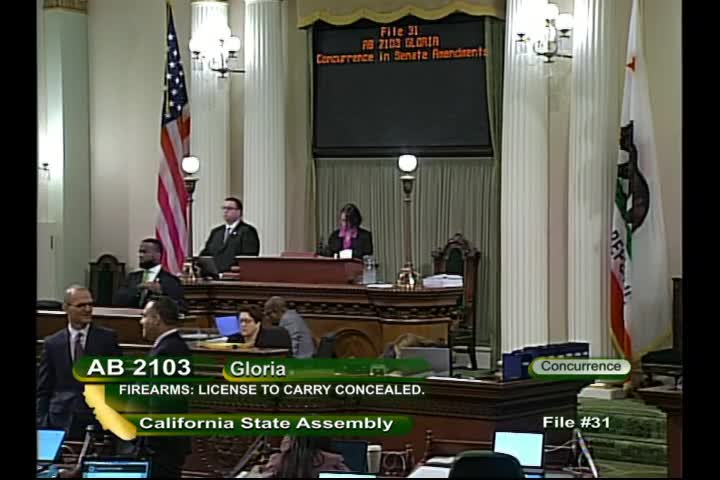
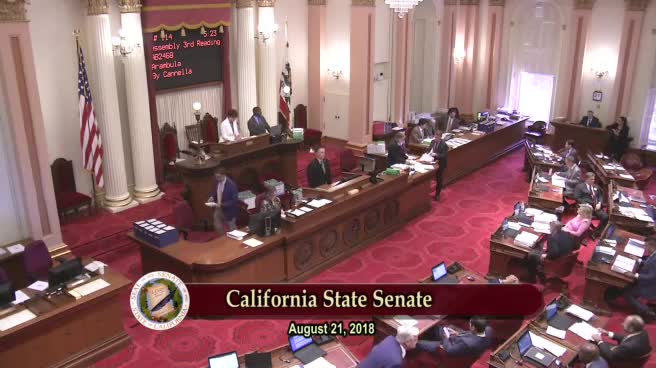
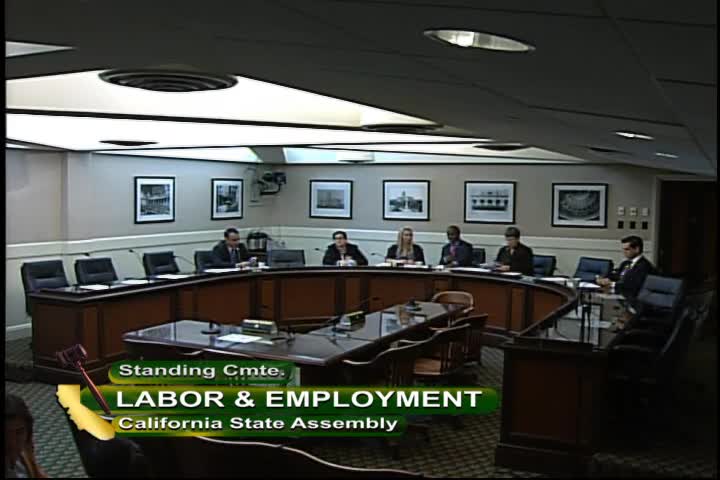
Bill Author