AB 2941: Health care coverage: state of emergency.
- Session Year: 2017-2018
- House: Assembly
- Latest Version Date: 2018-08-24
Existing law, the Knox-Keene Health Care Service Plan Act of 1975 (Knox-Keene), provides for the licensure and regulation of health care service plans by the Department of Managed Health Care, and makes a willful violation of the act a crime. Existing law provides for the regulation of health insurers by the Department of Insurance. Existing law requires the Department of Managed Health Care and the Insurance Commissioner to adopt regulations to ensure enrollees and insureds have access to needed health care services in a timely manner, and requires a health care service plan contract or health insurance policy to provide information to an enrollee or insured regarding the standards for timely access to care.
This bill would require a health care service plan or health insurer to provide its enrollees or insureds who have been displaced by a state of emergency, as defined, access to medically necessary health care services, as specified. The bill would require a health care service plan or health insurer, within 48 hours of a declaration of emergency by the Governor that displaces or has the immediate potential to displace enrollees or insureds, to file a notification with the appropriate department, containing specified information regarding how the plan or insurer is addressing the needs of its enrolles or insureds during the state of emergency. Because a willful violation of the bills requirements relative to health care service plans would be a crime, the bill would impose a state-mandated local program.
The California Constitution requires the state to reimburse local agencies and school districts for certain costs mandated by the state. Statutory provisions establish procedures for making that reimbursement.
This bill would provide that no reimbursement is required by this act for a specified reason.
Existing law, the Knox-Keene Health Care Service Plan Act of 1975 (Knox-Keene), provides for the licensure and regulation of health care service plans by the Department of Managed Health Care, and makes a willful violation of the act a crime. Existing law provides for the regulation of health insurers by the Department of Insurance. Existing law requires the Department of Managed Health Care and the Insurance Commissioner to adopt regulations to ensure enrollees and insureds have access to needed health care services in a timely manner, and requires a health care service plan contract or health insurance policy to provide information to an enrollee or insured regarding the standards for timely access to care.
This bill would require a health care service plan or health insurer to ensure provide its enrollees or insureds who have been displaced by a state of emergency, as defined, have continued appropriate access to medically necessary health care services, as specified. The bill would require a health care service plan or health insurer, within 48 hours of a declaration of emergency by the Governor that displaces or has the immediate potential to displace enrollees or insureds, to file a notification with the appropriate department, containing specified information regarding how the plan or insurer is addressing the needs of its enrolles or insureds during the state of emergency. Because a willful violation of the bills requirements relative to health care service plans would be a crime, the bill would impose a state-mandated local program.
The California Constitution requires the state to reimburse local agencies and school districts for certain costs mandated by the state. Statutory provisions establish procedures for making that reimbursement.
This bill would provide that no reimbursement is required by this act for a specified reason.
Existing law, the Knox-Keene Health Care Service Plan Act of 1975 (Knox-Keene), provides for the licensure and regulation of health care service plans by the Department of Managed Health Care, and makes a willful violation of the act a crime. Existing law provides for the regulation of health insurers by the Department of Insurance. Existing law requires the Department of Managed Health Care and the Insurance Commissioner to adopt regulations to ensure enrollees and insureds have access to needed health care services in a timely manner, and requires a health care service plan contract or health insurance policy to provide information to an enrollee or insured regarding the standards for timely access to care.
This bill would require a health care service plan or health insurer to ensure its enrollees or insureds who have been displaced by a state of emergency, as defined, have continued appropriate access to medically necessary health care services, as specified. Because a willful violation of the bills requirements relative to health care service plans would be a crime, the bill would impose a state-mandated local program.
The California Constitution requires the state to reimburse local agencies and school districts for certain costs mandated by the state. Statutory provisions establish procedures for making that reimbursement.
This bill would provide that no reimbursement is required by this act for a specified reason.
(a)A health care service plan shall provide an enrollee who has been displaced by a state of emergency, as declared by the Governor pursuant to Section 8625 of the Government Code, access to medically necessary health care services.
(b)Within 48 hours of a declaration by the Governor of a state of emergency that displaces or has the immediate potential to displace enrollees, a health care service plan operating in the county or counties included in the declaration shall file with the department a notification describing whether the plan has experienced or expects to experience any disruption to the operation of the plan, explaining how the plan is communicating with potentially impacted enrollees, and summarizing the actions the plan has taken or is in the process of taking to ensure that the health care needs of enrollees are met. This may require the plan to take actions, including, but not limited to, the following:
(1)Relax time limits for prior authorization, precertification, or referrals.
(2)Extend filing deadlines for claims.
(3)Suspend prescription refill limitations and allow an impacted enrollee to refill his or her prescriptions at an out-of-network pharmacy.
(4)Authorize an enrollee to replace medical equipment or supplies.
(5)Allow an enrollee to access an appropriate out-of-network provider if an in-network provider is unavailable due to the state of emergency or if the enrollee is out of the area due to displacement.
(6)Have a toll-free telephone number that an affected enrollee may call for answers to questions, including questions about the loss of health insurance identification cards, access to prescription refills, or how to access health care.
(c)This section shall not be construed to limit the Governors authority under the California Emergency Services Act (Chapter 7 (commencing with Section 8550) of Division 1 of Title 2 of the Government Code), or the directors authority under any provision of this chapter.
SEC. 2.Section 10112.95 is added to the Insurance Code, to read:10112.95.(a)A health insurer shall provide an insured who has been displaced by a state of emergency, as declared by the Governor pursuant to Section 8625 of the Government Code, access to medically necessary health care services.
(b)Within 48 hours of a declaration by the Governor of a state of emergency that displaces or has the immediate potential to displace insureds, a health insurer operating in the county or counties included in the declaration shall file with the department a notification describing whether the insurer has experienced or expects to experience any disruption to the operation of the insurer, explaining how the insurer is communicating with potentially impacted insureds, and summarizing the actions the insurer has taken or is in the process of taking to ensure that the health care needs of insureds are met. This may require the insurer to take actions, including, but not limited to, the following:
(1)Relax time limits for prior authorization, precertification, or referrals.
(2)Extend filing deadlines for claims.
(3)Suspend prescription refill limitations and allow an impacted insured to refill his or her prescriptions at an out-of-network pharmacy.
(4)Authorize an insured to replace medical equipment or supplies.
(5)Allow an insured to access an appropriate out-of-network provider if an in-network provider is unavailable due to the state of emergency or if the insured is out of the area due to displacement.
(6)Have a toll-free telephone number that an affected insured may call for answers to questions, including questions about the loss of health insurance identification cards, access to prescription refills, or how to access health care.
(c)This section shall not be construed to limit the Governors authority under the California Emergency Services Act (Chapter 7 (commencing with Section 8550) of Division 1 of Title 2 of the Government Code), or the commissioners authority under any provision of this part.
SEC. 3.No reimbursement is required by this act pursuant to Section 6 of Article XIIIB of the California Constitution because the only costs that may be incurred by a local agency or school district will be incurred because this act creates a new crime or infraction, eliminates a crime or infraction, or changes the penalty for a crime or infraction, within the meaning of Section 17556 of the Government Code, or changes the definition of a crime within the meaning of Section 6 of Article XIIIB of the California Constitution.
(a)A health care service plan shall provide an enrollee who has been displaced by a state of emergency, as declared by the Governor pursuant to Section 8625 of the Government Code, access to medically necessary health care services.
(b)Within 48 hours of a declaration by the Governor of a state of emergency that displaces or has the immediate potential to displace enrollees, a health care service plan operating in the county or counties included in the declaration shall file with the department a notification describing whether the plan has experienced or expects to experience any disruption to the operation of the plan, explaining how the plan is communicating with potentially impacted enrollees, and summarizing the actions the plan has taken or is in the process of taking to ensure that the health care needs of enrollees are met. This may require the plan, as appropriate and without limitation, to take the following actions: plan to take actions, including, but not limited to, the following:
(1)Relax time limits for prior authorization, precertification, or referrals.
(2)Extend filing deadlines for claims.
(3)Suspend prescription refill limitations and allow an impacted enrollee to refill his or her prescriptions at an out-of-network pharmacy.
(4)Authorize an enrollee to replace medical equipment or supplies.
(5)Allow an enrollee to access an appropriate out-of-network provider if an in-network provider is unavailable due to the state of emergency or if the enrollee is out of the area due to displacement.
(6)Have a toll-free telephone number that an affected enrollee may call for answers to questions, including questions about the loss of health insurance identification cards, access to prescription refills, or how to access health care.
(c)This section shall not be construed to limit the Governors authority under the California Emergency Services Act (Chapter 7 (commencing with Section 8550) of Division 1 of Title 2 of the Government Code), or the directors authority under any provision of this chapter.
SEC. 2.Section 10112.95 is added to the Insurance Code, to read:10112.95.(a)A health insurer shall provide an insured who has been displaced by a state of emergency, as declared by the Governor pursuant to Section 8625 of the Government Code, access to medically necessary health care services.
(b)Within 48 hours of a declaration by the Governor of a state of emergency that displaces or has the immediate potential to displace insureds, a health insurer operating in the county or counties included in the declaration shall file with the department a notification describing whether the insurer has experienced or expects to experience any disruption to the operation of the insurer, explaining how the insurer is communicating with potentially impacted insureds, and summarizing the actions the insurer has taken or is in the process of taking to ensure that the health care needs of insureds are met. This may require the insurer, as appropriate and without limitation, to take the following actions: insurer to take actions, including, but not limited to, the following:
(1)Relax time limits for prior authorization, precertification, or referrals.
(2)Extend filing deadlines for claims.
(3)Suspend prescription refill limitations and allow an impacted insured to refill his or her prescriptions at an out-of-network pharmacy.
(4)Authorize an insured to replace medical equipment or supplies.
(5)Allow an insured to access an appropriate out-of-network provider if an in-network provider is unavailable due to the state of emergency or if the insured is out of the area due to displacement.
(6)Have a toll-free telephone number that an affected insured may call for answers to questions, including questions about the loss of health insurance identification cards, access to prescription refills, or how to access health care.
(c)This section shall not be construed to limit the Governors authority under the California Emergency Services Act (Chapter 7 (commencing with Section 8550) of Division 1 of Title 2 of the Government Code), or the commissioners authority under any provision of this part.
SEC. 3.No reimbursement is required by this act pursuant to Section 6 of Article XIIIB of the California Constitution because the only costs that may be incurred by a local agency or school district will be incurred because this act creates a new crime or infraction, eliminates a crime or infraction, or changes the penalty for a crime or infraction, within the meaning of Section 17556 of the Government Code, or changes the definition of a crime within the meaning of Section 6 of Article XIIIB of the California Constitution.
(a)A health care service plan shall ensure provide an enrollee who has been displaced by a state of emergency, as declared by the Governor pursuant to Section 8625 of the Government Code, has continued appropriate access to medically necessary health care services. This may require a plan to:
(b)Within 48 hours of a declaration by the Governor of a state of emergency that displaces or has the immediate potential to displace enrollees, a health care service plan operating in the county or counties included in the declaration shall file with the department a notification describing whether the plan has experienced or expects to experience any disruption to the operation of the plan, explaining how the plan is communicating with potentially impacted enrollees, and summarizing the actions the plan has taken or is in the process of taking to ensure that the health care needs of enrollees are met. This may require the plan, as appropriate and without limitation, to take the following actions:
(a)(1)Relax time limits for prior authorization, precertification, or referrals.
(b)(2)Extend filing deadlines for claims.
(c)(3)Suspend prescription refill limitations and allow an impacted enrollee to refill his or her prescriptions at an out-of-network pharmacy.
(d)Allow(4)Authorize an enrollee to replace medical equipment or supplies.
(e)(5)Allow an enrollee to access an appropriate out-of-network provider if an in-network provider is unavailable due to the state of emergency or if the enrollee is out of the area due to displacement.
(f)(6)Have a toll-free telephone number that an affected enrollee may call for answers to questions, including questions about the loss of health insurance identification cards, access to prescription refills, or how to access health care.
(g)Other actions determined to be necessary by the department.(c)This section shall not be construed to limit the Governors authority under the California Emergency Services Act (Chapter 7 (commencing with Section 8550) of Division 1 of Title 2 of the Government Code), or the directors authority under any provision of this chapter.
SEC. 2.Section 10112.95 is added to the Insurance Code, to read:10112.95.(a)A health insurer shall ensure provide an insured who has been displaced by a state of emergency, as declared by the Governor pursuant to Section 8625 of the Government Code, has continued appropriate access to medically necessary health care services. This may require an insurer to:
(b)Within 48 hours of a declaration by the Governor of a state of emergency that displaces or has the immediate potential to displace insureds, a health insurer operating in the county or counties included in the declaration shall file with the department a notification describing whether the insurer has experienced or expects to experience any disruption to the operation of the insurer, explaining how the insurer is communicating with potentially impacted insureds, and summarizing the actions the insurer has taken or is in the process of taking to ensure that the health care needs of insureds are met. This may require the insurer, as appropriate and without limitation, to take the following actions:
(a)(1)Relax time limits for prior authorization, precertification, or referrals.
(b)(2)Extend filing deadlines for claims.
(c)(3)Suspend prescription refill limitations and allow an impacted insured to refill his or her prescriptions at an out-of-network pharmacy.
(d)Allow(4)Authorize an insured to replace medical equipment or supplies.
(e)(5)Allow an insured to access an appropriate out-of-network provider if an in-network provider is unavailable due to the state of emergency or if the insured is out of the area due to displacement.
(f)(6)Have a toll-free telephone number that an affected insured may call for answers to questions, including questions about the loss of health insurance identification cards, access to prescription refills, or how to access health care.
(g)Other actions determined to be necessary by the department.(c)This section shall not be construed to limit the Governors authority under the California Emergency Services Act (Chapter 7 (commencing with Section 8550) of Division 1 of Title 2 of the Government Code), or the commissioners authority under any provision of this part.
SEC. 3.No reimbursement is required by this act pursuant to Section 6 of Article XIIIB of the California Constitution because the only costs that may be incurred by a local agency or school district will be incurred because this act creates a new crime or infraction, eliminates a crime or infraction, or changes the penalty for a crime or infraction, within the meaning of Section 17556 of the Government Code, or changes the definition of a crime within the meaning of Section 6 of Article XIIIB of the California Constitution.
A health care service plan shall ensure an enrollee who has been displaced by a state of emergency, as declared by the Governor pursuant to Section 8625 of the Government Code, has continued appropriate access to medically necessary health care services. This may require a plan to:
(a)Relax time limits for prior authorization, precertification, or referrals.
(b)Extend filing deadlines for claims.
(c)Suspend prescription refill limitations and allow an impacted enrollee to refill his or her prescriptions at an out-of-network pharmacy.
(d)Allow an enrollee to replace medical equipment or supplies.
(e)Allow an enrollee to access an appropriate out-of-network provider if an in-network provider is unavailable due to the state of emergency or if the enrollee is out of the area due to displacement.
(f)Have a toll-free telephone number that an affected enrollee may call for answers to questions, including questions about the loss of health insurance identification cards, access to prescription refills, or how to access health care.
(g)Other actions determined to be necessary by the department.
SEC. 2.Section 10112.95 is added to the Insurance Code, to read:10112.95.A health insurer shall ensure an insured who has been displaced by a state of emergency, as declared by the Governor pursuant to Section 8625 of the Government Code, has continued appropriate access to medically necessary health care services. This may require an insurer to:
(a)Relax time limits for prior authorization, precertification, or referrals.
(b)Extend filing deadlines for claims.
(c)Suspend prescription refill limitations and allow an impacted insured to refill his or her prescriptions at an out-of-network pharmacy.
(d)Allow an insured to replace medical equipment or supplies.
(e)Allow an insured to access an appropriate out-of-network provider if an in-network provider is unavailable due to the state of emergency or if the insured is out of the area due to displacement.
(f)Have a toll-free telephone number that an affected insured may call for answers to questions, including questions about the loss of health insurance identification cards, access to prescription refills, or how to access health care.
(g)Other actions determined to be necessary by the department.
SEC. 3.No reimbursement is required by this act pursuant to Section 6 of Article XIIIB of the California Constitution because the only costs that may be incurred by a local agency or school district will be incurred because this act creates a new crime or infraction, eliminates a crime or infraction, or changes the penalty for a crime or infraction, within the meaning of Section 17556 of the Government Code, or changes the definition of a crime within the meaning of Section 6 of Article XIIIB of the California Constitution.
|
Date
|
Status
|
|---|---|
| Aug 24, 2018 | Chaptered by Secretary of State - Chapter 196, Statutes of 2018. |
| Aug 24, 2018 | Approved by the Governor. |
| Aug 14, 2018 | Enrolled and presented to the Governor at 4 p.m. |
| Aug 9, 2018 | Senate amendments concurred in. To Engrossing and Enrolling. |
| Aug 7, 2018 | In Assembly. Concurrence in Senate amendments pending. May be considered on or after August 9 pursuant to Assembly Rule 77. |
| Aug 6, 2018 | Read third time. Passed. Ordered to the Assembly. |
| Jul 3, 2018 | Read second time. Ordered to third reading. |
| Jul 2, 2018 | From committee: Do pass. (Ayes 7. Noes 0.) (July 2). |
| Jun 19, 2018 | Read second time and amended. Re-referred to Com. on APPR. |
| Jun 18, 2018 | From committee: Amend, and do pass as amended and re-refer to Com. on APPR. (Ayes 7. Noes 0.) (June 13). |
| May 30, 2018 | Referred to Com. on HEALTH. |
| May 17, 2018 | In Senate. Read first time. To Com. on RLS. for assignment. |
| May 17, 2018 | Read third time. Passed. Ordered to the Senate. |
| May 10, 2018 | Read second time. Ordered to Consent Calendar. |
| May 9, 2018 | From committee: Do pass. To Consent Calendar. (Ayes 16. Noes 0.) (May 9). |
| Apr 19, 2018 | Re-referred to Com. on APPR. |
| Apr 18, 2018 | Read second time and amended. |
| Apr 17, 2018 | From committee: Amend, and do pass as amended and re-refer to Com. on APPR. (Ayes 14. Noes 0.) (April 10). |
| Mar 8, 2018 | Referred to Com. on HEALTH. |
| Feb 17, 2018 | From printer. May be heard in committee March 19. |
| Feb 16, 2018 | Read first time. To print. |
|
Date
|
Description
|
Location
|
Votes
|
|
|---|---|---|---|---|
| Aug 9, 2018 | AB 2941 BERMAN Concurrence in Senate Amendments | Assembly Floor |
Passed |
|
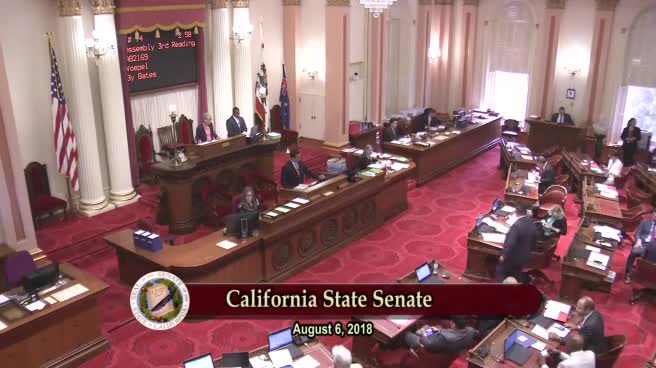
| Aug 6, 2018 | Assembly 3rd Reading AB2941 Berman By Dodd | Senate Floor |
Passed |
|
| Jul 2, 2018 | Do pass | Senate Standing Committee on Appropriations |
Passed |
|
| Jun 13, 2018 | Do pass as amended, but first amend, and re-refer to the Committee on [Appropriations] | Senate Standing Committee on Health |
Passed |
|
| May 17, 2018 | AB 2941 BERMAN Consent Calendar Second Day Regular Session | Assembly Floor |
Passed |
|
| May 9, 2018 | Do pass. To Consent Calendar. | Assembly Standing Committee on Appropriations |
Passed |
|
| Apr 10, 2018 | Do pass as amended and be re-referred to the Committee on [Appropriations] | Assembly Standing Committee on Health |
Passed |
This list shows positions taken on this bill by organizations on the date displayed, which is linked to the original source.
Positions by individuals are not included.
|
Organization
|
Position
|
Date
|
|---|---|---|
| Association Of California Life & Health Insurance Companies | ** Against | Jul 3, 2018 |
| California Association For Health Services At Home | ** Support | Jul 3, 2018 |
| California Association Of Health Plans | ** Against | Jul 3, 2018 |
| California Dental Association | * Support | Jun 13, 2018 |
| California Retired Teachers Association | ** Support | Jul 3, 2018 |
| CaliforniaHealth+ Advocates | ** Support | Jul 3, 2018 |
| Health Access California | ** Support | Jul 3, 2018 |
| Rural County Representatives of California | ** Support | Jul 3, 2018 |
| western center on law and poverty | ** Support | Jul 3, 2018 |
CONCURRENCE IN SENATE AMENDMENTS
CSA1 Bill Id:AB 2941
Author:(Berman)
As Amended Ver:June 19, 2018
Majority vote
ASSEMBLY: | 73-0 | (May 17, 2018) | SENATE: | 37-0 | (August 6, 2018) |
Original Committee Reference: HEALTH
SUMMARY:
- Requires a health plan or health insurer to provide an enrollee or insured who has been displaced by a state of emergency, as declared by the Governor, as specified, access to medically necessary health care services.
- Requires, within 48 hours of a declaration by the Governor of a state of emergency that displaces or has the immediate potential to displace enrollees or insureds, a health plan or health insurer operating in the county or counties included in the declaration to file with the Department of Managed Health Care (DMHC) or California Department of Insurance (CDI) a notification describing whether the plan has experienced delays or expects to experience any disruption to the operation of the plan or insurer, explaining how the plan or insurer is communicating with potentially impacted enrollees, and summarizing the actions the plan has taken or is in the process of taking to ensure that the health care needs of enrollees or insureds are met.
- States that the requirement in 2), above, may require the plan or insurer, as appropriate, to take actions, including but not limited to, the following:
- Relax time limits for prior authorization, precertification, or referrals;
- Extend filing deadlines for claims;
- Suspend prescription refill limitations and allow an impacted enrollee or insured to refill his or her prescriptions at an out-of-network pharmacy;
- Authorize an enrollee to replace medical equipment or supplies;
- Allow an enrollee to access an appropriate out-of-network provider if an in-network provider is unavailable due to the state of emergency or if the enrollee or insured is out of the area due to displacement; and,
- Have a toll-free telephone number that an affected enrollee or insured may call for answers to questions, including questions about the loss of health insurance identification cards, access to prescription refills, or how to access health care.
- Prohibits this bill from being construed to limit the Governor's authority under the California Emergency Services Act, or the DMHC or Insurance Commissioner's authority, as specified.
The Senate amendments revise the provisions of this bill that call for certain actions to be taken "as appropriate and without limitation," by health plans and insurers, to instead state that health plans and insurers may be required to take actions, "including but not limited to" in 3) above, as specified.
FISCAL EFFECT: According to the Senate Appropriations Committee:
- The DMHC costs are minor and absorbable. Senate Appropriations Committee notes the DMHC's current practice includes issuing all plan letters in response to state of emergencies.
- CDI notes fiscal costs of $70,000 (Insurance Fund) in fiscal year 2018-19, $133,000 (Insurance Fund) in fiscal year 2019-20, and $126,000 (Insurance Fund), ongoing, to review insurer submissions for compliance and respond to insurers regarding inadequate compliance. CDI assumes, for the number of disaster county pairs (124 in 2017), that each insurer will have at least some persons in the vast majority of disaster declarations.
COMMENTS: According to the author, last year, Governor Brown proclaimed states of emergency throughout California due to flooding below Oroville Dam, wildfires in Northern California, and wildfires in Southern California. As a result of these states of emergency, critical infrastructure was damaged, thousands of homes were threatened, and residents were evacuated. Health care services and coverage is especially critical during these emergency situations. This is why it is essential that patients who have been affected by a state of emergency have continued access to medically necessary health care services. The author states that this bill is a common sense measure, which would preserve health care coverage for Californians who are affected by a state of emergency.
According to DMHC, when there is a Governor-declared state of emergency, DMHC routinely contacts all licensed health plans that could have affected enrollees by means of an All Plan Letter (APL). The APL will instruct health plans to ensure that their enrollees that have been displaced by an emergency have continued appropriate access to medically necessary health care services. The APL also requires health plans to report to DMHC on how the health plans are communicating with their enrollees. DMHC monitors phone calls to its Help Center to ensure that enrollees are not experiencing issues in accessing providers during a state of emergency. While existing law does not specifically provide DMHC any enumerated powers triggered by an emergency declaration, the California Emergency Services Act provides the Governor broad latitude to deal with emergency situations once a state of emergency has been declared. It should be noted that CDI does not have the same authority.
The Rural County Representatives of California contends that this bill ensures individuals and families with health insurance can access health care, given the emergency and disaster risks in California, particularly in rural California where access to health care is more challenging. Western Center on Law and Poverty writes that this bill would put best practice into law and bring parity to health plans and health insurers. Health Access California states that this bill will ensure that consumers who are displaced by a state of emergency continue to receive covered health care services.
The California Association of Health Plans and Association of California Life and Health Insurance Companies are opposed unless amended as this bill overly prescribes the response that health plans and health insurers should take when a disaster is declared by the Governor.
Analysis Prepared by: Kristene Mapile / HEALTH / (916) 319-2097 FN: 0003838
Office of Senate Floor Analyses (916) 651-1520 Fax: (916) 327-4478 | AB 2941 |
THIRD READING
Bill No: AB 2941
Amended: 6/19/18 in Senate
SENATE HEALTH COMMITTEE: 7-0, 6/13/18
AYES: Pan, Nguyen, Hernandez, Leyva, Mitchell, Monning, Roth
NO VOTE RECORDED: Newman, Nielsen
SENATE APPROPRIATIONS COMMITTEE: 7-0, 7/2/18
AYES: Portantino, Bates, Beall, Bradford, Hill, Nielsen, Wiener
ASSEMBLY FLOOR: 73-0, 5/17/18 (Consent) - See last page for vote
SUBJECT: Health care coverage: state of emergency
DIGEST:
This bill requires a health plan or health insurer to provide an enrollee or insured who has been displaced by a state of emergency, as declared by the Governor, access to medically necessary health care services; requires a health plan or health insurer to file specified information with regulators; and includes provisions which may allow out-of-network care or a toll-free number for those affected to address questions, as specified.
Existing law:
- Establishes the Department of Managed Health Care (DMHC) to regulate health plans and the California Department of Insurance (CDI) to regulate health insurance. [HSC §1340, et seq. and INS §106, et seq.]
- Finds and declares, under the California Emergency Services Act, that to ensure preparations within the state will be adequate to deal with natural, manmade, or war-caused emergencies that result in conditions of disaster or in extreme peril to life, property, and the resources of the state, it is necessary:
- To confer upon the Governor and upon the chief executives and governing bodies of political subdivisions of this state the emergency powers, as specified; and to provide for state assistance in the organization and maintenance of the emergency programs of such political subdivisions;
- To provide for the Office of Emergency Services, within the Office of the Governor, and to prescribe the powers and duties of the director of that office;
- To provide for the assignment of functions to state entities to be performed during an emergency and for the coordination and direction of the emergency actions of those entities;
- To provide for the rendering of mutual aid by the state government and all its departments and agencies and by the political subdivisions of this state; and,
- To authorize the establishment of such organizations and the taking of such actions as are necessary and proper to carry out the provisions of existing law, as specified. [GOV §8550, et seq.]
This bill:
- Requires a health plan or health insurer to provide an enrollee or insured who has been displaced by a state of emergency, as declared by the Governor, as specified, access to medically necessary health care services.
- Requires, within 48 hours of a declaration by the Governor of a state of emergency that displaces or has the immediate potential to displace enrollees or insureds, a health plan or health insurer operating in the county or counties included in the declaration to file with the DMHC or CDI a notification describing whether the plan has experienced delays or expects to experience any disruption to the operation of the plan or insurer, explaining how the plan or insurer is communicating with potentially impacted enrollees, and summarizing the actions the plan has taken or is in the process of taking to ensure that the health care needs of enrollees or insureds are met.
- States that the requirement in 2) above may require the plan or insurer, as appropriate, to take actions, including but not limited to the following:
- Relax time limits for prior authorization, precertification, or referrals;
- Extend filing deadlines for claims;
- Suspend prescription refill limitations and allow an impacted enrollee or insured to refill his or her prescriptions at an out-of-network pharmacy;
- Authorize an enrollee to replace medical equipment or supplies;
- Allow an enrollee to access an appropriate out-of-network provider if an in-network provider is unavailable due to the state of emergency or if the enrollee or insured is out of the area due to displacement; and,
- Have a toll-free telephone number that an affected enrollee or insured may call for answer to questions, including question about the loss of health insurance identification cards, access to prescription refills, or how to access health care.
- Prohibits this bill from being construed to limit the Governor’s authority under the California Emergency Services Act, or the DMHC or Insurance Commissioner’s authority, as specified.
Comments
- Author’s statement. According to the author, last year, Governor Brown declared states of emergency throughout California. As a result of these states of emergency, critical infrastructure was damaged, thousands of homes were threatened, and residents were evacuated. Health care services and coverage are especially critical during these emergency situations. This is why it is essential that patients who have been affected by a state of emergency have continued access to medically necessary health care services. AB 2941 is a common sense measure, which would preserve health care coverage for Californians who are affected by a state of emergency. In fact, this bill codifies DMHC’s existing practice to ensure access to medically necessary health care services when there is a Governor declared state of emergency. However, CDI does not have the same authority as DMHC and is not able to ensure continued access. It should not matter which state department regulates a patient’s health care coverage, and as a result, AB 2941 would also bring parity to the Insurance Code to ensure that all patients maintain access to medically necessary health care services in the limited circumstance of a state of emergency.
- DMHC requirements. According to written guidance issued to health plans by DMHC in the form of “All Plan Letters,” health plans must ensure their enrollees who have been displaced have continued appropriate access to medically necessary health care services. This may require plans to, among other things: relax time limits for prior authorization, pre-certification, or referrals; suspend prescription refill limitations and permit impacted enrollees to refill their prescriptions at out-of-network pharmacies; allow enrollees to replace medical equipment or supplies; extend filing deadlines for claims; allow enrollees to access appropriate out-of-network providers if in-network providers are unavailable due to the disaster or if enrollees are out of the area due to displacement from the fires; and, have toll-free telephone numbers that affected enrollees can call for answers to questions, including questions about the loss of health insurance ID cards, access to prescription refills, or how to access health care.
With regard to recent fires, DMHC notified plans that it was tracking how those with potentially impacted enrollees were responding to the emergency, and required plans to report a summary of the actions they took or were in the process of taking to ensure the health care needs of impacted enrollees continued to be met and include a description of how they were communicating with potentially impacted enrollees to ensure continued access to care. Additionally, DMHC required the plans to report whether they experienced or expected to experience any disruptions to the operations of a plan itself (e.g., evacuations of plan offices) due to the fires.
FISCAL EFFECT: Appropriation: No Fiscal Com.: Yes Local: Yes
According to the Senate Appropriations Committee:
- The DMHC costs are minor and absorbable. Senate Appropriations Committee staff notes the DMHCs current practice includes issuing all plan letters in response to state of emergencies.
- The CDI notes fiscal costs of $70,000 (Insurance Fund) in fiscal year 2018-19, $133,000 (Insurance Fund) in fiscal year 2019-20, and $126,000 (Insurance Fund), ongoing, to review insurer submissions for compliance and respond to insurers regarding inadequate compliance. The CDI assumes, for the number of disaster county pairs (124 in 2017), that each insurer with have at least some persons in the vast majority of disaster declarations.
California Association for Health Services at Home
California Retired Teachers Association
CaliforniaHealth+ Advocates
Health Access California
Rural County Representatives of California
Western Center on Law and Poverty
Association of California Life & Health Insurance Companies
California Association of Health Plans
ARGUMENTS IN SUPPORT: The Rural County Representatives of California (RCRC) writes that given the emergency and disaster risks in California, particularly in rural California where access to health care is more challenging, this bill provides individuals and families with health insurance more certainty in accessing health care during a disaster. The California Association for Health Services at Home (CAHSAH) writes that while DMHC has the authority to issue All Plan Letters to every health plan operating in counties where a state of emergency has been declared to ensure that patients have continued appropriate access to medically necessary health care services, CDI does not have this same authority. This bill brings parity to the Insurance Code by allowing CDI the ability to also ensure that patients maintain access to medically necessary health care services in the limited circumstance of a state of emergency. According to CAHSAHm this bill is an important step in ensuring continuity of care for all patients during a declared state of emergency. Western Center on Law and Poverty writes this bill puts best practice into law and bring parity to health plans and health insurers regulated by the two entities so that both departments are able to appropriately respond to an emergency.
ARGUMENTS IN OPPOSITION: The California Association of Health Plans (CAHP) and the Association of California Life & Health Insurance Companies (ACLHIC) believes this bill overly prescribes the response that health plans and insurers should take when a disaster is declared by the Governor. CAHP has concerns this bill may be too specific. One of the unintended consequences of being too overly prescriptive is that it could tie the hands of the Administration, health plans, and insurers when they are in the process of responding to a very fluid and dynamic situation. CAHP is looking for more flexibility for health plans.
ASSEMBLY FLOOR: 73-0, 5/17/18
AYES: Acosta, Aguiar-Curry, Travis Allen, Arambula, Baker, Berman, Bigelow, Bloom, Bonta, Brough, Burke, Caballero, Calderon, Carrillo, Cervantes, Chau, Chávez, Chen, Chiu, Choi, Chu, Cooley, Cooper, Cunningham, Dahle, Daly, Eggman, Flora, Fong, Frazier, Friedman, Gallagher, Eduardo Garcia, Gipson, Gloria, Gonzalez Fletcher, Gray, Grayson, Harper, Holden, Irwin, Jones-Sawyer, Kalra, Kamlager-Dove, Kiley, Lackey, Levine, Limón, Low, Maienschein, Mathis, Mayes, McCarty, Medina, Mullin, Nazarian, Obernolte, O'Donnell, Patterson, Quirk, Quirk-Silva, Reyes, Rodriguez, Rubio, Salas, Mark Stone, Thurmond, Ting, Voepel, Waldron, Weber, Wood, Rendon
NO VOTE RECORDED: Cristina Garcia, Melendez, Muratsuchi, Santiago, Steinorth
7/3/18 15:49:38
**** END ****
SENATE COMMITTEE ON APPROPRIATIONS
Senator Anthony Portantino, Chair
2017 - 2018 Regular Session
AB 2941 (Berman) - Health care coverage: state of emergency
Version: June 19, 2018 | Policy Vote: HEALTH 7 - 0 |
Urgency: No | Mandate: Yes |
Hearing Date: July 2, 2018 | Consultant: Samantha Lui |
This bill does not meet the criteria for referral to the Suspense File.
Bill Summary:
Assembly Bill 2941 requires a health plan or health insurer to provide an enrollee or insured, who has been displaced by a state of emergency, as declared by the Governor, access to medically necessary health care services. The bill requires, within 48 hours of a Governor-declared state of emergency, a health plan or health insurer to file specified information with regulators, and includes provisions which may allow out-of-network care or a toll-free number for those affected to address questions.
Fiscal Impact:
- The Department of Managed Health Care costs are minor and absorbable. Staff notes the department’s current practice includes issuing all plan letters in response to state of emergencies.
- The Department of Insurance notes fiscal costs of $70,000 (Insurance Fund) in fiscal year 2018-19, $133,000 (Insurance Fund) in fiscal year 2019-20, and $126,000 (Insurance Fund), ongoing, to review insurer submissions for compliance and respond to insurers regarding inadequate compliance. The department assumes, for the number of disaster county pairs (124 in 2017), that each insurer with have at least some persons in the vast majority of disaster declarations. Staff notes
Background:
- The California Emergency Services Act provides the Governor, chief executives, and governing bodies emergency powers to respond to disasters. The California’s Governor’s Office of Emergency Services (CalOES) is tasked with statewide coordination for state departments and local governments in emergency preparedness, response, recover, and mitigation. In addition, the state employs its mutual aid system across all levels of government, which allows agencies within operational areas to assist or be mission-tasked in a disaster or state of emergency.
In response to recent fires, DMHC notified plans through an all-plan letter that it was tracking how those with potentially impacted enrollees were responding to the emergency, and required plans to report a summary of the actions they took or were in the process of taking to ensure the health care needs of impacted enrollees continued to be met and include a description of how they were communicating with potentially impacted enrollees to ensure continued access to care.
Proposed Law:
Assembly Bill 2941 includes the following provisions:
- Requires a health plan or health insurer to provide an enrollee or insured, who has been displaced by a state of emergency, as declared by the Governor, access to medically necessary health care services.
- Requires, within 48 hours of a Governor-declared state of emergency, a health plan or health insurer to file a notification whether the plan has experienced or expects to experience any disruption, how the plan is communicating with potentially impacted enrollees, and summarizing the actions the plan has taken, or will take, to ensure enrollees’ health needs are met, including:
- Relaxing time limits for prior authorization, precertification, or referrals;
- Extending filing deadlines for claims;
- Suspending prescription refill limitations;
- Authorizing an enrollee to replace medical equipment or supplies; and
- Having a toll-free number than an affected enrollee may call for questions.
Related Legislation:
- AB 2333 (Wood) requires the Governor's Office of Emergency Services to establish a behavioral health deputy director to ensure individuals have access to necessary mental and behavioral health services in the aftermath of a natural disaster or declaration of a state of emergency. The bill is pending consideration in this Committee.
- AB 2576 (Aguiar-Curry) provides flexibility with respect to provision of and reimbursement for clinic and pharmacy services during a declared state of emergency. AB 2576 is pending consideration on the Senate Floor.
-- END --
SENATE COMMITTEE ON HEALTH
Senator Dr. Richard Pan, Chair
BILL NO: AB 2941
AUTHOR: | Berman | ||
VERSION: | April 18, 2018 | ||
HEARING DATE: | June 13, 2018 | ||
CONSULTANT: | Teri Boughton | ||
SUBJECT: Health care coverage: state of emergency.
SUMMARY:
Requires a health plan or health insurer to provide an enrollee or insured who has been displaced by a state of emergency, as declared by the Governor, access to medically necessary health care services, requires a health plan or health insurer to file specified information with regulators, and includes provisions which may allow out-of-network care or a toll-free number for those affected to address questions, as specified.
Existing law:
- Establishes the Department of Managed Health Care (DMHC) to regulate health plans and the California Department of Insurance (CDI) to regulate health insurance. [HSC §1340, et seq. and INS §106, et seq.]
- Finds and declares, under the California Emergency Services Act, that to ensure preparations within the state will be adequate to deal with natural, manmade, or war-caused emergencies that result in conditions of disaster or in extreme peril to life, property, and the resources of the state, it is necessary:
- To confer upon the Governor and upon the chief executives and governing bodies of political subdivisions of this state the emergency powers, as specified; and to provide for state assistance in the organization and maintenance of the emergency programs of such political subdivisions;
- To provide for the Office of Emergency Services, within the office of the Governor, and to prescribe the powers and duties of the director of that office;
- To provide for the assignment of functions to state entities to be performed during an emergency and for the coordination and direction of the emergency actions of those entities;
- To provide for the rendering of mutual aid by the state government and all its departments and agencies and by the political subdivisions of this state; and,
- To authorize the establishment of such organizations and the taking of such actions as are necessary and proper to carry out the provisions of existing law, as specified. [GOV §8550, et seq.]
This bill:
- Requires a health plan or health insurer to provide an enrollee or insured who has been displaced by a state of emergency, as declared by the Governor, as specified, access to medically necessary health care services.
- Requires, within 48 hours of a declaration by the Governor of a state of emergency that displaces or has the immediate potential to displace enrollees or insureds, a health plan or health insurer operating in the county or counties included in the declaration to file with the DMHC or CDI a notification describing whether the plan has experienced delays or expects to experience any disruption to the operation of the plan or insurer, explaining how the plan or insurer is communicating with potentially impacted enrollees, and summarizing the actions the plan has taken or is in the process of taking to ensure that the health care needs of enrollees or insureds are met.
- States that the requirement in 2) above may require the plan or insurer, as appropriate and without limitation, to take the following actions:
- Relax time limits for prior authorization, precertification, or referrals;
- Extend filing deadlines for claims;
- Suspend prescription refill limitations and allow an impacted enrollee or insured to refill his or her prescriptions at an out-of-network pharmacy;
- Authorize an enrollee to replace medical equipment or supplies;
- Allow an enrollee to access an appropriate out-of-network provider if an in-network provider is unavailable due to the state of emergency or if the enrollee or insured is out of the area due to displacement; and,
- Have a toll-free telephone number that an affected enrollee or insured may call for answer to questions, including question about the loss of health insurance identification cards, access to prescription refills, or how to access health care.
- Prohibits this bill from being construed to limit the Governor’s authority under the California Emergency Services Act, or the DMHC or Insurance Commissioner’s authority, as specified.
FISCAL EFFECT:
According to the Assembly Appropriations Committee:
- Minor and absorbable costs to DMHC (Managed Care Fund).
- Costs to CDI in the range of $130,000 annually to CDI to review submissions for compliance and conduct correspondence with insurers regarding inadequate compliance (Insurance Fund).
PRIOR VOTES:
Assembly Floor: | 73 - 0 |
Assembly Appropriations Committee: | 16 - 0 |
Assembly Health Committee: | 14 - 0 |
COMMENTS:
- Author’s statement. According to the author, last year, Governor Brown declared states of emergency throughout California. As a result of these states of emergency, critical infrastructure was damaged, thousands of homes were threatened, and residents were evacuated. Health care services and coverage are especially critical during these emergency situations. This is why it is essential that patients who have been affected by a state of emergency have continued access to medically necessary health care services. AB 2941 is a common sense measure, which would preserve health care coverage for Californians who are affected by a state of emergency. In fact, this bill would codify DMHC’s existing practice to ensure access to medically necessary health care services when there is a Governor declared state of emergency. However, CDI does not have the same authority as DMHC and is not able to ensure continued access. It should not matter which state department regulates a patient’s health care coverage, and as a result, AB 2941 would also bring parity to the Insurance Code to ensure that all patients maintain access to medically necessary health care services in the limited circumstance of a state of emergency.
- DMHC requirements. According to written guidance issued to health plans by DMHC in the form of “All Plan Letters,” health plans must ensure their enrollees who have been displaced have continued appropriate access to medically necessary health care services. This may require plans to, among other things: relax time limits for prior authorization, pre-certification, or referrals; suspend prescription refill limitations and permit impacted enrollees to refill their prescriptions at out-of-network pharmacies; allow enrollees to replace medical equipment or supplies; extend filing deadlines for claims; allow enrollees to access appropriate out-of-network providers if in-network providers are unavailable due to the disaster or if enrollees are out of the area due to displacement from the fires; and, have toll-free telephone numbers that affected enrollees can call for answers to questions, including questions about the loss of health insurance ID cards, access to prescription refills, or how to access health care.
With regard to recent fires, DMHC notified plans that it was tracking how those with potentially impacted enrollees were responding to the emergency, and required plans to report a summary of the actions they took or were in the process of taking to ensure the health care needs of impacted enrollees continued to be met and include a description of how they were communicating with potentially impacted enrollees to ensure continued access to care. Additionally, DMHC required the plans to report whether they experienced or expected to experience any disruptions to the operations of a plan itself (e.g., evacuations of plan offices) due to the fires.
- Related legislation. AB 2333 (Wood) requires the Governor's Office of Emergency Services to establish a behavioral health deputy director to ensure individuals have access to necessary mental and behavioral health services in the aftermath of a natural disaster or declaration of a state of emergency. AB 2333 is set for hearing on June 13, 2018 in the Senate Governance and Finance Committee.
AB 2576 (Aguiar-Curry) provides flexibility with respect to provision of and reimbursement for clinic and pharmacy services during a declared state of emergency. AB 2576 is set for hearing on June 20, 2018 in this Committee.
- Support. The Rural County Representatives of California (RCRC) writes that given the emergency and disaster risks in California, particularly in rural California where access to health care is more challenging, this bill provides individuals and families with health insurance more certainty in accessing health care during a disaster. The California Association for Health Services at Home (CAHSAH) writes that while DMHC has the authority to issue All Plan Letters to every health plan operating in counties where a state of emergency has been declared to ensure that patients have continued appropriate access to medically necessary health care services, CDI does not have this same authority. This bill would bring parity to the Insurance Code by allowing CDI the ability to also ensure that patients maintain access to medically necessary health care services in the limited circumstance of a state of emergency. According to CAHSAH this bill is an important step in ensuring continuity of care for all patients during a declared state of emergency. Western Center on Law and Poverty writes this bill would put best practice into law and bring parity to health plans and health insurers regulated by the two entities so that both departments are able to appropriately respond to an emergency.
- Opposition unless amended. The California Association of Health Plans (CAHP) and the Association of California Life & Health Insurance Companies (ACLHIC) believes this bill overly prescribes the response that health plans and insurers should take when a disaster is declared by the Governor. CAHP has concerns the bill may be too specific. One of the unintended consequences of being too overly prescriptive is that it could tie the hands of the Administration, health plans, and insurers when they are in the process of responding to a very fluid and dynamic situation. CAHP is looking for more flexibility for health plans.
- Policy comment. While the provisions of this bill codify information contained in DMHC All Plan Letters, there are some terms that could be refined to ensure clarity in implementation. For example, the All Plan Letters and this bill call for certain actions to be taken “as appropriate and without limitation.” An amendment could clarify that this is meant to state that plans and insurers may be required to take actions, “including but not limited to” the actions specified.
SUPPORT AND OPPOSITION:
Support: California Association for Health Services at Home
CaliforniaHealth+ Advocates
California Retired Teachers Association
Health Access California
Rural County Representatives of California
Western Center on Law and Poverty
Oppose: Association of California Life & Health Insurance Companies
California Association of Health Plans
-- END --
Date of Hearing: May 9, 2018
ASSEMBLY COMMITTEE ON APPROPRIATIONS
Lorena Gonzalez Fletcher, Chair
ABPCA Bill Id:AB 2941
Author:(Berman) – As Amended Ver:April 18, 2018
Policy Committee: | Health | Vote: | 14 - 0 |
Urgency: No State Mandated Local Program: Yes Reimbursable: No
SUMMARY:
This bill requires health plans and insurers to file with the appropriate regulator, within 48 hours of a declared emergency, a notification describing potential service disruption, communications with impacted enrollees, and actions the plan is taking.
It further states "this may require the plan" to take a specified list of actions, including suspending prescription refill limitations and extending filing deadlines for claims, and requires plans and insurers to provide access to medically necessary health care services persons displaced by a disaster.
FISCAL EFFECT:
- Minor and absorbable costs to the Department of Managed Health Care (Managed Care Fund).
- Costs to the California Department of Insurance in the range of $130,000 annually to CDI to review submissions for compliance and conduct correspondence with insurers regarding inadequate compliance (Insurance Fund).
COMMENTS:
- Purpose. This bill is intended to preserve meaningful health care coverage for Californians affected by a state of emergency. According to the author, this bill would codify DMHC’s existing practice to ensure continued access to health care services during a declared state of emergency and extend this authority to CDI.
- Background. While the law does not provide DMHC enumerated powers triggered by an emergency declaration, the California Emergency Services Act provides the governor broad latitude to deal with emergency situations once a state of emergency has been declared. CDI lacks this authority. States of emergency have been declared throughout California in the past year as a result of flooding and wildfires, and thousands of residents were evacuated.
- Support. Health advocates, including the Western Center on Law and Poverty and Health Access California support this bill, stating it will ensure consumers displaced by a state of emergency continue to receive covered health care services.
- Opposition (unless amended). Health plans and insurers oppose this bill unless amended, arguing it is overly prescriptive in the response that health plans and health insurers should take when a disaster is declared by the governor.
- Staff Comment. This bill is unclear as to what actions are required of plans and insurers, aside from the requirement to notify, and if the regulators are authorized to compel specific action. The author might consider clarifying this point.
Analysis Prepared by: Lisa Murawski / APPR. / (916) 319-2081
Date of Hearing: April 10, 2018
ASSEMBLY COMMITTEE ON HEALTH
Jim Wood, Chair
ABPCA Bill Id:AB 2941
Author:(Berman) – As Introduced Ver:February 16, 2018
SUBJECT: Health care coverage: state of emergency.
SUMMARY: Requires a health plan or health insurer to ensure its enrollees or insureds, who have been displaced by a state of emergency, as defined, have continued access to medically necessary health care services, and may require a health plan or health insurer to do the following:
- Relax time limits for prior authorization, precertification, or referrals;
- Extend filing deadlines for claims;
- Suspend prescription refill limitations and allow an impacted enrollee or insured to refill his or her prescriptions at an out-of-network pharmacy;
- Allow an enrollee to replace medical equipment or supplies;
- Allow an enrollee or insured to access an appropriate out-of-network provider if an in-network provider is unavailable due to the state of emergency or if the enrollee is out of the area due to displacement;
- Have a toll-free telephone number that an affected enrollee or insured may call for answers to questions, as specified; and,
- Other actions determined to be necessary by the Department of Managed Health Care (DMHC) or the California Department of Insurance (CDI).
EXISTING LAW:
- Provides that the Governor may proclaim a state of emergency in an area affected or likely to be affected, as defined in existing law; and either:
- The Governor is requested to do so in the case of a city by the mayor or chief executive, or in the case of a county by the chairman of the board of supervisors or the county administrative officer; or
- The Governor finds that local authority is inadequate to cope with the emergency.
- Defines three conditions or degrees of emergency:
- State of war emergency as the condition which exists immediately, with or without a proclamation thereof by the Governor, whenever this state or nation is attacked by an enemy of the United States, or upon receipt by the state of a warning from the federal government indicating that such an enemy attack is probable or imminent;
- State of emergency as the duly proclaimed existence of conditions of disaster or of extreme peril to the safety of persons and property within the state caused by such conditions as air pollution, fire, flood, storm, epidemic, riot, drought, sudden and severe energy shortage, plant or animal infestation or disease, the Governor’s warning of an earthquake or volcanic prediction, or an earthquake, or other conditions, other than conditions resulting from a labor controversy or conditions causing a “state of war emergency,” or with respect to regulated energy utilities, as specified; and,
- Local emergency as the duly proclaimed existence of conditions of disaster or of extreme peril to the safety of persons and property within the territorial limits of a county, city and county, or city, caused by such conditions, as described in 2)b) above.
- Allows the Governor to suspend any regulatory statute, or statute prescribing the procedure for conduct of state business, or the orders, rules, or regulations of any state agency during a state of war emergency or a state of emergency, as specified.
- Authorizes the Governor to commandeer or utilize any private property or personnel deemed by him necessary in carrying out the responsibilities as Chief Executive of the state and requires the state to pay the reasonable value of costs in the exercise of the emergency powers during a state of war emergency or state of emergency.
- Establishes the DMHC to regulate health plans and the CDI to regulate health insurers.
- Requires health plans to make all services readily available at reasonable times to each enrollee consistent with good professional practice and in a manner providing continuity of care and ready referral of patients to other providers at times as may be appropriate consistent with good professional practice.
- Requires DMHC to develop and adopt regulations to ensure that enrollees have access to health care services in a timely manner and consider the following as indicators of timeliness of access to care:
- Waiting times for appointments with physicians, including primary care and specialty physicians;
- Timeliness of care in an episode of illness, including the timeliness of referrals and obtaining other services, if needed; and,
- Waiting time to speak to a physician, registered nurse, or other qualified health professional acting within his or her scope of practice who is trained to screen or triage an enrollee who may need care.
- Requires DMHC, in developing these timely access standards, to consider clinical appropriateness, the nature of the specialty, the urgency of care, and the requirements of other provisions of law, including provisions governing utilization review that may affect timeliness of access.
- Requires CDI to promulgate regulations to ensure that insureds have the opportunity to access needed health care services in a timely manner and ensure adequacy of the number and locations of facilities and providers and consider the regulations adopted by DMHC.
FISCAL EFFECT: This bill has not yet been analyzed by a fiscal committee.
COMMENTS:
- PURPOSE OF THIS BILL. According to the author, last year, Governor Brown proclaimed states of emergency throughout California due to flooding below Oroville Dam, wildfires in Northern California, and wildfires in Southern California. As a result of these states of emergency, critical infrastructure was damaged, thousands of homes were threatened, and residents were evacuated. Health care services and coverage is especially critical during these emergency situations. This is why it is essential that patients who have been affected by a state of emergency have continued access to medically necessary health care services. The author states that this bill is a common sense measure, which would preserve health care coverage for Californians who are affected by a state of emergency.
According to the author, this bill would codify DMHC’s existing practice to ensure continued access to medically necessary health care services when there is a Governor proclaimed state of emergency. However, CDI does not have the same authority as DMHC and is not able to ensure continued access. It should not matter which state department regulates a patient’s health care coverage, and as a result, this bill would also bring parity to the Insurance Code to ensure that all patients maintain access to medically necessary health care services in the limited circumstance of a state of emergency.
- BACKGROUND.
- DMHC. According to DMHC, when there is a Governor-declared state of emergency, DMHC routinely contacts all licensed health plans that could have affected enrollees by means of an All Plan Letter (APL). The APL will instruct health plans to ensure that their enrollees that have been displaced by an emergency have continued appropriate access to medically necessary health care services. The APL also requires health plans to report to DMHC on how the health plans are communicating with their enrollees. DMHC monitors phone calls to its Help Center to ensure that enrollees are not experiencing issues in accessing providers during a state of emergency. While existing law does not specifically provide DMHC any enumerated powers triggered by an emergency declaration, the California Emergency Services Act provides the Governor broad latitude to deal with emergency situations once a state of emergency has been declared. It should be noted that CDI does not have the same authority.
- Governor Press Release. A recent press release by the Governor described a partnership with specified legislators on solutions this year that will make California more resilient against the impacts of natural disasters and climate change. The press release stated that the Administration will work closely with legislative leaders and the Joint Legislative Committee on Emergency Management, as well as the relevant standing policy committees, to craft solutions to:
- Modernize vegetation and forest management practices for fire prevention and carbon sequestration;
- Ensure utility and public infrastructure is designed, constructed and operated to maximize resiliency to extreme weather events and natural disasters;
- Enhance the emergency response system, including consideration of mutual aid resources, telecommunications, 911 systems, and community needs, particularly in low-income and vulnerable rural and urban communities;
- Examine the availability of insurance products in high wildfire areas in light of increased risks from climate change, and;
- Update liability rules and regulations for utility services in light of changing climate and the increased severity and frequency of weather events.
According to the press release, this work will give state and local governments effective tools to reduce risks and enhance the resiliency of communities and infrastructure. It builds on the ongoing work by the Legislature and administration – alongside the federal government, private sector, non-governmental organizations, community members, and other stakeholders – to improve fire threat evaluation, hazard mitigation, carbon storage capacity and tree mortality and forest management practices.
- SUPPORT. The Rural County Representatives of California contends that this bill ensures individuals and families with health insurance can access health care, given the emergency and disaster risks in California, particularly in rural California where access to health care is more challenging. Western Center on Law and Poverty writes that this bill would put best practice into law and bring parity to health plans and health insurers. Health Access California states that this bill will ensure that consumers who are displaced by a state of emergency continue to receive covered health care services.
- OPPOSE UNLESS AMENDED. The California Association of Health Plans and Association of California Life and Health Insurance Companies are opposed unless amended as this bill overly prescribes the response that health plans and health insurers should take when a disaster is declared by the Governor.
- RELATED LEGISLATION.
- AB 2333 (Wood) establishes a behavioral health deputy director within the Office of Emergency Services to ensure individuals have access to necessary mental and behavioral health services and supports in the aftermath of a natural disaster or declaration of a state of emergency and requires the deputy director to collaborate with the Director of Health Care Services to coordinate the delivery of trauma-related support to individuals affected by a natural disaster or state of emergency. AB 2333 is double-referred to the Assembly Governmental Organization and Health Committees.
- AB 2576 (Aguiar-Curry) authorizes the Governor, during a state of emergency, to direct all state agencies to utilize, employ, and direct state personnel, equipment, and facilities for the performance of any and all activities that are designed to allow community clinics and health centers to provide and receive reimbursement for services provided during or immediately following the emergency. AB 2576 authorizes any agency directed by the Governor to perform those activities to expend any of the moneys that have been appropriated to it in order to perform those activities, irrespective of the particular purpose for which the money was originally appropriated. AB 2576 is double referred to the Assembly Health and Business and Professions Committees.
- SUGGESTED AMENDMENTS. DMHC provided technical assistance and made specific recommendations and committee staff recommends also to apply to health insurers:
- Clarify a timeframe in which health plans are to respond to a declaration by the Governor of a state of emergency that displaces or has the immediate potential to displace enrollees;
- Clarify that nothing in this bill is to be construed to limit the Governor’s authority under the California Emergency Services Act or the DMHC Director’s authority in existing law; and,
- Make other technical changes.
These amendments will be mirrored in the Insurance Code.
REGISTERED SUPPORT / OPPOSITION:
Support
California Association for Health Services at Home
CaliforniaHealth+ Advocates
Health Access California
Rural County Representatives of California
Western Center on Law and Poverty
Opposition
None on file.
Analysis Prepared by: Kristene Mapile / HEALTH / (916) 319-2097
Bill Author

Bill Co-Author(s):