AB 2954: School districts: special taxes: uniformity requirement: unimproved property.
- Session Year: 2017-2018
- House: Assembly
- Latest Version Date: 2018-09-07
Existing law authorizes school districts to impose qualified special taxes, subject to specified constitutional and statutory provisions. Existing law defines qualified special taxes as taxes that apply uniformly to all taxpayers or all real property within a school district and may include taxes that provide for an exemption from those taxes for specified persons.
This bill would provide an exception to the requirement that the qualified taxes apply uniformly by authorizing unimproved property to be taxed at a lower rate than improved property.
This bill would incorporate additional changes to Section 50079 of the Government Code proposed by AB 2458 to be operative only if this bill and AB 2458 are enacted and this bill is enacted last.
Existing law authorizes school districts to impose qualified special taxes, subject to specified constitutional and statutory provisions. Existing law defines qualified special taxes as taxes that apply uniformly to all taxpayers or all real property within a school district and may include taxes that provide for an exemption from those taxes for specified persons.
This bill would provide an exception to the requirement that the qualified taxes apply uniformly by authorizing unimproved property to be taxed at a lower rate than improved property.
This bill would incorporate additional changes to Section 50079 of the Government Code proposed by AB 2458 to be operative only if this bill and AB 2458 are enacted and this bill is enacted last.
Existing law authorizes school districts to impose qualified special taxes, subject to specified constitutional and statutory provisions. Existing law defines qualified special taxes as taxes that apply uniformly to all taxpayers or all real property within a school district and may include taxes that provide for an exemption from those taxes for specified persons.
This bill would provide an exception to the requirement that the qualified taxes apply uniformly by authorizing unimproved property to be taxed at a lower rate than improved property.
This bill would incorporate additional changes to Section 50079 of the Government Code proposed by AB 2458 to be operative only if this bill and AB 2458 are enacted and this bill is enacted last.
Existing law authorizes school districts to impose qualified special taxes, subject to specified constitutional and statutory provisions. Existing law defines qualified special taxes as taxes that apply uniformly to all taxpayers or all real property within a school district and may include taxes that provide for an exemption from those taxes for specified persons.
This bill would provide an exception to the requirement that the qualified taxes apply uniformly by authorizing unimproved property to be taxed at a lower rate than improved property.
(a)Subject to Section 4 of Article XIIIA of the California Constitution, any school district may impose qualified special taxes within the district pursuant to the procedures established in Article 3.5 (commencing with Section 50075) and any other applicable procedures provided by law.
(b)(1)As used in this section, qualified special taxes means special taxes that apply uniformly to all taxpayers or all real property within the school district, except that unimproved property may be taxed at a lower rate than improved property. Qualified special taxes may include taxes that provide for an exemption from those taxes for any or all of the following taxpayers:
(A)Persons who are 65 years of age or older.
(B)Persons receiving Supplemental Security Income for a disability, regardless of age.
(C)Persons receiving Social Security Disability Insurance benefits, regardless of age, whose yearly income does not exceed 250 percent of the 2012 federal poverty guidelines issued by the United States Department of Health and Human Services.
(2)Qualified special taxes do not include special taxes imposed on a particular class of property or taxpayers.
(c)The amendments made to this section by Chapter 81 of the Statutes of 2015 are declaratory of existing law.
(d)Any exemption granted pursuant to subdivision (b) shall remain in effect until the taxpayer becomes ineligible. If the taxpayer becomes ineligible for the exemption for any reason, a new exemption may be granted in the same manner.
SEC. 1.1.Section 50079 of the Government Code is amended to read:50079.(a)Subject to Section 4 of Article XIIIA of the California Constitution, any school district may impose qualified special taxes within the district pursuant to the procedures established in Article 3.5 (commencing with Section 50075) and any other applicable procedures provided by law.
(b)(1)As used in this section, qualified special taxes means special taxes that apply uniformly to all taxpayers or all real property within the school district, except that unimproved property may be taxed at a lower rate than improved property. Qualified special taxes may include taxes that provide for an exemption from those taxes for any or all of the following taxpayers:
(A)Persons who are 65 years of age or older.
(B)Persons receiving Supplemental Security Income for a disability, regardless of age.
(C)Persons receiving Social Security Disability Insurance benefits, regardless of age, whose yearly income does not exceed 250 percent of the 2012 federal poverty guidelines issued by the United States Department of Health and Human Services.
(2)Qualified special taxes do not include special taxes imposed on a particular class of property or taxpayers.
(c)The amendments made to this section by Chapter 81 of the Statutes of 2015 are declaratory of existing law.
(d)Any exemption granted pursuant to subdivision (b) shall remain in effect until the taxpayer becomes ineligible. If the taxpayer becomes ineligible for the exemption for any reason, a new exemption may be granted in the same manner.
(e)This section shall remain in effect only until January 1, 2020, and as of that date is repealed.
SEC. 1.2.Section 50079 is added to the Government Code, to read:50079.(a)Subject to Section 4 of Article XIII A of the California Constitution, any school district may impose qualified special taxes within the district pursuant to the procedures established in Article 3.5 (commencing with Section 50075) and any other applicable procedures provided by law.
(b)(1)As used in this section, qualified special taxes means special taxes that apply uniformly to all taxpayers or all real property within the school district, except that unimproved property may be taxed at a lower rate than improved property. Qualified special taxes may include taxes that provide for an exemption from those taxes for any or all of the following taxpayers:
(A)Persons who are 65 years of age or older.
(B)Persons receiving Supplemental Security Income for a disability, regardless of age.
(C)Persons receiving Social Security Disability Insurance benefits, regardless of age, whose yearly income does not exceed 250 percent of the 2012 federal poverty guidelines issued by the United States Department of Health and Human Services.
(2)Qualified special taxes do not include special taxes imposed on a particular class of property or taxpayers.
(c)The amendments made to this section by Chapter 81 of the Statutes of 2015 are declaratory of existing law.
(d)Any exemption granted pursuant to subdivision (b) shall remain in effect until the taxpayer becomes ineligible. If the taxpayer becomes ineligible for the exemption for any reason, a new exemption may be granted in the same manner.
(e)(1)If a school district provides for an exemption for a qualified special tax pursuant to subdivision (b), and the school district contracts or enters into an agreement with the county to collect the qualified special tax within the district, the school district shall annually provide to the tax collector of that county the following information:
(A)A hyperlink to the location on the Internet Web site of the school district that contains exemption information, if available.
(B)A hyperlink to the location on the Internet Web site of the school district that contains the application for the exemption, if available.
(C)A phone number to provide persons with exemption information or direct persons requesting exemption information.
(2)If a county contracts or enters into an agreement with a school district to collect a qualified special tax for the district and for which that district provides for an exemption pursuant to subdivision (b), the tax collector of that county shall include a hyperlink, which shall be identified as Parcel Tax Exemptions, on the tax collectors Internet Web site homepage to another location on the tax collectors Internet Web site that posts the hyperlinks and information provided by the school district in paragraph (1).
(3)Paragraph (2) shall only apply when the school district provides the information to the tax collector required by paragraph (1). The tax collector shall not post any hyperlink to a location on a school district Internet Web site that is invalid.
(f)This section shall become operative on January 1, 2020.
SEC. 2.Sections 1.1 and 1.2 of this bill incorporate amendments to Section 50079 of the Government Code proposed by both this bill and Assembly Bill 2458. Those sections shall only become operative if (1) both bills are enacted and become effective on or before January 1, 2019, (2) each bill amends Section 50079 of the Government Code, (3) Assembly Bill 2458 amends, repeals, and adds Section 50079 of the Government Code, and (4) this bill is enacted after Assembly Bill 2458, in which case Section 1 of this bill shall not become operative.
(a)Subject to Section 4 of Article XIIIA of the California Constitution, any school district may impose qualified special taxes within the district pursuant to the procedures established in Article 3.5 (commencing with Section 50075) and any other applicable procedures provided by law.
(b)(1)As used in this section, qualified special taxes means special taxes that apply uniformly to all taxpayers or all real property within the school district, except that unimproved property may be taxed at a lower rate than improved property. Qualified special taxes may include taxes that provide for an exemption from those taxes for any or all of the following taxpayers:
(A)Persons who are 65 years of age or older.
(B)Persons receiving Supplemental Security Income for a disability, regardless of age.
(C)Persons receiving Social Security Disability Insurance benefits, regardless of age, whose yearly income does not exceed 250 percent of the 2012 federal poverty guidelines issued by the United States Department of Health and Human Services.
(2)Qualified special taxes do not include special taxes imposed on a particular class of property or taxpayers.
(c)The amendments made to this section by Chapter 81 of the Statutes of 2015 are declaratory of existing law.
(d)Any exemption granted pursuant to subdivision (b) shall remain in effect until the taxpayer becomes ineligible. If the taxpayer becomes ineligible for the exemption for any reason, a new exemption may be granted in the same manner.
SEC. 1.1.Section 50079 of the Government Code is amended to read:50079.(a)Subject to Section 4 of Article XIIIA of the California Constitution, any school district may impose qualified special taxes within the district pursuant to the procedures established in Article 3.5 (commencing with Section 50075) and any other applicable procedures provided by law.
(b)(1)As used in this section, qualified special taxes means special taxes that apply uniformly to all taxpayers or all real property within the school district, except that unimproved property may be taxed at a lower rate than improved property. Qualified special taxes may include taxes that provide for an exemption from those taxes for any or all of the following taxpayers:
(A)Persons who are 65 years of age or older.
(B)Persons receiving Supplemental Security Income for a disability, regardless of age.
(C)Persons receiving Social Security Disability Insurance benefits, regardless of age, whose yearly income does not exceed 250 percent of the 2012 federal poverty guidelines issued by the United States Department of Health and Human Services.
(2)Qualified special taxes do not include special taxes imposed on a particular class of property or taxpayers.
(c)The amendments made to this section by Chapter 81 of the Statutes of 2015 are declaratory of existing law.
(d)Any exemption granted pursuant to subdivision (b) shall remain in effect until the taxpayer becomes ineligible. If the taxpayer becomes ineligible for the exemption for any reason, a new exemption may be granted in the same manner.
(e)This section shall remain in effect only until January 1, 2020, and as of that date is repealed.
SEC. 1.2.Section 50079 is added to the Government Code, to read:50079.(a)Subject to Section 4 of Article XIII A of the California Constitution, any school district may impose qualified special taxes within the district pursuant to the procedures established in Article 3.5 (commencing with Section 50075) and any other applicable procedures provided by law.
(b)(1)As used in this section, qualified special taxes means special taxes that apply uniformly to all taxpayers or all real property within the school district, except that unimproved property may be taxed at a lower rate than improved property. Qualified special taxes may include taxes that provide for an exemption from those taxes for any or all of the following taxpayers:
(A)Persons who are 65 years of age or older.
(B)Persons receiving Supplemental Security Income for a disability, regardless of age.
(C)Persons receiving Social Security Disability Insurance benefits, regardless of age, whose yearly income does not exceed 250 percent of the 2012 federal poverty guidelines issued by the United States Department of Health and Human Services.
(2)Qualified special taxes do not include special taxes imposed on a particular class of property or taxpayers.
(c)The amendments made to this section by Chapter 81 of the Statutes of 2015 are declaratory of existing law.
(d)Any exemption granted pursuant to subdivision (b) shall remain in effect until the taxpayer becomes ineligible. If the taxpayer becomes ineligible for the exemption for any reason, a new exemption may be granted in the same manner.
(e)(1)If a school district provides for an exemption for a qualified special tax pursuant to subdivision (b), and the school district contracts or enters into an agreement with the county to collect the qualified special tax within the district, the school district shall annually provide to the tax collector of that county the following information:
(A)A hyperlink to the location on the Internet Web site of the school district that contains exemption information, if available.
(B)A hyperlink to the location on the Internet Web site of the school district that contains the application for the exemption, if available.
(C)A phone number to provide persons with exemption information or direct persons requesting exemption information.
(2)If a county contracts or enters into an agreement with a school district to collect a qualified special tax for the district and for which that district provides for an exemption pursuant to subdivision (b), the tax collector of that county shall include a hyperlink, which shall be identified as Parcel Tax Exemptions, on the tax collectors Internet Web site homepage to another location on the tax collectors Internet Web site that posts the hyperlinks and information provided by the school district in paragraph (1).
(3)Paragraph (2) shall only apply when the school district provides the information to the tax collector required by paragraph (1). The tax collector shall not post any hyperlink to a location on a school district Internet Web site that is invalid.
(f)This section shall become operative on January 1, 2020.
SEC. 2.Sections 1.1 and 1.2 of this bill incorporate amendments to Section 50079 of the Government Code proposed by both this bill and Assembly Bill 2458. Those sections shall only become operative if (1) both bills are enacted and become effective on or before January 1, 2019, (2) each bill amends Section 50079 of the Government Code, (3) Assembly Bill 2458 amends, repeals, and adds Section 50079 of the Government Code, and (4) this bill is enacted after Assembly Bill 2458, in which case Section 1 of this bill shall not become operative.
(a)Subject to Section 4 of Article XIIIA of the California Constitution, any school district may impose qualified special taxes within the district pursuant to the procedures established in Article 3.5 (commencing with Section 50075) and any other applicable procedures provided by law.
(b)(1)As used in this section, qualified special taxes means special taxes that apply uniformly to all taxpayers or all real property within the school district, except that unimproved property may be taxed at a lower rate than improved property. Qualified special taxes may include taxes that provide for an exemption from those taxes for any or all of the following taxpayers:
(A)Persons who are 65 years of age or older.
(B)Persons receiving Supplemental Security Income for a disability, regardless of age.
(C)Persons receiving Social Security Disability Insurance benefits, regardless of age, whose yearly income does not exceed 250 percent of the 2012 federal poverty guidelines issued by the United States Department of Health and Human Services.
(2)Qualified special taxes do not include special taxes imposed on a particular class of property or taxpayers.
(c)The amendments made to this section by Chapter 81 of the Statutes of 2015 are declaratory of existing law.
(d)Any exemption granted pursuant to subdivision (b) shall remain in effect until the taxpayer becomes ineligible. If the taxpayer becomes ineligible for the exemption for any reason, a new exemption may be granted in the same manner.
SEC. 1.1.Section 50079 of the Government Code is amended to read:50079.(a)Subject to Section 4 of Article XIIIA of the California Constitution, any school district may impose qualified special taxes within the district pursuant to the procedures established in Article 3.5 (commencing with Section 50075) and any other applicable procedures provided by law.
(b)(1)As used in this section, qualified special taxes means special taxes that apply uniformly to all taxpayers or all real property within the school district, except that qualified unimproved property may be taxed at a lower rate than improved property. Qualified special taxes may include taxes that provide for an exemption from those taxes for any or all of the following taxpayers:
(A)Persons who are 65 years of age or older.
(B)Persons receiving Supplemental Security Income for a disability, regardless of age.
(C)Persons receiving Social Security Disability Insurance benefits, regardless of age, whose yearly income does not exceed 250 percent of the 2012 federal poverty guidelines issued by the United States Department of Health and Human Services.
(2)Qualified special taxes do not include special taxes imposed on a particular class of property or taxpayers.
(c)The amendments made to this section by Chapter 81 of the Statutes of 2015 are declaratory of existing law.
(d)Any exemption granted pursuant to subdivision (b) shall remain in effect until the taxpayer becomes ineligible. If the taxpayer becomes ineligible for the exemption for any reason, a new exemption may be granted in the same manner.
(e)This section shall remain in effect only until January 1, 2020, and as of that date is repealed.
SEC. 1.2.Section 50079 is added to the Government Code, to read:50079.(a)Subject to Section 4 of Article XIII A of the California Constitution, any school district may impose qualified special taxes within the district pursuant to the procedures established in Article 3.5 (commencing with Section 50075) and any other applicable procedures provided by law.
(b)(1)As used in this section, qualified special taxes means special taxes that apply uniformly to all taxpayers or all real property within the school district, except that unimproved property may be taxed at a lower rate than improved property. Qualified special taxes may include taxes that provide for an exemption from those taxes for any or all of the following taxpayers:
(A)Persons who are 65 years of age or older.
(B)Persons receiving Supplemental Security Income for a disability, regardless of age.
(C)Persons receiving Social Security Disability Insurance benefits, regardless of age, whose yearly income does not exceed 250 percent of the 2012 federal poverty guidelines issued by the United States Department of Health and Human Services.
(2)Qualified special taxes do not include special taxes imposed on a particular class of property or taxpayers.
(c)The amendments made to this section by Chapter 81 of the Statutes of 2015 are declaratory of existing law.
(d)Any exemption granted pursuant to subdivision (b) shall remain in effect until the taxpayer becomes ineligible. If the taxpayer becomes ineligible for the exemption for any reason, a new exemption may be granted in the same manner.
(e)(1)If a school district provides for an exemption for a qualified special tax pursuant to subdivision (b), and the school district contracts or enters into an agreement with the county to collect the qualified special tax within the district, the school district shall annually provide to the tax collector of that county the following information:
(A)A hyperlink to the location on the Internet Web site of the school district that contains exemption information, if available.
(B)A hyperlink to the location on the Internet Web site of the school district that contains the application for the exemption, if available.
(C)A phone number to provide persons with exemption information or direct persons requesting exemption information.
(2)If a county contracts or enters into an agreement with a school district to collect a qualified special tax for the district and for which that district provides for an exemption pursuant to subdivision (b), the tax collector of that county shall include a hyperlink, which shall be identified as Parcel Tax Exemptions, on the tax collectors Internet Web site homepage to another location on the tax collectors Internet Web site that posts the hyperlinks and information provided by the school district in paragraph (1).
(3)Paragraph (2) shall only apply when the school district provides the information to the tax collector required by paragraph (1). The tax collector shall not post any hyperlink to a location on a school district Internet Web site that is invalid.
(f)This section shall become operative on January 1, 2020.
SEC. 2.Sections 1.1 and 1.2 of this bill incorporate amendments to Section 50079 of the Government Code proposed by both this bill and Assembly Bill 2458. Those sections shall only become operative if (1) both bills are enacted and become effective on or before January 1, 2019, (2) each bill amends Section 50079 of the Government Code, (3) Assembly Bill 2458 amends, repeals, and adds Section 50079 of the Government Code, and (4) this bill is enacted after Assembly Bill 2458, in which case Section 1 of this bill shall not become operative.
(a)Subject to Section 4 of Article XIIIA of the California Constitution, any school district may impose qualified special taxes within the district pursuant to the procedures established in Article 3.5 (commencing with Section 50075) and any other applicable procedures provided by law.
(b)(1)As used in this section, qualified special taxes means special taxes that apply uniformly to all taxpayers or all real property within the school district, except that qualified unimproved property may be taxed at a lower rate than improved property. Qualified special taxes may include taxes that provide for an exemption from those taxes for any or all of the following taxpayers:
(A)Persons who are 65 years of age or older.
(B)Persons receiving Supplemental Security Income for a disability, regardless of age.
(C)Persons receiving Social Security Disability Insurance benefits, regardless of age, whose yearly income does not exceed 250 percent of the 2012 federal poverty guidelines issued by the United States Department of Health and Human Services.
(2)Qualified special taxes do not include special taxes imposed on a particular class of property or taxpayers.
(c)The amendments made to this section by Chapter 81 of the Statutes of 2015 are declaratory of existing law.
(d)Any exemption granted pursuant to subdivision (b) shall remain in effect until the taxpayer becomes ineligible. If the taxpayer becomes ineligible for the exemption for any reason, a new exemption may be granted in the same manner.
|
Date
|
Status
|
|---|---|
| Sep 7, 2018 | Chaptered by Secretary of State - Chapter 305, Statutes of 2018. |
| Sep 7, 2018 | Approved by the Governor. |
| Sep 5, 2018 | Enrolled and presented to the Governor at 3 p.m. |
| Aug 27, 2018 | Senate amendments concurred in. To Engrossing and Enrolling. |
| Aug 20, 2018 | In Assembly. Concurrence in Senate amendments pending. May be considered on or after August 22 pursuant to Assembly Rule 77. |
| Aug 20, 2018 | Read third time. Passed. Ordered to the Assembly. |
| Aug 14, 2018 | Read second time. Ordered to third reading. |
| Aug 13, 2018 | Read third time and amended. Ordered to second reading. |
| Jun 14, 2018 | Read second time. Ordered to third reading. |
| Jun 13, 2018 | From committee: Do pass. (Ayes 7. Noes 0.) (June 13). |
| May 10, 2018 | Referred to Com. on GOV. & F. |
| Apr 30, 2018 | In Senate. Read first time. To Com. on RLS. for assignment. |
| Apr 30, 2018 | Read third time. Passed. Ordered to the Senate. |
| Apr 25, 2018 | Read second time. Ordered to Consent Calendar. |
| Apr 24, 2018 | From committee: Do pass. To Consent Calendar. (Ayes 10. Noes 0.) (April 23). |
| Mar 8, 2018 | Referred to Com. on REV. & TAX. |
| Feb 17, 2018 | From printer. May be heard in committee March 19. |
| Feb 16, 2018 | Read first time. To print. |
|
Date
|
Description
|
Location
|
Votes
|
|
|---|---|---|---|---|
| Aug 27, 2018 | AB 2954 BONTA Concurrence in Senate Amendments | Assembly Floor |
Passed |
|
| Aug 20, 2018 | Assembly 3rd Reading AB2954 Bonta By Skinner | Senate Floor |
Passed |
|
| Jun 13, 2018 | Do pass | Senate Standing Committee on Governance and Finance |
Passed |
|
| Apr 30, 2018 | AB 2954 BONTA Consent Calendar Second Day | Assembly Floor |
Passed |
|
| Apr 23, 2018 | Do pass. To Consent Calendar. | Assembly Standing Committee on Revenue and Taxation |
Passed |
This list shows positions taken on this bill by organizations on the date displayed, which is linked to the original source.
Positions by individuals are not included.
|
Organization
|
Position
|
Date
|
|---|---|---|
| Alameda Unified School District | ** Support | Aug 14, 2018 |
| Alameda Unified School District | * Support | Jun 13, 2018 |
| Alameda United School District | ** Support | Apr 20, 2018 |
| California Professional Firefighters Association | ** Support | Aug 14, 2018 |
| California School Employees Association | ** Support | Aug 14, 2018 |
| California State PTA | ** Support | Aug 14, 2018 |
| California Teachers Association | ** Support | Aug 14, 2018 |
| Howard Jarvis Taxpayers Association | ** Support | Aug 14, 2018 |
| Unknown. | ** Against | Jun 8, 2018 |
CONCURRENCE IN SENATE AMENDMENTS
CSA1 Bill Id:AB 2954
Author:(Bonta)
As Amended Ver:August 13, 2018
Majority vote
ASSEMBLY: | 76-0 | (April 30, 2018) | SENATE: | 39-0 | (August 20, 2018) |
Original Committee Reference: REV. & TAX.
SUMMARY: Allows school districts to impose a parcel tax with a lower rate on unimproved property.
The Senate amendments insert double-jointing amendments to AB 2458 (Weber) of the current legislative session, which also proposes amendments to Government Code (GC) Section 50079.
EXISTING LAW:
- Authorizes cities and counties to impose a general tax for general governmental purposes with the approval of a majority of the voters.
- Authorizes cities, counties, and special districts to impose a special tax for specified purposes with the approval of two-thirds of the voters.
- Provides taxing authority to school districts to impose "qualified special taxes" with the approval of two-thirds of the voters in the district.
- Defines "qualified special taxes" as school district-imposed special taxes that apply uniformly to all taxpayers or all real property within the district, except that "qualified special taxes" may include exemptions for certain taxpayers.
- Provides that "qualified special taxes" do not include "special taxes on a particular class of property or taxpayers".
- Allows most special districts,[1] excluding school districts, but including community college districts,[2] to provide an exception that a special tax must be applied "uniformly to all taxpayers or all real property" within the district to permit unimproved property to be taxed at a lower rate than improved property, when the special tax is imposed in the form of a "parcel tax" on real property.
AS PASSED BY THE ASSEMBLY, this bill:
- Created an exception to the requirement that school district parcel taxes ("qualified special taxes") apply uniformly to all real property within the school district.
- Allowed "unimproved property" to be taxed at a lower rate than "improved property".
FISCAL EFFECT: Unknown. This bill has been keyed non-fiscal by the Legislative Counsel.
COMMENTS:
- The author has provided the following statement in support of this bill:
AB 2954 would simply bring the authority granted to school districts into alignment with the authority already granted to other districts. AB 2954 would give school districts the ability to seek voter approval of local revenue measures that could better meet the specific needs of each local district and the preferences of each local electorate. School districts should be given the same flexibility that other districts are given and this bill is simply aligning statute. By distinguishing between improved and unimproved property, the school districts will be able to continue providing educational opportunities by finding voter-approved ways to fund local schools.
- In support of this bill, the Howard Jarvis Taxpayers Association (HJTA) states:
Under current law, school districts that place special taxes on the ballot can exempt certain classes of people, including seniors and those on SSI [Supplemental Security Income] & SSID [Social Security Disability Insurance] from paying the tax. These special taxes, usually parcel taxes, must be uniform on all property whether improved or otherwise. AB 2954 provides an exception to this uniformity requirement for unimproved property, allowing it to be taxed at a lower rate.
HJTA supports AB 2954 as a matter of tax equity and fairness. Put simply, a parcel that is a dirt lot should not be hit with the same regressive tax as a parcel that has a $2 million home on it. Given vacant parcels, in and of themselves, create no need for education services, we support this limited exemption.
- Committee Staff Comments:
- School funding background: Prior to 1970, the state's K-12 schools largely relied on local property taxes levied at different rates and yielding different amounts per pupil in more than 1,000 California schools districts. State court rulings in the Serrano v. Priest equalization cases forced the state to revise basic school finance and establish the revenue limit system. [Serrano v. Priest (1971) 5 Cal.3d 584; Serrano v. Priest (1976) 18 Cal.3d 728; Serrano v. Priest (1977) 20 Cal. 3d 25).] In order to conform to the court's decision and reduce the differences in per-pupil amounts, the state created the revenue limit system that combines local property tax revenues with state general aid and allows the state to control the two revenue sources on a per pupil basis. The state does not fund "basic aid" districts, where local property taxes meet or exceed the revenue limit.
- Proposition 13 (1978): In 1978, Proposition 13 limited both the tax rates and assessments, thus significantly reducing property tax revenues and forcing the state to replace the lost revenues in school district revenue limits. Proposition 13 also eliminated the school districts' ability to levy an incremental ad valorem tax on real property. Furthermore, Proposition 13 prohibited any county, city or special district, including school districts, from imposing any new special tax unless expressly authorized. Local governments and special districts may, however, levy non-ad valorem taxes, subject to voter approval. For school districts, the non-ad valorem tax that may be levied is the "qualified special tax" which to date has been enacted in the form of a parcel tax.
- Statutorily delegating taxing power to all local entities for special taxes (1979): Since schools and special districts have no independent taxing powers themselves, in 1979 the Legislature bestowed general authority for all local agencies to levy special taxes, subject to 2/3 voter-approval. [SB 785 (Foran), Chapter 903, Statutes of 1979, added Article 3.5 "Voter-Approved Special Taxes" to the GC (commencing with GC Section 50075).] At that time, Article 3.5 was comprised of three GC Sections: 50075, 50076, and 50077.
- However, subsequently Proposition 62 (1986) required the Legislature to delegate specific authority for each type of local entity: In 1986, Proposition 62 required the Legislature to grant specific power to local agencies to impose taxes. Thereafter, as detailed below, legislation was enacted to give each local agency express special tax levying authority. Because this authority was granted over a time span of several years, a disparate body of "parcel tax" laws occurred, such that:
- The uniformity-exception authorization that most other local agencies and special districts have to levy a lower tax rate on unimproved property, is not granted to school districts; and,
- The exemption-authorization for seniors and disabled persons that school districts may offer is lacking for most other local agencies and special districts.
- School district authority (1987) – uniformity and the senior exemption: In 1987, the Legislature authorized school districts to impose "qualified special taxes" (i.e., parcel taxes) within the district. These had to "apply uniformly to all taxpayers or all real property" but a single exemption was allowed for taxpayers over age 65.
- AB 1440 (Hannigan), Chapter 100, Statutes of 1987, added Article 3.8 "School Districts", which at the time, consisted only of GC Section 50079. As introduced, AB 1440 neither included the uniformity requirement nor the exemption for individuals 65 and over. Subsequently, AB 1440 was amended as follows:
- Uniformity – The "Bader Amendment": When AB 1440 was heard in this Committee, a Committee member, Assembly Member Charles W. Bader, insisted that the newly proposed GC Section 50079 be amended to include definitional language that special taxes be applied "uniformly to all taxpayers or all real property."
- Uniformity exception – The senior exemption: When AB 1440 was heard in the Senate Revenue and Taxation Committee, an amendment was made to add an exception to the uniformity requirement to allow school districts to offer an exemption for persons 65 or older. At that time, school districts were proposing parcel taxes with a senior exemption, which the Bader amendment would have prohibited.
- AB 1440 (Hannigan), Chapter 100, Statutes of 1987, added Article 3.8 "School Districts", which at the time, consisted only of GC Section 50079. As introduced, AB 1440 neither included the uniformity requirement nor the exemption for individuals 65 and over. Subsequently, AB 1440 was amended as follows:
- Hospital district authority (1988) – uniformity and no exemptions: In 1988, AB 3596 (Hauser), Chapter 1345, Statutes of 1988, enacted GC Section 53730.01 to authorize local hospital districts that own and operate hospitals to impose special taxes using the same uniformity language and exemption for seniors as AB 1440. As AB 3596 progressed, additional exemptions were added for certain agricultural and timber property. However, ultimately, all exemptions were deleted from AB 3596 after the public policy issue of whether parcel taxes should be uniform or should permit local exemptions was raised.
- Recreation & park district authority (1990) – uniformity, no exemptions, unimproved property exception: In 1990, AB 4158 (Waters and Bader), Chapter 307, Statutes of 1990, enacted Public Resources Code (PRC) Section 5784.39 (now PRC Section 5789.1). AB 4158 authorized local recreation and park districts to impose special taxes and contained an exception to the uniformity requirement to allow these districts to levy different tax rates on unimproved and improved property. At that time, the Georgetown Park and Recreation district wanted to levy a lower special tax on unimproved property. Thus, AB 4158 set the precedent of allowing a special district to set tax rates differently on improved and unimproved property. Future authorizing legislation for other special districts generally followed this model.
- Community college districts and 14 other special districts (1991) – Uniformity, no exemptions, unimproved property exception: In 1991, SB 158 (Committee on Local Government), Chapter 70, Statutes 1991, authorized 15 other types of local agencies, including community college districts, to impose special taxes. All of these provisions essentially used the same language:
"A district may impose a special tax pursuant to Article 3.5 (Government Code, Division 5, Part 1, Chapter 1, commencing with Section 50075). The special taxes shall be applied uniformly to all taxpayers within the district, except that unimproved property may be taxed at a lower rate than improved property."
Thus, unlike the first authorizing statute for school districts four years earlier, all of these local agencies were permitted to tax unimproved property at a lower rate than improved property.
- Moves toward a consistent body of law for unimproved property: By allowing school districts to impose a lower tax on "unimproved" property than "improved" property, this bill creates greater consistency throughout California law for special taxes levied in the form of a parcel tax.
- Which codes allow lower rates for unimproved property? Today, at least 20 types of entities (cities, counties, and special districts) are authorized to impose a lower tax rate on unimproved property within each jurisdiction. This authority is found in 20 different sections of eight different California codes (Civil, Government, Harbors & Navigation, Health & Safety, Military & Veterans, Public Resources, Public Utilities, and Water). Local agencies and special districts seek voter-approved funding for various dedicated purposes from hospitals to cemeteries, from harbors to airports, from parks to memorials, and from drinking water to irrigation water. All of these entities may opt to craft their ballot measure with bifurcated rates for improved and unimproved real property.
- But some inconsistency remains: For example, library district-imposed special taxes must be uniform and no exceptions or exemptions are legislatively authorized (GC Section 53717). And, in contrast, police and fire protection fund special district-imposed special taxes have full special tax authorization and no uniformity requirement (GC Section 53978).
- Borikas v. Alameda Unified School District case – School district parcel taxes uniformity required but exemptions allowed: In Borikas v. Alameda Unified School District (2012) 211 Cal.App.4th 833, a case involving school parcel tax amounts that differed for residential and non-residential parcels, the court overturned the different parcel charges because the tax levy authorization the Legislature has bestowed to school districts does not allow different charges. However, the court upheld the "exemptions" from a "qualified special tax" for seniors and disabled persons. Specifically, those exemptions apply to:
Analysis Prepared by: Rose Marie Kinnee / REV. & TAX. / (916) 319-2098 FN: 0004151
At least 20 sections throughout the California Codes include "exception" language to allow unimproved property to be taxed at a lower rate than improved property. ↑
See GC Section 50079.1. ↑
Available since school district parcel taxes were initially authorized post-Proposition 62 (1986) with AB 1440 (Hannigan), Chapter 100, Statutes of 1988. ↑
Beginning January 1, 2006 via AB 385 (Lieber), Chapter 41, Statutes of 2006. ↑
Beginning January 1, 2012 via SB 874 (Hancock), Chapter 791, Statutes of 2012. ↑
Office of Senate Floor Analyses (916) 651-1520 Fax: (916) 327-4478 | AB |
THIRD READING
Bill No: AB 2954
:
SENATE GOVERNANCE & FIN. COMMITTEE: 7-0, 6/13/18
AYES: McGuire, Nguyen, Beall, Hernandez, Hertzberg, Lara, Moorlach
ASSEMBLY FLOOR: 76-0, 4/30/18 (Consent) - See last page for vote
SUBJECT: School districts: special taxes: uniformity requirement: unimproved property
SOURCE: Alameda Unified School District
DIGEST:
This bill allows a school district to apply a lower qualified special tax rate to unimproved property than improved property.
Senate Floor Amendments of 8/13/18 resolve conflicts with AB 2458 (Weber).
Existing law:
- Requires two-thirds voter approval when a local agency wants to impose or increase a special tax (Section XIIIA of the California Constitution, as added by Proposition 13, 1978).
- Requires the Legislature to grant specific taxing power to local agencies to impose taxes (Proposition 62, 1986).
- Allows school districts to impose qualified special taxes that applied uniformly, to all taxpayers or real property within the district, but does not grant specific authority to apply a lower rate of tax to unimproved property than improved property (AB 1440, Hannigan, Chapter 100, Statutes of 1987).
- Permits 15 types of local agencies to impose similar taxes; however, these agencies can tax unimproved property at a lower rate than improved property, and contained no other exemptions (SB 158, Committee on Local Government, Chapter 70, Statutes of 1991). Today, 20 agencies have this authority.
This bill allows a school district to apply a lower qualified special tax rate to unimproved property than improved property.
Background
Prior to Proposition 62, school districts imposed parcel taxes to fund education; however, the initiative prompted school districts to seek specific legislative authorization to ratify the existing taxes, and clarify the authority to impose new ones. The Legislature allowed school and community college districts to impose “qualified special taxes” that applied uniformly, to all taxpayers or real property within the district, but allowed districts to exempt persons over the age of 65 from the tax. Thus far, all qualified special taxes imposed are parcel taxes.
Parcel taxes are not ad valorem or assessed based on the value of a property like property taxes; instead they are generally a flat rate assessed per parcel regardless of its size, or per square foot of a parcel or its improvements. Agencies can use revenues in almost any way that serves local needs, such as ongoing expenses, programs, or buildings. Counties collect parcel taxes with property taxes, and then remit funds to the agency imposing the tax. Property tax law generally guides parcel tax collection.
In 2013, George Borikas successfully challenged Alameda Unified School District’s Measure H, which imposed a parcel tax with different rates for residential and commercial or industrial properties, as well as different rates on different sized commercial or industrial properties in Borikas v. Alameda Unified School District, 214 Cal. App. 4th 135. The Fourth District Appellate Court determined that Alameda’s tax didn’t meet the statute’s uniformity requirement, stating that this requirement is “language of limitation and does not empower school districts to classify taxpayers and property, and impose different tax rates.” The Court added that school district statute’s lack of authority similar to those found in the adjacent community college district statute distinguishing between improved and unimproved property supported this interpretation, saying “the inclusion of this additional language—expressly allowing community college districts to classify and differentially tax real property—makes manifest that the definitional language, alone, does not allow districts to establish rational classifications and impose different tax rates.” In 2014, the Senate approved a measure that would have partially addressed the case; however, the measure died in the Assembly Revenue and Taxation Committee (SB 1021, Wolk, 2014).
FISCAL EFFECT: Appropriation: Fiscal Com.: Local:
Alameda Unified School District (source)
California Professional Firefighters Association
California School Employees Association
California State PTA
California Teachers Association
Howard Jarvis Taxpayers Association
OPPOSITION: (Verified 8/13/18)
None received
ARGUMENTS IN SUPPORT: According to the author, “AB 2954 would simply bring the authority granted to school districts into alignment with the authority already granted to other districts and would clarify the scope of school districts’ ability to seek voter approval of local revenue measures that meet the specific needs of each local district and the preferences of each local electorate. School districts should be given the same flexibility that other districts are given and this bill is simply aligning and clarifying statute. By distinguishing between improved and unimproved property, the school districts will be able to continue providing educational opportunities by finding voter-approved ways to fund local schools.”
ASSEMBLY FLOOR: 76-0, 4/30/18
AYES: Acosta, Aguiar-Curry, Travis Allen, Arambula, Baker, Berman, Bigelow, Bloom, Bonta, Brough, Burke, Caballero, Calderon, Carrillo, Cervantes, Chau, Chen, Chiu, Choi, Chu, Cooley, Cooper, Cunningham, Dahle, Daly, Eggman, Flora, Fong, Frazier, Friedman, Gallagher, Eduardo Garcia, Gipson, Gloria, Gonzalez Fletcher, Gray, Grayson, Harper, Holden, Irwin, Jones-Sawyer, Kalra, Kamlager-Dove, Kiley, Lackey, Levine, Limón, Low, Maienschein, Mathis, Mayes, McCarty, Medina, Melendez, Mullin, Muratsuchi, Nazarian, Obernolte, O'Donnell, Patterson, Quirk, Quirk-Silva, Reyes, Rodriguez, Rubio, Salas, Santiago, Steinorth, Mark Stone, Thurmond, Ting, Voepel, Waldron, Weber, Wood, Rendon
NO VOTE RECORDED: Chávez, Cristina Garcia
8/14/18 15:23:13
**** END ****
Office of Senate Floor Analyses (916) 651-1520 Fax: (916) 327-4478 | AB |
THIRD READING
Bill No: AB 2954
:
SENATE GOVERNANCE & FIN. COMMITTEE: 7-0, 6/13/18
AYES: McGuire, Nguyen, Beall, Hernandez, Hertzberg, Lara, Moorlach
ASSEMBLY FLOOR: 76-0, 4/30/18 (Consent) - See last page for vote
SOURCE: Alameda Unified School District
DIGEST:
This bill allows a school district to apply a lower qualified special tax rate to unimproved property than improved property.
Existing law:
- Requires two-thirds voter approval when a local agency wants to impose or increase a special tax (Section XIIIA of the California Constitution, as added by Proposition 13, 1978).
- Requires the Legislature to grant specific taxing power to local agencies to impose taxes (Proposition 62, 1986).
- Allows school districts to impose qualified special taxes that applied uniformly, to all taxpayers or real property within the district, but does not grant specific authority to apply a lower rate of tax to unimproved property than improved property (AB 1440, Hannigan, Chapter 100, Statutes of 1987).
- Permits 15 types of local agencies to impose similar taxes; however, these agencies can tax unimproved property at a lower rate than improved property, and contained no other exemptions (SB 158, Committee on Local Government, Chapter 70, Statutes of 1991). Today, 20 agencies have this authority.
This bill allows a school district to apply a lower qualified special tax rate to unimproved property than improved property.
Background
Prior to Proposition 62, school districts imposed parcel taxes to fund education; however, the initiative prompted school districts to seek specific legislative authorization to ratify the existing taxes, and clarify the authority to impose new ones. The Legislature allowed school and community college districts to impose “qualified special taxes” that applied uniformly, to all taxpayers or real property within the district, but allowed districts to exempt persons over the age of 65 from the tax. Thus far, all qualified special taxes imposed are parcel taxes.
Parcel taxes are not ad valorem or assessed based on the value of a property like property taxes; instead they are generally a flat rate assessed per parcel regardless of its size, or per square foot of a parcel or its improvements. Agencies can use revenues in almost any way that serves local needs, such as ongoing expenses, programs, or buildings. Counties collect parcel taxes with property taxes, and then remit funds to the agency imposing the tax. Property tax law generally guides parcel tax collection.
In 2013, George Borikas successfully challenged Alameda Unified School District’s Measure H, which imposed a parcel tax with different rates for residential and commercial or industrial properties, as well as different rates on different sized commercial or industrial properties in Borikas v. Alameda Unified School District, 214 Cal. App. 4th 135. The Fourth District Appellate Court determined that Alameda’s tax didn’t meet the statute’s uniformity requirement, stating that this requirement is “language of limitation and does not empower school districts to classify taxpayers and property, and impose different tax rates.” The Court added that school district statute’s lack of authority similar to those found in the adjacent community college district statute distinguishing between improved and unimproved property supported this interpretation, saying “the inclusion of this additional language—expressly allowing community college districts to classify and differentially tax real property—makes manifest that the definitional language, alone, does not allow districts to establish rational classifications and impose different tax rates.” In 2014, the Senate approved a measure that would have partially addressed the case; however, the measure died in the Assembly Revenue and Taxation Committee (SB 1021, Wolk, 2014).
FISCAL EFFECT: Appropriation: Fiscal Com.: Local:
Alameda Unified School District (source)
California Professional Firefighters Association
California School Employees Association
California State PTA
California Teachers Association
Howard Jarvis Taxpayers Association
OPPOSITION: (Verified 6/15/18)
None received
ARGUMENTS IN SUPPORT: According to the author, “AB 2954 would simply bring the authority granted to school districts into alignment with the authority already granted to other districts and would clarify the scope of school districts’ ability to seek voter approval of local revenue measures that meet the specific needs of each local district and the preferences of each local electorate. School districts should be given the same flexibility that other districts are given and this bill is simply aligning and clarifying statute. By distinguishing between improved and unimproved property, the school districts will be able to continue providing educational opportunities by finding voter-approved ways to fund local schools.”
ASSEMBLY FLOOR: 76-0, 4/30/18
AYES: Acosta, Aguiar-Curry, Travis Allen, Arambula, Baker, Berman, Bigelow, Bloom, Bonta, Brough, Burke, Caballero, Calderon, Carrillo, Cervantes, Chau, Chen, Chiu, Choi, Chu, Cooley, Cooper, Cunningham, Dahle, Daly, Eggman, Flora, Fong, Frazier, Friedman, Gallagher, Eduardo Garcia, Gipson, Gloria, Gonzalez Fletcher, Gray, Grayson, Harper, Holden, Irwin, Jones-Sawyer, Kalra, Kamlager-Dove, Kiley, Lackey, Levine, Limón, Low, Maienschein, Mathis, Mayes, McCarty, Medina, Melendez, Mullin, Muratsuchi, Nazarian, Obernolte, O'Donnell, Patterson, Quirk, Quirk-Silva, Reyes, Rodriguez, Rubio, Salas, Santiago, Steinorth, Mark Stone, Thurmond, Ting, Voepel, Waldron, Weber, Wood, Rendon
NO VOTE RECORDED: Chávez, Cristina Garcia
6/15/18 12:48:33
**** END ****
SENATE COMMITTEE ON GOVERNANCE AND FINANCE
Senator Mike McGuire, Chair
2017 - 2018 Regular
Bill No: | AB 2954 | Hearing Date: | 6/13/18 |
Author: | Bonta | Tax Levy: | No |
Version: | 2/16/18 | Fiscal: | No |
Consultant: | Grinnell | ||
School districts: special taxes: uniformity requirement: unimproved property
Allows a school district to apply a lower qualified special tax rate to unimproved property than improved property.
Background
The California Constitution states that taxes levied by local governments are either general taxes, subject to majority approval of its voters, or special taxes, subject to 2/3 vote (Article XIII C). Proposition 13 (1978) required a 2/3 vote of each house of the Legislature for state tax increases, and 2/3 vote of local voters for local special taxes. Proposition 62 (1986) prohibited local agencies from imposing general taxes without majority approval of local voters, and a 2/3 vote for special taxes. Proposition 218 (1996) extended those vote thresholds to charter cities, and limited local agencies’ powers to levy new assessments, fees, and taxes. Local agencies generally propose to increase taxes by adopting an ordinance or a resolution at a public hearing.
Parcel taxes. One common form of local tax is the parcel tax, which can be imposed by cities, counties, or special districts. Parcel taxes are not ad valorem or assessed based on the value of a property like property taxes; instead they are generally a flat rate assessed per parcel regardless of its size, or per square foot of a parcel or its improvements. Agencies can use revenues in almost any way that serves local needs, such as ongoing expenses, programs, or buildings. Counties collect parcel taxes with property taxes, and then remit funds to the agency imposing the tax. Property tax law generally guides parcel tax collection.
Prior to Proposition 62, school districts imposed parcel taxes to fund education; however, the initiative prompted school districts to seek specific legislative authorization to ratify the existing taxes, and clarify the authority to impose new ones. The Legislature allowed school and community college districts to impose qualified special taxes that applied uniformly, to all taxpayers or real property within the district, but allowed districts to exempt persons over the age of 65 from the tax (AB 1440, Hannigan, 1988). In 1991, the Legislature additionally allowed 15 types of local agencies to impose similar taxes; however, the measure allowed local agencies to tax unimproved property at a lower rate than improved property, and contained no other exemptions (SB 158, Committee on Local Government, 1991). To date, all qualified special taxes imposed have been parcel taxes.
In 2006, the Legislature allowed school districts to also exempt persons receiving Supplemental Security Income (SSI) regardless of age (AB 385, Lieber, 2006), and then persons receiving Social Security Disability Insurance (SSDI), whose yearly income was less than 250% of 2012 federal poverty guidelines (SB 874, Hancock, 2012). The Legislature subsequently clarified that school districts can exempt any or all of the groups currently eligible for the exemption from the parcel tax (SB 371, Hancock, 2016).
Today, at least 20 types of entities, such as cities, counties, and special districts, except for school districts, are authorized to impose a lower tax rate on unimproved property within each jurisdiction in 20 different sections of eight different California codes. All of these entities may opt to craft their ballot measure with bifurcated rates for improved and unimproved real property. However, inconsistencies in the statues remain: library district-imposed special taxes must be uniform and contain no exceptions, while police and fire protection fund special district-imposed special don’t have a uniformity requirement.
Borikas. In 2013, George Borikas successfully challenged Alameda Unified School District’s Measure H, which imposed a parcel tax with different rates for residential and commercial or industrial properties, as well as different rates on different sized commercial or industrial properties in Borikas v. Alameda Unified School District, 214 Cal. App. 4th 135. The Fourth District Appellate Court determined that Alameda’s tax didn’t meet the statute’s uniformity requirement, stating that this requirement is “language of limitation and does not empower school districts to classify taxpayers and property, and impose different tax rates.” The Court added that school district statute’s lack of authority similar to those found in the adjacent community college district statute distinguishing between improved and unimproved property supported this interpretation, saying “the inclusion of this additional language—expressly allowing community college districts to classify and differentially tax real property—makes manifest that the definitional language, alone, does not allow districts to establish rational classifications and impose different tax rates.” In 2014, the Committee approved a measure that would have partially addressed the case; however, the measure died in the Assembly Revenue and Taxation Committee (SB 1021, Wolk, 2014).
The author wants to allow a school district to apply a lower parcel tax rate to unimproved property than improved property, thereby conforming school district law with those used by other local agencies.
Proposed Law
Assembly Bill 2954 allows a school district to apply a lower qualified special tax rate to unimproved property than improved property.
State Revenue Impact
No estimate.
Comments
1. Purpose of the bill. According to the author, “AB 2954 would simply bring the authority granted to school districts into alignment with the authority already granted to other districts and would clarify the scope of school districts’ ability to seek voter approval of local revenue measures that meet the specific needs of each local district and the preferences of each local electorate. School districts should be given the same flexibility that other districts are given and this bill is simply aligning and clarifying statute. By distinguishing between improved and unimproved property, the school districts will be able to continue providing educational opportunities by finding voter-approved ways to fund local schools.”
2. Of sleeping dogs. The Borikas case represented a significant change in qualified special tax law, limiting the flexibility that school districts previously had to impose differential rate parcel taxes. As a result, school districts must now impose only truly uniform qualified special taxes if they expect to survive legal scrutiny. Subsequent legislative efforts to explicitly authorize differential parcel tax rates were not enacted. AB 2954 chooses not to revisit the merits of differential rate parcel taxes as SB 1021 did; instead, the measure simply places into school district statute the same language that appears in other qualified special tax statutes. While the Court stated that the lack of this language supported its decision invalidating AUSD’s tax, the uniformity requirement principally cited by the Court in Borikas is not affected by the bill.
3. Parcel taxes in California. In April, 2015, the Public Policy Institute of California issued “Parcel Taxes as a Local Revenue Source in California,” which contained revealing data regarding the way in which local agencies use parcel taxes. Between 2003 and 2012, school districts placed 329 parcel tax measures before voters during the same period, with 60% passing. PPIC notes that only 114 of California’s 963 school districts had one or more successful parcel tax elections during this period, mostly concentrated in the Bay Area. The report argues that the higher frequency of parcel taxes in the Bay Area is partly explained by higher income levels. PPIC states that the use of the parcel tax is growing, and that it has many advantages over other taxes: it has no deadweight loss, and assigns taxes in line with benefits. However, PPIC cautions that the tax has a major shortcoming in that many large parcels have little value, and are limited in their capacity to support a parcel tax. The California Tax Foundation in its September, 2014, report entitled “Piecing Together California’s Parcel Taxes” argues that the parcel tax needs consistency, and local governments need oversight and greater accountability to taxpayers. The Foundation suggests statewide reforms to parcel taxes in California should be standardized to provide consistency, certainty, simplicity and transparency to promote complementary tax bases among all local governments. The Foundation’s specific recommendations include to:
- Consolidate all parcel tax elections to occur with statewide elections,
- Direct local agencies to calculate inflation adjustments using an index specific to that geographic region,
- Allow the Board of Equalization an oversight role over parcel taxes,
- Standardize tax bases to reduce exemptions to ensure that parcel taxes can be deducted from federal income taxes,
- Require all parcel taxes to have sunset dates,
- Cap the combined parcel and property tax rate to no more than 1.2% of value,
- Mandate agencies imposing parcel taxes to provide consistent information regarding the tax in an annual report,
- Prohibit the use of assessors’ use codes when levying a parcel tax, and
- Allowing longer than a 60 day period to file a legal challenge over the validity of the tax.
4. Related legislation. The Committee approved SB 958 at its 5/9 hearing by a vote of four to two, which would allow the Davis Joint Unified School District to exempt teachers and school district employees from a qualified special tax. That measure is currently pending in the Assembly Revenue and Taxation Committee. Also at its 5/9 hearing, the Committee approved SCA 22 (Allen) by a vote of four to two, which amends the California Constitution to allow school district voters to impose, extend, or increase a parcel tax with 55 percent, not 2/3, voter approval under specified circumstances. The measure was held on the Senate Committee on Appropriation’s Suspense File. Additionally, the Committee will consider AB 2458 (Webber) at its 6/13 hearing, which requires tax collectors to add specified information regarding parcel tax exemptions to their websites and property tax bills, and directs school districts to add similar information to its websites.
Assembly Actions
Assembly Revenue and Taxation Committee: 10-0
Assembly Floor: 76-0
Support and Opposition
(6/8/18)
Support: Alameda Unified School District, California Professional Firefighters Association, California School Employees Association, California State PTA, California Teachers Association, Howard Jarvis Taxpayers Association.
Opposition: Unknown.
-- END --
Date of Hearing: April 23, 2018
ASSEMBLY COMMITTEE ON REVENUE AND TAXATION
Autumn R. Burke, Chairwoman
ABPCA Bill Id:AB 2954 (
Author:Bonta) – As Introduced Ver:February 16, 2018
Majority vote.
SUBJECT: School districts: special taxes: uniformity requirement: unimproved property
SUMMARY: Allows school districts to impose a parcel tax with a lower rate on unimproved property. Specifically, this bill:
- Creates an exception to the requirement that school district parcel taxes ("qualified special taxes") apply uniformly to all real property within the school district.
- Allows "unimproved property" to be taxed at a lower rate than "improved property".
EXISTING LAW:
- Authorizes cities and counties to impose a general tax for general governmental purposes with the approval of a majority of the voters.
- Authorizes cities, counties, and special districts to impose a special tax for specified purposes with the approval of two-thirds of the voters.
- Provides taxing authority to school districts to impose "qualified special taxes" with the approval of two-thirds of the voters in the district. (Article XIII A, Section 4, California Constitution, and Article 3.5 (commencing with Section 50075) and Article 3.8 (commencing with Section 50079) of Chapter 1 of Part 1 of Division 1 of Title 5 of the Government Code (GC).)
- Defines "qualified special taxes" as school district-imposed special taxes that apply uniformly to all taxpayers or all real property within the district, except that "qualified special taxes" may include exemptions for certain taxpayers. (GC Section 50079(b)(1).)
- Provides that "qualified special taxes" do not include "special taxes on a particular class of property or taxpayers". (GC Section 50079(b)(2).)
- Allows most special districts,[1] excluding school districts, but including community college districts,[2] to provide an exception that a special tax must be applied "uniformly to all taxpayers or all real property" within the district to permit unimproved property to be taxed at a lower rate than improved property, when the special tax is imposed in the form of a "parcel tax" on real property.
FISCAL EFFECT: Unknown. Any revenue loss to school districts results from the school district's decision to present for voter-approval a parcel tax that contains a lower rate for unimproved parcels.
COMMENTS:
- The author has provided the following statement in support of this bill:
AB 2954 would simply bring the authority granted to school districts into alignment with the authority already granted to other districts. AB 2954 would give school districts the ability to seek voter approval of local revenue measures that could better meet the specific needs of each local district and the preferences of each local electorate. School districts should be given the same flexibility that other districts are given and this bill is simply aligning statute. By distinguishing between improved and unimproved property, the school districts will be able to continue providing educational opportunities by finding voter-approved ways to fund local schools.
- In support of this bill, the Howard Jarvis Taxpayers Association (HJTA) states:
Under current law, school districts that place special taxes on the ballot can exempt certain classes of people, including seniors and those on SSI & SSID from paying the tax. These special taxes, usually parcel taxes, must be uniform on all property whether improved or otherwise. AB 2954 provides an exception to this uniformity requirement for unimproved property, allowing it to be taxed at a lower rate.
HJTA supports AB 2954 as a matter of tax equity and fairness. Put simply, a parcel that is a dirt lot should not be hit with the same regressive tax as a parcel that has a $2 million home on it. Given vacant parcels, in and of themselves, create no need for education services, we support this limited exemption.
- Committee Staff Comments:
- School funding background: Prior to 1970, the state's K-12 schools largely relied on local property taxes levied at different rates and yielding different amounts per pupil in more than 1,000 California schools districts. State court rulings in the Serrano v. Priest equalization cases forced the state to revise basic school finance and establish the revenue limit system. [Serrano v. Priest (1971) 5 Cal.3d 584; Serrano v. Priest (1976) 18 Cal.3d 728; Serrano v. Priest (1977) 20 Cal. 3d 25).] In order to conform to the court's decision and reduce the differences in per-pupil amounts, the state created the revenue limit system that combines local property tax revenues with state general aid and allows the state to control the two revenue sources on a per pupil basis. The state does not fund "basic aid" districts, where local property taxes meet or exceed the revenue limit.
- Proposition 13 (1978): In 1978, Proposition 13 limited both the tax rates and assessments, thus significantly reducing property tax revenues and forcing the state to replace the lost revenues in school district revenue limits. Proposition 13 also eliminated the school districts' ability to levy an incremental ad valorem tax on real property. Furthermore, Proposition 13 prohibited any county, city or special district, including school districts, from imposing any new special tax unless expressly authorized. Local governments and special districts may, however, levy non-ad valorem taxes, subject to voter approval. For school districts, the non-ad valorem tax that may be levied is the "qualified special tax" which to date has been enacted in the form of a parcel tax.
- Statutorily delegating taxing power to all local entities for special taxes (1979): Since schools and special districts have no independent taxing powers themselves, in 1979 the Legislature bestowed general authority for all local agencies to levy special taxes, subject to 2/3 voter-approval. [SB 785 (Foran), Chapter 903, Statutes of 1979, added Article 3.5 "Voter-Approved Special Taxes" to the Government Code (commencing with GC Section 50075).] At that time, Article 3.5 was comprised of three GC Sections: 50075, 50076, and 50077.
- However, subsequently Proposition 62 (1986) required the Legislature to delegate specific authority for each type of local entity: In 1986, Proposition 62 required the Legislature to grant specific power to local agencies to impose taxes. Thereafter, as detailed below, legislation was enacted to give each local agency express special tax levying authority. Because this authority was granted over a time span of several years, a disparate body of "parcel tax" laws occurred, such that:
- The uniformity-exception authorization that most other local agencies and special districts have to levy a lower tax rate on unimproved property, is not granted to school districts; and,
- The exemption-authorization for seniors and disabled persons that school districts may offer is lacking for most other local agencies and special districts.
- School district authority (1987) – uniformity and the senior exemption: In 1987, the Legislature authorized school districts to impose "qualified special taxes" (i.e., parcel taxes) within the district. These had to "apply uniformly to all taxpayers or all real property" but a single exemption was allowed for taxpayers over age 65.
- AB 1440 (Hannigan), Chapter 100, Statutes of 1987, added Article 3.8 "School Districts", which at the time, consisted only of GC Section 50079. As introduced, AB 1440 neither included the uniformity requirement nor the exemption for individuals 65 and over. Subsequently, AB 1440 was amended as follows:
- Uniformity – The "Bader Amendment": When AB 1440 was heard in this Committee, a Committee member, Assembly Member Charles W. Bader, insisted that the newly proposed GC Section 50079 be amended to include definitional language that special taxes be applied "uniformly to all taxpayers or all real property."
- Uniformity exception – The senior exemption: When AB 1440 was heard in the Senate Revenue and Taxation Committee, an amendment was made to add an exception to the uniformity requirement to allow school districts to offer an exemption for persons 65 or older. At that time, school districts were proposing parcel taxes with a senior exemption, which the Bader amendment would have prohibited.
- AB 1440 (Hannigan), Chapter 100, Statutes of 1987, added Article 3.8 "School Districts", which at the time, consisted only of GC Section 50079. As introduced, AB 1440 neither included the uniformity requirement nor the exemption for individuals 65 and over. Subsequently, AB 1440 was amended as follows:
- Hospital district authority (1988) – uniformity and no exemptions: In 1988, AB 3596 (Hauser), Chapter 1345, Statutes of 1988, enacted GC Section 53730.01 to authorize local hospital districts that own and operate hospitals to impose special taxes using the same uniformity language and exemption for seniors as AB 1440. As AB 3596 progressed, additional exemptions were added for certain agricultural and timber property. However, ultimately, all exemptions were deleted from AB 3596 after the public policy issue of whether parcel taxes should be uniform or should permit local exemptions was raised.
- Recreation & park district authority (1990) – uniformity, no exemptions, unimproved property exception: In 1990, AB 4158 (Waters and Bader), Chapter 307, Statutes of 1990, enacted Public Resources Code (PRC) Section 5784.39 (now PRC Section 5789.1). AB 4158 authorized local recreation and park districts to impose special taxes and contained an exception to the uniformity requirement to allow these districts to levy different tax rates on unimproved and improved property. At that time, the Georgetown Park and Recreation district wanted to levy a lower special tax on unimproved property. Thus, AB 4158 set the precedent of allowing a special district to set tax rates differently on improved and unimproved property. Future authorizing legislation for other special districts generally followed this model.
- Community college districts and 14 other special districts (1991) – Uniformity, no exemptions, unimproved property exception: In 1991, SB 158 (Committee on Local Government), Chapter 70, Statutes 1991, authorized 15 other types of local agencies, including community college districts, to impose special taxes. All of these provisions essentially used the same language:
"A district may impose a special tax pursuant to Article 3.5 (Commencing with Section 50075) of Chapter 1 of Part 1 of Division 5 of the Government Code). The special taxes shall be applied uniformly to all taxpayers within the district, except that unimproved property may be taxed at a lower rate than improved property."
Thus, unlike the first authorizing statute for school districts four years earlier, all of these local agencies were permitted to tax unimproved property at a lower rate than improved property.
- Moves toward a consistent body of law for unimproved property: By allowing school districts to impose a lower tax on "unimproved" property than "improved" property, this bill creates greater consistency throughout California law for special taxes levied in the form of a parcel tax.
- Which codes allow lower rates for unimproved property? Today, at least 20 types of entities (cities, counties, and special districts) are authorized to impose a lower tax rate on unimproved property within each jurisdiction. This authority is found in 20 different sections of eight different California codes (Civil, Government, Harbors & Navigation, Health & Safety, Military & Veterans, Public Resources, Public Utilities, and Water). Local agencies and special districts seek voter-approved funding for various dedicated purposes from hospitals to cemeteries, from harbors to airports, from parks to memorials, and from drinking water to irrigation water. All of these entities may opt to craft their ballot measure with bifurcated rates for improved and unimproved real property.
- But some inconsistency remains: For example, library district-imposed special taxes must be uniform and no exceptions or exemptions are legislatively authorized (GC Section 53717). And, in contrast, police and fire protection fund special district-imposed special taxes have full special tax authorization and no uniformity requirement (GC Section 53978).
- Borikas v. Alameda Unified School District case – School district parcel taxes uniformity required but exemptions allowed: In Borikas v. Alameda Unified School District (2012) 211 Cal.App.4th 833, a case involving school parcel tax amounts that differed for residential and non-residential parcels, the court overturned the different parcel charges because the tax levy authorization the Legislature has bestowed to school districts does not allow different charges. However, the court upheld the "exemptions" from a "qualified special tax" for seniors and disabled persons. Specifically, those exemptions apply to:
- Related Legislation:
- AB 2458 (Weber) would require school parcel tax exemption information to be posted on the tax collector's Web site. AB 2458 is pending by the Assembly Appropriations Committee.
- SB 958 (Dodd) would allow school districts to exempt their teachers and other school district employees from a school district parcel tax. SB 858 will be heard in the Senate Governance and Finance Committee on May 2, 2018.
- Prior Legislation:
- AB 59 (Bonta), of the 2013-14 Legislative Session, would have allowed school districts to impose a parcel tax with rational classifications among taxpayers or types of property within the school district and still be considered "uniform"; those provisions were ultimately removed from AB 59. AB 59 was never heard by the Assembly Judiciary Committee and was returned to the Chief Clerk.
- SB 1021 (Wolk), of the 2013-14 Legislative Session, would have allowed school districts to impose a parcel tax at different rates by classifying property as commercial, industrial, single-family residential or multi-family residential, provided that the same rate of tax is levied on all properties within the same classification. SB 1021 failed passage in this Committee.
REGISTERED SUPPORT / OPPOSITION:
Support
Alameda United School District
California Professional Firefighters
California School Employees Association
California State PTA
Howard Jarvis Taxpayers Association
Opposition
None on file
Analysis Prepared by: Rose Marie Kinnee / REV. & TAX. / (916) 319-2098
At least 20 sections throughout the California Codes include "exception" language to allow unimproved property to be taxed at a lower rate than improved property. ↑
See GC Section 50079.1. ↑
Available since school district parcel taxes were initially authorized post-Proposition 62 (1986) with AB 1440 (Hannigan), Chapter 100, Statutes of 1988. ↑
Beginning January 1, 2006 via AB 385 (Lieber), Chapter 41, Statutes of 2006. ↑
Beginning January 1, 2012 via SB 874 (Hancock) , Chapter 791, Statutes of 2012. ↑
Discussed in Hearing
 55SEC
Assembly Floor
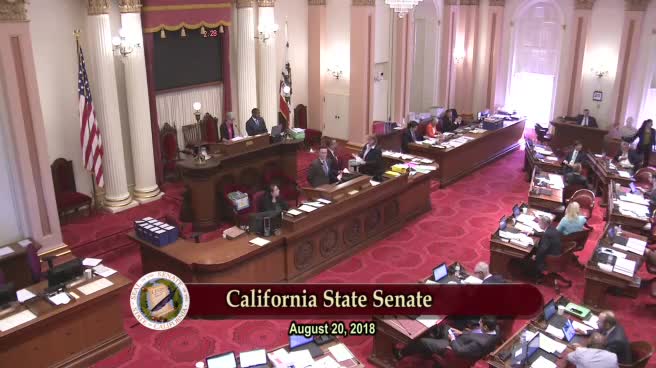 55SEC
Senate Floor
 10MIN
Senate Standing Committee on Governance and Finance
Bill Author

Bill Co-Author(s):