AB 3007: Children of incarcerated parents: support and services.
- Session Year: 2017-2018
- House: Assembly
- Latest Version Date: 2018-06-06
Existing law provides that a child whose parent has been incarcerated or institutionalized and cannot arrange for the care of the child is within the jurisdiction of the juvenile court which may adjudge that person to be a dependent child of the court. Existing law requires, if the parent or guardian of a dependent child is incarcerated, institutionalized, or detained by the United States Department of Homeland Security, the court to order reasonable family reunification services, unless the court determines, by clear and convincing evidence, those services would be detrimental to the child. Existing law also requires social workers to make reasonable efforts to collect and update necessary data regarding a childs incarcerated parent or parents.
This bill would authorize the County of Riverside to establish a program that would provide comprehensive social services to children who reside in the county, county and whose parents are currently or were formerly incarcerated at the local, state, or federal level, and who are currently enrolled in or eligible for Medi-Cal. level. The bill would require the County of Riverside, if it opts to establish the state provides any financial support for the implementation of, and the county opts to establish, that program, to prepare and submit an interim report regarding the program to the Joint Legislative Budget Committee on or before December 31, 2024, as specified, and a final report to that committee on December 31, 2028.
This bill would make legislative findings and declarations as to the necessity of a special statute for the County of Riverside.
Existing law provides that a child whose parent has been incarcerated or institutionalized and cannot arrange for the care of the child is within the jurisdiction of the juvenile court which may adjudge that person to be a dependent child of the court. Existing law requires, if the parent or guardian of a dependent child is incarcerated, institutionalized, or detained by the United States Department of Homeland Security, the court to order reasonable family reunification services, unless the court determines, by clear and convincing evidence, those services would be detrimental to the child. Existing law also requires social workers to make reasonable efforts to collect and update necessary data regarding a childs incarcerated parent or parents.
This bill would authorize the County of Riverside to establish a program that would provide comprehensive social services to children who reside in the county, whose parents are currently or were formerly incarcerated in either a county jail or the state prison, at the local, state, or federal level, and who are currently enrolled in or eligible for Medi-Cal. The bill would require the County of Riverside, if it opts to establish that program, to prepare and submit an interim report regarding the program to the Joint Legislative Budget Committee on or before December 31, 2024, as specified, and a final report to that committee on December 31, 2028.
This bill would make legislative findings and declarations as to the necessity of a special statute for the County of Riverside.
Existing law provides that a child whose parent has been incarcerated or institutionalized and cannot arrange for the care of the child is within the jurisdiction of the juvenile court which may adjudge that person to be a dependent child of the court. Existing law requires, if the parent or guardian of a dependent child is incarcerated, institutionalized, or detained by the United States Department of Homeland Security, the court to order reasonable family reunification services, unless the court determines, by clear and convincing evidence, those services would be detrimental to the child. Existing law also requires social workers to make reasonable efforts to collect and update necessary data regarding a childs incarcerated parent or parents.
This bill would express the intent of the Legislature to enact legislation that would provide support and services to the children of incarcerated parents.This bill would authorize the County of Riverside to establish a program that would provide comprehensive social services to children who reside in the county, whose parents are currently or were formerly incarcerated in either a county jail or the state prison, and who are currently enrolled in or eligible for Medi-Cal. The bill would require the County of Riverside, if it opts to establish that program, to prepare and submit an interim report regarding the program to the Joint Legislative Budget Committee on or before December 31, 2024, as specified, and a final report to that committee on December 31, 2028.
This bill would make legislative findings and declarations as to the necessity of a special statute for the County of Riverside.
Existing law provides that a child whose parent has been incarcerated or institutionalized and cannot arrange for the care of the child is within the jurisdiction of the juvenile court which may adjudge that person to be a dependent child of the court. Existing law requires, if the parent or guardian of a dependent child is incarcerated, institutionalized, or detained by the United States Department of Homeland Security, the court to order reasonable family reunification services, unless the court determines, by clear and convincing evidence, those services would be detrimental to the child. Existing law also requires social workers to make reasonable efforts to collect and update necessary data regarding a childs incarcerated parent or parents.
This bill would express the intent of the Legislature to enact legislation that would provide support and services to the children of incarcerated parents.
(a)The Legislature finds and declares all of the following:
(1)The effects of parental arrest and incarceration on a childs development are profound.
(2)Studies have consistently found that children of incarcerated parents (CIP) are more likely to become involved with the justice system, commit crimes, face numerous financial and emotional stresses, and be burdened with more health issues than their peers who do not have an incarcerated parent.
(3)The Centers for Disease Control-Kaiser Control and Prevention-Kaiser Permanente Adverse Childhood Experiences Study is one of the largest investigations of childhood abuse and neglect and later-life health and well-being. This study found that the adverse childhood experiences that negatively influence long-term health outcomes and general well-being into adulthood include the incarceration of a household member.
(4)A California Research Bureau study (2000) found that the CIP population may suffer from multiple psychological problems, including trauma, anxiety, guilt, shame, and fear. Negative behavioral manifestations associated with these problems often emerge.
(5)Absent positive intervention, a childs exposure to associated trauma, the resulting emotional response, and related reactive behavior can lead to school failure, delinquency, and adult criminal activity and incarceration.
(6)It is estimated that in 2015, 17,600 children in the County of Riverside had a parent who was incarcerated during that time.
SEC. 2.Section 18999.9 is added to the Welfare and Institutions Code, to read:18999.9.(a)As used in this section, a child of an incarcerated parent (CIP) means a child who is under 18 years of age and who meets all of the following criteria:(1)He or she currently resides in the County of Riverside.(2)His or her parent is currently or was formerly incarcerated at the local, state, or federal level.(3)He or she is currently enrolled in or eligible for Medi-Cal.(b)The County of Riverside is authorized to establish a Children of Incarcerated Parents Program to provide comprehensive social services to develop resiliency and reduce risk factors that make the CIP population more susceptible to a number of negative short- and longer-term outcomes, including becoming incarcerated as juveniles or adults.(c)The program established pursuant to subdivision (b) shall include, at a minimum, all of the following elements:(1)Delivery of program services through a designated, centralized entity at the county level of government that promotes a holistic health approach and refers participants to multiple health resources and services.(2)Delivery of appropriate resources and services proven to have positive effects for children and families who have experienced trauma.(3)At least three of the five supports and services related to the factors listed in subparagraphs (A) to (E), inclusive:(A)Physical health, including any of the following:(i)Enrollment in Medi-Cal, if the child is not already covered by insurance.(ii)Referrals, if appropriate, to medical treatment.(iii)Vision and dental check-ups and treatments.(B)Emotional health, including, but not limited to, mentorship programs.(C)Mental health, including, but not limited to, counseling services.(D)Environmental health, including, but not limited to, either of the following:(i)Tutors.(ii)Parenting classes for the caretaker of the child or the incarcerated parent.(E)Social health, including, but not limited to, either of the following:(i)After school programs.(ii)Visitation with the incarcerated parent, if appropriate for the child and the incarcerated parent.(d)Participation in the program shall be voluntary and shall be accompanied by the written consent of the custodial parent, legal guardian, or caretaker. The decision to decline or end participation in the program shall not carry any negative consequences for the child or family.(e)In accordance with any applicable County of Riverside technical services grant agreement related to outcomes measurement, and pursuant to all applicable state and federal privacy and confidentiality laws, the county shall track and report participants performance outcomes, including increased visitation with the incarcerated parent, trauma alleviation, improved mental health, improved developmental health, improved parenting practices within the family, healthy parent-child relationships, increased family stability, and indicators of reduced future justice-system involvement.(f)(1)The County of Riverside shall, if it opts to establish the program described in this section, prepare and submit an interim report regarding the Children of Incarcerated Parents Program to the Joint Legislative Budget Committee on or before December 31, 2024. The report shall contain, at a minimum, aggregated information on the number and ages of participants served, alongside performance outcomes.(2)The County of Riverside shall, if it opts to establish the program described in this section, prepare and submit a final report regarding the Children of Incarcerated Parents Program to the Joint Legislative Budget Committee on December 31, 2028. The report shall contain, at a minimum, aggregated information on the number and ages of participants served, alongside performance outcomes, as well as recommendations for the development and implementation of a Children of Incarcerated Parents Program in other counties.SEC. 2.Chapter 19 (commencing with Section 18999.9) is added to Part 6 of Division 9 of the Welfare and Institutions Code, to read:19.Children of Incarcerated Parents Program: County of Riverside18999.9.(a)As used in this section, a child of an incarcerated parent (CIP) means a child who is under 18 years of age and who meets all of the following criteria:
(1)He or she currently resides in the County of Riverside.
(2)His or her parent is currently or was formerly incarcerated at the local, state, or federal level.
(b)In addition to the eligibility criteria described in subdivision (a), the county may prioritize enrollment based on the length of separation during parental incarceration and may impose additional eligibility or prioritization criteria that best meet local needs.
(c)To avoid duplication of services for children eligible under subdivision (a) who may otherwise be receiving services such as child welfare, probation, or Medi-Cal, the county, if it elects to implement a Children of Incarcerated Parents Program, shall coordinate across involved county departments.
(d)The County of Riverside is authorized to establish a Children of Incarcerated Parents Program to provide comprehensive social services to develop resiliency and reduce risk factors that make the CIP population more susceptible to a number of negative short- and longer-term outcomes, including becoming incarcerated as juveniles or adults.
(e)The program established pursuant to subdivision (d) shall include, at a minimum, all of the following elements:
(1)Delivery of program services through a designated, centralized entity at the county level of government that promotes a holistic health approach and refers participants to multiple health resources and services.
(2)Delivery of appropriate resources and services proven to have positive effects for children and families who have experienced trauma.
(3)At least three of the five supports and services related to the factors listed in subparagraphs (A) to (E), inclusive:
(A)Physical health, including any of the following:
(i)Enrollment in Medi-Cal, if the child is not already covered by insurance.
(ii)Referrals, if appropriate, to medical treatment.
(iii)Vision and dental check-ups and treatments.
(B)Emotional health, including, but not limited to, mentorship programs.
(C)Mental health, including, but not limited to, counseling services.
(D)Environmental health, including, but not limited to, either of the following:
(i)Tutors.
(ii)Parenting classes for the caretaker of the child or the incarcerated parent.
(E)Social health, including, but not limited to, either of the following:
(i)After school programs.
(ii)Visitation with the incarcerated parent, if appropriate for the child and the incarcerated parent.
(f)Participation in the program shall be voluntary and shall be accompanied by the written consent of the custodial parent, legal guardian, or caretaker. The decision to decline or end participation in the program shall not carry any negative consequences for the child or family.
(g)In accordance with any applicable County of Riverside technical services grant agreement related to outcomes measurement, and pursuant to all applicable state and federal privacy and confidentiality laws, the county shall track and report participants performance outcomes, including increased visitation with the incarcerated parent, trauma alleviation, improved mental health, improved developmental health, improved parenting practices within the family, healthy parent-child relationships, increased family stability, and indicators of reduced future justice-system involvement.
(h)(1)The County of Riverside shall, if the state provides any financial support for the implementation of, and the county opts to establish, the program described in this section, prepare and submit an interim report regarding the Children of Incarcerated Parents Program to the Joint Legislative Budget Committee on or before December 31, 2024. The report shall contain, at a minimum, aggregated information on the number and ages of participants served, alongside performance outcomes.
(2)The County of Riverside shall, if the state provides any financial support for the implementation of, and the county opts to establish, the program described in this section, prepare and submit a final report regarding the Children of Incarcerated Parents Program to the Joint Legislative Budget Committee on December 31, 2028. The report shall contain, at a minimum, aggregated information on the number and ages of participants served, alongside performance outcomes, as well as recommendations for the development and implementation of a Children of Incarcerated Parents Program in other counties.
SEC. 3.The Legislature finds and declares that a special statute is necessary and that a general statute cannot be made applicable within the meaning of Section 16 of Article IV of the California Constitution because of the unique need in the County of Riverside to implement the program that the county has developed to provide services to the children of incarcerated parents.
(a)The Legislature finds and declares all of the following:
(1)The effects of parental arrest and incarceration on a childs development are profound.
(2)Studies have consistently found that children of incarcerated parents (CIP) are more likely to become justice-involved, involved with the justice system, commit crimes, face numerous financial and emotional stresses, and be burdened with more health issues than their peers who do not have an incarcerated parent.
(3)The Center Centers for Disease Control-Kaiser Permanente Adverse Childhood Experiences Study is one of the largest investigations of childhood abuse and neglect and later-life health and well-being. This study found that the adverse childhood experiences that negatively influence long-term health outcomes and general well-being into adulthood include the incarceration of a household member.
(4)A California Research Bureau study (2000) found that the CIP population may suffer from multiple psychological problems, including trauma, anxiety, guilt, shame, and fear. Negative behavioral manifestations associated with these problems often emerge.
(5)Absent positive intervention, a childs exposure to associated trauma, the resulting emotional response, and related reactive behavior can lead to school failure, delinquency, and adult criminal activity and incarceration.
(6)It is estimated that in 2015, 17,600 children in the County of Riverside had an incarcerated parent. a parent who was incarcerated during that time.
SEC. 2.Section 16501.85 18999.9 is added to the Welfare and Institutions Code, immediately following Section 16501.8, to read:16501.85.18999.9.(a)As used in this section, a child of an incarcerated parent (CIP) means a child who is under 18 years of age and who meets all of the following criteria:
(1)He or she currently resides in the County of Riverside.
(2)His or her parent is currently or was formerly incarcerated in either a county jail or the state prison. at the local, state, or federal level.
(3)He or she is currently enrolled in or eligible for Medi-Cal.
(b)The County of Riverside is authorized to establish a Children of Incarcerated Parents Program to provide comprehensive social services to develop resiliency and reduce risk factors that make the CIP population more susceptible to a number of negative short- and longer-term outcomes, including becoming incarcerated as juveniles or adults.
(c)The program established pursuant to subdivision (b) shall include, at a minimum, all of the following elements:
(1)Delivery of program services pursuant to a centralized hub through a designated, centralized entity at the county level of government that promotes a holistic health approach and refers participants to multiple health resources and services.
(2)Delivery of evidence-based resources and services to program participants. appropriate resources and services proven to have positive effects for children and families who have experienced trauma.
(3)Voluntary participation in the program and the written consent of the nonincarcerated parent, legal guardian, or caretaker.(4)(3)At least three of the five components supports and services related to the factors listed in subparagraphs (A) to (E), inclusive:
(A)Physical health, including any of the following:
(i)Enrollment in Medi-Cal, if the child is not already covered by insurance.
(ii)Referrals, if appropriate, to medical treatment.
(iii)Vision and dental check-ups and treatments.
(B)Emotional health, which may include including, but not limited to, mentorship programs.
(C)Mental health, which may include including, but not limited to, counseling services.
(D)Environmental health, including including, but not limited to, either of the following:
(i)Tutors.
(ii)Parenting classes for the caretaker of the child or the incarcerated parent.
(E)Social health, including including, but not limited to, either of the following:
(i)After school programs.
(ii)Visitation with the incarcerated parent, if appropriate for the child and the incarcerated parent.
(d)Participation in the program shall be voluntary and shall be accompanied by the written consent of the custodial parent, legal guardian, or caretaker. The decision to decline or end participation in the program shall not carry any negative consequences for the child or family.
(d)(e)In accordance with any applicable County of Riverside outcomes rate card development service grant agreement, technical services grant agreement related to outcomes measurement, and pursuant to all applicable state and federal privacy and confidentiality laws, the county shall track and report participants performance outcomes, including increased visitation with the incarcerated parent, trauma alleviation, improved mental health, improved developmental health, improved parenting practices within the family, reduced utilization of child welfare services, and indicators of reduced intergenerational transfer of criminal behavior. healthy parent-child relationships, increased family stability, and indicators of reduced future justice-system involvement.
(e)(f)(1)The County of Riverside shall, if it opts to establish the program described in this section, prepare and submit an interim report regarding the Children of Incarcerated Parents Program to the Joint Legislative Budget Committee on or before December 31, 2024. The report shall contain, at a minimum, aggregated information on the number and ages of participants served, including alongside performance outcomes.
(2)The County of Riverside shall, if it opts to establish the program described in this section, prepare and submit a final report regarding the Children of Incarcerated Parents Program to the Joint Legislative Budget Committee on December 31, 2028. The report shall contain, at a minimum, aggregated information on the number and ages of participants served, alongside performance outcomes, as well as recommendations for the development and implementation of a Children of Incarcerated Parents Program in other counties.
SEC. 3.The Legislature finds and declares that a special statute is necessary and that a general statute cannot be made applicable within the meaning of Section 16 of Article IV of the California Constitution because of the unique need in the County of Riverside to implement the program that the county has developed to provide services to the children of incarcerated parents.
(a)The Legislature finds and declares all of the following:
(1)The effects of parental arrest and incarceration on a childs development are profound.
(2)Studies have consistently found that children of incarcerated parents (CIP) are more likely to become justice-involved, commit crimes, face numerous financial and emotional stresses, and be burdened with more health issues than their peers who do not have an incarcerated parent.
(3)The Center for Disease Control-Kaiser Permanente Adverse Childhood Experiences Study is one of the largest investigations of childhood abuse and neglect and later-life health and well-being. This study found that the adverse childhood experiences that negatively influence long-term health outcomes and general well-being into adulthood include the incarceration of a household member.
(4)A California Research Bureau study (2000) found that the CIP population may suffer from multiple psychological problems, including trauma, anxiety, guilt, shame, and fear. Negative behavioral manifestations associated with these problems often emerge.
(5)Absent positive intervention, a childs exposure to associated trauma, the resulting emotional response, and related reactive behavior can lead to school failure, delinquency, and adult criminal activity and incarceration.
(6)It is estimated that in 2015, 17,600 children in the County of Riverside had an incarcerated parent.
SEC. 2.Section 16501.85 is added to the Welfare and Institutions Code, immediately following Section 16501.8, to read:16501.85.(a)As used in this section, a child of an incarcerated parent (CIP) means a child who is under 18 years of age and who meets all of the following criteria:
(1)He or she currently resides in the County of Riverside.
(2)His or her parent is currently or was formerly incarcerated in either a county jail or the state prison.
(3)He or she is currently enrolled in or eligible for Medi-Cal.
(b)The County of Riverside is authorized to establish a Children of Incarcerated Parents Program to provide comprehensive social services to develop resiliency and reduce risk factors that make the CIP population more susceptible to becoming incarcerated as juveniles or adults.
(c)The program established pursuant to subdivision (b) shall include, at a minimum, all of the following elements:
(1)Delivery of program services pursuant to a centralized hub that promotes a holistic health approach and refers participants to multiple health resources and services.
(2)Delivery of evidence-based resources and services to program participants.
(3)Voluntary participation in the program and the written consent of the nonincarcerated parent, legal guardian, or caretaker.
(4)At least three of the five components listed in subparagraphs (A) to (E), inclusive:
(A)Physical health, including any of the following:
(i)Enrollment in Medi-Cal, if the child is not already covered by insurance.
(ii)Referrals, if appropriate, to medical treatment.
(iii)Vision and dental check-ups and treatments.
(B)Emotional health, which may include mentorship programs.
(C)Mental health, which may include counseling services.
(D)Environmental health, including either of the following:
(i)Tutors.
(ii)Parenting classes for the caretaker of the child or the incarcerated parent.
(E)Social health, including either of the following:
(i)After school programs.
(ii)Visitation with the incarcerated parent, if appropriate for the child and the incarcerated parent.
(d)In accordance with any applicable County of Riverside outcomes rate card development service grant agreement, the county shall track and report participants performance outcomes, including increased visitation with the incarcerated parent, trauma alleviation, improved mental health, improved developmental health, improved parenting practices within the family, reduced utilization of child welfare services, and indicators of reduced intergenerational transfer of criminal behavior.
(e)(1)The County of Riverside shall, if it opts to establish the program described in this section, prepare and submit an interim report regarding the Children of Incarcerated Parents Program to the Joint Legislative Budget Committee on or before December 31, 2024. The report shall contain, at a minimum, information on the number and ages of participants served, including performance outcomes.
(2)The County of Riverside shall, if it opts to establish the program described in this section, prepare and submit a final report regarding the Children of Incarcerated Parents Program to the Joint Legislative Budget Committee on December 31, 2028.
SEC. 3.The Legislature finds and declares that a special statute is necessary and that a general statute cannot be made applicable within the meaning of Section 16 of Article IV of the California Constitution because of the unique need in the County of Riverside to implement the program that the county has developed to provide services to the children of incarcerated parents.
SECTION 1.It is the intent of the Legislature to enact legislation that would provide support and services to the children of incarcerated parents.It is the intent of the Legislature to enact legislation that would provide support and services to the children of incarcerated parents.
|
Date
|
Status
|
|---|---|
| Aug 9, 2018 | Ordered to inactive file at the request of Assembly Member Eduardo Garcia. |
| Jul 3, 2018 | In Assembly. Concurrence in Senate amendments pending. May be considered on or after July 5 pursuant to Assembly Rule 77. |
| Jul 2, 2018 | Read third time. Passed. Ordered to the Assembly. |
| Jun 25, 2018 | Read second time. Ordered to Consent Calendar. |
| Jun 21, 2018 | From committee: Do pass. To Consent Calendar. (Ayes 8. Noes 0.) (June 20). |
| Jun 13, 2018 | From committee: Do pass and re-refer to Com. on HEALTH with recommendation: To Consent Calendar. (Ayes 6. Noes 0.) (June 12). Re-referred to Com. on HEALTH. |
| Jun 6, 2018 | From committee chair, with author's amendments: Amend, and re-refer to committee. Read second time, amended, and re-referred to Com. on HUMAN S. |
| May 3, 2018 | Referred to Coms. on HUMAN S. and HEALTH. |
| Apr 19, 2018 | In Senate. Read first time. To Com. on RLS. for assignment. |
| Apr 19, 2018 | Read third time. Passed. Ordered to the Senate. (Ayes 73. Noes 0.) |
| Apr 16, 2018 | Read second time. Ordered to third reading. |
| Apr 12, 2018 | Read second time and amended. Ordered returned to second reading. |
| Apr 11, 2018 | From committee: Amend, and do pass as amended. (Ayes 7. Noes 0.) (April 10). |
| Mar 21, 2018 | Re-referred to Com. on HUM. S. |
| Mar 20, 2018 | From committee chair, with author's amendments: Amend, and re-refer to Com. on HUM. S. Read second time and amended. |
| Mar 19, 2018 | Referred to Com. on HUM. S. |
| Feb 17, 2018 | From printer. May be heard in committee March 19. |
| Feb 16, 2018 | Read first time. To print. |
|
Date
|
Description
|
Location
|
Votes
|
|
|---|---|---|---|---|
| Jul 2, 2018 | Consent Calendar AB3007 | Senate Floor |
Passed |
|
| Jun 20, 2018 | Do pass and be ordered to the Consent Calendar | Senate Standing Committee on Health |
Passed |
|
| Jun 12, 2018 | Do pass, but first be re-referred to the Committee on [Health] with the recommendation: To Consent Calendar | Senate Standing Committee on Human Services |
Passed |
|
| Apr 19, 2018 | AB 3007 GARCIA, E. Assembly Third Reading | Assembly Floor |
Passed |
|
| Apr 10, 2018 | Do pass as amended. | Assembly Standing Committee on Human Services |
Passed |
This list shows positions taken on this bill by organizations on the date displayed, which is linked to the original source.
Positions by individuals are not included.
|
Organization
|
Position
|
Date
|
|---|---|---|
| American Academy of Pediatrics | ** Support | Jun 27, 2018 |
| California Immigrant Policy Center | ** Support | Jun 27, 2018 |
| County of Riverside | ** Support | Jun 27, 2018 |
| Jenna Carson; Advocate From Moreno Valley | ** Support | Jun 8, 2018 |
| Riverside County Board of Supervisors | ** Support | Jun 27, 2018 |
CONCURRENCE IN SENATE AMENDMENTS
CSA1 Bill Id:AB 3007
Author:(Eduardo Garcia)
As Amended Ver:June 6, 2018
Majority vote
ASSEMBLY: | 73-0 | (April 19, 2018) | SENATE: | 37-0 | (July 2, 2018) |
Original Committee Reference: HUM. S.
SUMMARY: Permits Riverside County to establish a Children of Incarcerated Parents Program.
Specifically, this bill:
- Makes a number of Legislative findings and declarations related to the adverse impacts parental incarceration can have on children, as specified.
- Defines, for purposes of the provisions of this bill, a child of an incarcerated parent to mean a child who:
- is under the age of 18;
- currently resides in Riverside County; and
- has a parent who is currently or was formerly incarcerated at the local, state, or federal level.
- Authorizes Riverside County to, in addition to the eligibility criteria established by provisions of this bill, prioritize enrollment based on the length of separation during parental incarceration and, further, authorizes the county to impose additional eligibility or prioritization criteria that best meet local needs.
- Requires Riverside County to, if it elects to establish a Children of Incarcerated Parents Program, coordinate across involved county departments in order to avoid duplication of services for eligible children who may otherwise be receiving other services, as specified.
- Authorizes Riverside County to establish a Children of Incarcerated Parents Program for the provision of comprehensive social services and requires this program to include, at a minimum, the following, as specified:
- Delivery of program services through a designated, centralized entity at the county level of government that promotes a holistic health approach and refers participants to multiple health resources and services;
- Delivery of appropriate resources and services proven to have positive effects for children and families who have experienced trauma; and
- At least three of the five supports and services related to the following factors, as specified:
- Physical health;
- Emotional health;
- Mental health;
- Environmental health; and
- Social health.
- Requires participation in the Children of Incarcerated Parents Program to be voluntary and to be accompanied by written consent of the custodial parent, legal guardian, or caretaker, and further, prohibits the decision to decline or end participation in the program from carrying any negative consequences for the child or the family.
- Requires Riverside County to track and report participants' performance outcomes, as specified, in accordance with any applicable county technical services grant agreement related to outcomes measurement, and pursuant to all applicable state and federal privacy and confidentiality laws.
- Requires Riverside County, if the state provides any financial support for the implementation of, and the county opts to establish, a Children of Incarcerated Parents Program pursuant to the provisions of this bill, to prepare and submit an interim report regarding the program and containing, at a minimum, aggregated information on the number and ages of participants served and on performance outcomes to the Joint Legislative Budget Committee (JLBC) by December 31, 2024, and further, requires the county, if the state provides any financial support for the implementation of the program, to submit a final report, as specified, on the program to the JLBC by December 31, 2028.
- States Legislative findings and declarations that a special statute is necessary and general statute cannot be made applicable within the meaning put forth by the California Constitution, as specified, because of Riverside County's unique need to implement the county-developed program to serve the children of incarcerated parents.
The Senate amendments:
- Delete enrollment in, or eligibility for, Medi-Cal as a criterion for the definition of a child of an incarcerated parent for purposes of the Children of Incarcerated Parents Program.
- Add language that authorizes Riverside County to, in addition to the eligibility criteria established by provisions of this bill, prioritize enrollment based on the length of separation during parental incarceration and that, further, authorizes the county to impose additional eligibility or prioritization criteria that best meet local needs.
- Add language that requires Riverside County to, if it elects to establish a Children of Incarcerated Parents Program, coordinate across involved county departments in order to avoid duplication of services for eligible children who may otherwise be receiving other services, as specified.
- Make the requisite submission of interim and final reports to the JLBC contingent upon the state providing any financial support for the Children of Incarcerated Parents Program.
EXISTING LAW:
- Requires the California Research Bureau in the California State Library to conduct a study of the children of women who are incarcerated in state prisons, as specified, and to submit a report to the Legislature by January 1, 2003, analyzing the findings of its research, upon completion of the study. (Penal Code Section (PEN) 7440-7445)
- Requires the juvenile court to order reasonable services if the parent or guardian of a child is incarcerated, unless it is determined that such services would be detrimental to the child, and specifies that these services may include, but are not limited to: maintaining contact between the parent and the child through collect telephone calls; transportation services, when appropriate; and visitation services, when appropriate. (Welfare and Institutions Code Section (WIC) 361.5 (e)(1))
- Requires a child's case plan to include information, to the extent possible, about a parent's incarceration when it has been determined that reasonable services will be offered to the parent, as specified. (WIC 16501.1)
- Requires social workers to make reasonable efforts to collect and update necessary data regarding the incarcerated parent(s) of a child in the child welfare services system and encourages the Department of Justice, the Department of Corrections and Rehabilitation, county welfare departments, and county sheriffs to develop protocols for facilitating the exchange of information regarding the location and sentencing of the incarcerated parent(s) of a minor child who is in dependency care, as specified. (WIC 16501.8)
- Establishes the Medi-Cal program, which is administered by the State Department of Health Care Services, under which qualified low-income persons receive health care benefits and, in part, which is governed and funded by federal Medicaid program provisions. (WIC 14000 et seq.)
FISCAL EFFECT: This bill was keyed non-fiscal by the Legislative Counsel.
COMMENTS:
Children of incarcerated parents: A 2010 report from The Pew Charitable Trusts found that 2.7 million children in the U.S. had a parent who was incarcerated. This meant that one in every 28 children had an incarcerated parent, a significant increase from one in every 125 children 25 years prior. Two-thirds of parents were incarcerated for non-violent offenses. Black children, children living in poverty, children whose parents have little education, and rural children are all overrepresented among children with incarcerated parents. In 2000, the California Research Bureau estimated that 856,000 children (almost 9% of the state's children at the time) had a parent who was involved in California's adult criminal justice system. (The report noted that this figure was an estimate because "California does not request or keep family information about arrested or convicted persons.")
The incarceration of a parent can result in a number of negative outcomes for children. In the short term, many children experience trauma as the result of witnessing the arrest of a parent and subsequent loss of an attachment figure. How (and if) children are told about their parent's incarceration can also impact them; not sharing this information in an appropriate manner (including deceiving a child) can undermine a child's ability to cope and create anxiety and fear. The incarceration of a parent can also result in diminished income for the household and experiences of poverty; parental incarceration has been associated with greater risk of a child experiencing material hardship and family instability. Children with an incarcerated parent have been found to be more likely to experience adverse childhood experiences (ACES), in addition to the adverse event of that incarceration itself. These can include school problems and emotional difficulties. Some studies have shown that having an incarcerated parent as a child can contribute to poorer health outcomes as an adult. A 2015 article in The Atlantic, entitled "Why Children With Parents in Prison Are Especially Burdened," looked at recent data and reports on children with incarcerated parents and observed that, "the major takeaway is that direct interventions are needed to help keep incarcerated parents connected in positive ways with their children, and to have programs that help families, schools, and neighborhoods to cope. Without such programs – including community- and educator-awareness training designed to reduce shame and stigma surrounding incarcerated parents – a toxic cycle of crisis can develop, which could later lead to incarceration for the child."
One example of efforts to address the needs of children with incarcerated parents comes from Oregon, where the Children of Incarcerated Parents Project workgroup was convened in 2000. In 2001, the state approved SB 133, which required the Children of Incarcerated Parents Project workgroup to develop recommendations to present to the state Legislature on improving parent-child relationships while parents are involved in the criminal justice system. The recommendations that were developed covered the criminal justice spectrum: arrest, jail, sentencing, prison, and re-entry. A number of products and actions resulted, including the development of a parenting curriculum for inmates, created through a collaboration between the Oregon Department of Corrections and the Oregon Social Learning Center. Also, an Early Head Start Program was utilized at one correctional facility. According to a 2003 report from the Oregon Department of Corrections, "A joint effort between the department and Community Action Head Start of Washington County, the program serves eight children from birth through age three. The children spend three and a half hours, twice a week, in the facility, becoming part of a playgroup and receiving both health and mental health services. The inmate mothers and the children's caregivers participate in parenting classes and spend time parenting the children." And just last year, the Oregon Legislature passed Senate Bill 241, which establishes a bill of rights of children of incarcerated parents and directs the Oregon Department of Corrections to develop guidelines for utilizing that bill of rights in policy and procedure decisions that affect incarcerated individuals with children. The nine specified rights are:
- To be protected from additional trauma at the time of parental arrest;
- To be informed of the arrest in an age-appropriate manner;
- To be heard and respected by decision makers when decisions are made about the child;
- To be considered when decisions are made about the child's parent;
- To be cared for in the absence of the child's parent in a way that prioritizes the child's physical, mental, and emotional needs;
- To speak with, see, and touch the incarcerated parent;
- To be informed about local services and programs that can provide support to the child as the child deals with the parent's incarceration;
- To not be judged, labeled, or blamed for the parent's incarceration; and
- To have a lifelong relationship with the incarcerated parent.
In California, the San Francisco Children of Incarcerated Parents Partnership (SFCIPP) – a coalition of social service providers, representatives of government bodies, advocates, and other stakeholders – published a bill of rights in 2003. In 2009, the Legislature adopted Senate Concurrent Resolution No. 20, by Senator Liu (Resolution Chapter 88), which encouraged a number of state and local entities that interact with children of incarcerated parents to distribute the SFCIPP-developed bill of rights to identified children of incarcerated parents and to utilize the bill of rights for analysis and determination of procedures when making decisions about services for the children of incarcerated parents.
Need for this bill: According to the author, "Research has shown that the effects of parental arrest and incarceration on a child's development are profound. Children of incarcerated parents [CIPs] are more likely to become justice-system-involved, face numerous financial and emotional stresses, and be burdened with more health issues than their peers who do not have an incarcerated parent. In the County of Riverside, it was estimated that in 2015, 17,600 children had a parent who – at that point in time – was incarcerated. This point-in-time count likely underreports the County's CIP population, given that it would not have captured those with a parent who was previously incarcerated. The County has identified the needs of the CIP population as a priority and is seeking the authority to implement a comprehensive services program designed to boost resiliency and reduce risk factors."
RELATED AND PRIOR LEGISLATION:
AB 2250 (Thurmond), 2018, would convene a working group within the Board of State and Community Corrections to develop a set of principles guiding policy and procedural decisions impacting children of incarcerated parents, and to make recommendations to the Legislature for potential revisions to state law. It is currently in the Assembly Appropriations Committee.
AB 2380 (Alejo), Chapter 882, Statutes of 2016, required the court to provide a defendant who is charged with a felony and who is, or whom the court reasonably deems to be, as specified, the sole custodial parent of one or more minor children with: a Judicial Council form on guardianship, information regarding power of attorney for a minor child, and information regarding TrustLine background examinations, as specified.
SB 118 (Liu), Chapter 338, Statutes of 2009, sought to improve outcomes between foster youth and their incarcerated parents by requiring a youth's case plan to include information about a parent's incarceration, by requiring social workers to make reasonable efforts to collect and update data regarding a child's incarcerated parents once a data entry field has been designated in the statewide child welfare database, and by encouraging the Department of Corrections and Rehabilitation, county welfare departments, and county sheriffs to develop protocols facilitating information exchange about incarcerated parents.
SCR 20 (Liu), Resolution Chapter 88, Statutes of 2009, encouraged designated entities to distribute the Children of Incarcerated Parents Bill of Rights to children of incarcerated parents, and to invite discussion and encourage relevant departments to use the Bill of Rights as a framework for analysis and determination of procedures when making decisions about services for these children.
AB 2316 (Mazzoni), Chapter 965, Statutes of 2000, required the California Research Bureau to conduct a study of the children of women who are incarcerated in state prisons, and required certain local agencies and school districts to permit California Research Bureau to have reasonable access to specified records.
Analysis Prepared by: Daphne Hunt / HUM. S. / (916) 319-2089 FN: 0003700
Office of Senate Floor Analyses (916) 651-1520 Fax: (916) 327-4478 | AB |
CONSENT
Bill No: AB 3007
:
SENATE HUMAN SERVICES COMMITTEE: 6-0, 6/12/18
AYES: Wiener, Glazer, Leyva, McGuire, Nguyen, Portantino
NO VOTE RECORDED: Berryhill
SENATE HEALTH COMMITTEE: 8-0, 6/20/18
AYES: Pan, Nguyen, Beall, Hernandez, Leyva, Mitchell, Monning, Roth
NO VOTE RECORDED: Nielsen
ASSEMBLY FLOOR: 73-0, 4/19/18 - See last page for vote
SOURCE: Riverside County Board of Supervisors
DIGEST:
This bill authorizes the County of Riverside to establish a program that would provide comprehensive social services to children who reside in the county, whose parents are currently or were incarcerated at the local, state, or federal level.
Existing law:
- Requires the California Research Bureau in the California State Library to conduct a study of the children of women who are incarcerated in state prisons, as specified, and to submit a report to the Legislature by January 1, 2003, analyzing the findings of its research, upon completion of the study. (PEN 7440-7445)
- Establishes a system of juvenile dependency for children who are, or are at risk of, being physically, sexually, or emotionally abused, being neglected or being exploited, to ensure their safety, protection, and physical and emotional well-being, as specified. (WIC 300 et seq.)
- Provides that if a child’s parent has been incarcerated or institutionalized and cannot arrange for the care of the child, then the child is within the jurisdiction of the juvenile court and may adjudged a dependent child of the court. (WIC 300(g))
- States that the purpose of foster care law is to provide maximum safety and protection for children who are currently being physically, sexually, or emotionally abused, neglected or exploited, and to ensure the safety, protection, and physical and emotional well-being of children who are at risk of harm. (WIC 300.2)
- Requires the juvenile court to order reasonable services if the parent or guardian of a child is incarcerated, unless it is determined that such services would be detrimental to the child, and specifies that these services may include, but are not limited to: maintaining contact between the child and the parent through collect telephone calls; transportation services, when appropriate; and visitation services, when appropriate. (WIC 361.5(e)(1))
- Requires a child’s case plan to include information to the extent possible, about a parent’s incarceration when it has been determined that reasonable services will be offered to the parent, as specified. (WIC 16501.1)
- Requires social workers to make reasonable efforts to collect and update necessary data regarding the incarcerated parent(s) of a child in the child welfare services system and encourages the Department of Justice, the Department of Corrections and Rehabilitation, county welfare departments, and county sheriffs to develop protocols for facilitating the exchange of information regarding the location and sentencing of the incarcerated parent(s) of a minor child who is in dependency care, as specified. (WIC 16501.8)
- Establishes the Medi-Cal program under which qualified low-income persons receive health care benefits, which is administered by the State Department of Health Care Services, and, in part, is governed and funded by federal Medicaid program provisions. (WIC1400 et seq.)
This bill:
- Makes a number of legislative findings and declarations related to the adverse impacts parental incarceration can have on children, as specified.
- Defines “child of an incarcerated parent” (CIP) as meaning a child who is under 18 years of age and who meets the following criteria:
- Currently resides in the County of Riverside; and
- Has a parent who is currently or was formerly incarcerated at the local, state, or federal level.
- Authorizes the County of Riverside to establish a CIP Program for the provision of comprehensive social services to develop resiliency and reduce risk factors that make the CIP population more susceptible to a number of negative short-term and longer-term outcomes, including becoming incarcerated as juveniles or adults.
- Provides that the county may prioritize enrollment in their CIP Program based on the length of separation during parental incarceration and may impose additional eligibility or prioritization criteria that best meets local needs.
- Provides that, to avoid duplication of services for children eligible for the CIP Program, the County of Riverside shall coordinate across involved county departments when serving children who may also be receiving services from child welfare, probation, or Medi-Cal.
- Requires this program to include, at a minimum, the following elements:
- Delivery of program services through a designated, centralized entity at the county level of government that promotes a holistic health approach and refers participants to multiple health resources and services;
- Delivery of appropriate resources and services proven to have positive effect for children and families who have experienced trauma; and
- At least three of the five following supports and services:
- Physical health services, including any of the following, as provided;
- Emotional health services, including, but not limited to, mentorship programs;
- Mental health services, including, but not limited to, counseling services;
- Environmental health services, including, but not limited to, tutors, or parenting classes, as provided; or
- Social health services, including, but not limited to, after school programs or visitation with the incarcerated parent, if appropriate.
- Provides that participation in the CIP Program shall be voluntary and shall be accompanied by the written consent of the custodial parent, legal guardian, or caretaker, and the decision to decline or end participation shall not carry any negative consequences for the child or family.
- Requires the County of Riverside to track and report participants’ performance outcomes, including increased visitation with the incarcerated parent, trauma alleviation, improved mental health, improved developmental health, improved parenting practices within the family, healthy parent-child relationships, increased family stability, and indicators of reduced future justice-system involvement. This tracking shall be done in accordance with any applicable County of Riverside technical services grant agreement related to outcomes measurement, and pursuant to all applicable state and federal privacy and confidentiality laws.
- Requires the County of Riverside prepare and submit an interim report regarding the CIP Program to the Joint Legislative Budget Committee on or before December 31, 2024, if the County opts to establish the Program and the state provides any financial support for the implementation of the Program. Requires this report contain, at a minimum, aggregated information on the number and ages of participants served, alongside performance outcomes.
- Requires the County of Riverside to prepare and submit a final report regarding their CIP Program to the Joint Legislative Budget Committee on or before December 31, 2028, if the county opts to establish the Program and the state provides any financial support for the implementation of the Program. Requires this report contain, at a minimum, aggregated information on the number and ages of participants served, alongside performance outcomes, as well as recommendations for the development and implementation of CIP programs in other counties.
Comments
Purpose of This Bill
According to the author, “research has shown that the effects of parent’s arrest and incarceration on a child’s development are profound. CIPs are more likely to become justice-system-involved, face numerous financial and emotional stresses, and be burdened with more health issues than their peers who do not have an incarcerated parent.”
Though the hardships faced by CIPs is not unique to Riverside County, the Riverside County Board of Supervisors has identified the needs of their CIP population as a priority and is seeking the authority to implement a comprehensive services program designed to boost resiliency and reduce risk factors. In 2015 a survey was completed that estimated there were 17,600 children in Riverside County who had a parent that was incarcerated at that point in time. The author highlights that this point-in-time count likely underreports the County’s CIP population, given that it would not have captured those with a parent who was previously incarcerated. This bill provides Riverside County with the authority to serve their CIP population through a comprehensive services program at the county level.
Children of Incarcerated Parents
The Annie E. Casey Foundation estimates that more than five million children in the U.S. have had an incarcerated parent at some point in their lives.[1] The impact of surging prison populations over the past several decades has resulted in the number of children with an incarcerated parent jumping drastically. In fact, it is estimated that from 1980 to 2000 the number of kids with a father in prison or jail rose by 500 percent.[2] A 2000 report by the California Research Bureau estimated that 856,000 children in California had a parent involved in California’s adult criminal justice system, or nearly nine percent of the state’s children at that time. The report noted that this was an estimate because California does not request or keep family information about arrested or convicted persons.[3]
Many of the same concerns being raised in criminal justice reform conversations are also reflected in this population. The disproportionate impact of the criminal justice system on people of color, particularly African-American men, means children of color are more likely to experience having a parent in jail or prison.[4] For example, a 2010 report by the Pew Charitable Trusts found that one in nine African American children had a parent behind bars in 2008, while one in 28 Latino children and one in 57 white children had an incarcerated parent. Furthermore, this report suggested that children living in poverty, children whose parents had low educational attainment, and rural children were all overrepresented among CIPs.[5]
In 2015, Child Trends, a nonprofit research organization, released their report on the impact parental incarceration has on CIPs. This report found connections between parental incarceration and childhood health problems, behavioral problems, and grade retention. Their research suggested a higher number of other major, potentially traumatic life events, increased problems in school, and links to poor mental and physical health in adulthood.[6] It also found that children with an incarcerated parent are more likely to experience adverse childhood experiences (ACEs), meaning that when a parent is incarcerated the child was likely to experience traumatic stress through multiple pathways.
The report states: “First, parental incarceration involves the loss of an attachment figure, and may be particularly troubling to the child because the loss is not easily explained or understood. Second, whether or not the child witnesses the parent’s arrest, he or she may have ongoing, if sporadic, contact with law enforcement, judicial, corrections, and child welfare systems, all of which can contribute to further traumatization. On average, children who had ever had a resident parent incarcerated experienced 2.7 other ACEs, out of the eight included in the survey. Children without experience of parent incarceration had, on average, 0.7 ACEs.”
Placement of CIPs
When a custodial parent is arrested, the child may face a variety of placements. Often, those responsible for placing the child, first review whether the other parent is available to take the child. If this is not an option, then existing law provides that if a child’s parent has been incarcerated or institutionalized and cannot arrange for the care of the child, then the child is within the jurisdiction of the juvenile court and may be placed in the foster care system. This would then result in the child being treated as any other foster child, with some existing protections built into the child welfare system requiring CIPs receive certain additional services. These additional services often focus on maintaining contact between the child and their incarcerate parent, when appropriate.
CIPs may then be placed with a relative, an extended family member, or a non-relative through the child welfare system. Or their parent may arrange for a relative, extended family member, or non-relative to care for the child during their incarceration without the child entering the child welfare system. Additionally, the child may be placed with a legal guardian through the dependency court or the probate court.[7]
Efforts in California to Serve CIPs
At this time, there are no state mandated services for CIPs across California. Though there does not appear to be any prohibition on counties offering services to impacted youth, it appears that many of the currently available resources stem from the efforts of community organizations and nonprofits. For example, the Center for Restorative Justice, a nonprofit organization based out of North Hollywood, runs a “Get On the Bus” program where they provide free transportation for CIPs and their caregivers to visit incarcerated parents, as well as resources during the trip and post-trip counseling.
The Legislature has acknowledged the needs of CIPs in the past, specifically for those children and youth who may also be involved with the child welfare system (See SB 118 (Liu, Chapter 338, Statutes of 2009)). Additionally, in 2009 SCR 20 (Lui, Chapter 88, Statutes of 2009) encouraged designated entities to distribute the CIP Bill of Rights to identified CIPs, and to invite discussion and encourage relevant departments to use the bill of rights as a framework for analysis and determination of procedures when making decisions about services for these children. This bill of rights was developed and published by the San Francisco Children of Incarcerated Parents Partnership, a coalition of social service providers, representatives of government bodies, advocates, and other stakeholders, in 2003.
FISCAL EFFECT: Appropriation: Fiscal Com.: Local:
Riverside County Board of Supervisors (source)
American Academy of Pediatrics
California Immigrant Policy Center
County of Riverside
One individual
OPPOSITION: (Verified 6/27/18)
ASSEMBLY FLOOR: 73-0, 4/19/18
AYES: Acosta, Aguiar-Curry, Travis Allen, Arambula, Baker, Berman, Bigelow, Bloom, Bonta, Brough, Burke, Caballero, Carrillo, Cervantes, Chau, Chávez, Chen, Chiu, Choi, Chu, Cooley, Cooper, Cunningham, Dahle, Daly, Eggman, Flora, Fong, Frazier, Friedman, Gallagher, Eduardo Garcia, Gipson, Gloria, Gonzalez Fletcher, Gray, Grayson, Harper, Holden, Irwin, Jones-Sawyer, Kalra, Kamlager-Dove, Kiley, Lackey, Levine, Limón, Low, Maienschein, Mathis, Mayes, McCarty, Medina, Muratsuchi, Nazarian, Obernolte, O'Donnell, Patterson, Quirk-Silva, Reyes, Rodriguez, Rubio, Salas, Santiago, Steinorth, Mark Stone, Thurmond, Ting, Voepel, Waldron, Weber, Wood, Rendon
NO VOTE RECORDED: Calderon, Cristina Garcia, Melendez, Mullin, Quirk
6/27/18 14:41:11
**** END ****
A Shared Sentence: The devastating toll of parental incarceration on kids, families, and communities (April 2016) The Annie E. Casey Foundation <http://www.aecf.org/m/resourcedoc/aecf-asharedsentence-2016.pdf> (as of May 23, 2018). ↑
A Shared Sentence: The devastating toll of parental incarceration on kids, families, and communities (April 2016) The Annie E. Casey Foundation <http://www.aecf.org/m/resourcedoc/aecf-asharedsentence-2016.pdf> (as of May 23, 2018). ↑
Simmons, Charlene Wear, Children of Incarcerated Parents (March 2000) California Health Advocates < https://cahealthadvocates.org/wp-content/uploads/2007/11/V7N2.pdf> (as of May 23, 2018). ↑
A Shared Sentence: The devastating toll of parental incarceration on kids, families, and communities (April 2016) The Annie E. Casey Foundation <http://www.aecf.org/m/resourcedoc/aecf-asharedsentence-2016.pdf> (as of May 23, 2018). ↑
Collateral Costs: Incarceration’s Effect on Economic Mobility (2010) The Pew Charitable Trusts <http://www.pewtrusts.org/~/media/legacy/uploadedfiles/pcs_assets/2010/collateralcosts1pdf.pdf?la=en> (as of May 23, 2018). ↑
Murphey, David and P. Mae Cooper, Parents Behind Bars: What Happens to Their Children? (October 2105) Child Trends <https://www.childtrends.org/wp-content/uploads/2015/10/2015-42ParentsBehindBars.pdf> (as of May 31, 2018). ↑
Carol Strickman, Incarcerated Parents Manual: Legal Rights and Responsibilities, Legal Services for Prisoners with Children (2015) < http://www.courts.ca.gov/documents/BTB_23_4K_4.pdf> (as of June 6, 2018). ↑
SENATE COMMITTEE ON HEALTH
Senator Dr. Richard Pan , Chair
BILL NO: AB 3007
AUTHOR: | Eduardo Garcia | ||
VERSION: | June 6, 2018 | ||
HEARING DATE: | June 20, 2018 | ||
CONSULTANT: | Scott Bain | ||
SUBJECT: Children of incarcerated parents: support and services
SUMMARY:
Authorizes Riverside County to establish a Children of Incarcerated Parents Program to provide comprehensive social services to develop resiliency and reduce risk factors of children whose parent(s) is currently or was formerly incarcerated.
Existing law:
- Establishes the Medi-Cal program, administered by the Department of Health Care Services (DHCS), under which low income individuals are eligible for medical coverage. [WIC §14000, et seq.]
- Requires the juvenile court to order reasonable services if the parent or guardian of a child is incarcerated, unless it is determined that such services would be detrimental to the child, and specifies that these services may include, but are not limited to: maintaining contact between the parent and the child through collect telephone calls; transportation services, when appropriate; and, visitation services, when appropriate. [WIC §361.5 (e)(1)]
- Requires a child’s case plan to include information, to the extent possible, about a parent’s incarceration when it has been determined that reasonable services will be offered to the parent, as specified. [WIC §16501.1]
- Requires social workers to make reasonable efforts to collect and update necessary data regarding the incarcerated parent(s) of a child in the child welfare services system and encourages the Department of Justice, the Department of Corrections and Rehabilitation (CDCR), county welfare departments, and county sheriffs to develop protocols for facilitating the exchange of information regarding the location and sentencing of the incarcerated parent(s) of a minor child who is in dependency care, as specified. [WIC §16501.8]
This bill:
- Authorizes Riverside County to establish a Children of Incarcerated Parents Program (CIP Program) to provide comprehensive social services to develop resiliency and reduce risk factors that make the child of an incarcerated parent (CIP) population more susceptible to a number of negative short- and longer-term outcomes, including becoming incarcerated as juveniles or adults.
- Defines a ”CIP” as a child who is under 18 years of age and who meets currently resides in Riverside County and whose parent is currently or was incarcerated at the local, state, or federal level.
- Permits Riverside County to prioritize enrollment based on the length of separation during parental incarceration and to impose additional eligibility or prioritization criteria that best meet local needs.
- Requires Riverside County, if it establishes a CIP Program, to coordinate across all involved county departments to avoid duplication of services for children eligible under the CIP Program who may otherwise be receiving services such as child welfare, probation, or Medi-Cal, county.
- Requires the CIP Program to include, at a minimum, all of the following elements:
- Delivery of program services through a designated, centralized entity at the county level that promotes a holistic health approach and refers participants to multiple health resources and services; and,
- Delivery of appropriate resources and services proven to have positive effects for children and families who have experienced trauma.
- Requires the CIP Program to deliver at least three of the five supports and services related to the following factors:
- Physical health, including any of the following:
- Enrollment in Medi-Cal, if the child is not already covered by insurance;
- Referrals, if appropriate, to medical treatment; or,
- Vision and dental check-ups and treatments.
- Emotional health, including, but not limited to, mentorship programs;
- Mental health, including, but not limited to, counseling services;
- Environmental health, including, but not limited to, either of the following:
- Tutors; or,
- Parenting classes for the caretaker of the child or the incarcerated parent.
- Social health, including, but not limited to, either of the following:
- After school programs; or,
- Visitation with the incarcerated parent, if appropriate for the child and the incarcerated parent.
- Requires participation in the CIP Program to be voluntary and to be accompanied by the written consent of the custodial parent, legal guardian, or caretaker. Prohibits the decision to decline or end participation in the CIP Program from carrying any negative consequences for the child or family.
- Requires Riverside County, in accordance with any applicable technical services grant agreement related to outcomes measurement, and pursuant to all applicable state and federal privacy and confidentiality laws, to track and report participants’ performance outcomes, including increased visitation with the incarcerated parent, trauma alleviation, improved mental health, improved developmental health, improved parenting practices within the family, healthy parent-child relationships, increased family stability, and indicators of reduced future justice-system involvement.
- Requires Riverside County, if the state provides any financial support for the implementation of the CIP Program, and the county opts to establish the program, to prepare and submit to the Joint Legislative Budget Committee regarding the CIP program:
- An interim report on or before December 31, 2024, which is required to contain, at a minimum, aggregated information on the number and ages of participants served, alongside performance outcomes; and,
- A final report, which is required to contain, at a minimum, aggregated information on the number and ages of participants served, alongside performance outcomes, as well as recommendations for the development and implementation of a CIP Program in other counties.
- Makes a number of legislative findings and declarations related to the adverse impacts parental incarceration can have on children, as specified.
FISCAL EFFECT:
This bill is keyed non-fiscal.
PRIOR VOTES:
Assembly Floor: | 73 - 0 |
Assembly Human Services Committee: | 7 - 0 |
COMMENTS:
- Author’s statement. According to the author, research has shown that the effects of parental arrest and incarceration on a child’s development are profound. CIPs are more likely to become justice-system-involved, face numerous financial and emotional stresses, and be burdened with more health issues than their peers who do not have an incarcerated parent. In Riverside County, it was estimated that in 2015, 17,600 children had a parent who – at that point in time – was incarcerated. This point-in-time count likely underreports the County’s CIP population, given that it would not have captured those with a parent who was previously incarcerated. The County has identified the needs of the CIP population as a priority and is seeking the authority to implement a comprehensive, county-based program designed to boost resiliency and reduce risk factors.
- CIP. The Annie E. Casey Foundation estimates that more than five million children in the U.S. have had an incarcerated parent at some point in their lives. The impact of surging prison populations over the past several decades has resulted in the number of children with an incarcerated parent jumping drastically. It is estimated that from 1980 to 2000, the number of kids with a father in prison or jail rose by 500%. A 2000 report by the California Research Bureau (CRB) estimated that 856,000 children in California had a parent involved in California’s adult criminal justice system, or nearly 9% of the state’s children at that time. The report noted that this was an estimate because California does not request or keep family information about arrested or convicted persons.
Many of the same concerns being raised in criminal justice reform conversations are also reflected in this population. The disproportionate impact of the criminal justice system on people of color, particularly African-American men, means children of color are more likely to experience having a parent in jail or prison. For example, a 2010 report by the Pew Charitable Trusts found that one in nine African American children had a parent behind bars in 2008, while one in 28 Latino children and one in 57 white children had an incarcerated parent. Furthermore, this report suggested that children living in poverty, children whose parents had low educational attainment, and rural children were all overrepresented among CIPs.
- Double referral. This bill was heard in the Senate Human Services Committee on June 12, 2018 and passed on consent on a 6-0 vote.
- Related legislation. AB 2250 (Thurmond of 2018) would require the Board of State and Community Corrections to convene a working group, made up of specified entities as provided, on the needs of CIPs and would require the working group to, by January 1, 2020, develop guidelines for policy and procedure decisions that affect children of incarcerated parents and make recommendations to the Legislature for potential revisions to state law based on those guidelines. AB 2250 was held on the Assembly Appropriations Committee suspense file.
- Prior legislation. AB 2380 (Alejo, Chapter 882, Statutes of 2016) requires the court to provide a defendant who is charged with a felony and who is, or whom the court reasonably deems to be, as specified, the sole custodial parent of one or more minor children with the following: a Judicial Council form on guardianships; information regarding power of attorney for a minor child; and information regarding TrustLine background examinations, as specified.
SB 118 (Liu, Chapter 338, Statutes of 2009) requires a foster youth’s case plan to include information about a parent’s incarceration, requires social workers to make reasonable efforts to collect and update data regarding a child’s incarcerated parents once a data entry field has been designated in the statewide child welfare database, and encourages the CDCR, county welfare departments, and county sheriffs to develop protocols facilitating information exchange about incarcerated parents.
SCR 20 (Liu, Chapter 88, Statutes of 2009) encourages designated entities to distribute the Children of Incarcerated Parents Bill of Rights to CIPs, and to invite discussion and encourage relevant departments to use the Bill of Rights as a framework for analysis and determination of procedures when making decisions about services for these children.
AB 2316 (Mazzoni, Chapter 965, Statutes of 2000) requires the CRB to conduct a study of the children of women who are incarcerated in state prisons, and required certain local agencies and school districts to permit CRB to have reasonable access to specified records.
- Support. This bill is sponsored by the Riverside County Board of Supervisors, which states one of the county’s areas of interest is examining how to address the intergenerational impacts of justice-system involvement. The sponsor states the County is seeking the authority to implement a comprehensive services program designed to boost resiliency and reduce risk factors among CIPs.
The American Academy of Pediatrics, California (AAP-CA) writes in support that the stress of being separated from a parent is highly significant in the life of a child, and when the separation occurs because the parent is incarcerated, guilt, anxiety, shame and fear further complicate the situation with short and long-term impact on the health of these children. AAP-CA writes that CIPs are more likely to commit crimes and involved in the justice system, and researchers are just beginning to investigate intergenerational effects of adverse childhood experiences, but it is possible that the trauma of having an incarcerated parent might echo through an entire family tree.
SUPPORT AND OPPOSITION:
Support: County of Riverside (sponsor)
American Academy of Pediatrics, California
California Immigrant Policy Center
Jenna Carson, M.A., Advocate for Children with Incarcerated Parents
Oppose: None received
-- END --
SENATE COMMITTEE ON HUMAN SERVICES
Senator Wiener, Chair
2017 - 2018 Regular
Bill No: AB 3007
Author: | Eduardo Garcia | ||
Version: | June 6, 2018 | Hearing Date: | June 12, 2018 |
Urgency: | No | Fiscal: | No |
Consultant: | Marisa Shea | ||
Subject: Children of incarcerated parents: support and services
SUMMARY
This bill authorizes the County of Riverside to establish a program that would provide comprehensive social services to children who reside in the county, whose parents are currently or were incarcerated at the local, state, or federal level.
ABSTRACT
Existing law:
- Requires the California Research Bureau in the California State Library to conduct a study of the children of women who are incarcerated in state prisons, as specified, and to submit a report to the Legislature by January 1, 2003, analyzing the findings of its research, upon completion of the study. (PEN 7440-7445)
- Establishes a system of juvenile dependency for children who are, or are at risk of, being physically, sexually, or emotionally abused, being neglected or being exploited, to ensure their safety, protection, and physical and emotional well-being, as specified. (WIC 300 et seq.)
- Provides that if a child’s parent has been incarcerated or institutionalized and cannot arrange for the care of the child, then the child is within the jurisdiction of the juvenile court and may adjudged a dependent child of the court. (WIC 300(g))
- States that the purpose of foster care law is to provide maximum safety and protection for children who are currently being physically, sexually, or emotionally abused, neglected or exploited, and to ensure the safety, protection, and physical and emotional well-being of children who are at risk of harm. (WIC 300.2)
- Requires the juvenile court to order reasonable services if the parent or guardian of a child is incarcerated, unless it is determined that such services would be detrimental to the child, and specifies that these services may include, but are not limited to: maintaining contact between the child and the parent through collect telephone calls; transportation services, when appropriate; and visitation services, when appropriate. (WIC 361.5(e)(1))
- Requires a child’s case plan to include information to the extent possible, about a parent’s incarceration when it has been determined that reasonable services will be offered to the parent, as specified. (WIC 16501.1)
- Requires social workers to make reasonable efforts to collect and update necessary data regarding the incarcerated parent(s) of a child in the child welfare services system and encourages the Department of Justice, the Department of Corrections and Rehabilitation, county welfare departments, and county sheriffs to develop protocols for facilitating the exchange of information regarding the location and sentencing of the incarcerated parent(s) of a minor child who is in dependency care, as specified. (WIC 16501.8)
- Establishes the Medi-Cal program under which qualified low-income persons receive health care benefits, which is administered by the State Department of Health Care Services, and, in part, is governed and funded by federal Medicaid program provisions. (WIC1400 et seq.)
This bill:
- Makes a number of Legislative findings and declarations related to the adverse impacts parental incarceration can have on children, as specified.
- Defines “child of an incarcerated parent” (CIP) as meaning a child who is under 18 years of age and who meets the following criteria:
- Currently resides in the County of Riverside; and
- Has a parent who is currently or was formerly incarcerated at the local, state, or federal level.
- Authorizes the County of Riverside to establish a CIP Program for the provision of comprehensive social services to develop resiliency and reduce risk factors that make the CIP population more susceptible to a number of negative short-term and longer-term outcomes, including becoming incarcerated as juveniles or adults.
- Provides that the county may prioritize enrollment in their CIP Program based on the length of separation during parental incarceration and may impose additional eligibility or prioritization criteria that best meets local needs.
- Provides that, to avoid duplication of services for children eligible for the CIP program, the County of Riverside shall coordinate across involved county departments when serving children who may also be receiving services from child welfare, probation, or Medi-Cal.
- Requires this program to include, at a minimum, the following elements:
- Delivery of program services through a designated, centralized entity at the county level of government that promotes a holistic health approach and refers participants to multiple health resources and services;
- Delivery of appropriate resources and services proven to have positive effect for children and families who have experienced trauma;
- At least three of the five following supports and services:
- Physical health services, including any of the following, as provided;
- Emotional health services, including, but not limited to, mentorship programs;
- Mental health services, including, but not limited to, counseling services;
- Environmental health services, including, but not limited to, tutors, or parenting classes, as provided;
- Social health services, including, but not limited to, after school programs or visitation with the incarcerated parent, if appropriate.
- Provides that participation in the CIP program shall be voluntary and shall be accompanied by the written consent of the custodial parent, legal guardian, or caretaker, and the decision to decline or end participation shall not carry any negative consequences for the child or family.
- Requires the County of Riverside to track and report participants’ performance outcomes, including increased visitation with the incarcerated parent, trauma alleviation, improved mental health, improved developmental health, improved parenting practices within the family, healthy parent-child relationships, increased family stability, and indicators of reduced future justice-system involvement. This tracking shall be done in accordance with any applicable County of Riverside technical services grant agreement related to outcomes measurement, and pursuant to all applicable state and federal privacy and confidentiality laws.
- Requires the County of Riverside prepare and submit an interim report regarding the CIP program to the Joint Legislative Budget Committee on or before December 31, 2024, if the county opts to establish the program and the state provides any financial support for the implementation of the program. Requires this report contain, at a minimum, aggregated information on the number and ages of participants served, alongside performance outcomes.
- Requires the County of Riverside to prepare and submit a final report regarding their CIP program to the Joint Legislative Budget Committee on or before December 31, 2028, if the county opts to establish the program and the state provides any financial support for the implementation of the program. Requires this report contain, at a minimum, aggregated information on the number and ages of participants served, alongside performance outcomes, as well as recommendations for the development and implementation of CIP programs in other counties.
FISCAL IMPACT
The fiscal impact of this bill is unknown as it was keyed non-fiscal by the Legislative Counsel.
BACKGROUND AND DISCUSSION
Purpose of the bill:
According to the Author, “research has shown that the effects of parent’s arrest and incarceration on a child’s development are profound. CIPs are more likely to become justice-system-involved, face numerous financial and emotional stresses, and be burdened with more health issues than their peers who do not have an incarcerated parent.”
Though the hardships faced by CIPs is not unique to Riverside County, the Riverside County Board of Supervisors has identified the needs of their CIP population as a priority and is seeking the authority to implement a comprehensive services program designed to boost resiliency and reduce risk factors. In 2015 a survey was completed that estimated there were 17,600 children in Riverside County who had a parent that was incarcerated at that point in time. The Author highlights that this point-in-time count likely underreports the County’s CIP population, given that it would not have captured those with a parent who was previously incarcerated. This bill provides Riverside County with the authority to serve their CIP population through a comprehensive services program at the county level.
Children of Incarcerated Parents
The Annie E. Casey Foundation estimates that more than five million children in the U.S. have had an incarcerated parent at some point in their lives.[1] The impact of surging prison populations over the past several decades has resulted in the number of children with an incarcerated parent jumping drastically. In fact, it is estimated that from 1980 to 2000 the number of kids with a father in prison or jail rose by 500 percent.[2] A 2000 report by the California Research Bureau estimated that 856,000 children in California had a parent involved in California’s adult criminal justice system, or nearly nine percent of the state’s children at that time. The report noted that this was an estimate because California does not request or keep family information about arrested or convicted persons.[3]
Many of the same concerns being raised in criminal justice reform conversations are also reflected in this population. The disproportionate impact of the criminal justice system on people of color, particularly African-American men, means children of color are more likely to experience having a parent in jail or prison.[4] For example, a 2010 report by the Pew Charitable Trusts found that one in nine African American children had a parent behind bars in 2008, while one in 28 Latino children and one in 57 white children had an incarcerated parent. Furthermore, this report suggested that children living in poverty, children whose parents had low educational attainment, and rural children were all overrepresented among CIPs.[5]
In 2015, Child Trends, a nonprofit research organization, released their report on the impact parental incarceration has on CIPs. This report found connections between parental incarceration and childhood health problems, behavioral problems, and grade retention. Their research suggested a higher number of other major, potentially traumatic life events, increased problems in school, and links to poor mental and physical health in adulthood.[6] It also found that children with an incarcerated parent are more likely to experience adverse childhood experiences (ACES), meaning that when a parent is incarcerated the child was likely to experience traumatic stress through multiple pathways.
The report states: “First, parental incarceration involves the loss of an attachment figure, and may be particularly troubling to the child because the loss is not easily explained or understood. Second, whether or not the child witnesses the parent’s arrest, he or she may have ongoing, if sporadic, contact with law enforcement, judicial, corrections, and child welfare systems, all of which can contribute to further traumatization. On average, children who had ever had a resident parent incarcerated experienced 2.7 other ACEs, out of the eight included in the survey. Children without experience of parent incarceration had, on average, 0.7 ACEs.”
Placement of CIPs
When a custodial parent is arrested, the child may face a variety of placements. Often, those responsible for placing the child, first review whether the other parent is available to take the child. If this is not an option, then existing law provides that if a child’s parent has been incarcerated or institutionalized and cannot arrange for the care of the child, then the child is within the jurisdiction of the juvenile court and may be placed in the foster care system. This would then result in the child being treated as any other foster child, with some existing protections built into the child welfare system requiring CIPs receive certain additional services. These additional services often focus on maintaining contact between the child and their incarcerate parent, when appropriate.
CIPs may then be placed with a relative, an extended family member, or a non-relative through the child welfare system. Or their parent may arrange for a relative, extended family member, or non-relative to care for the child during their incarceration without the child entering the child welfare system. Additionally, the child may be placed with a legal guardian through the dependency court or the probate court.[7]
Efforts in California to serve CIPs
At this time, there are no state mandated services for CIPs across California. Though there does not appear to be any prohibition on counties offering services to impacted youth, it appears that many of the currently available resources stem from the efforts of community organizations and nonprofits. For example, the Center for Restorative Justice, a nonprofit organization based out of North Hollywood, runs a “Get On the Bus” program where they provide free transportation for CIPs and their caregivers to visit incarcerated parents, as well as resources during the trip and post-trip counseling.
The Legislature has acknowledged the needs of CIPs in the past, specifically for those children and youth who may also be involved with the child welfare system (See SB 118 (Liu, Chapter 338, Statutes of 2009). Additionally, in 2009 Senate Concurrent Resolution 20 (Lui, Chapter 88, Statutes of 2009) encouraged designated entities to distribute the CIP Bill of Rights to identified CIPs, and to invite discussion and encourage relevant departments to use the bill of rights as a framework for analysis and determination of procedures when making decisions about services for these children. This bill of rights was developed and published by the San Francisco Children of Incarcerated Parents Partnership, a coalition of social service providers, representatives of government bodies, advocates, and other stakeholders, in 2003.
Oregon’s efforts to serve CIPs
In 2000, Oregon convened the Children of Incarcerated Parents Project workgroup, which through the state’s approval of SB 133 was required to develop recommendations for the state Legislature on improving parent-child relationships while parents are involved in the criminal justice system. The workgroup developed recommendations that covered the criminal justice spectrum, from arrest through prison and re-entry, and resulted in a number of actions, including the development of a parenting curriculum for inmates, collaboration between the Oregon Department of Corrections and the Oregon Social Learning Center, and the utilization of a Head Start Program at one correctional facility.
Additionally, in 2017, the Oregon Legislature passed Senate Bill 241 (Chapter 447, Statutes of 2017), which established a bill of rights for CIPs and directed the Oregon Department of Corrections to develop guidelines for utilizing that bill of rights in policy and procedure decisions that affect incarcerated individuals with children. Oregon’s bill of rights for CIPs includes nine specified rights. They are the right to:
- be protected from additional trauma at the time of parental arrest;
- be informed of arrest in an age-appropriate manner;
- be heard and respected by decision makers when decisions are made about the child;
- be considered when decisions are made about the child’s parent;
- be cared for in the absence of the child’s parent in a way that prioritizes the child’s physical, mental, and emotional needs;
- speak with, see, and touch the incarcerated parent;
- be informed about local services and programs that can provide support to the child as the child deals with the parent’s incarceration;
- not be judged, labeled, or blamed for the parent’s incarceration; and
- have a lifelong relationship with the incarcerated parent.
Related legislation:
AB 2250 (Thurmond, 2018) would require the Board of State and Community Corrections to convene a working group, made up of specified entities as provided, on the needs of CIPs and would require the working group to, by January 1, 2020, develop guidelines for policy and procedure decisions that affect children of incarcerated parents and make recommendations to the Legislature for potential revisions to state law based on those guidelines. This bill is on the Assembly Appropriations Committee Suspense File.
AB 2380 (Alejo, Chapter 882, Statutes of 2016) requires the court to provide a defendant who is charged with a felony and who is, or whom the court reasonably deems to be, as specified, the sole custodial parent of one or more minor children with the following: a Judicial Council form on guardianships; information regarding power of attorney for a minor child; and information regarding TrustLine background examinations, as specified.
SB 118 (Liu, Chapter 338, Statutes of 2009) sought to improve outcomes between foster youth and their incarcerated parents by requiring a youth’s case plan to include information about a parent’s incarceration, by requiring social workers to make reasonable efforts to collect and update data regarding a child’s incarcerated parents once a data entry field has been designated in the statewide child welfare database, and by encouraging the Department of Corrections and Rehabilitation, county welfare departments, and county sheriffs to develop protocols facilitating information exchange about incarcerated parents.
SCR 20 (Liu, Chapter 88, Statutes of 2009) encouraged designated entities to distribute the Children of Incarcerated Parents Bill of Rights to CIPs, and to invite discussion and encourage relevant departments to use the Bill of Rights as a framework for analysis and determination of procedures when making decisions about services for these children.
AB 2316 (Mazzoni, Chapter 965, Statutes of 2000) required the California Research Bureau to conduct a study of the children of women who are incarcerated in state prisons, and required certain local agencies and school districts to permit California Research Bureau to have reasonable access to specified records.
COMMENTS
Double Referral: This bill has been double-referred. Should this bill pass out of this Committee, it will be referred to the Senate Committee on Health.
PRIOR VOTES
Assembly Floor: | 73 - 0 |
Assembly Human Services Committee: |
|
7 - 0 |
POSITIONS
Support:
Riverside County Board of Supervisors (Sponsor)
American Academy of Pediatrics
California Immigrant Policy Center
County of Riverside
Jenna Carson; Advocate from Moreno Valley
Oppose:
None received
-- END --
A Shared Sentence: The devastating toll of parental incarceration on kids, families, and communities (April 2016) The Annie E. Casey Foundation <http://www.aecf.org/m/resourcedoc/aecf-asharedsentence-2016.pdf> (as of May 23, 2018). ↑
A Shared Sentence: The devastating toll of parental incarceration on kids, families, and communities (April 2016) The Annie E. Casey Foundation <http://www.aecf.org/m/resourcedoc/aecf-asharedsentence-2016.pdf> (as of May 23, 2018). ↑
Simmons, Charlene Wear, Children of Incarcerated Parents (March 2000) California Health Advocates < https://cahealthadvocates.org/wp-content/uploads/2007/11/V7N2.pdf> (as of May 23, 2018). ↑
A Shared Sentence: The devastating toll of parental incarceration on kids, families, and communities (April 2016) The Annie E. Casey Foundation <http://www.aecf.org/m/resourcedoc/aecf-asharedsentence-2016.pdf> (as of May 23, 2018). ↑
Collateral Costs: Incarceration’s Effect on Economic Mobility (2010) The Pew Charitable Trusts <http://www.pewtrusts.org/~/media/legacy/uploadedfiles/pcs_assets/2010/collateralcosts1pdf.pdf?la=en> (as of May 23, 2018). ↑
Murphey, David and P. Mae Cooper, Parents Behind Bars: What Happens to Their Children? (October 2105) Child Trends <https://www.childtrends.org/wp-content/uploads/2015/10/2015-42ParentsBehindBars.pdf> (as of May 31, 2018). ↑
Carol Strickman, Incarcerated Parents Manual: Legal Rights and Responsibilities, Legal Services for Prisoners with Children (2015) < http://www.courts.ca.gov/documents/BTB_23_4K_4.pdf> (as of June 6, 2018). ↑
ASSEMBLY THIRD READING
ATR Bill Id:AB 3007
Author:(Eduardo Garcia)
As Amended Ver:April 12, 2018
Majority vote
Committee | Votes | Ayes | Noes |
Human Services | 7-0 | Rubio, Choi, Arambula, Maienschein, Reyes, Mark Stone, Thurmond |
SUMMARY: Permits Riverside County to establish a Children of Incarcerated Parents Program. Specifically, this bill:
- Makes a number of legislative findings and declarations related to the adverse impacts parental incarceration can have on children, as specified.
- Defines, for purposes of the provisions of this bill, a child of an incarcerated parent to mean a child who:
- Is under the age of 18;
- Currently resides in Riverside County;
- Has a parent who is currently or was formerly incarcerated at the local, state, or federal level; and
- Is enrolled in or eligible for Medi-Cal.
- Authorizes Riverside County to establish a Children of Incarcerated Parents Program for the provision of comprehensive social services and requires this program to include, at a minimum, the following, as specified:
- Delivery of program services through a designated, centralized entity at the county level of government that promotes a holistic health approach and refers participants to multiple health resources and services;
- Delivery of appropriate resources and services proven to have positive effects for children and families who have experienced trauma; and
- At least three of the five supports and services related to the following factors, as specified:
- Physical health;
- Emotional health;
- Mental health;
- Environmental health; and
- Social health.
- Requires participation in the Children of Incarcerated Parents Program to be voluntary and to be accompanied by written consent of the custodial parent, legal guardian, or caretaker, and further, prohibits the decision to decline or end participation in the program from carrying any negative consequences for the child or the family.
- Requires Riverside County to track and report participants' performance outcomes, as specified, in accordance with any applicable county technical services grant agreement related to outcomes measurement, and pursuant to all applicable state and federal privacy and confidentiality laws.
- Requires Riverside County, if it opts to establish a Children of Incarcerated Parents Program pursuant to the provisions of this bill, to prepare and submit an interim report regarding the program and containing, at a minimum, aggregated information on the number and ages of participants served and on performance outcomes to the Joint Legislative Budget Committee (JLBC) by December 31, 2024, and further, requires the county to submit a final report, as specified, on the program to the JLBC by December 31, 2028.
- States legislative findings and declarations that a special statute is necessary and general statute cannot be made applicable within the meaning put forth by the California Constitution, as specified, because of Riverside County's unique need to implement the county-developed program to serve the children of incarcerated parents.
EXISTING LAW:
- Requires the California Research Bureau in the California State Library to conduct a study of the children of women who are incarcerated in state prisons, as specified, and to submit a report to the Legislature by January 1, 2003, analyzing the findings of its research, upon completion of the study. (Penal Code Sections 7440-7445)
- Requires the juvenile court to order reasonable services if the parent or guardian of a child is incarcerated, unless it is determined that such services would be detrimental to the child, and specifies that these services may include, but are not limited to: maintaining contact between the parent and the child through collect telephone calls; transportation services, when appropriate; and visitation services, when appropriate. (Welfare and Institutions Code Section (WIC) 361.5(e)(1))
- Requires a child's case plan to include information, to the extent possible, about a parent's incarceration when it has been determined that reasonable services will be offered to the parent, as specified. (WIC 16501.1)
- Requires social workers to make reasonable efforts to collect and update necessary data regarding the incarcerated parent(s) of a child in the child welfare services system and encourages the Department of Justice, the Department of Corrections and Rehabilitation, county welfare departments, and county sheriffs to develop protocols for facilitating the exchange of information regarding the location and sentencing of the incarcerated parent(s) of a minor child who is in dependency care, as specified. (WIC 16501.8)
- Establishes the Medi-Cal program, which is administered by the State Department of Health Care Services, under which qualified low-income persons receive health care benefits and, in part, which is governed and funded by federal Medicaid program provisions. (WIC 14000)
FISCAL EFFECT: Unknown. This bill was keyed non-fiscal by the Legislative Counsel.
COMMENTS:
Children of incarcerated parents: A 2010 report from The Pew Charitable Trusts found that 2.7 million children in the United States had a parent who was incarcerated. This meant that one in every 28 children had an incarcerated parent, a significant increase from one in every 125 children 25 years prior. Two-thirds of parents were incarcerated for non-violent offenses. Black children, children living in poverty, children whose parents have little education, and rural children are all overrepresented among children with incarcerated parents. In 2000, the California Research Bureau estimated that 856,000 children (almost 9% of the state's children at the time) had a parent who was involved in California's adult criminal justice system. (The report noted that this figure was an estimate because "California does not request or keep family information about arrested or convicted persons.")
The incarceration of a parent can result in a number of negative outcomes for children. In the short term, many children experience trauma as the result of witnessing the arrest of a parent and subsequent loss of an attachment figure. How (and if) children are told about their parent's incarceration can also impact them; not sharing this information in an appropriate manner (including deceiving a child) can undermine a child's ability to cope and create anxiety and fear. The incarceration of a parent can also result in diminished income for the household and experiences of poverty; parental incarceration has been associated with greater risk of a child experiencing material hardship and family instability. Children with an incarcerated parent have been found to be more likely to experience adverse childhood experiences (ACES), in addition to the adverse event of that incarceration itself. These can include school problems and emotional difficulties. Some studies have shown that having an incarcerated parent as a child can contribute to poorer health outcomes as an adult. A 2015 article in The Atlantic, entitled "Why Children With Parents in Prison Are Especially Burdened," looked at recent data and reports on children with incarcerated parents and observed that, "the major takeaway is that direct interventions are needed to help keep incarcerated parents connected in positive ways with their children, and to have programs that help families, schools, and neighborhoods to cope. Without such programs – including community- and educator-awareness training designed to reduce shame and stigma surrounding incarcerated parents – a toxic cycle of crisis can develop, which could later lead to incarceration for the child."
One example of efforts to address the needs of children with incarcerated parents comes from Oregon, where the Children of Incarcerated Parents Project workgroup was convened in 2000. In 2001, the state approved SB 133, which required the Children of Incarcerated Parents Project workgroup to develop recommendations to present to the state Legislature on improving parent-child relationships while parents are involved in the criminal justice system. The recommendations that were developed covered the criminal justice spectrum: arrest, jail, sentencing, prison, and re-entry. A number of products and actions resulted, including the development of a parenting curriculum for inmates, created through a collaboration between the Oregon Department of Corrections and the Oregon Social Learning Center. Also, an Early Head Start Program was utilized at one correctional facility. According to a 2003 report from the Oregon Department of Corrections, "A joint effort between the department and Community Action Head Start of Washington County, the program serves eight children from birth through age three. The children spend three and a half hours, twice a week, in the facility, becoming part of a playgroup and receiving both health and mental health services. The inmate mothers and the children's caregivers participate in parenting classes and spend time parenting the children." And just last year, the Oregon Legislature passed Senate Bill 241, which establishes a bill of rights of children of incarcerated parents and directs the Oregon Department of Corrections to develop guidelines for utilizing that bill of rights in policy and procedure decisions that affect incarcerated individuals with children. The nine specified rights are:
- To be protected from additional trauma at the time of parental arrest;
- To be informed of the arrest in an age-appropriate manner;
- To be heard and respected by decision makers when decisions are made about the child;
- To be considered when decisions are made about the child's parent;
- To be cared for in the absence of the child's parent in a way that prioritizes the child's physical, mental, and emotional needs;
- To speak with, see, and touch the incarcerated parent;
- To be informed about local services and programs that can provide support to the child as the child deals with the parent's incarceration;
- To not be judged, labeled, or blamed for the parent's incarceration; and
- To have a lifelong relationship with the incarcerated parent.
In California, the San Francisco Children of Incarcerated Parents Partnership (SFCIPP) – a coalition of social service providers, representatives of government bodies, advocates, and other stakeholders – published a bill of rights in 2003. In 2009, the Legislature adopted Senate Concurrent Resolution No. 20, by Senator Liu, which encouraged a number of state and local entities that interact with children of incarcerated parents to distribute the SFCIPP-developed bill of rights to identified children of incarcerated parents and to utilize the bill of rights for analysis and determination of procedures when making decisions about services for the children of incarcerated parents.
Need for this bill: According to the author, "Research has shown that the effects of parental arrest and incarceration on a child's development are profound. Children of incarcerated parents [CIPs] are more likely to become justice-system-involved, face numerous financial and emotional stresses, and be burdened with more health issues than their peers who do not have an incarcerated parent. In the County of Riverside, it was estimated that in 2015, 17,600 children had a parent who – at that point in time – was incarcerated. This point-in-time count likely underreports the County's CIP population, given that it would not have captured those with a parent who was previously incarcerated. The County has identified the needs of the CIP population as a priority and is seeking the authority to implement a comprehensive services program designed to boost resiliency and reduce risk factors."
RELATED AND PRIOR LEGISLATION:
AB 2250 (Thurmond) of the current legislative session, would convene a working group within the Board of State and Community Corrections to develop a set of principles guiding policy and procedural decisions impacting children of incarcerated parents, and to make recommendations to the Legislature for potential revisions to state law. It is currently awaiting assignment in the Senate Rules Committee.
AB 2380 (Alejo), Chapter 882, Statutes of 2016, required the court to provide a defendant who is charged with a felony and who is, or whom the court reasonably deems to be, as specified, the sole custodial parent of one or more minor children with: a Judicial Council form on guardianship, information regarding power of attorney for a minor child, and information regarding TrustLine background examinations, as specified.
SB 118 (Liu), Chapter 338, Statutes of 2009, sought to improve outcomes between foster youth and their incarcerated parents by requiring a youth's case plan to include information about a parent's incarceration, by requiring social workers to make reasonable efforts to collect and update data regarding a child's incarcerated parents once a data entry field has been designated in the statewide child welfare database, and by encouraging the Department of Corrections and Rehabilitation, county welfare departments, and county sheriffs to develop protocols facilitating information exchange about incarcerated parents.
SCR 20 (Liu), Chapter 88, Statutes of 2009, encouraged designated entities to distribute the Children of Incarcerated Parents Bill of Rights to children of incarcerated parents, and to invite discussion and encourage relevant departments to use the Bill of Rights as a framework for analysis and determination of procedures when making decisions about services for these children.
AB 2316 (Mazzoni), Chapter 965, Statutes of 2000, required the California Research Bureau to conduct a study of the children of women who are incarcerated in state prisons, and required certain local agencies and school districts to permit California Research Bureau to have reasonable access to specified records.
Analysis Prepared by: Daphne Hunt / HUM. S. / (916) 319-2089 FN: 0002692
Date of Hearing: April 10, 2018
ASSEMBLY COMMITTEE ON HUMAN SERVICES
Blanca Rubio, Chair
ABPCA Bill Id:AB 3007 (
Author:Eduardo Garcia) – As Amended Ver:March 20, 2018
SUBJECT: Children of incarcerated parents: support and services
SUMMARY: Permits Riverside County to establish a Children of Incarcerated Parents Program.
Specifically, this bill:
- Makes a number of Legislative findings and declarations related to the adverse impacts parental incarceration can have on children, as specified.
- Defines, for purposes of the provisions of this bill, a child of an incarcerated parent to mean a child who:
- is under the age of 18;
- currently resides in Riverside County;
- has a parent who is currently or was formerly incarcerated in a county jail or state prison; and
- is enrolled in or eligible for Medi-Cal.
- Authorizes Riverside County to establish a Children of Incarcerated Parents Program for the provision of comprehensive social services and requires this program to include, at a minimum, the following, as specified:
- Delivery of program services pursuant to a centralized hub that promotes a holistic health approach and refers participants to multiple health resources and services;
- Delivery of evidence-based resources and services to program participants;
- Voluntary participation in the program and the written consent of the non-incarcerated parent, legal guardian, or caretaker; and
- At least three of the following components, as specified:
- Physical health;
- Emotional health;
- Mental health;
- Environmental health; and
- Social health.
- Requires Riverside County to track and report participants’ performance outcomes, as specified, in accordance with any applicable county outcomes rate card development service grant agreement.
- Requires Riverside County, if it opts to establish a Children of Incarcerated Parents Program pursuant to the provisions of this bill, to prepare and submit an interim report regarding the program and containing, at a minimum, information on the number and ages of participants served and on performance outcomes to the Joint Legislative Budget Committee (JLBC) by December 31, 2024, and further, requires the county to submit a final report on the program to the JLBC by December 31, 2028.
- States Legislative findings and declarations that a special statute is necessary and general statute cannot be made applicable within the meaning put forth by the California Constitution, as specified, because of Riverside County’s unique need to implement the county-developed program to serve the children of incarcerated parents.
EXISTING LAW:
- Requires the California Research Bureau in the California State Library to conduct a study of the children of women who are incarcerated in state prisons, as specified, and to submit a report to the Legislature by January 1, 2003, analyzing the findings of its research, upon completion of the study. (PEN 7440-7445)
- Requires the juvenile court to order reasonable services if the parent or guardian of a child is incarcerated, unless it is determined that such services would be detrimental to the child, and specifies that these services may include, but are not limited to: maintaining contact between the parent and the child through collect telephone calls; transportation services, when appropriate; and visitation services, when appropriate. (WIC 361.5 (e)(1))
- Requires a child’s case plan to include information, to the extent possible, about a parent’s incarceration when it has been determined that reasonable services will be offered to the parent, as specified. (WIC 16501.1)
- Requires social workers to make reasonable efforts to collect and update necessary data regarding the incarcerated parent(s) of a child in the child welfare services system and encourages the Department of Justice, the Department of Corrections and Rehabilitation, county welfare departments, and county sheriffs to develop protocols for facilitating the exchange of information regarding the location and sentencing of the incarcerated parent(s) of a minor child who is in dependency care, as specified. (WIC 16501.8)
- Establishes the Medi-Cal program, which is administered by the State Department of Health Care Services, under which qualified low-income persons receive health care benefits and, in part, which is governed and funded by federal Medicaid program provisions. (WIC 14000 et seq.)
FISCAL EFFECT: Unknown.
COMMENTS:
Children of incarcerated parents: A 2010 report from The Pew Charitable Trusts found that 2.7 million children in the U.S. had a parent who was incarcerated. This meant that one in every 28 children had an incarcerated parent, a significant increase from one in every 125 children 25 years prior. Two-thirds of parents were incarcerated for non-violent offenses. Black children, children living in poverty, children whose parents have little education, and rural children are all overrepresented among children with incarcerated parents. In 2000, the California Research Bureau estimated that 856,000 children (almost 9% of the state’s children at the time) had a parent who was involved in California’s adult criminal justice system. (The report noted that this figure was an estimate because “California does not request or keep family information about arrested or convicted persons.”)
The incarceration of a parent can result in a number of negative outcomes for children. In the short term, many children experience trauma as the result of witnessing the arrest of a parent and subsequent loss of an attachment figure. How (and if) children are told about their parent’s incarceration can also impact them; not sharing this information in an appropriate manner (including deceiving a child) can undermine a child’s ability to cope and create anxiety and fear. The incarceration of a parent can also result in diminished income for the household and experiences of poverty; parental incarceration has been associated with greater risk of a child experiencing material hardship and family instability. Children with an incarcerated parent have been found to be more likely to experience adverse childhood experiences (ACES), in addition to the adverse event of that incarceration itself. These can include school problems and emotional difficulties. Some studies have shown that having an incarcerated parent as a child can contribute to poorer health outcomes as an adult. A 2015 article in The Atlantic, entitled “Why Children With Parents in Prison Are Especially Burdened,” looked at recent data and reports on children with incarcerated parents and observed that, “the major takeaway is that direct interventions are needed to help keep incarcerated parents connected in positive ways with their children, and to have programs that help families, schools, and neighborhoods to cope. Without such programs – including community- and educator-awareness training designed to reduce shame and stigma surrounding incarcerated parents – a toxic cycle of crisis can develop, which could later lead to incarceration for the child.”
One example of efforts to address the needs of children with incarcerated parents comes from Oregon, where the Children of Incarcerated Parents Project workgroup was convened in 2000. In 2001, the state approved SB 133, which required the Children of Incarcerated Parents Project workgroup to develop recommendations to present to the state Legislature on improving parent-child relationships while parents are involved in the criminal justice system. The recommendations that were developed covered the criminal justice spectrum: arrest, jail, sentencing, prison, and re-entry. A number of products and actions resulted, including the development of a parenting curriculum for inmates, created through a collaboration between the Oregon Department of Corrections and the Oregon Social Learning Center. Also, an Early Head Start Program was utilized at one correctional facility. According to a 2003 report from the Oregon Department of Corrections, “A joint effort between the department and Community Action Head Start of Washington County, the program serves eight children from birth through age three. The children spend three and a half hours, twice a week, in the facility, becoming part of a playgroup and receiving both health and mental health services. The inmate mothers and the children’s caregivers participate in parenting classes and spend time parenting the children.” And just last year, the Oregon Legislature passed Senate Bill 241, which establishes a bill of rights of children of incarcerated parents and directs the Oregon Department of Corrections to develop guidelines for utilizing that bill of rights in policy and procedure decisions that affect incarcerated individuals with children. The nine specified rights are:
- To be protected from additional trauma at the time of parental arrest;
- To be informed of the arrest in an age-appropriate manner;
- To be heard and respected by decision makers when decisions are made about the child;
- To be considered when decisions are made about the child’s parent;
- To be cared for in the absence of the child’s parent in a way that prioritizes the child’s physical, mental, and emotional needs;
- To speak with, see, and touch the incarcerated parent;
- To be informed about local services and programs that can provide support to the child as the child deals with the parent’s incarceration;
- To not be judged, labeled, or blamed for the parent’s incarceration; and
- To have a lifelong relationship with the incarcerated parent.
In California, the San Francisco Children of Incarcerated Parents Partnership (SFCIPP) – a coalition of social service providers, representatives of government bodies, advocates, and other stakeholders – published a bill of rights in 2003. In 2009, the Legislature adopted Senate Concurrent Resolution No. 20, by Senator Liu, which encouraged a number of state and local entities that interact with children of incarcerated parents to distribute the SFCIPP-developed bill of rights to identified children of incarcerated parents and to utilize the bill of rights for analysis and determination of procedures when making decisions about services for the children of incarcerated parents.
Need for this bill: According to the author, “Research has shown that the effects of parental arrest and incarceration on a child’s development are profound. Children of incarcerated parents [CIPs] are more likely to become justice-system-involved, face numerous financial and emotional stresses, and be burdened with more health issues than their peers who do not have an incarcerated parent. In the County of Riverside, it was estimated that in 2015, 17,600 children had a parent who – at that point in time – was incarcerated. This point-in-time count likely underreports the County’s CIP population, given that it would not have captured those with a parent who was previously incarcerated. The County has identified the needs of the CIP population as a priority and is seeking the authority to implement a comprehensive services program designed to boost resiliency and reduce risk factors.”
Recommended amendments: In order to place the provisions of this bill in a more appropriate section of Welfare and Institutions Code so as to make clear that this bill is not specific to the child welfare services system, to ensure that lack of voluntary participation in the proposed program shall carry no negative consequences, to provide for the development of recommendations for other counties wishing to institute such a program, and to make technical changes to clarify and further the intent of the bill, committee staff recommends the following amendments beginning on line 6 of page 2 of the bill:
The people of the State of California do enact as follows:
P2 1
SECTION 1. (a) The Legislature finds and declares all of the
2
following:
3
(1) The effects of parental arrest and incarceration on a child’s
4
development are profound.
5
(2) Studies have consistently found that children of incarcerated
6
parents (CIP) are more likely to become justice-system-involved, commit
7
crimes, face numerous financial and emotional stresses, and be
8
burdened with more health issues than their peers who do not have
9
an incarcerated parent.
10
(3) The Centers for Disease Control-Kaiser Permanente Adverse
11
Childhood Experiences Study is one of the largest investigations
12
of childhood abuse and neglect and later-life health and well-being.
13
This study found that the adverse childhood experiences that
14
negatively influence long-term health outcomes and general
15
well-being into adulthood include the incarceration of a household
16
member.
17
(4) A California Research Bureau study (2000) found that the
18
CIP population may suffer from multiple psychological problems,
19
including trauma, anxiety, guilt, shame, and fear. Negative
20
behavioral manifestations associated with these problems often
21
emerge.
22
(5) Absent positive intervention, a child’s exposure to associated
23
trauma, the resulting emotional response, and related reactive
24
behavior can lead to school failure, delinquency, and adult
25
criminal activity and incarceration.
26
(6) It is estimated that in 2015, 17,600 children in the County
27
of Riverside had an incarcerated a parent who was incarcerated at that point in time.
P3 1
SEC. 2. Section 16501.85 18999.9 is added to the Welfare and
2
Institutions Code, immediately following Section 16501.8, to read:
3
16501.85 18999.9. (a) As used in this section, a child of an incarcerated
4
parent (CIP) means a child who is under 18 years of age and who
5
meets all of the following criteria:
6
(1) He or she currently resides in the County of Riverside.
7
(2) His or her parent is currently or was formerly incarcerated
8
in either a county jail or the state prison at the local, state, or federal level.
9
(3) He or she is currently enrolled in or eligible for Medi-Cal.
10
(b) The County of Riverside is authorized to establish a Children
11
of Incarcerated Parents Program to provide comprehensive social
12
services to develop resiliency and reduce risk factors that make
13
the CIP population more susceptible to a number of negative short- and longer-term outcomes, including becoming incarcerated as
14
juveniles or adults.
15
(c) The program established pursuant to subdivision (b) shall
16
include, at a minimum, all of the following elements:
17
(1) Delivery of program services pursuant to through a designated, centralized hub entity at the county level of government
18
that promotes a holistic health approach and refers participants
19
to multiple health resources and services.
20
(2) Delivery of evidence-based resources and services to
21
program participants. appropriate resources and services proven to have positive effects for children and families who have experienced trauma.
22
(3) Voluntary participation in the program and the written
23
consent of the nonincarcerated parent, legal guardian, or
24
caretaker.
25
(4) (3) At least three of the five components supports and services related to the factors listed in subparagraphs
26
(A) to (E), inclusive:
27
(A) Physical health, including any of the following:
28
(i) Enrollment in Medi-Cal, if the child is not already covered
29
by insurance.
30
(ii) Referrals, if appropriate, to medical treatment.
31
(iii) Vision and dental check-ups and treatments.
32
(B) Emotional health, which may include including, but not limited to, mentorship programs.
33
(C) Mental health, which may include including, but not limited to, counseling services.
34
(D) Environmental health, including, but not limited to, either of the following:
35
(i) Tutors.
36
(ii) Parenting classes for the caretaker of the child or the
37
incarcerated parent.
38
(E) Social health, including, but not limited to, either of the following:
39
(i) After school programs.
P4 1
(ii) Visitation with the incarcerated parent, if appropriate for
2
the child and the incarcerated parent.
(d) Participation in the program is voluntary and must be accompanied by the written consent of the custodial parent, legal guardian, or caretaker. The decision to decline or end participation in the program shall not carry any negative consequences for the child or family.
3
(d) (e) In accordance with any applicable County of Riverside
4
outcomes rate card development service grant agreement, technical services grant agreement related to outcomes measurement, and pursuant to all applicable state and federal privacy and confidentiality laws, the
5
county shall track and report participants’ performance outcomes,
6
including increased visitation with the incarcerated parent, trauma
7
alleviation, improved mental health, improved developmental
8
health, improved parenting practices within the family, reduced
9
utilization of child welfare services, healthy parent-child relationships, increased family stability, and indicators of reduced
10
intergenerational transfer of criminal behavior future justice-system involvement.
11
(e) (f) (1) The County of Riverside shall, if it opts to establish the
12
program described in this section, prepare and submit an interim
13
report regarding the Children of Incarcerated Parents Program
14
to the Joint Legislative Budget Committee on or before December
15
31, 2024. The report shall contain, at a minimum, aggregated information on
16
the number and ages of participants served, including alongside performance
17
outcomes.
18
(2) The County of Riverside shall, if it opts to establish the
19
program described in this section, prepare and submit a final
20
report regarding the Children of Incarcerated Parents Program
21
to the Joint Legislative Budget Committee on December 31, 2028. The report shall contain, at a minimum, aggregated information on the number and ages of participants served, alongside performance outcomes, as well as recommendations for the development and implementation of a CIP program in other counties.
RELATED AND PRIOR LEGISLATION:
AB 2250 (Thurmond), 2018, would require the Board of State and Community Corrections to convene a working group, made up of specified entities, on the needs of children of incarcerated parents and would require the working group to, by January 1, 2020, develop guidelines for policy and procedure decisions that affect children of incarcerated parents and make recommendations to the Legislature for potential revisions to state law based on those guidelines. It is scheduled to be heard in the Assembly Public Safety Committee on April 10.
AB 2380 (Alejo), Chapter 882, Statutes of 2016, required the court to provide a defendant who is charged with a felony and who is, or whom the court reasonably deems to be, as specified, the sole custodial parent of one or more minor children with: a Judicial Council form on guardianship, information regarding power of attorney for a minor child, and information regarding TrustLine background examinations, as specified.
SB 118 (Liu), Chapter 338, Statutes of 2009, sought to improve outcomes between foster youth and their incarcerated parents by requiring a youth’s case plan to include information about a parent’s incarceration, by requiring social workers to make reasonable efforts to collect and update data regarding a child's incarcerated parents once a data entry field has been designated in the statewide child welfare database, and by encouraging the Department of Corrections and Rehabilitation, county welfare departments, and county sheriffs to develop protocols facilitating information exchange about incarcerated parents.
SCR 20 (Liu), Chapter 88, Statutes of 2009, encouraged designated entities to distribute the Children of Incarcerated Parents Bill of Rights to children of incarcerated parents, and to invite discussion and encourage relevant departments to use the Bill of Rights as a framework for analysis and determination of procedures when making decisions about services for these children.
AB 2316 (Mazzoni), Chapter 965, Statutes of 2000, required the California Research Bureau to conduct a study of the children of women who are incarcerated in state prisons, and required certain local agencies and school districts to permit California Research Bureau to have reasonable access to specified records.
REGISTERED SUPPORT / OPPOSITION:
Support
California Immigrant Policy Center
Riverside County Board of Supervisors – sponsor
Opposition
None on file.
Analysis Prepared by: Daphne Hunt / HUM. S. / (916) 319-2089
Discussed in Hearing
View Older Hearings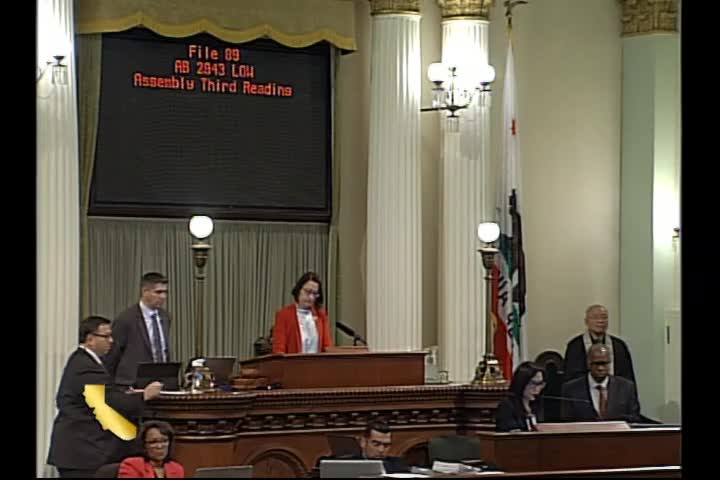
Bill Author

Bill Co-Author(s):