AB 3047: Court fees: waiver: Indian Child Welfare Act.
- Session Year: 2017-2018
- House: Assembly
- Latest Version Date: 2018-09-14
Existing law establishes fees for various court filings, including a $500 fee for filing in superior court an application to appear as counsel pro hac vice and a fee for the annual renewal of that application.
This bill would waive the fee and renewal fee for filing pro hac vice when the applicant is an attorney representing a tribe in a child welfare matter under the federal Indian Child Welfare Act.
(a)Except as provided in subdivisions (d) and (e), the uniform fee for filing a motion, application, or any other paper requiring a hearing subsequent to the first paper, is sixty dollars ($60). Papers for which this fee shall be charged include the following:
(1)A motion listed in paragraphs (1) to (12), inclusive, of subdivision (a) of Section 1005 of the Code of Civil Procedure.
(2)A motion or application to continue a trial date.
(3)An application for examination of a third person controlling defendants property under Section 491.110 or 491.150 of the Code of Civil Procedure.
(4)Discovery motions under Title 4 (commencing with Section 2016.010) of Part 4 of the Code of Civil Procedure.
(5)A motion for a new trial of a civil action or special proceeding.
(6)An application for an order for a judgment debtor examination under Section 708.110 or 708.160 of the Code of Civil Procedure.
(7)An application for an order of sale of a dwelling under Section 704.750 of the Code of Civil Procedure.
(8)An ex parte application that requires a party to give notice of the ex parte appearance to other parties.
(b)There shall be no fee under subdivision (a) or (c) for filing any of the following:
(1)A motion, application, demurrer, request, notice, or stipulation and order that is the first paper filed in an action and on which a first paper filing fee is paid.
(2)An amended notice of motion.
(3)A civil case management statement.
(4)A request for trial de novo after judicial arbitration.
(5)A stipulation that does not require an order.
(6)A request for an order to prevent civil harassment.
(7)A request for an order to prevent domestic violence.
(8)A request for entry of default or default judgment.
(9)A paper requiring a hearing on a petition for emancipation of a minor.
(10)A paper requiring a hearing on a petition for an order to prevent abuse of an elder or dependent adult.
(11)A paper requiring a hearing on a petition for a writ of review, mandate, or prohibition.
(12)A paper requiring a hearing on a petition for a decree of change of name or gender.
(13)A paper requiring a hearing on a petition to approve the compromise of a claim of a minor.
(c)The fee for filing the following papers not requiring a hearing is twenty dollars ($20):
(1)A request, application, or motion for, or a notice of, the continuance of a hearing or case management conference. The fee shall be charged no more than once for each continuance. The fee shall not be charged if the continuance is required by the court.
(2)A stipulation and order.
(3)A request for an order authorizing service of summons by posting or by publication under Section 415.45 or 415.50 of the Code of Civil Procedure.
(d)The fee for filing a motion for summary judgment or summary adjudication of issues is five hundred dollars ($500).
(e)(1)The fee for filing in the superior court an application to appear as counsel pro hac vice is five hundred dollars ($500). This fee is in addition to any other fee required of the applicant. Two hundred fifty dollars ($250) of the fee collected under this paragraph shall be transmitted to the state for deposit into the Immediate and Critical Needs Account of the State Court Facilities Construction Fund, established in Section 70371.5. The remaining two hundred fifty dollars ($250) of the fee shall be transmitted to the state for deposit into the Trial Court Trust Fund, established in Section 68085.
(2)An attorney whose application to appear as counsel pro hac vice has been granted shall pay to the superior court, on or before the anniversary of the date the application was granted, an annual renewal fee of five hundred dollars ($500) for each year that the attorney maintains pro hac vice status in the case in which the application was granted. The entire fee collected under this paragraph shall be transmitted to the state for deposit into the Trial Court Trust Fund, established in Section 68085.
(3)Fees imposed by this subdivision shall be waived when the applicant is an attorney representing a tribe in a child welfare matter under the federal Indian Child Welfare Act (25 U.S.C. Sec. 1901 et seq.).
(f)Regardless of whether each motion or matter is heard at a single hearing or at separate hearings, the filing fees required by subdivisions (a), (c), (d), and (e) apply separately to each motion or other paper filed. The Judicial Council may publish rules to give uniform guidance to courts in applying fees under this section.
(g)This section shall become inoperative on July 1, 2023, and, as of January 1, 2024, is repealed, unless a later enacted statute, that becomes operative on or before January 1, 2024, deletes or extends the dates on which it becomes inoperative and is repealed.
SEC. 2.Section 70617 of the Government Code, as amended by Section 13 of Chapter 45 of the Statutes of 2018, is amended to read:70617.(a)Except as provided in subdivisions (d) and (e), the uniform fee for filing a motion, application, or any other paper requiring a hearing subsequent to the first paper, is forty dollars ($40). Papers for which this fee shall be charged include the following:
(1)A motion listed in paragraphs (1) to (12), inclusive, of subdivision (a) of Section 1005 of the Code of Civil Procedure.
(2)A motion or application to continue a trial date.
(3)An application for examination of a third person controlling defendants property under Section 491.110 or 491.150 of the Code of Civil Procedure.
(4)Discovery motions under Title 4 (commencing with Section 2016.010) of Part 4 of the Code of Civil Procedure.
(5)A motion for a new trial of a civil action or special proceeding.
(6)An application for an order for a judgment debtor examination under Section 708.110 or 708.160 of the Code of Civil Procedure.
(7)An application for an order of sale of a dwelling under Section 704.750 of the Code of Civil Procedure.
(8)An ex parte application that requires a party to give notice of the ex parte appearance to other parties.
(b)There shall be no fee under subdivision (a) or (c) for filing any of the following:
(1)A motion, application, demurrer, request, notice, or stipulation and order that is the first paper filed in an action and on which a first paper filing fee is paid.
(2)An amended notice of motion.
(3)A civil case management statement.
(4)A request for trial de novo after judicial arbitration.
(5)A stipulation that does not require an order.
(6)A request for an order to prevent civil harassment.
(7)A request for an order to prevent domestic violence.
(8)A request for entry of default or default judgment.
(9)A paper requiring a hearing on a petition for emancipation of a minor.
(10)A paper requiring a hearing on a petition for an order to prevent abuse of an elder or dependent adult.
(11)A paper requiring a hearing on a petition for a writ of review, mandate, or prohibition.
(12)A paper requiring a hearing on a petition for a decree of change of name or gender.
(13)A paper requiring a hearing on a petition to approve the compromise of a claim of a minor.
(c)The fee for filing the following papers not requiring a hearing is twenty dollars ($20):
(1)A request, application, or motion for, or a notice of, the continuance of a hearing or case management conference. The fee shall be charged no more than once for each continuance. The fee shall not be charged if the continuance is required by the court.
(2)A stipulation and order.
(3)A request for an order authorizing service of summons by posting or by publication under Section 415.45 or 415.50 of the Code of Civil Procedure.
(d)The fee for filing a motion for summary judgment or summary adjudication of issues is five hundred dollars ($500).
(e)(1)The fee for filing in the superior court an application to appear as counsel pro hac vice is five hundred dollars ($500). This fee is in addition to any other fee required of the applicant. Two hundred fifty dollars ($250) of the fee collected under this paragraph shall be transmitted to the state for deposit into the Immediate and Critical Needs Account of the State Court Facilities Construction Fund, established in Section 70371.5. The remaining two hundred fifty dollars ($250) of the fee shall be transmitted to the state for deposit into the Trial Court Trust Fund, established in Section 68085.
(2)An attorney whose application to appear as counsel pro hac vice has been granted shall pay to the superior court, on or before the anniversary of the date the application was granted, an annual renewal fee of five hundred dollars ($500) for each year that the attorney maintains pro hac vice status in the case in which the application was granted. The entire fee collected under this paragraph shall be transmitted to the state for deposit into the Trial Court Trust Fund, established in Section 68085.
(3)Fees imposed by this subdivision shall be waived when the applicant is an attorney representing a tribe in a child welfare matter under the federal Indian Child Welfare Act (25 U.S.C. Sec. 1901 et seq.).
(f)Regardless of whether each motion or matter is heard at a single hearing or at separate hearings, the filing fees required by subdivisions (a), (c), (d), and (e) apply separately to each motion or other paper filed. The Judicial Council may publish rules to give uniform guidance to courts in applying fees under this section.
(g)This section shall become operative on July 1, 2023.
(a)Except as provided in subdivisions (d) and (e), the uniform fee for filing a motion, application, or any other paper requiring a hearing subsequent to the first paper, is sixty dollars ($60). Papers for which this fee shall be charged include the following:
(1)A motion listed in paragraphs (1) to (12), inclusive, of subdivision (a) of Section 1005 of the Code of Civil Procedure.
(2)A motion or application to continue a trial date.
(3)An application for examination of a third person controlling defendants property under Section 491.110 or 491.150 of the Code of Civil Procedure.
(4)Discovery motions under Title 4 (commencing with Section 2016.010) of Part 4 of the Code of Civil Procedure.
(5)A motion for a new trial of any a civil action or special proceeding.
(6)An application for an order for a judgment debtor examination under Section 708.110 or 708.160 of the Code of Civil Procedure.
(7)An application for an order of sale of a dwelling under Section 704.750 of the Code of Civil Procedure.
(8)An ex parte application that requires a party to give notice of the ex parte appearance to other parties.
(b)There shall be no fee under subdivision (a) or (c) for filing any of the following:
(1)A motion, application, demurrer, request, notice, or stipulation and order that is the first paper filed in an action and on which a first paper filing fee is paid.
(2)An amended notice of motion.
(3)A civil case management statement.
(4)A request for trial de novo after judicial arbitration.
(5)A stipulation that does not require an order.
(6)A request for an order to prevent civil harassment.
(7)A request for an order to prevent domestic violence.
(8)A request for entry of default or default judgment.
(9)A paper requiring a hearing on a petition for emancipation of a minor.
(10)A paper requiring a hearing on a petition for an order to prevent abuse of an elder or dependent adult.
(11)A paper requiring a hearing on a petition for a writ of review, mandate, or prohibition.
(12)A paper requiring a hearing on a petition for a decree of change of name or gender.
(13)A paper requiring a hearing on a petition to approve the compromise of a claim of a minor.
(c)The fee for filing the following papers not requiring a hearing is twenty dollars ($20):
(1)A request, application, or motion for, or a notice of, the continuance of a hearing or case management conference. The fee shall be charged no more than once for each continuance. The fee shall not be charged if the continuance is required by the court.
(2)A stipulation and order.
(3)A request for an order authorizing service of summons by posting or by publication under Section 415.45 or 415.50 of the Code of Civil Procedure.
(d)The fee for filing a motion for summary judgment or summary adjudication of issues is five hundred dollars ($500).
(e)(1)The fee for filing in the superior court an application to appear as counsel pro hac vice is five hundred dollars ($500). This fee is in addition to any other fee required of the applicant. Two hundred fifty dollars ($250) of the fee collected under this paragraph shall be transmitted to the state for deposit into the Immediate and Critical Needs Account of the State Court Facilities Construction Fund, established in Section 70371.5. The remaining two hundred fifty dollars ($250) of the fee shall be transmitted to the state for deposit into the Trial Court Trust Fund, established in Section 68085.
(2)An attorney whose application to appear as counsel pro hac vice has been granted shall pay to the superior court, on or before the anniversary of the date the application was granted, an annual renewal fee of five hundred dollars ($500) for each year that the attorney maintains pro hac vice status in the case in which the application was granted. The entire fee collected under this paragraph shall be transmitted to the state for deposit into the Trial Court Trust Fund, established in Section 68085.
(3)Fees imposed by this subdivision shall be waived when the applicant is an attorney representing a tribe in a child welfare matter under the federal Indian Child Welfare Act (25 U.S.C. Sec. 1901 et seq.).
(f)Regardless of whether each motion or matter is heard at a single hearing or at separate hearings, the filing fees required by subdivisions (a), (c), (d), and (e) apply separately to each motion or other paper filed. The Judicial Council may publish rules to give uniform guidance to courts in applying fees under this section.
(g)This section shall become inoperative on July 1, 2023, and, as of January 1, 2024, is repealed, unless a later enacted statute, that becomes operative on or before January 1, 2024, deletes or extends the dates on which it becomes inoperative and is repealed.
SEC. 2.Section 70617 of the Government Code, as amended by Section 13 of Chapter 45 of the Statutes of 2018, is amended to read:70617.(a)Except as provided in subdivisions (d) and (e), the uniform fee for filing a motion, application, or any other paper requiring a hearing subsequent to the first paper, is forty dollars ($40). Papers for which this fee shall be charged include the following:
(1)A motion listed in paragraphs (1) to (12), inclusive, of subdivision (a) of Section 1005 of the Code of Civil Procedure.
(2)A motion or application to continue a trial date.
(3)An application for examination of a third person controlling defendants property under Section 491.110 or 491.150 of the Code of Civil Procedure.
(4)Discovery motions under Title 4 (commencing with Section 2016.010) of Part 4 of the Code of Civil Procedure.
(5)A motion for a new trial of any a civil action or special proceeding.
(6)An application for an order for a judgment debtor examination under Section 708.110 or 708.160 of the Code of Civil Procedure.
(7)An application for an order of sale of a dwelling under Section 704.750 of the Code of Civil Procedure.
(8)An ex parte application that requires a party to give notice of the ex parte appearance to other parties.
(b)There shall be no fee under subdivision (a) or (c) for filing any of the following:
(1)A motion, application, demurrer, request, notice, or stipulation and order that is the first paper filed in an action and on which a first paper filing fee is paid.
(2)An amended notice of motion.
(3)A civil case management statement.
(4)A request for trial de novo after judicial arbitration.
(5)A stipulation that does not require an order.
(6)A request for an order to prevent civil harassment.
(7)A request for an order to prevent domestic violence.
(8)A request for entry of default or default judgment.
(9)A paper requiring a hearing on a petition for emancipation of a minor.
(10)A paper requiring a hearing on a petition for an order to prevent abuse of an elder or dependent adult.
(11)A paper requiring a hearing on a petition for a writ of review, mandate, or prohibition.
(12)A paper requiring a hearing on a petition for a decree of change of name or gender.
(13)A paper requiring a hearing on a petition to approve the compromise of a claim of a minor.
(c)The fee for filing the following papers not requiring a hearing is twenty dollars ($20):
(1)A request, application, or motion for, or a notice of, the continuance of a hearing or case management conference. The fee shall be charged no more than once for each continuance. The fee shall not be charged if the continuance is required by the court.
(2)A stipulation and order.
(3)A request for an order authorizing service of summons by posting or by publication under Section 415.45 or 415.50 of the Code of Civil Procedure.
(d)The fee for filing a motion for summary judgment or summary adjudication of issues is five hundred dollars ($500).
(e)(1)The fee for filing in the superior court an application to appear as counsel pro hac vice is five hundred dollars ($500). This fee is in addition to any other fee required of the applicant. Two hundred fifty dollars ($250) of the fee collected under this paragraph shall be transmitted to the state for deposit into the Immediate and Critical Needs Account of the State Court Facilities Construction Fund, established in Section 70371.5. The remaining two hundred fifty dollars ($250) of the fee shall be transmitted to the state for deposit into the Trial Court Trust Fund, established in Section 68085.
(2)An attorney whose application to appear as counsel pro hac vice has been granted shall pay to the superior court, on or before the anniversary of the date the application was granted, an annual renewal fee of five hundred dollars ($500) for each year that the attorney maintains pro hac vice status in the case in which the application was granted. The entire fee collected under this paragraph shall be transmitted to the state for deposit into the Trial Court Trust Fund, established in Section 68085.
(3)Fees imposed by this subdivision shall be waived when the applicant is an attorney representing a tribe in a child welfare matter under the federal Indian Child Welfare Act (25 U.S.C. Sec. 1901 et seq.).
(f)Regardless of whether each motion or matter is heard at a single hearing or at separate hearings, the filing fees required by subdivisions (a), (c), (d), and (e) apply separately to each motion or other paper filed. The Judicial Council may publish rules to give uniform guidance to courts in applying fees under this section.
(g)This section shall become operative on July 1, 2023.
SECTION 1.Section 70617 of the Government Code, as amended by Section 9 of Chapter 26 of the Statutes of 2015, is amended to read:70617.(a)Except as provided in subdivisions (d) and (e), the uniform fee for filing a motion, application, or any other paper requiring a hearing subsequent to the first paper, is forty dollars ($40). Papers for which this fee shall be charged include the following:(1)A motion listed in paragraphs (1) to (12), inclusive, of subdivision (a) of Section 1005 of the Code of Civil Procedure.(2)A motion or application to continue a trial date.(3)An application for examination of a third person controlling defendants property under Section 491.110 or 491.150 of the Code of Civil Procedure.(4)Discovery motions under Title 4 (commencing with Section 2016.010) of Part 4 of the Code of Civil Procedure.(5)A motion for a new trial of a civil action or special proceeding.(6)An application for an order for a judgment debtor examination under Section 708.110 or 708.160 of the Code of Civil Procedure.(7)An application for an order of sale of a dwelling under Section 704.750 of the Code of Civil Procedure.(8)An ex parte application that requires a party to give notice of the ex parte appearance to other parties.(b)There shall be no fee under subdivision (a) or (c) for filing any of the following:(1)A motion, application, demurrer, request, notice, or stipulation and order that is the first paper filed in an action and on which a first paper filing fee is paid.(2)An amended notice of motion.(3)A civil case management statement.(4)A request for trial de novo after judicial arbitration.(5)A stipulation that does not require an order.(6)A request for an order to prevent civil harassment.(7)A request for an order to prevent domestic violence.(8)A request for entry of default or default judgment.(9)A paper requiring a hearing on a petition for emancipation of a minor.(10)A paper requiring a hearing on a petition for an order to prevent abuse of an elder or dependent adult.(11)A paper requiring a hearing on a petition for a writ of review, mandate, or prohibition.(12)A paper requiring a hearing on a petition for a decree of change of name or gender.(13)A paper requiring a hearing on a petition to approve the compromise of a claim of a minor.(c)The fee for filing the following papers not requiring a hearing is twenty dollars ($20):(1)A request, application, or motion for, or a notice of, the continuance of a hearing or case management conference. The fee shall be charged no more than once for each continuance. The fee shall not be charged if the continuance is required by the court.(2)A stipulation and order.(3)A request for an order authorizing service of summons by posting or by publication under Section 415.45 or 415.50 of the Code of Civil Procedure.(d)The fee for filing a motion for summary judgment or summary adjudication of issues is five hundred dollars ($500).(e)(1)The fee for filing in the superior court an application to appear as counsel pro hac vice is five hundred dollars ($500). This fee is in addition to any other fee required of the applicant. Two hundred fifty dollars ($250) of the fee collected under this paragraph shall be transmitted to the state for deposit into the Immediate and Critical Needs Account of the State Court Facilities Construction Fund, established in Section 70371.5. The remaining two hundred fifty dollars ($250) of the fee shall be transmitted to the state for deposit into the Trial Court Trust Fund, established in Section 68085.(2)An attorney whose application to appear as counsel pro hac vice has been granted shall pay to the superior court, on or before the anniversary of the date the application was granted, an annual renewal fee of five hundred dollars ($500) for each year that the attorney maintains pro hac vice status in the case in which the application was granted. The entire fee collected under this paragraph shall be transmitted to the state for deposit into the Trial Court Trust Fund, established in Section 68085.(3)Fees imposed by this subdivision shall be waived when the applicant is an attorney representing a tribe in a child welfare matter under the federal Indian Child Welfare Act (25 U.S.C. Sec. 1901 et seq.).(f)Regardless of whether each motion or matter is heard at a single hearing or at separate hearings, the filing fees required by subdivisions (a), (c), (d), and (e) apply separately to each motion or other paper filed. The Judicial Council may publish rules to give uniform guidance to courts in applying fees under this section.(g)This section shall become operative on July 1, 2018.(a)Except as provided in subdivisions (d) and (e), the uniform fee for filing a motion, application, or any other paper requiring a hearing subsequent to the first paper, is forty dollars ($40). Papers for which this fee shall be charged include the following:
(1)A motion listed in paragraphs (1) to (12), inclusive, of subdivision (a) of Section 1005 of the Code of Civil Procedure.
(2)A motion or application to continue a trial date.
(3)An application for examination of a third person controlling defendants property under Section 491.110 or 491.150 of the Code of Civil Procedure.
(4)Discovery motions under Title 4 (commencing with Section 2016.010) of Part 4 of the Code of Civil Procedure.
(5)A motion for a new trial of any a civil action or special proceeding.
(6)An application for an order for a judgment debtor examination under Section 708.110 or 708.160 of the Code of Civil Procedure.
(7)An application for an order of sale of a dwelling under Section 704.750 of the Code of Civil Procedure.
(8)An ex parte application that requires a party to give notice of the ex parte appearance to other parties.
(b)There shall be no fee under subdivision (a) or (c) for filing any of the following:
(1)A motion, application, demurrer, request, notice, or stipulation and order that is the first paper filed in an action and on which a first paper filing fee is paid.
(2)An amended notice of motion.
(3)A civil case management statement.
(4)A request for trial de novo after judicial arbitration.
(5)A stipulation that does not require an order.
(6)A request for an order to prevent civil harassment.
(7)A request for an order to prevent domestic violence.
(8)A request for entry of default or default judgment.
(9)A paper requiring a hearing on a petition for emancipation of a minor.
(10)A paper requiring a hearing on a petition for an order to prevent abuse of an elder or dependent adult.
(11)A paper requiring a hearing on a petition for a writ of review, mandate, or prohibition.
(12)A paper requiring a hearing on a petition for a decree of change of name or gender.
(13)A paper requiring a hearing on a petition to approve the compromise of a claim of a minor.
(c)The fee for filing the following papers not requiring a hearing is twenty dollars ($20):
(1)A request, application, or motion for, or a notice of, the continuance of a hearing or case management conference. The fee shall be charged no more than once for each continuance. The fee shall not be charged if the continuance is required by the court.
(2)A stipulation and order.
(3)A request for an order authorizing service of summons by posting or by publication under Section 415.45 or 415.50 of the Code of Civil Procedure.
(d)The fee for filing a motion for summary judgment or summary adjudication of issues is five hundred dollars ($500).
(e)(1)The fee for filing in the superior court an application to appear as counsel pro hac vice is five hundred dollars ($500). This fee is in addition to any other fee required of the applicant. Two hundred fifty dollars ($250) of the fee collected under this paragraph shall be transmitted to the state for deposit into the Immediate and Critical Needs Account of the State Court Facilities Construction Fund, established in Section 70371.5. The remaining two hundred fifty dollars ($250) of the fee shall be transmitted to the state for deposit into the Trial Court Trust Fund, established in Section 68085.
(2)An attorney whose application to appear as counsel pro hac vice has been granted shall pay to the superior court, on or before the anniversary of the date the application was granted, an annual renewal fee of five hundred dollars ($500) for each year that the attorney maintains pro hac vice status in the case in which the application was granted. The entire fee collected under this paragraph shall be transmitted to the state for deposit into the Trial Court Trust Fund, established in Section 68085.
(3)Fees imposed by this subdivision shall be waived when the applicant is an attorney representing a tribe in a child welfare matter under the federal Indian Child Welfare Act (25 U.S.C. Sec. 1901 et seq.).
(f)Regardless of whether each motion or matter is heard at a single hearing or at separate hearings, the filing fees required by subdivisions (a), (c), (d), and (e) apply separately to each motion or other paper filed. The Judicial Council may publish rules to give uniform guidance to courts in applying fees under this section.
(g)This section shall become operative on July 1, 2018.
REVISIONS: HeadingLine 2.|
Date
|
Status
|
|---|---|
| Sep 14, 2018 | Chaptered by Secretary of State - Chapter 399, Statutes of 2018. |
| Sep 14, 2018 | Approved by the Governor. |
| Aug 29, 2018 | Enrolled and presented to the Governor at 4 p.m. |
| Aug 23, 2018 | Senate amendments concurred in. To Engrossing and Enrolling. |
| Aug 20, 2018 | In Assembly. Concurrence in Senate amendments pending. May be considered on or after August 22 pursuant to Assembly Rule 77. |
| Aug 20, 2018 | Read third time. Passed. Ordered to the Assembly. |
| Aug 14, 2018 | Read second time. Ordered to third reading. |
| Aug 13, 2018 | Read third time and amended. Ordered to second reading. |
| Jun 28, 2018 | From Consent Calendar. |
| Jun 26, 2018 | Read second time. Ordered to Consent Calendar. |
| Jun 25, 2018 | From committee: Be ordered to second reading file pursuant to Senate Rule 28.8 and ordered to Consent Calendar. |
| Jun 13, 2018 | From committee: Do pass and re-refer to Com. on APPR. with recommendation: To Consent Calendar. (Ayes 7. Noes 0.) (June 12). Re-referred to Com. on APPR. |
| May 17, 2018 | Referred to Com. on JUD. |
| May 3, 2018 | In Senate. Read first time. To Com. on RLS. for assignment. |
| May 3, 2018 | Read third time. Passed. Ordered to the Senate. |
| Apr 26, 2018 | Read second time. Ordered to Consent Calendar. |
| Apr 25, 2018 | From committee: Do pass. To Consent Calendar. (Ayes 17. Noes 0.) (April 25). |
| Apr 10, 2018 | From committee: Do pass and re-refer to Com. on APPR. with recommendation: To Consent Calendar. (Ayes 10. Noes 0.) (April 10). Re-referred to Com. on APPR. |
| Mar 12, 2018 | Referred to Com. on JUD. |
| Feb 17, 2018 | From printer. May be heard in committee March 19. |
| Feb 16, 2018 | Read first time. To print. |
|
Date
|
Description
|
Location
|
Votes
|
|
|---|---|---|---|---|
| Aug 23, 2018 | AB 3047 DALY Concurrence in Senate Amendments | Assembly Floor |
Passed |
|
| Aug 20, 2018 | Assembly 3rd Reading AB3047 Daly et al. By Galgiani | Senate Floor |
Passed |
|
| Jun 12, 2018 | Do pass, but first be re-referred to the Committee on [Appropriations] with the recommendation: To Consent Calendar | Senate Standing Committee on Judiciary |
Passed |
|
| May 3, 2018 | AB 3047 DALY Consent Calendar Second Day Regular Session | Assembly Floor |
Passed |
|
| Apr 25, 2018 | Do pass. To Consent Calendar. | Assembly Standing Committee on Appropriations |
Passed |
|
| Apr 10, 2018 | Do pass and be re-referred to the Committee on [Appropriations] with recommendation: To Consent Calendar | Assembly Standing Committee on Judiciary |
Passed |
This list shows positions taken on this bill by organizations on the date displayed, which is linked to the original source.
Positions by individuals are not included.
|
Organization
|
Position
|
Date
|
|---|---|---|
| Alliance for Children's Rights | ** Support | Aug 15, 2018 |
| Attorney General Of California Xavier Becerra | ** Support | Aug 15, 2018 |
| Bear River Band Of The Rohnerville Rancheria | ** Support | Aug 15, 2018 |
| California Alliance Of Child And Family Services | ** Support | Aug 15, 2018 |
| California Tribal Business Alliance | ** Support | Aug 15, 2018 |
| California Tribal Families Coalition | ** Support | Aug 15, 2018 |
| Cayote Valley Band Of Pomo Indians | ** Support | Apr 8, 2018 |
| cher-ae heights indian community of the trinidad rancheria | ** Support | Aug 15, 2018 |
| Children'S Law Center Of California | ** Support | Aug 15, 2018 |
| Coyote Valley Band Of Pomo Indians | ** Support | Aug 15, 2018 |
| Habematolel Pomo Of Upper Lake | ** Support | Aug 15, 2018 |
| Ho-Chunk Nation Department Of Justice | ** Support | Apr 8, 2018 |
| Judicial Council of California | ** Support | Aug 15, 2018 |
| Juvenile Court Judges of California | ** Support | Apr 8, 2018 |
| Morongo Band Of Mission Indians | ** Support | Aug 15, 2018 |
| National Association Of Social Workers, California Chapter | ** Support | Aug 15, 2018 |
| North Fork Rancheria Of Mono Indians Of California | ** Support | Aug 15, 2018 |
| Pala Band Of Mission Indians | ** Support | Aug 15, 2018 |
| Pechanga Band of Luiseno Indians | ** Support | Aug 15, 2018 |
| Redwood Valley Little River Band of Pomo Indians | ** Support | Aug 15, 2018 |
| Rincon Band Of Luiseno Indians | ** Support | Aug 15, 2018 |
| Shoshone-Bannock Tribes Tribal Attorney'S Office | ** Support | Apr 8, 2018 |
| Soboba Band Of Luiseno Indians | ** Support | Aug 15, 2018 |
| Stillaguamish Tribe | ** Support | Apr 8, 2018 |
| Stillaguamish Tribe Of Indians In Washington State | ** Support | Aug 15, 2018 |
| susanville indian rancheria | ** Support | Aug 15, 2018 |
| Wilton Rancheria | ** Support | Aug 15, 2018 |
| Yocha Dehe Wintun Nation | ** Support | Aug 15, 2018 |
CONCURRENCE IN SENATE AMENDMENTS
CSA1 Bill Id:AB 3047
Author:(Daly)
As Amended Ver:August 13, 2018
Majority vote
ASSEMBLY: | 71-0 | (May 3, 2018) | SENATE: | 39-0 | (August 20, 2018) |
Original Committee Reference: JUD.
SUMMARY: Provides a fee waiver for out-of-state attorneys appearing pro hac vice in specified Indian Child Welfare Act matters. Specifically, this bill waives the $500 fee for filing an application with the superior court to appear as counsel pro hac vice when the appearance is made on the behalf of a tribe in a child welfare matter pursuant to the federal Indian Child Welfare Act (ICWA, or The Act).
The Senate amendments include technical and non-substantive renumbering of provisions to avoid chapter order conflicts.
EXISTING LAW:
- Federal law, ICWA, provides:
- That when a state court, knows or has reason to know that an Indian child is involved in a proceeding involving the foster care placement of, or termination of parental rights to, an Indian child shall notify the parent or Indian custodian and the Indian child's tribe. (25 United States Code Section 1912.)
- State law provides:
- It is the policy of the State of California that the State is committed to protecting Native American tribal relations, in accordance with federal law, preventing the involuntary out-of-home placement of a Native American child, and if such placement is required, placing the child in a home that best relicts the unique values of the child's tribal culture. (Welfare and Institutions Code Section (WIC) 224.)
- In legal matters involving a child of Indian ancestry, as defined, notice of the legal proceeding must be sent to the tribal chairperson of the child's tribe, or other agent for service as designated by the tribal chairperson. (WIC 224.2.)
- A child's tribe and Indian custodian have the right to intervene in a child custody proceeding at any point. (WIC 224.4.)
- In family law matters involving the child of Indian ancestry, as defined, requires notice of the legal proceeding must be sent to the tribal chairperson of the child's tribe, or other agent for service as designated by the tribal chairperson. (Family Code Section (FAM) 180.)
- In child custody proceedings involving a child who would otherwise qualify as an Indian child but for the child's tribal status pursuant to federal law, the court may permit a tribe to participate in the proceeding upon request of the tribe. (FAM 185.)
- An attorney who files an application to appear pro hac vice shall pay a $500 fee and pay a $500 renewal fee annually thereafter. (Government Code Section 70617.)
FISCAL EFFECT: According to the Senate Appropriations Committee, pursuant to Senate Rule 28.8, negligible state costs.
COMMENTS: This bill would waive the $500 fee associated with an application to appear proc hac vice in California courts for out-of-state attorneys representing tribes in child welfare matters pursuant to the ICWA.
Congress enacted ICWA in 1978 to address the alarmingly high percentage of Native American families that were being separated during nontribal state agency and court proceedings. Congress found that the existing child custody process for Native American children were exacerbating family problems within tribes and leading to significant emotional trauma for children. The Act provided minimum procedural standards for child custody proceedings involving Native American children to ensure that tribal customs and cultural standards were recognized and enforced during the proceedings, and that Native American children who had to be removed from their homes were placed in tribal homes whenever possible.
California initially implemented ICWA by updating provisions of the California Rules of Court. However, the Rules of Court were not implemented consistently across the State's superior courts. The Rules of Court failed to adequately address evolving case law and federal Bureau of Indian Affairs regulations on ICWA, resulting in improper enforcement of the law. To provide greater consistency in the application of ICWA across California's courts, the Legislature enacted Cal-ICWA (SB 678 (Ducheny), Chapter 838, Statutes of 2006, with the goal of harmonizing federal and state law. According to a 2017 report by the Attorney General's ICWA Compliance Task Force, that bill, which was unanimously approved by this Committee, remains the most comprehensive ICWA-related legislation approved by any state. Unfortunately, the same report notes that ICWA implementation and compliance is still woefully inadequate in California.
Specific to this bill, the ICWA Compliance Task Force's report highlights several issues that are impacting the quality of tribal representation in California courts. The report suggests that tribal notification remains inadequate, and that when tribes are notified their attorneys frequently face resistance from local child welfare agencies. Additionally, the report suggests that locally appointed counsel for tribal children and families are insufficiently trained on the technicalities of ICWA related laws and procedures. These issues highlight the need for tribes to have well trained and experienced counsel in these proceedings.
California, like many states, permits attorneys licensed outside of California to appear in California courts, alongside a California attorney, on a case-specific basis after seeking approval from the court. In order to obtain approval to appear pro hac vice, an attorney must file an application with the court, serve notice of the appearance on all other parties, pay a $50 fee to the State Bar of California, and a $500 fee to the court. If the case lasts more than one year, the attorney must pay an additional $500 renewal fee to the court. The application for an appearance pro hac vice is case specific. Thus, if an attorney handles multiple cases requiring appearance in California, the attorney would have to file a new application and pay the $500 fee for every case. For tribal attorneys, who may have to appear in California on multiple cases, these fees can quickly add up and become cost prohibitive, which ultimately limits the ability of tribes to participate in court proceedings about Native American children, as ICWA intends.
As the ICWA Compliance Task Force report notes ICWA cases accounted for approximately 30 percent of all juvenile dependency appeals in the second half of 2015. As the reported noted, counsel's lack of knowledge of the complexities of ICWA frequently results in inadequate representation which drives many of the appeals. Providing experienced tribal attorneys greater ability to appear as counsel in ICWA matters would likely lessen the rate of errors leading to appeals and possibly increase the number of Native American children who are placed with families or other tribal members. Additionally, the task force reports that dependency cases frequently require multiple appearances over significant periods of time.
To ensure greater access to counsel for tribes, with the goal of improving ICWA outcomes, the ICWA Compliance Task Force specifically recommends that California, "waive fees for tribal representatives in dependency/ICWA cases." Should the fee waiver proposed by this bill become law, California would become the third state to implement such a waiver to improve ICWA outcomes. The Judiciary Committee scrutinizes any legislation seeking to waive court fees, as California courts rely on fee revenue to provide vital access to justice for all Californians. While the revenue loss from this bill is not insignificant, it should be noted that permitting tribal representation in ICWA proceedings is mandated by federal law, and as the Task Force report notes this bill will likely lead to increased tribal representation in ICWA proceedings.
Analysis Prepared by: Nicholas Liedtke / JUD. / (916) 319-2334 FN: 0003986
Office of Senate Floor Analyses (916) 651-1520 Fax: (916) 327-4478 | AB |
THIRD READING
Bill No: AB 3047
Amended: 8/13/18 in Senate
SENATE JUDICIARY COMMITTEE: 7-0, 6/12/18
AYES: Jackson, Moorlach, Anderson, Hertzberg, Monning, Stern, Wieckowski
SENATE APPROPRIATIONS COMMITTEE: Senate Rule 28.8
ASSEMBLY FLOOR: 71-0, 5/3/18 (Consent) - See last page for vote
SOURCE: California Tribal Families Coalition
DIGEST:
This bill provides that the pro hac vice fees that otherwise would be required to be paid to the court shall be waived when the applicant is an attorney representing a tribe in a child welfare matter under the federal Indian Child Welfare Act (25 U.S.C. Sec. 1901 et seq.).
Senate Floor Amendments of 8/13/18 update this bill to accurately reflect changes made to Government Code Section 70617 by SB 847 (Committee on Budget and Fiscal Review, Chapter 45, Statutes of 2018).
Existing law:
- Provides, under the federal Indian Child Welfare Act (ICWA), that tribes are entitled to notice of child welfare proceedings involving children who are either identified as members or eligible for membership in the tribe. (25 U.S.C. Sec. 1901 et seq.)
- Provides that tribes have presumptive jurisdiction over child welfare matters involving children who are either identified as members or eligible for membership in the tribe and allows tribes to seek transfer of state court child welfare matters involving these children to tribal court. If the case remains in state court, existing law allows tribes to intervene and participate in those cases. (25 U.S.C. Sec. 1911; Welf. & Inst. Code Sec. 305.5.)
- Establishes jurisdictional requirements. (25 U.S.C. Sec. 1911.)
- Allows for notice of and intervention in Indian child custody proceedings by a tribe. (25 U.S.C. Sec. 1912.)
- Provides that the acts, records, and judicial proceedings of tribal courts are entitled to full faith and credit to the same extent that the acts, records, or judicial proceedings of another state would be. (25 U.S.C. Sec. 1911.)
- Requires that active efforts have been made, and have failed, to prevent the breakup of the Indian family when a party seeks a foster care placement, guardianship, or the termination of parental rights. (25 U.S.C. Sec. 1912.)
- Prohibits a court from terminating parental rights without proof beyond a reasonable doubt, or ordering foster care or guardianship without clear and convincing evidence, including the testimony of a qualified expert, that continued custody by the child’s parent or Indian custodian is likely to result in serious emotional or physical damage to the child. (25 U.S.C. Sec. 1912.)
- Establishes placement preferences for Indian children who are being placed in foster or adoptive placements. (25 U.S.C. Sec. 1915.)
- Creates protections for a parent or Indian custodian who voluntarily consents to foster care placement, guardianship, or the termination of parental rights. (25 U.S.C. Sec. 1915.)
- Requires a social worker or child advocate appointed by the court to prepare an evidentiary study, covering various aspects of a child’s situation, for use by the court in determining the proper disposition of a dependent child of the juvenile court. (Welf. & Inst. Code Sec. 358.1.)
- Provides for two exceptions to the termination of parental rights for the parents of Native American children in the child welfare system where the court could otherwise order such termination of rights. The court is not required to order termination, if the court finds that such termination would be detrimental to the child because: (1) termination of parental rights would substantially interfere with the child’s connection to his or her tribal community or the child’s tribal membership rights; or (2) the child’s tribe has identified guardianship, long-term foster care with a fit and willing relative, or another planned permanent living arrangement for the child. (Welf. & Inst. Code Sec. 366.26.)
- Affirms that it is in the interests of Indian children to have their tribal membership and connection to the tribal community encouraged and protected and that courts must take this into consideration when determining the best interest of the Indian child and recognize that the child’s tribal membership or eligibility for membership constitutes a significant political affiliation with the tribe. (Welf. & Inst. Code Sec. 224.)
- Defines “Indian custodian” to be, as defined under ICWA, any Indian person who has legal custody of an Indian child under tribal law or custom or under state law or to whom temporary physical care, custody, and control has been transferred by the parent of such child. (Welf. & Inst. Code Sec. 224.1.)
- Requires the court, in any Indian child custody proceeding, to give full faith and credit to the public acts, records, judicial proceedings, and judgments of any Indian tribe applicable to the proceeding to the same extent that full faith and credit is given to any other entity. (Welf. & Inst. Code Sec. 224.5.)
- Establishes the uniform fee for filing a motion, application, or any other paper requiring a hearing subsequent to the first paper is $60. (Gov. Code Sec. 70617(a).) Existing law establishes that the filing fee for certain papers not requiring a hearing is $20. (Gov. Code Sec. 70617(c).)
- Provides that there shall be no fee required for filing the motions, applications, or papers described above in a number of instances, including, but not limited to the following: a request for an order to prevent civil harassment; a request for an order to prevent domestic violence; a paper requiring a hearing on a petition for emancipation of a minor; or a paper requiring hearing on a petition for an order to prevent abuse of an elder or dependent adult. (Gov. Code Sec. 70617(b).)
- Establishes the fee for filing in the superior court an application to appear as counsel pro hac vice is $500 and is in addition to any other fee required of the applicant, to be directed as specified. An attorney whose application to appear as counsel pro hac vice shall pay an annual renewal fee of $500 for each year that attorney maintains pro hac vice status in the case in which the application was granted. (Gov. Code Sec. 70617(e).)
This bill provides that the above pro hac vice fees that otherwise would be imposed shall be waived when the applicant is an attorney representing a tribe in a child welfare matter under the federal Indian Child Welfare Act (25 U.S.C. Sec. 1901 et seq.).
Background
According to the U.S. Census, the American Indian and Alaska Native population for California was 723,225 in 2010.[1] And, of “all respondents who identified as American Indian and Alaska Native alone or in combination with another race, California had the largest percentage (14 percent).” California has a sinister history of using the power of the government against the first people of this state in an attempt to destroy the natives of California. As just one example, California Governors authorized twenty four separate state militias and raised $1.5 million for Indian hunting militia operations.[2] California’s first Governor Peter Burnett, declared that “a war of extermination will continue to be waged until the Indian race becomes extinct.” According to UCLA Associate Professor Benjamin Madley:
The near annihilation of California’s Indian population [. . . ] was actually a case of genocide, sanctioned, paid for, and facilitated by state and federal officials. For example, in 1852, California’s US Senator John Weller, who later became the State’s Governor in 1858. He told his colleagues in the United States Senate that the California Indians, and I quote, “will be exterminated before the onward march of the white man.” And, he insisted that the interest of the white man demands their extinction. [. . . ] California politicians knew from the beginning that the federal government would reimburse them for money they had expended on killing Indian people. [ . . . ] What has changed very recently was that the Governor of California, Jerry Brown, acknowledged that what happened in California was in his words, an actual genocide.”[3]
Congress enacted the Indian Child Welfare Act (ICWA) in 1978. In enacting ICWA, Congress explained that states “often failed to recognize the essential tribal relations of Indian people and the cultural and social standards prevailing in Indian communities and families,” and that the removal of Indian children was “often unwarranted.” (25 U.S.C. Sec. 1901.) The goal of ICWA is thus to “protect the best interests of Indian children and to promote the stability and security of Indian tribes and families.” (25 U.S.C Sec. 1902.) The ICWA establishes minimum federal standards, both procedural and substantive, that govern the removal of Indian children from their families and subsequent placement in foster or adoptive homes. (Fresno County Dep’t of Children & Family Services v. Superior Court (2004) 122 Cal.4th 626.) Under the ICWA, there is a presumption that it is in the best interests of an Indian child to retain tribal ties and cultural heritage and in the interest of the tribe in preserving future generations.
Among other things, ICWA sets forth minimum federal standards by: (1) establishing jurisdictional requirements; (2) allowing for notice of and intervention in Indian child custody proceedings by a tribe; and (3) providing that the acts, records, and judicial proceedings of tribal courts are entitled to full faith and credit to the same extent that the acts, records, or judicial proceedings of another state would be. In addition, ICWA prohibits a court from terminating parental rights without proof beyond a reasonable doubt and without clear and convincing evidence, including the testimony of a qualified expert, that continued custody by the child’s parent or Indian custodian is likely to result in serious emotional or physical damage to the child. (25 U.SC. Sec. 1911 et seq.)
In 2007, SB 678 (Ducheny, Chapter 838, Statutes of 2006) codified many of the ICWA requirements into California Law. As a result, the court in a child welfare proceeding involving an Indian child must not only consider the child’s interests, but also the interests of the child’s tribe. In any child custody proceeding in which the court knows or has reason to know that an Indian child is involved, the child’s tribe must be notified of the proceeding and of their right to intervene in the proceeding. (25 U.S.C. Sec. 1912(a); Welf. & Inst. Code Sec. 224.2(a).) In some instances, the tribes that have the right to intervene in these cases are outside of California or are authorized to practice law before the tribal courts within the boundaries of California. Therefore, the attorneys for the tribes may not be admitted to practice law in California. Out of state attorneys are permitted, under certain circumstances, to appear in court pro hac vice after filing an application and paying a $500 fee and subsequent $500 annual renewal fee.
This bill is intended to facilitate the participation of Indian tribes in California proceedings where the Indian Child Welfare Act applies by reducing the cost for tribal representatives to participate. To that end, this bill provides that the pro hac vice fees that otherwise would be required to be paid to the court shall be waived when the applicant is an attorney representing a tribe in a child welfare matter under the federal Indian Child Welfare Act (25 U.S.C. Sec. 1901 et seq.).
Comments
The author writes:
California has long struggled to properly implement the ICWA. Today, child tribal attorneys and representatives experience resistance and dismissiveness from courts, county attorneys and child welfare agencies when appearing in dependency cases. Many tribes are relatively small and lack significant economic resources. In order to conduct a proper ICWA preceding, all parties, including the tribe itself, should be represented. This becomes difficult in California, which is home to 723,000 Native Americans, since a large percentage of these individuals are from out-of-state tribes.
AB 3047 will help ensure tribes are rightfully represented in child custody proceedings where ICWA applies by providing a fee waiver for out-of-state tribal attorney’s using California’s “pro hac vice” process. Waiving the fee will help ensure that tribes do not struggle with insurmountable costs and can have proper representation during these important cases.
Related/Prior Legislation
SB 678 (Ducheny, Chapter 838, Statutes of 2006) affirmed the state’s interest in protecting Indian children and the child’s interest in having tribal membership and a connection to the tribal community, and makes legislative findings that express the state’s interest in protecting children who are members of, or eligible for membership in, Indian tribes.
FISCAL EFFECT: Appropriation: No Fiscal Com.: Yes Local: No
California Tribal Families Coalition (source)
Attorney General of California Xavier Becerra
Alliance for Children’s Rights
Bear River Band of the Rohnerville Rancheria
California Alliance of Child and Family Services
California Tribal Business Alliance
California Tribal Families Coalition
Coyote Valley Band of Pomo Indians
Cher-Ae Heights Indian Community of the Trinidad Rancheria
Children’s Law Center of California
Habematolel Pomo of Upper Lake
Nicole M. Homer, Tribal Counsel for the Ho-Chunk Nation
Judicial Council of California
Juvenile Court Judges of California, a section of the California Judges Association
Kathryn E. Fort, Director of the Indian Law Clinic at Michigan State University College of Law
Morongo Band of Mission Indians
National Association of Social Workers, California Chapter
North Fork Rancheria of Mono Indians of California
Pala Band of Mission Indians
Pechanga Band of Luiseño Indians
Redwood Valley Little River Band of Pomo Indians
Rincon Band of Luiseño Indians
Sault Ste. Marie Tribe of Chippewa Indians Attorney Elizabeth A. Eggert Shoshone-Bannock Tribes of the Fort Hall Reservation of Idaho
Soboba Band of Luiseño Indians
Stillaguamish Tribe of Indians in Washington State
Susanville Indian Rancheria
Wilton Rancheria
Yocha Dehe Wintun Nation
OPPOSITION: (Verified 8/15/18)
None received
ARGUMENTS IN SUPPORT: In support, the Alliance for Children’s Rights explains:
ICWA was passed in 1978 to protect the interests of Indian children and promote stability and security of Indian tribes and families. However, state courts and county agencies continued to violate the spirit and intent of the ICWA. To address concerns, SB 678 (Chapter 838, Statutes of 2006) was passed by the California Legislature to increase compliance with national requirements regarding Indian children’s relationships with their tribes and the role of tribes in child custody proceedings.
While progress has been made, major concerns persist regarding ICWA compliance and how ICWA proceedings are conducted. Financial barriers are a major factor in having proper representation for tribes during these important proceedings. AB 3047 provides a $500 fee waiver for out-of-state tribal attorneys using California’s “pro hac vice” process so they can represent their clients in a specific case. Waiving the fee will help ensure that tribes do not struggle with insurmountable costs and are represented during these important cases.
ASSEMBLY FLOOR: 71-0, 5/3/18
AYES: Acosta, Aguiar-Curry, Arambula, Baker, Berman, Bigelow, Bloom, Bonta, Brough, Burke, Calderon, Carrillo, Cervantes, Chau, Chávez, Chen, Chiu, Chu, Cooley, Cooper, Cunningham, Dahle, Daly, Eggman, Flora, Fong, Frazier, Friedman, Gallagher, Eduardo Garcia, Gipson, Gloria, Gonzalez Fletcher, Gray, Harper, Holden, Irwin, Jones-Sawyer, Kalra, Kamlager-Dove, Kiley, Lackey, Levine, Limón, Low, Maienschein, Mathis, Mayes, McCarty, Medina, Melendez, Mullin, Muratsuchi, Nazarian, Obernolte, O'Donnell, Patterson, Quirk, Reyes, Rodriguez, Rubio, Salas, Santiago, Steinorth, Mark Stone, Thurmond, Ting, Waldron, Weber, Wood, Rendon
NO VOTE RECORDED: Travis Allen, Caballero, Choi, Cristina Garcia, Grayson, Quirk-Silva, Voepel
8/15/18 16:01:43
**** END ****
The American Indian and Alaska Native Population: 2010, 2010 Census Briefs, Issued Jan. 2012, Tina Norris, Paula L Vines, Elizabeth M. Hoeffel, available at <https://www.census.gov/prod/cen2010/briefs/c2010br-10.pdf> as of [as of 5/19/18]. ↑
All That Glitters? Legacies of the California Gold Rush, Backstory (Jan. 19, 2018) #0229, available at <https:www.backstoryradio.org/shows/gold-rush/> [as of 5/20/18]. ↑
Id. ↑
Office of Senate Floor Analyses (916) 651-1520 Fax: (916) 327-4478 | AB |
THIRD READING
Bill No: AB 3047
:
SENATE JUDICIARY COMMITTEE: 7-0, 6/12/18
AYES: Jackson, Moorlach, Anderson, Hertzberg, Monning, Stern, Wieckowski
SENATE APPROPRIATIONS COMMITTEE: Senate Rule 28.8
ASSEMBLY FLOOR: 71-0, 5/3/18 (Consent) - See last page for vote
SOURCE: California Tribal Families Coalition
DIGEST:
This bill provides that the pro hac vice fees that otherwise would be required to be paid to the court shall be waived when the applicant is an attorney representing a tribe in a child welfare matter under the federal Indian Child Welfare Act (25 U.S.C. Sec. 1901 et seq.).
Existing law:
- Provides, under the federal Indian Child Welfare Act (ICWA), that tribes are entitled to notice of child welfare proceedings involving children who are either identified as members or eligible for membership in the tribe. (25 U.S.C. Sec. 1901 et seq.)
- Provides that tribes have presumptive jurisdiction over child welfare matters involving children who are either identified as members or eligible for membership in the tribe and allows tribes to seek transfer of state court child welfare matters involving these children to tribal court. If the case remains in state court, existing law allows tribes to intervene and participate in those cases. (25 U.S.C. Sec. 1911; Welf. & Inst. Code Sec. 305.5.)
- Establishes jurisdictional requirements. (25 U.S.C. Sec. 1911.)
- Allows for notice of and intervention in Indian child custody proceedings by a tribe. (25 U.S.C. Sec. 1912.)
- Provides that the acts, records, and judicial proceedings of tribal courts are entitled to full faith and credit to the same extent that the acts, records, or judicial proceedings of another state would be. (25 U.S.C. Sec. 1911.)
- Requires that active efforts have been made, and have failed, to prevent the breakup of the Indian family when a party seeks a foster care placement, guardianship, or the termination of parental rights. (25 U.S.C. Sec. 1912.)
- Prohibits a court from terminating parental rights without proof beyond a reasonable doubt, or ordering foster care or guardianship without clear and convincing evidence, including the testimony of a qualified expert, that continued custody by the child’s parent or Indian custodian is likely to result in serious emotional or physical damage to the child. (25 U.S.C. Sec. 1912.)
- Establishes placement preferences for Indian children who are being placed in foster or adoptive placements. (25 U.S.C. Sec. 1915.)
- Creates protections for a parent or Indian custodian who voluntarily consents to foster care placement, guardianship, or the termination of parental rights. (25 U.S.C. Sec. 1915.)
- Requires a social worker or child advocate appointed by the court to prepare an evidentiary study, covering various aspects of a child’s situation, for use by the court in determining the proper disposition of a dependent child of the juvenile court. (Welf. & Inst. Code Sec. 358.1.)
- Provides for two exceptions to the termination of parental rights for the parents of Native American children in the child welfare system where the court could otherwise order such termination of rights. The court is not required to order termination, if the court finds that such termination would be detrimental to the child because: (1) termination of parental rights would substantially interfere with the child’s connection to his or her tribal community or the child’s tribal membership rights; or (2) the child’s tribe has identified guardianship, long-term foster care with a fit and willing relative, or another planned permanent living arrangement for the child. (Welf. & Inst. Code Sec. 366.26.)
- Affirms that it is in the interests of Indian children to have their tribal membership and connection to the tribal community encouraged and protected and that courts must take this into consideration when determining the best interest of the Indian child and recognize that the child’s tribal membership or eligibility for membership constitutes a significant political affiliation with the tribe. (Welf. & Inst. Code Sec. 224.)
- Defines “Indian custodian” to be, as defined under ICWA, any Indian person who has legal custody of an Indian child under tribal law or custom or under state law or to whom temporary physical care, custody, and control has been transferred by the parent of such child. (Welf. & Inst. Code Sec. 224.1.)
- Requires the court, in any Indian child custody proceeding, to give full faith and credit to the public acts, records, judicial proceedings, and judgments of any Indian tribe applicable to the proceeding to the same extent that full faith and credit is given to any other entity. (Welf. & Inst. Code Sec. 224.5.)
- Establishes the uniform fee for filing a motion, application, or any other paper requiring a hearing subsequent to the first paper is $40. (Gov. Code Sec. 70617(a).) Existing law establishes that the filing fee for certain papers not requiring a hearing is $20. (Gov. Code Sec. 70617(c).)
- Provides that there shall be no fee required for filing the motions, applications, or papers described above in a number of instances, including, but not limited to the following: a request for an order to prevent civil harassment; a request for an order to prevent domestic violence; a paper requiring a hearing on a petition for emancipation of a minor; or a paper requiring hearing on a petition for an order to prevent abuse of an elder or dependent adult. (Gov. Code Sec. 70617(b).)
- Establishes the fee for filing in the superior court an application to appear as counsel pro hac vice is $500 and is in addition to any other fee required of the applicant, to be directed as specified. An attorney whose application to appear as counsel pro hac vice shall pay an annual renewal fee of $500 for each year that attorney maintains pro hac vice status in the case in which the application was granted. (Gov. Code Sec. 70617(e).)
This bill provides that the above pro hac vice fees that otherwise would be imposed shall be waived when the applicant is an attorney representing a tribe in a child welfare matter under the federal Indian Child Welfare Act (25 U.S.C. Sec. 1901 et seq.).
Background
According to the U.S. Census, the American Indian and Alaska Native population for California was 723,225 in 2010.[1] And, of “all respondents who identified as American Indian and Alaska Native alone or in combination with another race, California had the largest percentage (14 percent).” California has a sinister history of using the power of the government against the first people of this state in an attempt to destroy the natives of California. As just one example, California Governors authorized twenty four separate state militias and raised $1.5 million for Indian hunting militia operations.[2] California’s first Governor Peter Burnett, declared that “a war of extermination will continue to be waged until the Indian race becomes extinct.” According to UCLA Associate Professor Benjamin Madley:
The near annihilation of California’s Indian population [. . . ] was actually a case of genocide, sanctioned, paid for, and facilitated by state and federal officials. For example, in 1852, California’s US Senator John Weller, who later became the State’s Governor in 1858. He told his colleagues in the United States Senate that the California Indians, and I quote, “will be exterminated before the onward march of the white man.” And, he insisted that the interest of the white man demands their extinction. [. . . ] California politicians knew from the beginning that the federal government would reimburse them for money they had expended on killing Indian people. [ . . . ] What has changed very recently was that the Governor of California, Jerry Brown, acknowledged that what happened in California was in his words, an actual genocide.”[3]
Congress enacted the Indian Child Welfare Act (ICWA) in 1978. In enacting ICWA, Congress explained that states “often failed to recognize the essential tribal relations of Indian people and the cultural and social standards prevailing in Indian communities and families,” and that the removal of Indian children was “often unwarranted.” (25 U.S.C. Sec. 1901.) The goal of ICWA is thus to “protect the best interests of Indian children and to promote the stability and security of Indian tribes and families.” (25 U.S.C Sec. 1902.) The ICWA establishes minimum federal standards, both procedural and substantive, that govern the removal of Indian children from their families and subsequent placement in foster or adoptive homes. (Fresno County Dep’t of Children & Family Services v. Superior Court (2004) 122 Cal.4th 626.) Under the ICWA, there is a presumption that it is in the best interests of an Indian child to retain tribal ties and cultural heritage and in the interest of the tribe in preserving future generations.
Among other things, ICWA sets forth minimum federal standards by: (1) establishing jurisdictional requirements; (2) allowing for notice of and intervention in Indian child custody proceedings by a tribe; and (3) providing that the acts, records, and judicial proceedings of tribal courts are entitled to full faith and credit to the same extent that the acts, records, or judicial proceedings of another state would be. In addition, ICWA prohibits a court from terminating parental rights without proof beyond a reasonable doubt and without clear and convincing evidence, including the testimony of a qualified expert, that continued custody by the child’s parent or Indian custodian is likely to result in serious emotional or physical damage to the child. (25 U.SC. Sec. 1911 et seq.)
In 2007, SB 678 (Ducheny, Chapter 838, Statutes of 2006) codified many of the ICWA requirements into California Law. As a result, the court in a child welfare proceeding involving an Indian child must not only consider the child’s interests, but also the interests of the child’s tribe. In any child custody proceeding in which the court knows or has reason to know that an Indian child is involved, the child’s tribe must be notified of the proceeding and of their right to intervene in the proceeding. (25 U.S.C. Sec. 1912(a); Welf. & Inst. Code Sec. 224.2(a).) In some instances, the tribes that have the right to intervene in these cases are outside of California or are authorized to practice law before the tribal courts within the boundaries of California. Therefore, the attorneys for the tribes may not be admitted to practice law in California. Out of state attorneys are permitted, under certain circumstances, to appear in court pro hac vice after filing an application and paying a $500 fee and subsequent $500 annual renewal fee.
This bill is intended to facilitate the participation of Indian tribes in California proceedings where the Indian Child Welfare Act applies by reducing the cost for tribal representatives to participate. To that end, this bill provides that the pro hac vice fees that otherwise would be required to be paid to the court shall be waived when the applicant is an attorney representing a tribe in a child welfare matter under the federal Indian Child Welfare Act (25 U.S.C. Sec. 1901 et seq.).
Comments
The author writes:
California has long struggled to properly implement the ICWA. Today, child tribal attorneys and representatives experience resistance and dismissiveness from courts, county attorneys and child welfare agencies when appearing in dependency cases. Many tribes are relatively small and lack significant economic resources. In order to conduct a proper ICWA preceding, all parties, including the tribe itself, should be represented. This becomes difficult in California, which is home to 723,000 Native Americans, since a large percentage of these individuals are from out-of-state tribes.
AB 3047 will help ensure tribes are rightfully represented in child custody proceedings where ICWA applies by providing a fee waiver for out-of-state tribal attorney’s using California’s “pro hac vice” process. Waiving the fee will help ensure that tribes do not struggle with insurmountable costs and can have proper representation during these important cases.
Related/Prior Legislation
SB 678 (Ducheny, Chapter 838, Statutes of 2006) affirmed the state’s interest in protecting Indian children and the child’s interest in having tribal membership and a connection to the tribal community, and makes legislative findings that express the state’s interest in protecting children who are members of, or eligible for membership in, Indian tribes.
FISCAL EFFECT: Appropriation: No Fiscal Com.: Yes Local: No
California Tribal Families Coalition (source)
Alliance for Children’s Rights
Bear River Band of the Rohnerville Rancheria
California Alliance of Child and Family Services
California Tribal Business Alliance
California Tribal Families Coalition
Coyote Valley Band of Pomo Indians
Cher-Ae Heights Indian Community of the Trinidad Rancheria
Children’s Law Center of California
Habematolel Pomo of Upper Lake
Nicole M. Homer, Tribal Counsel for the Ho-Chunk Nation
Judicial Council of California
Juvenile Court Judges of California, a section of the California Judges Association
Kathryn E. Fort, Director of the Indian Law Clinic at Michigan State University College of Law
Morongo Band of Mission Indians
National Association of Social Workers, California Chapter
North Fork Rancheria of Mono Indians of California
Pala Band of Mission Indians
Pechanga Band of Luiseño Indians
Redwood Valley Little River Band of Pomo Indians
Rincon Band of Luiseño Indians
Sault Ste. Marie Tribe of Chippewa Indians Attorney Elizabeth A. Eggert Shoshone-Bannock Tribes of the Fort Hall Reservation of Idaho
Soboba Band of Luiseño Indians
Stillaguamish Tribe of Indians in Washington State
Susanville Indian Rancheria
Wilton Rancheria
Yocha Dehe Wintun Nation
OPPOSITION: (Verified 6/27/18)
None received
ARGUMENTS IN SUPPORT: In support, the Alliance for Children’s Rights explains:
ICWA was passed in 1978 to protect the interests of Indian children and promote stability and security of Indian tribes and families. However, state courts and county agencies continued to violate the spirit and intent of the ICWA. To address concerns, SB 678 (Chapter 838, Statutes of 2006) was passed by the California Legislature to increase compliance with national requirements regarding Indian children’s relationships with their tribes and the role of tribes in child custody proceedings.
While progress has been made, major concerns persist regarding ICWA compliance and how ICWA proceedings are conducted. Financial barriers are a major factor in having proper representation for tribes during these important proceedings. AB 3047 provides a $500 fee waiver for out-of-state tribal attorneys using California’s “pro hac vice” process so they can represent their clients in a specific case. Waiving the fee will help ensure that tribes do not struggle with insurmountable costs and are represented during these important cases.
ASSEMBLY FLOOR: 71-0, 5/3/18
AYES: Acosta, Aguiar-Curry, Arambula, Baker, Berman, Bigelow, Bloom, Bonta, Brough, Burke, Calderon, Carrillo, Cervantes, Chau, Chávez, Chen, Chiu, Chu, Cooley, Cooper, Cunningham, Dahle, Daly, Eggman, Flora, Fong, Frazier, Friedman, Gallagher, Eduardo Garcia, Gipson, Gloria, Gonzalez Fletcher, Gray, Harper, Holden, Irwin, Jones-Sawyer, Kalra, Kamlager-Dove, Kiley, Lackey, Levine, Limón, Low, Maienschein, Mathis, Mayes, McCarty, Medina, Melendez, Mullin, Muratsuchi, Nazarian, Obernolte, O'Donnell, Patterson, Quirk, Reyes, Rodriguez, Rubio, Salas, Santiago, Steinorth, Mark Stone, Thurmond, Ting, Waldron, Weber, Wood, Rendon
NO VOTE RECORDED: Travis Allen, Caballero, Choi, Cristina Garcia, Grayson, Quirk-Silva, Voepel
6/28/18 15:33:18
**** END ****
The American Indian and Alaska Native Population: 2010, 2010 Census Briefs, Issued Jan. 2012, Tina Norris, Paula L Vines, Elizabeth M. Hoeffel, available at <https://www.census.gov/prod/cen2010/briefs/c2010br-10.pdf> as of [as of 5/19/18]. ↑
All That Glitters? Legacies of the California Gold Rush, Backstory (Jan. 19, 2018) #0229, available at <https:www.backstoryradio.org/shows/gold-rush/> [as of 5/20/18]. ↑
Id. ↑
Senator Hannah-Beth Jackson, Chair
2017-2018 Regular Session
Bill No: AB 3047 (Author:Daly)
Version: February 16, 2018
Hearing Date: June 12, 2018
Fiscal: Yes
Urgency: No
Consultant: MEC
SUBJECT
Court fees: waiver: Indian Child Welfare Act
DESCRIPTION
This bill would provide that the pro hac vice fees that otherwise would be required to be paid to the court shall be waived when the applicant is an attorney representing a tribe in a child welfare matter under the federal Indian Child Welfare Act (25 U.S.C. Sec. 1901 et seq.).
BACKGROUND
According to the U.S. Census, the American Indian and Alaska Native population for California was 723,225 in 2010.[1] And, of “all respondents who identified as American Indian and Alaska Native alone or in combination with another race, California had the largest percentage (14 percent).” California has a sinister history of using the power of the government against the first people of this state in an attempt to destroy the natives of California. As just one example, California Governors authorized twenty four separate state militias and raised $1.5 million for Indian hunting militia operations.[2] California’s first Governor Peter Burnett, declared that “a war of extermination will continue to be waged until the Indian race becomes extinct.” According to UCLA Associate Professor Benjamin Madley:
The near annihilation of California’s Indian population [. . . ] was actually a case of genocide, sanctioned, paid for, and facilitated by state and federal officials. For example, in 1852, California’s US Senator John Weller, who later became the State’s Governor in 1858. He told his colleagues in the United States Senate that the California Indians, and I quote, “will be exterminated before the onward march of the white man.” And, he insisted that the interest of the white man demands their extinction. [. . . ] California politicians knew from the beginning that the federal government would reimburse them for money they had expended on killing Indian people. [ . . . ] What has changed very recently was that the Governor of California, Jerry Brown, acknowledged that what happened in California was in his words, an actual genocide.”[3]
Congress enacted the Indian Child Welfare Act (ICWA) in 1978. In enacting ICWA, Congress explained that states “often failed to recognize the essential tribal relations of Indian people and the cultural and social standards prevailing in Indian communities and families,” and that the removal of Indian children was “often unwarranted.” (25 U.S.C. Sec. 1901.) The goal of ICWA is thus to “protect the best interests of Indian children and to promote the stability and security of Indian tribes and families.” (25 U.S.C Sec. 1902.) The ICWA establishes minimum federal standards, both procedural and substantive, that govern the removal of Indian children from their families and subsequent placement in foster or adoptive homes. (Fresno County Dep’t of Children & Family Services v. Superior Court (2004) 122 Cal.4th 626.) Under the ICWA, there is a presumption that it is in the best interests of an Indian child to retain tribal ties and cultural heritage and in the interest of the tribe in preserving future generations.
Among other things, ICWA sets forth minimum federal standards by: (1) establishing jurisdictional requirements; (2) allowing for notice of and intervention in Indian child custody proceedings by a tribe; and (3) providing that the acts, records, and judicial proceedings of tribal courts are entitled to full faith and credit to the same extent that the acts, records, or judicial proceedings of another state would be. In addition, ICWA prohibits a court from terminating parental rights without proof beyond a reasonable doubt and without clear and convincing evidence, including the testimony of a qualified expert, that continued custody by the child’s parent or Indian custodian is likely to result in serious emotional or physical damage to the child. (25 U.SC. Sec. 1911 et seq.)
In 2007, SB 678 (Ducheny, Ch. 838, Stats. 2006) codified many of the ICWA requirements into California Law. As a result, the court in a child welfare proceeding involving an Indian child must not only consider the child’s interests, but also the interests of the child’s tribe. In any child custody proceeding in which the court knows or has reason to know that an Indian child is involved, the child’s tribe must be notified of the proceeding and of their right to intervene in the proceeding. (25 U.S.C. Sec. 1912(a); Welf. & Inst. Code Sec. 224.2(a).) In some instances, the tribes that have the right to intervene in these cases are outside of California or are authorized to practice law before the tribal courts within the boundaries of California. Therefore, the attorneys for the tribes may not be admitted to practice law in California. Out of state attorneys are permitted, under certain circumstances, to appear in court pro hac vice after filing an application and paying a $500 fee and subsequent $500 annual renewal fee.
This bill is intended to facilitate the participation of Indian tribes in California proceedings where the Indian Child Welfare Act applies by reducing the cost for tribal representatives to participate. To that end, this bill would provide that the pro hac vice fees that otherwise would be required to be paid to the court shall be waived when the applicant is an attorney representing a tribe in a child welfare matter under the federal Indian Child Welfare Act (25 U.S.C. Sec. 1901 et seq.).
CHANGES TO EXISTING LAW
Existing federal law, under the federal Indian Child Welfare Act (ICWA), provides that tribes are entitled to notice of child welfare proceedings involving children who are either identified as members or eligible for membership in the tribe. (25 U.S.C. Sec. 1901 et seq.)
Existing law provides that tribes have presumptive jurisdiction over child welfare matters involving children who are either identified as members or eligible for membership in the tribe and allows tribes to seek transfer of state court child welfare matters involving these children to tribal court. If the case remains in state court, existing law allows tribes to intervene and participate in those cases. (25 U.S.C. Sec. 1911; Welf. & Inst. Code Sec. 305.5.)
Existing federal law establishes jurisdictional requirements. (25 U.S.C. Sec. 1911.)
Existing federal law allows for notice of and intervention in Indian child custody proceedings by a tribe. (25 U.S.C. Sec. 1912.)
Existing federal law provides that the acts, records, and judicial proceedings of tribal courts are entitled to full faith and credit to the same extent that the acts, records, or judicial proceedings of another state would be. (25 U.S.C. Sec. 1911.)
Existing federal law requires that active efforts have been made, and have failed, to prevent the breakup of the Indian family when a party seeks a foster care placement, guardianship, or the termination of parental rights. (25 U.S.C. Sec. 1912.)
Existing federal law prohibits a court from terminating parental rights without proof beyond a reasonable doubt, or ordering foster care or guardianship without clear and convincing evidence, including the testimony of a qualified expert, that continued custody by the child’s parent or Indian custodian is likely to result in serious emotional or physical damage to the child. (25 U.S.C. Sec. 1912.)
Existing federal law establishes placement preferences for Indian children who are being placed in foster or adoptive placements. (25 U.S.C. Sec. 1915.)
Existing federal law creates protections for a parent or Indian custodian who voluntarily consents to foster care placement, guardianship, or the termination of parental rights. (25 U.S.C. Sec. 1915.)
Existing state law requires a social worker or child advocate appointed by the court to prepare an evidentiary study, covering various aspects of a child’s situation, for use by the court in determining the proper disposition of a dependent child of the juvenile court. (Welf. & Inst. Code Sec. 358.1.)
Existing state law provides for two exceptions to the termination of parental rights for the parents of Native American children in the child welfare system where the court could otherwise order such termination of rights. The court is not required to order termination, if the court finds that such termination would be detrimental to the child because: (1) termination of parental rights would substantially interfere with the child’s connection to his or her tribal community or the child’s tribal membership rights; or (2) the child’s tribe has identified guardianship, long-term foster care with a fit and willing relative, or another planned permanent living arrangement for the child. (Welf. & Inst. Code Sec. 366.26.)
Existing state law affirms that it is in the interests of Indian children to have their tribal membership and connection to the tribal community encouraged and protected and that courts must take this into consideration when determining the best interest of the Indian child and recognize that the child’s tribal membership or eligibility for membership constitutes a significant political affiliation with the tribe. (Welf. & Inst. Code Sec. 224.)
Existing state law defines “Indian custodian” to be, as defined under ICWA, any Indian person who has legal custody of an Indian child under tribal law or custom or under state law or to whom temporary physical care, custody, and control has been transferred by the parent of such child. (Welf. & Inst. Code Sec. 224.1.)
Existing state law requires the court, in any Indian child custody proceeding, to give full faith and credit to the public acts, records, judicial proceedings, and judgments of any Indian tribe applicable to the proceeding to the same extent that full faith and credit is given to any other entity. (Welf. & Inst. Code Sec. 224.5.)
Existing state law establishes the uniform fee for filing a motion, application, or any other paper requiring a hearing subsequent to the first paper is $40. (Gov. Code Sec. 70617(a).) Existing law establishes that the filing fee for certain papers not requiring a hearing is $20. (Gov. Code Sec. 70617(c).)
Existing state law provides that there shall be no fee required for filing the motions, applications, or papers described above in a number of instances, including, but not limited to the following: a request for an order to prevent civil harassment; a request for an order to prevent domestic violence; a paper requiring a hearing on a petition for emancipation of a minor; or a paper requiring hearing on a petition for an order to prevent abuse of an elder or dependent adult. (Gov. Code Sec. 70617(b).)
Existing state law establishes the fee for filing in the superior court an application to appear as counsel pro hac vice is $500 and is in addition to any other fee required of the applicant, to be directed as specified. An attorney whose application to appear as counsel pro hac vice shall pay an annual renewal fee of $500 for each year that attorney maintains pro hac vice status in the case in which the application was granted. (Gov. Code Sec. 70617(e).)
This bill would provide that the above pro hac vice fees that otherwise would be imposed shall be waived when the applicant is an attorney representing a tribe in a child welfare matter under the federal Indian Child Welfare Act (25 U.S.C. Sec. 1901 et seq.).
COMMENT
- Stated need for the bill
According to the author:
California has long struggled to properly implement the ICWA. Today, child tribal attorneys and representatives experience resistance and dismissiveness from courts, county attorneys and child welfare agencies when appearing in dependency cases. Many tribes are relatively small and lack significant economic resources. In order to conduct a proper ICWA preceding, all parties, including the tribe itself, should be represented. This becomes difficult in California, which is home to 723,000 Native Americans, since a large percentage of these individuals are from out-of-state tribes.
AB 3047 will help ensure tribes are rightfully represented in child custody proceedings where ICWA applies by providing a fee waiver for out-of-state tribal attorney’s using California’s “pro hac vice” process. Waiving the fee will help ensure that tribes do not struggle with insurmountable costs and can have proper representation during these important cases.
In support, the Alliance for Children’s Rights explains:
ICWA was passed in 1978 to protect the interests of Indian children and promote stability and security of Indian tribes and families. However, state courts and county agencies continued to violate the spirit and intent of the ICWA. To address concerns, SB 678 (Chapter 838, Statutes of 2006) was passed by the California Legislature to increase compliance with national requirements regarding Indian children’s relationships with their tribes and the role of tribes in child custody proceedings.
While progress has been made, major concerns persist regarding ICWA compliance and how ICWA proceedings are conducted. Financial barriers are a major factor in having proper representation for tribes during these important proceedings. AB 3047 provides a $500 fee waiver for out-of-state tribal attorneys using California’s “pro hac vice” process so they can represent their clients in a specific case. Waiving the fee will help ensure that tribes do not struggle with insurmountable costs and are represented during these important cases.
- Making it easier for tribes to participate in ICWA actions
The Indian Child Welfare Act (ICWA) establishes minimum federal standards, both procedural and substantive, that govern the removal of Indian children from their families and subsequent placement in foster or adoptive homes. (Fresno County Dep’t of Children & Family Services v. Superior Court (2004) 122 Cal.4th 626.) Under the ICWA, there is a presumption that it is in the best interests of an Indian child to retain tribal ties and cultural heritage and in the interest of the tribe in preserving future generations.
In 2007, SB 678 (Ducheny, Ch. 838, Stats. 2006) codified many of the ICWA requirements into California Law. As a result, the court in a child welfare proceeding involving an Indian child must not only consider the child’s interests, but also the interests of the child’s tribe. In any child custody proceeding in which the court knows or has reason to know that an Indian child is involved, the child’s tribe must be notified of the proceeding and of their right to intervene in the proceeding. (25 U.S.C. Sec. 1912(a); Welf. & Inst. Code Sec. 224.2(a).) Some of the tribes that have the right to intervene are outside of California. Therefore, the attorneys for the tribes may not be admitted to practice law in California. Out of state attorneys are permitted, under certain circumstances, to appear in court pro hac vice if they file an application and pay a $500 fee and subsequent $500 annual renewal fee.
An Indian child welfare attorney who works in-house for the Ho-Chunk Nation in Wisconsin, in support, explains:
There are currently 573 federally recognized tribes in the United States. The ICWA applies to Indian children of all 573 tribes- regardless of where they reside in the United States. [ . . . ]
Tribes are often limited in the funds necessary to hire attorneys in every state in which an ICWA proceeding occurs. As with citizens of the United States, citizens of tribes are transient. Further, the effects of forced assimilation, termination of reservations, boarding school era removals, and removals of Indians to urban areas still plague tribes today. Tribal people live all across the country. As such, it becomes a financial strain on tribes to be able to afford to hire attorneys in every single state to handle a case either alone, or in concert as associated counsel pursuant to practice rules. By forcing tribes to pay for such legal services, it can constructively close the door on federally permitted tribal participation in ICWA hearings. Yet, the very purpose and spirit of the ICWA was to have tribal participation, whereby the tribes could ensure tribal connections for their children.
An in-house attorney with the Shoshone-Bannock Tribes of the Fort Hall Reservation of Idaho, in support of this bill, explains:
I have appeared in ICWA cases in California through the years and was required to spend thousands of dollars from my limited Tribal budget to hire local counsel to participate in several cases.
I can attest that bar licensure, pro hac vice fees, and/or the hiring of local counsel can be very cost prohibitive and often act as a bar to full participation of the very Indian tribes who’s rights were meant, in addition to the rights of the affected Indian children, to be protected by the Indian Child Welfare Act.
A tribal attorney for the Stillaguamish Tribe of Indians in Washington State, in support, writes:
The requirement that I acquire pro hac vice licensing is a barrier to my representation of the Tribe in ICWA cases in other states, and that is problematic when ICWA provides that the Tribe has an absolute right to participate in these proceedings. The barriers presented by pro hac vice licensing is more than just the pro hac vice fees and includes the costs of finding local counsel to associate with which is particularly difficult and is also costly.
This bill is intended to facilitate the participation of Indian tribes in California proceedings where the Indian Child Welfare Act applies by reducing the cost for tribal representatives to participate.
Support:
Alliance for Children’s Rights; Bear River Band of the Rohnerville Rancheria; California Alliance of Child and Family Services; California Tribal Business Alliance; California Tribal Families Coalition; Coyote Valley Band of Pomo Indians; Cher-Ae Heights Indian Community of the Trinidad Rancheria; Children’s Law Center of California; Habematolel Pomo of Upper Lake; Nicole M. Homer, Tribal Counsel for the Ho-Chunk Nation; Judicial Council of California; Juvenile Court Judges of California, a section of the California Judges Association; Kathryn E. Fort, Director of the Indian Law Clinic at Michigan State University College of Law; Morongo Band of Mission Indians; National Association of Social Workers, California Chapter; North Fork Rancheria of Mono Indians of California; Pala Band of Mission Indians; Pechanga Band of Luiseño Indians; Redwood Valley Little River Band of Pomo Indians; Rincon Band of Luiseño Indians; Sault Ste. Marie Tribe of Chippewa Indians Attorney Elizabeth A. Eggert; Brandelle Whitworth, an in-house attorney with Shoshone-Bannock Tribes of the Fort Hall Reservation of Idaho; Soboba Band of Luiseño Indians; Stillaguamish Tribe of Indians in Washington State; Susanville Indian Rancheria; Wilton Rancheria
Opposition: None Known
HISTORY
Source: California Tribal Families Coalition
Related Pending Legislation: None Known
Prior Legislation: SB 678 (Ducheny, Stats. 2006, Ch. 838) affirmed the state’s interest in protecting Indian children and the child’s interest in having tribal membership and a connection to the tribal community, and makes legislative findings that express the state’s interest in protecting children who are members of, or eligible for membership in, Indian tribes.
Prior Vote:
Assembly Floor (Ayes 71, Noes 0)
Assembly Appropriations Committee (Ayes 17, Noes 0)
Assembly Judiciary Committee (Ayes 10, Noes 0)
**************
The American Indian and Alaska Native Population: 2010, 2010 Census Briefs, Issued Jan. 2012, Tina Norris, Paula L Vines, Elizabeth M. Hoeffel, available at <https://www.census.gov/prod/cen2010/briefs/c2010br-10.pdf> as of [as of 5/19/18]. ↑
All That Glitters? Legacies of the California Gold Rush, Backstory (Jan. 19, 2018) #0229, available at <https:www.backstoryradio.org/shows/gold-rush/> [as of 5/20/18]. ↑
Id. ↑
Date of Hearing: April 25, 2018
ASSEMBLY COMMITTEE ON APPROPRIATIONS
Lorena Gonzalez Fletcher, Chair
ABPCA Bill Id:AB 3047
Author:(Daly) – As Introduced Ver:February 16, 2018
Policy Committee: | Judiciary | Vote: | 10 - 0 |
|
| ||
|
|
Urgency: No State Mandated Local Program: No Reimbursable: No
SUMMARY:
This bill waives the $500 fee an attorney licensed in a state other than California must pay each time he or she appears in a California court (appear “pro hac vice”) if the appearance is to represent a tribe in an Indian Child Welfare Act proceeding.
FISCAL EFFECT:
Minor costs, likely in the thousands of dollars annually, to the General Fund from lost fee revenue. (The Judicial Council does not track the number of cases to which this bill’s fee waiver would apply. However, Judicial Council concludes the number of cases is likely very small.)
COMMENTS:
- Background. The federal Indian Child Welfare Act seeks to reduce the likelihood that a child of tribal ancestry will be removed from a tribal home during a child welfare proceeding. Among other things, the act requires the court to notify a tribe of any child welfare proceeding involving a child of tribal ancestry and allows the tribe to participate in the proceeding.
California has struggled to comply with the requirements of the act. In response, in November 2015, the California Department of Justice, by and through the Bureau of Children’s Justice (BCJ), invited the creation of the Indian Child Welfare Act Compliance Task Force in California. The task force operates under the direction of seven tribal co-chairs and describes itself as an independent entity established to:
Gather information and data to inform the BCJ of the status of compliance with California laws related to Native American children in California, and provide recommendations regarding changes necessary to decrease violations of these laws across the many state and county systems that impact tribal families in the dependency system.
Recently, the task force released a report, titled “ICWA Compliance Task Force Report to the California Attorney General’s Bureau of Children’s Justice.” The report notes U.S. Census Bureau figures that indicate California is home to approximately 723,000 persons who identify as Native American, many of whom are from out-of-state tribes.
Statute requires an attorney who is licensed out of state and who wishes to participate in a proceeding in California to pay a $500 fee (“pro hac vice fee”) for each proceeding. The task force report contends such fees are a barrier to participation by out-of-state tribal representatives in California child welfare hearings for children of tribal ancestry and, therefore, contradictory to the intent of the Indian Child Welfare Act. As a remedy, this task force report recommends waiver of the pro hac vice for an out-of-state attorney participating in a child welfare proceeding involving a child of tribal ancestry.
- Purpose. This bill seeks to place in law the recommendation of the Indian Child Welfare Act Compliance Task Force to waive pro hac vice fees for out-of-state attorneys who participate in child welfare proceedings involving children of tribal ancestry. The California Tribal Families Coalition contends:
It is crucial the intent of the [Indian Child Welfare Act] is fully recognized and implemented in California to continue protecting Native American children…Waiving the fee will help ensure that tribes do not struggle with insurmountable costs and are rightfully represented during these important cases.
Analysis Prepared by: Jay Dickenson / APPR. / (916) 319-2081
Date of Hearing:
ASSEMBLY COMMITTEE ON
, Chair
ABPCA Bill Id:
Author:() – As Ver:
PROPOSED CONSENT
SUBJECT:
KEY ISSUE: SHOULD ATTORNEYS LICENSED TO PRACTICE LAW OUTSIDE OF CALIFORNIA BE EXEMPTED FROM PAYING THE 500 dollar FEE REQUIRED TO APPEAR PRO HAC VICE, WHEN THE APPEARANCE IN CALIFORNIA COURT IS FOR THE PURPOSE OF REPRESENTING A TRIBE IN AN INDIAN CHILD WELFARE ACT PROCEEDING?
SYNOPSIS
This non-controversial bill enacts one of several recommendations from a 2017 report by the Attorney General’s Indian Child Welfare Act Compliance Task Force to enhance California’s compliance with that federal law and to protect children of tribal ancestry. This bill would waive the $500 fee imposed on out-of-state attorneys appearing in California courts, on behalf of a tribe, when the attorney is appearing in California courts on a child welfare matter related to the Indian Child Welfare Act. The fee is imposed for every unique legal matter an attorney must appear in, and for tribes and attorneys with multiple cases pending in California, the fees can quickly become insurmountable. The author and sponsors note that the inability to pay the $500 fee often requires tribal attorneys to appear in California courts as “advocates” or other informal advisory roles. These less formal roles often result in judges limiting the advocate’s ability to question witnesses, introduce evidence, and effectively represent a tribal nation.
The Indian Child Welfare Act was enacted in 1978 to reduce the likelihood that a child of tribal ancestry would be removed from a tribal home during child welfare proceedings. Although the law is 40 years old, as the Attorney General’s Task Force noted, ensuring that state and local officials properly comply with it remains problematic across the country. The law requires tribes to be given notice of any child welfare proceeding involving a child of tribal ancestry and permits the tribe to participate in the proceedings. Too frequently, tribal legal counsel is unable to fully participate in the proceedings because of costs or a misunderstanding of the law, and accordingly, the tribe’s interests are not fully represented. To the extent that costs are a barrier to full compliance, this bill eliminates the single largest court cost of a tribe participating in child welfare matters: the cost for tribal attorneys from outside of California to appear in court on behalf of the tribe. This bill is sponsored by the California Tribal Families Coalition and is supported by a broad coalition of tribes, child welfare organizations, and legal organizations. This bill has no known opposition.
SUMMARY: Provides a fee waiver for out-of-state attorneys appearing pro hac vice in specified Indian Child Welfare Act matters. Specifically, this bill:
- Waives the $500 fee for filing an application with the superior court to appear as counsel pro hac vice when the appearance is made on the behalf of a tribe in a child welfare matter pursuant to the federal Indian Child Welfare Act (ICWA, or The Act).
EXISTING LAW:
- Federal law, ICWA, provides:
- That when a state court, knows or has reason to know that an Indian child is involved in a proceeding involving the foster care placement of, or termination of parental rights to, an Indian child shall notify the parent or Indian custodian and the Indian child’s tribe. (25 U.S. Code Section 1912.)
- State law provides:
- It is the policy of the State of California that the State is committed to protecting Native American tribal relations, in accordance with federal law, preventing the involuntary out-of-home placement of a Native American child, and if such placement is required, placing the child in a home that best relicts the unique values of the child’s tribal culture. (Welfare and Institutions Code Section 224.)
- In legal matters involving a child of Indian ancestry, as defined, notice of the legal proceeding must be sent to the tribal chairperson of the child’s tribe, or other agent for service as designated by the tribal chairperson. (Welfare and Institutions Code Section 224.2.)
- A child’s tribe and Indian custodian have the right to intervene in a child custody proceeding at any point. (Welfare and Institutions Code Section 224.4.)
- In family law matters involving the child of Indian ancestry, as defined, requires notice of the legal proceeding must be sent to the tribal chairperson of the child’s tribe, or other agent for service as designated by the tribal chairperson. (Family Code Section 180.)
- In child custody proceedings involving a child who would otherwise qualify as an Indian child but for the child’s tribal status pursuant to federal law, the court may permit a tribe to participate in the proceeding upon request of the tribe. (Family Code Section 185.)
- An attorney who files an application to appear pro hac vice shall pay a $500 fee and pay a $500 renewal fee annually thereafter. (Government Code Section 70617.)
FISCAL EFFECT: As currently in print this bill is keyed fiscal.
COMMENTS: This bill would waive the $500 fee associated with an application to appear proc hac vice in California courts for out-of-state attorneys representing tribes in child welfare matters pursuant to the ICWA. In support of this measure, the author states:
California has long struggled to properly implement the ICWA. Today, child tribal attorneys and representatives experience resistance and dismissiveness from courts, county attorneys and child welfare agencies when appearing in dependency cases. Many tribes are relatively small and lack significant economic resources. In order to conduct a proper ICWA preceding, all parties, including the tribe itself, should be represented. This becomes difficult in California, which is home to 723,000 Native Americans, since a large percentage of these individuals are from out-of-state tribes.
AB 3047 will help ensure tribes are rightfully represented in child custody proceedings where ICWA applies by providing a fee waiver for out-of-state tribal attorney’s using California’s “pro hac vice” process. Waiving the fee will help ensure that tribes do not struggle with insurmountable costs and can have proper representation during these important cases.
California courts have long struggled to implement ICWA. Congress enacted ICWA in 1978 to address the alarmingly high percentage of Native American families that were being separated during nontribal state agency and court proceedings. Congress found that the existing child custody process for Native American children were exacerbating family problems within tribes and leading to significant emotional trauma for children. The Act provided minimum procedural standards for child custody proceedings involving Native American children to ensure that tribal customs and cultural standards were recognized and enforced during the proceedings, and that Native American children who had to be removed from their homes were placed in tribal homes whenever possible.
California initially implemented ICWA by updating provisions of the California Rules of Court. However, the Rules of Court were not implemented consistently across the State’s superior courts. The Rules of Court failed to adequately address evolving case law and federal Bureau of Indian Affairs regulations on ICWA, resulting in improper enforcement of the law. To provide greater consistency in the application of ICWA across California’s courts, the Legislature enacted Cal-ICWA (SB 678, Ducheny, Chap. 838, Stats. 2006) with the goal of harmonizing federal and state law. According to a 2017 report by the Attorney General’s ICWA Compliance Task Force, that bill, which was unanimously approved by this Committee, remains the most comprehensive ICWA-related legislation approved by any state. Unfortunately, the same report notes that ICWA implementation and compliance is still woefully inadequate in California.
Specific to this bill, the ICWA Compliance Task Force’s report highlights several issues that are impacting the quality of tribal representation in California courts. The report suggests that tribal notification remains inadequate, and that when tribes are notified their attorneys frequently face resistance from local child welfare agencies. Additionally, the report suggests that locally appointed counsel for tribal children and families are insufficiently trained on the technicalities of ICWA related laws and procedures. These issues highlight the need for tribes to have well trained and experienced counsel in these proceedings.
California’s unique Native American population poses distinctive challenges when implementing ICWA. California’s experience with Native American children was at the forefront of the development of ICWA in the 1970’s. During Congressional studies before ICWA’s passage it was noted that in California, Native American children were eight times as likely as other children to be placed in adoptive homes and 90 percent of Native American children were adopted to non-native homes. These challenges still persist today. According to the U.S. Census Bureau, a large percentage of California’s 723,000 persons identifying as Native American belong to tribes that are primarily based out-of-state, and those from in-state tribes have moved away from their tribe’s reservations and Rancherias. (We the People: American Indians and Alaska Natives in the United States, U.S. Census Bureau, 2006.)
Due to the large number of Native Americans who live away from their tribal leadership, in the event a Native American child is subject to a child custody proceeding, it can be difficult for tribes to ensure adequate representation during legal proceedings. This problem is exacerbated for out-of-state tribes whose attorneys are not licensed in California. In order for tribal counsel who are not admitted to the California State Bar to appear in California courts, the tribe must retain local counsel and pay the fees associated with an application for an appearance pro hac vice. When added to the cost of the local counsel, these fees can be prohibitive, especially for smaller tribes. As a result, tribal attorneys must often appear as “advocates” and not counsel. The author notes that, “while this is technically permissible under ICWA, it causes professional responsibility issues regarding practicing law without a license, causes judges to question how far an advocate can go (question witnesses, introduced evidence, etc) and causes confusion about whether the advocate can be his/herself called as a witness.”
California’s Pro Hac Vice Process. California, like many states, permits attorneys licensed outside of California to appear in California courts, alongside a California attorney, on a case-specific basis after seeking approval from the court. In order to obtain approval to appear pro hac vice, an attorney must file an application with the court, serve notice of the appearance on all other parties, pay a $50 fee to the State Bar of California, and a $500 fee to the court. If the case lasts more than one year, the attorney must pay an additional $500 renewal fee to the court. The application for an appearance pro hac vice is case specific. Thus, if an attorney handles multiple cases requiring appearance in California, the attorney would have to file a new application and pay the $500 fee for every case. For tribal attorneys, who may have to appear in California on multiple cases, these fees can quickly add up and become cost prohibitive, which ultimately limits the ability of tribes to participate in court proceedings about Native American children, as ICWA intends.
Removing barriers to tribal counsel participation in California courts is consistent with the requirements of ICWA and the recommendations of the ICWA Compliance Task Force. As the ICWA Compliance Task Force report notes ICWA cases accounted for approximately 30 percent of all juvenile dependency appeals in the second half of 2015. As the reported noted, counsel’s lack of knowledge of the complexities of ICWA frequently results in inadequate representation which drives many of the appeals. Providing experienced tribal attorneys greater ability to appear as counsel in ICWA matters would likely lessen the rate of errors leading to appeals and possibly increase the number of Native American children who are placed with families or other tribal members. Additionally, the task force reports that dependency cases frequently require multiple appearances over significant periods of time.
To ensure greater access to counsel for tribes, with the goal of improving ICWA outcomes, the ICWA Compliance Task Force specifically recommends that California, “waive fees for tribal representatives in dependency/ICWA cases.” Should the fee waiver proposed by this bill become law, California would become the third state to implement such a waiver to improve ICWA outcomes. This Committee scrutinizes any legislation seeking to waive court fees, as California courts rely on fee revenue to provide vital access to justice for all Californians. While the revenue loss from this bill is not insignificant, the Committee should also consider that permitting tribal representation in ICWA proceedings is mandated by federal law, and as the Task Force report notes this bill will likely lead to increased tribal representation in ICWA proceedings.
ARGUMENTS IN SUPPORT: In support of this measure the sponsor, the California Tribal Families Coalition, argues:
It is crucial the intent of the ICWA is fully recognized and implemented in California to continue protecting Native American children…Waiving the fee will help ensure that tribes do not struggle with insurmountable costs and are rightfully represented during these important cases.
Additionally, a coalition of Native American Tribes and the California Tribal Business Alliance note that while progress has been made, major concerns regarding ICWA compliance remain. They contend that this bill helps ensure that “the intent of the ICWA is fully recognized and implemented in California.”
REGISTERED SUPPORT / OPPOSITION:
Support
California Tribal Families Coalition (Sponsor)
Bear River Band of the Rohnerville Rancheria
California Alliance of Child and Family Services
California Tribal Business Alliance
Cayote Valley Band of Pomo Indians
Cher-Ae Heights Indian Community of the Trinidad Rancheria
Children’s Law Center of California
Habematolel Pomo of Upper Lake
Ho-Chunk Nation Department of Justice
Juvenile Court Judges of California
Kathryn Fort, Director of the Indian Law Clinic at Michigan State University College of Law
Morongo Band of Mission Indians
North Fork Rancheria of Mono Indians of California
Pala Band of Mission Indians
Pechanga Band of Luiseño Indians
Sault Ste. Marine Tribe of Chippewa Indians Child Welfare Attorney
Shoshone-Bannock Tribes Tribal Attorney's Office
Soboba Band of Luiseno Indians
Stillaguamish Tribe
Susanville Indian Rancheria
Wilton Rancheria
Opposition
None on file
Analysis Prepared by:
Discussed in Hearing
View Older Hearings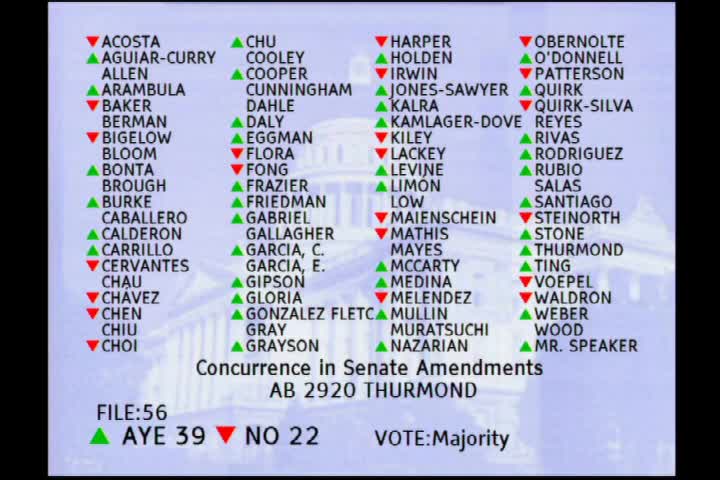
Bill Author



