AB 3061: State highways: property leases.
- Session Year: 2017-2018
- House: Assembly
- Latest Version Date: 2018-09-17
Existing law provides that the Department of Transportation has full possession and control of the state highway system, including associated property. Existing law requires the department, when requested to do so by a city, county, or special district, to lease unoccupied unimproved property that is held for future highway purposes to the city, county, or special district within which the property is located, and requires the lease to be renewable. Existing law authorizes the city, county, or special district to use the leased property first for agricultural and community garden purposes, and 2nd for recreational purposes, and requires the lease amount to be $1 per year for not less than one year. Existing law authorizes the department to lease specified property in the City of San Diego to a city, county, a political subdivision of a city or county, or another state agency for an emergency shelter, a feeding program, or the establishment of a day care center for children, at a lease amount of $1 per month and payment of an administrative fee not to exceed $500 per year, as specified.
This bill would authorize the department to lease specified property in the City of San Diego to a city or county, a political subdivision of a city or county, or another state agency, for purposes of an emergency shelter or feeding program.
Existing law provides that the Department of Transportation has full possession and control of the state highway system, including associated property. Existing law requires the department, when requested to do so by a city, county, or special district, to lease unoccupied unimproved property that is held for future highway purposes to the city, county, or special district within which the property is located, and requires the lease to be renewable. Existing law authorizes the city, county, or special district to use the leased property first for agricultural and community garden purposes, and 2nd for recreational purposes, and requires the lease amount to be $1 per year for not less than one year. Existing law authorizes the department to lease specified property in the City of San Diego to a city, county, or other political subdivision or another state agency for an emergency shelter, a feeding program, or the establishment of a day care center for children, at a lease amount of $1 per month and payment of an administrative fee not to exceed $500 per year, as specified.
This bill would authorize the department to lease specified property in the City of San Diego to a city or county, a political subdivision of a city or county, or another state agency, for purposes of permanent supportive housing, as defined, or a feeding program, at a lease amount of $1 per month and an administrative fee not to exceed $500 per year, as specified. an emergency shelter or feeding program.
This bill would declare that it is to take effect immediately as an urgency statute.Existing law provides that the Department of Transportation has full possession and control of the state highway system, including associated property. Existing law requires the department, when requested to do so by a city, county, or special district, to lease unoccupied unimproved property that is held for future highway purposes to the city, county, or special district within which the property is located, and requires the lease to be renewable. Existing law authorizes the city, county, or special district to use the leased property first for agricultural and community garden purposes, and 2nd for recreational purposes, and requires the lease amount to be $1 per year for not less than one year. Existing law authorizes the department to lease specified property in the City of San Diego to a city, county, or other political subdivision or another state agency for an emergency shelter, a feeding program, or the establishment of a day care center for children, at a lease amount of $1 per month and payment of an administrative fee not to exceed $500 per year, as specified.
This bill would authorize the department to lease specified additional property in the City of San Diego to a city or county, a political subdivision of a city or county, or another state agency, for purposes of an emergency shelter, permanent supportive housing, as defined, or a feeding program, or day care for children, at a lease amount of $1 per month and an administrative fee not to exceed $500 per year, as specified.
This bill would declare that it is to take effect immediately as an urgency statute.
Existing law provides that the Department of Transportation has full possession and control of the state highway system, including associated property. Existing law requires the department, when requested to do so by a city, county, or special district, to lease unoccupied unimproved property that is held for future highway purposes to the city, county, or special district within which the property is located, and requires the lease to be renewable. Existing law authorizes the city, county, or special district to use the leased property first for agricultural and community garden purposes, and 2nd for recreational purposes, and requires the lease amount to be $1 per year for not less than one year. Existing law authorizes the department to lease specified property in the City of San Diego to a city, county, or other political subdivision or another state agency for an emergency shelter, a feeding program, or the establishment of a day care center for children, at a lease amount of $1 per month and payment of an administrative fee not to exceed $500 per year, as specified.
This bill would authorize the department to lease specified additional property in the City of San Diego to a city or county, a political subdivision of a city or county, or another state agency, for purposes of an emergency shelter, feeding program, or day care for children, at a lease amount of $1 per month and an administrative fee not to exceed $500 per year, as specified.
Existing law, the Massage Therapy Act, regulates the practice of massage therapy and requires a person to be certified as a massage therapist or massage practitioner by the California Massage Therapy Council to hold him or herself out as a certified massage therapist or certified massage practitioner. Existing law expresses the intent of the Legislature that broad control over land use in regulating massage establishments be vested in local governments and that local governments give strong consideration to establishing a registration program that grants local governments the ability to either suspend or revoke a registration of massage business for specific violations. Existing law authorizes the legislative body of a city or county for incorporated areas to enact an ordinance providing for the licensing for regulation of the business of massage when carried on within the city or county.This bill would require an owner of a massage establishment, as defined, to register as a massage establishment owner with the county clerk in the county in which the massage establishment operates or has its principal place of business and in which it maintains an office. The bill would specify the information required to be contained in the registration application, and would authorize the county clerk to charge a fee not to exceed a reasonable amount to cover the costs of registration. The bill would require a county clerk, if it revokes a massage establishment owners registration, to notify the council. By imposing new duties on county clerks, the bill would impose a state-mandated local program.The California Constitution requires the state to reimburse local agencies and school districts for certain costs mandated by the state. Statutory provisions establish procedures for making that reimbursement.This bill would provide that, if the Commission on State Mandates determines that the bill contains costs mandated by the state, reimbursement for those costs shall be made pursuant to the statutory provisions noted above.Existing law, the Massage Therapy Act, regulates massage therapists, massage practitioners, and massage establishments by the California Massage Therapy Council. the practice of massage therapy and requires a person to be certified as a massage therapist or massage practitioner by the California Massage Therapy Council to hold him or herself out as a certified massage therapist or certified massage practitioner. Existing law expresses the intent of the Legislature that broad control over land use in regulating massage establishments be vested in local governments and that local governments give strong consideration to establishing a registration program that grants local governments the ability to either suspend or revoke a registration of massage business for specific violations. Existing law authorizes the legislative body of a city or county for incorporated areas to enact an ordinance providing for the licensing for regulation of the business of massage when carried on within the city or county.
This bill would express the intent of the Legislature to enact legislation that would create a massage establishment owner registry to assist a city, county, or city and county in reporting and tracking the activities of massage establishment owners. require an owner of a massage establishment, as defined, to register as a massage establishment owner with the county clerk in the county in which the massage establishment operates or has its principal place of business and in which it maintains an office. The bill would specify the information required to be contained in the registration application, and would authorize the county clerk to charge a fee not to exceed a reasonable amount to cover the costs of registration. The bill would require a county clerk, if it revokes a massage establishment owners registration, to notify the council. By imposing new duties on county clerks, the bill would impose a state-mandated local program.
The California Constitution requires the state to reimburse local agencies and school districts for certain costs mandated by the state. Statutory provisions establish procedures for making that reimbursement.
This bill would provide that, if the Commission on State Mandates determines that the bill contains costs mandated by the state, reimbursement for those costs shall be made pursuant to the statutory provisions noted above.
Existing law, the Massage Therapy Act, regulates massage therapists, massage practitioners, and massage establishments by the California Massage Therapy Council.
This bill would express the intent of the Legislature to enact legislation that would create a massage establishment owner registry to assist a city, county, or city and county in reporting and tracking the activities of massage establishment owners.
(a)The department may lease the real property located at 4747 Pacific Highway in the City of San Diego, department parcel number 760-216-19-00, which was acquired for highway purposes and is not excess property, to a city or county, a political subdivision of a city or county, or another state agency, for purposes of an emergency shelter or feeding program.
(b)(1)The lease amount shall be for one dollar ($1) per month.
(2)The lease amount may be paid in advance of the term covered to reduce the administrative costs associated with the payment of the monthly rental fee.
(3)The lease shall require the payment of an administrative fee not to exceed five hundred dollars ($500) per year, unless the department determines that a higher administrative fee is necessary, for the departments cost of administering the lease.
(c)The Legislature finds and declares that the lease of real property pursuant to this section serves a public purpose.
(d)Notwithstanding Chapter 7.8 (commencing with Section 8698) of Division 1 of Title 2 of the Government Code, all structures that are constructed or modified under this section shall be compliant with the minimum standards provided in the 2016 California Building Code Appendix N, the 2016 California Residential Code Appendix X, or any future standards adopted by the Department of Housing and Community Development related to emergency housing or emergency housing facilities.
(a)The department may lease the real property located at 4747 Pacific Highway in the City of San Diego, department parcel number 760-216-19-00, which was acquired for highway purposes and is not excess property, to a city or county, a political subdivision of a city or county, or another state agency, for purposes of permanent supportive housing, as defined in subdivision (l) of Section 50490 of the Health and Safety Code, or a an emergency shelter or feeding program.
(b)(1)The lease amount shall be for one dollar ($1) per month.
(2)The lease amount may be paid in advance of the term covered to reduce the administrative costs associated with the payment of the monthly rental fee.
(3)The lease shall require the payment of an administrative fee not to exceed five hundred dollars ($500) per year, unless the department determines that a higher administrative fee is necessary, for the departments cost of administering the lease.
(c)The Legislature finds and declares that the lease of real property pursuant to this section serves a public purpose.
SEC. 2.This act is an urgency statute necessary for the immediate preservation of the public peace, health, or safety within the meaning of Article IV of the California Constitution and shall go into immediate effect. The facts constituting the necessity are:In order to address the states urgent homelessness crisis, alleviate San Diego residents chronic need of permanent housing and supportive services, and to lower the overall burden of disease from communicable and mental health diseases at the earliest possible time, it is necessary that this act take effect immediately.(a)The department may lease the real property located at 4747 Pacific Highway in the City of San Diego, department parcel number 760-216-19-00, which was acquired for highway purposes and is not excess property, to a city or county, a political subdivision of a city or county, or another state agency, for purposes of an emergency shelter, permanent supportive housing, as defined in subdivision (l) of Section 50490 of the Health and Safety Code, or a feeding program, or day care for children. program.
(b)(1)The lease amount shall be for one dollar ($1) per month.
(2)The lease amount may be paid in advance of the term covered to reduce the administrative costs associated with the payment of the monthly rental fee.
(3)The lease shall require the payment of an administrative fee not to exceed five hundred dollars ($500) per year, unless the department determines that a higher administrative fee is necessary, for the departments cost of administering the lease.
(c)The Legislature finds and declares that the lease of real property pursuant to this section serves a public purpose.
SEC. 2.This act is an urgency statute necessary for the immediate preservation of the public peace, health, or safety within the meaning of Article IV of the California Constitution and shall go into immediate effect. The facts constituting the necessity are:
In order to address the states urgent homelessness crisis, alleviate San Diego residents chronic need of permanent housing and supportive services, and to lower the overall burden of disease from communicable and mental health diseases at the earliest possible time, it is necessary that this act take effect immediately.
(a)The department may lease the real property located at 4747 Pacific Highway in the City of San Diego, department parcel number 760-216-19-00, which was acquired for highway purposes and is not excess property, to a city or county, a political subdivision of a city or county, or another state agency, for purposes of an emergency shelter, feeding program, or day care for children.
(b)(1)The lease amount shall be for one dollar ($1) per month.
(2) The lease amount may be paid in advance of the term covered to reduce the administrative costs associated with the payment of the monthly rental fee.
(3)The lease shall require the payment of an administrative fee not to exceed five hundred dollars ($500) per year, unless the department determines that a higher administrative fee is necessary, for the departments cost of administering the lease.
(c)The Legislature finds and declares that the lease of real property pursuant to this section serves a public purpose.
SECTION 1.Section 4613 is added to the Business and Professions Code, to read:4613.Notwithstanding any other law:(a)For purposes of this section, massage establishment means any business that offers massage therapy in exchange for compensation, whether or not at a fixed place of business. Massage establishment includes both of the following:(1)A certified massage practitioner who is the sole owner, operator, and employee of a massage establishment operating as a sole proprietorship.(2)A business that is organized as a corporation, general or limited partnership, limited liability company, or any other form of business other than a sole proprietorship.(b)An owner of a massage establishment shall be registered by the county clerk of the county in which the massage establishment owner operates a business or has his or her principal place of business, and in which the massage establishment owner maintains an office.(c)The application for registration as a massage establishment owner shall include, but is not limited to, all of the following:(1)The massage establishment owners legal name.(2)The massage establishment owners residential address and telephone number.(3)The massage establishment owners business address and telephone number.(4)The name and address of any massage establishment or similar business owned or operated by the massage establishment owner, whether or not the massage establishment or similar business is located in the county, and the form of business under which each massage business operates or will be operating.(5)A signed statement confirming all of the information contained in the registration application, that the massage establishment owner shall be responsible for the conduct of the massage establishments employees or independent contractors providing massage services, and acknowledging that a failure to comply with this section or any local, state, or federal law may result in revocation of the massage establishment owners registration.(d)An applicant for registration shall provide to the county clerk a valid and current drivers license or other identification issued by a state or federal governmental agency or other photographic identification bearing a bona fide seal by a foreign government.(e)If an applicant for registration is not certified to practice as a certified massage practitioner by the council, the applicant shall submit an application for a background check that includes the applicants business, occupation, and employment history for the five years preceding the date of the application and the dates of the applicants employment history.(f)The county clerk may charge a fee not to exceed a reasonable amount to cover the costs of registration.(g)A county clerk that revokes the registration of a massage establishment owner shall report the fact that the registration has been revoked to the council.SEC. 2.If the Commission on State Mandates determines that this act contains costs mandated by the state, reimbursement to local agencies and school districts for those costs shall be made pursuant to Part 7 (commencing with Section 17500) of Division 4 of Title 2 of the Government Code.Notwithstanding any other law:
(a)For purposes of this section, massage establishment means any business that offers massage therapy in exchange for compensation, whether or not at a fixed place of business. Massage establishment includes both of the following:
(1)A certified massage practitioner who is the sole owner, operator, and employee of a massage establishment operating as a sole proprietorship.
(2)A business that is organized as a corporation, general or limited partnership, limited liability company, or any other form of business other than a sole proprietorship.
(b)An owner of a massage establishment shall be registered by the county clerk of the county in which the massage establishment owner operates a business or has his or her principal place of business, and in which the massage establishment owner maintains an office.
(c)The application for registration as a massage establishment owner shall include, but is not limited to, all of the following:
(1)The massage establishment owners legal name.
(2)The massage establishment owners residential address and telephone number.
(3)The massage establishment owners business address and telephone number.
(4)The name and address of any massage establishment or similar business owned or operated by the massage establishment owner, whether or not the massage establishment or similar business is located in the county, and the form of business under which each massage business operates or will be operating.
(5)A signed statement confirming all of the information contained in the registration application, that the massage establishment owner shall be responsible for the conduct of the massage establishments employees or independent contractors providing massage services, and acknowledging that a failure to comply with this section or any local, state, or federal law may result in revocation of the massage establishment owners registration.
(d)An applicant for registration shall provide to the county clerk a valid and current drivers license or other identification issued by a state or federal governmental agency or other photographic identification bearing a bona fide seal by a foreign government.
(e)If an applicant for registration is not certified to practice as a certified massage practitioner by the council, the applicant shall submit an application for a background check that includes the applicants business, occupation, and employment history for the five years preceding the date of the application and the dates of the applicants employment history.
(f)The county clerk may charge a fee not to exceed a reasonable amount to cover the costs of registration.
(g)A county clerk that revokes the registration of a massage establishment owner shall report the fact that the registration has been revoked to the council.
SEC. 2.If the Commission on State Mandates determines that this act contains costs mandated by the state, reimbursement to local agencies and school districts for those costs shall be made pursuant to Part 7 (commencing with Section 17500) of Division 4 of Title 2 of the Government Code.
SECTION 1.(a)It is the intent of the Legislature to enact legislation that would create a massage establishment owner registry to assist a city, county, or city and county in reporting and tracking the activities of massage establishment owners.(b)For purposes of this section, owner means a person who receives, or is to receive, any percentage of the revenue earned from massage establishment activities.(a)It is the intent of the Legislature to enact legislation that would create a massage establishment owner registry to assist a city, county, or city and county in reporting and tracking the activities of massage establishment owners.
(b)For purposes of this section, owner means a person who receives, or is to receive, any percentage of the revenue earned from massage establishment activities.
|
Date
|
Status
|
|---|---|
| Sep 17, 2018 | Chaptered by Secretary of State - Chapter 442, Statutes of 2018. |
| Sep 17, 2018 | Approved by the Governor. |
| Sep 11, 2018 | Enrolled and presented to the Governor at 4:30 p.m. |
| Aug 30, 2018 | Senate amendments concurred in. To Engrossing and Enrolling. |
| Aug 29, 2018 | In Assembly. Concurrence in Senate amendments pending. |
| Aug 29, 2018 | Read third time. Passed. Ordered to the Assembly. |
| Aug 27, 2018 | Read second time. Ordered to third reading. |
| Aug 24, 2018 | Read third time and amended. Ordered to second reading. |
| Aug 20, 2018 | Read second time. Ordered to third reading. |
| Aug 17, 2018 | From committee: Amend, and do pass as amended. (Ayes 7. Noes 0.) (August 16). |
| Aug 13, 2018 | In committee: Referred to APPR. suspense file. |
| Aug 6, 2018 | In committee: Hearing postponed by committee. |
| Aug 6, 2018 | From committee chair, with author's amendments: Amend, and re-refer to committee. Read second time, amended, and re-referred to Com. on APPR. |
| Jun 28, 2018 | Read second time and amended. Re-referred to Com. on APPR. |
| Jun 27, 2018 | From committee: Amend, and do pass as amended and re-refer to Com. on APPR. (Ayes 12. Noes 0.) (June 26). |
| Jun 20, 2018 | Re-referred to Com. on T. & H. |
| Jun 19, 2018 | Withdrawn from committee. |
| Jun 18, 2018 | From committee chair, with author's amendments: Amend, and re-refer to committee. Read second time, amended, and re-referred to Com. on B., P. & E.D. |
| Jun 13, 2018 | Referred to Com. on B., P. & E.D. |
| May 31, 2018 | In Senate. Read first time. To Com. on RLS. for assignment. |
| May 30, 2018 | Read third time. Passed. Ordered to the Senate. |
| May 25, 2018 | From committee: Do pass. (Ayes 14. Noes 2.) (May 25). |
| May 2, 2018 | In committee: Set, first hearing. Referred to APPR. suspense file. |
| Apr 17, 2018 | From committee: Do pass and re-refer to Com. on APPR. (Ayes 15. Noes 0.) (April 17). Re-referred to Com. on APPR. |
| Apr 2, 2018 | Re-referred to Com. on B. & P. |
| Mar 23, 2018 | From committee chair, with author's amendments: Amend, and re-refer to Com. on B. & P. Read second time and amended. |
| Mar 22, 2018 | Referred to Com. on B. & P. |
| Feb 17, 2018 | From printer. May be heard in committee March 19. |
| Feb 16, 2018 | Read first time. To print. |
|
Date
|
Description
|
Location
|
Votes
|
|
|---|---|---|---|---|
| Aug 30, 2018 | AB 3061 GLORIA Concurrence in Senate Amendments | Assembly Floor |
Passed |
|
| Aug 29, 2018 | Assembly 3rd Reading AB3061 Gloria et al. By Hueso | Senate Floor |
Passed |
|
| Aug 29, 2018 | With recommendation: That Senate amendments be concurred in. | Assembly Standing Committee on Transportation |
Passed |
|
| Aug 16, 2018 | Do pass as amended | Senate Standing Committee on Appropriations |
Passed |
|
| Aug 13, 2018 | Placed on suspense file | Senate Standing Committee on Appropriations |
Passed |
|
| Jun 26, 2018 | Do pass as amended, but first amend, and re-refer to the Committee on [Appropriations] | Senate Standing Committee on Transportation and Housing |
Passed |
|
| May 30, 2018 | AB 3061 GLORIA Assembly Third Reading | Assembly Floor |
Passed |
|
| May 25, 2018 | Do pass. | Assembly Standing Committee on Appropriations |
Passed |
|
| Apr 17, 2018 | Do pass and be re-referred to the Committee on [Appropriations] | Assembly Standing Committee on Business and Professions |
Passed |
This list shows positions taken on this bill by organizations on the date displayed, which is linked to the original source.
Positions by individuals are not included.
|
Organization
|
Position
|
Date
|
|---|---|---|
| American Massage Therapy Association California Chapter | * Support | Apr 17, 2018 |
CONCURRENCE IN SENATE AMENDMENTS
CSA2 Bill Id:AB 3061
Author:(Gloria)
As Amended Ver:August 24, 2018
Majority vote
ASSEMBLY: |
| (May 30, 2018) | SENATE: | 37-2 | (August 29, 2018) |
(vote not relevant)
COMMITTEE VOTE: | 14-0 | (August 29, 2018) | RECOMMENDATION: | concur |
(TRANS.)
Original Committee Reference: TRANS.
SUMMARY: Authorizes the California Department of Transportation (Caltrans) to lease at a discount a specific parcel to the City of San Diego for an emergency shelter or a feeding program under specific terms and conditions.
The Senate amendments delete the Assembly version of the bill and instead:
- Authorize Caltrans to lease for $1 per month the real property located at 4747 Pacific Highway to the City of San Diego, or a political subdivision of the city, for an emergency shelter or a feeding program.
- Declare that a lease let under this authority serves a public purpose.
- Require Caltrans to include in a lease let under this authority an administrative fee not to exceed $500 per year unless Caltrans determines a higher fee is necessary.
- Authorize the lessee to pay the lease amount in advance in order to reduce the administrative costs associated with the payment of a monthly rental fee.
- Make other technical, non-substantive changes.
EXISTING LAW:
- Grants Caltrans broad authority to acquire by eminent domain any property necessary for state highway purposes.
- Authorizes Caltrans to lease to public agencies or private entities the use of areas above or below state highways. Generally, leases to private entities have to be made on the basis of competitive bids and at fair market value.
- Authorizes Caltrans to make land or airspace available, with or without charge, to a public entity to accommodate needed passenger, commuter, or high-speed rail, magnetic levitation systems, and highway and non-highway mass transit facilities.
- Authorizes Caltrans to lease to San Francisco, or a political subdivision, any airspace under a freeway or property for an emergency shelter or feeding program at a rate of $1 per month.
- Authorizes Caltrans to lease to San Joaquin County, Santa Barbara County, or a political subdivision of either, airspace under specified freeways for an emergency shelter or feeding program at a rate of $1 per month.
AS PASSED BY THE ASSEMBLY, this bill required owners of massage establishments to register with, and provide certain information to, the county clerk in the county in which the massage establishment operates or is based; requires a county clerk, if it revokes a massage establishment owner's registration, to notify the California Massage Therapy Council.
FISCAL EFFECT: According to the Senate Appropriations Committee, annual loss of approximately $85,000 in lease revenues. These losses represent a General Fund impact because Caltrans airspace lease revenues are currently used to partially offset General Fund payments for transportation-related debt service.
COMMENTS: The authority for Caltrans to enter into airspace leases is in existing law, but Caltrans is generally obligated to secure fair market value lease rates for airspace under freeways or other available parcels, based on the estimated highest and best use of the property. Notable exceptions to the fair market value requirement authorizes Caltrans to lease unused parcels of land below market rates to various cities and counties for the purposes of emergency shelters and feeding programs. In each of these exceptions, the Legislature has found that submarket rate leases for these particular uses serves a public purpose.
According to the author, "San Diego has the fourth largest homeless population in the country, with over 9,100 homeless men, women and children on any given night. With one of the lowest rental vacancy rates in the country and long waiting lists for subsidized housing, homelessness is a reality for an increasing number of San Diegans. By providing an opportunity to lease this parcel for $1, AB 3061 would help the city address a growing homeless population through permanent supportive housing."
The author notes that according to the U.S. Department of Housing and Urban Development, over the five-year period from 2013 to 2017, the number of unsheltered people in San Diego grew 23%. Father Joe's Villages in San Diego is a non-profit organization that has been assisting San Diego's homeless since 1950. This non-profit has been working with the City of San Diego and Caltrans (the property owner) to take over the lease currently held by EZ 8 motel to convert the location to a homeless and veterans permanent supportive housing facility. The provisions specified in this bill will allow Father Joe's to take over the lease at an affordable rate and provide 127 units of shelter for San Diego's homeless community.
Analysis Prepared by: Eric Thronson / TRANS. / (916) 319-2093 FN: 0005131
Office of Senate Floor Analyses (916) 651-1520 Fax: (916) 327-4478 | AB |
THIRD READING
Bill No: AB 3061
Amended: 8/24/18 in Senate
SENATE TRANS. & HOUSING COMMITTEE: 12-0, 6/26/18
AYES: Beall, Cannella, Allen, Dodd, Gaines, Galgiani, McGuire, Morrell, Roth, Skinner, Vidak, Wiener
NO VOTE RECORDED: Wieckowski
SENATE APPROPRIATIONS COMMITTEE: 7-0, 8/16/18
AYES: Portantino, Bates, Beall, Bradford, Hill, Nielsen, Wiener
ASSEMBLY FLOOR: 67-9, 5/30/18 - See last page for vote
DIGEST:
This bill requires the State Department of Transportation (Caltrans) to lease a specified parcel of real property in the City of San Diego for $1 per month for certain purposes, as specified.
Senate Floor Amendments of 8/24/18 add in a provision requiring a local agency that enters into a lease agreement with Caltrans to meet certain building and residential standards.
Existing law:
- Grants Caltrans broad authority to acquire by eminent domain any property necessary for state highway purposes.
- Authorizes Caltrans to lease to public agencies or private entities the use of Caltrans-owned areas above or below state highways (known as “airspace”). Generally, leases to private entities are required to be made on the basis of competitive bids and at fair market value.
- Authorizes Caltrans to make land or airspace available, with or without charge, to a public entity to accommodate needed passenger, commuter, or high-speed rail, magnetic levitation systems, and highway and non-highway mass transit facilities.
- Authorizes $1 per month leases of Caltrans airspace parcels to the City and County of San Francisco, Santa Barbara County, the City of San Diego, and San Joaquin County for specified emergency shelter or feeding purposes.
- Authorizes Caltrans to enter into a $1 monthly lease with a public entity for a certain parcel of real property, as specified, in the City of San Diego. Provides that the lease amount may be paid in advance to minimize administrative costs and further prohibits Caltrans to impose an administrative fee greater than $500, as specified. Specifies that the abovementioned lease shall be executed for providing an emergency shelter, feeding program, or the establishment of a children’s day care center.
- Finds and declares that the lease of real property pursuant to these provisions serves a public purpose.
This bill:
- Authorizes Caltrans to lease specified additional property in the City of San Diego to another public entity for purposes of an emergency shelter or feeding program at a lease amount of $1 per month and an administrative fee not to exceed $500 per year, as specified.
- Requires a local agency that enters a lease agreement with Caltrans under the provisions specified in this bill to comply with specified building and residential standards, as specified.
- Declares the provisions specified in this bill serve a public purpose.
Comments
- Purpose. According to the author, “San Diego has the fourth largest homeless population in the country, with over 9,100 homeless men, women and children on any given night. With one of the lowest rental vacancy rates in the country and long waiting lists for subsidized housing, homelessness is a reality for an increasing number of San Diegans. By providing an opportunity to lease this parcel for $1, AB 3061 would help the city address a growing homeless population through permanent supportive housing.”
- Special treatment for shelter/feeding programs. The authority for Caltrans to enter into leases is in existing law and Caltrans is generally obligated to secure fair market value lease rates for airspace under freeways or other available parcels, based on the estimated highest and best use of the property. Notable exceptions to the fair market value requirement authorize Caltrans to lease unused parcels of land below market rates to various cities and counties for the purposes of emergency shelters and feeding programs. In each of these exceptions, the Legislature has found that below-market rate leases for these particular uses serve a public purpose.
- Homelessness in San Diego. The author notes that according to the U.S. Department of Housing and Urban Development, over the five-year period from 2013 to 2017, the number of unsheltered people in San Diego grew 23%. Father Joe’s Villages in San Diego is a non-profit organization that has been assisting San Diego’s homeless since 1950. This non-profit has been working with the City of San Diego and Caltrans (the property owner) to take over the lease currently held by EZ 8 motel to convert the location to a homeless and veterans permanent supportive housing facility. The provisions specified in this bill will allow Father Joe’s to take over the lease at an affordable rate and provide 127 units of shelter for San Diego’s homeless community.
FISCAL EFFECT: Appropriation: Fiscal Com.: Local:
According to the Senate Appropriations Committee, annual loss of approximately $85,000 in lease revenues. These losses represent a General Fund impact because Caltrans airspace lease revenues are currently used to partially offset General Fund payments for transportation-related debt service.
None received
OPPOSITION: (Verified 8/16/18)
None received
ASSEMBLY FLOOR: 67-9, 5/30/18
AYES: Acosta, Aguiar-Curry, Travis Allen, Arambula, Baker, Berman, Bigelow, Bloom, Bonta, Brough, Burke, Calderon, Carrillo, Chau, Chávez, Chen, Chiu, Chu, Cooley, Cooper, Cunningham, Dahle, Daly, Eggman, Flora, Fong, Frazier, Friedman, Cristina Garcia, Eduardo Garcia, Gipson, Gloria, Gonzalez Fletcher, Gray, Grayson, Holden, Irwin, Jones-Sawyer, Kalra, Kamlager-Dove, Lackey, Levine, Limón, Low, Maienschein, Mayes, McCarty, Medina, Mullin, Muratsuchi, Nazarian, O'Donnell, Quirk, Quirk-Silva, Reyes, Rodriguez, Rubio, Salas, Santiago, Steinorth, Mark Stone, Thurmond, Ting, Voepel, Weber, Wood, Rendon
NOES: Caballero, Cervantes, Gallagher, Harper, Kiley, Mathis, Melendez, Obernolte, Waldron
NO VOTE RECORDED: Choi, Patterson
8/27/18 20:37:44
**** END ****
Office of Senate Floor Analyses (916) 651-1520 Fax: (916) 327-4478 | AB |
THIRD READING
Bill No: AB 3061
Amended: 8/17/18 in Senate
SENATE TRANS. & HOUSING COMMITTEE: 12-0, 6/26/18
AYES: Beall, Cannella, Allen, Dodd, Gaines, Galgiani, McGuire, Morrell, Roth, Skinner, Vidak, Wiener
NO VOTE RECORDED: Wieckowski
SENATE APPROPRIATIONS COMMITTEE: 7-0, 8/16/18
AYES: Portantino, Bates, Beall, Bradford, Hill, Nielsen, Wiener
ASSEMBLY FLOOR: 67-9, 5/30/18 - See last page for vote
DIGEST:
This bill requires the State Department of Transportation (Caltrans) to lease a specified parcel of real property in the City of San Diego for $1 per month for certain purposes, as specified.
Existing law:
- Grants Caltrans broad authority to acquire by eminent domain any property necessary for state highway purposes.
- Authorizes Caltrans to lease to public agencies or private entities the use of Caltrans-owned areas above or below state highways (known as “airspace”). Generally, leases to private entities are required to be made on the basis of competitive bids and at fair market value.
- Authorizes Caltrans to make land or airspace available, with or without charge, to a public entity to accommodate needed passenger, commuter, or high-speed rail, magnetic levitation systems, and highway and non-highway mass transit facilities.
- Authorizes $1 per month leases of Caltrans airspace parcels to the City and County of San Francisco, Santa Barbara County, the City of San Diego, and San Joaquin County for specified emergency shelter or feeding purposes.
- Authorizes Caltrans to enter into a $1 monthly lease with a public entity for a certain parcel of real property, as specified, in the City of San Diego. Provides that the lease amount may be paid in advance to minimize administrative costs and further prohibits Caltrans to impose an administrative fee greater than $500, as specified. Specifies that the abovementioned lease shall be executed for providing an emergency shelter, feeding program, or the establishment of a children’s day care center.
- Finds and declares that the lease of real property pursuant to these provisions serves a public purpose.
This bill:
- Authorizes Caltrans to lease specified additional property in the City of San Diego to another public entity for purposes of an emergency shelter or feeding program at a lease amount of $1 per month and an administrative fee not to exceed $500 per year, as specified.
- Declares the provisions specified in this bill serve a public purpose.
Comments
- Purpose. According to the author, “San Diego has the fourth largest homeless population in the country, with over 9,100 homeless men, women and children on any given night. With one of the lowest rental vacancy rates in the country and long waiting lists for subsidized housing, homelessness is a reality for an increasing number of San Diegans. By providing an opportunity to lease this parcel for $1, AB 3061 would help the city address a growing homeless population through permanent supportive housing.”
- Special treatment for shelter/feeding programs. The authority for Caltrans to enter into leases is in existing law and Caltrans is generally obligated to secure fair market value lease rates for airspace under freeways or other available parcels, based on the estimated highest and best use of the property. Notable exceptions to the fair market value requirement authorize Caltrans to lease unused parcels of land below market rates to various cities and counties for the purposes of emergency shelters and feeding programs. In each of these exceptions, the Legislature has found that below-market rate leases for these particular uses serve a public purpose.
- Homelessness in San Diego. The author notes that according to the U.S. Department of Housing and Urban Development, over the five-year period from 2013 to 2017, the number of unsheltered people in San Diego grew 23%. Father Joe’s Villages in San Diego is a non-profit organization that has been assisting San Diego’s homeless since 1950. This non-profit has been working with the City of San Diego and Caltrans (the property owner) to take over the lease currently held by EZ 8 motel to convert the location to a homeless and veterans permanent supportive housing facility. The provisions specified in this bill will allow Father Joe’s to take over the lease at an affordable rate and provide 127 units of shelter for San Diego’s homeless community.
FISCAL EFFECT: Appropriation: Fiscal Com.: Local:
According to the Senate Appropriations Committee, annual loss of approximately $85,000 in lease revenues. These losses represent a General Fund impact because Caltrans airspace lease revenues are currently used to partially offset General Fund payments for transportation-related debt service.
None received
OPPOSITION: (Verified 8/16/18)
None received
ASSEMBLY FLOOR: 67-9, 5/30/18
AYES: Acosta, Aguiar-Curry, Travis Allen, Arambula, Baker, Berman, Bigelow, Bloom, Bonta, Brough, Burke, Calderon, Carrillo, Chau, Chávez, Chen, Chiu, Chu, Cooley, Cooper, Cunningham, Dahle, Daly, Eggman, Flora, Fong, Frazier, Friedman, Cristina Garcia, Eduardo Garcia, Gipson, Gloria, Gonzalez Fletcher, Gray, Grayson, Holden, Irwin, Jones-Sawyer, Kalra, Kamlager-Dove, Lackey, Levine, Limón, Low, Maienschein, Mayes, McCarty, Medina, Mullin, Muratsuchi, Nazarian, O'Donnell, Quirk, Quirk-Silva, Reyes, Rodriguez, Rubio, Salas, Santiago, Steinorth, Mark Stone, Thurmond, Ting, Voepel, Weber, Wood, Rendon
NOES: Caballero, Cervantes, Gallagher, Harper, Kiley, Mathis, Melendez, Obernolte, Waldron
NO VOTE RECORDED: Choi, Patterson
8/20/18 11:11:27
**** END ****
SENATE COMMITTEE ON APPROPRIATIONS
Senator Anthony Portantino, Chair
2017 - 2018 Regular Session
AB 3061 (Gloria) - State highways: property leases
Version: August 6, 2018 | Policy Vote: T. & H. 12 - 0 |
Urgency: Yes | Mandate: No |
Hearing Date: August 16, 2018 | Consultant: Mark McKenzie |
Bill Summary:
AB 3061 would authorize the Department of Transportation (Caltrans) to lease a specified parcel of property to specified public entities for permanent supportive housing or a feeding program. The lease amount would be limited to $1 per month, plus an administrative fee of up to $500 per year, as specified.
*********** ANALYSIS ADDENDUM – SUSPENSE FILE ***********
The following information is revised to reflect amendments
adopted by the committee on August 16, 2018
Fiscal Impact:
Annual loss of approximately $85,000 in lease revenues. These losses represent a General Fund impact because Caltrans airspace lease revenues are currently used to partially offset General Fund payments for transportation-related debt service.
Author Amendments:
Delete the urgency clause and specify that the authorized lease must be for purposes of an emergency shelter, rather than permanent supportive housing.
-- END --
SENATE COMMITTEE ON
Senator Anthony Portantino, Chair
2017 - 2018 Regular Session
AB 3061 (Gloria) - State highways: property leases
Version: | Policy Vote: |
Urgency: | Mandate: |
Hearing Date: | Consultant: |
This bill meets the criteria for referral to the Suspense File.
Bill Summary:
AB 3061 would authorize the Department of Transportation (Caltrans) to lease a specified parcel of property to specified public entities for permanent supportive housing or a feeding program. The lease amount would be limited to $1 per month, plus an administrative fee of up to $500 per year, as specified.
Fiscal Impact:
Annual loss of approximately $85,000 in lease revenues. These losses represent a General Fund impact because Caltrans airspace lease revenues are currently used to partially offset General Fund payments for transportation-related debt service. (See staff comments)
Background:
Existing law authorizes Caltrans to lease areas above or below state highways (airspace) to public or private entities, and generally requires the leases to private entities to be competitively bid and at fair market value. Existing law authorizes Caltrans to lease specified properties in certain areas designated in statute for $1 per month and an administrative charge of up to $500 per year if the lease serves a specified public benefit.
Existing law authorizes Caltrans to lease real property in the City of San Diego between 17th Street and the west side of Route 5 between the southbound onramp and the offramp near J Street, which was acquired for highway purposes and is not excess property, to a city, county, or state entity for emergency shelter, feeding program purposes, or for the establishment of a day care center for children. The lease amount is limited to $1 per month, plus an administrative fee of up to $500 per year, unless a higher amount is necessary to cover Caltrans’ administrative costs.
Proposed Law:
AB 3061 would authorize Caltrans to lease property located at 4747 Pacific Highway in the City of San Diego, which was acquired for highway purposes and is not excess property, to a city or county, a political subdivision of a city or county, or a state agency, for purposes of permanent supportive housing, or a feeding program, as specified. The lease amount must be for $1 per month, plus an administrative fee of up to $500, unless Caltrans determines a higher administrative fee is necessary to cover its costs.
Related Legislation:
AB 2629 (Eggman), which is pending in this Committee, would delete the renewal restrictions for a specified below-market-rate airspace lease between Caltrans and the City of Stockton under the interchange of SR 4 and Interstate 5.
AB 3139 (Bonta), which is pending in this Committee, would authorize Caltrans to offer for lease to the City of Oakland, on a right of first refusal, up to ten parcels for purposes of an emergency shelter or feeding program for $1 per month and an administrative fee of up to $500 per year.
Staff Comments:
The property identified in this bill currently has a 55-year lease, for which Caltrans collects $7,133 per month ($85,596 per year). The lease has 21 years remaining and a 127-unit EZ 8 Motel occupies the property. The City of San Diego has been working with Caltrans and a nonprofit entity in hopes of repurposing the current motel to permanent supportive housing to address a growing need for homeless shelters. Converting the lease from market rate to $1 per month, plus an administrative fee, would result in annual revenue losses of approximately $85,000 per year.
-- END --
SENATE COMMITTEE ON TRANSPORTATION AND HOUSING
Senator Jim Beall, Chair
2017 - 2018 Regular
Bill No: Hearing Date: 6/26/2018
Author: | Gloria | ||
Version: | 6/18/2018 Amended | ||
Urgency: | No | Fiscal: | Yes |
Consultant: | Manny Leon | ||
SUBJECT:
DIGEST: This bill requires the State Department of Transportation (Caltrans) to lease a specified parcel of real property in the City of San Diego for $1 per month for certain purposes, as specified.
ANALYSIS:
Existing law:
- Grants Caltrans broad authority to acquire by eminent domain any property necessary for state highway purposes.
- Authorizes Caltrans to lease to public agencies or private entities the use of Caltrans-owned areas above or below state highways (known as “airspace”). Generally, leases to private entities are required to be made on the basis of competitive bids and at fair market value.
- Authorizes Caltrans to make land or airspace available, with or without charge, to a public entity to accommodate needed passenger, commuter, or high-speed rail, magnetic levitation systems, and highway and non-highway mass transit facilities.
- Authorizes $1 per month leases of Caltrans airspace parcels to the City and County of San Francisco, Santa Barbara County, the City of San Diego, and San Joaquin County for specified emergency shelter or feeding purposes.
- Authorizes Caltrans to enter into a $1 monthly lease with a public entity for a certain parcel of real property, as specified, in the City of San Diego. Provides that the lease amount may be paid in advance to minimize administrative costs and further prohibits Caltrans to impose an administrative fee greater than $500, as specified. Specifies that the abovementioned lease shall be executed for providing an emergency shelter, feeding program, or the establishment of a children’s day care center.
- Finds and declares that the lease of real property pursuant to these provisions serves a public purpose.
- Requires, under the State Constitution (Article XIX), revenues from taxes imposed on motor vehicle fuels to be used solely for the construction, maintenance, and operation of public streets and highways and public mass transit guideways, including the mitigation of their environmental effects.
This bill authorizes Caltrans to lease specified additional property in the City of San Diego to another public entity for purposes of an emergency shelter, feeding program, or children’s day care facility, at a lease amount of $1 per month and an administrative fee not to exceed $500 per year, as specified.
COMMENTS
- Purpose. According to the author, “San Diego has the fourth largest homeless population in the country, with over 9,100 homeless men, women and children on any given night. With one of the lowest rental vacancy rates in the country and long waiting lists for subsidized housing, homelessness is a reality for an increasing number of San Diegans. By providing an opportunity to lease this parcel for $1, AB 3061 would help the city address a growing homeless population through permanent supportive housing.”
- Special treatment for shelter/feeding programs. The authority for Caltrans to enter into leases is in existing law and Caltrans is generally obligated to secure fair market value lease rates for airspace under freeways or other available parcels, based on the estimated highest and best use of the property. Notable exceptions to the fair market value requirement authorize Caltrans to lease unused parcels of land below market rates to various cities and counties for the purposes of emergency shelters and feeding programs. In each of these exceptions, the Legislature has found that below-market rate leases for these particular uses serve a public purpose.
- Consistent with the State Constitution? Article XIX of the California Constitution seeks to reserve revenues in the State Highway Account (SHA) derived from motor vehicle fuels exclusively for the funding of transportation projects. As it applies to Caltrans real property rentals, the principle is that if an asset has been purchased with SHA dollars, it should either be used directly for transportation purposes or it should be sold or leased at market value, with the resulting revenues being returned to the SHA in order to make the SHA whole. The Legislature has chosen in a very small number of instances in recent years also to allow such parcels to be used at below-market rates for other public purposes, i.e., projects that serve a worthy public cause but are not necessarily of a transportation nature.
- Homelessness in San Diego. The author notes that according to the U.S. Department of Housing and Urban Development, over the five-year period from 2013 to 2017, the number of unsheltered people in San Diego grew 23%. Father Joe’s Villages in San Diego is a non-profit organization that has been assisting San Diego’s homeless since 1950. This non-profit has been working with the City of San Diego and Caltrans (the property owner) to take over the lease currently held by EZ 8 motel to convert the location to a homeless and veterans permanent supportive housing facility. The provisions specified in this bill will allow Father Joe’s to take over the lease at an affordable rate and provide 127 units of shelter for San Diego’s homeless community.
FISCAL EFFECT: Appropriation: No Fiscal Com.: Yes Local: No
POSITIONS: (Communicated to the committee before noon on Wednesday,
June 20, 2018.)
SUPPORT:
None received.
OPPOSITION:
None received.
-- END --
ASSEMBLY THIRD READING
ATR Bill Id:AB 3061
Author:(Gloria)
As Amended Ver:March 23, 2018
Majority vote
Committee | Votes | Ayes | Noes |
Business & Professions | 15-0 | Low, Brough, Arambula, Baker, Bloom, Chen, Chiu, Eggman, Fong, Gipson, Grayson, Holden, Irwin, Mullin, Ting | |
Appropriations | 14-2 | Gonzalez Fletcher, Bigelow, Bloom, Bonta, Calderon, Carrillo, Chau, Eggman, Fong, Friedman, Eduardo Garcia, Nazarian, Quirk, Reyes | Gallagher, Obernolte |
SUMMARY: Require owners of massage establishments to register with, and provide certain information to, the county clerk in the county in which the massage establishment operates or is based; requires a county clerk, if it revokes a massage establishment owner’s registration, to notify the California Massage Therapy Council (CAMTC).
FISCAL EFFECT: According to the Assembly Committee on Appropriations, unknown, one-time potentially reimbursable state mandate costs, likely in the low hundreds of thousands of dollars statewide, to county clerks to develop and implement the registration requirements; unknown, ongoing costs to county clerks to process registration applications; unknown one-time and on-going potentially reimbursable costs to develop and administer the revocation process.
COMMENTS:
Purpose. This bill is sponsored by the American Massage Therapy Association (AMTA). According to the author:
Communities in California have long struggled with the efforts of commercial sex businesses to gain legitimacy and a storefront presence by posing as massage businesses. Despite the creation of a voluntary certification process and the adoption of individual local ordinances across the state, this piecemeal approach to regulating the massage therapy industry has failed to improve public safety. The bill will ensure that unlawful massage therapy establishments will not be able to continue operate in the shadows by requiring registration with the county, further prohibiting them from eluding the ordinances in one city in favor of those of neighboring city. This registration process will enable law enforcement agencies to target those human trafficking operations while also helping to legitimize massage therapy establishments in compliance with the law.
Background.
Regulation of Massage Therapists in California. 43 states have statewide licensing requirements for massage therapists. California is somewhat unique in that it has a Massage Therapy Act codified through state statute, but no state agency responsible for overseeing its enforcement and no statewide requirement that massage therapists receive the certification established in the act. Instead, California has a certification scheme that is administered by a nongovernmental, nonprofit entity (CAMTC) and is not required at the state level. However, local governments are permitted to require CAMTC certification in their local ordinances governing massage therapists, along with additional regulations and requirements that vary between jurisdictions.
Massage Therapy and Human Trafficking. Massage therapy has long been associated with sex trafficking. In June of 2016, an informational hearing entitled The Role of Regulated Professions in Combatting Human Trafficking examined how state legislation regarding massage therapy has contributed to localized anti-trafficking efforts. In January of 2018, the Polaris Project released a report entitled Human Trafficking in Illicit Massage Businesses. This report, which analyzed tens of thousands of human trafficking cases reported through the project’s hotline, identified massage establishments as the second most common context for sex trafficking after escort services. California is identified as a key "port of entry" for sex trafficking victims.
In a section of the report specifically titled "The Regulatory Landscape of California," the Polaris Project acknowledges that the state’s Massage Therapy Act has resulted in "the enactment of many dramatically different laws at the county and city level." The report notes that because county laws are only enforceable in unincorporated areas, traffickers simply relocate to a specific large city to avoid strong regulations at the county level. Polaris Project states that "traffickers reap tremendous benefits from a lack of coordination between state, county and city legislation. The only way to cut them off at the pass is to undertake a coordinated effort to make sure they have nowhere else to go."
The strong association between massage therapy and sex trafficking has led some jurisdictions to pass what the massage industry regards as unduly onerous regulation that inappropriately burdens legitimate businesses. This criticism is compelling considering that many massage therapy services are provided by small businesses or sole proprietorships staffed and operated by vulnerable immigrant communities. A reasonable argument could be made that true sex trafficking enterprises are well-equipped to circumvent any constrictive local regulations, placing the weight of their impact on legitimate businesses.
Massage Establishment Registry. By requiring all massage establishments to meet a universal registration law, this bill would provide the first statewide requirement for massage therapy in California and provide a less fractured regulatory component to the state’s oversight of massage professionals. This bill would place registration at the county level, aiding local enforcement agencies that must currently distinguish between entities operating in individually governed cities or unincorporated portions of a county.
This bill would apply to all massage establishments and not merely those with certificate holders under CAMTC. This could potentially be beneficial for investigations into massage establishments that employ non-certified therapists in jurisdictions that do not require certification. In cases where an establishment is accused of wrongdoing – such as in the instance where employees of Massage Envy were accused of misconduct toward customers – this could be impactful. In addition, unregistered massage establishments in localities with weaker regulation would be identifiable as potential illicit enterprises, enabling law enforcement to redirect resources away from legitimate businesses and toward possible fronts for human trafficking and prostitution.
Analysis Prepared by: Robert Sumner / B. & P. / (916) 319-3301 FN: 0003320
Date of Hearing: May 2, 2018
ASSEMBLY COMMITTEE ON APPROPRIATIONS
Lorena Gonzalez Fletcher, Chair
ABPCA Bill Id:AB 3061
Author:(Gloria) – As Amended Ver:March 23, 2018
Policy Committee: | Business and Professions | Vote: | 15 - 0 |
|
| ||
|
|
Urgency: No State Mandated Local Program: Yes Reimbursable: Yes
SUMMARY:
This bill requires owners of massage establishments to register with, and provide certain information to, the county clerk in the county in which the massage establishment operates or is based. The bill also requires a county clerk, if it revokes a massage establishment owner’s registration, to notify the California Massage Therapy Council (CAMTC). Specifically, this bill:
- Requires an owner of a massage establishment to be registered by the county clerk of the county in which the establishment owner operates a business or has their principal place of business, and in which the massage establishment owner maintains an office.
- Requires the application for registration as a massage establishment owner to include specified identifying information as well as a signed statement confirming all of the information contained in the registration application, that the massage establishment owner is responsible for the conduct of the massage establishment’s employees or independent contractors providing massage services, and acknowledgement a failure to comply with this section or any local, state, or federal law may result in revocation of the massage establishment owner’s registration.
- Requires registry applicants to provide to the county clerk a valid and current driver’s license or other identification issued by a state or federal governmental agency or other photographic identification bearing a bona fide seal by a foreign government.
- Requires registry applicants not certified by CAMTC to submit an application for a background check that includes the applicant’s business, occupation, and employment history for the five years preceding the date of the application.
- Allows the county clerk to charge a fee not to exceed a reasonable amount to cover the costs of registration.
- Requires a county clerk that revokes the registration of a massage establishment owner to notify CAMTC that it has revoked the registration.
FISCAL EFFECT:
- Unknown, one-time potentially reimbursable state mandate costs, likely in the low hundreds of thousands of dollars statewide, to county clerks to develop and implement the registration requirements. Actual costs will depend on the number reimbursement claims filed and a determination by the Commission on State Mandates.
- Unknown, ongoing costs to county clerks to process registration applications. The bill authorizes county clerks to charge a fee to offset registration costs.
- Unknown one-time and on-going potentially reimbursable costs to develop and administer the revocation process. The bill does not provide sufficient detail to assess the costs of this process or to determine whether it can be covered under the registration fee authority granted in the bill.
- Negligible fiscal impact to the Department of Consumer Affairs (DCA).
COMMENTS:
- Purpose. This bill seeks to register massage establishments to bring legitimacy to law-abiding establishments. According to the author:
Communities in California have long struggled with the efforts of commercial sex businesses to gain legitimacy and a storefront presence by posing as massage businesses. Despite the creation of a voluntary certification process and the adoption of individual local ordinances across the state, this piecemeal approach to regulating the massage therapy industry has failed to improve public safety. The bill will ensure that unlawful massage therapy establishments will not be able to continue operate in the shadows by requiring registration with the county, further prohibiting them from eluding the ordinances in one city in favor of those of neighboring city. This registration process will enable law enforcement agencies to target those human trafficking operations while also helping to legitimize massage therapy establishments in compliance with the law.
- Background. Forty-three other states have statewide licensing requirements for massage therapists. California has a Massage Therapy Act in state statute, but no state agency is responsible for overseeing its enforcement and there is no statewide requirement that massage therapists be certified per the process established in the act. Instead, certification is voluntary and the process is administered by a nongovernmental, nonprofit entity (CAMTC) under the Massage Therapy Act. Local governments may require CAMTC certification in their local ordinances governing massage therapists, and generally have additional regulations and requirements that vary between jurisdictions.
California’s lack of universal statewide licensure of massage therapists has been identified in several reports as an impediment to the implementation of policies to identify and combat human traffickers. In addition, the fractured nature of massage therapy regulation has been criticized by some for producing inconsistent or insufficient local enforcement of illicit businesses. The documented strong association between massage therapy and sex trafficking has led some jurisdictions to pass what the massage industry regards as unduly onerous regulation that inappropriately burdens legitimate businesses.
By requiring all massage establishments to meet a universal registration law, this bill provides the first statewide requirement for massage therapy in California and creates a less fractured regulatory component to the state’s oversight of massage professionals. The bill places registration at the county level, aiding local enforcement agencies that must currently distinguish between entities operating in individually governed cities or unincorporated portions of a county.
- Prior Related Legislation.
SB 314 (Nguyen, Chapter 266, Statutes of 2017) requires CAMTC to accept hours earned by a massage therapy applicant if those hours were completed before July 1, 2016, and were earned from a school providing education in the state that was unapproved by the council after July 1, 2016, based solely on the fact that the National Certification Board for Therapeutic Massage and Bodywork took denial or disciplinary action against the school.
SB 315 (Nguyen, Chapter 120, Statutes of 2017) requires CAMTC to assess its contact with non-English speakers and subsequently offer and make available all publicly available written and electronic materials provided to certificate holders and applicants in languages other than English that the council determines will be used by a substantial number of non-English speakers.
Analysis Prepared by: Jennifer Swenson / APPR. / (916) 319-2081
Date of Hearing:
ASSEMBLY COMMITTEE ON BUSINESS AND PROFESSIONS
Evan Low, Chair
ABPCA Bill Id:AB 3061
Author:(Gloria) – As Amended Ver:March 23, 2018
SUBJECT: Massage establishment owners: registration.
SUMMARY: Require owners of massage establishments to register with, and provide certain information to, the county clerk in the county in which the massage establishment operates or is based; requires a county clerk, if it revokes a massage establishment owner’s registration, to notify the California Massage Therapy Council (CAMTC).
EXISTING LAW:
- Establishes a statewide voluntary certification system for massage therapists under the Massage Therapy Act. (Business and Professions Code (BPC) §§ 4600-4621)
- States that the intent of the Massage Therapy Act is, among other things, to enable consumers and local governments to more easily identify certified massage professionals, provide for consistent statewide certification and oversight of massage professionals, and assist local governments and law enforcement in meeting their duty to maintain the highest standards of conduct in massage establishments by vetting and disciplining certificate holders. (BPC § 4600.5)
- Defines “massage” as “Massage” the scientific manipulation of the soft tissues. (BPC § 4601)
- Creates CAMTC in statute as a nongovernmental, nonprofit organization to carry out the responsibilities and duties under the Massage Therapy Act. (BPC §§ 4601(d), 4602)
- Establishes the educational requirements for voluntary certification as a massage therapist, including completion of a minimum of 500 hours of specified coursework from a school approved by CAMTC. (BPC § 4604)
- Permits CAMTC to discipline a massage establishment owner the conduct of all individuals providing massage for compensation on the business premises. (BPC § 4607)
- Prohibits certified massage therapists from engaging in unprofessional conduct including:
- Engaging in sexually suggestive advertising related to massage services.
- Engaging in any form of sexual activity on the premises of a massage establishment where massage is provided for compensation, excluding a residence.
- Engaging in sexual activity while providing massage services for compensation.
- Providing massage of the genitals or anal region.
- Providing massage of female breasts without the written consent of the person receiving the massage and a referral from a licensed California health care provider.
- Dressing while engaged in the practice of massage for compensation, or while visible to clients in a massage establishment, in transparent or see-through attire; swim attire; in a manner that exposes the certificate holder’s breasts, buttocks, or genitals; or in a manner constituting indecent exposure under the Penal Code.
(BPC § 4609)
- Authorizes a city, county, or city and county to enact ordinances for the licensing for regulation of massage businesses and specifies requirements for and limitations on those ordinances. (Government Code §§ 51030-51034)
- Authorizes local governments to impose and enforce only reasonable and necessary fees and regulations on massage businesses and massage establishments, in keeping with the requirements of existing law and being mindful of the need to protect legitimate business owners and massage professionals, particularly sole providers. (BPC § 4603.1)
- States that nothing in the Massage Therapy Act prevents a city, county, or city and county from licensing, regulating, prohibiting, or permitting an individual who provides massage for compensation without a valid certificate. (BPC § 4612)
- Requires CAMTC to provide, upon the request of any law enforcement agency or local government agency with responsibility for regulating or administering a local ordinance relating to massage or massage establishments, information concerning a massage therapy certificate applicant or a certificate holder. (BPC § 4614)
- Subjects the Massage Therapy Act and the statutory authority of CAMTC to a sunset date of January 1, 2021 unless renewed by the Legislature. (BPC § 4621)
THIS BILL:
- Defines “massage establishment” as any business that offers massage therapy in exchange for compensation, whether or not at a fixed place of business, including sole proprietorships and corporations, companies, or partnerships.
- Requires an owner of a massage establishment to be registered by the county clerk of the county in which the establishment owner operates a business or has his or her principal place of business, and in which the massage establishment owner maintains an office.
- Requires the application for registration as a massage establishment owner to include:
- The massage establishment owner’s legal name.
- The massage establishment owner’s residential address and telephone number.
- The massage establishment owner’s business address and telephone number.
- The name and address of any massage establishment or similar business owned or operated by the massage establishment owner, whether or not the massage establishment or similar business is located in the county, and the form of business under which each massage business operates or will be operating.
- A signed statement confirming all of the information contained in the registration application, that the massage establishment owner shall be responsible for the conduct of the massage establishment’s employees or independent contractors providing massage services, and acknowledging that a failure to comply with this section or any local, state, or federal law may result in revocation of the massage establishment owner’s registration.
- Requires registry applicants to provide to the county clerk a valid and current driver’s license or other identification issued by a state or federal governmental agency or other photographic identification bearing a bona fide seal by a foreign government.
- Requires registry applicants not certified by CAMTC to submit an application for a background check that includes the applicant’s business, occupation, and employment history for the five years preceding the date of the application and the dates of the applicant’s employment history.
- Allows the county clerk to charge a fee not to exceed a reasonable amount to cover the costs of registration.
- Requires a county clerk that revokes the registration of a massage establishment owner to report the fact that the registration has been revoked to the council.
FISCAL EFFECT: Unknown; this bill is keyed fiscal by the Legislative Counsel.
COMMENTS:
Purpose. This bill is sponsored by the American Massage Therapy Association (AMTA). According to the author:
Communities in California have long struggled with the efforts of commercial sex businesses to gain legitimacy and a storefront presence by posing as massage businesses. Despite the creation of a voluntary certification process and the adoption of individual local ordinances across the state, this piecemeal approach to regulating the massage therapy industry has failed to improve public safety. The bill will ensure that unlawful massage therapy establishments will not be able to continue operate in the shadows by requiring registration with the county, further prohibiting them from eluding the ordinances in one city in favor of those of neighboring city. This registration process will enable law enforcement agencies to target those human trafficking operations while also helping to legitimize massage therapy establishments in compliance with the law.
Background.
Regulation of Massage Therapists in California. 43 states have statewide licensing requirements for massage therapists. California is somewhat unique in that it has a Massage Therapy Act codified through state statute, but no state agency responsible for overseeing its enforcement and no statewide requirement that massage therapists receive the certification established in the act. Instead, California has a certification scheme that is administered by a nongovernmental, nonprofit entity (CAMTC) and is not required at the state level. However, local governments are permitted to require CAMTC certification in their local ordinances governing massage therapists, along with additional regulations and requirements that vary between jurisdictions.
Massage Therapy and Human Trafficking. Despite evidence suggesting that massage therapy has physiological benefits analogous to other healing arts licensed by the state, the industry has long been associated with commercial sexual activity. The result has been a treatment of massage therapy practice as a “vice” industry. The term “massage parlor” has in many discussions been treated as a euphemistic synonym for a bordello. This perception has persisted as national awareness of human trafficking has grown. In the California Attorney General’s 2012 report Human Trafficking in California, the definition of “sex trafficking” makes reference to “brothels disguised as massage parlors.”
In June of 2016, the Assembly Committee on Business and Professions and the Senate Committee on Business, Professions and Economic Development held an informational hearing entitled The Role of Regulated Professions in Combatting Human Trafficking. In the background paper, the committees examined how state legislation regarding massage therapy has contributed to localized anti-trafficking efforts. The paper described how “some licensed professionals may be uniquely situated to identify victims of human trafficking” and indicated that increased education for licensees could be an effective approach. The report further states that “strict and enforceable disciplinary standards may help alleviate licensed professions being infiltrated by illegal enterprises attempting to use legitimate businesses within California for human trafficking.”
In January of 2018, the Polaris Project, an anti-trafficking organization, released a report entitled Human Trafficking in Illicit Massage Businesses. This report, which analyzed tens of thousands of human trafficking cases reported through the project’s hotline cross-referenced with other data sources, identified massage establishments as the second most common context for sex trafficking after escort services. The Polaris Project believes that California is home to “over 35 percent of the country’s illicit massage businesses (IMBs) and contains two of the three main cities in the country to which victims are recruited.” The report found that as many as 42 percent of Mandarin-language ads recruiting women in California for massage therapy jobs “show one or more flags of trafficking.” California is also identified as a key “port of entry” for sex trafficking victims, with IMBs operating in networked connections with others across the country.
In a section of the report specifically titled “The Regulatory Landscape of California,” the Polaris Project acknowledges that the state’s Massage Therapy Act has resulted in “the enactment of many dramatically different laws at the county and city level,” and states that many counties have instituted strong regulatory schemes. However, the report goes on to express concern that “three counties with some of the highest concentration of IMBs in California, and therefore highest in the entire country, either do not have a law regulating massage business operations (Los Angeles County), have laws that regulate massage businesses as sexually-oriented businesses (San Diego County), or their major cities do not have laws regulating massage business operations (Santa Clara County).”
The report notes that because county laws are only enforceable in unincorporated areas, traffickers simply relocate to a specific large city to avoid strong regulations at the county level. An example given involves Santa Clara County, which worked with the Polaris Project to develop a new county-level law, wherein the result was simply that “traffickers simply picked up and moved to San Jose (the heart of Silicon Valley) or other cities with more permissive laws.” The core issue, Polaris Project states, is that “traffickers reap tremendous benefits from a lack of coordination between state, county and city legislation. The only way to cut them off at the pass is to undertake a coordinated effort to make sure they have nowhere else to go.”
The fact that California does not provide for universal statewide licensure of massage therapists has been identified as an impediment to the implementation of policies that would leverage the state’s regulatory function to identify and combat traffickers. Furthermore, the fractured nature of massage therapy regulation has been criticized by some as not only for producing inconsistent or insufficient local enforcement of illicit businesses. The strong association between massage therapy and sex trafficking has led some jurisdictions to pass what the massage industry regards as unduly onerous regulation that inappropriately burdens legitimate businesses. This criticism is compelling considering that many massage therapy services are provided by small businesses or sole proprietorships staffed and operated by vulnerable immigrant communities. A reasonable argument could be made that true sex trafficking enterprises are well-equipped to circumvent any constrictive local regulations, placing the weight of their impact on legitimate businesses.
Massage Establishment Registry. By requiring all massage establishments to meet a universal registration law, this bill would provide the first statewide requirement for massage therapy in California and provide a less fractured regulatory component to the state’s oversight of massage professionals. The bill would place registration at the county level, aiding local enforcement agencies that must currently distinguish between entities operating in individually governed cities or unincorporated portions of a county.
AB 3061 would apply to all massage establishments and not merely those with certificate holders under CAMTC. This could potentially be beneficial for investigations into massage establishments that employ non-certified therapists in jurisdictions that do not require certification. In cases where an establishment is accused of wrongdoing – such as in the instance where employees of Massage Envy were accused of misconduct toward customers – this could be impactful. In addition, unregistered massage establishments in localities with weaker regulation would be identifiable as potential illicit enterprises, enabling law enforcement to redirect resources away from legitimate businesses and toward possible fronts for human trafficking and prostitution.
Prior Related Legislation. SB 314 (Nguyen, Chapter 266, Statutes of 2017) requires CAMTC to accept hours earned by a massage therapy applicant if those hours were completed before July 1, 2016, and were earned from a school providing education in the state that was unapproved by the council after July 1, 2016, based solely on the fact that the National Certification Board for Therapeutic Massage and Bodywork took denial or disciplinary action against the school.
SB 315 (Nguyen, Chapter 120, Statutes of 2017) requires CAMTC to assess its contact with non-English speakers and subsequently offer and make available all publicly available written and electronic materials provided to certificate holders and applicants in languages other than English that the council determines will be used by a substantial number of non-English speakers in contact with the council.
REGISTERED SUPPORT:
American Massage Therapy Association (Sponsor)
REGISTERED OPPOSITION:
None on file.
Analysis Prepared by: Robert Sumner / B. & P. / (916) 319-3301
Discussed in Hearing
 48SEC
Assembly Floor
 1MIN
Assembly Standing Committee on Transportation
 2MIN
Senate Floor
 1H
Senate Standing Committee on Appropriations
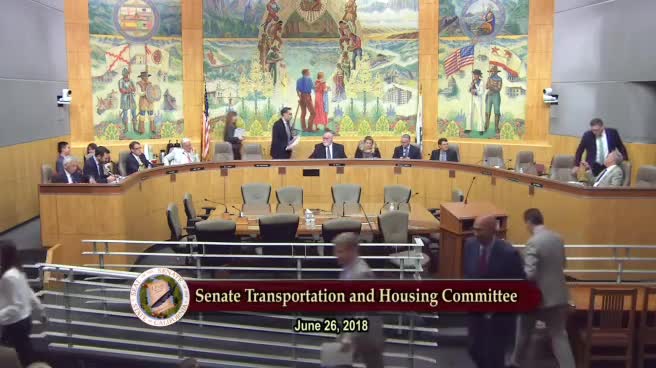 3MIN
Senate Standing Committee on Transportation and Housing
 1MIN
Assembly Floor
 9MIN
Assembly Standing Committee on Business and Professions
Bill Author

Bill Co-Author(s):
