AB 309: Testamentary additions to trusts.
- Session Year: 2017-2018
- House: Assembly
- Latest Version Date: 2017-06-28
Existing law provides for the disposition of a testators property by will. Existing law establishes the Uniform Testamentary Additions to Trusts Act, under which a valid devise of property may be made by will to the trustee or trustees of a trust established or to be established by the testator or by the testator and some other person or by some other person, commonly referred to as a pour-over will. Existing law authorizes that devise if the trust is identified in the testators will and its terms are set forth in a written instrument other than a will executed before or concurrently with the execution of the testators will.
This bill would also allow that written instrument to be executed within 60 days after the execution of the testators will. The bill would make technical, nonsubstantive changes to these provisions.
Existing law provides for the disposition of a testators property by will. Existing law establishes the Uniform Testamentary Additions to Trusts Act, under which a valid devise of property may be made by will to the trustee or trustees of a trust established or to be established by the testator or by the testator and some other person or by some other person, commonly referred to as a pour-over will. Existing law authorizes that devise if the trust is identified in the testators will and its terms are set forth in a written instrument other than a will executed before or concurrently with the execution of the testators will.
This bill would also allow that written instrument to be executed after the execution of the testators will. The bill would make technical, nonsubstantive changes to these provisions.
(a)A devise, the validity of which is determinable by the law of this state, may be made by a will to the trustee of a trust established or to be established by the testator, by the testator and some other person, or by some other person (including a funded or unfunded life insurance trust, although the settlor has reserved any or all rights of ownership of the insurance contracts) if the trust is identified in the testators will and its terms are set forth in a written instrument (other than a will) executed before, concurrently with, or within 60 days after the execution of the testators will or in the valid last will of a person who has predeceased the testator (regardless of the existence, size, or character of the trust property). The devise is not invalid because the trust is amendable or revocable, or both, or because the trust was amended after the execution of the will or after the death of the testator.
(b)Unless the testators will provides otherwise, the property so devised (1) is not deemed to be held under a testamentary trust of the testator but becomes a part of the trust to which it is given and (2) shall be administered and disposed of in accordance with the provisions of the instrument or will setting forth the terms of the trust, including any amendments thereto made before or after the death of the testator (regardless of whether made before or after the execution of the testators will).
(c)Unless otherwise provided in the will, a revocation or termination of the trust before the death of the testator causes the devise to lapse.
(a)A devise, the validity of which is determinable by the law of this state, may be made by a will to the trustee of a trust established or to be established by the testator or testator, by the testator and some other person person, or by some other person (including a funded or unfunded life insurance trust, although the settlor has reserved any or all rights of ownership of the insurance contracts) if the trust is identified in the testators will and its terms are set forth in a written instrument (other than a will) executed before or concurrently with before, concurrently with, or after the execution of the testators will or in the valid last will of a person who has predeceased the testator (regardless of the existence, size, or character of the trust property). The devise is not invalid because the trust is amendable or revocable, or both, or because the trust was amended after the execution of the will or after the death of the testator. Unless
(b)Unless the testators will provides otherwise, the property so devised (1) is not deemed to be held under a testamentary trust of the testator but becomes a part of the trust to which it is given and (2) shall be administered and disposed of in accordance with the provisions of the instrument or will setting forth the terms of the trust, including any amendments thereto made before or after the death of the testator (regardless of whether made before or after the execution of the testators will). Unless
(c)Unless otherwise provided in the will, a revocation or termination of the trust before the death of the testator causes the devise to lapse.
|
Date
|
Status
|
|---|---|
| Jun 28, 2017 | Chaptered by Secretary of State - Chapter 33, Statutes of 2017. |
| Jun 28, 2017 | Approved by the Governor. |
| Jun 16, 2017 | Enrolled and presented to the Governor at 11:30 a.m. |
| Jun 12, 2017 | In Assembly. Ordered to Engrossing and Enrolling. |
| Jun 12, 2017 | Read third time. Passed. Ordered to the Assembly. (Ayes 38. Noes 0. Page 1486.). |
| Jun 7, 2017 | Read second time. Ordered to third reading. |
| Jun 6, 2017 | From committee: Do pass. (Ayes 6. Noes 0.) (June 6). |
| May 10, 2017 | Referred to Com. on JUD. |
| Mar 23, 2017 | In Senate. Read first time. To Com. on RLS. for assignment. |
| Mar 23, 2017 | Read third time. Passed. Ordered to the Senate. (Ayes 76. Noes 0. Page 723.) |
| Mar 16, 2017 | Read second time. Ordered to Consent Calendar. |
| Mar 15, 2017 | Read second time and amended. Ordered returned to second reading. |
| Mar 14, 2017 | From committee: Amend, and do pass as amended. To Consent Calendar. (Ayes 11. Noes 0.) (March 14). |
| Feb 21, 2017 | Referred to Com. on JUD. |
| Feb 7, 2017 | From printer. May be heard in committee March 9. |
| Feb 6, 2017 | Read first time. To print. |
|
Date
|
Description
|
Location
|
Votes
|
|
|---|---|---|---|---|
| Jun 12, 2017 | Assembly 3rd Reading AB309 Maienschein By Jackson | Senate Floor |
Passed |
|
| Jun 6, 2017 | Do pass | Senate Standing Committee on Judiciary |
Passed |
|
| Mar 23, 2017 | AB 309 MAIENSCHEIN Consent Calendar Second Day | Assembly Floor |
Passed |
|
| Mar 14, 2017 | Do pass as amended. To Consent Calendar. | Assembly Standing Committee on Judiciary |
Passed |
This list shows positions taken on this bill by organizations on the date displayed, which is linked to the original source.
Positions by individuals are not included.
|
Organization
|
Position
|
Date
|
|---|---|---|
| Temmerman, Cilley & Kohlmann | * Support | Jun 6, 2017 |
| Trusts & Estates Section of the State Bar | ** Support | Mar 10, 2017 |
Office of Senate Floor Analyses (916) 651-1520 Fax: (916) 327-4478 | AB |
THIRD READING
Bill No: AB 309
:
SENATE JUDICIARY COMMITTEE: 6-0, 6/6/17
AYES: Jackson, Moorlach, Anderson, Hertzberg, Monning, Wieckowski
NO VOTE RECORDED: Stern
ASSEMBLY FLOOR: 76-0, 3/23/17 (Consent) - See last page for vote
SOURCE: Executive Committee of the Trusts & Estates Section of the State Bar of California
DIGEST:
This bill provides that a written instrument executed within 60 days after the execution of the testator’s will may be used to devise the testator’s property as long as the trust is identified in the testator’s will and its terms are set forth in the written instrument.
Existing law:
- Provides that an individual, 18 years of age or older and of sound mind may make a will to dispose of property after death. (Prob. Code Sec. 6100 et seq.)
- Provides a devise may be made by a will to the trustee of a trust established or to be established by the testator, by the testator and some other person, or by some other person if the trust is identified in the testator’s will and its terms are set forth in a written instrument, other than a will, executed before or concurrently with the execution of the testator’s will or in the valid last will of a person who has predeceased the testator. (Prob. Code Sec. 6300.)
- Provides a devise is not invalid because the trust is amendable or revocable, or both, or because the trust was amended after the execution of the will or after the death of the testator. (Prob. Code Sec. 6300.)
- Provides that unless the testator’s will provides otherwise, the property so devised:
- is not deemed to be held under a testamentary trust of the testator but becomes a part of the trust to which it is given; and
- shall be administered and disposed of in accordance with the provisions of the instrument or will setting forth the terms of the trust, including any amendments thereto made before or after the death of the testator. (Prob. Code Sec. 6300.)
- Provides that unless otherwise provided in the will, a revocation or termination of the trust before the death of the testator cause the devise to lapse. (Prob. Code Sec. 6300.)
This bill:
- Provides that a written instrument setting forth the terms of the trust is valid if executed within 60 days after the execution of the testator’s will.
- Makes other technical, nonsubstantive changes to these provisions.
Comments
Purpose of the bill. This bill brings California law more in line with the current version of the Uniform Testamentary Additions to Trusts Act (UTATA) by allowing a decedent to reference trust terms in a written instrument executed after the will and thereby eliminate the possibility for this technicality to thwart the intention of a decedent.
As amended in 1991, the UTATA provides a will may validly devise or bequeath property to the trustee of a trust established or to be established if the trust’s terms are set forth in a written instrument, other than a will, executed before, concurrently with, or after the execution of the testator’s will. Existing California law requires the written instrument that sets forth the trust’s terms be executed before or concurrently with the testator’s will. This bill allows the written instrument to be signed after the will was executed, as long as it was completed within 60 days after the will was executed.
According to the Executive Committee of the Trusts & Estates Section of the State Bar of California, the sponsor of this bill, this change is needed because:
Probate Code Section 6300 states that a decedent may validly devise property to a trustee where the terms of the trust are set forth in an instrument executed before or concurrently with the decedent’s will. However, it is possible that a decedent may reference a trust in his or her will the terms of which are contained in a written instrument executed shortly after the decedent’s will. For example, a decedent may have their will and trust prepared concurrently, but simply as a matter of timing may execute their will one or more days prior to their trust (e.g., if a notary is initially unavailable, a decedent may sign their will on day 1, and then later sign their trust on day 2 or day 3 when they are able to arrange for a notary). This technical difference in execution timing should not be grounds to defeat a decedent’s intent. This is particularly true since Section 6300 already permits the trust to be amended after the will was executed.
In recognition of the need to avoid this potential problem, the Uniform Testamentary Additions to Trusts Act was amended in 1991 to provide that terms of a trust may be contained in a written instrument executed before, concurrently with, and after the will providing for the devise in trust. In recent years, California has adopted legislation designed to liberalize certain will formality laws such that the decedent’s intention is not so easily thwarted by technicalities (See e.g., Probate Code Section 6110(c), amended in 2008 to include a harmless error rule for will execution formalities).
Although California is not a state that has enacted the UTATA in its entirety, the change proposed by this bill seems to help promote a testator’s intent. This minor change would allow a devise to be validated even in instances where there may be delay between the execution of the will and the execution of the trust referenced in their will.
FISCAL EFFECT: Appropriation: Fiscal Com.: Local:
Executive Committee of the Trusts & Estates Section of the State Bar of
California (source)
None received
ASSEMBLY FLOOR: 76-0, 3/23/17
AYES: Acosta, Aguiar-Curry, Travis Allen, Arambula, Baker, Berman, Bigelow, Bloom, Bocanegra, Bonta, Brough, Caballero, Calderon, Cervantes, Chau, Chávez, Chen, Chiu, Choi, Chu, Cooley, Cooper, Cunningham, Dahle, Daly, Eggman, Flora, Fong, Frazier, Friedman, Gallagher, Cristina Garcia, Eduardo Garcia, Gipson, Gloria, Gomez, Gonzalez Fletcher, Gray, Grayson, Harper, Holden, Irwin, Jones-Sawyer, Kalra, Kiley, Lackey, Levine, Limón, Low, Maienschein, Mathis, Mayes, McCarty, Medina, Melendez, Mullin, Muratsuchi, Nazarian, Obernolte, O'Donnell, Patterson, Quirk, Quirk-Silva, Rodriguez, Rubio, Salas, Santiago, Steinorth, Mark Stone, Thurmond, Ting, Voepel, Waldron, Weber, Wood, Rendon
NO VOTE RECORDED: Burke, Dababneh, Reyes, Ridley-Thomas
6/7/17 13:39:09
**** END ****
Senator Hannah-Beth Jackson, Chair
2017-2018 Regular Session
Bill No: AB 309 (Author:Maienschein)
Version: March 15, 2017
Hearing Date: June 6, 2017
Fiscal: No
Urgency: No
Consultant: MS
SUBJECT
Testamentary additions to trusts
DESCRIPTION
Existing law provides for the disposition of a testator’s property by will. (Prob. Code Sec. 6100 et seq.) Existing law provides a valid devise of property may be made by will to the trustee or trustees of a trust established or to be established by the testator or by the testator and some other person, commonly referred to as a pour-over will. Such a devise is authorized if the trust is identified in the testator’s will and its terms are set forth in a written instrument other than a will executed before or concurrently with the execution of the testator’s will. (Prob. Code Sec. 6300.) This bill would also allow that written instrument to be executed within 60 days after the execution of the testator’s will.
BACKGROUND
In 1960, the Uniform Testamentary Additions to Trusts Act (UTATA) was first promulgated by the Uniform Law Commissions. Parts of this act have been adopted into California’s probate code when the probate code was repealed and reenacted in 1991 through AB 759 (Friedman, Ch. 79, Stats. 1990). AB 759 enacted Probate Code Section 6300, which provides a valid devise of property may be made by will to the trustee or trustees of a trust established or to be established by the testator or by the testator and some other person, commonly referred to as a pour-over will. Such a devise is authorized if the trust is identified in the testator’s will and its terms are set forth in a written instrument other than a will executed before or concurrently with the execution of the testator’s will.
This bill proposes to amend Probate Code Section 6300 to reflect changes made to the UTATA in 1991. These proposed amendments would provide for a valid devise of property made by a will to a trust, as long as the trust is executed within 60 days of the testator’s will.
CHANGES TO EXISTING LAW
Existing law provides that an individual, 18 years of age or older and of sound mind may make a will to dispose of property after death. (Prob. Code Sec. 6100 et seq.)
Existing law provides a devise may be made by a will to the trustee of a trust established or to be established by the testator, by the testator and some other person, or by some other person if the trust is identified in the testator’s will and its terms are set forth in a written instrument, other than a will, executed before or concurrently with the execution of the testator’s will or in the valid last will of a person who has predeceased the testator. (Prob. Code Sec. 6300.)
Existing law provides a devise is not invalid because the trust is amendable or revocable, or both, or because the trust was amended after the execution of the will or after the death of the testator. (Prob. Code Sec. 6300.)
Existing law provides that unless the testator’s will provides otherwise, the property so devised:
- is not deemed to be held under a testamentary trust of the testator but becomes a part of the trust to which it is given; and
- shall be administered and disposed of in accordance with the provisions of the instrument or will setting forth the terms of the trust, including any amendments thereto made before or after the death of the testator. (Prob. Code Sec. 6300.)
Existing law provides that unless otherwise provided in the will, a revocation or termination of the trust before the death of the testator cause the devise to lapse. (Prob. Code Sec. 6300.)
This bill would provide that a written instrument setting forth the terms of the trust is valid if executed within 60 days after the execution of the testator’s will.
This bill would make other technical, nonsubstantive changes to these provisions.
COMMENT
- Stated need for this bill
According to the Author:
This proposal would conform California law with the current version of UTATA by allowing a decedent to reference trust terms in a written instrument executed after the will and thereby eliminate the possibility for this technicality to thwart the intention of a decedent.
As amended in 1991, the UTATA provides a will may validly devise or bequeath property to the trustee of a trust established or to be established if the trust’s terms are set forth in a written instrument, other than a will, executed before, concurrently with, or after the execution of the testator’s will. Existing California law requires the written instrument that sets forth the trust’s terms be executed before or concurrently with the testator’s will. This bill would allow the written instrument to be signed after the will was executed, as long as it was completed within 60 days after the will was executed.
According to the Executive Committee of the Trusts & Estates Section of the State Bar of California, the sponsor of this bill, this change is needed because:
Probate Code Section 6300 states that a decedent may validly devise property to a trustee where the terms of the trust are set forth in an instrument executed before or concurrently with the decedent’s will. However, it is possible that a decedent may reference a trust in his or her will the terms of which are contained in a written instrument executed shortly after the decedent’s will. For example, a decedent may have their will and trust prepared concurrently, but simply as a matter of timing may execute their will one or more days prior to their trust (e.g., if a notary is initially unavailable, a decedent may sign their will on day 1, and then later sign their trust on day 2 or day 3 when they are able to arrange for a notary). This technical difference in execution timing should not be grounds to defeat a decedent’s intent. This is particularly true since Section 6300 already permits the trust to be amended after the will was executed.
In recognition of the need to avoid this potential problem, the Uniform Testamentary Additions to Trusts Act was amended in 1991 to provide that terms of a trust may be contained in a written instrument executed before, concurrently with, and after the will providing for the devise in trust. In recent years, California has adopted legislation designed to liberalize certain will formality laws such that the decedent’s intention is not so easily thwarted by technicalities (See e.g., Probate Code Section 6110(c), amended in 2008 to include a harmless error rule for will execution formalities).
Although California is not a state that has enacted the UTATA in its entirety, the change proposed by this bill seems to help promote a testator’s intent. This minor change would allow a devise to be validated even in instances where there may be delay between the execution of the will and the execution of the trust referenced in their will.
Support: None Known
Opposition: None Known
HISTORY
Source: Executive Committee of the Trusts & Estates Section of the State Bar of California
Related Pending Legislation: SB 333 (Anderson, 2017) would clarify that an irrevocable trust may be modified or terminated by the written consent of the settlor and all beneficiaries without court approval of the modification or termination. This bill would also make other clarifying changes related to a petition by consenting beneficiaries, with the consent of the settlor, for modification or partial termination of an irrevocable trust. This bill is in the Assembly Judiciary Committee.
Prior Legislation:
AB 2248 (Spitzer, Ch. 53, Stats. 2008) amended the Probate Code to require a witness to a will to sign the will within the testator’s lifetime. It also allows a printed will that fails to meet current statutory requirements to be probated if the proponent of the will establishes by clear and convincing evidence that the testator, at the time he or she signed the will, intended the will to be his or her will.
AB 759 (Friedman, Ch. 79, Stats. 1990) revised and recast the Probate Code and, among other things, continued the trust modification and termination provisions under prior law.
Prior Vote:
Assembly Floor (Ayes 76, Noes 0)
Assembly Judiciary Committee (Ayes 11, Noes 0)
**************
Date of Hearing: March 14, 2017
ASSEMBLY COMMITTEE ON JUDICIARY
Mark Stone, Chair
ABPCA Bill Id:AB 309
Author:(Maienschein) – As Introduced Ver:February 6, 2017
PROPOSED CONSENT (As Proposed to be Amended)
SUBJECT: POUR-OVER WILLS: TRUST CREATED AFTER THE WILL
KEY ISSUE: SHOULD A TESTATOR BE ABLE TO DEVISE PROPERTY BY WILL TO A TRUST THAT IS NOT YET CREATED AT THE TIME THE WILL IS EXECUTED, BUT IS CREATED UP TO 60 DAYS LATER?
SYNOPSIS
One tool of estate planning is a "pour-over" will, which devises some or all of a testator's property into a trust. These wills are called pour-over wills because they pour the testator's assets into a trust. That trust, in turn, is often created to avoid probate and is generally amendable and revocable during the creator's lifetime. Current law requires that a will can only devise property to a trust if the trust is identified by the will and its terms set forth in a written instrument other than a will (the trust document itself) that is executed either before or concurrently with the will. This bill, sponsored by the Trusts & Estates Section of the State Bar, allows a will to devise property to a trust identified in the will, but, as the bill is proposed to be amended, not created until up to 60 days after execution of the will. The author states that this bill is necessary because sometimes an individual may execute his or her will a few days before the trust instrument, for example if notarization is needed for the trust, thus inadvertently invalidating the devise to the trust. This bill helps correct that problem and ensure that the testator's wishes can be effectuated. There is no reported opposition to this bill.
SUMMARY: Allows a will to devise property to a trust identified in the will, but not created for up to 60 days after execution of the will.
EXISTING LAW:
- Provides that an individual, 18 years of age or older and of sound mind may make a will to dispose of property after death. (Probate Code Section 6100 et seq. Unless otherwise stated, all further statutory references are to that code.)
- Provides that property may be devised by will to a trustee of a trust established by the testator or another person. Requires the trust to be identified by the will and its terms set forth in a written instrument other than a will that is executed either before or concurrently with the will. Provides that the devise is not invalid because the trust is amendable or revocable or because the trust was amended after execution of the will or after the death of the testator. (Section 6300.)
FISCAL EFFECT: As currently in print this bill is keyed non-fiscal.
COMMENTS: Proper estate planning allows individuals to make their post-death wishes clear and arrange to distribute their assets as they see fit, plan for personal or family needs, such as a guardianship for young children, and minimize the time and expense associated with estate administration. Often a trust is used to, among other things, avoid probate. However, during a settlor's (the person who created the trust) lifetime, a trust typically only contains the more valuable items that the individual may own, such as a house and stock accounts, and excludes smaller items, such as cars, furniture and household items. Thus, even if a trust is used to transfer assets, most people will also have a will to ensure that all a testator's (the person executing the will) property is properly distributed at death. In these instances, the will may fully dispose of the testator's property by devising the property to the trust. This type of will, also called a pour-over will, allows for all property to be distributed based on the allocation set forth in one document – the trust, which generally can be easily amended or even revoked up until death.
Current law allows a will to devise property to a trust, provided the trust is identified in the will and its terms are set forth in a written instrument other than a will that is executed either before or concurrently with the will. This helps ensure that the trust actually exists and that the will can effectively devises the testator’s property. However, this bill's author raises a legitimate concern about this requirement:
Probate Code Section 6300 states that a decedent may validly devise property to a trustee where the terms of the trust are set forth in an instrument executed before or concurrently with the decedent’s will. However, it is possible that a decedent may reference a trust in his or her will the terms of which are contained in a written instrument executed shortly after the decedent’s will. For example, a decedent may have their will and trust prepared concurrently, but simply as a matter of timing may execute their will one or more days prior to their trust (e.g., if a notary is initially unavailable, a decedent may sign their will on day 1, and then later sign their trust on day 2 or day 3 when they are able to arrange for a notary). This technical difference in execution timing should not be grounds to defeat a decedent’s intent. This is particularly true since Section 6300 already permits the trust to be amended after the will was executed.
This bill seeks to address the concern that a pour-over will may inadvertently be executed before the trust, thus nullifying the devise to the trust and, likely, the testator's testamentary intent. It does so by allowing a will to devise property to a trust identified in the will, but not created for, as proposed to be amended, up to 60 days after execution of the will. This ensures that even if the trust has not formally been created before the will is executed, a devise to it is still valid for up to 60 days. This is also consistent with, but not identical to, the Uniform Testamentary Additions to Trusts Act, which permits a pour-over will to devise property to a trust that is executed before, concurrently with, or after the will (without any time limit).
The proposed amendment to effectuate the 60-day limit is as follows:
On page 2, line 7, after "or" inset: within 60 days
The 60-day limit should also help ensure that testators do not simply forget to set up the trust -- leaving it for some later date that does not come -- but instead complete the trust within a short period of time after the will is executed. This will help avoid intestacy, which would occur if the will devises property to a nonexistent trust, and help effectuate the testator’s testamentary intent.
REGISTERED SUPPORT / OPPOSITION:
Support
Trusts & Estates Section of the State Bar (sponsor)
Opposition
None on file
Analysis Prepared by: Leora Gershenzon / JUD. / (916) 319-2334
Discussed in Hearing
View Older Hearings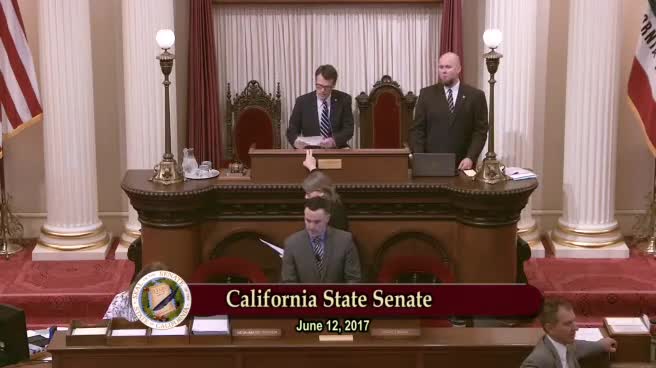
Bill Author

Bill Co-Author(s):