AB 31: Whistleblowers: California State Auditor.
- Session Year: 2017-2018
- House: Assembly
- Latest Version Date: 2017-10-09
Existing law creates the California State Auditors Office, which is independent of the executive branch and legislative control, to examine and report annually upon the financial statements prepared by the executive branch. Existing law exempts the California State Auditor from specific provisions of existing law relating to oversight by state control agencies, including specific provisions relating to employment, administration, contracting, fiscal matters, and the adoption of regulations.
Existing law, the California Whistleblower Protection Act, authorizes the auditor to conduct an investigative audit upon receiving specific information that an employee or state agency has engaged in an improper governmental activity, as defined. The act requires the auditor to establish a means of submitting allegations of improper governmental activity, and generally requires the auditor to keep confidential every investigation, including all investigative files and work product.
This bill would require the auditor to create an alternative system for submission to an independent investigator of allegations of improper governmental activity engaged or participated in by employees of the office. The bill would require submissions to be delivered to the Employment and Administrative Mandate Section of the Department of Justice without prior review by the auditor. The bill would require the section to review submissions and, if it determines that a submission constitutes an allegation of improper governmental activity, to transmit the submission to the independent investigator for further action. The bill would define improper governmental activity and independent investigator for its purposes. The bill would require the independent investigator to conduct investigations in a manner consistent with provisions of the act relating to other state civil service employees. The bill would require the independent investigator, if he or she finds that the facts support a conclusion that an employee engaged or participated in improper governmental activities, to prepare a confidential investigative report and, subject to specific limitations, send a copy of the report and gathered evidence to the auditor and certain other persons within the office. The bill would require the independent investigator, if the independent investigator determines it to be appropriate, to report this information to the Attorney General, to the policy committees of the Senate and Assembly having jurisdiction over the subject involved, and to any other authority that the independent investigator determines appropriate. The bill would authorize the independent investigator, subject to specific limitations, to provide to the auditor any evidence gathered during the investigation that, in the judgment of the independent investigator, is necessary to support any of the reports recommendations. The bill would require the auditor to report specific information to the independent investigator. The bill would require the independent investigator, if the auditor elects not to take adverse action, to notify the Joint Legislative Audit Committee (JLAC) of the report and, upon request, to provide JLAC a copy as prescribed. The bill would authorize the independent investigator to seek consent from the State Personnel Board to file disciplinary charges if the office does not.
Existing law creates the California State Auditors Office, which is independent of the executive branch and legislative control, to examine and report annually upon the financial statements prepared by the executive branch. Existing law exempts the California State Auditor from specific provisions of existing law relating to oversight by state control agencies, including specific provisions relating to employment, administration, contracting, fiscal matters, and the adoption of regulations.
Existing law, the California Whistleblower Protection Act, authorizes the auditor to conduct an investigative audit upon receiving specific information that an employee or state agency has engaged in an improper governmental activity, as defined. The act requires the auditor to establish a means of submitting allegations of improper governmental activity, and generally requires the auditor to keep confidential every investigation, including all investigative files and work product.
This bill would require the auditor to create an alternative system for submission to an independent investigator of allegations of improper governmental activity engaged or participated in by employees of the office. The bill would require submissions to be delivered to the Employment and Administrative Mandate Section of the Department of Justice without prior review by the auditor. The bill would require the section to review submissions and, if it determines that a submission constitutes an allegation of improper governmental activity, to transmit the submission to the independent investigator for further action. The bill would define improper governmental activity and independent investigator for its purposes. The bill would require the independent investigator to conduct investigations in a manner consistent with provisions of the act relating to other state civil service employees. The bill would require the independent investigator, if he or she finds that the facts support a conclusion that an employee engaged or participated in improper governmental activities, to prepare a confidential investigative report and, subject to specific limitations, send a copy of the report and gathered evidence to the auditor and certain other persons within the office. The bill would require the independent investigator, if the independent investigator determines it to be appropriate, to report this information to the Attorney General, to the policy committees of the Senate and Assembly having jurisdiction over the subject involved, and to any other authority that the independent investigator determines appropriate. The bill would authorize the independent investigator, subject to specific limitations, to provide to the auditor any evidence gathered during the investigation that, in the judgment of the independent investigator, is necessary to support any of the reports recommendations. The bill would require the auditor to report specific information to the independent investigator. The bill would require the independent investigator, if the auditor elects not to take adverse action, to notify the Joint Legislative Audit Committee (JLAC) of the report and, upon request, to provide JLAC a copy as prescribed. The bill would authorize the independent investigator to seek consent from the State Personnel Board to file disciplinary charges if the office does not.
Existing law creates the California State Auditors Office, which is independent of the executive branch and legislative control, to examine and report annually upon the financial statements prepared by the executive branch. Existing law exempts the California State Auditor from specific provisions of existing law relating to oversight by state control agencies, including specific provisions relating to employment, administration, contracting, fiscal matters, and the adoption of regulations.
Existing law, the California Whistleblower Protection Act, authorizes the auditor to conduct an investigative audit upon receiving specific information that an employee or state agency has engaged in an improper governmental activity, as defined. The act requires the auditor to establish a means of submitting allegations of improper governmental activity, and generally requires the auditor to keep confidential every investigation, including all investigative files and work product.
This bill would require the auditor to create an alternative system for submission to an independent investigator of confidential allegations of improper governmental activity engaged or participated in by employees of the office. The bill would require submissions to be delivered to the Employment and Administrative Mandate Section of the Department of Justice without prior review by the auditor. The bill would require the section to review submissions and, if it determines that a submission constitutes an allegation of improper governmental activity, to transmit the submission to the independent investigator for further action. The bill would define improper governmental activity and independent investigator for its purposes. The bill would require the independent investigator to conduct investigations in a manner consistent with provisions of the act relating to other state civil service employees. The bill would require the independent investigator, if he or she finds that the facts support a conclusion that an employee engaged or participated in improper governmental activities, to prepare a confidential investigative report and, subject to specific limitations, send a copy of the report and gathered evidence to the auditor and certain other persons within the office. The bill would require the independent investigator, if the independent investigator determines it to be appropriate, to report this information to the Attorney General, to the policy committees of the Senate and Assembly having jurisdiction over the subject involved, and to any other authority that the independent investigator determines appropriate. The bill would authorize the independent investigator, subject to specific limitations, to provide to the auditor any evidence gathered during the investigation that, in the judgment of the independent investigator, is necessary to support any of the reports recommendations. The bill would require the auditor to report specific information to the independent investigator. The bill would require the independent investigator, if the auditor elects not to take adverse action, to notify the Joint Legislative Audit Committee (JLAC) of the report and to provide JLAC a copy as prescribed. The bill would authorize the independent investigator to seek consent from the State Personnel Board to file disciplinary charges if the office does not.
Existing law creates the California State Auditors Office, which is independent of the executive branch and legislative control, to examine and report annually upon the financial statements prepared by the executive branch. Existing law exempts the California State Auditor from specific provisions of existing law relating to oversight by state control agencies, including specific provisions relating to employment, administration, contracting, fiscal matters, and the adoption of regulations.
Existing law, the California Whistleblower Protection Act, authorizes the California State Auditor auditor to conduct an investigative audit upon receiving specific information that an employee or state agency has engaged in an improper governmental activity, as defined. The act requires the California State Auditor auditor to establish a means of submitting allegations of improper governmental activity, and generally requires the California State Auditor auditor to keep confidential every investigation, including all investigative files and work product.
This bill would require the California State Auditor auditor to create the means for employees of the California State Auditors Office to submit an alternative system for submission to an independent investigator of confidential allegations of improper governmental activity engaged or participated in by employees of the office to an independent investigator. office. The bill would require submissions to be delivered to the Employment and Administrative Mandate Section of the Department of Justice without prior review by the auditor. The bill would require the section to review submissions and, if it determines that a submission constitutes an allegation of improper governmental activity, to transmit the submission to the independent investigator for further action. The bill would define improper governmental activity and independent investigator for its purposes. The bill would require the independent investigator to conduct investigations in a manner consistent with provisions of the act relating to other state civil service employees. The bill would require the independent investigator, if he or she finds that the facts support a conclusion that an employee may have engaged or participated in improper governmental activities, to prepare a confidential investigative report and, subject to specific limitations, send a copy of the report and gathered evidence to the California State Auditor auditor and certain other persons within the California State Auditors Office. office. The bill would require the independent investigator, if the California State Auditor auditor elects not to take adverse action, to notify the Joint Legislative Audit Committee (JLAC) and the Milton Marks Little Hoover Commission on California State Government Organization and Economy of the report and to provide JLAC and the commission a copy as prescribed. The bill would authorize the independent investigator to take adverse action if the California State Auditors Office seek consent from the State Personnel Board to file disciplinary charges if the office does not.
Existing law creates the California State Auditors Office, which is independent of the executive branch and legislative control, to examine and report annually upon the financial statements prepared by the executive branch. Existing law exempts the California State Auditor from specific provisions of existing law relating to oversight by state control agencies, including specific provisions relating to employment, administration, contracting, fiscal matters, and the adoption of regulations.
Existing law, the California Whistleblower Protection Act, authorizes the California State Auditor to conduct an investigative audit upon receiving specific information that an employee or state agency has engaged in an improper governmental activity, as defined. The act requires the California State Auditor to establish a means of submitting allegations of improper governmental activity, and generally requires the California State Auditor to keep confidential every investigation, including all investigative files and work product.
This bill would require the California State Auditor to create the means for employees of the California State Auditors Office to submit confidential allegations of improper governmental activity engaged or participated in by employees of the office to an independent investigator. The bill would define improper governmental activity and independent investigator for its purposes. The bill would require the independent investigator to conduct investigations in a manner consistent with provisions of the act relating to other state civil service employees. The bill would require the independent investigator, if he or she finds that an employee may have engaged or participated in improper governmental activities, to prepare a confidential investigative report and, subject to specific limitations, send a copy of the report and gathered evidence to the California State Auditor and certain other persons within the California State Auditors Office. The bill would require the independent investigator, if the California State Auditor elects not to take adverse action, to notify the Joint Legislative Audit Committee (JLAC) and the Milton Marks Little Hoover Commission on California State Government Organization and Economy of the report and provide JLAC and the commission a copy as prescribed. The bill would authorize the independent investigator to take adverse action if the California State Auditors Office does not.
Existing law creates the California State Auditors Office, which is independent of the executive branch and legislative control, to examine and report annually upon the financial statements prepared by the executive branch. Existing law exempts the California State Auditor from specific provisions of existing law relating to oversight by state control agencies, including specific provisions relating to employment, administration, contracting, fiscal matters, and the adoption of regulations.
Existing law, the California Whistleblower Protection Act, authorizes the California State Auditor to conduct an investigative audit upon receiving specific information that an employee or state agency has engaged in an improper governmental activity, as defined. The act requires the California State Auditor to establish a means of submitting allegations of improper governmental activity, and generally requires the California State Auditor to keep confidential every investigation, including all investigative files and work product. The act authorizes an employee or applicant for employment who files a written complaint alleging reprisal, retaliation, or similar prohibited acts to also file a copy of the written complaint with the State Personnel Board, together with a sworn statement that the complaint is true, under penalty of perjury. The act provides that any person who intentionally engages in acts of reprisal, retaliation, or similar prohibited acts against a state employee or applicant for state employment for having made a protected disclosure is subject to punishment for a misdemeanor, and shall be liable in an action for civil damages brought by the injured party.
This bill would amend the act to establish provisions specifically for an employee of the California State Auditors Office to file a written complaint alleging reprisal, retaliation, or similar prohibited acts with the employees supervisor or manager or with the Joint Committee on Rules. The bill would require the Joint Committee on Rules to administer its provisions and to investigate and report on improper governmental activities of the California State Auditors Office. The bill would require a complaint to be filed together with a sworn statement that the complaint is true, under penalty of perjury. By expanding the crime of perjury, this bill would impose a state-mandated local program. The bill would also establish a criminal penalty for intentionally engaging in prohibited acts under the bills provisions, thereby imposing a state-mandated local program. The bill would also provide for an action for civil damages. require the California State Auditor to create the means for employees of the California State Auditors Office to submit confidential allegations of improper governmental activity engaged or participated in by employees of the office to an independent investigator. The bill would define improper governmental activity and independent investigator for its purposes. The bill would require the independent investigator to conduct investigations in a manner consistent with the act relating to other state civil service employees. The bill would require the independent investigator, if he or she finds that an employee may have engaged or participated in improper governmental activities, to prepare a confidential investigative report and, subject to specific limitations, send a copy of the report and gathered evidence to the California State Auditor and certain other persons within the California State Auditors Office. The bill would require the independent investigator, if the California State Auditor elects not to take adverse action, to notify the Joint Legislative Audit Committee (JLAC) and the Milton Marks Little Hoover Commission on California State Government Organization and Economy of the report and provide JLAC and the commission a copy as prescribed. The bill would authorize the independent investigator to take adverse action if the California State Auditors Office does not.
The California Constitution requires the state to reimburse local agencies and school districts for certain costs mandated by the state. Statutory provisions establish procedures for making that reimbursement.This bill would provide that no reimbursement is required by this act for a specified reason.Existing law creates the California State Auditors Office, which is independent of the executive branch and legislative control, to examine and report annually upon the financial statements prepared by the executive branch. Existing law exempts the California State Auditor from specific provisions of existing law relating to oversight by state control agencies, including specific provisions relating to employment, administration, contracting, fiscal matters, and the adoption of regulations.
Existing law, the California Whistleblower Protection Act, authorizes the California State Auditor to conduct an investigative audit upon receiving specific information that an employee or state agency has engaged in an improper governmental activity, as defined. The act requires the California State Auditor to establish a means of submitting allegations of improper governmental activity, and generally requires the California State Auditor to keep confidential every investigation, including all investigative files and work product. The act authorizes an employee or applicant for employment who files a written complaint alleging reprisal, retaliation, or similar prohibited acts to also file a copy of the written complaint with the State Personnel Board, together with a sworn statement that the complaint is true, under penalty of perjury. The act provides that any person who intentionally engages in acts of reprisal, retaliation, or similar prohibited acts against a state employee or applicant for state employment for having made a protected disclosure is subject to punishment for a misdemeanor, and shall be liable in an action for civil damages brought by the injured party.
This bill would amend the act to establish provisions specifically for an employee of the California State Auditors Office to file a written complaint alleging reprisal, retaliation, or similar prohibited acts with the employees supervisor or manager or with the Joint Committee on Rules. The bill would require the Joint Committee on Rules to administer its provisions and to investigate and report on improper governmental activities of the California State Auditors Office. The bill would require a complaint to be filed together with a sworn statement that the complaint is true, under penalty of perjury. By expanding the crime of perjury, this bill would impose a state-mandated local program. The bill would also establish a criminal penalty for intentionally engaging in prohibited acts under the bills provisions, thereby imposing a state-mandated local program. The bill would also provide for an action for civil damages.
The California Constitution requires the state to reimburse local agencies and school districts for certain costs mandated by the state. Statutory provisions establish procedures for making that reimbursement.
This bill would provide that no reimbursement is required by this act for a specified reason.
(a)The California State Auditor shall create the means for the submission of allegations of improper governmental activity both by transmission via mail or other carrier to a specified mailing address and electronic submission through an Internet Web site portal. The California State Auditor may request that a person submitting an allegation provide his or her name and contact information and provide the names and contact information for any persons who could help to substantiate the claim. However, the California State Auditor shall not require any person submitting an allegation to provide his or her name or contact information and shall clearly state on the agency Internet Web site that this information is not required in order to submit an allegation.
(b)Upon receiving specific information that any employee or state agency has engaged in an improper governmental activity, the California State Auditor may conduct an investigation of the matter. The identity of the person providing the information that initiated the investigation, or of any person providing information in confidence to further an investigation, shall not be disclosed without the express permission of the person providing the information except that the California State Auditor may make the disclosure to a law enforcement agency that is conducting a criminal investigation.
(c)(1)The California State Auditor shall create an alternative system for submission to an independent investigator of allegations of improper governmental activity engaged or participated in by employees of the California State Auditors Office. The system shall allow for submission of allegations both by delivery to a specified mailing address and electronic submission through an Internet Web site portal. The system may request that people submitting allegations provide their name and contact information and the names and contact information for any persons who could help to substantiate the claim. However, the system shall not require people submitting an allegation to provide their name or contact information and shall clearly state that this information is not required to submit an allegation. The system shall ensure that all submissions are promptly and directly delivered to the Employment and Administrative Mandate Section of the Department of Justice without prior review by the California State Auditor. The Employment and Administrative Mandate Section of the Department of Justice shall review submissions. If the Employment and Administrative Mandate Section of the Department of Justice determines that a submission constitutes an allegation of improper governmental activity, it shall transmit the submission to the independent investigator for further action in accordance with this section.
(2)(A)The independent investigator shall conduct investigations in a manner consistent with the provisions of this article relating to other state civil service employees. If the independent investigator finds that the facts support a conclusion that an employee engaged or participated in improper governmental activities, the investigator shall prepare a confidential investigative report and, subject to the limitations of this section, send a copy of the report and all evidence gathered during the investigation to the California State Auditor, the Chief Deputy California State Auditor, and the California State Auditors Office chief counsel and human resource manager.
(B)If the independent investigator determines it to be appropriate, the independent investigator shall report this information to the Attorney General, to the policy committees of the Senate and Assembly having jurisdiction over the subject involved, and to any other authority that the independent investigator determines appropriate. Subject to the limitations of this section, the independent investigator may provide to the California State Auditor any evidence gathered during the investigation that, in the judgment of the independent investigator, is necessary to support any of the reports recommendations. Within 60 days of receiving the independent investigators report, the California State Auditor shall report to the independent investigator any actions that it has taken or that it intends to take to implement the recommendations. The California State Auditor shall file subsequent reports on a monthly basis until final action has been taken.
(3)(A)Within 60 days after receiving a copy of the independent investigators report, the California State Auditors Office shall either serve a notice of adverse action upon the employee who is the subject of the investigative report, or submit to the independent investigator in writing its reasons for not taking adverse action.
(B)If the California State Auditors Office elects not to serve a notice of adverse action upon the employee who is the subject of the investigative report, then, within 10 days of receiving the reasons provided by the California State Auditors Office pursuant to subparagraph (A), the independent investigator shall:
(i)Notify the Joint Legislative Audit Committee, as described in Section 10501, that it has provided a report to the California State Auditors Office pursuant to this paragraph.
(ii)Upon request, provide a copy of the report described in this paragraph, redacted to remove all information that could identify any reporting party, witness, or employee, to the Joint Legislative Audit Committee, as described in Section 10501.
(C)If the California State Auditors Office does not take adverse action, the independent investigator may seek consent from the State Personnel Board to file charges in accordance with Section 19583.5.
(D)The following shall not be confidential:
(i)A notice of adverse action served by the California State Auditor.
(ii)A request to file charges filed by the independent investigator with the State Personnel Board.
(4)The California State Auditors Office shall reimburse the Employment and Administrative Mandate Section of the Department of Justice for the costs of retaining the independent investigator.
(5)For purposes of this subdivision and any investigation conducted pursuant thereto, improper governmental activity has the same meaning as set forth in subdivision (c) of Section 8547.2, except that it shall not include violations of an executive order of the Governor, any policy or procedure mandated by the State Administrative Manual or State Contracting Manual, or any other rule, regulation, or requirement that the California State Auditors Office, because of its independence from executive branch and legislative control, is not required to follow.
(d)For purposes of this section, independent investigator means an investigator who is retained by the Employment and Administrative Mandate Section of the Department of Justice who is all of the following:
(1)An attorney who is licensed to practice law in this state or a certified fraud examiner.
(2)A person who is experienced in investigating allegations of improper governmental activity in a confidential manner.
(3)A person who is outside of, and independent from, the California State Auditors Office and also independent of the executive branch and legislative control.
(a)The California State Auditor shall create the means for the submission of allegations of improper governmental activity both by transmission via mail or other carrier to a specified mailing address and electronic submission through an Internet Web site portal. The California State Auditor may request that a person submitting an allegation provide his or her name and contact information and provide the names and contact information for any persons who could help to substantiate the claim. However, the California State Auditor shall not require any person submitting an allegation to provide his or her name or contact information and shall clearly state on the agency Internet Web site that this information is not required in order to submit an allegation.
(b)Upon receiving specific information that any employee or state agency has engaged in an improper governmental activity, the California State Auditor may conduct an investigation of the matter. The identity of the person providing the information that initiated the investigation, or of any person providing information in confidence to further an investigation, shall not be disclosed without the express permission of the person providing the information except that the California State Auditor may make the disclosure to a law enforcement agency that is conducting a criminal investigation.
(c)(1)The California State Auditor shall create an alternative system for submission to an independent investigator of allegations of improper governmental activity engaged or participated in by employees of the California State Auditors Office. The system shall allow for submission of allegations both by delivery to a specified mailing address and electronic submission through an Internet Web site portal. The system may request that people submitting allegations provide their name and contact information and the names and contact information for any persons who could help to substantiate the claim. However, the system shall not require people submitting an allegation to provide their name or contact information and shall clearly state that this information is not required to submit an allegation. The system shall ensure that all submissions are promptly and directly delivered to the Employment and Administrative Mandate Section of the Department of Justice without prior review by the California State Auditor. The Employment and Administrative Mandate Section of the Department of Justice shall review submissions. If the Employment and Administrative Mandate Section of the Department of Justice determines that a submission constitutes an allegation of improper governmental activity, it shall transmit the submission to the independent investigator for further action in accordance with this section.
(2)(A)The independent investigator shall conduct investigations in a manner consistent with the provisions of this article relating to other state civil service employees. If the independent investigator finds that the facts support a conclusion that an employee engaged or participated in improper governmental activities, the investigator shall prepare a confidential investigative report and, subject to the limitations of this section, send a copy of the report and all evidence gathered during the investigation to the California State Auditor, the Chief Deputy California State Auditor, and the California State Auditors Office chief counsel and human resource manager.
(B)If the independent investigator determines it to be appropriate, the independent investigator shall report this information to the Attorney General, to the policy committees of the Senate and Assembly having jurisdiction over the subject involved, and to any other authority that the independent investigator determines appropriate. Subject to the limitations of this section, the independent investigator may provide to the California State Auditor any evidence gathered during the investigation that, in the judgment of the independent investigator, is necessary to support any of the reports recommendations. Within 60 days of receiving the independent investigators report, the California State Auditor shall report to the independent investigator any actions that it has taken or that it intends to take to implement the recommendations. The California State Auditor shall file subsequent reports on a monthly basis until final action has been taken.
(3)(A)Within 60 days after receiving a copy of the independent investigators report, the California State Auditors Office shall either serve a notice of adverse action upon the employee who is the subject of the investigative report, or submit to the independent investigator in writing its reasons for not taking adverse action.
(B)If the California State Auditors Office elects not to serve a notice of adverse action upon the employee who is the subject of the investigative report, then, within 10 days of receiving the reasons provided by the California State Auditors Office pursuant to subparagraph (A), the independent investigator shall:
(i)Notify the Joint Legislative Audit Committee, as described in Section 10501, that it has provided a report to the California State Auditors Office pursuant to this paragraph.
(ii)Upon request, provide a copy of the report described in this paragraph, redacted to remove all information that could identify any reporting party, witness, or employee, to the Joint Legislative Audit Committee, as described in Section 10501.
(C)If the California State Auditors Office does not take adverse action, the independent investigator may seek consent from the State Personnel Board to file charges in accordance with Section 19583.5.
(D)The following shall not be confidential:
(i)A notice of adverse action served by the California State Auditor.
(ii)A request to file charges filed by the independent investigator with the State Personnel Board.
(4)The California State Auditors Office shall reimburse the Employment and Administrative Mandate Section of the Department of Justice for the costs of retaining the independent investigator.
(5)For purposes of this subdivision and any investigation conducted pursuant thereto, improper governmental activity has the same meaning as set forth in subdivision (c) of Section 8547.2, except that it shall not include violations of an executive order of the Governor, any policy or procedure mandated by the State Administrative Manual or State Contracting Manual, or any other rule, regulation, or requirement that the California State Auditors Office, because of its independence from executive branch and legislative control, is not required to follow.
(d)For purposes of this section, independent investigator means an investigator who is retained by the Employment and Administrative Mandate Section of the Department of Justice who is all of the following:
(1)An attorney who is licensed to practice law in this state or a certified fraud examiner.
(2)A person who is experienced in investigating allegations of improper governmental activity in a confidential manner.
(3)A person who is outside of, and independent from, the California State Auditors Office and also independent of the executive branch and legislative control.
(a)The California State Auditor shall create the means for the submission of allegations of improper governmental activity both by transmission via mail or other carrier to a specified mailing address and electronic submission through an Internet Web site portal. The California State Auditor may request that a person submitting an allegation provide his or her name and contact information and provide the names and contact information for any persons who could help to substantiate the claim. However, the California State Auditor shall not require any person submitting an allegation to provide his or her name or contact information and shall clearly state on the agency Internet Web site that this information is not required in order to submit an allegation.
(b)Upon receiving specific information that any employee or state agency has engaged in an improper governmental activity, the California State Auditor may conduct an investigation of the matter. The identity of the person providing the information that initiated the investigation, or of any person providing information in confidence to further an investigation, shall not be disclosed without the express permission of the person providing the information except that the California State Auditor may make the disclosure to a law enforcement agency that is conducting a criminal investigation.
(c)(1)The California State Auditor shall create an alternative system for submission to an independent investigator of confidential allegations of improper governmental activity engaged or participated in by employees of the California State Auditors Office. The system shall allow for submission of allegations both by delivery to a specified mailing address and electronic submission through an Internet Web site portal. The system may request that people submitting allegations provide their name and contact information and the names and contact information for any persons who could help to substantiate the claim. However, the system shall not require people submitting an allegation to provide their name or contact information and shall clearly state that this information is not required to submit an allegation. The system shall ensure that all submissions are promptly and directly delivered to the Employment and Administrative Mandate Section of the Department of Justice without prior review by the California State Auditor. The Employment and Administrative Mandate Section of the Department of Justice shall review submissions. If the Employment and Administrative Mandate Section of the Department of Justice determines that a submission constitutes an allegation of improper governmental activity, it shall transmit the submission to the independent investigator for further action in accordance with this section.
(2)(A)The independent investigator shall conduct investigations in a manner consistent with the provisions of this article relating to other state civil service employees. If the independent investigator finds that the facts support a conclusion that an employee engaged or participated in improper governmental activities, the investigator shall prepare a confidential investigative report and, subject to the limitations of this section, send a copy of the report and all evidence gathered during the investigation to the California State Auditor, the Chief Deputy California State Auditor, and the California State Auditors Office chief counsel and human resource manager.
(B)If the independent investigator determines it to be appropriate, the independent investigator shall report this information to the Attorney General, to the policy committees of the Senate and Assembly having jurisdiction over the subject involved, and to any other authority that the independent investigator determines appropriate. Subject to the limitations of this section, the independent investigator may provide to the California State Auditor any evidence gathered during the investigation that, in the judgment of the independent investigator, is necessary to support any of the reports recommendations. Within 60 days of receiving the independent investigators report, the California State Auditor shall report to the independent investigator any actions that it has taken or that it intends to take to implement the recommendations. The California State Auditor shall file subsequent reports on a monthly basis until final action has been taken.
(3)(A)Within 60 days after receiving a copy of the independent investigators report, the California State Auditors Office shall either serve a notice of adverse action upon the employee who is the subject of the investigative report, or submit to the independent investigator in writing its reasons for not taking adverse action.
(B)If the California State Auditors Office elects not to serve a notice of adverse action upon the employee who is the subject of the investigative report, then, within 10 days of receiving the reasons provided by the California State Auditors Office pursuant to subparagraph (A), the independent investigator shall:
(i)Notify the Joint Legislative Audit Committee, as described in Section 10501, that it has provided a report to the California State Auditors Office pursuant to this paragraph.
(ii)Upon request, provide a copy of the report described in this paragraph, redacted to remove all information that could identify any reporting party, witness, or employee, to the Joint Legislative Audit Committee, as described in Section 10501.
(C)If the California State Auditors Office does not take adverse action, the independent investigator may seek consent from the State Personnel Board to file charges in accordance with Section 19583.5.
(D)The following shall not be confidential:
(i)A notice of adverse action served by the California State Auditor.
(ii)A request to file charges filed by the independent investigator with the State Personnel Board.
(4)The California State Auditors Office shall reimburse the Employment and Administrative Mandate Section of the Department of Justice for the costs of retaining the independent investigator.
(5)For purposes of this subdivision and any investigation conducted pursuant thereto, improper governmental activity has the same meaning as set forth in subdivision (c) of Section 8547.2, except that it shall not include violations of an executive order of the Governor, any policy or procedure mandated by the State Administrative Manual or State Contracting Manual, or any other rule, regulation, or requirement that the California State Auditors Office, because of its independence from executive branch and legislative control, is not required to follow.
(d)For purposes of this section, independent investigator means an investigator who is retained by the Employment and Administrative Mandate Section of the Department of Justice who is all of the following:
(1)An attorney who is licensed to practice law in this state or a certified fraud examiner.
(2)A person who is experienced in investigating allegations of improper governmental activity in a confidential manner.
(3)A person who is outside of, and independent from, the California State Auditors Office and also independent of the executive branch and legislative control.
(a)The California State Auditor shall create the means for the submission of allegations of improper governmental activity both by transmission via mail or other carrier to a specified mailing address and electronic submission through an Internet Web site portal. The California State Auditor may request that a person submitting an allegation provide his or her name and contact information and provide the names and contact information for any persons who could help to substantiate the claim. However, the California State Auditor shall not require any person submitting an allegation to provide his or her name or contact information and shall clearly state on the agency Internet Web site that this information is not required in order to submit an allegation.
(b)Upon receiving specific information that any employee or state agency has engaged in an improper governmental activity, the California State Auditor may conduct an investigation of the matter. The identity of the person providing the information that initiated the investigation, or of any person providing information in confidence to further an investigation, shall not be disclosed without the express permission of the person providing the information except that the California State Auditor may make the disclosure to a law enforcement agency that is conducting a criminal investigation.
(c)(1)The California State Auditor shall create the means for employees of the California State Auditors Office to submit an alternative system for submission to an independent investigator of confidential allegations of improper governmental activity engaged or participated in by employees of the California State Auditors Office to an independent investigator. Office. The system shall allow for submission of allegations both by delivery to a specified mailing address and electronic submission through an Internet Web site portal. The system may request that people submitting allegations provide their name and contact information and the names and contact information for any persons who could help to substantiate the claim. However, the system shall not require people submitting an allegation to provide their name or contact information and shall clearly state that this information is not required to submit an allegation. The system shall ensure that all submissions are promptly and directly delivered to the Employment and Administrative Mandate Section of the Department of Justice without prior review by the California State Auditor. The Employment and Administrative Mandate Section of the Department of Justice shall review submissions. If the Employment and Administrative Mandate Section of the Department of Justice determines that a submission constitutes an allegation of improper governmental activity, it shall transmit the submission to the independent investigator for further action in accordance with this section.
(2)The independent investigator shall conduct investigations in a manner consistent with the provisions of this article relating to other state civil service employees. If the independent investigator finds that the facts support a conclusion that an employee may have engaged or participated in improper governmental activities, the investigator shall prepare a confidential investigative report and, subject to the limitations of this section, send a copy of the report and all evidence gathered during the investigation to the California State Auditor, the Chief Deputy California State Auditor, and the California State Auditors Office chief counsel and human resource manager.
(3)(A)Within 60 days after receiving a copy of the independent investigators report, the California State Auditors Office shall either serve a notice of adverse action upon the employee who is the subject of the investigative report, or submit to the independent investigator in writing its reasons for not taking adverse action.
(B)Within If the California State Auditors Office elects not to serve a notice of adverse action upon the employee who is the subject of the investigative report, then, within 10 days of a submittal of receiving the reasons provided by the California State Auditors Office pursuant to subparagraph (A), the independent investigator shall do both of the following: shall:
(i)Notify the Joint Legislative Audit Committee, as described in Section 10501, and the Milton Marks Little Hoover Commission on California State Government Organization and Economy, as described in Section 8501, that it has provided a report to the California State Auditors Office pursuant to this paragraph.
(ii)Upon request, provide a copy of the report described in this paragraph, redacted to remove all information that could identify any reporting party, witness, or employee, to the Joint Legislative Audit Committee, as described in Section 10501, and the Milton Marks Little Hoover Commission on California State Government Organization and Economy, as described in Section 8501. 10501.
(C)If the California State Auditors Office does not take adverse action, the independent investigator may take adverse action as provided in seek consent from the State Personnel Board to file charges in accordance with Section 19583.5.
(4)The California State Auditors Office shall reimburse the Milton Marks Little Hoover Commission on California State Government Organization and Economy, as described in Section 8501, Employment and Administrative Mandate Section of the Department of Justice for the costs of retaining the independent investigator.
(5)For purposes of this subdivision and any investigation conducted pursuant thereto, improper governmental activity has the same meaning as set forth in subdivision (c) of Section 8547.2, except that it shall not include violations of an executive order of the Governor, any policy or procedure mandated by the State Administrative Manual or State Contracting Manual, or any other rule, regulation, or requirement that the California State Auditors Office, because of its independence from executive branch and legislative control, is not required to follow.
(d)For purposes of this section, independent investigator means an investigator who is retained by the Milton Marks Little Hoover Commission on California State Government Organization and Economy, as described in Section 8501, Employment and Administrative Mandate Section of the Department of Justice who is all of the following:
(1)An attorney who is licensed to practice law in this state. state or a certified fraud examiner.
(2)A certified fraud examiner. (3)(2)A person who is experienced in investigating allegations of improper governmental activity in a confidential manner.
(4)(3)A person who is outside of, and independent from, the California State Auditors Office and also independent of the executive branch and legislative control.
(a)The California State Auditor shall create the means for the submission of allegations of improper governmental activity both by transmission via mail or other carrier to a specified mailing address and electronic submission through an Internet Web site portal. The California State Auditor may request that a person submitting an allegation provide his or her name and contact information and provide the names and contact information for any persons who could help to substantiate the claim. However, the California State Auditor shall not require any person submitting an allegation to provide his or her name or contact information and shall clearly state on the agency Internet Web site that this information is not required in order to submit an allegation.
(b)Upon receiving specific information that any employee or state agency has engaged in an improper governmental activity, the California State Auditor may conduct an investigation of the matter. The identity of the person providing the information that initiated the investigation, or of any person providing information in confidence to further an investigation, shall not be disclosed without the express permission of the person providing the information except that the California State Auditor may make the disclosure to a law enforcement agency that is conducting a criminal investigation.
(c)(1)The California State Auditor shall create the means for employees of the California State Auditors Office to submit confidential allegations of improper governmental activity engaged or participated in by employees of the California State Auditors Office to an independent investigator.
(2)The independent investigator shall conduct investigations in a manner consistent with the provisions of this article relating to other state civil service employees. If the independent investigator finds that an employee may have engaged or participated in improper governmental activities, the investigator shall prepare a confidential investigative report and, subject to the limitations of this section, send a copy of the report and all evidence gathered during the investigation to the California State Auditor, the Chief Deputy California State Auditor, and the California State Auditors Office chief counsel and human resource manager.
(3)(A)Within 60 days after receiving a copy of the independent investigators report, the California State Auditors Office shall either serve a notice of adverse action upon the employee who is the subject of the investigative report, or set forth submit to the independent investigator in writing its reasons for not taking adverse action and submit those reasons to the independent investigator. action.
(B)Within 10 days of a submittal of reasons pursuant to subparagraph (A), the independent investigator shall do both of the following:
(i)Notify the Joint Legislative Audit Committee, as described in Section 10501, and the Milton Marks Little Hoover Commission on California State Government Organization and Economy, as described in Section 8501, that it has provided a report to the California State Auditors Office pursuant to this paragraph.
(ii)Make Upon request, provide a copy of the report described in this paragraph, redacted to remove all information that could identify any reporting party, witness, or employee, to the Joint Legislative Audit Committee, as described in Section 10501, and the Milton Marks Little Hoover Commission on California State Government Organization and Economy, as described in Section 8501.
(C)In the event that If the California State Auditors Office does not take adverse action, the independent investigator may take adverse action as provided in Section 19583.5.
(4)The California State Auditors Office shall reimburse the Milton Marks Little Hoover Commission on California State Government Organization and Economy, as described in Section 8501, for the costs of retaining the independent investigator.
(4)(5)For purposes of this subdivision and any investigation conducted pursuant thereto, improper governmental activity has the same meaning as set forth in subdivision (c) of Section 8547.2, except that it shall not include violations of an executive order of the Governor, any policy or procedure mandated by the State Administrative Manual or State Contracting Manual, or any other rule, regulation, or requirement that the California State Auditors Office, because of its independence from executive branch and legislative control, is not required to follow.
(d)For purposes of this section, independent investigator means an investigator who is retained by the Milton Marks Little Hoover Commission on California State Government Organization and Economy Economy, as described in Section 8501, who is all of the following:
(1)An attorney who is licensed to practice law in this state.
(2)A certified fraud examiner.
(2)(3)A person who is experienced in investigating allegations of improper governmental activity in a confidential manner.
(3)(4)A person who is outside of, and independent from, the California State Auditors Office and also independent of the executive branch and legislative control.
(a)The California State Auditor shall create the means for the submission of allegations of improper governmental activity both by transmission via mail or other carrier to a specified mailing address and electronic submission through an Internet Web site portal. The California State Auditor may request that a person submitting an allegation provide his or her name and contact information and provide the names and contact information for any persons who could help to substantiate the claim. However, the California State Auditor shall not require any person submitting an allegation to provide his or her name or contact information and shall clearly state on the agency Internet Web site that this information is not required in order to submit an allegation.
(b)Upon receiving specific information that any employee or state agency has engaged in an improper governmental activity, the California State Auditor may conduct an investigation of the matter. The identity of the person providing the information that initiated the investigation, or of any person providing information in confidence to further an investigation, shall not be disclosed without the express permission of the person providing the information except that the California State Auditor may make the disclosure to a law enforcement agency that is conducting a criminal investigation.
(c)(1)The California State Auditor shall create the means for employees of the California State Auditors Office to submit confidential allegations of improper governmental activity engaged or participated in by employees of the California State Auditors Office to an independent investigator.
(2)The independent investigator shall conduct investigations in a manner consistent with the provisions of this article relating to other state civil service employees. If the independent investigator finds that an employee may have engaged or participated in improper governmental activities, the investigator shall prepare a confidential investigative report and, subject to the limitations of this section, send a copy of the report and all evidence gathered during the investigation to the California State Auditor, the Chief Deputy California State Auditor, and the California State Auditors Office chief counsel and human resource manager.
(3)(A)Within 60 days after receiving a copy of the independent investigators report, the California State Auditors Office shall either serve a notice of adverse action upon the employee who is the subject of the investigative report, or set forth in writing its reasons for not taking adverse action and submit those reasons to the independent investigator.
(B)Within 10 days of a submittal of reasons pursuant to subparagraph (A), the independent investigator shall do both of the following:
(i)Notify the Joint Legislative Audit Committee, as described in Section 10501, and the Milton Marks Little Hoover Commission on California State Government Organization and Economy, as described in Section 8501, that it has provided a report to the California State Auditors Office pursuant to this paragraph.
(ii)Make a copy of the report described in this paragraph, redacted to remove all information that could identify any reporting party, witness, or employee, to the Joint Legislative Audit Committee, as described in Section 10501, and the Milton Marks Little Hoover Commission on California State Government Organization and Economy, as described in Section 8501.
(C)In the event that the California State Auditors Office does not take adverse action, the independent investigator may take adverse action as provided in Section 19583.5.
(4)For purposes of this subdivision and any investigation conducted pursuant thereto, improper governmental activity has the same meaning as set forth in subdivision (c) of Section 8547.2, except that it shall not include violations of an executive order of the Governor, any policy or procedure mandated by the State Administrative Manual or State Contracting Manual, or any other rule, regulation, or requirement that the California State Auditors Office, because of its independence from executive branch and legislative control, is not required to follow.
(d)For purposes of this section, independent investigator means an investigator who is retained by the Milton Marks Little Hoover Commission on California State Government Organization and Economy as described in Section 8501, who is all of the following:
(1)An attorney who is licensed to practice law in this state.
(2)A person who is experienced in investigating allegations of improper governmental activity in a confidential manner.
(3)A person who is outside of, and independent from, the California State Auditors Office and also independent of the executive branch and legislative control.
SECTION 1.Section 8547.14 is added to the Government Code, to read:8547.14.(a)An employee of the California State Auditors Office, including, but not limited to, an officer or applicant for employment with the office, may file a written complaint with his or her supervisor or manager, or with the Joint Committee on Rules, alleging actual or attempted acts of reprisal, retaliation, threats, coercion, or similar improper acts for having made a protected disclosure, together with a sworn statement that the contents of the written complaint are true, or are believed by the affiant to be true, under penalty of perjury. The complaint shall be filed within 12 months of the most recent act of reprisal complained about.(b)Any person who intentionally engages in acts of reprisal, retaliation, threats, coercion, or similar acts against an employee of the California State Auditors Office, including, but not limited to, an officer or applicant for employment, for having made a protected disclosure, is subject to a fine not to exceed ten thousand dollars ($10,000) and imprisonment in the county jail for up to a period of one year. Any employee, including, but not limited to, an officer who intentionally engages in that conduct, shall also be subject to discipline.(c)In addition to all other penalties provided by law, any person who intentionally engages in acts of reprisal, retaliation, threats, coercion, or similar acts against an employee of the California State Auditors Office, including an officer or applicant for employment for having made a protected disclosure, shall be liable in an action for damages brought against him or her by the injured party. Punitive damages may be awarded by the court where the acts of the offending party are proven to be malicious. Where liability has been established, the injured party shall also be entitled to reasonable attorneys fees as provided by law. However, any action for damages shall not be available to the injured party unless the injured party has first filed a complaint with the Joint Committee on Rules pursuant to subdivision (a).(d)This section is not intended to prevent a manager or supervisor from taking, directing others to take, recommending, or approving any personnel action, or from taking or failing to take a personnel action with respect to any employee, including an officer or applicant for employment, if the manager or supervisor reasonably believes any action or inaction is justified on the basis of evidence separate and apart from the fact that the person has made a protected disclosure.(e)In any civil action or administrative proceeding, once it has been demonstrated by a preponderance of the evidence that an activity protected by this article was a contributing factor in the alleged retaliation against a former, current, or prospective employee, the burden of proof shall be on the supervisor, manager, or appointing power to demonstrate by clear and convincing evidence that the alleged action would have occurred for legitimate, independent reasons even if the employee had not engaged in protected disclosures or refused an illegal order. If the supervisor, manager, or appointing power fails to meet this burden of proof in an adverse action against the employee in any administrative review, challenge, or adjudication in which retaliation has been demonstrated to be a contributing factor, the employee shall have a complete affirmative defense in the adverse action.(f)The Joint Committee on Rules shall administer this section and shall investigate and report on improper governmental activities of the California State Auditors Office. If, after investigating, the Joint Committee on Rules finds that an employee may have engaged or participated in improper governmental activities, the Joint Committee on Rules shall prepare an investigative report and send a copy of the investigative report to the California State Auditor for the employee of the California State Auditors Office. Subject to the same limitations established in Section 8547.5, the Joint Committee on Rules may provide to the California State Auditor any evidence gathered during the investigation that, in the judgment of the Joint Committee on Rules, is necessary to support an adverse action or an action recommended in accordance with subdivision (a) of Section 8547.7. Within 60 days after receiving a copy of the investigative report of the Joint Committee on Rules, the California State Auditor shall either serve a notice of adverse action upon the employee who is the subject of the investigative report or set forth in writing his or her reasons for not taking adverse action. The California State Auditor shall file a copy of the notice of adverse action with the State Personnel Board in accordance with Section 19574, and shall submit a copy to the Joint Committee on Rules. If the California State Auditor does not take adverse action within 60 days of receiving a copy of the investigative report of the Joint Committee on Rules, he or she shall submit written reasons for not doing so to the Joint Committee on Rules and the State Personnel Board, and adverse action may be taken as provided in Section 19583.5. Any employee who is served with a notice of adverse action may appeal to the State Personnel Board in accordance with Section 19575.(g)(1)The Joint Committee on Rules shall create the means for the submission of allegations of improper governmental activity by the California State Auditors Office both by transmission via mail or other carrier to a specified mailing address and electronic submission through an Internet Web site portal. The Joint Committee on Rules may request that a person submitting an allegation provide his or her name and contact information and provide the names and contact information for any persons who could help to substantiate the claim. However, the Joint Committee on Rules shall not require any person submitting an allegation to provide his or her name or contact information and shall clearly state on any Internet Web site of the committee that this information is not required in order to submit an allegation.(2)Upon receiving specific information that the California State Auditors Office or any employee of that office has engaged in an improper governmental activity, the Joint Committee on Rules may conduct an investigation of the matter. The identity of the person providing the information that initiated the investigation, or of any person providing information in confidence to further an investigation, shall not be disclosed without the express permission of the person providing the information, except that the Joint Committee on Rules may make the disclosure to a law enforcement agency that is conducting a criminal investigation.(h)Nothing in this section shall be deemed to diminish the rights, privileges, or remedies of any employee under any other federal or state law or under any employment contract or collective bargaining agreement.SEC. 2.No reimbursement is required by this act pursuant to Section 6 of Article XIIIB of the California Constitution because the only costs that may be incurred by a local agency or school district will be incurred because this act creates a new crime or infraction, eliminates a crime or infraction, or changes the penalty for a crime or infraction, within the meaning of Section 17556 of the Government Code, or changes the definition of a crime within the meaning of Section 6 of Article XIIIB of the California Constitution.(a)An employee of the California State Auditors Office, including, but not limited to, an officer or applicant for employment with the office, may file a written complaint with his or her supervisor or manager, or with the Joint Committee on Rules, alleging actual or attempted acts of reprisal, retaliation, threats, coercion, or similar improper acts for having made a protected disclosure, together with a sworn statement that the contents of the written complaint are true, or are believed by the affiant to be true, under penalty of perjury. The complaint shall be filed within 12 months of the most recent act of reprisal complained about.
(b)Any person who intentionally engages in acts of reprisal, retaliation, threats, coercion, or similar acts against an employee of the California State Auditors Office, including, but not limited to, an officer or applicant for employment, for having made a protected disclosure, is subject to a fine not to exceed ten thousand dollars ($10,000) and imprisonment in the county jail for up to a period of one year. Any employee, including, but not limited to, an officer who intentionally engages in that conduct, shall also be subject to discipline.
(c)In addition to all other penalties provided by law, any person who intentionally engages in acts of reprisal, retaliation, threats, coercion, or similar acts against an employee of the California State Auditors Office, including an officer or applicant for employment for having made a protected disclosure, shall be liable in an action for damages brought against him or her by the injured party. Punitive damages may be awarded by the court where the acts of the offending party are proven to be malicious. Where liability has been established, the injured party shall also be entitled to reasonable attorneys fees as provided by law. However, any action for damages shall not be available to the injured party unless the injured party has first filed a complaint with the Joint Committee on Rules pursuant to subdivision (a).
(d)This section is not intended to prevent a manager or supervisor from taking, directing others to take, recommending, or approving any personnel action, or from taking or failing to take a personnel action with respect to any employee, including an officer or applicant for employment, if the manager or supervisor reasonably believes any action or inaction is justified on the basis of evidence separate and apart from the fact that the person has made a protected disclosure.
(e)In any civil action or administrative proceeding, once it has been demonstrated by a preponderance of the evidence that an activity protected by this article was a contributing factor in the alleged retaliation against a former, current, or prospective employee, the burden of proof shall be on the supervisor, manager, or appointing power to demonstrate by clear and convincing evidence that the alleged action would have occurred for legitimate, independent reasons even if the employee had not engaged in protected disclosures or refused an illegal order. If the supervisor, manager, or appointing power fails to meet this burden of proof in an adverse action against the employee in any administrative review, challenge, or adjudication in which retaliation has been demonstrated to be a contributing factor, the employee shall have a complete affirmative defense in the adverse action.
(f)The Joint Committee on Rules shall administer this section and shall investigate and report on improper governmental activities of the California State Auditors Office. If, after investigating, the Joint Committee on Rules finds that an employee may have engaged or participated in improper governmental activities, the Joint Committee on Rules shall prepare an investigative report and send a copy of the investigative report to the California State Auditor for the employee of the California State Auditors Office. Subject to the same limitations established in Section 8547.5, the Joint Committee on Rules may provide to the California State Auditor any evidence gathered during the investigation that, in the judgment of the Joint Committee on Rules, is necessary to support an adverse action or an action recommended in accordance with subdivision (a) of Section 8547.7. Within 60 days after receiving a copy of the investigative report of the Joint Committee on Rules, the California State Auditor shall either serve a notice of adverse action upon the employee who is the subject of the investigative report or set forth in writing his or her reasons for not taking adverse action. The California State Auditor shall file a copy of the notice of adverse action with the State Personnel Board in accordance with Section 19574, and shall submit a copy to the Joint Committee on Rules. If the California State Auditor does not take adverse action within 60 days of receiving a copy of the investigative report of the Joint Committee on Rules, he or she shall submit written reasons for not doing so to the Joint Committee on Rules and the State Personnel Board, and adverse action may be taken as provided in Section 19583.5. Any employee who is served with a notice of adverse action may appeal to the State Personnel Board in accordance with Section 19575.
(g)(1)The Joint Committee on Rules shall create the means for the submission of allegations of improper governmental activity by the California State Auditors Office both by transmission via mail or other carrier to a specified mailing address and electronic submission through an Internet Web site portal. The Joint Committee on Rules may request that a person submitting an allegation provide his or her name and contact information and provide the names and contact information for any persons who could help to substantiate the claim. However, the Joint Committee on Rules shall not require any person submitting an allegation to provide his or her name or contact information and shall clearly state on any Internet Web site of the committee that this information is not required in order to submit an allegation.
(2)Upon receiving specific information that the California State Auditors Office or any employee of that office has engaged in an improper governmental activity, the Joint Committee on Rules may conduct an investigation of the matter. The identity of the person providing the information that initiated the investigation, or of any person providing information in confidence to further an investigation, shall not be disclosed without the express permission of the person providing the information, except that the Joint Committee on Rules may make the disclosure to a law enforcement agency that is conducting a criminal investigation.
(h)Nothing in this section shall be deemed to diminish the rights, privileges, or remedies of any employee under any other federal or state law or under any employment contract or collective bargaining agreement.
SEC. 2.No reimbursement is required by this act pursuant to Section 6 of Article XIIIB of the California Constitution because the only costs that may be incurred by a local agency or school district will be incurred because this act creates a new crime or infraction, eliminates a crime or infraction, or changes the penalty for a crime or infraction, within the meaning of Section 17556 of the Government Code, or changes the definition of a crime within the meaning of Section 6 of Article XIIIB of the California Constitution.
|
Date
|
Status
|
|---|---|
| Oct 9, 2017 | Chaptered by Secretary of State - Chapter 605, Statutes of 2017. |
| Oct 9, 2017 | Approved by the Governor. |
| Sep 26, 2017 | Enrolled and presented to the Governor at 3 p.m. |
| Sep 15, 2017 | In Assembly. Concurrence in Senate amendments pending. |
| Sep 14, 2017 | Read third time. Passed. Ordered to the Assembly. |
| Sep 11, 2017 | Read second time. Ordered to third reading. |
| Sep 8, 2017 | Read third time and amended. Ordered to second reading. |
| Sep 5, 2017 | Read second time. Ordered to third reading. |
| Sep 1, 2017 | From committee: Do pass. (Ayes 7. Noes 0.) (September 1). |
| Aug 21, 2017 | In committee: Referred to APPR. suspense file. |
| Jul 18, 2017 | Read second time and amended. Re-referred to Com. on APPR. |
| Jul 17, 2017 | From committee: Amend, and do pass as amended and re-refer to Com. on APPR. with recommendation: To Consent Calendar. (Ayes 7. Noes 0.) (July 11). |
| Jun 5, 2017 | From committee chair, with author's amendments: Amend, and re-refer to Com. on JUD. Read second time and amended. |
| May 24, 2017 | Referred to Com. on JUD. |
| May 11, 2017 | In Senate. Read first time. To Com. on RLS. for assignment. |
| May 11, 2017 | Read third time. Passed. Ordered to the Senate. (Ayes 77. Noes 0. Page 1486.) |
| May 4, 2017 | Read second time. Ordered to Consent Calendar. |
| May 3, 2017 | From committee: Do pass. To Consent Calendar. (Ayes 16. Noes 0.) (May 3). |
| Apr 20, 2017 | Re-referred to Com. on APPR. pursuant to Assembly Rule 96. |
| Apr 17, 2017 | Re-referred to Com. on RLS. |
| Apr 6, 2017 | Read second time and amended. |
| Apr 5, 2017 | From committee: Amend, and do pass as amended and re-refer to Com. on RLS. (Ayes 11. Noes 0.) (April 4). |
| Mar 6, 2017 | In committee: Set, first hearing. Hearing canceled at the request of author. |
| Jan 19, 2017 | Referred to Coms. on JUD. and RLS. |
| Dec 6, 2016 | From printer. May be heard in committee January 5. |
| Dec 5, 2016 | Read first time. To print. |
|
Date
|
Description
|
Location
|
Votes
|
|
|---|---|---|---|---|
| Sep 15, 2017 | AB 31 Rodriguez Concurrence in Senate Amendments | Assembly Floor |
Passed |
|
| Sep 14, 2017 | Assembly 3rd Reading AB31 Rodriguez By Jackson | Senate Floor |
Passed |
|
| Sep 1, 2017 | Do pass | Senate Standing Committee on Appropriations |
Passed |
|
| Aug 21, 2017 | Placed on suspense file | Senate Standing Committee on Appropriations |
Passed |
|
| Jul 11, 2017 | Do pass as amended, but first amend, and re-refer to the Committee on [Appropriations] with the recommendation: To Consent Calendar | Senate Standing Committee on Judiciary |
Passed |
|
| May 11, 2017 | AB 31 RODRIGUEZ Consent Calendar Second Day Regular Session | Assembly Floor |
Passed |
|
| May 3, 2017 | Do pass. To Consent Calendar. | Assembly Standing Committee on Appropriations |
Passed |
|
| Apr 4, 2017 | Do pass as amended and be re-referred to the Committee on [Rules] | Assembly Standing Committee on Judiciary |
Passed |
This list shows positions taken on this bill by organizations on the date displayed, which is linked to the original source.
Positions by individuals are not included.
|
Organization
|
Position
|
Date
|
|---|---|---|
| Office Of The California State Auditor | ** Against | Sep 11, 2017 |
CONCURRENCE IN SENATE AMENDMENTS
CSA1 Bill Id:AB 31
Author:(Rodriguez)
As Amended Ver:September 8, 2017
Majority vote
ASSEMBLY: | 77-0 | (May 11, 2017) | SENATE: | 27-10 | (September 14, 2017) |
Original Committee Reference: JUD.
SUMMARY: Amends the California Whistleblower Protection Act (CWPA) by providing a mechanism for confidential complaints about misconduct involving the State Auditor's Office (SAO) to be made to an investigator outside the SAO. Specifically, this bill:
- Requires the State Auditor to create the means for confidential allegations of improper governmental activity involving the California State Auditor's Office to be submitted to the Employment and Administrative Mandate Section of the Department of Justice (DOJ-EAM).
- Requires the DOJ-EAM, in the event that it finds that an independent investigation of the complaint is necessary, to appoint an independent investigator to conduct investigations in a manner consistent with the provisions of the CWPA relating to other state civil service employees.
- Requires, if the independent investigator finds that the SAO may have engaged or participated in improper governmental activities, the investigator to prepare a confidential investigative report and send a copy of the report and all evidence gathered during the investigation to the State Auditor, the Chief Deputy State Auditor, and the California State Auditor's Office Chief Counsel and Human Resource Manager.
- Requires, within 60 days after receiving a copy of the independent investigator's report, the State Auditor's Office to either serve a notice of adverse action upon the employee who is the subject of the investigative report, or set forth in writing its reasons for not taking adverse action and submit those reasons to the independent investigator.
- Requires, if the SAO elects not to serve a notice of adverse action upon the employee who is the subject of the investigative report, the SAO to, within 10 days of receiving the reasons provided by the California State Auditor's Office, the independent investigator to do the following:
- Notify the Joint Legislative Audit Committee that it has provided a report to the California State Auditor's Office.
- Upon request, provide a copy of the report described in this paragraph, redacted to remove all information that could identify any reporting party, witness, or employee, to the Joint Legislative Audit Committee.
- Clarifies that in the event that the SAO does not take adverse action, the independent investigator may take adverse action as provided elsewhere in existing law.
- Clarifies that the term "improper governmental activity" has the same meaning as set forth in CWPA, except that it shall not include violations of an Executive order of the Governor, any policy or procedure mandated by the State Administrative Manual or State Contracting Manual, or any other rule, regulation, or requirement that the State Auditor's Office, because of its independence from the executive branch and legislative control, is not required to follow.
- Defines, for the above purposes, "independent investigator" to mean an investigator who is retained by the DOJ-EAM who is all of the following:
- An attorney who is licensed to practice law in this state or a certified fraud examiner.
- A person who is experienced in investigating allegations of improper governmental activity in a confidential manner.
- A person who is outside of, and independent from, the California State Auditor's Office and also independent of the executive branch and legislative control.
The Senate amendments:
- Broaden the scope of the program for confidential complaints about misconduct involving the SAO from those made by employees of the SAO to those made by any person.
- Require that the determination of whether to appoint an independent investigator to be made by the DOJ-EAM.
- Require the DOJ-EAM, in the event that it finds that an independent investigation of the complaint is necessary, to appoint an independent investigator to conduct an investigation into the complaint and, if warranted, issue a report and recommend corrective action.
- Require the independent investigator, if he or she determines it to be appropriate, to report information about the investigation to the Attorney General, policy committees of the Legislature, and any other authority deemed appropriate.
- Require the SAO to report to the independent investigator any actions that it has taken, or that it intends to take, to implement the recommendations of the independent investigator within 60 days of receiving a report from the investigator, and to file subsequent reports on a monthly basis until final action is taken.
- Clarify that the following shall not be confidential:
- A notice of adverse action served by the California State Auditor.
- A request to file charges filed by the independent investigator with the State Personnel Board.
FISCAL EFFECT: According to the Senate Appropriations Committee:
- Audit independence: Potential loss of federal funding to the extent that the federal government deems that the provisions of this bill result in SAO losing its independence and it elects to withhold funds.
While the loss of funding could result if the provisions of this bill cause SAO to lose its independence for audit purposes, it is likely the sanction of last resort. The likelihood that funds would be withheld because of a potential loss of auditing independence is difficult to predict due to many variables. For purposes of context, the state received $88.1 billion in federal grants and contributions during the 2015-16 fiscal year.
- Alternative complaint process: Unknown costs, likely in the tens of thousands of dollars to the Department of Justice (DOJ) to review and forward submissions and to retain an independent investigator. Based on costs of state contracts for services similar to those that would be done by an independent investigator under this bill, the average cost of an investigation likely would be in the range of $10,000 to $15,000. The auditor would be required to reimburse costs to DOJ. (General Fund)
The State Personnel Board indicated the fiscal impact of determining whether to approve the filing of charges by the independent investigator would be nominal.
COMMENTS: This bill seeks to create an independent process for confidential complaints regarding misconduct by the SAO to be made to an independent investigator outside the SAO. The author explains the need for this bill as follows:
Under state law, the Office of the State Auditor is the only agency that oversees the Whistleblower program. This presents a problem for California State Auditor employees because their Whistleblower complaints against the Auditor must be processed through the very agency they are filing a complaint against, and therefore losing their confidentiality.
This bill would allow any person to make a confidential report about misconduct by the SAO, or employees of the SAO, by reporting such conduct to the Employment and Administrative Mandate Section of the Department of Justice (DOJ-EAM). The DOJ-EAM would be required to determine whether an independent investigation of the complaint was warranted and, if so, to hire an independent investigator to conduct the investigation.
State Auditor employees, like all public employees, have a constitutionally protected right to report improper government conduct, and are protected by the CWPA. State Auditor employees do not surrender their First Amendment rights by reason of their employment. The First Amendment protects their rights, in certain circumstances, to speak about government misconduct that address matters of public concern. (See Garcetti v. Ceballos (2006) 547 U.S. 410, 419, citing Pickering v. Board of Educ. (1968) 391 U.S. 563.) The California Whistleblower Protection Act (CWPA) applies to employees of the State Auditor because they, like all employees of all state agencies, are included in the CWPA's definition of "employee," which defines "employee" to mean "an individual appointed by the governor, or employed or holding office in a state agency." (Government Code Section 8547.2(a).)
Even without a law providing specific whistleblower protections, government employees have the 1st Amendment right to report improper governmental misconduct and are protected from wrongful termination for doing so. (Ostrofe v. H.S. Crocker Co., Inc. (9th Cir. 1982) 670 F.2d 1378, 1383-84 [upholding claim of wrongful discharge of an employee who reported his employer's violation of Clayton Act, despite absence of anti-retaliation clause in the law governing his employment, in order to promote "interests of antitrust enforcement"], aff'd, 740 F.2d 739 (9th Cir. 1984), cert. denied, 469 U.S. 1200 (1985).) Therefore, employees of the SAO are protected by both the CWPA and the United States (U.S.) Constitution when reporting governmental misconduct.
Existing law, requiring the State Auditor to investigate all protected disclosures creates a potential conflict of interest. The SAO is the only California state agency statutorily authorized to perform independent, nonpartisan external audits. (Government Code Section 8543 et al.) The SAO also has the authority to investigate and report on high-risk local governmental activities. (Government Code Section 8546.10.) Also, and most relevant for purposes of this bill, the SAO is statutorily authorized to administer the CWPA, which protects the rights of state employees (as well as members of the public) to report allegations of improper governmental activities committed by the courts, state agencies, departments, or employees in a confidential manner. (Government Code Section 8547 et al.)
While employees of the SAO are protected by both the CWPA and the U.S. Constitution, because of the role of the SAO in administering the CWPA, they may not have an adequate mechanism to report such misconduct in a confidential manner that protects them from possible retaliation. This bill requires the SAO to establish a process for complaints about misconduct by the SAO or its employees to be reported to an outside entity, specifically to the DOJ-EAM, which would then be required to determine whether an independent investigation of the complaint is warranted. If so, the DOJ-EAM would be required to hire an independent investigator to conduct the investigation.
This bill specifies the qualifications for an independent investigator. Under this bill, the investigator would have to be all of the following: 1) an attorney who is licensed to practice law in this state or a certified fraud examiner; 2) a person who is experienced in investigating allegations of improper governmental activity in a confidential manner; and 3) a person who is outside of, and independent from, the SAO and also independent of the executive branch and legislative control. These requirements appear to adequately ensure that the investigator is truly independent of the SAO and are likely to ensure that the investigator has the skill and experience to conduct a rigorous and confidential investigation.
Analysis Prepared by: Alison Merrilees / JUD. / (916) 319-2334 FN: 0002295
Office of Senate Floor Analyses (916) 651-1520 Fax: (916) 327-4478 | AB |
THIRD READING
Bill No: AB 31
Amended: 9/8/17 in Senate
SENATE JUDICIARY COMMITTEE: 7-0, 7/11/17
AYES: Jackson, Moorlach, Anderson, Hertzberg, Monning, Stern, Wieckowski
SENATE APPROPRIATIONS COMMITTEE: 7-0, 9/1/17
AYES: Lara, Bates, Beall, Bradford, Hill, Nielsen, Wiener
ASSEMBLY FLOOR: 77-0, 5/11/17 (Consent) - See last page for vote
DIGEST:
This bill instructs the State Auditor’s Office (SAO) to create a system for the submission of allegations of improper government activities against the SAO. Provides that such allegations would be routed to an independent investigator appointed by the Employment and Administrative Mandate Section of the Department of Justice (DOJ-EAM) and the independent investigator would then conduct an investigation into the allegation and, if warranted, issue a report and recommend corrective action.
Senate Floor Amendments of 9/8/17 specify that if, appropriate and upon determining that improper governmental activity is taking place in the SAO, the independent investigator may take certain steps to report this information to other government authorities and to recommend corrective action, progress on which the SAO must report back on until final action is taken. This authority closely resembles the authority, under existing law, that the SAO has when it is investigating whistleblower complaints made against other agencies. (Gov. Code Sec. 8547.7(a).) The amendments also specify that, if the investigation of a whistleblower complaint against the SAO results in adverse action or the filing of charges with the State Personnel Board, the corresponding notice or request to file charges is not confidential. This change is intended to preserve a state employee’s due process right to know the nature of any allegations against the state employee that is the basis for a proposed adverse employment action.
Existing law:
- Establishes the California Whistleblower Protection Act. (Gov. Code Sec. 8547 et seq.)
- Declares that state employees should be free to report waste, fraud, abuse of authority, violation of law, or threat to public health without fear of retribution. (Gov. Code Sec. 8547.1.)
- Prohibits “improper governmental activities” by state agencies and employees. (Gov. Code Sec. 8547.2.)
- Defines “improper governmental activity” as an activity by a state agency or by an employee that is undertaken in performance duties, undertaken inside a state office, or, if undertaken outside a state office by the employee, directly relates to state government, whether or not that activity is within the scope of his or her employment, and also meets at least one of the following criteria:
- it is in violation of any state or federal law or regulation, including, but not limited to, corruption, malfeasance, bribery, theft of government property, fraudulent claims, fraud, coercion, conversion, malicious prosecution, misuse of government property, or willful omission to perform a duty;
- it is in violation of an Executive order of the Governor, a California Rule of Court, or any policy or procedure mandated by the State Administrative Manual or State Contracting Manual; or
- it is economically wasteful, involves gross misconduct, incompetency, or inefficiency. (Gov. Code Sec. 8547.2(c).)
- Prohibits state employees from using their official authority or influence to interfere with the rights of another state employee to report improper governmental activity, and subjects them to the possibility of liability for civil damages if they do so. (Gov. Code Sec. 8547.3.)
- Charges the SAO with receiving, investigating, and reporting on all allegations of improper governmental activity. (Gov. Code Sec. 8547.4.)
- Requires the SAO to create the means for submission of allegations of improper governmental activity by mail, other delivery, or through the internet, with an option for the submitter to remain anonymous. (Gov. Code Sec. 8547.5(a).)
- Requires the SAO to accept complaints by mail and via Internet, and to conduct investigations of alleged improper governmental activities, and authorizes the SAO to issue reports of its findings including recommended corrective actions if it finds reasonable cause to believe an improper governmental activity has occurred. (Gov. Code Secs. 8547.4, 8547.5, 8547.7.)
- Allows the SAO to permit complaints to be filed anonymously, in which case the SAO is required to keep the identity of all complainants and witnesses confidential, unless given the express permission of the person, or the disclosure is made to a law enforcement agency that is conducting a criminal investigation. (Gov. Code Sec. 8547.5.)
- Provides that if the SAO determines that there is reasonable cause to believe that a state agency or employee may have engaged in an improper governmental activity, the SAO may refer the allegation to the involved state agency, or to another state agency having direct oversight of the involved state agency, to conduct an investigation of the allegation under the SAO’s supervision. (Gov. Code Sec. 8547.6(b).)
- Allows a state employee or applicant for state employment (including an employee of the SAO or applicant for employment at the SAO) who files a written complaint with his or her supervisor, manager, or the appointing power alleging actual or attempted acts of reprisal, retaliation, threats, coercion, or similar improper acts prohibited by Section 8547.3 to also file a copy of the written complaint with the State Personnel Board (SPB), together with a sworn statement that the contents of the written complaint are true. (Gov. Code Secs. 8547.8(a), 8547.13(b).)
- Provides that if the SPB determines there is a reasonable basis for an alleged violation, it shall transmit a copy of the investigation report to the SAO. (Gov. Code Sec. 8547.9.)
- Requires the employing state agency to take adverse employment action against any employee found by the SAO to have engaged or participated in improper governmental activity or to set forth in writing its reasons for not taking adverse action, and likewise requires the employing agency to report on actions it has taken to implement the SAO’s recommendations to the SPB and the SAO. (Gov. Code Sec. 8547.4.)
- Requires the State Auditor to create the means for the submission to an independent investigator of confidential allegations of improper governmental activity engaged or participated in by employees of the California State Auditor’s Office.
- Requires the independent investigator to conduct investigations in a manner consistent with the provisions of the California Whistleblower Protection Act relating to other state civil service employees.
- Requires, if the independent investigator finds that an employee may have engaged or participated in improper governmental activities, the investigator to prepare a confidential investigative report and send a copy of the report and all evidence gathered during the investigation to the State Auditor, the Chief Deputy State Auditor, and the SAO Chief Counsel and Human Resource Manager.
- Requires the SAO, within 60 days after receiving a copy of the independent investigator’s report, to either serve a notice of adverse action upon the employee who is the subject of the investigative report, or set forth in writing its reasons for not taking adverse action and submit those reasons to the independent investigator.
- Authorizes the independent investigator to report information regarding a finding of improper governmental activity to the Attorney General, to the policy committees of the Senate and Assembly having jurisdiction over the subject matter involved, and to any other authority that the independent investigator determines appropriate.
- Authorizes the independent investigator to provide the SAO with any evidence gathered during the investigation, subject to specified limitations.
- Requires the State Auditor to report back monthly to the independent investigator on actions it has taken or that it intends to take to implement the independent investigator’s recommendations, until final action is taken.
- Requires the independent investigator, within 10 days, to do both of the following:
- notify the Joint Legislative Audit Committee (JLAC) that it has provided a report to the SAO; and
- provide a copy of the report described above, which has been redacted to remove all information that could identify any reporting party, witness, or employee, to the JLAC, upon request.
- Clarifies that, in the event that the SAO does not take adverse action, the independent investigator may seek to have adverse action taken pursuant to existing procedures within the SPB.
- Provides that a notice of adverse action served by the SAO or a request to file charges filed by the independent investigator are not confidential.
- Clarifies that the term “improper governmental activity” has the same meaning as set forth in the California Whistleblower Protection Act, except that it shall not include violations of an Executive order of the Governor, any policy or procedure mandated by the State Administrative Manual or State Contracting Manual, or any other rule, regulation, or requirement that the SAO, because of its independence from the executive branch and legislative control, is not required to follow.
- Defines “independent investigator” for the purposes of the bill to mean an investigator who is retained by the DOJ-EAM who is all of the following: (a) an attorney who is licensed to practice law in this state or a certified fraud examiner; (b) a person who is experienced in investigating allegations of improper governmental activity in a confidential manner; and (c) a person who is outside of, and independent from, the SAO and also independent of the executive branch and legislative control.
- Requires the SAO to reimburse the DOJ-EAM for the costs of the independent investigator.
Background
In 2016, the Governor, leaders of the Legislature, and the then Chair of the JLAC received an anonymous letter alleging improprieties at the SAO. The JLAC conducted an investigation into the allegations. Apart from its findings on the individual matter, the JLAC identified a broader need to alter the state’s whistleblower statute to enable staff of the SAO itself to make allegations of the type that had triggered the investigation:
The state Whistleblower program allows state employees to report various improprieties at their agencies and protects them with confidentiality and against retaliation. However, under state law, the Auditor is the only agency that oversees the Whistleblower program. This presents a problem for CSA employees because their Whistleblower complaints against the Auditor must be processed through the Auditor and they therefore lose their confidentiality [...]. There are some additional procedures the Auditor could implement to help protect the employee’s name from disclosure but, ultimately, a change in the Whistleblower statute is the only way to resolve this problem.
This bill proposes to make just such a change.
Comments
Examples of the problem the bill purports to address
In addition to the letter described in the Background, above, the author points to one other incident as evidence of the need for this bill. The author reports that an unsuccessful applicant for a job at the SAO submitted Public Records Act requests to better understand why the applicant had not been selected. Allegedly, evidence in the form of email communications showed that someone within the SAO assisted and prepared a different candidate for the job interview and also sat on the panel conducting the interview. According to the author, neither the person alleging these possible improper government activities, nor the person who wrote anonymously to the Legislature last year have moved forward with whistleblower complaints against the SAO. The author believes this is due to “lack of clarity in the process and fear of reprisal.”
Existing SAO procedures for internal complaints
In the absence of statutory guidance – guidance that AB 31 would provide – the SAO has taken the laudable step of designing and implementing its own internal whistleblower complaint process. Presumably, if AB 31 is not enacted, that policy would remain in force.
According to an October 18, 2016, memorandum from the State Auditor to her staff, under that policy, employees of the SAO are told: “if you believe that our office or any employee of our office has engaged in an improper governmental activity, please direct your complaint to the attention of” the SAO’s Manager of Human Resources. “The information will be reviewed, and, where appropriate, an investigation will be performed by an outside investigator.” The State Auditor explains that: “this practice provides a greater assurance of independence and confidentiality.”
While this internal policy is certainly better than having the SAO investigate itself, it is susceptible to criticism. Since all complaints must first be reviewed by the SAO’s Manager of Human Resources and are only referred to the independent investigator “where appropriate,” considerable discretion still lies in the hands of the Manager of Human Resources. Fairly or not, that could lead to the perception that the SAO’s Manager of Human Resources acts as a gatekeeper for whistleblower claims against the agency. Moreover, since the SAO itself currently hires the outside investigator that will conduct the investigation of the SAO, the process is vulnerable to the accusation that the SAO hires people favorable to it. People might also wonder whether the investigator’s work could be influenced by the desire to get re-hired by the SAO in the future.
In response to Committee staff inquiries, the SAO indicated that it has only had to operationalize its existing internal procedure on a handful of occasions. This is probably an indication that all is relatively well in the SAO’s office. The problem is that it could also be an indicator that people do not trust the existing internal whistleblower process at the SAO sufficiently to submit complaints to it.
FISCAL EFFECT: Appropriation: No Fiscal Com.: Yes Local: No
According to the Senate Appropriations Committee:
- Audit independence. Potential loss of federal funding to the extent that the federal government deems that the provisions of this bill result in SAO losing its independence and it elects to withhold funds.
While the loss of funding could result if the provisions of this bill cause SAO to lose its independence for audit purposes, it is likely the sanction of last resort. The likelihood that funds would be withheld because of a potential loss of auditing independence is difficult to predict due to many variables. For purposes of context, the state received $88.1 billion in federal grants and contributions during the 2015-16 fiscal year.
- Alternative complaint process. Unknown costs, likely in the tens of thousands of dollars to the Department of Justice (DOJ) to review and forward submissions and to retain an independent investigator. Based on costs of state contracts for services similar to those that would be done by an independent investigator under this bill, the average cost of an investigation likely would be in the range of $10,000 to $15,000. The auditor would be required to reimburse costs to DOJ. (General Fund)
The SPB indicated the fiscal impact of determining whether to approve the filing of charges by the independent investigator would be nominal.
None received
OPPOSITION: (Verified 9/10/17)
Office of the California State Auditor
ARGUMENTS IN OPPOSITION: In opposition to the bill, the Office of the California State Auditor writes:
The independence requirements specified by the U.S. Comptroller General of the United States, as part of the Generally Accepted Auditing Standards (GAGAS) – which the State Auditor’s Office is required to follow by state statute and for purposes of meeting all Federal and State audit requirements states: “In all matter related to the audit work, the audit organization and the individual auditor, whether government or public, must be independent.” (GAGAS 3.02.) […]
[I]n contrast to express statutory language designed to ensure that the State Auditor’s Office is independent as required by the auditing standards set out by the U.S. Comptroller General and can, therefore, perform the single annual audit, the bill would give the DOJ and JLAC direct control over personnel matters within the State Auditor’s Office, constituting a structural threat to the office’s independence. Without statutory safeguards that would mitigate the structural threat, the office will not be considered independent and, accordingly, this lack of independence could jeopardize the state’s receipt of over $90 billion in federal funds.
ASSEMBLY FLOOR: 77-0, 5/11/17
AYES: Acosta, Aguiar-Curry, Travis Allen, Arambula, Baker, Berman, Bigelow, Bloom, Bocanegra, Bonta, Brough, Burke, Caballero, Calderon, Cervantes, Chau, Chávez, Chen, Chiu, Choi, Chu, Cooley, Cooper, Cunningham, Dababneh, Daly, Eggman, Flora, Fong, Frazier, Friedman, Gallagher, Cristina Garcia, Eduardo Garcia, Gipson, Gloria, Gomez, Gonzalez Fletcher, Gray, Grayson, Harper, Holden, Irwin, Jones-Sawyer, Kalra, Kiley, Lackey, Levine, Limón, Low, Maienschein, Mathis, Mayes, McCarty, Medina, Melendez, Mullin, Muratsuchi, Nazarian, Obernolte, Quirk, Quirk-Silva, Reyes, Ridley-Thomas, Rodriguez, Rubio, Salas, Santiago, Steinorth, Mark Stone, Thurmond, Ting, Voepel, Waldron, Weber, Wood, Rendon
NO VOTE RECORDED: Dahle, O'Donnell, Patterson
Prepared by: Timothy Griffiths / JUD. / (916) 651-4113
9/11/17 11:18:03
**** END ****
Office of Senate Floor Analyses (916) 651-1520 Fax: (916) 327-4478 | AB |
THIRD READING
Bill No: AB 31
:
SENATE JUDICIARY COMMITTEE: 7-0, 7/11/17
AYES: Jackson, Moorlach, Anderson, Hertzberg, Monning, Stern, Wieckowski
SENATE APPROPRIATIONS COMMITTEE: 7-0, 9/1/17
AYES: Lara, Bates, Beall, Bradford, Hill, Nielsen, Wiener
ASSEMBLY FLOOR: 77-0, 5/11/17 (Consent) - See last page for vote
DIGEST:
This bill instructs the State Auditor’s Office to create a system for the submission of confidential allegations of improper government activities against the State Auditor’s Office to an independent investigator appointed by the the Employment and Administrative Mandate Section of the Department of Justice (DOJ-EAM). Specifies that the independent investigator would then conduct an investigation into the allegation and, if warranted, issue a report and recommend corrective action.
Existing law:
- Establishes the California Whistleblower Protection Act. (Gov. Code Sec. 8547 et seq.)
- Declares that state employees should be free to report waste, fraud, abuse of authority, violation of law, or threat to public health without fear of retribution. (Gov. Code Sec. 8547.1.)
- Prohibits “improper governmental activities” by state agencies and employees. (Gov. Code Sec. 8547.2.)
- Defines “improper governmental activity” as an activity by a state agency or by an employee that is undertaken in performance duties, undertaken inside a state office, or, if undertaken outside a state office by the employee, directly relates to state government, whether or not that activity is within the scope of his or her employment, and also meets at least one of the following criteria:
- it is in violation of any state or federal law or regulation, including, but not limited to, corruption, malfeasance, bribery, theft of government property, fraudulent claims, fraud, coercion, conversion, malicious prosecution, misuse of government property, or willful omission to perform a duty;
- it is in violation of an Executive order of the Governor, a California Rule of Court, or any policy or procedure mandated by the State Administrative Manual or State Contracting Manual; or
- it is economically wasteful, involves gross misconduct, incompetency, or inefficiency. (Gov. Code Sec. 8547.2(c).)
- Prohibits state employees from using their official authority or influence to interfere with the rights of another state employee to report improper governmental activity, and subjects them to the possibility of liability for civil damages if they do so. (Gov. Code Sec. 8547.3.)
- Charges the State Auditor’s Office (SAO) with receiving, investigating, and reporting on all allegations of improper governmental activity. (Gov. Code Sec. 8547.4.)
- Requires the SAO to create the means for submission of allegations of improper governmental activity by mail, other delivery, or through the internet, with an option for the submitter to remain anonymous. (Gov. Code Sec. 8547.5(a).)
- Requires the SAO to accept complaints by mail and via Internet, and to conduct investigations of alleged improper governmental activities, and authorizes the SAO to issue reports of its findings including recommended corrective actions if it finds reasonable cause to believe an improper governmental activity has occurred. (Gov. Code Secs. 8547.4, 8547.5, 8547.7.)
- Allows the SAO to permit complaints to be filed anonymously, in which case the SAO is required to keep the identity of all complainants and witnesses confidential, unless given the express permission of the person, or the disclosure is made to a law enforcement agency that is conducting a criminal investigation. (Gov. Code Sec. 8547.5.)
- Provides that if the SAO determines that there is reasonable cause to believe that a state agency or employee may have engaged in an improper governmental activity, the SAO may refer the allegation to the involved state agency, or to another state agency having direct oversight of the involved state agency, to conduct an investigation of the allegation under the SAO’s supervision. (Gov. Code Sec. 8547.6(b).)
- Allows a state employee or applicant for state employment (including an employee of the SAO or applicant for employment at the SAO) who files a written complaint with his or her supervisor, manager, or the appointing power alleging actual or attempted acts of reprisal, retaliation, threats, coercion, or similar improper acts prohibited by Section 8547.3 to also file a copy of the written complaint with the State Personnel Board (SPB), together with a sworn statement that the contents of the written complaint are true. (Gov. Code Secs. 8547.8(a), 8547.13(b).)
- Provides that if the SPB determines there is a reasonable basis for an alleged violation, it shall transmit a copy of the investigation report to the SAO. (Gov. Code Sec. 8547.9.)
- Requires the employing state agency to take adverse employment action against any employee found by the SAO to have engaged or participated in improper governmental activity or to set forth in writing its reasons for not taking adverse action, and likewise requires the employing agency to report on actions it has taken to implement the SAO’s recommendations to the SPB and the SAO. (Gov. Code Sec. 8547.4.)
- Requires the State Auditor to create the means for the submission to an independent investigator of confidential allegations of improper governmental activity engaged or participated in by employees of the California State Auditor’s Office.
- Requires the independent investigator to conduct investigations in a manner consistent with the provisions of the California Whistleblower Protection Act relating to other state civil service employees.
- Requires, if the independent investigator finds that an employee may have engaged or participated in improper governmental activities, the investigator to prepare a confidential investigative report and send a copy of the report and all evidence gathered during the investigation to the State Auditor, the Chief Deputy State Auditor, and the California State Auditor’s Office Chief Counsel and Human Resource Manager.
- Requires the SAO, within 60 days after receiving a copy of the independent investigator’s report, to either serve a notice of adverse action upon the employee who is the subject of the investigative report, or set forth in writing its reasons for not taking adverse action and submit those reasons to the independent investigator.
- Requires the independent investigator, within 10 days, to do both of the following:
- notify the Joint Legislative Audit Committee (JLAC) that it has provided a report to the SAO; and
- provide a copy of the report described above, which has been redacted to remove all information that could identify any reporting party, witness, or employee, to the JLAC, upon request.
- Clarifies that, in the event that the SAO does not take adverse action, the independent investigator may seek to have adverse action taken pursuant to existing procedures within the SPB.
- Clarifies that the term “improper governmental activity” has the same meaning as set forth in the California Whistleblower Protection Act, except that it shall not include violations of an Executive order of the Governor, any policy or procedure mandated by the State Administrative Manual or State Contracting Manual, or any other rule, regulation, or requirement that the SAO, because of its independence from the executive branch and legislative control, is not required to follow.
- Defines “independent investigator” for the purposes of the bill to mean an investigator who is retained by the DOJ-EAM who is all of the following: (a) an attorney who is licensed to practice law in this state or a certified fraud examiner; (b) a person who is experienced in investigating allegations of improper governmental activity in a confidential manner; and (c) a person who is outside of, and independent from, the SAO and also independent of the executive branch and legislative control.
- Requires the SAO to reimburse the DOJ-EAM for the costs of the independent investigator.
Background
In 2016, the Governor, leaders of the Legislature, and the then Chair of the JLAC received an anonymous letter alleging improprieties at the SAO. The JLAC conducted an investigation into the allegations. Apart from its findings on the individual matter, the JLAC identified a broader need to alter the state’s whistleblower statute to enable staff of the SAO itself to make allegations of the type that had triggered the investigation:
The state Whistleblower program allows state employees to report various improprieties at their agencies and protects them with confidentiality and against retaliation. However, under state law, the Auditor is the only agency that oversees the Whistleblower program. This presents a problem for CSA employees because their Whistleblower complaints against the Auditor must be processed through the Auditor and they therefore lose their confidentiality [...]. There are some additional procedures the Auditor could implement to help protect the employee’s name from disclosure but, ultimately, a change in the Whistleblower statute is the only way to resolve this problem.
This bill proposes to make just such a change.
Comments
Examples of the problem the bill purports to address
In addition to the letter described in the Background, above, the author points to one other incident as evidence of the need for this bill. The author reports that an unsuccessful applicant for a job at the SAO submitted Public Records Act requests to better understand why the applicant had not been selected. Allegedly, evidence in the form of email communications showed that someone within the SAO assisted and prepared a different candidate for the job interview and also sat on the panel conducting the interview. According to the author, neither the person alleging these possible improper government activities, nor the person who wrote anonymously to the Legislature last year have moved forward with whistleblower complaints against the SAO. The author believes this is due to “lack of clarity in the process and fear of reprisal.”
Existing SAO procedures for internal complaints
In the absence of statutory guidance – guidance that AB 31 would provide – the SAO has taken the laudable step of designing and implementing its own internal whistleblower complaint process. Presumably, if AB 31 is not enacted, that policy would remain in force.
According to an October 18, 2016, memorandum from the State Auditor to her staff, under that policy, employees of the SAO are told: “if you believe that our office or any employee of our office has engaged in an improper governmental activity, please direct your complaint to the attention of” the SAO’s Manager of Human Resources. “The information will be reviewed, and, where appropriate, an investigation will be performed by an outside investigator.” The State Auditor explains that: “this practice provides a greater assurance of independence and confidentiality.”
While this internal policy is certainly better than having the SAO investigate itself, it is susceptible to criticism. Since all complaints must first be reviewed by the SAO’s Manager of Human Resources and are only referred to the independent investigator “where appropriate,” considerable discretion still lies in the hands of the Manager of Human Resources. Fairly or not, that could lead to the perception that the SAO’s Manager of Human Resources acts as a gatekeeper for whistleblower claims against the agency. Moreover, since the SAO itself currently hires the outside investigator that will conduct the investigation of the SAO, the process is vulnerable to the accusation that the SAO hires people favorable to it. People might also wonder whether the investigator’s work could be influenced by the desire to get re-hired by the SAO in the future.
In response to Committee staff inquiries, the SAO indicated that it has only had to operationalize its existing internal procedure on a handful of occasions. This is probably an indication that all is relatively well in the SAO’s office. The problem is that it could also be an indicator that people do not trust the existing internal whistleblower process at the SAO sufficiently to submit complaints to it.
FISCAL EFFECT: Appropriation: No Fiscal Com.: Yes Local: No
According to the Senate Appropriations Committee:
- Audit independence. Potential loss of federal funding to the extent that the federal government deems that the provisions of this bill result in SAO losing its independence and it elects to withhold funds.
While the loss of funding could result if the provisions of this bill cause SAO to lose its independence for audit purposes, it is likely the sanction of last resort. The likelihood that funds would be withheld because of a potential loss of auditing independence is difficult to predict due to many variables. For purposes of context, the state received $88.1 billion in federal grants and contributions during the 2015-16 fiscal year.
- Alternative complaint process. Unknown costs, likely in the tens of thousands of dollars to the Department of Justice (DOJ) to review and forward submissions and to retain an independent investigator. Based on costs of state contracts for services similar to those that would be done by an independent investigator under this bill, the average cost of an investigation likely would be in the range of $10,000 to $15,000. The auditor would be required to reimburse costs to DOJ. (General Fund)
The SPB indicated the fiscal impact of determining whether to approve the filing of charges by the independent investigator would be nominal.
None received
Office of the California State Auditor
ARGUMENTS IN OPPOSITION: In opposition to the bill, the Office of the California State Auditor writes:
The independence requirements specified by the U.S. Comptroller General of the United States, as part of the Generally Accepted Auditing Standards (GAGAS) – which the State Auditor’s Office is required to follow by state statute and for purposes of meeting all Federal and State audit requirements states: “In all matter related to the audit work, the audit organization and the individual auditor, whether government or public, must be independent.” (GAGAS 3.02.) […]
[I]n contrast to express statutory language designed to ensure that the State Auditor’s Office is independent as required by the auditing standards set out by the U.S. Comptroller General and can, therefore, perform the single annual audit, the bill would give the DOJ and JLAC direct control over personnel matters within the State Auditor’s Office, constituting a structural threat to the office’s independence. Without statutory safeguards that would mitigate the structural threat, the office will not be considered independent and, accordingly, this lack of independence could jeopardize the state’s receipt of over $90 billion in federal funds.
ASSEMBLY FLOOR: 77-0, 5/11/17
AYES: Acosta, Aguiar-Curry, Travis Allen, Arambula, Baker, Berman, Bigelow, Bloom, Bocanegra, Bonta, Brough, Burke, Caballero, Calderon, Cervantes, Chau, Chávez, Chen, Chiu, Choi, Chu, Cooley, Cooper, Cunningham, Dababneh, Daly, Eggman, Flora, Fong, Frazier, Friedman, Gallagher, Cristina Garcia, Eduardo Garcia, Gipson, Gloria, Gomez, Gonzalez Fletcher, Gray, Grayson, Harper, Holden, Irwin, Jones-Sawyer, Kalra, Kiley, Lackey, Levine, Limón, Low, Maienschein, Mathis, Mayes, McCarty, Medina, Melendez, Mullin, Muratsuchi, Nazarian, Obernolte, Quirk, Quirk-Silva, Reyes, Ridley-Thomas, Rodriguez, Rubio, Salas, Santiago, Steinorth, Mark Stone, Thurmond, Ting, Voepel, Waldron, Weber, Wood, Rendon
NO VOTE RECORDED: Dahle, O'Donnell, Patterson
Prepared by: Timothy Griffiths / JUD. / (916) 651-4113
9/3/17 18:18:25
**** END ****
SENATE COMMITTEE ON
Senator Ricardo Lara, Chair
2017 - 2018 Regular Session
AB 31 (Rodriguez) - Whistleblowers: California State Auditor
Version: | Policy Vote: |
Urgency: | Mandate: |
Hearing Date: | Consultant: |
This bill meets the criteria for referral to the Suspense File.
Bill Summary:
AB 31 would establish an alternative process for the submission and investigation of complaints of improper governmental activity by employees of the California State Auditor’s Office (SAO).
Fiscal Impact:
- Audit independence: Potential loss of federal funding to the extent that the federal government deems that the provisions of this bill result in SAO losing its independence and it elects to withhold funds.
While the loss of funding could result if the provisions of this bill cause SAO to lose its independence for audit purposes, it is likely the sanction of last resort. The likelihood that funds would be withheld because of a potential loss of auditing independence is difficult to predict due to many variables. For purposes of context, the state received $88.1 billion in federal grants and contributions during the 2015-16 fiscal year.
- Alternative complaint process: Unknown costs, likely in the tens of thousands of dollars to the Department of Justice (DOJ) to review and forward submissions and to retain an independent investigator. Based on costs of state contracts for services similar to those that would be done by an independent investigator under this bill, the average cost of an investigation likely would be in the range of $10,000 to $15,000. The auditor would be required to reimburse costs to DOJ. (General Fund)
The State Personnel Board indicated the fiscal impact of determining whether to approve the filing of charges by the independent investigator would be nominal.
Background:
The California Whistleblower Protection Act (WPA) authorizes SAO to receive complaints from state employees and members of the public who wish to report an improper governmental activity. Complaints received by SAO remain confidential, and the identity of the complainant may not be revealed without the permission of the complainant, except to an appropriate law enforcement agency conducting a criminal investigation. Upon receiving a complaint, SAO may conduct an investigation into the facts alleged in the complaint to determine whether an improper governmental activity has occurred.
Additionally, SAO is exempt from specific provisions of existing law relating to oversight by state control agencies, including specific provisions relating to employment, administration, contracting, fiscal matters, and the adoption of regulations. Being independent of the executive branch and legislative control, the office examines and reports annually upon the financial statements prepared by the executive branch.
Federally, the Single Audit Act requires specified recipients of federal funds that expend over $750,000 of that funding in one year to undergo a system-wide audit to assure the U.S. government as to the management and use of the funds. The single audit must be conducted in accordance with generally accepted government auditing standards (GAGAS). It also must be conducted by an auditor who is independent, as defined in GAGAS.
Proposed Law:
This bill would:
- Require SAO to create an alternative system for submission to an independent investigator of confidential allegations of improper governmental activity engaged or participated in by employees of the office.
- Require submissions to be delivered to the Employment and Administrative Mandate Section of DOJ without prior review by the auditor.
- Require the section to review submissions and, if it determines that a submission constitutes an allegation of improper governmental activity, to transmit the submission to the independent investigator for further action.
- Require the independent investigator to conduct investigations in a manner consistent with provisions of the WPA relating to other state civil service employees.
- Require the independent investigator, if he or she finds that the facts support a conclusion that an employee engaged or participated in improper governmental activities, to prepare a confidential investigative report and, subject to specific limitations, send a copy of the report and gathered evidence to the auditor and certain other persons within the office.
- Require the independent investigator, if the auditor elects not to take adverse action, to notify the Joint Legislative Audit Committee of the report and to provide the committee a copy, as prescribed.
- Allow the independent investigator to seek consent from the State Personnel Board to file disciplinary charges if the office does not.
Related Legislation:
AB 1233 (Levine, 2015) would have required any state agency with an alternative whistleblower system to require reporting of the outcome of investigations in the same manner as the WPA. AB 1233 was held on the Suspense File of this Committee.
Staff Comments:
The generally accepted government auditing standards provide a conceptual framework to evaluate independence. This includes identifying threats to independence and safeguarding against them. One threat to independence is self-interest, which is when “a financial or other interest will inappropriately influence an auditor’s judgment or behavior”; another is structural, which is when “an audit organization’s placement within a government entity, in combination with the structure of the government entity being audited, will impact the audit organization’s ability to perform work and report results objectively.”
The general standards also state that safeguards against threats to independence to an audit organization that is structurally located within a government entity include “place[ment] within a different branch of government from that of the audited entity; for example, legislative auditors auditing an executive branch program.” Staff notes that the author may wish to explore if there are other frameworks available for an alternative complaint process that would not lead to the questioning of the independence of SAO.
The failure to conduct the audit as required has the potential to result in the cessation of federal funding, but that appears to be the ultimate sanction. According to the Code of Federal Regulations, costs to conduct audits required by the Single Audit Act cannot be charged to federal assistance programs for audits that are not made in accordance with the relevant regulations. If there is a continued inability or unwillingness to have a proper audit, federal agencies are required to consider other appropriate sanctions including withholding a percentage of assistance payments until the audit is completed satisfactorily, withholding or disallowing overhead costs, and suspending the federal assistance agreement until the audit is made.
-- END --
Senator Hannah-Beth Jackson, Chair
2017-2018 Regular Session
Bill No: AB 31 (Author:Rodriguez)
Version: June 5, 2017
Hearing Date: July 11, 2017
Fiscal: Yes
Urgency: No
TSGConsultant: TSG
SUBJECT
Whistleblowers: California State Auditor
DESCRIPTION
Existing law establishes a system by which state employees can submit confidential reports of improper government activities for investigation. That system is operated by the California State Auditor’s Office. The potential for a conflict of interest arises, however, if the alleged improper activity is happening within the State Auditor’s Office itself. The bill in print would instruct the State Auditor’s Office to develop a mechanism for the submission of confidential allegations against the State Auditor’s Office to an independent investigator appointed by the Milton Marks “Little Hoover” Commission. The independent investigator would then conduct an investigation into the allegation and, if warranted, issue a report and recommend corrective action.
BACKGROUND
In 2016, the Governor, leaders of the Legislature, and the then Chair of the Joint Legislative Audit Committee (JLAC) received an anonymous letter alleging improprieties at the State Auditor’s Office. The JLAC conducted an investigation into the allegations. Apart from its findings on the individual matter, the JLAC identified a broader need to alter the state’s whistleblower statute to enable staff of the State Auditor’s Office itself to make allegations of the type that had triggered the investigation:
The state Whistleblower program allows state employees to report various improprieties at their agencies and protects them with confidentiality and against retaliation. However, under state law, the Auditor is the only agency that oversees the Whistleblower program. This presents a problem for CSA employees because their Whistleblower complaints against the Auditor must be processed through the Auditor and they therefore lose their confidentiality [...]. There are some additional procedures the Auditor could implement to help protect the employee’s name from disclosure but, ultimately, a change in the Whistleblower statute is the only way to resolve this problem.
This bill proposes to make just such a change. Specifically, this bill would add to California’s Whistleblower Protection Act a separate, independent procedure unique to employees of the State Auditor’s Office. Whereas the State Auditor’s Office itself generally receives and investigates allegations of improper government activity brought forth by state employees from all other parts of the government, under this bill, employees of the State Auditor’s Office itself would submit any such allegations to an independent investigator appointed by the Milton Marks “Little Hoover” Commission.
CHANGES TO EXISTING LAW
Existing law establishes the California Whistleblower Protection Act. (Gov. Code Sec. 8547 et seq.)
Existing law declares that state employees should be free to report waste, fraud, abuse of authority, violation of law, or threat to public health without fear of retribution. (Gov. Code Sec. 8547.1.)
Existing law prohibits “improper governmental activities” by state agencies and employees. (Gov. Code Sec. 8547.2.)
Existing law defines “improper governmental activity” as an activity by a state agency or by an employee that is undertaken in performance duties, undertaken inside a state office, or, if undertaken outside a state office by the employee, directly relates to state government, whether or not that activity is within the scope of his or her employment, and also meets at least one of the following criteria:
- it is in violation of any state or federal law or regulation, including, but not limited to, corruption, malfeasance, bribery, theft of government property, fraudulent claims, fraud, coercion, conversion, malicious prosecution, misuse of government property, or willful omission to perform a duty;
- it is in violation of an Executive order of the Governor, a California Rule of Court, or any policy or procedure mandated by the State Administrative Manual or State Contracting Manual; or
- it is economically wasteful, involves gross misconduct, incompetency, or inefficiency. (Gov. Code Sec. 8547.2(c).)
Existing law prohibits state employees from using their official authority or influence to interfere with the rights of another state employee to report improper governmental activity, and subjects them to the possibility of liability for civil damages if they do so. (Gov. Code Sec. 8547.3.)
Existing law charges the State Auditor’s Office with receiving, investigating, and reporting on all allegations of improper governmental activity. (Gov. Code Sec. 8547.4.)
Existing law requires the State Auditor’s Office to create the means for submission of allegations of improper governmental activity by mail, other delivery, or through the internet, with an option for the submitter to remain anonymous. (Gov. Code Sec. 8547.5(a).)
Existing law requires the SAO to accept complaints by mail and via Internet, and to conduct investigations of alleged improper governmental activities, and authorizes the SAO to issue reports of its findings including recommended corrective actions if it finds reasonable cause to believe an improper governmental activity has occurred. (Gov. Code Secs. 8547.4, 8547.5, 8547.7.)
Existing law allows the SAO to permit complaints to be filed anonymously, in which case the SAO is required to keep the identity of all complainants and witnesses confidential, unless given the express permission of the person, or the disclosure is made to a law enforcement agency that is conducting a criminal investigation. (Gov. Code Sec. 8547.5.)
Existing law provides that if the SAO determines that there is reasonable cause to believe that a state agency or employee may have engaged in an improper governmental activity, the SAO may refer the allegation to the involved state agency, or to another state agency having direct oversight of the involved state agency, to conduct an investigation of the allegation under the SAO’s supervision. (Gov. Code Sec. 8547.6(b).)
Existing law allows a state employee or applicant for state employment (including an employee of the SAO or applicant for employment at the SAO) who files a written complaint with his or her supervisor, manager, or the appointing power alleging actual or attempted acts of reprisal, retaliation, threats, coercion, or similar improper acts prohibited by Section 8547.3 to also file a copy of the written complaint with the State Personnel Board (SPB), together with a sworn statement that the contents of the written complaint are true. (Gov. Code Secs. 8547.8(a), 8547.13(b).)
Existing law provides that if the SPB determines there is a reasonable basis for an alleged violation, it shall transmit a copy of the investigation report to the SAO. (Gov. Code Sec. 8547.9.)
Existing law requires the employing state agency to take adverse employment action against any employee found by the SAO to have engaged or participated in improper governmental activity or to set forth in writing its reasons for not taking adverse action, and likewise requires the employing agency to report on actions it has taken to implement the SAO’s recommendations to the SPB and the SAO. (Gov. Code Sec. 8547.4.)
This bill would require the State Auditor to create the means for employees of the California State Auditor’s Office to submit confidential allegations of improper governmental activity engaged or participated in by employees of the California State Auditor’s Office to an independent investigator.
This bill would require the independent investigator to conduct investigations in a manner consistent with the provisions of the California Whistleblower Protection Act relating to other state civil service employees.
This bill would require, if the independent investigator finds that an employee may have engaged or participated in improper governmental activities, the investigator to prepare a confidential investigative report and send a copy of the report and all evidence gathered during the investigation to the State Auditor, the Chief Deputy State Auditor, and the California State Auditor’s Office Chief Counsel and Human Resource Manager.
This bill would require the State Auditor’s Office, within 60 days after receiving a copy of the independent investigator’s report, to either serve a notice of adverse action upon the employee who is the subject of the investigative report, or set forth in writing its reasons for not taking adverse action and submit those reasons to the independent investigator.
This bill would require the independent investigator, within 10 days, to do both of the following:
- notify the Joint Legislative Audit Committee that it has provided a report to the State Auditor’s Office; and
- make a copy of the report described above, which has been redacted to remove all information that could identify any reporting party, witness, or employee, to the Joint Legislative Audit Committee.
This bill would clarify that in the event that the State Auditor’s Office does not take adverse action, the independent investigator may seek to have adverse action taken pursuant to existing procedures within the State Personnel Board.
This bill would clarify that the term “improper governmental activity” has the same meaning as set forth in the California Whistleblower Protection Act, except that it shall not include violations of an Executive order of the Governor, any policy or procedure mandated by the State Administrative Manual or State Contracting Manual, or any other rule, regulation, or requirement that the State Auditor’s Office, because of its independence from the executive branch and legislative control, is not required to follow.
This bill would define, “independent investigator” for the purposes of the bill to mean an investigator who is retained by the Milton Marks “Little Hoover” Commission who is all of the following: (a) an attorney who is licensed to practice law in this state; (b) a certified fraud examiner; (c) a person who is experienced in investigating allegations of improper governmental activity in a confidential manner; and (d) a person who is outside of, and independent from, the California State Auditor’s Office and also independent of the executive branch and legislative control.
This bill would require the SAO to reimburse the Milton Marks “Little Hoover” Commission for the costs of the independent investigator.
COMMENT
1. Stated need for the bill
According to the author:
Under state law, the Office of the State Auditor is the only agency that oversees the Whistleblower program. This presents a problem for California State Auditor employees because their Whistleblower complaints against the Auditor must be processed through the very agency they are filing a complaint against, therefore compromising their confidentiality.
2. Examples of the problem the bill purports to address
In addition to the letter described in the Background, above, the author points to one other incident as evidence of the need for this bill. The author reports that an unsuccessful applicant for a job at the SAO submitted Public Records Act requests to better understand why the applicant had not been selected. Allegedly, evidence in the form of email communications showed that someone within the SAO assisted and prepared a different candidate for the job interview and also sat on the panel conducting the interview.
According to the author, neither the person alleging these possible improper government activities, nor the person who wrote anonymously to the Legislature last year have moved forward with whistleblower complaints against the SAO. The author believes this is due to “lack of clarity in the process and fear of reprisal.”
3. Existing SAO procedures for internal complaints
In the absence of statutory guidance – guidance that AB 31 would provide – the SAO has taken the laudable step of designing and implementing its own internal whistleblower complaint process. Presumably, were AB 31 not to become law, that policy would remain in force.
According to an October 18, 2016, memorandum from the State Auditor to her staff, under that policy, employees of the SAO are told: “if you believe that our office or any employee of our office has engaged in an improper governmental activity, please direct your complaint to the attention of” the SAO’s Manager of Human Resources. “The information will be reviewed, and, where appropriate, an investigation will be performed by an outside investigator.” The State Auditor explains that: “this practice provides a greater assurance of independence and confidentiality.”
While this internal policy is certainly better than having the SAO investigate itself, it is susceptible to criticism. Since all complaints must first be reviewed by the SAO’s Manager of Human Resources and are only referred to the independent investigator “where appropriate,” considerable discretion still lies in the hands of the Manager of Human Resources. That could lead to the perception, fairly or not, that the SAO’s Manager of Human Resources acts as a gatekeeper for whistleblower claims against the agency. Moreover, since the SAO itself currently hires the outside investigator that will conduct the investigation of the SAO, the process is vulnerable to the accusation that the SAO hires people favorable to it. People might also wonder whether the investigator’s work could be influenced by the desire to get re-hired by the SAO in the future.
In response to Committee staff inquiries, the SAO indicated that it has only had to operationalize its existing internal procedure on a handful of occasions. This is probably an indication that all is relatively well in the SAO’s office. The problem is that it could also be an indicator that people do not trust the existing internal whistleblower process at the SAO sufficiently to submit complaints to it.
By transferring even this initial screening function outside of the SAO, this bill arguably dispels any possible perception of bias and ensures that people inside and outside the SAO feel comfortable blowing the whistle on the SAO itself.
4. Including SAO employees only may not fully address the issue
This bill seeks to eliminate the potential for conflicts of interest that the current California Whistleblower Protection Act creates when the allegations of improper governmental activity relate to the State Auditor’s Office itself. As written, however, the bill’s new mechanism extends only to employees of the State Auditor’s Office. Yet, the potential for conflicts of interest is not limited to situations in which an employee of the State Auditor’s Office is making the allegation. There is a conflict of interest whenever the State Auditor’s Office is the one charged with investigating an allegation of improper government activity by the State Auditor’s Office, regardless of whether the source of the allegation is an employee of the State Auditor’s Office or someone else. The author may therefore wish to consider amending the bill so that all allegations against the State Auditor’s Office, regardless of their origin, are routed to the appointed independent investigator.
5. Ensuring the option for anonymity
In addition, the existing system for investigating whistleblower allegations through the State Auditor’s Office requires the State Auditor’s Office to permit anonymous tips: “the California State Auditor shall not require any person submitting an allegation to provide his or her name or contact information and shall clearly state on the agency Internet Web site that this information is not required in order to submit an allegation.” The independent mechanism that this bill calls for, by contrast, only requires that the California State Auditor create the means for “confidential” allegations. In order to provide equal protections to those submitting allegations against the State Auditor’s Office, the author will be amending the bill in Committee to clarify that anonymous allegations against the State Auditor’s Office will be permitted as well.
6. The challenge of finding the right agency to hire the independent investigator
For the reasons outlined above, the existing SAO policy, while laudable in many respects, can be criticized because of the fact that someone within the SAO itself makes a preliminary decision about whether or not an allegation warrants further investigation by an outside investigator and the SAO gets to choose who that investigator is.
It is no simple matter to determine what other agency could play these roles, however. The bill in print would put this responsibility on the Milton Marks “Little Hoover” Commission. On the one hand, this arguably makes sense, because the Little Hoover Commission has administrative oversight authority over the State Auditor’s Office. For that same reason, however, the two agencies are closely tied: the Little Hoover Commission is responsible to conduct the audit of the State Auditor’s Office, for example. Moreover, it is not clear that the Little Hoover Commission would have any particular expertise in selecting an independent investigator for whistleblower allegations.
With this in mind, the author has agreed to offer amendments in the Committee that would place the responsibility for receiving whistleblower complaints about the SAO and hiring an independent party to investigate them in the hands of the Employment and Administrative Mandate Section of the Department of Justice (DOJ-EAM). This change has the virtue of removing decisions regarding the appropriate response to potential whistleblower complaints against the SAO well out of the administrative orbit of the SAO. In addition, since the DOJ-EAM has experience with employment investigations, it is also well placed to recruit and select effective independent investigators. At the same time, selecting the DOJ-EAM can be criticized on the grounds that the DOJ-EAM is part of an agency that the SAO audits, leading to the possibility that there could be an appearance of a conflict of interest. Considering that the SAO audits almost all state government operations (it audits the Little Hoover Commission, too, for example), this problem may be impossible to avoid. Moreover, since the DOJ-EAM would not conduct the investigation itself, but merely hire the investigator, the investigator is arguably well-insulated against any possible influence that the SAO might theoretically attempt to wield. Nonetheless, to insulate the DOJ-EAM investigation to the maximum extent possible the author will be amending the bill in Committee to ensure that the SAO has no authority to audit or interfere with the DOJ-EAM’s investigation
7. Amendments
For the reasons specified in the analysis, above, the author has offered to incorporate the following amendments into the bill:
Amendment 1
On page 3, in line 11, strike out “the means for”, strike out line 12 and insert:
an alternative system for submission to an independent investigator of
Amendment 2
On page 3, strike out line 15 and insert:
Office. The system shall allow for submission of allegations both by delivery to a specified mailing address and electronic submission through an Internet Web site portal. The system may request that people submitting allegations provide their name and contact information and the names and contact information for any persons who could help to substantiate the claim. However, the system shall not require people submitting an allegation to provide their name or contact information and shall clearly state that this information is not required to submit an allegation. The system shall ensure that all submissions are promptly and directly delivered to the Employment and Administrative Mandate Section of the Department of Justice without prior review by the California State Auditor. The Employment and Administrative Mandate Section of the Department of Justice shall review submissions. If the Employment and Administrative Mandate Section of the Department of Justice determines that a submission constitutes an allegation of improper governmental activity, it shall transmit the submission to the independent investigator for further action in accordance with this section.
Amendment 3
On page 3, in line 19, after “that” insert:
the facts support a conclusion that
Amendment 4
On page 3, in line 19, strike out “may have”
Amendment 5
On page 3, in line 34, strike out “Within” and insert:
If the California State Auditor’s Office elects not to serve a notice of adverse action upon the employee who is the subject of the investigative report, then, within
Amendment 6
On page 3, in line 34, strike out “a submittal of” and insert:
receiving the
Amendment 7
On page 3, in line 34, after “reasons” insert:
provided by the California State Auditor’s Office
Amendment 8
On page 3, in line 35, strike out “shall do both of”, strike out line 36 and insert:
shall:
Amendment 9
On page 3, in line 38, strike out “and the Milton Marks “Little Hoover””, strike out line 39 and in line 40, strike out “Economy, as described in Section 8501,”
Amendment 10
On page 4, in line 6, strike out “10501, and”, strike out lines 7 to 9, inclusive, and insert:
10501.
Amendment 11
On page 4, in line 12, strike out “take adverse action as provided in” and insert:
seek consent from the State Personnel Board to file charges in accordance with
Amendment 12
On page 4, strike out lines 14 and 15, in line 16, strike out “8501,” and insert:
Employment and Administrative Mandate Section of the Department of Justice
Amendment 13
On page 4, in line16, after “investigator” insert:
The State Auditor shall have no authority to audit or interfere with the investigation of a whistleblower complaint submitted pursuant to this subdivision.
Amendment 14
On page 4, in line 28, strike out “Milton Marks “Little”, strike out line 29, in line 30, strike out “and Economy, as described in Section 8501,” and insert:
Employment and Administrative Mandate Section of the Department of Justice
Amendment 15
On page 4, in line 32, strike out “state.” and insert:
state or a certified fraud examiner.
Amendment 16
On page 4, strike out line 33, in line 35, strike out (3) and insert:
(2)
Amendment 17
On page 5, in line 1, strike out “(4)” and insert:
(3)
Support: None known
Opposition: None known
HISTORY
Source: Author
Related Pending Legislation: None known
Prior Legislation: AB 1233 (Levine, 2015) would have required any state agency with an alternative whistleblower system to require reporting of the outcome of investigations in the same manner as the Whistleblower Protection Act. AB 1233 died on the Senate Appropriations suspense file.
Prior Vote:
Assembly Floor (Ayes 77, Noes 0)
Assembly Appropriations Committee (Ayes 16, Noes 0)
Assembly Judiciary Committee (Ayes 11, Noes 0)
**************
Date of Hearing: May 3, 2017
ASSEMBLY COMMITTEE ON APPROPRIATIONS
Lorena Gonzalez Fletcher, Chair
ABPCA Bill Id:AB 31
Author:(Rodriguez) – As Amended Ver:April 6, 2017
Policy Committee: | Judiciary | Vote: | 11 - 0 |
|
| ||
|
|
Urgency: No State Mandated Local Program: No Reimbursable: No
SUMMARY:
This bill requires the California State Auditor to create a means for its employees to submit confidential allegations of improper governmental activities by employees of the California State Auditor’s Office to an independent investigator. This bill defines an independent investigator as an attorney retained by the Little Hoover Commission and meeting specified requirements, such as being independent of the executive branch and legislative control. This bill also specifies a process for conducting these investigations and reporting about the results of such investigations.
FISCAL EFFECT:
- Unknown GF costs, likely in the tens of thousands of dollars, for the Little Hoover Commission to hire an attorney to handle investigations, to the extent claims of misconduct are made. For example, based on similar services the state has contracted for in the past, the average cost of an investigation would likely be in the range of $10,000 to $15,000.
- Potential minor GF costs for the Little Hoover Commission to ensure an attorney meeting the qualifications of this bill was kept on retainer and available to receive complaints.
COMMENTS:
Background and Purpose. The California State Auditor, among other duties, is the entity charged with taking “whistleblower” complaints when an individual wishes to file a complaint alleging improper activity of an employee of a state agency. Thus, state employees can make complaints to an entity that is separate and independent of the department or agency that employs them, which could make them more willing to report alleged improper activities. Having a separate entity charged with taking such complaints also ensures the independence of investigations. However, individuals who work for the California State Auditor’s Office do not have a means of filing a complaint with a separate independent entity, because their employer is the entity charged with receiving such complaints. This bill would establish a process for employees of the California State Auditor’s Office to file complaints of alleged improper activities with a separate entity (the Little Hoover Commission).
Analysis Prepared by: Jessica Peters / APPR. / (916) 319-2081
Date of Hearing: April 4, 2017
ASSEMBLY COMMITTEE ON JUDICIARY
Mark Stone, Chair
ABPCA Bill Id:AB 31
Author:(Rodriguez) – As Introduced Ver:December 5, 2016
As Proposed to be Amended
SUBJECT: WHISTLEBLOWERS: CALIFORNIA STATE AUDITOR
KEY ISSUE: SHOULD EMPLOYEES OF THE STATE AUDITOR’S oFFICE, LIKE virtually all other EMPLOYEES of state agencies, HAVE A MECHANISM TO make protected disclosures about ILLEGAL OR UNETHICAL GOVERNMENT CONDUCT BY THEIR EMPlOYER TO AN ENTITY OTHER THAN THEIR EMPLOYER, IN ORDER TO PROTECT THEIR CONSTITUTIONAL RIGHT TO REPORT SUCH MISCONDUCT IN A CONFIDENTIAL MANNER?
SYNOPSIS
Like all other state employees, employees of the State Auditor’s Office (SAO) are protected by the California Whistleblower Protection Act (CWPA). In other words, they have the right—protected by both statute and the California Constitution—to report improper conduct by their employer in a confidential manner and to be protected from retaliation for making such a report. Employees of the SAO are in a unique position, however, because their employer is the entity that is responsible for investigating all reports of improper governmental activity. This creates at least a potential, and possibly a real, conflict of interest when the complaint is about the SA herself, or her office. This bill admirably seeks to create an independent process for employees of the SAO to report complaints about government misconduct in their office to an independent investigator. Because state law requires the SAO, “[i]n order to be free of organizational impairments to independence,” to be “independent of the executive branch and legislative control” (Gov. Code Section 8543), the investigator must be outside of, and independent from, not only the SAO, but also the legislative and executive branches of government. While the bill in print allows the Joint Committee on Rules to conduct an investigation of the SAO in apparent violation of Government Code Section 8543, the bill, as it is proposed to be amended, requires the investigator to be retained by the Little Hoover Commission (Commission). The bill also specifies the qualifications for the investigator to be retained by the Commission. Under the bill, as proposed to be amended, the investigator would be required to be all of the following: 1) an attorney who is licensed to practice law in this state; 2) a person who is experienced in investigating allegations of improper governmental activity in a confidential manner; and 3) a person who is outside of, and independent from, the SAO and also independent of the executive branch and legislative control.
These requirements, in addition to the other provisions of the bill, as proposed to be amended, appear to adequately ensure that SAO employees have the ability to report complaints to an investigator is truly independent of the SAO. However, several questions about the bill remain, including the following: 1) Are the requirements for the experience of the independent investigator sufficiently specific; 2) Does the Commission have the experience, desire, and skill necessary to retain an independent investigator, or could that role be assumed by the SAO; and 3) Which entity is responsible for paying the cost of retaining the independent investigator? The author may wish to address these concerns as it moves forward. The bill has no support or opposition on file.
SUMMARY: Amends the California Whistleblower Protection Act (CWPA) by providing a mechanism for employees of the State Auditor’s Office (SAO) to report the improper or illegal conduct of their employer to an investigator outside the SAO in a confidential manner. Specifically, this bill:
- Requires the State Auditor to create the means for employees of the California State Auditor’s Office to submit confidential allegations of improper governmental activity engaged or participated in by employees of the California State Auditor’s Office to an independent investigator.
- Requires the independent investigator to conduct investigations in a manner consistent with the provisions of the CWPA relating to other state civil service employees.
- Requires, if the independent investigator finds that an employee may have engaged or participated in improper governmental activities, the investigator to prepare a confidential investigative report and send a copy of the report and all evidence gathered during the investigation to the State Auditor, the Chief Deputy State Auditor, and the California State Auditor’s Office Chief Counsel and Human Resource Manager.
- Requires, within 60 days after receiving a copy of the independent investigator’s report, the State Auditor’s Office to either serve a notice of adverse action upon the employee who is the subject of the investigative report, or set forth in writing its reasons for not taking adverse action and submit those reasons to the independent investigator.
- Requires, within ten days, the independent investigator to do both of the following:
- Notify the Joint Legislative Audit Committee and the Milton Marks “Little Hoover” Commission that it has provided a report to the State Auditor’s Office pursuant to 3), above.
- Make a copy of the report described above, which has been redacted to remove all information that could identify any reporting party, witness, or employee, to the Joint Legislative Audit Committee and the Milton Marks “Little Hoover” Commission.
- Clarifies that in the event that the State Auditor’s Office does not take adverse action, the independent investigator may take adverse action as provided elsewhere in existing law.
- Clarifies that the term “improper governmental activity” has the same meaning as set forth in CWPA, except that it shall not include violations of an Executive order of the Governor, any policy or procedure mandated by the State Administrative Manual or State Contracting Manual, or any other rule, regulation, or requirement that the State Auditor’s Office, because of its independence from the executive branch and legislative control, is not required to follow.
- Defines, for the above purposes, “independent investigator” to mean an investigator who is retained by the Milton Marks “Little Hoover” Commission, who is all of the following:
- An attorney who is licensed to practice law in this state.
- A person who is experienced in investigating allegations of improper governmental activity in a confidential manner.
- A person who is outside of, and independent from, the California State Auditor’s Office and also independent of the executive branch and legislative control.
EXISTING LAW:
- Pursuant to the CWPA, prohibits “improper governmental activities” by state agencies and employees. (Government Code Section 8547.2. All further statutory references are to the Government Code, unless otherwise indicated.)
- Declares that state employees should be free to report waste, fraud, abuse of authority, violation of law, or threat to public health without fear of retribution. (Section 8547.1.)
- Includes the following relevant definitions in the CWPA:
- “Employee” means an individual appointed by the governor, or employed or holding office in a state agency. (Section 8547.2 (a).)
- “State agency” includes every state office, officer, department, division, bureau, board, and commission other than the California State University, unless specifically provided otherwise. (Section 11000 (a).)
- “Protected disclosure” means a good faith communication that discloses or demonstrates an intention to disclose information that may show either (1) an improper governmental activity, or (2) a condition that may threaten the health or safety of employees or the public, if the purpose of disclosing is to remedy that condition. (Section 8547.2 (e).)
- “Improper governmental activity” means an activity by a state agency or by an employee that is undertaken in performance duties, undertaken inside a state office, or, if undertaken outside a state office by the employee, directly relates to state government, whether or not that activity is within the scope of his or her employment, and also meets at least one of the following criteria:
- It is in violation of any state or federal law or regulation, including, but not limited to, corruption, malfeasance, bribery, theft of government property, fraudulent claims, fraud, coercion, conversion, malicious prosecution, misuse of government property, or willful omission to perform duty.
- It is in violation of an Executive order of the Governor, a California Rule of Court, or any policy or procedure mandated by the State Administrative Manual or State Contracting Manual.
- It is economically wasteful, involves gross misconduct, incompetency, or inefficiency. (Section 8547.2 (c).)
- Requires the SAO, in order to “be free of organizational impairments to independence, to be independent of the executive branch and legislative control” and “to remain free from the influence of existing control agencies that could be the subject of audits conducted by the office.” (Sections 8543, 8546.)
- Ensures the confidentiality of all protected disclosures, including a good faith communication to the SAO alleging an improper governmental activity and any evidence delivered to the SAO in support of the allegation. (Section 8547.2 (e).)
- Prohibits state employees and officers from directly or indirectly using or attempting to use the official authority or influence of the employee for the purpose of intimidating, threatening, coercing, commanding, or attempting to intimidate, threaten, coerce, or command any person for the purpose of interfering with the rights conferred pursuant to the CWPA. (Section 8547.3 (a).)
- Requires the SAO to accept complaints by mail and via Internet, and to conduct investigations of alleged improper governmental activities, and authorizes the SAO to issue reports of its findings including recommended corrective actions if it finds reasonable cause to believe an improper governmental activity has occurred. (Sections 8547.4, 8547.5, 8547.7.)
- Allows the SAO to permit complaints to be filed anonymously, in which case the SAO is required to keep the identity of all complainants and witnesses confidential, unless given the express permission of the person, or the disclosure is made to a law enforcement agency that is conducting a criminal investigation. (Section 8547.5.)
- Provides that if the SAO determines that there is reasonable cause to believe that a state agency or employee may have engaged in an improper governmental activity, the SAO, except as provided in 8), above, may refer the allegation to the involved state agency, or to another state agency having direct oversight of the involved state agency, to conduct an investigation of the allegation under the SAO’s supervision. (Section 8547.6 (b).)
- Allows a state employee or applicant for state employment (including an employee of the SAO or applicant for employment at the SAO) who files a written complaint with his or her supervisor, manager, or the appointing power alleging actual or attempted acts of reprisal, retaliation, threats, coercion, or similar improper acts prohibited by Section 8547.3 to also file a copy of the written complaint with the State Personnel Board (SPB), together with a sworn statement that the contents of the written complaint are true. (Section 8547.8 (a), 8547.13 (b).)
- Provides that if the SPB determines there is a reasonable basis for an alleged violation, it shall transmit a copy of the investigation report to the SAO. (Section 8547.9.)
- Requires the employing state agency to take adverse employment action against any employee found by the SAO to have engaged or participated in improper governmental activity or to set forth in writing its reasons for not taking adverse action, and likewise requires the employing agency to report on actions it has taken to implement the SAO’s recommendations to the SPB and the SAO. (Sections 8547.4.)
- Requires the Milton Marks “Little Hoover” Commission (LHC) to audit the fiscal and administrative operations of the SAO. (Section 8521.5.)
FISCAL EFFECT: As currently in print this bill is keyed fiscal.
COMMENTS: This bill seeks to create an independent process for employees of the California State Auditor’s Office (SAO) to make whistleblower complaints to an independent investigator outside the SAO. The author explains the need for the bill as follows:
Under state law, the Office of the State Auditor is the only agency that oversees the Whistleblower program. This presents a problem for California State Auditor employees because their Whistleblower complaints against the Auditor must be processed through the very agency they are filing a complaint against, and therefore losing their confidentiality.
Background. In response to an anonymous letter sent in 2016 to the governor, leaders of the Legislature, and the then-Chair of the Joint Legislative Audit Committee (who happens to be the author of this bill) about alleged improprieties at the SAO, the Joint Legislative Ethics Committee (JLEC) conducted an investigation of the letter’s claims. Regarding the only claim that is relevant to this bill—the SAO’s policy for dealing with internal whistleblower complaints—JLEC concluded the following:
Based on the narrative answers and a review of the supporting documents, it appears that the Auditor keeps CSA employees well-informed and acts in conformity with her statutory authority and state law on personnel matters such as issues concerning employees’ unused annual leave, internal Whistleblower complaints, and staff bonuses and other additional compensation. . . .
However, it appears that there are issues of concern, which include: . . .
In-House Whistleblowers. The state Whistleblower program allows state employees to report various improprieties at their agencies and protects them with confidentiality and against retaliation. However, under state law, the Auditor is the only agency that oversees the Whistleblower program. This presents a problem for CSA employees because their Whistleblower complaints against the Auditor must be processed through the Auditor and they therefore lose their confidentiality. . . .There are some additional procedures the Auditor could implement to help protect the employee’s name from disclosure but, ultimately, a change in the Whistleblower statute is the only way to resolve this problem.
This bill seeks to address the problem identified by JLEC by providing a mechanism for employees of the SAO to file confidential complaints regarding misconduct by their employer. Specifically, as proposed to be amended, this bill would allow SAO employees to make protected disclosures about misconduct by the SA, or employees of the SAO, by filing a complaint with an independent investigator outside of the SAO. Under the provisions of the bill, as it is proposed to be amended, the SAO would be required to develop the means for employees to make protected disclosures to an independent investigator who is required to have specific skills and experience and be retained by the Milton Marks “Little Hoover” Commission (Commission).
State Auditor employees, like all public employees, have a constitutionally protected right to report improper government conduct, and are protected by the CWPA. State Auditor employees do not surrender their First Amendment rights by reason of their employment. The First Amendment protects their rights, in certain circumstances, to speak about government misconduct that address matters of public concern. (See Garcetti v. Ceballos (2006) 547 U.S. 410, 419, citing Pickering v. Board of Educ. (1968) 391 U.S. 563.) The California Whistleblower Protection Act (CWPA) applies to employees of the State Auditor because they, like all employees of all state agencies, are included in the CWPA’s definition of “employee,” which defines “employee” to mean “an individual appointed by the governor, or employed or holding office in a state agency.” (Section 8547.2 (a).)
Even without a law providing specific whistleblower protections, government employees have the 1st Amendment right to report improper governmental misconduct and are protected from wrongful termination for doing so. (Ostrofe v. H.S. Crocker Co., Inc. (9th Cir. 1982) 670 F.2d 1378, 1383-84 [upholding claim of wrongful discharge of an employee who reported his employer's violation of Clayton Act, despite absence of anti-retaliation clause in the law governing his employment, in order to promote “interests of antitrust enforcement”], aff'd, 740 F.2d 739 (9th Cir. 1984), cert. denied, 469 U.S. 1200 (1985).) Therefore, employees of the SAO are protected by both the CWPA and the U.S. Constitution when reporting governmental misconduct.
Existing law, requiring the State Auditor to investigate all protected disclosures creates a potential conflict of interest. The SAO is the only California state agency statutorily authorized to perform independent, nonpartisan external audits. (Section 8543 et al.) The SAO also has the authority to investigate and report on high-risk local governmental activities. (Section 8546.10.) Also, and most relevant for purposes of this bill, the SAO is statutorily authorized to administer the CWPA, which protects the rights of state employees (as well as members of the public) to report allegations of improper governmental activities committed by the courts, state agencies, departments, or employees in a confidential manner. (Section 8547 et al.) The SA is required to create the “means for submission of allegations of improper governmental activity” to the SAO via email and Internet website portal. (Section 8547.5 (a).) Retaliation against a state employee for making a protected disclosure is prohibited by law. (Section 8547.8 (b).) A state employee or applicant for state employment who believes that he or she has been the victim of retaliation may file a written complaint with either his or her supervisor, manager, or appointing power. (Section 8547.8 (a).) Alternatively, whistleblower complaints can be made to, and investigated by, the State Personnel Board. (Ibid.)
While employees of the SAO are protected by both the CWPA and the U.S. Constitution, because of the role of the SA in administering the CWPA, they may not have an adequate mechanism to report such misconduct in a confidential manner that protects them from possible retaliation. According to the SAO and as confirmed by the report of JLEC, the SAO has a rigorous internal policy for ensuring that employees are able to enjoy all of the protections and exercise all of the rights of the CWPA, including the right to make protected disclosures of governmental misconduct. Among other things, the policy ensures that employees are informed about the CWPA on an annual basis and managers are trained about their rights and responsibilities under the CWPA. The SAO displays posters about the CWPA and provides access to the provisions via the State Auditor employment website. According to the policy, an employee should file a complaint alleging a violation of the CWPA with the Human Resource Director, who will conduct a preliminary investigation to see if there is evidence of wrong doing. According to the policy, “information will be reviewed and, where appropriate, an investigation will be performed by an outside investigator.”
Although the SAO’s internal policy appears to be well-intentioned, well-administered, and rarely used (only two complaints have been filed in the past five years, both of which were investigated, and neither was substantiated) it still suffers from a unique and fundamental problem that its initial investigative process to determine whether a complaint is substantiated—unlike the investigative process used for investigating whistleblower complaint in all other state offices—is under the sole control of the office that is under investigation and whose employees are accused of wrongdoing. According to the JLEC report:
The Auditor recognizes this problem and refers internal complaints that merit investigation to an outside investigator and limits disclosure of the employee’s name on a need-to-know basis. However, initial complaints must still be filed with the CSA’s HR manager and, by law, only the Auditor can make the final determination on the complaint.
Therefore, while the SAO’s internal policy may provide adequate protection to employees of the SAO in practice, it is not codified in the law. Thus, employees of the SAO may perceive that their right to make protected disclosures is not fully protected and may therefore be deterred from reporting governmental misconduct in the workplace. This bill seeks to address that apparent problem, confirmed by JLEC, by codifying the process for SAO employees to make protected disclosures to an independent investigator.
The bill, as currently in print, requires a legislative body to investigate protected disclosures of misconduct in the SAO, in apparent violation of statutory requirements that the SAO remain independent of the legislative branch. Because state law requires the SAO, “[i]n order to be free of organizational impairments to independence,” to be “independent of the executive branch and legislative control” (Section 8543), the investigator must be outside of, and independent from, not only the SAO, but also the legislative and executive branches of government. While the bill in print allows the Joint Committee on Rules to conduct an investigation of the SAO in apparent violation of Government Code Section 8543, the bill, as it is proposed to be amended, requires an independent investigator to be retained by the Commission. The bill, as proposed to be amended, also specifies the qualifications for the investigator in order to be retained by the Commission. Under the bill, as proposed to be amended, the investigator would have to be all of the following: 1) an attorney who is licensed to practice law in this state; 2) a person who is experienced in investigating allegations of improper governmental activity in a confidential manner; and 3) a person who is outside of, and independent from, the SAO and also independent of the executive branch and legislative control. These requirements appear to adequately ensure that the investigator is truly independent of the SAO and, subject to the questions and concerns below, may also ensure that the investigator has the skill and experience to conduct a rigorous and confidential investigation.
Questions that the author may wish to address as the bill moves forward.
- Are the requirements for the experience of the independent investigator sufficiently specific?
As discussed above, the bill specifies the required qualifications of an independent investigator, including that the investigator be “experienced in investigating allegations of improper governmental activity in a confidential manner.” However, the bill fails to specify how much experience is required (i.e. a minimum number of investigations, years of experience, type of employer, role in the investigation as a supervisor, etc.) The author may wish to amend the bill to provide more specificity about the type of experience that is required for the independent investigator.
- Does the Commission have the experience, desire, and skill necessary to retain an independent investigator, or could that role be assumed by the SAO?
The bill requires the Commission to retain an independent investigator. It is unknown at this time whether the Commission feels that it has the experience, desire, and skill necessary to retain an independent investigator. It is possible that the SAO may have the skill, professionalism, and objectivity to continue to retain an independent investigator to conduct investigations of internal whistleblower complaints, as it does now. The JLEC report did not find fault with the SAO’s process for selecting an outside investigator. Rather, JLEC’s concern appeared to be that the process of selecting and investigator and conducting an investigation was not codified and therefore did not ensure that confidentiality was protected. The bill could perhaps be amended to ensure that the process of the SAO retaining an independent investigator would be transparent and adequately objective.
- Which entity is responsible for paying the cost of retaining the independent investigator?
The bill, as proposed to be amended, requires the Commission to retain an independent investigator, but does not require the SAO to reimburse the Commission for the cost of retention. The author may wish to address this issue as the bill moves forward.
REGISTERED SUPPORT / OPPOSITION:
Support
None on file
Opposition
None on file
Analysis Prepared by: Alison Merrilees and Karim Troost / JUD. / (916) 319-2334
Discussed in Hearing
 1MIN
Assembly Floor
 12MIN
Senate Floor
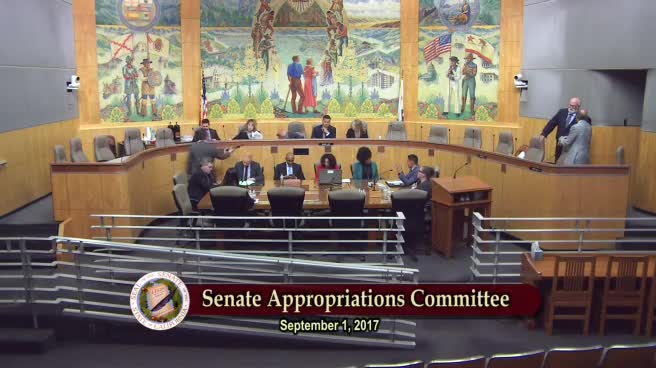 1H
Senate Standing Committee on Appropriations
 1MIN
Assembly Standing Committee on Judiciary
Bill Author
Bill Co-Author(s):