AB 3122: Property taxation: disaster relief: payment of deferred taxes.
- Session Year: 2017-2018
- House: Assembly
- Latest Version Date: 2018-07-20
Existing law authorizes the board of supervisors of a county to provide, by ordinance, for the reassessment of property that is damaged or destroyed, without fault on the part of the assessee, by a major misfortune or calamity, upon the application of the assessee or upon the action of the county assessor with the approval of the board of supervisors. Existing law also authorizes owners of eligible property, as defined, who have applied for reassessment under that ordinance, to apply for a deferral of payment of that installment of property taxes.
This bill would require that the application for a deferral of payment be made in conjunction with the claim for reassessment.
Existing law requires the payment to be deferred without penalty or interest until the assessor has reassessed the property and a corrected bill has been sent to the property owner, at which time the taxes deferred pursuant to these provisions become due 30 days after receipt by the owner of the corrected tax bill and, if unpaid thereafter, are delinquent, as specified.
This bill would instead provide that deferred taxes on the corrected tax bill are due and payable for the current tax year, as described above, on the later of (1) December 10 for the first installment or April 10 for the 2nd installment or (2) 30 days after the date that the corrected bill is mailed or electronically transmitted to the owner. The bill would additionally require the payment to be deferred without penalty and interest until the assessor has determined that the property is not eligible to be reassessed and the assessor has so notified the property owner.
By changing the manner by which deferral of property taxes for disaster relief is administered, this bill would impose a state-mandated local program.
The California Constitution requires the state to reimburse local agencies and school districts for certain costs mandated by the state. Statutory provisions establish procedures for making that reimbursement.
This bill would provide that, if the Commission on State Mandates determines that the bill contains costs mandated by the state, reimbursement for those costs shall be made pursuant to the statutory provisions noted above.
Existing law authorizes the board of supervisors of a county to provide, by ordinance, for the reassessment of property that is damaged or destroyed, without fault on the part of the assessee, by a major misfortune or calamity, upon the application of the assessee or upon the action of the county assessor with the approval of the board of supervisors. Existing law also authorizes owners of eligible property, as defined, who have applied for reassessment under that ordinance, to apply for a deferral of payment of that installment of property taxes.
This bill would require that the application for a deferral of payment be made in conjunction with the claim for reassessment.
Existing law requires the payment to be deferred without penalty and or interest until the assessor has reassessed the property and a corrected bill has been sent to the property owner, at which time the taxes deferred pursuant to these provisions become due 30 days after receipt by the owner of the corrected tax bill and, if unpaid thereafter, are delinquent, as specified.
This bill would instead provide that deferred taxes on the corrected tax bill are due and payable for the current tax year, as described above, on the later of (1) December 10 for the first installment or April 10 for the 2nd installment or (2) 30 days after the date that the corrected bill is mailed or electronically transmitted to the owner. The bill would additionally require the payment to be deferred without penalty and interest until the assessor has determined that the property is not eligible to be reassessed and the assessor has sent the property owner a reissued bill, as specified. so notified the property owner.
By changing the manner by which deferral of property taxes for disaster relief is administered, this bill would impose a state-mandated local program.
The California Constitution requires the state to reimburse local agencies and school districts for certain costs mandated by the state. Statutory provisions establish procedures for making that reimbursement.
This bill would provide that, if the Commission on State Mandates determines that the bill contains costs mandated by the state, reimbursement for those costs shall be made pursuant to the statutory provisions noted above.
Existing law authorizes the board of supervisors of a county to provide, by ordinance, for the reassessment of property that is damaged or destroyed, without fault on the part of the assessee, by a major misfortune or calamity, upon the application of the assessee or upon the action of the county assessor with the approval of the board of supervisors. Existing law also authorizes owners of eligible property, as defined, who have applied for reassessment under that ordinance, to apply for a deferral of payment of that installment of property taxes. Existing
This bill would require that the application for a deferral of payment be made in conjunction with the claim for reassessment.
Existing law requires the payment to be deferred without penalty and interest until the assessor has reassessed the property and a corrected bill has been sent to the property owner, as specified. at which time the taxes deferred pursuant to these provisions become due 30 days after receipt by the owner of the corrected tax bill and, if unpaid thereafter, are delinquent, as specified.
This bill would instead provide that deferred taxes on the corrected tax bill are due and payable for the current tax year, as described above, on the later of (1) December 10 for the first installment or April 10 for the 2nd installment or (2) 30 days after the date that the corrected bill is mailed or electronically transmitted to the owner. The bill would additionally require the payment to be deferred without penalty and interest until the assessor has determined that the property is not eligible to be reassessed and the assessor has sent the property owner a reissued bill, as specified. By
By changing the manner by which deferral of property taxes for disaster relief is administered, this bill would impose a state-mandated local program.
The California Constitution requires the state to reimburse local agencies and school districts for certain costs mandated by the state. Statutory provisions establish procedures for making that reimbursement.
This bill would provide that, if the Commission on State Mandates determines that the bill contains costs mandated by the state, reimbursement for those costs shall be made pursuant to the statutory provisions noted above.
Existing law authorizes the board of supervisors of a county to provide, by ordinance, for the reassessment of property that is damaged or destroyed, without fault on the part of the assessee, by a major misfortune or calamity, upon the application of the assessee or upon the action of the county assessor with the approval of the board of supervisors. Existing law also authorizes owners of eligible property, as defined, who have applied for reassessment under that ordinance, to apply for a deferral of payment of that installment of property taxes. Existing law requires the payment to be deferred without penalty and interest until the assessor has reassessed the property and a corrected bill has been sent to the property owner, as specified.
This bill would additionally require the payment to be deferred without penalty and interest until the assessor has determined that the property is not eligible to be reassessed and the assessor has sent the property owner a reissued bill, as specified. By changing the manner by which deferral of property taxes for disaster relief is administered, this bill would impose a state-mandated local program.
The California Constitution requires the state to reimburse local agencies and school districts for certain costs mandated by the state. Statutory provisions establish procedures for making that reimbursement.
This bill would provide that, if the Commission on State Mandates determines that the bill contains costs mandated by the state, reimbursement for those costs shall be made pursuant to the statutory provisions noted above.
(a)Any owner of eligible property who files on or before the next property tax installment payment date, as defined in Section 194, a claim for reassessment pursuant to Section 170, or whose property is otherwise reassessed pursuant to Section 170, may, in conjunction with the claim for reassessment, apply to the county assessor to defer payment of that installment of property taxes on the regular secured roll for the current fiscal year with respect to that property which are due no later than that date which immediately follows the disaster which resulted in substantial disaster damage.
(b)If, pursuant to Section 170, a timely claim for deferral is filed, the payment shall be deferred without penalty or interest until one of the following occur:
(1)The assessor has reassessed the property and a corrected bill prepared pursuant to Section 170 has been sent to the property owner. Taxes on the corrected tax bill deferred pursuant to this paragraph are due and payable for the current year taxes on either December 10 for the first installment or April 10 for the second installment, or 30 days after the date that the bill is mailed or electronically transmitted to the owner, whichever is later. If the taxes on the corrected bill are unpaid thereafter, the taxes become delinquent as provided in Section 2610.5 and shall be subject to the penalty provided by law.
(2)The assessor has determined that the property is not eligible to be reassessed pursuant to Section 170, and the assessor has so notified the property owner. Taxes deferred pursuant to this paragraph are due and payable for the current year taxes on either December 10 for the first installment or April 10 for the second installment, or within 30 days of the latter of the date of mailing printed on the assessors notice or the postmark date on the assessors notice, whichever is later. If deferred taxes are unpaid thereafter, the taxes become delinquent as provided in Section 2610.5 and shall be subject to the penalty provided by law.
(c)If, following reassessment pursuant to subdivision (a), the assessor determines that an owner who applied and was granted a deferral of property taxes did not file the claim in good faith, the owner shall be assessed a delinquency penalty for the nonpayment of the deferred taxes.
(d)This section does not apply to property taxes paid through impound accounts.
SEC. 2.If the Commission on State Mandates determines that this act contains costs mandated by the state, reimbursement to local agencies and school districts for those costs shall be made pursuant to Part 7 (commencing with Section 17500) of Division 4 of Title 2 of the Government Code.
(a)Any owner of eligible property who files on or before the next property tax installment payment date, as defined in Section 194, a claim for reassessment pursuant to Section 170, or whose property is otherwise reassessed pursuant to Section 170, may, in conjunction with the claim for reassessment, apply to the county assessor to defer payment of that installment of property taxes on the regular secured roll for the current fiscal year with respect to that property which are due no later than that date which immediately follows the disaster which resulted in substantial disaster damage.
(b)If, pursuant to Section 170, a timely claim for deferral is filed, the payment shall be deferred without penalty or interest until one of the following occur:
(1)The assessor has reassessed the property and a corrected bill prepared pursuant to Section 170 has been sent to the property owner. Taxes on the corrected tax bill deferred pursuant to this paragraph are due and payable for the current year taxes on either December 10 for the first installment or April 10 for the second installment, or 30 days after the date that the bill is mailed or electronically transmitted to the owner, whichever is later. If the taxes on the corrected bill are unpaid thereafter, the taxes become delinquent as provided in Section 2610.5 and shall be subject to the penalty provided by law.
(2)The assessor has determined that the property is not eligible to be reassessed pursuant to Section 170, and the assessor has so notified the property owner. Taxes deferred pursuant to this paragraph are due and payable for the current year taxes on either December 10 for the first installment or April 10 for the second installment, or 30 days after receipt by the owner of the notification by the assessor, or within 30 days of the latter of the date of mailing printed on the assessors notice or the postmark date on the assessors notice, whichever is later. If deferred taxes are unpaid thereafter, the taxes become delinquent as provided in Section 2610.5 and shall be subject to the penalty provided by law.
(c)If, following reassessment pursuant to subdivision (a), the assessor determines that an owner who applied and was granted a deferral of property taxes did not file the claim in good faith, the owner shall be assessed a delinquency penalty for the nonpayment of the deferred taxes.
(d)This section does not apply to property taxes paid through impound accounts.
SEC. 2.If the Commission on State Mandates determines that this act contains costs mandated by the state, reimbursement to local agencies and school districts for those costs shall be made pursuant to Part 7 (commencing with Section 17500) of Division 4 of Title 2 of the Government Code.
(a)Any owner of eligible property who files on or before the next property tax installment payment date, as defined in Section 194, a claim for reassessment pursuant to Section 170, or whose property is otherwise reassessed pursuant to Section 170, may may, in conjunction with the claim for reassessment, apply to the county assessor to defer payment of that installment of property taxes on the regular secured roll for the current fiscal year with respect to that property which are due no later than that date which immediately follows the disaster which resulted in substantial disaster damage.
(b)If If, pursuant to Section 170, a timely claim for deferral is filed, the payment shall be deferred without penalty or interest until one of the following occur:
(1)The assessor has reassessed the property and a corrected bill prepared pursuant to Section 170 has been sent to the property owner. Taxes on the corrected tax bill deferred pursuant to this paragraph are due and payable for the current year taxes on either December 10 for the first installment or April 10 for the second installment, or 30 days after receipt by the owner of the corrected tax bill and if unpaid thereafter are the date that the bill is mailed or electronically transmitted to the owner, whichever is later. If the taxes on the corrected bill are unpaid thereafter, the taxes become delinquent as provided in Section 2610.5 and shall be subject to the penalty provided by law.
(2)The assessor has determined that the property is not eligible to be reassessed pursuant to Section 170, and the assessor has so notified the property owner. Taxes deferred pursuant to this paragraph are due and payable for the current year taxes on either December 10 for the first installment or April 10 for the second installment, or 30 days after receipt by the owner of the notification by the assessor and if assessor, whichever is later. If deferred taxes are unpaid thereafter are thereafter, the taxes become delinquent as provided in Section 2610.5 and shall be subject to the penalty provided by law.
(c)If, following reassessment pursuant to subdivision (a), the assessor determines that an owner who applied and was granted a deferral of property taxes did not file the claim in good faith, the owner shall be assessed a delinquency penalty for the nonpayment of the deferred taxes.
(d)This section does not apply to property taxes paid through impound accounts.
SEC. 2.If the Commission on State Mandates determines that this act contains costs mandated by the state, reimbursement to local agencies and school districts for those costs shall be made pursuant to Part 7 (commencing with Section 17500) of Division 4 of Title 2 of the Government Code.
(a)Any owner of eligible property who files on or before the next property tax installment payment date, a claim for reassessment pursuant to Section 170, or whose property is otherwise reassessed pursuant to Section 170, may apply to the county assessor to defer payment of that installment of property taxes on the regular secured roll for the current fiscal year with respect to that property which are due no later than that date which immediately follows the disaster which resulted in substantial disaster damage. If
(b)If a timely claim for deferral is filed, the payment shall be deferred without penalty or interest until the assessor has reassessed one of the following occur:
(1)The assessor has reassessed the property and a corrected bill prepared pursuant to Section 170 has been sent to the property owner. Taxes deferred pursuant to this section paragraph are due 30 days after receipt by the owner of the corrected tax bill and if unpaid thereafter are delinquent as provided in Section 2610.5 and shall be subject to the penalty provided by law.
(2)The assessor has determined that the property is not eligible to be reassessed pursuant to Section 170, and the assessor has so notified the property owner. Taxes deferred pursuant to this paragraph are due 30 days after receipt by the owner of the notification by the assessor and if unpaid thereafter are delinquent as provided in Section 2610.5 and shall be subject to the penalty provided by law.
(b)(c)If, following reassessment pursuant to subdivision (a), the assessor determines that an owner who applied and was granted a deferral of property taxes did not file the claim in good faith, the owner shall be assessed a delinquency penalty for the nonpayment of the deferred taxes.
(c)(d)This section does not apply to property taxes paid through impound accounts.
SEC. 2.If the Commission on State Mandates determines that this act contains costs mandated by the state, reimbursement to local agencies and school districts for those costs shall be made pursuant to Part 7 (commencing with Section 17500) of Division 4 of Title 2 of the Government Code.
|
Date
|
Status
|
|---|---|
| Jul 20, 2018 | Chaptered by Secretary of State - Chapter 149, Statutes of 2018. |
| Jul 20, 2018 | Approved by the Governor. |
| Jul 10, 2018 | Enrolled and presented to the Governor at 3 p.m. |
| Jul 3, 2018 | In Assembly. Ordered to Engrossing and Enrolling. |
| Jul 2, 2018 | Read third time. Passed. Ordered to the Assembly. |
| Jun 26, 2018 | Read second time. Ordered to Consent Calendar. |
| Jun 25, 2018 | From committee: Be ordered to second reading file pursuant to Senate Rule 28.8 and ordered to Consent Calendar. |
| Jun 13, 2018 | From committee: Do pass and re-refer to Com. on APPR. with recommendation: To Consent Calendar. (Ayes 7. Noes 0.) (June 13). Re-referred to Com. on APPR. |
| May 17, 2018 | Referred to Com. on GOV. & F. |
| May 3, 2018 | In Senate. Read first time. To Com. on RLS. for assignment. |
| May 3, 2018 | Read third time. Passed. Ordered to the Senate. |
| Apr 26, 2018 | Read second time. Ordered to Consent Calendar. |
| Apr 25, 2018 | From committee: Do pass. To Consent Calendar. (Ayes 17. Noes 0.) (April 25). |
| Apr 17, 2018 | Re-referred to Com. on APPR. |
| Apr 16, 2018 | Read second time and amended. |
| Apr 12, 2018 | From committee: Amend, and do pass as amended and re-refer to Com. on APPR. (Ayes 8. Noes 0.) (April 9). |
| Apr 3, 2018 | Re-referred to Com. on REV. & TAX. |
| Apr 2, 2018 | From committee chair, with author's amendments: Amend, and re-refer to Com. on REV. & TAX. Read second time and amended. |
| Mar 12, 2018 | Referred to Com. on REV. & TAX. |
| Feb 17, 2018 | From printer. May be heard in committee March 19. |
| Feb 16, 2018 | Read first time. To print. |
|
Date
|
Description
|
Location
|
Votes
|
|
|---|---|---|---|---|
| Jul 2, 2018 | Consent Calendar AB3122 | Senate Floor |
Passed |
|
| Jun 13, 2018 | Do pass, but first be re-referred to the Committee on [Appropriations] with the recommendation: To Consent Calendar | Senate Standing Committee on Governance and Finance |
Passed |
|
| May 3, 2018 | AB 3122 GALLAGHER Consent Calendar Second Day Regular Session | Assembly Floor |
Passed |
|
| Apr 25, 2018 | Do pass. To Consent Calendar. | Assembly Standing Committee on Appropriations |
Passed |
|
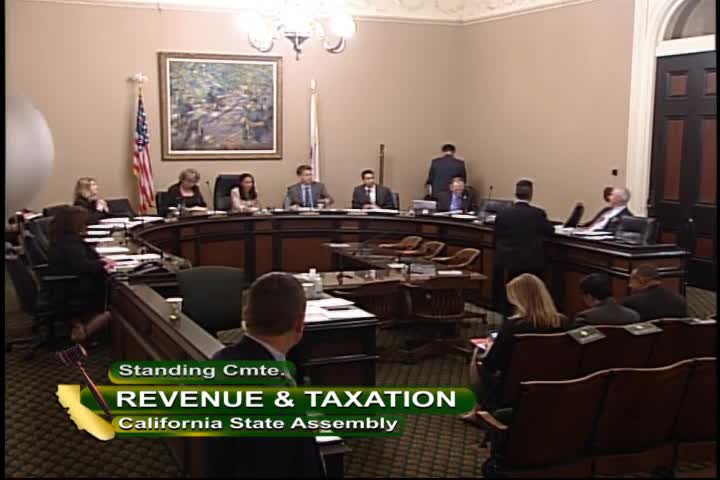
| Apr 9, 2018 | Do pass as amended and be re-referred to the Committee on [Appropriations] | Assembly Standing Committee on Revenue and Taxation |
Passed |
This list shows positions taken on this bill by organizations on the date displayed, which is linked to the original source.
Positions by individuals are not included.
|
Organization
|
Position
|
Date
|
|---|---|---|
| California Association of County Treasurer-Tax Collectors | ** Support | Jun 27, 2018 |
| California Taxpayers Association | ** Support | Jun 27, 2018 |
| Unknown. | ** Against | Jun 8, 2018 |
Office of Senate Floor Analyses (916) 651-1520 Fax: (916) 327-4478 | AB |
THIRD READING
Bill No: AB 3122
:
SENATE GOVERNANCE & FIN. COMMITTEE: 7-0, 6/13/18
AYES: McGuire, Nguyen, Beall, Hernandez, Hertzberg, Lara, Moorlach
SENATE APPROPRIATIONS COMMITTEE: Senate Rule 28.8
ASSEMBLY FLOOR: 71-0, 5/3/18 (Consent) - See last page for vote
SOURCE: California Association of County Treasurer-Tax Collectors
DIGEST:
This bill clarifies deadlines for property tax payments when taxpayers apply for payment deferral due to a disaster.
Existing law:
- Provides that all property is taxable at the same percentage of fair market value unless explicitly exempted by the Constitution or federal law (California Constitution, Article XIII).
- Limits the maximum amount of any ad valorem tax on real property at 1% of full cash value, and directs assessors to only reappraise property when newly constructed, or when ownership changes (California Constitution, Article XIIIA).
- Allows a temporary reduction in value to reflect substantial damage, destruction, or other factors causing a decline in value (Proposition 8, 1978).
- Permits the Legislature to authorize local agencies to provide for the assessment or reassessment of taxable property physically damaged or destroyed for property tax purposes (California Constitution, Article XIII, Section 15).
- Authorizes county boards of supervisors to enact an ordinance allowing any taxpayer whose property was damaged or destroyed without his or her fault to apply for reassessment. The ordinance can apply to large disasters, such as earthquakes or wildfires, or site-specific incidents, like house fires. If the county enacts an ordinance, assessors must revalue property that’s physically damaged by the disaster.
- Directs taxpayers to file a written request with the assessor before the date specified in the ordinance, or within 12 months of the major misfortune or calamity, whichever is later. In the application, the taxpayer must show the condition and value of property immediately after the damage or destruction, and the dollar amount of the damage.
- Requires, upon receipt of a complete application, the assessor to then appraise the property, and determine separately the full cash value of the land and improvements before and after the disaster. If the value of the damage exceeds $10,000, the assessor reduces the value and the taxes due to reflect the disaster’s impact, and sends a notice to the taxpayer. The county must refund any previously overpaid taxes resulting from the lower value, which remains in place until the taxpayer repairs, restores, or reconstructs the property.
- Requires property owners to pay their property taxes in two annual installments: the first on November 1st, and the second on February 1st. Property owners who have not paid their first property tax installment by December 10, or their second installment by April 10, become delinquent and receive a 10% delinquency penalty on each amount, plus redemption penalties of 1.5% a month until paid. If the property owner does not pay before June 30th, the property becomes tax-defaulted.
- Allows taxpayers affected by a disaster in which the Governor has declared a state of emergency to also file a claim to postpone the next installment of property taxes that occurs immediately after the disaster, which postpones that payment without penalty or interest until the county assessor reassesses the property.
- Provides that to qualify for deferral, property eligible for the homeowners' exemption must have damage amounting to at least 10 percent of its fair market value or $10,000, whichever is less. For all other property, the damage must be at least 20 percent of its fair market value immediately preceding the disaster causing the damage.
- Directs, after the reassessment, the tax collector to issue a corrected tax bill, which taxpayers must pay within thirty days. Once repaired or restored, the assessor again revalues the property. If unpaid after the 30 days, the bill becomes delinquent and is subject to penalties.
- Sets the 30-day deadline for taxpayers who are reassessed, but does not specify the deadline for taxpayers who file a claim for deferment, but the assessor determines that the property is not eligible for reassessment.
- Imposes a delinquency penalty when a taxpayer is granted deferral of tax payments and the assessor determines the property owner did not file the claim in good faith; however, does not provide a deadline for the situation in which the property owner files a claim in good faith but the assessor determines that the property is ineligible.
This bill:
- Clarifies that when a property owner has filed a claim for disaster relief and deferral of the next property tax bill installment, and the assessor has reassessed the property and a corrected tax bill has been sent to the property owner, provides that the current year's taxes are to be paid on either December 10 for the first installment or April 10 for the second installment, or 30 days after the date the corrected bill is mailed or electronically submitted to the property owner, whichever is later.
- States that when a property owner has filed for disaster relief and deferral of the next property tax bill installment, but the assessor determines that the real property is not eligible for disaster relief, provides that the property tax bill must be paid on the later of either December 10 for the first installment or April 10 for the second installment, or within 30 days of the later of the date of mailing or postmark date on the county assessor's notice.
- Makes technical and conforming changes.
Background
Devastating wildfires broke out in several areas in both Northern and Southern California late last year. With the first installment of property taxes due on November 1 and delinquent after December 10, some assessors had difficulty identifying and reassessing damaged property by the deadline, resulting in some properties not being identified as ineligible for disaster relief until after the deadline passed. In these instances, property owners received delinquency penalties for nonpayment of property taxes when they did not know they were ineligible for disaster relief and had failed to pay the taxes by the deadline. AB 3122 remedies any future difficulty by explicitly providing that the deadline for payment of property taxes when the property is ineligible for deferral is 30 days from the date the taxpayer receives the assessors notice that his or her property is not eligible.
FISCAL EFFECT: Appropriation: Fiscal Com.: Local:
California Association of County Treasurer-Tax Collectors (source)
California Taxpayers Association
OPPOSITION: (Verified 6/26/18)
None received
ARGUMENTS IN SUPPORT: According to the author, “AB 3122 would help ensure that people affected by natural disasters don’t face penalties if they apply for reassessment and property tax deferral but end up not qualifying. AB 3122 establishes a process for deferral claims that are considered invalid under current law. Specifically, the bill clarifies that payment of property taxes can be deferred until the assessor has determined a property is not eligible to be reassessed and the property owner has been notified. The bill specifies that taxes are due 30 days after the property owner has been notified. In light of the recent wildfires, it is important that people are not put in a position of paying penalties for late taxes, if they applied for deferral in good faith. Unfortunately, current law puts people in a position of having to choose between applying for relief and getting charged late fees if they don’t qualify, or paying up front. This puts more financial stress on people who are already facing a tough situation.”
ASSEMBLY FLOOR: 71-0, 5/3/18
AYES: Acosta, Aguiar-Curry, Arambula, Baker, Berman, Bigelow, Bloom, Bonta, Brough, Burke, Calderon, Carrillo, Cervantes, Chau, Chávez, Chen, Chiu, Chu, Cooley, Cooper, Cunningham, Dahle, Daly, Eggman, Flora, Fong, Frazier, Friedman, Gallagher, Eduardo Garcia, Gipson, Gloria, Gonzalez Fletcher, Gray, Harper, Holden, Irwin, Jones-Sawyer, Kalra, Kamlager-Dove, Kiley, Lackey, Levine, Limón, Low, Maienschein, Mathis, Mayes, McCarty, Medina, Melendez, Mullin, Muratsuchi, Nazarian, Obernolte, O'Donnell, Patterson, Quirk, Reyes, Rodriguez, Rubio, Salas, Santiago, Steinorth, Mark Stone, Thurmond, Ting, Waldron, Weber, Wood, Rendon
NO VOTE RECORDED: Travis Allen, Caballero, Choi, Cristina Garcia, Grayson, Quirk-Silva, Voepel
6/27/18 17:16:12
**** END ****
SENATE COMMITTEE ON GOVERNANCE AND FINANCE
Senator Mike McGuire, Chair
2017 - 2018 Regular
Bill No: | AB 3122 | Hearing Date: | 6/13/18 |
Author: | Gallagher | Tax Levy: | No |
Version: | 4/16/18 | Fiscal: | Yes |
Consultant: | Grinnell | ||
Property taxation: disaster relief: payment of deferred taxes
Clarifies deadlines for property tax payments when taxpayers apply for payment deferral due to a disaster.
Background
Article XIII of the California Constitution provides that all property is taxable unless explicitly exempted by the Constitution or federal law. The Constitution limits the maximum amount of any ad valorem tax on real property at 1% of full cash value, and directs assessors to only reappraise property when newly constructed, or when ownership changes (Proposition 13, 1978). Voters enacted Proposition 8 (1978) which amended the Constitution to allow a temporary reduction in value to reflect substantial damage, destruction, or other factors causing a decline in value. The Constitution also allows the Legislature to authorize local agencies to provide for the assessment or reassessment of taxable property physically damaged or destroyed for property tax purposes.
To implement these Constitutional provisions, county boards of supervisors can enact an ordinance allowing any taxpayer whose property was damaged or destroyed without his or her fault to apply for reassessment. The ordinance can apply to large disasters, such as earthquakes or wildfires, or site-specific incidents, like house fires. If the county enacts an ordinance, assessors must revalue property that’s physically damaged by the disaster. Taxpayers must then file a written request with the assessor before the date specified in the ordinance, or within 12 months of the major misfortune or calamity, whichever is later. In the application, the taxpayer must show the condition and value of property immediately after the damage or destruction, and the dollar amount of the damage. Upon receipt of a complete application, the assessor must then appraise the property, and determine separately the full cash value of the land and improvements before and after the disaster. If the value of the damage exceeds $10,000, the assessor reduces the value and the taxes due to reflect the disaster’s impact, and sends a notice to the taxpayer. The county must refund any previously overpaid taxes resulting from the lower value, which remains in place until the taxpayer repairs, restores, or reconstructs the property.
Property owners must pay their property taxes in two annual installments: the first on November 1st, and the second on February 1st. Property owners who have not paid their first property tax installment by December 10, or their second installment by April 10, become delinquent and receive a 10% delinquency penalty on each amount, plus redemption penalties of 1.5% a month until paid. If the property owner does not pay before June 30th, the property becomes tax-defaulted.
Taxpayers affected by a disaster in which the Governor has declared a state of emergency can also file a claim to postpone the next installment of property taxes that occurs immediately after the disaster, which postpones that payment without penalty or interest until the county assessor reassesses the property. To qualify for deferral, property eligible for the homeowners' exemption must have damage amounting to at least 10 percent of its fair market value or $10,000, whichever is less. For all other property, the damage must be at least 20 percent of its fair market value immediately preceding the disaster causing the damage. After the reassessment, the tax collector issues a corrected tax bill, which taxpayers must pay within thirty days. Once repaired or restored, the assessor again revalues the property. If unpaid after the 30 days, the bill becomes delinquent and is subject to penalties.
However, current law only sets the 30-day deadline for taxpayers who are reassessed, and does not specify the deadline for taxpayers who file a claim for deferment, but the assessor determines that the property is not eligible for reassessment. While the law requires a delinquency penalty to be levied when a taxpayer is granted deferral of tax payments and the assessor determines the property owner did not file the claim in good faith, it does not speak to the situation in which the property owner files a claim in good faith but the assessor determines that the property is ineligible.
The California Association of Treasurer-Tax Collectors wants to clarify that taxes are due within 30 days of notice indicating that the property is not eligible for reassessment as a result of a disaster.
Proposed Law
Assembly Bill 3122 clarifies that when a property owner has filed a claim for disaster relief and deferral of the next property tax bill installment, and the assessor has reassessed the property and a corrected tax bill has been sent to the property owner, this bill provides that the current year's taxes are to be paid on either December 10 for the first installment or April 10 for the second installment, or 30 days after the date the corrected bill is mailed or electronically submitted to the property owner, whichever is later. When a property owner has filed for disaster relief and deferral of the next property tax bill installment, but the real property is not eligible for disaster relief, the bill provides that the property tax bill must be paid on the later of either December 10 for the first installment or April 10 for the second installment, or within 30 days of the later of the date of mailing or postmark date on the county assessor's notice.
The bill also makes technical and conforming changes.
State Revenue Impact
The State Board of Equalization estimates that AB 3122 has no direct revenue impact.
Comments
1. Purpose of the bill. According to the author, “AB 3122 would help ensure that people affected by natural disasters don’t face penalties if they apply for reassessment and property tax deferral but end up not qualifying. AB 3122 establishes a process for deferral claims that are considered invalid under current law. Specifically, the bill clarifies that payment of property taxes can be deferred until the assessor has determined a property is not eligible to be reassessed and the property owner has been notified. The bill specifies that taxes are due 30 days after the property owner has been notified. In light of the recent wildfires, it is important that people are not put in a position of paying penalties for late taxes, if they applied for deferral in good faith. Unfortunately, current law puts people in a position of having to choose between applying for relief and getting charged late fees if they don’t qualify, or paying up front. This puts more financial stress on people who are already facing a tough situation.”
2. Recent history. Devastating wildfires broke out in several areas in both Northern and Southern California late last year. With the first installment of property taxes due on November 1 and delinquent after December 10, some assessors had difficulty identifying and reassessing damaged property by the deadline, resulting in some properties not being identified as ineligible for disaster relief until after the deadline passed. In these instances, property owners received delinquency penalties for nonpayment of property taxes when they did not know they were ineligible for disaster relief and had failed to pay the taxes by the deadline. AB 3122 would remedy any future difficulty by explicitly providing that the deadline for payment of property taxes when the property is ineligible for deferral is 30 days from the date the taxpayer receives the assessors notice that his or her property is not eligible.
3. Mandate. The California Constitution requires the state to reimburse local governments for the costs of new or expanded state mandated local programs. Because AB 3122 changes the way assessors to submit information to taxpayers upon request within a reasonable period of time, Legislative Counsel says that it imposes a new state mandate
Assembly Actions
Assembly Revenue and Taxation Committee: 8-0
Assembly Appropriations Committee: 17-0
Assembly Floor: 71-0
Support and Opposition
(6/8/18)
Support: California Association of County Treasurer-Tax Collectors, California Taxpayers Association
Opposition: Unknown.
-- END --
Date of Hearing: April 25, 2018
ASSEMBLY COMMITTEE ON APPROPRIATIONS
Lorena Gonzalez Fletcher, Chair
ABPCA Bill Id:AB 3122
Author:(Gallagher) – As Amended Ver:April 16, 2018
Policy Committee: | Revenue and Taxation | Vote: | 8 - 0 |
|
| ||
|
|
Urgency: No State Mandated Local Program: Yes Reimbursable: Yes
SUMMARY:
This bill clarifies the property tax deferral process for property owners who submit a claim for property reassessment following a disaster for which the governor issues a state of emergency proclamation. Specifically, this bill:
- Allows a payment to be deferred, without penalty or interest, until either the assessor reassess the property and a corrected bill is sent to the owner, or until the assessor notifies the property owner that the property is not eligible to be reassessed.
- Clarifies the deadlines for owners to pay appropriate taxes after the payment deferral ends and clarifies that unpaid taxes after this deadline are subject to penalty.
FISCAL EFFECT:
Negligible state costs.
COMMENTS:
Background and purpose. A homeowner whose home suffers more than $10,000 in damage during a natural disaster may request, and receive, a reassessment and a deferral on the payment of property taxes. In these cases, taxes are deferred until the assessor has reassessed the property and a corrected bill is sent to the owner. After this, the owner has 30 days to pay the corrected tax. If an assessor determines that a claim was not submitted in good faith, then the assessor may levy a delinquency penalty for the nonpayment of the deferred taxes.
According to the author, AB 3122 will help ensure that people affected by natural disasters do not face penalties if they apply for reassessment and property tax deferral but do not end up qualifying. The California Association of County Treasurers and Tax Collectors notes that current law is not clear on how much discretion tax collectors have when it comes to invalid property tax deferral claims. They note that many applicants are unaware that their reassessment claim is invalid because there was not more than $10,000 in damage to their home.
Analysis Prepared by: Luke Reidenbach / APPR. / (916) 319-2081
Date of Hearing: April 9, 2018
ASSEMBLY COMMITTEE ON REVENUE AND TAXATION
Autumn R. Burke, Chairwoman
ABPCA Bill Id:AB 3122 (
Author:Gallagher) – As Amended Ver:April 2, 2018
Majority vote. Fiscal committee.
SUBJECT: Property taxation: disaster relief: payment of deferred taxes
SUMMARY: Details the administrative process for counties to use after a disaster for which the Governor issues a state of emergency proclamation if a property owner files both a claim to request reassessment and a claim for tax deferral but is ineligible. Specifically, this bill:
- Requires the county assessor to notify a property owner that files a claim for disaster relief reassessment under Revenue and Taxation Code (R&TC) Section 170 if the assessor determines the property is ineligible for an assessment reduction.
- Specifies that a taxpayer's claim to defer the next property tax installment payment following a disaster may be filed in conjunction with the taxpayer's claim for reassessment filed with the assessor pursuant to R&TC Section 170.
- Specifies that if the property owner files a timely deferral claim, then those taxes will be deferred without penalty and interest until one of the following occurs:
- The assessor reassesses the property and the tax collector sends a corrected tax bill, prepared pursuant to R&TC Section 170. The corrected tax bill for previously deferred payments for current year taxes will be due and payable on the latest of:
- December 10 for the first installment or April 10 for the second installment (i.e., no deferral, a corrected bill was timely issued); or,
- 30 days after the date the owner receives the corrected tax bill from the tax collector reflecting the reduced assessment.
- The assessor determines the property is ineligible for reassessment and so notifies the property owner. Taxes due for previously deferred payments after an ineligibility notice for current year taxes will be due and payable on the latest of:
- December 10 for the first installment or April 10 for the second installment (i.e., no deferral and no corrected tax bill will be issued); or,
- 30 days after the date the owner receives the newly required notice this bill requires informing the property owner that the property is ineligible for a reduced assessment.
- The assessor reassesses the property and the tax collector sends a corrected tax bill, prepared pursuant to R&TC Section 170. The corrected tax bill for previously deferred payments for current year taxes will be due and payable on the latest of:
- Imposes the 10% delinquency penalty on unpaid taxes after the above applicable due dates.
- Defines "next property tax installment payment date" by linking to its definition in R&TC Section 194.
- Makes other conforming amendments.
EXISTING LAW:
- Permits a county board of supervisors, by ordinance, to provide property tax relief to property owners following a misfortune or calamity ("disaster"), if the property owner's property is damaged or destroyed, and the property owner is not at fault. (Article XIII, Section 15 of the California Constitution; R&TC Section 170.)
- Allows property owners to request reassessment following a disaster by filing a claim with the county assessor within the time specified in the county ordinance, or within 12 months of the disaster, whichever is later. (R&TC Section 170 (a) and (d)(1).)
- Allows, in certain instances, the assessor to initiate a reassessment to provide relief without a property owner's claim. (R&TC Section 170(a) and (l).)
- Requires at least $10,000 of damage or destruction to qualify for disaster reassessment. (R&TC Section 170(b).)
- Requires the assessor to reassess eligible property, as specified, resulting in a corrected tax bill, a tax refund, or a negative supplemental assessment, depending upon the particular procedure a county uses, and the facts and circumstances of each case. (R&TC Section 170.)
- Permits property owners to additionally file a claim to request deferral of specified taxes, without penalty or interest, following a disaster for which the Governor has issued a state of emergency proclamation, if the property incurs "substantial disaster damage" and is located in an "eligible county." (R&TC Section 194.) Specifically, the taxes that may be deferred includes
- The next installment payment for regular roll-related taxes for the current fiscal year, if an eligible county has enacted the R&TC Section 170 disaster property tax relief ordinance. (R&TC Sections 194(e) and 194.1(a).)
- Defines "next property tax installment payment date" as December 10 or April 10, whichever date occurs first after the last date on which eligible property was damaged. (R&TC Section 194 (e).)
- Limits deferral to property located in an "eligible county," defined as a county that has the necessary ordinance and one where the Governor has proclaimed the county to be in a state of emergency. (R&TC Section 194(a).)
- Requires "substantial disaster damage" defined as follows (R&TC Section 194(f)):
- For property eligible for the homeowners' exemption (owner-occupied principal places of residences, including mobilehomes), at least 10% of fair market value or $10,000, whichever is less.
- For all other property, at least 20% of fair market value.
- Requires property owners to file deferral claims with the assessor. (R&TC Sections 194(e) and 194.1(a).)
- The second consecutive installment payment, if the county, by ordinance, allows. (R&TC Section 195.1.)
- Supplemental roll-related payments (i.e., supplemental assessments), if the county, by ordinance, allows. Requires property owners to file these deferral claims with the assessor. (R&TC Section 194.9.)
- The next installment payment for regular roll-related taxes for the current fiscal year, if an eligible county has enacted the R&TC Section 170 disaster property tax relief ordinance. (R&TC Sections 194(e) and 194.1(a).)
- Defines "property tax deferral claim" as a claim filed by an eligible property owner in conjunction with, or in addition to, a reassessment claim under R&TC Section 170, that enables the owner to defer payments under R&TC Sections 194.1 or 194.9. (R&TC Section 194(e).)
- Imposes a 10% delinquency penalty, if a property owner filed and received a payment deferral, but the assessor determines the claim was not filed in good faith. (R&TC Section 194.1.)
- Disallows payment deferral for property owners whose property taxes are paid through impound accounts. (R&TC Section 194.1(c).)
- Requires the tax collector to mail annual property tax bills for the regular secured roll by November 1 (R&TC Section 2610.5), allows payment in two equal installments, and attaches a 10% penalty on unpaid taxes after the delinquency date. Specifically:
- Sets the first installment due date at November 1, and those taxes become delinquent if not paid by December 10. (R&TC Sections 2605 and 2617.)
- Sets the second installment due date at February 1, and those taxes become delinquent if not paid by April 10. (R&TC Sections 2606 and 2618.)
- Allows the tax collector to cancel penalties imposed on delinquent taxes with respect to late, amended, or corrected tax bills, provided the tax amount is paid within 30 days following the date the bill is mailed or electronically transmitted. Provides that under no circumstance shall a taxpayer have fewer than 30 days to pay without penalty. (R&TC Section 2610.5.)
FISCAL EFFECT: Unknown, but likely negligible impact, related to possible foregone delinquency penalties.
COMMENTS:
- The author has provided the following statement in support of this bill:
AB 3122 would help ensure that people affected by natural disasters don't face penalties if they apply for reassessment and property tax deferral but end up not qualifying. AB 3122 establishes a process for deferral claims that are considered invalid under the law. Specifically, the bill clarifies that payment of property taxes can be deferred until the assessor has determined a property is not eligible to be reassessed and the property owner has been notified. The bill specifies that taxes are due 30 days after the property owner has been notified.
In light of the recent wildfires, it is important that people are not put in a position of paying penalties for late taxes, if they applied for deferral in good faith. Unfortunately, current law puts people in a position of having to choose between applying for relief and getting charged late fees if they don't qualify, or paying up front. This puts more financial stress on people who are already facing a tough situation.
- This bill is supported by the California Association of County Treasurers and Tax Collectors, which explains:
Current law is not clear on how much discretion tax collectors have when it comes to property tax deferral claims that are not valid. To be eligible for reassessment and deferral, a property must have at least $10,000 in damages. Unfortunately, most people are likely to be unaware that their deferral claim may be invalid if damage their property suffered was not sufficient to qualify for reassessment.
- Committee Staff Comments:
- What is the problem? While the law requires a delinquency penalty to be levied when a taxpayer is granted deferral of tax payments and the assessor determines the property owner did not file the claim in good faith, the law is silent in the situation where the property owner files a claim in good faith and is ineligible. One could make an inference that the delinquency penalty should not be levied. County assessors, auditors, and tax collectors perform different property tax administrative functions. The law gives assessors, not tax collectors, the authority to levy the penalty for non-good-faith claims. Additionally, the law is silent on the issue of penalties on good-faith claims. Thus, as tax collectors note, the law is unclear.
- What does this bill do? This bill details in law the procedure for tax administrators to follow when a property owner files both a reassessment and a payment deferral claim after a situation for which the Governor issues a Proclamation of a State of Emergency but the property owner is ineligible for tax relief under the law. This bill adds an explicit requirement for assessors to mail ineligibility notices and gives those ineligible property owners the later of the original installment payment due date or 30 days to pay before a delinquency penalty is imposed.
- Widespread fires: In September, October, and December of 2017, California property owners suffered unprecedented fire damage throughout the state. Many persons were displaced temporarily while the fires were fought, and thereafter due to poor air quality. The claims filed for these fires, which occurred so near the property tax first installment due date, raised implementation uncertainties. The lessons learned from the mass fires presented an opportunity for property tax administrators to improve and refine the law as contained in this bill.
- Committee Amendments: Thirty days from when? Board of Equalization and Committee staff recommend amendments to provide that taxes deferred be due within 30 days of the latter of the date of mailing printed on the assessor's notice or the postmark therefor, whichever occurs later. This amendment would provide date certainty for both taxpayers and counties of the delinquency date by specifying the starting point from which to count 30 days and tracks similar language in other laws. (See R&TC Sections 74.31 and 534.)
At page 3, lines 17 and 18, strike "or 30 days after receipt by the owner of the notification by the assessor," and add "within 30 days of the latter of the date of mailing printed on the assessor's notice or the postmark date thereof,"
REGISTERED SUPPORT / OPPOSITION:
Support
California Association of County Treasurers and Tax Collectors
Opposition
None on file
Analysis Prepared by: Rose Marie Kinnee / REV. & TAX. / (916) 319-2098
Discussed in Hearing
 3MIN
Assembly Standing Committee on Revenue and Taxation
Bill Author

Bill Co-Author(s):