AB 317: Napa County: farmworker housing.
- Session Year: 2017-2018
- House: Assembly
- Latest Version Date: 2017-10-04
Existing law requires the Department of Housing and Community Development, through its Office of Migrant Services, to assist in the development, construction, reconstruction, rehabilitation, or operation of migrant farm labor centers and authorizes the Director of Housing and Community Development to contract with school districts, housing authorities, health agencies, and other appropriate local public and private nonprofit agencies for the procurement or construction of housing or shelter and to obtain services for migratory agricultural workers.
This bill would establish the Napa County Farmworker Centers Account to be administered by the department, as specified, to assist in the financing, maintenance, and operation of the Napa County Housing Authoritys Farmworker Centers for year-round use by migrant and nonmigrant farm labor employees. The bill would require the department to award, annually, up to $250,000 in matching funds to the Napa County Housing Authority upon demonstration that the Napa County Housing Authority is capable of continuing to effectively serve the housing needs of migrant or other farmworkers in Napa County and requires the Napa County Housing Authority, to be eligible for funding, to provide equal or greater funds from local sources. The bill, if SB 2 of the 201718 Regular Session is enacted, would require the department to use specified funds that would be allocated from the Building Homes and Jobs Trust Fund as provided by that bill, and would otherwise provide that these provisions would be inoperative until a funding source is identified.
This bill would make legislative findings and declarations as to the necessity of a special statute for Napa County.
Existing law requires the Department of Housing and Community Development, through its Office of Migrant Services, to assist in the development, construction, reconstruction, rehabilitation, or operation of migrant farm labor centers and authorizes the Director of Housing and Community Development to contract with school districts, housing authorities, health agencies, and other appropriate local public and private nonprofit agencies for the procurement or construction of housing or shelter and to obtain services for migratory agricultural workers.
This bill would establish the Napa County Farmworker Centers Account to be administered by the department, as specified, to assist in the financing, maintenance, and operation of the Napa County Housing Authoritys Farmworker Centers for year-round use by migrant and nonmigrant farm labor employees. The bill would require the department to award, annually, up to $250,000 in matching funds to the Napa County Housing Authority upon demonstration that the Napa County Housing Authority is capable of continuing to effectively serve the housing needs of migrant or other farmworkers in Napa County and requires the Napa County Housing Authority, to be eligible for funding, to provide equal or greater funds from local sources. The bill bill, if SB 2 of the 201718 Regular Session is enacted, would require the department to use specified funds appropriated by the Legislature for these purposes, as specified. that would be allocated from the Building Homes and Jobs Trust Fund as provided by that bill, and would otherwise provide that these provisions would be inoperative until a funding source is identified.
This bill would make legislative findings and declarations as to the necessity of a special statute for Napa County.
Existing law requires the Department of Housing and Community Development, through its Office of Migrant Services, to assist in the development, construction, reconstruction, rehabilitation, or operation of migrant farm labor centers and authorizes the Director of Housing and Community Development to contract with school districts, housing authorities, health agencies, and other appropriate local public and private nonprofit agencies for the procurement or construction of housing or shelter and to obtain services for migratory agricultural workers.
This bill would establish the Napa County Farmworker Centers Account to be administered by the department, as specified, to assist in the financing, maintenance, and operation of the Napa County Housing Authoritys Farmworker Centers for year-round use by migrant and nonmigrant farm labor employees. The bill would require the department to award, annually, up to $250,000 in matching funds to the Napa County Housing Authority upon demonstration that the Napa County Housing Authority is capable of continuing to effectively serve the housing needs of migrant or other farmworkers in Napa County and requires the Napa County Housing Authority, to be eligible for funding, to provide equal or greater funds from local sources. The bill would require the department to use funds appropriated by the Legislature for these purposes, as specified.
This bill would make legislative findings and declarations as to the necessity of a special statute for Napa County.
(a)The Napa County Farmworker Centers Account is hereby established, to be administered by the Department of Housing and Community Development, through its Office of Migrant Services pursuant to the authority granted in Sections 50406 and 50710, to assist in the financing, maintenance, and operation of the Napa County Housing Authoritys Farmworker Centers for year-round use by migrant or nonmigrant farm labor employees. The Napa County Housing Authority shall continue to own and operate the farmworker centers pursuant to the local ordinances, regulations, or bylaws currently applicable thereto.
(b)The department shall award, annually, up to two hundred fifty thousand dollars ($250,000) in matching funds, pursuant to this section, to the Napa County Housing Authority upon demonstration that the Napa County Housing Authority is capable of continuing to effectively serve the housing needs of migrant or other farmworkers in Napa County. To be eligible for funding, the Napa County Housing Authority shall provide equal or greater funds from local sources to support financing, maintenance, and operations of the housing assisted under this section. The Napa County Housing Authority shall also demonstrate its capability, upon receiving the funds awarded pursuant to this section, of ensuring the fiscal integrity of the farmworker centers and maintaining the project in a decent, safe, and sanitary manner for at least 25 years.
(c)The year-round use provided for in subdivision (a) for farmworker centers may be interrupted, as necessary, to close the housing for maintenance purposes, to allow new migrant farmworkers to obtain housing, or for any other purpose the Napa County Housing Authority deems necessary.
(d)The department shall use funds allocated from the Building Homes and Jobs Trust Fund pursuant to clause (ii) of subparagraph (C) of paragraph (2) of subdivision (b) of Section 50470, as provided by Senate Bill 2 of the 201718 Regular Session, if that bill is enacted. If Senate Bill 2 of the 201718 Regular Session is not enacted, this section shall be inoperative until a funding source is identified. Funds made available pursuant to this subdivision may be used for the costs permitted by or pursuant to subdivisions (b) to (e), inclusive, of Section 50712.5. For purposes of soliciting and awarding funds pursuant to this section, the department shall not be required to promulgate regulations.
SEC. 2.The Legislature finds and declares that a special statute is necessary and that a general statute cannot be made applicable within the meaning of Section 16 of Article IV of the California Constitution because of the unique circumstances concerning funding for the Napa County Housing Authoritys Farmworker Centers.
(a)The Napa County Farmworker Centers Account is hereby established, to be administered by the Department of Housing and Community Development, through its Office of Migrant Services pursuant to the authority granted in Sections 50406 and 50710, to assist in the financing, maintenance, and operation of the Napa County Housing Authoritys Farmworker Centers for year-round use by migrant or nonmigrant farm labor employees. The Napa County Housing Authority shall continue to own and operate the farmworker centers pursuant to the local ordinances, regulations, or bylaws currently applicable thereto.
(b)The department shall award, annually, up to two hundred fifty thousand dollars ($250,000) in matching funds, pursuant to this section, to the Napa County Housing Authority upon demonstration that the Napa County Housing Authority is capable of continuing to effectively serve the housing needs of migrant or other farmworkers in Napa County. To be eligible for funding, the Napa County Housing Authority shall provide equal or greater funds from local sources to support financing, maintenance, and operations of the housing assisted under this section. The Napa County Housing Authority shall also demonstrate its capability, upon receiving the funds awarded pursuant to this section, of ensuring the fiscal integrity of the farmworker centers and maintaining the project in a decent, safe, and sanitary manner for at least 25 years.
(c)The year-round use provided for in subdivision (a) for farmworker centers may be interrupted, as necessary, to close the housing for maintenance purposes, to allow new migrant farmworkers to obtain housing, or for any other purpose the Napa County Housing Authority deems necessary.
(d)The department shall use funds appropriated by the Legislature for purposes of this section. The appropriated funds allocated from the Building Homes and Jobs Trust Fund pursuant to clause (ii) of subparagraph (C) of paragraph (2) of subdivision (b) of Section 50470, as provided by Senate Bill 2 of the 201718 Regular Session, if that bill is enacted. If Senate Bill 2 of the 201718 Regular Session is not enacted, this section shall be inoperative until a funding source is identified. Funds made available pursuant to this subdivision may be used for the costs permitted by or pursuant to subdivisions (b) to (e), inclusive, of Section 50712.5. For purposes of soliciting and awarding funds pursuant to this section, the department shall not be required to promulgate regulations.
SEC. 2.The Legislature finds and declares that a special statute is necessary and that a general statute cannot be made applicable within the meaning of Section 16 of Article IV of the California Constitution because of the unique circumstances concerning funding for the Napa County Housing Authoritys Farmworker Centers.
(a)The Napa County Farmworker Centers Account is hereby established, to be administered by the Department of Housing and Community Development, through its Office of Migrant Services pursuant to the authority granted in Sections 50406 and 50710, to assist in the financing, maintenance, and operation of the Napa County Housing Authoritys Farmworker Centers for year-round use by migrant or nonmigrant farm labor employees. The Napa County Housing Authority shall continue to own and operate the farmworker centers pursuant to the local ordinances, regulations, or bylaws currently applicable thereto.
(b)The department shall award, annually, up to two hundred fifty thousand dollars ($250,000) in matching funds, pursuant to this section, to the Napa County Housing Authority upon demonstration that the Napa County Housing Authority is capable of continuing to effectively serve the housing needs of migrant or other farmworkers in Napa County. To be eligible for funding, the Napa County Housing Authority shall provide equal or greater funds from local sources to support financing, maintenance, and operations of the housing assisted under this section. The Napa County Housing Authority shall also demonstrate its capability, upon receiving the funds awarded pursuant to this section, of ensuring the fiscal integrity of the farmworker centers and maintaining the project in a decent, safe, and sanitary manner for at least 25 years.
(c)The year-round use provided for in subdivision (a) for farmworker centers may be interrupted, as necessary, to close the housing for maintenance purposes, to allow new migrant farmworkers to obtain housing, or for any other purpose the Napa County Housing Authority deems necessary.
(d)The department shall use funds appropriated by the Legislature for purposes of this section. The appropriated funds may be used for the costs permitted by or pursuant to subdivisions (b) to (e), inclusive, of Section 50712.5. For purposes of soliciting and awarding funds pursuant to this section, the department shall not be required to promulgate regulations.
SEC. 2.The Legislature finds and declares that a special statute is necessary and that a general statute cannot be made applicable within the meaning of Section 16 of Article IV of the California Constitution because of the unique circumstances concerning funding for the Napa County Housing Authoritys Farmworker Centers.
|
Date
|
Status
|
|---|---|
| Oct 4, 2017 | Chaptered by Secretary of State - Chapter 469, Statutes of 2017. |
| Oct 4, 2017 | Approved by the Governor. |
| Sep 20, 2017 | Enrolled and presented to the Governor at 4:30 p.m. |
| Sep 13, 2017 | Assembly Rule 77(a) suspended. |
| Sep 13, 2017 | In Assembly. Concurrence in Senate amendments pending. May be considered on or after September 15 pursuant to Assembly Rule 77. |
| Sep 12, 2017 | Read third time. Passed. Ordered to the Assembly. |
| Sep 11, 2017 | Read second time. Ordered to third reading. |
| Sep 7, 2017 | Read third time and amended. Ordered to second reading. |
| Sep 5, 2017 | Read second time. Ordered to third reading. |
| Sep 1, 2017 | From committee: Do pass. (Ayes 7. Noes 0.) (September 1). |
| Jul 10, 2017 | In committee: Referred to APPR. suspense file. |
| Jun 28, 2017 | From committee: Do pass and re-refer to Com. on APPR. (Ayes 12. Noes 1.) (June 27). Re-referred to Com. on APPR. |
| Jun 14, 2017 | Referred to Com. on T. & H. |
| Jun 1, 2017 | In Senate. Read first time. To Com. on RLS. for assignment. |
| May 31, 2017 | Read third time. Passed. Ordered to the Senate. (Ayes 65. Noes 11. Page 1979.) |
| May 30, 2017 | Read second time. Ordered to third reading. |
| May 26, 2017 | From committee: Do pass. (Ayes 15. Noes 1.) (May 26). |
| May 10, 2017 | In committee: Set, first hearing. Referred to APPR. suspense file. |
| Apr 27, 2017 | From committee: Do pass and re-refer to Com. on APPR. (Ayes 7. Noes 0.) (April 26). Re-referred to Com. on APPR. |
| Feb 21, 2017 | Referred to Com. on H. & C.D. |
| Feb 7, 2017 | From printer. May be heard in committee March 9. |
| Feb 6, 2017 | Read first time. To print. |
|
Date
|
Description
|
Location
|
Votes
|
|
|---|---|---|---|---|
| Sep 13, 2017 | AB 317 Aguiar-Curry Concurrence in Senate Amendments | Assembly Floor |
Passed |
|
| Sep 12, 2017 | Assembly 3rd Reading AB317 Aguiar-Curry et al. By Dodd | Senate Floor |
Passed |
|
| Sep 1, 2017 | Do pass | Senate Standing Committee on Appropriations |
Passed |
|
| Jul 10, 2017 | Placed on suspense file | Senate Standing Committee on Appropriations |
Passed |
|
| Jun 27, 2017 | Do pass, but first be re-referred to the Committee on [Appropriations] | Senate Standing Committee on Transportation and Housing |
Passed |
|
| May 31, 2017 | AB 317 AGUIAR-CURRY Assembly Third Reading | Assembly Floor |
Passed |
|
| May 26, 2017 | Do pass. | Assembly Standing Committee on Appropriations |
Passed |
|
| Apr 26, 2017 | Do pass and be re-referred to the Committee on [Appropriations] | Assembly Standing Committee on Housing and Community Development |
Passed |
This list shows positions taken on this bill by organizations on the date displayed, which is linked to the original source.
Positions by individuals are not included.
|
Organization
|
Position
|
Date
|
|---|---|---|
| California Association Of Winegrape Growers | ** Support | Sep 9, 2017 |
| cinco de mayo golf, inc. | ** Support | Sep 9, 2017 |
| Family Winemakers Of California | ** Support | Apr 24, 2017 |
| Laura Michael Wines | * Support | Apr 26, 2017 |
| Napa County | ** Support | Apr 24, 2017 |
| Napa County Board of Supervisors | ** Support | Sep 9, 2017 |
| Napa Valley Farmworker Committee | ** Support | Sep 9, 2017 |
| Napa Valley Grapegrowers | ** Support | Sep 9, 2017 |
| Napa Valley Migrant Farmworker Housing Committee | * Support | Apr 26, 2017 |
| Napa Valley Vintners | ** Support | Sep 9, 2017 |
| Winegrowers of Napa County | ** Support | Sep 9, 2017 |
CONCURRENCE IN SENATE AMENDMENTS
CSA1 Bill Id:AB 317
Author:(Aguiar-Curry)
As Amended Ver:September 7, 2017
Majority vote
ASSEMBLY: | 65-11 | (May 31, 2017) | SENATE: | 38-1 | (September 12, 2017) |
Original Committee Reference: H. & C.D.
SUMMARY: Establishes the Napa County Farmworker Centers Account (NCFCA) within the Department of Housing and Community Development (HCD). Specifically, this bill:
- Establishes the NCFCA at HCD through its Office of Migrant Services (OMS), and provides that HCD must administer the program.
- Provides that funds in the NCFCA are to assist in financing, maintenance, and operation of the Napa County Housing Authority's (NCHA) Farmworker Centers for year-round use by migrant and nonmigrant farm labor employees.
- Allows the funds to be used for specified predevelopment costs, acquisition, development, redevelopment, related infrastructure costs, and operating costs.
- Grants the NCHA continued ownership and operation of farmworker centers pursuant to the local ordinances, regulations, or bylaws currently applicable.
- Awards up to $250,000 in matching funds to the NCHA upon demonstration that the NCHA is capable of continuing to effectively serve the housing needs of Napa's farmworkers.
- Requires that the NCHA provide equal or greater funds from local sources to support financing, maintenance, and operations of housing in order to be eligible for NCFCA funding.
- Requires the NCHA to demonstrate its capability of insuring the fiscal integrity of the farmworker centers and maintain the projects in a decent, safe, and sanitary manner for at least 25 years.
- Allows year-round use of farmworker centers to be interrupted if necessary, in order to perform maintenance purposes, to allow new migrant farmworkers to obtain housing, or for any other purpose the NCHA deems necessary.
- Does not require HCD to promulgate regulations for purposes of soliciting or awarding funds.
- Provides that HCD shall use specified funds allocated from the Building Homes and Jobs Trust Fund, as provided by SB 2 (Beall) of the current legislative session, if that bill is enacted. If SB 2 is not enacted, this section shall be inoperative until a funding source is identified.
- Finds and declares that a special statute is necessary because of the unique circumstances concerning funding for NCHA's Farmworker Centers.
The Senate amendments provide that HCD shall use specified funds allocated from the Building Homes and Jobs Trust Fund, as provided by SB 2 of the 2017–18 Regular Session, if that bill is enacted. If SB 2 is not enacted, this section shall be inoperative until a funding source is identified.
FISCAL EFFECT: Unknown.
COMMENTS:
Background: HCD assists agricultural communities in California with the development, construction, reconstruction, rehabilitation, and operation of migrant farm labor centers. Through OMS, HCD provides rental housing during the peak harvesting season. The Serna Program is also administered by HCD. This program provides funding for new construction, rehabilitation, and acquisition of housing for agricultural workers. Ongoing maintenance and operations are not eligible for Serna Program money.
Napa County is authorized to form a county service area to fund the construction and maintenance of farmworker housing centers in the county. Under this authority, the Board of Supervisors annually levies $10 per planted vineyard acre on the agricultural industry to support the three Napa farmworker centers. Napa County farmworker housing centers are not assisted by OMS, and are supported entirely by funding at the local level from the county, farmworkers, and industry. The original construction of the Napa County centers was supported by the Serna Program, however all expenses for current operations are paid for through the partnership of: 1) approximately $210,000 annually from the Napa County Housing Authority; 2) funding from the county service area tax per acre; and, 3) the farmworkers' daily rent.
Need for the bill: Napa County's economy is based largely on its over $400 million agriculture industry, the value of which arises almost exclusively from its wine grape crops. This creates a massive demand for farmworkers in the county, and a related need for housing to support these migrant workers. Napa County's farmworker centers are different from the other farmworker centers in California. State-owned centers managed by OMS are family-style units only open 180 days each year during the growing season. In comparison, Napa County's centers are dorm-style operations that cater to single male residents year-round, as the agricultural workforce is needed year-round in the Napa region. Each of the three Napa farmworker centers houses 60 migrant and non-migrant workers in dorm-style accommodations of two renters per room, and lodgers receive food, hot showers, laundry facilities, a library, and internet access on site. The center also provides opportunities to participate in community gardens, health screenings, and literacy programs. Farmworkers tend to have lower incomes, higher risk of living in poverty, and limited access to safe, healthy, and affordable housing choices. According to the author, these centers help meet an important housing need for the entire agricultural region in and around Napa. The general shortage of affordable housing in Napa and the state has only exacerbated the problem.
The State initially invested in the construction of the Napa farmworker centers through the Serna Program. However, the Serna Program is limited to capital improvements, and not ongoing operations. According to the author, inflation has increased the farmworker centers' annual operating expenses, and while the County of Napa and its partners have been fiscally responsible in building reserves, increasing costs have eroded at this source. Without this additional funding, the effects of inflation and rising operational costs have led to the centers operating at a deficit for the past three years, and without reserves for capital needs. According to the county, projections indicate that the reserves for the centers will be exhausted by 2018, and they will have to be shut down.
SB 240 (Dodd), Chapter 72, Statutes of 2017, is a companion measure that increases the county service area assessment on productive vineyard acres from $10 to $15 per vineyard acre. The nightly rent per lodger is also being increased over the next three years. However, according to the author, these steps will help alleviate, but not solve, the problem. Receiving funding from HCD in combination with local county matching dollars from will allow the Napa farmworkers centers to address capital and operating needs, and provide a long-term solution to support the state's farmworkers.
This bill would establish the NCFCA within HCD to assist in the financing, maintenance, and operation of the Napa County Housing Authority's Farmworker Centers. HCD would be required to award up to $250,000 in matching funds to the NCHA upon demonstration that the NCHA is capable of continuing to effectively serve the housing needs of migrant or other farmworkers. The NCHA must provide equal or greater funds from local sources.
Senate amendments provide that HCD shall use specified funds allocated from the Building Homes and Jobs Trust Fund, as provided by SB 2 of the 2017–18 Regular Session, if that bill is enacted. If SB 2 is not enacted, the provisions of this bill shall be inoperative until a funding source is identified.
Related legislation:
SB 240 (Dodd), Chapter 72, Statutes of 2017: Increases the county service area assessment on productive vineyard acres from $10 to $15 per vineyard acre.
AB 1550 (Wiggins), Chapter 340, Statutes of 2001: Authorized the County of Napa to establish county service areas for the sole purpose of acquiring, constructing, leasing, or maintaining farmworker housing.
Analysis Prepared by: Rebecca Rabovsky / H. & C.D. / (916) 319-2085 FN: 0002183
Office of Senate Floor Analyses (916) 651-1520 Fax: (916) 327-4478 | AB |
THIRD READING
Bill No: AB 317
Amended: 9/7/17 in Senate
SENATE TRANS. & HOUSING COMMITTEE: 12-1, 6/27/17
AYES: Beall, Cannella, Allen, Atkins, Bates, Gaines, McGuire, Mendoza, Roth, Skinner, Wieckowski, Wiener
NOES: Morrell
SENATE APPROPRIATIONS COMMITTEE: 7-0, 9/1/17
AYES: Lara, Bates, Beall, Bradford, Hill, Nielsen, Wiener
ASSEMBLY FLOOR: 65-11, 5/31/17 - See last page for vote
SOURCE: Napa County Board of Supervisors
DIGEST:
This bill establishes the Napa County Farmworker Centers Account (NCFCA) within the Department of Housing and Community Development (HCD).
Senate Floor Amendments of 9/7/17 require HCD to use funds allocated from the enactment of SB 2 (Atkins, 2017), should that bill become operative, to finance the NCFCA created in this bill. If that bill is not enacted, this bill will become inoperative until another funding source is identified.
Existing law:
- Authorizes Napa County to form a county service area to fund the construction and maintenance of farmworker housing centers.
- Levies $10 annually per planted vineyard acre on the agricultural industry to support the three Napa farmworker centers.
- Assists agricultural communities with the development, construction, reconstruction, rehabilitation, and operation of migrant farm labor centers through HCD’s Office of Migrant Services (OMS).
- Administers the Joe Serna, Jr., Farmworker Housing Grant Program (Serna Program) through HCD. This program provides funding for new construction, rehabilitation, and acquisition of housing for farmworkers.
This bill:
- Establishes the NCFCA in the HCD OMS program, to assist in the financing, maintenance, and operation of Napa County Housing Authority’s (NCHA) Farmworker Centers for year-round use by migrant or non-migrant farm labor employees. The NCHA shall continue to own and operate the farmworker centers pursuant to local ordinances, regulations, or bylaws.
- Requires HCD annually to award up to $250,000 in matching funds to the NCHA, upon demonstration that the NCHA is capable of continuing to effectively serve the housing needs of migrant or other farmworkers in Napa County.
- Requires the NCHA, to be eligible for funding, to provide equal or greater funds from local sources to support financing, maintenance, and operation of the housing assisted under this bill. The NHCA must also demonstrate its capability of ensuring the fiscal integrity of the farmworker centers and maintaining the project in a decent, safe, and sanitary manner for at least 25 years.
- Requires HCD to use funds allocated from the enactment of SB 2 (Atkins, 2017), should that bill become operative, to finance the NCFCA created in this bill. If that bill is not enacted, this bill will become inoperative until another funding source is identified.
Comments
- Purpose. According to the author, this bill ensures that Napa can continue to provide safe, reliable, and affordable housing for our state’s agricultural workers. Napa County’s large agricultural economy creates a high demand for farmworkers, as well as a greater need for housing to support migrant workers. Unlike centers in the rest of the state, Napa’s farmworker housing centers operate year-round and rely entirely on local support. Rising costs, coupled with inflation, have resulted in the region’s centers operating at a deficit. Without state support, Napa may have to shut down these centers, eliminating critical housing infrastructure for the region. While the agricultural industry has committed to increase its annual contributions to the housing centers, and the nightly rent per lodger in the centers will increase, these measures will help with the deficit problem, but not solve it. This bill helps establish a long-term funding solution for Napa’s farmworker housing centers by requiring the state to help fund the centers like we do already for farmworker centers in the rest of the state.
- HCD’s Farmworker Housing Programs. HCD assists agricultural communities in California with the development, construction, reconstruction, rehabilitation, and operation of migrant farm labor centers. Through OMS, HCD provides rental housing during the peak harvesting season. The Serna Program is also administered by HCD. This program provides funding for new construction, rehabilitation, and acquisition of housing for agricultural workers. Ongoing maintenance and operations are not eligible for this money.
3) Napa’s efforts. According to the sponsors, the Napa County Board of Supervisors, Napa County farmworker housing centers are unique in that they are supported entirely by funding at the local level from the county, farmworkers, and industry. The original construction of the Napa County centers was supported by the Serna Program, however all expenses for current operations are paid for through the partnership of: (1) approximately $210,000 annually from the NCHA; (2) funding from the county service area tax per acre; and, (3) the farmworkers’ daily rent. Napa County’s farmworker centers are different from the other farmworker centers in California. State-owned centers are family-style units only open 180 days each year during the growing season. These are all located in the Central Valley and managed by HCD’s OMS. In comparison, Napa County’s centers are dorm-style operations that cater to single male residents for year-round, as the agricultural workforce is needed year-round in the Napa region. Each of the Napa farmworker centers houses 60 migrant and non-migrant workers in dorm-style accommodations of two renters per room. For $13 per night, the lodgers receive three meals per day – two hot meals and a cold lunch to-go. There are hot showers, laundry facilities, a library, and internet access on site. The center also provides opportunities to participate in community gardens, health screenings, and literacy programs.
Napa County points to a farmworker housing needs assessment that was conducted by BAE Urban Economics on their behalf in 2012, which found that a large segment of the county’s permanent and seasonal farmworkers face shortages of affordable housing, with needs ranging from permanent housing for families to shared housing for single migrant workers. The farmworkers who do choose to live in market-rate housing in Napa may experience extreme cost burdens. Given the shortage of market-rate rental units that are affordable to households earning farmworker incomes, demand for subsidized rental housing also far exceeds supply and overcrowding results. In order for most market rate residences to be affordable on a farmworker’s income, it would be necessary for two or more families to share a house or apartment intended for single-family occupancy. A consequence of families sharing a unit is that overcrowding becomes a financial necessity.
- San Diego Farmworker Housing Program. Legislation in 1990 (AB 3263, Filante, Chapter 1509) permitted HCD to fund the San Diego County Farmworker Housing Account to fund up to 500 family housing units year-round. Another bill passed in 1992 (AB 2770, Frazee, Chapter 604) created the San Diego County Farmworker Housing Discretionary Account, which provided that HCD should use funds to provide loans and grants for innovative farmworker housing for migrant or non-migrant farmworkers in San Diego County. The bill required that the funds be repaid if the sponsors failed to maintain the use of the housing for farmworkers or maintain habitability of the housing. The Legislature has not provided funding to these accounts and no awards were made.
- New program, new infrastructure. While the NCFCA is established within the existing OMS program, this bill creates a new program. HCD will need to create a new infrastructure for the allocation of funding as well as the ongoing monitoring of the farmworker centers, as required under this bill.
- Companion measure. SB 240 (Dodd, 2017) is a companion measure that would increase the county service area assessment on productive vineyard acres from $10 to $15 per vineyard acre, and the nightly rent per lodger is also being increased over the next three years. However, according to the author, these steps will help alleviate, but not solve, the problem. Receiving funding from HCD in combination with local county matching dollars from will allow the Napa farmworkers centers to address capital and operating needs, and provide a long-term solution to support the state's farmworkers.
- Budget allocation. In the 2017-18 state budget (AB 97, Ting, Chapter 14, Statutes of 2017), the Legislature approved a one-time $250,000 general fund appropriation to the NCHA for the support of migrant worker housing.
FISCAL EFFECT: Appropriation: Fiscal Com.: Local:
According to the Senate Appropriations Committee:
- Ongoing annual local assistance costs of up to $250,000, beginning in 2018-19, to provide matching funds to the NCHA for its farmworker centers. (General Fund)
- Unknown, potentially moderate annual General Fund costs for HCD to establish and administer the program.
Napa County Board of Supervisors (source)
California Association of Winegrape Growers
Cinco de Mayo Golf, Inc.
Napa Valley Farmworker Committee
Napa Valley Grapegrowers
Napa Valley Vintners
Winegrowers of Napa County
None received
ASSEMBLY FLOOR: 65-11, 5/31/17
AYES: Acosta, Aguiar-Curry, Arambula, Baker, Berman, Bigelow, Bloom, Bocanegra, Bonta, Brough, Burke, Caballero, Calderon, Cervantes, Chau, Chiu, Chu, Cooley, Cooper, Cunningham, Dababneh, Daly, Flora, Frazier, Friedman, Gallagher, Cristina Garcia, Eduardo Garcia, Gipson, Gloria, Gomez, Gonzalez Fletcher, Gray, Grayson, Holden, Irwin, Jones-Sawyer, Kalra, Lackey, Levine, Limón, Low, Maienschein, McCarty, Medina, Mullin, Muratsuchi, Nazarian, O'Donnell, Quirk, Quirk-Silva, Reyes, Ridley-Thomas, Rodriguez, Rubio, Salas, Santiago, Steinorth, Mark Stone, Thurmond, Ting, Waldron, Weber, Wood, Rendon
NOES: Travis Allen, Chávez, Dahle, Fong, Harper, Kiley, Mathis, Mayes, Obernolte, Patterson, Voepel
NO VOTE RECORDED: Chen, Choi, Eggman, Melendez
9/9/17 15:15:06
Office of Senate Floor Analyses (916) 651-1520 Fax: (916) 327-4478 | AB |
THIRD READING
Bill No: AB 317
:
SENATE TRANS. & HOUSING COMMITTEE: 12-1, 6/27/17
AYES: Beall, Cannella, Allen, Atkins, Bates, Gaines, McGuire, Mendoza, Roth, Skinner, Wieckowski, Wiener
NOES: Morrell
SENATE APPROPRIATIONS COMMITTEE: 7-0, 9/1/17
AYES: Lara, Bates, Beall, Bradford, Hill, Nielsen, Wiener
ASSEMBLY FLOOR: 65-11, 5/31/17 - See last page for vote
SOURCE: Napa County Board of Supervisors
DIGEST:
This bill establishes the Napa County Farmworker Centers Account (NCFCA) within the Department of Housing and Community Development (HCD).
Existing law:
- Authorizes Napa County to form a county service area to fund the construction and maintenance of farmworker housing centers.
- Levies $10 annually per planted vineyard acre on the agricultural industry to support the three Napa farmworker centers.
- Assists agricultural communities with the development, construction, reconstruction, rehabilitation, and operation of migrant farm labor centers through HCD’s Office of Migrant Services (OMS).
- Administers the Joe Serna, Jr., Farmworker Housing Grant Program (Serna Program) through HCD. This program provides funding for new construction, rehabilitation, and acquisition of housing for farmworkers.
This bill:
- Establishes the NCFCA in the HCD OMS program, to assist in the financing, maintenance, and operation of Napa County Housing Authority’s (NCHA) Farmworker Centers for year-round use by migrant or non-migrant farm labor employees. The NCHA shall continue to own and operate the farmworker centers pursuant to local ordinances, regulations, or bylaws.
- Requires HCD annually to award up to $250,000 in matching funds to the NCHA, upon demonstration that the NCHA is capable of continuing to effectively serve the housing needs of migrant or other farmworkers in Napa County.
- Requires the NCHA, to be eligible for funding, to provide equal or greater funds from local sources to support financing, maintenance, and operation of the housing assisted under this bill. The NHCA must also demonstrate its capability of ensuring the fiscal integrity of the farmworker centers and maintaining the project in a decent, safe, and sanitary manner for at least 25 years.
- Requires HCD to use funds appropriated by the Legislature and does not require HCD to promulgate regulations.
Comments
- Purpose. According to the author, this bill ensures that Napa can continue to provide safe, reliable, and affordable housing for our state’s agricultural workers. Napa County’s large agricultural economy creates a high demand for farmworkers, as well as a greater need for housing to support migrant workers. Unlike centers in the rest of the state, Napa’s farmworker housing centers operate year-round and rely entirely on local support. Rising costs, coupled with inflation, have resulted in the region’s centers operating at a deficit. Without state support, Napa may have to shut down these centers, eliminating critical housing infrastructure for the region. While the agricultural industry has committed to increase its annual contributions to the housing centers, and the nightly rent per lodger in the centers will increase, these measures will help with the deficit problem, but not solve it. This bill helps establish a long-term funding solution for Napa’s farmworker housing centers by requiring the state to help fund the centers like we do already for farmworker centers in the rest of the state.
- HCD’s Farmworker Housing Programs. HCD assists agricultural communities in California with the development, construction, reconstruction, rehabilitation, and operation of migrant farm labor centers. Through OMS, HCD provides rental housing during the peak harvesting season. The Serna Program is also administered by HCD. This program provides funding for new construction, rehabilitation, and acquisition of housing for agricultural workers. Ongoing maintenance and operations are not eligible for this money.
3) Napa’s efforts. According to the sponsors, the Napa County Board of Supervisors, Napa County farmworker housing centers are unique in that they are supported entirely by funding at the local level from the county, farmworkers, and industry. The original construction of the Napa County centers was supported by the Serna Program, however all expenses for current operations are paid for through the partnership of: (1) approximately $210,000 annually from the NCHA; (2) funding from the county service area tax per acre; and, (3) the farmworkers’ daily rent. Napa County’s farmworker centers are different from the other farmworker centers in California. State-owned centers are family-style units only open 180 days each year during the growing season. These are all located in the Central Valley and managed by HCD’s OMS. In comparison, Napa County’s centers are dorm-style operations that cater to single male residents for year-round, as the agricultural workforce is needed year-round in the Napa region. Each of the Napa farmworker centers houses 60 migrant and non-migrant workers in dorm-style accommodations of two renters per room. For $13 per night, the lodgers receive three meals per day – two hot meals and a cold lunch to-go. There are hot showers, laundry facilities, a library, and internet access on site. The center also provides opportunities to participate in community gardens, health screenings, and literacy programs.
Napa County points to a farmworker housing needs assessment that was conducted by BAE Urban Economics on their behalf in 2012, which found that a large segment of the county’s permanent and seasonal farmworkers face shortages of affordable housing, with needs ranging from permanent housing for families to shared housing for single migrant workers. The farmworkers who do choose to live in market-rate housing in Napa may experience extreme cost burdens. Given the shortage of market-rate rental units that are affordable to households earning farmworker incomes, demand for subsidized rental housing also far exceeds supply and overcrowding results. In order for most market rate residences to be affordable on a farmworker’s income, it would be necessary for two or more families to share a house or apartment intended for single-family occupancy. A consequence of families sharing a unit is that overcrowding becomes a financial necessity.
- San Diego Farmworker Housing Program. Legislation in 1990 (AB 3263, Filante, Chapter 1509) permitted HCD to fund the San Diego County Farmworker Housing Account to fund up to 500 family housing units year-round. Another bill passed in 1992 (AB 2770, Frazee, Chapter 604) created the San Diego County Farmworker Housing Discretionary Account, which provided that HCD should use funds to provide loans and grants for innovative farmworker housing for migrant or non-migrant farmworkers in San Diego County. The bill required that the funds be repaid if the sponsors failed to maintain the use of the housing for farmworkers or maintain habitability of the housing. The Legislature has not provided funding to these accounts and no awards were made.
- New program, new infrastructure. While the NCFCA is established within the existing OMS program, this bill creates a new program. HCD will need to create a new infrastructure for the allocation of funding as well as the ongoing monitoring of the farmworker centers, as required under this bill.
- Companion measure. SB 240 (Dodd, 2017) is a companion measure that would increase the county service area assessment on productive vineyard acres from $10 to $15 per vineyard acre, and the nightly rent per lodger is also being increased over the next three years. However, according to the author, these steps will help alleviate, but not solve, the problem. Receiving funding from HCD in combination with local county matching dollars from will allow the Napa farmworkers centers to address capital and operating needs, and provide a long-term solution to support the state's farmworkers.
- Budget allocation. In the 2017-18 state budget (AB 97, Ting, Chapter 14, Statutes of 2017), the Legislature approved a one-time $250,000 general fund appropriation to the NCHA for the support of migrant worker housing.
FISCAL EFFECT: Appropriation: Fiscal Com.: Local:
According to the Senate Appropriations Committee:
- Ongoing annual local assistance costs of up to $250,000, beginning in 2018-19, to provide matching funds to the NCHA for its farmworker centers. (General Fund)
- Unknown, potentially moderate annual General Fund costs for HCD to establish and administer the program.
Napa County Board of Supervisors (source)
California Association of Winegrape Growers
Cinco de Mayo Golf, Inc.
Napa Valley Farmworker Committee
Napa Valley Grapegrowers
Napa Valley Vintners
Winegrowers of Napa County
None received
ASSEMBLY FLOOR: 65-11, 5/31/17
AYES: Acosta, Aguiar-Curry, Arambula, Baker, Berman, Bigelow, Bloom, Bocanegra, Bonta, Brough, Burke, Caballero, Calderon, Cervantes, Chau, Chiu, Chu, Cooley, Cooper, Cunningham, Dababneh, Daly, Flora, Frazier, Friedman, Gallagher, Cristina Garcia, Eduardo Garcia, Gipson, Gloria, Gomez, Gonzalez Fletcher, Gray, Grayson, Holden, Irwin, Jones-Sawyer, Kalra, Lackey, Levine, Limón, Low, Maienschein, McCarty, Medina, Mullin, Muratsuchi, Nazarian, O'Donnell, Quirk, Quirk-Silva, Reyes, Ridley-Thomas, Rodriguez, Rubio, Salas, Santiago, Steinorth, Mark Stone, Thurmond, Ting, Waldron, Weber, Wood, Rendon
NOES: Travis Allen, Chávez, Dahle, Fong, Harper, Kiley, Mathis, Mayes, Obernolte, Patterson, Voepel
NO VOTE RECORDED: Chen, Choi, Eggman, Melendez
9/2/17 13:37:32
SENATE COMMITTEE ON APPROPRIATIONS
Senator Ricardo Lara, Chair
2017 - 2018 Regular Session
AB 317 (Aguiar-Curry) - Napa County; farmworker housing
Version: February 6, 2017 | Policy Vote: T. & H. 12 - 1 |
Urgency: No | Mandate: No |
Hearing Date: July 10, 2017 | Consultant: Mark McKenzie |
This bill meets the criteria for referral to the Suspense File.
Bill Summary:
AB 317 would require the Department of Housing and Community Development (HCD) to administer a new fund to assist in the financing, maintenance, and operation of the Napa County Housing Authority’s Farmworker Centers for year-round use by farm labor employees. The bill requires HCD to award up to $250,000 annually in matching funds to the Napa County Housing Authority (NCHA), as specified.
Fiscal Impact:
- Ongoing annual local assistance costs of up to $250,000, beginning in 2018-19, to provide matching funds to the NCHA for its farmworker centers. (General Fund)
- Unknown, potentially moderate annual General Fund costs for HCD to establish and administer the program. (see staff comments)
Background:
Existing law requires HCD, through its Office of Migrant Services (OMS), to assist in the development, construction, reconstruction, rehabilitation, and operation of migrant farm labor centers, which provide subsidized rental housing for 180 days each year during the peak harvesting season. HCD also administers the Joe Serna, Jr. Farmworker Housing Grant Program, which provides funding for new construction, rehabilitation, and acquisition of housing for agricultural workers, but not for ongoing operations.
Existing law, as enacted by AB 1550 (Wiggins), Chap. 340/2001, authorizes the Napa County board of supervisors to form a county service area to fund the acquisition, construction, leasing, or maintenance of farmworker housing. Napa County subsequently adopted an ordinance in 2002 to form CSA No.4, and with the approval of affected landowners, levied an assessment of $10 per acre of planted vineyard on the local agricultural industry to support three Napa farmworker centers. The local assessment, which generates approximately $448,000 annually, was extended in 2007 and 2012 by affected landowners.
Although the original construction of the Napa County farmworker centers was supported by state Joe Serna, Jr. Farmworker Housing Grant Program funds, these centers do not receive ongoing state assistance through OMS, but instead are supported entirely by funding at the local level from the county (about $210,000 annually from the NCHA) and city governments, farmworkers (through $13 per day payments), and industry (through the local assessments on landowners). In addition, Napa County’s farmworker centers operate year-round, while state-owned OMS farmworker centers are only available for 180 days each year during the growing season.
Proposed Law:
AB 317 would establish the Napa County Farmworker Centers Account (NCFCA), and require HCD to administer the fund through OMS to assist in the financing, maintenance, and operation of the NCHA’s Farmworker Centers for year-round use by migrant or non-migrant farm labor employees.
The bill would also require HCD to award up to $250,000 annually in matching funds to the NCHA upon demonstration that it is capable of continuing to serve the farmworker housing needs in Napa County. NCHA must provide equal or greater funds from local sources to support the financing, maintenance, and operations of housing receiving state assistance. NCHA must also demonstrate that it can ensure the fiscal integrity of the farmworker centers and maintaining the project in a decent, safe, and sanitary manner for at least 25 years.
The bill also explicitly provides that HCD is not required to promulgate regulations to implement these provisions.
Related Legislation:
SB 240 (Dodd), which has been approved by the Legislature and is awaiting action by the Governor, would increase the maximum annual assessment that may be levied on owners of vineyards in Napa County to support the farmworker housing from $10 to $15 per acre of planted vineyard.
Staff Comments:
This bill would authorize up to $250,000 annually in state General Fund assistance for the year-round operations of farmworker housing centers in Napa County. According to the author’s office, the Napa County farmworker centers are operating at a deficit of $250,000 to $300,000 annually, despite the existing local funding streams from county assistance, local industry assessments, and farmworker rental payments, and there are inadequate reserves in the local program to adequately fund capital needs.
Staff notes that the 2017 Budget, AB 97 (Committee on Budget), Chap. 14, 2017, includes a one-time General Fund appropriation of $28.25 million to HCD in 2017-18 for specified financial assistance allocations. Included in this appropriation is a requirement that HCD provide a direct distribution of $250,000 to the NCHA for the support of migrant worker housing. This bill would provide a framework for ongoing support of the Napa County farmworker centers.
HCD estimates this bill could require up to 1 PY of staff time to implement and administer the program for assisting Napa County farmworker housing centers, at a cost of up to $148,000 annually. Specific tasks include annual fiscal analysis to determine that NCHA can ensure the farmworker centers’ fiscal integrity, coordination, and long-term site monitoring. It is unclear that these duties necessitate a fully personnel year of staff time annually.
-- END --
SENATE COMMITTEE ON TRANSPORTATION AND HOUSING
Senator Jim Beall, Chair
2017 - 2018 Regular
Bill No: AB 317 Hearing Date: 6/27/2017
Author: | Aguiar-Curry | ||
Version: | 2/6/2017 | ||
Urgency: | No | Fiscal: | Yes |
Consultant: | Alison Hughes | ||
SUBJECT: Napa County; farmworker housing.
DIGEST: This bill establishes the Napa County Farmworker Centers Account (NCFCA) within the Department of Housing and Community Development (HCD).
ANALYSIS:
Existing law:
- Authorizes Napa County to form a county service area to fund the construction and maintenance of farmworker housing centers.
- Levies $10 annually per planted vineyard acre on the agricultural industry to support the three Napa farmworker centers.
- Assists agricultural communities with the development, construction, reconstruction, rehabilitation, and operation of migrant farm labor centers through HCD’s Office of Migrant Services (OMS).
- Administers the Joe Serna, Jr., Farmworker Housing Grant Program (Serna Program) through HCD. This program provides funding for new construction, rehabilitation, and acquisition of housing for farmworkers.
This bill:
- Establishes the NCFCA in the HCD OMS program, to assist in the financing, maintenance, and operation of Napa County Housing Authority’s (NCHA) Farmworker Centers for year-round use by migrant or non-migrant farm labor employees. The NCHA shall continue to own and operate the farmworker centers pursuant to local ordinances, regulations, or bylaws.
- Requires HCD annually to award up to $250,000 in matching funds to the NCHA, upon demonstration that the NCHA is capable of continuing to effectively serve the housing needs of migrant or other farmworkers in Napa County.
- Requires the NCHA, to be eligible for funding, to provide equal or greater funds from local sources to support financing, maintenance, and operation of the housing assisted under this bill. The NHCA must also demonstrate its capability of ensuring the fiscal integrity of the farmworker centers and maintaining the project in a decent, safe, and sanitary manner for at least 25 years.
- Requires HCD to use funds appropriated by the Legislature and does not require HCD to promulgate regulations.
COMMENTS:
- Purpose. According to the author, this bill ensures that Napa can continue to provide safe, reliable, and affordable housing for our state’s agricultural workers. Napa County’s large agricultural economy creates a high demand for farmworkers, as well as a greater need for housing to support migrant workers. Unlike centers in the rest of the state, Napa’s farmworker housing centers operate year-round and rely entirely on local support. Rising costs, coupled with inflation, have resulted in the region’s centers operating at a deficit. Without state support, Napa may have to shut down these centers, eliminating critical housing infrastructure for the region. While the agricultural industry has committed to increase its annual contributions to the housing centers, and the nightly rent per lodger in the centers will increase, these measures will help with the deficit problem, but not solve it. This bill helps establish a long-term funding solution for Napa’s farmworker housing centers by requiring the state to help fund the centers like we do already for farmworker centers in the rest of the state.
- HCD’s Farmworker Housing Programs. HCD assists agricultural communities in California with the development, construction, reconstruction, rehabilitation, and operation of migrant farm labor centers. Through OMS, HCD provides rental housing during the peak harvesting season. The Serna Program is also administered by HCD. This program provides funding for new construction, rehabilitation, and acquisition of housing for agricultural workers. Ongoing maintenance and operations are not eligible for this money.
3) Napa’s efforts. According to the sponsors, the Napa County Board of Supervisors, Napa County farmworker housing centers are unique in that they are supported entirely by funding at the local level from the county, farmworkers, and industry. The original construction of the Napa County centers was supported by the Serna Program, however all expenses for current operations are paid for through the partnership of: (1) Approximately $210,000 annually from the Napa County Housing Authority; (2) Funding from the county service area tax per acre; and, (3) the farmworkers’ daily rent. Napa County’s farmworker centers are different from the other farmworker centers in California. State-owned centers are family-style units only open 180 days each year during the growing season. These are all located in the Central Valley and managed by HCD’s Office of Migrant Services (OMS). In comparison, Napa County’s centers are dorm-style operations that cater to single male residents for year-round, as the agricultural workforce is needed year-round in the Napa region. Each of the Napa farmworker centers houses 60 migrant and non-migrant workers in dorm-style accommodations of two renters per room. For $13 per night, the lodgers receive three meals per day – two hot meals and a cold lunch to-go. There are hot showers, laundry facilities, a library, and internet access on site. The center also provides opportunities to participate in community gardens, health screenings, and literacy programs.
Napa County points to a farmworker housing needs assessment that was conducted by BAE Urban Economics on their behalf in 2012, which found that a large segment of the county’s permanent and seasonal farmworkers face shortages of affordable housing, with needs ranging from permanent housing for families to shared housing for single migrant workers. The farmworkers who do choose to live in market-rate housing in Napa may experience extreme cost burdens. Given the shortage of market-rate rental units that are affordable to households earning farmworker incomes, demand for subsidized rental housing also far exceeds supply and overcrowding results. In order for most market rate residences to be affordable on a farmworker’s income, it would be necessary for two or more families to share a house or apartment intended for single-family occupancy. A consequence of families sharing a unit is that overcrowding becomes a financial necessity.
- San Diego Farmworker Housing Program. Legislation in 1990 (Filante, AB 3263, (Chapter 1509) permitted HCD to fund the San Diego County Farmworker Housing Account to fund up to 500 family housing units year-round. Another bill passed in 1992 (Frazee, AB 2770, Chapter 604) created the San Diego County Farmworker Housing Discretionary Account, which provided that HCD should use funds to provide loans and grants for innovative farmworker housing for migrant or non-migrant farmworkers in San Diego County. This bill required that the funds be repaid if the sponsors failed to maintain the use of the housing for farmworkers or maintain habitability of the housing. The Legislature has not provided funding to these accounts and no awards were made.
- New program, new infrastructure. While the NCFCA is established within the existing OMS program, this bill would create a new program. HCD will need to create a new infrastructure for the allocation of funding as well as the ongoing monitoring of the farmworker centers, as required under this bill.
- Companion measure. SB 240 (Dodd, 2017) is a companion measure that would increase the county service area assessment on productive vineyard acres from $10 to $15 per vineyard acre, and the nightly rent per lodger is also being increased over the next three years. However, according to the author, these steps will help alleviate, but not solve, the problem. Receiving funding from HCD in combination with local county matching dollars from will allow the Napa farmworkers centers to address capital and operating needs, and provide a long-term solution to support the state's farmworkers.
- Budget allocation. In the 2017-18 state budget (AB 97, Ting), the legislature approved a one-time $250,000 general fund appropriation to the Napa County Housing Authority for the support of migrant worker housing.
Related Legislation:
SB 240 (Dodd, 2017) —would increase the county service area assessment on productive vineyard acres from $10 to $15 per vineyard acre. This bill is pending in the Assembly Local Government Committee.
AB 1550 (Wiggins, Chapter 340, Statutes of 2001) — Authorized the County of Napa to establish county service areas for the sole purpose of acquiring, constructing, leasing, or maintaining farmworker housing.
Assembly Votes:
Floor: 65-11
Appr: 15-1
H&CD: 7-0
FISCAL EFFECT: Appropriation: Fiscal Com.: Local:
POSITIONS: (Communicated to the committee before noon on Wednesday,
June 21, 2017.)
SUPPORT:
Napa County Board of Supervisors (sponsors)
California Association of Winegrape Growers
Cinco de Mayo Golf, Inc.
Napa Valley Farmworker Committee
Napa Valley Grapegrowers
Napa Valley Vintners
Winegrowers of Napa County
OPPOSITION:
None received.
-- END --
ASSEMBLY THIRD READING
ATR Bill Id:AB 317
Author:(Aguiar-Curry)
As Introduced Ver:February 6, 2017
Majority vote
Committee | Votes | Ayes | Noes |
Housing | 7-0 | Chiu, Steinorth, Bocanegra, Chau, Choi, Kalra, Limón | |
Appropriations | 15-1 | Gonzalez Fletcher, Bigelow, Bloom, Bocanegra, Bonta, Brough, Calderon, McCarty, Quirk, Friedman, Gallagher, Eduardo Garcia, Gray, Muratsuchi, Reyes | Fong |
SUMMARY: Establishes the Napa County Farmworker Centers Account (NCFCA) within the Department of Housing and Community Development (HCD). Specifically, this bill:
- Establishes the NCFCA at HCD through its Office of Migrant Services (OMS), and provides that HCD must administer the program.
- Provides that funds in the NCFCA are to assist in financing, maintenance, and operation of the Napa County Housing Authority's (NCHA) Farmworker Centers for year-round use by migrant and nonmigrant farm labor employees.
- Allows the funds to be used for specified predevelopment costs, acquisition, development, redevelopment, related infrastructure costs, and operating costs.
- Grants the NCHA continued ownership and operation of farmworker centers pursuant to the local ordinances, regulations, or bylaws currently applicable.
- Awards up to $250,000 in matching funds to the NCHA upon demonstration that the NCHA is capable of continuing to effectively serve the housing needs of Napa's farmworkers.
- Requires that the NCHA provide equal or greater funds from local sources to support financing, maintenance, and operations of housing in order to be eligible for NCFCA funding.
- Requires the NCHA to demonstrate its capability of insuring the fiscal integrity of the farmworker centers and maintain the projects in a decent, safe, and sanitary manner for at least 25 years.
- Allows year-round use of farmworker centers to be interrupted if necessary, in order to perform maintenance purposes, to allow new migrant farmworkers to obtain housing, or for any other purpose the NCHA deems necessary.
- Does not require HCD to promulgate regulations for purposes of soliciting or awarding funds.
- Provides that HCD shall use funds appropriated by the Legislature for purposes of this section.
- Finds and declares that a special statute is necessary because of the unique circumstances concerning funding for NCHA's Farmworker Centers.
FISCAL EFFECT: According to the Assembly Appropriations Committee:
- Ongoing annual costs of up to $250,000 (GF) to provide matching funds to the NCHA to assist with the financing, maintenance, and operation of Napa County's farmworker centers.
- Unknown, but likely minor costs to HCD's OMS to administer the fund.
COMMENTS: Background: HCD assists agricultural communities in California with the development, construction, reconstruction, rehabilitation, and operation of migrant farm labor centers. Through OMS, HCD provides rental housing during the peak harvesting season. The Serna Program is also administered by HCD. This program provides funding for new construction, rehabilitation, and acquisition of housing for agricultural workers. Ongoing maintenance and operations are not eligible for Serna Program money.
Napa County is authorized to form a county service area to fund the construction and maintenance of farmworker housing centers in the county. Under this authority, the Board of Supervisors annually levies $10 per planted vineyard acre on the agricultural industry to support the three Napa farmworker centers. Napa County farmworker housing centers are not assisted by OMS, and are supported entirely by funding at the local level from the county, farmworkers, and industry. The original construction of the Napa County centers was supported by the Serna Program, however all expenses for current operations are paid for through the partnership of: 1) approximately $210,000 annually from the Napa County Housing Authority; 2) funding from the county service area tax per acre; and, 3) the farmworkers' daily rent.
Need for the bill: Napa County's economy is based largely on its over $400 million agriculture industry, the value of which arises almost exclusively from its wine grape crops. This creates a massive demand for farmworkers in the county, and a related need for housing to support these migrant workers. Napa County's farmworker centers are different from the other farmworker centers in California. State-owned centers managed by OMS are family-style units only open 180 days each year during the growing season. In comparison, Napa County's centers are dorm-style operations that cater to single male residents year-round, as the agricultural workforce is needed year-round in the Napa region. Each of the three Napa farmworker centers houses 60 migrant and non-migrant workers in dorm-style accommodations of two renters per room, and lodgers receive food, hot showers, laundry facilities, a library, and internet access on site. The center also provides opportunities to participate in community gardens, health screenings, and literacy programs. Farmworkers tend to have lower incomes, higher risk of living in poverty, and limited access to safe, healthy, and affordable housing choices. According to the author, these centers help meet an important housing need for the entire agricultural region in and around Napa. The general shortage of affordable housing in Napa and the state has only exacerbated the problem.
The State initially invested in the construction of the Napa farmworker centers through the Serna Program. However, the Serna Program is limited to capital improvements, and not ongoing operations. According to the author, inflation has increased the farmworker centers' annual operating expenses, and while the County of Napa and its partners have been fiscally responsible in building reserves, increasing costs have eroded at this source. Without this additional funding, the effects of inflation and rising operational costs have led to the centers operating at a deficit for the past three years, and without reserves for capital needs. According to the county, projections indicate that the reserves for the centers will be exhausted by 2018, and they will have to be shut down.
SB 240 (Dodd, 2017) is a companion measure that would increase the county service area assessment on productive vineyard acres from $10 to $15 per vineyard acre, and the nightly rent per lodger is also being increased over the next three years. However, according to the author, these steps will help alleviate, but not solve, the problem. Receiving funding from HCD in combination with local county matching dollars from will allow the Napa farmworkers centers to address capital and operating needs, and provide a long-term solution to support the state's farmworkers.
This bill would establish the NCFCA within HCD to assist in the financing, maintenance, and operation of the Napa County Housing Authority's Farmworker Centers. HCD would be required to award up to $250,000 in matching funds to the NCHA upon demonstration that the NCHA is capable of continuing to effectively serve the housing needs of migrant or other farmworkers. The NCHA must provide equal or greater funds from local sources. HCD shall use funds appropriated by the Legislature for purposes of the NCFCA.
Related legislation:
SB 240 (Dodd, 2017): Would increase the county service area assessment on productive vineyard acres from $10 to $15 per vineyard acre. This bill is pending in the Assembly Committee on Local Government.
AB 1550 (Wiggins), Chapter 340, Statutes of 2001: Authorized the County of Napa to establish county service areas for the sole purpose of acquiring, constructing, leasing, or maintaining farmworker housing.
Analysis Prepared by: Rebecca Rabovsky / H. & C.D. / (916) 319-2085 FN: 0000668
Date of Hearing: May 10, 2017
ASSEMBLY COMMITTEE ON APPROPRIATIONS
Lorena Gonzalez Fletcher, Chair
ABPCA Bill Id:AB 317
Author:(Aguiar-Curry) – As Introduced Ver:February 6, 2017
Policy Committee: | Housing and Community Development | Vote: | 7 - 0 |
|
| ||
|
|
Urgency: No State Mandated Local Program: No Reimbursable: No
SUMMARY This bill establishes the Napa County Farmworker Centers Account (NCFCA) within the Department of Housing and Community Development (HCD). Specifically, this bill:
- Establishes the NCFCA at HCD through its Office of Migrant Services (OMS), and requires HCD to administer the program.
- Provides that funds in the NCFCA are to assist in financing, maintenance, and operation of the Napa County Housing Authority’s (NCHA) Farmworker Centers for year-round use by migrant and nonmigrant farm labor employees.
- Requires HCD to award up to $250,000 annually in matching funds to the NCHA upon demonstration that the NCHA is capable of continuing to effectively serve the housing needs of Napa’s farmworkers.
- Requires that the NCHA provide equal or greater funds from local sources in order to be eligible for NCFCA funding.
FISCAL EFFECT:
- Ongoing annual costs of up to $250,000 (GF) to provide matching funds to the NCHA to assist with the financing, maintenance, and operation of Napa County's farmworker centers.
- Unknown, but likely minor costs to HCD's Office of Migrant Services to administer the fund.
COMMENTS:
- Purpose. Napa County’s economy is based largely on its over $400 million agriculture industry, the value of which arises almost exclusively from its wine grape crops. There is a high demand for farmworkers in the county, and a related need for housing to support these workers. Napa has three farmworker centers that each house 60 workers. According to the author, inflation has increased the farmworker centers’ annual operating expenses, and while the County of Napa and its partners have been fiscally responsible in building reserves, increasing costs have eroded at this source. Without this additional funding, the effects of inflation and rising operational costs have led to the centers operating at a deficit for the past three years, and without reserves for capital needs. According to the county, projections indicate that the reserves for the centers will be exhausted by 2018.
- Background. HCD assists agricultural communities in California with the development, construction, reconstruction, rehabilitation, and operation of migrant farm labor centers. Through OMS, HCD provides rental housing during the peak harvesting season. The Serna Program, also administered by HCD, provides funding for new construction, rehabilitation, and acquisition of housing for agricultural workers, but not for ongoing operations.
Napa County is authorized to form a county service area to fund the construction and maintenance of farmworker housing centers in the county. Under this authority, the Board of Supervisors annually levies $10 per planted vineyard acre on the agricultural industry to support the three Napa farmworker centers. Napa County farmworker housing centers are not assisted by OMS, and are supported entirely by funding at the local level from the county, farmworkers, and industry. The original construction of the Napa County centers was supported by the Serna Program, however all expenses for current operations are paid for through the partnership of: a) approximately $210,000 annually from the Napa County Housing Authority, b) funding from the county service area tax per acre, and, c) the farmworkers’ daily rent.
Napa County’s farmworker centers are different from the other farmworker centers in California. State-owned centers managed by OMS are family-style units only open 180 days each year during the growing season. In comparison, Napa County’s centers are dorm-style operations that cater to single male residents year-round, as the agricultural workforce is needed year-round in the Napa region. Each of the three Napa farmworker centers houses 60 migrant and non-migrant workers in dorm-style accommodations of two renters per room, and lodgers receive food, hot showers, laundry facilities, a library, and internet access on site.
- Related legislation. SB 240 (Dodd) is a companion measure that would increase the county service area assessment on productive vineyard acres from $10 to $15 per vineyard acre. This bill is in the Assembly awaiting referral.
AB 1550 (Wiggins), Chapter 340, Statutes of 2001 authorized the County of Napa to establish county service areas for the sole purpose of acquiring, constructing, leasing, or maintaining farmworker housing.
Analysis Prepared by: Jennifer Swenson / APPR. / (916) 319-2081
Date of Hearing: April 26, 2017
ASSEMBLY COMMITTEE ON HOUSING AND COMMUNITY DEVELOPMENT
David Chiu, Chair
ABPCA Bill Id:AB 317 (
Author:Aguiar-Curry) – As Introduced Ver:February 6, 2017
SUBJECT: Napa County; farmworker housing
SUMMARY: Establishes the Napa County Farmworker Centers Account (NCFCA) within the Department of Housing and Community Development (HCD). Specifically, this bill:
- Establishes the NCFCA at HCD through its Office of Migrant Services (OMS), and provides that HCD must administer the program.
- Provides that funds in the NCFCA are to assist in financing, maintenance, and operation of the Napa County Housing Authority’s (NCHA) Farmworker Centers for year-round use by migrant and nonmigrant farm labor employees.
- Allows the funds to be used for specified predevelopment costs, acquisition, development, redevelopment, related infrastructure costs, and operating costs.
- Grants the NCHA continued ownership and operation of farmworker centers pursuant to the local ordinances, regulations, or bylaws currently applicable.
- Awards up to $250,000 in matching funds to the NCHA upon demonstration that the NCHA is capable of continuing to effectively serve the housing needs of Napa’s farmworkers.
- Requires that the NCHA provide equal or greater funds from local sources to support financing, maintenance, and operations of housing in order to be eligible for NCFCA funding.
- Requires the NCHA to demonstrate its capability of insuring the fiscal integrity of the farmworker centers and maintain the projects in a decent, safe, and sanitary manner for at least 25 years.
- Allows year-round use of farmworker centers to be interrupted if necessary, in order to perform maintenance purposes, to allow new migrant farmworkers to obtain housing, or for any other purpose the NCHA deems necessary.
- Does not require HCD to promulgate regulations for purposes of soliciting or awarding funds.
- Provides that HCD shall use funds appropriated by the Legislature for purposes of this section.
- Finds and declares that a special statute is necessary because of the unique circumstances concerning funding for NCHA’s Farmworker Centers.
EXISTING LAW:
- Authorizes Napa County to form a county service area fund to the construction and maintenance of farmworker housing centers.
- Levies $10 annually per planted vineyard acre on the agricultural industry to support the three Napa farmworker centers (Govt. Code Section 25213.2).
- Assists agricultural communities with the development, construction, reconstruction, rehabilitation, and operation of migrant farm labor centers through HCD's OMS (Health and Safety Code Sections 50710-50715).
- Administers the Joe Serna, Jr., Farmworker Housing Grant Program (Serna Program) through HCD. This program provides funding for new construction, rehabilitation, and acquisition of housing for farmworkers (Health and Safety Code Sections 50515.5-50517.11).
FISCAL EFFECT: Unknown
COMMENTS: Background: HCD assists agricultural communities in California with the development, construction, reconstruction, rehabilitation, and operation of migrant farm labor centers. Through OMS, HCD provides rental housing during the peak harvesting season. The Serna Program is also administered by HCD. This program provides funding for new construction, rehabilitation, and acquisition of housing for agricultural workers. Ongoing maintenance and operations are not eligible for Serna Program money.
Napa County is authorized to form a county service area to fund the construction and maintenance of farmworker housing centers in the county. Under this authority, the Board of Supervisors annually levies $10 per planted vineyard acre on the agricultural industry to support the three Napa farmworker centers. Napa County farmworker housing centers are not assisted by OMS, and are supported entirely by funding at the local level from the county, farmworkers, and industry. The original construction of the Napa County centers was supported by the Serna Program, however all expenses for current operations are paid for through the partnership of: (1) approximately $210,000 annually from the Napa County Housing Authority; (2) funding from the county service area tax per acre; and, (3) the farmworkers’ daily rent.
Need for the bill: Napa County’s economy is based largely on its over $400 million agriculture industry, the value of which arises almost exclusively from its wine grape crops. This creates a massive demand for farmworkers in the county, and a related need for housing to support these migrant workers. Napa County’s farmworker centers are different from the other farmworker centers in California. State-owned centers managed by OMS are family-style units only open 180 days each year during the growing season. In comparison, Napa County’s centers are dorm-style operations that cater to single male residents year-round, as the agricultural workforce is needed year-round in the Napa region. Each of the three Napa farmworker centers houses 60 migrant and non-migrant workers in dorm-style accommodations of two renters per room, and lodgers receive food, hot showers, laundry facilities, a library, and internet access on site. The center also provides opportunities to participate in community gardens, health screenings, and literacy programs. Farmworkers tend to have lower incomes, higher risk of living in poverty, and limited access to safe, healthy, and affordable housing choices. According to the author, these centers help meet an important housing need for the entire agricultural region in and around Napa. The general shortage of affordable housing in Napa and the state has only exacerbated the problem.
The State initially invested in the construction of the Napa farmworker centers through the Serna Program. However, the Serna Program is limited to capital improvements, and not ongoing operations. According to the author, inflation has increased the farmworker centers’ annual operating expenses, and while the County of Napa and its partners have been fiscally responsible in building reserves, increasing costs have eroded at this source. Without this additional funding, the effects of inflation and rising operational costs have led to the centers operating at a deficit for the past three years, and without reserves for capital needs. According to the county, projections indicate that the reserves for the centers will be exhausted by 2018, and they will have to be shut down.
SB 240 (Dodd, 2017) is a companion measure that would increase the county service area assessment on productive vineyard acres from $10 to $15 per vineyard acre, and the nightly rent per lodger is also being increased over the next three years. However, according to the author, these steps will help alleviate, but not solve, the problem. Receiving funding from HCD in combination with local county matching dollars from will allow the Napa farmworkers centers to address capital and operating needs, and provide a long-term solution to support the state's farmworkers.
This bill would establish the NCFCA within HCD to assist in the financing, maintenance, and operation of the Napa County Housing Authority’s Farmworker Centers. HCD would be required to award up to $250,000 in matching funds to the NCHA upon demonstration that the NCHA is capable of continuing to effectively serve the housing needs of migrant or other farmworkers. The NCHA must provide equal or greater funds from local sources. HCD shall use funds appropriated by the Legislature for purposes of the NCFCA.
Related legislation:
SB 240 (Dodd, 2017): Would increase the county service area assessment on productive vineyard acres from $10 to $15 per vineyard acre. This bill is in the Assembly awaiting referral.
AB 1550 (Wiggins), Chapter 340, Statutes of 2001: Authorized the County of Napa to establish county service areas for the sole purpose of acquiring, constructing, leasing, or maintaining farmworker housing.
REGISTERED SUPPORT / OPPOSITION:
Support
Family Winemakers of California
Napa County
Napa County Board of Supervisors
Napa Valley Farmworker Committee
Napa Valley Grapegrowers
Napa Valley Vintners
Winegrowers of Napa County
Opposition
None on file
Analysis Prepared by: Rebecca Rabovsky / H. & C.D. / (916) 319-2085
Discussed in Hearing
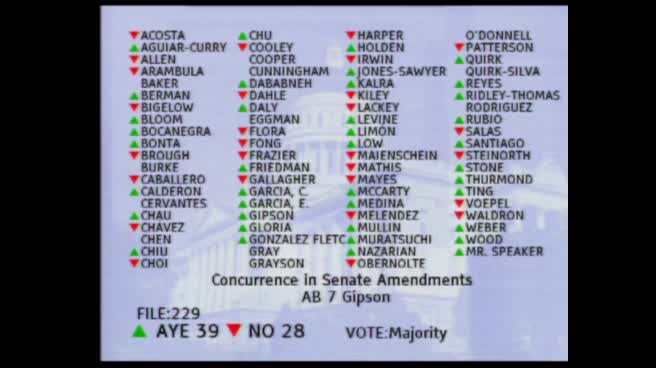 1MIN
Assembly Floor
 2MIN
Senate Floor
 1H
Senate Standing Committee on Appropriations
 7MIN
Senate Standing Committee on Transportation and Housing
 1MIN
Assembly Floor
 1H
Assembly Standing Committee on Appropriations
 9MIN
Assembly Standing Committee on Housing and Community Development
Bill Author

Bill Co-Author(s):
