AB 3179: State agencies: bilingual services.
- Session Year: 2017-2018
- House: Assembly
- Latest Version Date: 2018-08-29
The Dymally-Alatorre Bilingual Services Act, among other things, generally requires every state agency, as defined, directly involved in certain activities involving contact with a substantial number of non-English-speaking people, and every local agency, as defined, serving a substantial number of non-English-speaking people, to employ a sufficient number of qualified bilingual persons in public contact positions. For specified provisions of the act, the act defines a substantial number of non-English-speaking people as members of a group who either do not speak English, or who are unable to effectively communicate in English because it is not their native language, and who comprise 5% or more of the people served by the statewide or any local office or facility of a state agency.
This bill would modify the definition of substantial number of non-English-speaking people to reduce that percentage from 5% to 3%.
The Dymally-Alatorre Bilingual Services Act, among other things, generally requires every state agency, as defined, directly involved in certain activities involving contact with a substantial number of non-English-speaking people, and every local agency, as defined, serving a substantial number of non-English-speaking people, to employ a sufficient number of qualified bilingual persons in public contact positions. For specified provisions of the act, the act defines a substantial number of non-English-speaking people as members of a group who either do not speak English, or who are unable to effectively communicate in English because it is not their native language, and who comprise 5% or more of the people served by the statewide or any local office or facility of a state agency.
This bill would require every state agency, as defined, to update its data collection categories to match those used by the United States Census Bureau in the most recent update in December 2017. The bill would also require every state agency that directly or by contract provides translations for language accessibility to make provisions for the Punjabi language on or after an unspecified date and to recalculate its threshold languages in light of the United States Census data around Punjabi to see if eligibility numbers are met, but would require specified state agencies to comply with these provisions as early as possible, but no later than an unspecified date. modify the definition of substantial number of non-English-speaking people to reduce that percentage from 5% to 3%.
The Dymally-Alatorre Bilingual Services Act, among other things, generally requires every state agency, as defined, directly involved in certain activities involving contact with a substantial number of non-English-speaking people, and every local agency, as defined, serving a substantial number of non-English-speaking people, to employ a sufficient number of qualified bilingual persons in public contact positions.
This bill would require every state agency, as defined, to update its data collection categories to match those used by the United States Census Bureau in the most recent update in December 2017. The bill would also require every state agency that directly or by contract provides translations for language accessibility to make provisions for the Punjabi language on or after an unspecified date and to recalculate its threshold languages in light of the United States Census data around Punjabi to see if eligibility numbers are met, but would require specified state agencies to comply with these provisions as early as possible, but no later than an unspecified date.
The Legislature hereby finds and declares all of the following:
(a)Punjabi is the tenth most spoken language in the world, originating in the border regions of South Asia between Pakistan and India, with over 100,000,000 speakers worldwide, also making it the third most spoken language in Canada and the fourth most spoken language in the United Kingdom.
(b)Punjabi is one of the oldest languages of South Asia, with a tradition extending from Sheikh Fareed to Guru Nanak to present day, and being written most commonly in Gurmukhi script.
(c)Punjabi has faced repeated discrimination in India since 1947 as the Indian government has repeatedly targeted Punjabi due to its ties with the Sikhs, most visibly in 1984 with the attack on Darbar Sahib, also known as the Golden Temple, when numerous priceless Sikh and Punjabi manuscripts were torched and stolen. Punjabi continues to face challenges in Pakistan as well.
(d)Punjabi was first recorded in California since 1899, when the first Sikhs entered through the Angel Island Immigration Station in San Francisco, California.
(e)The first Punjabi newspaper printing press in California dates to 1913, where Kartar Singh Sarabha published The Ghadar with financial support from the Stockton Gurdwara.
(f)Punjabi is one of the top 10 most spoken languages in California, with sizable populations throughout the Central Valley.
(g)Punjabi is often the third most spoken language in most counties between Kern and Sutter Counties.
(h)Punjabi language instruction is expanding in many high schools in Union City, Live Oak, Yuba City, Livingston, Selma, Fresno, Clovis, and Bakersfield.
(i)Punjabi language is celebrated in Yuba City, often called mini-Punjab because of its 10 percent Punjabi population, which celebrates the installation of Guru Granth and Guru Panth as the final authority of the Sikh tradition.
(j)Punjabi language is celebrated through festivals, publications, and events in many Little Punjabs throughout California including: Live Oak, Natomas, Sacramento, Elk Grove, Stockton, Ceres, Turlock, Livingston, Madera, Fresno, Selma, Kerman, San Joaquin, Fowler, Porterville, Delano, Bakersfield, Arvin, Union City, Fremont, Hayward, and San Jose.
(k)Punjabi language is promoted and taught by institutions such as the Jakara Movement, Bakersfield Sikh Womens Association, Punjabi Cultural Association (Fresno), Punjabi American Heritage Society (Yuba City), Punjabi language academies, Punjabi Sahit Academies, and Gurdwaras with Punjabi and Khalsa schools.
(l)Punjabis work a wide range of jobs and contribute their labor in all fields throughout California, especially agriculture, transportation, health care, and small businesses.
(m)The United States Census Bureau began reporting data for Punjabi language speakers in December, 2017.
(n)Lowering the threshold for state agencies to provide language access services will ensure that non-English speakers have greater access to the state government services that they need.
SEC. 2.Section 7296.2 of the Government Code is amended to read:7296.2.As used in Sections 7292, 7295.2, 7295.4, 7299.3, and 7299.4, a substantial number of non-English-speaking people are members of a group who either do not speak English, or who are unable to effectively communicate in English because it is not their native language, and who comprise 3 percent or more of the people served by the statewide or any local office or facility of a state agency.
The Legislature hereby finds and declares all of the following:
(a)Punjabi is the tenth most spoken language in the world, originating in the border regions of South Asia between Pakistan and India, with over 100,000,000 speakers worldwide, also making it the third most spoken language in Canada and the fourth most spoken language in the United Kingdom.
(b)Punjabi is one of the oldest languages of South Asia, with a tradition extending from Sheikh Fareed to Guru Nanak to present day, and being written most commonly in Gurmukhi script.
(c)Punjabi has faced repeated discrimination in India since 1947 as the Indian government has repeatedly targeted Punjabi due to its ties with the Sikhs, most visibly in 1984 with the attack on Darbar Sahib, also known as the Golden Temple, when numerous priceless Sikh and Punjabi manuscripts were torched and stolen. Punjabi continues to face challenges in Pakistan as well.
(b)(d)Punjabi has been spoken was first recorded in California since 1899, when the first Sikhs entered through the Angel Island Immigration Station in San Francisco. Francisco, California.
(c)(e)The first Punjabi newspaper printing press in California dates to 1913, where Kartar Singh Sarabha published The Ghadar with financial support from the Stockton Gurdwara.
(d)(f)Punjabi is one of the top 10 most spoken languages in California, with the most sizable populations throughout the Central Valley.
(e)(g)Punjabi is often the third most spoken language in most counties between Kern and Sutter Counties.
(f)(h)Punjabi language instruction is expanding in many high schools in Union City, Live Oak, Yuba City, Livingston, Selma, Fresno, Clovis, and Bakersfield.
(g)(i)Punjabi language is celebrated in Yuba City, often called mini-Punjab because of its 10 percent Punjabi population, which celebrates the birth of the founder of the Sikh tradition, Baba Guru Nanak, in November. installation of Guru Granth and Guru Panth as the final authority of the Sikh tradition.
(h)(j)Punjabi language is celebrated through festivals, publications, and events in many Little Punjabs throughout California including: Live Oak, Natomas, Sacramento, Elk Grove, Stockton, Ceres, Turlock, Livingston, Madera, Fresno, Selma, Kerman, San Joaquin, Fowler, Porterville, Delano, Bakersfield, Arvin, Union City, Fremont, Hayward, and San Jose.
(i)(k)Punjabi language is promoted and taught by institutions such as the Jakara Movement, Bakersfield Sikh Womens Association, Punjabi Cultural Association (Fresno), Punjabi American Heritage Society (Yuba City), Punjabi language academies, Punjabi Sahit Academies, and Gurdwaras with Punjabi and Khalsa schools.
(l)Punjabis work a wide range of jobs and contribute their labor in all fields throughout California, especially agriculture, transportation, health care, and small businesses.
(j)(m)The United States Census Bureau began reporting data for Punjabi language speakers in December, 2017.
(n)Lowering the threshold for state agencies to provide language access services will ensure that non-English speakers have greater access to the state government services that they need.
SEC. 2.Section 7292.5 is added to the Government Code, to read:7292.5.(a)Every state agency, as defined in Section 11000, shall update its data collection categories to match those used by the United States Census Bureau in the most recent update in December, 2017.(b)(1)Except as otherwise provided in subdivision (c), every state agency, as defined in Section 11000, that directly or by contract provides translations for language accessibility shall make provisions for the Punjabi language on or after ____.(2)A state agency, as defined in Section 11000, shall recalculate its threshold languages in light of the United States census data around Punjabi to see if eligibility numbers are met.(c)The following state agencies shall comply with this section as early as possible, but no later than ____:(1)(A)The State Department of Health Care Services.(B)In carrying out its duties pursuant to this section, the State Department of Health Care Services shall give priority to providing access in Punjabi to those services provided under the Medi-Cal Act (Chapter 7 (commencing with Section 14000) of Part 3 of Division 9 of the Welfare and Institutions Code).(2)The State Department of Public Health.(3)The State Department of Social Services.(4)The State Department of Education.(5)The Department of Fair Employment and Housing.(6)The Department of Housing and Community Development.(7)The Department of Food and Agriculture.(8)The Department of Transportation.SEC. 2.Section 7296.2 of the Government Code is amended to read:7296.2.As used in Sections 7292, 7295.2, 7295.4, 7299.3, and 7299.4, a substantial number of non-English-speaking people are members of a group who either do not speak English, or who are unable to effectively communicate in English because it is not their native language, and who comprise 5 3 percent or more of the people served by the statewide or any local office or facility of a state agency.
The Legislature hereby finds and declares all of the following:
(a)Punjabi is the tenth most spoken language in the world, with over 100,000,000 speakers worldwide, also making it the third most spoken language in Canada and the fourth most spoken language in the United Kingdom.
(b)Punjabi has been spoken in California since 1899, when the first Sikhs entered through the Angel Island Immigration Station in San Francisco.
(c)The first Punjabi newspaper printing press in California dates to 1913, where Kartar Singh Sarabha published The Ghadar with financial support from the Stockton Gurdwara.
(d)Punjabi is one of the top 10 most spoken languages in California, with the most sizable populations throughout the Central Valley.
(e)Punjabi is often the third most spoken language in most counties between Kern and Sutter Counties.
(f)Punjabi language instruction is expanding in many high schools in Union City, Live Oak, Yuba City, Livingston, Selma, Fresno, Clovis, and Bakersfield.
(g)Punjabi language is celebrated in Yuba City, often called mini-Punjab because of its 10 percent Punjabi population, which celebrates the birth of the founder of the Sikh tradition, Baba Guru Nanak, in November.
(h)Punjabi language is celebrated through festivals, publications, and events in many Little Punjabs throughout California including: Live Oak, Natomas, Sacramento, Elk Grove, Stockton, Ceres, Turlock, Livingston, Madera, Fresno, Selma, Kerman, San Joaquin, Fowler, Porterville, Delano, Bakersfield, Arvin, Union City, Fremont, Hayward, and San Jose.
(i)Punjabi language is promoted and taught by institutions such as the Jakara Movement, Bakersfield Sikh Womens Association, Punjabi Cultural Association (Fresno), Punjabi American Heritage Society (Yuba City), Punjabi language academies, Punjabi Sahit Academies, and Gurdwaras with Punjabi and Khalsa schools.
(j)The United States Census Bureau began reporting data for Punjabi language speakers in December, 2017.
SEC. 2.Section 7292.5 is added to the Government Code, to read:7292.5.(a)Every state agency, as defined in Section 11000, shall update its data collection categories to match those used by the United States Census Bureau in the most recent update in December, 2017.
(b)(1)Except as otherwise provided in subdivision (c), every state agency, as defined in Section 11000, that directly or by contract provides translations for language accessibility shall make provisions for the Punjabi language on or after ____.
(2)A state agency, as defined in Section 11000, shall recalculate its threshold languages in light of the United States census data around Punjabi to see if eligibility numbers are met.
(c)The following state agencies shall comply with this section as early as possible, but no later than ____:
(1)(A)The State Department of Health Care Services.
(B)In carrying out its duties pursuant to this section, the State Department of Health Care Services shall give priority to providing access in Punjabi to those services provided under the Medi-Cal Act (Chapter 7 (commencing with Section 14000) of Part 3 of Division 9 of the Welfare and Institutions Code).
(2)The State Department of Public Health.
(3)The State Department of Social Services.
(4)The State Department of Education.
(5)The Department of Fair Employment and Housing.
(6)The Department of Housing and Community Development.
(7)The Department of Food and Agriculture.
(8)The Department of Transportation.
|
Date
|
Status
|
|---|---|
| Sep 22, 2018 | Vetoed by Governor. |
| Sep 5, 2018 | Enrolled and presented to the Governor at 3 p.m. |
| Aug 27, 2018 | In Assembly. Ordered to Engrossing and Enrolling. |
| Aug 27, 2018 | Read third time. Passed. Ordered to the Assembly. |
| Aug 24, 2018 | Ordered to third reading. |
| Aug 21, 2018 | Ordered to special consent calendar. |
| Aug 17, 2018 | From committee: Do pass. (Ayes 7. Noes 0.) (August 16). |
| Aug 6, 2018 | In committee: Referred to APPR. suspense file. |
| Jun 26, 2018 | From committee: Do pass and re-refer to Com. on APPR. with recommendation: To Consent Calendar. (Ayes 13. Noes 0.) (June 26). Re-referred to Com. on APPR. |
| Jun 13, 2018 | Referred to Com. on G.O. |
| May 31, 2018 | In Senate. Read first time. To Com. on RLS. for assignment. |
| May 30, 2018 | Read third time. Passed. Ordered to the Senate. |
| May 25, 2018 | From committee: Do pass. (Ayes 15. Noes 1.) (May 25). |
| May 9, 2018 | In committee: Set, first hearing. Referred to APPR. suspense file. |
| Apr 25, 2018 | From committee: Do pass and re-refer to Com. on APPR. with recommendation: To Consent Calendar. (Ayes 7. Noes 0.) (April 25). Re-referred to Com. on APPR. |
| Apr 18, 2018 | Re-referred to Com. on A. & A.R. |
| Apr 17, 2018 | From committee chair, with author's amendments: Amend, and re-refer to Com. on A. & A.R. Read second time and amended. |
| Mar 12, 2018 | Referred to Com. on A. & A.R. |
| Feb 17, 2018 | From printer. May be heard in committee March 19. |
| Feb 16, 2018 | Read first time. To print. |
|
Date
|
Description
|
Location
|
Votes
|
|
|---|---|---|---|---|
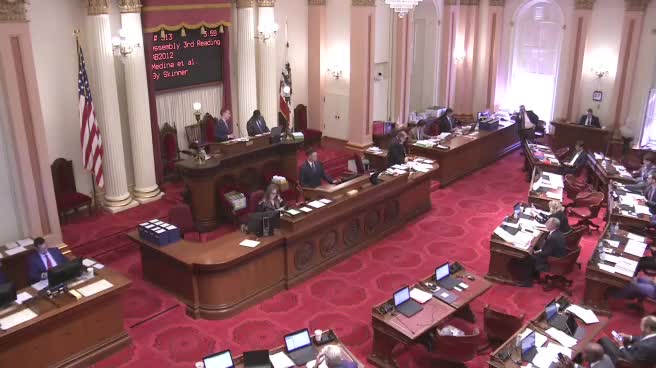
| Aug 27, 2018 | Assembly 3rd Reading AB3179 Salas et al. By Nielsen | Senate Floor |
Passed |
|
| Aug 16, 2018 | Do pass | Senate Standing Committee on Appropriations |
Passed |
|
| Aug 6, 2018 | Placed on suspense file | Senate Standing Committee on Appropriations |
Passed |
|
| Jun 26, 2018 | Do pass, but first be re-referred to the Committee on [Appropriations] with the recommendation: To Consent Calendar | Senate Standing Committee on Governmental Organization |
Passed |
|
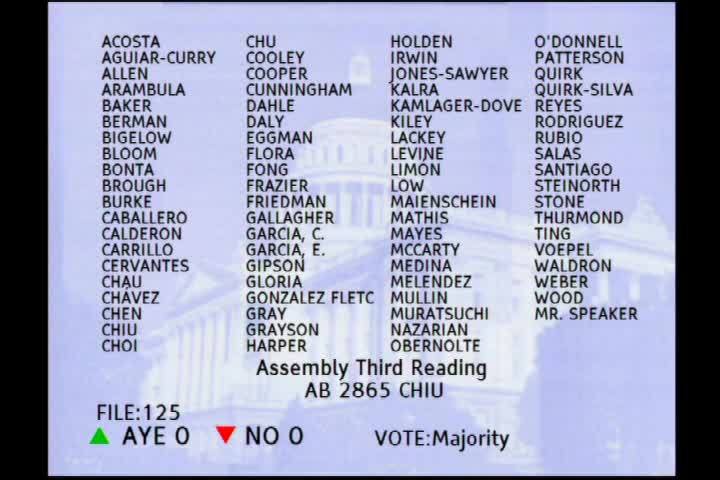
| May 30, 2018 | AB 3179 SALAS Assembly Third Reading | Assembly Floor |
Passed |
|
| May 25, 2018 | Do pass. | Assembly Standing Committee on Appropriations |
Passed |
|
| Apr 25, 2018 | Do pass and be re-referred to the Committee on [Appropriations] with recommendation: To Consent Calendar | Assembly Standing Committee on Accountability and Administrative Review |
Passed |
This list shows positions taken on this bill by organizations on the date displayed, which is linked to the original source.
Positions by individuals are not included.
|
Organization
|
Position
|
Date
|
|---|---|---|
| Allen Warren, Councilmember, City Of Sacramento, District 2 | ** Support | Aug 18, 2018 |
| American Sikh Public Affairs Association | ** Support | Aug 18, 2018 |
| Asian Americans Advancing Justice - Asian Law Caucus | ** Support | Aug 18, 2018 |
| Center At Sierra Health Foundation | ** Support | Aug 18, 2018 |
| Clinton J. Olivier, Fresno City Councilmember, District 7 | ** Support | Aug 18, 2018 |
| Esmeralda Z. Soria, Council President, City Of Fresno | ** Support | Aug 18, 2018 |
| Faith in the Valley | ** Support | Aug 18, 2018 |
| Gary Bredefeld, Fresno City Councilmember, District 6 | ** Support | Aug 18, 2018 |
| Ghg Sangeet And Dance Academy Inc. | ** Support | Aug 18, 2018 |
| Hmong Innovating Politics | ** Support | Aug 18, 2018 |
| Islamic Cultural Center | ** Support | Aug 18, 2018 |
| Jakara Movement | ** Support | Aug 18, 2018 |
| Karen K. Goh, Mayor, City Of Bakersfield | ** Support | Aug 18, 2018 |
| Lee Brand, Mayor, City Of Fresno | ** Support | Aug 18, 2018 |
| Luis Chavez, Fresno City Councilmember, District 5 | ** Support | Aug 18, 2018 |
| Mi Familia Vota | ** Support | Aug 18, 2018 |
| Oliver L. Baines, Fresno City Councilmember, District 3 | ** Support | Aug 18, 2018 |
| Organization For Minorities Of India | ** Support | Aug 18, 2018 |
| Punjabi American Heritage Society | ** Support | Aug 18, 2018 |
| Punjabi Cultural Association Of Central Valley | ** Support | Aug 18, 2018 |
| Sikh Center Of The Pacific Coast | ** Support | Aug 18, 2018 |
| Sikh Council Of Central California | ** Support | Aug 18, 2018 |
| Sikh Information Centre | ** Support | Aug 18, 2018 |
| Sikh Institute | ** Support | Aug 18, 2018 |
| Sikh Society Of San Diego | ** Support | Aug 18, 2018 |
| Sikh Temple Gurdwara Yuba City | ** Support | Aug 18, 2018 |
| Sikh Temple Sacramento | ** Support | Aug 18, 2018 |
| Sikh Women'S Alliance | ** Support | Aug 18, 2018 |
| SIREN | ** Support | Aug 18, 2018 |
GOVERNOR'S VETO
GV Bill Id:AB 3179
Author:(Salas)
As Enrolled Ver:September 5, 2018
2/3 vote
Committee | Votes | Ayes | Noes |
Accountability | 7-0 | Eggman, Patterson, Burke, Frazier, Lackey, Medina, Quirk-Silva | |
Appropriations | 15-1 | Gonzalez Fletcher, Bigelow, Bloom, Bonta, Calderon, Carrillo, Chau, Eggman, Fong, Friedman, Gallagher, Eduardo Garcia, Nazarian, Quirk, Reyes | Obernolte |
ASSEMBLY: | 75-0 | (May 30, 2018) | SENATE: | 38-0 | (August 27, 2018) |
SUMMARY: Reduces the threshold by which state agencies are required to provide language access services to a substantial number of non-English speakers from 5% to 3%.
EXISTING LAW:
- Establishes the Dymally-Alatorre Bilingual Services Act (Act) which aims to ensure that people who do not speak or write English, or whose primary language is not English, are not prevented from using public services because of language barriers.
- Specifies that a state agency must provide the same information that is available in English in other languages if the agency serves a "substantial number" of non-English speakers.
- Defines "substantial number" to mean non-English speakers who comprise 5% or more of the constituents served by any local office of a state agency.
- Makes the California Department of Human Resources (CalHR) responsible for ensuring agencies comply with the Act.
- Requires each state agency to conduct a survey of its local offices every two years to assess the language needs of people served and directs CalHR to provide a report on the survey to the Legislature.
FISCAL EFFECT: According to the Senate Appropriations Committee, lowering the threshold from 5% to 3% would increase the need to provide language access services statewide by approximately 30% based on CalHR’s most recent language access survey. If a state agency that is directly involved in furnishing information or rendering services to the public makes contact with members of a group of non-English speakers who comprise 3% or more, as opposed to 5% or more, that state agency would need to take certain steps to provide information and services in the non-English language. Under existing law, state agencies are required to provide language access services only to the extent that funding is available, which makes actual costs difficult to estimate. Beyond that, costs would likely be in the millions of dollars statewide, annually to provide the necessary language support staff and translations of documents. (General Fund/special fund)
COMMENTS: This bill requires state agencies to provide language access to non-English speakers when they comprise 3% of the constituents served. The author states that "lowering the threshold for providing language access will help Punjabi- speaking Californians and other non-English speakers have the same access to services that English-speakers have in our state."
Currently, agencies are required to conduct surveys every other year to assess their public contact with non-English speakers. CalHR compiles the results of the survey in a report to the Legislature. According to data from the 2015-16 language access survey, the lower trigger specified in this bill would apply to about 46 entities among a sample of eight large state agencies.
This bill would require state agencies to provide access to bilingual employees and translated materials for non-English speakers if those individuals constitute 3% of the population served.
This bill has a potential cost of $77 million a year and is more properly considered as part of the budget process.
Analysis Prepared by: Cassie Royce / A. & A.R. / (916) 319-3600 FN: 0005255
Office of Senate Floor Analyses (916) 651-1520 Fax: (916) 327-4478 | AB |
THIRD READING
Bill No: AB 3179
:
SENATE GOVERNMENTAL ORG. COMMITTEE: 13-0, 6/26/18
AYES: Dodd, Wilk, Bradford, Cannella, Gaines, Galgiani, Glazer, Hill, Hueso, Lara, Portantino, Vidak, Wiener
SENATE APPROPRIATIONS COMMITTEE: 7-0, 8/16/18
AYES: Portantino, Bates, Beall, Bradford, Hill, Nielsen, Wiener
ASSEMBLY FLOOR: 75-0, 5/30/18 - See last page for vote
DIGEST: This bill reduces the threshold by which state agencies are required to provide language access services to a substantial number of non-English speakers from 5% to 3%.
ANALYSIS:
Existing law:
- Requires, generally, under the Dymally-Alatorre Bilingual Services Act (Act), every state agency, as defined, directly involved in certain activities involving contact with a substantial number of non-English-speaking people, and every local agency, as defined, serving a substantial number of non-English-speaking people, to employ a sufficient number of qualified bilingual persons in public contact positions.
- Defines a “substantial number of non-English-speaking people” as members of a group who either do not speak English, or who are unable to effectively communicate in English because it is not their native language, and who comprise 5% or more of the people served by the statewide or any local office or facility of a state agency.
- Defines a “state agency” to include every state office, officer, department, division, bureau, board, commission. This does not include the California State University unless a bill explicitly provides that it applies to the university.
- Defines a “local agency” to mean a county, city whether general law or chartered, city, and county, town, school district, municipal corporation, district, political subdivision, or any board, commission or agency therefor, or other local public agency.
This bill:
- Reduces the threshold by which state agencies are required to provide language access services to a substantial number of non-English speakers from 5% to 3%.
- Makes various legislative findings.
Background
Purpose of the bill. According to the author’s office, “AB 3179 would lower, from 5% to 3%, the threshold which state agencies are required to provide language access services to a substantial number of non-native speakers. Lowering the threshold to 3% will expedite having access to a number of state services for non-native speaking communities including the over 100,000 Punjabi speakers living in the state.”
Dymally-Alatorre Bilingual Services Act. The Act was enacted in 1973 with the goal to eliminate language barriers that preclude people in California, who do not speak or write English because their primary language is not English, from having equal access to public services.
The Act requires State and local agencies that are directly involved in the furnishing of information or the rendering of services to the public must, in specifically prescribed situations, employ a sufficient number of qualified bilingual persons in public contact positions to ensure information and services are able to be used by the public in the language of the non-English speaking people.
The Act further requires that every State and local agency that serves a substantial number of non-English speaking people, and provides materials in English explaining services, shall also provide the same type of materials in any non-English language spoken by a substantial number of the public served by the agency. The Act defines a “substantial number of non-English-speaking people” as members of a group who either do not speak English, or who are unable to effectively communicate in English because it is not their native language, and who comprise 5% or more of the people served by the statewide or any local office or facility of a state agency. This bill lowers that threshold from 5% to 3%.
The Act also requires that each State and local agency survey each of their local offices and facilitates every two years to obtain information about the public it serves. The results of the survey are compiled by the California Department of Human Resources (CalHR) and reported to the Legislature. The report is required to identify significant problems or deficiencies and propose solutions where warranted.
CalHR is responsible for ensuring agencies comply with the provisions of the Act.
Related/Prior Legislation
AB 2253 (Ting, Chapter 469, Statutes of 2014) made various changes to the Act, including requiring a state agency to translate and make accessible on the homepage of its Internet Web site, forms and processes for submitting complaints of alleged violations of the Act.
AB 305 (Furutani, 2011) would have, among other provisions, revised the definition of “substantial number of non-English speakers” to mean those who comprise the lesser of the following: 1,000 or more of the residents of a county in which the local office of a state agency is located; 5% or more of the residents of a county in which the local office of a state agency is located; or, 5% or more of the people served by any local office or facility of a state agency. (Held on the Assembly Appropriations Suspense File)
SB 987 (Escutia, 2002) would have made various changes to the Act, such as expanding the definition of substantial number of non-English-speaking people and requiring distributed written materials, including forms, applications, letters, and notices, to be in non-English language. (Vetoed by Governor Davis)
FISCAL EFFECT: Appropriation: Fiscal Com.: Local:
According to the Senate Appropriations Committee:
Lowering the threshold from 5% to 3% would increase the need to provide language access services statewide by approximately 30% based on the California Department of Human Resources (CalHR’s) most recent language access survey. If a state agency that is directly involved in furnishing information or rendering services to the public makes contact with members of a group of non-English speakers who comprise 3% or more, as opposed to 5% or more, that state agency would need to take certain steps to provide information and services in the non-English language. Under existing law, state agencies are required to provide language access services only to the extent that funding is available, which makes actual costs difficult to estimate. Beyond that, costs would likely be in the millions of dollars statewide, annually to provide the necessary language support staff and translations of documents.
Jakara Movement (source)
Allen Warren, Councilmember, City of Sacramento, District 2
American Sikh Public Affairs Association
Asian Americans Advancing Justice – Asian Law Caucus
Center at Sierra Health Foundation
Clinton J. Olivier, Fresno City Councilmember, District 7
Esmeralda Z. Soria, Council President, City of Fresno
Faith in the Valley
Gary Bredefeld, Fresno City Councilmember, District 6
GHG Sangeet and Dance Academy Inc.
Hmong Innovating Politics
Islamic Cultural Center
Karen K. Goh, Mayor, City of Bakersfield
KBIF AM 900 Punjabi Radio-Shaan Punjab Di
Lee Brand, Mayor, City of Fresno
Luis Chavez, Fresno City Councilmember, District 5
Mi Familia Vota
Oliver L. Baines, Fresno City Councilmember, District 3
Organization for Minorities of India
Punjabi American Heritage Society
Punjabi Cultural Association of Central Valley
Sikh Center of the Pacific Coast
Sikh Council of Central California
Sikh Information Centre
Sikh Institute
Sikh Temple Gurdwara Yuba City
Sikh Temple Sacramento
Sikh Society of San Diego
Sikh Women’s Alliance
SIREN
OPPOSITION: (Verified 8/17/18)
None received
ARGUMENTS IN SUPPORT: According to the Jakara Movement, “while this bill will have ramifications for many other California communities, we are pleased that it will provide opportunities for greater access and autonomy for California’s Punjabi-speaking population. The 2010 U.S. Census provides that there are over 104,000 Punjabi language speakers in the state, and current census predictions anticipate this number to grow in the 2020 Census as it is considered one of four fastest growing languages in California. We strongly support AB 3179 because allowing for the improvement in bilingual services and increasing the ability for all Californians, especially those that primarily speak emerging languages to have greater accessibility so that they can have greater autonomy.”
ASSEMBLY FLOOR: 75-0, 5/30/18
AYES: Acosta, Aguiar-Curry, Arambula, Baker, Berman, Bigelow, Bloom, Bonta, Brough, Burke, Caballero, Calderon, Carrillo, Cervantes, Chau, Chávez, Chen, Chiu, Choi, Chu, Cooley, Cooper, Cunningham, Dahle, Daly, Eggman, Flora, Fong, Frazier, Friedman, Gallagher, Cristina Garcia, Eduardo Garcia, Gipson, Gloria, Gonzalez Fletcher, Gray, Grayson, Harper, Holden, Irwin, Jones-Sawyer, Kalra, Kamlager-Dove, Kiley, Lackey, Levine, Limón, Low, Maienschein, Mathis, Mayes, McCarty, Medina, Melendez, Mullin, Muratsuchi, Nazarian, O'Donnell, Quirk, Quirk-Silva, Reyes, Rodriguez, Rubio, Salas, Santiago, Steinorth, Mark Stone, Thurmond, Ting, Voepel, Waldron, Weber, Wood, Rendon
NO VOTE RECORDED: Travis Allen, Obernolte, Patterson
8/18/18 16:32:39
SENATE COMMITTEE ON APPROPRIATIONS
Senator Anthony Portantino, Chair
2017 - 2018 Regular Session
AB 3179 (Salas) - State agencies: bilingual services
Version: April 17, 2018 | Policy Vote: G.O. 13 - 0 |
Urgency: No | Mandate: No |
Hearing Date: August 6, 2018 | Consultant: Debra Cooper |
This bill meets the criteria for referral to the Suspense File.
Bill Summary:
AB 3179 would reduce the threshold by which state agencies are required to provide language access services to a substantial number of non-English speakers from 5% to 3%.
Fiscal Impact:
Lowering the threshold from 5% to 3% would increase the need to provide language access services statewide by approximately 30% based on the California Department of Human Resources (CalHR’s) most recent language access survey. If a state agency that is directly involved in furnishing information or rendering services to the public makes contact with members of a group of non-English speakers who comprise 3% or more, as opposed to 5% or more, that state agency would need to take certain steps to provide information and services in the non-English language. Under existing law, state agencies are required to provide language access services only to the extent that funding is available, which makes actual costs difficult to estimate. Beyond that, costs would likely be in the millions of dollars statewide, annually to provide the necessary language support staff and translations of documents. (GF/special fund)
Background:
The Dymally-Alatorre Bilingual Services Act (Act) was enacted in 1973 with the goal to eliminate language barriers that preclude people in California, who do not speak or write English because their primary language is not English, from having equal access to public services. The Act generally requires every state agency, as defined, directly involved in certain activities involving contact with a substantial number of non-English-speaking people, and every local agency, as defined, serving a substantial number of non-English-speaking people, to employ a sufficient number of qualified bilingual persons in public contact positions. “Substantial number of non-English-speaking people” is currently defined as members of a group who either do not speak English, or who are unable to effectively communicate in English because it is not their native language, and who comprise 5% or more of the people served by the statewide or any local office or facility of a state agency.
The Act also requires that each State and local agency survey each of their local offices and facilitates every two years to obtain information about the public it serves. The results of the survey are compiled by the CalHR and reported to the Legislature. The report is required to identify significant problems or deficiencies and propose solutions where warranted. CalHR is responsible for ensuring agencies comply with the provisions of the Act.
Proposed Law:
This bill would reduce the threshold by which state agencies are required to provide language access services to a “substantial number of non-English-speaking people” from 5% to 3%.
Related Legislation:
AB 2253 (Ting, Chapter 469, Statutes of 2014) made various changes to the Act, including requiring a state agency to translate and make accessible on the homepage of its Internet Web site, forms and processes for submitting complaints of alleged violations of the Act.
AB 305 (Furutani, 2011) among other things, would have revised the definition of “substantial number of non-English speakers” to mean those who comprise the lesser of the following: 1,000 or more of the residents of a county in which the local office of a state agency is located; 5% or more of the residents of a county in which the local office of a state agency is located; or, 5% or more of the people served by any local office or facility of a state agency. It was held on the Assembly Appropriations Suspense File.
SB 987 (Escutia, 2002) would have made various changes to the Act, such as expanding the definition of substantial number of non-English-speaking people and requiring distributed written materials, including forms, applications, letters, and notices, to be in non-English language. It was vetoed by Governor Davis.
Staff Comments:
According to data from the 2015-16 language access survey, lowering the threshold from 5% to 3% would cause the translation threshold to include eight languages in between 10 to 202 additional state offices. For instance, a 3% threshold would mean that Spanish translation must be provided in 202 additional offices; Cantonese/Yue, Mandarin, and Vietnamese must be provided in 19 additional offices; and Punjabi/Panjabi must be provided in 12 additional offices.
Proposition 30 (November 2012) eliminated any potential mandate funding liability for any new program or higher level of service mandated on local agencies related to realigned programs. Rather, legislation enacted after September 30, 2012, that has an overall effect of increasing the costs already borne by a local agency for programs or levels of service mandated by realignment only apply to local agencies to the extent that the state provides annual funding for the cost increase. Local agencies are not obligated to provide programs or levels of service required by legislation above the level for which funding has been provided. This bill could results in Proposition 30 claims to the extent that counties are required to translate additional materials.
-- END --
SENATE COMMITTEE ON GOVERNMENTAL ORGANIZATION
Senator Bill Dodd
Chair
2017 - 2018 Regular
Bill No: AB Hearing Date: 6/26/2018
Author: | Salas, et al. | ||
Version: | Amended | ||
Urgency: | Fiscal: | ||
Consultant: | |||
SUBJECT:
DIGEST: This bill reduces the threshold by which state agencies are required to provide language access services to a substantial number of non-English speakers from 5% to 3%.
ANALYSIS:
Existing law:
- Generally requires, under the Dymally-Alatorre Bilingual Services Act (Act), every state agency, as defined, directly involved in certain activities involving contact with a substantial number of non-English-speaking people, and every local agency, as defined, serving a substantial number of non-English-speaking people, to employ a sufficient number of qualified bilingual persons in public contact positions.
- Defines a “substantial number of non-English-speaking people” as members of a group who either do not speak English, or who are unable to effectively communicate in English because it is not their native language, and who comprise 5% or more of the people served by the statewide or any local office or facility of a state agency.
- Defines a “state agency” to include every state office, officer, department, division, bureau, board, commission. This does not include the California State University unless a bill explicitly provides that it applies to the university.
- Defines a “local agency” to mean a county, city whether general law or chartered, city, and county, town, school district, municipal corporation, district, political subdivision, or any board, commission or agency therefor, or other local public agency.
This bill:
- Reduces the threshold by which state agencies are required to provide language access services to a substantial number of non-English speakers from 5% to 3%.
- Makes various legislative findings.
Background
Purpose of the bill. According to the author’s office, “AB 3179 would lower, from 5% to 3%, the threshold which state agencies are required to provide language access services to a substantial number of non-native speakers. Lowering the threshold to 3% will expedite having access to a number of state services for non-native speaking communities including the over 100,000 Punjabi speakers living in the state.”
Dymally-Alatorre Bilingual Services Act. The Act was enacted in 1973 with the goal to eliminate language barriers that preclude people in California, who do not speak or write English because their primary language is not English, from having equal access to public services.
The Act requires State and local agencies that are directly involved in the furnishing of information or the rendering of services to the public must, in specifically prescribed situations, employ a sufficient number of qualified bilingual persons in public contact positions to ensure information and services are able to be used by the public in the language of the non-English speaking people.
The Act further requires that every State and local agency that serves a substantial number of non-English speaking people, and provides materials in English explaining services, shall also provide the same type of materials in any non-English language spoken by a substantial number of the public served by the agency. The Act defines a “substantial number of non-English-speaking people” as members of a group who either do not speak English, or who are unable to effectively communicate in English because it is not their native language, and who comprise 5% or more of the people served by the statewide or any local office or facility of a state agency. This bill lowers that threshold from 5% to 3%.
The Act also requires that each State and local agency survey each of their local offices and facilitates every two years to obtain information about the public it serves. The results of the survey are compiled by the California Department of Human Resources (CalHR) and reported to the Legislature. The report is required to identify significant problems or deficiencies and propose solutions where warranted.
CalHR is responsible for ensuring agencies comply with the provisions of the Act.
Prior/Related Legislation
AB 2253 (Ting, Chapter 469, Statutes of 2014) made various changes to the Act, including requiring a state agency to translate and make accessible on the homepage of its Internet Web site, forms and processes for submitting complaints of alleged violations of the Act.
AB 305 (Furutani, 2011) would have, among other provisions, revised the definition of “substantial number of non-English speakers” to mean those who comprise the lesser of the following: 1,000 or more of the residents of a county in which the local office of a state agency is located; 5% or more of the residents of a county in which the local office of a state agency is located; or, 5% or more of the people served by any local office or facility of a state agency. (Held on the Assembly Appropriations Suspense File)
SB 987 (Escutia, 2002) would have made various changes to the Act, such as expanding the definition of substantial number of non-English-speaking people and requiring distributed written materials, including forms, applications, letters, and notices, to be in non-English language. (Vetoed by Governor Davis)
FISCAL EFFECT: Appropriation: No Fiscal Com.: Yes Local: No
SUPPORT:
Jakara Movement (Source)
Allen Warren, Councilmember, City of Sacramento, District 2
American Sikh Public Affairs Association
Asian Americans Advancing Justice – Asian Law Caucus
Center at Sierra Health Foundation
Clinton J. Olivier, Fresno City Councilmember, District 7
Esmeralda Z. Soria, Council President, City of Fresno
Faith in the Valley
Gary Bredefeld, Fresno City Councilmember, District 6
GHG Sangeet and Dance Academy Inc.
Hmong Innovating Politics
Islamic Cultural Center
Karen K. Goh, Mayor, City of Bakersfield
KBIF AM 900 Punjabi Radio-Shaan Punjab Di
Lee Brand, Mayor, City of Fresno
Luis Chavez, Fresno City Councilmember, District 5
Mi Familia Vota
Oliver L. Baines, Fresno City Councilmember, District 3
Organization for Minorities of India
Punjabi American Heritage Society
Punjabi Cultural Association of Central Valley
Sikh Center of the Pacific Coast
Sikh Council of Central California
Sikh Information Centre
Sikh Institute
Sikh Temple Gurdwara Yuba City
Sikh Temple Sacramento
Sikh Society of San Diego
Sikh Women’s Alliance
SIREN
OPPOSITION:
None received
ARGUMENTS IN SUPPORT: According to the Jakara Movement, “while this bill will have ramifications for many other California communities, we are pleased that it will provide opportunities for greater access and autonomy for California’s Punjabi-speaking population. The 2010 U.S. Census provides that there are over 104,000 Punjabi language speakers in the state, and current census predictions anticipate this number to grow in the 2020 Census as it is considered one of four fastest growing languages in California. We strongly support AB 3179 because allowing for the improvement in bilingual services and increasing the ability for all Californians, especially those that primarily speak emerging languages to have greater accessibility so that they can have greater autonomy.”
ASSEMBLY THIRD READING
ATR Bill Id:AB 3179
Author:(Salas)
As Amended Ver:April 17, 2018
Majority vote
Committee | Votes | Ayes | Noes |
Accountability | 7-0 | Eggman, Patterson, Burke, Frazier, Lackey, Medina, Quirk-Silva | |
Appropriations | 15-1 | Gonzalez Fletcher, Bigelow, Bloom, Bonta, Calderon, Carrillo, Chau, Eggman, Fong, Friedman, Gallagher, Eduardo Garcia, Nazarian, Quirk, Reyes | Obernolte |
SUMMARY: Reduces the threshold by which state agencies are required to provide language access services to a substantial number of non-English speakers from 5% to 3%.
EXISTING LAW:
- Establishes the Dymally-Alatorre Bilingual Services Act (Act) which aims to ensure that people who do not speak or write English, or whose primary language is not English, are not prevented from using public services because of language barriers.
- Specifies that a state agency must provide the same information that is available in English in other languages if the agency serves a "substantial number" of non-English speakers.
- Defines "substantial number" to mean non-English speakers who comprise 5% or more of the constituents served by any local office of a state agency.
- Makes the California Department of Human Resources (CalHR) responsible for ensuring agencies comply with the Act and requires CalHR to issue orders to agencies if they have not made reasonable progress towards complying with the Act.
- Requires each state agency to conduct a survey of its local offices every two years to assess the language needs of people served and directs CalHR to provide a report on the survey to the Legislature.
FISCAL EFFECT: According to the Assembly Appropriations Committee, lowering the threshold from 5% to 3% would increase the need to provide language services statewide by approximately 30%, based on CalHR's most recent language access survey. Under existing law, state agencies are required to provide language services only to the extent funding is available, making actual costs difficult to predict. However, fully implemented, costs would be in the millions of dollars ongoing statewide to provide the necessary language support staff and document translations.
COMMENTS: Current law requires a state agency to provide the same information that is available in English in other languages if the agency serves a "substantial number" of non-English speakers, defined as 5% or more of the people served. This bill lowers the threshold to 3%.
According to the author, "In many counties across the Central Valley, Punjabi is the third most spoken language, yet these Punjabi-speaking communities do not have language access to vital state services and resources such as health care or a driver's license. Most of the time, they need to have an English-speaker from their community translate for them."
This bill requires state agencies to provide language access to non-English speakers when they comprise 3% of the constituents served. The author states that "lowering the threshold for providing language access will help Punjabi- speaking Californians and other non-English speakers have the same access to services that English-speakers have in our state."
Currently, agencies are required to conduct surveys every other year to assess their public contact with non-English speakers. CalHR compiles the results of the survey in a report to the Legislature. According to data from the 2015-16 language access survey, the lower trigger specified in this bill would apply to about 46 entities among a sample of eight large state agencies.
Analysis Prepared by: Cassie Royce / A. & A.R. / (916) 319-3600 FN: 0003027
Date of Hearing: May 9, 2018
ASSEMBLY COMMITTEE ON APPROPRIATIONS
Lorena Gonzalez Fletcher, Chair
ABPCA Bill Id:AB 3179
Author:(Salas) – As Amended Ver:April 17, 2018
Policy Committee: | Accountability and Administrative Review | Vote: | 7 - 0 |
|
| ||
|
|
Urgency: No State Mandated Local Program: No Reimbursable: No
This bill modifies the definition of “a substantial number” of non-English-speaking people to mean non-English speakers who comprise 3% (rather than 5%) or more of the constituents served by a state agency.
FISCAL EFFECT:
Lowering the threshold from 5% to 3% would increase the need to provide language services statewide by approximately 30%, based on the California Department of Human Resources’ (CalHR’s) most recent language access survey. Under existing law, state agencies are required to provide language services only to the extent funding is available, making actual costs difficult to predict. However, fully implemented, costs would be in the millions of dollars ongoing statewide to provide the necessary language support staff and document translations.
COMMENTS:
- Purpose. This bill seeks to increase access to state government services for non-English speakers by requiring state agencies to provide language access to non-English speakers when they comprise 3%, rather than 5%, of the constituents served. The author states "lowering the threshold for providing language access will help Punjabi-speaking Californians and other non-English speakers have the same access to services that English speakers have in our state.”
- Background. The Dymally-Alatorre Bilingual Services Act (Act) aims to ensure that people who do not speak or write English, or whose primary language is not English, are not prevented from using public services because of language barriers. Accordingly, a state agency must provide information that is available in English in other languages too if the agency serves a "substantial number" of non-English speakers. Existing law defines "substantial number" to mean non-English speakers who comprise 5% or more of the constituents served by any local office of a state agency.
State agencies are required to conduct surveys every other year to assess their public contact with non-English speakers. CalHR compiles the results in a report to the Legislature. According to data from the 2015-16 language access survey, lowering the trigger to 3% causes the translation threshold to be hit for eight languages in 10 to 202 additional state offices, depending on the language. For example, a 3% threshold means Spanish translation must be provided in 202 additional offices, Cantonese/Yue, Mandarin, and Vietnamese must be provided in 19 additional offices each, and Punjabi/Panjabi must be provided in 12 additional offices.
- Prior Legislation. AB 305 (Furutani), of the 2011-12 Legislative Session, would have, among other provisions, revised the definition of "substantial number" of non-English speakers. That measure was held on this committee’s Suspense File.
Analysis Prepared by: Jennifer Swenson / APPR. / (916) 319-2081
Date of Hearing: April 25, 2018
ASSEMBLY COMMITTEE ON ACCOUNTABILITY AND ADMINISTRATIVE REVIEW
Susan Talamantes Eggman, Chair
ABPCA Bill Id:AB 3179 (
Author:Salas) – As Amended Ver:April 17, 2018
SUBJECT: State agencies: bilingual services
SUMMARY: Reduces the threshold by which state agencies are required to provide language access services to a substantial number of non-English speakers from 5% to 3%.
EXISTING LAW:
- Establishes the Dymally-Alatorre Bilingual Services Act (Act) which aims to ensure that people who do not speak or write English, or whose primary language is not English, are not prevented from using public services because of language barriers.
- Specifies that a state agency must provide the same information that is available in English in other languages if the agency serves a "substantial number" of non-English speakers.
- Defines "substantial number" to mean non-English speakers who comprise 5% or more of the constituents served by any local office of a state agency.
- Makes the California Department of Human Resources (CalHR) responsible for ensuring agencies comply with the Act and requires CalHR to issue orders to agencies if they have not made reasonable progress towards complying with the Act.
- Requires each state agency to conduct a survey of its local offices every two years to assess the language needs of people served and directs CalHR to provide a report on the survey to the Legislature.
FISCAL EFFECT: Unknown
COMMENTS: Current law requires a state agency to provide the same information that is available in English in other languages if the agency serves a "substantial number" of non-English speakers, defined as 5% or more of the people served. This bill lowers the threshold to 3%.
According to the author, "In many counties across the Central Valley, Punjabi is the third most spoken language, yet these Punjabi-speaking communities do not have language access to vital state services and resources such as health care or a driver’s license. Most of the time, they need to have an English-speaker from their community translate for them."
This bill requires state agencies to provide language access to non-English speakers when they comprise 3% of the constituents served. The author states that "lowering the threshold for providing language access will help Punjabi- speaking Californians and other non-English speakers have the same access to services that English-speakers have in our state.”
Currently, agencies are required to conduct surveys every other year to assess their public contact with non-English speakers. CalHR compiles the results of the survey in a report to the Legislature. According to data from the 2015-16 language access survey, the lower trigger specified in this bill would apply to about 46 entities among a sample of eight large state agencies.
Decreasing the threshold for state agencies to provide language access services to 3% could expedite access to state government services for non-English speaking communities.
PRIOR LEGISLATION: AB 305 (Furutani) of 2011 would have, among other provisions, revised the definition of "substantial number" of non-English speakers to mean those who comprise the lesser of the following: 1,000 or more of the residents of a county in which the local office of a state agency is located; 5% or more of the residents of a county in which the local office of a state agency is located; or, 5% or more of the people served by any local office or facility of a state agency. This measure died on the Assembly Appropriations Committee Suspense File.
REGISTERED SUPPORT / OPPOSITION:
Support
Jakara Movement
Opposition
None on file.
Analysis Prepared by: Cassie Royce / A. & A.R. / (916) 319-3600
Discussed in Hearing
 3MIN
Senate Floor
 1H
Senate Standing Committee on Appropriations
 45SEC
Assembly Floor
Bill Author

Bill Co-Author(s):





