AB 3224: Public social services: county employees.
- Session Year: 2017-2018
- House: Assembly
- Latest Version Date: 2018-08-20
Existing law establishes various programs that are partially federally funded and that provide cash assistance and other benefits relating to health care, food, and housing, among other benefits, to qualified low-income families and individuals, including the California Work Opportunity and Responsibility to Kids (CalWORKs) program, Medi-Cal, and CalFresh. Existing federal law requires that certain decisions and actions relating to these programs be made by government agencies that maintain personnel standards on a merit basis or that state agency personnel used in the certification process for these programs be employed in accordance with a merit system.
This bill would require that any decisions governing eligibility for Medi-Cal, CalWORKs, or CalFresh that, in California, are made by a county pursuant to provisions relating to public social services be made exclusively by a merit or civil service employee of the county. The bill would also include a statement of legislative findings and declarations.
Existing law establishes various programs that are partially federally funded and that provide cash assistance and other benefits relating to health care, food, and housing, among other benefits, to qualified low-income families and individuals, including the California Work Opportunity and Responsibility to Kids (CalWORKs) program, Medi-Cal, and CalFresh. Existing federal law requires that certain decisions and actions relating to these programs be made by government agencies that maintain personnel standards on a merit basis or that state agency personnel used in the certification process for these programs be employed in accordance with a merit system.
This bill would require that all decisions any decisions governing eligibility for Medi-Cal, CalWORKs, and or CalFresh that in California are delegated to counties that, in California, are made by a county pursuant to provisions relating to public social services be made exclusively by a merit or civil service employee of the county. The bill would also include a statement of legislative findings and declarations.
Existing law establishes various programs that are partially federally funded and that provide cash assistance and other benefits relating to health care, food, and housing, among other benefits, to qualified low-income families and individuals, including the California Work Opportunity and Responsibility to Kids (CalWORKs) program, Medi-Cal, and CalFresh. Existing federal law requires that certain decisions and actions relating to these programs be made by government agencies that maintain personnel standards on a merit basis or that state agency personnel used in the certification process for these programs be employed in accordance with a merit system.
This bill would require that all decisions governing eligibility for assistance for Medi-Cal, CalWORKs, and CalFresh that are made by a county employee be determined CalFresh that in California are delegated to counties be made exclusively by a merit or civil service employee of the county. The bill would also include a statement of legislative findings and declarations.
Existing law establishes various programs that are partially federally funded and that provide cash assistance and other benefits relating to health care, food, and housing, among other benefits, to qualified low-income families and individuals, including the California Work Opportunity and Responsibility to Kids (CalWORKs) program, Medi-Cal, and CalFresh. Existing federal law requires that certain decisions and actions relating to these programs be made by government agencies that maintain personnel standards on a merit basis or that state agency personnel used in the certification process for these programs be employed in accordance with a merit system.
This bill would require that all decisions governing eligibility for assistance for Medi-Cal, CalWORKs, and CalFresh that are made by a county employee be determined exclusively by a merit or civil service employee of the county. The bill would also include a statement of legislative findings and declarations.
Existing law authorizes the State Department of State Hospitals, the State Department of Health Care Services, and other departments as necessary, to perform various tasks relating to mental health services, including, among others, disseminating educational information relating to the prevention, diagnosis, and treatment of mental illness and establishing a program designed to prevent mental illnesses from becoming severe and disabling.This bill would state the intent of the Legislature to enact legislation relating to mental health services.Existing law authorizes the State Department of State Hospitals, the State Department of Health Care Services, and other departments as necessary, to perform various tasks relating to mental health services, including, among others, disseminating educational information relating to the prevention, diagnosis, and treatment of mental illness and establishing a program designed to prevent mental illnesses from becoming severe and disabling.
This bill would state the intent of the Legislature to enact legislation relating to mental health services.
The Legislature finds and declares all of the following:
(a)Section 431.10 of Title 42 of the Code of Federal Regulations implements Section 1902 (a)(4) of the Social Security Act, and requires that decisions regarding the state Medicaid program, known in California as Medi-Cal, be made by a government agency that maintains personnel standards on a merit basis.
(b)Section 272.4 of Title 7 of the Code of Federal Regulations requires that the federal Supplemental Nutrition Assistance Program (SNAP) be administered by merit personnel. Specifically, that section provides that [s]tate agency personnel used in the certification process shall be employed in accordance with the current standards for a merit system of personnel administration or any standards later prescribed by the U.S. Civil Service Commission under section 208 of the Intergovernmental Personnel Act of 1970. The regulation further states that [v]olunteers and other non-State agency employees shall not conduct certification interviews or certify SNAP applicants.
(c)In December 2017, the United States Department of Agriculture, under the leadership of President Donald Trump, issued guidance relating to the federal Supplemental Nutrition Assistance Program (SNAP), known as CalFresh in California, inviting the states to request a waiver to use nonmerit system personnel in call centers to perform duties unrelated to eligibility determinations. However, this change may lead to future changes that could eventually undermine long-standing regulations requiring eligibility decisions to be made by merit system personnel.
(d)The merit or civil service status of personnel who determine whether or not someone is eligible for benefits and how much they receive is an essential feature of Americas safety net program, providing essential protections for people served by these programs and ensuring the integrity of government investments.
(e)Therefore, the Legislature further finds and declares that California should codify the provisions in state law to prevent against the erosion of these protections by federal lawmakers.
SEC. 2.Section 10503 is added to the Welfare and Institutions Code, to read:10503.Any decisions governing eligibility for Medi-Cal, CalWORKs, or CalFresh that, in California, are made by a county pursuant to this division shall be made exclusively by a merit or civil service employee of the county.
The Legislature finds and declares all of the following:
(a)Section 431.10 of Title 42 of the Code of Federal Regulations, Regulations implements Section 1902 (a)(4) of the Social Security Act, and requires that decisions regarding the state Medicaid program, known in California as Medi-Cal, be made by a government agency which that maintains personnel standards on a merit basis.
(b)Section 272.4 of Title 7 of the Code of Federal Regulations requires that the federal Supplemental Nutrition Assistance Program (SNAP) be administered by merit personnel. Specifically, that section provides that [s]tate agency personnel used in the certification process shall be employed in accordance with the current standards for a merit system of personnel administration or any standards later prescribed by the U.S. Civil Service Commission under section 208 of the Intergovernmental Personnel Act of 1970. The regulation further states that [v]olunteers and other non-State agency employees shall not conduct certification interviews or certify SNAP applicants.
(c)In December 2017, the United States Department of Agriculture, under the leadership of President Donald Trump, issued guidance relating to the federal Supplemental Nutrition Assistance Program (SNAP), known as CalFresh in California, inviting the states to request a waiver to use nonmerit system personnel in call centers to perform duties unrelated to eligibility determinations. However, this change may lead to future changes that could eventually undermine long-standing regulations requiring eligibility decisions to be made by merit system personnel.
(d)The merit or civil service status of personnel who determine whether or not someone is eligible for benefits and how much they receive is an essential feature of Americas safety net program, providing essential protections for people served by these programs and ensuring the integrity of government investments.
(e)Therefore, the Legislature further finds and declares that California should codify the provisions in state law to prevent against the erosion of these protections by federal lawmakers.
SEC. 2.Section 10503 is added to the Welfare and Institutions Code, to read:10503.All decisions Any decisions governing eligibility for Medi-Cal, CalWORKs, and or CalFresh that in California are delegated to counties that, in California, are made by a county pursuant to this division shall be made exclusively by a merit or civil service employee of the county.
The Legislature finds and declares all of the following:
(a)Section 431.10 of Title 42 of the Code of Federal Regulations, implements Section 1902 (a)(4) of the Social Security Act, and requires that decisions regarding the state Medicaid program, known in California as Medi-Cal, be made by a government agency which maintains personnel standards on a merit basis.
(b)Section 272.4 of Title 7 of the Code of Federal Regulations requires that the federal Supplemental Nutrition Assistance Program (SNAP) be administered by merit personnel. Specifically, that section provides that [s]tate agency personnel used in the certification process shall be employed in accordance with the current standards for a merit system of personnel administration or any standards later prescribed by the U.S. Civil Service Commission under section 208 of the Intergovernmental Personnel Act of 1970. The regulation further states that [v]olunteers and other non-State agency employees shall not conduct certification interviews or certify SNAP applicants.
(c)In December 2017, the United States Department of Agriculture, under the leadership of President Donald Trump, issued guidance relating to the federal Supplemental Nutrition Assistance Program (SNAP), known as CalFresh in California, inviting the states to request a waiver to use nonmerit system personnel in call centers to perform duties unrelated to eligibility determinations. However, this change may lead to future changes that could eventually undermine long-standing regulations requiring eligibility decisions to be made by merit system personnel.
(d)The merit or civil service status of personnel who determine whether or not someone is eligible for benefits and how much they receive is an essential feature of Americas safety net program, providing essential protections for people served by these programs and ensuring the integrity of government investments.
(e)Therefore, the Legislature further finds and declares that California should codify the provisions in state law to prevent against the erosion of these protections by federal lawmakers.
SEC. 2.Section 10503 is added to the Welfare and Institutions Code, to read:10503.All decisions governing eligibility for assistance for Medi-Cal, CalWORKs, and CalFresh that are made by a county employee shall be determined CalFresh that in California are delegated to counties shall be made exclusively by a merit or civil service employee of the county.
The Legislature finds and declares all of the following:
(a)Section 431.10 of Title 42 of the Code of Federal Regulations, implements Section 1902 (a)(4) of the Social Security Act, and requires that decisions regarding the state Medicaid program, known in California as Medi-Cal, be made by a government agency which maintains personnel standards on a merit basis.
(b)Section 272.4 of Title 7 of the Code of Federal Regulations requires that the federal Supplemental Nutrition Assistance Program (SNAP) be administered by merit personnel. Specifically, that section provides that [s]tate agency personnel used in the certification process shall be employed in accordance with the current standards for a merit system of personnel administration or any standards later prescribed by the U.S. Civil Service Commission under section 208 of the Intergovernmental Personnel Act of 1970. The regulation further states that [v]olunteers and other non-State agency employees shall not conduct certification interviews or certify SNAP applicants.
(c)In December 2017, the United States Department of Agriculture, under the leadership of President Donald Trump, issued guidance relating to the federal Supplemental Nutrition Assistance Program (SNAP), known as CalFresh in California, inviting the states to request a waiver to use nonmerit system personnel in call centers to perform duties unrelated to eligibility determinations. However, this change may lead to future changes that could eventually undermine long-standing regulations requiring eligibility decisions to be made by merit system personnel.
(d)The merit or civil service status of personnel who determine whether or not someone is eligible for benefits and how much they receive is an essential feature of Americas safety net program, providing essential protections for people served by these programs and ensuring the integrity of government investments.
(e)Therefore, the Legislature further finds and declares that California should codify the provisions in state law to prevent against the erosion of these protections by federal lawmakers.
SEC. 2.Section 10503 is added to the Welfare and Institutions Code, to read:10503.All decisions governing eligibility for assistance for Medi-Cal, CalWORKs, and CalFresh that are made by a county employee shall be determined exclusively by a merit or civil service employee of the county.
SECTION 1.It is the intent of the Legislature to enact legislation relating to mental health services.It is the intent of the Legislature to enact legislation relating to mental health services.
|
Date
|
Status
|
|---|---|
| Aug 20, 2018 | Chaptered by Secretary of State - Chapter 179, Statutes of 2018. |
| Aug 20, 2018 | Approved by the Governor. |
| Aug 9, 2018 | Enrolled and presented to the Governor at 11:30 a.m. |
| Aug 6, 2018 | Senate amendments concurred in. To Engrossing and Enrolling. |
| Jul 3, 2018 | In Assembly. Concurrence in Senate amendments pending. May be considered on or after July 5 pursuant to Assembly Rule 77. |
| Jul 2, 2018 | Read third time. Passed. Ordered to the Assembly. |
| Jun 21, 2018 | Read second time. Ordered to third reading. |
| Jun 20, 2018 | Read third time and amended. Ordered to second reading. |
| Jun 14, 2018 | Read second time. Ordered to third reading. |
| Jun 13, 2018 | From committee: Do pass. (Ayes 5. Noes 0.) (June 12). |
| May 10, 2018 | Referred to Com. on HUMAN S. |
| Apr 30, 2018 | In Senate. Read first time. To Com. on RLS. for assignment. |
| Apr 30, 2018 | Read third time. Passed. Ordered to the Senate. |
| Apr 26, 2018 | Read second time. Ordered to third reading. |
| Apr 25, 2018 | From committee: Do pass. (Ayes 5. Noes 1.) (April 24). |
| Apr 19, 2018 | Re-referred to Com. on HUM. S. |
| Apr 18, 2018 | From committee chair, with author's amendments: Amend, and re-refer to Com. on HUM. S. Read second time and amended. |
| Apr 10, 2018 | In committee: Hearing postponed by committee. |
| Mar 21, 2018 | Re-referred to Com. on HUM. S. |
| Mar 20, 2018 | From committee chair, with author's amendments: Amend, and re-refer to Com. on HUM. S. Read second time and amended. |
| Mar 19, 2018 | Referred to Com. on HUM. S. |
| Feb 17, 2018 | From printer. May be heard in committee March 19. |
| Feb 16, 2018 | Read first time. To print. |
|
Date
|
Description
|
Location
|
Votes
|
|
|---|---|---|---|---|
| Aug 6, 2018 | AB 3224 THURMOND Concurrence in Senate Amendments | Assembly Floor |
Passed |
|
| Jul 2, 2018 | Assembly 3rd Reading AB3224 Thurmond By Leyva | Senate Floor |
Passed |
|
| Jun 12, 2018 | Do pass | Senate Standing Committee on Human Services |
Passed |
|
| Apr 30, 2018 | AB 3224 THURMOND Assembly Third Reading | Assembly Floor |
Passed |
|
| Apr 24, 2018 | Do pass. | Assembly Standing Committee on Human Services |
Passed |
This list shows positions taken on this bill by organizations on the date displayed, which is linked to the original source.
Positions by individuals are not included.
|
Organization
|
Position
|
Date
|
|---|---|---|
| American Federation of State, County, and Municipal Employees | * Support | Jun 12, 2018 |
| California State Association Of Counties | * Neutral | Jun 12, 2018 |
| CIU California | * Support | Jun 12, 2018 |
| SCIU | * Support | Apr 24, 2018 |
| western center on law and poverty | ** Support | Jun 22, 2018 |
CONCURRENCE IN SENATE AMENDMENTS
CSA1 Bill Id:AB 3224
Author:(Thurmond)
As Amended Ver:June 20, 2018
Majority vote
ASSEMBLY: | 54-22 | (April 30, 2018) | SENATE: | 26-11 | (July 2, 2018) |
Original Committee Reference: HUM. S.
SUMMARY: Requires eligibility decisions for certain public benefit programs that are made by counties to be made by a county merit or civil service employee.
Specifically, this bill:
- States legislative findings and declarations related to federal requirements that certain public benefits program decisions be made by merit personnel, recent federal guidance inviting states to request waivers to employ nonmerit system personnel in certain circumstances, the important role that merit or civil service personnel in the country's safety net programs, and that California should codify provisions in state law to prevent against erosion of such protections by federal lawmakers.
- Requires any decisions governing eligibility for Medi-Cal, CalWORKs, or CalFresh that are made by counties in California, pursuant to current law, to be made exclusively by a merit or civil service employee of the county.
- Makes technical changes.
The Senate amendments:
- Stipulate that the eligibility-related decisions required by provisions of this bill to be made exclusively by merit or civil service employees are those that, in California, are made by counties pursuant to current law, and delete language stating that such decisions are those "delegated" to counties.
- Make technical changes.
EXISTING LAW:
- Establishes under federal law the Supplemental Nutrition Assistance Program (SNAP) pursuant to the Food Stamp Act of 1964 and establishes, in California statute, the CalFresh program to administer the provision of federal SNAP benefits to families and individuals meeting certain criteria, as specified. (Title 7 United States Code (U.S.C.) 2011 et seq., Welfare and Institutions Code Section (WIC) 18900 et seq.)
- Establishes under federal law the Temporary Assistance for Needy Families (TANF) program to provide aid and welfare-to-work services to eligible families and, in California, provides that TANF funds for welfare-to-work services are administered through the CalWORKs program. (Title 42 U.S.C. 601 et seq., WIC 11200 et seq.)
- Establishes income, asset, and real property limits used to determine eligibility for the CalWORKs program, including net income below the Maximum Aid Payment (MAP), based on family size and county of residence, which is around 40% of the Federal Poverty Level. (WIC 11150 to 11160, 11450 et seq.)
- Establishes a 48-month lifetime limit on CalWORKs benefits for eligible adults, including a period beyond the "24-month time clock" during which a recipient must meet federal work requirements in order to retain eligibility. (WIC 11454, 11322.85)
- Requires all individuals 16 years of age or older, unless they are otherwise exempt, to participate in welfare-to-work activities as a condition of eligibility for CalWORKs. (WIC 11320.3, 11322.6)
- Establishes the number of weekly hours of welfare-to-work participation necessary to remain eligible for aid, including requirements for an unemployed parent in a two-parent assistance unit, as specified. (WIC 11322.8)
- Establishes the Medi-Cal program, which is administered by the State Department of Health Care Services, under which qualified low-income persons receive health care benefits and, in part, which is governed and funded by federal Medicaid program provisions. (Title 42 U.S.C. 1396 et seq., WIC 14000 et seq.)
- Requires, in federal regulations, state agency personnel used in the SNAP certification process to be employed in accordance with the current standards for a merit system of personnel administration or any standards later prescribed by the U.S. Civil Service Commission, as specified, and further, stipulates that volunteers and other non-State agency employees shall not conduct certification interviews or certify SNAP applicants. (Title 7 Code of Federal Regulations Section (C.F.R.) 272.4 (a))
- Stipulates in federal regulations that a state Medicaid agency may delegate authority to make eligibility determinations or to conduct fair hearings, as specified, only to a government agency which maintains personnel standards on a merit basis. (Title 42 C.F.R. 431.10 (c)(2))
FISCAL EFFECT: This bill is keyed non-fiscal by the Legislative Counsel
COMMENTS:
CalWORKs: CalWORKs is a county-administered public assistance program that is funded in part by the federal TANF block grant and that aims to help children and families meet basic needs and move out of poverty. Families receive cash assistance and have access to a variety of services, including, where applicable, child care, as well as services aimed at addressing mental health needs, substance use disorders, instances of domestic violence, and learning disabilities, among other issues. Parents must develop and participate in a welfare-to-work plan, unless exempted or otherwise not required to participate. The maximum CalWORKs grant for a family of three living in a high cost county, if the family has no other income, is $714 per month. For Fiscal Year 2017-18, the average monthly CalWORKs cash grant is $564 per household. In Fiscal Year 2016-17, the average monthly CalWORKs caseload was 452,770 households, of which 154,005 were single-parent households and 234,766 were households where only the child or children received aid.
The CalWORKs program typically requires recipients to participate in welfare-to-work requirements, which can include public or private sector subsidized or unsubsidized employment; on-the-job training; community service; secondary school, adult basic education and vocational education and training when the education is needed for the recipient to become employed; specific mental health, substance abuse, or domestic violence services if they are necessary to obtain or retain employment; and a number of other activities necessary to assist a recipient in obtaining unsubsidized employment.
SB 1041 (Senate Committee on Budget and Fiscal Review), Chapter 47, Statutes of 2012, adopted a number of changes to the CalWORKs program, including the establishment of the 24-month time clock. While most adult recipients are expected to participate in welfare-to-work activities during the up to 48 months for which they may receive assistance, those participation requirements can include a broad range of activities for 24 of those 48 months, such as employment, training, education, and mental health, domestic violence, and substance abuse services. Typically, after this 24-month time clock "runs out," recipients are expected to meet the less-flexible federal TANF requirements in order to remain eligible for aid. A CalWORKs recipient who does not meet his or her welfare-to-work requirements and is not exempt from them is subject to sanction, which results in that individual's portion of the family's grant being subtracted from the total grant amount provided to the family to meet basic needs.
CalFresh: The federal Supplemental Nutrition Assistance Program (SNAP) – formerly known as "food stamps" – provides funds to states to provide a nutrition benefit to low-income individuals and families; California's SNAP program is known as CalFresh. The United States Department of Agriculture (USDA) sets specific eligibility requirements for SNAP programs across the United States, including a gross and net income test, work requirements, and other documentation requirements. The maximum allowable gross income is 200% of the Federal Poverty Level (FPL). Households with elderly or disabled members are not subject to gross income criteria but must have a net monthly income at or below 100% of the FPL. Other households must meet both gross and net monthly income tests. CalFresh is administered locally by county human services agencies, and the federal, state, and county governments share in the cost of administration of the program.
CalFresh benefits are made available each month for food purchase through an ATM-like electronic benefits transfer (EBT) card. Unlike other types of benefits that may be accessed through an EBT card, CalFresh benefits are prohibited from being withdrawn in cash at point-of-sale terminals or at ATM machines. Instead, CalFresh benefits can only be used to purchase food items to be prepared and consumed at home, as well as seeds and plants that can be grown at home and produce food. The average monthly benefit for a CalFresh recipient is $138.37 per month.
Medi-Cal: Through the federal Medicaid program, Medi-Cal offers free or low-cost health coverage to low-income adults, families, seniors, individuals with disabilities, pregnant women, and foster youth. The Department of Health Care Services (DHCS) is the state administrative entity, but county human services agencies are responsible for administering Medi-Cal at the local level. Under Medi-Cal, recipients can receive dental, vision, long term care, behavior health, and other benefits. As of January of this year, DHCS reported that there were over 13.5 million individuals certified as eligible for Medi-Cal. To qualify based on income, individuals must have a modified adjusted gross income (MAGI) that is below 138% of the Federal Poverty Level. Individuals enrolled in CalFresh, CalWORKs, foster care or adoption assistance, refugee assistance, and Supplemental Security Income/State Supplemental Payment (SSI/SSP) can also get Medi-Cal.
Need for this bill: According to the author, "[This bill] protects Californians who depend on safety-net programs and the government's role of accountability from the Trump administration's announcement allowing the privatization of safety-net program eligibility determinations."
According to the Western Center on Law and Poverty, a sponsor of this bill:
"Under current federal law and guidance and state guidance, eligibility decisions for CalWORKs, Medi-Cal and CalFresh must be made by a merit or civil service employee of the county where the person resides.
However, just this week, the Congress passed House Resolution 2, the House Farm Bill, which included a provision to allow for the privatization of people who determine eligibility for SNAP, or CalFresh in California. And earlier this year, the Trump administration extended an invitation for states to privatize their hotline employees.
The merit or civil service status of personnel who determine whether or not someone is eligible for benefits and how much they receive is an essential feature of America's safety net program, providing essential protections for people served by these programs and ensuring the integrity of government investments. This important standard, however, is vulnerable to federal decisions which, in recent years, have weakened it. Recently, President Donald J. Trump issued guidance inviting states to request a waiver to a long-standing regulation in the federal Supplemental Nutrition Assistance Program (SNAP), known as CalFresh in California, which requires certain benefit eligibility functionalities to be made exclusively by merit or civil service employees. Under the prior administration, waivers to these rules were also accepted and in two states, Texas and Florida, the important eligibility functions were approved to done by a non-government employee.
Privatizing eligibility determinations of the basic needs safety net would make the programs vulnerable to perverse incentive to deny aid for which someone was eligible. What's more, the job protections that come with merit employee systems ensure that whistle blowing is an option for workers when the program is not working as it should. This is essential because low-income people are often limited in their ability to report problems due to the power dynamic inherent in benefit eligibility determination.
There are many laws that must be followed in the determination of entitlement eligibility, and it is easier to hold the program administrators accountable when errors or negligence was completed by a merit employee. Too often, when for-profit entities compete for contracts in broader social safety-net services, the products they develop and the information collected (from clients) is deemed 'proprietary' to the company and it is difficult, if not impossible, to secure via Public Records Act Requests. This not only endangers the safety of the client information, it also undermines the Government's role in monitoring compliance with civil rights and other program rules or goals."
Analysis Prepared by: Daphne Hunt / HUM. S. / (916) 319-2089 FN: 0003603
Office of Senate Floor Analyses (916) 651-1520 Fax: (916) 327-4478 | AB |
THIRD READING
Bill No: AB 3224
Amended: 6/20/18 in Senate
SENATE HUMAN SERVICES COMMITTEE: 5-0, 6/12/18
AYES: Wiener, Leyva, McGuire, Nguyen, Portantino
NO VOTE RECORDED: Berryhill, Glazer
ASSEMBLY FLOOR: 54-22, 4/30/18 - See last page for vote
SOURCE: Western Center on Law and Poverty
DIGEST:
This bill requires all eligibility decisions for Medi-Cal, California Work Opportunity and Responsibility to Kids (CalWORKs), and CalFresh, which are made at the county level in California, are made exclusively by a merit or civil service employee of the county.
Senate Floor Amendments of 6/20/18 clarify that in California, all eligibility determinations in regards to Medi-Cal, CalWORKs, or CalFresh programs are made at the county level.
Existing law:
- Establishes under federal law the Supplemental Nutrition Assistance Program (SNAP) pursuant to the Food Stamp Act of 1964 and establishes, in California statute, the CalFresh program to administer the provision of federal SNAP benefits to families and individuals meeting certain criteria, as specified. (7 U.S.C. 2011 et seq., WIC 18900 et seq.)
- Establishes under federal law the Temporary Assistance for Needy Families (TANF) program to provide aid and welfare-to-work services to eligible families and, in California, provides that TANF funds for welfare-to-work services are administered through the CalWORKs program. (42 U.S.C. 601 et seq., WIC 11200 et seq.)
- Establishes income, asset, and real property limits used to determine eligibility for the CalWORKs program, including net income below the Maximum Aid Payment (MAP), based on family size and county of residence, which is around 40% of the Federal Poverty Level. (WIC 11150 to 11160, 11450 et seq.)
- Establishes a 48-month lifetime limit on CalWORKs benefits for eligible adults, including a period beyond the “24-month time clock” during which a recipient must meet federal work requirements in order to retain eligibility. (WIC 11454, 11322.85)
- Establishes the Medi-Cal program, which is administered by the State Department of Health Care Services, under which qualified low-income persons receive health care benefits and, in part, which is governed and funded by federal Medicaid program provisions. (42 U.S.C. 1396 et seq., WIC 14000 et seq.)
- Requires, in federal regulations, state agency personnel used in the SNAP certification process to be employed in accordance with the current standards for a merit system of personnel administration or any standards later prescribed by the U.S. Civil Service Commission, as specified, and further, stipulates that volunteers and other non-State agency employees shall not conduct certification interviews or certify SNAP applicants. (7 C.F.R. 272.4 (a))
- Stipulates in federal regulations that a state Medicaid agency may delegate authority to make eligibility determinations or to conduct fair hearings, as specified, only to a government agency which maintains personnel standards on a merit basis. (42 C.F.R. 431.10 (c)(2))
- Requires a public agency, while implementing CalWORKs programs, to perform program functions exclusively through the use of merit civil service employees of the public agency, except to the extent permitted by provisions of state and federal law governing the affected program that were in effect on August 21, 1996. (WIC 10619)
This bill:
- Makes a series of Legislative findings and declarations related to federal requirements that certain public benefits program decisions be made by merit personnel, recent federal guidance inviting states to request waivers to employ nonmerit system personnel in certain circumstances, the important role of merit or civil service personnel in the America’s safety net programs, and that California should codify provisions in state law to prevent against erosion of such protections by federal lawmakers.
- Requires any decision governing eligibility for Medi-Cal, CalWORKs, or CalFresh that, in California, are made by a county pursuant to this division shall be made exclusively by a merit or civil service employee of the county.
Comments
Purpose of this bill
According to the author, AB 3224 protects Californians who depend on safety-net programs from the privatization of safety-net program eligibility determinations. This bill is a response to federal guidance, issued in December of 2017 that invited states to request a waiver to long-standing regulations that prevent the privatization of eligibility workers in the federal SNAP, known as CalFresh in California, per the author. The guidance issued by the federal government would allow a county to privatize its workforce responsible for determining CalFresh eligibility upon receipt of waiver approval by the federal government. The author’s office notes that state law is silent on handling such a waiver requested by a county, meaning the waivers could be requested without the oversight of the Legislature and without an opportunity for public comment.
AB 3224 conforms state law to current federal regulations, which require eligibility in the Medi-Cal and CalFresh Programs be made only by a merit or civil service employee.
Safety Net Programs
SNAP (CalFresh in California), TANF (CalWORKs in California), and Medicaid (Medi-CAL in California) are three federally funded safety net programs that are administered at the county level in California. Federal regulations currently require Medi-Cal and SNAP eligibility determinations be made by personnel with a merit or civil service status. While federal regulations are silent in regards to what employees may make TANF eligibility determinations, state law requires these determinations also be made by employees with a merit or civil service status.
CalWORKs
CalWORKs is a county-administered public assistance program that is funded in part by the federal TANF block grant and that aims to help children and families meet basic needs and move out of poverty. Families receive cash assistance and have access to a variety of services, including, where applicable, child care, as well as services aimed at addressing mental health needs, substance use disorders, instances of domestic violence, and learning disabilities, among other issues. Parents must develop and participate in a welfare-to-work plan, unless exempted or otherwise not required to participate. $714 per month is the maximum CalWORKs grant for a family of three living in a high cost county, if the family has no other income. For Fiscal Year 2017-18, the average monthly CalWORKs cash grant is $564 per household. In Fiscal Year 2016-17, the average monthly CalWORKs caseload was 452,770 households, of which 154,005 were single-parent households and 234,766 were households where only the child or children received aid.
CalFresh
SNAP – formerly known as “food stamps” – provides federal funds to states to provide a nutrition benefit to low-income individuals and families; California’s SNAP program is known as CalFresh. The United States Department of Agriculture (USDA) sets specific eligibility requirements for SNAP programs across the United States, including a gross and net income test, work requirements, and other documentation requirements. The maximum allowable gross income is 200% of the Federal Poverty Level (FPL). Households with elderly or disabled members are not subject to gross income criteria but must have a net monthly income at or below 100% of the FPL. Other households must meet both gross and net monthly income tests. CalFresh is administered locally by county human services agencies, and the federal, state, and county governments share in the cost of administration of the program.
CalFresh benefits are made available each month for food purchase through an ATM-like electronic benefits transfer (EBT) card. Unlike other types of benefits that may be accessed through an EBT card, CalFresh benefits are prohibited from being withdrawn in cash at point-of-sale terminals or at ATM machines. Instead, CalFresh benefits can only be used to purchase food items to be prepared and consumed at home, as well as seeds and plants that can be grown at home and produce food. The average monthly benefit for a CalFresh recipient is $138.37 per month. During 2016/17 approximately 2 million California households received CalFresh benefits.
Medi-Cal
Through the federal Medicaid program, Medi-Cal offers free or low-cost health coverage to low-income adults, families, seniors, individuals with disabilities, pregnant women, and foster youth. The Department of Health Care Services (DHCS) is the state administrative entity, but county human services agencies are responsible for administering Medi-Cal at the local level. Under Medi-Cal, recipients can receive dental, vision, long term care, behavior health, and other benefits. As of January of this year, DHCS reported that there were over 13.5 million individuals certified as eligible for Medi-Cal. To qualify based on income, individuals must have a modified adjusted gross income that is below 138 percent of the FPL. Individuals enrolled in CalFresh, CalWORKs, foster care or adoption assistance, refugee assistance, and Supplemental Security Income/State Supplemental Payment can also get Medi-Cal.
Related/Prior Legislation
AB 1542 ( Ducheny, Chapter 270, Statutes of 1997) specifically limited a county’s ability to contract out to private entities some of the services in their CalWORKS program, by limiting the contracting out of functions to those permitted by state and federal law governing the program that were in effect on August 21, 1996, as well as other welfare reform changes.
FISCAL EFFECT: Appropriation: Fiscal Com.: Local:
Western Center on Law and Poverty (source)
OPPOSITION: (Verified 6/12/18)
None received
ASSEMBLY FLOOR: 54-22, 4/30/18
AYES: Aguiar-Curry, Arambula, Berman, Bloom, Bonta, Burke, Caballero, Calderon, Carrillo, Cervantes, Chau, Chiu, Chu, Cooley, Cooper, Cunningham, Daly, Eggman, Frazier, Friedman, Eduardo Garcia, Gipson, Gloria, Gonzalez Fletcher, Gray, Grayson, Holden, Irwin, Jones-Sawyer, Kalra, Kamlager-Dove, Levine, Limón, Low, McCarty, Medina, Mullin, Muratsuchi, Nazarian, O'Donnell, Quirk, Quirk-Silva, Reyes, Rodriguez, Rubio, Salas, Santiago, Mark Stone, Thurmond, Ting, Waldron, Weber, Wood, Rendon
NOES: Acosta, Travis Allen, Baker, Bigelow, Brough, Chávez, Chen, Choi, Dahle, Flora, Fong, Gallagher, Harper, Kiley, Lackey, Mathis, Mayes, Melendez, Obernolte, Patterson, Steinorth, Voepel
NO VOTE RECORDED: Cristina Garcia, Maienschein
6/22/18 13:51:49
**** END ****
Office of Senate Floor Analyses (916) 651-1520 Fax: (916) 327-4478 | AB |
THIRD READING
Bill No: AB 3224
:
SENATE HUMAN SERVICES COMMITTEE: 5-0, 6/12/18
AYES: Wiener, Leyva, McGuire, Nguyen, Portantino
NO VOTE RECORDED: Berryhill, Glazer
ASSEMBLY FLOOR: 54-22, 4/30/18 - See last page for vote
SOURCE: Western Center on Law and Poverty
DIGEST:
This bill requires all eligibility decisions for Medi-Cal, California Work Opportunity and Responsibility to Kids (CalWORKs), and CalFresh, which are made at the county level in California, are made exclusively by a merit or civil service employee of the county.
Existing law:
- Establishes under federal law the Supplemental Nutrition Assistance Program (SNAP) pursuant to the Food Stamp Act of 1964 and establishes, in California statute, the CalFresh program to administer the provision of federal SNAP benefits to families and individuals meeting certain criteria, as specified. (7 U.S.C. 2011 et seq., WIC 18900 et seq.)
- Establishes under federal law the Temporary Assistance for Needy Families (TANF) program to provide aid and welfare-to-work services to eligible families and, in California, provides that TANF funds for welfare-to-work services are administered through the CalWORKs program. (42 U.S.C. 601 et seq., WIC 11200 et seq.)
- Establishes income, asset, and real property limits used to determine eligibility for the CalWORKs program, including net income below the Maximum Aid Payment (MAP), based on family size and county of residence, which is around 40% of the Federal Poverty Level. (WIC 11150 to 11160, 11450 et seq.)
- Establishes a 48-month lifetime limit on CalWORKs benefits for eligible adults, including a period beyond the “24-month time clock” during which a recipient must meet federal work requirements in order to retain eligibility. (WIC 11454, 11322.85)
- Establishes the Medi-Cal program, which is administered by the State Department of Health Care Services, under which qualified low-income persons receive health care benefits and, in part, which is governed and funded by federal Medicaid program provisions. (42 U.S.C. 1396 et seq., WIC 14000 et seq.)
- Requires, in federal regulations, state agency personnel used in the SNAP certification process to be employed in accordance with the current standards for a merit system of personnel administration or any standards later prescribed by the U.S. Civil Service Commission, as specified, and further, stipulates that volunteers and other non-State agency employees shall not conduct certification interviews or certify SNAP applicants. (7 C.F.R. 272.4 (a))
- Stipulates in federal regulations that a state Medicaid agency may delegate authority to make eligibility determinations or to conduct fair hearings, as specified, only to a government agency which maintains personnel standards on a merit basis. (42 C.F.R. 431.10 (c)(2))
- Requires a public agency, while implementing CalWORKs programs, to perform program functions exclusively through the use of merit civil service employees of the public agency, except to the extent permitted by provisions of state and federal law governing the affected program that were in effect on August 21, 1996. (WIC 10619)
This bill:
- Makes a series of Legislative findings and declarations related to federal requirements that certain public benefits program decisions be made by merit personnel, recent federal guidance inviting states to request waivers to employ nonmerit system personnel in certain circumstances, the important role of merit or civil service personnel in the America’s safety net programs, and that California should codify provisions in state law to prevent against erosion of such protections by federal lawmakers.
- Requires any decision governing eligibility for Medi-Cal, CalWORKs, or CalFresh that, in California, are made by a county pursuant to this division shall be made exclusively by a merit or civil service employee of the county.
Comments
Purpose of this bill
According to the author, AB 3224 protects Californians who depend on safety-net programs from the privatization of safety-net program eligibility determinations. This bill is a response to federal guidance, issued in December of 2017 that invited states to request a waiver to long-standing regulations that prevent the privatization of eligibility workers in the federal SNAP, known as CalFresh in California, per the author. The guidance issued by the federal government would allow a county to privatize its workforce responsible for determining CalFresh eligibility upon receipt of waiver approval by the federal government. The author’s office notes that state law is silent on handling such a waiver requested by a county, meaning the waivers could be requested without the oversight of the Legislature and without an opportunity for public comment.
AB 3224 conforms state law to current federal regulations, which require eligibility in the Medi-Cal and CalFresh Programs be made only by a merit or civil service employee.
Safety Net Programs
SNAP (CalFresh in California), TANF (CalWORKs in California), and Medicaid (Medi-CAL in California) are three federally funded safety net programs that are administered at the county level in California. Federal regulations currently require Medi-Cal and SNAP eligibility determinations be made by personnel with a merit or civil service status. While federal regulations are silent in regards to what employees may make TANF eligibility determinations, state law requires these determinations also be made by employees with a merit or civil service status.
CalWORKs
CalWORKs is a county-administered public assistance program that is funded in part by the federal TANF block grant and that aims to help children and families meet basic needs and move out of poverty. Families receive cash assistance and have access to a variety of services, including, where applicable, child care, as well as services aimed at addressing mental health needs, substance use disorders, instances of domestic violence, and learning disabilities, among other issues. Parents must develop and participate in a welfare-to-work plan, unless exempted or otherwise not required to participate. $714 per month is the maximum CalWORKs grant for a family of three living in a high cost county, if the family has no other income. For Fiscal Year 2017-18, the average monthly CalWORKs cash grant is $564 per household. In Fiscal Year 2016-17, the average monthly CalWORKs caseload was 452,770 households, of which 154,005 were single-parent households and 234,766 were households where only the child or children received aid.
CalFresh
SNAP – formerly known as “food stamps” – provides federal funds to states to provide a nutrition benefit to low-income individuals and families; California’s SNAP program is known as CalFresh. The United States Department of Agriculture (USDA) sets specific eligibility requirements for SNAP programs across the United States, including a gross and net income test, work requirements, and other documentation requirements. The maximum allowable gross income is 200% of the Federal Poverty Level (FPL). Households with elderly or disabled members are not subject to gross income criteria but must have a net monthly income at or below 100% of the FPL. Other households must meet both gross and net monthly income tests. CalFresh is administered locally by county human services agencies, and the federal, state, and county governments share in the cost of administration of the program.
CalFresh benefits are made available each month for food purchase through an ATM-like electronic benefits transfer (EBT) card. Unlike other types of benefits that may be accessed through an EBT card, CalFresh benefits are prohibited from being withdrawn in cash at point-of-sale terminals or at ATM machines. Instead, CalFresh benefits can only be used to purchase food items to be prepared and consumed at home, as well as seeds and plants that can be grown at home and produce food. The average monthly benefit for a CalFresh recipient is $138.37 per month. During 2016/17 approximately 2 million California households received CalFresh benefits.
Medi-Cal
Through the federal Medicaid program, Medi-Cal offers free or low-cost health coverage to low-income adults, families, seniors, individuals with disabilities, pregnant women, and foster youth. The Department of Health Care Services (DHCS) is the state administrative entity, but county human services agencies are responsible for administering Medi-Cal at the local level. Under Medi-Cal, recipients can receive dental, vision, long term care, behavior health, and other benefits. As of January of this year, DHCS reported that there were over 13.5 million individuals certified as eligible for Medi-Cal. To qualify based on income, individuals must have a modified adjusted gross income that is below 138 percent of the FPL. Individuals enrolled in CalFresh, CalWORKs, foster care or adoption assistance, refugee assistance, and Supplemental Security Income/State Supplemental Payment can also get Medi-Cal.
Related/Prior Legislation
AB 1542 ( Ducheny, Chapter 270, Statutes of 1997) specifically limited a county’s ability to contract out to private entities some of the services in their CalWORKS program, by limiting the contracting out of functions to those permitted by state and federal law governing the program that were in effect on August 21, 1996, as well as other welfare reform changes.
FISCAL EFFECT: Appropriation: Fiscal Com.: Local:
Western Center on Law and Poverty (source)
OPPOSITION: (Verified 6/12/18)
None received
ASSEMBLY FLOOR: 54-22, 4/30/18
AYES: Aguiar-Curry, Arambula, Berman, Bloom, Bonta, Burke, Caballero, Calderon, Carrillo, Cervantes, Chau, Chiu, Chu, Cooley, Cooper, Cunningham, Daly, Eggman, Frazier, Friedman, Eduardo Garcia, Gipson, Gloria, Gonzalez Fletcher, Gray, Grayson, Holden, Irwin, Jones-Sawyer, Kalra, Kamlager-Dove, Levine, Limón, Low, McCarty, Medina, Mullin, Muratsuchi, Nazarian, O'Donnell, Quirk, Quirk-Silva, Reyes, Rodriguez, Rubio, Salas, Santiago, Mark Stone, Thurmond, Ting, Waldron, Weber, Wood, Rendon
NOES: Acosta, Travis Allen, Baker, Bigelow, Brough, Chávez, Chen, Choi, Dahle, Flora, Fong, Gallagher, Harper, Kiley, Lackey, Mathis, Mayes, Melendez, Obernolte, Patterson, Steinorth, Voepel
NO VOTE RECORDED: Cristina Garcia, Maienschein
6/15/18 13:43:41
**** END ****
SENATE COMMITTEE ON HUMAN SERVICES
Senator Wiener, Chair
2017 - 2018 Regular
Bill No: AB 3224
Author: | Thurmond | ||
Version: | April 18, 2018 | Hearing Date: | June 12, 2018 |
Urgency: | No | Fiscal: | No |
Consultant: | Marisa Shea | ||
Subject: Public social services: county employees.
SUMMARY
This bill requires all eligibility decisions for Medi-Cal, California Work Opportunity and Responsibility to Kids (CalWORKs), and CalFresh, which are delegated to counties in California, be made exclusively by a merit or civil service employee of the county.
ABSTRACT
Existing law:
- Establishes under federal law the Supplemental Nutrition Assistance Program (SNAP) pursuant to the Food Stamp Act of 1964 and establishes, in California statute, the CalFresh program to administer the provision of federal SNAP benefits to families and individuals meeting certain criteria, as specified. (7 U.S.C. 2011 et seq., WIC 18900 et seq.)
- Establishes under federal law the Temporary Assistance for Needy Families (TANF) program to provide aid and welfare-to-work services to eligible families and, in California, provides that TANF funds for welfare-to-work services are administered through the CalWORKs program. (42 U.S.C. 601 et seq., WIC 11200 et seq.)
- Establishes income, asset, and real property limits used to determine eligibility for the CalWORKs program, including net income below the Maximum Aid Payment (MAP), based on family size and county of residence, which is around 40% of the Federal Poverty Level. (WIC 11150 to 11160, 11450 et seq.)
- Establishes a 48-month lifetime limit on CalWORKs benefits for eligible adults, including a period beyond the “24-month time clock” during which a recipient must meet federal work requirements in order to retain eligibility. (WIC 11454, 11322.85)
- Establishes the Medi-Cal program, which is administered by the State Department of Health Care Services, under which qualified low-income persons receive health care benefits and, in part, which is governed and funded by federal Medicaid program provisions. (42 U.S.C. 1396 et seq., WIC 14000 et seq.)
- Requires, in federal regulations, state agency personnel used in the SNAP certification process to be employed in accordance with the current standards for a merit system of personnel administration or any standards later prescribed by the U.S. Civil Service Commission, as specified, and further, stipulates that volunteers and other non-State agency employees shall not conduct certification interviews or certify SNAP applicants. (7 C.F.R. 272.4 (a))
- Stipulates in federal regulations that a state Medicaid agency may delegate authority to make eligibility determinations or to conduct fair hearings, as specified, only to a government agency which maintains personnel standards on a merit basis. (42 C.F.R. 431.10 (c)(2))
- Requires a public agency, while implementing CalWORKs programs, to perform program functions exclusively through the use of merit civil service employees of the public agency, except to the extent permitted by provisions of state and federal law governing the affected program that were in effect on August 21, 1996. (WIC 10619)
This bill:
- Makes a series of Legislative findings and declarations related to federal requirements that certain public benefits program decisions be made by merit personnel, recent federal guidance inviting states to request waivers to employ nonmerit system personnel in certain circumstances, the important role of merit or civil service personnel in the America’s safety net programs, and that California should codify provisions in state law to prevent against erosion of such protections by federal lawmakers.
- Requires all eligibility decisions for Medi-Cal, CalWORKs, and CalFresh that are delegated to counties in California be made exclusively by a merit or civil service employee of the county.
FISCAL IMPACT
The fiscal impact of this bill is unknown as it was keyed non-fiscal by the Legislative Counsel.
BACKGROUND AND DISCUSSION
Purpose of the bill:
According to the author, AB 3224 protects Californians who depend on safety-net programs from the privatization of safety-net program eligibility determinations. This bill is a response to federal guidance, issued in December of 2017 that invited states to request a waiver to long-standing regulations that prevent the privatization of eligibility workers in the federal SNAP, known as CalFresh in California, per the author. The guidance issued by the federal government would allow a county to privatize its workforce responsible for determining CalFresh eligibility upon receipt of waiver approval by the federal government. The author’s office notes that state law is silent on handling such a waiver requested by a county, meaning the waivers could be requested without the oversight of the Legislature and without an opportunity for public comment.
“The merit or civil service status of personnel who determine whether or not someone is eligible for benefits and how much they receive is believed to be an essential feature of America’s safety net programs,” states the author.
AB 3224 conforms state law to current federal regulations, which require eligibility in the Medi-Cal and CalFresh Programs be made only by a merit or civil service employee.
Background
SNAP (CalFresh in California), TANF (CalWORKs in California), and Medicaid (Medi-CAL in California) are three federally funded safety net programs that are administered at the county level in California. Federal regulations currently require Medi-Cal and SNAP eligibility determinations be made by personnel with a merit or civil service status. While federal regulations are silent in regards to what employees may make TANF eligibility determinations, state law requires these determinations also be made by employees with a merit or civil service status.
CalWORKs
CalWORKs is a county-administered public assistance program that is funded in part by the federal TANF block grant and that aims to help children and families meet basic needs and move out of poverty. Families receive cash assistance and have access to a variety of services, including, where applicable, child care, as well as services aimed at addressing mental health needs, substance use disorders, instances of domestic violence, and learning disabilities, among other issues. Parents must develop and participate in a welfare-to-work plan, unless exempted or otherwise not required to participate. $714 per month is the maximum CalWORKs grant for a family of three living in a high cost county, if the family has no other income. For Fiscal Year 2017-18, the average monthly CalWORKs cash grant is $564 per household. In Fiscal Year 2016-17, the average monthly CalWORKs caseload was 452,770 households, of which 154,005 were single-parent households and 234,766 were households where only the child or children received aid.
CalFresh
SNAP – formerly known as “food stamps” – provides federal funds to states to provide a nutrition benefit to low-income individuals and families; California’s SNAP program is known as CalFresh. The United States Department of Agriculture (USDA) sets specific eligibility requirements for SNAP programs across the United States, including a gross and net income test, work requirements, and other documentation requirements. The maximum allowable gross income is 200% of the Federal Poverty Level (FPL). Households with elderly or disabled members are not subject to gross income criteria but must have a net monthly income at or below 100% of the FPL. Other households must meet both gross and net monthly income tests. CalFresh is administered locally by county human services agencies, and the federal, state, and county governments share in the cost of administration of the program.
CalFresh benefits are made available each month for food purchase through an ATM-like electronic benefits transfer (EBT) card. Unlike other types of benefits that may be accessed through an EBT card, CalFresh benefits are prohibited from being withdrawn in cash at point-of-sale terminals or at ATM machines. Instead, CalFresh benefits can only be used to purchase food items to be prepared and consumed at home, as well as seeds and plants that can be grown at home and produce food. The average monthly benefit for a CalFresh recipient is $138.37 per month. During 2016/17 approximately 2 million California households received CalFresh benefits.
Medi-Cal
Through the federal Medicaid program, Medi-Cal offers free or low-cost health coverage to low-income adults, families, seniors, individuals with disabilities, pregnant women, and foster youth. The Department of Health Care Services (DHCS) is the state administrative entity, but county human services agencies are responsible for administering Medi-Cal at the local level. Under Medi-Cal, recipients can receive dental, vision, long term care, behavior health, and other benefits. As of January of this year, DHCS reported that there were over 13.5 million individuals certified as eligible for Medi-Cal. To qualify based on income, individuals must have a modified adjusted gross income that is below 138 percent of the FPL. Individuals enrolled in CalFresh, CalWORKs, foster care or adoption assistance, refugee assistance, and Supplemental Security Income/State Supplemental Payment can also get Medi-Cal.
Related legislation:
AB 1542 ( Ducheny, Chapter 270, Statutes of 1997) specifically limited a county’s ability to contract out to private entities some of the services in their CalWORKS program, by limiting the contracting out of functions to those permitted by state and federal law governing the program that were in effect on August 21, 1996, as well as other welfare reform changes.
COMMENTS
This bill would protect current standards that require eligibility determinations for all three programs be made only by a merit or civil service employee. To clarify that these eligibility decisions are made at the county level in California, the Author has requested the following amendments.
On page 3, line 6, make the following changes:
10503. All decisions Any decision governing eligibility for Medi-Cal, CalWORKs, and CalFresh that in California are delegated to counties is administered by counties pursuant to this division shall be made exclusively by a merit or civil service employee of the county.
PRIOR VOTES
Assembly Floor: | 54 - 22 |
Assembly Human Services Committee: | 5 - 1 |
POSITIONS
Support:
Western Center on Law and Poverty (Sponsor)
Oppose:
None received
-- END --
ASSEMBLY THIRD READING
ATR Bill Id:AB 3224
Author:(Thurmond)
As Amended Ver:April 18, 2018
Majority vote
Committee | Votes | Ayes | Noes |
Human Services | 5-1 | Rubio, Arambula, Reyes, Mark Stone, Thurmond | Choi |
SUMMARY: Requires eligibility decisions for certain public benefit programs that are delegated to counties to be made by a county merit or civil service employee.
Specifically, this bill:
- States legislative findings and declarations related to federal requirements that certain public benefits program decisions be made by merit personnel, recent federal guidance inviting states to request waivers to employ nonmerit system personnel in certain circumstances, the important role that merit or civil service personnel in the country's safety net programs, and that California should codify provisions in state law to prevent against erosion of such protections by federal lawmakers.
- Requires all decisions governing eligibility for Medi-Cal, CalWORKs, and CalFresh that are delegated to counties in California to be made exclusively by a merit or civil service employee of the county.
EXISTING LAW:
- Establishes under federal law the Supplemental Nutrition Assistance Program (SNAP) pursuant to the Food Stamp Act of 1964 and establishes, in California statute, the CalFresh program to administer the provision of federal SNAP benefits to families and individuals meeting certain criteria, as specified. (Title 7 United States Code (U.S.C.) 2011 et seq., Welfare and Institutions Code Section (WIC) 18900 et seq.)
- Establishes under federal law the Temporary Assistance for Needy Families (TANF) program to provide aid and welfare-to-work services to eligible families and, in California, provides that TANF funds for welfare-to-work services are administered through the CalWORKs program. (Title 42 U.S.C. 601 et seq., WIC 11200 et seq.)
- Establishes income, asset, and real property limits used to determine eligibility for the CalWORKs program, including net income below the Maximum Aid Payment (MAP), based on family size and county of residence, which is around 40% of the Federal Poverty Level. (WIC 11150 to 11160, 11450 et seq.)
- Establishes a 48-month lifetime limit on CalWORKs benefits for eligible adults, including a period beyond the "24-month time clock" during which a recipient must meet federal work requirements in order to retain eligibility. (WIC 11454, 11322.85)
- Requires all individuals 16 years of age or older, unless they are otherwise exempt, to participate in welfare-to-work activities as a condition of eligibility for CalWORKs. (WIC 11320.3, 11322.6)
- Establishes the number of weekly hours of welfare-to-work participation necessary to remain eligible for aid, including requirements for an unemployed parent in a two-parent assistance unit, as specified. (WIC 11322.8)
- Establishes the Medi-Cal program, which is administered by the State Department of Health Care Services, under which qualified low-income persons receive health care benefits and, in part, which is governed and funded by federal Medicaid program provisions. (Title 42 U.S.C. 1396 et seq., WIC 14000 et seq.)
- Requires, in federal regulations, state agency personnel used in the SNAP certification process to be employed in accordance with the current standards for a merit system of personnel administration or any standards later prescribed by the U.S. Civil Service Commission, as specified, and further, stipulates that volunteers and other non-State agency employees shall not conduct certification interviews or certify SNAP applicants. (Title 7 Code of Federal Regulations Section (C.F.R.) 272.4 (a))
- Stipulates in federal regulations that a state Medicaid agency may delegate authority to make eligibility determinations or to conduct fair hearings, as specified, only to a government agency which maintains personnel standards on a merit basis. (Title 42 C.F.R. 431.10 (c)(2))
FISCAL EFFECT: This bill is keyed non-fiscal by the Legislative Counsel.
COMMENTS:
CalWORKs: CalWORKs is a county-administered public assistance program that is funded in part by the federal TANF block grant and that aims to help children and families meet basic needs and move out of poverty. Families receive cash assistance and have access to a variety of services, including, where applicable, child care, as well as services aimed at addressing mental health needs, substance use disorders, instances of domestic violence, and learning disabilities, among other issues. Parents must develop and participate in a welfare-to-work plan, unless exempted or otherwise not required to participate. The maximum CalWORKs grant for a family of three living in a high cost county, if the family has no other income, is $714 per month. For Fiscal Year 2017-18, the average monthly CalWORKs cash grant is $564 per household. In Fiscal Year 2016-17, the average monthly CalWORKs caseload was 452,770 households, of which 154,005 were single-parent households and 234,766 were households where only the child or children received aid.
The CalWORKs program typically requires recipients to participate in welfare-to-work requirements, which can include public or private sector subsidized or unsubsidized employment; on-the-job training; community service; secondary school, adult basic education and vocational education and training when the education is needed for the recipient to become employed; specific mental health, substance abuse, or domestic violence services if they are necessary to obtain or retain employment; and a number of other activities necessary to assist a recipient in obtaining unsubsidized employment.
SB 1041 (Senate Committee on Budget and Fiscal Review), Chapter 47, Statutes of 2012, adopted a number of changes to the CalWORKs program, including the establishment of the 24-month time clock. While most adult recipients are expected to participate in welfare-to-work activities during the up to 48 months for which they may receive assistance, those participation requirements can include a broad range of activities for 24 of those 48 months, such as employment, training, education, and mental health, domestic violence, and substance abuse services. Typically, after this 24-month time clock "runs out," recipients are expected to meet the less-flexible federal TANF requirements in order to remain eligible for aid. A CalWORKs recipient who does not meet his or her welfare-to-work requirements and is not exempt from them is subject to sanction, which results in that individual's portion of the family's grant being subtracted from the total grant amount provided to the family to meet basic needs.
CalFresh: The federal Supplemental Nutrition Assistance Program (SNAP) – formerly known as "food stamps" – provides funds to states to provide a nutrition benefit to low-income individuals and families; California's SNAP program is known as CalFresh. The United States Department of Agriculture (USDA) sets specific eligibility requirements for SNAP programs across the United States, including a gross and net income test, work requirements, and other documentation requirements. The maximum allowable gross income is 200% of the Federal Poverty Level (FPL). Households with elderly or disabled members are not subject to gross income criteria but must have a net monthly income at or below 100% of the FPL. Other households must meet both gross and net monthly income tests. CalFresh is administered locally by county human services agencies, and the federal, state, and county governments share in the cost of administration of the program.
CalFresh benefits are made available each month for food purchase through an ATM-like electronic benefits transfer (EBT) card. Unlike other types of benefits that may be accessed through an EBT card, CalFresh benefits are prohibited from being withdrawn in cash at point-of-sale terminals or at ATM machines. Instead, CalFresh benefits can only be used to purchase food items to be prepared and consumed at home, as well as seeds and plants that can be grown at home and produce food. The average monthly benefit for a CalFresh recipient is $138.37 per month.
Medi-Cal: Through the federal Medicaid program, Medi-Cal offers free or low-cost health coverage to low-income adults, families, seniors, individuals with disabilities, pregnant women, and foster youth. The Department of Health Care Services (DHCS) is the state administrative entity, but county human services agencies are responsible for administering Medi-Cal at the local level. Under Medi-Cal, recipients can receive dental, vision, long term care, behavior health, and other benefits. As of January of this year, DHCS reported that there were over 13.5 million individuals certified as eligible for Medi-Cal. To qualify based on income, individuals must have a modified adjusted gross income (MAGI) that is below 138% of the Federal Poverty Level. Individuals enrolled in CalFresh, CalWORKs, foster care or adoption assistance, refugee assistance, and Supplemental Security Income/State Supplemental Payment (SSI/SSP) can also get Medi-Cal.
Need for this bill: According to the author, "[This bill] protects Californians who depend on safety-net programs and the government's role of accountability from the Trump administration's announcement allowing the privatization of safety-net program eligibility determinations."
According to the Western Center on Law and Poverty, a sponsor of this bill:
Under current federal law and guidance and state guidance, eligibility decisions for CalWORKs, Medi-Cal and CalFresh must be made by a merit or civil service employee of the county where the person resides. The merit or civil service status of personnel who determine whether or not someone is eligible for benefits and how much they receive is an essential feature of America's safety net program, providing essential protections for people served by these programs and ensuring the integrity of government investments. This important standard, however, is vulnerable to federal decisions which, in recent years, have weakened it. Recently, President Donald J. Trump issued guidance inviting states to request a waiver to a long-standing regulation in the federal Supplemental Nutrition Assistance Program (SNAP), known as CalFresh in California, which requires certain benefit eligibility functionalities to be made exclusively by merit or civil service employees. Under the prior administration, waivers to these rules were also accepted and in two states, Texas and Florida, the important eligibility functions were approved to done by a non-government employee.
Privatizing eligibility determinations of the basic needs safety net would make the programs vulnerable to perverse incentive to deny aid for which someone was eligible. What's more, the job protections that come with merit employee systems ensure that whistle blowing is an option for workers when the program is not working as it should. This is essential because low-income people are often limited in their ability to report problems due to the power dynamic inherent in benefit eligibility determination.
There are many laws that must be followed in the determination of entitlement eligibility, and it is easier to hold the program administrators accountable when errors or negligence was completed by a merit employee. Too often, when for-profit entities compete for contracts in broader social safety-net services, the products they develop and the information collected (from clients) is deemed 'proprietary' to the company and it is difficult, if not impossible, to secure via Public Records Act Requests. This not only endangers the safety of the client information, it also undermines the Government's role in monitoring compliance with civil rights and other program rules or goals.
Analysis Prepared by: Daphne Hunt / HUM. S. / (916) 319-2089 FN: 0002747
Date of Hearing: April 24, 2018
ASSEMBLY COMMITTEE ON HUMAN SERVICES
Blanca Rubio, Chair
ABPCA Bill Id:AB 3224 (
Author:Thurmond) – As Amended Ver:April 18, 2018
SUBJECT: Public social services: county employees.
SUMMARY: Requires eligibility decisions for certain public benefit programs that are delegated to counties to be made by a county merit or civil service employee.
Specifically, this bill:
- States Legislative findings and declarations related to federal requirements that certain public benefits program decisions be made by merit personnel, recent federal guidance inviting states to request waivers to employ nonmerit system personnel in certain circumstances, the important role that merit or civil service personnel in the country’s safety net programs, and that California should codify provisions in state law to prevent against erosion of such protections by federal lawmakers.
- Requires all decisions governing eligibility for Medi-Cal, CalWORKs, and CalFresh that are delegated to counties in California to be made exclusively by a merit or civil service employee of the county.
EXISTING LAW:
- Establishes under federal law the Supplemental Nutrition Assistance Program (SNAP) pursuant to the Food Stamp Act of 1964 and establishes, in California statute, the CalFresh program to administer the provision of federal SNAP benefits to families and individuals meeting certain criteria, as specified. (7 U.S.C. 2011 et seq., WIC 18900 et seq.)
- Establishes under federal law the Temporary Assistance for Needy Families (TANF) program to provide aid and welfare-to-work services to eligible families and, in California, provides that TANF funds for welfare-to-work services are administered through the CalWORKs program. (42 U.S.C. 601 et seq., WIC 11200 et seq.)
- Establishes income, asset, and real property limits used to determine eligibility for the CalWORKs program, including net income below the Maximum Aid Payment (MAP), based on family size and county of residence, which is around 40% of the Federal Poverty Level. (WIC 11150 to 11160, 11450 et seq.)
- Establishes a 48-month lifetime limit on CalWORKs benefits for eligible adults, including a period beyond the “24-month time clock” during which a recipient must meet federal work requirements in order to retain eligibility. (WIC 11454, 11322.85)
- Requires all individuals 16 years of age or older, unless they are otherwise exempt, to participate in welfare-to-work activities as a condition of eligibility for CalWORKs.
(WIC 11320.3, 11322.6)
- Establishes the number of weekly hours of welfare-to-work participation necessary to remain eligible for aid, including requirements for an unemployed parent in a two-parent assistance unit, as specified. (WIC 11322.8)
- Establishes the Medi-Cal program, which is administered by the State Department of Health Care Services, under which qualified low-income persons receive health care benefits and, in part, which is governed and funded by federal Medicaid program provisions. (42 U.S.C. 1396 et seq., WIC 14000 et seq.)
- Requires, in federal regulations, state agency personnel used in the SNAP certification process to be employed in accordance with the current standards for a merit system of personnel administration or any standards later prescribed by the U.S. Civil Service Commission, as specified, and further, stipulates that volunteers and other non-State agency employees shall not conduct certification interviews or certify SNAP applicants. (7 C.F.R. 272.4 (a))
- Stipulates in federal regulations that a state Medicaid agency may delegate authority to make eligibility determinations or to conduct fair hearings, as specified, only to a government agency which maintains personnel standards on a merit basis. (42 C.F.R. 431.10 (c)(2))
FISCAL EFFECT: This bill has been keyed non-fiscal by the Legislative Counsel.
COMMENTS:
CalWORKs: CalWORKs is a county-administered public assistance program that is funded in part by the federal TANF block grant and that aims to help children and families meet basic needs and move out of poverty. Families receive cash assistance and have access to a variety of services, including, where applicable, child care, as well as services aimed at addressing mental health needs, substance use disorders, instances of domestic violence, and learning disabilities, among other issues. Parents must develop and participate in a welfare-to-work plan, unless exempted or otherwise not required to participate. The maximum CalWORKs grant for a family of three living in a high cost county, if the family has no other income, is $714 per month. For Fiscal Year 2017-18, the average monthly CalWORKs cash grant is $564 per household. In Fiscal Year 2016-17, the average monthly CalWORKs caseload was 452,770 households, of which 154,005 were single-parent households and 234,766 were households where only the child or children received aid.
The CalWORKs program typically requires recipients to participate in welfare-to-work requirements, which can include public or private sector subsidized or unsubsidized employment; on-the-job training; community service; secondary school, adult basic education and vocational education and training when the education is needed for the recipient to become employed; specific mental health, substance abuse, or domestic violence services if they are necessary to obtain or retain employment; and a number of other activities necessary to assist a recipient in obtaining unsubsidized employment.
SB 1041 (Senate Committee on Budget and Fiscal Review), Chapter 47, Statutes of 2012, adopted a number of changes to the CalWORKs program, including the establishment of the 24-month time clock. While most adult recipients are expected to participate in welfare-to-work activities during the up to 48 months for which they may receive assistance, those participation requirements can include a broad range of activities for 24 of those 48 months, such as employment, training, education, and mental health, domestic violence, and substance abuse services. Typically, after this 24-month time clock “runs out,” recipients are expected to meet the less-flexible federal TANF requirements in order to remain eligible for aid. A CalWORKs recipient who does not meet his or her welfare-to-work requirements and is not exempt from them is subject to sanction, which results in that individual’s portion of the family’s grant being subtracted from the total grant amount provided to the family to meet basic needs.
CalFresh: The federal Supplemental Nutrition Assistance Program (SNAP) – formerly known as “food stamps” – provides funds to states to provide a nutrition benefit to low-income individuals and families; California’s SNAP program is known as CalFresh. The United States Department of Agriculture (USDA) sets specific eligibility requirements for SNAP programs across the United States, including a gross and net income test, work requirements, and other documentation requirements. The maximum allowable gross income is 200% of the Federal Poverty Level (FPL). Households with elderly or disabled members are not subject to gross income criteria but must have a net monthly income at or below 100% of the FPL. Other households must meet both gross and net monthly income tests. CalFresh is administered locally by county human services agencies, and the federal, state, and county governments share in the cost of administration of the program.
CalFresh benefits are made available each month for food purchase through an ATM-like electronic benefits transfer (EBT) card. Unlike other types of benefits that may be accessed through an EBT card, CalFresh benefits are prohibited from being withdrawn in cash at point-of-sale terminals or at ATM machines. Instead, CalFresh benefits can only be used to purchase food items to be prepared and consumed at home, as well as seeds and plants that can be grown at home and produce food. The average monthly benefit for a CalFresh recipient is $138.37 per month.
Medi-Cal: Through the federal Medicaid program, Medi-Cal offers free or low-cost health coverage to low-income adults, families, seniors, individuals with disabilities, pregnant women, and foster youth. The Department of Health Care Services (DHCS) is the state administrative entity, but county human services agencies are responsible for administering Medi-Cal at the local level. Under Medi-Cal, recipients can receive dental, vision, long term care, behavior health, and other benefits. As of January of this year, DHCS reported that there were over 13.5 million individuals certified as eligible for Medi-Cal. To qualify based on income, individuals must have a modified adjusted gross income (MAGI) that is below 138% of the Federal Poverty Level. Individuals enrolled in CalFresh, CalWORKs, foster care or adoption assistance, refugee assistance, and Supplemental Security Income/State Supplemental Payment (SSI/SSP) can also get Medi-Cal.
Need for this bill: According to the author, “[This bill] protects Californians who depend on safety-net programs and the government’s role of accountability from the Trump administration’s announcement allowing the privatization of safety-net program eligibility determinations.”
According to the Western Center on Law and Poverty, a sponsor of this bill:
“Under current federal law and guidance and state guidance, eligibility decisions for CalWORKs, Medi-Cal and CalFresh must be made by a merit or civil service employee of the county where the person resides. The merit or civil service status of personnel who determine whether or not someone is eligible for benefits and how much they receive is an essential feature of America’s safety net program, providing essential protections for people served by these programs and ensuring the integrity of government investments. This important standard, however, is vulnerable to federal decisions which, in recent years, have weakened it. Recently, President Donald J. Trump issued guidance inviting states to request a waiver to a long-standing regulation in the federal Supplemental Nutrition Assistance Program (SNAP), known as CalFresh in California, which requires certain benefit eligibility functionalities to be made exclusively by merit or civil service employees. Under the prior administration, waivers to these rules were also accepted and in two states, Texas and Florida, the important eligibility functions were approved to done by a non-government employee.
Privatizing eligibility determinations of the basic needs safety net would make the programs vulnerable to perverse incentive to deny aid for which someone was eligible. What’s more, the job protections that come with merit employee systems ensure that whistle blowing is an option for workers when the program is not working as it should. This is essential because low-income people are often limited in their ability to report problems due to the power dynamic inherent in benefit eligibility determination.
There are many laws that must be followed in the determination of entitlement eligibility, and it is easier to hold the program administrators accountable when errors or negligence was completed by a merit employee. Too often, when for-profit entities compete for contracts in broader social safety-net services, the products they develop and the information collected (from clients) is deemed ‘proprietary’ to the company and it is difficult, if not impossible, to secure via Public Records Act Requests. This not only endangers the safety of the client information, it also undermines the Government’s role in monitoring compliance with civil rights and other program rules or goals.”
REGISTERED SUPPORT / OPPOSITION:
Support
American Federation of State, County and Municipal Employees, AFL-CIO
Western Center on Law and Poverty, sponsor
Opposition
None on file.
Analysis Prepared by: Daphne Hunt / HUM. S. / (916) 319-2089
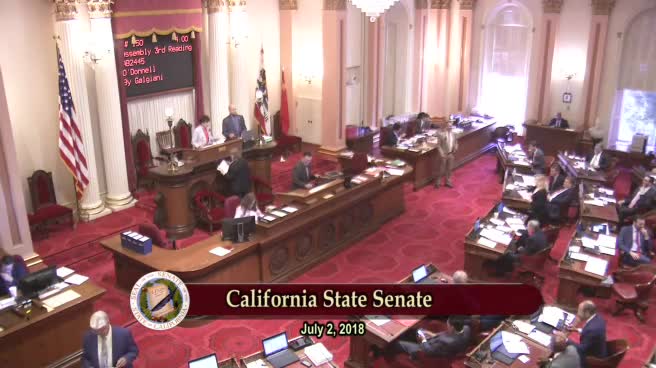
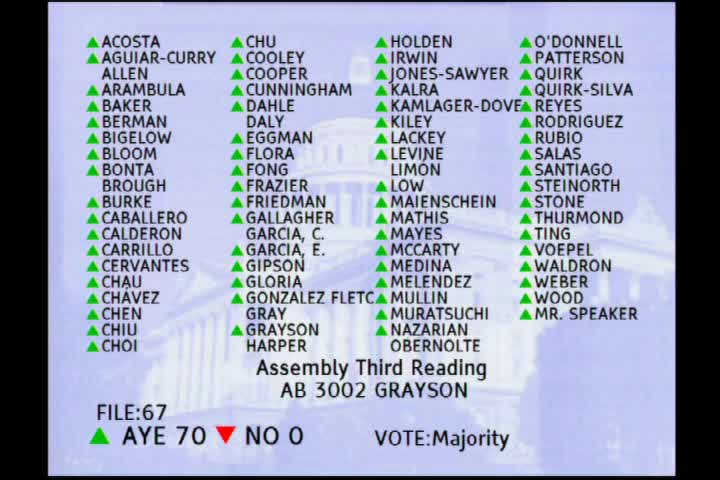
Bill Author

Bill Co-Author(s):