AB 3232: Zero-emissions buildings and sources of heat energy.
- Session Year: 2017-2018
- House: Assembly
- Latest Version Date: 2018-09-13
The Warren-Alquist State Energy Resources Conservation and Development Act requires the State Energy Resources Conservation and Development Commission to adopt building design and construction standards and energy and water conservation standards for new residential and nonresidential buildings to reduce the wasteful, uneconomic, inefficient, or unnecessary consumption of energy, including energy associated with the use of water. The act requires those standards to be cost effective when taken in their entirety and when amortized over the economic life of the structure compared with historic practice. The act requires the commission to adopt standards for a program of electrical load management for each utility service area.
This bill would require the commission, by January 1, 2021, to assess the potential for the state to reduce the emissions of greenhouse gases from the states residential and commercial building stock by at least 40% below 1990 levels by January 1, 2030. The bill would require the commission to include in the 2021 edition of the integrated energy policy report and all subsequent integrated energy policy reports a report on the emissions of greenhouse gases associated with the supply of energy to residential and commercial buildings.
The Warren-Alquist State Energy Resources Conservation and Development Act requires the State Energy Resources Conservation and Development Commission to adopt building design and construction standards and energy and water conservation standards for new residential and nonresidential buildings to reduce the wasteful, uneconomic, inefficient, or unnecessary consumption of energy, including energy associated with the use of water. The act requires those standards to be cost effective when taken in their entirety and when amortized over the economic life of the structure compared with historic practice. The act requires the commission to adopt standards for a program of electrical load management for each utility service area.
This bill would require the commission, by February 1, 2019, to open a proceeding to consider load management standards and strategies needed to optimize building energy use in a manner that reduces the emissions of greenhouse gases. The bill would require the commission, by January 1, 2020, 2021, to assess the potential for the state to reduce the emissions of greenhouse gases from the states residential and commercial building stock by at least 40% below 1990 levels by January 1, 2030. The bill would require this assessment to include consideration of cost-effective strategies to reduce emissions from space heating and water heating in both new and existing residential and commercial buildings, as specified. The bill would require the commission to include in the 2021 edition of the integrated energy policy report and all subsequent integrated energy policy reports a progress report on the emissions of greenhouse gases associated with the supply of energy to residential and commercial buildings.
The Warren-Alquist State Energy Resources Conservation and Development Act requires the State Energy Resources Conservation and Development Commission to adopt building design and construction standards and energy and water conservation standards for new residential and nonresidential buildings to reduce the wasteful, uneconomic, inefficient, or unnecessary consumption of energy, including energy associated with the use of water. The act requires those standards to be cost effective when taken in their entirety and when amortized over the economic life of the structure compared with historic practice. The act requires the commission to adopt standards for a program of electrical load management for each utility service area.
This bill would require the commission, by February 1, 2019, to open a proceeding to consider load management standards and strategies needed to optimize building energy use in a manner that reduces the emissions of greenhouse gases. The bill would require the commission, by January 1, 2020, to develop a plan to achieve the goal that assess the potential for the state to reduce the emissions of greenhouse gases from the states residential and commercial building stock shall be reduced by at least 40% below 1990 levels by January 1, 2030. The bill would require this plan assessment to include consideration of cost-effective strategies to reduce emissions from space heating and water heating in both new and existing residential and commercial buildings, as specified. The bill would require the commission to revise standards for the program of electrical load management to optimize building energy use in a manner that reduces the emissions of greenhouse gases. The bill would require the commission to include in the 2021 edition of the integrated energy policy report and all subsequent integrated energy policy reports a progress report on achieving the above-stated goals, recommendations to the Legislature on strategies to remedy any performance gaps in achieving those goals, and the emissions of greenhouse gases associated with the supply of energy to residential and commercial buildings.
The Warren-Alquist State Energy Resources Conservation and Development Act requires the State Energy Resources Conservation and Development Commission to adopt building design and construction standards and energy and water conservation standards for new residential and nonresidential buildings to reduce the wasteful, uneconomic, inefficient, or unnecessary consumption of energy, including energy associated with the use of water. The act requires those standards to be cost effective when taken in their entirety and when amortized over the economic life of the structure compared with historic practice. The act requires the commission to adopt standards for a program of electrical load management for each utility service area.
This bill would require the commission, by January 1, 2020, to establish develop a plan to achieve the goal that all new residential and nonresidential buildings built on or after January 1, 2030, to be zero-emission buildings, as defined, and to develop a strategy to achieve the goal that the emissions of greenhouse gases from the states residential and nonresidential commercial building stock shall be reduced by at least 50% 40% below 1990 levels by January 1, 2030. The bill would require this plan to include cost-effective strategies to reduce emissions from both new and existing residential and commercial buildings, as specified. The bill would require the commission to revise standards for the program of electrical load management to optimize building energy use in a manner that decreases reduces the emissions of greenhouse gases. The bill would require the commission to include in the 2021 edition of the integrated energy policy report and all subsequent integrated energy policy reports a progress report on achieving the above-stated goals goals, recommendations to the Legislature on strategies to remedy any performance gaps in achieving those goals, and the emissions of greenhouse gases associated with the supply of energy to residential and commercial buildings.
The Warren-Alquist State Energy Resources Conservation and Development Act requires the State Energy Resources Conservation and Development Commission to adopt building design and construction standards and energy and water conservation standards for new residential and nonresidential buildings to reduce the wasteful, uneconomic, inefficient, or unnecessary consumption of energy, including energy associated with the use of water. The act requires those standards to be cost effective when taken in their entirety and when amortized over the economic life of the structure compared with historic practice. The act requires the commission to adopt standards for a program of electrical load management for each utility service area.
This bill would require the commission, by January 1, 2020, to establish a plan to achieve the goal that all new residential and nonresidential buildings built on or after January 1, 2030, to be zero-emission buildings, as defined, and to develop a strategy to achieve the goal that the emissions of greenhouse gases from the states residential and nonresidential building stock shall be reduced to by at least 50% below 1990 levels by January 1, 2030. The bill would require the commission to revise standards for the program of electrical load management to optimize building energy use in a manner that decreases the emissions of greenhouse gases. The bill would require the commission to include in the 2021 edition of the integrated energy policy report and all subsequent integrated energy policy reports a progress report on achieving the above-stated goals and the emissions of greenhouse gases associated with the supply of energy to residential and commercial buildings.
The Warren-Alquist State Energy Resources Conservation and Development Act requires the State Energy Resources Conservation and Development Commission (Energy Commission) to adopt building design and construction standards and energy and water conservation standards for new residential and nonresidential buildings to reduce the wasteful, uneconomic, inefficient, or unnecessary consumption of energy, including energy associated with the use of water. The act requires those standards to be cost effective when taken in their entirety and when amortized over the economic life of the structure compared with historic practice. The act requires the commission to adopt standards for a program of electrical load management for each utility service area.
This bill would require the Energy Commission, commission, by January 1, 2020, to establish a plan to achieve the goal that all new residential and nonresidential buildings built on or after January 1, 2030, to be zero-emission buildings, as defined, and to develop a strategy to achieve a reduction in the goal that the emissions of greenhouse gases from the states residential and nonresidential building stock of shall be reduced to at least 50% below 1990 levels by January 1, 2030. The bill would require the Energy Commission, by January 1, 2020, to develop standards for use by electrical corporations, gas corporations, local publicly owned electric utilities, and local publicly owned gas utilities for reporting the emissions of greenhouse gases associated with the supply of energy to their customers, on a geographic area basis. The bill would require those utilities to report those emissions to the Energy Commission and would require the Energy Commission to make those reports publicly available. By requiring local publicly owned electric and gas utilities to submit this report, this bill would impose a state-mandated local program. commission to revise standards for the program of electrical load management to optimize building energy use in a manner that decreases the emissions of greenhouse gases. The bill would require the commission to include in the 2021 edition of the integrated energy policy report and all subsequent integrated energy policy reports a progress report on achieving the above-stated goals and the emissions of greenhouse gases associated with the supply of energy to residential and commercial buildings.
The California Constitution requires the state to reimburse local agencies and school districts for certain costs mandated by the state. Statutory provisions establish procedures for making that reimbursement.This bill would provide that no reimbursement is required by this act for a specified reason.The Warren-Alquist State Energy Resources Conservation and Development Act requires the State Energy Resources Conservation and Development Commission (Energy Commission) to adopt building design and construction standards and energy and water conservation standards for new residential and nonresidential buildings to reduce the wasteful, uneconomic, inefficient, or unnecessary consumption of energy, including energy associated with the use of water. The act requires those standards to be cost effective when taken in their entirety and when amortized over the economic life of the structure compared with historic practice.
This bill would require the Energy Commission, by January 1, 2020, to establish a plan to achieve the goal that all new residential and nonresidential buildings built on or after January 1, 2030, to be zero-emission buildings, as defined, and to develop a strategy to achieve a reduction in the emissions of greenhouse gases from the states residential and nonresidential building stock of 50% below 1990 levels by January 1, 2030. The bill would require the Energy Commission, by January 1, 2020, to develop standards for use by electrical corporations, gas corporations, local publicly owned electric utilities, and local publicly owned gas utilities for reporting the emissions of greenhouse gases associated with the supply of energy to their customers, on a geographic area basis. The bill would require those utilities to report those emissions to the Energy Commission and would require the Energy Commission to make those reports publicly available. By requiring local publicly owned electric and gas utilities to submit this report, this bill would impose a state-mandated local program.
The California Constitution requires the state to reimburse local agencies and school districts for certain costs mandated by the state. Statutory provisions establish procedures for making that reimbursement.
This bill would provide that no reimbursement is required by this act for a specified reason.
(a)The Legislature finds and declares all of the following:
(1)Chapter 249 of the Statutes of 2016 directs the state to achieve a reduction in the emissions of greenhouse gases of 40 percent below 1990 levels by 2030.
(2)Buildings are responsible for 25 percent of all emissions of greenhouse gases.
(3)Direct emissions from the combustion of fossil fuels in buildings, primarily for space and water heating, accounts for 10 percent of all emissions of greenhouse gases in California.
(4)Approximately half of all energy used in buildings in California is in the form of on-site combustion of fossil fuels.
(5)The state has many ambitious energy efficiency building goals. Chapter 470 of the Statutes of 2009 requires the State Energy Resources Conservation and Development Commission to establish a comprehensive program to achieve greater energy savings in the states existing residential and nonresidential building stock. The Clean Energy and Pollution Reduction Act of 2015 (Chapter 547 of the Statutes of 2015) establishes a goal of achieving a cumulative doubling of statewide energy efficiency savings in electricity and natural gas final end uses of retail customers by January 1, 2030. However, the state has not assessed the potential for cost-effectively reducing total greenhouse gas emissions from buildings by an amount that is consistent with the states greenhouse gas reduction target of 40 percent below 1990 levels by 2030.
(6)Decarbonizing Californias buildings is essential to achieve the states greenhouse gas emission reduction goals at the lowest possible cost.
(b)It is the intent of the Legislature to achieve significant reductions in the emissions of greenhouse gases by the states residential and commercial building stock by January 1, 2030.
SEC. 2.Section 25403 is added to the Public Resources Code, to read:25403.(a)By January 1, 2021, the commission, in consultation with the Public Utilities Commission, the State Air Resources Board, and the Independent System Operator, shall assess the potential for the state to reduce the emissions of greenhouse gases in the states residential and commercial building stock by at least 40 percent below 1990 levels by January 1, 2030. The assessment shall include consideration of all of the following:
(1)An evaluation, based on the best available data and existing analyses, of the cost per metric ton of carbon dioxide equivalent of the potential reduction from residential and commercial building stock relative to other statewide greenhouse gas emissions reduction strategies.
(2)The cost-effectiveness of strategies to reduce emissions of greenhouse gases from space heating and water heating in both new and existing residential and commercial buildings.
(3)The challenges associated with reducing emissions of greenhouse gases from low-income housing, multifamily housing, and high-rise buildings.
(4)Load management strategies to optimize building energy use in a manner that reduces the emissions of greenhouse gases.
(5)The potential impacts of emission reduction strategies on ratepayers, construction costs, and grid reliability. In assessing the impact on grid reliability, the commission shall account for both of the following:
(A)The commissions 2019 Building Energy Efficiency Standards, effective January 1, 2020, that propose to require solar energy systems on all new single-family and low-rise residential dwellings.
(B)The increased load and impact on electrical infrastructure due to transportation electrification.
(b)(1)By June 1, 2021, the commission, pursuant to Section 9795 of the Government Code, shall report to the Legislature the findings from the assessment.
(2)Pursuant to Section 10231.5 of the Government Code, this subdivision is inoperative on June 1, 2026.
(c)Beginning with the integrated energy policy report due on November 1, 2021, and in all subsequent integrated energy policy reports, the commission shall include a report on the emissions of greenhouse gases, based on existing data, associated with the supply of energy to residential and commercial buildings, by fuel type. The commission shall make this information publicly available on its Internet Web site.
(a)The Legislature finds and declares all of the following:
(1)Chapter 249 of the Statutes of 2016 directs the state to achieve a reduction in the emissions of greenhouse gases of 40 percent below 1990 levels by 2030.
(2)Buildings are responsible for 25 percent of all emissions of greenhouse gases.
(3)Direct emissions from the combustion of fossil fuels in buildings, primarily for space and water heating, accounts for 10 percent of all emissions of greenhouse gases in California.
(4)Approximately half of all energy used in buildings in California is in the form of on-site combustion of fossil fuels.
(5)The state has many ambitious energy efficiency building goals. Chapter 470 of the Statutes of 2009 requires the State Energy Resources Conservation and Development Commission to establish a comprehensive program to achieve greater energy savings in the states existing residential and nonresidential building stock. The Clean Energy and Pollution Reduction Act of 2015 (Chapter 547 of the Statutes of 2015) establishes a goal of achieving a cumulative doubling of statewide energy efficiency savings in electricity and natural gas final end uses of retail customers by January 1, 2030. However, the state has not assessed the potential for cost-effectively reducing total greenhouse gas emissions from buildings by an amount that is consistent with the states greenhouse gas reduction target of 40 percent below 1990 levels by 2030.
(6)Decarbonizing Californias buildings is essential to achieve the states greenhouse gas emission reduction goals at the lowest possible cost.
(b)It is the intent of the Legislature to achieve significant reductions in the emissions of greenhouse gases by the states residential and commercial building stock by January 1, 2030.
SEC. 2.Section 25403 is added to the Public Resources Code, to read:25403.(a)The commission shall do both of the following:(1)By February 1, 2019, open a proceeding to consider load management standards and strategies needed to optimize building energy use in a manner that reduces the emissions of greenhouse gases.(2)By January 1, 2020, assess the potential for the state to reduce the emissions of greenhouse gases by the states residential and commercial building stock by at least 40 percent below the 1990 levels by January 1, 2030. The assessment shall include consideration of cost-effective strategies to reduce emissions from space heating and water heating in both new and existing residential and commercial buildings. In developing the assessment, the commission shall consider, and ensure that these strategies account for, the unique challenges associated with reducing emissions from low-income housing, multifamily housing, and high-rise buildings. The commission shall also evaluate the potential impacts of the strategies, including on customer costs and grid reliability.(b)Beginning with the integrated energy policy report due on November 1, 2021, and in all subsequent integrated energy policy reports, the commission shall include in the integrated energy policy report a report on the emissions of greenhouse gases associated with the supply of energy to residential and commercial buildings, by fuel type. The commission shall make this information publicly available on its Internet Web site.SEC. 2.Section 25403 is added to the Public Resources Code, to read:25403.(a)By January 1, 2021, the commission, in consultation with the Public Utilities Commission, the State Air Resources Board, and the Independent System Operator, shall assess the potential for the state to reduce the emissions of greenhouse gases in the states residential and commercial building stock by at least 40 percent below 1990 levels by January 1, 2030. The assessment shall include consideration of all of the following:
(1)An evaluation, based on the best available data and existing analyses, of the cost per metric ton of carbon dioxide equivalent of the potential reduction from residential and commercial building stock relative to other statewide greenhouse gas emissions reduction strategies.
(2)The cost-effectiveness of strategies to reduce emissions of greenhouse gases from space heating and water heating in both new and existing residential and commercial buildings.
(3)The challenges associated with reducing emissions of greenhouse gases from low-income housing, multifamily housing, and high-rise buildings.
(4)Load management strategies to optimize building energy use in a manner that reduces the emissions of greenhouse gases.
(5)The potential impacts of emission reduction strategies on ratepayers, construction costs, and grid reliability. In assessing the impact on grid reliability, the commission shall account for both of the following:
(A)The commissions 2019 Building Energy Efficiency Standards, effective January 1, 2020, that propose to require solar energy systems on all new single-family and low-rise residential dwellings.
(B)The increased load and impact on electrical infrastructure due to transportation electrification.
(b)(1)By June 1, 2021, the commission, pursuant to Section 9795 of the Government Code, shall report to the Legislature the findings from the assessment.
(2)Pursuant to Section 10231.5 of the Government Code, this subdivision is inoperative on June 1, 2026.
(c)Beginning with the integrated energy policy report due on November 1, 2021, and in all subsequent integrated energy policy reports, the commission shall include a report on the emissions of greenhouse gases, based on existing data, associated with the supply of energy to residential and commercial buildings, by fuel type. The commission shall make this information publicly available on its Internet Web site.
(a)The Legislature finds and declares all of the following:
(1)Chapter 249 of the Statutes of 2016 directs the state to achieve a reduction in the emissions of greenhouse gases of 40 percent below 1990 levels by 2030.
(2)Building-related emissions Buildings are responsible for 25 percent of all emissions of greenhouse gases.
(3)Direct emissions from the combustion of fossil fuels in buildings, primarily for space and water heating, accounts for 10 percent of all emissions of greenhouse gases in California.
(4)Approximately half of all energy used in buildings in California is in the form of on-site combustion of fossil fuels.
(5)The state has many ambitious energy efficiency building goals. Chapter 470 of the Statutes of 2009 requires the State Energy Resources Conservation and Development Commission to establish a comprehensive program to achieve greater energy savings in the states existing residential and nonresidential building stock. The Clean Energy and Pollution Reduction Act of 2015 (Chapter 547 of the Statutes of 2015) establishes a goal of achieving a cumulative doubling of statewide energy efficiency savings in electricity and natural gas final end uses of retail customers by January 1, 2030. However, the state has not established assessed the potential for reducing total greenhouse gas emission reduction goals for buildings. emissions from buildings by an amount that is consistent with the states greenhouse gas reduction target of 40 percent below 1990 levels by 2030.
(6)Decarbonizing Californias buildings is essential to achieve the states greenhouse gas emission reduction goals at the lowest possible cost.
(b)It is the intent of the Legislature to achieve significant reductions in the emissions of greenhouse gases in by the states residential and commercial building stock by January 1, 2030.
SEC. 2.Section 25403 is added to the Public Resources Code, to read:25403.(a)By January 1, 2020, the The commission shall do all both of the following:
(1)By February 1, 2019, open a proceeding to consider load management standards and strategies needed to optimize building energy use in a manner that reduces the emissions of greenhouse gases.
(1)Develop a plan to achieve the goal of reducing(2)By January 1, 2020, assess the potential for the state to reduce the emissions of greenhouse gases by the states residential and commercial building stock by at least 40 percent below the 1990 levels by January 1, 2030. The plan assessment shall include consideration of cost-effective strategies to reduce emissions from space heating and water heating in both new and existing residential and commercial buildings. In developing the plan, assessment, the commission shall consider, and ensure that these strategies account for, the unique challenges associated with reducing emissions from low-income housing, multifamily housing, and high-rise buildings. The commission shall also evaluate the potential impacts of the strategies, including on customer costs and grid reliability.
(2)Revise standards adopted pursuant to Section 25403.5 to ensure appropriate standards and incentives exist to optimize building energy use in a manner that reduces the emissions of greenhouse gases.(b)Beginning with the integrated energy policy report due on November 1, 2021, and in all subsequent integrated energy policy reports, the commission shall include in the integrated energy policy report a report on its progress toward achieving the goals set forth in paragraph (1) of subdivision (a), recommendations to the Legislature on strategies to remedy any performance gaps in achieving those goals, and the emissions of greenhouse gases associated with the supply of energy to residential and commercial buildings, by fuel type. The commission shall make this information publicly available on its Internet Web site.
(a)The Legislature finds and declares all of the following:
(1)Chapter 249 of the Statutes of 2016 directs the state to achieve a reduction in the emissions of greenhouse gases of 40 percent below 1990 levels by 2030.
(2)Building-related emissions are the second largest category of emissions of greenhouse gases in the state, accounting responsible for 25 percent of all emissions of greenhouse gases.
(3)Direct emissions from the combustion of fossil fuels in buildings, primarily for space and water heating, accounts for 10 percent of all emissions of greenhouse gases in California.
(4)Approximately half of all energy used in buildings in California is in the form of on-site combustion of fossil fuels.
(5)The state has many ambitious energy efficiency building goals. Chapter 470 of the Statutes of 2009 requires the State Energy Resources Conservation and Development Commission to establish a comprehensive program to achieve greater energy savings in the states existing residential and nonresidential building stock. The Clean Energy and Pollution Reduction Act of 2015 (Chapter 547 of the Statutes of 2015) establishes a goal of achieving a cumulative doubling of statewide energy efficiency savings in electricity and natural gas final end uses of retail customers by January 1, 2030. However, the state has not established greenhouse gas emission reduction goals for buildings.
(6)Decarbonizing Californias buildings is essential to achieve the states greenhouse gas emission reduction goals at the lowest possible cost.
(b)It is the intent of the Legislature to do both of the following:
(1)Establish the goal that new residential and nonresidential buildings built on or after January 1, 2030, should be zero-greenhouse-gas-emission buildings.(2)Achieve to achieve significant reduction reductions in the emissions of greenhouse gases in the states residential and commercial building stock by January 1, 2030.
SEC. 2.Section 25403 is added to the Public Resources Code, to read:25403.(a)For purposes of this section, zero-emission building means a building with operational parameters that result in zero or negative emissions of greenhouse gases, as measured on an annual basis, when considering the hourly marginal emissions factors from both thermal fuels and electricity at the time when energy is used in the building.(b)By 25403.(a)By January 1, 2020, the commission shall do all of the following:
(1)Develop a plan to achieve the goal that all new residential and nonresidential buildings built on or after January 1, 2030, be zero-emission buildings.
(2)Establish a strategy plan to achieve the goal of reducing the emissions of greenhouse gases by the states residential and nonresidential commercial building stock by at least 50 40 percent below the 1990 levels by January 1, 2030. The plan shall include cost-effective strategies to reduce emissions from both new and existing residential and commercial buildings. In developing the plan, the commission shall consider, and ensure that these strategies account for, the unique challenges associated with reducing emissions from low-income housing, multifamily housing, and high-rise buildings. The commission shall also evaluate the potential impacts of the strategies, including on grid reliability.
(3)(2)Revise standards adopted pursuant to Section 25403.5 for a program of electrical load management for each utility service area to ensure appropriate standards and incentives, including rate structure, incentives exist to optimize building energy use in a manner that reduces the emissions of greenhouse gases.
(c)The plan and strategy shall include the adoption of policy changes needed in the regulations adopted pursuant to Section 25402 to achieve the goals specified in subdivision (b) and incentive programs that may be authorized by the Public Utilities Commission to transform the market for low-emission space and water heating technologies.(d)(b)Beginning with the integrated energy policy report due on November 1, 2021, and in all subsequent integrated energy policy reports, the commission shall include in the report a report on its progress toward achieving the goals set forth in paragraphs paragraph (1) and (2) of subdivision (b), (a), recommendations to the Legislature on strategies to remedy any performance gaps in achieving those goals, and the emissions of greenhouse gases associated with the supply of energy to residential and commercial buildings, by fuel type and by geographic area, determined appropriate by the commission. type. The commission shall make this information publicly available on its Internet Web site.
(a)The Legislature finds and declares all of the following:
(1)Chapter 249 of the Statutes of 2016 directs the state to achieve a reduction in the emissions of greenhouse gases of 40 percent below 1990 levels by 2030.
(2)Building-related emissions are the second largest category of emissions of greenhouse gases in the state, accounting for 25 percent of all emissions of greenhouse gases.
(3)Direct emissions from the combustion of fossil fuels in buildings, primarily for space and water heating, accounts for 10 percent of all emissions of greenhouse gases in California.
(4)Approximately half of all energy used in buildings in California is in the form of on-site combustion of fossil fuels.
(5)The state has many ambitious energy efficiency building goals. Chapter 470 of the Statutes of 2009 requires the State Energy Resources Conservation and Development Commission to establish a comprehensive program to achieve greater energy savings in the states existing residential and nonresidential building stock. The Clean Energy and Pollution Reduction Act of 2015 (Chapter 547 of the Statutes of 2015) establishes a goal of achieving a cumulative doubling of statewide energy efficiency savings in electricity and natural gas final end uses of retail customers by January 1, 2030. However, the state has not established greenhouse gas emission reduction goals for buildings.
(6)Decarbonizing Californias buildings is essential to achieve the states greenhouse gas emission reduction goals at the lowest possible cost.
(b)It is the intent of the Legislature to do both of the following:
(1)Establish the goal that new residential and nonresidential buildings built on or after January 1, 2030, should be zero-greenhouse-gas-emission buildings.
(2)Achieve significant reduction in the emissions of greenhouse gases in the states building stock by January 1, 2030.
SEC. 2.Section 25403 is added to the Public Resources Code, to read:25403.(a)For purposes of this section, zero-emission building means a building with operational parameters that result in zero or negative emissions of greenhouse gases, as measured on an annual basis, when considering the hourly marginal emissions factors from both thermal fuels and electricity at the time when energy is used in the building.
(b)By January 1, 2020, the commission shall do all of the following:
(1)Develop a plan to achieve the goal that all new residential and nonresidential buildings built on or after January 1, 2030, be zero-emission buildings.
(2)Establish a strategy to achieve the goal of reducing the emissions of greenhouse gases by the states residential and nonresidential building stock of by at least 50 percent below the 1990 levels by January 1, 2030.
(3)The commission shall revise Revise standards adopted pursuant to Section 25403.5 for a program of electrical load management for each utility service area to ensure appropriate standards and incentives, including rate structure, exist to optimize building energy use in a manner that reduces the emissions of greenhouse gases.
(c)The plan and strategy shall include the adoption of policy changes needed in the regulations adopted pursuant to Section 25402 to achieve the goals specified in subdivision (b) and incentive programs that may be authorized by the Public Utilities Commission to transform the market for low-emission space and water heating technologies.
(d)Beginning with the integrated energy policy report due on November 1, 2021, and in all subsequent integrated energy policy reports, the commission shall include in the report a report on its progress toward achieving the goals set forth in paragraphs (1) and (2) of subdivision (b), and the emissions of greenhouse gases associated with the supply of energy to residential and commercial buildings, by fuel types type and by geographic areas, area, determined appropriate by the commission. The commission shall make this information publicly available on its Internet Web site.
(a)The Legislature finds and declares all of the following:
(1)Chapter 249 of the Statutes of 2016 directs the state to achieve a reduction in the emissions of greenhouse gases of 40% 40 percent below 1990 levels by 2030.
(2)Building-related emissions are the second largest category of emissions of greenhouse gases in the state, accounting for 25% 25 percent of all emissions of greenhouse gases.
(3)Direct emissions from the combustion of fossil fuels in buildings, primarily for space and water heating, accounts for 10% 10 percent of all emissions of greenhouse gases in California.
(4)Approximately half of all energy used in buildings in California is in the form of on-site combustion of fossil fuels.
(5)The state has many ambitious energy efficiency building goals. Chapter 470 of the Statutes of 2009 requires the State Energy Resources Conservation and Development Commission to establish a comprehensive program to achieve greater energy savings in the states existing residential and nonresidential building stock. The Clean Energy and Pollution Reduction Act of 2015 (Chapter 547 of the Statutes of 2015) establishes a goal of achieving a cumulative doubling of statewide energy efficiency savings in electricity and natural gas final end uses of retail customers by January 1, 2030. However, the state has not established greenhouse gas emission reduction goals for buildings.
(6)Decarbonizing Californias buildings is essential to achieve the states greenhouse gas emission reduction goals at the lowest possible cost.
(b)It is the intent of the Legislature to do both of the following:
(1)Establish the goal that new residential and nonresidential buildings built on or after January 1, 2030, should be zero-greenhouse-gas-emission buildings.
(2)Achieve significant reduction in the emissions of greenhouse gases in the states building stock by January 1, 2030.
SEC. 2.Section 25328 is added to the Public Resources Code, to read:25328.(a)On or before January 1, 2020, the commission shall develop reporting standards for use by electrical corporations, gas corporations, local publicly owned electric utilities, and local publicly owned gas utilities to report the emissions of greenhouse gases associated with the supply of energy to their residential and commercial customers, on a geographic area basis as determined by the commission.(b)(1)Each electrical corporation, gas corporation, local publicly owned electric utility, and local publicly owned gas utility, using the standards developed pursuant to subdivision (a), shall report to the commission the emissions of greenhouse gases associated with its supply of energy.(2)The commission shall make the reports publicly available on its Internet Web site.SEC. 3.SEC. 2.Section 25403 is added to the Public Resources Code, to read:25403.(a)For purposes of this section, zero-emission building means a building with operational parameters that result in zero or negative emissions of greenhouse gases, as measured on an annual basis, when considering the hourly marginal emissions factors from both thermal fuels and electricity at the time when energy is used in the building.
(b)By January 1, 2020, the commission shall do both all of the following:
(1)Develop a plan to achieve the goal that all new residential and nonresidential buildings built on or after January 1, 2030, be zero-emission buildings.
(2)Establish a strategy to achieve a reduction in the goal of reducing the emissions of greenhouse gases by the states residential and nonresidential building stock of at least 50 percent below the 1990 levels by January 1, 2030.
(3)The commission shall revise standards adopted pursuant to Section 25403.5 for a program of electrical load management for each utility service area to ensure appropriate standards and incentives, including rate structure, exist to optimize building energy use in a manner that reduces the emissions of greenhouse gases.
(c)The plan and strategy shall include the adoption of policy changes needed in the regulations adopted pursuant to Section 25402 to achieve the goals specified in subdivision (b) and incentive programs that may be authorized by the Public Utilities Commission to transform the market for low-emission space and water heating technologies.
(d)Beginning with the integrated energy policy report due on November 1, 2021, and in all subsequent integrated energy reports, the commission shall include in the report a report on its progress toward achieving the goals set forth in paragraphs (1) and (2) of subdivision (b), and the emissions of greenhouse gases associated with the supply of energy to residential and commercial buildings, by fuel types and by geographic areas, determined appropriate by the commission. The commission shall make this information publicly available on its Internet Web site.
SEC. 4.No reimbursement is required by this act pursuant to Section 6 of Article XIIIB of the California Constitution because a local agency or school district has the authority to levy service charges, fees, or assessments sufficient to pay for the program or level of service mandated by this act, within the meaning of Section 17556 of the Government Code.(a)The Legislature finds and declares all of the following:
(1)Chapter 249 of the Statutes of 2016 directs the state to achieve a reduction in the emissions of greenhouse gases of 40% below 1990 levels by 2030.
(2)Building-related emissions are the second largest category of emissions of greenhouse gases in the state, accounting for 25% of all emissions of greenhouse gases.
(3)Direct emissions from the combustion of fossil fuels in buildings, primarily for space and water heating, accounts for 10% of all emissions of greenhouse gases in California.
(4)Approximately half of all energy used in buildings in California is in the form of on-site combustion of fossil fuels.
(5)The state has many ambitious energy efficiency building goals. Chapter 470 of the Statutes of 2009 requires the State Energy Resources Conservation and Development Commission to establish a comprehensive program to achieve greater energy savings in the states existing residential and nonresidential building stock. The Clean Energy and Pollution Reduction Act of 2015 (Chapter 547 of the Statutes of 2015) establishes a goal of achieving a cumulative doubling of statewide energy efficiency savings in electricity and natural gas final end uses of retail customers by January 1, 2030. However, the state has not established greenhouse gas emission reduction goals for buildings.
(6)Decarbonizing Californias buildings is essential to achieve the states greenhouse gas emission reduction goals at the lowest possible cost.
(b)It is the intent of the Legislature to do both of the following:
(1)Establish the goal that new residential and nonresidential buildings built on or after January 1, 2030, should be zero-greenhouse-gas-emission buildings.
(2)Achieve significant reduction in the emissions of greenhouse gases in the states building stock by January 1, 2030.
SEC. 2.Section 25328 is added to the Public Resources Code, to read:25328.(a)On or before January 1, 2020, the commission shall develop reporting standards for use by electrical corporations, gas corporations, local publicly owned electric utilities, and local publicly owned gas utilities to report the emissions of greenhouse gases associated with the supply of energy to their residential and commercial customers, on a geographic area basis as determined by the commission.
(b)(1)Each electrical corporation, gas corporation, local publicly owned electric utility, and local publicly owned gas utility, using the standards developed pursuant to subdivision (a), shall report to the commission the emissions of greenhouse gases associated with its supply of energy.
(2)The commission shall make the reports publicly available on its Internet Web site.
SEC. 3.Section 25403 is added to the Public Resources Code, to read:25403.(a)For purposes of this section, zero-emission building means a building with operational parameters that result in zero or negative emissions of greenhouse gases, as measured on an annual basis, when considering the hourly marginal emissions factors from both thermal fuels and electricity at the time when energy is used in the building.
(b)By January 1, 2020, the commission shall do both of the following:
(1)Develop a plan to achieve the goal that all new residential and nonresidential buildings built on or after January 1, 2030, be zero-emission buildings.
(2)Establish a strategy to achieve a reduction in the emissions of greenhouse gases by the states residential and nonresidential building stock of 50 percent below the 1990 levels by January 1, 2030.
(c)The plan and strategy shall include the adoption of policy changes needed in the regulations adopted pursuant to Section 25402 to achieve the goals specified in subdivision (b) and incentive programs that may be authorized by the Public Utilities Commission to transform the market for low-emission space and water heating technologies.
SEC. 4.No reimbursement is required by this act pursuant to Section 6 of Article XIIIB of the California Constitution because a local agency or school district has the authority to levy service charges, fees, or assessments sufficient to pay for the program or level of service mandated by this act, within the meaning of Section 17556 of the Government Code.
|
Date
|
Status
|
|---|---|
| Sep 13, 2018 | Chaptered by Secretary of State - Chapter 373, Statutes of 2018. |
| Sep 13, 2018 | Approved by the Governor. |
| Sep 5, 2018 | Enrolled and presented to the Governor at 3 p.m. |
| Aug 27, 2018 | Bill in its final form passes. |
| Aug 22, 2018 | In Assembly. |
| Aug 21, 2018 | Read third time. Passed. Ordered to the Assembly. |
| Aug 17, 2018 | From committee: Do pass. (Ayes 5. Noes 2.) (August 16). |
| Aug 6, 2018 | In committee: Referred to APPR. suspense file. |
| Jun 21, 2018 | From committee: Do pass and re-refer to Com. on APPR. (Ayes 5. Noes 2.) (June 20). Re-referred to Com. on APPR. |
| Jun 19, 2018 | From committee: Do pass and re-refer to Com. on EQ. (Ayes 10. Noes 1.) (June 19). Re-referred to Com. on EQ. |
| Jun 13, 2018 | Referred to Coms. on E., U. & C. and EQ. |
| Jun 4, 2018 | In Senate. Read first time. To Com. on RLS. for assignment. |
| May 31, 2018 | Read third time. Passed. Ordered to the Senate. |
| May 29, 2018 | Assembly Rule 69(b) suspended. (Ayes 51. Noes 25.) |
| May 25, 2018 | From committee: Do pass. (Ayes 11. Noes 4.) (May 25). |
| May 16, 2018 | In committee: Set, first hearing. Referred to APPR. suspense file. |
| May 2, 2018 | Re-referred to Com. on APPR. |
| May 1, 2018 | Read second time and amended. |
| Apr 30, 2018 | From committee: Amend, and do pass as amended and re-refer to Com. on APPR. (Ayes 8. Noes 5.) (April 25). |
| Apr 19, 2018 | Re-referred to Com. on U. & E. |
| Apr 18, 2018 | From committee chair, with author's amendments: Amend, and re-refer to Com. on U. & E. Read second time and amended. |
| Apr 12, 2018 | Re-referred to Com. on U. & E. |
| Apr 11, 2018 | Read second time and amended. |
| Apr 10, 2018 | From committee: Amend, and do pass as amended and re-refer to Com. on U. & E. (Ayes 7. Noes 3.) (April 9). |
| Apr 3, 2018 | Re-referred to Com. on NAT. RES. |
| Apr 2, 2018 | From committee chair, with author's amendments: Amend, and re-refer to Com. on NAT. RES. Read second time and amended. |
| Mar 15, 2018 | Referred to Coms. on NAT. RES. and U. & E. |
| Feb 17, 2018 | From printer. May be heard in committee March 19. |
| Feb 16, 2018 | Read first time. To print. |
|
Date
|
Description
|
Location
|
Votes
|
|
|---|---|---|---|---|
| Aug 27, 2018 | AB 3232 FRIEDMAN Concurrence Vote: Final Form | Assembly Floor |
Passed |
|
| Aug 21, 2018 | Assembly 3rd Reading AB3232 Friedman et al. By Stern | Senate Floor |
Passed |
|
| Aug 16, 2018 | Do pass | Senate Standing Committee on Appropriations |
Passed |
|
| Aug 6, 2018 | Placed on suspense file | Senate Standing Committee on Appropriations |
Passed |
|
| Jun 20, 2018 | Do pass, but first be re-referred to the Committee on [Appropriations] | Senate Standing Committee on Environmental Quality |
Passed |
|
| Jun 19, 2018 | Do pass, but first be re-referred to the Committee on [Environmental Quality] | Senate Standing Committee on Energy, Utilities and Communications |
Passed |
|
| May 31, 2018 | AB 3232 FRIEDMAN Assembly Third Reading | Assembly Floor |
Passed |
|
| May 25, 2018 | Do pass. | Assembly Standing Committee on Appropriations |
Passed |
|
| Apr 25, 2018 | Do pass as amended and be re-referred to the Committee on [Appropriations] | Assembly Standing Committee on Utilities and Energy |
Passed |
|
| Apr 9, 2018 | Do pass as amended and be re-referred to the Committee on [Utilities and Energy] | Assembly Standing Committee on Natural Resources |
Passed |
This list shows positions taken on this bill by organizations on the date displayed, which is linked to the original source.
Positions by individuals are not included.
|
Organization
|
Position
|
Date
|
|---|---|---|
| 350 Bay Area | ** Support | Aug 18, 2018 |
| Acterra | ** Support | Aug 18, 2018 |
| Adobe | ** Support | Aug 18, 2018 |
| Air Conditioning, Heating And Refrigeration Institute | ** Against | Apr 24, 2018 |
| American Institute Of Architects, Ca Council | ** Support | Aug 18, 2018 |
| American Lung Association Of California | ** Support | Aug 18, 2018 |
| American Public Gas Association | * Against | Apr 9, 2018 |
| Arkin Tilt Architects | ** Support | Jun 18, 2018 |
| Arkin Title Architects | ** Support | Aug 18, 2018 |
| Association For Energy Accountability | ** Support | Apr 6, 2018 |
| association for energy affordability | ** Support | Aug 18, 2018 |
| Atelier Ten | ** Support | Aug 18, 2018 |
| Avenues, Llc | ** Support | Apr 6, 2018 |
| Bay Area Physicians For Social Responsibility | ** Support | Apr 6, 2018 |
| Bcv Architects | ** Support | Jun 18, 2018 |
| Ben & Jerry's | ** Support | Aug 18, 2018 |
| Ben &Jerry'S | ** Support | Jun 18, 2018 |
| Bernheim & Dean | ** Support | Aug 18, 2018 |
| Bernheim and Dean | * Support | Apr 25, 2018 |
| Building Owners and Managers Association | ** Against | Apr 24, 2018 |
| Bvc Architects | ** Support | Aug 18, 2018 |
| California Apartment Association | ** Against | Apr 24, 2018 |
| California Building Industry Association | ** Support | Aug 18, 2018 |
| California Business Properties Association | * Against | Apr 25, 2018 |
| California Chamber Of Commerce | * Against | Apr 25, 2018 |
| California Citrus Mutual | ** Against | Apr 24, 2018 |
| California Cotton Ginners And Growers Association Inc. | ** Against | Apr 24, 2018 |
| California Efficiency & Demand Management Council | ** Support | Aug 18, 2018 |
| California Efficiency and Demand Managed Council | * Support | Apr 25, 2018 |
| California Farm Bureau Federation | * Against | Apr 25, 2018 |
| California League of Food Producers | * Against | Apr 25, 2018 |
| California Manufacturers & Technology Association | ** Against | Apr 24, 2018 |
| California Municipal Utilities Association | * Indeterminate | Apr 9, 2018 |
| California Natural Gas Producers Association | ** Against | Apr 24, 2018 |
| California Retailers Association | ** Against | Apr 24, 2018 |
| California State Pipe Trades Council | ** Against | Aug 18, 2018 |
| Carbon Fee Silicon Valley | ** Support | Apr 6, 2018 |
| Carbon Free Palo Alto | ** Support | Aug 18, 2018 |
| Carbon Free Silicon Valley | ** Support | Aug 18, 2018 |
| Center For Built Environment | ** Support | Aug 18, 2018 |
| Center For Built Environment, Uc Berkeley | ** Support | Jun 18, 2018 |
| Center for Sustainable Energy | ** Support | Aug 18, 2018 |
| Ceres | ** Support | Aug 18, 2018 |
| City and County of San Francisco | ** Support | Aug 18, 2018 |
| City of Diamond Bar | ** Against | Jun 18, 2018 |
| City Of La Quinta | ** Against | Jun 18, 2018 |
| City of San Jose | ** Support | Aug 18, 2018 |
| Clean Power Campaign | * Support | Apr 25, 2018 |
| Clif Bar, Inc. | ** Support | Aug 18, 2018 |
| Cliff Bar | ** Support | Jun 18, 2018 |
| Coalition for a Noble Natural Gas | * Indeterminate | Apr 25, 2018 |
| Coalition For Renewable Natural Gas | * Indeterminate | Apr 9, 2018 |
| Coalition of California Utility Employees | ** Against | Aug 18, 2018 |
| Congress of California Seniors | ** Against | Apr 6, 2018 |
| County of Marin | ** Support | Aug 18, 2018 |
| CR Club California | * Support | Apr 9, 2018 |
| Culver City Chamber of Commerce | ** Against | Apr 24, 2018 |
| Design A Venues Llc | ** Support | Aug 18, 2018 |
| Design Avenues Llc | ** Support | Jun 18, 2018 |
| Earthjustice | ** Support | Aug 18, 2018 |
| eBay Inc. | ** Support | Aug 18, 2018 |
| Efficiency First California | ** Support | Aug 18, 2018 |
| El Monte | ** Against | Apr 24, 2018 |
| Energy Efficiency Council | * Support | Jun 19, 2018 |
| Environmental Defense Fund | ** Support | Aug 18, 2018 |
| Esherick Homsey Dodge And Davis | ** Support | Aug 18, 2018 |
| Essential Habitat Architecture | ** Support | Aug 18, 2018 |
| Far West Equipment Dealers Association | ** Against | Apr 24, 2018 |
| Fossil Free California | ** Support | Aug 18, 2018 |
| Green Cities Ca | ** Support | Jun 18, 2018 |
| Green Cities California | ** Support | Aug 18, 2018 |
| Guttmann & Blaevoet | ** Support | Aug 18, 2018 |
| Integral Group | ** Support | Aug 18, 2018 |
| Interface Engineering Inc. | ** Support | Aug 18, 2018 |
| Interface Engineering, Inc. | ** Support | Apr 6, 2018 |
| International Brotherhood Of Electrical Workers Local 18 | ** Against | Aug 18, 2018 |
| International Council of Shopping Centers | ** Against | Apr 24, 2018 |
| La Quinta | ** Against | Jun 18, 2018 |
| Maas Energy Works Inc | * Against | Apr 9, 2018 |
| McHugh, Koepke & Associates | * Against | Apr 9, 2018 |
| Meet Each Need with Dignity | ** Against | Apr 24, 2018 |
| Menlo Spark | ** Support | Aug 18, 2018 |
| Naiop California | ** Against | Apr 6, 2018 |
| National Federation Of Independent Business- Ca | ** Against | Apr 24, 2018 |
| Natural Resources Defense Council | ** Support | Aug 18, 2018 |
| Natural Resources Defense Council (NRDC) | * Support | Jun 20, 2018 |
| Newton Heat Treating | ** Against | Apr 24, 2018 |
| Oppose As Amended | ** Against | Apr 24, 2018 |
| Oppose Unless Amended | ** Against | Apr 24, 2018 |
| Orange County Business Council | * Against | Apr 25, 2018 |
| Pacific Gas and Electric | * Against | Apr 9, 2018 |
| Passive House California | ** Support | Aug 18, 2018 |
| Point Energy Innovations | ** Support | Aug 18, 2018 |
| Redwood Energy | ** Support | Aug 18, 2018 |
| Rutherford & Chekene | ** Support | Aug 18, 2018 |
| Rutherford + Chekene | ** Support | Jun 18, 2018 |
| Sacramento Municipal Utility District | ** Support | Aug 18, 2018 |
| San Francisco Bay Area Physicians for Social Responsibility | ** Support | Aug 18, 2018 |
| San Francisco Environment | ** Support | Aug 18, 2018 |
| San Gabriel Valley Economic Partnership | ** Against | Apr 6, 2018 |
| Sera | ** Support | Aug 18, 2018 |
| Series | * Support | Jun 20, 2018 |
| Siegel & Strain Architects | ** Support | Aug 18, 2018 |
| Sierra Club California | ** Support | Aug 18, 2018 |
| Silicon Valley Leadership Group | ** Support | Aug 18, 2018 |
| Silverman & Light | ** Support | Aug 18, 2018 |
| Southern California Edison | ** Support | Aug 18, 2018 |
| Southern California Gas Company | * Against | Apr 25, 2018 |
| Symantec | ** Support | Aug 18, 2018 |
| Teecom | ** Support | Aug 18, 2018 |
| The University of California | * Support | Apr 9, 2018 |
| Tlcd Architecture | ** Support | Aug 18, 2018 |
| UC Berkeley | ** Support | Aug 18, 2018 |
| Unilever | ** Support | Aug 18, 2018 |
| Union Of Concerned Scientists | ** Support | Aug 18, 2018 |
| United Chambers of Commerce | ** Against | Apr 24, 2018 |
| Voices for Progress | ** Support | Aug 18, 2018 |
| WES BUD | * Against | Apr 25, 2018 |
| West Coast Lumber & Building Material Association | ** Against | Apr 24, 2018 |
| Western Agricultural Processors Association | ** Against | Apr 24, 2018 |
| Western Propane Gas Association | * Against | Apr 25, 2018 |
| Western States Petroleum Association | ** Against | Apr 24, 2018 |
| Wrns Studio | ** Support | Aug 18, 2018 |
CONCURRENCE VOTE
CVFF Bill Id:AB 3232
Author:(Friedman)
As Amended Ver:May 29, 2018
Vote on Concurrence in Final Form pending August 22, 2018
Majority vote
This analysis is drafted in accordance with Assembly Rule 77 and reflects the Senate version of the bill in its final form.
ASSEMBLY: | 55-23 | (May 31, 2018) | SENATE: | 31-6 | (August 21, 2018) |
Original Committee Reference: NAT. RES.
SUMMARY: Requires the California Energy Commission (CEC) to develop a plan to ensure that all new residential and nonresidential buildings be zero-emission buildings and a strategy to achieve a 50% reduction in greenhouse gas (GHG) emissions generated by the state's residential and nonresidential building stock by 2030. Specifically, this bill:
- States legislative findings relating to the GHG emissions associated with buildings and states legislative intent to:
- Achieve significant reductions in GHG emissions by the state's residential and nonresidential buildings building stock on or after January 1, 2030.
- Requires CEC to do all of the following:
- By February 1, 2019, open a proceeding to consider load management standards and strategies needed to optimize building energy use in a manner that reduces GHG emissions.
- By January 1, 2020, assess the potential for the state to reduce GHG emissions by the state's residential and commercial building stock by at least 40% below 1990 levels by January 1, 2030.
Beginning in 2021, requires the Integrated Energy Policy Report (IEPR) to include a report on the GHG emissions associated with the supply of energy to residential and commercial buildings by fuel type and by geographic area, as appropriate. Requires CEC to make this information available on its website.
FISCAL EFFECT: According to the Senate Appropriations Committee, $520,000 for 3 permanent positions for the CEC (no specified funding source).
COMMENTS: According to ARB, the building sector is the second largest source of GHG emissions in the state and offers significant potential to reduce GHG emissions through the sustainable construction, operation, and renovation of new and existing buildings. The Climate Change Scoping Plan identifies actions to reduce GHG emissions from the building sector, including progressively improving building codes and standards, pursuing voluntary efforts to exceed code requirements, and completing existing building retrofits. According to the California Greenhouse Gas Inventory, in 2015 residential building fuel use generated 23.17 million tons of CO2 equivalent and commercial building fuel use generated 12.77 million tons of CO2 equivalents. The majority of these emissions were generated by burning natural gas.
The Governor has established "climate change pillars" to achieve 2030 GHG reduction goals. The pillars include achieving 50% renewable energy; reducing petroleum use in vehicles by 50%; doubling the energy efficiency in existing buildings; increasing carbon sequestration in natural and working lands; reducing short-lived climate pollutants; and, the Safeguarding California Plan to address climate adaptation. In the Governor's January 15th inaugural address, he stated that by 2030, California will double the energy efficiency savings in existing buildings and make heating fuels cleaner.
In 2015, the Legislature adopted SB 350 (De León), Chapter 547. Primarily, SB 350 increased California's renewable energy procurement goal from 33% by 2020 to 50% by 2030. SB 350 also requires CEC to take specified actions to double the statewide energy efficiency savings in electricity and natural gas by January 1, 2030. In October 2017, CEC adopted energy efficiency targets and subtargets to achieve the SB 350 goal in its report, Senate Bill 350: Doubling the Energy Efficiency Savings by 2030.
In 2010, BSC, with the assistance of other state agencies that develop building standards, adopted CalGreen, the state's green building standards. The CEC develops water and energy efficiency standards that are incorporated into CalGreen. CalGreen was adopted as a new Part within Title 24 and established new requirements relating to planning and design; energy efficiency; water efficiency and conservation; material conservation and resource efficiency; and, environmental quality. The standards are separated into "tiers" that include minimal mandatory standards and voluntary standards separated into Tier 1 and Tier 2 (Tier 2 indicating the highest level of green measures.) Local authorities may opt to make the tiered standards mandatory within that jurisdiction.
Analysis Prepared by: Elizabeth MacMillan / NAT. RES. / (916) 319-2092 FN: 0004634
Office of Senate Floor Analyses (916) 651-1520 Fax: (916) 327-4478 | AB |
THIRD READING
Bill No: AB 3232
:
SENATE ENERGY, U. & C. COMMITTEE: 10-1, 6/19/18
AYES: Hueso, Bradford, Cannella, Hertzberg, Hill, McGuire, Skinner, Stern, Vidak, Wiener
NOES: Morrell
SENATE ENVIRONMENTAL QUALITY COMMITTEE: 5-2, 6/20/18
AYES: Wieckowski, Hill, Lara, Skinner, Stern
NOES: Stone, Gaines
SENATE APPROPRIATIONS COMMITTEE: 5-2, 8/16/18
AYES: Portantino, Beall, Bradford, Hill, Wiener
NOES: Bates, Nielsen
ASSEMBLY FLOOR: 55-23, 5/31/18 - See last page for vote
DIGEST:
This bill requires the California Energy Commission (CEC) to assess the potential for the state to achieve the goal of reducing the emissions of greenhouse gases (GHG) by the state’s residential and commercial building stock by at least 40 percent below the 1990 levels by January 1, 2030.
Existing law:
- Requires the California Air Resources Board (ARB) to ensure that statewide GHG emissions are reduced to 40 percent below the 1990 level by 2030. (Health & Safety Code §38530 et seq.)
- Requires the CEC to develop and implement a comprehensive program to achieve greater energy savings in California’s existing residential and nonresidential building stock that fall significantly below the current standards in Title 24. (Public Resources Code §25943 et seq.)
- Requires the CEC to establish annual targets for statewide energy efficiency savings and demand reduction that will achieve a cumulative doubling of statewide energy efficiency savings in electricity and natural gas final end uses of retail customers, by January 1, 2030 using a specified baseline, and to be achieved through a variety of mechanisms and programs. (Public Resources Code §25310)
- Requires the CEC to create a building energy-use benchmarking and disclosure program. Establishes energy data collection authority to improve the development and evaluation of policy and programs and the state's energy infrastructure planning efforts. (Public Resources Code §25402.10)
- Requires the CEC to adopt an integrated energy policy report (IEPR) every two years with an overview of major energy trends and issues facing the state, including, but not limited to, supply, demand, pricing, reliability, efficiency, and impacts on public health and safety, the economy, resources, and the environment. (Public Resources Code §25302)
This bill:
- States legislative findings relating to the GHG emissions associated with buildings and states legislative intent to achieve significant reductions in GHG emissions by the state's residential and nonresidential buildings building stock on or after January 1, 2030.
- Requires, by January 1, 2020, the CEC, in consultation with the California Public Utilities Commission (CPUC) and the ARB, to assess the potential for the state to reduce GHG emissions by the state's residential and commercial building stock by at least 40 percent below 1990 levels by January 1, 2030.
- Requires the assessment to include:
- An evaluation, based on the best available data and existing analyses, of the cost per metric ton of carbon dioxide equivalent of the potential reduction relative to other statewide GHG emissions reduction strategies.
- The cost-effectiveness of strategies to reduce GHG emissions from space heating and water heating in both new and existing residential and commercial buildings.
- The challenges associated with reducing GHG emissions from low-income housing, multifamily housing, and high-rise buildings.
- Load management strategies to optimize building energy use in a manner that reduces GHG emissions.
- The potential impacts of GHG emissions reduction strategies on ratepayers, construction costs, and grid reliability. In assessing the impact on grid reliability, requires CEC to account for:
- The 2019 Building Energy Efficiency Standards, effective January 1, 2020, that propose to require solar energy systems on all new single-family and low-rise residential dwellings; and,
- The increased load and impact on electrical infrastructure due to transportation electrification.
- Requires the assessment to be submitted to the Legislature electronically.
- Requires the IEPR, beginning in 2021, to include a report on the GHG emissions associated with the supply of energy to residential and commercial buildings by fuel type and by geographic area, as appropriate. Requires CEC to make this information available on its Web site.
Background
GHGs from Building Sector. According to ARB, the building sector is the second largest source of GHG emissions in the state and offers significant potential to reduce GHG emissions through the sustainable construction, operation, and renovation of new and existing buildings. The Climate Change Scoping Plan identifies actions to reduce GHG emissions from the building sector, including progressively improving building codes and standards, pursuing voluntary efforts to exceed code requirements, and completing existing building retrofits. According to the California Greenhouse Gas Inventory, in 2015 residential building fuel use generated 23.17 million tons of CO2 equivalent and commercial building fuel use generated 12.77 million tons of CO2 equivalents. The majority of these emissions were generated by burning natural gas. In 2015, the Legislature adopted SB 350 (De León, Chapter 547, Statutes of 2015). Primarily, SB 350 increased California's renewable energy procurement goal from 33 percent by 2020 to 50 percent by 2030. SB 350 also requires CEC to take specified actions to double the statewide energy efficiency savings in electricity and natural gas by January 1, 2030. In October 2017, CEC adopted energy efficiency targets and subtargets to achieve the SB 350 goal in its report, Senate Bill 350: Doubling the Energy Efficiency Savings by 2030.
New v. Existing Buildings. California energy efficiency policy related to buildings is based on savings of electricity measured in kilowatt hours and gas savings measured in therms. The policies have also distinguished between new construction and older building stock (although building renovations do sometimes fall under new construction regulations). Related programs are highlighted below.
Building Action Plan. This CEC-developed plan provides a ten‐year roadmap to activate market forces and transform California’s existing residential, commercial, and public building stock into high‐performing and energy‐efficient buildings.
Title 24. The CEC is required by law to adopt energy efficiency building standards every three years that are cost effective for occupants over the 30-year lifespan of a building. The standards ensure that builders use the most energy efficient technologies and construction, save energy, increase electricity supply reliability, increase indoor comfort, avoid the need to construct new power plants and help preserve the environment. These measures (Title 24, Part 6) are listed in the California Code of Regulations. Since 1978 the standards have made buildings more comfortable with lower energy costs. Cost-effectiveness is calculated by determining the energy savings associated with a more efficient building standard. Savings are calculated by multiplying cumulative savings in each year by the average residential or commercial electricity rates to determine savings over the life of the measure.
The success of standards and other energy efficiency efforts is a significant factor in California's per capita electricity use remaining flat over the last 40 years while the rest of the country's use continues to rise.
Energy Efficiency. California’s commitment to energy efficiency has resulted in many different efficiency programs across the state. The programs span a variety of sectors encompassing residential homes and commercial buildings, large and small appliances, lighting and HVAC, industrial manufacturers, and agriculture. Within those sectors, efficiency programs may use any number of different tools: financial incentives and rebates, research and development for energy efficiency technologies, financing mechanisms, codes and standards development, education and public outreach, marketing, and others.
Each of these programs helps California be more energy efficient, and collectively, these programs result in significant reductions in California’s greenhouse gas emissions. In total, energy efficiency is expected to make up 15 percent of the state’s GHG emission reduction targets.
The investor-owned utility (IOU) programs are funded by a small portion of electricity and gas rates included in customer bills, which provides over $1 billion per year to fund energy efficiency programs. These publicly-funded energy efficiency programs are usually administered by the state’s four IOUs: Pacific Gas and Electric Company, Southern California Edison, San Diego Gas & Electric, and Southern California Gas Company. Some programs are administered by Marin Clean Energy or through two “Regional Energy Networks” in the Bay Area and Southern California. All of the programs administered by these different entities are regulated by the CPUC to ensure they are meeting the goals and cost-effectiveness metrics the CPUC is statutorily required to set for the IOU efficiency portfolios. Publicly owned utilities are also required to report to the CEC a description of each energy efficiency and demand reduction program, program expenditures, the cost-effectiveness of each program, and expected and actual energy efficiency savings and demand reduction results from providing service to existing residential and nonresidential buildings, while taking into consideration the effect of the program on rates, reliability, and financial resources.
Integrated Energy Policy Report (IEPR). Every two years the CEC reports on trends and issues concerning electricity and natural gas, transportation, energy efficiency, renewables and public interest energy research in the IEPR. The report is updated in the intervening years. A report of findings is formally adopted and transmitted to the governor and Legislature. A lead commissioner provides oversight and policy direction related to collecting and analyzing data needed to complete the IEPR on trends and issues concerning electricity and natural gas, transportation, energy efficiency, renewables, and public interest energy research.
The CEC recently published its planned research for its 2018 IEPR. They report that a track will be dedicated to “advancing greenhouse gas reductions in California’s buildings” or decarbonizing buildings. The IEPR will:
…discuss the long-term role of natural gas in California buildings, and other greenhouse gas reduction policies and strategies relevant to California’s built environment. This update will also identify market barriers, data collection needs building performance metrics, and grid integration opportunities to develop recommendations that advance California’s energy-related policies and programs on greenhouse gas reductions from buildings.
Horse Appropriately Before the Cart. This bill requires the CEC to develop an assessment to achieve the goal of reducing the emissions of GHGs by the state’s residential and commercial building stock by at least 40 percent below the 1990 levels by January 1, 2030. However, this bill, appropriately, does not require specific actions to implement the plan. Rather the results of the assessments required by this bill can help inform whether future policies have merit and are cost-effective to achieve the stated goal. In helping to inform future policies that should be adopted or avoided, the author may wish to consider including an assessment of the cost-effectiveness of strategies to address emissions from cooking, in addition to those required in the bill for space and water heating. While there may be cost-effective strategies to address space and water heating, eliminating gas service to the building could result in unexpected implications for other uses, especially cooking. Additionally, this bill includes a mention of the recently proposed, and CEC adopted 2019 Building Energy Efficiency Standards, which proposes to mandate solar installations in new residential construction. However, it is important to note that the Building Standards Commission has not, yet, adopted the standards. Furthermore, requiring the CEC to make the assessment on the impacts to the grid regarding their own proposed and adopted requirement may not yield information that is different from that which was considered by the CEC in adopting the requirement. Nonetheless, an explicit assessment on the impact to the grid would be useful.
Related/Prior Legislation
SB 1477 (Stern, 2018) requires the CEC, in consultation with the CPUC, to develop and administer the Zero-Emission Building Program to provide incentives for the deployment of near-zero emission building technologies to significantly reduce GHG emissions from buildings. The bill is pending consideration before the full Assembly.
AB 3001 (Bonta, 2018) would have established the California Zero-Emissions Buildings Act and creates requirements for the CEC and the CPUC to encourage the development of zero-emissions buildings. The bill was held in Assembly Committee on Natural Resources.
FISCAL EFFECT: Appropriation: Fiscal Com.: Local:
According to the Senate Appropriations Committee, the fiscal impact would be $520,000 for three permanent positions for the CEC (no specified funding source).
350 Bay Area
Acterra
Adobe
American Institute of Architects, CA Council
American Lung Association of California
Arkin Title Architects
Association for Energy Affordability
Atelier Ten
Ben & Jerry’s
Bernheim & Dean
BVC Architects
California Building Industry Association
California Efficiency & Demand Management Council
Carbon Free Palo Alto
Carbon Free Silicon Valley
Center for Built Environment/UC Berkeley
Center for Sustainable Energy
Ceres
City and County of San Francisco
City of San Jose
Clif Bar, Inc.
County of Marin
Design A VEnues LLC
Earthjustice
eBay Inc.
Efficiency First California
Environmental Defense Fund
Esherick Homsey Dodge and Davis
Essential Habitat Architecture
Fossil Free California
Green Cities California
Guttmann & Blaevoet
Integral Group
Interface Engineering Inc.
JLL
Menlo Spark
Natural Resources Defense Council
Passive House California
Point Energy Innovations
Redwood Energy
Rutherford & Chekene
Sacramento Municipal Utility District
San Francisco Bay Area Physicians for Social Responsibility
San Francisco Environment
SERA
Siegel & Strain Architects
Sierra Club California
Silicon Valley Leadership Group
Silverman & Light
Southern California Edison
Symantec
TEECOM
TLCD Architecture
Unilever
Union of Concerned Scientists
Voices for Progress
WRNS Studio
OPPOSITION: (Verified 8/16/18)
California State Pipe Trades Council
Coalition of California Utility Employees
International Brotherhood of Electrical Workers Local 18
ARGUMENTS IN SUPPORT: According to the author, “California cannot achieve its air quality and climate goals without a deep reduction in emissions from residential and nonresidential buildings. Current building-related energy policies fall short of achieving emissions reduction of GHGs of 40% below 1990 levels by 2030 and 80% below 1990 levels by 2050 for residential and nonresidential buildings. AB 3232 would require the commission to assess the potential to achieve a reduction in the emissions of greenhouse gases from the state’s building stock of at least 40% below 1990 levels by January 1, 2030. It would also require the commission to report to the Legislature the findings from the assessment by June 1, 2021, and to include in the integrated energy policy report due on November 1, 2021, and in all subsequent integrated energy policy reports, a report on the emissions of greenhouse gases associated with the supply of energy to residential and commercial buildings, by fuel type.”
ARGUMENTS IN OPPOSITION: The joint letter authored by the opposition expresses concern with language that was previously in the bill which required all buildings built after January 1, 2030 to be zero-emission. The opposition has general concerns with implementing a requirement for zero-emission buildings or requiring electrification of buildings, which they fear would result in limited consumer choices and increased costs to ratepayers. Instead, they state a preference for a more fuel-neutral approach, including arguing that the existing mandates and measures already address these emissions.
ASSEMBLY FLOOR: 55-23, 5/31/18
AYES: Aguiar-Curry, Arambula, Baker, Berman, Bloom, Bonta, Burke, Caballero, Calderon, Carrillo, Cervantes, Chau, Chiu, Chu, Cooley, Cooper, Daly, Eggman, Frazier, Friedman, Cristina Garcia, Eduardo Garcia, Gipson, Gloria, Gonzalez Fletcher, Gray, Grayson, Holden, Irwin, Jones-Sawyer, Kalra, Kamlager-Dove, Levine, Limón, Low, Maienschein, McCarty, Medina, Mullin, Muratsuchi, Nazarian, O'Donnell, Quirk, Quirk-Silva, Reyes, Rodriguez, Rubio, Salas, Santiago, Mark Stone, Thurmond, Ting, Weber, Wood, Rendon
NOES: Acosta, Travis Allen, Bigelow, Brough, Chávez, Chen, Choi, Cunningham, Dahle, Flora, Fong, Gallagher, Harper, Kiley, Lackey, Mathis, Mayes, Melendez, Obernolte, Patterson, Steinorth, Voepel, Waldron
8/18/18 16:35:40
SENATE COMMITTEE ON APPROPRIATIONS
Senator Anthony Portantino, Chair
2017 - 2018 Regular Session
AB 3232 (Friedman) - Zero-emissions buildings and sources of heat energy
Version: May 29, 2018 | Policy Vote: E., U., & C. 10 - 1, E.Q. 5 - 2 |
Urgency: No | Mandate: No |
Hearing Date: August 6, 2018 | Consultant: Ashley Ames |
This bill meets the criteria for referral to the Suspense File.
Bill Summary:
This bill would require the California Energy Commission (CEC) to develop a plan to achieve the goal of reducing the emissions of greenhouse gases (GHGs) by the state’s residential and commercial building stock by at least 40 percent below the 1990 levels by January 1, 2030.
Fiscal Impact:
- $520,000 for 3 permanent positions for the CEC (no specified funding source).
Background:
. According to the Air Resources Board, the building sector is the second largest source of GHG emissions in the state and offers significant potential to reduce GHG emissions through the sustainable construction, operation, and renovation of new and existing buildings. The Climate Change Scoping Plan identifies actions to reduce GHG emissions from the building sector, including progressively improving building codes and standards, pursuing voluntary efforts to exceed code requirements, and completing existing building retrofits. The CEC is required by law to adopt energy efficiency building standards every three years that are cost effective for occupants over the 30-year lifespan of a building. The standards ensure that builders use the most energy efficient technologies and construction, save energy, increase electricity supply reliability, increase indoor comfort, avoid the need to construct new power plants and help preserve the environment.
Proposed Law:
This bill would:
- Require, by January 1, 2020, CEC, as specified, to assess the potential for the state to reduce GHG emissions by the state’s residential and commercial building stock by at least 40% below 1990 levels by January 1, 2030 and would require the assessment to include:
- An evaluation, based on the best available data and existing analyses, of the cost per metric ton of carbon dioxide equivalent of the potential reduction relative to other statewide GHG emissions reduction strategies.
- The cost-effectiveness of strategies to reduce GHG emissions from space heating and water heating in both new and existing residential and commercial buildings.
- The challenges associated with reducing GHG emissions from low-income housing, multifamily housing, and high-rise buildings.
- Load management strategies to optimize building energy use in a manner that reduces GHG emissions.
- The potential impacts of GHG emissions reduction strategies on ratepayers, construction costs, and grid reliability, and requires CEC to account for the following regarding the impacts on grid reliability:
- The 2019 Building Energy Efficiency Standards, effective January 1, 2020, that propose to require solar energy systems on all new single-family and low-rise residential dwellings.
- ii) The increased load and impact on electrical infrastructure due to transportation electrification.
- Requires the assessment to be submitted to the Legislature, as specified, and makes the provisions of the bill inoperative on June 1, 2026.
- Require, beginning November 1, 2021, the IEPR to include a report on the GHG emissions associated with the supply of energy to residential and commercial buildings by fuel type and by geographic area, as appropriate, and requires CEC to make this information available on its website.
Staff Comments:
- As currently drafted, the bill does not provide a funding source for these costs. The Energy Commission’s primary operating account, the Energy Resources Program Account, is currently in a structural deficit and cannot absorb these costs.
-- END --
SENATE COMMITTEE ON ENVIRONMENTAL QUALITY
Senator Wieckowski, Chair
2017 - 2018 Regular
Bill No: AB 3232
Author: | Friedman | ||
Version: | 5/29/2018 | Hearing Date: | 6/20/2018 |
Urgency: | No | Fiscal: | Yes |
Consultant: | David Ernest García | ||
SUBJECT: Zero-emissions buildings and sources of heat energy
ANALYSIS:
Existing law:
- Establishes the Air Resources Board (ARB) as the air pollution control agency in California and requires ARB, among other things, to control emissions from a wide array of mobile sources and coordinate, encourage, and review the efforts of all levels of government as they affect air quality. (Health and Safety Code (HSC) §39500 et seq.)
- Requires, under the California Global Warming Solutions Act of 2006 (also known as AB 32), ARB to (1) determine the 1990 statewide greenhouse gas (GHG) emissions level and approve a statewide GHG emissions limit that is equivalent to that level to be achieved by 2020; (2) ensure that statewide GHG emissions are reduced to at least 40% below the 1990 level by December 31, 2030 (i.e., SB 32); and (3) adopt regulations, until December 31, 2030, that utilize market-based compliance mechanisms to reduce GHG emissions (i.e., the cap-and-trade program). (HSC §38500 et seq.)
- Establishes the California Energy Resources Conservation and Development Commission (CEC) as the state’s primary energy policy and planning agency. (Public Resources Code (PRC) §25000 et seq.)
- Requires the CEC to develop and implement a comprehensive program to achieve greater energy savings in California’s existing residential and nonresidential building stock that fall significantly below the current standards in Title 24. (PRC §25943 et seq.)
- Requires the CEC to establish annual targets for statewide energy efficiency savings and demand reduction that will achieve a cumulative doubling of statewide energy efficiency savings in electricity and natural gas final end uses of retail customers, by January 1, 2030 using a specified baseline, and to be achieved through a variety of mechanisms and programs. (PRC §25310)
- Requires the CEC to create a building energy-use benchmarking and disclosure program and establishes energy data collection authority to improve the development and evaluation of policy and programs and the state's energy infrastructure planning efforts. (PRC §25402.10)
- Requires the CEC to adopt an Integrated Energy Policy Report (IEPR) every two years with an overview of major energy trends and issues facing the state, including, but not limited to, supply, demand, pricing, reliability, efficiency, and impacts on public health and safety, the economy, resources, and the environment. (PRC§25302)
This bill:
- Requires, by January 1, 2020, CEC, as specified, to assess the potential for the state to reduce GHG emissions by the state’s residential and commercial building stock by at least 40% below 1990 levels by January 1, 2030 and requires the assessment to include:
- An evaluation, based on the best available data and existing analyses, of the cost per metric ton of carbon dioxide equivalent of the potential reduction relative to other statewide GHG emissions reduction strategies.
- The cost-effectiveness of strategies to reduce GHG emissions from space heating and water heating in both new and existing residential and commercial buildings.
- The challenges associated with reducing GHG emissions from low-income housing, multifamily housing, and high-rise buildings.
- Load management strategies to optimize building energy use in a manner that reduces GHG emissions.
- The potential impacts of GHG emissions reduction strategies on ratepayers, construction costs, and grid reliability, and requires CEC to account for the following regarding the impacts on grid reliability:
- The 2019 Building Energy Efficiency Standards, effective January 1, 2020, that propose to require solar energy systems on all new single-family and low-rise residential dwellings.
- The increased load and impact on electrical infrastructure due to transportation electrification.
- The 2019 Building Energy Efficiency Standards, effective January 1, 2020, that propose to require solar energy systems on all new single-family and low-rise residential dwellings.
- Requires the assessment to be submitted to the Legislature, as specified, and makes the provisions of the bill inoperative on June 1, 2026.
- An evaluation, based on the best available data and existing analyses, of the cost per metric ton of carbon dioxide equivalent of the potential reduction relative to other statewide GHG emissions reduction strategies.
- Requires, beginning November 1, 2021, the IEPR to include a report on the GHG emissions associated with the supply of energy to residential and commercial buildings by fuel type and by geographic area, as appropriate, and requires CEC to make this information available on its website.
Background
- Implementing AB 32: The California Global Warming Solutions Act of 2006. In 2006, AB 32 (Núñez and Pavley, Chapter 488, Statutes of 2006) was signed into law, which requires ARB to determine the 1990 statewide GHG emission level and achieve a reduction in GHG emissions to that level by 2020. In addition to calling on ARB to inventory GHGs in California (including carbon dioxide, methane, nitrous oxide, hydrofluorocarbons, perfluorocarbons, and sulfur hexafluoride) and approve the aforementioned statewide GHG emissions limit.
AB 32 also requires ARB to (1) implement regulations that achieve the maximum technologically feasible and cost-effective reduction of GHG emissions, (2) identify and adopt regulations for discrete early-action measures, and (3) prepare and approve a scoping plan, to be updated at least once every five years, to achieve the maximum technologically feasible and cost-effective reduction of GHG emissions. Due to a variety of factors, most importantly being the great recession that started in 2008, California will achieve the goals of AB 32 in advance of the 2020 deadline.
In 2016, the Legislature approved, and the Governor signed, SB 32 (Pavley, Chapter 249, Statutes of 2016), which requires ARB to ensure that statewide GHG emissions are reduced to at least 40% below the 1990 level by December 31, 2030. This new goal is known as the SB 32 target.
The following year, AB 398 (E. Garcia, Chapter 135, Statutes of 2017) was enacted to extend the authority of ARB to implement a cap-and-trade program to reduce GHG emissions throughout the state. AB 398 specified a variety of requirements on the post-2020 cap-and-trade program, most notable are (1) requiring the banking of allowances from the current cap-and-trade program into the post-2020 program, (2) specifying industry assistance factors for the post-2020 program, and (3) requiring that all GHG rules and regulations adopted by ARB must be consistent with the updated scoping plan. - State activities related to Zero Net Energy (ZNE) goals for state buildings.
ZNE buildings generate as much energy onsite through renewable sources as they consume over a one-year period. In 2012, Governor Brown issued Executive Order B-18-12, which requires state agencies to take measures toward achieving ZNE for 50% of all square footage of state-owned buildings by 2025. It further requires that 50% of new state-owned buildings beginning their design stage after 2020, and all new state-owned buildings and major renovations beginning their design after 2025, be constructed as ZNE.
In October 2017, the administration issued guidance to state departments on how to implement the executive order. While departments have completed a relatively small number of ZNE buildings thus far, several have plans to build many more ZNE buildings over the next few years.
According to the Legislative Analyst’s Office (LAO), “a mandate for state buildings to be ZNE is not a necessary or cost-effective way for the state to achieve its GHG reduction goals. This is largely because the state has already adopted a cap-and-trade program that limits total emissions from large emitters, such as electricity generators. So, a ZNE mandate will not necessarily reduce emissions more than would otherwise occur. Additionally, a ZNE mandate can potentially increase state costs and present other trade-offs through its emphasis on on-site renewable energy. Accordingly, we find that it is more important that the state assess whether achieving ZNE for each proposed building project would be cost-effective by performing cost-benefit analyses. These analyses would ensure that the state’s tax and fee dollars are used efficiently to reduce long-term costs. Moreover, analyses that prevent the state from undertaking ZNE projects that are not cost-effective would save state funds that could be used in other ways, whether that is to achieve GHG emission reductions from other projects or other state purposes. Despite their critical value, to date, departments have generally not conducted these analyses of their projects.”
Comments
- Purpose of Bill. According to the author, “while California has made great strides in transitioning to a cleaner electricity supply, thanks to policies like the Renewables Portfolio Standard and the California Solar Initiative, the state lacks a comparable strategy to reduce emissions from space and water heating fuels like natural gas and propane.
“California cannot achieve its air quality and climate goals without a deep reduction in emissions from residential and nonresidential buildings. Current building-related energy policies fall short of achieving emissions reduction of GHGs of 40% below 1990 levels by 2030 and 80% below 1990 levels by 2050 for residential and nonresidential buildings. Energy efficiency in buildings will continue to be an important and significant contributor to reducing emissions. However, complementary policies are needed to transition buildings to lower-emissions energy sources, while reducing occupants’ utility bills, and improving the reliability of the electric grid.
“AB 3232 would require the commission to assess the potential to achieve a reduction in the emissions of greenhouse gases from the state’s building stock of at least 40% below 1990 levels by January 1, 2030. It would also require the commission to report to the Legislature the findings from the assessment by June 1, 2021, and to include in the integrated energy policy report due on November 1, 2021, and in all subsequent integrated energy policy reports, a report on the emissions of greenhouse gases associated with the supply of energy to residential and commercial buildings, by fuel type.” - ZNE buildings. As noted in the background, LAO believes that ZNE buildings are not cost-effective. LAO recommended that the Legislature adopt its own policies related to ZNE state buildings and that these policies include cost-benefit analyses.
To be clear, AB 3232 doesn’t include a ZNE mandate on buildings; rather, the bill requires the CEC to assess the potential for the state to reduce the emissions of GHGs in the state’s residential and commercial building stock by at least 40% below 1990 levels by January 1, 2030 (this is the same mandate SB 32 (see existing law) places on ARB, which is to be achieved statewide from all sources of GHG emissions by 2030). While AB 3232 does include a cost-benefit analysis as recommended by LAO, it only applies to strategies that reduce GHG emissions from space heating and water heating in both new and existing residential and commercial buildings.
A question arises as to why the cost-benefit analysis only applies to space and water heating.
Related/Prior Legislation
SB 1477 (Stern, 2018) requires the CEC to develop a statewide market transformation initiative to transform the state’s market for low-emission space and water heating equipment for new and existing residential and nonresidential buildings and to develop an incentive program to fund near-zero emission technology for new residential and commercial buildings. SB 1477 is pending hearing in the Assembly Natural Resources Committee.
AB 3001 (Bonta, 2018) aligns the state’s building and energy codes with California’s GHG reduction goals. AB 3001 is pending hearing in the Assembly Natural Resources Committee.
AB 797 (Irwin, Chapter 473, Statutes of 2017) extended the CSI-Solar Thermal Program, which offers rebates to customers of IOUs who install solar water heating systems that displace natural gas, propane, or wood combustion.
AB 2460 (Irwin, 2016), similar to AB 797 (Irwin, Chapter 473, Statutes of 2017), would have extended the CSI thermal rebate program by five years and established a program funding cap of $250 million. AB 2460 was held in the Senate Appropriations Committee.
AB 2249 (Buchanan, Chapter 607, Statues of 2012) directed the CPUC to complete a review of whether the rebate levels established in the CSI Thermal rebate program will be sufficient to reach the goal of 200,000 solar water heating systems by 2017, and to report the results of the review to the Legislature.
AB 1470 (Huffman, Chapter 536, Statutes of 2007) created the CSI Thermal rebate program, a $250 million incentive program to promote the installation of 200,000 solar water heating systems that displace the use of natural gas in California homes and businesses by 2017.
DOUBLE REFERRAL:
This measure is set to be heard in Senate Energy, Utilities and Communications Committee on June 19, 2018 and this analysis does not reflect any changes that Committee may have made to the bill.
SOURCE:
Author
SUPPORT:
Adobe
American Institute of Architects, CA Council
American Lung Association in California
Arkin Tilt Architects
Association for Energy Affordability
Ben &Jerry’s
Bernheim & Dean
BVC Architects
California Building Industry Association
Carbon Free Palo Alto
Carbon Free Silicon Valley
Center for Built Environment, UC Berkeley
Center for Sustainable Energy
CERES
Cliff Bar
Design AVEnues LLC
Earthjustice
eBay
Efficiency First California
Environmental Defense Fund
Esherick Homsey Dodge and Davis
Essential Habitat Architecture
Green Cities CA
Integral Group
Interface Engineering Inc.
JLL
Local Agency Formation Commission for the County of Los Angeles
Marin County Board of Supervisors
Menlo Spark
Building Decarbonization, NRDC
Passive House California
Point Energy Innovations
San Francisco Bay Area Physicians for Social Responsibility
Rutherford + Chekene
SERA
Siegel & Strain Architects
Sierra Club California
Silicon Valley Leadership Group
Silverman & Light
Southern California Edison
Symantec
SMUD
TEECOM
TLCD Architecture
Union of Concerned Scientists
Unilever
Voices for Progress
WRNS Studio
OPPOSITION:
La Quinta
City of Diamond Bar
-- END --
SENATE COMMITTEE ON ENERGY, UTILITIES AND COMMUNICATIONS
Senator Ben Hueso, Chair
2017 - 2018 Regular
Bill No: AB 3232 Hearing Date: 6/19/2018
Author: | Friedman | ||
Version: | 5/29/2018 As Amended | ||
Urgency: | No | Fiscal: | Yes |
Consultant: | Nidia Bautista | ||
SUBJECT: Zero-emissions buildings and sources of heat energy
DIGEST: This bill would require the California Energy Commission (CEC) to develop a plan to achieve the goal of reducing the emissions of greenhouse gases (GHG) by the state’s residential and commercial building stock by at least 40 percent below the 1990 levels by January 1, 2030.
ANALYSIS:
Existing law:
- Requires the California Air Resources Board (ARB) to ensure that statewide GHG emissions are reduced to 40 percent below the 1990 level by 2030. (Health & Safety Code §38530 et seq.)
- Requires the CEC to develop and implement a comprehensive program to achieve greater energy savings in California’s existing residential and nonresidential building stock that fall significantly below the current standards in Title 24. (Public Resources Code §25943 et seq.)
- Requires the CEC to establish annual targets for statewide energy efficiency savings and demand reduction that will achieve a cumulative doubling of statewide energy efficiency savings in electricity and natural gas final end uses of retail customers, by January 1, 2030 using a specified baseline, and to be achieved through a variety of mechanisms and programs. (Public Resources Code §25310)
- Requires the CEC to create a building energy-use benchmarking and disclosure program. Establishes energy data collection authority to improve the development and evaluation of policy and programs and the state's energy infrastructure planning efforts. (Public Resources Code §25402.10)
- Requires the CEC to adopt an integrated energy policy report (IEPR) every two years with an overview of major energy trends and issues facing the state, including, but not limited to, supply, demand, pricing, reliability, efficiency, and impacts on public health and safety, the economy, resources, and the environment. (Public Resources Code §25302)
This bill:
- States legislative findings relating to the GHG emissions associated with buildings and states legislative intent to achieve significant reductions in GHG emissions by the state's residential and nonresidential buildings building stock on or after January 1, 2030.
- By January 1, 2020, requires CEC, in consultation with the California Public Utilities Commission (CPUC) and the ARB, to assess the potential for the state to reduce GHG emissions by the state's residential and commercial building stock by at least 40 percent below 1990 levels by January 1, 2030.
- Requires the assessment to include:
- An evaluation, based on the best available data and existing analyses, of the cost per metric ton of carbon dioxide equivalent of the potential reduction relative to other statewide GHG emissions reduction strategies.
- The cost-effectiveness of strategies to reduce GHG emissions from space heating and water heating in both new and existing residential and commercial buildings.
- The challenges associated with reducing GHG emissions from low-income housing, multifamily housing, and high-rise buildings.
- Load management strategies to optimize building energy use in a manner that reduces GHG emissions.
- The potential impacts of GHG emissions reduction strategies on ratepayers, construction costs, and grid reliability. In assessing the impact on grid reliability, requires CEC to account for:
- The 2019 Building Energy Efficiency Standards, effective January 1, 2020, that propose to require solar energy systems on all new single-family and low-rise residential dwellings; and,
- The increased load and impact on electrical infrastructure due to transportation electrification.
- Require the assessment to be submitted to the Legislature electronically.
- Beginning in 2021, requires the IEPR to include a report on the GHG emissions associated with the supply of energy to residential and commercial buildings by fuel type and by geographic area, as appropriate. Requires CEC to make this information available on its website.
Background
GHGs from building sector. According to ARB, the building sector is the second largest source of GHG emissions in the state and offers significant potential to reduce GHG emissions through the sustainable construction, operation, and renovation of new and existing buildings. The Climate Change Scoping Plan identifies actions to reduce GHG emissions from the building sector, including progressively improving building codes and standards, pursuing voluntary efforts to exceed code requirements, and completing existing building retrofits. According to the California Greenhouse Gas Inventory, in 2015 residential building fuel use generated 23.17 million tons of CO2 equivalent and commercial building fuel use generated 12.77 million tons of CO2 equivalents. The majority of these emissions were generated by burning natural gas. In 2015, the Legislature adopted SB 350 (De León, Chapter 547, Statutes of 2015). Primarily, SB 350 increased California's renewable energy procurement goal from 33 percent by 2020 to 50 percent by 2030. SB 350 also requires CEC to take specified actions to double the statewide energy efficiency savings in electricity and natural gas by January 1, 2030. In October 2017, CEC adopted energy efficiency targets and subtargets to achieve the SB 350 goal in its report, Senate Bill 350: Doubling the Energy Efficiency Savings by 2030.
New v. Existing Buildings. California energy efficiency policy related to buildings is based on savings of electricity measured in kilowatt hours and gas savings measured in therms. The policies have also distinguished between new construction and older building stock (although building renovations do sometimes fall under new construction regulations). Related programs are highlighted below.
Building Action Plan. This CEC-developed plan provides a ten‐year roadmap to activate market forces and transform California’s existing residential, commercial, and public building stock into high‐performing and energy‐efficient buildings.
Title 24. The CEC is required by law to adopt energy efficiency building standards every three years that are cost effective for occupants over the 30-year lifespan of a building. The standards ensure that builders use the most energy efficient technologies and construction, save energy, increase electricity supply reliability, increase indoor comfort, avoid the need to construct new power plants and help preserve the environment. These measures (Title 24, Part 6) are listed in the California Code of Regulations. Since 1978 the standards have made buildings more comfortable with lower energy costs. Cost-effectiveness is calculated by determining the energy savings associated with a more efficient building standard. Savings are calculated by multiplying cumulative savings in each year by the average residential or commercial electricity rates to determine savings over the life of the measure.
The success of standards and other energy efficiency efforts is a significant factor in California's per capita electricity use remaining flat over the last 40 years while the rest of the country's use continues to rise.
Energy efficiency. California’s commitment to energy efficiency has resulted in many different efficiency programs across the state. The programs span a variety of sectors encompassing residential homes and commercial buildings, large and small appliances, lighting and HVAC, industrial manufacturers, and agriculture. Within those sectors, efficiency programs may use any number of different tools: financial incentives and rebates, research and development for energy efficiency technologies, financing mechanisms, codes and standards development, education and public outreach, marketing, and others.
Each of these programs helps California be more energy efficient, and collectively, these programs result in significant reductions in California’s greenhouse gas emissions. In total, energy efficiency is expected to make up 15 percent of the state’s GHG emission reduction targets.
The investor-owned utility (IOU) programs are funded by a small portion of electricity and gas rates included in customer bills, which provides over $1 billion per year to fund energy efficiency programs. These publicly-funded energy efficiency programs are usually administered by the state’s four IOUs: Pacific Gas and Electric Company, Southern California Edison, San Diego Gas & Electric, and Southern California Gas Company. Some programs are administered by Marin Clean Energy or through two “Regional Energy Networks” in the Bay Area and Southern California. All of the programs administered by these different entities are regulated by the CPUC to ensure they are meeting the goals and cost-effectiveness metrics the CPUC is statutorily required to set for the IOU efficiency portfolios. Publicly owned utilities are also required to report to the CEC a description of each energy efficiency and demand reduction program, program expenditures, the cost-effectiveness of each program, and expected and actual energy efficiency savings and demand reduction results from providing service to existing residential and nonresidential buildings, while taking into consideration the effect of the program on rates, reliability, and financial resources.
Integrated Energy Policy Report (IEPR). Every two years the CEC reports on trends and issues concerning electricity and natural gas, transportation, energy efficiency, renewables and public interest energy research in the IEPR. The report is updated in the intervening years. A report of findings is formally adopted and transmitted to the governor and Legislature. A lead commissioner provides oversight and policy direction related to collecting and analyzing data needed to complete the IEPR on trends and issues concerning electricity and natural gas, transportation, energy efficiency, renewables, and public interest energy research.
The CEC recently published its planned research for its 2018 IEPR. They report that a track will be dedicated to “advancing greenhouse gas reductions in California’s buildings” or decarbonizing buildings. The IEPR will:
…discuss the long-term role of natural gas in California buildings, and other greenhouse gas reduction policies and strategies relevant to California’s built environment. This update will also identify market barriers, data collection needs building performance metrics, and grid integration opportunities to develop recommendations that advance California’s energy-related policies and programs on greenhouse gas reductions from buildings.
Horse appropriately before the cart. This bill requires the CEC to develop a plan to achieve the goal of reducing the emissions of GHG by the state’s residential and commercial building stock by at least 40 percent below the 1990 levels by January 1, 2030. However, this bill, appropriately, does not require specific actions to implement the plan. Rather the results of the assessments required by this bill can help inform whether future policies have merit and are cost-effective to achieve the stated goal. In helping to inform future policies that should be adopted or avoided, the author may wish to consider including an assessment of the cost-effectiveness of strategies to address emissions from cooking, in addition to those required in the bill for space and water heating. While there may be cost-effective strategies to address space and water heating, eliminating gas service to the building could result in unexpected implications for other uses, especially cooking. Additionally, this bill includes a mention of the recently proposed, and CEC adopted 2019 Building Energy Efficiency Standards, which proposes to mandate solar installations in new residential construction. However, it is important to note that the Building Standards Commission has not, yet, adopted the standards. Furthermore, requiring the CEC to make the assessment on the impacts to the grid regarding their own proposed and adopted requirement may not yield information that is different from that which was considered by the CEC in adopting the requirement. Nonetheless, an explicit assessment on the impact to the grid would be useful.
Double referral. Should this bill be approved by this committee, it will be re-referred to the Senate Committee on Environmental Quality for their consideration.
Prior/Related Legislation
SB 1477 (Stern, 2018) requires the CEC, in consultation with the CPUC, to develop and administer the Zero-Emission Building Program to provide incentives for the deployment of near-zero emission building technologies to significantly reduce GHG emissions from buildings. The bill is scheduled to be heard by the Assembly Committee on Utilities & Energy.
AB 3001 (Bonta, 2018) would have established the California Zero-Emissions Buildings Act and creates requirements for the CEC and the CPUC to encourage the development of zero-emissions buildings. The bill was held in Assembly Committee on Utilities & Energy.
FISCAL EFFECT: Appropriation: No Fiscal Com.: Yes Local: No
SUPPORT:
Adobe American Institute of Architects, CA Council American Lung Association of California Arkin Title Architects Association for Energy Affordability BCV Architects Ben & Jerry’s Bernheim & Dean California Building Industry Association Carbon Free Palo Alto Carbon Free Silicon Valley Center for Built Environment/UC Berkeley Center for Sustainable Energy Ceres Clif Bar, Inc. County of Marin Design A VEnues LLC Earthjustice eBay Inc. Efficiency First California Environmental Defense Fund Esherick Homsey Dodge and Davis Essential Habitat Architecture | Green Cities California Integral Group Interface Engineering Inc. JLL Menlo Spark Natural Resources Defense Council Passive House California Point Energy Innovations Rutherford & Chekene Sacramento Municipal Utility District San Francisco Bay Area Physicians for Social Responsibility San Francisco Environment SERA Siegel & Strain Architects Sierra Club California Silicon Valley Leadership Group Silverman & Light Southern California Edison Symantec TEECOM TLCD Architecture Unilever Union of Concerned Scientists Voices for Progress WRNS Studio |
OPPOSITION:
California State Pipe Trades Council
City of Diamond Bar
City of La Quinta
Coalition of California Utility Employees
International Brotherhood of Electrical Workers Local 18
ARGUMENTS IN SUPPORT: According to the author:
“California cannot achieve its air quality and climate goals without a deep reduction in emissions from residential and nonresidential buildings. Current building-related energy policies fall short of achieving emissions reduction of GHGs of 40% below 1990 levels by 2030 and 80% below 1990 levels by 2050 for residential and nonresidential buildings. AB 3232 would require the commission to assess the potential to achieve a reduction in the emissions of greenhouse gases from the state’s building stock of at least 40% below 1990 levels by January 1, 2030. It would also require the commission to report to the Legislature the findings from the assessment by June 1, 2021, and to include in the integrated energy policy report due on November 1, 2021, and in all subsequent integrated energy policy reports, a report on the emissions of greenhouse gases associated with the supply of energy to residential and commercial buildings, by fuel type.”
ARGUMENTS IN OPPOSITION: Many of the arguments in opposition to this bill reflect language that was previously in the bill, but has since been removed. However, in general, those in opposition express concern with the idea of zero-emission buildings or requiring electrification of buildings, instead of a more fuel-neutral approach.
-- END --
ASSEMBLY THIRD READING
ATR Bill Id:AB 3232
Author:(Friedman)
As Amended Ver:May 29, 2018
Majority vote
Committee | Votes | Ayes | Noes |
Natural Resources | 7-3 | Muratsuchi, Chau, Eggman, Limón, McCarty, Mark Stone, Bloom | Acosta, Flora, Melendez |
Utilities | 8-5 | Holden, Burke, Berman, Muratsuchi, Quirk, Reyes, Santiago, Ting | Patterson, Chen, Cunningham, Gallagher, Mayes |
Appropriations | 11-4 | Gonzalez Fletcher, Bloom, Bonta, Calderon, Carrillo, Chau, Friedman, Eduardo Garcia, Nazarian, Quirk, Reyes | Bigelow, Fong, Gallagher, Obernolte |
SUMMARY: Requires the California Energy Commission (CEC) to develop a plan to ensure that all new residential and nonresidential buildings be zero-emission buildings and a strategy to achieve a 50% reduction in greenhouse gas (GHG) emissions generated by the state's residential and nonresidential building stock by 2030. Specifically, this bill:
- States legislative findings relating to the GHG emissions associated with buildings and states legislative intent to achieve significant reductions in GHG emissions by the state's residential and nonresidential buildings building stock on or after January 1, 2030.
- By January 1, 2020, requires CEC, in consultation with the Public Utilities Commission and the Air Resources Board, to assess the potential for the state to reduce GHG emissions by the state's residential and commercial building stock by at least 40% below 1990 levels by January 1, 2030.
- Requires the assessment to include:
- An evaluation, based on the best available data and existing analyses, of the cost per metric ton of carbon dioxide equivalent of the potential reduction relative to other statewide GHG emissions reduction strategies.
- The cost-effectiveness of strategies to reduce GHG emissions from space heating and water heating in both new and existing residential and commercial buildings.
- The challenges associated with reducing GHG emissions from low-income housing, multifamily housing, and high-rise buildings.
- Load management strategies to optimize building energy use in a manner that reduces GHG emissions.
- The potential impacts of GHG emissions reduction strategies on ratepayers, construction costs, and grid reliability. In assessing the impact on grid reliability, requires CEC to account for:
- The 2019 Building Energy Efficiency Standards, effective January 1, 2020, that propose to require solar energy systems on all new single-family and low-rise residential dwellings; and,
- The increased load and impact on electrical infrastructure due to transportation electrification.
- Require the assessment to be submitted to the Legislature electronically.
- Beginning in 2021, requires the Integrated Energy Policy Report (IEPR) to include a report on the GHG emissions associated with the supply of energy to residential and commercial buildings by fuel type and by geographic area, as appropriate. Requires CEC to make this information available on its website.
FISCAL EFFECT: According to the CEC, none of the bill's required activities – neither consideration of load-management standards and strategies, nor assessment of the potential for the state to reduce GHGs by the state's residential and commercial building stock, nor inclusion in the IEPR of a report on GHGs associated with the supply of energy to residential and commercial buildings – will entail new costs to the CEC. This is because, according to the CEC, the requirements of the bill so closely align with activities the CEC is already undertaking pursuant to existing authority.
However, it seems more likely that this bill, which the author intends to lead to new activity at CEC, will entail costs. It is not unrealistic to assume the work required by this bill take the full-time focus of one to two Personnel Year. Therefore, costs are likely to be in the low-hundreds-of-thousands of dollars annually, funded by special funds.
COMMENTS: According to ARB, the building sector is the second largest source of GHG emissions in the state and offers significant potential to reduce GHG emissions through the sustainable construction, operation, and renovation of new and existing buildings. The Climate Change Scoping Plan identifies actions to reduce GHG emissions from the building sector, including progressively improving building codes and standards, pursuing voluntary efforts to exceed code requirements, and completing existing building retrofits. According to the California Greenhouse Gas Inventory, in 2015 residential building fuel use generated 23.17 million tons of CO2 equivalent and commercial building fuel use generated 12.77 million tons of CO2 equivalents. The majority of these emissions were generated by burning natural gas.
The Governor has established "climate change pillars" to achieve 2030 GHG reduction goals. The pillars include achieving 50% renewable energy; reducing petroleum use in vehicles by 50%; doubling the energy efficiency in existing buildings; increasing carbon sequestration in natural and working lands; reducing short-lived climate pollutants; and, the Safeguarding California Plan to address climate adaptation. In the Governor's January 15th inaugural address, he stated that by 2030, California will double the energy efficiency savings in existing buildings and make heating fuels cleaner.
In 2015, the Legislature adopted SB 350 (De León), Chapter 547. Primarily, SB 350 increased California's renewable energy procurement goal from 33% by 2020 to 50% by 2030. SB 350 also requires CEC to take specified actions to double the statewide energy efficiency savings in electricity and natural gas by January 1, 2030. In October 2017, CEC adopted energy efficiency targets and subtargets to achieve the SB 350 goal in its report, Senate Bill 350: Doubling the Energy Efficiency Savings by 2030.
In 2010, BSC, with the assistance of other state agencies that develop building standards, adopted CalGreen, the state's green building standards. The CEC develops water and energy efficiency standards that are incorporated into CalGreen. CalGreen was adopted as a new Part within Title 24 and established new requirements relating to planning and design; energy efficiency; water efficiency and conservation; material conservation and resource efficiency; and, environmental quality. The standards are separated into "tiers" that include minimal mandatory standards and voluntary standards separated into Tier 1 and Tier 2 (Tier 2 indicating the highest level of green measures.) Local authorities may opt to make the tiered standards mandatory within that jurisdiction.
Analysis Prepared by: Elizabeth MacMillan / NAT. RES. / (916) 319-2092 FN: 0003443
ASSEMBLY THIRD READING
ATR Bill Id:AB 3232
Author:(Friedman)
As Amended Ver:May 1, 2018
Majority vote
Committee | Votes | Ayes | Noes |
Natural Resources | 7-3 | Muratsuchi, Chau, Eggman, Limón, McCarty, Mark Stone, Bloom | Acosta, Flora, Melendez |
Utilities | 8-5 | Holden, Burke, Berman, Muratsuchi, Quirk, Reyes, Santiago, Ting | Patterson, Chen, Cunningham, Gallagher, Mayes |
Appropriations | 11-4 | Gonzalez Fletcher, Bloom, Bonta, Calderon, Carrillo, Chau, Friedman, Eduardo Garcia, Nazarian, Quirk, Reyes | Bigelow, Fong, Gallagher, Obernolte |
SUMMARY: Requires the California Energy Commission (CEC) to develop a plan to ensure that all new residential and nonresidential buildings be zero-emission buildings and a strategy to achieve a 50% reduction in greenhouse gas (GHG) emissions generated by the state's residential and nonresidential building stock by 2030. Specifically, this bill:
- States legislative findings relating to the GHG emissions associated with buildings and states legislative intent to:
- Achieve significant reductions in GHG emissions by the state's residential and nonresidential buildings building stock on or after January 1, 2030.
- Requires CEC to do all of the following:
- By February 1, 2019, open a proceeding to consider load management standards and strategies needed to optimize building energy use in a manner that reduces GHG emissions.
- By January 1, 2020, assess the potential for the state to reduce GHG emissions by the state's residential and commercial building stock by at least 40% below 1990 levels by January 1, 2030.
- Beginning in 2021, requires the Integrated Energy Policy Report (IEPR) to include a report on the GHG emissions associated with the supply of energy to residential and commercial buildings by fuel type and by geographic area, as appropriate. Requires CEC to make this information available on its website.
FISCAL EFFECT: According to the CEC, none of the bill's required activities—neither consideration of load-management standards and strategies, nor assessment of the potential for the state to reduce GHGs by the state’s residential and commercial building stock, nor inclusion in the IEPR of a report on GHGs associated with the supply of energy to residential and commercial buildings – will entail new costs to the CEC. This is because, according to the CEC, the requirements of the bill so closely align with activities the CEC is already undertaking pursuant to existing authority.
However, it seems more likely that this bill, which the author intends to lead to new activity at CEC, will entail costs. It is not unrealistic to assume the work required by this bill take the full-time focus of one to two PY. Therefore, costs are likely to be in the low-hundreds-of-thousands of dollars annually, funded by special funds.
COMMENTS: According to ARB, the building sector is the second largest source of GHG emissions in the state and offers significant potential to reduce GHG emissions through the sustainable construction, operation, and renovation of new and existing buildings. The Climate Change Scoping Plan identifies actions to reduce GHG emissions from the building sector, including progressively improving building codes and standards, pursuing voluntary efforts to exceed code requirements, and completing existing building retrofits. According to the California Greenhouse Gas Inventory, in 2015 residential building fuel use generated 23.17 million tons of CO2 equivalent and commercial building fuel use generated 12.77 million tons of CO2 equivalents. The majority of these emissions were generated by burning natural gas.
The Governor has established "climate change pillars" to achieve 2030 GHG reduction goals. The pillars include achieving 50% renewable energy; reducing petroleum use in vehicles by 50%; doubling the energy efficiency in existing buildings; increasing carbon sequestration in natural and working lands; reducing short-lived climate pollutants; and, the Safeguarding California Plan to address climate adaptation. In the Governor's January 15th inaugural address, he stated that by 2030, California will double the energy efficiency savings in existing buildings and make heating fuels cleaner.
In 2015, the Legislature adopted SB 350 (De León), Chapter 547. Primarily, SB 350 increased California's renewable energy procurement goal from 33% by 2020 to 50% by 2030. SB 350 also requires CEC to take specified actions to double the statewide energy efficiency savings in electricity and natural gas by January 1, 2030. In October 2017, CEC adopted energy efficiency targets and subtargets to achieve the SB 350 goal in its report, Senate Bill 350: Doubling the Energy Efficiency Savings by 2030.
In 2010, BSC, with the assistance of other state agencies that develop building standards, adopted CalGreen, the state's green building standards. The CEC develops water and energy efficiency standards that are incorporated into CalGreen. CalGreen was adopted as a new Part within Title 24 and established new requirements relating to planning and design; energy efficiency; water efficiency and conservation; material conservation and resource efficiency; and, environmental quality. The standards are separated into "tiers" that include minimal mandatory standards and voluntary standards separated into Tier 1 and Tier 2 (Tier 2 indicating the highest level of green measures.) Local authorities may opt to make the tiered standards mandatory within that jurisdiction.
Analysis Prepared by: Elizabeth MacMillan / NAT. RES. / (916) 319-2092 FN: 0003050
Date of Hearing: May 16, 2018
ASSEMBLY COMMITTEE ON APPROPRIATIONS
Lorena Gonzalez Fletcher, Chair
ABPCA Bill Id:AB 3232
Author:(Friedman) – As Amended Ver:May 1, 2018
Policy Committee: | Natural Resources | Vote: | 7 - 3 |
Utilities and Energy | 8 - 5 | ||
|
|
Urgency: No State Mandated Local Program: No Reimbursable: No
SUMMARY:
This bill states the intent of the Legislature to achieve significant reductions in the emissions of greenhouse gases (GHGs) by the state’s residential and commercial building stock by January 1, 2030, and requires the California Energy Commission (CEC) to:
- By February 1, 2019, open a proceeding to consider load-management standards and strategies needed to optimize building energy use in a manner that reduces GHGs.
- By January 1, 2020, assess the potential to reduce GHGs by the state’s building stock by at least 40% below 1990 levels by January 1, 2030.
- Beginning with the 2021 integrated energy policy report (IEPR), include in the IEPR a report on GHGs associated with the supply of energy to residential and commercial buildings, by fuel type, and to make that information available on CEC’s website.
FISCAL EFFECT:
According to the CEC, none of the bill’s required activities—neither consideration of load-management standards and strategies, nor assessment of the potential for the state to reduce GHGs by the state’s residential and commercial building stock, nor inclusion in the IEPR of a report on GHGs associated with the supply of energy to residential and commercial buildings—will entail new costs to the CEC. This is because, according to the CEC, the requirements of the bill so closely align with activities the CEC is already undertaking pursuant to existing authority.
However, it seems more likely that this bill, which the author intends to lead to new activity at CEC, will entail costs. It is not unrealistic to assume the work required by this bill take the full-time focus of one to two PY. Therefore, costs are likely to be in the low-hundreds-of-thousands of dollars annually, funded by special funds.
COMMENTS:
- Purpose. The author asserts California cannot achieve its air quality and climate goals without a deep reduction in emissions from residential and nonresidential buildings. The author further contends the state lacks an adequate strategy to reduce emissions from space and water heating fuels like natural gas and propane. The author intends this bill to facilitate development of such a strategy by a) gathering input from stakeholders to consider load-management standards and strategies needed to optimize building energy use in a manner that reduces GHGs and b) assessing existing data to determine the potential to reduce GHGs by the state’s residential and commercial building stock by at least 40 % below the 1990 levels by January 1, 2030.
- Background. The California Air Resources Board (ARB) reports the building sector is the second largest source of GHG emissions in the state. ARB asserts there is significant potential to reduce GHG emissions through the sustainable construction, operation, and renovation of new and existing buildings. The ARB identifies actions to reduce GHG emissions from the building sector, including progressively improving building codes and standards, pursuing voluntary efforts to exceed code requirements, and completing existing building retrofits.
Existing law directs the CEC to focus on and regulate the energy efficiency of buildings. Statute requires the CEC to adopt energy efficiency building standards every three years. These measures are listed in the California Code of Regulations under Title 24, Part 6. In addition, statute requires the CEC to develop and implement a comprehensive program to achieve greater energy savings in California’s existing residential and nonresidential building stock. What’s more, statute requires the CEC to double the statewide energy efficiency savings in electricity and natural gas by January 1, 2030. However, statute does not explicitly direct the CEC to consider the GHGs associated with buildings or to regulate buildings to reduce those emissions.
- Staff Comments. This bill makes two requirements of the CEC, but does so through differing direction. First, the bill calls on the CEC to open a proceeding to consider load-management standards and strategies needed to optimize building energy use in a manner that reduces GHGs. Second, the bill directs CEC to assess the potential for the state to reduce GHGs by the state’s residential and commercial building stock.
According to CEC, it is somewhat difficult to define the characteristics that distinguish a proceeding. The CEC reports a proceeding is, generally, a formal process. The CEC asserts the specific actions it undertakes as part of a proceeding are determined by the desired outcome of a proceeding but, generally, a proceeding includes creation of a docket to facilitate public comment. The Legislature should, therefore, expect this bill to lead to formal action by the CEC that facilitates public input. In contrast, there are many actions taken by CEC staff without the formality of a proceeding or public comment. The assessment required by this bill would be such an activity.
It seems consistent with the author’s intent that CEC’s consideration of load-management standards happen via a proceeding. This is because the author says the feasibility and specifics of such standards are unknown; therefore, it is appropriate the CEC conduct a formal process with stakeholder input. Similarly, it seems appropriate CEC staff conduct the assessment of the potential for the state to reduce GHGs by the state’s residential and commercial building stock. This is because an assessment will entail staff collection of existing data and analysis of the data.
That said, a proceeding, according to the CEC, is loosely defined. The author intends the CEC consider load-management standards and strategies to reduce buildings’ energy-use-related GHGs through a process that allows for public input. It might be more effective for the author to simply direct the CEC to do so, rather than directing it to open a proceeding.
Analysis Prepared by: Jay Dickenson / APPR. / (916) 319-2081
Date of Hearing: April 25, 2018
ASSEMBLY COMMITTEE ON UTILITIES AND ENERGY
Chris Holden, Chair
ABPCA Bill Id:AB 3232 (
Author:Friedman) – As Amended Ver:April 18, 2018
SUBJECT: Zero-emissions buildings and sources of heat energy
SUMMARY: Requires the California Energy Commission (CEC) to develop a plan to achieve the goal of reducing the emissions of greenhouse gases (GHG) by the state’s residential and commercial building stock by at least 40 percent below the 1990 levels by January 1, 2030. Specifically, this bill:
- Expresses the intent of the Legislature to achieve significant reductions of GHG emissions in the state’s residential and commercial building stock by January 1, 2030.
- Requires the CEC to develop a plan by January 1, 2020 to achieve the goal of reducing the GHG emissions in the residential and commercial building stock by at least 40 percent below the 1990 levels by January 1, 2030. The plan must:
- Include cost-effective strategies to reduce emissions from both new and existing residential and commercial buildings;
- Consider and ensure that strategies account for the unique challenges associated with reducing emissions from low-income housing, multifamily housing, and high-rise buildings.
- Evaluate potential impacts of the strategies on grid reliability.
- Include cost-effective strategies to reduce emissions from both new and existing residential and commercial buildings;
- Requires the CEC to revise load management standards for buildings to ensure appropriate standards and incentives exist to optimize building energy use in a manner that reduces the emissions of greenhouse gases
- Requires the CEC to report on its progress toward achieving the goals in its annual integrated energy policy report (IEPR) beginning November 1, 2021 and include recommendations to the Legislature on strategies to remedy any performance gaps in achieving those goals.
EXISTING LAW:
- Requires the Air Resources Board (CARB) to ensure that statewide GHG emissions are reduced to 40% below the 1990 level by 2030. (Health & Safety Code § 38530 et seq.)
- Requires the CEC to develop and implement a comprehensive program to achieve greater energy savings in California’s existing residential and nonresidential building stock that fall significantly below the current standards in Title 24. (Public Resources Code § 25943 et seq.)
- Requires the CEC to establish annual targets for statewide energy efficiency savings and demand reduction that will achieve a cumulative doubling of statewide energy efficiency savings in electricity and natural gas final end uses of retail customers, by January 1, 2030 using a specified baseline, and to be achieved through a variety of mechanisms and programs. (Public Resources Code § 25310)
- Requires the CEC to create a building energy-use benchmarking and disclosure program. Establishes energy data collection authority to improve the development and evaluation of policy and programs and the state's energy infrastructure planning efforts. (Public Resources Code § 25402.10)
- Requires the CEC to adopt an integrated energy policy report (IEPR) every two years with an overview of major energy trends and issues facing the state, including, but not limited to, supply, demand, pricing, reliability, efficiency, and impacts on public health and safety, the economy, resources, and the environment. (Public Resources Code § 25302)
FISCAL EFFECT: Unknown
BACKGROUND:
New v. Existing Buildings – California energy efficiency policy related to buildings is based on savings of electricity measured in kilowatt hours and gas savings measured in therms. The policies have also distinguished between new construction and older building stock (although building renovations do sometimes fall under new construction regulations). Related programs are highlighted below.
Building Action Plan – This CEC-developed plan provides a ten‐year roadmap to activate market forces and transform California’s existing residential, commercial, and public building stock into high‐performing and energy‐efficient buildings.
Title 24 – The Energy Commission is required by law to adopt energy efficiency building standards every three years that are cost effective for occupants over the 30-year lifespan of a building. The standards ensure that builders use the most energy efficient technologies and construction, save energy, increase electricity supply reliability, increase indoor comfort, avoid the need to construct new power plants and help preserve the environment. These measures (Title 24, Part 6) are listed in the California Code of Regulations. Since 1978 the standards have made buildings more comfortable with lower energy costs. Cost-effectiveness is calculated by determining the energy savings associated with a more efficient building standard. Savings are calculated by multiplying cumulative savings in each year by the average residential or commercial electricity rates to determine savings over the life of the measure.
The success of standards and other energy efficiency efforts is a significant factor in California's per capita electricity use remaining flat over the last 40 years while the rest of the country's use continues to rise.
Energy Efficiency – California’s commitment to energy efficiency has resulted in many different efficiency programs across the state. The programs span a variety of sectors encompassing residential homes and commercial buildings, large and small appliances, lighting and HVAC, industrial manufacturers, and agriculture. Within those sectors, efficiency programs may use any number of different tools: financial incentives and rebates, research and development for energy efficiency technologies, financing mechanisms, codes and standards development, education and public outreach, marketing, and others.
Each of these programs helps California be more energy efficient, and collectively, these programs result in significant reductions in California’s greenhouse gas emissions. In total, energy efficiency is expected to make up 15 percent of the state’s greenhouse gas emission reduction targets.
The investor-owned utility (IOU) programs are funded by a small portion of electricity and gas rates included in customer bills, which provides over $1 billion per year to fund energy efficiency programs. These publicly-funded energy efficiency programs are usually administered by the state’s four IOUs: Pacific Gas and Electric Company, Southern California Edison, San Diego Gas & Electric, and Southern California Gas Company. Some programs are administered by Marin Clean Energy or through two “Regional Energy Networks” in the Bay Area and Southern California. All of the programs administered by these different entities are regulated by the CPUC to ensure they are meeting the goals and cost-effectiveness metrics the CPUC is statutorily required to set for the IOU efficiency portfolios.
Publicly-owned utilities are also required to report to the CEC a description of each energy efficiency and demand reduction program, program expenditures, the cost-effectiveness of each program, and expected and actual energy efficiency savings and demand reduction results from providing service to existing residential and nonresidential buildings, while taking into consideration the effect of the program on rates, reliability, and financial resources.
Integrated Energy Policy Report (IEPR) – Every two years the CEC reports on trends and issues concerning electricity and natural gas, transportation, energy efficiency, renewables, and public interest energy research in the Integrated Energy Policy Report or IEPR. The report is updated in the intervening years. A report of findings is formally adopted and transmitted to the Governor and Legislature. A lead commissioner provides oversight and policy direction related to collecting and analyzing data needed to complete the IEPR on trends and issues concerning electricity and natural gas, transportation, energy efficiency, renewables, and public interest energy research.
The CEC recently published its planned research for its 2018 IEPR. They report that a track will be dedicated to “advancing greenhouse gas reductions in California’s buildings” or decarbonizing buildings. The IEPR will:
…discuss the long-term role of natural gas in California buildings, , and other greenhouse gas reduction policies and strategies relevant to California’s built environment. This update will also identify market barriers, data collection needs building performance metrics, and grid integration opportunities to develop recommendations that advance California’s energy-related policies and programs on greenhouse gas reductions from buildings.
COMMENTS:
- Author’s Statement. The author states that while California has made great strides in transitioning to a cleaner electricity supply, thanks to policies like the Renewables Portfolio Standard and the California Solar Imitative, the state lacks a comparable strategy to reduce emissions from space and water heating fuels like natural gas.
California cannot achieve its air quality and climate goals without a deep reduction in emissions from residential and nonresidential buildings. Current building-related energy policies fall short of achieving emissions reduction of GHGs of 40% below 1990 levels by 2030 and 80% below 1990 levels by 2050 for residential and nonresidential buildings. While energy efficiency in buildings will continue to be an important and significant contributor to reducing emissions, a large-scale transition away from burning fossil fuels is also needed to reach California's climate and clean air targets. - Building Emissions. CARB reports that the building sector is the second largest source of GHG emissions in the state. Direct emissions from residential and commercial buildings comprise 9% of California's GHG emissions. According to the California Greenhouse Gas Inventory, in 2015 residential building fuel use generated 23.17 million tons of CO2 equivalent and commercial building fuel use generated 12.77 million tons of CO2 equivalents. The majority of these emissions were generated by burning natural gas.
This bill introduces the concept of measuring and designing programs around the reduction of elimination of GHG emissions directly from building fuel use. Resulting GHG reductions from the energy efficiency programs are tracked and reported to some extent, but the programs are primarily driven by kilowatthour and therm savings.
The 2014 updated scoping plan states that CARB and the CEC should “analyze zero and near-zero GHG alternatives for heating, cooking, and commercial energy use and assess the potential economic and technological barriers to switching to these alternatives.”
- Plan, Goals, Strategy, Feasibility? The provisions of this bill have raised a range of questions about its effect. Is it a plan with a mandate to reach a goal or is it just a looksee? Or something in between. The author reports that it is her intent to assess the potential for reducing GHG in buildings. This is a different focus from current energy efficiency programs that CARB has stated is worthy of consideration. She intends that the assessment look specifically at cost-effective strategies to achieve reductions but not mandate any actions at this time without an assessment.
The bill in its current form should be clarified to ensure that the author’s goals are achieved. Attached are amendments that the committee may wish to consider to bring that clarity to the bill. - Related Legislation.
AB 3001 (Bonta) establishes the California Zero-Emissions Buildings Act and creates requirements for the CEC and the Public Utilities Commission to encourage the development of zero-emissions buildings. Assembly Utilities & Energy Committee, no hearing date.
SB 1477 (Stern) requires the CEC, in consultation with the Public Utilities Commission, to develop and administer the Zero-Emission Building Program to provide incentives for the deployment of near-zero emission building technologies to significantly reduce GHG emissions from buildings. Senate Appropriations Committee, pending hearing.
REGISTERED SUPPORT / OPPOSITION:
Support
American Institute of Architects, CA Council*
American Lung Association in California*
Arkin Tilt Architects*
Association For Energy Affordability*
BCV Architects*
Bernheim & Dean*
Carbon Free Palo Alto*
Center for Built Environment/UC Berkeley*
Center for Sustainable Energy*
Design Avenues LLC*
Earthjustice*
Efficiency First California*
Environmental Defense Fund*
Esherick Homsey Dodge And Davis*
Essential Habitat Architecture*
Green Cities CA*
Integral Group*
Interface Engineering Inc. *
Marin County Board of Supervisors*
Menlo Spark*
Natural Resources Defense Council*
Passive House California*
Rutherford + Chekene*
San Francisco Bay Area Physicians for Social Responsibility*
SERA*
Siegel & Strain Architects*
Sierra Club California*
Silverman & Light*
TEECOM*
TLCD Architecture*
Union of Concerned Scientists*
Voices for Progress*
WRNS Studio*
Support If Amended
Silicon Valley Leadership Group*
Opposition
Alhambra Chamber of Commerce*
Aluminum Precision Products, Inc. *
American Public Gas Association*
Arcadia Chamber of Commerce*
As You Like It Catering*
BizFed Central Valley*
Black Chamber of Orange County*
Boys And Girls Club of Greater Ventura*
Boys Republic*
Brandt Company*
Brotherhood Crusade*
Brotherhood Crusade*
California Cut Flower Commission*
California Dairies, Inc. *
California Farm Bureau Federation
California Restaurant Association*
California Small Business Alliance*
California State Pipe Trades Council*
Carson Chamber of Commerce*
CARSTAR*
Catalina Cylinders*
Central City Association*
Central City Association of Los Angeles*
Coalition Of California Utility Employees*
Compton Chamber of Commerce*
Congress of California Seniors*
Desert Valleys Builders Association*
Economic Development Coalition of Southwest Riverside County*
El Monte/south El Monte Chamber of Commerce*
Engineers And Scientists Of California, IFPTE Local 20, AFL-CIO*
Erg Resources*
EtaGen*
Greater Bakersfield Chamber of Commerce*
Greater Coachella Valley Chamber of Commerce*
Greater Conejo Chamber of Commerce*
Greater Irvine Chamber of Commerce*
Harbor Association of Industry & Commerce*
Hollywood Park Casino*
International Council of Shopping Centers*
Kern County Taxpayers Association*
Latino Kids Health*
Los Angeles Area Chamber of Commerce*
Los Angeles Gateway Chamber of Commerce*
Malibu Chamber of Commerce*
Mars, Incorporated*
Maruhachi Ceramics of America, Inc. *
Meet Each Need With Dignity
Murrieta Wildomar Chamber of Commerce*
NAIOP of California, The Commercial Real Estate Development Association*
Newton Heat Treating
Newton Heat Treating Company Incorporated*
Orange County Business Council*
ORCO Block & Hardscape*
PABCO Building Products*
Pacific Die Casting Corporation*
Pacific Gas and Electric Company*
Palm Desert Chamber*
Parker Boiler Company*
Precious Life Shelter*
Precision Wire Products*
Proteus Inc. *
PTG Water And Energy*
Rainbo Records*
Raypak, Inc. *
Regional Hispanic Chamber of Commerce*
Rheem Manufacturing Company*
Rinnai Hispanic Chamber of Commerce*
Rockview Farms*
Rosemead America Corporation*
San Diego Gas And Electric Company*
San Gabriel Valley Consortium on Homelessness*
San Gabriel Valley Economic Partnership*
San Gabriel Valley Regional Chamber*
Santa Barbara Flower Growers Association*
South Orange County Economic Coalition*
Southern California Gas Company*
Southern California Legislative Council*
Southwest Riverside County Association Of Realtors*
State Building And Construction Trades Council*
Ted Levine Drum Company*
TELACU*
Temecula Valley Chamber Of Commerce*
TST Inc. *
Tulare County Economic Development Corporation*
United Chambers of Commerce
Utility Workers Union Of America*
Valley Economic Alliance*
Visalia Emergency Aid Council*
Western Propane Gas Association*
William C. Velasquez Institute*
Wiretech Inc. *
Oppose Unless Amended
Building Industry Association of Southern California, Baldy View Chapter*
Building Owners and Managers Association
California Apartment Association
California Building Industry Association
California Business Properties Association
International Council of Shopping Centers
NAIOP of California, the Commercial Real Estate Development Association
Oppose As Amended
Air Conditioning, Heating and Refrigeration Institute
California Chamber of Commerce
California Citrus Mutual
California Cotton Ginners and Growers Association Inc.
California League of Food Producers
California Manufacturers & Technology Association
California Natural Gas Producers Association
California Retailers Association
Culver City Chamber of Commerce
Far West Equipment Dealers Association
National Federation of Independent Business- CA
West Coast Lumber & Building Material Association
Western Agricultural Processors Association
Western States Petroleum Association
* indicates letters that were received before the latest amendment date of April 18, 2018.
Analysis Prepared by: Kellie Smith / U. & E. /
AB 3232, WITH RECOMMENDED AMENDMENTS, WOULD READ:
SECTION 1. (a) The Legislature finds and declares all of the following:
(1) Chapter 249 of the Statutes of 2016 directs the state to achieve a reduction in the emissions of greenhouse gases of 40 percent below 1990 levels by 2030.
(2) Buildings are responsible for 25 percent of all emissions of greenhouse gases.
(3) Direct emissions from the combustion of fossil fuels in buildings, primarily for space and water heating, accounts for 10 percent of all emissions of greenhouse gases in California.
(4) Approximately half of all energy used in buildings in California is in the form of on-site combustion of fossil fuels.
(5) The state has many ambitious energy efficiency building goals. Chapter 470 of the Statutes of 2009 requires the State Energy Resources Conservation and Development Commission to establish a comprehensive program to achieve greater energy savings in the state’s existing residential and nonresidential building stock. The Clean Energy and Pollution Reduction Act of 2015 (Chapter 547 of the Statutes of 2015) establishes a goal of achieving a cumulative doubling of statewide energy efficiency savings in electricity and natural gas final end uses of retail customers by January 1, 2030. However, the state has not assessed the potential for reducing total greenhouse gas emission reduction goals from buildings in-line with the state’s greenhouse gas reduction target of 40 percent below 1990 levels by 2030.
(6) Decarbonizing California’s buildings is essential to achieve the state’s greenhouse gas emission reduction goals at the lowest possible cost.
(b) It is the intent of the Legislature to achieve significant reductions in the emissions of greenhouse gases in the state’s residential and commercial building stock by January 1, 2030.
SEC. 2. Section 25403 is added to the Public Resources Code, to read:
25403. (a) By January 1, 2020, the commission shall do all of the following:
(1) Assess the potential for the state to reduce the emissions of greenhouse gases by the state’s residential and commercial building stock by at least 40 percent below the 1990 levels by January 1, 2030. The assessment shall consider cost-effective strategies to reduce emissions from space heating and water heating in both new and existing residential and commercial buildings. In developing the assessment, the commission shall consider, and ensure that these strategies account for, the unique challenges associated with reducing emissions from low-income housing, multifamily housing, and high-rise buildings. The commission shall also evaluate the potential impacts of the strategies, including on customer costs and grid reliability.
(2) Open a proceeding by February 1, 2019 to consider load management standards and strategies needed to optimize building energy use in a manner that reduces the emissions of greenhouse gases.
(b) Beginning with the integrated energy policy report due on November 1, 2021, and in all subsequent integrated energy policy reports, the commission shall include in the integrated energy policy report a report on the emissions of greenhouse gases associated with the supply of energy to residential and commercial buildings, by fuel type. The commission shall make this information publicly available on its Internet Web site.
Date of Hearing: April 9, 2018
ASSEMBLY COMMITTEE ON NATURAL RESOURCES
Al Muratsuchi, Acting Chair
ABPCA Bill Id:AB 3232 (
Author:Friedman) – As Amended Ver:April 2, 2018
SUBJECT: Zero-emissions buildings and sources of heat energy
SUMMARY: Requires the California Energy Commission (CEC) to develop a plan to ensure that all new residential and nonresidential buildings be zero-emission buildings and a strategy to achieve a 50% reduction in greenhouse gas (GHG) emissions generated by the state's residential and nonresidential building stock by 2030.
EXISTING LAW:
- Requires the Air Resources Board (ARB) to ensure that statewide greenhouse gas emissions (GHG) are reduced to 40% below the 1990 level by 2030.
- Requires CEC to establish energy efficiency standards for new residential and new nonresidential buildings.
- Pursuant to the California Residential Building Code, specifies that any work, addition to, remodel, repair, renovation, or alteration of any building or structure may be defined as “new construction” when 50% or more of the exterior weight bearing walls are removed or demolished.
- Requires CEC to establish regulations to develop and implement a comprehensive program to achieve greater energy savings in California's existing residential and nonresidential building stock. The program is targeted at buildings that "fall significantly below" the current Title 24 energy efficiency standards. Requires the program to:
- Minimize the overall costs of establishing and implementing the energy efficiency program requirements.
- For residential buildings:
- Ensure that the energy efficiency assessments, ratings, or improvements do not unreasonably or unnecessarily affect the home purchasing process or the ability of individuals to rent housing; and,
- Determine the appropriateness of the Home Energy Rating System program to support the goals of the program.
- Ensure that the energy efficiency assessments, ratings, or improvements do not unreasonably or unnecessarily affect the home purchasing process or the ability of individuals to rent housing; and,
- For nonresidential buildings:
- Ensure that the energy improvements do not have an undue economic impact on California businesses; and,
- Ensure that the energy improvements do not have an undue economic impact on California businesses; and,
- Determine the availability of an appropriate cost-effective energy efficiency assessment system.
- Coordinate with related departments and avoid duplication of existing programs.
- Minimize the overall costs of establishing and implementing the energy efficiency program requirements.
- On or before November 1, 2017, requires CEC to establish annual targets for statewide energy efficiency savings and demand reduction that will achieve a cumulative doubling of statewide energy efficiency savings in electricity and natural gas final end uses by January 1, 2030. To achieve this:
- Directs the CEC to specify energy efficiency targets to meet the goal, and specifies programs that may be used to achieve the goal.
- Requires assessments of the effects of energy efficiency on electricity demand statewide and locally, hourly, and seasonally.
- Directs the PUC to authorize energy efficiency programs to meet the 50% energy efficiency goal.
- Specifies PUC energy efficiency procurement and reporting requirements.
- Directs publicly owned utilities to meet the energy efficiency targets specified by the CEC.
- Directs the CEC to establish consumer protection guidelines for energy efficiency products.
- Directs the CEC to promote greater project penetration in disadvantaged communities and to use workforce development and job training for residents in disadvantaged communities.
- Requires the CEC to adopt an integrated energy policy report (IEPR) every two years. The objective of the IEPR is to evaluate market trends and develop energy policies that will "conserve resources, protect the environment, ensure energy reliability, enhance the state's economy, and protect public health and safety." The IEPR includes "progress toward statewide renewable energy targets and issues facing future renewable development; efforts to increase energy efficiency in existing and new buildings; progress by utilities in achieving energy efficiency targets and potential; improving coordination among the state's energy agencies; streamlining power plant licensing processes; results of preliminary forecasts of electricity, natural gas, and transportation fuel supply and demand; future energy infrastructure needs; the need for research and development efforts to support statewide energy policies; and, issues facing California's nuclear power plants." Beginning 2019, requires the IEPR to include recommendations and an update on progress toward achieving a doubling of energy efficiency savings in electricity and natural gas final end uses by January 1, 2030.
THIS BILL:
- States legislative findings relating to the GHG emissions associated with buildings and states legislative intent to:
- Establish a goal that new residential and nonresidential buildings built on or after January 1, 2030 be zero GHG emission buildings; and,
- Achieve a significant reduction in GHG emissions in the state's building stock by January 1, 2030.
- Defines "zero-emission building" as a building with operational parameters that result in zero or negative emissions of GHGs, as measured on an annual basis, when considering the hourly marginal emissions factors from both thermal fuels and electricity at the time when energy is used in the building.
- By January 1, 2020, requires the CEC to do all of the following:
- Develop a plan to achieve the goal that all new residential and nonresidential buildings built on or after January 1, 2030 be zero-emission buildings.
- Establish a strategy to achieve the goal of reducing GHG emissions from the state's residential and nonresidential building stock by at least 50% below 1990 levels by January 1, 2030.
- Revise the standards adopted for the electrical load management program for each utility service area to ensure appropriate standards and incentives, including rate structure, to optimize building energy use in a manner that reduces GHG emissions.
- Requires that the plan and strategy developed by CEC include the adoption of policy changes needed in its energy efficiency regulations to achieve the goals of this bill and incentive programs that may be authorized by the Public Utilities Commission to transform the market for low-emissions space and water heating technologies.
- Beginning in 2021, requires the IEPR to include a report on the CEC's progress toward achieving the goals of this bill and the GHG emissions associated with the supply of energy to residential and commercial buildings by fuel type and by geographic area, as appropriate. Requires CEC to make this information available on its website.
FISCAL EFFECT: Unknown
COMMENTS:
- Author's statement:
While California has made great strides in transitioning to a cleaner electricity supply, thanks to policies like the Renewables Portfolio Standard and the California Solar Imitative, the state lacks a comparable strategy to reduce emissions from space and water heating fuels like natural gas and propane.
California cannot achieve its air quality and climate goals without a deep reduction in emissions from residential and nonresidential buildings. Current building-related energy policies fall short of achieving emissions reduction of GHGs of 40% below 1990 levels by 2030 and 80% below 1990 levels by 2050 for residential and nonresidential buildings. While energy efficiency in buildings will continue to be an important and significant contributor to reducing emissions, a large-scale transition away from burning fossil fuels, such as natural gas and propane, is also needed to reach California's climate and clean air targets.
- Building emissions. According to ARB, the building sector is the second largest source of GHG emissions in the state and offers significant potential to reduce GHG emissions through the sustainable construction, operation, and renovation of new and existing buildings. The Climate Change Scoping Plan identifies actions to reduce GHG emissions from the building sector, including progressively improving building codes and standards, pursuing voluntary efforts to exceed code requirements, and completing existing building retrofits.
Direct emissions from residential and commercial buildings comprise 9% of California's GHG emissions. According to the California Greenhouse Gas Inventory, in 2015 residential building fuel use generated 23.17 million tons of CO2 equivalent and commercial building fuel use generated 12.77 million tons of CO2 equivalents. The majority of these emissions were generated by burning natural gas.
The Governor has established "climate change pillars" to achieve 2030 GHG reduction goals. The pillars include achieving 50% renewable energy; reducing petroleum use in vehicles by 50%; doubling the energy efficiency in existing buildings; increasing carbon sequestration in natural and working lands; reducing short-lived climate pollutants; and, the Safeguarding California Plan to address climate adaptation. In the Governor's January 15th inaugural address, he stated that by 2030, California will double the energy efficiency savings in existing buildings and make heating fuels cleaner.
In 2015, the Legislature adopted SB 350 (De León), Chapter 547. Primarily, SB 350 increased California's renewable energy procurement goal from 33% by 2020 to 50% by 2030. SB 350 also requires CEC to take specified actions to double the statewide energy efficiency savings in electricity and natural gas by January 1, 2030. In October 2017, CEC adopted energy efficiency targets and subtargets to achieve the SB 350 goal in its report, Senate Bill 350: Doubling the Energy Efficiency Savings by 2030. - Sustainable building. In 2003, the Legislature began a push toward more efficient buildings. While the early bills [AB 653 (Nunez), AB 2924 (Wiggins), and SB 1851 (Bowen)] were not chaptered, they prompted the state to work toward more sustainable building standards. In 2004, Executive Order S-20-04 created the Green Action Team to establish efficiency measures for state-owned buildings, with the goal of reducing energy use 20% by 2015. In 2005, Executive Order S-03-05 established the Climate Action Team to begin an overall reduction of GHG emissions in California. In 2006, the California Global Warming Solutions Act required statewide reductions of GHG emissions to 1990 levels by 2020.
In 2008, SB 1473 (Calderon), established a funding source for the Building Standards Commission (BSC) to fund the development of buildings standards that prioritize green building. In 2010, BSC, with the assistance of other state agencies that develop building standards, adopted CalGreen, the state's green building standards. The CEC develops water and energy efficiency standards that are incorporated into CalGreen.
CalGreen was adopted as a new Part within Title 24 and established new requirements relating to planning and design; energy efficiency; water efficiency and conservation; material conservation and resource efficiency; and, environmental quality. The standards are separated into "tiers" that include minimal mandatory standards and voluntary standards separated into Tier 1 and Tier 2 (Tier 2 indicating the highest level of green measures.) Local authorities may opt to make the tiered standards mandatory within that jurisdiction.
- Costs to Californians. Reducing the direct GHG emissions from California's buildings is a critical step in achieving the state's climate change goals. This bill would require CEC to refocus its current energy efficiency efforts toward reducing building emissions. The state's electricity grid is moving toward renewable energy and generation that significantly reduced GHG emissions; however, natural gas remains inexpensive when compared to electricity so these changes have the potential to increase utility bills. Electric water heaters and heat pumps are generally significantly more expensive up front than their gas counterparts. The state's incentive programs have yet to adapt to changing from gas to electric. Most consumers are eligible for some kind of rebate from their utility company when they replace inefficient electric appliances with more efficient models; however, rebates are not available for moving from gas to electric.
- Related legislation.
AB 3001 (Bonta) establishes the California Zero-Emissions Buildings Act and creates requirements for the CEC and the Public Utilities Commission to encourage the development of zero-emissions buildings. This bill is set for hearing in this committee on April 9th.
SB 1477 (Stern) requires the CEC, in consultation with the Public Utilities Commission, to develop and administer the Zero-Emission Building Program to provide incentives for the deployment of near-zero emission building technologies to significantly reduce GHG emissions from buildings. This bill was heard in the Senate Energy, Utilities and Communications Committee on April 3rd and passed with a vote of 7-1. It is now awaiting hearing in the Senate Environmental Quality Committee. - Double referral. This bill has also been referred to the Assembly Utilities and Energy Committee.
- Suggested amendments. The committee may wish to make technical amendments to correct drafting errors.
REGISTERED SUPPORT / OPPOSITION:
Support
American Institute of Architects, California Council
American Lung Association in California
Arkin Tilt Architects
Association for Energy Accountability
California Efficiency and Demand Management Council
Carbon Free Palo Alto
Carbon Fee Silicon Valley
Center for Built Environment, UC Berkeley
County of Marin
AVEnues, LLC
Earthjustice
Efficiency First California
Esherick Homsey Dodge and Davis
Essential Habitat Architecture
Integral Group
Interface Engineering, Inc.
Menlo Spark
Natural Resources Defense Council
Point Energy Innovations
Bay Area Physicians for Social Responsibility
Siegel & Strain Architects
Sierra Club California
TEECOM
TLCD Architecture
Union of Concerned Scientists
WRNS Studio
Opposition
BOMA California
California Apartment Association
California Building Industry Association
California Business Properties Association
Congress of California Seniors
International Council of Shopping Centers
NAIOP California
NFIB
San Gabriel Valley Economic Partnership
Analysis Prepared by: Elizabeth MacMillan / NAT. RES. /
Discussed in Hearing
 1MIN
Assembly Floor
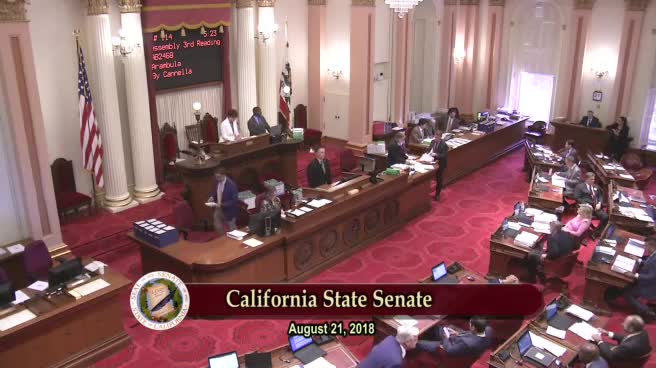 3MIN
Senate Floor
 1H
Senate Standing Committee on Appropriations
 4MIN
Senate Standing Committee on Environmental Quality
 7MIN
Senate Standing Committee on Energy, Utilities and Communications
 2MIN
Assembly Floor
 17MIN
Assembly Standing Committee on Utilities and Energy
 46MIN
Assembly Standing Committee on Natural Resources
Bill Author





