AB 3249: State Bar Act: attorneys: discipline: annual membership fee.
- Session Year: 2017-2018
- House: Assembly
- Latest Version Date: 2018-09-21
(1)The State Bar Act provides for the licensure and regulation of attorneys by the State Bar of California, a public corporation governed by a board of trustees. Existing law, until January 1, 2019, requires the board to charge an annual membership fee for active members of up to $315 for 2018.
This bill would, until January 1, 2020, require the board to charge an annual license fee in the same amount for 2019. The bill would replace the terms member, membership, and dues with licensee, license, and fees, respectively, throughout the act. The bill would provide that any reference to member of the State Bar in any provision of law is deemed to mean a licensee of the State Bar.
(2)The act requires protection of the public to be the highest priority for the State Bar and the board of trustees in exercising their licensing, regulatory, and disciplinary functions.
This bill would provide that protection of the public includes support for greater access to, and inclusion in, the legal system.
(3)The act provides that the officers of the State Bar are a president, vice president, secretary, and a treasurer and requires the officers of the State Bar to continue in office until their successors are elected and qualify. Existing law requires the treasurer of the State Bar to certify under oath the State Bars financial statement for each fiscal year.
This bill would instead provide that the officers of the State Bar are a chair, vice chair, and a secretary and that they shall continue in office until their successors are appointed or selected. The bill would instead require the chief financial officer of the State Bar to certify the financial statement.
(4)The act authorizes the board to aid in all matters pertaining to the advancement of the science of jurisprudence or to the improvement of the administration of justice, including, but not by way of limitation, all matters that may advance the professional interests of the members of the State Bar. The act requires the State Bar to assist the sections to incorporate as a private, nonprofit corporation and to transfer the section functions to the nonprofit corporation, defined as the association in the act. Existing law requires the nonprofit corporation to be called any name meeting certain requirements and approved by the Chief Justice.
This bill would eliminate the authorization of the board to aid in all matters that may advance the professional interests of the members of the State Bar. The bill would require the association to be called the California Lawyers Association, and would make various conforming changes in this regard.
(5)The act requires applicants for admission to the State Bar to, among other things, take and pass a bar examination and offers the examination in February and July. The act requires an application to take the bar examination filed between the last business day of November and January 15, for the February examination, or between the last business day of April and June 15, for the July examination, to be accepted if it is accompanied by a timely filing fee and late fee. The act prohibits an application filed after January 15 for the February examination and June 15 for the July examination from being accepted.
The act authorizes the board to establish an examining committee to be comprised of 19 members, 9 of whom shall be public members. The act provides that the public members shall serve a term of 4 years commencing at the conclusion of the annual meeting of the State Bar.
This bill would change the filing time described above to before January 1 for the February examination and to before June 1 for the July examination and would prohibit an application for examination from being accepted after January 1 and July 1, respectively.
The bill would require the State Bar to develop and implement a plan to meet certain goals relating to access, fairness, and diversity in the legal profession and the elimination of bias in the practice of law. The bill would require the State Bar to prepare and submit a report on the plan and its implementation to the Legislature, by March 15, 2019, and every 2 years thereafter.
This bill would remove the provision providing that the terms of the public members of the examining committee begin at the conclusion of the annual meeting of the State Bar.
(6)The act authorizes the State Bar to collect voluntary fees or donations on behalf of the Conference of Delegates of California Bar Associations, as specified.
This bill would end that authorization on January 1, 2020.
(7)The act requires the State Bar to establish and administer an Attorney Diversion and Assistance Program and requires the program to be funded by mandatory fees, as specified. Under existing law, these fees are for the support of the program and related programs, as provided. The act requires participants in the program to be responsible for all expenses related to treatment and recovery and requires the State Bar to establish a financial assistance program to ensure no member is denied acceptance into the program solely due to lack of ability to pay. The act authorizes applicants who are in law school or have applied for admission to the State Bar to enter the program, subject to the approval of the board of trustees.
This bill, on and after January 1, 2019, would require $1 of that mandatory fee, as specified, to be transferred to a statewide nonprofit corporation, established by attorneys that has, for the last 25 years or more, provided peer support to attorneys recovering from alcohol and substance abuse in a confidential and anonymous manner, to fund the support and recovery efforts of the nonprofit corporation and would require the nonprofit corporation to submit an annual report to the State Bar accounting for use of the funds, as specified. The bill would instead require the State Bar to establish a program to provide financial assistance to a licensee and a person eligible for services who otherwise would be denied acceptance into the program solely due to the lack of ability to pay, as specified, and would also authorize the mandatory fees to be used for treatment services for those who demonstrate an inability to pay for treatment.
(8)The act provides for the investigation and discipline of members of the State Bar, requires the board of trustees to establish a State Bar Court to act in the board of trustees place in the determination of disciplinary proceedings, requires the board of trustees to appoint a chief trial counsel, and requires the board of trustees to enroll a member as an inactive member, as specified. The act requires the State Bar to enroll a member to inactive status under certain circumstances and authorizes the State Bar to enroll a member to inactive status under other circumstances, including upon a finding that the attorneys conduct poses a substantial threat of harm to the interests of the attorneys clients or to the public if certain factors are found, including, among other things, that the attorney has caused or is causing substantial harm to the attorneys clients or the public and that the attorneys clients or the public are likely to suffer greater injury from the denial of inactive enrollment than the attorney is likely to suffer if granted, or there is a reasonable likelihood that harm will reoccur or continue. Existing law requires the State Bar by December 31 of each year to report on the number of complaints filed against California attorneys and demand letters received, as specified. The act requires the Supreme Court to suspend an attorney convicted of a felony or if the crime involved moral turpitude upon the receipt of the certified copy of the record of conviction and requires the Supreme Court to disbar an attorney after the judgment of conviction if the offense is a felony and an element of the offense is the specific intent to deceive, defraud, steal, or make or suborn a false statement, or involved moral turpitude.
The bill would revise and recast the disciplinary provisions of the act by, among other things, replacing the terms agency charged with discipline and disciplinary agency with the State Bar and the terms board, board or a committee, and board or administrative committee to State Bar Court. The bill would instead authorize the State Bar Court to order the enrollment of a licensee to inactive status upon, among other things, the finding that the attorneys conduct poses a substantial threat of harm to the interests of the attorneys clients or to the public. The bill would instead require the State Bar Court to enroll a licensee as an inactive licensee in certain cases. The bill would require the State Bar Court to order the involuntary inactive enrollment of an attorney who is sentenced to incarceration for 90 days or more as a result of a criminal conviction and would require an attorney placed on inactive enrollment to comply with a specified rule of the California Rules of Court. The bill would instead require the State Bar by April 30 of each year to include in its Annual Discipline Report information regarding complaints filed against California attorneys and demand letters received. The bill would instead require the Supreme Court to disbar an attorney after the judgment of conviction if the offense is a felony and either the facts and circumstances of the offense involved moral turpitude or an element of the offense is the specific intent to deceive, defraud, steal, or make or suborn a false statement, or involved moral turpitude.
(9)The act authorizes the board of trustees to create local administrative committees and to delegate to them such of its powers and duties as seems advisable, as specified.
The bill would delete this authorization and make conforming changes in this regard.
(10)The act requires the State Bar to annually submit its proposed baseline budget to the Legislature, as specified.
The bill would instead require the board to submit its adopted final budget and the proposed budget for the following year.
(11) The act requires the board to contract with the California State Auditors Office to conduct audits of the State Bars operations, as specified.
The bill would require the 2019 audit to be a performance audit that assesses and reviews specific aspects of State Bar operations and would require the audit to be submitted to the board, the Chief Justice of the Supreme Court, and to the Assembly and Senate Committees on Judiciary by May 1, 2019. The bill would require the Legislative Analysts Office to report to the Legislature regarding State Bar use of licensing fee revenues by July 1, 2019.
(12)The act requires the nonprofit association to, among other things, offer low- and no-cost continuing legal education (MCLE).
This bill would require the State Bar to assist the California Lawyers Association in meeting the associations requirement to provide low- and no-cost MCLE, as specified. The bill would require the California Lawyers Association to establish criteria for membership in the California Young Lawyers Association and would authorize the California Lawyers Association to change the name of the California Young Lawyers Association to another name, as specified.
(13) Existing law requires reports required or requested to be submitted to the Legislature to, among other things, be submitted as a printed copy to the Secretary of the Senate.
This bill would authorize the State Bar to submit reports to the Secretary of the Senate electronically.
(14)Existing law requires the State Bar to annually investigate and report on possible fraudulent activities of its licensees relating to workers compensation, motor vehicle insurance, or disability insurance by March 1.
This bill would instead require the State Bar to include that information on its Annual Discipline Report on or before April 30.
(15) Existing law authorizes fines, state or local penalties, bail, forfeitures, restitution fines, restitution orders, or any other amounts imposed by a juvenile or superior court of the State of California that are due and payable in an amount totaling less than $100 to be referred to the Franchise Tax Board for collection.
This bill would additionally authorize fines, state or local penalties, bail, forfeitures, restitution fines, restitution orders, or any other amounts imposed by the Supreme Court and amounts due under a public reproval on a licensee of the State Bar or due to the Client Security Fund by a licensee of the State Bar to be referred to the Franchise Tax Board for collection.
(16) Existing law requires an applicant for licensure to the State Bar to provide a federal employer identification number or social security number at the time of the issuance of the license, and prohibits a person who in his or her course of duty has access to this information from disclosing that information.
This bill would authorize the State Bar to disclose that information to a collections agency contracted to collect funds owed to the State Bar under a public reproval on a licensee of the State Bar or due to the Client Security Fund by a licensee of the State Bar.
(17)This bill would also make various conforming changes and other nonsubstantive changes.
(18)This bill would incorporate additional changes to Section 30 of the Business and Professions Code proposed by SB 695 to be operative only if this bill and SB 695 are enacted and this bill is enacted last.
(1)The State Bar Act provides for the licensure and regulation of attorneys by the State Bar of California, a public corporation governed by a board of trustees. Existing law, until January 1, 2019, requires the board to charge an annual membership fee for active members of up to $315 for 2018.
This bill would, until January 1, 2020, require the board to charge an annual license fee in the same amount for 2019. The bill would replace the terms member, membership, and dues with licensee, license, and fees, respectively, throughout the act. The bill would provide that any reference to member of the State Bar in any provision of law is deemed to mean a licensee of the State Bar.
(2)The act requires protection of the public to be the highest priority for the State Bar and the board of trustees in exercising their licensing, regulatory, and disciplinary functions.
This bill would provide that protection of the public includes support for greater access to, and inclusion in, the legal system.
(3)The act provides that the officers of the State Bar are a president, vice president, secretary, and a treasurer and requires the officers of the State Bar to continue in office until their successors are elected and qualify. Existing law requires the treasurer of the State Bar to certify under oath the State Bars financial statement for each fiscal year.
This bill would instead provide that the officers of the State Bar are a chair, vice chair, and a secretary and that they shall continue in office until their successors are appointed or selected. The bill would instead require the chief financial officer of the State Bar to certify the financial statement.
(4)The act authorizes the board to aid in all matters pertaining to the advancement of the science of jurisprudence or to the improvement of the administration of justice, including, but not by way of limitation, all matters that may advance the professional interests of the members of the State Bar. The act requires the State Bar to assist the sections to incorporate as a private, nonprofit corporation and to transfer the section functions to the nonprofit corporation, defined as the association in the act. Existing law requires the nonprofit corporation to be called any name meeting certain requirements and approved by the Chief Justice.
This bill would eliminate the authorization of the board to aid in all matters that may advance the professional interests of the members of the State Bar. The bill would require the association to be called the California Lawyers Association, and would make various conforming changes in this regard.
(5)The act requires applicants for admission to the State Bar to, among other things, take and pass a bar examination and offers the examination in February and July. The act requires an application to take the bar examination filed between the last business day of November and January 15, for the February examination, or between the last business day of April and June 15, for the July examination, to be accepted if it is accompanied by a timely filing fee and late fee. The act prohibits an application filed after January 15 for the February examination and June 15 for the July examination from being accepted.
The act authorizes the board to establish an examining committee to be comprised of 19 members, 9 of whom shall be public members. The act provides that the public members shall serve a term of 4 years commencing at the conclusion of the annual meeting of the State Bar.
This bill would change the filing time described above to before January 1 for the February examination and to before June 1 for the July examination and would prohibit an application for examination from being accepted after January 1 and July 1, respectively.
The bill would require the State Bar to develop and implement a plan to meet certain goals relating to access, fairness, and diversity in the legal profession and the elimination of bias in the practice of law. The bill would require the State Bar to prepare and submit a report on the plan and its implementation to the Legislature, by March 15, 2019, and every 2 years thereafter.
This bill would remove the provision providing that the terms of the public members of the examining committee begin at the conclusion of the annual meeting of the State Bar.
(6)The act authorizes the State Bar to collect voluntary fees or donations on behalf of the Conference of Delegates of California Bar Associations, as specified.
This bill would delete that authorization.This bill would end that authorization on January 1, 2020.
(7)The act requires the State Bar to establish and administer an Attorney Diversion and Assistance Program and requires the program to be funded by mandatory fees, as specified. Under existing law, these fees are for the support of the program and related programs, as provided. The act requires participants in the program to be responsible for all expenses related to treatment and recovery and requires the State Bar to establish a financial assistance program to ensure no member is denied acceptance into the program solely due to lack of ability to pay. The act authorizes applicants who are in law school or have applied for admission to the State Bar to enter the program, subject to the approval of the board of trustees.
This bill, on and after January 1, 2019, would require $1 of that mandatory fee, as specified, to be transferred to a statewide nonprofit corporation, established by attorneys that has, for the last 25 years or more, provided peer support to attorneys recovering from alcohol and substance abuse in a confidential and anonymous manner, to fund the support and recovery efforts of the nonprofit corporation and would require the nonprofit corporation to submit an annual report to the State Bar accounting for use of the funds, as specified. The bill would instead require the State Bar to establish a program to provide financial assistance to a licensee and a person eligible for services who otherwise would be denied acceptance into the program solely due to the lack of ability to pay, as specified, and would also authorize the mandatory fees to be used for treatment services for those who demonstrate an inability to pay for treatment.
(8)The act provides for the investigation and discipline of members of the State Bar, requires the board of trustees to establish a State Bar Court to act in the board of trustees place in the determination of disciplinary proceedings, and requires the board of trustees to appoint a chief trial counsel. counsel, and requires the board of trustees to enroll a member as an inactive member, as specified. The act requires the State Bar to enroll a member to inactive status under certain circumstances and authorizes the State Bar to enroll a member to inactive status under other circumstances, including upon a finding that the attorneys conduct poses a substantial threat of harm to the interests of the attorneys clients or to the public if certain factors are found, including, among other things, that the attorney has caused or is causing substantial harm to the attorneys clients or the public and that the attorneys clients or the public are likely to suffer greater injury from the denial of inactive enrollment than the attorney is likely to suffer if granted, or there is a reasonable likelihood that harm will reoccur or continue. Existing law requires the State Bar by December 31 of each year to report on the number of complaints filed against California attorneys and demand letters received, as specified. The act requires the Supreme Court to suspend an attorney convicted of a felony or if the crime involved moral turpitude upon the receipt of the certified copy of the record of conviction and requires the Supreme Court to disbar an attorney after the judgment of conviction if the offense is a felony and an element of the offense is the specific intent to deceive, defraud, steal, or make or suborn a false statement, or involved moral turpitude.
The bill would revise and recast the disciplinary provisions of the act by, among other things, replacing the terms agency charged with discipline and disciplinary agency with the State Bar and the terms board, board or a committee, and board or administrative committee to State Bar Court. The bill would instead authorize the State Bar Court to order the enrollment of a licensee to inactive status upon, among other things, the finding that the attorneys conduct poses a substantial threat of harm to the interests of the attorneys clients or to the public. The bill would instead require the State Bar Court to enroll a licensee as an inactive licensee in certain cases. The bill would require the State Bar Court to order the involuntary inactive enrollment of an attorney who is sentenced to incarceration for 90 days or more as a result of a criminal conviction and would require an attorney placed on inactive enrollment to comply with a specified rule of the California Rules of Court. The bill would instead require the State Bar by April 30 of each year to include in its Annual Discipline Report information regarding complaints filed against California attorneys and demand letters received. The bill would instead require the Supreme Court to disbar an attorney after the judgment of conviction if the offense is a felony and either the facts and circumstances of the offense involved moral turpitude or an element of the offense is the specific intent to deceive, defraud, steal, or make or suborn a false statement, or involved moral turpitude.
(9)The act authorizes the board of trustees to create local administrative committees and to delegate to them such of its powers and duties as seems advisable, as specified.
The bill would delete this authorization and make conforming changes in this regard.
(10)The act requires the State Bar to annually submit its proposed baseline budget to the Legislature, as specified.
The bill would instead require the board to submit its adopted final budget and the proposed budget for the following year.
(11) The act requires the board to contract with the California State Auditors Office to conduct audits of the State Bars operations, as specified.
The bill would require the 2019 audit to be a performance audit that assesses and reviews specific aspects of State Bar operations and would require the audit to be submitted to the board, the Chief Justice of the Supreme Court, and to the Assembly and Senate Committees on Judiciary by May 1, 2019. The bill would require the Legislative Analysts Office to report to the Legislature regarding State Bar use of licensing fee revenues by July 1, 2019.
(12)The act requires the nonprofit association to, among other things, offer low- and no-cost continuing legal education (MCLE).
This bill would require the State Bar to assist the California Lawyers Association in meeting the associations requirement to provide low- and no-cost MCLE, as specified. The bill would require the California Lawyers Association to establish criteria for membership in the California Young Lawyers Association and would authorize the California Lawyers Association to change the name of the California Young Lawyers Association to another name, as specified.
(13) Existing law requires reports required or requested to be submitted to the Legislature to, among other things, be submitted as a printed copy to the Secretary of the Senate.
This bill would authorize the State Bar to submit reports to the Secretary of the Senate electronically.
(14)Existing law requires the State Bar to annually investigate and report on possible fraudulent activities of its licensees relating to workers compensation, motor vehicle insurance, or disability insurance by March 1.
This bill would instead require the State Bar to include that information on its Annual Discipline Report on or before April 30.
(15) Existing law authorizes fines, state or local penalties, bail, forfeitures, restitution fines, restitution orders, or any other amounts imposed by a juvenile or superior court of the State of California that are due and payable in an amount totaling less than $100 to be referred to the Franchise Tax Board for collection.
This bill would additionally authorize fines, state or local penalties, bail, forfeitures, restitution fines, restitution orders, or any other amounts imposed by the Supreme Court and amounts due under a public reproval on a licensee of the State Bar or due to the Client Security Fund by a licensee of the State Bar to be referred to the Franchise Tax Board for collection.
(16) Existing law requires an applicant for licensure to the State Bar to provide a federal employer identification number or social security number at the time of the issuance of the license, and prohibits a person who in his or her course of duty has access to this information from disclosing that information.
This bill would authorize the State Bar to disclose that information to a collections agency contracted to collect funds owed to the State Bar under a public reproval on a licensee of the State Bar or due to the Client Security Fund by a licensee of the State Bar.
(17)This bill would also make various conforming changes and other nonsubstantive changes.
(18)This bill would incorporate additional changes to Section 30 of the Business and Professions Code proposed by SB 695 to be operative only if this bill and SB 695 are enacted and this bill is enacted last.
(1)The State Bar Act provides for the licensure and regulation of attorneys by the State Bar of California, a public corporation governed by a board of trustees. Existing law, until January 1, 2019, requires the board to charge an annual membership fee for active members of up to $315 for 2018.
This bill would, until January 1, 2020, require the board to charge an annual license fee in the same amount for 2019. The bill would replace the terms member, membership, and dues with licensee, license, and fees, respectively, throughout the act. The bill would provide that any reference to member of the State Bar in any provision of law is deemed to mean a licensee of the State Bar.
(2)The act requires protection of the public to be the highest priority for the State Bar and the board of trustees in exercising their licensing, regulatory, and disciplinary functions.
This bill would provide that protection of the public includes support for greater access to, and inclusion in, the legal system.
(3)The act provides that the officers of the State Bar are a president, vice president, secretary, and a treasurer and requires the officers of the State Bar to continue in office until their successors are elected and qualify. Existing law requires the treasurer of the State Bar to certify under oath the State Bars financial statement for each fiscal year.
This bill would instead provide that the officers of the State Bar are a chair, vice chair, and a secretary and that they shall continue in office until their successors are appointed or selected. The bill would instead require the chief financial officer of the State Bar to certify the financial statement.
(4)The act authorizes the board to aid in all matters pertaining to the advancement of the science of jurisprudence or to the improvement of the administration of justice, including, but not by way of limitation, all matters that may advance the professional interests of the members of the State Bar. The act requires the State Bar to assist the sections to incorporate as a private, nonprofit corporation and to transfer the section functions to the nonprofit corporation, defined as the association in the act. Existing law requires the nonprofit corporation to be called any name meeting certain requirements and approved by the Chief Justice.
This bill would eliminate the authorization of the board to aid in all matters that may advance the professional interests of the members of the State Bar. The bill would require the association to be called the California Lawyers Association, and would make various conforming changes in this regard.
(5)The act requires applicants for admission to the State Bar to, among other things, take and pass a bar examination and offers the examination in February and July. The act requires an application to take the bar examination filed between the last business day of November and January 15, for the February examination, or between the last business day of April and June 15, for the July examination, to be accepted if it is accompanied by a timely filing fee and late fee. The act prohibits an application filed after January 15 for the February examination and June 15 for the July examination from being accepted.
The act authorizes the board to establish an examining committee to be comprised of 19 members, 9 of whom shall be public members. The act provides that the public members shall serve a term of 4 years commencing at the conclusion of the annual meeting of the State Bar.
This bill would change the filing time described above to before January 1 for the February examination and to before June 1 for the July examination and would prohibit an application for examination from being accepted after January 1 and July 1, respectively.
The bill would require the State Bar to develop and implement a plan to meet certain goals relating to access, fairness, and diversity in the legal profession and the elimination of bias in the practice of law. The bill would require the State Bar to prepare and submit a report on the plan and its implementation to the Legislature, by March 15, 2019, and every 2 years thereafter.
This bill would remove the provision providing that the terms of the public members of the examining committee begin at the conclusion of the annual meeting of the State Bar.
(6)The act requires authorizes the State Bar to request the California Supreme Court to adopt a rule of court authorizing the State Bar to establish and administer a mandatory continuing legal education program. collect voluntary fees or donations on behalf of the Conference of Delegates of California Bar Associations, as specified.This bill would state the intent of the Legislature that the State Bar adopt a prescribed rule regarding mandatory continuing legal education credit for pro bono work, as provided. delete that authorization.(7)The act requires the State Bar to establish and administer an Attorney Diversion and Assistance Program and requires the program to be funded by mandatory fees, as specified. Under existing law, these fees are for the support of the program and related programs, as provided. The act requires participants in the program to be responsible for all expenses related to treatment and recovery and requires the State Bar to establish a financial assistance program to ensure no member is denied acceptance into the program solely due to lack of ability to pay. The act authorizes applicants who are in law school or have applied for admission to the State Bar to enter the program, subject to the approval of the board of trustees.This bill, on and after January 1, 2019, would require $1 of that mandatory fee, as specified, to be transferred to a statewide nonprofit corporation, established by attorneys that has, for the last 25 years or more, provided peer support to attorneys recovering from alcohol and substance abuse in a confidential and anonymous manner, to fund the support and recovery efforts of the nonprofit corporation and would require the nonprofit corporation to submit an annual report to the State Bar accounting for use of the funds, as specified. The bill would instead require the State Bar to establish a program to provide financial assistance to a licensee and a person eligible for services who otherwise would be denied acceptance into the program solely due to the lack of ability to pay, as specified, and would also authorize the mandatory fees to be used for treatment services for those who demonstrate an inability to pay for treatment.
(8)The act provides for the investigation and discipline of members of the State Bar, requires the board of trustees to establish a State Bar Court to act in the board of trustees place in the determination of disciplinary proceedings, and requires the board of trustees to appoint a chief trial counsel. The act requires the State Bar to enroll a member to inactive status under certain circumstances and authorizes the State Bar to enroll a member to inactive status under other circumstances, including upon a finding that the attorneys conduct poses a substantial threat of harm to the interests of the attorneys clients or to the public if certain factors are found, including, among other things, that the attorney has caused or is causing substantial harm to the attorneys clients or the public and that the attorneys clients or the public are likely to suffer greater injury from the denial of inactive enrollment than the attorney is likely to suffer if granted, or there is a reasonable likelihood that harm will reoccur or continue. Existing law requires the State Bar by December 31 of each year to report on the number of complaints filed against California attorneys and demand letters received, as specified. The act requires the Supreme Court to suspend an attorney convicted of a felony or if the crime involved moral turpitude upon the receipt of the certified copy of the record of conviction and requires the Supreme Court to disbar an attorney after the judgment of conviction if the offense is a felony and an element of the offense is the specific intent to deceive, defraud, steal, or make or suborn a false statement, or involved moral turpitude.The bill would revise and recast the disciplinary provisions of the act by, among other things, replacing the terms agency charged with discipline and disciplinary agency with the State Bar and the terms board, board or a committee, and board or administrative committee to State Bar Court. The bill would instead authorize the State Bar Court to order the enrollment of a licensee to inactive status upon, among other things, the finding that the attorneys conduct poses a substantial threat of harm to the interests of the attorneys clients or to the public. The bill would require the State Bar Court to order the involuntary inactive enrollment of an attorney who is sentenced to incarceration for 90 days or more as a result of a criminal conviction and would require an attorney placed on inactive enrollment to comply with a specified rule of the California Rules of Court. The bill would instead require the State Bar by April 30 of each year to include in its Annual Discipline Report information regarding complaints filed against California attorneys and demand letters received. The bill would instead require the Supreme Court to disbar an attorney after the judgment of conviction if the offense is a felony and either the facts and circumstances of the offense involved moral turpitude or an element of the offense is the specific intent to deceive, defraud, steal, or make or suborn a false statement, or involved moral turpitude.
(9)The act authorizes the board of trustees to create local administrative committees and to delegate to them such of its powers and duties as seems advisable, as specified.The bill would delete this authorization and make conforming changes in this regard.
(10)The act requires the State Bar to annually submit its proposed baseline budget to the Legislature, as specified.The bill would instead require the board to submit its adopted final budget and the proposed budget for the following year.
(11) The act requires the board to contract with the California State Auditors Office to conduct audits of the State Bars operations, as specified.The bill would require the 2019 audit to be a performance audit that assesses and reviews specific aspects of State Bar operations and would require the audit to be submitted to the board, the Chief Justice of the Supreme Court, and to the Assembly and Senate Committees on Judiciary by May 1, 2019. The bill would require the Legislative Analysts Office to report to the Legislature regarding State Bar use of licensing fee revenues by July 1, 2019.
(12)The act requires the nonprofit association to, among other things, offer low- and no-cost continuing legal education (MCLE).This bill would require the State Bar to assist the California Lawyers Association in meeting the associations requirement to provide low- and no-cost MCLE, as specified. The bill would require the California Lawyers Association to establish criteria for membership in the California Young Lawyers Association and would authorize the California Lawyers Association to change the name of the California Young Lawyers Association to another name, as specified.
(13) Existing law requires reports required or requested to be submitted to the Legislature to, among other things, be submitted as a printed copy to the Secretary of the Senate.This bill would authorize the State Bar to submit reports to the Secretary of the Senate electronically.
(14)Existing law requires the State Bar to annually investigate and report on possible fraudulent activities of its licensees relating to workers compensation, motor vehicle insurance, or disability insurance by March 1.This bill would instead require the State Bar to include that information on its Annual Discipline Report on or before April 30.
(15) Existing law authorizes fines, state or local penalties, bail, forfeitures, restitution fines, restitution orders, or any other amounts imposed by a juvenile or superior court of the State of California that are due and payable in an amount totaling less than $100 to be referred to the Franchise Tax Board for collection.This bill would additionally authorize fines, state or local penalties, bail, forfeitures, restitution fines, restitution orders, or any other amounts imposed by the Supreme Court and amounts due under a public reproval on a licensee of the State Bar or due to the Client Security Fund by a licensee of the State Bar to be referred to the Franchise Tax Board for collection.
(16) Existing law requires an applicant for licensure to the State Bar to provide a federal employer identification number or social security number at the time of the issuance of the license, and prohibits a person who in his or her course of duty has access to this information from disclosing that information.This bill would authorize the State Bar to disclose that information to a collections agency contracted to collect funds owed to the State Bar under a public reproval on a licensee of the State Bar or due to the Client Security Fund by a licensee of the State Bar.
(17)This bill would also make various conforming changes and other nonsubstantive changes.(1)The State Bar Act provides for the licensure and regulation of attorneys by the State Bar of California, a public corporation governed by a board of trustees. Existing law, until January 1, 2019, requires the board to charge an annual membership fee for active members of up to $315 for 2018.
This bill would, until January 1, 2020, require the board to charge an annual license fee in the same amount for 2019. The bill would replace the terms member, membership, and dues with licensee, license, and fees, respectively, throughout the act. The bill would provide that any reference to member of the State Bar in any provision of law is deemed to mean a licensee of the State Bar.
(2)The act provides for the appointment of public members and attorney members to the board of trustees. The act also requires protection of the public to be the highest priority for the State Bar and the board of trustees in exercising their licensing, regulatory, and disciplinary functions.
This bill would require the term of office of appointed members of the board of trustees to commence at the conclusion of the annual meeting following the board members appointment, or the date of the appointment, whichever is later, and would require the board member to hold office until his or her successor is appointed. The bill would provide that protection of the public includes support for greater access to, and inclusion in, the legal system.
(3)The act provides that the officers of the State Bar are a president, vice president, secretary, and a treasurer and requires the officers of the State Bar to continue in office until their successors are elected and qualify. Existing law requires the treasurer of the State Bar to certify under oath the State Bars financial statement for each fiscal year.
This bill would instead provide that the officers of the State Bar are a chair, vice chair, and a secretary and that they shall continue in office until their successors are appointed or selected. The bill would instead require the chief financial officer of the State Bar to certify the financial statement.
(4)The act authorizes the board to aid in all matters pertaining to the advancement of the science of jurisprudence or to the improvement of the administration of justice, including, but not by way of limitation, all matters that may advance the professional interests of the members of the State Bar. The act requires the State Bar to assist the sections to incorporate as a private, nonprofit corporation and to transfer the section functions to the nonprofit corporation, defined as the association in the act. Existing law requires the nonprofit corporation to be called any name meeting certain requirements and approved by the Chief Justice.
This bill would eliminate the authorization of the board to aid in all matters that may advance the professional interests of the members of the State Bar. The bill would require the association to be called the California Lawyers Association. Association, and would make various conforming changes in this regard.
(5)The act requires applicants for admission to the State Bar to, among other things, take and pass a bar examination and offers the examination in February and July. The act requires an application to take the bar examination filed between the last business day of November and January 15, for the February examination, or between the last business day of April and June 15, for the July examination, to be accepted if it is accompanied by a timely filing fee and late fee. The act prohibits an application filed after January 15 for the February examination and June 15 for the July examination from being accepted.
The act authorizes the board to establish an examining committee to be comprised of 19 members, 9 of whom shall be public members. The act provides that the public members shall serve a term of 4 years commencing at the conclusion of the annual meeting of the State Bar.
This bill would change the filing time described above to before January 1 for the February examination and to before June 1 for the July examination and would prohibit an application for examination from being accepted after January 1 and July 1, respectively.
The bill would require the State Bar to develop and implement a plan to meet certain goals relating to access, fairness, and diversity in the legal profession and the elimination of bias in the practice of law, including, but not limited to, an assessment of needed revenue and a review of the impact of the passing score of the bar examination on the diversity of the legal profession. law. The bill would require the State Bar to prepare and submit a report on the plan and its implementation to the Legislature, by March 15, 2019, and every two 2 years thereafter.
This bill would remove the provision providing that the terms of the public members of the examining committee begin at the conclusion of the annual meeting of the State Bar.
(6)The act requires the State Bar to request the California Supreme Court to adopt a rule of court authorizing the State Bar to establish and administer a mandatory continuing legal education program.
This bill would state the intent of the Legislature that the State Bar adopt a prescribed rule regarding mandatory continuing legal education credit for pro bono work, as provided.
(7)The act requires the State Bar to establish and administer an Attorney Diversion and Assistance Program and requires the program to be funded by mandatory fees, as specified. Under existing law, these fees are for the support of the program and related programs, as provided. The act requires participants in the program to be responsible for all expenses related to treatment and recovery and requires the State Bar to establish a financial assistance program to ensure no member is denied acceptance into the program solely due to lack of ability to pay. The act authorizes applicants who are in law school or have applied for admission to the State Bar to enter the program, subject to the approval of the board of trustees.
This bill, on and after January 1, 2019, would require $1 of that mandatory fee, as specified, to be transferred to a statewide nonprofit corporation, established by attorneys that has, for the last 25 years or more, provided peer support to attorneys recovering from alcohol and substance abuse in a confidential and anonymous manner, to fund the support and recovery efforts of the nonprofit corporation. corporation and would require the nonprofit corporation to submit an annual report to the State Bar accounting for use of the funds, as specified. The bill would instead require the State Bar to establish a financial assistance program to ensure that no provide financial assistance to a licensee and a person eligible for services is who otherwise would be denied acceptance into the program solely due to the lack of ability to pay pay, as specified, and would also authorize the mandatory fees to be used for treatment services for those who cannot afford demonstrate an inability to pay for treatment.
(8)The act provides for the investigation and discipline of members of the State Bar, requires the board of trustees to establish a State Bar Court to act in the board of trustees place in the determination of disciplinary proceedings, and requires the board of trustees to appoint a chief trial counsel. The act requires the State Bar to enroll a member to inactive status under certain circumstances and authorizes the State Bar to enroll a member to inactive status under other circumstances, including upon a finding that the attorneys conduct poses a substantial threat of harm to the interests of the attorneys clients or to the public if certain factors are found, including, among other things, that the attorney has caused or is causing substantial harm to the attorneys clients or the public and that the attorneys clients or the public are likely to suffer greater injury from the denial of inactive enrollment than the attorney is likely to suffer if granted, or there is a reasonable likelihood that harm will reoccur or continue. Existing law requires the State Bar by December 31 of each year to report on the number of complaints filed against California attorneys and demand letters received, as specified. The act requires the Supreme Court to suspend an attorney convicted of a felony or if the crime involved moral turpitude upon the receipt of the certified copy of the record of conviction and requires the Supreme Court to disbar an attorney after the judgment of conviction if the offense is a felony and an element of the offense is the specific intent to deceive, defraud, steal, or make or suborn a false statement, or involved moral turpitude.
The bill would revise and recast the disciplinary provisions of the act by, among other things, replacing the terms agency charged with discipline and disciplinary agency with the State Bar and the terms board, board or a committee, and board or administrative committee to State Bar Court. The bill would instead authorize the State Bar Court to order the enrollment of a licensee to inactive status upon, among other things, the finding that the attorneys conduct poses a substantial threat of harm to the interests of the attorneys clients or to the public. The bill would require the State Bar Court to order the involuntary inactive enrollment of an attorney who is sentenced to incarceration for 90 days or more as a result of a criminal conviction and would require an attorney placed on inactive enrollment to comply with a specified rule of the California Rules of Court. The bill would instead require the State Bar by April 30 of each year to include in its Annual Discipline Report information regarding complaints filed against California attorneys and demand letters received. The bill would instead require the Supreme Court to disbar an attorney after the judgment of conviction if the offense is a felony and either the facts and circumstances of the offense involved moral turpitude or an element of the offense is the specific intent to deceive, defraud, steal, or make or suborn a false statement, or involved moral turpitude.
(9)The act authorizes the board of trustees to create local administrative committees and to delegate to them such of its powers and duties as seems advisable, as specified.
The bill would delete this authorization and make conforming changes in this regard.
(10)The act requires the State Bar to annually submit its proposed baseline budget to the Legislature, as specified.
The bill would instead require the board to submit its adopted final budget and the proposed budget for the following year.
(11)The act requires the board to contract with the California State Auditors Office to conduct audits of the State Bars operations, as specified.
The bill would require the 2019 audit to be a performance audit that assesses and reviews specific aspects of State Bar operations. operations and would require the audit to be submitted to the board, the Chief Justice of the Supreme Court, and to the Assembly and Senate Committees on Judiciary by May 1, 2019. The bill would require the Legislative Analysts Office to report to the Legislature regarding State Bar use of licensing fee revenues by July 1, 2019.
(12)The act requires the nonprofit association to, among other things, offer low- and no-cost continuing legal education (MCLE).
This bill would require the State Bar to assist the California Lawyers Association in meeting the associations requirement to provide low- and no-cost MCLE, as specified. The bill would require the California Lawyers Association to establish criteria for membership in the California Young Lawyers Association and would authorize the California Lawyers Association to change the name of the California Young Lawyers Association to another name, as specified.
(12)(13)Existing law requires reports required or requested to be submitted to the Legislature to, among other things, be submitted as a printed copy to the Secretary of the Senate.
This bill would authorize the State Bar to submit reports to the Secretary of the Senate electronically.
(13)(14)Existing law requires the State Bar to annually investigate and report on possible fraudulent activities of its licensees relating to workers compensation, motor vehicle insurance, or disability insurance by March 1.
This bill would instead require the State Bar to include that information on its Annual Discipline Report on or before April 30.
(14)(15)Existing law authorizes fines, state or local penalties, bail, forfeitures, restitution fines, restitution orders, or any other amounts imposed by a juvenile or superior court of the State of California that are due and payable in an amount totaling less than $100 to be referred to the Franchise Tax Board for collection.
This bill would additionally authorize fines, state or local penalties, bail, forfeitures, restitution fines, restitution orders, or any other amounts imposed by the Supreme Court and amounts due under a public reproval on a licensee of the State Bar or due to the Client Security Fund by a licensee of the State Bar to be referred to the Franchise Tax Board for collection.
(15)(16)Existing law requires an applicant for licensure to the State Bar to provide a federal employer identification number or social security number at the time of the issuance of the license, and prohibits a person who in his or her course of duty has access to this information from disclosing that information.
This bill would authorize the State Bar to disclose that information to a collections agency contracted to collect funds owed to the State Bar under a public reproval on a licensee of the State Bar or due to the Client Security Fund by a licensee of the State Bar.
(16)(17)This bill would also make various conforming changes and other nonsubstantive changes.
(1)The State Bar Act provides for the licensure and regulation of attorneys by the State Bar of California, a public corporation governed by a board of trustees. Existing law, until January 1, 2019, requires the board to charge an annual membership fee for active members of up to $315 for 2018.
This bill would, until January 1, 2020, require the board to charge an annual license fee in the same amount for 2019. The bill would replace the terms member, membership, and dues with licensee, license, and fees, respectively, throughout the act.(2)The act provides for the appointment of public members and attorney members to the board of trustees. The act also requires protection of the public to be the highest priority for the State Bar and the board of trustees in exercising their licensing, regulatory, and disciplinary functions.
This bill would require the term of office of appointed members of the board of trustees to commence at the conclusion of the annual meeting following the board members appointment, or the date of the appointment, whichever is later, and would require the board member to hold office until his or her successor is appointed. The bill would provide that protection of the public includes support for greater access to, and inclusion in, the legal system.
(3)The act provides that the officers of the State Bar are a president, vice president, secretary, and a treasurer and requires the officers of the State Bar to continue in office until their successors are elected and qualify. Existing law requires the treasurer of the State Bar to certify under oath the State Bars financial statement for each fiscal year.
This bill would instead provide that the officers of the State Bar are a chair, vice chair, and a secretary and that they shall continue in office until their successors are appointed or selected. The bill would instead require the chief financial officer of the State Bar to certify the financial statement.
(4)The act authorizes the board to aid in all matters pertaining to the advancement of the science of jurisprudence or to the improvement of the administration of justice, including, but not by way of limitation, all matters that may advance the professional interests of the members of the State Bar. The act requires the State Bar to assist the sections to incorporate as a private, nonprofit corporation and to transfer the section functions to the nonprofit corporation, defined as the association in the act. Existing law requires the nonprofit corporation to be called any name meeting certain requirements and approved by the Chief Justice.
This bill would eliminate the authorization of the board to aid in all matters that may advance the professional interests of the members of the State Bar. The bill would require the association to be called the California Lawyers Association.
(5)The act requires applicants for admission to the State Bar to, among other things, take and pass a bar examination and offers the examination in February and July. The act requires an application to take the bar examination filed between the last business day of November and January 15, for the February examination, or between the last business day of April and June 15, for the July examination, to be accepted if it is accompanied by a timely filing fee and late fee. The act prohibits an application filed after January 15 for the February examination and June 15 for the July examination from being accepted.
This bill would change the filing time described above to before January 1 for the February examination and to before June 1 for the July examination and would prohibit an application for examination from being accepted after January 1 and July 1, respectively.
The bill would require the State Bar to develop and implement a plan to meet certain goals relating to access, fairness, and diversity in the legal profession and the elimination of bias in the practice of law, including, but not limited to, an assessment of needed revenue and a review of the impact of the passing score of the bar examination on the diversity of the legal profession. The bill would require the State Bar to prepare and submit a report on the plan and its implementation to the Legislature, by March 15, 2019, and every two years thereafter.
(6)The act requires the State Bar to request the California Supreme Court to adopt a rule of court authorizing the State Bar to establish and administer a mandatory continuing legal education program.
This bill would state the intent of the Legislature that the State Bar adopt a prescribed rule regarding mandatory continuing legal education credit for pro bono work, as provided.
(7)The act requires the State Bar to establish and administer an Attorney Diversion and Assistance Program and requires the program to be funded by mandatory fees, as specified. Under existing law, these fees are for the support of the program and related programs, as provided. The act requires participants in the program to be responsible for all expenses related to treatment and recovery and requires the State Bar to establish a financial assistance program to ensure no member is denied acceptance into the program solely due to lack of ability to pay. The act authorizes applicants who are in law school or have applied for admission to the State Bar to enter the program, subject to the approval of the board of trustees.
This bill, on and after January 1, 2019, would require $1 of that mandatory fee, as specified, to be transferred to a statewide nonprofit corporation, established by attorneys that has, for the last 25 years or more, provided peer support to attorneys recovering from alcohol and substance abuse in a confidential and anonymous manner, to fund the support and recovery efforts of the nonprofit corporation. The bill would instead require the State Bar to establish a financial assistance program to ensure that no person eligible for services is denied acceptance into the program solely due to the lack of ability to pay and would also authorize the mandatory fees to be used for treatment services for those who cannot afford to pay for treatment.
(8)The act provides for the investigation and discipline of members of the State Bar, requires the board of trustees to establish a State Bar Court to act in the board of trustees place in the determination of disciplinary proceedings, and requires the board of trustees to appoint a chief trial counsel. The act requires the State Bar to enroll a member to inactive status under certain circumstances and authorizes the State Bar to enroll a member to inactive status under other circumstances, including upon a finding that the attorneys conduct poses a substantial threat of harm to the interests of the attorneys clients or to the public if certain factors are found, including, among other things, that the attorney has caused or is causing substantial harm to the attorneys clients or the public and that the attorneys clients or the public are likely to suffer greater injury from the denial of inactive enrollment than the attorney is likely to suffer if granted, or there is a reasonable likelihood that harm will reoccur or continue. Existing law requires the State Bar by December 31 of each year to report on the number of complaints filed against California attorneys and demand letters received, as specified. The act requires the Supreme Court to suspend an attorney convicted of a felony or if the crime involved moral turpitude upon the receipt of the certified copy of the record of conviction and requires the Supreme Court to disbar an attorney after the judgment of conviction if the offense is a felony and an element of the offense is the specific intent to deceive, defraud, steal, or make or suborn a false statement, or involved moral turpitude.
The bill would revise and recast the disciplinary provisions of the act by, among other things, replacing the terms agency charged with discipline and disciplinary agency with the State Bar and the terms board, board or a committee, and board or administrative committee to State Bar Court. The bill would instead authorize the State Bar Court to order the enrollment of a licensee to inactive status upon, among other things, the finding that the attorneys conduct poses a substantial threat of harm to the interests of the attorneys clients or to the public. The bill would require the State Bar Court to order the involuntary inactive enrollment of an attorney who is sentenced to incarceration for 90 days or more as a result of a criminal conviction and would require an attorney placed on inactive enrollment to comply with a specified rule of the California Rules of Court. The bill would instead require the State Bar by April 30 of each year to include in its Annual Discipline Report information regarding complaints filed against California attorneys and demand letters received. The bill would instead require the Supreme Court to disbar an attorney after the judgment of conviction if the offense is a felony and either the facts and circumstances of the offense involved moral turpitude or an element of the offense is the specific intent to deceive, defraud, steal, or make or suborn a false statement, or involved moral turpitude.
(9)The act authorizes the board of trustees to create local administrative committees and to delegate to them such of its powers and duties as seems advisable, as specified.
The bill would delete this authorization and make conforming changes in this regard.
(10)The act requires the State Bar to annually submit its proposed baseline budget to the Legislature, as specified.
The bill would instead require the board to submit its adopted final budget and the proposed budget for the following year.
(11)The act requires the board to contract with the California State Auditors Office to conduct audits of the State Bars operations, as specified.
The bill would require the 2019 audit to be a performance audit that assesses and reviews specific aspects of State Bar operations. The bill would require the Legislative Analysts Office to report to the Legislature regarding State Bar use of licensing fee revenues by July 1, 2019.
(12)Existing law requires reports required or requested to be submitted to the Legislature to, among other things, be submitted as a printed copy to the Secretary of the Senate.
This bill would authorize the State Bar to submit reports to the Secretary of the Senate electronically.
(13)Existing law requires the State Bar to annually investigate and report on possible fraudulent activities of its licensees relating to workers compensation, motor vehicle insurance, or disability insurance by March 1.
This bill would instead require the State Bar to include that information on its Annual Discipline Report on or before April 30.
(14)Existing law authorizes fines, state or local penalties, bail, forfeitures, restitution fines, restitution orders, or any other amounts imposed by a juvenile or superior court of the State of California that are due and payable in an amount totaling less than $100 to be referred to the Franchise Tax Board for collection.
This bill would additionally authorize fines, state or local penalties, bail, forfeitures, restitution fines, restitution orders, or any other amounts imposed by the Supreme Court and amounts due under a public reproval on a licensee of the State Bar or due to the Client Security Fund by a licensee of the State Bar to be referred to the Franchise Tax Board for collection.
(15)Existing law requires an applicant for licensure to the State Bar to provide a federal employer identification number or social security number at the time of the issuance of the license, and prohibits a person who in his or her course of duty has access to this information from disclosing that information.
This bill would authorize the State Bar to disclose that information to a collections agency contracted to collect funds owed to the State Bar under a public reproval on a licensee of the State Bar or due to the Client Security Fund by a licensee of the State Bar.
(16)This bill would also make various conforming changes and other nonsubstantive changes.
(1)The State Bar Act provides for the licensure and regulation of attorneys by the State Bar of California, a public corporation governed by a board of trustees. Existing law, until January 1, 2019, requires the board to charge an annual membership fee for active members of up to $315 for 2018.
This bill would, until January 1, 2020, require the board to charge an annual membership license fee in the same amount for 2019. The bill would replace the terms member, membership, and dues with licensee, license, and fees, respectively, throughout the act.(2)The act provides for the appointment of public members and attorney members to the board of trustees.
This bill would require the term of office of appointed members of the board of trustees to commence at the conclusion of the annual meeting following the board members appointment, or the date of the appointment, whichever is later, and would require the board member to hold office until his or her successor is appointed.
(3)The act provides that the officers of the State Bar are a president, vice president, secretary, and a treasurer and requires the officers of the State Bar to continue in office until their successors are elected and qualify. Existing law requires the treasurer of the State Bar to certify under oath the State Bars financial statement for each fiscal year.
This bill would instead provide that the officers of the State Bar are a chair, vice chair, and a secretary and that they shall continue in office until their successors are appointed or selected. The bill would instead require the chief financial officer of the State Bar to certify the financial statement.
(4)The act authorizes the board to aid in all matters pertaining to the advancement of the science of jurisprudence or to the improvement of the administration of justice, including, but not by way of limitation, all matters that may advance the professional interests of the members of the State Bar. The act requires the State Bar to assist the sections to incorporate as a private, nonprofit corporation and to transfer the section functions to the nonprofit corporation, defined as the association in the act. Existing law requires the nonprofit corporation to be called any name meeting certain requirements and approved by the Chief Justice.
This bill would eliminate the authorization of the board to aid in all matters that may advance the professional interests of the members of the State Bar. The bill would require the association to be called the California Lawyers Association.
(5)The act requires applicants for admission to the State Bar to, among other things, take and pass a bar examination and offers the examination in February and July. The act requires an application to take the bar examination filed between the last business day of November and January 15, for the February examination, or between the last business day of April and June 15, for the July examination, to be accepted if it is accompanied by a timely filing fee and late fee. The act prohibits an application filed after January 15 for the February examination and June 15 for the July examination from being accepted.
This bill would change the filing time described above to before January 1 for the February examination and to before June 1 for the July examination and would prohibit an application for examination from being accepted after January 1 and July 1, respectively.
The bill would require the State Bar to develop and implement a plan to meet certain goals relating to access, fairness, and diversity in the legal profession and the elimination of bias in the practice of law, including, but not limited to, an assessment of needed revenue and a review of the impact of the passing score of the bar examination on the diversity of the legal profession. The bill would require the State Bar to prepare and submit a report on the plan and its implementation to the Legislature, by March 15, 2019, and every two years thereafter.
(6)The act requires the State Bar to request the California Supreme Court to adopt a rule of court authorizing the State Bar to establish and administer a mandatory continuing legal education program.
This bill would state the intent of the Legislature that the State Bar adopt a prescribed rule regarding mandatory continuing legal education credit for pro bono work, as provided.
(7)The act requires the State Bar to establish and administer an Attorney Diversion and Assistance Program and requires the program to be funded by mandatory fees, as specified. Under existing law, these fees are for the support of the program and related programs, as provided. The act requires participants in the program to be responsible for all expenses related to treatment and recovery and requires the State Bar to establish a financial assistance program to ensure no member is denied acceptance into the program solely due to lack of ability to pay.
This bill, on and after January 1, 2019, would require $1 of that mandatory fee, as specified, to be transferred to a statewide nonprofit corporation, established by attorneys that has, for the last 25 years or more, provided peer support to attorneys recovering from alcohol and substance abuse in a confidential and anonymous manner, to fund the support and recovery efforts of the nonprofit corporation. The bill would also authorize the mandatory fees to be used for treatment services for those who cannot afford to pay for treatment.
(8)The act provides for the investigation and discipline of members of the State Bar, requires the board of trustees to establish a State Bar Court to act in the board of trustees place in the determination of disciplinary proceedings, and requires the board of trustees to appoint a chief trial counsel. The act requires the State Bar to enroll a member to inactive status under certain circumstances and authorizes the State Bar to enroll a member to inactive status under other circumstances, including upon a finding that the attorneys conduct poses a substantial threat of harm to the interests of the attorneys clients or to the public if certain factors are found, including, among other things, that the attorney has caused or is causing substantial harm to the attorneys clients or the public and that the attorneys clients or the public are likely to suffer greater injury from the denial of inactive enrollment than the attorney is likely to suffer if granted, or there is a reasonable likelihood that harm will reoccur or continue. Existing law requires the State Bar by December 31 of each year to report on the number of complaints filed against California attorneys and demand letters received, as specified. The act requires the Supreme Court to suspend an attorney convicted of a felony or if the crime involved moral turpitude upon the receipt of the certified copy of the record of conviction and requires the Supreme Court to disbar an attorney after the judgment of conviction if the offense is a felony and an element of the offense is the specific intent to deceive, defraud, steal, or make or suborn a false statement, or involved moral turpitude.
The bill would revise and recast the disciplinary provisions of the act by, among other things, replacing the terms agency charged with discipline and disciplinary agency with the State Bar and the terms board, board or a committee, and board or administrative committee to State Bar Court. The bill would instead authorize the State Bar Court to order the enrollment of a licensee to inactive status upon, among other things, the finding that the attorneys conduct poses a substantial threat of harm to the interests of the attorneys clients or to the public. The bill would require the State Bar Court to order the involuntary inactive enrollment of an attorney who is sentenced to incarceration for 90 days or more as a result of a criminal conviction and would require an attorney placed on inactive enrollment to comply with a specified rule of the California Rules of Court. The bill would instead require the State Bar by April 30 of each year to include in its Annual Discipline Report information regarding complaints filed against California attorneys and demand letters received. The bill would instead require the Supreme Court to disbar an attorney after the judgment of conviction if the offense is a felony and either the facts and circumstances of the offense involved moral turpitude or an element of the offense is the specific intent to deceive, defraud, steal, or make or suborn a false statement, or involved moral turpitude.
(9)The act authorizes the board of trustees to create local administrative committees and to delegate to them such of its powers and duties as seems advisable, as specified.
The bill would delete this authorization and make conforming changes in this regard.
(10)The act requires the State Bar to annually submit its proposed baseline budget to the Legislature, as specified.
The bill would instead require the board to submit its adopted final budget and the proposed budget for the following year.
(11)The act requires the board to contract with the California State Auditors Office to conduct audits of the State Bars operations, as specified.
The bill would require the 2019 audit to be a performance audit that assesses and reviews specific aspects of State Bar operations. The bill would require the Legislative Analysts Office to report to the Legislature regarding State Bar use of licensing fee revenues by July 1, 2019.
(12)Existing law requires reports required or requested to be submitted to the Legislature to, among other things, be submitted as a printed copy to the Secretary of the Senate.
This bill would authorize the State Bar to submit reports to the Secretary of the Senate electronically.
(13)Existing law requires the State Bar to annually investigate and report on possible fraudulent activities of its licensees relating to workers compensation, motor vehicle insurance, or disability insurance by March 1.
This bill would instead require the State Bar to include that information on its Annual Discipline Report on or before April 30.
(14)Existing law authorizes fines, state or local penalties, bail, forfeitures, restitution fines, restitution orders, or any other amounts imposed by a juvenile or superior court of the State of California that are due and payable in an amount totaling less than $100 to be referred to the Franchise Tax Board for collection.
This bill would additionally authorize fines, state or local penalties, bail, forfeitures, restitution fines, restitution orders, or any other amounts imposed by the Supreme Court and amounts due under a public reproval on a licensee of the State Bar or due to the Client Security Fund by a licensee of the State Bar to be referred to the Franchise Tax Board for collection.
(15)Existing law requires an applicant for licensure to the State Bar to provide a federal employer identification number or social security number at the time of the issuance of the license, and prohibits a person who in his or her course of duty has access to this information from disclosing that information.
This bill would authorize the State Bar to disclose that information to a collections agency contracted to collect funds owed to the State Bar under a public reproval on a licensee of the State Bar or due to the Client Security Fund by a licensee of the State Bar.
(16)This bill would also make various conforming changes and other nonsubstantive changes.
The State Bar Act provides for the licensure and regulation of attorneys by the State Bar of California, a public corporation governed by a board of trustees. Existing law, until January 1, 2019, requires the board to charge an annual membership fee for active members of up to $315 for 2018.
This bill would, until January 1, 2020, require the board to charge an annual membership fee in the same amount for 2019.
(a)(1)Notwithstanding any other law, any board, as defined in Section 22, and the State Bar and the Department of Real Estate shall, at the time of issuance of the license, require that the applicant provide its federal employer identification number, if the applicant is a partnership, or the applicants social security number for all other applicants.
(2)No later than January 1, 2016, in accordance with Section 135.5, a board, as defined in Section 22, and the State Bar and the Department of Real Estate shall require either the individual taxpayer identification number or social security number if the applicant is an individual for purposes of this subdivision.
(b)A licensee failing to provide the federal employer identification number, or the individual taxpayer identification number or social security number shall be reported by the licensing board to the Franchise Tax Board. If the licensee fails to provide that information after notification pursuant to paragraph (1) of subdivision (b) of Section 19528 of the Revenue and Taxation Code, the licensee shall be subject to the penalty provided in paragraph (2) of subdivision (b) of Section 19528 of the Revenue and Taxation Code.
(c)In addition to the penalty specified in subdivision (b), a licensing board shall not process an application for an initial license unless the applicant provides its federal employer identification number, or individual taxpayer identification number or social security number where requested on the application.
(d)A licensing board shall, upon request of the Franchise Tax Board or the Employment Development Department, furnish to the board or the department, as applicable, the following information with respect to every licensee:
(1)Name.
(2)Address or addresses of record.
(3)Federal employer identification number if the licensee is a partnership, or the licensees individual taxpayer identification number or social security number for all other licensees.
(4)Type of license.
(5)Effective date of license or a renewal.
(6)Expiration date of license.
(7)Whether license is active or inactive, if known.
(8)Whether license is new or a renewal.
(e)For the purposes of this section:
(1)Licensee means a person or entity, other than a corporation, authorized by a license, certificate, registration, or other means to engage in a business or profession regulated by this code or referred to in Section 1000 or 3600.
(2)License includes a certificate, registration, or any other authorization needed to engage in a business or profession regulated by this code or referred to in Section 1000 or 3600.
(3)Licensing board means any board, as defined in Section 22, the State Bar, and the Department of Real Estate.
(f)The reports required under this section shall be filed on magnetic media or in other machine-readable form, according to standards furnished by the Franchise Tax Board or the Employment Development Department, as applicable.
(g)Licensing boards shall provide to the Franchise Tax Board or the Employment Development Department the information required by this section at a time that the board or the department, as applicable, may require.
(h)Notwithstanding Chapter 3.5 (commencing with Section 6250) of Division 7 of Title 1 of the Government Code, a federal employer identification number, individual taxpayer identification number, or social security number furnished pursuant to this section shall not be deemed to be a public record and shall not be open to the public for inspection.
(i)A deputy, agent, clerk, officer, or employee of a licensing board described in subdivision (a), or any former officer or employee or other individual who, in the course of his or her employment or duty, has or has had access to the information required to be furnished under this section, shall not disclose or make known in any manner that information, except as provided pursuant to this section, to the Franchise Tax Board, the Employment Development Department, the Office of the Chancellor of the California Community Colleges, a collections agency contracted to collect funds owed to the State Bar by licensees pursuant to Sections 6086.10 and 6140.5, or as provided in subdivision (k).
(j)It is the intent of the Legislature in enacting this section to utilize the federal employer identification number, individual taxpayer identification number, or social security number for the purpose of establishing the identification of persons affected by state tax laws, for purposes of compliance with Section 17520 of the Family Code, for purposes of measuring employment outcomes of students who participate in career technical education programs offered by the California Community Colleges, and for purposes of collecting funds owed to the State Bar by licensees pursuant to Section 6086.10 and Section 6140.5 and, to that end, the information furnished pursuant to this section shall be used exclusively for those purposes.
(k)If the board utilizes a national examination to issue a license, and if a reciprocity agreement or comity exists between the State of California and the state requesting release of the individual taxpayer identification number or social security number, any deputy, agent, clerk, officer, or employee of any licensing board described in subdivision (a) may release an individual taxpayer identification number or social security number to an examination or licensing entity, only for the purpose of verification of licensure or examination status.
(l)For the purposes of enforcement of Section 17520 of the Family Code, and notwithstanding any other law, a board, as defined in Section 22, and the State Bar and the Department of Real Estate shall at the time of issuance of the license require that each licensee provide the individual taxpayer identification number or social security number of each individual listed on the license and any person who qualifies for the license. For the purposes of this subdivision, licensee means an entity that is issued a license by any board, as defined in Section 22, the State Bar, the Department of Real Estate, and the Department of Motor Vehicles.
(m)The department shall, upon request by the Office of the Chancellor of the California Community Colleges, furnish to the chancellors office, as applicable, the following information with respect to every licensee:
(1)Name.
(2)Federal employer identification number if the licensee is a partnership, or the licensees individual taxpayer identification number or social security number for all other licensees.
(3)Date of birth.
(4)Type of license.
(5)Effective date of license or a renewal.
(6)Expiration date of license.
(n)The department shall make available information pursuant to subdivision (m) only to allow the chancellors office to measure employment outcomes of students who participate in career technical education programs offered by the California Community Colleges and recommend how these programs may be improved. Licensure information made available by the department pursuant to this section shall not be used for any other purpose.
(o)The department may make available information pursuant to subdivision (m) only to the extent that making the information available complies with state and federal privacy laws.
(p)The department may, by agreement, condition or limit the availability of licensure information pursuant to subdivision (m) in order to ensure the security of the information and to protect the privacy rights of the individuals to whom the information pertains.
(q)All of the following apply to the licensure information made available pursuant to subdivision (m):
(1)It shall be limited to only the information necessary to accomplish the purpose authorized in subdivision (n).
(2)It shall not be used in a manner that permits third parties to personally identify the individual or individuals to whom the information pertains.
(3)Except as provided in subdivision (n), it shall not be shared with or transmitted to any other party or entity without the consent of the individual or individuals to whom the information pertains.
(4)It shall be protected by reasonable security procedures and practices appropriate to the nature of the information to protect that information from unauthorized access, destruction, use, modification, or disclosure.
(5)It shall be immediately and securely destroyed when no longer needed for the purpose authorized in subdivision (n).
(r)The department or the chancellors office may share licensure information with a third party who contracts to perform the function described in subdivision (n), if the third party is required by contract to follow the requirements of this section.
(s)This section shall become operative on July 1, 2018.
SEC. 1.5.Section 30 of the Business and Professions Code, as added by Section 2 of Chapter 828 of the Statutes of 2017, is amended to read:30.(a)(1)Notwithstanding any other law, any board, as defined in Section 22, the State Bar of California, and the Department of Real Estate shall, at the time of issuance of the license, require that the applicant provide its federal employer identification number, if the applicant is a partnership, or the applicants social security number for all other applicants.
(2)(A)In accordance with Section 135.5, a board, as defined in Section 22, the State Bar of California, and the Department of Real Estate shall require either the individual taxpayer identification number or social security number if the applicant is an individual for a license or certificate, as defined in subparagraph (2) of subdivision (e), and for purposes of this subdivision.
(B)In implementing the requirements of subparagraph (A), a licensing board shall not require an individual to disclose either citizenship status or immigration status for purposes of licensure.
(C)A licensing board shall not deny licensure to an otherwise qualified and eligible individual based solely on his or her citizenship status or immigration status.
(D)The Legislature finds and declares that the requirements of this subdivision are consistent with subdivision (d) of Section 1621 of Title 8 of the United States Code.
(b)A licensee failing to provide the federal employer identification number, or the individual taxpayer identification number or social security number shall be reported by the licensing board to the Franchise Tax Board. If the licensee fails to provide that information after notification pursuant to paragraph (1) of subdivision (b) of Section 19528 of the Revenue and Taxation Code, the licensee shall be subject to the penalty provided in paragraph (2) of subdivision (b) of Section 19528 of the Revenue and Taxation Code.
(c)In addition to the penalty specified in subdivision (b), a licensing board shall not process an application for an initial license unless the applicant provides its federal employer identification number, or individual taxpayer identification number or social security number where requested on the application.
(d)A licensing board shall, upon request of the Franchise Tax Board or the Employment Development Department, furnish to the board or the department, as applicable, the following information with respect to every licensee:
(1)Name.
(2)Address or addresses of record.
(3)Federal employer identification number if the licensee is a partnership, or the licensees individual taxpayer identification number or social security number for all other licensees.
(4)Type of license.
(5)Effective date of license or a renewal.
(6)Expiration date of license.
(7)Whether license is active or inactive, if known.
(8)Whether license is new or a renewal.
(e)For the purposes of this section:
(1)Licensee means a person or entity, other than a corporation, authorized by a license, certificate, registration, or other means to engage in a business or profession regulated by this code or referred to in Section 1000 or 3600.
(2)License includes a certificate, registration, or any other authorization needed to engage in a business or profession regulated by this code or referred to in Section 1000 or 3600.
(3)Licensing board means any board, as defined in Section 22, the State Bar of California, and the Department of Real Estate.
(f)The reports required under this section shall be filed on magnetic media or in other machine-readable form, according to standards furnished by the Franchise Tax Board or the Employment Development Department, as applicable.
(g)Licensing boards shall provide to the Franchise Tax Board or the Employment Development Department the information required by this section at a time that the board or the department, as applicable, may require.
(h)Notwithstanding Chapter 3.5 (commencing with Section 6250) of Division 7 of Title 1 of the Government Code, a federal employer identification number, individual taxpayer identification number, or social security number furnished pursuant to this section shall not be deemed to be a public record and shall not be open to the public for inspection.
(i)A deputy, agent, clerk, officer, or employee of a licensing board described in subdivision (a), or any former officer or employee or other individual who, in the course of his or her employment or duty, has or has had access to the information required to be furnished under this section, shall not disclose or make known in any manner that information, except as provided pursuant to this section, to the Franchise Tax Board, the Employment Development Department, the Office of the Chancellor of the California Community Colleges, a collections agency contracted to collect funds owed to the State Bar by licensees pursuant to Sections 6086.10 and 6140.5, or as provided in subdivisions (j) and (k).
(j)It is the intent of the Legislature in enacting this section to utilize the federal employer identification number, individual taxpayer identification number, or social security number for the purpose of establishing the identification of persons affected by state tax laws, for purposes of compliance with Section 17520 of the Family Code, for purposes of measuring employment outcomes of students who participate in career technical education programs offered by the California Community Colleges, and for purposes of collecting funds owed to the State Bar by licensees pursuant to Section 6086.10 and Section 6140.5 and, to that end, the information furnished pursuant to this section shall be used exclusively for those purposes.
(k)If the board utilizes a national examination to issue a license, and if a reciprocity agreement or comity exists between the State of California and the state requesting release of the individual taxpayer identification number or social security number, any deputy, agent, clerk, officer, or employee of any licensing board described in subdivision (a) may release an individual taxpayer identification number or social security number to an examination or licensing entity, only for the purpose of verification of licensure or examination status.
(l)For the purposes of enforcement of Section 17520 of the Family Code, and notwithstanding any other law, a board, as defined in Section 22, the State Bar of California, and the Department of Real Estate shall at the time of issuance of the license require that each licensee provide the individual taxpayer identification number or social security number of each individual listed on the license and any person who qualifies for the license. For the purposes of this subdivision, licensee means an entity that is issued a license by any board, as defined in Section 22, the State Bar of California, the Department of Real Estate, and the Department of Motor Vehicles.
(m)The department shall, upon request by the Office of the Chancellor of the California Community Colleges, furnish to the chancellors office, as applicable, the following information with respect to every licensee:
(1)Name.
(2)Federal employer identification number if the licensee is a partnership, or the licensees individual taxpayer identification number or social security number for all other licensees.
(3)Date of birth.
(4)Type of license.
(5)Effective date of license or a renewal.
(6)Expiration date of license.
(n)The department shall make available information pursuant to subdivision (m) only to allow the chancellors office to measure employment outcomes of students who participate in career technical education programs offered by the California Community Colleges and recommend how these programs may be improved. Licensure information made available by the department pursuant to this section shall not be used for any other purpose.
(o)The department may make available information pursuant to subdivision (m) only to the extent that making the information available complies with state and federal privacy laws.
(p)The department may, by agreement, condition or limit the availability of licensure information pursuant to subdivision (m) in order to ensure the security of the information and to protect the privacy rights of the individuals to whom the information pertains.
(q)All of the following apply to the licensure information made available pursuant to subdivision (m):
(1)It shall be limited to only the information necessary to accomplish the purpose authorized in subdivision (n).
(2)It shall not be used in a manner that permits third parties to personally identify the individual or individuals to whom the information pertains.
(3)Except as provided in subdivision (n), it shall not be shared with or transmitted to any other party or entity without the consent of the individual or individuals to whom the information pertains.
(4)It shall be protected by reasonable security procedures and practices appropriate to the nature of the information to protect that information from unauthorized access, destruction, use, modification, or disclosure.
(5)It shall be immediately and securely destroyed when no longer needed for the purpose authorized in subdivision (n).
(r)The department or the chancellors office may share licensure information with a third party who contracts to perform the function described in subdivision (n), if the third party is required by contract to follow the requirements of this section.
SEC. 2.Section 6001 of the Business and Professions Code is amended to read:6001.The State Bar of California is a public corporation. It is hereinafter designated as the State Bar.
The State Bar has perpetual succession and a seal and it may sue and be sued. It may, for the purpose of carrying into effect and promoting its objectives:
(a)Make contracts.
(b)Borrow money, contract debts, issue bonds, notes and debentures and secure the payment or performance of its obligations.
(c)Own, hold, use, manage and deal in and with real and personal property.
(d)Construct, alter, maintain and repair buildings and other improvements to real property.
(e)Purchase, lease, obtain options upon, acquire by gift, bequest, devise or otherwise, any real or personal property or any interest therein.
(f)Sell, lease, exchange, convey, transfer, assign, encumber, pledge, dispose of any of its real or personal property or any interest therein, including without limitation all or any portion of its income or revenues from license fees paid or payable by licensees.
(g)Do all other acts incidental to the foregoing or necessary or expedient for the administration of its affairs and the attainment of its purposes.
Pursuant to those powers enumerated in subdivisions (a) to (g), inclusive, it is recognized that the State Bar has authority to raise revenue in addition to that provided for in Section 6140 and other statutory provisions. The State Bar is empowered to raise that additional revenue by any lawful means. However, as of March 31, 2018, the State Bar shall not create any foundations or nonprofit corporations.
The State Bar shall conspicuously publicize to its licensees in the annual fees statement and other appropriate communications, including its Internet Web site and electronic communications, that its licensees have the right to limit the sale or disclosure of licensee information not reasonably related to regulatory purposes. In those communications the State Bar shall note the location of the State Bars privacy policy, and shall also note the simple procedure by which a licensee may exercise his or her right to prohibit or restrict, at the licensees option, the sale or disclosure of licensee information not reasonably related to regulatory purposes. On or before May 1, 2005, the State Bar shall report to the Assembly and Senate Committees on Judiciary regarding the procedures that it has in place to ensure that licensees can appropriately limit the use of their licensee information not reasonably related to regulatory purposes, and the number of licensees choosing to utilize these procedures.
No law of this state restricting, or prescribing a mode of procedure for the exercise of powers of state public bodies or state agencies, or classes thereof, including, but not by way of limitation, the provisions contained in Division 3 (commencing with Section 11000), Division 4 (commencing with Section 16100), and Part 1 (commencing with Section 18000) and Part 2 (commencing with Section 18500) of Division 5, of Title 2 of the Government Code, shall be applicable to the State Bar, unless the Legislature expressly so declares. Notwithstanding the foregoing or any other law, pursuant to Sections 6026.7 and 6026.11, the State Bar is subject to the California Public Records Act (Chapter 3.5 (commencing with Section 6250) of Division 7 of Title 1 of the Government Code) and, commencing April 1, 2016, the Bagley-Keene Open Meeting Act (Article 9 (commencing with Section 11120) of Chapter 1 of Part 1 of Division 3 of Title 2 of the Government Code).
SEC. 3.Section 6001.1 of the Business and Professions Code is amended to read:6001.1.Protection of the public, which includes support for greater access to, and inclusion in, the legal system, shall be the highest priority for the State Bar of California and the board of trustees in exercising their licensing, regulatory, and disciplinary functions. Whenever the protection of the public is inconsistent with other interests sought to be promoted, the protection of the public shall be paramount.
SEC. 4.Section 6001.2 of the Business and Professions Code is amended to read:6001.2.(a)On or before February 1, 2013, there shall be created within the State Bar a Governance in the Public Interest Task Force comprised of 7 members, including 6 members appointed as provided herein and the Chair of the State Bar. Two members shall be elected attorney members of the board of trustees who are selected by the elected attorney members, two members shall be attorney members of the board of trustees appointed by the Supreme Court who are selected by the Supreme Court appointees, and two members shall be public members of the board of trustees selected by the public members. The chair shall preside over its meetings, all of which shall be held consistent with Section 6026.5.
(b)On or before May 15, 2014, and every three years thereafter, the task force shall prepare and submit a report to the Supreme Court, the Governor, and the Assembly and Senate Committees on Judiciary that includes its recommendations for enhancing the protection of the public and ensuring that protection of the public is the highest priority in the licensing, regulation, and discipline of attorneys, to be reviewed by the Assembly and Senate Committees on Judiciary in their regular consideration of the annual State Bar fees measure. If the task force does not reach a consensus on all of the recommendations in its report, the dissenting members of the task force may prepare and submit a dissenting report to the same entities described in this subdivision, to be reviewed by the committees in the same manner.
(c)The task force shall make suggestions to the board of trustees regarding possible additions to, or revisions of, the strategic plan required by Section 6140.12. In addition, the task force shall also make suggestions to the board of trustees regarding other issues requested from time to time by the Legislature.
(d)This section shall become operative on January 1, 2013.
SEC. 5.Section 6001.3 is added to the Business and Professions Code, to read:6001.3.(a)It is the intent of the Legislature that the State Bar maintain its commitment to and support of effective policies and activities to enhance access, fairness, and diversity in the legal profession and the elimination of bias in the practice of law.
(b)The Legislature finds and declares the following:
(1)The rich diversity of the people of California requires a justice system that is equally accessible and free of bias and is a core value of the legal profession.
(2)Diversity and inclusion are an integral part of the State Bars public protection mission to build, retain, and maintain a diverse legal profession to provide quality and culturally sensitive services to an ever-increasing diverse population.
(3)Diversity increases public trust and confidence and the appearance of fairness in the justice system and therefore increases access to justice.
(4)The State Bar should continue to increase diversity and inclusion in the legal profession.
(c)The State Bar shall develop and implement a plan to meet the goals set forth in this section, which may include, but is not limited to, an assessment of needed revenue. The State Bar shall prepare and submit a report to the Legislature, by March 15, 2019, and every two years thereafter, on the plan and its implementation, including a description of activities undertaken to support the plan, their outcomes, and their effectiveness.
SEC. 6.Section 6002 of the Business and Professions Code is amended to read:6002.(a)The licensees of the State Bar are all persons admitted and licensed to practice law in this state except justices and judges of courts of record during their continuance in office.
(b)As used in this chapter or any other provision of law, member of the State Bar shall be deemed to refer to a licensee of the State Bar.
SEC. 7.Section 6002.1 of the Business and Professions Code is amended to read:6002.1.(a)A licensee of the State Bar shall maintain all of the following on the official licensing records of the State Bar:
(1)The licensees current office address and telephone number or, if no office is maintained, the address to be used for State Bar purposes or purposes of the agency charged with attorney discipline.
(2)All specialties in which the licensee is certified.
(3)Any other jurisdictions in which the licensee is admitted and the dates of his or her admission.
(4)The jurisdiction, and the nature and date of any discipline imposed by another jurisdiction, including the terms and conditions of any probation imposed, and, if suspended or disbarred in another jurisdiction, the date of any reinstatement in that jurisdiction.
(5) Any other information as may be required by agreement with or by conditions of probation imposed by the agency charged with attorney discipline.
A licensee shall notify the licensing records office of the State Bar of any change in the information required by paragraphs (1), (4), and (5) within 30 days of any change and of the change in the information required by paragraphs (2) and (3) on or before the first day of February of each year.
(b)Every former licensee of the State Bar who has been ordered by the Supreme Court to comply with Rule 9.20 of the California Rules of Court shall maintain on the official licensing records of the State Bar the former licensees current address and within 10 days after any change therein, shall file a change of address with a licensing records office of the State Bar until such time as the former licensee is no longer subject to the order.
(c)The notice initiating a proceeding conducted under this chapter may be served upon the licensee or former licensee of the State Bar to whom it is directed by certified mail, return receipt requested, addressed to the licensee or former licensee at the latest address shown on the official licensing records of the State Bar. The service is complete at the time of the mailing but any prescribed period of notice and any right or duty to do any act or make any response within any prescribed period or on a date certain after the notice is served by mail shall be extended five days if the place of address is within the State of California, 10 days if the place of address is outside the State of California but within the United States, and 20 days if the place of address is outside the United States. A licensee of the State Bar or former licensee may waive the requirements of this subdivision and may, with the written consent of another licensee of the State Bar, designate that other licensee to receive service of any notice or papers in any proceeding conducted under this chapter.
(d)The State Bar shall not make available to the general public the information specified in paragraph (5) of subdivision (a) unless that information is required to be made available by a condition of probation. That information is, however, available to the State Bar, the Supreme Court, or the agency charged with attorney discipline.
(e)The State Bar may develop a prescribed form for the making of reports required by this section, usage of which it may require by rule or regulation.
SEC. 8.Section 6003 of the Business and Professions Code is amended to read:6003.Licensees of the State Bar are divided into two classes:
(a)Active licensees.
(b)Inactive licensees.
SEC. 9.Section 6004 of the Business and Professions Code is amended to read:6004.Every licensee of the State Bar is an active licensee until as in Section 6007 of this code provided or at the licensees request, the licensee is enrolled as an inactive licensee.
SEC. 10.Section 6005 of the Business and Professions Code is amended to read:6005.Inactive licensees are those licensees who have requested that they be enrolled as inactive licensees or who have been enrolled as inactive licensees as set forth in Section 6007.
SEC. 11.Section 6006 of the Business and Professions Code is amended to read:6006.Active licensees who retire from practice shall be enrolled as inactive licensees at their request.
Inactive licensees are not entitled to hold office, vote, or practice law. Those who are enrolled as inactive licensees at their request may, on application and payment of all fees required, become active licensees. Those who are or have been enrolled as inactive licensees at their request are licensees of the State Bar for purposes of Section 15 of Article VI of the California Constitution. Those who are enrolled as inactive licensees pursuant to Section 6007 may become active licensees as provided in that section.
Inactive licensees have such other privileges, not inconsistent with this chapter, as the board of trustees provides.
SEC. 12.Section 6007 of the Business and Professions Code is amended to read:6007.(a)When a licensee requires involuntary treatment pursuant to Article 6 (commencing with Section 5300) of Chapter 2 of Division 5 of, or Part 2 (commencing with Section 6250) of Division 6 of the Welfare and Institutions Code, or when under an order pursuant to Section 3051, 3106.5, or 3152 of the Welfare and Institutions Code he or she has been placed in or returned to inpatient status at the California Rehabilitation Center or its branches, or when he or she has been determined insane or mentally incompetent and is confined for treatment or placed on outpatient status pursuant to the Penal Code, or on account of his or her mental condition a guardian or conservator, for his or her estate or person or both, has been appointed, the Board of Trustees or an officer of the State Bar shall enroll the licensee as an inactive licensee.
The clerk of any court making an order containing any of the determinations or adjudications referred to in the immediately preceding paragraph shall send a certified copy of that order to the State Bar at the same time that the order is entered.
The clerk of any court with which is filed a notice of certification for intensive treatment pursuant to Article 4 (commencing with Section 5250) of Chapter 2 of Division 5 of the Welfare and Institutions Code, upon receipt of the notice, shall transmit a certified copy of it to the State Bar.
The State Bar may procure a certified copy of any determination, order, adjudication, appointment, or notice when the clerk concerned has failed to transmit one or when the proceeding was had in a court other than a court of this state.
In the case of an enrollment pursuant to this subdivision, the State Bar shall terminate the enrollment when the licensee has had the fact of his or her restoration to capacity judicially determined, upon the licensees release from inpatient status at the California Rehabilitation Center or its branches pursuant to Section 3053, 3109, or 3151 of the Welfare and Institutions Code, or upon the licensees unconditional release from the medical facility pursuant to Section 5304 or 5305 of the Welfare and Institutions Code; and on payment of all fees required.
When a licensee is placed in, returned to, or released from inpatient status at the California Rehabilitation Center or its branches, or discharged from the narcotics treatment program, the Director of Corrections or his or her designee shall transmit to the State Bar a certified notice attesting to that fact.
(b)The State Bar Court shall also enroll a licensee of the State Bar as an inactive licensee in each of the following cases:
(1)A licensee asserts a claim of insanity or mental incompetence in any pending action or proceeding, alleging his or her inability to understand the nature of the action or proceeding or inability to assist counsel in representation of the licensee.
(2)The court makes an order assuming jurisdiction over the licensees law practice, pursuant to Section 6180.5 or 6190.3.
(3)After notice and opportunity to be heard before the State Bar Court, the State Bar Court finds that the licensee, because of mental infirmity or illness, or because of the habitual use of intoxicants or drugs, is (i) unable or habitually fails to perform his or her duties or undertakings competently, or (ii) unable to practice law without substantial threat of harm to the interests of his or her clients or the public. No proceeding pursuant to this paragraph shall be instituted unless the State Bar Court finds, after preliminary investigation, or during the course of a disciplinary proceeding, that probable cause exists therefor. The determination of probable cause is administrative in character and no notice or hearing is required.
In the case of an enrollment pursuant to this subdivision, the State Bar Court shall terminate the enrollment upon proof that the facts found as to the licensees disability no longer exist and on payment of all fees required.
(c)(1)The State Bar Court may order the involuntary inactive enrollment of an attorney upon a finding based on all the available evidence, including affidavits, that the attorney has not complied with Section 6002.1 and cannot be located after reasonable investigation.
(2)The State Bar Court may order the involuntary inactive enrollment of an attorney if it finds, based on all the available evidence, including affidavits:
(A)The attorney has caused or is causing substantial harm to the attorneys clients or the public.
(B)There is a reasonable probability that the chief trial counsel will prevail on the merits of the underlying disciplinary matter, and that the attorney will be disbarred.
(3)In the case of an enrollment under paragraph (2), the underlying matter shall proceed on an expedited basis.
(4)The State Bar Court shall order the involuntary inactive enrollment of an attorney upon the filing of a recommendation of disbarment after hearing or default. For purposes of this section, that attorney shall be placed on involuntary inactive enrollment regardless of the license status of the attorney at the time.
(5)The State Bar Court shall order the involuntary inactive enrollment of an attorney who is sentenced to incarceration for 90 days or more as a result of a criminal conviction for at least the period of time in which the attorney is incarcerated.
(6)The State Bar Court shall order attorneys who are placed on inactive enrollment pursuant to this subdivision to comply with Rule 9.20 of the California Rules of Court.
(7)The board shall formulate and adopt rules of procedure to implement this subdivision.
In the case of an enrollment pursuant to this subdivision, the State Bar Court shall terminate the involuntary inactive enrollment upon proof that the attorneys conduct no longer poses a substantial threat of harm to the interests of the attorneys clients or the public or where an attorney who could not be located proves compliance with Section 6002.1.
(d)(1)The State Bar Court may order the involuntary inactive enrollment of an attorney for violation of probation upon the occurrence of all of the following:
(A)The attorney is under a suspension order any portion of which has been stayed during a period of probation.
(B)The State Bar Court finds that probation has been violated.
(C)The State Bar Court recommends to the Supreme Court that the attorney receive an actual suspension on account of the probation violation or other disciplinary matter.
(2)The State Bar Court shall terminate an enrollment under this subdivision upon expiration of a period equal to the period of stayed suspension in the probation matter, or until the State Bar Court makes an order regarding the recommended actual suspension in the probation matter, whichever occurs first.
(3)If the Supreme Court orders a period of actual suspension in the probation matter, any period of involuntary inactive enrollment pursuant to this subdivision shall be credited against the period of actual suspension ordered.
(e)(1)The State Bar Court shall order the involuntary, inactive enrollment of a licensee whose default has been entered pursuant to the State Bar Rules of Procedure if both of the following conditions are met:
(A)The notice was duly served pursuant to subdivision (c) of Section 6002.1.
(B)The notice contained the following language at or near the beginning of the notice, in capital letters:
IF YOU FAIL TO FILE AN ANSWER TO THIS NOTICE WITHIN THE TIME ALLOWED BY STATE BAR RULES, INCLUDING EXTENSIONS, OR IF YOU FAIL TO APPEAR AT THE STATE BAR COURT TRIAL, (1) YOUR DEFAULT SHALL BE ENTERED, (2) YOU SHALL BE ENROLLED AS AN INVOLUNTARY INACTIVE LICENSEE OF THE STATE BAR AND WILL NOT BE PERMITTED TO PRACTICE LAW UNLESS THE DEFAULT IS SET ASIDE ON MOTION TIMELY MADE UNDER THE RULES OF PROCEDURE OF THE STATE BAR, (3) YOU SHALL NOT BE PERMITTED TO PARTICIPATE FURTHER IN THESE PROCEEDINGS UNLESS YOUR DEFAULT IS SET ASIDE, AND (4) YOU SHALL BE SUBJECT TO ADDITIONAL DISCIPLINE.
(2)The State Bar Court shall terminate the involuntary inactive enrollment of a licensee under this subdivision when the licensees default is set aside on motion timely made under the State Bar Rules of Procedure or the disciplinary proceedings are completed.
(3)The enrollment under this subdivision is administrative in character and no hearing is required.
(4)Upon the involuntary inactive enrollment of a licensee under this subdivision, the notice required by subdivision (b) of Section 6092.5 shall be promptly given.
(f)The pendency or determination of a proceeding or investigation provided for by this section shall not abate or terminate a disciplinary investigation or proceeding except as required by the facts and law in a particular case.
(g)No license fees shall accrue against the licensee during the period he or she is enrolled as an inactive licensee pursuant to this section.
(h)The State Bar Court may order a full range of interim remedies or final discipline short of involuntary inactive enrollment, including, but not limited to, conditions of probation following final discipline, or directly ordered interim remedies, to restrict or supervise an attorneys practice of law, as well as proceedings under subdivision (a), (b), (c), or (d), or under Section 6102 or 6190. They may include restrictions as to scope of practice, monetary accounting procedures, review of performance by probation or other monitors appointed by the board, or such other measures as may be determined, after hearing, to protect present and future clients from likely substantial harm. These restrictions may be imposed upon a showing as provided in subdivision (c).
SEC. 13.Section 6008.1 of the Business and Professions Code is amended to read:6008.1.No bond, note, debenture, evidence of indebtedness, mortgage, deed of trust, assignment, pledge, contract, lease, agreement, or other contractual obligation of the State Bar shall:
(a)Create a debt or other liability of the state nor of any entity other than the State Bar (or any successor public corporation).
(b)Create any personal liability on the part of the licensees of the State Bar or the members of the board of trustees or any person executing the same, by reason of the issuance or execution thereof.
(c)Be required to be approved or authorized under the provisions of any other law or regulation of this state.
SEC. 14.Section 6008.4 of the Business and Professions Code is amended to read:6008.4.All powers granted to the State Bar by Sections 6001 and 6008.3 may be exercised and carried out by action of its board of trustees. In any resolution, indenture, contract, agreement, or other instrument providing for, creating, or otherwise relating to, any obligation of the State Bar, the board may make, fix, and provide such terms, conditions, covenants, restrictions, and other provisions as the board deems necessary or desirable to facilitate the creation, issuance, or sale of such obligation or to provide for the payment or security of such obligation and any interest thereon, including, but not limited to, covenants and agreements relating to fixing and maintaining license fees.
SEC. 15.Section 6009.5 of the Business and Professions Code is amended to read:6009.5.The State Bar shall adopt procedures to facilitate reporting of mandatory and voluntary information by providing licensees with a centralized mechanism for reporting information online at the State Bar Internet Web site, including, but not limited to, data required to be provided pursuant to the State Bar Act, or by other statutes, rules, and case law, and demographic information. Any demographic data collected shall be used only for general purposes and shall not be identified to any individual licensee or his or her State Bar record.
SEC. 16.Section 6013.5 of the Business and Professions Code is amended to read:6013.5.(a)Effective January 1, 2018, a maximum of six members of the board shall be members of the public who have never been licensees of the State Bar or admitted to practice before any court in the United States.
(b)Each of these members shall serve for a term of four years. Vacancies shall be filled for the remainder of the term.
(c)Effective January 1, 2018, one public member shall be appointed by the Senate Committee on Rules and one public member shall be appointed by the Speaker of the Assembly.
(d)Four public members shall be appointed by the Governor, subject to the confirmation of the Senate.
(e)Each respective appointing authority shall fill any vacancy in and make any reappointment to each respective office.
SEC. 17.Section 6015 of the Business and Professions Code is amended to read:6015.No person is eligible for attorney membership on the board unless both of the following conditions are satisfied:
(a)He or she is an active licensee of the State Bar.
(b)Either:
(1)Prior to October 31, 2020, if elected, he or she maintains his or her principal office for the practice of law within the State Bar district from which he or she is elected.
(2)If appointed by the Supreme Court or the Legislature, he or she maintains his or her principal office for the practice of law within the State of California.
SEC. 18.Section 6016 of the Business and Professions Code is amended to read:6016.The term of office of each attorney member of the board shall be four years. Vacancies shall be filled for the remainder of the term.
The board of trustees may provide by rule for an interim board to act in the place and stead of the board when because of vacancies during terms of office there is less than a quorum of the board.
SEC. 19.Section 6020 of the Business and Professions Code is amended to read:6020.The officers of the State Bar are a chair, a vice chair, and a secretary.
SEC. 20.Section 6022 of the Business and Professions Code is amended to read:6022.The secretary of the State Bar shall be selected annually by the board and need not be a licensee of the State Bar.
SEC. 21.Section 6023 of the Business and Professions Code is amended to read:6023.The officers of the State Bar shall continue in office until their successors are appointed or selected.
SEC. 22.Section 6024 of the Business and Professions Code is amended to read:6024.The chair shall preside at all meetings of the State Bar and of the board, and in the event of his or her absence or inability to act, the vice chair shall preside.
Other duties of the chair and the vice chair, and the duties of the secretary, shall be such as the board may prescribe.
SEC. 23.Section 6031 of the Business and Professions Code is amended to read:6031.(a)The board may aid in all matters pertaining to the advancement of the science of jurisprudence or to the improvement of the administration of justice.
(b)Notwithstanding this section or any other law, the board shall not conduct or participate in, or authorize any committee, agency, employee, or commission of the State Bar to conduct or participate in any evaluation, review, or report on the qualifications, integrity, diligence, or judicial ability of any specific justice of a court provided for in Section 2 or 3 of Article VI of the California Constitution without prior review and statutory authorization by the Legislature.
The provisions of this subdivision shall not be construed to prohibit a licensee of the State Bar from conducting or participating in such an evaluation, review, or report in his or her individual capacity.
The provisions of this subdivision shall not be construed to prohibit an evaluation of potential judicial appointees or nominees as authorized by Section 12011.5 of the Government Code.
SEC. 24.Section 6031.5 of the Business and Professions Code is amended to read:6031.5.(a)The California Lawyers Association and its activities shall not be funded with mandatory fees collected pursuant to subdivision (a) of Section 6140.
The State Bar may provide the California Lawyers Association with administrative and support services, provided the California Lawyers Association agrees, before such services are provided, to the nature, scope, and cost of those services. The State Bar shall be reimbursed for the full cost of those services out of funds collected pursuant to subdivision (b) or funds provided by the California Lawyers Association. The financial audit specified in Section 6145 shall confirm that the amount assessed by the State Bar for providing the services reimburses the costs of providing them, and shall verify that mandatory fees are not used to fund the California Lawyers Association. The State Bar and the California Lawyers Association may also contract for other services provided by the State Bar or by the California Lawyers Association.
(b)Notwithstanding any other law, the State Bar shall collect fees for the California Lawyers Association provided the Board of Trustees of the State Bar determines that both of the following conditions are met: (1) the California Lawyers Association continues to comply with the requirements in subdivision (b) of Section 6056, and (2) the California Lawyers Association continues to serve a public purpose by providing the services described in subdivision (g) of Section 6056. The California Lawyers Association shall pay for the actual costs of the collection.
(c)(1)Notwithstanding any other law, the State Bar is expressly authorized to collect, in conjunction with the State Bars collection of its annual license fees up to and through the collection of fees authorized for the year 2019, voluntary fees or donations on behalf of the Conference of Delegates of California Bar Associations, the independent nonprofit successor entity to the former Conference of Delegates of the State Bar which has been incorporated for the purposes of aiding in matters pertaining to the advancement of the science of jurisprudence or to the improvement of the administration of justice, and to convey any unexpended voluntary fees or donations previously made to the Conference of Delegates of the State Bar pursuant to this section to the Conference of Delegates of California Bar Associations. The Conference of Delegates of California Bar Associations shall pay for the cost of the collection. The State Bar and the Conference of Delegates of California Bar Associations may also contract for other services. The financial audit specified in Section 6145 shall confirm that the amount of any contract shall fully cover the costs of providing the services, and shall verify that mandatory fees are not used to fund any successor entity.
(2)The Conference of Delegates of California Bar Associations, which is the independent nonprofit successor entity to the former Conference of Delegates of the State Bar as referenced in paragraph (1), is a voluntary association, is not a part of the State Bar of California, and shall not be funded in any way through mandatory fees collected by the State Bar of California. Any contribution or membership option included with a State Bar of California mandatory fees billing statement shall include a statement that the Conference of Delegates of California Bar Associations is not a part of the State Bar of California and that membership in that organization is voluntary.
(3)This subdivision shall become inoperative on January 1, 2020.
SEC. 25.Section 6032 of the Business and Professions Code is amended to read:6032.Notwithstanding any other law, the State Bar is expressly authorized to collect, in conjunction with the State Bars collection of its annual license fees, voluntary fees on behalf of and for the purpose of funding the California Supreme Court Historical Society, which advances the science of jurisprudence by preserving and disseminating to the general public the history of the Supreme Court and the Judicial Branch.
SEC. 26.Section 6033 of the Business and Professions Code is amended to read:6033.(a)Notwithstanding any other law, the State Bar is expressly authorized to facilitate the professional responsibilities of licensees by collecting, in conjunction with the State Bars collection of its annual license fees or otherwise, voluntary financial support for nonprofit organizations that provide free legal services to persons of limited means. All funds received for programs related to this section shall be distributed to qualified legal services projects and support centers as provided in Section 6216 without deduction for administrative fees, costs, or expenses by the State Bar. Any fees, costs, or expenses associated with administering this section shall be absorbed within the costs allowed by and paid from the funds specified in Section 6216.
(b)To implement this section, the State Bar, in consultation with the Chief Justice of California, shall appoint a task force of key stakeholders to analyze the mechanisms and experience of bar associations that have adopted programs for the collection of financial contributions from bar licensees and shall propose an appropriate method for facilitating the collection and distribution of voluntary contributions that is best calculated to generate the greatest level of financial support and participation from State Bar licensees, taking into account such issues as the justice-gap between the legal needs of low-income people in California and the legal resources available to assist them. The method and any recommended voluntary contribution amount adopted by the Board of Trustees of the State Bar of California shall be implemented for the 2008 fiscal year, and shall be reviewed and adjusted as needed after two years and, thereafter, every five years as needed, in consultation with affected service providers and other key stakeholders.
SEC. 27.The heading of Article 3 (commencing with Section 6040) of Chapter 4 of Division 3 of the Business and Professions Code, as added by Chapter 34 of the Statutes of 1939, is amended to read:3.Investigations, Examining Committee, Subpoenas, and Other Proceedings SEC. 28.Section 6040 of the Business and Professions Code is repealed.SEC. 29.Section 6041 of the Business and Professions Code is repealed.SEC. 30.Section 6042 of the Business and Professions Code is repealed.SEC. 31.Section 6043 of the Business and Professions Code is repealed.SEC. 32.Section 6044 of the Business and Professions Code is amended to read:6044.The chief trial counsel, with or without the filing or presentation of any complaint, may initiate and conduct investigations of all matters affecting or relating to:
(a)The discipline of the licensees of the State Bar.
(b)The acts or practices of a person whom the chief trial counsel has reason to believe has violated or is about to violate any provision of Articles 7 (commencing with Section 6125) and 9 (commencing with Section 6150) of this chapter.
(c)Any other matter within the jurisdiction of the State Bar.
SEC. 33.Section 6044.5 of the Business and Professions Code is amended to read:6044.5.(a)When an investigation or formal proceeding concerns alleged misconduct which may subject a licensee to criminal prosecution for any felony, or any lesser crime committed during the course of the practice of law, or in any manner that the client of the licensee was a victim, or may subject the licensee to disciplinary charges in another jurisdiction, the State Bar shall disclose, in confidence, information not otherwise public under this chapter to the appropriate agency responsible for criminal or disciplinary enforcement or exchange that information with that agency.
(b)The Chief Trial Counsel or designee may disclose, in confidence, information not otherwise public under this chapter as follows:
(1)To government agencies responsible for enforcement of civil and criminal laws or for professional licensing of individuals.
(2)To members of the Judicial Nominees Evaluation Commission or a review committee thereof as to matters concerning nominees in any jurisdiction.
SEC. 34.Section 6045 of the Business and Professions Code is repealed.SEC. 35.Section 6046 of the Business and Professions Code is amended to read:6046.The board may establish an examining committee having the power:
(a)To examine all applicants for admission to practice law.
(b)To administer the requirements for admission to practice law.
(c)To certify to the Supreme Court for admission those applicants who fulfill the requirements provided in this chapter.
The examining committee shall be comprised of 19 members, 10 of whom shall be licensees of the State Bar or judges of courts of record in this state and nine of whom shall be public members who have never been licensees of the State Bar or admitted to practice before any court in the United States. At least one of the attorney members shall have been admitted to practice law in this state within three years from the date of the members appointment to the examining committee.
SEC. 36.Section 6046.5 of the Business and Professions Code is amended to read:6046.5.Three of the public members of the examining committee shall be appointed by the Senate Rules Committee, three of the public members shall be appointed by the Speaker of the Assembly, and three of the public members shall be appointed by the Governor. They shall serve for a term of four years, except that of the initial public members so appointed, two shall serve for two years and four shall serve for four years, as shall be determined by lot. The public members appointed pursuant to the amendment of this section during the 198788 Regular Session of the Legislature shall serve for four years. The public members shall have the same rights, powers, and privileges as any attorney member except that such a member shall not participate in the drafting of questions submitted to applicants on the California bar examination.
SEC. 37.Section 6048 of the Business and Professions Code is repealed.SEC. 38.Section 6049 of the Business and Professions Code is amended to read:6049.(a)Upon the trial and hearing of all matters, the State Bar Court may do all of the following:
(1)Take and hear evidence pertaining to the proceeding.
(2)Administer oaths and affirmations.
(3)Compel, by subpoena, the attendance of witnesses and the production of books, papers, and documents pertaining to the proceeding.
(b)In the conduct of investigations, the chief trial counsel or his or her designee, may compel, by subpoena, the attendance of witnesses and the production of books, papers, and documents pertaining to the investigation.
(c)In the conduct of all formal proceedings, each party may compel, by subpoena, the attendance of witnesses and the production of books, papers, and documents pertaining to the proceeding.
SEC. 39.Section 6049.1 of the Business and Professions Code is amended to read:6049.1.(a)In any disciplinary proceeding under this chapter, a certified copy of a final order made by any court of record or any body authorized by law or by rule of court to conduct disciplinary proceedings against attorneys, of the United States or of any state or territory of the United States or of the District of Columbia, determining that a licensee of the State Bar committed professional misconduct in such other jurisdiction shall be conclusive evidence that the licensee is culpable of professional misconduct in this state, subject only to the exceptions set forth in subdivision (b).
(b)The board may provide by rule for procedures for the conduct of an expedited disciplinary proceeding against a licensee of the State Bar upon receipt by the State Bar of a certified copy of a final order determining that the licensee has been found culpable of professional misconduct in a proceeding in another jurisdiction conducted as specified in subdivision (a). The issues in the expedited proceeding shall be limited to the following:
(1)The degree of discipline to impose.
(2)Whether, as a matter of law, the licensees culpability determined in the proceeding in the other jurisdiction would not warrant the imposition of discipline in the State of California under the laws or rules binding upon licensees of the State Bar at the time the licensee committed misconduct in such other jurisdiction, as determined by the proceedings specified in subdivision (a).
(3)Whether the proceedings of the other jurisdiction lacked fundamental constitutional protection.
The licensee of the State Bar subject to the proceeding under this section shall bear the burden of establishing that the issues in paragraphs (2) and (3) do not warrant the imposition of discipline in this state.
(c)In proceedings conducted under subdivision (b), the parties need not be afforded an opportunity for discovery unless the State Bar Court department or panel having jurisdiction so orders upon a showing of good cause.
(d)In any proceedings conducted under this chapter, a duly certified copy of any portion of the record of disciplinary proceedings of another jurisdiction conducted as specified in subdivision (a) may be received in evidence.
(e)This section shall not prohibit the institution of proceedings under Section 6044, 6101, or 6102, as may be appropriate, concerning any licensee of the State Bar based upon the licensees conduct in another jurisdiction, whether or not licensed as an attorney in the other jurisdiction.
SEC. 40.Section 6049.2 of the Business and Professions Code is amended to read:6049.2.In all disciplinary proceedings pursuant to this chapter, the testimony of a witness given in a contested civil action or special proceeding to which the person complained against is a party, or in whose behalf the action or proceeding is prosecuted or defended, may be received in evidence, so far as relevant and material to the issues in the disciplinary proceedings, by means of a duly authenticated transcript of such testimony and without proof of the nonavailability of the witness; provided, the State Bar Court may order the production of and testimony by such witness, in lieu of or in addition to receiving a transcript of his or her testimony and may decline to receive in evidence any such transcript of testimony, in whole or in part, when it appears that the testimony was given under circumstances that did not require or allow an opportunity for full cross examination.
SEC. 41.Section 6051 of the Business and Professions Code is amended to read:6051.The State Bar Court or the chief trial counsel may report the fact that a person under subpoena is in contempt of the subpoenaing body to the superior court in and for the county in which the proceeding, investigation or other matter is being conducted and thereupon the court may issue an attachment in the form usual in the superior court, directed to the sheriff of the county, commanding the sheriff to attach the person and immediately bring him or her before the court.
On the return of the attachment, and the production of the person attached, the superior court has jurisdiction of the matter, and the person charged may purge himself or herself of the contempt in the same way, and the same proceedings shall be had, and the same penalties may be imposed, and the same punishment inflicted, as in the case of a witness subpoenaed to appear and give evidence on the trial of a civil cause before a superior court.
In lieu of the procedure specified above, the court may enter an order directing the person alleged to be in contempt to appear before the court at a specified time and place and then and there show cause why he or she has not attended or testified or produced the writings as required. A copy of the order shall be served upon that person. If it appears to the court that the subpoena was regularly issued and no good cause is shown for the refusal to appear or testify or produce the writings, the court shall enter an order that the person appear, testify, or produce writings, as the case may be. Upon failure to obey the order, the person shall be dealt with as for contempt of court.
A proceeding pursuant to this section shall be entitled In the Matter of (state name), Alleged Contemnor re State Bar (proceeding, investigation or matter) No. (insert number).
SEC. 42.Section 6053 of the Business and Professions Code is amended to read:6053.Whenever in an investigation or proceeding provided for or authorized by this chapter, the mental or physical condition of the licensee of the State Bar is a material issue, the board or the committee having jurisdiction may order the licensee to be examined by one or more physicians or psychiatrists designated by it. The reports of such persons shall be made available to the licensee and the State Bar and may be received in evidence in such investigation or proceeding.
SEC. 43.Section 6054 of the Business and Professions Code is amended to read:6054.(a)State and local law enforcement and licensing bodies and departments, officers and employees thereof, and officials and attaches of the courts of this state shall cooperate with and give reasonable assistance and information, including the providing of state summary criminal history information and local summary criminal history information, to the State Bar of California or any authorized representative thereof, in connection with any investigation or proceeding within the jurisdiction of the State Bar of California, regarding the admission to the practice of law or discipline of attorneys or their reinstatement to the practice of law.
(b)The State Bar of California shall require that an applicant for admission or reinstatement to the practice of law in California, or may require a licensee to submit or resubmit fingerprints to the Department of Justice in order to establish the identity of the applicant and in order to determine whether the applicant or licensee has a record of criminal conviction in this state or in other states. The information obtained as a result of the fingerprinting of an applicant or licensee shall be limited to the official use of the State Bar in establishing the identity of the applicant and in determining the character and fitness of the applicant for admission or reinstatement, and in discovering prior and subsequent criminal arrests of an applicant, licensee, or applicant for reinstatement. The State Bar shall notify the Department of Justice about individuals who are no longer licensees and applicants who are denied admission to the State Bar within 30 days of any change in status of a licensee or denial of admission. All fingerprint records of applicants admitted or licensees reinstated, or provided by a licensee, shall be retained thereafter by the Department of Justice for the limited purpose of criminal arrest notification to the State Bar.
(c)The State Bar shall request from the Department of Justice subsequent arrest notification service, as provided pursuant to Section 11105.2 of the Penal Code, for applicants to, and licensees of, the State Bar.
(d)If required to be fingerprinted pursuant to this section, a licensee of the State Bar who fails to be fingerprinted may be enrolled as an inactive licensee pursuant to rules adopted by the board of trustees.
(e)The State Bar shall report to the Supreme Court and the Legislature by March 15, 2018, regarding its compliance with the requirements of this section.
SEC. 44.The heading of Article 3 (commencing with Section 6055) of Chapter 4 of Division 3 of the Business and Professions Code, as added by Section 24 of Chapter 422 of the Statutes of 2017, is amended and renumbered to read:3.5.California Lawyers AssociationSEC. 45.Section 6056 of the Business and Professions Code is amended to read:6056.(a)The State Bar, acting pursuant to Section 6001, shall assist the Sections of the State Bar to incorporate as a private, nonprofit corporation organized under Section 501(c)(6) of the Internal Revenue Code and shall transfer the functions and activities of the 16 State Bar Sections and the California Young Lawyers Association to the new private, nonprofit corporation, to be called the California Lawyers Association. The California Lawyers Association shall be a voluntary association, shall not be a part of the State Bar, and shall not be funded in any way through mandatory fees collected by the State Bar. The California Lawyers Association shall have independent contracting authority and full control of its resources. The California Lawyers Association shall not be considered a state, local, or other public body for any purpose, including, but not limited to, the Bagley-Keene Open Meeting Act (Article 9 (commencing with Section 11120) of Chapter 1 of Part 1 of Division 3 of Title 2 of the Government Code) and the California Public Records Act (Chapter 3.5 (commencing with Section 6250) of Division 7 of Title 1 of the Government Code).
(b)The California Lawyers Association shall be governed in accordance with the bylaws of the California Lawyers Association, which shall ensure that all of the State Bar Sections and the California Young Lawyers Association are adequately represented and are able to make decisions in a fair and representative manner that complies with all provisions of state and federal law governing private nonprofit corporations organized under Section 501(c)(6) of the Internal Revenue Code. The bylaws of the California Lawyers Association shall ensure that the governing board of the California Lawyers Association includes one representative of each of the 16 sections of the State Bar Sections and one representative from the California Young Lawyers Association. The bylaws shall ensure that each of these 17 governing board members have equal voting power on the governing board. The bylaws shall ensure that the governing board may terminate individual sections or add individual sections by a two-thirds vote of the governing board.
(c)The California Lawyers Association shall establish the criteria for membership in the California Young Lawyers Association. The California Lawyers Association may change the name of the California Young Lawyers Association to another name consistent with the criteria for membership and its mission.
(d)The State Bar may assist the California Lawyers Association in gaining appointment to the American Bar Association (ABA) House of Delegates, consistent with the California Lawyers Associations mission and subject to the consent of the ABA.
(e)The State Bar shall support the California Lawyers Associations efforts to partner with the Continuing Education of the Bar (CEB), subject to agreement by the University of California.
(f)The State Bar of California shall ensure that State Bar staff who support the sections, as of September 15, 2017, are reassigned to other comparable positions within the State Bar.
(g)The Sections of the State Bar or the California Lawyers Association and the State Bar shall enter into a memorandum of understanding regarding the terms of separation of the Sections of the State Bar from the State Bar and mandatory duties of the California Lawyers Association, including a requirement to provide all of the following:
(1)Low- and no-cost mandatory continuing legal education (MCLE).
(2)Expertise and information to the State Bar, as requested.
(3)Educational programs and materials to the licensees of the State Bar and the public.
(h)The State Bar of California shall assist the California Lawyers Association in meeting the associations requirement to provide low- and no-cost MCLE by the inclusion on the State Bars Internet Web site of easily accessible links to the low- and no-cost MCLE provided by the California Lawyers Association.
SEC. 46.Section 6060 of the Business and Professions Code is amended to read:6060.To be certified to the Supreme Court for admission and a license to practice law, a person who has not been admitted to practice law in a sister state, United States jurisdiction, possession, territory, or dependency or in a foreign country shall:
(a)Be of the age of at least 18 years.
(b)Be of good moral character.
(c)Before beginning the study of law, have done either of the following:
(1)Completed at least two years of college work, which college work shall be not less than one-half of the collegiate work acceptable for a bachelors degree granted upon the basis of a four-year period of study by a college or university approved by the examining committee.
(2)Have attained in apparent intellectual ability the equivalent of at least two years of college work by taking any examinations in subject matters and achieving the scores thereon as are prescribed by the examining committee.
(d)Have registered with the examining committee as a law student within 90 days after beginning the study of law. The examining committee, upon good cause being shown, may permit a later registration.
(e)Have done any of the following:
(1)Had conferred upon him or her a juris doctor (J.D.) degree or a bachelor of laws (LL.B.) degree by a law school accredited by the examining committee or approved by the American Bar Association.
(2)Studied law diligently and in good faith for at least four years in any of the following manners:
(A)In a law school that is authorized or approved to confer professional degrees and requires classroom attendance of its students for a minimum of 270 hours a year.
A person who has received his or her legal education in a foreign state or country wherein the common law of England does not constitute the basis of jurisprudence shall demonstrate to the satisfaction of the examining committee that his or her education, experience, and qualifications qualify him or her to take the examination.
(B)In a law office in this state and under the personal supervision of a licensee of the State Bar of California who is, and for at least the last five years continuously has been, engaged in the active practice of law. It is the duty of the supervising attorney to render any periodic reports to the examining committee as the committee may require.
(C)In the chambers and under the personal supervision of a judge of a court of record of this state. It is the duty of the supervising judge to render any periodic reports to the examining committee as the committee may require.
(D)By instruction in law from a correspondence law school authorized or approved to confer professional degrees by this state, which requires 864 hours of preparation and study per year for four years.
(E)By any combination of the methods referred to in this paragraph (2).
(f)Have passed any examination in professional responsibility or legal ethics as the examining committee may prescribe.
(g)Have passed the general bar examination given by the examining committee.
(h)(1)Have passed a law students examination administered by the examining committee after completion of his or her first year of law study. Those who pass the examination within its first three administrations upon becoming eligible to take the examination shall receive credit for all law studies completed to the time the examination is passed. Those who do not pass the examination within its first three administrations upon becoming eligible to take the examination, but who subsequently pass the examination, shall receive credit for one year of legal study only.
(2)This requirement does not apply to a student who has satisfactorily completed his or her first year of law study at a law school accredited by the examining committee and who has completed at least two years of college work prior to matriculating in the accredited law school, nor shall this requirement apply to an applicant who has passed the bar examination of a sister state or of a country in which the common law of England constitutes the basis of jurisprudence.
The law students examination shall be administered twice a year at reasonable intervals.
SEC. 47.Section 6060.3 of the Business and Professions Code is amended to read:6060.3.(a)An application to take the California bar examination administered in February must be filed with the examining committee not later than the first business day of the preceding November, and an application to take the California bar examination administered in July must be filed with the examining committee not later than the first business day of the preceding April. However, an applicant who was unsuccessful on the examination last administered shall be allowed 10 business days from the date of the general announcement of results of that examination in which to timely file an application to take the next scheduled examination.
(b)The examining committee may accept applications to take the California bar examination filed after the timely deadlines specified in subdivision (a) from applicants if the application is accompanied by the timely application fee and the late filing fee fixed by the board as follows:
(1)An application to take the California bar examination filed between the first and last business days in November for the February examination or between the first and last business days of April for the July examination shall be accepted if it is accompanied by the timely filing fee and a late fee not to exceed fifty dollars ($50).
(2)An application to take the California bar examination filed between the last business day of November and January 1 for the February examination or between the last business day of April and June 1 for the July examination shall be accepted if it is accompanied by the timely filing fee and a late fee not to exceed two hundred fifty dollars ($250).
(3)An application to take the California bar examination filed after January 1 for the February examination and after June 1 for the July examination shall not be accepted.
(c)Application fees for the California bar examination, including fees for late filing, shall be refunded if the applicant does not take the California bar examination because of the death of an immediate family member or the serious illness or disabling injury of the applicant or a member of his or her immediate family. A deduction may be made from the refund for administrative costs. The board shall adopt regulations for the administration of this subdivision. This subdivision shall not be construed to prohibit the refund of fees in instances other than those specified.
SEC. 48.Section 6061 of the Business and Professions Code is amended to read:6061.Any law school that is not accredited by the examining committee of the State Bar shall provide every student with a disclosure statement, subsequent to the payment of any application fee but prior to the payment of any registration fee, containing all of the following information:
(a)The school is not accredited. However, in addition, if the school has been approved by other agencies, that fact may be so stated.
(b)Where the school has not been in operation for 10 years, the assets and liabilities of the school. However, if the school has had prior affiliation with another school that has been in operation more than 10 years, has been under the control of another school that has been in operation more than 10 years, or has been a successor to a school in operation more than 10 years, this subdivision is not applicable.
(c)The number and percentage of students who have taken and who have passed the first-year law students examination and the final bar examination in the previous five years, or since the establishment of the school, whichever time is less, which shall include only those students who have been certified by the school to take the examinations.
(d)The number of legal volumes in the library. This subdivision does not apply to correspondence schools.
(e)The educational background, qualifications, and experience of the faculty, and whether or not the faculty members and administrators (e.g., the dean) are licensees of the California State Bar.
(f)The ratio of faculty to students for the previous five years or since the establishment of the school, whichever time is less.
(g)Whether or not the school has applied for accreditation, and, if so, the date of application and whether or not that application has been withdrawn, is currently pending, or has been finally denied. The school need only disclose information relating to applications made in the previous five years.
(h)That the education provided by the school may not satisfy the requirements of other states for the practice of law. Applicants should inquire regarding those requirements, if any, to the state in which they may wish to practice.
The disclosure statement required by this section shall be signed by each student, who shall receive as a receipt a copy of his or her signed disclosure statement. If any school does not comply with these requirements, it shall make a full refund of all fees paid by students.
Subject to approval by the board, the examining committee may adopt reasonable rules and regulations as are necessary for the purpose of ensuring compliance with this section.
SEC. 49.Section 6062 of the Business and Professions Code is amended to read:6062.(a)To be certified to the Supreme Court for admission, and a license to practice law, a person who has been admitted to practice law in a sister state, United States jurisdiction, possession, territory, or dependency the United States may hereafter acquire shall:
(1)Be of the age of at least 18 years.
(2)Be of good moral character.
(3)Have passed the general bar examination given by the examining committee. However, if that person has been an active licensee in good standing of the bar of the admitting sister state or United States jurisdiction, possession, or territory for at least four years immediately preceding the first day of the examination applied for, he or she may elect to take the Attorneys Examination rather than the general bar examination. Attorneys admitted less than four years and attorneys admitted four years or more in another jurisdiction but who have not been active licensees in good standing of their admitting jurisdiction for at least four years immediately preceding the first day of the examination applied for must take the general bar examination administered to general applicants not admitted as attorneys in other jurisdictions.
(4)Have passed an examination in professional responsibility or legal ethics as the examining committee may prescribe.
(b)To be certified to the Supreme Court for admission, and a license to practice law, a person who has been admitted to practice law in a jurisdiction other than in a sister state, United States jurisdiction, possession, or territory shall:
(1)Be of the age of at least 18 years.
(2)Be of good moral character.
(3)Have passed the general bar examination given by the examining committee.
(4) Have passed an examination in professional responsibility or legal ethics as the examining committee may prescribe.
(c)The amendments to this section made at the 199798 Regular Session of the Legislature shall be applicable on and after January 1, 1997, and do not constitute a change in, but are declaratory of, existing law.
SEC. 50.Section 6068 of the Business and Professions Code is amended to read:6068.It is the duty of an attorney to do all of the following:
(a)To support the Constitution and laws of the United States and of this state.
(b)To maintain the respect due to the courts of justice and judicial officers.
(c)To counsel or maintain those actions, proceedings, or defenses only as appear to him or her legal or just, except the defense of a person charged with a public offense.
(d)To employ, for the purpose of maintaining the causes confided to him or her those means only as are consistent with truth, and never to seek to mislead the judge or any judicial officer by an artifice or false statement of fact or law.
(e)(1)To maintain inviolate the confidence, and at every peril to himself or herself to preserve the secrets, of his or her client.
(2)Notwithstanding paragraph (1), an attorney may, but is not required to, reveal confidential information relating to the representation of a client to the extent that the attorney reasonably believes the disclosure is necessary to prevent a criminal act that the attorney reasonably believes is likely to result in death of, or substantial bodily harm to, an individual.
(f)To advance no fact prejudicial to the honor or reputation of a party or witness, unless required by the justice of the cause with which he or she is charged.
(g)Not to encourage either the commencement or the continuance of an action or proceeding from any corrupt motive of passion or interest.
(h)Never to reject, for any consideration personal to himself or herself, the cause of the defenseless or the oppressed.
(i)To cooperate and participate in any disciplinary investigation or other regulatory or disciplinary proceeding pending against himself or herself. However, this subdivision shall not be construed to deprive an attorney of any privilege guaranteed by the Fifth Amendment to the Constitution of the United States, or any other constitutional or statutory privileges. This subdivision shall not be construed to require an attorney to cooperate with a request that requires him or her to waive any constitutional or statutory privilege or to comply with a request for information or other matters within an unreasonable period of time in light of the time constraints of the attorneys practice. Any exercise by an attorney of any constitutional or statutory privilege shall not be used against the attorney in a regulatory or disciplinary proceeding against him or her.
(j)To comply with the requirements of Section 6002.1.
(k)To comply with all conditions attached to any disciplinary probation, including a probation imposed with the concurrence of the attorney.
(l)To keep all agreements made in lieu of disciplinary prosecution with the State Bar.
(m)To respond promptly to reasonable status inquiries of clients and to keep clients reasonably informed of significant developments in matters with regard to which the attorney has agreed to provide legal services.
(n)To provide copies to the client of certain documents under time limits and as prescribed in a rule of professional conduct which the board shall adopt.
(o)To report to the State Bar, in writing, within 30 days of the time the attorney has knowledge of any of the following:
(1)The filing of three or more lawsuits in a 12-month period against the attorney for malpractice or other wrongful conduct committed in a professional capacity.
(2)The entry of judgment against the attorney in a civil action for fraud, misrepresentation, breach of fiduciary duty, or gross negligence committed in a professional capacity.
(3)The imposition of judicial sanctions against the attorney, except for sanctions for failure to make discovery or monetary sanctions of less than one thousand dollars ($1,000).
(4)The bringing of an indictment or information charging a felony against the attorney.
(5)The conviction of the attorney, including any verdict of guilty, or plea of guilty or no contest, of a felony, or a misdemeanor committed in the course of the practice of law, or in a manner in which a client of the attorney was the victim, or a necessary element of which, as determined by the statutory or common law definition of the misdemeanor, involves improper conduct of an attorney, including dishonesty or other moral turpitude, or an attempt or a conspiracy or solicitation of another to commit a felony or a misdemeanor of that type.
(6)The imposition of discipline against the attorney by a professional or occupational disciplinary agency or licensing board, whether in California or elsewhere.
(7)Reversal of judgment in a proceeding based in whole or in part upon misconduct, grossly incompetent representation, or willful misrepresentation by an attorney.
(8)As used in this subdivision, against the attorney includes claims and proceedings against any firm of attorneys for the practice of law in which the attorney was a partner at the time of the conduct complained of and any law corporation in which the attorney was a shareholder at the time of the conduct complained of unless the matter has to the attorneys knowledge already been reported by the law firm or corporation.
(9)The State Bar may develop a prescribed form for the making of reports required by this section, usage of which it may require by rule or regulation.
(10)This subdivision is only intended to provide that the failure to report as required herein may serve as a basis of discipline.
SEC. 51.Section 6069 of the Business and Professions Code is amended to read:6069.(a)Every licensee of the State Bar shall be deemed by operation of this law to have irrevocably authorized the disclosure to the State Bar and the Supreme Court pursuant to Section 7473 of the Government Code of any and all financial records held by financial institutions as defined in subdivisions (a) and (b) of Section 7465 of the Government Code pertaining to accounts which the licensee must maintain in accordance with the Rules of Professional Conduct; provided that no such financial records shall be disclosed to the State Bar without a subpoena therefor having been issued pursuant to Section 6049 of this code, and further provided that the board of trustees shall by rule provide notice to the licensee similar to that notice provided for in subdivision (d) of Section 7473 of the Government Code. Such notice may be sent by mail addressed to the licensees current office or other address for State Bar purposes as shown on the licensees registration records of the State Bar.
The State Bar shall, by mail addressed to the licensees current office or other address for State Bar purposes as shown on the licensees registration records of the State Bar, notify its licensees annually of the provisions of this subdivision.
(b)With regard to the examination of all financial records other than those mentioned in subdivision (a), held by financial institutions as defined in subdivisions (a) and (b) of Section 7465 of the Government Code, no such financial records shall be disclosed to the State Bar without a subpoena therefor having been issued pursuant to Section 6049 of this code and the board of trustees shall by rule provide for service of a copy of the subpoena on the customer as defined in subdivision (d) of Section 7465 of the Government Code and an opportunity for the customer to move the board or committee having jurisdiction to quash the subpoena prior to examination of the financial records. Review of the actions of the board or any committee on such motions shall be had only by the Supreme Court in accordance with the procedure prescribed by the court. Service of a copy of any subpoena issued pursuant to this subdivision (b) may be made on a licensee of the State Bar by mail addressed to the licensees current office or other address for State Bar purposes as shown on the licensees registration records of the State Bar. If the customer is other than a licensee, service shall be made pursuant to Chapter 4 (commencing with Section 413.10) of Title 5 of Part 2 of the Code of Civil Procedure, except that service may be made by an employee of the State Bar.
(c)For purposes of this section, licensee of the State Bar or licensee means every licensee of the State Bar, law firm in California of which a licensee of the State Bar is a licensee, and law corporation within the meaning of Article 10 of Chapter 4 of Division 3 of this code.
SEC. 52.Section 6070 of the Business and Professions Code is amended to read:6070.(a)The State Bar shall request the California Supreme Court to adopt a rule of court authorizing the State Bar to establish and administer a mandatory continuing legal education program. The rule that the State Bar requests the Supreme Court to adopt shall require that, within designated 36-month periods, all active licensees of the State Bar shall complete at least 25 hours of legal education activities approved by the State Bar or offered by a State Bar-approved provider, with four of those hours in legal ethics. The legal education activities shall focus on California law and practice and federal law as relevant to its practice in California or tribal law. A licensee of the State Bar who fails to satisfy the mandatory continuing legal education requirements of the program authorized by the Supreme Court rule shall be enrolled as an inactive licensee pursuant to rules adopted by the Board of Trustees of the State Bar.
(b)For purposes of this section, statewide associations of public agencies and incorporated, nonprofit professional associations of attorneys, including the California Lawyers Association, shall be certified as State Bar approved providers upon completion of an appropriate application process to be established by the State Bar. The certification may be revoked only by majority vote of the board, after notice and hearing, and for good cause shown. Programs provided by the California District Attorneys Association or the California Public Defenders Association, or both, including, but not limited to, programs provided pursuant to Title 1.5 (commencing with Section 11500) of Part 4 of the Penal Code, are deemed to be legal education activities approved by the State Bar or offered by a State Bar-approved provider.
(c)Notwithstanding the provisions of subdivision (a), officers and elected officials of the State of California, and full-time professors at law schools accredited by the State Bar of California, the American Bar Association, or both, shall be exempt from the provisions of this section. Full-time employees of the State of California, acting within the scope of their employment, shall be exempt from the provisions of this section. Nothing in this section shall prohibit the State of California, or any political subdivision thereof, from establishing or maintaining its own continuing education requirements for its employees.
(d)The California Lawyers Association shall provide and encourage the development of low-cost programs and materials by which licensees of the State Bar may satisfy their continuing education requirements. Special emphasis shall be placed upon the use of internet capabilities and computer technology in the development and provision of no-cost and low-cost programs and materials. Towards this purpose, as a condition of the State Bars collection of membership fees on behalf of the California Lawyers Association pursuant to subdivision (b) of Section 6031.5, the California Lawyers Association shall ensure that any licensee possessing or having access to the Internet or specified generally available computer technology shall be capable of satisfying the full self-study portion of his or her MCLE requirement at a cost of twenty dollars ($20) per hour or less.
SEC. 53.Section 6071 of the Business and Professions Code is amended to read:6071.(a)The State Bar shall request the California Supreme Court to amend Rule 9.31 of the California Rules of Court, relating to the mandatory continuing education program, to provide that one hour of the mandatory eight hours of legal education activities in legal ethics or law practice management, instead, may be satisfied by one hour of legal education activity in the civil and criminal remedies available for civil rights violations.
(b)This section shall not affect the requirement that all active licensees of the State Bar complete at least four hours of legal education activity in ethics within designated 36-month periods.
SEC. 54.Section 6075 of the Business and Professions Code is amended to read:6075.In their relation to the provisions of Article 6, concerning the disciplinary authority of the courts, the provisions of this article provide a complete alternative and cumulative method of hearing and determining accusations against licensees of the State Bar.
SEC. 55.Section 6076 of the Business and Professions Code is amended to read:6076.With the approval of the Supreme Court, the Board of Trustees may formulate and enforce rules of professional conduct for all licensees of the State Bar.
SEC. 56.Section 6076.5 of the Business and Professions Code is amended to read:6076.5.(a)With the approval of the Supreme Court, the licensees of the State Bar may formulate by initiative, pursuant to the provisions of this section, rules of professional conduct for all licensees of the bar in the state.
(b)Only active licensees of the State Bar shall be proponents of initiative measures pursuant to this section.
(c)Prior to the circulation of any initiative petition for signatures, the proponents shall file the text of the proposed initiative measure with both the Secretary of the State Bar and the Clerk/Executive Officer of the Supreme Court.
(d)Upon receipt of the text of a proposed initiative measure, the secretary shall prepare a summary of the chief purposes and points of the proposed initiative measure. The summary shall give a true and impartial statement of the purpose of the measure in such language that it shall not be an argument or likely to create prejudice either for or against the measure. The secretary shall provide a copy of the summary to the proponents within 30 days after receipt of the final version of the proposed measure. If during the 30-day period the proponents submit amendments, other than technical, nonsubstantive amendments, to the final version of such measure, the secretary shall provide a copy of the summary to the proponents within 30 days after receipt of such amendments.
(e)The proponents of any proposed initiative measure shall, prior to its circulation, place upon each section of the petition, above the text of the measure and across the top of each page of the petition on which signatures are to appear, in boldface type not smaller than 12-point, the summary prepared by the secretary.
(f)All such initiative petitions shall have printed across the top thereof in 12-point boldface type the following: Initiative measure to be submitted directly to the licensees of the State Bar of California.
(g)Any initiative petition may be presented in sections, but each section shall contain a full and correct copy of the title and text of the proposed measure.
(h)The petition sections shall be designed so that each signer shall personally affix his or her:
(1)Signature;
(2)Printed name;
(3)State Bar license number; and
(4)Principal office address for the practice of law.
Only a person who is an active licensee of the State Bar at the time of signing the petition is entitled to sign it.
The number of signatures attached to each section shall be at the discretion of the person soliciting the signatures.
(i)Any licensee of the State Bar, or employee or agent thereof, may circulate an initiative petition anywhere within the state.
Any person circulating a petition may sign the section he or she is circulating if he or she is otherwise qualified to do so.
(j)Each section shall have attached thereto the affidavit of the person soliciting the signatures stating:
(1)The qualifications of the solicitor;
(2)That the signatures affixed to the section were made in his or her presence;
(3)That to the best of his or her knowledge and belief, each signature is the genuine signature of the person whose name it purports to be;
(4)That to the best of his or her knowledge and belief, each State Bar license number is the genuine license number of the person whose number it purports to be; and
(5)The dates between which all signatures were obtained.
The affidavit shall be verified free of charge by any officer authorized to administer oaths.
Petitions so verified shall be prima facie evidence that the signatures thereon are genuine and that the persons signing are active licensees of the State Bar. Unless and until it be otherwise proven upon official investigation, it shall be presumed that the petition presented contains the signatures of the requisite number of active licensees of the State Bar.
(k)All sections of the petition shall be filed with the Secretary of the State Bar within 180 days after the date upon which the secretary mailed or delivered to the proponents a copy of the summary specified in subdivision (d), but all sections circulated in any State Bar district shall be filed at the same time.
(l)An initiative shall not be submitted to the licensees of the State Bar for a vote unless with regard to each State Bar district the petition has been signed by at least 20 percent of the number of active licensees whose principal office for the practice of law was within the district as of the January 1 preceding the date upon which all sections of the petition from all State Bar districts were filed with the secretary.
(m)The secretary shall promptly determine the total number of signatures from each State Bar district affixed to the petition. If the total number of signatures from any State Bar district is less than the number required by subdivision (l), the secretary shall so notify the proponents and no further action shall be taken in regard to the petition. If the total number of signatures from each and every State Bar district is equal to or greater than the number required by subdivision (l), the secretary shall verify the names and State Bar license numbers, and may, in his or her discretion, verify the office addresses and signatures of the persons who signed the petition. If the total number of verified signers of the petition from any State Bar district is less than the number required by subdivision (l), the secretary shall so notify the proponents and no further action shall be taken in regard to the petition. If the total number of verified signers of the petition from each and every State Bar district is equal to or greater than the number required by subdivision (l), the secretary shall cause the initiative measure to be submitted within 90 days to all of the active licensees of the State Bar for mail vote pursuant to such rules and regulations as the board may from time to time prescribe.
(n)The board of trustees, without petition, may also direct the secretary to cause an initiative measure embodying a rule of professional conduct formulated by the board to be submitted to all of the active licensees of the State Bar for mail vote in accordance with the rules and regulations prescribed by the board.
(o)If a majority of the active licensees of the State Bar fail to approve the initiative measure, the secretary shall so notify the proponents and the Clerk/Executive Officer of the Supreme Court.
If a majority of the active licensees of the State Bar approve the initiative measure, the secretary shall cause the measure to be submitted to the Supreme Court for its consideration as a rule of professional conduct.
(p)The rules of professional conduct submitted to the Supreme Court pursuant to the provisions of this section, when approved by the Supreme Court, shall have the same force and effect as the rules of professional conduct formulated by the board of trustees and approved by the Supreme Court pursuant to Sections 6076 and 6077.
SEC. 57.Section 6077 of the Business and Professions Code is amended to read:6077.The rules of professional conduct adopted by the board, when approved by the Supreme Court, are binding upon all licensees of the State Bar.
For a willful breach of any of these rules, the board has power to discipline licensees of the State Bar by reproval, public or private, or to recommend to the Supreme Court the suspension from practice for a period not exceeding three years of licensees of the State Bar.
SEC. 58.Section 6077.5 of the Business and Professions Code is amended to read:6077.5.An attorney and his or her employees who are employed primarily to assist in the collection of a consumer debt owed to another, as defined by Section 1788.2 of the Civil Code, shall comply with all of the following:
(a)The obligations imposed on debt collectors pursuant to Article 2 (commencing with Section 1788.10) of Title 1.6C of Part 4 of Division 3 of the Civil Code.
(b)Any employee of an attorney who is not a licensee of the State Bar of California, when communicating with a consumer debtor or with any person other than the debtor concerning a consumer debt, shall identify himself or herself, by whom he or she is employed, and his or her title or job capacity.
(c)Without the prior consent of the debtor given directly to the attorney or his or her employee or the express permission of a court of competent jurisdiction, an attorney or his or her employee shall not communicate with a debtor in connection with the collection of any debt at any unusual time or place, or time or place known, or which should be known, to be inconvenient to the debtor. In the absence of knowledge of circumstances to the contrary, an attorney or his or her employee shall assume that the convenient time for communicating with the debtor is after 8 a.m. and before 9 p.m., local time at the consumers location.
(d)If a debtor notifies an attorney or his or her employee in writing that the debtor refuses to pay a debt or that the debtor wishes the attorney or his or her employee to cease further communications with the debtor, the attorney or his or her employee shall not communicate further with the debtor with respect to such debt, except as follows:
(1)To advise the debtor that the attorney or his or her employees further efforts are being terminated.
(2)To notify the debtor that the attorney or his or her employee or creditor may invoke specific remedies which are ordinarily invoked by such attorney or creditor.
(3)Where applicable, to notify the debtor that the attorney or creditor intends to invoke his or her specific remedy.
(4)Where a suit has been filed or is about to be filed and the debtor is not represented by counsel or has appeared in the action on the debt in propria persona.
For the purpose of this section, debtor includes the debtors spouse, parent, or guardian, if the debtor is a minor, executor, or administrator.
(e)An attorney or his or her employee shall not take or threaten to take any nonjudicial action to effect disposition or disablement of property if (1) there is no present right to possession of the property claimed as collateral through an enforceable security interest; (2) there is no present intention to take possession of the property; or (3) the property is exempt by law from that disposition or disablement.
(f)An attorney or his or her employee shall not cause charges to be made to any person for communications, by concealment of the true purposes of the communication. The charges include, but are not limited to, collect telephone calls and telegram fees.
(g)Within five days after the initial communication with a debtor in connection with the collection of any unsecured debt, an attorney or his or her employee shall, unless the following information is contained in the initial communication or the debtor has paid the debt, send the debtor a written notice containing the following:
(1)The amount of the debt.
(2)The name of the creditor to whom the debt is owed.
(3)A statement that unless the debtor, within 30 days receipt of the notice, disputes the validity of the debt or any portion thereof, the debt will be assumed to be valid by the attorney or his or her employee.
(4)A statement that if the debtor notifies the debt collector in writing within the 30-day period that the debt, or any portion thereof, is disputed, the attorney or his or her employee will obtain a writing, if any exists, evidencing the debt or a copy of the judgment against the debtor and a copy of such writing or judgment will be mailed to the debtor by the attorney or his or her employee.
(5)A statement that, upon the debtors written request within the 30-day period, the attorney or his or her employee will provide the debtor the name and address of the original creditor, if different from the current creditor.
If the debtor notifies the attorney or his or her employee in writing within the 30-day period described in this section that the debt or any portion thereof is disputed, or that the debtor requests the name and address of the original creditor, the attorney and his or her employee shall cease collection of the debt or any disputed portion thereof, except for filing suit thereon, until the attorney obtains a writing, if any exists, evidencing the debt or a copy of a judgment or the name and address of the original creditor, and a copy of such writing or judgment or the name and address of the original creditor is mailed to the debtor by the attorney or his or her employee.
(h)If any debtor owes multiple debts and makes any single payment to any attorney or his or her employee with respect to the debts, the attorney may not apply such payment to any debt which is disputed by the debtor and, where applicable, shall apply such payment in accordance with the debtors directions.
(i)A willful breach of this section constitutes cause for the imposition of discipline of the attorney in accordance with Section 6077.
SEC. 59.Section 6078 of the Business and Professions Code is amended to read:6078.After a hearing for any of the causes set forth in the laws of the State of California warranting disbarment, suspension, or other discipline, the State Bar Court has the power to recommend to the Supreme Court the disbarment or suspension from practice of licensees or to discipline them by reproval, public or private, without such recommendation.
The State Bar Court may pass upon all petitions for reinstatement.
SEC. 60.Section 6079.1 of the Business and Professions Code is amended to read:6079.1.(a)The Supreme Court shall appoint a presiding judge of the State Bar Court. In addition, five hearing judges shall be appointed, two by the Supreme Court, one by the Governor, one by the Senate Committee on Rules, and one by the Speaker of the Assembly, to efficiently decide any and all regulatory matters pending before the Hearing Department of the State Bar Court. The presiding judge and all other judges of that department shall be appointed for a term of six years and may be reappointed for additional six-year terms. Any judge appointed under this section shall be subject to admonition, censure, removal, or retirement by the Supreme Court upon the same grounds as provided for judges of courts of record of this state.
(b)Judges of the State Bar Court appointed under this section shall not engage in the private practice of law. The State Bar Court shall be broadly representative of the ethnic, sexual, and racial diversity of the population of California and composed in accordance with Sections 11140 and 11141 of the Government Code. Each judge:
(1)Shall have been a licensee of the State Bar for at least five years.
(2)Shall not have any record of the imposition of discipline as an attorney in California or any other jurisdiction.
(3)Shall meet any other requirements as may be established by subdivision (d) of Section 12011.5 of the Government Code.
(c)Applicants for appointment or reappointment as a State Bar Court judge shall be screened by an applicant evaluation committee as directed by the Supreme Court. The committee, appointed by the Supreme Court, shall submit evaluations and recommendations to the appointing authority and the Supreme Court as provided in Rule 9.11 of the California Rules of Court, or as otherwise directed by the Supreme Court. The committee shall submit no fewer than three recommendations for each available position.
(d)For judges appointed pursuant to this section or Section 6086.65, the board shall fix and pay reasonable compensation and expenses and provide adequate supporting staff and facilities. Hearing judges shall be paid 91.3225 percent of the salary of a superior court judge. The presiding judge shall be paid the same salary as a superior court judge.
(e)From among the licensees of the State Bar or retired judges, the Supreme Court or the board may appoint pro tempore judges to decide matters in the Hearing Department of the State Bar Court when a judge of the State Bar Court is unavailable to serve without undue delay to the proceeding. Subject to modification by the Supreme Court, the board may set the qualifications, terms, and conditions of service for pro tempore judges and may, in its discretion, compensate some or all of them out of funds appropriated by the board for this purpose.
(f)A judge or pro tempore judge appointed under this section shall hear every regulatory matter pending in the Hearing Department of the State Bar Court as to which the taking of testimony or offering of evidence at trial has not commenced, and when so assigned, shall sit as the sole adjudicator, except for rulings that are to be made by the presiding judge of the State Bar Court or referees of other departments of the State Bar Court.
(g)Any judge or pro tempore judge of the State Bar Court as well as any employee of the State Bar assigned to the State Bar Court shall have the same immunity that attaches to judges in judicial proceedings in this state. Nothing in this subdivision limits or alters the immunities accorded the State Bar, its officers and employees, or any judge or referee of the State Bar Court as they existed prior to January 1, 1989. This subdivision does not constitute a change in, but is cumulative with, existing law.
(h)Nothing in this section shall be construed to prohibit the board from appointing persons to serve without compensation to arbitrate fee disputes under Article 13 (commencing with Section 6200) or to monitor the probation of a licensee of the State Bar, whether those appointed under Section 6079, as added by Chapter 1114 of the Statutes of 1986, serve in the State Bar Court or otherwise.
SEC. 61.Section 6080 of the Business and Professions Code is amended to read:6080.The State Bar Court shall keep a record of all State Bar Court disciplinary proceedings. In all disciplinary proceedings resulting in a recommendation to the Supreme Court for disbarment or suspension, the State Bar Court shall keep a transcript of the evidence and proceedings therein and shall make findings of fact thereon. The State Bar Court shall render a decision to be recorded in its minutes. In disciplinary proceedings in which no discipline has been imposed, the records thereof may be destroyed after five years.
SEC. 62.Section 6081 of the Business and Professions Code is amended to read:6081.Upon the making of any decision recommending the disbarment or suspension from practice of any licensee of the State Bar, the State Bar Court shall immediately file a certified copy of the decision, together with the transcript and the findings, with the Clerk/Executive Officer of the Supreme Court. Upon enrolling a licensee as an inactive licensee pursuant to Section 6007 of this code, or upon terminating or refusing to terminate such enrollment pursuant to such section the State Bar Court shall immediately give appropriate written notice to the licensee and to the Clerk/Executive Officer of the Supreme Court.
SEC. 63.Section 6082 of the Business and Professions Code is amended to read:6082.Any person complained against and any person whose reinstatement the State Bar Court may refuse to recommend may have the action of the State Bar Court reviewed by the California Supreme Court in accordance with the procedure prescribed by the California Supreme Court.
SEC. 64.Section 6083 of the Business and Professions Code is amended to read:6083.(a)A petition to review or to reverse or modify any decision recommending the disbarment or suspension from practice of a licensee of the State Bar may be filed with the Supreme Court by the licensee within 60 days after the filing of the decision recommending such discipline.
(b)A petition to review or to reverse or modify any decision reproving a licensee of the State Bar, or any action enrolling the licensee as an inactive licensee pursuant to Section 6007 of this code, or refusing to restore the inactive licensee to an active license, pursuant to such section may be filed with the Supreme Court by the licensee within 60 days after service upon him or her of notice of such decision or action.
(c)Upon such review the burden is upon the petitioner to show wherein the decision or action is erroneous or unlawful.
SEC. 65.Section 6084 of the Business and Professions Code is amended to read:6084.(a)When no petition to review or to reverse or modify has been filed by either party within the time allowed therefor, or the petition has been denied, the decision or order of the State Bar Court shall be final and enforceable. In any case in which a petition to review or to reverse or modify is filed by either party within the time allowed therefor, the Supreme Court shall make such order as it may deem proper in the circumstances. Nothing in this subdivision abrogates the Supreme Courts authority, on its own motion, to review de novo the decision or order of the State Bar Court.
(b)Notice of such order shall be given to the licensee and to the State Bar.
(c)A petition for rehearing may be filed within the time generally provided for petitions for rehearing in civil cases.
(d)For willful failure to comply with a disciplinary order or an order of the Supreme Court, or any part thereof, a licensee may be held in contempt of court. The contempt action may be brought by the State Bar in any of the following courts:
(1)In the Los Angeles or San Francisco Superior Court.
(2)In the superior court of the county of the licensees address as shown on current State Bar licensing records.
(3)In the superior court of the county where the act or acts occurred.
(4)In the superior court of the county in which the licensees regular business address is located.
Changes of venue may be requested pursuant to the applicable provisions of Title 4 (commencing with Section 392) of Part 2 of the Code of Civil Procedure.
SEC. 66.Section 6085.5 of the Business and Professions Code is amended to read:6085.5.There are three kinds of pleas to the allegations of a notice of disciplinary charges or other pleading which initiates a disciplinary proceeding against a licensee:
(a)Admission of culpability.
(b)Denial of culpability.
(c)Nolo contendere, subject to the approval of the State Bar Court. The court shall ascertain whether the licensee completely understands that a plea of nolo contendere shall be considered the same as an admission of culpability and that, upon a plea of nolo contendere, the court shall find the licensee culpable. The legal effect of such a plea shall be the same as that of an admission of culpability for all purposes, except that the plea and any admissions required by the court during any inquiry it makes as to the voluntariness of, or the factual basis for, the pleas, may not be used against the licensee as an admission in any civil suit based upon or growing out of the act upon which the disciplinary proceeding is based.
SEC. 67.Section 6086 of the Business and Professions Code is amended to read:6086.The board of trustees, subject to the provisions of this chapter, may by rule provide the mode of procedure in all cases of complaints against licensees.
SEC. 68.Section 6086.1 of the Business and Professions Code is amended to read:6086.1.(a)(1)Subject to subdivision (b), and except as otherwise provided by law, hearings and records of original disciplinary proceedings in the State Bar Court shall be public, following a notice to show cause.
(2)Subject to subdivision (b), and except as otherwise provided by law, hearings and records of the following matters shall be public:
(A)Filings for involuntary inactive enrollment or restriction under subdivision (a), (c), (d), or (e) of Section 6007.
(B)Petitions for reinstatement under Section 6078.
(C)Proceedings for suspension or disbarment under Section 6101 or 6102.
(D)Payment information from the Client Security Fund pursuant to Section 6140.5.
(E)Actions to cease a law practice or assume a law practice under Section 6180 or 6190.
(b)All disciplinary investigations are confidential until the time that formal charges are filed and all investigations of matters identified in paragraph (2) of subdivision (a) are confidential until the formal proceeding identified in paragraph (2) of subdivision (a) is instituted. These investigations shall not be disclosed pursuant to any state law, including, but not limited to, the California Public Records Act (Chapter 3.5 (commencing with Section 6250) of Division 7 of Title 1 of the Government Code). This confidentiality requirement may be waived under any of the following exceptions:
(1)The licensee whose conduct is being investigated may waive confidentiality.
(2)The Chief Trial Counsel or Chair of the State Bar may waive confidentiality, but only when warranted for protection of the public. Under those circumstances, after private notice to the licensee, the Chief Trial Counsel or Chair of the State Bar may issue, if appropriate, one or more public announcements or make information public confirming the fact of an investigation or proceeding, clarifying the procedural aspects and current status, and defending the right of the licensee to a fair hearing. If the Chief Trial Counsel or Chair of the State Bar for any reason declines to exercise the authority provided by this paragraph, or disqualifies himself or herself from acting under this paragraph, he or she shall designate someone to act in his or her behalf. Conduct of a licensee that is being inquired into by the State Bar but that is not the subject of a formal investigation shall not be disclosed to the public.
(3)The Chief Trial Counsel or his or her designee may waive confidentiality pursuant to Section 6044.5.
(c)Notwithstanding the confidentiality of investigations, the State Bar shall disclose to any member of the public so inquiring, any information reasonably available to it pursuant to subdivision (o) of Section 6068, and to Sections 6086.7, 6086.8, and 6101, concerning a licensee of the State Bar which is otherwise a matter of public record, including civil or criminal filings and dispositions.
SEC. 69.Section 6086.2 of the Business and Professions Code is amended to read:6086.2.All State Bar records pertaining to admissions, licensing, and the administration of the program authorized by Article 14 of this chapter shall be available to the Office of Trial Counsel and the Office of Investigations for use in the investigation and prosecution of complaints against licensees of the State Bar, except to the extent that disclosure is prohibited by law.
SEC. 70.Section 6086.65 of the Business and Professions Code is amended to read:6086.65.(a)There is a Review Department of the State Bar Court, that consists of the Presiding Judge of the State Bar Court and two Review Department judges appointed by the Supreme Court. The judges of the Review Department shall be nominated, appointed, and subject to discipline as provided by subdivision (a) of Section 6079.1, shall be qualified as provided by subdivision (b) of Section 6079.1, and shall be compensated as provided for the presiding judge by subdivision (d) of Section 6079.1. However, the two Review Department judges may be appointed to, and paid as, positions occupying one-half the time and pay of the presiding judge. Candidates shall be rated and screened pursuant to Rule 9.11 of the California Rules of Court or as otherwise directed by the Supreme Court.
(b)The Presiding Judge of the State Bar Court shall appoint an Executive Committee of the State Bar Court of no fewer than seven persons, including one person who has never been a licensee of the State Bar or admitted to practice law before any court in the United States. The Executive Committee may adopt rules of practice for the operation of the State Bar Court as provided in Section 6086.5.
(c)Any decision or order reviewable by the Review Department and issued by a judge of the State Bar Court appointed pursuant to Section 6079.1 may be reviewed only upon timely request of a party to the proceeding and not on the Review Departments own motion. The standard to be applied by the Review Department in reviewing a decision, order, or ruling by a hearing judge fully disposing of a proceeding is established in Rule 9.12 of the California Rules of Court, or as otherwise directed by the Supreme Court.
SEC. 71.Section 6086.8 of the Business and Professions Code is amended to read:6086.8.(a)Within 20 days after a judgment by a court of this state that a licensee of the State Bar of California is liable for any damages resulting in a judgment against the attorney in any civil action for fraud, misrepresentation, breach of fiduciary duty, or gross negligence committed in a professional capacity, the court which rendered the judgment shall report that fact in writing to the State Bar of California.
(b)Every claim or action for damages against a licensee of the State Bar of California for fraud, misrepresentation, breach of fiduciary duty, or negligence committed in a professional capacity shall be reported to the State Bar of California within 30 days of receipt by the admitted insurer or licensed surplus brokers providing professional liability insurance to that licensee of the State Bar.
(c)An attorney who does not possess professional liability insurance shall send a complete written report to the State Bar as to any settlement, judgment, or arbitration award described in subdivision (b), in the manner specified in that subdivision.
SEC. 72.Section 6086.10 of the Business and Professions Code is amended to read:6086.10.(a)Any order imposing a public reproval on a licensee of the State Bar shall include a direction that the licensee shall pay costs. In any order imposing discipline, or accepting a resignation with a disciplinary matter pending, the Supreme Court shall include a direction that the licensee shall pay costs. An order pursuant to this subdivision is enforceable both as provided in Section 6140.7 and as a money judgment.
(b)The costs required to be imposed pursuant to this section include all of the following:
(1)The actual expense incurred by the State Bar for the original and copies of any reporters transcript of the State Bar proceedings, and any fee paid for the services of the reporter.
(2)All expenses paid by the State Bar which would qualify as taxable costs recoverable in civil proceedings.
(3)The charges determined by the State Bar to be reasonable costs of investigation, hearing, and review. These amounts shall serve to defray the costs, other than fees for the services of attorneys or experts, of the State Bar in the preparation or hearing of disciplinary proceedings, and costs incurred in the administrative processing of the disciplinary proceeding and in the administration of the Client Security Fund.
(c)A licensee may be granted relief, in whole or in part, from an order assessing costs under this section, or may be granted an extension of time to pay these costs, in the discretion of the State Bar, upon grounds of hardship, special circumstances, or other good cause.
(d)In the event an attorney is exonerated of all charges following a formal hearing, he or she is entitled to reimbursement from the State Bar in an amount determined by the State Bar to be the reasonable expenses, other than fees for attorneys or experts, of preparation for the hearing.
(e)In addition to other monetary sanctions as may be ordered by the Supreme Court pursuant to Section 6086.13, costs imposed pursuant to this section are penalties, payable to and for the benefit of the State Bar of California, a public corporation created pursuant to Article VI of the California Constitution, to promote rehabilitation and to protect the public. This subdivision is declaratory of existing law.
SEC. 73.Section 6086.13 of the Business and Professions Code is amended to read:6086.13.(a)Any order of the Supreme Court imposing suspension or disbarment of a licensee of the State Bar, or accepting a resignation with a disciplinary matter pending may include an order that the licensee pay a monetary sanction not to exceed five thousand dollars ($5,000) for each violation, subject to a total limit of fifty thousand dollars ($50,000).
(b)Monetary sanctions collected under subdivision (a) shall be deposited into the Client Security Fund.
(c)The State Bar shall, with the approval of the Supreme Court, adopt rules setting forth guidelines for the imposition and collection of monetary sanctions under this section.
(d)The authority granted under this section is in addition to the provisions of Section 6086.10 and any other authority to impose costs or monetary sanctions.
(e)Monetary sanctions imposed under this section shall not be collected to the extent that the collection would impair the collection of criminal penalties or civil judgments arising out of transactions connected with the discipline of the attorney. In the event monetary sanctions are collected under this section and criminal penalties or civil judgments arising out of transactions connected with the discipline of the attorney are otherwise uncollectible, those penalties or judgments may be reimbursed from the Client Security Fund to the extent of the monetary sanctions collected under this section.
SEC. 74.Section 6086.14 of the Business and Professions Code is amended to read:6086.14.(a)The Board of Trustees of the State Bar is authorized to formulate and adopt rules and regulations necessary to establish an alternative dispute resolution discipline mediation program to resolve complaints against attorneys that do not warrant the institution of formal investigation or prosecution. The program should identify sources of client dissatisfaction and provide a mediation process to resolve those complaints or disputes unless the client objects to mediation. The refusal of an attorney to participate in the State Bars alternative dispute resolution discipline mediation program established pursuant to this section, or the failure of an attorney to comply with any agreement reached in the State Bars alternative dispute resolution discipline mediation program may subject that attorney to discipline. The rules may authorize discipline mediation under this article to proceed under discipline mediation programs sponsored by local bar associations in this state. The rules shall authorize a local bar association to charge a reasonable administrative fee for the purpose of offsetting the costs of maintaining the discipline mediation programs.
(b)The board of trustees shall have the authority to formulate and adopt standards and guidelines to implement the alternative dispute resolution discipline mediation program. The standards and guidelines formulated and adopted by the board, as from time to time amended, shall be effective and binding on all licensees, and may encompass any discipline mediation programs sponsored by local bar associations.
(c)It is the intent of the Legislature that the authorization of an alternative dispute resolution discipline mediation program not be construed as limiting or altering the powers of the Supreme Court of this state or the State Bar to disbar or discipline licensees of the State Bar. The records relating to the alternative dispute resolution discipline mediation program may be made available in any subsequent disciplinary action pursuant to any rule, standard, or guideline adopted by the Board of Trustees of the State Bar.
SEC. 75.Section 6086.15 of the Business and Professions Code is amended to read:6086.15.(a)The State Bar shall issue an Annual Discipline Report by April 30 of each year describing the performance and condition of the State Bar discipline system, including all matters that affect public protection. The report shall cover the previous calendar year and shall include accurate and complete descriptions of all of the following:
(1)The existing backlog of cases within the discipline system, including the number of complaints as of December 31 of the preceding year that were pending beyond six months after receipt without dismissal, admonition, or the filing of a notice of disciplinary charges. In addition to written complaints received by the State Bar, the backlog of cases shall include other matters opened in the Office of the Chief Trial Counsel and pending beyond six months after receipt without the filing of notices of disciplinary charges, or the initiation of other disciplinary proceedings in the State Bar Court for the purpose of seeking the imposition of discipline against a licensee of the State Bar, and tables showing time periods beyond six months and the number in each category and a discussion of the reason for the extended periods.
(2)The number of inquiries and complaints and their disposition.
(3)The number, average pending times, and types of matters self-reported by licensees of the State Bar pursuant to subdivision (o) of Section 6068 and subdivision (c) of Section 6086.8.
(4)The number, average pending times, and types of matters reported by other sources pursuant to Sections 6086.7, 6086.8, 6091.1, subdivisions (b) and (c) of Section 6101, and Section 6175.6.
(5)The speed of complaint handling and dispositions by type, measured by the median and the average processing times.
(6)The number, average pending times, and types of filed notices of disciplinary charges and formal disciplinary outcomes.
(7)The number, average pending times, and types of other matters, including petitions to terminate practice pursuant to Section 6180 or 6190, interim suspensions and license restrictions pursuant to Section 6007, motions to enforce a binding arbitration award, judgment, or agreement pursuant to subdivision (d) of Section 6203, motions to revoke probation, letters of warning, private reprovals, admonitions, and agreements in lieu of discipline.
(8)The number, average pending times, and outcomes of complaints involving a State Bar licensee who has been disbarred or who has resigned, and is engaged in the unauthorized practice of law, including referrals to district attorneys, city attorneys, or other prosecuting authorities, or petitions to terminate practice pursuant to Section 6180.
(9)The number, average pending times, and outcomes of complaints against nonattorneys engaged in the unauthorized practice of law, including referrals to district attorneys, city attorneys, or other prosecuting authorities; petitions to terminate practice pursuant to Section 6126.3; or referrals to prosecuting authorities or actions by the State Bar pursuant to Section 6126.7.
(10)A description of the condition of the Client Security Fund, including an accounting of payouts.
(11)An accounting of the cost of the discipline system by function.
(b)The Annual Discipline Report shall include statistical information presented in a consistent manner for year-to-year comparison and shall compare the information required under subdivision (a) to similar information for the previous three years.
(c)The Annual Discipline Report shall be presented to the Chief Justice of California, to the Governor, to the Speaker of the Assembly, to the President pro Tempore of the Senate, and to the Assembly and Senate Judiciary Committees, for their consideration and shall be considered a public document.
SEC. 76.Section 6087 of the Business and Professions Code is amended to read:6087.Nothing in this chapter shall be construed as limiting or altering the powers of the Supreme Court of this State to disbar or discipline licensees of the bar as this power existed prior to the enactment of Chapter 34 of the Statutes of 1927, relating to the State Bar of California.
Notwithstanding any other law, the Supreme Court may by rule authorize the State Bar to take any action otherwise reserved to the Supreme Court in any matter arising under this chapter or initiated by the Supreme Court; provided, that any such action by the State Bar shall be reviewable by the Supreme Court pursuant to such rules as the Supreme Court may prescribe.
SEC. 77.Section 6090 of the Business and Professions Code is repealed.SEC. 78.Section 6090.5 of the Business and Professions Code is amended to read:6090.5.(a)It is cause for suspension, disbarment, or other discipline for any licensee, whether as a party or as an attorney for a party, to agree or seek agreement, that:
(1)The professional misconduct or the terms of a settlement of a claim for professional misconduct shall not be reported to the State Bar.
(2)The plaintiff shall withdraw a disciplinary complaint or shall not cooperate with the investigation or prosecution conducted by the State Bar.
(3)The record of any civil action for professional misconduct shall be sealed from review by the State Bar.
(b)This section applies to all settlements, whether made before or after the commencement of a civil action.
SEC. 79.Section 6090.6 of the Business and Professions Code is amended to read:6090.6.In a disciplinary proceeding, the State Bar shall have access, on an ex parte basis, to all nonpublic court records relevant to the competence or performance of its licensees, provided that these records shall remain confidential and shall not be disclosed pursuant to any state law, including, but not limited to, the California Public Records Act (Chapter 3.5 (commencing with Section 6250) of Division 7 of Title 1 of the Government Code). This access, for investigation and enforcement purposes, shall not be limited by any court order sealing those records, except a court order authorized by Section 851.6, 851.7, 851.8, or 851.85 of the Penal Code. The State Bar may disclose publicly the nature and content of those records, including sealed records other than those specified immediately above in this section, after notice of intention to disclose all or a part of the records has been given to the parties in the underlying action. A party to the underlying action who would be adversely affected by the disclosure may serve notice on the State Bar within 10 days of receipt of the notice of intention to disclose the records that it opposes the disclosure and will seek a hearing in the court of competent jurisdiction on an expedited basis.
SEC. 80.Section 6092 of the Business and Professions Code is amended to read:6092.The State Bar may engage the services of consultants and an unpaid volunteer peer review committee and undertake any other steps that may be appropriate for devising methods for determining and improving attorney competence.
SEC. 81.Section 6092.5 of the Business and Professions Code is amended to read:6092.5.In addition to any other duties specified by law, the State Bar shall do all of the following:
(a)Promptly notify the complainant of the disposition of each matter.
(b)Notify all of the following of a lawyers involuntary enrollment as an inactive licensee and termination of that enrollment, or any suspension or disbarment, and the reinstatement to active license of a suspended or disbarred attorney:
(1)The presiding judge of the superior court in the county where the attorney most recently maintained an office for the practice of law, with a request that the judge notify the courts and judges in the county.
(2)The local bar association, if there is one, in the county or area where the attorney most recently maintained an office for the practice of law.
(3)The appropriate disciplinary authority in any other jurisdiction where the attorney is admitted to practice.
(c)Upon receipt of the certified copy of the record of conviction of a lawyer, as provided by subdivision (c) of Section 6101, promptly forward a certified copy of the judgment of conviction to the disciplinary agency in each jurisdiction in which the lawyer is admitted.
(d)Maintain permanent records of discipline and other matters within its jurisdiction, and compile statistics to aid in the administration of the system, including, but not limited to, a single log of all complaints received, investigative files, statistical summaries of docket processing and case dispositions, transcripts of all proceedings which have been transcribed, and other records as the State Bar or court require to be maintained.
(e)Expunge records of the State Bar as directed by the California Supreme Court.
(f)Pursuant to directions from the California Supreme Court, undertake whatever investigations are assigned to it.
(g)Provide information to prospective complainants regarding the nature and procedures of the disciplinary system, the criteria for prosecution of disciplinary complaints, the client security fund, and fee arbitration procedures.
(h)Inform the public, local bar associations and other organizations, and any other interested parties about the work of the State Bar and the right of all persons to make a complaint.
(i)Make agreements with respondents in lieu of disciplinary proceedings, regarding conditions of practice, further legal education, or other matters. These agreements may be used by the State Bar in any subsequent proceeding involving the lawyer.
SEC. 82.Section 6093.5 of the Business and Professions Code is amended to read:6093.5.Upon request, the State Bar shall notify a complainant of the status of his or her complaint and shall provide him or her with a written summary of any response by the attorney to his or her complaint if the response was the basis for dismissal of the complaint. A complainant shall be notified in writing of the disposition of his or her complaint, and of the reasons for the disposition.
Receipt of a written complaint shall be acknowledged by the State Bar within two weeks of its receipt.
A complainant may also designate another person as his or her agent to receive copies of the information to which he or she is entitled pursuant to this section. This is in addition to any designation by a complainant of one of his or her elected representatives to receive the information.
SEC. 83.Section 6094 of the Business and Professions Code is amended to read:6094.(a)Communications to the State Bar relating to lawyer misconduct or disability or competence, or any communication related to an investigation or proceeding and testimony given in the proceeding are privileged, and no lawsuit predicated thereon may be instituted against any person. The State Bar and officers and employees are subject to the rules governing liability of public entities, officers, and employees specified in Division 3.6 (commencing with Section 810) of Title 1 of the Government Code.
Nothing in this subdivision limits or alters the privileges accorded communications to the State Bar or testimony given in investigations or proceedings conducted by it or the immunities accorded complainants, informants, witnesses, the State Bar, its officers, and employees as existed prior to the enactment of this section. This subdivision does not constitute a change in, but is cumulative with the existing law.
(b)Upon application by the State Bar and notice to the appropriate prosecuting authority, the superior court may grant immunity from criminal prosecution to a witness in any State Bar proceeding.
SEC. 84.Section 6094.5 of the Business and Professions Code is amended to read:6094.5.(a)It shall be the goal and policy of the State Bar to dismiss a complaint, admonish the attorney, or forward a completed investigation to the Office of Trial Counsel within six months after receipt of a written complaint. As to complaints designated as complicated matters by the Chief Trial Counsel, it shall be the goal and policy of the State Bar to dismiss, terminate by admonition, or forward those complaints to the Office of Trial Counsel within 12 months. A notice of disciplinary charges is a public record when filed. This goal and policy is not jurisdictional and shall not serve as a bar or defense to, any disciplinary investigation or proceeding.
(b)The State Bar, subject to its record retention policy, shall respond within a reasonable time to inquiries as to the status of pending disciplinary cases in which a notice to show cause has been filed, or as to public discipline that has been imposed upon an attorney in California, or to the extent known by the agency, elsewhere, and, to the extent such information is known to the agency, all criminal cases in which an indictment or information has been brought charging a felony against an attorney or an attorney has been convicted of a felony, or convicted of any misdemeanor committed in the course of the practice of law or in any manner such that a client of the attorney was the victim, or any felony or misdemeanor, a necessary element of which, as determined by the statutory or common law definition of the crime, involves improper conduct of an attorney, including interference with the administration of justice, running and capping, false swearing, misrepresentation, fraud, deceit, bribery, extortion, misappropriation, theft, dishonesty or other moral turpitude, or an attempt of a conspiracy or solicitation of another to commit such a crime. Such information acquired from the State Bar under this section shall not be used by an attorney to solicit business. The State Bar shall adopt regulations to carry out the purposes of this subdivision.
SEC. 85.Section 6095 of the Business and Professions Code is amended to read:6095.(a)The State Bar shall annually hold at least two public hearings, one in southern California and one in northern California, to hear proposals on bar disciplinary procedures, attorney competency, and admissions procedures.
(b)To the extent the information is known to the State Bar, it shall report annually to the Assembly and Senate Judiciary Committees concerning the judicial or disciplinary disposition of all criminal or disciplinary proceedings involving the allegation of the commission of a felony by an attorney.
SEC. 86.Section 6102 of the Business and Professions Code is amended to read:6102.(a)Upon the receipt of the certified copy of the record of conviction, if it appears therefrom that the crime of which the attorney was convicted involved, or that there is probable cause to believe that it involved, moral turpitude or is a felony under the laws of California, the United States, or any state or territory thereof, the Supreme Court shall suspend the attorney until the time for appeal has elapsed, if no appeal has been taken, or until the judgment of conviction has been affirmed on appeal, or has otherwise become final, and until the further order of the court. Upon its own motion or upon good cause shown, the court may decline to impose, or may set aside, the suspension when it appears to be in the interest of justice to do so, with due regard being given to maintaining the integrity of, and confidence in, the profession.
(b)For the purposes of this section, a crime is a felony under the law of California if it is declared to be so specifically or by subdivision (a) of Section 17 of the Penal Code, unless it is charged as a misdemeanor pursuant to paragraph (4) or (5) of subdivision (b) of Section 17 of the Penal Code, irrespective of whether in a particular case the crime may be considered a misdemeanor as a result of postconviction proceedings, including proceedings resulting in punishment or probation set forth in paragraph (1) or (3) of subdivision (b) of Section 17 of the Penal Code.
(c)After the judgment of conviction of an offense specified in subdivision (a) has become final or, irrespective of any subsequent order under Section 1203.4 of the Penal Code or similar statutory provision, an order granting probation has been made suspending the imposition of sentence, the Supreme Court shall summarily disbar the attorney if the offense is a felony under the laws of California, the United States, or any state or territory thereof, and either: (1) an element of the offense is the specific intent to deceive, defraud, steal, or make or suborn a false statement, or involved moral turpitude, or (2) the facts and circumstances of the offense involved moral turpitude.
(d)For purposes of this section, a conviction under the laws of another state or territory of the United States shall be deemed a felony if:
(1)The judgment or conviction was entered as a felony irrespective of any subsequent order suspending sentence or granting probation and irrespective of whether the crime may be considered a misdemeanor as a result of postconviction proceedings.
(2)The elements of the offense for which the licensee was convicted would constitute a felony under the laws of the State of California at the time the offense was committed.
(e)Except as provided in subdivision (c), if after adequate notice and opportunity to be heard (which hearing shall not be had until the judgment of conviction has become final or, irrespective of any subsequent order under Section 1203.4 of the Penal Code, an order granting probation has been made suspending the imposition of sentence), the court finds that the crime of which the attorney was convicted, or the circumstances of its commission, involved moral turpitude, it shall enter an order disbarring the attorney or suspending him or her from practice for a limited time, according to the gravity of the crime and the circumstances of the case; otherwise it shall dismiss the proceedings. In determining the extent of the discipline to be imposed in a proceeding pursuant to this article, any prior discipline imposed upon the attorney may be considered.
(f)The court may refer the proceedings or any part thereof or issue therein, including the nature or extent of discipline, to the State Bar for hearing, report, and recommendation.
(g)The record of the proceedings resulting in the conviction, including a transcript of the testimony therein, may be received in evidence.
(h)The Supreme Court shall prescribe rules for the practice and procedure in proceedings conducted pursuant to this section and Section 6101.
(i)The other provisions of this article providing a procedure for the disbarment or suspension of an attorney do not apply to proceedings pursuant to this section and Section 6101, unless expressly made applicable.
SEC. 87.Section 6103.5 of the Business and Professions Code is amended to read:6103.5.(a)A licensee of the State Bar shall promptly communicate to the licensees client all amounts, terms, and conditions of any written offer of settlement made by or on behalf of an opposing party. As used in this section, client includes any person employing the licensee of the State Bar who possesses the authority to accept an offer of settlement, or in a class action, who is a representative of the class.
(b)Any written offer of settlement or any required communication of a settlement offer, as described in subdivision (a), shall be discoverable by either party in any action in which the existence or communication of the offer of settlement is an issue before the trier of fact.
SEC. 88.Section 6103.7 of the Business and Professions Code is amended to read:6103.7.It is cause for suspension, disbarment, or other discipline for any licensee of the State Bar to report suspected immigration status or threaten to report suspected immigration status of a witness or party to a civil or administrative action or his or her family member to a federal, state, or local agency because the witness or party exercises or has exercised a right related to his or her employment or hiring of residential real property, broadly interpreted. As used in this section, family member means a spouse, parent, sibling, child, uncle, aunt, niece, nephew, cousin, grandparent, or grandchild related by blood, adoption, marriage, or domestic partnership.
SEC. 89.Section 6125 of the Business and Professions Code is amended to read:6125.No person shall practice law in California unless the person is an active licensee of the State Bar.
SEC. 90.Section 6126 of the Business and Professions Code is amended to read:6126.(a)Any person advertising or holding himself or herself out as practicing or entitled to practice law or otherwise practicing law who is not an active licensee of the State Bar, or otherwise authorized pursuant to statute or court rule to practice law in this state at the time of doing so, is guilty of a misdemeanor punishable by up to one year in a county jail or by a fine of up to one thousand dollars ($1,000), or by both that fine and imprisonment. Upon a second or subsequent conviction, the person shall be confined in a county jail for not less than 90 days, except in an unusual case where the interests of justice would be served by imposition of a lesser sentence or a fine. If the court imposes only a fine or a sentence of less than 90 days for a second or subsequent conviction under this subdivision, the court shall state the reasons for its sentencing choice on the record.
(b)Any person who has been involuntarily enrolled as an inactive licensee of the State Bar, or whose license has been suspended, or has been disbarred, or has resigned from the State Bar with charges pending, and thereafter practices or attempts to practice law, advertises or holds himself or herself out as practicing or otherwise entitled to practice law, is guilty of a crime punishable by imprisonment pursuant to subdivision (h) of Section 1170 of the Penal Code or in a county jail for a period not to exceed six months. However, any person who has been involuntarily enrolled as an inactive licensee of the State Bar pursuant to paragraph (1) of subdivision (e) of Section 6007 and who knowingly thereafter practices or attempts to practice law, or advertises or holds himself or herself out as practicing or otherwise entitled to practice law, is guilty of a crime punishable by imprisonment pursuant to subdivision (h) of Section 1170 of the Penal Code or in a county jail for a period not to exceed six months.
(c)The willful failure of a licensee of the State Bar, or one who has resigned or been disbarred, to comply with an order of the Supreme Court to comply with Rule 9.20 of the California Rules of Court, constitutes a crime punishable by imprisonment pursuant to subdivision (h) of Section 1170 of the Penal Code or in a county jail for a period not to exceed six months.
(d)The penalties provided in this section are cumulative to each other and to any other remedies or penalties provided by law.
SEC. 91.Section 6126.3 of the Business and Professions Code is amended to read:6126.3.(a)In addition to any criminal penalties pursuant to Section 6126 or to any contempt proceedings pursuant to Section 6127, the courts of the state shall have the jurisdiction provided in this section when a person advertises or holds himself or herself out as practicing or entitled to practice law, or otherwise practices law, without being an active licensee of the State Bar or otherwise authorized pursuant to statute or court rule to practice law in this state at the time of doing so.
(b)The State Bar, or the superior court on its own motion, may make application to the superior court for the county where the person described in subdivision (a) maintains or more recently has maintained his or her principal office for the practice of law or where he or she resides, for assumption by the court of jurisdiction over the practice to the extent provided in this section. In any proceeding under this section, the State Bar shall be permitted to intervene and to assume primary responsibility for conducting the action.
(c)An application made pursuant to subdivision (b) shall be verified, and shall state facts showing all of the following:
(1)Probable cause to believe that the facts set forth in subdivision (a) of Section 6126 have occurred.
(2)The interest of the applicant.
(3)Probable cause to believe that the interests of a client or of an interested person or entity will be prejudiced if the proceeding is not maintained.
(d)The application shall be set for hearing, and an order to show cause shall be issued directing the person to show cause why the court should not assume jurisdiction over the practice as provided in this section. A copy of the application and order to show cause shall be served upon the person by personal delivery or, as an alternate method of service, by certified or registered mail, return receipt requested, addressed to the person either at the address at which he or she maintains, or more recently has maintained, his or her principal office or at the address where he or she resides. Service is complete at the time of mailing, but any prescribed period of notice and any right or duty to do any act or make any response within that prescribed period or on a date certain after notice is served by mail shall be extended five days if the place of address is within the State of California, 10 days if the place of address is outside the State of California but within the United States, and 20 days if the place of address is outside the United States. If the State Bar is not the applicant, copies shall also be served upon the Office of the Chief Trial Counsel of the State Bar in similar manner at the time of service on the person who is the subject of the application. The court may prescribe additional or alternative methods of service of the application and order to show cause, and may prescribe methods of notifying and serving notices and process upon other persons and entities in cases not specifically provided herein.
(e)If the court finds that the facts set forth in subdivision (a) of Section 6126 have occurred and that the interests of a client or an interested person or entity will be prejudiced if the proceeding provided herein is not maintained, the court may make an order assuming jurisdiction over the persons practice pursuant to this section. If the person to whom the order to show cause is directed does not appear, the court may make its order upon the verified application or upon such proof as it may require. Thereupon, the court shall appoint one or more active licensees of the State Bar to act under its direction to mail a notice of cessation of practice, pursuant to subdivision (g), and may order those appointed attorneys to do one or more of the following:
(1)Examine the files and records of the practice and obtain information as to any pending matters that may require attention.
(2)Notify persons and entities who appear to be clients of the person of the occurrence of the event or events stated in subdivision (a) of Section 6126, and inform them that it may be in their best interest to obtain other legal counsel.
(3)Apply for an extension of time pending employment of legal counsel by the client.
(4)With the consent of the client, file notices, motions, and pleadings on behalf of the client where jurisdictional time limits are involved and other legal counsel has not yet been obtained.
(5)Give notice to the depositor and appropriate persons and entities who may be affected, other than clients, of the occurrence of the event or events.
(6)Arrange for the surrender or delivery of clients papers or property.
(7)Arrange for the appointment of a receiver, where applicable, to take possession and control of any and all bank accounts relating to the affected persons practice.
(8)Do any other acts that the court may direct to carry out the purposes of this section.
The court shall have jurisdiction over the files and records and over the practice of the affected person for the limited purposes of this section, and may make all orders necessary or appropriate to exercise this jurisdiction. The court shall provide a copy of any order issued pursuant to this section to the Office of the Chief Trial Counsel of the State Bar.
(f)Anyone examining the files and records of the practice of the person described in subdivision (a) shall observe any lawyer-client privilege under Sections 950 and 952 of the Evidence Code and shall make disclosure only to the extent necessary to carry out the purposes of this section. That disclosure shall be a disclosure that is reasonably necessary for the accomplishment of the purpose for which the person described in subdivision (a) was consulted. The appointment of a licensee of the State Bar pursuant to this section shall not affect the lawyer-client privilege, which privilege shall apply to communications by or to the appointed licensees to the same extent as it would have applied to communications by or to the person described in subdivision (a).
(g)The notice of cessation of law practice shall contain any information that may be required by the court, including, but not limited to, the finding by the court that the facts set forth in subdivision (a) of Section 6126 have occurred and that the court has assumed jurisdiction of the practice. The notice shall be mailed to all clients, to opposing counsel, to courts and agencies in which the person has pending matters with an identification of the matter, to the Office of the Chief Trial Counsel of the State Bar, and to any other person or entity having reason to be informed of the courts assumption of the practice.
(h)Nothing in this section shall authorize the court or an attorney appointed by it pursuant to this section to approve or disapprove of the employment of legal counsel, to fix terms of legal employment, or to supervise or in any way undertake the conduct of the practice, except to the limited extent provided by paragraphs (3) and (4) of subdivision (e).
(i)Unless court approval is first obtained, neither the attorney appointed pursuant to this section, nor his or her corporation, nor any partner or associate of the attorney shall accept employment as an attorney by any client of the affected person on any matter pending at the time of the appointment. Action taken pursuant to paragraphs (3) and (4) of subdivision (e) shall not be deemed employment for purposes of this subdivision.
(j)Upon a finding by the court that it is more likely than not that the application will be granted and that delay in making the orders described in subdivision (e) will result in substantial injury to clients or to others, the court, without notice or upon notice as it shall prescribe, may make interim orders containing any provisions that the court deems appropriate under the circumstances. Such an interim order shall be served in the manner provided in subdivision (d) and, if the application and order to show cause have not yet been served, the application and order to show cause shall be served at the time of serving the interim order.
(k)No person or entity shall incur any liability by reason of the institution or maintenance of a proceeding brought under this section. No person or entity shall incur any liability for an act done or omitted to be done pursuant to order of the court under this section. No person or entity shall be liable for failure to apply for court jurisdiction under this section. Nothing in this section shall affect any obligation otherwise existing between the affected person and any other person or entity.
(l)An order pursuant to this section is not appealable and shall not be stayed by petition for a writ, except as ordered by the superior court or by the appellate court.
(m)A licensee of the State Bar appointed pursuant to this section shall serve without compensation. However, the licensee may be paid reasonable compensation by the State Bar in cases where the State Bar has determined that the licensee has devoted extraordinary time and services that were necessary to the performance of the licensees duties under this article. All payments of compensation for time and services shall be at the discretion of the State Bar. Any licensee shall be entitled to reimbursement from the State Bar for necessary expenses incurred in the performance of the licensees duties under this article. Upon court approval of expenses or compensation for time and services, the State Bar shall be entitled to reimbursement therefor from the person described in subdivision (a) or his or her estate.
SEC. 92.Section 6127 of the Business and Professions Code is amended to read:6127.The following acts or omissions in respect to the practice of law are contempts of the authority of the courts:
(a)Assuming to be an officer or attorney of a court and acting as such, without authority.
(b)Advertising or holding oneself out as practicing or as entitled to practice law or otherwise practicing law in any court, without being an active licensee of the State Bar.
Proceedings to adjudge a person in contempt of court under this section are to be taken in accordance with the provisions of Title V of Part III of the Code of Civil Procedure.
SEC. 93.Section 6140 of the Business and Professions Code is amended to read:6140.(a)The board shall fix the annual license fee for active licensees for 2019 at a sum not exceeding three hundred fifteen dollars ($315).
(b)The annual license fee for active licensees is payable on or before the first day of February of each year. If the board finds it appropriate and feasible, it may provide by rule for payment of fees on an installment basis with interest, by credit card, or other means, and may charge licensees choosing any alternative method of payment an additional fee to defray costs incurred by that election.
(c)This section shall remain in effect only until January 1, 2020, and as of that date is repealed.
SEC. 94.Section 6140.02 of the Business and Professions Code is amended to read:6140.02.(a)The California Lawyers Association shall adopt a dues schedule for membership and shall provide that schedule to the State Bar by October 1 of each year.
(b)Payment of dues for membership in the California Lawyers Association and individual sections of the California Lawyers Association is voluntary. Each licensee of the State Bar shall have the option of joining the California Lawyers Association and one or more individual sections by including the dues set by the schedule established pursuant to subdivision (a) with that State Bar licensees annual license fees. Any contribution or membership option included with a State Bar of California mandatory fees billing statement shall include a statement that the California Lawyers Association is not a part of the State Bar and that membership in that organization is voluntary.
(c)The State Bar shall collect, in conjunction with the collection of its annual license fees under Section 6140, membership fees for the California Lawyers Association as provided by subdivision (b) of Section 6031.5.
(d)This section is not intended to limit the California Lawyers Association membership to licensees of the State Bar or restrict the California Lawyers Association from collecting membership dues or donations by other means.
SEC. 95.Section 6140.03 of the Business and Professions Code is amended to read:6140.03.(a)The board shall increase each of the annual license fees fixed by Sections 6140 and 6141 by an additional forty dollars ($40), to be allocated only for the purposes established pursuant to Section 6033, except to the extent that a licensee elects not to support those activities.
(b)The invoice provided to licensees for payment of the annual license fee shall provide each licensee the option of deducting forty dollars ($40) from the annual license fee if the licensee elects not to have this amount allocated for the purposes established pursuant to Section 6033.
SEC. 96.Section 6140.05 of the Business and Professions Code is amended to read:6140.05.(a)The invoice provided to licensees for payment of the annual license fee shall provide each licensee the option of deducting five dollars ($5) from the annual fee if the licensee elects not to support lobbying and related activities by the State Bar outside of the parameters established by the United States Supreme Court in Keller v. State Bar of California (1990) 496 U.S. 1.
(b)For the support or defense of lobbying and related activities conducted by the State Bar on or after January 1, 2000, outside of the parameters of Keller v. State Bar of California, and in support or defense of any litigation arising therefrom, the Board of Trustees of the State Bar shall not expend a sum exceeding the following: the product of the number of licensees paying their annual fees who did not elect the optional deduction multiplied by five dollars ($5).
Moneys collected pursuant to this section shall not be deemed voluntary fees or funds for the purpose of subdivision (c) of Section 6031.5.
(c)As used in this section, lobbying and related activities by the State Bar includes the consideration of measures by the Board of Trustees of the State Bar that are deemed outside the parameters established in Keller v. State Bar, the purview determination, lobbying and the preparation for lobbying of the measures, and any litigation in support or defense of that lobbying. The determination of these costs shall include, but not be limited to, overhead and administrative costs.
SEC. 97.Section 6140.1 of the Business and Professions Code is amended to read:6140.1.(a)The State Bar annually shall submit its adopted final budget by February 28, so that the budget can be reviewed and approved in conjunction with any bill that would authorize the imposition of license fees. Each budget shall include the estimated revenues, expenditures, and staffing levels for all of the programs and funds administered by the State Bar. In addition to the final budget, the submission shall also include the proposed budget for the following year. Any bill that authorizes the imposition of license fees shall be a fiscal bill and shall be referred to the appropriate fiscal committees; provided, however, that the bill may be approved by a majority vote.
(b)The State Bar shall submit the budget documents in a form comparable to the documents prepared by state departments for inclusion in the Governors Budget and the salaries and wages supplement. In addition, the bar shall provide supplementary schedules detailing operating expenses and equipment, all revenue sources, any reimbursements or interfund transfers, fund balances, and other related supporting documentation. The bar shall submit budget change proposals with its final budget, explaining the need for any differences between the current and proposed budgets.
SEC. 98.Section 6140.12 of the Business and Professions Code is amended to read:6140.12.The board shall complete and implement a five-year strategic plan to be updated every two years. In conjunction with the submission of the boards adopted final budget as required by Section 6140.1, the chair shall report to the Supreme Court, the Governor, and the Senate and Assembly Committees on Judiciary on the measures the board has taken to implement the strategic plan and shall indicate the measures the board will need to take in the remaining years of the strategic plan to address the projected needs contained in the plan.
SEC. 99.Section 6140.16 of the Business and Professions Code is amended to read:6140.16.(a)To align its staffing with its mission to protect the public as provided in Section 6001.1 and to provide guidance to the State Bar and the Legislature in allocating resources, the State Bar shall develop and implement a workforce plan for its discipline system and conduct a public sector compensation and benefits study. The workforce plan and compensation study shall be used to reassess the numbers and classifications of staff required to conduct the activities of the State Bars disciplinary activities.
(b)The workforce planning shall include the development and recommendation of an appropriate backlog goal, an assessment of the staffing needed to achieve that goal while ensuring that the discipline process is not compromised, and the creation of policies and procedures sufficient to provide adequate guidance to the staff of each unit within the discipline system.
(c)In addition to the requirements in subdivisions (a) and (b), the State Bar shall conduct a thorough analysis of its priorities and necessary operating costs and develop a spending plan, which includes its fund balances, to determine a reasonable amount for the annual license fee that reflects its actual or known costs and those to implement its workforce plan.
(d)The State Bar shall submit a report on its workforce plan and spending plan to the Legislature by May 15, 2016, so that the plans can be reviewed in conjunction with the bill that would authorize the imposition of the State Bars license fee. The report shall be submitted in compliance with Section 9795 of the Government Code. The State Bar shall complete and implement its workforce plan by December 31, 2016.
SEC. 100.Section 6140.5 of the Business and Professions Code is amended to read:6140.5.(a)The board shall establish and administer a Client Security Fund to relieve or mitigate pecuniary losses caused by the dishonest conduct of active licensees of the State Bar, Foreign Legal Consultants registered with the State Bar, and attorneys registered with the State Bar under the Multijurisdictional Practice Program, arising from or connected with the practice of law. Any payments from the fund shall be discretionary and shall be subject to regulation and conditions as the board shall prescribe. The board may delegate the administration of the fund to the State Bar Court, or to any board or committee created by the board of trustees.
(b)Upon making a payment to a person who has applied to the fund for payment to relieve or mitigate pecuniary losses caused by the dishonest conduct of an active licensee of the State Bar, the State Bar is subrogated, to the extent of that payment, to the rights of the applicant against any person or persons who, or entity that, caused the pecuniary loss. The State Bar may bring an action to enforce those rights within three years from the date of payment to the applicant.
(c)Any attorney whose actions have caused the payment of funds to a claimant from the Client Security Fund shall reimburse the fund for all moneys paid out as a result of his or her conduct with interest, in addition to payment of the assessment for the procedural costs of processing the claim, as a condition of continued practice. The reimbursed amount, plus applicable interest and costs, shall be added to and become a part of the license fee of a publicly reproved or suspended licensee for the next calendar year. For a licensee who resigns with disciplinary charges pending or a licensee who is suspended or disbarred, the reimbursed amount, plus applicable interest and costs, shall be paid as a condition of applying for reinstatement of his or her license to practice law or return to active license status.
(d)Any assessment against an attorney pursuant to subdivision (c) that is part of an order imposing a public reproval on a licensee or is part of an order imposing discipline or accepting a resignation with a disciplinary matter pending, may also be enforced as a money judgment. This subdivision does not limit the power of the Supreme Court to alter the amount owed or to authorize the State Bar Court, in the enforcement of a judgment under this subdivision, to approve an agreement for the compromise of that judgment.
SEC. 101.Section 6140.55 of the Business and Professions Code is amended to read:6140.55.The board may increase the annual license fees fixed by it pursuant to Section 6140 by an additional amount per active licensee not to exceed forty dollars ($40), and the annual license fees fixed by it pursuant to Section 6141 by an additional amount per inactive licensee not to exceed ten dollars ($10), in any year, the additional amount to be applied only for the purposes of the Client Security Fund and the costs of its administration, including, but not limited to, the costs of processing, determining, defending, or insuring claims against the fund.
SEC. 102.Section 6140.56 of the Business and Professions Code is amended to read:6140.56.(a)To ensure that the Client Security Fund can adequately protect the public and relieve or mitigate financial losses caused by the dishonest conduct of licensees of the State Bar by paying claims in a timely manner, the State Bar shall conduct a thorough analysis of the Client Security Fund, including a review of the State Bars oversight of the Client Security Fund, to ensure that the structure provides for the most effective and efficient operation of the fund, a determination of the ongoing needs of the fund to satisfy claims in a timely manner, a review of additional efforts that can be taken to increase the collection of payments from the responsible attorneys, and a review of other State Bar expenditures to determine whether other expenditures that do not directly impact the State Bars public protection functions, including, but not limited to, executive salaries and benefits, can be reduced or redirected in order to better fund the Client Security Fund through existing revenue, and, whether, after all other options have been fully and thoroughly exhausted, an increase in license fees is necessary to ensure that the Client Security Fund can timely pay claims.
(b)The State Bar shall submit a report on its analysis of the Client Security Fund to the Legislature by March 15, 2018, so that the plans can be reviewed in conjunction with the bill that would authorize the imposition of the State Bars license fee. The report shall be submitted in compliance with Section 9795 of the Government Code.
(c)For purposes of this section, timely manner means within 12 months from either the time the claim is received by the State Bar or the resolution of the underlying discipline case involving an attorney licensee that is a prerequisite to paying the claim, whichever is later.
SEC. 103.Section 6140.6 of the Business and Professions Code is amended to read:6140.6.The board may increase the annual license fees fixed by Sections 6140 and 6141 by an additional amount not to exceed twenty-five dollars ($25) to be applied to the costs of the disciplinary system.
SEC. 104.Section 6140.7 of the Business and Professions Code is amended to read:6140.7.Costs assessed against a licensee publicly reproved or suspended, where suspension is stayed and the licensee is not actually suspended, shall be added to and become a part of the license fee of the licensee, for the next calendar year. Unless time for payment of discipline costs is extended pursuant to subdivision (c) of Section 6086.10, costs assessed against a licensee who resigns with disciplinary charges pending or by a licensee who is actually suspended or disbarred shall be paid as a condition of applying for reinstatement of his or her license to practice law or return to active license status.
SEC. 105.Section 6140.9 of the Business and Professions Code is amended to read:6140.9.(a)Moneys for the support of the program established pursuant to Article 15 (commencing with Section 6230), treatment services for those who cannot afford to pay, and related programs approved by the committee established pursuant to Section 6231 shall be paid in whole or part by a fee of ten dollars ($10) per active licensee per year, and by a fee of five dollars ($5) per inactive licensee per year. The State Bar is not required to expend any additional funds to either support those programs or to provide treatment services for those who cannot afford to pay.
(b)On and after January 1, 2019, one dollar ($1) of the ten-dollar ($10) fee paid by each active licensee pursuant to subdivision (a) shall be transferred by the State Bar to a statewide nonprofit corporation, established by attorneys that has, for the last 25 years or more, provided peer support to attorneys recovering from alcohol and substance abuse in a confidential and anonymous manner, to fund the support of recovery efforts of the nonprofit corporation.
(c)Any nonprofit corporation that receives funds pursuant to subdivision (b) shall submit an annual report to the State Bar accounting for the use of the funds. The report shall be submitted to the State Bar no later than March 1, 2020, and no later than March 1 of each year thereafter. The report shall include, but not be limited to, the following:
(1)An accounting of all receipts and expenditures of the funds.
(2)The balance of the funds as of the end of the previous calendar year.
(3)A brief narrative describing the goals of the work supported by the expenditures.
(4)A summary of the number of clients served, the modality of treatment, and any outcome data on the impact of the treatment.
(d)The board may seek alternative sources for funding the program. Any excess funds not needed to support the program, including reserve funds, may be transferred to fund the Client Security Fund established pursuant to Section 6140.5, provided there are sufficient funds available to fully support the program.
SEC. 106.Section 6141 of the Business and Professions Code is amended to read:6141.(a) Until December 31, 2006, the board shall fix the annual license fee for inactive licensees at a sum not exceeding sixty-five dollars ($65). On January 1, 2007, and thereafter, the board shall fix the annual license fee for inactive licensees at a sum not exceeding seventy-five dollars ($75). The annual license fee for inactive licensees is payable on or before the first day of February of each year.
(b)An inactive licensee shall not be required to pay the annual license fee for inactive licensees for any calendar year following the calendar year in which the licensee attains the age of 70 years.
SEC. 107.Section 6141.1 of the Business and Professions Code is amended to read:6141.1.(a)The payment by any licensee of the annual license fee, any portion thereof, or any penalty thereon, may be waived by the board as it may provide by rule. The board may require submission of recent federal and state income tax returns and other proof of financial condition as to those licensees seeking waiver of all or a portion of their fee or penalties on the ground of financial hardship.
(b)The board shall adopt a rule or rules providing that an active licensee who can demonstrate total gross annual individual income from all sources of less than forty thousand dollars ($40,000) shall presumptively qualify for a waiver of 25 percent of the annual license fee.
SEC. 108.Section 6141.3 of the Business and Professions Code is amended to read:6141.3.(a)Except as provided in subdivision (b), the State Bar shall provide offers of discounts and other benefits to active and inactive licensees of the State Bar, including, but not limited to, insurance and affinity programs. Any revenue generated by these programs shall be used as follows:
(1)The revenue received from the affinity programs shall support the programs of the California Bar Foundation.
(2)(A)For all other revenue received from January 1, 2018, until December 31, 2018, 50 percent of the revenue shall be used to assist the California Lawyers Association in transitioning to an independent entity, 25 percent of the revenue shall be distributed to qualified legal services projects and support centers as provided in Section 6216, and 25 percent shall be used to support the discipline functions of the State Bar or to support the Client Security Fund.
(B)For all other revenue received after December 31, 2018, 50 percent of the revenue shall be distributed to qualified legal services projects and support centers as provided in Section 6216, and 50 percent of the revenue shall be used to support the discipline functions of the State Bar or to support the Client Security Fund.
(b)Notwithstanding subdivision (a), if approved by the board of trustees and the California Bar Foundation, the State Bar may transfer administration of the programs offering discounts and other benefits to active and inactive licensees of the State Bar under subdivision (a) to the California Bar Foundation provided that any revenue received, less the administrative costs of the California Bar Foundation in operating the program, shall be distributed as follows on and after January 1, 2019:
(1)All of the revenue received from the affinity programs shall be kept by the California Bar Foundation, which shall distribute 50 percent of that revenue to support the programs of the California Bar Foundation and 50 percent of that revenue to qualified legal services projects and support centers as provided in Section 6216.
(2)For all other revenue received, 50 percent of the revenue shall be kept by the California Bar Foundation, which shall distribute 50 percent of that revenue to support the programs of the California Bar Foundation and 50 percent of that revenue to qualified legal services projects and support centers in accordance with the formula provided in Section 6216, and 50 percent of the revenue shall be used to support the discipline functions of the State Bar or to support the Client Security Fund.
(c)Given the public protection mission of the State Bar, the Legislature finds that it would be inappropriate for the State Bar to administer the program on a long-term basis. Therefore, should the program continue to operate after December 31, 2018, it is the intent of the Legislature that the program be administered by an entity other than the State Bar.
SEC. 109.Section 6142 of the Business and Professions Code is amended to read:6142.Upon the payment of the annual license fees, including any costs imposed pursuant to Section 6140.7, and penalties imposed pursuant to Section 6143, each licensee shall receive a certificate issued under the direction of the board evidencing the payment.
SEC. 110.Section 6143 of the Business and Professions Code is amended to read:6143.Any licensee, active or inactive, failing to pay any fees, penalties, or costs after they become due, and after two months written notice of his or her delinquency, shall have his or her license suspended.
The licensee may be reinstated upon the payment of accrued fees or costs and such penalties as may be imposed by the board, not exceeding double the amount of delinquent fees, penalties, or costs.
SEC. 111.Section 6143.5 of the Business and Professions Code is amended to read:6143.5.Any licensee, active or inactive, failing to pay any child support after it becomes due shall be subject to Section 17520 of the Family Code.
SEC. 112.Section 6144.5 of the Business and Professions Code is amended to read:6144.5.It is the intent of the Legislature to confirm, validate, and declare effective the annual license fees, and all augmentations, including, but not limited to, those made under Sections 6140.3 and 6140.6, fixed and collected by the board for 1990, and all other acts arising from and related thereto.
SEC. 113.Section 6145 of the Business and Professions Code is amended to read:6145.(a)The board shall engage the services of an independent national or regional public accounting firm with at least five years of experience in governmental auditing for an audit of its financial statement for each fiscal year. The financial statement shall be promptly certified under oath by the chief financial officer of the State Bar, and a copy of the audit and financial statement shall be submitted within 120 days of the close of the fiscal year to the board, to the Chief Justice of the Supreme Court, and to the Assembly and Senate Committees on Judiciary.
The audit also shall examine the receipts and expenditures of the State Bar to ensure that the funds collected on behalf of the Conference of Delegates of California Bar Associations as the independent successor entity to the former Conference of Delegates of the State Bar are conveyed to that entity, that the State Bar has been paid or reimbursed for the full cost of any administrative and support services provided to the successor entity, including the collection of fees or donations on its behalf, and that no mandatory fees are being used to fund the activities of the successor entity.
In selecting the accounting firm, the board shall consider the value of continuity, along with the risk that continued long-term engagements of an accounting firm may affect the independence of that firm.
(b)The board shall contract with the California State Auditors Office to conduct a performance audit of the State Bars operations from July 1, 2000, to December 31, 2000, inclusive. A copy of the performance audit shall be submitted by May 1, 2001, to the board, to the Chief Justice of the Supreme Court, and to the Assembly and Senate Committees on Judiciary.
Every two years thereafter, the board shall contract with the California State Auditors Office to conduct a performance audit of the State Bars operations for the respective fiscal year, commencing with January 1, 2002, to December 31, 2002, inclusive. A copy of the performance audit shall be submitted within 120 days of the close of the fiscal year for which the audit was performed to the board, to the Chief Justice of the Supreme Court, and to the Assembly and Senate Committees on Judiciary.
For the purposes of this subdivision, the California State Auditors Office may contract with a third party to conduct the performance audit. This subdivision is not intended to reduce the number of audits the California State Auditors Office may otherwise be able to conduct.
(c)(1)For the 2019 audit required pursuant to subdivision (b), the California State Auditors Office shall conduct a performance audit of the State Bar as set forth in this subdivision. The State Bar shall provide technical assistance, data, or information as requested by the California State Auditor. It is the intent of the Legislature that this audit can be reviewed in conjunction with the legislation that authorizes the State Bars licensing fee in 2020.
(2)The audit shall evaluate each program or division of the State Bar receiving support from the annual State Bar licensing fees and other fees required of active and inactive licensees.
(3)The audit shall, at minimum, include the following for each program or division:
(A)An assessment of how much fee revenue, staff, and resources are currently budgeted and subsequently expended to perform existing tasks and responsibilities.
(B)An assessment of whether the State Bar has appropriate program performance measures in place and how these measures are used for budgeting purposes.
(C)An assessment of the usage of real property owned by the State Bar.
(D)A review of the State Bars cost allocation plan used to allocate administrative costs.
(E)A review of any proposals for additional funding or resources requested by the State Bar to determine whether these proposals are necessary to meet the State Bars public protection function, as well as the accuracy of identified associated funding needs, after reviewing how existing resources are used.
(F)A calculation of how much fee revenue would be needed from each State Bar active and inactive licensee to fully offset State Bar costs to perform existing tasks and responsibilities and to support additional proposed expenditures determined to be necessary to meet the State Bars public protection function. This calculation shall take into account any proposed business process reengineering, reallocations, or efficiencies identified by the California State Auditor.
(4)The 2019 audit shall be submitted by May 1, 2019, to the board of trustees, the Chief Justice of the Supreme Court, and to the Assembly and Senate Committees on Judiciary.
(5)The State Bar shall use existing resources to reimburse the California State Auditors Office for the costs of conducting the 2019 audit.
(d)For each program or division assessed by the California State Auditor in accordance with paragraph (2) of subdivision (c), the Legislative Analysts Office shall assess whether the State Bar effectively utilizes licensing fee revenues to maximize efficiencies. The State Bar shall provide technical assistance, data, or information as requested by the Legislative Analysts Office. The Legislative Analysts Office shall submit this report to the Legislature and to the Chief Justice of the Supreme Court by July 1, 2019.
SEC. 114.Section 6157 of the Business and Professions Code is amended to read:6157.As used in this article, the following definitions apply:
(a)Licensee means a licensee in good standing of the State Bar and includes any agent of the licensee and any law firm or law corporation doing business in the State of California.
(b)Lawyer means a licensee of the State Bar or a person who is admitted in good standing and eligible to practice before the bar of any United States court or the highest court of the District of Columbia or any state, territory, or insular possession of the United States, or is licensed to practice law in, or is admitted in good standing and eligible to practice before the bar of the highest court of, a foreign country or any political subdivision thereof, and includes any agent of the lawyer, law firm, or law corporation doing business in the state.
(c)Advertise or advertisement means any communication, disseminated by television or radio, by any print medium, including, but not limited to, newspapers and billboards, or by means of a mailing directed generally to members of the public and not to a specific person, that solicits employment of legal services provided by a licensee, and is directed to the general public and is paid for by, or on the behalf of, an attorney.
(d)Electronic medium means television, radio, or computer networks.
SEC. 115.Section 6157.2 of the Business and Professions Code is amended to read:6157.2.No advertisement shall contain or refer to any of the following:
(a)Any guarantee or warranty regarding the outcome of a legal matter as a result of representation by the licensee.
(b)Statements or symbols stating that the licensee featured in the advertisement can generally obtain immediate cash or quick settlements.
(c)(1)An impersonation of the name, voice, photograph, or electronic image of any person other than the lawyer, directly or implicitly purporting to be that of a lawyer.
(2)An impersonation of the name, voice, photograph, or electronic image of any person, directly or implicitly purporting to be a client of the licensee featured in the advertisement, or a dramatization of events, unless disclosure of the impersonation or dramatization is made in the advertisement.
(3)A spokesperson, including a celebrity spokesperson, unless there is disclosure of the spokespersons title.
(d)A statement that a licensee offers representation on a contingent basis unless the statement also advises whether a client will be held responsible for any costs advanced by the licensee when no recovery is obtained on behalf of the client. If the client will not be held responsible for costs, no disclosure is required.
SEC. 116.Section 6157.3 of the Business and Professions Code is amended to read:6157.3.Any advertisement made on behalf of a licensee, which is not paid for by the licensee, shall disclose any business relationship, past or present, between the licensee and the person paying for the advertisement.
SEC. 117.Section 6157.5 of the Business and Professions Code is amended to read:6157.5.(a)All advertisements published, distributed, or broadcasted by or on behalf of a licensee seeking professional employment for the licensee in providing services relating to immigration or naturalization shall include a statement that he or she is an active licensee of the State Bar, licensed to practice law in this state. If the advertisement seeks employment for a law firm or law corporation employing more than one attorney, the advertisement shall include a statement that all the services relating to immigration and naturalization provided by the firm or corporation shall be provided by an active licensee of the State Bar or by a person under the supervision of an active licensee of the State Bar. This subdivision shall not apply to classified or yellow pages listings in a telephone or business directory of three lines or less that state only the name, address, and telephone number of the listed entity.
(b)If the advertisement is in a language other than English, the statement required by subdivision (a) shall be in the same language as the advertisement.
(c)This section shall not apply to licensees employed by public agencies or by nonprofit entities registered with the Secretary of State.
(d)A violation of this section by a licensee shall be cause for discipline by the State Bar.
SEC. 118.Section 6158.4 of the Business and Professions Code is amended to read:6158.4.(a)Any person claiming a violation of Section 6158, 6158.1, or 6158.3 may file a complaint with the State Bar that states the name of the advertiser, a description of the advertisement claimed to violate these sections, and that specifically identifies the alleged violation. A copy of the complaint shall be served simultaneously upon the advertiser. The advertiser shall have nine days from the date of service of the complaint to voluntarily withdraw from broadcast the advertisement that is the subject of the complaint. If the advertiser elects to withdraw the advertisement, the advertiser shall notify the State Bar of that fact, and no further action may be taken by the complainant. The advertiser shall provide a copy of the complained of advertisement to the State Bar for review within seven days of service of the complaint. Within 21 days of the delivery of the complained of advertisement, the State Bar shall determine whether substantial evidence of a violation of these sections exists. The review shall be conducted by a State Bar attorney who has expertise in the area of lawyer advertising.
(b)(1)Upon a State Bar determination that substantial evidence of a violation exists, if the licensee or certified lawyer referral service withdraws that advertisement from broadcast within 72 hours, no further action may be taken by the complainant.
(2)Upon a State Bar determination that substantial evidence of a violation exists, if the licensee or certified lawyer referral service fails to withdraw the advertisement within 72 hours, a civil enforcement action brought pursuant to subdivision (e) may be commenced within one year of the State Bar decision. If the licensee or certified lawyer referral service withdraws an advertisement upon a State Bar determination that substantial evidence of a violation exists and subsequently rebroadcasts the same advertisement without a finding by the trier of fact in an action brought pursuant to subdivision (c) or (e) that the advertisement does not violate Section 6158, 6158.1, or 6158.3, a civil enforcement action may be commenced within one year of the rebroadcast.
(3)Upon a determination that substantial evidence of a violation does not exist, the complainant is barred from bringing a civil enforcement action pursuant to subdivision (e), but may bring an action for declaratory relief pursuant to subdivision (c).
(c)Any licensee or certified lawyer referral service who was the subject of a complaint and any complainant affected by the decision of the State Bar may bring an action for declaratory relief in the superior court to obtain a judicial declaration of whether Section 6158, 6158.1, or 6158.3 has been violated, and, if applicable, may also request injunctive relief. Any defense otherwise available at law may be raised for the first time in the declaratory relief action, including any constitutional challenge. Any civil enforcement action filed pursuant to subdivision (e) shall be stayed pending the resolution of the declaratory relief action. The action shall be defended by the real party in interest. The State Bar shall not be considered a party to the action unless it elects to intervene in the action.
(1)Upon a State Bar determination that substantial evidence of a violation exists, if the complainant or the licensee or certified lawyer referral service brings an action for declaratory relief to obtain a judicial declaration of whether the advertisement violates Section 6158, 6158.1, or 6158.3, and the court declares that the advertisement violates one or more of the sections, a civil enforcement action pursuant to subdivision (e) may be filed or maintained if the licensee or certified lawyer referral service failed to withdraw the advertisement within 72 hours of the State Bar determination. The decision of the court that an advertisement violates Section 6158, 6158.1, or 6158.3 shall be binding on the issue of whether the advertisement is unlawful in any pending or prospective civil enforcement action brought pursuant to subdivision (e) if that binding effect is supported by the doctrine of collateral estoppel or res judicata.
If, in that declaratory relief action, the court declares that the advertisement does not violate Section 6158, 6158.1, or 6158.3, the licensee or lawyer referral service may broadcast the advertisement. The decision of the court that an advertisement does not violate Section 6158, 6158.1, or 6158.3 shall bar any pending or prospective civil enforcement action brought pursuant to subdivision (e) if that prohibitive effect is supported by the doctrine of collateral estoppel or res judicata.
(2)If, following a State Bar determination that does not find substantial evidence that an advertisement violates Section 6158, 6158.1, or 6158.3, the complainant or the licensee or certified lawyer referral service brings an action for declaratory relief to obtain a judicial declaration of whether the advertisement violates Section 6158, 6158.1, or 6158.3, and the court declares that the advertisement violates one or more of the sections, a civil enforcement action pursuant to subdivision (e) may be filed or maintained if the licensee or certified lawyer referral service broadcasts the same advertisement following the decision in the declaratory relief action. The decision of the court that an advertisement violates Section 6158, 6158.1, or 6158.3 shall be binding on the issue of whether the advertisement is unlawful in any pending or prospective civil enforcement action brought pursuant to subdivision (e) if that binding effect is supported by the doctrine of collateral estoppel or res judicata.
If, in that declaratory relief action, the court declares that the advertisement does not violate Section 6158, 6158.1, or 6158.3, the licensee or lawyer referral service may continue broadcast of the advertisement. The decision of the court that an advertisement does not violate Section 6158, 6158.1, or 6158.3 shall bar any pending or prospective civil enforcement action brought pursuant to subdivision (e) if that prohibitive effect is supported by the doctrine of collateral estoppel or res judicata.
(d)The State Bar review procedure shall apply only to licensees and certified referral services. A direct civil enforcement action for a violation of Section 6158, 6158.1, or 6158.3 may be maintained against any other advertiser after first giving 14 days notice to the advertiser of the alleged violation. If the advertiser does not withdraw from broadcast the advertisement that is the subject of the notice within 14 days of service of the notice, a civil enforcement action pursuant to subdivision (e) may be commenced. The civil enforcement action shall be commenced within one year of the date of the last publication or broadcast of the advertisement that is the subject of the action.
(e)Subject to Section 6158.5, a violation of Section 6158, 6158.1, or 6158.3 shall be cause for a civil enforcement action brought by any person residing within the State of California for an amount up to five thousand dollars ($5,000) for each individual broadcast that violates Section 6158, 6158.1, or 6158.3. Venue shall be in a county where the advertisement was broadcast.
(f)In any civil action brought pursuant to this section, the matter shall be determined according to the law and procedure relating to the trial of civil actions, including trial by jury, if demanded.
(g)The decision of the State Bar pursuant to subdivision (a) shall be admissible in the civil enforcement action brought pursuant to subdivision (e). However, the State Bar shall not be a party or a witness in either a declaratory relief proceeding brought pursuant to subdivision (c) or the civil enforcement action brought pursuant to subdivision (e). Additionally, no direct action may be filed against the State Bar challenging the State Bars decision pursuant to subdivision (a).
(h)Amounts recovered pursuant to this section shall be paid into the Client Security Fund maintained by the State Bar.
(i)In any civil action brought pursuant to this section, the court shall award attorneys fees pursuant to Section 1021.5 of the Code of Civil Procedure if the court finds that the action has resulted in the enforcement of an important public interest or that a significant benefit has been conferred on the public.
(j)The State Bar shall maintain records of all complainants and complaints filed pursuant to subdivision (a) for a period of seven years. If a complainant files five or more unfounded complaints within seven years, the complainant shall be considered a vexatious litigant for purposes of this section. The State Bar shall require any person deemed a vexatious litigant to post security in the minimum amount of twenty-five thousand dollars ($25,000) prior to considering any complaint filed by that person and shall refrain from taking any action until the security is posted. In any civil action arising from this section brought by a person deemed a vexatious litigant, the defendant may advise the court and trier of fact that the plaintiff is deemed to be a vexatious litigant under the provisions of this section and disclose the basis for this determination.
(k)Nothing in this section shall restrict any other right available under existing law or otherwise available to a citizen seeking redress for false, misleading, or deceptive advertisements.
SEC. 119.Section 6158.5 of the Business and Professions Code is amended to read:6158.5.This article applies to all lawyers, licensees, law partnerships, law corporations, entities subject to regulation under Section 6155, advertising collectives, cooperatives, or other individuals, including nonlawyers, or groups advertising the availability of legal services. Subdivisions (a) to (k), inclusive, of Section 6158.4 do not apply to qualified legal services projects as defined in Article 14 (commencing with Section 6210) and nonprofit lawyer referral services certified under Section 6155. Sections 6157 to 6158.5, inclusive, do not apply to the media in which the advertising is displayed or to an advertising agency that prepares the contents of an advertisement and is not directly involved in the formation or operation of lawyer advertising collectives or cooperatives, referral services, or other groups existing primarily for the purpose of advertising the availability of legal services or making referrals to attorneys.
SEC. 120.Section 6158.7 of the Business and Professions Code is amended to read:6158.7.A violation of Section 6158, 6158.1, or 6158.3 by a licensee shall be cause for discipline by the State Bar. In addition to the existing grounds for initiating a disciplinary proceeding set forth in a statute or in the Rules of Professional Conduct, the State Bar may commence an investigation based upon a complaint filed by a person pursuant to Section 6158.4. The State Bars decision pursuant to subdivision (a) of Section 6158.4 shall be admissible, but shall not be determinative, in any disciplinary proceeding brought as a result of that complaint.
SEC. 121.Section 6159.1 of the Business and Professions Code is amended to read:6159.1.A true and correct copy of any advertisement made by a person or licensee shall be retained for one year by the person or licensee who pays for an advertisement soliciting employment of legal services.
SEC. 122.Section 6167 of the Business and Professions Code is amended to read:6167.A law corporation shall not do or fail to do any act the doing of which or the failure to do which would constitute a cause for discipline of a licensee of the State Bar, under any statute, rule, or regulation now or hereafter in effect. In the conduct of its business, it shall observe and be bound by such statutes, rules, and regulations to the same extent as if specifically designated therein as a licensee of the State Bar.
SEC. 123.Section 6172 of the Business and Professions Code is amended to read:6172.Nothing in this article shall be construed as affecting or impairing the disciplinary powers and authority of the Supreme Court or of the State Bar in respect of conduct of licensees of the State Bar nor modifying the statutes and rules governing such conduct, except as expressly provided in this article and except that licensees of the State Bar may properly render legal services as officers or employees of a law corporation and may participate as shareholders, officers, and directors thereof, under the terms and conditions provided by this article and the Professional Corporation Act.
SEC. 124.Section 6175 of the Business and Professions Code is amended to read:6175.As used in this article, the following definitions apply:
(a)Lawyer means a licensee of the State Bar or a person who is admitted and in good standing and eligible to practice before the bar of any United States court or the highest court of the District of Columbia or any state, territory, or insular possession of the United States, or licensed to practice law in, or is admitted in good standing and eligible to practice before the bar of the highest court of, a foreign country or any political subdivision thereof, and includes any agent of the lawyer or law firm or law corporation doing business in the state.
(b)Client means a person who has, within the three years preceding the sale of financial products by a lawyer to that person, employed that lawyer for legal services. The settlor and trustee of a trust shall be considered one person.
(c)Elder and dependent elder shall have the meaning as defined in Chapter 11 (commencing with Section 15600) of Part 3 of Division 9 of the Welfare and Institutions Code.
(d)Financial products means long-term care insurance, life insurance, and annuities governed by the Insurance Code, or its successors.
(e)Sell means to act as a broker for a commission.
SEC. 125.Section 6175.5 of the Business and Professions Code is amended to read:6175.5.A violation of this article by a licensee shall be cause for discipline by the State Bar.
SEC. 126.Section 6177 of the Business and Professions Code is amended to read:6177.The State Bar by April 30 of each year shall include in its Annual Discipline Report information on the number of complaints filed against California attorneys alleging a violation of this article. The report shall also include the type of charges made in each complaint, the number of resulting investigations initiated, and the number and nature of any disciplinary actions taken by the State Bar for violations of this article.
SEC. 127.Section 6180 of the Business and Professions Code is amended to read:6180.When an attorney engaged in law practice in this state dies, resigns, becomes an inactive licensee of the State Bar, is disbarred, or is suspended from the active practice of law and is required by the order of suspension to give notice of the suspension, notice of cessation of law practice shall be given and the courts of this state shall have jurisdiction, as provided in this article.
SEC. 128.Section 6180.3 of the Business and Professions Code is amended to read:6180.3.The application shall be verified, and shall state facts supporting the occurrence of one or more of the events stated in Section 6180 and either of the following:
(a)Belief that supervision of the court is warranted because the attorney has left an unfinished client matter for which no other active licensee of the State Bar has, with the consent of the client, agreed to assume responsibility.
(b)Belief that the interests of one or more clients of the attorney or of one or more other interested persons or entities will be prejudiced if the proceeding herein provided is not maintained.
SEC. 129.Section 6180.4 of the Business and Professions Code is amended to read:6180.4.The application shall be set for hearing and an order to show cause shall be issued, directing the attorney, or his or her personal representative, or, if none, the person having custody and control of the files and records, to show cause why the court should not assume jurisdiction over the law practice as provided in this article. A copy of the application and order to show cause shall be served upon the person to whom it is directed by personal delivery or, as an alternate method of service, by certified or registered mail, return receipt requested, addressed to the attorney at the latest address shown on the official licensing records of the State Bar or to the personal representative at the latest address shown in the probate proceeding. Service is complete at the time of mailing, but any prescribed period of notice and any right or duty to do any act or make any response within that prescribed period or on a date certain after notice is served by mail shall be extended five days if the place of address is within the State of California, 10 days if the place of address is outside the State of California but within the United States, and 20 days if the place of address is outside the United States. If the attorney has a guardian or conservator, copies shall also be served upon such fiduciary in similar manner. If the State Bar is not the applicant, copies shall also be served upon the Office of the Chief Trial Counsel of the State Bar in similar manner at the time of service on the attorney. The court may prescribe additional or alternative methods of service of the application and order to show cause, and may prescribe methods of notifying and serving notices and process upon other persons and entities in cases not specifically provided for herein.
SEC. 130.Section 6180.5 of the Business and Professions Code is amended to read:6180.5.If the court finds that one or more of the events stated in Section 6180 has occurred, and that supervision of the courts is warranted because the affected attorney has left an unfinished client matter for which no other active licensee of the State Bar has with consent of the client agreed to assume responsibility, or that the interest of one or more of the clients of the attorney or one or more other interested persons or entities will be prejudiced if the proceeding herein provided is not maintained, it may make an order assuming jurisdiction over the attorneys practice pursuant to this article. If the person to whom the order to show cause is directed does not appear the court may make its order upon the verified application or such proof as it may require. Thereupon the court shall appoint one or more active licensees of the State Bar to act under its direction to mail a notice of cessation of law practice pursuant to Section 6180.1 and may order such appointed attorneys to do one or more of the following:
(a)Examine the files and records of the law practice, and obtain information as to any pending matters which may require attention.
(b)Notify persons and entities who appear to be clients of the attorney of the occurrence of the event or events stated in Section 6180 and inform them that it may be to their best interest to obtain other legal counsel.
(c)Apply for an extension of time pending employment of such other counsel by the client.
(d)With the consent of the client, file notices, motions and pleadings on behalf of the client where jurisdictional time limits are involved and other legal counsel has not yet been obtained.
(e)Give notice to the depositor and appropriate persons and entities who may be affected, other than clients, of the occurrence of such event or events.
(f)Arrange for the surrender or delivery of clients papers or property.
(g)Arrange for the appointment of a receiver, where applicable, to take possession and control of any and all bank accounts relating to the affected attorneys practice of law, including the general or office account and the clients trust account.
(h)Do such other acts as the court may direct to carry out the purposes of this article.
The court shall have jurisdiction over the files and records and law practice of the affected attorney for the limited purposes of this section, and may make all orders necessary or appropriate to exercise this jurisdiction. The court shall provide a copy of any order issued pursuant to this article to the Office of the Chief Trial Counsel of the State Bar.
SEC. 131.Section 6180.10 of the Business and Professions Code is amended to read:6180.10.Persons examining the files and records of the law practice of the affected attorney pursuant to this article shall observe the lawyer-client privilege and shall make disclosure only to the extent necessary to carry out the purposes of this article. Such disclosure is a disclosure which is reasonably necessary for the accomplishment of the purpose for which the affected attorney was consulted. The appointment of such licensee of the State Bar shall not affect the lawyer-client privilege which privilege shall apply to communications by or to the appointed lawyers to the same extent as it would have applied to communications by or to the affected attorney.
SEC. 132.Section 6180.12 of the Business and Professions Code is amended to read:6180.12.A licensee of the State Bar appointed pursuant to Section 6180.5 shall serve without compensation. However, the licensee may be paid reasonable compensation by the State Bar in cases where the State Bar has determined that the licensee has devoted extraordinary time and services which were necessary to the performance of the licensees duties under this article. All payments of compensation for time and services shall be at the discretion of the State Bar. Any licensee shall be entitled to reimbursement from the State Bar for necessary expenses incurred in the performance of the licensees duties under this article. Upon court approval of expenses or compensation for time and services, the State Bar shall be entitled to reimbursement therefor from the affected attorney or his or her estate.
SEC. 133.Section 6180.14 of the Business and Professions Code is amended to read:6180.14.As used in this article, attorney means a licensee or former licensee of the State Bar; law practice means (a) a law practice conducted by an individual; (b) a law practice conducted by a partnership, if Section 6180 applies to all partners; and (c) a law practice conducted by a law corporation, if Section 6180 applies to all shareholders of the corporation or if the corporation is described in subdivision (b) of Section 13406 of the Corporations Code. This article does not apply to legal services rendered as an employee, or under a contract which does not create the relationship of lawyer and client.
SEC. 134.Section 6185 of the Business and Professions Code is amended to read:6185.(a)Upon appointment by the superior court pursuant to Section 2468, 9764, or paragraph (22) or (23) of subdivision (b) of Section 17200 of the Probate Code, a practice administrator, who is an active licensee of the State Bar, may be granted, by order of the court appointing this person, one or more of the following powers to take control of the practice of a deceased or disabled licensee of the State Bar of California:
(1)Take control of all operating and client trust accounts, business assets, equipment, client directories, and premises that were used in the conduct of the deceased or disabled licensees practice.
(2)Take control and review all client files of the deceased or disabled licensee.
(3)Contact each client of the deceased or disabled licensee who can be reasonably ascertained and located to inform the client of the condition of the licensee and of the appointment of a practice administrator. The practice administrator may discuss various options for the selection of successor counsel with the client.
(4)In each case that is pending before any court or administrative body, notify the appropriate court or administrative body and contact opposing counsel in the cases under the control of the deceased or disabled licensee and obtain additional time for new counsel to appear for the affected client.
(5)Determine the liabilities of the practice and pay them for the assets of the practice. If the assets of the practice are insufficient to pay these obligations or for the expenses incurred by the practice administrator to carry out the powers ordered pursuant to this section, the practice administrator shall apply to the personal representative to obtain the additional funds that may be required. If the personal representative and the practice administrator are unable to agree on the amount that is necessary for the practice administrator to undertake the duties ordered pursuant to this paragraph, either party may apply to the court having jurisdiction over the estate of the deceased or disabled licensee for an order requesting funds from the estate.
(6)Employ any person, including but not limited to the employees of the deceased or disabled licensee, who may be necessary to assist the practice administrator in the management, winding up, and disposal of the practice.
(7)Create a plan for disposition of the practice of the deceased or disabled licensee to protect its value as an asset of the estate of the licensee. Subject to the approval of the personal representative of the estate, agree to the sale of the practice and its goodwill.
(8)Subject to the approval of the personal representative of the estate, reach agreements with successor counsel for division of fees for work in process on the cases of the deceased or disabled licensee.
(9)Subject to the prohibitions against soliciting cases, the practice administrator may act as successor counsel for a client of the deceased or disabled licensee.
(b)If the practice administrator is uncertain as to how to proceed with the powers granted pursuant to this section, he or she may apply to the Superior Court that has jurisdiction over the estate of the deceased or disabled licensee for instructions.
SEC. 135.Section 6190 of the Business and Professions Code is amended to read:6190.The courts of the state shall have the jurisdiction as provided in this article when an attorney engaged in the practice of law in this state has, for any reason, including but not limited to excessive use of alcohol or drugs, physical or mental illness, or other infirmity or other cause, become incapable of devoting the time and attention to, and providing the quality of service for, his or her law practice which is necessary to protect the interest of a client if there is an unfinished client matter for which no other active licensee of the State Bar, with the consent of the client, has agreed to assume responsibility.
SEC. 136.Section 6190.1 of the Business and Professions Code is amended to read:6190.1.(a)An application for assumption by the court of jurisdiction under this article shall be made to the superior court for the county where the attorney maintains or most recently has maintained his or her principal office for the practice of law or where such attorney resides. The court may assume jurisdiction over the law practice of an attorney to the extent provided in Article 11 (commencing with Section 6180) of Chapter 4 of Division 3.
(b)Where an attorney consents to the assumption by the court of jurisdiction under the article, the State Bar, a client, or an interested person or entity may apply to the court for assumption of jurisdiction over the law practice of the attorney. In any proceeding under this subdivision, the State Bar shall be permitted to intervene and to assume primary responsibility for conducting the action.
(c)Where an attorney does not consent to the assumption by the court of jurisdiction under this article, only the State Bar may apply to the court for assumption of jurisdiction over the law practice of the attorney.
(d)The chief trial counsel may appoint, pursuant to rules adopted by the board of trustees, an examiner or coexaminer from among the licensees of the State Bar in an investigation or formal proceeding under this article.
SEC. 137.Section 6190.3 of the Business and Professions Code is amended to read:6190.3.The application shall be set for hearing. A copy of the application and notice of the hearing shall be served upon the attorney by personal delivery or, as an alternate method of service, by certified or registered mail, return receipt requested, addressed to the attorney at the latest address shown on the official licensing records of the State Bar. Service is complete at the time of mailing, but any prescribed period of notice and any right or duty to do any act or make any response within that prescribed period or on a date certain after notice is served by mail shall be extended five days if the place of address is within the State of California, 10 days if the place of address is outside the State of California but within the United States, and 20 days if the place of address is outside the United States. If the attorney has a guardian or conservator, copies shall also be served upon such fiduciary in similar manner. If the State Bar is not an applicant, copies shall also be served upon the Office of the Chief Trial Counsel of the State Bar in similar manner at the time of service on the attorney. The court may prescribe additional or alternative methods of service of the application and notice, and may prescribe methods of notifying and serving notices and process upon other persons and entities in cases not specifically provided for herein.
SEC. 138.Section 6200 of the Business and Professions Code is amended to read:6200.(a)The board of trustees shall, by rule, establish, maintain, and administer a system and procedure for the arbitration, and may establish, maintain, and administer a system and procedure for mediation of disputes concerning fees, costs, or both, charged for professional services by licensees of the State Bar or by members of the bar of other jurisdictions. The rules may include provision for a filing fee in the amount as the board may, from time to time, determine.
(b)This article shall not apply to any of the following:
(1)Disputes where a licensee of the State Bar of California is also admitted to practice in another jurisdiction or where an attorney is only admitted to practice in another jurisdiction, and he or she maintains no office in the State of California, and no material portion of the services were rendered in the State of California.
(2)Claims for affirmative relief against the attorney for damages or otherwise based upon alleged malpractice or professional misconduct, except as provided in subdivision (a) of Section 6203.
(3)Disputes where the fee or cost to be paid by the client or on his or her behalf has been determined pursuant to statute or court order.
(c)Unless the client has agreed in writing to arbitration under this article of all disputes concerning fees, costs, or both, arbitration under this article shall be voluntary for a client and shall be mandatory for an attorney if commenced by a client. Mediation under this article shall be voluntary for an attorney and a client.
(d)The board of trustees shall adopt rules to allow arbitration and mediation of attorney fee and cost disputes under this article to proceed under arbitration and mediation systems sponsored by local bar associations in this state. Rules of procedure promulgated by local bar associations are subject to review by the board or a committee designated by the board to ensure that they provide for a fair, impartial, and speedy hearing and award.
(e)In adopting or reviewing rules of arbitration under this section, the board shall provide that the panel shall include one attorney member whose area of practice is either, at the option of the client, civil law, if the attorneys representation involved civil law, or criminal law, if the attorneys representation involved criminal law, as follows:
(1)If the panel is composed of three members the panel shall include one attorney member whose area of practice is either, at the option of the client, civil or criminal law, and shall include one lay member.
(2)If the panel is composed of one member, that member shall be an attorney whose area of practice is either, at the option of the client, civil or criminal law.
(f)In any arbitration or mediation conducted pursuant to this article by the State Bar or by a local bar association, pursuant to rules of procedure approved by the board of trustees, an arbitrator or mediator, as well as the arbitrating association and its directors, officers, and employees, shall have the same immunity which attaches in judicial proceedings.
(g)In the conduct of arbitrations under this article the arbitrator or arbitrators may do all of the following:
(1)Take and hear evidence pertaining to the proceeding.
(2)Administer oaths and affirmations.
(3)Issue subpoenas for the attendance of witnesses and the production of books, papers, and documents pertaining to the proceeding.
(h)Participation in mediation is a voluntary consensual process, based on direct negotiations between the attorney and his or her client, and is an extension of the negotiated settlement process. All discussions and offers of settlement are confidential and shall not be disclosed pursuant to any state law, including, but not limited to, the California Public Records Act (Chapter 3.5 (commencing with Section 6250) of Division 7 of Title 1 of the Government Code), and may not be disclosed in any subsequent arbitration or other proceedings.
SEC. 139.Section 6203 of the Business and Professions Code is amended to read:6203.(a)The award shall be in writing and signed by the arbitrators concurring therein. It shall include a determination of all the questions submitted to the arbitrators, the decision of which is necessary in order to determine the controversy. The award shall not include any award to either party for costs or attorneys fees incurred in preparation for or in the course of the fee arbitration proceeding, notwithstanding any contract between the parties providing for such an award or costs or attorneys fees. However, the filing fee paid may be allocated between the parties by the arbitrators. This section shall not preclude an award of costs or attorneys fees to either party by a court pursuant to subdivision (c) of this section or of subdivision (d) of Section 6204. The State Bar, or the local bar association delegated by the State Bar to conduct the arbitration, shall deliver to each of the parties with the award, an original declaration of service of the award.
Evidence relating to claims of malpractice and professional misconduct, shall be admissible only to the extent that those claims bear upon the fees, costs, or both, to which the attorney is entitled. The arbitrators shall not award affirmative relief, in the form of damages or offset or otherwise, for injuries underlying the claim. Nothing in this section shall be construed to prevent the arbitrators from awarding the client a refund of unearned fees, costs, or both previously paid to the attorney.
(b)Even if the parties to the arbitration have not agreed in writing to be bound, the arbitration award shall become binding upon the passage of 30 days after service of notice of the award, unless a party has, within the 30 days, sought a trial after arbitration pursuant to Section 6204. If an action has previously been filed in any court, any petition to confirm, correct, or vacate the award shall be to the court in which the action is pending, and may be served by mail on any party who has appeared, as provided in Chapter 4 (commencing with Section 1003) of Title 14 of Part 2 of the Code of Civil Procedure; otherwise it shall be in the same manner as provided in Chapter 4 (commencing with Section 1285) of Title 9 of Part 3 of the Code of Civil Procedure. If no action is pending in any court, the award may be confirmed, corrected, or vacated by petition to the court having jurisdiction over the amount of the arbitration award, but otherwise in the same manner as provided in Chapter 4 (commencing with Section 1285) of Title 9 of Part 3 of the Code of Civil Procedure.
(c)Neither party to the arbitration may recover costs or attorneys fees incurred in preparation for or in the course of the fee arbitration proceeding with the exception of the filing fee paid pursuant to subdivision (a) of this section. However, a court confirming, correcting, or vacating an award under this section may award to the prevailing party reasonable fees and costs incurred in obtaining confirmation, correction, or vacation of the award including, if applicable, fees and costs on appeal. The party obtaining judgment confirming, correcting, or vacating the award shall be the prevailing party except that, without regard to consideration of who the prevailing party may be, if a party did not appear at the arbitration hearing in the manner provided by the rules adopted by the board of trustees, that party shall not be entitled to attorneys fees or costs upon confirmation, correction, or vacation of the award.
(d)(1)In any matter arbitrated under this article in which the award is binding or has become binding by operation of law or has become a judgment either after confirmation under subdivision (c) or after a trial after arbitration under Section 6204, or in any matter mediated under this article, if: (A) the award, judgment, or agreement reached after mediation includes a refund of fees or costs, or both, to the client and (B) the attorney has not complied with that award, judgment, or agreement the State Bar shall enforce the award, judgment, or agreement by placing the attorney on involuntary inactive status until the refund has been paid.
(2)The State Bar shall provide for an administrative procedure to determine whether an award, judgment, or agreement should be enforced pursuant to this subdivision. An award, judgment, or agreement shall be so enforced if:
(A)The State Bar shows that the attorney has failed to comply with a binding fee arbitration award, judgment, or agreement rendered pursuant to this article.
(B)The attorney has not proposed a payment plan acceptable to the client or the State Bar.
However, the award, judgment, or agreement shall not be so enforced if the attorney has demonstrated that he or she (i) is not personally responsible for making or ensuring payment of the refund, or (ii) is unable to pay the refund.
(3)An attorney who has failed to comply with a binding award, judgment, or agreement shall pay administrative penalties or reasonable costs, or both, as directed by the State Bar. Penalties imposed shall not exceed 20 percent of the amount to be refunded to the client or one thousand dollars ($1,000), whichever is greater. Any penalties or costs, or both, that are not paid shall be added to the license fee of the attorney for the next calendar year.
(4)The board shall terminate the inactive enrollment upon proof that the attorney has complied with the award, judgment, or agreement and upon payment of any costs or penalties, or both, assessed as a result of the attorneys failure to comply.
(5)A request for enforcement under this subdivision shall be made within four years from the date (A) the arbitration award was mailed, (B) the judgment was entered, or (C) the date the agreement was signed. In an arbitrated matter, however, in no event shall a request be made prior to 100 days from the date of the service of a signed copy of the award. In cases where the award is appealed, a request shall not be made prior to 100 days from the date the award has become final as set forth in this section.
SEC. 140.Section 6211 of the Business and Professions Code is amended to read:6211.(a)An attorney or law firm that, in the course of the practice of law, receives or disburses trust funds shall establish and maintain an IOLTA account in which the attorney or law firm shall deposit or invest all client deposits or funds that are nominal in amount or are on deposit or invested for a short period of time. All such client funds may be deposited or invested in a single unsegregated account. The interest and dividends earned on all those accounts shall be paid to the State Bar of California to be used for the purposes set forth in this article.
(b)Nothing in this article shall be construed to prohibit an attorney or law firm from establishing one or more interest bearing bank trust deposit accounts or dividend-paying trust investment accounts as may be permitted by the Supreme Court, with the interest or dividends earned on the accounts payable to clients for trust funds not deposited or invested in accordance with subdivision (a).
(c)With the approval of the Supreme Court, the State Bar may formulate and enforce rules of professional conduct pertaining to the use by attorneys or law firms of an IOLTA account for unsegregated client funds pursuant to this article.
(d)Nothing in this article shall be construed as affecting or impairing the disciplinary powers and authority of the Supreme Court or of the State Bar or as modifying the statutes and rules governing the conduct of licensees of the State Bar.
SEC. 141.Section 6225 of the Business and Professions Code is amended to read:6225.The Board of Trustees of the State Bar shall adopt the regulations and procedures necessary to implement this article and to ensure that the funds allocated herein are utilized to provide civil legal services to indigent persons, especially underserved client groups such as but not limited to the elderly, the disabled, juveniles, and non-English-speaking persons.
In adopting the regulations the Board of Trustees shall comply with the following procedures:
(a)The board shall publish a preliminary draft of the regulations and procedures, which shall be distributed, together with notice of the hearings required by subdivision (b), to commercial banking institutions, to licensees of the State Bar, and to potential recipients of funds.
(b)The board shall hold at least two public hearings, one in southern California and one in northern California where affected and interested parties shall be afforded an opportunity to present oral and written testimony regarding the proposed regulations and procedures.
SEC. 142.Section 6233 of the Business and Professions Code is amended to read:6233.An attorney entering the diversion and assistance program pursuant to subdivision (b) of Section 6232 may be enrolled as an inactive licensee of the State Bar and not be entitled to practice law, or may be required to agree to various practice restrictions, including, where appropriate, restrictions on scope of practice and monetary accounting procedures. Upon the successful completion of the program, attorney participants who were placed on inactive status by the State Bar Court as a condition of program participation and who have complied with any and all conditions of probation may receive credit for the period of inactive enrollment towards any period of actual suspension imposed by the Supreme Court, and shall be eligible for reinstatement to active status and a dismissal of the underlying allegations or a reduction in the recommended discipline. Those attorneys who participated in the program with practice restrictions shall be eligible to have those restrictions removed and to a dismissal of the underlying allegations or a reduction in the recommended discipline.
SEC. 143.Section 6235 of the Business and Professions Code is amended to read:6235.(a)(1)Except as provided in paragraph (2), participants in the Attorney Diversion and Assistance Program shall be responsible for all expenses relating to treatment and recovery.
(2)Consistent with subdivision (b), funds collected pursuant to Section 6140.9 for the Attorney Diversion and Assistance Program may be used for treatment and recovery services for participants who demonstrate an inability to pay. The State Bar shall develop rules or guidelines to implement this paragraph.
(3)In addition, the State Bar may charge a reasonable administrative fee to participants for the purpose of offsetting the costs of maintaining the program.
(b)(1)Notwithstanding paragraph (1) or (3) of subdivision (a), the State Bar shall establish a program to provide financial assistance to licensees and persons eligible for services who otherwise would be denied acceptance into the program solely due to the lack of ability to pay.
(2)The funding for financial assistance shall be drawn exclusively from the ten-dollar ($10) fee paid by each active licensee under Section 6140.9 to support the Attorney Diversion and Assistance Program.
(3)Notwithstanding the goal of providing financial assistance pursuant to paragraph (1), the amount of funding allocated for the purpose of providing financial assistance shall not be allowed to compromise the financial needs of effectively administering the Attorney Diversion and Assistance Program.
SEC. 144.Section 6236 of the Business and Professions Code is amended to read:6236.The State Bar shall actively engage in outreach activities to make licensees, the legal community, and the general public aware of the existence and availability of the Attorney Diversion and Assistance Program. Outreach shall include, but not be limited to, the development and certification of minimum continuing legal education courses relating to the prevention, detection, and treatment of substance abuse, including no-cost and low-cost programs and materials pursuant to subdivision (d) of Section 6070, informing all licensees of the State Bar of the programs existence and benefits through both direct communication and targeted advertising, working in coordination with the judicial branch to inform the states judges of the programs existence and availability as a disciplinary option, and working in cooperation with organizations that provide services and support to attorneys with issues related to substance abuse.
SEC. 145.Section 6237 of the Business and Professions Code is amended to read:6237.It is the intent of the Legislature that the authorization of an Attorney Diversion and Assistance Program not be construed as limiting or altering the powers of the Supreme Court of this state to disbar or discipline licensees of the State Bar.
SEC. 146.Section 6241 of the Business and Professions Code is amended to read:6241.This article shall apply to the following:
(a)An attorney who is an active licensee of the State Bar who provides immigration reform act services.
(b)An attorney who is not an active licensee of the State Bar, but who meets both of the following:
(1)The attorney is authorized by federal law to practice law and to represent persons before the Board of Immigration Appeals or the United States Citizenship and Immigration Services.
(2)The attorney is providing immigration reform act services in an office or business in California.
SEC. 147.Section 55.32 of the Civil Code, as amended by Section 2 of Chapter 872 of the Statutes of 2016, is amended to read:55.32.(a)An attorney who provides a demand letter, as defined in subdivision (a) of Section 55.3, shall do all of the following:
(1)Include the attorneys State Bar license number in the demand letter.
(2)Within five business days of providing the demand letter, send a copy of the demand letter, and submit information about the demand letter in a standard format specified by the California Commission on Disability Access on the commissions Internet Web site pursuant to Section 8299.08.1 of the Government Code, to the commission.
(b)An attorney who sends or serves a complaint, as defined in subdivision (a) of Section 55.3, shall do both of the following:
(1)Send a copy of the complaint and submit information about the complaint in a standard format specified by the California Commission on Disability Access on the commissions Internet Web site pursuant to Section 8299.08.1 of the Government Code to the commission within five business days of sending or serving the complaint.
(2)Notify the California Commission on Disability Access within five business days of judgment, settlement, or dismissal of the claim or claims alleged in the complaint of the following information in a standard format specified by the commission on the commissions Internet Web site pursuant to Section 8299.08.1 of the Government Code:
(A)The date of the judgment, settlement, or dismissal.
(B)Whether or not the construction-related accessibility violations alleged in the complaint were remedied in whole or in part after the plaintiff filed a complaint or provided a demand letter, as defined by Section 55.3.
(C)If the construction-related accessibility violations alleged in the complaint were not remedied in whole or in part after the plaintiff filed a complaint or provided a demand letter, as defined by Section 55.3, whether or not another favorable result was achieved after the plaintiff filed the complaint or provided the demand letter.
(D)Whether or not the defendant submitted an application for an early evaluation conference and stay pursuant to Section 55.54, whether the defendant requested a site inspection, the date of any early evaluation conference, and the date of any site inspection.
(c)A violation of paragraph (2) of subdivision (a) or subdivision (b) shall constitute cause for the imposition of discipline of an attorney if a copy of the demand letter, complaint, or notification of a case outcome is not sent to the California Commission on Disability Access in the standard format specified on the commissions Internet Web site pursuant to Section 8299.08.1 of the Government Code within five business days. In the event the State Bar receives information indicating that an attorney has failed to send a copy of the demand letter, complaint, or notification of a case outcome to the California Commission on Disability Access in the standard format specified on the commissions Internet Web site pursuant to Section 8299.08.1 of the Government Code within five business days, the State Bar shall investigate to determine whether paragraph (2) of subdivision (a) or subdivision (b) has been violated.
(d)Notwithstanding subdivisions (a) and (b), an attorney is not required to send to the California Commission on Disability Access a copy of any subsequent demand letter or amended complaint in the same dispute following the initial demand letter or complaint, unless that subsequent demand letter or amended complaint alleges a new construction-related accessibility claim.
(e)A demand letter or notification of a case outcome sent to the California Commission on Disability Access shall be for the informational purposes of Section 8299.08 of the Government Code. A demand letter received by the State Bar from the recipient of the demand letter shall be reviewed by the State Bar to determine whether subdivision (b) or (c) of Section 55.31 has been violated.
(f)(1)Notwithstanding Section 10231.5 of the Government Code, on or before April 30, 2019, and annually as part of the Annual Discipline Report, no later than April 30 thereafter, the State Bar shall report to the Legislature and the Chairs of the Senate and Assembly Judiciary Committees, both of the following with respect to demand letters received by the State Bar:
(A)The number of investigations opened to date on a suspected violation of subdivision (b) or (c) of Section 55.31.
(B)Whether any disciplinary action resulted from the investigation, and the results of that disciplinary action.
(2)A report to be submitted pursuant to this subdivision shall be submitted in compliance with Section 9795 of the Government Code.
(g)The California Commission on Disability Access shall review and report on the demand letters, complaints, and notifications of case outcomes it receives as provided in Section 8299.08 of the Government Code.
(h)The expiration of any ground for discipline of an attorney shall not affect the imposition of discipline for any act prior to the expiration. An act or omission that constituted cause for imposition of discipline of an attorney when committed or omitted prior to January 1, 2019, shall continue to constitute cause for the imposition of discipline of that attorney on and after January 1, 2019.
(i)Paragraph (2) of subdivision (a) and subdivision (b) shall not apply to a demand letter or complaint sent or filed by an attorney employed or retained by a qualified legal services project or a qualified support center, as defined in Section 6213 of the Business and Professions Code, when acting within the scope of employment in asserting a construction-related accessibility claim. The Legislature finds and declares that qualified legal services projects and support centers are extensively regulated by the State Bar of California, and that there is no evidence of any abusive use of demand letters or complaints by these organizations. The Legislature further finds that, in light of the evidence of the extraordinarily small number of construction-related accessibility cases brought by regulated legal services programs, and given the resources of those programs, exempting regulated legal services programs from the requirements of this section to report to the California Commission on Disability Access will not affect the purpose of the reporting to, and tabulation by, the commission of all other construction-related accessibility claims.
(j)This section shall become operative on January 1, 2019.
SEC. 148.Section 9795 of the Government Code is amended to read:9795.(a)(1)(A)Any report required or requested by law to be submitted by a state or local agency to the Members of either house of the Legislature generally, shall instead be submitted as a printed copy to the Secretary of the Senate, as an electronic copy to the Chief Clerk of the Assembly, and as an electronic or printed copy to the Legislative Counsel. Each report shall include a summary of its contents, not to exceed one page in length. If the report is submitted by a state agency, that agency shall also provide an electronic copy of the summary directly to each member of the appropriate house or houses of the Legislature. Notice of receipt of the report shall also be recorded in the journal of the appropriate house or houses of the Legislature by the secretary or clerk of that house.
(B)Notwithstanding subparagraph (A), reports of the State Bar of California may be submitted electronically to the Secretary of the Senate.
(2)In addition to and as part of the information made available to the public in electronic form pursuant to Section 10248, the Legislative Counsel shall make available a list of the reports submitted by state and local agencies, as specified in paragraph (1). If the Legislative Counsel receives a request from a member of the public for a report contained in the list, the Legislative Counsel is not required to provide a copy of the report and may refer the requester to the state or local agency, as the case may be, that authored the report, or to the California State Library as the final repository of public information.
(b)No report shall be distributed to a Member of the Legislature unless specifically requested by that Member.
(c)Compliance with subdivision (a) shall be deemed to be full compliance with subdivision (c) of Section 10242.5.
(d)A state agency report and summary subject to this section shall include an Internet Web site where the report can be downloaded and telephone number to call to order a hard copy of the report. A report submitted by a state agency subject to this section shall also be posted at the agencys Internet Web site.
(e)For purposes of this section, report includes any study or audit.
SEC. 149.Section 1872.95 of the Insurance Code is amended to read:1872.95.(a)Within existing resources, the Medical Board of California, the Board of Chiropractic Examiners, and the State Bar shall each designate employees to investigate and report on possible fraudulent activities relating to workers compensation, motor vehicle insurance, or disability insurance by licensees of the board or the bar. Those employees shall actively cooperate with the Fraud Division in the investigation of those activities.
(b)The Medical Board of California and the Board of Chiropractic Examiners shall each report annually, on or before March 1, to the committees of the Senate and Assembly having jurisdiction over insurance on their activities established pursuant to subdivision (a) for the previous year. The State Bar shall include this report in its Annual Discipline Report on or before April 30. That report shall specify, at a minimum, the number of cases investigated, the number of cases forwarded to the Fraud Division or other law enforcement agencies, the outcome of all cases listed in the report, and any other relevant information concerning those cases or general activities conducted under subdivision (a) for the previous year. The report shall include information regarding activities conducted in connection with cases of suspected automobile insurance fraud.
SEC. 150.Section 19280 of the Revenue and Taxation Code is amended to read:19280.(a)(1)(A)Fines, state or local penalties, bail, forfeitures, restitution fines, restitution orders, or any other amounts imposed by a juvenile or superior court of the State of California or the Supreme Court of the State of California upon a person or any other entity that are due and payable in an amount totaling no less than one hundred dollars ($100), in the aggregate, for criminal offenses, including all offenses involving a violation of the Vehicle Code, any amounts due pursuant to Section 903.1 of the Welfare and Institutions Code, and any amounts due pursuant to Section 6086.10 or 6140.5 of the Business and Professions Code may, no sooner than 90 days after payment of that amount becomes delinquent, be referred by the juvenile or superior court, the county, the state, or the State Bar to the Franchise Tax Board for collection under guidelines prescribed by the Franchise Tax Board. Except as specified in subparagraph (B), the Department of Corrections and Rehabilitation or county may refer a restitution order to the Franchise Tax Board, in accordance with subparagraph (B) of paragraph (2), for any person subject to the restitution order who is or has been under the jurisdiction of the Department of Corrections and Rehabilitation or the county.
(B)The Department of Corrections and Rehabilitation or the county shall not refer a restitution order to the Franchise Tax Board if a county agency has been designated by the county board of supervisors to collect restitution from individuals who (i) are serving a sentence in a county jail pursuant to subdivision (h) of Section 1170 of the Penal Code, (ii) are on mandatory supervision pursuant to paragraph (5) of subdivision (h) of Section 1170 of the Penal Code, or (iii) are on postrelease community supervision pursuant to Title 2.05 (commencing with Section 3450) of Part 3 of the Penal Code, the designated county agency has an existing collection system and objects to collection by the Franchise Tax Board, and the designated county agency informs the Department of Corrections and Rehabilitation or the county that it will collect the restitution order.
(C)If the crime victim entitled to restitution in the order notifies either the Department of Corrections and Rehabilitation or the designated county agency with regard to his or her preference of a collecting agency, that preference shall be honored and the collection shall be performed in accordance with the preference of the victim.
(2)For purposes of this subdivision:
(A)The amounts referred by the juvenile or superior court, the county, the state, or the State Bar under this section may include an administrative fee and any amounts that a government entity may add to the court-imposed obligation as a result of the underlying offense, trial, or conviction. For purposes of this article, those amounts shall be deemed to be imposed by the court.
(B)Restitution orders may be referred to the Franchise Tax Board only by a government entity, as agreed upon by the Franchise Tax Board, provided that all of the following apply:
(i)The government entity has the authority to collect on behalf of the state or the victim.
(ii)The government entity shall be responsible for distributing the restitution order collections, as appropriate.
(iii)The government entity shall ensure, in making the referrals and distributions, that it coordinates with any other related collection activities that may occur by superior courts, counties, or other state agencies.
(iv)The government entity shall ensure compliance with laws relating to the reimbursement of the Restitution Fund.
(C)The Franchise Tax Board shall establish criteria for referral that shall include setting forth a minimum dollar amount subject to referral and collection.
(b)The Franchise Tax Board, in conjunction with the Judicial Council, shall seek whatever additional resources are needed to accept referrals from all 58 counties or superior courts.
(c)Upon written notice to the debtor from the Franchise Tax Board, any amount referred to the Franchise Tax Board under subdivision (a) and any interest thereon, including any interest on the amount referred under subdivision (a) that accrued prior to the date of referral, shall be treated as final and due and payable to the State of California, and shall be collected from the debtor by the Franchise Tax Board in any manner authorized under the law for collection of a delinquent personal income tax liability, including, but not limited to, issuance of an order and levy under Article 4 (commencing with Section 706.070) of Chapter 5 of Division 2 of Title 9 of Part 2 of the Code of Civil Procedure in the manner provided for earnings withholding orders for taxes.
(d)(1)Part 10 (commencing with Section 17001), this part, Part 10.7 (commencing with Section 21001), and Part 11 (commencing with Section 23001) shall apply to amounts referred under this article in the same manner and with the same force and effect and to the full extent as if the language of those laws had been incorporated in full into this article, except to the extent that any provision is either inconsistent with this article or is not relevant to this article.
(2)Any information, information sources, or enforcement remedies and capabilities available to the court or the state referring to the amount due described in subdivision (a) shall be available to the Franchise Tax Board to be used in conjunction with, or independent of, the information, information sources, or remedies and capabilities available to the Franchise Tax Board for purposes of administering Part 10 (commencing with Section 17001), this part, Part 10.7 (commencing with Section 21001), or Part 11 (commencing with Section 23001).
(e)The activities required to implement and administer this part shall not interfere with the primary mission of the Franchise Tax Board to administer Part 10 (commencing with Section 17001) and Part 11 (commencing with Section 23001).
(f)For amounts referred for collection under subdivision (a), interest shall accrue at the greater of the rate applicable to the amount due being collected or the rate provided under Section 19521. When notice of the amount due includes interest and is mailed to the debtor and the amount is paid within 15 days after the date of notice, interest shall not be imposed for the period after the date of notice.
(g)A collection under this article is not a payment of income taxes imposed under Part 10 (commencing with Section 17001) or Part 11 (commencing with Section 23001).
SEC. 151.Section 1.5 of this bill incorporates amendments to Section 30 of the Business and Professions Code proposed by both this bill and Senate Bill 695. That section of this bill shall only become operative if (1) both bills are enacted and become effective on or before January 1, 2019, (2) each bill amends Section 30 of the Business and Professions Code, and (3) this bill is enacted after Senate Bill 695, in which case Section 1 of this bill shall not become operative.
(a)(1)Notwithstanding any other law, any board, as defined in Section 22, and the State Bar and the Department of Real Estate shall, at the time of issuance of the license, require that the applicant provide its federal employer identification number, if the applicant is a partnership, or the applicants social security number for all other applicants.
(2)No later than January 1, 2016, in accordance with Section 135.5, a board, as defined in Section 22, and the State Bar and the Department of Real Estate shall require either the individual taxpayer identification number or social security number if the applicant is an individual for purposes of this subdivision.
(b)A licensee failing to provide the federal employer identification number, or the individual taxpayer identification number or social security number shall be reported by the licensing board to the Franchise Tax Board. If the licensee fails to provide that information after notification pursuant to paragraph (1) of subdivision (b) of Section 19528 of the Revenue and Taxation Code, the licensee shall be subject to the penalty provided in paragraph (2) of subdivision (b) of Section 19528 of the Revenue and Taxation Code.
(c)In addition to the penalty specified in subdivision (b), a licensing board shall not process an application for an initial license unless the applicant provides its federal employer identification number, or individual taxpayer identification number or social security number where requested on the application.
(d)A licensing board shall, upon request of the Franchise Tax Board or the Employment Development Department, furnish to the board or the department, as applicable, the following information with respect to every licensee:
(1)Name.
(2)Address or addresses of record.
(3)Federal employer identification number if the licensee is a partnership, or the licensees individual taxpayer identification number or social security number for all other licensees.
(4)Type of license.
(5)Effective date of license or a renewal.
(6)Expiration date of license.
(7)Whether license is active or inactive, if known.
(8)Whether license is new or a renewal.
(e)For the purposes of this section:
(1)Licensee means a person or entity, other than a corporation, authorized by a license, certificate, registration, or other means to engage in a business or profession regulated by this code or referred to in Section 1000 or 3600.
(2)License includes a certificate, registration, or any other authorization needed to engage in a business or profession regulated by this code or referred to in Section 1000 or 3600.
(3)Licensing board means any board, as defined in Section 22, the State Bar, and the Department of Real Estate.
(f)The reports required under this section shall be filed on magnetic media or in other machine-readable form, according to standards furnished by the Franchise Tax Board or the Employment Development Department, as applicable.
(g)Licensing boards shall provide to the Franchise Tax Board or the Employment Development Department the information required by this section at a time that the board or the department, as applicable, may require.
(h)Notwithstanding Chapter 3.5 (commencing with Section 6250) of Division 7 of Title 1 of the Government Code, a federal employer identification number, individual taxpayer identification number, or social security number furnished pursuant to this section shall not be deemed to be a public record and shall not be open to the public for inspection.
(i)A deputy, agent, clerk, officer, or employee of a licensing board described in subdivision (a), or any former officer or employee or other individual who, in the course of his or her employment or duty, has or has had access to the information required to be furnished under this section, shall not disclose or make known in any manner that information, except as provided pursuant to this section, to the Franchise Tax Board, the Employment Development Department, the Office of the Chancellor of the California Community Colleges, a collections agency contracted to collect funds owed to the State Bar by licensees pursuant to Sections 6086.10 and 6140.5, or as provided in subdivision (k).
(j)It is the intent of the Legislature in enacting this section to utilize the federal employer identification number, individual taxpayer identification number, or social security number for the purpose of establishing the identification of persons affected by state tax laws, for purposes of compliance with Section 17520 of the Family Code, for purposes of measuring employment outcomes of students who participate in career technical education programs offered by the California Community Colleges, and for purposes of collecting funds owed to the State Bar by licensees pursuant to Section 6086.10 and Section 6140.5 and, to that end, the information furnished pursuant to this section shall be used exclusively for those purposes.
(k)If the board utilizes a national examination to issue a license, and if a reciprocity agreement or comity exists between the State of California and the state requesting release of the individual taxpayer identification number or social security number, any deputy, agent, clerk, officer, or employee of any licensing board described in subdivision (a) may release an individual taxpayer identification number or social security number to an examination or licensing entity, only for the purpose of verification of licensure or examination status.
(l)For the purposes of enforcement of Section 17520 of the Family Code, and notwithstanding any other law, a board, as defined in Section 22, and the State Bar and the Department of Real Estate shall at the time of issuance of the license require that each licensee provide the individual taxpayer identification number or social security number of each individual listed on the license and any person who qualifies for the license. For the purposes of this subdivision, licensee means an entity that is issued a license by any board, as defined in Section 22, the State Bar, the Department of Real Estate, and the Department of Motor Vehicles.
(m)The department shall, upon request by the Office of the Chancellor of the California Community Colleges, furnish to the chancellors office, as applicable, the following information with respect to every licensee:
(1)Name.
(2)Federal employer identification number if the licensee is a partnership, or the licensees individual taxpayer identification number or social security number for all other licensees.
(3)Date of birth.
(4)Type of license.
(5)Effective date of license or a renewal.
(6)Expiration date of license.
(n)The department shall make available information pursuant to subdivision (m) only to allow the chancellors office to measure employment outcomes of students who participate in career technical education programs offered by the California Community Colleges and recommend how these programs may be improved. Licensure information made available by the department pursuant to this section shall not be used for any other purpose.
(o)The department may make available information pursuant to subdivision (m) only to the extent that making the information available complies with state and federal privacy laws.
(p)The department may, by agreement, condition or limit the availability of licensure information pursuant to subdivision (m) in order to ensure the security of the information and to protect the privacy rights of the individuals to whom the information pertains.
(q)All of the following apply to the licensure information made available pursuant to subdivision (m):
(1)It shall be limited to only the information necessary to accomplish the purpose authorized in subdivision (n).
(2)It shall not be used in a manner that permits third parties to personally identify the individual or individuals to whom the information pertains.
(3)Except as provided in subdivision (n), it shall not be shared with or transmitted to any other party or entity without the consent of the individual or individuals to whom the information pertains.
(4)It shall be protected by reasonable security procedures and practices appropriate to the nature of the information to protect that information from unauthorized access, destruction, use, modification, or disclosure.
(5)It shall be immediately and securely destroyed when no longer needed for the purpose authorized in subdivision (n).
(r)The department or the chancellors office may share licensure information with a third party who contracts to perform the function described in subdivision (n), if the third party is required by contract to follow the requirements of this section.
(s)This section shall become operative on July 1, 2018.
SEC. 1.5.Section 30 of the Business and Professions Code, as added by Section 2 of Chapter 828 of the Statutes of 2017, is amended to read:30.(a)(1)Notwithstanding any other law, any board, as defined in Section 22, and the State Bar of California, and the Department of Real Estate shall, at the time of issuance of the license, require that the applicant provide its federal employer identification number, if the applicant is a partnership, or the applicants social security number for all other applicants.
(2)No later than January 1, 2016, in (A)In accordance with Section 135.5, a board, as defined in Section 22, and the State Bar of California, and the Department of Real Estate shall require either the individual taxpayer identification number or social security number if the applicant is an individual for a license or certificate, as defined in subparagraph (2) of subdivision (e), and for purposes of this subdivision.
(B)In implementing the requirements of subparagraph (A), a licensing board shall not require an individual to disclose either citizenship status or immigration status for purposes of licensure.
(C)A licensing board shall not deny licensure to an otherwise qualified and eligible individual based solely on his or her citizenship status or immigration status.
(D)The Legislature finds and declares that the requirements of this subdivision are consistent with subdivision (d) of Section 1621 of Title 8 of the United States Code.
(b)A licensee failing to provide the federal employer identification number, or the individual taxpayer identification number or social security number shall be reported by the licensing board to the Franchise Tax Board. If the licensee fails to provide that information after notification pursuant to paragraph (1) of subdivision (b) of Section 19528 of the Revenue and Taxation Code, the licensee shall be subject to the penalty provided in paragraph (2) of subdivision (b) of Section 19528 of the Revenue and Taxation Code.
(c)In addition to the penalty specified in subdivision (b), a licensing board shall not process an application for an initial license unless the applicant provides its federal employer identification number, or individual taxpayer identification number or social security number where requested on the application.
(d)A licensing board shall, upon request of the Franchise Tax Board or the Employment Development Department, furnish to the board or the department, as applicable, the following information with respect to every licensee:
(1)Name.
(2)Address or addresses of record.
(3)Federal employer identification number if the licensee is a partnership, or the licensees individual taxpayer identification number or social security number for all other licensees.
(4)Type of license.
(5)Effective date of license or a renewal.
(6)Expiration date of license.
(7)Whether license is active or inactive, if known.
(8)Whether license is new or a renewal.
(e)For the purposes of this section:
(1)Licensee means a person or entity, other than a corporation, authorized by a license, certificate, registration, or other means to engage in a business or profession regulated by this code or referred to in Section 1000 or 3600.
(2)License includes a certificate, registration, or any other authorization needed to engage in a business or profession regulated by this code or referred to in Section 1000 or 3600.
(3)Licensing board means any board, as defined in Section 22, the State Bar, Bar of California, and the Department of Real Estate.
(f)The reports required under this section shall be filed on magnetic media or in other machine-readable form, according to standards furnished by the Franchise Tax Board or the Employment Development Department, as applicable.
(g)Licensing boards shall provide to the Franchise Tax Board or the Employment Development Department the information required by this section at a time that the board or the department, as applicable, may require.
(h)Notwithstanding Chapter 3.5 (commencing with Section 6250) of Division 7 of Title 1 of the Government Code, a federal employer identification number, individual taxpayer identification number, or social security number furnished pursuant to this section shall not be deemed to be a public record and shall not be open to the public for inspection.
(i)A deputy, agent, clerk, officer, or employee of a licensing board described in subdivision (a), or any former officer or employee or other individual who, in the course of his or her employment or duty, has or has had access to the information required to be furnished under this section, shall not disclose or make known in any manner that information, except as provided pursuant to this section section, to the Franchise Tax Board, the Employment Development Department, or the Office of the Chancellor of the California Community Colleges, a collections agency contracted to collect funds owed to the State Bar by licensees pursuant to Sections 6086.10 and 6140.5, or as provided in subdivision subdivisions (j) and (k).
(j)It is the intent of the Legislature in enacting this section to utilize the federal employer identification number, individual taxpayer identification number, or social security number for the purpose of establishing the identification of persons affected by state tax laws, for purposes of compliance with Section 17520 of the Family Code, and for purposes of measuring employment outcomes of students who participate in career technical education programs offered by the California Community Colleges Colleges, and for purposes of collecting funds owed to the State Bar by licensees pursuant to Section 6086.10 and Section 6140.5 and, to that end, the information furnished pursuant to this section shall be used exclusively for those purposes.
(k)If the board utilizes a national examination to issue a license, and if a reciprocity agreement or comity exists between the State of California and the state requesting release of the individual taxpayer identification number or social security number, any deputy, agent, clerk, officer, or employee of any licensing board described in subdivision (a) may release an individual taxpayer identification number or social security number to an examination or licensing entity, only for the purpose of verification of licensure or examination status.
(l)For the purposes of enforcement of Section 17520 of the Family Code, and notwithstanding any other law, a board, as defined in Section 22, and the State Bar of California, and the Department of Real Estate shall at the time of issuance of the license require that each licensee provide the individual taxpayer identification number or social security number of each individual listed on the license and any person who qualifies for the license. For the purposes of this subdivision, licensee means an entity that is issued a license by any board, as defined in Section 22, the State Bar, Bar of California, the Department of Real Estate, and the Department of Motor Vehicles.
(m)The department shall, upon request by the Office of the Chancellor of the California Community Colleges, furnish to the chancellors office, as applicable, the following information with respect to every licensee:
(1)Name.
(2)Federal employer identification number if the licensee is a partnership, or the licensees individual taxpayer identification number or social security number for all other licensees.
(3)Date of birth.
(4)Type of license.
(5)Effective date of license or a renewal.
(6)Expiration date of license.
(n)The department shall make available information pursuant to subdivision (m) only to allow the chancellors office to measure employment outcomes of students who participate in career technical education programs offered by the California Community Colleges and recommend how these programs may be improved. Licensure information made available by the department pursuant to this section shall not be used for any other purpose.
(o)The department may make available information pursuant to subdivision (m) only to the extent that making the information available complies with state and federal privacy laws.
(p)The department may, by agreement, condition or limit the availability of licensure information pursuant to subdivision (m) in order to ensure the security of the information and to protect the privacy rights of the individuals to whom the information pertains.
(q)All of the following apply to the licensure information made available pursuant to subdivision (m):
(1)It shall be limited to only the information necessary to accomplish the purpose authorized in subdivision (n).
(2)It shall not be used in a manner that permits third parties to personally identify the individual or individuals to whom the information pertains.
(3)Except as provided in subdivision (n), it shall not be shared with or transmitted to any other party or entity without the consent of the individual or individuals to whom the information pertains.
(4)It shall be protected by reasonable security procedures and practices appropriate to the nature of the information to protect that information from unauthorized access, destruction, use, modification, or disclosure.
(5)It shall be immediately and securely destroyed when no longer needed for the purpose authorized in subdivision (n).
(r)The department or the chancellors office may share licensure information with a third party who contracts to perform the function described in subdivision (n), if the third party is required by contract to follow the requirements of this section.
(s)This section shall become operative on July 1, 2018.SEC. 2.Section 6001 of the Business and Professions Code is amended to read:6001.The State Bar of California is a public corporation. It is hereinafter designated as the State Bar.
The State Bar has perpetual succession and a seal and it may sue and be sued. It may, for the purpose of carrying into effect and promoting its objectives:
(a)Make contracts.
(b)Borrow money, contract debts, issue bonds, notes and debentures and secure the payment or performance of its obligations.
(c)Own, hold, use, manage and deal in and with real and personal property.
(d)Construct, alter, maintain and repair buildings and other improvements to real property.
(e)Purchase, lease, obtain options upon, acquire by gift, bequest, devise or otherwise, any real or personal property or any interest therein.
(f)Sell, lease, exchange, convey, transfer, assign, encumber, pledge, dispose of any of its real or personal property or any interest therein, including without limitation all or any portion of its income or revenues from license fees paid or payable by licensees.
(g)Do all other acts incidental to the foregoing or necessary or expedient for the administration of its affairs and the attainment of its purposes.
Pursuant to those powers enumerated in subdivisions (a) to (g), inclusive, it is recognized that the State Bar has authority to raise revenue in addition to that provided for in Section 6140 and other statutory provisions. The State Bar is empowered to raise that additional revenue by any lawful means. However, as of March 31, 2018, the State Bar shall not create any foundations or nonprofit corporations.
The State Bar shall conspicuously publicize to its licensees in the annual fees statement and other appropriate communications, including its Internet Web site and electronic communications, that its licensees have the right to limit the sale or disclosure of licensee information not reasonably related to regulatory purposes. In those communications the State Bar shall note the location of the State Bars privacy policy, and shall also note the simple procedure by which a licensee may exercise his or her right to prohibit or restrict, at the licensees option, the sale or disclosure of licensee information not reasonably related to regulatory purposes. On or before May 1, 2005, the State Bar shall report to the Assembly and Senate Committees on Judiciary regarding the procedures that it has in place to ensure that licensees can appropriately limit the use of their licensee information not reasonably related to regulatory purposes, and the number of licensees choosing to utilize these procedures.
No law of this state restricting, or prescribing a mode of procedure for the exercise of powers of state public bodies or state agencies, or classes thereof, including, but not by way of limitation, the provisions contained in Division 3 (commencing with Section 11000), Division 4 (commencing with Section 16100), and Part 1 (commencing with Section 18000) and Part 2 (commencing with Section 18500) of Division 5, of Title 2 of the Government Code, shall be applicable to the State Bar, unless the Legislature expressly so declares. Notwithstanding the foregoing or any other law, pursuant to Sections 6026.7 and 6026.11, the State Bar is subject to the California Public Records Act (Chapter 3.5 (commencing with Section 6250) of Division 7 of Title 1 of the Government Code) and, commencing April 1, 2016, the Bagley-Keene Open Meeting Act (Article 9 (commencing with Section 11120) of Chapter 1 of Part 1 of Division 3 of Title 2 of the Government Code).
SEC. 3.Section 6001.1 of the Business and Professions Code is amended to read:6001.1.Protection of the public, which includes support for greater access to, and inclusion in, the legal system, shall be the highest priority for the State Bar of California and the board of trustees in exercising their licensing, regulatory, and disciplinary functions. Whenever the protection of the public is inconsistent with other interests sought to be promoted, the protection of the public shall be paramount.
SEC. 4.Section 6001.2 of the Business and Professions Code is amended to read:6001.2.(a)On or before February 1, 2013, there shall be created within the State Bar a Governance in the Public Interest Task Force comprised of 7 members, including 6 members appointed as provided herein and the Chair of the State Bar. Two members shall be elected attorney members of the board of trustees who are selected by the elected attorney members, two members shall be attorney members of the board of trustees appointed by the Supreme Court who are selected by the Supreme Court appointees, and two members shall be public members of the board of trustees selected by the public members. The chair shall preside over its meetings, all of which shall be held consistent with Section 6026.5.
(b)On or before May 15, 2014, and every three years thereafter, the task force shall prepare and submit a report to the Supreme Court, the Governor, and the Assembly and Senate Committees on Judiciary that includes its recommendations for enhancing the protection of the public and ensuring that protection of the public is the highest priority in the licensing, regulation, and discipline of attorneys, to be reviewed by the Assembly and Senate Committees on Judiciary in their regular consideration of the annual State Bar fees measure. If the task force does not reach a consensus on all of the recommendations in its report, the dissenting members of the task force may prepare and submit a dissenting report to the same entities described in this subdivision, to be reviewed by the committees in the same manner.
(c)The task force shall make suggestions to the board of trustees regarding possible additions to, or revisions of, the strategic plan required by Section 6140.12. In addition, the task force shall also make suggestions to the board of trustees regarding other issues requested from time to time by the Legislature.
(d)This section shall become operative on January 1, 2013.
SEC. 5.Section 6001.3 is added to the Business and Professions Code, to read:6001.3.(a)It is the intent of the Legislature that the State Bar maintain its commitment to and support of effective policies and activities to enhance access, fairness, and diversity in the legal profession and the elimination of bias in the practice of law.
(b)The Legislature finds and declares the following:
(1)The rich diversity of the people of California requires a justice system that is equally accessible and free of bias and is a core value of the legal profession.
(2)Diversity and inclusion are an integral part of the State Bars public protection mission to build, retain, and maintain a diverse legal profession to provide quality and culturally sensitive services to an ever-increasing diverse population.
(3)Diversity increases public trust and confidence and the appearance of fairness in the justice system and therefore increases access to justice.
(4)The State Bar should continue to increase diversity and inclusion in the legal profession.
(c)The State Bar shall develop and implement a plan to meet the goals set forth in this section, which may include, but is not limited to, an assessment of needed revenue. The State Bar shall prepare and submit a report to the Legislature, by March 15, 2019, and every two years thereafter, on the plan and its implementation, including a description of activities undertaken to support the plan, their outcomes, and their effectiveness.
SEC. 6.Section 6002 of the Business and Professions Code is amended to read:6002.(a)The licensees of the State Bar are all persons admitted and licensed to practice law in this state except justices and judges of courts of record during their continuance in office.
(b)As used in this chapter or any other provision of law, member of the State Bar shall be deemed to refer to a licensee of the State Bar.
SEC. 7.Section 6002.1 of the Business and Professions Code is amended to read:6002.1.(a)A licensee of the State Bar shall maintain all of the following on the official licensing records of the State Bar:
(1)The licensees current office address and telephone number or, if no office is maintained, the address to be used for State Bar purposes or purposes of the agency charged with attorney discipline.
(2)All specialties in which the licensee is certified.
(3)Any other jurisdictions in which the licensee is admitted and the dates of his or her admission.
(4)The jurisdiction, and the nature and date of any discipline imposed by another jurisdiction, including the terms and conditions of any probation imposed, and, if suspended or disbarred in another jurisdiction, the date of any reinstatement in that jurisdiction.
(5) Any other information as may be required by agreement with or by conditions of probation imposed by the agency charged with attorney discipline.
A licensee shall notify the licensing records office of the State Bar of any change in the information required by paragraphs (1), (4), and (5) within 30 days of any change and of the change in the information required by paragraphs (2) and (3) on or before the first day of February of each year.
(b)Every former licensee of the State Bar who has been ordered by the Supreme Court to comply with Rule 9.20 of the California Rules of Court shall maintain on the official licensing records of the State Bar the former licensees current address and within 10 days after any change therein, shall file a change of address with a licensing records office of the State Bar until such time as the former licensee is no longer subject to the order.
(c)The notice initiating a proceeding conducted under this chapter may be served upon the licensee or former licensee of the State Bar to whom it is directed by certified mail, return receipt requested, addressed to the licensee or former licensee at the latest address shown on the official licensing records of the State Bar. The service is complete at the time of the mailing but any prescribed period of notice and any right or duty to do any act or make any response within any prescribed period or on a date certain after the notice is served by mail shall be extended five days if the place of address is within the State of California, 10 days if the place of address is outside the State of California but within the United States, and 20 days if the place of address is outside the United States. A licensee of the State Bar or former licensee may waive the requirements of this subdivision and may, with the written consent of another licensee of the State Bar, designate that other licensee to receive service of any notice or papers in any proceeding conducted under this chapter.
(d)The State Bar shall not make available to the general public the information specified in paragraph (5) of subdivision (a) unless that information is required to be made available by a condition of probation. That information is, however, available to the State Bar, the Supreme Court, or the agency charged with attorney discipline.
(e)The State Bar may develop a prescribed form for the making of reports required by this section, usage of which it may require by rule or regulation.
SEC. 8.Section 6003 of the Business and Professions Code is amended to read:6003.Licensees of the State Bar are divided into two classes:
(a)Active licensees.
(b)Inactive licensees.
SEC. 9.Section 6004 of the Business and Professions Code is amended to read:6004.Every licensee of the State Bar is an active licensee until as in Section 6007 of this code provided or at the licensees request, the licensee is enrolled as an inactive licensee.
SEC. 10.Section 6005 of the Business and Professions Code is amended to read:6005.Inactive licensees are those licensees who have requested that they be enrolled as inactive licensees or who have been enrolled as inactive licensees as set forth in Section 6007.
SEC. 11.Section 6006 of the Business and Professions Code is amended to read:6006.Active licensees who retire from practice shall be enrolled as inactive licensees at their request.
Inactive licensees are not entitled to hold office, vote, or practice law. Those who are enrolled as inactive licensees at their request may, on application and payment of all fees required, become active licensees. Those who are or have been enrolled as inactive licensees at their request are licensees of the State Bar for purposes of Section 15 of Article VI of the California Constitution. Those who are enrolled as inactive licensees pursuant to Section 6007 may become active licensees as provided in that section.
Inactive licensees have such other privileges, not inconsistent with this chapter, as the board of trustees provides.
SEC. 12.Section 6007 of the Business and Professions Code is amended to read:6007.(a)When a licensee requires involuntary treatment pursuant to Article 6 (commencing with Section 5300) of Chapter 2 of Division 5 of, or Part 2 (commencing with Section 6250) of Division 6 of the Welfare and Institutions Code, or when under an order pursuant to Section 3051, 3106.5, or 3152 of the Welfare and Institutions Code he or she has been placed in or returned to inpatient status at the California Rehabilitation Center or its branches, or when he or she has been determined insane or mentally incompetent and is confined for treatment or placed on outpatient status pursuant to the Penal Code, or on account of his or her mental condition a guardian or conservator, for his or her estate or person or both, has been appointed, the Board of Trustees or an officer of the State Bar shall enroll the licensee as an inactive licensee.
The clerk of any court making an order containing any of the determinations or adjudications referred to in the immediately preceding paragraph shall send a certified copy of that order to the State Bar at the same time that the order is entered.
The clerk of any court with which is filed a notice of certification for intensive treatment pursuant to Article 4 (commencing with Section 5250) of Chapter 2 of Division 5 of the Welfare and Institutions Code, upon receipt of the notice, shall transmit a certified copy of it to the State Bar.
The State Bar may procure a certified copy of any determination, order, adjudication, appointment, or notice when the clerk concerned has failed to transmit one or when the proceeding was had in a court other than a court of this state.
In the case of an enrollment pursuant to this subdivision, the State Bar shall terminate the enrollment when the licensee has had the fact of his or her restoration to capacity judicially determined, upon the licensees release from inpatient status at the California Rehabilitation Center or its branches pursuant to Section 3053, 3109, or 3151 of the Welfare and Institutions Code, or upon the licensees unconditional release from the medical facility pursuant to Section 5304 or 5305 of the Welfare and Institutions Code; and on payment of all fees required.
When a licensee is placed in, returned to, or released from inpatient status at the California Rehabilitation Center or its branches, or discharged from the narcotics treatment program, the Director of Corrections or his or her designee shall transmit to the State Bar a certified notice attesting to that fact.
(b)The board of trustees State Bar Court shall also enroll a licensee of the State Bar as an inactive licensee in each of the following cases:
(1)A licensee asserts a claim of insanity or mental incompetence in any pending action or proceeding, alleging his or her inability to understand the nature of the action or proceeding or inability to assist counsel in representation of the licensee.
(2)The court makes an order assuming jurisdiction over the licensees law practice, pursuant to Section 6180.5 or 6190.3.
(3)After notice and opportunity to be heard before the State Bar Court, the State Bar Court finds that the licensee, because of mental infirmity or illness, or because of the habitual use of intoxicants or drugs, is (i) unable or habitually fails to perform his or her duties or undertakings competently, or (ii) unable to practice law without substantial threat of harm to the interests of his or her clients or the public. No proceeding pursuant to this paragraph shall be instituted unless the State Bar Court finds, after preliminary investigation, or during the course of a disciplinary proceeding, that probable cause exists therefor. The determination of probable cause is administrative in character and no notice or hearing is required.
In the case of an enrollment pursuant to this subdivision, the State Bar Court shall terminate the enrollment upon proof that the facts found as to the licensees disability no longer exist and on payment of all fees required.
(c)(1)The State Bar Court may order the involuntary inactive enrollment of an attorney upon a finding based on all the available evidence, including affidavits, that the attorney has not complied with Section 6002.1 and cannot be located after reasonable investigation.
(2)The State Bar Court may order the involuntary inactive enrollment of an attorney if it finds, based on all the available evidence, including affidavits:
(A)The attorney has caused or is causing substantial harm to the attorneys clients or the public.
(B)There is a reasonable probability that the chief trial counsel will prevail on the merits of the underlying disciplinary matter, and that the attorney will be disbarred.
(3)In the case of an enrollment under paragraph (2), the underlying matter shall proceed on an expedited basis.
(4)The State Bar Court shall order the involuntary inactive enrollment of an attorney upon the filing of a recommendation of disbarment after hearing or default. For purposes of this section, that attorney shall be placed on involuntary inactive enrollment regardless of the license status of the attorney at the time.
(5)The State Bar Court shall order the involuntary inactive enrollment of an attorney who is sentenced to incarceration for 90 days or more as a result of a criminal conviction for at least the period of time in which the attorney is incarcerated.
(6)The State Bar Court shall order attorneys who are placed on inactive enrollment pursuant to this subdivision to comply with Rule 9.20 of the California Rules of Court.
(7)The board shall formulate and adopt rules of procedure to implement this subdivision.
In the case of an enrollment pursuant to this subdivision, the State Bar Court shall terminate the involuntary inactive enrollment upon proof that the attorneys conduct no longer poses a substantial threat of harm to the interests of the attorneys clients or the public or where an attorney who could not be located proves compliance with Section 6002.1.
(d)(1)The State Bar Court may order the involuntary inactive enrollment of an attorney for violation of probation upon the occurrence of all of the following:
(A)The attorney is under a suspension order any portion of which has been stayed during a period of probation.
(B)The State Bar Court finds that probation has been violated.
(C)The State Bar Court recommends to the Supreme Court that the attorney receive an actual suspension on account of the probation violation or other disciplinary matter.
(2)The State Bar Court shall terminate an enrollment under this subdivision upon expiration of a period equal to the period of stayed suspension in the probation matter, or until the State Bar Court makes an order regarding the recommended actual suspension in the probation matter, whichever occurs first.
(3)If the Supreme Court orders a period of actual suspension in the probation matter, any period of involuntary inactive enrollment pursuant to this subdivision shall be credited against the period of actual suspension ordered.
(e)(1)The State Bar Court shall order the involuntary, inactive enrollment of a licensee whose default has been entered pursuant to the State Bar Rules of Procedure if both of the following conditions are met:
(A)The notice was duly served pursuant to subdivision (c) of Section 6002.1.
(B)The notice contained the following language at or near the beginning of the notice, in capital letters:
IF YOU FAIL TO FILE AN ANSWER TO THIS NOTICE WITHIN THE TIME ALLOWED BY STATE BAR RULES, INCLUDING EXTENSIONS, OR IF YOU FAIL TO APPEAR AT THE STATE BAR COURT TRIAL, (1) YOUR DEFAULT SHALL BE ENTERED, (2) YOU SHALL BE ENROLLED AS AN INVOLUNTARY INACTIVE LICENSEE OF THE STATE BAR AND WILL NOT BE PERMITTED TO PRACTICE LAW UNLESS THE DEFAULT IS SET ASIDE ON MOTION TIMELY MADE UNDER THE RULES OF PROCEDURE OF THE STATE BAR, (3) YOU SHALL NOT BE PERMITTED TO PARTICIPATE FURTHER IN THESE PROCEEDINGS UNLESS YOUR DEFAULT IS SET ASIDE, AND (4) YOU SHALL BE SUBJECT TO ADDITIONAL DISCIPLINE.
(2)The State Bar Court shall terminate the involuntary inactive enrollment of a licensee under this subdivision when the licensees default is set aside on motion timely made under the State Bar Rules of Procedure or the disciplinary proceedings are completed.
(3)The enrollment under this subdivision is administrative in character and no hearing is required.
(4)Upon the involuntary inactive enrollment of a licensee under this subdivision, the notice required by subdivision (b) of Section 6092.5 shall be promptly given.
(f)The pendency or determination of a proceeding or investigation provided for by this section shall not abate or terminate a disciplinary investigation or proceeding except as required by the facts and law in a particular case.
(g)No license fees shall accrue against the licensee during the period he or she is enrolled as an inactive licensee pursuant to this section.
(h)The State Bar Court may order a full range of interim remedies or final discipline short of involuntary inactive enrollment, including, but not limited to, conditions of probation following final discipline, or directly ordered interim remedies, to restrict or supervise an attorneys practice of law, as well as proceedings under subdivision (a), (b), (c), or (d), or under Section 6102 or 6190. They may include restrictions as to scope of practice, monetary accounting procedures, review of performance by probation or other monitors appointed by the board, or such other measures as may be determined, after hearing, to protect present and future clients from likely substantial harm. These restrictions may be imposed upon a showing as provided in subdivision (c).
SEC. 13.Section 6008.1 of the Business and Professions Code is amended to read:6008.1.No bond, note, debenture, evidence of indebtedness, mortgage, deed of trust, assignment, pledge, contract, lease, agreement, or other contractual obligation of the State Bar shall:
(a)Create a debt or other liability of the state nor of any entity other than the State Bar (or any successor public corporation).
(b)Create any personal liability on the part of the licensees of the State Bar or the members of the board of trustees or any person executing the same, by reason of the issuance or execution thereof.
(c)Be required to be approved or authorized under the provisions of any other law or regulation of this state.
SEC. 14.Section 6008.4 of the Business and Professions Code is amended to read:6008.4.All powers granted to the State Bar by Sections 6001 and 6008.3 may be exercised and carried out by action of its board of trustees. In any resolution, indenture, contract, agreement, or other instrument providing for, creating, or otherwise relating to, any obligation of the State Bar, the board may make, fix, and provide such terms, conditions, covenants, restrictions, and other provisions as the board deems necessary or desirable to facilitate the creation, issuance, or sale of such obligation or to provide for the payment or security of such obligation and any interest thereon, including, but not limited to, covenants and agreements relating to fixing and maintaining license fees.
SEC. 15.Section 6009.5 of the Business and Professions Code is amended to read:6009.5.The State Bar shall adopt procedures to facilitate reporting of mandatory and voluntary information by providing licensees with a centralized mechanism for reporting information online at the State Bar Internet Web site, including, but not limited to, data required to be provided pursuant to the State Bar Act, or by other statutes, rules, and case law, and demographic information. Any demographic data collected shall be used only for general purposes and shall not be identified to any individual licensee or his or her State Bar record.
SEC. 16.Section 6013.5 of the Business and Professions Code is amended to read:6013.5.(a)Effective January 1, 2018, a maximum of six members of the board shall be members of the public who have never been licensees of the State Bar or admitted to practice before any court in the United States.
(b)Each of these members shall serve for a term of four years. Vacancies shall be filled for the remainder of the term.
(c)Effective January 1, 2018, one public member shall be appointed by the Senate Committee on Rules and one public member shall be appointed by the Speaker of the Assembly.
(d)Four public members shall be appointed by the Governor, subject to the confirmation of the Senate.
(e)Each respective appointing authority shall fill any vacancy in and make any reappointment to each respective office.
SEC. 17.Section 6015 of the Business and Professions Code is amended to read:6015.No person is eligible for attorney membership on the board unless both of the following conditions are satisfied:
(a)He or she is an active licensee of the State Bar.
(b)Either:
(1)Prior to October 31, 2020, if elected, he or she maintains his or her principal office for the practice of law within the State Bar district from which he or she is elected.
(2)If appointed by the Supreme Court or the Legislature, he or she maintains his or her principal office for the practice of law within the State of California.
SEC. 18.Section 6016 of the Business and Professions Code is amended to read:6016.The term of office of each attorney member of the board shall be four years. Vacancies shall be filled for the remainder of the term.
The board of trustees may provide by rule for an interim board to act in the place and stead of the board when because of vacancies during terms of office there is less than a quorum of the board.
SEC. 19.Section 6020 of the Business and Professions Code is amended to read:6020.The officers of the State Bar are a chair, a vice chair, and a secretary.
SEC. 20.Section 6022 of the Business and Professions Code is amended to read:6022.The secretary of the State Bar shall be selected annually by the board and need not be a licensee of the State Bar.
SEC. 21.Section 6023 of the Business and Professions Code is amended to read:6023.The officers of the State Bar shall continue in office until their successors are appointed or selected.
SEC. 22.Section 6024 of the Business and Professions Code is amended to read:6024.The chair shall preside at all meetings of the State Bar and of the board, and in the event of his or her absence or inability to act, the vice chair shall preside.
Other duties of the chair and the vice chair, and the duties of the secretary, shall be such as the board may prescribe.
SEC. 23.Section 6031 of the Business and Professions Code is amended to read:6031.(a)The board may aid in all matters pertaining to the advancement of the science of jurisprudence or to the improvement of the administration of justice.
(b)Notwithstanding this section or any other law, the board shall not conduct or participate in, or authorize any committee, agency, employee, or commission of the State Bar to conduct or participate in any evaluation, review, or report on the qualifications, integrity, diligence, or judicial ability of any specific justice of a court provided for in Section 2 or 3 of Article VI of the California Constitution without prior review and statutory authorization by the Legislature.
The provisions of this subdivision shall not be construed to prohibit a licensee of the State Bar from conducting or participating in such an evaluation, review, or report in his or her individual capacity.
The provisions of this subdivision shall not be construed to prohibit an evaluation of potential judicial appointees or nominees as authorized by Section 12011.5 of the Government Code.
SEC. 24.Section 6031.5 of the Business and Professions Code is amended to read:6031.5.(a)The California Lawyers Association and its activities shall not be funded with mandatory fees collected pursuant to subdivision (a) of Section 6140.
The State Bar may provide the California Lawyers Association with administrative and support services, provided the California Lawyers Association agrees, before such services are provided, to the nature, scope, and cost of those services. The State Bar shall be reimbursed for the full cost of those services out of funds collected pursuant to subdivision (b) or funds provided by the California Lawyers Association. The financial audit specified in Section 6145 shall confirm that the amount assessed by the State Bar for providing the services reimburses the costs of providing them, and shall verify that mandatory fees are not used to fund the California Lawyers Association. The State Bar and the California Lawyers Association may also contract for other services provided by the State Bar or by the California Lawyers Association.
(b)Notwithstanding any other law, the State Bar shall collect fees for the California Lawyers Association provided the Board of Trustees of the State Bar determines that both of the following conditions are met: (1) the California Lawyers Association continues to comply with the requirements in subdivision (b) of Section 6056, and (2) the California Lawyers Association continues to serve a public purpose by providing the services described in subdivision (g) of Section 6056. The California Lawyers Association shall pay for the actual costs of the collection.
(c)(1)Notwithstanding any other law, the State Bar is expressly authorized to collect, in conjunction with the State Bars collection of its annual license fees up to and through the collection of fees authorized for the year 2019, voluntary fees or donations on behalf of the Conference of Delegates of California Bar Associations, the independent nonprofit successor entity to the former Conference of Delegates of the State Bar which has been incorporated for the purposes of aiding in matters pertaining to the advancement of the science of jurisprudence or to the improvement of the administration of justice, and to convey any unexpended voluntary fees or donations previously made to the Conference of Delegates of the State Bar pursuant to this section to the Conference of Delegates of California Bar Associations. The Conference of Delegates of California Bar Associations shall pay for the cost of the collection. The State Bar and the Conference of Delegates of California Bar Associations may also contract for other services. The financial audit specified in Section 6145 shall confirm that the amount of any contract shall fully cover the costs of providing the services, and shall verify that mandatory fees are not used to fund any successor entity.
(2)The Conference of Delegates of California Bar Associations, which is the independent nonprofit successor entity to the former Conference of Delegates of the State Bar as referenced in paragraph (1), is a voluntary association, is not a part of the State Bar of California, and shall not be funded in any way through mandatory fees collected by the State Bar of California. Any contribution or membership option included with a State Bar of California mandatory fees billing statement shall include a statement that the Conference of Delegates of California Bar Associations is not a part of the State Bar of California and that membership in that organization is voluntary.
(3)This subdivision shall become inoperative on January 1, 2020.
SEC. 25.Section 6032 of the Business and Professions Code is amended to read:6032.Notwithstanding any other law, the State Bar is expressly authorized to collect, in conjunction with the State Bars collection of its annual license fees, voluntary fees on behalf of and for the purpose of funding the California Supreme Court Historical Society, which advances the science of jurisprudence by preserving and disseminating to the general public the history of the Supreme Court and the Judicial Branch.
SEC. 26.Section 6033 of the Business and Professions Code is amended to read:6033.(a)Notwithstanding any other law, the State Bar is expressly authorized to facilitate the professional responsibilities of licensees by collecting, in conjunction with the State Bars collection of its annual license fees or otherwise, voluntary financial support for nonprofit organizations that provide free legal services to persons of limited means. All funds received for programs related to this section shall be distributed to qualified legal services projects and support centers as provided in Section 6216 without deduction for administrative fees, costs, or expenses by the State Bar. Any fees, costs, or expenses associated with administering this section shall be absorbed within the costs allowed by and paid from the funds specified in Section 6216.
(b)To implement this section, the State Bar, in consultation with the Chief Justice of California, shall appoint a task force of key stakeholders to analyze the mechanisms and experience of bar associations that have adopted programs for the collection of financial contributions from bar licensees and shall propose an appropriate method for facilitating the collection and distribution of voluntary contributions that is best calculated to generate the greatest level of financial support and participation from State Bar licensees, taking into account such issues as the justice-gap between the legal needs of low-income people in California and the legal resources available to assist them. The method and any recommended voluntary contribution amount adopted by the Board of Trustees of the State Bar of California shall be implemented for the 2008 fiscal year, and shall be reviewed and adjusted as needed after two years and, thereafter, every five years as needed, in consultation with affected service providers and other key stakeholders.
SEC. 27.The heading of Article 3 (commencing with Section 6040) of Chapter 4 of Division 3 of the Business and Professions Code, as added by Chapter 34 of the Statutes of 1939, is amended to read:3.Investigations, Examining Committee, Subpoenas, and Other Proceedings SEC. 28.Section 6040 of the Business and Professions Code is repealed.SEC. 29.Section 6041 of the Business and Professions Code is repealed.SEC. 30.Section 6042 of the Business and Professions Code is repealed.SEC. 31.Section 6043 of the Business and Professions Code is repealed.SEC. 32.Section 6044 of the Business and Professions Code is amended to read:6044.The chief trial counsel, with or without the filing or presentation of any complaint, may initiate and conduct investigations of all matters affecting or relating to:
(a)The discipline of the licensees of the State Bar.
(b)The acts or practices of a person whom the chief trial counsel has reason to believe has violated or is about to violate any provision of Articles 7 (commencing with Section 6125) and 9 (commencing with Section 6150) of this chapter.
(c)Any other matter within the jurisdiction of the State Bar.
SEC. 33.Section 6044.5 of the Business and Professions Code is amended to read:6044.5.(a)When an investigation or formal proceeding concerns alleged misconduct which may subject a licensee to criminal prosecution for any felony, or any lesser crime committed during the course of the practice of law, or in any manner that the client of the licensee was a victim, or may subject the licensee to disciplinary charges in another jurisdiction, the State Bar shall disclose, in confidence, information not otherwise public under this chapter to the appropriate agency responsible for criminal or disciplinary enforcement or exchange that information with that agency.
(b)The Chief Trial Counsel or designee may disclose, in confidence, information not otherwise public under this chapter as follows:
(1)To government agencies responsible for enforcement of civil and criminal laws or for professional licensing of individuals.
(2)To members of the Judicial Nominees Evaluation Commission or a review committee thereof as to matters concerning nominees in any jurisdiction.
SEC. 34.Section 6045 of the Business and Professions Code is repealed.SEC. 35.Section 6046 of the Business and Professions Code is amended to read:6046.The board may establish an examining committee having the power:
(a)To examine all applicants for admission to practice law.
(b)To administer the requirements for admission to practice law.
(c)To certify to the Supreme Court for admission those applicants who fulfill the requirements provided in this chapter.
The examining committee shall be comprised of 19 members, 10 of whom shall be licensees of the State Bar or judges of courts of record in this state and nine of whom shall be public members who have never been licensees of the State Bar or admitted to practice before any court in the United States. At least one of the attorney members shall have been admitted to practice law in this state within three years from the date of the members appointment to the examining committee.
SEC. 36.Section 6046.5 of the Business and Professions Code is amended to read:6046.5.Three of the public members of the examining committee shall be appointed by the Senate Rules Committee, three of the public members shall be appointed by the Speaker of the Assembly, and three of the public members shall be appointed by the Governor. They shall serve for a term of four years, except that of the initial public members so appointed, two shall serve for two years and four shall serve for four years, as shall be determined by lot. The public members appointed pursuant to the amendment of this section during the 198788 Regular Session of the Legislature shall serve for four years. The public members shall have the same rights, powers, and privileges as any attorney member except that such a member shall not participate in the drafting of questions submitted to applicants on the California bar examination.
SEC. 37.Section 6048 of the Business and Professions Code is repealed.SEC. 38.Section 6049 of the Business and Professions Code is amended to read:6049.(a)Upon the trial and hearing of all matters, the State Bar Court may do all of the following:
(1)Take and hear evidence pertaining to the proceeding.
(2)Administer oaths and affirmations.
(3)Compel, by subpoena, the attendance of witnesses and the production of books, papers, and documents pertaining to the proceeding.
(b)In the conduct of investigations, the chief trial counsel or his or her designee, may compel, by subpoena, the attendance of witnesses and the production of books, papers, and documents pertaining to the investigation.
(c)In the conduct of all formal proceedings, each party may compel, by subpoena, the attendance of witnesses and the production of books, papers, and documents pertaining to the proceeding.
SEC. 39.Section 6049.1 of the Business and Professions Code is amended to read:6049.1.(a)In any disciplinary proceeding under this chapter, a certified copy of a final order made by any court of record or any body authorized by law or by rule of court to conduct disciplinary proceedings against attorneys, of the United States or of any state or territory of the United States or of the District of Columbia, determining that a licensee of the State Bar committed professional misconduct in such other jurisdiction shall be conclusive evidence that the licensee is culpable of professional misconduct in this state, subject only to the exceptions set forth in subdivision (b).
(b)The board may provide by rule for procedures for the conduct of an expedited disciplinary proceeding against a licensee of the State Bar upon receipt by the State Bar of a certified copy of a final order determining that the licensee has been found culpable of professional misconduct in a proceeding in another jurisdiction conducted as specified in subdivision (a). The issues in the expedited proceeding shall be limited to the following:
(1)The degree of discipline to impose.
(2)Whether, as a matter of law, the licensees culpability determined in the proceeding in the other jurisdiction would not warrant the imposition of discipline in the State of California under the laws or rules binding upon licensees of the State Bar at the time the licensee committed misconduct in such other jurisdiction, as determined by the proceedings specified in subdivision (a).
(3)Whether the proceedings of the other jurisdiction lacked fundamental constitutional protection.
The licensee of the State Bar subject to the proceeding under this section shall bear the burden of establishing that the issues in paragraphs (2) and (3) do not warrant the imposition of discipline in this state.
(c)In proceedings conducted under subdivision (b), the parties need not be afforded an opportunity for discovery unless the State Bar Court department or panel having jurisdiction so orders upon a showing of good cause.
(d)In any proceedings conducted under this chapter, a duly certified copy of any portion of the record of disciplinary proceedings of another jurisdiction conducted as specified in subdivision (a) may be received in evidence.
(e)This section shall not prohibit the institution of proceedings under Section 6044, 6101, or 6102, as may be appropriate, concerning any licensee of the State Bar based upon the licensees conduct in another jurisdiction, whether or not licensed as an attorney in the other jurisdiction.
SEC. 40.Section 6049.2 of the Business and Professions Code is amended to read:6049.2.In all disciplinary proceedings pursuant to this chapter, the testimony of a witness given in a contested civil action or special proceeding to which the person complained against is a party, or in whose behalf the action or proceeding is prosecuted or defended, may be received in evidence, so far as relevant and material to the issues in the disciplinary proceedings, by means of a duly authenticated transcript of such testimony and without proof of the nonavailability of the witness; provided, the State Bar Court may order the production of and testimony by such witness, in lieu of or in addition to receiving a transcript of his or her testimony and may decline to receive in evidence any such transcript of testimony, in whole or in part, when it appears that the testimony was given under circumstances that did not require or allow an opportunity for full cross examination.
SEC. 41.Section 6051 of the Business and Professions Code is amended to read:6051.The State Bar Court or the chief trial counsel may report the fact that a person under subpoena is in contempt of the subpoenaing body to the superior court in and for the county in which the proceeding, investigation or other matter is being conducted and thereupon the court may issue an attachment in the form usual in the superior court, directed to the sheriff of the county, commanding the sheriff to attach the person and immediately bring him or her before the court.
On the return of the attachment, and the production of the person attached, the superior court has jurisdiction of the matter, and the person charged may purge himself or herself of the contempt in the same way, and the same proceedings shall be had, and the same penalties may be imposed, and the same punishment inflicted, as in the case of a witness subpoenaed to appear and give evidence on the trial of a civil cause before a superior court.
In lieu of the procedure specified above, the court may enter an order directing the person alleged to be in contempt to appear before the court at a specified time and place and then and there show cause why he or she has not attended or testified or produced the writings as required. A copy of the order shall be served upon that person. If it appears to the court that the subpoena was regularly issued and no good cause is shown for the refusal to appear or testify or produce the writings, the court shall enter an order that the person appear, testify, or produce writings, as the case may be. Upon failure to obey the order, the person shall be dealt with as for contempt of court.
A proceeding pursuant to this section shall be entitled In the Matter of (state name), Alleged Contemnor re State Bar (proceeding, investigation or matter) No. (insert number).
SEC. 42.Section 6053 of the Business and Professions Code is amended to read:6053.Whenever in an investigation or proceeding provided for or authorized by this chapter, the mental or physical condition of the licensee of the State Bar is a material issue, the board or the committee having jurisdiction may order the licensee to be examined by one or more physicians or psychiatrists designated by it. The reports of such persons shall be made available to the licensee and the State Bar and may be received in evidence in such investigation or proceeding.
SEC. 43.Section 6054 of the Business and Professions Code is amended to read:6054.(a)State and local law enforcement and licensing bodies and departments, officers and employees thereof, and officials and attaches of the courts of this state shall cooperate with and give reasonable assistance and information, including the providing of state summary criminal history information and local summary criminal history information, to the State Bar of California or any authorized representative thereof, in connection with any investigation or proceeding within the jurisdiction of the State Bar of California, regarding the admission to the practice of law or discipline of attorneys or their reinstatement to the practice of law.
(b)The State Bar of California shall require that an applicant for admission or reinstatement to the practice of law in California, or may require a licensee to submit or resubmit fingerprints to the Department of Justice in order to establish the identity of the applicant and in order to determine whether the applicant or licensee has a record of criminal conviction in this state or in other states. The information obtained as a result of the fingerprinting of an applicant or licensee shall be limited to the official use of the State Bar in establishing the identity of the applicant and in determining the character and fitness of the applicant for admission or reinstatement, and in discovering prior and subsequent criminal arrests of an applicant, licensee, or applicant for reinstatement. The State Bar shall notify the Department of Justice about individuals who are no longer licensees and applicants who are denied admission to the State Bar within 30 days of any change in status of a licensee or denial of admission. All fingerprint records of applicants admitted or licensees reinstated, or provided by a licensee, shall be retained thereafter by the Department of Justice for the limited purpose of criminal arrest notification to the State Bar.
(c)The State Bar shall request from the Department of Justice subsequent arrest notification service, as provided pursuant to Section 11105.2 of the Penal Code, for applicants to, and licensees of, the State Bar.
(d)If required to be fingerprinted pursuant to this section, a licensee of the State Bar who fails to be fingerprinted may be enrolled as an inactive licensee pursuant to rules adopted by the board of trustees.
(e)The State Bar shall report to the Supreme Court and the Legislature by March 15, 2018, regarding its compliance with the requirements of this section.
SEC. 44.The heading of Article 3 (commencing with Section 6055) of Chapter 4 of Division 3 of the Business and Professions Code, as added by Section 24 of Chapter 422 of the Statutes of 2017, is amended and renumbered to read:3.5.California Lawyers AssociationSEC. 45.Section 6056 of the Business and Professions Code is amended to read:6056.(a)The State Bar, acting pursuant to Section 6001, shall assist the Sections of the State Bar to incorporate as a private, nonprofit corporation organized under Section 501(c)(6) of the Internal Revenue Code and shall transfer the functions and activities of the 16 State Bar Sections and the California Young Lawyers Association to the new private, nonprofit corporation, to be called the California Lawyers Association. The California Lawyers Association shall be a voluntary association, shall not be a part of the State Bar, and shall not be funded in any way through mandatory fees collected by the State Bar. The California Lawyers Association shall have independent contracting authority and full control of its resources. The California Lawyers Association shall not be considered a state, local, or other public body for any purpose, including, but not limited to, the Bagley-Keene Open Meeting Act (Article 9 (commencing with Section 11120) of Chapter 1 of Part 1 of Division 3 of Title 2 of the Government Code) and the California Public Records Act (Chapter 3.5 (commencing with Section 6250) of Division 7 of Title 1 of the Government Code).
(b)The California Lawyers Association shall be governed in accordance with the bylaws of the California Lawyers Association, which shall ensure that all of the State Bar Sections and the California Young Lawyers Association are adequately represented and are able to make decisions in a fair and representative manner that complies with all provisions of state and federal law governing private nonprofit corporations organized under Section 501(c)(6) of the Internal Revenue Code. The bylaws of the California Lawyers Association shall ensure that the governing board of the California Lawyers Association includes one representative of each of the 16 sections of the State Bar Sections and one representative from the California Young Lawyers Association. The bylaws shall ensure that each of these 17 governing board members have equal voting power on the governing board. The bylaws shall ensure that the governing board may terminate individual sections or add individual sections by a two-thirds vote of the governing board.
(c)The California Lawyers Association shall establish the criteria for membership in the California Young Lawyers Association. The California Lawyers Association may change the name of the California Young Lawyers Association to another name consistent with the criteria for membership and its mission.
(d)The State Bar may assist the California Lawyers Association in gaining appointment to the American Bar Association (ABA) House of Delegates, consistent with the California Lawyers Associations mission and subject to the consent of the ABA.
(e)The State Bar shall support the California Lawyers Associations efforts to partner with the Continuing Education of the Bar (CEB), subject to agreement by the University of California.
(f)The State Bar of California shall ensure that State Bar staff who support the sections, as of September 15, 2017, are reassigned to other comparable positions within the State Bar.
(g)The Sections of the State Bar or the California Lawyers Association and the State Bar shall enter into a memorandum of understanding regarding the terms of separation of the Sections of the State Bar from the State Bar and mandatory duties of the California Lawyers Association, including a requirement to provide all of the following:
(1)Low- and no-cost mandatory continuing legal education (MCLE).
(2)Expertise and information to the State Bar, as requested.
(3)Educational programs and materials to the licensees of the State Bar and the public.
(h)The State Bar of California shall assist the California Lawyers Association in meeting the associations requirement to provide low- and no-cost MCLE by the inclusion on the State Bars Internet Web site of easily accessible links to the low- and no-cost MCLE provided by the California Lawyers Association.
SEC. 46.Section 6060 of the Business and Professions Code is amended to read:6060.To be certified to the Supreme Court for admission and a license to practice law, a person who has not been admitted to practice law in a sister state, United States jurisdiction, possession, territory, or dependency or in a foreign country shall:
(a)Be of the age of at least 18 years.
(b)Be of good moral character.
(c)Before beginning the study of law, have done either of the following:
(1)Completed at least two years of college work, which college work shall be not less than one-half of the collegiate work acceptable for a bachelors degree granted upon the basis of a four-year period of study by a college or university approved by the examining committee.
(2)Have attained in apparent intellectual ability the equivalent of at least two years of college work by taking any examinations in subject matters and achieving the scores thereon as are prescribed by the examining committee.
(d)Have registered with the examining committee as a law student within 90 days after beginning the study of law. The examining committee, upon good cause being shown, may permit a later registration.
(e)Have done any of the following:
(1)Had conferred upon him or her a juris doctor (J.D.) degree or a bachelor of laws (LL.B.) degree by a law school accredited by the examining committee or approved by the American Bar Association.
(2)Studied law diligently and in good faith for at least four years in any of the following manners:
(A)In a law school that is authorized or approved to confer professional degrees and requires classroom attendance of its students for a minimum of 270 hours a year.
A person who has received his or her legal education in a foreign state or country wherein the common law of England does not constitute the basis of jurisprudence shall demonstrate to the satisfaction of the examining committee that his or her education, experience, and qualifications qualify him or her to take the examination.
(B)In a law office in this state and under the personal supervision of a licensee of the State Bar of California who is, and for at least the last five years continuously has been, engaged in the active practice of law. It is the duty of the supervising attorney to render any periodic reports to the examining committee as the committee may require.
(C)In the chambers and under the personal supervision of a judge of a court of record of this state. It is the duty of the supervising judge to render any periodic reports to the examining committee as the committee may require.
(D)By instruction in law from a correspondence law school authorized or approved to confer professional degrees by this state, which requires 864 hours of preparation and study per year for four years.
(E)By any combination of the methods referred to in this paragraph (2).
(f)Have passed any examination in professional responsibility or legal ethics as the examining committee may prescribe.
(g)Have passed the general bar examination given by the examining committee.
(h)(1)Have passed a law students examination administered by the examining committee after completion of his or her first year of law study. Those who pass the examination within its first three administrations upon becoming eligible to take the examination shall receive credit for all law studies completed to the time the examination is passed. Those who do not pass the examination within its first three administrations upon becoming eligible to take the examination, but who subsequently pass the examination, shall receive credit for one year of legal study only.
(2)This requirement does not apply to a student who has satisfactorily completed his or her first year of law study at a law school accredited by the examining committee and who has completed at least two years of college work prior to matriculating in the accredited law school, nor shall this requirement apply to an applicant who has passed the bar examination of a sister state or of a country in which the common law of England constitutes the basis of jurisprudence.
The law students examination shall be administered twice a year at reasonable intervals.
SEC. 47.Section 6060.3 of the Business and Professions Code is amended to read:6060.3.(a)An application to take the California bar examination administered in February must be filed with the examining committee not later than the first business day of the preceding November, and an application to take the California bar examination administered in July must be filed with the examining committee not later than the first business day of the preceding April. However, an applicant who was unsuccessful on the examination last administered shall be allowed 10 business days from the date of the general announcement of results of that examination in which to timely file an application to take the next scheduled examination.
(b)The examining committee may accept applications to take the California bar examination filed after the timely deadlines specified in subdivision (a) from applicants if the application is accompanied by the timely application fee and the late filing fee fixed by the board as follows:
(1)An application to take the California bar examination filed between the first and last business days in November for the February examination or between the first and last business days of April for the July examination shall be accepted if it is accompanied by the timely filing fee and a late fee not to exceed fifty dollars ($50).
(2)An application to take the California bar examination filed between the last business day of November and January 1 for the February examination or between the last business day of April and June 1 for the July examination shall be accepted if it is accompanied by the timely filing fee and a late fee not to exceed two hundred fifty dollars ($250).
(3)An application to take the California bar examination filed after January 1 for the February examination and after June 1 for the July examination shall not be accepted.
(c)Application fees for the California bar examination, including fees for late filing, shall be refunded if the applicant does not take the California bar examination because of the death of an immediate family member or the serious illness or disabling injury of the applicant or a member of his or her immediate family. A deduction may be made from the refund for administrative costs. The board shall adopt regulations for the administration of this subdivision. This subdivision shall not be construed to prohibit the refund of fees in instances other than those specified.
SEC. 48.Section 6061 of the Business and Professions Code is amended to read:6061.Any law school that is not accredited by the examining committee of the State Bar shall provide every student with a disclosure statement, subsequent to the payment of any application fee but prior to the payment of any registration fee, containing all of the following information:
(a)The school is not accredited. However, in addition, if the school has been approved by other agencies, that fact may be so stated.
(b)Where the school has not been in operation for 10 years, the assets and liabilities of the school. However, if the school has had prior affiliation with another school that has been in operation more than 10 years, has been under the control of another school that has been in operation more than 10 years, or has been a successor to a school in operation more than 10 years, this subdivision is not applicable.
(c)The number and percentage of students who have taken and who have passed the first-year law students examination and the final bar examination in the previous five years, or since the establishment of the school, whichever time is less, which shall include only those students who have been certified by the school to take the examinations.
(d)The number of legal volumes in the library. This subdivision does not apply to correspondence schools.
(e)The educational background, qualifications, and experience of the faculty, and whether or not the faculty members and administrators (e.g., the dean) are licensees of the California State Bar.
(f)The ratio of faculty to students for the previous five years or since the establishment of the school, whichever time is less.
(g)Whether or not the school has applied for accreditation, and, if so, the date of application and whether or not that application has been withdrawn, is currently pending, or has been finally denied. The school need only disclose information relating to applications made in the previous five years.
(h)That the education provided by the school may not satisfy the requirements of other states for the practice of law. Applicants should inquire regarding those requirements, if any, to the state in which they may wish to practice.
The disclosure statement required by this section shall be signed by each student, who shall receive as a receipt a copy of his or her signed disclosure statement. If any school does not comply with these requirements, it shall make a full refund of all fees paid by students.
Subject to approval by the board, the examining committee may adopt reasonable rules and regulations as are necessary for the purpose of ensuring compliance with this section.
SEC. 49.Section 6062 of the Business and Professions Code is amended to read:6062.(a)To be certified to the Supreme Court for admission, and a license to practice law, a person who has been admitted to practice law in a sister state, United States jurisdiction, possession, territory, or dependency the United States may hereafter acquire shall:
(1)Be of the age of at least 18 years.
(2)Be of good moral character.
(3)Have passed the general bar examination given by the examining committee. However, if that person has been an active licensee in good standing of the bar of the admitting sister state or United States jurisdiction, possession, or territory for at least four years immediately preceding the first day of the examination applied for, he or she may elect to take the Attorneys Examination rather than the general bar examination. Attorneys admitted less than four years and attorneys admitted four years or more in another jurisdiction but who have not been active licensees in good standing of their admitting jurisdiction for at least four years immediately preceding the first day of the examination applied for must take the general bar examination administered to general applicants not admitted as attorneys in other jurisdictions.
(4)Have passed an examination in professional responsibility or legal ethics as the examining committee may prescribe.
(b)To be certified to the Supreme Court for admission, and a license to practice law, a person who has been admitted to practice law in a jurisdiction other than in a sister state, United States jurisdiction, possession, or territory shall:
(1)Be of the age of at least 18 years.
(2)Be of good moral character.
(3)Have passed the general bar examination given by the examining committee.
(4) Have passed an examination in professional responsibility or legal ethics as the examining committee may prescribe.
(c)The amendments to this section made at the 199798 Regular Session of the Legislature shall be applicable on and after January 1, 1997, and do not constitute a change in, but are declaratory of, existing law.
SEC. 50.Section 6068 of the Business and Professions Code is amended to read:6068.It is the duty of an attorney to do all of the following:
(a)To support the Constitution and laws of the United States and of this state.
(b)To maintain the respect due to the courts of justice and judicial officers.
(c)To counsel or maintain those actions, proceedings, or defenses only as appear to him or her legal or just, except the defense of a person charged with a public offense.
(d)To employ, for the purpose of maintaining the causes confided to him or her those means only as are consistent with truth, and never to seek to mislead the judge or any judicial officer by an artifice or false statement of fact or law.
(e)(1)To maintain inviolate the confidence, and at every peril to himself or herself to preserve the secrets, of his or her client.
(2)Notwithstanding paragraph (1), an attorney may, but is not required to, reveal confidential information relating to the representation of a client to the extent that the attorney reasonably believes the disclosure is necessary to prevent a criminal act that the attorney reasonably believes is likely to result in death of, or substantial bodily harm to, an individual.
(f)To advance no fact prejudicial to the honor or reputation of a party or witness, unless required by the justice of the cause with which he or she is charged.
(g)Not to encourage either the commencement or the continuance of an action or proceeding from any corrupt motive of passion or interest.
(h)Never to reject, for any consideration personal to himself or herself, the cause of the defenseless or the oppressed.
(i)To cooperate and participate in any disciplinary investigation or other regulatory or disciplinary proceeding pending against himself or herself. However, this subdivision shall not be construed to deprive an attorney of any privilege guaranteed by the Fifth Amendment to the Constitution of the United States, or any other constitutional or statutory privileges. This subdivision shall not be construed to require an attorney to cooperate with a request that requires him or her to waive any constitutional or statutory privilege or to comply with a request for information or other matters within an unreasonable period of time in light of the time constraints of the attorneys practice. Any exercise by an attorney of any constitutional or statutory privilege shall not be used against the attorney in a regulatory or disciplinary proceeding against him or her.
(j)To comply with the requirements of Section 6002.1.
(k)To comply with all conditions attached to any disciplinary probation, including a probation imposed with the concurrence of the attorney.
(l)To keep all agreements made in lieu of disciplinary prosecution with the State Bar.
(m)To respond promptly to reasonable status inquiries of clients and to keep clients reasonably informed of significant developments in matters with regard to which the attorney has agreed to provide legal services.
(n)To provide copies to the client of certain documents under time limits and as prescribed in a rule of professional conduct which the board shall adopt.
(o)To report to the State Bar, in writing, within 30 days of the time the attorney has knowledge of any of the following:
(1)The filing of three or more lawsuits in a 12-month period against the attorney for malpractice or other wrongful conduct committed in a professional capacity.
(2)The entry of judgment against the attorney in a civil action for fraud, misrepresentation, breach of fiduciary duty, or gross negligence committed in a professional capacity.
(3)The imposition of judicial sanctions against the attorney, except for sanctions for failure to make discovery or monetary sanctions of less than one thousand dollars ($1,000).
(4)The bringing of an indictment or information charging a felony against the attorney.
(5)The conviction of the attorney, including any verdict of guilty, or plea of guilty or no contest, of a felony, or a misdemeanor committed in the course of the practice of law, or in a manner in which a client of the attorney was the victim, or a necessary element of which, as determined by the statutory or common law definition of the misdemeanor, involves improper conduct of an attorney, including dishonesty or other moral turpitude, or an attempt or a conspiracy or solicitation of another to commit a felony or a misdemeanor of that type.
(6)The imposition of discipline against the attorney by a professional or occupational disciplinary agency or licensing board, whether in California or elsewhere.
(7)Reversal of judgment in a proceeding based in whole or in part upon misconduct, grossly incompetent representation, or willful misrepresentation by an attorney.
(8)As used in this subdivision, against the attorney includes claims and proceedings against any firm of attorneys for the practice of law in which the attorney was a partner at the time of the conduct complained of and any law corporation in which the attorney was a shareholder at the time of the conduct complained of unless the matter has to the attorneys knowledge already been reported by the law firm or corporation.
(9)The State Bar may develop a prescribed form for the making of reports required by this section, usage of which it may require by rule or regulation.
(10)This subdivision is only intended to provide that the failure to report as required herein may serve as a basis of discipline.
SEC. 51.Section 6069 of the Business and Professions Code is amended to read:6069.(a)Every licensee of the State Bar shall be deemed by operation of this law to have irrevocably authorized the disclosure to the State Bar and the Supreme Court pursuant to Section 7473 of the Government Code of any and all financial records held by financial institutions as defined in subdivisions (a) and (b) of Section 7465 of the Government Code pertaining to accounts which the licensee must maintain in accordance with the Rules of Professional Conduct; provided that no such financial records shall be disclosed to the State Bar without a subpoena therefor having been issued pursuant to Section 6049 of this code, and further provided that the board of trustees shall by rule provide notice to the licensee similar to that notice provided for in subdivision (d) of Section 7473 of the Government Code. Such notice may be sent by mail addressed to the licensees current office or other address for State Bar purposes as shown on the licensees registration records of the State Bar.
The State Bar shall, by mail addressed to the licensees current office or other address for State Bar purposes as shown on the licensees registration records of the State Bar, notify its licensees annually of the provisions of this subdivision.
(b)With regard to the examination of all financial records other than those mentioned in subdivision (a), held by financial institutions as defined in subdivisions (a) and (b) of Section 7465 of the Government Code, no such financial records shall be disclosed to the State Bar without a subpoena therefor having been issued pursuant to Section 6049 of this code and the board of trustees shall by rule provide for service of a copy of the subpoena on the customer as defined in subdivision (d) of Section 7465 of the Government Code and an opportunity for the customer to move the board or committee having jurisdiction to quash the subpoena prior to examination of the financial records. Review of the actions of the board or any committee on such motions shall be had only by the Supreme Court in accordance with the procedure prescribed by the court. Service of a copy of any subpoena issued pursuant to this subdivision (b) may be made on a licensee of the State Bar by mail addressed to the licensees current office or other address for State Bar purposes as shown on the licensees registration records of the State Bar. If the customer is other than a licensee, service shall be made pursuant to Chapter 4 (commencing with Section 413.10) of Title 5 of Part 2 of the Code of Civil Procedure, except that service may be made by an employee of the State Bar.
(c)For purposes of this section, licensee of the State Bar or licensee means every licensee of the State Bar, law firm in California of which a licensee of the State Bar is a licensee, and law corporation within the meaning of Article 10 of Chapter 4 of Division 3 of this code.
SEC. 52.Section 6070 of the Business and Professions Code is amended to read:6070.(a)The State Bar shall request the California Supreme Court to adopt a rule of court authorizing the State Bar to establish and administer a mandatory continuing legal education program. The rule that the State Bar requests the Supreme Court to adopt shall require that, within designated 36-month periods, all active licensees of the State Bar shall complete at least 25 hours of legal education activities approved by the State Bar or offered by a State Bar-approved provider, with four of those hours in legal ethics. The legal education activities shall focus on California law and practice and federal law as relevant to its practice in California or tribal law. A licensee of the State Bar who fails to satisfy the mandatory continuing legal education requirements of the program authorized by the Supreme Court rule shall be enrolled as an inactive licensee pursuant to rules adopted by the Board of Trustees of the State Bar.
(b)For purposes of this section, statewide associations of public agencies and incorporated, nonprofit professional associations of attorneys, including the California Lawyers Association, shall be certified as State Bar approved providers upon completion of an appropriate application process to be established by the State Bar. The certification may be revoked only by majority vote of the board, after notice and hearing, and for good cause shown. Programs provided by the California District Attorneys Association or the California Public Defenders Association, or both, including, but not limited to, programs provided pursuant to Title 1.5 (commencing with Section 11500) of Part 4 of the Penal Code, are deemed to be legal education activities approved by the State Bar or offered by a State Bar-approved provider.
(c)Notwithstanding the provisions of subdivision (a), officers and elected officials of the State of California, and full-time professors at law schools accredited by the State Bar of California, the American Bar Association, or both, shall be exempt from the provisions of this section. Full-time employees of the State of California, acting within the scope of their employment, shall be exempt from the provisions of this section. Nothing in this section shall prohibit the State of California, or any political subdivision thereof, from establishing or maintaining its own continuing education requirements for its employees.
(d)The California Lawyers Association shall provide and encourage the development of low-cost programs and materials by which licensees of the State Bar may satisfy their continuing education requirements. Special emphasis shall be placed upon the use of internet capabilities and computer technology in the development and provision of no-cost and low-cost programs and materials. Towards this purpose, as a condition of the State Bars collection of membership fees on behalf of the California Lawyers Association pursuant to subdivision (b) of Section 6031.5, the California Lawyers Association shall ensure that any licensee possessing or having access to the Internet or specified generally available computer technology shall be capable of satisfying the full self-study portion of his or her MCLE requirement at a cost of twenty dollars ($20) per hour or less.
SEC. 53.Section 6071 of the Business and Professions Code is amended to read:6071.(a)The State Bar shall request the California Supreme Court to amend Rule 9.31 of the California Rules of Court, relating to the mandatory continuing education program, to provide that one hour of the mandatory eight hours of legal education activities in legal ethics or law practice management, instead, may be satisfied by one hour of legal education activity in the civil and criminal remedies available for civil rights violations.
(b)This section shall not affect the requirement that all active licensees of the State Bar complete at least four hours of legal education activity in ethics within designated 36-month periods.
SEC. 54.Section 6075 of the Business and Professions Code is amended to read:6075.In their relation to the provisions of Article 6, concerning the disciplinary authority of the courts, the provisions of this article provide a complete alternative and cumulative method of hearing and determining accusations against licensees of the State Bar.
SEC. 55.Section 6076 of the Business and Professions Code is amended to read:6076.With the approval of the Supreme Court, the Board of Trustees may formulate and enforce rules of professional conduct for all licensees of the State Bar.
SEC. 56.Section 6076.5 of the Business and Professions Code is amended to read:6076.5.(a)With the approval of the Supreme Court, the licensees of the State Bar may formulate by initiative, pursuant to the provisions of this section, rules of professional conduct for all licensees of the bar in the state.
(b)Only active licensees of the State Bar shall be proponents of initiative measures pursuant to this section.
(c)Prior to the circulation of any initiative petition for signatures, the proponents shall file the text of the proposed initiative measure with both the Secretary of the State Bar and the Clerk/Executive Officer of the Supreme Court.
(d)Upon receipt of the text of a proposed initiative measure, the secretary shall prepare a summary of the chief purposes and points of the proposed initiative measure. The summary shall give a true and impartial statement of the purpose of the measure in such language that it shall not be an argument or likely to create prejudice either for or against the measure. The secretary shall provide a copy of the summary to the proponents within 30 days after receipt of the final version of the proposed measure. If during the 30-day period the proponents submit amendments, other than technical, nonsubstantive amendments, to the final version of such measure, the secretary shall provide a copy of the summary to the proponents within 30 days after receipt of such amendments.
(e)The proponents of any proposed initiative measure shall, prior to its circulation, place upon each section of the petition, above the text of the measure and across the top of each page of the petition on which signatures are to appear, in boldface type not smaller than 12-point, the summary prepared by the secretary.
(f)All such initiative petitions shall have printed across the top thereof in 12-point boldface type the following: Initiative measure to be submitted directly to the licensees of the State Bar of California.
(g)Any initiative petition may be presented in sections, but each section shall contain a full and correct copy of the title and text of the proposed measure.
(h)The petition sections shall be designed so that each signer shall personally affix his or her:
(1)Signature;
(2)Printed name;
(3)State Bar license number; and
(4)Principal office address for the practice of law.
Only a person who is an active licensee of the State Bar at the time of signing the petition is entitled to sign it.
The number of signatures attached to each section shall be at the discretion of the person soliciting the signatures.
(i)Any licensee of the State Bar, or employee or agent thereof, may circulate an initiative petition anywhere within the state.
Any person circulating a petition may sign the section he or she is circulating if he or she is otherwise qualified to do so.
(j)Each section shall have attached thereto the affidavit of the person soliciting the signatures stating:
(1)The qualifications of the solicitor;
(2)That the signatures affixed to the section were made in his or her presence;
(3)That to the best of his or her knowledge and belief, each signature is the genuine signature of the person whose name it purports to be;
(4)That to the best of his or her knowledge and belief, each State Bar license number is the genuine license number of the person whose number it purports to be; and
(5)The dates between which all signatures were obtained.
The affidavit shall be verified free of charge by any officer authorized to administer oaths.
Petitions so verified shall be prima facie evidence that the signatures thereon are genuine and that the persons signing are active licensees of the State Bar. Unless and until it be otherwise proven upon official investigation, it shall be presumed that the petition presented contains the signatures of the requisite number of active licensees of the State Bar.
(k)All sections of the petition shall be filed with the Secretary of the State Bar within 180 days after the date upon which the secretary mailed or delivered to the proponents a copy of the summary specified in subdivision (d), but all sections circulated in any State Bar district shall be filed at the same time.
(l)An initiative shall not be submitted to the licensees of the State Bar for a vote unless with regard to each State Bar district the petition has been signed by at least 20 percent of the number of active licensees whose principal office for the practice of law was within the district as of the January 1 preceding the date upon which all sections of the petition from all State Bar districts were filed with the secretary.
(m)The secretary shall promptly determine the total number of signatures from each State Bar district affixed to the petition. If the total number of signatures from any State Bar district is less than the number required by subdivision (l), the secretary shall so notify the proponents and no further action shall be taken in regard to the petition. If the total number of signatures from each and every State Bar district is equal to or greater than the number required by subdivision (l), the secretary shall verify the names and State Bar license numbers, and may, in his or her discretion, verify the office addresses and signatures of the persons who signed the petition. If the total number of verified signers of the petition from any State Bar district is less than the number required by subdivision (l), the secretary shall so notify the proponents and no further action shall be taken in regard to the petition. If the total number of verified signers of the petition from each and every State Bar district is equal to or greater than the number required by subdivision (l), the secretary shall cause the initiative measure to be submitted within 90 days to all of the active licensees of the State Bar for mail vote pursuant to such rules and regulations as the board may from time to time prescribe.
(n)The board of trustees, without petition, may also direct the secretary to cause an initiative measure embodying a rule of professional conduct formulated by the board to be submitted to all of the active licensees of the State Bar for mail vote in accordance with the rules and regulations prescribed by the board.
(o)If a majority of the active licensees of the State Bar fail to approve the initiative measure, the secretary shall so notify the proponents and the Clerk/Executive Officer of the Supreme Court.
If a majority of the active licensees of the State Bar approve the initiative measure, the secretary shall cause the measure to be submitted to the Supreme Court for its consideration as a rule of professional conduct.
(p)The rules of professional conduct submitted to the Supreme Court pursuant to the provisions of this section, when approved by the Supreme Court, shall have the same force and effect as the rules of professional conduct formulated by the board of trustees and approved by the Supreme Court pursuant to Sections 6076 and 6077.
SEC. 57.Section 6077 of the Business and Professions Code is amended to read:6077.The rules of professional conduct adopted by the board, when approved by the Supreme Court, are binding upon all licensees of the State Bar.
For a willful breach of any of these rules, the board has power to discipline licensees of the State Bar by reproval, public or private, or to recommend to the Supreme Court the suspension from practice for a period not exceeding three years of licensees of the State Bar.
SEC. 58.Section 6077.5 of the Business and Professions Code is amended to read:6077.5.An attorney and his or her employees who are employed primarily to assist in the collection of a consumer debt owed to another, as defined by Section 1788.2 of the Civil Code, shall comply with all of the following:
(a)The obligations imposed on debt collectors pursuant to Article 2 (commencing with Section 1788.10) of Title 1.6C of Part 4 of Division 3 of the Civil Code.
(b)Any employee of an attorney who is not a licensee of the State Bar of California, when communicating with a consumer debtor or with any person other than the debtor concerning a consumer debt, shall identify himself or herself, by whom he or she is employed, and his or her title or job capacity.
(c)Without the prior consent of the debtor given directly to the attorney or his or her employee or the express permission of a court of competent jurisdiction, an attorney or his or her employee shall not communicate with a debtor in connection with the collection of any debt at any unusual time or place, or time or place known, or which should be known, to be inconvenient to the debtor. In the absence of knowledge of circumstances to the contrary, an attorney or his or her employee shall assume that the convenient time for communicating with the debtor is after 8 a.m. and before 9 p.m., local time at the consumers location.
(d)If a debtor notifies an attorney or his or her employee in writing that the debtor refuses to pay a debt or that the debtor wishes the attorney or his or her employee to cease further communications with the debtor, the attorney or his or her employee shall not communicate further with the debtor with respect to such debt, except as follows:
(1)To advise the debtor that the attorney or his or her employees further efforts are being terminated.
(2)To notify the debtor that the attorney or his or her employee or creditor may invoke specific remedies which are ordinarily invoked by such attorney or creditor.
(3)Where applicable, to notify the debtor that the attorney or creditor intends to invoke his or her specific remedy.
(4)Where a suit has been filed or is about to be filed and the debtor is not represented by counsel or has appeared in the action on the debt in propria persona.
For the purpose of this section, debtor includes the debtors spouse, parent, or guardian, if the debtor is a minor, executor, or administrator.
(e)An attorney or his or her employee shall not take or threaten to take any nonjudicial action to effect disposition or disablement of property if (1) there is no present right to possession of the property claimed as collateral through an enforceable security interest; (2) there is no present intention to take possession of the property; or (3) the property is exempt by law from that disposition or disablement.
(f)An attorney or his or her employee shall not cause charges to be made to any person for communications, by concealment of the true purposes of the communication. The charges include, but are not limited to, collect telephone calls and telegram fees.
(g)Within five days after the initial communication with a debtor in connection with the collection of any unsecured debt, an attorney or his or her employee shall, unless the following information is contained in the initial communication or the debtor has paid the debt, send the debtor a written notice containing the following:
(1)The amount of the debt.
(2)The name of the creditor to whom the debt is owed.
(3)A statement that unless the debtor, within 30 days receipt of the notice, disputes the validity of the debt or any portion thereof, the debt will be assumed to be valid by the attorney or his or her employee.
(4)A statement that if the debtor notifies the debt collector in writing within the 30-day period that the debt, or any portion thereof, is disputed, the attorney or his or her employee will obtain a writing, if any exists, evidencing the debt or a copy of the judgment against the debtor and a copy of such writing or judgment will be mailed to the debtor by the attorney or his or her employee.
(5)A statement that, upon the debtors written request within the 30-day period, the attorney or his or her employee will provide the debtor the name and address of the original creditor, if different from the current creditor.
If the debtor notifies the attorney or his or her employee in writing within the 30-day period described in this section that the debt or any portion thereof is disputed, or that the debtor requests the name and address of the original creditor, the attorney and his or her employee shall cease collection of the debt or any disputed portion thereof, except for filing suit thereon, until the attorney obtains a writing, if any exists, evidencing the debt or a copy of a judgment or the name and address of the original creditor, and a copy of such writing or judgment or the name and address of the original creditor is mailed to the debtor by the attorney or his or her employee.
(h)If any debtor owes multiple debts and makes any single payment to any attorney or his or her employee with respect to the debts, the attorney may not apply such payment to any debt which is disputed by the debtor and, where applicable, shall apply such payment in accordance with the debtors directions.
(i)A willful breach of this section constitutes cause for the imposition of discipline of the attorney in accordance with Section 6077.
SEC. 59.Section 6078 of the Business and Professions Code is amended to read:6078.After a hearing for any of the causes set forth in the laws of the State of California warranting disbarment, suspension, or other discipline, the State Bar Court has the power to recommend to the Supreme Court the disbarment or suspension from practice of licensees or to discipline them by reproval, public or private, without such recommendation.
The State Bar Court may pass upon all petitions for reinstatement.
SEC. 60.Section 6079.1 of the Business and Professions Code is amended to read:6079.1.(a)The Supreme Court shall appoint a presiding judge of the State Bar Court. In addition, five hearing judges shall be appointed, two by the Supreme Court, one by the Governor, one by the Senate Committee on Rules, and one by the Speaker of the Assembly, to efficiently decide any and all regulatory matters pending before the Hearing Department of the State Bar Court. The presiding judge and all other judges of that department shall be appointed for a term of six years and may be reappointed for additional six-year terms. Any judge appointed under this section shall be subject to admonition, censure, removal, or retirement by the Supreme Court upon the same grounds as provided for judges of courts of record of this state.
(b)Judges of the State Bar Court appointed under this section shall not engage in the private practice of law. The State Bar Court shall be broadly representative of the ethnic, sexual, and racial diversity of the population of California and composed in accordance with Sections 11140 and 11141 of the Government Code. Each judge:
(1)Shall have been a licensee of the State Bar for at least five years.
(2)Shall not have any record of the imposition of discipline as an attorney in California or any other jurisdiction.
(3)Shall meet any other requirements as may be established by subdivision (d) of Section 12011.5 of the Government Code.
(c)Applicants for appointment or reappointment as a State Bar Court judge shall be screened by an applicant evaluation committee as directed by the Supreme Court. The committee, appointed by the Supreme Court, shall submit evaluations and recommendations to the appointing authority and the Supreme Court as provided in Rule 9.11 of the California Rules of Court, or as otherwise directed by the Supreme Court. The committee shall submit no fewer than three recommendations for each available position.
(d)For judges appointed pursuant to this section or Section 6086.65, the board shall fix and pay reasonable compensation and expenses and provide adequate supporting staff and facilities. Hearing judges shall be paid 91.3225 percent of the salary of a superior court judge. The presiding judge shall be paid the same salary as a superior court judge.
(e)From among the licensees of the State Bar or retired judges, the Supreme Court or the board may appoint pro tempore judges to decide matters in the Hearing Department of the State Bar Court when a judge of the State Bar Court is unavailable to serve without undue delay to the proceeding. Subject to modification by the Supreme Court, the board may set the qualifications, terms, and conditions of service for pro tempore judges and may, in its discretion, compensate some or all of them out of funds appropriated by the board for this purpose.
(f)A judge or pro tempore judge appointed under this section shall hear every regulatory matter pending in the Hearing Department of the State Bar Court as to which the taking of testimony or offering of evidence at trial has not commenced, and when so assigned, shall sit as the sole adjudicator, except for rulings that are to be made by the presiding judge of the State Bar Court or referees of other departments of the State Bar Court.
(g)Any judge or pro tempore judge of the State Bar Court as well as any employee of the State Bar assigned to the State Bar Court shall have the same immunity that attaches to judges in judicial proceedings in this state. Nothing in this subdivision limits or alters the immunities accorded the State Bar, its officers and employees, or any judge or referee of the State Bar Court as they existed prior to January 1, 1989. This subdivision does not constitute a change in, but is cumulative with, existing law.
(h)Nothing in this section shall be construed to prohibit the board from appointing persons to serve without compensation to arbitrate fee disputes under Article 13 (commencing with Section 6200) or to monitor the probation of a licensee of the State Bar, whether those appointed under Section 6079, as added by Chapter 1114 of the Statutes of 1986, serve in the State Bar Court or otherwise.
SEC. 61.Section 6080 of the Business and Professions Code is amended to read:6080.The State Bar Court shall keep a record of all State Bar Court disciplinary proceedings. In all disciplinary proceedings resulting in a recommendation to the Supreme Court for disbarment or suspension, the State Bar Court shall keep a transcript of the evidence and proceedings therein and shall make findings of fact thereon. The State Bar Court shall render a decision to be recorded in its minutes. In disciplinary proceedings in which no discipline has been imposed, the records thereof may be destroyed after five years.
SEC. 62.Section 6081 of the Business and Professions Code is amended to read:6081.Upon the making of any decision recommending the disbarment or suspension from practice of any licensee of the State Bar, the State Bar Court shall immediately file a certified copy of the decision, together with the transcript and the findings, with the Clerk/Executive Officer of the Supreme Court. Upon enrolling a licensee as an inactive licensee pursuant to Section 6007 of this code, or upon terminating or refusing to terminate such enrollment pursuant to such section the State Bar Court shall immediately give appropriate written notice to the licensee and to the Clerk/Executive Officer of the Supreme Court.
SEC. 63.Section 6082 of the Business and Professions Code is amended to read:6082.Any person complained against and any person whose reinstatement the State Bar Court may refuse to recommend may have the action of the State Bar Court reviewed by the California Supreme Court in accordance with the procedure prescribed by the California Supreme Court.
SEC. 64.Section 6083 of the Business and Professions Code is amended to read:6083.(a)A petition to review or to reverse or modify any decision recommending the disbarment or suspension from practice of a licensee of the State Bar may be filed with the Supreme Court by the licensee within 60 days after the filing of the decision recommending such discipline.
(b)A petition to review or to reverse or modify any decision reproving a licensee of the State Bar, or any action enrolling the licensee as an inactive licensee pursuant to Section 6007 of this code, or refusing to restore the inactive licensee to an active license, pursuant to such section may be filed with the Supreme Court by the licensee within 60 days after service upon him or her of notice of such decision or action.
(c)Upon such review the burden is upon the petitioner to show wherein the decision or action is erroneous or unlawful.
SEC. 65.Section 6084 of the Business and Professions Code is amended to read:6084.(a)When no petition to review or to reverse or modify has been filed by either party within the time allowed therefor, or the petition has been denied, the decision or order of the State Bar Court shall be final and enforceable. In any case in which a petition to review or to reverse or modify is filed by either party within the time allowed therefor, the Supreme Court shall make such order as it may deem proper in the circumstances. Nothing in this subdivision abrogates the Supreme Courts authority, on its own motion, to review de novo the decision or order of the State Bar Court.
(b)Notice of such order shall be given to the licensee and to the State Bar.
(c)A petition for rehearing may be filed within the time generally provided for petitions for rehearing in civil cases.
(d)For willful failure to comply with a disciplinary order or an order of the Supreme Court, or any part thereof, a licensee may be held in contempt of court. The contempt action may be brought by the State Bar in any of the following courts:
(1)In the Los Angeles or San Francisco Superior Court.
(2)In the superior court of the county of the licensees address as shown on current State Bar licensing records.
(3)In the superior court of the county where the act or acts occurred.
(4)In the superior court of the county in which the licensees regular business address is located.
Changes of venue may be requested pursuant to the applicable provisions of Title 4 (commencing with Section 392) of Part 2 of the Code of Civil Procedure.
SEC. 66.Section 6085.5 of the Business and Professions Code is amended to read:6085.5.There are three kinds of pleas to the allegations of a notice of disciplinary charges or other pleading which initiates a disciplinary proceeding against a licensee:
(a)Admission of culpability.
(b)Denial of culpability.
(c)Nolo contendere, subject to the approval of the State Bar Court. The court shall ascertain whether the licensee completely understands that a plea of nolo contendere shall be considered the same as an admission of culpability and that, upon a plea of nolo contendere, the court shall find the licensee culpable. The legal effect of such a plea shall be the same as that of an admission of culpability for all purposes, except that the plea and any admissions required by the court during any inquiry it makes as to the voluntariness of, or the factual basis for, the pleas, may not be used against the licensee as an admission in any civil suit based upon or growing out of the act upon which the disciplinary proceeding is based.
SEC. 67.Section 6086 of the Business and Professions Code is amended to read:6086.The board of trustees, subject to the provisions of this chapter, may by rule provide the mode of procedure in all cases of complaints against licensees.
SEC. 68.Section 6086.1 of the Business and Professions Code is amended to read:6086.1.(a)(1)Subject to subdivision (b), and except as otherwise provided by law, hearings and records of original disciplinary proceedings in the State Bar Court shall be public, following a notice to show cause.
(2)Subject to subdivision (b), and except as otherwise provided by law, hearings and records of the following matters shall be public:
(A)Filings for involuntary inactive enrollment or restriction under subdivision (a), (c), (d), or (e) of Section 6007.
(B)Petitions for reinstatement under Section 6078.
(C)Proceedings for suspension or disbarment under Section 6101 or 6102.
(D)Payment information from the Client Security Fund pursuant to Section 6140.5.
(E)Actions to cease a law practice or assume a law practice under Section 6180 or 6190.
(b)All disciplinary investigations are confidential until the time that formal charges are filed and all investigations of matters identified in paragraph (2) of subdivision (a) are confidential until the formal proceeding identified in paragraph (2) of subdivision (a) is instituted. These investigations shall not be disclosed pursuant to any state law, including, but not limited to, the California Public Records Act (Chapter 3.5 (commencing with Section 6250) of Division 7 of Title 1 of the Government Code). This confidentiality requirement may be waived under any of the following exceptions:
(1)The licensee whose conduct is being investigated may waive confidentiality.
(2)The Chief Trial Counsel or Chair of the State Bar may waive confidentiality, but only when warranted for protection of the public. Under those circumstances, after private notice to the licensee, the Chief Trial Counsel or Chair of the State Bar may issue, if appropriate, one or more public announcements or make information public confirming the fact of an investigation or proceeding, clarifying the procedural aspects and current status, and defending the right of the licensee to a fair hearing. If the Chief Trial Counsel or Chair of the State Bar for any reason declines to exercise the authority provided by this paragraph, or disqualifies himself or herself from acting under this paragraph, he or she shall designate someone to act in his or her behalf. Conduct of a licensee that is being inquired into by the State Bar but that is not the subject of a formal investigation shall not be disclosed to the public.
(3)The Chief Trial Counsel or his or her designee may waive confidentiality pursuant to Section 6044.5.
(c)Notwithstanding the confidentiality of investigations, the State Bar shall disclose to any member of the public so inquiring, any information reasonably available to it pursuant to subdivision (o) of Section 6068, and to Sections 6086.7, 6086.8, and 6101, concerning a licensee of the State Bar which is otherwise a matter of public record, including civil or criminal filings and dispositions.
SEC. 69.Section 6086.2 of the Business and Professions Code is amended to read:6086.2.All State Bar records pertaining to admissions, licensing, and the administration of the program authorized by Article 14 of this chapter shall be available to the Office of Trial Counsel and the Office of Investigations for use in the investigation and prosecution of complaints against licensees of the State Bar, except to the extent that disclosure is prohibited by law.
SEC. 70.Section 6086.65 of the Business and Professions Code is amended to read:6086.65.(a)There is a Review Department of the State Bar Court, that consists of the Presiding Judge of the State Bar Court and two Review Department judges appointed by the Supreme Court. The judges of the Review Department shall be nominated, appointed, and subject to discipline as provided by subdivision (a) of Section 6079.1, shall be qualified as provided by subdivision (b) of Section 6079.1, and shall be compensated as provided for the presiding judge by subdivision (d) of Section 6079.1. However, the two Review Department judges may be appointed to, and paid as, positions occupying one-half the time and pay of the presiding judge. Candidates shall be rated and screened pursuant to Rule 9.11 of the California Rules of Court or as otherwise directed by the Supreme Court.
(b)The Presiding Judge of the State Bar Court shall appoint an Executive Committee of the State Bar Court of no fewer than seven persons, including one person who has never been a licensee of the State Bar or admitted to practice law before any court in the United States. The Executive Committee may adopt rules of practice for the operation of the State Bar Court as provided in Section 6086.5.
(c)Any decision or order reviewable by the Review Department and issued by a judge of the State Bar Court appointed pursuant to Section 6079.1 may be reviewed only upon timely request of a party to the proceeding and not on the Review Departments own motion. The standard to be applied by the Review Department in reviewing a decision, order, or ruling by a hearing judge fully disposing of a proceeding is established in Rule 9.12 of the California Rules of Court, or as otherwise directed by the Supreme Court.
SEC. 71.Section 6086.8 of the Business and Professions Code is amended to read:6086.8.(a)Within 20 days after a judgment by a court of this state that a licensee of the State Bar of California is liable for any damages resulting in a judgment against the attorney in any civil action for fraud, misrepresentation, breach of fiduciary duty, or gross negligence committed in a professional capacity, the court which rendered the judgment shall report that fact in writing to the State Bar of California.
(b)Every claim or action for damages against a licensee of the State Bar of California for fraud, misrepresentation, breach of fiduciary duty, or negligence committed in a professional capacity shall be reported to the State Bar of California within 30 days of receipt by the admitted insurer or licensed surplus brokers providing professional liability insurance to that licensee of the State Bar.
(c)An attorney who does not possess professional liability insurance shall send a complete written report to the State Bar as to any settlement, judgment, or arbitration award described in subdivision (b), in the manner specified in that subdivision.
SEC. 72.Section 6086.10 of the Business and Professions Code is amended to read:6086.10.(a)Any order imposing a public reproval on a licensee of the State Bar shall include a direction that the licensee shall pay costs. In any order imposing discipline, or accepting a resignation with a disciplinary matter pending, the Supreme Court shall include a direction that the licensee shall pay costs. An order pursuant to this subdivision is enforceable both as provided in Section 6140.7 and as a money judgment.
(b)The costs required to be imposed pursuant to this section include all of the following:
(1)The actual expense incurred by the State Bar for the original and copies of any reporters transcript of the State Bar proceedings, and any fee paid for the services of the reporter.
(2)All expenses paid by the State Bar which would qualify as taxable costs recoverable in civil proceedings.
(3)The charges determined by the State Bar to be reasonable costs of investigation, hearing, and review. These amounts shall serve to defray the costs, other than fees for the services of attorneys or experts, of the State Bar in the preparation or hearing of disciplinary proceedings, and costs incurred in the administrative processing of the disciplinary proceeding and in the administration of the Client Security Fund.
(c)A licensee may be granted relief, in whole or in part, from an order assessing costs under this section, or may be granted an extension of time to pay these costs, in the discretion of the State Bar, upon grounds of hardship, special circumstances, or other good cause.
(d)In the event an attorney is exonerated of all charges following a formal hearing, he or she is entitled to reimbursement from the State Bar in an amount determined by the State Bar to be the reasonable expenses, other than fees for attorneys or experts, of preparation for the hearing.
(e)In addition to other monetary sanctions as may be ordered by the Supreme Court pursuant to Section 6086.13, costs imposed pursuant to this section are penalties, payable to and for the benefit of the State Bar of California, a public corporation created pursuant to Article VI of the California Constitution, to promote rehabilitation and to protect the public. This subdivision is declaratory of existing law.
SEC. 73.Section 6086.13 of the Business and Professions Code is amended to read:6086.13.(a)Any order of the Supreme Court imposing suspension or disbarment of a licensee of the State Bar, or accepting a resignation with a disciplinary matter pending may include an order that the licensee pay a monetary sanction not to exceed five thousand dollars ($5,000) for each violation, subject to a total limit of fifty thousand dollars ($50,000).
(b)Monetary sanctions collected under subdivision (a) shall be deposited into the Client Security Fund.
(c)The State Bar shall, with the approval of the Supreme Court, adopt rules setting forth guidelines for the imposition and collection of monetary sanctions under this section.
(d)The authority granted under this section is in addition to the provisions of Section 6086.10 and any other authority to impose costs or monetary sanctions.
(e)Monetary sanctions imposed under this section shall not be collected to the extent that the collection would impair the collection of criminal penalties or civil judgments arising out of transactions connected with the discipline of the attorney. In the event monetary sanctions are collected under this section and criminal penalties or civil judgments arising out of transactions connected with the discipline of the attorney are otherwise uncollectible, those penalties or judgments may be reimbursed from the Client Security Fund to the extent of the monetary sanctions collected under this section.
SEC. 74.Section 6086.14 of the Business and Professions Code is amended to read:6086.14.(a)The Board of Trustees of the State Bar is authorized to formulate and adopt rules and regulations necessary to establish an alternative dispute resolution discipline mediation program to resolve complaints against attorneys that do not warrant the institution of formal investigation or prosecution. The program should identify sources of client dissatisfaction and provide a mediation process to resolve those complaints or disputes unless the client objects to mediation. The refusal of an attorney to participate in the State Bars alternative dispute resolution discipline mediation program established pursuant to this section, or the failure of an attorney to comply with any agreement reached in the State Bars alternative dispute resolution discipline mediation program may subject that attorney to discipline. The rules may authorize discipline mediation under this article to proceed under discipline mediation programs sponsored by local bar associations in this state. The rules shall authorize a local bar association to charge a reasonable administrative fee for the purpose of offsetting the costs of maintaining the discipline mediation programs.
(b)The board of trustees shall have the authority to formulate and adopt standards and guidelines to implement the alternative dispute resolution discipline mediation program. The standards and guidelines formulated and adopted by the board, as from time to time amended, shall be effective and binding on all licensees, and may encompass any discipline mediation programs sponsored by local bar associations.
(c)It is the intent of the Legislature that the authorization of an alternative dispute resolution discipline mediation program not be construed as limiting or altering the powers of the Supreme Court of this state or the State Bar to disbar or discipline licensees of the State Bar. The records relating to the alternative dispute resolution discipline mediation program may be made available in any subsequent disciplinary action pursuant to any rule, standard, or guideline adopted by the Board of Trustees of the State Bar.
SEC. 75.Section 6086.15 of the Business and Professions Code is amended to read:6086.15.(a)The State Bar shall issue an Annual Discipline Report by April 30 of each year describing the performance and condition of the State Bar discipline system, including all matters that affect public protection. The report shall cover the previous calendar year and shall include accurate and complete descriptions of all of the following:
(1)The existing backlog of cases within the discipline system, including the number of complaints as of December 31 of the preceding year that were pending beyond six months after receipt without dismissal, admonition, or the filing of a notice of disciplinary charges. In addition to written complaints received by the State Bar, the backlog of cases shall include other matters opened in the Office of the Chief Trial Counsel and pending beyond six months after receipt without the filing of notices of disciplinary charges, or the initiation of other disciplinary proceedings in the State Bar Court for the purpose of seeking the imposition of discipline against a licensee of the State Bar, and tables showing time periods beyond six months and the number in each category and a discussion of the reason for the extended periods.
(2)The number of inquiries and complaints and their disposition.
(3)The number, average pending times, and types of matters self-reported by licensees of the State Bar pursuant to subdivision (o) of Section 6068 and subdivision (c) of Section 6086.8.
(4)The number, average pending times, and types of matters reported by other sources pursuant to Sections 6086.7, 6086.8, 6091.1, subdivisions (b) and (c) of Section 6101, and Section 6175.6.
(5)The speed of complaint handling and dispositions by type, measured by the median and the average processing times.
(6)The number, average pending times, and types of filed notices of disciplinary charges and formal disciplinary outcomes.
(7)The number, average pending times, and types of other matters, including petitions to terminate practice pursuant to Section 6180 or 6190, interim suspensions and license restrictions pursuant to Section 6007, motions to enforce a binding arbitration award, judgment, or agreement pursuant to subdivision (d) of Section 6203, motions to revoke probation, letters of warning, private reprovals, admonitions, and agreements in lieu of discipline.
(8)The number, average pending times, and outcomes of complaints involving a State Bar licensee who has been disbarred or who has resigned, and is engaged in the unauthorized practice of law, including referrals to district attorneys, city attorneys, or other prosecuting authorities, or petitions to terminate practice pursuant to Section 6180.
(9)The number, average pending times, and outcomes of complaints against nonattorneys engaged in the unauthorized practice of law, including referrals to district attorneys, city attorneys, or other prosecuting authorities; petitions to terminate practice pursuant to Section 6126.3; or referrals to prosecuting authorities or actions by the State Bar pursuant to Section 6126.7.
(10)A description of the condition of the Client Security Fund, including an accounting of payouts.
(11)An accounting of the cost of the discipline system by function.
(b)The Annual Discipline Report shall include statistical information presented in a consistent manner for year-to-year comparison and shall compare the information required under subdivision (a) to similar information for the previous three years.
(c)The Annual Discipline Report shall be presented to the Chief Justice of California, to the Governor, to the Speaker of the Assembly, to the President pro Tempore of the Senate, and to the Assembly and Senate Judiciary Committees, for their consideration and shall be considered a public document.
SEC. 76.Section 6087 of the Business and Professions Code is amended to read:6087.Nothing in this chapter shall be construed as limiting or altering the powers of the Supreme Court of this State to disbar or discipline licensees of the bar as this power existed prior to the enactment of Chapter 34 of the Statutes of 1927, relating to the State Bar of California.
Notwithstanding any other law, the Supreme Court may by rule authorize the State Bar to take any action otherwise reserved to the Supreme Court in any matter arising under this chapter or initiated by the Supreme Court; provided, that any such action by the State Bar shall be reviewable by the Supreme Court pursuant to such rules as the Supreme Court may prescribe.
SEC. 77.Section 6090 of the Business and Professions Code is repealed.SEC. 78.Section 6090.5 of the Business and Professions Code is amended to read:6090.5.(a)It is cause for suspension, disbarment, or other discipline for any licensee, whether as a party or as an attorney for a party, to agree or seek agreement, that:
(1)The professional misconduct or the terms of a settlement of a claim for professional misconduct shall not be reported to the State Bar.
(2)The plaintiff shall withdraw a disciplinary complaint or shall not cooperate with the investigation or prosecution conducted by the State Bar.
(3)The record of any civil action for professional misconduct shall be sealed from review by the State Bar.
(b)This section applies to all settlements, whether made before or after the commencement of a civil action.
SEC. 79.Section 6090.6 of the Business and Professions Code is amended to read:6090.6.In a disciplinary proceeding, the State Bar shall have access, on an ex parte basis, to all nonpublic court records relevant to the competence or performance of its licensees, provided that these records shall remain confidential and shall not be disclosed pursuant to any state law, including, but not limited to, the California Public Records Act (Chapter 3.5 (commencing with Section 6250) of Division 7 of Title 1 of the Government Code). This access, for investigation and enforcement purposes, shall not be limited by any court order sealing those records, except a court order authorized by Section 851.6, 851.7, 851.8, or 851.85 of the Penal Code. The State Bar may disclose publicly the nature and content of those records, including sealed records other than those specified immediately above in this section, after notice of intention to disclose all or a part of the records has been given to the parties in the underlying action. A party to the underlying action who would be adversely affected by the disclosure may serve notice on the State Bar within 10 days of receipt of the notice of intention to disclose the records that it opposes the disclosure and will seek a hearing in the court of competent jurisdiction on an expedited basis.
SEC. 80.Section 6092 of the Business and Professions Code is amended to read:6092.The State Bar may engage the services of consultants and an unpaid volunteer peer review committee and undertake any other steps that may be appropriate for devising methods for determining and improving attorney competence.
SEC. 81.Section 6092.5 of the Business and Professions Code is amended to read:6092.5.In addition to any other duties specified by law, the State Bar shall do all of the following:
(a)Promptly notify the complainant of the disposition of each matter.
(b)Notify all of the following of a lawyers involuntary enrollment as an inactive licensee and termination of that enrollment, or any suspension or disbarment, and the reinstatement to active license of a suspended or disbarred attorney:
(1)The presiding judge of the superior court in the county where the attorney most recently maintained an office for the practice of law, with a request that the judge notify the courts and judges in the county.
(2)The local bar association, if there is one, in the county or area where the attorney most recently maintained an office for the practice of law.
(3)The appropriate disciplinary authority in any other jurisdiction where the attorney is admitted to practice.
(c)Upon receipt of the certified copy of the record of conviction of a lawyer, as provided by subdivision (c) of Section 6101, promptly forward a certified copy of the judgment of conviction to the disciplinary agency in each jurisdiction in which the lawyer is admitted.
(d)Maintain permanent records of discipline and other matters within its jurisdiction, and compile statistics to aid in the administration of the system, including, but not limited to, a single log of all complaints received, investigative files, statistical summaries of docket processing and case dispositions, transcripts of all proceedings which have been transcribed, and other records as the State Bar or court require to be maintained.
(e)Expunge records of the State Bar as directed by the California Supreme Court.
(f)Pursuant to directions from the California Supreme Court, undertake whatever investigations are assigned to it.
(g)Provide information to prospective complainants regarding the nature and procedures of the disciplinary system, the criteria for prosecution of disciplinary complaints, the client security fund, and fee arbitration procedures.
(h)Inform the public, local bar associations and other organizations, and any other interested parties about the work of the State Bar and the right of all persons to make a complaint.
(i)Make agreements with respondents in lieu of disciplinary proceedings, regarding conditions of practice, further legal education, or other matters. These agreements may be used by the State Bar in any subsequent proceeding involving the lawyer.
SEC. 82.Section 6093.5 of the Business and Professions Code is amended to read:6093.5.Upon request, the State Bar shall notify a complainant of the status of his or her complaint and shall provide him or her with a written summary of any response by the attorney to his or her complaint if the response was the basis for dismissal of the complaint. A complainant shall be notified in writing of the disposition of his or her complaint, and of the reasons for the disposition.
Receipt of a written complaint shall be acknowledged by the State Bar within two weeks of its receipt.
A complainant may also designate another person as his or her agent to receive copies of the information to which he or she is entitled pursuant to this section. This is in addition to any designation by a complainant of one of his or her elected representatives to receive the information.
SEC. 83.Section 6094 of the Business and Professions Code is amended to read:6094.(a)Communications to the State Bar relating to lawyer misconduct or disability or competence, or any communication related to an investigation or proceeding and testimony given in the proceeding are privileged, and no lawsuit predicated thereon may be instituted against any person. The State Bar and officers and employees are subject to the rules governing liability of public entities, officers, and employees specified in Division 3.6 (commencing with Section 810) of Title 1 of the Government Code.
Nothing in this subdivision limits or alters the privileges accorded communications to the State Bar or testimony given in investigations or proceedings conducted by it or the immunities accorded complainants, informants, witnesses, the State Bar, its officers, and employees as existed prior to the enactment of this section. This subdivision does not constitute a change in, but is cumulative with the existing law.
(b)Upon application by the State Bar and notice to the appropriate prosecuting authority, the superior court may grant immunity from criminal prosecution to a witness in any State Bar proceeding.
SEC. 84.Section 6094.5 of the Business and Professions Code is amended to read:6094.5.(a)It shall be the goal and policy of the State Bar to dismiss a complaint, admonish the attorney, or forward a completed investigation to the Office of Trial Counsel within six months after receipt of a written complaint. As to complaints designated as complicated matters by the Chief Trial Counsel, it shall be the goal and policy of the State Bar to dismiss, terminate by admonition, or forward those complaints to the Office of Trial Counsel within 12 months. A notice of disciplinary charges is a public record when filed. This goal and policy is not jurisdictional and shall not serve as a bar or defense to, any disciplinary investigation or proceeding.
(b)The State Bar, subject to its record retention policy, shall respond within a reasonable time to inquiries as to the status of pending disciplinary cases in which a notice to show cause has been filed, or as to public discipline that has been imposed upon an attorney in California, or to the extent known by the agency, elsewhere, and, to the extent such information is known to the agency, all criminal cases in which an indictment or information has been brought charging a felony against an attorney or an attorney has been convicted of a felony, or convicted of any misdemeanor committed in the course of the practice of law or in any manner such that a client of the attorney was the victim, or any felony or misdemeanor, a necessary element of which, as determined by the statutory or common law definition of the crime, involves improper conduct of an attorney, including interference with the administration of justice, running and capping, false swearing, misrepresentation, fraud, deceit, bribery, extortion, misappropriation, theft, dishonesty or other moral turpitude, or an attempt of a conspiracy or solicitation of another to commit such a crime. Such information acquired from the State Bar under this section shall not be used by an attorney to solicit business. The State Bar shall adopt regulations to carry out the purposes of this subdivision.
SEC. 85.Section 6095 of the Business and Professions Code is amended to read:6095.(a)The State Bar shall annually hold at least two public hearings, one in southern California and one in northern California, to hear proposals on bar disciplinary procedures, attorney competency, and admissions procedures.
(b)To the extent the information is known to the State Bar, it shall report annually to the Assembly and Senate Judiciary Committees concerning the judicial or disciplinary disposition of all criminal or disciplinary proceedings involving the allegation of the commission of a felony by an attorney.
SEC. 86.Section 6102 of the Business and Professions Code is amended to read:6102.(a)Upon the receipt of the certified copy of the record of conviction, if it appears therefrom that the crime of which the attorney was convicted involved, or that there is probable cause to believe that it involved, moral turpitude or is a felony under the laws of California, the United States, or any state or territory thereof, the Supreme Court shall suspend the attorney until the time for appeal has elapsed, if no appeal has been taken, or until the judgment of conviction has been affirmed on appeal, or has otherwise become final, and until the further order of the court. Upon its own motion or upon good cause shown, the court may decline to impose, or may set aside, the suspension when it appears to be in the interest of justice to do so, with due regard being given to maintaining the integrity of, and confidence in, the profession.
(b)For the purposes of this section, a crime is a felony under the law of California if it is declared to be so specifically or by subdivision (a) of Section 17 of the Penal Code, unless it is charged as a misdemeanor pursuant to paragraph (4) or (5) of subdivision (b) of Section 17 of the Penal Code, irrespective of whether in a particular case the crime may be considered a misdemeanor as a result of postconviction proceedings, including proceedings resulting in punishment or probation set forth in paragraph (1) or (3) of subdivision (b) of Section 17 of the Penal Code.
(c)After the judgment of conviction of an offense specified in subdivision (a) has become final or, irrespective of any subsequent order under Section 1203.4 of the Penal Code or similar statutory provision, an order granting probation has been made suspending the imposition of sentence, the Supreme Court shall summarily disbar the attorney if the offense is a felony under the laws of California, the United States, or any state or territory thereof, and either: (1) an element of the offense is the specific intent to deceive, defraud, steal, or make or suborn a false statement, or involved moral turpitude, or (2) the facts and circumstances of the offense involved moral turpitude.
(d)For purposes of this section, a conviction under the laws of another state or territory of the United States shall be deemed a felony if:
(1)The judgment or conviction was entered as a felony irrespective of any subsequent order suspending sentence or granting probation and irrespective of whether the crime may be considered a misdemeanor as a result of postconviction proceedings.
(2)The elements of the offense for which the licensee was convicted would constitute a felony under the laws of the State of California at the time the offense was committed.
(e)Except as provided in subdivision (c), if after adequate notice and opportunity to be heard (which hearing shall not be had until the judgment of conviction has become final or, irrespective of any subsequent order under Section 1203.4 of the Penal Code, an order granting probation has been made suspending the imposition of sentence), the court finds that the crime of which the attorney was convicted, or the circumstances of its commission, involved moral turpitude, it shall enter an order disbarring the attorney or suspending him or her from practice for a limited time, according to the gravity of the crime and the circumstances of the case; otherwise it shall dismiss the proceedings. In determining the extent of the discipline to be imposed in a proceeding pursuant to this article, any prior discipline imposed upon the attorney may be considered.
(f)The court may refer the proceedings or any part thereof or issue therein, including the nature or extent of discipline, to the State Bar for hearing, report, and recommendation.
(g)The record of the proceedings resulting in the conviction, including a transcript of the testimony therein, may be received in evidence.
(h)The Supreme Court shall prescribe rules for the practice and procedure in proceedings conducted pursuant to this section and Section 6101.
(i)The other provisions of this article providing a procedure for the disbarment or suspension of an attorney do not apply to proceedings pursuant to this section and Section 6101, unless expressly made applicable.
SEC. 87.Section 6103.5 of the Business and Professions Code is amended to read:6103.5.(a)A licensee of the State Bar shall promptly communicate to the licensees client all amounts, terms, and conditions of any written offer of settlement made by or on behalf of an opposing party. As used in this section, client includes any person employing the licensee of the State Bar who possesses the authority to accept an offer of settlement, or in a class action, who is a representative of the class.
(b)Any written offer of settlement or any required communication of a settlement offer, as described in subdivision (a), shall be discoverable by either party in any action in which the existence or communication of the offer of settlement is an issue before the trier of fact.
SEC. 88.Section 6103.7 of the Business and Professions Code is amended to read:6103.7.It is cause for suspension, disbarment, or other discipline for any licensee of the State Bar to report suspected immigration status or threaten to report suspected immigration status of a witness or party to a civil or administrative action or his or her family member to a federal, state, or local agency because the witness or party exercises or has exercised a right related to his or her employment or hiring of residential real property, broadly interpreted. As used in this section, family member means a spouse, parent, sibling, child, uncle, aunt, niece, nephew, cousin, grandparent, or grandchild related by blood, adoption, marriage, or domestic partnership.
SEC. 89.Section 6125 of the Business and Professions Code is amended to read:6125.No person shall practice law in California unless the person is an active licensee of the State Bar.
SEC. 90.Section 6126 of the Business and Professions Code is amended to read:6126.(a)Any person advertising or holding himself or herself out as practicing or entitled to practice law or otherwise practicing law who is not an active licensee of the State Bar, or otherwise authorized pursuant to statute or court rule to practice law in this state at the time of doing so, is guilty of a misdemeanor punishable by up to one year in a county jail or by a fine of up to one thousand dollars ($1,000), or by both that fine and imprisonment. Upon a second or subsequent conviction, the person shall be confined in a county jail for not less than 90 days, except in an unusual case where the interests of justice would be served by imposition of a lesser sentence or a fine. If the court imposes only a fine or a sentence of less than 90 days for a second or subsequent conviction under this subdivision, the court shall state the reasons for its sentencing choice on the record.
(b)Any person who has been involuntarily enrolled as an inactive licensee of the State Bar, or whose license has been suspended, or has been disbarred, or has resigned from the State Bar with charges pending, and thereafter practices or attempts to practice law, advertises or holds himself or herself out as practicing or otherwise entitled to practice law, is guilty of a crime punishable by imprisonment pursuant to subdivision (h) of Section 1170 of the Penal Code or in a county jail for a period not to exceed six months. However, any person who has been involuntarily enrolled as an inactive licensee of the State Bar pursuant to paragraph (1) of subdivision (e) of Section 6007 and who knowingly thereafter practices or attempts to practice law, or advertises or holds himself or herself out as practicing or otherwise entitled to practice law, is guilty of a crime punishable by imprisonment pursuant to subdivision (h) of Section 1170 of the Penal Code or in a county jail for a period not to exceed six months.
(c)The willful failure of a licensee of the State Bar, or one who has resigned or been disbarred, to comply with an order of the Supreme Court to comply with Rule 9.20 of the California Rules of Court, constitutes a crime punishable by imprisonment pursuant to subdivision (h) of Section 1170 of the Penal Code or in a county jail for a period not to exceed six months.
(d)The penalties provided in this section are cumulative to each other and to any other remedies or penalties provided by law.
SEC. 91.Section 6126.3 of the Business and Professions Code is amended to read:6126.3.(a)In addition to any criminal penalties pursuant to Section 6126 or to any contempt proceedings pursuant to Section 6127, the courts of the state shall have the jurisdiction provided in this section when a person advertises or holds himself or herself out as practicing or entitled to practice law, or otherwise practices law, without being an active licensee of the State Bar or otherwise authorized pursuant to statute or court rule to practice law in this state at the time of doing so.
(b)The State Bar, or the superior court on its own motion, may make application to the superior court for the county where the person described in subdivision (a) maintains or more recently has maintained his or her principal office for the practice of law or where he or she resides, for assumption by the court of jurisdiction over the practice to the extent provided in this section. In any proceeding under this section, the State Bar shall be permitted to intervene and to assume primary responsibility for conducting the action.
(c)An application made pursuant to subdivision (b) shall be verified, and shall state facts showing all of the following:
(1)Probable cause to believe that the facts set forth in subdivision (a) of Section 6126 have occurred.
(2)The interest of the applicant.
(3)Probable cause to believe that the interests of a client or of an interested person or entity will be prejudiced if the proceeding is not maintained.
(d)The application shall be set for hearing, and an order to show cause shall be issued directing the person to show cause why the court should not assume jurisdiction over the practice as provided in this section. A copy of the application and order to show cause shall be served upon the person by personal delivery or, as an alternate method of service, by certified or registered mail, return receipt requested, addressed to the person either at the address at which he or she maintains, or more recently has maintained, his or her principal office or at the address where he or she resides. Service is complete at the time of mailing, but any prescribed period of notice and any right or duty to do any act or make any response within that prescribed period or on a date certain after notice is served by mail shall be extended five days if the place of address is within the State of California, 10 days if the place of address is outside the State of California but within the United States, and 20 days if the place of address is outside the United States. If the State Bar is not the applicant, copies shall also be served upon the Office of the Chief Trial Counsel of the State Bar in similar manner at the time of service on the person who is the subject of the application. The court may prescribe additional or alternative methods of service of the application and order to show cause, and may prescribe methods of notifying and serving notices and process upon other persons and entities in cases not specifically provided herein.
(e)If the court finds that the facts set forth in subdivision (a) of Section 6126 have occurred and that the interests of a client or an interested person or entity will be prejudiced if the proceeding provided herein is not maintained, the court may make an order assuming jurisdiction over the persons practice pursuant to this section. If the person to whom the order to show cause is directed does not appear, the court may make its order upon the verified application or upon such proof as it may require. Thereupon, the court shall appoint one or more active licensees of the State Bar to act under its direction to mail a notice of cessation of practice, pursuant to subdivision (g), and may order those appointed attorneys to do one or more of the following:
(1)Examine the files and records of the practice and obtain information as to any pending matters that may require attention.
(2)Notify persons and entities who appear to be clients of the person of the occurrence of the event or events stated in subdivision (a) of Section 6126, and inform them that it may be in their best interest to obtain other legal counsel.
(3)Apply for an extension of time pending employment of legal counsel by the client.
(4)With the consent of the client, file notices, motions, and pleadings on behalf of the client where jurisdictional time limits are involved and other legal counsel has not yet been obtained.
(5)Give notice to the depositor and appropriate persons and entities who may be affected, other than clients, of the occurrence of the event or events.
(6)Arrange for the surrender or delivery of clients papers or property.
(7)Arrange for the appointment of a receiver, where applicable, to take possession and control of any and all bank accounts relating to the affected persons practice.
(8)Do any other acts that the court may direct to carry out the purposes of this section.
The court shall have jurisdiction over the files and records and over the practice of the affected person for the limited purposes of this section, and may make all orders necessary or appropriate to exercise this jurisdiction. The court shall provide a copy of any order issued pursuant to this section to the Office of the Chief Trial Counsel of the State Bar.
(f)Anyone examining the files and records of the practice of the person described in subdivision (a) shall observe any lawyer-client privilege under Sections 950 and 952 of the Evidence Code and shall make disclosure only to the extent necessary to carry out the purposes of this section. That disclosure shall be a disclosure that is reasonably necessary for the accomplishment of the purpose for which the person described in subdivision (a) was consulted. The appointment of a licensee of the State Bar pursuant to this section shall not affect the lawyer-client privilege, which privilege shall apply to communications by or to the appointed licensees to the same extent as it would have applied to communications by or to the person described in subdivision (a).
(g)The notice of cessation of law practice shall contain any information that may be required by the court, including, but not limited to, the finding by the court that the facts set forth in subdivision (a) of Section 6126 have occurred and that the court has assumed jurisdiction of the practice. The notice shall be mailed to all clients, to opposing counsel, to courts and agencies in which the person has pending matters with an identification of the matter, to the Office of the Chief Trial Counsel of the State Bar, and to any other person or entity having reason to be informed of the courts assumption of the practice.
(h)Nothing in this section shall authorize the court or an attorney appointed by it pursuant to this section to approve or disapprove of the employment of legal counsel, to fix terms of legal employment, or to supervise or in any way undertake the conduct of the practice, except to the limited extent provided by paragraphs (3) and (4) of subdivision (e).
(i)Unless court approval is first obtained, neither the attorney appointed pursuant to this section, nor his or her corporation, nor any partner or associate of the attorney shall accept employment as an attorney by any client of the affected person on any matter pending at the time of the appointment. Action taken pursuant to paragraphs (3) and (4) of subdivision (e) shall not be deemed employment for purposes of this subdivision.
(j)Upon a finding by the court that it is more likely than not that the application will be granted and that delay in making the orders described in subdivision (e) will result in substantial injury to clients or to others, the court, without notice or upon notice as it shall prescribe, may make interim orders containing any provisions that the court deems appropriate under the circumstances. Such an interim order shall be served in the manner provided in subdivision (d) and, if the application and order to show cause have not yet been served, the application and order to show cause shall be served at the time of serving the interim order.
(k)No person or entity shall incur any liability by reason of the institution or maintenance of a proceeding brought under this section. No person or entity shall incur any liability for an act done or omitted to be done pursuant to order of the court under this section. No person or entity shall be liable for failure to apply for court jurisdiction under this section. Nothing in this section shall affect any obligation otherwise existing between the affected person and any other person or entity.
(l)An order pursuant to this section is not appealable and shall not be stayed by petition for a writ, except as ordered by the superior court or by the appellate court.
(m)A licensee of the State Bar appointed pursuant to this section shall serve without compensation. However, the licensee may be paid reasonable compensation by the State Bar in cases where the State Bar has determined that the licensee has devoted extraordinary time and services that were necessary to the performance of the licensees duties under this article. All payments of compensation for time and services shall be at the discretion of the State Bar. Any licensee shall be entitled to reimbursement from the State Bar for necessary expenses incurred in the performance of the licensees duties under this article. Upon court approval of expenses or compensation for time and services, the State Bar shall be entitled to reimbursement therefor from the person described in subdivision (a) or his or her estate.
SEC. 92.Section 6127 of the Business and Professions Code is amended to read:6127.The following acts or omissions in respect to the practice of law are contempts of the authority of the courts:
(a)Assuming to be an officer or attorney of a court and acting as such, without authority.
(b)Advertising or holding oneself out as practicing or as entitled to practice law or otherwise practicing law in any court, without being an active licensee of the State Bar.
Proceedings to adjudge a person in contempt of court under this section are to be taken in accordance with the provisions of Title V of Part III of the Code of Civil Procedure.
SEC. 93.Section 6140 of the Business and Professions Code is amended to read:6140.(a)The board shall fix the annual license fee for active licensees for 2019 at a sum not exceeding three hundred fifteen dollars ($315).
(b)The annual license fee for active licensees is payable on or before the first day of February of each year. If the board finds it appropriate and feasible, it may provide by rule for payment of fees on an installment basis with interest, by credit card, or other means, and may charge licensees choosing any alternative method of payment an additional fee to defray costs incurred by that election.
(c)This section shall remain in effect only until January 1, 2020, and as of that date is repealed.
SEC. 94.Section 6140.02 of the Business and Professions Code is amended to read:6140.02.(a)The California Lawyers Association shall adopt a dues schedule for membership and shall provide that schedule to the State Bar by October 1 of each year.
(b)Payment of dues for membership in the California Lawyers Association and individual sections of the California Lawyers Association is voluntary. Each licensee of the State Bar shall have the option of joining the California Lawyers Association and one or more individual sections by including the dues set by the schedule established pursuant to subdivision (a) with that State Bar licensees annual license fees. Any contribution or membership option included with a State Bar of California mandatory fees billing statement shall include a statement that the California Lawyers Association is not a part of the State Bar and that membership in that organization is voluntary.
(c)The State Bar shall collect, in conjunction with the collection of its annual license fees under Section 6140, membership fees for the California Lawyers Association as provided by subdivision (b) of Section 6031.5.
(d)This section is not intended to limit the California Lawyers Association membership to licensees of the State Bar or restrict the California Lawyers Association from collecting membership dues or donations by other means.
SEC. 95.Section 6140.03 of the Business and Professions Code is amended to read:6140.03.(a)The board shall increase each of the annual license fees fixed by Sections 6140 and 6141 by an additional forty dollars ($40), to be allocated only for the purposes established pursuant to Section 6033, except to the extent that a licensee elects not to support those activities.
(b)The invoice provided to licensees for payment of the annual license fee shall provide each licensee the option of deducting forty dollars ($40) from the annual license fee if the licensee elects not to have this amount allocated for the purposes established pursuant to Section 6033.
SEC. 96.Section 6140.05 of the Business and Professions Code is amended to read:6140.05.(a)The invoice provided to licensees for payment of the annual license fee shall provide each licensee the option of deducting five dollars ($5) from the annual fee if the licensee elects not to support lobbying and related activities by the State Bar outside of the parameters established by the United States Supreme Court in Keller v. State Bar of California (1990) 496 U.S. 1.
(b)For the support or defense of lobbying and related activities conducted by the State Bar on or after January 1, 2000, outside of the parameters of Keller v. State Bar of California, and in support or defense of any litigation arising therefrom, the Board of Trustees of the State Bar shall not expend a sum exceeding the following: the product of the number of licensees paying their annual fees who did not elect the optional deduction multiplied by five dollars ($5).
Moneys collected pursuant to this section shall not be deemed voluntary fees or funds for the purpose of subdivision (c) of Section 6031.5.
(c)As used in this section, lobbying and related activities by the State Bar includes the consideration of measures by the Board of Trustees of the State Bar that are deemed outside the parameters established in Keller v. State Bar, the purview determination, lobbying and the preparation for lobbying of the measures, and any litigation in support or defense of that lobbying. The determination of these costs shall include, but not be limited to, overhead and administrative costs.
SEC. 97.Section 6140.1 of the Business and Professions Code is amended to read:6140.1.(a)The State Bar annually shall submit its adopted final budget by February 28, so that the budget can be reviewed and approved in conjunction with any bill that would authorize the imposition of license fees. Each budget shall include the estimated revenues, expenditures, and staffing levels for all of the programs and funds administered by the State Bar. In addition to the final budget, the submission shall also include the proposed budget for the following year. Any bill that authorizes the imposition of license fees shall be a fiscal bill and shall be referred to the appropriate fiscal committees; provided, however, that the bill may be approved by a majority vote.
(b)The State Bar shall submit the budget documents in a form comparable to the documents prepared by state departments for inclusion in the Governors Budget and the salaries and wages supplement. In addition, the bar shall provide supplementary schedules detailing operating expenses and equipment, all revenue sources, any reimbursements or interfund transfers, fund balances, and other related supporting documentation. The bar shall submit budget change proposals with its final budget, explaining the need for any differences between the current and proposed budgets.
SEC. 98.Section 6140.12 of the Business and Professions Code is amended to read:6140.12.The board shall complete and implement a five-year strategic plan to be updated every two years. In conjunction with the submission of the boards adopted final budget as required by Section 6140.1, the chair shall report to the Supreme Court, the Governor, and the Senate and Assembly Committees on Judiciary on the measures the board has taken to implement the strategic plan and shall indicate the measures the board will need to take in the remaining years of the strategic plan to address the projected needs contained in the plan.
SEC. 99.Section 6140.16 of the Business and Professions Code is amended to read:6140.16.(a)To align its staffing with its mission to protect the public as provided in Section 6001.1 and to provide guidance to the State Bar and the Legislature in allocating resources, the State Bar shall develop and implement a workforce plan for its discipline system and conduct a public sector compensation and benefits study. The workforce plan and compensation study shall be used to reassess the numbers and classifications of staff required to conduct the activities of the State Bars disciplinary activities.
(b)The workforce planning shall include the development and recommendation of an appropriate backlog goal, an assessment of the staffing needed to achieve that goal while ensuring that the discipline process is not compromised, and the creation of policies and procedures sufficient to provide adequate guidance to the staff of each unit within the discipline system.
(c)In addition to the requirements in subdivisions (a) and (b), the State Bar shall conduct a thorough analysis of its priorities and necessary operating costs and develop a spending plan, which includes its fund balances, to determine a reasonable amount for the annual license fee that reflects its actual or known costs and those to implement its workforce plan.
(d)The State Bar shall submit a report on its workforce plan and spending plan to the Legislature by May 15, 2016, so that the plans can be reviewed in conjunction with the bill that would authorize the imposition of the State Bars license fee. The report shall be submitted in compliance with Section 9795 of the Government Code. The State Bar shall complete and implement its workforce plan by December 31, 2016.
SEC. 100.Section 6140.5 of the Business and Professions Code is amended to read:6140.5.(a)The board shall establish and administer a Client Security Fund to relieve or mitigate pecuniary losses caused by the dishonest conduct of active licensees of the State Bar, Foreign Legal Consultants registered with the State Bar, and attorneys registered with the State Bar under the Multijurisdictional Practice Program, arising from or connected with the practice of law. Any payments from the fund shall be discretionary and shall be subject to regulation and conditions as the board shall prescribe. The board may delegate the administration of the fund to the State Bar Court, or to any board or committee created by the board of trustees.
(b)Upon making a payment to a person who has applied to the fund for payment to relieve or mitigate pecuniary losses caused by the dishonest conduct of an active licensee of the State Bar, the State Bar is subrogated, to the extent of that payment, to the rights of the applicant against any person or persons who, or entity that, caused the pecuniary loss. The State Bar may bring an action to enforce those rights within three years from the date of payment to the applicant.
(c)Any attorney whose actions have caused the payment of funds to a claimant from the Client Security Fund shall reimburse the fund for all moneys paid out as a result of his or her conduct with interest, in addition to payment of the assessment for the procedural costs of processing the claim, as a condition of continued practice. The reimbursed amount, plus applicable interest and costs, shall be added to and become a part of the license fee of a publicly reproved or suspended licensee for the next calendar year. For a licensee who resigns with disciplinary charges pending or a licensee who is suspended or disbarred, the reimbursed amount, plus applicable interest and costs, shall be paid as a condition of applying for reinstatement of his or her license to practice law or return to active license status.
(d)Any assessment against an attorney pursuant to subdivision (c) that is part of an order imposing a public reproval on a licensee or is part of an order imposing discipline or accepting a resignation with a disciplinary matter pending, may also be enforced as a money judgment. This subdivision does not limit the power of the Supreme Court to alter the amount owed or to authorize the State Bar Court, in the enforcement of a judgment under this subdivision, to approve an agreement for the compromise of that judgment.
SEC. 101.Section 6140.55 of the Business and Professions Code is amended to read:6140.55.The board may increase the annual license fees fixed by it pursuant to Section 6140 by an additional amount per active licensee not to exceed forty dollars ($40), and the annual license fees fixed by it pursuant to Section 6141 by an additional amount per inactive licensee not to exceed ten dollars ($10), in any year, the additional amount to be applied only for the purposes of the Client Security Fund and the costs of its administration, including, but not limited to, the costs of processing, determining, defending, or insuring claims against the fund.
SEC. 102.Section 6140.56 of the Business and Professions Code is amended to read:6140.56.(a)To ensure that the Client Security Fund can adequately protect the public and relieve or mitigate financial losses caused by the dishonest conduct of licensees of the State Bar by paying claims in a timely manner, the State Bar shall conduct a thorough analysis of the Client Security Fund, including a review of the State Bars oversight of the Client Security Fund, to ensure that the structure provides for the most effective and efficient operation of the fund, a determination of the ongoing needs of the fund to satisfy claims in a timely manner, a review of additional efforts that can be taken to increase the collection of payments from the responsible attorneys, and a review of other State Bar expenditures to determine whether other expenditures that do not directly impact the State Bars public protection functions, including, but not limited to, executive salaries and benefits, can be reduced or redirected in order to better fund the Client Security Fund through existing revenue, and, whether, after all other options have been fully and thoroughly exhausted, an increase in license fees is necessary to ensure that the Client Security Fund can timely pay claims.
(b)The State Bar shall submit a report on its analysis of the Client Security Fund to the Legislature by March 15, 2018, so that the plans can be reviewed in conjunction with the bill that would authorize the imposition of the State Bars license fee. The report shall be submitted in compliance with Section 9795 of the Government Code.
(c)For purposes of this section, timely manner means within 12 months from either the time the claim is received by the State Bar or the resolution of the underlying discipline case involving an attorney licensee that is a prerequisite to paying the claim, whichever is later.
SEC. 103.Section 6140.6 of the Business and Professions Code is amended to read:6140.6.The board may increase the annual license fees fixed by Sections 6140 and 6141 by an additional amount not to exceed twenty-five dollars ($25) to be applied to the costs of the disciplinary system.
SEC. 104.Section 6140.7 of the Business and Professions Code is amended to read:6140.7.Costs assessed against a licensee publicly reproved or suspended, where suspension is stayed and the licensee is not actually suspended, shall be added to and become a part of the license fee of the licensee, for the next calendar year. Unless time for payment of discipline costs is extended pursuant to subdivision (c) of Section 6086.10, costs assessed against a licensee who resigns with disciplinary charges pending or by a licensee who is actually suspended or disbarred shall be paid as a condition of applying for reinstatement of his or her license to practice law or return to active license status.
SEC. 105.Section 6140.9 of the Business and Professions Code is amended to read:6140.9.(a)Moneys for the support of the program established pursuant to Article 15 (commencing with Section 6230), treatment services for those who cannot afford to pay, and related programs approved by the committee established pursuant to Section 6231 shall be paid in whole or part by a fee of ten dollars ($10) per active licensee per year, and by a fee of five dollars ($5) per inactive licensee per year. The State Bar is not required to expend any additional funds to either support those programs or to provide treatment services for those who cannot afford to pay.
(b)On and after January 1, 2019, one dollar ($1) of the ten-dollar ($10) fee paid by each active licensee pursuant to subdivision (a) shall be transferred by the State Bar to a statewide nonprofit corporation, established by attorneys that has, for the last 25 years or more, provided peer support to attorneys recovering from alcohol and substance abuse in a confidential and anonymous manner, to fund the support of recovery efforts of the nonprofit corporation.
(c)Any nonprofit corporation that receives funds pursuant to subdivision (b) shall submit an annual report to the State Bar accounting for the use of the funds. The report shall be submitted to the State Bar no later than March 1, 2020, and no later than March 1 of each year thereafter. The report shall include, but not be limited to, the following:
(1)An accounting of all receipts and expenditures of the funds.
(2)The balance of the funds as of the end of the previous calendar year.
(3)A brief narrative describing the goals of the work supported by the expenditures.
(4)A summary of the number of clients served, the modality of treatment, and any outcome data on the impact of the treatment.
(d)The board may seek alternative sources for funding the program. Any excess funds not needed to support the program, including reserve funds, may be transferred to fund the Client Security Fund established pursuant to Section 6140.5, provided there are sufficient funds available to fully support the program.
SEC. 106.Section 6141 of the Business and Professions Code is amended to read:6141.(a) Until December 31, 2006, the board shall fix the annual license fee for inactive licensees at a sum not exceeding sixty-five dollars ($65). On January 1, 2007, and thereafter, the board shall fix the annual license fee for inactive licensees at a sum not exceeding seventy-five dollars ($75). The annual license fee for inactive licensees is payable on or before the first day of February of each year.
(b)An inactive licensee shall not be required to pay the annual license fee for inactive licensees for any calendar year following the calendar year in which the licensee attains the age of 70 years.
SEC. 107.Section 6141.1 of the Business and Professions Code is amended to read:6141.1.(a)The payment by any licensee of the annual license fee, any portion thereof, or any penalty thereon, may be waived by the board as it may provide by rule. The board may require submission of recent federal and state income tax returns and other proof of financial condition as to those licensees seeking waiver of all or a portion of their fee or penalties on the ground of financial hardship.
(b)The board shall adopt a rule or rules providing that an active licensee who can demonstrate total gross annual individual income from all sources of less than forty thousand dollars ($40,000) shall presumptively qualify for a waiver of 25 percent of the annual license fee.
SEC. 108.Section 6141.3 of the Business and Professions Code is amended to read:6141.3.(a)Except as provided in subdivision (b), the State Bar shall provide offers of discounts and other benefits to active and inactive licensees of the State Bar, including, but not limited to, insurance and affinity programs. Any revenue generated by these programs shall be used as follows:
(1)The revenue received from the affinity programs shall support the programs of the California Bar Foundation.
(2)(A)For all other revenue received from January 1, 2018, until December 31, 2018, 50 percent of the revenue shall be used to assist the California Lawyers Association in transitioning to an independent entity, 25 percent of the revenue shall be distributed to qualified legal services projects and support centers as provided in Section 6216, and 25 percent shall be used to support the discipline functions of the State Bar or to support the Client Security Fund.
(B)For all other revenue received after December 31, 2018, 50 percent of the revenue shall be distributed to qualified legal services projects and support centers as provided in Section 6216, and 50 percent of the revenue shall be used to support the discipline functions of the State Bar or to support the Client Security Fund.
(b)Notwithstanding subdivision (a), if approved by the board of trustees and the California Bar Foundation, the State Bar may transfer administration of the programs offering discounts and other benefits to active and inactive licensees of the State Bar under subdivision (a) to the California Bar Foundation provided that any revenue received, less the administrative costs of the California Bar Foundation in operating the program, shall be distributed as follows on and after January 1, 2019:
(1)All of the revenue received from the affinity programs shall be kept by the California Bar Foundation, which shall distribute 50 percent of that revenue to support the programs of the California Bar Foundation and 50 percent of that revenue to qualified legal services projects and support centers as provided in Section 6216.
(2)For all other revenue received, 50 percent of the revenue shall be kept by the California Bar Foundation, which shall distribute 50 percent of that revenue to support the programs of the California Bar Foundation and 50 percent of that revenue to qualified legal services projects and support centers in accordance with the formula provided in Section 6216, and 50 percent of the revenue shall be used to support the discipline functions of the State Bar or to support the Client Security Fund.
(c)Given the public protection mission of the State Bar, the Legislature finds that it would be inappropriate for the State Bar to administer the program on a long-term basis. Therefore, should the program continue to operate after December 31, 2018, it is the intent of the Legislature that the program be administered by an entity other than the State Bar.
SEC. 109.Section 6142 of the Business and Professions Code is amended to read:6142.Upon the payment of the annual license fees, including any costs imposed pursuant to Section 6140.7, and penalties imposed pursuant to Section 6143, each licensee shall receive a certificate issued under the direction of the board evidencing the payment.
SEC. 110.Section 6143 of the Business and Professions Code is amended to read:6143.Any licensee, active or inactive, failing to pay any fees, penalties, or costs after they become due, and after two months written notice of his or her delinquency, shall have his or her license suspended.
The licensee may be reinstated upon the payment of accrued fees or costs and such penalties as may be imposed by the board, not exceeding double the amount of delinquent fees, penalties, or costs.
SEC. 111.Section 6143.5 of the Business and Professions Code is amended to read:6143.5.Any licensee, active or inactive, failing to pay any child support after it becomes due shall be subject to Section 17520 of the Family Code.
SEC. 112.Section 6144.5 of the Business and Professions Code is amended to read:6144.5.It is the intent of the Legislature to confirm, validate, and declare effective the annual license fees, and all augmentations, including, but not limited to, those made under Sections 6140.3 and 6140.6, fixed and collected by the board for 1990, and all other acts arising from and related thereto.
SEC. 113.Section 6145 of the Business and Professions Code is amended to read:6145.(a)The board shall engage the services of an independent national or regional public accounting firm with at least five years of experience in governmental auditing for an audit of its financial statement for each fiscal year. The financial statement shall be promptly certified under oath by the chief financial officer of the State Bar, and a copy of the audit and financial statement shall be submitted within 120 days of the close of the fiscal year to the board, to the Chief Justice of the Supreme Court, and to the Assembly and Senate Committees on Judiciary.
The audit also shall examine the receipts and expenditures of the State Bar to ensure that the funds collected on behalf of the Conference of Delegates of California Bar Associations as the independent successor entity to the former Conference of Delegates of the State Bar are conveyed to that entity, that the State Bar has been paid or reimbursed for the full cost of any administrative and support services provided to the successor entity, including the collection of fees or donations on its behalf, and that no mandatory fees are being used to fund the activities of the successor entity.
In selecting the accounting firm, the board shall consider the value of continuity, along with the risk that continued long-term engagements of an accounting firm may affect the independence of that firm.
(b)The board shall contract with the California State Auditors Office to conduct a performance audit of the State Bars operations from July 1, 2000, to December 31, 2000, inclusive. A copy of the performance audit shall be submitted by May 1, 2001, to the board, to the Chief Justice of the Supreme Court, and to the Assembly and Senate Committees on Judiciary.
Every two years thereafter, the board shall contract with the California State Auditors Office to conduct a performance audit of the State Bars operations for the respective fiscal year, commencing with January 1, 2002, to December 31, 2002, inclusive. A copy of the performance audit shall be submitted within 120 days of the close of the fiscal year for which the audit was performed to the board, to the Chief Justice of the Supreme Court, and to the Assembly and Senate Committees on Judiciary.
For the purposes of this subdivision, the California State Auditors Office may contract with a third party to conduct the performance audit. This subdivision is not intended to reduce the number of audits the California State Auditors Office may otherwise be able to conduct.
(c)(1)For the 2019 audit required pursuant to subdivision (b), the California State Auditors Office shall conduct a performance audit of the State Bar as set forth in this subdivision. The State Bar shall provide technical assistance, data, or information as requested by the California State Auditor. It is the intent of the Legislature that this audit can be reviewed in conjunction with the legislation that authorizes the State Bars licensing fee in 2020.
(2)The audit shall evaluate each program or division of the State Bar receiving support from the annual State Bar licensing fees and other fees required of active and inactive licensees.
(3)The audit shall, at minimum, include the following for each program or division:
(A)An assessment of how much fee revenue, staff, and resources are currently budgeted and subsequently expended to perform existing tasks and responsibilities.
(B)An assessment of whether the State Bar has appropriate program performance measures in place and how these measures are used for budgeting purposes.
(C)An assessment of the usage of real property owned by the State Bar.
(D)A review of the State Bars cost allocation plan used to allocate administrative costs.
(E)A review of any proposals for additional funding or resources requested by the State Bar to determine whether these proposals are necessary to meet the State Bars public protection function, as well as the accuracy of identified associated funding needs, after reviewing how existing resources are used.
(F)A calculation of how much fee revenue would be needed from each State Bar active and inactive licensee to fully offset State Bar costs to perform existing tasks and responsibilities and to support additional proposed expenditures determined to be necessary to meet the State Bars public protection function. This calculation shall take into account any proposed business process reengineering, reallocations, or efficiencies identified by the California State Auditor.
(4)The 2019 audit shall be submitted by May 1, 2019, to the board of trustees, the Chief Justice of the Supreme Court, and to the Assembly and Senate Committees on Judiciary.
(5)The State Bar shall use existing resources to reimburse the California State Auditors Office for the costs of conducting the 2019 audit.
(d)For each program or division assessed by the California State Auditor in accordance with paragraph (2) of subdivision (c), the Legislative Analysts Office shall assess whether the State Bar effectively utilizes licensing fee revenues to maximize efficiencies. The State Bar shall provide technical assistance, data, or information as requested by the Legislative Analysts Office. The Legislative Analysts Office shall submit this report to the Legislature and to the Chief Justice of the Supreme Court by July 1, 2019.
SEC. 114.Section 6157 of the Business and Professions Code is amended to read:6157.As used in this article, the following definitions apply:
(a)Licensee means a licensee in good standing of the State Bar and includes any agent of the licensee and any law firm or law corporation doing business in the State of California.
(b)Lawyer means a licensee of the State Bar or a person who is admitted in good standing and eligible to practice before the bar of any United States court or the highest court of the District of Columbia or any state, territory, or insular possession of the United States, or is licensed to practice law in, or is admitted in good standing and eligible to practice before the bar of the highest court of, a foreign country or any political subdivision thereof, and includes any agent of the lawyer, law firm, or law corporation doing business in the state.
(c)Advertise or advertisement means any communication, disseminated by television or radio, by any print medium, including, but not limited to, newspapers and billboards, or by means of a mailing directed generally to members of the public and not to a specific person, that solicits employment of legal services provided by a licensee, and is directed to the general public and is paid for by, or on the behalf of, an attorney.
(d)Electronic medium means television, radio, or computer networks.
SEC. 115.Section 6157.2 of the Business and Professions Code is amended to read:6157.2.No advertisement shall contain or refer to any of the following:
(a)Any guarantee or warranty regarding the outcome of a legal matter as a result of representation by the licensee.
(b)Statements or symbols stating that the licensee featured in the advertisement can generally obtain immediate cash or quick settlements.
(c)(1)An impersonation of the name, voice, photograph, or electronic image of any person other than the lawyer, directly or implicitly purporting to be that of a lawyer.
(2)An impersonation of the name, voice, photograph, or electronic image of any person, directly or implicitly purporting to be a client of the licensee featured in the advertisement, or a dramatization of events, unless disclosure of the impersonation or dramatization is made in the advertisement.
(3)A spokesperson, including a celebrity spokesperson, unless there is disclosure of the spokespersons title.
(d)A statement that a licensee offers representation on a contingent basis unless the statement also advises whether a client will be held responsible for any costs advanced by the licensee when no recovery is obtained on behalf of the client. If the client will not be held responsible for costs, no disclosure is required.
SEC. 116.Section 6157.3 of the Business and Professions Code is amended to read:6157.3.Any advertisement made on behalf of a licensee, which is not paid for by the licensee, shall disclose any business relationship, past or present, between the licensee and the person paying for the advertisement.
SEC. 117.Section 6157.5 of the Business and Professions Code is amended to read:6157.5.(a)All advertisements published, distributed, or broadcasted by or on behalf of a licensee seeking professional employment for the licensee in providing services relating to immigration or naturalization shall include a statement that he or she is an active licensee of the State Bar, licensed to practice law in this state. If the advertisement seeks employment for a law firm or law corporation employing more than one attorney, the advertisement shall include a statement that all the services relating to immigration and naturalization provided by the firm or corporation shall be provided by an active licensee of the State Bar or by a person under the supervision of an active licensee of the State Bar. This subdivision shall not apply to classified or yellow pages listings in a telephone or business directory of three lines or less that state only the name, address, and telephone number of the listed entity.
(b)If the advertisement is in a language other than English, the statement required by subdivision (a) shall be in the same language as the advertisement.
(c)This section shall not apply to licensees employed by public agencies or by nonprofit entities registered with the Secretary of State.
(d)A violation of this section by a licensee shall be cause for discipline by the State Bar.
SEC. 118.Section 6158.4 of the Business and Professions Code is amended to read:6158.4.(a)Any person claiming a violation of Section 6158, 6158.1, or 6158.3 may file a complaint with the State Bar that states the name of the advertiser, a description of the advertisement claimed to violate these sections, and that specifically identifies the alleged violation. A copy of the complaint shall be served simultaneously upon the advertiser. The advertiser shall have nine days from the date of service of the complaint to voluntarily withdraw from broadcast the advertisement that is the subject of the complaint. If the advertiser elects to withdraw the advertisement, the advertiser shall notify the State Bar of that fact, and no further action may be taken by the complainant. The advertiser shall provide a copy of the complained of advertisement to the State Bar for review within seven days of service of the complaint. Within 21 days of the delivery of the complained of advertisement, the State Bar shall determine whether substantial evidence of a violation of these sections exists. The review shall be conducted by a State Bar attorney who has expertise in the area of lawyer advertising.
(b)(1)Upon a State Bar determination that substantial evidence of a violation exists, if the licensee or certified lawyer referral service withdraws that advertisement from broadcast within 72 hours, no further action may be taken by the complainant.
(2)Upon a State Bar determination that substantial evidence of a violation exists, if the licensee or certified lawyer referral service fails to withdraw the advertisement within 72 hours, a civil enforcement action brought pursuant to subdivision (e) may be commenced within one year of the State Bar decision. If the licensee or certified lawyer referral service withdraws an advertisement upon a State Bar determination that substantial evidence of a violation exists and subsequently rebroadcasts the same advertisement without a finding by the trier of fact in an action brought pursuant to subdivision (c) or (e) that the advertisement does not violate Section 6158, 6158.1, or 6158.3, a civil enforcement action may be commenced within one year of the rebroadcast.
(3)Upon a determination that substantial evidence of a violation does not exist, the complainant is barred from bringing a civil enforcement action pursuant to subdivision (e), but may bring an action for declaratory relief pursuant to subdivision (c).
(c)Any licensee or certified lawyer referral service who was the subject of a complaint and any complainant affected by the decision of the State Bar may bring an action for declaratory relief in the superior court to obtain a judicial declaration of whether Section 6158, 6158.1, or 6158.3 has been violated, and, if applicable, may also request injunctive relief. Any defense otherwise available at law may be raised for the first time in the declaratory relief action, including any constitutional challenge. Any civil enforcement action filed pursuant to subdivision (e) shall be stayed pending the resolution of the declaratory relief action. The action shall be defended by the real party in interest. The State Bar shall not be considered a party to the action unless it elects to intervene in the action.
(1)Upon a State Bar determination that substantial evidence of a violation exists, if the complainant or the licensee or certified lawyer referral service brings an action for declaratory relief to obtain a judicial declaration of whether the advertisement violates Section 6158, 6158.1, or 6158.3, and the court declares that the advertisement violates one or more of the sections, a civil enforcement action pursuant to subdivision (e) may be filed or maintained if the licensee or certified lawyer referral service failed to withdraw the advertisement within 72 hours of the State Bar determination. The decision of the court that an advertisement violates Section 6158, 6158.1, or 6158.3 shall be binding on the issue of whether the advertisement is unlawful in any pending or prospective civil enforcement action brought pursuant to subdivision (e) if that binding effect is supported by the doctrine of collateral estoppel or res judicata.
If, in that declaratory relief action, the court declares that the advertisement does not violate Section 6158, 6158.1, or 6158.3, the licensee or lawyer referral service may broadcast the advertisement. The decision of the court that an advertisement does not violate Section 6158, 6158.1, or 6158.3 shall bar any pending or prospective civil enforcement action brought pursuant to subdivision (e) if that prohibitive effect is supported by the doctrine of collateral estoppel or res judicata.
(2)If, following a State Bar determination that does not find substantial evidence that an advertisement violates Section 6158, 6158.1, or 6158.3, the complainant or the licensee or certified lawyer referral service brings an action for declaratory relief to obtain a judicial declaration of whether the advertisement violates Section 6158, 6158.1, or 6158.3, and the court declares that the advertisement violates one or more of the sections, a civil enforcement action pursuant to subdivision (e) may be filed or maintained if the licensee or certified lawyer referral service broadcasts the same advertisement following the decision in the declaratory relief action. The decision of the court that an advertisement violates Section 6158, 6158.1, or 6158.3 shall be binding on the issue of whether the advertisement is unlawful in any pending or prospective civil enforcement action brought pursuant to subdivision (e) if that binding effect is supported by the doctrine of collateral estoppel or res judicata.
If, in that declaratory relief action, the court declares that the advertisement does not violate Section 6158, 6158.1, or 6158.3, the licensee or lawyer referral service may continue broadcast of the advertisement. The decision of the court that an advertisement does not violate Section 6158, 6158.1, or 6158.3 shall bar any pending or prospective civil enforcement action brought pursuant to subdivision (e) if that prohibitive effect is supported by the doctrine of collateral estoppel or res judicata.
(d)The State Bar review procedure shall apply only to licensees and certified referral services. A direct civil enforcement action for a violation of Section 6158, 6158.1, or 6158.3 may be maintained against any other advertiser after first giving 14 days notice to the advertiser of the alleged violation. If the advertiser does not withdraw from broadcast the advertisement that is the subject of the notice within 14 days of service of the notice, a civil enforcement action pursuant to subdivision (e) may be commenced. The civil enforcement action shall be commenced within one year of the date of the last publication or broadcast of the advertisement that is the subject of the action.
(e)Subject to Section 6158.5, a violation of Section 6158, 6158.1, or 6158.3 shall be cause for a civil enforcement action brought by any person residing within the State of California for an amount up to five thousand dollars ($5,000) for each individual broadcast that violates Section 6158, 6158.1, or 6158.3. Venue shall be in a county where the advertisement was broadcast.
(f)In any civil action brought pursuant to this section, the matter shall be determined according to the law and procedure relating to the trial of civil actions, including trial by jury, if demanded.
(g)The decision of the State Bar pursuant to subdivision (a) shall be admissible in the civil enforcement action brought pursuant to subdivision (e). However, the State Bar shall not be a party or a witness in either a declaratory relief proceeding brought pursuant to subdivision (c) or the civil enforcement action brought pursuant to subdivision (e). Additionally, no direct action may be filed against the State Bar challenging the State Bars decision pursuant to subdivision (a).
(h)Amounts recovered pursuant to this section shall be paid into the Client Security Fund maintained by the State Bar.
(i)In any civil action brought pursuant to this section, the court shall award attorneys fees pursuant to Section 1021.5 of the Code of Civil Procedure if the court finds that the action has resulted in the enforcement of an important public interest or that a significant benefit has been conferred on the public.
(j)The State Bar shall maintain records of all complainants and complaints filed pursuant to subdivision (a) for a period of seven years. If a complainant files five or more unfounded complaints within seven years, the complainant shall be considered a vexatious litigant for purposes of this section. The State Bar shall require any person deemed a vexatious litigant to post security in the minimum amount of twenty-five thousand dollars ($25,000) prior to considering any complaint filed by that person and shall refrain from taking any action until the security is posted. In any civil action arising from this section brought by a person deemed a vexatious litigant, the defendant may advise the court and trier of fact that the plaintiff is deemed to be a vexatious litigant under the provisions of this section and disclose the basis for this determination.
(k)Nothing in this section shall restrict any other right available under existing law or otherwise available to a citizen seeking redress for false, misleading, or deceptive advertisements.
SEC. 119.Section 6158.5 of the Business and Professions Code is amended to read:6158.5.This article applies to all lawyers, licensees, law partnerships, law corporations, entities subject to regulation under Section 6155, advertising collectives, cooperatives, or other individuals, including nonlawyers, or groups advertising the availability of legal services. Subdivisions (a) to (k), inclusive, of Section 6158.4 do not apply to qualified legal services projects as defined in Article 14 (commencing with Section 6210) and nonprofit lawyer referral services certified under Section 6155. Sections 6157 to 6158.5, inclusive, do not apply to the media in which the advertising is displayed or to an advertising agency that prepares the contents of an advertisement and is not directly involved in the formation or operation of lawyer advertising collectives or cooperatives, referral services, or other groups existing primarily for the purpose of advertising the availability of legal services or making referrals to attorneys.
SEC. 120.Section 6158.7 of the Business and Professions Code is amended to read:6158.7.A violation of Section 6158, 6158.1, or 6158.3 by a licensee shall be cause for discipline by the State Bar. In addition to the existing grounds for initiating a disciplinary proceeding set forth in a statute or in the Rules of Professional Conduct, the State Bar may commence an investigation based upon a complaint filed by a person pursuant to Section 6158.4. The State Bars decision pursuant to subdivision (a) of Section 6158.4 shall be admissible, but shall not be determinative, in any disciplinary proceeding brought as a result of that complaint.
SEC. 121.Section 6159.1 of the Business and Professions Code is amended to read:6159.1.A true and correct copy of any advertisement made by a person or licensee shall be retained for one year by the person or licensee who pays for an advertisement soliciting employment of legal services.
SEC. 122.Section 6167 of the Business and Professions Code is amended to read:6167.A law corporation shall not do or fail to do any act the doing of which or the failure to do which would constitute a cause for discipline of a licensee of the State Bar, under any statute, rule, or regulation now or hereafter in effect. In the conduct of its business, it shall observe and be bound by such statutes, rules, and regulations to the same extent as if specifically designated therein as a licensee of the State Bar.
SEC. 123.Section 6172 of the Business and Professions Code is amended to read:6172.Nothing in this article shall be construed as affecting or impairing the disciplinary powers and authority of the Supreme Court or of the State Bar in respect of conduct of licensees of the State Bar nor modifying the statutes and rules governing such conduct, except as expressly provided in this article and except that licensees of the State Bar may properly render legal services as officers or employees of a law corporation and may participate as shareholders, officers, and directors thereof, under the terms and conditions provided by this article and the Professional Corporation Act.
SEC. 124.Section 6175 of the Business and Professions Code is amended to read:6175.As used in this article, the following definitions apply:
(a)Lawyer means a licensee of the State Bar or a person who is admitted and in good standing and eligible to practice before the bar of any United States court or the highest court of the District of Columbia or any state, territory, or insular possession of the United States, or licensed to practice law in, or is admitted in good standing and eligible to practice before the bar of the highest court of, a foreign country or any political subdivision thereof, and includes any agent of the lawyer or law firm or law corporation doing business in the state.
(b)Client means a person who has, within the three years preceding the sale of financial products by a lawyer to that person, employed that lawyer for legal services. The settlor and trustee of a trust shall be considered one person.
(c)Elder and dependent elder shall have the meaning as defined in Chapter 11 (commencing with Section 15600) of Part 3 of Division 9 of the Welfare and Institutions Code.
(d)Financial products means long-term care insurance, life insurance, and annuities governed by the Insurance Code, or its successors.
(e)Sell means to act as a broker for a commission.
SEC. 125.Section 6175.5 of the Business and Professions Code is amended to read:6175.5.A violation of this article by a licensee shall be cause for discipline by the State Bar.
SEC. 126.Section 6177 of the Business and Professions Code is amended to read:6177.The State Bar by April 30 of each year shall include in its Annual Discipline Report information on the number of complaints filed against California attorneys alleging a violation of this article. The report shall also include the type of charges made in each complaint, the number of resulting investigations initiated, and the number and nature of any disciplinary actions taken by the State Bar for violations of this article.
SEC. 127.Section 6180 of the Business and Professions Code is amended to read:6180.When an attorney engaged in law practice in this state dies, resigns, becomes an inactive licensee of the State Bar, is disbarred, or is suspended from the active practice of law and is required by the order of suspension to give notice of the suspension, notice of cessation of law practice shall be given and the courts of this state shall have jurisdiction, as provided in this article.
SEC. 128.Section 6180.3 of the Business and Professions Code is amended to read:6180.3.The application shall be verified, and shall state facts supporting the occurrence of one or more of the events stated in Section 6180 and either of the following:
(a)Belief that supervision of the court is warranted because the attorney has left an unfinished client matter for which no other active licensee of the State Bar has, with the consent of the client, agreed to assume responsibility.
(b)Belief that the interests of one or more clients of the attorney or of one or more other interested persons or entities will be prejudiced if the proceeding herein provided is not maintained.
SEC. 129.Section 6180.4 of the Business and Professions Code is amended to read:6180.4.The application shall be set for hearing and an order to show cause shall be issued, directing the attorney, or his or her personal representative, or, if none, the person having custody and control of the files and records, to show cause why the court should not assume jurisdiction over the law practice as provided in this article. A copy of the application and order to show cause shall be served upon the person to whom it is directed by personal delivery or, as an alternate method of service, by certified or registered mail, return receipt requested, addressed to the attorney at the latest address shown on the official licensing records of the State Bar or to the personal representative at the latest address shown in the probate proceeding. Service is complete at the time of mailing, but any prescribed period of notice and any right or duty to do any act or make any response within that prescribed period or on a date certain after notice is served by mail shall be extended five days if the place of address is within the State of California, 10 days if the place of address is outside the State of California but within the United States, and 20 days if the place of address is outside the United States. If the attorney has a guardian or conservator, copies shall also be served upon such fiduciary in similar manner. If the State Bar is not the applicant, copies shall also be served upon the Office of the Chief Trial Counsel of the State Bar in similar manner at the time of service on the attorney. The court may prescribe additional or alternative methods of service of the application and order to show cause, and may prescribe methods of notifying and serving notices and process upon other persons and entities in cases not specifically provided for herein.
SEC. 130.Section 6180.5 of the Business and Professions Code is amended to read:6180.5.If the court finds that one or more of the events stated in Section 6180 has occurred, and that supervision of the courts is warranted because the affected attorney has left an unfinished client matter for which no other active licensee of the State Bar has with consent of the client agreed to assume responsibility, or that the interest of one or more of the clients of the attorney or one or more other interested persons or entities will be prejudiced if the proceeding herein provided is not maintained, it may make an order assuming jurisdiction over the attorneys practice pursuant to this article. If the person to whom the order to show cause is directed does not appear the court may make its order upon the verified application or such proof as it may require. Thereupon the court shall appoint one or more active licensees of the State Bar to act under its direction to mail a notice of cessation of law practice pursuant to Section 6180.1 and may order such appointed attorneys to do one or more of the following:
(a)Examine the files and records of the law practice, and obtain information as to any pending matters which may require attention.
(b)Notify persons and entities who appear to be clients of the attorney of the occurrence of the event or events stated in Section 6180 and inform them that it may be to their best interest to obtain other legal counsel.
(c)Apply for an extension of time pending employment of such other counsel by the client.
(d)With the consent of the client, file notices, motions and pleadings on behalf of the client where jurisdictional time limits are involved and other legal counsel has not yet been obtained.
(e)Give notice to the depositor and appropriate persons and entities who may be affected, other than clients, of the occurrence of such event or events.
(f)Arrange for the surrender or delivery of clients papers or property.
(g)Arrange for the appointment of a receiver, where applicable, to take possession and control of any and all bank accounts relating to the affected attorneys practice of law, including the general or office account and the clients trust account.
(h)Do such other acts as the court may direct to carry out the purposes of this article.
The court shall have jurisdiction over the files and records and law practice of the affected attorney for the limited purposes of this section, and may make all orders necessary or appropriate to exercise this jurisdiction. The court shall provide a copy of any order issued pursuant to this article to the Office of the Chief Trial Counsel of the State Bar.
SEC. 131.Section 6180.10 of the Business and Professions Code is amended to read:6180.10.Persons examining the files and records of the law practice of the affected attorney pursuant to this article shall observe the lawyer-client privilege and shall make disclosure only to the extent necessary to carry out the purposes of this article. Such disclosure is a disclosure which is reasonably necessary for the accomplishment of the purpose for which the affected attorney was consulted. The appointment of such licensee of the State Bar shall not affect the lawyer-client privilege which privilege shall apply to communications by or to the appointed lawyers to the same extent as it would have applied to communications by or to the affected attorney.
SEC. 132.Section 6180.12 of the Business and Professions Code is amended to read:6180.12.A licensee of the State Bar appointed pursuant to Section 6180.5 shall serve without compensation. However, the licensee may be paid reasonable compensation by the State Bar in cases where the State Bar has determined that the licensee has devoted extraordinary time and services which were necessary to the performance of the licensees duties under this article. All payments of compensation for time and services shall be at the discretion of the State Bar. Any licensee shall be entitled to reimbursement from the State Bar for necessary expenses incurred in the performance of the licensees duties under this article. Upon court approval of expenses or compensation for time and services, the State Bar shall be entitled to reimbursement therefor from the affected attorney or his or her estate.
SEC. 133.Section 6180.14 of the Business and Professions Code is amended to read:6180.14.As used in this article, attorney means a licensee or former licensee of the State Bar; law practice means (a) a law practice conducted by an individual; (b) a law practice conducted by a partnership, if Section 6180 applies to all partners; and (c) a law practice conducted by a law corporation, if Section 6180 applies to all shareholders of the corporation or if the corporation is described in subdivision (b) of Section 13406 of the Corporations Code. This article does not apply to legal services rendered as an employee, or under a contract which does not create the relationship of lawyer and client.
SEC. 134.Section 6185 of the Business and Professions Code is amended to read:6185.(a)Upon appointment by the superior court pursuant to Section 2468, 9764, or paragraph (22) or (23) of subdivision (b) of Section 17200 of the Probate Code, a practice administrator, who is an active licensee of the State Bar, may be granted, by order of the court appointing this person, one or more of the following powers to take control of the practice of a deceased or disabled licensee of the State Bar of California:
(1)Take control of all operating and client trust accounts, business assets, equipment, client directories, and premises that were used in the conduct of the deceased or disabled licensees practice.
(2)Take control and review all client files of the deceased or disabled licensee.
(3)Contact each client of the deceased or disabled licensee who can be reasonably ascertained and located to inform the client of the condition of the licensee and of the appointment of a practice administrator. The practice administrator may discuss various options for the selection of successor counsel with the client.
(4)In each case that is pending before any court or administrative body, notify the appropriate court or administrative body and contact opposing counsel in the cases under the control of the deceased or disabled licensee and obtain additional time for new counsel to appear for the affected client.
(5)Determine the liabilities of the practice and pay them for the assets of the practice. If the assets of the practice are insufficient to pay these obligations or for the expenses incurred by the practice administrator to carry out the powers ordered pursuant to this section, the practice administrator shall apply to the personal representative to obtain the additional funds that may be required. If the personal representative and the practice administrator are unable to agree on the amount that is necessary for the practice administrator to undertake the duties ordered pursuant to this paragraph, either party may apply to the court having jurisdiction over the estate of the deceased or disabled licensee for an order requesting funds from the estate.
(6)Employ any person, including but not limited to the employees of the deceased or disabled licensee, who may be necessary to assist the practice administrator in the management, winding up, and disposal of the practice.
(7)Create a plan for disposition of the practice of the deceased or disabled licensee to protect its value as an asset of the estate of the licensee. Subject to the approval of the personal representative of the estate, agree to the sale of the practice and its goodwill.
(8)Subject to the approval of the personal representative of the estate, reach agreements with successor counsel for division of fees for work in process on the cases of the deceased or disabled licensee.
(9)Subject to the prohibitions against soliciting cases, the practice administrator may act as successor counsel for a client of the deceased or disabled licensee.
(b)If the practice administrator is uncertain as to how to proceed with the powers granted pursuant to this section, he or she may apply to the Superior Court that has jurisdiction over the estate of the deceased or disabled licensee for instructions.
SEC. 135.Section 6190 of the Business and Professions Code is amended to read:6190.The courts of the state shall have the jurisdiction as provided in this article when an attorney engaged in the practice of law in this state has, for any reason, including but not limited to excessive use of alcohol or drugs, physical or mental illness, or other infirmity or other cause, become incapable of devoting the time and attention to, and providing the quality of service for, his or her law practice which is necessary to protect the interest of a client if there is an unfinished client matter for which no other active licensee of the State Bar, with the consent of the client, has agreed to assume responsibility.
SEC. 136.Section 6190.1 of the Business and Professions Code is amended to read:6190.1.(a)An application for assumption by the court of jurisdiction under this article shall be made to the superior court for the county where the attorney maintains or most recently has maintained his or her principal office for the practice of law or where such attorney resides. The court may assume jurisdiction over the law practice of an attorney to the extent provided in Article 11 (commencing with Section 6180) of Chapter 4 of Division 3.
(b)Where an attorney consents to the assumption by the court of jurisdiction under the article, the State Bar, a client, or an interested person or entity may apply to the court for assumption of jurisdiction over the law practice of the attorney. In any proceeding under this subdivision, the State Bar shall be permitted to intervene and to assume primary responsibility for conducting the action.
(c)Where an attorney does not consent to the assumption by the court of jurisdiction under this article, only the State Bar may apply to the court for assumption of jurisdiction over the law practice of the attorney.
(d)The chief trial counsel may appoint, pursuant to rules adopted by the board of trustees, an examiner or coexaminer from among the licensees of the State Bar in an investigation or formal proceeding under this article.
SEC. 137.Section 6190.3 of the Business and Professions Code is amended to read:6190.3.The application shall be set for hearing. A copy of the application and notice of the hearing shall be served upon the attorney by personal delivery or, as an alternate method of service, by certified or registered mail, return receipt requested, addressed to the attorney at the latest address shown on the official licensing records of the State Bar. Service is complete at the time of mailing, but any prescribed period of notice and any right or duty to do any act or make any response within that prescribed period or on a date certain after notice is served by mail shall be extended five days if the place of address is within the State of California, 10 days if the place of address is outside the State of California but within the United States, and 20 days if the place of address is outside the United States. If the attorney has a guardian or conservator, copies shall also be served upon such fiduciary in similar manner. If the State Bar is not an applicant, copies shall also be served upon the Office of the Chief Trial Counsel of the State Bar in similar manner at the time of service on the attorney. The court may prescribe additional or alternative methods of service of the application and notice, and may prescribe methods of notifying and serving notices and process upon other persons and entities in cases not specifically provided for herein.
SEC. 138.Section 6200 of the Business and Professions Code is amended to read:6200.(a)The board of trustees shall, by rule, establish, maintain, and administer a system and procedure for the arbitration, and may establish, maintain, and administer a system and procedure for mediation of disputes concerning fees, costs, or both, charged for professional services by licensees of the State Bar or by members of the bar of other jurisdictions. The rules may include provision for a filing fee in the amount as the board may, from time to time, determine.
(b)This article shall not apply to any of the following:
(1)Disputes where a licensee of the State Bar of California is also admitted to practice in another jurisdiction or where an attorney is only admitted to practice in another jurisdiction, and he or she maintains no office in the State of California, and no material portion of the services were rendered in the State of California.
(2)Claims for affirmative relief against the attorney for damages or otherwise based upon alleged malpractice or professional misconduct, except as provided in subdivision (a) of Section 6203.
(3)Disputes where the fee or cost to be paid by the client or on his or her behalf has been determined pursuant to statute or court order.
(c)Unless the client has agreed in writing to arbitration under this article of all disputes concerning fees, costs, or both, arbitration under this article shall be voluntary for a client and shall be mandatory for an attorney if commenced by a client. Mediation under this article shall be voluntary for an attorney and a client.
(d)The board of trustees shall adopt rules to allow arbitration and mediation of attorney fee and cost disputes under this article to proceed under arbitration and mediation systems sponsored by local bar associations in this state. Rules of procedure promulgated by local bar associations are subject to review by the board or a committee designated by the board to ensure that they provide for a fair, impartial, and speedy hearing and award.
(e)In adopting or reviewing rules of arbitration under this section, the board shall provide that the panel shall include one attorney member whose area of practice is either, at the option of the client, civil law, if the attorneys representation involved civil law, or criminal law, if the attorneys representation involved criminal law, as follows:
(1)If the panel is composed of three members the panel shall include one attorney member whose area of practice is either, at the option of the client, civil or criminal law, and shall include one lay member.
(2)If the panel is composed of one member, that member shall be an attorney whose area of practice is either, at the option of the client, civil or criminal law.
(f)In any arbitration or mediation conducted pursuant to this article by the State Bar or by a local bar association, pursuant to rules of procedure approved by the board of trustees, an arbitrator or mediator, as well as the arbitrating association and its directors, officers, and employees, shall have the same immunity which attaches in judicial proceedings.
(g)In the conduct of arbitrations under this article the arbitrator or arbitrators may do all of the following:
(1)Take and hear evidence pertaining to the proceeding.
(2)Administer oaths and affirmations.
(3)Issue subpoenas for the attendance of witnesses and the production of books, papers, and documents pertaining to the proceeding.
(h)Participation in mediation is a voluntary consensual process, based on direct negotiations between the attorney and his or her client, and is an extension of the negotiated settlement process. All discussions and offers of settlement are confidential and shall not be disclosed pursuant to any state law, including, but not limited to, the California Public Records Act (Chapter 3.5 (commencing with Section 6250) of Division 7 of Title 1 of the Government Code), and may not be disclosed in any subsequent arbitration or other proceedings.
SEC. 139.Section 6203 of the Business and Professions Code is amended to read:6203.(a)The award shall be in writing and signed by the arbitrators concurring therein. It shall include a determination of all the questions submitted to the arbitrators, the decision of which is necessary in order to determine the controversy. The award shall not include any award to either party for costs or attorneys fees incurred in preparation for or in the course of the fee arbitration proceeding, notwithstanding any contract between the parties providing for such an award or costs or attorneys fees. However, the filing fee paid may be allocated between the parties by the arbitrators. This section shall not preclude an award of costs or attorneys fees to either party by a court pursuant to subdivision (c) of this section or of subdivision (d) of Section 6204. The State Bar, or the local bar association delegated by the State Bar to conduct the arbitration, shall deliver to each of the parties with the award, an original declaration of service of the award.
Evidence relating to claims of malpractice and professional misconduct, shall be admissible only to the extent that those claims bear upon the fees, costs, or both, to which the attorney is entitled. The arbitrators shall not award affirmative relief, in the form of damages or offset or otherwise, for injuries underlying the claim. Nothing in this section shall be construed to prevent the arbitrators from awarding the client a refund of unearned fees, costs, or both previously paid to the attorney.
(b)Even if the parties to the arbitration have not agreed in writing to be bound, the arbitration award shall become binding upon the passage of 30 days after service of notice of the award, unless a party has, within the 30 days, sought a trial after arbitration pursuant to Section 6204. If an action has previously been filed in any court, any petition to confirm, correct, or vacate the award shall be to the court in which the action is pending, and may be served by mail on any party who has appeared, as provided in Chapter 4 (commencing with Section 1003) of Title 14 of Part 2 of the Code of Civil Procedure; otherwise it shall be in the same manner as provided in Chapter 4 (commencing with Section 1285) of Title 9 of Part 3 of the Code of Civil Procedure. If no action is pending in any court, the award may be confirmed, corrected, or vacated by petition to the court having jurisdiction over the amount of the arbitration award, but otherwise in the same manner as provided in Chapter 4 (commencing with Section 1285) of Title 9 of Part 3 of the Code of Civil Procedure.
(c)Neither party to the arbitration may recover costs or attorneys fees incurred in preparation for or in the course of the fee arbitration proceeding with the exception of the filing fee paid pursuant to subdivision (a) of this section. However, a court confirming, correcting, or vacating an award under this section may award to the prevailing party reasonable fees and costs incurred in obtaining confirmation, correction, or vacation of the award including, if applicable, fees and costs on appeal. The party obtaining judgment confirming, correcting, or vacating the award shall be the prevailing party except that, without regard to consideration of who the prevailing party may be, if a party did not appear at the arbitration hearing in the manner provided by the rules adopted by the board of trustees, that party shall not be entitled to attorneys fees or costs upon confirmation, correction, or vacation of the award.
(d)(1)In any matter arbitrated under this article in which the award is binding or has become binding by operation of law or has become a judgment either after confirmation under subdivision (c) or after a trial after arbitration under Section 6204, or in any matter mediated under this article, if: (A) the award, judgment, or agreement reached after mediation includes a refund of fees or costs, or both, to the client and (B) the attorney has not complied with that award, judgment, or agreement the State Bar shall enforce the award, judgment, or agreement by placing the attorney on involuntary inactive status until the refund has been paid.
(2)The State Bar shall provide for an administrative procedure to determine whether an award, judgment, or agreement should be enforced pursuant to this subdivision. An award, judgment, or agreement shall be so enforced if:
(A)The State Bar shows that the attorney has failed to comply with a binding fee arbitration award, judgment, or agreement rendered pursuant to this article.
(B)The attorney has not proposed a payment plan acceptable to the client or the State Bar.
However, the award, judgment, or agreement shall not be so enforced if the attorney has demonstrated that he or she (i) is not personally responsible for making or ensuring payment of the refund, or (ii) is unable to pay the refund.
(3)An attorney who has failed to comply with a binding award, judgment, or agreement shall pay administrative penalties or reasonable costs, or both, as directed by the State Bar. Penalties imposed shall not exceed 20 percent of the amount to be refunded to the client or one thousand dollars ($1,000), whichever is greater. Any penalties or costs, or both, that are not paid shall be added to the license fee of the attorney for the next calendar year.
(4)The board shall terminate the inactive enrollment upon proof that the attorney has complied with the award, judgment, or agreement and upon payment of any costs or penalties, or both, assessed as a result of the attorneys failure to comply.
(5)A request for enforcement under this subdivision shall be made within four years from the date (A) the arbitration award was mailed, (B) the judgment was entered, or (C) the date the agreement was signed. In an arbitrated matter, however, in no event shall a request be made prior to 100 days from the date of the service of a signed copy of the award. In cases where the award is appealed, a request shall not be made prior to 100 days from the date the award has become final as set forth in this section.
SEC. 140.Section 6211 of the Business and Professions Code is amended to read:6211.(a)An attorney or law firm that, in the course of the practice of law, receives or disburses trust funds shall establish and maintain an IOLTA account in which the attorney or law firm shall deposit or invest all client deposits or funds that are nominal in amount or are on deposit or invested for a short period of time. All such client funds may be deposited or invested in a single unsegregated account. The interest and dividends earned on all those accounts shall be paid to the State Bar of California to be used for the purposes set forth in this article.
(b)Nothing in this article shall be construed to prohibit an attorney or law firm from establishing one or more interest bearing bank trust deposit accounts or dividend-paying trust investment accounts as may be permitted by the Supreme Court, with the interest or dividends earned on the accounts payable to clients for trust funds not deposited or invested in accordance with subdivision (a).
(c)With the approval of the Supreme Court, the State Bar may formulate and enforce rules of professional conduct pertaining to the use by attorneys or law firms of an IOLTA account for unsegregated client funds pursuant to this article.
(d)Nothing in this article shall be construed as affecting or impairing the disciplinary powers and authority of the Supreme Court or of the State Bar or as modifying the statutes and rules governing the conduct of licensees of the State Bar.
SEC. 141.Section 6225 of the Business and Professions Code is amended to read:6225.The Board of Trustees of the State Bar shall adopt the regulations and procedures necessary to implement this article and to ensure that the funds allocated herein are utilized to provide civil legal services to indigent persons, especially underserved client groups such as but not limited to the elderly, the disabled, juveniles, and non-English-speaking persons.
In adopting the regulations the Board of Trustees shall comply with the following procedures:
(a)The board shall publish a preliminary draft of the regulations and procedures, which shall be distributed, together with notice of the hearings required by subdivision (b), to commercial banking institutions, to licensees of the State Bar, and to potential recipients of funds.
(b)The board shall hold at least two public hearings, one in southern California and one in northern California where affected and interested parties shall be afforded an opportunity to present oral and written testimony regarding the proposed regulations and procedures.
SEC. 142.Section 6233 of the Business and Professions Code is amended to read:6233.An attorney entering the diversion and assistance program pursuant to subdivision (b) of Section 6232 may be enrolled as an inactive licensee of the State Bar and not be entitled to practice law, or may be required to agree to various practice restrictions, including, where appropriate, restrictions on scope of practice and monetary accounting procedures. Upon the successful completion of the program, attorney participants who were placed on inactive status by the State Bar Court as a condition of program participation and who have complied with any and all conditions of probation may receive credit for the period of inactive enrollment towards any period of actual suspension imposed by the Supreme Court, and shall be eligible for reinstatement to active status and a dismissal of the underlying allegations or a reduction in the recommended discipline. Those attorneys who participated in the program with practice restrictions shall be eligible to have those restrictions removed and to a dismissal of the underlying allegations or a reduction in the recommended discipline.
SEC. 143.Section 6235 of the Business and Professions Code is amended to read:6235.(a)(1)Except as provided in paragraph (2), participants in the Attorney Diversion and Assistance Program shall be responsible for all expenses relating to treatment and recovery.
(2)Consistent with subdivision (b), funds collected pursuant to Section 6140.9 for the Attorney Diversion and Assistance Program may be used for treatment and recovery services for participants who demonstrate an inability to pay. The State Bar shall develop rules or guidelines to implement this paragraph.
(3)In addition, the State Bar may charge a reasonable administrative fee to participants for the purpose of offsetting the costs of maintaining the program.
(b)(1)Notwithstanding paragraph (1) or (3) of subdivision (a), the State Bar shall establish a program to provide financial assistance to licensees and persons eligible for services who otherwise would be denied acceptance into the program solely due to the lack of ability to pay.
(2)The funding for financial assistance shall be drawn exclusively from the ten-dollar ($10) fee paid by each active licensee under Section 6140.9 to support the Attorney Diversion and Assistance Program.
(3)Notwithstanding the goal of providing financial assistance pursuant to paragraph (1), the amount of funding allocated for the purpose of providing financial assistance shall not be allowed to compromise the financial needs of effectively administering the Attorney Diversion and Assistance Program.
SEC. 144.Section 6236 of the Business and Professions Code is amended to read:6236.The State Bar shall actively engage in outreach activities to make licensees, the legal community, and the general public aware of the existence and availability of the Attorney Diversion and Assistance Program. Outreach shall include, but not be limited to, the development and certification of minimum continuing legal education courses relating to the prevention, detection, and treatment of substance abuse, including no-cost and low-cost programs and materials pursuant to subdivision (d) of Section 6070, informing all licensees of the State Bar of the programs existence and benefits through both direct communication and targeted advertising, working in coordination with the judicial branch to inform the states judges of the programs existence and availability as a disciplinary option, and working in cooperation with organizations that provide services and support to attorneys with issues related to substance abuse.
SEC. 145.Section 6237 of the Business and Professions Code is amended to read:6237.It is the intent of the Legislature that the authorization of an Attorney Diversion and Assistance Program not be construed as limiting or altering the powers of the Supreme Court of this state to disbar or discipline licensees of the State Bar.
SEC. 146.Section 6241 of the Business and Professions Code is amended to read:6241.This article shall apply to the following:
(a)An attorney who is an active licensee of the State Bar who provides immigration reform act services.
(b)An attorney who is not an active licensee of the State Bar, but who meets both of the following:
(1)The attorney is authorized by federal law to practice law and to represent persons before the Board of Immigration Appeals or the United States Citizenship and Immigration Services.
(2)The attorney is providing immigration reform act services in an office or business in California.
SEC. 147.Section 55.32 of the Civil Code, as amended by Section 2 of Chapter 872 of the Statutes of 2016, is amended to read:55.32.(a)An attorney who provides a demand letter, as defined in subdivision (a) of Section 55.3, shall do all of the following:
(1)Include the attorneys State Bar license number in the demand letter.
(2)Within five business days of providing the demand letter, send a copy of the demand letter, and submit information about the demand letter in a standard format specified by the California Commission on Disability Access on the commissions Internet Web site pursuant to Section 8299.08.1 of the Government Code, to the commission.
(b)An attorney who sends or serves a complaint, as defined in subdivision (a) of Section 55.3, shall do both of the following:
(1)Send a copy of the complaint and submit information about the complaint in a standard format specified by the California Commission on Disability Access on the commissions Internet Web site pursuant to Section 8299.08.1 of the Government Code to the commission within five business days of sending or serving the complaint.
(2)Notify the California Commission on Disability Access within five business days of judgment, settlement, or dismissal of the claim or claims alleged in the complaint of the following information in a standard format specified by the commission on the commissions Internet Web site pursuant to Section 8299.08.1 of the Government Code:
(A)The date of the judgment, settlement, or dismissal.
(B)Whether or not the construction-related accessibility violations alleged in the complaint were remedied in whole or in part after the plaintiff filed a complaint or provided a demand letter, as defined by Section 55.3.
(C)If the construction-related accessibility violations alleged in the complaint were not remedied in whole or in part after the plaintiff filed a complaint or provided a demand letter, as defined by Section 55.3, whether or not another favorable result was achieved after the plaintiff filed the complaint or provided the demand letter.
(D)Whether or not the defendant submitted an application for an early evaluation conference and stay pursuant to Section 55.54, whether the defendant requested a site inspection, the date of any early evaluation conference, and the date of any site inspection.
(c)A violation of paragraph (2) of subdivision (a) or subdivision (b) shall constitute cause for the imposition of discipline of an attorney if a copy of the demand letter, complaint, or notification of a case outcome is not sent to the California Commission on Disability Access in the standard format specified on the commissions Internet Web site pursuant to Section 8299.08.1 of the Government Code within five business days. In the event the State Bar receives information indicating that an attorney has failed to send a copy of the demand letter, complaint, or notification of a case outcome to the California Commission on Disability Access in the standard format specified on the commissions Internet Web site pursuant to Section 8299.08.1 of the Government Code within five business days, the State Bar shall investigate to determine whether paragraph (2) of subdivision (a) or subdivision (b) has been violated.
(d)Notwithstanding subdivisions (a) and (b), an attorney is not required to send to the California Commission on Disability Access a copy of any subsequent demand letter or amended complaint in the same dispute following the initial demand letter or complaint, unless that subsequent demand letter or amended complaint alleges a new construction-related accessibility claim.
(e)A demand letter or notification of a case outcome sent to the California Commission on Disability Access shall be for the informational purposes of Section 8299.08 of the Government Code. A demand letter received by the State Bar from the recipient of the demand letter shall be reviewed by the State Bar to determine whether subdivision (b) or (c) of Section 55.31 has been violated.
(f)(1)Notwithstanding Section 10231.5 of the Government Code, on or before April 30, 2019, and annually as part of the Annual Discipline Report, no later than April 30 thereafter, the State Bar shall report to the Legislature and the Chairs of the Senate and Assembly Judiciary Committees, both of the following with respect to demand letters received by the State Bar:
(A)The number of investigations opened to date on a suspected violation of subdivision (b) or (c) of Section 55.31.
(B)Whether any disciplinary action resulted from the investigation, and the results of that disciplinary action.
(2)A report to be submitted pursuant to this subdivision shall be submitted in compliance with Section 9795 of the Government Code.
(g)The California Commission on Disability Access shall review and report on the demand letters, complaints, and notifications of case outcomes it receives as provided in Section 8299.08 of the Government Code.
(h)The expiration of any ground for discipline of an attorney shall not affect the imposition of discipline for any act prior to the expiration. An act or omission that constituted cause for imposition of discipline of an attorney when committed or omitted prior to January 1, 2019, shall continue to constitute cause for the imposition of discipline of that attorney on and after January 1, 2019.
(i)Paragraph (2) of subdivision (a) and subdivision (b) shall not apply to a demand letter or complaint sent or filed by an attorney employed or retained by a qualified legal services project or a qualified support center, as defined in Section 6213 of the Business and Professions Code, when acting within the scope of employment in asserting a construction-related accessibility claim. The Legislature finds and declares that qualified legal services projects and support centers are extensively regulated by the State Bar of California, and that there is no evidence of any abusive use of demand letters or complaints by these organizations. The Legislature further finds that, in light of the evidence of the extraordinarily small number of construction-related accessibility cases brought by regulated legal services programs, and given the resources of those programs, exempting regulated legal services programs from the requirements of this section to report to the California Commission on Disability Access will not affect the purpose of the reporting to, and tabulation by, the commission of all other construction-related accessibility claims.
(j)This section shall become operative on January 1, 2019.
SEC. 148.Section 9795 of the Government Code is amended to read:9795.(a)(1)(A)Any report required or requested by law to be submitted by a state or local agency to the Members of either house of the Legislature generally, shall instead be submitted as a printed copy to the Secretary of the Senate, as an electronic copy to the Chief Clerk of the Assembly, and as an electronic or printed copy to the Legislative Counsel. Each report shall include a summary of its contents, not to exceed one page in length. If the report is submitted by a state agency, that agency shall also provide an electronic copy of the summary directly to each member of the appropriate house or houses of the Legislature. Notice of receipt of the report shall also be recorded in the journal of the appropriate house or houses of the Legislature by the secretary or clerk of that house.
(B)Notwithstanding subparagraph (A), reports of the State Bar of California may be submitted electronically to the Secretary of the Senate.
(2)In addition to and as part of the information made available to the public in electronic form pursuant to Section 10248, the Legislative Counsel shall make available a list of the reports submitted by state and local agencies, as specified in paragraph (1). If the Legislative Counsel receives a request from a member of the public for a report contained in the list, the Legislative Counsel is not required to provide a copy of the report and may refer the requester to the state or local agency, as the case may be, that authored the report, or to the California State Library as the final repository of public information.
(b)No report shall be distributed to a Member of the Legislature unless specifically requested by that Member.
(c)Compliance with subdivision (a) shall be deemed to be full compliance with subdivision (c) of Section 10242.5.
(d)A state agency report and summary subject to this section shall include an Internet Web site where the report can be downloaded and telephone number to call to order a hard copy of the report. A report submitted by a state agency subject to this section shall also be posted at the agencys Internet Web site.
(e)For purposes of this section, report includes any study or audit.
SEC. 149.Section 1872.95 of the Insurance Code is amended to read:1872.95.(a)Within existing resources, the Medical Board of California, the Board of Chiropractic Examiners, and the State Bar shall each designate employees to investigate and report on possible fraudulent activities relating to workers compensation, motor vehicle insurance, or disability insurance by licensees of the board or the bar. Those employees shall actively cooperate with the Fraud Division in the investigation of those activities.
(b)The Medical Board of California and the Board of Chiropractic Examiners shall each report annually, on or before March 1, to the committees of the Senate and Assembly having jurisdiction over insurance on their activities established pursuant to subdivision (a) for the previous year. The State Bar shall include this report in its Annual Discipline Report on or before April 30. That report shall specify, at a minimum, the number of cases investigated, the number of cases forwarded to the Fraud Division or other law enforcement agencies, the outcome of all cases listed in the report, and any other relevant information concerning those cases or general activities conducted under subdivision (a) for the previous year. The report shall include information regarding activities conducted in connection with cases of suspected automobile insurance fraud.
SEC. 150.Section 19280 of the Revenue and Taxation Code is amended to read:19280.(a)(1)(A)Fines, state or local penalties, bail, forfeitures, restitution fines, restitution orders, or any other amounts imposed by a juvenile or superior court of the State of California or the Supreme Court of the State of California upon a person or any other entity that are due and payable in an amount totaling no less than one hundred dollars ($100), in the aggregate, for criminal offenses, including all offenses involving a violation of the Vehicle Code, any amounts due pursuant to Section 903.1 of the Welfare and Institutions Code, and any amounts due pursuant to Section 6086.10 or 6140.5 of the Business and Professions Code may, no sooner than 90 days after payment of that amount becomes delinquent, be referred by the juvenile or superior court, the county, the state, or the State Bar to the Franchise Tax Board for collection under guidelines prescribed by the Franchise Tax Board. Except as specified in subparagraph (B), the Department of Corrections and Rehabilitation or county may refer a restitution order to the Franchise Tax Board, in accordance with subparagraph (B) of paragraph (2), for any person subject to the restitution order who is or has been under the jurisdiction of the Department of Corrections and Rehabilitation or the county.
(B)The Department of Corrections and Rehabilitation or the county shall not refer a restitution order to the Franchise Tax Board if a county agency has been designated by the county board of supervisors to collect restitution from individuals who (i) are serving a sentence in a county jail pursuant to subdivision (h) of Section 1170 of the Penal Code, (ii) are on mandatory supervision pursuant to paragraph (5) of subdivision (h) of Section 1170 of the Penal Code, or (iii) are on postrelease community supervision pursuant to Title 2.05 (commencing with Section 3450) of Part 3 of the Penal Code, the designated county agency has an existing collection system and objects to collection by the Franchise Tax Board, and the designated county agency informs the Department of Corrections and Rehabilitation or the county that it will collect the restitution order.
(C)If the crime victim entitled to restitution in the order notifies either the Department of Corrections and Rehabilitation or the designated county agency with regard to his or her preference of a collecting agency, that preference shall be honored and the collection shall be performed in accordance with the preference of the victim.
(2)For purposes of this subdivision:
(A)The amounts referred by the juvenile or superior court, the county, the state, or the State Bar under this section may include an administrative fee and any amounts that a government entity may add to the court-imposed obligation as a result of the underlying offense, trial, or conviction. For purposes of this article, those amounts shall be deemed to be imposed by the court.
(B)Restitution orders may be referred to the Franchise Tax Board only by a government entity, as agreed upon by the Franchise Tax Board, provided that all of the following apply:
(i)The government entity has the authority to collect on behalf of the state or the victim.
(ii)The government entity shall be responsible for distributing the restitution order collections, as appropriate.
(iii)The government entity shall ensure, in making the referrals and distributions, that it coordinates with any other related collection activities that may occur by superior courts, counties, or other state agencies.
(iv)The government entity shall ensure compliance with laws relating to the reimbursement of the Restitution Fund.
(C)The Franchise Tax Board shall establish criteria for referral that shall include setting forth a minimum dollar amount subject to referral and collection.
(b)The Franchise Tax Board, in conjunction with the Judicial Council, shall seek whatever additional resources are needed to accept referrals from all 58 counties or superior courts.
(c)Upon written notice to the debtor from the Franchise Tax Board, any amount referred to the Franchise Tax Board under subdivision (a) and any interest thereon, including any interest on the amount referred under subdivision (a) that accrued prior to the date of referral, shall be treated as final and due and payable to the State of California, and shall be collected from the debtor by the Franchise Tax Board in any manner authorized under the law for collection of a delinquent personal income tax liability, including, but not limited to, issuance of an order and levy under Article 4 (commencing with Section 706.070) of Chapter 5 of Division 2 of Title 9 of Part 2 of the Code of Civil Procedure in the manner provided for earnings withholding orders for taxes.
(d)(1)Part 10 (commencing with Section 17001), this part, Part 10.7 (commencing with Section 21001), and Part 11 (commencing with Section 23001) shall apply to amounts referred under this article in the same manner and with the same force and effect and to the full extent as if the language of those laws had been incorporated in full into this article, except to the extent that any provision is either inconsistent with this article or is not relevant to this article.
(2)Any information, information sources, or enforcement remedies and capabilities available to the court or the state referring to the amount due described in subdivision (a) shall be available to the Franchise Tax Board to be used in conjunction with, or independent of, the information, information sources, or remedies and capabilities available to the Franchise Tax Board for purposes of administering Part 10 (commencing with Section 17001), this part, Part 10.7 (commencing with Section 21001), or Part 11 (commencing with Section 23001).
(e)The activities required to implement and administer this part shall not interfere with the primary mission of the Franchise Tax Board to administer Part 10 (commencing with Section 17001) and Part 11 (commencing with Section 23001).
(f)For amounts referred for collection under subdivision (a), interest shall accrue at the greater of the rate applicable to the amount due being collected or the rate provided under Section 19521. When notice of the amount due includes interest and is mailed to the debtor and the amount is paid within 15 days after the date of notice, interest shall not be imposed for the period after the date of notice.
(g)A collection under this article is not a payment of income taxes imposed under Part 10 (commencing with Section 17001) or Part 11 (commencing with Section 23001).
SEC. 151.Section 1.5 of this bill incorporates amendments to Section 30 of the Business and Professions Code proposed by both this bill and Senate Bill 695. That section of this bill shall only become operative if (1) both bills are enacted and become effective on or before January 1, 2019, (2) each bill amends Section 30 of the Business and Professions Code, and (3) this bill is enacted after Senate Bill 695, in which case Section 1 of this bill shall not become operative.
(a)(1)Notwithstanding any other law, any board, as defined in Section 22, and the State Bar and the Department of Real Estate shall, at the time of issuance of the license, require that the applicant provide its federal employer identification number, if the applicant is a partnership, or the applicants social security number for all other applicants.
(2)No later than January 1, 2016, in accordance with Section 135.5, a board, as defined in Section 22, and the State Bar and the Department of Real Estate shall require either the individual taxpayer identification number or social security number if the applicant is an individual for purposes of this subdivision.
(b)A licensee failing to provide the federal employer identification number, or the individual taxpayer identification number or social security number shall be reported by the licensing board to the Franchise Tax Board. If the licensee fails to provide that information after notification pursuant to paragraph (1) of subdivision (b) of Section 19528 of the Revenue and Taxation Code, the licensee shall be subject to the penalty provided in paragraph (2) of subdivision (b) of Section 19528 of the Revenue and Taxation Code.
(c)In addition to the penalty specified in subdivision (b), a licensing board shall not process an application for an initial license unless the applicant provides its federal employer identification number, or individual taxpayer identification number or social security number where requested on the application.
(d)A licensing board shall, upon request of the Franchise Tax Board or the Employment Development Department, furnish to the board or the department, as applicable, the following information with respect to every licensee:
(1)Name.
(2)Address or addresses of record.
(3)Federal employer identification number if the licensee is a partnership, or the licensees individual taxpayer identification number or social security number for all other licensees.
(4)Type of license.
(5)Effective date of license or a renewal.
(6)Expiration date of license.
(7)Whether license is active or inactive, if known.
(8)Whether license is new or a renewal.
(e)For the purposes of this section:
(1)Licensee means a person or entity, other than a corporation, authorized by a license, certificate, registration, or other means to engage in a business or profession regulated by this code or referred to in Section 1000 or 3600.
(2)License includes a certificate, registration, or any other authorization needed to engage in a business or profession regulated by this code or referred to in Section 1000 or 3600.
(3)Licensing board means any board, as defined in Section 22, the State Bar, and the Department of Real Estate.
(f)The reports required under this section shall be filed on magnetic media or in other machine-readable form, according to standards furnished by the Franchise Tax Board or the Employment Development Department, as applicable.
(g)Licensing boards shall provide to the Franchise Tax Board or the Employment Development Department the information required by this section at a time that the board or the department, as applicable, may require.
(h)Notwithstanding Chapter 3.5 (commencing with Section 6250) of Division 7 of Title 1 of the Government Code, a federal employer identification number, individual taxpayer identification number, or social security number furnished pursuant to this section shall not be deemed to be a public record and shall not be open to the public for inspection.
(i)A deputy, agent, clerk, officer, or employee of a licensing board described in subdivision (a), or any former officer or employee or other individual who, in the course of his or her employment or duty, has or has had access to the information required to be furnished under this section, shall not disclose or make known in any manner that information, except as provided pursuant to this section, to the Franchise Tax Board, the Employment Development Department, the Office of the Chancellor of the California Community Colleges, a collections agency contracted to collect funds owed to the State Bar by licensees pursuant to Sections 6086.10 and 6140.5, or as provided in subdivision (k).
(j)It is the intent of the Legislature in enacting this section to utilize the federal employer identification number, individual taxpayer identification number, or social security number for the purpose of establishing the identification of persons affected by state tax laws, for purposes of compliance with Section 17520 of the Family Code, for purposes of measuring employment outcomes of students who participate in career technical education programs offered by the California Community Colleges, and for purposes of collecting funds owed to the State Bar by licensees pursuant to Section 6086.10 and Section 6140.5 and, to that end, the information furnished pursuant to this section shall be used exclusively for those purposes.
(k)If the board utilizes a national examination to issue a license, and if a reciprocity agreement or comity exists between the State of California and the state requesting release of the individual taxpayer identification number or social security number, any deputy, agent, clerk, officer, or employee of any licensing board described in subdivision (a) may release an individual taxpayer identification number or social security number to an examination or licensing entity, only for the purpose of verification of licensure or examination status.
(l)For the purposes of enforcement of Section 17520 of the Family Code, and notwithstanding any other law, a board, as defined in Section 22, and the State Bar and the Department of Real Estate shall at the time of issuance of the license require that each licensee provide the individual taxpayer identification number or social security number of each individual listed on the license and any person who qualifies for the license. For the purposes of this subdivision, licensee means an entity that is issued a license by any board, as defined in Section 22, the State Bar, the Department of Real Estate, and the Department of Motor Vehicles.
(m)The department shall, upon request by the Office of the Chancellor of the California Community Colleges, furnish to the chancellors office, as applicable, the following information with respect to every licensee:
(1)Name.
(2)Federal employer identification number if the licensee is a partnership, or the licensees individual taxpayer identification number or social security number for all other licensees.
(3)Date of birth.
(4)Type of license.
(5)Effective date of license or a renewal.
(6)Expiration date of license.
(n)The department shall make available information pursuant to subdivision (m) only to allow the chancellors office to measure employment outcomes of students who participate in career technical education programs offered by the California Community Colleges and recommend how these programs may be improved. Licensure information made available by the department pursuant to this section shall not be used for any other purpose.
(o)The department may make available information pursuant to subdivision (m) only to the extent that making the information available complies with state and federal privacy laws.
(p)The department may, by agreement, condition or limit the availability of licensure information pursuant to subdivision (m) in order to ensure the security of the information and to protect the privacy rights of the individuals to whom the information pertains.
(q)All of the following apply to the licensure information made available pursuant to subdivision (m):
(1)It shall be limited to only the information necessary to accomplish the purpose authorized in subdivision (n).
(2)It shall not be used in a manner that permits third parties to personally identify the individual or individuals to whom the information pertains.
(3)Except as provided in subdivision (n), it shall not be shared with or transmitted to any other party or entity without the consent of the individual or individuals to whom the information pertains.
(4)It shall be protected by reasonable security procedures and practices appropriate to the nature of the information to protect that information from unauthorized access, destruction, use, modification, or disclosure.
(5)It shall be immediately and securely destroyed when no longer needed for the purpose authorized in subdivision (n).
(r)The department or the chancellors office may share licensure information with a third party who contracts to perform the function described in subdivision (n), if the third party is required by contract to follow the requirements of this section.
(s)This section shall become operative on July 1, 2018.
SEC. 2.Section 6001 of the Business and Professions Code is amended to read:6001.The State Bar of California is a public corporation. It is hereinafter designated as the State Bar.
The State Bar has perpetual succession and a seal and it may sue and be sued. It may, for the purpose of carrying into effect and promoting its objectives:
(a)Make contracts.
(b)Borrow money, contract debts, issue bonds, notes and debentures and secure the payment or performance of its obligations.
(c)Own, hold, use, manage and deal in and with real and personal property.
(d)Construct, alter, maintain and repair buildings and other improvements to real property.
(e)Purchase, lease, obtain options upon, acquire by gift, bequest, devise or otherwise, any real or personal property or any interest therein.
(f)Sell, lease, exchange, convey, transfer, assign, encumber, pledge, dispose of any of its real or personal property or any interest therein, including without limitation all or any portion of its income or revenues from license fees paid or payable by licensees.
(g)Do all other acts incidental to the foregoing or necessary or expedient for the administration of its affairs and the attainment of its purposes.
Pursuant to those powers enumerated in subdivisions (a) to (g), inclusive, it is recognized that the State Bar has authority to raise revenue in addition to that provided for in Section 6140 and other statutory provisions. The State Bar is empowered to raise that additional revenue by any lawful means. However, as of March 31, 2018, the State Bar shall not create any foundations or nonprofit corporations.
The State Bar shall conspicuously publicize to its licensees in the annual fees statement and other appropriate communications, including its Internet Web site and electronic communications, that its licensees have the right to limit the sale or disclosure of licensee information not reasonably related to regulatory purposes. In those communications the State Bar shall note the location of the State Bars privacy policy, and shall also note the simple procedure by which a licensee may exercise his or her right to prohibit or restrict, at the licensees option, the sale or disclosure of licensee information not reasonably related to regulatory purposes. On or before May 1, 2005, the State Bar shall report to the Assembly and Senate Committees on Judiciary regarding the procedures that it has in place to ensure that licensees can appropriately limit the use of their licensee information not reasonably related to regulatory purposes, and the number of licensees choosing to utilize these procedures.
No law of this state restricting, or prescribing a mode of procedure for the exercise of powers of state public bodies or state agencies, or classes thereof, including, but not by way of limitation, the provisions contained in Division 3 (commencing with Section 11000), Division 4 (commencing with Section 16100), and Part 1 (commencing with Section 18000) and Part 2 (commencing with Section 18500) of Division 5, of Title 2 of the Government Code, shall be applicable to the State Bar, unless the Legislature expressly so declares. Notwithstanding the foregoing or any other law, pursuant to Sections 6026.7 and 6026.11, the State Bar is subject to the California Public Records Act (Chapter 3.5 (commencing with Section 6250) of Division 7 of Title 1 of the Government Code) and, commencing April 1, 2016, the Bagley-Keene Open Meeting Act (Article 9 (commencing with Section 11120) of Chapter 1 of Part 1 of Division 3 of Title 2 of the Government Code).
SEC. 3.Section 6001.1 of the Business and Professions Code is amended to read:6001.1.Protection of the public, which includes support for greater access to, and inclusion in, the legal system, shall be the highest priority for the State Bar of California and the board of trustees in exercising their licensing, regulatory, and disciplinary functions. Whenever the protection of the public is inconsistent with other interests sought to be promoted, the protection of the public shall be paramount.
SEC. 4.Section 6001.2 of the Business and Professions Code is amended to read:6001.2.(a)On or before February 1, 2013, there shall be created within the State Bar a Governance in the Public Interest Task Force comprised of 7 members, including 6 members appointed as provided herein and the Chair of the State Bar. Two members shall be elected attorney members of the board of trustees who are selected by the elected attorney members, two members shall be attorney members of the board of trustees appointed by the Supreme Court who are selected by the Supreme Court appointees, and two members shall be public members of the board of trustees selected by the public members. The chair shall preside over its meetings, all of which shall be held consistent with Section 6026.5.
(b)On or before May 15, 2014, and every three years thereafter, the task force shall prepare and submit a report to the Supreme Court, the Governor, and the Assembly and Senate Committees on Judiciary that includes its recommendations for enhancing the protection of the public and ensuring that protection of the public is the highest priority in the licensing, regulation, and discipline of attorneys, to be reviewed by the Assembly and Senate Committees on Judiciary in their regular consideration of the annual State Bar fees measure. If the task force does not reach a consensus on all of the recommendations in its report, the dissenting members of the task force may prepare and submit a dissenting report to the same entities described in this subdivision, to be reviewed by the committees in the same manner.
(c)The task force shall make suggestions to the board of trustees regarding possible additions to, or revisions of, the strategic plan required by Section 6140.12. In addition, the task force shall also make suggestions to the board of trustees regarding other issues requested from time to time by the Legislature.
(d)This section shall become operative on January 1, 2013.
SEC. 5.Section 6001.3 is added to the Business and Professions Code, to read:6001.3.(a)It is the intent of the Legislature that the State Bar maintain its commitment to and support of effective policies and activities to enhance access, fairness, and diversity in the legal profession and the elimination of bias in the practice of law.
(b)The Legislature finds and declares the following:
(1)The rich diversity of the people of California requires a justice system that is equally accessible and free of bias and is a core value of the legal profession.
(2)Diversity and inclusion are an integral part of the State Bars public protection mission to build, retain, and maintain a diverse legal profession to provide quality and culturally sensitive services to an ever-increasing diverse population.
(3)Diversity increases public trust and confidence and the appearance of fairness in the justice system and therefore increases access to justice.
(4)The State Bar should continue to increase diversity and inclusion in the legal profession.
(c)The State Bar shall develop and implement a plan to meet the goals set forth in this section, which may include, but is not limited to, an assessment of needed revenue. The State Bar shall prepare and submit a report to the Legislature, by March 15, 2019, and every two years thereafter, on the plan and its implementation, including a description of activities undertaken to support the plan, their outcomes, and their effectiveness.
SEC. 6.Section 6002 of the Business and Professions Code is amended to read:6002.(a)The licensees of the State Bar are all persons admitted and licensed to practice law in this state except justices and judges of courts of record during their continuance in office.
(b)As used in this chapter or any other provision of law, member of the State Bar shall be deemed to refer to a licensee of the State Bar.
SEC. 7.Section 6002.1 of the Business and Professions Code is amended to read:6002.1.(a)A licensee of the State Bar shall maintain all of the following on the official licensing records of the State Bar:
(1)The licensees current office address and telephone number or, if no office is maintained, the address to be used for State Bar purposes or purposes of the agency charged with attorney discipline.
(2)All specialties in which the licensee is certified.
(3)Any other jurisdictions in which the licensee is admitted and the dates of his or her admission.
(4)The jurisdiction, and the nature and date of any discipline imposed by another jurisdiction, including the terms and conditions of any probation imposed, and, if suspended or disbarred in another jurisdiction, the date of any reinstatement in that jurisdiction.
(5) Any other information as may be required by agreement with or by conditions of probation imposed by the agency charged with attorney discipline.
A licensee shall notify the licensing records office of the State Bar of any change in the information required by paragraphs (1), (4), and (5) within 30 days of any change and of the change in the information required by paragraphs (2) and (3) on or before the first day of February of each year.
(b)Every former licensee of the State Bar who has been ordered by the Supreme Court to comply with Rule 9.20 of the California Rules of Court shall maintain on the official licensing records of the State Bar the former licensees current address and within 10 days after any change therein, shall file a change of address with a licensing records office of the State Bar until such time as the former licensee is no longer subject to the order.
(c)The notice initiating a proceeding conducted under this chapter may be served upon the licensee or former licensee of the State Bar to whom it is directed by certified mail, return receipt requested, addressed to the licensee or former licensee at the latest address shown on the official licensing records of the State Bar. The service is complete at the time of the mailing but any prescribed period of notice and any right or duty to do any act or make any response within any prescribed period or on a date certain after the notice is served by mail shall be extended five days if the place of address is within the State of California, 10 days if the place of address is outside the State of California but within the United States, and 20 days if the place of address is outside the United States. A licensee of the State Bar or former licensee may waive the requirements of this subdivision and may, with the written consent of another licensee of the State Bar, designate that other licensee to receive service of any notice or papers in any proceeding conducted under this chapter.
(d)The State Bar shall not make available to the general public the information specified in paragraph (5) of subdivision (a) unless that information is required to be made available by a condition of probation. That information is, however, available to the State Bar, the Supreme Court, or the agency charged with attorney discipline.
(e)The State Bar may develop a prescribed form for the making of reports required by this section, usage of which it may require by rule or regulation.
SEC. 8.Section 6003 of the Business and Professions Code is amended to read:6003.Licensees of the State Bar are divided into two classes:
(a)Active licensees.
(b)Inactive licensees.
SEC. 9.Section 6004 of the Business and Professions Code is amended to read:6004.Every licensee of the State Bar is an active licensee until as in Section 6007 of this code provided or at the licensees request, the licensee is enrolled as an inactive licensee.
SEC. 10.Section 6005 of the Business and Professions Code is amended to read:6005.Inactive licensees are those licensees who have requested that they be enrolled as inactive licensees or who have been enrolled as inactive licensees as set forth in Section 6007.
SEC. 11.Section 6006 of the Business and Professions Code is amended to read:6006.Active licensees who retire from practice shall be enrolled as inactive licensees at their request.
Inactive licensees are not entitled to hold office, vote, or practice law. Those who are enrolled as inactive licensees at their request may, on application and payment of all fees required, become active licensees. Those who are or have been enrolled as inactive licensees at their request are licensees of the State Bar for purposes of Section 15 of Article VI of the California Constitution. Those who are enrolled as inactive licensees pursuant to Section 6007 may become active licensees as provided in that section.
Inactive licensees have such other privileges, not inconsistent with this chapter, as the board of trustees provides.
SEC. 12.Section 6007 of the Business and Professions Code is amended to read:6007.(a)When a licensee requires involuntary treatment pursuant to Article 6 (commencing with Section 5300) of Chapter 2 of Division 5 of, or Part 2 (commencing with Section 6250) of Division 6 of the Welfare and Institutions Code, or when under an order pursuant to Section 3051, 3106.5, or 3152 of the Welfare and Institutions Code he or she has been placed in or returned to inpatient status at the California Rehabilitation Center or its branches, or when he or she has been determined insane or mentally incompetent and is confined for treatment or placed on outpatient status pursuant to the Penal Code, or on account of his or her mental condition a guardian or conservator, for his or her estate or person or both, has been appointed, the Board of Trustees or an officer of the State Bar shall enroll the licensee as an inactive licensee.
The clerk of any court making an order containing any of the determinations or adjudications referred to in the immediately preceding paragraph shall send a certified copy of that order to the State Bar at the same time that the order is entered.
The clerk of any court with which is filed a notice of certification for intensive treatment pursuant to Article 4 (commencing with Section 5250) of Chapter 2 of Division 5 of the Welfare and Institutions Code, upon receipt of the notice, shall transmit a certified copy of it to the State Bar.
The State Bar may procure a certified copy of any determination, order, adjudication, appointment, or notice when the clerk concerned has failed to transmit one or when the proceeding was had in a court other than a court of this state.
In the case of an enrollment pursuant to this subdivision, the State Bar shall terminate the enrollment when the licensee has had the fact of his or her restoration to capacity judicially determined, upon the licensees release from inpatient status at the California Rehabilitation Center or its branches pursuant to Section 3053, 3109, or 3151 of the Welfare and Institutions Code, or upon the licensees unconditional release from the medical facility pursuant to Section 5304 or 5305 of the Welfare and Institutions Code; and on payment of all fees required.
When a licensee is placed in, returned to, or released from inpatient status at the California Rehabilitation Center or its branches, or discharged from the narcotics treatment program, the Director of Corrections or his or her designee shall transmit to the State Bar a certified notice attesting to that fact.
(b)The board of trustees shall also enroll a licensee of the State Bar as an inactive licensee in each of the following cases:
(1)A licensee asserts a claim of insanity or mental incompetence in any pending action or proceeding, alleging his or her inability to understand the nature of the action or proceeding or inability to assist counsel in representation of the licensee.
(2)The court makes an order assuming jurisdiction over the licensees law practice, pursuant to Section 6180.5 or 6190.3.
(3)After notice and opportunity to be heard before the State Bar Court, the State Bar Court finds that the licensee, because of mental infirmity or illness, or because of the habitual use of intoxicants or drugs, is (i) unable or habitually fails to perform his or her duties or undertakings competently, or (ii) unable to practice law without substantial threat of harm to the interests of his or her clients or the public. No proceeding pursuant to this paragraph shall be instituted unless the State Bar Court finds, after preliminary investigation, or during the course of a disciplinary proceeding, that probable cause exists therefor. The determination of probable cause is administrative in character and no notice or hearing is required.
In the case of an enrollment pursuant to this subdivision, the State Bar Court shall terminate the enrollment upon proof that the facts found as to the licensees disability no longer exist and on payment of all fees required.
(c)(1)The State Bar Court may order the involuntary inactive enrollment of an attorney upon a finding based on all the available evidence, including affidavits, that the attorney has not complied with Section 6002.1 and cannot be located after reasonable investigation.
(2)The State Bar Court may order the involuntary inactive enrollment of an attorney if it finds, based on all the available evidence, including affidavits:
(A)The attorney has caused or is causing substantial harm to the attorneys clients or the public.
(B)There is a reasonable probability that the chief trial counsel will prevail on the merits of the underlying disciplinary matter, and that the attorney will be disbarred.
(3)In the case of an enrollment under paragraph (2), the underlying matter shall proceed on an expedited basis.
(4)The State Bar Court shall order the involuntary inactive enrollment of an attorney upon the filing of a recommendation of disbarment after hearing or default. For purposes of this section, that attorney shall be placed on involuntary inactive enrollment regardless of the license status of the attorney at the time.
(5)The State Bar Court shall order the involuntary inactive enrollment of an attorney who is sentenced to incarceration for 90 days or more as a result of a criminal conviction for at least the period of time in which the attorney is incarcerated.
(6)The State Bar Court shall order attorneys who are placed on inactive enrollment pursuant to this subdivision to comply with Rule 9.20 of the California Rules of Court.
(7)The board shall formulate and adopt rules of procedure to implement this subdivision.
In the case of an enrollment pursuant to this subdivision, the State Bar Court shall terminate the involuntary inactive enrollment upon proof that the attorneys conduct no longer poses a substantial threat of harm to the interests of the attorneys clients or the public or where an attorney who could not be located proves compliance with Section 6002.1.
(d)(1)The State Bar Court may order the involuntary inactive enrollment of an attorney for violation of probation upon the occurrence of all of the following:
(A)The attorney is under a suspension order any portion of which has been stayed during a period of probation.
(B)The State Bar Court finds that probation has been violated.
(C)The State Bar Court recommends to the Supreme Court that the attorney receive an actual suspension on account of the probation violation or other disciplinary matter.
(2)The State Bar Court shall terminate an enrollment under this subdivision upon expiration of a period equal to the period of stayed suspension in the probation matter, or until the State Bar Court makes an order regarding the recommended actual suspension in the probation matter, whichever occurs first.
(3)If the Supreme Court orders a period of actual suspension in the probation matter, any period of involuntary inactive enrollment pursuant to this subdivision shall be credited against the period of actual suspension ordered.
(e)(1)The State Bar Court shall order the involuntary, inactive enrollment of a licensee whose default has been entered pursuant to the State Bar Rules of Procedure if both of the following conditions are met:
(A)The notice was duly served pursuant to subdivision (c) of Section 6002.1.
(B)The notice contained the following language at or near the beginning of the notice, in capital letters:
IF YOU FAIL TO FILE AN ANSWER TO THIS NOTICE WITHIN THE TIME ALLOWED BY STATE BAR RULES, INCLUDING EXTENSIONS, OR IF YOU FAIL TO APPEAR AT THE STATE BAR COURT TRIAL, (1) YOUR DEFAULT SHALL BE ENTERED, (2) YOU SHALL BE ENROLLED AS AN INVOLUNTARY INACTIVE LICENSEE OF THE STATE BAR AND WILL NOT BE PERMITTED TO PRACTICE LAW UNLESS THE DEFAULT IS SET ASIDE ON MOTION TIMELY MADE UNDER THE RULES OF PROCEDURE OF THE STATE BAR, (3) YOU SHALL NOT BE PERMITTED TO PARTICIPATE FURTHER IN THESE PROCEEDINGS UNLESS YOUR DEFAULT IS SET ASIDE, AND (4) YOU SHALL BE SUBJECT TO ADDITIONAL DISCIPLINE.
(2)The State Bar Court shall terminate the involuntary inactive enrollment of a licensee under this subdivision when the licensees default is set aside on motion timely made under the State Bar Rules of Procedure or the disciplinary proceedings are completed.
(3)The enrollment under this subdivision is administrative in character and no hearing is required.
(4)Upon the involuntary inactive enrollment of a licensee under this subdivision, the notice required by subdivision (b) of Section 6092.5 shall be promptly given.
(f)The pendency or determination of a proceeding or investigation provided for by this section shall not abate or terminate a disciplinary investigation or proceeding except as required by the facts and law in a particular case.
(g)No license fees shall accrue against the licensee during the period he or she is enrolled as an inactive licensee pursuant to this section.
(h)The State Bar Court may order a full range of interim remedies or final discipline short of involuntary inactive enrollment, including, but not limited to, conditions of probation following final discipline, or directly ordered interim remedies, to restrict or supervise an attorneys practice of law, as well as proceedings under subdivision (a), (b), (c), or (d), or under Section 6102 or 6190. They may include restrictions as to scope of practice, monetary accounting procedures, review of performance by probation or other monitors appointed by the board, or such other measures as may be determined, after hearing, to protect present and future clients from likely substantial harm. These restrictions may be imposed upon a showing as provided in subdivision (c).
SEC. 13.Section 6008.1 of the Business and Professions Code is amended to read:6008.1.No bond, note, debenture, evidence of indebtedness, mortgage, deed of trust, assignment, pledge, contract, lease, agreement, or other contractual obligation of the State Bar shall:
(a)Create a debt or other liability of the state nor of any entity other than the State Bar (or any successor public corporation).
(b)Create any personal liability on the part of the licensees of the State Bar or the members of the board of trustees or any person executing the same, by reason of the issuance or execution thereof.
(c)Be required to be approved or authorized under the provisions of any other law or regulation of this state.
SEC. 14.Section 6008.4 of the Business and Professions Code is amended to read:6008.4.All powers granted to the State Bar by Sections 6001 and 6008.3 may be exercised and carried out by action of its board of trustees. In any resolution, indenture, contract, agreement, or other instrument providing for, creating, or otherwise relating to, any obligation of the State Bar, the board may make, fix, and provide such terms, conditions, covenants, restrictions, and other provisions as the board deems necessary or desirable to facilitate the creation, issuance, or sale of such obligation or to provide for the payment or security of such obligation and any interest thereon, including, but not limited to, covenants and agreements relating to fixing and maintaining license fees.
SEC. 15.Section 6009.5 of the Business and Professions Code is amended to read:6009.5.The State Bar shall adopt procedures to facilitate reporting of mandatory and voluntary information by providing licensees with a centralized mechanism for reporting information online at the State Bar Internet Web site, including, but not limited to, data required to be provided pursuant to the State Bar Act, or by other statutes, rules, and case law, and demographic information. Any demographic data collected shall be used only for general purposes and shall not be identified to any individual licensee or his or her State Bar record.
SEC. 16.Section 6013.5 of the Business and Professions Code is amended to read:6013.5.(a)Effective January 1, 2018, a maximum of six members of the board shall be members of the public who have never been licensees of the State Bar or admitted to practice before any court in the United States.
(b)Each of these members shall serve for a term of four years. Vacancies shall be filled for the remainder of the term.
(c)Effective January 1, 2018, one public member shall be appointed by the Senate Committee on Rules and one public member shall be appointed by the Speaker of the Assembly.
(d)Four public members shall be appointed by the Governor, subject to the confirmation of the Senate.
(e)Each respective appointing authority shall fill any vacancy in and make any reappointment to each respective office.
SEC. 17.Section 6015 of the Business and Professions Code is amended to read:6015.No person is eligible for attorney membership on the board unless both of the following conditions are satisfied:
(a)He or she is an active licensee of the State Bar.
(b)Either:
(1)Prior to October 31, 2020, if elected, he or she maintains his or her principal office for the practice of law within the State Bar district from which he or she is elected.
(2)If appointed by the Supreme Court or the Legislature, he or she maintains his or her principal office for the practice of law within the State of California.
SEC. 18.Section 6016 of the Business and Professions Code is amended to read:6016.The term of office of each attorney member of the board shall be four years. Vacancies shall be filled for the remainder of the term.
The board of trustees may provide by rule for an interim board to act in the place and stead of the board when because of vacancies during terms of office there is less than a quorum of the board.
SEC. 19.Section 6020 of the Business and Professions Code is amended to read:6020.The officers of the State Bar are a chair, a vice chair, and a secretary.
SEC. 20.Section 6022 of the Business and Professions Code is amended to read:6022.The secretary of the State Bar shall be selected annually by the board and need not be a licensee of the State Bar.
SEC. 21.Section 6023 of the Business and Professions Code is amended to read:6023.The officers of the State Bar shall continue in office until their successors are appointed or selected.
SEC. 22.Section 6024 of the Business and Professions Code is amended to read:6024.The chair shall preside at all meetings of the State Bar and of the board, and in the event of his or her absence or inability to act, the vice chair shall preside.
Other duties of the chair and the vice chair, and the duties of the secretary, shall be such as the board may prescribe.
SEC. 23.Section 6031 of the Business and Professions Code is amended to read:6031.(a)The board may aid in all matters pertaining to the advancement of the science of jurisprudence or to the improvement of the administration of justice.
(b)Notwithstanding this section or any other law, the board shall not conduct or participate in, or authorize any committee, agency, employee, or commission of the State Bar to conduct or participate in any evaluation, review, or report on the qualifications, integrity, diligence, or judicial ability of any specific justice of a court provided for in Section 2 or 3 of Article VI of the California Constitution without prior review and statutory authorization by the Legislature.
The provisions of this subdivision shall not be construed to prohibit a licensee of the State Bar from conducting or participating in such an evaluation, review, or report in his or her individual capacity.
The provisions of this subdivision shall not be construed to prohibit an evaluation of potential judicial appointees or nominees as authorized by Section 12011.5 of the Government Code.
SEC. 24.Section 6031.5 of the Business and Professions Code is amended to read:6031.5.(a)The California Lawyers Association and its activities shall not be funded with mandatory fees collected pursuant to subdivision (a) of Section 6140.
The State Bar may provide the California Lawyers Association with administrative and support services, provided the California Lawyers Association agrees, before such services are provided, to the nature, scope, and cost of those services. The State Bar shall be reimbursed for the full cost of those services out of funds collected pursuant to subdivision (b) or funds provided by the California Lawyers Association. The financial audit specified in Section 6145 shall confirm that the amount assessed by the State Bar for providing the services reimburses the costs of providing them, and shall verify that mandatory fees are not used to fund the California Lawyers Association. The State Bar and the California Lawyers Association may also contract for other services provided by the State Bar or by the California Lawyers Association.
(b)Notwithstanding any other law, the State Bar shall collect fees for the California Lawyers Association provided the Board of Trustees of the State Bar determines that both of the following conditions are met: (1) the California Lawyers Association continues to comply with the requirements in subdivision (b) of Section 6056, and (2) the California Lawyers Association continues to serve a public purpose by providing the services described in subdivision (g) of Section 6056. The California Lawyers Association shall pay for the actual costs of the collection.
(c)Notwithstanding any other law, the State Bar is expressly authorized to collect, in conjunction with the State Bars collection of its annual license fees, voluntary fees or donations on behalf of the Conference of Delegates of California Bar Associations, the independent nonprofit successor entity to the former Conference of Delegates of the State Bar which has been incorporated for the purposes of aiding in matters pertaining to the advancement of the science of jurisprudence or to the improvement of the administration of justice, and to convey any unexpended voluntary fees or donations previously made to the Conference of Delegates of the State Bar pursuant to this section to the Conference of Delegates of California Bar Associations. The Conference of Delegates of California Bar Associations shall pay for the cost of the collection. The State Bar and the Conference of Delegates of California Bar Associations may also contract for other services. The financial audit specified in Section 6145 shall confirm that the amount of any contract shall fully cover the costs of providing the services, and shall verify that mandatory fees are not used to fund any successor entity.(d)The Conference of Delegates of California Bar Associations, which is the independent nonprofit successor entity to the former Conference of Delegates of the State Bar as referenced in subdivision (c), is a voluntary association, is not a part of the State Bar of California, and shall not be funded in any way through mandatory fees collected by the State Bar of California. Any contribution or membership option included with a State Bar of California mandatory fees billing statement shall include a statement that the Conference of Delegates of California Bar Associations is not a part of the State Bar of California and that membership in that organization is voluntary.SEC. 25.Section 6032 of the Business and Professions Code is amended to read:6032.Notwithstanding any other law, the State Bar is expressly authorized to collect, in conjunction with the State Bars collection of its annual license fees, voluntary fees on behalf of and for the purpose of funding the California Supreme Court Historical Society, which advances the science of jurisprudence by preserving and disseminating to the general public the history of the Supreme Court and the Judicial Branch.
SEC. 26.Section 6033 of the Business and Professions Code is amended to read:6033.(a)Notwithstanding any other law, the State Bar is expressly authorized to facilitate the professional responsibilities of licensees by collecting, in conjunction with the State Bars collection of its annual license fees or otherwise, voluntary financial support for nonprofit organizations that provide free legal services to persons of limited means. All funds received for programs related to this section shall be distributed to qualified legal services projects and support centers as provided in Section 6216 without deduction for administrative fees, costs, or expenses by the State Bar. Any fees, costs, or expenses associated with administering this section shall be absorbed within the costs allowed by and paid from the funds specified in Section 6216.
(b)To implement this section, the State Bar, in consultation with the Chief Justice of California, shall appoint a task force of key stakeholders to analyze the mechanisms and experience of bar associations that have adopted programs for the collection of financial contributions from bar licensees and shall propose an appropriate method for facilitating the collection and distribution of voluntary contributions that is best calculated to generate the greatest level of financial support and participation from State Bar licensees, taking into account such issues as the justice-gap between the legal needs of low-income people in California and the legal resources available to assist them. The method and any recommended voluntary contribution amount adopted by the Board of Trustees of the State Bar of California shall be implemented for the 2008 fiscal year, and shall be reviewed and adjusted as needed after two years and, thereafter, every five years as needed, in consultation with affected service providers and other key stakeholders.
SEC. 27.The heading of Article 3 (commencing with Section 6040) of Chapter 4 of Division 3 of the Business and Professions Code, as added by Chapter 34 of the Statutes of 1939, is amended to read:3.Investigations, Examining Committee, Subpoenas, and Other Proceedings SEC. 28.Section 6040 of the Business and Professions Code is repealed.SEC. 29.Section 6041 of the Business and Professions Code is repealed.SEC. 30.Section 6042 of the Business and Professions Code is repealed.SEC. 31.Section 6043 of the Business and Professions Code is repealed.SEC. 32.Section 6044 of the Business and Professions Code is amended to read:6044.The chief trial counsel, with or without the filing or presentation of any complaint, may initiate and conduct investigations of all matters affecting or relating to:
(a)The discipline of the licensees of the State Bar.
(b)The acts or practices of a person whom the chief trial counsel has reason to believe has violated or is about to violate any provision of Articles 7 (commencing with Section 6125) and 9 (commencing with Section 6150) of this chapter.
(c)Any other matter within the jurisdiction of the State Bar.
SEC. 33.Section 6044.5 of the Business and Professions Code is amended to read:6044.5.(a)When an investigation or formal proceeding concerns alleged misconduct which may subject a licensee to criminal prosecution for any felony, or any lesser crime committed during the course of the practice of law, or in any manner that the client of the licensee was a victim, or may subject the licensee to disciplinary charges in another jurisdiction, the State Bar shall disclose, in confidence, information not otherwise public under this chapter to the appropriate agency responsible for criminal or disciplinary enforcement or exchange that information with that agency.
(b)The Chief Trial Counsel or designee may disclose, in confidence, information not otherwise public under this chapter as follows:
(1)To government agencies responsible for enforcement of civil and criminal laws or for professional licensing of individuals.
(2)To members of the Judicial Nominees Evaluation Commission or a review committee thereof as to matters concerning nominees in any jurisdiction.
SEC. 34.Section 6045 of the Business and Professions Code is repealed.SEC. 35.Section 6046 of the Business and Professions Code is amended to read:6046.The board may establish an examining committee having the power:
(a)To examine all applicants for admission to practice law.
(b)To administer the requirements for admission to practice law.
(c)To certify to the Supreme Court for admission those applicants who fulfill the requirements provided in this chapter.
The examining committee shall be comprised of 19 members, 10 of whom shall be licensees of the State Bar or judges of courts of record in this state and nine of whom shall be public members who have never been licensees of the State Bar or admitted to practice before any court in the United States. At least one of the attorney members shall have been admitted to practice law in this state within three years from the date of the members appointment to the examining committee.
SEC. 36.Section 6046.5 of the Business and Professions Code is amended to read:6046.5.Three of the public members of the examining committee shall be appointed by the Senate Rules Committee, three of the public members shall be appointed by the Speaker of the Assembly, and three of the public members shall be appointed by the Governor. They shall serve for a term of four years, except that of the initial public members so appointed, two shall serve for two years and four shall serve for four years, as shall be determined by lot. The public members appointed pursuant to the amendment of this section during the 198788 Regular Session of the Legislature shall serve for four years. The public members shall have the same rights, powers, and privileges as any attorney member except that such a member shall not participate in the drafting of questions submitted to applicants on the California bar examination.
SEC. 37.Section 6048 of the Business and Professions Code is repealed.SEC. 38.Section 6049 of the Business and Professions Code is amended to read:6049.(a)Upon the trial and hearing of all matters, the State Bar Court may do all of the following:
(1)Take and hear evidence pertaining to the proceeding.
(2)Administer oaths and affirmations.
(3)Compel, by subpoena, the attendance of witnesses and the production of books, papers, and documents pertaining to the proceeding.
(b)In the conduct of investigations, the chief trial counsel or his or her designee, may compel, by subpoena, the attendance of witnesses and the production of books, papers, and documents pertaining to the investigation.
(c)In the conduct of all formal proceedings, each party may compel, by subpoena, the attendance of witnesses and the production of books, papers, and documents pertaining to the proceeding.
SEC. 39.Section 6049.1 of the Business and Professions Code is amended to read:6049.1.(a)In any disciplinary proceeding under this chapter, a certified copy of a final order made by any court of record or any body authorized by law or by rule of court to conduct disciplinary proceedings against attorneys, of the United States or of any state or territory of the United States or of the District of Columbia, determining that a licensee of the State Bar committed professional misconduct in such other jurisdiction shall be conclusive evidence that the licensee is culpable of professional misconduct in this state, subject only to the exceptions set forth in subdivision (b).
(b)The board may provide by rule for procedures for the conduct of an expedited disciplinary proceeding against a licensee of the State Bar upon receipt by the State Bar of a certified copy of a final order determining that the licensee has been found culpable of professional misconduct in a proceeding in another jurisdiction conducted as specified in subdivision (a). The issues in the expedited proceeding shall be limited to the following:
(1)The degree of discipline to impose.
(2)Whether, as a matter of law, the licensees culpability determined in the proceeding in the other jurisdiction would not warrant the imposition of discipline in the State of California under the laws or rules binding upon licensees of the State Bar at the time the licensee committed misconduct in such other jurisdiction, as determined by the proceedings specified in subdivision (a).
(3)Whether the proceedings of the other jurisdiction lacked fundamental constitutional protection.
The licensee of the State Bar subject to the proceeding under this section shall bear the burden of establishing that the issues in paragraphs (2) and (3) do not warrant the imposition of discipline in this state.
(c)In proceedings conducted under subdivision (b), the parties need not be afforded an opportunity for discovery unless the State Bar Court department or panel having jurisdiction so orders upon a showing of good cause.
(d)In any proceedings conducted under this chapter, a duly certified copy of any portion of the record of disciplinary proceedings of another jurisdiction conducted as specified in subdivision (a) may be received in evidence.
(e)This section shall not prohibit the institution of proceedings under Section 6044, 6101, or 6102, as may be appropriate, concerning any licensee of the State Bar based upon the licensees conduct in another jurisdiction, whether or not licensed as an attorney in the other jurisdiction.
SEC. 40.Section 6049.2 of the Business and Professions Code is amended to read:6049.2.In all disciplinary proceedings pursuant to this chapter, the testimony of a witness given in a contested civil action or special proceeding to which the person complained against is a party, or in whose behalf the action or proceeding is prosecuted or defended, may be received in evidence, so far as relevant and material to the issues in the disciplinary proceedings, by means of a duly authenticated transcript of such testimony and without proof of the nonavailability of the witness; provided, the State Bar Court may order the production of and testimony by such witness, in lieu of or in addition to receiving a transcript of his or her testimony and may decline to receive in evidence any such transcript of testimony, in whole or in part, when it appears that the testimony was given under circumstances that did not require or allow an opportunity for full cross examination.
SEC. 41.Section 6051 of the Business and Professions Code is amended to read:6051.The State Bar Court or the chief trial counsel may report the fact that a person under subpoena is in contempt of the subpoenaing body to the superior court in and for the county in which the proceeding, investigation or other matter is being conducted and thereupon the court may issue an attachment in the form usual in the superior court, directed to the sheriff of the county, commanding the sheriff to attach the person and immediately bring him or her before the court.
On the return of the attachment, and the production of the person attached, the superior court has jurisdiction of the matter, and the person charged may purge himself or herself of the contempt in the same way, and the same proceedings shall be had, and the same penalties may be imposed, and the same punishment inflicted, as in the case of a witness subpoenaed to appear and give evidence on the trial of a civil cause before a superior court.
In lieu of the procedure specified above, the court may enter an order directing the person alleged to be in contempt to appear before the court at a specified time and place and then and there show cause why he or she has not attended or testified or produced the writings as required. A copy of the order shall be served upon that person. If it appears to the court that the subpoena was regularly issued and no good cause is shown for the refusal to appear or testify or produce the writings, the court shall enter an order that the person appear, testify, or produce writings, as the case may be. Upon failure to obey the order, the person shall be dealt with as for contempt of court.
A proceeding pursuant to this section shall be entitled In the Matter of (state name), Alleged Contemnor re State Bar (proceeding, investigation or matter) No. (insert number).
SEC. 42.Section 6053 of the Business and Professions Code is amended to read:6053.Whenever in an investigation or proceeding provided for or authorized by this chapter, the mental or physical condition of the licensee of the State Bar is a material issue, the board or the committee having jurisdiction may order the licensee to be examined by one or more physicians or psychiatrists designated by it. The reports of such persons shall be made available to the licensee and the State Bar and may be received in evidence in such investigation or proceeding.
SEC. 43.Section 6054 of the Business and Professions Code is amended to read:6054.(a)State and local law enforcement and licensing bodies and departments, officers and employees thereof, and officials and attaches of the courts of this state shall cooperate with and give reasonable assistance and information, including the providing of state summary criminal history information and local summary criminal history information, to the State Bar of California or any authorized representative thereof, in connection with any investigation or proceeding within the jurisdiction of the State Bar of California, regarding the admission to the practice of law or discipline of attorneys or their reinstatement to the practice of law.
(b)The State Bar of California shall require that an applicant for admission or reinstatement to the practice of law in California, or may require a licensee to submit or resubmit fingerprints to the Department of Justice in order to establish the identity of the applicant and in order to determine whether the applicant or licensee has a record of criminal conviction in this state or in other states. The information obtained as a result of the fingerprinting of an applicant or licensee shall be limited to the official use of the State Bar in establishing the identity of the applicant and in determining the character and fitness of the applicant for admission or reinstatement, and in discovering prior and subsequent criminal arrests of an applicant, licensee, or applicant for reinstatement. The State Bar shall notify the Department of Justice about individuals who are no longer licensees and applicants who are denied admission to the State Bar within 30 days of any change in status of a licensee or denial of admission. All fingerprint records of applicants admitted or licensees reinstated, or provided by a licensee, shall be retained thereafter by the Department of Justice for the limited purpose of criminal arrest notification to the State Bar.
(c)The State Bar shall request from the Department of Justice subsequent arrest notification service, as provided pursuant to Section 11105.2 of the Penal Code, for applicants to, and licensees of, the State Bar.
(d)If required to be fingerprinted pursuant to this section, a licensee of the State Bar who fails to be fingerprinted may be enrolled as an inactive licensee pursuant to rules adopted by the board of trustees.
(e)The State Bar shall report to the Supreme Court and the Legislature by March 15, 2018, regarding its compliance with the requirements of this section.
SEC. 44.The heading of Article 3 (commencing with Section 6055) of Chapter 4 of Division 3 of the Business and Professions Code, as added by Section 24 of Chapter 422 of the Statutes of 2017, is amended and renumbered to read:3.5.California Lawyers AssociationSEC. 45.Section 6056 of the Business and Professions Code is amended to read:6056.(a)The State Bar, acting pursuant to Section 6001, shall assist the Sections of the State Bar to incorporate as a private, nonprofit corporation organized under Section 501(c)(6) of the Internal Revenue Code and shall transfer the functions and activities of the 16 State Bar Sections and the California Young Lawyers Association to the new private, nonprofit corporation, to be called the California Lawyers Association. The California Lawyers Association shall be a voluntary association, shall not be a part of the State Bar, and shall not be funded in any way through mandatory fees collected by the State Bar. The California Lawyers Association shall have independent contracting authority and full control of its resources. The California Lawyers Association shall not be considered a state, local, or other public body for any purpose, including, but not limited to, the Bagley-Keene Open Meeting Act (Article 9 (commencing with Section 11120) of Chapter 1 of Part 1 of Division 3 of Title 2 of the Government Code) and the California Public Records Act (Chapter 3.5 (commencing with Section 6250) of Division 7 of Title 1 of the Government Code).
(b)The California Lawyers Association shall be governed in accordance with the bylaws of the California Lawyers Association, which shall ensure that all of the State Bar Sections and the California Young Lawyers Association are adequately represented and are able to make decisions in a fair and representative manner that complies with all provisions of state and federal law governing private nonprofit corporations organized under Section 501(c)(6) of the Internal Revenue Code. The bylaws of the California Lawyers Association shall ensure that the governing board of the California Lawyers Association includes one representative of each of the 16 sections of the State Bar Sections and one representative from the California Young Lawyers Association. The bylaws shall ensure that each of these 17 governing board members have equal voting power on the governing board. The bylaws shall ensure that the governing board may terminate individual sections or add individual sections by a two-thirds vote of the governing board.
(c)The California Lawyers Association shall establish the criteria for membership in the California Young Lawyers Association. The California Lawyers Association may change the name of the California Young Lawyers Association to another name consistent with the criteria for membership and its mission.
(d)The State Bar may assist the California Lawyers Association in gaining appointment to the American Bar Association (ABA) House of Delegates, consistent with the California Lawyers Associations mission and subject to the consent of the ABA.
(e)The State Bar shall support the California Lawyers Associations efforts to partner with the Continuing Education of the Bar (CEB), subject to agreement by the University of California.
(f)The State Bar of California shall ensure that State Bar staff who support the sections, as of September 15, 2017, are reassigned to other comparable positions within the State Bar.
(g)The Sections of the State Bar or the California Lawyers Association and the State Bar shall enter into a memorandum of understanding regarding the terms of separation of the Sections of the State Bar from the State Bar and mandatory duties of the California Lawyers Association, including a requirement to provide all of the following:
(1)Low- and no-cost mandatory continuing legal education (MCLE).
(2)Expertise and information to the State Bar, as requested.
(3)Educational programs and materials to the licensees of the State Bar and the public.
(h)The State Bar of California shall assist the California Lawyers Association in meeting the associations requirement to provide low- and no-cost MCLE by the inclusion on the State Bars Internet Web site of easily accessible links to the low- and no-cost MCLE provided by the California Lawyers Association.
SEC. 46.Section 6060 of the Business and Professions Code is amended to read:6060.To be certified to the Supreme Court for admission and a license to practice law, a person who has not been admitted to practice law in a sister state, United States jurisdiction, possession, territory, or dependency or in a foreign country shall:
(a)Be of the age of at least 18 years.
(b)Be of good moral character.
(c)Before beginning the study of law, have done either of the following:
(1)Completed at least two years of college work, which college work shall be not less than one-half of the collegiate work acceptable for a bachelors degree granted upon the basis of a four-year period of study by a college or university approved by the examining committee.
(2)Have attained in apparent intellectual ability the equivalent of at least two years of college work by taking any examinations in subject matters and achieving the scores thereon as are prescribed by the examining committee.
(d)Have registered with the examining committee as a law student within 90 days after beginning the study of law. The examining committee, upon good cause being shown, may permit a later registration.
(e)Have done any of the following:
(1)Had conferred upon him or her a juris doctor (J.D.) degree or a bachelor of laws (LL.B.) degree by a law school accredited by the examining committee or approved by the American Bar Association.
(2)Studied law diligently and in good faith for at least four years in any of the following manners:
(A)In a law school that is authorized or approved to confer professional degrees and requires classroom attendance of its students for a minimum of 270 hours a year.
A person who has received his or her legal education in a foreign state or country wherein the common law of England does not constitute the basis of jurisprudence shall demonstrate to the satisfaction of the examining committee that his or her education, experience, and qualifications qualify him or her to take the examination.
(B)In a law office in this state and under the personal supervision of a licensee of the State Bar of California who is, and for at least the last five years continuously has been, engaged in the active practice of law. It is the duty of the supervising attorney to render any periodic reports to the examining committee as the committee may require.
(C)In the chambers and under the personal supervision of a judge of a court of record of this state. It is the duty of the supervising judge to render any periodic reports to the examining committee as the committee may require.
(D)By instruction in law from a correspondence law school authorized or approved to confer professional degrees by this state, which requires 864 hours of preparation and study per year for four years.
(E)By any combination of the methods referred to in this paragraph (2).
(f)Have passed any examination in professional responsibility or legal ethics as the examining committee may prescribe.
(g)Have passed the general bar examination given by the examining committee.
(h)(1)Have passed a law students examination administered by the examining committee after completion of his or her first year of law study. Those who pass the examination within its first three administrations upon becoming eligible to take the examination shall receive credit for all law studies completed to the time the examination is passed. Those who do not pass the examination within its first three administrations upon becoming eligible to take the examination, but who subsequently pass the examination, shall receive credit for one year of legal study only.
(2)This requirement does not apply to a student who has satisfactorily completed his or her first year of law study at a law school accredited by the examining committee and who has completed at least two years of college work prior to matriculating in the accredited law school, nor shall this requirement apply to an applicant who has passed the bar examination of a sister state or of a country in which the common law of England constitutes the basis of jurisprudence.
The law students examination shall be administered twice a year at reasonable intervals.
SEC. 47.Section 6060.3 of the Business and Professions Code is amended to read:6060.3.(a)An application to take the California bar examination administered in February must be filed with the examining committee not later than the first business day of the preceding November, and an application to take the California bar examination administered in July must be filed with the examining committee not later than the first business day of the preceding April. However, an applicant who was unsuccessful on the examination last administered shall be allowed 10 business days from the date of the general announcement of results of that examination in which to timely file an application to take the next scheduled examination.
(b)The examining committee may accept applications to take the California bar examination filed after the timely deadlines specified in subdivision (a) from applicants if the application is accompanied by the timely application fee and the late filing fee fixed by the board as follows:
(1)An application to take the California bar examination filed between the first and last business days in November for the February examination or between the first and last business days of April for the July examination shall be accepted if it is accompanied by the timely filing fee and a late fee not to exceed fifty dollars ($50).
(2)An application to take the California bar examination filed between the last business day of November and January 1 for the February examination or between the last business day of April and June 1 for the July examination shall be accepted if it is accompanied by the timely filing fee and a late fee not to exceed two hundred fifty dollars ($250).
(3)An application to take the California bar examination filed after January 1 for the February examination and after June 1 for the July examination shall not be accepted.
(c)Application fees for the California bar examination, including fees for late filing, shall be refunded if the applicant does not take the California bar examination because of the death of an immediate family member or the serious illness or disabling injury of the applicant or a member of his or her immediate family. A deduction may be made from the refund for administrative costs. The board shall adopt regulations for the administration of this subdivision. This subdivision shall not be construed to prohibit the refund of fees in instances other than those specified.
SEC. 48.Section 6061 of the Business and Professions Code is amended to read:6061.Any law school that is not accredited by the examining committee of the State Bar shall provide every student with a disclosure statement, subsequent to the payment of any application fee but prior to the payment of any registration fee, containing all of the following information:
(a)The school is not accredited. However, in addition, if the school has been approved by other agencies, that fact may be so stated.
(b)Where the school has not been in operation for 10 years, the assets and liabilities of the school. However, if the school has had prior affiliation with another school that has been in operation more than 10 years, has been under the control of another school that has been in operation more than 10 years, or has been a successor to a school in operation more than 10 years, this subdivision is not applicable.
(c)The number and percentage of students who have taken and who have passed the first-year law students examination and the final bar examination in the previous five years, or since the establishment of the school, whichever time is less, which shall include only those students who have been certified by the school to take the examinations.
(d)The number of legal volumes in the library. This subdivision does not apply to correspondence schools.
(e)The educational background, qualifications, and experience of the faculty, and whether or not the faculty members and administrators (e.g., the dean) are licensees of the California State Bar.
(f)The ratio of faculty to students for the previous five years or since the establishment of the school, whichever time is less.
(g)Whether or not the school has applied for accreditation, and, if so, the date of application and whether or not that application has been withdrawn, is currently pending, or has been finally denied. The school need only disclose information relating to applications made in the previous five years.
(h)That the education provided by the school may not satisfy the requirements of other states for the practice of law. Applicants should inquire regarding those requirements, if any, to the state in which they may wish to practice.
The disclosure statement required by this section shall be signed by each student, who shall receive as a receipt a copy of his or her signed disclosure statement. If any school does not comply with these requirements, it shall make a full refund of all fees paid by students.
Subject to approval by the board, the examining committee may adopt reasonable rules and regulations as are necessary for the purpose of ensuring compliance with this section.
SEC. 49.Section 6062 of the Business and Professions Code is amended to read:6062.(a)To be certified to the Supreme Court for admission, and a license to practice law, a person who has been admitted to practice law in a sister state, United States jurisdiction, possession, territory, or dependency the United States may hereafter acquire shall:
(1)Be of the age of at least 18 years.
(2)Be of good moral character.
(3)Have passed the general bar examination given by the examining committee. However, if that person has been an active licensee in good standing of the bar of the admitting sister state or United States jurisdiction, possession, or territory for at least four years immediately preceding the first day of the examination applied for, he or she may elect to take the Attorneys Examination rather than the general bar examination. Attorneys admitted less than four years and attorneys admitted four years or more in another jurisdiction but who have not been active licensees in good standing of their admitting jurisdiction for at least four years immediately preceding the first day of the examination applied for must take the general bar examination administered to general applicants not admitted as attorneys in other jurisdictions.
(4)Have passed an examination in professional responsibility or legal ethics as the examining committee may prescribe.
(b)To be certified to the Supreme Court for admission, and a license to practice law, a person who has been admitted to practice law in a jurisdiction other than in a sister state, United States jurisdiction, possession, or territory shall:
(1)Be of the age of at least 18 years.
(2)Be of good moral character.
(3)Have passed the general bar examination given by the examining committee.
(4) Have passed an examination in professional responsibility or legal ethics as the examining committee may prescribe.
(c)The amendments to this section made at the 199798 Regular Session of the Legislature shall be applicable on and after January 1, 1997, and do not constitute a change in, but are declaratory of, existing law.
SEC. 50.Section 6068 of the Business and Professions Code is amended to read:6068.It is the duty of an attorney to do all of the following:
(a)To support the Constitution and laws of the United States and of this state.
(b)To maintain the respect due to the courts of justice and judicial officers.
(c)To counsel or maintain those actions, proceedings, or defenses only as appear to him or her legal or just, except the defense of a person charged with a public offense.
(d)To employ, for the purpose of maintaining the causes confided to him or her those means only as are consistent with truth, and never to seek to mislead the judge or any judicial officer by an artifice or false statement of fact or law.
(e)(1)To maintain inviolate the confidence, and at every peril to himself or herself to preserve the secrets, of his or her client.
(2)Notwithstanding paragraph (1), an attorney may, but is not required to, reveal confidential information relating to the representation of a client to the extent that the attorney reasonably believes the disclosure is necessary to prevent a criminal act that the attorney reasonably believes is likely to result in death of, or substantial bodily harm to, an individual.
(f)To advance no fact prejudicial to the honor or reputation of a party or witness, unless required by the justice of the cause with which he or she is charged.
(g)Not to encourage either the commencement or the continuance of an action or proceeding from any corrupt motive of passion or interest.
(h)Never to reject, for any consideration personal to himself or herself, the cause of the defenseless or the oppressed.
(i)To cooperate and participate in any disciplinary investigation or other regulatory or disciplinary proceeding pending against himself or herself. However, this subdivision shall not be construed to deprive an attorney of any privilege guaranteed by the Fifth Amendment to the Constitution of the United States, or any other constitutional or statutory privileges. This subdivision shall not be construed to require an attorney to cooperate with a request that requires him or her to waive any constitutional or statutory privilege or to comply with a request for information or other matters within an unreasonable period of time in light of the time constraints of the attorneys practice. Any exercise by an attorney of any constitutional or statutory privilege shall not be used against the attorney in a regulatory or disciplinary proceeding against him or her.
(j)To comply with the requirements of Section 6002.1.
(k)To comply with all conditions attached to any disciplinary probation, including a probation imposed with the concurrence of the attorney.
(l)To keep all agreements made in lieu of disciplinary prosecution with the State Bar.
(m)To respond promptly to reasonable status inquiries of clients and to keep clients reasonably informed of significant developments in matters with regard to which the attorney has agreed to provide legal services.
(n)To provide copies to the client of certain documents under time limits and as prescribed in a rule of professional conduct which the board shall adopt.
(o)To report to the State Bar, in writing, within 30 days of the time the attorney has knowledge of any of the following:
(1)The filing of three or more lawsuits in a 12-month period against the attorney for malpractice or other wrongful conduct committed in a professional capacity.
(2)The entry of judgment against the attorney in a civil action for fraud, misrepresentation, breach of fiduciary duty, or gross negligence committed in a professional capacity.
(3)The imposition of judicial sanctions against the attorney, except for sanctions for failure to make discovery or monetary sanctions of less than one thousand dollars ($1,000).
(4)The bringing of an indictment or information charging a felony against the attorney.
(5)The conviction of the attorney, including any verdict of guilty, or plea of guilty or no contest, of a felony, or a misdemeanor committed in the course of the practice of law, or in a manner in which a client of the attorney was the victim, or a necessary element of which, as determined by the statutory or common law definition of the misdemeanor, involves improper conduct of an attorney, including dishonesty or other moral turpitude, or an attempt or a conspiracy or solicitation of another to commit a felony or a misdemeanor of that type.
(6)The imposition of discipline against the attorney by a professional or occupational disciplinary agency or licensing board, whether in California or elsewhere.
(7)Reversal of judgment in a proceeding based in whole or in part upon misconduct, grossly incompetent representation, or willful misrepresentation by an attorney.
(8)As used in this subdivision, against the attorney includes claims and proceedings against any firm of attorneys for the practice of law in which the attorney was a partner at the time of the conduct complained of and any law corporation in which the attorney was a shareholder at the time of the conduct complained of unless the matter has to the attorneys knowledge already been reported by the law firm or corporation.
(9)The State Bar may develop a prescribed form for the making of reports required by this section, usage of which it may require by rule or regulation.
(10)This subdivision is only intended to provide that the failure to report as required herein may serve as a basis of discipline.
SEC. 51.Section 6069 of the Business and Professions Code is amended to read:6069.(a)Every licensee of the State Bar shall be deemed by operation of this law to have irrevocably authorized the disclosure to the State Bar and the Supreme Court pursuant to Section 7473 of the Government Code of any and all financial records held by financial institutions as defined in subdivisions (a) and (b) of Section 7465 of the Government Code pertaining to accounts which the licensee must maintain in accordance with the Rules of Professional Conduct; provided that no such financial records shall be disclosed to the State Bar without a subpoena therefor having been issued pursuant to Section 6049 of this code, and further provided that the board of trustees shall by rule provide notice to the licensee similar to that notice provided for in subdivision (d) of Section 7473 of the Government Code. Such notice may be sent by mail addressed to the licensees current office or other address for State Bar purposes as shown on the licensees registration records of the State Bar.
The State Bar shall, by mail addressed to the licensees current office or other address for State Bar purposes as shown on the licensees registration records of the State Bar, notify its licensees annually of the provisions of this subdivision.
(b)With regard to the examination of all financial records other than those mentioned in subdivision (a), held by financial institutions as defined in subdivisions (a) and (b) of Section 7465 of the Government Code, no such financial records shall be disclosed to the State Bar without a subpoena therefor having been issued pursuant to Section 6049 of this code and the board of trustees shall by rule provide for service of a copy of the subpoena on the customer as defined in subdivision (d) of Section 7465 of the Government Code and an opportunity for the customer to move the board or committee having jurisdiction to quash the subpoena prior to examination of the financial records. Review of the actions of the board or any committee on such motions shall be had only by the Supreme Court in accordance with the procedure prescribed by the court. Service of a copy of any subpoena issued pursuant to this subdivision (b) may be made on a licensee of the State Bar by mail addressed to the licensees current office or other address for State Bar purposes as shown on the licensees registration records of the State Bar. If the customer is other than a licensee, service shall be made pursuant to Chapter 4 (commencing with Section 413.10) of Title 5 of Part 2 of the Code of Civil Procedure, except that service may be made by an employee of the State Bar.
(c)For purposes of this section, licensee of the State Bar or licensee means every licensee of the State Bar, law firm in California of which a licensee of the State Bar is a licensee, and law corporation within the meaning of Article 10 of Chapter 4 of Division 3 of this code.
SEC. 52.Section 6070 of the Business and Professions Code is amended to read:6070.(a)The State Bar shall request the California Supreme Court to adopt a rule of court authorizing the State Bar to establish and administer a mandatory continuing legal education program. The rule that the State Bar requests the Supreme Court to adopt shall require that, within designated 36-month periods, all active licensees of the State Bar shall complete at least 25 hours of legal education activities approved by the State Bar or offered by a State Bar-approved provider, with four of those hours in legal ethics. The legal education activities shall focus on California law and practice and federal law as relevant to its practice in California or tribal law. A licensee of the State Bar who fails to satisfy the mandatory continuing legal education requirements of the program authorized by the Supreme Court rule shall be enrolled as an inactive licensee pursuant to rules adopted by the Board of Trustees of the State Bar.
(b)For purposes of this section, statewide associations of public agencies and incorporated, nonprofit professional associations of attorneys, including the California Lawyers Association, shall be certified as State Bar approved providers upon completion of an appropriate application process to be established by the State Bar. The certification may be revoked only by majority vote of the board, after notice and hearing, and for good cause shown. Programs provided by the California District Attorneys Association or the California Public Defenders Association, or both, including, but not limited to, programs provided pursuant to Title 1.5 (commencing with Section 11500) of Part 4 of the Penal Code, are deemed to be legal education activities approved by the State Bar or offered by a State Bar-approved provider.
(c)Notwithstanding the provisions of subdivision (a), officers and elected officials of the State of California, and full-time professors at law schools accredited by the State Bar of California, the American Bar Association, or both, shall be exempt from the provisions of this section. Full-time employees of the State of California, acting within the scope of their employment, shall be exempt from the provisions of this section. Nothing in this section shall prohibit the State of California, or any political subdivision thereof, from establishing or maintaining its own continuing education requirements for its employees.
(d)The California Lawyers Association shall provide and encourage the development of low-cost programs and materials by which licensees of the State Bar may satisfy their continuing education requirements. Special emphasis shall be placed upon the use of internet capabilities and computer technology in the development and provision of no-cost and low-cost programs and materials. Towards this purpose, as a condition of the State Bars collection of membership fees on behalf of the California Lawyers Association pursuant to subdivision (b) of Section 6031.5, the California Lawyers Association shall ensure that any licensee possessing or having access to the Internet or specified generally available computer technology shall be capable of satisfying the full self-study portion of his or her MCLE requirement at a cost of twenty dollars ($20) per hour or less.
SEC. 53.Section 6071 of the Business and Professions Code is amended to read:6071.(a)The State Bar shall request the California Supreme Court to amend Rule 9.31 of the California Rules of Court, relating to the mandatory continuing education program, to provide that one hour of the mandatory eight hours of legal education activities in legal ethics or law practice management, instead, may be satisfied by one hour of legal education activity in the civil and criminal remedies available for civil rights violations.
(b)This section shall not affect the requirement that all active licensees of the State Bar complete at least four hours of legal education activity in ethics within designated 36-month periods.
SEC. 54.Section 6071.5 is added to the Business and Professions Code, to read:6071.5.(a)The Legislature finds and declares that:(1)Given that without access to legal counsel and unfamiliarity with court procedures and forms, disadvantaged Californians face dire consequences such as foreclosure, unemployment, domestic violence, lack of health access, or consumer debt.(2)While legal aid service providers help many Californians, including people with disabilities and seniors with civil cases, they are chronically underfunded and short-staffed.(3)While the state has long suffered from a wide justice gap between the legal needs of poor people and the resources available to address those needs, conditions deteriorated markedly during the past decade due to the Great Recession and have not yet recovered. As a result, hundreds of thousands of people in California appear in court every year without legal representation.(4)Even greater numbers of people may simply be forced to give up their rights without attempting to represent themselves, knowing the odds are hopeless. At the same time, many attorneys in the state could provide valuable legal services to those who need them.(5)Attorneys may be willing to help, but dont think they have the time or qualifications to do so and may not realize that many legal services organizations could provide them with training and supervision that would allow them to significantly contribute to bridging the justice gap.(6)The learning obtained through the performance of pro bono legal services under the supervision of qualified providers not only helps close the justice gap, but also provides attorneys with practical skills and client interactions that enhance their understanding of the law.(b)(1)In order to encourage recruitment and retention of attorneys who perform pro bono legal services, and ultimately increase the number of indigent and low income residents of the state who have access to legal representation in civil matters, it is the intent of the Legislature that the State Bar adopt a rule, similar to rules that are in effect in 11 other states, that does all of the following:(A)Allows, subject to any exceptions deemed necessary by the State Bar, attorneys who take certain pro bono cases to earn credit toward a portion of their mandatory continuing legal education requirements.(B)Determines the number of hours of pro bono legal service hours that are equivalent to one hour of mandatory continuing legal education and the maximum number of pro bono legal service hours that an attorney can perform in one year, or during a three-year mandatory continuing legal education reporting period, in lieu of mandatory continuing legal education hours.(C)Tracks the number of pro bono legal service hours being conducted in the state pursuant to the rule, as well as the geographic location where the attorneys performing such pro bono legal service hours are located.(D)Makes aggregate information available to the public, indicating the number of pro bono legal service hours being conducted in the state pursuant to the rule, as well as the geographic location where the attorneys performing such pro bono legal service hours are located.(2)It is also the intent of the Legislature that the State Bar adopt this rule in a manner that uses, to the greatest extent possible, existing systems for approving programs and organizations where attorneys may perform pro bono legal services in lieu of a portion of their mandatory continuing legal education hours by, for example, authorizing qualified legal services projects and qualified support centers as defined in Section 6213, qualified nonprofits approved for funding by the State Department of Social Services for immigration services funding pursuant to Chapter 5.6 (commencing with Section 13300) of Part 3 of Division 9 of the Welfare and Institutions Code, and law schools that are accredited by the examining committee or approved by the American Bar Association which operate clinics or programs providing legal services to indigent or undocumented persons in the state, to also provide opportunities for pro bono service hours pursuant to the rule. The intent of this paragraph is to facilitate the implementation of the rule by using existing resources and procedures of the State Bar without unnecessary delay or expense, to the extent possible, while also protecting the public and providing attorneys with valuable educational opportunities.SEC. 55.SEC. 54.Section 6075 of the Business and Professions Code is amended to read:6075.In their relation to the provisions of Article 6, concerning the disciplinary authority of the courts, the provisions of this article provide a complete alternative and cumulative method of hearing and determining accusations against licensees of the State Bar.
SEC. 56.SEC. 55.Section 6076 of the Business and Professions Code is amended to read:6076.With the approval of the Supreme Court, the Board of Trustees may formulate and enforce rules of professional conduct for all licensees of the State Bar.
SEC. 57.SEC. 56.Section 6076.5 of the Business and Professions Code is amended to read:6076.5.(a)With the approval of the Supreme Court, the licensees of the State Bar may formulate by initiative, pursuant to the provisions of this section, rules of professional conduct for all licensees of the bar in the state.
(b)Only active licensees of the State Bar shall be proponents of initiative measures pursuant to this section.
(c)Prior to the circulation of any initiative petition for signatures, the proponents shall file the text of the proposed initiative measure with both the Secretary of the State Bar and the Clerk/Executive Officer of the Supreme Court.
(d)Upon receipt of the text of a proposed initiative measure, the secretary shall prepare a summary of the chief purposes and points of the proposed initiative measure. The summary shall give a true and impartial statement of the purpose of the measure in such language that it shall not be an argument or likely to create prejudice either for or against the measure. The secretary shall provide a copy of the summary to the proponents within 30 days after receipt of the final version of the proposed measure. If during the 30-day period the proponents submit amendments, other than technical, nonsubstantive amendments, to the final version of such measure, the secretary shall provide a copy of the summary to the proponents within 30 days after receipt of such amendments.
(e)The proponents of any proposed initiative measure shall, prior to its circulation, place upon each section of the petition, above the text of the measure and across the top of each page of the petition on which signatures are to appear, in boldface type not smaller than 12-point, the summary prepared by the secretary.
(f)All such initiative petitions shall have printed across the top thereof in 12-point boldface type the following: Initiative measure to be submitted directly to the licensees of the State Bar of California.
(g)Any initiative petition may be presented in sections, but each section shall contain a full and correct copy of the title and text of the proposed measure.
(h)The petition sections shall be designed so that each signer shall personally affix his or her:
(1)Signature;
(2)Printed name;
(3)State Bar license number; and
(4)Principal office address for the practice of law.
Only a person who is an active licensee of the State Bar at the time of signing the petition is entitled to sign it.
The number of signatures attached to each section shall be at the discretion of the person soliciting the signatures.
(i)Any licensee of the State Bar, or employee or agent thereof, may circulate an initiative petition anywhere within the state.
Any person circulating a petition may sign the section he or she is circulating if he or she is otherwise qualified to do so.
(j)Each section shall have attached thereto the affidavit of the person soliciting the signatures stating:
(1)The qualifications of the solicitor;
(2)That the signatures affixed to the section were made in his or her presence;
(3)That to the best of his or her knowledge and belief, each signature is the genuine signature of the person whose name it purports to be;
(4)That to the best of his or her knowledge and belief, each State Bar license number is the genuine license number of the person whose number it purports to be; and
(5)The dates between which all signatures were obtained.
The affidavit shall be verified free of charge by any officer authorized to administer oaths.
Petitions so verified shall be prima facie evidence that the signatures thereon are genuine and that the persons signing are active licensees of the State Bar. Unless and until it be otherwise proven upon official investigation, it shall be presumed that the petition presented contains the signatures of the requisite number of active licensees of the State Bar.
(k)All sections of the petition shall be filed with the Secretary of the State Bar within 180 days after the date upon which the secretary mailed or delivered to the proponents a copy of the summary specified in subdivision (d), but all sections circulated in any State Bar district shall be filed at the same time.
(l)An initiative shall not be submitted to the licensees of the State Bar for a vote unless with regard to each State Bar district the petition has been signed by at least 20 percent of the number of active licensees whose principal office for the practice of law was within the district as of the January 1 preceding the date upon which all sections of the petition from all State Bar districts were filed with the secretary.
(m)The secretary shall promptly determine the total number of signatures from each State Bar district affixed to the petition. If the total number of signatures from any State Bar district is less than the number required by subdivision (l), the secretary shall so notify the proponents and no further action shall be taken in regard to the petition. If the total number of signatures from each and every State Bar district is equal to or greater than the number required by subdivision (l), the secretary shall verify the names and State Bar license numbers, and may, in his or her discretion, verify the office addresses and signatures of the persons who signed the petition. If the total number of verified signers of the petition from any State Bar district is less than the number required by subdivision (l), the secretary shall so notify the proponents and no further action shall be taken in regard to the petition. If the total number of verified signers of the petition from each and every State Bar district is equal to or greater than the number required by subdivision (l), the secretary shall cause the initiative measure to be submitted within 90 days to all of the active licensees of the State Bar for mail vote pursuant to such rules and regulations as the board may from time to time prescribe.
(n)The board of trustees, without petition, may also direct the secretary to cause an initiative measure embodying a rule of professional conduct formulated by the board to be submitted to all of the active licensees of the State Bar for mail vote in accordance with the rules and regulations prescribed by the board.
(o)If a majority of the active licensees of the State Bar fail to approve the initiative measure, the secretary shall so notify the proponents and the Clerk/Executive Officer of the Supreme Court.
If a majority of the active licensees of the State Bar approve the initiative measure, the secretary shall cause the measure to be submitted to the Supreme Court for its consideration as a rule of professional conduct.
(p)The rules of professional conduct submitted to the Supreme Court pursuant to the provisions of this section, when approved by the Supreme Court, shall have the same force and effect as the rules of professional conduct formulated by the board of trustees and approved by the Supreme Court pursuant to Sections 6076 and 6077.
SEC. 58.SEC. 57.Section 6077 of the Business and Professions Code is amended to read:6077.The rules of professional conduct adopted by the board, when approved by the Supreme Court, are binding upon all licensees of the State Bar.
For a willful breach of any of these rules, the board has power to discipline licensees of the State Bar by reproval, public or private, or to recommend to the Supreme Court the suspension from practice for a period not exceeding three years of licensees of the State Bar.
SEC. 59.SEC. 58.Section 6077.5 of the Business and Professions Code is amended to read:6077.5.An attorney and his or her employees who are employed primarily to assist in the collection of a consumer debt owed to another, as defined by Section 1788.2 of the Civil Code, shall comply with all of the following:
(a)The obligations imposed on debt collectors pursuant to Article 2 (commencing with Section 1788.10) of Title 1.6C of Part 4 of Division 3 of the Civil Code.
(b)Any employee of an attorney who is not a licensee of the State Bar of California, when communicating with a consumer debtor or with any person other than the debtor concerning a consumer debt, shall identify himself or herself, by whom he or she is employed, and his or her title or job capacity.
(c)Without the prior consent of the debtor given directly to the attorney or his or her employee or the express permission of a court of competent jurisdiction, an attorney or his or her employee shall not communicate with a debtor in connection with the collection of any debt at any unusual time or place, or time or place known, or which should be known, to be inconvenient to the debtor. In the absence of knowledge of circumstances to the contrary, an attorney or his or her employee shall assume that the convenient time for communicating with the debtor is after 8 a.m. and before 9 p.m., local time at the consumers location.
(d)If a debtor notifies an attorney or his or her employee in writing that the debtor refuses to pay a debt or that the debtor wishes the attorney or his or her employee to cease further communications with the debtor, the attorney or his or her employee shall not communicate further with the debtor with respect to such debt, except as follows:
(1)To advise the debtor that the attorney or his or her employees further efforts are being terminated.
(2)To notify the debtor that the attorney or his or her employee or creditor may invoke specific remedies which are ordinarily invoked by such attorney or creditor.
(3)Where applicable, to notify the debtor that the attorney or creditor intends to invoke his or her specific remedy.
(4)Where a suit has been filed or is about to be filed and the debtor is not represented by counsel or has appeared in the action on the debt in propria persona.
For the purpose of this section, debtor includes the debtors spouse, parent, or guardian, if the debtor is a minor, executor, or administrator.
(e)An attorney or his or her employee shall not take or threaten to take any nonjudicial action to effect disposition or disablement of property if (1) there is no present right to possession of the property claimed as collateral through an enforceable security interest; (2) there is no present intention to take possession of the property; or (3) the property is exempt by law from that disposition or disablement.
(f)An attorney or his or her employee shall not cause charges to be made to any person for communications, by concealment of the true purposes of the communication. The charges include, but are not limited to, collect telephone calls and telegram fees.
(g)Within five days after the initial communication with a debtor in connection with the collection of any unsecured debt, an attorney or his or her employee shall, unless the following information is contained in the initial communication or the debtor has paid the debt, send the debtor a written notice containing the following:
(1)The amount of the debt.
(2)The name of the creditor to whom the debt is owed.
(3)A statement that unless the debtor, within 30 days receipt of the notice, disputes the validity of the debt or any portion thereof, the debt will be assumed to be valid by the attorney or his or her employee.
(4)A statement that if the debtor notifies the debt collector in writing within the 30-day period that the debt, or any portion thereof, is disputed, the attorney or his or her employee will obtain a writing, if any exists, evidencing the debt or a copy of the judgment against the debtor and a copy of such writing or judgment will be mailed to the debtor by the attorney or his or her employee.
(5)A statement that, upon the debtors written request within the 30-day period, the attorney or his or her employee will provide the debtor the name and address of the original creditor, if different from the current creditor.
If the debtor notifies the attorney or his or her employee in writing within the 30-day period described in this section that the debt or any portion thereof is disputed, or that the debtor requests the name and address of the original creditor, the attorney and his or her employee shall cease collection of the debt or any disputed portion thereof, except for filing suit thereon, until the attorney obtains a writing, if any exists, evidencing the debt or a copy of a judgment or the name and address of the original creditor, and a copy of such writing or judgment or the name and address of the original creditor is mailed to the debtor by the attorney or his or her employee.
(h)If any debtor owes multiple debts and makes any single payment to any attorney or his or her employee with respect to the debts, the attorney may not apply such payment to any debt which is disputed by the debtor and, where applicable, shall apply such payment in accordance with the debtors directions.
(i)A willful breach of this section constitutes cause for the imposition of discipline of the attorney in accordance with Section 6077.
SEC. 60.SEC. 59.Section 6078 of the Business and Professions Code is amended to read:6078.After a hearing for any of the causes set forth in the laws of the State of California warranting disbarment, suspension, or other discipline, the State Bar Court has the power to recommend to the Supreme Court the disbarment or suspension from practice of licensees or to discipline them by reproval, public or private, without such recommendation.
The State Bar Court may pass upon all petitions for reinstatement.
SEC. 61.SEC. 60.Section 6079.1 of the Business and Professions Code is amended to read:6079.1.(a)The Supreme Court shall appoint a presiding judge of the State Bar Court. In addition, five hearing judges shall be appointed, two by the Supreme Court, one by the Governor, one by the Senate Committee on Rules, and one by the Speaker of the Assembly, to efficiently decide any and all regulatory matters pending before the Hearing Department of the State Bar Court. The presiding judge and all other judges of that department shall be appointed for a term of six years and may be reappointed for additional six-year terms. Any judge appointed under this section shall be subject to admonition, censure, removal, or retirement by the Supreme Court upon the same grounds as provided for judges of courts of record of this state.
(b)Judges of the State Bar Court appointed under this section shall not engage in the private practice of law. The State Bar Court shall be broadly representative of the ethnic, sexual, and racial diversity of the population of California and composed in accordance with Sections 11140 and 11141 of the Government Code. Each judge:
(1)Shall have been a licensee of the State Bar for at least five years.
(2)Shall not have any record of the imposition of discipline as an attorney in California or any other jurisdiction.
(3)Shall meet any other requirements as may be established by subdivision (d) of Section 12011.5 of the Government Code.
(c)Applicants for appointment or reappointment as a State Bar Court judge shall be screened by an applicant evaluation committee as directed by the Supreme Court. The committee, appointed by the Supreme Court, shall submit evaluations and recommendations to the appointing authority and the Supreme Court as provided in Rule 9.11 of the California Rules of Court, or as otherwise directed by the Supreme Court. The committee shall submit no fewer than three recommendations for each available position.
(d)For judges appointed pursuant to this section or Section 6086.65, the board shall fix and pay reasonable compensation and expenses and provide adequate supporting staff and facilities. Hearing judges shall be paid 91.3225 percent of the salary of a superior court judge. The presiding judge shall be paid the same salary as a superior court judge.
(e)From among the licensees of the State Bar or retired judges, the Supreme Court or the board may appoint pro tempore judges to decide matters in the Hearing Department of the State Bar Court when a judge of the State Bar Court is unavailable to serve without undue delay to the proceeding. Subject to modification by the Supreme Court, the board may set the qualifications, terms, and conditions of service for pro tempore judges and may, in its discretion, compensate some or all of them out of funds appropriated by the board for this purpose.
(f)A judge or pro tempore judge appointed under this section shall hear every regulatory matter pending in the Hearing Department of the State Bar Court as to which the taking of testimony or offering of evidence at trial has not commenced, and when so assigned, shall sit as the sole adjudicator, except for rulings that are to be made by the presiding judge of the State Bar Court or referees of other departments of the State Bar Court.
(g)Any judge or pro tempore judge of the State Bar Court as well as any employee of the State Bar assigned to the State Bar Court shall have the same immunity that attaches to judges in judicial proceedings in this state. Nothing in this subdivision limits or alters the immunities accorded the State Bar, its officers and employees, or any judge or referee of the State Bar Court as they existed prior to January 1, 1989. This subdivision does not constitute a change in, but is cumulative with, existing law.
(h)Nothing in this section shall be construed to prohibit the board from appointing persons to serve without compensation to arbitrate fee disputes under Article 13 (commencing with Section 6200) or to monitor the probation of a licensee of the State Bar, whether those appointed under Section 6079, as added by Chapter 1114 of the Statutes of 1986, serve in the State Bar Court or otherwise.
SEC. 62.SEC. 61.Section 6080 of the Business and Professions Code is amended to read:6080.The State Bar Court shall keep a record of all State Bar Court disciplinary proceedings. In all disciplinary proceedings resulting in a recommendation to the Supreme Court for disbarment or suspension, the State Bar Court shall keep a transcript of the evidence and proceedings therein and shall make findings of fact thereon. The State Bar Court shall render a decision to be recorded in its minutes. In disciplinary proceedings in which no discipline has been imposed, the records thereof may be destroyed after five years.
SEC. 63.SEC. 62.Section 6081 of the Business and Professions Code is amended to read:6081.Upon the making of any decision recommending the disbarment or suspension from practice of any licensee of the State Bar, the State Bar Court shall immediately file a certified copy of the decision, together with the transcript and the findings, with the Clerk/Executive Officer of the Supreme Court. Upon enrolling a licensee as an inactive licensee pursuant to Section 6007 of this code, or upon terminating or refusing to terminate such enrollment pursuant to such section the State Bar Court shall immediately give appropriate written notice to the licensee and to the Clerk/Executive Officer of the Supreme Court.
SEC. 64.SEC. 63.Section 6082 of the Business and Professions Code is amended to read:6082.Any person complained against and any person whose reinstatement the State Bar Court may refuse to recommend may have the action of the State Bar Court reviewed by the California Supreme Court in accordance with the procedure prescribed by the California Supreme Court.
SEC. 65.SEC. 64.Section 6083 of the Business and Professions Code is amended to read:6083.(a)A petition to review or to reverse or modify any decision recommending the disbarment or suspension from practice of a licensee of the State Bar may be filed with the Supreme Court by the licensee within 60 days after the filing of the decision recommending such discipline.
(b)A petition to review or to reverse or modify any decision reproving a licensee of the State Bar, or any action enrolling the licensee as an inactive licensee pursuant to Section 6007 of this code, or refusing to restore the inactive licensee to an active license, pursuant to such section may be filed with the Supreme Court by the licensee within 60 days after service upon him or her of notice of such decision or action.
(c)Upon such review the burden is upon the petitioner to show wherein the decision or action is erroneous or unlawful.
SEC. 66.SEC. 65.Section 6084 of the Business and Professions Code is amended to read:6084.(a)When no petition to review or to reverse or modify has been filed by either party within the time allowed therefor, or the petition has been denied, the decision or order of the State Bar Court shall be final and enforceable. In any case in which a petition to review or to reverse or modify is filed by either party within the time allowed therefor, the Supreme Court shall make such order as it may deem proper in the circumstances. Nothing in this subdivision abrogates the Supreme Courts authority, on its own motion, to review de novo the decision or order of the State Bar Court.
(b)Notice of such order shall be given to the licensee and to the State Bar.
(c)A petition for rehearing may be filed within the time generally provided for petitions for rehearing in civil cases.
(d)For willful failure to comply with a disciplinary order or an order of the Supreme Court, or any part thereof, a licensee may be held in contempt of court. The contempt action may be brought by the State Bar in any of the following courts:
(1)In the Los Angeles or San Francisco Superior Court.
(2)In the superior court of the county of the licensees address as shown on current State Bar licensing records.
(3)In the superior court of the county where the act or acts occurred.
(4)In the superior court of the county in which the licensees regular business address is located.
Changes of venue may be requested pursuant to the applicable provisions of Title 4 (commencing with Section 392) of Part 2 of the Code of Civil Procedure.
SEC. 67.SEC. 66.Section 6085.5 of the Business and Professions Code is amended to read:6085.5.There are three kinds of pleas to the allegations of a notice of disciplinary charges or other pleading which initiates a disciplinary proceeding against a licensee:
(a)Admission of culpability.
(b)Denial of culpability.
(c)Nolo contendere, subject to the approval of the State Bar Court. The court shall ascertain whether the licensee completely understands that a plea of nolo contendere shall be considered the same as an admission of culpability and that, upon a plea of nolo contendere, the court shall find the licensee culpable. The legal effect of such a plea shall be the same as that of an admission of culpability for all purposes, except that the plea and any admissions required by the court during any inquiry it makes as to the voluntariness of, or the factual basis for, the pleas, may not be used against the licensee as an admission in any civil suit based upon or growing out of the act upon which the disciplinary proceeding is based.
SEC. 68.SEC. 67.Section 6086 of the Business and Professions Code is amended to read:6086.The board of trustees, subject to the provisions of this chapter, may by rule provide the mode of procedure in all cases of complaints against licensees.
SEC. 69.SEC. 68.Section 6086.1 of the Business and Professions Code is amended to read:6086.1.(a)(1)Subject to subdivision (b), and except as otherwise provided by law, hearings and records of original disciplinary proceedings in the State Bar Court shall be public, following a notice to show cause.
(2)Subject to subdivision (b), and except as otherwise provided by law, hearings and records of the following matters shall be public:
(A)Filings for involuntary inactive enrollment or restriction under subdivision (a), (c), (d), or (e) of Section 6007.
(B)Petitions for reinstatement under Section 6078.
(C)Proceedings for suspension or disbarment under Section 6101 or 6102.
(D)Payment information from the Client Security Fund pursuant to Section 6140.5.
(E)Actions to cease a law practice or assume a law practice under Section 6180 or 6190.
(b)All disciplinary investigations are confidential until the time that formal charges are filed and all investigations of matters identified in paragraph (2) of subdivision (a) are confidential until the formal proceeding identified in paragraph (2) of subdivision (a) is instituted. These investigations shall not be disclosed pursuant to any state law, including, but not limited to, the California Public Records Act (Chapter 3.5 (commencing with Section 6250) of Division 7 of Title 1 of the Government Code). This confidentiality requirement may be waived under any of the following exceptions:
(1)The licensee whose conduct is being investigated may waive confidentiality.
(2)The Chief Trial Counsel or Chair of the State Bar may waive confidentiality, but only when warranted for protection of the public. Under those circumstances, after private notice to the licensee, the Chief Trial Counsel or Chair of the State Bar may issue, if appropriate, one or more public announcements or make information public confirming the fact of an investigation or proceeding, clarifying the procedural aspects and current status, and defending the right of the licensee to a fair hearing. If the Chief Trial Counsel or Chair of the State Bar for any reason declines to exercise the authority provided by this paragraph, or disqualifies himself or herself from acting under this paragraph, he or she shall designate someone to act in his or her behalf. Conduct of a licensee that is being inquired into by the State Bar but that is not the subject of a formal investigation shall not be disclosed to the public.
(3)The Chief Trial Counsel or his or her designee may waive confidentiality pursuant to Section 6044.5.
(c)Notwithstanding the confidentiality of investigations, the State Bar shall disclose to any member of the public so inquiring, any information reasonably available to it pursuant to subdivision (o) of Section 6068, and to Sections 6086.7, 6086.8, and 6101, concerning a licensee of the State Bar which is otherwise a matter of public record, including civil or criminal filings and dispositions.
SEC. 70.SEC. 69.Section 6086.2 of the Business and Professions Code is amended to read:6086.2.All State Bar records pertaining to admissions, licensing, and the administration of the program authorized by Article 14 of this chapter shall be available to the Office of Trial Counsel and the Office of Investigations for use in the investigation and prosecution of complaints against licensees of the State Bar, except to the extent that disclosure is prohibited by law.
SEC. 71.SEC. 70.Section 6086.65 of the Business and Professions Code is amended to read:6086.65.(a)There is a Review Department of the State Bar Court, that consists of the Presiding Judge of the State Bar Court and two Review Department judges appointed by the Supreme Court. The judges of the Review Department shall be nominated, appointed, and subject to discipline as provided by subdivision (a) of Section 6079.1, shall be qualified as provided by subdivision (b) of Section 6079.1, and shall be compensated as provided for the presiding judge by subdivision (d) of Section 6079.1. However, the two Review Department judges may be appointed to, and paid as, positions occupying one-half the time and pay of the presiding judge. Candidates shall be rated and screened pursuant to Rule 9.11 of the California Rules of Court or as otherwise directed by the Supreme Court.
(b)The Presiding Judge of the State Bar Court shall appoint an Executive Committee of the State Bar Court of no fewer than seven persons, including one person who has never been a licensee of the State Bar or admitted to practice law before any court in the United States. The Executive Committee may adopt rules of practice for the operation of the State Bar Court as provided in Section 6086.5.
(c)Any decision or order reviewable by the Review Department and issued by a judge of the State Bar Court appointed pursuant to Section 6079.1 may be reviewed only upon timely request of a party to the proceeding and not on the Review Departments own motion. The standard to be applied by the Review Department in reviewing a decision, order, or ruling by a hearing judge fully disposing of a proceeding is established in Rule 9.12 of the California Rules of Court, or as otherwise directed by the Supreme Court.
SEC. 72.SEC. 71.Section 6086.8 of the Business and Professions Code is amended to read:6086.8.(a)Within 20 days after a judgment by a court of this state that a licensee of the State Bar of California is liable for any damages resulting in a judgment against the attorney in any civil action for fraud, misrepresentation, breach of fiduciary duty, or gross negligence committed in a professional capacity, the court which rendered the judgment shall report that fact in writing to the State Bar of California.
(b)Every claim or action for damages against a licensee of the State Bar of California for fraud, misrepresentation, breach of fiduciary duty, or negligence committed in a professional capacity shall be reported to the State Bar of California within 30 days of receipt by the admitted insurer or licensed surplus brokers providing professional liability insurance to that licensee of the State Bar.
(c)An attorney who does not possess professional liability insurance shall send a complete written report to the State Bar as to any settlement, judgment, or arbitration award described in subdivision (b), in the manner specified in that subdivision.
SEC. 73.SEC. 72.Section 6086.10 of the Business and Professions Code is amended to read:6086.10.(a)Any order imposing a public reproval on a licensee of the State Bar shall include a direction that the licensee shall pay costs. In any order imposing discipline, or accepting a resignation with a disciplinary matter pending, the Supreme Court shall include a direction that the licensee shall pay costs. An order pursuant to this subdivision is enforceable both as provided in Section 6140.7 and as a money judgment.
(b)The costs required to be imposed pursuant to this section include all of the following:
(1)The actual expense incurred by the State Bar for the original and copies of any reporters transcript of the State Bar proceedings, and any fee paid for the services of the reporter.
(2)All expenses paid by the State Bar which would qualify as taxable costs recoverable in civil proceedings.
(3)The charges determined by the State Bar to be reasonable costs of investigation, hearing, and review. These amounts shall serve to defray the costs, other than fees for the services of attorneys or experts, of the State Bar in the preparation or hearing of disciplinary proceedings, and costs incurred in the administrative processing of the disciplinary proceeding and in the administration of the Client Security Fund.
(c)A licensee may be granted relief, in whole or in part, from an order assessing costs under this section, or may be granted an extension of time to pay these costs, in the discretion of the State Bar, upon grounds of hardship, special circumstances, or other good cause.
(d)In the event an attorney is exonerated of all charges following a formal hearing, he or she is entitled to reimbursement from the State Bar in an amount determined by the State Bar to be the reasonable expenses, other than fees for attorneys or experts, of preparation for the hearing.
(e)In addition to other monetary sanctions as may be ordered by the Supreme Court pursuant to Section 6086.13, costs imposed pursuant to this section are penalties, payable to and for the benefit of the State Bar of California, a public corporation created pursuant to Article VI of the California Constitution, to promote rehabilitation and to protect the public. This subdivision is declaratory of existing law.
SEC. 74.SEC. 73.Section 6086.13 of the Business and Professions Code is amended to read:6086.13.(a)Any order of the Supreme Court imposing suspension or disbarment of a licensee of the State Bar, or accepting a resignation with a disciplinary matter pending may include an order that the licensee pay a monetary sanction not to exceed five thousand dollars ($5,000) for each violation, subject to a total limit of fifty thousand dollars ($50,000).
(b)Monetary sanctions collected under subdivision (a) shall be deposited into the Client Security Fund.
(c)The State Bar shall, with the approval of the Supreme Court, adopt rules setting forth guidelines for the imposition and collection of monetary sanctions under this section.
(d)The authority granted under this section is in addition to the provisions of Section 6086.10 and any other authority to impose costs or monetary sanctions.
(e)Monetary sanctions imposed under this section shall not be collected to the extent that the collection would impair the collection of criminal penalties or civil judgments arising out of transactions connected with the discipline of the attorney. In the event monetary sanctions are collected under this section and criminal penalties or civil judgments arising out of transactions connected with the discipline of the attorney are otherwise uncollectible, those penalties or judgments may be reimbursed from the Client Security Fund to the extent of the monetary sanctions collected under this section.
SEC. 75.SEC. 74.Section 6086.14 of the Business and Professions Code is amended to read:6086.14.(a)The Board of Trustees of the State Bar is authorized to formulate and adopt rules and regulations necessary to establish an alternative dispute resolution discipline mediation program to resolve complaints against attorneys that do not warrant the institution of formal investigation or prosecution. The program should identify sources of client dissatisfaction and provide a mediation process to resolve those complaints or disputes unless the client objects to mediation. The refusal of an attorney to participate in the State Bars alternative dispute resolution discipline mediation program established pursuant to this section, or the failure of an attorney to comply with any agreement reached in the State Bars alternative dispute resolution discipline mediation program may subject that attorney to discipline. The rules may authorize discipline mediation under this article to proceed under discipline mediation programs sponsored by local bar associations in this state. The rules shall authorize a local bar association to charge a reasonable administrative fee for the purpose of offsetting the costs of maintaining the discipline mediation programs.
(b)The board of trustees shall have the authority to formulate and adopt standards and guidelines to implement the alternative dispute resolution discipline mediation program. The standards and guidelines formulated and adopted by the board, as from time to time amended, shall be effective and binding on all licensees, and may encompass any discipline mediation programs sponsored by local bar associations.
(c)It is the intent of the Legislature that the authorization of an alternative dispute resolution discipline mediation program not be construed as limiting or altering the powers of the Supreme Court of this state or the State Bar to disbar or discipline licensees of the State Bar. The records relating to the alternative dispute resolution discipline mediation program may be made available in any subsequent disciplinary action pursuant to any rule, standard, or guideline adopted by the Board of Trustees of the State Bar.
SEC. 76.SEC. 75.Section 6086.15 of the Business and Professions Code is amended to read:6086.15.(a)The State Bar shall issue an Annual Discipline Report by April 30 of each year describing the performance and condition of the State Bar discipline system, including all matters that affect public protection. The report shall cover the previous calendar year and shall include accurate and complete descriptions of all of the following:
(1)The existing backlog of cases within the discipline system, including the number of complaints as of December 31 of the preceding year that were pending beyond six months after receipt without dismissal, admonition, or the filing of a notice of disciplinary charges. In addition to written complaints received by the State Bar, the backlog of cases shall include other matters opened in the Office of the Chief Trial Counsel and pending beyond six months after receipt without the filing of notices of disciplinary charges, or the initiation of other disciplinary proceedings in the State Bar Court for the purpose of seeking the imposition of discipline against a licensee of the State Bar, and tables showing time periods beyond six months and the number in each category and a discussion of the reason for the extended periods.
(2)The number of inquiries and complaints and their disposition.
(3)The number, average pending times, and types of matters self-reported by licensees of the State Bar pursuant to subdivision (o) of Section 6068 and subdivision (c) of Section 6086.8.
(4)The number, average pending times, and types of matters reported by other sources pursuant to Sections 6086.7, 6086.8, 6091.1, subdivisions (b) and (c) of Section 6101, and Section 6175.6.
(5)The speed of complaint handling and dispositions by type, measured by the median and the average processing times.
(6)The number, average pending times, and types of filed notices of disciplinary charges and formal disciplinary outcomes.
(7)The number, average pending times, and types of other matters, including petitions to terminate practice pursuant to Section 6180 or 6190, interim suspensions and license restrictions pursuant to Section 6007, motions to enforce a binding arbitration award, judgment, or agreement pursuant to subdivision (d) of Section 6203, motions to revoke probation, letters of warning, private reprovals, admonitions, and agreements in lieu of discipline.
(8)The number, average pending times, and outcomes of complaints involving a State Bar licensee who has been disbarred or who has resigned, and is engaged in the unauthorized practice of law, including referrals to district attorneys, city attorneys, or other prosecuting authorities, or petitions to terminate practice pursuant to Section 6180.
(9)The number, average pending times, and outcomes of complaints against nonattorneys engaged in the unauthorized practice of law, including referrals to district attorneys, city attorneys, or other prosecuting authorities; petitions to terminate practice pursuant to Section 6126.3; or referrals to prosecuting authorities or actions by the State Bar pursuant to Section 6126.7.
(10)A description of the condition of the Client Security Fund, including an accounting of payouts.
(11)An accounting of the cost of the discipline system by function.
(b)The Annual Discipline Report shall include statistical information presented in a consistent manner for year-to-year comparison and shall compare the information required under subdivision (a) to similar information for the previous three years.
(c)The Annual Discipline Report shall be presented to the Chief Justice of California, to the Governor, to the Speaker of the Assembly, to the President pro Tempore of the Senate, and to the Assembly and Senate Judiciary Committees, for their consideration and shall be considered a public document.
SEC. 77.SEC. 76.Section 6087 of the Business and Professions Code is amended to read:6087.Nothing in this chapter shall be construed as limiting or altering the powers of the Supreme Court of this State to disbar or discipline licensees of the bar as this power existed prior to the enactment of Chapter 34 of the Statutes of 1927, relating to the State Bar of California.
Notwithstanding any other law, the Supreme Court may by rule authorize the State Bar to take any action otherwise reserved to the Supreme Court in any matter arising under this chapter or initiated by the Supreme Court; provided, that any such action by the State Bar shall be reviewable by the Supreme Court pursuant to such rules as the Supreme Court may prescribe.
SEC. 78.SEC. 77.Section 6090 of the Business and Professions Code is repealed.SEC. 79.SEC. 78.Section 6090.5 of the Business and Professions Code is amended to read:6090.5.(a)It is cause for suspension, disbarment, or other discipline for any licensee, whether as a party or as an attorney for a party, to agree or seek agreement, that:
(1)The professional misconduct or the terms of a settlement of a claim for professional misconduct shall not be reported to the State Bar.
(2)The plaintiff shall withdraw a disciplinary complaint or shall not cooperate with the investigation or prosecution conducted by the State Bar.
(3)The record of any civil action for professional misconduct shall be sealed from review by the State Bar.
(b)This section applies to all settlements, whether made before or after the commencement of a civil action.
SEC. 80.SEC. 79.Section 6090.6 of the Business and Professions Code is amended to read:6090.6.In a disciplinary proceeding, the State Bar shall have access, on an ex parte basis, to all nonpublic court records relevant to the competence or performance of its licensees, provided that these records shall remain confidential and shall not be disclosed pursuant to any state law, including, but not limited to, the California Public Records Act (Chapter 3.5 (commencing with Section 6250) of Division 7 of Title 1 of the Government Code). This access, for investigation and enforcement purposes, shall not be limited by any court order sealing those records, except a court order authorized by Section 851.6, 851.7, 851.8, or 851.85 of the Penal Code. The State Bar may disclose publicly the nature and content of those records, including sealed records other than those specified immediately above in this section, after notice of intention to disclose all or a part of the records has been given to the parties in the underlying action. A party to the underlying action who would be adversely affected by the disclosure may serve notice on the State Bar within 10 days of receipt of the notice of intention to disclose the records that it opposes the disclosure and will seek a hearing in the court of competent jurisdiction on an expedited basis.
SEC. 81.SEC. 80.Section 6092 of the Business and Professions Code is amended to read:6092.The State Bar may engage the services of consultants and an unpaid volunteer peer review committee and undertake any other steps that may be appropriate for devising methods for determining and improving attorney competence.
SEC. 82.SEC. 81.Section 6092.5 of the Business and Professions Code is amended to read:6092.5.In addition to any other duties specified by law, the State Bar shall do all of the following:
(a)Promptly notify the complainant of the disposition of each matter.
(b)Notify all of the following of a lawyers involuntary enrollment as an inactive licensee and termination of that enrollment, or any suspension or disbarment, and the reinstatement to active license of a suspended or disbarred attorney:
(1)The presiding judge of the superior court in the county where the attorney most recently maintained an office for the practice of law, with a request that the judge notify the courts and judges in the county.
(2)The local bar association, if there is one, in the county or area where the attorney most recently maintained an office for the practice of law.
(3)The appropriate disciplinary authority in any other jurisdiction where the attorney is admitted to practice.
(c)Upon receipt of the certified copy of the record of conviction of a lawyer, as provided by subdivision (c) of Section 6101, promptly forward a certified copy of the judgment of conviction to the disciplinary agency in each jurisdiction in which the lawyer is admitted.
(d)Maintain permanent records of discipline and other matters within its jurisdiction, and compile statistics to aid in the administration of the system, including, but not limited to, a single log of all complaints received, investigative files, statistical summaries of docket processing and case dispositions, transcripts of all proceedings which have been transcribed, and other records as the State Bar or court require to be maintained.
(e)Expunge records of the State Bar as directed by the California Supreme Court.
(f)Pursuant to directions from the California Supreme Court, undertake whatever investigations are assigned to it.
(g)Provide information to prospective complainants regarding the nature and procedures of the disciplinary system, the criteria for prosecution of disciplinary complaints, the client security fund, and fee arbitration procedures.
(h)Inform the public, local bar associations and other organizations, and any other interested parties about the work of the State Bar and the right of all persons to make a complaint.
(i)Make agreements with respondents in lieu of disciplinary proceedings, regarding conditions of practice, further legal education, or other matters. These agreements may be used by the State Bar in any subsequent proceeding involving the lawyer.
SEC. 83.SEC. 82.Section 6093.5 of the Business and Professions Code is amended to read:6093.5.Upon request, the State Bar shall notify a complainant of the status of his or her complaint and shall provide him or her with a written summary of any response by the attorney to his or her complaint if the response was the basis for dismissal of the complaint. A complainant shall be notified in writing of the disposition of his or her complaint, and of the reasons for the disposition.
Receipt of a written complaint shall be acknowledged by the State Bar within two weeks of its receipt.
A complainant may also designate another person as his or her agent to receive copies of the information to which he or she is entitled pursuant to this section. This is in addition to any designation by a complainant of one of his or her elected representatives to receive the information.
SEC. 84.SEC. 83.Section 6094 of the Business and Professions Code is amended to read:6094.(a)Communications to the State Bar relating to lawyer misconduct or disability or competence, or any communication related to an investigation or proceeding and testimony given in the proceeding are privileged, and no lawsuit predicated thereon may be instituted against any person. The State Bar and officers and employees are subject to the rules governing liability of public entities, officers, and employees specified in Division 3.6 (commencing with Section 810) of Title 1 of the Government Code.
Nothing in this subdivision limits or alters the privileges accorded communications to the State Bar or testimony given in investigations or proceedings conducted by it or the immunities accorded complainants, informants, witnesses, the State Bar, its officers, and employees as existed prior to the enactment of this section. This subdivision does not constitute a change in, but is cumulative with the existing law.
(b)Upon application by the State Bar and notice to the appropriate prosecuting authority, the superior court may grant immunity from criminal prosecution to a witness in any State Bar proceeding.
SEC. 85.SEC. 84.Section 6094.5 of the Business and Professions Code is amended to read:6094.5.(a)It shall be the goal and policy of the State Bar to dismiss a complaint, admonish the attorney, or forward a completed investigation to the Office of Trial Counsel within six months after receipt of a written complaint. As to complaints designated as complicated matters by the Chief Trial Counsel, it shall be the goal and policy of the State Bar to dismiss, terminate by admonition, or forward those complaints to the Office of Trial Counsel within 12 months. A notice of disciplinary charges is a public record when filed. This goal and policy is not jurisdictional and shall not serve as a bar or defense to, any disciplinary investigation or proceeding.
(b)The State Bar, subject to its record retention policy, shall respond within a reasonable time to inquiries as to the status of pending disciplinary cases in which a notice to show cause has been filed, or as to public discipline that has been imposed upon an attorney in California, or to the extent known by the agency, elsewhere, and, to the extent such information is known to the agency, all criminal cases in which an indictment or information has been brought charging a felony against an attorney or an attorney has been convicted of a felony, or convicted of any misdemeanor committed in the course of the practice of law or in any manner such that a client of the attorney was the victim, or any felony or misdemeanor, a necessary element of which, as determined by the statutory or common law definition of the crime, involves improper conduct of an attorney, including interference with the administration of justice, running and capping, false swearing, misrepresentation, fraud, deceit, bribery, extortion, misappropriation, theft, dishonesty or other moral turpitude, or an attempt of a conspiracy or solicitation of another to commit such a crime. Such information acquired from the State Bar under this section shall not be used by an attorney to solicit business. The State Bar shall adopt regulations to carry out the purposes of this subdivision.
SEC. 86.SEC. 85.Section 6095 of the Business and Professions Code is amended to read:6095.(a)The State Bar shall annually hold at least two public hearings, one in southern California and one in northern California, to hear proposals on bar disciplinary procedures, attorney competency, and admissions procedures.
(b)To the extent the information is known to the State Bar, it shall report annually to the Assembly and Senate Judiciary Committees concerning the judicial or disciplinary disposition of all criminal or disciplinary proceedings involving the allegation of the commission of a felony by an attorney.
SEC. 87.SEC. 86.Section 6102 of the Business and Professions Code is amended to read:6102.(a)Upon the receipt of the certified copy of the record of conviction, if it appears therefrom that the crime of which the attorney was convicted involved, or that there is probable cause to believe that it involved, moral turpitude or is a felony under the laws of California, the United States, or any state or territory thereof, the Supreme Court shall suspend the attorney until the time for appeal has elapsed, if no appeal has been taken, or until the judgment of conviction has been affirmed on appeal, or has otherwise become final, and until the further order of the court. Upon its own motion or upon good cause shown, the court may decline to impose, or may set aside, the suspension when it appears to be in the interest of justice to do so, with due regard being given to maintaining the integrity of, and confidence in, the profession.
(b)For the purposes of this section, a crime is a felony under the law of California if it is declared to be so specifically or by subdivision (a) of Section 17 of the Penal Code, unless it is charged as a misdemeanor pursuant to paragraph (4) or (5) of subdivision (b) of Section 17 of the Penal Code, irrespective of whether in a particular case the crime may be considered a misdemeanor as a result of postconviction proceedings, including proceedings resulting in punishment or probation set forth in paragraph (1) or (3) of subdivision (b) of Section 17 of the Penal Code.
(c)After the judgment of conviction of an offense specified in subdivision (a) has become final or, irrespective of any subsequent order under Section 1203.4 of the Penal Code or similar statutory provision, an order granting probation has been made suspending the imposition of sentence, the Supreme Court shall summarily disbar the attorney if the offense is a felony under the laws of California, the United States, or any state or territory thereof, and either: (1) an element of the offense is the specific intent to deceive, defraud, steal, or make or suborn a false statement, or involved moral turpitude, or (2) the facts and circumstances of the offense involved moral turpitude.
(d)For purposes of this section, a conviction under the laws of another state or territory of the United States shall be deemed a felony if:
(1)The judgment or conviction was entered as a felony irrespective of any subsequent order suspending sentence or granting probation and irrespective of whether the crime may be considered a misdemeanor as a result of postconviction proceedings.
(2)The elements of the offense for which the licensee was convicted would constitute a felony under the laws of the State of California at the time the offense was committed.
(e)Except as provided in subdivision (c), if after adequate notice and opportunity to be heard (which hearing shall not be had until the judgment of conviction has become final or, irrespective of any subsequent order under Section 1203.4 of the Penal Code, an order granting probation has been made suspending the imposition of sentence), the court finds that the crime of which the attorney was convicted, or the circumstances of its commission, involved moral turpitude, it shall enter an order disbarring the attorney or suspending him or her from practice for a limited time, according to the gravity of the crime and the circumstances of the case; otherwise it shall dismiss the proceedings. In determining the extent of the discipline to be imposed in a proceeding pursuant to this article, any prior discipline imposed upon the attorney may be considered.
(f)The court may refer the proceedings or any part thereof or issue therein, including the nature or extent of discipline, to the State Bar for hearing, report, and recommendation.
(g)The record of the proceedings resulting in the conviction, including a transcript of the testimony therein, may be received in evidence.
(h)The Supreme Court shall prescribe rules for the practice and procedure in proceedings conducted pursuant to this section and Section 6101.
(i)The other provisions of this article providing a procedure for the disbarment or suspension of an attorney do not apply to proceedings pursuant to this section and Section 6101, unless expressly made applicable.
SEC. 88.SEC. 87.Section 6103.5 of the Business and Professions Code is amended to read:6103.5.(a)A licensee of the State Bar shall promptly communicate to the licensees client all amounts, terms, and conditions of any written offer of settlement made by or on behalf of an opposing party. As used in this section, client includes any person employing the licensee of the State Bar who possesses the authority to accept an offer of settlement, or in a class action, who is a representative of the class.
(b)Any written offer of settlement or any required communication of a settlement offer, as described in subdivision (a), shall be discoverable by either party in any action in which the existence or communication of the offer of settlement is an issue before the trier of fact.
SEC. 89.SEC. 88.Section 6103.7 of the Business and Professions Code is amended to read:6103.7.It is cause for suspension, disbarment, or other discipline for any licensee of the State Bar to report suspected immigration status or threaten to report suspected immigration status of a witness or party to a civil or administrative action or his or her family member to a federal, state, or local agency because the witness or party exercises or has exercised a right related to his or her employment or hiring of residential real property, broadly interpreted. As used in this section, family member means a spouse, parent, sibling, child, uncle, aunt, niece, nephew, cousin, grandparent, or grandchild related by blood, adoption, marriage, or domestic partnership.
SEC. 90.SEC. 89.Section 6125 of the Business and Professions Code is amended to read:6125.No person shall practice law in California unless the person is an active licensee of the State Bar.
SEC. 91.SEC. 90.Section 6126 of the Business and Professions Code is amended to read:6126.(a)Any person advertising or holding himself or herself out as practicing or entitled to practice law or otherwise practicing law who is not an active licensee of the State Bar, or otherwise authorized pursuant to statute or court rule to practice law in this state at the time of doing so, is guilty of a misdemeanor punishable by up to one year in a county jail or by a fine of up to one thousand dollars ($1,000), or by both that fine and imprisonment. Upon a second or subsequent conviction, the person shall be confined in a county jail for not less than 90 days, except in an unusual case where the interests of justice would be served by imposition of a lesser sentence or a fine. If the court imposes only a fine or a sentence of less than 90 days for a second or subsequent conviction under this subdivision, the court shall state the reasons for its sentencing choice on the record.
(b)Any person who has been involuntarily enrolled as an inactive licensee of the State Bar, or whose license has been suspended, or has been disbarred, or has resigned from the State Bar with charges pending, and thereafter practices or attempts to practice law, advertises or holds himself or herself out as practicing or otherwise entitled to practice law, is guilty of a crime punishable by imprisonment pursuant to subdivision (h) of Section 1170 of the Penal Code or in a county jail for a period not to exceed six months. However, any person who has been involuntarily enrolled as an inactive licensee of the State Bar pursuant to paragraph (1) of subdivision (e) of Section 6007 and who knowingly thereafter practices or attempts to practice law, or advertises or holds himself or herself out as practicing or otherwise entitled to practice law, is guilty of a crime punishable by imprisonment pursuant to subdivision (h) of Section 1170 of the Penal Code or in a county jail for a period not to exceed six months.
(c)The willful failure of a licensee of the State Bar, or one who has resigned or been disbarred, to comply with an order of the Supreme Court to comply with Rule 9.20 of the California Rules of Court, constitutes a crime punishable by imprisonment pursuant to subdivision (h) of Section 1170 of the Penal Code or in a county jail for a period not to exceed six months.
(d)The penalties provided in this section are cumulative to each other and to any other remedies or penalties provided by law.
SEC. 92.SEC. 91.Section 6126.3 of the Business and Professions Code is amended to read:6126.3.(a)In addition to any criminal penalties pursuant to Section 6126 or to any contempt proceedings pursuant to Section 6127, the courts of the state shall have the jurisdiction provided in this section when a person advertises or holds himself or herself out as practicing or entitled to practice law, or otherwise practices law, without being an active licensee of the State Bar or otherwise authorized pursuant to statute or court rule to practice law in this state at the time of doing so.
(b)The State Bar, or the superior court on its own motion, may make application to the superior court for the county where the person described in subdivision (a) maintains or more recently has maintained his or her principal office for the practice of law or where he or she resides, for assumption by the court of jurisdiction over the practice to the extent provided in this section. In any proceeding under this section, the State Bar shall be permitted to intervene and to assume primary responsibility for conducting the action.
(c)An application made pursuant to subdivision (b) shall be verified, and shall state facts showing all of the following:
(1)Probable cause to believe that the facts set forth in subdivision (a) of Section 6126 have occurred.
(2)The interest of the applicant.
(3)Probable cause to believe that the interests of a client or of an interested person or entity will be prejudiced if the proceeding is not maintained.
(d)The application shall be set for hearing, and an order to show cause shall be issued directing the person to show cause why the court should not assume jurisdiction over the practice as provided in this section. A copy of the application and order to show cause shall be served upon the person by personal delivery or, as an alternate method of service, by certified or registered mail, return receipt requested, addressed to the person either at the address at which he or she maintains, or more recently has maintained, his or her principal office or at the address where he or she resides. Service is complete at the time of mailing, but any prescribed period of notice and any right or duty to do any act or make any response within that prescribed period or on a date certain after notice is served by mail shall be extended five days if the place of address is within the State of California, 10 days if the place of address is outside the State of California but within the United States, and 20 days if the place of address is outside the United States. If the State Bar is not the applicant, copies shall also be served upon the Office of the Chief Trial Counsel of the State Bar in similar manner at the time of service on the person who is the subject of the application. The court may prescribe additional or alternative methods of service of the application and order to show cause, and may prescribe methods of notifying and serving notices and process upon other persons and entities in cases not specifically provided herein.
(e)If the court finds that the facts set forth in subdivision (a) of Section 6126 have occurred and that the interests of a client or an interested person or entity will be prejudiced if the proceeding provided herein is not maintained, the court may make an order assuming jurisdiction over the persons practice pursuant to this section. If the person to whom the order to show cause is directed does not appear, the court may make its order upon the verified application or upon such proof as it may require. Thereupon, the court shall appoint one or more active licensees of the State Bar to act under its direction to mail a notice of cessation of practice, pursuant to subdivision (g), and may order those appointed attorneys to do one or more of the following:
(1)Examine the files and records of the practice and obtain information as to any pending matters that may require attention.
(2)Notify persons and entities who appear to be clients of the person of the occurrence of the event or events stated in subdivision (a) of Section 6126, and inform them that it may be in their best interest to obtain other legal counsel.
(3)Apply for an extension of time pending employment of legal counsel by the client.
(4)With the consent of the client, file notices, motions, and pleadings on behalf of the client where jurisdictional time limits are involved and other legal counsel has not yet been obtained.
(5)Give notice to the depositor and appropriate persons and entities who may be affected, other than clients, of the occurrence of the event or events.
(6)Arrange for the surrender or delivery of clients papers or property.
(7)Arrange for the appointment of a receiver, where applicable, to take possession and control of any and all bank accounts relating to the affected persons practice.
(8)Do any other acts that the court may direct to carry out the purposes of this section.
The court shall have jurisdiction over the files and records and over the practice of the affected person for the limited purposes of this section, and may make all orders necessary or appropriate to exercise this jurisdiction. The court shall provide a copy of any order issued pursuant to this section to the Office of the Chief Trial Counsel of the State Bar.
(f)Anyone examining the files and records of the practice of the person described in subdivision (a) shall observe any lawyer-client privilege under Sections 950 and 952 of the Evidence Code and shall make disclosure only to the extent necessary to carry out the purposes of this section. That disclosure shall be a disclosure that is reasonably necessary for the accomplishment of the purpose for which the person described in subdivision (a) was consulted. The appointment of a licensee of the State Bar pursuant to this section shall not affect the lawyer-client privilege, which privilege shall apply to communications by or to the appointed licensees to the same extent as it would have applied to communications by or to the person described in subdivision (a).
(g)The notice of cessation of law practice shall contain any information that may be required by the court, including, but not limited to, the finding by the court that the facts set forth in subdivision (a) of Section 6126 have occurred and that the court has assumed jurisdiction of the practice. The notice shall be mailed to all clients, to opposing counsel, to courts and agencies in which the person has pending matters with an identification of the matter, to the Office of the Chief Trial Counsel of the State Bar, and to any other person or entity having reason to be informed of the courts assumption of the practice.
(h)Nothing in this section shall authorize the court or an attorney appointed by it pursuant to this section to approve or disapprove of the employment of legal counsel, to fix terms of legal employment, or to supervise or in any way undertake the conduct of the practice, except to the limited extent provided by paragraphs (3) and (4) of subdivision (e).
(i)Unless court approval is first obtained, neither the attorney appointed pursuant to this section, nor his or her corporation, nor any partner or associate of the attorney shall accept employment as an attorney by any client of the affected person on any matter pending at the time of the appointment. Action taken pursuant to paragraphs (3) and (4) of subdivision (e) shall not be deemed employment for purposes of this subdivision.
(j)Upon a finding by the court that it is more likely than not that the application will be granted and that delay in making the orders described in subdivision (e) will result in substantial injury to clients or to others, the court, without notice or upon notice as it shall prescribe, may make interim orders containing any provisions that the court deems appropriate under the circumstances. Such an interim order shall be served in the manner provided in subdivision (d) and, if the application and order to show cause have not yet been served, the application and order to show cause shall be served at the time of serving the interim order.
(k)No person or entity shall incur any liability by reason of the institution or maintenance of a proceeding brought under this section. No person or entity shall incur any liability for an act done or omitted to be done pursuant to order of the court under this section. No person or entity shall be liable for failure to apply for court jurisdiction under this section. Nothing in this section shall affect any obligation otherwise existing between the affected person and any other person or entity.
(l)An order pursuant to this section is not appealable and shall not be stayed by petition for a writ, except as ordered by the superior court or by the appellate court.
(m)A licensee of the State Bar appointed pursuant to this section shall serve without compensation. However, the licensee may be paid reasonable compensation by the State Bar in cases where the State Bar has determined that the licensee has devoted extraordinary time and services that were necessary to the performance of the licensees duties under this article. All payments of compensation for time and services shall be at the discretion of the State Bar. Any licensee shall be entitled to reimbursement from the State Bar for necessary expenses incurred in the performance of the licensees duties under this article. Upon court approval of expenses or compensation for time and services, the State Bar shall be entitled to reimbursement therefor from the person described in subdivision (a) or his or her estate.
SEC. 93.SEC. 92.Section 6127 of the Business and Professions Code is amended to read:6127.The following acts or omissions in respect to the practice of law are contempts of the authority of the courts:
(a)Assuming to be an officer or attorney of a court and acting as such, without authority.
(b)Advertising or holding oneself out as practicing or as entitled to practice law or otherwise practicing law in any court, without being an active licensee of the State Bar.
Proceedings to adjudge a person in contempt of court under this section are to be taken in accordance with the provisions of Title V of Part III of the Code of Civil Procedure.
SEC. 94.SEC. 93.Section 6140 of the Business and Professions Code is amended to read:6140.(a)The board shall fix the annual license fee for active licensees for 2019 at a sum not exceeding three hundred fifteen dollars ($315).
(b)The annual license fee for active licensees is payable on or before the first day of February of each year. If the board finds it appropriate and feasible, it may provide by rule for payment of fees on an installment basis with interest, by credit card, or other means, and may charge licensees choosing any alternative method of payment an additional fee to defray costs incurred by that election.
(c)This section shall remain in effect only until January 1, 2020, and as of that date is repealed.
SEC. 95.SEC. 94.Section 6140.02 of the Business and Professions Code is amended to read:6140.02.(a)The California Lawyers Association shall adopt a dues schedule for membership and shall provide that schedule to the State Bar by October 1 of each year.
(b)Payment of dues for membership in the California Lawyers Association and individual sections of the California Lawyers Association is voluntary. Each licensee of the State Bar shall have the option of joining the California Lawyers Association and one or more individual sections by including the dues set by the schedule established pursuant to subdivision (a) with that State Bar licensees annual license fees. Any contribution or membership option included with a State Bar of California mandatory fees billing statement shall include a statement that the California Lawyers Association is not a part of the State Bar and that membership in that organization is voluntary.
(c)The State Bar shall collect, in conjunction with the collection of its annual license fees under Section 6140, membership fees for the California Lawyers Association as provided by subdivision (b) of Section 6031.5.
(d)This section is not intended to limit the California Lawyers Association membership to licensees of the State Bar or restrict the California Lawyers Association from collecting membership dues or donations by other means.
SEC. 96.SEC. 95.Section 6140.03 of the Business and Professions Code is amended to read:6140.03.(a)The board shall increase each of the annual license fees fixed by Sections 6140 and 6141 by an additional forty dollars ($40), to be allocated only for the purposes established pursuant to Section 6033, except to the extent that a licensee elects not to support those activities.
(b)The invoice provided to licensees for payment of the annual license fee shall provide each licensee the option of deducting forty dollars ($40) from the annual license fee if the licensee elects not to have this amount allocated for the purposes established pursuant to Section 6033.
SEC. 97.SEC. 96.Section 6140.05 of the Business and Professions Code is amended to read:6140.05.(a)The invoice provided to licensees for payment of the annual license fee shall provide each licensee the option of deducting five dollars ($5) from the annual fee if the licensee elects not to support lobbying and related activities by the State Bar outside of the parameters established by the United States Supreme Court in Keller v. State Bar of California (1990) 496 U.S. 1.
(b)For the support or defense of lobbying and related activities conducted by the State Bar on or after January 1, 2000, outside of the parameters of Keller v. State Bar of California, and in support or defense of any litigation arising therefrom, the Board of Trustees of the State Bar shall not expend a sum exceeding the following: the product of the number of licensees paying their annual fees who did not elect the optional deduction multiplied by five dollars ($5).
Moneys collected pursuant to this section shall not be deemed voluntary fees or funds for the purpose of subdivision (c) of Section 6031.5.
(c)As used in this section, lobbying and related activities by the State Bar includes the consideration of measures by the Board of Trustees of the State Bar that are deemed outside the parameters established in Keller v. State Bar, the purview determination, lobbying and the preparation for lobbying of the measures, and any litigation in support or defense of that lobbying. The determination of these costs shall include, but not be limited to, overhead and administrative costs.
SEC. 98.SEC. 97.Section 6140.1 of the Business and Professions Code is amended to read:6140.1.(a)The State Bar annually shall submit its adopted final budget by February 28, so that the budget can be reviewed and approved in conjunction with any bill that would authorize the imposition of license fees. Each budget shall include the estimated revenues, expenditures, and staffing levels for all of the programs and funds administered by the State Bar. In addition to the final budget, the submission shall also include the proposed budget for the following year. Any bill that authorizes the imposition of license fees shall be a fiscal bill and shall be referred to the appropriate fiscal committees; provided, however, that the bill may be approved by a majority vote.
(b)The State Bar shall submit the budget documents in a form comparable to the documents prepared by state departments for inclusion in the Governors Budget and the salaries and wages supplement. In addition, the bar shall provide supplementary schedules detailing operating expenses and equipment, all revenue sources, any reimbursements or interfund transfers, fund balances, and other related supporting documentation. The bar shall submit budget change proposals with its final budget, explaining the need for any differences between the current and proposed budgets.
SEC. 99.SEC. 98.Section 6140.12 of the Business and Professions Code is amended to read:6140.12.The board shall complete and implement a five-year strategic plan to be updated every two years. In conjunction with the submission of the boards adopted final budget as required by Section 6140.1, the chair shall report to the Supreme Court, the Governor, and the Senate and Assembly Committees on Judiciary on the measures the board has taken to implement the strategic plan and shall indicate the measures the board will need to take in the remaining years of the strategic plan to address the projected needs contained in the plan.
SEC. 100.SEC. 99.Section 6140.16 of the Business and Professions Code is amended to read:6140.16.(a)To align its staffing with its mission to protect the public as provided in Section 6001.1 and to provide guidance to the State Bar and the Legislature in allocating resources, the State Bar shall develop and implement a workforce plan for its discipline system and conduct a public sector compensation and benefits study. The workforce plan and compensation study shall be used to reassess the numbers and classifications of staff required to conduct the activities of the State Bars disciplinary activities.
(b)The workforce planning shall include the development and recommendation of an appropriate backlog goal, an assessment of the staffing needed to achieve that goal while ensuring that the discipline process is not compromised, and the creation of policies and procedures sufficient to provide adequate guidance to the staff of each unit within the discipline system.
(c)In addition to the requirements in subdivisions (a) and (b), the State Bar shall conduct a thorough analysis of its priorities and necessary operating costs and develop a spending plan, which includes its fund balances, to determine a reasonable amount for the annual license fee that reflects its actual or known costs and those to implement its workforce plan.
(d)The State Bar shall submit a report on its workforce plan and spending plan to the Legislature by May 15, 2016, so that the plans can be reviewed in conjunction with the bill that would authorize the imposition of the State Bars license fee. The report shall be submitted in compliance with Section 9795 of the Government Code. The State Bar shall complete and implement its workforce plan by December 31, 2016.
SEC. 101.SEC. 100.Section 6140.5 of the Business and Professions Code is amended to read:6140.5.(a)The board shall establish and administer a Client Security Fund to relieve or mitigate pecuniary losses caused by the dishonest conduct of active licensees of the State Bar, Foreign Legal Consultants registered with the State Bar, and attorneys registered with the State Bar under the Multijurisdictional Practice Program, arising from or connected with the practice of law. Any payments from the fund shall be discretionary and shall be subject to regulation and conditions as the board shall prescribe. The board may delegate the administration of the fund to the State Bar Court, or to any board or committee created by the board of trustees.
(b)Upon making a payment to a person who has applied to the fund for payment to relieve or mitigate pecuniary losses caused by the dishonest conduct of an active licensee of the State Bar, the State Bar is subrogated, to the extent of that payment, to the rights of the applicant against any person or persons who, or entity that, caused the pecuniary loss. The State Bar may bring an action to enforce those rights within three years from the date of payment to the applicant.
(c)Any attorney whose actions have caused the payment of funds to a claimant from the Client Security Fund shall reimburse the fund for all moneys paid out as a result of his or her conduct with interest, in addition to payment of the assessment for the procedural costs of processing the claim, as a condition of continued practice. The reimbursed amount, plus applicable interest and costs, shall be added to and become a part of the license fee of a publicly reproved or suspended licensee for the next calendar year. For a licensee who resigns with disciplinary charges pending or a licensee who is suspended or disbarred, the reimbursed amount, plus applicable interest and costs, shall be paid as a condition of applying for reinstatement of his or her license to practice law or return to active license status.
(d)Any assessment against an attorney pursuant to subdivision (c) that is part of an order imposing a public reproval on a licensee or is part of an order imposing discipline or accepting a resignation with a disciplinary matter pending, may also be enforced as a money judgment. This subdivision does not limit the power of the Supreme Court to alter the amount owed or to authorize the State Bar Court, in the enforcement of a judgment under this subdivision, to approve an agreement for the compromise of that judgment.
SEC. 102.SEC. 101.Section 6140.55 of the Business and Professions Code is amended to read:6140.55.The board may increase the annual license fees fixed by it pursuant to Section 6140 by an additional amount per active licensee not to exceed forty dollars ($40), and the annual license fees fixed by it pursuant to Section 6141 by an additional amount per inactive licensee not to exceed ten dollars ($10), in any year, the additional amount to be applied only for the purposes of the Client Security Fund and the costs of its administration, including, but not limited to, the costs of processing, determining, defending, or insuring claims against the fund.
SEC. 103.SEC. 102.Section 6140.56 of the Business and Professions Code is amended to read:6140.56.(a)To ensure that the Client Security Fund can adequately protect the public and relieve or mitigate financial losses caused by the dishonest conduct of licensees of the State Bar by paying claims in a timely manner, the State Bar shall conduct a thorough analysis of the Client Security Fund, including a review of the State Bars oversight of the Client Security Fund, to ensure that the structure provides for the most effective and efficient operation of the fund, a determination of the ongoing needs of the fund to satisfy claims in a timely manner, a review of additional efforts that can be taken to increase the collection of payments from the responsible attorneys, and a review of other State Bar expenditures to determine whether other expenditures that do not directly impact the State Bars public protection functions, including, but not limited to, executive salaries and benefits, can be reduced or redirected in order to better fund the Client Security Fund through existing revenue, and, whether, after all other options have been fully and thoroughly exhausted, an increase in license fees is necessary to ensure that the Client Security Fund can timely pay claims.
(b)The State Bar shall submit a report on its analysis of the Client Security Fund to the Legislature by March 15, 2018, so that the plans can be reviewed in conjunction with the bill that would authorize the imposition of the State Bars license fee. The report shall be submitted in compliance with Section 9795 of the Government Code.
(c)For purposes of this section, timely manner means within 12 months from either the time the claim is received by the State Bar or the resolution of the underlying discipline case involving an attorney licensee that is a prerequisite to paying the claim, whichever is later.
SEC. 104.SEC. 103.Section 6140.6 of the Business and Professions Code is amended to read:6140.6.The board may increase the annual license fees fixed by Sections 6140 and 6141 by an additional amount not to exceed twenty-five dollars ($25) to be applied to the costs of the disciplinary system.
SEC. 105.SEC. 104.Section 6140.7 of the Business and Professions Code is amended to read:6140.7.Costs assessed against a licensee publicly reproved or suspended, where suspension is stayed and the licensee is not actually suspended, shall be added to and become a part of the license fee of the licensee, for the next calendar year. Unless time for payment of discipline costs is extended pursuant to subdivision (c) of Section 6086.10, costs assessed against a licensee who resigns with disciplinary charges pending or by a licensee who is actually suspended or disbarred shall be paid as a condition of applying for reinstatement of his or her license to practice law or return to active license status.
SEC. 106.SEC. 105.Section 6140.9 of the Business and Professions Code is amended to read:6140.9.(a)Moneys for the support of the program established pursuant to Article 15 (commencing with Section 6230), treatment services for those who cannot afford to pay, and related programs approved by the committee established pursuant to Section 6231 shall be paid in whole or part by a fee of ten dollars ($10) per active licensee per year, and by a fee of five dollars ($5) per inactive licensee per year. The State Bar is not required to expend any additional funds to either support those programs or to provide treatment services for those who cannot afford to pay.
(b)On and after January 1, 2019, one dollar ($1) of the ten-dollar ($10) fee paid by each active licensee pursuant to subdivision (a) shall be transferred by the State Bar to a statewide nonprofit corporation, established by attorneys that has, for the last 25 years or more, provided peer support to attorneys recovering from alcohol and substance abuse in a confidential and anonymous manner, to fund the support of recovery efforts of the nonprofit corporation.
(c)Any nonprofit corporation that receives funds pursuant to subdivision (b) shall submit an annual report to the State Bar accounting for the use of the funds. The report shall be submitted to the State Bar no later than March 1, 2020, and no later than March 1 of each year thereafter. The report shall include, but not be limited to, the following:
(1)An accounting of all receipts and expenditures of the funds.
(2)The balance of the funds as of the end of the previous calendar year.
(3)A brief narrative describing the goals of the work supported by the expenditures.
(4)A summary of the number of clients served, the modality of treatment, and any outcome data on the impact of the treatment.
(d)The board may seek alternative sources for funding the program. Any excess funds not needed to support the program, including reserve funds, may be transferred to fund the Client Security Fund established pursuant to Section 6140.5, provided there are sufficient funds available to fully support the program.
SEC. 107.SEC. 106.Section 6141 of the Business and Professions Code is amended to read:6141.(a) Until December 31, 2006, the board shall fix the annual license fee for inactive licensees at a sum not exceeding sixty-five dollars ($65). On January 1, 2007, and thereafter, the board shall fix the annual license fee for inactive licensees at a sum not exceeding seventy-five dollars ($75). The annual license fee for inactive licensees is payable on or before the first day of February of each year.
(b)An inactive licensee shall not be required to pay the annual license fee for inactive licensees for any calendar year following the calendar year in which the licensee attains the age of 70 years.
SEC. 108.SEC. 107.Section 6141.1 of the Business and Professions Code is amended to read:6141.1.(a)The payment by any licensee of the annual license fee, any portion thereof, or any penalty thereon, may be waived by the board as it may provide by rule. The board may require submission of recent federal and state income tax returns and other proof of financial condition as to those licensees seeking waiver of all or a portion of their fee or penalties on the ground of financial hardship.
(b)The board shall adopt a rule or rules providing that an active licensee who can demonstrate total gross annual individual income from all sources of less than forty thousand dollars ($40,000) shall presumptively qualify for a waiver of 25 percent of the annual license fee.
SEC. 109.SEC. 108.Section 6141.3 of the Business and Professions Code is amended to read:6141.3.(a)Except as provided in subdivision (b), the State Bar shall provide offers of discounts and other benefits to active and inactive licensees of the State Bar, including, but not limited to, insurance and affinity programs. Any revenue generated by these programs shall be used as follows:
(1)The revenue received from the affinity programs shall support the programs of the California Bar Foundation.
(2)(A)For all other revenue received from January 1, 2018, until December 31, 2018, 50 percent of the revenue shall be used to assist the California Lawyers Association in transitioning to an independent entity, 25 percent of the revenue shall be distributed to qualified legal services projects and support centers as provided in Section 6216, and 25 percent shall be used to support the discipline functions of the State Bar or to support the Client Security Fund.
(B)For all other revenue received after December 31, 2018, 50 percent of the revenue shall be distributed to qualified legal services projects and support centers as provided in Section 6216, and 50 percent of the revenue shall be used to support the discipline functions of the State Bar or to support the Client Security Fund.
(b)Notwithstanding subdivision (a), if approved by the board of trustees and the California Bar Foundation, the State Bar may transfer administration of the programs offering discounts and other benefits to active and inactive licensees of the State Bar under subdivision (a) to the California Bar Foundation provided that any revenue received, less the administrative costs of the California Bar Foundation in operating the program, shall be distributed as follows on and after January 1, 2019:
(1)All of the revenue received from the affinity programs shall be kept by the California Bar Foundation, which shall distribute 50 percent of that revenue to support the programs of the California Bar Foundation and 50 percent of that revenue to qualified legal services projects and support centers as provided in Section 6216.
(2)For all other revenue received, 50 percent of the revenue shall be kept by the California Bar Foundation, which shall distribute 50 percent of that revenue to support the programs of the California Bar Foundation and 50 percent of that revenue to qualified legal services projects and support centers in accordance with the formula provided in Section 6216, and 50 percent of the revenue shall be used to support the discipline functions of the State Bar or to support the Client Security Fund.
(c)Given the public protection mission of the State Bar, the Legislature finds that it would be inappropriate for the State Bar to administer the program on a long-term basis. Therefore, should the program continue to operate after December 31, 2018, it is the intent of the Legislature that the program be administered by an entity other than the State Bar.
SEC. 110.SEC. 109.Section 6142 of the Business and Professions Code is amended to read:6142.Upon the payment of the annual license fees, including any costs imposed pursuant to Section 6140.7, and penalties imposed pursuant to Section 6143, each licensee shall receive a certificate issued under the direction of the board evidencing the payment.
SEC. 111.SEC. 110.Section 6143 of the Business and Professions Code is amended to read:6143.Any licensee, active or inactive, failing to pay any fees, penalties, or costs after they become due, and after two months written notice of his or her delinquency, shall have his or her license suspended.
The licensee may be reinstated upon the payment of accrued fees or costs and such penalties as may be imposed by the board, not exceeding double the amount of delinquent fees, penalties, or costs.
SEC. 112.SEC. 111.Section 6143.5 of the Business and Professions Code is amended to read:6143.5.Any licensee, active or inactive, failing to pay any child support after it becomes due shall be subject to Section 17520 of the Family Code.
SEC. 113.SEC. 112.Section 6144.5 of the Business and Professions Code is amended to read:6144.5.It is the intent of the Legislature to confirm, validate, and declare effective the annual license fees, and all augmentations, including, but not limited to, those made under Sections 6140.3 and 6140.6, fixed and collected by the board for 1990, and all other acts arising from and related thereto.
SEC. 114.SEC. 113.Section 6145 of the Business and Professions Code is amended to read:6145.(a)The board shall engage the services of an independent national or regional public accounting firm with at least five years of experience in governmental auditing for an audit of its financial statement for each fiscal year. The financial statement shall be promptly certified under oath by the chief financial officer of the State Bar, and a copy of the audit and financial statement shall be submitted within 120 days of the close of the fiscal year to the board, to the Chief Justice of the Supreme Court, and to the Assembly and Senate Committees on Judiciary.
The audit also shall examine the receipts and expenditures of the State Bar to ensure that the funds collected on behalf of the Conference of Delegates of California Bar Associations as the independent successor entity to the former Conference of Delegates of the State Bar are conveyed to that entity, that the State Bar has been paid or reimbursed for the full cost of any administrative and support services provided to the successor entity, including the collection of fees or donations on its behalf, and that no mandatory fees are being used to fund the activities of the successor entity.
In selecting the accounting firm, the board shall consider the value of continuity, along with the risk that continued long-term engagements of an accounting firm may affect the independence of that firm.
(b)The board shall contract with the California State Auditors Office to conduct a performance audit of the State Bars operations from July 1, 2000, to December 31, 2000, inclusive. A copy of the performance audit shall be submitted by May 1, 2001, to the board, to the Chief Justice of the Supreme Court, and to the Assembly and Senate Committees on Judiciary.
Every two years thereafter, the board shall contract with the California State Auditors Office to conduct a performance audit of the State Bars operations for the respective fiscal year, commencing with January 1, 2002, to December 31, 2002, inclusive. A copy of the performance audit shall be submitted within 120 days of the close of the fiscal year for which the audit was performed to the board, to the Chief Justice of the Supreme Court, and to the Assembly and Senate Committees on Judiciary.
For the purposes of this subdivision, the California State Auditors Office may contract with a third party to conduct the performance audit. This subdivision is not intended to reduce the number of audits the California State Auditors Office may otherwise be able to conduct.
(c)(1)For the 2019 audit required pursuant to subdivision (b), the California State Auditors Office shall conduct a performance audit of the State Bar as set forth in this subdivision. The State Bar shall provide technical assistance, data, or information as requested by the California State Auditor. It is the intent of the Legislature that this audit can be reviewed in conjunction with the legislation that authorizes the State Bars licensing fee in 2020.
(2)The audit shall evaluate each program or division of the State Bar receiving support from the annual State Bar licensing fees and other fees required of active and inactive licensees.
(3)The audit shall, at minimum, include the following for each program or division:
(A)An assessment of how much fee revenue, staff, and resources are currently budgeted and subsequently expended to perform existing tasks and responsibilities.
(B)An assessment of whether the State Bar has appropriate program performance measures in place and how these measures are used for budgeting purposes.
(C)An assessment of the usage of real property owned by the State Bar.
(D)A review of the State Bars cost allocation plan used to allocate administrative costs.
(E)A review of any proposals for additional funding or resources requested by the State Bar to determine whether these proposals are necessary to meet the State Bars public protection function, as well as the accuracy of identified associated funding needs, after reviewing how existing resources are used.
(F)A calculation of how much fee revenue would be needed from each State Bar active and inactive licensee to fully offset State Bar costs to perform existing tasks and responsibilities and to support additional proposed expenditures determined to be necessary to meet the State Bars public protection function. This calculation shall take into account any proposed business process reengineering, reallocations, or efficiencies identified by the California State Auditor.
(4)The 2019 audit shall be submitted by May 1, 2019, to the board of trustees, the Chief Justice of the Supreme Court, and to the Assembly and Senate Committees on Judiciary.
(5)The State Bar shall use existing resources to reimburse the California State Auditors Office for the costs of conducting the 2019 audit.
(d)For each program or division assessed by the California State Auditor in accordance with paragraph (2) of subdivision (c), the Legislative Analysts Office shall assess whether the State Bar effectively utilizes licensing fee revenues to maximize efficiencies. The State Bar shall provide technical assistance, data, or information as requested by the Legislative Analysts Office. The Legislative Analysts Office shall submit this report to the Legislature and to the Chief Justice of the Supreme Court by July 1, 2019.
SEC. 115.SEC. 114.Section 6157 of the Business and Professions Code is amended to read:6157.As used in this article, the following definitions apply:
(a)Licensee means a licensee in good standing of the State Bar and includes any agent of the licensee and any law firm or law corporation doing business in the State of California.
(b)Lawyer means a licensee of the State Bar or a person who is admitted in good standing and eligible to practice before the bar of any United States court or the highest court of the District of Columbia or any state, territory, or insular possession of the United States, or is licensed to practice law in, or is admitted in good standing and eligible to practice before the bar of the highest court of, a foreign country or any political subdivision thereof, and includes any agent of the lawyer, law firm, or law corporation doing business in the state.
(c)Advertise or advertisement means any communication, disseminated by television or radio, by any print medium, including, but not limited to, newspapers and billboards, or by means of a mailing directed generally to members of the public and not to a specific person, that solicits employment of legal services provided by a licensee, and is directed to the general public and is paid for by, or on the behalf of, an attorney.
(d)Electronic medium means television, radio, or computer networks.
SEC. 116.SEC. 115.Section 6157.2 of the Business and Professions Code is amended to read:6157.2.No advertisement shall contain or refer to any of the following:
(a)Any guarantee or warranty regarding the outcome of a legal matter as a result of representation by the licensee.
(b)Statements or symbols stating that the licensee featured in the advertisement can generally obtain immediate cash or quick settlements.
(c)(1)An impersonation of the name, voice, photograph, or electronic image of any person other than the lawyer, directly or implicitly purporting to be that of a lawyer.
(2)An impersonation of the name, voice, photograph, or electronic image of any person, directly or implicitly purporting to be a client of the licensee featured in the advertisement, or a dramatization of events, unless disclosure of the impersonation or dramatization is made in the advertisement.
(3)A spokesperson, including a celebrity spokesperson, unless there is disclosure of the spokespersons title.
(d)A statement that a licensee offers representation on a contingent basis unless the statement also advises whether a client will be held responsible for any costs advanced by the licensee when no recovery is obtained on behalf of the client. If the client will not be held responsible for costs, no disclosure is required.
SEC. 117.SEC. 116.Section 6157.3 of the Business and Professions Code is amended to read:6157.3.Any advertisement made on behalf of a licensee, which is not paid for by the licensee, shall disclose any business relationship, past or present, between the licensee and the person paying for the advertisement.
SEC. 118.SEC. 117.Section 6157.5 of the Business and Professions Code is amended to read:6157.5.(a)All advertisements published, distributed, or broadcasted by or on behalf of a licensee seeking professional employment for the licensee in providing services relating to immigration or naturalization shall include a statement that he or she is an active licensee of the State Bar, licensed to practice law in this state. If the advertisement seeks employment for a law firm or law corporation employing more than one attorney, the advertisement shall include a statement that all the services relating to immigration and naturalization provided by the firm or corporation shall be provided by an active licensee of the State Bar or by a person under the supervision of an active licensee of the State Bar. This subdivision shall not apply to classified or yellow pages listings in a telephone or business directory of three lines or less that state only the name, address, and telephone number of the listed entity.
(b)If the advertisement is in a language other than English, the statement required by subdivision (a) shall be in the same language as the advertisement.
(c)This section shall not apply to licensees employed by public agencies or by nonprofit entities registered with the Secretary of State.
(d)A violation of this section by a licensee shall be cause for discipline by the State Bar.
SEC. 119.SEC. 118.Section 6158.4 of the Business and Professions Code is amended to read:6158.4.(a)Any person claiming a violation of Section 6158, 6158.1, or 6158.3 may file a complaint with the State Bar that states the name of the advertiser, a description of the advertisement claimed to violate these sections, and that specifically identifies the alleged violation. A copy of the complaint shall be served simultaneously upon the advertiser. The advertiser shall have nine days from the date of service of the complaint to voluntarily withdraw from broadcast the advertisement that is the subject of the complaint. If the advertiser elects to withdraw the advertisement, the advertiser shall notify the State Bar of that fact, and no further action may be taken by the complainant. The advertiser shall provide a copy of the complained of advertisement to the State Bar for review within seven days of service of the complaint. Within 21 days of the delivery of the complained of advertisement, the State Bar shall determine whether substantial evidence of a violation of these sections exists. The review shall be conducted by a State Bar attorney who has expertise in the area of lawyer advertising.
(b)(1)Upon a State Bar determination that substantial evidence of a violation exists, if the licensee or certified lawyer referral service withdraws that advertisement from broadcast within 72 hours, no further action may be taken by the complainant.
(2)Upon a State Bar determination that substantial evidence of a violation exists, if the licensee or certified lawyer referral service fails to withdraw the advertisement within 72 hours, a civil enforcement action brought pursuant to subdivision (e) may be commenced within one year of the State Bar decision. If the licensee or certified lawyer referral service withdraws an advertisement upon a State Bar determination that substantial evidence of a violation exists and subsequently rebroadcasts the same advertisement without a finding by the trier of fact in an action brought pursuant to subdivision (c) or (e) that the advertisement does not violate Section 6158, 6158.1, or 6158.3, a civil enforcement action may be commenced within one year of the rebroadcast.
(3)Upon a determination that substantial evidence of a violation does not exist, the complainant is barred from bringing a civil enforcement action pursuant to subdivision (e), but may bring an action for declaratory relief pursuant to subdivision (c).
(c)Any licensee or certified lawyer referral service who was the subject of a complaint and any complainant affected by the decision of the State Bar may bring an action for declaratory relief in the superior court to obtain a judicial declaration of whether Section 6158, 6158.1, or 6158.3 has been violated, and, if applicable, may also request injunctive relief. Any defense otherwise available at law may be raised for the first time in the declaratory relief action, including any constitutional challenge. Any civil enforcement action filed pursuant to subdivision (e) shall be stayed pending the resolution of the declaratory relief action. The action shall be defended by the real party in interest. The State Bar shall not be considered a party to the action unless it elects to intervene in the action.
(1)Upon a State Bar determination that substantial evidence of a violation exists, if the complainant or the licensee or certified lawyer referral service brings an action for declaratory relief to obtain a judicial declaration of whether the advertisement violates Section 6158, 6158.1, or 6158.3, and the court declares that the advertisement violates one or more of the sections, a civil enforcement action pursuant to subdivision (e) may be filed or maintained if the licensee or certified lawyer referral service failed to withdraw the advertisement within 72 hours of the State Bar determination. The decision of the court that an advertisement violates Section 6158, 6158.1, or 6158.3 shall be binding on the issue of whether the advertisement is unlawful in any pending or prospective civil enforcement action brought pursuant to subdivision (e) if that binding effect is supported by the doctrine of collateral estoppel or res judicata.
If, in that declaratory relief action, the court declares that the advertisement does not violate Section 6158, 6158.1, or 6158.3, the licensee or lawyer referral service may broadcast the advertisement. The decision of the court that an advertisement does not violate Section 6158, 6158.1, or 6158.3 shall bar any pending or prospective civil enforcement action brought pursuant to subdivision (e) if that prohibitive effect is supported by the doctrine of collateral estoppel or res judicata.
(2)If, following a State Bar determination that does not find substantial evidence that an advertisement violates Section 6158, 6158.1, or 6158.3, the complainant or the licensee or certified lawyer referral service brings an action for declaratory relief to obtain a judicial declaration of whether the advertisement violates Section 6158, 6158.1, or 6158.3, and the court declares that the advertisement violates one or more of the sections, a civil enforcement action pursuant to subdivision (e) may be filed or maintained if the licensee or certified lawyer referral service broadcasts the same advertisement following the decision in the declaratory relief action. The decision of the court that an advertisement violates Section 6158, 6158.1, or 6158.3 shall be binding on the issue of whether the advertisement is unlawful in any pending or prospective civil enforcement action brought pursuant to subdivision (e) if that binding effect is supported by the doctrine of collateral estoppel or res judicata.
If, in that declaratory relief action, the court declares that the advertisement does not violate Section 6158, 6158.1, or 6158.3, the licensee or lawyer referral service may continue broadcast of the advertisement. The decision of the court that an advertisement does not violate Section 6158, 6158.1, or 6158.3 shall bar any pending or prospective civil enforcement action brought pursuant to subdivision (e) if that prohibitive effect is supported by the doctrine of collateral estoppel or res judicata.
(d)The State Bar review procedure shall apply only to licensees and certified referral services. A direct civil enforcement action for a violation of Section 6158, 6158.1, or 6158.3 may be maintained against any other advertiser after first giving 14 days notice to the advertiser of the alleged violation. If the advertiser does not withdraw from broadcast the advertisement that is the subject of the notice within 14 days of service of the notice, a civil enforcement action pursuant to subdivision (e) may be commenced. The civil enforcement action shall be commenced within one year of the date of the last publication or broadcast of the advertisement that is the subject of the action.
(e)Subject to Section 6158.5, a violation of Section 6158, 6158.1, or 6158.3 shall be cause for a civil enforcement action brought by any person residing within the State of California for an amount up to five thousand dollars ($5,000) for each individual broadcast that violates Section 6158, 6158.1, or 6158.3. Venue shall be in a county where the advertisement was broadcast.
(f)In any civil action brought pursuant to this section, the matter shall be determined according to the law and procedure relating to the trial of civil actions, including trial by jury, if demanded.
(g)The decision of the State Bar pursuant to subdivision (a) shall be admissible in the civil enforcement action brought pursuant to subdivision (e). However, the State Bar shall not be a party or a witness in either a declaratory relief proceeding brought pursuant to subdivision (c) or the civil enforcement action brought pursuant to subdivision (e). Additionally, no direct action may be filed against the State Bar challenging the State Bars decision pursuant to subdivision (a).
(h)Amounts recovered pursuant to this section shall be paid into the Client Security Fund maintained by the State Bar.
(i)In any civil action brought pursuant to this section, the court shall award attorneys fees pursuant to Section 1021.5 of the Code of Civil Procedure if the court finds that the action has resulted in the enforcement of an important public interest or that a significant benefit has been conferred on the public.
(j)The State Bar shall maintain records of all complainants and complaints filed pursuant to subdivision (a) for a period of seven years. If a complainant files five or more unfounded complaints within seven years, the complainant shall be considered a vexatious litigant for purposes of this section. The State Bar shall require any person deemed a vexatious litigant to post security in the minimum amount of twenty-five thousand dollars ($25,000) prior to considering any complaint filed by that person and shall refrain from taking any action until the security is posted. In any civil action arising from this section brought by a person deemed a vexatious litigant, the defendant may advise the court and trier of fact that the plaintiff is deemed to be a vexatious litigant under the provisions of this section and disclose the basis for this determination.
(k)Nothing in this section shall restrict any other right available under existing law or otherwise available to a citizen seeking redress for false, misleading, or deceptive advertisements.
SEC. 120.SEC. 119.Section 6158.5 of the Business and Professions Code is amended to read:6158.5.This article applies to all lawyers, licensees, law partnerships, law corporations, entities subject to regulation under Section 6155, advertising collectives, cooperatives, or other individuals, including nonlawyers, or groups advertising the availability of legal services. Subdivisions (a) to (k), inclusive, of Section 6158.4 do not apply to qualified legal services projects as defined in Article 14 (commencing with Section 6210) and nonprofit lawyer referral services certified under Section 6155. Sections 6157 to 6158.5, inclusive, do not apply to the media in which the advertising is displayed or to an advertising agency that prepares the contents of an advertisement and is not directly involved in the formation or operation of lawyer advertising collectives or cooperatives, referral services, or other groups existing primarily for the purpose of advertising the availability of legal services or making referrals to attorneys.
SEC. 121.SEC. 120.Section 6158.7 of the Business and Professions Code is amended to read:6158.7.A violation of Section 6158, 6158.1, or 6158.3 by a licensee shall be cause for discipline by the State Bar. In addition to the existing grounds for initiating a disciplinary proceeding set forth in a statute or in the Rules of Professional Conduct, the State Bar may commence an investigation based upon a complaint filed by a person pursuant to Section 6158.4. The State Bars decision pursuant to subdivision (a) of Section 6158.4 shall be admissible, but shall not be determinative, in any disciplinary proceeding brought as a result of that complaint.
SEC. 122.SEC. 121.Section 6159.1 of the Business and Professions Code is amended to read:6159.1.A true and correct copy of any advertisement made by a person or licensee shall be retained for one year by the person or licensee who pays for an advertisement soliciting employment of legal services.
SEC. 123.SEC. 122.Section 6167 of the Business and Professions Code is amended to read:6167.A law corporation shall not do or fail to do any act the doing of which or the failure to do which would constitute a cause for discipline of a licensee of the State Bar, under any statute, rule, or regulation now or hereafter in effect. In the conduct of its business, it shall observe and be bound by such statutes, rules, and regulations to the same extent as if specifically designated therein as a licensee of the State Bar.
SEC. 124.SEC. 123.Section 6172 of the Business and Professions Code is amended to read:6172.Nothing in this article shall be construed as affecting or impairing the disciplinary powers and authority of the Supreme Court or of the State Bar in respect of conduct of licensees of the State Bar nor modifying the statutes and rules governing such conduct, except as expressly provided in this article and except that licensees of the State Bar may properly render legal services as officers or employees of a law corporation and may participate as shareholders, officers, and directors thereof, under the terms and conditions provided by this article and the Professional Corporation Act.
SEC. 125.SEC. 124.Section 6175 of the Business and Professions Code is amended to read:6175.As used in this article, the following definitions apply:
(a)Lawyer means a licensee of the State Bar or a person who is admitted and in good standing and eligible to practice before the bar of any United States court or the highest court of the District of Columbia or any state, territory, or insular possession of the United States, or licensed to practice law in, or is admitted in good standing and eligible to practice before the bar of the highest court of, a foreign country or any political subdivision thereof, and includes any agent of the lawyer or law firm or law corporation doing business in the state.
(b)Client means a person who has, within the three years preceding the sale of financial products by a lawyer to that person, employed that lawyer for legal services. The settlor and trustee of a trust shall be considered one person.
(c)Elder and dependent elder shall have the meaning as defined in Chapter 11 (commencing with Section 15600) of Part 3 of Division 9 of the Welfare and Institutions Code.
(d)Financial products means long-term care insurance, life insurance, and annuities governed by the Insurance Code, or its successors.
(e)Sell means to act as a broker for a commission.
SEC. 126.SEC. 125.Section 6175.5 of the Business and Professions Code is amended to read:6175.5.A violation of this article by a licensee shall be cause for discipline by the State Bar.
SEC. 127.SEC. 126.Section 6177 of the Business and Professions Code is amended to read:6177.The State Bar by April 30 of each year shall include in its Annual Discipline Report information on the number of complaints filed against California attorneys alleging a violation of this article. The report shall also include the type of charges made in each complaint, the number of resulting investigations initiated, and the number and nature of any disciplinary actions taken by the State Bar for violations of this article.
SEC. 128.SEC. 127.Section 6180 of the Business and Professions Code is amended to read:6180.When an attorney engaged in law practice in this state dies, resigns, becomes an inactive licensee of the State Bar, is disbarred, or is suspended from the active practice of law and is required by the order of suspension to give notice of the suspension, notice of cessation of law practice shall be given and the courts of this state shall have jurisdiction, as provided in this article.
SEC. 129.SEC. 128.Section 6180.3 of the Business and Professions Code is amended to read:6180.3.The application shall be verified, and shall state facts supporting the occurrence of one or more of the events stated in Section 6180 and either of the following:
(a)Belief that supervision of the court is warranted because the attorney has left an unfinished client matter for which no other active licensee of the State Bar has, with the consent of the client, agreed to assume responsibility.
(b)Belief that the interests of one or more clients of the attorney or of one or more other interested persons or entities will be prejudiced if the proceeding herein provided is not maintained.
SEC. 130.SEC. 129.Section 6180.4 of the Business and Professions Code is amended to read:6180.4.The application shall be set for hearing and an order to show cause shall be issued, directing the attorney, or his or her personal representative, or, if none, the person having custody and control of the files and records, to show cause why the court should not assume jurisdiction over the law practice as provided in this article. A copy of the application and order to show cause shall be served upon the person to whom it is directed by personal delivery or, as an alternate method of service, by certified or registered mail, return receipt requested, addressed to the attorney at the latest address shown on the official licensing records of the State Bar or to the personal representative at the latest address shown in the probate proceeding. Service is complete at the time of mailing, but any prescribed period of notice and any right or duty to do any act or make any response within that prescribed period or on a date certain after notice is served by mail shall be extended five days if the place of address is within the State of California, 10 days if the place of address is outside the State of California but within the United States, and 20 days if the place of address is outside the United States. If the attorney has a guardian or conservator, copies shall also be served upon such fiduciary in similar manner. If the State Bar is not the applicant, copies shall also be served upon the Office of the Chief Trial Counsel of the State Bar in similar manner at the time of service on the attorney. The court may prescribe additional or alternative methods of service of the application and order to show cause, and may prescribe methods of notifying and serving notices and process upon other persons and entities in cases not specifically provided for herein.
SEC. 131.SEC. 130.Section 6180.5 of the Business and Professions Code is amended to read:6180.5.If the court finds that one or more of the events stated in Section 6180 has occurred, and that supervision of the courts is warranted because the affected attorney has left an unfinished client matter for which no other active licensee of the State Bar has with consent of the client agreed to assume responsibility, or that the interest of one or more of the clients of the attorney or one or more other interested persons or entities will be prejudiced if the proceeding herein provided is not maintained, it may make an order assuming jurisdiction over the attorneys practice pursuant to this article. If the person to whom the order to show cause is directed does not appear the court may make its order upon the verified application or such proof as it may require. Thereupon the court shall appoint one or more active licensees of the State Bar to act under its direction to mail a notice of cessation of law practice pursuant to Section 6180.1 and may order such appointed attorneys to do one or more of the following:
(a)Examine the files and records of the law practice, and obtain information as to any pending matters which may require attention.
(b)Notify persons and entities who appear to be clients of the attorney of the occurrence of the event or events stated in Section 6180 and inform them that it may be to their best interest to obtain other legal counsel.
(c)Apply for an extension of time pending employment of such other counsel by the client.
(d)With the consent of the client, file notices, motions and pleadings on behalf of the client where jurisdictional time limits are involved and other legal counsel has not yet been obtained.
(e)Give notice to the depositor and appropriate persons and entities who may be affected, other than clients, of the occurrence of such event or events.
(f)Arrange for the surrender or delivery of clients papers or property.
(g)Arrange for the appointment of a receiver, where applicable, to take possession and control of any and all bank accounts relating to the affected attorneys practice of law, including the general or office account and the clients trust account.
(h)Do such other acts as the court may direct to carry out the purposes of this article.
The court shall have jurisdiction over the files and records and law practice of the affected attorney for the limited purposes of this section, and may make all orders necessary or appropriate to exercise this jurisdiction. The court shall provide a copy of any order issued pursuant to this article to the Office of the Chief Trial Counsel of the State Bar.
SEC. 132.SEC. 131.Section 6180.10 of the Business and Professions Code is amended to read:6180.10.Persons examining the files and records of the law practice of the affected attorney pursuant to this article shall observe the lawyer-client privilege and shall make disclosure only to the extent necessary to carry out the purposes of this article. Such disclosure is a disclosure which is reasonably necessary for the accomplishment of the purpose for which the affected attorney was consulted. The appointment of such licensee of the State Bar shall not affect the lawyer-client privilege which privilege shall apply to communications by or to the appointed lawyers to the same extent as it would have applied to communications by or to the affected attorney.
SEC. 133.SEC. 132.Section 6180.12 of the Business and Professions Code is amended to read:6180.12.A licensee of the State Bar appointed pursuant to Section 6180.5 shall serve without compensation. However, the licensee may be paid reasonable compensation by the State Bar in cases where the State Bar has determined that the licensee has devoted extraordinary time and services which were necessary to the performance of the licensees duties under this article. All payments of compensation for time and services shall be at the discretion of the State Bar. Any licensee shall be entitled to reimbursement from the State Bar for necessary expenses incurred in the performance of the licensees duties under this article. Upon court approval of expenses or compensation for time and services, the State Bar shall be entitled to reimbursement therefor from the affected attorney or his or her estate.
SEC. 134.SEC. 133.Section 6180.14 of the Business and Professions Code is amended to read:6180.14.As used in this article, attorney means a licensee or former licensee of the State Bar; law practice means (a) a law practice conducted by an individual; (b) a law practice conducted by a partnership, if Section 6180 applies to all partners; and (c) a law practice conducted by a law corporation, if Section 6180 applies to all shareholders of the corporation or if the corporation is described in subdivision (b) of Section 13406 of the Corporations Code. This article does not apply to legal services rendered as an employee, or under a contract which does not create the relationship of lawyer and client.
SEC. 135.SEC. 134.Section 6185 of the Business and Professions Code is amended to read:6185.(a)Upon appointment by the superior court pursuant to Section 2468, 9764, or paragraph (22) or (23) of subdivision (b) of Section 17200 of the Probate Code, a practice administrator, who is an active licensee of the State Bar, may be granted, by order of the court appointing this person, one or more of the following powers to take control of the practice of a deceased or disabled licensee of the State Bar of California:
(1)Take control of all operating and client trust accounts, business assets, equipment, client directories, and premises that were used in the conduct of the deceased or disabled licensees practice.
(2)Take control and review all client files of the deceased or disabled licensee.
(3)Contact each client of the deceased or disabled licensee who can be reasonably ascertained and located to inform the client of the condition of the licensee and of the appointment of a practice administrator. The practice administrator may discuss various options for the selection of successor counsel with the client.
(4)In each case that is pending before any court or administrative body, notify the appropriate court or administrative body and contact opposing counsel in the cases under the control of the deceased or disabled licensee and obtain additional time for new counsel to appear for the affected client.
(5)Determine the liabilities of the practice and pay them for the assets of the practice. If the assets of the practice are insufficient to pay these obligations or for the expenses incurred by the practice administrator to carry out the powers ordered pursuant to this section, the practice administrator shall apply to the personal representative to obtain the additional funds that may be required. If the personal representative and the practice administrator are unable to agree on the amount that is necessary for the practice administrator to undertake the duties ordered pursuant to this paragraph, either party may apply to the court having jurisdiction over the estate of the deceased or disabled licensee for an order requesting funds from the estate.
(6)Employ any person, including but not limited to the employees of the deceased or disabled licensee, who may be necessary to assist the practice administrator in the management, winding up, and disposal of the practice.
(7)Create a plan for disposition of the practice of the deceased or disabled licensee to protect its value as an asset of the estate of the licensee. Subject to the approval of the personal representative of the estate, agree to the sale of the practice and its goodwill.
(8)Subject to the approval of the personal representative of the estate, reach agreements with successor counsel for division of fees for work in process on the cases of the deceased or disabled licensee.
(9)Subject to the prohibitions against soliciting cases, the practice administrator may act as successor counsel for a client of the deceased or disabled licensee.
(b)If the practice administrator is uncertain as to how to proceed with the powers granted pursuant to this section, he or she may apply to the Superior Court that has jurisdiction over the estate of the deceased or disabled licensee for instructions.
SEC. 136.SEC. 135.Section 6190 of the Business and Professions Code is amended to read:6190.The courts of the state shall have the jurisdiction as provided in this article when an attorney engaged in the practice of law in this state has, for any reason, including but not limited to excessive use of alcohol or drugs, physical or mental illness, or other infirmity or other cause, become incapable of devoting the time and attention to, and providing the quality of service for, his or her law practice which is necessary to protect the interest of a client if there is an unfinished client matter for which no other active licensee of the State Bar, with the consent of the client, has agreed to assume responsibility.
SEC. 137.SEC. 136.Section 6190.1 of the Business and Professions Code is amended to read:6190.1.(a)An application for assumption by the court of jurisdiction under this article shall be made to the superior court for the county where the attorney maintains or most recently has maintained his or her principal office for the practice of law or where such attorney resides. The court may assume jurisdiction over the law practice of an attorney to the extent provided in Article 11 (commencing with Section 6180) of Chapter 4 of Division 3.
(b)Where an attorney consents to the assumption by the court of jurisdiction under the article, the State Bar, a client, or an interested person or entity may apply to the court for assumption of jurisdiction over the law practice of the attorney. In any proceeding under this subdivision, the State Bar shall be permitted to intervene and to assume primary responsibility for conducting the action.
(c)Where an attorney does not consent to the assumption by the court of jurisdiction under this article, only the State Bar may apply to the court for assumption of jurisdiction over the law practice of the attorney.
(d)The chief trial counsel may appoint, pursuant to rules adopted by the board of trustees, an examiner or coexaminer from among the licensees of the State Bar in an investigation or formal proceeding under this article.
SEC. 138.SEC. 137.Section 6190.3 of the Business and Professions Code is amended to read:6190.3.The application shall be set for hearing. A copy of the application and notice of the hearing shall be served upon the attorney by personal delivery or, as an alternate method of service, by certified or registered mail, return receipt requested, addressed to the attorney at the latest address shown on the official licensing records of the State Bar. Service is complete at the time of mailing, but any prescribed period of notice and any right or duty to do any act or make any response within that prescribed period or on a date certain after notice is served by mail shall be extended five days if the place of address is within the State of California, 10 days if the place of address is outside the State of California but within the United States, and 20 days if the place of address is outside the United States. If the attorney has a guardian or conservator, copies shall also be served upon such fiduciary in similar manner. If the State Bar is not an applicant, copies shall also be served upon the Office of the Chief Trial Counsel of the State Bar in similar manner at the time of service on the attorney. The court may prescribe additional or alternative methods of service of the application and notice, and may prescribe methods of notifying and serving notices and process upon other persons and entities in cases not specifically provided for herein.
SEC. 139.SEC. 138.Section 6200 of the Business and Professions Code is amended to read:6200.(a)The board of trustees shall, by rule, establish, maintain, and administer a system and procedure for the arbitration, and may establish, maintain, and administer a system and procedure for mediation of disputes concerning fees, costs, or both, charged for professional services by licensees of the State Bar or by members of the bar of other jurisdictions. The rules may include provision for a filing fee in the amount as the board may, from time to time, determine.
(b)This article shall not apply to any of the following:
(1)Disputes where a licensee of the State Bar of California is also admitted to practice in another jurisdiction or where an attorney is only admitted to practice in another jurisdiction, and he or she maintains no office in the State of California, and no material portion of the services were rendered in the State of California.
(2)Claims for affirmative relief against the attorney for damages or otherwise based upon alleged malpractice or professional misconduct, except as provided in subdivision (a) of Section 6203.
(3)Disputes where the fee or cost to be paid by the client or on his or her behalf has been determined pursuant to statute or court order.
(c)Unless the client has agreed in writing to arbitration under this article of all disputes concerning fees, costs, or both, arbitration under this article shall be voluntary for a client and shall be mandatory for an attorney if commenced by a client. Mediation under this article shall be voluntary for an attorney and a client.
(d)The board of trustees shall adopt rules to allow arbitration and mediation of attorney fee and cost disputes under this article to proceed under arbitration and mediation systems sponsored by local bar associations in this state. Rules of procedure promulgated by local bar associations are subject to review by the board or a committee designated by the board to ensure that they provide for a fair, impartial, and speedy hearing and award.
(e)In adopting or reviewing rules of arbitration under this section, the board shall provide that the panel shall include one attorney member whose area of practice is either, at the option of the client, civil law, if the attorneys representation involved civil law, or criminal law, if the attorneys representation involved criminal law, as follows:
(1)If the panel is composed of three members the panel shall include one attorney member whose area of practice is either, at the option of the client, civil or criminal law, and shall include one lay member.
(2)If the panel is composed of one member, that member shall be an attorney whose area of practice is either, at the option of the client, civil or criminal law.
(f)In any arbitration or mediation conducted pursuant to this article by the State Bar or by a local bar association, pursuant to rules of procedure approved by the board of trustees, an arbitrator or mediator, as well as the arbitrating association and its directors, officers, and employees, shall have the same immunity which attaches in judicial proceedings.
(g)In the conduct of arbitrations under this article the arbitrator or arbitrators may do all of the following:
(1)Take and hear evidence pertaining to the proceeding.
(2)Administer oaths and affirmations.
(3)Issue subpoenas for the attendance of witnesses and the production of books, papers, and documents pertaining to the proceeding.
(h)Participation in mediation is a voluntary consensual process, based on direct negotiations between the attorney and his or her client, and is an extension of the negotiated settlement process. All discussions and offers of settlement are confidential and shall not be disclosed pursuant to any state law, including, but not limited to, the California Public Records Act (Chapter 3.5 (commencing with Section 6250) of Division 7 of Title 1 of the Government Code), and may not be disclosed in any subsequent arbitration or other proceedings.
SEC. 140.SEC. 139.Section 6203 of the Business and Professions Code is amended to read:6203.(a)The award shall be in writing and signed by the arbitrators concurring therein. It shall include a determination of all the questions submitted to the arbitrators, the decision of which is necessary in order to determine the controversy. The award shall not include any award to either party for costs or attorneys fees incurred in preparation for or in the course of the fee arbitration proceeding, notwithstanding any contract between the parties providing for such an award or costs or attorneys fees. However, the filing fee paid may be allocated between the parties by the arbitrators. This section shall not preclude an award of costs or attorneys fees to either party by a court pursuant to subdivision (c) of this section or of subdivision (d) of Section 6204. The State Bar, or the local bar association delegated by the State Bar to conduct the arbitration, shall deliver to each of the parties with the award, an original declaration of service of the award.
Evidence relating to claims of malpractice and professional misconduct, shall be admissible only to the extent that those claims bear upon the fees, costs, or both, to which the attorney is entitled. The arbitrators shall not award affirmative relief, in the form of damages or offset or otherwise, for injuries underlying the claim. Nothing in this section shall be construed to prevent the arbitrators from awarding the client a refund of unearned fees, costs, or both previously paid to the attorney.
(b)Even if the parties to the arbitration have not agreed in writing to be bound, the arbitration award shall become binding upon the passage of 30 days after service of notice of the award, unless a party has, within the 30 days, sought a trial after arbitration pursuant to Section 6204. If an action has previously been filed in any court, any petition to confirm, correct, or vacate the award shall be to the court in which the action is pending, and may be served by mail on any party who has appeared, as provided in Chapter 4 (commencing with Section 1003) of Title 14 of Part 2 of the Code of Civil Procedure; otherwise it shall be in the same manner as provided in Chapter 4 (commencing with Section 1285) of Title 9 of Part 3 of the Code of Civil Procedure. If no action is pending in any court, the award may be confirmed, corrected, or vacated by petition to the court having jurisdiction over the amount of the arbitration award, but otherwise in the same manner as provided in Chapter 4 (commencing with Section 1285) of Title 9 of Part 3 of the Code of Civil Procedure.
(c)Neither party to the arbitration may recover costs or attorneys fees incurred in preparation for or in the course of the fee arbitration proceeding with the exception of the filing fee paid pursuant to subdivision (a) of this section. However, a court confirming, correcting, or vacating an award under this section may award to the prevailing party reasonable fees and costs incurred in obtaining confirmation, correction, or vacation of the award including, if applicable, fees and costs on appeal. The party obtaining judgment confirming, correcting, or vacating the award shall be the prevailing party except that, without regard to consideration of who the prevailing party may be, if a party did not appear at the arbitration hearing in the manner provided by the rules adopted by the board of trustees, that party shall not be entitled to attorneys fees or costs upon confirmation, correction, or vacation of the award.
(d)(1)In any matter arbitrated under this article in which the award is binding or has become binding by operation of law or has become a judgment either after confirmation under subdivision (c) or after a trial after arbitration under Section 6204, or in any matter mediated under this article, if: (A) the award, judgment, or agreement reached after mediation includes a refund of fees or costs, or both, to the client and (B) the attorney has not complied with that award, judgment, or agreement the State Bar shall enforce the award, judgment, or agreement by placing the attorney on involuntary inactive status until the refund has been paid.
(2)The State Bar shall provide for an administrative procedure to determine whether an award, judgment, or agreement should be enforced pursuant to this subdivision. An award, judgment, or agreement shall be so enforced if:
(A)The State Bar shows that the attorney has failed to comply with a binding fee arbitration award, judgment, or agreement rendered pursuant to this article.
(B)The attorney has not proposed a payment plan acceptable to the client or the State Bar.
However, the award, judgment, or agreement shall not be so enforced if the attorney has demonstrated that he or she (i) is not personally responsible for making or ensuring payment of the refund, or (ii) is unable to pay the refund.
(3)An attorney who has failed to comply with a binding award, judgment, or agreement shall pay administrative penalties or reasonable costs, or both, as directed by the State Bar. Penalties imposed shall not exceed 20 percent of the amount to be refunded to the client or one thousand dollars ($1,000), whichever is greater. Any penalties or costs, or both, that are not paid shall be added to the license fee of the attorney for the next calendar year.
(4)The board shall terminate the inactive enrollment upon proof that the attorney has complied with the award, judgment, or agreement and upon payment of any costs or penalties, or both, assessed as a result of the attorneys failure to comply.
(5)A request for enforcement under this subdivision shall be made within four years from the date (A) the arbitration award was mailed, (B) the judgment was entered, or (C) the date the agreement was signed. In an arbitrated matter, however, in no event shall a request be made prior to 100 days from the date of the service of a signed copy of the award. In cases where the award is appealed, a request shall not be made prior to 100 days from the date the award has become final as set forth in this section.
SEC. 141.SEC. 140.Section 6211 of the Business and Professions Code is amended to read:6211.(a)An attorney or law firm that, in the course of the practice of law, receives or disburses trust funds shall establish and maintain an IOLTA account in which the attorney or law firm shall deposit or invest all client deposits or funds that are nominal in amount or are on deposit or invested for a short period of time. All such client funds may be deposited or invested in a single unsegregated account. The interest and dividends earned on all those accounts shall be paid to the State Bar of California to be used for the purposes set forth in this article.
(b)Nothing in this article shall be construed to prohibit an attorney or law firm from establishing one or more interest bearing bank trust deposit accounts or dividend-paying trust investment accounts as may be permitted by the Supreme Court, with the interest or dividends earned on the accounts payable to clients for trust funds not deposited or invested in accordance with subdivision (a).
(c)With the approval of the Supreme Court, the State Bar may formulate and enforce rules of professional conduct pertaining to the use by attorneys or law firms of an IOLTA account for unsegregated client funds pursuant to this article.
(d)Nothing in this article shall be construed as affecting or impairing the disciplinary powers and authority of the Supreme Court or of the State Bar or as modifying the statutes and rules governing the conduct of licensees of the State Bar.
SEC. 142.SEC. 141.Section 6225 of the Business and Professions Code is amended to read:6225.The Board of Trustees of the State Bar shall adopt the regulations and procedures necessary to implement this article and to ensure that the funds allocated herein are utilized to provide civil legal services to indigent persons, especially underserved client groups such as but not limited to the elderly, the disabled, juveniles, and non-English-speaking persons.
In adopting the regulations the Board of Trustees shall comply with the following procedures:
(a)The board shall publish a preliminary draft of the regulations and procedures, which shall be distributed, together with notice of the hearings required by subdivision (b), to commercial banking institutions, to licensees of the State Bar, and to potential recipients of funds.
(b)The board shall hold at least two public hearings, one in southern California and one in northern California where affected and interested parties shall be afforded an opportunity to present oral and written testimony regarding the proposed regulations and procedures.
SEC. 143.SEC. 142.Section 6233 of the Business and Professions Code is amended to read:6233.An attorney entering the diversion and assistance program pursuant to subdivision (b) of Section 6232 may be enrolled as an inactive licensee of the State Bar and not be entitled to practice law, or may be required to agree to various practice restrictions, including, where appropriate, restrictions on scope of practice and monetary accounting procedures. Upon the successful completion of the program, attorney participants who were placed on inactive status by the State Bar Court as a condition of program participation and who have complied with any and all conditions of probation may receive credit for the period of inactive enrollment towards any period of actual suspension imposed by the Supreme Court, and shall be eligible for reinstatement to active status and a dismissal of the underlying allegations or a reduction in the recommended discipline. Those attorneys who participated in the program with practice restrictions shall be eligible to have those restrictions removed and to a dismissal of the underlying allegations or a reduction in the recommended discipline.
SEC. 144.SEC. 143.Section 6235 of the Business and Professions Code is amended to read:6235.(a)(1)Except as provided in paragraph (2), participants in the Attorney Diversion and Assistance Program shall be responsible for all expenses relating to treatment and recovery.
(2)Consistent with subdivision (b), funds collected pursuant to Section 6140.9 for the Attorney Diversion and Assistance Program may be used for treatment and recovery services for participants who demonstrate an inability to pay. The State Bar shall develop rules or guidelines to implement this paragraph.
(3)In addition, the State Bar may charge a reasonable administrative fee to participants for the purpose of offsetting the costs of maintaining the program.
(b)(1)Notwithstanding paragraph (1) or (3) of subdivision (a), the State Bar shall establish a program to provide financial assistance to licensees and persons eligible for services who otherwise would be denied acceptance into the program solely due to the lack of ability to pay.
(2)The funding for financial assistance shall be drawn exclusively from the ten-dollar ($10) fee paid by each active licensee under Section 6140.9 to support the Attorney Diversion and Assistance Program.
(3)Notwithstanding the goal of providing financial assistance pursuant to paragraph (1), the amount of funding allocated for the purpose of providing financial assistance shall not be allowed to compromise the financial needs of effectively administering the Attorney Diversion and Assistance Program.
SEC. 145.SEC. 144.Section 6236 of the Business and Professions Code is amended to read:6236.The State Bar shall actively engage in outreach activities to make licensees, the legal community, and the general public aware of the existence and availability of the Attorney Diversion and Assistance Program. Outreach shall include, but not be limited to, the development and certification of minimum continuing legal education courses relating to the prevention, detection, and treatment of substance abuse, including no-cost and low-cost programs and materials pursuant to subdivision (d) of Section 6070, informing all licensees of the State Bar of the programs existence and benefits through both direct communication and targeted advertising, working in coordination with the judicial branch to inform the states judges of the programs existence and availability as a disciplinary option, and working in cooperation with organizations that provide services and support to attorneys with issues related to substance abuse.
SEC. 146.SEC. 145.Section 6237 of the Business and Professions Code is amended to read:6237.It is the intent of the Legislature that the authorization of an Attorney Diversion and Assistance Program not be construed as limiting or altering the powers of the Supreme Court of this state to disbar or discipline licensees of the State Bar.
SEC. 147.SEC. 146.Section 6241 of the Business and Professions Code is amended to read:6241.This article shall apply to the following:
(a)An attorney who is an active licensee of the State Bar who provides immigration reform act services.
(b)An attorney who is not an active licensee of the State Bar, but who meets both of the following:
(1)The attorney is authorized by federal law to practice law and to represent persons before the Board of Immigration Appeals or the United States Citizenship and Immigration Services.
(2)The attorney is providing immigration reform act services in an office or business in California.
SEC. 148.SEC. 147.Section 55.32 of the Civil Code, as amended by Section 2 of Chapter 872 of the Statutes of 2016, is amended to read:55.32.(a)An attorney who provides a demand letter, as defined in subdivision (a) of Section 55.3, shall do all of the following:
(1)Include the attorneys State Bar license number in the demand letter.
(2)Within five business days of providing the demand letter, send a copy of the demand letter, and submit information about the demand letter in a standard format specified by the California Commission on Disability Access on the commissions Internet Web site pursuant to Section 8299.08.1 of the Government Code, to the commission.
(b)An attorney who sends or serves a complaint, as defined in subdivision (a) of Section 55.3, shall do both of the following:
(1)Send a copy of the complaint and submit information about the complaint in a standard format specified by the California Commission on Disability Access on the commissions Internet Web site pursuant to Section 8299.08.1 of the Government Code to the commission within five business days of sending or serving the complaint.
(2)Notify the California Commission on Disability Access within five business days of judgment, settlement, or dismissal of the claim or claims alleged in the complaint of the following information in a standard format specified by the commission on the commissions Internet Web site pursuant to Section 8299.08.1 of the Government Code:
(A)The date of the judgment, settlement, or dismissal.
(B)Whether or not the construction-related accessibility violations alleged in the complaint were remedied in whole or in part after the plaintiff filed a complaint or provided a demand letter, as defined by Section 55.3.
(C)If the construction-related accessibility violations alleged in the complaint were not remedied in whole or in part after the plaintiff filed a complaint or provided a demand letter, as defined by Section 55.3, whether or not another favorable result was achieved after the plaintiff filed the complaint or provided the demand letter.
(D)Whether or not the defendant submitted an application for an early evaluation conference and stay pursuant to Section 55.54, whether the defendant requested a site inspection, the date of any early evaluation conference, and the date of any site inspection.
(c)A violation of paragraph (2) of subdivision (a) or subdivision (b) shall constitute cause for the imposition of discipline of an attorney if a copy of the demand letter, complaint, or notification of a case outcome is not sent to the California Commission on Disability Access in the standard format specified on the commissions Internet Web site pursuant to Section 8299.08.1 of the Government Code within five business days. In the event the State Bar receives information indicating that an attorney has failed to send a copy of the demand letter, complaint, or notification of a case outcome to the California Commission on Disability Access in the standard format specified on the commissions Internet Web site pursuant to Section 8299.08.1 of the Government Code within five business days, the State Bar shall investigate to determine whether paragraph (2) of subdivision (a) or subdivision (b) has been violated.
(d)Notwithstanding subdivisions (a) and (b), an attorney is not required to send to the California Commission on Disability Access a copy of any subsequent demand letter or amended complaint in the same dispute following the initial demand letter or complaint, unless that subsequent demand letter or amended complaint alleges a new construction-related accessibility claim.
(e)A demand letter or notification of a case outcome sent to the California Commission on Disability Access shall be for the informational purposes of Section 8299.08 of the Government Code. A demand letter received by the State Bar from the recipient of the demand letter shall be reviewed by the State Bar to determine whether subdivision (b) or (c) of Section 55.31 has been violated.
(f)(1)Notwithstanding Section 10231.5 of the Government Code, on or before April 30, 2019, and annually as part of the Annual Discipline Report, no later than April 30 thereafter, the State Bar shall report to the Legislature and the Chairs of the Senate and Assembly Judiciary Committees, both of the following with respect to demand letters received by the State Bar:
(A)The number of investigations opened to date on a suspected violation of subdivision (b) or (c) of Section 55.31.
(B)Whether any disciplinary action resulted from the investigation, and the results of that disciplinary action.
(2)A report to be submitted pursuant to this subdivision shall be submitted in compliance with Section 9795 of the Government Code.
(g)The California Commission on Disability Access shall review and report on the demand letters, complaints, and notifications of case outcomes it receives as provided in Section 8299.08 of the Government Code.
(h)The expiration of any ground for discipline of an attorney shall not affect the imposition of discipline for any act prior to the expiration. An act or omission that constituted cause for imposition of discipline of an attorney when committed or omitted prior to January 1, 2019, shall continue to constitute cause for the imposition of discipline of that attorney on and after January 1, 2019.
(i)Paragraph (2) of subdivision (a) and subdivision (b) shall not apply to a demand letter or complaint sent or filed by an attorney employed or retained by a qualified legal services project or a qualified support center, as defined in Section 6213 of the Business and Professions Code, when acting within the scope of employment in asserting a construction-related accessibility claim. The Legislature finds and declares that qualified legal services projects and support centers are extensively regulated by the State Bar of California, and that there is no evidence of any abusive use of demand letters or complaints by these organizations. The Legislature further finds that, in light of the evidence of the extraordinarily small number of construction-related accessibility cases brought by regulated legal services programs, and given the resources of those programs, exempting regulated legal services programs from the requirements of this section to report to the California Commission on Disability Access will not affect the purpose of the reporting to, and tabulation by, the commission of all other construction-related accessibility claims.
(j)This section shall become operative on January 1, 2019.
SEC. 149.SEC. 148.Section 9795 of the Government Code is amended to read:9795.(a)(1)(A)Any report required or requested by law to be submitted by a state or local agency to the Members of either house of the Legislature generally, shall instead be submitted as a printed copy to the Secretary of the Senate, as an electronic copy to the Chief Clerk of the Assembly, and as an electronic or printed copy to the Legislative Counsel. Each report shall include a summary of its contents, not to exceed one page in length. If the report is submitted by a state agency, that agency shall also provide an electronic copy of the summary directly to each member of the appropriate house or houses of the Legislature. Notice of receipt of the report shall also be recorded in the journal of the appropriate house or houses of the Legislature by the secretary or clerk of that house.
(B)Notwithstanding subparagraph (A), reports of the State Bar of California may be submitted electronically to the Secretary of the Senate.
(2)In addition to and as part of the information made available to the public in electronic form pursuant to Section 10248, the Legislative Counsel shall make available a list of the reports submitted by state and local agencies, as specified in paragraph (1). If the Legislative Counsel receives a request from a member of the public for a report contained in the list, the Legislative Counsel is not required to provide a copy of the report and may refer the requester to the state or local agency, as the case may be, that authored the report, or to the California State Library as the final repository of public information.
(b)No report shall be distributed to a Member of the Legislature unless specifically requested by that Member.
(c)Compliance with subdivision (a) shall be deemed to be full compliance with subdivision (c) of Section 10242.5.
(d)A state agency report and summary subject to this section shall include an Internet Web site where the report can be downloaded and telephone number to call to order a hard copy of the report. A report submitted by a state agency subject to this section shall also be posted at the agencys Internet Web site.
(e)For purposes of this section, report includes any study or audit.
SEC. 150.SEC. 149.Section 1872.95 of the Insurance Code is amended to read:1872.95.(a)Within existing resources, the Medical Board of California, the Board of Chiropractic Examiners, and the State Bar shall each designate employees to investigate and report on possible fraudulent activities relating to workers compensation, motor vehicle insurance, or disability insurance by licensees of the board or the bar. Those employees shall actively cooperate with the Fraud Division in the investigation of those activities.
(b)The Medical Board of California and the Board of Chiropractic Examiners shall each report annually, on or before March 1, to the committees of the Senate and Assembly having jurisdiction over insurance on their activities established pursuant to subdivision (a) for the previous year. The State Bar shall include this report in its Annual Discipline Report on or before April 30. That report shall specify, at a minimum, the number of cases investigated, the number of cases forwarded to the Fraud Division or other law enforcement agencies, the outcome of all cases listed in the report, and any other relevant information concerning those cases or general activities conducted under subdivision (a) for the previous year. The report shall include information regarding activities conducted in connection with cases of suspected automobile insurance fraud.
SEC. 151.SEC. 150.Section 19280 of the Revenue and Taxation Code is amended to read:19280.(a)(1)(A)Fines, state or local penalties, bail, forfeitures, restitution fines, restitution orders, or any other amounts imposed by a juvenile or superior court of the State of California or the Supreme Court of the State of California upon a person or any other entity that are due and payable in an amount totaling no less than one hundred dollars ($100), in the aggregate, for criminal offenses, including all offenses involving a violation of the Vehicle Code, any amounts due pursuant to Section 903.1 of the Welfare and Institutions Code, and any amounts due pursuant to Section 6086.10 or 6140.5 of the Business and Professions Code may, no sooner than 90 days after payment of that amount becomes delinquent, be referred by the juvenile or superior court, the county, the state, or the State Bar to the Franchise Tax Board for collection under guidelines prescribed by the Franchise Tax Board. Except as specified in subparagraph (B), the Department of Corrections and Rehabilitation or county may refer a restitution order to the Franchise Tax Board, in accordance with subparagraph (B) of paragraph (2), for any person subject to the restitution order who is or has been under the jurisdiction of the Department of Corrections and Rehabilitation or the county.
(B)The Department of Corrections and Rehabilitation or the county shall not refer a restitution order to the Franchise Tax Board if a county agency has been designated by the county board of supervisors to collect restitution from individuals who (i) are serving a sentence in a county jail pursuant to subdivision (h) of Section 1170 of the Penal Code, (ii) are on mandatory supervision pursuant to paragraph (5) of subdivision (h) of Section 1170 of the Penal Code, or (iii) are on postrelease community supervision pursuant to Title 2.05 (commencing with Section 3450) of Part 3 of the Penal Code, the designated county agency has an existing collection system and objects to collection by the Franchise Tax Board, and the designated county agency informs the Department of Corrections and Rehabilitation or the county that it will collect the restitution order.
(C)If the crime victim entitled to restitution in the order notifies either the Department of Corrections and Rehabilitation or the designated county agency with regard to his or her preference of a collecting agency, that preference shall be honored and the collection shall be performed in accordance with the preference of the victim.
(2)For purposes of this subdivision:
(A)The amounts referred by the juvenile or superior court, the county, the state, or the State Bar under this section may include an administrative fee and any amounts that a government entity may add to the court-imposed obligation as a result of the underlying offense, trial, or conviction. For purposes of this article, those amounts shall be deemed to be imposed by the court.
(B)Restitution orders may be referred to the Franchise Tax Board only by a government entity, as agreed upon by the Franchise Tax Board, provided that all of the following apply:
(i)The government entity has the authority to collect on behalf of the state or the victim.
(ii)The government entity shall be responsible for distributing the restitution order collections, as appropriate.
(iii)The government entity shall ensure, in making the referrals and distributions, that it coordinates with any other related collection activities that may occur by superior courts, counties, or other state agencies.
(iv)The government entity shall ensure compliance with laws relating to the reimbursement of the Restitution Fund.
(C)The Franchise Tax Board shall establish criteria for referral that shall include setting forth a minimum dollar amount subject to referral and collection.
(b)The Franchise Tax Board, in conjunction with the Judicial Council, shall seek whatever additional resources are needed to accept referrals from all 58 counties or superior courts.
(c)Upon written notice to the debtor from the Franchise Tax Board, any amount referred to the Franchise Tax Board under subdivision (a) and any interest thereon, including any interest on the amount referred under subdivision (a) that accrued prior to the date of referral, shall be treated as final and due and payable to the State of California, and shall be collected from the debtor by the Franchise Tax Board in any manner authorized under the law for collection of a delinquent personal income tax liability, including, but not limited to, issuance of an order and levy under Article 4 (commencing with Section 706.070) of Chapter 5 of Division 2 of Title 9 of Part 2 of the Code of Civil Procedure in the manner provided for earnings withholding orders for taxes.
(d)(1)Part 10 (commencing with Section 17001), this part, Part 10.7 (commencing with Section 21001), and Part 11 (commencing with Section 23001) shall apply to amounts referred under this article in the same manner and with the same force and effect and to the full extent as if the language of those laws had been incorporated in full into this article, except to the extent that any provision is either inconsistent with this article or is not relevant to this article.
(2)Any information, information sources, or enforcement remedies and capabilities available to the court or the state referring to the amount due described in subdivision (a) shall be available to the Franchise Tax Board to be used in conjunction with, or independent of, the information, information sources, or remedies and capabilities available to the Franchise Tax Board for purposes of administering Part 10 (commencing with Section 17001), this part, Part 10.7 (commencing with Section 21001), or Part 11 (commencing with Section 23001).
(e)The activities required to implement and administer this part shall not interfere with the primary mission of the Franchise Tax Board to administer Part 10 (commencing with Section 17001) and Part 11 (commencing with Section 23001).
(f)For amounts referred for collection under subdivision (a), interest shall accrue at the greater of the rate applicable to the amount due being collected or the rate provided under Section 19521. When notice of the amount due includes interest and is mailed to the debtor and the amount is paid within 15 days after the date of notice, interest shall not be imposed for the period after the date of notice.
(g)A collection under this article is not a payment of income taxes imposed under Part 10 (commencing with Section 17001) or Part 11 (commencing with Section 23001).
(a)(1)Notwithstanding any other law, any board, as defined in Section 22, and the State Bar and the Department of Real Estate shall, at the time of issuance of the license, require that the applicant provide its federal employer identification number, if the applicant is a partnership, or the applicants social security number for all other applicants.
(2)No later than January 1, 2016, in accordance with Section 135.5, a board, as defined in Section 22, and the State Bar and the Department of Real Estate shall require either the individual taxpayer identification number or social security number if the applicant is an individual for purposes of this subdivision.
(b)A licensee failing to provide the federal employer identification number, or the individual taxpayer identification number or social security number shall be reported by the licensing board to the Franchise Tax Board. If the licensee fails to provide that information after notification pursuant to paragraph (1) of subdivision (b) of Section 19528 of the Revenue and Taxation Code, the licensee shall be subject to the penalty provided in paragraph (2) of subdivision (b) of Section 19528 of the Revenue and Taxation Code.
(c)In addition to the penalty specified in subdivision (b), a licensing board shall not process an application for an initial license unless the applicant provides its federal employer identification number, or individual taxpayer identification number or social security number where requested on the application.
(d)A licensing board shall, upon request of the Franchise Tax Board or the Employment Development Department, furnish to the board or the department, as applicable, the following information with respect to every licensee:
(1)Name.
(2)Address or addresses of record.
(3)Federal employer identification number if the licensee is a partnership, or the licensees individual taxpayer identification number or social security number for all other licensees.
(4)Type of license.
(5)Effective date of license or a renewal.
(6)Expiration date of license.
(7)Whether license is active or inactive, if known.
(8)Whether license is new or a renewal.
(e)For the purposes of this section:
(1)Licensee means a person or entity, other than a corporation, authorized by a license, certificate, registration, or other means to engage in a business or profession regulated by this code or referred to in Section 1000 or 3600.
(2)License includes a certificate, registration, or any other authorization needed to engage in a business or profession regulated by this code or referred to in Section 1000 or 3600.
(3)Licensing board means any board, as defined in Section 22, the State Bar, and the Department of Real Estate.
(f)The reports required under this section shall be filed on magnetic media or in other machine-readable form, according to standards furnished by the Franchise Tax Board or the Employment Development Department, as applicable.
(g)Licensing boards shall provide to the Franchise Tax Board or the Employment Development Department the information required by this section at a time that the board or the department, as applicable, may require.
(h)Notwithstanding Chapter 3.5 (commencing with Section 6250) of Division 7 of Title 1 of the Government Code, a federal employer identification number, individual taxpayer identification number, or social security number furnished pursuant to this section shall not be deemed to be a public record and shall not be open to the public for inspection.
(i)A deputy, agent, clerk, officer, or employee of a licensing board described in subdivision (a), or any former officer or employee or other individual who, in the course of his or her employment or duty, has or has had access to the information required to be furnished under this section, shall not disclose or make known in any manner that information, except as provided pursuant to this section, to the Franchise Tax Board, the Employment Development Department, the Office of the Chancellor of the California Community Colleges, a collections agency contracted to collect funds owed to the State Bar by licensees pursuant to Sections 6086.10 and 6140.5, or as provided in subdivision (k).
(j)It is the intent of the Legislature in enacting this section to utilize the federal employer identification number, individual taxpayer identification number, or social security number for the purpose of establishing the identification of persons affected by state tax laws, for purposes of compliance with Section 17520 of the Family Code, for purposes of measuring employment outcomes of students who participate in career technical education programs offered by the California Community Colleges, and for purposes of collecting funds owed to the State Bar by licensees pursuant to Section 6086.10 and Section 6140.5 and, to that end, the information furnished pursuant to this section shall be used exclusively for those purposes.
(k)If the board utilizes a national examination to issue a license, and if a reciprocity agreement or comity exists between the State of California and the state requesting release of the individual taxpayer identification number or social security number, any deputy, agent, clerk, officer, or employee of any licensing board described in subdivision (a) may release an individual taxpayer identification number or social security number to an examination or licensing entity, only for the purpose of verification of licensure or examination status.
(l)For the purposes of enforcement of Section 17520 of the Family Code, and notwithstanding any other law, a board, as defined in Section 22, and the State Bar and the Department of Real Estate shall at the time of issuance of the license require that each licensee provide the individual taxpayer identification number or social security number of each individual listed on the license and any person who qualifies for the license. For the purposes of this subdivision, licensee means an entity that is issued a license by any board, as defined in Section 22, the State Bar, the Department of Real Estate, and the Department of Motor Vehicles.
(m)The department shall, upon request by the Office of the Chancellor of the California Community Colleges, furnish to the chancellors office, as applicable, the following information with respect to every licensee:
(1)Name.
(2)Federal employer identification number if the licensee is a partnership, or the licensees individual taxpayer identification number or social security number for all other licensees.
(3)Date of birth.
(4)Type of license.
(5)Effective date of license or a renewal.
(6)Expiration date of license.
(n)The department shall make available information pursuant to subdivision (m) only to allow the chancellors office to measure employment outcomes of students who participate in career technical education programs offered by the California Community Colleges and recommend how these programs may be improved. Licensure information made available by the department pursuant to this section shall not be used for any other purpose.
(o)The department may make available information pursuant to subdivision (m) only to the extent that making the information available complies with state and federal privacy laws.
(p)The department may, by agreement, condition or limit the availability of licensure information pursuant to subdivision (m) in order to ensure the security of the information and to protect the privacy rights of the individuals to whom the information pertains.
(q)All of the following apply to the licensure information made available pursuant to subdivision (m):
(1)It shall be limited to only the information necessary to accomplish the purpose authorized in subdivision (n).
(2)It shall not be used in a manner that permits third parties to personally identify the individual or individuals to whom the information pertains.
(3)Except as provided in subdivision (n), it shall not be shared with or transmitted to any other party or entity without the consent of the individual or individuals to whom the information pertains.
(4)It shall be protected by reasonable security procedures and practices appropriate to the nature of the information to protect that information from unauthorized access, destruction, use, modification, or disclosure.
(5)It shall be immediately and securely destroyed when no longer needed for the purpose authorized in subdivision (n).
(r)The department or the chancellors office may share licensure information with a third party who contracts to perform the function described in subdivision (n), if the third party is required by contract to follow the requirements of this section.
(s)This section shall become operative on July 1, 2018.
SEC. 2.Section 6001 of the Business and Professions Code is amended to read:6001.The State Bar of California is a public corporation. It is hereinafter designated as the State Bar.
The State Bar has perpetual succession and a seal and it may sue and be sued. It may, for the purpose of carrying into effect and promoting its objectives:
(a)Make contracts.
(b)Borrow money, contract debts, issue bonds, notes and debentures and secure the payment or performance of its obligations.
(c)Own, hold, use, manage and deal in and with real and personal property.
(d)Construct, alter, maintain and repair buildings and other improvements to real property.
(e)Purchase, lease, obtain options upon, acquire by gift, bequest, devise or otherwise, any real or personal property or any interest therein.
(f)Sell, lease, exchange, convey, transfer, assign, encumber, pledge, dispose of any of its real or personal property or any interest therein, including without limitation all or any portion of its income or revenues from license fees paid or payable by licensees.
(g)Do all other acts incidental to the foregoing or necessary or expedient for the administration of its affairs and the attainment of its purposes.
Pursuant to those powers enumerated in subdivisions (a) to (g), inclusive, it is recognized that the State Bar has authority to raise revenue in addition to that provided for in Section 6140 and other statutory provisions. The State Bar is empowered to raise that additional revenue by any lawful means. However, as of March 31, 2018, the State Bar shall not create any foundations or nonprofit corporations.
The State Bar shall conspicuously publicize to its licensees in the annual fees statement and other appropriate communications, including its Internet Web site and electronic communications, that its licensees have the right to limit the sale or disclosure of licensee information not reasonably related to regulatory purposes. In those communications the State Bar shall note the location of the State Bars privacy policy, and shall also note the simple procedure by which a licensee may exercise his or her right to prohibit or restrict, at the licensees option, the sale or disclosure of licensee information not reasonably related to regulatory purposes. On or before May 1, 2005, the State Bar shall report to the Assembly and Senate Committees on Judiciary regarding the procedures that it has in place to ensure that licensees can appropriately limit the use of their licensee information not reasonably related to regulatory purposes, and the number of licensees choosing to utilize these procedures.
No law of this state restricting, or prescribing a mode of procedure for the exercise of powers of state public bodies or state agencies, or classes thereof, including, but not by way of limitation, the provisions contained in Division 3 (commencing with Section 11000), Division 4 (commencing with Section 16100), and Part 1 (commencing with Section 18000) and Part 2 (commencing with Section 18500) of Division 5, of Title 2 of the Government Code, shall be applicable to the State Bar, unless the Legislature expressly so declares. Notwithstanding the foregoing or any other law, pursuant to Sections 6026.7 and 6026.11, the State Bar is subject to the California Public Records Act (Chapter 3.5 (commencing with Section 6250) of Division 7 of Title 1 of the Government Code) and, commencing April 1, 2016, the Bagley-Keene Open Meeting Act (Article 9 (commencing with Section 11120) of Chapter 1 of Part 1 of Division 3 of Title 2 of the Government Code).
SEC. 3.Section 6001.1 of the Business and Professions Code is amended to read:6001.1.Protection of the public, which includes support for greater access to, and inclusion in, the legal system, shall be the highest priority for the State Bar of California and the board of trustees in exercising their licensing, regulatory, and disciplinary functions. Whenever the protection of the public is inconsistent with other interests sought to be promoted, the protection of the public shall be paramount.
SEC. 4.Section 6001.2 of the Business and Professions Code is amended to read:6001.2.(a)On or before February 1, 2013, there shall be created within the State Bar a Governance in the Public Interest Task Force comprised of 7 members, including 6 members appointed as provided herein and the Chair of the State Bar. Two members shall be elected attorney members of the board of trustees who are selected by the elected attorney members, two members shall be attorney members of the board of trustees appointed by the Supreme Court who are selected by the Supreme Court appointees, and two members shall be public members of the board of trustees selected by the public members. The chair shall preside over its meetings, all of which shall be held consistent with Section 6026.5.
(b)On or before May 15, 2014, and every three years thereafter, the task force shall prepare and submit a report to the Supreme Court, the Governor, and the Assembly and Senate Committees on Judiciary that includes its recommendations for enhancing the protection of the public and ensuring that protection of the public is the highest priority in the licensing, regulation, and discipline of attorneys, to be reviewed by the Assembly and Senate Committees on Judiciary in their regular consideration of the annual State Bar fees measure. If the task force does not reach a consensus on all of the recommendations in its report, the dissenting members of the task force may prepare and submit a dissenting report to the same entities described in this subdivision, to be reviewed by the committees in the same manner.
(c)The task force shall make suggestions to the board of trustees regarding possible additions to, or revisions of, the strategic plan required by Section 6140.12. In addition, the task force shall also make suggestions to the board of trustees regarding other issues requested from time to time by the Legislature.
(d)This section shall become operative on January 1, 2013.
SEC. 5.Section 6001.3 is added to the Business and Professions Code, to read:6001.3.(a)It is the intent of the Legislature that the State Bar maintain its commitment to and support of effective policies and activities to enhance access, fairness, and diversity in the legal profession and the elimination of bias in the practice of law.
(b)The Legislature finds and declares the following:
(1)The rich diversity of the people of California requires a justice system that is equally accessible and free of bias and is a core value of the legal profession.
(2)Diversity and inclusion are an integral part of the State Bars public protection mission to build, retain, and maintain a diverse legal profession to provide quality and culturally sensitive services to an ever-increasing diverse population.
(3)Diversity increases public trust and confidence and the appearance of fairness in the justice system and therefore increases access to justice.
(4)The State Bar should continue to increase diversity and inclusion in the legal profession.
(c)The State Bar shall develop and implement a plan to meet the goals set forth in this section, which may include, but is not limited to, an assessment of needed revenue and shall include a review of the impact of the passing score of the bar examination on the diversity of the legal profession. revenue. The State Bar shall prepare and submit a report to the Legislature, by March 15, 2019, and every two years thereafter, on the plan and its implementation, including a description of activities undertaken to support the plan, their outcomes, and their effectiveness.
SEC. 6.Section 6002 of the Business and Professions Code is amended to read:6002.(a)The licensees of the State Bar are all persons admitted and licensed to practice law in this state except justices and judges of courts of record during their continuance in office.
(b)As used in this chapter or any other provision of law, member of the State Bar shall be deemed to refer to a licensee of the State Bar.
SEC. 7.Section 6002.1 of the Business and Professions Code is amended to read:6002.1.(a)A licensee of the State Bar shall maintain all of the following on the official licensing records of the State Bar:
(1)The licensees current office address and telephone number or, if no office is maintained, the address to be used for State Bar purposes or purposes of the agency charged with attorney discipline.
(2)All specialties in which the licensee is certified.
(3)Any other jurisdictions in which the licensee is admitted and the dates of his or her admission.
(4)The jurisdiction, and the nature and date of any discipline imposed by another jurisdiction, including the terms and conditions of any probation imposed, and, if suspended or disbarred in another jurisdiction, the date of any reinstatement in that jurisdiction.
(5) Any other information as may be required by agreement with or by conditions of probation imposed by the agency charged with attorney discipline.
A licensee shall notify the licensing records office of the State Bar of any change in the information required by paragraphs (1), (4), and (5) within 30 days of any change and of the change in the information required by paragraphs (2) and (3) on or before the first day of February of each year.
(b)Every former licensee of the State Bar who has been ordered by the Supreme Court to comply with Rule 9.20 of the California Rules of Court shall maintain on the official licensing records of the State Bar the former licensees current address and within 10 days after any change therein, shall file a change of address with a licensing records office of the State Bar until such time as the former licensee is no longer subject to the order.
(c)The notice initiating a proceeding conducted under this chapter may be served upon the licensee or former licensee of the State Bar to whom it is directed by certified mail, return receipt requested, addressed to the licensee or former licensee at the latest address shown on the official licensing records of the State Bar. The service is complete at the time of the mailing but any prescribed period of notice and any right or duty to do any act or make any response within any prescribed period or on a date certain after the notice is served by mail shall be extended five days if the place of address is within the State of California, 10 days if the place of address is outside the State of California but within the United States, and 20 days if the place of address is outside the United States. A licensee of the State Bar or former licensee may waive the requirements of this subdivision and may, with the written consent of another licensee of the State Bar, designate that other licensee to receive service of any notice or papers in any proceeding conducted under this chapter.
(d)The State Bar shall not make available to the general public the information specified in paragraph (5) of subdivision (a) unless that information is required to be made available by a condition of probation. That information is, however, available to the State Bar, the Supreme Court, or the agency charged with attorney discipline.
(e)The State Bar may develop a prescribed form for the making of reports required by this section, usage of which it may require by rule or regulation.
SEC. 8.Section 6003 of the Business and Professions Code is amended to read:6003.Licensees of the State Bar are divided into two classes:
(a)Active licensees.
(b)Inactive licensees.
SEC. 9.Section 6004 of the Business and Professions Code is amended to read:6004.Every licensee of the State Bar is an active licensee until as in Section 6007 of this code provided or at the licensees request, the licensee is enrolled as an inactive licensee.
SEC. 10.Section 6005 of the Business and Professions Code is amended to read:6005.Inactive licensees are those licensees who have requested that they be enrolled as inactive licensees or who have been enrolled as inactive licensees as set forth in Section 6007.
SEC. 11.Section 6006 of the Business and Professions Code is amended to read:6006.Active licensees who retire from practice shall be enrolled as inactive licensees at their request.
Inactive licensees are not entitled to hold office, vote, or practice law. Those who are enrolled as inactive licensees at their request may, on application and payment of all fees required, become active licensees. Those who are or have been enrolled as inactive licensees at their request are licensees of the State Bar for purposes of Section 15 of Article VI of the California Constitution. Those who are enrolled as inactive licensees pursuant to Section 6007 may become active licensees as provided in that section.
Inactive licensees have such other privileges, not inconsistent with this chapter, as the board of trustees provides.
SEC. 12.Section 6007 of the Business and Professions Code is amended to read:6007.(a)When a licensee requires involuntary treatment pursuant to Article 6 (commencing with Section 5300) of Chapter 2 of Division 5 of, or Part 2 (commencing with Section 6250) of Division 6 of the Welfare and Institutions Code, or when under an order pursuant to Section 3051, 3106.5, or 3152 of the Welfare and Institutions Code he or she has been placed in or returned to inpatient status at the California Rehabilitation Center or its branches, or when he or she has been determined insane or mentally incompetent and is confined for treatment or placed on outpatient status pursuant to the Penal Code, or on account of his or her mental condition a guardian or conservator, for his or her estate or person or both, has been appointed, the Board of Trustees or an officer of the State Bar shall enroll the licensee as an inactive licensee.
The clerk of any court making an order containing any of the determinations or adjudications referred to in the immediately preceding paragraph shall send a certified copy of that order to the State Bar at the same time that the order is entered.
The clerk of any court with which is filed a notice of certification for intensive treatment pursuant to Article 4 (commencing with Section 5250) of Chapter 2 of Division 5 of the Welfare and Institutions Code, upon receipt of the notice, shall transmit a certified copy of it to the State Bar.
The State Bar may procure a certified copy of any determination, order, adjudication, appointment, or notice when the clerk concerned has failed to transmit one or when the proceeding was had in a court other than a court of this state.
In the case of an enrollment pursuant to this subdivision, the State Bar shall terminate the enrollment when the licensee has had the fact of his or her restoration to capacity judicially determined, upon the licensees release from inpatient status at the California Rehabilitation Center or its branches pursuant to Section 3053, 3109, or 3151 of the Welfare and Institutions Code, or upon the licensees unconditional release from the medical facility pursuant to Section 5304 or 5305 of the Welfare and Institutions Code; and on payment of all fees required.
When a licensee is placed in, returned to, or released from inpatient status at the California Rehabilitation Center or its branches, or discharged from the narcotics treatment program, the Director of Corrections or his or her designee shall transmit to the State Bar a certified notice attesting to that fact.
(b)The board of trustees shall also enroll a licensee of the State Bar as an inactive licensee in each of the following cases:
(1)A licensee asserts a claim of insanity or mental incompetence in any pending action or proceeding, alleging his or her inability to understand the nature of the action or proceeding or inability to assist counsel in representation of the licensee.
(2)The court makes an order assuming jurisdiction over the licensees law practice, pursuant to Section 6180.5 or 6190.3.
(3)After notice and opportunity to be heard before the State Bar Court, the State Bar Court finds that the licensee, because of mental infirmity or illness, or because of the habitual use of intoxicants or drugs, is (i) unable or habitually fails to perform his or her duties or undertakings competently, or (ii) unable to practice law without substantial threat of harm to the interests of his or her clients or the public. No proceeding pursuant to this paragraph shall be instituted unless the State Bar Court finds, after preliminary investigation, or during the course of a disciplinary proceeding, that probable cause exists therefor. The determination of probable cause is administrative in character and no notice or hearing is required.
In the case of an enrollment pursuant to this subdivision, the State Bar Court shall terminate the enrollment upon proof that the facts found as to the licensees disability no longer exist and on payment of all fees required.
(c)(1)The State Bar Court may order the involuntary inactive enrollment of an attorney upon a finding based on all the available evidence, including affidavits, that the attorney has not complied with Section 6002.1 and cannot be located after reasonable investigation.
(2)The State Bar Court may order the involuntary inactive enrollment of an attorney if it finds, based on all the available evidence, including affidavits:
(A)The attorney has caused or is causing substantial harm to the attorneys clients or the public.
(B)There is a reasonable probability that the chief trial counsel will prevail on the merits of the underlying disciplinary matter, and that the attorney will be disbarred.
(3)In the case of an enrollment under paragraph (2), the underlying matter shall proceed on an expedited basis.
(4)The State Bar Court shall order the involuntary inactive enrollment of an attorney upon the filing of a recommendation of disbarment after hearing or default. For purposes of this section, that attorney shall be placed on involuntary inactive enrollment regardless of the license status of the attorney at the time.
(5)The State Bar Court shall order the involuntary inactive enrollment of an attorney who is sentenced to incarceration for 90 days or more as a result of a criminal conviction for at least the period of time in which the attorney is incarcerated.
(6)The State Bar Court shall order attorneys who are placed on inactive enrollment pursuant to this subdivision to comply with Rule 9.20 of the California Rules of Court.
(7)The board shall formulate and adopt rules of procedure to implement this subdivision.
In the case of an enrollment pursuant to this subdivision, the State Bar Court shall terminate the involuntary inactive enrollment upon proof that the attorneys conduct no longer poses a substantial threat of harm to the interests of the attorneys clients or the public or where an attorney who could not be located proves compliance with Section 6002.1.
(d)(1)The State Bar Court may order the involuntary inactive enrollment of an attorney for violation of probation upon the occurrence of all of the following:
(A)The attorney is under a suspension order any portion of which has been stayed during a period of probation.
(B)The State Bar Court finds that probation has been violated.
(C)The State Bar Court recommends to the Supreme Court that the attorney receive an actual suspension on account of the probation violation or other disciplinary matter.
(2)The State Bar Court shall terminate an enrollment under this subdivision upon expiration of a period equal to the period of stayed suspension in the probation matter, or until the State Bar Court makes an order regarding the recommended actual suspension in the probation matter, whichever occurs first.
(3)If the Supreme Court orders a period of actual suspension in the probation matter, any period of involuntary inactive enrollment pursuant to this subdivision shall be credited against the period of actual suspension ordered.
(e)(1)The State Bar Court shall order the involuntary, inactive enrollment of a licensee whose default has been entered pursuant to the State Bar Rules of Procedure if both of the following conditions are met:
(A)The notice was duly served pursuant to subdivision (c) of Section 6002.1.
(B)The notice contained the following language at or near the beginning of the notice, in capital letters:
IF YOU FAIL TO FILE AN ANSWER TO THIS NOTICE WITHIN THE TIME ALLOWED BY STATE BAR RULES, INCLUDING EXTENSIONS, OR IF YOU FAIL TO APPEAR AT THE STATE BAR COURT TRIAL, (1) YOUR DEFAULT SHALL BE ENTERED, (2) YOU SHALL BE ENROLLED AS AN INVOLUNTARY INACTIVE LICENSEE OF THE STATE BAR AND WILL NOT BE PERMITTED TO PRACTICE LAW UNLESS THE DEFAULT IS SET ASIDE ON MOTION TIMELY MADE UNDER THE RULES OF PROCEDURE OF THE STATE BAR, (3) YOU SHALL NOT BE PERMITTED TO PARTICIPATE FURTHER IN THESE PROCEEDINGS UNLESS YOUR DEFAULT IS SET ASIDE, AND (4) YOU SHALL BE SUBJECT TO ADDITIONAL DISCIPLINE.
(2)The State Bar Court shall terminate the involuntary inactive enrollment of a licensee under this subdivision when the licensees default is set aside on motion timely made under the State Bar Rules of Procedure or the disciplinary proceedings are completed.
(3)The enrollment under this subdivision is administrative in character and no hearing is required.
(4)Upon the involuntary inactive enrollment of a licensee under this subdivision, the notice required by subdivision (b) of Section 6092.5 shall be promptly given.
(f)The pendency or determination of a proceeding or investigation provided for by this section shall not abate or terminate a disciplinary investigation or proceeding except as required by the facts and law in a particular case.
(g)No license fees shall accrue against the licensee during the period he or she is enrolled as an inactive licensee pursuant to this section.
(h)The State Bar Court may order a full range of interim remedies or final discipline short of involuntary inactive enrollment, including, but not limited to, conditions of probation following final discipline, or directly ordered interim remedies, to restrict or supervise an attorneys practice of law, as well as proceedings under subdivision (a), (b), (c), or (d), or under Section 6102 or 6190. They may include restrictions as to scope of practice, monetary accounting procedures, review of performance by probation or other monitors appointed by the board, or such other measures as may be determined, after hearing, to protect present and future clients from likely substantial harm. These restrictions may be imposed upon a showing as provided in subdivision (c).
SEC. 13.Section 6008.1 of the Business and Professions Code is amended to read:6008.1.No bond, note, debenture, evidence of indebtedness, mortgage, deed of trust, assignment, pledge, contract, lease, agreement, or other contractual obligation of the State Bar shall:
(a)Create a debt or other liability of the state nor of any entity other than the State Bar (or any successor public corporation).
(b)Create any personal liability on the part of the licensees of the State Bar or the members of the board of trustees or any person executing the same, by reason of the issuance or execution thereof.
(c)Be required to be approved or authorized under the provisions of any other law or regulation of this state.
SEC. 14.Section 6008.4 of the Business and Professions Code is amended to read:6008.4.All powers granted to the State Bar by Sections 6001 and 6008.3 may be exercised and carried out by action of its board of trustees. In any resolution, indenture, contract, agreement, or other instrument providing for, creating, or otherwise relating to, any obligation of the State Bar, the board may make, fix, and provide such terms, conditions, covenants, restrictions, and other provisions as the board deems necessary or desirable to facilitate the creation, issuance, or sale of such obligation or to provide for the payment or security of such obligation and any interest thereon, including, but not limited to, covenants and agreements relating to fixing and maintaining license fees.
SEC. 15.Section 6009.5 of the Business and Professions Code is amended to read:6009.5.The State Bar shall adopt procedures to facilitate reporting of mandatory and voluntary information by providing licensees with a centralized mechanism for reporting information online at the State Bar Internet Web site, including, but not limited to, data required to be provided pursuant to the State Bar Act, or by other statutes, rules, and case law, and demographic information. Any demographic data collected shall be used only for general purposes and shall not be identified to any individual licensee or his or her State Bar record.
SEC. 16.Section 6013.1 of the Business and Professions Code is amended to read:6013.1.(a)The Supreme Court shall appoint five attorney members of the board pursuant to a process that the Supreme Court may prescribe. These attorney members shall serve for a term of four years and may be reappointed by the Supreme Court for one additional term only. The term of office of each attorney member appointed by the Supreme Court shall commence at the conclusion of the annual meeting following his or her appointment, or the date of the appointment, whichever is later, and he or she shall hold office until his or her successor is appointed.(b)An attorney member elected pursuant to Section 6013.2 may be appointed by the Supreme Court pursuant to this section to a term as an appointed attorney member.(c)The Supreme Court shall fill any vacancy in the term of, and make any reappointment of, any appointed attorney member.(d)When making appointments to the board, the Supreme Court should consider appointing attorneys that represent the following categories: legal services; small firm or solo practitioners; historically underrepresented groups, including consideration of race, ethnicity, gender, and sexual orientation; and legal academics. In making appointments to the board, the Supreme Court should also consider geographic distribution, years of practice, particularly attorneys who are within the first five years of practice or 36 years of age and under, and participation in voluntary local or state bar activities.(e)The State Bar shall be responsible for carrying out the administrative responsibilities related to the appointment process described in subdivision (a).SEC. 17.Section 6013.3 of the Business and Professions Code is amended to read:6013.3.(a)One attorney member of the board shall be appointed by the Senate Committee on Rules and one attorney member of the board shall be appointed by the Speaker of the Assembly.(b)An attorney member appointed pursuant to this section shall serve for a term of four years. Vacancies shall be filled for the remainder of the term. An appointed attorney member may be reappointed pursuant to this section. The term of office of each attorney member appointed pursuant to this section shall commence at the conclusion of the annual meeting following his or her appointment, or the date of the appointment, whichever is later, and he or she shall hold office until his or her successor is appointed.SEC. 18.SEC. 16.Section 6013.5 of the Business and Professions Code is amended to read:6013.5.(a)Effective January 1, 2018, a maximum of six members of the board shall be members of the public who have never been licensees of the State Bar or admitted to practice before any court in the United States.
(b)Each of these members shall serve for a term of four years. Vacancies shall be filled for the remainder of the term. The term of office of each public member appointed pursuant to this section shall commence at the conclusion of the annual meeting following his or her appointment, or the date of the appointment, whichever is later, and he or she shall hold office until his or her successor is appointed.
(c)Effective January 1, 2018, one public member shall be appointed by the Senate Committee on Rules and one public member shall be appointed by the Speaker of the Assembly.
(d)Four public members shall be appointed by the Governor, subject to the confirmation of the Senate.
(e)Each respective appointing authority shall fill any vacancy in and make any reappointment to each respective office.
SEC. 19.SEC. 17.Section 6015 of the Business and Professions Code is amended to read:6015.No person is eligible for attorney membership on the board unless both of the following conditions are satisfied:
(a)He or she is an active licensee of the State Bar.
(b)Either:
(1)Prior to October 31, 2020, if elected, he or she maintains his or her principal office for the practice of law within the State Bar district from which he or she is elected.
(2)If appointed by the Supreme Court or the Legislature, he or she maintains his or her principal office for the practice of law within the State of California.
SEC. 20.SEC. 18.Section 6016 of the Business and Professions Code is amended to read:6016.The term of office of each attorney member of the board shall be four years, shall commence at the conclusion of the annual meeting following his or her appointment, or the date of the appointment, whichever is later, and he or she shall hold office until his or her successor is appointed and qualified. years. Vacancies shall be filled for the remainder of the term.
The board of trustees may provide by rule for an interim board to act in the place and stead of the board when because of vacancies during terms of office there is less than a quorum of the board.
SEC. 21.SEC. 19.Section 6020 of the Business and Professions Code is amended to read:6020.The officers of the State Bar are a chair, a vice chair, and a secretary.
SEC. 22.SEC. 20.Section 6022 of the Business and Professions Code is amended to read:6022.The secretary of the State Bar shall be selected annually by the board and need not be a licensee of the State Bar.
SEC. 23.SEC. 21.Section 6023 of the Business and Professions Code is amended to read:6023.The officers of the State Bar shall continue in office until their successors are appointed or selected.
SEC. 24.SEC. 22.Section 6024 of the Business and Professions Code is amended to read:6024.The chair shall preside at all meetings of the State Bar and of the board, and in the event of his or her absence or inability to act, the vice chair shall preside.
Other duties of the chair and the vice chair, and the duties of the secretary, shall be such as the board may prescribe.
SEC. 25.SEC. 23.Section 6031 of the Business and Professions Code is amended to read:6031.(a)The board may aid in all matters pertaining to the advancement of the science of jurisprudence or to the improvement of the administration of justice.
(b)Notwithstanding this section or any other law, the board shall not conduct or participate in, or authorize any committee, agency, employee, or commission of the State Bar to conduct or participate in any evaluation, review, or report on the qualifications, integrity, diligence, or judicial ability of any specific justice of a court provided for in Section 2 or 3 of Article VI of the California Constitution without prior review and statutory authorization by the Legislature.
The provisions of this subdivision shall not be construed to prohibit a licensee of the State Bar from conducting or participating in such an evaluation, review, or report in his or her individual capacity.
The provisions of this subdivision shall not be construed to prohibit an evaluation of potential judicial appointees or nominees as authorized by Section 12011.5 of the Government Code.
SEC. 26.SEC. 24.Section 6031.5 of the Business and Professions Code is amended to read:6031.5.(a)The California Lawyers Association and its activities shall not be funded with mandatory fees collected pursuant to subdivision (a) of Section 6140.
The State Bar may provide the California Lawyers Association with administrative and support services, provided the California Lawyers Association agrees, before such services are provided, to the nature, scope, and cost of those services. The State Bar shall be reimbursed for the full cost of those services out of funds collected pursuant to subdivision (b) or funds provided by the California Lawyers Association. The financial audit specified in Section 6145 shall confirm that the amount assessed by the State Bar for providing the services reimburses the costs of providing them, and shall verify that mandatory fees are not used to fund the California Lawyers Association. The State Bar and the California Lawyers Association may also contract for other services provided by the State Bar or by the California Lawyers Association.
(b)Notwithstanding any other law, the State Bar shall collect fees for the California Lawyers Association provided the Board of Trustees of the State Bar determines that both of the following conditions are met: (1) the California Lawyers Association continues to comply with the requirements in subdivision (b) of Section 6056, and (2) the California Lawyers Association continues to serve a public purpose by providing the services described in subdivision (f) (g) of Section 6056. The California Lawyers Association shall pay for the actual costs of the collection.
(c)Notwithstanding any other law, the State Bar is expressly authorized to collect, in conjunction with the State Bars collection of its annual license fees, voluntary fees or donations on behalf of the Conference of Delegates of California Bar Associations, the independent nonprofit successor entity to the former Conference of Delegates of the State Bar which has been incorporated for the purposes of aiding in matters pertaining to the advancement of the science of jurisprudence or to the improvement of the administration of justice, and to convey any unexpended voluntary fees or donations previously made to the Conference of Delegates of the State Bar pursuant to this section to the Conference of Delegates of California Bar Associations. The Conference of Delegates of California Bar Associations shall pay for the cost of the collection. The State Bar and the Conference of Delegates of California Bar Associations may also contract for other services. The financial audit specified in Section 6145 shall confirm that the amount of any contract shall fully cover the costs of providing the services, and shall verify that mandatory fees are not used to fund any successor entity.
(d)The Conference of Delegates of California Bar Associations, which is the independent nonprofit successor entity to the former Conference of Delegates of the State Bar as referenced in subdivision (c), is a voluntary association, is not a part of the State Bar of California, and shall not be funded in any way through mandatory fees collected by the State Bar of California. Any contribution or membership option included with a State Bar of California mandatory fees billing statement shall include a statement that the Conference of Delegates of California Bar Associations is not a part of the State Bar of California and that membership in that organization is voluntary.
SEC. 27.SEC. 25.Section 6032 of the Business and Professions Code is amended to read:6032.Notwithstanding any other law, the State Bar is expressly authorized to collect, in conjunction with the State Bars collection of its annual license fees, voluntary fees on behalf of and for the purpose of funding the California Supreme Court Historical Society, which advances the science of jurisprudence by preserving and disseminating to the general public the history of the Supreme Court and the Judicial Branch.
SEC. 28.SEC. 26.Section 6033 of the Business and Professions Code is amended to read:6033.(a)Notwithstanding any other law, the State Bar is expressly authorized to facilitate the professional responsibilities of licensees by collecting, in conjunction with the State Bars collection of its annual license fees or otherwise, voluntary financial support for nonprofit organizations that provide free legal services to persons of limited means. All funds received for programs related to this section shall be distributed to qualified legal services projects and support centers as provided in Section 6216 without deduction for administrative fees, costs, or expenses by the State Bar. Any fees, costs, or expenses associated with administering this section shall be absorbed within the costs allowed by and paid from the funds specified in Section 6216.
(b)To implement this section, the State Bar, in consultation with the Chief Justice of California, shall appoint a task force of key stakeholders to analyze the mechanisms and experience of bar associations that have adopted programs for the collection of financial contributions from bar licensees and shall propose an appropriate method for facilitating the collection and distribution of voluntary contributions that is best calculated to generate the greatest level of financial support and participation from State Bar licensees, taking into account such issues as the justice-gap between the legal needs of low-income people in California and the legal resources available to assist them. The method and any recommended voluntary contribution amount adopted by the Board of Trustees of the State Bar of California shall be implemented for the 2008 fiscal year, and shall be reviewed and adjusted as needed after two years and, thereafter, every five years as needed, in consultation with affected service providers and other key stakeholders.
SEC. 29.SEC. 27.The heading of Article 3 (commencing with Section 6040) of Chapter 4 of Division 3 of the Business and Professions Code, as added by Chapter 34 of the Statutes of 1939, is amended to read:3.Investigations, Examining Committee, Subpoenas, and Other Proceedings SEC. 30.SEC. 28.Section 6040 of the Business and Professions Code is repealed.SEC. 31.SEC. 29.Section 6041 of the Business and Professions Code is repealed.SEC. 32.SEC. 30.Section 6042 of the Business and Professions Code is repealed.SEC. 33.SEC. 31.Section 6043 of the Business and Professions Code is repealed.SEC. 34.SEC. 32.Section 6044 of the Business and Professions Code is amended to read:6044.The chief trial counsel, with or without the filing or presentation of any complaint, may initiate and conduct investigations of all matters affecting or relating to:
(a)The discipline of the licensees of the State Bar.
(b)The acts or practices of a person whom the chief trial counsel has reason to believe has violated or is about to violate any provision of Articles 7 (commencing with Section 6125) and 9 (commencing with Section 6150) of this chapter.
(c)Any other matter within the jurisdiction of the State Bar.
SEC. 35.SEC. 33.Section 6044.5 of the Business and Professions Code is amended to read:6044.5.(a)When an investigation or formal proceeding concerns alleged misconduct which may subject a licensee to criminal prosecution for any felony, or any lesser crime committed during the course of the practice of law, or in any manner that the client of the licensee was a victim, or may subject the licensee to disciplinary charges in another jurisdiction, the State Bar shall disclose, in confidence, information not otherwise public under this chapter to the appropriate agency responsible for criminal or disciplinary enforcement or exchange that information with that agency.
(b)The Chief Trial Counsel or designee may disclose, in confidence, information not otherwise public under this chapter as follows:
(1)To government agencies responsible for enforcement of civil and criminal laws or for professional licensing of individuals.
(2)To members of the Judicial Nominees Evaluation Commission or a review committee thereof as to matters concerning nominees in any jurisdiction.
SEC. 36.SEC. 34.Section 6045 of the Business and Professions Code is repealed.SEC. 37.SEC. 35.Section 6046 of the Business and Professions Code is amended to read:6046.The board may establish an examining committee having the power:
(a)To examine all applicants for admission to practice law.
(b)To administer the requirements for admission to practice law.
(c)To certify to the Supreme Court for admission those applicants who fulfill the requirements provided in this chapter.
The examining committee shall be comprised of 19 members, 10 of whom shall be licensees of the State Bar or judges of courts of record in this state and nine of whom shall be public members who have never been licensees of the State Bar or admitted to practice before any court in the United States. At least one of the attorney members shall have been admitted to practice law in this state within three years from the date of the members appointment to the examining committee.
SEC. 36.Section 6046.5 of the Business and Professions Code is amended to read:6046.5.Three of the public members of the examining committee shall be appointed by the Senate Rules Committee, three of the public members shall be appointed by the Speaker of the Assembly, and three of the public members shall be appointed by the Governor. They shall serve for a term of four years, commencing at the conclusion of the annual meeting of the State Bar, except that of the initial public members so appointed, two shall serve for two years and four shall serve for four years, as shall be determined by lot. The public members appointed pursuant to the amendment of this section during the 198788 Regular Session of the Legislature shall serve for four years. The public members shall have the same rights, powers, and privileges as any attorney member except that such a member shall not participate in the drafting of questions submitted to applicants on the California bar examination.
SEC. 38.SEC. 37.Section 6048 of the Business and Professions Code is repealed.SEC. 39.SEC. 38.Section 6049 of the Business and Professions Code is amended to read:6049.(a)Upon the trial and hearing of all matters, the State Bar Court may do all of the following:
(1)Take and hear evidence pertaining to the proceeding.
(2)Administer oaths and affirmations.
(3)Compel, by subpoena, the attendance of witnesses and the production of books, papers, and documents pertaining to the proceeding.
(b)In the conduct of investigations, the chief trial counsel or his or her designee, may compel, by subpoena, the attendance of witnesses and the production of books, papers, and documents pertaining to the investigation.
(c)In the conduct of all formal proceedings, each party may compel, by subpoena, the attendance of witnesses and the production of books, papers, and documents pertaining to the proceeding.
SEC. 40.SEC. 39.Section 6049.1 of the Business and Professions Code is amended to read:6049.1.(a)In any disciplinary proceeding under this chapter, a certified copy of a final order made by any court of record or any body authorized by law or by rule of court to conduct disciplinary proceedings against attorneys, of the United States or of any state or territory of the United States or of the District of Columbia, determining that a licensee of the State Bar committed professional misconduct in such other jurisdiction shall be conclusive evidence that the licensee is culpable of professional misconduct in this state, subject only to the exceptions set forth in subdivision (b).
(b)The board may provide by rule for procedures for the conduct of an expedited disciplinary proceeding against a licensee of the State Bar upon receipt by the State Bar of a certified copy of a final order determining that the licensee has been found culpable of professional misconduct in a proceeding in another jurisdiction conducted as specified in subdivision (a). The issues in the expedited proceeding shall be limited to the following:
(1)The degree of discipline to impose.
(2)Whether, as a matter of law, the licensees culpability determined in the proceeding in the other jurisdiction would not warrant the imposition of discipline in the State of California under the laws or rules binding upon licensees of the State Bar at the time the licensee committed misconduct in such other jurisdiction, as determined by the proceedings specified in subdivision (a).
(3)Whether the proceedings of the other jurisdiction lacked fundamental constitutional protection.
The licensee of the State Bar subject to the proceeding under this section shall bear the burden of establishing that the issues in paragraphs (2) and (3) do not warrant the imposition of discipline in this state.
(c)In proceedings conducted under subdivision (b), the parties need not be afforded an opportunity for discovery unless the State Bar Court department or panel having jurisdiction so orders upon a showing of good cause.
(d)In any proceedings conducted under this chapter, a duly certified copy of any portion of the record of disciplinary proceedings of another jurisdiction conducted as specified in subdivision (a) may be received in evidence.
(e)This section shall not prohibit the institution of proceedings under Section 6044, 6101, or 6102, as may be appropriate, concerning any licensee of the State Bar based upon the licensees conduct in another jurisdiction, whether or not licensed as an attorney in the other jurisdiction.
SEC. 41.SEC. 40.Section 6049.2 of the Business and Professions Code is amended to read:6049.2.In all disciplinary proceedings pursuant to this chapter, the testimony of a witness given in a contested civil action or special proceeding to which the person complained against is a party, or in whose behalf the action or proceeding is prosecuted or defended, may be received in evidence, so far as relevant and material to the issues in the disciplinary proceedings, by means of a duly authenticated transcript of such testimony and without proof of the nonavailability of the witness; provided, the State Bar Court may order the production of and testimony by such witness, in lieu of or in addition to receiving a transcript of his or her testimony and may decline to receive in evidence any such transcript of testimony, in whole or in part, when it appears that the testimony was given under circumstances that did not require or allow an opportunity for full cross examination.
SEC. 42.SEC. 41.Section 6051 of the Business and Professions Code is amended to read:6051.The State Bar Court or the chief trial counsel may report the fact that a person under subpoena is in contempt of the subpoenaing body to the superior court in and for the county in which the proceeding, investigation or other matter is being conducted and thereupon the court may issue an attachment in the form usual in the superior court, directed to the sheriff of the county, commanding the sheriff to attach the person and immediately bring him or her before the court.
On the return of the attachment, and the production of the person attached, the superior court has jurisdiction of the matter, and the person charged may purge himself or herself of the contempt in the same way, and the same proceedings shall be had, and the same penalties may be imposed, and the same punishment inflicted, as in the case of a witness subpoenaed to appear and give evidence on the trial of a civil cause before a superior court.
In lieu of the procedure specified above, the court may enter an order directing the person alleged to be in contempt to appear before the court at a specified time and place and then and there show cause why he or she has not attended or testified or produced the writings as required. A copy of the order shall be served upon that person. If it appears to the court that the subpoena was regularly issued and no good cause is shown for the refusal to appear or testify or produce the writings, the court shall enter an order that the person appear, testify, or produce writings, as the case may be. Upon failure to obey the order, the person shall be dealt with as for contempt of court.
A proceeding pursuant to this section shall be entitled In the Matter of (state name), Alleged Contemnor re State Bar (proceeding, investigation or matter) No. (insert number).
SEC. 43.SEC. 42.Section 6053 of the Business and Professions Code is amended to read:6053.Whenever in an investigation or proceeding provided for or authorized by this chapter, the mental or physical condition of the licensee of the State Bar is a material issue, the board or the committee having jurisdiction may order the licensee to be examined by one or more physicians or psychiatrists designated by it. The reports of such persons shall be made available to the licensee and the State Bar and may be received in evidence in such investigation or proceeding.
SEC. 44.SEC. 43.Section 6054 of the Business and Professions Code is amended to read:6054.(a)State and local law enforcement and licensing bodies and departments, officers and employees thereof, and officials and attaches of the courts of this state shall cooperate with and give reasonable assistance and information, including the providing of state summary criminal history information and local summary criminal history information, to the State Bar of California or any authorized representative thereof, in connection with any investigation or proceeding within the jurisdiction of the State Bar of California, regarding the admission to the practice of law or discipline of attorneys or their reinstatement to the practice of law.
(b)The State Bar of California shall require that an applicant for admission or reinstatement to the practice of law in California, or may require a licensee to submit or resubmit fingerprints to the Department of Justice in order to establish the identity of the applicant and in order to determine whether the applicant or licensee has a record of criminal conviction in this state or in other states. The information obtained as a result of the fingerprinting of an applicant or licensee shall be limited to the official use of the State Bar in establishing the identity of the applicant and in determining the character and fitness of the applicant for admission or reinstatement, and in discovering prior and subsequent criminal arrests of an applicant, licensee, or applicant for reinstatement. The State Bar shall notify the Department of Justice about individuals who are no longer licensees and applicants who are denied admission to the State Bar within 30 days of any change in status of a licensee or denial of admission. All fingerprint records of applicants admitted or licensees reinstated, or provided by a licensee, shall be retained thereafter by the Department of Justice for the limited purpose of criminal arrest notification to the State Bar.
(c)The State Bar shall request from the Department of Justice subsequent arrest notification service, as provided pursuant to Section 11105.2 of the Penal Code, for applicants to, and licensees of, the State Bar.
(d)If required to be fingerprinted pursuant to this section, a licensee of the State Bar who fails to be fingerprinted may be enrolled as an inactive licensee pursuant to rules adopted by the board of trustees.
(e)The State Bar shall report to the Supreme Court and the Legislature by March 15, 2018, regarding its compliance with the requirements of this section.
SEC. 45.SEC. 44.The heading of Article 3 (commencing with Section 6055) of Chapter 4 of Division 3 of the Business and Professions Code, as added by Section 24 of Chapter 422 of the Statutes of 2017, is amended and renumbered to read:3.5.California Lawyers AssociationSEC. 46.SEC. 45.Section 6056 of the Business and Professions Code is amended to read:6056.(a)The State Bar, acting pursuant to Section 6001, shall assist the Sections of the State Bar to incorporate as a private, nonprofit corporation organized under Section 501(c)(6) of the Internal Revenue Code and shall transfer the functions and activities of the 16 State Bar Sections and the California Young Lawyers Association to the new private, nonprofit corporation, to be called the California Lawyers Association. The California Lawyers Association shall be a voluntary association, shall not be a part of the State Bar, and shall not be funded in any way through mandatory fees collected by the State Bar. The California Lawyers Association shall have independent contracting authority and full control of its resources. The California Lawyers Association shall not be considered a state, local, or other public body for any purpose, including, but not limited to, the Bagley-Keene Open Meeting Act (Article 9 (commencing with Section 11120) of Chapter 1 of Part 1 of Division 3 of Title 2 of the Government Code) and the California Public Records Act (Chapter 3.5 (commencing with Section 6250) of Division 7 of Title 1 of the Government Code).
(b)The California Lawyers Association shall be governed in accordance with the bylaws of the California Lawyers Association, which shall ensure that all of the State Bar Sections and the California Young Lawyers Association are adequately represented and are able to make decisions in a fair and representative manner that complies with all provisions of state and federal law governing private nonprofit corporations organized under Section 501(c)(6) of the Internal Revenue Code. The bylaws of the California Lawyers Association shall ensure that the governing board of the California Lawyers Association includes one representative of each of the 16 sections of the State Bar Sections and one representative from the California Young Lawyers Association. The bylaws shall ensure that each of these 17 governing board members have equal voting power on the governing board. The bylaws shall ensure that the governing board may terminate individual sections or add individual sections by a two-thirds vote of the governing board.
(c)The California Lawyers Association shall establish the criteria for membership in the California Young Lawyers Association. The California Lawyers Association may change the name of the California Young Lawyers Association to another name consistent with the criteria for membership and its mission.
(c)(d)The State Bar may assist the California Lawyers Association in gaining appointment to the American Bar Association (ABA) House of Delegates, consistent with the California Lawyers Associations mission and subject to the consent of the ABA.
(d)(e)The State Bar shall support the California Lawyers Associations efforts to partner with the Continuing Education of the Bar (CEB), subject to agreement by the University of California.
(e)(f)The State Bar of California shall ensure that State Bar staff who support the sections, as of September 15, 2017, are reassigned to other comparable positions within the State Bar.
(f)(g)The Sections of the State Bar or the California Lawyers Association and the State Bar shall enter into a memorandum of understanding regarding the terms of separation of the Sections of the State Bar from the State Bar and mandatory duties of the California Lawyers Association, including a requirement to provide all of the following:
(1)Low- and no-cost mandatory continuing legal education (MCLE).
(2)Expertise and information to the State Bar, as requested.
(3)Educational programs and materials to the licensees of the State Bar and the public.
(h)The State Bar of California shall assist the California Lawyers Association in meeting the associations requirement to provide low- and no-cost MCLE by the inclusion on the State Bars Internet Web site of easily accessible links to the low- and no-cost MCLE provided by the California Lawyers Association.
SEC. 47.SEC. 46.Section 6060 of the Business and Professions Code is amended to read:6060.To be certified to the Supreme Court for admission and a license to practice law, a person who has not been admitted to practice law in a sister state, United States jurisdiction, possession, territory, or dependency or in a foreign country shall:
(a)Be of the age of at least 18 years.
(b)Be of good moral character.
(c)Before beginning the study of law, have done either of the following:
(1)Completed at least two years of college work, which college work shall be not less than one-half of the collegiate work acceptable for a bachelors degree granted upon the basis of a four-year period of study by a college or university approved by the examining committee.
(2)Have attained in apparent intellectual ability the equivalent of at least two years of college work by taking any examinations in subject matters and achieving the scores thereon as are prescribed by the examining committee.
(d)Have registered with the examining committee as a law student within 90 days after beginning the study of law. The examining committee, upon good cause being shown, may permit a later registration.
(e)Have done any of the following:
(1)Had conferred upon him or her a juris doctor (J.D.) degree or a bachelor of laws (LL.B.) degree by a law school accredited by the examining committee or approved by the American Bar Association.
(2)Studied law diligently and in good faith for at least four years in any of the following manners:
(A)In a law school that is authorized or approved to confer professional degrees and requires classroom attendance of its students for a minimum of 270 hours a year.
A person who has received his or her legal education in a foreign state or country wherein the common law of England does not constitute the basis of jurisprudence shall demonstrate to the satisfaction of the examining committee that his or her education, experience, and qualifications qualify him or her to take the examination.
(B)In a law office in this state and under the personal supervision of a licensee of the State Bar of California who is, and for at least the last five years continuously has been, engaged in the active practice of law. It is the duty of the supervising attorney to render any periodic reports to the examining committee as the committee may require.
(C)In the chambers and under the personal supervision of a judge of a court of record of this state. It is the duty of the supervising judge to render any periodic reports to the examining committee as the committee may require.
(D)By instruction in law from a correspondence law school authorized or approved to confer professional degrees by this state, which requires 864 hours of preparation and study per year for four years.
(E)By any combination of the methods referred to in this paragraph (2).
(f)Have passed any examination in professional responsibility or legal ethics as the examining committee may prescribe.
(g)Have passed the general bar examination given by the examining committee.
(h)(1)Have passed a law students examination administered by the examining committee after completion of his or her first year of law study. Those who pass the examination within its first three administrations upon becoming eligible to take the examination shall receive credit for all law studies completed to the time the examination is passed. Those who do not pass the examination within its first three administrations upon becoming eligible to take the examination, but who subsequently pass the examination, shall receive credit for one year of legal study only.
(2)This requirement does not apply to a student who has satisfactorily completed his or her first year of law study at a law school accredited by the examining committee and who has completed at least two years of college work prior to matriculating in the accredited law school, nor shall this requirement apply to an applicant who has passed the bar examination of a sister state or of a country in which the common law of England constitutes the basis of jurisprudence.
The law students examination shall be administered twice a year at reasonable intervals.
SEC. 48.SEC. 47.Section 6060.3 of the Business and Professions Code is amended to read:6060.3.(a)An application to take the California bar examination administered in February must be filed with the examining committee not later than the first business day of the preceding November, and an application to take the California bar examination administered in July must be filed with the examining committee not later than the first business day of the preceding April. However, an applicant who was unsuccessful on the examination last administered shall be allowed 10 business days from the date of the general announcement of results of that examination in which to timely file an application to take the next scheduled examination.
(b)The examining committee may accept applications to take the California bar examination filed after the timely deadlines specified in subdivision (a) from applicants if the application is accompanied by the timely application fee and the late filing fee fixed by the board as follows:
(1)An application to take the California bar examination filed between the first and last business days in November for the February examination or between the first and last business days of April for the July examination shall be accepted if it is accompanied by the timely filing fee and a late fee not to exceed fifty dollars ($50).
(2)An application to take the California bar examination filed between the last business day of November and January 1 for the February examination or between the last business day of April and June 1 for the July examination shall be accepted if it is accompanied by the timely filing fee and a late fee not to exceed two hundred fifty dollars ($250).
(3)An application to take the California bar examination filed after January 1 for the February examination and after June 1 for the July examination shall not be accepted.
(c)Application fees for the California bar examination, including fees for late filing, shall be refunded if the applicant does not take the California bar examination because of the death of an immediate family member or the serious illness or disabling injury of the applicant or a member of his or her immediate family. A deduction may be made from the refund for administrative costs. The board shall adopt regulations for the administration of this subdivision. This subdivision shall not be construed to prohibit the refund of fees in instances other than those specified.
SEC. 49.SEC. 48.Section 6061 of the Business and Professions Code is amended to read:6061.Any law school that is not accredited by the examining committee of the State Bar shall provide every student with a disclosure statement, subsequent to the payment of any application fee but prior to the payment of any registration fee, containing all of the following information:
(a)The school is not accredited. However, in addition, if the school has been approved by other agencies, that fact may be so stated.
(b)Where the school has not been in operation for 10 years, the assets and liabilities of the school. However, if the school has had prior affiliation with another school that has been in operation more than 10 years, has been under the control of another school that has been in operation more than 10 years, or has been a successor to a school in operation more than 10 years, this subdivision is not applicable.
(c)The number and percentage of students who have taken and who have passed the first-year law students examination and the final bar examination in the previous five years, or since the establishment of the school, whichever time is less, which shall include only those students who have been certified by the school to take the examinations.
(d)The number of legal volumes in the library. This subdivision does not apply to correspondence schools.
(e)The educational background, qualifications, and experience of the faculty, and whether or not the faculty members and administrators (e.g., the dean) are licensees of the California State Bar.
(f)The ratio of faculty to students for the previous five years or since the establishment of the school, whichever time is less.
(g)Whether or not the school has applied for accreditation, and, if so, the date of application and whether or not that application has been withdrawn, is currently pending, or has been finally denied. The school need only disclose information relating to applications made in the previous five years.
(h)That the education provided by the school may not satisfy the requirements of other states for the practice of law. Applicants should inquire regarding those requirements, if any, to the state in which they may wish to practice.
The disclosure statement required by this section shall be signed by each student, who shall receive as a receipt a copy of his or her signed disclosure statement. If any school does not comply with these requirements, it shall make a full refund of all fees paid by students.
Subject to approval by the board, the examining committee may adopt reasonable rules and regulations as are necessary for the purpose of ensuring compliance with this section.
SEC. 50.SEC. 49.Section 6062 of the Business and Professions Code is amended to read:6062.(a)To be certified to the Supreme Court for admission, and a license to practice law, a person who has been admitted to practice law in a sister state, United States jurisdiction, possession, territory, or dependency the United States may hereafter acquire shall:
(1)Be of the age of at least 18 years.
(2)Be of good moral character.
(3)Have passed the general bar examination given by the examining committee. However, if that person has been an active licensee in good standing of the bar of the admitting sister state or United States jurisdiction, possession, or territory for at least four years immediately preceding the first day of the examination applied for, he or she may elect to take the Attorneys Examination rather than the general bar examination. Attorneys admitted less than four years and attorneys admitted four years or more in another jurisdiction but who have not been active licensees in good standing of their admitting jurisdiction for at least four years immediately preceding the first day of the examination applied for must take the general bar examination administered to general applicants not admitted as attorneys in other jurisdictions.
(4)Have passed an examination in professional responsibility or legal ethics as the examining committee may prescribe.
(b)To be certified to the Supreme Court for admission, and a license to practice law, a person who has been admitted to practice law in a jurisdiction other than in a sister state, United States jurisdiction, possession, or territory shall:
(1)Be of the age of at least 18 years.
(2)Be of good moral character.
(3)Have passed the general bar examination given by the examining committee.
(4) Have passed an examination in professional responsibility or legal ethics as the examining committee may prescribe.
(c)The amendments to this section made at the 199798 Regular Session of the Legislature shall be applicable on and after January 1, 1997, and do not constitute a change in, but are declaratory of, existing law.
SEC. 51.SEC. 50.Section 6068 of the Business and Professions Code is amended to read:6068.It is the duty of an attorney to do all of the following:
(a)To support the Constitution and laws of the United States and of this state.
(b)To maintain the respect due to the courts of justice and judicial officers.
(c)To counsel or maintain those actions, proceedings, or defenses only as appear to him or her legal or just, except the defense of a person charged with a public offense.
(d)To employ, for the purpose of maintaining the causes confided to him or her those means only as are consistent with truth, and never to seek to mislead the judge or any judicial officer by an artifice or false statement of fact or law.
(e)(1)To maintain inviolate the confidence, and at every peril to himself or herself to preserve the secrets, of his or her client.
(2)Notwithstanding paragraph (1), an attorney may, but is not required to, reveal confidential information relating to the representation of a client to the extent that the attorney reasonably believes the disclosure is necessary to prevent a criminal act that the attorney reasonably believes is likely to result in death of, or substantial bodily harm to, an individual.
(f)To advance no fact prejudicial to the honor or reputation of a party or witness, unless required by the justice of the cause with which he or she is charged.
(g)Not to encourage either the commencement or the continuance of an action or proceeding from any corrupt motive of passion or interest.
(h)Never to reject, for any consideration personal to himself or herself, the cause of the defenseless or the oppressed.
(i)To cooperate and participate in any disciplinary investigation or other regulatory or disciplinary proceeding pending against himself or herself. However, this subdivision shall not be construed to deprive an attorney of any privilege guaranteed by the Fifth Amendment to the Constitution of the United States, or any other constitutional or statutory privileges. This subdivision shall not be construed to require an attorney to cooperate with a request that requires him or her to waive any constitutional or statutory privilege or to comply with a request for information or other matters within an unreasonable period of time in light of the time constraints of the attorneys practice. Any exercise by an attorney of any constitutional or statutory privilege shall not be used against the attorney in a regulatory or disciplinary proceeding against him or her.
(j)To comply with the requirements of Section 6002.1.
(k)To comply with all conditions attached to any disciplinary probation, including a probation imposed with the concurrence of the attorney.
(l)To keep all agreements made in lieu of disciplinary prosecution with the State Bar.
(m)To respond promptly to reasonable status inquiries of clients and to keep clients reasonably informed of significant developments in matters with regard to which the attorney has agreed to provide legal services.
(n)To provide copies to the client of certain documents under time limits and as prescribed in a rule of professional conduct which the board shall adopt.
(o)To report to the State Bar, in writing, within 30 days of the time the attorney has knowledge of any of the following:
(1)The filing of three or more lawsuits in a 12-month period against the attorney for malpractice or other wrongful conduct committed in a professional capacity.
(2)The entry of judgment against the attorney in a civil action for fraud, misrepresentation, breach of fiduciary duty, or gross negligence committed in a professional capacity.
(3)The imposition of judicial sanctions against the attorney, except for sanctions for failure to make discovery or monetary sanctions of less than one thousand dollars ($1,000).
(4)The bringing of an indictment or information charging a felony against the attorney.
(5)The conviction of the attorney, including any verdict of guilty, or plea of guilty or no contest, of a felony, or a misdemeanor committed in the course of the practice of law, or in a manner in which a client of the attorney was the victim, or a necessary element of which, as determined by the statutory or common law definition of the misdemeanor, involves improper conduct of an attorney, including dishonesty or other moral turpitude, or an attempt or a conspiracy or solicitation of another to commit a felony or a misdemeanor of that type.
(6)The imposition of discipline against the attorney by a professional or occupational disciplinary agency or licensing board, whether in California or elsewhere.
(7)Reversal of judgment in a proceeding based in whole or in part upon misconduct, grossly incompetent representation, or willful misrepresentation by an attorney.
(8)As used in this subdivision, against the attorney includes claims and proceedings against any firm of attorneys for the practice of law in which the attorney was a partner at the time of the conduct complained of and any law corporation in which the attorney was a shareholder at the time of the conduct complained of unless the matter has to the attorneys knowledge already been reported by the law firm or corporation.
(9)The State Bar may develop a prescribed form for the making of reports required by this section, usage of which it may require by rule or regulation.
(10)This subdivision is only intended to provide that the failure to report as required herein may serve as a basis of discipline.
SEC. 52.SEC. 51.Section 6069 of the Business and Professions Code is amended to read:6069.(a)Every licensee of the State Bar shall be deemed by operation of this law to have irrevocably authorized the disclosure to the State Bar and the Supreme Court pursuant to Section 7473 of the Government Code of any and all financial records held by financial institutions as defined in subdivisions (a) and (b) of Section 7465 of the Government Code pertaining to accounts which the licensee must maintain in accordance with the Rules of Professional Conduct; provided that no such financial records shall be disclosed to the State Bar without a subpoena therefor having been issued pursuant to Section 6049 of this code, and further provided that the board of trustees shall by rule provide notice to the licensee similar to that notice provided for in subdivision (d) of Section 7473 of the Government Code. Such notice may be sent by mail addressed to the licensees current office or other address for State Bar purposes as shown on the licensees registration records of the State Bar.
The State Bar shall, by mail addressed to the licensees current office or other address for State Bar purposes as shown on the licensees registration records of the State Bar, notify its licensees annually of the provisions of this subdivision.
(b)With regard to the examination of all financial records other than those mentioned in subdivision (a), held by financial institutions as defined in subdivisions (a) and (b) of Section 7465 of the Government Code, no such financial records shall be disclosed to the State Bar without a subpoena therefor having been issued pursuant to Section 6049 of this code and the board of trustees shall by rule provide for service of a copy of the subpoena on the customer as defined in subdivision (d) of Section 7465 of the Government Code and an opportunity for the customer to move the board or committee having jurisdiction to quash the subpoena prior to examination of the financial records. Review of the actions of the board or any committee on such motions shall be had only by the Supreme Court in accordance with the procedure prescribed by the court. Service of a copy of any subpoena issued pursuant to this subdivision (b) may be made on a licensee of the State Bar by mail addressed to the licensees current office or other address for State Bar purposes as shown on the licensees registration records of the State Bar. If the customer is other than a licensee, service shall be made pursuant to Chapter 4 (commencing with Section 413.10) of Title 5 of Part 2 of the Code of Civil Procedure, except that service may be made by an employee of the State Bar.
(c)For purposes of this section, licensee of the State Bar or licensee means every licensee of the State Bar, law firm in California of which a licensee of the State Bar is a licensee, and law corporation within the meaning of Article 10 of Chapter 4 of Division 3 of this code.
SEC. 53.SEC. 52.Section 6070 of the Business and Professions Code is amended to read:6070.(a)The State Bar shall request the California Supreme Court to adopt a rule of court authorizing the State Bar to establish and administer a mandatory continuing legal education program. The rule that the State Bar requests the Supreme Court to adopt shall require that, within designated 36-month periods, all active licensees of the State Bar shall complete at least 25 hours of legal education activities approved by the State Bar or offered by a State Bar-approved provider, with four of those hours in legal ethics. The legal education activities shall focus on California law and practice and federal law as relevant to its practice in California or tribal law. A licensee of the State Bar who fails to satisfy the mandatory continuing legal education requirements of the program authorized by the Supreme Court rule shall be enrolled as an inactive licensee pursuant to rules adopted by the Board of Trustees of the State Bar.
(b)For purposes of this section, statewide associations of public agencies and incorporated, nonprofit professional associations of attorneys, including the California Lawyers Association, shall be certified as State Bar approved providers upon completion of an appropriate application process to be established by the State Bar. The certification may be revoked only by majority vote of the board, after notice and hearing, and for good cause shown. Programs provided by the California District Attorneys Association or the California Public Defenders Association, or both, including, but not limited to, programs provided pursuant to Title 1.5 (commencing with Section 11500) of Part 4 of the Penal Code, are deemed to be legal education activities approved by the State Bar or offered by a State Bar-approved provider.
(c)Notwithstanding the provisions of subdivision (a), officers and elected officials of the State of California, and full-time professors at law schools accredited by the State Bar of California, the American Bar Association, or both, shall be exempt from the provisions of this section. Full-time employees of the State of California, acting within the scope of their employment, shall be exempt from the provisions of this section. Nothing in this section shall prohibit the State of California, or any political subdivision thereof, from establishing or maintaining its own continuing education requirements for its employees.
(d)The California Lawyers Association shall provide and encourage the development of low-cost programs and materials by which licensees of the State Bar may satisfy their continuing education requirements. Special emphasis shall be placed upon the use of internet capabilities and computer technology in the development and provision of no-cost and low-cost programs and materials. Towards this purpose, as a condition of the State Bars collection of membership fees on behalf of the California Lawyers Association pursuant to subdivision (b) of Section 6031.5, the California Lawyers Association shall ensure that any licensee possessing or having access to the Internet or specified generally available computer technology shall be capable of satisfying the full self-study portion of his or her MCLE requirement at a cost of twenty dollars ($20) per hour or less.
SEC. 54.SEC. 53.Section 6071 of the Business and Professions Code is amended to read:6071.(a)The State Bar shall request the California Supreme Court to amend Rule 9.31 of the California Rules of Court, relating to the mandatory continuing education program, to provide that one hour of the mandatory eight hours of legal education activities in legal ethics or law practice management, instead, may be satisfied by one hour of legal education activity in the civil and criminal remedies available for civil rights violations.
(b)This section shall not affect the requirement that all active licensees of the State Bar complete at least four hours of legal education activity in ethics within designated 36-month periods.
SEC. 55.SEC. 54.Section 6071.5 is added to the Business and Professions Code, to read:6071.5.(a)The Legislature finds and declares that:
(1)Given that without access to legal counsel and unfamiliarity with court procedures and forms, disadvantaged Californians face dire consequences such as foreclosure, unemployment, domestic violence, lack of health access, or consumer debt.
(2)While legal aid service providers help many Californians, including people with disabilities and seniors with civil cases, they are chronically underfunded and short-staffed.
(3)While the state has long suffered from a wide justice gap between the legal needs of poor people and the resources available to address those needs, conditions deteriorated markedly during the past decade due to the Great Recession and have not yet recovered. As a result, hundreds of thousands of people in California appear in court every year without legal representation.
(4)Even greater numbers of people may simply be forced to give up their rights without attempting to represent themselves, knowing the odds are hopeless. At the same time, many attorneys in the state could provide valuable legal services to those who need them.
(5)Attorneys may be willing to help, but dont think they have the time or qualifications to do so and may not realize that many legal services organizations could provide them with training and supervision that would allow them to significantly contribute to bridging the justice gap.
(6)The learning obtained through the performance of pro bono legal services under the supervision of qualified providers not only helps close the justice gap, but also provides attorneys with practical skills and client interactions that enhance their understanding of the law.
(b)(1)In order to encourage recruitment and retention of attorneys who perform pro bono legal services, and ultimately increase the number of indigent and low income residents of the state who have access to legal representation in civil matters, it is the intent of the Legislature that the State Bar adopt a rule, similar to rules that are in effect in 11 other states, that does all of the following:
(A)Allows, subject to any exceptions deemed necessary by the State Bar, attorneys who take certain pro bono cases to earn credit toward a portion of their mandatory continuing legal education requirements.
(B)Determines the number of hours of pro bono legal service hours that are equivalent to one hour of mandatory continuing legal education and the maximum number of pro bono legal service hours that an attorney can perform in one year, or during a three-year mandatory continuing legal education reporting period, in lieu of mandatory continuing legal education hours.
(C)Tracks the number of pro bono legal service hours being conducted in the state pursuant to the rule, as well as the geographic location where the attorneys performing such pro bono legal service hours are located.
(D)Makes aggregate information available to the public, indicating the number of pro bono legal service hours being conducted in the state pursuant to the rule, as well as the geographic location where the attorneys performing such pro bono legal service hours are located.
(2)It is also the intent of the Legislature that the State Bar adopt this rule in a manner that uses, to the greatest extent possible, existing systems for approving programs and organizations where attorneys may perform pro bono legal services in lieu of a portion of their mandatory continuing legal education hours by, for example, authorizing qualified legal services projects and qualified support centers as defined in Section 6213, qualified nonprofits approved for funding by the State Department of Social Services for immigration services funding pursuant to Chapter 5.6 (commencing with Section 13300) of Part 3 of Division 9 of the Welfare and Institutions Code, and law schools that are accredited by the examining committee or approved by the American Bar Association which operate clinics or programs providing legal services to indigent or undocumented persons in the state, to also provide opportunities for pro bono service hours pursuant to the rule. The intent of this paragraph is to facilitate the implementation of the rule by using existing resources and procedures of the State Bar without unnecessary delay or expense, to the extent possible, while also protecting the public and providing attorneys with valuable educational opportunities.
SEC. 56.SEC. 55.Section 6075 of the Business and Professions Code is amended to read:6075.In their relation to the provisions of Article 6, concerning the disciplinary authority of the courts, the provisions of this article provide a complete alternative and cumulative method of hearing and determining accusations against licensees of the State Bar.
SEC. 57.SEC. 56.Section 6076 of the Business and Professions Code is amended to read:6076.With the approval of the Supreme Court, the Board of Trustees may formulate and enforce rules of professional conduct for all licensees of the State Bar.
SEC. 58.SEC. 57.Section 6076.5 of the Business and Professions Code is amended to read:6076.5.(a)With the approval of the Supreme Court, the licensees of the State Bar may formulate by initiative, pursuant to the provisions of this section, rules of professional conduct for all licensees of the bar in the state.
(b)Only active licensees of the State Bar shall be proponents of initiative measures pursuant to this section.
(c)Prior to the circulation of any initiative petition for signatures, the proponents shall file the text of the proposed initiative measure with both the Secretary of the State Bar and the Clerk/Executive Officer of the Supreme Court.
(d)Upon receipt of the text of a proposed initiative measure, the secretary shall prepare a summary of the chief purposes and points of the proposed initiative measure. The summary shall give a true and impartial statement of the purpose of the measure in such language that it shall not be an argument or likely to create prejudice either for or against the measure. The secretary shall provide a copy of the summary to the proponents within 30 days after receipt of the final version of the proposed measure. If during the 30-day period the proponents submit amendments, other than technical, nonsubstantive amendments, to the final version of such measure, the secretary shall provide a copy of the summary to the proponents within 30 days after receipt of such amendments.
(e)The proponents of any proposed initiative measure shall, prior to its circulation, place upon each section of the petition, above the text of the measure and across the top of each page of the petition on which signatures are to appear, in boldface type not smaller than 12-point, the summary prepared by the secretary.
(f)All such initiative petitions shall have printed across the top thereof in 12-point boldface type the following: Initiative measure to be submitted directly to the licensees of the State Bar of California.
(g)Any initiative petition may be presented in sections, but each section shall contain a full and correct copy of the title and text of the proposed measure.
(h)The petition sections shall be designed so that each signer shall personally affix his or her:
(1)Signature;
(2)Printed name;
(3)State Bar license number; and
(4)Principal office address for the practice of law.
Only a person who is an active licensee of the State Bar at the time of signing the petition is entitled to sign it.
The number of signatures attached to each section shall be at the discretion of the person soliciting the signatures.
(i)Any licensee of the State Bar, or employee or agent thereof, may circulate an initiative petition anywhere within the state.
Any person circulating a petition may sign the section he or she is circulating if he or she is otherwise qualified to do so.
(j)Each section shall have attached thereto the affidavit of the person soliciting the signatures stating:
(1)The qualifications of the solicitor;
(2)That the signatures affixed to the section were made in his or her presence;
(3)That to the best of his or her knowledge and belief, each signature is the genuine signature of the person whose name it purports to be;
(4)That to the best of his or her knowledge and belief, each State Bar license number is the genuine license number of the person whose number it purports to be; and
(5)The dates between which all signatures were obtained.
The affidavit shall be verified free of charge by any officer authorized to administer oaths.
Petitions so verified shall be prima facie evidence that the signatures thereon are genuine and that the persons signing are active licensees of the State Bar. Unless and until it be otherwise proven upon official investigation, it shall be presumed that the petition presented contains the signatures of the requisite number of active licensees of the State Bar.
(k)All sections of the petition shall be filed with the Secretary of the State Bar within 180 days after the date upon which the secretary mailed or delivered to the proponents a copy of the summary specified in subdivision (d), but all sections circulated in any State Bar district shall be filed at the same time.
(l)An initiative shall not be submitted to the licensees of the State Bar for a vote unless with regard to each State Bar district the petition has been signed by at least 20 percent of the number of active licensees whose principal office for the practice of law was within the district as of the January 1 preceding the date upon which all sections of the petition from all State Bar districts were filed with the secretary.
(m)The secretary shall promptly determine the total number of signatures from each State Bar district affixed to the petition. If the total number of signatures from any State Bar district is less than the number required by subdivision (l), the secretary shall so notify the proponents and no further action shall be taken in regard to the petition. If the total number of signatures from each and every State Bar district is equal to or greater than the number required by subdivision (l), the secretary shall verify the names and State Bar license numbers, and may, in his or her discretion, verify the office addresses and signatures of the persons who signed the petition. If the total number of verified signers of the petition from any State Bar district is less than the number required by subdivision (l), the secretary shall so notify the proponents and no further action shall be taken in regard to the petition. If the total number of verified signers of the petition from each and every State Bar district is equal to or greater than the number required by subdivision (l), the secretary shall cause the initiative measure to be submitted within 90 days to all of the active licensees of the State Bar for mail vote pursuant to such rules and regulations as the board may from time to time prescribe.
(n)The board of trustees, without petition, may also direct the secretary to cause an initiative measure embodying a rule of professional conduct formulated by the board to be submitted to all of the active licensees of the State Bar for mail vote in accordance with the rules and regulations prescribed by the board.
(o)If a majority of the active licensees of the State Bar fail to approve the initiative measure, the secretary shall so notify the proponents and the Clerk/Executive Officer of the Supreme Court.
If a majority of the active licensees of the State Bar approve the initiative measure, the secretary shall cause the measure to be submitted to the Supreme Court for its consideration as a rule of professional conduct.
(p)The rules of professional conduct submitted to the Supreme Court pursuant to the provisions of this section, when approved by the Supreme Court, shall have the same force and effect as the rules of professional conduct formulated by the board of trustees and approved by the Supreme Court pursuant to Sections 6076 and 6077.
SEC. 59.SEC. 58.Section 6077 of the Business and Professions Code is amended to read:6077.The rules of professional conduct adopted by the board, when approved by the Supreme Court, are binding upon all licensees of the State Bar.
For a willful breach of any of these rules, the board has power to discipline licensees of the State Bar by reproval, public or private, or to recommend to the Supreme Court the suspension from practice for a period not exceeding three years of licensees of the State Bar.
SEC. 60.SEC. 59.Section 6077.5 of the Business and Professions Code is amended to read:6077.5.An attorney and his or her employees who are employed primarily to assist in the collection of a consumer debt owed to another, as defined by Section 1788.2 of the Civil Code, shall comply with all of the following:
(a)The obligations imposed on debt collectors pursuant to Article 2 (commencing with Section 1788.10) of Title 1.6C of Part 4 of Division 3 of the Civil Code.
(b)Any employee of an attorney who is not a licensee of the State Bar of California, when communicating with a consumer debtor or with any person other than the debtor concerning a consumer debt, shall identify himself or herself, by whom he or she is employed, and his or her title or job capacity.
(c)Without the prior consent of the debtor given directly to the attorney or his or her employee or the express permission of a court of competent jurisdiction, an attorney or his or her employee shall not communicate with a debtor in connection with the collection of any debt at any unusual time or place, or time or place known, or which should be known, to be inconvenient to the debtor. In the absence of knowledge of circumstances to the contrary, an attorney or his or her employee shall assume that the convenient time for communicating with the debtor is after 8 a.m. and before 9 p.m., local time at the consumers location.
(d)If a debtor notifies an attorney or his or her employee in writing that the debtor refuses to pay a debt or that the debtor wishes the attorney or his or her employee to cease further communications with the debtor, the attorney or his or her employee shall not communicate further with the debtor with respect to such debt, except as follows:
(1)To advise the debtor that the attorney or his or her employees further efforts are being terminated.
(2)To notify the debtor that the attorney or his or her employee or creditor may invoke specific remedies which are ordinarily invoked by such attorney or creditor.
(3)Where applicable, to notify the debtor that the attorney or creditor intends to invoke his or her specific remedy.
(4)Where a suit has been filed or is about to be filed and the debtor is not represented by counsel or has appeared in the action on the debt in propria persona.
For the purpose of this section, debtor includes the debtors spouse, parent, or guardian, if the debtor is a minor, executor, or administrator.
(e)An attorney or his or her employee shall not take or threaten to take any nonjudicial action to effect disposition or disablement of property if (1) there is no present right to possession of the property claimed as collateral through an enforceable security interest; (2) there is no present intention to take possession of the property; or (3) the property is exempt by law from that disposition or disablement.
(f)An attorney or his or her employee shall not cause charges to be made to any person for communications, by concealment of the true purposes of the communication. The charges include, but are not limited to, collect telephone calls and telegram fees.
(g)Within five days after the initial communication with a debtor in connection with the collection of any unsecured debt, an attorney or his or her employee shall, unless the following information is contained in the initial communication or the debtor has paid the debt, send the debtor a written notice containing the following:
(1)The amount of the debt.
(2)The name of the creditor to whom the debt is owed.
(3)A statement that unless the debtor, within 30 days receipt of the notice, disputes the validity of the debt or any portion thereof, the debt will be assumed to be valid by the attorney or his or her employee.
(4)A statement that if the debtor notifies the debt collector in writing within the 30-day period that the debt, or any portion thereof, is disputed, the attorney or his or her employee will obtain a writing, if any exists, evidencing the debt or a copy of the judgment against the debtor and a copy of such writing or judgment will be mailed to the debtor by the attorney or his or her employee.
(5)A statement that, upon the debtors written request within the 30-day period, the attorney or his or her employee will provide the debtor the name and address of the original creditor, if different from the current creditor.
If the debtor notifies the attorney or his or her employee in writing within the 30-day period described in this section that the debt or any portion thereof is disputed, or that the debtor requests the name and address of the original creditor, the attorney and his or her employee shall cease collection of the debt or any disputed portion thereof, except for filing suit thereon, until the attorney obtains a writing, if any exists, evidencing the debt or a copy of a judgment or the name and address of the original creditor, and a copy of such writing or judgment or the name and address of the original creditor is mailed to the debtor by the attorney or his or her employee.
(h)If any debtor owes multiple debts and makes any single payment to any attorney or his or her employee with respect to the debts, the attorney may not apply such payment to any debt which is disputed by the debtor and, where applicable, shall apply such payment in accordance with the debtors directions.
(i)A willful breach of this section constitutes cause for the imposition of discipline of the attorney in accordance with Section 6077.
SEC. 61.SEC. 60.Section 6078 of the Business and Professions Code is amended to read:6078.After a hearing for any of the causes set forth in the laws of the State of California warranting disbarment, suspension, or other discipline, the State Bar Court has the power to recommend to the Supreme Court the disbarment or suspension from practice of licensees or to discipline them by reproval, public or private, without such recommendation.
The State Bar Court may pass upon all petitions for reinstatement.
SEC. 62.SEC. 61.Section 6079.1 of the Business and Professions Code is amended to read:6079.1.(a)The Supreme Court shall appoint a presiding judge of the State Bar Court. In addition, five hearing judges shall be appointed, two by the Supreme Court, one by the Governor, one by the Senate Committee on Rules, and one by the Speaker of the Assembly, to efficiently decide any and all regulatory matters pending before the Hearing Department of the State Bar Court. The presiding judge and all other judges of that department shall be appointed for a term of six years and may be reappointed for additional six-year terms. Any judge appointed under this section shall be subject to admonition, censure, removal, or retirement by the Supreme Court upon the same grounds as provided for judges of courts of record of this state.
(b)Judges of the State Bar Court appointed under this section shall not engage in the private practice of law. The State Bar Court shall be broadly representative of the ethnic, sexual, and racial diversity of the population of California and composed in accordance with Sections 11140 and 11141 of the Government Code. Each judge:
(1)Shall have been a licensee of the State Bar for at least five years.
(2)Shall not have any record of the imposition of discipline as an attorney in California or any other jurisdiction.
(3)Shall meet any other requirements as may be established by subdivision (d) of Section 12011.5 of the Government Code.
(c)Applicants for appointment or reappointment as a State Bar Court judge shall be screened by an applicant evaluation committee as directed by the Supreme Court. The committee, appointed by the Supreme Court, shall submit evaluations and recommendations to the appointing authority and the Supreme Court as provided in Rule 9.11 of the California Rules of Court, or as otherwise directed by the Supreme Court. The committee shall submit no fewer than three recommendations for each available position.
(d)For judges appointed pursuant to this section or Section 6086.65, the board shall fix and pay reasonable compensation and expenses and provide adequate supporting staff and facilities. Hearing judges shall be paid 91.3225 percent of the salary of a superior court judge. The presiding judge shall be paid the same salary as a superior court judge.
(e)From among the licensees of the State Bar or retired judges, the Supreme Court or the board may appoint pro tempore judges to decide matters in the Hearing Department of the State Bar Court when a judge of the State Bar Court is unavailable to serve without undue delay to the proceeding. Subject to modification by the Supreme Court, the board may set the qualifications, terms, and conditions of service for pro tempore judges and may, in its discretion, compensate some or all of them out of funds appropriated by the board for this purpose.
(f)A judge or pro tempore judge appointed under this section shall hear every regulatory matter pending in the Hearing Department of the State Bar Court as to which the taking of testimony or offering of evidence at trial has not commenced, and when so assigned, shall sit as the sole adjudicator, except for rulings that are to be made by the presiding judge of the State Bar Court or referees of other departments of the State Bar Court.
(g)Any judge or pro tempore judge of the State Bar Court as well as any employee of the State Bar assigned to the State Bar Court shall have the same immunity that attaches to judges in judicial proceedings in this state. Nothing in this subdivision limits or alters the immunities accorded the State Bar, its officers and employees, or any judge or referee of the State Bar Court as they existed prior to January 1, 1989. This subdivision does not constitute a change in, but is cumulative with, existing law.
(h)Nothing in this section shall be construed to prohibit the board from appointing persons to serve without compensation to arbitrate fee disputes under Article 13 (commencing with Section 6200) or to monitor the probation of a licensee of the State Bar, whether those appointed under Section 6079, as added by Chapter 1114 of the Statutes of 1986, serve in the State Bar Court or otherwise.
SEC. 63.SEC. 62.Section 6080 of the Business and Professions Code is amended to read:6080.The State Bar Court shall keep a record of all State Bar Court disciplinary proceedings. In all disciplinary proceedings resulting in a recommendation to the Supreme Court for disbarment or suspension, the State Bar Court shall keep a transcript of the evidence and proceedings therein and shall make findings of fact thereon. The State Bar Court shall render a decision to be recorded in its minutes. In disciplinary proceedings in which no discipline has been imposed, the records thereof may be destroyed after five years.
SEC. 64.SEC. 63.Section 6081 of the Business and Professions Code is amended to read:6081.Upon the making of any decision recommending the disbarment or suspension from practice of any licensee of the State Bar, the State Bar Court shall immediately file a certified copy of the decision, together with the transcript and the findings, with the Clerk/Executive Officer of the Supreme Court. Upon enrolling a licensee as an inactive licensee pursuant to Section 6007 of this code, or upon terminating or refusing to terminate such enrollment pursuant to such section the State Bar Court shall immediately give appropriate written notice to the licensee and to the Clerk/Executive Officer of the Supreme Court.
SEC. 65.SEC. 64.Section 6082 of the Business and Professions Code is amended to read:6082.Any person complained against and any person whose reinstatement the State Bar Court may refuse to recommend may have the action of the State Bar Court reviewed by the California Supreme Court in accordance with the procedure prescribed by the California Supreme Court.
SEC. 66.SEC. 65.Section 6083 of the Business and Professions Code is amended to read:6083.(a)A petition to review or to reverse or modify any decision recommending the disbarment or suspension from practice of a licensee of the State Bar may be filed with the Supreme Court by the licensee within 60 days after the filing of the decision recommending such discipline.
(b)A petition to review or to reverse or modify any decision reproving a licensee of the State Bar, or any action enrolling the licensee as an inactive licensee pursuant to Section 6007 of this code, or refusing to restore the inactive licensee to an active license, pursuant to such section may be filed with the Supreme Court by the licensee within 60 days after service upon him or her of notice of such decision or action.
(c)Upon such review the burden is upon the petitioner to show wherein the decision or action is erroneous or unlawful.
SEC. 67.SEC. 66.Section 6084 of the Business and Professions Code is amended to read:6084.(a)When no petition to review or to reverse or modify has been filed by either party within the time allowed therefor, or the petition has been denied, the decision or order of the State Bar Court shall be final and enforceable. In any case in which a petition to review or to reverse or modify is filed by either party within the time allowed therefor, the Supreme Court shall make such order as it may deem proper in the circumstances. Nothing in this subdivision abrogates the Supreme Courts authority, on its own motion, to review de novo the decision or order of the State Bar Court.
(b)Notice of such order shall be given to the licensee and to the State Bar.
(c)A petition for rehearing may be filed within the time generally provided for petitions for rehearing in civil cases.
(d)For willful failure to comply with a disciplinary order or an order of the Supreme Court, or any part thereof, a licensee may be held in contempt of court. The contempt action may be brought by the State Bar in any of the following courts:
(1)In the Los Angeles or San Francisco Superior Court.
(2)In the superior court of the county of the licensees address as shown on current State Bar licensing records.
(3)In the superior court of the county where the act or acts occurred.
(4)In the superior court of the county in which the licensees regular business address is located.
Changes of venue may be requested pursuant to the applicable provisions of Title 4 (commencing with Section 392) of Part 2 of the Code of Civil Procedure.
SEC. 68.SEC. 67.Section 6085.5 of the Business and Professions Code is amended to read:6085.5.There are three kinds of pleas to the allegations of a notice of disciplinary charges or other pleading which initiates a disciplinary proceeding against a licensee:
(a)Admission of culpability.
(b)Denial of culpability.
(c)Nolo contendere, subject to the approval of the State Bar Court. The court shall ascertain whether the licensee completely understands that a plea of nolo contendere shall be considered the same as an admission of culpability and that, upon a plea of nolo contendere, the court shall find the licensee culpable. The legal effect of such a plea shall be the same as that of an admission of culpability for all purposes, except that the plea and any admissions required by the court during any inquiry it makes as to the voluntariness of, or the factual basis for, the pleas, may not be used against the licensee as an admission in any civil suit based upon or growing out of the act upon which the disciplinary proceeding is based.
SEC. 69.SEC. 68.Section 6086 of the Business and Professions Code is amended to read:6086.The board of trustees, subject to the provisions of this chapter, may by rule provide the mode of procedure in all cases of complaints against licensees.
SEC. 70.SEC. 69.Section 6086.1 of the Business and Professions Code is amended to read:6086.1.(a)(1)Subject to subdivision (b), and except as otherwise provided by law, hearings and records of original disciplinary proceedings in the State Bar Court shall be public, following a notice to show cause.
(2)Subject to subdivision (b), and except as otherwise provided by law, hearings and records of the following matters shall be public:
(A)Filings for involuntary inactive enrollment or restriction under subdivision (a), (c), (d), or (e) of Section 6007.
(B)Petitions for reinstatement under Section 6078.
(C)Proceedings for suspension or disbarment under Section 6101 or 6102.
(D)Payment information from the Client Security Fund pursuant to Section 6140.5.
(E)Actions to cease a law practice or assume a law practice under Section 6180 or 6190.
(b)All disciplinary investigations are confidential until the time that formal charges are filed and all investigations of matters identified in paragraph (2) of subdivision (a) are confidential until the formal proceeding identified in paragraph (2) of subdivision (a) is instituted. These investigations shall not be disclosed pursuant to any state law, including, but not limited to, the California Public Records Act (Chapter 3.5 (commencing with Section 6250) of Division 7 of Title 1 of the Government Code). This confidentiality requirement may be waived under any of the following exceptions:
(1)The licensee whose conduct is being investigated may waive confidentiality.
(2)The Chief Trial Counsel or Chair of the State Bar may waive confidentiality, but only when warranted for protection of the public. Under those circumstances, after private notice to the licensee, the Chief Trial Counsel or Chair of the State Bar may issue, if appropriate, one or more public announcements or make information public confirming the fact of an investigation or proceeding, clarifying the procedural aspects and current status, and defending the right of the licensee to a fair hearing. If the Chief Trial Counsel or Chair of the State Bar for any reason declines to exercise the authority provided by this paragraph, or disqualifies himself or herself from acting under this paragraph, he or she shall designate someone to act in his or her behalf. Conduct of a licensee that is being inquired into by the State Bar but that is not the subject of a formal investigation shall not be disclosed to the public.
(3)The Chief Trial Counsel or his or her designee may waive confidentiality pursuant to Section 6044.5.
(c)Notwithstanding the confidentiality of investigations, the State Bar shall disclose to any member of the public so inquiring, any information reasonably available to it pursuant to subdivision (o) of Section 6068, and to Sections 6086.7, 6086.8, and 6101, concerning a licensee of the State Bar which is otherwise a matter of public record, including civil or criminal filings and dispositions.
SEC. 71.SEC. 70.Section 6086.2 of the Business and Professions Code is amended to read:6086.2.All State Bar records pertaining to admissions, licensing, and the administration of the program authorized by Article 14 of this chapter shall be available to the Office of Trial Counsel and the Office of Investigations for use in the investigation and prosecution of complaints against licensees of the State Bar, except to the extent that disclosure is prohibited by law.
SEC. 72.SEC. 71.Section 6086.65 of the Business and Professions Code is amended to read:6086.65.(a)There is a Review Department of the State Bar Court, that consists of the Presiding Judge of the State Bar Court and two Review Department judges appointed by the Supreme Court. The judges of the Review Department shall be nominated, appointed, and subject to discipline as provided by subdivision (a) of Section 6079.1, shall be qualified as provided by subdivision (b) of Section 6079.1, and shall be compensated as provided for the presiding judge by subdivision (d) of Section 6079.1. However, the two Review Department judges may be appointed to, and paid as, positions occupying one-half the time and pay of the presiding judge. Candidates shall be rated and screened pursuant to Rule 9.11 of the California Rules of Court or as otherwise directed by the Supreme Court.
(b)The Presiding Judge of the State Bar Court shall appoint an Executive Committee of the State Bar Court of no fewer than seven persons, including one person who has never been a licensee of the State Bar or admitted to practice law before any court in the United States. The Executive Committee may adopt rules of practice for the operation of the State Bar Court as provided in Section 6086.5.
(c)Any decision or order reviewable by the Review Department and issued by a judge of the State Bar Court appointed pursuant to Section 6079.1 may be reviewed only upon timely request of a party to the proceeding and not on the Review Departments own motion. The standard to be applied by the Review Department in reviewing a decision, order, or ruling by a hearing judge fully disposing of a proceeding is established in Rule 9.12 of the California Rules of Court, or as otherwise directed by the Supreme Court.
SEC. 73.SEC. 72.Section 6086.8 of the Business and Professions Code is amended to read:6086.8.(a)Within 20 days after a judgment by a court of this state that a licensee of the State Bar of California is liable for any damages resulting in a judgment against the attorney in any civil action for fraud, misrepresentation, breach of fiduciary duty, or gross negligence committed in a professional capacity, the court which rendered the judgment shall report that fact in writing to the State Bar of California.
(b)Every claim or action for damages against a licensee of the State Bar of California for fraud, misrepresentation, breach of fiduciary duty, or negligence committed in a professional capacity shall be reported to the State Bar of California within 30 days of receipt by the admitted insurer or licensed surplus brokers providing professional liability insurance to that licensee of the State Bar.
(c)An attorney who does not possess professional liability insurance shall send a complete written report to the State Bar as to any settlement, judgment, or arbitration award described in subdivision (b), in the manner specified in that subdivision.
SEC. 74.SEC. 73.Section 6086.10 of the Business and Professions Code is amended to read:6086.10.(a)Any order imposing a public reproval on a licensee of the State Bar shall include a direction that the licensee shall pay costs. In any order imposing discipline, or accepting a resignation with a disciplinary matter pending, the Supreme Court shall include a direction that the licensee shall pay costs. An order pursuant to this subdivision is enforceable both as provided in Section 6140.7 and as a money judgment.
(b)The costs required to be imposed pursuant to this section include all of the following:
(1)The actual expense incurred by the State Bar for the original and copies of any reporters transcript of the State Bar proceedings, and any fee paid for the services of the reporter.
(2)All expenses paid by the State Bar which would qualify as taxable costs recoverable in civil proceedings.
(3)The charges determined by the State Bar to be reasonable costs of investigation, hearing, and review. These amounts shall serve to defray the costs, other than fees for the services of attorneys or experts, of the State Bar in the preparation or hearing of disciplinary proceedings, and costs incurred in the administrative processing of the disciplinary proceeding and in the administration of the Client Security Fund.
(c)A licensee may be granted relief, in whole or in part, from an order assessing costs under this section, or may be granted an extension of time to pay these costs, in the discretion of the State Bar, upon grounds of hardship, special circumstances, or other good cause.
(d)In the event an attorney is exonerated of all charges following a formal hearing, he or she is entitled to reimbursement from the State Bar in an amount determined by the State Bar to be the reasonable expenses, other than fees for attorneys or experts, of preparation for the hearing.
(e)In addition to other monetary sanctions as may be ordered by the Supreme Court pursuant to Section 6086.13, costs imposed pursuant to this section are penalties, payable to and for the benefit of the State Bar of California, a public corporation created pursuant to Article VI of the California Constitution, to promote rehabilitation and to protect the public. This subdivision is declaratory of existing law.
SEC. 75.SEC. 74.Section 6086.13 of the Business and Professions Code is amended to read:6086.13.(a)Any order of the Supreme Court imposing suspension or disbarment of a licensee of the State Bar, or accepting a resignation with a disciplinary matter pending may include an order that the licensee pay a monetary sanction not to exceed five thousand dollars ($5,000) for each violation, subject to a total limit of fifty thousand dollars ($50,000).
(b)Monetary sanctions collected under subdivision (a) shall be deposited into the Client Security Fund.
(c)The State Bar shall, with the approval of the Supreme Court, adopt rules setting forth guidelines for the imposition and collection of monetary sanctions under this section.
(d)The authority granted under this section is in addition to the provisions of Section 6086.10 and any other authority to impose costs or monetary sanctions.
(e)Monetary sanctions imposed under this section shall not be collected to the extent that the collection would impair the collection of criminal penalties or civil judgments arising out of transactions connected with the discipline of the attorney. In the event monetary sanctions are collected under this section and criminal penalties or civil judgments arising out of transactions connected with the discipline of the attorney are otherwise uncollectible, those penalties or judgments may be reimbursed from the Client Security Fund to the extent of the monetary sanctions collected under this section.
SEC. 76.SEC. 75.Section 6086.14 of the Business and Professions Code is amended to read:6086.14.(a)The Board of Trustees of the State Bar is authorized to formulate and adopt rules and regulations necessary to establish an alternative dispute resolution discipline mediation program to resolve complaints against attorneys that do not warrant the institution of formal investigation or prosecution. The program should identify sources of client dissatisfaction and provide a mediation process to resolve those complaints or disputes unless the client objects to mediation. The refusal of an attorney to participate in the State Bars alternative dispute resolution discipline mediation program established pursuant to this section, or the failure of an attorney to comply with any agreement reached in the State Bars alternative dispute resolution discipline mediation program may subject that attorney to discipline. The rules may authorize discipline mediation under this article to proceed under discipline mediation programs sponsored by local bar associations in this state. The rules shall authorize a local bar association to charge a reasonable administrative fee for the purpose of offsetting the costs of maintaining the discipline mediation programs.
(b)The board of trustees shall have the authority to formulate and adopt standards and guidelines to implement the alternative dispute resolution discipline mediation program. The standards and guidelines formulated and adopted by the board, as from time to time amended, shall be effective and binding on all licensees, and may encompass any discipline mediation programs sponsored by local bar associations.
(c)It is the intent of the Legislature that the authorization of an alternative dispute resolution discipline mediation program not be construed as limiting or altering the powers of the Supreme Court of this state or the State Bar to disbar or discipline licensees of the State Bar. The records relating to the alternative dispute resolution discipline mediation program may be made available in any subsequent disciplinary action pursuant to any rule, standard, or guideline adopted by the Board of Trustees of the State Bar.
SEC. 77.SEC. 76.Section 6086.15 of the Business and Professions Code is amended to read:6086.15.(a)The State Bar shall issue an Annual Discipline Report by April 30 of each year describing the performance and condition of the State Bar discipline system, including all matters that affect public protection. The report shall cover the previous calendar year and shall include accurate and complete descriptions of all of the following:
(1)The existing backlog of cases within the discipline system, including the number of complaints as of December 31 of the preceding year that were pending beyond six months after receipt without dismissal, admonition, or the filing of a notice of disciplinary charges. In addition to written complaints received by the State Bar, the backlog of cases shall include other matters opened in the Office of the Chief Trial Counsel and pending beyond six months after receipt without the filing of notices of disciplinary charges, or the initiation of other disciplinary proceedings in the State Bar Court for the purpose of seeking the imposition of discipline against a licensee of the State Bar, and tables showing time periods beyond six months and the number in each category and a discussion of the reason for the extended periods.
(2)The number of inquiries and complaints and their disposition.
(3)The number, average pending times, and types of matters self-reported by licensees of the State Bar pursuant to subdivision (o) of Section 6068 and subdivision (c) of Section 6086.8.
(4)The number, average pending times, and types of matters reported by other sources pursuant to Sections 6086.7, 6086.8, 6091.1, subdivisions (b) and (c) of Section 6101, and Section 6175.6.
(5)The speed of complaint handling and dispositions by type, measured by the median and the average processing times.
(6)The number, average pending times, and types of filed notices of disciplinary charges and formal disciplinary outcomes.
(7)The number, average pending times, and types of other matters, including petitions to terminate practice pursuant to Section 6180 or 6190, interim suspensions and license restrictions pursuant to Section 6007, motions to enforce a binding arbitration award, judgment, or agreement pursuant to subdivision (d) of Section 6203, motions to revoke probation, letters of warning, private reprovals, admonitions, and agreements in lieu of discipline.
(8)The number, average pending times, and outcomes of complaints involving a State Bar licensee who has been disbarred or who has resigned, and is engaged in the unauthorized practice of law, including referrals to district attorneys, city attorneys, or other prosecuting authorities, or petitions to terminate practice pursuant to Section 6180.
(9)The number, average pending times, and outcomes of complaints against nonattorneys engaged in the unauthorized practice of law, including referrals to district attorneys, city attorneys, or other prosecuting authorities; petitions to terminate practice pursuant to Section 6126.3; or referrals to prosecuting authorities or actions by the State Bar pursuant to Section 6126.7.
(10)A description of the condition of the Client Security Fund, including an accounting of payouts.
(11)An accounting of the cost of the discipline system by function.
(b)The Annual Discipline Report shall include statistical information presented in a consistent manner for year-to-year comparison and shall compare the information required under subdivision (a) to similar information for the previous three years.
(c)The Annual Discipline Report shall be presented to the Chief Justice of California, to the Governor, to the Speaker of the Assembly, to the President pro Tempore of the Senate, and to the Assembly and Senate Judiciary Committees, for their consideration and shall be considered a public document.
SEC. 78.SEC. 77.Section 6087 of the Business and Professions Code is amended to read:6087.Nothing in this chapter shall be construed as limiting or altering the powers of the Supreme Court of this State to disbar or discipline licensees of the bar as this power existed prior to the enactment of Chapter 34 of the Statutes of 1927, relating to the State Bar of California.
Notwithstanding any other law, the Supreme Court may by rule authorize the State Bar to take any action otherwise reserved to the Supreme Court in any matter arising under this chapter or initiated by the Supreme Court; provided, that any such action by the State Bar shall be reviewable by the Supreme Court pursuant to such rules as the Supreme Court may prescribe.
SEC. 79.SEC. 78.Section 6090 of the Business and Professions Code is repealed.SEC. 80.SEC. 79.Section 6090.5 of the Business and Professions Code is amended to read:6090.5.(a)It is cause for suspension, disbarment, or other discipline for any licensee, whether as a party or as an attorney for a party, to agree or seek agreement, that:
(1)The professional misconduct or the terms of a settlement of a claim for professional misconduct shall not be reported to the State Bar.
(2)The plaintiff shall withdraw a disciplinary complaint or shall not cooperate with the investigation or prosecution conducted by the State Bar.
(3)The record of any civil action for professional misconduct shall be sealed from review by the State Bar.
(b)This section applies to all settlements, whether made before or after the commencement of a civil action.
SEC. 81.SEC. 80.Section 6090.6 of the Business and Professions Code is amended to read:6090.6.In a disciplinary proceeding, the State Bar shall have access, on an ex parte basis, to all nonpublic court records relevant to the competence or performance of its licensees, provided that these records shall remain confidential and shall not be disclosed pursuant to any state law, including, but not limited to, the California Public Records Act (Chapter 3.5 (commencing with Section 6250) of Division 7 of Title 1 of the Government Code). This access, for investigation and enforcement purposes, shall not be limited by any court order sealing those records, except a court order authorized by Section 851.6, 851.7, 851.8, or 851.85 of the Penal Code. The State Bar may disclose publicly the nature and content of those records, including sealed records other than those specified immediately above in this section, after notice of intention to disclose all or a part of the records has been given to the parties in the underlying action. A party to the underlying action who would be adversely affected by the disclosure may serve notice on the State Bar within 10 days of receipt of the notice of intention to disclose the records that it opposes the disclosure and will seek a hearing in the court of competent jurisdiction on an expedited basis.
SEC. 82.SEC. 81.Section 6092 of the Business and Professions Code is amended to read:6092.The State Bar may engage the services of consultants and an unpaid volunteer peer review committee and undertake any other steps that may be appropriate for devising methods for determining and improving attorney competence.
SEC. 83.SEC. 82.Section 6092.5 of the Business and Professions Code is amended to read:6092.5.In addition to any other duties specified by law, the State Bar shall do all of the following:
(a)Promptly notify the complainant of the disposition of each matter.
(b)Notify all of the following of a lawyers involuntary enrollment as an inactive licensee and termination of that enrollment, or any suspension or disbarment, and the reinstatement to active license of a suspended or disbarred attorney:
(1)The presiding judge of the superior court in the county where the attorney most recently maintained an office for the practice of law, with a request that the judge notify the courts and judges in the county.
(2)The local bar association, if there is one, in the county or area where the attorney most recently maintained an office for the practice of law.
(3)The appropriate disciplinary authority in any other jurisdiction where the attorney is admitted to practice.
(c)Upon receipt of the certified copy of the record of conviction of a lawyer, as provided by subdivision (c) of Section 6101, promptly forward a certified copy of the judgment of conviction to the disciplinary agency in each jurisdiction in which the lawyer is admitted.
(d)Maintain permanent records of discipline and other matters within its jurisdiction, and compile statistics to aid in the administration of the system, including, but not limited to, a single log of all complaints received, investigative files, statistical summaries of docket processing and case dispositions, transcripts of all proceedings which have been transcribed, and other records as the State Bar or court require to be maintained.
(e)Expunge records of the State Bar as directed by the California Supreme Court.
(f)Pursuant to directions from the California Supreme Court, undertake whatever investigations are assigned to it.
(g)Provide information to prospective complainants regarding the nature and procedures of the disciplinary system, the criteria for prosecution of disciplinary complaints, the client security fund, and fee arbitration procedures.
(h)Inform the public, local bar associations and other organizations, and any other interested parties about the work of the State Bar and the right of all persons to make a complaint.
(i)Make agreements with respondents in lieu of disciplinary proceedings, regarding conditions of practice, further legal education, or other matters. These agreements may be used by the State Bar in any subsequent proceeding involving the lawyer.
SEC. 84.SEC. 83.Section 6093.5 of the Business and Professions Code is amended to read:6093.5.Upon request, the State Bar shall notify a complainant of the status of his or her complaint and shall provide him or her with a written summary of any response by the attorney to his or her complaint if the response was the basis for dismissal of the complaint. A complainant shall be notified in writing of the disposition of his or her complaint, and of the reasons for the disposition.
Receipt of a written complaint shall be acknowledged by the State Bar within two weeks of its receipt.
A complainant may also designate another person as his or her agent to receive copies of the information to which he or she is entitled pursuant to this section. This is in addition to any designation by a complainant of one of his or her elected representatives to receive the information.
SEC. 85.SEC. 84.Section 6094 of the Business and Professions Code is amended to read:6094.(a)Communications to the State Bar relating to lawyer misconduct or disability or competence, or any communication related to an investigation or proceeding and testimony given in the proceeding are privileged, and no lawsuit predicated thereon may be instituted against any person. The State Bar and officers and employees are subject to the rules governing liability of public entities, officers, and employees specified in Division 3.6 (commencing with Section 810) of Title 1 of the Government Code.
Nothing in this subdivision limits or alters the privileges accorded communications to the State Bar or testimony given in investigations or proceedings conducted by it or the immunities accorded complainants, informants, witnesses, the State Bar, its officers, and employees as existed prior to the enactment of this section. This subdivision does not constitute a change in, but is cumulative with the existing law.
(b)Upon application by the State Bar and notice to the appropriate prosecuting authority, the superior court may grant immunity from criminal prosecution to a witness in any State Bar proceeding.
SEC. 86.SEC. 85.Section 6094.5 of the Business and Professions Code is amended to read:6094.5.(a)It shall be the goal and policy of the State Bar to dismiss a complaint, admonish the attorney, or forward a completed investigation to the Office of Trial Counsel within six months after receipt of a written complaint. As to complaints designated as complicated matters by the Chief Trial Counsel, it shall be the goal and policy of the State Bar to dismiss, terminate by admonition, or forward those complaints to the Office of Trial Counsel within 12 months. A notice of disciplinary charges is a public record when filed. This goal and policy is not jurisdictional and shall not serve as a bar or defense to, any disciplinary investigation or proceeding.
(b)The State Bar, subject to its record retention policy, shall respond within a reasonable time to inquiries as to the status of pending disciplinary cases in which a notice to show cause has been filed, or as to public discipline that has been imposed upon an attorney in California, or to the extent known by the agency, elsewhere, and, to the extent such information is known to the agency, all criminal cases in which an indictment or information has been brought charging a felony against an attorney or an attorney has been convicted of a felony, or convicted of any misdemeanor committed in the course of the practice of law or in any manner such that a client of the attorney was the victim, or any felony or misdemeanor, a necessary element of which, as determined by the statutory or common law definition of the crime, involves improper conduct of an attorney, including interference with the administration of justice, running and capping, false swearing, misrepresentation, fraud, deceit, bribery, extortion, misappropriation, theft, dishonesty or other moral turpitude, or an attempt of a conspiracy or solicitation of another to commit such a crime. Such information acquired from the State Bar under this section shall not be used by an attorney to solicit business. The State Bar shall adopt regulations to carry out the purposes of this subdivision.
SEC. 87.SEC. 86.Section 6095 of the Business and Professions Code is amended to read:6095.(a)The State Bar shall annually hold at least two public hearings, one in southern California and one in northern California, to hear proposals on bar disciplinary procedures, attorney competency, and admissions procedures.
(b)To the extent the information is known to the State Bar, it shall report annually to the Assembly and Senate Judiciary Committees concerning the judicial or disciplinary disposition of all criminal or disciplinary proceedings involving the allegation of the commission of a felony by an attorney.
SEC. 88.SEC. 87.Section 6102 of the Business and Professions Code is amended to read:6102.(a)Upon the receipt of the certified copy of the record of conviction, if it appears therefrom that the crime of which the attorney was convicted involved, or that there is probable cause to believe that it involved, moral turpitude or is a felony under the laws of California, the United States, or any state or territory thereof, the Supreme Court shall suspend the attorney until the time for appeal has elapsed, if no appeal has been taken, or until the judgment of conviction has been affirmed on appeal, or has otherwise become final, and until the further order of the court. Upon its own motion or upon good cause shown, the court may decline to impose, or may set aside, the suspension when it appears to be in the interest of justice to do so, with due regard being given to maintaining the integrity of, and confidence in, the profession.
(b)For the purposes of this section, a crime is a felony under the law of California if it is declared to be so specifically or by subdivision (a) of Section 17 of the Penal Code, unless it is charged as a misdemeanor pursuant to paragraph (4) or (5) of subdivision (b) of Section 17 of the Penal Code, irrespective of whether in a particular case the crime may be considered a misdemeanor as a result of postconviction proceedings, including proceedings resulting in punishment or probation set forth in paragraph (1) or (3) of subdivision (b) of Section 17 of the Penal Code.
(c)After the judgment of conviction of an offense specified in subdivision (a) has become final or, irrespective of any subsequent order under Section 1203.4 of the Penal Code or similar statutory provision, an order granting probation has been made suspending the imposition of sentence, the Supreme Court shall summarily disbar the attorney if the offense is a felony under the laws of California, the United States, or any state or territory thereof, and either: (1) an element of the offense is the specific intent to deceive, defraud, steal, or make or suborn a false statement, or involved moral turpitude, or (2) the facts and circumstances of the offense involved moral turpitude.
(d)For purposes of this section, a conviction under the laws of another state or territory of the United States shall be deemed a felony if:
(1)The judgment or conviction was entered as a felony irrespective of any subsequent order suspending sentence or granting probation and irrespective of whether the crime may be considered a misdemeanor as a result of postconviction proceedings.
(2)The elements of the offense for which the licensee was convicted would constitute a felony under the laws of the State of California at the time the offense was committed.
(e)Except as provided in subdivision (c), if after adequate notice and opportunity to be heard (which hearing shall not be had until the judgment of conviction has become final or, irrespective of any subsequent order under Section 1203.4 of the Penal Code, an order granting probation has been made suspending the imposition of sentence), the court finds that the crime of which the attorney was convicted, or the circumstances of its commission, involved moral turpitude, it shall enter an order disbarring the attorney or suspending him or her from practice for a limited time, according to the gravity of the crime and the circumstances of the case; otherwise it shall dismiss the proceedings. In determining the extent of the discipline to be imposed in a proceeding pursuant to this article, any prior discipline imposed upon the attorney may be considered.
(f)The court may refer the proceedings or any part thereof or issue therein, including the nature or extent of discipline, to the State Bar for hearing, report, and recommendation.
(g)The record of the proceedings resulting in the conviction, including a transcript of the testimony therein, may be received in evidence.
(h)The Supreme Court shall prescribe rules for the practice and procedure in proceedings conducted pursuant to this section and Section 6101.
(i)The other provisions of this article providing a procedure for the disbarment or suspension of an attorney do not apply to proceedings pursuant to this section and Section 6101, unless expressly made applicable.
SEC. 89.SEC. 88.Section 6103.5 of the Business and Professions Code is amended to read:6103.5.(a)A licensee of the State Bar shall promptly communicate to the licensees client all amounts, terms, and conditions of any written offer of settlement made by or on behalf of an opposing party. As used in this section, client includes any person employing the licensee of the State Bar who possesses the authority to accept an offer of settlement, or in a class action, who is a representative of the class.
(b)Any written offer of settlement or any required communication of a settlement offer, as described in subdivision (a), shall be discoverable by either party in any action in which the existence or communication of the offer of settlement is an issue before the trier of fact.
SEC. 90.SEC. 89.Section 6103.7 of the Business and Professions Code is amended to read:6103.7.It is cause for suspension, disbarment, or other discipline for any licensee of the State Bar to report suspected immigration status or threaten to report suspected immigration status of a witness or party to a civil or administrative action or his or her family member to a federal, state, or local agency because the witness or party exercises or has exercised a right related to his or her employment or hiring of residential real property, broadly interpreted. As used in this section, family member means a spouse, parent, sibling, child, uncle, aunt, niece, nephew, cousin, grandparent, or grandchild related by blood, adoption, marriage, or domestic partnership.
SEC. 91.SEC. 90.Section 6125 of the Business and Professions Code is amended to read:6125.No person shall practice law in California unless the person is an active licensee of the State Bar.
SEC. 92.SEC. 91.Section 6126 of the Business and Professions Code is amended to read:6126.(a)Any person advertising or holding himself or herself out as practicing or entitled to practice law or otherwise practicing law who is not an active licensee of the State Bar, or otherwise authorized pursuant to statute or court rule to practice law in this state at the time of doing so, is guilty of a misdemeanor punishable by up to one year in a county jail or by a fine of up to one thousand dollars ($1,000), or by both that fine and imprisonment. Upon a second or subsequent conviction, the person shall be confined in a county jail for not less than 90 days, except in an unusual case where the interests of justice would be served by imposition of a lesser sentence or a fine. If the court imposes only a fine or a sentence of less than 90 days for a second or subsequent conviction under this subdivision, the court shall state the reasons for its sentencing choice on the record.
(b)Any person who has been involuntarily enrolled as an inactive licensee of the State Bar, or whose license has been suspended, or has been disbarred, or has resigned from the State Bar with charges pending, and thereafter practices or attempts to practice law, advertises or holds himself or herself out as practicing or otherwise entitled to practice law, is guilty of a crime punishable by imprisonment pursuant to subdivision (h) of Section 1170 of the Penal Code or in a county jail for a period not to exceed six months. However, any person who has been involuntarily enrolled as an inactive licensee of the State Bar pursuant to paragraph (1) of subdivision (e) of Section 6007 and who knowingly thereafter practices or attempts to practice law, or advertises or holds himself or herself out as practicing or otherwise entitled to practice law, is guilty of a crime punishable by imprisonment pursuant to subdivision (h) of Section 1170 of the Penal Code or in a county jail for a period not to exceed six months.
(c)The willful failure of a licensee of the State Bar, or one who has resigned or been disbarred, to comply with an order of the Supreme Court to comply with Rule 9.20 of the California Rules of Court, constitutes a crime punishable by imprisonment pursuant to subdivision (h) of Section 1170 of the Penal Code or in a county jail for a period not to exceed six months.
(d)The penalties provided in this section are cumulative to each other and to any other remedies or penalties provided by law.
SEC. 93.SEC. 92.Section 6126.3 of the Business and Professions Code is amended to read:6126.3.(a)In addition to any criminal penalties pursuant to Section 6126 or to any contempt proceedings pursuant to Section 6127, the courts of the state shall have the jurisdiction provided in this section when a person advertises or holds himself or herself out as practicing or entitled to practice law, or otherwise practices law, without being an active licensee of the State Bar or otherwise authorized pursuant to statute or court rule to practice law in this state at the time of doing so.
(b)The State Bar, or the superior court on its own motion, may make application to the superior court for the county where the person described in subdivision (a) maintains or more recently has maintained his or her principal office for the practice of law or where he or she resides, for assumption by the court of jurisdiction over the practice to the extent provided in this section. In any proceeding under this section, the State Bar shall be permitted to intervene and to assume primary responsibility for conducting the action.
(c)An application made pursuant to subdivision (b) shall be verified, and shall state facts showing all of the following:
(1)Probable cause to believe that the facts set forth in subdivision (a) of Section 6126 have occurred.
(2)The interest of the applicant.
(3)Probable cause to believe that the interests of a client or of an interested person or entity will be prejudiced if the proceeding is not maintained.
(d)The application shall be set for hearing, and an order to show cause shall be issued directing the person to show cause why the court should not assume jurisdiction over the practice as provided in this section. A copy of the application and order to show cause shall be served upon the person by personal delivery or, as an alternate method of service, by certified or registered mail, return receipt requested, addressed to the person either at the address at which he or she maintains, or more recently has maintained, his or her principal office or at the address where he or she resides. Service is complete at the time of mailing, but any prescribed period of notice and any right or duty to do any act or make any response within that prescribed period or on a date certain after notice is served by mail shall be extended five days if the place of address is within the State of California, 10 days if the place of address is outside the State of California but within the United States, and 20 days if the place of address is outside the United States. If the State Bar is not the applicant, copies shall also be served upon the Office of the Chief Trial Counsel of the State Bar in similar manner at the time of service on the person who is the subject of the application. The court may prescribe additional or alternative methods of service of the application and order to show cause, and may prescribe methods of notifying and serving notices and process upon other persons and entities in cases not specifically provided herein.
(e)If the court finds that the facts set forth in subdivision (a) of Section 6126 have occurred and that the interests of a client or an interested person or entity will be prejudiced if the proceeding provided herein is not maintained, the court may make an order assuming jurisdiction over the persons practice pursuant to this section. If the person to whom the order to show cause is directed does not appear, the court may make its order upon the verified application or upon such proof as it may require. Thereupon, the court shall appoint one or more active licensees of the State Bar to act under its direction to mail a notice of cessation of practice, pursuant to subdivision (g), and may order those appointed attorneys to do one or more of the following:
(1)Examine the files and records of the practice and obtain information as to any pending matters that may require attention.
(2)Notify persons and entities who appear to be clients of the person of the occurrence of the event or events stated in subdivision (a) of Section 6126, and inform them that it may be in their best interest to obtain other legal counsel.
(3)Apply for an extension of time pending employment of legal counsel by the client.
(4)With the consent of the client, file notices, motions, and pleadings on behalf of the client where jurisdictional time limits are involved and other legal counsel has not yet been obtained.
(5)Give notice to the depositor and appropriate persons and entities who may be affected, other than clients, of the occurrence of the event or events.
(6)Arrange for the surrender or delivery of clients papers or property.
(7)Arrange for the appointment of a receiver, where applicable, to take possession and control of any and all bank accounts relating to the affected persons practice.
(8)Do any other acts that the court may direct to carry out the purposes of this section.
The court shall have jurisdiction over the files and records and over the practice of the affected person for the limited purposes of this section, and may make all orders necessary or appropriate to exercise this jurisdiction. The court shall provide a copy of any order issued pursuant to this section to the Office of the Chief Trial Counsel of the State Bar.
(f)Anyone examining the files and records of the practice of the person described in subdivision (a) shall observe any lawyer-client privilege under Sections 950 and 952 of the Evidence Code and shall make disclosure only to the extent necessary to carry out the purposes of this section. That disclosure shall be a disclosure that is reasonably necessary for the accomplishment of the purpose for which the person described in subdivision (a) was consulted. The appointment of a licensee of the State Bar pursuant to this section shall not affect the lawyer-client privilege, which privilege shall apply to communications by or to the appointed licensees to the same extent as it would have applied to communications by or to the person described in subdivision (a).
(g)The notice of cessation of law practice shall contain any information that may be required by the court, including, but not limited to, the finding by the court that the facts set forth in subdivision (a) of Section 6126 have occurred and that the court has assumed jurisdiction of the practice. The notice shall be mailed to all clients, to opposing counsel, to courts and agencies in which the person has pending matters with an identification of the matter, to the Office of the Chief Trial Counsel of the State Bar, and to any other person or entity having reason to be informed of the courts assumption of the practice.
(h)Nothing in this section shall authorize the court or an attorney appointed by it pursuant to this section to approve or disapprove of the employment of legal counsel, to fix terms of legal employment, or to supervise or in any way undertake the conduct of the practice, except to the limited extent provided by paragraphs (3) and (4) of subdivision (e).
(i)Unless court approval is first obtained, neither the attorney appointed pursuant to this section, nor his or her corporation, nor any partner or associate of the attorney shall accept employment as an attorney by any client of the affected person on any matter pending at the time of the appointment. Action taken pursuant to paragraphs (3) and (4) of subdivision (e) shall not be deemed employment for purposes of this subdivision.
(j)Upon a finding by the court that it is more likely than not that the application will be granted and that delay in making the orders described in subdivision (e) will result in substantial injury to clients or to others, the court, without notice or upon notice as it shall prescribe, may make interim orders containing any provisions that the court deems appropriate under the circumstances. Such an interim order shall be served in the manner provided in subdivision (d) and, if the application and order to show cause have not yet been served, the application and order to show cause shall be served at the time of serving the interim order.
(k)No person or entity shall incur any liability by reason of the institution or maintenance of a proceeding brought under this section. No person or entity shall incur any liability for an act done or omitted to be done pursuant to order of the court under this section. No person or entity shall be liable for failure to apply for court jurisdiction under this section. Nothing in this section shall affect any obligation otherwise existing between the affected person and any other person or entity.
(l)An order pursuant to this section is not appealable and shall not be stayed by petition for a writ, except as ordered by the superior court or by the appellate court.
(m)A licensee of the State Bar appointed pursuant to this section shall serve without compensation. However, the licensee may be paid reasonable compensation by the State Bar in cases where the State Bar has determined that the licensee has devoted extraordinary time and services that were necessary to the performance of the licensees duties under this article. All payments of compensation for time and services shall be at the discretion of the State Bar. Any licensee shall be entitled to reimbursement from the State Bar for necessary expenses incurred in the performance of the licensees duties under this article. Upon court approval of expenses or compensation for time and services, the State Bar shall be entitled to reimbursement therefor from the person described in subdivision (a) or his or her estate.
SEC. 94.SEC. 93.Section 6127 of the Business and Professions Code is amended to read:6127.The following acts or omissions in respect to the practice of law are contempts of the authority of the courts:
(a)Assuming to be an officer or attorney of a court and acting as such, without authority.
(b)Advertising or holding oneself out as practicing or as entitled to practice law or otherwise practicing law in any court, without being an active licensee of the State Bar.
Proceedings to adjudge a person in contempt of court under this section are to be taken in accordance with the provisions of Title V of Part III of the Code of Civil Procedure.
SEC. 95.SEC. 94.Section 6140 of the Business and Professions Code is amended to read:6140.(a)The board shall fix the annual license fee for active licensees for 2019 at a sum not exceeding three hundred fifteen dollars ($315).
(b)The annual license fee for active licensees is payable on or before the first day of February of each year. If the board finds it appropriate and feasible, it may provide by rule for payment of fees on an installment basis with interest, by credit card, or other means, and may charge licensees choosing any alternative method of payment an additional fee to defray costs incurred by that election.
(c)This section shall remain in effect only until January 1, 2020, and as of that date is repealed.
SEC. 96.SEC. 95.Section 6140.02 of the Business and Professions Code is amended to read:6140.02.(a)The California Lawyers Association shall adopt a dues schedule for membership and shall provide that schedule to the State Bar by October 1 of each year.
(b)Payment of dues for membership in the California Lawyers Association and individual sections of the California Lawyers Association is voluntary. Each licensee of the State Bar shall have the option of joining the California Lawyers Association and one or more individual sections by including the dues set by the schedule established pursuant to subdivision (a) with that State Bar licensees annual license fees. Any contribution or membership option included with a State Bar of California mandatory fees billing statement shall include a statement that the California Lawyers Association is not a part of the State Bar and that membership in that organization is voluntary.
(c)The State Bar shall collect, in conjunction with the collection of its annual license fees under Section 6140, membership fees for the California Lawyers Association as provided by subdivision (b) of Section 6031.5.
(d)This section is not intended to limit the California Lawyers Association membership to licensees of the State Bar or restrict the California Lawyers Association from collecting membership dues or donations by other means.
SEC. 97.SEC. 96.Section 6140.03 of the Business and Professions Code is amended to read:6140.03.(a)The board shall increase each of the annual license fees fixed by Sections 6140 and 6141 by an additional forty dollars ($40), to be allocated only for the purposes established pursuant to Section 6033, except to the extent that a licensee elects not to support those activities.
(b)The invoice provided to licensees for payment of the annual license fee shall provide each licensee the option of deducting forty dollars ($40) from the annual license fee if the licensee elects not to have this amount allocated for the purposes established pursuant to Section 6033.
SEC. 98.SEC. 97.Section 6140.05 of the Business and Professions Code is amended to read:6140.05.(a)The invoice provided to licensees for payment of the annual license fee shall provide each licensee the option of deducting five dollars ($5) from the annual fee if the licensee elects not to support lobbying and related activities by the State Bar outside of the parameters established by the United States Supreme Court in Keller v. State Bar of California (1990) 496 U.S. 1.
(b)For the support or defense of lobbying and related activities conducted by the State Bar on or after January 1, 2000, outside of the parameters of Keller v. State Bar of California, and in support or defense of any litigation arising therefrom, the Board of Trustees of the State Bar shall not expend a sum exceeding the following: the product of the number of licensees paying their annual fees who did not elect the optional deduction multiplied by five dollars ($5).
Moneys collected pursuant to this section shall not be deemed voluntary fees or funds for the purpose of subdivision (c) of Section 6031.5.
(c)As used in this section, lobbying and related activities by the State Bar includes the consideration of measures by the Board of Trustees of the State Bar that are deemed outside the parameters established in Keller v. State Bar, the purview determination, lobbying and the preparation for lobbying of the measures, and any litigation in support or defense of that lobbying. The determination of these costs shall include, but not be limited to, overhead and administrative costs.
SEC. 99.SEC. 98.Section 6140.1 of the Business and Professions Code is amended to read:6140.1.(a)The State Bar annually shall submit its adopted final budget by February 28, so that the budget can be reviewed and approved in conjunction with any bill that would authorize the imposition of license fees. Each budget shall include the estimated revenues, expenditures, and staffing levels for all of the programs and funds administered by the State Bar. In addition to the final budget, the submission shall also include the proposed budget for the following year. Any bill that authorizes the imposition of license fees shall be a fiscal bill and shall be referred to the appropriate fiscal committees; provided, however, that the bill may be approved by a majority vote.
(b)The State Bar shall submit the budget documents in a form comparable to the documents prepared by state departments for inclusion in the Governors Budget and the salaries and wages supplement. In addition, the bar shall provide supplementary schedules detailing operating expenses and equipment, all revenue sources, any reimbursements or interfund transfers, fund balances, and other related supporting documentation. The bar shall submit budget change proposals with its final budget, explaining the need for any differences between the current and proposed budgets.
SEC. 100.SEC. 99.Section 6140.12 of the Business and Professions Code is amended to read:6140.12.The board shall complete and implement a five-year strategic plan to be updated every two years. In conjunction with the submission of the boards adopted final budget as required by Section 6140.1, the chair shall report to the Supreme Court, the Governor, and the Senate and Assembly Committees on Judiciary on the measures the board has taken to implement the strategic plan and shall indicate the measures the board will need to take in the remaining years of the strategic plan to address the projected needs contained in the plan.
SEC. 101.SEC. 100.Section 6140.16 of the Business and Professions Code is amended to read:6140.16.(a)To align its staffing with its mission to protect the public as provided in Section 6001.1 and to provide guidance to the State Bar and the Legislature in allocating resources, the State Bar shall develop and implement a workforce plan for its discipline system and conduct a public sector compensation and benefits study. The workforce plan and compensation study shall be used to reassess the numbers and classifications of staff required to conduct the activities of the State Bars disciplinary activities.
(b)The workforce planning shall include the development and recommendation of an appropriate backlog goal, an assessment of the staffing needed to achieve that goal while ensuring that the discipline process is not compromised, and the creation of policies and procedures sufficient to provide adequate guidance to the staff of each unit within the discipline system.
(c)In addition to the requirements in subdivisions (a) and (b), the State Bar shall conduct a thorough analysis of its priorities and necessary operating costs and develop a spending plan, which includes its fund balances, to determine a reasonable amount for the annual license fee that reflects its actual or known costs and those to implement its workforce plan.
(d)The State Bar shall submit a report on its workforce plan and spending plan to the Legislature by May 15, 2016, so that the plans can be reviewed in conjunction with the bill that would authorize the imposition of the State Bars license fee. The report shall be submitted in compliance with Section 9795 of the Government Code. The State Bar shall complete and implement its workforce plan by December 31, 2016.
SEC. 102.SEC. 101.Section 6140.5 of the Business and Professions Code is amended to read:6140.5.(a)The board shall establish and administer a Client Security Fund to relieve or mitigate pecuniary losses caused by the dishonest conduct of active licensees of the State Bar, Foreign Legal Consultants registered with the State Bar, and attorneys registered with the State Bar under the Multijurisdictional Practice Program, arising from or connected with the practice of law. Any payments from the fund shall be discretionary and shall be subject to regulation and conditions as the board shall prescribe. The board may delegate the administration of the fund to the State Bar Court, or to any board or committee created by the board of trustees.
(b)Upon making a payment to a person who has applied to the fund for payment to relieve or mitigate pecuniary losses caused by the dishonest conduct of an active licensee of the State Bar, the State Bar is subrogated, to the extent of that payment, to the rights of the applicant against any person or persons who, or entity that, caused the pecuniary loss. The State Bar may bring an action to enforce those rights within three years from the date of payment to the applicant.
(c)Any attorney whose actions have caused the payment of funds to a claimant from the Client Security Fund shall reimburse the fund for all moneys paid out as a result of his or her conduct with interest, in addition to payment of the assessment for the procedural costs of processing the claim, as a condition of continued practice. The reimbursed amount, plus applicable interest and costs, shall be added to and become a part of the license fee of a publicly reproved or suspended licensee for the next calendar year. For a licensee who resigns with disciplinary charges pending or a licensee who is suspended or disbarred, the reimbursed amount, plus applicable interest and costs, shall be paid as a condition of applying for reinstatement of his or her license to practice law or return to active license status.
(d)Any assessment against an attorney pursuant to subdivision (c) that is part of an order imposing a public reproval on a licensee or is part of an order imposing discipline or accepting a resignation with a disciplinary matter pending, may also be enforced as a money judgment. This subdivision does not limit the power of the Supreme Court to alter the amount owed or to authorize the State Bar Court, in the enforcement of a judgment under this subdivision, to approve an agreement for the compromise of that judgment.
SEC. 103.SEC. 102.Section 6140.55 of the Business and Professions Code is amended to read:6140.55.The board may increase the annual license fees fixed by it pursuant to Section 6140 by an additional amount per active licensee not to exceed forty dollars ($40), and the annual license fees fixed by it pursuant to Section 6141 by an additional amount per inactive licensee not to exceed ten dollars ($10), in any year, the additional amount to be applied only for the purposes of the Client Security Fund and the costs of its administration, including, but not limited to, the costs of processing, determining, defending, or insuring claims against the fund.
SEC. 104.SEC. 103.Section 6140.56 of the Business and Professions Code is amended to read:6140.56.(a)To ensure that the Client Security Fund can adequately protect the public and relieve or mitigate financial losses caused by the dishonest conduct of licensees of the State Bar by paying claims in a timely manner, the State Bar shall conduct a thorough analysis of the Client Security Fund, including a review of the State Bars oversight of the Client Security Fund, to ensure that the structure provides for the most effective and efficient operation of the fund, a determination of the ongoing needs of the fund to satisfy claims in a timely manner, a review of additional efforts that can be taken to increase the collection of payments from the responsible attorneys, and a review of other State Bar expenditures to determine whether other expenditures that do not directly impact the State Bars public protection functions, including, but not limited to, executive salaries and benefits, can be reduced or redirected in order to better fund the Client Security Fund through existing revenue, and, whether, after all other options have been fully and thoroughly exhausted, an increase in license fees is necessary to ensure that the Client Security Fund can timely pay claims.
(b)The State Bar shall submit a report on its analysis of the Client Security Fund to the Legislature by March 15, 2018, so that the plans can be reviewed in conjunction with the bill that would authorize the imposition of the State Bars license fee. The report shall be submitted in compliance with Section 9795 of the Government Code.
(c)For purposes of this section, timely manner means within 12 months from either the time the claim is received by the State Bar or the resolution of the underlying discipline case involving an attorney licensee that is a prerequisite to paying the claim, whichever is later.
SEC. 105.SEC. 104.Section 6140.6 of the Business and Professions Code is amended to read:6140.6.The board may increase the annual license fees fixed by Sections 6140 and 6141 by an additional amount not to exceed twenty-five dollars ($25) to be applied to the costs of the disciplinary system.
SEC. 106.SEC. 105.Section 6140.7 of the Business and Professions Code is amended to read:6140.7.Costs assessed against a licensee publicly reproved or suspended, where suspension is stayed and the licensee is not actually suspended, shall be added to and become a part of the license fee of the licensee, for the next calendar year. Unless time for payment of discipline costs is extended pursuant to subdivision (c) of Section 6086.10, costs assessed against a licensee who resigns with disciplinary charges pending or by a licensee who is actually suspended or disbarred shall be paid as a condition of applying for reinstatement of his or her license to practice law or return to active license status.
SEC. 107.SEC. 106.Section 6140.9 of the Business and Professions Code is amended to read:6140.9.(a)Moneys for the support of the program established pursuant to Article 15 (commencing with Section 6230), treatment services for those who cannot afford to pay, and related programs approved by the committee established pursuant to Section 6231 shall be paid in whole or part by a fee of ten dollars ($10) per active licensee per year, and by a fee of five dollars ($5) per inactive licensee per year. The State Bar is not required to expend any additional funds to either support those programs or to provide treatment services for those who cannot afford to pay.
(b)On and after January 1, 2019, one dollar ($1) of the ten-dollar ($10) fee paid by each active licensee pursuant to subdivision (a) shall be transferred by the State Bar to a statewide nonprofit corporation, established by attorneys that has, for the last 25 years or more, provided peer support to attorneys recovering from alcohol and substance abuse in a confidential and anonymous manner, to fund the support of recovery efforts of the nonprofit corporation.
(c)Any nonprofit corporation that receives funds pursuant to subdivision (b) shall submit an annual report to the State Bar accounting for the use of the funds. The report shall be submitted to the State Bar no later than March 1, 2020, and no later than March 1 of each year thereafter. The report shall include, but not be limited to, the following:
(1)An accounting of all receipts and expenditures of the funds.
(2)The balance of the funds as of the end of the previous calendar year.
(3)A brief narrative describing the goals of the work supported by the expenditures.
(4)A summary of the number of clients served, the modality of treatment, and any outcome data on the impact of the treatment.
(c)(d)The board may seek alternative sources for funding the program. Any excess funds not needed to support the program, including reserve funds, may be transferred to fund the Client Security Fund established pursuant to Section 6140.5, provided there are sufficient funds available to fully support the program.
SEC. 108.SEC. 107.Section 6141 of the Business and Professions Code is amended to read:6141.(a) Until December 31, 2006, the board shall fix the annual license fee for inactive licensees at a sum not exceeding sixty-five dollars ($65). On January 1, 2007, and thereafter, the board shall fix the annual license fee for inactive licensees at a sum not exceeding seventy-five dollars ($75). The annual license fee for inactive licensees is payable on or before the first day of February of each year.
(b)An inactive licensee shall not be required to pay the annual license fee for inactive licensees for any calendar year following the calendar year in which the licensee attains the age of 70 years.
SEC. 109.SEC. 108.Section 6141.1 of the Business and Professions Code is amended to read:6141.1.(a)The payment by any licensee of the annual license fee, any portion thereof, or any penalty thereon, may be waived by the board as it may provide by rule. The board may require submission of recent federal and state income tax returns and other proof of financial condition as to those licensees seeking waiver of all or a portion of their fee or penalties on the ground of financial hardship.
(b)The board shall adopt a rule or rules providing that an active licensee who can demonstrate total gross annual individual income from all sources of less than forty thousand dollars ($40,000) shall presumptively qualify for a waiver of 25 percent of the annual license fee.
SEC. 110.SEC. 109.Section 6141.3 of the Business and Professions Code is amended to read:6141.3.(a)Except as provided in subdivision (b), the State Bar shall provide offers of discounts and other benefits to active and inactive licensees of the State Bar, including, but not limited to, insurance and affinity programs. Any revenue generated by these programs shall be used as follows:
(1)The revenue received from the affinity programs shall support the programs of the California Bar Foundation.
(2)(A)For all other revenue received from January 1, 2018, until December 31, 2018, 50 percent of the revenue shall be used to assist the California Lawyers Association in transitioning to an independent entity, 25 percent of the revenue shall be distributed to qualified legal services projects and support centers as provided in Section 6216, and 25 percent shall be used to support the discipline functions of the State Bar or to support the Client Security Fund.
(B)For all other revenue received after December 31, 2018, 50 percent of the revenue shall be distributed to qualified legal services projects and support centers as provided in Section 6216, and 50 percent of the revenue shall be used to support the discipline functions of the State Bar or to support the Client Security Fund.
(b)Notwithstanding subdivision (a), if approved by the board of trustees and the California Bar Foundation, the State Bar may transfer administration of the programs offering discounts and other benefits to active and inactive licensees of the State Bar under subdivision (a) to the California Bar Foundation provided that any revenue received, less the administrative costs of the California Bar Foundation in operating the program, shall be distributed as follows on and after January 1, 2019:
(1)All of the revenue received from the affinity programs shall be kept by the California Bar Foundation, which shall distribute 50 percent of that revenue to support the programs of the California Bar Foundation and 50 percent of that revenue to qualified legal services projects and support centers as provided in Section 6216.
(2)For all other revenue received, 50 percent of the revenue shall be kept by the California Bar Foundation, which shall distribute 50 percent of that revenue to support the programs of the California Bar Foundation and 50 percent of that revenue to qualified legal services projects and support centers in accordance with the formula provided in Section 6216, and 50 percent of the revenue shall be used to support the discipline functions of the State Bar or to support the Client Security Fund.
(c)Given the public protection mission of the State Bar, the Legislature finds that it would be inappropriate for the State Bar to administer the program on a long-term basis. Therefore, should the program continue to operate after December 31, 2018, it is the intent of the Legislature that the program be administered by an entity other than the State Bar.
SEC. 111.SEC. 110.Section 6142 of the Business and Professions Code is amended to read:6142.Upon the payment of the annual license fees, including any costs imposed pursuant to Section 6140.7, and penalties imposed pursuant to Section 6143, each licensee shall receive a certificate issued under the direction of the board evidencing the payment.
SEC. 112.SEC. 111.Section 6143 of the Business and Professions Code is amended to read:6143.Any licensee, active or inactive, failing to pay any fees, penalties, or costs after they become due, and after two months written notice of his or her delinquency, shall have his or her license suspended.
The licensee may be reinstated upon the payment of accrued fees or costs and such penalties as may be imposed by the board, not exceeding double the amount of delinquent fees, penalties, or costs.
SEC. 113.SEC. 112.Section 6143.5 of the Business and Professions Code is amended to read:6143.5.Any licensee, active or inactive, failing to pay any child support after it becomes due shall be subject to Section 17520 of the Family Code.
SEC. 114.SEC. 113.Section 6144.5 of the Business and Professions Code is amended to read:6144.5.It is the intent of the Legislature to confirm, validate, and declare effective the annual license fees, and all augmentations, including, but not limited to, those made under Sections 6140.3 and 6140.6, fixed and collected by the board for 1990, and all other acts arising from and related thereto.
SEC. 115.SEC. 114.Section 6145 of the Business and Professions Code is amended to read:6145.(a)The board shall engage the services of an independent national or regional public accounting firm with at least five years of experience in governmental auditing for an audit of its financial statement for each fiscal year. The financial statement shall be promptly certified under oath by the chief financial officer of the State Bar, and a copy of the audit and financial statement shall be submitted within 120 days of the close of the fiscal year to the board, to the Chief Justice of the Supreme Court, and to the Assembly and Senate Committees on Judiciary.
The audit also shall examine the receipts and expenditures of the State Bar to ensure that the funds collected on behalf of the Conference of Delegates of California Bar Associations as the independent successor entity to the former Conference of Delegates of the State Bar are conveyed to that entity, that the State Bar has been paid or reimbursed for the full cost of any administrative and support services provided to the successor entity, including the collection of fees or donations on its behalf, and that no mandatory fees are being used to fund the activities of the successor entity.
In selecting the accounting firm, the board shall consider the value of continuity, along with the risk that continued long-term engagements of an accounting firm may affect the independence of that firm.
(b)The board shall contract with the California State Auditors Office to conduct a performance audit of the State Bars operations from July 1, 2000, to December 31, 2000, inclusive. A copy of the performance audit shall be submitted by May 1, 2001, to the board, to the Chief Justice of the Supreme Court, and to the Assembly and Senate Committees on Judiciary.
Every two years thereafter, the board shall contract with the California State Auditors Office to conduct a performance audit of the State Bars operations for the respective fiscal year, commencing with January 1, 2002, to December 31, 2002, inclusive. A copy of the performance audit shall be submitted within 120 days of the close of the fiscal year for which the audit was performed to the board, to the Chief Justice of the Supreme Court, and to the Assembly and Senate Committees on Judiciary.
For the purposes of this subdivision, the California State Auditors Office may contract with a third party to conduct the performance audit. This subdivision is not intended to reduce the number of audits the California State Auditors Office may otherwise be able to conduct.
(c)(1)For the 2019 audit required pursuant to subdivision (b), the California State Auditors Office shall conduct a performance audit of the State Bar as set forth in this subdivision. The State Bar shall provide technical assistance, data, or information as requested by the California State Auditor. It is the intent of the Legislature that this audit can be reviewed in conjunction with the legislation that authorizes the State Bars licensing fee in 2020.
(2)The audit shall evaluate each program or division of the State Bar receiving support from the annual State Bar licensing fees and other fees required of active and inactive licensees.
(3)The audit shall, at minimum, include the following for each program or division:
(A)An assessment of how much fee revenue, staff, and resources are currently budgeted and subsequently expended to perform existing tasks and responsibilities.
(B)An assessment of whether the State Bar has appropriate program performance measures in place and how these measures are used for budgeting purposes.
(C)An assessment of the usage of real property owned by the State Bar.
(D)A review of the State Bars cost allocation plan used to allocate administrative costs.
(E)A review of any proposals for additional funding or resources requested by the State Bar to determine whether these proposals are necessary to meet the State Bars public protection function, as well as the accuracy of identified associated funding needs, after reviewing how existing resources are used.
(F)A calculation of how much fee revenue would be needed from each State Bar active and inactive licensee to fully offset State Bar costs to perform existing tasks and responsibilities and to support additional proposed expenditures determined to be necessary to meet the State Bars public protection function. This calculation shall take into account any proposed business process reengineering, reallocations, or efficiencies identified by the California State Auditor.
(4)The 2019 audit shall be submitted by May 1, 2019. 2019, to the board of trustees, the Chief Justice of the Supreme Court, and to the Assembly and Senate Committees on Judiciary.
(5)The State Bar shall use existing resources to reimburse the California State Auditors Office for the costs of conducting the 2019 audit.
(d)The For each program or division assessed by the California State Auditor in accordance with paragraph (2) of subdivision (c), the Legislative Analysts Office shall assess whether the State Bar effectively utilizes licensing fee revenues to maximize service levels for each program or division assessed by the California State Auditor in accordance with paragraph (2) of subdivision (c). efficiencies. The State Bar shall provide technical assistance, data, or information as requested by the Legislative Analysts Office. The Legislative Analysts Office shall submit this report to the Legislature and to the Chief Justice of the Supreme Court by July 1, 2019.
SEC. 116.SEC. 115.Section 6157 of the Business and Professions Code is amended to read:6157.As used in this article, the following definitions apply:
(a)Licensee means a licensee in good standing of the State Bar and includes any agent of the licensee and any law firm or law corporation doing business in the State of California.
(b)Lawyer means a licensee of the State Bar or a person who is admitted in good standing and eligible to practice before the bar of any United States court or the highest court of the District of Columbia or any state, territory, or insular possession of the United States, or is licensed to practice law in, or is admitted in good standing and eligible to practice before the bar of the highest court of, a foreign country or any political subdivision thereof, and includes any agent of the lawyer, law firm, or law corporation doing business in the state.
(c)Advertise or advertisement means any communication, disseminated by television or radio, by any print medium, including, but not limited to, newspapers and billboards, or by means of a mailing directed generally to members of the public and not to a specific person, that solicits employment of legal services provided by a licensee, and is directed to the general public and is paid for by, or on the behalf of, an attorney.
(d)Electronic medium means television, radio, or computer networks.
SEC. 117.SEC. 116.Section 6157.2 of the Business and Professions Code is amended to read:6157.2.No advertisement shall contain or refer to any of the following:
(a)Any guarantee or warranty regarding the outcome of a legal matter as a result of representation by the licensee.
(b)Statements or symbols stating that the licensee featured in the advertisement can generally obtain immediate cash or quick settlements.
(c)(1)An impersonation of the name, voice, photograph, or electronic image of any person other than the lawyer, directly or implicitly purporting to be that of a lawyer.
(2)An impersonation of the name, voice, photograph, or electronic image of any person, directly or implicitly purporting to be a client of the licensee featured in the advertisement, or a dramatization of events, unless disclosure of the impersonation or dramatization is made in the advertisement.
(3)A spokesperson, including a celebrity spokesperson, unless there is disclosure of the spokespersons title.
(d)A statement that a licensee offers representation on a contingent basis unless the statement also advises whether a client will be held responsible for any costs advanced by the licensee when no recovery is obtained on behalf of the client. If the client will not be held responsible for costs, no disclosure is required.
SEC. 118.SEC. 117.Section 6157.3 of the Business and Professions Code is amended to read:6157.3.Any advertisement made on behalf of a licensee, which is not paid for by the licensee, shall disclose any business relationship, past or present, between the licensee and the person paying for the advertisement.
SEC. 119.SEC. 118.Section 6157.5 of the Business and Professions Code is amended to read:6157.5.(a)All advertisements published, distributed, or broadcasted by or on behalf of a licensee seeking professional employment for the licensee in providing services relating to immigration or naturalization shall include a statement that he or she is an active licensee of the State Bar, licensed to practice law in this state. If the advertisement seeks employment for a law firm or law corporation employing more than one attorney, the advertisement shall include a statement that all the services relating to immigration and naturalization provided by the firm or corporation shall be provided by an active licensee of the State Bar or by a person under the supervision of an active licensee of the State Bar. This subdivision shall not apply to classified or yellow pages listings in a telephone or business directory of three lines or less that state only the name, address, and telephone number of the listed entity.
(b)If the advertisement is in a language other than English, the statement required by subdivision (a) shall be in the same language as the advertisement.
(c)This section shall not apply to licensees employed by public agencies or by nonprofit entities registered with the Secretary of State.
(d)A violation of this section by a licensee shall be cause for discipline by the State Bar.
SEC. 120.SEC. 119.Section 6158.4 of the Business and Professions Code is amended to read:6158.4.(a)Any person claiming a violation of Section 6158, 6158.1, or 6158.3 may file a complaint with the State Bar that states the name of the advertiser, a description of the advertisement claimed to violate these sections, and that specifically identifies the alleged violation. A copy of the complaint shall be served simultaneously upon the advertiser. The advertiser shall have nine days from the date of service of the complaint to voluntarily withdraw from broadcast the advertisement that is the subject of the complaint. If the advertiser elects to withdraw the advertisement, the advertiser shall notify the State Bar of that fact, and no further action may be taken by the complainant. The advertiser shall provide a copy of the complained of advertisement to the State Bar for review within seven days of service of the complaint. Within 21 days of the delivery of the complained of advertisement, the State Bar shall determine whether substantial evidence of a violation of these sections exists. The review shall be conducted by a State Bar attorney who has expertise in the area of lawyer advertising.
(b)(1)Upon a State Bar determination that substantial evidence of a violation exists, if the licensee or certified lawyer referral service withdraws that advertisement from broadcast within 72 hours, no further action may be taken by the complainant.
(2)Upon a State Bar determination that substantial evidence of a violation exists, if the licensee or certified lawyer referral service fails to withdraw the advertisement within 72 hours, a civil enforcement action brought pursuant to subdivision (e) may be commenced within one year of the State Bar decision. If the licensee or certified lawyer referral service withdraws an advertisement upon a State Bar determination that substantial evidence of a violation exists and subsequently rebroadcasts the same advertisement without a finding by the trier of fact in an action brought pursuant to subdivision (c) or (e) that the advertisement does not violate Section 6158, 6158.1, or 6158.3, a civil enforcement action may be commenced within one year of the rebroadcast.
(3)Upon a determination that substantial evidence of a violation does not exist, the complainant is barred from bringing a civil enforcement action pursuant to subdivision (e), but may bring an action for declaratory relief pursuant to subdivision (c).
(c)Any licensee or certified lawyer referral service who was the subject of a complaint and any complainant affected by the decision of the State Bar may bring an action for declaratory relief in the superior court to obtain a judicial declaration of whether Section 6158, 6158.1, or 6158.3 has been violated, and, if applicable, may also request injunctive relief. Any defense otherwise available at law may be raised for the first time in the declaratory relief action, including any constitutional challenge. Any civil enforcement action filed pursuant to subdivision (e) shall be stayed pending the resolution of the declaratory relief action. The action shall be defended by the real party in interest. The State Bar shall not be considered a party to the action unless it elects to intervene in the action.
(1)Upon a State Bar determination that substantial evidence of a violation exists, if the complainant or the licensee or certified lawyer referral service brings an action for declaratory relief to obtain a judicial declaration of whether the advertisement violates Section 6158, 6158.1, or 6158.3, and the court declares that the advertisement violates one or more of the sections, a civil enforcement action pursuant to subdivision (e) may be filed or maintained if the licensee or certified lawyer referral service failed to withdraw the advertisement within 72 hours of the State Bar determination. The decision of the court that an advertisement violates Section 6158, 6158.1, or 6158.3 shall be binding on the issue of whether the advertisement is unlawful in any pending or prospective civil enforcement action brought pursuant to subdivision (e) if that binding effect is supported by the doctrine of collateral estoppel or res judicata.
If, in that declaratory relief action, the court declares that the advertisement does not violate Section 6158, 6158.1, or 6158.3, the licensee or lawyer referral service may broadcast the advertisement. The decision of the court that an advertisement does not violate Section 6158, 6158.1, or 6158.3 shall bar any pending or prospective civil enforcement action brought pursuant to subdivision (e) if that prohibitive effect is supported by the doctrine of collateral estoppel or res judicata.
(2)If, following a State Bar determination that does not find substantial evidence that an advertisement violates Section 6158, 6158.1, or 6158.3, the complainant or the licensee or certified lawyer referral service brings an action for declaratory relief to obtain a judicial declaration of whether the advertisement violates Section 6158, 6158.1, or 6158.3, and the court declares that the advertisement violates one or more of the sections, a civil enforcement action pursuant to subdivision (e) may be filed or maintained if the licensee or certified lawyer referral service broadcasts the same advertisement following the decision in the declaratory relief action. The decision of the court that an advertisement violates Section 6158, 6158.1, or 6158.3 shall be binding on the issue of whether the advertisement is unlawful in any pending or prospective civil enforcement action brought pursuant to subdivision (e) if that binding effect is supported by the doctrine of collateral estoppel or res judicata.
If, in that declaratory relief action, the court declares that the advertisement does not violate Section 6158, 6158.1, or 6158.3, the licensee or lawyer referral service may continue broadcast of the advertisement. The decision of the court that an advertisement does not violate Section 6158, 6158.1, or 6158.3 shall bar any pending or prospective civil enforcement action brought pursuant to subdivision (e) if that prohibitive effect is supported by the doctrine of collateral estoppel or res judicata.
(d)The State Bar review procedure shall apply only to licensees and certified referral services. A direct civil enforcement action for a violation of Section 6158, 6158.1, or 6158.3 may be maintained against any other advertiser after first giving 14 days notice to the advertiser of the alleged violation. If the advertiser does not withdraw from broadcast the advertisement that is the subject of the notice within 14 days of service of the notice, a civil enforcement action pursuant to subdivision (e) may be commenced. The civil enforcement action shall be commenced within one year of the date of the last publication or broadcast of the advertisement that is the subject of the action.
(e)Subject to Section 6158.5, a violation of Section 6158, 6158.1, or 6158.3 shall be cause for a civil enforcement action brought by any person residing within the State of California for an amount up to five thousand dollars ($5,000) for each individual broadcast that violates Section 6158, 6158.1, or 6158.3. Venue shall be in a county where the advertisement was broadcast.
(f)In any civil action brought pursuant to this section, the matter shall be determined according to the law and procedure relating to the trial of civil actions, including trial by jury, if demanded.
(g)The decision of the State Bar pursuant to subdivision (a) shall be admissible in the civil enforcement action brought pursuant to subdivision (e). However, the State Bar shall not be a party or a witness in either a declaratory relief proceeding brought pursuant to subdivision (c) or the civil enforcement action brought pursuant to subdivision (e). Additionally, no direct action may be filed against the State Bar challenging the State Bars decision pursuant to subdivision (a).
(h)Amounts recovered pursuant to this section shall be paid into the Client Security Fund maintained by the State Bar.
(i)In any civil action brought pursuant to this section, the court shall award attorneys fees pursuant to Section 1021.5 of the Code of Civil Procedure if the court finds that the action has resulted in the enforcement of an important public interest or that a significant benefit has been conferred on the public.
(j)The State Bar shall maintain records of all complainants and complaints filed pursuant to subdivision (a) for a period of seven years. If a complainant files five or more unfounded complaints within seven years, the complainant shall be considered a vexatious litigant for purposes of this section. The State Bar shall require any person deemed a vexatious litigant to post security in the minimum amount of twenty-five thousand dollars ($25,000) prior to considering any complaint filed by that person and shall refrain from taking any action until the security is posted. In any civil action arising from this section brought by a person deemed a vexatious litigant, the defendant may advise the court and trier of fact that the plaintiff is deemed to be a vexatious litigant under the provisions of this section and disclose the basis for this determination.
(k)Nothing in this section shall restrict any other right available under existing law or otherwise available to a citizen seeking redress for false, misleading, or deceptive advertisements.
SEC. 121.SEC. 120.Section 6158.5 of the Business and Professions Code is amended to read:6158.5.This article applies to all lawyers, licensees, law partnerships, law corporations, entities subject to regulation under Section 6155, advertising collectives, cooperatives, or other individuals, including nonlawyers, or groups advertising the availability of legal services. Subdivisions (a) to (k), inclusive, of Section 6158.4 do not apply to qualified legal services projects as defined in Article 14 (commencing with Section 6210) and nonprofit lawyer referral services certified under Section 6155. Sections 6157 to 6158.5, inclusive, do not apply to the media in which the advertising is displayed or to an advertising agency that prepares the contents of an advertisement and is not directly involved in the formation or operation of lawyer advertising collectives or cooperatives, referral services, or other groups existing primarily for the purpose of advertising the availability of legal services or making referrals to attorneys.
SEC. 122.SEC. 121.Section 6158.7 of the Business and Professions Code is amended to read:6158.7.A violation of Section 6158, 6158.1, or 6158.3 by a licensee shall be cause for discipline by the State Bar. In addition to the existing grounds for initiating a disciplinary proceeding set forth in a statute or in the Rules of Professional Conduct, the State Bar may commence an investigation based upon a complaint filed by a person pursuant to Section 6158.4. The State Bars decision pursuant to subdivision (a) of Section 6158.4 shall be admissible, but shall not be determinative, in any disciplinary proceeding brought as a result of that complaint.
SEC. 123.SEC. 122.Section 6159.1 of the Business and Professions Code is amended to read:6159.1.A true and correct copy of any advertisement made by a person or licensee shall be retained for one year by the person or licensee who pays for an advertisement soliciting employment of legal services.
SEC. 124.SEC. 123.Section 6167 of the Business and Professions Code is amended to read:6167.A law corporation shall not do or fail to do any act the doing of which or the failure to do which would constitute a cause for discipline of a licensee of the State Bar, under any statute, rule, or regulation now or hereafter in effect. In the conduct of its business, it shall observe and be bound by such statutes, rules, and regulations to the same extent as if specifically designated therein as a licensee of the State Bar.
SEC. 125.SEC. 124.Section 6172 of the Business and Professions Code is amended to read:6172.Nothing in this article shall be construed as affecting or impairing the disciplinary powers and authority of the Supreme Court or of the State Bar in respect of conduct of licensees of the State Bar nor modifying the statutes and rules governing such conduct, except as expressly provided in this article and except that licensees of the State Bar may properly render legal services as officers or employees of a law corporation and may participate as shareholders, officers, and directors thereof, under the terms and conditions provided by this article and the Professional Corporation Act.
SEC. 126.SEC. 125.Section 6175 of the Business and Professions Code is amended to read:6175.As used in this article, the following definitions apply:
(a)Lawyer means a licensee of the State Bar or a person who is admitted and in good standing and eligible to practice before the bar of any United States court or the highest court of the District of Columbia or any state, territory, or insular possession of the United States, or licensed to practice law in, or is admitted in good standing and eligible to practice before the bar of the highest court of, a foreign country or any political subdivision thereof, and includes any agent of the lawyer or law firm or law corporation doing business in the state.
(b)Client means a person who has, within the three years preceding the sale of financial products by a lawyer to that person, employed that lawyer for legal services. The settlor and trustee of a trust shall be considered one person.
(c)Elder and dependent elder shall have the meaning as defined in Chapter 11 (commencing with Section 15600) of Part 3 of Division 9 of the Welfare and Institutions Code.
(d)Financial products means long-term care insurance, life insurance, and annuities governed by the Insurance Code, or its successors.
(e)Sell means to act as a broker for a commission.
SEC. 127.SEC. 126.Section 6175.5 of the Business and Professions Code is amended to read:6175.5.A violation of this article by a licensee shall be cause for discipline by the State Bar.
SEC. 128.SEC. 127.Section 6177 of the Business and Professions Code is amended to read:6177.The State Bar by April 30 of each year shall include in its Annual Discipline Report information on the number of complaints filed against California attorneys alleging a violation of this article. The report shall also include the type of charges made in each complaint, the number of resulting investigations initiated, and the number and nature of any disciplinary actions taken by the State Bar for violations of this article.
SEC. 129.SEC. 128.Section 6180 of the Business and Professions Code is amended to read:6180.When an attorney engaged in law practice in this state dies, resigns, becomes an inactive licensee of the State Bar, is disbarred, or is suspended from the active practice of law and is required by the order of suspension to give notice of the suspension, notice of cessation of law practice shall be given and the courts of this state shall have jurisdiction, as provided in this article.
SEC. 130.SEC. 129.Section 6180.3 of the Business and Professions Code is amended to read:6180.3.The application shall be verified, and shall state facts supporting the occurrence of one or more of the events stated in Section 6180 and either of the following:
(a)Belief that supervision of the court is warranted because the attorney has left an unfinished client matter for which no other active licensee of the State Bar has, with the consent of the client, agreed to assume responsibility.
(b)Belief that the interests of one or more clients of the attorney or of one or more other interested persons or entities will be prejudiced if the proceeding herein provided is not maintained.
SEC. 131.SEC. 130.Section 6180.4 of the Business and Professions Code is amended to read:6180.4.The application shall be set for hearing and an order to show cause shall be issued, directing the attorney, or his or her personal representative, or, if none, the person having custody and control of the files and records, to show cause why the court should not assume jurisdiction over the law practice as provided in this article. A copy of the application and order to show cause shall be served upon the person to whom it is directed by personal delivery or, as an alternate method of service, by certified or registered mail, return receipt requested, addressed to the attorney at the latest address shown on the official licensing records of the State Bar or to the personal representative at the latest address shown in the probate proceeding. Service is complete at the time of mailing, but any prescribed period of notice and any right or duty to do any act or make any response within that prescribed period or on a date certain after notice is served by mail shall be extended five days if the place of address is within the State of California, 10 days if the place of address is outside the State of California but within the United States, and 20 days if the place of address is outside the United States. If the attorney has a guardian or conservator, copies shall also be served upon such fiduciary in similar manner. If the State Bar is not the applicant, copies shall also be served upon the Office of the Chief Trial Counsel of the State Bar in similar manner at the time of service on the attorney. The court may prescribe additional or alternative methods of service of the application and order to show cause, and may prescribe methods of notifying and serving notices and process upon other persons and entities in cases not specifically provided for herein.
SEC. 132.SEC. 131.Section 6180.5 of the Business and Professions Code is amended to read:6180.5.If the court finds that one or more of the events stated in Section 6180 has occurred, and that supervision of the courts is warranted because the affected attorney has left an unfinished client matter for which no other active licensee of the State Bar has with consent of the client agreed to assume responsibility, or that the interest of one or more of the clients of the attorney or one or more other interested persons or entities will be prejudiced if the proceeding herein provided is not maintained, it may make an order assuming jurisdiction over the attorneys practice pursuant to this article. If the person to whom the order to show cause is directed does not appear the court may make its order upon the verified application or such proof as it may require. Thereupon the court shall appoint one or more active licensees of the State Bar to act under its direction to mail a notice of cessation of law practice pursuant to Section 6180.1 and may order such appointed attorneys to do one or more of the following:
(a)Examine the files and records of the law practice, and obtain information as to any pending matters which may require attention.
(b)Notify persons and entities who appear to be clients of the attorney of the occurrence of the event or events stated in Section 6180 and inform them that it may be to their best interest to obtain other legal counsel.
(c)Apply for an extension of time pending employment of such other counsel by the client.
(d)With the consent of the client, file notices, motions and pleadings on behalf of the client where jurisdictional time limits are involved and other legal counsel has not yet been obtained.
(e)Give notice to the depositor and appropriate persons and entities who may be affected, other than clients, of the occurrence of such event or events.
(f)Arrange for the surrender or delivery of clients papers or property.
(g)Arrange for the appointment of a receiver, where applicable, to take possession and control of any and all bank accounts relating to the affected attorneys practice of law, including the general or office account and the clients trust account.
(h)Do such other acts as the court may direct to carry out the purposes of this article.
The court shall have jurisdiction over the files and records and law practice of the affected attorney for the limited purposes of this section, and may make all orders necessary or appropriate to exercise this jurisdiction. The court shall provide a copy of any order issued pursuant to this article to the Office of the Chief Trial Counsel of the State Bar.
SEC. 133.SEC. 132.Section 6180.10 of the Business and Professions Code is amended to read:6180.10.Persons examining the files and records of the law practice of the affected attorney pursuant to this article shall observe the lawyer-client privilege and shall make disclosure only to the extent necessary to carry out the purposes of this article. Such disclosure is a disclosure which is reasonably necessary for the accomplishment of the purpose for which the affected attorney was consulted. The appointment of such licensee of the State Bar shall not affect the lawyer-client privilege which privilege shall apply to communications by or to the appointed lawyers to the same extent as it would have applied to communications by or to the affected attorney.
SEC. 134.SEC. 133.Section 6180.12 of the Business and Professions Code is amended to read:6180.12.A licensee of the State Bar appointed pursuant to Section 6180.5 shall serve without compensation. However, the licensee may be paid reasonable compensation by the State Bar in cases where the State Bar has determined that the licensee has devoted extraordinary time and services which were necessary to the performance of the licensees duties under this article. All payments of compensation for time and services shall be at the discretion of the State Bar. Any licensee shall be entitled to reimbursement from the State Bar for necessary expenses incurred in the performance of the licensees duties under this article. Upon court approval of expenses or compensation for time and services, the State Bar shall be entitled to reimbursement therefor from the affected attorney or his or her estate.
SEC. 135.SEC. 134.Section 6180.14 of the Business and Professions Code is amended to read:6180.14.As used in this article, attorney means a licensee or former licensee of the State Bar; law practice means (a) a law practice conducted by an individual; (b) a law practice conducted by a partnership, if Section 6180 applies to all partners; and (c) a law practice conducted by a law corporation, if Section 6180 applies to all shareholders of the corporation or if the corporation is described in subdivision (b) of Section 13406 of the Corporations Code. This article does not apply to legal services rendered as an employee, or under a contract which does not create the relationship of lawyer and client.
SEC. 136.SEC. 135.Section 6185 of the Business and Professions Code is amended to read:6185.(a)Upon appointment by the superior court pursuant to Section 2468, 9764, or paragraph (22) or (23) of subdivision (b) of Section 17200 of the Probate Code, a practice administrator, who is an active licensee of the State Bar, may be granted, by order of the court appointing this person, one or more of the following powers to take control of the practice of a deceased or disabled licensee of the State Bar of California:
(1)Take control of all operating and client trust accounts, business assets, equipment, client directories, and premises that were used in the conduct of the deceased or disabled licensees practice.
(2)Take control and review all client files of the deceased or disabled licensee.
(3)Contact each client of the deceased or disabled licensee who can be reasonably ascertained and located to inform the client of the condition of the licensee and of the appointment of a practice administrator. The practice administrator may discuss various options for the selection of successor counsel with the client.
(4)In each case that is pending before any court or administrative body, notify the appropriate court or administrative body and contact opposing counsel in the cases under the control of the deceased or disabled licensee and obtain additional time for new counsel to appear for the affected client.
(5)Determine the liabilities of the practice and pay them for the assets of the practice. If the assets of the practice are insufficient to pay these obligations or for the expenses incurred by the practice administrator to carry out the powers ordered pursuant to this section, the practice administrator shall apply to the personal representative to obtain the additional funds that may be required. If the personal representative and the practice administrator are unable to agree on the amount that is necessary for the practice administrator to undertake the duties ordered pursuant to this paragraph, either party may apply to the court having jurisdiction over the estate of the deceased or disabled licensee for an order requesting funds from the estate.
(6)Employ any person, including but not limited to the employees of the deceased or disabled licensee, who may be necessary to assist the practice administrator in the management, winding up, and disposal of the practice.
(7)Create a plan for disposition of the practice of the deceased or disabled licensee to protect its value as an asset of the estate of the licensee. Subject to the approval of the personal representative of the estate, agree to the sale of the practice and its goodwill.
(8)Subject to the approval of the personal representative of the estate, reach agreements with successor counsel for division of fees for work in process on the cases of the deceased or disabled licensee.
(9)Subject to the prohibitions against soliciting cases, the practice administrator may act as successor counsel for a client of the deceased or disabled licensee.
(b)If the practice administrator is uncertain as to how to proceed with the powers granted pursuant to this section, he or she may apply to the Superior Court that has jurisdiction over the estate of the deceased or disabled licensee for instructions.
SEC. 137.SEC. 136.Section 6190 of the Business and Professions Code is amended to read:6190.The courts of the state shall have the jurisdiction as provided in this article when an attorney engaged in the practice of law in this state has, for any reason, including but not limited to excessive use of alcohol or drugs, physical or mental illness, or other infirmity or other cause, become incapable of devoting the time and attention to, and providing the quality of service for, his or her law practice which is necessary to protect the interest of a client if there is an unfinished client matter for which no other active licensee of the State Bar, with the consent of the client, has agreed to assume responsibility.
SEC. 138.SEC. 137.Section 6190.1 of the Business and Professions Code is amended to read:6190.1.(a)An application for assumption by the court of jurisdiction under this article shall be made to the superior court for the county where the attorney maintains or most recently has maintained his or her principal office for the practice of law or where such attorney resides. The court may assume jurisdiction over the law practice of an attorney to the extent provided in Article 11 (commencing with Section 6180) of Chapter 4 of Division 3.
(b)Where an attorney consents to the assumption by the court of jurisdiction under the article, the State Bar, a client, or an interested person or entity may apply to the court for assumption of jurisdiction over the law practice of the attorney. In any proceeding under this subdivision, the State Bar shall be permitted to intervene and to assume primary responsibility for conducting the action.
(c)Where an attorney does not consent to the assumption by the court of jurisdiction under this article, only the State Bar may apply to the court for assumption of jurisdiction over the law practice of the attorney.
(d)The chief trial counsel may appoint, pursuant to rules adopted by the board of trustees, an examiner or coexaminer from among the licensees of the State Bar in an investigation or formal proceeding under this article.
SEC. 139.SEC. 138.Section 6190.3 of the Business and Professions Code is amended to read:6190.3.The application shall be set for hearing. A copy of the application and notice of the hearing shall be served upon the attorney by personal delivery or, as an alternate method of service, by certified or registered mail, return receipt requested, addressed to the attorney at the latest address shown on the official licensing records of the State Bar. Service is complete at the time of mailing, but any prescribed period of notice and any right or duty to do any act or make any response within that prescribed period or on a date certain after notice is served by mail shall be extended five days if the place of address is within the State of California, 10 days if the place of address is outside the State of California but within the United States, and 20 days if the place of address is outside the United States. If the attorney has a guardian or conservator, copies shall also be served upon such fiduciary in similar manner. If the State Bar is not an applicant, copies shall also be served upon the Office of the Chief Trial Counsel of the State Bar in similar manner at the time of service on the attorney. The court may prescribe additional or alternative methods of service of the application and notice, and may prescribe methods of notifying and serving notices and process upon other persons and entities in cases not specifically provided for herein.
SEC. 140.SEC. 139.Section 6200 of the Business and Professions Code is amended to read:6200.(a)The board of trustees shall, by rule, establish, maintain, and administer a system and procedure for the arbitration, and may establish, maintain, and administer a system and procedure for mediation of disputes concerning fees, costs, or both, charged for professional services by licensees of the State Bar or by members of the bar of other jurisdictions. The rules may include provision for a filing fee in the amount as the board may, from time to time, determine.
(b)This article shall not apply to any of the following:
(1)Disputes where a licensee of the State Bar of California is also admitted to practice in another jurisdiction or where an attorney is only admitted to practice in another jurisdiction, and he or she maintains no office in the State of California, and no material portion of the services were rendered in the State of California.
(2)Claims for affirmative relief against the attorney for damages or otherwise based upon alleged malpractice or professional misconduct, except as provided in subdivision (a) of Section 6203.
(3)Disputes where the fee or cost to be paid by the client or on his or her behalf has been determined pursuant to statute or court order.
(c)Unless the client has agreed in writing to arbitration under this article of all disputes concerning fees, costs, or both, arbitration under this article shall be voluntary for a client and shall be mandatory for an attorney if commenced by a client. Mediation under this article shall be voluntary for an attorney and a client.
(d)The board of trustees shall adopt rules to allow arbitration and mediation of attorney fee and cost disputes under this article to proceed under arbitration and mediation systems sponsored by local bar associations in this state. Rules of procedure promulgated by local bar associations are subject to review by the board or a committee designated by the board to ensure that they provide for a fair, impartial, and speedy hearing and award.
(e)In adopting or reviewing rules of arbitration under this section, the board shall provide that the panel shall include one attorney member whose area of practice is either, at the option of the client, civil law, if the attorneys representation involved civil law, or criminal law, if the attorneys representation involved criminal law, as follows:
(1)If the panel is composed of three members the panel shall include one attorney member whose area of practice is either, at the option of the client, civil or criminal law, and shall include one lay member.
(2)If the panel is composed of one member, that member shall be an attorney whose area of practice is either, at the option of the client, civil or criminal law.
(f)In any arbitration or mediation conducted pursuant to this article by the State Bar or by a local bar association, pursuant to rules of procedure approved by the board of trustees, an arbitrator or mediator, as well as the arbitrating association and its directors, officers, and employees, shall have the same immunity which attaches in judicial proceedings.
(g)In the conduct of arbitrations under this article the arbitrator or arbitrators may do all of the following:
(1)Take and hear evidence pertaining to the proceeding.
(2)Administer oaths and affirmations.
(3)Issue subpoenas for the attendance of witnesses and the production of books, papers, and documents pertaining to the proceeding.
(h)Participation in mediation is a voluntary consensual process, based on direct negotiations between the attorney and his or her client, and is an extension of the negotiated settlement process. All discussions and offers of settlement are confidential and shall not be disclosed pursuant to any state law, including, but not limited to, the California Public Records Act (Chapter 3.5 (commencing with Section 6250) of Division 7 of Title 1 of the Government Code), and may not be disclosed in any subsequent arbitration or other proceedings.
SEC. 141.SEC. 140.Section 6203 of the Business and Professions Code is amended to read:6203.(a)The award shall be in writing and signed by the arbitrators concurring therein. It shall include a determination of all the questions submitted to the arbitrators, the decision of which is necessary in order to determine the controversy. The award shall not include any award to either party for costs or attorneys fees incurred in preparation for or in the course of the fee arbitration proceeding, notwithstanding any contract between the parties providing for such an award or costs or attorneys fees. However, the filing fee paid may be allocated between the parties by the arbitrators. This section shall not preclude an award of costs or attorneys fees to either party by a court pursuant to subdivision (c) of this section or of subdivision (d) of Section 6204. The State Bar, or the local bar association delegated by the State Bar to conduct the arbitration, shall deliver to each of the parties with the award, an original declaration of service of the award.
Evidence relating to claims of malpractice and professional misconduct, shall be admissible only to the extent that those claims bear upon the fees, costs, or both, to which the attorney is entitled. The arbitrators shall not award affirmative relief, in the form of damages or offset or otherwise, for injuries underlying the claim. Nothing in this section shall be construed to prevent the arbitrators from awarding the client a refund of unearned fees, costs, or both previously paid to the attorney.
(b)Even if the parties to the arbitration have not agreed in writing to be bound, the arbitration award shall become binding upon the passage of 30 days after service of notice of the award, unless a party has, within the 30 days, sought a trial after arbitration pursuant to Section 6204. If an action has previously been filed in any court, any petition to confirm, correct, or vacate the award shall be to the court in which the action is pending, and may be served by mail on any party who has appeared, as provided in Chapter 4 (commencing with Section 1003) of Title 14 of Part 2 of the Code of Civil Procedure; otherwise it shall be in the same manner as provided in Chapter 4 (commencing with Section 1285) of Title 9 of Part 3 of the Code of Civil Procedure. If no action is pending in any court, the award may be confirmed, corrected, or vacated by petition to the court having jurisdiction over the amount of the arbitration award, but otherwise in the same manner as provided in Chapter 4 (commencing with Section 1285) of Title 9 of Part 3 of the Code of Civil Procedure.
(c)Neither party to the arbitration may recover costs or attorneys fees incurred in preparation for or in the course of the fee arbitration proceeding with the exception of the filing fee paid pursuant to subdivision (a) of this section. However, a court confirming, correcting, or vacating an award under this section may award to the prevailing party reasonable fees and costs incurred in obtaining confirmation, correction, or vacation of the award including, if applicable, fees and costs on appeal. The party obtaining judgment confirming, correcting, or vacating the award shall be the prevailing party except that, without regard to consideration of who the prevailing party may be, if a party did not appear at the arbitration hearing in the manner provided by the rules adopted by the board of trustees, that party shall not be entitled to attorneys fees or costs upon confirmation, correction, or vacation of the award.
(d)(1)In any matter arbitrated under this article in which the award is binding or has become binding by operation of law or has become a judgment either after confirmation under subdivision (c) or after a trial after arbitration under Section 6204, or in any matter mediated under this article, if: (A) the award, judgment, or agreement reached after mediation includes a refund of fees or costs, or both, to the client and (B) the attorney has not complied with that award, judgment, or agreement the State Bar shall enforce the award, judgment, or agreement by placing the attorney on involuntary inactive status until the refund has been paid.
(2)The State Bar shall provide for an administrative procedure to determine whether an award, judgment, or agreement should be enforced pursuant to this subdivision. An award, judgment, or agreement shall be so enforced if:
(A)The State Bar shows that the attorney has failed to comply with a binding fee arbitration award, judgment, or agreement rendered pursuant to this article.
(B)The attorney has not proposed a payment plan acceptable to the client or the State Bar.
However, the award, judgment, or agreement shall not be so enforced if the attorney has demonstrated that he or she (i) is not personally responsible for making or ensuring payment of the refund, or (ii) is unable to pay the refund.
(3)An attorney who has failed to comply with a binding award, judgment, or agreement shall pay administrative penalties or reasonable costs, or both, as directed by the State Bar. Penalties imposed shall not exceed 20 percent of the amount to be refunded to the client or one thousand dollars ($1,000), whichever is greater. Any penalties or costs, or both, that are not paid shall be added to the license fee of the attorney for the next calendar year.
(4)The board shall terminate the inactive enrollment upon proof that the attorney has complied with the award, judgment, or agreement and upon payment of any costs or penalties, or both, assessed as a result of the attorneys failure to comply.
(5)A request for enforcement under this subdivision shall be made within four years from the date (A) the arbitration award was mailed, (B) the judgment was entered, or (C) the date the agreement was signed. In an arbitrated matter, however, in no event shall a request be made prior to 100 days from the date of the service of a signed copy of the award. In cases where the award is appealed, a request shall not be made prior to 100 days from the date the award has become final as set forth in this section.
SEC. 142.SEC. 141.Section 6211 of the Business and Professions Code is amended to read:6211.(a)An attorney or law firm that, in the course of the practice of law, receives or disburses trust funds shall establish and maintain an IOLTA account in which the attorney or law firm shall deposit or invest all client deposits or funds that are nominal in amount or are on deposit or invested for a short period of time. All such client funds may be deposited or invested in a single unsegregated account. The interest and dividends earned on all those accounts shall be paid to the State Bar of California to be used for the purposes set forth in this article.
(b)Nothing in this article shall be construed to prohibit an attorney or law firm from establishing one or more interest bearing bank trust deposit accounts or dividend-paying trust investment accounts as may be permitted by the Supreme Court, with the interest or dividends earned on the accounts payable to clients for trust funds not deposited or invested in accordance with subdivision (a).
(c)With the approval of the Supreme Court, the State Bar may formulate and enforce rules of professional conduct pertaining to the use by attorneys or law firms of an IOLTA account for unsegregated client funds pursuant to this article.
(d)Nothing in this article shall be construed as affecting or impairing the disciplinary powers and authority of the Supreme Court or of the State Bar or as modifying the statutes and rules governing the conduct of licensees of the State Bar.
SEC. 143.SEC. 142.Section 6225 of the Business and Professions Code is amended to read:6225.The Board of Trustees of the State Bar shall adopt the regulations and procedures necessary to implement this article and to ensure that the funds allocated herein are utilized to provide civil legal services to indigent persons, especially underserved client groups such as but not limited to the elderly, the disabled, juveniles, and non-English-speaking persons.
In adopting the regulations the Board of Trustees shall comply with the following procedures:
(a)The board shall publish a preliminary draft of the regulations and procedures, which shall be distributed, together with notice of the hearings required by subdivision (b), to commercial banking institutions, to licensees of the State Bar, and to potential recipients of funds.
(b)The board shall hold at least two public hearings, one in southern California and one in northern California where affected and interested parties shall be afforded an opportunity to present oral and written testimony regarding the proposed regulations and procedures.
SEC. 144.SEC. 143.Section 6233 of the Business and Professions Code is amended to read:6233.An attorney entering the diversion and assistance program pursuant to subdivision (b) of Section 6232 may be enrolled as an inactive licensee of the State Bar and not be entitled to practice law, or may be required to agree to various practice restrictions, including, where appropriate, restrictions on scope of practice and monetary accounting procedures. Upon the successful completion of the program, attorney participants who were placed on inactive status by the State Bar Court as a condition of program participation and who have complied with any and all conditions of probation may receive credit for the period of inactive enrollment towards any period of actual suspension imposed by the Supreme Court, and shall be eligible for reinstatement to active status and a dismissal of the underlying allegations or a reduction in the recommended discipline. Those attorneys who participated in the program with practice restrictions shall be eligible to have those restrictions removed and to a dismissal of the underlying allegations or a reduction in the recommended discipline.
SEC. 145.SEC. 144.Section 6235 of the Business and Professions Code is amended to read:6235.(a)(1)Except as provided in paragraph (2), participants in the Attorney Diversion and Assistance Program shall be responsible for all expenses relating to treatment and recovery.
(2)Consistent with subdivision (b), funds collected pursuant to Section 6140.9 for the Attorney Diversion and Assistance Program may be used for treatment and recovery services for participants who demonstrate an inability to pay. The State Bar shall develop rules or guidelines to implement this paragraph.
(3)In addition, the State Bar may charge a reasonable administrative fee to participants for the purpose of offsetting the costs of maintaining the program.
(b)(1)Notwithstanding paragraph (1) or (3) of subdivision (a), the State Bar shall establish a financial assistance program to ensure that no person eligible for services is provide financial assistance to licensees and persons eligible for services who otherwise would be denied acceptance into the program solely due to the lack of ability to pay.
(2)The funding for financial assistance shall be drawn exclusively from the ten-dollar ($10) fee paid by each active licensee under Section 6140.9 to support the Attorney Diversion and Assistance Program.
(3)Notwithstanding the goal of providing financial assistance pursuant to paragraph (1), the amount of funding allocated for the purpose of providing financial assistance shall not be allowed to compromise the financial needs of effectively administering the Attorney Diversion and Assistance Program.
SEC. 146.SEC. 145.Section 6236 of the Business and Professions Code is amended to read:6236.The State Bar shall actively engage in outreach activities to make licensees, the legal community, and the general public aware of the existence and availability of the Attorney Diversion and Assistance Program. Outreach shall include, but not be limited to, the development and certification of minimum continuing legal education courses relating to the prevention, detection, and treatment of substance abuse, including no-cost and low-cost programs and materials pursuant to subdivision (d) of Section 6070, informing all licensees of the State Bar of the programs existence and benefits through both direct communication and targeted advertising, working in coordination with the judicial branch to inform the states judges of the programs existence and availability as a disciplinary option, and working in cooperation with organizations that provide services and support to attorneys with issues related to substance abuse.
SEC. 147.SEC. 146.Section 6237 of the Business and Professions Code is amended to read:6237.It is the intent of the Legislature that the authorization of an Attorney Diversion and Assistance Program not be construed as limiting or altering the powers of the Supreme Court of this state to disbar or discipline licensees of the State Bar.
SEC. 148.SEC. 147.Section 6241 of the Business and Professions Code is amended to read:6241.This article shall apply to the following:
(a)An attorney who is an active licensee of the State Bar who provides immigration reform act services.
(b)An attorney who is not an active licensee of the State Bar, but who meets both of the following:
(1)The attorney is authorized by federal law to practice law and to represent persons before the Board of Immigration Appeals or the United States Citizenship and Immigration Services.
(2)The attorney is providing immigration reform act services in an office or business in California.
SEC. 149.SEC. 148.Section 55.32 of the Civil Code, as amended by Section 2 of Chapter 872 of the Statutes of 2016, is amended to read:55.32.(a)An attorney who provides a demand letter, as defined in subdivision (a) of Section 55.3, shall do all of the following:
(1)Include the attorneys State Bar license number in the demand letter.
(2)Within five business days of providing the demand letter, send a copy of the demand letter, and submit information about the demand letter in a standard format specified by the California Commission on Disability Access on the commissions Internet Web site pursuant to Section 8299.08.1 of the Government Code, to the commission.
(b)An attorney who sends or serves a complaint, as defined in subdivision (a) of Section 55.3, shall do both of the following:
(1)Send a copy of the complaint and submit information about the complaint in a standard format specified by the California Commission on Disability Access on the commissions Internet Web site pursuant to Section 8299.08.1 of the Government Code to the commission within five business days of sending or serving the complaint.
(2)Notify the California Commission on Disability Access within five business days of judgment, settlement, or dismissal of the claim or claims alleged in the complaint of the following information in a standard format specified by the commission on the commissions Internet Web site pursuant to Section 8299.08.1 of the Government Code:
(A)The date of the judgment, settlement, or dismissal.
(B)Whether or not the construction-related accessibility violations alleged in the complaint were remedied in whole or in part after the plaintiff filed a complaint or provided a demand letter, as defined by Section 55.3.
(C)If the construction-related accessibility violations alleged in the complaint were not remedied in whole or in part after the plaintiff filed a complaint or provided a demand letter, as defined by Section 55.3, whether or not another favorable result was achieved after the plaintiff filed the complaint or provided the demand letter.
(D)Whether or not the defendant submitted an application for an early evaluation conference and stay pursuant to Section 55.54, whether the defendant requested a site inspection, the date of any early evaluation conference, and the date of any site inspection.
(c)A violation of paragraph (2) of subdivision (a) or subdivision (b) shall constitute cause for the imposition of discipline of an attorney if a copy of the demand letter, complaint, or notification of a case outcome is not sent to the California Commission on Disability Access in the standard format specified on the commissions Internet Web site pursuant to Section 8299.08.1 of the Government Code within five business days. In the event the State Bar receives information indicating that an attorney has failed to send a copy of the demand letter, complaint, or notification of a case outcome to the California Commission on Disability Access in the standard format specified on the commissions Internet Web site pursuant to Section 8299.08.1 of the Government Code within five business days, the State Bar shall investigate to determine whether paragraph (2) of subdivision (a) or subdivision (b) has been violated.
(d)Notwithstanding subdivisions (a) and (b), an attorney is not required to send to the California Commission on Disability Access a copy of any subsequent demand letter or amended complaint in the same dispute following the initial demand letter or complaint, unless that subsequent demand letter or amended complaint alleges a new construction-related accessibility claim.
(e)A demand letter or notification of a case outcome sent to the California Commission on Disability Access shall be for the informational purposes of Section 8299.08 of the Government Code. A demand letter received by the State Bar from the recipient of the demand letter shall be reviewed by the State Bar to determine whether subdivision (b) or (c) of Section 55.31 has been violated.
(f)(1)Notwithstanding Section 10231.5 of the Government Code, on or before April 30, 2019, and annually as part of the Annual Discipline Report, no later than April 30 thereafter, the State Bar shall report to the Legislature and the Chairs of the Senate and Assembly Judiciary Committees, both of the following with respect to demand letters received by the State Bar:
(A)The number of investigations opened to date on a suspected violation of subdivision (b) or (c) of Section 55.31.
(B)Whether any disciplinary action resulted from the investigation, and the results of that disciplinary action.
(2)A report to be submitted pursuant to this subdivision shall be submitted in compliance with Section 9795 of the Government Code.
(g)The California Commission on Disability Access shall review and report on the demand letters, complaints, and notifications of case outcomes it receives as provided in Section 8299.08 of the Government Code.
(h)The expiration of any ground for discipline of an attorney shall not affect the imposition of discipline for any act prior to the expiration. An act or omission that constituted cause for imposition of discipline of an attorney when committed or omitted prior to January 1, 2019, shall continue to constitute cause for the imposition of discipline of that attorney on and after January 1, 2019.
(i)Paragraph (2) of subdivision (a) and subdivision (b) shall not apply to a demand letter or complaint sent or filed by an attorney employed or retained by a qualified legal services project or a qualified support center, as defined in Section 6213 of the Business and Professions Code, when acting within the scope of employment in asserting a construction-related accessibility claim. The Legislature finds and declares that qualified legal services projects and support centers are extensively regulated by the State Bar of California, and that there is no evidence of any abusive use of demand letters or complaints by these organizations. The Legislature further finds that, in light of the evidence of the extraordinarily small number of construction-related accessibility cases brought by regulated legal services programs, and given the resources of those programs, exempting regulated legal services programs from the requirements of this section to report to the California Commission on Disability Access will not affect the purpose of the reporting to, and tabulation by, the commission of all other construction-related accessibility claims.
(j)This section shall become operative on January 1, 2019.
SEC. 150.SEC. 149.Section 9795 of the Government Code is amended to read:9795.(a)(1)(A)Any report required or requested by law to be submitted by a state or local agency to the Members of either house of the Legislature generally, shall instead be submitted as a printed copy to the Secretary of the Senate, as an electronic copy to the Chief Clerk of the Assembly, and as an electronic or printed copy to the Legislative Counsel. Each report shall include a summary of its contents, not to exceed one page in length. If the report is submitted by a state agency, that agency shall also provide an electronic copy of the summary directly to each member of the appropriate house or houses of the Legislature. Notice of receipt of the report shall also be recorded in the journal of the appropriate house or houses of the Legislature by the secretary or clerk of that house.
(B)Notwithstanding subparagraph (A), reports of the State Bar of California may be submitted electronically to the Secretary of the Senate.
(2)In addition to and as part of the information made available to the public in electronic form pursuant to Section 10248, the Legislative Counsel shall make available a list of the reports submitted by state and local agencies, as specified in paragraph (1). If the Legislative Counsel receives a request from a member of the public for a report contained in the list, the Legislative Counsel is not required to provide a copy of the report and may refer the requester to the state or local agency, as the case may be, that authored the report, or to the California State Library as the final repository of public information.
(b)No report shall be distributed to a Member of the Legislature unless specifically requested by that Member.
(c)Compliance with subdivision (a) shall be deemed to be full compliance with subdivision (c) of Section 10242.5.
(d)A state agency report and summary subject to this section shall include an Internet Web site where the report can be downloaded and telephone number to call to order a hard copy of the report. A report submitted by a state agency subject to this section shall also be posted at the agencys Internet Web site.
(e)For purposes of this section, report includes any study or audit.
SEC. 151.SEC. 150.Section 1872.95 of the Insurance Code is amended to read:1872.95.(a)Within existing resources, the Medical Board of California, the Board of Chiropractic Examiners, and the State Bar shall each designate employees to investigate and report on possible fraudulent activities relating to workers compensation, motor vehicle insurance, or disability insurance by licensees of the board or the bar. Those employees shall actively cooperate with the Fraud Division in the investigation of those activities.
(b)The Medical Board of California and the Board of Chiropractic Examiners shall each report annually, on or before March 1, to the committees of the Senate and Assembly having jurisdiction over insurance on their activities established pursuant to subdivision (a) for the previous year. The State Bar shall include this report in its Annual Discipline Report on or before April 30. That report shall specify, at a minimum, the number of cases investigated, the number of cases forwarded to the Fraud Division or other law enforcement agencies, the outcome of all cases listed in the report, and any other relevant information concerning those cases or general activities conducted under subdivision (a) for the previous year. The report shall include information regarding activities conducted in connection with cases of suspected automobile insurance fraud.
SEC. 152.SEC. 151.Section 19280 of the Revenue and Taxation Code is amended to read:19280.(a)(1)(A)Fines, state or local penalties, bail, forfeitures, restitution fines, restitution orders, or any other amounts imposed by a juvenile or superior court of the State of California or the Supreme Court of the State of California upon a person or any other entity that are due and payable in an amount totaling no less than one hundred dollars ($100), in the aggregate, for criminal offenses, including all offenses involving a violation of the Vehicle Code, any amounts due pursuant to Section 903.1 of the Welfare and Institutions Code, and any amounts due pursuant to Section 6086.10 or 6140.5 of the Business and Professions Code may, no sooner than 90 days after payment of that amount becomes delinquent, be referred by the juvenile or superior court, the county, the state, or the State Bar to the Franchise Tax Board for collection under guidelines prescribed by the Franchise Tax Board. Except as specified in subparagraph (B), the Department of Corrections and Rehabilitation or county may refer a restitution order to the Franchise Tax Board, in accordance with subparagraph (B) of paragraph (2), for any person subject to the restitution order who is or has been under the jurisdiction of the Department of Corrections and Rehabilitation or the county.
(B)The Department of Corrections and Rehabilitation or the county shall not refer a restitution order to the Franchise Tax Board if a county agency has been designated by the county board of supervisors to collect restitution from individuals who (i) are serving a sentence in a county jail pursuant to subdivision (h) of Section 1170 of the Penal Code, (ii) are on mandatory supervision pursuant to paragraph (5) of subdivision (h) of Section 1170 of the Penal Code, or (iii) are on postrelease community supervision pursuant to Title 2.05 (commencing with Section 3450) of Part 3 of the Penal Code, the designated county agency has an existing collection system and objects to collection by the Franchise Tax Board, and the designated county agency informs the Department of Corrections and Rehabilitation or the county that it will collect the restitution order.
(C)If the crime victim entitled to restitution in the order notifies either the Department of Corrections and Rehabilitation or the designated county agency with regard to his or her preference of a collecting agency, that preference shall be honored and the collection shall be performed in accordance with the preference of the victim.
(2)For purposes of this subdivision:
(A)The amounts referred by the juvenile or superior court, the county, the state, or the State Bar under this section may include an administrative fee and any amounts that a government entity may add to the court-imposed obligation as a result of the underlying offense, trial, or conviction. For purposes of this article, those amounts shall be deemed to be imposed by the court.
(B)Restitution orders may be referred to the Franchise Tax Board only by a government entity, as agreed upon by the Franchise Tax Board, provided that all of the following apply:
(i)The government entity has the authority to collect on behalf of the state or the victim.
(ii)The government entity shall be responsible for distributing the restitution order collections, as appropriate.
(iii)The government entity shall ensure, in making the referrals and distributions, that it coordinates with any other related collection activities that may occur by superior courts, counties, or other state agencies.
(iv)The government entity shall ensure compliance with laws relating to the reimbursement of the Restitution Fund.
(C)The Franchise Tax Board shall establish criteria for referral that shall include setting forth a minimum dollar amount subject to referral and collection.
(b)The Franchise Tax Board, in conjunction with the Judicial Council, shall seek whatever additional resources are needed to accept referrals from all 58 counties or superior courts.
(c)Upon written notice to the debtor from the Franchise Tax Board, any amount referred to the Franchise Tax Board under subdivision (a) and any interest thereon, including any interest on the amount referred under subdivision (a) that accrued prior to the date of referral, shall be treated as final and due and payable to the State of California, and shall be collected from the debtor by the Franchise Tax Board in any manner authorized under the law for collection of a delinquent personal income tax liability, including, but not limited to, issuance of an order and levy under Article 4 (commencing with Section 706.070) of Chapter 5 of Division 2 of Title 9 of Part 2 of the Code of Civil Procedure in the manner provided for earnings withholding orders for taxes.
(d)(1)Part 10 (commencing with Section 17001), this part, Part 10.7 (commencing with Section 21001), and Part 11 (commencing with Section 23001) shall apply to amounts referred under this article in the same manner and with the same force and effect and to the full extent as if the language of those laws had been incorporated in full into this article, except to the extent that any provision is either inconsistent with this article or is not relevant to this article.
(2)Any information, information sources, or enforcement remedies and capabilities available to the court or the state referring to the amount due described in subdivision (a) shall be available to the Franchise Tax Board to be used in conjunction with, or independent of, the information, information sources, or remedies and capabilities available to the Franchise Tax Board for purposes of administering Part 10 (commencing with Section 17001), this part, Part 10.7 (commencing with Section 21001), or Part 11 (commencing with Section 23001).
(e)The activities required to implement and administer this part shall not interfere with the primary mission of the Franchise Tax Board to administer Part 10 (commencing with Section 17001) and Part 11 (commencing with Section 23001).
(f)For amounts referred for collection under subdivision (a), interest shall accrue at the greater of the rate applicable to the amount due being collected or the rate provided under Section 19521. When notice of the amount due includes interest and is mailed to the debtor and the amount is paid within 15 days after the date of notice, interest shall not be imposed for the period after the date of notice.
(g)A collection under this article is not a payment of income taxes imposed under Part 10 (commencing with Section 17001) or Part 11 (commencing with Section 23001).
(a)(1)Notwithstanding any other law, any board, as defined in Section 22, and the State Bar and the Department of Real Estate shall, at the time of issuance of the license, require that the applicant provide its federal employer identification number, if the applicant is a partnership, or the applicants social security number for all other applicants.
(2)No later than January 1, 2016, in accordance with Section 135.5, a board, as defined in Section 22, and the State Bar and the Department of Real Estate shall require either the individual taxpayer identification number or social security number if the applicant is an individual for purposes of this subdivision.
(b)A licensee failing to provide the federal employer identification number, or the individual taxpayer identification number or social security number shall be reported by the licensing board to the Franchise Tax Board. If the licensee fails to provide that information after notification pursuant to paragraph (1) of subdivision (b) of Section 19528 of the Revenue and Taxation Code, the licensee shall be subject to the penalty provided in paragraph (2) of subdivision (b) of Section 19528 of the Revenue and Taxation Code.
(c)In addition to the penalty specified in subdivision (b), a licensing board shall not process an application for an initial license unless the applicant provides its federal employer identification number, or individual taxpayer identification number or social security number where requested on the application.
(d)A licensing board shall, upon request of the Franchise Tax Board or the Employment Development Department, furnish to the board or the department, as applicable, the following information with respect to every licensee:
(1)Name.
(2)Address or addresses of record.
(3)Federal employer identification number if the licensee is a partnership, or the licensees individual taxpayer identification number or social security number for all other licensees.
(4)Type of license.
(5)Effective date of license or a renewal.
(6)Expiration date of license.
(7)Whether license is active or inactive, if known.
(8)Whether license is new or a renewal.
(e)For the purposes of this section:
(1)Licensee means a person or entity, other than a corporation, authorized by a license, certificate, registration, or other means to engage in a business or profession regulated by this code or referred to in Section 1000 or 3600.
(2)License includes a certificate, registration, or any other authorization needed to engage in a business or profession regulated by this code or referred to in Section 1000 or 3600.
(3)Licensing board means any board, as defined in Section 22, the State Bar, and the Department of Real Estate.
(f)The reports required under this section shall be filed on magnetic media or in other machine-readable form, according to standards furnished by the Franchise Tax Board or the Employment Development Department, as applicable.
(g)Licensing boards shall provide to the Franchise Tax Board or the Employment Development Department the information required by this section at a time that the board or the department, as applicable, may require.
(h)Notwithstanding Chapter 3.5 (commencing with Section 6250) of Division 7 of Title 1 of the Government Code, a federal employer identification number, individual taxpayer identification number, or social security number furnished pursuant to this section shall not be deemed to be a public record and shall not be open to the public for inspection.
(i)A deputy, agent, clerk, officer, or employee of a licensing board described in subdivision (a), or any former officer or employee or other individual who, in the course of his or her employment or duty, has or has had access to the information required to be furnished under this section, shall not disclose or make known in any manner that information, except as provided pursuant to this section, to the Franchise Tax Board, the Employment Development Department, the Office of the Chancellor of the California Community Colleges, a collections agency contracted to collect funds owed to the State Bar by licensees pursuant to Sections 6086.10 and 6140.5, or as provided in subdivision (k).
(j)It is the intent of the Legislature in enacting this section to utilize the federal employer identification number, individual taxpayer identification number, or social security number for the purpose of establishing the identification of persons affected by state tax laws, for purposes of compliance with Section 17520 of the Family Code, for purposes of measuring employment outcomes of students who participate in career technical education programs offered by the California Community Colleges, and for purposes of collecting funds owed to the State Bar by licensees pursuant to Section 6086.10 and Section 6140.5 and, to that end, the information furnished pursuant to this section shall be used exclusively for those purposes.
(k)If the board utilizes a national examination to issue a license, and if a reciprocity agreement or comity exists between the State of California and the state requesting release of the individual taxpayer identification number or social security number, any deputy, agent, clerk, officer, or employee of any licensing board described in subdivision (a) may release an individual taxpayer identification number or social security number to an examination or licensing entity, only for the purpose of verification of licensure or examination status.
(l)For the purposes of enforcement of Section 17520 of the Family Code, and notwithstanding any other law, a board, as defined in Section 22, and the State Bar and the Department of Real Estate shall at the time of issuance of the license require that each licensee provide the individual taxpayer identification number or social security number of each individual listed on the license and any person who qualifies for the license. For the purposes of this subdivision, licensee means an entity that is issued a license by any board, as defined in Section 22, the State Bar, the Department of Real Estate, and the Department of Motor Vehicles.
(m)The department shall, upon request by the Office of the Chancellor of the California Community Colleges, furnish to the chancellors office, as applicable, the following information with respect to every licensee:
(1)Name.
(2)Federal employer identification number if the licensee is a partnership, or the licensees individual taxpayer identification number or social security number for all other licensees.
(3)Date of birth.
(4)Type of license.
(5)Effective date of license or a renewal.
(6)Expiration date of license.
(n)The department shall make available information pursuant to subdivision (m) only to allow the chancellors office to measure employment outcomes of students who participate in career technical education programs offered by the California Community Colleges and recommend how these programs may be improved. Licensure information made available by the department pursuant to this section shall not be used for any other purpose.
(o)The department may make available information pursuant to subdivision (m) only to the extent that making the information available complies with state and federal privacy laws.
(p)The department may, by agreement, condition or limit the availability of licensure information pursuant to subdivision (m) in order to ensure the security of the information and to protect the privacy rights of the individuals to whom the information pertains.
(q)All of the following apply to the licensure information made available pursuant to subdivision (m):
(1)It shall be limited to only the information necessary to accomplish the purpose authorized in subdivision (n).
(2)It shall not be used in a manner that permits third parties to personally identify the individual or individuals to whom the information pertains.
(3)Except as provided in subdivision (n), it shall not be shared with or transmitted to any other party or entity without the consent of the individual or individuals to whom the information pertains.
(4)It shall be protected by reasonable security procedures and practices appropriate to the nature of the information to protect that information from unauthorized access, destruction, use, modification, or disclosure.
(5)It shall be immediately and securely destroyed when no longer needed for the purpose authorized in subdivision (n).
(r)The department or the chancellors office may share licensure information with a third party who contracts to perform the function described in subdivision (n), if the third party is required by contract to follow the requirements of this section.
(s)This section shall become operative on July 1, 2018.
SEC. 2.Section 6001 of the Business and Professions Code is amended to read:6001.The State Bar of California is a public corporation. It is hereinafter designated as the State Bar.
The State Bar has perpetual succession and a seal and it may sue and be sued. It may, for the purpose of carrying into effect and promoting its objectives:
(a)Make contracts.
(b)Borrow money, contract debts, issue bonds, notes and debentures and secure the payment or performance of its obligations.
(c)Own, hold, use, manage and deal in and with real and personal property.
(d)Construct, alter, maintain and repair buildings and other improvements to real property.
(e)Purchase, lease, obtain options upon, acquire by gift, bequest, devise or otherwise, any real or personal property or any interest therein.
(f)Sell, lease, exchange, convey, transfer, assign, encumber, pledge, dispose of any of its real or personal property or any interest therein, including without limitation all or any portion of its income or revenues from license fees paid or payable by licensees.
(g)Do all other acts incidental to the foregoing or necessary or expedient for the administration of its affairs and the attainment of its purposes.
Pursuant to those powers enumerated in subdivisions (a) to (g), inclusive, it is recognized that the State Bar has authority to raise revenue in addition to that provided for in Section 6140 and other statutory provisions. The State Bar is empowered to raise that additional revenue by any lawful means. However, as of March 31, 2018, the State Bar shall not create any foundations or nonprofit corporations.
The State Bar shall conspicuously publicize to its licensees in the annual fees statement and other appropriate communications, including its Internet Web site and electronic communications, that its licensees have the right to limit the sale or disclosure of licensee information not reasonably related to regulatory purposes. In those communications the State Bar shall note the location of the State Bars privacy policy, and shall also note the simple procedure by which a licensee may exercise his or her right to prohibit or restrict, at the licensees option, the sale or disclosure of licensee information not reasonably related to regulatory purposes. On or before May 1, 2005, the State Bar shall report to the Assembly and Senate Committees on Judiciary regarding the procedures that it has in place to ensure that licensees can appropriately limit the use of their licensee information not reasonably related to regulatory purposes, and the number of licensees choosing to utilize these procedures.
No law of this state restricting, or prescribing a mode of procedure for the exercise of powers of state public bodies or state agencies, or classes thereof, including, but not by way of limitation, the provisions contained in Division 3 (commencing with Section 11000), Division 4 (commencing with Section 16100), and Part 1 (commencing with Section 18000) and Part 2 (commencing with Section 18500) of Division 5, of Title 2 of the Government Code, shall be applicable to the State Bar, unless the Legislature expressly so declares. Notwithstanding the foregoing or any other law, pursuant to Sections 6026.7 and 6026.11, the State Bar is subject to the California Public Records Act (Chapter 3.5 (commencing with Section 6250) of Division 7 of Title 1 of the Government Code) and, commencing April 1, 2016, the Bagley-Keene Open Meeting Act (Article 9 (commencing with Section 11120) of Chapter 1 of Part 1 of Division 3 of Title 2 of the Government Code).
SEC. 3.Section 6001.1 of the Business and Professions Code is amended to read:6001.1.Protection of the public public, which includes support for greater access to, and inclusion in, the legal system, shall be the highest priority for the State Bar of California and the board of trustees in exercising their licensing, regulatory, and disciplinary functions. Whenever the protection of the public is inconsistent with other interests sought to be promoted, the protection of the public shall be paramount.
SEC. 3.SEC. 4.Section 6001.2 of the Business and Professions Code is amended to read:6001.2.(a)On or before February 1, 2013, there shall be created within the State Bar a Governance in the Public Interest Task Force comprised of 7 members, including 6 members appointed as provided herein and the Chair of the State Bar. Two members shall be elected attorney members of the board of trustees who are selected by the elected attorney members, two members shall be attorney members of the board of trustees appointed by the Supreme Court who are selected by the Supreme Court appointees, and two members shall be public members of the board of trustees selected by the public members. The chair shall preside over its meetings, all of which shall be held consistent with Section 6026.5.
(b)On or before May 15, 2014, and every three years thereafter, the task force shall prepare and submit a report to the Supreme Court, the Governor, and the Assembly and Senate Committees on Judiciary that includes its recommendations for enhancing the protection of the public and ensuring that protection of the public is the highest priority in the licensing, regulation, and discipline of attorneys, to be reviewed by the Assembly and Senate Committees on Judiciary in their regular consideration of the annual State Bar fees measure. If the task force does not reach a consensus on all of the recommendations in its report, the dissenting members of the task force may prepare and submit a dissenting report to the same entities described in this subdivision, to be reviewed by the committees in the same manner.
(c)The task force shall make suggestions to the board of trustees regarding possible additions to, or revisions of, the strategic plan required by Section 6140.12. In addition, the task force shall also make suggestions to the board of trustees regarding other issues requested from time to time by the Legislature.
(d)This section shall become operative on January 1, 2013.
SEC. 4.SEC. 5.Section 6001.3 is added to the Business and Professions Code, to read:6001.3.(a)It is the intent of the Legislature that the State Bar maintain its commitment to and support of effective policies and activities to enhance access, fairness, and diversity in the legal profession and the elimination of bias in the practice of law.
(b)The Legislature finds and declares the following:
(1)The rich diversity of the people of California requires a justice system that is equally accessible and free of bias and is a core value of the legal profession.
(2)Diversity and inclusion are an integral part of the State Bars public protection mission to build, retain, and maintain a diverse legal profession to provide quality and culturally sensitive services to an ever-increasing diverse population.
(3)Diversity increases public trust and confidence and the appearance of fairness in the justice system and therefore increases access to justice.
(4)The State Bar should continue to increase diversity and inclusion in the legal profession.
(c)The State Bar shall develop and implement a plan to meet the goals set forth in this section, which may include, but is not limited to, an assessment of needed revenue and shall include a review of the impact of the passing score of the bar examination on the diversity of the legal profession. The State Bar shall prepare and submit a report to the Legislature, by March 15, 2019, and every two years thereafter, on the plan and its implementation, including a description of activities undertaken to support the plan, their outcomes, and their effectiveness.
SEC. 5.SEC. 6.Section 6002 of the Business and Professions Code is amended to read:6002.The licensees of the State Bar are all persons admitted and licensed to practice law in this state except justices and judges of courts of record during their continuance in office.
SEC. 6.SEC. 7.Section 6002.1 of the Business and Professions Code is amended to read:6002.1.(a)A licensee of the State Bar shall maintain all of the following on the official licensing records of the State Bar:
(1)The licensees current office address and telephone number or, if no office is maintained, the address to be used for State Bar purposes or purposes of the agency charged with attorney discipline.
(2)All specialties in which the licensee is certified.
(3)Any other jurisdictions in which the licensee is admitted and the dates of his or her admission.
(4)The jurisdiction, and the nature and date of any discipline imposed by another jurisdiction, including the terms and conditions of any probation imposed, and, if suspended or disbarred in another jurisdiction, the date of any reinstatement in that jurisdiction.
(5) Any other information as may be required by agreement with or by conditions of probation imposed by the agency charged with attorney discipline.
A licensee shall notify the licensing records office of the State Bar of any change in the information required by paragraphs (1), (4), and (5) within 30 days of any change and of the change in the information required by paragraphs (2) and (3) on or before the first day of February of each year.
(b)Every former licensee of the State Bar who has been ordered by the Supreme Court to comply with Rule 9.20 of the California Rules of Court shall maintain on the official licensing records of the State Bar the former licensees current address and within 10 days after any change therein, shall file a change of address with a licensing records office of the State Bar until such time as the former licensee is no longer subject to the order.
(c)The notice initiating a proceeding conducted under this chapter may be served upon the licensee or former licensee of the State Bar to whom it is directed by certified mail, return receipt requested, addressed to the licensee or former licensee at the latest address shown on the official licensing records of the State Bar. The service is complete at the time of the mailing but any prescribed period of notice and any right or duty to do any act or make any response within any prescribed period or on a date certain after the notice is served by mail shall be extended five days if the place of address is within the State of California, 10 days if the place of address is outside the State of California but within the United States, and 20 days if the place of address is outside the United States. A licensee of the State Bar or former licensee may waive the requirements of this subdivision and may, with the written consent of another licensee of the State Bar, designate that other licensee to receive service of any notice or papers in any proceeding conducted under this chapter.
(d)The State Bar shall not make available to the general public the information specified in paragraph (5) of subdivision (a) unless that information is required to be made available by a condition of probation. That information is, however, available to the State Bar, the Supreme Court, or the agency charged with attorney discipline.
(e)The State Bar may develop a prescribed form for the making of reports required by this section, usage of which it may require by rule or regulation.
SEC. 7.SEC. 8.Section 6003 of the Business and Professions Code is amended to read:6003.Licensees of the State Bar are divided into two classes:
(a)Active licensees.
(b)Inactive licensees.
SEC. 8.SEC. 9.Section 6004 of the Business and Professions Code is amended to read:6004.Every licensee of the State Bar is an active licensee until as in Section 6007 of this code provided or at the licensees request, the licensee is enrolled as an inactive licensee.
SEC. 9.SEC. 10.Section 6005 of the Business and Professions Code is amended to read:6005.Inactive licensees are those licensees who have requested that they be enrolled as inactive licensees or who have been enrolled as inactive licensees as set forth in Section 6007.
SEC. 10.SEC. 11.Section 6006 of the Business and Professions Code is amended to read:6006.Active licensees who retire from practice shall be enrolled as inactive licensees at their request.
Inactive licensees are not entitled to hold office, vote, or practice law. Those who are enrolled as inactive licensees at their request may, on application and payment of all fees required, become active licensees. Those who are or have been enrolled as inactive licensees at their request are licensees of the State Bar for purposes of Section 15 of Article VI of the California Constitution. Those who are enrolled as inactive licensees pursuant to Section 6007 may become active licensees as provided in that section.
Inactive licensees have such other privileges, not inconsistent with this chapter, as the board of trustees provides.
SEC. 11.SEC. 12.Section 6007 of the Business and Professions Code is amended to read:6007.(a)When a licensee requires involuntary treatment pursuant to Article 6 (commencing with Section 5300) of Chapter 2 of Division 5 of, or Part 2 (commencing with Section 6250) of Division 6 of the Welfare and Institutions Code, or when under an order pursuant to Section 3051, 3106.5, or 3152 of the Welfare and Institutions Code he or she has been placed in or returned to inpatient status at the California Rehabilitation Center or its branches, or when he or she has been determined insane or mentally incompetent and is confined for treatment or placed on outpatient status pursuant to the Penal Code, or on account of his or her mental condition a guardian or conservator, for his or her estate or person or both, has been appointed, the Board of Trustees or an officer of the State Bar shall enroll the licensee as an inactive licensee.
The clerk of any court making an order containing any of the determinations or adjudications referred to in the immediately preceding paragraph shall send a certified copy of that order to the State Bar at the same time that the order is entered.
The clerk of any court with which is filed a notice of certification for intensive treatment pursuant to Article 4 (commencing with Section 5250) of Chapter 2 of Division 5 of the Welfare and Institutions Code, upon receipt of the notice, shall transmit a certified copy of it to the State Bar.
The State Bar may procure a certified copy of any determination, order, adjudication, appointment, or notice when the clerk concerned has failed to transmit one or when the proceeding was had in a court other than a court of this state.
In the case of an enrollment pursuant to this subdivision, the State Bar shall terminate the enrollment when the licensee has had the fact of his or her restoration to capacity judicially determined, upon the licensees release from inpatient status at the California Rehabilitation Center or its branches pursuant to Section 3053, 3109, or 3151 of the Welfare and Institutions Code, or upon the licensees unconditional release from the medical facility pursuant to Section 5304 or 5305 of the Welfare and Institutions Code; and on payment of all fees required.
When a licensee is placed in, returned to, or released from inpatient status at the California Rehabilitation Center or its branches, or discharged from the narcotics treatment program, the Director of Corrections or his or her designee shall transmit to the State Bar a certified notice attesting to that fact.
(b)The board of trustees shall also enroll a licensee of the State Bar as an inactive licensee in each of the following cases:
(1)A licensee asserts a claim of insanity or mental incompetence in any pending action or proceeding, alleging his or her inability to understand the nature of the action or proceeding or inability to assist counsel in representation of the licensee.
(2)The court makes an order assuming jurisdiction over the licensees law practice, pursuant to Section 6180.5 or 6190.3.
(3)After notice and opportunity to be heard before the State Bar Court, the State Bar Court finds that the licensee, because of mental infirmity or illness, or because of the habitual use of intoxicants or drugs, is (i) unable or habitually fails to perform his or her duties or undertakings competently, or (ii) unable to practice law without substantial threat of harm to the interests of his or her clients or the public. No proceeding pursuant to this paragraph shall be instituted unless the State Bar Court finds, after preliminary investigation, or during the course of a disciplinary proceeding, that probable cause exists therefor. The determination of probable cause is administrative in character and no notice or hearing is required.
In the case of an enrollment pursuant to this subdivision, the State Bar Court shall terminate the enrollment upon proof that the facts found as to the licensees disability no longer exist and on payment of all fees required.
(c)(1)The State Bar Court may order the involuntary inactive enrollment of an attorney upon a finding based on all the available evidence, including affidavits, that the attorney has not complied with Section 6002.1 and cannot be located after reasonable investigation.
(2)The State Bar Court may order the involuntary inactive enrollment of an attorney if it finds, based on all the available evidence, including affidavits:
(A)The attorney has caused or is causing substantial harm to the attorneys clients or the public.
(B)There is a reasonable probability that the chief trial counsel will prevail on the merits of the underlying disciplinary matter, and that the attorney will be disbarred.
(3)In the case of an enrollment under paragraph (2), the underlying matter shall proceed on an expedited basis.
(4)The State Bar Court shall order the involuntary inactive enrollment of an attorney upon the filing of a recommendation of disbarment after hearing or default. For purposes of this section, that attorney shall be placed on involuntary inactive enrollment regardless of the license status of the attorney at the time.
(5)The State Bar Court shall order the involuntary inactive enrollment of an attorney who is sentenced to incarceration for 90 days or more as a result of a criminal conviction for at least the period of time in which the attorney is incarcerated.
(6)The State Bar Court shall order attorneys who are placed on inactive enrollment pursuant to this subdivision to comply with Rule 9.20 of the California Rules of Court.
(7)The State Bar Court board shall formulate and adopt rules of procedure to implement this subdivision.
In the case of an enrollment pursuant to this subdivision, the State Bar Court shall terminate the involuntary inactive enrollment upon proof that the attorneys conduct no longer poses a substantial threat of harm to the interests of the attorneys clients or the public or where an attorney who could not be located proves compliance with Section 6002.1.
(d)(1)The State Bar Court may order the involuntary inactive enrollment of an attorney for violation of probation upon the occurrence of all of the following:
(A)The attorney is under a suspension order any portion of which has been stayed during a period of probation.
(B)The State Bar Court finds that probation has been violated.
(C)The State Bar Court recommends to the Supreme Court that the attorney receive an actual suspension on account of the probation violation or other disciplinary matter.
(2)The State Bar Court shall terminate an enrollment under this subdivision upon expiration of a period equal to the period of stayed suspension in the probation matter, or until the State Bar Court makes an order regarding the recommended actual suspension in the probation matter, whichever occurs first.
(3)If the Supreme Court orders a period of actual suspension in the probation matter, any period of involuntary inactive enrollment pursuant to this subdivision shall be credited against the period of actual suspension ordered.
(e)(1)The State Bar Court shall order the involuntary, inactive enrollment of a licensee whose default has been entered pursuant to the State Bar Rules of Procedure if both of the following conditions are met:
(A)The notice was duly served pursuant to subdivision (c) of Section 6002.1.
(B)The notice contained the following language at or near the beginning of the notice, in capital letters:
IF YOU FAIL TO FILE AN ANSWER TO THIS NOTICE WITHIN THE TIME ALLOWED BY STATE BAR RULES, INCLUDING EXTENSIONS, OR IF YOU FAIL TO APPEAR AT THE STATE BAR COURT TRIAL, (1) YOUR DEFAULT SHALL BE ENTERED, (2) YOU SHALL BE ENROLLED AS AN INVOLUNTARY INACTIVE LICENSEE OF THE STATE BAR AND WILL NOT BE PERMITTED TO PRACTICE LAW UNLESS THE DEFAULT IS SET ASIDE ON MOTION TIMELY MADE UNDER THE RULES OF PROCEDURE OF THE STATE BAR, (3) YOU SHALL NOT BE PERMITTED TO PARTICIPATE FURTHER IN THESE PROCEEDINGS UNLESS YOUR DEFAULT IS SET ASIDE, AND (4) YOU SHALL BE SUBJECT TO ADDITIONAL DISCIPLINE.
(2)The State Bar Court shall terminate the involuntary inactive enrollment of a licensee under this subdivision when the licensees default is set aside on motion timely made under the State Bar Rules of Procedure or the disciplinary proceedings are completed.
(3)The enrollment under this subdivision is administrative in character and no hearing is required.
(4)Upon the involuntary inactive enrollment of a licensee under this subdivision, the notice required by subdivision (b) of Section 6092.5 shall be promptly given.
(f)The pendency or determination of a proceeding or investigation provided for by this section shall not abate or terminate a disciplinary investigation or proceeding except as required by the facts and law in a particular case.
(g)No license fees shall accrue against the licensee during the period he or she is enrolled as an inactive licensee pursuant to this section.
(h)The State Bar Court may order a full range of interim remedies or final discipline short of involuntary inactive enrollment, including, but not limited to, conditions of probation following final discipline, or directly ordered interim remedies, to restrict or supervise an attorneys practice of law, as well as proceedings under subdivision (a), (b), (c), or (d), or under Section 6102 or 6190. They may include restrictions as to scope of practice, monetary accounting procedures, review of performance by probation or other monitors appointed by the board, or such other measures as may be determined, after hearing, to protect present and future clients from likely substantial harm. These restrictions may be imposed upon a showing as provided in subdivision (c).
SEC. 12.SEC. 13.Section 6008.1 of the Business and Professions Code is amended to read:6008.1.No bond, note, debenture, evidence of indebtedness, mortgage, deed of trust, assignment, pledge, contract, lease, agreement, or other contractual obligation of the State Bar shall:
(a)Create a debt or other liability of the state nor of any entity other than the State Bar (or any successor public corporation).
(b)Create any personal liability on the part of the licensees of the State Bar or the members of the board of trustees or any person executing the same, by reason of the issuance or execution thereof.
(c)Be required to be approved or authorized under the provisions of any other law or regulation of this state.
SEC. 13.SEC. 14.Section 6008.4 of the Business and Professions Code is amended to read:6008.4.All powers granted to the State Bar by Sections 6001 and 6008.3 may be exercised and carried out by action of its board of trustees. In any resolution, indenture, contract, agreement, or other instrument providing for, creating, or otherwise relating to, any obligation of the State Bar, the board may make, fix, and provide such terms, conditions, covenants, restrictions, and other provisions as the board deems necessary or desirable to facilitate the creation, issuance, or sale of such obligation or to provide for the payment or security of such obligation and any interest thereon, including, but not limited to, covenants and agreements relating to fixing and maintaining license fees.
SEC. 14.SEC. 15.Section 6009.5 of the Business and Professions Code is amended to read:6009.5.The State Bar shall adopt procedures to facilitate reporting of mandatory and voluntary information by providing licensees with a centralized mechanism for reporting information online at the State Bar Internet Web site, including, but not limited to, data required to be provided pursuant to the State Bar Act, or by other statutes, rules, and case law, and demographic information. Any demographic data collected shall be used only for general purposes and shall not be identified to any individual licensee or his or her State Bar record.
SEC. 15.SEC. 16.Section 6013.1 of the Business and Professions Code is amended to read:6013.1.(a)The Supreme Court shall appoint five attorney members of the board pursuant to a process that the Supreme Court may prescribe. These attorney members shall serve for a term of four years and may be reappointed by the Supreme Court for one additional term only. The term of office of each attorney member appointed by the Supreme Court shall commence at the conclusion of the annual meeting following his or her appointment, or the date of the appointment, whichever is later, and he or she shall hold office until his or her successor is appointed.
(b)An attorney member elected pursuant to Section 6013.2 may be appointed by the Supreme Court pursuant to this section to a term as an appointed attorney member.
(c)The Supreme Court shall fill any vacancy in the term of, and make any reappointment of, any appointed attorney member.
(d)When making appointments to the board, the Supreme Court should consider appointing attorneys that represent the following categories: legal services; small firm or solo practitioners; historically underrepresented groups, including consideration of race, ethnicity, gender, and sexual orientation; and legal academics. In making appointments to the board, the Supreme Court should also consider geographic distribution, years of practice, particularly attorneys who are within the first five years of practice or 36 years of age and under, and participation in voluntary local or state bar activities.
(e)The State Bar shall be responsible for carrying out the administrative responsibilities related to the appointment process described in subdivision (a).
SEC. 16.SEC. 17.Section 6013.3 of the Business and Professions Code is amended to read:6013.3.(a)One attorney member of the board shall be appointed by the Senate Committee on Rules and one attorney member of the board shall be appointed by the Speaker of the Assembly.
(b)An attorney member appointed pursuant to this section shall serve for a term of four years. Vacancies shall be filled for the remainder of the term. An appointed attorney member may be reappointed pursuant to this section. The term of office of each attorney member appointed pursuant to this section shall commence at the conclusion of the annual meeting following his or her appointment, or the date of the appointment, whichever is later, and he or she shall hold office until his or her successor is appointed.
SEC. 17.SEC. 18.Section 6013.5 of the Business and Professions Code is amended to read:6013.5.(a)Effective January 1, 2018, a maximum of six members of the board shall be members of the public who have never been licensees of the State Bar or admitted to practice before any court in the United States.
(b)Each of these members shall serve for a term of four years. Vacancies shall be filled for the remainder of the term. The term of office of each public member appointed pursuant to this section shall commence at the conclusion of the annual meeting following his or her appointment, or the date of the appointment, whichever is later, and he or she shall hold office until his or her successor is appointed.
(c)Effective January 1, 2018, one public member shall be appointed by the Senate Committee on Rules and one public member shall be appointed by the Speaker of the Assembly.
(d)Four public members shall be appointed by the Governor, subject to the confirmation of the Senate.
(e)Each respective appointing authority shall fill any vacancy in and make any reappointment to each respective office.
SEC. 18.SEC. 19.Section 6015 of the Business and Professions Code is amended to read:6015.No person is eligible for attorney membership on the board unless both of the following conditions are satisfied:
(a)He or she is an active licensee of the State Bar.
(b)Either:
(1)Prior to October 31, 2020, if elected, he or she maintains his or her principal office for the practice of law within the State Bar district from which he or she is elected.
(2)If appointed by the Supreme Court or the Legislature, he or she maintains his or her principal office for the practice of law within the State of California.
SEC. 19.SEC. 20.Section 6016 of the Business and Professions Code is amended to read:6016.The term of office of each attorney member of the board shall be four years, shall commence at the conclusion of the annual meeting following his or her appointment, or the date of the appointment, whichever is later, and he or she shall hold office until his or her successor is appointed and qualified. Vacancies shall be filled for the remainder of the term.
The board of trustees may provide by rule for an interim board to act in the place and stead of the board when because of vacancies during terms of office there is less than a quorum of the board.
SEC. 20.SEC. 21.Section 6020 of the Business and Professions Code is amended to read:6020.The officers of the State Bar are a chair, a vice chair, and a secretary.
SEC. 21.SEC. 22.Section 6022 of the Business and Professions Code is amended to read:6022.The secretary of the State Bar shall be selected annually by the board and need not be a licensee of the State Bar.
SEC. 22.SEC. 23.Section 6023 of the Business and Professions Code is amended to read:6023.The officers of the State Bar shall continue in office until their successors are appointed or selected.
SEC. 23.SEC. 24.Section 6024 of the Business and Professions Code is amended to read:6024.The chair shall preside at all meetings of the State Bar and of the board, and in the event of his or her absence or inability to act, the vice chair shall preside.
Other duties of the chair and the vice chair, and the duties of the secretary, shall be such as the board may prescribe.
SEC. 24.SEC. 25.Section 6031 of the Business and Professions Code is amended to read:6031.(a)The board may aid in all matters pertaining to the advancement of the science of jurisprudence or to the improvement of the administration of justice.
(b)Notwithstanding this section or any other law, the board shall not conduct or participate in, or authorize any committee, agency, employee, or commission of the State Bar to conduct or participate in any evaluation, review, or report on the qualifications, integrity, diligence, or judicial ability of any specific justice of a court provided for in Section 2 or 3 of Article VI of the California Constitution without prior review and statutory authorization by the Legislature.
The provisions of this subdivision shall not be construed to prohibit a licensee of the State Bar from conducting or participating in such an evaluation, review, or report in his or her individual capacity.
The provisions of this subdivision shall not be construed to prohibit an evaluation of potential judicial appointees or nominees as authorized by Section 12011.5 of the Government Code.
SEC. 25.SEC. 26.Section 6031.5 of the Business and Professions Code is amended to read:6031.5.(a)The California Lawyers Association and its activities shall not be funded with mandatory fees collected pursuant to subdivision (a) of Section 6140.
The State Bar may provide the California Lawyers Association with administrative and support services, provided the California Lawyers Association agrees, before such services are provided, to the nature, scope, and cost of those services. The State Bar shall be reimbursed for the full cost of those services out of funds collected pursuant to subdivision (b) or funds provided by the California Lawyers Association. The financial audit specified in Section 6145 shall confirm that the amount assessed by the State Bar for providing the services reimburses the costs of providing them, and shall verify that mandatory fees are not used to fund the California Lawyers Association. The State Bar and the California Lawyers Association may also contract for other services provided by the State Bar or by the California Lawyers Association.
(b)Notwithstanding any other law, the State Bar shall collect fees for the California Lawyers Association provided the Board of Trustees of the State Bar determines that both of the following conditions are met: (1) the California Lawyers Association continues to comply with the requirements in subdivision (b) of Section 6056, and (2) the California Lawyers Association continues to serve a public purpose by providing the services described in subdivision (f) of Section 6056. The California Lawyers Association shall pay for the actual costs of the collection.
(c)Notwithstanding any other law, the State Bar is expressly authorized to collect, in conjunction with the State Bars collection of its annual license fees, voluntary fees or donations on behalf of the Conference of Delegates of California Bar Associations, the independent nonprofit successor entity to the former Conference of Delegates of the State Bar which has been incorporated for the purposes of aiding in matters pertaining to the advancement of the science of jurisprudence or to the improvement of the administration of justice, and to convey any unexpended voluntary fees or donations previously made to the Conference of Delegates of the State Bar pursuant to this section to the Conference of Delegates of California Bar Associations. The Conference of Delegates of California Bar Associations shall pay for the cost of the collection. The State Bar and the Conference of Delegates of California Bar Associations may also contract for other services. The financial audit specified in Section 6145 shall confirm that the amount of any contract shall fully cover the costs of providing the services, and shall verify that mandatory fees are not used to fund any successor entity.
(d)The Conference of Delegates of California Bar Associations, which is the independent nonprofit successor entity to the former Conference of Delegates of the State Bar as referenced in subdivision (c), is a voluntary association, is not a part of the State Bar of California, and shall not be funded in any way through mandatory fees collected by the State Bar of California. Any contribution or membership option included with a State Bar of California mandatory fees billing statement shall include a statement that the Conference of Delegates of California Bar Associations is not a part of the State Bar of California and that membership in that organization is voluntary.
SEC. 26.SEC. 27.Section 6032 of the Business and Professions Code is amended to read:6032.Notwithstanding any other law, the State Bar is expressly authorized to collect, in conjunction with the State Bars collection of its annual license fees, voluntary fees on behalf of and for the purpose of funding the California Supreme Court Historical Society, which advances the science of jurisprudence by preserving and disseminating to the general public the history of the Supreme Court and the Judicial Branch.
SEC. 27.SEC. 28.Section 6033 of the Business and Professions Code is amended to read:6033.(a)Notwithstanding any other law, the State Bar is expressly authorized to facilitate the professional responsibilities of licensees by collecting, in conjunction with the State Bars collection of its annual license fees or otherwise, voluntary financial support for nonprofit organizations that provide free legal services to persons of limited means. All funds received for programs related to this section shall be distributed to qualified legal services projects and support centers as provided in Section 6216 without deduction for administrative fees, costs, or expenses by the State Bar. Any fees, costs, or expenses associated with administering this section shall be absorbed within the costs allowed by and paid from the funds specified in Section 6216.
(b)To implement this section, the State Bar, in consultation with the Chief Justice of California, shall appoint a task force of key stakeholders to analyze the mechanisms and experience of bar associations that have adopted programs for the collection of financial contributions from bar licensees and shall propose an appropriate method for facilitating the collection and distribution of voluntary contributions that is best calculated to generate the greatest level of financial support and participation from State Bar licensees, taking into account such issues as the justice-gap between the legal needs of low-income people in California and the legal resources available to assist them. The method and any recommended voluntary contribution amount adopted by the Board of Trustees of the State Bar of California shall be implemented for the 2008 fiscal year, and shall be reviewed and adjusted as needed after two years and, thereafter, every five years as needed, in consultation with affected service providers and other key stakeholders.
SEC. 28.SEC. 29.The heading of Article 3 (commencing with Section 6040) of Chapter 4 of Division 3 of the Business and Professions Code, as added by Chapter 34 of the Statutes of 1939, is amended to read:3.Investigations, Examining Committee, Subpoenas, and Other Proceedings SEC. 29.SEC. 30.Section 6040 of the Business and Professions Code is repealed.SEC. 30.SEC. 31.Section 6041 of the Business and Professions Code is repealed.SEC. 31.SEC. 32.Section 6042 of the Business and Professions Code is repealed.SEC. 32.SEC. 33.Section 6043 of the Business and Professions Code is repealed.SEC. 33.SEC. 34.Section 6044 of the Business and Professions Code is amended to read:6044.The chief trial counsel, with or without the filing or presentation of any complaint, may initiate and conduct investigations of all matters affecting or relating to:
(a)The discipline of the licensees of the State Bar.
(b)The acts or practices of a person whom the chief trial counsel has reason to believe has violated or is about to violate any provision of Articles 7 (commencing with Section 6125) and 9 (commencing with Section 6150) of this chapter.
(c)Any other matter within the jurisdiction of the State Bar.
SEC. 34.SEC. 35.Section 6044.5 of the Business and Professions Code is amended to read:6044.5.(a)When an investigation or formal proceeding concerns alleged misconduct which may subject a licensee to criminal prosecution for any felony, or any lesser crime committed during the course of the practice of law, or in any manner that the client of the licensee was a victim, or may subject the licensee to disciplinary charges in another jurisdiction, the State Bar shall disclose, in confidence, information not otherwise public under this chapter to the appropriate agency responsible for criminal or disciplinary enforcement or exchange that information with that agency.
(b)The Chief Trial Counsel or designee may disclose, in confidence, information not otherwise public under this chapter as follows:
(1)To government agencies responsible for enforcement of civil and criminal laws or for professional licensing of individuals.
(2)To members of the Judicial Nominees Evaluation Commission or a review committee thereof as to matters concerning nominees in any jurisdiction.
SEC. 35.SEC. 36.Section 6045 of the Business and Professions Code is repealed.SEC. 36.SEC. 37.Section 6046 of the Business and Professions Code is amended to read:6046.The board may establish an examining committee having the power:
(a)To examine all applicants for admission to practice law.
(b)To administer the requirements for admission to practice law.
(c)To certify to the Supreme Court for admission those applicants who fulfill the requirements provided in this chapter.
The examining committee shall be comprised of 19 members, 10 of whom shall be licensees of the State Bar or judges of courts of record in this state and nine of whom shall be public members who have never been licensees of the State Bar or admitted to practice before any court in the United States. At least one of the attorney members shall have been admitted to practice law in this state within three years from the date of the members appointment to the examining committee.
SEC. 37.SEC. 38.Section 6048 of the Business and Professions Code is repealed.SEC. 38.SEC. 39.Section 6049 of the Business and Professions Code is amended to read:6049.(a)Upon the trial and hearing of all matters, the State Bar Court may do all of the following:
(1)Take and hear evidence pertaining to the proceeding.
(2)Administer oaths and affirmations.
(3)Compel, by subpoena, the attendance of witnesses and the production of books, papers, and documents pertaining to the proceeding.
(b)In the conduct of investigations, the chief trial counsel or his or her designee, may compel, by subpoena, the attendance of witnesses and the production of books, papers, and documents pertaining to the investigation.
(c)In the conduct of all formal proceedings, each party may compel, by subpoena, the attendance of witnesses and the production of books, papers, and documents pertaining to the proceeding.
SEC. 39.SEC. 40.Section 6049.1 of the Business and Professions Code is amended to read:6049.1.(a)In any disciplinary proceeding under this chapter, a certified copy of a final order made by any court of record or any body authorized by law or by rule of court to conduct disciplinary proceedings against attorneys, of the United States or of any state or territory of the United States or of the District of Columbia, determining that a licensee of the State Bar committed professional misconduct in such other jurisdiction shall be conclusive evidence that the licensee is culpable of professional misconduct in this state, subject only to the exceptions set forth in subdivision (b).
(b)The board may provide by rule for procedures for the conduct of an expedited disciplinary proceeding against a licensee of the State Bar upon receipt by the State Bar of a certified copy of a final order determining that the licensee has been found culpable of professional misconduct in a proceeding in another jurisdiction conducted as specified in subdivision (a). The issues in the expedited proceeding shall be limited to the following:
(1)The degree of discipline to impose.
(2)Whether, as a matter of law, the licensees culpability determined in the proceeding in the other jurisdiction would not warrant the imposition of discipline in the State of California under the laws or rules binding upon licensees of the State Bar at the time the licensee committed misconduct in such other jurisdiction, as determined by the proceedings specified in subdivision (a).
(3)Whether the proceedings of the other jurisdiction lacked fundamental constitutional protection.
The licensee of the State Bar subject to the proceeding under this section shall bear the burden of establishing that the issues in paragraphs (2) and (3) do not warrant the imposition of discipline in this state.
(c)In proceedings conducted under subdivision (b), the parties need not be afforded an opportunity for discovery unless the State Bar Court department or panel having jurisdiction so orders upon a showing of good cause.
(d)In any proceedings conducted under this chapter, a duly certified copy of any portion of the record of disciplinary proceedings of another jurisdiction conducted as specified in subdivision (a) may be received in evidence.
(e)This section shall not prohibit the institution of proceedings under Section 6044, 6101, or 6102, as may be appropriate, concerning any licensee of the State Bar based upon the licensees conduct in another jurisdiction, whether or not licensed as an attorney in the other jurisdiction.
SEC. 40.SEC. 41.Section 6049.2 of the Business and Professions Code is amended to read:6049.2.In all disciplinary proceedings pursuant to this chapter, the testimony of a witness given in a contested civil action or special proceeding to which the person complained against is a party, or in whose behalf the action or proceeding is prosecuted or defended, may be received in evidence, so far as relevant and material to the issues in the disciplinary proceedings, by means of a duly authenticated transcript of such testimony and without proof of the nonavailability of the witness; provided, the State Bar Court may order the production of and testimony by such witness, in lieu of or in addition to receiving a transcript of his or her testimony and may decline to receive in evidence any such transcript of testimony, in whole or in part, when it appears that the testimony was given under circumstances that did not require or allow an opportunity for full cross examination.
SEC. 41.SEC. 42.Section 6051 of the Business and Professions Code is amended to read:6051.The State Bar Court or the chief trial counsel may report the fact that a person under subpoena is in contempt of the subpoenaing body to the superior court in and for the county in which the proceeding, investigation or other matter is being conducted and thereupon the court may issue an attachment in the form usual in the superior court, directed to the sheriff of the county, commanding the sheriff to attach the person and immediately bring him or her before the court.
On the return of the attachment, and the production of the person attached, the superior court has jurisdiction of the matter, and the person charged may purge himself or herself of the contempt in the same way, and the same proceedings shall be had, and the same penalties may be imposed, and the same punishment inflicted, as in the case of a witness subpoenaed to appear and give evidence on the trial of a civil cause before a superior court.
In lieu of the procedure specified above, the court may enter an order directing the person alleged to be in contempt to appear before the court at a specified time and place and then and there show cause why he or she has not attended or testified or produced the writings as required. A copy of the order shall be served upon that person. If it appears to the court that the subpoena was regularly issued and no good cause is shown for the refusal to appear or testify or produce the writings, the court shall enter an order that the person appear, testify, or produce writings, as the case may be. Upon failure to obey the order, the person shall be dealt with as for contempt of court.
A proceeding pursuant to this section shall be entitled In the Matter of (state name), Alleged Contemnor re State Bar (proceeding, investigation or matter) No. (insert number).
SEC. 42.SEC. 43.Section 6053 of the Business and Professions Code is amended to read:6053.Whenever in an investigation or proceeding provided for or authorized by this chapter, the mental or physical condition of the licensee of the State Bar is a material issue, the board or the committee having jurisdiction may order the licensee to be examined by one or more physicians or psychiatrists designated by it. The reports of such persons shall be made available to the licensee and the State Bar and may be received in evidence in such investigation or proceeding.
SEC. 43.SEC. 44.Section 6054 of the Business and Professions Code is amended to read:6054.(a)State and local law enforcement and licensing bodies and departments, officers and employees thereof, and officials and attaches of the courts of this state shall cooperate with and give reasonable assistance and information, including the providing of state summary criminal history information and local summary criminal history information, to the State Bar of California or any authorized representative thereof, in connection with any investigation or proceeding within the jurisdiction of the State Bar of California, regarding the admission to the practice of law or discipline of attorneys or their reinstatement to the practice of law.
(b)The State Bar of California shall require that an applicant for admission or reinstatement to the practice of law in California, or may require a licensee to submit or resubmit fingerprints to the Department of Justice in order to establish the identity of the applicant and in order to determine whether the applicant or licensee has a record of criminal conviction in this state or in other states. The information obtained as a result of the fingerprinting of an applicant or licensee shall be limited to the official use of the State Bar in establishing the identity of the applicant and in determining the character and fitness of the applicant for admission or reinstatement, and in discovering prior and subsequent criminal arrests of an applicant, licensee, or applicant for reinstatement. The State Bar shall notify the Department of Justice about individuals who are no longer licensees and applicants who are denied admission to the State Bar within 30 days of any change in status of a licensee or denial of admission. All fingerprint records of applicants admitted or licensees reinstated, or provided by a licensee, shall be retained thereafter by the Department of Justice for the limited purpose of criminal arrest notification to the State Bar.
(c)The State Bar shall request from the Department of Justice subsequent arrest notification service, as provided pursuant to Section 11105.2 of the Penal Code, for applicants to, and licensees of, the State Bar.
(d)If required to be fingerprinted pursuant to this section, a licensee of the State Bar who fails to be fingerprinted may be enrolled as an inactive licensee pursuant to rules adopted by the board of trustees.
(e)The State Bar shall report to the Supreme Court and the Legislature by March 15, 2018, regarding its compliance with the requirements of this section.
SEC. 44.SEC. 45.The heading of Article 3 (commencing with Section 6055) of Chapter 4 of Division 3 of the Business and Professions Code, as added by Section 24 of Chapter 422 of the Statutes of 2017, is amended and renumbered to read:3.5.California Lawyers AssociationSEC. 45.SEC. 46.Section 6056 of the Business and Professions Code is amended to read:6056.(a)The State Bar, acting pursuant to Section 6001, shall assist the Sections of the State Bar to incorporate as a private, nonprofit corporation organized under Section 501(c)(6) of the Internal Revenue Code and shall transfer the functions and activities of the 16 State Bar Sections and the California Young Lawyers Association to the new private, nonprofit corporation, to be called the California Lawyers Association. The California Lawyers Association shall be a voluntary association, shall not be a part of the State Bar, and shall not be funded in any way through mandatory fees collected by the State Bar. The California Lawyers Association shall have independent contracting authority and full control of its resources. The California Lawyers Association shall not be considered a state, local, or other public body for any purpose, including, but not limited to, the Bagley-Keene Open Meeting Act (Article 9 (commencing with Section 11120) of Chapter 1 of Part 1 of Division 3 of Title 2 of the Government Code) and the California Public Records Act (Chapter 3.5 (commencing with Section 6250) of Division 7 of Title 1 of the Government Code).
(b)The California Lawyers Association shall be governed in accordance with the bylaws of the California Lawyers Association, which shall ensure that all of the State Bar Sections and the California Young Lawyers Association are adequately represented and are able to make decisions in a fair and representative manner that complies with all provisions of state and federal law governing private nonprofit corporations organized under Section 501(c)(6) of the Internal Revenue Code. The bylaws of the California Lawyers Association shall ensure that the governing board of the California Lawyers Association includes one representative of each of the 16 sections of the State Bar Sections and one representative from the California Young Lawyers Association. The bylaws shall ensure that each of these 17 governing board members have equal voting power on the governing board. The bylaws shall ensure that the governing board may terminate individual sections or add individual sections by a two-thirds vote of the governing board.
(c)The State Bar may assist the California Lawyers Association in gaining appointment to the American Bar Association (ABA) House of Delegates, consistent with the California Lawyers Associations mission and subject to the consent of the ABA.
(d)The State Bar shall support the California Lawyers Associations efforts to partner with the Continuing Education of the Bar (CEB), subject to agreement by the University of California.
(e)The State Bar of California shall ensure that State Bar staff who support the sections, as of September 15, 2017, are reassigned to other comparable positions within the State Bar.
(f)The Sections of the State Bar or the California Lawyers Association and the State Bar shall enter into a memorandum of understanding regarding the terms of separation of the Sections of the State Bar from the State Bar and mandatory duties of the California Lawyers Association, including a requirement to provide all of the following:
(1)Low- and no-cost mandatory continuing legal education (MCLE).
(2)Expertise and information to the State Bar, as requested.
(3)Educational programs and materials to the licensees of the State Bar and the public.
SEC. 46.SEC. 47.Section 6060 of the Business and Professions Code is amended to read:6060.To be certified to the Supreme Court for admission and a license to practice law, a person who has not been admitted to practice law in a sister state, United States jurisdiction, possession, territory, or dependency or in a foreign country shall:
(a)Be of the age of at least 18 years.
(b)Be of good moral character.
(c)Before beginning the study of law, have done either of the following:
(1)Completed at least two years of college work, which college work shall be not less than one-half of the collegiate work acceptable for a bachelors degree granted upon the basis of a four-year period of study by a college or university approved by the examining committee.
(2)Have attained in apparent intellectual ability the equivalent of at least two years of college work by taking any examinations in subject matters and achieving the scores thereon as are prescribed by the examining committee.
(d)Have registered with the examining committee as a law student within 90 days after beginning the study of law. The examining committee, upon good cause being shown, may permit a later registration.
(e)Have done any of the following:
(1)Had conferred upon him or her a juris doctor (J.D.) degree or a bachelor of laws (LL.B.) degree by a law school accredited by the examining committee or approved by the American Bar Association.
(2)Studied law diligently and in good faith for at least four years in any of the following manners:
(A)In a law school that is authorized or approved to confer professional degrees and requires classroom attendance of its students for a minimum of 270 hours a year.
A person who has received his or her legal education in a foreign state or country wherein the common law of England does not constitute the basis of jurisprudence shall demonstrate to the satisfaction of the examining committee that his or her education, experience, and qualifications qualify him or her to take the examination.
(B)In a law office in this state and under the personal supervision of a licensee of the State Bar of California who is, and for at least the last five years continuously has been, engaged in the active practice of law. It is the duty of the supervising attorney to render any periodic reports to the examining committee as the committee may require.
(C)In the chambers and under the personal supervision of a judge of a court of record of this state. It is the duty of the supervising judge to render any periodic reports to the examining committee as the committee may require.
(D)By instruction in law from a correspondence law school authorized or approved to confer professional degrees by this state, which requires 864 hours of preparation and study per year for four years.
(E)By any combination of the methods referred to in this paragraph (2).
(f)Have passed any examination in professional responsibility or legal ethics as the examining committee may prescribe.
(g)Have passed the general bar examination given by the examining committee.
(h)(1)Have passed a law students examination administered by the examining committee after completion of his or her first year of law study. Those who pass the examination within its first three administrations upon becoming eligible to take the examination shall receive credit for all law studies completed to the time the examination is passed. Those who do not pass the examination within its first three administrations upon becoming eligible to take the examination, but who subsequently pass the examination, shall receive credit for one year of legal study only.
(2)This requirement does not apply to a student who has satisfactorily completed his or her first year of law study at a law school accredited by the examining committee and who has completed at least two years of college work prior to matriculating in the accredited law school, nor shall this requirement apply to an applicant who has passed the bar examination of a sister state or of a country in which the common law of England constitutes the basis of jurisprudence.
The law students examination shall be administered twice a year at reasonable intervals.
SEC. 47.SEC. 48.Section 6060.3 of the Business and Professions Code is amended to read:6060.3.(a)An application to take the California bar examination administered in February must be filed with the examining committee not later than the first business day of the preceding November, and an application to take the California bar examination administered in July must be filed with the examining committee not later than the first business day of the preceding April. However, an applicant who was unsuccessful on the examination last administered shall be allowed 10 business days from the date of the general announcement of results of that examination in which to timely file an application to take the next scheduled examination.
(b)The examining committee may accept applications to take the California bar examination filed after the timely deadlines specified in subdivision (a) from applicants if the application is accompanied by the timely application fee and the late filing fee fixed by the board as follows:
(1)An application to take the California bar examination filed between the first and last business days in November for the February examination or between the first and last business days of April for the July examination shall be accepted if it is accompanied by the timely filing fee and a late fee not to exceed fifty dollars ($50).
(2)An application to take the California bar examination filed between the last business day of November and January 1 for the February examination or between the last business day of April and June 1 for the July examination shall be accepted if it is accompanied by the timely filing fee and a late fee not to exceed two hundred fifty dollars ($250).
(3)An application to take the California bar examination filed after January 1 for the February examination and after June 1 for the July examination shall not be accepted.
(c)Application fees for the California bar examination, including fees for late filing, shall be refunded if the applicant does not take the California bar examination because of the death of an immediate family member or the serious illness or disabling injury of the applicant or a member of his or her immediate family. A deduction may be made from the refund for administrative costs. The board shall adopt regulations for the administration of this subdivision. This subdivision shall not be construed to prohibit the refund of fees in instances other than those specified.
SEC. 48.SEC. 49.Section 6061 of the Business and Professions Code is amended to read:6061.Any law school that is not accredited by the examining committee of the State Bar shall provide every student with a disclosure statement, subsequent to the payment of any application fee but prior to the payment of any registration fee, containing all of the following information:
(a)The school is not accredited. However, in addition, if the school has been approved by other agencies, that fact may be so stated.
(b)Where the school has not been in operation for 10 years, the assets and liabilities of the school. However, if the school has had prior affiliation with another school that has been in operation more than 10 years, has been under the control of another school that has been in operation more than 10 years, or has been a successor to a school in operation more than 10 years, this subdivision is not applicable.
(c)The number and percentage of students who have taken and who have passed the first-year law students examination and the final bar examination in the previous five years, or since the establishment of the school, whichever time is less, which shall include only those students who have been certified by the school to take the examinations.
(d)The number of legal volumes in the library. This subdivision does not apply to correspondence schools.
(e)The educational background, qualifications, and experience of the faculty, and whether or not the faculty members and administrators (e.g., the dean) are licensees of the California State Bar.
(f)The ratio of faculty to students for the previous five years or since the establishment of the school, whichever time is less.
(g)Whether or not the school has applied for accreditation, and, if so, the date of application and whether or not that application has been withdrawn, is currently pending, or has been finally denied. The school need only disclose information relating to applications made in the previous five years.
(h)That the education provided by the school may not satisfy the requirements of other states for the practice of law. Applicants should inquire regarding those requirements, if any, to the state in which they may wish to practice.
The disclosure statement required by this section shall be signed by each student, who shall receive as a receipt a copy of his or her signed disclosure statement. If any school does not comply with these requirements, it shall make a full refund of all fees paid by students.
Subject to approval by the board, the examining committee may adopt reasonable rules and regulations as are necessary for the purpose of ensuring compliance with this section.
SEC. 49.SEC. 50.Section 6062 of the Business and Professions Code is amended to read:6062.(a)To be certified to the Supreme Court for admission, and a license to practice law, a person who has been admitted to practice law in a sister state, United States jurisdiction, possession, territory, or dependency the United States may hereafter acquire shall:
(1)Be of the age of at least 18 years.
(2)Be of good moral character.
(3)Have passed the general bar examination given by the examining committee. However, if that person has been an active licensee in good standing of the bar of the admitting sister state or United States jurisdiction, possession, or territory for at least four years immediately preceding the first day of the examination applied for, he or she may elect to take the Attorneys Examination rather than the general bar examination. Attorneys admitted less than four years and attorneys admitted four years or more in another jurisdiction but who have not been active licensees in good standing of their admitting jurisdiction for at least four years immediately preceding the first day of the examination applied for must take the general bar examination administered to general applicants not admitted as attorneys in other jurisdictions.
(4)Have passed an examination in professional responsibility or legal ethics as the examining committee may prescribe.
(b)To be certified to the Supreme Court for admission, and a license to practice law, a person who has been admitted to practice law in a jurisdiction other than in a sister state, United States jurisdiction, possession, or territory shall:
(1)Be of the age of at least 18 years.
(2)Be of good moral character.
(3)Have passed the general bar examination given by the examining committee.
(4) Have passed an examination in professional responsibility or legal ethics as the examining committee may prescribe.
(c)The amendments to this section made at the 199798 Regular Session of the Legislature shall be applicable on and after January 1, 1997, and do not constitute a change in, but are declaratory of, existing law.
SEC. 50.SEC. 51.Section 6068 of the Business and Professions Code is amended to read:6068.It is the duty of an attorney to do all of the following:
(a)To support the Constitution and laws of the United States and of this state.
(b)To maintain the respect due to the courts of justice and judicial officers.
(c)To counsel or maintain those actions, proceedings, or defenses only as appear to him or her legal or just, except the defense of a person charged with a public offense.
(d)To employ, for the purpose of maintaining the causes confided to him or her those means only as are consistent with truth, and never to seek to mislead the judge or any judicial officer by an artifice or false statement of fact or law.
(e)(1)To maintain inviolate the confidence, and at every peril to himself or herself to preserve the secrets, of his or her client.
(2)Notwithstanding paragraph (1), an attorney may, but is not required to, reveal confidential information relating to the representation of a client to the extent that the attorney reasonably believes the disclosure is necessary to prevent a criminal act that the attorney reasonably believes is likely to result in death of, or substantial bodily harm to, an individual.
(f)To advance no fact prejudicial to the honor or reputation of a party or witness, unless required by the justice of the cause with which he or she is charged.
(g)Not to encourage either the commencement or the continuance of an action or proceeding from any corrupt motive of passion or interest.
(h)Never to reject, for any consideration personal to himself or herself, the cause of the defenseless or the oppressed.
(i)To cooperate and participate in any disciplinary investigation or other regulatory or disciplinary proceeding pending against himself or herself. However, this subdivision shall not be construed to deprive an attorney of any privilege guaranteed by the Fifth Amendment to the Constitution of the United States, or any other constitutional or statutory privileges. This subdivision shall not be construed to require an attorney to cooperate with a request that requires him or her to waive any constitutional or statutory privilege or to comply with a request for information or other matters within an unreasonable period of time in light of the time constraints of the attorneys practice. Any exercise by an attorney of any constitutional or statutory privilege shall not be used against the attorney in a regulatory or disciplinary proceeding against him or her.
(j)To comply with the requirements of Section 6002.1.
(k)To comply with all conditions attached to any disciplinary probation, including a probation imposed with the concurrence of the attorney.
(l)To keep all agreements made in lieu of disciplinary prosecution with the State Bar.
(m)To respond promptly to reasonable status inquiries of clients and to keep clients reasonably informed of significant developments in matters with regard to which the attorney has agreed to provide legal services.
(n)To provide copies to the client of certain documents under time limits and as prescribed in a rule of professional conduct which the board shall adopt.
(o)To report to the State Bar, in writing, within 30 days of the time the attorney has knowledge of any of the following:
(1)The filing of three or more lawsuits in a 12-month period against the attorney for malpractice or other wrongful conduct committed in a professional capacity.
(2)The entry of judgment against the attorney in a civil action for fraud, misrepresentation, breach of fiduciary duty, or gross negligence committed in a professional capacity.
(3)The imposition of judicial sanctions against the attorney, except for sanctions for failure to make discovery or monetary sanctions of less than one thousand dollars ($1,000).
(4)The bringing of an indictment or information charging a felony against the attorney.
(5)The conviction of the attorney, including any verdict of guilty, or plea of guilty or no contest, of a felony, or a misdemeanor committed in the course of the practice of law, or in a manner in which a client of the attorney was the victim, or a necessary element of which, as determined by the statutory or common law definition of the misdemeanor, involves improper conduct of an attorney, including dishonesty or other moral turpitude, or an attempt or a conspiracy or solicitation of another to commit a felony or a misdemeanor of that type.
(6)The imposition of discipline against the attorney by a professional or occupational disciplinary agency or licensing board, whether in California or elsewhere.
(7)Reversal of judgment in a proceeding based in whole or in part upon misconduct, grossly incompetent representation, or willful misrepresentation by an attorney.
(8)As used in this subdivision, against the attorney includes claims and proceedings against any firm of attorneys for the practice of law in which the attorney was a partner at the time of the conduct complained of and any law corporation in which the attorney was a shareholder at the time of the conduct complained of unless the matter has to the attorneys knowledge already been reported by the law firm or corporation.
(9)The State Bar may develop a prescribed form for the making of reports required by this section, usage of which it may require by rule or regulation.
(10)This subdivision is only intended to provide that the failure to report as required herein may serve as a basis of discipline.
SEC. 51.SEC. 52.Section 6069 of the Business and Professions Code is amended to read:6069.(a)Every licensee of the State Bar shall be deemed by operation of this law to have irrevocably authorized the disclosure to the State Bar and the Supreme Court pursuant to Section 7473 of the Government Code of any and all financial records held by financial institutions as defined in subdivisions (a) and (b) of Section 7465 of the Government Code pertaining to accounts which the licensee must maintain in accordance with the Rules of Professional Conduct; provided that no such financial records shall be disclosed to the State Bar without a subpoena therefor having been issued pursuant to Section 6049 of this code, and further provided that the board of trustees shall by rule provide notice to the licensee similar to that notice provided for in subdivision (d) of Section 7473 of the Government Code. Such notice may be sent by mail addressed to the licensees current office or other address for State Bar purposes as shown on the licensees registration records of the State Bar.
The State Bar shall, by mail addressed to the licensees current office or other address for State Bar purposes as shown on the licensees registration records of the State Bar, notify its licensees annually of the provisions of this subdivision.
(b)With regard to the examination of all financial records other than those mentioned in subdivision (a), held by financial institutions as defined in subdivisions (a) and (b) of Section 7465 of the Government Code, no such financial records shall be disclosed to the State Bar without a subpoena therefor having been issued pursuant to Section 6049 of this code and the board of trustees shall by rule provide for service of a copy of the subpoena on the customer as defined in subdivision (d) of Section 7465 of the Government Code and an opportunity for the customer to move the board or committee having jurisdiction to quash the subpoena prior to examination of the financial records. Review of the actions of the board or any committee on such motions shall be had only by the Supreme Court in accordance with the procedure prescribed by the court. Service of a copy of any subpoena issued pursuant to this subdivision (b) may be made on a licensee of the State Bar by mail addressed to the licensees current office or other address for State Bar purposes as shown on the licensees registration records of the State Bar. If the customer is other than a licensee, service shall be made pursuant to Chapter 4 (commencing with Section 413.10) of Title 5 of Part 2 of the Code of Civil Procedure, except that service may be made by an employee of the State Bar.
(c)For purposes of this section, licensee of the State Bar or licensee means every licensee of the State Bar, law firm in California of which a licensee of the State Bar is a licensee, and law corporation within the meaning of Article 10 of Chapter 4 of Division 3 of this code.
SEC. 52.SEC. 53.Section 6070 of the Business and Professions Code is amended to read:6070.(a)The State Bar shall request the California Supreme Court to adopt a rule of court authorizing the State Bar to establish and administer a mandatory continuing legal education program. The rule that the State Bar requests the Supreme Court to adopt shall require that, within designated 36-month periods, all active licensees of the State Bar shall complete at least 25 hours of legal education activities approved by the State Bar or offered by a State Bar-approved provider, with four of those hours in legal ethics. The legal education activities shall focus on California law and practice and federal law as relevant to its practice in California or tribal law. A licensee of the State Bar who fails to satisfy the mandatory continuing legal education requirements of the program authorized by the Supreme Court rule shall be enrolled as an inactive licensee pursuant to rules adopted by the Board of Trustees of the State Bar.
(b)For purposes of this section, statewide associations of public agencies and incorporated, nonprofit professional associations of attorneys, including the California Lawyers Association, shall be certified as State Bar approved providers upon completion of an appropriate application process to be established by the State Bar. The certification may be revoked only by majority vote of the board, after notice and hearing, and for good cause shown. Programs provided by the California District Attorneys Association or the California Public Defenders Association, or both, including, but not limited to, programs provided pursuant to Title 1.5 (commencing with Section 11500) of Part 4 of the Penal Code, are deemed to be legal education activities approved by the State Bar or offered by a State Bar-approved provider.
(c)Notwithstanding the provisions of subdivision (a), officers and elected officials of the State of California, and full-time professors at law schools accredited by the State Bar of California, the American Bar Association, or both, shall be exempt from the provisions of this section. Full-time employees of the State of California, acting within the scope of their employment, shall be exempt from the provisions of this section. Nothing in this section shall prohibit the State of California, or any political subdivision thereof, from establishing or maintaining its own continuing education requirements for its employees.
(d)The California Lawyers Association shall provide and encourage the development of low-cost programs and materials by which licensees of the State Bar may satisfy their continuing education requirements. Special emphasis shall be placed upon the use of internet capabilities and computer technology in the development and provision of no-cost and low-cost programs and materials. Towards this purpose, as a condition of the State Bars collection of membership fees on behalf of the California Lawyers Association pursuant to subdivision (b) of Section 6031.5, the California Lawyers Association shall ensure that any licensee possessing or having access to the Internet or specified generally available computer technology shall be capable of satisfying the full self-study portion of his or her MCLE requirement at a cost of twenty dollars ($20) per hour or less.
SEC. 53.SEC. 54.Section 6071 of the Business and Professions Code is amended to read:6071.(a)The State Bar shall request the California Supreme Court to amend Rule 9.31 of the California Rules of Court, relating to the mandatory continuing education program, to provide that one hour of the mandatory eight hours of legal education activities in legal ethics or law practice management, instead, may be satisfied by one hour of legal education activity in the civil and criminal remedies available for civil rights violations.
(b)This section shall not affect the requirement that all active licensees of the State Bar complete at least four hours of legal education activity in ethics within designated 36-month periods.
SEC. 54.SEC. 55.Section 6071.5 is added to the Business and Professions Code, to read:6071.5.(a)The Legislature finds and declares that:
(1)Given that without access to legal counsel and unfamiliarity with court procedures and forms, disadvantaged Californians face dire consequences such as foreclosure, unemployment, domestic violence, lack of health access, or consumer debt.
(2)While legal aid service providers help many Californians, including people with disabilities and seniors with civil cases, they are chronically underfunded and short-staffed.
(3)While the state has long suffered from a wide justice gap between the legal needs of poor people and the resources available to address those needs, conditions deteriorated markedly during the past decade due to the Great Recession and have not yet recovered. As a result, hundreds of thousands of people in California appear in court every year without legal representation.
(4)Even greater numbers of people may simply be forced to give up their rights without attempting to represent themselves, knowing the odds are hopeless. At the same time, many attorneys in the state could provide valuable legal services to those who need them.
(5)Attorneys may be willing to help, but dont think they have the time or qualifications to do so and may not realize that many legal services organizations could provide them with training and supervision that would allow them to significantly contribute to bridging the justice gap.
(6)The learning obtained through the performance of pro bono legal services under the supervision of qualified providers not only helps close the justice gap, but also provides attorneys with practical skills and client interactions that enhance their understanding of the law.
(b)(1)In order to encourage recruitment and retention of attorneys who perform pro bono legal service, services, and ultimately increase the number of indigent and low income residents of the state who have access to legal representation in civil matters, it is the intent of the Legislature that the State Bar adopt a rule, similar to rules that are in effect in 11 other states, that does all of the following:
(A)Allows Allows, subject to any exceptions deemed necessary by the State Bar, attorneys who take certain pro bono cases to earn credit toward a portion of their mandatory continuing legal education requirements.
(B)Determines the number of hours of pro bono legal service hours that are equivalent to one hour of mandatory continuing legal education and the maximum number of pro bono legal service hours that an attorney can perform in one year, or during a three-year mandatory continuing legal education reporting period, in lieu of mandatory continuing legal education hours.
(C)Tracks the number of pro bono legal service hours being conducted in the state pursuant to the rule, as well as the geographic location where the attorneys performing such pro bono legal service hours are performed. located.
(D)Makes aggregate information available to the public, indicating the number of pro bono legal service hours being conducted in the state, state pursuant to the rule, as well as the geographic location where, pursuant to the rule, where the attorneys performing such pro bono legal service hours are performed. located.
(2)It is also the intent of the Legislature that the State Bar adopt this rule in a manner that uses, to the greatest extent possible, existing systems for approving programs and organizations where attorneys may perform pro bono legal services in lieu of a portion of their mandatory continuing legal education hours by, for example, authorizing qualified legal services projects and qualified support centers as defined in Section 6213, qualified nonprofits approved for funding by the State Department of Social Services for immigration services funding pursuant to Chapter 5.6 (commencing with Section 13300) of Part 3 of Division 9 of the Welfare and Institutions Code, and law schools that are accredited by the examining committee or approved by the American Bar Association which operate clinics or programs providing legal services to indigent or undocumented persons in the state, to also provide opportunities for pro bono service hours pursuant to the rule. The intent of this paragraph is to facilitate the implementation of the rule by using existing resources and procedures of the State Bar without unnecessary delay or expense, to the extent possible, while also protecting the public and providing attorneys with valuable educational opportunities.
SEC. 55.SEC. 56.Section 6075 of the Business and Professions Code is amended to read:6075.In their relation to the provisions of Article 6, concerning the disciplinary authority of the courts, the provisions of this article provide a complete alternative and cumulative method of hearing and determining accusations against licensees of the State Bar.
SEC. 56.SEC. 57.Section 6076 of the Business and Professions Code is amended to read:6076.With the approval of the Supreme Court, the Board of Trustees may formulate and enforce rules of professional conduct for all licensees of the State Bar.
SEC. 57.SEC. 58.Section 6076.5 of the Business and Professions Code is amended to read:6076.5.(a)With the approval of the Supreme Court, the licensees of the State Bar may formulate by initiative, pursuant to the provisions of this section, rules of professional conduct for all licensees of the bar in the state.
(b)Only active licensees of the State Bar shall be proponents of initiative measures pursuant to this section.
(c)Prior to the circulation of any initiative petition for signatures, the proponents shall file the text of the proposed initiative measure with both the Secretary of the State Bar and the Clerk/Executive Officer of the Supreme Court.
(d)Upon receipt of the text of a proposed initiative measure, the secretary shall prepare a summary of the chief purposes and points of the proposed initiative measure. The summary shall give a true and impartial statement of the purpose of the measure in such language that it shall not be an argument or likely to create prejudice either for or against the measure. The secretary shall provide a copy of the summary to the proponents within 30 days after receipt of the final version of the proposed measure. If during the 30-day period the proponents submit amendments, other than technical, nonsubstantive amendments, to the final version of such measure, the secretary shall provide a copy of the summary to the proponents within 30 days after receipt of such amendments.
(e)The proponents of any proposed initiative measure shall, prior to its circulation, place upon each section of the petition, above the text of the measure and across the top of each page of the petition on which signatures are to appear, in boldface type not smaller than 12-point, the summary prepared by the secretary.
(f)All such initiative petitions shall have printed across the top thereof in 12-point boldface type the following: Initiative measure to be submitted directly to the licensees of the State Bar of California.
(g)Any initiative petition may be presented in sections, but each section shall contain a full and correct copy of the title and text of the proposed measure.
(h)The petition sections shall be designed so that each signer shall personally affix his or her:
(1)Signature;
(2)Printed name;
(3)State Bar license number; and
(4)Principal office address for the practice of law.
Only a person who is an active licensee of the State Bar at the time of signing the petition is entitled to sign it.
The number of signatures attached to each section shall be at the discretion of the person soliciting the signatures.
(i)Any licensee of the State Bar, or employee or agent thereof, may circulate an initiative petition anywhere within the state.
Any person circulating a petition may sign the section he or she is circulating if he or she is otherwise qualified to do so.
(j)Each section shall have attached thereto the affidavit of the person soliciting the signatures stating:
(1)The qualifications of the solicitor;
(2)That the signatures affixed to the section were made in his or her presence;
(3)That to the best of his or her knowledge and belief, each signature is the genuine signature of the person whose name it purports to be;
(4)That to the best of his or her knowledge and belief, each State Bar license number is the genuine license number of the person whose number it purports to be; and
(5)The dates between which all signatures were obtained.
The affidavit shall be verified free of charge by any officer authorized to administer oaths.
Petitions so verified shall be prima facie evidence that the signatures thereon are genuine and that the persons signing are active licensees of the State Bar. Unless and until it be otherwise proven upon official investigation, it shall be presumed that the petition presented contains the signatures of the requisite number of active licensees of the State Bar.
(k)All sections of the petition shall be filed with the Secretary of the State Bar within 180 days after the date upon which the secretary mailed or delivered to the proponents a copy of the summary specified in subdivision (d), but all sections circulated in any State Bar district shall be filed at the same time.
(l)An initiative shall not be submitted to the licensees of the State Bar for a vote unless with regard to each State Bar district the petition has been signed by at least 20 percent of the number of active licensees whose principal office for the practice of law was within the district as of the January 1 preceding the date upon which all sections of the petition from all State Bar districts were filed with the secretary.
(m)The secretary shall promptly determine the total number of signatures from each State Bar district affixed to the petition. If the total number of signatures from any State Bar district is less than the number required by subdivision (l), the secretary shall so notify the proponents and no further action shall be taken in regard to the petition. If the total number of signatures from each and every State Bar district is equal to or greater than the number required by subdivision (l), the secretary shall verify the names and State Bar license numbers, and may, in his or her discretion, verify the office addresses and signatures of the persons who signed the petition. If the total number of verified signers of the petition from any State Bar district is less than the number required by subdivision (l), the secretary shall so notify the proponents and no further action shall be taken in regard to the petition. If the total number of verified signers of the petition from each and every State Bar district is equal to or greater than the number required by subdivision (l), the secretary shall cause the initiative measure to be submitted within 90 days to all of the active licensees of the State Bar for mail vote pursuant to such rules and regulations as the board may from time to time prescribe.
(n)The board of trustees, without petition, may also direct the secretary to cause an initiative measure embodying a rule of professional conduct formulated by the board to be submitted to all of the active licensees of the State Bar for mail vote in accordance with the rules and regulations prescribed by the board.
(o)If a majority of the active licensees of the State Bar fail to approve the initiative measure, the secretary shall so notify the proponents and the Clerk/Executive Officer of the Supreme Court.
If a majority of the active licensees of the State Bar approve the initiative measure, the secretary shall cause the measure to be submitted to the Supreme Court for its consideration as a rule of professional conduct.
(p)The rules of professional conduct submitted to the Supreme Court pursuant to the provisions of this section, when approved by the Supreme Court, shall have the same force and effect as the rules of professional conduct formulated by the board of trustees and approved by the Supreme Court pursuant to Sections 6076 and 6077.
SEC. 58.SEC. 59.Section 6077 of the Business and Professions Code is amended to read:6077.The rules of professional conduct adopted by the board, when approved by the Supreme Court, are binding upon all licensees of the State Bar.
For a willful breach of any of these rules, the board has power to discipline licensees of the State Bar by reproval, public or private, or to recommend to the Supreme Court the suspension from practice for a period not exceeding three years of licensees of the State Bar.
SEC. 59.SEC. 60.Section 6077.5 of the Business and Professions Code is amended to read:6077.5.An attorney and his or her employees who are employed primarily to assist in the collection of a consumer debt owed to another, as defined by Section 1788.2 of the Civil Code, shall comply with all of the following:
(a)The obligations imposed on debt collectors pursuant to Article 2 (commencing with Section 1788.10) of Title 1.6C of Part 4 of Division 3 of the Civil Code.
(b)Any employee of an attorney who is not a licensee of the State Bar of California, when communicating with a consumer debtor or with any person other than the debtor concerning a consumer debt, shall identify himself or herself, by whom he or she is employed, and his or her title or job capacity.
(c)Without the prior consent of the debtor given directly to the attorney or his or her employee or the express permission of a court of competent jurisdiction, an attorney or his or her employee shall not communicate with a debtor in connection with the collection of any debt at any unusual time or place, or time or place known, or which should be known, to be inconvenient to the debtor. In the absence of knowledge of circumstances to the contrary, an attorney or his or her employee shall assume that the convenient time for communicating with the debtor is after 8 a.m. and before 9 p.m., local time at the consumers location.
(d)If a debtor notifies an attorney or his or her employee in writing that the debtor refuses to pay a debt or that the debtor wishes the attorney or his or her employee to cease further communications with the debtor, the attorney or his or her employee shall not communicate further with the debtor with respect to such debt, except as follows:
(1)To advise the debtor that the attorney or his or her employees further efforts are being terminated.
(2)To notify the debtor that the attorney or his or her employee or creditor may invoke specific remedies which are ordinarily invoked by such attorney or creditor.
(3)Where applicable, to notify the debtor that the attorney or creditor intends to invoke his or her specific remedy.
(4)Where a suit has been filed or is about to be filed and the debtor is not represented by counsel or has appeared in the action on the debt in propria persona.
For the purpose of this section, debtor includes the debtors spouse, parent, or guardian, if the debtor is a minor, executor, or administrator.
(e)An attorney or his or her employee shall not take or threaten to take any nonjudicial action to effect disposition or disablement of property if (1) there is no present right to possession of the property claimed as collateral through an enforceable security interest; (2) there is no present intention to take possession of the property; or (3) the property is exempt by law from that disposition or disablement.
(f)An attorney or his or her employee shall not cause charges to be made to any person for communications, by concealment of the true purposes of the communication. The charges include, but are not limited to, collect telephone calls and telegram fees.
(g)Within five days after the initial communication with a debtor in connection with the collection of any unsecured debt, an attorney or his or her employee shall, unless the following information is contained in the initial communication or the debtor has paid the debt, send the debtor a written notice containing the following:
(1)The amount of the debt.
(2)The name of the creditor to whom the debt is owed.
(3)A statement that unless the debtor, within 30 days receipt of the notice, disputes the validity of the debt or any portion thereof, the debt will be assumed to be valid by the attorney or his or her employee.
(4)A statement that if the debtor notifies the debt collector in writing within the 30-day period that the debt, or any portion thereof, is disputed, the attorney or his or her employee will obtain a writing, if any exists, evidencing the debt or a copy of the judgment against the debtor and a copy of such writing or judgment will be mailed to the debtor by the attorney or his or her employee.
(5)A statement that, upon the debtors written request within the 30-day period, the attorney or his or her employee will provide the debtor the name and address of the original creditor, if different from the current creditor.
If the debtor notifies the attorney or his or her employee in writing within the 30-day period described in this section that the debt or any portion thereof is disputed, or that the debtor requests the name and address of the original creditor, the attorney and his or her employee shall cease collection of the debt or any disputed portion thereof, except for filing suit thereon, until the attorney obtains a writing, if any exists, evidencing the debt or a copy of a judgment or the name and address of the original creditor, and a copy of such writing or judgment or the name and address of the original creditor is mailed to the debtor by the attorney or his or her employee.
(h)If any debtor owes multiple debts and makes any single payment to any attorney or his or her employee with respect to the debts, the attorney may not apply such payment to any debt which is disputed by the debtor and, where applicable, shall apply such payment in accordance with the debtors directions.
(i)A willful breach of this section constitutes cause for the imposition of discipline of the attorney in accordance with Section 6077.
SEC. 60.SEC. 61.Section 6078 of the Business and Professions Code is amended to read:6078.After a hearing for any of the causes set forth in the laws of the State of California warranting disbarment, suspension, or other discipline, the State Bar Court has the power to recommend to the Supreme Court the disbarment or suspension from practice of licensees or to discipline them by reproval, public or private, without such recommendation.
The State Bar Court may pass upon all petitions for reinstatement.
SEC. 61.SEC. 62.Section 6079.1 of the Business and Professions Code is amended to read:6079.1.(a)The Supreme Court shall appoint a presiding judge of the State Bar Court. In addition, five hearing judges shall be appointed, two by the Supreme Court, one by the Governor, one by the Senate Committee on Rules, and one by the Speaker of the Assembly, to efficiently decide any and all regulatory matters pending before the Hearing Department of the State Bar Court. The presiding judge and all other judges of that department shall be appointed for a term of six years and may be reappointed for additional six-year terms. Any judge appointed under this section shall be subject to admonition, censure, removal, or retirement by the Supreme Court upon the same grounds as provided for judges of courts of record of this state.
(b)Judges of the State Bar Court appointed under this section shall not engage in the private practice of law. The State Bar Court shall be broadly representative of the ethnic, sexual, and racial diversity of the population of California and composed in accordance with Sections 11140 and 11141 of the Government Code. Each judge:
(1)Shall have been a licensee of the State Bar for at least five years.
(2)Shall not have any record of the imposition of discipline as an attorney in California or any other jurisdiction.
(3)Shall meet any other requirements as may be established by subdivision (d) of Section 12011.5 of the Government Code.
(c)Applicants for appointment or reappointment as a State Bar Court judge shall be screened by an applicant evaluation committee as directed by the Supreme Court. The committee, appointed by the Supreme Court, shall submit evaluations and recommendations to the appointing authority and the Supreme Court as provided in Rule 9.11 of the California Rules of Court, or as otherwise directed by the Supreme Court. The committee shall submit no fewer than three recommendations for each available position.
(d)For judges appointed pursuant to this section or Section 6086.65, the board shall fix and pay reasonable compensation and expenses and provide adequate supporting staff and facilities. Hearing judges shall be paid 91.3225 percent of the salary of a superior court judge. The presiding judge shall be paid the same salary as a superior court judge.
(e)From among the licensees of the State Bar or retired judges, the Supreme Court or the board may appoint pro tempore judges to decide matters in the Hearing Department of the State Bar Court when a judge of the State Bar Court is unavailable to serve without undue delay to the proceeding. Subject to modification by the Supreme Court, the board may set the qualifications, terms, and conditions of service for pro tempore judges and may, in its discretion, compensate some or all of them out of funds appropriated by the board for this purpose.
(f)A judge or pro tempore judge appointed under this section shall hear every regulatory matter pending in the Hearing Department of the State Bar Court as to which the taking of testimony or offering of evidence at trial has not commenced, and when so assigned, shall sit as the sole adjudicator, except for rulings that are to be made by the presiding judge of the State Bar Court or referees of other departments of the State Bar Court.
(g)Any judge or pro tempore judge of the State Bar Court as well as any employee of the State Bar assigned to the State Bar Court shall have the same immunity that attaches to judges in judicial proceedings in this state. Nothing in this subdivision limits or alters the immunities accorded the State Bar, its officers and employees, or any judge or referee of the State Bar Court as they existed prior to January 1, 1989. This subdivision does not constitute a change in, but is cumulative with, existing law.
(h)Nothing in this section shall be construed to prohibit the board from appointing persons to serve without compensation to arbitrate fee disputes under Article 13 (commencing with Section 6200) or to monitor the probation of a licensee of the State Bar, whether those appointed under Section 6079, as added by Chapter 1114 of the Statutes of 1986, serve in the State Bar Court or otherwise.
SEC. 62.SEC. 63.Section 6080 of the Business and Professions Code is amended to read:6080.The State Bar Court shall keep a record of all State Bar Court disciplinary proceedings. In all disciplinary proceedings resulting in a recommendation to the Supreme Court for disbarment or suspension, the State Bar Court shall keep a transcript of the evidence and proceedings therein and shall make findings of fact thereon. The State Bar Court shall render a decision to be recorded in its minutes. In disciplinary proceedings in which no discipline has been imposed, the records thereof may be destroyed after five years.
SEC. 63.SEC. 64.Section 6081 of the Business and Professions Code is amended to read:6081.Upon the making of any decision recommending the disbarment or suspension from practice of any licensee of the State Bar, the State Bar Court shall immediately file a certified copy of the decision, together with the transcript and the findings, with the Clerk/Executive Officer of the Supreme Court. Upon enrolling a licensee as an inactive licensee pursuant to Section 6007 of this code, or upon terminating or refusing to terminate such enrollment pursuant to such section the State Bar Court shall immediately give appropriate written notice to the licensee and to the Clerk/Executive Officer of the Supreme Court.
SEC. 64.SEC. 65.Section 6082 of the Business and Professions Code is amended to read:6082.Any person complained against and any person whose reinstatement the State Bar Court may refuse to recommend may have the action of the State Bar Court reviewed by the California Supreme Court in accordance with the procedure prescribed by the California Supreme Court.
SEC. 65.SEC. 66.Section 6083 of the Business and Professions Code is amended to read:6083.(a)A petition to review or to reverse or modify any decision recommending the disbarment or suspension from practice of a licensee of the State Bar may be filed with the Supreme Court by the licensee within 60 days after the filing of the decision recommending such discipline.
(b)A petition to review or to reverse or modify any decision reproving a licensee of the State Bar, or any action enrolling the licensee as an inactive licensee pursuant to Section 6007 of this code, or refusing to restore the inactive licensee to an active license, pursuant to such section may be filed with the Supreme Court by the licensee within 60 days after service upon him or her of notice of such decision or action.
(c)Upon such review the burden is upon the petitioner to show wherein the decision or action is erroneous or unlawful.
SEC. 66.SEC. 67.Section 6084 of the Business and Professions Code is amended to read:6084.(a)When no petition to review or to reverse or modify has been filed by either party within the time allowed therefor, or the petition has been denied, the decision or order of the State Bar Court shall be final and enforceable. In any case in which a petition to review or to reverse or modify is filed by either party within the time allowed therefor, the Supreme Court shall make such order as it may deem proper in the circumstances. Nothing in this subdivision abrogates the Supreme Courts authority, on its own motion, to review de novo the decision or order of the State Bar Court.
(b)Notice of such order shall be given to the licensee and to the State Bar.
(c)A petition for rehearing may be filed within the time generally provided for petitions for rehearing in civil cases.
(d)For willful failure to comply with a disciplinary order or an order of the Supreme Court, or any part thereof, a licensee may be held in contempt of court. The contempt action may be brought by the State Bar in any of the following courts:
(1)In the Los Angeles or San Francisco Superior Court.
(2)In the superior court of the county of the licensees address as shown on current State Bar licensing records.
(3)In the superior court of the county where the act or acts occurred.
(4)In the superior court of the county in which the licensees regular business address is located.
Changes of venue may be requested pursuant to the applicable provisions of Title 4 (commencing with Section 392) of Part 2 of the Code of Civil Procedure.
SEC. 67.SEC. 68.Section 6085.5 of the Business and Professions Code is amended to read:6085.5.There are three kinds of pleas to the allegations of a notice of disciplinary charges or other pleading which initiates a disciplinary proceeding against a licensee:
(a)Admission of culpability.
(b)Denial of culpability.
(c)Nolo contendere, subject to the approval of the State Bar Court. The court shall ascertain whether the licensee completely understands that a plea of nolo contendere shall be considered the same as an admission of culpability and that, upon a plea of nolo contendere, the court shall find the licensee culpable. The legal effect of such a plea shall be the same as that of an admission of culpability for all purposes, except that the plea and any admissions required by the court during any inquiry it makes as to the voluntariness of, or the factual basis for, the pleas, may not be used against the licensee as an admission in any civil suit based upon or growing out of the act upon which the disciplinary proceeding is based.
SEC. 68.SEC. 69.Section 6086 of the Business and Professions Code is amended to read:6086.The board of trustees, subject to the provisions of this chapter, may by rule provide the mode of procedure in all cases of complaints against licensees.
SEC. 69.SEC. 70.Section 6086.1 of the Business and Professions Code is amended to read:6086.1.(a)(1)Subject to subdivision (b), and except as otherwise provided by law, hearings and records of original disciplinary proceedings in the State Bar Court shall be public, following a notice to show cause.
(2)Subject to subdivision (b), and except as otherwise provided by law, hearings and records of the following matters shall be public:
(A)Filings for involuntary inactive enrollment or restriction under subdivision (a), (c), (d), or (e) of Section 6007.
(B)Petitions for reinstatement under Section 6078.
(C)Proceedings for suspension or disbarment under Section 6101 or 6102.
(D)Payment information from the Client Security Fund pursuant to Section 6140.5.
(E)Actions to cease a law practice or assume a law practice under Section 6180 or 6190.
(b)All disciplinary investigations are confidential until the time that formal charges are filed and all investigations of matters identified in paragraph (2) of subdivision (a) are confidential until the formal proceeding identified in paragraph (2) of subdivision (a) is instituted. These investigations shall not be disclosed pursuant to any state law, including, but not limited to, the California Public Records Act (Chapter 3.5 (commencing with Section 6250) of Division 7 of Title 1 of the Government Code). This confidentiality requirement may be waived under any of the following exceptions:
(1)The licensee whose conduct is being investigated may waive confidentiality.
(2)The Chief Trial Counsel or Chair of the State Bar may waive confidentiality, but only when warranted for protection of the public. Under those circumstances, after private notice to the licensee, the Chief Trial Counsel or Chair of the State Bar may issue, if appropriate, one or more public announcements or make information public confirming the fact of an investigation or proceeding, clarifying the procedural aspects and current status, and defending the right of the licensee to a fair hearing. If the Chief Trial Counsel or Chair of the State Bar for any reason declines to exercise the authority provided by this paragraph, or disqualifies himself or herself from acting under this paragraph, he or she shall designate someone to act in his or her behalf. Conduct of a licensee that is being inquired into by the State Bar but that is not the subject of a formal investigation shall not be disclosed to the public.
(3)The Chief Trial Counsel or his or her designee may waive confidentiality pursuant to Section 6044.5.
(c)Notwithstanding the confidentiality of investigations, the State Bar shall disclose to any member of the public so inquiring, any information reasonably available to it pursuant to subdivision (o) of Section 6068, and to Sections 6086.7, 6086.8, and 6101, concerning a licensee of the State Bar which is otherwise a matter of public record, including civil or criminal filings and dispositions.
SEC. 70.SEC. 71.Section 6086.2 of the Business and Professions Code is amended to read:6086.2.All State Bar records pertaining to admissions, licensing, and the administration of the program authorized by Article 14 of this chapter shall be available to the Office of Trial Counsel and the Office of Investigations for use in the investigation and prosecution of complaints against licensees of the State Bar, except to the extent that disclosure is prohibited by law.
SEC. 71.SEC. 72.Section 6086.65 of the Business and Professions Code is amended to read:6086.65.(a)There is a Review Department of the State Bar Court, that consists of the Presiding Judge of the State Bar Court and two Review Department judges appointed by the Supreme Court. The judges of the Review Department shall be nominated, appointed, and subject to discipline as provided by subdivision (a) of Section 6079.1, shall be qualified as provided by subdivision (b) of Section 6079.1, and shall be compensated as provided for the presiding judge by subdivision (d) of Section 6079.1. However, the two Review Department judges may be appointed to, and paid as, positions occupying one-half the time and pay of the presiding judge. Candidates shall be rated and screened pursuant to Rule 9.11 of the California Rules of Court or as otherwise directed by the Supreme Court.
(b)The Presiding Judge of the State Bar Court shall appoint an Executive Committee of the State Bar Court of no fewer than seven persons, including one person who has never been a licensee of the State Bar or admitted to practice law before any court in the United States. The Executive Committee may adopt rules of practice for the operation of the State Bar Court as provided in Section 6086.5.
(c)Any decision or order reviewable by the Review Department and issued by a judge of the State Bar Court appointed pursuant to Section 6079.1 may be reviewed only upon timely request of a party to the proceeding and not on the Review Departments own motion. The standard to be applied by the Review Department in reviewing a decision, order, or ruling by a hearing judge fully disposing of a proceeding is established in Rule 9.12 of the California Rules of Court, or as otherwise directed by the Supreme Court.
SEC. 72.SEC. 73.Section 6086.8 of the Business and Professions Code is amended to read:6086.8.(a)Within 20 days after a judgment by a court of this state that a licensee of the State Bar of California is liable for any damages resulting in a judgment against the attorney in any civil action for fraud, misrepresentation, breach of fiduciary duty, or gross negligence committed in a professional capacity, the court which rendered the judgment shall report that fact in writing to the State Bar of California.
(b)Every claim or action for damages against a licensee of the State Bar of California for fraud, misrepresentation, breach of fiduciary duty, or negligence committed in a professional capacity shall be reported to the State Bar of California within 30 days of receipt by the admitted insurer or licensed surplus brokers providing professional liability insurance to that licensee of the State Bar.
(c)An attorney who does not possess professional liability insurance shall send a complete written report to the State Bar as to any settlement, judgment, or arbitration award described in subdivision (b), in the manner specified in that subdivision.
SEC. 73.SEC. 74.Section 6086.10 of the Business and Professions Code is amended to read:6086.10.(a)Any order imposing a public reproval on a licensee of the State Bar shall include a direction that the licensee shall pay costs. In any order imposing discipline, or accepting a resignation with a disciplinary matter pending, the Supreme Court shall include a direction that the licensee shall pay costs. An order pursuant to this subdivision is enforceable both as provided in Section 6140.7 and as a money judgment.
(b)The costs required to be imposed pursuant to this section include all of the following:
(1)The actual expense incurred by the State Bar for the original and copies of any reporters transcript of the State Bar proceedings, and any fee paid for the services of the reporter.
(2)All expenses paid by the State Bar which would qualify as taxable costs recoverable in civil proceedings.
(3)The charges determined by the State Bar to be reasonable costs of investigation, hearing, and review. These amounts shall serve to defray the costs, other than fees for the services of attorneys or experts, of the State Bar in the preparation or hearing of disciplinary proceedings, and costs incurred in the administrative processing of the disciplinary proceeding and in the administration of the Client Security Fund.
(c)A licensee may be granted relief, in whole or in part, from an order assessing costs under this section, or may be granted an extension of time to pay these costs, in the discretion of the State Bar, upon grounds of hardship, special circumstances, or other good cause.
(d)In the event an attorney is exonerated of all charges following a formal hearing, he or she is entitled to reimbursement from the State Bar in an amount determined by the State Bar to be the reasonable expenses, other than fees for attorneys or experts, of preparation for the hearing.
(e)In addition to other monetary sanctions as may be ordered by the Supreme Court pursuant to Section 6086.13, costs imposed pursuant to this section are penalties, payable to and for the benefit of the State Bar of California, a public corporation created pursuant to Article VI of the California Constitution, to promote rehabilitation and to protect the public. This subdivision is declaratory of existing law.
SEC. 74.SEC. 75.Section 6086.13 of the Business and Professions Code is amended to read:6086.13.(a)Any order of the Supreme Court imposing suspension or disbarment of a licensee of the State Bar, or accepting a resignation with a disciplinary matter pending may include an order that the licensee pay a monetary sanction not to exceed five thousand dollars ($5,000) for each violation, subject to a total limit of fifty thousand dollars ($50,000).
(b)Monetary sanctions collected under subdivision (a) shall be deposited into the Client Security Fund.
(c)The State Bar shall, with the approval of the Supreme Court, adopt rules setting forth guidelines for the imposition and collection of monetary sanctions under this section.
(d)The authority granted under this section is in addition to the provisions of Section 6086.10 and any other authority to impose costs or monetary sanctions.
(e)Monetary sanctions imposed under this section shall not be collected to the extent that the collection would impair the collection of criminal penalties or civil judgments arising out of transactions connected with the discipline of the attorney. In the event monetary sanctions are collected under this section and criminal penalties or civil judgments arising out of transactions connected with the discipline of the attorney are otherwise uncollectible, those penalties or judgments may be reimbursed from the Client Security Fund to the extent of the monetary sanctions collected under this section.
SEC. 75.SEC. 76.Section 6086.14 of the Business and Professions Code is amended to read:6086.14.(a)The Board of Trustees of the State Bar is authorized to formulate and adopt rules and regulations necessary to establish an alternative dispute resolution discipline mediation program to resolve complaints against attorneys that do not warrant the institution of formal investigation or prosecution. The program should identify sources of client dissatisfaction and provide a mediation process to resolve those complaints or disputes unless the client objects to mediation. The refusal of an attorney to participate in the State Bars alternative dispute resolution discipline mediation program established pursuant to this section, or the failure of an attorney to comply with any agreement reached in the State Bars alternative dispute resolution discipline mediation program may subject that attorney to discipline. The rules may authorize discipline mediation under this article to proceed under discipline mediation programs sponsored by local bar associations in this state. The rules shall authorize a local bar association to charge a reasonable administrative fee for the purpose of offsetting the costs of maintaining the discipline mediation programs.
(b)The board of trustees shall have the authority to formulate and adopt standards and guidelines to implement the alternative dispute resolution discipline mediation program. The standards and guidelines formulated and adopted by the board, as from time to time amended, shall be effective and binding on all licensees, and may encompass any discipline mediation programs sponsored by local bar associations.
(c)It is the intent of the Legislature that the authorization of an alternative dispute resolution discipline mediation program not be construed as limiting or altering the powers of the Supreme Court of this state or the State Bar to disbar or discipline licensees of the State Bar. The records relating to the alternative dispute resolution discipline mediation program may be made available in any subsequent disciplinary action pursuant to any rule, standard, or guideline adopted by the Board of Trustees of the State Bar.
SEC. 76.SEC. 77.Section 6086.15 of the Business and Professions Code is amended to read:6086.15.(a)The State Bar shall issue an Annual Discipline Report by April 30 of each year describing the performance and condition of the State Bar discipline system, including all matters that affect public protection. The report shall cover the previous calendar year and shall include accurate and complete descriptions of all of the following:
(1)The existing backlog of cases within the discipline system, including the number of complaints as of December 31 of the preceding year that were pending beyond six months after receipt without dismissal, admonition, or the filing of a notice of disciplinary charges. In addition to written complaints received by the State Bar, the backlog of cases shall include other matters opened in the Office of the Chief Trial Counsel and pending beyond six months after receipt without the filing of notices of disciplinary charges, or the initiation of other disciplinary proceedings in the State Bar Court for the purpose of seeking the imposition of discipline against a licensee of the State Bar, and tables showing time periods beyond six months and the number in each category and a discussion of the reason for the extended periods.
(2)The number of inquiries and complaints and their disposition.
(3)The number, average pending times, and types of matters self-reported by licensees of the State Bar pursuant to subdivision (o) of Section 6068 and subdivision (c) of Section 6086.8.
(4)The number, average pending times, and types of matters reported by other sources pursuant to Sections 6086.7, 6086.8, 6091.1, subdivision (b) subdivisions (b) and (c) of Section 6101, and Section 6175.6.
(5)The speed of complaint handling and dispositions by type, measured by the median and the average processing times.
(6)The number, average pending times, and types of filed notices of disciplinary charges and formal disciplinary outcomes.
(7)The number, average pending times, and types of other matters, including petitions to terminate practice pursuant to Section 6180 or 6190, interim suspensions and license restrictions pursuant to Section 6007, motions to enforce a binding arbitration award, judgment, or agreement pursuant to subdivision (d) of Section 6203, motions to revoke probation, letters of warning, private reprovals, admonitions, and agreements in lieu of discipline.
(8)The number, average pending times, and outcomes of complaints involving a State Bar licensee who has been disbarred or who has resigned, and is engaged in the unauthorized practice of law, including referrals to district attorneys, city attorneys, or other prosecuting authorities, or petitions to terminate practice pursuant to Section 6180.
(9)The number, average pending times, and outcomes of complaints against nonattorneys engaged in the unauthorized practice of law, including referrals to district attorneys, city attorneys, or other prosecuting authorities; petitions to terminate practice pursuant to Section 6126.3; or referrals to prosecuting authorities or actions by the State Bar pursuant to Section 6126.7.
(10)A description of the condition of the Client Security Fund, including an accounting of payouts.
(11)An accounting of the cost of the discipline system by function.
(b)The Annual Discipline Report shall include statistical information presented in a consistent manner for year-to-year comparison and shall compare the information required under subdivision (a) to similar information for the previous three years.
(c)The Annual Discipline Report shall be presented to the Chief Justice of California, to the Governor, to the Speaker of the Assembly, to the President pro Tempore of the Senate, and to the Assembly and Senate Judiciary Committees, for their consideration and shall be considered a public document.
SEC. 77.SEC. 78.Section 6087 of the Business and Professions Code is amended to read:6087.Nothing in this chapter shall be construed as limiting or altering the powers of the Supreme Court of this State to disbar or discipline licensees of the bar as this power existed prior to the enactment of Chapter 34 of the Statutes of 1927, relating to the State Bar of California.
Notwithstanding any other law, the Supreme Court may by rule authorize the State Bar to take any action otherwise reserved to the Supreme Court in any matter arising under this chapter or initiated by the Supreme Court; provided, that any such action by the State Bar shall be reviewable by the Supreme Court pursuant to such rules as the Supreme Court may prescribe.
SEC. 78.SEC. 79.Section 6090 of the Business and Professions Code is repealed.SEC. 79.SEC. 80.Section 6090.5 of the Business and Professions Code is amended to read:6090.5.(a)It is cause for suspension, disbarment, or other discipline for any licensee, whether as a party or as an attorney for a party, to agree or seek agreement, that:
(1)The professional misconduct or the terms of a settlement of a claim for professional misconduct shall not be reported to the State Bar.
(2)The plaintiff shall withdraw a disciplinary complaint or shall not cooperate with the investigation or prosecution conducted by the State Bar.
(3)The record of any civil action for professional misconduct shall be sealed from review by the State Bar.
(b)This section applies to all settlements, whether made before or after the commencement of a civil action.
SEC. 80.SEC. 81.Section 6090.6 of the Business and Professions Code is amended to read:6090.6.In a disciplinary proceeding, the State Bar shall have access, on an ex parte basis, to all nonpublic court records relevant to the competence or performance of its licensees, provided that these records shall remain confidential and shall not be disclosed pursuant to any state law, including, but not limited to, the California Public Records Act (Chapter 3.5 (commencing with Section 6250) of Division 7 of Title 1 of the Government Code). This access, for investigation and enforcement purposes, shall not be limited by any court order sealing those records, except a court order authorized by Section 851.6, 851.7, 851.8, or 851.85 of the Penal Code. The State Bar may disclose publicly the nature and content of those records, including sealed records other than those specified immediately above in this section, after notice of intention to disclose all or a part of the records has been given to the parties in the underlying action. A party to the underlying action who would be adversely affected by the disclosure may serve notice on the State Bar within 10 days of receipt of the notice of intention to disclose the records that it opposes the disclosure and will seek a hearing in the court of competent jurisdiction on an expedited basis.
SEC. 81.SEC. 82.Section 6092 of the Business and Professions Code is amended to read:6092.The State Bar may engage the services of consultants and an unpaid volunteer peer review committee and undertake any other steps that may be appropriate for devising methods for determining and improving attorney competence.
SEC. 82.SEC. 83.Section 6092.5 of the Business and Professions Code is amended to read:6092.5.In addition to any other duties specified by law, the State Bar shall do all of the following:
(a)Promptly notify the complainant of the disposition of each matter.
(b)Notify all of the following of a lawyers involuntary enrollment as an inactive licensee and termination of that enrollment, or any suspension or disbarment, and the reinstatement to active license of a suspended or disbarred attorney:
(1)The presiding judge of the superior court in the county where the attorney most recently maintained an office for the practice of law, with a request that the judge notify the courts and judges in the county.
(2)The local bar association, if there is one, in the county or area where the attorney most recently maintained an office for the practice of law.
(3)The appropriate disciplinary authority in any other jurisdiction where the attorney is admitted to practice.
(c)Upon receipt of the certified copy of the record of conviction of a lawyer, as provided by subdivision (c) of Section 6101, promptly forward a certified copy of the judgment of conviction to the disciplinary agency in each jurisdiction in which the lawyer is admitted.
(d)Maintain permanent records of discipline and other matters within its jurisdiction, and compile statistics to aid in the administration of the system, including, but not limited to, a single log of all complaints received, investigative files, statistical summaries of docket processing and case dispositions, transcripts of all proceedings which have been transcribed, and other records as the State Bar or court require to be maintained.
(e)Expunge records of the State Bar as directed by the California Supreme Court.
(f)Pursuant to directions from the California Supreme Court, undertake whatever investigations are assigned to it.
(g)Provide information to prospective complainants regarding the nature and procedures of the disciplinary system, the criteria for prosecution of disciplinary complaints, the client security fund, and fee arbitration procedures.
(h)Inform the public, local bar associations and other organizations, and any other interested parties about the work of the State Bar and the right of all persons to make a complaint.
(i)Make agreements with respondents in lieu of disciplinary proceedings, regarding conditions of practice, further legal education, or other matters. These agreements may be used by the State Bar in any subsequent proceeding involving the lawyer.
SEC. 83.SEC. 84.Section 6093.5 of the Business and Professions Code is amended to read:6093.5.Upon request, the State Bar shall notify a complainant of the status of his or her complaint and shall provide him or her with a written summary of any response by the attorney to his or her complaint if the response was the basis for dismissal of the complaint. A complainant shall be notified in writing of the disposition of his or her complaint, and of the reasons for the disposition.
Receipt of a written complaint shall be acknowledged by the State Bar within two weeks of its receipt.
A complainant may also designate another person as his or her agent to receive copies of the information to which he or she is entitled pursuant to this section. This is in addition to any designation by a complainant of one of his or her elected representatives to receive the information.
SEC. 84.SEC. 85.Section 6094 of the Business and Professions Code is amended to read:6094.(a)Communications to the State Bar relating to lawyer misconduct or disability or competence, or any communication related to an investigation or proceeding and testimony given in the proceeding are privileged, and no lawsuit predicated thereon may be instituted against any person. The State Bar and officers and employees are subject to the rules governing liability of public entities, officers, and employees specified in Division 3.6 (commencing with Section 810) of Title 1 of the Government Code.
Nothing in this subdivision limits or alters the privileges accorded communications to the State Bar or testimony given in investigations or proceedings conducted by it or the immunities accorded complainants, informants, witnesses, the State Bar, its officers, and employees as existed prior to the enactment of this section. This subdivision does not constitute a change in, but is cumulative with the existing law.
(b)Upon application by the State Bar and notice to the appropriate prosecuting authority, the superior court may grant immunity from criminal prosecution to a witness in any State Bar proceeding.
SEC. 85.SEC. 86.Section 6094.5 of the Business and Professions Code is amended to read:6094.5.(a)It shall be the goal and policy of the State Bar to dismiss a complaint, admonish the attorney, or forward a completed investigation to the Office of Trial Counsel within six months after receipt of a written complaint. As to complaints designated as complicated matters by the Chief Trial Counsel, it shall be the goal and policy of the State Bar to dismiss, terminate by admonition, or forward those complaints to the Office of Trial Counsel within 12 months. A notice of disciplinary charges is a public record when filed. This goal and policy is not jurisdictional and shall not serve as a bar or defense to, any disciplinary investigation or proceeding.
(b)The State Bar, subject to its record retention policy, shall respond within a reasonable time to inquiries as to the status of pending disciplinary cases in which a notice to show cause has been filed, or as to public discipline that has been imposed upon an attorney in California, or to the extent known by the agency, elsewhere, and, to the extent such information is known to the agency, all criminal cases in which an indictment or information has been brought charging a felony against an attorney or an attorney has been convicted of a felony, or convicted of any misdemeanor committed in the course of the practice of law or in any manner such that a client of the attorney was the victim, or any felony or misdemeanor, a necessary element of which, as determined by the statutory or common law definition of the crime, involves improper conduct of an attorney, including interference with the administration of justice, running and capping, false swearing, misrepresentation, fraud, deceit, bribery, extortion, misappropriation, theft, dishonesty or other moral turpitude, or an attempt of a conspiracy or solicitation of another to commit such a crime. Such information acquired from the State Bar under this section shall not be used by an attorney to solicit business. The State Bar shall adopt regulations to carry out the purposes of this subdivision.
SEC. 86.SEC. 87.Section 6095 of the Business and Professions Code is amended to read:6095.(a)The State Bar shall annually hold at least two public hearings, one in southern California and one in northern California, to hear proposals on bar disciplinary procedures, attorney competency, and admissions procedures.
(b)To the extent the information is known to the State Bar, it shall report annually to the Assembly and Senate Judiciary Committees concerning the judicial or disciplinary disposition of all criminal or disciplinary proceedings involving the allegation of the commission of a felony by an attorney.
SEC. 87.SEC. 88.Section 6102 of the Business and Professions Code is amended to read:6102.(a)Upon the receipt of the certified copy of the record of conviction, if it appears therefrom that the crime of which the attorney was convicted involved, or that there is probable cause to believe that it involved, moral turpitude or is a felony under the laws of California, the United States, or any state or territory thereof, the Supreme Court shall suspend the attorney until the time for appeal has elapsed, if no appeal has been taken, or until the judgment of conviction has been affirmed on appeal, or has otherwise become final, and until the further order of the court. Upon its own motion or upon good cause shown, the court may decline to impose, or may set aside, the suspension when it appears to be in the interest of justice to do so, with due regard being given to maintaining the integrity of, and confidence in, the profession.
(b)For the purposes of this section, a crime is a felony under the law of California if it is declared to be so specifically or by subdivision (a) of Section 17 of the Penal Code, unless it is charged as a misdemeanor pursuant to paragraph (4) or (5) of subdivision (b) of Section 17 of the Penal Code, irrespective of whether in a particular case the crime may be considered a misdemeanor as a result of postconviction proceedings, including proceedings resulting in punishment or probation set forth in paragraph (1) or (3) of subdivision (b) of Section 17 of the Penal Code.
(c)After the judgment of conviction of an offense specified in subdivision (a) has become final or, irrespective of any subsequent order under Section 1203.4 of the Penal Code or similar statutory provision, an order granting probation has been made suspending the imposition of sentence, the Supreme Court shall summarily disbar the attorney if the offense is a felony under the laws of California, the United States, or any state or territory thereof, and either: (1) an element of the offense is the specific intent to deceive, defraud, steal, or make or suborn a false statement, or involved moral turpitude, or (2) the facts and circumstances of the offense involved moral turpitude.
(d)For purposes of this section, a conviction under the laws of another state or territory of the United States shall be deemed a felony if:
(1)The judgment or conviction was entered as a felony irrespective of any subsequent order suspending sentence or granting probation and irrespective of whether the crime may be considered a misdemeanor as a result of postconviction proceedings.
(2)The elements of the offense for which the licensee was convicted would constitute a felony under the laws of the State of California at the time the offense was committed.
(e)Except as provided in subdivision (c), if after adequate notice and opportunity to be heard (which hearing shall not be had until the judgment of conviction has become final or, irrespective of any subsequent order under Section 1203.4 of the Penal Code, an order granting probation has been made suspending the imposition of sentence), the court finds that the crime of which the attorney was convicted, or the circumstances of its commission, involved moral turpitude, it shall enter an order disbarring the attorney or suspending him or her from practice for a limited time, according to the gravity of the crime and the circumstances of the case; otherwise it shall dismiss the proceedings. In determining the extent of the discipline to be imposed in a proceeding pursuant to this article, any prior discipline imposed upon the attorney may be considered.
(f)The court may refer the proceedings or any part thereof or issue therein, including the nature or extent of discipline, to the State Bar for hearing, report, and recommendation.
(g)The record of the proceedings resulting in the conviction, including a transcript of the testimony therein, may be received in evidence.
(h)The Supreme Court shall prescribe rules for the practice and procedure in proceedings conducted pursuant to this section and Section 6101.
(i)The other provisions of this article providing a procedure for the disbarment or suspension of an attorney do not apply to proceedings pursuant to this section and Section 6101, unless expressly made applicable.
SEC. 88.SEC. 89.Section 6103.5 of the Business and Professions Code is amended to read:6103.5.(a)A licensee of the State Bar shall promptly communicate to the licensees client all amounts, terms, and conditions of any written offer of settlement made by or on behalf of an opposing party. As used in this section, client includes any person employing the licensee of the State Bar who possesses the authority to accept an offer of settlement, or in a class action, who is a representative of the class.
(b)Any written offer of settlement or any required communication of a settlement offer, as described in subdivision (a), shall be discoverable by either party in any action in which the existence or communication of the offer of settlement is an issue before the trier of fact.
SEC. 89.SEC. 90.Section 6103.7 of the Business and Professions Code is amended to read:6103.7.It is cause for suspension, disbarment, or other discipline for any licensee of the State Bar to report suspected immigration status or threaten to report suspected immigration status of a witness or party to a civil or administrative action or his or her family member to a federal, state, or local agency because the witness or party exercises or has exercised a right related to his or her employment or hiring of residential real property, broadly interpreted. As used in this section, family member means a spouse, parent, sibling, child, uncle, aunt, niece, nephew, cousin, grandparent, or grandchild related by blood, adoption, marriage, or domestic partnership.
SEC. 90.SEC. 91.Section 6125 of the Business and Professions Code is amended to read:6125.No person shall practice law in California unless the person is an active licensee of the State Bar.
SEC. 91.SEC. 92.Section 6126 of the Business and Professions Code is amended to read:6126.(a)Any person advertising or holding himself or herself out as practicing or entitled to practice law or otherwise practicing law who is not an active licensee of the State Bar, or otherwise authorized pursuant to statute or court rule to practice law in this state at the time of doing so, is guilty of a misdemeanor punishable by up to one year in a county jail or by a fine of up to one thousand dollars ($1,000), or by both that fine and imprisonment. Upon a second or subsequent conviction, the person shall be confined in a county jail for not less than 90 days, except in an unusual case where the interests of justice would be served by imposition of a lesser sentence or a fine. If the court imposes only a fine or a sentence of less than 90 days for a second or subsequent conviction under this subdivision, the court shall state the reasons for its sentencing choice on the record.
(b)Any person who has been involuntarily enrolled as an inactive licensee of the State Bar, or whose license has been suspended, or has been disbarred, or has resigned from the State Bar with charges pending, and thereafter practices or attempts to practice law, advertises or holds himself or herself out as practicing or otherwise entitled to practice law, is guilty of a crime punishable by imprisonment pursuant to subdivision (h) of Section 1170 of the Penal Code or in a county jail for a period not to exceed six months. However, any person who has been involuntarily enrolled as an inactive licensee of the State Bar pursuant to paragraph (1) of subdivision (e) of Section 6007 and who knowingly thereafter practices or attempts to practice law, or advertises or holds himself or herself out as practicing or otherwise entitled to practice law, is guilty of a crime punishable by imprisonment pursuant to subdivision (h) of Section 1170 of the Penal Code or in a county jail for a period not to exceed six months.
(c)The willful failure of a licensee of the State Bar, or one who has resigned or been disbarred, to comply with an order of the Supreme Court to comply with Rule 9.20 of the California Rules of Court, constitutes a crime punishable by imprisonment pursuant to subdivision (h) of Section 1170 of the Penal Code or in a county jail for a period not to exceed six months.
(d)The penalties provided in this section are cumulative to each other and to any other remedies or penalties provided by law.
SEC. 92.SEC. 93.Section 6126.3 of the Business and Professions Code is amended to read:6126.3.(a)In addition to any criminal penalties pursuant to Section 6126 or to any contempt proceedings pursuant to Section 6127, the courts of the state shall have the jurisdiction provided in this section when a person advertises or holds himself or herself out as practicing or entitled to practice law, or otherwise practices law, without being an active licensee of the State Bar or otherwise authorized pursuant to statute or court rule to practice law in this state at the time of doing so.
(b)The State Bar, or the superior court on its own motion, may make application to the superior court for the county where the person described in subdivision (a) maintains or more recently has maintained his or her principal office for the practice of law or where he or she resides, for assumption by the court of jurisdiction over the practice to the extent provided in this section. In any proceeding under this section, the State Bar shall be permitted to intervene and to assume primary responsibility for conducting the action.
(c)An application made pursuant to subdivision (b) shall be verified, and shall state facts showing all of the following:
(1)Probable cause to believe that the facts set forth in subdivision (a) of Section 6126 have occurred.
(2)The interest of the applicant.
(3)Probable cause to believe that the interests of a client or of an interested person or entity will be prejudiced if the proceeding is not maintained.
(d)The application shall be set for hearing, and an order to show cause shall be issued directing the person to show cause why the court should not assume jurisdiction over the practice as provided in this section. A copy of the application and order to show cause shall be served upon the person by personal delivery or, as an alternate method of service, by certified or registered mail, return receipt requested, addressed to the person either at the address at which he or she maintains, or more recently has maintained, his or her principal office or at the address where he or she resides. Service is complete at the time of mailing, but any prescribed period of notice and any right or duty to do any act or make any response within that prescribed period or on a date certain after notice is served by mail shall be extended five days if the place of address is within the State of California, 10 days if the place of address is outside the State of California but within the United States, and 20 days if the place of address is outside the United States. If the State Bar is not the applicant, copies shall also be served upon the Office of the Chief Trial Counsel of the State Bar in similar manner at the time of service on the person who is the subject of the application. The court may prescribe additional or alternative methods of service of the application and order to show cause, and may prescribe methods of notifying and serving notices and process upon other persons and entities in cases not specifically provided herein.
(e)If the court finds that the facts set forth in subdivision (a) of Section 6126 have occurred and that the interests of a client or an interested person or entity will be prejudiced if the proceeding provided herein is not maintained, the court may make an order assuming jurisdiction over the persons practice pursuant to this section. If the person to whom the order to show cause is directed does not appear, the court may make its order upon the verified application or upon such proof as it may require. Thereupon, the court shall appoint one or more active licensees of the State Bar to act under its direction to mail a notice of cessation of practice, pursuant to subdivision (g), and may order those appointed attorneys to do one or more of the following:
(1)Examine the files and records of the practice and obtain information as to any pending matters that may require attention.
(2)Notify persons and entities who appear to be clients of the person of the occurrence of the event or events stated in subdivision (a) of Section 6126, and inform them that it may be in their best interest to obtain other legal counsel.
(3)Apply for an extension of time pending employment of legal counsel by the client.
(4)With the consent of the client, file notices, motions, and pleadings on behalf of the client where jurisdictional time limits are involved and other legal counsel has not yet been obtained.
(5)Give notice to the depositor and appropriate persons and entities who may be affected, other than clients, of the occurrence of the event or events.
(6)Arrange for the surrender or delivery of clients papers or property.
(7)Arrange for the appointment of a receiver, where applicable, to take possession and control of any and all bank accounts relating to the affected persons practice.
(8)Do any other acts that the court may direct to carry out the purposes of this section.
The court shall have jurisdiction over the files and records and over the practice of the affected person for the limited purposes of this section, and may make all orders necessary or appropriate to exercise this jurisdiction. The court shall provide a copy of any order issued pursuant to this section to the Office of the Chief Trial Counsel of the State Bar.
(f)Anyone examining the files and records of the practice of the person described in subdivision (a) shall observe any lawyer-client privilege under Sections 950 and 952 of the Evidence Code and shall make disclosure only to the extent necessary to carry out the purposes of this section. That disclosure shall be a disclosure that is reasonably necessary for the accomplishment of the purpose for which the person described in subdivision (a) was consulted. The appointment of a licensee of the State Bar pursuant to this section shall not affect the lawyer-client privilege, which privilege shall apply to communications by or to the appointed licensees to the same extent as it would have applied to communications by or to the person described in subdivision (a).
(g)The notice of cessation of law practice shall contain any information that may be required by the court, including, but not limited to, the finding by the court that the facts set forth in subdivision (a) of Section 6126 have occurred and that the court has assumed jurisdiction of the practice. The notice shall be mailed to all clients, to opposing counsel, to courts and agencies in which the person has pending matters with an identification of the matter, to the Office of the Chief Trial Counsel of the State Bar, and to any other person or entity having reason to be informed of the courts assumption of the practice.
(h)Nothing in this section shall authorize the court or an attorney appointed by it pursuant to this section to approve or disapprove of the employment of legal counsel, to fix terms of legal employment, or to supervise or in any way undertake the conduct of the practice, except to the limited extent provided by paragraphs (3) and (4) of subdivision (e).
(i)Unless court approval is first obtained, neither the attorney appointed pursuant to this section, nor his or her corporation, nor any partner or associate of the attorney shall accept employment as an attorney by any client of the affected person on any matter pending at the time of the appointment. Action taken pursuant to paragraphs (3) and (4) of subdivision (e) shall not be deemed employment for purposes of this subdivision.
(j)Upon a finding by the court that it is more likely than not that the application will be granted and that delay in making the orders described in subdivision (e) will result in substantial injury to clients or to others, the court, without notice or upon notice as it shall prescribe, may make interim orders containing any provisions that the court deems appropriate under the circumstances. Such an interim order shall be served in the manner provided in subdivision (d) and, if the application and order to show cause have not yet been served, the application and order to show cause shall be served at the time of serving the interim order.
(k)No person or entity shall incur any liability by reason of the institution or maintenance of a proceeding brought under this section. No person or entity shall incur any liability for an act done or omitted to be done pursuant to order of the court under this section. No person or entity shall be liable for failure to apply for court jurisdiction under this section. Nothing in this section shall affect any obligation otherwise existing between the affected person and any other person or entity.
(l)An order pursuant to this section is not appealable and shall not be stayed by petition for a writ, except as ordered by the superior court or by the appellate court.
(m)A licensee of the State Bar appointed pursuant to this section shall serve without compensation. However, the licensee may be paid reasonable compensation by the State Bar in cases where the State Bar has determined that the licensee has devoted extraordinary time and services that were necessary to the performance of the licensees duties under this article. All payments of compensation for time and services shall be at the discretion of the State Bar. Any licensee shall be entitled to reimbursement from the State Bar for necessary expenses incurred in the performance of the licensees duties under this article. Upon court approval of expenses or compensation for time and services, the State Bar shall be entitled to reimbursement therefor from the person described in subdivision (a) or his or her estate.
SEC. 93.SEC. 94.Section 6127 of the Business and Professions Code is amended to read:6127.The following acts or omissions in respect to the practice of law are contempts of the authority of the courts:
(a)Assuming to be an officer or attorney of a court and acting as such, without authority.
(b)Advertising or holding oneself out as practicing or as entitled to practice law or otherwise practicing law in any court, without being an active licensee of the State Bar.
Proceedings to adjudge a person in contempt of court under this section are to be taken in accordance with the provisions of Title V of Part III of the Code of Civil Procedure.
SEC. 94.SEC. 95.Section 6140 of the Business and Professions Code is amended to read:6140.(a)The board shall fix the annual license fee for active licensees for 2019 at a sum not exceeding three hundred fifteen dollars ($315).
(b)The annual license fee for active licensees is payable on or before the first day of February of each year. If the board finds it appropriate and feasible, it may provide by rule for payment of fees on an installment basis with interest, by credit card, or other means, and may charge licensees choosing any alternative method of payment an additional fee to defray costs incurred by that election.
(c)This section shall remain in effect only until January 1, 2020, and as of that date is repealed.
SEC. 95.SEC. 96.Section 6140.02 of the Business and Professions Code is amended to read:6140.02.(a)The California Lawyers Association shall adopt a dues schedule for membership and shall provide that schedule to the State Bar by October 1 of each year.
(b)Payment of dues for membership in the California Lawyers Association and individual sections of the California Lawyers Association is voluntary. Each licensee of the State Bar shall have the option of joining the California Lawyers Association and one or more individual sections by including the dues set by the schedule established pursuant to subdivision (a) with that State Bar licensees annual license fees. Any contribution or membership option included with a State Bar of California mandatory fees billing statement shall include a statement that the California Lawyers Association is not a part of the State Bar and that membership in that organization is voluntary.
(c)The State Bar shall collect, in conjunction with the collection of its annual license fees under Section 6140, membership fees for the California Lawyers Association as provided by subdivision (b) of Section 6031.5.
(d)This section is not intended to limit the California Lawyers Association membership to licensees of the State Bar or restrict the California Lawyers Association from collecting membership dues or donations by other means.
SEC. 96.SEC. 97.Section 6140.03 of the Business and Professions Code is amended to read:6140.03.(a)The board shall increase each of the annual license fees fixed by Sections 6140 and 6141 by an additional forty dollars ($40), to be allocated only for the purposes established pursuant to Section 6033, except to the extent that a licensee elects not to support those activities.
(b)The invoice provided to licensees for payment of the annual license fee shall provide each licensee the option of deducting forty dollars ($40) from the annual license fee if the licensee elects not to have this amount allocated for the purposes established pursuant to Section 6033.
SEC. 97.SEC. 98.Section 6140.05 of the Business and Professions Code is amended to read:6140.05.(a)The invoice provided to licensees for payment of the annual license fee shall provide each licensee the option of deducting five dollars ($5) from the annual fee if the licensee elects not to support lobbying and related activities by the State Bar outside of the parameters established by the United States Supreme Court in Keller v. State Bar of California (1990) 496 U.S. 1.
(b)For the support or defense of lobbying and related activities conducted by the State Bar on or after January 1, 2000, outside of the parameters of Keller v. State Bar of California, and in support or defense of any litigation arising therefrom, the Board of Trustees of the State Bar shall not expend a sum exceeding the following: the product of the number of licensees paying their annual fees who did not elect the optional deduction multiplied by five dollars ($5).
Moneys collected pursuant to this section shall not be deemed voluntary fees or funds for the purpose of subdivision (c) of Section 6031.5.
(c)As used in this section, lobbying and related activities by the State Bar includes the consideration of measures by the Board of Trustees of the State Bar that are deemed outside the parameters established in Keller v. State Bar, the purview determination, lobbying and the preparation for lobbying of the measures, and any litigation in support or defense of that lobbying. The determination of these costs shall include, but not be limited to, overhead and administrative costs.
SEC. 98.SEC. 99.Section 6140.1 of the Business and Professions Code is amended to read:6140.1.(a)The State Bar annually shall submit its adopted final budget by February 28, so that the budget can be reviewed and approved in conjunction with any bill that would authorize the imposition of license fees. Each budget shall include the estimated revenues, expenditures, and staffing levels for all of the programs and funds administered by the State Bar. In addition to the final budget, the submission shall also include the proposed budget for the following year. Any bill that authorizes the imposition of license fees shall be a fiscal bill and shall be referred to the appropriate fiscal committees; provided, however, that the bill may be approved by a majority vote.
(b)The State Bar shall submit the budget documents in a form comparable to the documents prepared by state departments for inclusion in the Governors Budget and the salaries and wages supplement. In addition, the bar shall provide supplementary schedules detailing operating expenses and equipment, all revenue sources, any reimbursements or interfund transfers, fund balances, and other related supporting documentation. The bar shall submit budget change proposals with its final budget, explaining the need for any differences between the current and proposed budgets.
SEC. 99.SEC. 100.Section 6140.12 of the Business and Professions Code is amended to read:6140.12.The board shall complete and implement a five-year strategic plan to be updated every two years. In conjunction with the submission of the boards adopted final budget as required by Section 6140.1, the chair shall report to the Supreme Court, the Governor, and the Senate and Assembly Committees on Judiciary on the measures the board has taken to implement the strategic plan and shall indicate the measures the board will need to take in the remaining years of the strategic plan to address the projected needs contained in the plan.
SEC. 100.SEC. 101.Section 6140.16 of the Business and Professions Code is amended to read:6140.16.(a)To align its staffing with its mission to protect the public as provided in Section 6001.1 and to provide guidance to the State Bar and the Legislature in allocating resources, the State Bar shall develop and implement a workforce plan for its discipline system and conduct a public sector compensation and benefits study. The workforce plan and compensation study shall be used to reassess the numbers and classifications of staff required to conduct the activities of the State Bars disciplinary activities.
(b)The workforce planning shall include the development and recommendation of an appropriate backlog goal, an assessment of the staffing needed to achieve that goal while ensuring that the discipline process is not compromised, and the creation of policies and procedures sufficient to provide adequate guidance to the staff of each unit within the discipline system.
(c)In addition to the requirements in subdivisions (a) and (b), the State Bar shall conduct a thorough analysis of its priorities and necessary operating costs and develop a spending plan, which includes its fund balances, to determine a reasonable amount for the annual license fee that reflects its actual or known costs and those to implement its workforce plan.
(d)The State Bar shall submit a report on its workforce plan and spending plan to the Legislature by May 15, 2016, so that the plans can be reviewed in conjunction with the bill that would authorize the imposition of the State Bars license fee. The report shall be submitted in compliance with Section 9795 of the Government Code. The State Bar shall complete and implement its workforce plan by December 31, 2016.
SEC. 101.SEC. 102.Section 6140.5 of the Business and Professions Code is amended to read:6140.5.(a)The board shall establish and administer a Client Security Fund to relieve or mitigate pecuniary losses caused by the dishonest conduct of active licensees of the State Bar, Foreign Legal Consultants registered with the State Bar, and attorneys registered with the State Bar under the Multijurisdictional Practice Program, arising from or connected with the practice of law. Any payments from the fund shall be discretionary and shall be subject to regulation and conditions as the board shall prescribe. The board may delegate the administration of the fund to the State Bar Court, or to any board or committee created by the board of trustees.
(b)Upon making a payment to a person who has applied to the fund for payment to relieve or mitigate pecuniary losses caused by the dishonest conduct of an active licensee of the State Bar, the State Bar is subrogated, to the extent of that payment, to the rights of the applicant against any person or persons who, or entity that, caused the pecuniary loss. The State Bar may bring an action to enforce those rights within three years from the date of payment to the applicant.
(c)Any attorney whose actions have caused the payment of funds to a claimant from the Client Security Fund shall reimburse the fund for all moneys paid out as a result of his or her conduct with interest, in addition to payment of the assessment for the procedural costs of processing the claim, as a condition of continued practice. The reimbursed amount, plus applicable interest and costs, shall be added to and become a part of the license fee of a publicly reproved or suspended licensee for the next calendar year. For a licensee who resigns with disciplinary charges pending or a licensee who is suspended or disbarred, the reimbursed amount, plus applicable interest and costs, shall be paid as a condition of applying for reinstatement of his or her license to practice law or return to active license status.
(d)Any assessment against an attorney pursuant to subdivision (c) that is part of an order imposing a public reproval on a licensee or is part of an order imposing discipline or accepting a resignation with a disciplinary matter pending, may also be enforced as a money judgment. This subdivision does not limit the power of the Supreme Court to alter the amount owed or to authorize the State Bar Court, in the enforcement of a judgment under this subdivision, to approve an agreement for the compromise of that judgment.
SEC. 102.SEC. 103.Section 6140.55 of the Business and Professions Code is amended to read:6140.55.The board may increase the annual license fees fixed by it pursuant to Section 6140 by an additional amount per active licensee not to exceed forty dollars ($40), and the annual license fees fixed by it pursuant to Section 6141 by an additional amount per inactive licensee not to exceed ten dollars ($10), in any year, the additional amount to be applied only for the purposes of the Client Security Fund and the costs of its administration, including, but not limited to, the costs of processing, determining, defending, or insuring claims against the fund.
SEC. 103.SEC. 104.Section 6140.56 of the Business and Professions Code is amended to read:6140.56.(a)To ensure that the Client Security Fund can adequately protect the public and relieve or mitigate financial losses caused by the dishonest conduct of licensees of the State Bar by paying claims in a timely manner, the State Bar shall conduct a thorough analysis of the Client Security Fund, including a review of the State Bars oversight of the Client Security Fund, to ensure that the structure provides for the most effective and efficient operation of the fund, a determination of the ongoing needs of the fund to satisfy claims in a timely manner, a review of additional efforts that can be taken to increase the collection of payments from the responsible attorneys, and a review of other State Bar expenditures to determine whether other expenditures that do not directly impact the State Bars public protection functions, including, but not limited to, executive salaries and benefits, can be reduced or redirected in order to better fund the Client Security Fund through existing revenue, and, whether, after all other options have been fully and thoroughly exhausted, an increase in license fees is necessary to ensure that the Client Security Fund can timely pay claims.
(b)The State Bar shall submit a report on its analysis of the Client Security Fund to the Legislature by March 15, 2018, so that the plans can be reviewed in conjunction with the bill that would authorize the imposition of the State Bars license fee. The report shall be submitted in compliance with Section 9795 of the Government Code.
(c)For purposes of this section, timely manner means within 12 months from either the time the claim is received by the State Bar or the resolution of the underlying discipline case involving an attorney licensee that is a prerequisite to paying the claim, whichever is later.
SEC. 104.SEC. 105.Section 6140.6 of the Business and Professions Code is amended to read:6140.6.The board may increase the annual license fees fixed by Sections 6140 and 6141 by an additional amount not to exceed twenty-five dollars ($25) to be applied to the costs of the disciplinary system.
SEC. 105.SEC. 106.Section 6140.7 of the Business and Professions Code is amended to read:6140.7.Costs assessed against a licensee publicly reproved or suspended, where suspension is stayed and the licensee is not actually suspended, shall be added to and become a part of the license fee of the licensee, for the next calendar year. Unless time for payment of discipline costs is extended pursuant to subdivision (c) of Section 6086.10, costs assessed against a licensee who resigns with disciplinary charges pending or by a licensee who is actually suspended or disbarred shall be paid as a condition of applying for reinstatement of his or her license to practice law or return to active license status.
SEC. 106.SEC. 107.Section 6140.9 of the Business and Professions Code is amended to read:6140.9.(a)Moneys for the support of the program established pursuant to Article 15 (commencing with Section 6230), treatment services for those who cannot afford to pay, and related programs approved by the committee established pursuant to Section 6231 shall be paid in whole or part by a fee of ten dollars ($10) per active licensee per year, and by a fee of five dollars ($5) per inactive licensee per year.
(b)On and after January 1, 2019, one dollar ($1) of the ten-dollar ($10) fee paid by each active licensee pursuant to subdivision (a) shall be transferred by the State Bar to a statewide nonprofit corporation, established by attorneys that has, for the last 25 years or more, provided peer support to attorneys recovering from alcohol and substance abuse in a confidential and anonymous manner, to fund the support of recovery efforts of the nonprofit corporation.
(c)The board may seek alternative sources for funding the program. Any excess funds not needed to support the program, including reserve funds, may be transferred to fund the Client Security Fund established pursuant to Section 6140.5, provided there are sufficient funds available to fully support the program.
SEC. 107.SEC. 108.Section 6141 of the Business and Professions Code is amended to read:6141.(a) Until December 31, 2006, the board shall fix the annual license fee for inactive licensees at a sum not exceeding sixty-five dollars ($65). On January 1, 2007, and thereafter, the board shall fix the annual license fee for inactive licensees at a sum not exceeding seventy-five dollars ($75). The annual license fee for inactive licensees is payable on or before the first day of February of each year.
(b)An inactive licensee shall not be required to pay the annual license fee for inactive licensees for any calendar year following the calendar year in which the licensee attains the age of 70 years.
SEC. 108.SEC. 109.Section 6141.1 of the Business and Professions Code is amended to read:6141.1.(a)The payment by any licensee of the annual license fee, any portion thereof, or any penalty thereon, may be waived by the board as it may provide by rule. The board may require submission of recent federal and state income tax returns and other proof of financial condition as to those licensees seeking waiver of all or a portion of their fee or penalties on the ground of financial hardship.
(b)The board shall adopt a rule or rules providing that an active licensee who can demonstrate total gross annual individual income from all sources of less than forty thousand dollars ($40,000) shall presumptively qualify for a waiver of 25 percent of the annual license fee.
SEC. 109.SEC. 110.Section 6141.3 of the Business and Professions Code is amended to read:6141.3.(a)Except as provided in subdivision (b), the State Bar shall provide offers of discounts and other benefits to active and inactive licensees of the State Bar, including, but not limited to, insurance and affinity programs. Any revenue generated by these programs shall be used as follows:
(1)The revenue received from the affinity programs shall support the programs of the California Bar Foundation.
(2)(A)For all other revenue received from January 1, 2018, until December 31, 2018, 50 percent of the revenue shall be used to assist the California Lawyers Association in transitioning to an independent entity, 25 percent of the revenue shall be distributed to qualified legal services projects and support centers as provided in Section 6216, and 25 percent shall be used to support the discipline functions of the State Bar or to support the Client Security Fund.
(B)For all other revenue received after December 31, 2018, 50 percent of the revenue shall be distributed to qualified legal services projects and support centers as provided in Section 6216, and 50 percent of the revenue shall be used to support the discipline functions of the State Bar or to support the Client Security Fund.
(b)Notwithstanding subdivision (a), if approved by the board of trustees and the California Bar Foundation, the State Bar may transfer administration of the programs offering discounts and other benefits to active and inactive licensees of the State Bar under subdivision (a) to the California Bar Foundation provided that any revenue received, less the administrative costs of the California Bar Foundation in operating the program, shall be distributed as follows on and after January 1, 2019:
(1)All of the revenue received from the affinity programs shall be kept by the California Bar Foundation, which shall distribute 50 percent of that revenue to support the programs of the California Bar Foundation and 50 percent of that revenue to qualified legal services projects and support centers as provided in Section 6216.
(2)For all other revenue received, 50 percent of the revenue shall be kept by the California Bar Foundation, which shall distribute 50 percent of that revenue to support the programs of the California Bar Foundation and 50 percent of that revenue to qualified legal services projects and support centers in accordance with the formula provided in Section 6216, and 50 percent of the revenue shall be used to support the discipline functions of the State Bar or to support the Client Security Fund.
(c)Given the public protection mission of the State Bar, the Legislature finds that it would be inappropriate for the State Bar to administer the program on a long-term basis. Therefore, should the program continue to operate after December 31, 2018, it is the intent of the Legislature that the program be administered by an entity other than the State Bar.
SEC. 110.SEC. 111.Section 6142 of the Business and Professions Code is amended to read:6142.Upon the payment of the annual license fees, including any costs imposed pursuant to Section 6140.7, and penalties imposed pursuant to Section 6143, each licensee shall receive a certificate issued under the direction of the board evidencing the payment.
SEC. 111.SEC. 112.Section 6143 of the Business and Professions Code is amended to read:6143.Any licensee, active or inactive, failing to pay any fees, penalties, or costs after they become due, and after two months written notice of his or her delinquency, shall have his or her license suspended.
The licensee may be reinstated upon the payment of accrued fees or costs and such penalties as may be imposed by the board, not exceeding double the amount of delinquent fees, penalties, or costs.
SEC. 112.SEC. 113.Section 6143.5 of the Business and Professions Code is amended to read:6143.5.Any licensee, active or inactive, failing to pay any child support after it becomes due shall be subject to Section 17520 of the Family Code.
SEC. 113.SEC. 114.Section 6144.5 of the Business and Professions Code is amended to read:6144.5.It is the intent of the Legislature to confirm, validate, and declare effective the annual license fees, and all augmentations, including, but not limited to, those made under Sections 6140.3 and 6140.6, fixed and collected by the board for 1990, and all other acts arising from and related thereto.
SEC. 114.SEC. 115.Section 6145 of the Business and Professions Code is amended to read:6145.(a)The board shall engage the services of an independent national or regional public accounting firm with at least five years of experience in governmental auditing for an audit of its financial statement for each fiscal year. The financial statement shall be promptly certified under oath by the chief financial officer of the State Bar, and a copy of the audit and financial statement shall be submitted within 120 days of the close of the fiscal year to the board, to the Chief Justice of the Supreme Court, and to the Assembly and Senate Committees on Judiciary.
The audit also shall examine the receipts and expenditures of the State Bar to ensure that the funds collected on behalf of the Conference of Delegates of California Bar Associations as the independent successor entity to the former Conference of Delegates of the State Bar are conveyed to that entity, that the State Bar has been paid or reimbursed for the full cost of any administrative and support services provided to the successor entity, including the collection of fees or donations on its behalf, and that no mandatory fees are being used to fund the activities of the successor entity.
In selecting the accounting firm, the board shall consider the value of continuity, along with the risk that continued long-term engagements of an accounting firm may affect the independence of that firm.
(b)The board shall contract with the California State Auditors Office to conduct a performance audit of the State Bars operations from July 1, 2000, to December 31, 2000, inclusive. A copy of the performance audit shall be submitted by May 1, 2001, to the board, to the Chief Justice of the Supreme Court, and to the Assembly and Senate Committees on Judiciary.
Every two years thereafter, the board shall contract with the California State Auditors Office to conduct a performance audit of the State Bars operations for the respective fiscal year, commencing with January 1, 2002, to December 31, 2002, inclusive. A copy of the performance audit shall be submitted within 120 days of the close of the fiscal year for which the audit was performed to the board, to the Chief Justice of the Supreme Court, and to the Assembly and Senate Committees on Judiciary.
For the purposes of this subdivision, the California State Auditors Office may contract with a third party to conduct the performance audit. This subdivision is not intended to reduce the number of audits the California State Auditors Office may otherwise be able to conduct.
(c)(1)For the 2019 audit required pursuant to subdivision (b), the California State Auditors Office shall conduct a performance audit of the State Bar as set forth in this subdivision. The State Bar shall provide technical assistance, data, or information as requested by the California State Auditor. It is the intent of the Legislature that this audit can be reviewed in conjunction with the legislation that authorizes the State Bars licensing fee in 2020.
(2)The audit shall evaluate each program or division of the State Bar receiving support from the annual State Bar licensing fees and other fees required of active and inactive licensees.
(3)The audit shall, at minimum, include the following for each program or division:
(A)An assessment of how much fee revenue, staff, and resources are currently budgeted and subsequently expended to perform existing tasks and responsibilities.
(B)An assessment of whether the State Bar has appropriate program performance measures in place and how these measures are used for budgeting purposes.
(C)An assessment of the usage of real property owned by the State Bar.
(D)A review of the State Bars cost allocation plan used to allocate administrative costs.
(E)A review of any proposals for additional funding or resources requested by the State Bar to determine whether these proposals are necessary to meet the State Bars public protection function, as well as the accuracy of identified associated funding needs, after reviewing how existing resources are used.
(F)A calculation of how much fee revenue would be needed from each State Bar active and inactive licensee to fully offset State Bar costs to perform existing tasks and responsibilities and to support additional proposed expenditures determined to be necessary to meet the State Bars public protection function. This calculation shall take into account any proposed business process reengineering, reallocations, or efficiencies identified by the California State Auditor.
(4)The 2019 audit shall be submitted by May 1, 2019.
(5)The State Bar shall use existing resources to reimburse the California State Auditors Office for the costs of conducting the 2019 audit.
(d)The Legislative Analysts Office shall assess whether the State Bar effectively utilizes licensing fee revenues to maximize service levels for each program or division assessed by the California State Auditor in accordance with paragraph (2) of subdivision (c). The State Bar shall provide technical assistance, data, or information as requested by the Legislative Analysts Office. The Legislative Analysts Office shall submit this report to the Legislature by July 1, 2019.
SEC. 115.SEC. 116.Section 6157 of the Business and Professions Code is amended to read:6157.As used in this article, the following definitions apply:
(a)Licensee means a licensee in good standing of the State Bar and includes any agent of the licensee and any law firm or law corporation doing business in the State of California.
(b)Lawyer means a licensee of the State Bar or a person who is admitted in good standing and eligible to practice before the bar of any United States court or the highest court of the District of Columbia or any state, territory, or insular possession of the United States, or is licensed to practice law in, or is admitted in good standing and eligible to practice before the bar of the highest court of, a foreign country or any political subdivision thereof, and includes any agent of the lawyer, law firm, or law corporation doing business in the state.
(c)Advertise or advertisement means any communication, disseminated by television or radio, by any print medium, including, but not limited to, newspapers and billboards, or by means of a mailing directed generally to members of the public and not to a specific person, that solicits employment of legal services provided by a licensee, and is directed to the general public and is paid for by, or on the behalf of, an attorney.
(d)Electronic medium means television, radio, or computer networks.
SEC. 116.SEC. 117.Section 6157.2 of the Business and Professions Code is amended to read:6157.2.No advertisement shall contain or refer to any of the following:
(a)Any guarantee or warranty regarding the outcome of a legal matter as a result of representation by the licensee.
(b)Statements or symbols stating that the licensee featured in the advertisement can generally obtain immediate cash or quick settlements.
(c)(1)An impersonation of the name, voice, photograph, or electronic image of any person other than the lawyer, directly or implicitly purporting to be that of a lawyer.
(2)An impersonation of the name, voice, photograph, or electronic image of any person, directly or implicitly purporting to be a client of the licensee featured in the advertisement, or a dramatization of events, unless disclosure of the impersonation or dramatization is made in the advertisement.
(3)A spokesperson, including a celebrity spokesperson, unless there is disclosure of the spokespersons title.
(d)A statement that a licensee offers representation on a contingent basis unless the statement also advises whether a client will be held responsible for any costs advanced by the licensee when no recovery is obtained on behalf of the client. If the client will not be held responsible for costs, no disclosure is required.
SEC. 117.SEC. 118.Section 6157.3 of the Business and Professions Code is amended to read:6157.3.Any advertisement made on behalf of a licensee, which is not paid for by the licensee, shall disclose any business relationship, past or present, between the licensee and the person paying for the advertisement.
SEC. 118.SEC. 119.Section 6157.5 of the Business and Professions Code is amended to read:6157.5.(a)All advertisements published, distributed, or broadcasted by or on behalf of a licensee seeking professional employment for the licensee in providing services relating to immigration or naturalization shall include a statement that he or she is an active licensee of the State Bar, licensed to practice law in this state. If the advertisement seeks employment for a law firm or law corporation employing more than one attorney, the advertisement shall include a statement that all the services relating to immigration and naturalization provided by the firm or corporation shall be provided by an active licensee of the State Bar or by a person under the supervision of an active licensee of the State Bar. This subdivision shall not apply to classified or yellow pages listings in a telephone or business directory of three lines or less that state only the name, address, and telephone number of the listed entity.
(b)If the advertisement is in a language other than English, the statement required by subdivision (a) shall be in the same language as the advertisement.
(c)This section shall not apply to licensees employed by public agencies or by nonprofit entities registered with the Secretary of State.
(d)A violation of this section by a licensee shall be cause for discipline by the State Bar.
SEC. 119.SEC. 120.Section 6158.4 of the Business and Professions Code is amended to read:6158.4.(a)Any person claiming a violation of Section 6158, 6158.1, or 6158.3 may file a complaint with the State Bar that states the name of the advertiser, a description of the advertisement claimed to violate these sections, and that specifically identifies the alleged violation. A copy of the complaint shall be served simultaneously upon the advertiser. The advertiser shall have nine days from the date of service of the complaint to voluntarily withdraw from broadcast the advertisement that is the subject of the complaint. If the advertiser elects to withdraw the advertisement, the advertiser shall notify the State Bar of that fact, and no further action may be taken by the complainant. The advertiser shall provide a copy of the complained of advertisement to the State Bar for review within seven days of service of the complaint. Within 21 days of the delivery of the complained of advertisement, the State Bar shall determine whether substantial evidence of a violation of these sections exists. The review shall be conducted by a State Bar attorney who has expertise in the area of lawyer advertising.
(b)(1)Upon a State Bar determination that substantial evidence of a violation exists, if the licensee or certified lawyer referral service withdraws that advertisement from broadcast within 72 hours, no further action may be taken by the complainant.
(2)Upon a State Bar determination that substantial evidence of a violation exists, if the licensee or certified lawyer referral service fails to withdraw the advertisement within 72 hours, a civil enforcement action brought pursuant to subdivision (e) may be commenced within one year of the State Bar decision. If the licensee or certified lawyer referral service withdraws an advertisement upon a State Bar determination that substantial evidence of a violation exists and subsequently rebroadcasts the same advertisement without a finding by the trier of fact in an action brought pursuant to subdivision (c) or (e) that the advertisement does not violate Section 6158, 6158.1, or 6158.3, a civil enforcement action may be commenced within one year of the rebroadcast.
(3)Upon a determination that substantial evidence of a violation does not exist, the complainant is barred from bringing a civil enforcement action pursuant to subdivision (e), but may bring an action for declaratory relief pursuant to subdivision (c).
(c)Any licensee or certified lawyer referral service who was the subject of a complaint and any complainant affected by the decision of the State Bar may bring an action for declaratory relief in the superior court to obtain a judicial declaration of whether Section 6158, 6158.1, or 6158.3 has been violated, and, if applicable, may also request injunctive relief. Any defense otherwise available at law may be raised for the first time in the declaratory relief action, including any constitutional challenge. Any civil enforcement action filed pursuant to subdivision (e) shall be stayed pending the resolution of the declaratory relief action. The action shall be defended by the real party in interest. The State Bar shall not be considered a party to the action unless it elects to intervene in the action.
(1)Upon a State Bar determination that substantial evidence of a violation exists, if the complainant or the licensee or certified lawyer referral service brings an action for declaratory relief to obtain a judicial declaration of whether the advertisement violates Section 6158, 6158.1, or 6158.3, and the court declares that the advertisement violates one or more of the sections, a civil enforcement action pursuant to subdivision (e) may be filed or maintained if the licensee or certified lawyer referral service failed to withdraw the advertisement within 72 hours of the State Bar determination. The decision of the court that an advertisement violates Section 6158, 6158.1, or 6158.3 shall be binding on the issue of whether the advertisement is unlawful in any pending or prospective civil enforcement action brought pursuant to subdivision (e) if that binding effect is supported by the doctrine of collateral estoppel or res judicata.
If, in that declaratory relief action, the court declares that the advertisement does not violate Section 6158, 6158.1, or 6158.3, the licensee or lawyer referral service may broadcast the advertisement. The decision of the court that an advertisement does not violate Section 6158, 6158.1, or 6158.3 shall bar any pending or prospective civil enforcement action brought pursuant to subdivision (e) if that prohibitive effect is supported by the doctrine of collateral estoppel or res judicata.
(2)If, following a State Bar determination that does not find substantial evidence that an advertisement violates Section 6158, 6158.1, or 6158.3, the complainant or the licensee or certified lawyer referral service brings an action for declaratory relief to obtain a judicial declaration of whether the advertisement violates Section 6158, 6158.1, or 6158.3, and the court declares that the advertisement violates one or more of the sections, a civil enforcement action pursuant to subdivision (e) may be filed or maintained if the licensee or certified lawyer referral service broadcasts the same advertisement following the decision in the declaratory relief action. The decision of the court that an advertisement violates Section 6158, 6158.1, or 6158.3 shall be binding on the issue of whether the advertisement is unlawful in any pending or prospective civil enforcement action brought pursuant to subdivision (e) if that binding effect is supported by the doctrine of collateral estoppel or res judicata.
If, in that declaratory relief action, the court declares that the advertisement does not violate Section 6158, 6158.1, or 6158.3, the licensee or lawyer referral service may continue broadcast of the advertisement. The decision of the court that an advertisement does not violate Section 6158, 6158.1, or 6158.3 shall bar any pending or prospective civil enforcement action brought pursuant to subdivision (e) if that prohibitive effect is supported by the doctrine of collateral estoppel or res judicata.
(d)The State Bar review procedure shall apply only to licensees and certified referral services. A direct civil enforcement action for a violation of Section 6158, 6158.1, or 6158.3 may be maintained against any other advertiser after first giving 14 days notice to the advertiser of the alleged violation. If the advertiser does not withdraw from broadcast the advertisement that is the subject of the notice within 14 days of service of the notice, a civil enforcement action pursuant to subdivision (e) may be commenced. The civil enforcement action shall be commenced within one year of the date of the last publication or broadcast of the advertisement that is the subject of the action.
(e)Subject to Section 6158.5, a violation of Section 6158, 6158.1, or 6158.3 shall be cause for a civil enforcement action brought by any person residing within the State of California for an amount up to five thousand dollars ($5,000) for each individual broadcast that violates Section 6158, 6158.1, or 6158.3. Venue shall be in a county where the advertisement was broadcast.
(f)In any civil action brought pursuant to this section, the matter shall be determined according to the law and procedure relating to the trial of civil actions, including trial by jury, if demanded.
(g)The decision of the State Bar pursuant to subdivision (a) shall be admissible in the civil enforcement action brought pursuant to subdivision (e). However, the State Bar shall not be a party or a witness in either a declaratory relief proceeding brought pursuant to subdivision (c) or the civil enforcement action brought pursuant to subdivision (e). Additionally, no direct action may be filed against the State Bar challenging the State Bars decision pursuant to subdivision (a).
(h)Amounts recovered pursuant to this section shall be paid into the Client Security Fund maintained by the State Bar.
(i)In any civil action brought pursuant to this section, the court shall award attorneys fees pursuant to Section 1021.5 of the Code of Civil Procedure if the court finds that the action has resulted in the enforcement of an important public interest or that a significant benefit has been conferred on the public.
(j)The State Bar shall maintain records of all complainants and complaints filed pursuant to subdivision (a) for a period of seven years. If a complainant files five or more unfounded complaints within seven years, the complainant shall be considered a vexatious litigant for purposes of this section. The State Bar shall require any person deemed a vexatious litigant to post security in the minimum amount of twenty-five thousand dollars ($25,000) prior to considering any complaint filed by that person and shall refrain from taking any action until the security is posted. In any civil action arising from this section brought by a person deemed a vexatious litigant, the defendant may advise the court and trier of fact that the plaintiff is deemed to be a vexatious litigant under the provisions of this section and disclose the basis for this determination.
(k)Nothing in this section shall restrict any other right available under existing law or otherwise available to a citizen seeking redress for false, misleading, or deceptive advertisements.
SEC. 120.SEC. 121.Section 6158.5 of the Business and Professions Code is amended to read:6158.5.This article applies to all lawyers, licensees, law partnerships, law corporations, entities subject to regulation under Section 6155, advertising collectives, cooperatives, or other individuals, including nonlawyers, or groups advertising the availability of legal services. Subdivisions (a) to (k), inclusive, of Section 6158.4 do not apply to qualified legal services projects as defined in Article 14 (commencing with Section 6210) and nonprofit lawyer referral services certified under Section 6155. Sections 6157 to 6158.5, inclusive, do not apply to the media in which the advertising is displayed or to an advertising agency that prepares the contents of an advertisement and is not directly involved in the formation or operation of lawyer advertising collectives or cooperatives, referral services, or other groups existing primarily for the purpose of advertising the availability of legal services or making referrals to attorneys.
SEC. 121.SEC. 122.Section 6158.7 of the Business and Professions Code is amended to read:6158.7.A violation of Section 6158, 6158.1, or 6158.3 by a licensee shall be cause for discipline by the State Bar. In addition to the existing grounds for initiating a disciplinary proceeding set forth in a statute or in the Rules of Professional Conduct, the State Bar may commence an investigation based upon a complaint filed by a person pursuant to Section 6158.4. The State Bars decision pursuant to subdivision (a) of Section 6158.4 shall be admissible, but shall not be determinative, in any disciplinary proceeding brought as a result of that complaint.
SEC. 122.SEC. 123.Section 6159.1 of the Business and Professions Code is amended to read:6159.1.A true and correct copy of any advertisement made by a person or licensee shall be retained for one year by the person or licensee who pays for an advertisement soliciting employment of legal services.
SEC. 123.SEC. 124.Section 6167 of the Business and Professions Code is amended to read:6167.A law corporation shall not do or fail to do any act the doing of which or the failure to do which would constitute a cause for discipline of a licensee of the State Bar, under any statute, rule, or regulation now or hereafter in effect. In the conduct of its business, it shall observe and be bound by such statutes, rules, and regulations to the same extent as if specifically designated therein as a licensee of the State Bar.
SEC. 124.SEC. 125.Section 6172 of the Business and Professions Code is amended to read:6172.Nothing in this article shall be construed as affecting or impairing the disciplinary powers and authority of the Supreme Court or of the State Bar in respect of conduct of licensees of the State Bar nor modifying the statutes and rules governing such conduct, except as expressly provided in this article and except that licensees of the State Bar may properly render legal services as officers or employees of a law corporation and may participate as shareholders, officers, and directors thereof, under the terms and conditions provided by this article and the Professional Corporation Act.
SEC. 125.SEC. 126.Section 6175 of the Business and Professions Code is amended to read:6175.As used in this article, the following definitions apply:
(a)Lawyer means a licensee of the State Bar or a person who is admitted and in good standing and eligible to practice before the bar of any United States court or the highest court of the District of Columbia or any state, territory, or insular possession of the United States, or licensed to practice law in, or is admitted in good standing and eligible to practice before the bar of the highest court of, a foreign country or any political subdivision thereof, and includes any agent of the lawyer or law firm or law corporation doing business in the state.
(b)Client means a person who has, within the three years preceding the sale of financial products by a lawyer to that person, employed that lawyer for legal services. The settlor and trustee of a trust shall be considered one person.
(c)Elder and dependent elder shall have the meaning as defined in Chapter 11 (commencing with Section 15600) of Part 3 of Division 9 of the Welfare and Institutions Code.
(d)Financial products means long-term care insurance, life insurance, and annuities governed by the Insurance Code, or its successors.
(e)Sell means to act as a broker for a commission.
SEC. 126.SEC. 127.Section 6175.5 of the Business and Professions Code is amended to read:6175.5.A violation of this article by a licensee shall be cause for discipline by the State Bar.
SEC. 127.SEC. 128.Section 6177 of the Business and Professions Code is amended to read:6177.The State Bar by April 30 of each year shall include in its Annual Discipline Report information on the number of complaints filed against California attorneys alleging a violation of this article. The report shall also include the type of charges made in each complaint, the number of resulting investigations initiated, and the number and nature of any disciplinary actions taken by the State Bar for violations of this article.
SEC. 128.SEC. 129.Section 6180 of the Business and Professions Code is amended to read:6180.When an attorney engaged in law practice in this state dies, resigns, becomes an inactive licensee of the State Bar, is disbarred, or is suspended from the active practice of law and is required by the order of suspension to give notice of the suspension, notice of cessation of law practice shall be given and the courts of this state shall have jurisdiction, as provided in this article.
SEC. 129.SEC. 130.Section 6180.3 of the Business and Professions Code is amended to read:6180.3.The application shall be verified, and shall state facts supporting the occurrence of one or more of the events stated in Section 6180 and either of the following:
(a)Belief that supervision of the court is warranted because the attorney has left an unfinished client matter for which no other active licensee of the State Bar has, with the consent of the client, agreed to assume responsibility.
(b)Belief that the interests of one or more clients of the attorney or of one or more other interested persons or entities will be prejudiced if the proceeding herein provided is not maintained.
SEC. 130.SEC. 131.Section 6180.4 of the Business and Professions Code is amended to read:6180.4.The application shall be set for hearing and an order to show cause shall be issued, directing the attorney, or his or her personal representative, or, if none, the person having custody and control of the files and records, to show cause why the court should not assume jurisdiction over the law practice as provided in this article. A copy of the application and order to show cause shall be served upon the person to whom it is directed by personal delivery or, as an alternate method of service, by certified or registered mail, return receipt requested, addressed to the attorney at the latest address shown on the official licensing records of the State Bar or to the personal representative at the latest address shown in the probate proceeding. Service is complete at the time of mailing, but any prescribed period of notice and any right or duty to do any act or make any response within that prescribed period or on a date certain after notice is served by mail shall be extended five days if the place of address is within the State of California, 10 days if the place of address is outside the State of California but within the United States, and 20 days if the place of address is outside the United States. If the attorney has a guardian or conservator, copies shall also be served upon such fiduciary in similar manner. If the State Bar is not the applicant, copies shall also be served upon the Office of the Chief Trial Counsel of the State Bar in similar manner at the time of service on the attorney. The court may prescribe additional or alternative methods of service of the application and order to show cause, and may prescribe methods of notifying and serving notices and process upon other persons and entities in cases not specifically provided for herein.
SEC. 131.SEC. 132.Section 6180.5 of the Business and Professions Code is amended to read:6180.5.If the court finds that one or more of the events stated in Section 6180 has occurred, and that supervision of the courts is warranted because the affected attorney has left an unfinished client matter for which no other active licensee of the State Bar has with consent of the client agreed to assume responsibility, or that the interest of one or more of the clients of the attorney or one or more other interested persons or entities will be prejudiced if the proceeding herein provided is not maintained, it may make an order assuming jurisdiction over the attorneys practice pursuant to this article. If the person to whom the order to show cause is directed does not appear the court may make its order upon the verified application or such proof as it may require. Thereupon the court shall appoint one or more active licensees of the State Bar to act under its direction to mail a notice of cessation of law practice pursuant to Section 6180.1 and may order such appointed attorneys to do one or more of the following:
(a)Examine the files and records of the law practice, and obtain information as to any pending matters which may require attention.
(b)Notify persons and entities who appear to be clients of the attorney of the occurrence of the event or events stated in Section 6180 and inform them that it may be to their best interest to obtain other legal counsel.
(c)Apply for an extension of time pending employment of such other counsel by the client.
(d)With the consent of the client, file notices, motions and pleadings on behalf of the client where jurisdictional time limits are involved and other legal counsel has not yet been obtained.
(e)Give notice to the depositor and appropriate persons and entities who may be affected, other than clients, of the occurrence of such event or events.
(f)Arrange for the surrender or delivery of clients papers or property.
(g)Arrange for the appointment of a receiver, where applicable, to take possession and control of any and all bank accounts relating to the affected attorneys practice of law, including the general or office account and the clients trust account.
(h)Do such other acts as the court may direct to carry out the purposes of this article.
The court shall have jurisdiction over the files and records and law practice of the affected attorney for the limited purposes of this section, and may make all orders necessary or appropriate to exercise this jurisdiction. The court shall provide a copy of any order issued pursuant to this article to the Office of the Chief Trial Counsel of the State Bar.
SEC. 132.SEC. 133.Section 6180.10 of the Business and Professions Code is amended to read:6180.10.Persons examining the files and records of the law practice of the affected attorney pursuant to this article shall observe the lawyer-client privilege and shall make disclosure only to the extent necessary to carry out the purposes of this article. Such disclosure is a disclosure which is reasonably necessary for the accomplishment of the purpose for which the affected attorney was consulted. The appointment of such licensee of the State Bar shall not affect the lawyer-client privilege which privilege shall apply to communications by or to the appointed lawyers to the same extent as it would have applied to communications by or to the affected attorney.
SEC. 133.SEC. 134.Section 6180.12 of the Business and Professions Code is amended to read:6180.12.A licensee of the State Bar appointed pursuant to Section 6180.5 shall serve without compensation. However, the licensee may be paid reasonable compensation by the State Bar in cases where the State Bar has determined that the licensee has devoted extraordinary time and services which were necessary to the performance of the licensees duties under this article. All payments of compensation for time and services shall be at the discretion of the State Bar. Any licensee shall be entitled to reimbursement from the State Bar for necessary expenses incurred in the performance of the licensees duties under this article. Upon court approval of expenses or compensation for time and services, the State Bar shall be entitled to reimbursement therefor from the affected attorney or his or her estate.
SEC. 134.SEC. 135.Section 6180.14 of the Business and Professions Code is amended to read:6180.14.As used in this article, attorney means a licensee or former licensee of the State Bar; law practice means (a) a law practice conducted by an individual; (b) a law practice conducted by a partnership, if Section 6180 applies to all partners; and (c) a law practice conducted by a law corporation, if Section 6180 applies to all shareholders of the corporation or if the corporation is described in subdivision (b) of Section 13406 of the Corporations Code. This article does not apply to legal services rendered as an employee, or under a contract which does not create the relationship of lawyer and client.
SEC. 135.SEC. 136.Section 6185 of the Business and Professions Code is amended to read:6185.(a)Upon appointment by the superior court pursuant to Section 2468, 9764, or paragraph (22) or (23) of subdivision (b) of Section 17200 of the Probate Code, a practice administrator, who is an active licensee of the State Bar, may be granted, by order of the court appointing this person, one or more of the following powers to take control of the practice of a deceased or disabled licensee of the State Bar of California:
(1)Take control of all operating and client trust accounts, business assets, equipment, client directories, and premises that were used in the conduct of the deceased or disabled licensees practice.
(2)Take control and review all client files of the deceased or disabled licensee.
(3)Contact each client of the deceased or disabled licensee who can be reasonably ascertained and located to inform the client of the condition of the licensee and of the appointment of a practice administrator. The practice administrator may discuss various options for the selection of successor counsel with the client.
(4)In each case that is pending before any court or administrative body, notify the appropriate court or administrative body and contact opposing counsel in the cases under the control of the deceased or disabled licensee and obtain additional time for new counsel to appear for the affected client.
(5)Determine the liabilities of the practice and pay them for the assets of the practice. If the assets of the practice are insufficient to pay these obligations or for the expenses incurred by the practice administrator to carry out the powers ordered pursuant to this section, the practice administrator shall apply to the personal representative to obtain the additional funds that may be required. If the personal representative and the practice administrator are unable to agree on the amount that is necessary for the practice administrator to undertake the duties ordered pursuant to this paragraph, either party may apply to the court having jurisdiction over the estate of the deceased or disabled licensee for an order requesting funds from the estate.
(6)Employ any person, including but not limited to the employees of the deceased or disabled licensee, who may be necessary to assist the practice administrator in the management, winding up, and disposal of the practice.
(7)Create a plan for disposition of the practice of the deceased or disabled licensee to protect its value as an asset of the estate of the licensee. Subject to the approval of the personal representative of the estate, agree to the sale of the practice and its goodwill.
(8)Subject to the approval of the personal representative of the estate, reach agreements with successor counsel for division of fees for work in process on the cases of the deceased or disabled licensee.
(9)Subject to the prohibitions against soliciting cases, the practice administrator may act as successor counsel for a client of the deceased or disabled licensee.
(b)If the practice administrator is uncertain as to how to proceed with the powers granted pursuant to this section, he or she may apply to the Superior Court that has jurisdiction over the estate of the deceased or disabled licensee for instructions.
SEC. 136.SEC. 137.Section 6190 of the Business and Professions Code is amended to read:6190.The courts of the state shall have the jurisdiction as provided in this article when an attorney engaged in the practice of law in this state has, for any reason, including but not limited to excessive use of alcohol or drugs, physical or mental illness, or other infirmity or other cause, become incapable of devoting the time and attention to, and providing the quality of service for, his or her law practice which is necessary to protect the interest of a client if there is an unfinished client matter for which no other active licensee of the State Bar, with the consent of the client, has agreed to assume responsibility.
SEC. 137.SEC. 138.Section 6190.1 of the Business and Professions Code is amended to read:6190.1.(a)An application for assumption by the court of jurisdiction under this article shall be made to the superior court for the county where the attorney maintains or most recently has maintained his or her principal office for the practice of law or where such attorney resides. The court may assume jurisdiction over the law practice of an attorney to the extent provided in Article 11 (commencing with Section 6180) of Chapter 4 of Division 3.
(b)Where an attorney consents to the assumption by the court of jurisdiction under the article, the State Bar, a client, or an interested person or entity may apply to the court for assumption of jurisdiction over the law practice of the attorney. In any proceeding under this subdivision, the State Bar shall be permitted to intervene and to assume primary responsibility for conducting the action.
(c)Where an attorney does not consent to the assumption by the court of jurisdiction under this article, only the State Bar may apply to the court for assumption of jurisdiction over the law practice of the attorney.
(d)The chief trial counsel may appoint, pursuant to rules adopted by the board of trustees, an examiner or coexaminer from among the licensees of the State Bar in an investigation or formal proceeding under this article.
SEC. 138.SEC. 139.Section 6190.3 of the Business and Professions Code is amended to read:6190.3.The application shall be set for hearing. A copy of the application and notice of the hearing shall be served upon the attorney by personal delivery or, as an alternate method of service, by certified or registered mail, return receipt requested, addressed to the attorney at the latest address shown on the official licensing records of the State Bar. Service is complete at the time of mailing, but any prescribed period of notice and any right or duty to do any act or make any response within that prescribed period or on a date certain after notice is served by mail shall be extended five days if the place of address is within the State of California, 10 days if the place of address is outside the State of California but within the United States, and 20 days if the place of address is outside the United States. If the attorney has a guardian or conservator, copies shall also be served upon such fiduciary in similar manner. If the State Bar is not an applicant, copies shall also be served upon the Office of the Chief Trial Counsel of the State Bar in similar manner at the time of service on the attorney. The court may prescribe additional or alternative methods of service of the application and notice, and may prescribe methods of notifying and serving notices and process upon other persons and entities in cases not specifically provided for herein.
SEC. 139.SEC. 140.Section 6200 of the Business and Professions Code is amended to read:6200.(a)The board of trustees shall, by rule, establish, maintain, and administer a system and procedure for the arbitration, and may establish, maintain, and administer a system and procedure for mediation of disputes concerning fees, costs, or both, charged for professional services by licensees of the State Bar or by members of the bar of other jurisdictions. The rules may include provision for a filing fee in the amount as the board may, from time to time, determine.
(b)This article shall not apply to any of the following:
(1)Disputes where a licensee of the State Bar of California is also admitted to practice in another jurisdiction or where an attorney is only admitted to practice in another jurisdiction, and he or she maintains no office in the State of California, and no material portion of the services were rendered in the State of California.
(2)Claims for affirmative relief against the attorney for damages or otherwise based upon alleged malpractice or professional misconduct, except as provided in subdivision (a) of Section 6203.
(3)Disputes where the fee or cost to be paid by the client or on his or her behalf has been determined pursuant to statute or court order.
(c)Unless the client has agreed in writing to arbitration under this article of all disputes concerning fees, costs, or both, arbitration under this article shall be voluntary for a client and shall be mandatory for an attorney if commenced by a client. Mediation under this article shall be voluntary for an attorney and a client.
(d)The board of trustees shall adopt rules to allow arbitration and mediation of attorney fee and cost disputes under this article to proceed under arbitration and mediation systems sponsored by local bar associations in this state. Rules of procedure promulgated by local bar associations are subject to review by the board or a committee designated by the board to ensure that they provide for a fair, impartial, and speedy hearing and award.
(e)In adopting or reviewing rules of arbitration under this section, the board shall provide that the panel shall include one attorney member whose area of practice is either, at the option of the client, civil law, if the attorneys representation involved civil law, or criminal law, if the attorneys representation involved criminal law, as follows:
(1)If the panel is composed of three members the panel shall include one attorney member whose area of practice is either, at the option of the client, civil or criminal law, and shall include one lay member.
(2)If the panel is composed of one member, that member shall be an attorney whose area of practice is either, at the option of the client, civil or criminal law.
(f)In any arbitration or mediation conducted pursuant to this article by the State Bar or by a local bar association, pursuant to rules of procedure approved by the board of trustees, an arbitrator or mediator, as well as the arbitrating association and its directors, officers, and employees, shall have the same immunity which attaches in judicial proceedings.
(g)In the conduct of arbitrations under this article the arbitrator or arbitrators may do all of the following:
(1)Take and hear evidence pertaining to the proceeding.
(2)Administer oaths and affirmations.
(3)Issue subpoenas for the attendance of witnesses and the production of books, papers, and documents pertaining to the proceeding.
(h)Participation in mediation is a voluntary consensual process, based on direct negotiations between the attorney and his or her client, and is an extension of the negotiated settlement process. All discussions and offers of settlement are confidential and shall not be disclosed pursuant to any state law, including, but not limited to, the California Public Records Act (Chapter 3.5 (commencing with Section 6250) of Division 7 of Title 1 of the Government Code), and may not be disclosed in any subsequent arbitration or other proceedings.
SEC. 140.SEC. 141.Section 6203 of the Business and Professions Code is amended to read:6203.(a)The award shall be in writing and signed by the arbitrators concurring therein. It shall include a determination of all the questions submitted to the arbitrators, the decision of which is necessary in order to determine the controversy. The award shall not include any award to either party for costs or attorneys fees incurred in preparation for or in the course of the fee arbitration proceeding, notwithstanding any contract between the parties providing for such an award or costs or attorneys fees. However, the filing fee paid may be allocated between the parties by the arbitrators. This section shall not preclude an award of costs or attorneys fees to either party by a court pursuant to subdivision (c) of this section or of subdivision (d) of Section 6204. The State Bar, or the local bar association delegated by the State Bar to conduct the arbitration, shall deliver to each of the parties with the award, an original declaration of service of the award.
Evidence relating to claims of malpractice and professional misconduct, shall be admissible only to the extent that those claims bear upon the fees, costs, or both, to which the attorney is entitled. The arbitrators shall not award affirmative relief, in the form of damages or offset or otherwise, for injuries underlying the claim. Nothing in this section shall be construed to prevent the arbitrators from awarding the client a refund of unearned fees, costs, or both previously paid to the attorney.
(b)Even if the parties to the arbitration have not agreed in writing to be bound, the arbitration award shall become binding upon the passage of 30 days after service of notice of the award, unless a party has, within the 30 days, sought a trial after arbitration pursuant to Section 6204. If an action has previously been filed in any court, any petition to confirm, correct, or vacate the award shall be to the court in which the action is pending, and may be served by mail on any party who has appeared, as provided in Chapter 4 (commencing with Section 1003) of Title 14 of Part 2 of the Code of Civil Procedure; otherwise it shall be in the same manner as provided in Chapter 4 (commencing with Section 1285) of Title 9 of Part 3 of the Code of Civil Procedure. If no action is pending in any court, the award may be confirmed, corrected, or vacated by petition to the court having jurisdiction over the amount of the arbitration award, but otherwise in the same manner as provided in Chapter 4 (commencing with Section 1285) of Title 9 of Part 3 of the Code of Civil Procedure.
(c)Neither party to the arbitration may recover costs or attorneys fees incurred in preparation for or in the course of the fee arbitration proceeding with the exception of the filing fee paid pursuant to subdivision (a) of this section. However, a court confirming, correcting, or vacating an award under this section may award to the prevailing party reasonable fees and costs incurred in obtaining confirmation, correction, or vacation of the award including, if applicable, fees and costs on appeal. The party obtaining judgment confirming, correcting, or vacating the award shall be the prevailing party except that, without regard to consideration of who the prevailing party may be, if a party did not appear at the arbitration hearing in the manner provided by the rules adopted by the board of trustees, that party shall not be entitled to attorneys fees or costs upon confirmation, correction, or vacation of the award.
(d)(1)In any matter arbitrated under this article in which the award is binding or has become binding by operation of law or has become a judgment either after confirmation under subdivision (c) or after a trial after arbitration under Section 6204, or in any matter mediated under this article, if: (A) the award, judgment, or agreement reached after mediation includes a refund of fees or costs, or both, to the client and (B) the attorney has not complied with that award, judgment, or agreement the State Bar shall enforce the award, judgment, or agreement by placing the attorney on involuntary inactive status until the refund has been paid.
(2)The State Bar shall provide for an administrative procedure to determine whether an award, judgment, or agreement should be enforced pursuant to this subdivision. An award, judgment, or agreement shall be so enforced if:
(A)The State Bar shows that the attorney has failed to comply with a binding fee arbitration award, judgment, or agreement rendered pursuant to this article.
(B)The attorney has not proposed a payment plan acceptable to the client or the State Bar.
However, the award, judgment, or agreement shall not be so enforced if the attorney has demonstrated that he or she (i) is not personally responsible for making or ensuring payment of the refund, or (ii) is unable to pay the refund.
(3)An attorney who has failed to comply with a binding award, judgment, or agreement shall pay administrative penalties or reasonable costs, or both, as directed by the State Bar. Penalties imposed shall not exceed 20 percent of the amount to be refunded to the client or one thousand dollars ($1,000), whichever is greater. Any penalties or costs, or both, that are not paid shall be added to the license fee of the attorney for the next calendar year.
(4)The board shall terminate the inactive enrollment upon proof that the attorney has complied with the award, judgment, or agreement and upon payment of any costs or penalties, or both, assessed as a result of the attorneys failure to comply.
(5)A request for enforcement under this subdivision shall be made within four years from the date (A) the arbitration award was mailed, (B) the judgment was entered, or (C) the date the agreement was signed. In an arbitrated matter, however, in no event shall a request be made prior to 100 days from the date of the service of a signed copy of the award. In cases where the award is appealed, a request shall not be made prior to 100 days from the date the award has become final as set forth in this section.
SEC. 141.SEC. 142.Section 6211 of the Business and Professions Code is amended to read:6211.(a)An attorney or law firm that, in the course of the practice of law, receives or disburses trust funds shall establish and maintain an IOLTA account in which the attorney or law firm shall deposit or invest all client deposits or funds that are nominal in amount or are on deposit or invested for a short period of time. All such client funds may be deposited or invested in a single unsegregated account. The interest and dividends earned on all those accounts shall be paid to the State Bar of California to be used for the purposes set forth in this article.
(b)Nothing in this article shall be construed to prohibit an attorney or law firm from establishing one or more interest bearing bank trust deposit accounts or dividend-paying trust investment accounts as may be permitted by the Supreme Court, with the interest or dividends earned on the accounts payable to clients for trust funds not deposited or invested in accordance with subdivision (a).
(c)With the approval of the Supreme Court, the State Bar may formulate and enforce rules of professional conduct pertaining to the use by attorneys or law firms of an IOLTA account for unsegregated client funds pursuant to this article.
(d)Nothing in this article shall be construed as affecting or impairing the disciplinary powers and authority of the Supreme Court or of the State Bar or as modifying the statutes and rules governing the conduct of licensees of the State Bar.
SEC. 142.SEC. 143.Section 6225 of the Business and Professions Code is amended to read:6225.The Board of Trustees of the State Bar shall adopt the regulations and procedures necessary to implement this article and to ensure that the funds allocated herein are utilized to provide civil legal services to indigent persons, especially underserved client groups such as but not limited to the elderly, the disabled, juveniles, and non-English-speaking persons.
In adopting the regulations the Board of Trustees shall comply with the following procedures:
(a)The board shall publish a preliminary draft of the regulations and procedures, which shall be distributed, together with notice of the hearings required by subdivision (b), to commercial banking institutions, to licensees of the State Bar, and to potential recipients of funds.
(b)The board shall hold at least two public hearings, one in southern California and one in northern California where affected and interested parties shall be afforded an opportunity to present oral and written testimony regarding the proposed regulations and procedures.
SEC. 143.SEC. 144.Section 6233 of the Business and Professions Code is amended to read:6233.An attorney entering the diversion and assistance program pursuant to subdivision (b) of Section 6232 may be enrolled as an inactive licensee of the State Bar and not be entitled to practice law, or may be required to agree to various practice restrictions, including, where appropriate, restrictions on scope of practice and monetary accounting procedures. Upon the successful completion of the program, attorney participants who were placed on inactive status by the State Bar Court as a condition of program participation and who have complied with any and all conditions of probation may receive credit for the period of inactive enrollment towards any period of actual suspension imposed by the Supreme Court, and shall be eligible for reinstatement to active status and a dismissal of the underlying allegations or a reduction in the recommended discipline. Those attorneys who participated in the program with practice restrictions shall be eligible to have those restrictions removed and to a dismissal of the underlying allegations or a reduction in the recommended discipline.
SEC. 144.SEC. 145.Section 6235 of the Business and Professions Code is amended to read:6235.(a)(1)Except as provided in paragraph (2), participants in the Attorney Diversion and Assistance Program shall be responsible for all expenses relating to treatment and recovery.
(2)Consistent with subdivision (b), funds collected pursuant to Section 6140.9 for the Attorney Diversion and Assistance Program may be used for treatment and recovery services for participants who demonstrate an inability to pay. The State Bar shall develop rules or guidelines to implement this paragraph.
(3)In addition, the State Bar may charge a reasonable administrative fee to participants for the purpose of offsetting the costs of maintaining the program.
(b)Notwithstanding paragraph (1) or (3) of subdivision (a), the State Bar shall establish a financial assistance program to ensure that no licensee person eligible for services is denied acceptance into the program solely due to the lack of ability to pay.
SEC. 145.SEC. 146.Section 6236 of the Business and Professions Code is amended to read:6236.The State Bar shall actively engage in outreach activities to make licensees, the legal community, and the general public aware of the existence and availability of the Attorney Diversion and Assistance Program. Outreach shall include, but not be limited to, the development and certification of minimum continuing legal education courses relating to the prevention, detection, and treatment of substance abuse, including no-cost and low-cost programs and materials pursuant to subdivision (d) of Section 6070, informing all licensees of the State Bar of the programs existence and benefits through both direct communication and targeted advertising, working in coordination with the judicial branch to inform the states judges of the programs existence and availability as a disciplinary option, and working in cooperation with organizations that provide services and support to attorneys with issues related to substance abuse.
SEC. 146.SEC. 147.Section 6237 of the Business and Professions Code is amended to read:6237.It is the intent of the Legislature that the authorization of an Attorney Diversion and Assistance Program not be construed as limiting or altering the powers of the Supreme Court of this state to disbar or discipline licensees of the State Bar.
SEC. 147.SEC. 148.Section 6241 of the Business and Professions Code is amended to read:6241.This article shall apply to the following:
(a)An attorney who is an active licensee of the State Bar who provides immigration reform act services.
(b)An attorney who is not an active licensee of the State Bar, but who meets both of the following:
(1)The attorney is authorized by federal law to practice law and to represent persons before the Board of Immigration Appeals or the United States Citizenship and Immigration Services.
(2)The attorney is providing immigration reform act services in an office or business in California.
SEC. 148.SEC. 149.Section 55.32 of the Civil Code, as amended by Section 2 of Chapter 872 of the Statutes of 2016, is amended to read:55.32.(a)An attorney who provides a demand letter, as defined in subdivision (a) of Section 55.3, shall do all of the following:
(1)Include the attorneys State Bar license number in the demand letter.
(2)Within five business days of providing the demand letter, send a copy of the demand letter, and submit information about the demand letter in a standard format specified by the California Commission on Disability Access on the commissions Internet Web site pursuant to Section 8299.08.1 of the Government Code, to the commission.
(b)An attorney who sends or serves a complaint, as defined in subdivision (a) of Section 55.3, shall do both of the following:
(1)Send a copy of the complaint and submit information about the complaint in a standard format specified by the California Commission on Disability Access on the commissions Internet Web site pursuant to Section 8299.08.1 of the Government Code to the commission within five business days of sending or serving the complaint.
(2)Notify the California Commission on Disability Access within five business days of judgment, settlement, or dismissal of the claim or claims alleged in the complaint of the following information in a standard format specified by the commission on the commissions Internet Web site pursuant to Section 8299.08.1 of the Government Code:
(A)The date of the judgment, settlement, or dismissal.
(B)Whether or not the construction-related accessibility violations alleged in the complaint were remedied in whole or in part after the plaintiff filed a complaint or provided a demand letter, as defined by Section 55.3.
(C)If the construction-related accessibility violations alleged in the complaint were not remedied in whole or in part after the plaintiff filed a complaint or provided a demand letter, as defined by Section 55.3, whether or not another favorable result was achieved after the plaintiff filed the complaint or provided the demand letter.
(D)Whether or not the defendant submitted an application for an early evaluation conference and stay pursuant to Section 55.54, whether the defendant requested a site inspection, the date of any early evaluation conference, and the date of any site inspection.
(c)A violation of paragraph (2) of subdivision (a) or subdivision (b) shall constitute cause for the imposition of discipline of an attorney if a copy of the demand letter, complaint, or notification of a case outcome is not sent to the California Commission on Disability Access in the standard format specified on the commissions Internet Web site pursuant to Section 8299.08.1 of the Government Code within five business days. In the event the State Bar receives information indicating that an attorney has failed to send a copy of the demand letter, complaint, or notification of a case outcome to the California Commission on Disability Access in the standard format specified on the commissions Internet Web site pursuant to Section 8299.08.1 of the Government Code within five business days, the State Bar shall investigate to determine whether paragraph (2) of subdivision (a) or subdivision (b) has been violated.
(d)Notwithstanding subdivisions (a) and (b), an attorney is not required to send to the California Commission on Disability Access a copy of any subsequent demand letter or amended complaint in the same dispute following the initial demand letter or complaint, unless that subsequent demand letter or amended complaint alleges a new construction-related accessibility claim.
(e)A demand letter or notification of a case outcome sent to the California Commission on Disability Access shall be for the informational purposes of Section 8299.08 of the Government Code. A demand letter received by the State Bar from the recipient of the demand letter shall be reviewed by the State Bar to determine whether subdivision (b) or (c) of Section 55.31 has been violated.
(f)(1)Notwithstanding Section 10231.5 of the Government Code, on or before April 30, 2019, and annually as part of the Annual Discipline Report, no later than April 30 thereafter, the State Bar shall report to the Legislature and the Chairs of the Senate and Assembly Judiciary Committees, both of the following with respect to demand letters received by the State Bar:
(A)The number of investigations opened to date on a suspected violation of subdivision (b) or (c) of Section 55.31.
(B)Whether any disciplinary action resulted from the investigation, and the results of that disciplinary action.
(2)A report to be submitted pursuant to this subdivision shall be submitted in compliance with Section 9795 of the Government Code.
(g)The California Commission on Disability Access shall review and report on the demand letters, complaints, and notifications of case outcomes it receives as provided in Section 8299.08 of the Government Code.
(h)The expiration of any ground for discipline of an attorney shall not affect the imposition of discipline for any act prior to the expiration. An act or omission that constituted cause for imposition of discipline of an attorney when committed or omitted prior to January 1, 2019, shall continue to constitute cause for the imposition of discipline of that attorney on and after January 1, 2019.
(i)Paragraph (2) of subdivision (a) and subdivision (b) shall not apply to a demand letter or complaint sent or filed by an attorney employed or retained by a qualified legal services project or a qualified support center, as defined in Section 6213 of the Business and Professions Code, when acting within the scope of employment in asserting a construction-related accessibility claim. The Legislature finds and declares that qualified legal services projects and support centers are extensively regulated by the State Bar of California, and that there is no evidence of any abusive use of demand letters or complaints by these organizations. The Legislature further finds that, in light of the evidence of the extraordinarily small number of construction-related accessibility cases brought by regulated legal services programs, and given the resources of those programs, exempting regulated legal services programs from the requirements of this section to report to the California Commission on Disability Access will not affect the purpose of the reporting to, and tabulation by, the commission of all other construction-related accessibility claims.
(j)This section shall become operative on January 1, 2019.
SEC. 149.SEC. 150.Section 9795 of the Government Code is amended to read:9795.(a)(1)(A)Any report required or requested by law to be submitted by a state or local agency to the Members of either house of the Legislature generally, shall instead be submitted as a printed copy to the Secretary of the Senate, as an electronic copy to the Chief Clerk of the Assembly, and as an electronic or printed copy to the Legislative Counsel. Each report shall include a summary of its contents, not to exceed one page in length. If the report is submitted by a state agency, that agency shall also provide an electronic copy of the summary directly to each member of the appropriate house or houses of the Legislature. Notice of receipt of the report shall also be recorded in the journal of the appropriate house or houses of the Legislature by the secretary or clerk of that house.
(B)Notwithstanding subparagraph (A), reports of the State Bar of California may be submitted electronically to the Secretary of the Senate.
(2)In addition to and as part of the information made available to the public in electronic form pursuant to Section 10248, the Legislative Counsel shall make available a list of the reports submitted by state and local agencies, as specified in paragraph (1). If the Legislative Counsel receives a request from a member of the public for a report contained in the list, the Legislative Counsel is not required to provide a copy of the report and may refer the requester to the state or local agency, as the case may be, that authored the report, or to the California State Library as the final repository of public information.
(b)No report shall be distributed to a Member of the Legislature unless specifically requested by that Member.
(c)Compliance with subdivision (a) shall be deemed to be full compliance with subdivision (c) of Section 10242.5.
(d)A state agency report and summary subject to this section shall include an Internet Web site where the report can be downloaded and telephone number to call to order a hard copy of the report. A report submitted by a state agency subject to this section shall also be posted at the agencys Internet Web site.
(e)For purposes of this section, report includes any study or audit.
SEC. 150.SEC. 151.Section 1872.95 of the Insurance Code is amended to read:1872.95.(a)Within existing resources, the Medical Board of California, the Board of Chiropractic Examiners, and the State Bar shall each designate employees to investigate and report on possible fraudulent activities relating to workers compensation, motor vehicle insurance, or disability insurance by licensees of the board or the bar. Those employees shall actively cooperate with the Fraud Division in the investigation of those activities.
(b)The Medical Board of California and the Board of Chiropractic Examiners shall each report annually, on or before March 1, to the committees of the Senate and Assembly having jurisdiction over insurance on their activities established pursuant to subdivision (a) for the previous year. The State Bar shall include this report in its Annual Discipline Report on or before April 30. That report shall specify, at a minimum, the number of cases investigated, the number of cases forwarded to the Fraud Division or other law enforcement agencies, the outcome of all cases listed in the report, and any other relevant information concerning those cases or general activities conducted under subdivision (a) for the previous year. The report shall include information regarding activities conducted in connection with cases of suspected automobile insurance fraud.
SEC. 151.SEC. 152.Section 19280 of the Revenue and Taxation Code is amended to read:19280.(a)(1)(A)Fines, state or local penalties, bail, forfeitures, restitution fines, restitution orders, or any other amounts imposed by a juvenile or superior court of the State of California or the Supreme Court of the State of California upon a person or any other entity that are due and payable in an amount totaling no less than one hundred dollars ($100), in the aggregate, for criminal offenses, including all offenses involving a violation of the Vehicle Code, any amounts due pursuant to Section 903.1 of the Welfare and Institutions Code, and any amounts due pursuant to Section 6086.10 or 6140.5 of the Business and Professions Code may, no sooner than 90 days after payment of that amount becomes delinquent, be referred by the juvenile or superior court, the county, the state, or the State Bar to the Franchise Tax Board for collection under guidelines prescribed by the Franchise Tax Board. Except as specified in subparagraph (B), the Department of Corrections and Rehabilitation or county may refer a restitution order to the Franchise Tax Board, in accordance with subparagraph (B) of paragraph (2), for any person subject to the restitution order who is or has been under the jurisdiction of the Department of Corrections and Rehabilitation or the county.
(B)The Department of Corrections and Rehabilitation or the county shall not refer a restitution order to the Franchise Tax Board if a county agency has been designated by the county board of supervisors to collect restitution from individuals who (i) are serving a sentence in a county jail pursuant to subdivision (h) of Section 1170 of the Penal Code, (ii) are on mandatory supervision pursuant to paragraph (5) of subdivision (h) of Section 1170 of the Penal Code, or (iii) are on postrelease community supervision pursuant to Title 2.05 (commencing with Section 3450) of Part 3 of the Penal Code, the designated county agency has an existing collection system and objects to collection by the Franchise Tax Board, and the designated county agency informs the Department of Corrections and Rehabilitation or the county that it will collect the restitution order.
(C)If the crime victim entitled to restitution in the order notifies either the Department of Corrections and Rehabilitation or the designated county agency with regard to his or her preference of a collecting agency, that preference shall be honored and the collection shall be performed in accordance with the preference of the victim.
(2)For purposes of this subdivision:
(A)The amounts referred by the juvenile or superior court, the county, the state, or the State Bar under this section may include an administrative fee and any amounts that a government entity may add to the court-imposed obligation as a result of the underlying offense, trial, or conviction. For purposes of this article, those amounts shall be deemed to be imposed by the court.
(B)Restitution orders may be referred to the Franchise Tax Board only by a government entity, as agreed upon by the Franchise Tax Board, provided that all of the following apply:
(i)The government entity has the authority to collect on behalf of the state or the victim.
(ii)The government entity shall be responsible for distributing the restitution order collections, as appropriate.
(iii)The government entity shall ensure, in making the referrals and distributions, that it coordinates with any other related collection activities that may occur by superior courts, counties, or other state agencies.
(iv)The government entity shall ensure compliance with laws relating to the reimbursement of the Restitution Fund.
(C)The Franchise Tax Board shall establish criteria for referral that shall include setting forth a minimum dollar amount subject to referral and collection.
(b)The Franchise Tax Board, in conjunction with the Judicial Council, shall seek whatever additional resources are needed to accept referrals from all 58 counties or superior courts.
(c)Upon written notice to the debtor from the Franchise Tax Board, any amount referred to the Franchise Tax Board under subdivision (a) and any interest thereon, including any interest on the amount referred under subdivision (a) that accrued prior to the date of referral, shall be treated as final and due and payable to the State of California, and shall be collected from the debtor by the Franchise Tax Board in any manner authorized under the law for collection of a delinquent personal income tax liability, including, but not limited to, issuance of an order and levy under Article 4 (commencing with Section 706.070) of Chapter 5 of Division 2 of Title 9 of Part 2 of the Code of Civil Procedure in the manner provided for earnings withholding orders for taxes.
(d)(1)Part 10 (commencing with Section 17001), this part, Part 10.7 (commencing with Section 21001), and Part 11 (commencing with Section 23001) shall apply to amounts referred under this article in the same manner and with the same force and effect and to the full extent as if the language of those laws had been incorporated in full into this article, except to the extent that any provision is either inconsistent with this article or is not relevant to this article.
(2)Any information, information sources, or enforcement remedies and capabilities available to the court or the state referring to the amount due described in subdivision (a) shall be available to the Franchise Tax Board to be used in conjunction with, or independent of, the information, information sources, or remedies and capabilities available to the Franchise Tax Board for purposes of administering Part 10 (commencing with Section 17001), this part, Part 10.7 (commencing with Section 21001), or Part 11 (commencing with Section 23001).
(e)The activities required to implement and administer this part shall not interfere with the primary mission of the Franchise Tax Board to administer Part 10 (commencing with Section 17001) and Part 11 (commencing with Section 23001).
(f)For amounts referred for collection under subdivision (a), interest shall accrue at the greater of the rate applicable to the amount due being collected or the rate provided under Section 19521. When notice of the amount due includes interest and is mailed to the debtor and the amount is paid within 15 days after the date of notice, interest shall not be imposed for the period after the date of notice.
(g)A collection under this article is not a payment of income taxes imposed under Part 10 (commencing with Section 17001) or Part 11 (commencing with Section 23001).
(a)(1)Notwithstanding any other law, any board, as defined in Section 22, and the State Bar and the Department of Real Estate shall, at the time of issuance of the license, require that the applicant provide its federal employer identification number, if the applicant is a partnership, or the applicants social security number for all other applicants.
(2)No later than January 1, 2016, in accordance with Section 135.5, a board, as defined in Section 22, and the State Bar and the Department of Real Estate shall require either the individual taxpayer identification number or social security number if the applicant is an individual for purposes of this subdivision.
(b)A licensee failing to provide the federal employer identification number, or the individual taxpayer identification number or social security number shall be reported by the licensing board to the Franchise Tax Board. If the licensee fails to provide that information after notification pursuant to paragraph (1) of subdivision (b) of Section 19528 of the Revenue and Taxation Code, the licensee shall be subject to the penalty provided in paragraph (2) of subdivision (b) of Section 19528 of the Revenue and Taxation Code.
(c)In addition to the penalty specified in subdivision (b), a licensing board shall not process an application for an initial license unless the applicant provides its federal employer identification number, or individual taxpayer identification number or social security number where requested on the application.
(d)A licensing board shall, upon request of the Franchise Tax Board or the Employment Development Department, furnish to the board or the department, as applicable, the following information with respect to every licensee:
(1)Name.
(2)Address or addresses of record.
(3)Federal employer identification number if the licensee is a partnership, or the licensees individual taxpayer identification number or social security number for all other licensees.
(4)Type of license.
(5)Effective date of license or a renewal.
(6)Expiration date of license.
(7)Whether license is active or inactive, if known.
(8)Whether license is new or a renewal.
(e)For the purposes of this section:
(1)Licensee means a person or entity, other than a corporation, authorized by a license, certificate, registration, or other means to engage in a business or profession regulated by this code or referred to in Section 1000 or 3600.
(2)License includes a certificate, registration, or any other authorization needed to engage in a business or profession regulated by this code or referred to in Section 1000 or 3600.
(3)Licensing board means any board, as defined in Section 22, the State Bar, and the Department of Real Estate.
(f)The reports required under this section shall be filed on magnetic media or in other machine-readable form, according to standards furnished by the Franchise Tax Board or the Employment Development Department, as applicable.
(g)Licensing boards shall provide to the Franchise Tax Board or the Employment Development Department the information required by this section at a time that the board or the department, as applicable, may require.
(h)Notwithstanding Chapter 3.5 (commencing with Section 6250) of Division 7 of Title 1 of the Government Code, a federal employer identification number, individual taxpayer identification number, or social security number furnished pursuant to this section shall not be deemed to be a public record and shall not be open to the public for inspection.
(i)A deputy, agent, clerk, officer, or employee of a licensing board described in subdivision (a), or any former officer or employee or other individual who, in the course of his or her employment or duty, has or has had access to the information required to be furnished under this section, shall not disclose or make known in any manner that information, except as provided pursuant to this section section, to the Franchise Tax Board, the Employment Development Department, or the Office of the Chancellor of the California Community Colleges, a collections agency contracted to collect funds owed to the State Bar by licensees pursuant to Sections 6086.10 and 6140.5, or as provided in subdivision (k).
(j)It is the intent of the Legislature in enacting this section to utilize the federal employer identification number, individual taxpayer identification number, or social security number for the purpose of establishing the identification of persons affected by state tax laws, for purposes of compliance with Section 17520 of the Family Code, and for purposes of measuring employment outcomes of students who participate in career technical education programs offered by the California Community Colleges Colleges, and for purposes of collecting funds owed to the State Bar by licensees pursuant to Section 6086.10 and Section 6140.5 and, to that end, the information furnished pursuant to this section shall be used exclusively for those purposes.
(k)If the board utilizes a national examination to issue a license, and if a reciprocity agreement or comity exists between the State of California and the state requesting release of the individual taxpayer identification number or social security number, any deputy, agent, clerk, officer, or employee of any licensing board described in subdivision (a) may release an individual taxpayer identification number or social security number to an examination or licensing entity, only for the purpose of verification of licensure or examination status.
(l)For the purposes of enforcement of Section 17520 of the Family Code, and notwithstanding any other law, a board, as defined in Section 22, and the State Bar and the Department of Real Estate shall at the time of issuance of the license require that each licensee provide the individual taxpayer identification number or social security number of each individual listed on the license and any person who qualifies for the license. For the purposes of this subdivision, licensee means an entity that is issued a license by any board, as defined in Section 22, the State Bar, the Department of Real Estate, and the Department of Motor Vehicles.
(m)The department shall, upon request by the Office of the Chancellor of the California Community Colleges, furnish to the chancellors office, as applicable, the following information with respect to every licensee:
(1)Name.
(2)Federal employer identification number if the licensee is a partnership, or the licensees individual taxpayer identification number or social security number for all other licensees.
(3)Date of birth.
(4)Type of license.
(5)Effective date of license or a renewal.
(6)Expiration date of license.
(n)The department shall make available information pursuant to subdivision (m) only to allow the chancellors office to measure employment outcomes of students who participate in career technical education programs offered by the California Community Colleges and recommend how these programs may be improved. Licensure information made available by the department pursuant to this section shall not be used for any other purpose.
(o)The department may make available information pursuant to subdivision (m) only to the extent that making the information available complies with state and federal privacy laws.
(p)The department may, by agreement, condition or limit the availability of licensure information pursuant to subdivision (m) in order to ensure the security of the information and to protect the privacy rights of the individuals to whom the information pertains.
(q)All of the following apply to the licensure information made available pursuant to subdivision (m):
(1)It shall be limited to only the information necessary to accomplish the purpose authorized in subdivision (n).
(2)It shall not be used in a manner that permits third parties to personally identify the individual or individuals to whom the information pertains.
(3)Except as provided in subdivision (n), it shall not be shared with or transmitted to any other party or entity without the consent of the individual or individuals to whom the information pertains.
(4)It shall be protected by reasonable security procedures and practices appropriate to the nature of the information to protect that information from unauthorized access, destruction, use, modification, or disclosure.
(5)It shall be immediately and securely destroyed when no longer needed for the purpose authorized in subdivision (n).
(r)The department or the chancellors office may share licensure information with a third party who contracts to perform the function described in subdivision (n), if the third party is required by contract to follow the requirements of this section.
(s)This section shall become operative on July 1, 2018.
SEC. 2.Section 6001 of the Business and Professions Code is amended to read:6001.The State Bar of California is a public corporation. It is hereinafter designated as the State Bar.
The State Bar has perpetual succession and a seal and it may sue and be sued. It may, for the purpose of carrying into effect and promoting its objectives:
(a)Make contracts.
(b)Borrow money, contract debts, issue bonds, notes and debentures and secure the payment or performance of its obligations.
(c)Own, hold, use, manage and deal in and with real and personal property.
(d)Construct, alter, maintain and repair buildings and other improvements to real property.
(e)Purchase, lease, obtain options upon, acquire by gift, bequest, devise or otherwise, any real or personal property or any interest therein.
(f)Sell, lease, exchange, convey, transfer, assign, encumber, pledge, dispose of any of its real or personal property or any interest therein, including without limitation all or any portion of its income or revenues from membership license fees paid or payable by members. licensees.
(g)Do all other acts incidental to the foregoing or necessary or expedient for the administration of its affairs and the attainment of its purposes.
Pursuant to those powers enumerated in subdivisions (a) to (g), inclusive, it is recognized that the State Bar has authority to raise revenue in addition to that provided for in Section 6140 and other statutory provisions. The State Bar is empowered to raise that additional revenue by any lawful means. However, as of March 31, 2018, the State Bar shall not create any foundations or nonprofit corporations.
The State Bar shall conspicuously publicize to its members licensees in the annual dues fees statement and other appropriate communications, including its Internet Web site and electronic communications, that its members licensees have the right to limit the sale or disclosure of member licensee information not reasonably related to regulatory purposes. In those communications the State Bar shall note the location of the State Bars privacy policy, and shall also note the simple procedure by which a member licensee may exercise his or her right to prohibit or restrict, at the members licensees option, the sale or disclosure of member licensee information not reasonably related to regulatory purposes. On or before May 1, 2005, the State Bar shall report to the Assembly and Senate Committees on Judiciary regarding the procedures that it has in place to ensure that members licensees can appropriately limit the use of their member licensee information not reasonably related to regulatory purposes, and the number of members licensees choosing to utilize these procedures.
No law of this state restricting, or prescribing a mode of procedure for the exercise of powers of state public bodies or state agencies, or classes thereof, including, but not by way of limitation, the provisions contained in Division 3 (commencing with Section 11000), Division 4 (commencing with Section 16100), and Part 1 (commencing with Section 18000) and Part 2 (commencing with Section 18500) of Division 5, of Title 2 of the Government Code, shall be applicable to the State Bar, unless the Legislature expressly so declares. Notwithstanding the foregoing or any other law, pursuant to Sections 6026.7 and 6026.11, the State Bar is subject to the California Public Records Act (Chapter 3.5 (commencing with Section 6250) of Division 7 of Title 1 of the Government Code) and, commencing April 1, 2016, the Bagley-Keene Open Meeting Act (Article 9 (commencing with Section 11120) of Chapter 1 of Part 1 of Division 3 of Title 2 of the Government Code).
SEC. 3.Section 6001.2 of the Business and Professions Code is amended to read:6001.2.(a)On or before February 1, 2013, there shall be created within the State Bar a Governance in the Public Interest Task Force comprised of 7 members, including 6 members appointed as provided herein and the President Chair of the State Bar. Two members shall be elected attorney members of the board of trustees who are selected by the elected attorney members, two members shall be attorney members of the board of trustees appointed by the Supreme Court who are selected by the Supreme Court appointees, and two members shall be public members of the board of trustees selected by the public members. The president chair shall preside over its meetings, all of which shall be held consistent with Section 6026.5.
(b)On or before May 15, 2014, and every three years thereafter, the task force shall prepare and submit a report to the Supreme Court, the Governor, and the Assembly and Senate Committees on Judiciary that includes its recommendations for enhancing the protection of the public and ensuring that protection of the public is the highest priority in the licensing, regulation, and discipline of attorneys, to be reviewed by the Assembly and Senate Committees on Judiciary in their regular consideration of the annual State Bar dues fees measure. If the task force does not reach a consensus on all of the recommendations in its report, the dissenting members of the task force may prepare and submit a dissenting report to the same entities described in this subdivision, to be reviewed by the committees in the same manner.
(c)The task force shall make suggestions to the board of trustees regarding possible additions to, or revisions of, the strategic plan required by Section 6140.12. In addition, the task force shall also make suggestions to the board of trustees regarding other issues requested from time to time by the Legislature.
(d)This section shall become operative on January 1, 2013.
SEC. 4.Section 6001.3 is added to the Business and Professions Code, to read:6001.3.(a)It is the intent of the Legislature that the State Bar maintain its commitment to and support of effective policies and activities to enhance access, fairness, and diversity in the legal profession and the elimination of bias in the practice of law.
(b)The Legislature finds and declares the following:
(1)The rich diversity of the people of California requires a justice system that is equally accessible and free of bias and is a core value of the legal profession.
(2)Diversity and inclusion are an integral part of the State Bars public protection mission to build, retain, and maintain a diverse legal profession to provide quality and culturally sensitive services to an ever-increasing diverse population.
(3)Diversity increases public trust and confidence and the appearance of fairness in the justice system and therefore increases access to justice.
(4)The State Bar should continue to increase diversity and inclusion in the legal profession.
(c)The State Bar shall develop and implement a plan to meet the goals set forth in this section, which may include, but is not limited to, an assessment of needed revenue and shall include a review of the impact of the passing score of the bar examination on the diversity of the legal profession. The State Bar shall prepare and submit a report to the Legislature, by March 15, 2019, and every two years thereafter, on the plan and its implementation, including a description of activities undertaken to support the plan, their outcomes, and their effectiveness.
SEC. 5.Section 6002 of the Business and Professions Code is amended to read:6002.The members licensees of the State Bar are all persons admitted and licensed to practice law in this State state except justices and judges of courts of record during their continuance in office.
SEC. 6.Section 6002.1 of the Business and Professions Code is amended to read:6002.1.(a)A member licensee of the State Bar shall maintain all of the following on the official membership licensing records of the State Bar:
(1)The members licensees current office address and telephone number or, if no office is maintained, the address to be used for State Bar purposes or purposes of the agency charged with attorney discipline.
(2)All specialties in which the member licensee is certified.
(3)Any other jurisdictions in which the member licensee is admitted and the dates of his or her admission.
(4)The jurisdiction, and the nature and date of any discipline imposed by another jurisdiction, including the terms and conditions of any probation imposed, and, if suspended or disbarred in another jurisdiction, the date of any reinstatement in that jurisdiction.
(5) Any other information as may be required by agreement with or by conditions of probation imposed by the agency charged with attorney discipline.
A member licensee shall notify the membership licensing records office of the State Bar of any change in the information required by paragraphs (1), (4), and (5) within 30 days of any change and of the change in the information required by paragraphs (2) and (3) on or before the first day of February of each year.
(b)Every former member licensee of the State Bar who has been ordered by the Supreme Court to comply with Rule 9.20 of the California Rules of Court shall maintain on the official membership licensing records of the State Bar the former members licensees current address and within 10 days after any change therein, shall file a change of address with a membership licensing records office of the State Bar until such time as the former member licensee is no longer subject to the order.
(c)The notice initiating a proceeding conducted under this chapter may be served upon the member licensee or former member licensee of the State Bar to whom it is directed by certified mail, return receipt requested, addressed to the member licensee or former member licensee at the latest address shown on the official membership licensing records of the State Bar. The service is complete at the time of the mailing but any prescribed period of notice and any right or duty to do any act or make any response within any prescribed period or on a date certain after the notice is served by mail shall be extended five days if the place of address is within the State of California, 10 days if the place of address is outside the State of California but within the United States, and 20 days if the place of address is outside the United States. A member licensee of the State Bar or former member licensee may waive the requirements of this subdivision and may, with the written consent of another member licensee of the State Bar, designate that other member licensee to receive service of any notice or papers in any proceeding conducted under this chapter.
(d)The State Bar shall not make available to the general public the information specified in paragraph (5) of subdivision (a) unless that information is required to be made available by a condition of probation. That information is, however, available to the State Bar, the Supreme Court, or the agency charged with attorney discipline.
(e)The State Bar may develop a prescribed form for the making of reports required by this section, usage of which it may require by rule or regulation.
SEC. 7.Section 6003 of the Business and Professions Code is amended to read:6003.Members Licensees of the State Bar are divided into two classes:
(a)Active members. licensees.
(b)Inactive members. licensees.
SEC. 8.Section 6004 of the Business and Professions Code is amended to read:6004.Every member licensee of the State Bar is an active member licensee until as in Section 6007 of this code provided or at his the licensees request, he the licensee is enrolled as an inactive member. licensee.
SEC. 9.Section 6005 of the Business and Professions Code is amended to read:6005.Inactive members licensees are those members licensees who have requested that they be enrolled as inactive members licensees or who have been enrolled as inactive members by action of the board of trustees licensees as set forth in Section 6007.
SEC. 10.Section 6006 of the Business and Professions Code is amended to read:6006.Active members licensees who retire from practice shall be enrolled as inactive members licensees at their request.
Inactive members licensees are not entitled to hold office or vote office, vote, or practice law. Those who are enrolled as inactive members licensees at their request may, on application and payment of all fees required, become active members. licensees. Those who are or have been enrolled as inactive members licensees at their request are members licensees of the State Bar for purposes of Section 15 of Article VI of the California Constitution. Those who are enrolled as inactive members licensees pursuant to Section 6007 may become active members licensees as provided in that section.
Inactive members licensees have such other privileges, not inconsistent with this chapter, as the board of trustees provides.
SEC. 11.Section 6007 of the Business and Professions Code is amended to read:6007.(a)When a member licensee requires involuntary treatment pursuant to Article 6 (commencing with Section 5300) of Chapter 2 of Division 5 of, or Part 2 (commencing with Section 6250) of Division 6 of the Welfare and Institutions Code, or when under an order pursuant to Section 3051, 3106.5, or 3152 of the Welfare and Institutions Code he or she has been placed in or returned to inpatient status at the California Rehabilitation Center or its branches, or when he or she has been determined insane or mentally incompetent and is confined for treatment or placed on outpatient status pursuant to the Penal Code, or on account of his or her mental condition a guardian or conservator, for his or her estate or person or both, has been appointed, the Board of Trustees or an officer of the State Bar shall enroll the member licensee as an inactive member. licensee.
The clerk of any court making an order containing any of the determinations or adjudications referred to in the immediately preceding paragraph shall send a certified copy of that order to the State Bar at the same time that the order is entered.
The clerk of any court with which is filed a notice of certification for intensive treatment pursuant to Article 4 (commencing with Section 5250) of Chapter 2 of Division 5 of the Welfare and Institutions Code, upon receipt of the notice, shall transmit a certified copy of it to the State Bar.
The State Bar may procure a certified copy of any determination, order, adjudication, appointment, or notice when the clerk concerned has failed to transmit one or when the proceeding was had in a court other than a court of this state.
In the case of an enrollment pursuant to this subdivision, the State Bar shall terminate the enrollment when the member licensee has had the fact of his or her restoration to capacity judicially determined, upon the members licensees release from inpatient status at the California Rehabilitation Center or its branches pursuant to Section 3053, 3109, or 3151 of the Welfare and Institutions Code, or upon the members licensees unconditional release from the medical facility pursuant to Section 5304 or 5305 of the Welfare and Institutions Code; and on payment of all fees required.
When a member licensee is placed in, returned to, or released from inpatient status at the California Rehabilitation Center or its branches, or discharged from the narcotics treatment program, the Director of Corrections or his or her designee shall transmit to the State Bar a certified notice attesting to that fact.
(b)The board of trustees shall also enroll a member licensee of the State Bar as an inactive member licensee in each of the following cases:
(1)A member licensee asserts a claim of insanity or mental incompetence in any pending action or proceeding, alleging his or her inability to understand the nature of the action or proceeding or inability to assist counsel in representation of the member. licensee.
(2)The court makes an order assuming jurisdiction over the members licensees law practice, pursuant to Section 6180.5 or 6190.3.
(3)After notice and opportunity to be heard before the board or a committee, the board State Bar Court, the State Bar Court finds that the member, licensee, because of mental infirmity or illness, or because of the habitual use of intoxicants or drugs, is (i) unable or habitually fails to perform his or her duties or undertakings competently, or (ii) unable to practice law without substantial threat of harm to the interests of his or her clients or the public. No proceeding pursuant to this paragraph shall be instituted unless the board or a committee State Bar Court finds, after preliminary investigation, or during the course of a disciplinary proceeding, that probable cause exists therefor. The determination of probable cause is administrative in character and no notice or hearing is required.
In the case of an enrollment pursuant to this subdivision, the board State Bar Court shall terminate the enrollment upon proof that the facts found as to the members licensees disability no longer exist and on payment of all fees required.
(c)(1)The board State Bar Court may order the involuntary inactive enrollment of an attorney upon a finding that the attorneys conduct poses a substantial threat of harm to the interests of the attorneys clients or to the public or upon a finding based on all the available evidence, including affidavits, that the attorney has not complied with Section 6002.1 and cannot be located after reasonable investigation.
(2)In order to find that the attorneys conduct poses a substantial threat of harm to the interests of the attorneys clients or the public pursuant to this subdivision, each of the following factors shall be found, The State Bar Court may order the involuntary inactive enrollment of an attorney if it finds, based on all the available evidence, including affidavits:
(A)The attorney has caused or is causing substantial harm to the attorneys clients or the public.
(B)The attorneys clients or the public are likely to suffer greater injury from the denial of the involuntary inactive enrollment than the attorney is likely to suffer if it is granted, or there is a reasonable likelihood that the harm will reoccur or continue. Where the evidence establishes a pattern of behavior, including acts likely to cause substantial harm, the burden of proof shall shift to the attorney to show that there is no reasonable likelihood that the harm will reoccur or continue.(C)(B)There is a reasonable probability that the State Bar chief trial counsel will prevail on the merits of the underlying disciplinary matter. matter, and that the attorney will be disbarred.
(3)In the case of an enrollment under this subdivision, paragraph (2), the underlying matter shall proceed on an expedited basis.
(4)The board State Bar Court shall order the involuntary inactive enrollment of an attorney upon the filing of a recommendation of disbarment after hearing or default. For purposes of this section, that attorney shall be placed on involuntary inactive enrollment regardless of the membership license status of the attorney at the time.
(5)The State Bar Court shall order the involuntary inactive enrollment of an attorney who is sentenced to incarceration for 90 days or more as a result of a criminal conviction for at least the period of time in which the attorney is incarcerated.
(6)The State Bar Court shall order attorneys who are placed on inactive enrollment pursuant to this subdivision to comply with Rule 9.20 of the California Rules of Court.
(5)(7)The board State Bar Court shall formulate and adopt rules of procedure to implement this subdivision.
In the case of an enrollment pursuant to this subdivision, the board State Bar Court shall terminate the involuntary inactive enrollment upon proof that the attorneys conduct no longer poses a substantial threat of harm to the interests of the attorneys clients or the public or where an attorney who could not be located proves compliance with Section 6002.1.
(d)(1)The board State Bar Court may order the involuntary inactive enrollment of an attorney for violation of probation upon the occurrence of all of the following:
(A)The attorney is under a suspension order any portion of which has been stayed during a period of probation.
(B)The board State Bar Court finds that probation has been violated.
(C)The board State Bar Court recommends to the court Supreme Court that the attorney receive an actual suspension on account of the probation violation or other disciplinary matter.
(2)The board State Bar Court shall terminate an enrollment under this subdivision upon expiration of a period equal to the period of stayed suspension in the probation matter, or until the court State Bar Court makes an order regarding the recommended actual suspension in the probation matter, whichever occurs first.
(3)If the court Supreme Court orders a period of actual suspension in the probation matter, any period of involuntary inactive enrollment pursuant to this subdivision shall be credited against the period of actual suspension ordered.
(e)(1)The board State Bar Court shall order the involuntary, inactive enrollment of a member licensee whose default has been entered pursuant to the State Bar Rules of Procedure if both of the following conditions are met:
(A)The notice was duly served pursuant to subdivision (c) of Section 6002.1.
(B)The notice contained the following language at or near the beginning of the notice, in capital letters:
IF YOU FAIL TO FILE AN ANSWER TO THIS NOTICE WITHIN THE TIME ALLOWED BY STATE BAR RULES, INCLUDING EXTENSIONS, OR IF YOU FAIL TO APPEAR AT THE STATE BAR COURT TRIAL, (1) YOUR DEFAULT SHALL BE ENTERED, (2) YOU SHALL BE ENROLLED AS AN INVOLUNTARY INACTIVE MEMBER LICENSEE OF THE STATE BAR AND WILL NOT BE PERMITTED TO PRACTICE LAW UNLESS THE DEFAULT IS SET ASIDE ON MOTION TIMELY MADE UNDER THE RULES OF PROCEDURE OF THE STATE BAR, (3) YOU SHALL NOT BE PERMITTED TO PARTICIPATE FURTHER IN THESE PROCEEDINGS UNLESS YOUR DEFAULT IS SET ASIDE, AND (4) YOU SHALL BE SUBJECT TO ADDITIONAL DISCIPLINE.
(2)The board State Bar Court shall terminate the involuntary inactive enrollment of a member licensee under this subdivision when the members licensees default is set aside on motion timely made under the State Bar Rules of Procedure or the disciplinary proceedings are completed.
(3)The enrollment under this subdivision is administrative in character and no hearing is required.
(4)Upon the involuntary inactive enrollment of a member licensee under this subdivision, the notice required by subdivision (b) of Section 6092.5 shall be promptly given.
(5)The board may delegate its authority under this subdivision to the presiding referee or presiding judge of the State Bar Court or his or her designee.(f)The pendency or determination of a proceeding or investigation provided for by this section shall not abate or terminate a disciplinary investigation or proceeding except as required by the facts and law in a particular case.
(g)No membership license fees shall accrue against the member licensee during the period he or she is enrolled as an inactive member licensee pursuant to this section.
(h)The board State Bar Court may order a full range of interim remedies or final discipline short of involuntary inactive enrollment, including, but not limited to, conditions of probation following final discipline, or directly ordered interim remedies, to restrict or supervise an attorneys practice of law, as well as proceedings under subdivision (a), (b), (c), or (d), or under Section 6102 or 6190. They may include restrictions as to scope of practice, monetary accounting procedures, review of performance by probation or other monitors appointed by the board, or such other measures as may be determined, after hearing, to protect present and future clients from likely substantial harm. These restrictions may be imposed upon a showing as provided in subdivision (c), except that where license restriction is proposed, the showing required of the State Bar under the factors described in subparagraph (B) of paragraph (2) of subdivision (c) need not be made. (c).
SEC. 12.Section 6008.1 of the Business and Professions Code is amended to read:6008.1.No bond, note, debenture, evidence of indebtedness, mortgage, deed of trust, assignment, pledge, contract, lease, agreement, or other contractual obligation of the State Bar shall:
(a)Create a debt or other liability of the state nor of any entity other than the State Bar (or any successor public corporation).
(b)Create any personal liability on the part of the members licensees of the State Bar or the members of the board of trustees or any person executing the same, by reason of the issuance or execution thereof.
(c)Be required to be approved or authorized under the provisions of any other law or regulation of this state.
SEC. 13.Section 6008.4 of the Business and Professions Code is amended to read:6008.4.All powers granted to the State Bar by Sections 6001 and 6008.3 may be exercised and carried out by action of its board of trustees. In any resolution, indenture, contract, agreement, or other instrument providing for, creating, or otherwise relating to, any obligation of the State Bar, the board may make, fix, and provide such terms, conditions, covenants, restrictions, and other provisions as the board deems necessary or desirable to facilitate the creation, issuance, or sale of such obligation or to provide for the payment or security of such obligation and any interest thereon, including, but not limited to, covenants and agreements relating to fixing and maintaining membership license fees.
SEC. 14.Section 6009.5 of the Business and Professions Code is amended to read:6009.5.The State Bar shall adopt procedures to facilitate reporting of mandatory and voluntary information by providing members licensees with a centralized mechanism for reporting information online at the State Bar Internet Web site, including, but not limited to, data required to be provided pursuant to the State Bar Act, or by other statutes, rules, and case law, and demographic information. Any demographic data collected shall be used only for general purposes and shall not be identified to any individual member licensee or his or her State Bar record.
SEC. 15.Section 6013.1 of the Business and Professions Code is amended to read:6013.1.(a)The Supreme Court shall appoint five attorney members of the board pursuant to a process that the Supreme Court may prescribe. These attorney members shall serve for a term of four years and may be reappointed by the Supreme Court for one additional term only. The term of office of each attorney member appointed by the Supreme Court shall commence at the conclusion of the annual meeting following his or her appointment, or the date of the appointment, whichever is later, and he or she shall hold office until his or her successor is appointed.
(b)An attorney member elected pursuant to Section 6013.2 may be appointed by the Supreme Court pursuant to this section to a term as an appointed attorney member.
(c)The Supreme Court shall fill any vacancy in the term of, and make any reappointment of, any appointed attorney member.
(d)When making appointments to the board, the Supreme Court should consider appointing attorneys that represent the following categories: legal services; small firm or solo practitioners; historically underrepresented groups, including consideration of race, ethnicity, gender, and sexual orientation; and legal academics. In making appointments to the board, the Supreme Court should also consider geographic distribution, years of practice, particularly attorneys who are within the first five years of practice or 36 years of age and under, and participation in voluntary local or state bar activities.
(e)The State Bar shall be responsible for carrying out the administrative responsibilities related to the appointment process described in subdivision (a).
SEC. 16.Section 6013.3 of the Business and Professions Code is amended to read:6013.3.(a)One attorney member of the board shall be appointed by the Senate Committee on Rules and one attorney member of the board shall be appointed by the Speaker of the Assembly.
(b)An attorney member appointed pursuant to this section shall serve for a term of four years. Vacancies shall be filled for the remainder of the term. An appointed attorney member may be reappointed pursuant to this section. The term of office of each attorney member appointed pursuant to this section shall commence at the conclusion of the annual meeting following his or her appointment, or the date of the appointment, whichever is later, and he or she shall hold office until his or her successor is appointed.
SEC. 17.Section 6013.5 of the Business and Professions Code is amended to read:6013.5.(a)Effective January 1, 2018, a maximum of six members of the board shall be members of the public who have never been members licensees of the State Bar or admitted to practice before any court in the United States.
(b)Each of these members shall serve for a term of four years. Vacancies shall be filled for the remainder of the term. The term of office of each public member appointed pursuant to this section shall commence at the conclusion of the annual meeting following his or her appointment, or the date of the appointment, whichever is later, and he or she shall hold office until his or her successor is appointed.
(c)Effective January 1, 2018, one public member shall be appointed by the Senate Committee on Rules and one public member shall be appointed by the Speaker of the Assembly.
(d)Four public members shall be appointed by the Governor, subject to the confirmation of the Senate.
(e)Each respective appointing authority shall fill any vacancy in and make any reappointment to each respective office.
SEC. 18.Section 6015 of the Business and Professions Code is amended to read:6015.No person is eligible for attorney membership on the board unless both of the following conditions are satisfied:
(a)He or she is an active member licensee of the State Bar.
(b)Either:
(1)Prior to October 31, 2020, if elected, he or she maintains his or her principal office for the practice of law within the State Bar district from which he or she is elected.
(2)If appointed by the Supreme Court or the Legislature, he or she maintains his or her principal office for the practice of law within the State of California.
SEC. 19.Section 6016 of the Business and Professions Code is amended to read:6016.The term of office of each attorney member of the board shall be four years years, shall commence at the conclusion of the annual meeting following his or her appointment, or the date of the appointment, whichever is later, and he or she shall hold office until his or her successor is appointed and qualified. Vacancies shall be filled for the remainder of the term.
The board of trustees may provide by rule for an interim board to act in the place and stead of the board when because of vacancies during terms of office there is less than a quorum of the board.
SEC. 20.Section 6020 of the Business and Professions Code is amended to read:6020.The officers of the State Bar are a president, a vice president, a secretary, and a treasurer. chair, a vice chair, and a secretary.
SEC. 21.Section 6022 of the Business and Professions Code is amended to read:6022.The secretary of the State Bar shall be selected annually by the board and need not be a member licensee of the State Bar.
SEC. 22.Section 6023 of the Business and Professions Code is amended to read:6023.The officers of the State Bar shall continue in office until their successors are elected and qualify. appointed or selected.
SEC. 23.Section 6024 of the Business and Professions Code is amended to read:6024.The president chair shall preside at all meetings of the State Bar and of the board, and in the event of his or her absence or inability to act, the vice president vice chair shall preside.
Other duties of the president chair and the vice president, chair, and the duties of the secretary and the treasurer, secretary, shall be such as the board may prescribe.
SEC. 24.Section 6031 of the Business and Professions Code is amended to read:6031.(a)The board may aid in all matters pertaining to the advancement of the science of jurisprudence or to the improvement of the administration of justice, including, but not by way of limitation, all matters that may advance the professional interests of the members of the State Bar and such matters as concern the relations of the bar with the public. justice.
(b)Notwithstanding this section or any other provision of law, the board shall not conduct or participate in, or authorize any committee, agency, employee, or commission of the State Bar to conduct or participate in any evaluation, review, or report on the qualifications, integrity, diligence, or judicial ability of any specific justice of a court provided for in Section 2 or 3 of Article VI of the California Constitution without prior review and statutory authorization by the Legislature.
The provisions of this subdivision shall not be construed to prohibit a member licensee of the State Bar from conducting or participating in such an evaluation, review, or report in his or her individual capacity.
The provisions of this subdivision shall not be construed to prohibit an evaluation of potential judicial appointees or nominees as authorized by Section 12011.5 of the Government Code.
SEC. 25.Section 6031.5 of the Business and Professions Code is amended to read:6031.5.(a)The California Lawyers Association and its activities shall not be funded with mandatory fees collected pursuant to subdivision (a) of Section 6140.
The State Bar may provide the California Lawyers Association with administrative and support services, provided the California Lawyers Association agrees, before such services are provided, to the nature, scope, and cost of those services. The State Bar shall be reimbursed for the full cost of those services out of funds collected pursuant to subdivision (b) or funds provided by the California Lawyers Association. The financial audit specified in Section 6145 shall confirm that the amount assessed by the State Bar for providing the services reimburses the costs of providing them, and shall verify that mandatory dues fees are not used to fund the California Lawyers Association. The State Bar and the California Lawyers Association may also contract for other services provided by the State Bar or by the California Lawyers Association.
(b)Notwithstanding any other law, the State Bar shall collect fees for the California Lawyers Association provided the Board of Trustees of the State Bar determines that both of the following conditions are met: (1) the California Lawyers Association continues to comply with the requirements in subdivision (b) of Section 6056, and (2) the California Lawyers Association continues to serve a public purpose by providing the services described in subdivision (f) of Section 6056. The California Lawyers Association shall pay for the actual costs of the collection.
(c)Notwithstanding any other law, the State Bar is expressly authorized to collect, in conjunction with the State Bars collection of its annual membership dues, license fees, voluntary fees or donations on behalf of the Conference of Delegates of California Bar Associations, the independent nonprofit successor entity to the former Conference of Delegates of the State Bar which has been incorporated for the purposes of aiding in matters pertaining to the advancement of the science of jurisprudence or to the improvement of the administration of justice, and to convey any unexpended voluntary fees or donations previously made to the Conference of Delegates of the State Bar pursuant to this section to the Conference of Delegates of California Bar Associations. The Conference of Delegates of California Bar Associations shall pay for the cost of the collection. The State Bar and the Conference of Delegates of California Bar Associations may also contract for other services. The financial audit specified in Section 6145 shall confirm that the amount of any contract shall fully cover the costs of providing the services, and shall verify that mandatory dues fees are not used to fund any successor entity.
(d)The Conference of Delegates of California Bar Associations, which is the independent nonprofit successor entity to the former Conference of Delegates of the State Bar as referenced in subdivision (c), is a voluntary association, is not a part of the State Bar of California, and shall not be funded in any way through mandatory dues fees collected by the State Bar of California. Any contribution or membership option included with a State Bar of California mandatory dues fees billing statement shall include a statement that the Conference of Delegates of California Bar Associations is not a part of the State Bar of California and that membership in that organization is voluntary.
SEC. 26.Section 6032 of the Business and Professions Code is amended to read:6032.Notwithstanding any other provision of law, the State Bar is expressly authorized to collect, in conjunction with the State Bars collection of its annual membership dues, license fees, voluntary fees on behalf of and for the purpose of funding the California Supreme Court Historical Society, which advances the science of jurisprudence by preserving and disseminating to the general public the history of the Supreme Court and the Judicial Branch.
SEC. 27.Section 6033 of the Business and Professions Code is amended to read:6033.(a)Notwithstanding any other law, the State Bar is expressly authorized to facilitate the professional responsibilities of members licensees by collecting, in conjunction with the State Bars collection of its annual membership dues license fees or otherwise, voluntary financial support for nonprofit organizations that provide free legal services to persons of limited means. All funds received for programs related to this section shall be distributed to qualified legal services projects and support centers as provided in Section 6216 without deduction for administrative fees, costs, or expenses by the State Bar. Any fees, costs, or expenses associated with administering this section shall be absorbed within the costs allowed by and paid from the funds specified in Section 6216.
(b)To implement this section, the State Bar, in consultation with the Chief Justice of California, shall appoint a task force of key stakeholders to analyze the mechanisms and experience of bar associations that have adopted programs for the collection of financial contributions from bar members licensees and shall propose an appropriate method for facilitating the collection and distribution of voluntary contributions that is best calculated to generate the greatest level of financial support and participation from State Bar members, licensees, taking into account such issues as the justice-gap between the legal needs of low-income people in California and the legal resources available to assist them. The method and any recommended voluntary contribution amount adopted by the Board of Trustees of the State Bar of California shall be implemented for the 2008 fiscal year, and shall be reviewed and adjusted as needed after two years and, thereafter, every five years as needed, in consultation with affected service providers and other key stakeholders.
SEC. 28.The heading of Article 3 (commencing with Section 6040) of Chapter 4 of Division 3 of the Business and Professions Code, as added by Chapter 34 of the Statutes of 1939, is amended to read:3.Committees of the State Bar Investigations, Examining Committee, Subpoenas, and Other Proceedings SEC. 29.Section 6040 of the Business and Professions Code is repealed.6040.The board of trustees may create local administrative committees and delegate to them such of its powers and duties as seems advisable. The board may in its discretion divide any committee into units or sections with concurrent powers and duties in order to handle the work of the committee more expeditiously. The board may also prescribe the powers of the committee and the units or sections thereof.SEC. 30.Section 6041 of the Business and Professions Code is repealed.6041.A local administrative committee shall be composed of active members of the State Bar.SEC. 31.Section 6042 of the Business and Professions Code is repealed.6042.The members of local administrative committees, except ex officio members of the board of trustees, shall hold office at the pleasure of the board.SEC. 32.Section 6043 of the Business and Professions Code is repealed.6043.Each local administrative committee shall:(a)Receive and investigate complaints as to the conduct of members.(b)Make findings, whenever ordered by the board.(c)Make recommendations and forward its report to the board for action.The board may:(a)Act upon the report.(b)Take additional evidence.(c)Set aside the report and hear the whole case de novo.Notwithstanding the foregoing, a local administrative committee, its chairman, or a member of the staff of the State Bar, duly authorized by the board, may, in its or his discretion, require the filing of a verified accusation by a complainant stating specific charges and specific facts, or may require specific evidence or facts in support of the complaint, before proceeding with an investigation or hearing, as may be provided in rules of procedure adopted by the board.SEC. 33.Section 6044 of the Business and Professions Code is amended to read:6044.The board or any committee appointed by the board, chief trial counsel, with or without the filing or presentation of any complaint, may initiate and conduct investigations of all matters affecting or relating to:
(a)The State Bar, or its affairs.(b)The practice of the law.(c)(a)The discipline of the members licensees of the State Bar.
(d)(b)The acts or practices of a person whom the board or the committee chief trial counsel has reason to believe has violated or is about to violate any provision of Articles 7 (commencing with Section 6125) and 9 (commencing with Section 6150) of this chapter.
(e)(c)Any other matter within the jurisdiction of the State Bar.
SEC. 34.Section 6044.5 of the Business and Professions Code is amended to read:6044.5.(a)When an investigation or formal proceeding concerns alleged misconduct which may subject a member licensee to criminal prosecution for any felony, or any lesser crime committed during the course of the practice of law, or in any manner that the client of the member licensee was a victim, or may subject the member licensee to disciplinary charges in another jurisdiction, the State Bar shall disclose, in confidence, information not otherwise public under this chapter to the appropriate agency responsible for criminal or disciplinary enforcement or exchange that information with that agency.
(b)The Chief Trial Counsel or designee may disclose, in confidence, information not otherwise public under this chapter as follows:
(1)To government agencies responsible for enforcement of civil and criminal laws or for professional licensing of individuals.
(2)To members of the Judicial Nominees Evaluation Commission or a review committee thereof as to matters concerning nominees in any jurisdiction.
SEC. 35.Section 6045 of the Business and Professions Code is repealed.6045.The local administrative committee shall perform such other duties in furtherance of the execution of the provisions of this chapter as the board may direct.SEC. 36.Section 6046 of the Business and Professions Code is amended to read:6046.The board may establish an examining committee having the power:
(a)To examine all applicants for admission to practice law.
(b)To administer the requirements for admission to practice law.
(c)To certify to the Supreme Court for admission those applicants who fulfill the requirements provided in this chapter.
The examining committee shall be comprised of 19 members, 10 of whom shall be members licensees of the State Bar or judges of courts of record in this state and nine of whom shall be public members who have never been members licensees of the State Bar or admitted to practice before any court in the United States. At least one of the attorney members shall have been admitted to practice law in this state within three years from the date of their the members appointment to the examining committee.
SEC. 37.Section 6048 of the Business and Professions Code is repealed.6048.The board may also appoint one or more committees to take evidence on behalf of the board and to forward the same to the board with a recommendation for action by the board.A record of all hearings shall be made and preserved by the board or committee.SEC. 38.Section 6049 of the Business and Professions Code is amended to read:6049.(a)In the conduct of investigations and upon Upon the trial and hearing of all matters, the board and any committee having jurisdiction, including the examining committee, State Bar Court may do all of the following:
(1)Take and hear evidence pertaining to the proceeding.
(2)Administer oaths and affirmations.
(3)Compel, by subpoena, the attendance of witnesses and the production of books, papers, and documents pertaining to the proceeding.
(b)In the conduct of investigations, the chief trial counsel or his or her designee, may compel, by subpoena, the attendance of witnesses and the production of books, papers, and documents pertaining to the investigation.
(c)In the conduct of all formal proceedings, each party may compel, by subpoena, the attendance of witnesses and the production of books, papers, and documents pertaining to the proceeding.
SEC. 39.Section 6049.1 of the Business and Professions Code is amended to read:6049.1.(a)In any disciplinary proceeding under this chapter, a certified copy of a final order made by any court of record or any body authorized by law or by rule of court to conduct disciplinary proceedings against attorneys, of the United States or of any state or territory of the United States or of the District of Columbia, determining that a member licensee of the State Bar committed professional misconduct in such other jurisdiction shall be conclusive evidence that the member licensee is culpable of professional misconduct in this state, subject only to the exceptions set forth in subdivision (b).
(b)The board may provide by rule for procedures for the conduct of an expedited disciplinary proceeding against a member licensee of the State Bar upon receipt by the State Bar of a certified copy of a final order determining that the member licensee has been found culpable of professional misconduct in a proceeding in another jurisdiction conducted as specified in subdivision (a). The issues in the expedited proceeding shall be limited to the following:
(1)The degree of discipline to impose.
(2)Whether, as a matter of law, the members licensees culpability determined in the proceeding in the other jurisdiction would not warrant the imposition of discipline in the State of California under the laws or rules binding upon members licensees of the State Bar at the time the member licensee committed misconduct in such other jurisdiction, as determined by the proceedings specified in subdivision (a).
(3)Whether the proceedings of the other jurisdiction lacked fundamental constitutional protection.
The member licensee of the State Bar subject to the proceeding under this section shall bear the burden of establishing that the issues in paragraphs (2) and (3) do not warrant the imposition of discipline in this state.
(c)In proceedings conducted under subdivision (b), the parties need not be afforded an opportunity for discovery unless the State Bar Court department or panel having jurisdiction so orders upon a showing of good cause.
(d)In any proceedings conducted under this chapter, a duly certified copy of any portion of the record of disciplinary proceedings of another jurisdiction conducted as specified in subdivision (a) may be received in evidence.
(e)This section shall not prohibit the institution of proceedings under Section 6044, 6101, or 6102, as may be appropriate, concerning any member licensee of the State Bar based upon the members licensees conduct in another jurisdiction, whether or not licensed as an attorney in the other jurisdiction.
SEC. 40.Section 6049.2 of the Business and Professions Code is amended to read:6049.2.In all disciplinary proceedings pursuant to this chapter, the testimony of a witness given in a contested civil action or special proceeding to which the person complained against is a party, or in whose behalf the action or proceeding is prosecuted or defended, may be received in evidence, so far as relevant and material to the issues in the disciplinary proceedings, by means of a duly authenticated transcript of such testimony and without proof of the nonavailability of the witness; provided, the board or administrative committee State Bar Court may order the production of and testimony by such witness, in lieu of or in addition to receiving a transcript of his or her testimony and may decline to receive in evidence any such transcript of testimony, in whole or in part, when it appears that the testimony was given under circumstances that did not require or allow an opportunity for full cross examination.
SEC. 41.Section 6051 of the Business and Professions Code is amended to read:6051.The chairman or presiding officer of the board or the committee having jurisdiction State Bar Court or the chief trial counsel shall may report the fact that a person under subpoena is in contempt of the subpoenaing body to the superior court in and for the county in which the proceeding, investigation or other matter is being conducted and thereupon the court may issue an attachment in the form usual in the superior court, directed to the sheriff of the county, commanding the sheriff to attach the person and immediately bring him or her before the court.
On the return of the attachment, and the production of the person attached, the superior court has jurisdiction of the matter, and the person charged may purge himself or herself of the contempt in the same way, and the same proceedings shall be had, and the same penalties may be imposed, and the same punishment inflicted, as in the case of a witness subpoenaed to appear and give evidence on the trial of a civil cause before a superior court.
In lieu of the procedure specified above, the court may enter an order directing the person alleged to be in contempt to appear before the court at a specified time and place and then and there show cause why he or she has not attended or testified or produced the writings as required. A copy of the order shall be served upon that person. If it appears to the court that the subpoena was regularly issued and no good cause is shown for the refusal to appear or testify or produce the writings, the court shall enter an order that the person appear, testify, or produce writings, as the case may be. Upon failure to obey the order, the person shall be dealt with as for contempt of court.
A proceeding pursuant to this section shall be entitled In the Matter of (state name), Alleged Contemnor re State Bar (proceeding, investigation or matter) No. (insert number).
SEC. 42.Section 6053 of the Business and Professions Code is amended to read:6053.Whenever in an investigation or proceeding provided for or authorized by this chapter, the mental or physical condition of the member licensee of the State Bar is a material issue, the board or the committee having jurisdiction may order the member licensee to be examined by one or more physicians or psychiatrists designated by it. The reports of such persons shall be made available to the member licensee and the State Bar and may be received in evidence in such investigation or proceeding.
SEC. 43.Section 6054 of the Business and Professions Code is amended to read:6054.(a)State and local law enforcement and licensing bodies and departments, officers and employees thereof, and officials and attaches of the courts of this state shall cooperate with and give reasonable assistance and information, including the providing of state summary criminal history information and local summary criminal history information, to the State Bar of California or any authorized representative thereof, in connection with any investigation or proceeding within the jurisdiction of the State Bar of California, regarding the admission to the practice of law or discipline of attorneys or their reinstatement to the practice of law.
(b)The State Bar of California shall require that an applicant for admission or reinstatement to the practice of law in California, or may require a member licensee to submit or resubmit fingerprints to the Department of Justice in order to establish the identity of the applicant and in order to determine whether the applicant or member licensee has a record of criminal conviction in this state or in other states. The information obtained as a result of the fingerprinting of an applicant or member licensee shall be limited to the official use of the State Bar in establishing the identity of the applicant and in determining the character and fitness of the applicant for admission or reinstatement, and in discovering prior and subsequent criminal arrests of an applicant, member, licensee, or applicant for reinstatement. The State Bar shall notify the Department of Justice about individuals who are no longer members licensees and applicants who are denied admission to the State Bar within 30 days of any change in status of a member licensee or denial of admission. All fingerprint records of applicants admitted or members licensees reinstated, or provided by a member, licensee, shall be retained thereafter by the Department of Justice for the limited purpose of criminal arrest notification to the State Bar.
(c)The State Bar shall request from the Department of Justice subsequent arrest notification service, as provided pursuant to Section 11105.2 of the Penal Code, for applicants to, and members licensees of, the State Bar.
(d)If required to be fingerprinted pursuant to this section, a member licensee of the State Bar who fails to be fingerprinted may be enrolled as an inactive member licensee pursuant to rules adopted by the board of trustees.
(e)The State Bar shall report to the Supreme Court and the Legislature by March 15, 2018, regarding its compliance with the requirements of this section.
SEC. 44.The heading of Article 3 (commencing with Section 6055) of Chapter 4 of Division 3 of the Business and Professions Code, as added by Section 24 of Chapter 422 of the Statutes of 2017, is amended and renumbered to read:3.3.5.Nonprofit California Lawyers AssociationSEC. 45.Section 6056 of the Business and Professions Code is amended to read:6056.(a)The State Bar, acting pursuant to Section 6001, shall assist the Sections of the State Bar to incorporate as a private, nonprofit corporation organized under Section 501(c)(6) of the Internal Revenue Code and shall transfer the functions and activities of the 16 State Bar Sections and the California Young Lawyers Association to the new private, nonprofit corporation, defined as to be called the Association in this article. The new private, nonprofit corporation shall be called any name that sufficiently distinguishes itself from the State Bar, makes clear that it is not a government entity, and is approved by the Chief Justice of California. California Lawyers Association. The California Lawyers Association shall be a voluntary association, shall not be a part of the State Bar, and shall not be funded in any way through mandatory dues fees collected by the State Bar. The California Lawyers Association shall have independent contracting authority and full control of its resources. The California Lawyers Association shall not be considered a state, local, or other public body for any purpose, including, but not limited to, the Bagley-Keene Open Meeting Act (Article 9 (commencing with Section 11120) of Chapter 1 of Part 1 of Division 3 of Title 2 of the Government Code) and the California Public Records Act (Chapter 3.5 (commencing with Section 6250) of Division 7 of Title 1 of the Government Code).
(b)The California Lawyers Association shall be governed in accordance with the bylaws of the California Lawyers Association, which shall ensure that all of the State Bar Sections and the California Young Lawyers Association are adequately represented and are able to make decisions in a fair and representative manner that complies with all provisions of state and federal law governing private nonprofit corporations organized under Section 501(c)(6) of the Internal Revenue Code. The bylaws of the California Lawyers Association shall ensure that the governing board of the California Lawyers Association includes one representative of each of the 16 sections of the State Bar Sections and one representative from the California Young Lawyers Association. The bylaws shall ensure that each of these 17 governing board members have equal voting power on the governing board. The bylaws shall ensure that the governing board may terminate individual sections or add individual sections by a two-thirds vote of the governing board.
(c)The State Bar may assist the California Lawyers Association in gaining appointment to the American Bar Association (ABA) House of Delegates, consistent with the California Lawyers Associations mission and subject to the consent of the ABA.
(d)The State Bar shall support the California Lawyers Associations efforts to partner with the Continuing Education of the Bar (CEB), subject to agreement by the University of California.
(e)The State Bar of California shall ensure that State Bar staff who support the sections, as of September 15, 2017, are reassigned to other comparable positions within the State Bar.
(f)The Sections of the State Bar or the California Lawyers Association and the State Bar shall enter into a memorandum of understanding regarding the terms of separation of the Sections of the State Bar from the State Bar and mandatory duties of the California Lawyers Association, including a requirement to provide all of the following:
(1)Low- and no-cost mandatory continuing legal education (MCLE).
(2)Expertise and information to the State Bar, as requested.
(3)Educational programs and materials to the members licensees of the State Bar and the public.
SEC. 46.Section 6060 of the Business and Professions Code is amended to read:6060.To be certified to the Supreme Court for admission and a license to practice law, a person who has not been admitted to practice law in a sister state, United States jurisdiction, possession, territory, or dependency or in a foreign country shall:
(a)Be of the age of at least 18 years.
(b)Be of good moral character.
(c)Before beginning the study of law, have done either of the following:
(1)Completed at least two years of college work, which college work shall be not less than one-half of the collegiate work acceptable for a bachelors degree granted upon the basis of a four-year period of study by a college or university approved by the examining committee.
(2)Have attained in apparent intellectual ability the equivalent of at least two years of college work by taking any examinations in subject matters and achieving the scores thereon as are prescribed by the examining committee.
(d)Have registered with the examining committee as a law student within 90 days after beginning the study of law. The examining committee, upon good cause being shown, may permit a later registration.
(e)Have done any of the following:
(1)Had conferred upon him or her a juris doctor (J.D.) degree or a bachelor of laws (LL.B.) degree by a law school accredited by the examining committee or approved by the American Bar Association.
(2)Studied law diligently and in good faith for at least four years in any of the following manners:
(A)In a law school that is authorized or approved to confer professional degrees and requires classroom attendance of its students for a minimum of 270 hours a year.
A person who has received his or her legal education in a foreign state or country wherein the common law of England does not constitute the basis of jurisprudence shall demonstrate to the satisfaction of the examining committee that his or her education, experience, and qualifications qualify him or her to take the examination.
(B)In a law office in this state and under the personal supervision of a member licensee of the State Bar of California who is, and for at least the last five years continuously has been, engaged in the active practice of law. It is the duty of the supervising attorney to render any periodic reports to the examining committee as the committee may require.
(C)In the chambers and under the personal supervision of a judge of a court of record of this state. It is the duty of the supervising judge to render any periodic reports to the examining committee as the committee may require.
(D)By instruction in law from a correspondence law school authorized or approved to confer professional degrees by this state, which requires 864 hours of preparation and study per year for four years.
(E)By any combination of the methods referred to in this paragraph (2).
(f)Have passed any examination in professional responsibility or legal ethics as the examining committee may prescribe.
(g)Have passed the general bar examination given by the examining committee.
(h)(1)Have passed a law students examination administered by the examining committee after completion of his or her first year of law study. Those who pass the examination within its first three administrations upon becoming eligible to take the examination shall receive credit for all law studies completed to the time the examination is passed. Those who do not pass the examination within its first three administrations upon becoming eligible to take the examination, but who subsequently pass the examination, shall receive credit for one year of legal study only.
(2)This requirement does not apply to a student who has satisfactorily completed his or her first year of law study at a law school accredited by the examining committee and who has completed at least two years of college work prior to matriculating in the accredited law school, nor shall this requirement apply to an applicant who has passed the bar examination of a sister state or of a country in which the common law of England constitutes the basis of jurisprudence.
The law students examination shall be administered twice a year at reasonable intervals.
SEC. 47.Section 6060.3 of the Business and Professions Code is amended to read:6060.3.(a)An application to take the California bar examination administered in February must be filed with the examining committee not later than the first business day of the preceding November, and an application to take the California bar examination administered in July must be filed with the examining committee not later than the first business day of the preceding April. However, an applicant who was unsuccessful on the examination last administered shall be allowed 10 business days from the date of the general announcement of results of that examination in which to timely file an application to take the next scheduled examination.
(b)The examining committee may accept applications to take the California bar examination filed after the timely deadlines specified in subdivision (a) from applicants if the application is accompanied by the timely application fee and the late filing fee fixed by the board as follows:
(1)An application to take the California bar examination filed between the first and last business days in November for the February examination or between the first and last business days of April for the July examination shall be accepted if it is accompanied by the timely filing fee and a late fee not to exceed fifty dollars ($50).
(2)An application to take the California bar examination filed between the last business day of November and January 15 1 for the February examination or between the last business day of April and June 15 1 for the July examination shall be accepted if it is accompanied by the timely filing fee and a late fee not to exceed two hundred fifty dollars ($250).
(3)An application to take the California bar examination filed after January 15 1 for the February examination and after June 15 1 for the July examination shall not be accepted.
(c)Application fees for the California bar examination, including fees for late filing, shall be refunded if the applicant does not take the California bar examination because of the death of an immediate family member or the serious illness or disabling injury of the applicant or a member of his or her immediate family. A deduction may be made from the refund for administrative costs. The board shall adopt regulations for the administration of this subdivision. This subdivision shall not be construed to prohibit the refund of fees in instances other than those specified.
SEC. 48.Section 6061 of the Business and Professions Code is amended to read:6061.Any law school that is not accredited by the examining committee of the State Bar shall provide every student with a disclosure statement, subsequent to the payment of any application fee but prior to the payment of any registration fee, containing all of the following information:
(a)The school is not accredited. However, in addition, if the school has been approved by other agencies, that fact may be so stated.
(b)Where the school has not been in operation for 10 years, the assets and liabilities of the school. However, if the school has had prior affiliation with another school that has been in operation more than 10 years, has been under the control of another school that has been in operation more than 10 years, or has been a successor to a school in operation more than 10 years, this subdivision is not applicable.
(c)The number and percentage of students who have taken and who have passed the first-year law students examination and the final bar examination in the previous five years, or since the establishment of the school, whichever time is less, which shall include only those students who have been certified by the school to take the examinations.
(d)The number of legal volumes in the library. This subdivision does not apply to correspondence schools.
(e)The educational background, qualifications, and experience of the faculty, and whether or not the faculty members and administrators (e.g., the dean) are members licensees of the California State Bar.
(f)The ratio of faculty to students for the previous five years or since the establishment of the school, whichever time is less.
(g)Whether or not the school has applied for accreditation, and, if so, the date of application and whether or not that application has been withdrawn, is currently pending, or has been finally denied. The school need only disclose information relating to applications made in the previous five years.
(h)That the education provided by the school may not satisfy the requirements of other states for the practice of law. Applicants should inquire regarding those requirements, if any, to the state in which they may wish to practice.
The disclosure statement required by this section shall be signed by each student, who shall receive as a receipt a copy of his or her signed disclosure statement. If any school does not comply with these requirements, it shall make a full refund of all fees paid by students.
Subject to approval by the board, the examining committee may adopt reasonable rules and regulations as are necessary for the purpose of ensuring compliance with this section.
SEC. 49.Section 6062 of the Business and Professions Code is amended to read:6062.(a)To be certified to the Supreme Court for admission, and a license to practice law, a person who has been admitted to practice law in a sister state, United States jurisdiction, possession, territory, or dependency the United States may hereafter acquire shall:
(1)Be of the age of at least 18 years.
(2)Be of good moral character.
(3)Have passed the general bar examination given by the examining committee. However, if that person has been an active member licensee in good standing of the bar of the admitting sister state or United States jurisdiction, possession, or territory for at least four years immediately preceding the first day of the examination applied for, he or she may elect to take the Attorneys Examination rather than the general bar examination. Attorneys admitted less than four years and attorneys admitted four years or more in another jurisdiction but who have not been active members licensees in good standing of their admitting jurisdiction for at least four years immediately preceding the first day of the examination applied for must take the general bar examination administered to general applicants not admitted as attorneys in other jurisdictions.
(4)Have passed an examination in professional responsibility or legal ethics as the examining committee may prescribe.
(b)To be certified to the Supreme Court for admission, and a license to practice law, a person who has been admitted to practice law in a jurisdiction other than in a sister state, United States jurisdiction, possession, or territory shall:
(1)Be of the age of at least 18 years.
(2)Be of good moral character.
(3)Have passed the general bar examination given by the examining committee.
(4) Have passed an examination in professional responsibility or legal ethics as the examining committee may prescribe.
(c)The amendments to this section made at the 199798 Regular Session of the Legislature shall be applicable on and after January 1, 1997, and do not constitute a change in, but are declaratory of, existing law.
SEC. 50.Section 6068 of the Business and Professions Code is amended to read:6068.It is the duty of an attorney to do all of the following:
(a)To support the Constitution and laws of the United States and of this state.
(b)To maintain the respect due to the courts of justice and judicial officers.
(c)To counsel or maintain those actions, proceedings, or defenses only as appear to him or her legal or just, except the defense of a person charged with a public offense.
(d)To employ, for the purpose of maintaining the causes confided to him or her those means only as are consistent with truth, and never to seek to mislead the judge or any judicial officer by an artifice or false statement of fact or law.
(e)(1)To maintain inviolate the confidence, and at every peril to himself or herself to preserve the secrets, of his or her client.
(2)Notwithstanding paragraph (1), an attorney may, but is not required to, reveal confidential information relating to the representation of a client to the extent that the attorney reasonably believes the disclosure is necessary to prevent a criminal act that the attorney reasonably believes is likely to result in death of, or substantial bodily harm to, an individual.
(f)To advance no fact prejudicial to the honor or reputation of a party or witness, unless required by the justice of the cause with which he or she is charged.
(g)Not to encourage either the commencement or the continuance of an action or proceeding from any corrupt motive of passion or interest.
(h)Never to reject, for any consideration personal to himself or herself, the cause of the defenseless or the oppressed.
(i)To cooperate and participate in any disciplinary investigation or other regulatory or disciplinary proceeding pending against himself or herself. However, this subdivision shall not be construed to deprive an attorney of any privilege guaranteed by the Fifth Amendment to the Constitution of the United States, or any other constitutional or statutory privileges. This subdivision shall not be construed to require an attorney to cooperate with a request that requires him or her to waive any constitutional or statutory privilege or to comply with a request for information or other matters within an unreasonable period of time in light of the time constraints of the attorneys practice. Any exercise by an attorney of any constitutional or statutory privilege shall not be used against the attorney in a regulatory or disciplinary proceeding against him or her.
(j)To comply with the requirements of Section 6002.1.
(k)To comply with all conditions attached to any disciplinary probation, including a probation imposed with the concurrence of the attorney.
(l)To keep all agreements made in lieu of disciplinary prosecution with the agency charged with attorney discipline. State Bar.
(m)To respond promptly to reasonable status inquiries of clients and to keep clients reasonably informed of significant developments in matters with regard to which the attorney has agreed to provide legal services.
(n)To provide copies to the client of certain documents under time limits and as prescribed in a rule of professional conduct which the board shall adopt.
(o)To report to the agency charged with attorney discipline, State Bar, in writing, within 30 days of the time the attorney has knowledge of any of the following:
(1)The filing of three or more lawsuits in a 12-month period against the attorney for malpractice or other wrongful conduct committed in a professional capacity.
(2)The entry of judgment against the attorney in a civil action for fraud, misrepresentation, breach of fiduciary duty, or gross negligence committed in a professional capacity.
(3)The imposition of judicial sanctions against the attorney, except for sanctions for failure to make discovery or monetary sanctions of less than one thousand dollars ($1,000).
(4)The bringing of an indictment or information charging a felony against the attorney.
(5)The conviction of the attorney, including any verdict of guilty, or plea of guilty or no contest, of a felony, or a misdemeanor committed in the course of the practice of law, or in a manner in which a client of the attorney was the victim, or a necessary element of which, as determined by the statutory or common law definition of the misdemeanor, involves improper conduct of an attorney, including dishonesty or other moral turpitude, or an attempt or a conspiracy or solicitation of another to commit a felony or a misdemeanor of that type.
(6)The imposition of discipline against the attorney by a professional or occupational disciplinary agency or licensing board, whether in California or elsewhere.
(7)Reversal of judgment in a proceeding based in whole or in part upon misconduct, grossly incompetent representation, or willful misrepresentation by an attorney.
(8)As used in this subdivision, against the attorney includes claims and proceedings against any firm of attorneys for the practice of law in which the attorney was a partner at the time of the conduct complained of and any law corporation in which the attorney was a shareholder at the time of the conduct complained of unless the matter has to the attorneys knowledge already been reported by the law firm or corporation.
(9)The State Bar may develop a prescribed form for the making of reports required by this section, usage of which it may require by rule or regulation.
(10)This subdivision is only intended to provide that the failure to report as required herein may serve as a basis of discipline.
SEC. 51.Section 6069 of the Business and Professions Code is amended to read:6069.(a)Every member licensee of the State Bar shall be deemed by operation of this law to have irrevocably authorized the disclosure to the State Bar and the Supreme Court pursuant to Section 7473 of the Government Code of any and all financial records held by financial institutions as defined in subdivisions (a) and (b) of Section 7465 of the Government Code pertaining to accounts which the member licensee must maintain in accordance with the Rules of Professional Conduct; provided that no such financial records shall be disclosed to the State Bar without a subpoena therefor having been issued pursuant to Section 6049 of this code, and further provided that the board of trustees shall by rule provide notice to the member licensee similar to that notice provided for in subdivision (d) of Section 7473 of the Government Code. Such notice may be sent by mail addressed to the members licensees current office or other address for State Bar purposes as shown on the members licensees registration records of the State Bar.
The State Bar shall, by mail addressed to the members licensees current office or other address for State Bar purposes as shown on the members licensees registration records of the State Bar, notify its members licensees annually of the provisions of this subdivision.
(b)With regard to the examination of all financial records other than those mentioned in subdivision (a), held by financial institutions as defined in subdivisions (a) and (b) of Section 7465 of the Government Code, no such financial records shall be disclosed to the State Bar without a subpoena therefor having been issued pursuant to Section 6049 of this code and the board of trustees shall by rule provide for service of a copy of the subpoena on the customer as defined in subdivision (d) of Section 7465 of the Government Code and an opportunity for the customer to move the board or committee having jurisdiction to quash the subpoena prior to examination of the financial records. Review of the actions of the board or any committee on such motions shall be had only by the Supreme Court in accordance with the procedure prescribed by the court. Service of a copy of any subpoena issued pursuant to this subdivision (b) may be made on a member licensee of the State Bar by mail addressed to the members licensees current office or other address for State Bar purposes as shown on the members licensees registration records of the State Bar. If the customer is other than a member, licensee, service shall be made pursuant to Chapter 4 (commencing with Section 413.10) of Title 5 of Part 2 of the Code of Civil Procedure, except that service may be made by an employee of the State Bar.
(c)For purposes of this section, member licensee of the State Bar or member licensee means every member licensee of the State Bar, law firm in California of which a member licensee of the State Bar is a member, licensee, and law corporation within the meaning of Article 10 of Chapter 4 of Division 3 of this code.
SEC. 52.Section 6070 of the Business and Professions Code is amended to read:6070.(a)The State Bar shall request the California Supreme Court to adopt a rule of court authorizing the State Bar to establish and administer a mandatory continuing legal education program. The rule that the State Bar requests the Supreme Court to adopt shall require that, within designated 36-month periods, all active members licensees of the State Bar shall complete at least 25 hours of legal education activities approved by the State Bar or offered by a State Bar-approved provider, with four of those hours in legal ethics. The legal education activities shall focus on California law and practice and federal law as relevant to its practice in California or tribal law. A member licensee of the State Bar who fails to satisfy the mandatory continuing legal education requirements of the program authorized by the Supreme Court rule shall be enrolled as an inactive member licensee pursuant to rules adopted by the Board of Trustees of the State Bar.
(b)For purposes of this section, statewide associations of public agencies and incorporated, nonprofit professional associations of attorneys, including the California Lawyers Association, shall be certified as State Bar approved providers upon completion of an appropriate application process to be established by the State Bar. The certification may be revoked only by majority vote of the board, after notice and hearing, and for good cause shown. Programs provided by the California District Attorneys Association or the California Public Defenders Association, or both, including, but not limited to, programs provided pursuant to Title 1.5 (commencing with Section 11500) of Part 4 of the Penal Code, are deemed to be legal education activities approved by the State Bar or offered by a State Bar-approved provider.
(c)Notwithstanding the provisions of subdivision (a), officers and elected officials of the State of California, and full-time professors at law schools accredited by the State Bar of California, the American Bar Association, or both, shall be exempt from the provisions of this section. Full-time employees of the State of California, acting within the scope of their employment, shall be exempt from the provisions of this section. Nothing in this section shall prohibit the State of California, or any political subdivision thereof, from establishing or maintaining its own continuing education requirements for its employees.
(d)The California Lawyers Association shall provide and encourage the development of low-cost programs and materials by which members licensees of the State Bar may satisfy their continuing education requirements. Special emphasis shall be placed upon the use of internet capabilities and computer technology in the development and provision of no-cost and low-cost programs and materials. Towards this purpose, as a condition of the State Bars collection of membership fees on behalf of the California Lawyers Association pursuant to subdivision (b) of Section 6031.5, the California Lawyers Association shall ensure that any member licensee possessing or having access to the Internet or specified generally available computer technology shall be capable of satisfying the full self-study portion of his or her MCLE requirement at a cost of twenty dollars ($20) per hour or less.
SEC. 53.Section 6071 of the Business and Professions Code is amended to read:6071.(a)The State Bar shall request the California Supreme Court to amend Rule 9.31 of the California Rules of Court, relating to the mandatory continuing education program, to provide that one hour of the mandatory eight hours of legal education activities in legal ethics or law practice management, instead, may be satisfied by one hour of legal education activity in the civil and criminal remedies available for civil rights violations.
(b)This section shall not affect the requirement that all active members licensees of the State Bar complete at least four hours of legal education activity in ethics within designated 36-month periods.
SEC. 54.Section 6071.5 is added to the Business and Professions Code, to read:6071.5.(a)The Legislature finds and declares that:
(1)Given that without access to legal counsel and unfamiliarity with court procedures and forms, disadvantaged Californians face dire consequences such as foreclosure, unemployment, domestic violence, lack of health access, or consumer debt.
(2)While legal aid service providers help many Californians, including people with disabilities and seniors with civil cases, they are chronically underfunded and short-staffed.
(3)While the state has long suffered from a wide justice gap between the legal needs of poor people and the resources available to address those needs, conditions deteriorated markedly during the past decade due to the Great Recession and have not yet recovered. As a result, hundreds of thousands of people in California appear in court every year without legal representation.
(4)Even greater numbers of people may simply be forced to give up their rights without attempting to represent themselves, knowing the odds are hopeless. At the same time, many attorneys in the state could provide valuable legal services to those who need them.
(5)Attorneys may be willing to help, but dont think they have the time or qualifications to do so and may not realize that many legal services organizations could provide them with training and supervision that would allow them to significantly contribute to bridging the justice gap.
(b)(1)In order to encourage recruitment and retention of attorneys who perform pro bono legal service, and ultimately increase the number of indigent and low income residents of the state who have access to legal representation in civil matters, it is the intent of the Legislature that the State Bar adopt a rule, similar to rules that are in effect in 11 other states, that does all of the following:
(A)Allows attorneys who take certain pro bono cases to earn credit toward a portion of their mandatory continuing legal education requirements.
(B)Determines the number of hours of pro bono legal service hours that are equivalent to one hour of mandatory continuing legal education and the maximum number of pro bono legal service hours that an attorney can perform in one year, or during a three-year mandatory continuing legal education reporting period, in lieu of mandatory continuing legal education hours.
(C)Tracks the number of pro bono legal service hours being conducted in the state pursuant to the rule, as well as the geographic location where such pro bono legal service hours are performed.
(D)Makes aggregate information available to the public, indicating the number of pro bono legal service hours being conducted in the state, as well as the geographic location where, pursuant to the rule, such pro bono legal service hours are performed.
(2)It is also the intent of the Legislature that the State Bar adopt this rule in a manner that uses, to the greatest extent possible, existing systems for approving programs and organizations where attorneys may perform pro bono legal services in lieu of a portion of their mandatory continuing legal education hours by, for example, authorizing qualified legal services projects and qualified support centers as defined in Section 6213, qualified nonprofits approved for funding by the State Department of Social Services for immigration services funding pursuant to Chapter 5.6 (commencing with Section 13300) of Part 3 of Division 9 of the Welfare and Institutions Code, and law schools that are accredited by the examining committee or approved by the American Bar Association which operate clinics or programs providing legal services to indigent or undocumented persons in the state, to also provide opportunities for pro bono service hours pursuant to the rule. The intent of this paragraph is to facilitate the implementation of the rule by using existing resources and procedures of the State Bar without unnecessary delay or expense, to the extent possible, while also protecting the public and providing attorneys with valuable educational opportunities.
SEC. 55.Section 6075 of the Business and Professions Code is amended to read:6075.In their relation to the provisions of Article 6, concerning the disciplinary authority of the courts, the provisions of this article provide a complete alternative and cumulative method of hearing and determining accusations against members licensees of the State Bar.
SEC. 56.Section 6076 of the Business and Professions Code is amended to read:6076.With the approval of the Supreme Court, the Board of Trustees may formulate and enforce rules of professional conduct for all members licensees of the State Bar.
SEC. 57.Section 6076.5 of the Business and Professions Code is amended to read:6076.5.(a)With the approval of the Supreme Court, the members licensees of the State Bar may formulate by initiative, pursuant to the provisions of this section, rules of professional conduct for all members licensees of the bar in the state.
(b)Only active members licensees of the State Bar shall be proponents of initiative measures pursuant to this section.
(c)Prior to the circulation of any initiative petition for signatures, the proponents shall file the text of the proposed initiative measure with both the Secretary of the State Bar and the Clerk/Executive Officer of the Supreme Court.
(d)Upon receipt of the text of a proposed initiative measure, the secretary shall prepare a summary of the chief purposes and points of the proposed initiative measure. The summary shall give a true and impartial statement of the purpose of the measure in such language that it shall not be an argument or likely to create prejudice either for or against the measure. The secretary shall provide a copy of the summary to the proponents within 30 days after receipt of the final version of the proposed measure. If during the 30-day period the proponents submit amendments, other than technical, nonsubstantive amendments, to the final version of such measure, the secretary shall provide a copy of the summary to the proponents within 30 days after receipt of such amendments.
(e)The proponents of any proposed initiative measure shall, prior to its circulation, place upon each section of the petition, above the text of the measure and across the top of each page of the petition on which signatures are to appear, in boldface type not smaller than 12-point, the summary prepared by the secretary.
(f)All such initiative petitions shall have printed across the top thereof in 12-point boldface type the following: Initiative measure to be submitted directly to the members licensees of the State Bar of California.
(g)Any initiative petition may be presented in sections, but each section shall contain a full and correct copy of the title and text of the proposed measure.
(h)The petition sections shall be designed so that each signer shall personally affix his or her:
(1)Signature;
(2)Printed name;
(3)State Bar membership license number; and
(4)Principal office address for the practice of law.
Only a person who is an active member licensee of the State Bar at the time of signing the petition is entitled to sign it.
The number of signatures attached to each section shall be at the discretion of the person soliciting the signatures.
(i)Any member licensee of the State Bar, or employee or agent thereof, may circulate an initiative petition anywhere within the state.
Any person circulating a petition may sign the section he or she is circulating if he or she is otherwise qualified to do so.
(j)Each section shall have attached thereto the affidavit of the person soliciting the signatures stating:
(1)The qualifications of the solicitor;
(2)That the signatures affixed to the section were made in his or her presence;
(3)That to the best of his or her knowledge and belief, each signature is the genuine signature of the person whose name it purports to be;
(4)That to the best of his or her knowledge and belief, each State Bar membership license number is the genuine membership license number of the person whose number it purports to be; and
(5)The dates between which all signatures were obtained.
The affidavit shall be verified free of charge by any officer authorized to administer oaths.
Petitions so verified shall be prima facie evidence that the signatures thereon are genuine and that the persons signing are active members licensees of the State Bar. Unless and until it be otherwise proven upon official investigation, it shall be presumed that the petition presented contains the signatures of the requisite number of active members licensees of the State Bar.
(k)All sections of the petition shall be filed with the Secretary of the State Bar within 180 days after the date upon which the secretary mailed or delivered to the proponents a copy of the summary specified in subdivision (d), but all sections circulated in any State Bar district shall be filed at the same time.
(l)An initiative shall not be submitted to the members licensees of the State Bar for a vote unless with regard to each State Bar district the petition has been signed by at least 20 percent of the number of active members licensees whose principal office for the practice of law was within the district as of the January 1 preceding the date upon which all sections of the petition from all State Bar districts were filed with the secretary.
(m)The secretary shall promptly determine the total number of signatures from each State Bar district affixed to the petition. If the total number of signatures from any State Bar district is less than the number required by subdivision (l), the secretary shall so notify the proponents and no further action shall be taken in regard to the petition. If the total number of signatures from each and every State Bar district is equal to or greater than the number required by subdivision (l), the secretary shall verify the names and State Bar membership license numbers, and may, in his or her discretion, verify the office addresses and signatures of the persons who signed the petition. If the total number of verified signers of the petition from any State Bar district is less than the number required by subdivision (l), the secretary shall so notify the proponents and no further action shall be taken in regard to the petition. If the total number of verified signers of the petition from each and every State Bar district is equal to or greater than the number required by subdivision (l), the secretary shall cause the initiative measure to be submitted within 90 days to all of the active members licensees of the State Bar for mail vote pursuant to such rules and regulations as the board may from time to time prescribe.
(n)The board of trustees, without petition, may also direct the secretary to cause an initiative measure embodying a rule of professional conduct formulated by the board to be submitted to all of the active members licensees of the State Bar for mail vote in accordance with the rules and regulations prescribed by the board.
(o)If a majority of the active members licensees of the State Bar fail to approve the initiative measure, the secretary shall so notify the proponents and the Clerk/Executive Officer of the Supreme Court.
If a majority of the active members licensees of the State Bar approve the initiative measure, the secretary shall cause the measure to be submitted to the Supreme Court for its consideration as a rule of professional conduct.
(p)The rules of professional conduct submitted to the Supreme Court pursuant to the provisions of this section, when approved by the Supreme Court, shall have the same force and effect as the rules of professional conduct formulated by the board of trustees and approved by the Supreme Court pursuant to Sections 6076 and 6077.
SEC. 58.Section 6077 of the Business and Professions Code is amended to read:6077.The rules of professional conduct adopted by the board, when approved by the Supreme Court, are binding upon all members licensees of the State Bar.
For a wilful willful breach of any of these rules, the board has power to discipline members licensees of the State Bar by reproval, public or private, or to recommend to the Supreme Court the suspension from practice for a period not exceeding three years of members licensees of the State Bar.
SEC. 59.Section 6077.5 of the Business and Professions Code is amended to read:6077.5.An attorney and his or her employees who are employed primarily to assist in the collection of a consumer debt owed to another, as defined by Section 1788.2 of the Civil Code, shall comply with all of the following:
(a)The obligations imposed on debt collectors pursuant to Article 2 (commencing with Section 1788.10) of Title 1.6C of Part 4 of Division 3 of the Civil Code.
(b)Any employee of an attorney who is not a member licensee of the State Bar of California, when communicating with a consumer debtor or with any person other than the debtor concerning a consumer debt, shall identify himself or herself, by whom he or she is employed, and his or her title or job capacity.
(c)Without the prior consent of the debtor given directly to the attorney or his or her employee or the express permission of a court of competent jurisdiction, an attorney or his or her employee shall not communicate with a debtor in connection with the collection of any debt at any unusual time or place, or time or place known, or which should be known, to be inconvenient to the debtor. In the absence of knowledge of circumstances to the contrary, an attorney or his or her employee shall assume that the convenient time for communicating with the debtor is after 8 a.m. and before 9 p.m., local time at the consumers location.
(d)If a debtor notifies an attorney or his or her employee in writing that the debtor refuses to pay a debt or that the debtor wishes the attorney or his or her employee to cease further communications with the debtor, the attorney or his or her employee shall not communicate further with the debtor with respect to such debt, except as follows:
(1)To advise the debtor that the attorney or his or her employees further efforts are being terminated.
(2)To notify the debtor that the attorney or his or her employee or creditor may invoke specific remedies which are ordinarily invoked by such attorney or creditor.
(3)Where applicable, to notify the debtor that the attorney or creditor intends to invoke his or her specific remedy.
(4)Where a suit has been filed or is about to be filed and the debtor is not represented by counsel or has appeared in the action on the debt in propria persona.
For the purpose of this section, debtor includes the debtors spouse, parent, or guardian, if the debtor is a minor, executor, or administrator.
(e)An attorney or his or her employee shall not take or threaten to take any nonjudicial action to effect disposition or disablement of property if (1) there is no present right to possession of the property claimed as collateral through an enforceable security interest; (2) there is no present intention to take possession of the property; or (3) the property is exempt by law from that disposition or disablement.
(f)An attorney or his or her employee shall not cause charges to be made to any person for communications, by concealment of the true purposes of the communication. The charges include, but are not limited to, collect telephone calls and telegram fees.
(g)Within five days after the initial communication with a debtor in connection with the collection of any unsecured debt, an attorney or his or her employee shall, unless the following information is contained in the initial communication or the debtor has paid the debt, send the debtor a written notice containing the following:
(1)The amount of the debt.
(2)The name of the creditor to whom the debt is owed.
(3)A statement that unless the debtor, within 30 days receipt of the notice, disputes the validity of the debt or any portion thereof, the debt will be assumed to be valid by the attorney or his or her employee.
(4)A statement that if the debtor notifies the debt collector in writing within the 30-day period that the debt, or any portion thereof, is disputed, the attorney or his or her employee will obtain a writing, if any exists, evidencing the debt or a copy of the judgment against the debtor and a copy of such writing or judgment will be mailed to the debtor by the attorney or his or her employee.
(5)A statement that, upon the debtors written request within the 30-day period, the attorney or his or her employee will provide the debtor the name and address of the original creditor, if different from the current creditor.
If the debtor notifies the attorney or his or her employee in writing within the 30-day period described in this section that the debt or any portion thereof is disputed, or that the debtor requests the name and address of the original creditor, the attorney and his or her employee shall cease collection of the debt or any disputed portion thereof, except for filing suit thereon, until the attorney obtains a writing, if any exists, evidencing the debt or a copy of a judgment or the name and address of the original creditor, and a copy of such writing or judgment or the name and address of the original creditor is mailed to the debtor by the attorney or his or her employee.
(h)If any debtor owes multiple debts and makes any single payment to any attorney or his or her employee with respect to the debts, the attorney may not apply such payment to any debt which is disputed by the debtor and, where applicable, shall apply such payment in accordance with the debtors directions.
(i)A willful breach of this section constitutes cause for the imposition of discipline of the attorney in accordance with Section 6077.
SEC. 60.Section 6078 of the Business and Professions Code is amended to read:6078.After a hearing for any of the causes set forth in the laws of the State of California warranting disbarment, suspension suspension, or other discipline, the board State Bar Court has the power to recommend to the Supreme Court the disbarment or suspension from practice of members licensees or to discipline them by reproval, public or private, without such recommendation.
The board State Bar Court may pass upon all petitions for reinstatement.
SEC. 61.Section 6079.1 of the Business and Professions Code is amended to read:6079.1.(a)The Supreme Court shall appoint a presiding judge of the State Bar Court. In addition, five hearing judges shall be appointed, two by the Supreme Court, one by the Governor, one by the Senate Committee on Rules, and one by the Speaker of the Assembly, to efficiently decide any and all regulatory matters pending before the Hearing Department of the State Bar Court. The presiding judge and all other judges of that department shall be appointed for a term of six years and may be reappointed for additional six-year terms. Any judge appointed under this section shall be subject to admonition, censure, removal, or retirement by the Supreme Court upon the same grounds as provided for judges of courts of record of this state.
(b)Judges of the State Bar Court appointed under this section shall not engage in the private practice of law. The State Bar Court shall be broadly representative of the ethnic, sexual, and racial diversity of the population of California and composed in accordance with Sections 11140 and 11141 of the Government Code. Each judge:
(1)Shall have been a member licensee of the State Bar for at least five years.
(2)Shall not have any record of the imposition of discipline as an attorney in California or any other jurisdiction.
(3)Shall meet any other requirements as may be established by subdivision (d) of Section 12011.5 of the Government Code.
(c)Applicants for appointment or reappointment as a State Bar Court judge shall be screened by an applicant evaluation committee as directed by the Supreme Court. The committee, appointed by the Supreme Court, shall submit evaluations and recommendations to the appointing authority and the Supreme Court as provided in Rule 9.11 of the California Rules of Court, or as otherwise directed by the Supreme Court. The committee shall submit no fewer than three recommendations for each available position.
(d)For judges appointed pursuant to this section or Section 6086.65, the board shall fix and pay reasonable compensation and expenses and provide adequate supporting staff and facilities. Hearing judges shall be paid 91.3225 percent of the salary of a superior court judge. The presiding judge shall be paid the same salary as a superior court judge.
(e)From among the members licensees of the State Bar or retired judges, the Supreme Court or the board may appoint pro tempore judges to decide matters in the Hearing Department of the State Bar Court when a judge of the State Bar Court is unavailable to serve without undue delay to the proceeding. Subject to modification by the Supreme Court, the board may set the qualifications, terms, and conditions of service for pro tempore judges and may, in its discretion, compensate some or all of them out of funds appropriated by the board for this purpose.
(f)A judge or pro tempore judge appointed under this section shall hear every regulatory matter pending in the Hearing Department of the State Bar Court as to which the taking of testimony or offering of evidence at trial has not commenced, and when so assigned, shall sit as the sole adjudicator, except for rulings that are to be made by the presiding judge of the State Bar Court or referees of other departments of the State Bar Court.
(g)Any judge or pro tempore judge of the State Bar Court as well as any employee of the State Bar assigned to the State Bar Court shall have the same immunity that attaches to judges in judicial proceedings in this state. Nothing in this subdivision limits or alters the immunities accorded the State Bar, its officers and employees, or any judge or referee of the State Bar Court as they existed prior to January 1, 1989. This subdivision does not constitute a change in, but is cumulative with, existing law.
(h)Nothing in this section shall be construed to prohibit the board from appointing persons to serve without compensation to arbitrate fee disputes under Article 13 (commencing with Section 6200) or to monitor the probation of a member licensee of the State Bar, whether those appointed under Section 6079, as added by Chapter 1114 of the Statutes of 1986, serve in the State Bar Court or otherwise.
SEC. 62.Section 6080 of the Business and Professions Code is amended to read:6080.The board State Bar Court shall keep a record of all State Bar Court disciplinary proceedings. In all disciplinary proceedings resulting in a recommendation to the Supreme Court for disbarment or suspension, the board State Bar Court shall keep a transcript of the evidence and proceedings therein and shall make findings of fact thereon. The board State Bar Court shall render a decision to be recorded in its minutes. In disciplinary proceedings in which no discipline has been imposed, the records thereof may be destroyed after five years.
SEC. 63.Section 6081 of the Business and Professions Code is amended to read:6081.Upon the making of any decision recommending the disbarment or suspension from practice of any member licensee of the State Bar, the board State Bar Court shall immediately file a certified copy of the decision, together with the transcript and the findings, with the Clerk/Executive Officer of the Supreme Court. Upon enrolling a member licensee as an inactive member licensee pursuant to Section 6007 of this code, or upon terminating or refusing to terminate such enrollment pursuant to such section the board State Bar Court shall immediately give appropriate written notice to the member licensee and to the Clerk/Executive Officer of the Supreme Court.
SEC. 64.Section 6082 of the Business and Professions Code is amended to read:6082.Any person complained against and any person whose reinstatement the board State Bar Court may refuse to recommend may have the action of the board, or of any committee authorized by it to make a determination on its behalf, pursuant to the provisions of this chapter, State Bar Court reviewed by the California Supreme Court or by a California Court of Appeal in accordance with the procedure prescribed by the California Supreme Court.
SEC. 65.Section 6083 of the Business and Professions Code is amended to read:6083.(a)A petition to review or to reverse or modify any decision recommending the disbarment or suspension from practice of a member licensee of the State Bar may be filed with the Supreme Court by the member licensee within 60 days after the filing of the decision recommending such discipline.
(b)A petition to review or to reverse or modify any decision reproving a member licensee of the State Bar, or any action enrolling him the licensee as an inactive member licensee pursuant to Section 6007 of this code code, or refusing to restore him the inactive licensee to an active membership, license, pursuant to such section may be filed with the Supreme Court by the member licensee within 60 days after service upon him or her of notice of such decision or action.
(c)Upon such review the burden is upon the petitioner to show wherein the decision or action is erroneous or unlawful.
SEC. 66.Section 6084 of the Business and Professions Code is amended to read:6084.(a)When no petition to review or to reverse or modify has been filed by either party within the time allowed therefor, or the petition has been denied, the decision or order of the State Bar Court shall be final and enforceable. In any case in which a petition to review or to reverse or modify is filed by either party within the time allowed therefor, the Supreme Court shall make such order as it may deem proper in the circumstances. Nothing in this subdivision abrogates the Supreme Courts authority, on its own motion, to review de novo the decision or order of the State Bar Court.
(b)Notice of such order shall be given to the member licensee and to the State Bar.
(c)A petition for rehearing may be filed within the time generally provided for petitions for rehearing in civil cases.
(d)For willful failure to comply with a disciplinary order or an order of the Supreme Court, or any part thereof, a member licensee may be held in contempt of court. The contempt action may be brought by the State Bar in any of the following courts:
(1)In the Los Angeles or San Francisco Superior Court.
(2)In the superior court of the county of the members licensees address as shown on current State Bar membership licensing records.
(3)In the superior court of the county where the act or acts occurred.
(4)In the superior court of the county in which the members licensees regular business address is located.
Changes of venue may be requested pursuant to the applicable provisions of Title 4 (commencing with Section 392) of Part 2 of the Code of Civil Procedure.
SEC. 67.Section 6085.5 of the Business and Professions Code is amended to read:6085.5.There are three kinds of pleas to the allegations of a notice of disciplinary charges or other pleading which initiates a disciplinary proceeding against a member: licensee:
(a)Admission of culpability.
(b)Denial of culpability.
(c)Nolo contendere, subject to the approval of the State Bar Court. The court shall ascertain whether the member licensee completely understands that a plea of nolo contendere shall be considered the same as an admission of culpability and that, upon a plea of nolo contendere, the court shall find the member licensee culpable. The legal effect of such a plea shall be the same as that of an admission of culpability for all purposes, except that the plea and any admissions required by the court during any inquiry it makes as to the voluntariness of, or the factual basis for, the pleas, may not be used against the member licensee as an admission in any civil suit based upon or growing out of the act upon which the disciplinary proceeding is based.
SEC. 68.Section 6086 of the Business and Professions Code is amended to read:6086.The board of trustees, subject to the provisions of this chapter, may by rule provide the mode of procedure in all cases of complaints against members. licensees.
SEC. 69.Section 6086.1 of the Business and Professions Code is amended to read:6086.1.(a)(1)Subject to subdivision (b), and except as otherwise provided by law, hearings and records of original disciplinary proceedings in the State Bar Court shall be public, following a notice to show cause.
(2)Subject to subdivision (b), and except as otherwise provided by law, hearings and records of the following matters shall be public:
(A)Filings for involuntary inactive enrollment or restriction under subdivision (a), (c), (d), or (e) of Section 6007.
(B)Petitions for reinstatement under Section 6078.
(C)Proceedings for suspension or disbarment under Section 6101 or 6102.
(D)Payment information from the Client Security Fund pursuant to Section 6140.5.
(E)Actions to cease a law practice or assume a law practice under Section 6180 or 6190.
(b)All disciplinary investigations are confidential until the time that formal charges are filed and all investigations of matters identified in paragraph (2) of subdivision (a) are confidential until the formal proceeding identified in paragraph (2) of subdivision (a) is instituted. These investigations shall not be disclosed pursuant to any state law, including, but not limited to, the California Public Records Act (Chapter 3.5 (commencing with Section 6250) of Division 7 of Title 1 of the Government Code). This confidentiality requirement may be waived under any of the following exceptions:
(1)The member licensee whose conduct is being investigated may waive confidentiality.
(2)The Chief Trial Counsel or President Chair of the State Bar may waive confidentiality, but only when warranted for protection of the public. Under those circumstances, after private notice to the member, licensee, the Chief Trial Counsel or President Chair of the State Bar may issue, if appropriate, one or more public announcements or make information public confirming the fact of an investigation or proceeding, clarifying the procedural aspects and current status, and defending the right of the member licensee to a fair hearing. If the Chief Trial Counsel or President Chair of the State Bar for any reason declines to exercise the authority provided by this paragraph, or disqualifies himself or herself from acting under this paragraph, he or she shall designate someone to act in his or her behalf. Conduct of a member licensee that is being inquired into by the State Bar but that is not the subject of a formal investigation shall not be disclosed to the public.
(3)The Chief Trial Counsel or his or her designee may waive confidentiality pursuant to Section 6044.5.
(c)Notwithstanding the confidentiality of investigations, the State Bar shall disclose to any member of the public so inquiring, any information reasonably available to it pursuant to subdivision (o) of Section 6068, and to Sections 6086.7, 6086.8, and 6101, concerning a member licensee of the State Bar which is otherwise a matter of public record, including civil or criminal filings and dispositions.
SEC. 70.Section 6086.2 of the Business and Professions Code is amended to read:6086.2.All State Bar records pertaining to admissions, membership, licensing, and the administration of the program authorized by Article 14 of this chapter shall be available to the Office of Trial Counsel and the Office of Investigations for use in the investigation and prosecution of complaints against members licensees of the State Bar, except to the extent that disclosure is prohibited by law.
SEC. 71.Section 6086.65 of the Business and Professions Code is amended to read:6086.65.(a)There is a Review Department of the State Bar Court, that consists of the Presiding Judge of the State Bar Court and two Review Department judges appointed by the Supreme Court. The judges of the Review Department shall be nominated, appointed, and subject to discipline as provided by subdivision (a) of Section 6079.1, shall be qualified as provided by subdivision (b) of Section 6079.1, and shall be compensated as provided for the presiding judge by subdivision (d) of Section 6079.1. However, the two Review Department judges may be appointed to, and paid as, positions occupying one-half the time and pay of the presiding judge. Candidates shall be rated and screened pursuant to Rule 9.11 of the California Rules of Court or as otherwise directed by the Supreme Court.
(b)The Presiding Judge of the State Bar Court shall appoint an Executive Committee of the State Bar Court of no fewer than seven persons, including one person who has never been a member licensee of the State Bar or admitted to practice law before any court in the United States. The Executive Committee may adopt rules of practice for the operation of the State Bar Court as provided in Section 6086.5.
(c)Any decision or order reviewable by the Review Department and issued by a judge of the State Bar Court appointed pursuant to Section 6079.1 may be reviewed only upon timely request of a party to the proceeding and not on the Review Departments own motion. The standard to be applied by the Review Department in reviewing a decision, order, or ruling by a hearing judge fully disposing of a proceeding is established in Rule 9.12 of the California Rules of Court, or as otherwise directed by the Supreme Court.
SEC. 72.Section 6086.8 of the Business and Professions Code is amended to read:6086.8.(a)Within 20 days after a judgment by a court of this state that a member licensee of the State Bar of California is liable for any damages resulting in a judgment against the attorney in any civil action for fraud, misrepresentation, breach of fiduciary duty, or gross negligence committed in a professional capacity, the court which rendered the judgment shall report that fact in writing to the State Bar of California.
(b)Every claim or action for damages against a member licensee of the State Bar of California for fraud, misrepresentation, breach of fiduciary duty, or negligence committed in a professional capacity shall be reported to the State Bar of California within 30 days of receipt by the admitted insurer or licensed surplus brokers providing professional liability insurance to that member licensee of the State Bar.
(c)An attorney who does not possess professional liability insurance shall send a complete written report to the State Bar as to any settlement, judgment, or arbitration award described in subdivision (b), in the manner specified in that subdivision.
SEC. 73.Section 6086.10 of the Business and Professions Code is amended to read:6086.10.(a)Any order imposing a public reproval on a member licensee of the State Bar shall include a direction that the member licensee shall pay costs. In any order imposing discipline, or accepting a resignation with a disciplinary matter pending, the Supreme Court shall include a direction that the member licensee shall pay costs. An order pursuant to this subdivision is enforceable both as provided in Section 6140.7 and as a money judgment.
(b)The costs required to be imposed pursuant to this section include all of the following:
(1)The actual expense incurred by the State Bar for the original and copies of any reporters transcript of the State Bar proceedings, and any fee paid for the services of the reporter.
(2)All expenses paid by the State Bar which would qualify as taxable costs recoverable in civil proceedings.
(3)The charges determined by the State Bar to be reasonable costs of investigation, hearing, and review. These amounts shall serve to defray the costs, other than fees for the services of attorneys or experts, of the State Bar in the preparation or hearing of disciplinary proceedings, and costs incurred in the administrative processing of the disciplinary proceeding and in the administration of the Client Security Fund.
(c)A member licensee may be granted relief, in whole or in part, from an order assessing costs under this section, or may be granted an extension of time to pay these costs, in the discretion of the State Bar, upon grounds of hardship, special circumstances, or other good cause.
(d)In the event an attorney is exonerated of all charges following a formal hearing, he or she is entitled to reimbursement from the State Bar in an amount determined by the State Bar to be the reasonable expenses, other than fees for attorneys or experts, of preparation for the hearing.
(e)In addition to other monetary sanctions as may be ordered by the Supreme Court pursuant to Section 6086.13, costs imposed pursuant to this section are penalties, payable to and for the benefit of the State Bar of California, a public corporation created pursuant to Article VI of the California Constitution, to promote rehabilitation and to protect the public. This subdivision is declaratory of existing law.
SEC. 74.Section 6086.13 of the Business and Professions Code is amended to read:6086.13.(a)Any order of the Supreme Court imposing suspension or disbarment of a member licensee of the State Bar, or accepting a resignation with a disciplinary matter pending may include an order that the member licensee pay a monetary sanction not to exceed five thousand dollars ($5,000) for each violation, subject to a total limit of fifty thousand dollars ($50,000).
(b)Monetary sanctions collected under subdivision (a) shall be deposited into the Client Security Fund.
(c)The State Bar shall, with the approval of the Supreme Court, adopt rules setting forth guidelines for the imposition and collection of monetary sanctions under this section.
(d)The authority granted under this section is in addition to the provisions of Section 6086.10 and any other authority to impose costs or monetary sanctions.
(e)Monetary sanctions imposed under this section shall not be collected to the extent that the collection would impair the collection of criminal penalties or civil judgments arising out of transactions connected with the discipline of the attorney. In the event monetary sanctions are collected under this section and criminal penalties or civil judgments arising out of transactions connected with the discipline of the attorney are otherwise uncollectible, those penalties or judgments may be reimbursed from the Client Security Fund to the extent of the monetary sanctions collected under this section.
SEC. 75.Section 6086.14 of the Business and Professions Code is amended to read:6086.14.(a)The Board of Trustees of the State Bar is authorized to formulate and adopt rules and regulations necessary to establish an alternative dispute resolution discipline mediation program to resolve complaints against attorneys that do not warrant the institution of formal investigation or prosecution. The program should identify sources of client dissatisfaction and provide a mediation process to resolve those complaints or disputes unless the client objects to mediation. The refusal of an attorney to participate in the State Bars alternative dispute resolution discipline mediation program established pursuant to this section, or the failure of an attorney to comply with any agreement reached in the State Bars alternative dispute resolution discipline mediation program may subject that attorney to discipline. The rules may authorize discipline mediation under this article to proceed under discipline mediation programs sponsored by local bar associations in this state. The rules shall authorize a local bar association to charge a reasonable administrative fee for the purpose of offsetting the costs of maintaining the discipline mediation programs.
(b)The board of trustees shall have the authority to formulate and adopt standards and guidelines to implement the alternative dispute resolution discipline mediation program. The standards and guidelines formulated and adopted by the board, as from time to time amended, shall be effective and binding on all members, licensees, and may encompass any discipline mediation programs sponsored by local bar associations.
(c)It is the intent of the Legislature that the authorization of an alternative dispute resolution discipline mediation program not be construed as limiting or altering the powers of the Supreme Court of this state or the State Bar to disbar or discipline members licensees of the State Bar. The records relating to the alternative dispute resolution discipline mediation program may be made available in any subsequent disciplinary action pursuant to any rule, standard, or guideline adopted by the Board of Trustees of the State Bar.
SEC. 76.Section 6086.15 of the Business and Professions Code is amended to read:6086.15.(a)The State Bar shall issue an Annual Discipline Report by April 30 of each year describing the performance and condition of the State Bar discipline system, including all matters that affect public protection. The report shall cover the previous calendar year and shall include accurate and complete descriptions of all of the following:
(1)The existing backlog of cases within the discipline system, including the number of complaints as of December 31 of the preceding year that were pending beyond six months after receipt without dismissal, admonition, or the filing of a notice of disciplinary charges. In addition to written complaints received by the State Bar, the backlog of cases shall include other matters opened in the Office of the Chief Trial Counsel and pending beyond six months after receipt without the filing of notices of disciplinary charges, or the initiation of other disciplinary proceedings in the State Bar Court for the purpose of seeking the imposition of discipline against a member licensee of the State Bar, and tables showing time periods beyond six months and the number in each category and a discussion of the reason for the extended periods.
(2)The number of inquiries and complaints and their disposition.
(3)The number, average pending times, and types of matters self-reported by members licensees of the State Bar pursuant to subdivision (o) of Section 6068 and subdivision (c) of Section 6086.8.
(4)The number, average pending times, and types of matters reported by other sources pursuant to Sections 6086.7, 6086.8, 6091.1, subdivision (b) of Section 6101, and Section 6175.6.
(5)The speed of complaint handling and dispositions by type, measured by the median and the average processing times.
(6)The number, average pending times, and types of filed notices of disciplinary charges and formal disciplinary outcomes.
(7)The number, average pending times, and types of other matters, including petitions to terminate practice pursuant to Section 6180 or 6190, interim suspensions and license restrictions pursuant to Section 6007, motions to enforce a binding arbitration award, judgment, or agreement pursuant to subdivision (d) of Section 6203, motions to revoke probation, letters of warning, private reprovals, admonitions, and agreements in lieu of discipline.
(8)The number, average pending times, and outcomes of complaints involving a State Bar member licensee who has been disbarred or who has resigned, and is engaged in the unauthorized practice of law, including referrals to district attorneys, city attorneys, or other prosecuting authorities, or petitions to terminate practice pursuant to Section 6180.
(9)The number, average pending times, and outcomes of complaints against nonattorneys engaged in the unauthorized practice of law, including referrals to district attorneys, city attorneys, or other prosecuting authorities; petitions to terminate practice pursuant to Section 6126.3; or referrals to prosecuting authorities or actions by the State Bar pursuant to Section 6126.7.
(10)A description of the condition of the Client Security Fund, including an accounting of payouts.
(11)An accounting of the cost of the discipline system by function.
(b)The Annual Discipline Report shall include statistical information presented in a consistent manner for year-to-year comparison and shall compare the information required under subdivision (a) to similar information for the previous three years.
(c)The Annual Discipline Report shall be presented to the Chief Justice of California, to the Governor, to the Speaker of the Assembly, to the President pro Tempore of the Senate, and to the Assembly and Senate Judiciary Committees, for their consideration and shall be considered a public document.
SEC. 77.Section 6087 of the Business and Professions Code is amended to read:6087.Nothing in this chapter shall be construed as limiting or altering the powers of the Supreme Court of this State to disbar or discipline members licensees of the bar as this power existed prior to the enactment of Chapter 34 of the Statutes of 1927, relating to the State Bar of California.
Notwithstanding any other provision of law, the Supreme Court may by rule authorize the State Bar to take any action otherwise reserved to the Supreme Court in any matter arising under this chapter or initiated by the Supreme Court; provided, that any such action by the State Bar shall be reviewable by the Supreme Court pursuant to such rules as the Supreme Court may prescribe.
SEC. 78.Section 6090 of the Business and Professions Code is repealed.6090.As used in this article, disciplinary agency means the agency charged with the discipline of attorneys for professional misconduct.SEC. 79.Section 6090.5 of the Business and Professions Code is amended to read:6090.5.(a)It is cause for suspension, disbarment, or other discipline for any member, licensee, whether as a party or as an attorney for a party, to agree or seek agreement, that:
(1)The professional misconduct or the terms of a settlement of a claim for professional misconduct shall not be reported to the disciplinary agency. State Bar.
(2)The plaintiff shall withdraw a disciplinary complaint or shall not cooperate with the investigation or prosecution conducted by the disciplinary agency. State Bar.
(3)The record of any civil action for professional misconduct shall be sealed from review by the disciplinary agency. State Bar.
(b)This section applies to all settlements, whether made before or after the commencement of a civil action.
SEC. 80.Section 6090.6 of the Business and Professions Code is amended to read:6090.6.In a disciplinary proceeding, the State Bar shall have access, on an ex parte basis, to all nonpublic court records relevant to the competence or performance of its members, licensees, provided that these records shall remain confidential and shall not be disclosed pursuant to any state law, including, but not limited to, the California Public Records Act (Chapter 3.5 (commencing with Section 6250) of Division 7 of Title 1 of the Government Code). This access, for investigation and enforcement purposes, shall not be limited by any court order sealing those records, except a court order authorized by Section 851.6, 851.7, 851.8, or 851.85 of the Penal Code. The State Bar may disclose publicly the nature and content of those records, including sealed records other than those specified immediately above in this section, after notice of intention to disclose all or a part of the records has been given to the parties in the underlying action. A party to the underlying action who would be adversely affected by the disclosure may serve notice on the State Bar within 10 days of receipt of the notice of intention to disclose the records that it opposes the disclosure and will seek a hearing in the court of competent jurisdiction on an expedited basis.
SEC. 81.Section 6092 of the Business and Professions Code is amended to read:6092.The disciplinary agency State Bar may engage the services of consultants and an unpaid volunteer peer review committee and undertake any other steps that may be appropriate for devising methods for determining and improving attorney competence.
SEC. 82.Section 6092.5 of the Business and Professions Code is amended to read:6092.5.In addition to any other duties specified by law, the disciplinary agency State Bar shall do all of the following:
(a)Promptly notify the complainant of the disposition of each matter.
(b)Notify all of the following of a lawyers involuntary enrollment as an inactive member licensee and termination of that enrollment, or any suspension or disbarment, and the reinstatement to active membership license of a suspended or disbarred attorney:
(1)The presiding judge of the superior court in the county where the attorney most recently maintained an office for the practice of law, with a request that the judge notify the courts and judges in the county.
(2)The local bar association, if there is one, in the county or area where the attorney most recently maintained an office for the practice of law.
(3)The appropriate disciplinary authority in any other jurisdiction where the attorney is admitted to practice.
(c)Upon receipt of the certified copy of the record of conviction of a lawyer, as provided by subdivision (c) of Section 6101, promptly forward a certified copy of the judgment of conviction to the disciplinary agency in each jurisdiction in which the lawyer is admitted.
(d)Maintain permanent records of discipline and other matters within its jurisdiction, and compile statistics to aid in the administration of the system, including, but not limited to, a single log of all complaints received, investigative files, statistical summaries of docket processing and case dispositions, transcripts of all proceedings which have been transcribed, and other records as the disciplinary agency State Bar or court require to be maintained.
(e)Expunge records of the agency State Bar as directed by the California Supreme Court.
(f)Pursuant to directions from the California Supreme Court, undertake whatever investigations are assigned to it.
(g)Provide information to prospective complainants regarding the nature and procedures of the disciplinary system, the criteria for prosecution of disciplinary complaints, the client security fund, and fee arbitration procedures.
(h)Inform the public, local bar associations and other organizations, and any other interested parties about the work of the disciplinary agency State Bar and the right of all persons to make a complaint.
(i)Make agreements with respondents in lieu of disciplinary proceedings, regarding conditions of practice, further legal education, or other matters. These agreements may be used by the disciplinary agency State Bar in any subsequent proceeding involving the lawyer.
SEC. 83.Section 6093.5 of the Business and Professions Code is amended to read:6093.5.Upon request, the disciplinary agency State Bar shall notify a complainant of the status of his or her complaint and shall provide him or her with a written summary of any response by the attorney to his or her complaint if the response was the basis for dismissal of the complaint. A complainant shall be notified in writing of the disposition of his or her complaint, and of the reasons for the disposition.
Receipt of a written complaint shall be acknowledged by the disciplinary agency State Bar within two weeks of its receipt.
A complainant may also designate another person as his or her agent to receive copies of the information to which he or she is entitled pursuant to this section. This is in addition to any designation by a complainant of one of his or her elected representatives to receive the information.
SEC. 84.Section 6094 of the Business and Professions Code is amended to read:6094.(a)Communications to the disciplinary agency State Bar relating to lawyer misconduct or disability or competence, or any communication related to an investigation or proceeding and testimony given in the proceeding are privileged, and no lawsuit predicated thereon may be instituted against any person. The disciplinary agency State Bar and officers and employees are subject to the rules governing liability of public entities, officers, and employees specified in Division 3.6 (commencing with Section 810) of Title 1 of the Government Code.
Nothing in this subdivision limits or alters the privileges accorded communications to the State Bar or testimony given in investigations or proceedings conducted by it or the immunities accorded complainants, informants, witnesses, the State Bar, its officers, and employees as existed prior to the enactment of this section. This subdivision does not constitute a change in, but is cumulative with the existing law.
(b)Upon application by the disciplinary agency State Bar and notice to the appropriate prosecuting authority, the superior court may grant immunity from criminal prosecution to a witness in any disciplinary agency State Bar proceeding.
SEC. 85.Section 6094.5 of the Business and Professions Code is amended to read:6094.5.(a)It shall be the goal and policy of the disciplinary agency State Bar to dismiss a complaint, admonish the attorney, or forward a completed investigation to the Office of Trial Counsel within six months after receipt of a written complaint. As to complaints designated as complicated matters by the Chief Trial Counsel, it shall be the goal and policy of the disciplinary agency State Bar to dismiss, terminate by admonition, or forward those complaints to the Office of Trial Counsel within 12 months. A notice to show cause of disciplinary charges is a public record when filed. This goal and policy is not jurisdictional and shall not serve as a bar or defense to, any disciplinary investigation or proceeding.
(b)The disciplinary agency, State Bar, subject to its record retention policy, shall respond within a reasonable time to inquiries as to the status of pending disciplinary cases in which a notice to show cause has been filed, or as to public discipline that has been imposed upon an attorney in California, or to the extent known by the agency, elsewhere, and, to the extent such information is known to the agency, all criminal cases in which an indictment or information has been brought charging a felony against an attorney or an attorney has been convicted of a felony, or convicted of any misdemeanor committed in the course of the practice of law or in any manner such that a client of the attorney was the victim, or any felony or misdemeanor, a necessary element of which, as determined by the statutory or common law definition of the crime, involves improper conduct of an attorney, including interference with the administration of justice, running and capping, false swearing, misrepresentation, fraud, deceit, bribery, extortion, misappropriation, theft, dishonesty or other moral turpitude, or an attempt of a conspiracy or solicitation of another to commit such a crime. Such information acquired from the disciplinary agency State Bar under this section shall not be used by an attorney to solicit business. The disciplinary agency State Bar shall adopt regulations to carry out the purposes of this subdivision.
SEC. 86.Section 6095 of the Business and Professions Code is amended to read:6095.(a)The disciplinary agency State Bar shall annually hold at least two public hearings, one in southern California and one in northern California, to hear proposals on bar disciplinary procedures, attorney competency, and admissions procedures.
(b)To the extent the information is known to the disciplinary agency, State Bar, it shall report annually to the Assembly and Senate Judiciary Committees concerning the judicial or disciplinary disposition of all criminal or disciplinary proceedings involving the allegation of the commission of a felony by an attorney.
SEC. 87.Section 6102 of the Business and Professions Code is amended to read:6102.(a)Upon the receipt of the certified copy of the record of conviction, if it appears therefrom that the crime of which the attorney was convicted involved, or that there is probable cause to believe that it involved, moral turpitude or is a felony under the laws of California, the United States, or any state or territory thereof, the Supreme Court shall suspend the attorney until the time for appeal has elapsed, if no appeal has been taken, or until the judgment of conviction has been affirmed on appeal, or has otherwise become final, and until the further order of the court. Upon its own motion or upon good cause shown, the court may decline to impose, or may set aside, the suspension when it appears to be in the interest of justice to do so, with due regard being given to maintaining the integrity of, and confidence in, the profession.
(b)For the purposes of this section, a crime is a felony under the law of California if it is declared to be so specifically or by subdivision (a) of Section 17 of the Penal Code, unless it is charged as a misdemeanor pursuant to paragraph (4) or (5) of subdivision (b) of Section 17 of the Penal Code, irrespective of whether in a particular case the crime may be considered a misdemeanor as a result of postconviction proceedings, including proceedings resulting in punishment or probation set forth in paragraph (1) or (3) of subdivision (b) of Section 17 of the Penal Code.
(c)After the judgment of conviction of an offense specified in subdivision (a) has become final or, irrespective of any subsequent order under Section 1203.4 of the Penal Code or similar statutory provision, an order granting probation has been made suspending the imposition of sentence, the Supreme Court shall summarily disbar the attorney if the offense is a felony under the laws of California, the United States, or any state or territory thereof, and either: (1) an element of the offense is the specific intent to deceive, defraud, steal, or make or suborn a false statement, or involved moral turpitude. turpitude, or (2) the facts and circumstances of the offense involved moral turpitude.
(d)For purposes of this section, a conviction under the laws of another state or territory of the United States shall be deemed a felony if:
(1)The judgment or conviction was entered as a felony irrespective of any subsequent order suspending sentence or granting probation and irrespective of whether the crime may be considered a misdemeanor as a result of postconviction proceedings.
(2)The elements of the offense for which the member licensee was convicted would constitute a felony under the laws of the State of California at the time the offense was committed.
(e)Except as provided in subdivision (c), if after adequate notice and opportunity to be heard (which hearing shall not be had until the judgment of conviction has become final or, irrespective of any subsequent order under Section 1203.4 of the Penal Code, an order granting probation has been made suspending the imposition of sentence), the court finds that the crime of which the attorney was convicted, or the circumstances of its commission, involved moral turpitude, it shall enter an order disbarring the attorney or suspending him or her from practice for a limited time, according to the gravity of the crime and the circumstances of the case; otherwise it shall dismiss the proceedings. In determining the extent of the discipline to be imposed in a proceeding pursuant to this article, any prior discipline imposed upon the attorney may be considered.
(f)The court may refer the proceedings or any part thereof or issue therein, including the nature or extent of discipline, to the State Bar for hearing, report, and recommendation.
(g)The record of the proceedings resulting in the conviction, including a transcript of the testimony therein, may be received in evidence.
(h)The Supreme Court shall prescribe rules for the practice and procedure in proceedings conducted pursuant to this section and Section 6101.
(i)The other provisions of this article providing a procedure for the disbarment or suspension of an attorney do not apply to proceedings pursuant to this section and Section 6101, unless expressly made applicable.
SEC. 88.Section 6103.5 of the Business and Professions Code is amended to read:6103.5.(a)A member licensee of the State Bar shall promptly communicate to the members licensees client all amounts, terms, and conditions of any written offer of settlement made by or on behalf of an opposing party. As used in this section, client includes any person employing the member licensee of the State Bar who posseses possesses the authority to accept an offer of settlement, or in a class action, who is a representative of the class.
(b)Any written offer of settlement or any required communication of a settlement offer, as described in subdivision (a), shall be discoverable by either party in any action in which the existence or communication of the offer of settlement is an issue before the trier of fact.
SEC. 89.Section 6103.7 of the Business and Professions Code is amended to read:6103.7.It is cause for suspension, disbarment, or other discipline for any member licensee of the State Bar to report suspected immigration status or threaten to report suspected immigration status of a witness or party to a civil or administrative action or his or her family member to a federal, state, or local agency because the witness or party exercises or has exercised a right related to his or her employment or hiring of residential real property, broadly interpreted. As used in this section, family member means a spouse, parent, sibling, child, uncle, aunt, niece, nephew, cousin, grandparent, or grandchild related by blood, adoption, marriage, or domestic partnership.
SEC. 90.Section 6125 of the Business and Professions Code is amended to read:6125.No person shall practice law in California unless the person is an active member licensee of the State Bar.
SEC. 91.Section 6126 of the Business and Professions Code is amended to read:6126.(a)Any person advertising or holding himself or herself out as practicing or entitled to practice law or otherwise practicing law who is not an active member licensee of the State Bar, or otherwise authorized pursuant to statute or court rule to practice law in this state at the time of doing so, is guilty of a misdemeanor punishable by up to one year in a county jail or by a fine of up to one thousand dollars ($1,000), or by both that fine and imprisonment. Upon a second or subsequent conviction, the person shall be confined in a county jail for not less than 90 days, except in an unusual case where the interests of justice would be served by imposition of a lesser sentence or a fine. If the court imposes only a fine or a sentence of less than 90 days for a second or subsequent conviction under this subdivision, the court shall state the reasons for its sentencing choice on the record.
(b)Any person who has been involuntarily enrolled as an inactive member licensee of the State Bar, or whose license has been suspended from membership from the State Bar, suspended, or has been disbarred, or has resigned from the State Bar with charges pending, and thereafter practices or attempts to practice law, advertises or holds himself or herself out as practicing or otherwise entitled to practice law, is guilty of a crime punishable by imprisonment pursuant to subdivision (h) of Section 1170 of the Penal Code or in a county jail for a period not to exceed six months. However, any person who has been involuntarily enrolled as an inactive member licensee of the State Bar pursuant to paragraph (1) of subdivision (e) of Section 6007 and who knowingly thereafter practices or attempts to practice law, or advertises or holds himself or herself out as practicing or otherwise entitled to practice law, is guilty of a crime punishable by imprisonment pursuant to subdivision (h) of Section 1170 of the Penal Code or in a county jail for a period not to exceed six months.
(c)The willful failure of a member licensee of the State Bar, or one who has resigned or been disbarred, to comply with an order of the Supreme Court to comply with Rule 9.20 of the California Rules of Court, constitutes a crime punishable by imprisonment pursuant to subdivision (h) of Section 1170 of the Penal Code or in a county jail for a period not to exceed six months.
(d)The penalties provided in this section are cumulative to each other and to any other remedies or penalties provided by law.
SEC. 92.Section 6126.3 of the Business and Professions Code is amended to read:6126.3.(a)In addition to any criminal penalties pursuant to Section 6126 or to any contempt proceedings pursuant to Section 6127, the courts of the state shall have the jurisdiction provided in this section when a person advertises or holds himself or herself out as practicing or entitled to practice law, or otherwise practices law, without being an active member licensee of the State Bar or otherwise authorized pursuant to statute or court rule to practice law in this state at the time of doing so.
(b)The State Bar, or the superior court on its own motion, may make application to the superior court for the county where the person described in subdivision (a) maintains or more recently has maintained his or her principal office for the practice of law or where he or she resides, for assumption by the court of jurisdiction over the practice to the extent provided in this section. In any proceeding under this section, the State Bar shall be permitted to intervene and to assume primary responsibility for conducting the action.
(c)An application made pursuant to subdivision (b) shall be verified, and shall state facts showing all of the following:
(1)Probable cause to believe that the facts set forth in subdivision (a) of Section 6126 have occurred.
(2)The interest of the applicant.
(3)Probable cause to believe that the interests of a client or of an interested person or entity will be prejudiced if the proceeding is not maintained.
(d)The application shall be set for hearing, and an order to show cause shall be issued directing the person to show cause why the court should not assume jurisdiction over the practice as provided in this section. A copy of the application and order to show cause shall be served upon the person by personal delivery or, as an alternate method of service, by certified or registered mail, return receipt requested, addressed to the person either at the address at which he or she maintains, or more recently has maintained, his or her principal office or at the address where he or she resides. Service is complete at the time of mailing, but any prescribed period of notice and any right or duty to do any act or make any response within that prescribed period or on a date certain after notice is served by mail shall be extended five days if the place of address is within the State of California, 10 days if the place of address is outside the State of California but within the United States, and 20 days if the place of address is outside the United States. If the State Bar is not the applicant, copies shall also be served upon the Office of the Chief Trial Counsel of the State Bar in similar manner at the time of service on the person who is the subject of the application. The court may prescribe additional or alternative methods of service of the application and order to show cause, and may prescribe methods of notifying and serving notices and process upon other persons and entities in cases not specifically provided herein.
(e)If the court finds that the facts set forth in subdivision (a) of Section 6126 have occurred and that the interests of a client or an interested person or entity will be prejudiced if the proceeding provided herein is not maintained, the court may make an order assuming jurisdiction over the persons practice pursuant to this section. If the person to whom the order to show cause is directed does not appear, the court may make its order upon the verified application or upon such proof as it may require. Thereupon, the court shall appoint one or more active members licensees of the State Bar to act under its direction to mail a notice of cessation of practice, pursuant to subdivision (g), and may order those appointed attorneys to do one or more of the following:
(1)Examine the files and records of the practice and obtain information as to any pending matters that may require attention.
(2)Notify persons and entities who appear to be clients of the person of the occurrence of the event or events stated in subdivision (a) of Section 6126, and inform them that it may be in their best interest to obtain other legal counsel.
(3)Apply for an extension of time pending employment of legal counsel by the client.
(4)With the consent of the client, file notices, motions, and pleadings on behalf of the client where jurisdictional time limits are involved and other legal counsel has not yet been obtained.
(5)Give notice to the depositor and appropriate persons and entities who may be affected, other than clients, of the occurrence of the event or events.
(6)Arrange for the surrender or delivery of clients papers or property.
(7)Arrange for the appointment of a receiver, where applicable, to take possession and control of any and all bank accounts relating to the affected persons practice.
(8)Do any other acts that the court may direct to carry out the purposes of this section.
The court shall have jurisdiction over the files and records and over the practice of the affected person for the limited purposes of this section, and may make all orders necessary or appropriate to exercise this jurisdiction. The court shall provide a copy of any order issued pursuant to this section to the Office of the Chief Trial Counsel of the State Bar.
(f)Anyone examining the files and records of the practice of the person described in subdivision (a) shall observe any lawyer-client privilege under Sections 950 and 952 of the Evidence Code and shall make disclosure only to the extent necessary to carry out the purposes of this section. That disclosure shall be a disclosure that is reasonably necessary for the accomplishment of the purpose for which the person described in subdivision (a) was consulted. The appointment of a member licensee of the State Bar pursuant to this section shall not affect the lawyer-client privilege, which privilege shall apply to communications by or to the appointed members licensees to the same extent as it would have applied to communications by or to the person described in subdivision (a).
(g)The notice of cessation of law practice shall contain any information that may be required by the court, including, but not limited to, the finding by the court that the facts set forth in subdivision (a) of Section 6126 have occurred and that the court has assumed jurisdiction of the practice. The notice shall be mailed to all clients, to opposing counsel, to courts and agencies in which the person has pending matters with an identification of the matter, to the Office of the Chief Trial Counsel of the State Bar, and to any other person or entity having reason to be informed of the courts assumption of the practice.
(h)Nothing in this section shall authorize the court or an attorney appointed by it pursuant to this section to approve or disapprove of the employment of legal counsel, to fix terms of legal employment, or to supervise or in any way undertake the conduct of the practice, except to the limited extent provided by paragraphs (3) and (4) of subdivision (e).
(i)Unless court approval is first obtained, neither the attorney appointed pursuant to this section, nor his or her corporation, nor any partner or associate of the attorney shall accept employment as an attorney by any client of the affected person on any matter pending at the time of the appointment. Action taken pursuant to paragraphs (3) and (4) of subdivision (e) shall not be deemed employment for purposes of this subdivision.
(j)Upon a finding by the court that it is more likely than not that the application will be granted and that delay in making the orders described in subdivision (e) will result in substantial injury to clients or to others, the court, without notice or upon notice as it shall prescribe, may make interim orders containing any provisions that the court deems appropriate under the circumstances. Such an interim order shall be served in the manner provided in subdivision (d) and, if the application and order to show cause have not yet been served, the application and order to show cause shall be served at the time of serving the interim order.
(k)No person or entity shall incur any liability by reason of the institution or maintenance of a proceeding brought under this section. No person or entity shall incur any liability for an act done or omitted to be done pursuant to order of the court under this section. No person or entity shall be liable for failure to apply for court jurisdiction under this section. Nothing in this section shall affect any obligation otherwise existing between the affected person and any other person or entity.
(l)An order pursuant to this section is not appealable and shall not be stayed by petition for a writ, except as ordered by the superior court or by the appellate court.
(m)A member licensee of the State Bar appointed pursuant to this section shall serve without compensation. However, the member licensee may be paid reasonable compensation by the State Bar in cases where the State Bar has determined that the member licensee has devoted extraordinary time and services that were necessary to the performance of the members licensees duties under this article. All payments of compensation for time and services shall be at the discretion of the State Bar. Any member licensee shall be entitled to reimbursement from the State Bar for necessary expenses incurred in the performance of the members licensees duties under this article. Upon court approval of expenses or compensation for time and services, the State Bar shall be entitled to reimbursement therefor from the person described in subdivision (a) or his or her estate.
SEC. 93.Section 6127 of the Business and Professions Code is amended to read:6127.The following acts or omissions in respect to the practice of law are contempts of the authority of the courts:
(a)Assuming to be an officer or attorney of a court and acting as such, without authority.
(b)Advertising or holding oneself out as practicing or as entitled to practice law or otherwise practicing law in any court, without being an active member licensee of the State Bar.
Proceedings to adjudge a person in contempt of court under this section are to be taken in accordance with the provisions of Title V of Part III of the Code of Civil Procedure.
SECTION 1.SEC. 94.Section 6140 of the Business and Professions Code is amended to read:6140.(a)The board shall fix the annual membership license fee for active members licensees for 2019 at a sum not exceeding three hundred fifteen dollars ($315).(b)The annual membership license fee for active members licensees is payable on or before the first day of February of each year. If the board finds it appropriate and feasible, it may provide by rule for payment of fees on an installment basis with interest, by credit card, or other means, and may charge members licensees choosing any alternative method of payment an additional fee to defray costs incurred by that election.(c)This section shall remain in effect only until January 1, 2020, and as of that date is repealed.SEC. 95.Section 6140.02 of the Business and Professions Code is amended to read:6140.02.(a)The California Lawyers Association shall adopt a dues schedule for membership and shall provide that schedule to the State Bar by October 1 of each year.
(b)Payment of dues for membership in the California Lawyers Association and individual sections of the California Lawyers Association is voluntary. Each member licensee of the State Bar shall have the option of joining the California Lawyers Association and one or more individual sections by including the dues set by the schedule established pursuant to subdivision (a) with that State Bar members licensees annual membership license fees. Any contribution or membership option included with a State Bar of California mandatory dues fees billing statement shall include a statement that the California Lawyers Association is not a part of the State Bar and that membership in that organization is voluntary.
(c)The State Bar shall collect, in conjunction with the collection of its annual membership license fees under Section 6140, membership fees for the California Lawyers Association as provided by subdivision (b) of Section 6031.5.
(d)This section is not intended to limit the California Lawyers Association membership to members licensees of the State Bar or restrict the California Lawyers Association from collecting membership dues or donations by other means.
SEC. 96.Section 6140.03 of the Business and Professions Code is amended to read:6140.03.(a)The board shall increase each of the annual membership license fees fixed by Sections 6140 and 6141 by an additional forty dollars ($40), to be allocated only for the purposes established pursuant to Section 6033, except to the extent that a member licensee elects not to support those activities.
(b)The invoice provided to members licensees for payment of the annual membership license fee shall provide each member licensee the option of deducting forty dollars ($40) from the annual membership license fee if the member licensee elects not to have this amount allocated for the purposes established pursuant to Section 6033.
SEC. 97.Section 6140.05 of the Business and Professions Code is amended to read:6140.05.(a)The invoice provided to members licensees for payment of the annual membership license fee shall provide each member licensee the option of deducting five dollars ($5) from the annual fee if the member licensee elects not to support lobbying and related activities by the State Bar outside of the parameters established by the United States Supreme Court in Keller v. State Bar of California (1990) 496 U.S. 1.
(b)For the support or defense of lobbying and related activities conducted by the State Bar on or after January 1, 2000, outside of the parameters of Keller v. State Bar of California, and in support or defense of any litigation arising therefrom, the Board of Trustees of the State Bar shall not expend a sum exceeding the following: the product of the number of members licensees paying their annual dues fees who did not elect the optional deduction multiplied by five dollars ($5).
Moneys collected pursuant to this section shall not be deemed voluntary fees or funds for the purpose of subdivision (c) of Section 6031.5.
(c)As used in this section, lobbying and related activities by the State Bar includes the consideration of measures by the Board of Trustees of the State Bar that are deemed outside the parameters established in Keller v. State Bar, the purview determination, lobbying and the preparation for lobbying of the measures, and any litigation in support or defense of that lobbying. The determination of these costs shall include, but not be limited to, overhead and administrative costs.
SEC. 98.Section 6140.1 of the Business and Professions Code is amended to read:6140.1.(a)The State Bar annually shall submit its proposed baseline budget for the following fiscal year to the Legislature by November 15, and its proposed adopted final budget by February 15, 28, so that the budget can be reviewed and approved in conjunction with any bill that would authorize the imposition of membership dues. license fees. Each proposed budget shall include the estimated revenues, expenditures, and staffing levels for all of the programs and funds administered by the State Bar. In addition to the final budget, the submission shall also include the proposed budget for the following year. Any bill that authorizes the imposition of membership dues license fees shall be a fiscal bill and shall be referred to the appropriate fiscal committees; provided, however, that the bill may be approved by a majority vote.
The(b)The State Bar shall submit the budget documents in a form comparable to the documents prepared by state departments for inclusion in the Governors Budget and the salaries and wages supplement. In addition, the bar shall provide supplementary schedules detailing operating expenses and equipment, all revenue sources, any reimbursements or interfund transfers, fund balances, and other related supporting documentation. The bar shall submit budget change proposals with its final budget, explaining the need for any differences between the current and proposed budgets.
SEC. 99.Section 6140.12 of the Business and Professions Code is amended to read:6140.12.The board shall complete and implement a five-year strategic plan to be updated every two years. In conjunction with the submission of the boards proposed adopted final budget as required by Section 6140.1, the president chair shall report to the Supreme Court, the Governor, and the Senate and Assembly Committees on Judiciary on the measures the board has taken to implement the strategic plan and shall indicate the measures the board will need to take in the remaining years of the strategic plan to address the projected needs contained in the plan.
SEC. 100.Section 6140.16 of the Business and Professions Code is amended to read:6140.16.(a)To align its staffing with its mission to protect the public as provided in Section 6001.1 and to provide guidance to the State Bar and the Legislature in allocating resources, the State Bar shall develop and implement a workforce plan for its discipline system and conduct a public sector compensation and benefits study. The workforce plan and compensation study shall be used to reassess the numbers and classifications of staff required to conduct the activities of the State Bars disciplinary activities.
(b)The workforce planning shall include the development and recommendation of an appropriate backlog goal, an assessment of the staffing needed to achieve that goal while ensuring that the discipline process is not compromised, and the creation of policies and procedures sufficient to provide adequate guidance to the staff of each unit within the discipline system.
(c)In addition to the requirements in subdivisions (a) and (b), the State Bar shall conduct a thorough analysis of its priorities and necessary operating costs and develop a spending plan, which includes its fund balances, to determine a reasonable amount for the annual membership license fee that reflects its actual or known costs and those to implement its workforce plan.
(d)The State Bar shall submit a report on its workforce plan and spending plan to the Legislature by May 15, 2016, so that the plans can be reviewed in conjunction with the bill that would authorize the imposition of the State Bars membership license fee. The report shall be submitted in compliance with Section 9795 of the Government Code. The State Bar shall complete and implement its workforce plan by December 31, 2016.
SEC. 101.Section 6140.5 of the Business and Professions Code is amended to read:6140.5.(a)The board shall establish and administer a Client Security Fund to relieve or mitigate pecuniary losses caused by the dishonest conduct of active members licensees of the State Bar, Foreign Legal Consultants registered with the State Bar, and attorneys registered with the State Bar under the Multijurisdictional Practice Program, arising from or connected with the practice of law. Any payments from the fund shall be discretionary and shall be subject to regulation and conditions as the board shall prescribe. The board may delegate the administration of the fund to the State Bar Court, or to any board or committee created by the board of trustees.
(b)Upon making a payment to a person who has applied to the fund for payment to relieve or mitigate pecuniary losses caused by the dishonest conduct of an active member licensee of the State Bar, the State Bar is subrogated, to the extent of that payment, to the rights of the applicant against any person or persons who, or entity that, caused the pecuniary loss. The State Bar may bring an action to enforce those rights within three years from the date of payment to the applicant.
(c)Any attorney whose actions have caused the payment of funds to a claimant from the Client Security Fund shall reimburse the fund for all moneys paid out as a result of his or her conduct with interest, in addition to payment of the assessment for the procedural costs of processing the claim, as a condition of continued practice. The reimbursed amount, plus applicable interest and costs, shall be added to and become a part of the membership license fee of a publicly reproved or suspended member licensee for the next calendar year. For a member licensee who resigns with disciplinary charges pending or a member licensee who is suspended or disbarred, the reimbursed amount, plus applicable interest and costs, shall be paid as a condition of applying for reinstatement of membership. his or her license to practice law or return to active license status.
(d)Any assessment against an attorney pursuant to subdivision (c) that is part of an order imposing a public reproval on a member licensee or is part of an order imposing discipline or accepting a resignation with a disciplinary matter pending, may also be enforced as a money judgment. This subdivision does not limit the power of the Supreme Court to alter the amount owed or to authorize the State Bar Court, in the enforcement of a judgment under this subdivision, to approve an agreement for the compromise of that judgment.
SEC. 102.Section 6140.55 of the Business and Professions Code is amended to read:6140.55.The board may increase the annual membership license fees fixed by it pursuant to Section 6140 by an additional amount per active member licensee not to exceed forty dollars ($40), and the annual membership license fees fixed by it pursuant to Section 6141 by an additional amount per inactive member licensee not to exceed ten dollars ($10), in any year, the additional amount to be applied only for the purposes of the Client Security Fund and the costs of its administration, including, but not limited to, the costs of processing, determining, defending, or insuring claims against the fund.
SEC. 103.Section 6140.56 of the Business and Professions Code is amended to read:6140.56.(a)To ensure that the Client Security Fund can adequately protect the public and relieve or mitigate financial losses caused by the dishonest conduct of members licensees of the State Bar by paying claims in a timely manner, the State Bar shall conduct a thorough analysis of the Client Security Fund, including a review of the State Bars oversight of the Client Security Fund, to ensure that the structure provides for the most effective and efficient operation of the fund, a determination of the ongoing needs of the fund to satisfy claims in a timely manner, a review of additional efforts that can be taken to increase the collection of payments from the responsible attorneys, and a review of other State Bar expenditures to determine whether other expenditures that do not directly impact the State Bars public protection functions, including, but not limited to, executive salaries and benefits, can be reduced or redirected in order to better fund the Client Security Fund through existing revenue, and, whether, after all other options have been fully and thoroughly exhausted, an increase in membership dues license fees is necessary to ensure that the Client Security Fund can timely pay claims.
(b)The State Bar shall submit a report on its analysis of the Client Security Fund to the Legislature by March 15, 2018, so that the plans can be reviewed in conjunction with the bill that would authorize the imposition of the State Bars membership license fee. The report shall be submitted in compliance with Section 9795 of the Government Code.
(c)For purposes of this section, timely manner means within 12 months from either the time the claim is received by the State Bar or the resolution of the underlying discipline case involving an attorney member licensee that is a prerequisite to paying the claim, whichever is later.
SEC. 104.Section 6140.6 of the Business and Professions Code is amended to read:6140.6.The board may increase the annual membership license fees fixed by Sections 6140 and 6141 by an additional amount not to exceed twenty-five dollars ($25) to be applied to the costs of the disciplinary system.
SEC. 105.Section 6140.7 of the Business and Professions Code is amended to read:6140.7.Costs assessed against a member licensee publicly reproved or suspended, where suspension is stayed and the member licensee is not actually suspended, shall be added to and become a part of the membership license fee of the member, licensee, for the next calendar year. Unless time for payment of discipline costs is extended pursuant to subdivision (c) of Section 6086.10, costs assessed against a member licensee who resigns with disciplinary charges pending or by a member licensee who is actually suspended or disbarred shall be paid as a condition of applying for reinstatement of his or her license to practice law or return to active membership. license status.
SEC. 106.Section 6140.9 of the Business and Professions Code is amended to read:6140.9.(a)Moneys for the support of the program established pursuant to Article 15 (commencing with Section 6230) 6230), treatment services for those who cannot afford to pay, and related programs approved by the committee established pursuant to Section 6231 shall be paid in whole or part by a fee of ten dollars ($10) per active member licensee per year, and by a fee of five dollars ($5) per inactive member licensee per year.
(b)On and after January 1, 2019, one dollar ($1) of the ten-dollar ($10) fee paid by each active licensee pursuant to subdivision (a) shall be transferred by the State Bar to a statewide nonprofit corporation, established by attorneys that has, for the last 25 years or more, provided peer support to attorneys recovering from alcohol and substance abuse in a confidential and anonymous manner, to fund the support of recovery efforts of the nonprofit corporation.
The(c)The board may seek alternative sources for funding the program. Any excess funds not needed to support the program, including reserve funds, may be transferred to fund the Client Security Fund established pursuant to Section 6140.5, provided there are sufficient funds available to fully support the program.
SEC. 107.Section 6141 of the Business and Professions Code is amended to read:6141.(a) Until December 31, 2006, the board shall fix the annual membership license fee for inactive members licensees at a sum not exceeding sixty-five dollars ($65). On January 1, 2007, and thereafter, the board shall fix the annual membership license fee for inactive members licensees at a sum not exceeding seventy-five dollars ($75). The annual membership license fee for inactive members licensees is payable on or before the first day of February of each year.
(b)An inactive member licensee shall not be required to pay the annual membership license fee for inactive members licensees for any calendar year following the calendar year in which the member licensee attains the age of 70 years.
SEC. 108.Section 6141.1 of the Business and Professions Code is amended to read:6141.1.(a)The payment by any member licensee of the annual membership license fee, any portion thereof, or any penalty thereon, may be waived by the board as it may provide by rule. The board may require submission of recent federal and state income tax returns and other proof of financial condition as to those members licensees seeking waiver of all or a portion of their fee or penalties on the ground of financial hardship.
(b)The board shall adopt a rule or rules providing that an active member licensee who can demonstrate total gross annual individual income from all sources of less than forty thousand dollars ($40,000) shall presumptively qualify for a waiver of 25 percent of the annual membership license fee.
SEC. 109.Section 6141.3 of the Business and Professions Code is amended to read:6141.3.(a)Except as provided in subdivision (b), the State Bar shall provide offers of discounts and other benefits to active and inactive members licensees of the State Bar, including, but not limited to, insurance and affinity programs. Any revenue generated by these programs shall be used as follows:
(1)The revenue received from the affinity programs shall support the programs of the California Bar Foundation.
(2)(A)For all other revenue received from January 1, 2018, until December 31, 2018, 50 percent of the revenue shall be used to assist the California Lawyers Association in transitioning to an independent entity, 25 percent of the revenue shall be distributed to qualified legal services projects and support centers as provided in Section 6216, and 25 percent shall be used to support the discipline functions of the State Bar or to support the Client Security Fund.
(B)For all other revenue received after December 31, 2018, 50 percent of the revenue shall be distributed to qualified legal services projects and support centers as provided in Section 6216, and 50 percent of the revenue shall be used to support the discipline functions of the State Bar or to support the Client Security Fund.
(b)Notwithstanding subdivision (a), if approved by the board of trustees and the California Bar Foundation, the State Bar may transfer administration of the programs offering discounts and other benefits to active and inactive members licensees of the State Bar under subdivision (a) to the California Bar Foundation provided that any revenue received, less the administrative costs of the California Bar Foundation in operating the program, shall be distributed as follows on and after January 1, 2019:
(1)All of the revenue received from the affinity programs shall be kept by the California Bar Foundation, which shall distribute 50 percent of that revenue to support the programs of the California Bar Foundation and 50 percent of that revenue to qualified legal services projects and support centers as provided in Section 6216.
(2)For all other revenue received, 50 percent of the revenue shall be kept by the California Bar Foundation, which shall distribute 50 percent of that revenue to support the programs of the California Bar Foundation and 50 percent of that revenue to qualified legal services projects and support centers in accordance with the formula provided in Section 6216, and 50 percent of the revenue shall be used to support the discipline functions of the State Bar or to support the Client Security Fund.
(c)Given the public protection mission of the State Bar, the Legislature finds that it would be inappropriate for the State Bar to administer the program on a long-term basis. Therefore, should the program continue to operate after December 31, 2018, it is the intent of the Legislature that the program be administered by an entity other than the State Bar.
SEC. 110.Section 6142 of the Business and Professions Code is amended to read:6142.Upon the payment of the annual membership license fees, including any costs imposed pursuant to Section 6140.7, and penalties imposed pursuant to Section 6143, each member licensee shall receive a certificate issued under the direction of the board evidencing the payment.
SEC. 111.Section 6143 of the Business and Professions Code is amended to read:6143.Any member, licensee, active or inactive, failing to pay any fees, penalties, or costs after they become due, and after two months written notice of his or her delinquency, shall be suspended from membership in the State Bar. have his or her license suspended.
The member licensee may be reinstated upon the payment of accrued fees or costs and such penalties as may be imposed by the board, not exceeding double the amount of delinquent dues, fees, penalties, or costs.
SEC. 112.Section 6143.5 of the Business and Professions Code is amended to read:6143.5.Any member, licensee, active or inactive, failing to pay any child support after it becomes due shall be subject to Section 17520 of the Family Code.
SEC. 113.Section 6144.5 of the Business and Professions Code is amended to read:6144.5.It is the intent of the Legislature to confirm, validate, and declare effective the annual membership license fees, and all augmentations, including, but not limited to, those made under Sections 6140.3 and 6140.6, fixed and collected by the board for 1990, and all other acts arising from and related thereto.
SEC. 114.Section 6145 of the Business and Professions Code is amended to read:6145.(a)The board shall engage the services of an independent national or regional public accounting firm with at least five years of experience in governmental auditing for an audit of its financial statement for each fiscal year. The financial statement shall be promptly certified under oath by the treasurer chief financial officer of the State Bar, and a copy of the audit and financial statement shall be submitted within 120 days of the close of the fiscal year to the board, to the Chief Justice of the Supreme Court, and to the Assembly and Senate Committees on Judiciary.
The audit also shall examine the receipts and expenditures of the State Bar to ensure that the funds collected on behalf of the Conference of Delegates of California Bar Associations as the independent successor entity to the former Conference of Delegates of the State Bar are conveyed to that entity, that the State Bar has been paid or reimbursed for the full cost of any administrative and support services provided to the successor entity, including the collection of fees or donations on its behalf, and that no mandatory dues fees are being used to fund the activities of the successor entity.
In selecting the accounting firm, the board shall consider the value of continuity, along with the risk that continued long-term engagements of an accounting firm may affect the independence of that firm.
(b)The board shall contract with the California State Auditors Office to conduct a performance audit of the State Bars operations from July 1, 2000, to December 31, 2000, inclusive. A copy of the performance audit shall be submitted by May 1, 2001, to the board, to the Chief Justice of the Supreme Court, and to the Assembly and Senate Committees on Judiciary.
Every two years thereafter, the board shall contract with the California State Auditors Office to conduct a performance audit of the State Bars operations for the respective fiscal year, commencing with January 1, 2002, to December 31, 2002, inclusive. A copy of the performance audit shall be submitted within 120 days of the close of the fiscal year for which the audit was performed to the board, to the Chief Justice of the Supreme Court, and to the Assembly and Senate Committees on Judiciary.
For the purposes of this subdivision, the California State Auditors Office may contract with a third party to conduct the performance audit. This subdivision is not intended to reduce the number of audits the California State Auditors Office may otherwise be able to conduct.
(c)Effective January 1, 2016, the board shall contract with the California State Auditors Office to conduct an in-depth financial audit of the State Bar, including an audit of its financial statement, internal controls, and relevant management practices. The contract shall include reimbursement for the California State Auditors Office for the costs of conducting the audit. The audit shall, at a minimum, examine the revenues, expenditures, and reserves of the State Bar, including all fund transfers. The California State Auditors Office shall commence the audit no later than January 1, 2016, and a copy of the audit shall be submitted by May 15, 2016, to the board, the Chief Justice of the Supreme Court, and to the Assembly and Senate Committees on Judiciary. The audit shall be submitted in compliance with Section 9795 of the Government Code. This subdivision shall cease to be operative January 1, 2017.(c)(1)For the 2019 audit required pursuant to subdivision (b), the California State Auditors Office shall conduct a performance audit of the State Bar as set forth in this subdivision. The State Bar shall provide technical assistance, data, or information as requested by the California State Auditor. It is the intent of the Legislature that this audit can be reviewed in conjunction with the legislation that authorizes the State Bars licensing fee in 2020.
(2)The audit shall evaluate each program or division of the State Bar receiving support from the annual State Bar licensing fees and other fees required of active and inactive licensees.
(3)The audit shall, at minimum, include the following for each program or division:
(A)An assessment of how much fee revenue, staff, and resources are currently budgeted and subsequently expended to perform existing tasks and responsibilities.
(B)An assessment of whether the State Bar has appropriate program performance measures in place and how these measures are used for budgeting purposes.
(C)An assessment of the usage of real property owned by the State Bar.
(D)A review of the State Bars cost allocation plan used to allocate administrative costs.
(E)A review of any proposals for additional funding or resources requested by the State Bar to determine whether these proposals are necessary to meet the State Bars public protection function, as well as the accuracy of identified associated funding needs, after reviewing how existing resources are used.
(F)A calculation of how much fee revenue would be needed from each State Bar active and inactive licensee to fully offset State Bar costs to perform existing tasks and responsibilities and to support additional proposed expenditures determined to be necessary to meet the State Bars public protection function. This calculation shall take into account any proposed business process reengineering, reallocations, or efficiencies identified by the California State Auditor.
(4)The 2019 audit shall be submitted by May 1, 2019.
(5)The State Bar shall use existing resources to reimburse the California State Auditors Office for the costs of conducting the 2019 audit.
(d)The Legislative Analysts Office shall assess whether the State Bar effectively utilizes licensing fee revenues to maximize service levels for each program or division assessed by the California State Auditor in accordance with paragraph (2) of subdivision (c). The State Bar shall provide technical assistance, data, or information as requested by the Legislative Analysts Office. The Legislative Analysts Office shall submit this report to the Legislature by July 1, 2019.
SEC. 115.Section 6157 of the Business and Professions Code is amended to read:6157.As used in this article, the following definitions apply:
(a)Member Licensee means a member licensee in good standing of the State Bar and includes any agent of the member licensee and any law firm or law corporation doing business in the State of California.
(b)Lawyer means a member licensee of the State Bar or a person who is admitted in good standing and eligible to practice before the bar of any United States court or the highest court of the District of Columbia or any state, territory, or insular possession of the United States, or is licensed to practice law in, or is admitted in good standing and eligible to practice before the bar of the highest court of, a foreign country or any political subdivision thereof, and includes any agent of the lawyer, law firm, or law corporation doing business in the state.
(c)Advertise or advertisement means any communication, disseminated by television or radio, by any print medium, including, but not limited to, newspapers and billboards, or by means of a mailing directed generally to members of the public and not to a specific person, that solicits employment of legal services provided by a member, licensee, and is directed to the general public and is paid for by, or on the behalf of, an attorney.
(d)Electronic medium means television, radio, or computer networks.
SEC. 116.Section 6157.2 of the Business and Professions Code is amended to read:6157.2.No advertisement shall contain or refer to any of the following:
(a)Any guarantee or warranty regarding the outcome of a legal matter as a result of representation by the member. licensee.
(b)Statements or symbols stating that the member licensee featured in the advertisement can generally obtain immediate cash or quick settlements.
(c)(1)An impersonation of the name, voice, photograph, or electronic image of any person other than the lawyer, directly or implicitly purporting to be that of a lawyer.
(2)An impersonation of the name, voice, photograph, or electronic image of any person, directly or implicitly purporting to be a client of the member licensee featured in the advertisement, or a dramatization of events, unless disclosure of the impersonation or dramatization is made in the advertisement.
(3)A spokesperson, including a celebrity spokesperson, unless there is disclosure of the spokespersons title.
(d)A statement that a member licensee offers representation on a contingent basis unless the statement also advises whether a client will be held responsible for any costs advanced by the member licensee when no recovery is obtained on behalf of the client. If the client will not be held responsible for costs, no disclosure is required.
SEC. 117.Section 6157.3 of the Business and Professions Code is amended to read:6157.3.Any advertisement made on behalf of a member, licensee, which is not paid for by the member, licensee, shall disclose any business relationship, past or present, between the member licensee and the person paying for the advertisement.
SEC. 118.Section 6157.5 of the Business and Professions Code is amended to read:6157.5.(a)All advertisements published, distributed, or broadcasted by or on behalf of a member licensee seeking professional employment for the member licensee in providing services relating to immigration or naturalization shall include a statement that he or she is an active member licensee of the State Bar, licensed to practice law in this state. If the advertisement seeks employment for a law firm or law corporation employing more than one attorney, the advertisement shall include a statement that all the services relating to immigration and naturalization provided by the firm or corporation shall be provided by an active member licensee of the State Bar or by a person under the supervision of an active member licensee of the State Bar. This subdivision shall not apply to classified or yellow pages listings in a telephone or business directory of three lines or less that state only the name, address, and telephone number of the listed entity.
(b)If the advertisement is in a language other than English, the statement required by subdivision (a) shall be in the same language as the advertisement.
(c)This section shall not apply to members licensees employed by public agencies or by nonprofit entities registered with the Secretary of State.
(d)A violation of this section by a member licensee shall be cause for discipline by the State Bar.
SEC. 119.Section 6158.4 of the Business and Professions Code is amended to read:6158.4.(a)Any person claiming a violation of Section 6158, 6158.1, or 6158.3 may file a complaint with the State Bar that states the name of the advertiser, a description of the advertisement claimed to violate these sections, and that specifically identifies the alleged violation. A copy of the complaint shall be served simultaneously upon the advertiser. The advertiser shall have nine days from the date of service of the complaint to voluntarily withdraw from broadcast the advertisement that is the subject of the complaint. If the advertiser elects to withdraw the advertisement, the advertiser shall notify the State Bar of that fact, and no further action may be taken by the complainant. The advertiser shall provide a copy of the complained of advertisement to the State Bar for review within seven days of service of the complaint. Within 21 days of the delivery of the complained of advertisement, the State Bar shall determine whether substantial evidence of a violation of these sections exists. The review shall be conducted by a State Bar attorney who has expertise in the area of lawyer advertising.
(b)(1)Upon a State Bar determination that substantial evidence of a violation exists, if the member licensee or certified lawyer referral service withdraws that advertisement from broadcast within 72 hours, no further action may be taken by the complainant.
(2)Upon a State Bar determination that substantial evidence of a violation exists, if the member licensee or certified lawyer referral service fails to withdraw the advertisement within 72 hours, a civil enforcement action brought pursuant to subdivision (e) may be commenced within one year of the State Bar decision. If the member licensee or certified lawyer referral service withdraws an advertisement upon a State Bar determination that substantial evidence of a violation exists and subsequently rebroadcasts the same advertisement without a finding by the trier of fact in an action brought pursuant to subdivision (c) or (e) that the advertisement does not violate Section 6158, 6158.1, or 6158.3, a civil enforcement action may be commenced within one year of the rebroadcast.
(3)Upon a determination that substantial evidence of a violation does not exist, the complainant is barred from bringing a civil enforcement action pursuant to subdivision (e), but may bring an action for declaratory relief pursuant to subdivision (c).
(c)Any member licensee or certified lawyer referral service who was the subject of a complaint and any complainant affected by the decision of the State Bar may bring an action for declaratory relief in the superior court to obtain a judicial declaration of whether Section 6158, 6158.1, or 6158.3 has been violated, and, if applicable, may also request injunctive relief. Any defense otherwise available at law may be raised for the first time in the declaratory relief action, including any constitutional challenge. Any civil enforcement action filed pursuant to subdivision (e) shall be stayed pending the resolution of the declaratory relief action. The action shall be defended by the real party in interest. The State Bar shall not be considered a party to the action unless it elects to intervene in the action.
(1)Upon a State Bar determination that substantial evidence of a violation exists, if the complainant or the member licensee or certified lawyer referral service brings an action for declaratory relief to obtain a judicial declaration of whether the advertisement violates Section 6158, 6158.1, or 6158.3, and the court declares that the advertisement violates one or more of the sections, a civil enforcement action pursuant to subdivision (e) may be filed or maintained if the member licensee or certified lawyer referral service failed to withdraw the advertisement within 72 hours of the State Bar determination. The decision of the court that an advertisement violates Section 6158, 6158.1, or 6158.3 shall be binding on the issue of whether the advertisement is unlawful in any pending or prospective civil enforcement action brought pursuant to subdivision (e) if that binding effect is supported by the doctrine of collateral estoppel or res judicata.
If, in that declaratory relief action, the court declares that the advertisement does not violate Section 6158, 6158.1, or 6158.3, the member licensee or lawyer referral service may broadcast the advertisement. The decision of the court that an advertisement does not violate Section 6158, 6158.1, or 6158.3 shall bar any pending or prospective civil enforcement action brought pursuant to subdivision (e) if that prohibitive effect is supported by the doctrine of collateral estoppel or res judicata.
(2)If, following a State Bar determination that does not find substantial evidence that an advertisement violates Section 6158, 6158.1, or 6158.3, the complainant or the member licensee or certified lawyer referral service brings an action for declaratory relief to obtain a judicial declaration of whether the advertisement violates Section 6158, 6158.1, or 6158.3, and the court declares that the advertisement violates one or more of the sections, a civil enforcement action pursuant to subdivision (e) may be filed or maintained if the member licensee or certified lawyer referral service broadcasts the same advertisement following the decision in the declaratory relief action. The decision of the court that an advertisement violates Section 6158, 6158.1, or 6158.3 shall be binding on the issue of whether the advertisement is unlawful in any pending or prospective civil enforcement action brought pursuant to subdivision (e) if that binding effect is supported by the doctrine of collateral estoppel or res judicata.
If, in that declaratory relief action, the court declares that the advertisement does not violate Section 6158, 6158.1, or 6158.3, the member licensee or lawyer referral service may continue broadcast of the advertisement. The decision of the court that an advertisement does not violate Section 6158, 6158.1, or 6158.3 shall bar any pending or prospective civil enforcement action brought pursuant to subdivision (e) if that prohibitive effect is supported by the doctrine of collateral estoppel or res judicata.
(d)The State Bar review procedure shall apply only to members licensees and certified referral services. A direct civil enforcement action for a violation of Section 6158, 6158.1, or 6158.3 may be maintained against any other advertiser after first giving 14 days notice to the advertiser of the alleged violation. If the advertiser does not withdraw from broadcast the advertisement that is the subject of the notice within 14 days of service of the notice, a civil enforcement action pursuant to subdivision (e) may be commenced. The civil enforcement action shall be commenced within one year of the date of the last publication or broadcast of the advertisement that is the subject of the action.
(e)Subject to Section 6158.5, a violation of Section 6158, 6158.1, or 6158.3 shall be cause for a civil enforcement action brought by any person residing within the State of California for an amount up to five thousand dollars ($5,000) for each individual broadcast that violates Section 6158, 6158.1, or 6158.3. Venue shall be in a county where the advertisement was broadcast.
(f)In any civil action brought pursuant to this section, the matter shall be determined according to the law and procedure relating to the trial of civil actions, including trial by jury, if demanded.
(g)The decision of the State Bar pursuant to subdivision (a) shall be admissible in the civil enforcement action brought pursuant to subdivision (e). However, the State Bar shall not be a party or a witness in either a declaratory relief proceeding brought pursuant to subdivision (c) or the civil enforcement action brought pursuant to subdivision (e). Additionally, no direct action may be filed against the State Bar challenging the State Bars decision pursuant to subdivision (a).
(h)Amounts recovered pursuant to this section shall be paid into the Client Security Fund maintained by the State Bar.
(i)In any civil action brought pursuant to this section, the court shall award attorneys fees pursuant to Section 1021.5 of the Code of Civil Procedure if the court finds that the action has resulted in the enforcement of an important public interest or that a significant benefit has been conferred on the public.
(j)The State Bar shall maintain records of all complainants and complaints filed pursuant to subdivision (a) for a period of seven years. If a complainant files five or more unfounded complaints within seven years, the complainant shall be considered a vexatious litigant for purposes of this section. The State Bar shall require any person deemed a vexatious litigant to post security in the minimum amount of twenty-five thousand dollars ($25,000) prior to considering any complaint filed by that person and shall refrain from taking any action until the security is posted. In any civil action arising from this section brought by a person deemed a vexatious litigant, the defendant may advise the court and trier of fact that the plaintiff is deemed to be a vexatious litigant under the provisions of this section and disclose the basis for this determination.
(k)Nothing in this section shall restrict any other right available under existing law or otherwise available to a citizen seeking redress for false, misleading, or deceptive advertisements.
SEC. 120.Section 6158.5 of the Business and Professions Code is amended to read:6158.5.This article applies to all lawyers, members, licensees, law partnerships, law corporations, entities subject to regulation under Section 6155, advertising collectives, cooperatives, or other individuals, including nonlawyers, or groups advertising the availability of legal services. Subdivisions (a) to (k), inclusive, of Section 6158.4 do not apply to qualified legal services projects as defined in Article 14 (commencing with Section 6210) and nonprofit lawyer referral services certified under Section 6155. Sections 6157 to 6158.5, inclusive, do not apply to the media in which the advertising is displayed or to an advertising agency that prepares the contents of an advertisement and is not directly involved in the formation or operation of lawyer advertising collectives or cooperatives, referral services, or other groups existing primarily for the purpose of advertising the availability of legal services or making referrals to attorneys.
SEC. 121.Section 6158.7 of the Business and Professions Code is amended to read:6158.7.A violation of Section 6158, 6158.1, or 6158.3 by a member licensee shall be cause for discipline by the State Bar. In addition to the existing grounds for initiating a disciplinary proceeding set forth in a statute or in the Rules of Professional Conduct, the State Bar may commence an investigation based upon a complaint filed by a person pursuant to Section 6158.4. The State Bars decision pursuant to subdivision (a) of Section 6158.4 shall be admissible, but shall not be determinative, in any disciplinary proceeding brought as a result of that complaint.
SEC. 122.Section 6159.1 of the Business and Professions Code is amended to read:6159.1.A true and correct copy of any advertisement made by a person or member licensee shall be retained for one year by the person or member licensee who pays for an advertisement soliciting employment of legal services.
SEC. 123.Section 6167 of the Business and Professions Code is amended to read:6167.A law corporation shall not do or fail to do any act the doing of which or the failure to do which would constitute a cause for discipline of a member licensee of the State Bar, under any statute, rule rule, or regulation now or hereafter in effect. In the conduct of its business, it shall observe and be bound by such statutes, rules rules, and regulations to the same extent as if specifically designated therein as a member licensee of the State Bar.
SEC. 124.Section 6172 of the Business and Professions Code is amended to read:6172.Nothing in this article shall be construed as affecting or impairing the disciplinary powers and authority of the Supreme Court or of the State Bar in respect of conduct of members licensees of the State Bar nor modifying the statutes and rules governing such conduct, except as expressly provided in this article and except that members licensees of the State Bar may properly render legal services as officers or employees of a law corporation and may participate as shareholders, officers officers, and directors thereof, under the terms and conditions provided by this article and the Professional Corporation Act.
SEC. 125.Section 6175 of the Business and Professions Code is amended to read:6175.As used in this article, the following definitions apply:
(a)Lawyer means a member licensee of the State Bar or a person who is admitted and in good standing and eligible to practice before the bar of any United States court or the highest court of the District of Columbia or any state, territory, or insular possession of the United States, or licensed to practice law in, or is admitted in good standing and eligible to practice before the bar of the highest court of, a foreign country or any political subdivision thereof, and includes any agent of the lawyer or law firm or law corporation doing business in the state.
(b)Client means a person who has, within the three years preceding the sale of financial products by a lawyer to that person, employed that lawyer for legal services. The settlor and trustee of a trust shall be considered one person.
(c)Elder and dependent elder shall have the meaning as defined in Chapter 11 (commencing with Section 15600) of Part 3 of Division 9 of the Welfare and Institutions Code.
(d)Financial products means long-term care insurance, life insurance, and annuities governed by the Insurance Code, or its successors.
(e)Sell means to act as a broker for a commission.
SEC. 126.Section 6175.5 of the Business and Professions Code is amended to read:6175.5.A violation of this article by a member licensee shall be cause for discipline by the State Bar.
SEC. 127.Section 6177 of the Business and Professions Code is amended to read:6177.The State Bar by December 31 April 30 of each year shall report to the Legislature include in its Annual Discipline Report information on the number of complaints filed against California attorneys alleging a violation of this article. The report shall also include the type of charges made in each complaint, the number of resulting investigations initiated, and the number and nature of any disciplinary actions take taken by the State Bar for violations of this article.
SEC. 128.Section 6180 of the Business and Professions Code is amended to read:6180.When an attorney engaged in law practice in this state dies, resigns, becomes an inactive member licensee of the State Bar, is disbarred, or is suspended from the active practice of law and is required by the order of suspension to give notice of the suspension, notice of cessation of law practice shall be given and the courts of this state shall have jurisdiction, as provided in this article.
SEC. 129.Section 6180.3 of the Business and Professions Code is amended to read:6180.3.The application shall be verified, and shall state facts supporting the occurrence of one or more of the events stated in Section 6180 and either of the following:
(a)Belief that supervision of the court is warranted because the attorney has left an unfinished client matter for which no other active member licensee of the State Bar has, with the consent of the client, agreed to assume responsibility.
(b)Belief that the interests of one or more clients of the attorney or of one or more other interested persons or entities will be prejudiced if the proceeding herein provided is not maintained.
SEC. 130.Section 6180.4 of the Business and Professions Code is amended to read:6180.4.The application shall be set for hearing and an order to show cause shall be issued, directing the attorney, or his or her personal representative, or, if none, the person having custody and control of the files and records, to show cause why the court should not assume jurisdiction over the law practice as provided in this article. A copy of the application and order to show cause shall be served upon the person to whom it is directed by personal delivery or, as an alternate method of service, by certified or registered mail, return receipt requested, addressed to the attorney at the latest address shown on the official membership licensing records of the State Bar or to the personal representative at the latest address shown in the probate proceeding. Service is complete at the time of mailing, but any prescribed period of notice and any right or duty to do any act or make any response within that prescribed period or on a date certain after notice is served by mail shall be extended five days if the place of address is within the State of California, 10 days if the place of address is outside the State of California but within the United States, and 20 days if the place of address is outside the United States. If the attorney has a guardian or conservator, copies shall also be served upon such fiduciary in similar manner. If the State Bar is not the applicant, copies shall also be served upon the Office of the Chief Trial Counsel of the State Bar in similar manner at the time of service on the attorney. The court may prescribe additional or alternative methods of service of the application and order to show cause, and may prescribe methods of notifying and serving notices and process upon other persons and entities in cases not specifically provided for herein.
SEC. 131.Section 6180.5 of the Business and Professions Code is amended to read:6180.5.If the court finds that one or more of the events stated in Section 6180 has occurred, and that supervision of the courts is warranted because the affected attorney has left an unfinished client matter for which no other active member licensee of the State Bar has with consent of the client agreed to assume responsibility , or that the interest of one or more of the clients of the attorney or one or more other interested persons or entities will be prejudiced if the proceeding herein provided is not maintained, it may make an order assuming jurisdiction over the attorneys practice pursuant to this article. If the person to whom the order to show cause is directed does not appear the court may make its order upon the verified application or such proof as it may require. Thereupon the court shall appoint one or more active members licensees of the State Bar to act under its direction to mail a notice of cessation of law practice pursuant to Section 6180.1 and may order such appointed attorneys to do one or more of the following:
(a)Examine the files and records of the law practice, and obtain information as to any pending matters which may require attention.
(b)Notify persons and entities who appear to be clients of the attorney of the occurrence of the event or events stated in Section 6180 and inform them that it may be to their best interest to obtain other legal counsel.
(c)Apply for an extension of time pending employment of such other counsel by the client.
(d)With the consent of the client, file notices, motions and pleadings on behalf of the client where jurisdictional time limits are involved and other legal counsel has not yet been obtained.
(e)Give notice to the depositor and appropriate persons and entities who may be affected, other than clients, of the occurrence of such event or events.
(f)Arrange for the surrender or delivery of clients papers or property.
(g)Arrange for the appointment of a receiver, where applicable, to take possession and control of any and all bank accounts relating to the affected attorneys practice of law, including the general or office account and the clients trust account.
(h)Do such other acts as the court may direct to carry out the purposes of this article.
The court shall have jurisdiction over the files and records and law practice of the affected attorney for the limited purposes of this section, and may make all orders necessary or appropriate to exercise this jurisdiction. The court shall provide a copy of any order issued pursuant to this article to the Office of the Chief Trial Counsel of the State Bar.
SEC. 132.Section 6180.10 of the Business and Professions Code is amended to read:6180.10.Persons examining the files and records of the law practice of the affected attorney pursuant to this article shall observe the lawyer-client privilege and shall make disclosure only to the extent necessary to carry out the purposes of this article. Such disclosure is a disclosure which is reasonably necessary for the accomplishment of the purpose for which the affected attorney was consulted. The appointment of such member licensee of the State Bar shall not affect the lawyer-client privilege which privilege shall apply to communications by or to the appointed lawyers to the same extent as it would have applied to communications by or to the affected attorney.
SEC. 133.Section 6180.12 of the Business and Professions Code is amended to read:6180.12.A member licensee of the State Bar appointed pursuant to Section 6180.5 shall serve without compensation. However, the member licensee may be paid reasonable compensation by the State Bar in cases where the State Bar has determined that the member licensee has devoted extraordinary time and services which were necessary to the performance of the members licensees duties under this article. All payments of compensation for time and services shall be at the discretion of the State Bar. Any member licensee shall be entitled to reimbursement from the State Bar for necessary expenses incurred in the performance of the members licensees duties under this article. Upon court approval of expenses or compensation for time and services, the State Bar shall be entitled to reimbursement therefor from the affected attorney or his or her estate.
SEC. 134.Section 6180.14 of the Business and Professions Code is amended to read:6180.14.As used in this article, attorney means a member licensee or former member licensee of the State Bar; law practice means (a) a law practice conducted by an individual; (b) a law practice conducted by a partnership, if Section 6180 applies to all partners; and (c) a law practice conducted by a law corporation, if Section 6180 applies to all shareholders of the corporation or if the corporation is described in subdivision (b) of Section 13406 of the Corporations Code. This article does not apply to legal services rendered as an employee, or under a contract which does not create the relationship of lawyer and client.
SEC. 135.Section 6185 of the Business and Professions Code is amended to read:6185.(a)Upon appointment by the superior court pursuant to Section 2468, 9764, or paragraph (22) or (23) of subdivision (b) of Section 17200 of the Probate Code, a practice administrator, who is an active member licensee of the State Bar, may be granted, by order of the court appointing this person, one or more of the following powers to take control of the practice of a deceased or disabled member licensee of the State Bar of California:
(1)Take control of all operating and client trust accounts, business assets, equipment, client directories, and premises that were used in the conduct of the deceased or disabled members licensees practice.
(2)Take control and review all client files of the deceased or disabled member. licensee.
(3)Contact each client of the deceased or disabled member licensee who can be reasonably ascertained and located to inform the client of the condition of the member licensee and of the appointment of a practice administrator. The practice administrator may discuss various options for the selection of successor counsel with the client.
(4)In each case that is pending before any court or administrative body, notify the appropriate court or administrative body and contact opposing counsel in the cases under the control of the deceased or disabled member licensee and obtain additional time for new counsel to appear for the affected client.
(5)Determine the liabilities of the practice and pay them for the assets of the practice. If the assets of the practice are insufficient to pay these obligations or for the expenses incurred by the practice administrator to carry out the powers ordered pursuant to this section, the practice administrator shall apply to the personal representative to obtain the additional funds that may be required. If the personal representative and the practice administrator are unable to agree on the amount that is necessary for the practice administrator to undertake the duties ordered pursuant to this paragraph, either party may apply to the court having jurisdiction over the estate of the deceased or disabled member licensee for an order requesting funds from the estate.
(6)Employ any person, including but not limited to the employees of the deceased or disabled member, licensee, who may be necessary to assist the practice administrator in the management, winding up, and disposal of the practice.
(7)Create a plan for disposition of the practice of the deceased or disabled member licensee to protect its value as an asset of the estate of the member. licensee. Subject to the approval of the personal representative of the estate, agree to the sale of the practice and its goodwill.
(8)Subject to the approval of the personal representative of the estate, reach agreements with successor counsel for division of fees for work in process on the cases of the deceased or disabled member. licensee.
(9)Subject to the prohibitions against soliciting cases, the practice administrator may act as successor counsel for a client of the deceased or disabled member. licensee.
(b)If the practice administrator is uncertain as to how to proceed with the powers granted pursuant to this section, he or she may apply to the Superior Court that has jurisdiction over the estate of the deceased or disabled member licensee for instructions.
SEC. 136.Section 6190 of the Business and Professions Code is amended to read:6190.The courts of the state shall have the jurisdiction as provided in this article when an attorney engaged in the practice of law in this state has, for any reason, including but not limited to excessive use of alcohol or drugs, physical or mental illness, or other infirmity or other cause, become incapable of devoting the time and attention to, and providing the quality of service for, his or her law practice which is necessary to protect the interest of a client if there is an unfinished client matter for which no other active member licensee of the State Bar, with the consent of the client, has agreed to assume responsiblity. responsibility.
SEC. 137.Section 6190.1 of the Business and Professions Code is amended to read:6190.1.(a)An application for assumption by the court of jurisdiction under this article shall be made to the superior court for the county where the attorney maintains or most recently has maintained his or her principal office for the practice of law or where such attorney resides. The court may assume jurisdiction over the law practice of an attorney to the extent provided in Article 11 (commencing with Section 6180) of Chapter 4 of Division 3.
(b)Where an attorney consents to the assumption by the court of jurisdiction under the article, the State Bar, a client, or an interested person or entity may apply to the court for assumption of jurisdiction over the law practice of the attorney. In any proceeding under this subdivision, the State Bar shall be permitted to intervene and to assume primary responsibility for conducting the action.
(c)Where an attorney does not consent to the assumption by the court of jurisdiction under this article, only the State Bar may apply to the court for assumption of jurisdiction over the law practice of the attorney.
(d)The chief trial counsel may appoint, pursuant to rules adopted by the board of trustees, an examiner or coexaminer from among the members licensees of the State Bar in an investigation or formal proceeding under this article.
SEC. 138.Section 6190.3 of the Business and Professions Code is amended to read:6190.3.The application shall be set for hearing. A copy of the application and notice of the hearing shall be served upon the attorney by personal delivery or, as an alternate method of service, by certified or registered mail, return receipt requested, addressed to the attorney at the latest address shown on the official membership licensing records of the State Bar. Service is complete at the time of mailing, but any prescribed period of notice and any right or duty to do any act or make any response within that prescribed period or on a date certain after notice is served by mail shall be extended five days if the place of address is within the State of California, 10 days if the place of address is outside the State of California but within the United States, and 20 days if the place of address is outside the United States. If the attorney has a guardian or conservator, copies shall also be served upon such fiduciary in similar manner. If the State Bar is not an applicant, copies shall also be served upon the Office of the Chief Trial Counsel of the State Bar in similar manner at the time of service on the attorney. The court may prescribe additional or alternative methods of service of the application and notice, and may prescribe methods of notifying and serving notices and process upon other persons and entities in cases not specifically provided for herein.
SEC. 139.Section 6200 of the Business and Professions Code is amended to read:6200.(a)The board of trustees shall, by rule, establish, maintain, and administer a system and procedure for the arbitration, and may establish, maintain, and administer a system and procedure for mediation of disputes concerning fees, costs, or both, charged for professional services by members licensees of the State Bar or by members of the bar of other jurisdictions. The rules may include provision for a filing fee in the amount as the board may, from time to time, determine.
(b)This article shall not apply to any of the following:
(1)Disputes where a member licensee of the State Bar of California is also admitted to practice in another jurisdiction or where an attorney is only admitted to practice in another jurisdiction, and he or she maintains no office in the State of California, and no material portion of the services were rendered in the State of California.
(2)Claims for affirmative relief against the attorney for damages or otherwise based upon alleged malpractice or professional misconduct, except as provided in subdivision (a) of Section 6203.
(3)Disputes where the fee or cost to be paid by the client or on his or her behalf has been determined pursuant to statute or court order.
(c)Unless the client has agreed in writing to arbitration under this article of all disputes concerning fees, costs, or both, arbitration under this article shall be voluntary for a client and shall be mandatory for an attorney if commenced by a client. Mediation under this article shall be voluntary for an attorney and a client.
(d)The board of trustees shall adopt rules to allow arbitration and mediation of attorney fee and cost disputes under this article to proceed under arbitration and mediation systems sponsored by local bar associations in this state. Rules of procedure promulgated by local bar associations are subject to review by the board or a committee designated by the board to ensure that they provide for a fair, impartial, and speedy hearing and award.
(e)In adopting or reviewing rules of arbitration under this section, the board shall provide that the panel shall include one attorney member whose area of practice is either, at the option of the client, civil law, if the attorneys representation involved civil law, or criminal law, if the attorneys representation involved criminal law, as follows:
(1)If the panel is composed of three members the panel shall include one attorney member whose area of practice is either, at the option of the client, civil or criminal law, and shall include one lay member.
(2)If the panel is composed of one member, that member shall be an attorney whose area of practice is either, at the option of the client, civil or criminal law.
(f)In any arbitration or mediation conducted pursuant to this article by the State Bar or by a local bar association, pursuant to rules of procedure approved by the board of trustees, an arbitrator or mediator, as well as the arbitrating association and its directors, officers, and employees, shall have the same immunity which attaches in judicial proceedings.
(g)In the conduct of arbitrations under this article the arbitrator or arbitrators may do all of the following:
(1)Take and hear evidence pertaining to the proceeding.
(2)Administer oaths and affirmations.
(3)Issue subpoenas for the attendance of witnesses and the production of books, papers, and documents pertaining to the proceeding.
(h)Participation in mediation is a voluntary consensual process, based on direct negotiations between the attorney and his or her client, and is an extension of the negotiated settlement process. All discussions and offers of settlement are confidential and shall not be disclosed pursuant to any state law, including, but not limited to, the California Public Records Act (Chapter 3.5 (commencing with Section 6250) of Division 7 of Title 1 of the Government Code), and may not be disclosed in any subsequent arbitration or other proceedings.
SEC. 140.Section 6203 of the Business and Professions Code is amended to read:6203.(a)The award shall be in writing and signed by the arbitrators concurring therein. It shall include a determination of all the questions submitted to the arbitrators, the decision of which is necessary in order to determine the controversy. The award shall not include any award to either party for costs or attorneys fees incurred in preparation for or in the course of the fee arbitration proceeding, notwithstanding any contract between the parties providing for such an award or costs or attorneys fees. However, the filing fee paid may be allocated between the parties by the arbitrators. This section shall not preclude an award of costs or attorneys fees to either party by a court pursuant to subdivision (c) of this section or of subdivision (d) of Section 6204. The State Bar, or the local bar association delegated by the State Bar to conduct the arbitration, shall deliver to each of the parties with the award, an original declaration of service of the award.
Evidence relating to claims of malpractice and professional misconduct, shall be admissible only to the extent that those claims bear upon the fees, costs, or both, to which the attorney is entitled. The arbitrators shall not award affirmative relief, in the form of damages or offset or otherwise, for injuries underlying the claim. Nothing in this section shall be construed to prevent the arbitrators from awarding the client a refund of unearned fees, costs, or both previously paid to the attorney.
(b)Even if the parties to the arbitration have not agreed in writing to be bound, the arbitration award shall become binding upon the passage of 30 days after service of notice of the award, unless a party has, within the 30 days, sought a trial after arbitration pursuant to Section 6204. If an action has previously been filed in any court, any petition to confirm, correct, or vacate the award shall be to the court in which the action is pending, and may be served by mail on any party who has appeared, as provided in Chapter 4 (commencing with Section 1003) of Title 14 of Part 2 of the Code of Civil Procedure; otherwise it shall be in the same manner as provided in Chapter 4 (commencing with Section 1285) of Title 9 of Part 3 of the Code of Civil Procedure. If no action is pending in any court, the award may be confirmed, corrected, or vacated by petition to the court having jurisdiction over the amount of the arbitration award, but otherwise in the same manner as provided in Chapter 4 (commencing with Section 1285) of Title 9 of Part 3 of the Code of Civil Procedure.
(c)Neither party to the arbitration may recover costs or attorneys fees incurred in preparation for or in the course of the fee arbitration proceeding with the exception of the filing fee paid pursuant to subdivision (a) of this section. However, a court confirming, correcting, or vacating an award under this section may award to the prevailing party reasonable fees and costs incurred in obtaining confirmation, correction, or vacation of the award including, if applicable, fees and costs on appeal. The party obtaining judgment confirming, correcting, or vacating the award shall be the prevailing party except that, without regard to consideration of who the prevailing party may be, if a party did not appear at the arbitration hearing in the manner provided by the rules adopted by the board of trustees, that party shall not be entitled to attorneys fees or costs upon confirmation, correction, or vacation of the award.
(d)(1)In any matter arbitrated under this article in which the award is binding or has become binding by operation of law or has become a judgment either after confirmation under subdivision (c) or after a trial after arbitration under Section 6204, or in any matter mediated under this article, if: (A) the award, judgment, or agreement reached after mediation includes a refund of fees or costs, or both, to the client and (B) the attorney has not complied with that award, judgment, or agreement the State Bar shall enforce the award, judgment, or agreement by placing the attorney on involuntary inactive status until the refund has been paid.
(2)The State Bar shall provide for an administrative procedure to determine whether an award, judgment, or agreement should be enforced pursuant to this subdivision. An award, judgment, or agreement shall be so enforced if:
(A)The State Bar shows that the attorney has failed to comply with a binding fee arbitration award, judgment, or agreement rendered pursuant to this article.
(B)The attorney has not proposed a payment plan acceptable to the client or the State Bar.
However, the award, judgment, or agreement shall not be so enforced if the attorney has demonstrated that he or she (i) is not personally responsible for making or ensuring payment of the refund, or (ii) is unable to pay the refund.
(3)An attorney who has failed to comply with a binding award, judgment, or agreement shall pay administrative penalties or reasonable costs, or both, as directed by the State Bar. Penalties imposed shall not exceed 20 percent of the amount to be refunded to the client or one thousand dollars ($1,000), whichever is greater. Any penalties or costs, or both, that are not paid shall be added to the membership license fee of the attorney for the next calendar year.
(4)The board shall terminate the inactive enrollment upon proof that the attorney has complied with the award, judgment, or agreement and upon payment of any costs or penalties, or both, assessed as a result of the attorneys failure to comply.
(5)A request for enforcement under this subdivision shall be made within four years from the date (A) the arbitration award was mailed, (B) the judgment was entered, or (C) the date the agreement was signed. In an arbitrated matter, however, in no event shall a request be made prior to 100 days from the date of the service of a signed copy of the award. In cases where the award is appealed, a request shall not be made prior to 100 days from the date the award has become final as set forth in this section.
SEC. 141.Section 6211 of the Business and Professions Code is amended to read:6211.(a)An attorney or law firm that, in the course of the practice of law, receives or disburses trust funds shall establish and maintain an IOLTA account in which the attorney or law firm shall deposit or invest all client deposits or funds that are nominal in amount or are on deposit or invested for a short period of time. All such client funds may be deposited or invested in a single unsegregated account. The interest and dividends earned on all those accounts shall be paid to the State Bar of California to be used for the purposes set forth in this article.
(b)Nothing in this article shall be construed to prohibit an attorney or law firm from establishing one or more interest bearing bank trust deposit accounts or dividend-paying trust investment accounts as may be permitted by the Supreme Court, with the interest or dividends earned on the accounts payable to clients for trust funds not deposited or invested in accordance with subdivision (a).
(c)With the approval of the Supreme Court, the State Bar may formulate and enforce rules of professional conduct pertaining to the use by attorneys or law firms of an IOLTA account for unsegregated client funds pursuant to this article.
(d)Nothing in this article shall be construed as affecting or impairing the disciplinary powers and authority of the Supreme Court or of the State Bar or as modifying the statutes and rules governing the conduct of members licensees of the State Bar.
SEC. 142.Section 6225 of the Business and Professions Code is amended to read:6225.The Board of Trustees of the State Bar shall adopt the regulations and procedures necessary to implement this article and to ensure that the funds allocated herein are utilized to provide civil legal services to indigent persons, especially underserved client groups such as but not limited to the elderly, the disabled, juveniles, and non-English-speaking persons.
In adopting the regulations the Board of Trustees shall comply with the following procedures:
(a)The board shall publish a preliminary draft of the regulations and procedures, which shall be distributed, together with notice of the hearings required by subdivision (b), to commercial banking institutions, to members licensees of the State Bar, and to potential recipients of funds.
(b)The board shall hold at least two public hearings, one in southern California and one in northern California where affected and interested parties shall be afforded an opportunity to present oral and written testimony regarding the proposed regulations and procedures.
SEC. 143.Section 6233 of the Business and Professions Code is amended to read:6233.An attorney entering the diversion and assistance program pursuant to subdivision (b) of Section 6232 may be enrolled as an inactive member licensee of the State Bar and not be entitled to practice law, or may be required to agree to various practice restrictions, including, where appropriate, restrictions on scope of practice and monetary accounting procedures. Upon the successful completion of the program, attorney participants who were placed on inactive status by the State Bar Court as a condition of program participation and who have complied with any and all conditions of probation may receive credit for the period of inactive enrollment towards any period of actual suspension imposed by the Supreme Court, and shall be eligible for reinstatement to active status and a dismissal of the underlying allegations or a reduction in the recommended discipline. Those attorneys who participated in the program with practice restrictions shall be eligible to have those restrictions removed and to a dismissal of the underlying allegations or a reduction in the recommended discipline.
SEC. 144.Section 6235 of the Business and Professions Code is amended to read:6235.(a)Participants (1)Except as provided in paragraph (2), participants in the Attorney Diversion and Assistance Program shall be responsible for all expenses relating to treatment and recovery. In
(2)Consistent with subdivision (b), funds collected pursuant to Section 6140.9 for the Attorney Diversion and Assistance Program may be used for treatment and recovery services for participants who demonstrate an inability to pay. The State Bar shall develop rules or guidelines to implement this paragraph.
(3)In addition, the State Bar may charge a reasonable administrative fee to participants for the purpose of offsetting the costs of maintaining the program.
(b)Notwithstanding paragraph (1) or (3) of subdivision (a), the State Bar shall establish a financial assistance program to ensure that no member licensee is denied acceptance into the program solely due to the lack of ability to pay.
SEC. 145.Section 6236 of the Business and Professions Code is amended to read:6236.The State Bar shall actively engage in outreach activities to make members, licensees, the legal community, and the general public aware of the existence and availability of the Attorney Diversion and Assistance Program. Outreach shall include, but not be limited to, the development and certification of minimum continuing legal education courses relating to the prevention, detection, and treatment of substance abuse, including no-cost and low-cost programs and materials pursuant to subdivision (d) of Section 6070, informing all members licensees of the State Bar of the programs existence and benefits through both direct communication and targeted advertising, working in coordination with the judicial branch to inform the states judges of the programs existence and availability as a disciplinary option, and working in cooperation with organizations that provide services and support to attorneys with issues related to substance abuse.
SEC. 146.Section 6237 of the Business and Professions Code is amended to read:6237.It is the intent of the Legislature that the authorization of an Attorney Diversion and Assistance Program not be construed as limiting or altering the powers of the Supreme Court of this state to disbar or discipline members licensees of the State Bar.
SEC. 147.Section 6241 of the Business and Professions Code is amended to read:6241.This article shall apply to the following:
(a)An attorney who is an active member licensee of the State Bar who provides immigration reform act services.
(b)An attorney who is not an active member licensee of the State Bar, but who meets both of the following:
(1)The attorney is authorized by federal law to practice law and to represent persons before the Board of Immigration Appeals or the United States Citizenship and Immigration Services.
(2)The attorney is providing immigration reform act services in an office or business in California.
SEC. 148.Section 55.32 of the Civil Code, as amended by Section 2 of Chapter 872 of the Statutes of 2016, is amended to read:55.32.(a)An attorney who provides a demand letter, as defined in subdivision (a) of Section 55.3, shall do all of the following:
(1)Include the attorneys State Bar license number in the demand letter.
(2)Within five business days of providing the demand letter, send a copy of the demand letter, and submit information about the demand letter in a standard format specified by the California Commission on Disability Access on the commissions Internet Web site pursuant to Section 8299.08.1 of the Government Code, to the commission.
(b)An attorney who sends or serves a complaint, as defined in subdivision (a) of Section 55.3, shall do both of the following:
(1)Send a copy of the complaint and submit information about the complaint in a standard format specified by the California Commission on Disability Access on the commissions Internet Web site pursuant to Section 8299.08.1 of the Government Code to the commission within five business days of sending or serving the complaint.
(2)Notify the California Commission on Disability Access within five business days of judgment, settlement, or dismissal of the claim or claims alleged in the complaint of the following information in a standard format specified by the commission on the commissions Internet Web site pursuant to Section 8299.08.1 of the Government Code:
(A)The date of the judgment, settlement, or dismissal.
(B)Whether or not the construction-related accessibility violations alleged in the complaint were remedied in whole or in part after the plaintiff filed a complaint or provided a demand letter, as defined by Section 55.3.
(C)If the construction-related accessibility violations alleged in the complaint were not remedied in whole or in part after the plaintiff filed a complaint or provided a demand letter, as defined by Section 55.3, whether or not another favorable result was achieved after the plaintiff filed the complaint or provided the demand letter.
(D)Whether or not the defendant submitted an application for an early evaluation conference and stay pursuant to Section 55.54, whether the defendant requested a site inspection, the date of any early evaluation conference, and the date of any site inspection.
(c)A violation of paragraph (2) of subdivision (a) or subdivision (b) shall constitute cause for the imposition of discipline of an attorney if a copy of the demand letter, complaint, or notification of a case outcome is not sent to the California Commission on Disability Access in the standard format specified on the commissions Internet Web site pursuant to Section 8299.08.1 of the Government Code within five business days. In the event the State Bar receives information indicating that an attorney has failed to send a copy of the demand letter, complaint, or notification of a case outcome to the California Commission on Disability Access in the standard format specified on the commissions Internet Web site pursuant to Section 8299.08.1 of the Government Code within five business days, the State Bar shall investigate to determine whether paragraph (2) of subdivision (a) or subdivision (b) has been violated.
(d)Notwithstanding subdivisions (a) and (b), an attorney is not required to send to the California Commission on Disability Access a copy of any subsequent demand letter or amended complaint in the same dispute following the initial demand letter or complaint, unless that subsequent demand letter or amended complaint alleges a new construction-related accessibility claim.
(e)A demand letter or notification of a case outcome sent to the California Commission on Disability Access shall be for the informational purposes of Section 8299.08 of the Government Code. A demand letter received by the State Bar from the recipient of the demand letter shall be reviewed by the State Bar to determine whether subdivision (b) or (c) of Section 55.31 has been violated.
(f)(1)Notwithstanding Section 10231.5 of the Government Code, on or before July 31, April 30, 2019, and annually as part of the Annual Discipline Report, no later than April 30 thereafter, the State Bar shall report to the Legislature and the Chairs of the Senate and Assembly Judiciary Committees, both of the following with respect to demand letters received by the State Bar:
(A)The number of investigations opened to date on a suspected violation of subdivision (b) or (c) of Section 55.31.
(B)Whether any disciplinary action resulted from the investigation, and the results of that disciplinary action.
(2)A report to be submitted pursuant to this subdivision shall be submitted in compliance with Section 9795 of the Government Code.
(g)The California Commission on Disability Access shall review and report on the demand letters, complaints, and notifications of case outcomes it receives as provided in Section 8299.08 of the Government Code.
(h)The expiration of any ground for discipline of an attorney shall not affect the imposition of discipline for any act prior to the expiration. An act or omission that constituted cause for imposition of discipline of an attorney when committed or omitted prior to January 1, 2019, shall continue to constitute cause for the imposition of discipline of that attorney on and after January 1, 2019.
(i)Paragraph (2) of subdivision (a) and subdivision (b) shall not apply to a demand letter or complaint sent or filed by an attorney employed or retained by a qualified legal services project or a qualified support center, as defined in Section 6213 of the Business and Professions Code, when acting within the scope of employment in asserting a construction-related accessibility claim. The Legislature finds and declares that qualified legal services projects and support centers are extensively regulated by the State Bar of California, and that there is no evidence of any abusive use of demand letters or complaints by these organizations. The Legislature further finds that, in light of the evidence of the extraordinarily small number of construction-related accessibility cases brought by regulated legal services programs, and given the resources of those programs, exempting regulated legal services programs from the requirements of this section to report to the California Commission on Disability Access will not affect the purpose of the reporting to, and tabulation by, the commission of all other construction-related accessibility claims.
(j)This section shall become operative on January 1, 2019.
SEC. 149.Section 9795 of the Government Code is amended to read:9795.(a)(1)(A)Any report required or requested by law to be submitted by a state or local agency to the Members of either house of the Legislature generally, shall instead be submitted as a printed copy to the Secretary of the Senate, as an electronic copy to the Chief Clerk of the Assembly, and as an electronic or printed copy to the Legislative Counsel. Each report shall include a summary of its contents, not to exceed one page in length. If the report is submitted by a state agency, that agency shall also provide an electronic copy of the summary directly to each member of the appropriate house or houses of the Legislature. Notice of receipt of the report shall also be recorded in the journal of the appropriate house or houses of the Legislature by the secretary or clerk of that house.
(B)Notwithstanding subparagraph (A), reports of the State Bar of California may be submitted electronically to the Secretary of the Senate.
(2)In addition to and as part of the information made available to the public in electronic form pursuant to Section 10248, the Legislative Counsel shall make available a list of the reports submitted by state and local agencies, as specified in paragraph (1). If the Legislative Counsel receives a request from a member of the public for a report contained in the list, the Legislative Counsel is not required to provide a copy of the report and may refer the requester to the state or local agency, as the case may be, that authored the report, or to the California State Library as the final repository of public information.
(b)No report shall be distributed to a Member of the Legislature unless specifically requested by that Member.
(c)Compliance with subdivision (a) shall be deemed to be full compliance with subdivision (c) of Section 10242.5.
(d)A state agency report and summary subject to this section shall include an Internet Web site where the report can be downloaded and telephone number to call to order a hard copy of the report. A report submitted by a state agency subject to this section shall also be posted at the agencys Internet Web site.
(e)For purposes of this section, report includes any study or audit.
SEC. 150.Section 1872.95 of the Insurance Code is amended to read:1872.95.(a)Within existing resources, the Medical Board of California, the Board of Chiropractic Examiners, and the State Bar shall each designate employees to investigate and report on possible fraudulent activities relating to workers compensation, motor vehicle insurance, or disability insurance by licensees of the board or the bar. Those employees shall actively cooperate with the Fraud Division in the investigation of those activities.
(b)The Medical Board of California, California and the Board of Chiropractic Examiners, and the State Bar Examiners shall each report annually, on or before March 1, to the committees of the Senate and Assembly having jurisdiction over insurance on their activities established pursuant to subdivision (a) for the previous year. The State Bar shall include this report in its Annual Discipline Report on or before April 30. That report shall specify, at a minimum, the number of cases investigated, the number of cases forwarded to the Fraud Division or other law enforcement agencies, the outcome of all cases listed in the report, and any other relevant information concerning those cases or general activities conducted under subdivision (a) for the previous year. The report shall include information regarding activities conducted in connection with cases of suspected automobile insurance fraud.
SEC. 151.Section 19280 of the Revenue and Taxation Code is amended to read:19280.(a)(1)(A)Fines, state or local penalties, bail, forfeitures, restitution fines, restitution orders, or any other amounts imposed by a juvenile or superior court of the State of California or the Supreme Court of the State of California upon a person or any other entity that are due and payable in an amount totaling no less than one hundred dollars ($100), in the aggregate, for criminal offenses, including all offenses involving a violation of the Vehicle Code, and any amounts due pursuant to Section 903.1 of the Welfare and Institutions Code Code, and any amounts due pursuant to Section 6086.10 or 6140.5 of the Business and Professions Code may, no sooner than 90 days after payment of that amount becomes delinquent, be referred by the juvenile or superior court, the county, or the state state, or the State Bar to the Franchise Tax Board for collection under guidelines prescribed by the Franchise Tax Board. Except as specified in subparagraph (B), the Department of Corrections and Rehabilitation or county may refer a restitution order to the Franchise Tax Board, in accordance with subparagraph (B) of paragraph (2), for any person subject to the restitution order who is or has been under the jurisdiction of the Department of Corrections and Rehabilitation or the county.
(B)The Department of Corrections and Rehabilitation or the county shall not refer a restitution order to the Franchise Tax Board if a county agency has been designated by the county board of supervisors to collect restitution from individuals who (i) are serving a sentence in a county jail pursuant to subdivision (h) of Section 1170 of the Penal Code, (ii) are on mandatory supervision pursuant to paragraph (5) of subdivision (h) of Section 1170 of the Penal Code, or (iii) are on postrelease community supervision pursuant to Title 2.05 (commencing with Section 3450) of Part 3 of the Penal Code, the designated county agency has an existing collection system and objects to collection by the Franchise Tax Board, and the designated county agency informs the Department of Corrections and Rehabilitation or the county that it will collect the restitution order.
(C)If the crime victim entitled to restitution in the order notifies either the Department of Corrections and Rehabilitation or the designated county agency with regard to his or her preference of a collecting agency, that preference shall be honored and the collection shall be performed in accordance with the preference of the victim.
(2)For purposes of this subdivision:
(A)The amounts referred by the juvenile or superior court, the county, or the state state, or the State Bar under this section may include an administrative fee and any amounts that a government entity may add to the court-imposed obligation as a result of the underlying offense, trial, or conviction. For purposes of this article, those amounts shall be deemed to be imposed by the court.
(B)Restitution orders may be referred to the Franchise Tax Board only by a government entity, as agreed upon by the Franchise Tax Board, provided that all of the following apply:
(i)The government entity has the authority to collect on behalf of the state or the victim.
(ii)The government entity shall be responsible for distributing the restitution order collections, as appropriate.
(iii)The government entity shall ensure, in making the referrals and distributions, that it coordinates with any other related collection activities that may occur by superior courts, counties, or other state agencies.
(iv)The government entity shall ensure compliance with laws relating to the reimbursement of the Restitution Fund.
(C)The Franchise Tax Board shall establish criteria for referral that shall include setting forth a minimum dollar amount subject to referral and collection.
(b)The Franchise Tax Board, in conjunction with the Judicial Council, shall seek whatever additional resources are needed to accept referrals from all 58 counties or superior courts.
(c)Upon written notice to the debtor from the Franchise Tax Board, any amount referred to the Franchise Tax Board under subdivision (a) and any interest thereon, including any interest on the amount referred under subdivision (a) that accrued prior to the date of referral, shall be treated as final and due and payable to the State of California, and shall be collected from the debtor by the Franchise Tax Board in any manner authorized under the law for collection of a delinquent personal income tax liability, including, but not limited to, issuance of an order and levy under Article 4 (commencing with Section 706.070) of Chapter 5 of Division 2 of Title 9 of Part 2 of the Code of Civil Procedure in the manner provided for earnings withholding orders for taxes.
(d)(1)Part 10 (commencing with Section 17001), this part, Part 10.7 (commencing with Section 21001), and Part 11 (commencing with Section 23001) shall apply to amounts referred under this article in the same manner and with the same force and effect and to the full extent as if the language of those laws had been incorporated in full into this article, except to the extent that any provision is either inconsistent with this article or is not relevant to this article.
(2)Any information, information sources, or enforcement remedies and capabilities available to the court or the state referring to the amount due described in subdivision (a) shall be available to the Franchise Tax Board to be used in conjunction with, or independent of, the information, information sources, or remedies and capabilities available to the Franchise Tax Board for purposes of administering Part 10 (commencing with Section 17001), this part, Part 10.7 (commencing with Section 21001), or Part 11 (commencing with Section 23001).
(e)The activities required to implement and administer this part shall not interfere with the primary mission of the Franchise Tax Board to administer Part 10 (commencing with Section 17001) and Part 11 (commencing with Section 23001).
(f)For amounts referred for collection under subdivision (a), interest shall accrue at the greater of the rate applicable to the amount due being collected or the rate provided under Section 19521. When notice of the amount due includes interest and is mailed to the debtor and the amount is paid within 15 days after the date of notice, interest shall not be imposed for the period after the date of notice.
(g)A collection under this article is not a payment of income taxes imposed under Part 10 (commencing with Section 17001) or Part 11 (commencing with Section 23001).
(a)The board shall fix the annual membership fee for active members for 2018 2019 at a sum not exceeding three hundred fifteen dollars ($315).
(b)The annual membership fee for active members is payable on or before the first day of February of each year. If the board finds it appropriate and feasible, it may provide by rule for payment of fees on an installment basis with interest, by credit card, or other means, and may charge members choosing any alternative method of payment an additional fee to defray costs incurred by that election.
(c)This section shall remain in effect only until January 1, 2019, 2020, and as of that date is repealed.
|
Date
|
Status
|
|---|---|
| Sep 21, 2018 | Chaptered by Secretary of State - Chapter 659, Statutes of 2018. |
| Sep 21, 2018 | Approved by the Governor. |
| Sep 7, 2018 | Enrolled and presented to the Governor at 2:30 p.m. |
| Aug 29, 2018 | Assembly Rule 77 suspended. |
| Aug 28, 2018 | In Assembly. Concurrence in Senate amendments pending. May be considered on or after August 30 pursuant to Assembly Rule 77. |
| Aug 28, 2018 | Read third time. Passed. Ordered to the Assembly. |
| Aug 23, 2018 | Read second time. Ordered to third reading. |
| Aug 22, 2018 | Read third time and amended. Ordered to second reading. |
| Aug 9, 2018 | From Consent Calendar. |
| Aug 7, 2018 | Read second time. Ordered to Consent Calendar. |
| Aug 6, 2018 | From committee: Be ordered to second reading file pursuant to Senate Rule 28.8 and ordered to Consent Calendar. |
| Jul 3, 2018 | Read second time and amended. Re-referred to Com. on APPR. |
| Jul 2, 2018 | From committee: Amend, and do pass as amended and re-refer to Com. on APPR. with recommendation: To Consent Calendar. (Ayes 7. Noes 0.) (June 26). |
| Jun 18, 2018 | From committee chair, with author's amendments: Amend, and re-refer to committee. Read second time, amended, and re-referred to Com. on JUD. |
| Jun 13, 2018 | Referred to Com. on JUD. |
| May 31, 2018 | In Senate. Read first time. To Com. on RLS. for assignment. |
| May 30, 2018 | Read third time. Passed. Ordered to the Senate. |
| May 24, 2018 | Read second time. Ordered to third reading. |
| May 23, 2018 | From committee: Do pass. (Ayes 16. Noes 0.) (May 23). |
| May 17, 2018 | Re-referred to Com. on APPR. |
| May 16, 2018 | From committee chair, with author's amendments: Amend, and re-refer to Com. on APPR. Read second time and amended. |
| May 8, 2018 | From committee: Do pass and re-refer to Com. on APPR. (Ayes 10. Noes 0.) (May 8). Re-referred to Com. on APPR. |
| May 7, 2018 | Re-referred to Com. on JUD. |
| May 3, 2018 | From committee chair, with author's amendments: Amend, and re-refer to Com. on JUD. Read second time and amended. |
| Mar 22, 2018 | Referred to Com. on JUD. |
| Feb 28, 2018 | From printer. May be heard in committee March 30. |
| Feb 27, 2018 | Read first time. To print. |
|
Date
|
Description
|
Location
|
Votes
|
|
|---|---|---|---|---|
| Aug 29, 2018 | AB 3249 JUD. Concurrence in Senate Amendments By STONE | Assembly Floor |
Passed |
|
| Aug 28, 2018 | Assembly 3rd Reading AB3249 JUD. (Stone) By Jackson | Senate Floor |
Passed |
|
| Jun 26, 2018 | Do pass as amended, but first amend, and re-refer to the Committee on [Appropriations] with the recommendation: To Consent Calendar | Senate Standing Committee on Judiciary |
Passed |
|
| May 30, 2018 | AB 3249 JUD. Assembly Third Reading By STONE | Assembly Floor |
Passed |
|
| May 23, 2018 | Do pass. | Assembly Standing Committee on Appropriations |
Passed |
|
| May 8, 2018 | Do pass and be re-referred to the Committee on [Appropriations] | Assembly Standing Committee on Judiciary |
Passed |
This list shows positions taken on this bill by organizations on the date displayed, which is linked to the original source.
Positions by individuals are not included.
|
Organization
|
Position
|
Date
|
|---|---|---|
| California State Bar | * Support | May 23, 2018 |
| Legal Aid Association Of California | ** Support | Aug 23, 2018 |
| Legal Aid Association Of California; Onejustice | ** Support | Jun 25, 2018 |
| OneJustice | ** Support | Aug 23, 2018 |
| The Other Bar | * Support | May 8, 2018 |
| The Other Bar | * Support | May 8, 2018 |
CONCURRENCE IN SENATE AMENDMENTS
CSA1 Bill Id:AB 3249
Author:(Committee on Judiciary )
As Amended Ver:August 22, 2018
Majority vote
ASSEMBLY: | 78-0 | (May 30, 2018) | SENATE: | 39-0 | (August 28, 2018) |
Original Committee Reference: JUD.
SUMMARY: Reauthorizes the State Bar to collect up to $390 for active licensing fees for 2019, augments attorney discipline, revises the biannual audit of the State Bar's finances, and directs the State Bar to enhance diversity. Specifically, this bill:
- Reauthorizes the State Bar to collect up to $315 in annual licensing fees from active licensees for a total annual fees bill of $390 for 2019.
- Includes, in the State Bar's highest priority of protection of the public, support for greater access to, and inclusion in, the legal system.
- Provides that the State Bar Court may order an attorney to involuntary enrollment if, among other things:
- The attorney has failed to give the State Bar their current address and cannot, after reasonable investigation, be located, eliminating the requirement that the attorney also pose a substantial threat of harm to the attorney's clients or the public; or
- The attorney has caused or is causing substantial harm to the attorney's clients or the public and there is a reasonable probability that the chief trial counsel will prevail on the merits in the discipline case against the attorney, and the attorney will be disbarred. Deletes the requirements that to show an attorney poses a substantial threat of harm to the attorney's clients or the public, the State Bar Court must show that the clients or the public are likely to suffer greater injury from denial of involuntary inactive enrollment than the attorney is likely to suffer or there is reasonable likelihood that the harm will continue.
- Requires the State Bar Court to order an attorney, who is sentenced to incarceration for 90 days or more as a result of a criminal conviction, to involuntary inactive enrollment for at least the period of time that the attorney is incarcerated.
- Requires the State Bar Court to order any attorney placed on inactive enrollment to notify all clients and opposing counseling of that fact and return any papers, property, and unused fees.
- Requires the Supreme Court to summarily disbar an attorney who has a final felony conviction for a crime if, among other things, the facts and the circumstances of the offense involve moral turpitude.
- Requires an attorney, as a condition of returning to active status, to reimburse the Client Security Fund for all payments that the fund made as a result of the attorney's misconduct.
- Allows the State Bar to provide social security numbers and other tax identification numbers to collections agencies contracted by the State Bar to collect funds owed to the State Bar by a licensee for discipline costs or reimbursement to the Client Security Fund due to the licensee's misconduct. Allows the State Bar to refer these debts to the Franchise Tax Board for collection.
- Requires, beginning January 1, 2019, that $1 of the $10 that active licensees pay to the State Bar for support of the Attorney Diversion and Assistance Program, also known as the Lawyer Assistance Program (LAP), be transferred to a statewide, nonprofit corporation that has, for at least 25 years, provided peer support to attorneys recovering from alcohol and substance abuse. Requires the nonprofit to submit an annual report to the State Bar accounting for use of the funds.
- Allows the Attorney Diversion and Assistance Program to provide treatment services to attorneys or applicants who cannot afford to pay for such treatment.
- Sunsets the State Bar's authorization to collect fees for the Conference of Delegates of California Bar Associations after 2019.
- Provides authority for the California Lawyers Association (CLA) to establish criteria for the California Young Lawyers Association and requires the State Bar to provide links on its website to low- and no-cost MCLE provided by CLA.
- Requires the State Auditor, for its required 2019 audit of the State Bar, to evaluate each program or division of the State Bar receiving support from the annual State Bar licensing fees and other fees required of active and inactive licensees. Requires the audit to be submitted, as provided, by May 1, 2019. It is the intent of the Legislature that this audit be reviewed in conjunction with legislation authorizing the State Bar's licensing fee for 2020. Requires that the audit, at minimum, include, for each program or division, the following:
- An assessment of how much fee revenue, staff, and resources are currently budgeted and subsequently expended to perform existing tasks and responsibilities;
- An assessment of whether the State Bar has appropriate program performance measures in place and how these measures are used for budgeting purposes;
- An assessment of the usage of real property owned by the State Bar;
- A review of the State Bar's Cost Allocation Plan used to allocate administrative costs;
- A review of any proposals for additional funding or resources requested by the State Bar to determine whether these proposals are necessary to meet the State Bar's public protection function, as well as the accuracy of identified associated funding needs, after reviewing how existing resources are used; and
- A calculation of how much fee revenue would be needed from each State Bar active and inactive licensee to fully offset State Bar costs to perform existing tasks and responsibilities and to support additional proposed expenditures determined to be necessary to meet the State Bar's public protection function, taking into account any proposed business process reengineering, reallocations, or efficiencies identified by the State Auditor.
- Requires the Legislative Analyst's Office to assess whether the State Bar effectively utilizes licensing fee revenues to maximize efficiencies for each program or division assessed by the California State Auditor in 13), above, and report to the Legislature and the Chief Justice by July 1, 2019.
- States the intent of the Legislature that the State Bar maintain its commitment to and support of effective policies and activities to enhance access, fairness, and diversity in the legal profession and elimination of bias in the practice of law by, among other things, continuing to increase diversity and inclusion in the legal profession. Requires the State Bar to develop and implement a plan to meet the goals of diversity and inclusion, as provided, which may include an assessment of needed revenue. Requires the State Bar to report to the Legislature, by March 15, 2019 and every two years thereafter, on the plan and its implementation, including a description of activities undertaken to support the plan, their outcomes, and their effectiveness.
- Shortens the last deadline for applicants to apply to take the bar examination from January 15th to January 1st for the February exam and from June 15th to June 1st for the November exam.
- Eliminates the requirement that the State Bar submit a proposed budget to the Legislature for review and moves back the required submission of its final budget from February 15th of each year to February 28th.
- Requires the State Bar to include, as part of the Annual Discipline Report due by April 30th of each year, and not as a stand-alone report as required today, a report on licensed attorneys who have a) violated requirements of sale of financial instruments; b) violated requirements for demand letters involving construction-related accessibility claims; and c) conducted fraudulent activities relating to worker's compensation, motor vehicle insurance, or disability insurance.
- Requires reports from the State Bar to the State Senate to be submitted electronically as opposed to in printed copy.
- Cleans-up outdated disciplinary provisions that were established before the creation of the State Bar Court and relied upon the State Bar Board of Trustees (then the Board of Governors) and committees created by the Board to investigate complaints and impose discipline.
- Clarifies that the term for new members of the State Bar's Board of Trustees commences at the conclusion of the annual meeting following the appointment or the date of appointment, whichever is later.
- Revises terminology to reflect changes in the regulatory functions of the State Bar and other changes, including changing "member" to "licensee," "dues" to "fees," and adding "California Lawyers" in front of "Association."
- Makes other technical changes to the State Bar Act.
- Contains chaptering out amendments with SB 695 (Lara and Mitchell) of the current legislative session.
The Senate amendments delete the requirement that the State Bar establish a program to provide Minimum Continuing Legal Education (MCLE) credit for certain pro bono activities and the requirement that the State Bar review the impact of the Bar exam passing score on diversity, require a report accounting for moneys received by the nonprofit assisting attorneys with alcohol or substance abuse, and sunset in one year the check-off box on the State Bar annual licensing fee for the Conference of Delegates of California Bar Associations.
EXISTING LAW:
- Requires all attorneys who practice law in California to be members of the State Bar and establishes the State Bar for the purpose of regulating the legal profession. Pursuant to the State Bar Act, requires the annual mandatory membership fee set by the Board to pay for discipline and other functions to be ratified by the Legislature. (Business and Professions Code Section 6000 et seq. Unless stated otherwise, all further statutory references refer to that code.)
- Authorized the State Bar to collect $315 in annual membership fees from active members for a total annual dues bill of $390 for the year 2018. Provides that the other $75 is pursuant to statutory authorization to assess annually the following fees: $40 for the Client Security Fund; $25 for the disciplinary system; and $10 for the Lawyer Assistance Program. (Sections 6140, 6140.55, 6140.6, 6140.9.)
- Authorizes the State Bar to collect $75 in annual membership fees from inactive members for a total annual dues bill of $115. Provides that the other $40 is pursuant to statutory authorization to assess annually the following fees: $10 for the Client Security Fund; $25 for the disciplinary system; and $5 for the Lawyer Assistance Program. (Sections 6141, 6140.55, 6140.6, 6140.9.)
- Directs $40 of membership fees to legal services purposes unless a member elects not to support those activities. (Section 6140.03.)
- Provides that protection of the public is the highest priority of the State Bar and its Board in exercising their licensing, regulatory, and disciplinary functions. Whenever the protection of the public is inconsistent with other interests sought to be promoted, provides that the protection of the public shall be paramount. (Section 6001.1.)
- Requires the State Bar to involuntarily enroll a member in inactive status in certain situations, including if the member is determined to be mentally incompetent or requires a conservator. Allows the State Bar to involuntarily enroll a member in inactive status in certain situations, including upon a finding that the attorney's conduct poses a substantial threat of harm to the interests of the attorney's clients or the public, as provided. (Section 6007.)
- Requires the Supreme Court to summarily disbar an attorney convicted of a felony if an element of the offense is the specific intent to deceive, defraud, steal, or make a false statement, or involved moral turpitude. (Section 6102.)
- Requires an attorney to reimburse the Client Security Fund for all payments that the fund made as a result of the attorney's misconduct as a condition of reinstatement of that attorney's license to practice law. (Section 6140.5.)
- Required the State Bar to conduct an analysis of the funds necessary to timely satisfy claims against the Client Security Fund and report to the Legislature by March 15, 2018. (Section 6140.56.)
- Establishes the deadlines to apply to take the bar examination, including the last deadline to apply to take the February exam at January 15th and June 15th for the July exam. (Section 6060.3.)
- Requires the State Bar to annually report on the performance and condition of its discipline program, including the backlog of discipline cases that are six months old, and case processing times, as provided. (Section 6086.15.)
- Requires professional licensees in the state to provide their social security number to their licensing authority. Requires the licensing authority to keep the social security number confidential, except as provided. (Section 30.)
- Requires the Board to contract with the California State Auditor to conduct a biannual performance audit of the State Bar. (Section 6145(b).)
- Requires, at least once every seven years, that the Board oversee an evaluation of the bar examination, including review of the passing score, and report the results of its study to the Legislature and the Supreme Court by March 15, 2018, and every seven years thereafter. (Section 6046.8.)
- Requires active attorneys, unless exempted, to complete 25 hours of mandatory continuing legal education every three years, as provided. (Section 6071 et seq.; Rules of the State Bar Title 2, Division 4.)
- Allows the State Bar to require members to be fingerprinted and re-fingerprinted for purposes of a criminal background check. Requires the State Bar to request subsequent arrest notifications from the Department of Justice for all applicants and members. Eliminates the requirement that the State Bar bear the costs of providing criminal history information. Allows the Bar to enroll as inactive any member who fails to be fingerprinted. Required the Bar to report to the Legislature and the Supreme Court on its compliance with these requirements by March 15, 2018. (Section 6054.)
- Requires the State Bar to annually submit to the Legislature its proposed baseline budget for the next fiscal year by November 15th and its final budget by February 15th. Requires the budget to include estimated revenues, expenditures, and staffing levels for all programs and funds administered by the State Bar. (Section 6140.1.)
- Requires the State Bar to report each year on licensed attorneys who have (a) violated requirements of sale of financial instruments; (b) violated requirements for demand letters involving construction-related accessibility claims; and (c) conducted fraudulent activities relating to worker's compensation, motor vehicle insurance, or disability insurance. (Section 6177, Civil Code Section 55.32, and Insurance Code Section 1872.95.)
- Requires reports to the Legislature to be submitted in printed copy to the Secretary of the Senate and electronically to the Chief Clerk of the Assembly. (Government Code Section 9795.)
- Requires the Board to establish and administer an Attorney Diversion and Assistance Program (also known as the Lawyer Assistance Program) to identify and rehabilitate attorneys with impairment due to abuse of drugs or alcohol, or due to mental illness, affecting competency so that attorneys so afflicted may be treated and returned to the practice of law in a manner that will not endanger the public health and safety. Allows any excess funds that are not needed to support that program to be transferred to fund the Client Security Fund. Allows both members and applicants to the State Bar to participate in the Lawyer Assistance Program. (Sections 6140.9, 6230 et seq.)
- Provides for the division of the proceeds from the State's Bar's offer, to its members, of discounts and other benefits, including insurance products, between the California Bar Foundation, the California Lawyers Association (the former Bar Sections, for the 2018 year only), legal services programs, and the State Bar for discipline functions. Sets forth a revised distribution of proceeds if the California Bar Foundation administers the discount and benefit program. (Section 6141.3.)
- Allows certain court fines, penalties, bail, forfeiture, or restitution amounts imposed by a court to be referred to the Franchise Tax Board for collection. (Revenue & Taxation Code Section 19280.)
FISCAL EFFECT: According to the Senate Appropriations Committee, pursuant to Senate Rule 28.8, negligible state costs.
COMMENTS: This is the annual State Bar fees reauthorization and legislative oversight bill. Last year's fees authorization bill – SB 36 (Jackson), Chapter 422, Statutes of 2017 – instituted far reaching reforms that split off the attorney trade association functions from the Bar and into a new nonprofit – the California Lawyers Association – thus allowing the Bar to fully focus on its regulatory obligations and to prioritize public protection. That bill also eliminated the elected attorney positions on the Board of Trustees, extended the terms of Board members, and required the Board's leadership to be appointed by the Supreme Court instead of elected by the Board, thus reducing much of the Board's previous law firm-like politics. SB 36 also required the Bar to adhere to a Supreme Court-approved policy to identify and address any proposed decisions of the Board that raise antitrust concerns, thus helping to minimize the State's liability for a Board that, even after the reforms, is still controlled by a majority of active market participants.
This year's legislation builds on the reforms from last year by, in addition to many nonsubstantive and technical changes, enhancing the Bar's ability to discipline dishonest attorneys, strengthening the State Auditor's 2019 biannual audit of the Bar's finances to provide an independent and comprehensive assessment of what licensee fees are required to support the Bar's public protection functions, and directing the Bar to enhance diversity efforts.
Analysis Prepared by: Leora Gershenzon / JUD. / (916) 319-2334 FN: 0004805 FN:
Office of Senate Floor Analyses (916) 651-1520 Fax: (916) 327-4478 | AB |
THIRD READING
Bill No: AB 3249
Amended: 8/22/18 in Senate
SENATE JUDICIARY COMMITTEE: 7-0, 6/26/18
AYES: Jackson, Moorlach, Anderson, Hertzberg, Monning, Stern, Wieckowski
SENATE APPROPRIATIONS COMMITTEE: Senate Rule 28.8
ASSEMBLY FLOOR: 78-0, 5/30/18 - See last page for vote
DIGEST:
This bill authorizes the State Bar of California (State Bar) to collect annual membership fees of $390 for 2019 and enact other reforms, including a strengthening of the attorney discipline system.
Senate Floor Amendments of 8/22/18 include chaptering out language, a technical correction to Business and Professions Code Section 6007(b) to ensure that the State Bar Court, and not the Board of Trustees, makes the determination about which attorneys to enroll as inactive based on certain actions of the attorneys. Amendments also provide for a one-year sunset for the State Bar’s authorization to collect voluntary fees or donations on behalf of the Conference of Bar Associations instead of the elimination of that authority.
Existing law:
- Establishes that protection of the public shall be the highest priority for the State Bar and the Board of Trustees (Board) in exercising their licensing, regulatory, and disciplinary functions. Whenever the protection of the public is inconsistent with other interests sought to be promoted, the protection of the public shall be paramount.
- Requires all attorneys who practice law in California to be members of the State Bar and establishes the State Bar for the purpose of regulating the legal profession. Pursuant to the State Bar Act, the annual mandatory membership dues set by the Board to pay for discipline and other functions must be ratified by the Legislature.
- Authorizes the State Bar to collect $315 in annual membership dues from active members for a total annual dues amount of $390 for 2018.
- Authorizes the State Bar to assess annually the following fees to active members: $40 for the Client Security Fund; $25 for disciplinary activities; and $10 to fund the Lawyer Assistance Program.
- Authorizes the State Bar to assess annually the following fees to inactive members: $10 for the Client Security Fund; $25 for disciplinary activities; and $5 to fund the Lawyer Assistance Program.
- Authorizes the State Bar to increase the annual membership fees by an additional $40, to be allocated only for purposes of providing voluntary support for nonprofit organizations that provide free legal services to persons of limited means. Members have the option of deducting the $40 from the annual membership fee if they elect not to have the amount allocated for the purposes of legal services. Authorizes the State Bar to collect voluntary fees or donations on behalf of the Conference of Delegates of California Bar Associations, as specified. The Conference of Delegates of California Bar Associations was incorporated for the purposes of aiding in matters pertaining to the advancement of the science of jurisprudence or to the improvement of the administration of justice.
- Requires the Board to establish and administer an attorney diversion and assistance program to identify and rehabilitate attorneys with impairment due to abuse of drugs or alcohol, or due to mental illness, affecting competency so that attorneys so afflicted may be treated and returned to the practice of law in a manner that will not endanger the public health and safety. Existing law allows excess funds that are not needed to support that program to be transferred to fund the Client Security Fund. Existing law allows both members and applicants to the State Bar to participate in the Lawyer Assistance Program.
- Requires the Board to establish and administer a Client Security Fund to relieve or mitigate pecuniary losses caused by dishonest conduct of active members of the State Bar, as specified.
- Provides for the establishment of a nonprofit association, to be known by a name approved by the Chief Justice of California, that is comprised of the former sections of the State Bar and the California Young Lawyers Association. The nonprofit association may provide mandatory continuing legal education, as specified. The nonprofit association may have dues collected on the State Bar dues invoice and must operate pursuant to a mission, as specified.
- Requires the State Bar to enroll a member to inactive status under certain circumstances and authorizes the State Bar to enroll a member to inactive status under other circumstances, including upon a finding that the attorney’s conduct poses a substantial threat of harm to the interests of the attorney’s clients or to the public if certain factors are found, including, among other things, that the attorney has caused or is causing substantial harm to the attorney’s clients or the public, and that the attorney’s clients or the public are likely to suffer greater injury from the denial of inactive enrollment than the attorney is likely to suffer if granted, or there is a reasonable likelihood that harm will reoccur or continue.
- Requires the Supreme Court to suspend an attorney convicted of a felony, or if the crime involved moral turpitude upon the receipt of the certified copy of the record of conviction and requires the Supreme Court to disbar an attorney after the judgment of conviction if the offense is a felony and an element of the offense is the specific intent to deceive, defraud, steal, or make or suborn a false statement, or involved moral turpitude.
- Requires the State Bar by December 31 of each year to report on the number of complaints filed against California attorneys and demand letters received, as specified.
- Requires the Board to contract with the California State Auditor’s Office to conduct audits of the State Bar’s operations, as specified.
- Provides that the California Lawyers Association shall provide and encourage the development of low-cost programs and materials by which members of the State Bar may satisfy their continuing education requirements.
- Requires the treasurer of the State Bar to certify under oath the State Bar’s financial statement for each fiscal year. Requires the State Bar to annually submit its proposed baseline budget to the Legislature, as specified. Requires reports required or requested to be submitted to the Legislature to, among other things, be submitted as a printed copy to the Secretary of the Senate.
- Requires the State Bar to annually investigate and report on possible fraudulent activities of its licensees relating to workers’ compensation, motor vehicle insurance, or disability insurance by March 1.
- Authorizes fines, state or local penalties, bail, forfeitures, restitution fines, restitution orders, or any other amounts imposed by a juvenile or superior court of the State of California that are due and payable in an amount totaling less than $100 to be referred to the Franchise Tax Board for collection.
- Requires an applicant for licensure to the State Bar to provide a federal employer identification number or social security number at the time of the issuance of the license, and prohibits a person who in his or her course of duty has access to this information from disclosing that information.
This bill:
- Provides that protection of the public includes support for greater access to, and inclusion in, the legal system.
- Replaces the terms “member, “membership,” and “dues” with the terms “licensee,” “license,” and “fees.” This bill also replaces the term “membership” with the term “license.” This bill also provides that any reference to “member of the State Bar” in any provision of law is deemed to mean a “licensee of the State Bar.”
- Requires, until January 1, 2020, the Board to charge an annual membership fee for 2019 of $390 for active members. This amount is $315 for mandatory dues and $75 pursuant to statutory authorization to assess annually the following fees: $40 for the Client Security Fund; $25 for disciplinary activities and $10 to fund the Lawyer Assistance Program.
- Requires that $1 of the $10 mandatory Attorney Diversion and Assistance Program fee be transferred to a statewide nonprofit corporation, established by attorneys, that has, for the last 25 years or more, provided peer support to attorneys recovering from alcohol and substance abuse in a confidential and anonymous manner, to fund the support and recovery efforts of the nonprofit corporation. This bill also requires the State Bar to establish a financial assistance program to ensure that no person eligible for services is denied acceptance into the program solely due to the lack of ability to pay, and also authorizes the mandatory fees to be used for treatment services for those who cannot afford to pay for treatment, however the amount of funding for the financial assistance program shall not be allowed to compromise the financial needs of effectively administering the Attorney Diversion and Assistance Program. Requires the nonprofit corporation that is receiving the $1 of the $10 mandatory Attorney Diversion and Assistance Program fee to submit an annual report to the State Bar accounting for use of the funds, as specified.
- Provides that for a licensee who resigns with disciplinary charges pending or a licensee who is suspended or disbarred, the reimbursed amount, plus applicable interest and costs, shall be paid as a condition of applying for reinstatement of his or her license to practice law or return to active license status.
- Requires the nonprofit association to be called the California Lawyers Association. Provides that the California Lawyers Association shall establish the criteria for membership in the California Young Lawyers Association, as specified.
- Eliminates the authorization of the Board to aid in all matters that may advance the professional interests of the members of the State Bar. Provides for a one-year sunset for the State Bar’s authorization to collect voluntary fees or donations on behalf of the Conference of Delegates of California Bar Associations.
- Requires the State Bar to develop and implement a plan to meet certain goals relating to access, fairness, and diversity in the legal profession and the elimination of bias in the practice of law, including, but not limited to, an assessment of needed revenue. This bill requires the State Bar to prepare and submit a report on the plan and its implementation to the Legislature, by March 15, 2019, and every two years thereafter, on the plan and its implementation, including a description of activities undertaken to support the plan, their outcomes, and their effectiveness.
- Authorizes the State Bar Court to order the enrollment of a licensee to inactive status upon, among other things, the finding that the attorney’s conduct poses a substantial threat of harm to the interests of the attorney’s clients or to the public. Requires the State Bar Court to order the involuntary inactive enrollment of an attorney who is sentenced to incarceration for 90 days or more as a result of a criminal conviction and would require an attorney placed on inactive enrollment to comply with a specified rule of the California Rules of Court. Requires the Supreme Court to disbar an attorney after the judgment of conviction if the offense is a felony and either the facts and circumstances of the offense involved moral turpitude or an element of the offense is the specific intent to deceive, defraud, steal, or make or suborn a false statement, or involved moral turpitude.
- Requires the State Bar by December 31 of each year to report on the number of complaints filed against California attorneys and demand letters received, as specified. (Bus. & Prof. Code Sec. 6086.15.) Requires the State Bar by April 30 of each year to include in its Annual Discipline Report information regarding complaints filed against California attorneys and demand letters received.
- Requires the 2019 audit to be a performance audit that assesses and reviews specific aspects of State Bar operations, including an evaluation of each program or division of the State Bar receiving support from the annual State Bar licensing fees and other fees required of active and inactive licensees. Requires that the 2019 Auditor’s audit be submitted by May 1, 2019, to the Board, the Chief Justice of the Supreme Court, and to the Assembly and Senate Committees on Judiciary.
- Requires the Legislative Analyst’s Office, to assess whether the State Bar effectively utilizes licensing fee revenues to maximize efficiencies in each program or division of the State Bar that receives support from the annual licensing fee and other fees active and inactive licensees are required to pay, as specified. The Legislative Analyst’s Office shall submit the report to the Legislature and to the Chief Justice of the Supreme Court by July 1, 2019.
- Requires the State Bar to assist the California Lawyers Association in meeting the association’s requirement to provide low- and no-cost mandatory continuing legal education by the inclusion on the State Bar’s Internet Web site of easily accessible links to the low- and no-cost mandatory continuing legal education provided by the California Lawyers Association.
- Requires the Board to annually submit its adopted final budget and the proposed budget for the following year. Authorizes the State Bar to submit reports to the Secretary of the Senate electronically. Requires the State Bar to include information regarding complaints filed against California attorneys and demand letters received on its Annual Discipline Report on or before April 30.
- Authorizes fines, state or local penalties, bail, forfeitures, restitution fines, restitution orders, or any other amounts imposed by the Supreme Court and amounts due under a public reproval on a licensee of the State Bar or due to the Client Security Fund by a licensee of the State Bar to be referred to the Franchise Tax Board for collection. Authorizes the State Bar to disclose a federal employer identification number or social security number to a collections agency contracted to collect funds owed to the State Bar under a public reproval on a licensee of the State Bar or due to the Client Security Fund by a licensee of the State Bar.
- Requires the chief financial officer of the State Bar to certify the financial statement. Changes application file dates for the bar examination. Makes conforming changes. Contains chaptering out provisions.
Background
The State Bar of California is a public corporation. Attorneys who wish to practice law in California generally must be admitted and licensed in this state and must be members of the State Bar. (Cal. Const., art. VI, Sec. 9.) The power to regulate the practice of law, including the power to admit and to discipline attorneys, is among the inherent powers of the Supreme Court. The State Bar functions as the administrative arm of the Supreme Court for the purpose of assisting in attorney admissions and discipline, with the Court retaining its inherent judicial authority to disbar or suspend attorneys.
The State Bar of California is the largest state bar in the country. The total State Bar membership is 266,627, which includes 2,169 judge members, 14,033 members who are “Not Eligible to Practice Law,” and approximately 60,000 inactive members. The State Bar’s programs are financed mostly by annual membership dues paid by attorneys as well as other fees paid by applicants seeking to practice law. The State Bar is governed by a 19-member Board of Trustees consisting of elected attorney Board members and appointees of the Governor, Senate Committee on Rules, and Assembly Speaker. Pursuant to SB 36 (Jackson, Chapter 422, Statutes of 2017), the Board is transitioning to a 13-member board comprised of Governor, Supreme Court, Assembly, and Senate appointees.
The Legislature has enacted statutes making protection of the public the highest priority of the State Bar and empowering the Bar to promote improvement of the administration of justice. Last year, in an effort to ensure that the State Bar focuses on its mission to protect the public, the Legislature passed a bill which included robust reforms of the State Bar. (SB 36, Jackson, Chapter 422, Statutes of 2017.) SB 36 codified reforms and required the State Bar’s volunteer-run sections to spin off into a non-profit, non-governmental organization. That organization is now called the California Lawyers Association.
This bill authorizes the State Bar to collect a membership fee of $390 for 2019 and enacts other provisions, including provisions aimed at strengthening the Bar’s ability to suspend and disbar attorneys, improving diversity outcomes, requiring the State Auditor to engage in an audit to shed light on whether bar dues should be increased, and allowing for mandatory continuing legal education credits to be obtained for pro bono work.
Comments
The author writes, “This year’s legislation builds on the reforms from last year by, in addition to many nonsubstantive and technical changes, enhancing the Bar's ability to discipline dishonest attorneys, strengthening the State Auditor's 2019 biannual audit of the Bar's finances to provide an independent and comprehensive assessment of what licensee fees are required to support the Bar's public protection functions, and directing the Bar to enhance diversity efforts and provide mandatory continuing education credits for certain pro bono work.”
Related/Prior Legislation
SB 36 (Jackson, 2017, Chapter 422, Statutes of 2017) authorized the State Bar to collect active membership dues of up to $390 for the year 2018; reformed the State Bar Act by separating the sections from the State Bar and creating what is now the California Lawyers Association; changed the composition of the State Bar Board; and enacted various reforms to remove the politics from the Board.
AB 2878 (Committee on Judiciary, 2016) would have authorized bar dues for 2017 and enacted numerous reforms. The bill died on concurrence on the Assembly Floor.
SB 387 (Jackson, Chapter 537, Statutes of 2015) authorized the State Bar to collect active membership dues of up to $390 for the year 2016; required the State Bar to develop and implement a specified workforce plan for its discipline system; required the State Bar to conduct a public sector compensation and benefits study, conduct a thorough analysis of its operating costs and develop a spending plan to determine a reasonable amount for the annual membership fee, as specified; required the State Bar to contract with the California State Auditor’s Office to conduct an in-depth financial audit of the State Bar; and made the State Bar subject to the Bagley-Keene Open Meeting Act and the California Public Records Act, as specified.
FISCAL EFFECT: Appropriation: Fiscal Com.: Local:
Legal Aid Association of California
OneJustice
None received
ASSEMBLY FLOOR: 78-0, 5/30/18
AYES: Acosta, Aguiar-Curry, Travis Allen, Arambula, Baker, Berman, Bigelow, Bloom, Bonta, Brough, Burke, Caballero, Calderon, Carrillo, Cervantes, Chau, Chávez, Chen, Chiu, Choi, Chu, Cooley, Cooper, Cunningham, Dahle, Daly, Eggman, Flora, Fong, Frazier, Friedman, Gallagher, Cristina Garcia, Eduardo Garcia, Gipson, Gloria, Gonzalez Fletcher, Gray, Grayson, Harper, Holden, Irwin, Jones-Sawyer, Kalra, Kamlager-Dove, Kiley, Lackey, Levine, Limón, Low, Maienschein, Mathis, Mayes, McCarty, Medina, Melendez, Mullin, Muratsuchi, Nazarian, Obernolte, O'Donnell, Patterson, Quirk, Quirk-Silva, Reyes, Rodriguez, Rubio, Salas, Santiago, Steinorth, Mark Stone, Thurmond, Ting, Voepel, Waldron, Weber, Wood, Rendon
8/23/18 16:08:24
**** END ****
Office of Senate Floor Analyses (916) 651-1520 Fax: (916) 327-4478 | AB |
THIRD READING
Bill No: AB 3249
:
SENATE JUDICIARY COMMITTEE: 7-0, 6/26/18
AYES: Jackson, Moorlach, Anderson, Hertzberg, Monning, Stern, Wieckowski
SENATE APPROPRIATIONS COMMITTEE: Senate Rule 28.8
ASSEMBLY FLOOR: 78-0, 5/30/18 - See last page for vote
DIGEST:
This bill authorizes the State Bar of California (State Bar) to collect annual membership fees of $390 for 2019 and enact other reforms, including a strengthening of the attorney discipline system.
Existing law:
- Establishes that protection of the public shall be the highest priority for the State Bar and the Board of Trustees (Board) in exercising their licensing, regulatory, and disciplinary functions. Whenever the protection of the public is inconsistent with other interests sought to be promoted, the protection of the public shall be paramount.
- Requires all attorneys who practice law in California to be members of the State Bar and establishes the State Bar for the purpose of regulating the legal profession. Pursuant to the State Bar Act, the annual mandatory membership dues set by the Board to pay for discipline and other functions must be ratified by the Legislature.
- Authorizes the State Bar to collect $315 in annual membership dues from active members for a total annual dues amount of $390 for 2018.
- Authorizes the State Bar to assess annually the following fees to active members: $40 for the Client Security Fund; $25 for disciplinary activities; and $10 to fund the Lawyer Assistance Program.
- Authorizes the State Bar to assess annually the following fees to inactive members: $10 for the Client Security Fund; $25 for disciplinary activities; and $5 to fund the Lawyer Assistance Program.
- Authorizes the State Bar to increase the annual membership fees by an additional $40, to be allocated only for purposes of providing voluntary support for nonprofit organizations that provide free legal services to persons of limited means. Members have the option of deducting the $40 from the annual membership fee if they elect not to have the amount allocated for the purposes of legal services. Authorizes the State Bar to collect voluntary fees or donations on behalf of the Conference of Delegates of California Bar Associations, as specified. The Conference of Delegates of California Bar Associations was incorporated for the purposes of aiding in matters pertaining to the advancement of the science of jurisprudence or to the improvement of the administration of justice.
- Requires the Board to establish and administer an attorney diversion and assistance program to identify and rehabilitate attorneys with impairment due to abuse of drugs or alcohol, or due to mental illness, affecting competency so that attorneys so afflicted may be treated and returned to the practice of law in a manner that will not endanger the public health and safety. Existing law allows excess funds that are not needed to support that program to be transferred to fund the Client Security Fund. Existing law allows both members and applicants to the State Bar to participate in the Lawyer Assistance Program.
- Requires the Board to establish and administer a Client Security Fund to relieve or mitigate pecuniary losses caused by dishonest conduct of active members of the State Bar, as specified.
- Provides for the establishment of a nonprofit association, to be known by a name approved by the Chief Justice of California, that is comprised of the former sections of the State Bar and the California Young Lawyers Association. The nonprofit association may provide mandatory continuing legal education, as specified. The nonprofit association may have dues collected on the State Bar dues invoice and must operate pursuant to a mission, as specified.
- Requires the State Bar to enroll a member to inactive status under certain circumstances and authorizes the State Bar to enroll a member to inactive status under other circumstances, including upon a finding that the attorney’s conduct poses a substantial threat of harm to the interests of the attorney’s clients or to the public if certain factors are found, including, among other things, that the attorney has caused or is causing substantial harm to the attorney’s clients or the public, and that the attorney’s clients or the public are likely to suffer greater injury from the denial of inactive enrollment than the attorney is likely to suffer if granted, or there is a reasonable likelihood that harm will reoccur or continue.
- Requires the Supreme Court to suspend an attorney convicted of a felony, or if the crime involved moral turpitude upon the receipt of the certified copy of the record of conviction and requires the Supreme Court to disbar an attorney after the judgment of conviction if the offense is a felony and an element of the offense is the specific intent to deceive, defraud, steal, or make or suborn a false statement, or involved moral turpitude.
- Requires the State Bar by December 31 of each year to report on the number of complaints filed against California attorneys and demand letters received, as specified.
- Requires the Board to contract with the California State Auditor’s Office to conduct audits of the State Bar’s operations, as specified.
- Provides that the California Lawyers Association shall provide and encourage the development of low-cost programs and materials by which members of the State Bar may satisfy their continuing education requirements.
- Requires the treasurer of the State Bar to certify under oath the State Bar’s financial statement for each fiscal year. Requires the State Bar to annually submit its proposed baseline budget to the Legislature, as specified. Requires reports required or requested to be submitted to the Legislature to, among other things, be submitted as a printed copy to the Secretary of the Senate.
- Requires the State Bar to annually investigate and report on possible fraudulent activities of its licensees relating to workers’ compensation, motor vehicle insurance, or disability insurance by March 1.
- Authorizes fines, state or local penalties, bail, forfeitures, restitution fines, restitution orders, or any other amounts imposed by a juvenile or superior court of the State of California that are due and payable in an amount totaling less than $100 to be referred to the Franchise Tax Board for collection.
- Requires an applicant for licensure to the State Bar to provide a federal employer identification number or social security number at the time of the issuance of the license, and prohibits a person who in his or her course of duty has access to this information from disclosing that information.
This bill:
- Provides that protection of the public includes support for greater access to, and inclusion in, the legal system.
- Replaces the terms “member, “membership,” and “dues” with the terms “licensee,” “license,” and “fees.” This bill also replaces the term “membership” with the term “license.” This bill also provides that any reference to “member of the State Bar” in any provision of law is deemed to mean a “licensee of the State Bar.”
- Requires, until January 1, 2020, the Board to charge an annual membership fee for 2019 of $390 for active members. This amount is $315 for mandatory dues and $75 pursuant to statutory authorization to assess annually the following fees: $40 for the Client Security Fund; $25 for disciplinary activities and $10 to fund the Lawyer Assistance Program.
- Requires that $1 of the $10 mandatory Attorney Diversion and Assistance Program fee be transferred to a statewide nonprofit corporation, established by attorneys, that has, for the last 25 years or more, provided peer support to attorneys recovering from alcohol and substance abuse in a confidential and anonymous manner, to fund the support and recovery efforts of the nonprofit corporation. This bill also requires the State Bar to establish a financial assistance program to ensure that no person eligible for services is denied acceptance into the program solely due to the lack of ability to pay, and also authorizes the mandatory fees to be used for treatment services for those who cannot afford to pay for treatment, however the amount of funding for the financial assistance program shall not be allowed to compromise the financial needs of effectively administering the Attorney Diversion and Assistance Program. Requires the nonprofit corporation that is receiving the $1 of the $10 mandatory Attorney Diversion and Assistance Program fee to submit an annual report to the State Bar accounting for use of the funds, as specified.
- Provides that for a licensee who resigns with disciplinary charges pending or a licensee who is suspended or disbarred, the reimbursed amount, plus applicable interest and costs, shall be paid as a condition of applying for reinstatement of his or her license to practice law or return to active license status.
- Requires the nonprofit association to be called the California Lawyers Association. Provides that the California Lawyers Association shall establish the criteria for membership in the California Young Lawyers Association, as specified.
- Eliminates the authorization of the Board to aid in all matters that may advance the professional interests of the members of the State Bar. Eliminates the State Bar’s authorization to collect voluntary fees or donations on behalf of the Conference of Delegates of California Bar Associations.
- Requires the State Bar to develop and implement a plan to meet certain goals relating to access, fairness, and diversity in the legal profession and the elimination of bias in the practice of law, including, but not limited to, an assessment of needed revenue. This bill requires the State Bar to prepare and submit a report on the plan and its implementation to the Legislature, by March 15, 2019, and every two years thereafter, on the plan and its implementation, including a description of activities undertaken to support the plan, their outcomes, and their effectiveness.
- Authorizes the State Bar Court to order the enrollment of a licensee to inactive status upon, among other things, the finding that the attorney’s conduct poses a substantial threat of harm to the interests of the attorney’s clients or to the public. Requires the State Bar Court to order the involuntary inactive enrollment of an attorney who is sentenced to incarceration for 90 days or more as a result of a criminal conviction and would require an attorney placed on inactive enrollment to comply with a specified rule of the California Rules of Court. Requires the Supreme Court to disbar an attorney after the judgment of conviction if the offense is a felony and either the facts and circumstances of the offense involved moral turpitude or an element of the offense is the specific intent to deceive, defraud, steal, or make or suborn a false statement, or involved moral turpitude.
- Requires the State Bar by December 31 of each year to report on the number of complaints filed against California attorneys and demand letters received, as specified. (Bus. & Prof. Code Sec. 6086.15.) Requires the State Bar by April 30 of each year to include in its Annual Discipline Report information regarding complaints filed against California attorneys and demand letters received.
- Requires the 2019 audit to be a performance audit that assesses and reviews specific aspects of State Bar operations, including an evaluation of each program or division of the State Bar receiving support from the annual State Bar licensing fees and other fees required of active and inactive licensees. Requires that the 2019 Auditor’s audit be submitted by May 1, 2019, to the Board, the Chief Justice of the Supreme Court, and to the Assembly and Senate Committees on Judiciary.
- Requires the Legislative Analyst’s Office, to assess whether the State Bar effectively utilizes licensing fee revenues to maximize efficiencies in each program or division of the State Bar that receives support from the annual licensing fee and other fees active and inactive licensees are required to pay, as specified. The Legislative Analyst’s Office shall submit the report to the Legislature and to the Chief Justice of the Supreme Court by July 1, 2019.
- Requires the State Bar to assist the California Lawyers Association in meeting the association’s requirement to provide low- and no-cost mandatory continuing legal education by the inclusion on the State Bar’s Internet Web site of easily accessible links to the low- and no-cost mandatory continuing legal education provided by the California Lawyers Association.
- Requires the Board to annually submit its adopted final budget and the proposed budget for the following year. Authorizes the State Bar to submit reports to the Secretary of the Senate electronically. Requires the State Bar to include information regarding complaints filed against California attorneys and demand letters received on its Annual Discipline Report on or before April 30.
- Authorizes fines, state or local penalties, bail, forfeitures, restitution fines, restitution orders, or any other amounts imposed by the Supreme Court and amounts due under a public reproval on a licensee of the State Bar or due to the Client Security Fund by a licensee of the State Bar to be referred to the Franchise Tax Board for collection. Authorizes the State Bar to disclose a federal employer identification number or social security number to a collections agency contracted to collect funds owed to the State Bar under a public reproval on a licensee of the State Bar or due to the Client Security Fund by a licensee of the State Bar.
- Requires the chief financial officer of the State Bar to certify the financial statement. Changes application file dates for the bar examination. Makes conforming changes.
Background
The State Bar of California is a public corporation. Attorneys who wish to practice law in California generally must be admitted and licensed in this state and must be members of the State Bar. (Cal. Const., art. VI, Sec. 9.) The power to regulate the practice of law, including the power to admit and to discipline attorneys, is among the inherent powers of the Supreme Court. The State Bar functions as the administrative arm of the Supreme Court for the purpose of assisting in attorney admissions and discipline, with the Court retaining its inherent judicial authority to disbar or suspend attorneys.
The State Bar of California is the largest state bar in the country. The total State Bar membership is 266,627, which includes 2,169 judge members, 14,033 members who are “Not Eligible to Practice Law,” and approximately 60,000 inactive members. The State Bar’s programs are financed mostly by annual membership dues paid by attorneys as well as other fees paid by applicants seeking to practice law. The State Bar is governed by a 19-member Board of Trustees consisting of elected attorney Board members and appointees of the Governor, Senate Committee on Rules, and Assembly Speaker. Pursuant to SB 36 (Jackson, Chapter 422, Statutes of 2017), the Board is transitioning to a 13-member board comprised of Governor, Supreme Court, Assembly, and Senate appointees.
The Legislature has enacted statutes making protection of the public the highest priority of the State Bar and empowering the Bar to promote improvement of the administration of justice. Last year, in an effort to ensure that the State Bar focuses on its mission to protect the public, the Legislature passed a bill which included robust reforms of the State Bar. (SB 36, Jackson, Chapter 422, Statutes of 2017.) SB 36 codified reforms and required the State Bar’s volunteer-run sections to spin off into a non-profit, non-governmental organization. That organization is now called the California Lawyers Association.
This bill authorizes the State Bar to collect a membership fee of $390 for 2019 and enacts other provisions, including provisions aimed at strengthening the Bar’s ability to suspend and disbar attorneys, improving diversity outcomes, requiring the State Auditor to engage in an audit to shed light on whether bar dues should be increased, and allowing for mandatory continuing legal education credits to be obtained for pro bono work.
Comments
The author writes, “This year’s legislation builds on the reforms from last year by, in addition to many nonsubstantive and technical changes, enhancing the Bar's ability to discipline dishonest attorneys, strengthening the State Auditor's 2019 biannual audit of the Bar's finances to provide an independent and comprehensive assessment of what licensee fees are required to support the Bar's public protection functions, and directing the Bar to enhance diversity efforts and provide mandatory continuing education credits for certain pro bono work.”
Related/Prior Legislation
SB 36 (Jackson, 2017, Chapter 422, Statutes of 2017) authorized the State Bar to collect active membership dues of up to $390 for the year 2018; reformed the State Bar Act by separating the sections from the State Bar and creating what is now the California Lawyers Association; changed the composition of the State Bar Board; and enacted various reforms to remove the politics from the Board.
AB 2878 (Committee on Judiciary, 2016) would have authorized bar dues for 2017 and enacted numerous reforms. The bill died on concurrence on the Assembly Floor.
SB 387 (Jackson, Chapter 537, Statutes of 2015) authorized the State Bar to collect active membership dues of up to $390 for the year 2016; required the State Bar to develop and implement a specified workforce plan for its discipline system; required the State Bar to conduct a public sector compensation and benefits study, conduct a thorough analysis of its operating costs and develop a spending plan to determine a reasonable amount for the annual membership fee, as specified; required the State Bar to contract with the California State Auditor’s Office to conduct an in-depth financial audit of the State Bar; and made the State Bar subject to the Bagley-Keene Open Meeting Act and the California Public Records Act, as specified.
FISCAL EFFECT: Appropriation: Fiscal Com.: Local:
Legal Aid Association of California
OneJustice
None received
ASSEMBLY FLOOR: 78-0, 5/30/18
AYES: Acosta, Aguiar-Curry, Travis Allen, Arambula, Baker, Berman, Bigelow, Bloom, Bonta, Brough, Burke, Caballero, Calderon, Carrillo, Cervantes, Chau, Chávez, Chen, Chiu, Choi, Chu, Cooley, Cooper, Cunningham, Dahle, Daly, Eggman, Flora, Fong, Frazier, Friedman, Gallagher, Cristina Garcia, Eduardo Garcia, Gipson, Gloria, Gonzalez Fletcher, Gray, Grayson, Harper, Holden, Irwin, Jones-Sawyer, Kalra, Kamlager-Dove, Kiley, Lackey, Levine, Limón, Low, Maienschein, Mathis, Mayes, McCarty, Medina, Melendez, Mullin, Muratsuchi, Nazarian, Obernolte, O'Donnell, Patterson, Quirk, Quirk-Silva, Reyes, Rodriguez, Rubio, Salas, Santiago, Steinorth, Mark Stone, Thurmond, Ting, Voepel, Waldron, Weber, Wood, Rendon
Prepared by: Margie Estrada / JUD. / (916) 651-4113
8/10/18 10:45:33
**** END ****
Senator Hannah-Beth Jackson, Chair
2017-2018 Regular Session
Bill No: AB 3249 (Author:Committee on Judiciary)
Version: June 18, 2018
Hearing Date: June 26, 2018
Fiscal: Yes
Urgency: No
Consultant: MEC
SUBJECT
State Bar Act: attorneys: discipline: annual membership fee.
DESCRIPTION
This bill would authorize the State Bar of California (State Bar) to collect annual membership fees of $390 for 2019 and enact other reforms, including a strengthening of the attorney discipline system.
BACKGROUND
The State Bar of California is a public corporation. Attorneys who wish to practice law in California generally must be admitted and licensed in this state and must be members of the State Bar. (Cal. Const., art. VI, Sec. 9.) The power to regulate the practice of law, including the power to admit and to discipline attorneys, is among the inherent powers of the Supreme Court. The State Bar functions as the administrative arm of the Supreme Court for the purpose of assisting in attorney admissions and discipline, with the Court retaining its inherent judicial authority to disbar or suspend attorneys.
The State Bar of California is the largest state bar in the country. The total State Bar membership is 266,627, which includes 2,169 judge members, 14,033 members who are “Not Eligible to Practice Law,” and approximately 60,000 inactive members. The State Bar’s programs are financed mostly by annual membership dues paid by attorneys as well as other fees paid by applicants seeking to practice law. The State Bar is governed by a 19-member Board of Trustees consisting of elected attorney Board members and appointees of the Governor, Senate Committee on Rules, and Assembly Speaker. Pursuant to SB 36 (Jackson, Ch. 422, Stats. 2017), the Board is transitioning to a 13 member board comprised of Governor, Supreme Court, Assembly, and Senate appointees.
The Legislature has enacted statutes making protection of the public the highest priority of the State Bar and empowering the Bar to promote improvement of the administration of justice. Last year, in an effort to ensure that the State Bar focuses on its mission to protect the public, the Legislature passed a bill which included robust reforms of the State Bar. (SB 36, Jackson, Ch. 422, Stats. 2017.) SB 36 codified reforms and required the State Bar’s volunteer-run sections to spin off into a non-profit, non-governmental organization. That organization is now called the California Lawyers Association.
California attorneys, with some exceptions, must complete 25 hours of mandatory continuing legal education (MCLE) every three years. The attorneys must complete one hour of elimination of bias education, one hour of chemical dependency and alcohol abuse education, and four hours of ethics education. SB 36 also required that continuing legal education activities shall focus on California law and practice and federal law as relevant to its practice in California or tribal law.
This bill would authorize the State Bar to collect a membership fee of $390 for 2019 and would enact other provisions, including provisions aimed at strengthening the Bar’s ability to suspend and disbar attorneys, improving diversity outcomes, requiring the State Auditor to engage in an audit to shed light on whether bar dues should be increased, and allowing for mandatory continuing legal education credits to be obtained for pro bono work.
CHANGES TO EXISTING LAW
Existing law establishes that protection of the public shall be the highest priority for the State Bar of California and the Board of Trustees in exercising their licensing, regulatory, and disciplinary functions. Whenever the protection of the public is inconsistent with other interests sought to be promoted, the protection of the public shall be paramount. (Bus. & Prof. Code Sec. 6001.1.)
This bill would provide that protection of the public includes support for greater access to, and inclusion in, the legal system.
Existing law requires all attorneys who practice law in California to be members of the State Bar and establishes the State Bar for the purpose of regulating the legal profession. Pursuant to the State Bar Act, the annual mandatory membership dues set by the State Bar’s Board of Trustees to pay for discipline and other functions must be ratified by the Legislature. (Bus. & Prof. Code Sec. 6000 et seq.)
This bill would replace the terms “member, “membership,” and “dues” with the terms “licensee,” “license,” and “fees.” The bill would also replace the term “membership” with the term “license.” The bill would also provide that any reference to “member of the State Bar” in any provision of law is deemed to mean a “licensee of the State Bar.”
Existing Law authorizes the State Bar to collect $315 in annual membership dues from active members for a total annual dues amount of $390 for 2018. (Bus. & Prof. Code Sec. 6140.)
Existing law authorizes the State Bar to assess annually the following fees to active members: $40 for the Client Security Fund. (Bus. & Prof. Code Sec. 6140.55); $25 for disciplinary activities (Bus. & Prof. Code Sec. 6140.6); and $10 to fund the Lawyer Assistance Program. (Bus. & Prof. Code Sec. 6140.9).
Existing law authorizes the State Bar to assess annually the following fees to inactive members: $10 for the Client Security Fund (Bus. & Prof. Code Sec. 6140.55); $25 for disciplinary activities (Bus. & Prof. Code Sec. 6140.6); and $5 to fund the Lawyer Assistance Program. (Bus. & Prof. Code Sec. 6140.9.)
Existing law authorizes the State Bar to increase the annual membership fees by an additional $40, to be allocated only for purposes of providing voluntary support for nonprofit organizations that provide free legal services to persons of limited means. Members have the option of deducting the $40 from the annual membership fee if they elect not to have the amount allocated for the purposes of legal services. (Bus. & Prof. Code Secs. 6033, 6140.03.)
This bill, until January 1, 2020, would require the board to charge an annual membership fee for 2019 of $390 for active members. This amount is $315 for mandatory dues and $75 pursuant to statutory authorization to assess annually the following fees: $40 for the Client Security Fund (Bus. & Prof. Code Sec. 6140.55); $25 for disciplinary activities (Bus. & Prof. Code Sec. 6140.6); and $10 to fund the Lawyer Assistance Program. (Bus. & Prof. Code Sec. 6140.9.)
Existing law requires the Board to establish and administer an attorney Diversion and Assistance Program to identify and rehabilitate attorneys with impairment due to abuse of drugs or alcohol, or due to mental illness, affecting competency so that attorneys so afflicted may be treated and returned to the practice of law in a manner that will not endanger the public health and safety. Existing law allows excess funds that are not needed to support that program to be transferred to fund the Client Security Fund. Existing law allows both members and applicants to the State Bar to participate in the Lawyer Assistance Program. (Bus. & Prof. Code Sec. 6140.9 & 6230 et seq..)
This bill would require that $1 of the $10 mandatory Attorney Diversion and Assistance Program fee be transferred to a statewide nonprofit corporation, established by attorneys, that has, for the last 25 years or more, provided peer support to attorneys recovering from alcohol and substance abuse in a confidential and anonymous manner, to fund the support and recovery efforts of the nonprofit corporation. This bill would also require the State Bar to establish a financial assistance program to ensure that no person eligible for services is denied acceptance into the program solely due to the lack of ability to pay, and would also authorize the mandatory fees to be used for treatment services for those who cannot afford to pay for treatment, however the amount of funding for the financial assistance program shall not be allowed to compromise the financial needs of effectively administering the Attorney Diversion and Assistance Program.
This bill would require the nonprofit corporation that is receiving the $1 of the $10 mandatory Attorney Diversion and Assistance Program fee to submit an annual report to the State Bar accounting for use of the funds, as specified.
Existing law requires the board to establish and administer a Client Security Fund to relieve or mitigate pecuniary losses caused by dishonest conduct of active members of the State Bar, as specified. (Bus. & Prof. Code Sec. 6140.5.)
This bill would provide that for a licensee who resigns with disciplinary charges pending or a licensee who is suspended or disbarred, the reimbursed amount, plus applicable interest and costs, shall be paid as a condition of applying for reinstatement of his or her license to practice law or return to active license status.
Existing law provides for the establishment of a nonprofit association, to be known by a name approved by the Chief Justice of California, that is comprised of the former sections of the State Bar and the California Young Lawyers Association. The nonprofit association may provide mandatory continuing legal education, as specified. The nonprofit association may have dues collected on the State Bar dues invoice and must operate pursuant to a mission, as specified. (Bus. & Prof. Code Sec. 6055, et seq.)
This bill would require the nonprofit association to be called the California Lawyers Association.
This bill would provide that the California Lawyers Association shall establish the criteria for membership in the California Young Lawyers Association, as specified.
Existing law authorizes the board to aid in all matters pertaining to the advancement of the science of jurisprudence or to the improvement of the administration of justice, including, but not by way of limitation, all matters that may advance the professional interests of the members of the State Bar. (Bus. & Prof. Code Sec. 6031.)
This bill would eliminate the authorization of the board to aid in all matters that may advance the professional interests of the members of the State Bar.
Existing law requires attorneys to complete 25 hours of mandatory continuing legal education every 36-months from education activities approved by the State Bar or offered by a State Bar approved provider. Four of the hours must be in legal ethics. And, the legal education activities shall focus on California law and practice and federal law as relevant to its practice in California or tribal law. (Bus. & Prof. Code Sec. 6070 (a).)
This bill would state the intent of the Legislature that the State Bar adopt a prescribed rule regarding mandatory continuing legal education credit for pro bono work, as provided.
This bill would require the State Bar to develop and implement a plan to meet certain goals relating to access, fairness, and diversity in the legal profession and the elimination of bias in the practice of law, including, but not limited to, an assessment of needed revenue. The bill would require the State Bar to prepare and submit a report on the plan and its implementation to the Legislature, by March 15, 2019, and every two years thereafter, on the plan and its implementation, including a description of activities undertaken to support the plan, their outcomes, and their effectiveness.
Existing law requires the State Bar to enroll a member to inactive status under certain circumstances and authorizes the State Bar to enroll a member to inactive status under other circumstances, including upon a finding that the attorney’s conduct poses a substantial threat of harm to the interests of the attorney’s clients or to the public if certain factors are found, including, among other things, that the attorney has caused or is causing substantial harm to the attorney’s clients or the public, and that the attorney’s clients or the public are likely to suffer greater injury from the denial of inactive enrollment than the attorney is likely to suffer if granted, or there is a reasonable likelihood that harm will reoccur or continue. (Bus. & Prof. Code Sec. 6007.)
Existing law requires the Supreme Court to suspend an attorney convicted of a felony, or if the crime involved moral turpitude upon the receipt of the certified copy of the record of conviction and requires the Supreme Court to disbar an attorney after the judgment of conviction if the offense is a felony and an element of the offense is the specific intent to deceive, defraud, steal, or make or suborn a false statement, or involved moral turpitude. (Bus. & Prof. Code Sec. 6102.)
This bill would authorize the State Bar Court to order the enrollment of a licensee to inactive status upon, among other things, the finding that the attorney’s conduct poses a substantial threat of harm to the interests of the attorney’s clients or to the public.
This bill would require the State Bar Court to order the involuntary inactive enrollment of an attorney who is sentenced to incarceration for 90 days or more as a result of a criminal conviction and would require an attorney placed on inactive enrollment to comply with a specified rule of the California Rules of Court.
This bill would require the Supreme Court to disbar an attorney after the judgment of conviction if the offense is a felony and either the facts and circumstances of the offense involved moral turpitude or an element of the offense is the specific intent to deceive, defraud, steal, or make or suborn a false statement, or involved moral turpitude.
Existing law requires the State Bar by December 31 of each year to report on the number of complaints filed against California attorneys and demand letters received, as specified. (Bus. & Prof. Code Sec. 6086.15.)
This bill would require the State Bar by April 30 of each year to include in its Annual Discipline Report information regarding complaints filed against California attorneys and demand letters received.
Existing law requires the board to contract with the California State Auditor’s Office to conduct audits of the State Bar’s operations, as specified. (Bus. & Prof. Code Sec. 6145(b).)
This bill would require the 2019 audit to be a performance audit that assesses and reviews specific aspects of State Bar operations, including an evaluation of each program or division of the State Bar receiving support from the annual State Bar licensing fees and other fees required of active and inactive licensees.
The bill would require that the 2019 Auditor’s audit be submitted by May 1, 2019, to the board of trustees, the Chief Justice of the Supreme Court, and to the Assembly and Senate Committees on Judiciary.
This bill would require the Legislative Analyst’s Office, to assess whether the State Bar effectively utilizes licensing fee revenues to maximize efficiencies in each program or division of the State Bar that receives support from the annual licensing fee and other fees active and inactive licensees are required to pay, as specified. The Legislative Analyst’s Office shall submit the report to the Legislature and to the Chief Justice of the Supreme Court by July 1, 2019.
Existing law provides that the California Lawyers Association shall provide and encourage the development of low-cost programs and materials by which members of the State Bar may satisfy their continuing education requirements. (Bus. & Prof. Code Secs. 6070 (b), (c),(d).)
This bill would require the State Bar to assist the California Lawyers Association in meeting the association’s requirement to provide low- and no-cost MCLE by the inclusion on the State Bar’s Internet Web site of easily accessible links to the low- and no-cost MCLE provided by the California Lawyers Association.
Existing law requires the treasurer of the State Bar to certify under oath the State Bar’s financial statement for each fiscal year. (Bus. & Prof. Code Sec. 6145.)
This bill would instead require the chief financial officer of the State Bar to certify the financial statement.
Existing law requires the State Bar to annually submit its proposed baseline budget to the Legislature, as specified. (Bus. & Prof. Code Sec. 6140.1.)
This bill would instead require the board to submit its adopted final budget and the proposed budget for the following year.
Existing law requires reports required or requested to be submitted to the Legislature to, among other things, be submitted as a printed copy to the Secretary of the Senate. (Gov. Code Sec. 9795.)
This bill would authorize the State Bar to submit reports to the Secretary of the Senate electronically.
Existing law requires the State Bar to annually investigate and report on possible fraudulent activities of its licensees relating to workers’ compensation, motor vehicle insurance, or disability insurance by March 1. (Bus. & Prof. Code Sec. 6177; Civ. Code Sec. 55.32; Ins. Code Sec. 1872.95.)
This bill would instead require the State Bar to include that information on its Annual Discipline Report on or before April 30.
Existing law authorizes fines, state or local penalties, bail, forfeitures, restitution fines, restitution orders, or any other amounts imposed by a juvenile or superior court of the State of California that are due and payable in an amount totaling less than $100 to be referred to the Franchise Tax Board for collection. (Rev. & Tax Code Sec. 19280.)
This bill would additionally authorize fines, state or local penalties, bail, forfeitures, restitution fines, restitution orders, or any other amounts imposed by the Supreme Court and amounts due under a public reproval on a licensee of the State Bar or due to the Client Security Fund by a licensee of the State Bar to be referred to the Franchise Tax Board for collection.
Existing law requires an applicant for licensure to the State Bar to provide a federal employer identification number or social security number at the time of the issuance of the license, and prohibits a person who in his or her course of duty has access to this information from disclosing that information. (Bus. & Prof. Code Sec. 30.)
This bill would authorize the State Bar to disclose that information to a collections agency contracted to collect funds owed to the State Bar under a public reproval on a licensee of the State Bar or due to the Client Security Fund by a licensee of the State Bar.
This bill would also change application file dates for the bar examination.
This bill would make conforming changes.
COMMENT
- Stated need for the bill
According to the author:
This year’s legislation builds on the reforms from last year by, in addition to many nonsubstantive and technical changes, enhancing the Bar's ability to discipline dishonest attorneys, strengthening the State Auditor's 2019 biannual audit of the Bar's finances to provide an independent and comprehensive assessment of what licensee fees are required to support the Bar's public protection functions, and directing the Bar to enhance diversity efforts and provide mandatory continuing education credits for certain pro bono work.
- The State Bar functions as the administrative arm of the Supreme Court for the purpose of assisting in attorney admissions and discipline, with the Court retaining its inherent judicial authority to disbar or suspend attorneys
As a constitutional matter, the judicial power of California is vested in the Supreme Court, Courts of Appeal, and superior courts. (Cal. Const., art. VI, Sec. 1.) The power to regulate the practice of law, including the power to admit and to discipline attorneys, is among the inherent powers of the Supreme Court. (In re Attorney Discipline System (1998) 19 Cal.4th 582, 592; Obrien v. Jones (2000) 23 Cal.4th 40, 48.) In addressing this inherent authority, the Supreme Court has explained: “‘The important difference between regulation of the legal profession and regulation of other professions is this: Admission to the bar is a judicial function, and members of the bar are officers of the court, subject to discipline by the court. Hence, under the constitutional doctrine of separation of powers, the court has inherent and primary regulatory power.’” (In re Attorney Discipline System, supra, 19 Cal.4th at 593.)
Although originally a creature of statute, the State Bar of California is now “a constitutional entity within the judicial article of the California Constitution.” (Obrien, supra, 23 Cal.4th at 48; see Cal. Const., art. VI, Sec. 9; Bus. & Prof. Code, Sec. 6001.) The State Bar functions as the administrative arm of the Supreme Court for the purpose of assisting in attorney admissions and discipline, with the court retaining its inherent judicial authority to disbar or suspend attorneys. (In re Attorney Discipline System, supra, 19 Cal.4th at 599-600; see Keller v. State Bar of California (1990) 496 U.S. 1, 11.) The State Bar’s regulatory assistance is an integral part of the judicial function. (Obrien, supra, 23 Cal.4th at 48.) Emphasizing the sui generis nature of the State Bar as its administrative arm, the Supreme Court has made clear that “express legislative recognition of reserved judicial power over admission and discipline is critical to the constitutionality of the State Bar Act.” (In re Attorney Discipline System, supra, 19 Cal.4th at 600, citing Bus. & Prof. Code Sec. 6087.)
At the same time, the Legislature’s exercise, under the police power, of a reasonable degree of regulation and control over the profession and practice of law in California, is well established. (Obrien, supra, 23 Cal.4th at 48.) The Legislature also exercises regulatory authority pursuant to the State Bar Act and has authority to set the amount of membership fees necessary to fund the disciplinary system. The Legislature has enacted statutes making protection of the public the highest priority of the State Bar (Bus. & Prof. Code Sec. 6001.1) and empowering the Bar to promote improvement of the administration of justice. (Bus. & Prof. Code Sec. 6031(a).) And, while the Board has statutory authority to formulate rule proposals, they only take effect if the State Supreme Court approves them.[1]
3. Mandatory Continuing Legal Education
Attorneys are required to complete 25 hours of mandatory continuing legal education every 36-months from education activities approved by the State Bar or offered by a State Bar approved provider. Four of the hours must be in legal ethics. To ensure that California attorneys are receiving training relevant to the practice of law in California, last year’s SB 36 (Jackson, Ch. 422, Stats. 2017) provided that the legal education activities shall focus on California law and practice and federal law as relevant to its practice in California or tribal law.
In an effort to expand the provision of pro bono legal services, this bill would codify that it is the intent of the Legislature that the State Bar adopt a rule that allows attorneys to earn credit toward a portion of their mandatory continuing legal education requirements by taking certain pro bono cases. The State Bar would need to determine the number of hours of pro bono legal service hours that are equivalent to one hour of mandatory continuing legal education and the maximum number of pro bono legal service hours that an attorney can perform in one year, or during a three-year mandatory continuing legal education reporting period, in lieu of mandatory continuing legal education hours. The State Bar would also need to determine how to track the number of pro bono legal service hours being conducted in the state pursuant to the rule, the geographic location where the attorneys performing such pro bono legal service hours are located, and provide aggregate data in this regard. The bill would also codify that it is the intent of the Legislature that the State Bar to adopt this rule in a manner that uses, to the greatest extent possible, existing systems for approving programs and organizations where attorneys may perform pro bono legal services in lieu of a portion of their mandatory continuing legal education hours.
While there is a need for all Californians to have access to attorneys, and not only those who can afford them, there is also a need that attorneys be adequately trained on the law through continuing legal education. To adequately protect the public, the state arguably should be further funding attorney nonprofits to a higher degree than is happening under current law. The Committee may wish to amend the bill to strike out the language that requires the State Bar to develop a rule that would allow for pro bono work to substitute for continuing legal education credit.
Amendment 1
On page 48, strike out lines 5 through 40, inclusive.
On page 49, strike out lines 1 through 39, inclusive.
On page 50, strike out lines 1 and 2.
4. The Client Security Fund
Under existing law, the Client Security Fund (CSF) seeks to protect consumers of legal services by mitigating losses caused by the “dishonest” conduct of California attorneys. The CSF is funded through a mandatory contribution that is collected as part of the annual bar dues bill – active members contribute $40, and inactive members contribute $10. Under the State Bar’s rules, the following types of dishonest conduct can lead to reimbursement from the fund: (1) theft or embezzlement of money or the wrongful taking or conversion of money or property; (2) failure to refund unearned attorney fees paid to the lawyer in advance where the lawyer performed no services, or an insignificant portion of the services; (3) the borrowing of money from a client without the intention or reasonably anticipated ability to repay the money; (4) obtaining money or property from a client by representing that it would be used for investment purposes when no investment is made; and (5) an act of intentional dishonesty or deceit that directly leads to the loss of money or property that actually came into the lawyer’s possession. The State Bar’s most recent Discipline Report of March 15, 2018, notes that there were 3,400 outstanding claims with a value of $52.3 million. It is estimated that the pay-out of claims is delayed by over four years.
5. Discipline Backlog
The 2017 State Bar discipline report noted that the discipline cases pending increased by 20 percent and the backlog increased by 23 percent, while the number of inquiries and complaints to the State Bar went down slightly. Also of note, the disciplinary filings dropped by 27 percent and the number of attorneys suspended, disbarred, or reproved dropped 29 percent. These numbers are concerning because the backlog represents attorneys who are potentially harming the public while cases about them sit in a backlog.
6. Special Master Report
Justice Elwood Lui was appointed as Special Master by the Supreme Court of California in the matter of In Re Attorney Discipline System; California Rules of Court, Rule 9.9. In his Report of Special Master, submitted March 12, 2018, Justice Lui included “brief observations and recommendations concerning the serious financial challenges that” he believes “the State Bar’s attorney discipline system is likely to face in the coming year and beyond.” (Report of Special Master October 1, 2017, through December 31, 2017, In Re Attorney Discipline System; California Rules of Court, Rule 9.9, p. 2.) Justice Lui writes:
I recommend the Legislature, the Court, and the State Bar work closely together in the coming months to consider and agree on a reasonable increase in mandatory fees for State Bar members. As I observed in my final Special Master’s report in March 2000, the California attorney discipline system is unique in that we are the only jurisdiction that maintains an independent state bar court system funded exclusively through license fees. This stands in stark contrast to other state bar systems and even other professional licensing agencies within California, such as the Medical Board of California (MBC), which largely relies on the Attorney General’s (AG) office to prosecute and the Office of Administrative Hearings (OAH) and the statewide trial court system to adjudicate and review its disciplinary proceedings. While California physicians and surgeons currently pay $820 to renew their two-year medical license, for the past 20 years California lawyers have paid no more than $383 to renew their active membership with the State Bar. A fee increase is long overdue, and I believe the continued postponement of an increase will fundamentally and detrimentally affect the State Bar’s ability to discharge its critical public protection functions.
7. Audit by State Auditor in an effort to determine whether a fee increase is warranted
Under current law the State Auditor is required to audit the State Bar. The next audit is due to be completed in 2019. This bill would require the State Auditor to focus the 2019 audit in a manner to assess whether a fee increase is warranted. Specifically, the audit would be required to include, at minimum, the following for each program or division of the State Bar:
- an assessment of how much fee revenue, staff, and resources are currently budgeted and subsequently expended to perform existing tasks and responsibilities;
- an assessment of whether the State Bar has appropriate program performance measures in place and how these measures are used for budgeting purposes;
- an assessment of the usage of real property owned by the State Bar;
- a review of the State Bar’s Cost Allocation Plan used to allocate administrative costs;
- a review of any proposals for additional funding or resources requested by the State Bar to determine whether these proposals are necessary to meet the State Bar’s public protection function, as well as the accuracy of identified associated funding needs, after reviewing how existing resources are used; and
- a calculation of how much fee revenue would be needed from each State Bar active and inactive licensee to fully offset State Bar costs to perform existing tasks and responsibilities and to support additional proposed expenditures determined to be necessary to meet the State Bar’s public protection function, taking into account any proposed business process reengineering, reallocations, or efficiencies identified by the State Auditor.
This bill additionally requires the Legislative Analyst’s Office to assess whether the State Bar effectively utilizes licensing fee revenues to maximize service levels for each program or division assessed by the California State Auditor and to report its assessment to the California Supreme Court and the Legislature by July 1, 2019.
8. Diversity provisions
The bill contains provisions aimed at strengthening the diversity in the legal profession. As explained in the Assembly Judiciary Committee analysis:
More effort is needed to increase the diversity of California attorneys and have them better reflect California. According to a 2017 demographic survey of attorneys in California that the Bar conducts every five years, fully 80 percent of attorneys in California are white and 57 percent are male [ . . . ]
Diversity and inclusion are important goals of the State Bar – with inclusion specifically included in the Bar’s mission – but it is clear that more must be done for that goal to be a reality. This is particularly true given the Bar exam’s disproportionate impact on applicants of color. More than the diversity of the Bar is at stake. Given that judges must first be attorneys, if the Bar is not representative of California, it will be more difficult for the judiciary to be representative of the State.
As a result of these significant concerns, this bill sets forth the legislative intent that the State Bar maintain its commitment to, and support of, effective policies and activities to enhance access, fairness, and diversity in the legal profession and elimination of bias in the practice of law by, among other things, continuing to increase diversity and inclusion in the legal profession.
Specifically this bill would provide that:
It is the intent of the Legislature that the State Bar maintains its commitment to and support of effective policies and activities to enhance access, fairness, and diversity in the legal profession and the elimination of bias in the practice of law.
The Legislature finds and declares the following:
- The rich diversity of the people of California requires a justice system that is equally accessible and free of bias and is a core value of the legal profession.
- Diversity and inclusion are an integral part of the State Bar’s public protection mission to build, retain, and maintain a diverse legal profession to provide quality and culturally sensitive services to an ever-increasing diverse population.
- Diversity increases public trust and confidence and the appearance of fairness in the justice system and therefore increases access to justice.
- The State Bar should continue to increase diversity and inclusion in the legal profession.
The State Bar shall develop and implement a plan to meet the goals set forth in this section, which may include, but is not limited to, an assessment of needed revenue. The State Bar shall prepare and submit a report to the Legislature, by March 15, 2019, and every two years thereafter, on the plan and its implementation, including a description of activities undertaken to support the plan, their outcomes, and their effectiveness.
9. Substance abuse program outside of the State Bar would receive $1 of the $10
mandatory substance abuse fee attorneys pay
A provision of the bill would require that $1 of the $10 fee that is paid by attorneys for the Lawyers Assistance Program would instead go to another substance abuse program outside of the State Bar. The nonprofit would be required to submit an annual report to the State Bar accounting for use of the funds.
10. Enhanced Discipline
This bill contains provisions that would authorize the State Bar Court to order the enrollment of a licensee to inactive status upon, among other things, the finding that the attorney’s conduct poses a substantial threat of harm to the interests of the attorney’s clients or to the public. The bill would require the State Bar Court to order the involuntary inactive enrollment of an attorney who is sentenced to incarceration for 90 days or more as a result of a criminal conviction and would require an attorney placed on inactive enrollment to comply with a specified rule of the California Rules of Court. The Supreme Court would be required to disbar an attorney after the judgment of conviction if the offense is a felony and either the facts and circumstances of the offense involved moral turpitude or an element of the offense is the specific intent to deceive, defraud, steal, or make or suborn a false statement, or involved moral turpitude.
The above provisions would provide enhanced protection of the public. They would beef up the provisions regarding involuntary inactive enrollment of attorneys and the disbarment of attorneys.
11. California Lawyers Association
Last year’s Bar Dues bill, SB 36, required the sections of the State Bar to decouple from the State Bar and become the statewide association for lawyers. The association is now incorporated as the California Lawyers Association. The Legislature, in creating the California Lawyers Association, made it clear that it was interested in the Association’s survival. Provisions of SB 36 designated the Association as the entity responsible for providing and encouraging the development of low-cost programs and materials by which members of the State Bar may satisfy their continuing education requirements. This bill would require the State Bar to assist the California Lawyers Association in meeting the association’s requirement to provide low- and no-cost MCLE by the inclusion on the State Bar’s Internet Web site of easily accessible links to the low- and no-cost MCLE provided by the California Lawyers Association. The California Lawyers Association was authorized to have their membership dues collected, as a voluntary check off, on the annual Bar Dues Statement. There are other voluntary check offs that are authorized by law that serve an important purpose. For example, the Access to Justice voluntary check off is authorized by Bus. & Prof. Code Sec. 6033. Those voluntary funds are used to fund legal services to those who otherwise cannot afford attorneys (See comment 3, above). However, the Committee may wish to consider ensuring that the authorized check offs are updated to best align the authorized check offs with the priorities the Legislature has recently recognized and emphasized.
Amendment 2:
Delete Business & Professions Code Section 6031.5 (c) & (d).
12. Alternative when State Bar dues bills fail to be signed into law
If no State Bar dues bill is enacted by January 1, 2018, attorney bar dues will likely continue to be assessed by the Supreme Court. In 2016, because legislation failed to get enacted to authorize bar dues, the Supreme Court approved an interim special regulatory assessment in the baseline amount of $297 per active member to fund the State Bar’s disciplinary system.
In the event that SB 36 does not pass or is vetoed, the Supreme Court, in the exercise of its inherent constitutional power over regulation of the legal profession, may again order a special regulatory assessment to fund the State Bar’s discipline-related functions. In the case of In re Attorney Discipline System (1998) 19 Cal.4th 582, the Supreme Court considered information provided by the State Bar in ordering that each active member of the State Bar pay a mandatory regulatory fee of $171.44. When AB 2878 (Committee on Judiciary, 2016) failed, the Supreme Court acted in a similar fashion and ordered a baseline assessment of $297 per active member in In re Attorney Discipline system (S237081) November 17, 2016.[2] The Court has made it clear that the order is for an “interim special regulator assessment” and “contemplates that the rule may be modified or repealed once legislation designed to fund an adequate disciplinary system is enacted and becomes effective.”
This bill would authorize the State Bar to collect dues for 2019. Specifically, this bill would require the State Bar to charge an annual membership fee for 2018 of $390 for active members. This amount is $315 for mandatory dues and $75 pursuant to statutory authorization to assess annually the following fees: $40 for the Client Security Fund; $25 for disciplinary activities; and $10 to fund the Lawyer Assistance Program.
Support: Legal Aid Association of California; OneJustice
Opposition: None Known
HISTORY
Source: Author
Related Pending Legislation: None Known
Prior Legislation:
SB 36 (Jackson, 2017, Ch. 422, Stats. 2017) authorized the State Bar of California to collect active membership dues of up to $390 for the year 2018; reformed the State Bar Act by separating the sections from the State Bar and creating what is now the California Lawyers Association; changed the composition of the State Bar Board; and enacted various reforms to remove the politics from the Board.
AB 2878 (Committee on Judiciary, 2016) would have authorized bar dues for 2017 and enacted numerous reforms. The bill died on concurrence on the floor of the Assembly.
SB 387 (Jackson, Ch. 537, Stats. 2015) authorized the State Bar of California to collect active membership dues of up to $390 for the year 2016; required the State Bar to develop and implement a specified workforce plan for its discipline system; required the State Bar to conduct a public sector compensation and benefits study, conduct a thorough analysis of its operating costs and develop a spending plan to determine a reasonable amount for the annual membership fee, as specified; required the State Bar to contract with the California State Auditor’s Office to conduct an in-depth financial audit of the State Bar; and made the State Bar subject to the Bagley-Keene Open Meeting Act and the California Public Records Act, as specified.
Prior Vote:
Assembly Floor (Ayes 78, Noes 0)
Assembly Appropriations Committee (Ayes 16, Noes 0)
Assembly Judiciary Committee (Ayes 10, Noes 0)
*************
The Rules of Professional Conduct are the professional standards to which California attorneys must adhere. Violation of the rules may subject an attorney to discipline. ↑
The Supreme Court adopted Rule 9.9 of the California Rules of Court regarding an interim special regulatory assessment for attorney discipline. ↑
ASSEMBLY THIRD READING
ATR Bill Id:AB 3249
Author:(Committee on Judiciary)
As Amended Ver:May 16, 2018
Majority vote
Committee | Votes | Ayes | Noes |
Judiciary | 10-0 | Mark Stone, Cunningham, Chau, Chiu, Gonzalez Fletcher, Holden, Kalra, Kiley, Maienschein, Reyes | |
Appropriations | 16-0 | Gonzalez Fletcher, Bigelow, Bloom, Mathis, Calderon, Carrillo, Chau, Eggman, Fong, Friedman, Gallagher, Eduardo Garcia, Nazarian, Obernolte, Quirk, Reyes |
|
SUMMARY: Reauthorizes the State Bar to collect up to $390 for active licensing fees for 2019, augments attorney discipline, revises the biannual audit of the State Bar's finances, and directs the State Bar to enhance diversity and provide mandatory continuing education credits for certain pro bono work. Specifically, this bill:
- Reauthorizes the State Bar to collect up to $315 in annual licensing fees from active licensees for a total annual fees bill of $390 for 2019.
- Includes, in the State Bar's highest priority of protection of the public, support for greater access to, and inclusion in, the legal system.
- Provides that the State Bar Court may order an attorney to involuntary enrollment if, among other things:
- The attorney has failed to give the State Bar their current address and cannot, after reasonable investigation, be located, eliminating the requirement that the attorney also pose a substantial threat of harm to the attorney's clients or the public; or
- The attorney has caused or is causing substantial harm to the attorney's clients or the public and there is a reasonable probability that the chief trial counsel will prevail on the merits in the discipline case against the attorney, and the attorney will be disbarred. Deletes the requirements that to show an attorney poses a substantial threat of harm to the attorney's clients or the public, the State Bar Court must show that the clients or the public are likely to suffer greater injury from denial of involuntary inactive enrollment than the attorney is likely to suffer or there is reasonable likelihood that the harm will continue.
- Requires the State Bar Court to order an attorney, who is sentenced to incarceration for 90 days or more as a result of a criminal conviction, to involuntary inactive enrollment for at least the period of time that the attorney is incarcerated.
- Requires the State Bar Court to order any attorney placed on inactive enrollment to notify all clients and opposing counseling of that fact and return any papers, property, and unused fees.
- Requires the Supreme Court to summarily disbar an attorney who has a final felony conviction for a crime if, among other things, the facts and the circumstances of the offense involve moral turpitude.
- Requires an attorney, as a condition of returning to active status, to reimburse the Client Security Fund for all payments that the fund made as a result of the attorney's misconduct.
- Allows the State Bar to provide social security numbers and other tax identification numbers to collections agencies contracted by the State Bar to collect funds owed to the State Bar by a licensee for discipline costs or reimbursement to the Client Security Fund due to the licensee's misconduct. Allows the State Bar to refer these debts to the Franchise Tax Board for collection.
- Requires, beginning January 1, 2019, that $1 of the $10 that active licensees pay to the State Bar for support of the Attorney Diversion and Assistance Program, also known as the Lawyer Assistance Program (LAP), be transferred to a statewide, nonprofit corporation that has, for at least 25 years, provided peer support to attorneys recovering from alcohol and substance abuse.
- Allows the Attorney Diversion and Assistance Program to provide treatment services to attorneys or applicants who cannot afford to pay for such treatment.
- Requires the State Auditor, for its required 2019 audit of the State Bar, to evaluate each program or division of the State Bar receiving support from the annual State Bar licensing fees and other fees required of active and inactive licensees. Requires the audit to be submitted by May 1, 2019. It is the intent of the Legislature that this audit be reviewed in conjunction with legislation authorizing the State Bar's licensing fee for 2020. Requires that the audit, at minimum, include, for each program or division, the following:
- An assessment of how much fee revenue, staff, and resources are currently budgeted and subsequently expended to perform existing tasks and responsibilities;
- An assessment of whether the State Bar has appropriate program performance measures in place and how these measures are used for budgeting purposes;
- An assessment of the usage of real property owned by the State Bar;
- A review of the State Bar's Cost Allocation Plan used to allocate administrative costs;
- A review of any proposals for additional funding or resources requested by the State Bar to determine whether these proposals are necessary to meet the State Bar's public protection function, as well as the accuracy of identified associated funding needs, after reviewing how existing resources are used; and
- A calculation of how much fee revenue would be needed from each State Bar active and inactive licensee to fully offset State Bar costs to perform existing tasks and responsibilities and to support additional proposed expenditures determined to be necessary to meet the State Bar's public protection function, taking into account any proposed business process reengineering, reallocations, or efficiencies identified by the State Auditor.
- Requires the Legislative Analyst's Office to assess whether the State Bar effectively utilizes licensing fee revenues to maximize service levels for each program or division assessed by the California State Auditor in 10), above, and report to the Legislature by July 1, 2019.
- States the intent of the Legislature that the State Bar maintain its commitment to and support of effective policies and activities to enhance access, fairness, and diversity in the legal profession and elimination of bias in the practice of law by, among other things, continuing to increase diversity and inclusion in the legal profession. Requires the State Bar to develop and implement a plan to meet the goals of diversity and inclusion, as provided, which may include an assessment of needed revenue and shall include a review of the impact of the passing score of the Bar Examination on the diversity of the legal profession. Requires the State Bar to report to the Legislature, by March 15, 2019 and every two years thereafter, on the plan and its implementation, including a description of activities undertaken to support the plan, their outcomes, and their effectiveness.
- States the intent of the Legislature that, to help fund the "justice gap" by encouraging recruitment and retention of attorneys who perform pro bono legal service, and ultimately increasing the number of indigent and low-income residents of the state who have access to legal representation in civil matters, the State Bar adopt a rule that allows attorneys who take pro bono cases, from, for example, qualified legal services providers, providers of legal services to unaccompanied immigrant children, and accredited law schools, to earn credit toward a portion of their mandatory continuing legal education requirements.
- Shortens the last deadline for applicants to apply to take the bar examination from January 15th to January 1st for the February exam and from June 15th to June 1st for the November exam.
- Eliminates the requirement that the State Bar submit a proposed budget to the Legislature for review and moves back the required submission of its final budget from February 15th of each year to February 28th.
- Requires the State Bar to include, as part of the Annual Discipline Report due by April 30th of each year, and not as a stand-alone report as required today, a report on licensed attorneys who have (a) violated requirements of sale of financial instruments; (b) violated requirements for demand letters involving construction-related accessibility claims; and (c) conducted fraudulent activities relating to worker's compensation, motor vehicle insurance, or disability insurance.
- Requires reports from the State Bar to the State Senate to be submitted electronically as opposed to in printed copy.
- Cleans-up outdated disciplinary provisions that were established before the creation of the State Bar Court and relied upon the State Bar Board of Trustees (then the Board of Governors) and committees created by the Board to investigate complaints and impose discipline.
- Clarifies that the term for new members of the State Bar's Board of Trustees commences at the conclusion of the annual meeting following the appointment or the date of appointment, whichever is later.
- Revises terminology to reflect changes in the regulatory functions of the State Bar and other changes, including changing "member" to "licensee," "dues" to "fees," and adding "California Lawyers" in front of "Association."
- Makes other technical changes to the State Bar Act.
EXISTING LAW:
- Requires all attorneys who practice law in California to be members of the State Bar and establishes the State Bar for the purpose of regulating the legal profession. Pursuant to the State Bar Act, requires the annual mandatory membership fee set by the Board to pay for discipline and other functions to be ratified by the Legislature. (Business and Professions Code Section 6000 et seq. Unless stated otherwise, all further statutory references refer to that code.)
- Authorized the State Bar to collect $315 in annual membership fees from active members for a total annual dues bill of $390 for the year 2018. Provides that the other $75 is pursuant to statutory authorization to assess annually the following fees: $40 for the Client Security Fund; $25 for the disciplinary system; and $10 for the Lawyer Assistance Program. (Sections 6140, 6140.55, 6140.6, 6140.9.)
- Authorizes the State Bar to collect $75 in annual membership fees from inactive members for a total annual dues bill of $115. Provides that the other $40 is pursuant to statutory authorization to assess annually the following fees: $10 for the Client Security Fund; $25 for the disciplinary system; and $5 for the Lawyer Assistance Program. (Sections 6141, 6140.55, 6140.6, 6140.9.)
- Directs $40 of membership fees to legal services purposes unless a member elects not to support those activities. (Section 6140.03.)
- Provides that protection of the public is the highest priority of the State Bar and its Board in exercising their licensing, regulatory, and disciplinary functions. Whenever the protection of the public is inconsistent with other interests sought to be promoted, provides that the protection of the public shall be paramount. (Section 6001.1.)
- Requires the State Bar to involuntarily enroll a member in inactive status in certain situations, including if the member is determined to be mentally incompetent or requires a conservator. Allows the State Bar to involuntarily enroll a member in inactive status in certain situations, including upon a finding that the attorney's conduct poses a substantial threat of harm to the interests of the attorney's clients or the public, as provided. (Section 6007.)
- Requires the Supreme Court to summarily disbar an attorney convicted of a felony if an element of the offense is the specific intent to deceive, defraud, steal, or make a false statement, or involved moral turpitude. (Section 6102.)
- Requires an attorney to reimburse the Client Security Fund for all payments that the fund made as a result of the attorney's misconduct as a condition of reinstatement of that attorney's license to practice law. (Section 6140.5.)
- Required the State Bar to conduct an analysis of the funds necessary to timely satisfy claims against the Client Security Fund and report to the Legislature by March 15, 2018. (Section 6140.56.)
- Establishes the deadlines to apply to take the bar examination, including the last deadline to apply to take the February exam at January 15th and June 15th for the July exam. (Section 6060.3.)
- Requires the State Bar to annually report on the performance and condition of its discipline program, including the backlog of discipline cases that are six months old, and case processing times, as provided. (Section 6086.15.)
- Requires professional licensees in the state to provide their social security number to their licensing authority. Requires the licensing authority to keep the social security number confidential, except as provided. (Section 30.)
- Requires the Board to contract with the California State Auditor to conduct a biannual performance audit of the State Bar. (Section 6145(b).)
- Requires, at least once every seven years, that the Board oversee an evaluation of the bar examination, including review of the passing score, and report the results of its study to the Legislature and the Supreme Court by March 15, 2018, and every seven years thereafter. (Section 6046.8.)
- Requires active attorneys, unless exempted, to complete 25 hours of mandatory continuing legal education every three years, as provided. (Section 6071 et seq.; Rules of the State Bar Title 2, Division 4.)
- Allows the State Bar to require members to be fingerprinted and re-fingerprinted for purposes of a criminal background check. Requires the State Bar to request subsequent arrest notifications from the Department of Justice for all applicants and members. Eliminates the requirement that the State Bar bear the costs of providing criminal history information. Allows the Bar to enroll as inactive any member who fails to be fingerprinted. Required the Bar to report to the Legislature and the Supreme Court on its compliance with these requirements by March 15, 2018. (Section 6054.)
- Requires the State Bar to annually submit to the Legislature its proposed baseline budget for the next fiscal year by November 15th and its final budget by February 15th. Requires the budget to include estimated revenues, expenditures, and staffing levels for all programs and funds administered by the State Bar. (Section 6140.1.)
- Requires the State Bar to report each year on licensed attorneys who have (a) violated requirements of sale of financial instruments; (b) violated requirements for demand letters involving construction-related accessibility claims; and (c) conducted fraudulent activities relating to worker's compensation, motor vehicle insurance, or disability insurance. (Section 6177, Civil Code Section 55.32, and Insurance Code Section 1872.95.)
- Requires reports to the Legislature to be submitted in printed copy to the Secretary of the Senate and electronically to the Chief Clerk of the Assembly. (Government Code Section 9795.)
- Requires the Board to establish and administer an Attorney Diversion and Assistance Program (also known as the Lawyer Assistance Program) to identify and rehabilitate attorneys with impairment due to abuse of drugs or alcohol, or due to mental illness, affecting competency so that attorneys so afflicted may be treated and returned to the practice of law in a manner that will not endanger the public health and safety. Allows any excess funds that are not needed to support that program to be transferred to fund the Client Security Fund. Allows both members and applicants to the State Bar to participate in the Lawyer Assistance Program. (Sections 6140.9, 6230 et seq.)
- Provides for the division of the proceeds from the State's Bar's offer, to its members, of discounts and other benefits, including insurance products, between the California Bar Foundation, the California Lawyers Association (the former Bar Sections, for the 2018 year only), legal services programs, and the State Bar for discipline functions. Sets forth a revised distribution of proceeds if the California Bar Foundation administers the discount and benefit program. (Section 6141.3.)
- Allows certain court fines, penalties, bail, forfeiture, or restitution amounts imposed by a court to be referred to the Franchise Tax Board for collection. (Revenue & Taxation Code Section 19280.)
FISCAL EFFECT: According to the Assembly Appropriations Committee:
- Non-state costs to Franchise Tax Board (FTB) to collect certain debts owed the State Bar. The amount of these costs will depend upon the number of delinquencies the State Bar refers to FTB. Existing statute requires the referring entity to reimburse FTB for its administrative costs of collection. Therefore, any FTB costs resulting from this bill will be paid for by the State Bar.
- Absorbable one-time General Fund costs to the Legislative Analyst's Office (LAO) to review use of license fee revenue by the State Bar and to prepare the report.
COMMENTS: This is the annual State Bar fees reauthorization and legislative oversight bill. Last year's fees authorization bill – SB 36 (Jackson), Chapter 422, Statutes of 2017 – instituted far reaching reforms that split off the attorney trade association functions from the Bar and into a new nonprofit – the California Lawyers Association – thus allowing the Bar to fully focus on its regulatory obligations and to prioritize public protection. That bill also eliminated the elected attorney positions on the Board of Trustees, extended the terms of Board members, and required the Board's leadership to be appointed by the Supreme Court instead of elected by the Board, thus reducing much of the Board's previous law firm-like politics. SB 36 also required the Bar to adhere to a Supreme Court-approved policy to identify and address any proposed decisions of the Board that raise antitrust concerns, thus helping to minimize the State's liability for a Board that, even after the reforms, is still controlled by a majority of active market participants.
This year's legislation builds on the reforms from last year by, in addition to many nonsubstantive and technical changes, enhancing the Bar's ability to discipline dishonest attorneys, strengthening the State Auditor's 2019 biannual audit of the Bar's finances to provide an independent and comprehensive assessment of what licensee fees are required to support the Bar's public protection functions, and directing the Bar to enhance diversity efforts and provide mandatory continuing education credits for certain pro bono work.
Analysis Prepared by: Leora Gershenzon / JUD. / (916) 319-2334 FN: 0002990
Date of Hearing: May 23, 2018
ASSEMBLY COMMITTEE ON APPROPRIATIONS
Lorena Gonzalez Fletcher, Chair
ABPCA Bill Id:AB 3249
Author:(Committee on Judiciary) – As Amended Ver:May 16, 2018
Policy Committee: | Judiciary | Vote: | 10 - 0 |
|
| ||
|
|
Urgency: No State Mandated Local Program: No Reimbursable: No
SUMMARY:
The bill authorizes State Bar fees and makes a number of technical and substantial changes to statute affecting the bar. These changes, mostly, do not entail state costs. However, of interest to this analysis, two changes might entail state costs. Specifically, this bill:
- Authorizes the State Bar to refer certain debts—including those of an attorney whose actions have caused the payment of funds to a claimant from the Client Security Fund and those of an attorney on whom the State Supreme Court has ordered to pay costs associated with imposing discipline on the attorney—to the Franchise Tax Board (FTB) for collection.
- Directs the Legislative Analyst’s Office (LAO) to determine whether the State Bar effectively utilizes licensing fee revenue to maximize service levels for each program or division subject to a 2016 assessment by the California State Auditor. Requires the LAO to report its determination to the Legislature by July 1, 2019.
FISCAL EFFECT:
- Non-state costs to FTB to collect certain debts owed the State Bar. The amount of these costs will depend upon the number of delinquencies the State Bar refers to FTB. Existing statute requires the referring entity to reimburse FTB for its administrative costs of collection. Therefore, any FTB costs resulting from this bill will be paid for by the State Bar.
- Absorbable one-time General Fund costs to LAO to review use of license fee revenue by the State Bar and to prepare the report.
COMMENTS:
Background and Purpose. Created by statute, the State Bar is the regulatory arm of the California Supreme Court. It is responsible for licensing and disciplining attorneys. Statute generally requires attorneys who wish to practice law in California to be admitted and licensed in California by the State Bar.
Each year, the Legislature considers a bill to authorize State Bar fees. Oftentimes, these bills are not heard by the committee because State Bar costs are paid by licensee fees. Presumably, were the Legislature to not authorize bar fees, the Supreme Court could exercise its inherent constitutional power over regulation of the legal profession to order an assessment to fund the State Bar.
Analysis Prepared by: Jay Dickenson / APPR. / (916) 319-2081
Date of Hearing: May 8, 2018
ASSEMBLY COMMITTEE ON JUDICIARY
Mark Stone, Chair
ABPCA Bill Id:AB 3249
Author:(Committee on Judiciary) – As Amended Ver:May 3, 2018
SUBJECT: STATE BAR: annual LICENSING fee AND OVERSIGHT
- SHOULD THE LEGISLATURE AUTHORIZE THE STATE BAR TO ASSESS $390 LICENSING FEES FOR ACTIVE attorneys for 2019, the same as assessed in 2018?
- To DETERMINE if $390 is the appropriate LEVEL of mandatory fees or if additional fees are necessary to support the Bar’s public protection mandate, should the state auditor conduct a comprehensive and independent review of the state Bar’s activities and expenses?
- as part of THE LEGISLATURE'S annual oversight OF THE BAR AND IN LIGHT OF longstANding FINANCIAL, ADMINISTRATIVE, and public protection CONCERNS, should the legislature expand upon some of the major reforms enacted last year by improving attorney discipline and seeking to ENHANCe diversity of the legal profession?
SYNOPSIS
This is the annual State Bar fees reauthorization and legislative oversight bill. Last year’s bill, SB 36 (Jackson), Chap. 422, Stats. 2017, produced the most significant governance reforms of the Bar in years, perhaps ever. First and foremost, it split off the attorney trade association functions from the Bar and into a new nonprofit – the California Lawyers Association – thus allowing the Bar to fully focus on its regulatory obligations and to prioritize public protection. That bill also eliminated the elected attorney positions on the Board of Trustees, extended the terms of Board members, and required the Board's leadership to be appointed by the Supreme Court instead of elected by the Board, thus reducing much of the Board's previous law firm-like politics. SB 36 also required the Bar to adhere to a Supreme Court-approved policy to identify and address any proposed decisions of the Board that raise antitrust concerns, thus helping to minimize the State's liability for a Board that, even after the reforms, is still controlled by a majority of active market participants.
This year's legislation builds on the reforms from last year by, in addition to many nonsubstantive and technical changes, enhancing the Bar's ability to discipline dishonest attorneys, strengthening the State Auditor's 2019 biannual audit of the Bar's finances to provide an independent and comprehensive assessment of what licensee fees are required to support the Bar's public protection functions, and directing the Bar to enhance diversity efforts and provide mandatory continuing education credits for certain pro bono work.
This bill is supported by OneJustice. There is no opposition to the bill on file.
SUMMARY: Reauthorizes the State Bar to collect up to $390 for active licensing fees for 2019, augments attorney discipline, revises the biannual audit of the State Bar's finances, and directs the State Bar to enhance diversity and provide mandatory continuing education credits for certain pro bono work. Specifically, this bill:
- Reauthorizes the State Bar to collect up to $315 in annual licensing fees from active licensees for a total annual fees bill of $390 for 2019.
- Provides that the State Bar Court may order an attorney to involuntary enrollment if, among other things:
- The attorney has failed to give the State Bar their current address and cannot, after reasonable investigation, be located, eliminating the requirement that the attorney also pose a substantial threat of harm to the attorney’s clients or the public; or
- The attorney has caused or is causing substantial harm to the attorney’s clients or the public and there is a reasonable probability that the chief trial counsel will prevail on the merits in the discipline case against the attorney, and the attorney will be disbarred. Deletes the requirements that to show an attorney poses a substantial threat of harm to the attorney’s clients or the public, the State Bar Court must show that the clients or the public are likely to suffer greater injury from denial of involuntary inactive enrollment than the attorney is likely to suffer or there is reasonable likelihood that the harm will continue.
- Requires the State Bar Court to order an attorney, who is sentenced to incarceration for 90 days or more as a result of a criminal conviction, to involuntary inactive enrollment for at least the period of time that the attorney is incarcerated.
- Requires the State Bar Court to order any attorney placed on inactive enrollment to notify all clients and opposing counseling of that fact and return any papers, property, and unused fees.
- Requires the Supreme Court to summarily disbar an attorney who has a final felony conviction for a crime if, among other things, the facts and the circumstances of the offense involve moral turpitude.
- Requires an attorney, as a condition of returning to active status, to reimburse the Client Security Fund for all payments that the fund made as a result of the attorney’s misconduct.
- Allows the State Bar to provide social security numbers and other tax identification numbers to collections agencies contracted by the State Bar to collect funds owed to the State Bar by a licensee for discipline costs or reimbursement to the Client Security Fund due to the licensee’s misconduct. Allows the State Bar to refer these debts to the Franchise Tax Board for collection.
- Requires, beginning January 1, 2019, that $1 of the $10 that active licensees pay to the State Bar for support of the Attorney Diversion and Assistance Program, also known as the Lawyer Assistance Program (LAP), be transferred to a statewide, nonprofit corporation that has, for at least 25 years, provided peer support to attorneys recovering from alcohol and substance abuse.
- Allows the Attorney Diversion and Assistance Program to provide treatment services to attorneys or applicants who cannot afford to pay for such treatment.
- Requires the State Auditor, for its required 2019 audit of the State Bar, to evaluate each program or division of the State Bar receiving support from the annual State Bar licensing fees and other fees required of active and inactive licensees. Requires the audit to be submitted by May 1, 2019. It is the intent of the Legislature that this audit be reviewed in conjunction with legislation authorizing the State Bar’s licensing fee for 2020. Requires that the audit, at minimum, include, for each program or division, the following:
- An assessment of how much fee revenue, staff, and resources are currently budgeted and subsequently expended to perform existing tasks and responsibilities;
- An assessment of whether the State Bar has appropriate program performance measures in place and how these measures are used for budgeting purposes;
- An assessment of the usage of real property owned by the State Bar;
- A review of the State Bar’s Cost Allocation Plan used to allocate administrative costs;
- A review of any proposals for additional funding or resources requested by the State Bar to determine whether these proposals are necessary to meet the State Bar’s public protection function, as well as the accuracy of identified associated funding needs, after reviewing how existing resources are used; and
- A calculation of how much fee revenue would be needed from each State Bar active and inactive licensee to fully offset State Bar costs to perform existing tasks and responsibilities and to support additional proposed expenditures determined to be necessary to meet the State Bar’s public protection function, taking into account any proposed business process reengineering, reallocations, or efficiencies identified by the State Auditor.
- Requires the Legislative Analyst’s Office to assess whether the State Bar effectively utilizes licensing fee revenues to maximize service levels for each program or division assessed by the California State Auditor under 10), above, and report to the Legislature by July 1, 2019.
- States the intent of the Legislature that the State Bar maintain its commitment to and support of effective policies and activities to enhance access, fairness, and diversity in the legal profession and elimination of bias in the practice of law by, among other things, continuing to increase diversity and inclusion in the legal profession. Requires the State Bar to develop and implement a plan to meet the goals of diversity and inclusion, as provided, which may include an assessment of needed revenue and shall include a review of the impact of the passing score of the Bar Examination on the diversity of the legal profession. Requires the State Bar to report to the Legislature, by March 15, 2019 and every two years thereafter, on the plan and its implementation, including a description of activities undertaken to support the plan, their outcomes, and their effectiveness.
- States the intent of the Legislature that, to help fund the "justice gap" by encouraging recruitment and retention of attorneys who perform pro bono legal service, and ultimately increasing the number of indigent and low-income residents of the state who have access to legal representation in civil matters, the State Bar adopt a rule that allows attorneys who take pro bono cases, from, for example, qualified legal services providers, providers of legal services to unaccompanied immigrant children, and accredited law schools, to earn credit toward a portion of their mandatory continuing legal education requirements.
- Shortens the last deadline for applicants to apply to take the bar examination from January 15th to January 1st for the February exam and from June 15th to June 1st for the November exam.
- Eliminates the requirement that the State Bar submit a proposed budget to the Legislature for review and moves back the required submission of its final budget from February 15th of each year to February 28th.
- Requires the State Bar to include, as part of the Annual Discipline Report due by April 30th of each year, and not as a stand-alone report as required today, a report on licensed attorneys who have (a) violated requirements of sale of financial instruments; (b) violated requirements for demand letters involving construction-related accessibility claims; and (c) conducted fraudulent activities relating to worker’s compensation, motor vehicle insurance, or disability insurance.
- Requires reports from the State Bar to the State Senate to be submitted electronically as opposed to in printed copy.
- Cleans-up outdated disciplinary provisions that were established before the creation of the State Bar Court and relied upon the State Bar Board of Trustees (then the Board of Governors) and committees created by the Board to investigate complaints and impose discipline.
- Clarifies that the term for new members of the State Bar’s Board of Trustees commences at the conclusion of the annual meeting following the appointment or the date of appointment, whichever is later.
- Revises terminology to reflect changes in the regulatory functions of the State Bar and other changes, including changing “member” to “licensee,” “dues” to “fees,” and adding “California Lawyers” in front of “Association.”
- Makes other technical changes to the State Bar Act.
EXISTING LAW:
- Requires all attorneys who practice law in California to be members of the State Bar and establishes the State Bar for the purpose of regulating the legal profession. Pursuant to the State Bar Act, requires the annual mandatory membership fee set by the Board to pay for discipline and other functions to be ratified by the Legislature. (Business and Professions Code Section 6000 et seq. Unless stated otherwise, all further statutory references refer to that code.)
- Authorized the State Bar to collect $315 in annual membership fees from active members for a total annual dues bill of $390 for the year 2018. Provides that the other $75 is pursuant to statutory authorization to assess annually the following fees: $40 for the Client Security Fund; $25 for the disciplinary system; and $10 for the Lawyer Assistance Program. (Sections 6140, 6140.55, 6140.6, 6140.9.)
- Authorizes the State Bar to collect $75 in annual membership fees from inactive members for a total annual dues bill of $115. Provides that the other $40 is pursuant to statutory authorization to assess annually the following fees: $10 for the Client Security Fund; $25 for the disciplinary system; and $5 for the Lawyer Assistance Program. (Sections 6141, 6140.55, 6140.6, 6140.9.)
- Directs $40 of membership fees to legal services purposes unless a member elects not to support those activities. (Section 6140.03.)
- Provides that protection of the public is the highest priority of the State Bar and its Board in exercising their licensing, regulatory, and disciplinary functions. Whenever the protection of the public is inconsistent with other interests sought to be promoted, provides that the protection of the public shall be paramount. (Section 6001.1.)
- Requires the State Bar to involuntarily enroll a member in inactive status in certain situations, including if the member is determined to be mentally incompetent or requires a conservator. Allows the State Bar to involuntarily enroll a member in inactive status in certain situations, including upon a finding that the attorney’s conduct poses a substantial threat of harm to the interests of the attorney’s clients or the public, as provided. (Section 6007.)
- Requires the Supreme Court to summarily disbar an attorney convicted of a felony if an element of the offense is the specific intent to deceive, defraud, steal, or make a false statement, or involved moral turpitude. (Section 6102.)
- Requires an attorney to reimburse the Client Security Fund for all payments that the fund made as a result of the attorney’s misconduct as a condition of reinstatement of that attorney’s license to practice law. (Section 6140.5.)
- Required the State Bar to conduct an analysis of the funds necessary to timely satisfy claims against the Client Security Fund and report to the Legislature by March 15, 2018. (Section 6140.56.)
- Establishes the deadlines to apply to take the bar examination, including the last deadline to apply to take the February exam at January 15th and June 15th for the July exam. (Section 6060.3.)
- Requires the State Bar to annually report on the performance and condition of its discipline program, including the backlog of discipline cases that are six months old, and case processing times, as provided. (Section 6086.15.)
- Requires professional licensees in the state to provide their social security number to their licensing authority. Requires the licensing authority to keep the social security number confidential, except as provided. (Section 30.)
- Requires the Board to contract with the California State Auditor to conduct a biannual performance audit of the State Bar. (Section 6145 (b).)
- Requires, at least once every seven years, that the Board oversee an evaluation of the bar examination, including review of the passing score, and report the results of its study to the Legislature and the Supreme Court by March 15, 2018, and every seven years thereafter. (Section 6046.8.)
- Requires active attorneys, unless exempted, to complete 25 hours of mandatory continuing legal education every three years, as provided. (Section 6071 et seq.; Rules of the State Bar Title 2, Division 4.)
- Allows the State Bar to require members to be fingerprinted and re-fingerprinted for purposes of a criminal background check. Requires the State Bar to request subsequent arrest notifications from the Department of Justice for all applicants and members. Eliminates the requirement that the State Bar bear the costs of providing criminal history information. Allows the Bar to enroll as inactive any member who fails to be fingerprinted. Required the Bar to report to the Legislature and the Supreme Court on its compliance with these requirements by March 15, 2018. (Section 6054.)
- Requires the State Bar to annually submit to the Legislature its proposed baseline budget for the next fiscal year by November 15th and its final budget by February 15th. Requires the budget to include estimated revenues, expenditures, and staffing levels for all programs and funds administered by the State Bar. (Section 6140.1.)
- Requires the State Bar to report each year on licensed attorneys who have (a) violated requirements of sale of financial instruments; (b) violated requirements for demand letters involving construction-related accessibility claims; and (c) conducted fraudulent activities relating to worker’s compensation, motor vehicle insurance, or disability insurance. (Section 6177, Civil Code Section 55.32, and Insurance Code Section 1872.95.)
- Requires reports to the Legislature to be submitted in printed copy to the Secretary of the Senate and electronically to the Chief Clerk of the Assembly. (Government Code Section 9795.)
- Requires the Board to establish and administer an Attorney Diversion and Assistance Program (also known as the Lawyer Assistance Program) to identify and rehabilitate attorneys with impairment due to abuse of drugs or alcohol, or due to mental illness, affecting competency so that attorneys so afflicted may be treated and returned to the practice of law in a manner that will not endanger the public health and safety. Allows any excess funds that are not needed to support that program to be transferred to fund the Client Security Fund. Allows both members and applicants to the State Bar to participate in the Lawyer Assistance Program. (Sections 6140.9, 6230 et seq.)
- Provides for the division of the proceeds from the State's Bar's offer, to its members, of discounts and other benefits, including insurance products, between the California Bar Foundation, the California Lawyers Association (the former Bar Sections, for the 2018 year only), legal services programs, and the State Bar for discipline functions. Sets forth a revised distribution of proceeds if the California Bar Foundation administers the discount and benefit program. (Section 6141.3.)
- Allows certain court fines, penalties, bail, forfeiture, or restitution amounts imposed by a court to be referred to the Franchise Tax Board for collection. (Revenue & Taxation Code Section 19280.)
FISCAL EFFECT: As currently in print this bill is keyed fiscal.
COMMENTS: This is the annual State Bar fees reauthorization and legislative oversight bill. Last year’s fees authorization bill – SB 36 (Jackson), Chap. 422, Stats. 2017 – instituted far reaching reforms that split off the attorney trade association functions from the Bar and into a new nonprofit – the California Lawyers Association – thus allowing the Bar to fully focus on its regulatory obligations and to prioritize public protection. That bill also eliminated the elected attorney positions on the Board of Trustees, extended the terms of Board members, and required the Board's leadership to be appointed by the Supreme Court instead of elected by the Board, thus reducing much of the Board's previous law firm-like politics. SB 36 also required the Bar to adhere to a Supreme Court-approved policy to identify and address any proposed decisions of the Board that raise antitrust concerns, thus helping to minimize the State's liability for a Board that, even after the reforms, is still controlled by a majority of active market participants.
This year's legislation builds on the reforms from last year by, in addition to many nonsubstantive and technical changes, enhancing the Bar's ability to discipline dishonest attorneys, strengthening the State Auditor's 2019 biannual audit of the Bar's finances to provide an independent and comprehensive assessment of what licensee fees are required to support the Bar's public protection functions, and directing the Bar to enhance diversity efforts and provide mandatory continuing education credits for certain pro bono work.
Background on the Bar. Attorneys who wish to practice law in California generally must be admitted and licensed in this State by the State Bar. (Cal. Const., Art. VI, Sec. 9.) The State Bar of California is the largest bar in the country, with approximately 190,000 active licensees and 60,000 inactive licensees. The total number of State Bar licensees is listed at 266,627, which includes 2,169 judge-licensees and 14,033 licensees who are “not eligible to practice law.”
The mission of the State Bar is “to protect the public and includes the primary functions of licensing, regulation and discipline of attorneys; the advancement of the ethical and competent practice of law; and support of efforts for greater access to, and inclusion in, the legal system.”
Last year’s annual licensing legislation significantly reformed the State Bar. After years of ongoing and substantial legislative concerns that the Bar had failed to prioritize its public protection mandate over its activities to advance the legal profession and after an unsuccessful effort at reform in the failed 2016 fee bill, last year's annual fee legislation fundamentally reformed the Bar. (SB 36 (Jackson), Chap. 422, Stats. 2017.) The largest structural change in that bill was the separation of the Bar's attorney trade association functions into a new nonprofit, the California Lawyers Association, which should allow the Bar to put a renewed focus on its regulatory and public protection obligations. That separation occurred on January 1, 2018, and appears, by all reports including the increased lobbying efforts by the new organization, to have gone very smoothly.
In addition, the bill eliminated the six elected attorney positions on the Board of Trustees, extended the terms of Board members, and required that the Board's chair and vice chair (previously the president and vice president) be appointed by the Supreme Court instead of elected by the Board. These provisions eliminate much of the Board's historical political infighting, reduce law firm-like politics, and allow it to focus its attention on the Bar's public protection mission and on oversight of Bar staff. SB 36 also required the Bar to adhere to a Supreme Court-approved policy to identify and address any proposed decision of the Board that raises antitrust concerns, thus helping to minimize the State's liability for a Board that, even after the reforms, is still controlled by a majority of active market participants. (See North Carolina State Board of Dental Examiners v. Federal Trade Commission (2015) 135 S. Ct. 1101.)
The 2017 legislation also added good governance provisions to ensure the Bar operates effectively and in compliance with appropriate oversight, including requiring Board approval of large contracts entered into by the Bar and requiring the Bar to develop purchasing policies that align with the purchasing policies of other state agencies to prevent, in the future, questionable expenditures that had previously raised concerns.
Last year’s legislation also allowed the Bar to transfer, to the California Bar Foundation, the marketing and sales to attorneys of discounts and other benefits, including insurance products. Those funds had historically been used by the Bar, in part, to fund excess business expenses for Bar executives and slush funds for the Board president. Proceeds from those sales will now fund the Bar Foundation, legal services programs, the Bar’s discipline functions or the Client Security Fund, and, for one year only to help with transition costs, the new California Lawyers Association. The California Bar Foundation is a nonprofit "dedicated to building a better justice system for all Californians" through grants to legal aid groups, courts, and bar associations for law-related projects; and scholarships to law school students committed to public service. The Bar Foundation believes that it can use these additional funds to better support diversity in the legal profession and better leverage other philanthropic support for indigent legal services. The transfer to the Bar Foundation occurred on January 1, 2018, and it is hoped that those funds will now support the Bar’s public protection mission and help close the justice gap for low-income Californians.
Annual Discipline Report shows a very substantial increase (23 percent) in the backlog of complaints against attorneys from 2016 to 2017. The Bar is required to report annually to the Legislature, the Governor, and the Chief Justice on the Bar’s discipline process and any backlog in discipline cases, defined as cases not processed within six months. (Section 6086.15.) The 2017 report, provided to the Legislature on April 30, 2018, revealed that the number of inquiries and complaints to the Bar remained relatively flat (15,175 in 2017, down very slightly from 15,248 in 2016), but cases pending increased by 20 percent and, more significantly, the backlog increased quite considerably by 23 percent (growing from 1,511 cases to 1,851 cases), while the disciplinary filings dropped by 27 percent (from 672 to 491) and the number of attorneys suspended, disbarred or reproved dropped 29 percent (from 443 to 315).
To operate its discipline system effectively and maximize public protection, the Bar must minimize its backlog in order to prevent wayward attorneys and non-attorneys from continuing to practice law in a manner that endangers the public. However, focusing solely on the backlog can itself jeopardize public safety. The State Auditor discovered, in 2015, that, when taking steps to reduce the backlog, the Bar did not adequately protect the public. Of particular importance, according to the Auditor, was the manner in which the Bar reduced its backlog of discipline cases then, which may have caused "significant risk to the public":
[A]s the State Bar reduced its excessive backlog of disciplinary cases, the severity of the discipline it imposed on attorneys who failed to fulfill their professional responsibilities decreased. In other words, to reduce its backlog, the State Bar allowed some attorneys whom it otherwise might have disciplined more severely—or even disbarred—to continue practicing law, at significant risk to the public. . . . The chief trial counsel confirmed that she believes . . . that insufficient quality control was a key factor that enabled the State Bar to decrease its backlog. (California State Auditor, State Bar of California: It Has Not Consistently Protected the Public Through its Attorney Discipline Process and Lacks Accountability 1 (June 2015).)
Thus the backlog is an important measurement of the health of the Bar’s discipline system, but it should not, by any means, be the sole driver of restructuring or reengineering decisions, and the Bar has made substantial changes to its processes since that audit. The Bar also has a number of explanations for the increase in the backlog, including the reform efforts in last year’s legislation (although the separation of the voluntary association from the Bar should not have impacted the discipline system, which remained unchanged), the failure of the dues legislation in 2016 (although the Supreme Court that year ordered mandatory dues to fully cover the cost of the discipline system), implementation of workforce planning, and implementation of a new case management system. The Bar is also working on a new system to prioritize cases that most harm the public, which from the prospective of this Committee is long overdue, but could further impact the discipline program and the backlog in 2018. However, it is hoped that the most “serious and impactful cases” will be given top priority, so that even if the backlog increases for a short period of time, the potential harm to the public should hopefully be reduced.
After 30 years of not complying with the requirement that the Bar receive updates on subsequent criminal arrests of licensees, a new rule requiring re-fingerprinting of nearly all attorneys is awaiting Supreme Court approval. California law for the last 30 years has required that all applicants to practice law in California be fingerprinted in order to run a criminal background check, similar to background checks required of other licensed professionals. In addition, the Bar is required to receive updates on subsequent criminal arrests of applicants and licensees. (Section 6054.) Unfortunately, despite the statutory mandate and the importance of this information for public protection, the Bar had not run criminal background checks on applicants who resided outside of California and had not received updates from the California Department of Justice (DOJ) about subsequent criminal arrests of licensees. It is unclear why the Bar had not complied with this law, particularly given the potentially significant public protection implications of its failure to do so.
Last year both the Bar and the Legislature took steps to rectify the Bar’s long-standing failure to obtain these background checks. The Bar entered into a contract with DOJ to begin receiving subsequent arrest notifications for applicants to the Bar. And SB 36 updated the fingerprint process and clarified the Bar’s power to obtain fingerprints from both applicants and licensees for purposes of discovering convictions and prior and subsequent criminal arrests.
To help ensure full compliance with the 30-year-old law, SB 36 required the Bar to report to the Legislature and the Supreme Court, by March 15, 2018, on its efforts to get criminal background checks for all applicants and licensees. In that report, the Bar stated that it has contacted with DOJ for subsequent arrest notifications for all licensees, not just applicants. The Bar also developed a final proposed rule, after receiving public comments, that requires all active attorneys to re-submit their fingerprints to the Bar by December 1, 2019. That proposed rule is awaiting final approval by the Supreme Court. The Bar estimates that it will cost each attorney, on average, $82 to comply with the proposed rule – $33 to furnish the fingerprints and $49 for the cost of the background check, which the Bar is electing to require each attorney to pay. Nearly 90 percent of those who commented on the proposed rule objected to paying for the fingerprinting. In deference to some of the complaints, the revised rule proposes not charging the cost of the background check to attorneys who pay reduced licensee fees, though they would still have to pay the cost of furnishing their fingerprints. This one-time cost will be on top of the regular licensing fees. The Bar also anticipates a significant increase in workload based on having to review those subsequent arrests and convictions records from DOJ, requiring somewhere between 9 and 29 additional staff.
Study of Client Security Fund makes clear that it is underfunded and provides options to bridge the funding gap this, some of which reduce benefits to clients who have been ripped off by dishonest attorneys. The State Auditor's 2016 audit of the State Bar exposed, among other things, the Bar’s failure to minimize a years' long backlog in compensating victims of dishonest lawyers. (The State Bar of California: Its Lack of Transparency Has Undermined its Communications with Decision Makers and Stakeholders (May 2016).) Active licensees currently pay $40 annually to the Client Security Fund (CSF) to compensate victims of dishonest attorneys and inactive licensees pay $10. According to the State Auditor, although the Bar realized a significant shortfall in the CSF, the Bar not only failed to “take steps to address the problem or to communicate the fund’s true financial situation, it did the opposite: In 2012 the State Bar eliminated from its financial statements any disclosure of future amounts it expected to pay related to the CSF, reporting instead that the fund’s balance had improved. Further, because the State Bar lacked the funds necessary to pay claims, it slowed its claims processing from about 18 months to about 36 months, potentially harming victims who needed these resources.” (Id.)
To address these concerns, help shore up the CSF, and more quickly compensate victims of corrupt attorneys, last year's annual fees legislation: (1) allowed the transfer of excess funds from the Lawyer Assistance Program not needed to support the LAP to the CSF; (2) required half of any revenue from marketing various insurance programs to attorneys be used to fund the Bar’s discipline functions or to support the CSF; and (3) required the Bar to conduct a thorough analysis of the CSF operations and shortfall, as well as a review of other Bar funds that could be used to shore up that fund and, when all sources of funds are considered, whether additional revenue may be necessary to protect the public from dishonest attorneys.
As required, the Bar issued its report on the CSF on March 15, 2018. The Bar reported that the backlog in the CSF was 3,400 outstanding claims, with a value of $52.3 million, although the Bar believes that the actual required payout will be closer to $23.4 million. There is approximately a four and one-half year delay in paying out claims today. The CSF’s funding problems stem from the loan modification crisis a decade ago. To address the shortfall in the CSF, the Bar makes a number of recommendations to reduce possible payouts to clients who have been victimized by dishonest attorneys and to improve collections. Recommended ways to reduce payouts to injured clients include:
- Limiting payouts to only California residents;
- Only paying clients whose income falls below a specified threshold;
- Limiting payouts for failure to refund unearned advance fees;
- Excluding more categories of applicants; and
- Capping payouts.
All of these options might improve the CSF fund balance, but only at the expense of injured clients. Therefore, it is far preferable to consider ways to increase funds in the CSF. Possible methods proposed by the Bar include:
- Reducing the minimum reserve in the CSF account, which would free up $1.4 million immediately for injured clients;
- Transferring surplus LAP funds to CSF, as specifically permitted in last year’s SB 36, which could result in a $2.7 million transfer to the CSF;
- Increasing sanctions against disciplined attorneys, which this bill allows;
- Using the Franchise Tax Board to collect CSF debt, which this bill allows; and
- Encouraging voluntary contributions to the CSF.
The Bar is in the process of some of these and others are included in this bill. The Bar also suggests that the CSF shortfall can be made up by increasing attorneys’ mandatory CSF fees by $10 annually and an additional one-time payment of between $20 and $67 for active licensees and by an additional one-time payment of between $5 and $15 for inactive licensees. The Bar’s report does not specify how much is expected to be collected through the options to increase collections discussed above and how that might improve the CSF, thus limiting the need for a possible fee increase from attorneys. Thus, it seems premature to ask attorneys to pay additional fees to shore up the CSF until the Bar takes the steps provided in last year’s fee bill (and proposed in this year’s bill) to better support the CSF.
The State Bar seeks an increase in licensee fees, but dubious past spending requires a process to determine what the Bar actually needs, considering necessary activities and expenses. Today, active attorneys in California pay $390 annually in mandatory fees, which includes a general assessment of $315 plus an additional $40 for the Client Security Fund, $25 for the discipline system, and $10 for the Lawyer Assistance Program. Inactive attorneys pay a total of $115 annually, which includes a general assessment of $75 plus an additional $10 for the Client Security Fund, $25 for the disciplinary system, and $5 for the Lawyer Assistance Program.
The general assessment for active attorneys has not been increased for 20 years, leading the Bar to write of its dire need for a fee increase:
After 20 years without a fee increase, the State Bar's ability to fulfill its mission is increasingly threatened by costs that exceed licensing fee revenue. This funding gap jeopardizes the State Bar's ability to effectively perform critical public protection work. Additional investments are critically needed in our represented workforce, along with infrastructure and technology upgrades, simply to sustain our current operations.
Justice Lui of the Second Appellate District, who was appointed as the Special Master overseeing the collection, disbursement, and allocation of the Supreme Court's 2017 special fees assessment in place of legislatively prescribed fees, also noted with concern the Bar's financial challenges and recommends a fee increase. In In re Attorney Discipline System: Report of the Special Master (Oct. 1, 2017-Dec. 31, 2017), he writes that the mandatory fees have not substantially increased in nearly 20 years, and the departure of the Sections has cost the Bar $4 million in annual funding, while salaries increases, which account for nearly 70 percent of the Bar's non-grant budget, have "far outstrip[ed]" the growth in the Consumer Price Index. Additionally, Justice Lui writes that the Bar's "antiquated information technology system" must be replaced, something the Bar is already undertaking. He also urges the Legislature to consider a multi-year funding bill, which may limit external controls over the Bar, particularly the Legislature’s, but would allow the Bar to engage in more "long-term financial and strategic planning."
While it is true that active attorneys have not had an increase in their general fees assessment in 20 years, it is worth noting that mandatory fees for inactive attorneys increased in 2006, as the result of AB 1529 (Jones), Chap. 341, Stats. 2005, which increased their general assessment (Section 6141), along with additional mandatory increases for inactive attorneys for the discipline assessment, the Client Security Fund, and the Lawyer Assistance Program (Sections 6140.6, 6140.55, 6140.9). For active attorneys, SB 1529 also increased their Client Security Fund assessment.
Unlike other government agencies, the Bar has historically had little oversight over its spending. The Legislature sets licensee fees each year, but the Bar’s budget does not go through the typical legislative review and oversight that all branches of government receive. Instead the Bar is subject to a financial audit by a private firm, that mostly just confirms what is in the Bar’s bank accounts, and a bi-annual performance audit by the State Auditor that can review whatever the Auditor chooses. The Bar’s budget is submitted to the Judiciary Committees of the Assembly and Senate, but not the fiscal committees – the Budget or the Appropriations Committees, which would be better positioned to oversee the Bar’s budget. Nor does the Legislative Analyst, who reviews all government spending as part of the annual budget process, review the Bar’s budget. As a result, the Bar has historically been able to spend money much as it chooses with limited oversight.
This Committee has long raised concerns about the Bar’s excessive expenses for, among other things, executive salaries, excessive travel, “business expenses,” and other special allowances, when limited funds are required by law to first and foremost support public protection and the discipline system; and the State Auditor has historically and repeatedly found instances of questionable spending by the Bar. Over the last few years, the Bar has reduced unnecessary spending on travel and catering, and outside contracting, including eliminating the $30,000 president's slush fund, alcohol expenditures, and the "business expenses" of its executives that were well above and beyond state per diem rates. Additionally, the Bar has this past year, under pressure from the State Auditor and this Committee, reduced the discrepancies between benefits provided to executive staff and the rest of the staff, finally expanding retiree health benefits to all staff, not just executive staff, and equalizing benefits so current executive staff no longer receive better health benefits than the rest of the Bar's staff.
However, not all questionable expenditures have been reduced or eliminated. In particular, the Bar continues to pay its executives at rates far higher than comparable state employees. For example, the executive director of the Bar, like her predecessors, not only is eligible for a CalPERS pension, but also receives a fully funded 457 retirement account in addition to her salary. This Committee is not aware of other state employees whose employers pay for both their CalPERS pension and their private retirement account. In addition, the executive director’s salary, which is the same salary that her predecessor received, is higher than similar state employees, despite less responsibility. This is particularly true since the separation of the attorney trade association from the Bar has reduced the responsibilities of the Bar's executive staff, in particular the executive director.
Position | Full-Time Employees | Annual Salary |
State Bar Executive Director | 510 | $267,504 |
Governor | 229,786 | $195,806 |
Chief Justice | 832 (includes Judicial Council staff | $250,075 |
Attorney General | 4,404.5 | $170,080 |
Department of Consumer Affairs Director | 3,276.6 | $183,756 |
Medical Board Executive Director | 233.6 | $123,840 |
(Source: The State Bar of California, 2018 Client Security Fund Report (March 15, 2018); California Citizen’s Compensation Commission (http://www.calhr.ca.gov/cccc/pages/cccc-salaries.aspx); California State Controller, Government Compensation in California (http://publicpay.ca.gov/Reports/State/StateEntity.aspx?entityid=3852).)
In addition, this Committee has, for years, questioned whether the Bar has made financially reasonable decisions with respect to maximizing use, and minimizing the cost, of its real property. In 2012, the Bar purchased a building in Los Angeles; however, according to the State Auditor, the Bar did not perform a cost-benefit analysis to determine if the purchase was appropriate and warranted before receiving approval from its Board to purchase the building, did not fully inform the Legislature of its plans, and potentially risked public safety by doing so and not prioritizing other areas, such as attorney discipline. At the time, the State Auditor found that the decision to purchase the Los Angles building jeopardized the State Bar’s core function to protect public safety: "Rather than using its financial resources to improve its attorney discipline system, the State Bar dedicated a significant portion of its funds to purchase and renovate a building in Los Angeles in 2012." (California State Auditor, State Bar of California: It Has Not Consistently Protected the Public Through its Attorney Discipline Process and Lacks Accountability, p. 43 (June 2015).) The Bar has also, for years, failed to lease out multiple floors of its San Francisco office building, located in the prime Financial District, south of Market Street. While the Bar has begun leasing out those floors, others have become vacant and it is not clear that the Bar is working as efficiently as possible to lease out those floors or to determine, given the separation of the Sections, whether floors can be reconfigured and additional space be leased in order to help generate income to support the work of the Bar and reduce fees needed from licensed attorneys.
Given the Bar’s history of questionable spending, before attorneys in the state are asked to pay more in licensing fees, the Legislature must be assured, through a credible, thorough, and independent assessment, that any additional funds are needed and will be spent appropriately to protect the public from harm. To accomplish this important objective, the bill creates a process for the State Auditor and the Legislative Analyst to review the expenses and operations of the Bar. In particular, the bill requires, by May 1, 2019, that the State Auditor, for its existing 2019 audit of the Bar, evaluate each program or division of the Bar receiving support from mandatory licensing fees and assess: (1) how much fee revenue, staff, and resources are currently budgeted and subsequently expended to perform existing tasks and responsibilities; (2) whether the State Bar has appropriate program performance measures in place and how these measures are used for budgeting purposes; (3) the usage of real property owned by the State Bar; (4) the Bar’s method of allocating administrative costs; and (5) any proposals for additional funding requested by the Bar to determine whether these proposals are necessary to meet the Bar’s public protection function. The ultimate goal is a calculation of how much fees are truly needed from each active and inactive licensee to meet the Bar’s public protection functions. In addition, the Legislative Analyst’s Office will, by July 1, 2019, assess whether the Bar is effectively using licensing fee revenues to maximize service levels. These assessments will provide the Legislature with the independent, detailed, and credible assessment to determine what the mandatory licensing fees should be in 2020.
After multiple studies of the Bar Examination, the Supreme Court decided to leave the passing score where it has been for over 30 years, leaving California almost alone at the top end of states’ passing scores. California is renowned for having the toughest bar exam in the country, with the lowest pass rate, which hovered at historic lows last year – at 35.7 percent for the February 2017 exam and 49.6 percent for the July 2017 exam (the first two-day exam), although that was a substantial improvement from July 2016 when the pass rate was just 43.1 percent. California’s low passage rate on the bar exam – both historically and particularly so today – is the result, at least in part, of its “cut score” or passing score, which was set in 1986 and is higher than all states, except Delaware. At this Committee’s February 22, 2017 informational hearing on the bar exam, Elizabeth Rindskopf Parker, the Bar’s then Executive Director, stated that “there is no good answer” for why California’s cut score is so high. Law school deans have argued that the cut score needs to be lowered immediately, while members of the Bar’s Committee on Bar Examiners (CBE) have argued that the reduction in bar passage is the result of fewer people applying to laws school, which in turn has resulted in the reduction of undergraduate GPAs and LSAT scores for current law students and recent graduates, making them less likely to pass the bar exam.
That same month, the Supreme Court directed the Bar to identify and explore all issues affecting California Bar Exam pass rates; and analyze and determine whether protection of potential clients and the public is served by maintaining the current pass line. The Bar divided the work into four separate studies – Recent Performance Changes on the California Bar Exam: Insights from CBE Electronic Databases, Law School Bar Exam Performance Study, Conducting a Standard Setting Study for the California Bar Exam, and Conducting a Content Validation Study for the California Bar Exam – hired outside consultants to help with each study, and has now completed all studies except the Law School Bar Exam Performance Study.
For purposes of the bar exam passing score, the Standard Setting Study was the relevant study. That study determined that the existing passing score of 1440 is the appropriate level for minimal competence of entry-level attorneys, but that any score in the range of 1388 to 1504 is, to a 95 percent statistical confidence, consistent with minimal competence required for new attorneys. A unified Supreme Court chose to leave the passing score unchanged, stating: "Based on that review and balancing all considerations, the court is not persuaded that the relevant information and data developed at this time weigh in favor of departing from the longstanding pass score of 1440." (Cal. Supreme Court, In re California Bar Exam (Oct. 18, 2017).)
Unfortunately, leaving the 30-year-old passing score unchanged, with no requirement that the score be reviewed for another seven years, disproportionately impacts minority examinees. The State Bar reported to the Board of Trustees that “[w]hile the root causes of disproportionate rates of passage are beyond the scope of this report, it is clear that applicants of color pass the bar exam at rates that are disproportionate to those of their white counterparts." (Report of the California State Bar to the Supreme Court of the State of California, Final Report on the 2017 California Bar Exam Standard Setting Study, (Sept. 12, 2017), p. 42.) If the passing score had been reduced to 1390 for the July 2016 Bar Exam – within the passing range that the Bar’s experts believe demonstrate minimal competence of entry-level attorneys – the overall passing rate would have improved by 20.3 percent, but the passing rate of Hispanic applicants would have improved by 26.1 percent and the passing rate for African-American applicants would have improved by 40.4 percent. White applicants passed the July 2016 Bar Exam at a rate 149 percent greater than African-American applicants, but if the passing score had been reduced to 1390, the gap between those applicants would have diminished to 108 percent. Even with an adjustment to 1390 or 1388, the racial gap would still be unacceptably large, but it would be significantly smaller than the current gap in passing rates. And while the demographic and outcomes data so far released by the Bar is limited, it still supports a call for immediate action to address the bar exam’s alarming racial disparity.
If the passing score on the bar exam were reduced to 1388, California would still have one of the nation’s highest cut scores, with only four states in the nation having a higher passing score. Furthermore, there does not seem to be any evidence that Californians would be harmed by a lower cut score and higher bar exam passage rate. The CBE acknowledges that "[t]here is no empirical evidence available that would support a statement that as a result of its high pass line California lawyers are more competent than those in other states, nor is there any data that suggests that there are fewer attorney discipline cases per attorney capita in this state." (CBE, Standard Setting Study for the California Bar Examination and Related Recommendation to Circulate Two Options for Public Comment (July 28, 2017) pp. 8-9.) The Bar adds that "the relationship between discipline rates and minimum competence . . . is unclear at best" and as a result, there are doubts that "changing the cut score would have any impact on the incidence of attorney misconduct." (Report of the California State Bar, Final Report on the 2017 California Bar Exam Standard Setting Study, supra, at pp. 42, 44.)
Given the apparent lack of correlation between reducing the passing score to the lower end of the statistically accurate scale suggested by the State Bar’s recent study and any reduction in public protection, the disproportionate impact on applicants of color, and the apparent negative consequences to both law students and Californians in need of legal representation of retaining the current passing score, it may be counterproductive to the goals of increasing diversity within the legal profession for California to continue to maintain its current cut score. It is hoped that the Supreme Court will reconsider its recent decision to retain the 30-year-old passing score for the bar exam in well less than seven years.
More effort is needed to increase the diversity of California attorneys and have them better reflect California. According to a 2017 demographic survey of attorneys in California that the Bar conducts every five years, fully 80 percent of attorneys in California are white and 57 percent are male. (Survey available at: http://www.calbar.ca.gov/Portals/0/documents/reports/
ORIA/Survey-2017.pdf.) This is an improvement from 2001, when the Bar was 83 percent white and 68 percent male. (Richard Hertz Consulting, California Bar Journal Survey (Sept. 2001).) Even with that improvement, it is clear that the attorneys in California do not represent the State’s diverse population, where Latinos outnumber every racial or ethnic group, including whites, and men are only half the population. (See Pew Research Center, Hispanic Trends (Sept. 2016); United State Census Bureau, Quick Facts: California (July 2017).)
Diversity and inclusion are important goals of the State Bar – with inclusion specifically included in the Bar's mission – but it is clear that more must be done for that goal to be a reality. This is particularly true given the Bar exam's disproportionate impact on applicants of color. More than the diversity of the Bar is at stake. Given that judges must first be attorneys, if the Bar is not representative of California, it will be more difficult for the judiciary to be representative of the State.
As a result of these significant concerns, this bill sets forth the legislative intent that the State Bar maintain its commitment to, and support of, effective policies and activities to enhance access, fairness, and diversity in the legal profession and elimination of bias in the practice of law by, among other things, continuing to increase diversity and inclusion in the legal profession. The bill requires the Bar to develop and implement a plan to meet the goals of diversity and inclusion, which may include an assessment of needed revenue and shall include a review of the impact of the passing score of the Bar Examination on the diversity of the legal profession. To ensure compliance with these goals, the State Bar is required to report to the Legislature by March 15, 2019 and every two years thereafter, on the plan and its implementation. This should help ensure that diversity of the legal profession is, appropriately, an important priority for the Bar, both now and in the future.
This bill seeks to provide better support for attorneys struggling with substance abuse or mental health issues. A landmark 2016 study conducted by the Hazelden Betty Ford Foundation and the American Bar Association Commission on Lawyer Assistance Programs revealed that fully 21 percent of attorneys qualify as problem drinkers, 28 percent struggle with depression, and 19 percent have symptoms of anxiety. (Patrick Krill, et al., The Prevalence of Substance Use and Other Mental Health Concerns Among American Attorneys, Journal of Addition Medicine, Vol. 10, Issue 1, pp. 46-52.) The report concludes that greater resources are needed for lawyer assistance programs, and attorney-specific prevention and treatment interventions are sorely needed.
California has long recognized attorneys’ substance abuse and mental health concerns and required the Bar to administer the LAP to “identify and rehabilitate attorneys with impairment due to abuse of drugs or alcohol, or due to mental illness, affecting competency so that attorneys so afflicted may be treated and returned to the practice of law in a manner that will not endanger the public health and safety.” (Section 6230 et seq.) According to the Bar’s website, the LAP seeks to help “lawyers and State Bar applicants who are grappling with stress, anxiety, depression, substance abuse or concerns about their career.”
The LAP is supported by a mandatory $10 annual fee from active licensees and a $5 fee from inactive licensees. It provides services to both attorneys and applicants to the Bar. But given the very troubling statistics on attorney substance abuse and mental health, it is clear that more must be done. This bill seeks to provide additional help in two ways. First, it allows LAP services to be provided free of charge to those who cannot afford to pay for those services. Second the bill proposes to transfer $1 of the $10 fee paid by active attorneys to a statewide, nonprofit corporation that has, for at least 25 years, provided peer support to attorneys recovering from alcohol and substance abuse. The peer support provided by such an organization appears to provide needed additional support to struggling attorneys that is supplemental to, and enhances, the services offered by the LAP. The $1 transfer will not impact the services offered by the LAP, since that program has not been able to fully spend its annual funding and has, as a result, built up a reserve over the years. The $1 transfer serves the public purpose of providing attorneys and applicants with a peer-to-peer counseling program that compliments the services offered by the Bar’s LAP, without undermining the services offered by the LAP.
This bill, in intent language, makes a modest proposal to assist some Californians who cannot afford an attorney, although much more is needed to close the "justice gap." As this Committee has highlighted for many years, there has long been a dire need for civil legal services for poor Californians – especially underserved groups, such as the elderly, disabled, children, and those with limited English proficiency. The Legal Services Corporation released a report on the "justice gap" in the United States between the legal needs of low-income people and the legal help they receive, finding that 86 percent of the civil legal problems of low-income Americans received no or inadequate legal assistance in 2016. (Legal Services Corporation, The Justice Gap: Measuring the Unmet Civil Legal Needs of Low-income Americans (June 2017).) Consistent with that recent national study, California suffers from an overwhelming justice gap. It has been estimated that the cost of closing the gap would amount to $400 million. Because of insufficient resources, legal services programs can offer assistance in only a few types of cases; many poor and moderate-income Californians do not qualify for services; and most of those who meet the strict eligibility limits and seek assistance regarding problems for which a legal services office provides service are nevertheless turned away, simply for lack of staff.
As this Committee has frequently discussed and sought to ameliorate, funding for legal aid organizations that provide essential legal help for extremely impoverished individuals has been significantly impacted in recent years. For example, interest on lawyer trust accounts (IOLTA) has been the primary mechanism on which the State has relied to fund legal aid programs, but with the drop of bank interest rates to virtually zero in the past decade, legal aid programs can no longer rely on IOLTA funding to help maintain their essential mission. Absent a substantial increase in interest rates, which may be undesirable in macro-economic terms, it has become painfully clear that IOLTA alone will never adequately address the needs of those less fortunate who require legal assistance. The justice gap could in fact increase still further if the President's budget blueprint, which would end all federal support of legal services nationwide, is enacted. To address some of these concerns, the Legislature passed and the Governor signed, as part of last year's budget, a significant $10 million increase to the Equal Access Fund for this year and the budget year. That will help reduce the justice gap temporarily, but there is much more that needs to be done.
This bill proposes an innovative way to help meet the legal needs of those who cannot afford to hire an attorney, while at the same time providing training for attorneys – offer mandatory continuing legal education (MCLE) credit for attorneys willing to take some of these cases pro bono. While the details of this proposal still need to be more fully developed, the bill directs the Bar to adopt a rule that allows attorneys who take pro bono cases from, for example, qualified legal services providers, providers of legal services to unaccompanied immigrant children, and accredited law schools, to earn credit toward a portion of their MCLE requirements. This clearly will not solve the justice gap, but it should provide lawyers for more Californians who today cannot afford representation, as well as better training for attorneys than half listening to an MCLE lecture in the back of a hotel ballroom.
REGISTERED SUPPORT / OPPOSITION:
Support
OneJustice
Opposition
None on file
Analysis Prepared by: Leora Gershenzon / JUD. / (916) 319-2334
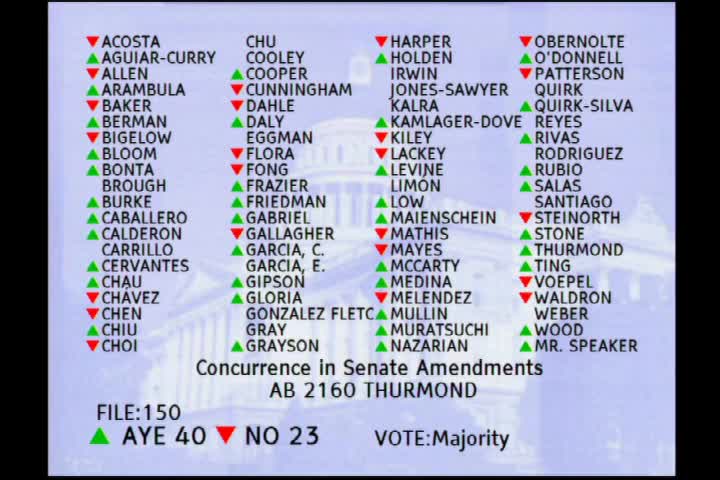
Bill Author
Bill Co-Author(s):