AB 331: County recorders: veterans: recorded documents.
- Session Year: 2017-2018
- House: Assembly
- Latest Version Date: 2017-10-02
Existing law directs the county recorder, if any military veteran or a family member or legal representative of the veteran authorized by law to receive a certified copy of specified documents requests the recordation of any military discharge document, including a veterans service form DD214, to sign a form that acknowledges that the document becomes part of the official record of the county.
This bill would remove the directive to require the veteran or authorized person sign a form acknowledging that the document becomes part of the official record of the county. The bill would instead require a county recorder, upon request by a military veteran or authorized person for recordation of a military discharge document, including the DD214, to record the document and maintain the document in a nonpublic index. The bill also would require the index of a recorded veterans service form DD214, if recorded after a certain date, to be moved to a nonpublic index at the request of the military veteran or a person authorized to receive a certified copy. The bill would permit only the military veteran or the person authorized to receive a certified copy of a record under existing law to receive a copy of the recorded document contained in the nonpublic index. By increasing the duties of local officials, this bill would impose a state-mandated local program.
Existing constitutional provisions require that a statute that limits the right of access to the meetings of public bodies or the writings of public officials and agencies be adopted with findings demonstrating the interest protected by the limitation and the need for protecting that interest.
This bill would make legislative findings to that effect.
The California Constitution requires local agencies, for the purpose of ensuring public access to the meetings of public bodies and the writings of public officials and agencies, to comply with a statutory enactment that amends or enacts laws relating to public records or open meetings and contains findings demonstrating that the enactment furthers the constitutional requirements relating to this purpose.
This bill would make legislative findings to that effect.
The California Constitution requires the state to reimburse local agencies and school districts for certain costs mandated by the state. Statutory provisions establish procedures for making that reimbursement.
This bill would provide that no reimbursement is required by this act for a specified reason.
Existing law directs the county recorder, if any military veteran or a family member or legal representative of the veteran authorized by law to receive a certified copy of specified documents requests the recordation of any military discharge document, including a veterans service form DD214, to sign a form that acknowledges that the document becomes part of the official record of the county.
This bill would remove the directive to require the veteran or authorized person sign a form acknowledging that the document becomes part of the official record of the county. The bill would instead require a county recorder, upon request by a military veteran or authorized person for recordation of a military discharge document, including the DD214, to record the document and maintain the document in a nonpublic index. The bill also would require the index of a recorded veterans service form DD214, if recorded after a certain date, to be moved to a nonpublic index at the request of the military veteran or a person authorized to receive a certified copy, as specified. copy. The bill would permit only the military veteran or the person authorized to receive a certified copy of a record under existing law to receive a copy of the recorded document contained in the nonpublic index. By increasing the duties of local officials, this bill would impose a state-mandated local program.
Existing constitutional provisions require that a statute that limits the right of access to the meetings of public bodies or the writings of public officials and agencies be adopted with findings demonstrating the interest protected by the limitation and the need for protecting that interest.
This bill would make legislative findings to that effect.
The California Constitution requires local agencies, for the purpose of ensuring public access to the meetings of public bodies and the writings of public officials and agencies, to comply with a statutory enactment that amends or enacts laws relating to public records or open meetings and contains findings demonstrating that the enactment furthers the constitutional requirements relating to this purpose.
This bill would make legislative findings to that effect.
The California Constitution requires the state to reimburse local agencies and school districts for certain costs mandated by the state. Statutory provisions establish procedures for making that reimbursement.
This bill would provide that no reimbursement is required by this act for a specified reason.
Existing law directs the county recorder, if any military veteran or a family member or legal representative of the veteran authorized by law to receive a certified copy of specified documents requests the recordation of any military discharge document, including a veterans service form DD214, to sign a form that acknowledges that the document becomes part of the official record of the county.
This bill would remove the directive to require the veteran or authorized person sign a form acknowledging that the document becomes part of the official record of the county. The bill would instead require a county recorder, upon request by a military veteran or authorized person for recordation of a military discharge document, including the DD214, to record the document and maintain the document in a nonpublic index. The bill also would require the index of a recorded veterans service form DD214, if recorded after a certain date, to be moved to a nonpublic index at the request of the military veteran or a person authorized to receive a certified copy, as specified. The bill would permit only the military veteran or the person authorized to receive a certified copy of a record under existing law to receive a copy of the recorded document contained in the nonpublic index. By increasing the duties of local officials, this bill would impose a state-mandated local program.
Existing constitutional provisions require that a statute that limits the right of access to the meetings of public bodies or the writings of public officials and agencies be adopted with findings demonstrating the interest protected by the limitation and the need for protecting that interest.
This bill would make legislative findings to that effect.
The California Constitution requires local agencies, for the purpose of ensuring public access to the meetings of public bodies and the writings of public officials and agencies, to comply with a statutory enactment that amends or enacts laws relating to public records or open meetings and contains findings demonstrating that the enactment furthers the constitutional requirements relating to this purpose.
This bill would make legislative findings to that effect.
The California Constitution requires the state to reimburse local agencies and school districts for certain costs mandated by the state. Statutory provisions establish procedures for making that reimbursement.
This bill would provide that no reimbursement is required by this act for a specified reason.
Existing law directs the county recorder, if any military veteran or a family member or legal representative of the veteran authorized by law to receive a certified copy of specified documents requests the recordation of any military discharge document, including a veterans service form DD214, to sign a form that acknowledges that the document becomes part of the official record of the county.
This bill would remove the directive to require the veteran or authorized person sign a form acknowledging that the document becomes part of the official record of the county. This The bill would instead require a county recorder, upon presentation of an updated veterans service form DD214 by any military veteran or any person authorized to receive a certified copy of certain records related to service in the armed forces to remove the previously recorded veterans service form DD214 from the record and record the updated veterans service form DD214 in its place. request by a military veteran or authorized person for recordation of a military discharge document, including the DD214, to record the document and maintain the document in a nonpublic index. The bill would additionally require a county recorder to withdraw a recorded veterans service form DD214 at the request of the military veteran or the person authorized to receive a certified copy of certain records related to service in the armed forces. also would require the index of a recorded veterans service form DD214, if recorded after a certain date, to be moved to a nonpublic index at the request of the military veteran or a person authorized to receive a certified copy, as specified. The bill would permit only the military veteran or the person authorized to receive a certified copy of a record under existing law to receive a copy of the recorded document contained in the nonpublic index. By increasing the duties of local officials, this bill would impose a state-mandated local program.
The California Constitution requires the state to reimburse local agencies and school districts for certain costs mandated by the state. Statutory provisions establish procedures for making that reimbursement.This bill would provide that no reimbursement is required by this act for a specified reason.Existing constitutional provisions require that a statute that limits the right of access to the meetings of public bodies or the writings of public officials and agencies be adopted with findings demonstrating the interest protected by the limitation and the need for protecting that interest.
This bill would make legislative findings to that effect.
The California Constitution requires local agencies, for the purpose of ensuring public access to the meetings of public bodies and the writings of public officials and agencies, to comply with a statutory enactment that amends or enacts laws relating to public records or open meetings and contains findings demonstrating that the enactment furthers the constitutional requirements relating to this purpose.
This bill would make legislative findings to that effect.
The California Constitution requires the state to reimburse local agencies and school districts for certain costs mandated by the state. Statutory provisions establish procedures for making that reimbursement.
This bill would provide that no reimbursement is required by this act for a specified reason.
Existing law requires, directs the county recorder, if any military veteran or a family member or legal representative of the veteran authorized by law to receive a certified copy of specified documents requests the recordation of any military discharge document, including a veterans service form DD214, that the county recorder require the veteran to sign a form that acknowledges that the document becomes part of the official record of the county.
This bill would remove the directive to require the veteran or authorized person sign a form acknowledging that the document becomes part of the official record of the county. This bill would instead require a county recorder, upon presentation of an updated veterans service form DD214 by any military veteran or any person authorized to receive a certified copy of certain records related to service in the armed forces to remove the previously recorded veterans service form DD214 from the record and record the updated veterans service form DD214 in its place. The bill would additionally require a county recorder to withdraw a recorded veterans service form DD214 at the request of the military veteran or the person authorized to receive a certified copy of certain records related to service in the armed forces. By increasing the duties of local officials, this bill would impose a state-mandated local program.
The California Constitution requires the state to reimburse local agencies and school districts for certain costs mandated by the state. Statutory provisions establish procedures for making that reimbursement.
This bill would provide that no reimbursement is required by this act for a specified reason.
This bill would express the intent of the Legislature to enact legislation that would revise the process for the recordation of a veterans service form DD214 to allow for a process to amend, seal, redact, or replace a recorded veterans service form DD214.Existing law requires, if any military veteran or a family member or legal representative of the veteran authorized by law to receive a certified copy of specified documents requests the recordation of any military discharge document, including a veterans service form DD214, that the county recorder require the veteran to sign a form that acknowledges that the document becomes part of the official record of the county.
This bill would express the intent of the Legislature to enact legislation that would revise the process for the recordation of a veterans service form DD214 to allow for a process to amend, seal, redact, or replace a recorded veterans service form DD214.
The Legislature finds and declares the following:
(a)The recording and preservation of documents is an inherent public good, and county clerks and recorders have a vital role in providing that service.
(b)The interest of personal privacy must always be weighed carefully against those of transparency, accountability, history, and the availability and preservation of information.
(c)The federal DD Form 214 (DD214), which is issued to each veteran upon release from United States military service, is unique among documents recorded and stored by county clerks and recorders in that it is recorded only upon request, is reliably stored and preserved at the National Personnel Records Center or National Archives, and is recorded locally only to provide redundancy, security, and convenience to veterans. Additionally, the DD214 does not require public notice as part of the recording function, and copies may only be purchased by the veteran, his or her family member, or legal representative.
(d)The privacy protections for DD214s and their owners in this act is accorded only in consideration of these unique factors.
SEC. 2.Section 27337 of the Government Code is amended to read:27337.(a)If any military veteran or any person authorized to receive a certified copy of a record pursuant to paragraph (2) of subdivision (b) of Section 6107 requests the recordation in any county in this state of any military discharge document, including a veterans service form DD214, the county recorder shall record the document and maintain the document information in a nonpublic index.
(b)No copy of a recorded military discharge document may be issued except as provided by Section 6107.
(c)The index of a recorded veterans service form DD214, provided that it was recorded on or after January 1, 1980, shall be moved to a nonpublic index at the request of the military veteran or the person authorized to receive a certified copy of a record pursuant to paragraph (2) of subdivision (b) of Section 6107.
(d)(1)Only the military veteran, or the person authorized to receive a certified copy of a record pursuant to paragraph (2) of subdivision (b) of Section 6107, may receive a copy of the recorded document contained in the nonpublic index created pursuant to subdivisions (a) and (c).
(2)Provided that the nonpublic index meets the minimum standards for protecting the confidentiality of veterans records specified in paragraph (1), the implementation and design of the nonpublic index shall otherwise be up to the discretion of the individual county recorder.
SEC. 3.The Legislature finds and declares that Section 2 of this act, which amends Section 27337 of the Government Code, imposes a limitation on the publics right of access to the meetings of public bodies or the writings of public officials and agencies within the meaning of Section 3 of Article I of the California Constitution. Pursuant to that constitutional provision, the Legislature makes the following findings to demonstrate the interest protected by this limitation and the need for protecting that interest:
This act strikes an appropriate balance between the publics right to access information and the need to protect the personal information of former members of the United States military.
SEC. 4.The Legislature finds and declares that Section 2 of this act, which amends Section 27337 of the Government Code, furthers, within the meaning of paragraph (7) of subdivision (b) of Section 3 of Article I of the California Constitution, the purposes of that constitutional section as it relates to the right of public access to the meetings of local public bodies or the writings of local public officials and local agencies. Pursuant to paragraph (7) of subdivision (b) of Section 3 of Article I of the California Constitution, the Legislature makes the following findings:
This act strikes an appropriate balance between the publics right to access information and the need to protect the personal information of former members of the United States military.
SEC. 5.No reimbursement is required by this act pursuant to Section 6 of Article XIII B of the California Constitution because the only costs that may be incurred by a local agency or school district under this act would result from a legislative mandate that is within the scope of paragraph (7) of subdivision (b) of Section 3 of Article I of the California Constitution.
The Legislature finds and declares the following:
(a)The recording and preservation of documents is an inherent public good, and county clerks and recorders have a vital role in providing that service.
(b)The interest of personal privacy must always be weighed carefully against those of transparency, accountability, history, and the availability and preservation of information.
(c)The federal DD Form 214 (DD214), which is issued to each veteran upon release from United States military service, is unique among documents recorded and stored by county clerks and recorders in that it is recorded only upon request, is reliably stored and preserved at the National Personnel Records Center or National Archives, and is recorded locally only to provide redundancy, security, and convenience to veterans. Additionally, the DD214 does not require public notice as part of the recording function, and copies may only be purchased by the veteran, his or her family member, or legal representative.
(d)The privacy protections for DD214s and their owners in this bill act is accorded only in consideration of these unique factors.
SEC. 2.Section 27337 of the Government Code is amended to read:27337.(a)If any military veteran or any person authorized to receive a certified copy of a record pursuant to paragraph (2) of subdivision (b) of Section 6107 requests the recordation in any county in this state of any military discharge document, including a veterans service form DD214, the county recorder shall record the document and maintain the document information in a nonpublic index.
(b)No copy of a recorded military discharge document may be issued except as provided by Section 6107.
(c)The index of a recorded veterans service form DD214, provided that it was recorded on or after January 1, 1980, shall be moved to a nonpublic index at the request of the military veteran or the person authorized to receive a certified copy of a record pursuant to paragraph (2) of subdivision (b) of Section 6107 who originally recorded the veterans service form DD214. 6107.
(d)(1)Only the military veteran, or the person authorized to receive a certified copy of a record pursuant to paragraph (2) of subdivision (b) of Section 6107, may receive a copy of the recorded document contained in the nonpublic index created pursuant to subdivisions (a) and (c).
(2)Provided that the nonpublic index meets the minimum standards for protecting the confidentiality of veterans records specified in paragraph (1), the implementation and design of the nonpublic index shall otherwise be up to the discretion of the individual county recorder.
SEC. 3.The Legislature finds and declares that Section 2 of this act, which amends Section 27337 of the Government Code, imposes a limitation on the publics right of access to the meetings of public bodies or the writings of public officials and agencies within the meaning of Section 3 of Article I of the California Constitution. Pursuant to that constitutional provision, the Legislature makes the following findings to demonstrate the interest protected by this limitation and the need for protecting that interest:
This act strikes an appropriate balance between the publics right to access information and the need to protect the personal information of former members of the United States military.
SEC. 4.The Legislature finds and declares that Section 2 of this act, which amends Section 27337 of the Government Code, furthers, within the meaning of paragraph (7) of subdivision (b) of Section 3 of Article I of the California Constitution, the purposes of that constitutional section as it relates to the right of public access to the meetings of local public bodies or the writings of local public officials and local agencies. Pursuant to paragraph (7) of subdivision (b) of Section 3 of Article I of the California Constitution, the Legislature makes the following findings:
This act strikes an appropriate balance between the publics right to access information and the need to protect the personal information of former members of the United States military.
SEC. 5.No reimbursement is required by this act pursuant to Section 6 of Article XIII B of the California Constitution because the only costs that may be incurred by a local agency or school district under this act would result from a legislative mandate that is within the scope of paragraph (7) of subdivision (b) of Section 3 of Article I of the California Constitution.
The Legislature finds and declares the following:
(a)The recording and preservation of documents is an inherent public good, and county clerks and recorders have a vital role in providing that service.
(b)The interest of personal privacy must always be weighed carefully against those of transparency, accountability, history, and the availability and preservation of information.
(c)The federal DD Form 214 (DD214), which is issued to each veteran upon release from United States military service, is unique among documents recorded and stored by county clerks and recorders in that it is recorded only upon request, is reliably stored and preserved at the National Personnel Records Center or National Archives, and is recorded locally only to provide redundancy, security, and convenience to veterans. Additionally, the DD214 does not require public notice as part of the recording function, and copies may only be purchased by the veteran, his or her family member, or legal representative.
(d)The privacy protections for DD214s and their owners in this bill is accorded only in consideration of these unique factors.
SEC. 2.Section 27337 of the Government Code is amended to read:27337.(a)If any military veteran or any person authorized to receive a certified copy of a record pursuant to paragraph (2) of subdivision (b) of Section 6107 requests the recordation in any county in this state of any military discharge document, including a veterans service form DD214, the county recorder shall record the document and maintain the document information in a nonpublic index.
(b)No copy of a recorded military discharge document may be issued except as provided by Section 6107.
(c)The index of a recorded veterans service form DD214, provided that it was recorded on or after January 1, 1980, shall be moved to a nonpublic index at the request of the military veteran or the person authorized to receive a certified copy of a record pursuant to paragraph (2) of subdivision (b) of Section 6107 who originally recorded the veterans service form DD214.
(d)(1)Only the military veteran, or the person authorized to receive a certified copy of a record pursuant to paragraph (2) of subdivision (b) of Section 6107, may receive a copy of the recorded document contained in the nonpublic index created pursuant to subdivisions (a) and (c).
(2)Provided that the nonpublic index meets the minimum standards for protecting the confidentiality of veterans records specified in paragraph (1), the implementation and design of the nonpublic index shall otherwise be up to the discretion of the individual county recorder.
SEC. 3.The Legislature finds and declares that Section 2 of this act, which amends Section 27337 of the Government Code, imposes a limitation on the publics right of access to the meetings of public bodies or the writings of public officials and agencies within the meaning of Section 3 of Article I of the California Constitution. Pursuant to that constitutional provision, the Legislature makes the following findings to demonstrate the interest protected by this limitation and the need for protecting that interest:
This act strikes an appropriate balance between the publics right to access information and the need to protect the personal information of former members of the United States military.
SEC. 4.The Legislature finds and declares that Section 2 of this act, which amends Section 27337 of the Government Code, furthers, within the meaning of paragraph (7) of subdivision (b) of Section 3 of Article I of the California Constitution, the purposes of that constitutional section as it relates to the right of public access to the meetings of local public bodies or the writings of local public officials and local agencies. Pursuant to paragraph (7) of subdivision (b) of Section 3 of Article I of the California Constitution, the Legislature makes the following findings:
This act strikes an appropriate balance between the publics right to access information and the need to protect the personal information of former members of the United States military.
SEC. 5.No reimbursement is required by this act pursuant to Section 6 of Article XIII B of the California Constitution because the only costs that may be incurred by a local agency or school district under this act would result from a legislative mandate that is within the scope of paragraph (7) of subdivision (b) of Section 3 of Article I of the California Constitution.
The Legislature finds and declares the following:
(a)The recording and preservation of documents is an inherent public good, and county clerks and recorders have a vital role in providing that service.
(b)The interest of personal privacy must always be weighed carefully against those of transparency, accountability, history, and the availability and preservation of information.
(c)The federal DD Form 214 (DD214), which is issued to each veteran upon release from United States military service, is unique among documents recorded and stored by county clerks and recorders in that it is recorded only upon request, is reliably stored and preserved at the National Personnel Records Center or National Archives, and is recorded locally only to provide redundancy, security, and convenience to veterans.
(d)The privacy protections for DD214s and their owners in this bill is accorded only in consideration of these unique factors.
SECTION 1.SEC. 2.Section 27337 of the Government Code is amended to read:27337.(a)If any military veteran or any person authorized to receive a certified copy of a record pursuant to paragraph (2) of subdivision (b) of Section 6107 requests the recordation in any county in this state of any military discharge document, including a veterans service form DD214, the county recorder shall record the document as a vital record. record the document and maintain the document information in a nonpublic index.
(b)No copy of a recorded military discharge document may be issued except as provided by Section 6107.
(c)Upon presentation by any military veteran or any person authorized to receive a certified copy of a record pursuant to paragraph (2) of subdivision (b) of Section 6107 of an updated veterans service form DD214, the county recorder shall remove the previously recorded veterans service form DD214 from the record and record the updated veterans service form DD214 in its place.(d)A(c)The index of a recorded veterans service form DD214 DD214, provided that it was recorded on or after January 1, 1980, shall be withdrawn moved to a nonpublic index at the request of the military veteran or the person authorized to receive a certified copy of a record pursuant to paragraph (2) of subdivision (b) of Section 6107 who originally recorded the veterans service form DD214.
(d)(1)Only the military veteran, or the person authorized to receive a certified copy of a record pursuant to paragraph (2) of subdivision (b) of Section 6107, may receive a copy of the recorded document contained in the nonpublic index created pursuant to subdivisions (a) and (c).
(2)Provided that the nonpublic index meets the minimum standards for protecting the confidentiality of veterans records specified in paragraph (1), the implementation and design of the nonpublic index shall otherwise be up to the discretion of the individual county recorder.
SEC. 3.The Legislature finds and declares that Section 2 of this act, which amends Section 27337 of the Government Code, imposes a limitation on the publics right of access to the meetings of public bodies or the writings of public officials and agencies within the meaning of Section 3 of Article I of the California Constitution. Pursuant to that constitutional provision, the Legislature makes the following findings to demonstrate the interest protected by this limitation and the need for protecting that interest:
This act strikes an appropriate balance between the publics right to access information and the need to protect the personal information of former members of the United States military.
SEC. 4.The Legislature finds and declares that Section 2 of this act, which amends Section 27337 of the Government Code, furthers, within the meaning of paragraph (7) of subdivision (b) of Section 3 of Article I of the California Constitution, the purposes of that constitutional section as it relates to the right of public access to the meetings of local public bodies or the writings of local public officials and local agencies. Pursuant to paragraph (7) of subdivision (b) of Section 3 of Article I of the California Constitution, the Legislature makes the following findings:
This act strikes an appropriate balance between the publics right to access information and the need to protect the personal information of former members of the United States military.
SEC. 5.No reimbursement is required by this act pursuant to Section 6 of Article XIII B of the California Constitution because the only costs that may be incurred by a local agency or school district under this act would result from a legislative mandate that is within the scope of paragraph (7) of subdivision (b) of Section 3 of Article I of the California Constitution.
SEC. 2.No reimbursement is required by this act pursuant to Section 6 of Article XIIIB of the California Constitution because a local agency or school district has the authority to levy service charges, fees, or assessments sufficient to pay for the program or level of service mandated by this act, within the meaning of Section 17556 of the Government Code.(a)If any military veteran or any person authorized to receive a certified copy of a record pursuant to paragraph (2) of subdivision (b) of Section 6107 requests the recordation in any county in this state of any military discharge document, including a veterans service form DD214, the county recorder shall require the person requesting the recordation to sign a form stating the following: record the document as a vital record.
(b)No copy of a recorded military discharge document may be issued except as provided by Section 6107.
(c)Upon presentation by any military veteran or any person authorized to receive a certified copy of a record pursuant to paragraph (2) of subdivision (b) of Section 6107 of an updated veterans service form DD214, the county recorder shall remove the previously recorded veterans service form DD214 from the record and record the updated veterans service form DD214 in its place.
(d)A recorded veterans service form DD214 shall be withdrawn at the request of the military veteran or the person authorized to receive a certified copy of a record pursuant to paragraph (2) of subdivision (b) of Section 6107 who originally recorded the veterans service form DD214.
SEC. 2.No reimbursement is required by this act pursuant to Section 6 of Article XIIIB of the California Constitution because a local agency or school district has the authority to levy service charges, fees, or assessments sufficient to pay for the program or level of service mandated by this act, within the meaning of Section 17556 of the Government Code.
SECTION 1.It is the intent of the Legislature to enact legislation that would revise the process for the recordation of a veterans service form DD214 to allow for a process to amend, seal, redact, or replace a recorded veterans service form DD214.It is the intent of the Legislature to enact legislation that would revise the process for the recordation of a veterans service form DD214 to allow for a process to amend, seal, redact, or replace a recorded veterans service form DD214.
|
Date
|
Status
|
|---|---|
| Oct 2, 2017 | Chaptered by Secretary of State - Chapter 399, Statutes of 2017. |
| Oct 2, 2017 | Approved by the Governor. |
| Sep 25, 2017 | Enrolled and presented to the Governor at 12 p.m. |
| Sep 14, 2017 | Senate amendments concurred in. To Engrossing and Enrolling. |
| Sep 14, 2017 | Senate amendments concurred in. To Engrossing and Enrolling. (Ayes 67. Noes 4. Page 3373.). |
| Sep 13, 2017 | Assembly Rule 77(a) suspended. |
| Sep 13, 2017 | In Assembly. Concurrence in Senate amendments pending. May be considered on or after September 15 pursuant to Assembly Rule 77. |
| Sep 12, 2017 | Read third time. Passed. Ordered to the Assembly. |
| Sep 11, 2017 | Read second time. Ordered to third reading. |
| Sep 8, 2017 | Read third time and amended. Ordered to second reading. |
| Aug 22, 2017 | Read second time. Ordered to third reading. |
| Aug 21, 2017 | From committee: Be ordered to second reading pursuant to Senate Rule 28.8. |
| Jul 12, 2017 | From committee: Do pass and re-refer to Com. on APPR. (Ayes 6. Noes 0.) (July 11). Re-referred to Com. on APPR. |
| Jun 28, 2017 | From committee: Do pass and re-refer to Com. on JUD. (Ayes 7. Noes 0.) (June 27). Re-referred to Com. on JUD. |
| Jun 19, 2017 | From committee chair, with author's amendments: Amend, and re-refer to committee. Read second time, amended, and re-referred to Com. on V.A. |
| Jun 14, 2017 | Referred to Coms. on V.A. and JUD. |
| Jun 1, 2017 | In Senate. Read first time. To Com. on RLS. for assignment. |
| May 31, 2017 | Read third time. Passed. Ordered to the Senate. (Ayes 68. Noes 3. Page 1888.) |
| May 25, 2017 | Read second time. Ordered to third reading. |
| May 24, 2017 | From committee: Do pass. (Ayes 13. Noes 1.) (May 24). |
| May 23, 2017 | Re-referred to Com. on APPR. |
| May 22, 2017 | From committee chair, with author's amendments: Amend, and re-refer to Com. on APPR. Read second time and amended. |
| Apr 20, 2017 | From committee: Do pass and re-refer to Com. on APPR. (Ayes 8. Noes 0.) (April 19). Re-referred to Com. on APPR. |
| Mar 22, 2017 | Re-referred to Com. on L. GOV. |
| Mar 21, 2017 | From committee chair, with author's amendments: Amend, and re-refer to Com. on L. GOV. Read second time and amended. |
| Mar 20, 2017 | Referred to Com. on L. GOV. |
| Feb 8, 2017 | From printer. May be heard in committee March 10. |
| Feb 7, 2017 | Read first time. To print. |
|
Date
|
Description
|
Location
|
Votes
|
|
|---|---|---|---|---|
| Sep 14, 2017 | AB 331 EGGMAN Concurrence in Senate Amendments | Assembly Floor |
Passed |
|
| Sep 12, 2017 | Assembly 3rd Reading AB331 Eggman et al. By Roth | Senate Floor |
Passed |
|
| Jul 11, 2017 | Do pass, but first be re-referred to the Committee on [Appropriations] | Senate Standing Committee on Judiciary |
Passed |
|
| Jun 27, 2017 | Do pass, but first be re-referred to the Committee on [Judiciary] | Senate Standing Committee on Veterans Affairs |
Passed |
|
| May 31, 2017 | AB 331 EGGMAN Assembly Third Reading By GLORIA | Assembly Floor |
Passed |
|
| May 24, 2017 | Do pass. | Assembly Standing Committee on Appropriations |
Passed |
|
| Apr 19, 2017 | Do pass and be re-referred to the Committee on [Appropriations] | Assembly Standing Committee on Local Government |
Passed |
This list shows positions taken on this bill by organizations on the date displayed, which is linked to the original source.
Positions by individuals are not included.
|
Organization
|
Position
|
Date
|
|---|---|---|
| Equality California | ** Support | Sep 9, 2017 |
| Transgender Law Center | ** Support | Sep 9, 2017 |
CONCURRENCE IN SENATE AMENDMENTS
CSA1 Bill Id:AB 331
Author:(Eggman and Gloria)
As Amended Ver:September 8, 2017
Majority vote
ASSEMBLY: | 68-3 | (May 31, 2017) | SENATE: | 40-0 | (September 12, 2017) |
Original Committee Reference: L. GOV.
SUMMARY: Requires county recorders to record any military discharge document, including a veteran's service form DD214 (DD214), and maintain it in a nonpublic index.
The Senate amendments:
- Find and declare that a DD214 does not require public notice as part of the recording function, and copies may only be purchased by the veteran, his or her family member, or legal representative.
- Make technical and clarifying changes.
- Add a joint author.
EXISTING LAW:
- Allows county recorders to use recording techniques, such as microphotography or optical disk, that do not permit additions, deletions, or changes to the original documents to record documents.
- Requires that a true copy of a recorded document be kept in a safe and separate place that will reasonably assure its preservation.
- Allows veterans or authorized persons to record military records with county recorders.
- Prohibits any public entity, or any officer or employee thereof, from demanding or receiving compensation for recording, indexing, or issuing certified copies of specified documents related to service in the Armed Forces of the United States.
- Allows any person to access official documents recorded with county recorders.
- Requires veterans who record a DD214 to sign an acknowledgement that recorded documents are public record and are accessible by anyone as such.
- Permits a family member or legal representative of a veteran to request recordation of military discharge documents.
- Provides, pursuant to the California Public Records Act of 1968, that public records of state and local agencies are open for inspection at all times during agency office hours, and that every person has a right to inspect any public record except as provided in the act.
AS PASSED BY THE ASSEMBLY, this bill:
- Required county recorders to record and maintain any military discharge document, including a DD214, in a nonpublic index.
- Removed a requirement that a veteran or authorized person submitting a DD214 form to the county recorder sign a form acknowledging that the document will become an official record of the county and is open to inspection by any person.
- Required that the index of a DD214 recorded on or after January 1, 1980 be moved to a nonpublic index upon request of the military veteran or authorized persons.
- Authorized only the military veteran or authorized persons, as specified, to receive a copy of any military discharge document contained in a nonpublic index.
- Allowed individual county recorder discretion of the implementation and design of the nonpublic index, provided it meets minimum confidentiality protection standards, as specified.
Made the following findings and declarations:
Recognized that the recording and preservation of documents is an inherent public good, and county clerks and recorders have a vital role in providing that service.
Specified that the interest of personal privacy must always be weighed carefully against those of transparency, accountability, history, and the availability and preservation of information.
Stated that the DD214 is unique among documents recorded and stored by county clerks and recorders in that it is recorded only upon request, is reliably stored and preserved at the National Personnel Records Center or National Archives, and is recorded locally only to provide redundancy, security, and convenience to veterans.
Stated that the privacy protections for DD214s and their owners in this bill are accorded only inconsideration of the unique factors specified above.
- Found and declared that Section 2 of this bill imposes a limitation on the public's right of access to the meetings of public bodies or writings of public officials and agencies within the meaning of the California Constitution Section 3 of Article I, and declares pursuant to that constitutional provision, that the Legislature makes the following findings:
This act strikes an appropriate balance between the public's right to access information and the need to protect personal information of former members of the United States military.
- Found and declared that Section 2 of this bill furthers, within the meaning of paragraph (7) of the California Constitution subdivision (b) of Section 3 of Article I, the purposes of that constitutional section as it relates to the right of public access to the meetings of local public bodies or the writings of local public officials and local agencies, and declares, pursuant to the California Constitution, Article I, Section 3(b), paragraph 7, that the Legislature makes the following findings:
This act strikes an appropriate balance between the public's right to access information and the need to protect personal information of former members of the United States military.
Provided that no reimbursement is required for this service because a local agency or school district has the authority to levy service charges, fees, or assessments.
FISCAL EFFECT: According to the Senate Appropriations Committee, pursuant to Senate Rule 28.8, negligible state costs.
COMMENTS:
- Bill Summary. This bill would require a county recorder to record any military discharge document, including a DD214, and maintain the document information in a nonpublic index. Additionally, it requires a county recorder to move, upon request of the military veteran or authorized person, a previously recorded DD214 form to a confidential index, provided the document was recorded on or after January 1, 1980. This bill allows individual county recorders’ offices discretion on the implementation and design of the nonpublic index, provided it meets the standards for privacy protection. This bill is sponsored by the author.
- Author's Statement. According to the author, "With the Department of Defense having lifted the ban on military service by transgender men and women, the state of California should be leading the way on stateside implementation. The recording of DD214s at County Clerk-Recorders is a convenience offered to veterans – whose records are kept by the federal government – who are frequently called upon to provide documentation of their military service, and who benefit from the security and convenience of their records being stored locally by a public agency. However, through a quirk in state law and county clerk practice, we are actually permanently and publicly recording the records of some transgender veterans with their gender assigned at birth. We do this despite the Department of Defense having adopted a process allowing military records to be changed for both gender and name updates. This is an entirely unintended consequence of how DD214s are recorded by clerks – similarly to how property records are recorded, rather than the way other vital records are recorded. Instead, California should respect gender identity and transgender service by simply allowing these records to be kept in a manner that protects the privacy of veterans."
- Background. DD214 forms are issued to members of the Armed Forces of the United States upon their retirement, separation, or discharge from active duty. The forms detail a veteran’s name, branch of the military, social security number, date of birth, and blood type, among other things. These forms can then be used to secure veteran benefits after service. Some veterans choose to record their DD214 forms with a county recorder for preservation. Recording a document with the county recorder is an optional service that a veteran may pursue to ensure that if a DD214 form is lost or damaged, the veteran or their family members can retrieve it later to secure benefits. Pursuant to the California Public Records Act of 1968, all specified records, including official records, are public documents. Under current law, DD214 forms are official records of the county and are therefore available to the public. When documents are recorded as an official record, there are risks for potential identity theft, particularly for forms that contain sensitive information, such as social security numbers. SB 544 (Chesbro), Chapter 301, Statutes of 2003, sought to address these issues by requiring veterans to sign an acknowledgement that, once recorded, the DD214 form would become public record and available for inspection by anyone.
- Challenges for People Who are Transgender. Although the author did not produce specific examples of the DD214 form of a veteran who is transgender being retrieved for malicious purposes, public and state discrimination against people who are transgender is well documented.
In 2016, the Department of Defense repealed regulations that explicitly banned people who are transgender from serving in the military. However, in July 2017, President Trump announced via series of tweets on Twitter that another transgender ban would be put in place again. Details about the ban are forthcoming.
Currently, federal law allows for a veteran to correct their military records when it is necessary to rectify an error or to remove an injustice. A veteran who is transgender may choose to update their incorrect DD214 forms for a number of reasons, such as to align their name with their gender identity, or to avoid further social stigma and discrimination when presenting their military forms to receive benefits.
- Recording Process in California. Recording a document with a county recorder's office ensures the preservation of documents for future use. Residents may optionally record documents that are specified by law to ensure their preservation.
There are two categories of documents handled by the county recorder's office, official and vital records. Official records are documents that are available to the public, such as property deeds and military discharge forms. For example, veterans recording their DD214 forms are required by state law to sign an acknowledgement that, once recorded, the document becomes a part of the official record of the county and is therefore available to the public. Vital records, such as birth and death certificates, are only available to authorized individuals or agencies.
When a county recorder's office receives an official or a vital document to record, the document is scanned and returned to the applicant within three days. A copy of the document is kept at the county recorder's office and indexed with other records, and an additional copy is sent to be stored at an offsite storage unit in order to ensure preservation. These documents are recorded by the time and date they were received, not by the type of file. The physical location of these documents can later be found by searching through an office's index.
The index is a file created by county recorders that allows anyone to search for the document, rather than needing to search through all documents received by time. The index is accessible both online and in-person at the recorder's office. The index does not show the recorded document – rather, it shows the location of the document, such as date recorded, the book it is recorded in, and the page number. To access the physical document recorded, an individual would need to determine a document's physical location from the index and visit the county recorder’s office to see the page.
- Arguments in Support. None on file.
- Arguments in Opposition. None on file.
Analysis Prepared by: Kim Kollwitz / L. GOV. / (916) 319-3958 FN: 0002268
Office of Senate Floor Analyses (916) 651-1520 Fax: (916) 327-4478 | AB |
THIRD READING
Bill No: AB 331
:
SENATE VETERANS AFFAIRS COMMITTEE: 7-0, 6/27/17
AYES: Newman, Nielsen, Dodd, Hueso, Nguyen, Roth, Wilk
SENATE JUDICIARY COMMITTEE: 6-0, 7/11/17
AYES: Jackson, Anderson, Hertzberg, Monning, Stern, Wieckowski
NO VOTE RECORDED: Moorlach
SENATE APPROPRIATIONS COMMITTEE: Senate Rule 28.8
ASSEMBLY FLOOR: 68-3, 5/31/17 - See last page for vote
DIGEST:
This bill requires county recorders to establish nonpublic indexes in which they shall record and maintain military discharge documents filed by veterans and other authorized persons, and also allows veterans and other authorized persons, who have discharge documents recorded on or after January 1, 1980, to request such documents be moved to a nonpublic index.
Senate Floor Amendments of 9/8/17 remove a requirement that an authorized person, for the purpose of requesting a discharge document be moved to a nonpublic index, also must be the same person who originally recorded the form.
Existing law:
- Allows county recorders to use recording techniques, such as microphotography or optical disk, that do not permit additions, deletions, or changes to the original documents to record documents.
- Requires that a true copy of a recorded document be kept in a safe and separate place that will reasonably assure its preservation.
- Allows veterans or authorized persons to record military records with county recorders.
- Prohibits any public entity, or any officer or employee thereof, from demanding or receiving compensation for recording, indexing, or issuing certified copies of specified documents related to service in the Armed Forces of the United States.
- Allows any person to access official documents recorded with county recorders.
- Requires veterans who record a DD 214 to sign an acknowledgement that recorded documents are public record and are accessible by anyone as such.
- Permits a family member or legal representative of a veteran to request recordation of military discharge documents.
This bill:
- Makes legislative findings and declarations:
- Recording and preservation of documents is an inherent good and county clerks and recorders play a vital role in providing that service.
- The interest of personal privacy must be weighed against those of transparency, accountability, history, and the availability and preservation of information.
- The DD 214, the discharge document issued to each veteran upon separation from the active military, is unique among the documents recorded and stored by county clerks and recorders for specified reasons.
- The privacy protections afforded for DD 214s and their owners in this bill is accorded only in consideration of the above factors.
- Requires county recorders to record and maintain any military discharge document, including a DD 214, in a nonpublic index.
- Removes a requirement that a veteran or authorized person submitting a DD 214 form to the county recorder sign a form acknowledging that the document will become an official record of the county and is open to inspection by any person.
- Requires that the index of a DD 214 recorded on or after January 1, 1980, be moved to a nonpublic index upon request of the military veteran or authorized persons.
- Authorizes only the military veteran or authorized persons, as specified, to receive a copy of any military discharge document contained in a nonpublic index.
- Allows individual county recorder discretion of the implementation and design of the nonpublic index, provided it meets minimum confidentiality protection standards, as specified.
Background
Military separation documents. Typically, the military issues a Report of Separation when a member of the Armed Forces concludes a period of qualifying Title 10 active duty service. The Report of Separation contains information normally needed to verify military service for nearly all veterans benefits, retirement, employment and membership in veterans' organizations. Since 1950, the Report of Separation form issued is the DD 214 (Certificate of Release or Discharge from Active Duty.) Information shown on the DD 214 includes the service member's:
- Date and place of entry into active duty.
- Home address at time of entry.
- Date and place of release from active duty.
- Home address after separation.
- Last duty assignment and rank.
- Military job specialty.
- Military education.
- Decorations, medals, badges, citations and campaign awards received.
- Total creditable service.
- Foreign service credited.
- Separation information (date and type of separation, character of service, authority and reason for separation and separation and reenlistment eligibility codes).
Access and Privacy Concerns. The United States Department of Veterans Affairs (USDVA) does not maintain records of veterans’ military service, except as is necessary for providing benefits. Historically, the VA advised veterans to record their discharge paperwork as a method of safe keeping. Otherwise veterans must go through the Military Personnel Records Center in St. Louis, which is part of the National Archives and Records Administration. The Center responds to over 1.4 million requests annually for copies of military personnel and medical records. Only the military veterans themselves, or their next-of-kin, can request discharge documents. The information contained therein is otherwise subject to access restrictions, and only limited information may be released to the general public. Military discharge documents at the National Archives become archival and open to the public 62 years after the relevant separation.
In response to concerns regarding the privacy and safety of information in publicly recorded discharge documents, Section 27337 was added to the Government Code. It mandated county recorders require veterans to make a written acknowledgement that by recording military discharge documents, the information referenced therein becomes part of the official record and is open to inspection by the public.
Related/Prior Legislation
AB 778 (Maienschein, Chapter 84, Statutes of 2015) allowed county recorders to provide certified copies of military discharge documents, when those documents are requested using any of the following methods: In writing (mail); facsimile machine (fax); digitized image (email).
AB 2215 (Maienschein, Chapter 651, Statutes of 2014) allowed a family member or a legal representative of a military veteran to request county recordation of that veteran's military discharge document, and required such persons to sign a specified statement when doing so.
AB 464 (Daly, Chapter 78, Statutes of 2013) allowed requests for vital records (birth, death and marriage certificates) to be made using digitized images, among other provisions.
AB 1179 (Parra, Chapter 6, Statutes of 2004) prohibited county recorders from providing certified copies of military discharge documents except to specified persons, and allowed county recorders to issue certified copies of military discharge documents when requested in writing or via fax, as specified.
FISCAL EFFECT: Appropriation: No Fiscal Com.: Yes Local: Yes
Equality California
Transgender Law Center
None received
ASSEMBLY FLOOR: 68-3, 5/31/17
AYES: Acosta, Aguiar-Curry, Arambula, Baker, Berman, Bloom, Bocanegra, Bonta, Burke, Caballero, Calderon, Cervantes, Chau, Chávez, Chen, Chiu, Chu, Cooley, Cooper, Cunningham, Dababneh, Daly, Flora, Frazier, Friedman, Cristina Garcia, Eduardo Garcia, Gipson, Gloria, Gomez, Gonzalez Fletcher, Gray, Grayson, Holden, Irwin, Jones-Sawyer, Kalra, Lackey, Levine, Limón, Low, Maienschein, Mathis, Mayes, McCarty, Medina, Mullin, Muratsuchi, Nazarian, Obernolte, O'Donnell, Quirk, Quirk-Silva, Reyes, Ridley-Thomas, Rodriguez, Rubio, Salas, Santiago, Steinorth, Mark Stone, Thurmond, Ting, Voepel, Waldron, Weber, Wood, Rendon
NOES: Brough, Gallagher, Harper
NO VOTE RECORDED: Travis Allen, Bigelow, Choi, Dahle, Eggman, Fong, Kiley, Melendez, Patterson
9/9/17 16:06:28
**** END ****
Office of Senate Floor Analyses (916) 651-1520 Fax: (916) 327-4478 | AB |
THIRD READING
Bill No: AB 331
:
SENATE VETERANS AFFAIRS COMMITTEE: 7-0, 6/27/17
AYES: Newman, Nielsen, Dodd, Hueso, Nguyen, Roth, Wilk
SENATE JUDICIARY COMMITTEE: 6-0, 7/11/17
AYES: Jackson, Anderson, Hertzberg, Monning, Stern, Wieckowski
NO VOTE RECORDED: Moorlach
SENATE APPROPRIATIONS COMMITTEE: Senate Rule 28.8
ASSEMBLY FLOOR: 68-3, 5/31/17 - See last page for vote
DIGEST:
This bill requires county recorders to establish nonpublic indexes in which they shall record and maintain military discharge documents filed by military veterans and other authorized persons, and also allows veterans and other authorized persons, who have military discharge documents recorded on or after January 1, 1980, to request such documents be moved to a nonpublic index.
Existing law:
- Allows county recorders to use recording techniques, such as microphotography or optical disk, that do not permit additions, deletions, or changes to the original documents to record documents.
- Requires that a true copy of a recorded document be kept in a safe and separate place that will reasonably assure its preservation.
- Allows veterans or authorized persons to record military records with county recorders.
- Prohibits any public entity, or any officer or employee thereof, from demanding or receiving compensation for recording, indexing, or issuing certified copies of specified documents related to service in the Armed Forces of the United States.
- Allows any person to access official documents recorded with county recorders.
- Requires veterans who record a DD 214 to sign an acknowledgement that recorded documents are public record and are accessible by anyone as such.
- Permits a family member or legal representative of a veteran to request recordation of military discharge documents.
This bill:
- Makes legislative findings and declarations:
- Recording and preservation of documents is an inherent good and county clerks and recorders play a vital role in providing that service.
- The interest of personal privacy must be weighed against those of transparency, accountability, history, and the availability and preservation of information.
- The DD 214, the discharge document issued to each veteran upon separation from the active military, is unique among the documents recorded and stored by county clerks and recorders for specified reasons.
- The privacy protections afforded for DD 214s and their owners in this bill is accorded only in consideration of the above factors.
- Requires county recorders to record and maintain any military discharge document, including a DD 214, in a nonpublic index.
- Removes a requirement that a veteran or authorized person submitting a DD 214 form to the county recorder sign a form acknowledging that the document will become an official record of the county and is open to inspection by any person.
- Requires that the index of a DD 214 recorded on or after January 1, 1980, be moved to a nonpublic index upon request of the military veteran or authorized persons.
- Authorizes only the military veteran or authorized persons, as specified, to receive a copy of any military discharge document contained in a nonpublic index.
- Allows individual county recorder discretion of the implementation and design of the nonpublic index, provided it meets minimum confidentiality protection standards, as specified.
Background
Military separation documents. Typically, the military issues a Report of Separation when a member of the Armed Forces concludes a period of qualifying Title 10 active duty service. The Report of Separation contains information normally needed to verify military service for nearly all veterans benefits, retirement, employment and membership in veterans' organizations. Since 1950, the Report of Separation form issued is the DD 214 (Certificate of Release or Discharge from Active Duty.) Information shown on the DD 214 includes the service member's:
- Date and place of entry into active duty.
- Home address at time of entry.
- Date and place of release from active duty.
- Home address after separation.
- Last duty assignment and rank.
- Military job specialty.
- Military education.
- Decorations, medals, badges, citations and campaign awards received.
- Total creditable service.
- Foreign service credited.
- Separation information (date and type of separation, character of service, authority and reason for separation and separation and reenlistment eligibility codes).
Access and Privacy Concerns. The United States Department of Veterans Affairs (USDVA) does not maintain records of veterans’ military service, except as is necessary for providing benefits. Historically, the VA advised veterans to record their discharge paperwork as a method of safe keeping. Otherwise veterans must go through the Military Personnel Records Center in St. Louis, which is part of the National Archives and Records Administration. The Center responds to over 1.4 million requests annually for copies of military personnel and medical records. Only the military veterans themselves, or their next-of-kin, can request discharge documents. The information contained therein is otherwise subject to access restrictions, and only limited information may be released to the general public. Military discharge documents at the National Archives become archival and open to the public 62 years after the relevant separation.
In response to concerns regarding the privacy and safety of information in publicly recorded discharge documents, Section 27337 was added to the Government Code. It mandated county recorders to require veterans to make a written acknowledgement that by recording military discharge documents, the information referenced therein becomes part of the official record and is open to inspection by the public.
Related/Prior Legislation
AB 778 (Maienschein, Chapter 84, Statutes of 2015) allowed county recorders to provide certified copies of military discharge documents, when those documents are requested using any of the following methods: In writing (mail); facsimile machine (fax); digitized image (email).
AB 2215 (Maienschein, Chapter 651, Statutes of 2014) allowed a family member or a legal representative of a military veteran to request county recordation of that veteran's military discharge document, and required such persons to sign a specified statement when doing so.
AB 464 (Daly, Chapter 78, Statutes of 2013) allowed requests for vital records (birth, death and marriage certificates) to be made using digitized images, among other provisions.
AB 1179 (Parra, Chapter 6, Statutes of 2004) prohibited county recorders from providing certified copies of military discharge documents except to specified persons, and allowed county recorders to issue certified copies of military discharge documents when requested in writing or via fax, as specified.
FISCAL EFFECT: Appropriation: No Fiscal Com.: Yes Local: Yes
None received
OPPOSITION: (Verified 8/21/17)
None received
ASSEMBLY FLOOR: 68-3, 5/31/17
AYES: Acosta, Aguiar-Curry, Arambula, Baker, Berman, Bloom, Bocanegra, Bonta, Burke, Caballero, Calderon, Cervantes, Chau, Chávez, Chen, Chiu, Chu, Cooley, Cooper, Cunningham, Dababneh, Daly, Flora, Frazier, Friedman, Cristina Garcia, Eduardo Garcia, Gipson, Gloria, Gomez, Gonzalez Fletcher, Gray, Grayson, Holden, Irwin, Jones-Sawyer, Kalra, Lackey, Levine, Limón, Low, Maienschein, Mathis, Mayes, McCarty, Medina, Mullin, Muratsuchi, Nazarian, Obernolte, O'Donnell, Quirk, Quirk-Silva, Reyes, Ridley-Thomas, Rodriguez, Rubio, Salas, Santiago, Steinorth, Mark Stone, Thurmond, Ting, Voepel, Waldron, Weber, Wood, Rendon
NOES: Brough, Gallagher, Harper
NO VOTE RECORDED: Travis Allen, Bigelow, Choi, Dahle, Eggman, Fong, Kiley, Melendez, Patterson
8/23/17 11:02:35
**** END ****
Senator Hannah-Beth Jackson, Chair
2017-2018 Regular Session
Bill No: AB 331 (Author:Eggman)
Version: June 19, 2017
Hearing Date: July 11, 2017
Fiscal: Yes
Urgency: No
Consultant: CK
SUBJECT
County recorders: veterans: recorded documents
DESCRIPTION
This bill would require county recorders to establish nonpublic indexes in which they shall record and maintain military discharge documents filed by military veterans and other authorized persons. This bill would allow veterans and other authorized persons who have recorded discharge documents on or after January 1, 1980, to request such documents be moved to a nonpublic index. Only veterans or other authorized persons, as specified, would be permitted to receive a copy of the recorded military discharge paperwork contained in the nonpublic indexes established by this bill.
BACKGROUND
A report of separation is generally issued when a service member performs active duty or at least 90 consecutive days of active duty training. The report generally contains information normally needed to verify military service for benefits, retirement, employment, and membership in veterans’ organizations. Information shown on the Report of Separation may include the service member’s:
- name and social security number;
- date and place of entry into active duty;
- home address at time of entry;
- date and place of release from active duty;
- home address after separation;
- last duty assignment and rank;
- military job specialty;
- military education;
- decorations, medals, badges, citations, and campaign awards received;
- total creditable service;
- foreign service credited; and/or
- separation information (date and type of separation, character of service, authority and reason for separation and separation and reenlistment eligibility codes).
The most common report of separation is the DD Form 214 (DD214).
The Department of Veterans Affairs (VA) does not maintain records of veterans’ military service, except as is necessary for providing benefits. Historically, the VA advised veterans to record their discharge paperwork as a method of safe keeping. Otherwise veterans must go through the Military Personnel Records Center in St. Louis, which is part of the National Archives and Records Administration. The Center responds to over 1.4 million requests annually for copies of military personnel and medical records. Only the military veterans themselves, or their next-of-kin, can request discharge documents. The information contained therein is otherwise subject to access restrictions, and only limited information may be released to the general public. Military discharge documents at the National Archives become archival and open to the public 62 years after the relevant separation.
In response to concerns regarding the privacy and safety of information in publicly recorded discharge documents, Section 27337 was added to the Government Code. It mandated county recorders to require veterans to make a written acknowledgement that by recording military discharge documents, the information referenced therein becomes part of the official record and is open to inspection by the public. This bill would allow previously recorded discharge documents to be moved to nonpublic indexes at the request of the veteran or other authorized persons who recorded the documents. Going forward, county recorders would be required to record such documents and maintain them in a nonpublic index. This bill would allow only the veterans themselves, or other authorized persons, to receive copies of the military discharge documents. This bill passed out of the Senate Veterans Affairs Committee on a 7-0 vote.
CHANGES TO EXISTING LAW
Existing law, the California Constitution, declares the people have the right of access to information concerning the conduct of the people’s business, and therefore, the meetings of public bodies and the writings of public officials and agencies shall be open to public scrutiny. (Cal. Const., art. I, Sec. 3.)
Existing law provides individuals an express right to privacy specifically designed to “prevent government ... from collecting and stockpiling unnecessary information about us and misusing information gathered for one purpose in order to serve another purpose.” (Cal. Const., art. I., Sec. 1; White v. Davis (1975) 13 Cal.3d 757, 774.)
Existing law, the California Public Records Act (CPRA), governs the disclosure of information collected and maintained by public agencies. (Gov. Code Sec. 6250 et seq.) Generally, all public records are accessible to the public upon request, unless the record requested is exempt from public disclosure. (Gov. Code Sec. 6254.) There are 30 general categories of documents or information that are exempt from disclosure, essentially due to the character of the information, and unless it is shown that the public’s interest in disclosure outweighs the public’s interest in non-disclosure of the information, the exempt information may be withheld by the public agency with custody of the information. (Gov. Code Sec. 6254 et seq.)
Existing law prohibits a public entity from demanding or receiving any fee or compensation for doing any of the following:
- recording, indexing, or issuing certified copies of any discharge, certificate of service, certificate of satisfactory service, notice of separation, or report of separation of any member of the Armed Forces of the United States;
- furnishing a certified copy of, or searching for, any public record that is to be used in an application or claim for a pension, allotment, allowance, compensation, insurance, or any other benefits under any act of Congress for service in the Armed Forces of the United States or under any law of this state relating to veterans’ benefits;
- furnishing a certified copy of, or searching for, any public record that is required by the Veterans Administration to be used in determining the eligibility of any person to participate in benefits made available by the Veterans Administration; and
- rendering any other service in connection with an application or claim referred to above. (Gov. Code Sec. 6107(a).)
Existing law provides that a certified copy of any record referred to in subdivision (a) of Section 6107 of the Government Code may be made available only to one of the following:
- the person who is the subject of the record upon presentation of proper photo identification;
- a family member or legal representative of the person who is the subject of the record upon presentation of proper photo identification and certification of their relationship to the subject of the record;
- a state, county, or city office that provides veterans’ benefits services upon written request of that office; or
- a United States official upon written request of that official. A public officer or employee is liable on his or her official bond for failure or refusal to render the services. (Gov. Code Sec. 6107(b).)
Existing law provides that if any military veteran, or a family member or legal representative of the veteran, as specified, requests the recordation in any county in this state of any military discharge document, including a veteran’s service form DD214, the county recorder shall require the person requesting the recordation to sign a form stating the following:
“I, the undersigned, hereby acknowledge that I am informed that by recording the attached military discharge document, all information referenced within it becomes part of the official record of this county, and that this information is open to inspection by any person.” (Gov. Code Sec. 27337(a).)
Existing law provides that no copy of a recorded military discharge document may be issued except as provided by Section 6107 of the Government Code. (Gov. Code Sec. 27337(b).)
This bill would provide that if any military veteran, or a family member or legal representative of the veteran, as specified, requests the recordation in any county in this state of any military discharge document, including a veteran’s service form DD214, the county recorder must record the document and maintain the document information in a nonpublic index.
This bill would provide that the index of a recorded veteran’s service form DD214, recorded on or after January 1, 1980, shall be moved to a nonpublic index at the request of the military veteran or a family member or legal representative of the veteran, as specified, who originally recorded the veteran’s service form DD214.
This bill would provide that only the military veteran, or a family member or legal representative of the veteran, as specified, may receive a copy of the recorded document contained in the nonpublic index. The implementation and design of the nonpublic index is otherwise left to the discretion of the county recorder.
Existing law, the California Constitution, requires that a statute that limits the right of access to the meetings of public bodies or the writings of public officials and agencies be adopted with findings demonstrating the interest protected by the limitation and the need for protecting that interest. (Cal. Const., art. 1, Sec. 3.)
Existing law, the California Constitution, requires local agencies to comply with a statutory enactment that amends or enacts laws relating to public records or open meetings and contains findings demonstrating that the enactment furthers the purpose of ensuring public access to the meetings of public bodies and the writings of public officials and agencies. (Cal. Const., art. 1, Sec. 3.)
This bill would make legislative findings as required by the California Constitution.
COMMENT
1. Stated need for the bill
According to the author:
With the Department of Defense having lifted the ban on military service by transgender men and women, California should lead the way in implementation. The recording of DD214s by County Recorders is a convenience to veterans. However, through a quirk in law and practice, we are permanently recording the records of some transgender veterans with their gender assigned at birth, and keeping them accessible to the public. We do this despite the Department of Defense allowing military records to be changed for both gender and name updates. This is an entirely unintended consequence of how DD214s are treated – similarly to property records, rather than vital records. Instead, California should respect gender identity and transgender service by simply allowing for privacy of these records.
2. Restricting public access to military discharge documentation
SB 544 (Chesbro, Ch. 301, Stats. 2003) required veterans to sign an acknowledgement that, once recorded, a DD214, or other military discharge document, would become public record and available for inspection by anyone. This Committee’s analysis of an earlier version of SB 544 highlighted the risks associated with public recordation of DD214s and other discharge paperwork. That analysis indicates that historically, former military personnel had been advised to record their military discharge documents, such as DD214s, with the county recorder in case the original is lost. The recording of such documents has no legal effect and confers no legal benefits outside of this convenience.
This Committee’s analysis of SB 544 also indicates there were reports of many instances of theft of veterans’ identities and information that identity thieves were targeting recorded military discharge documents because of the personal identifying information found therein. SB 544 was passed in order to ensure that veterans recording such documents were on notice of the attendant risks.
This bill would amend the statute to now allow these documents to be kept confidential and exempt from disclosure. All military discharge documents recorded on or after the effective date of this legislation would be kept on nonpublic indexes. For those discharge documents already recorded on or after January 1, 1980, veterans or other authorized persons who recorded those documents could request the documents be moved to a nonpublic index. This step into nonpublic indexes was contemplated by the Legislature when SB 544 was being analyzed. This bill would allow only veterans or other authorized persons to access recorded military discharge documents maintained in nonpublic indexes pursuant to this bill. This bill would include legislative findings justifying the restrictions on access to these documents:
This act strikes an appropriate balance between the public’s right to access information and the need to protect the personal information of former members of the United States Military.
3. Protecting transgender veterans
In 2011, the United States military ended its discrimination based on sexuality. A little more than one year ago, it lifted its ban on transgender service members. The secretary of a military department is authorized to change any military record when necessary to correct an error or remove an injustice. Transgender veterans therefore have the ability to request name changes on their military discharge documents.
The National Transgender Discrimination Survey indicates that 20 percent of transgender adults are veterans who have served in the military at some point. Although DD214s and other forms of military discharge documents do not identify gender, they do list the names of veterans. The National Center for Transgender Equality indicates that records with former names can compromise the privacy of transgender veterans and lead to harassment and discrimination. There is ample research indicating discrimination is pervasive throughout the transgender community.
The impetus of this bill is to protect transgender veterans by allowing transgender veterans to remove previously recorded military discharge documents from public indexes and to record such documents on nonpublic indexes going forward.
Support: None Known
Opposition: None Known
HISTORY
Source: Author
Related Pending Legislation: None Known
Prior Legislation:
AB 778 (Maienschein, Ch. 84, Stats. 2015) allows county recorders to provide certified copies of military discharge documents, when those documents are requested in writing by fax, or by digitized image.
AB 2215 (Maienschein, Ch. 651, Stats. 2014) allows a family member or a legal representative of a military veteran to request county recordation of that veteran’s military discharge document, and required such persons to sign a specified statement when doing so.
AB 1179 (Parra, Ch. 6, Stats. 2004) prohibits county recorders from providing certified copies of military discharge documents except to specified persons, and allowed county recorders to issue certified copies of military discharge documents when requested in writing or by fax, as specified.
SB 544 (Chesbro, Ch. 301, Stats. 2003) See Comment 2.
Prior Vote:
Senate Veterans Affairs Committee (Ayes 7, Noes 0)
Assembly Floor (Ayes 68, Noes 3)
Assembly Appropriations Committee (Ayes 13, Noes 1)
Assembly Local Government Committee (Ayes 8, Noes 0)
**************
SENATE COMMITTEE ON VETERANS AFFAIRS
Senator Josh Newman, Chair
2017 - 2018 Regular
Bill No: AB 331 Hearing Date: 6/27/17
Author: | |||
Version: | 6/19/17 Amended | ||
Urgency: | No | Fiscal: | Yes |
Consultant: | Wade Cooper Teasdale | ||
Subject: County recorders: veterans: recorded documents
DESCRIPTION
Summary:
Requires county clerks and recorders to remove a veteran’s previously recorded federal form DD 214 form from the record and replace it with an updated DD 214 upon presentation of an updated DD 214 form.
Existing law:
- Allows county recorders to use recording techniques, such as microphotography or optical disk, that do not permit additions, deletions, or changes to the original documents to record documents.
- Requires that a true copy of a recorded document be kept in a safe and separate place that will reasonably assure its preservation.
- Allows veterans or authorized persons to record military records with county recorders.
- Prohibits any public entity, or any officer or employee thereof, from demanding or receiving compensation for recording, indexing, or issuing certified copies of specified documents related to service in the Armed Forces of the United States.
- Allows any person to access official documents recorded with county recorders.
- Requires veterans who record a DD 214 to sign an acknowledgement that recorded documents are public record and are accessible by anyone as such.
- Permits a family member or legal representative of a veteran to request recordation of military discharge documents.
This bill:
- Makes legislative findings and declarations:
- Recording and preservation of documents is an inherent good and county clerks and recorders play a vital role in providing that service.
- The interest of personal privacy must be weighed against those of transparency, accountability, history, and the availability and preservation of information.
- The DD 214, the discharge document issued to each veteran upon separation from the active military, is unique among the documents recorded and stored by county clerks and recorders for specified reasons.
- The privacy protections afforded for DD 214s and their owners in this bill is accorded only in consideration of the above factors.
- Requires county recorders to record and maintain any military discharge document, including a DD 214, in a nonpublic index.
- Removes a requirement that a veteran or authorized person submitting a DD 214 form to the county recorder sign a form acknowledging that the document will become an official record of the county and is open to inspection by any person.
- Requires that the index of a DD 214 recorded on or after January 1, 1980, be moved to a nonpublic index upon request of the military veteran or authorized persons.
- Authorizes only the military veteran or authorized persons, as specified, to receive a copy of any military discharge document contained in a nonpublic index.
- Allows individual county recorder discretion of the implementation and design of the nonpublic index, provided it meets minimum confidentiality protection standards, as specified.
BACKGROUND
Military Separation Documents
Typically, the military issues a Report of Separation when a member of the Armed Forces concludes a period of qualifying Title 10 active duty service. The Report of Separation contains information normally needed to verify military service for nearly all veterans benefits, retirement, employment and membership in veterans' organizations. Since 1950, the Report of Separation form issued is the DD 214 (Certificate of Release or Discharge from Active Duty.) Information shown on the DD 214 includes the service member's:
- Date and place of entry into active duty.
- Home address at time of entry.
- Date and place of release from active duty.
- Home address after separation.
- Last duty assignment and rank.
- Military job specialty.
- Military education.
- Decorations, medals, badges, citations and campaign awards received.
- Total creditable service.
- Foreign service credited.
- Separation information (date and type of separation, character of service, authority and reason for separation and separation and reenlistment eligibility codes).
COMMENT
Committee Comments:
- This measure attempts to strike a balance between three competing interests:
- A veteran’s interest in being able to file an important military record with local government where the veteran can easily access the document.
- The public’s interest in maintaining publicly held documents in an accessible manner so as to increase transparency and accountability.
- The veteran’s interest in personal privacy.
For example, with regard to personal privacy, the Transgender Law Center writes that this bill “will enable transgender veterans to update and replace their old DD 214s upon request and will permit the withdrawal of the old DD 214s.”
- This bill, which is jointly authored by Assemblymember Gloria, will be heard next by Senate Judiciary Committee.
Prior/Related Legislation:
AB 778 (Maienschein, Chapter 84, Statutes of 2015) allows county recorders to provide certified copies of military discharge documents, when those documents are requested using any of the following methods: In writing (mail); facsimile machine (fax); digitized image (email).
AB 2215 (Maienschein, Chapter 651, Statutes of 2014) allows a family member or a legal representative of a military veteran to request county recordation of that veteran's military discharge document, and required such persons to sign a specified statement when doing so.
AB 464 (Daly, Chapter 78, Statutes of 2013) allows requests for vital records (birth, death and marriage certificates) to be made using digitized images, among other provisions.
AB 1179 (Parra, Chapter 6, Statutes of 2004) prohibits county recorders from providing certified copies of military discharge documents except to specified persons, and allowed county recorders to issue certified copies of military discharge documents when requested in writing or via fax, as specified.
POSITIONS
Sponsor: Author.
Support: None received.
Oppose: None received.
-- END --
ASSEMBLY THIRD READING
ATR Bill Id:AB 331
Author:(Eggman)
As Amended Ver:May 22, 2017
Majority vote
Committee | Votes | Ayes | Noes |
Local Government | 8-0 | Aguiar-Curry, Bloom, Caballero, Gonzalez Fletcher, Grayson, Lackey, Ridley-Thomas, Voepel | |
Appropriations | 13-1 | Gonzalez Fletcher, Bloom, Bocanegra, Bonta, Gloria, Chau, Quirk, Friedman, Eduardo Garcia, Jones-Sawyer, Muratsuchi, Obernolte, Reyes | Gallagher |
SUMMARY: Requires county recorders to record any military discharge document, including a veteran's service form DD214 (DD214), and maintain it in a nonpublic index. Specifically, this bill:
- Requires county recorders to record and maintain any military discharge document, including a DD214, in a nonpublic index.
- Removes a requirement that a veteran or authorized person submitting a DD214 form to the county recorder sign a form acknowledging that the document will become an official record of the county and is open to inspection by any person.
- Requires that the index of a DD214 recorded on or after January 1, 1980, be moved to a nonpublic index upon request of the military veteran or authorized persons.
- Authorizes only the military veteran or authorized persons, as specified, to receive a copy of any military discharge document contained in a nonpublic index.
- Allows individual county recorder discretion of the implementation and design of the nonpublic index, provided it meets minimum confidentiality protection standards, as specified.
Makes the following findings and declarations:
Recognizes that the recording and preservation of documents is an inherent public good, and county clerks and recorders have a vital role in providing that service.
Specifies that the interest of personal privacy must always be weighed carefully against those of transparency, accountability, history, and the availability and preservation of information.
States that the DD214 is unique among documents recorded and stored by county clerks and recorders in that it is recorded only upon request, is reliably stored and preserved at the National Personnel Records Center or National Archives, and is recorded locally only to provide redundancy, security, and convenience to veterans.
States that the privacy protections for DD214s and their owners in this bill are accorded only inconsideration of the unique factors specified above.
- Finds and declares that Section 2 of the this imposes a limitation on the public's right of access to the meetings of public bodies or writings of public officials and agencies within the meaning of California Constitution Article I, Section 3, and declares pursuant to that constitutional provision, that the Legislature makes the following findings:
This act strikes an appropriate balance between the public's right to access information and the need to protect personal information of former members of the United States military.
- Finds and declares that Section 2 of this bill furthers, within the meaning of California Constitution Article I, Section 3(b), paragraph 7, the purposes of that constitutional section as it relates to the right of public access to the meetings of local public bodies or the writings of local public officials and local agencies, and declares, pursuant to California Constitution Article I, Section 3(b), paragraph 7, that the Legislature makes the following findings:
This act strikes an appropriate balance between the public's right to access information and the need to protect personal information of former members of the United States military.
Provides that no reimbursement is required for this service because a local agency or school district has the authority to levy service charges, fees, or assessments.
EXISTING LAW:
- Allows county recorders to use recording techniques, such as microphotography or optical disk, that do not permit additions, deletions, or changes to the original documents to record documents.
- Requires that a true copy of a recorded document be kept in a safe and separate place that will reasonably assure its preservation.
- Allows veterans or authorized persons to record military records with county recorders.
- Prohibits any public entity, or any officer or employee thereof, from demanding or receiving compensation for recording, indexing, or issuing certified copies of specified documents related to service in the Armed Forces of the United States.
- Allows any person to access official documents recorded with county recorders.
- Requires veterans who record a DD214 to sign an acknowledgement that recorded documents are public record and are accessible by anyone as such.
- Permits a family member or legal representative of a veteran to request recordation of military discharge documents.
- Provides, pursuant to the California Public Records Act of 1968, that public records of state and local agencies are open for inspection at all times during agency office hours, and that every person has a right to inspect any public record except as provided in the act.
FISCAL EFFECT: According to the Assembly Appropriations Committee, local non-reimbursable costs, likely minor, to county recorders.
COMMENTS:
- Bill Summary. This bill would require a county recorder to record any military discharge document, including a DD214, and maintain the document information in a nonpublic index. Additionally, it requires a county recorder to move, upon request of the military veteran or authorized person, a previously recorded DD214 form to a confidential index, provided the document was recorded on or after January 1, 1980. This bill allows individual county recorders' offices discretion on the implementation and design of the nonpublic index, provided it meets the standards for privacy protection. This bill is sponsored by the author.
- Author's Statement. According to the author, "With the Department of Defense having lifted the ban on military service by transgender men and women, the state of California should be leading the way on stateside implementation. The recording of DD214s at County Clerk-Recorders is a convenience offered to veterans – whose records are kept by the federal government – who are frequently called upon to provide documentation of their military service, and who benefit from the security and convenience of their records being stored locally by a public agency. However, through a quirk in state law and county clerk practice, we are actually permanently and publicly recording the records of some transgender veterans with their gender assigned at birth. We do this despite the Department of Defense having adopted a process allowing military records to be changed for both gender and name updates. This is an entirely unintended consequence of how DD214s are recorded by clerks – similarly to how property records are recorded, rather than the way other vital records are recorded. Instead, California should respect gender identity and transgender service by simply allowing these records to be kept in a manner that protects the privacy of veterans."
- Background. DD214 forms are issued to members of the Armed Forces of the United States upon their retirement, separation, or discharge from active duty. The forms detail a veteran's name, branch of the military, social security number, date of birth, and blood type, among other things. These forms can then be used to secure veteran benefits after service.
Some veterans choose to record their DD214 forms with a county recorder for preservation. Recording a document with the county recorder is an optional service that a veteran may pursue to ensure that if a DD214 form is lost or damaged, the veteran or their family members can retrieve it later to secure benefits.
Pursuant to the California Public Records Act of 1968, all specified records, including official records, are public documents. Under current law, DD214 forms are official records of the county and are therefore available to the public.
When documents are recorded as an official record, there are risks for potential identity theft, particularly for forms that contain sensitive information, such as social security numbers. SB 544 (Chesbro), Chapter 301, Statutes of 2003, sought to address these issues by requiring veterans to sign an acknowledgement that, once recorded, the DD214 form would become public record and available for inspection by anyone.
- Challenges for People Who are Transgender. In 2016, the Department of Defense repealed regulations that explicitly banned people who are transgender from serving in the military. While people who are transgender are now able to enlist in the Armed Services, they may still experience a wide range of discrimination and violence.
Although the author did not produce specific examples of the DD214 form of a veteran who is transgender being retrieved for malicious purposes, public and state discrimination against people who are transgender is well documented.
Currently, federal law allows for a veteran to correct their military records when it is necessary to rectify an error or to remove an injustice. A veteran who is transgender may choose to update their incorrect DD214 forms for a number of reasons, such as to align their name with their gender identity, or to avoid further social stigma and discrimination when presenting their military forms to receive benefits.
- Recording Process in California. Recording a document with a county recorder's office ensures the preservation of documents for future use. Residents may optionally record documents that are specified by law to ensure their preservation.
There are two categories of documents handled by the county recorder's office, official and vital records. Official records are documents that are available to the public, such as property deeds and military discharge forms. For example, veterans recording their DD214 forms are required by state law to sign an acknowledgement that, once recorded, the document becomes a part of the official record of the county and is therefore available to the public. Vital records, such as birth and death certificates, are only available to authorized individuals or agencies.
When a county recorder's office receives an official or a vital document to record, the document is scanned and returned to the applicant within three days. A copy of the document is kept at the county recorder's office and indexed with other records, and an additional copy is sent to be stored at an offsite storage unit in order to ensure preservation. These documents are recorded by the time and date they were received, not by the type of file. The physical location of these documents can later be found by searching through an office's index.
The index is a file created by county recorders that allows anyone to search for the document, rather than needing to search through all documents received by time. The index is accessible both online and in-person at the recorder's office. The index does not show the recorded document – rather, it shows the location of the document, such as date recorded, the book it is recorded in, and the page number. To access the physical document recorded, an individual would need to determine a document’s physical location from the index and visit the county recorder’s office to see the page.
- Prior Legislation. AB 2215 (Maienschein), Chapter 651, Statutes of 2014, permits a family member or legal representative of a veteran to request recordation of military discharge documents.
Analysis Prepared by: Kim Kollwitz / L. GOV. / (916) 319-3958 FN: 0000513
Date of Hearing: May 24, 2017
ASSEMBLY COMMITTEE ON APPROPRIATIONS
Lorena Gonzalez Fletcher, Chair
ABPCA Bill Id:AB 331
Author:(Eggman) – As Amended Ver:May 22, 2017
Policy Committee: | Local Government | Vote: | 8 - 0 |
|
| ||
|
|
Urgency: No State Mandated Local Program: Yes Reimbursable: No
SUMMARY:
This bill requires county recorders, upon request by a military veteran or authorized person, to record a military discharge document, including a DD214, and maintain it in a nonpublic index. Also requires the index of a DD214 recorded after January 1, 1980, to be moved to a nonpublic index upon request of the military veteran or authorized person. Further specifies that only the military veteran or authorized person can receive a copy of a recorded document contained in the nonpublic index. Specifies that the design of the nonpublic index up to the discretion of the individual county recorder.
FISCAL EFFECT:
Local non-reimbursable costs, likely minor, to county recorders.
COMMENTS:
- Purpose. According to the author, “With the Department of Defense having lifted the ban on military service by transgender men and women, the state of California should be leading the way on stateside implementation. The recording of DD214s at County Clerk-Recorders is a convenience offered to veterans – whose originals are kept by the federal government – who are frequently called upon to provide documentation of their military service, and who benefit from the security and convenience of their records being stored locally by a public agency. However, through a quirk in state law and county clerk practice, we are actually permanently recording the records of some transgender veterans with their gender assigned at birth. We do this despite the Department of Defense having adopted a process allowing military records to be changed for both gender and name updates. This is an entirely unintended consequence of how DD214s are recorded by clerks – similarly to how property records are recorded, rather than the way other vital records are recorded. Instead, California should respect gender identity and transgender service by simply allowing these records to be updated, and for the deprecated record to be eliminated, or withdrawn.”
- Background. DD214 forms are issued to members of the Armed Forces of the United States upon their retirement, separation, or discharge from active duty. The forms detail a veteran’s name, branch of the military, social security number, date of birth, and blood type, among other things. These forms can then be used to secure veteran benefits after service.
Recording a document with the county recorder is an optional service that a veteran may pursue to ensure that if a DD214 form is lost or damaged, the veteran or their family members can retrieve it later to secure benefits. Under current law, DD214 forms are official records of the county and are therefore available to the public. Veterans recording their DD214 forms are required by state law to sign an acknowledgement that, once recorded, the document becomes a part of the official record of the county and is therefore available to the public. Vital records, such as birth and death certificates, are only available to authorized individuals or agencies.
When a county recorder’s office records a document, the document is scanned and the scanned image is transferred to either microfilm or microfiche. The original is returned to the applicant and a copy of the document on microfilm or microfiche is kept at the county recorder’s office and indexed with other records, and an additional copy is sent to be stored at an offsite storage unit in order to ensure preservation.
Recorded images on microfiche and microfilm may only be edited by splicing, a relatively time consuming and high cost process. Because of this, as well as the risks of damaging a document, county recorders rarely, if ever, delete existing records. If an official record needs updating, county recorders record an updated version of the document and layer it over the old image on both the office copy and the offsite storage copy. When the image is searched for, the updated copy is the first image to appear.
- Transgender Issues. In 2016, the Department of Defense repealed regulations that explicitly banned people who are transgender from serving in the military. Existing federal law allows for a veteran to correct their military records when it is necessary to rectify an error or to remove an injustice. A veteran who is transgender may choose to update their incorrect DD214 forms for a number of reasons, such as to align their name with their gender identity, or to avoid further social stigma and discrimination when presenting their military forms to receive benefits.
This bill requires a county recorder, upon request by any military veteran or authorized person, to record and maintain a DD214 in a nonpublic index, or to move a previously recorded DD214 form to a nonpublic index.
- Prior Legislation.
AB 2215 (Maienschein), Chapter 651, Statutes of 2014, permits a family member or legal representative of a veteran to request recordation of military discharge documents.
SB 544 (Chesbro), Chapter 301, Statutes of 2003, requires a military veteran to sign a form acknowledging that recorded military discharge documents become official record of the county, and are therefore public information.
Analysis Prepared by: Jennifer Swenson / APPR. / (916) 319-2081
Date of Hearing: April 19, 2017
ASSEMBLY COMMITTEE ON LOCAL GOVERNMENT
Cecilia Aguiar-Curry, Chair
ABPCA Bill Id:AB 331 (
Author:Eggman) – As Amended Ver:March 21, 2017
SUBJECT: County recorders: veterans: recorded documents.
SUMMARY: Requires county recorders to remove a veteran’s previously recorded DD214 form from the record and replace it with an updated DD214 form upon presentation of an updated DD214 form. Specifically, this bill:
- Requires county recorders to record DD214 forms as vital records.
- Removes a requirement that a veteran or authorized person submitting a DD214 form to the county recorder sign a form acknowledging that the document will become an official record of the county and is open to inspection by any person.
- Requires a county recorder, upon presentation of an updated DD214 form, to remove the previously recorded DD214 form from the record and replaces it with the updated DD214 form.
- Requires a county recorder to withdraw a DD214 form upon request, as specified.
States that no reimbursement is required for this service because a local agency or school district has the authority to levy service charges, fees, or assessments.
EXISTING LAW:
- Allows county recorders to use recording techniques, such as microphotography or optical disk, that do not permit additions, deletions, or changes to the original documents to record documents.
- Requires that a true copy of a recorded document be kept in a safe and separate place that will reasonably assure its preservation.
- Allows veterans or authorized persons to record military records with county recorders.
- Prohibits any public entity, or any officer or employee thereof, from demanding or receiving compensation for recording, indexing, or issuing certified copies of specified documents related to service in the Armed Forces of the United States.
- Allows any person to access official documents recorded with county recorders.
- Requires veterans who record a DD214 to sign an acknowledgement that recorded documents are public record and are accessible by anyone as such.
- Permits a family member or legal representative of a veteran to request recordation of military discharge documents.
- Provides, pursuant to the California Public Records Act of 1968, that public records of state and local agencies are open for inspection at all times during agency office hours, and that every person has a right to inspect any public record except as provided in the act.
FISCAL EFFECT: This bill is keyed fiscal and contains a state-mandated local program.
COMMENTS:
- Bill Summary. This bill would allow for a veteran who has previously recorded a DD214 form to remove their recorded form and replace it with an updated version. For example, if a veteran has legally changed their name since their DD214 form was recorded, they would be able to replace their form to update their name. This bill is sponsored by the author.
- Author’s Statement. According to the author, “With the Department of Defense having lifted the ban on military service by transgender men and women, the state of California should be leading the way on stateside implementation. The recording of DD214s at County Clerk-Recorders is a convenience offered to veterans – whose originals are kept by the federal government – who are frequently called upon to provide documentation of their military service, and who benefit from the security and convenience of their records being stored locally by a public agency. However, through a quirk in state law and county clerk practice, we are actually permanently recording the records of some transgender veterans with their gender assigned at birth. We do this despite the Department of Defense having adopted a process allowing military records to be changed for both gender and name updates. This is an entirely unintended consequence of how DD214s are recorded by clerks – similarly to how property records are recorded, rather than the way other vital records are recorded. Instead, California should respect gender identity and transgender service by simply allowing these records to be updated, and for the deprecated record to be eliminated, or withdrawn.”
- Background. DD214 forms are issued to members of the Armed Forces of the United States upon their retirement, separation, or discharge from active duty. The forms detail a veteran’s name, branch of the military, social security number, date of birth, and blood type, among other things. These forms can then be used to secure veteran benefits after service.
Some veterans choose to record their DD214 forms with a county recorder for preservation. Recording a document with the county recorder is an optional service that a veteran may pursue to ensure that if a DD214 form is lost or damaged, the veteran or their family members can retrieve it later to secure benefits.
Pursuant to the California Public Records Act of 1968, all specified records, including official records, are public documents. Under current law, DD214 forms are official records of the county and are therefore available to the public.
When documents are recorded as an official record, there are risks for potential identity theft, particularly for forms that contain sensitive information, such as social security numbers. SB 544 (Chesbro), Chapter 301, Statutes of 2003, sought to address these issues by requiring veterans to sign an acknowledgement that, once recorded, the DD214 form would become public record and available for inspection by anyone.
- Challenges for People Who are Transgender. In 2016, the Department of Defense repealed regulations that explicitly banned people who are transgender from serving in the military. While people who are transgender are now able to enlist in the Armed Services, they may still experience a wide range of discrimination and violence.
Although the author did not produce specific examples of the DD214 form of a veteran who is transgender being retrieved for malicious purposes, public and state discrimination against people who are transgender is well documented.
Currently, federal law allows for a veteran to correct their military records when it is necessary to rectify an error or to remove an injustice. A veteran who is transgender may choose to update their incorrect DD214 forms for a number of reasons, such as to align their name with their gender identity, or to avoid further social stigma and discrimination when presenting their military forms to receive benefits.
- Recording Process in California. Recording a document with a county recorder’s office ensures the preservation of documents for future use. Residents may optionally record documents that are specified by law to ensure their preservation.
There are two categories of documents handled by the county recorder’s office, official and vital records. Official records are documents that are available to the public, such as property deeds and military discharge forms. For example, veterans recording their DD214 forms are required by state law to sign an acknowledgement that, once recorded, the document becomes a part of the official record of the county and is therefore available to the public. Vital records, such as birth and death certificates, are only available to authorized individuals or agencies.
When a county recorder’s office receives an official or a vital document to record, the document is scanned and returned to the applicant within three days. The scanned image is transferred to either microfilm or microfiche. Microfilm is a series of images shrunk to fit on a roll of plastic film, which can then be viewed on a microfilm reader. Microfiche is a single sheet of plastic that may contain multiple images on one sheet.
A copy of the document on microfiche or microfilm is kept at the county recorder’s office and indexed with other records, and an additional copy is sent to be stored at an offsite storage unit in order to ensure preservation. Due to the structural nature of microfiche and microfilm, recorded images may only be edited by splicing. Splicing requires the careful cutting of portions of the film, which may weaken or damage the plastic if done improperly. In order to edit all versions of the recorded document, the county recorder’s office must splice both the copy kept in the office and the copy kept in offsite storage.
However, due to its costly nature and the risks associated with editing a document, splicing is a method that is rarely used by the state’s county recorders. Currently, when official records are updated, county recorders record an updated version of the document and layer it over the old image. This way, when the image is searched for, the updated copy is the first image someone will see. This method is currently used for updating certain official records, such as property deeds.
Removal of official documents from the county records has no precedent. This is due to the recording process in California, where retrieving and deleting documents under the current recording system is difficult. According to the County Recorders’ Association of California, retrieving and deleting the records is a time-consuming and costly process.
- Prior Legislation:
- AB 2215 (Maienschein), Chapter 651, Statutes of 2014, permits a family member or legal representative of a veteran to request recordation of military discharge documents.
- SB 544 (Chesbro), Chapter 301, Statutes of 2003, requires a military veteran to sign a form acknowledging that recorded military discharge documents become official record of the county, and are therefore public information.
- Policy Considerations. The Committee may wish to consider the following:
- Practical Implementation. This bill requires a county recorder to remove and replace a previously recorded DD214 form upon the presentation of an updated DD214 form. The County Recorders’ Association of California has indicated that the process of retrieving and deleting records is unprecedented because of the time, cost, and risks associated with it.
The Committee may wish to ask the author to discuss what other options there may be that will maintain the intent of the bill but mitigate some of the time, cost, and risks, and why those options do not suffice.
- Limited Problem. By the very nature of its intent, this bill would affect a small population. Veterans may choose to record their DD214 forms with the county recorder – it is optional. This bill would only apply to those veterans who have chosen to record their DD214 forms and who are seeking to completely remove their DD214 form and replace it with a new one. There has been one example provided by the author’s office in which a veteran who is transgender has tried to redact their information. Aside from this example, there is no information available to indicate that this is a widespread problem.
- Arguments in Support. The Transgender Law Center, in support, writes that “this will enable transgender veterans to update and replace their old DD214s upon request and will permit the withdrawal of the old DD214s.”
- Arguments in Opposition. None on file.
REGISTERED SUPPORT / OPPOSITION:
Support
Transgender Law Center
Opposition
None on file
Analysis Prepared by: Kim Kollwitz / L. GOV. / (916) 319-3958
Discussed in Hearing
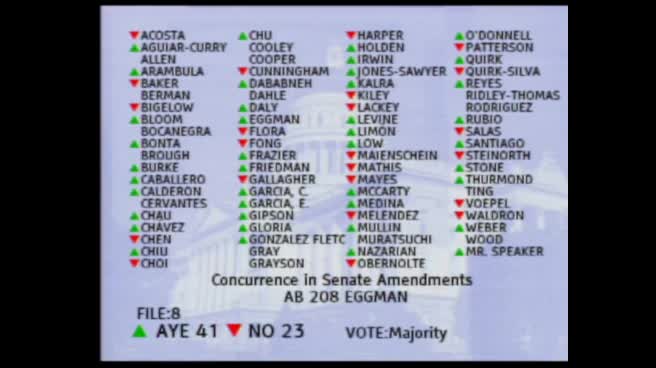 3MIN
Assembly Floor
 1MIN
Senate Floor
 4MIN
Senate Standing Committee on Judiciary
 2MIN
Assembly Floor
 1MIN
Assembly Standing Committee on Appropriations
 5MIN
Assembly Standing Committee on Local Government


Bill Co-Author(s):