AB 332: Vehicles: local regulations: street closures.
- Session Year: 2017-2018
- House: Assembly
- Latest Version Date: 2017-06-28
Existing law authorizes the legislative body of a local agency to temporarily close to through traffic a highway under its jurisdiction in order to curb serious and continual criminal activity along that highway, subject to certain requirements, including the condition that the highway recommended for closure not be designated as a through highway or arterial street.
This bill would authorize the legislative body of a local agency to additionally temporarily close to through traffic a highway under its jurisdiction in order to curb illegal dumping. The bill would also allow a temporary closure of a highway that has been designated as a through highway or arterial street if the closure can be accomplished without a significant impact on the flow of traffic.
Existing law authorizes the legislative body of a local agency to temporarily close to through traffic a highway under its jurisdiction in order to curb serious and continual criminal activity along that highway, subject to certain requirements, including the condition that the highway recommended for closure not be designated as a through highway or arterial street.
This bill would authorize the legislative body of a local agency to additionally temporarily close to through traffic a highway under its jurisdiction in order to curb a serious nuisance, including illegal dumping. The bill would also allow a temporary closure of a highway that has been designated as a through highway or arterial street if the closure can be accomplished without a significant impact on the flow of traffic.
Existing law authorizes the legislative body of a local agency to summarily vacate a street or highway that has been superseded by relocation or if specified conditions exist. temporarily close to through traffic a highway under its jurisdiction in order to curb serious and continual criminal activity along that highway, subject to certain requirements, including the condition that the highway recommended for closure not be designated as a through highway or arterial street.
This bill would authorize the legislative body of a local agency to summarily vacate a street or highway for illegal dumping. additionally temporarily close to through traffic a highway under its jurisdiction in order to curb a serious nuisance, including illegal dumping. The bill would also allow a temporary closure of a highway that has been designated as a through highway or arterial street if the closure can be accomplished without a significant impact on the flow of traffic.
Existing law authorizes the legislative body of a local agency to summarily vacate a street or highway that has been superseded by relocation or if specified conditions exist.
This bill would authorize the legislative body of a local agency to summarily vacate a street or highway for illegal dumping.
(a)A local authority may, by ordinance or resolution, adopt rules and regulations for temporarily closing to through traffic a highway under its jurisdiction when all of the following conditions are, after a public hearing, found to exist:
(1)The local authority finds and determines that, based upon the recommendation of the police department or, in the case of a highway in an unincorporated area, on the joint recommendation of the sheriffs department and the Department of the California Highway Patrol, one of the following concerns exists along the portion of highway recommended for closure:
(A)Serious and continual criminal activity.
(B)Serious and continual illegal dumping.
(2)The highway is not designated as a through highway or arterial street, or, if the highway is so designated, the local authority, in conjunction with law enforcement and traffic engineers, has determined that a temporary closure may be accomplished without significant impact on the normal flow of traffic.
(3)Vehicular or pedestrian traffic on the highway contributes to the concern described in paragraph (1).
(4)The closure will not substantially adversely affect traffic flow, safety on the adjacent streets or in the surrounding neighborhoods, the operation of emergency vehicles, the performance of municipal or public utility services, or the delivery of freight by commercial vehicles in the area of the highway proposed to be temporarily closed.
(b)A highway may be temporarily closed pursuant to subdivision (a) for not more than 18 months, except that this period may be extended for not more than eight additional consecutive periods of not more than 18 months each if, prior to each of those extensions, the local authority holds a public hearing and finds, by ordinance or resolution, that all of the following conditions exist:
(1)Continuation of the temporary closure will assist in preventing the occurrence or reoccurrence of the concern described in paragraph (1), found to exist when the immediately preceding temporary closure was authorized. This finding and determination shall be based upon the recommendation of the police department or, in the case of a highway in an unincorporated area, on the joint recommendation of the sheriffs department and the Department of the California Highway Patrol.
(2)The highway is not designated as a through highway or arterial street, or, if the highway is so designated, the local authority, in conjunction with law enforcement and traffic engineers, has determined that the immediately preceding temporary closure has been accomplished without significant impact on the normal flow of traffic.
(3)Vehicular or pedestrian traffic on the highway contributes to the concern described in paragraph (1).
(4)The immediately preceding closure has not substantially adversely affected traffic flow, safety on the adjacent streets or in the surrounding neighborhoods, the operation of emergency vehicles, the performance of municipal or public utility services, or the delivery of freight by commercial vehicles in the area of the highway that was temporarily closed.
(c)The local authority shall mail written notice of the public hearing required under subdivision (a) or (b) to all residents and owners, as shown on the last equalized assessment roll, of property adjacent to the portion of highway where a temporary closure or extension of temporary closure is proposed.
(a)A local authority may, by ordinance or resolution, adopt rules and regulations for temporarily closing to through traffic a highway under its jurisdiction when all of the following conditions are, after a public hearing, found to exist:
(1)The local authority finds and determines that, based upon the recommendation of the police department or, in the case of a highway in an unincorporated area, on the joint recommendation of the sheriffs department and the Department of the California Highway Patrol, one of the following concerns exists along the portion of highway recommended for closure:
(A)Serious and continual criminal activity.
(B)A serious Serious and continual public nuisance, including, but not limited to, illegal dumping.
(2)The highway is not designated as a through highway or arterial street, or or, if the highway is so designated, the local authority, in conjunction with law enforcement and traffic engineers, has determined that a temporary closure may be accomplished without significant impact on the normal flow of traffic.
(3)Vehicular or pedestrian traffic on the highway contributes to the concern described in paragraph (1).
(4)The closure will not substantially adversely affect traffic flow, safety on the adjacent streets or in the surrounding neighborhoods, the operation of emergency vehicles, the performance of municipal or public utility services, or the delivery of freight by commercial vehicles in the area of the highway proposed to be temporarily closed.
(b)A highway may be temporarily closed pursuant to subdivision (a) for not more than 18 months, except that this period may be extended for not more than eight additional consecutive periods of not more than 18 months each if, prior to each of those extensions, the local authority holds a public hearing and finds, by ordinance or resolution, that all of the following conditions exist:
(1)Continuation of the temporary closure will assist in preventing the occurrence or reoccurrence of the concern described in paragraph (1), found to exist when the immediately preceding temporary closure was authorized. This finding and determination shall be based upon the recommendation of the police department or, in the case of a highway in an unincorporated area, on the joint recommendation of the sheriffs department and the Department of the California Highway Patrol.
(2)The highway is not designated as a through highway or arterial street, or or, if the highway is so designated, the local authority, in conjunction with law enforcement and traffic engineers, has determined that the immediately preceding temporary closure has been accomplished without significant impact on the normal flow of traffic.
(3)Vehicular or pedestrian traffic on the highway contributes to the concern described in paragraph (1).
(4)The immediately preceding closure has not substantially adversely affected traffic flow, safety on the adjacent streets or in the surrounding neighborhoods, the operation of emergency vehicles, the performance of municipal or public utility services, or the delivery of freight by commercial vehicles in the area of the highway that was temporarily closed.
(c)The local authority shall mail written notice of the public hearing required under subdivision (a) or (b) to all residents and owners, as shown on the last equalized assessment roll, of property adjacent to the portion of highway where a temporary closure or extension of temporary closure is proposed.
(a)A local authority may, by ordinance or resolution, adopt rules and regulations for temporarily closing to through traffic a highway under its jurisdiction when all of the following conditions are, after a public hearing, found to exist:
(1)The local authority finds and determines that there is serious and continual criminal activity in the portion of the highway recommended for temporary closure. This finding and determination shall be that, based upon the recommendation of the police department or, in the case of a highway in an unincorporated area, on the joint recommendation of the sheriffs department and the Department of the California Highway Patrol. Patrol, one of the following concerns exists along the portion of highway recommended for closure:
(A)Serious and continual criminal activity.
(B)A serious and continual public nuisance, including, but not limited to, illegal dumping.
(2)The highway is not designated as a through highway or arterial street. street, or if the highway is so designated, the local authority, in conjunction with law enforcement and traffic engineers, has determined that a temporary closure may be accomplished without significant impact on the normal flow of traffic.
(3)Vehicular or pedestrian traffic on the highway contributes to the criminal activity. concern described in paragraph (1).
(4)The closure will not substantially adversely affect traffic flow, safety on the adjacent streets or in the surrounding neighborhoods, the operation of emergency vehicles, the performance of municipal or public utility services, or the delivery of freight by commercial vehicles in the area of the highway proposed to be temporarily closed.
(b)A highway may be temporarily closed pursuant to subdivision (a) for not more than 18 months, except that this period may be extended for not more than eight additional consecutive periods of not more than 18 months each if, prior to each of those extensions, the local authority holds a public hearing and finds, by ordinance or resolution, that all of the following conditions exist:
(1)Continuation of the temporary closure will assist in preventing the occurrence or reoccurrence of the serious and continual criminal activity concern described in paragraph (1), found to exist when the immediately preceding temporary closure was authorized. This finding and determination shall be based upon the recommendation of the police department or, in the case of a highway in an unincorporated area, on the joint recommendation of the sheriffs department and the Department of the California Highway Patrol.
(2)The highway is not designated as a through highway or arterial street. street, or if the highway is so designated, the local authority, in conjunction with law enforcement and traffic engineers, has determined that the immediately preceding temporary closure has been accomplished without significant impact on the normal flow of traffic.
(3)Vehicular or pedestrian traffic on the highway contributes to the criminal activity. concern described in paragraph (1).
(4)The immediately preceding closure has not substantially adversely affected traffic flow, safety on the adjacent streets or in the surrounding neighborhoods, the operation of emergency vehicles, the performance of municipal or public utility services, or the delivery of freight by commercial vehicles in the area of the highway that was temporarily closed.
(c)The local authority shall mail written notice of the public hearing required under subdivision (a) or (b) to all residents and owners, as shown on the last equalized assessment roll, of property adjacent to the portion of highway where a temporary closure or extension of temporary closure is proposed.
SECTION 1.Section 8331.5 is added to the Streets and Highways Code, to read:8331.5.The legislative body of a local agency may summarily vacate a street or highway, pursuant to the authority provided in this chapter, for illegal dumping. REVISIONS: HeadingLine 2.The legislative body of a local agency may summarily vacate a street or highway, pursuant to the authority provided in this chapter, for illegal dumping.
|
Date
|
Status
|
|---|---|
| Jun 28, 2017 | Chaptered by Secretary of State - Chapter 34, Statutes of 2017. |
| Jun 28, 2017 | Approved by the Governor. |
| Jun 21, 2017 | Enrolled and presented to the Governor at 2 p.m. |
| Jun 15, 2017 | Senate amendments concurred in. To Engrossing and Enrolling. (Ayes 78. Noes 0. Page 2221.). |
| Jun 12, 2017 | In Assembly. Concurrence in Senate amendments pending. May be considered on or after June 14 pursuant to Assembly Rule 77. |
| Jun 12, 2017 | Read third time. Passed. Ordered to the Assembly. (Ayes 38. Noes 0. Page 1487.). |
| Jun 7, 2017 | Read second time. Ordered to Consent Calendar. |
| Jun 6, 2017 | From committee: Do pass. To Consent Calendar. (Ayes 13. Noes 0.) (June 6). |
| May 30, 2017 | From committee chair, with author's amendments: Amend, and re-refer to committee. Read second time, amended, and re-referred to Com. on T. & H. |
| May 10, 2017 | Referred to Com. on T. & H. |
| Apr 20, 2017 | In Senate. Read first time. To Com. on RLS. for assignment. |
| Apr 20, 2017 | Read third time. Passed. Ordered to the Senate. (Ayes 77. Noes 0. Page 1136.) |
| Apr 17, 2017 | Read second time. Ordered to third reading. |
| Apr 6, 2017 | From committee: Do pass. (Ayes 9. Noes 0.) (April 5). |
| Apr 6, 2017 | Coauthors revised. |
| Mar 13, 2017 | Re-referred to Com. on L. GOV. |
| Mar 9, 2017 | From committee chair, with author's amendments: Amend, and re-refer to Com. on L. GOV. Read second time and amended. |
| Feb 21, 2017 | Referred to Com. on L. GOV. |
| Feb 8, 2017 | From printer. May be heard in committee March 10. |
| Feb 7, 2017 | Read first time. To print. |
|
Date
|
Description
|
Location
|
Votes
|
|
|---|---|---|---|---|
| Jun 15, 2017 | AB 332 BOCANEGRA Concurrence in Senate Amendments | Assembly Floor |
Passed |
|
| Jun 12, 2017 | Consent Calendar 2nd AB332 | Senate Floor |
Passed |
|
| Jun 6, 2017 | Do pass and be ordered to the Consent Calendar | Senate Standing Committee on Transportation and Housing |
Passed |
|
| Apr 20, 2017 | Favorable With Committee Substitute (Ways & Means Committee) | Assembly Floor |
Passed |
|
| Apr 5, 2017 | Do pass. | Assembly Standing Committee on Local Government |
Passed |
This list shows positions taken on this bill by organizations on the date displayed, which is linked to the original source.
Positions by individuals are not included.
|
Organization
|
Position
|
Date
|
|---|---|---|
| California League Of Conservation Voters | ** Support | Jun 7, 2017 |
| Californians Against Waste | ** Support | Jun 7, 2017 |
| City of Los Angeles Councilwoman Nury Martinez | ** Support | Apr 4, 2017 |
| City of Los Angeles Councilwoman Nury Martinez | ** Support | Apr 4, 2017 |
| los angeles city attorney michael feuer | ** Support | Jun 7, 2017 |
| Los Angeles City Councilwoman Nury Martinez | ** Support | Jun 7, 2017 |
| Northeast Valley Green Alliance | ** Support | Apr 4, 2017 |
| Northeast Valley Green Alliance | ** Support | Apr 4, 2017 |
| Northeast Valley Health Corporation | ** Support | Jun 7, 2017 |
| Pacoima Beautiful | ** Support | Jun 7, 2017 |
| Pacoima Chamber of Commerce | ** Support | Apr 4, 2017 |
| Pacoima Chamber of Commerce | ** Support | Apr 4, 2017 |
| sylmar neighborhood council | ** Support | Jun 7, 2017 |
CONCURRENCE IN SENATE AMENDMENTS
CSA1 Bill Id:AB 332
Author:(Bocanegra)
As Amended Ver:May 30, 2017
Majority vote
ASSEMBLY: | 77-0 | (April 20, 2017) | SENATE: | 38-0 | (June 12, 2017) |
Original Committee Reference: L. GOV.
SUMMARY: Expands a local authority's ability to temporarily close a highway due to serious and continual criminal activity by allowing temporary closure of a through highway or arterial street under specified conditions, and allowing temporary closure due to serious and continual illegal dumping.
The Senate amendments delete language that would have allowed temporary closure due to a serious and continual public nuisance.
EXISTING LAW:
- Allows a local authority, by ordinance or resolution, to adopt rules and regulations for temporarily closing to through traffic a highway under its jurisdiction when all of the following conditions are, after a public hearing, found to exist:
- The local authority finds and determines that there is serious and continual criminal activity in the portion of the highway recommended for temporary closure. This finding and determination shall be based upon the recommendation of the police department or, in the case of a highway in an unincorporated area, on the joint recommendation of the sheriff's department and California Highway Patrol (CHP);
- The highway is not designated as a through highway or arterial street;
- Vehicular or pedestrian traffic on the highway contributes to the criminal activity; and,
- The closure will not substantially adversely affect traffic flow, safety on the adjacent streets or in the surrounding neighborhoods, the operation of emergency vehicles, the performance of municipal or public utility services, or the delivery of freight by commercial vehicles in the area of the highway proposed to be temporarily closed.
- Allows a highway to be temporarily closed pursuant to 1), above, for not more than 18 months, except that this period may be extended for not more than eight additional consecutive periods of not more than 18 months each if, prior to each of those extensions, the local authority holds a public hearing and finds, by ordinance or resolution, that all of the following conditions exist:
- Continuation of the temporary closure will assist in preventing the occurrence or reoccurrence of the serious and continual criminal activity found to exist when the immediately preceding temporary closure was authorized. This finding and determination shall be based upon the recommendation of the police department or, in the case of a highway in an unincorporated area, on the joint recommendation of the sheriff's department and CHP;
- The highway is not designated as a through highway or arterial street;
- Vehicular or pedestrian traffic on the highway contributes to the criminal activity; and,
- The immediately preceding closure has not substantially adversely affected traffic flow, safety on the adjacent streets or in the surrounding neighborhoods, the operation of emergency vehicles, the performance of municipal or public utility services, or the delivery of freight by commercial vehicles in the area of the highway that was temporarily closed.
- Requires the local authority to mail written notice of the public hearing required under 1) and 2), above, to all residents and owners, as shown on the last equalized assessment roll, of property adjacent to the portion of highway where a temporary closure or extension of temporary closure is proposed.
- Defines "local authorities" to mean the legislative body of every county or municipality having authority to adopt local police regulations.
FISCAL EFFECT: None
COMMENTS:
- Bill Summary. This bill expands existing law that allows local authorities to temporarily close a highway due to serious and continual criminal activity in two ways: it allows temporary closure of a through highway or arterial street if the local authority determines, in conjunction with law enforcement and traffic engineers, that a temporary closure may be accomplished without significant impact in the normal flow of traffic; and, it allows temporary closure due to serious and continual illegal dumping. This bill is sponsored by the author.
- Author's Statement. According to the author, "By dumping property or trash by the road and not properly recycling those pieces, the dumped material immediately becomes a blight on the community. Having large items like refrigerators, couches, and furniture lining the side of a road presents hazards for members of the community, obstacles for law enforcement and first responders, and potentially harmful effects on the environment. For these reasons, we ought to provide local authorities with the capacity and the flexibility to resolve illegal dumping and return streets and neighborhoods to a cleaner state."
- Background. According to CalRecycle, "Illegal dumping is the act of disposing solid waste at a location that is not a permitted solid waste disposal facility and is usually done for economic gain. Illegal dumping poses significant social, environmental, and economic impacts statewide. California local government spends tens of millions of dollars annually to remove illegally dumped materials, and private property owners incur significant costs to clean up illegal dumping. Illegal dump sites that are not abated often grow in size and can then become illegal disposal sites.
"Local government tends to view illegal dumping as a litter/nuisance abatement issue, rather than a solid waste issue. Local responses vary greatly statewide, in terms of approach and level of activity. Local code enforcement plays a lead role in some communities, while public works departments have primary responsibility in others.
"Local and State policing agencies will cite people caught illegally dumping, but those agencies are not usually responsible for cleanup programs. No single State or local agency is given responsibility for a comprehensive program to combat littering and illegal dumping, identified in the Penal Code as being punishable as infractions or misdemeanors. CalRecycle is responsible for investigation, cleanup, and enforcement of illegal solid waste disposal sites and shares this responsibility with local enforcement agencies…Based on the experiences of many local communities, combating illegal dumping includes four essential elements: Prevention, Abatement, Cleanup and Enforcement (PACE)."
Existing law allows local authorities (counties and cities) to adopt rules and regulations, by ordinance or resolution, for temporarily closing to through traffic a highway (a street or road) under its jurisdiction when specified conditions are, after a public hearing, found to exist. The necessary conditions include:
- The existence of serious and continual criminal activity, based on the recommendation of the relevant law enforcement agency;
- The street is not a through highway or arterial;
- The street's vehicular or pedestrian traffic contributes to the criminal activity; and,
- Closure will not substantially adversely affect traffic flow, safety on adjacent streets or surrounding neighborhoods, the operation of emergency vehicles, performance of municipal or public utility services, or delivery of freight by commercial vehicles.
Existing law allows the temporary street closure to last for 18 months. If a local authority wishes to extend this closure period, it may do so for up to an additional 18 months after specified findings, public hearings, and written notice to adjacent property owners each time it seeks an extension. This can be done up to eight times, effectively allowing a local authority to close a street or road for more than 13 years, but with periodic review by the public and adjacent property owners via public hearings and written notice.
Existing law specifies that a closure is not allowed for a "through highway or arterial" and limits temporary closure to "the existence of serious and continual criminal activity." This bill additionally allows temporary closures due to serious and continual illegal dumping. It also allows temporary closures of a through highway or arterial street if the local authority, in conjunction with law enforcement and traffic engineers, has determined that a temporary closure may be accomplished without significant impact on the normal flow of traffic.
- Arguments in Support. Californians Against Waste, in support, write, "As you well know, in many urban areas, it has become all too common to see couches, dressers, tires, and clothing strewn by the side of the road. This illegal disposal of property, known as illegal dumping, has plagued certain parts of urban areas where traffic is minimal and the odds of being caught are low. As a result, huge unsightly piles of garbage accumulate with impunity, leaving it upon adjacent property owners or the municipality to clean up at their own expense.
"In many cases, and in particular in the San Fernando Valley, this illegal dumping happens next to or near landfills or waste disposal facilities because people find they cannot or do not want to pay the extra disposal fee for furniture or larger items. Consequently, they drive further down the road and leave the items beside the road, instead of properly disposing of them. The dumped property is not only an eye sore, but it is also a public safety hazard."
- Arguments in Opposition. None on file.
Analysis Prepared by: Angela Mapp / L. GOV. / (916) 319-3958 FN: 0000932
Office of Senate Floor Analyses (916) 651-1520 Fax: (916) 327-4478 | AB |
CONSENT
Bill No: AB 332
:
SENATE TRANS. & HOUSING COMMITTEE: 13-0, 6/6/17
AYES: Beall, Cannella, Allen, Atkins, Bates, Gaines, McGuire, Mendoza, Morrell, Roth, Skinner, Wieckowski, Wiener
ASSEMBLY FLOOR: 77-0, 4/20/17 - See last page for vote
DIGEST:
This bill authorizes a local authority to temporarily close a portion of highway in response to illegal dumping.
Existing law:
- Authorizes a local authority to adopt rules and regulations, by ordinance or resolution, to temporarily close a highway under its jurisdiction to through traffic when all of the following conditions, after a public hearing, are found to exist:
- There is serious and continual criminal activity in the portion of highway recommended for temporary closure, based on the recommendation of the local police department or, in an unincorporated area, the sheriff’s department and California Highway Patrol (CHP).
- The highway is not designated as a through highway or arterial street.
- Vehicular or pedestrian traffic on the highway contributes to the criminal activity.
- The closure will not substantially adversely affect traffic flow, safety on adjacent streets or in surrounding neighborhoods, the operation of emergency vehicles, the performance of municipal or public utility services, or the delivery of freight by commercial vehicles in the area.
- Provides that the temporary closure may not exceed 18 months but may be extended for up to eight additional 18-month periods if, prior to each extension, the local authority holds a public hearing and finds, by ordinance or resolution, that all of the following conditions exist:
- Continuation of the temporary closure will assist in preventing the occurrence or reoccurrence of the serious and continual criminal activity, based on the recommendation of the police department or the sheriff’s department and the CHP.
- The highway is not designated as a through highway or arterial street.
- Vehicular or pedestrian traffic on the highway contributes to the criminal activity.
- The preceding closure has not substantially adversely affected traffic flow, safety on the adjacent streets or in surrounding neighborhoods, the operation of emergency vehicles, performance of municipal or public utility services, or the delivery of freight by commercial vehicles in the area.
- Requires the local authority to mail written notice of the public hearing to all residents and owners of property adjacent to the portion of highway where a temporary closure or extension of a temporary closure is proposed.
This bill:
- Authorizes a local authority to adopt rules and regulations, by ordinance or resolution, to temporarily close a highway under its jurisdiction to through traffic when all of the following conditions, after a public hearing, are found to exist:
- Based on the recommendation of the local police department or, in an unincorporated area, the sheriff’s department and CHP, one of the following concerns exists along the portion of highway recommended for closure:
- Serious and continual criminal activity.
- Serious and continual illegal dumping.
- The highway is not designated as a through highway or arterial street. If it is so designated, the local authority, in conjunction with law enforcement and traffic engineers, must determine that a temporary closure may be accomplished without significant impact on normal traffic flow.
- Vehicular or pedestrian traffic on the highway contributes to the concerns cited in (a).
- The closure will not substantially adversely affect traffic flow, safety on adjacent streets or in surrounding neighborhoods, the operation of emergency vehicles, the performance of municipal or public utility services, or the delivery of freight by commercial vehicles in the area.
- Based on the recommendation of the local police department or, in an unincorporated area, the sheriff’s department and CHP, one of the following concerns exists along the portion of highway recommended for closure:
- Provides that for an extension of a closure of a temporary highway that is designated as a through highway or arterial street, is subject to a determination that the closure can be accomplished without significant impact on normal traffic flow.
Comments
- Purpose. The author states that in urban areas, it has become all too common to see couches, dressers, tires, and clothing strewn by the side of the road. This illegal dumping has plagued certain parts of urban areas where traffic is minimal and the odds of being caught are low. As a result, huge unsightly piles of garbage accumulate with impunity, leaving it to the adjacent property owners or the municipality to clean it up at their own expense. In areas such as the San Fernando Valley, illegal dumping often occurs next to or near landfills or waste disposal facilities because people cannot or do not want to pay the disposal fees for furniture or other large items. This dumping constitutes not only an eyesore, but a public safety hazard. This bill will enable local governments, in conjunction with local law enforcement and traffic engineers, to act on illegal dumping and close streets where it occurs.
- Giving locals a tool to address local problems. Existing law requires a set of conditions to exist before a local authority can temporarily close a portion of highway. This bill narrows the requirement to one of a set of conditions, specifically calls out illegal dumping as one of the conditions, and enables a local authority to close a portion of highway that is designated as a through highway or arterial street if it works with law enforcement and traffic engineers to reduce any impacts of the closure.
- Penalties for illegal dumping. State law prohibits the dumping of waste matter on a public or private highway or road, or on public or private property without the consent of the property owner. A violation is an infraction punishable by a fine of between $250 and $1,000 for a first conviction, up to a maximum of $3,000 for a third conviction. A court may also require, in addition any fine it imposes, payment for the cost of removing the dumped material.
- Who’s in charge? According to Department of Resources Recycling and Recovery (CalRecycle), California local governments and private property owners spend tens of millions of dollars each year to remove illegally dumped materials. Illegal dump sites that are not abated often grow significantly. Local and state policing agencies cite people caught in the act of dumping, but those agencies are not usually responsible for cleanup programs; no single state or local agency is assigned responsibility for a comprehensive program to combat littering and illegal dumping. In 2006, CalRecycle (then the Integrated Waste Management Board) established a task force to assess the extent of the illegal dumping problem and develop recommendations to enhance state and local response. The task force, now a technical advisory committee, developed an extensive “toolbox” of prevention, abatement, cleanup, and enforcement measures, which is posted on its website as a resource for local governments.
FISCAL EFFECT: Appropriation: Fiscal Com.: Local:
California League of Conservation Voters
Californians Against Waste
Los Angeles City Attorney Michael Feuer
Los Angeles City Councilwoman Nury Martinez
Northeast Valley Health Corporation
Pacoima Beautiful
Sylmar Neighborhood Council
None received
ARGUMENTS IN SUPPORT: Los Angeles City Attorney Mike Feuer states that existing law only authorizes temporary closure of a road when there is continuous serious criminal activity. This bill enables local governments, in conjunction with law enforcement and traffic engineers, to take similar necessary action in cases where illegal dumping is prevalent and persistent.
ASSEMBLY FLOOR: 77-0, 4/20/17
AYES: Acosta, Aguiar-Curry, Travis Allen, Arambula, Baker, Berman, Bigelow, Bloom, Bocanegra, Bonta, Burke, Caballero, Calderon, Cervantes, Chau, Chávez, Chen, Chiu, Choi, Chu, Cooley, Cooper, Cunningham, Dababneh, Dahle, Daly, Eggman, Flora, Fong, Frazier, Friedman, Gallagher, Cristina Garcia, Eduardo Garcia, Gipson, Gloria, Gomez, Gonzalez Fletcher, Gray, Grayson, Harper, Holden, Irwin, Jones-Sawyer, Kalra, Kiley, Lackey, Levine, Limón, Low, Maienschein, Mayes, McCarty, Medina, Melendez, Mullin, Muratsuchi, Nazarian, Obernolte, O'Donnell, Patterson, Quirk, Quirk-Silva, Reyes, Rodriguez, Rubio, Salas, Santiago, Steinorth, Mark Stone, Thurmond, Ting, Voepel, Waldron, Weber, Wood, Rendon
NO VOTE RECORDED: Brough, Mathis, Ridley-Thomas
6/7/17 13:29:35
**** END ****
SENATE COMMITTEE ON TRANSPORTATION AND HOUSING
Senator Jim Beall, Chair
2017 - 2018 Regular
Bill No: AB 332 Hearing Date: 6/6/2017
Author: | Bocanegra | ||
Version: | 5/30/2017 Amended | ||
Urgency: | No | Fiscal: | No |
Consultant: | Erin Riches | ||
SUBJECT: Vehicles: local regulations: street closures
DIGEST: This bill authorizes a local authority to temporarily close a portion of highway in response to illegal dumping.
ANALYSIS:
Existing law:
- Authorizes a local authority to adopt rules and regulations, by ordinance or resolution, to temporarily close a highway under its jurisdiction to through traffic when all of the following conditions, after a public hearing, are found to exist:
- There is serious and continual criminal activity in the portion of highway recommended for temporary closure, based on the recommendation of the local police department or, in an unincorporated area, the sheriff’s department and California Highway Patrol (CHP).
- The highway is not designated as a through highway or arterial street.
- Vehicular or pedestrian traffic on the highway contributes to the criminal activity.
- The closure will not substantially adversely affect traffic flow, safety on adjacent streets or in surrounding neighborhoods, the operation of emergency vehicles, the performance of municipal or public utility services, or the delivery of freight by commercial vehicles in the area.
- Provides that the temporary closure may not exceed 18 months but may be extended for up to eight additional 18-month periods if, prior to each extension, the local authority holds a public hearing and finds, by ordinance or resolution, that all of the following conditions exist:
- Continuation of the temporary closure will assist in preventing the occurrence or reoccurrence of the serious and continual criminal activity, based on the recommendation of the police department or the sheriff’s department and the CHP.
- The highway is not designated as a through highway or arterial street.
- Vehicular or pedestrian traffic on the highway contributes to the criminal activity.
- The preceding closure has not substantially adversely affected traffic flow, safety on the adjacent streets or in surrounding neighborhoods, the operation of emergency vehicles, performance of municipal or public utility services, or the delivery of freight by commercial vehicles in the area.
- Requires the local authority to mail written notice of the public hearing to all residents and owners of property adjacent to the portion of highway where a temporary closure or extension of a temporary closure is proposed.
This bill:
- Authorizes a local authority to adopt rules and regulations, by ordinance or resolution, to temporarily close a highway under its jurisdiction to through traffic when all of the following conditions, after a public hearing, are found to exist:
- Based on the recommendation of the local police department or, in an unincorporated area, the sheriff’s department and California Highway Patrol (CHP), one of the following concerns exists along the portion of highway recommended for closure:
- Serious and continual criminal activity.
- Serious and continual illegal dumping.
- The highway is not designated as a through highway or arterial street. If it is so designated, the local authority, in conjunction with law enforcement and traffic engineers, must determine that a temporary closure may be accomplished without significant impact on normal traffic flow.
- Vehicular or pedestrian traffic on the highway contributes to the concerns cited in (a).
- The closure will not substantially adversely affect traffic flow, safety on adjacent streets or in surrounding neighborhoods, the operation of emergency vehicles, the performance of municipal or public utility services, or the delivery of freight by commercial vehicles in the area.
- Based on the recommendation of the local police department or, in an unincorporated area, the sheriff’s department and California Highway Patrol (CHP), one of the following concerns exists along the portion of highway recommended for closure:
- Provides that for an extension of a closure of a temporary highway that is designated as a through highway or arterial street, is subject to a determination that the closure can be accomplished without significant impact on normal traffic flow.
COMMENTS:
- Purpose. The author states that in urban areas, it has become all too common to see couches, dressers, tires, and clothing strewn by the side of the road. This illegal dumping has plagued certain parts of urban areas where traffic is minimal and the odds of being caught are low. As a result, huge unsightly piles of garbage accumulate with impunity, leaving it to the adjacent property owners or the municipality to clean it up at their own expense. In areas such as the San Fernando Valley, illegal dumping often occurs next to or near landfills or waste disposal facilities because people cannot or do not want to pay the disposal fees for furniture or other large items. This dumping constitutes not only an eyesore, but a public safety hazard. This bill will enable local governments, in conjunction with local law enforcement and traffic engineers, to act on illegal dumping and close streets where it occurs.
- Giving locals a tool to address local problems. Existing law requires a set of conditions to exist before a local authority can temporarily close a portion of highway. This bill narrows the requirement to one of a set of conditions, specifically calls out illegal dumping as one of the conditions, and enables a local authority to close a portion of highway that is designated as a through highway or arterial street if it works with law enforcement and traffic engineers to reduce any impacts of the closure.
- Penalties for illegal dumping. State law prohibits the dumping of waste matter on a public or private highway or road, or on public or private property without the consent of the property owner. A violation is an infraction punishable by a fine of between $250 and $1,000 for a first conviction, up to a maximum of $3,000 for a third conviction. A court may also require, in addition any fine it imposes, payment for the cost of removing the dumped material.
- Who’s in charge? According to CalRecycle, California local governments and private property owners spend tens of millions of dollars each year to remove illegally dumped materials. Illegal dump sites that are not abated often grow significantly. Local and state policing agencies cite people caught in the act of dumping, but those agencies are not usually responsible for cleanup programs; no single state or local agency is assigned responsibility for a comprehensive program to combat littering and illegal dumping. In 2006, CalRecycle (then the Integrated Waste Management Board) established a task force to assess the extent of the illegal dumping problem and develop recommendations to enhance state and local response. The task force, now a technical advisory committee, developed an extensive “toolbox” of prevention, abatement, cleanup, and enforcement (PACE) measures, which is posted on its website as a resource for local governments.
FISCAL EFFECT: Appropriation: Fiscal Com.: Local:
POSITIONS: (Communicated to the committee before noon on Wednesday,
May 31, 2017.)
SUPPORT:
California League of Conservation Voters
Californians Against Waste
Los Angeles City Attorney Michael Feuer
Los Angeles City Councilwoman Nury Martinez
Northeast Valley Health Corporation
Pacoima Beautiful
Sylmar Neighborhood Council
OPPOSITION:
None received.
-- END --
ASSEMBLY THIRD READING
ATR Bill Id:AB 332
Author:(Bocanegra)
As Amended Ver:March 9, 2017
Majority vote
Committee | Votes | Ayes | Noes |
Local Government | 9-0 | Aguiar-Curry, Waldron, Bloom, Caballero, Gonzalez Fletcher, Grayson, Lackey, Ridley-Thomas, Voepel |
SUMMARY: Expands a local authority's ability to temporarily close a highway due to serious and continual criminal activity by allowing temporary closure of a through highway or arterial street, and allowing temporary closure due to a serious and continual public nuisance, including, but not limited to, illegal dumping. Specifically, this bill:
- Allows a local authority, by ordinance or resolution, to adopt rules and regulations for temporarily closing to through traffic a highway under its jurisdiction when all of the following conditions, after a public hearing, are found to exist:
- The local authority finds and determines that, based upon the recommendation of the police department or, in the case of a highway in an unincorporated area, on the joint recommendation of the sheriff’s department and the Department of the California Highway Patrol (CHP), one of the following concerns exists along the portion of highway recommended for closure:
- Serious and continual criminal activity; or,
- A serious and continual public nuisance, including, but not limited to, illegal dumping.
- The highway is not designated as a through highway or arterial street, or if the highway is so designated, the local authority, in conjunction with law enforcement and traffic engineers, has determined that a temporary closure may be accomplished without significant impact on the normal flow of traffic;
- Vehicular or pedestrian traffic on the highway contributes to the concern described in a), above; and,
- The closure will not substantially adversely affect traffic flow, safety on the adjacent streets or in the surrounding neighborhoods, the operation of emergency vehicles, the performance of municipal or public utility services, or the delivery of freight by commercial vehicles in the area of the highway proposed to be temporarily closed.
- The local authority finds and determines that, based upon the recommendation of the police department or, in the case of a highway in an unincorporated area, on the joint recommendation of the sheriff’s department and the Department of the California Highway Patrol (CHP), one of the following concerns exists along the portion of highway recommended for closure:
- Allows a local authority to temporarily close a highway pursuant to the provisions described above for not more than 18 months, and to extend this time period for up to eight additional consecutive periods of not more than 18 months under specified circumstances, including certain findings and public hearings.
- Requires the local authority to mail written notice of the public hearing required under 1) and 2), above, to all residents and owners, as shown on the last equalized assessment roll, of property adjacent to the portion of highway where a temporary closure or extension of temporary closure is proposed.
EXISTING LAW:
- Allows a local authority, by ordinance or resolution, to adopt rules and regulations for temporarily closing to through traffic a highway under its jurisdiction when all of the following conditions are, after a public hearing, found to exist:
- The local authority finds and determines that there is serious and continual criminal activity in the portion of the highway recommended for temporary closure. This finding and determination shall be based upon the recommendation of the police department or, in the case of a highway in an unincorporated area, on the joint recommendation of the sheriff’s department and CHP;
- The highway is not designated as a through highway or arterial street;
- Vehicular or pedestrian traffic on the highway contributes to the criminal activity; and,
- The closure will not substantially adversely affect traffic flow, safety on the adjacent streets or in the surrounding neighborhoods, the operation of emergency vehicles, the performance of municipal or public utility services, or the delivery of freight by commercial vehicles in the area of the highway proposed to be temporarily closed.
- Allows a highway to be temporarily closed pursuant to 1), above, for not more than 18 months, except that this period may be extended for not more than eight additional consecutive periods of not more than 18 months each if, prior to each of those extensions, the local authority holds a public hearing and finds, by ordinance or resolution, that all of the following conditions exist:
- Continuation of the temporary closure will assist in preventing the occurrence or reoccurrence of the serious and continual criminal activity found to exist when the immediately preceding temporary closure was authorized. This finding and determination shall be based upon the recommendation of the police department or, in the case of a highway in an unincorporated area, on the joint recommendation of the sheriff's department and CHP;
- The highway is not designated as a through highway or arterial street;
- Vehicular or pedestrian traffic on the highway contributes to the criminal activity; and,
- The immediately preceding closure has not substantially adversely affected traffic flow, safety on the adjacent streets or in the surrounding neighborhoods, the operation of emergency vehicles, the performance of municipal or public utility services, or the delivery of freight by commercial vehicles in the area of the highway that was temporarily closed.
- Requires the local authority to mail written notice of the public hearing required under 1) and 2), above, to all residents and owners, as shown on the last equalized assessment roll, of property adjacent to the portion of highway where a temporary closure or extension of temporary closure is proposed.
- Defines "local authorities" to mean the legislative body of every county or municipality having authority to adopt local police regulations.
FISCAL EFFECT: None
COMMENTS:
- Bill Summary. This bill expands existing law that allows local authorities to temporarily close a highway due to serious and continual criminal activity in two ways: it allows temporary closure of a through highway or arterial street if the local authority determines, in conjunction with law enforcement and traffic engineers, that a temporary closure may be accomplished without significant impact in the normal flow of traffic; and, it allows temporary closure due to a serious and continual public nuisance, including, but not limited to, illegal dumping. This bill is sponsored by the author.
- Author's Statement. According to the author, "By dumping property or trash by the road and not properly recycling those pieces, the dumped material immediately becomes a blight on the community. Having large items like refrigerators, couches, and furniture lining the side of a road presents hazards for members of the community, obstacles for law enforcement and first responders, and potentially harmful effects on the environment. For these reasons, we ought to provide local authorities with the capacity and the flexibility to resolve illegal dumping and return streets and neighborhoods to a cleaner state."
- Background. According to CalRecycle, "Illegal dumping is the act of disposing solid waste at a location that is not a permitted solid waste disposal facility and is usually done for economic gain. Illegal dumping poses significant social, environmental, and economic impacts statewide. California local government spends tens of millions of dollars annually to remove illegally dumped materials, and private property owners incur significant costs to clean up illegal dumping. Illegal dump sites that are not abated often grow in size and can then become illegal disposal sites.
"Local government tends to view illegal dumping as a litter/nuisance abatement issue, rather than a solid waste issue. Local responses vary greatly statewide, in terms of approach and level of activity. Local code enforcement plays a lead role in some communities, while public works departments have primary responsibility in others.
"Local and State policing agencies will cite people caught illegally dumping, but those agencies are not usually responsible for cleanup programs. No single State or local agency is given responsibility for a comprehensive program to combat littering and illegal dumping, identified in the Penal Code as being punishable as infractions or misdemeanors. CalRecycle is responsible for investigation, cleanup, and enforcement of illegal solid waste disposal sites and shares this responsibility with local enforcement agencies. Based on the experiences of many local communities, combating illegal dumping includes four essential elements: Prevention, Abatement, Cleanup and Enforcement (PACE).
Existing law allows local authorities (counties and cities) to adopt rules and regulations, by ordinance or resolution, for temporarily closing to through traffic a highway (a street or road) under its jurisdiction when specified conditions are, after a public hearing, found to exist. The necessary conditions include:
- The existence of serious and continual criminal activity, based on the recommendation of the relevant law enforcement agency;
- The street is not a through highway or arterial;
- The street's vehicular or pedestrian traffic contributes to the criminal activity; and,
- Closure will not substantially adversely affect traffic flow, safety on adjacent streets or surrounding neighborhoods, the operation of emergency vehicles, performance of municipal or public utility services, or delivery of freight by commercial vehicles.
Existing law allows the temporary street closure to last for 18 months. If a local authority wishes to extend this closure period, it may do so for up to an additional 18 months after specified findings, public hearings, and written notice to adjacent property owners each time it seeks an extension. This can be done up to eight times, effectively allowing a local authority to close a street or road for more than 13 years, but with periodic review by the public and adjacent property owners via public hearings and written notice.
Existing law specifies that a closure is not allowed for a "through highway or arterial" and limits temporary closure to "the existence of serious and continual criminal activity." This bill additionally allows temporary closures due to a serious and continual public nuisance, including, but not limited to, illegal dumping. It also allows temporary closures of a through highway or arterial street if the local authority, in conjunction with law enforcement and traffic engineers, has determined that a temporary closure may be accomplished without significant impact on the normal flow of traffic.
- Arguments in Support. Californians Against Waste, in support, write, "As you well know, in many urban areas, it has become all too common to see couches, dressers, tires, and clothing strewn by the side of the road. This illegal disposal of property, known as illegal dumping, has plagued certain parts of urban areas where traffic is minimal and the odds of being caught are low. As a result, huge unsightly piles of garbage accumulate with impunity, leaving it upon adjacent property owners or the municipality to clean up at their own expense.
"In many cases, and in particular in the San Fernando Valley, this illegal dumping happens next to or near landfills or waste disposal facilities because people find they cannot or do not want to pay the extra disposal fee for furniture or larger items. Consequently, they drive further down the road and leave the items beside the road, instead of properly disposing of them. The dumped property is not only an eye sore, but it is also a public safety hazard."
- Arguments in Opposition. None on file.
Analysis Prepared by: Angela Mapp / L. GOV. / (916) 319-3958 FN: 0000115
Date of Hearing: April 5, 2017
ASSEMBLY COMMITTEE ON LOCAL GOVERNMENT
Cecilia Aguiar-Curry, Chair
ABPCA Bill Id:AB 332 (
Author:Bocanegra) – As Amended Ver:March 9, 2017
SUBJECT: Vehicles: local regulations: street closures.
SUMMARY: Expands a local authority's ability to temporarily close a highway due to serious and continual criminal activity by allowing temporary closure of a through highway or arterial street, and allowing temporary closure due to a serious and continual public nuisance, including, but not limited to, illegal dumping. Specifically, this bill:
- Allows a local authority, by ordinance or resolution, to adopt rules and regulations for temporarily closing to through traffic a highway under its jurisdiction when all of the following conditions, after a public hearing, are found to exist:
- The local authority finds and determines that, based upon the recommendation of the police department or, in the case of a highway in an unincorporated area, on the joint recommendation of the sheriff’s department and the Department of the California Highway Patrol (CHP), one of the following concerns exists along the portion of highway recommended for closure:
- Serious and continual criminal activity; or,
- A serious and continual public nuisance, including, but not limited to, illegal dumping.
- The highway is not designated as a through highway or arterial street, or if the highway is so designated, the local authority, in conjunction with law enforcement and traffic engineers, has determined that a temporary closure may be accomplished without significant impact on the normal flow of traffic;
- Vehicular or pedestrian traffic on the highway contributes to the concern described in a), above; and,
- The closure will not substantially adversely affect traffic flow, safety on the adjacent streets or in the surrounding neighborhoods, the operation of emergency vehicles, the performance of municipal or public utility services, or the delivery of freight by commercial vehicles in the area of the highway proposed to be temporarily closed.
- The local authority finds and determines that, based upon the recommendation of the police department or, in the case of a highway in an unincorporated area, on the joint recommendation of the sheriff’s department and the Department of the California Highway Patrol (CHP), one of the following concerns exists along the portion of highway recommended for closure:
- Allows a local authority to temporarily close a highway pursuant to the provisions described above for not more than 18 months, and to extend this time period for up to eight additional consecutive periods of not more than 18 months under specified circumstances, including certain findings and public hearings.
- Requires the local authority to mail written notice of the public hearing required under 1) and 2), above, to all residents and owners, as shown on the last equalized assessment roll, of property adjacent to the portion of highway where a temporary closure or extension of temporary closure is proposed.
EXISTING LAW:
- Allows a local authority, by ordinance or resolution, to adopt rules and regulations for temporarily closing to through traffic a highway under its jurisdiction when all of the following conditions are, after a public hearing, found to exist:
- The local authority finds and determines that there is serious and continual criminal activity in the portion of the highway recommended for temporary closure. This finding and determination shall be based upon the recommendation of the police department or, in the case of a highway in an unincorporated area, on the joint recommendation of the sheriff’s department and CHP;
- The highway is not designated as a through highway or arterial street;
- Vehicular or pedestrian traffic on the highway contributes to the criminal activity; and,
- The closure will not substantially adversely affect traffic flow, safety on the adjacent streets or in the surrounding neighborhoods, the operation of emergency vehicles, the performance of municipal or public utility services, or the delivery of freight by commercial vehicles in the area of the highway proposed to be temporarily closed.
- Allows a highway to be temporarily closed pursuant to 1), above, for not more than 18 months, except that this period may be extended for not more than eight additional consecutive periods of not more than 18 months each if, prior to each of those extensions, the local authority holds a public hearing and finds, by ordinance or resolution, that all of the following conditions exist:
- Continuation of the temporary closure will assist in preventing the occurrence or reoccurrence of the serious and continual criminal activity found to exist when the immediately preceding temporary closure was authorized. This finding and determination shall be based upon the recommendation of the police department or, in the case of a highway in an unincorporated area, on the joint recommendation of the sheriff’s department and CHP;
- The highway is not designated as a through highway or arterial street;
- Vehicular or pedestrian traffic on the highway contributes to the criminal activity; and,
- The immediately preceding closure has not substantially adversely affected traffic flow, safety on the adjacent streets or in the surrounding neighborhoods, the operation of emergency vehicles, the performance of municipal or public utility services, or the delivery of freight by commercial vehicles in the area of the highway that was temporarily closed.
- Requires the local authority to mail written notice of the public hearing required under 1) and 2), above, to all residents and owners, as shown on the last equalized assessment roll, of property adjacent to the portion of highway where a temporary closure or extension of temporary closure is proposed.
- Defines "local authorities" to mean the legislative body of every county or municipality having authority to adopt local police regulations.
FISCAL EFFECT: None
COMMENTS:
- Bill Summary. This bill expands existing law that allows local authorities to temporarily close a highway due to serious and continual criminal activity in two ways: it allows temporary closure of a through highway or arterial street if the local authority determines, in conjunction with law enforcement and traffic engineers, that a temporary closure may be accomplished without significant impact in the normal flow of traffic; and, it allows temporary closure due to a serious and continual public nuisance, including, but not limited to, illegal dumping. This bill is sponsored by the author.
- Author's Statement. According to the author, "By dumping property or trash by the road and not properly recycling those pieces, the dumped material immediately becomes a blight on the community. Having large items like refrigerators, couches, and furniture lining the side of a road presents hazards for members of the community, obstacles for law enforcement and first responders, and potentially harmful effects on the environment. For these reasons, we ought to provide local authorities with the capacity and the flexibility to resolve illegal dumping and return streets and neighborhoods to a cleaner state."
- Background. According to CalRecycle, "Illegal dumping is the act of disposing solid waste at a location that is not a permitted solid waste disposal facility and is usually done for economic gain. Illegal dumping poses significant social, environmental, and economic impacts statewide. California local government spends tens of millions of dollars annually to remove illegally dumped materials, and private property owners incur significant costs to clean up illegal dumping. Illegal dump sites that are not abated often grow in size and can then become illegal disposal sites.
"Local government tends to view illegal dumping as a litter/nuisance abatement issue, rather than a solid waste issue. Local responses vary greatly statewide, in terms of approach and level of activity. Local code enforcement plays a lead role in some communities, while public works departments have primary responsibility in others.
"Local and State policing agencies will cite people caught illegally dumping, but those agencies are not usually responsible for cleanup programs. No single State or local agency is given responsibility for a comprehensive program to combat littering and illegal dumping, identified in the Penal Code as being punishable as infractions or misdemeanors. CalRecycle is responsible for investigation, cleanup, and enforcement of illegal solid waste disposal sites and shares this responsibility with local enforcement agencies. Based on the experiences of many local communities, combating illegal dumping includes four essential elements: Prevention, Abatement, Cleanup and Enforcement (PACE).
Existing law allows local authorities (counties and cities) to adopt rules and regulations, by ordinance or resolution, for temporarily closing to through traffic a highway (a street or road) under its jurisdiction when specified conditions are, after a public hearing, found to exist. The necessary conditions include:
- The existence of serious and continual criminal activity, based on the recommendation of the relevant law enforcement agency;
- The street is not a through highway or arterial;
- The street's vehicular or pedestrian traffic contributes to the criminal activity; and,
- Closure will not substantially adversely affect traffic flow, safety on adjacent streets or surrounding neighborhoods, the operation of emergency vehicles, performance of municipal or public utility services, or delivery of freight by commercial vehicles.
Existing law allows the temporary street closure to last for 18 months. If a local authority wishes to extend this closure period, it may do so for up to an additional 18 months after specified findings, public hearings, and written notice to adjacent property owners each time it seeks an extension. This can be done up to eight times, effectively allowing a local authority to close a street or road for more than 13 years, but with periodic review by the public and adjacent property owners via public hearings and written notice.
Existing law specifies that a closure is not allowed for a "through highway or arterial" and limits temporary closure to "the existence of serious and continual criminal activity." This bill additionally allows temporary closures due to a serious and continual public nuisance, including, but not limited to, illegal dumping. It also allows temporary closures of a through highway or arterial street if the local authority, in conjunction with law enforcement and traffic engineers, has determined that a temporary closure may be accomplished without significant impact on the normal flow of traffic.
- Previous Legislation. AB 994 (Isenberg), Chapter 231, Statutes of 1996, expanded the authority of local authorities to temporarily close a highway due to serious and continual criminal activity by allowing extensions of the original 18-month period.
SB 1334 (Beverly), Chapter 80, Statutes of 1992, established the authority of local authorities to temporarily close a highway for up to 18 months due to serious and continual criminal activity.
- Arguments in Support. Californians Against Waste, in support, write, "As you well know, in many urban areas, it has become all too common to see couches, dressers, tires, and clothing strewn by the side of the road. This illegal disposal of property, known as illegal dumping, has plagued certain parts of urban areas where traffic is minimal and the odds of being caught are low. As a result, huge unsightly piles of garbage accumulate with impunity, leaving it upon adjacent property owners or the municipality to clean up at their own expense.
"In many cases, and in particular in the San Fernando Valley, this illegal dumping happens next to or near landfills or waste disposal facilities because people find they cannot or do not want to pay the extra disposal fee for furniture or larger items. Consequently, they drive further down the road and leave the items beside the road, instead of properly disposing of them. The dumped property is not only an eye sore, but it is also a public safety hazard."
- Arguments in Opposition. None on file.
REGISTERED SUPPORT / OPPOSITION:
Support
Californians Against Waste
California League of Conservation Voters
City of Los Angeles Councilwoman Nury Martinez
City of Los Angeles City Attorney Michael N. Feuer
Northeast Valley Green Alliance
Pacoima Beautiful
Pacoima Chamber of Commerce
Opposition
None on file
Analysis Prepared by: Angela Mapp / L. GOV. / (916) 319-3958
Discussed in Hearing
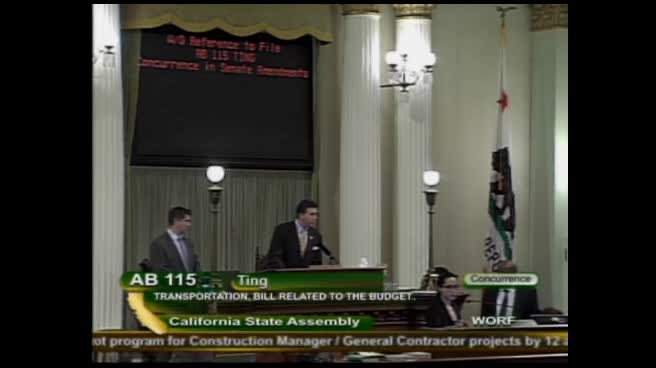 1MIN
Assembly Floor
 1MIN
Assembly Floor
 10MIN
Assembly Standing Committee on Local Government
Bill Author