AB 339: State Water Pollution Cleanup and Abatement Account.
- Session Year: 2017-2018
- House: Assembly
- Latest Version Date: 2017-10-03
The Porter-Cologne Water Quality Control Act grants to the State Water Resources Control Board and the California regional water quality control boards the authority to regulate water quality in the state. The act creates the State Water Pollution Cleanup and Abatement Account in the State Water Quality Control Fund and continuously appropriates moneys in the account to the state board for the purposes of cleaning up waste or abating its effects on state waters. Existing law, until July 1, 2018, authorizes the state board to pay these moneys from the account to, among others, a community water system that services a disadvantaged community to be used to assist in addressing urgent drinking water need, among other purposes.
This bill would limit the above-described payments to grants, and would delete the July 1, 2018, sunset date. By extending the term of an existing appropriation, this bill would make an appropriation. The bill would authorize the state board, upon application by a public agency, a not-for-profit organization, or community water system, to make funds available from the account for a loan to that entity to assist in cleaning up the waste, abating the effects of a waste, or addressing an urgent drinking water need, as provided. By authorizing new expenditures from a continuously appropriated account, this bill would make an appropriation. The bill would require that the loan be secured by adequate collateral and would prohibit the term of the loan from exceeding 10 years. The bill would exempt projects that are funded by the loan from certain state contracting and procurement requirements, and would require the state board to adopt guidelines for the allocation and administration of loans from the account.
The act requires all moneys collected civilly under the act and all moneys collected by the state board in connection with a specified cleanup or abatement action to be deposited in the account.
This bill would require all of the following to be deposited into the account: (1) moneys collected by the state board or regional board for the account pursuant to specific underground storage tank provisions; (2) moneys collected by the state board for the account under provisions allowing recovery of costs for cleanup, abatement of waste, pollution, or contamination of water; (3) repayments of principal, interest, and fees on loans issued for purposes of the account; (4) repayments of loan and grant moneys paid to a loan or grant recipient for purposes of the account in which the recipient was not eligible for the loan or grant; and (5) interest earned upon moneys in the account. By requiring additional moneys to be deposited into a continuously appropriated account, this bill would make an appropriation.
Existing law, the California Safe Drinking Water Act, requires the State Water Resources Control Board to administer the regulation of drinking water and public water systems, as defined, to protect public health, including the conduct of research, studies, and demonstration programs relating to the provision of a dependable, safe supply of drinking water. This bill would declare the intent of the Legislature to enact subsequent legislation that would appropriate moneys for the provision of safe, clean, and reliable drinking water.Existing law, the California Safe Drinking Water Act, requires the State Water Resources Control Board to administer the regulation of drinking water and public water systems, as defined, to protect public health, including the conduct of research, studies, and demonstration programs relating to the provision of a dependable, safe supply of drinking water.
This bill would declare the intent of the Legislature to enact subsequent legislation that would appropriate moneys for the provision of safe, clean, and reliable drinking water.
(a)There is to be paid into the account all moneys from the following sources:
(1)All moneys appropriated by the Legislature for the account.
(2)All moneys contributed to the account by any person and accepted by the state board.
(3)Except as otherwise provided, one-half of all moneys collected by way of criminal penalty and all moneys collected civilly under any proceeding brought pursuant to any provision of this division.
(4)All moneys collected by the state board or a regional board for the account under Chapter 6.7 (commencing with Section 25280) of Division 20 of the Health and Safety Code.
(5)All moneys collected by the state board for the account under Section 13304 or for the account under other law allowing recovery of costs for cleanup or abatement of waste, pollution, or contamination.
(6)Repayment of principal, interest, and fees on loans issued pursuant to this article.
(7)Repayments of loan and grant moneys paid to a loan or grant recipient pursuant to this article in which the recipient was not eligible for that loan or grant.
(8)Notwithstanding Sections 16305.7 and 16475 of the Government Code, any interest earned upon moneys deposited into the account.
(b)The first unencumbered five hundred thousand dollars ($500,000) paid into the account in any given fiscal year is available without regard to fiscal years, for expenditure by the state board in accordance with the provisions of this article. The next unencumbered five hundred thousand dollars ($500,000), or any portion thereof, deposited in any given fiscal year, is available for expenditure by the state board for the purposes of this article, subject to the provisions set forth in Section 28 of the Budget Act of 1984 (Chapter 258 of the Statutes of 1984). The next unencumbered one million dollars ($1,000,000) deposited in the account in any given fiscal year is available for expenditure by the state board for the purposes of Section 13443. The remaining unencumbered funds deposited in the account in any given fiscal year is available without regard to fiscal years to the state board for expenditure for the purposes set forth in Sections 13442 and 13442.5.
SEC. 2.Section 13442 of the Water Code, as amended by Section 7 of Chapter 2 of the Statutes of 2015, is amended to read:13442.(a)Upon application by an eligible entity, as described in subdivision (b), the state board may approve the payment of grant moneys from the account to that entity to assist in cleaning up a waste, abating the effects of a waste on waters of the state, or addressing an urgent drinking water need without regard to whether the need for drinking water is a result of the discharge of waste.
(b)An entity is eligible to apply for funding pursuant to this section if that entity has authority to undertake the activity described in subdivision (a) for which it seeks moneys and the entity is any of the following:
(1)A public agency.
(2)A tribal government that is on the California Tribal Consultation List maintained by the Native American Heritage Commission and is a disadvantaged community, as defined in Section 79505.5, that agrees to waive tribal sovereign immunity for the explicit purpose of regulation by the state board pursuant to this division.
(3)A not-for-profit organization serving a disadvantaged community, as defined in Section 79505.5.
(4)A community water system, as defined in Section 116275 of the Health and Safety Code, that serves a disadvantaged community, as defined in Section 79505.5.
(c)An eligible entity shall not become liable to the state board for repayment of moneys paid to the entity under this section and expended in accordance with the state boards approval of payment, but this shall not be a defense to an action brought pursuant to subdivision (c) of Section 13304 for the recovery of moneys paid under this section.
(d)Projects using moneys that are paid to an eligible entity pursuant to this section shall be exempt from state contracting and procurement requirements set forth in the Government Code and the Public Contract Code to the extent necessary to take immediate action to protect public health and safety.
(e)The state board may adopt guidelines for the allocation and administration of these moneys that shall not be subject to Chapter 3.5 (commencing with Section 11340) of Part 1 of Division 3 of Title 2 of the Government Code.
SEC. 3.Section 13442 of the Water Code, as added by Section 8 of Chapter 2 of the Statutes of 2015, is repealed.SEC. 4.Section 13442.5 is added to the Water Code, to read:13442.5.(a)Upon application by an eligible entity, as described in subdivision (b), the state board may make funds available from the account for a loan to that entity to assist in cleaning up a waste, abating the effects of a waste on waters of the state, or addressing an urgent drinking water need without regard to whether the need for drinking water is a result of the discharge of waste.
(b)An entity is eligible to apply for a loan pursuant to this section if that entity has authority to undertake the activity described in subdivision (a) for which it seeks moneys and the entity is any of the following:
(1)A public agency.
(2)A nonprofit organization.
(3)A community water system, as defined in Section 116275 of the Health and Safety Code.
(c)Loan applicants shall demonstrate all of the following:
(1)The ability to repay the loan.
(2)The availability of adequate collateral to secure the loan.
(3)That the loaned funds will be used for purposes consistent with subdivision (a).
(4)Other information that the state board determines to be necessary.
(d)Any loan issued pursuant to this section shall be secured by adequate collateral. The term of the loan shall not exceed 10 years. The interest rate for the loan shall be set by the state board in guidelines adopted pursuant to subdivision (f).
(e)Projects using moneys that are loaned pursuant to this section shall not be subject to state contracting and procurement requirements to the extent necessary to take immediate action to protect public health and safety.
(f)The state board shall adopt guidelines for the allocation and administration of loans from the account. These guidelines shall not be subject to Chapter 3.5 (commencing with Section 11340) of Part 1 of Division 3 of Title 2 of the Government Code.
(g)The state board may expend funds from the account to service loans, recover defaulted loan moneys, and protect the states position as a lender creditor.
(a)There is to be paid into the account all moneys from the following sources:
(a)(1)All moneys appropriated by the Legislature for the account.
(b)(2)All moneys contributed to the account by any person and accepted by the state board.
(c)(3)One-half Except as otherwise provided, one-half of all moneys collected by way of criminal penalty and all moneys collected civilly under any proceeding brought pursuant to any provison provision of this division.
(d)(4)All moneys collected by the state board or a regional board for the account under Chapter 6.7 (commencing with Section 13304. 25280) of Division 20 of the Health and Safety Code.
(5)All moneys collected by the state board for the account under Section 13304 or for the account under other law allowing recovery of costs for cleanup or abatement of waste, pollution, or contamination.
(6)Repayment of principal, interest, and fees on loans issued pursuant to this article.
(7)Repayments of loan and grant moneys paid to a loan or grant recipient pursuant to this article in which the recipient was not eligible for that loan or grant.
(8)Notwithstanding Sections 16305.7 and 16475 of the Government Code, any interest earned upon moneys deposited into the account.
(b)The first unencumbered five hundred thousand dollars ($500,000) paid into the account in any given fiscal year is available without regard to fiscal years, for expenditure by the state board in accordance with the provisions of this article. The next unencumbered five hundred thousand dollars ($500,000), or any portion thereof, deposited in any given fiscal year, is available for expenditure by the state board for the purposes of this article, subject to the provisions set forth in Section 28 of the Budget Act of 1984 (Chapter 258 of the Statutes of 1984). The next unencumbered one million dollars ($1,000,000) deposited in the account in any given fiscal year is available for expenditure by the state board for the purposes of Section 13443. The remaining unencumbered funds deposited in the account in any given fiscal year is available without regard to fiscal years to the state board for expenditure for the purposes set forth in Section 13442. Sections 13442 and 13442.5.
SEC. 2.Section 13442 of the Water Code, as amended by Section 7 of Chapter 2 of the Statutes of 2015, is amended to read:13442.(a)Upon application by an eligible entity, as described in subdivision (b), the state board may approve the payment of grant moneys from the account to that entity to assist in cleaning up a waste, abating the effects of a waste on waters of the state, or addressing an urgent drinking water need without regard to whether the need for drinking water is a result of the discharge of waste.
(b)An entity is eligible to apply for funding pursuant to this section if that entity has authority to undertake the activity described in subdivision (a) for which it seeks moneys and the entity is any of the following:
(1)A public agency.
(2)A tribal government that is on the California Tribal Consultation List maintained by the Native American Heritage Commission and is a disadvantaged community, as defined in Section 79505.5, that agrees to waive tribal sovereign immunity for the explicit purpose of regulation by the state board pursuant to this division.
(3)A not-for-profit organization serving a disadvantaged community, as defined in Section 79505.5.
(4)A community water system, as defined in Section 116275 of the Health and Safety Code, that serves a disadvantaged community, as defined in Section 79505.5.
(c)An eligible entity shall not become liable to the state board for repayment of moneys paid to the entity under this section and expended in accordance with the state boards approval of payment, but this shall not be a defense to an action brought pursuant to subdivision (c) of Section 13304 for the recovery of moneys paid under this section.
(d)Projects using moneys that are paid to an eligible entity pursuant to this section shall be exempt from state contracting and procurement requirements set forth in the Government Code and the Public Contract Code to the extent necessary to take immediate action to protect public health and safety.
(e)The state board may adopt guidelines for the allocation and administration of these moneys that shall not be subject to Chapter 3.5 (commencing with Section 11340) of Part 1 of Division 3 of Title 2 of the Government Code.
(f)This section shall become inoperative on July 1, 2018, and, as of January 1, 2019, is repealed, unless a later enacted statute, that becomes operative on or before January 1, 2019, deletes or extends the dates on which it becomes inoperative and is repealed. SEC. 3.Section 13442 of the Water Code, as added by Section 8 of Chapter 2 of the Statutes of 2015, is repealed.13442.(a)Upon application by a public agency, a tribal government that is on the California Tribal Consultation List maintained by the Native American Heritage Commission and is a disadvantaged community, as defined in Section 79505.5, that agrees to waive tribal sovereign immunity for the explicit purpose of regulation by the state board pursuant to this division, or a not-for-profit organization serving a disadvantaged community, as defined in Section 79505.5, with authority to clean up a waste or abate the effects of a waste, the state board may order moneys to be paid from the account to the agency, tribal government, or organization to assist it in cleaning up the waste or abating its effects on waters of the state.(b)The agency, a tribal government that is on the California Tribal Consultation List maintained by the Native American Heritage Commission and is a disadvantaged community, as defined in Section 79505.5, that agrees to waive tribal sovereign immunity for the explicit purpose of regulation by the state board pursuant to this division, or a not-for-profit organization serving a disadvantaged community, as defined in Section 79505.5, shall not become liable to the state board for repayment of moneys paid under this section, but this shall not be a defense to an action brought pursuant to subdivision (c) of Section 13304 for the recovery of moneys paid under this section. (c)This section shall become operative on July 1, 2018.SEC. 4.Section 13442.5 is added to the Water Code, to read:13442.5.(a)Upon application by an eligible entity, as described in subdivision (b), the state board may make funds available from the account for a loan to that entity to assist in cleaning up a waste, abating the effects of a waste on waters of the state, or addressing an urgent drinking water need without regard to whether the need for drinking water is a result of the discharge of waste.
(b)An entity is eligible to apply for a loan pursuant to this section if that entity has authority to undertake the activity described in subdivision (a) for which it seeks moneys and the entity is any of the following:
(1)A public agency.
(2)A nonprofit organization.
(3)A community water system, as defined in Section 116275 of the Health and Safety Code.
(c)Loan applicants shall demonstrate all of the following:
(1)The ability to repay the loan.
(2)The availability of adequate collateral to secure the loan.
(3)That the loaned funds will be used for purposes consistent with subdivision (a).
(4)Other information that the state board determines to be necessary.
(d)Any loan issued pursuant to this section shall be secured by adequate collateral. The term of the loan shall not exceed 10 years. The interest rate for the loan shall be set by the state board in guidelines adopted pursuant to subdivision (f).
(e)Projects using moneys that are loaned pursuant to this section shall not be subject to state contracting and procurement requirements to the extent necessary to take immediate action to protect public health and safety.
(f)The state board shall adopt guidelines for the allocation and administration of loans from the account. These guidelines shall not be subject to Chapter 3.5 (commencing with Section 11340) of Part 1 of Division 3 of Title 2 of the Government Code.
(g)The state board may expend funds from the account to service loans, recover defaulted loan moneys, and protect the states position as a lender creditor.
SECTION 1.It is the intent of the Legislature to enact subsequent legislation that would appropriate moneys for the provision of safe, clean, and reliable drinking water.It is the intent of the Legislature to enact subsequent legislation that would appropriate moneys for the provision of safe, clean, and reliable drinking water.
|
Date
|
Status
|
|---|---|
| Oct 3, 2017 | Chaptered by Secretary of State - Chapter 439, Statutes of 2017. |
| Oct 3, 2017 | Approved by the Governor. |
| Sep 13, 2017 | Enrolled and presented to the Governor at 4 p.m. |
| Sep 6, 2017 | In Assembly. Ordered to Engrossing and Enrolling. |
| Sep 6, 2017 | Read third time. Passed. Ordered to the Assembly. |
| Sep 5, 2017 | Read second time. Ordered to third reading. |
| Sep 1, 2017 | From committee: Do pass. (Ayes 7. Noes 0.) (September 1). |
| Jul 10, 2017 | In committee: Referred to APPR. suspense file. |
| Jun 21, 2017 | From committee: Do pass and re-refer to Com. on APPR. with recommendation: To Consent Calendar. (Ayes 6. Noes 0.) (June 21). Re-referred to Com. on APPR. |
| Jun 8, 2017 | Referred to Com. on EQ. |
| May 30, 2017 | In Senate. Read first time. To Com. on RLS. for assignment. |
| May 30, 2017 | Read third time. Passed. Ordered to the Senate. (Ayes 77. Noes 0. Page 1813.) |
| May 26, 2017 | From committee: Do pass. (Ayes 17. Noes 0.) (May 26). |
| May 17, 2017 | In committee: Set, first hearing. Referred to APPR. suspense file. |
| Apr 26, 2017 | From committee: Do pass and re-refer to Com. on APPR. with recommendation: To Consent Calendar. (Ayes 7. Noes 0.) (April 25). Re-referred to Com. on APPR. |
| Apr 5, 2017 | Re-referred to Com. on E.S. & T.M. |
| Apr 4, 2017 | From committee chair, with author's amendments: Amend, and re-refer to Com. on E.S. & T.M. Read second time and amended. |
| Apr 3, 2017 | Referred to Com. on E.S. & T.M. |
| Feb 8, 2017 | From printer. May be heard in committee March 10. |
| Feb 7, 2017 | Read first time. To print. |
|
Date
|
Description
|
Location
|
Votes
|
|
|---|---|---|---|---|
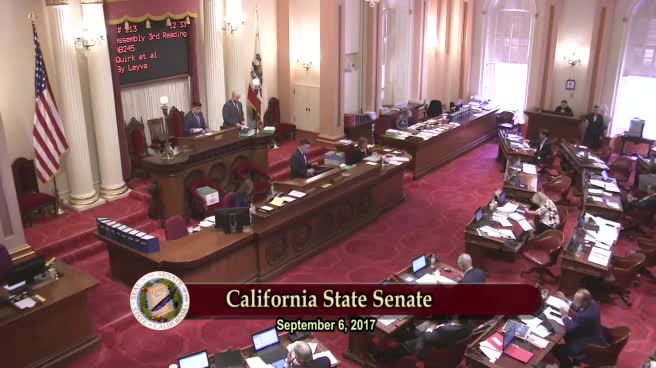
| Sep 6, 2017 | Assembly 3rd Reading AB339 Mathis By Berryhill | Senate Floor |
Passed |
|
| Sep 1, 2017 | Do pass | Senate Standing Committee on Appropriations |
Passed |
|
| Jul 10, 2017 | Placed on suspense file | Senate Standing Committee on Appropriations |
Passed |
|
| Jun 21, 2017 | Do pass, but first be re-referred to the Committee on [Appropriations] with the recommendation: To Consent Calendar | Senate Standing Committee on Environmental Quality |
Passed |
|
| May 30, 2017 | AB 339 MATHIS Assembly Third Reading | Assembly Floor |
Passed |
|
| May 26, 2017 | Do pass. | Assembly Standing Committee on Appropriations |
Passed |
|
| Apr 25, 2017 | Do pass and be re-referred to the Committee on [Appropriations] with recommendation: To Consent Calendar | Assembly Standing Committee on Environmental Safety and Toxic Materials |
Passed |
This list shows positions taken on this bill by organizations on the date displayed, which is linked to the original source.
Positions by individuals are not included.
|
Organization
|
Position
|
Date
|
|---|---|---|
| Association Of California Water Agencies | ** Support | Sep 4, 2017 |
| California Association Of Professional Scientists | ** Support | Sep 4, 2017 |
| Rural County Representatives of California | ** Support | Sep 4, 2017 |
| State Water Resources Control Board | ** Support | Sep 4, 2017 |
Office of Senate Floor Analyses (916) 651-1520 Fax: (916) 327-4478 | AB |
THIRD READING
Bill No: AB 339
:
SENATE ENVIRONMENTAL QUALITY COMMITTEE: 6-0, 6/21/17
AYES: Wieckowski, Stone, Hill, Lara, Skinner, Stern
NO VOTE RECORDED: Gaines
SENATE APPROPRIATIONS COMMITTEE: 7-0, 9/1/17
AYES: Lara, Bates, Beall, Bradford, Hill, Nielsen, Wiener
ASSEMBLY FLOOR: 77-0, 5/30/17 - See last page for vote
SOURCE: State Water Resources Control Board
DIGEST:
This bill extends the ability of the State Water Resources Control Board (SWRCB) to fund projects addressing an urgent drinking water need from the Cleanup and Abatement Account (Account) by deleting the sunset for this provision.
Existing law:
- Establishes the Cleanup and Abatement Account (Account) within the State Water Quality Control Fund, which is administered by SWRCB.
- Designates half of all funds collected due to criminal penalties and all funds from civil penalties received under the Porter Cologne Water Quality Control Act to the Account.
- Authorizes SWRCB to approve grants, from the Account, to any eligible entity to assist in cleaning up a waste, abating the effects of a waste on waters of the state, or addressing an urgent drinking water need. Eligible entities include: a public agency, a tribal government, a not-for-profit organization serving a disadvantaged community, or a community water system that serves a disadvantaged community. Sunsets some of these provisions on July 1, 2018.
- Authorizes, beginning on July 1, 2018, SWRCB to approve grants, from the Account, to a public agency, a tribal government, or a not-for-profit serving a disadvantaged community, to clean up a waste or abate the effects of a waste.
This bill extends the ability of SWRCB to fund projects addressing an urgent drinking water need from the Account by deleting the sunset for this provision. Specifically, this bill:
- Extends the ability of SWRCB to fund projects addressing an urgent drinking water need from the Account by deleting the sunset for this provision.
- Adds the following funds to be paid into the Account: funds collected as cost recovery from the cleanup or abatement of waste, pollution or contamination; repayment of principal, interest and fees on loans issued from the Account; and, any interest earned on funds in the Account.
- Authorizes SWRCB to issue loans from the Account to a public agency, a nonprofit organization, or community water system to assist in cleaning up a waste, abating the effects of a waste on waters of the state, or addressing an urgent drinking water need.
Background
Cleanup and Abatement Account. The Account was created to provide public agencies with grants for the cleanup or abatement of a condition of pollution when there are no viable responsible parties available to undertake the work. The Account is supported by court judgments and administrative civil liabilities assessed by SWRCB and the Regional Water Quality Control Boards. Eligible entities that could apply for this funding include public agencies, as well as certain not-for-profit organizations and tribal governments that serve a disadvantaged community and that have the authority to clean up or abate the effects of a waste.
In 2015, the Legislature enacted AB 92 (Committee on Budget, Chapter 2, Statutes of 2015) to help provide grant funding to address emergency drinking water issues. Among its provisions, AB 92 expanded the types of projects that can be funded from the Account to include projects to address an urgent drinking water need, without regard to whether the need for drinking water is a result of the discharge of waste; expanded the pool of applicants eligible for funding from the Account to include community water systems that serve a disadvantaged community; exempted projects funded from the Account from state contracting and procurement requirements to the extent necessary to take immediate action to protect public health and safety; and, authorized SWRCB to adopt guidelines for the allocation and administration of the Account funds.
Current law sunsets the changes made within AB 92 on June 30, 2018. Since the passage of AB 92, SWRCB has funded 33 drinking water drought-related projects for a total funding amount of $14 million and has funded 51 drinking water contamination-related projects for a total funding amount of $5 million. If these provisions enacted under AB 92 sunset, SWRCB will not have a funding source to assist public water systems in responding to drinking water emergencies. This bill seeks to permanently delete the sunset within AB 92, thereby retaining SWRCB’s authority to provide funding to assist public water systems when responding to drinking water emergencies.
While the recent drought greatly diminished drinking water supplies for many communities throughout the state, many communities are currently without clean drinking water due to contamination of their drinking water supply. This bill ensures that SWRCB has the authority to provide funds to various drinking water systems, especially those in disadvantaged communities, to deal with an urgent drinking water need.
Comments
Purpose of bill. According to the author, “This proposal would help provide funding for emergency drinking water projects by: (1) deleting the July 1, 2018 sunset date of provisions of existing law which authorizes the State Water Board to provide grants from the Cleanup and Abatement Account to address urgent drinking water needs, even if the need is not related to a discharge of waste, (2) allowing the State Water Board to make loans from the Cleanup and Abatement Account to address urgent drinking water needs in communities that are not disadvantaged, and (3) making supporting technical changes to allow for more effective management of the Cleanup and Abatement Account.
“In the past few years, many communities have experienced drought-related drinking water emergencies, ranging from wells running dry to the mobilization of contaminants into drinking water supplies. Despite increased rainfall this winter, drinking water problems related to the drought persist in some areas of the state and drinking water emergencies continue to arise as groundwater levels in many areas remain below normal. Additionally, drinking water emergencies occur periodically regardless of drought status, due to floods and other non-drought factors. Available funding sources to help communities address these expected drinking water emergencies are limited.
“AB 339 would provide SWRCB with the authority to provide short-term loans from the Cleanup and Abatement Account to public agencies, not-for-profit organizations, and community water systems to enable these communities to be able to respond to water quality or emergency drinking water needs in a timely manner.”
Related/Prior Legislation
AB 91 (Committee on Budget, Chapter 1, Statutes of 2015) appropriated $15 million from the Account to the SWRCB to fund actions to address drought-related drinking water emergencies or threatened emergencies. Also, appropriated $4 million from the Account to SWRCB to provide interim emergency drinking water to disadvantaged communities with contaminated drinking water supplies.
AB 92 (Committee on Budget, Chapter 2, Statutes of 2015) expanded the use of the Account for uses beyond mitigation of waste and unreasonable use to include urgent drinking water needs. Sunset these provisions on July 1, 2018.
SB 826 (Leno, Chapter 23, Statutes of 2016) appropriated $15 million from the Account to SWRCB to fund actions to address drought-related drinking water emergencies or threatened emergencies.
FISCAL EFFECT: Appropriation: Fiscal Com.: Local:
According to the Senate Appropriations Committee:
- Approximately $240,000 annually (the Account) for two positions to continue to administer the program.
- Unknown increased revenues (the Account) through interest payments on loans and from penalties for underground storage tank violations.
State Water Resources Control Board (source)
Association of California Water Agencies
California Association of Professional Scientists
Rural County Representatives of California
OPPOSITION: (Verified 8/30/17)
None received
ASSEMBLY FLOOR: 77-0, 5/30/17
AYES: Acosta, Aguiar-Curry, Travis Allen, Arambula, Baker, Berman, Bigelow, Bloom, Bocanegra, Bonta, Brough, Burke, Caballero, Calderon, Cervantes, Chávez, Chen, Chiu, Chu, Cooley, Cooper, Cunningham, Dababneh, Dahle, Daly, Flora, Fong, Frazier, Friedman, Gallagher, Cristina Garcia, Eduardo Garcia, Gipson, Gloria, Gomez, Gonzalez Fletcher, Gray, Grayson, Harper, Holden, Irwin, Jones-Sawyer, Kalra, Kiley, Lackey, Levine, Limón, Low, Maienschein, Mathis, Mayes, McCarty, Medina, Melendez, Mullin, Muratsuchi, Nazarian, Obernolte, O'Donnell, Patterson, Quirk, Quirk-Silva, Reyes, Ridley-Thomas, Rodriguez, Rubio, Salas, Santiago, Steinorth, Mark Stone, Thurmond, Ting, Voepel, Waldron, Weber, Wood, Rendon
NO VOTE RECORDED: Chau, Choi, Eggman
9/4/17 13:02:53
**** END ****
SENATE COMMITTEE ON APPROPRIATIONS
Senator Ricardo Lara, Chair
2017 - 2018 Regular Session
AB 339 (Mathis) - State Water Pollution Cleanup and Abatement Account
Version: April 4, 2017 | Policy Vote: E.Q. 6 - 0 |
Urgency: No | Mandate: No |
Hearing Date: July 10, 2017 | Consultant: Narisha Bonakdar |
This bill meets the criteria for referral to the Suspense File.
Bill Summary:
AB 339 deletes the sunset, thereby indefinitely extending, the State Water Resources Control Board’s (SWRCB) authority to use Cleanup and Abatement Account (Account) funds for projects that address urgent drinking water needs.
Fiscal Impact:
- Approximately $240,000 annually (Cleanup and Abatement Account) for two positions to continue to administer the program.
- Unknown increased revenues (Cleanup and Abatement Account) through interest payments on loans and from penalties for underground storage tank violations.
Background:
Cleanup and Abatement Account (Account): The Account was created to provide grants to eligible entities (public agencies, certain nonprofits, and tribal governments that serve a disadvantaged community and are authorized to do the work) to clean or abate pollution when no viable responsible parties can undertake the work. The Account is supported by court judgments and administrative civil liabilities assessed by SWRCB and the Regional Water Quality Control Boards.
In 2015, the Legislature enacted AB 92 (Committee on Budget, Chapter 2, Statutes of 2015) that, among other things, authorized the use of Account funds for projects that address an urgent drinking water need, expanded eligibility to apply for the funds to also include community water systems that serve a disadvantaged community, exempted projects funded from the Account from state contracting and procurement requirements, and authorized the SWRCB to adopt guidelines for the allocation and administration of the Account funds. These provisions sunset on June 30, 2018.
Since the passage of AB 92, SWRCB has awarded funded $14 million for 33 drinking water drought-related projects and $5 million for 51 drinking water contamination-related projects.
Proposed Law:
This bill:
1) Extends the ability of SWRCB to fund projects addressing an urgent drinking water need from the Account by deleting the sunset for this provision.
2) Adds the following funds to be paid into the Account: funds collected as cost recovery from the cleanup or abatement of waste, pollution or contamination; repayment of principal, interest and fees on loans issued from the Account; and, any interest earned on funds in the Account.
3) Authorizes SWRCB to issue loans from the Account to a public agency, a nonprofit organization, or community water system to assist in cleaning up a waste, abating the effects of a waste on waters of the state, or addressing an urgent drinking water need.
Related Legislation:
AB 91 (Committee on Budget, Chapter 1, Statutes of 2015) appropriated $15 million from the Cleanup and Abatement Account to the State Water Board to fund actions to address drought-related drinking water emergencies or threatened emergencies. Also, appropriated $4 million from the Cleanup and Abatement Account to SWRCB to provide interim emergency drinking water to disadvantaged communities with contaminated drinking water supplies.
AB 92 (Committee on Budget, Chapter 2, Statutes of 2015) expanded the use of the Cleanup and Abatement Account for uses beyond mitigation of waste and unreasonable use to include urgent drinking water needs. Sunsets these provisions on July 1, 2018.
SB 826 (Leno, Chapter 23, Statutes of 2016) appropriated $15 million from the Cleanup and Abatement Account to SWRCB to fund actions to address drought-related drinking water emergencies or threatened emergencies.
Staff Comments:
Purpose of Bill. According to the author, “This proposal would help provide funding for emergency drinking water projects by: (1) deleting the July 1, 2018 sunset date of provisions of existing law which authorizes the State Water Board to provide grants from the Cleanup and Abatement Account to address urgent drinking water needs, even if the need is not related to a discharge of waste, (2) allowing the State Water Board to make loans from the Cleanup and Abatement Account to address urgent drinking water needs in communities that are not disadvantaged, and (3) making supporting technical changes to allow for more effective management of the Cleanup and Abatement Account.
SENATE COMMITTEE ON ENVIRONMENTAL QUALITY
Senator Wieckowski, Chair
2017 - 2018 Regular
Bill No: AB 339
Author: | Mathis | ||
Version: | 4/4/2017 | Hearing Date: | 6/21/2017 |
Urgency: | No | Fiscal: | Yes |
Consultant: | Rachel Machi Wagoner | ||
SUBJECT: State Water Pollution Cleanup and Abatement Account.
ANALYSIS:
EXISTING LAW:
- Establishes the Cleanup and Abatement Account (Account) within the State Water Quality Control Fund, which is administered by the State Water Resources Control Board (SWRCB).
- Designates half of all funds collected due to criminal penalties and all funds from civil penalties received under the Porter Cologne Water Quality Control Act to the Account.
- Authorizes SWRCB to approve grants, from the Account, to any eligible entity to assist in cleaning up a waste, abating the effects of a waste on waters of the state, or addressing an urgent drinking water need. Eligible entities include: a public agency, a tribal government, a not-for-profit organization serving a disadvantaged community, or a community water system that serves a disadvantaged community. Sunsets some of these provisions on July 1, 2018.
- Beginning on July 1, 2018, authorizes SWRCB to approve grants, from the Account, to a public agency, a tribal government, or a not-for-profit serving a disadvantaged community, to clean up a waste or abate the effects of a waste.
This bill: Extends the ability of SWRCB to fund projects addressing an urgent drinking water need from the Cleanup and Abatement Account (Account) by deleting the sunset for this provision. Specifically:
1) Extends the ability of SWRCB to fund projects addressing an urgent drinking water need from the Account by deleting the sunset for this provision.
2) Adds the following funds to be paid into the Account: funds collected as cost recovery from the cleanup or abatement of waste, pollution or contamination; repayment of principal, interest and fees on loans issued from the Account; and, any interest earned on funds in the Account.
3) Authorizes SWRCB to issue loans from the Account to a public agency, a nonprofit organization, or community water system to assist in cleaning up a waste, abating the effects of a waste on waters of the state, or addressing an urgent drinking water need.
Background
- Cleanup and Abatement Account (Account): The Account was created to provide public agencies with grants for the cleanup or abatement of a condition of pollution when there are no viable responsible parties available to undertake the work. The Account is supported by court judgments and administrative civil liabilities assessed by SWRCB and the Regional Water Quality Control Boards. Eligible entities that could apply for this funding include public agencies, as well as certain not-for-profit organizations and tribal governments that serve a disadvantaged community and that have the authority to clean up or abate the effects of a waste.
In 2015, the Legislature enacted AB 92 (Committee on Budget, Chapter 2, Statutes of 2015) to help provide grant funding to address emergency drinking water issues. Among its provisions, AB 92 expanded the types of projects that can be funded from the Account to include projects to address an urgent drinking water need, without regard to whether the need for drinking water is a result of the discharge of waste; expanded the pool of applicants eligible for funding from the Account to include community water systems that serve a disadvantaged community; exempted projects funded from the Account from state contracting and procurement requirements to the extent necessary to take immediate action to protect public health and safety; and, authorized SWRCB to adopt guidelines for the allocation and administration of the Account funds.
Current law sunsets the changes made within AB 92 on June 30, 2018. Since the passage of AB 92, SWRCB has funded 33 drinking water drought-related projects for a total funding amount of $14 million and has funded 51 drinking water contamination-related projects for a total funding amount of $5 million. If these provisions enacted under AB 92 sunset, SWRCB will not have a funding source to assist public water systems in responding to drinking water emergencies. This bill seeks to permanently delete the sunset within AB 92, thereby retaining SWRCB’s authority to provide funding to assist public water systems when responding to drinking water emergencies.
While the recent drought greatly diminished drinking water supplies for many communities throughout the state, many communities are currently without clean drinking water due to contamination of their drinking water supply. This bill ensures that SWRCB has the authority to provide funds to various drinking water systems, especially those in disadvantaged communities, to deal with an urgent drinking water need.
Comments
Purpose of Bill. According to the author, “This proposal would help provide funding for emergency drinking water projects by: (1) deleting the July 1, 2018 sunset date of provisions of existing law which authorizes the State Water Board to provide grants from the Cleanup and Abatement Account to address urgent drinking water needs, even if the need is not related to a discharge of waste, (2) allowing the State Water Board to make loans from the Cleanup and Abatement Account to address urgent drinking water needs in communities that are not disadvantaged, and (3) making supporting technical changes to allow for more effective management of the Cleanup and Abatement Account.
“In the past few years, many communities have experienced drought-related drinking water emergencies, ranging from wells running dry to the mobilization of contaminants into drinking water supplies. Despite increased rainfall this winter, drinking water problems related to the drought persist in some areas of the state and drinking water emergencies continue to arise as groundwater levels in many areas remain below normal. Additionally, drinking water emergencies occur periodically regardless of drought status, due to floods and other non-drought factors. Available funding sources to help communities address these expected drinking water emergencies are limited.
AB 339 would provide SWRCB with the authority to provide short-term loans from the Cleanup and Abatement Account to public agencies, not-for-profit organizations, and community water systems to enable these communities to be able to respond to water quality or emergency drinking water needs in a timely manner.”
Related/Prior Legislation
AB 91 (Committee on Budget, Chapter 1, Statutes of 2015). Appropriated $15 million from the Cleanup and Abatement Account to the State Water Board to fund actions to address drought-related drinking water emergencies or threatened emergencies. Also, appropriated $4 million from the Cleanup and Abatement Account to SWRCB to provide interim emergency drinking water to disadvantaged communities with contaminated drinking water supplies.
AB 92 (Committee on Budget, Chapter 2, Statutes of 2015). Expanded the use of the Cleanup and Abatement Account for uses beyond mitigation of waste and unreasonable use to include urgent drinking water needs. Sunsets these provisions on July 1, 2018.
SB 826 (Leno, Chapter 23, Statutes of 2016). Appropriated $15 million from the Cleanup and Abatement Account to SWRCB to fund actions to address drought-related drinking water emergencies or threatened emergencies.
SOURCE:
State Water Resources Control Board
SUPPORT:
None received
OPPOSITION:
None received
-- END --
ASSEMBLY THIRD READING
ATR Bill Id:AB 339
Author:(Mathis)
As Amended Ver:April 4, 2017
2/3 vote
Committee | Votes | Ayes | Noes |
Environmental Safety | 7-0 | Quirk, Dahle, Arambula, Chen, Cristina Garcia, Friedman, Holden | |
Appropriations | 17-0 | Gonzalez Fletcher, Bigelow, Bloom, Bocanegra, Bonta, Brough, Calderon, McCarty, Quirk, Fong, Friedman, Gallagher, Eduardo Garcia, Gray, Muratsuchi, Obernolte, Reyes |
|
SUMMARY: Extends the ability of the State Water Resources Control Board (State Water Board) to fund projects, via loans or grants, addressing an urgent drinking water need from the Cleanup and Abatement Account (Account) by deleting the sunset for this provision.
EXISTING LAW:
- Establishes the Account within the State Water Quality Control Fund, which is administered by the State Water Board. (Water Code (WC) Section 13440)
- Authorizes the State Water Board to approve grants, from the Account, to any eligible entity to assist in cleaning up a waste, abating the effects of a waste on waters of the state, or addressing an urgent drinking water need. Eligible entities include: a public agency, a tribal government, a not-for-profit organization serving a disadvantaged community, or a community water system that serves a disadvantaged community. Sunsets some of these provisions on July 1, 2018. (WC Section 13442)
FISCAL EFFECT: According to the Assembly Appropriations Committee enactment of this bill may result in unknown increased revenues to the Account and $240,000 per year for two staff at the State Water Board to provide grants for emergency drinking water projects.
COMMENTS: Need for the bill: According to the author, "This proposal would help provide funding for emergency drinking water projects by: (1) deleting the July 1, 2018 sunset date of provisions of existing law which authorizes the State Water Board to provide grants from the Cleanup and Abatement Account to address urgent drinking water needs, even if the need is not related to a discharge of waste, (2) allowing the State Water Board to make loans from the Cleanup and Abatement Account to address urgent drinking water needs in communities that are not disadvantaged, and (3) making supporting technical changes to allow for more effective management of the Cleanup and Abatement Account.
In the past few years, many communities have experienced drought-related drinking water emergencies, ranging from wells running dry to the mobilization of contaminants into drinking water supplies. Despite increased rainfall this winter, drinking water problems related to the drought persist in some areas of the state and drinking water emergencies continue to arise as groundwater levels in many areas remain below normal. Additionally, drinking water emergencies occur periodically regardless of drought status, due to floods and other non-drought factors. Available funding sources to help communities address these expected drinking water emergencies are limited.
AB 339 would provide the State Water Board with the authority to provide short-term loans from the Cleanup and Abatement Account to public agencies, not-for-profit organizations, and community water systems to enable these communities to be able to respond to water quality or emergency drinking water needs in a timely manner."
Cleanup and Abatement Account (Account): The Account was created to provide public agencies with grants for the cleanup or abatement of a condition of pollution when there are no viable responsible parties available to undertake the work. The Account is supported by court judgments and administrative civil liabilities assessed by the State Water Board and the Regional Water Quality Control Boards. Eligible entities that could apply for this funding include public agencies, as well as certain not-for-profit organizations and tribal governments that serve a disadvantaged community and that have the authority to clean up or abate the effects of a waste.
In 2015, the Legislature enacted AB 92 (Budget) Chapter 2, Statutes of 2015, to help provide grant funding to address emergency drinking water issues. Among its provisions, AB 92 expanded the types of projects that can be funded from the Account to include projects to address an urgent drinking water need, without regard to whether the need for drinking water is a result of the discharge of waste; expanded the pool of applicants eligible for funding from the Account to include community water systems that serve a disadvantaged community; exempted projects funded from the Account from state contracting and procurement requirements to the extent necessary to take immediate action to protect public health and safety; and, authorized the State Water Board to adopt guidelines for the allocation and administration of the Account funds.
Current law sunsets the changes made within AB 92 on June 30, 2018. Since the passage of AB 92, the State Water Board has funded 33 drinking water drought-related projects for a total funding amount of $14 million and has funded 51 drinking water contamination-related projects for a total funding amount of $5 million. If these provisions enacted under AB 92 sunset, the State Water Board will not have a funding source to assist public water systems in responding to drinking water emergencies. This bill seeks to permanently delete the sunset within AB 92, thereby retaining the State Water Board’s authority to provide funding to assist public water systems when responding to drinking water emergencies.
While the recent drought greatly diminished drinking water supplies for many communities throughout the state, many communities are currently without clean drinking water due to contamination of their drinking water supply. This bill ensures that the State Water Board has the authority to provide funds to various drinking water systems, especially those in disadvantaged communities, to deal with an urgent drinking water need.
Analysis Prepared by: Josh Tooker / E.S. & T.M. / (916) 319-3965 FN: 0000544
Date of Hearing: May 17, 2017
ASSEMBLY COMMITTEE ON APPROPRIATIONS
Lorena Gonzalez Fletcher, Chair
ABPCA Bill Id:AB 339
Author:(Mathis) – As Amended Ver:April 4, 2017
Policy Committee: | Environmental Safety and Toxic Materials | Vote: | 7 - 0 |
|
| ||
|
|
Urgency: No State Mandated Local Program: No Reimbursable: No
SUMMARY:
This bill extends the ability of the State Water Resources Control Board (SWRCB) to fund projects addressing an urgent drinking water need from the Cleanup and Abatement Account (Account) by deleting the sunset for this provision. Specifically, this bill:
- Authorizes SWRCB to issue loans from the Account to a public agency, a nonprofit organization, or community water system to assist in cleaning up a waste, abating the effects of a waste on waters of the state, or addressing an urgent drinking water need.
- Provides the following funds will be added to the Account for this purpose:
- funds collected as cost recovery from the cleanup or abatement of waste; pollution or contamination;
- repayment of principal, interest and fees on loans; and
- any interest earned on funds.
FISCAL EFFECT:
- By removing the July 1, 2018 sunset date and allowing this program to continue into the future, SWRCB will continue to require the 2 PYs and $240,000 (Cleanup and Abatement Account) to provide grants to disadvantaged communities for emergency drinking water projects and to provide short-term loans for emergency projects to communities that are not disadvantaged, but do not have adequate cash reserve to fund emergency projects.
- Unknown increased revenues (Cleanup and Abatement Account) through interest payments on loans and from penalties for underground storage tank violations.
COMMENTS:
Background and Purpose. In 2015, the Legislature enacted AB 92 (Chapter 2, Statutes of 2015) to help provide grant funding to address emergency drinking water issues. Among its provisions, AB 92:
- Expanded the types of projects that can be funded from the Account to include projects to address an urgent drinking water need, without regard to whether the need for drinking water is a result of the discharge of waste.
- Expanded the pool of applicants eligible for funding from the Account to include community water systems that serve a disadvantaged community.
- Exempted projects funded from the Account from state contracting and procurement requirements to the extent necessary to take immediate action to protect public health and safety.
- Authorized SWRCB to adopt guidelines for the allocation and administration of the Account.
The changes made within AB 92 sunset on June 30, 2018. Since the passage of AB 92, SWRCB has funded 33 drinking water drought-related projects for a total of $14 million and has funded 51 drinking water contamination-related projects for a total amount of $5 million. If the provisions enacted under AB 92 sunset, SWRCB will not have a funding source to assist public water systems in responding to drinking water emergencies.
This bill permanently deletes the sunset to retain SWRCB's authority to provide funding to assist public water systems when responding to drinking water emergencies.
While the recent drought greatly diminished drinking water supplies for many communities throughout the state, many communities are currently without clean drinking water due to the contamination of their drinking water supply. This bill ensures SWRCB has the authority to provide funds to various drinking water systems, especially those in disadvantaged communities, to deal with an urgent drinking water need.
Analysis Prepared by: Jennifer Galehouse / APPR. / (916) 319-2081
Date of Hearing: April 25, 2017
ASSEMBLY COMMITTEE ON ENVIRONMENTAL SAFETY AND TOXIC MATERIALS
Bill Quirk, Chair
ABPCA Bill Id:AB 339 (
Author:Mathis) – As Amended Ver:April 4, 2017
SUBJECT: State Water Pollution Cleanup and Abatement Account
SUMMARY: Extends the ability of the State Water Resources Control Board (State Water Board) to fund projects addressing an urgent drinking water need from the Cleanup and Abatement Account (Account) by deleting the sunset for this provision. Specifically, this bill:
1) Extends the ability of the State Water Board to fund projects addressing an urgent drinking water need from the Account by deleting the sunset for this provision.
2) Adds the following funds to be paid into the Account: funds collected as cost recovery from the cleanup or abatement of waste, pollution or contamination; repayment of principal, interest and fees on loans issued from the Account; and, any interest earned on funds in the Account.
3) Authorizes the State Water Board to issue loans from the Account to a public agency, a nonprofit organization, or community water system to assist in cleaning up a waste, abating the effects of a waste on waters of the state, or addressing an urgent drinking water need.
EXISTING LAW:
1) Establishes the Account within the State Water Quality Control Fund, which is administered by the State Water Board. (Water Code (WC) § 13440)
2) Designates half of all funds collected due to criminal penalties and all funds from civil penalties received under the Porter Cologne Water Quality Control Act to the Account. (WC § 13441)
3) Authorizes the State Water Board to approve grants, from the Account, to any eligible entity to assist in cleaning up a waste, abating the effects of a waste on waters of the state, or addressing an urgent drinking water need. Eligible entities include: a public agency, a tribal government, a not-for-profit organization serving a disadvantaged community, or a community water system that serves a disadvantaged community. Sunsets some of these provisions on July 1, 2018. (WC § 13442)
4) Beginning on July 1, 2018, authorizes the State Water Board to approve grants, from the Account, to a public agency, a tribal government, or a not-for-profit serving a disadvantaged community, to clean up a waste or abate the effects of a waste. (WC § 13442)
FISCAL EFFECT: Unknown.
COMMENTS:
Need for the bill: According to the author, "This proposal would help provide funding for emergency drinking water projects by: (1) deleting the July 1, 2018 sunset date of provisions of existing law which authorizes the State Water Board to provide grants from the Cleanup and Abatement Account to address urgent drinking water needs, even if the need is not related to a discharge of waste, (2) allowing the State Water Board to make loans from the Cleanup and Abatement Account to address urgent drinking water needs in communities that are not disadvantaged, and (3) making supporting technical changes to allow for more effective management of the Cleanup and Abatement Account.
In the past few years, many communities have experienced drought-related drinking water emergencies, ranging from wells running dry to the mobilization of contaminants into drinking water supplies. Despite increased rainfall this winter, drinking water problems related to the drought persist in some areas of the state and drinking water emergencies continue to arise as groundwater levels in many areas remain below normal. Additionally, drinking water emergencies occur periodically regardless of drought status, due to floods and other non-drought factors. Available funding sources to help communities address these expected drinking water emergencies are limited.
Additionally, the Cleanup and Abatement Account statute does not currently authorize loans or, with the notable exception of public agencies, payments of any kind to entities that are not serving disadvantaged communities. In several instances, non-disadvantaged communities experiencing water quality or drinking water emergencies have not had available reserves to pay for a project due to cash flow issues. AB 339 would provide the State Water Board with the authority to provide short-term loans from the Cleanup and Abatement Account to public agencies, not-for-profit organizations, and community water systems to enable these communities to be able to respond to water quality or emergency drinking water needs in a timely manner."
Cleanup and Abatement Account (Account): The Account was created to provide public agencies with grants for the cleanup or abatement of a condition of pollution when there are no viable responsible parties available to undertake the work. The Account is supported by court judgments and administrative civil liabilities assessed by the State Water Board and the Regional Water Quality Control Boards. Eligible entities that could apply for this funding include public agencies, as well as certain not-for-profit organizations and tribal governments that serve a disadvantaged community and that have the authority to clean up or abate the effects of a waste.
In 2015, the Legislature enacted AB 92 (Chapter 2, Statutes of 2015) to help provide grant funding to address emergency drinking water issues. Among its provisions, AB 92 expanded the types of projects that can be funded from the Account to include projects to address an urgent drinking water need, without regard to whether the need for drinking water is a result of the discharge of waste; expanded the pool of applicants eligible for funding from the Account to include community water systems that serve a disadvantaged community; exempted projects funded from the Account from state contracting and procurement requirements to the extent necessary to take immediate action to protect public health and safety; and, authorized the State Water Board to adopt guidelines for the allocation and administration of the Account funds.
Current law sunsets the changes made within AB 92 on June 30, 2018. Since the passage of AB 92, the State Water Board has funded 33 drinking water drought-related projects for a total funding amount of $14 million and has funded 51 drinking water contamination-related projects for a total funding amount of $5 million. If these provisions enacted under AB 92 sunset, the State Water Board will not have a funding source to assist public water systems in responding to drinking water emergencies.
AB 339 seeks to permanently delete the sunset within AB 92, thereby retaining the State Water Board’s authority to provide funding to assist public water systems when responding to drinking water emergencies.
While the recent drought greatly diminished drinking water supplies for many communities throughout the state, many communities are currently without clean drinking water due to contamination of their drinking water supply. AB 339 ensures that the State Water Board has the authority to provide funds to various drinking water systems, especially those in disadvantaged communities, to deal with an urgent drinking water need.
Related Legislation:
1) AB 91 (Budget Committee, Chapter 1, Statutes of 2015). Appropriated $15 million from the Cleanup and Abatement Account to the State Water Board to fund actions to address drought-related drinking water emergencies or threatened emergencies. Also, appropriated $4 million from the Cleanup and Abatement Account to the State Water Board to provide interim emergency drinking water to disadvantaged communities with contaminated drinking water supplies.
2) AB 92 (Budget Committee, Chapter 2, Statutes of 2015). Expanded the use of the Cleanup and Abatement Account for uses beyond mitigation of waste and unreasonable use to include urgent drinking water needs. Sunsets these provisions on July 1, 2018.
3) SB 826 (Budget Committee, Chapter 23, Statutes of 2016). Appropriated $15 million from the Cleanup and Abatement Account to the State Water Board to fund actions to address drought-related drinking water emergencies or threatened emergencies.
REGISTERED SUPPORT / OPPOSITION:
Support
None on file.
Opposition
None on file.
Analysis Prepared by: Josh Tooker / E.S. & T.M. /
Discussed in Hearing
 1MIN
Senate Floor
 1H
Senate Standing Committee on Appropriations
 2MIN
Assembly Floor
 1H
Assembly Standing Committee on Appropriations
Bill Author

Bill Co-Author(s):