AB 352: State Housing Law: efficiency units.
- Session Year: 2017-2018
- House: Assembly
- Latest Version Date: 2017-10-02
Existing law, the State Housing Law, authorizes a city, county, or city and county to permit the construction and occupancy of efficiency units that have a minimum area of 150 square feet if they meet certain specified criteria.
This bill would prohibit a city, county, or city and county from limiting the number of efficiency units in certain locations near public transit or university campuses, as specified.
Existing law, the State Housing Law, authorizes a city, county, or city and county to permit the construction and occupancy of efficiency units that have a minimum area of 150 square feet if they meet certain specified criteria.
This bill would prohibit a city, county, or city and county from establishing a higher square footage requirement for efficiency units than the requirement in the International Building Code and from limiting the number of efficiency units in certain locations near public transit or university campuses, as specified.
Existing law, the State Housing Law, authorizes a city, county, or city and county to permit the construction and occupancy of efficiency units that have a minimum area of 150 square feet if they meet certain specified criteria.
This bill would prohibit a city, county, or city and county from establishing a higher square footage requirement for efficiency units than the requirement in the International Building Code and from limiting the number of efficiency units below an unspecified number in certain locations near public transit or university campuses, as specified.
(a)Notwithstanding Sections 17922, 17958, and 17958.5, a city, county, or city and county may, by ordinance, permit efficiency units for occupancy by no more than two persons which have a minimum floor area of 150 square feet and which may also have partial kitchen or bathroom facilities, as specified by the ordinance. In all other respects, these efficiency units shall conform to minimum standards for those occupancies otherwise made applicable pursuant to this part.
(b)Efficiency unit, as used in this section, has the same meaning specified in the International Building Code of the International Code Council, as incorporated by reference in Part 2 of Title 24 of the California Code of Regulations.
(c)A city, county, or city and county shall not do any of the following:
(1)Limit the number of efficiency units in an area zoned for residential use and located within one-half mile of public transit or where there is a car share vehicle located within one block of the efficiency unit.
(2)Limit the number of efficiency units in an area zoned for residential use and located within one mile of a University of California or California State University campus.
(3)For purposes of this subdivision, any requirements related to density, setbacks, lot coverage, or height restrictions established by local ordinance are not considered a limit on the number of efficiency units.
(a)Notwithstanding Sections 17922, 17958, and 17958.5, a city, county, or city and county may, by ordinance, permit efficiency units for occupancy by no more than two persons which have a minimum floor area of 150 square feet and which may also have partial kitchen or bathroom facilities, as specified by the ordinance. In all other respects, these efficiency units shall conform to minimum standards for those occupancies otherwise made applicable pursuant to this part.
(b)Efficiency unit, as used in this section, has the same meaning specified in the International Building Code of the International Code Council, as incorporated by reference in Part 2 of Title 24 of the California Code of Regulations.
(c)A city, county, or city and county shall not do any of the following:
(1)Establish a higher square footage requirement for an efficiency unit than the one provided in the International Building Code. (2)(1)Limit the number of efficiency units in an area zoned for residential use and located within one-half mile of public transit or where there is a car share vehicle located within one block of the efficiency unit.
(3)(2)Limit the number of efficiency units in an area zoned for residential use and located within one mile of a University of California or California State University campus.
(4)(3)For purposes of this subdivision, any requirements related to density, setbacks, lot coverage, or height restrictions established by local ordinance are not considered a limit on the number of efficiency units.
(a)Notwithstanding Sections 17922, 17958, and 17958.5, a city, county, or city and county may, by ordinance, permit efficiency units for occupancy by no more than two persons which have a minimum floor area of 150 square feet and which may also have partial kitchen or bathroom facilities, as specified by the ordinance. In all other respects, these efficiency units shall conform to minimum standards for those occupancies otherwise made applicable pursuant to this part.
(b)Efficiency unit, as used in this section, has the same meaning specified in the International Building Code of the International Code Council, as incorporated by reference in Part 2 of Title 24 of the California Code of Regulations.
(c)A city, county, or city and county shall not do any of the following:
(1)Establish a higher square footage requirement for an efficiency unit than the one provided in the International Building Code.
(2)Limit the number of efficiency units in an area zoned for residential use and located within one-half mile of public transit or where there is a car share vehicle located within one block of the efficiency unit.
(3)Limit the number of efficiency units in an area zoned for residential use and located within one mile of a University of California or California State University campus.
(4)For purposes of this subdivision, any requirements related to density, setbacks, lot coverage, or height restrictions established by local ordinance are not considered a limit on the number of efficiency units.
(a)Notwithstanding Sections 17922, 17958, and 17958.5, a city, county, or city and county may, by ordinance, permit efficiency units for occupancy by no more than two persons which have a minimum floor area of 150 square feet and which may also have partial kitchen or bathroom facilities, as specified by the ordinance. In all other respects, these efficiency units shall conform to minimum standards for those occupancies otherwise made applicable pursuant to this part.
(b)Efficiency unit, as used in this section, has the same meaning specified in the International Building Code of the International Code Council, as incorporated by reference in Part 2 of Title 24 of the California Code of Regulations.
(c)A city, county, or city and county shall not do any of the following:
(1)Establish a higher square footage requirement for an efficiency unit than the one provided in the International Building Code.
(2)Limit the number of efficiency units in an area located within one-half mile of public transit or where there is a car share vehicle located within one block of the accessory dwelling efficiency unit.
(3)Limit the number of efficiency units in an area located within one mile of a University of California or California State University campus.
(a)Notwithstanding Sections 17922, 17958, and 17958.5, a city, county, or city and county may, by ordinance, permit efficiency units for occupancy by no more than two persons which have a minimum floor area of 150 square feet and which may also have partial kitchen or bathroom facilities, as specified by the ordinance. In all other respects, these efficiency units shall conform to minimum standards for those occupancies otherwise made applicable pursuant to this part.
(b)Efficiency unit, as used in this section, has the same meaning specified in the International Building Code of the International Code Council, as incorporated by reference in Part 2 of Title 24 of the California Code of Regulations.
(c)A city, county, or city and county shall not do any of the following:
(1)Establish a higher square footage requirement for an efficiency unit than the one provided in the International Building Code.
(2)Limit the number of efficiency units to fewer than ____units in an area located within one-half mile of public transit or where there is a car share vehicle located within one block of the accessory dwelling unit.
(3)Limit the number of efficiency units to fewer than ____units in an area located within one mile of a University of California or California State University campus.
(a)Notwithstanding Sections 17922, 17958, and 17958.5, a city, county, or city and county may, by ordinance, permit efficiency units for occupancy by no more than two persons which have a minimum floor area of 150 square feet and which may also have partial kitchen or bathroom facilities, as specified by the ordinance. In all other respects, these efficiency units shall conform to minimum standards for those occupancies otherwise made applicable pursuant to this part.
Efficiency(b)Efficiency unit, as used in this section, has the same meaning specified in the International Building Code of the International Code Council, as incorporated by reference in Part 2 of Title 24 of the California Code of Regulations.
(c)A city, county, or city and county shall not do any of the following:
(1)Establish a higher square footage requirement for an efficiency unit than the one provided in the International Building Code.
(2)Limit the number of efficiency units to fewer than ____units in an area located within one-half mile of public transit or where there is a car share vehicle located within one block of the accessory dwelling unit.
(3)Limit the number of efficiency units to fewer than ____units in an area located within one mile of a University of California or California State University campus.
|
Date
|
Status
|
|---|---|
| Oct 2, 2017 | Chaptered by Secretary of State - Chapter 400, Statutes of 2017. |
| Oct 2, 2017 | Approved by the Governor. |
| Sep 12, 2017 | Enrolled and presented to the Governor at 2:30 p.m. |
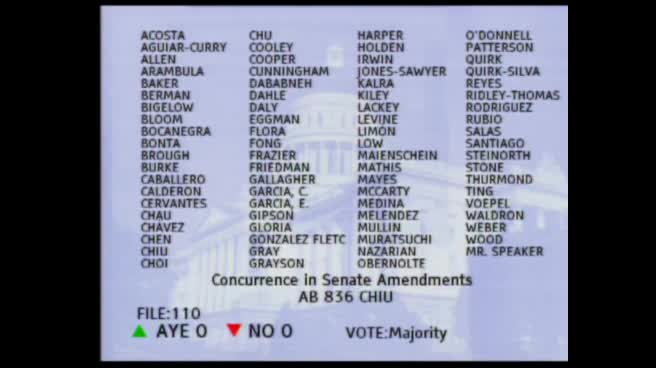
| Sep 5, 2017 | Senate amendments concurred in. To Engrossing and Enrolling. (Ayes 77. Noes 0.). |
| Aug 31, 2017 | In Assembly. Concurrence in Senate amendments pending. May be considered on or after September 2 pursuant to Assembly Rule 77. |
| Aug 31, 2017 | Read third time. Passed. Ordered to the Assembly. |
| Aug 23, 2017 | Ordered to special consent calendar. |
| Jul 18, 2017 | Read second time. Ordered to third reading. |
| Jul 17, 2017 | Withdrawn from committee. |
| Jul 17, 2017 | Read second time and amended. Re-referred to Com. on APPR. |
| Jul 13, 2017 | From committee: Amend, and do pass as amended and re-refer to Com. on APPR. (Ayes 7. Noes 0.) (July 12). |
| Jun 29, 2017 | From committee chair, with author's amendments: Amend, and re-refer to committee. Read second time, amended, and re-referred to Com. on GOV. & F. |
| Jun 6, 2017 | From committee: Do pass and re-refer to Com. on GOV. & F. with recommendation: To Consent Calendar. (Ayes 13. Noes 0.) (June 6). Re-referred to Com. on GOV. & F. |
| May 24, 2017 | Referred to Coms. on T. & H. and GOV. & F. |
| May 11, 2017 | In Senate. Read first time. To Com. on RLS. for assignment. |
| May 11, 2017 | Read third time. Passed. Ordered to the Senate. (Ayes 76. Noes 0. Page 1478.) |
| May 8, 2017 | Read second time. Ordered to third reading. |
| May 4, 2017 | From committee: Do pass. (Ayes 9. Noes 0.) (May 3). |
| Apr 17, 2017 | Re-referred to Com. on L. GOV. |
| Apr 6, 2017 | Read second time and amended. |
| Apr 5, 2017 | From committee: Amend, and do pass as amended and re-refer to Com. on L. GOV. (Ayes 7. Noes 0.) (April 5). |
| Mar 28, 2017 | Re-referred to Com. on H. & C.D. |
| Mar 27, 2017 | From committee chair, with author's amendments: Amend, and re-refer to Com. on H. & C.D. Read second time and amended. |
| Feb 21, 2017 | Referred to Coms. on H. & C.D. and L. GOV. |
| Feb 9, 2017 | From printer. May be heard in committee March 11. |
| Feb 8, 2017 | Read first time. To print. |
|
Date
|
Description
|
Location
|
Votes
|
|
|---|---|---|---|---|
| Sep 5, 2017 | AB 352 SANTIAGO Concurrence in Senate Amendments | Assembly Floor |
Passed |
|
| Aug 31, 2017 | Special Consent Calendar # AB352 | Senate Floor |
Passed |
|
| Jul 12, 2017 | Do pass as amended, but first amend, and re-refer to the Committee on [Appropriations] | Senate Standing Committee on Governance and Finance |
Passed |
|
| Jun 6, 2017 | Do pass, but first be re-referred to the Committee on [Governance and Finance] with the recommendation: To Consent Calendar | Senate Standing Committee on Transportation and Housing |
Passed |
|
| May 11, 2017 | AB 352 SANTIAGO Assembly Third Reading | Assembly Floor |
Passed |
|
| May 3, 2017 | Do pass. | Assembly Standing Committee on Local Government |
Passed |
|
| Apr 5, 2017 | Do pass as amended and be re-referred to the Committee on [Local Government] | Assembly Standing Committee on Housing and Community Development |
Passed |
This list shows positions taken on this bill by organizations on the date displayed, which is linked to the original source.
Positions by individuals are not included.
|
Organization
|
Position
|
Date
|
|---|---|---|
| California Apartment Association | ** Support | Jul 19, 2017 |
| California Association Of Realtors | ** Support | Jul 19, 2017 |
| California State Association Of Electrical Workers | ** Support | Jul 19, 2017 |
| California State Pipe Trades Council | ** Support | Jul 19, 2017 |
| Fire Chiefs Association | ** Against | May 2, 2017 |
| Fire Districts Association Of California | ** Against | May 2, 2017 |
| Unknown. | ** Against | Jul 7, 2017 |
| Western States Council Of Sheet Metal Workers | ** Support | Jul 19, 2017 |
CONCURRENCE IN SENATE AMENDMENTS
CSA1 Bill Id:AB 352
Author:(Santiago)
As Amended Ver:July 17, 2017
Majority vote
ASSEMBLY: | 76-0 | (May 11, 2017) | SENATE: | 37-0 | (August 31, 2017) |
Original Committee Reference: H. & C.D.
SUMMARY: This bill prohibits a city, county, or city and county that adopts an ordinance permitting efficiency units from placing specified limitations on the units. Specifically, this bill:
- Prohibits a city, county, or city and county from limiting the number of efficiency units within one-half mile of public transit or where there is a car sharing vehicle within one block of the unit.
- Prohibits a city, county, or city and county from limiting the number of efficiency units within one mile of a University of California or California State University campus.
The Senate amendments:
- Delete the prohibition on local governments requiring a higher square footage for efficiency units than is required in the International Building Code.
- Provide that any requirement related to density, setbacks, lot coverage, or height restrictions established by a local ordinance are not considered limitations on the number of efficiency units.
FISCAL EFFECT: None
COMMENTS:
According to the Department of Housing and Community Development's, Draft Statewide Housing Assessment: California's Housing Future: Challenges and Opportunities, housing production averaged less than 80,000 new homes annually over the last 10 years and ongoing production continues to fall far below the projected need of 180,000 additional homes annually. Among the challenges identified in the draft assessment is the lack of supply in relationship to demand. Barriers to supply of housing include a lack of certainty at the local level on the development and approval process, dependence on sales tax generating development (commercial versus residential), community opposition, and market conditions including the cost of land and construction.
This bill responds to local constraints placed on the production of efficiency or micro units as a means of increasing the supply of housing. According to a 2014 evaluation of micro units by the Urban Land Institute Multifamily Housing Council, micro units lease at approximately 20% to 30% lower monthly rent than conventional units and are being considered or offered in particularly high-density, expensive metropolitan markets such as Boston, New York, San Francisco, Seattle, and Washington, D.C. The size of the units range, in New York units are 300 square feet, in Dallas 400 square feet and in San Francisco 200 square feet. Efficiency units are may be mixed into residential developments with conventionally sized market units.
Efficiency Units: This bill would prohibit local governments from placing limitations on the number of efficiency units within one-half mile of public transit, or where there is access to a ride sharing car within one block, or within one mile of a University of California or California State University campus. The sponsor offered examples of several local ordinances that set a higher square footage for efficiency units and in some cases limit the total number of efficiency units either by percentage of the building or by placing a cap on the total number of efficiency units in a jurisdiction. This bill would preempt those ordinances. A developer seeking approval for efficiency units would have to go through the building approval process including an environmental review or any conditional use permit required for the building.
Purpose of the bill: According to the author, "It isn't old news that California has a housing issue, and some of the problem can be attributed to a shortage of housing. For example, in many cities vacancy rates have dropped dramatically due to the lack of new construction, making it difficult for individuals, students, seniors, and families to find a place to live close to their schools or jobs. In fact, according to CoStar Property Data Systems, the average vacancy rate statewide is 3.8%; a normal vacancy rate is considered to be 5-6%. This bill is needed in order to support the creation of new housing at the local level, in particular efficiency units which ought to be a part of how California envisions its housing future. Efficiency units are not only affordable by design because of their compact size, but they also reduce sprawl and can be built easily near public transportation and urban centers.
Senate amendments: As passed by the Assembly, this bill would have prohibited a local government from requiring efficiency units to be larger than what is required in the International Building Code, currently 220 square feet. State law allows local governments to adopt ordinances permitting efficiency units that are a minimum of 150 square feet, occupied by no more than two persons, with a kitchen or bathroom facilities. However, local governments are not required to adopt ordinances allowing for efficiency units. The provision limiting the size of efficiency units to 220 square feet was deleted from this bill out of concern that by limiting the size of efficiency units' local governments would be discouraged from adopting ordinances allowing for any efficiency units.
Analysis Prepared by: Lisa Engel / H. & C.D. / (916) 319-2085 FN: 0001276
Office of Senate Floor Analyses (916) 651-1520 Fax: (916) 327-4478 | AB |
THIRD READING
Bill No: AB 352
:
SENATE TRANS. & HOUSING COMMITTEE: 13-0, 6/6/17
AYES: Beall, Cannella, Allen, Atkins, Bates, Gaines, McGuire, Mendoza, Morrell, Roth, Skinner, Wieckowski, Wiener
SENATE GOVERNANCE & FIN. COMMITTEE: 7-0, 7/12/17
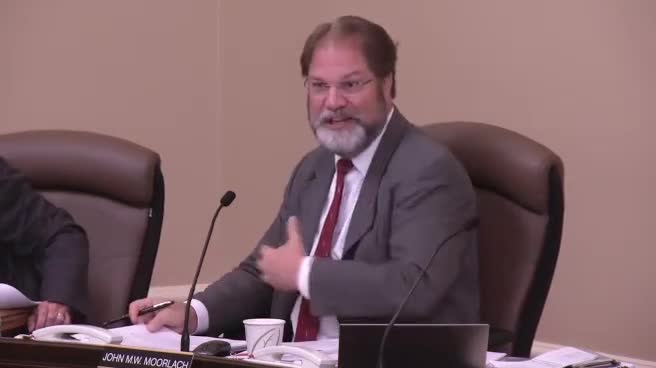
AYES: McGuire, Nguyen, Beall, Hernandez, Hertzberg, Lara, Moorlach
ASSEMBLY FLOOR: 76-0, 5/11/17 - See last page for vote
SOURCE: California Apartment Association
DIGEST:
This bill prohibits a locality from placing limitations on efficiency units located in certain areas.
Existing law:
- Allows a city or county to permit, by ordinance, efficiency units to be occupied by no more than two persons with a minimum floor area of 150 square feet and that may also have a partial kitchen or bathroom facilities.
- Defines "efficiency unit" to have the same meaning as in the International Building Code of the International Code Council.
- Defines, in the International Building Code, an efficiency unit, as follows:
- The unit shall have a living room of not less than 220 square feet of floor area.
- An additional 100 square feet of floor area shall be provided for each occupant of such unit in excess of two.
- The unit shall be provided with a separate closet.
- The unit shall be provided with a kitchen sink, cooking appliance and refrigeration facilities, each having a clear working space of not less than 30 inches in front.
- The unit shall be provided with a separate bathroom containing a water closet, lavatory and bathtub or shower.
This bill prohibits a city, county, or city and county from doing the following:
- Limiting the number of efficiency units in an area located within one-half mile of public transit or where a car share vehicle located within one block of the efficiency units.
- Limiting the number of efficiency units in an area located within one mile of a University of California or California State University campus.
Comments
- Purpose of the bill. According to the author, if California wants an environment that meets the needs of its residents, it needs to craft public policy that supports that goal, and efficiency units should be part of the conversation. These types of units are not only an economical choice in terms of space, they are affordable by virtue of their design. Unlike larger apartment units that accommodate extra space for residents, efficiency units maximize use into a smaller square footage, which brings down rental prices. Many cities understand the importance of efficiency units; some, however, faced with community opposition, have enacted road blocks to this type of affordable housing. When local governments make it difficult to build new housing or when regulations disincentivize certain types of housing that have been proven to work, it is time to revisit the law. This bill will limit local government’s ability to place unnecessary restrictions on efficiency units, specifically on the amount of these units that may be built in specific types of areas.
- Housing needs. According to the Department of Housing and Community Development's “Draft Statewide Housing Assessment: California's Housing Future: Challenges and Opportunities,” housing production averaged less than 80,000 new homes annually over the last 10 years and ongoing production continues to fall far below the projected need of 180,000 additional homes annually. Among the challenges identified in the draft assessment is the lack of supply in relationship to demand. Barriers to supply of housing include a lack of certainty at the local level on the development and approval process, dependence on sales tax generating development (commercial versus residential), community opposition, and market conditions including the cost of land and construction.
- Efficiency/micro-units. State law allows local governments to adopt ordinances permitting efficiency units that are a minimum of 150 square feet, occupied by no more than two persons, with a kitchen or bathroom facilities. The International Building Code defines an efficiency unit as having a living room that is no less than 220 square feet. California and other states use the International Building Code, published by the International Code Council, to set the state's building standards.
This bill responds to local constraints placed on the production of efficiency or micro-units as a means of increasing the supply of housing. According to a 2014 evaluation of micro-units by the Urban Land Institute Multifamily Housing Council, micro-units lease at approximately a 20% to 30% lower monthly rent than conventional units and are being considered or offered in particularly high-density, expensive metropolitan markets such as Boston, New York, San Francisco, Seattle, and Washington, D.C. The size of the units range; in New York units are 300 square feet, in Dallas 400 square feet and in San Francisco 200 square feet. Efficiency units may be mixed into residential developments with conventionally-sized market units.
FISCAL EFFECT: Appropriation: Fiscal Com.: Local:
California Apartment Association (source)
California Association of Realtors
California State Association of Electrical Workers
California State Pipe Trades Council
Western States Council of Sheet Metal Workers
OPPOSITION: (Verified 7/18/17)
None received
ASSEMBLY FLOOR: 76-0, 5/11/17
AYES: Acosta, Aguiar-Curry, Travis Allen, Arambula, Baker, Berman, Bigelow, Bloom, Bocanegra, Bonta, Brough, Burke, Caballero, Calderon, Cervantes, Chau, Chávez, Chen, Chiu, Choi, Chu, Cooley, Cooper, Cunningham, Dababneh, Daly, Eggman, Flora, Fong, Frazier, Friedman, Gallagher, Cristina Garcia, Eduardo Garcia, Gipson, Gloria, Gomez, Gonzalez Fletcher, Gray, Grayson, Holden, Irwin, Jones-Sawyer, Kalra, Kiley, Lackey, Levine, Limón, Low, Maienschein, Mathis, Mayes, McCarty, Medina, Melendez, Mullin, Muratsuchi, Nazarian, Obernolte, Quirk, Quirk-Silva, Reyes, Ridley-Thomas, Rodriguez, Rubio, Salas, Santiago, Steinorth, Mark Stone, Thurmond, Ting, Voepel, Waldron, Weber, Wood, Rendon
NO VOTE RECORDED: Dahle, Harper, O'Donnell, Patterson
7/19/17 15:19:54
**** END ****
SENATE COMMITTEE ON GOVERNANCE AND FINANCE
Senator Mike McGuire, Chair
2017 - 2018 Regular
Bill No: | AB 352 | Hearing Date: | 7/12/17 |
Author: | Santiago | Tax Levy: | No |
Version: | 6/29/17 | Fiscal: | No |
Consultant: | Favorini-Csorba | ||
State Housing Law: efficiency units
Limits minimum size requirements and other provisions of local government ordinances that allow the construction of efficiency units.
Background
Land Use Planning and Permitting. The California Constitution allows a city to "make and enforce within its limits, all local, police, sanitary and other ordinances and regulations not in conflict with general laws." It is from this fundamental power (commonly called the police power) that local governments derive their authority to regulate behavior to preserve the health, safety, and welfare of the public—including land use authority.
Local governments use their police power to enact zoning ordinances that shape development, including setting maximum densities for housing units, minimum numbers of required parking spaces, and setbacks to preserve privacy. These ordinances can also include conditions on development to address aesthetics, community impacts, or other particular site-specific considerations.
Building Codes. The California Building Standards Code (Title 24 of the California Code of Regulations) contains building standards and regulations as adopted by the California Building Standards Commission. These standards include, among other requirements, structural standards for building safety (the Building Code), fire safety standards (the Fire Code), energy efficiency standards (the Energy Code), and standards for green buildings (CalGreen).
The Building Standards Code is updated on a three year cycle—the most recent update occurred in 2016. Building and fire codes in California are typically developed and adopted according to the following process:
- A model code is developed by a national organization.
- The California Building Standards Commission then adopts that model code, with any amendments specific to California. In the case of the California Fire Code, the State Fire Marshal (SFM), with the advice of the State Board of Fire Services—composed of representatives from relevant state agencies, fire chiefs, firefighters, the insurance industry, and local governments—recommends standards for adoption.
- Local agencies in California then enact an ordinance to adopt the codes. Those ordinances may include amendments that are more stringent than the state codes, if the local governing body makes findings that the amendments are necessary because of local climatic, geological, or topographical conditions.
New construction and improvements to existing buildings must comply with the current building codes, and improvements to an existing building may trigger additional code upgrades for other parts of a building.
California’s Housing Challenges. California faces a severe housing shortage. In its most recent statewide housing assessment, the Department of Housing and Community Development (HCD) estimated that California needs to build an additional 100,000 units per year over recent averages of 80,000 units per year to meet the projected need for housing in the state. A variety of causes have contributed to the lack of housing production, but recent reports by the Legislative Analyst’s Office and others point to local approval processes as a major factor. The building industry points to California Environmental Quality Act review, and housing advocates point to a lack of a dedicated source of funds for affordable housing.
Efficiency Units. One approach to providing additional affordable housing is to construct efficiency units (also known as “micro-units”): studio-style housing units that are smaller than a traditional studio or one-bedroom apartment. Although definitions vary, these units typically must have kitchen and bathroom facilities. These units can be built at higher density than larger apartments, lowering the per-unit rental cost, and are well suited to provide housing for students or low-income individuals. However, efficiency units are increasingly being sought out by other demographics, such as single young professionals, as housing costs have risen. According to a 2014 evaluation of micro-units by the Urban Land Institute Multifamily Housing Council, micro-units lease at approximately a 20% to 30% lower monthly rent than conventional units and are being considered or offered in particularly high-density, expensive metropolitan markets such as Boston, New York, San Francisco, Seattle, and Washington, D.C. The size of the units vary across jurisdictions: in New York units are 300 square feet, in Dallas 400 square feet, and in San Francisco 220 square feet. Efficiency units may be mixed into residential developments with conventionally-sized market units.
State law allows local governments to adopt ordinances permitting efficiency units that are a minimum of 150 square feet, occupied by no more than two people, and which may have a kitchen or bathroom facilities. Efficiency units that house more than two people must have an additional 100 square feet of living space per person above two. The International Building Code defines an efficiency unit as having a living room that is no less than 220 square feet.
Several California cities have adopted efficiency unit ordinances that can contain provisions that restrict widespread construction of efficiency units. For example, the City of Santa Monica limits efficiency units to 15% of the number of units in any building, San Francisco caps the number of efficiency units to 375, and the City of Irvine defines a single-room occupancy unit (SRO) with a gross floor area of less than 400 square feet. The author wants to limit the conditions that local governments can place on efficiency units.
Proposed Law
Assembly Bill 352 prohibits a city, county, or city and county from establishing a higher square footage requirement for an efficiency unit than the one provided in the International Building Code, and from limiting the number of efficiency units in an area zoned for residential use that is located: (1) within one-half mile of public transit or where there is a car share vehicle located within one block of the efficiency unit; or (2) within one mile of a University of California or California State University campus. AB 352 provides that any requiresments related to density, setbacks, lot coverage, or height restrictions established by local ordinance are not considered a limit on the number of efficiency units.
State Revenue Impact
No estimate.
Comments
1. Purpose of the bill. California is in the midst of a housing crisis. According to the LAO, housing prices in California far exceed national averages. Vacancy rates have plummeted as Californians compete for what little housing is on the market. An all-of-the-above strategy is needed to meet housing demand, and efficiency units are an important component, but some local governments have established arbitrary limits on these units that hinder their construction. These limits include a cap on the number of units allowed in the city or within an individual development, as well as infeasible minimum sizes for the units. AB 352 makes clear that if a local government is going to allow efficiency units, their ordinances can’t throw up unnecessary roadblocks to their development. It sets a maximum size for these units and prohibits limits on the number of units allowed in areas where these units are most needed, while reaffirming the right of local governments to exercise their zoning authority in other ways. In this way, AB 352 strikes a reasonable balance between preserving local land use authority and meeting the statewide need for new housing.
2. Sure, but will it work? Local governments are allowed to adopt ordinances that permit efficiency units—not required. Those that wish to do so adopt ordinances that reflect the needs of their communities. The International Building Code sets 220 square feet as a minimum size for efficiency dwelling units. San Francisco uses this size as its minimum, and it’s tied with Washington DC for the lowest minimum in the cities surveyed by the Urban Land Institute. Other cities across the nation, including cities that face similar housing constraints—such as New York—have higher minimum size requirements. AB 352 flips this on its head and establishes 220 feet as the maximum size that a local government may require an efficiency dwelling unit to be. Because this is equal to the minimum established in the International Building Code, this requirement is likely to trigger a revision to many efficiency dwelling unit ordinances in the state. In light of the requirements imposed by AB 352, some local governments may simply decide that if they can’t regulate efficiency dwelling units as they see fit, they won’t allow them at all. As a result, the low minimum size restrictions in AB 352 may discourage local governments from adopting efficiency unit ordinances. The Committee may wish to consider amending AB 352 to remove this requirement so as to not create such a disincentive.
3. Incoming! The Senate Transportation and Housing Committee approved AB 352 at their June 6th hearing on a 13-0 vote.
4. Related legislation. SB 229 (Wiekowski), which the Committee approved at its April 5th hearing on a 6-1 vote, makes minor changes to the statutes governing accessory dwelling units (ADUs) including to allow local governments to increase the maximum allowable size of ADUs and to clarify the limits on connection fees, among other changes. SB 229 is pending in the Assembly Local Government Committee. AB 494 (Bloom), which the Committee will also hear at its July 12th meeting, would also make technical and clarifying changes to ADU laws.
Assembly Actions
Assembly Housing and Community Development Committee: 7-0
Assembly Local Government Committee: 9-0
Assembly Floor: 76-0
Support and Opposition
(7/7/17)
Support: California Apartment Association (sponsor); California Association of Realtors; California State Association of Electrical Workers; California State Pipe Trades Council; Western States Council of Sheet Metal Workers.
Opposition: Unknown.
-- END --
SENATE COMMITTEE ON TRANSPORTATION AND HOUSING
Senator Jim Beall, Chair
2017 - 2018 Regular
Bill No: AB 352 Hearing Date: 6/6/17
Author: | Santiago | ||
Version: | 4/6/2017 Amended | ||
Urgency: | No | Fiscal: | No |
Consultant: | Alison Hughes | ||
SUBJECT: State Housing Law: efficiency units
DIGEST: This bill prohibits a locality from establishing a higher square footage requirement for efficiency units than what is specified in the International Building Code, and restricts a locality from placing limitations on efficiency units located in certain areas.
ANALYSIS:
Existing law:
- Allows a city or county to permit, by ordinance, efficiency units to be occupied by no more than two persons with a minimum floor area of 150 square feet and that may also have a partial kitchen or bathroom facilities.
- Defines "efficiency unit" to have the same meaning as in the International Building Code of the International Code Council.
3) Defines, in the International Building Code, an efficiency unit, as follows:
- The unit shall have a living room of not less than 220 square feet of floor area;
- An additional 100 square feet of floor area shall be provided for each occupant of such unit in excess of two;
- The unit shall be provided with a separate closet; and,
- The unit shall be provided with a kitchen sink, cooking appliance and refrigeration facilities, each having a clear working space of not less than 30 inches in front.
- The unit shall be provided with a separate bathroom containing a water closet, lavatory and bathtub or shower.
This bill prohibits a city, county, or city and county from doing the following:
- Establishing a higher square footage requirement for an efficiency unit that the one provided in the International Building Code.
- Limiting the number of efficiency units in an area located within one-half mile of public transit or where a car share vehicle located within one block of the efficiency units.
- Limiting the number of efficiency units in an area located within one mile of a University of California or California State University campus.
COMMENTS:
1) Purpose of the bill. According to the author, if California wants an environment that meets the needs of its residents, it needs to craft public policy that supports that goal, and efficiency units should be part of the conversation. These types of units are not only an economical choice in terms of space, they are affordable by virtue of their design. Unlike larger apartment units that accommodate extra space for residents, efficiency units maximize use into a smaller square footage, which brings down rental prices. Many cities understand the importance of efficiency units; some, however, faced with community opposition, have enacted road blocks to this type of affordable housing. When local governments make it difficult to build new housing or when regulations disincentivize certain types of housing that have been proven to work, it is time to revisit the law. This bill will limit local government’s ability to place unnecessary restrictions on efficiency units, specifically on the square footage requirements and the limit on the amount of these units that may be built in specific types of areas.
2) Housing Needs Background. According to the Department of Housing and Community Development's, Draft Statewide Housing Assessment: California's Housing Future: Challenges and Opportunities, housing production averaged less than 80,000 new homes annually over the last 10 years and ongoing production continues to fall far below the projected need of 180,000 additional homes annually. Among the challenges identified in the draft assessment is the lack of supply in relationship to demand. Barriers to supply of housing include a lack of certainty at the local level on the development and approval process, dependence on sales tax generating development (commercial versus residential), community opposition, and market conditions including the cost of land and construction.
3) Efficiency/Micro-Units. State law allows local governments to adopt ordinances permitting efficiency units that are a minimum of 150 square feet, occupied by no more than two persons, with a kitchen or bathroom facilities. The International Building Code defines an efficiency unit as having a living room that is no less than 220 square feet. California and other states use the International Building Code, published by the International Code Council, to set the state's building standards.
The author points to several examples of cities that either impose limits on the number of efficiency units in a building or the size of the efficiency units. For example, the City of Santa Monica limits efficiency units to 15% of the number of units in any building, San Francisco caps the number of efficiency units to 375, and Irvine defines a single-room occupancy unit (SRO) with a gross floor area of less than 400 square feet.
This bill responds to local constraints placed on the production of efficiency or micro-units as a means of increasing the supply of housing. According to a 2014 evaluation of micro-units by the Urban Land Institute Multifamily Housing Council, micro-units lease at approximately a 20% to 30% lower monthly rent than conventional units and are being considered or offered in particularly high-density, expensive metropolitan markets such as Boston, New York, San Francisco, Seattle, and Washington, D.C. The size of the units range; in New York units are 300 square feet, in Dallas 400 square feet and in San Francisco 200 square feet. Efficiency units may be mixed into residential developments with conventionally-sized market units.
- Double-referral. This bill has been double-referred to the Senate Governance and Finance Committee.
FISCAL EFFECT: Appropriation: Fiscal Com.: Local:
POSITIONS: (Communicated to the committee before noon on Wednesday,
May 31, 2017.)
SUPPORT:
California Apartment Association (sponsor)
California Association of Realtors
California State Association of Electrical Workers
California State Pipe Trades Council
Western States Council of Sheet Metal Workers
OPPOSITION:
None received.
-- END --
ASSEMBLY THIRD READING
ATR Bill Id:AB 352
Author:(Santiago)
As Amended Ver:April 6, 2017
Majority vote
Committee | Votes | Ayes | Noes |
Housing | 7-0 | Chiu, Steinorth, Bocanegra, Chau, Choi, Kalra, Limón | |
Local Government | 9-0 | Aguiar-Curry, Waldron, Bloom, Caballero, Gonzalez Fletcher, Grayson, Lackey, Ridley-Thomas, Voepel |
SUMMARY: This bill prohibits a city, county, or city and county that adopts an ordinance permitting efficiency units from placing specified limitations on the units. Specifically, this bill:
- Prohibits a city, county, or city and county from requiring a higher square footage for efficiency units than is required by the International Building Code.
- Prohibits a city, county, or city and county from limiting the number of efficiency units within one-half mile of public transit or where there is a car sharing vehicle within one block of the unit.
- Prohibits a city, county, or city and county from limiting the number of efficiency units within one mile of a University of California or California State University campus.
FISCAL EFFECT: None
COMMENTS:
According to the Department of Housing and Community Development's, Draft Statewide Housing Assessment: California's Housing Future: Challenges and Opportunities, housing production averaged less than 80,000 new homes annually over the last 10 years and ongoing production continues to fall far below the projected need of 180,000 additional homes annually. Among the challenges identified in the draft assessment is the lack of supply in relationship to demand. Barriers to supply of housing include a lack of certainty at the local level on the development and approval process, dependence on sales tax generating development (commercial versus residential), community opposition, and market conditions including the cost of land and construction.
This bill responds to local constraints placed on the production of efficiency or micro units as a means of increasing the supply of housing. According to a 2014 evaluation of micro units by the Urban Land Institute Multifamily Housing Council, micro units lease at approximately 20% to 30% lower monthly rent than conventional units and are being considered or offered in particularly high-density, expensive metropolitan markets such as Boston, New York, San Francisco, Seattle, and Washington, D.C. The size of the units range, in New York units are 300 square feet, in Dallas 400 square feet and in San Francisco 200 square feet. Efficiency units are may be mixed into residential developments with conventionally sized market units.
Efficiency Units: State law allows local governments to adopt ordinances permitting efficiency units that are a minimum of 150 square feet, occupied by no more than two persons, with a kitchen or bathroom facilities. The International Building Code defines an efficiency unit as having a living room that is no less than 220 square feet. California and other states use the International Building Code, published by the International Code Council, to set the state's building standards.
This bill would prohibit a local government from requiring efficiency units to be larger than what is required in the International Building Code, currently 220 square feet. In addition, this bill would prohibit local governments from placing limitations on the number of efficiency units within one-half mile of public transit, or where there is access to a ride sharing car within one block, or within one mile of a University of California or California State University campus. The sponsor offered examples of several local ordinances that set a higher square footage for efficiency units and in some cases limit the total number of efficiency units either by percentage of the building or by placing a cap on the total number of efficiency units in a jurisdiction. This bill would preempt those ordinances. A developer seeking approval for efficiency units would have to go through the building approval process including an environmental review or any conditional use permit required for the building.
Purpose of the bill: According to the author, "It isn't old news that California has a housing issue, and some of the problem can be attributed to a shortage of housing. For example, in many cities vacancy rates have dropped dramatically due to the lack of new construction, making it difficult for individuals, students, seniors, and families to find a place to live close to their schools or jobs. In fact, according to CoStar Property Data Systems, the average vacancy rate statewide is 3.8%; a normal vacancy rate is considered to be 5-6%. This bill is needed in order to support the creation of new housing at the local level, in particular efficiency units which ought to be a part of how California envisions its housing future. Efficiency units are not only affordable by design because of their compact size, but they also reduce sprawl and can be built easily near public transportation and urban centers.
Analysis Prepared by: Lisa Engel / H. & C.D. / (916) 319-2085 FN: 0000317
Date of Hearing: May 3, 2017
ASSEMBLY COMMITTEE ON LOCAL GOVERNMENT
Cecilia Aguiar-Curry, Chair
ABPCA Bill Id:AB 352 (
Author:Santiago) – As Amended Ver:April 6, 2017
SUBJECT: State Housing Law: efficiency units.
SUMMARY: Prohibits a city or county from establishing a higher square footage requirement for efficiency units than what is specified in the International Building Code, and restricts a city or county from placing limitations on efficiency units located in certain areas. Specifically, this bill:
- Prohibits a city, county, or city and county (hereafter referred to as “city or county”) from doing any of the following:
- Establishing a higher square footage requirement for an efficiency unit than the one provided in the International Building Code;
- Limiting the number of efficiency units in an area located within one-half mile of public transit or where there is a car share vehicle located within one block of the efficiency unit; and,
- Limiting the number of efficiency units in an area located within one mile of a University of California or California State University campus.
EXISTING LAW:
- Allows a city or county to permit, by ordinance, efficiency units to be occupied by no more than two persons with a minimum floor area of 150 square feet and that may also have a partial kitchen or bathroom facilities.
- Defines "efficiency unit" to have the same meaning as in the International Building Code of the International Code Council.
3) Defines, in the International Building Code, an efficiency unit, as follows:
- The unit shall have a living room of not less than 220 square feet of floor area;
- An additional 100 square feet of floor area shall be provided for each occupant of such unit in excess of two;
- The unit shall be provided with a separate closet; and,
- The unit shall be provided with a kitchen sink, cooking appliance and refrigeration facilities, each having a clear working space of not less than 30 inches in front.
- The unit shall be provided with a separate bathroom containing a water closet, lavatory and bathtub or shower.
FISCAL EFFECT: None
COMMENTS:
- Bill Summary. State law allows local governments to adopt ordinances permitting efficiency units that have a minimum floor area of 150 square feet, occupied by no more than two persons, with a kitchen or bathroom facilities. The International Building Code defines an efficiency unit as having a living room that is no less than 220 square feet. California uses the International Building Code, published by the International Code Council, to set the state's building standards.
This bill prohibits: (a) A city or county from establishing a higher square footage requirement for an efficiency unit than the one provided in the International Building Code; (b) A city or county from limiting the number of efficiency units in an area located within one-half mile of public transit or where there is a car share vehicle located within one block of the efficiency unit; and, (c) A city or county from limiting the number of efficiency units in an area located within one mile of a University of California or California State University campus. This bill is sponsored by the California Apartment Association.
- Author’s Statement. According to the author, “The housing situation in California has reached critical level that demands a statewide response. In many communities vacancy rates on housing have dropped dramatically low to unsustainable levels due to a lack of new construction and sometimes stringent requirements set by local jurisdiction on the type of housing that may be built. This has created an environment that makes it difficult for individuals, students, seniors, and families to find an affordable place to live close to their schools or jobs.
“If in California we want a housing environment that meets the needs of our residents then we need to craft public policy that supports that goal, and efficiency units ought to be a part of the conversation. These types of units are not only an economical choice in terms of space; they are also affordable by virtue of their design. Unlike larger apartment units that accommodate extra space for residents, efficiency units maximize use into a smaller square footage which also [keeps] costs down on the price. Many cities understand the importance of efficiency units; however some cities, faced with community opposition, have enacted road blocks to this type of affordable housing. When local governments make it difficult to build new housing or when our regulations disincentivize certain types of housing that have been proven to work then it’s time to revisit the law. AB 352 will address this problem by limiting local government’s ability to place these unnecessary restrictions on efficiency units, specifically on the square footage requirements and the limit on the amount of these units that may be built in specific types of areas.”
- Arguments in Support. Supporters argue that this bill will help alleviate the housing shortage, while capitalizing on limited land resources.
- Arguments in Opposition. Opponents are concerned about reducing consideration of fire and life safety issues pertaining to small apartment units.
- Double-Referral. This bill was heard in the Housing and Community Development Committee on April 5, 2017, and passed on a 7-0 vote.
REGISTERED SUPPORT / OPPOSITION:
Support
California Apartment Association [SPONSOR]
California Association of Realtors
California State Association of Electrical Workers
California State Pipe Trades Council
Western State Council of Sheet Metal Workers
Opposition
Fire Chiefs Association
Fire Districts Association of California
Analysis Prepared by: Debbie Michel / L. GOV. / (916) 319-3958
Date of Hearing: April 5, 2017
ASSEMBLY COMMITTEE ON HOUSING AND COMMUNITY DEVELOPMENT
David Chiu, Chair
ABPCA Bill Id:AB 352 (
Author:Santiago) – As Amended Ver:March 27, 2017
SUBJECT: State Housing Law: efficiency units
SUMMARY: Prohibits a city, county, or city and county that adopts an ordinance permitting efficiency units from placing specified limitations on the units. Specifically, this bill:
- Prohibits a city, county, or city and county from requiring a higher square footage for efficiency units than is required by the International Building Code.
- Prohibits a city, county, or city and county from limiting the number of efficiency units within one-half mile of public transit or where there is a car sharing vehicle within one block of the unit.
- Prohibits a city, county, or city and county from limiting the number of efficiency units within one mile of a University of California or California State University campus.
EXISTING LAW:
- Allows a city, county, or city and county to permit, by ordinance, efficiency units to be occupied by no more than two persons with a minimum floor area of 150 square feet and that may also have a partial kitchen or bathroom facilities. (Health and Safety Code 17958.1)
- Defines "efficiency unit" to have the same meaning as in the International Building Code of the International Code Council. (Health and Safety Code 17958.1)
3) International Building Code defines an efficiency unit as follows:
- The unit shall have a living room of not less than 220 square feet of floor area;
- An additional 100 square feet of floor area shall be provided for each occupant of such unit in excess of two;
- The unit shall be provided with a separate closet; and
- The unit shall be provided with a kitchen sink, cooking appliance and refrigeration facilities, each having a clear working space of not less than 30 inches in front.
- The unit shall be provided with a separate bathroom containing a water closet, lavatory and bathtub or shower. (International Building Code Section 1208.4).
FISCAL EFFECT: None.
COMMENTS:
Background:
According to the Department of Housing and Community Development's, Draft Statewide Housing Assessment: California's Housing Future: Challenges and Opportunities, housing production averaged less than 80,000 new homes annually over the last 10 years and ongoing production continues to fall far below the projected need of 180,000 additional homes annually. Among the challenges identified in the draft assessment is the lack of supply in relationship to demand. Barriers to supply of housing include a lack of certainty at the local level on the development and approval process, dependence on sales tax generating development (commercial versus residential), community opposition, and market conditions including the cost of land and construction.
AB 352 responds to local constraints placed on the production of efficiency or micro units as a means of increasing the supply of housing. According to a 2014 evaluation of micro units by the Urban Land Institute Multifamily Housing Council, micro units lease at approximately 20% to 30% lower monthly rent than conventional units and are being considered or offered in particularly high-density, expensive metropolitan markets such as Boston, New York, San Francisco, Seattle, and Washington, D.C. The size of the units range, in New York units are 300 square feet, in Dallas 400 square feet and in San Francisco 200 square feet. Efficiency units are may be mixed into residential developments with conventionally sized market units.
Efficiency Units:
State law allows local governments to adopt ordinances permitting efficiency units that are a minimum of 150 square feet, occupied by no more than two persons, with a kitchen or bathroom facilities. The International Building Code defines an efficiency unit as having a living room that is no less than 220 square feet. California and other states use the International Building Code, published by the International Code Council, to set the state's building standards.
This bill would prohibit a local government from requiring efficiency units to be larger than what is required in the International Building Code, currently 220 square feet. In addition, the bill would prohibit local governments from placing limitations on the number of efficiency units within one-half mile of public transit, or where there is access to a ride sharing car within one block, or within one mile of a University of California or California State University campus. The sponsor offered examples of several local ordinances that set a higher square footage for efficiency units and in some cases limit the total number of efficiency units either by percentage of the building or by placing a cap on the total number of efficiency units in a jurisdiction. This bill would preempt those ordinances. A developer seeking approval for efficiency units would have to go through the building approval process including an environmental review or any conditional use permit required for the building.
Purpose of the bill: According to the author, "It isn’t old news that California has a housing issue, and some of the problem can be attributed to a shortage of housing. For example, in many cities vacancy rates have dropped dramatically due to the lack of new construction, making it difficult for individuals, students, seniors, and families to find a place to live close to their schools or jobs. In fact, according to CoStar Property Data Systems, the average vacancy rate statewide is 3.8%; a normal vacancy rate is considered to be 5-6%. This bill is needed in order to support the creation of new housing at the local level, in particular efficiency units which ought to be a part of how California envisions its housing future. Efficiency units are not only affordable by design because of their compact size, but they also reduce sprawl and can be built easily near public transportation and urban centers.
Committee amendment:
On page 2, line 21, delete "accessory dwelling unit" and replace it with "efficiency unit"
Double referral: If AB 352 passes out of this committee, the bill will be referred to the Committee on Local Government.
REGISTERED SUPPORT / OPPOSITION:
Support
California Apartment Association (sponsor)
California Association of Realtors
California State Association of Electrical Workers
California State Pipe Trades Council
Western State Council of Sheet Metal Workers
Opposition
None on file.
Analysis Prepared by: Lisa Engel / H. & C.D. / 916-319-2085
Discussed in Hearing
 54SEC
Assembly Floor
 2MIN
Senate Standing Committee on Governance and Finance
 1MIN
Assembly Floor
 3MIN
Assembly Standing Committee on Housing and Community Development
Bill Author

Bill Co-Author(s):
