AB 365: Pupil instruction: coursework and graduation requirements: children of military families.
- Session Year: 2017-2018
- House: Assembly
- Latest Version Date: 2017-10-13
(1)Existing law requires a school district to exempt a pupil in foster care, a pupil who is a homeless child or youth, or a former juvenile court school pupil who transfers between schools any time after the completion of the pupils 2nd year of high school from all coursework and other requirements adopted by the governing board of the school district that are in addition to certain statewide coursework requirements unless the school district makes a finding that the pupil is reasonably able to complete the school districts graduation requirements in time to graduate from high school by the end of the pupils 4th year of high school. Existing law requires, among other things, the school district to take specified actions if it determines that the pupil is reasonably able to complete the school districts graduation requirements within the pupils 5th year of high school.
This bill would extend these provisions to a pupil who is a child of a military family, as defined. By requiring school districts to perform additional duties in complying with the exemption requirements, the bill would impose a state-mandated local program.
(2)Existing law requires a school district and county office of education to accept coursework satisfactorily completed by a pupil in foster care, a pupil who is a homeless child or youth, or a former juvenile court school pupil while attending another public school, a juvenile court school, or a nonpublic, nonsectarian school or agency even if the pupil did not complete the entire course and requires the school district and county office of education to issue that pupil full or partial credit for the coursework completed.
Existing law prohibits a school district or county office of education from, among other things, requiring a pupil in foster care, a pupil who is a homeless child or youth, or a former juvenile court school pupil to retake a course if the pupil has satisfactorily completed the entire course in a public school, a juvenile court school, or a nonpublic, nonsectarian school or agency. Existing law prohibits a school district or county office of education from preventing a pupil in foster care, a pupil who is a homeless child or youth, or a former juvenile court school pupil from retaking or taking a course to meet the eligibility requirements for admission to the California State University or the University of California.
This bill would extend these provisions to a pupil who is a child of a military family, as defined. By requiring school districts and county offices of education to perform additional duties in complying with the requirements to accept coursework, the bill would impose a state-mandated local program.
(3)The California Constitution requires the state to reimburse local agencies and school districts for certain costs mandated by the state. Statutory provisions establish procedures for making that reimbursement.
This bill would provide that, if the Commission on State Mandates determines that the bill contains costs mandated by the state, reimbursement for those costs shall be made pursuant to the statutory provisions noted above.
(1)Existing law requires a school district to exempt a pupil in foster care, a pupil who is a homeless child or youth, or a former juvenile court school pupil who transfers between schools any time after the completion of the pupils 2nd year of high school from all coursework and other requirements adopted by the governing board of the school district that are in addition to certain statewide coursework requirements unless the school district makes a finding that the pupil is reasonably able to complete the school districts graduation requirements in time to graduate from high school by the end of the pupils 4th year of high school. Existing law requires, among other things, the school district to take specified actions if it determines that the pupil is reasonably able to complete the school districts graduation requirements within the pupils 5th year of high school.
This bill would extend these provisions to a pupil who is a child of a military family, as defined. By requiring school districts to perform additional duties in complying with the exemption requirements, the bill would impose a state-mandated local program.
(2)Existing law requires a school district and county office of education to accept coursework satisfactorily completed by a pupil in foster care, a pupil who is a homeless child or youth, or a former juvenile court school pupil while attending another public school, a juvenile court school, or a nonpublic, nonsectarian school or agency even if the pupil did not complete the entire course and requires the school district and county office of education to issue that pupil full or partial credit for the coursework completed.
Existing law prohibits a school district or county office of education from, among other things, requiring a pupil in foster care, a pupil who is a homeless child or youth, or a former juvenile court school pupil to retake a course if the pupil has satisfactorily completed the entire course in a public school, a juvenile court school, or a nonpublic, nonsectarian school or agency. Existing law prohibits a school district or county office of education from preventing a pupil in foster care, a pupil who is a homeless child or youth, or a former juvenile court school pupil from retaking or taking a course to meet the eligibility requirements for admission to the California State University or the University of California.
This bill would extend these provisions to a pupil who is a child of a military family, as defined. By requiring a school district districts and county office offices of education to perform additional duties in complying with the requirements to accept coursework, the bill would impose a state-mandated local program.
(3)The California Constitution requires the state to reimburse local agencies and school districts for certain costs mandated by the state. Statutory provisions establish procedures for making that reimbursement.
This bill would provide that, if the Commission on State Mandates determines that the bill contains costs mandated by the state, reimbursement for those costs shall be made pursuant to the statutory provisions noted above.
(1)Existing law requires a school district to exempt a pupil in foster care, a pupil who is a homeless child or youth, or a former juvenile court school pupil who transfers between schools any time after the completion of the pupils 2nd year of high school from all coursework and other requirements adopted by the governing board of the school district that are in addition to certain statewide coursework requirements unless the school district makes a finding that the pupil is reasonably able to complete the school districts graduation requirements in time to graduate from high school by the end of the pupils 4th year of high school. Existing law requires, among other things, the school district to take specified actions if it determines that the pupil is reasonably able to complete the school districts graduation requirements within the pupils 5th year of high school.
This bill would extend these provisions to a pupil who is a child of a military family, as defined. By requiring school districts to perform additional duties in complying with the exemption requirements, the bill would impose a state-mandated local program.
(2)Existing law requires a school district and county office of education to accept coursework satisfactorily completed by a pupil in foster care, a pupil who is a homeless child or youth, or a former juvenile court school pupil while attending another public school, a juvenile court school, or a nonpublic, nonsectarian school or agency even if the pupil did not complete the entire course and requires the school district and county office of education to issue that pupil full or partial credit for the coursework completed.
Existing law prohibits a school district or county office of education from, among other things, requiring a pupil in foster care, a pupil who is a homeless child or youth, or a former juvenile court school pupil to retake a course if the pupil has satisfactorily completed the entire course in a public school, a juvenile court school, or a nonpublic, nonsectarian school or agency. Existing law prohibits a school district or county office of education from preventing a pupil in foster care, a pupil who is a homeless child or youth, or a former juvenile court school pupil from retaking or taking a course to meet the eligibility requirements for admission to the California State University or the University of California.
This bill would extend these provisions to a pupil who is a child of a military family, as defined. By requiring a school district and county office of education to perform additional duties in complying with the requirements to accept coursework, the bill would impose a state-mandated local program.
(3)The California Constitution requires the state to reimburse local agencies and school districts for certain costs mandated by the state. Statutory provisions establish procedures for making that reimbursement.
This bill would provide that, if the Commission on State Mandates determines that the bill contains costs mandated by the state, reimbursement for those costs shall be made pursuant to the statutory provisions noted above.
Existing law establishes the Education Code, and provides that its provisions are to be liberally construed, with a view to effect its objects and to promote justice.This bill would make a nonsubstantive change to that provision.Existing law establishes the Education Code, and provides that its provisions are to be liberally construed, with a view to effect its objects and to promote justice.
This bill would make a nonsubstantive change to that provision.
(a)Notwithstanding any other law, a school district shall exempt a pupil in foster care, as defined in Section 51225.2, a pupil who is a homeless child or youth, as defined in Section 11434a(2) of Title 42 of the United States Code, a former juvenile court school pupil, as defined in Section 51225.2, or a pupil who is a child of a military family, as defined in Section 49701, who transfers between schools any time after the completion of the pupils second year of high school from all coursework and other requirements adopted by the governing board of the school district that are in addition to the statewide coursework requirements specified in Section 51225.3, unless the school district makes a finding that the pupil is reasonably able to complete the school districts graduation requirements in time to graduate from high school by the end of the pupils fourth year of high school.
(b)If the school district determines that the pupil in foster care, the pupil who is a homeless child or youth, the former juvenile court school pupil, or the pupil who is a child of a military family is reasonably able to complete the school districts graduation requirements within the pupils fifth year of high school, the school district shall do all of the following:
(1)Inform the pupil of his or her option to remain in school for a fifth year to complete the school districts graduation requirements.
(2)Inform the pupil, and the person holding the right to make educational decisions for the pupil, about how remaining in school for a fifth year to complete the school districts graduation requirements will affect the pupils ability to gain admission to a postsecondary educational institution.
(3)Provide information to the pupil about transfer opportunities available through the California Community Colleges.
(4)Permit the pupil to stay in school for a fifth year to complete the school districts graduation requirements upon agreement with the pupil, if the pupil is 18 years of age or older, or, if the pupil is under 18 years of age, upon agreement with the person holding the right to make educational decisions for the pupil.
(c)To determine whether a pupil in foster care, a pupil who is a homeless child or youth, a former juvenile court school pupil, or a pupil who is a child of a military family is in the third or fourth year of high school, either the number of credits the pupil has earned to the date of transfer or the length of the pupils school enrollment may be used, whichever will qualify the pupil for the exemption.
(d)(1)(A)Within 30 calendar days of the date that a pupil in foster care who may qualify for the exemption from local graduation requirements pursuant to this section transfers into a school, the school district shall notify the pupil, the person holding the right to make educational decisions for the pupil, and the pupils social worker or probation officer of the availability of the exemption and whether the pupil qualifies for an exemption.
(B)If the school district fails to provide timely notice pursuant to subparagraph (A), the pupil described in subparagraph (A) shall be eligible for the exemption from local graduation requirements pursuant to this section once notified, even if that notification occurs after the termination of the courts jurisdiction over the pupil, if the pupil otherwise qualifies for the exemption pursuant to this section.
(2)(A)Within 30 calendar days of the date that a pupil who is a homeless child or youth who may qualify for the exemption from local graduation requirements pursuant to this section transfers into a school, the school district shall notify the pupil, the person holding the right to make educational decisions for the pupil, and the local educational agency liaison for homeless children and youth designated pursuant to Section 11432(g)(1)(J)(ii) of Title 42 of the United States Code, of the availability of the exemption and whether the pupil qualifies for an exemption.
(B)If the school district fails to provide timely notice pursuant to subparagraph (A), the pupil described in subparagraph (A) shall be eligible for the exemption from local graduation requirements pursuant to this section once notified, even if that notification occurs after the pupil is no longer a homeless child or youth, if the pupil otherwise qualifies for the exemption pursuant to this section.
(3)(A)Within 30 calendar days of the date that a former juvenile court school pupil who may qualify for the exemption from local graduation requirements pursuant to this section transfers into a school, the school district shall notify the pupil, the person holding the right to make educational decisions for the pupil, and the pupils social worker or probation officer of the availability of the exemption and whether the pupil qualifies for an exemption.
(B)If the school district fails to provide timely notice pursuant to subparagraph (A), the pupil described in subparagraph (A) shall be eligible for the exemption from local graduation requirements pursuant to this section once notified, even if that notification occurs after termination of the courts jurisdiction over the pupil, if the pupil otherwise qualifies for the exemption pursuant to this section.
(4)(A)Within 30 calendar days of the date that a pupil who is a child of a military family who may qualify for the exemption from local graduation requirements pursuant to this section transfers into a school, the school district shall notify the pupil and the pupils parent or guardian of the availability of the exemption and whether the pupil qualifies for an exemption.
(B)If the school district fails to provide timely notice pursuant to subparagraph (A), the pupil described in subparagraph (A) shall be eligible for the exemption from local graduation requirements pursuant to this section once notified, even if that notification occurs after the pupil no longer meets the definition of children of military families under Section 49701, if the pupil otherwise qualifies for the exemption pursuant to this section.
(e)If a pupil in foster care, a pupil who is a homeless child or youth, a former juvenile court school pupil, or a pupil who is a child of a military family is exempted from local graduation requirements pursuant to this section and completes the statewide coursework requirements specified in Section 51225.3 before the end of his or her fourth year of high school and that pupil would otherwise be entitled to remain in attendance at the school, a school or school district shall not require or request that the pupil graduate before the end of his or her fourth year of high school.
(f)If a pupil in foster care, a pupil who is a homeless child or youth, a former juvenile court school pupil, or a pupil who is a child of a military family is exempted from local graduation requirements pursuant to this section, the school district shall notify the pupil and the person holding the right to make educational decisions for the pupil how any of the requirements that are waived will affect the pupils ability to gain admission to a postsecondary educational institution and shall provide information about transfer opportunities available through the California Community Colleges.
(g)A pupil in foster care, a pupil who is a homeless child or youth, a former juvenile court school pupil, or a pupil who is a child of a military family who is eligible for the exemption from local graduation requirements pursuant to this section and would otherwise be entitled to remain in attendance at the school shall not be required to accept the exemption or be denied enrollment in, or the ability to complete, courses for which he or she is otherwise eligible, including courses necessary to attend an institution of higher education, regardless of whether those courses are required for statewide graduation requirements.
(h)If a pupil in foster care, a pupil who is a homeless child or youth, a former juvenile court school pupil, or a pupil who is a child of a military family is not exempted from local graduation requirements or has previously declined the exemption pursuant to this section, a school district shall exempt the pupil at any time if an exemption is requested by the pupil and the pupil qualifies for the exemption.
(i)If a pupil in foster care, a pupil who is a homeless child or youth, a former juvenile court school pupil, or a pupil who is a child of a military family is exempted from local graduation requirements pursuant to this section, a school district shall not revoke the exemption.
(j)(1)If a pupil in foster care is exempted from local graduation requirements pursuant to this section, the exemption shall continue to apply after the termination of the courts jurisdiction over the pupil while he or she is enrolled in school or if the pupil transfers to another school or school district.
(2)If a pupil who is a homeless child or youth is exempted from local graduation requirements pursuant to this section, the exemption shall continue to apply after the pupil is no longer a homeless child or youth while he or she is enrolled in school or if the pupil transfers to another school or school district.
(3)If a former juvenile court school pupil is exempted from local graduation requirements pursuant to this section, the exemption shall continue to apply after the termination of the courts jurisdiction over the pupil while he or she is enrolled in school or if the pupil transfers to another school or school district.
(4)If a pupil who is a child of a military family is exempted from local graduation requirements pursuant to this section, the exemption shall continue to apply after the pupil no longer meets the definition of children of military families under Section 49701 while he or she is enrolled in school or if the pupil transfers to another school or school district.
(k)A school district shall not require or request a pupil in foster care, a pupil who is a homeless child or youth, a former juvenile court school pupil, or a pupil who is a child of a military family to transfer schools in order to qualify the pupil for an exemption pursuant to this section.
(l)(1)A pupil in foster care, the person holding the right to make educational decisions for the pupil, the pupils social worker, or the pupils probation officer shall not request a transfer solely to qualify the pupil for an exemption pursuant to this section.
(2)A pupil who is a homeless child or youth, the person holding the right to make educational decisions for the pupil, or the local educational agency liaison for homeless children and youth designated pursuant to Section 11432(g)(1)(J)(ii) of Title 42 of the United States Code, shall not request a transfer solely to qualify the pupil for an exemption pursuant to this section.
(3)A former juvenile court school pupil, the person holding the right to make educational decisions for the pupil, the pupils social worker, or the pupils probation officer shall not request a transfer solely to qualify the pupil for an exemption pursuant to this section.
(4)A pupil who is a child of a military family, or the pupils parent or guardian, shall not request a transfer solely to qualify the pupil for an exemption pursuant to this section.
(m)(1)A complaint of noncompliance with the requirements of this section may be filed with the local educational agency under the Uniform Complaint Procedures set forth in Chapter 5.1 (commencing with Section 4600) of Division 1 of Title 5 of the California Code of Regulations.
(2)A complainant not satisfied with the decision of a local educational agency may appeal the decision to the department pursuant to Chapter 5.1 (commencing with Section 4600) of Division 1 of Title 5 of the California Code of Regulations and shall receive a written decision regarding the appeal within 60 days of the departments receipt of the appeal.
(3)If a local educational agency finds merit in a complaint, or the Superintendent finds merit in an appeal, the local educational agency shall provide a remedy to the affected pupil.
(4)Information regarding the requirements of this section shall be included in the annual notification distributed to, among others, pupils, parents or guardians of pupils, employees, and other interested parties pursuant to Section 4622 of Title 5 of the California Code of Regulations.
SEC. 2.Section 51225.2 of the Education Code is amended to read:51225.2.(a)For purposes of this section, the following definitions apply:
(1)Pupil in foster care means a child who has been removed from his or her home pursuant to Section 309 of the Welfare and Institutions Code, is the subject of a petition filed under Section 300 or 602 of the Welfare and Institutions Code, or has been removed from his or her home and is the subject of a petition filed under Section 300 or 602 of the Welfare and Institutions Code.
(2)Pupil who is a homeless child or youth means a pupil who meets the definition of homeless child or youth in Section 11434a(2) of Title 42 of the United States Code.
(3)Former juvenile court school pupil means a pupil who, upon completion of the pupils second year of high school, transfers to a school district, excluding a school district operated by the Division of Juvenile Justice of the Department of Corrections and Rehabilitation, from a juvenile court school.
(4)Pupil who is a child of a military family means a pupil who meets the definition of children of military families under Section 49701.
(b)(1)Notwithstanding any other law, a school district and county office of education shall accept coursework satisfactorily completed by a pupil in foster care, a pupil who is a homeless child or youth, a former juvenile court school pupil, or a pupil who is a child of a military family while attending another public school, a juvenile court school, or a nonpublic, nonsectarian school or agency even if the pupil did not complete the entire course and shall issue that pupil full or partial credit for the coursework completed.
(2)For purposes of coursework completed by a pupil who is a child of a military family, public school includes schools operated by the United States Department of Defense.
(c)The credits accepted pursuant to subdivision (b) shall be applied to the same or equivalent course, if applicable, as the coursework completed in the prior public school, juvenile court school, or nonpublic, nonsectarian school or agency.
(d)A school district or county office of education shall not require a pupil in foster care, a pupil who is a homeless child or youth, a former juvenile court school pupil, or a pupil who is a child of a military family to retake a course if the pupil has satisfactorily completed the entire course in a public school, a juvenile court school, or a nonpublic, nonsectarian school or agency. If the pupil did not complete the entire course, the school district or county office of education shall not require the pupil to retake the portion of the course the pupil completed unless the school district or county office of education, in consultation with the holder of educational rights for the pupil, finds that the pupil is reasonably able to complete the requirements in time to graduate from high school. When partial credit is awarded in a particular course, the pupil in foster care, the pupil who is a homeless child or youth, the former juvenile court school pupil, or the pupil who is a child of a military family shall be enrolled in the same or equivalent course, if applicable, so that the pupil may continue and complete the entire course.
(e)A pupil in foster care, a pupil who is a homeless child or youth, a former juvenile court school pupil, or a pupil who is a child of a military family shall not be prevented from retaking or taking a course to meet the eligibility requirements for admission to the California State University or the University of California.
(f)(1)A complaint of noncompliance with the requirements of this section may be filed with the local educational agency under the Uniform Complaint Procedures set forth in Chapter 5.1 (commencing with Section 4600) of Division 1 of Title 5 of the California Code of Regulations.
(2)A complainant not satisfied with the decision of a local educational agency may appeal the decision to the department pursuant to Chapter 5.1 (commencing with Section 4600) of Division 1 of Title 5 of the California Code of Regulations and shall receive a written decision regarding the appeal within 60 days of the departments receipt of the appeal.
(3)If a local educational agency finds merit in a complaint, or the Superintendent finds merit in an appeal, the local educational agency shall provide a remedy to the affected pupil.
(4)Information regarding the requirements of this section shall be included in the annual notification distributed to, among others, pupils, parents or guardians of pupils, employees, and other interested parties pursuant to Section 4622 of Title 5 of the California Code of Regulations.
SEC. 3.If the Commission on State Mandates determines that this act contains costs mandated by the state, reimbursement to local agencies and school districts for those costs shall be made pursuant to Part 7 (commencing with Section 17500) of Division 4 of Title 2 of the Government Code.
(a)Notwithstanding any other law, a school district shall exempt a pupil in foster care, as defined in Section 51225.2, a pupil who is a homeless child or youth, as defined in Section 11434a(2) of Title 42 of the United States Code, or a former juvenile court school pupil, as defined in Section 51225.2, or a pupil who is a child of a military family, as defined in Section 49701, who transfers between schools any time after the completion of the pupils second year of high school from all coursework and other requirements adopted by the governing board of the school district that are in addition to the statewide coursework requirements specified in Section 51225.3, unless the school district makes a finding that the pupil is reasonably able to complete the school districts graduation requirements in time to graduate from high school by the end of the pupils fourth year of high school.
(b)If the school district determines that the pupil in foster care, the pupil who is a homeless child or youth, or the former juvenile court school pupil pupil, or the pupil who is a child of a military family is reasonably able to complete the school districts graduation requirements within the pupils fifth year of high school, the school district shall do all of the following:
(1)Inform the pupil of his or her option to remain in school for a fifth year to complete the school districts graduation requirements.
(2)Inform the pupil, and the person holding the right to make educational decisions for the pupil, about how remaining in school for a fifth year to complete the school districts graduation requirements will affect the pupils ability to gain admission to a postsecondary educational institution.
(3)Provide information to the pupil about transfer opportunities available through the California Community Colleges.
(4)Permit the pupil to stay in school for a fifth year to complete the school districts graduation requirements upon agreement with the pupil, if the pupil is 18 years of age or older, or, if the pupil is under 18 years of age, upon agreement with the person holding the right to make educational decisions for the pupil.
(c)To determine whether a pupil in foster care, a pupil who is a homeless child or youth, or a former juvenile court school pupil pupil, or a pupil who is a child of a military family is in the third or fourth year of high school, either the number of credits the pupil has earned to the date of transfer or the length of the pupils school enrollment may be used, whichever will qualify the pupil for the exemption.
(d)(1)(A)Within 30 calendar days of the date that a pupil in foster care who may qualify for the exemption from local graduation requirements pursuant to this section transfers into a school, the school district shall notify the pupil, the person holding the right to make educational decisions for the pupil, and the pupils social worker or probation officer of the availability of the exemption and whether the pupil qualifies for an exemption.
(B)If the school district fails to provide timely notice pursuant to subparagraph (A), the pupil described in subparagraph (A) shall be eligible for the exemption from local graduation requirements pursuant to this section once notified, even if that notification occurs after the termination of the courts jurisdiction over the pupil, if the pupil otherwise qualifies for the exemption pursuant to this section.
(2)(A)Within 30 calendar days of the date that a pupil who is a homeless child or youth may qualify for the exemption from local graduation requirements pursuant to this section transfers into a school, the school district shall notify the pupil, the person holding the right to make educational decisions for the pupil, and the local educational agency liaison for homeless children and youth designated pursuant to Section 11432(g)(1)(J)(ii) of Title 42 of the United States Code, of the availability of the exemption and whether the pupil qualifies for an exemption.
(B)If the school district fails to provide timely notice pursuant to subparagraph (A), the pupil described in subparagraph (A) shall be eligible for the exemption from local graduation requirements pursuant to this section once notified, even if that notification occurs after the pupil is no longer a homeless child or youth, if the pupil otherwise qualifies for the exemption pursuant to this section.
(3)(A)Within 30 calendar days of the date that a former juvenile court school pupil may qualify for the exemption from local graduation requirements pursuant to this section transfers into a school, the school district shall notify the pupil, the person holding the right to make educational decisions for the pupil, and the pupils social worker or probation officer of the availability of the exemption and whether the pupil qualifies for an exemption.
(B)If the school district fails to provide timely notice pursuant to subparagraph (A), the pupil described in subparagraph (A) shall be eligible for the exemption from local graduation requirements pursuant to this section once notified, even if that notification occurs after termination of the courts jurisdiction over the pupil, if the pupil otherwise qualifies for the exemption pursuant to this section.
(4)(A)Within 30 calendar days of the date that a pupil who is a child of a military family may qualify for the exemption from local graduation requirements pursuant to this section transfers into a school, the school district shall notify the pupil and the pupils parent or guardian of the availability of the exemption and whether the pupil qualifies for an exemption.
(B)If the school district fails to provide timely notice pursuant to subparagraph (A), the pupil described in subparagraph (A) shall be eligible for the exemption from local graduation requirements pursuant to this section once notified, even if that notification occurs after the pupil no longer meets the definition of children of military families under Section 49701, if the pupil otherwise qualifies for the exemption pursuant to this section.
(e)If a pupil in foster care, a pupil who is a homeless child or youth, or a former juvenile court school pupil pupil, or a pupil who is a child of a military family is exempted from local graduation requirements pursuant to this section and completes the statewide coursework requirements specified in Section 51225.3 before the end of his or her fourth year of high school and that pupil would otherwise be entitled to remain in attendance at the school, a school or school district shall not require or request that the pupil graduate before the end of his or her fourth year of high school.
(f)If a pupil in foster care, a pupil who is a homeless child or youth, or a former juvenile court school pupil pupil, or a pupil who is a child of a military family is exempted from local graduation requirements pursuant to this section, the school district shall notify the pupil and the person holding the right to make educational decisions for the pupil how any of the requirements that are waived will affect the pupils ability to gain admission to a postsecondary educational institution and shall provide information about transfer opportunities available through the California Community Colleges.
(g)A pupil in foster care, a pupil who is a homeless child or youth, or a former juvenile court school pupil pupil, or a pupil who is a child of a military family who is eligible for the exemption from local graduation requirements pursuant to this section and would otherwise be entitled to remain in attendance at the school shall not be required to accept the exemption or be denied enrollment in, or the ability to complete, courses for which he or she is otherwise eligible, including courses necessary to attend an institution of higher education, regardless of whether those courses are required for statewide graduation requirements.
(h)If a pupil in foster care, a pupil who is a homeless child or youth, or a former juvenile court school pupil pupil, or a pupil who is a child of a military family is not exempted from local graduation requirements or has previously declined the exemption pursuant to this section, a school district shall exempt the pupil at any time if an exemption is requested by the pupil and the pupil qualifies for the exemption.
(i)If a pupil in foster care, a pupil who is a homeless child or youth, or a former juvenile court school pupil pupil, or a pupil who is a child of a military family is exempted from local graduation requirements pursuant to this section, a school district shall not revoke the exemption.
(j)(1)If a pupil in foster care is exempted from local graduation requirements pursuant to this section, the exemption shall continue to apply after the termination of the courts jurisdiction over the pupil while he or she is enrolled in school or if the pupil transfers to another school or school district.
(2)If a pupil who is a homeless child or youth is exempted from local graduation requirements pursuant to this section, the exemption shall continue to apply after the pupil is no longer a homeless child or youth while he or she is enrolled in school or if the pupil transfers to another school or school district.
(3)If a former juvenile court school pupil is exempted from local graduation requirements pursuant to this section, the exemption shall continue to apply after the termination of the courts jurisdiction over the pupil while he or she is enrolled in school or if the pupil transfers to another school or school district.
(4)If a pupil who is a child of a military family is exempted from local graduation requirements pursuant to this section, the exemption shall continue to apply after the pupil no longer meets the definition of children of military families under Section 49701 while he or she is enrolled in school or if the pupil transfers to another school or school district.
(k)A school district shall not require or request a pupil in foster care, a pupil who is a homeless child or youth, or a former juvenile court school pupil pupil, or a pupil who is a child of a military family to transfer schools in order to qualify the pupil for an exemption pursuant to this section.
(l)(1)A pupil in foster care, the person holding the right to make educational decisions for the pupil, the pupils social worker, or the pupils probation officer shall not request a transfer solely to qualify the pupil for an exemption pursuant to this section.
(2)A pupil who is a homeless child or youth, the person holding the right to make educational decisions for the pupil, or the local educational agency liaison for homeless children and youth designated pursuant to Section 11432(g)(1)(J)(ii) of Title 42 of the United States Code, shall not request a transfer solely to qualify the pupil for an exemption pursuant to this section.
(3)A former juvenile court school pupil, the person holding the right to make educational decisions for the pupil, the pupils social worker, or the pupils probation officer shall not request a transfer solely to qualify the pupil for an exemption pursuant to this section.
(4)A pupil who is a child of a military family, or the pupils parent or guardian, shall not request a transfer solely to qualify the pupil for an exemption pursuant to this section.
(m)(1)A complaint of noncompliance with the requirements of this section may be filed with the local educational agency under the Uniform Complaint Procedures set forth in Chapter 5.1 (commencing with Section 4600) of Division 1 of Title 5 of the California Code of Regulations.
(2)A complainant not satisfied with the decision of a local educational agency may appeal the decision to the department pursuant to Chapter 5.1 (commencing with Section 4600) of Division 1 of Title 5 of the California Code of Regulations and shall receive a written decision regarding the appeal within 60 days of the departments receipt of the appeal.
(3)If a local educational agency finds merit in a complaint, or the Superintendent finds merit in an appeal, the local educational agency shall provide a remedy to the affected pupil.
(4)Information regarding the requirements of this section shall be included in the annual notification distributed to, among others, pupils, parents or guardians of pupils, employees, and other interested parties pursuant to Section 4622 of Title 5 of the California Code of Regulations.
SEC. 2.Section 51225.2 of the Education Code is amended to read:51225.2.(a)For purposes of this section, the following definitions apply:
(1)Pupil in foster care means a child who has been removed from his or her home pursuant to Section 309 of the Welfare and Institutions Code, is the subject of a petition filed under Section 300 or 602 of the Welfare and Institutions Code, or has been removed from his or her home and is the subject of a petition filed under Section 300 or 602 of the Welfare and Institutions Code.
(2)Pupil who is a homeless child or youth means a pupil who meets the definition of homeless child or youth in Section 11434a(2) of Title 42 of the United States Code.
(3)Former juvenile court school pupil means a pupil who, upon completion of the pupils second year of high school, transfers to a school district, excluding a school district operated by the Division of Juvenile Justice of the Department of Corrections and Rehabilitation, from a juvenile court school.
(4)Pupil who is a child of a military family means a pupil who meets the definition of children of military families under Section 49701.
(b)Notwithstanding any other law, a school district and county office of education shall accept coursework satisfactorily completed by a pupil in foster care, a pupil who is a homeless child or youth, or a former juvenile court school pupil pupil, or a pupil who is a child of a military family while attending another public school, a juvenile court school, or a nonpublic, nonsectarian school or agency even if the pupil did not complete the entire course and shall issue that pupil full or partial credit for the coursework completed.
(c)The credits accepted pursuant to subdivision (b) shall be applied to the same or equivalent course, if applicable, as the coursework completed in the prior public school, juvenile court school, or nonpublic, nonsectarian school or agency.
(d)A school district or county office of education shall not require a pupil in foster care, a pupil who is a homeless child or youth, or a former juvenile court school pupil pupil, or a pupil who is a child of a military family to retake a course if the pupil has satisfactorily completed the entire course in a public school, a juvenile court school, or a nonpublic, nonsectarian school or agency. If the pupil did not complete the entire course, the school district or county office of education shall not require the pupil to retake the portion of the course the pupil completed unless the school district or county office of education, in consultation with the holder of educational rights for the pupil, finds that the pupil is reasonably able to complete the requirements in time to graduate from high school. When partial credit is awarded in a particular course, the pupil in foster care, the pupil who is a homeless child or youth, or the former juvenile court school pupil pupil, or the pupil who is a child of a military family shall be enrolled in the same or equivalent course, if applicable, so that the pupil may continue and complete the entire course.
(e)A pupil in foster care, a pupil who is a homeless child or youth, or a former juvenile court school pupil pupil, or a pupil who is a child of a military family shall not be prevented from retaking or taking a course to meet the eligibility requirements for admission to the California State University or the University of California.
(f)(1)A complaint of noncompliance with the requirements of this section may be filed with the local educational agency under the Uniform Complaint Procedures set forth in Chapter 5.1 (commencing with Section 4600) of Division 1 of Title 5 of the California Code of Regulations.
(2)A complainant not satisfied with the decision of a local educational agency may appeal the decision to the department pursuant to Chapter 5.1 (commencing with Section 4600) of Division 1 of Title 5 of the California Code of Regulations and shall receive a written decision regarding the appeal within 60 days of the departments receipt of the appeal.
(3)If a local educational agency finds merit in a complaint, or the Superintendent finds merit in an appeal, the local educational agency shall provide a remedy to the affected pupil.
(4)Information regarding the requirements of this section shall be included in the annual notification distributed to, among others, pupils, parents or guardians of pupils, employees, and other interested parties pursuant to Section 4622 of Title 5 of the California Code of Regulations.
SEC. 3.If the Commission on State Mandates determines that this act contains costs mandated by the state, reimbursement to local agencies and school districts for those costs shall be made pursuant to Part 7 (commencing with Section 17500) of Division 4 of Title 2 of the Government Code.
SECTION 1.Section 2 of the Education Code is amended to read:2.The code establishes the law of the state respecting the subjects to which it relates, and its provisions and all proceedings under it are to be liberally construed, with a view to effect its objects and to promote justice.The code establishes the law of this the state respecting the subjects to which it relates, and its provisions and all proceedings under it are to be liberally construed, with a view to effect its objects and to promote justice.
|
Date
|
Status
|
|---|---|
| Oct 13, 2017 | Chaptered by Secretary of State - Chapter 739, Statutes of 2017. |
| Oct 13, 2017 | Approved by the Governor. |
| Sep 20, 2017 | Enrolled and presented to the Governor at 4:30 p.m. |
| Sep 11, 2017 | In Assembly. Ordered to Engrossing and Enrolling. |
| Sep 11, 2017 | Read third time. Passed. Ordered to the Assembly. |
| Sep 5, 2017 | Read second time. Ordered to third reading. |
| Sep 1, 2017 | From committee: Do pass. (Ayes 7. Noes 0.) (September 1). |
| Jun 26, 2017 | In committee: Referred to suspense file. |
| Jun 7, 2017 | From committee: Do pass and re-refer to Com. on APPR. with recommendation: To Consent Calendar. (Ayes 7. Noes 0.) (June 7). Re-referred to Com. on APPR. |
| May 18, 2017 | Referred to Com. on ED. |
| May 4, 2017 | In Senate. Read first time. To Com. on RLS. for assignment. |
| May 4, 2017 | Read third time. Passed. Ordered to the Senate. (Ayes 76. Noes 0. Page 1389.) |
| Apr 27, 2017 | Read second time. Ordered to Consent Calendar. |
| Apr 26, 2017 | From committee: Do pass. To Consent Calendar. (Ayes 16. Noes 0.) (April 26). |
| Apr 19, 2017 | Re-referred to Com. on APPR. |
| Apr 18, 2017 | Read second time and amended. |
| Apr 17, 2017 | From committee: Amend, and do pass as amended and re-refer to Com. on APPR. with recommendation: To Consent Calendar. (Ayes 7. Noes 0.) (April 5). |
| Mar 22, 2017 | Re-referred to Com. on ED. |
| Mar 21, 2017 | From committee chair, with author's amendments: Amend, and re-refer to Com. on ED. Read second time and amended. |
| Mar 20, 2017 | Referred to Com. on ED. |
| Feb 9, 2017 | From printer. May be heard in committee March 11. |
| Feb 8, 2017 | Read first time. To print. |
|
Date
|
Description
|
Location
|
Votes
|
|
|---|---|---|---|---|
| Sep 11, 2017 | Assembly 3rd Reading AB365 Muratsuchi By Newman | Senate Floor |
Passed |
|
| Sep 1, 2017 | Do pass | Senate Standing Committee on Appropriations |
Passed |
|
| Jun 26, 2017 | Placed on suspense file | Senate Standing Committee on Appropriations |
Passed |
|
| Jun 7, 2017 | Do pass, but first be re-referred to the Committee on [Appropriations] with the recommendation: To Consent Calendar | Senate Standing Committee on Education |
Passed |
|
| May 4, 2017 | AB 365 MURATSUCHI Consent Calendar Second Day Regular Session | Assembly Floor |
Passed |
|
| Apr 26, 2017 | Do pass. To Consent Calendar. | Assembly Standing Committee on Appropriations |
Passed |
|
| Apr 5, 2017 | Do pass as amended, and be re-referred to the Committee on [Appropriations] with recommendation: To Consent Calendar | Assembly Standing Committee on Education |
Passed |
This list shows positions taken on this bill by organizations on the date displayed, which is linked to the original source.
Positions by individuals are not included.
|
Organization
|
Position
|
Date
|
|---|---|---|
| California School Boards Association | ** Support | Sep 3, 2017 |
Office of Senate Floor Analyses (916) 651-1520 Fax: (916) 327-4478 | AB |
THIRD READING
Bill No: AB 365
:
SENATE EDUCATION COMMITTEE: 7-0, 6/7/17
AYES: Allen, Wilk, Galgiani, Leyva, Mendoza, Pan, Vidak
SENATE APPROPRIATIONS COMMITTEE: 7-0, 9/1/17
AYES: Lara, Bates, Beall, Bradford, Hill, Nielsen, Wiener
ASSEMBLY FLOOR: 76-0, 5/4/17 (Consent) - See last page for vote
DIGEST:
This bill extends to students from military families certain rights regarding exemptions from local graduation requirements and acceptance of partial credit which are currently afforded to other groups of highly mobile students.
Existing law:
1) Requires school districts to exempt students in foster care, those who are homeless, and students who transfer from juvenile court schools who transfer between schools any time after the completion of the students’ second year of high school from all coursework and other requirements that are in addition to state graduation requirements, unless a school district makes a finding that a student is reasonably able to complete the school district’s graduation requirements in time to graduate from high school by the end of the student’s fourth year of high school. (Education Code § 51225.1)
2) Requires a school district or a county office of education to accept coursework satisfactorily completed in another school by a student in foster care, a student who is homeless, and a student who transfers from juvenile court schools, even if the student did not complete an entire course, and requires that a student be issued full or partial credit for work completed. (EC § 51225.2)
3) Establishes the Interstate Compact on Educational Opportunity for Military Children (Compact). With respect to graduation requirements, the Compact:
a) Requires local education agencies (LEAs) to use best efforts to waive specific courses required for graduation if similar coursework has been satisfactorily completed in another LEA, or provide reasonable justification for a denial .
b) Requires that, if a waiver is not granted to a student who would qualify to graduate from the sending school, the LEA use best efforts to provide an alternative means of acquiring required coursework so that graduation may occur on time.
c) Requires that, should a transferring high school senior be ineligible to graduate after all alternatives have been considered, the sending and receiving LEA make best efforts to ensure the receipt of a diploma from the sending LEA if the student meets the sending LEA’s graduation requirements. (EC § 49701)
4) Prohibits a school district of residence from prohibiting the transfer of a student who is a child of an active military duty parent to a school in any school district, if the school district to which the parents of the student applies approves the application for transfer. (EC § 48301)
5) Establishes the Uniform Complaint Procedures, through which the public can register complaints regarding certain educational programs and rights. (California Code Regulations, Title 5, Section 4600 et seq.)
This bill extends to students from military families certain rights regarding exemptions from local graduation requirements and acceptance of partial credit which are currently afforded to other groups of highly mobile students. Specifically, this bill:
- Defines “a pupil who is a child of a military family,” for purposes of the act, as a school-aged child enrolled in grades K-12 who is living in the household of an active duty service member. This is the same definition used in current law for purposes of Interstate Compact on Educational Opportunity for Military Children.
- Requires school districts to exempt a student of a military family who transfers between schools any time after the completion of the student’s second year of high school from all coursework and other requirements that are in excess of state graduation requirements, unless the school district makes a finding that the student is reasonably able to complete the school district’s graduation requirements in time to graduate from high school by the end of the student’s fourth year of high school.
- Requires that, if the school district determines that the student is reasonably able to complete the school district’s graduation requirements within the students’ fifth year of high school, the district:
a) Inform the student of her option to remain in school for a fifth year to complete the school district’s graduation requirements.
b) Inform the student about how remaining in school for a fifth year to complete the school district’s graduation requirements will affect the student’s ability to gain admission to a postsecondary educational institution.
c) Provide information to the student about transfer opportunities available through the California Community Colleges.
d) Permit the student to stay in school for a fifth year to complete the school district's graduation requirements.
- Requires that, within 30 calendar days of the date that a student who is a child of a military family may qualify for this exemption, the school district notify the student and the student’s parent or guardian of the availability of the exemption.
- Requires that, if the school district fails to provide this notice the student remain eligible for the exemption.
- Places other requirements on school districts intended to ensure that students are not required to graduate before the end of their fourth year of high school, that students are aware of the impact of the waived graduation requirements on postsecondary educational institution admission, and that the exemption continues to be in effect even if the student no longer meets the definition of a child of a military family.
- Prohibits a student from transferring solely to qualify for the exemption.
- Requires a school district or a county office of education to accept coursework satisfactorily completed by a student of a military family while attending another public school, including a school operated by the United States Department of Defense (DoD), even if the student did not complete the entire course, and requires that the student be issued full or partial credit for work completed.
- Prohibits a student who is a child of a military family from being required to take a course if the student has satisfactorily completed the entire course in another school.
- Prohibits a student who is a child of a military family from being prevented from retaking or taking a course to meet the eligibility requirements for the California State University or the University of California.
- Makes these rights subject to complaint under the Uniform Complaint Procedures.
Comments
- Need for the bill. According to the author, “Students who are in foster care, homeless, or former juvenile court wards frequently transfer between school districts. Current law provides students from these circumstances with an exemption from certain coursework and requirements that are adopted by the governing board of a school district, once a student has completed their second year of high school. Current law also allows the acceptance of partial or full transfer credits for coursework that has been satisfactorily completed by these students. These exemptions and the acceptance of transfer credits help to ensure that students who are in foster care, homeless, or former juvenile wards graduate from high school in a timely manner.
Another group of students of who frequently transfer between school districts are children of active military personnel. Current law does not extent similar exemptions or acceptance of transfer credits to these students.”
- Interstate Compact on Educational Opportunity for Military Children. The DoD, in collaboration with the National Center for Interstate Compacts and the Council of State Governments, developed the Interstate Compact on Educational Opportunity for Military Children (Compact) to address educational transition issues of children of military families.
The goal of the Compact is to ensure that the children of military families are afforded the same opportunities for educational success as other children, and are not penalized or delayed in achieving their educational goals. States participating in the Compact work to coordinate graduation requirements, transfer of records, course placement, and other administrative policies. According to the DoD, all 50 States and the District of Columbia participate in the interstate compact. California adopted the Compact in the state’s Education Code in 2009.
The Compact addresses a number of topics, including:
a) Timely enrollment.
b) Transfer of school records.
c) School placement.
d) Eligibility for enrollment and participation in school programs, athletics, and extracurricular activities.
e) On-time graduation.
With respect to graduation requirements, the Compact:
a) Requires LEAs to use best efforts to waive specific courses required for graduation if similar coursework has been satisfactorily completed in another LEA or provide reasonable justification for a denial.
b) Requires that, if a waiver is not granted, the LEA use best efforts to provide an alternative means of acquiring required coursework so that graduation may occur on time.
c) Requires that, should a high school senior transferring be ineligible to graduate after all alternatives have been considered, the sending and receiving LEAs to make best efforts to ensure the receipt of a diploma from the sending LEA if she or he meets the sending LEA’s graduation requirements.
The Compact does not speak to partial credit for coursework completed in other LEAs or in other states.
A 2014 CDE review of the implementation of the Compact in California found variations in implementation across districts. The report suggested that California undertake a more comprehensive effort to ensure that school district personnel and military families are maximally familiar with the provisions of the Compact so that its provisions are applied consistently. The report also found that California’s membership in the Compact has substantially aided both school districts and military families by alleviating many of the educational difficulties military children encounter in their frequent moves from a school in one state to a school in another state.
This bill establishes stronger pupil rights with respect to exemption from local graduation requirements and acceptance of partial credit than are contained in the Compact.
- Transiency of children of military families affects school completion. According to the DoD, children from military families move an average of six to nine times during a school career, and these students frequently face challenges in meeting graduation requirements. A 2012 report by the Military Child Education Coalition for the U.S. Army found that “graduation requirements, tiered diplomas, prerequisite courses, grading variations, and state high stakes testing are all challenges to the student in transition.”
- Number of students of military families in California. According to the DoD, California is home to the largest number of active duty military in the country, with 155,000 active duty personnel, representing 13.5 percent of the national force. According to the State Department of Education’s task force report “Compact on Educational Opportunity for Military Children,” in 2012 there were 67,300 school-aged military children in California (ages 5–18).
Related/Prior Legislation
SB 455 (Newman, 2017) modifies residency requirements for school attendance for active-duty military families by deeming that a student meets residency requirements for school attendance in a school district if the student’s parent is transferred or is pending transfer to a military installation that is within the state, instead of within the boundaries of the receiving school district. SB 455 is pending before the Governor.
AB 2306 (Frazier Chapter 464, Statutes of 2016) required school districts to exempt former juvenile court school students who transfer into school districts after their second year in high school from local graduation requirements that exceed those of the state, and required a county office of education to issue a diploma of graduation to a pupil who completes statewide coursework requirements for graduation while attending a juvenile court school.
AB 306 (Hadley, Chapter 771, Statutes of 2016) prohibited a school district of residence from prohibiting the transfer of a pupil who is a child of an active military duty parent to a school in any school district, if the school district to which the parents of the pupil applies approves the application for transfer.
AB 2202 (Block, Chapter 402, Statutes of 2012) extended the sunset from January 1, 2013 to January 1, 2014, for provisions related to the Superintendent of Public Instruction reconvening a task force to review the impact of the Compact on school districts and students, and issue a final report to the Legislature by December 1, 2013.
AB 343 (Saldana, Chapter 237, Statutes of 2009) enacted the Compact, which addresses issues experienced by children of military families who frequently transfer between schools.
AB 2102 (Saldana, Chapter 608, Statutes of 2006) established procedures, including requiring the CDE to establish a formal liaison with the DoD and school districts that enroll military dependents, to facilitate and smooth the transfer of school-age military dependents and their school records.
FISCAL EFFECT: Appropriation: Fiscal Com.: Local:
According to the Senate Appropriations Committee, “Unknown, potentially significant ongoing reimbursable state mandated costs for LEAs to investigate and resolve complaints. LEAs would also incur one-time costs to update the annual uniform complaint procedures (UCP) notice. Likely minor increase in average daily attendance (ADA) funding, to the extent that students from military families decide to continue to attend high school for a 5th year as a result of this bill.”
California School Boards Association
None received
ASSEMBLY FLOOR: 76-0, 5/4/17
AYES: Acosta, Aguiar-Curry, Arambula, Baker, Berman, Bloom, Bocanegra, Bonta, Brough, Burke, Caballero, Calderon, Cervantes, Chau, Chávez, Chen, Chiu, Choi, Chu, Cooley, Cooper, Cunningham, Dababneh, Dahle, Daly, Eggman, Flora, Fong, Frazier, Friedman, Gallagher, Eduardo Garcia, Gipson, Gloria, Gomez, Gonzalez Fletcher, Gray, Grayson, Harper, Holden, Irwin, Jones-Sawyer, Kalra, Kiley, Lackey, Levine, Limón, Low, Maienschein, Mathis, Mayes, McCarty, Medina, Melendez, Mullin, Muratsuchi, Nazarian, Obernolte, O'Donnell, Quirk, Quirk-Silva, Reyes, Ridley-Thomas, Rodriguez, Rubio, Salas, Santiago, Steinorth, Mark Stone, Thurmond, Ting, Voepel, Waldron, Weber, Wood, Rendon
NO VOTE RECORDED: Travis Allen, Bigelow, Cristina Garcia, Patterson
9/3/17 18:22:45
**** END ****
SENATE COMMITTEE ON
Senator Ricardo Lara, Chair
2017 - 2018 Regular Session
AB 365 (Muratsuchi) - Pupil instruction: coursework and graduation requirements: children of military families
Version: | Policy Vote: |
Urgency: | Mandate: |
Hearing Date: | Consultant: |
This bill meets the criteria for referral to the Suspense File.
Bill Summary:
This bill extends policies for graduation requirements and acceptance of partial credit currently provided to populations of highly mobile students to also apply to students from military families.
Fiscal Impact:
- Unknown, potentially significant ongoing reimbursable state mandated costs for local educational agencies (LEAs) to investigate and resolve complaints. LEAs would also incur one-time costs to update the annual uniform complaint procedures (UCP) notice. See staff comments.
- Likely minor increase in average daily attendance (ADA) funding, to the extent that students from military families decide to continue to attend high school for a 5th year as a result of this bill. See staff comments.
Background:
Existing state law establishes a minimum set of courses required for high school graduation. The governing boards of local educational agencies are authorized to supplement the state minimum requirements at the local level. In addition, the University of California (UC) and the California State University (CSU) require a minimum 15-unit pattern of courses for admission as a first-time freshman. These requirements exceed the minimum state graduation requirements.
Existing law requires school districts to exempt students in foster care, those who are homeless, and students who transfer from juvenile court schools who transfer between schools any time after the completion of the students’ second year of high school from all coursework and other requirements that are in addition to state graduation requirements, unless a school district makes a finding that a student is reasonably able to complete the school district’s graduation requirements in time to graduate from high school by the end of the student’s fourth year of high school.
Further, existing law requires a school district or a county office of education to accept coursework satisfactorily completed in another school by a student in foster care, a student who is homeless, and a student who transfers from juvenile court schools, even if the student did not complete an entire course, and requires that a student be issued full or partial credit for work completed.
Proposed Law:
This bill requires school districts to exempt a student of a military family who transfers between schools any time after the completion of the student’s second year of high school from all coursework and other requirements that are in excess of state graduation requirements, unless the school district makes a finding that the student is reasonably able to complete the school district’s graduation requirements in time to graduate from high school by the end of the student’s fourth year of high school.
This bill also requires that, if the school district determines that the student is reasonably able to complete the school district’s graduation requirements within the students’ fifth year of high school, the district:
a) Inform the student of her option to remain in school for a fifth year to complete the school district’s graduation requirements.
b) Inform the student about how remaining in school for a fifth year to complete the school district’s graduation requirements will affect the student’s ability to gain admission to a postsecondary educational institution.
c) Provide information to the student about transfer opportunities available through the California Community Colleges.
d) Permit the student to stay in school for a fifth year to complete the school district's graduation requirements.
This bill requires that, within 30 calendar days of the date that a student who is a child of a military family may qualify for this exemption, the school district notify the student and the student’s parent or guardian of the availability of the exemption.
Further, this bill requires that, if the school district fails to provide this notice the student remain eligible for the exemption. This bill also places other requirements on school districts intended to ensure that students are not required to graduate before the end of their fourth year of high school, that students are aware of the impact of the waived graduation requirements on postsecondary educational institution admission, and that the exemption continues to be in effect even if the student no longer meets the definition of a child of a military family.
This bill prohibits a student from transferring solely to qualify for the exemption, and requires a school district or a county office of education to accept coursework satisfactorily completed by a student of a military family while attending another public school, including a school operated by the United States Department of Defense, even if the student did not complete the entire course, and requires that the student be issued full or partial credit for work completed.
The bill also prohibits a student who is a child of a military family from being required to take a course if the student has satisfactorily completed the entire course in another school, and prohibits a student who is a child of a military family from being prevented from retaking or taking a course to meet the eligibility requirements for the CSU or the UC.
Finally, this bill makes these rights subject to complaint under the Uniform Complaint Procedures.
Related Legislation:
SB 455 (Newman) establishes that a student whose parent is transferred or is pending transfer to a military installation within the state while on active military duty pursuant to an official military order has complied with the residency requirements for school attendance in any school district. SB 455 is pending in the Assembly Education Committee.
AB 2306 (Frazier Chapter 464, Statutes of 2016) required school districts to exempt former juvenile court school students who transfer into school districts after their second year in high school from local graduation requirements that exceed those of the state, and required a county office of education to issue a diploma of graduation to a pupil who completes statewide coursework requirements for graduation while attending a juvenile court school.
AB 306 (Hadley, Chapter 771, Statutes of 2016) prohibited a school district of residence from prohibiting the transfer of a pupil who is a child of an active military duty parent to a school in any school district, if the school district to which the parents of the pupil applies approves the application for transfer.
Staff Comments:
This bill expands requirements on LEAs related to local graduation requirements exemptions to students from military families. While the graduation exemptions for these students are consistent with existing law, this bill’s new implementation requirements are likely to constitute a new reimbursable mandate. School districts will incur costs to modify procedures for determining which pupils are exempt, notifying the appropriate parties, and providing guidance regarding the bill’s requirements. The extent of these costs will depend upon how the new mandate is implemented at the local level. Most LEAs will only have minor costs, and may not seek reimbursement for these changes; if they do, however, those costs are likely to be deemed reimbursable by the Commission on State Mandates.
This bill provides that a school district may determine that a student is reasonably able to complete the local graduation requirements within the student's 5th year of high school, and if such a determination is made, requires the district to: a) inform the student of the option to remain in high school for a 5th year to complete the local graduation requirements; and, b) inform the student about how remaining for a 5th year will affect the pupil's ability to gain admission to a postsecondary educational institution. For example, if the local graduation requirement is for each pupil to complete the A-G course requirements for admission to the University of California or California State University, a school district could advise the student that while entitled to an exemption, he or she can reasonably finish completing the requirements in one additional year and it would be beneficial to do so. If the students remain in school, the LEAs will continue to receive ADA funding for those students. The extent of these costs is unknown and will depend on the number of students electing to attend for a 5th year.
This bill expands the UCP process to include the bill’s provisions for which complaints may be made to LEAs. Once a complaint is received, LEAs are required to investigate and resolve it in accordance with requirements in state regulations. Based on the Commission on State Mandate’s statewide cost estimate for the existing UCP mandate, the costs to address a complaint can vary significantly. Specifically, the costs submitted by 12 school districts varied due to the type of staff used and the time staff took to handle claims. Staff were paid between $52 and $175 per hour and spent from nine to 105 hours per claim. Assuming 10-20 complaints from school districts were to materialize for noncompliance, costs could range from about $5,000 or $10,000 (assume the lowest staff costs and minimal hours spent on a complaint) to about $200,000 to $400,000 (assuming the highest paid staff and maximum hours spent on a complaint) statewide. And if the Commission determines the bill’s requirements to be a state reimbursable mandate, it could create pressure for the state to increase funding in the K-12 mandate block grant to reflect its inclusion.
-- END --
SENATE COMMITTEE ON EDUCATION
Senator Benjamin Allen, Chair
2017 - 2018 Regular
Bill No: AB 365 Hearing Date: June 7, 2017
Author: | |||
Version: | April 18, 2017 | ||
Urgency: | No | Fiscal: | Yes |
Consultant: | Brandon Darnell | ||
Subject: Pupil instruction: coursework and graduation requirements: children of military families
SUMMARY
This bill extends to students from military families certain rights regarding exemptions from local graduation requirements and acceptance of partial credit which are currently afforded to other groups of highly mobile students.
BACKGROUND
Existing law:
1) Requires school districts to exempt students in foster care, those who are homeless, and students who transfer from juvenile court schools who transfer between schools any time after the completion of the students’ second year of high school from all coursework and other requirements that are in addition to state graduation requirements, unless a school district makes a finding that a student is reasonably able to complete the school district’s graduation requirements in time to graduate from high school by the end of the student’s fourth year of high school. (Education Code § 51225.1)
2) Requires a school district or a county office of education to accept coursework satisfactorily completed in another school by a student in foster care, a student who is homeless, and a student who transfers from juvenile court schools, even if the student did not complete an entire course, and requires that a student be issued full or partial credit for work completed. (EC § 51225.2)
3) Establishes the Interstate Compact on Educational Opportunity for Military Children (Compact). With respect to graduation requirements, the Compact:
a) Requires local education agencies (LEAs) to use best efforts to waive specific courses required for graduation if similar coursework has been satisfactorily completed in another LEA, or provide reasonable justification for a denial .
b) Requires that, if a waiver is not granted to a student who would qualify to graduate from the sending school, the local LEA use best efforts to provide an alternative means of acquiring required coursework so that graduation may occur on time.
c) Requires that, should a transferring high school senior be ineligible to graduate after all alternatives have been considered, the sending and receiving local education agency (LEA) make best efforts to ensure the receipt of a diploma from the sending LEA if the student meets the sending LEA’s graduation requirements. (EC § 49701)
4) Prohibits a school district of residence from prohibiting the transfer of a student who is a child of an active military duty parent to a school in any school district, if the school district to which the parents of the student applies approves the application for transfer. (EC § 48301)
5) Establishes the Uniform Complaint Procedures, through which the public can register complaints regarding certain educational programs and rights. (California Code Regulations, Title 5, Section 4600 et seq.)
ANALYSIS
This bill extends to students from military families certain rights regarding exemptions from local graduation requirements and acceptance of partial credit which are currently afforded to other groups of highly mobile students. Specifically, this bill:
- Defines “a pupil who is a child of a military family,” for purposes of the act, as a school-aged child enrolled in grades K-12 who is living in the household of an active duty service member. This is the same definition used in current law for purposes of Interstate Compact on Educational Opportunity for Military Children.
- Requires school districts to exempt a student of a military family who transfers between schools any time after the completion of the student’s second year of high school from all coursework and other requirements that are in excess of state graduation requirements, unless the school district makes a finding that the student is reasonably able to complete the school district’s graduation requirements in time to graduate from high school by the end of the student’s fourth year of high school.
- Requires that, if the school district determines that the student is reasonably able to complete the school district’s graduation requirements within the students’ fifth year of high school, the district:
a) Inform the student of her option to remain in school for a fifth year to complete the school district’s graduation requirements.
b) Inform the student about how remaining in school for a fifth year to complete the school district’s graduation requirements will affect the student’s ability to gain admission to a postsecondary educational institution.
c) Provide information to the student about transfer opportunities available through the California Community Colleges.
d) Permit the student to stay in school for a fifth year to complete the school district's graduation requirements.
- Requires that, within 30 calendar days of the date that a student who is a child of a military family may qualify for this exemption, the school district notify the student and the student’s parent or guardian of the availability of the exemption.
- Requires that, if the school district fails to provide this notice the student remain eligible for the exemption.
- Places other requirements on school districts intended to ensure that students are not required to graduate before the end of their fourth year of high school, that students are aware of the impact of the waived graduation requirements on postsecondary educational institution admission, and that the exemption continues to be in effect even if the student no longer meets the definition of a child of a military family.
- Prohibits a student from transferring solely to qualify for the exemption.
- Requires a school district or a county office of education to accept coursework satisfactorily completed by a student of a military family while attending another public school, including a school operated by the United States Department of Defense, even if the student did not complete the entire course, and requires that the student be issued full or partial credit for work completed.
- Prohibits a student who is a child of a military family from being required to take a course if the student has satisfactorily completed the entire course in another school.
- Prohibits a student who is a child of a military family from being prevented from retaking or taking a course to meet the eligibility requirements for the California State University or the University of California.
- Makes these rights subject to complaint under the Uniform Complaint Procedures.
STAFF COMMENTS
- Need for the bill. According to the author, “Students who are in foster care, homeless, or former juvenile court wards frequently transfer between school districts. Current law provides students from these circumstances with an exemption from certain coursework and requirements that are adopted by the governing board of a school district, once a student has completed their second year of high school. Current law also allows the acceptance of partial or full transfer credits for coursework that has been satisfactorily completed by these students. These exemptions and the acceptance of transfer credits help to ensure that students who are in foster care, homeless, or former juvenile wards graduate from high school in a timely manner.
Another group of students of who frequently transfer between school districts are children of active military personnel. Current law does not extent similar exemptions or acceptance of transfer credits to these students.”
- Interstate Compact on Educational Opportunity for Military Children. The federal Department of Defense (DOD), in collaboration with the National Center for Interstate Compacts and the Council of State Governments, developed the Interstate Compact on Educational Opportunity for Military Children (Compact) to address educational transition issues of children of military families.
The goal of the Compact is to ensure that the children of military families are afforded the same opportunities for educational success as other children, and are not penalized or delayed in achieving their educational goals. States participating in the Compact work to coordinate graduation requirements, transfer of records, course placement, and other administrative policies. According to the DOD, all 50 States and the District of Columbia participate in the interstate compact. California adopted the Compact in the state’s Education Code in 2009.
The compact addresses a number of topics, including:
a) Timely enrollment.
b) Transfer of school records.
c) School placement.
d) Eligibility for enrollment and participation in school programs, athletics, and extracurricular activities.
e) On-time graduation.
With respect to graduation requirements, the Compact:
a) Requires local educational agencies (LEAs) to use best efforts to waive specific courses required for graduation if similar coursework has been satisfactorily completed in another LEA or provide reasonable justification for a denial.
b) Requires that, if a waiver is not granted, the LEA use best efforts to provide an alternative means of acquiring required coursework so that graduation may occur on time.
c) Requires that, should a high school senior transferring be ineligible to graduate after all alternatives have been considered, the sending and receiving LEAs to make best efforts to ensure the receipt of a diploma from the sending LEA if she or he meets the sending LEA’s graduation requirements.
The Compact does not speak to partial credit for coursework completed in other LEAs or in other states.
A 2014 California Department of Education (CDE) review of the implementation of the Interstate Compact on Educational Opportunity for Military Children (Compact) in California found variations in implementation across districts. The report suggested that California undertake a more comprehensive effort to ensure that school district personnel and military families are maximally familiar with the provisions of the Compact so that its provisions are applied consistently. The report also found that California’s membership in the Compact has substantially aided both school districts and military families by alleviating many of the educational difficulties military children encounter in their frequent moves from a school in one state to a school in another state.
This bill would establish stronger pupil rights with respect to exemption from local graduation requirements and acceptance of partial credit than are contained in the Compact.
- Transiency of children of military families affects school completion. According to the Department of Defense (DOD), children from military families move an average of six to nine times during a school career, and these students frequently face challenges in meeting graduation requirements. A 2012 report by the Military Child Education Coalition for the U.S. Army found that “graduation requirements, tiered diplomas, prerequisite courses, grading variations, and state high stakes testing are all challenges to the student in transition.”
- Number of students of military families in California. According to the DOD, California is home to the largest number of active duty military in the country, with 155,000 active duty personnel, representing 13.5 percent of the national force. According to the State Department of Education’s task force report “Compact on Educational Opportunity for Military Children,” in 2012 there were 67,300 school-aged military children in California (ages 5–18).
- Related and prior legislation. SB 455 (Newman) of this Session establishes that a student whose parent is transferred or is pending transfer to a military installation within the state while on active military duty pursuant to an official military order has complied with the residency requirements for school attendance in any school district. SB 455 is pending in the Assembly Education Committee.
AB 2306 (Frazier Chapter 464, Statutes of 2016) required school districts to exempt former juvenile court school students who transfer into school districts after their second year in high school from local graduation requirements that exceed those of the state, and required a county office of education to issue a diploma of graduation to a pupil who completes statewide coursework requirements for graduation while attending a juvenile court school.
AB 306 (Hadley, Chapter 771, Statutes of 2016) prohibited a school district of residence from prohibiting the transfer of a pupil who is a child of an active military duty parent to a school in any school district, if the school district to which the parents of the pupil applies approves the application for transfer.
AB 2341 (Quirk-Silva, 2013-14 Session) would have added an indicator to the California Longitudinal Pupil Achievement Data System (CALPADS) to identify pupils of military families, and would have required local education agencies (LEAs) to report enrollment of pupils of military families, as specified. AB 2341 was held in the Senate Appropriations Committee.
AB 2202 (Block, Chapter 402, Statutes of 2012) extended the sunset from January 1, 2013 to January 1, 2014, for provisions related to the Superintendent of Public Instruction (SPI) reconvening a task force to review the impact of the Interstate Compact on Educational Opportunity for Military Children (Compact) on school districts and students, and issue a final report to the Legislature by December 1, 2013.
AB 343 (Saldana, Chapter 237, Statutes of 2009) enacted the Compact, which addresses issues experienced by children of military families who frequently transfer between schools.
AB 2049 (Saldana, Chapter 589, Statutes of 2008) required SPI to convene and support a task force to review and make recommendations regarding the Compact.
AB 1809 (Saldana, 2007-08 Session) would have established the Interstate Commission on Educational Opportunities for Military Families and ratified the Compact, to remove barriers to educational success imposed on children of military families due to frequent moves and deployment of their parents. This bill was held in the Assembly Appropriations Committee.
AB 2102 (Saldana, Chapter 608, Statutes of 2006) established procedures, including requiring the California Department of Education to establish a formal liaison with the United States Department of Defense and school districts that enroll military dependents, to facilitate and smooth the transfer of school-age military dependents and their school records.
SUPPORT
California School Boards Association
OPPOSITION
None received
-- END --
Date of Hearing: April 26, 2017
ASSEMBLY COMMITTEE ON APPROPRIATIONS
Lorena Gonzalez Fletcher, Chair
ABPCA Bill Id:AB 365
Author:(Muratsuchi) – As Amended Ver:April 18, 2017
Policy Committee: | Education | Vote: | 7 - 0 |
|
| ||
|
|
Urgency: No State Mandated Local Program: Yes Reimbursable: Yes
SUMMARY:
This bill extends to students from military families certain rights, regarding exemptions from local graduation requirements and acceptance of partial credit, which are currently afforded to other groups of highly mobile students. Specifically, this bill:
- Defines “a pupil who is a child of a military family,” as a school-aged child who is living in the household of an active duty service member and enrolled in grades K-12 or a public school operated by the United States Department of Defense.
- Requires school districts to exempt a student of a military family who transfers between schools any time after the completion of the student’s second year of high school from all coursework and other requirements that are in excess of state graduation requirements, unless the school district makes a finding that the student is reasonably able to complete the school district’s graduation requirements in time to graduate from high school by the end of the student’s fourth year of high school.
- Requires school district to notify the student and the student’s parent or guardian of the availability of the exemption within 30 days. If the school district fails to provide this notice, the student remains eligible for the exemption.
- Places other requirements on school districts intended to ensure that students are not required to graduate before the end of their fourth year of high school, that students are aware of the impact of the waived graduation requirements on postsecondary educational institution admission, and that the exemption continues to be in effect even if the student no longer meets the definition of a child of a military family.
- Requires a school district or a county office of education to accept coursework satisfactorily completed by a student of a military family while attending another public school even if the student did not complete the entire course, and requires that the student be issued full or partial credit for work completed.
- Prohibits a student who is a child of a military family from being prevented from retaking or taking a course to meet the eligibility requirements for the California State University or the University of California.
- Makes these rights subject to complaint under the Uniform Complaint Procedures.
FISCAL EFFECT:
- Potential minor costs should the Commission on State Mandates determine workload associated with school districts notifying students for qualification for the exemption is reimbursable. Cost should be minor as school districts already provide this for other mobile student populations such as foster youth, homeless youth and students in juvenile court schools.
- Unknown General Fund costs associated with complaints filed through the Uniform Complaint Procedures for noncompliance.
COMMENTS:
- Background. Existing law requires school districts to exempt students in foster care, those who are homeless, and students who transfer from juvenile court schools who transfer between schools any time after the completion of the students’ second year of high school from all coursework and other requirements that are in addition to state graduation requirements, unless a school district makes a finding that a student is reasonably able to complete the school district’s graduation requirements in time to graduate from high school by the end of the student’s fourth year of high school. School districts and county offices of education are also required to accept coursework satisfactorily completed in another school by a student in foster care, a student who is homeless, and a student who transfers from juvenile court schools, even if the student did not complete an entire course, and requires that a student be issued full or partial credit for work completed.
- Purpose. The author’s office states: “AB 365 provides children of military families with the ability to graduate on time by extending the acceptance of partial and full transfer credits for coursework that has been satisfactorily completed. From my personal experience growing up in military communities, I knew many classmates who were required to transfer from one school to another in the middle of their high school careers. Transferring schools is difficult for many reasons. One of the biggest academic challenges is the potential loss of credits and difficulty meeting graduation requirements. Through no fault or choice of their own, the children of military families frequently transfer from one school district to another. It is important that unnecessary barriers are removed from their pathway to graduation.”
Analysis Prepared by: Daisy Gonzales / APPR. / (916) 319-2081
Date of Hearing: April 5, 2017
ASSEMBLY COMMITTEE ON EDUCATION
Patrick O'Donnell, Chair
ABPCA Bill Id:AB 365 (
Author:Muratsuchi) – As Amended Ver:March 21, 2017
SUBJECT: Pupil Instruction: graduation requirements: children of military families
SUMMARY: Extends to students from military families certain rights regarding exemptions from local graduation requirements and acceptance of partial credit which are currently afforded to other groups of highly mobile students. Specifically, this bill:
- Defines “a pupil who is a child of a military family,” for purposes of the act, as a school-aged child enrolled in grades K-12 who is living in the household of an active duty service member. This is the same definition used in current law for purposes of Interstate Compact on Educational Opportunity for Military Children.
- Requires school districts to exempt a student of a military family who transfers between schools any time after the completion of the student’s second year of high school from all coursework and other requirements that are in excess of state graduation requirements, unless the school district makes a finding that the student is reasonably able to complete the school district’s graduation requirements in time to graduate from high school by the end of the student’s fourth year of high school.
- Requires that, if the school district determines that the student is reasonably able to complete the school district’s graduation requirements within the students’ fifth year of high school, the district:
- inform the student of her option to remain in school for a fifth year to complete the school district’s graduation requirements
- inform the student about how remaining in school for a fifth year to complete the school district’s graduation requirements will affect the student’s ability to gain admission to a postsecondary educational institution
- provide information to the student about transfer opportunities available through the California Community Colleges
- permit the student to stay in school for a fifth year to complete the school district's graduation requirements
- Requires that, within 30 calendar days of the date that a student who is a child of a military family may qualify for this exemption, the school district notify the student and the student’s parent or guardian of the availability of the exemption.
- Requires that, if the school district fails to provide this notice the student remain eligible for the exemption.
- Places other requirements on school districts intended to ensure that students are not required to graduate before the end of their fourth year of high school, that students are aware of the impact of the waived graduation requirements on postsecondary educational institution admission, and that the exemption continues to be in effect even if the student no longer meets the definition of a child of a military family.
- Prohibits a student from transferring solely to qualify for the exemption.
- Requires a school district or a county office of education to accept coursework satisfactorily completed by a student of a military family while attending another public school even if the student did not complete the entire course, and requires that the student be issued full or partial credit for work completed.
- Prohibits a student who is a child of a military family from being required to take a course if the student has satisfactorily completed the entire course in another school.
- Prohibits a student who is a child of a military family from being prevented from retaking or taking a course to meet the eligibility requirements for the California State University or the University of California.
- Makes these rights subject to complaint under the Uniform Complaint Procedures.
EXISTING LAW:
- Requires school districts to exempt students in foster care, those who are homeless, and students who transfer from juvenile court schools who transfer between schools any time after the completion of the students’ second year of high school from all coursework and other requirements that are in addition to state graduation requirements, unless a school district makes a finding that a student is reasonably able to complete the school district’s graduation requirements in time to graduate from high school by the end of the student’s fourth year of high school.
- Requires a school district or a county office of education to accept coursework satisfactorily completed in another school by a student in foster care, a student who is homeless, and a student who transfers from juvenile court schools, even if the student did not complete an entire course, and requires that a student be issued full or partial credit for work completed.
- Establishes the Interstate Compact on Educational Opportunity for Military Children (Compact). With respect to graduation requirements, the Compact:
- requires local education agencies (LEAs) to use best efforts to waive specific courses required for graduation if similar coursework has been satisfactorily completed in another LEA, or provide reasonable justification for a denial
- requires that, if a waiver is not granted to a student who would qualify to graduate from the sending school, the local LEA use best efforts to provide an alternative means of acquiring required coursework so that graduation may occur on time
- requires that, should a transferring high school senior be ineligible to graduate after all alternatives have been considered, the sending and receiving local LEA make best efforts to ensure the receipt of a diploma from the sending LEA if the student meets the sending LEA’s graduation requirements
- Prohibits a school district of residence from prohibiting the transfer of a student who is a child of an active military duty parent to a school in any school district, if the school district to which the parents of the student applies approves the application for transfer.
- Establishes the Uniform Complaint Procedures, through which the public can register complaints regarding certain educational programs and rights.
FISCAL EFFECT: The Office of Legislative Counsel has keyed this bill a state mandated local program.
COMMENTS:
Need for the bill. The author’s office states: “AB 365 provides children of military families with the ability to graduate on time by extending the acceptance of partial and full transfer credits for coursework that has been satisfactorily completed.
From my personal experience growing up in military communities, I knew many classmates who were required to transfer from one school to another in the middle of their high school careers. Transferring schools is difficult for many reasons. One of the biggest academic challenges is the potential loss of credits and difficulty meeting graduation requirements.
Through no fault or choice of their own, the children of military families frequently transfer from one school district to another. It is important that unnecessary barriers are removed from their pathway to graduation.”
Transiency of children of military families affects school completion. According to the Department of Defense (DOD), children from military families move an average of six to nine times during a school career, and these students frequently face challenges in meeting graduation requirements. A 2012 report by the Military Child Education Coalition for the U.S. Army found that “graduation requirements, tiered diplomas, prerequisite courses, grading variations, and state high stakes testing are all challenges to the student in transition.”
Number of students of military families in California. According to the Department of Defense, California is home to the largest number of active duty military in the country, with 155,000 active duty personnel, representing 13.5 percent of the national force. According to the State Department of Education’s task force report “Compact on Educational Opportunity for Military Children,” in 2012 there were 67,300 school-aged military children in California (ages 5–18).
Knowledge gap on academic outcomes for students of military families. There is very little published data regarding the academic performance of students from military families. One area of inquiry has been the effect of long parental deployments on students’ academic performance, and one study (Richardson, 2011) found that students whose parents have been deployed 19 months or longer have modestly lower scores, across all subjects and irrespective of the rank, component, seniority, or gender of the parent. Another study (Engel, 2010) of students in DOD schools found that long deployments and deployments during the month of testing had the most adverse effects, and that evidence suggests that these effects may persist for several years. A 2011 policy brief from the University of Southern California School of Social Work notes that “Living with fear that a parent – or another relative – serving in the military is in danger can traumatize a child to the point where it significantly affects their ability to function in the school environment.”
Other research has focused on risk factors which are associated with poor academic outcomes. One study (Sullivan, 2015), using data from the 2013 administration of the California Healthy Kids Survey, found that students from military families had greater odds of experience with substance use, physical violence, nonphysical harassment than their peers. Another study (Gilreath, 2016) using the same data set found that California military-connected youth are at a higher risk for suicidal ideation, plans, attempts, and attempts requiring medical care because of suicidal behaviors.
Interstate Compact on Educational Opportunity for Military Children. The DOD, in collaboration with the National Center for Interstate Compacts and the Council of State Governments, developed the Interstate Compact on Educational Opportunity for Military Children (Compact) to address educational transition issues of children of military families.
The goal of the Compact is to ensure that the children of military families are afforded the same opportunities for educational success as other children, and are not penalized or delayed in achieving their educational goals. States participating in the Compact work to coordinate graduation requirements, transfer of records, course placement, and other administrative policies. According to the DOD, all 50 States and the District of Columbia participate in the interstate compact. California adopted the Compact in the state’s Education Code in 2009.
The compact addresses a number of topics, including:
- Timely enrollment
- Transfer of school records
- School placement
- Eligibility for enrollment and participation in school programs, athletics, and extracurricular activities
- On-time graduation
With respect to graduation requirements, the Compact:
- requires LEAs to use best efforts to waive specific courses required for graduation if similar coursework has been satisfactorily completed in another LEA or provide reasonable justification for a denial
- requires that, if a waiver is not granted, the LEA use best efforts to provide an alternative means of acquiring required coursework so that graduation may occur on time
- requires that, should a high school senior transferring be ineligible to graduate after all alternatives have been considered, the sending and receiving local LEA make best efforts to ensure the receipt of a diploma from the sending LEA if she or she meets the sending LEA’s graduation requirements
The Compact does not speak to partial credit for coursework completed in other LEAs or in other states.
A 2014 CDE review of the implementation of the Compact in California found variations in implementation across districts. The report suggested that California undertake a more comprehensive effort to ensure that school district personnel and military families are maximally familiar with the provisions of the Compact so that its provisions are applied consistently. The report also found that California’s membership in the Compact has substantially aided both school districts and military families by alleviating many of the educational difficulties military children encounter in their frequent moves from a school in one state to a school in another state.
This bill would establish stronger pupil rights with respect to exemption from local graduation requirements and acceptance of partial credit than are contained in the Compact.
Identifying students from military families. To comply with the requirements of the Compact, school districts must identify students from military families. Los Angeles Unified School District, which enrolls a large number of students from military families, recently added a military and veteran identifier on students’ emergency-notification cards and include this identifier in their district-wide student information system.
While a past legislative attempt to create a state-level military student identifier was unsuccessful (see prior legislation below), California may soon need to create one to comply with federal law. According to the Education Commission of the States, the Every Student Succeeds Act (ESSA) requires states to identify military students with a unique military identifier, which will allow military student data to be analyzed as a separate, self-contained subgroup. The identifier is intended to help assess military student performance, as well as help to understand the relationship between military life and dependent child development.
Recommended amendment. Staff recommends that this bill be amended to clarify that, for purposes of the section pertaining to the acceptance of partial credit, “public schools” includes schools administered by the United States Department of Defense.
Related and prior legislation. SB 455 (Newman) of this Session establishes that a student whose parent is transferred or is pending transfer to a military installation within state while on active military duty pursuant to an official military order has complied with the residency requirements for school attendance in any school district. SB 455 is pending in the Senate.
Chapter 464, Statutes of 2016 (AB 2306, Frazier) requires school districts to exempt former juvenile court school students who transfer into school districts after their second year in high school from local graduation requirements that exceed those of the state, and requires a county office of education to issue a diploma of graduation to a pupil who completes statewide coursework requirements for graduation while attending a juvenile court school.
AB 306 (Hadley), Chapter 771, Statutes of 2016, prohibits a school district of residence from prohibiting the transfer of a pupil who is a child of an active military duty parent to a school in any school district, if the school district to which the parents of the pupil applies approves the application for transfer.
AB 2341 (Quirk-Silva) of the 2013-14 Session would have added an indicator to the California Longitudinal Pupil Achievement Data System (CALPADS) to identify pupils of military families, and would have required LEAs to report enrollment of pupils of military families, as specified. This bill was held in the Senate Appropriations Committee.
AB 2202 (Block), Chapter 402, Statutes of 2012, extends the sunset from January 1, 2013 to January 1, 2014, for provisions related to the SPI reconvening a task force to review the impact of the Compact on school districts and students, and issue a final report to the Legislature by December 1, 2013.
AB 343 (Saldana) Chapter 237, Statutes of 2009, enacts the Compact, which addresses issues experienced by children of military families who frequently transfer between schools.
AB 2049 (Saldana) Chapter 589, Statutes of 2008, requires SPI to convene and support a task force to review and make recommendations regarding the Compact.
AB 1809 (Saldana) of the 2007-08 Session would have established the Interstate Commission on Educational Opportunities for Military Families and ratified the Interstate Compact on Educational Opportunity for Military Children, to remove barriers to educational success imposed on children of military families due to frequent moves and deployment of their parents. This bill was held in the Assembly Appropriations Committee.
AB 2102 (Saldana), Chapter 608, Statutes of 2006, establishes procedures, including requiring the CDE to establish a formal liaison with the United States Department of Defense and school districts that enroll military dependents, to facilitate and smooth the transfer of school-age military dependents and their school records.
REGISTERED SUPPORT / OPPOSITION:
Support
None on file
Opposition
None on file
Analysis Prepared by: Tanya Lieberman / ED. / (916) 319-2087
Discussed in Hearing
View Older Hearings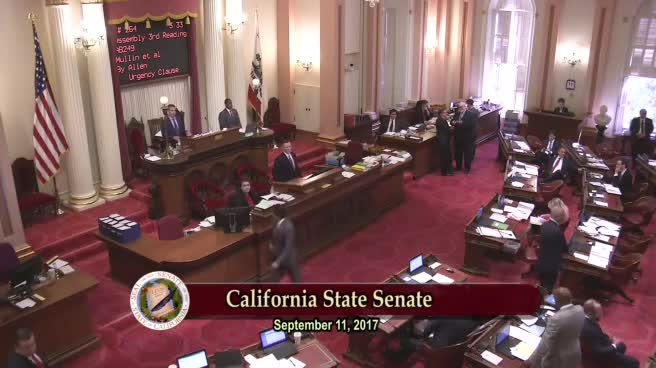

Bill Author

Bill Co-Author(s):