AB 367: Water supply: building permits.
- Session Year: 2017-2018
- House: Assembly
- Latest Version Date: 2017-10-09
Existing law prohibits a city, including a charter city, or a county from issuing a building permit for the construction of a new residential development where a source of the water supply is water transported by a water hauler, bottled water, a water-vending machine, or a retail water facility. Under existing law, this prohibition on the issuance of a building permit does not apply to a residence that will be rebuilt because of a natural disaster.
This bill would exempt from the prohibition on the issuance of a building permit a residence that will be rebuilt because of a fire and would provide that this change is declaratory of existing law.
Existing law prohibits a city, including a charter city, or a county from issuing a building permit for the construction of a new residential development where a source of the water supply is water transported by a water hauler, bottled water, a water-vending machine, or a retail water facility. Under existing law, this prohibition on the issuance of a building permit does not apply to a residence that will be rebuilt because of a natural disaster.
This bill would exempt from the prohibition on the issuance of a building permit a residence that will be rebuilt because of a fire and would provide that this is declaratory of existing law.
(a)For the purposes of this section:
(1)Bottled water has the same meaning as defined in Section 111070 of the Health and Safety Code.
(2)Residential development has the same meaning as defined in Section 65008 of the Government Code.
(3)Retail water facility has the same meaning as defined in Section 111070 of the Health and Safety Code.
(4)Water-vending machine has the same meaning as defined in Section 111070 of the Health and Safety Code.
(5)Water hauler has the same meaning as defined in Section 111070 of the Health and Safety Code.
(b)A city, including a charter city, or a county shall not issue a building permit for the construction of a new residential development where a source of water supply is water transported by a water hauler, bottled water, a water-vending machine, or a retail water facility.
(c)This section does not apply to a residence that will be rebuilt because of a fire or natural disaster.
(d)The Legislature finds and declares that this section addresses a matter of statewide concern and not a municipal affair, as that term is used in Section 5 of Article XI of the California Constitution.
SEC. 2.The amendment to subdivision (c) of Section 106.4 of the Water Code made by this act does not constitute a change in, but is declaratory of, existing law.
|
Date
|
Status
|
|---|---|
| Oct 9, 2017 | Chaptered by Secretary of State - Chapter 612, Statutes of 2017. |
| Oct 9, 2017 | Approved by the Governor. |
| Sep 7, 2017 | Enrolled and presented to the Governor at 3 p.m. |
| Aug 31, 2017 | In Assembly. Ordered to Engrossing and Enrolling. |
| Aug 31, 2017 | Read third time. Passed. Ordered to the Assembly. |
| Jul 10, 2017 | Read second time. Ordered to third reading. |
| Jul 6, 2017 | From committee: Do pass. (Ayes 5. Noes 1.) (July 5). |
| Jun 13, 2017 | In committee: Hearing postponed by committee. |
| May 10, 2017 | Referred to Com. on EQ. |
| Apr 17, 2017 | In Senate. Read first time. To Com. on RLS. for assignment. |
| Apr 6, 2017 | Read third time. Passed. Ordered to the Senate. (Ayes 79. Noes 0. Page 960.) |
| Mar 22, 2017 | Read second time. Ordered to third reading. |
| Mar 21, 2017 | From committee: Do pass. (Ayes 14. Noes 0.) (March 21). |
| Feb 21, 2017 | Referred to Com. on W.,P., & W. |
| Feb 9, 2017 | From printer. May be heard in committee March 11. |
| Feb 8, 2017 | Read first time. To print. |
|
Date
|
Description
|
Location
|
Votes
|
|
|---|---|---|---|---|
| Aug 31, 2017 | Assembly 3rd Reading AB367 Obernolte By Fuller | Senate Floor |
Passed |
|
| Jul 5, 2017 | Do pass | Senate Standing Committee on Environmental Quality |
Passed |
|
| Apr 6, 2017 | AB 367 OBERNOLTE Assembly Third Reading | Assembly Floor |
Passed |
|
| Mar 21, 2017 | Do pass. | Assembly Standing Committee on Water, Parks, and Wildlife |
Passed |
This list shows positions taken on this bill by organizations on the date displayed, which is linked to the original source.
Positions by individuals are not included.
|
Organization
|
Position
|
Date
|
|---|---|---|
| 83 Individuals | ** Against | Jul 12, 2017 |
| California Association Of Realtors | ** Support | Jul 12, 2017 |
| California Native Plant Society | ** Against | Jul 12, 2017 |
| City of Agoura Hills | ** Against | Jul 12, 2017 |
| City of Malibu | ** Against | Jul 12, 2017 |
| County of Los Angeles Board of Supervisors | ** Against | Jul 12, 2017 |
| Endangered Habitats League | ** Against | Jul 12, 2017 |
| Hitchin Lucerne, Inc. | ** Support | Mar 17, 2017 |
| Las Virgenes Homeowners Federation, Inc. | ** Against | Jul 12, 2017 |
| Lucerne Valley Economic Development Association | ** Support | Mar 17, 2017 |
| Malibu Coalition for Slow Growth | ** Against | Jul 12, 2017 |
| Malibu Community Action Network | ** Against | Jul 12, 2017 |
| Malibu Community Alliance | ** Against | Jul 12, 2017 |
| Malibu Lakeside Community Association | ** Against | Jul 12, 2017 |
| Malibu Monarch Project | ** Against | Jul 12, 2017 |
| Malibu Open Space Alliance | ** Against | Jul 12, 2017 |
| North Topanga Canyon Fire Safe Council | ** Against | Jul 12, 2017 |
| Poison Free Malibu | ** Against | Jul 12, 2017 |
| Santa Clarita Organization for Planning and the Environment | ** Against | Jul 12, 2017 |
| Santa Monica Mountains Conservancy | ** Against | Jul 12, 2017 |
| Topanga Association For A Scenic Community | ** Against | Jul 12, 2017 |
| united neighborhoods for los angeles | ** Against | Jul 12, 2017 |
| united states congressman ted w. lieu | ** Against | Jul 12, 2017 |
Office of Senate Floor Analyses (916) 651-1520 Fax: (916) 327-4478 | AB |
THIRD READING
Bill No: AB 367
:
SENATE ENVIRONMENTAL QUALITY COMMITTEE: 5-1, 7/5/17
AYES: Wieckowski, Stone, Gaines, Hill, Lara
NOES: Stern
NO VOTE RECORDED: Skinner
ASSEMBLY FLOOR: 79-0, 4/6/17 - See last page for vote
DIGEST:
This bill exempts from the prohibition on the issuance of a building permit a residence that will be rebuilt because of a fire and provides that this is declaratory of existing law.
Existing law:
- Requires, under the federal Safe Drinking Water Act and California Safe Drinking Water Act (SDWA), drinking water to meet specified standards for contamination (maximum contaminant levels) as set by the United States Environmental Protection Agency (US EPA) or the State Water Resources Control Board (SWRCB).
- Requires, under the SDWA, the SWRCB to regulate drinking water and enforce the federal SDWA and other regulations for public water systems.
- Defines, under the SDWA, a “public water system” to be a system for the provision of water for human consumption, through pipes or other constructed conveyances (trucks) that has 15 or more service connections, or regularly serves at least 25 individuals daily at least 60 days out of the year.
- Allows, under the SDWA, the SWRCB to delegate primary responsibility for the administration and enforcement of the act within a county to a local health officer if certain criteria are met. Existing law requires that the local primacy agency be empowered with all of the authority granted to SWRCB over the specified public water systems.
- States, under the California Human Right to Water Act, that all “human beings have the right to safe, clean, affordable, and accessible water.”
- Requires, under the SDWA, all new construction be served by an acceptable and sustainable source of potable water.
- Requires, under the SDWA, every large-scale development project of 500 new residential connections or an equivalent size to have a water supply assessment prepared, which among other things, must identify water supply for the proposed project.
- Prohibits, under the SDWA, a city, including a charter city, or a county from issuing a building permit for the construction of a new residential development where a source of water supply is water transported by a water hauler, bottled water, a water-vending machine, or a retail water facility (collectively referred to hereafter, as transported water).
This bill exempts from the prohibition on the issuance of a building permit a residence that will be rebuilt because of a fire and provides that this is declaratory of existing law.
Background
- History of California Drinking Water Program
California’s drinking water program was created in 1915, when the Bureau of Sanitary Engineering was established by the State Board of Health. The bureau’s primary duty at that time was to prevent and eliminate water-borne diseases. In 1974, the federal SDWA was passed to protect public health by regulating the nation’s public drinking water supply, which requires the US EPA to establish mandatory nationwide drinking water standards. It also requires water systems to monitor public water supplies to ensure drinking water standards are met and report to consumers if the standards are not met.
Two years after the federal act was passed, California adopted its own SDWA. The state’s act has two main goals: to continue the state’s drinking water program, and to be the delegated authority (referred to as the “primacy”) by the US EPA for enforcement of the federal act. And, as required by the federal act, the state’s drinking water program must set drinking water standards that are at least as stringent as the US EPA’s standards. Each community water system also must monitor for a specified list of contaminants, and the findings must be reported to SWRCB.
In 2012, the California Legislature passed the Human Right to Water Law, adding to the Water Code the declaration that it be the “established policy of the state that every human being has the right to safe, clean, affordable and accessible water adequate for human consumption, cooking and sanitary purposes.”
In April 2013, US EPA sent notice to the Department of Public Health (DPH) for noncompliance with the requirements of the federal SDWA, its implementing regulations, and the terms and conditions of the Safe Drinking Water State Revolving Fund (SDWSRF) grant agreements funded by the US EPA for Fiscal Years 2009–11.
The letter of noncompliance from the US EPA was the result of DPH’s failure to meet federal SDWA requirements regarding the administration of SDWSRF. This included not disbursing federal funds in a timely matter. At one point in 2012, DPH’s drinking water fund had an unspent balance of $455 million, which was the largest unspent balance of any state in the United States.
The failing of DPH to effectively administer SDWSRF put in jeopardy California’s federal appropriation for the SRF, precipitating the discussion to consolidate the administration of the SDWSRF and the Clean Water SRF, which was then administered separately by SWRCB.
SB 861 (Committee on Budget and Fiscal Review, Chapter 35, Statutes of 2014) transferred the Drinking Water Program from DPH to SWRCB effective July 1, 2014, creating the new Division of Drinking Water within SWRCB and made other statutory changes to create efficiencies and adoption and administration of the Drinking Water Program.
SWRCB directly enforces the SDWA for all large water systems (those with 200 or more service connections). For small water systems (those with less than 200 connections), local health departments can be delegated to have regulatory authority as the local primacy agency.
As of January 2014, there were 7,642 public water systems in California classified into three different categories: 3,015 Community Water Systems serving communities with full-time residents; 1,489 Non-Transient Non-Community Water Systems serving the same non-residents at least six months per year (e.g., schools, places of work, and prisons); and 3,138 Transient Non-Community Water Systems serving non-residents at least 60 days per (e.g., restaurants & campgrounds).
As a public water system is any system that has 15 or more connections, it is not known how many people in California currently rely on wells of less than 15 connections or hauled water that is not part of a public water system.
In 2015, Governor Brown issued the “Resilient, Affordable, Safe Drinking Water for Disadvantaged Communities Framework”, which identified a series of measures necessary to ensure that all communities have access to safe and affordable water.
Comments
- Purpose of Bill. According to the author, “Last year the Governor signed Senate Bill 1263 which changed requirements for public water system permit applications. However, SB 1263 also prohibited local governments from awarding permits for any residential development when hauled water is used as a water source. While SB 1263 allowed an exemption to rebuild homes destroyed by natural disasters, the exemption did not allow for homes to be rebuilt if destroyed by fire since the root cause of many fires is human error, not natural.”
The author argues that the implementation of SB 1263 caused many parcels of rural land to significantly depreciate since they can no longer be built on if they lack access to adequate water infrastructure. This would further exacerbate a family’s turmoil if their home was tragically destroyed by a fire.
The author asserts that “AB 367 would allow a homeowner that uses hauled water to rebuild in the case of a fire, no matter the cause of the fire.”
- Why is Hauled Water Unsustainable? Hauled water systems include a storage tank that is filled with water from a source located off of the premises. Water from this tank is then pumped into a pressure tank and into the home’s distribution system. County health departments and SWRCB division of drinking water have been advising against relying on hauled water for several decades for the following reasons:
- Where does the water come from? Hauled water suppliers are reliant on purchasing contracts with a water system to supply their water. It is unclear what water systems within the state of California always have excess water to contract and sell to a hauled water supplier that is above and beyond the water they need to supply their ratepayers.
It seems inconceivable, given the recent drought, that any water system in the state could possibly guarantee a contract without depriving their ratepayers the water for which they are paying.
- Enough water to respond to an emergency. Hauled water tanks have enough supply to provide for the monthly needs of the residence that is using it. These tanks are not built to have enough water or water pressure to provide water in case of a fire.
Allowing for reliance on hauled water jeopardizes the safety of these communities because once a fire starts at one of these homes it is likely to spread throughout the community and area.
- Ensuring drinking water safety. SWRCB and the County Departments of Health have regulatory oversight of all public water systems. A public water system is any system of 15 connections or more. If there is a system of 1-14 connections there is no government agency ensuring that the system is maintained, monitored and that the water is safe to drink. Hauled water falls into this category.
Those entities said that hauled water does not provide the equivalent level of public health protection nor reliability as a permanent water system from an approved water supply. They found that hauled water has the potential for contamination, that storage tanks often are a source of bacterial contamination, and there is generally a higher risk for contamination that may result in serious illness or death.
- Expense of hauled water. Hauled water is often the most expensive way to supply potable water. The costs of transported water vary widely, but are on the order of several hundred dollars into the low thousands a month per unit. The costs associated with hauled water for all domestic needs may jeopardize future reliability. A potable water supply must be reliable for not only the initial owner, but also for successor, heirs and future owners.
Although an individual may be able to demonstrate that they have the financial resources to purchase hauled water at the time the home is built or purchased, as this is not an affordable or reliable source of water, that is not likely to be true in the future.
- No water available in a drought. Under drought conditions, the reliability of obtaining hauled water becomes even more uncertain and even more costly. During the most recent drought many public water systems did not allow haulers access to their distribution system. Importantly, in the most recent drought, any homes constructed with reliance on a hauled water supply were not eligible for drought emergency funding.
What happens when… The contract expires? The supplier/hauler doesn’t have access to water? The house is sold? Or when the cost of water goes up so high the resident can’t afford to pay for the supply?
For all these reasons hauled water is not a sustainable source of water.
- This is Not Brand New Information. In 2003, the Department of Health Services (now SWRCB drinking water division) sent a letter to California Planning Building Departments regarding drinking water sustainability which states:
“We have also learned that some new construction is being allowed where the source of the domestic water supply has been identified by the project proponent as hauled water. The use of hauled water for domestic purposes should only be allowed to serve existing facilities where the original supply is no longer adequate due to a loss of quantity or quality and where an approved source cannot be acquired. The Department of Health Services and the Directors of Environmental Health do not support the use of irrigation ditch water, hauled water (from any source), or similar unacceptable sources of water for any new construction and request that this practice be eliminated.”
- SB 1263 (Wieckowski, Chapter 843, Statutes of 2016), in line with the California Human Right to Water Act, aimed at ensuring that ALL Californians have access to clean, affordable sustainable supplies of drinking water. SB 1263 eliminates unsustainable drinking water supplies in California by limiting the creation of new small water systems and by prohibiting the reliance on hauled water for a new development because the consequences of unsustainable water sources has proven to be a very serious and dangerous problem in California.
SB 1263 applies only to new residential development permits, however, Assembly Member Obernolte argued on the Assembly Floor, as SB 1263 was to be voted on, that the prohibition on new residential development included homes that needed to be rebuilt because of fire or other natural disaster.
While the language of the bill clearly states new residential development, Senator Wieckowski amended SB 1263 to clarify that it did not apply to homes being rebuilt because of a natural disaster.
The author of AB 367 asserts that the clarification does not include fires that occur through ignition rather than natural disaster, therefore, AB 367 is meant to further clarify this point.
Additionally, AB 367 states that the measure is declaratory of existing law.
There has been no evidence presented that any local permitting entity categorizes a rebuild as a new residential development. Additionally, no evidence has been provided that a local permitting entity treats an ignited fire differently than a natural disaster for purposes of rebuilding a pre-existing home.
Furthermore, the bill states that it is declaratory of existing law.
The question arises: why is this bill necessary?
FISCAL EFFECT: Appropriation: Fiscal Com.: Local:
California Association of Realtors
OPPOSITION: (Verified 7/10/17)
United States Congressman Ted W. Lieu
California Native Plant Society
City of Agoura Hills
City of Malibu
County of Los Angeles Board of Supervisors
Endangered Habitats League
International Society for the Preservation of the Tropical Rainforest
Las Virgenes Homeowners Federation, Inc.
Malibu Coalition for Slow Growth
Malibu Community Action Network
Malibu Community Alliance
Malibu Lakeside Community Association
Malibu Monarch Project
Malibu Open Space Alliance
North Topanga Canyon Fire Safe Council
Poison Free Malibu
Santa Clarita Organization for Planning and the Environment
Santa Monica Mountains Conservancy
Topanga Association for a Scenic Community
United Neighborhoods for Los Angeles
83 individuals
ASSEMBLY FLOOR: 79-0, 4/6/17
AYES: Acosta, Aguiar-Curry, Travis Allen, Arambula, Baker, Berman, Bigelow, Bloom, Bocanegra, Bonta, Brough, Burke, Caballero, Calderon, Cervantes, Chau, Chávez, Chen, Chiu, Choi, Chu, Cooley, Cooper, Cunningham, Dababneh, Dahle, Daly, Eggman, Flora, Fong, Friedman, Gallagher, Cristina Garcia, Eduardo Garcia, Gipson, Gloria, Gomez, Gonzalez Fletcher, Gray, Grayson, Harper, Holden, Irwin, Jones-Sawyer, Kalra, Kiley, Lackey, Levine, Limón, Low, Maienschein, Mathis, Mayes, McCarty, Medina, Melendez, Mullin, Muratsuchi, Nazarian, Obernolte, O'Donnell, Patterson, Quirk, Quirk-Silva, Reyes, Ridley-Thomas, Rodriguez, Rubio, Salas, Santiago, Steinorth, Mark Stone, Thurmond, Ting, Voepel, Waldron, Weber, Wood, Rendon
NO VOTE RECORDED: Frazier
7/12/17 9:52:49
**** END ****
SENATE COMMITTEE ON ENVIRONMENTAL QUALITY
Senator Wieckowski, Chair
2017 - 2018 Regular
Bill No: AB 367
Author: | Obernolte | ||
Version: | 2/8/2017 | Hearing Date: | 7/5/2017 |
Urgency: | No | Fiscal: | No |
Consultant: | Rachel Machi Wagoner | ||
SUBJECT: Water supply: building permits.
ANALYSIS:
Existing law:
- Under the federal Safe Drinking Water Act and California Safe Drinking Water Act (SDWA), requires drinking water to meet specified standards for contamination (maximum contaminant levels) as set by the United States Environmental Protection Agency (US EPA) or the State Water Resources Control Board (SWRCB).
- Under the SDWA:
- Requires the SWRCB to regulate drinking water and enforce the federal Safe Drinking Water Act and other regulations for public water systems.
- Defines a “public water system” to be a system for the provision of water for human consumption, through pipes or other constructed conveyances (trucks) that has 15 or more service connections, or regularly serves at least 25 individuals daily at least 60 days out of the year.
- Allows the SWRCB to delegate primary responsibility for the administration and enforcement of the act within a county to a local health officer if certain criteria are met. Existing law requires that the local primacy agency be empowered with all of the authority granted to SWRCB over the specified public water systems.
- Under the California Human Right to Water Act, states that all “human beings have the right to safe, clean, affordable, and accessible water.”
- Requires all new construction be served by an acceptable and sustainable source of potable water.
- Requires every large-scale development project of 500 new residential connections or an equivalent size to have a water supply assessment prepared, which among other things, must identify water supply for the proposed project.
- Prohibits a city, including a charter city, or a county from issuing a building permit for the construction of a new residential development where a source of water supply is water transported by a water hauler, bottled water, a water-vending machine, or a retail water facility (collectively referred to hereafter, as transported water).
This bill: exempts from the prohibition on the issuance of a building permit a residence that will be rebuilt because of a fire and would provide that this is declaratory of existing law.
Background
- History of California Drinking Water Program.
California’s drinking water program was created in 1915, when the Bureau of Sanitary Engineering was established by the State Board of Health. The bureau’s primary duty at that time was to prevent and eliminate water-borne diseases. In 1974, the federal Safe Drinking Water Act was passed to protect public health by regulating the nation’s public drinking water supply, which requires the United States Environmental Protection Agency (US EPA) to establish mandatory nationwide drinking water standards. It also requires water systems to monitor public water supplies to ensure drinking water standards are met and report to consumers if the standards are not met.
Two years after the federal act was passed, California adopted its own Safe Drinking Water Act. The state’s act has two main goals: to continue the state’s drinking water program, and to be the delegated authority (referred to as the “primacy”) by the US EPA for enforcement of the federal act. And, as required by the federal act, the state’s drinking water program must set drinking water standards that are at least as stringent as the US EPA’s standards. Each community water system also must monitor for a specified list of contaminants, and the findings must be reported to SWRCB.
In 1989, AB 21 (Sher, Chapter 823, Statutes of 1989) amended California’s Safe Drinking Water Act. This law requires the development of a comprehensive safe drinking water plan, sets forth requirements for adopting primary drinking water standards, requires large water systems to identify all reasonable measures to reduce contaminant levels in their water, and requires operators of public water systems to notify the California Department of Health Services (CDHS subsequently DPH) and the public whenever the system is not in compliance with drinking water standards.
In 1993, CDHS (subsequently DPH) submitted to the Legislature the report entitled, “Drinking Water into the 21st Century: Safe Drinking Water Plan for California” (1993 Plan).
In 1996, the California Legislature enacted SB 1307 (Calderon, Chapter 755, Statutes of 1996). SB 1307 amended Section 116355 of the Health and Safety Code to require a periodic update of the original Plan. The issues that were to be addressed were essentially the same as those included in the 1993 Plan.
However, DPH did not release an update of the Safe Drinking Water Plan and was subsequently sued by California Rural Legal Assistance in 2009 for failing to ensure safe drinking water in certain communities, including failing to comply with this reporting requirement. The suit was settled in 2011 and included a requirement that DPH complete the Safe Drinking Water Plan update within three years.
In 2012, the California Legislature passed the Human Right to Water Law, adding to the Water Code the declaration that it be the “established policy of the state that every human being has the right to safe, clean, affordable and accessible water adequate for human consumption, cooking and sanitary purposes.”
In April 2013, US EPA sent notice to DPH for noncompliance with the requirements of the federal Safe Drinking Water Act (SDWA), its implementing regulations, and the terms and conditions of the Safe Drinking Water State Revolving Fund (SDWSRF) grant agreements funded by the US EPA for Fiscal Years 2009–11. (Since 1997, the US EPA had provided DPH an annual grant from the SDWSRF to use for low-interest loans and principal forgiveness to assist public water systems in achieving and maintaining compliance with safe drinking water standards.)
The letter of noncompliance from the US EPA was the result of DPH’s failure to meet federal SDWA requirements regarding the administration of SDWSRF. This included not disbursing federal funds in a timely matter. At one point in 2012, DPH’s drinking water fund had an unspent balance of $455 million, which was the largest unspent balance of any state in the United States.
The failing of DPH to effectively administer SDWSRF put in jeopardy California’s federal appropriation for the SRF, precipitating the discussion to consolidate the administration of the SDWSRF and the Clean Water SRF, which was then administered separately by SWRCB. That discussion resulted in a broader review of California’s Drinking Water Program and water quality programs.
In March 2014, the California Environmental Protection Agency and the Health and Human Services Agency published their Drinking Water Reorganization and Transition Plan stating that the Administration had evaluated the governance structure of the state’s drinking water and water quality activities and concluded that “aligning the state’s drinking water and water quality programs in an integrated organizational structure would best position the state to both effectively protect water quality, while meeting current needs and future demands on water supplies.” The Administration also stated in this plan that “with the Legislature’s approval and appropriate legislation, this alignment [would] be achieved by moving the Drinking Water Program from DPH to SWRCB on July 1, 2014.” The Legislature approved the transfer in a budget trailer bill.
Senate Bill 861 (Committee on Budget and Fiscal Review, Chapter 35, Statutes of 2014) transferred the Drinking Water Program from the Department of Public Health (DPH) to SWRCB effective July 1, 2014 creating the new Division of Drinking Water within SWRCB and made other statutory changes to create efficiencies and adoption and administration of the Drinking Water Program.
SWRCB directly enforces the Safe Drinking Water Act for all large water systems (those with 200 or more service connections). For small water systems (those with less than 200 connections), local health departments can be delegated to have regulatory authority as the local primacy agency (LPA).
As of January 2014, there were 7,642 public water systems in California classified into three different categories: 3,015 Community Water Systems serving communities with full-time residents; 1,489 Non-Transient Non-Community Water Systems serving the same non-residents at least six months per year (e.g., schools, places of work, and prisons); and 3,138 Transient Non-Community Water Systems serving non-residents at least 60 days per (e.g., restaurants & campgrounds).
As a public water system is any system that has 15 or more connections, it is not known how many people in California currently rely on wells of less than 15 connections or hauled water that is not part of a public water system.
In 2015, Governor Brown issued the “Resilient, Affordable, Safe Drinking Water for Disadvantaged Communities Framework”, which identified a series of measures necessary to ensure that all communities have access to safe and affordable water.
Comments
- Purpose of Bill. According to the author, “Last year the Governor signed Senate Bill 1263 which changed requirements for public water system permit applications. However, SB 1263 also prohibited local governments from awarding permits for any residential development when hauled water is used as a water source. While SB 1263 allowed an exemption to rebuild homes destroyed by natural disasters, the exemption did not allow for homes to be rebuilt if destroyed by fire since the root cause of many fires is human error, not natural.”
The author argues that the implementation of SB 1263 caused many parcels of rural land to significantly depreciate since they can no longer be built on if they lack access to adequate water infrastructure. This would further exacerbate a family’s turmoil if their home was tragically destroyed by a fire.”
The author asserts that “AB 367 would allow a homeowner that uses hauled water to rebuild in the case of a fire, no matter the cause of the fire.”
- Why is Hauled Water Unsustainable? Hauled water systems include a storage tank that is filled with water from a source located off of the premises. Water from this tank is then pumped into a pressure tank and into the home’s distribution system. County health departments and SWRCB division of drinking water (DDW) have been advising against relying on hauled water for several decades for the following reasons:
- Where does the water come from? Hauled water suppliers are reliant on purchasing contracts with a water system to supply their water. It is unclear what water systems within the state of California always have excess water to contract and sell to a hauled water supplier that is above and beyond the water they need to supply their ratepayers.
It seems inconceivable, given the recent drought, that any water system in the state could possibly guarantee a contract without depriving their ratepayers the water for which they are paying.
- Enough water to respond to an emergency. Hauled water tanks have enough supply to provide for the monthly needs of the residence that is using it. These tanks are not built to have enough water or water pressure to provide water in case of a fire.
Allowing for reliance on hauled water jeopardizes the safety of these communities because once a fire starts at one of these homes it is likely to spread throughout the community and area.
- Ensuring drinking water safety. SWRCB and the County Departments of Health have regulatory oversight of all public water systems. A public water system is any system of 15 connections or more. If there is a system of 1-14 connections there is no government agency ensuring that the system is maintained, monitored and that the water is safe to drink. Hauled water falls into this category.
Those entities said that hauled water does not provide the equivalent level of public health protection nor reliability as a permanent water system from an approved water supply. They found that hauled water has the potential for contamination, that storage tanks often are a source of bacterial contamination, and there is generally a higher risk for contamination that may result in serious illness or death.
- Expense of hauled water. Hauled water is often the most expensive way to supply potable water. The costs of transported water vary widely, but are on the order of several hundred dollars into the low thousands a month per unit. The costs associated with hauled water for all domestic needs may jeopardize future reliability. A potable water supply must be reliable for not only the initial owner, but also for successor, heirs and future owners.
Although an individual may be able to demonstrate that they have the financial resources to purchase hauled water at the time the home is built or purchased, as this is not an affordable or reliable source of water, that is not likely to be true in the future.
- No water available in a drought. Under drought conditions, the reliability of obtaining hauled water becomes even more uncertain and even more costly. During the most recent drought many public water systems did not allow haulers access to their distribution system. Importantly, in the most recent drought, any homes constructed with reliance on a hauled water supply were not eligible for drought emergency funding.
What happens when… The contract expires? The supplier/hauler doesn’t have access to water? The house is sold? Or when the cost of water goes up so high the resident can’t afford to pay for the supply?
For all these reasons hauled water is not a sustainable source of water.
- This is Not Brand New Information. In 2003 the Department of Health Services (now SWRCB drinking water division) sent a letter to California Planning Building Departments regarding drinking water sustainability which states:
“We have also learned that some new construction is being allowed where the source of the domestic water supply has been identified by the project proponent as hauled water. The use of hauled water for domestic purposes should only be allowed to serve existing facilities where the original supply is no longer adequate due to a loss of quantity or quality and where an approved source cannot be acquired. The Department of Health Services and the Directors of Environmental Health do not support the use of irrigation ditch water, hauled water (from any source), or similar unacceptable sources of water for any new construction and request that this practice be eliminated.”
- SB 1263 (Wieckowski, Chapter 843, Statutes of 2016), in line with the California Human Right to Water Act, aimed at ensuring that ALL Californians have access to clean, affordable sustainable supplies of drinking water.
SB 1263 eliminates unsustainable drinking water supplies in California by limiting the creation of new small water systems and by prohibiting the reliance on hauled water for a new development because the consequences of unsustainable water sources has proven to be a very serious and dangerous problem in California.
SB 1263 applies only to new residential development permits, however, Assembly Member Obernolte argued on the Assembly Floor, as SB 1263 was to be voted on, that the prohibition on new residential development included homes that needed to be rebuilt because of fire or other natural disaster.
While the language of the bill clearly states new residential development, Senator Wieckowski amended SB 1263 to clarify that it did not apply to homes being rebuilt because of a natural disaster.
The author asserts that the clarification does not include fires that occur through ignition rather than natural disaster, therefore, AB 367 is meant to further clarify this point.
Additionally, AB 367 states that the measure is declaratory of existing law.
There has been no evidence presented that any local permitting entity categorizes a rebuild as a new residential development. Additionally, no evidence has been provided that a local permitting entity treats an ignited fire differently than a natural disaster for purposes of rebuilding a pre-existing home.
Furthermore, the bill states that it is declaratory of existing law.
The question arises: why is this bill necessary?
Related/Prior Legislation
SOURCE:
Author
SUPPORT:
California Association of Realtors
OPPOSITION:
California Native Plant Society
City of Agoura Hills
City of Malibu
County of Los Angeles Board of Supervisors
Endangered Habitats League
International Society for the Preservation of the Tropical Rainforest
Las Virgenes Homeowners Federation, Inc.
Malibu Coalition for Slow Growth
Malibu Community Action Network
Malibu Community Alliance
Malibu Lakeside Community Association
Malibu Monarch Project
Malibu Open Space Alliance
North Topanga Canyon Fire Safe Council
Poison Free Malibu
Santa Clarita Organization for Planning and the Environment
Santa Monica Mountains Conservancy
Topanga Association for a Scenic Community
United Neighborhoods for Los Angeles
United States Congressman Ted W. Lieu
83 individuals
-- END --
ASSEMBLY THIRD READING
ATR Bill Id:AB 367
Author:(Obernolte)
As Introduced Ver:February 8, 2017
Majority vote
Committee | Votes | Ayes | Noes |
Water | 14-0 | Eduardo Garcia, Gallagher, Bigelow, Choi, Chu, Friedman, Gloria, Gomez, Harper, Levine, Mathis, Rubio, Salas, Wood |
SUMMARY: Adds fire to the specified conditions under which a residence reliant on bottled water, a retail water facility, a water-vending machine, or a water hauler (collectively referred to as "transported water") can be rebuilt. Specifically, this bill:
Does not constitute a change in, but is declaratory of, existing law.
EXISTING LAW:
- Prohibits a city, including a charter city, or a county from issuing a building permit for the construction of a new residential development where a source of water supply is imported water.
- Permits a city, including a charter city, or a county to issue a permit for a residential rebuild because of a natural disaster.
FISCAL EFFECT: Unknown.
COMMENTS: Not all fire is a natural disaster. Some fires are the result of faulty electrical, poor ventilation of a chimney, a kitchen fire, and many more origins of fire that could not reasonably be thought of as a natural disaster. The question is, does fire, or any other condition, need to be expressly stated under existing law, to allow for a local entity to issue a permit to rebuild a residential property dependent on transported water?
Last year SB 1263 (Wieckowski), Chapter 843, Statutes of 2016, included language related to the conditions under which a residence reliant on transported water could be rebuilt. However, it is not clear what effect that language has on the ability for local entities to issue permits for rebuilds. The restriction on development put in place by SB 1263 applied to new development, not to rebuilds. If, prior to the provisions of SB 1263 having become law, local entities were treating permits for rebuilds the same as permits for new construction, then it is possible there are situations where a residence dependent on transported water could be denied a permit.
Making the change in law declaratory of existing law might minimize confusion over the ability to rebuild in the event of a fire that is a natural disaster.
Because this bill amends the same code section as AB 366 (Obernolte) of the current legislative session, they are in conflict. That conflict needs to be resolved if both bills are to become law.
Analysis Prepared by: Ryan Ojakian / W., P., & W. / (916) 319-2096 FN: 0000043
Date of Hearing: March 21, 2017
ASSEMBLY COMMITTEE ON WATER, PARKS, AND WILDLIFE
Eduardo Garcia, Chair
ABPCA Bill Id:AB 367 (
Author:Obernolte) – As Introduced Ver:February 8, 2017
SUBJECT: Water supply: building permits
SUMMARY: Adds fire to the specified conditions under which a residence reliant on bottled water, a retail water facility, a water-vending machine, or a water hauler (collectively referred to as “transported water”) can be rebuilt. Specifically, this bill:
- Is keyed nonfiscal.
- Does not constitute a change in, but is declaratory of, existing law.
EXISTING LAW:
- Prohibits a city, including a charter city, or a county from issuing a building permit for the construction of a new residential development where a source of water supply is imported water.
- Permits a city, including a charter city, or a county to issue a permit for a residential rebuild.
FISCAL EFFECT: Unknown
COMMENTS: Adds fire to the specified conditions under which a residence reliant on transported water can be rebuilt.
Author’s Statement: Last year the Governor signed Senate Bill 1263 which changed requirements for public water system permit applications. However, SB 1263 also prohibited local governments from awarding permits for any residential development when hauled water is used as a water source. While SB 1263 allowed an exemption to rebuild homes destroyed by natural disasters, the exemption did not allow for homes to be rebuilt if destroyed by fire.
The implementation of SB 1263 caused many parcels of rural land to significantly depreciate since they can no longer be built on if they lack access to adequate water infrastructure. This would further exacerbate a family’s turmoil if their home was tragically destroyed by a fire.
AB 367 would allow a homeowner that uses hauled water to rebuild in the case of a fire, no matter the cause of the fire.
Background. What would the effect be? Not all fire is a natural disaster. Some fires are the result of faulty electrical, poor ventilation of a chimney, a kitchen fire, and many more origins of fire that could not reasonably be thought of as a natural disaster. The question is, does fire, or any other condition, need to be expressly stated under existing law, to allow for a local entity to issue a permit to rebuild a residential property dependent on transported water?
SB 1263 included language related to the conditions under which a residence reliant on transported water could be rebuilt. However, it is not clear what effect that language has on the ability for local entities to issue permits for rebuilds. The restriction on development put in place by SB 1263 applied to new development, not to rebuilds. If, prior to the provisions of SB 1263 having become law, local entities were treating permits for rebuilds the same as permits for new construction, then it is possible there are situations where a residence dependent on transported water could be denied a permit.
Making the change in law declaratory of existing law might minimize confusion over the ability to rebuild in the event of a fire that is a natural disaster.
Because this bill amends the same code section as AB 366, they are in conflict. That conflict needs to be resolved if both bills are to become law.
- Prior and Related Legislation:
- AB 366 (Obernolte), 2017, scheduled to be heard in this committee. Includes similar changes to law as AB 367, and exempts parcels in existence from the imported water constraints on new residential development.
- SB 1263 (Wieckowski), Chapter 843, Statues of 2016, among other things, prohibited a city, including a charter city, or county from issuing a building permit for a new residential development where water supply is transported.
- Supporting Arguments: The support for this bill has made arguments that pertain to the policy change in AB 366, which include restoration of property rights, allowing for construction of new homes, and allow for growth in rural communities.
- Opposition Arguments:
REGISTERED SUPPORT / OPPOSITION:
Support
Hitchin Lucerne, Inc.
Lucerne Valley Economic Development Association
3 Individuals
Opposition
None on file
Analysis Prepared by: Ryan Ojakian / W., P., & W. /
Discussed in Hearing
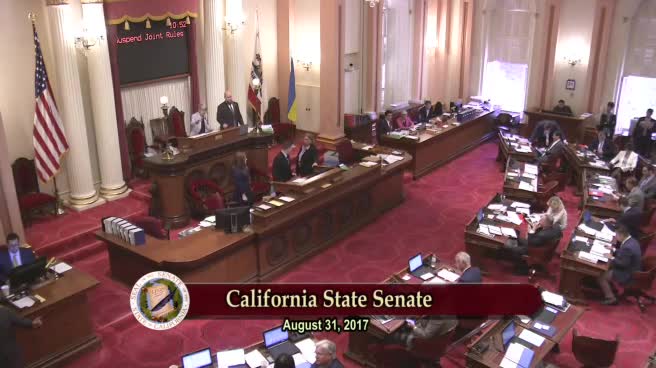 3MIN
Senate Floor
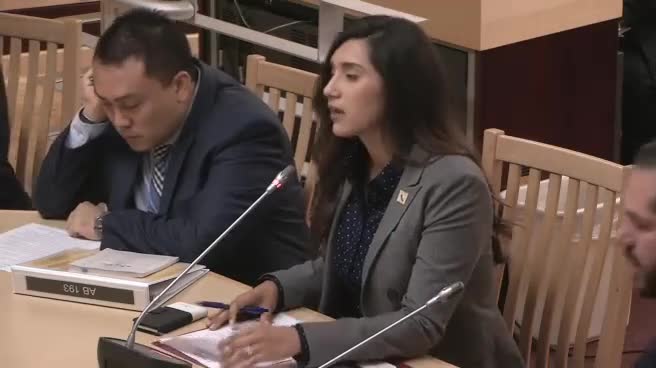 7MIN
Senate Standing Committee on Environmental Quality
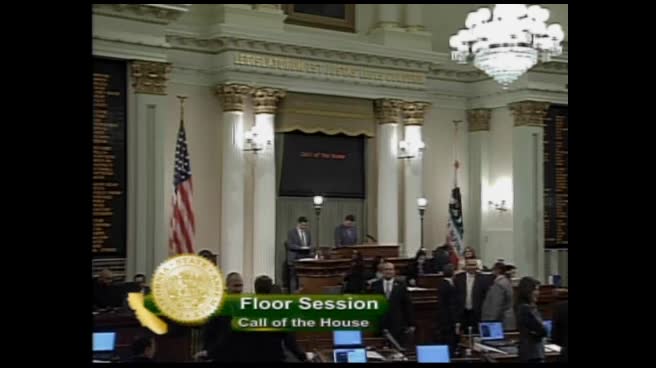 1MIN
Assembly Floor
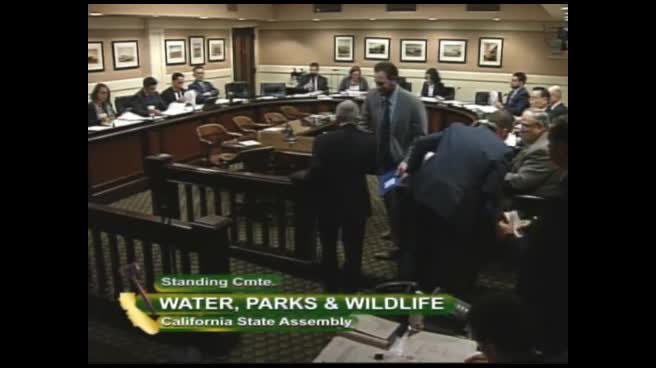 5MIN
Assembly Standing Committee on Water, Parks, and Wildlife
Bill Author

Bill Co-Author(s):