AB 381: Vehicle registration: Voluntary Deaf or Hard of Hearing Notification Program: establishment.
- Session Year: 2017-2018
- House: Assembly
- Latest Version Date: 2017-09-19
Existing law generally prohibits a person from driving, moving, or leaving a vehicle upon a highway or in an offstreet public parking facility, unless it is registered with the Department of Motor Vehicles and the appropriate fees have been paid.
This bill would establish and require the department, on and after July 1, 2020, to administer the Voluntary Deaf or Hard of Hearing Notification Program. The program would allow a person at the time of the original or renewal of registration of a vehicle to voluntarily indicate that a driver of the vehicle may be deaf or hard of hearing and further allow a peace officer to access that information when accessing other information about the vehicle. The department would be prohibited from indicating, in any manner, the information provided pursuant to the program on a drivers license, certificate of ownership, registration card, or license plate.
Existing law generally prohibits a person from driving, moving, or leaving a vehicle upon a highway or in an offstreet public parking facility, unless it is registered with the Department of Motor Vehicles and the appropriate fees have been paid.
This bill would establish and require the department, on an after July 1, 2020, to administer the Voluntary Deaf or Hard of Hearing Notification Program. The program would allow a person at the time of the original or renewal of registration of a vehicle to voluntarily indicate that a driver of the vehicle may be deaf or hard of hearing and further allow a peace officer to access that information when accessing other information about the vehicle. The department would be prohibited from indicating, in any manner, the information provided pursuant to the program on a drivers license, certificate of ownership, registration card, or license plate. The bill would specifically authorize the department to take any action it deems necessary to prepare for the start of the program.
Existing law generally prohibits a person from driving, moving, or leaving a vehicle upon a highway or in an offstreet public parking facility a vehicle, facility, unless it is registered with the Department of Motor Vehicles and the appropriate fees have been paid.
This bill would establish and require the department department, on an after July 1, 2020, to administer the Voluntary Deaf or Hard of Hearing Notification Program. The program would allow a person at the time of the original or renewal of registration of a vehicle to voluntarily indicate that a driver of the vehicle may be deaf or hard of hearing and further allow a peace officer to access that information when accessing other information about the vehicle. The department would be prohibited from indicating, in any manner, the information provided pursuant to the program on a drivers license, certificate of ownership, registration card, or license plate. The bill would specifically authorize the department to take any action it deems necessary to prepare for the start of the program.
Existing law generally prohibits a person from driving, moving, or leaving upon a highway or in an offstreet public parking facility a vehicle, unless it is registered with the Department of Motor Vehicles and the appropriate fees have been paid.
This bill would establish and require the department to administer the Voluntary Deaf or Hard of Hearing Notification Program. The program would allow a person at the time of the original or renewal of registration of a vehicle to voluntarily indicate that a driver of the vehicle may be deaf or hard of hearing and further allow a peace officer to access that information when accessing other information about the vehicle. The department would be prohibited from indicating, in any manner, the information provided pursuant to the program on a drivers license, certificate of ownership, registration card, or license plate.
(a)There is, within the department, the Voluntary Deaf or Hard of Hearing Notification Program.
(b)For purposes of this article, program shall mean the Voluntary Deaf or Hard of Hearing Notification Program.
4632.The department shall administer the program to do all of the following:
(a)Allow a person at the time of the original or renewal of registration of a vehicle to voluntarily indicate that a driver of the vehicle may be deaf or hard of hearing.
(b)Place a notification in the record of the vehicle registration consistent with the information provided pursuant to subdivision (a).
(c)Provide a peace officer access to the information provided pursuant to subdivision (a) when accessing other information about the vehicle.
4634.The department shall not indicate, in any manner, the information provided pursuant to subdivision (a) of Section 4362 on a drivers license, certificate of ownership, registration card, or license plate.
4636.This article shall not be interpreted to impose any liability on a person or business assisting in the completion of a vehicle registration form for failure to enroll a vehicle in the program.
4638.The article shall become operative on July 1, 2020.
(a)There is, within the department, the Voluntary Deaf or Hard of Hearing Notification Program.
(b)For purposes of this article, program shall mean the Voluntary Deaf or Hard of Hearing Notification Program.
4632.The department shall administer the program to do all of the following:
(a)Allow a person at the time of the original or renewal of registration of a vehicle to voluntarily indicate that a driver of the vehicle may be deaf or hard of hearing.
(b)Place a notification in the record of the vehicle registration consistent with the information provided pursuant to subdivision (a).
(c)Provide a peace officer access to the information provided pursuant to subdivision (a) when accessing other information about the vehicle.
4634.The department shall not indicate, in any manner, the information provided pursuant to subdivision (a) of Section 4362 on a drivers license, certificate of ownership, registration card, or license plate.
4636.This article shall not be interpreted to impose any liability for whether a vehicle is enrolled in the program on a person or business assisting in the completion of a vehicle registration form. form for failure to enroll a vehicle in the program.
4638.The article shall become operative on July 1, 2020. Prior to July 1, 2020, the department may take any action it deems necessary to prepare for the operation of this article.
(a)There is, within the department, the Voluntary Deaf or Hard of Hearing Notification Program.
(b)For purposes of this article, program shall mean the Voluntary Deaf or Hard of Hearing Notification Program.
4632.The department shall administer the program to do all of the following:
(a)Allow a person at the time of the original or renewal of registration of a vehicle to voluntarily indicate that a driver of the vehicle may be deaf or hard of hearing.
(b)Place a notification in the record of the vehicle registration consistent with the information provided pursuant to subdivision (a).
(c)Provide a peace officer access to the information provided pursuant to subdivision (a) when accessing other information about the vehicle.
4634.The department shall not indicate, in any manner, the information provided pursuant to subdivision (a) of Section 4362 on a drivers license, certificate of ownership, registration card, or license plate.
4636.This article shall not be interpreted to impose liability for whether a vehicle is enrolled in the program on a person or business assisting in the completion of a vehicle registration form.
4638.The article shall become operative on July 1, 2020. Prior to July 1, 2020, the department may take any action it deems necessary to prepare for the operation of this article.
(a)There is, within the department, the Voluntary Deaf or Hard of Hearing Notification Program.
(b)For purposes of this article, program shall mean the Voluntary Deaf or Hard of Hearing Notification Program.
4632.The department shall administer the program to do all of the following:
(a)Allow a person at the time of the original or renewal of registration of a vehicle to voluntarily indicate that a driver of the vehicle may be deaf or hard of hearing.
(b)Place a notification in the record of the vehicle registration consistent with the information provided pursuant to subdivision (a).
(c)Provide a peace officer access to the information provided pursuant to subdivision (a) when accessing other information about the vehicle.
4634.The department shall not indicate, in any manner, the information provided pursuant to subdivision (a) of Section 4362 on a drivers license, certificate of ownership, registration card, or license plate.
REVISIONS: HeadingLine 2.|
Date
|
Status
|
|---|---|
| Jan 12, 2018 | Stricken from file. |
| Jan 3, 2018 | Consideration of Governor's veto pending. |
| Oct 5, 2017 | Vetoed by Governor. |
| Sep 26, 2017 | Enrolled and presented to the Governor at 3 p.m. |
| Sep 15, 2017 | In Assembly. Concurrence in Senate amendments pending. |
| Sep 14, 2017 | Read third time. Passed. Ordered to the Assembly. |
| Sep 11, 2017 | Read second time. Ordered to third reading. |
| Sep 8, 2017 | Read third time and amended. Ordered to second reading. |
| Sep 5, 2017 | Read second time. Ordered to third reading. |
| Sep 1, 2017 | From committee: Amend, and do pass as amended. (Ayes 7. Noes 0.) (September 1). |
| Jul 10, 2017 | In committee: Referred to APPR. suspense file. |
| Jun 21, 2017 | From committee: Do pass and re-refer to Com. on APPR. (Ayes 10. Noes 1.) (June 20). Re-referred to Com. on APPR. |
| Jun 8, 2017 | Referred to Com. on T. & H. |
| May 30, 2017 | In Senate. Read first time. To Com. on RLS. for assignment. |
| May 30, 2017 | Read third time. Passed. Ordered to the Senate. (Ayes 76. Noes 0. Page 1816.) |
| May 26, 2017 | From committee: Do pass. (Ayes 17. Noes 0.) (May 26). |
| Apr 5, 2017 | In committee: Set, first hearing. Referred to APPR. suspense file. |
| Mar 21, 2017 | Coauthors revised. |
| Feb 21, 2017 | Referred to Com. on TRANS. |
| Feb 10, 2017 | From printer. May be heard in committee March 12. |
| Feb 9, 2017 | Read first time. To print. |
|
Date
|
Description
|
Location
|
Votes
|
|
|---|---|---|---|---|
| Sep 15, 2017 | AB 381 Calderon Concurrence in Senate Amendments | Assembly Floor |
Passed |
|
| Sep 14, 2017 | Assembly 3rd Reading AB381 Calderon et al. By McGuire | Senate Floor |
Passed |
|
| Sep 1, 2017 | Do pass as amended | Senate Standing Committee on Appropriations |
Passed |
|
| Jul 10, 2017 | Placed on suspense file | Senate Standing Committee on Appropriations |
Passed |
|
| Jun 20, 2017 | Do pass, but first be re-referred to the Committee on [Appropriations] | Senate Standing Committee on Transportation and Housing |
Passed |
|
| May 30, 2017 | AB 381 CALDERON Assembly Third Reading | Assembly Floor |
Passed |
|
| May 26, 2017 | Do pass. | Assembly Standing Committee on Appropriations |
Passed |
|
| Mar 20, 2017 | Do pass and be re-referred to the Committee on [Appropriations] | Assembly Standing Committee on Transportation |
Passed |
This list shows positions taken on this bill by organizations on the date displayed, which is linked to the original source.
Positions by individuals are not included.
|
Organization
|
Position
|
Date
|
|---|---|---|
| Association For Los Angeles Deputy Sheriffs | ** Support | Mar 17, 2017 |
| Association of Deputy District Attorneys | ** Support | Mar 17, 2017 |
| California Association Of Code Enforcement Officers | ** Support | Sep 11, 2017 |
| California College And University Police Chiefs Association | ** Support | Sep 11, 2017 |
| California Narcotic Officers Association | ** Support | Sep 11, 2017 |
| California New Car Dealers Association | ** Against | Sep 11, 2017 |
| Deaf & Hard of Hearing Service Center, Inc. | ** Support | Sep 11, 2017 |
| Disability Rights California | ** Support | Sep 11, 2017 |
| Los Angeles County Professional Peace Officers Association | ** Support | Sep 11, 2017 |
| Los Angeles Police Protective League | ** Support | Mar 17, 2017 |
| Riverside Sheriffs Association | ** Support | Mar 17, 2017 |
GOVERNOR'S VETO
GV Bill Id:AB 381
Author:(Calderon)
As Enrolled Ver:September 19, 2017
2/3 vote
ASSEMBLY: | 76-0 | (May 30, 2017) | SENATE: | 30-4 | (September 14, 2017) |
ASSEMBLY: | 76-0 | (September 15, 2017) |
Original Committee Reference: TRANS.
SUMMARY: Establishes the Voluntary Deaf or Hard of Hearing Notification Program.
The Senate amendments:
- Declare that a person or business assisting in the completion of a vehicle registration form should not be held liable for failure to enroll the vehicle in the Voluntary Deaf or Hard of Hearing Notification Program.
- Delay to operative date for the program until July 1, 2020.
EXISTING LAW:
- Prohibits a person from driving, moving, or leaving upon a highway or in an offstreet public parking facility a vehicle, unless it is registered with the Department of Motor Vehicles (DMV) and the appropriate fees have been paid.
- Requires a motor vehicle sold or leased by a new motor vehicle dealer to be registered by the dealer using electronic programs provided by a qualified private industry partner, as specified.
AS PASSED BY THE ASSEMBLY, this bill:
- Required DMV to allow a person to voluntarily indicate that the driver of a vehicle may be deaf or hard of hearing at the time of the original or renewal registration of the vehicle.
- Required DMV to place a notification to that effect in the record of the vehicle registration and provide a peace officer with that information when accessing other information about the vehicle.
- Prohibited DMV from indicating that information on a driver's license, certificate of ownership, registration card, or license plate.
FISCAL EFFECT: According to the Senate Appropriations Committee:
- DMV estimates one-time costs of approximately $1 million in 2019-20 to develop and adopt regulations and make necessary programming changes to the vehicle registration IT system to provide for the deaf or hard of hearing designation on vehicle records.
- Unknown ongoing costs, potentially in the range of $100,000 annually beginning in 2020-21, to process requests to flag vehicle records. Actual costs could be lower or higher, depending on the volume of requests to participate in the program.
COMMENTS: According to the National Institute on Deafness and Other Communication Disorders, approximately 15% of American adults aged 18 and over report some hearing trouble. Given the size of the deaf population, law enforcement officers are likely to encounter deaf individuals throughout the course of their work, including at traffic stops.
The author cites several incidents in which a peace officer, unaware of a motorist's hearing disability, have misinterpreted a motorist's inability to respond to verbal commands as a threat. In August 2016, a deaf man was fatally shot by a state trooper in Charlotte, North Carolina after a brief pursuit, and in March 2006, a deaf man was shot with rubber bullets in Modesto after failing to follow verbal commands from police officers to exit his vehicle. In both instances, law enforcement officers did not know the subject was deaf.
This bill would require DMV to establish a program through which a driver could voluntarily indicate on his or her vehicle registration that he or she is deaf or hard of hearing, allowing law enforcement to access this information when an officer runs a vehicle's plates. The author argues that this upfront notification will give the deaf or hard of hearing community peace of mind knowing that law enforcement will have advance notice of their hearing ability, and give law enforcement more information about the potential occupants of a vehicle in a high-stress traffic stop situation.
In 2016, 35 million vehicles were registered with DMV. Ten million registration transactions were performed online. Currently, most original vehicle registrations take place at the time of purchase through a car dealer electronically transmitting information to DMV. This bill would require DMV to give deaf or hard of hearing drivers an opportunity to opt into the Voluntary Deaf or Hard of Hearing Notification Program when obtaining either an original or renewal registration.
This bill allows drivers to voluntarily indicate on their vehicle registration that they are deaf or hard of hearing.
I believe this approach falls short of achieving the author's intent. Law enforcement officers typically make contact with drivers prior to receiving their vehicle registration.
I encourage the author to work with the California Highway Patrol and Department of Motor Vehicles on a more effective administrative solution.
Analysis Prepared by: Justin Behrens / TRANS. / (916) 319-2093 FN: 0002460
CONCURRENCE IN SENATE AMENDMENTS
CSA1 Bill Id:AB 381
Author:(Calderon)
As Amended Ver:September 8, 2017
Majority vote
ASSEMBLY: | 76-0 | (May 30, 2017) | SENATE: | 30-4 | (September 14, 2017) |
Original Committee Reference: TRANS.
SUMMARY: Establishes the Voluntary Deaf or Hard of Hearing Notification Program.
The Senate amendments:
- Declares that a person or business assisting in the completion of a vehicle registration form should not be held liable for failure to enroll the vehicle in the Voluntary Deaf or Hard of Hearing Notification Program.
- Delays to operative date for the program until July 1, 2020.
EXISTING LAW:
- Prohibits a person from driving, moving, or leaving upon a highway or in an offstreet public parking facility a vehicle, unless it is registered with the Department of Motor Vehicles (DMV) and the appropriate fees have been paid.
- Requires a motor vehicle sold or leased by a new motor vehicle dealer to be registered by the dealer using electronic programs provided by a qualified private industry partner, as specified.
AS PASSED BY THE ASSEMBLY, this bill:
- Required DMV to allow a person to voluntarily indicate that the driver of a vehicle may be deaf or hard of hearing at the time of the original or renewal registration of the vehicle.
- Required DMV to place a notification to that effect in the record of the vehicle registration and provide a peace officer with that information when accessing other information about the vehicle.
- Prohibited DMV from indicating that information on a driver's license, certificate of ownership, registration card, or license plate.
FISCAL EFFECT: According to the Senate Appropriations Committee:
- DMV estimates one-time costs of approximately $1 million in 2019-20 to develop and adopt regulations and make necessary programming changes to the vehicle registration IT system to provide for the deaf or hard of hearing designation on vehicle records.
- Unknown ongoing costs, potentially in the range of $100,000 annually beginning in 2020-21, to process requests to flag vehicle records. Actual costs could be lower or higher, depending on the volume of requests to participate in the program.
COMMENTS: According to the National Institute on Deafness and Other Communication Disorders, approximately 15% of American adults aged 18 and over report some hearing trouble. Given the size of the deaf population, law enforcement officers are likely to encounter deaf individuals throughout the course of their work, including at traffic stops.
The author cites several incidents in which a peace officer, unaware of a motorist's hearing disability, have misinterpreted a motorist's inability to respond to verbal commands as a threat. In August 2016, a deaf man was fatally shot by a state trooper in Charlotte, North Carolina after a brief pursuit, and in March 2006, a deaf man was shot with rubber bullets in Modesto after failing to follow verbal commands from police officers to exit his vehicle. In both instances, law enforcement officers did not know the subject was deaf.
This bill would require DMV to establish a program through which a driver could voluntarily indicate on his or her vehicle registration that he or she is deaf or hard of hearing, allowing law enforcement to access this information when an officer runs a vehicle's plates. The author argues that this upfront notification will give the deaf or hard of hearing community peace of mind knowing that law enforcement will have advance notice of their hearing ability, and give law enforcement more information about the potential occupants of a vehicle in a high-stress traffic stop situation.
In 2016, 35 million vehicles were registered with DMV. Ten million registration transactions were performed online. Currently, most original vehicle registrations take place at the time of purchase through a car dealer electronically transmitting information to DMV. This bill would require DMV to give deaf or hard of hearing drivers an opportunity to opt into the Voluntary Deaf or Hard of Hearing Notification Program when obtaining either an original or renewal registration.
Analysis Prepared by: Justin Behrens / TRANS. / (916) 319-2093 FN: 0002218
Office of Senate Floor Analyses (916) 651-1520 Fax: (916) 327-4478 | AB |
THIRD READING
Bill No: AB 381
:
SENATE TRANS. & HOUSING COMMITTEE: 10-1, 6/20/17
AYES: Beall, Cannella, Allen, Atkins, McGuire, Mendoza, Roth, Skinner, Wieckowski, Wiener
NOES: Morrell
NO VOTE RECORDED: Bates, Gaines
SENATE APPROPRIATIONS COMMITTEE: 7-0, 9/1/17
AYES: Lara, Bates, Beall, Bradford, Hill, Nielsen, Wiener
ASSEMBLY FLOOR: 76-0, 5/30/17 - See last page for vote
DIGEST:
This bill enables an individual to have a notification of his or her deaf or hard of hearing status placed on his or her driving record.
Senate Floor Amendments of 9/8/17 specify that this bill shall not be interpreted to impose liability on a person or business assisting an applicant; and delete language authorizing the Department of Motor Vehicles to take any actions it deems necessary to prepare for implementation prior to 2020.
Existing law:
- Authorizes the state Department of Motor Vehicles (DMV) to issue driver’s licenses to qualified individuals. To apply for an original driver’s license, an individual over 18 must complete an application and pay the fee, provide appropriate documentation, pass a vision test, and pass knowledge and driving tests.
- Authorizes DMV to refuse to issue or renew a driver’s license to an individual who is incapable of safely operating a motor vehicle for reasons relating to physical or mental conditions. Investigation and re-examination of a driver’s status are based on a number of specified physical requirements or limitations, sensory functions, mental requirements, physical or mental conditions, aggravating factors such as alcohol or drug use, treatment factors such as medication side effects, and driver understanding and awareness.
- Authorizes DMV to issue disabled parking placards and disabled license plates to qualified individuals. Defines “disabled” as an individual with specified limitations of the lower extremities or hands, who is visually impaired as specified, or who suffers from lung or cardiovascular disease as specified.
- Prohibits an individual from driving, moving, or leaving a vehicle upon a highway or in an off-street public parking facility unless he or she has registered the vehicle with DMV and has paid the appropriate fees. Requires an individual applying for an original or renewal of vehicle registration to provide name, address, vehicle description, vehicle identification number, and any other information reasonably required by DMV to determine whether the vehicle is lawfully entitled to registration.
This bill:
- Establishes a Voluntary Deaf or Hard of Hearing Notification Program (program) within DMV, which shall:
- Allow an individual, at the time of the original or renewal of registration of a vehicle, to indicate that a driver of that vehicle may be deaf or hard of hearing.
- Place a notification in the vehicle registration record indicating this information.
- Provide a peace officer access to this information when accessing other information about the vehicle.
- Prohibits the DMV from indicating, in any manner, the information provided pursuant to the program on a driver’s license, certificate of ownership, registration card, or license plate.
Background
Several incidents have occurred in which a deaf or hard of hearing driver has been shot at by law enforcement during a traffic stop because the driver’s lack of response to verbal commands was perceived as resistance. For example, in a March 2006 Modesto case, officers pulled over a deaf man and shot at him with rubber bullets when he did not respond to their orders, in both English and Spanish, to get out of the car and put his hands up. In an August 2016 case in North Carolina, a deaf man was shot to death by officers after leading them on a 100 mile per hour chase, then jumping out of the car and fleeing despite their commands to stop. Several states have enacted laws seeking to improve interactions between the deaf and law enforcement communities. For example, Louisiana offers a deaf or hard of hearing flag on a vehicle record, New Jersey offers a deaf or hard of hearing driver’s license, Ohio offers a deaf or hard of hearing identification card, and several states offer a special license plate.
Comments
- Purpose. The author states that this bill will provide law enforcement with helpful information that will contribute to a more successful interaction with deaf motorists. The deaf and hard of hearing community deserves the peace of mind that comes with knowing that law enforcement will have advance notice of their hearing ability, and thus will not be relying on verbal commands. A misunderstanding during a routine traffic stop can escalate when the driver is unable to heed verbal commands. The more information officers have before approaching a vehicle, the better they can protect and serve as intended. This bill strikes a careful balance between providing helpful motorist information and protecting the privacy and security of program participants, by explicitly prohibiting DMV from indicating a driver’s deaf or hard of hearing designation on their driver’s license, certificate of ownership, registration card, or license plate.
- What share of the population is deaf? According to the National Health Interview Survey, approximately 15% of American adults (37.5 million) aged 18 and over report some trouble hearing. One in eight people in the US (13%, or 30 million) aged 12 years or older has hearing loss in both ears, based on standard hearing examinations.
- ADA requirements for law enforcement dealings with deaf drivers. The Americans with Disabilities Act (ADA) requires police officers to ensure effective communication with individuals who are deaf or hard of hearing. The US Department of Justice guidelines note that some individuals who are deaf do not use sign language and may use a different communication aid or rely on lip reading. In communicating with an individual who lip reads, an officer should face the individual directly and should ensure that communication takes place in a well-lighted area. Some deaf or hard of hearing individuals use auxiliary aids and devices such as written notes, telecommunications devices for the deaf, telephone handset amplifiers, assistive listening systems, and videotext displays. The ADA requires that the expressed choice of the individual with the disability should be given primary consideration in determining which communication aid to provide, but ultimately the decision is made by the police department.
- DMV requirements for deaf drivers. Although an individual must pass a vision test in order to obtain a California driver’s license, a hearing test is not required. DMV is authorized to require a deaf driver to install additional side mirrors to help compensate. A deaf individual, however, is not considered under existing law to be “disabled;” for example, a deaf person is not eligible for a disabled parking placard or license plate.
- Creating a false sense of security? The author states that this bill will provide assurance to the deaf community that law enforcement will not use verbal commands in interactions with them. Specifically, this bill creates a notification in the vehicle’s record that would be provided when the officer accesses the vehicle’s registration – commonly known as running the vehicle’s plates. However, a law enforcement officer does not necessarily run a vehicle’s plates on every single traffic stop. Thus, this bill could potentially create a difficult situation where a deaf driver assumes an officer knows he or she is deaf, but the officer is in fact unaware and uses verbal commands.
- Amendments. This bill was amended in the Senate Appropriations Committee to delay implementation until July 1, 2020, and to specify that it shall not be interpreted to impose liability on a person or business.
FISCAL EFFECT: Appropriation: Fiscal Com.: Local:
According to the Senate Appropriations Committee:
- DMV estimates one-time costs of approximately $1 million in 2019-20 to develop and adopt regulations and make necessary programming changes to the vehicle registration IT system to provide for the deaf or hard of hearing designation on vehicle records. (Motor Vehicle Account)
- Unknown ongoing costs, potentially in the range of $100,000 annually beginning in 2020-21, to process requests to flag vehicle records. Actual costs could be lower or higher, depending on the volume of requests to participate in the program. (Motor Vehicle Account)
California Association of Code Enforcement Officers
California College and University Police Chiefs Association
California Narcotic Officers Association
Deaf & Hard of Hearing Service Center, Inc.
Disability Rights California
Los Angeles County Professional Peace Officers Association
California New Car Dealers Association
ARGUMENTS IN SUPPORT: Supporters argue that peace officers will benefit from increased knowledge and awareness of their surroundings and from complete and thorough background information on those with whom they interact. This bill could reduce confusion and allow officers to appropriately tailor their approach to deaf and hard of hearing drivers.
ARGUMENTS IN OPPOSITION: The California New Car Dealers Association (CNCDA) states that this bill needlessly involves dealers in acquiring, verifying, and maintaining a driver’s personal information that is not directly relevant to the purchase or lease. CNCDA states that that to avoid creating new liability allegations for dealers, a request for a deaf or hard of hearing designation should be done directly through DMV.
ASSEMBLY FLOOR: 76-0, 5/30/17
AYES: Acosta, Aguiar-Curry, Travis Allen, Arambula, Baker, Berman, Bigelow, Bloom, Bocanegra, Bonta, Brough, Burke, Caballero, Calderon, Cervantes, Chávez, Chiu, Chu, Cooley, Cooper, Cunningham, Dababneh, Dahle, Daly, Flora, Fong, Frazier, Friedman, Gallagher, Cristina Garcia, Eduardo Garcia, Gipson, Gloria, Gomez, Gonzalez Fletcher, Gray, Grayson, Harper, Holden, Irwin, Jones-Sawyer, Kalra, Kiley, Lackey, Levine, Limón, Low, Maienschein, Mathis, Mayes, McCarty, Medina, Melendez, Mullin, Muratsuchi, Nazarian, Obernolte, O'Donnell, Patterson, Quirk, Quirk-Silva, Reyes, Ridley-Thomas, Rodriguez, Rubio, Salas, Santiago, Steinorth, Mark Stone, Thurmond, Ting, Voepel, Waldron, Weber, Wood, Rendon
NO VOTE RECORDED: Chau, Chen, Choi, Eggman
9/11/17 9:09:22
**** END ****
SENATE COMMITTEE ON APPROPRIATIONS
Senator Ricardo Lara, Chair
2017 - 2018 Regular Session
AB 381 (Calderon) - Vehicle registration: Voluntary Deaf or Hard of Hearing Notification Program: establishment
Version: February 9, 2017 | Policy Vote: T. & H. 10 - 1 |
Urgency: No | Mandate: No |
Hearing Date: September 1, 2017 | Consultant: Mark McKenzie |
*********** ANALYSIS ADDENDUM – SUSPENSE FILE ***********
The following information is revised to reflect amendments
adopted by the committee on September 1, 2017
Bill Summary:
AB 381 would establish a program within the Department of Motor Vehicles (DMV) whereby an individual may request that a notification be placed in a vehicle registration record indicating that a driver of the vehicle may be deaf or hard of hearing.
Fiscal Impact:
- DMV estimates one-time costs of approximately $1 million in 2019-20 to develop and adopt regulations and make necessary programming changes to the vehicle registration IT system to provide for the deaf or hard of hearing designation on vehicle records. (Motor Vehicle Account)
- Unknown ongoing costs, potentially in the range of $100,000 annually beginning in 2020-21, to process requests to flag vehicle records. Actual costs could be lower or higher, depending on the volume of requests to participate in the program. (Motor Vehicle Account)
Author Amendments:
Delay the operative date of the bill until July 1, 2020, and specify that the bill is not to be interpreted to impose liability for whether a vehicle is enrolled in the program on a person or business assisting in the completion of a vehicle registration form.
-- END --
Office of Senate Floor Analyses (916) 651-1520 Fax: (916) 327-4478 | AB |
THIRD READING
Bill No: AB 381
Amended: in Senate
SENATE TRANS. & HOUSING COMMITTEE: 10-1, 6/20/17
AYES: Beall, Cannella, Allen, Atkins, McGuire, Mendoza, Roth, Skinner, Wieckowski, Wiener
NOES: Morrell
NO VOTE RECORDED: Bates, Gaines
SENATE APPROPRIATIONS COMMITTEE: 7-0, 9/1/17
AYES: Lara, Bates, Beall, Bradford, Hill, Nielsen, Wiener
ASSEMBLY FLOOR: 76-0, 5/30/17 - See last page for vote
DIGEST:
This bill enables an individual to have a notification of his or her deaf or hard of hearing status placed on his or her driving record.
Existing law:
- Authorizes the state Department of Motor Vehicles (DMV) to issue driver’s licenses to qualified individuals. To apply for an original driver’s license, an individual over 18 must complete an application and pay the fee, provide appropriate documentation, pass a vision test, and pass knowledge and driving tests.
- Authorizes DMV to refuse to issue or renew a driver’s license to an individual who is incapable of safely operating a motor vehicle for reasons relating to physical or mental conditions. Investigation and re-examination of a driver’s status are based on a number of specified physical requirements or limitations, sensory functions, mental requirements, physical or mental conditions, aggravating factors such as alcohol or drug use, treatment factors such as medication side effects, and driver understanding and awareness.
- Authorizes DMV to issue disabled parking placards and disabled license plates to qualified individuals. Defines “disabled” as an individual with specified limitations of the lower extremities or hands, who is visually impaired as specified, or who suffers from lung or cardiovascular disease as specified.
- Prohibits an individual from driving, moving, or leaving a vehicle upon a highway or in an off-street public parking facility unless he or she has registered the vehicle with DMV and has paid the appropriate fees. Requires an individual applying for an original or renewal of vehicle registration to provide name, address, vehicle description, vehicle identification number, and any other information reasonably required by DMV to determine whether the vehicle is lawfully entitled to registration.
This bill:
- Establishes a Voluntary Deaf or Hard of Hearing Notification Program (program) within DMV, which shall:
- Allow an individual, at the time of the original or renewal of registration of a vehicle, to indicate that a driver of that vehicle may be deaf or hard of hearing.
- Place a notification in the vehicle registration record indicating this information.
- Provide a peace officer access to this information when accessing other information about the vehicle.
- Prohibits the DMV from indicating, in any manner, the information provided pursuant to the program on a driver’s license, certificate of ownership, registration card, or license plate.
Background
Several incidents have occurred in which a deaf or hard of hearing driver has been shot at by law enforcement during a traffic stop because the driver’s lack of response to verbal commands was perceived as resistance. For example, in a March 2006 Modesto case, officers pulled over a deaf man and shot at him with rubber bullets when he did not respond to their orders, in both English and Spanish, to get out of the car and put his hands up. In an August 2016 case in North Carolina, a deaf man was shot to death by officers after leading them on a 100 mile per hour chase, then jumping out of the car and fleeing despite their commands to stop. Several states have enacted laws seeking to improve interactions between the deaf and law enforcement communities. For example, Louisiana offers a deaf or hard of hearing flag on a vehicle record, New Jersey offers a deaf or hard of hearing driver’s license, Ohio offers a deaf or hard of hearing identification card, and several states offer a special license plate.
Comments
- Purpose. The author states that this bill will provide law enforcement with helpful information that will contribute to a more successful interaction with deaf motorists. The deaf and hard of hearing community deserves the peace of mind that comes with knowing that law enforcement will have advance notice of their hearing ability, and thus will not be relying on verbal commands. A misunderstanding during a routine traffic stop can escalate when the driver is unable to heed verbal commands. The more information officers have before approaching a vehicle, the better they can protect and serve as intended. This bill strikes a careful balance between providing helpful motorist information and protecting the privacy and security of program participants, by explicitly prohibiting DMV from indicating a driver’s deaf or hard of hearing designation on their driver’s license, certificate of ownership, registration card, or license plate.
- What share of the population is deaf? According to the National Health Interview Survey, approximately 15% of American adults (37.5 million) aged 18 and over report some trouble hearing. One in eight people in the US (13%, or 30 million) aged 12 years or older has hearing loss in both ears, based on standard hearing examinations.
- ADA requirements for law enforcement dealings with deaf drivers. The Americans with Disabilities Act (ADA) requires police officers to ensure effective communication with individuals who are deaf or hard of hearing. The US Department of Justice guidelines note that some individuals who are deaf do not use sign language and may use a different communication aid or rely on lip reading. In communicating with an individual who lip reads, an officer should face the individual directly and should ensure that communication takes place in a well-lighted area. Some deaf or hard of hearing individuals use auxiliary aids and devices such as written notes, telecommunications devices for the deaf, telephone handset amplifiers, assistive listening systems, and videotext displays. The ADA requires that the expressed choice of the individual with the disability should be given primary consideration in determining which communication aid to provide, but ultimately the decision is made by the police department.
- DMV requirements for deaf drivers. Although an individual must pass a vision test in order to obtain a California driver’s license, a hearing test is not required. DMV is authorized to require a deaf driver to install additional side mirrors to help compensate. A deaf individual, however, is not considered under existing law to be “disabled;” for example, a deaf person is not eligible for a disabled parking placard or license plate.
- Creating a false sense of security? The author states that this bill will provide assurance to the deaf community that law enforcement will not use verbal commands in interactions with them. Specifically, this bill creates a notification in the vehicle’s record that would be provided when the officer accesses the vehicle’s registration – commonly known as running the vehicle’s plates. However, a law enforcement officer does not necessarily run a vehicle’s plates on every single traffic stop. Thus, this bill could potentially create a difficult situation where a deaf driver assumes an officer knows he or she is deaf, but the officer is in fact unaware and uses verbal commands.
- Amendments. This bill was amended in the Senate Appropriations Committee to delay implementation until July 1, 2020 and to specify that it shall not be interpreted to impose liability on a person or business.
FISCAL EFFECT: Appropriation: Fiscal Com.: Local:
According to the Senate Appropriations Committee:
- DMV estimates one-time costs of approximately $1 million in 2019-20 to develop and adopt regulations and make necessary programming changes to the vehicle registration IT system to provide for the deaf or hard of hearing designation on vehicle records. (Motor Vehicle Account)
- Unknown ongoing costs, potentially in the range of $100,000 annually beginning in 2020-21, to process requests to flag vehicle records. Actual costs could be lower or higher, depending on the volume of requests to participate in the program. (Motor Vehicle Account)
California Association of Code Enforcement Officers
California College and University Police Chiefs Association
California Narcotic Officers Association
Deaf & Hard of Hearing Service Center, Inc.
Disability Rights California
Los Angeles County Professional Peace Officers Association
California New Car Dealers Association
ARGUMENTS IN SUPPORT: Supporters argue that peace officers will benefit from increased knowledge and awareness of their surroundings and from complete and thorough background information on those with whom they interact. This bill could reduce confusion and allow officers to appropriately tailor their approach to deaf and hard of hearing drivers.
ARGUMENTS IN OPPOSITION: The California New Car Dealers Association (CNCDA) states that this bill needlessly involves dealers in acquiring, verifying, and maintaining a driver’s personal information that is not directly relevant to the purchase or lease. CNCDA states that that to avoid creating new liability allegations for dealers, a request for a deaf or hard of hearing designation should be done directly through DMV.
ASSEMBLY FLOOR: 76-0, 5/30/17
AYES: Acosta, Aguiar-Curry, Travis Allen, Arambula, Baker, Berman, Bigelow, Bloom, Bocanegra, Bonta, Brough, Burke, Caballero, Calderon, Cervantes, Chávez, Chiu, Chu, Cooley, Cooper, Cunningham, Dababneh, Dahle, Daly, Flora, Fong, Frazier, Friedman, Gallagher, Cristina Garcia, Eduardo Garcia, Gipson, Gloria, Gomez, Gonzalez Fletcher, Gray, Grayson, Harper, Holden, Irwin, Jones-Sawyer, Kalra, Kiley, Lackey, Levine, Limón, Low, Maienschein, Mathis, Mayes, McCarty, Medina, Melendez, Mullin, Muratsuchi, Nazarian, Obernolte, O'Donnell, Patterson, Quirk, Quirk-Silva, Reyes, Ridley-Thomas, Rodriguez, Rubio, Salas, Santiago, Steinorth, Mark Stone, Thurmond, Ting, Voepel, Waldron, Weber, Wood, Rendon
NO VOTE RECORDED: Chau, Chen, Choi, Eggman
9/5/17 9:41:24
**** END ****
SENATE COMMITTEE ON
Senator Ricardo Lara, Chair
2017 - 2018 Regular Session
AB 381 (Calderon) - Vehicle registration: Voluntary Deaf or Hard of Hearing Notification Program: establishment
Version: | Policy Vote: |
Urgency: | Mandate: |
Hearing Date: | Consultant: |
This bill meets the criteria for referral to the Suspense File.
Bill Summary:
AB 381 would establish a program within the Department of Motor Vehicles (DMV) whereby an individual may request that a notification be placed in a vehicle registration record indicating that a driver of the vehicle may be deaf or hard of hearing.
Fiscal Impact:
- DMV estimates one-time costs of approximately $1 million to develop and adopt regulations and make necessary programming changes to the vehicle registration IT system to provide for the deaf or hard of hearing designation on vehicle records. (Motor Vehicle Account)
- Unknown ongoing costs, potentially in the range of $100,000 annually, to process requests to flag vehicle records. Actual costs could be lower or higher, depending on the volume of requests to participate in the program. (Motor Vehicle Account)
Background:
Existing law requires the owner of a motor vehicle to register the vehicle with DMV and pay the appropriate fees. Existing law requires the application for the original or renewal registration to include the following information: (1) the name, mailing address, and driver’s license or identification card number of the owner; (2) the name of the county in which the owner resides; (3) a description of the vehicle, including the make, model, and body type, the vehicle identification number, and the date first sold to a customer; and (4) any other information reasonably required by DMV to determine whether the vehicle is lawfully entitled to registration.
Existing law requires a motor vehicle sold or leased by a new motor vehicle dealer to be registered by the dealer using electronic programs provided by a qualified private industry partner, as specified.
Proposed Law:
AB 381 would establish the Voluntary Deaf or Hard of Hearing Notification Program, which requires DMV to do the following:
- Allow a person to voluntarily indicate that the driver of a vehicle may be deaf or hard of hearing at the time of the original or renewal of a vehicle registration.
- Place a notification in a vehicle registration record indicating that the driver of the vehicle may be deaf or hard of hearing.
- Provide a peace officer access to the above information when accessing other information about a vehicle.
The bill would also prohibit DMV from indicating that a person is deaf or hard of hearing on a driver’s license, certificate of ownership, registration card, or license plate.
Related Legislation:
AB 1413 (Holden), which was held on the Assembly Appropriations Committee’s Suspense File this year, would have required DMV’s vehicle registration application to include an option for a deaf or hard of hearing person to include a specified symbol indicating hearing loss on his or her vehicle registration card.
Staff Comments:
According to the National Institute on Deafness and Other Communication Disorders, approximately 15% of American adults aged 18 and over report some hearing trouble. Given the size of the deaf population, law enforcement officers are likely to encounter deaf individuals throughout the course of their work, including at traffic stops. This bill would authorize a person who is registering a vehicle to voluntarily have the vehicle’s registration record flagged to indicate that a driver of that vehicle (but not necessarily the vehicle owner) may be deaf or hard of hearing. The bill is intended to provide law enforcement personnel who may electronically access a vehicle’s information in conjunction with a traffic stop with information indicating that the driver of that vehicle may have hearing loss, and may not be able to respond to verbal commands. Staff notes, however, that law enforcement oftentimes makes contact with a driver prior to checking a vehicle record.
Staff notes that DMV currently has numerous significant mandatory programming requirements underway, including projects associated with federal REAL ID compliance, the imposition of new fees as a result of the recent passage of SB 1 (Beall), Chap. 5/2017, the issuance of temporary license plates as a result of AB 516 (Mullin), Chap. 90/2016, work related to the installation of ignition interlock devices for DUI offenders as a result of SB 1046 (Hill), Chap. 783/2016, and automatic voter registration as a result of AB 1461 (Gonzalez), Chap.729/2015, among others. As a result of this existing workload, it is unlikely that DMV would be able to implement the changes to vehicle registration records in this bill without impacting current projects.
Recommended Amendments:
Considering the significant existing programming workload underway at the DMV, staff recommends an amendment to delay implementation of the bill to allow for adequate allocation of DMV resources.
-- END --
SENATE COMMITTEE ON TRANSPORTATION AND HOUSING
Senator Jim Beall, Chair
2017 - 2018 Regular
Bill No: Hearing Date: 6/20/2017
Author: | Calderon | ||
Version: | 2/9/2017 | ||
Urgency: | No | Fiscal: | Yes |
Consultant: | Erin Riches | ||
SUBJECT: .
DIGEST: This bill enables an individual to have a notification of his or her deaf or hard of hearing status placed on his or her driving record.
ANALYSIS:
Existing law:
- Authorizes the state Department of Motor Vehicles (DMV) to issue driver’s licenses to qualified individuals. To apply for an original driver’s license, an individual over 18 must complete an application and pay the fee, provide appropriate documentation, pass a vision test, and pass knowledge and driving tests.
- Authorizes DMV to refuse to issue or renew a driver’s license to an individual who is incapable of safely operating a motor vehicle for reasons relating to physical or mental conditions. Investigation and re-examination of a driver’s status are based on a number of specified physical requirements or limitations, sensory functions, mental requirements, physical or mental conditions, aggravating factors such as alcohol or drug use, treatment factors such as medication side effects, and driver understanding and awareness.
- Authorizes DMV to issue disabled parking placards and disabled license plates to qualified individuals. Defines “disabled” as an individual with specified limitations of the lower extremities or hands, who is visually impaired as specified, or who suffers from lung or cardiovascular disease as specified.
- Prohibits an individual from driving, moving, or leaving a vehicle upon a highway or in an off-street public parking facility unless he or she has registered the vehicle with DMV and has paid the appropriate fees. Requires an individual applying for an original or renewal of vehicle registration to provide name, address, vehicle description, vehicle identification number, and any other information reasonably required by DMV to determine whether the vehicle is lawfully entitled to registration.
This bill:
- Establishes a Voluntary Deaf or Hard of Hearing Notification Program (program) within DMV, which shall:
- Allow an individual, at the time of the original or renewal of registration of a vehicle, to indicate that a driver of that vehicle may be deaf or hard of hearing.
- Place a notification in the vehicle registration record indicating this information.
- Provide a peace officer access to this information when accessing other information about the vehicle.
- Prohibits the DMV from indicating, in any manner, the information provided pursuant to the program on a driver’s license, certificate of ownership, registration card, or license plate.
COMMENTS:
- Purpose. The author states that this bill will provide law enforcement with helpful information that will contribute to a more successful interaction with deaf motorists. The deaf and hard of hearing community deserves the peace of mind that comes with knowing that law enforcement will have advance notice of their hearing ability, and thus will not be relying on verbal commands. A misunderstanding during a routine traffic stop can escalate when the driver is unable to heed verbal commands. The more information officers have before approaching a vehicle, the better they can protect and serve as intended. This bill strikes a careful balance between providing helpful motorist information and protecting the privacy and security of program participants, by explicitly prohibiting DMV from indicating a driver’s deaf or hard of hearing designation on their driver’s license, certificate of ownership, registration card, or license plate.
- Background. The author cites several cases in which a deaf or hard of hearing driver has been shot at by law enforcement during a traffic stop because the driver’s lack of response to verbal commands was perceived as resistance. For example, in a March 2006 Modesto case, officers pulled over a deaf man and shot at him with rubber bullets when he did not respond to their orders, in both English and Spanish, to get out of the car and put his hands up. In an August 2016 case in North Carolina, a deaf man was shot to death by officers after leading them on a 100 mile per hour chase, then jumping out of the car and fleeing despite their commands to stop. The author notes that several states have enacted laws seeking to improve interactions between the deaf and law enforcement communities. For example, Louisiana offers a deaf or hard of hearing flag on a vehicle record, New Jersey offers a deaf or hard of hearing driver’s license, Ohio offers a deaf or hard of hearing identification card, and several states offer a special license plate.
- What share of the population is deaf? According to the National Health Interview Survey, approximately 15% of American adults (37.5 million) aged 18 and over report some trouble hearing. One in eight people in the US (13%, or 30 million) aged 12 years or older has hearing loss in both ears, based on standard hearing examinations.
- ADA requirements for law enforcement dealings with deaf drivers. The Americans with Disabilities Act (ADA) requires police officers to ensure effective communication with individuals who are deaf or hard of hearing. The US Department of Justice guidelines note that some individuals who are deaf do not use sign language and may use a different communication aid or rely on lip reading. In communicating with an individual who lip reads, an officer should face the individual directly and should ensure that communication takes place in a well-lighted area. Some deaf or hard of hearing individuals use auxiliary aids and devices such as written notes, telecommunications devices for the deaf, telephone handset amplifiers, assistive listening systems, and videotext displays. The ADA requires that the expressed choice of the individual with the disability should be given primary consideration in determining which communication aid to provide, but ultimately the decision is made by the police department.
- DMV requirements for deaf drivers. Although an individual must pass a vision test in order to obtain a California driver’s license, a hearing test is not required. DMV is authorized to require a deaf driver to install additional side mirrors to help compensate. A deaf individual, however, is not considered under existing law to be “disabled;” for example, a deaf person is not eligible for a disabled parking placard or license plate.
- Creating a false sense of security? The author states that this bill will provide assurance to the deaf community that law enforcement will not use verbal commands in interactions with them. Specifically, this bill would create a notification in the vehicle’s record that would be provided when the officer accesses the vehicle’s registration – commonly known as running the vehicle’s plates. However, a law enforcement officer does not necessarily run a vehicle’s plates on every single traffic stop. Thus, this bill could potentially create a difficult situation where a deaf driver assumes an officer knows he or she is deaf, but the officer is in fact unaware and uses verbal commands.
- Opposition. The California New Car Dealers Association (CNCDA) has taken an “oppose unless amended” position on this bill. CNCDA notes that original registration of a vehicle almost always occurs at the dealer and that this bill establishes an unworkable point-of-sale designation that involves vehicles rather than drivers. This bill needlessly involves dealers in acquiring, verifying, and maintaining this driver’s personal information that is not directly relevant to the purchase or lease. CNCDA states that to avoid creating new liability allegations for dealers, a request for a deaf or hard of hearing designation should be done directly through DMV. CNCDA asks that this bill be amended to apply only to renewal of registration or after the time of original registration. The author states that he is working with CNCDA to address their concerns but does not plan to amend this bill in this committee.
- “Deaf or hard of hearing” not defined. This bill allows an individual to voluntarily indicate that a driver of the vehicle being registered may be deaf or hard of hearing. “Deaf or hard of hearing,” however, is not defined in this bill. Moving forward, the author may wish to consider amending this bill to establish eligibility criteria for this program, particularly if dealers will be expected to help administer this program.
Related Legislation:
AB 1413 (Holden, 2017) — would have required an application for an original or renewal vehicle registration to include an option for a deaf or hard of hearing individual to include a decal depicting the International Symbol of Access for Hearing Loss on the registration card for his or her vehicle. It also would have required the decal to appear on the registration card issued by DMV if the individual opted to include it.
This bill was held on suspense in the Assembly Appropriations Committee.
Assembly Votes:
Floor: 76-0
Approps: 17-0
Trans: 14-0
FISCAL EFFECT: Appropriation: No Fiscal Com.: Yes Local: No
POSITIONS: (Communicated to the committee before noon on Wednesday,
June 14, 2017.)
SUPPORT:
California Association of Code Enforcement Officers
California College and University Police Chiefs Association
California Narcotic Officers Association
Deaf & Hard of Hearing Service Center, Inc.
Disability Rights California
Los Angeles County Professional Peace Officers Association
OPPOSITION:
California New Car Dealers Association
-- END --
ASSEMBLY THIRD READING
ATR Bill Id:AB 381
Author:(Calderon)
As Introduced Ver:February 9, 2017
Majority vote
Committee | Votes | Ayes | Noes |
Transportation | 14-0 | Frazier, Fong, Aguiar-Curry, Baker, Berman, Bocanegra, Chu, Daly, Friedman, Harper, Mathis, Medina, Nazarian, O'Donnell | |
Appropriations | 17-0 | Gonzalez Fletcher, Bigelow, Bloom, Bocanegra, Bonta, Brough, Calderon, McCarty, Quirk, Fong, Friedman, Gallagher, Eduardo Garcia, Gray, Muratsuchi, Obernolte, Reyes |
|
SUMMARY: Establishes the Voluntary Deaf or Hard of Hearing Notification Program. Specifically, this bill:
- Requires the Department of Motor Vehicles (DMV) to allow a person to voluntarily indicate that the driver of a vehicle may be deaf or hard of hearing at the time of the original or renewal registration of the vehicle.
- Requires DMV to place a notification to that effect in the record of the vehicle registration and provide a peace officer with that information when accessing other information about the vehicle.
- Prohibits DMV from indicating that information on a driver's license, certificate of ownership, registration card, or license plate.
EXISTING LAW:
- Prohibits a person from driving, moving, or leaving upon a highway or in an offstreet public parking facility a vehicle, unless it is registered with DMV and the appropriate fees have been paid.
- Requires a motor vehicle sold or leased by a new motor vehicle dealer to be registered by the dealer using electronic programs provided by a qualified private industry partner, as specified.
FISCAL EFFECT: According to the Assembly Appropriations Committee:
- One-time Motor Vehicle Account (MVA) costs of about $1 million for DMV to establish the required program, perform the necessary information technology system programming, and promulgate regulations.
- Ongoing MVA costs likely in the tens of thousands to low hundreds of thousands of dollars for increased workload to process transactions, depending on the number of individuals who want to participate in the program.
COMMENTS: According to the National Institute on Deafness and Other Communication Disorders, approximately 15% of American adults aged 18 and over report some hearing trouble. Given the size of the deaf population, law enforcement officers are likely to encounter deaf individuals throughout the course of their work, including at traffic stops.
The author cites several incidents in which a peace officer, unaware of a motorist's hearing disability, have misinterpreted a motorist's inability to respond to verbal commands as a threat. In August 2016, a deaf man was fatally shot by a state trooper in Charlotte, North Carolina after a brief pursuit, and in March 2006, a deaf man was shot with rubber bullets in Modesto after failing to follow verbal commands from police officers to exit his vehicle. In both instances, law enforcement officers did not know the subject was deaf.
This bill would require DMV to establish a program through which a driver could voluntarily indicate on his or her vehicle registration that he or she is deaf or hard of hearing, allowing law enforcement to access this information when an officer runs a vehicle's plates. The author argues that this upfront notification will give the deaf or hard of hearing community peace of mind knowing that law enforcement will have advance notice of their hearing ability, and give law enforcement more information about the potential occupants of a vehicle in a high-stress traffic stop situation.
In 2016, 35 million vehicles were registered with DMV. Ten million registration transactions were performed online. Currently, most original vehicle registrations take place at the time of purchase through a car dealer electronically transmitting information to DMV. This bill would require DMV to give deaf or hard of hearing drivers an opportunity to opt into the Voluntary Deaf or Hard of Hearing Notification Program when obtaining either an original or renewal registration.
Writing in support, the Deaf and Hard of Hearing Service Center argues that this bill will remind law enforcement officers "not to rely on verbal instructions but to use gestures, write on a notepad, and/or find other visual ways of communicating" with a deaf driver, and will also remind officers "to not shine their flashlights on the faces of [deaf and hard of hearing] drivers because the blinding light prevents them from lip-reading or seeing that the officers are trying to communicate."
Writing in opposition, the California New Car Dealers Association argues that this bill "establishes an unworkable point-of-vehicle-sale voluntary designation that targets vehicles rather than drivers, needlessly involving dealers in acquiring, verifying and maintaining this personal driver’s information that is not directly relevant to the purchase or lease. Additionally, this bill runs the considerable risk of creating new liability allegations for dealers regarding the vehicle transaction."
Please see the policy analysis for full discussion of this bill.
Analysis Prepared by: Justin Behrens / TRANS. / (916) 319 2093 FN: 0000736
Date of Hearing: April 5, 2017
ASSEMBLY COMMITTEE ON APPROPRIATIONS
Lorena Gonzalez Fletcher, Chair
ABPCA Bill Id:AB 381
Author:(Calderon) – As Introduced Ver:February 9, 2017
Policy Committee: | Transportation | Vote: | 14 - 0 |
|
|
Urgency: No State Mandated Local Program: No Reimbursable: No
SUMMARY:
This bill establishes the Voluntary Deaf or Hard of Hearing Notification Program at the Department of Motor Vehicles (DMV). Specifically, this bill:
- Requires the DMV to allow a person to voluntarily indicate that the driver of a vehicle may be deaf or hard of hearing at the time of the original or renewal registration of the vehicle.
- Requires DMV to place a notification to that effect in the record of the vehicle registration and provide a peace officer with that information when accessing other information about the vehicle.
- Prohibits DMV from indicating that information on a driver’s license, certificate of ownership, registration card, or license plate.
FISCAL EFFECT:
- One-time Motor Vehicle Account (MVA) costs of about $1 million for DMV to establish the required program, perform the necessary information technology system programming, and promulgate regulations.
- Ongoing MVA costs likely in the tens of thousands to low hundreds of thousands of dollars for increased workload to process transactions, depending on the number of individuals who want to participate in the program.
COMMENTS:
- Background. Existing law requires the owner of a motor vehicle in California to register their vehicle with the DMV. Many vehicle registrations are processed directly by the DMV. In addition, when a motor vehicle is sold or leased by a new motor vehicle dealer, the dealer will work with the DMV to process the registration on behalf of the customer.
Certain information in a vehicle’s registration file can be accessed by law enforcement, such as when a police officer conducts a traffic stop. Currently, if the driver of a vehicle is deaf or hard of hearing, that information is not included in the registration file, and therefore, it is not accessible to law enforcement. As a result, when a law enforcement officer makes a traffic stop, the officer has no way of knowing whether the driver is deaf or hard of hearing and that the person will be unlikely to respond to verbal commands given by the officer.
- Purpose. This bill would allow a person who is deaf or hard of hearing to voluntarily provide that information to DMV so that it can be included in the registration file for their vehicle so that it is accessible to a law enforcement officer. According to the author, there have been several instances in recent years involving misunderstandings during traffic stops between law enforcement and deaf motorists. The author cites an incident in Modesto in 2007 where an individual was shot with a beanbag gun by officers after failing to respond to verbal commands leading the officers to believe he was a threat.
Analysis Prepared by: Jessica Peters / APPR. / (916) 319-2081
Date of Hearing: March 20, 2017
ASSEMBLY COMMITTEE ON TRANSPORTATION
Jim Frazier, Chair
ABPCA Bill Id:AB 381 (
Author:Calderon) – As Introduced Ver:February 9, 2017
SUBJECT: Vehicle registration: Voluntary Deaf or Hard of Hearing Notification Program: establishment
SUMMARY: Establishes the Voluntary Deaf or Hard of Hearing Notification Program. Specifically, this bill:
- Requires the Department of Motor Vehicles (DMV) to allow a person to voluntarily indicate that the driver of a vehicle may be deaf or hard of hearing at the time of the original or renewal registration of the vehicle.
- Requires DMV to place a notification to that effect in the record of the vehicle registration and provide a peace officer with that information when accessing other information about the vehicle.
- Prohibits DMV from indicating that information on a driver’s license, certificate of ownership, registration card, or license plate.
EXISTING LAW:
- Prohibits a person from driving, moving, or leaving upon a highway or in an offstreet public parking facility a vehicle, unless it is registered with DMV and the appropriate fees have been paid.
- Requires a motor vehicle sold or leased by a new motor vehicle dealer to be registered by the dealer using electronic programs provided by a qualified private industry partner, as specified.
FISCAL EFFECT: Unknown
COMMENTS: According to the National Institute on Deafness and Other Communication Disorders, approximately 15% of American adults aged 18 and over report some hearing trouble. Given the size of the deaf population, law enforcement officers are likely to encounter deaf individuals throughout the course of their work, including at traffic stops.
The author cites several incidents in which a peace officer, unaware of a motorist’s hearing disability, have misinterpreted a motorist’s inability to respond to verbal commands as a threat. In August 2016, a deaf man was fatally shot by a state trooper in Charlotte, North Carolina after a brief pursuit, and in March 2006, a deaf man was shot with rubber bullets in Modesto after failing to follow verbal commands from police officers to exit his vehicle. In both instances, law enforcement officers did not know the subject was deaf.
This bill would require DMV to establish a program through which a driver could voluntarily indicate on his or her vehicle registration that he or she is deaf or hard of hearing, allowing law enforcement to access this information when an officer runs a vehicle’s plates. The author argues that this upfront notification will give the deaf or hard of hearing community peace of mind knowing that law enforcement will have advance notice of their hearing ability, and give law enforcement more information about the potential occupants of a vehicle in a high-stress traffic stop situation.
In 2016, 35 million vehicles were registered with DMV. Ten million registration transactions were performed online. Currently, most original vehicle registrations take place at the time of purchase through a car dealer electronically transmitting information to DMV. This bill would require DMV to give deaf or hard of hearing drivers an opportunity to opt into the Voluntary Deaf or Hard of Hearing Notification Program when obtaining either an original or renewal registration.
Writing in support, the Deaf and Hard of Hearing Service Center argues that this bill will remind law enforcement officers “not to rely on verbal instructions but to use gestures, write on a notepad, and/or find other visual ways of communicating” with a deaf driver, and will also remind officers “to not shine their flashlights on the faces of [deaf and hard of hearing] drivers because the blinding light prevents them from lip-reading or seeing that the officers are trying to communicate.”
Writing in opposition, the California New Car Dealers Association argues that this bill “establishes an unworkable point-of-vehicle-sale voluntary designation that targets vehicles rather than drivers, needlessly involving dealers in acquiring, verifying and maintaining this personal driver’s information that is not directly relevant to the purchase or lease. Additionally, this bill runs the considerable risk of creating new liability allegations for dealers regarding the vehicle transaction.”
This bill directly conflicts with AB 1413 (Holden), which is currently awaiting a hearing by this Committee. AB 1413 would require DMV to issue a special license plate to a deaf or hard of hearing person, with a specific symbol on that plate. This visual indicator would directly conflict with this bill’s requirement that DMV not indicate information about a person’s hearing ability on a driver’s license, certificate of ownership, registration card, or license plate. Both bills raise important policy questions that merit legislative attention. The differences in the proposed solutions should be reconciled before the bills are considered by the full Assembly.
Related legislation: AB 1413 (Holden) would require DMV to issue a special license plate to a deaf or hard of hearing person, as specified, and would require the International Symbol of Access for Hearing Loss to be depicted on each deaf or hard of hearing license plate. AB 1413 is awaiting a hearing by this Committee.
REGISTERED SUPPORT / OPPOSITION:
Support
Association for Los Angeles Deputy Sheriffs
Association of Deputy District Attorneys
California Association of Code Enforcement Officers
California College and University Police Chiefs Association
California Narcotic Officers Association
Deaf and Hard of Hearing Service Center, Inc.
Los Angeles Police Protective League
Los Angeles County Professional Peace Officers Association
Riverside Sheriffs Association
Opposition
California New Car Dealers Association
Analysis Prepared by: Justin Behrens / TRANS. /
Discussed in Hearing
 1MIN
Assembly Floor
 7MIN
Senate Floor
 1H
Senate Standing Committee on Appropriations
 1MIN
Senate Standing Committee on Appropriations
 1MIN
Assembly Floor
 1H
Assembly Standing Committee on Appropriations
 12MIN
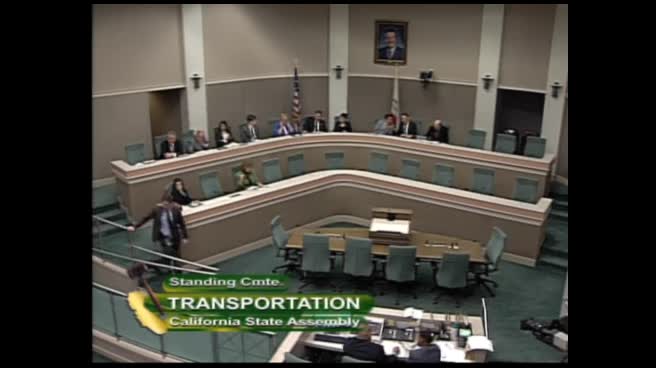
Assembly Standing Committee on Transportation
Bill Author

Bill Co-Author(s):
