AB 390: Pedestrian crossing signals.
- Session Year: 2017-2018
- House: Assembly
- Latest Version Date: 2017-10-02
Under existing law, a pedestrian facing a WALK or approved Walking Person symbol may proceed across the roadway in the direction of the signal. Existing law makes a violation of this provision a crime.
This bill would authorize a pedestrian facing a flashing DONT WALK or WAIT or approved Upraised hand symbol with a countdown signal to proceed so long as he or she completes the crossing before the display of the steady DONT WALK or WAIT or approved Upraised Hand symbol. Because the bill would change the definition of a crime, it would impose a state-mandated local program.
The California Constitution requires the state to reimburse local agencies and school districts for certain costs mandated by the state. Statutory provisions establish procedures for making that reimbursement.
This bill would provide that no reimbursement is required by this act for a specified reason.
Under existing law, a pedestrian facing a WALK or approved Walking Person symbol may proceed across the roadway in the direction of the signal. Existing law makes a violation of this provision a crime.
This bill would authorize a pedestrian facing a flashing DONT WALK or WAIT or approved Upraised hand symbol with a countdown signal to proceed so long as he or she completes the crossing before the display of the steady DONT WALK OR WALK or WAIT or approved Upraised Hand symbol. Because the bill would change the definition of a crime, it would impose a state-mandated local program.
The California Constitution requires the state to reimburse local agencies and school districts for certain costs mandated by the state. Statutory provisions establish procedures for making that reimbursement.
This bill would provide that no reimbursement is required by this act for a specified reason.
Under existing law, a pedestrian facing a WALK or approved Walking Person symbol may proceed across the roadway in the direction of the signal. Existing law makes a violation of this provision a crime.
This bill would authorize a pedestrian facing a countdown signal flashing DONT WALK or WAIT or approved Upraised hand symbol to proceed across the roadway in the direction of the signal if there is sufficient time left on the countdown to reasonably complete the crossing safely. so long as he or she completes the crossing before the display of the steady DONT WALK OR WAIT or approved Upraised Hand symbol. Because the bill would change the definition of a crime, it would impose a state-mandated local program.
The California Constitution requires the state to reimburse local agencies and school districts for certain costs mandated by the state. Statutory provisions establish procedures for making that reimbursement.
This bill would provide that no reimbursement is required by this act for a specified reason.
Under existing law, a pedestrian facing a WALK or approved Walking Person symbol may proceed across the roadway in the direction of the signal.
This bill would authorize a pedestrian facing a countdown signal to proceed across the roadway in the direction of the signal if there is sufficient time left on the countdown to reasonably complete the crossing safely.
If a pedestrian control signal showing the words WALK or WAIT or DONT WALK or other approved symbol is in place, the signal shall indicate as follows:
(a)A WALK or approved Walking Person symbol means a pedestrian facing the signal may proceed across the roadway in the direction of the signal, but shall yield the right-of-way to vehicles lawfully within the intersection at the time that signal is first shown.
(b)A flashing DONT WALK or WAIT or approved Upraised Hand symbol with a countdown signal indicating the time remaining for a pedestrian to cross the roadway means a pedestrian facing the signal may start to cross the roadway in the direction of the signal but must complete the crossing prior to the display of the steady DONT WALK or WAIT or approved Upraised Hand symbol when the countdown ends.
(c)A steady DONT WALK or WAIT or approved Upraised Hand symbol or a flashing DONT WALK or WAIT or approved Upraised Hand without a countdown signal indicating the time remaining for a pedestrian to cross the roadway means a pedestrian facing the signal shall not start to cross the roadway in the direction of the signal, but any pedestrian who started the crossing during the display of the WALK or approved Walking Person symbol and who has partially completed crossing shall proceed to a sidewalk or safety zone or otherwise leave the roadway while the steady WAIT or DONT WALK or approved Upraised Hand symbol is showing.
SEC. 2.No reimbursement is required by this act pursuant to Section 6 of Article XIIIB of the California Constitution because the only costs that may be incurred by a local agency or school district will be incurred because this act creates a new crime or infraction, eliminates a crime or infraction, or changes the penalty for a crime or infraction, within the meaning of Section 17556 of the Government Code, or changes the definition of a crime within the meaning of Section 6 of Article XIIIB of the California Constitution.
If a pedestrian control signal showing the words WALK or WAIT or DONT WALK or other approved symbol is in place, the signal shall indicate as follows:
(a)A WALK or approved Walking Person symbol means a pedestrian facing the signal may proceed across the roadway in the direction of the signal, but shall yield the right-of-way to vehicles lawfully within the intersection at the time that signal is first shown.
(b)A flashing DONT WALK or WAIT or approved Upraised Hand symbol with a countdown signal indicating the time remaining for a pedestrian to cross the roadway means a pedestrian facing the signal may start to cross the roadway in the direction of the signal but must complete the crossing prior to the display of the steady DONT WALK or WAIT or approved Upraised Hand symbol symbol when the countdown ends.
(c)A steady DONT WALK or WAIT or approved Upraised Hand symbol or a flashing DONT WALK or WAIT or approved Upraised Hand without a countdown signal indicating the time remaining for a pedestrian to cross the roadway means a pedestrian facing the signal shall not start to cross the roadway in the direction of the signal, but any pedestrian who started the crossing during the display of the WALK or approved Walking Person symbol and who has partially completed crossing shall proceed to a sidewalk or safety zone or otherwise leave the roadway while the steady WAIT or DONT WALK or approved Upraised Hand symbol is showing.
SEC. 2.No reimbursement is required by this act pursuant to Section 6 of Article XIIIB of the California Constitution because the only costs that may be incurred by a local agency or school district will be incurred because this act creates a new crime or infraction, eliminates a crime or infraction, or changes the penalty for a crime or infraction, within the meaning of Section 17556 of the Government Code, or changes the definition of a crime within the meaning of Section 6 of Article XIIIB of the California Constitution.
Whenever If a pedestrian control signal showing the words WALK or WAIT or DONT WALK or other approved symbol is in place, the signal shall indicate as follows:
(a)A WALK or approved Walking Person symbol. A symbol means a pedestrian facing the signal may proceed across the roadway in the direction of the signal, but shall yield the right-of-way to vehicles lawfully within the intersection at the time that signal is first shown.
(b)A countdown signal indicating the time remaining for a pedestrian to cross the roadway. A A flashing DONT WALK or WAIT or approved Upraised Hand symbol means a pedestrian facing the signal may proceed across start to cross the roadway in the direction of the signal if there is sufficient time left on the countdown to reasonably complete the crossing safely. but must complete the crossing prior to the display of the steady DONT WALK or WAIT or approved Upraised Hand symbol.
(c)Flashing or A steady DONT DONT WALK or WAIT or approved Upraised Hand symbol. A symbol means a pedestrian facing the signal shall not start to cross the roadway in the direction of the signal, but any pedestrian who started the crossing during the display of the WALK or approved Walking Person symbol and who has partially completed crossing shall proceed to a sidewalk or safety zone or otherwise leave the roadway while the steady WAIT or DONT DONT WALK or approved Upraised Hand symbol is showing.
SEC. 2.No reimbursement is required by this act pursuant to Section 6 of Article XIIIB of the California Constitution because the only costs that may be incurred by a local agency or school district will be incurred because this act creates a new crime or infraction, eliminates a crime or infraction, or changes the penalty for a crime or infraction, within the meaning of Section 17556 of the Government Code, or changes the definition of a crime within the meaning of Section 6 of Article XIIIB of the California Constitution.
Whenever a pedestrian control signal showing the words WALK or WAIT or DONT DONT WALK or other approved symbol is in place, the signal shall indicate as follows:
(a)WALK or approved Walking Person symbol. A pedestrian facing the signal may proceed across the roadway in the direction of the signal, but shall yield the right-of-way to vehicles lawfully within the intersection at the time that signal is first shown.
(b)A countdown signal indicating the time remaining for a pedestrian to cross the roadway. A pedestrian facing the signal may proceed across the roadway in the direction of the signal if there is sufficient time left on the countdown to reasonably complete the crossing safely.
(b)(c)Flashing or steady DONT DONT WALK or WAIT or approved Upraised Hand symbol. No A pedestrian shall not start to cross the roadway in the direction of the signal, but any pedestrian who has partially completed crossing shall proceed to a sidewalk or safety zone or otherwise leave the roadway while the WAIT or DONT DONT WALK or approved Upraised Hand symbol is showing.
REVISIONS: HeadingLine 1.|
Date
|
Status
|
|---|---|
| Oct 2, 2017 | Chaptered by Secretary of State - Chapter 402, Statutes of 2017. |
| Oct 2, 2017 | Approved by the Governor. |
| Sep 18, 2017 | Enrolled and presented to the Governor at 4 p.m. |
| Sep 11, 2017 | Senate amendments concurred in. To Engrossing and Enrolling. |
| Sep 7, 2017 | In Assembly. Concurrence in Senate amendments pending. May be considered on or after September 9 pursuant to Assembly Rule 77. |
| Sep 7, 2017 | Read third time. Passed. Ordered to the Assembly. |
| Sep 5, 2017 | Read second time. Ordered to third reading. |
| Sep 1, 2017 | From committee: Do pass. (Ayes 7. Noes 0.) (September 1). |
| Aug 28, 2017 | In committee: Referred to APPR. suspense file. |
| Aug 21, 2017 | In committee: Hearing postponed by committee. |
| Jul 13, 2017 | Read second time and amended. Re-referred to Com. on APPR. |
| Jul 12, 2017 | From committee: Amend, and do pass as amended and re-refer to Com. on APPR. (Ayes 13. Noes 0.) (July 11). |
| Jun 12, 2017 | From committee chair, with author's amendments: Amend, and re-refer to committee. Read second time, amended, and re-referred to Com. on T. & H. |
| May 24, 2017 | Referred to Com. on T. & H. |
| May 11, 2017 | In Senate. Read first time. To Com. on RLS. for assignment. |
| May 11, 2017 | Read third time. Passed. Ordered to the Senate. (Ayes 76. Noes 1. Page 1482.) |
| May 10, 2017 | Read second time. Ordered to third reading. |
| May 9, 2017 | From committee: Do pass. (Ayes 13. Noes 1.) (May 8). |
| Apr 17, 2017 | Coauthors revised. |
| Mar 29, 2017 | In committee: Set, first hearing. Hearing canceled at the request of author. |
| Feb 21, 2017 | Referred to Com. on TRANS. |
| Feb 10, 2017 | From printer. May be heard in committee March 12. |
| Feb 9, 2017 | Read first time. To print. |
|
Date
|
Description
|
Location
|
Votes
|
|
|---|---|---|---|---|
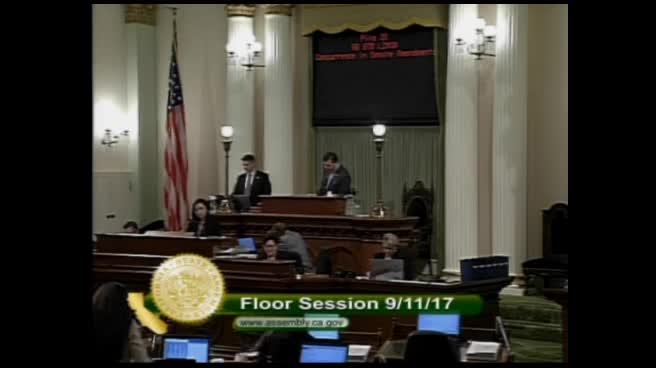
| Sep 11, 2017 | AB 390 SANTIAGO Concurrence in Senate Amendments | Assembly Floor |
Passed |
|
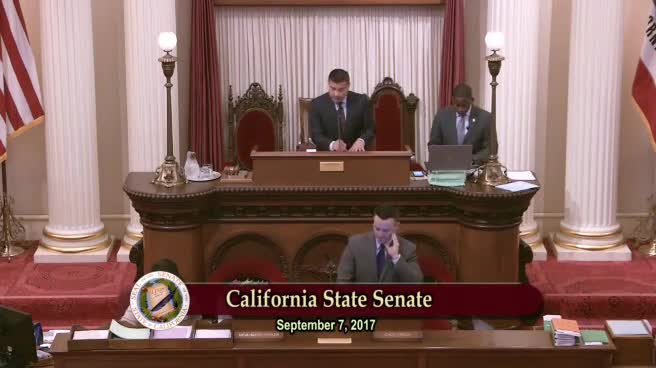
| Sep 7, 2017 | Assembly 3rd Reading AB390 Santiago et al. By Beall | Senate Floor |
Passed |
|
| Sep 1, 2017 | Do pass | Senate Standing Committee on Appropriations |
Passed |
|
| Aug 28, 2017 | Placed on suspense file | Senate Standing Committee on Appropriations |
Passed |
|
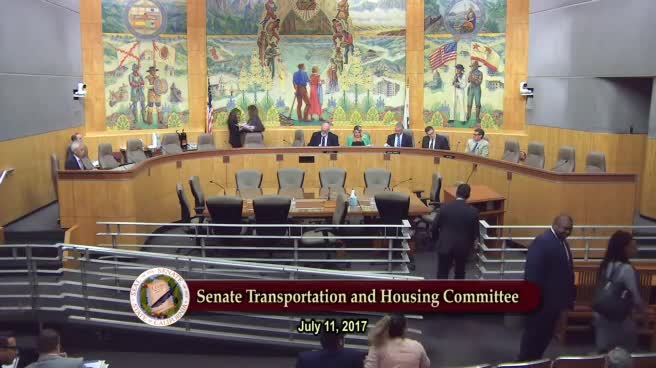
| Jul 11, 2017 | Do pass as amended, but first amend, and re-refer to the Committee on [Appropriations] | Senate Standing Committee on Transportation and Housing |
Passed |
|
| May 11, 2017 | AB 390 SANTIAGO Assembly Third Reading | Assembly Floor |
Passed |
|
| May 8, 2017 | Do pass. | Assembly Standing Committee on Transportation |
Passed |
This list shows positions taken on this bill by organizations on the date displayed, which is linked to the original source.
Positions by individuals are not included.
|
Organization
|
Position
|
Date
|
|---|---|---|
| California Bicycle Coalition | ** Support | Sep 3, 2017 |
| California Walks | ** Support | Sep 3, 2017 |
| Central City Neighborhood Partners | ** Support | Sep 3, 2017 |
| City Of Los Angeles | ** Support | Sep 3, 2017 |
| Department Of The California Highway Patrol | ** Against | Sep 3, 2017 |
| friends of king | ** Support | Sep 3, 2017 |
| Law Foundation of Silicon Valley | ** Support | Sep 3, 2017 |
| Los Angeles County Bicycle Coalition | ** Support | Sep 3, 2017 |
| Los angeles department of transportation | * Support | Jul 11, 2017 |
| Los Angeles Vision Zero Alliance | ** Support | Sep 3, 2017 |
| Los Angeles Walks | ** Support | Sep 3, 2017 |
| Pacoima Beautiful | ** Support | Sep 3, 2017 |
CONCURRENCE IN SENATE AMENDMENTS
CSA1 Bill Id:AB 390
Author:(Santiago and Ting)
As Amended Ver:July 13, 2017
Majority vote
ASSEMBLY: | 76-1 | (May 11, 2016) | SENATE: | 40-0 | (September 7, 2017) |
Original Committee Reference: TRANS.
SUMMARY: Authorizes pedestrians to enter a crosswalk when the countdown symbol is displayed provided the crossing is completed before the countdown ends.
The Senate amendments:
- Authorize pedestrians, facing a pedestrian countdown signal, to start to cross provided the crossing is completed before the countdown ends and the "DON'T WALK," "WAIT," or "Upraised Hand" symbol is displayed.
- Specify that no reimbursement is required for costs incurred by local agencies or school districts.
- Make non-substantive, clarifying changes.
FISCAL EFFECT: According to the Senate Appropriations Committee, unknown reductions in state and local penalty assessment revenues (General Fund, various special funds, local funds). To the extent the bill resulted in a reduction of 4,000 "jaywalking" violations statewide, there would be a reduction of $568,000 in state funds, including $160,000 that would have been deposited into the Trial Court Trust Fund.
COMMENTS: The purpose of traffic control devices (e.g., signs and signals) is to promote roadway safety and efficiency by providing for the orderly movement of all road users on streets, highways, bikeways, and private roads open to public travel. Regulations regarding signs are set forth in the Manual on Uniform Traffic Control Devices (MUTCD). In California, development of the MUTCD is the responsibility of the California Traffic Control Devices Committee (CTCDC), which is convened and chaired by the California Department of Transportation (Caltrans). Meetings of the CTCDC serve as requisite public hearings prior to promulgating rules related to traffic signs, signals, and pavement markings. Only signs provided for in the MUTCD can be lawfully placed on public roads.
CTCDC is the officially-recognized advisory body in the area of traffic control. The committee consists of representatives of state, local and federal transportation agencies, academia, law enforcement, local jurisdictions, and the automobile clubs. The scope of the CTCDC's work includes review and approval of all traffic control devices. The role of CTCDC is to promote the uniform and functional design and application of traffic control devices; gather, disseminate, and exchange information among state, national and local agencies; serve as a forum to review and evaluate traffic control device proposals; obtain and report to the parent organizations on legislation; conduct and review research and development and practices regarding traffic control devices; advise Caltrans on standards and policy for traffic control devices in California; review the MUTCD pertaining to traffic control devices; and provide advice with regard to MUTCD revisions.
With regard to pedestrian control signals, the MUTCD and existing law specify that when the word "walk" or a "walking person" symbol are displayed, pedestrians are allowed to leave the curb and proceed across the roadway in the direction of the signal. When the words "DON'T WALK" or "WAIT" or an "upraised hand" symbol are displayed, a pedestrian is prohibited from leaving the curb to cross but is allowed, if they have already left the curb, to continue across the roadway to the other side or to a safety island. These laws were instituted before the inception of countdown timers.
Countdown timers were first put into use on a trial basis in San Francisco in 2001 as a way to let pedestrians know the amount of time left to cross the roadway after the "walking person" symbol is displayed but before the steady "upraised hand" symbol is displayed and the signal changes, allowing cross traffic to proceed. This time period is known as the clearance interval. Countdown timers were first addressed in the MUTCD in 2003 for optional use and in the 2009 the MUTCD required the use of countdown timers for all pedestrian signal heads where the pedestrian change interval is more than seven seconds. The MUTCD specifies that when countdown signals are used, they must always be displayed simultaneously with the flashing "upraised hand" symbol that then prohibits a pedestrian from leaving the curb to cross.
The author asserts that most pedestrians are unaware that they are not supposed to cross when the flashing upraised hand and the countdown timer are displayed and are surprised when they are cited for this violation. While most jurisdictions seldom cite for this offense, recently, the Los Angeles Police Department (LAPD) began citing regularly for this violation. In fact, the Los Angeles Times recently published that LAPD cites this violation four times more often than any other pedestrian offense. While the fine for this violation is low, with a base fine of $25, after fees and other assessments, the final cost of the citation comes in at just under $200. The author introduced this bill to protect pedestrians from being cited and from incurring the associated financial burden.
Arguing in support of this bill, the California Bicycle Coalition writes that an individual hurrying to cross a street within the time allotted by the countdown clock is reasonable behavior and causes no harm or delay to traffic traveling in the opposite direction. They go on to say that penalizing a pedestrian who does this is unfair, discourages people from walking, and is counterproductive to the larger state goal of increasing active transportation modes.
Arguing in opposition, the California Highway Patrol (CHP) states that "Clear and consistent standards, rather than individual judgment, should guide how pedestrians use roadways when they are likely to interact with motor vehicles." CHP points to a steady annual increase in pedestrian collisions in intersections between 2013 and 2016, from 5,819 to 6,757. In addition, pedestrians have been found at fault – meaning they were in the crosswalk in disobedience of the signal – in the majority of pedestrian-related collisions. CHP states that complying with existing signal requirements ensures the safest environment for pedestrians.
Both the Senate Transportation and Housing Committee and the Assembly Transportation committee suggest that the author consider holding the bill and ask the CTCDC to review the issue and make a recommendation to the Legislature.
Please see the policy committee analysis for full discussion of this bill.
Analysis Prepared by: Victoria Alvarez / TRANS. / (916) 319-2093 FN: 0001729
Office of Senate Floor Analyses (916) 651-1520 Fax: (916) 327-4478 | AB |
THIRD READING
Bill No: AB 390
:
SENATE TRANS. & HOUSING COMMITTEE: 13-0, 7/11/17
AYES: Beall, Cannella, Allen, Atkins, Gaines, McGuire, Mendoza, Morrell, Roth, Skinner, Vidak, Wieckowski, Wiener
SENATE APPROPRIATIONS COMMITTEE: 7-0, 9/1/17
AYES: Lara, Bates, Beall, Bradford, Hill, Nielsen, Wiener
ASSEMBLY FLOOR: 76-1, 5/11/17 - See last page for vote
DIGEST:
This bill makes it legal for a pedestrian to enter the crosswalk after a “DON’T WALK” signal is displayed.
Existing law:
- Allows a pedestrian who is facing a pedestrian control signal showing a “WALK” or a “Walking Person” symbol, to proceed across the roadway in the direction of the signal, but requires the pedestrian to yield the right-of-way to vehicles lawfully within the intersection at the time the signal is first shown.
- Prohibits a pedestrian from starting to cross a roadway in the direction of a pedestrian control signal when it shows “DON’T WALK” OR “WAIT” or an “Upraised Hand” symbol.
- Allows a pedestrian who has partially completed crossing a roadway to complete the crossing while the “DON’T WALK” or “WAIT” or “Upraised Hand” symbol is still displayed.
This bill:
- Allows a pedestrian to begin crossing the roadway after a pedestrian control signal shows a flashing “DON’T WALK” or “WAIT” or “Upraised Hand” symbol if the signal includes a countdown indicating the time remaining for the pedestrian to cross the roadway. Requires the pedestrian to complete the crossing prior to the end of the countdown.
- Clarifies that a pedestrian who has partially completed crossing a roadway may complete the crossing while a steady “DON’T WALK” or “WAIT” or “Upraised Hand” symbol, or a flashing “DON’T WALK” or “WAIT” or approved “Upraised Hand” without a countdown timer, is still displayed.
Background
Existing law requires the state Department of Transportation (Caltrans) to adopt rules and regulations prescribing uniform standards for traffic control devices in the state. Caltrans established the California Traffic Control Devices Committee (CTCDC) to fulfill this mandate. The CTCDC reviews rules and regulations and makes recommendations to the Caltrans director, who ultimately adopts and publishes them in the California Manual of Uniform Traffic Control Devices (MUTCD). The CTCDC is made up of representatives from Caltrans, the California Highway Patrol (CHP), and local governments, and also consults with technical advisors. Regarding pedestrian control signals, the MUTCD indicates that:
“Following the pedestrian change interval, a buffer interval consisting of a steady UPRAISED HAND (symbolizing DON’T WALK) signal indication shall be displayed for at least 3 seconds prior to the release of any conflicting vehicular movement...the pedestrian clearance time should be sufficient to allow a pedestrian crossing in the crosswalk who left the curb or shoulder at the end of the WALKING PERSON (symbolizing WALK) signal indication to travel at a walking speed of 3.5 feet per second to at least the far side of the traveled way or to a median of sufficient width for pedestrians to wait.”
Comments
- Purpose. The author states that most pedestrians are unaware that they are not supposed to cross when the flashing upraised hand and the countdown timer are displayed and are surprised when they are cited for this violation. While most jurisdictions seldom cite for this offense, the Los Angeles Police Department (LAPD) recently began citing regularly for this violation. In fact, the Los Angeles Times published that LAPD cites this violation four times more often than any other pedestrian offense. This bill will protect pedestrians from being cited and from incurring the associated financial burden.
- How expensive is a violation? While existing law authorizes a base fine of $25 for entering a crosswalk when the flashing upraised hand and countdown timer are displayed, the actual total cost of a ticket can run as high as $250 due to additional surcharges, penalties, and assessments.
- Codifying existing behavior or putting pedestrians at risk? The author states that this bill aligns the law with what most pedestrians are already doing. According to the author, trying to educate pedestrians about the existing law prohibition on entering the crosswalk after the “DON’T WALK” or “Upraised Hand” symbol is displayed would be expensive, complicated, and take many years. According to the California Driver Handbook, published by the state Department of Motor Vehicles, countdown traffic signal lights “allow pedestrians the flexibility to speed up if the crossing phase is about to expire.” In other words, the countdown is intended to give a pedestrian time to safely cross the entire roadway. If a pedestrian leaves a curb with two seconds left on a countdown, thinking he or she can make it across in time, he or she could potentially put himself or herself at risk by only being halfway across the roadway when traffic begins to move forward when the light changes.
- Countdowns provide key information to pedestrians. According to the author, countdown signals have helped inform pedestrians of how much time they need to cross and provide them with a choice to decide whether they can do so safely. The author states that this information makes it unlikely that this bill will create situations where pedestrians will dart across a street with two seconds left. The author points to research by the Minnesota Department of Transportation showing an average 12% increase in successful pedestrian crossings with the implementation of countdowns. The study also found that pedestrians were less likely to cross near the end of a pedestrian walk phase if it appeared that there was insufficient time. The author also notes that countdown pedestrian signals in San Francisco have led to a 25% reduction in pedestrian crashes. Not all pedestrian control signals, however, include a countdown timer — meaning a pedestrian entering the crosswalk during a “DON’T WALK” signal is guessing at how much time is left. The CHP initially opposed this bill, stating that “Clear and consistent standards, rather than individual judgment, should guide how pedestrians use roadways when they are likely to interact with motor vehicles.” To address these concerns, the author amended this bill in policy committee to only allow a pedestrian to enter the crosswalk during a “DON’T WALK” display if the signal includes a countdown timer. The Senate Transportation and Housing Committee was unable to confirm CHP’s position on the current version of this bill.
- Local problem? The author points to a number of 2015 articles indicating the LAPD was issuing these tickets at high rates. It is unclear whether this is still occurring. In addition, since the City of Los Angeles is the sponsor of this bill, it might be more prudent for the city to communicate with its police department rather than changing state law. The author states that if it can happen in Los Angeles, it can happen elsewhere, and points to several jurisdictions in the U.S., including New York City, Salt Lake City, Indiana, and South Carolina, that have passed ordinances or laws allowing pedestrians to enter the crosswalk if there is sufficient time to cross safely.
FISCAL EFFECT: Appropriation: Fiscal Com.: Local:
According to the Senate Appropriations Committee:
- Unknown reductions in state and local penalty assessment revenues (General Fund, various special funds, local funds). To the extent the bill resulted in a reduction of 4,000 “jaywalking” violations statewide, there would be a reduction of $568,000 in state funds, including $160,000 that would have been deposited into the Trial Court Trust Fund.
City of Los Angeles (source)
California Bicycle Coalition
California Walks
Central City Neighborhood Partners
Friends of King
Law Foundation of Silicon Valley
Los Angeles County Bicycle Coalition
Los Angeles Vision Zero Alliance
Los Angeles Walks
Pacoima Beautiful
Department of the California Highway Patrol
ARGUMENTS IN SUPPORT: The City of Los Angeles, sponsor of this bill, states that it better comports with the common understanding of most pedestrians.
ASSEMBLY FLOOR: 76-1, 5/11/17
AYES: Acosta, Aguiar-Curry, Travis Allen, Arambula, Baker, Berman, Bigelow, Bloom, Bocanegra, Bonta, Brough, Burke, Caballero, Calderon, Cervantes, Chau, Chávez, Chen, Chiu, Choi, Chu, Cooley, Cooper, Cunningham, Dababneh, Daly, Eggman, Flora, Fong, Friedman, Gallagher, Cristina Garcia, Eduardo Garcia, Gipson, Gloria, Gomez, Gonzalez Fletcher, Gray, Grayson, Harper, Holden, Irwin, Jones-Sawyer, Kalra, Kiley, Lackey, Levine, Limón, Low, Maienschein, Mathis, Mayes, McCarty, Medina, Melendez, Mullin, Muratsuchi, Nazarian, Obernolte, Quirk, Quirk-Silva, Reyes, Ridley-Thomas, Rodriguez, Rubio, Salas, Santiago, Steinorth, Mark Stone, Thurmond, Ting, Voepel, Waldron, Weber, Wood, Rendon
NOES: Frazier
NO VOTE RECORDED: Dahle, O'Donnell, Patterson
9/3/17 18:22:46
**** END ****
SENATE COMMITTEE ON
Senator Ricardo Lara, Chair
2017 - 2018 Regular Session
AB 390 (Santiago) - Pedestrian crossing signals
Version: | Policy Vote: |
Urgency: | Mandate: |
Hearing Date: | Consultant: |
This bill meets the criteria for referral to the Suspense File.
Bill Summary:
AB 390 would revise what constitutes a “jaywalking” violation by authorizing a pedestrian to enter a crosswalk if a flashing “DON’T WALK” symbol with a countdown is displayed as long as he or she completes the crossing prior to the display of the steady “DON’T WALK” symbol when the countdown ends.
Fiscal Impact:
- Unknown reductions in state and local penalty assessment revenues (General Fund, various special funds, local funds). To the extent the bill resulted in a reduction of 4,000 “jaywalking” violations statewide, there would be a reduction of $568,000 in state funds, including $160,000 that would have been deposited into the Trial Court Trust Fund. (see background and staff comments)
Background:
Existing law authorizes a pedestrian to proceed across the roadway in the direction of a traffic signal displaying a “WALK” or “Walking Person” symbol, but requires the pedestrian to yield the right-of-way to vehicles lawfully within the intersection at the time the signal is first shown. Existing law prohibits a pedestrian from starting to cross a roadway in the direction of a pedestrian control symbol displaying a flashing or steady “DON’T WALK” or “WAIT” or “Upraised Hand” symbol, but allows a pedestrian who has partially completed a crossing to leave the roadway while that symbol is still displayed. Existing law is silent on providing pedestrian guidance at crosswalks that display a countdown in conjunction with a flashing “DON’T WALK” symbol.
In addition to base fines for traffic violations, existing law imposes numerous additional penalty assessments, fees, and surcharges for convictions of these infractions, all of which significantly increase the total bail owed as a result of violations. For example, the base fine for entering a crosswalk when the “DON’T WALK” symbol is displayed is $25, with a total charge of $197 when additional surcharges and penalties are assessed. Existing law specifies a complex process for the distribution of fine and fee revenues to numerous state and local funds. Some of these add-on fines and fees were enacted to fund specific activities, such as emergency medical services or DNA-related activities, while others support general court operations, court facilities construction, or state and local general funds.
The following assessments, fees, and surcharges are added to a pedestrian violation with a $25 base fine:
- A $30 State Penalty Assessment (70% deposited into the State Penalty Fund, and distributed to various Special Funds, and 30% to the county General Fund)
- A $21 County Penalty Assessment (deposited into the county General Fund)
- A $15 DNA Penalty Assessment (deposited into the DNA Identification Fund)
- A $15 Court Construction Penalty Assessment (deposited into various Special Funds supporting court facilities)
- A $5 State Surcharge (deposited into the state General Fund)
- A $6 Emergency Medical Services Penalty Assessment (deposited primarily in the Maddy EMS Fund)
- A $4 Emergency Medical Air Transportation Penalty Assessment (deposited into the Emergency Medical Air Transportation Fund)
- A $40 Court Operations Assessment (deposited into the Trial Court Trust Fund)
- A $35 Conviction Assessment (deposited into the Immediate and Critical Needs Account)
- A $1 Night Court Fee (deposited into the Night Court Session Fund)
Proposed Law:
AB 390 would retain the prohibition against entering a crosswalk when a flashing or steady “DON’T WALK” symbol is displayed and there is not a countdown, but allow pedestrians to enter a crosswalk if there is a flashing “DON’T WALK” symbol with a countdown and the pedestrian completes the crossing prior to the display of the steady “DON’T WALK” symbol.
Staff Comments:
The author contends that most pedestrians are unaware that is it illegal to begin crossing a street if there is a flashing “DON’T WALK” symbol at the crosswalk. Enforcement of this prohibition varies across local jurisdictions. The Los Angeles Times recently reported that over 17,000 tickets were written for crosswalk violations over a four-year period in the local division that includes downtown Los Angeles alone. The total number of “jaywalking” violations statewide is unknown, but is likely in the tens of thousands annually.
This bill authorizes pedestrians to enter a crosswalk while facing a flashing “DON’T WALK” symbol with a countdown, as long as he or she can cross before the countdown ends. Staff notes that there is no data available on the number of violations statewide that are currently cited for “jaywalking” at crosswalks with a countdown signal. However, as a result of the additional flexibility provided in this bill, there is likely to be a reduction in the issuance of those citations. As a result, the bill would result in a corresponding reduction in fine and fee revenues of an unknown, but potentially significant, magnitude.
-- END --
SENATE COMMITTEE ON TRANSPORTATION AND HOUSING
Senator Jim Beall, Chair
2017 - 2018 Regular
Bill No: Hearing Date: 7/11/2017
Author: | Santiago | ||
Version: | 6/12/2017 | ||
Urgency: | No | Fiscal: | Yes |
Consultant: | Erin Riches | ||
SUBJECT:
DIGEST: This bill makes it legal for a pedestrian to enter the crosswalk after a “DON’T WALK” signal is displayed.
ANALYSIS:
Existing law:
- Allows a pedestrian who is facing a pedestrian control signal showing a “WALK” or a “Walking Person” symbol, to proceed across the roadway in the direction of the signal, but requires the pedestrian to yield the right-of-way to vehicles lawfully within the intersection at the time the signal is first shown.
- Prohibits a pedestrian from starting to cross a roadway in the direction of a pedestrian control signal when it shows “DON’T WALK” OR “WAIT” or an “Upraised Hand” symbol.
- Allows a pedestrian who has partially completed crossing a roadway to complete the crossing while the “DON’T WALK” or “WAIT” or “Upraised Hand” symbol is still displayed.
This bill:
- Allows a pedestrian to begin crossing the roadway after a pedestrian control signal shows a flashing “DON’T WALK” or “WAIT” or “Upraised Hand” symbol, but requires the pedestrian to complete the crossing prior to display of the steady “DON’T WALK” or “WAIT” or “Upraised Hand” symbol.
- Clarifies that a pedestrian who has partially completed crossing a roadway may complete the crossing while the steady “DON’T WALK” or “WAIT” or “Upraised Hand” symbol is still displayed.
COMMENTS:
- Purpose. The author states that most pedestrians are unaware that they are not supposed to cross when the flashing upraised hand and the countdown timer are displayed and are surprised when they are cited for this violation. While most jurisdictions seldom cite for this offense, the Los Angeles Police Department (LAPD) recently began citing regularly for this violation. In fact, the Los Angeles Times recently published that LAPD cites this violation four times more often than any other pedestrian offense. This bill will protect pedestrians from being cited and from incurring the associated financial burden.
- Background on existing state law. Existing law requires the state Department of Transportation (Caltrans) to adopt rules and regulations prescribing uniform standards for traffic control devices in the state. Caltrans established the California Traffic Control Devices Committee (CTCDC) to fulfill this mandate. The CTCDC reviews rules and regulations and makes recommendations to the Caltrans director, who ultimately adopts and publishes them in the California Manual of Uniform Traffic Control Devices (MUTCD). The CTCDC is made up of representatives from Caltrans, the California Highway Patrol (CHP), and local governments, and also consults with technical advisors. Regarding pedestrian control signals, the MUTCD indicates that:
“Following the pedestrian change interval, a buffer interval consisting of a steady UPRAISED HAND (symbolizing DON’T WALK) signal indication shall be displayed for at least 3 seconds prior to the release of any conflicting vehicular movement...the pedestrian clearance time should be sufficient to allow a pedestrian crossing in the crosswalk who left the curb or shoulder at the end of the WALKING PERSON (symbolizing WALK) signal indication to travel at a walking speed of 3.5 feet per second to at least the far side of the traveled way or to a median of sufficient width for pedestrians to wait.”
- How expensive is a violation? While existing law authorizes a base fine of $25 for entering a crosswalk when the flashing upraised hand and countdown timer are displayed, the actual total cost of a ticket can run as high as $250 due to additional surcharges, penalties, and assessments.
- Codifying existing behavior or putting pedestrians at risk? The author states that this bill aligns the law with what most pedestrians are already doing. According to the author, trying to educate pedestrians about the existing law prohibition on entering the crosswalk after the “DON’T WALK” or “Upraised Hand” symbol is displayed would be expensive, complicated, and take many years. According to the California Driver Handbook, published by the state Department of Motor Vehicles, countdown traffic signal lights “allow pedestrians the flexibility to speed up if the crossing phase is about to expire.” In other words, the countdown is intended to give a pedestrian time to safely cross the entire roadway. If a pedestrian leaves a curb with two seconds left on a countdown, thinking he or she can make it across in time, he or she could potentially put himself or herself at risk by only being halfway across the roadway when traffic begins to move forward when the light changes.
- Countdowns provide key information to pedestrians. According to the author, countdown signals have helped inform pedestrians of how much time they need to cross and provide them with a choice to decide whether they can do so safely. The author states that this information makes it unlikely that this bill will create situations where pedestrians will dart across a street with two seconds left. The author points to research by the Minnesota Department of Transportation showing an average 12% increase in successful pedestrian crossings with the implementation of countdowns. The study also found that pedestrians were less likely to cross near the end of a pedestrian walk phase if it appeared that there was insufficient time. The author also notes that countdown pedestrian signals in San Francisco have led to a 25% reduction in pedestrian crashes. Not all pedestrian control signals, however, include a countdown timer — meaning a pedestrian entering the crosswalk during a “DON’T WALK” signal is guessing at how much time is left. Moving forward, the author may wish to consider amending this bill to only allow a pedestrian to enter the crosswalk during a “DON’T WALK” display if the signal includes a countdown timer.
- Local problem? The author points to a number of 2015 articles indicating the LAPD was issuing these tickets at high rates. It is unclear whether this is still occurring. In addition, since the City of Los Angeles is the sponsor of this bill, it might be more prudent for the city to communicate with its police department rather than changing state law. The author states that if it can happen in Los Angeles, it can happen elsewhere, and points to several jurisdictions in the US, including New York City, Salt Lake City, Indiana, and South Carolina, that have passed ordinances or laws allowing pedestrians to enter the crosswalk if there is sufficient time to cross safely. Since this appears to be largely a local issue, moving forward the author may wish to consider amending this bill to be a pilot project in the City of Los Angeles.
- Opposition concerns. The California Highway Patrol (CHP), writing in opposition to this bill, states that “Clear and consistent standards, rather than individual judgment, should guide how pedestrians use roadways when they are likely to interact with motor vehicles.” CHP points to a steady annual increase in pedestrian collisions in intersections between 2013 and 2016, from 5,819 to 6,757. In addition, pedestrians have been found at fault – meaning they were in the crosswalk in disobedience of the signal – in the majority of pedestrian-related collisions. CHP states that complying with existing signal requirements ensures the safest environment for pedestrians.
- An issue for CTCDC? As noted above, the CTCDC reviews rules and regulations and makes recommendations to the Caltrans director, who adopts and publishes them in the MUTCD. Moving forward, the author may wish to consider making this a two-year bill and instead asking the CTCDC to review this issue and provide recommendations to the Legislature.
Assembly Votes:
Floor: 76-1
Trans: 13-1
FISCAL EFFECT: Appropriation: No Fiscal Com.: Yes Local: Yes
POSITIONS: (Communicated to the committee before noon on Wednesday,
July 5, 2017.)
SUPPORT:
City of Los Angeles (sponsor)
California Bicycle Coalition
California Walks
Central City Neighborhood Partners
Friends of King
Los Angeles County Bicycle Coalition
Los Angeles Walks
Pacoima Beautiful
OPPOSITION:
California Highway Patrol
-- END --
ASSEMBLY THIRD READING
ATR Bill Id:AB 390
Author:(Santiago and Ting)
As Introduced Ver:February 9, 2017
Majority vote
Committee | Votes | Ayes | Noes |
Transportation | 13-1 | Fong, Aguiar-Curry, Baker, Berman, Bocanegra, Chu, Daly, Friedman, Harper, Mathis, Medina, Nazarian, O'Donnell | Frazier |
SUMMARY: Authorizes pedestrians to enter a crosswalk when the countdown symbol is displayed if there is sufficient time left on the countdown for the pedestrian to reasonably complete the crossing safely.
EXISTING LAW:
- Requires Caltrans, after consultation with local authorities, to adopt uniform standards for all traffic control devices to be used on California streets and highways.
- Authorizes a person to start to cross the roadway in the direction of the signal when a "WALK" or approved "walking person" symbol is displayed.
- Prohibits a person from starting to cross a roadway when a flashing or steady "DON'T WALK," "WAIT," or "upraised hand" symbol is displayed.
- Authorizes a pedestrian that has partially completed the crossing when the flashing or steady "DON'T WALK," "WAIT" or approved "upraised hand" symbol to proceed to a sidewalk or safety zone or otherwise leave the roadway.
FISCAL EFFECT: None. This bill is keyed non-fiscal by the Legislative Counsel.
COMMENTS: The purpose of traffic control devices (e.g., signs and signals) is to promote roadway safety and efficiency by providing for the orderly movement of all road users on streets, highways, bikeways, and private roads open to public travel. Regulations regarding signs are set forth in the Manual on Uniform Traffic Control Devices (MUTCD). In California, development of the MUTCD is the responsibility of the California Traffic Control Devices Committee (CTCDC), which is convened and chaired by the California Department of Transportation (Caltrans). Meetings of the CTCDC serve as requisite public hearings prior to promulgating rules related to traffic signs, signals, and pavement markings. Only signs provided for in the MUTCD can be lawfully placed on public roads.
CTCDC is the officially-recognized advisory body in the area of traffic control. The committee consists of representatives of state, local and federal transportation agencies, academia, law enforcement, local jurisdictions, and the automobile clubs. The scope of the CTCDC's work includes review and approval of all traffic control devices. The role of CTCDC is to promote the uniform and functional design and application of traffic control devices; gather, disseminate, and exchange information among state, national and local agencies; serve as a forum to review and evaluate traffic control device proposals; obtain and report to the parent organizations on legislation; conduct and review research and development and practices regarding traffic control devices; advise Caltrans on standards and policy for traffic control devices in California; review the MUTCD pertaining to traffic control devices; and provide advice with regard to MUTCD revisions.
With regard to pedestrian control signals, the MUTCD and existing law specify that when the word "walk" or a "walking person" symbol are displayed, pedestrians are allowed to leave the curb and proceed across the roadway in the direction of the signal. When the words "DON'T WALK" or "WAIT" or an "upraised hand" symbol are displayed, a pedestrian is prohibited from leaving the curb to cross but is allowed, if they have already left the curb, to continue across the roadway to the other side or to a safety island. These laws were instituted before the inception of countdown timers.
Countdown timers were first put into use on a trial basis in San Francisco in 2001 as a way to let pedestrians know the amount of time left to cross the roadway after the "walking person" symbol is displayed but before the steady "upraised hand" symbol is displayed and the signal changes, allowing cross traffic to proceed. This time period is known as the clearance interval. Countdown timers were first addressed in the MUTCD in 2003 for optional use and in the 2009 the MUTCD required the use of countdown timers for all pedestrian signal heads where the pedestrian change interval is more than seven seconds. The MUTCD specifies that when countdown signals are used, they must always be displayed simultaneously with the flashing "upraised hand" symbol that then prohibits a pedestrian from leaving the curb to cross.
The author asserts that most pedestrians are unaware that they are not supposed to cross when the flashing upraised hand and the countdown timer are displayed and are surprised when they are cited for this violation. While most jurisdictions seldom cite for this offense, recently, the Los Angeles Police Department (LAPD) began citing regularly for this violation. In fact, the Los Angeles Times recently published that LAPD cites this violation four times more often than any other pedestrian offense. While the fine for this violation is low, with a base fine of $25, after fees and other assessments, the final cost of the citation comes in at just under $200. The author introduced this bill to protect pedestrians from being cited and from incurring the associated financial burden.
The author points out that several jurisdictions in the United States, including New York City, Salt Lake City, Indiana, and South Carolina have passed ordinances allowing pedestrians to enter the crosswalk if there is sufficient time to cross safely.
Arguing in support of this bill, the California Bicycle Coalition writes that an individual hurrying to cross a street within the time allotted by the countdown clock is reasonable behavior and causes no harm or delay to traffic traveling in the opposite direction. They go on to say that penalizing a pedestrian who does this is unfair, discourages people from walking, and is counterproductive to the larger state goal of increasing active transportation modes.
Committee concerns:
- This bill could make it difficult for law enforcement to enforce the law relative to countdown timers because of the subjective language in the bill. For example, if a pedestrian leaves the curb with only a two seconds left on the countdown and was still in the crosswalk when the light changed, thereby holding up cross traffic, it would be difficult for on officer to cite this individual because the pedestrian could argue that they thought there was "sufficient time left on the countdown" and that they believed they were able to "reasonably" make it across the roadway.
- Many cities, including Los Angeles, have instituted Vision Zero programs to eliminate traffic deaths. For Los Angeles, Vision Zero seeks to eliminate all traffic deaths by 2025. To achieve this goal, transportation engineers, law enforcement, advocates, and policymakers have committed to working together to create safer streets with a focus being on protecting vulnerable road users such as children, older adults, pedestrians, and bicyclists. This bill, while it provides relief to pedestrians being ticketed for crossing when the countdown signal (and upraised hand) is displayed in some ways runs counter to the Vision Zero efforts in that it encourages (rather than discourages) pedestrians to enter the crosswalk in the waning seconds of the countdown clock making them increasingly vulnerable to being struck by vehicles who begin to cross with the expectation that pedestrians will yield to the "upraised hand" symbol.
Suggested amendment: Given that the CTCDC is a body that has traffic engineers and other experts that are designated to review issues related to signs and signals and their operation, it stands to reason that this issue should be brought before this body to ensure that this change does not have unintended consequences or safety or other repercussions. The committee may wish to consider amendments to this bill that would direct the CTCDC to evaluate the safety aspects of the countdown timers and also their unintended consequences, e.g., pedestrian citations.
Please see the policy committee analysis for full discussion of this bill.
Analysis Prepared by: Victoria Alvarez / TRANS. / (916) 319-2093 FN: 0000295
Date of Hearing: May 8, 2017
ASSEMBLY COMMITTEE ON TRANSPORTATION
Jim Frazier, Chair
ABPCA Bill Id:AB 390 (
Author:Santiago) – As Introduced Ver:February 9, 2017
SUBJECT: Pedestrian crossing signals
SUMMARY: Authorizes pedestrians to enter a crosswalk when the countdown symbol is displayed if there is sufficient time left on the countdown for the pedestrian to reasonably complete the crossing safely.
EXISTING LAW:
- Requires Caltrans, after consultation with local authorities, to adopt uniform standards for all traffic control devices to be used on California streets and highways.
- Authorizes a person to start to cross the roadway in the direction of the signal when a "WALK" or approved "walking person" symbol is displayed.
- Prohibits a person from starting to cross a roadway when a flashing or steady "DON'T WALK," "WAIT," or "upraised hand" symbol is displayed.
- Authorizes a pedestrian that has partially completed the crossing when the flashing or steady "DON'T WALK," "WAIT" or approved "upraised hand" symbol to proceed to a sidewalk or safety zone or otherwise leave the roadway.
FISCAL EFFECT: None. This bill is keyed non-fiscal by the Legislative Counsel.
COMMENTS: The purpose of traffic control devices (e.g., signs and signals) is to promote roadway safety and efficiency by providing for the orderly movement of all road users on streets, highways, bikeways, and private roads open to public travel. Regulations regarding signs are set forth in the Manual on Uniform Traffic Control Devices (MUTCD). In California, development of the MUTCD is the responsibility of the California Traffic Control Devices Committee (CTCDC), which is convened and chaired by the California Department of Transportation (Caltrans). Meetings of the CTCDC serve as requisite public hearings prior to promulgating rules related to traffic signs, signals, and pavement markings. Only signs provided for in the MUTCD can be lawfully placed on public roads.
CTCDC is the officially-recognized advisory body in the area of traffic control. The committee consists of representatives of state, local and federal transportation agencies, academia, law enforcement, local jurisdictions, and the automobile clubs. The scope of the CTCDC's work includes review and approval of all traffic control devices. The role of CTCDC is to promote the uniform and functional design and application of traffic control devices; gather, disseminate, and exchange information among state, national and local agencies; serve as a forum to review and evaluate traffic control device proposals; obtain and report to the parent organizations on legislation; conduct and review research and development and practices regarding traffic control devices; advise Caltrans on standards and policy for traffic control devices in California; review the MUTCD pertaining to traffic control devices; and provide advice with regard to MUTCD revisions.
With regard to pedestrian control signals, the MUTCD and existing law specify that when the word "walk" or a "walking person" symbol are displayed, pedestrians are allowed to leave the curb and proceed across the roadway in the direction of the signal. When the words "DON'T WALK" or "WAIT" or an "upraised hand" symbol are displayed, a pedestrian is prohibited from leaving the curb to cross but is allowed, if they have already left the curb, to continue across the roadway to the other side or to a safety island. These laws were instituted before the inception of countdown timers.
Countdown timers were first put into use on a trial basis in San Francisco in 2001 as a way to let pedestrians know the amount of time left to cross the roadway after the "walking person" symbol is displayed but before the steady "upraised hand" symbol is displayed and the signal changes, allowing cross traffic to proceed. This time period is known as the clearance interval. Countdown timers were first addressed in the MUTCD in 2003 for optional use and in the 2009 the MUTCD required the use of countdown timers for all pedestrian signal heads where the pedestrian change interval is more than seven seconds. The MUTCD specifies that when countdown signals are used, they must always be displayed simultaneously with the flashing "upraised hand" symbol that then prohibits a pedestrian from leaving the curb to cross.
The author asserts that most pedestrians are unaware that they are not supposed to cross when the flashing upraised hand and the countdown timer are displayed and are surprised when they are cited for this violation. While most jurisdictions seldom cite for this offense, recently, the Los Angeles Police Department (LAPD) began citing regularly for this violation. In fact, the Los Angeles Times recently published that LAPD cites this violation four times more often than any other pedestrian offense. While the fine for this violation is low, with a base fine of $25, after fees and other assessments, the final cost of the citation comes in at just under $200. The author introduced this bill to protect pedestrians from being cited and from incurring the associated financial burden.
The author points out that several jurisdictions in the United States, including New York City, Salt Lake City, Indiana, and South Carolina have passed ordinances allowing pedestrians to enter the crosswalk if there is sufficient time to cross safely.
Arguing in support of this bill, the California Bicycle Coalition writes that an individual hurrying to cross a street within the time allotted by the countdown clock is reasonable behavior and causes no harm or delay to traffic traveling in the opposite direction. They go on to say that penalizing a pedestrian who does this is unfair, discourages people from walking, and is counterproductive to the larger state goal of increasing active transportation modes.
Committee concerns:
- This bill could make it difficult for law enforcement to enforce the law relative to countdown timers because of the subjective language in the bill. For example, if a pedestrian leaves the curb with only a two seconds left on the countdown and was still in the crosswalk when the light changed, thereby holding up cross traffic, it would be difficult for on officer to cite this individual because the pedestrian could argue that they thought there was "sufficient time left on the countdown" and that they believed they were able to "reasonably" make it across the roadway.
- Many cities, including Los Angeles, have instituted Vision Zero programs to eliminate traffic deaths. For Los Angeles, Vision Zero seeks to eliminate all traffic deaths by 2025. To achieve this goal, transportation engineers, law enforcement, advocates, and policymakers have committed to working together to create safer streets with a focus being on protecting vulnerable road users such as children, older adults, pedestrians, and bicyclists. This bill, while it provides relief to pedestrians being ticketed for crossing when the countdown signal (and upraised hand) is displayed in some ways runs counter to the Vision Zero efforts in that it encourages (rather than discourages) pedestrians to enter the crosswalk in the waning seconds of the countdown clock making them increasingly vulnerable to being struck by vehicles who begin to cross with the expectation that pedestrians will yield to the "upraised hand" symbol.
Suggested amendment: Given that the CTCDC is a body that has traffic engineers and other experts that are designated to review issues related to signs and signals and their operation, it stands to reason that this issue should be brought before this body to ensure that this change does not have unintended consequences or safety or other repercussions. The committee may wish to consider amendments to this bill that would direct the CTCDC to evaluate the safety aspects of the countdown timers and also their unintended consequences, e.g., pedestrian citations.
REGISTERED SUPPORT / OPPOSITION:
Support
City of Los Angeles (Sponsor)
California Bicycle Coalition
Opposition
None on file
Analysis Prepared by: Victoria Alvarez / TRANS. / (916) 319-2093
Discussed in Hearing
 53SEC
Assembly Floor
 2MIN
Senate Floor
 1H
Senate Standing Committee on Appropriations
 9MIN
Senate Standing Committee on Transportation and Housing
 1MIN
Assembly Floor
 7MIN
Assembly Standing Committee on Transportation


Bill Co-Author(s):