AB 403: Legislature: Legislative Employee Whistleblower Protection Act.
- Session Year: 2017-2018
- House: Assembly
- Latest Version Date: 2018-02-05
Existing law generally protects employees who disclose illegal or improper workplace activities by prohibiting interference with, and retaliation for, making such disclosures. Existing law provides procedures for a person to file a complaint alleging violations of legislative ethics. Existing law also authorizes each house of the Legislature to adopt rules for its proceedings and to select committees necessary for the conduct of its business.
This bill would impose criminal and civil liability on a Member of the Legislature or legislative employee, as defined, who interferes with, or retaliates against, a legislative employees exercise of the right to make a protected disclosure, which is defined as a good faith allegation made by a legislative employee to specified entities that a Member of the Legislature or a legislative employee has engaged in, or will engage in, activity that may constitute a violation of law, including sexual harassment, or a violation of a legislative standard of conduct. The bill would also impose civil liability on an entity that interferes with, or retaliates against, a legislative employees exercise of the right to make a protected disclosure, as specified.
By creating new crimes, the bill would impose a state-mandated local program.
The California Constitution requires the state to reimburse local agencies and school districts for certain costs mandated by the state. Statutory provisions establish procedures for making that reimbursement.
This bill would provide that no reimbursement is required by this act for a specified reason.
This bill would declare that it is to take effect immediately as an urgency statute.
Existing law generally protects employees who disclose illegal or improper workplace activities by prohibiting interference with, and retaliation for, making such disclosures. Existing law provides procedures for a person to file a complaint alleging violations of legislative ethics. Existing law also authorizes each house of the Legislature to adopt rules for its proceedings and to select committees necessary for the conduct of its business.
This bill would impose criminal and civil liability on a Member of the Legislature or legislative employee, as defined, who interferes with, or retaliates against, a legislative employees exercise of the right to make a protected disclosure, which is defined as a good faith allegation made by a legislative employee to specified entities that a Member of the Legislature or a legislative employee has engaged in, or will engage in, activity that may constitute a violation of law, including sexual harassment, or a violation of a legislative standard of conduct. The bill would provide that the identity of disclosures and witnesses, as well as records relating to investigations of protected disclosures, are confidential, except as specified. The bill would also impose civil liability on an entity that interferes with, or retaliates against, a legislative employees exercise of the right to make a protected disclosure, as specified.
By creating new crimes, the bill would impose a state-mandated local program.
The California Constitution requires the state to reimburse local agencies and school districts for certain costs mandated by the state. Statutory provisions establish procedures for making that reimbursement.
This bill would provide that no reimbursement is required by this act for a specified reason.
This bill would declare that it is to take effect immediately as an urgency statute.
Existing law generally protects employees who disclose illegal or improper workplace activities by prohibiting interference with, and retaliation for, making such disclosures. Existing law provides procedures for a person to file a complaint alleging violations of legislative ethics. Existing law also authorizes each house of the Legislature to adopt rules for its proceedings and to select committees necessary for the conduct of its business.
This bill would prohibit interference with the right of legislative employees, as defined, to make protected disclosures of ethics violations and would prohibit retaliation against legislative employees who have made protected disclosures. This bill would establish a procedure for legislative employees to report violations of the prohibitions to the Legislature. The bill would also impose civil and criminal liability on a person who interferes with a legislative employees right to make a protected disclosure or who engages in retaliatory acts, as specified. impose criminal and civil liability on a Member of the Legislature or legislative employee, as defined, who interferes with, or retaliates against, a legislative employees exercise of the right to make a protected disclosure, which is defined as a good faith allegation made by a legislative employee to specified entities that a Member of the Legislature or a legislative employee has engaged in, or will engage in, activity that may constitute a violation of law, including sexual harassment, or a violation of a legislative standard of conduct. The bill would provide that the identity of disclosures and witnesses, as well as records relating to investigations of protected disclosures, are confidential, except as specified.
By creating new crimes, the bill would impose a state-mandated local program.
The California Constitution requires the state to reimburse local agencies and school districts for certain costs mandated by the state. Statutory provisions establish procedures for making that reimbursement.
This bill would provide that no reimbursement is required by this act for a specified reason.
This bill would declare that it is to take effect immediately as an urgency statute.
Existing law provides procedures for a person to file a complaint alleging violations of legislative ethics. Existing law also authorizes each house of the Legislature to adopt rules for its proceedings and to select committees necessary for the conduct of its business.
This bill would prohibit interference with the right of legislative employees, as defined, to make protected disclosures of ethics violations and would prohibit retaliation against legislative employees who have made protected disclosures. This bill would establish a procedure for legislative employees to report violations of the prohibitions to the Legislature. The bill would also impose civil and criminal liability on a person who interferes with a legislative employees right to make a protected disclosure or who engages in retaliatory acts, as specified.
By creating new crimes, the bill would impose a state-mandated local program.
The California Constitution requires the state to reimburse local agencies and school districts for certain costs mandated by the state. Statutory provisions establish procedures for making that reimbursement.
This bill would provide that no reimbursement is required by this act for a specified reason.
This article shall be known and may be cited as the Legislative Employee Whistleblower Protection Act.
9149.31.The Legislature finds and declares that, in addition to existing retaliation protections under Section 1102.5 of the Labor Code and under the California Fair Employment and Housing Act (Part 2.8 (commencing with Section 12900) of Division 3 of Title 2 of the Government Code), it is necessary to establish a specific process for legislative employees who report legal and ethical violations, so that they may do so without fear of retribution.
9149.32.For the purposes of this article, the following terms have the following meanings:
(a)Interfere means to intimidate, threaten, coerce, or command, or attempt to intimidate, threaten, coerce, or command a legislative employee who attempts to make a protected disclosure.
(b)Legislative employee means an individual, other than a Member of either house of the Legislature, who is, or has been, employed by either house of the Legislature. Legislative employee includes volunteers, interns, fellows, and applicants.
(c)Protected disclosure means a communication by a legislative employee that is made in good faith alleging that a Member of the Legislature or legislative employee engaged in, or will engage in, activity that may constitute a violation of any law, including sexual harassment, or of a legislative code of conduct. A protected disclosure is a disclosure that is protected under the California Fair Employment and Housing Act (Part 2.8 (commencing with Section 12900) of Division 3 of Title 2 of the Government Code) or made to any of the following entities:
(1)The Senate Committee on Rules, or its publicly identified designee.
(2)The Assembly Committee on Rules, or its publicly identified designee.
(3)The Joint Committee on Rules, or its publicly identified designee.
(4)A state or local law enforcement agency.
(5)A state agency authorized to investigate potential violations of state law.
(6)An individual with authority over the legislative employee, or another legislative employee who has authority to investigate, discover, or correct the violation or noncompliance.
(d)Retaliate means to take any action that would dissuade a reasonable individual from making or supporting a protected disclosure, including issuing a reprisal, threatening, coercing, or taking any similarly improper action against a legislative employee who makes a protected disclosure.
(e)Use of official authority or influence includes promising to confer, or conferring, any benefit; effecting, or threatening to effect, any reprisal; or taking, or directing others to take, or recommending, processing, or approving, any personnel action, including an appointment, promotion, transfer, assignment, performance evaluation, suspension, or other disciplinary action.
9149.33.(a)A Member of the Legislature or legislative employee shall not directly or indirectly use or attempt to use that individuals official authority or influence for the purpose of interfering with the right of a legislative employee to make a protected disclosure.
(b)An individual who violates this section is subject to a fine not to exceed ten thousand dollars ($10,000) and imprisonment in a county jail for a period not to exceed one year.
(c)In addition to all other penalties, rights, or remedies provided by law, an individual or entity that uses or attempts to use its official authority or influence for the purpose of interfering with the right of a legislative employee to make a protected disclosure is liable in a civil action for damages brought by a legislative employee.
(d)This section shall not be construed to authorize an individual to disclose information the disclosure of which is prohibited by law.
9149.34.An individual who intentionally retaliates against a legislative employee for having made a protected disclosure is subject to a fine not to exceed ten thousand dollars ($10,000) and imprisonment in a county jail for a period not to exceed one year.
9149.35.(a)In addition to all other penalties, rights, and remedies provided by law, an individual or entity that intentionally retaliates against a legislative employee for having made a protected disclosure is liable in a civil action for damages brought by a legislative employee.
(b)(1)In any civil action, once it has been demonstrated by a preponderance of the evidence that an activity protected by this article was a contributing factor in the alleged retaliation against a legislative employee, the burden of proof is on the offending party to demonstrate by clear and convincing evidence that the alleged action would have occurred for legitimate, independent reasons even if the legislative employee had not made a protected disclosure.
(2)If liability is established under paragraph (1), the prevailing plaintiff is entitled to recover reasonable attorneys fees and costs.
(3)Punitive damages may be awarded by the court if the acts of the offending party are proven to be fraudulent, oppressive, or malicious.
9149.36.(a)This article does not limit the application of any other rights or remedies under federal or state law, and any penalties imposed or damages awarded under this article are in addition to those provided under any other federal or state law, including, but not limited to, Section 1102.5 of the Labor Code and the California Fair Employment and Housing Act (Part 2.8 (commencing with Section 12900) of Division 3 of Title 2 of the Government Code).
(b)This article does not limit the authority conferred upon the Attorney General, any state or federal law enforcement agency, or any other commission, department, or agency authorized to investigate the Legislature.
SEC. 2.No reimbursement is required by this act pursuant to Section 6 of Article XIIIB of the California Constitution because the only costs that may be incurred by a local agency or school district will be incurred because this act creates a new crime or infraction, eliminates a crime or infraction, or changes the penalty for a crime or infraction, within the meaning of Section 17556 of the Government Code, or changes the definition of a crime within the meaning of Section 6 of Article XIIIB of the California Constitution.
SEC. 3.This act is an urgency statute necessary for the immediate preservation of the public peace, health, or safety within the meaning of Article IV of the California Constitution and shall go into immediate effect. The facts constituting the necessity are:
In order to protect victims of sexual harassment and prevent further misconduct, it is necessary for this act to take effect immediately.
This article shall be known and may be cited as the Legislative Employee Whistleblower Protection Act.
9149.31.The Legislature finds and declares that that, in addition to existing retaliation protections under Section 1102.5 of the Labor Code and under the California Fair Employment and Housing Act (Part 2.8 (commencing with Section 12900) of Division 3 of Title 2 of the Government Code), it is necessary to establish a specific process for legislative employees should be free to who report legal and ethical violations violations, so that they may do so without fear of retribution.
9149.32.For the purposes of this article, the following terms have the following meanings:
(a)Interfere means to intimidate, threaten, coerce, or command, or attempt to intimidate, threaten, coerce, or command a legislative employee who attempts to make a protected disclosure.
(b)Legislative employee means an individual, other than a Member of either house of the Legislature, who is, or has been, employed by either house of the Legislature. Legislative employee includes volunteers, interns, fellows, and applicants.
(c)(1)Protected disclosure means a good faith communication made by a legislative employee to an entity listed in paragraph (2) alleging that is made in good faith alleging that a Member of the Legislature or legislative employee engaged in, or will engage in, activity that may constitute a violation of any law, including sexual harassment, or of a legislative code of conduct. A protected disclosure is a disclosure that is protected under the California Fair Employment and Housing Act (Part 2.8 (commencing with Section 12900) of Division 3 of Title 2 of the Government Code) or made to any of the following entities:
(2)A protected disclosure may be made to any of the following entities:(A)
(1)The Senate Committee on Rules, or its publicly identified designee.
(B)
(2)The Assembly Committee on Rules, or its publicly identified designee.
(C)
(3)The Joint Committee on Rules, or its publicly identified designee.
(D)
(4)A state or local law enforcement agency.
(E)
(5)A state agency authorized to investigate potential violations of state law.
(6)An individual with authority over the legislative employee, or another legislative employee who has authority to investigate, discover, or correct the violation or noncompliance.
(d)Retaliate means to commit an act of retaliation, to take any action that would dissuade a reasonable individual from making or supporting a protected disclosure, including issuing a reprisal, threatening, coercing, or taking any similarly improper action against a legislative employee who makes a protected disclosure.
(e)Use of official authority or influence includes promising to confer, or conferring, any benefit; effecting, or threatening to effect, any reprisal; and or taking, or directing others to take, or recommending, processing, or approving, any personnel action, including an appointment, promotion, transfer, assignment, performance evaluation, suspension, or other disciplinary action.
9149.33.(a)A Member of the Legislature or legislative employee shall not directly or indirectly use or attempt to use that persons individuals official authority or influence for the purpose of interfering with the right of a legislative employee to make a protected disclosure.
(b)A person An individual who violates this section is subject to a fine not to exceed ten thousand dollars ($10,000) and imprisonment in a county jail for a period not to exceed one year.
(c)In addition to all other penalties penalties, rights, or remedies provided by law, a person who violates this section an individual or entity that uses or attempts to use its official authority or influence for the purpose of interfering with the right of a legislative employee to make a protected disclosure is liable in a civil action for damages brought by a legislative employee.
(d)This section shall not be construed to authorize an individual to disclose information the disclosure of which is prohibited by law.
9149.34.(a)A recipient of a protected disclosure shall keep confidential the identity of the person or persons who made the protected disclosure and of any witnesses unless expressly authorized by those persons to reveal them or disclosure is otherwise required by law.(b)Records relating to an investigation of the allegations in a protected disclosure, including investigative files and work product, are confidential, unless disclosure is otherwise required by law.9149.35.9149.34.A person An individual who intentionally retaliates against a legislative employee for having made a protected disclosure is subject to a fine not to exceed ten thousand dollars ($10,000) and imprisonment in a county jail for a period not to exceed one year.
9149.36.9149.35.(a)In addition to all other penalties penalties, rights, and remedies provided by law, a person who an individual or entity that intentionally retaliates against a legislative employee for having made a protected disclosure is liable in a civil action for damages brought by a legislative employee.
(b)(1)In any civil action, once it has been demonstrated by a preponderance of the evidence that an activity protected by this article was a contributing factor in the alleged retaliation against a legislative employee, the burden of proof is on the offending party to demonstrate by clear and convincing evidence that the alleged action would have occurred for legitimate, independent reasons even if the legislative employee had not made a protected disclosure.
(2)If liability is established under subdivision (b), paragraph (1), the aggrieved party prevailing plaintiff is entitled to recover reasonable attorneys fees. fees and costs.
(3)Punitive damages may be awarded by the court if the acts of the offending party are proven to be fraudulent, oppressive, or malicious.
9149.37.9149.36.(a)This article does not diminish the rights, privileges, or remedies of a legislative employee under any other federal or state law. limit the application of any other rights or remedies under federal or state law, and any penalties imposed or damages awarded under this article are in addition to those provided under any other federal or state law, including, but not limited to, Section 1102.5 of the Labor Code and the California Fair Employment and Housing Act (Part 2.8 (commencing with Section 12900) of Division 3 of Title 2 of the Government Code).
(b)This article does not limit the authority conferred upon the Attorney General, any state or federal law enforcement agency, or any other commission, department, or agency authorized to investigate the Legislature.
SEC. 2.No reimbursement is required by this act pursuant to Section 6 of Article XIIIB of the California Constitution because the only costs that may be incurred by a local agency or school district will be incurred because this act creates a new crime or infraction, eliminates a crime or infraction, or changes the penalty for a crime or infraction, within the meaning of Section 17556 of the Government Code, or changes the definition of a crime within the meaning of Section 6 of Article XIIIB of the California Constitution.
SEC. 3.This act is an urgency statute necessary for the immediate preservation of the public peace, health, or safety within the meaning of Article IV of the California Constitution and shall go into immediate effect. The facts constituting the necessity are:
In order to protect victims of sexual harassment and prevent further misconduct, it is necessary for this act to take effect immediately.
This article shall be known and may be cited as the Legislative Employee Whistleblower Protection Act.
9149.31.The Legislature finds and declares that legislative employees should be free to report legal and ethical violations without fear of retribution.
9149.32.For the purposes of this article, the following terms have the following meanings:
(a)Interfere means to intimidate, threaten, coerce, or command, or attempt to intimidate, threaten, coerce, or command a legislative employee who attempts to make a protected disclosure.
(a)(b)Legislative employee means an individual, other than a Member of either house of the Legislature, who is currently is, or has been, employed by either house of the Legislature. Legislative employee includes volunteers, interns, fellows, and applicants.
(b)Protected disclosure means the filing of a complaint with any of the following:(1)The Joint Legislative Ethics Committee pursuant to Section 8944, alleging a violation by a Member of the Legislature.(2)The Senate Committee on Legislative Ethics, alleging that a Member, officer, or employee of the Senate violated any standard of conduct, as defined by the standing rules of the Senate.(3)The Assembly Legislative Ethics Committee, alleging that a Member of the Assembly violated any standard of conduct, as defined by the standing rules of the Assembly.(4)The Assembly Committee on Rules, alleging that an employee of the Assembly violated Article 2 of Chapter 1 of this part.(5)An ethics ombudsperson designated by either house of the Legislature to receive information about potential ethical violations.(c)(1)Protected disclosure means a good faith communication made by a legislative employee to an entity listed in paragraph (2) alleging that a Member of the Legislature or legislative employee engaged in, or will engage in, activity that may constitute a violation of law, including sexual harassment, or of a legislative code of conduct.
(2)A protected disclosure may be made to any of the following entities:
(A)The Senate Committee on Rules, or its designee.
(B)The Assembly Committee on Rules, or its designee.
(C)The Joint Committee on Rules, or its designee.
(D)A state or local law enforcement agency.
(E)A state agency authorized to investigate potential violations of state law.
(d)Retaliate means to commit an act of retaliation, including issuing a reprisal, threatening, coercing, or taking any similarly improper action against a legislative employee who makes a protected disclosure.
(c)(e)Use of official authority or influence includes promising to confer, or conferring, any benefit; effecting, or threatening to effect, any reprisal; or and taking, or directing others to take, or recommending, processing, or approving, any personnel action, including an appointment, promotion, transfer, assignment, performance evaluation, suspension, or other disciplinary action.
9149.33.(a)A Member of the Legislature or legislative employee shall not directly or indirectly use or attempt to use that persons official authority or influence to intimidate, threaten, coerce, or command, or attempt to intimidate, threaten, coerce, or command a legislative employee, for the purpose of interfering with the right of the a legislative employee, employee to make a protected disclosure.
(b)Except to the extent that a Member of the Legislature is immune from liability under the doctrine of legislative immunity, a A person who violates this section is subject to a fine not to exceed ten thousand dollars ($10,000) and imprisonment in a county jail for a period not to exceed one year.
(c)In addition to all other penalties provided by law, except to the extent that a Member of the Legislature is immune from liability under the doctrine of legislative immunity, a person who violates this section is liable in a civil action for damages brought by a legislative employee.
(d)This section shall not be construed to authorize an individual to disclose information the disclosure of which is otherwise prohibited by law.
(e)This section is not intended to prevent a supervisor, manager, or other officer of the Legislature from taking, directing others to take, recommending, or approving any personnel action or from taking or failing to take a personnel action with respect to any legislative employee if the supervisor, manager, or other officer reasonably believes any action or inaction is justified on the basis of evidence separate from the fact that the person has made a protected disclosure.9149.34.(a) A legislative employee may file a written complaint with his or her supervisor or manager, or with any other officer designated by the house of the Legislature by which he or she is employed, alleging actual or attempted acts of reprisal, retaliation, threats, coercion, or similar improper acts prohibited by Section 9149.33 for having made a protected disclosure.(b) The complaint, together with a sworn statement under penalty of perjury that the contents of the complaint are true, or are believed by the affiant to be true, shall be filed within one year of the most recent improper act complained about.(c)9149.34.(a)A recipient of a written complaint submitted pursuant to subdivision (a) protected disclosure shall keep confidential the identity of complainants the person or persons who made the protected disclosure and of any witnesses confidential unless expressly authorized by those persons to reveal them, except if requested by a law enforcement agency conducting a criminal investigation. them or disclosure is otherwise required by law.
(d)(b)Records relating to an investigation conducted pursuant to subdivision (a), of the allegations in a protected disclosure, including investigative files and work product, are confidential, except if requested by a law enforcement agency conducting a criminal investigation. unless disclosure is otherwise required by law.
(e)This section does not limit the authority conferred upon the Attorney General, any state or federal law enforcement agency, or any other commission, department, or agency authorized to investigate the Legislature.9149.35.(a)Except to the extent that a Member of the Legislature is immune from liability under the doctrine of legislative immunity, a A person who intentionally engages in acts of reprisal, retaliation, threats, coercion, or similar acts retaliates against a legislative employee for having made a protected disclosure is subject to a fine not to exceed ten thousand dollars ($10,000) and imprisonment in a county jail for a period not to exceed one year.
(b)For purposes of this section, legislative employee includes a former employee of the Legislature if the complaint is filed within one year of the most recent improper act complained about.9149.36.(a)In addition to all other penalties provided by law, except to the extent that a Member of the Legislature is immune from liability under the doctrine of legislative immunity, a person who intentionally engages in acts of reprisal, retaliation, threats, coercion, or similar acts retaliates against a legislative employee for having made a protected disclosure is liable in a civil action for damages brought by a legislative employee.
(b)(1)In any civil action, once it has been demonstrated by a preponderance of the evidence that an activity protected by this article was a contributing factor in the alleged retaliation against a legislative employee, the burden of proof is on the offending party to demonstrate by clear and convincing evidence that the alleged action would have occurred for legitimate, independent reasons even if the legislative employee had not made a protected disclosure.
(2)If liability is established under subdivision (b), the aggrieved party is entitled to recover reasonable attorneys fees.
(2)(3)Punitive damages may be awarded by the court if the acts of the offending party are proven to be fraudulent, oppressive, or malicious. If liability is established, the injured party is also entitled to reasonable attorneys fees as provided by law.
(c)A legislative employee is not required to file a complaint pursuant to Section 9149.34 before bringing an action for civil damages.(d)This section is not intended to prevent a supervisor, manager, or other officer of the Legislature from taking, directing others to take, recommending, or approving any personnel action or from taking or failing to take a personnel action with respect to any legislative employee if the supervisor, manager, or other officer reasonably believes any action or inaction is justified on the basis of evidence separate and apart from the fact that the person has made a protected disclosure.(e)For purposes of this section, legislative employee includes a former employee of the Legislature if the complaint is filed within one year of the most recent improper act complained about.9149.37.(a)This article does not diminish the rights, privileges, or remedies of a legislative employee under any other federal or state law.
(b)This article does not limit the authority conferred upon the Attorney General, any state or federal law enforcement agency, or any other commission, department, or agency authorized to investigate the Legislature.
SEC. 2.No reimbursement is required by this act pursuant to Section 6 of Article XIIIB of the California Constitution because the only costs that may be incurred by a local agency or school district will be incurred because this act creates a new crime or infraction, eliminates a crime or infraction, or changes the penalty for a crime or infraction, within the meaning of Section 17556 of the Government Code, or changes the definition of a crime within the meaning of Section 6 of Article XIIIB of the California Constitution.
SEC. 3.This act is an urgency statute necessary for the immediate preservation of the public peace, health, or safety within the meaning of Article IV of the California Constitution and shall go into immediate effect. The facts constituting the necessity are:
In order to protect victims of sexual harassment and prevent further misconduct, it is necessary for this act to take effect immediately.
This article shall be known and may be cited as the Legislative Employee Whistleblower Protection Act.
9149.31.The Legislature finds and declares that legislative employees should be free to report ethical violations without fear of retribution.
9149.32.For the purposes of this article, the following terms have the following meanings:
(a)Legislative employee means an individual, other than a Member of either house of the Legislature, who is currently employed by either house of the Legislature.
(b)Protected disclosure means the filing of a complaint with any of the following:
(1)The Joint Legislative Ethics Committee pursuant to Section 8944, alleging a violation by a Member of the Legislature.
(2)The Senate Committee on Legislative Ethics, alleging that a Member, officer, or employee of the Senate violated any standard of conduct, as defined by the standing rules of the Senate.
(3)The Assembly Legislative Ethics Committee, alleging that a Member of the Assembly violated any standard of conduct, as defined by the standing rules of the Assembly.
(4)The Assembly Committee on Rules, alleging that an employee of the Assembly violated Article 2 of Chapter 1 of this part.
(5)An ethics ombudsperson designated by either house of the Legislature to receive information about potential ethical violations.
(c)Use of official authority or influence includes promising to confer, or conferring, any benefit; effecting, or threatening to effect, any reprisal; or taking, or directing others to take, or recommending, processing, or approving, any personnel action, including appointment, promotion, transfer, assignment, performance evaluation, suspension, or other disciplinary action.
9149.33.(a)A Member of the Legislature or legislative employee shall not directly or indirectly use or attempt to use that persons official authority or influence to intimidate, threaten, coerce, or command, or attempt to intimidate, threaten, coerce, or command a legislative employee, for the purpose of interfering with the right of the legislative employee, to make a protected disclosure.
(b)Except to the extent that a Member of the Legislature is immune from liability under the doctrine of legislative immunity, a person who violates this section is subject to a fine not to exceed ten thousand dollars ($10,000) and imprisonment in a county jail for a period not to exceed one year.
(c)In addition to all other penalties provided by law, except to the extent that a Member of the Legislature is immune from liability under the doctrine of legislative immunity, a person who violates this section is liable in a civil action for damages brought by a legislative employee.
(d)This section shall not be construed to authorize an individual to disclose information the disclosure of which is otherwise prohibited by law.
(e)This section is not intended to prevent a supervisor, manager, or other officer of the Legislature from taking, directing others to take, recommending, or approving any personnel action or from taking or failing to take a personnel action with respect to any legislative employee if the supervisor, manager, or other officer reasonably believes any action or inaction is justified on the basis of evidence separate from the fact that the person has made a protected disclosure.
9149.34.(a) A legislative employee may file a written complaint with his or her supervisor or manager, or with any other officer designated by the house of the Legislature by which he or she is employed, alleging actual or attempted acts of reprisal, retaliation, threats, coercion, or similar improper acts prohibited by Section 9149.33 for having made a protected disclosure.
(b) The complaint, together with a sworn statement under penalty of perjury that the contents of the complaint are true, or are believed by the affiant to be true, shall be filed within one year of the most recent improper act complained about.
(c)A recipient of a written complaint submitted pursuant to subdivision (a) shall keep the identity of complainants and witnesses confidential unless expressly authorized by those persons to reveal them, except if requested by a law enforcement agency conducting a criminal investigation.
(d)Records relating to an investigation conducted pursuant to subdivision (a), including investigative files and work product, are confidential, except if requested by a law enforcement agency conducting a criminal investigation.
(e)This section does not limit the authority conferred upon the Attorney General, any state or federal law enforcement agency, or any other commission, department, or agency authorized to investigate the Legislature.
9149.35.(a)Except to the extent that a Member of the Legislature is immune from liability under the doctrine of legislative immunity, a person who intentionally engages in acts of reprisal, retaliation, threats, coercion, or similar acts against a legislative employee for having made a protected disclosure is subject to a fine not to exceed ten thousand dollars ($10,000) and imprisonment in a county jail for a period not to exceed one year.
(b)For purposes of this section, legislative employee includes a former employee of the Legislature if the complaint is filed within one year of the most recent improper act complained about.
9149.36.(a)In addition to all other penalties provided by law, except to the extent that a Member of the Legislature is immune from liability under the doctrine of legislative immunity, a person who intentionally engages in acts of reprisal, retaliation, threats, coercion, or similar acts against a legislative employee for having made a protected disclosure is liable in a civil action for damages brought by a legislative employee.
(b)(1)In any civil action, once it has been demonstrated by a preponderance of the evidence that an activity protected by this article was a contributing factor in the alleged retaliation against a legislative employee, the burden of proof is on the offending party to demonstrate by clear and convincing evidence that the alleged action would have occurred for legitimate, independent reasons even if the legislative employee had not made a protected disclosure.
(2)Punitive damages may be awarded by the court if the acts of the offending party are proven to be malicious. If liability is established, the injured party is also entitled to reasonable attorneys fees as provided by law.
(c)A legislative employee is not required to file a complaint pursuant to Section 9149.34 before bringing an action for civil damages.
(d)This section is not intended to prevent a supervisor, manager, or other officer of the Legislature from taking, directing others to take, recommending, or approving any personnel action or from taking or failing to take a personnel action with respect to any legislative employee if the supervisor, manager, or other officer reasonably believes any action or inaction is justified on the basis of evidence separate and apart from the fact that the person has made a protected disclosure.
(e)For purposes of this section, legislative employee includes a former employee of the Legislature if the complaint is filed within one year of the most recent improper act complained about.
9149.37.This article does not diminish the rights, privileges, or remedies of a legislative employee under any other federal or state law.
SEC. 2.No reimbursement is required by this act pursuant to Section 6 of Article XIIIB of the California Constitution because the only costs that may be incurred by a local agency or school district will be incurred because this act creates a new crime or infraction, eliminates a crime or infraction, or changes the penalty for a crime or infraction, within the meaning of Section 17556 of the Government Code, or changes the definition of a crime within the meaning of Section 6 of Article XIIIB of the California Constitution.
|
Date
|
Status
|
|---|---|
| Feb 5, 2018 | Chaptered by Secretary of State - Chapter 2, Statutes of 2018. |
| Feb 5, 2018 | Approved by the Governor. |
| Feb 5, 2018 | Enrolled and presented to the Governor at 3 p.m. |
| Feb 5, 2018 | Urgency clause adopted. Senate amendments concurred in. To Engrossing and Enrolling. (Ayes 75. Noes 0.). |
| Feb 1, 2018 | In Assembly. Concurrence in Senate amendments pending. May be considered on or after February 3 pursuant to Assembly Rule 77. |
| Feb 1, 2018 | Read third time. Urgency clause adopted. Passed. Ordered to the Assembly. |
| Jan 30, 2018 | Read second time. Ordered to third reading. |
| Jan 29, 2018 | Read third time and amended. Ordered to second reading. |
| Jan 25, 2018 | Read second time. Ordered to third reading. |
| Jan 24, 2018 | Withdrawn from committee. |
| Jan 23, 2018 | From committee chair, with author's amendments: Amend, and re-refer to committee. Read second time, amended, and re-referred to Com. on RLS. |
| Jan 3, 2018 | Withdrawn from committee. |
| Sep 1, 2017 | In committee: Held under submission. |
| Jun 26, 2017 | In committee: Referred to suspense file. |
| Jun 13, 2017 | From committee: Do pass and re-refer to Com. on APPR. with recommendation: To Consent Calendar. (Ayes 7. Noes 0.) (June 13). Re-referred to Com. on APPR. |
| May 24, 2017 | Referred to Com. on JUD. |
| May 11, 2017 | In Senate. Read first time. To Com. on RLS. for assignment. |
| May 11, 2017 | Read third time. Passed. Ordered to the Senate. (Ayes 77. Noes 0. Page 1487.) |
| May 4, 2017 | Read second time. Ordered to Consent Calendar. |
| May 3, 2017 | From committee: Do pass. To Consent Calendar. (Ayes 16. Noes 0.) (May 3). |
| Apr 24, 2017 | From committee: Do pass and re-refer to Com. on APPR. (Ayes 11. Noes 0.) (April 24). Re-referred to Com. on APPR. |
| Mar 14, 2017 | From committee: Do pass and re-refer to Com. on RLS. with recommendation: To Consent Calendar. (Ayes 11. Noes 0.) (March 14). Re-referred to Com. on RLS. |
| Feb 21, 2017 | Referred to Coms. on JUD. and RLS. |
| Feb 10, 2017 | From printer. May be heard in committee March 12. |
| Feb 9, 2017 | Read first time. To print. |
|
Date
|
Description
|
Location
|
Votes
|
|
|---|---|---|---|---|
| Feb 5, 2018 | AA3A - 489008, Amendment, Second Reading | Assembly Floor |
Passed |
|
| Feb 1, 2018 | Assembly 3rd Reading AB403 Melendez et al. By Bates Urgency Clause | Senate Floor |
Passed |
|
| Jun 26, 2017 | Placed on suspense file | Senate Standing Committee on Appropriations |
Passed |
|
| Jun 13, 2017 | Do pass, but first be re-referred to the Committee on [Appropriations] with the recommendation: To Consent Calendar | Senate Standing Committee on Judiciary |
Passed |
|
| May 11, 2017 | AB 403 MELENDEZ Consent Calendar Second Day Regular Session | Assembly Floor |
Passed |
|
| May 3, 2017 | Do pass. To Consent Calendar. | Assembly Standing Committee on Appropriations |
Passed |
|
| Apr 24, 2017 | Do pass and be re-referred to the Committee on [Appropriations] | Assembly Standing Committee on Rules |
Passed |
|
| Mar 14, 2017 | Do pass and be re-referred to the Committee on [Rules] with recommendation: To Consent Calendar | Assembly Standing Committee on Judiciary |
Passed |
This list shows positions taken on this bill by organizations on the date displayed, which is linked to the original source.
Positions by individuals are not included.
|
Organization
|
Position
|
Date
|
|---|---|---|
| California Common Cause | ** Support | Jan 31, 2018 |
| California Forward Action Fund | ** Support | Jan 31, 2018 |
| Southwest California Legislative Council | ** Support | Jan 31, 2018 |
| Southwest Legislative Council | ** Support | Mar 10, 2017 |
| Sunlight Foundation | ** Support | Jan 31, 2018 |
CONCURRENCE IN SENATE AMENDMENTS
CSA1 Bill Id:AB 403
Author:(Melendez, et al.)
As Amended Ver:January 29, 2018
2/3 vote. Urgency
ASSEMBLY: | 77-0 | (May 11, 2017) | SENATE: | 38-0 | (February 1, 2018) |
Original Committee Reference: JUD.
SUMMARY: Protects legislative employees who make disclosures about specified misconduct by Members and fellow employees of the Legislature by prohibiting interference with an employee making a "protected disclosure" and prohibiting retaliation in response to such a disclosure. Specifically, this bill:
- Makes the following Legislative finding and declaration: that in addition to existing retaliation protections under Labor Code Section 1102.5 and under the California Fair Employment and Housing Act (FEHA) (Government Code, Title 2, Division 3, Part 2.8 (commencing with Section 12900)), it is necessary to establish a specific process for legislative employees who report legal and ethical violations, so that they may do so without fear of retribution.
- Defines relevant terms, including "protected disclosure," which this bill defines as "a communication by a legislative employee that is made in good faith alleging that a Member of the Legislature or legislative employee engaged in, or will engage in, activity that may constitute a violation of any law, including sexual harassment, or of a legislative code of conduct."
- Clarifies that a protected disclosure is a disclosure that is protected under the FEHA (Government Code, Title 2, Division 3, Part 2.8 (commencing with Section 12900)) or made to any of the following entities:
- The Senate Committee on Rules, or its publicly identified designee.
- The Assembly Committee on Rules, or its publicly identified designee.
- The Joint Committee on Rules, or its publicly identified designee.
- A state or local law enforcement agency.
- A state agency authorized to investigate potential violations of state law.
- An individual with authority over the legislative employee, or another legislative employee who has authority to investigate, discover, or correct the violation or noncompliance.
- Prohibits a Member of the Legislature or legislative employee from directly or indirectly using or attempting to use that individual's official authority or influence for the purpose of interfering with the right of a legislative employee to make a protected disclosure, and makes a violation of such prohibition punishable as follows:
- If the violation is by an individual: a fine not to exceed $10,000 and imprisonment in a county jail for a period not to exceed one year.
- If the violation is by an individual or an entity: damages in a civil action brought by a legislative employee (in addition to all other penalties, rights, or remedies provided by law).
- Clarifies that 4), above, shall not be construed to authorize an individual to disclose information the disclosure of which is prohibited by law.
- Makes an individual or entity that intentionally retaliates against a legislative employee for having made a protected disclosure subject to the following:
- A fine not to exceed $10,000 and imprisonment in a county jail for a period not to exceed one year.
- Damages in a civil action brought by a legislative employee.
- Establishes how, in any civil action, once it has been demonstrated by a preponderance of the evidence that an activity protected by this bill was a contributing factor in the alleged retaliation against a legislative employee, the burden of proof is on the offending party to demonstrate by clear and convincing evidence that the alleged action would have occurred for legitimate, independent reasons even if the legislative employee had not made a protected disclosure; and authorizes the following:
- If liability is established under 6), above, the prevailing plaintiff is entitled to recover reasonable attorney's fees and costs.
- Punitive damages may be awarded by the court if the acts of the offending party are proven to be fraudulent, oppressive, or malicious.
- Includes a savings clause, clarifying that this bill does not limit the application of any other rights or remedies under federal or state law, and any penalties imposed or damages awarded under this article are in addition to those provided under any other federal or state law, including, but not limited to, Labor Code Section 1102.5 and the FEHA (Government Code, Title 2, Division 3, Part 2.8 (commencing with Section 12900)).
- Provides that it does not limit the authority conferred upon the Attorney General, any state or federal law enforcement agency, or any other commission, department, or agency authorized to investigate the Legislature.
- Provides that this bill's provisions take effect immediately in order to protect victims of sexual harassment and prevent further misconduct, it is necessary for this act to take effect immediately.
The Senate amendments delete much of the original language of this bill that codified the right of legislative employees to file a complaint about legislative misconduct with various committees and entities within the Legislature, prohibited the interference with legislative employees making such complaints, and prohibited retaliation against legislative employees for doing so.
FISCAL EFFECT: According to the Senate Appropriations Committee, this bill could result in a potential increase in General Fund administrative costs. Depending on the number of complaints filed under the Act, there could be an increase in cost pressures for additional staff in the Senate and Assembly Rules Committees for investigative and other administrative purposes.
COMMENTS: In order to protect legislative employees who make disclosures about specified legislative misconduct, this bill adopts a new definition of "protected disclosure" that is specific to the Legislature, prohibits interference with an employee making a "protected disclosure," and prohibits retaliation in response to such a disclosure.
Legislative Employees, Like All Public Employees, Have Both Constitutional and Statutory Rights Under Current Law to Report Improper Government Conduct and to be Protected from Unlawful Discharge and This Bill Reiterates and Specifies Those Important Protections. Legislative employees do not surrender all of their First Amendment rights by reason of their employment. The First Amendment protects their rights, in certain circumstances, to speak about government misconduct that address matters of public concern. (See Garcetti v. Ceballos (2006) 547 U.S. 410, 419, citing Pickering v. Board of Educ. (1968) 391 U.S. 563.) Even without a law providing specific whistleblower protection, employees who exercise their constitutional rights by reporting governmental misconduct under these circumstances are protected from wrongful termination. (Ostrofe v. H.S. Crocker Co., Inc. (9th Cir. 1982) 670 F.2d 1378, 1383-84 (upholding claim of wrongful discharge for objecting to employer's violation of Clayton Act, despite absence of anti-retaliation clause, in order to promote "interests of antitrust enforcement"), aff'd, 740 F.2d 739 (9th Cir. 1984), cert. denied, 469 U.S. 1200 (1985).)
Furthermore, the FEHA makes it unlawful for any employer to fail to take all reasonable steps necessary to prevent discrimination and harassment and to take immediate and appropriate corrective action to prevent such discrimination or harassment, or retaliate against any person who "has opposed any practices forbidden under this part or because the person has filed a complaint, testified, or assisted" in any proceeding under FEHA. (Government Code Sections 12940 (h) and (j).) Therefore, legislative employees who report discriminatory acts, including acts that may constitute sexual harassment, are protected from retaliation for reporting such conduct by FEHA.
Finally, Labor Code Section 1102.5 prohibits employers from doing either of the following: 1) preventing an employee from disclosing information about an activity reasonably believed to be unlawful to a government or law enforcement agency, a person with authority over the employee, any public body conducting an investigation, hearing, or inquiry, if the employee has reasonable cause to believe that the information discloses a violation of state or federal statute, or a violation of or noncompliance with a local, state, or federal rule or regulation; 2) retaliating against an employee for reporting such information. (Labor Code Sections 1102.5 (a) and (b).)
This Bill Includes New Conduct Within the Definition of "Protected Disclosure" and Provides a New Criminal Penalty. Although existing law protects legislative employees from retaliation for reporting many incidents of misconduct that are included in the definition of "protected disclosures" under this bill, specifically violations of state or federal law, existing law does not appear to cover those violations of a legislative code of conduct which are not illegal, but which are covered by this bill. This bill also specifies a new criminal penalty, in particular imprisonment in a county jail for a period not to exceed one year, which does not appear to be authorized under current law. The monetary penalty authorized by this bill – a fine not to exceed $10,000 – may be less than the fine authorized under the Labor Code (up to $10,000 per violation). But in order to ensure that this bill does not somehow diminish or interfere with the ability of a legislative employee to pursue their rights under existing law, this bill includes a savings clause, stating that it does not limit the application of any other rights or remedies under federal or state law, and any penalties imposed or damages awarded under this article are in addition to those provided under any other federal or state law, including, but not limited to, Labor Code Section 1102.5 and FEHA. This will ensure that the new remedies in this bill are in addition to the remedies provided under existing law.
This Bill Does Not Include Reports About Misconduct by Third Parties, Including Lobbyists, From its Definition of "Protected Disclosures," Even Though Legislative Employees Today are Protected From Harassment by Such Persons and From Retaliation for Reporting Harassment by Them. Current law makes employers liable for sexual harassment of their employees, including sexual harassment committed by nonemployees. (Carter v. California Department of Veterans Affairs (2006) 38 Cal.4th 914, 931.) All employers have a duty under FEHA to protect their employees from discrimination, including sexual harassment, committed by nonemployees. (Government Code Section 12940 (j)(1).) Therefore, each House of the Legislature is responsible for protecting its employees from sexual harassment committed by third parties and is liable for damages caused by its failure to protect employees from such unlawful acts.
Because this bill does not explicitly include reports of misconduct by third parties in its definition of a "protected disclosure," it may create confusion about which types of misconduct must be reported to supervisors and administrators, and the circumstances under which disciplinary action of an employee who has reported misconduct would constitute unlawful retaliation. As a result, an employee may not be willing to report sexual harassment by a lobbyist, even though the harassment would violate state law and legislative policies for workplace conduct. If sexual harassment by a lobbyist were reported by a victim or a witness of the harassment, a supervisor or Member could mistakenly believe that they could discipline the victim or witness in response because the report would not qualify as a "protected disclosure." Nevertheless, the victim or witness who reported the misconduct would clearly be protected from retaliation by FEHA and/or Labor Code Section 1102.5. Any disciplinary action taken in response to a victim or witness's report would be unlawful and could expose the supervisor, Member, and House of the Legislature to potential civil and criminal liability.
Although this bill does not provide new rights to legislative employees who make "protected disclosures" about legislative misconduct, nor a new mechanism for reporting such disclosures, it does enact a law that is specific to the Legislature and provide a new criminal penalty for a violation of its provisions. It also codifies that certain reports of certain misconduct – specifically a violation of state or federal law or legislative code of conduct – that are committed by certain parties – specifically Members and other employees of the Legislature – are "protected disclosures." Finally, it prohibits specific acts in relation to protected disclosures: 1) dissuading or attempting to dissuade a legislative employee from making a protected disclosure and 2) retaliating against a legislative employee for making a protected disclosure. These specific rules, as well as the clarification that existing legal protections will continue to apply to legislative employees, certainly may encourage legislative employees to come forward and feel more comfortable and secure about making protected disclosures.
Analysis Prepared by: Alison Merrilees / JUD. / (916) 319-2334 FN: 0002574
Office of Senate Floor Analyses (916) 651-1520 Fax: (916) 327-4478 | AB |
THIRD READING
Bill No: AB 403
:
SENATE JUDICIARY COMMITTEE: 7-0, 6/13/17
AYES: Jackson, Moorlach, Anderson, Hertzberg, Monning, Stern, Wieckowski
ASSEMBLY FLOOR: 77-0, 5/11/17 (Consent) - See last page for vote
SUBJECT: Legislature: Legislative Employee Whistleblower Protection Act
DIGEST:
This bill enacts the Legislative Employee Whistleblower Protection Act to protect legislative employees (including volunteers, interns, fellows, and applicants) from interference with making protected disclosures and retaliation for making protected disclosures. This bill imposes criminal and civil liability on Members of the Legislature and legislative employees who interfere with or retaliate against a legislative employee’s exercise of the right to make a protected disclosure.
Senate Floor Amendments of 1/29/18 (1) clarify that the rights or remedies available under the Act are in addition to rights or remedies available under federal and state law; (2) provide that a legislative employee can also make a protected disclosure to a person with authority over the employee, or to another employee who has authority to investigate, discover, or correct the violation or noncompliance; (3) clarify that “retaliate” means any action that would dissuade a reasonable person from making or supporting a protected disclosure, as specified; and (4) remove confidentiality provisions and make conforming and other technical changes.
Existing law:
- Sets forth, in the California Whistleblower Protection Act (CWPA), the circumstances and procedures under which a state employee, as defined, may report improper governmental activities, as defined, or make protected disclosures, as defined, to the State Auditor, and prohibits retaliation or reprisal against a state employee for these acts. Excludes a Member or employee of the Legislature from that definition of “employee.”
- Defines “improper governmental activity” to mean an activity by a state agency or by an employee that is undertaken in the performance of the employee’s duties, undertaken inside a state office, or, if undertaken outside a state office by the employee, directly relates to state government, whether or not that activity is within the scope of his or her employment, and that: is in violation of any state or federal law or regulation, including, but not limited to, corruption, malfeasance, bribery, theft of government property, fraudulent claims, fraud, coercion, conversion, malicious prosecution, misuse of government property, or willful omission to perform duty; is in violation of an Executive order of the Governor, a California Rule of Court, or any policy or procedure mandated by the State Administrative Manual or State Contracting Manual; or is economically wasteful, involves gross misconduct, incompetency, or inefficiency.
- Prohibits an employee from directly or indirectly using or attempting to use the official authority or influence of the employee for the purpose of intimidating, threatening, coercing, commanding, or attempting to intimidate, threaten, coerce, or command any person for the purpose of interfering with the rights conferred under the CWPA.
- Provides that any employee who violates the above provision may be liable in an action for civil damages brought against the employee by the offended party. Makes a person who intentionally engages in acts of reprisal or retaliation in violation of the CWPA subject to a fine of up to $10,000 and up to a year in county jail, and if that person is a civil service employee, subjects that person to discipline by adverse action. A person injured by such acts may bring an action for damages only after filing a complaint with the State Personnel Board (SPB) and the SPB has issued, or has failed to issue, findings of its hearings or investigation.
- Provides that in any civil action or administrative proceeding, once it has been demonstrated by a preponderance of evidence that an activity protected under the CWPA was a contributing factor in the alleged retaliation against a former, current, or prospective employee, the burden of proof shall be on the supervisor, manager, or appointing power to demonstrate by clear and convincing evidence that the alleged action would have occurred for legitimate, independent reasons even if the employee had not engaged in protected disclosures or refused an illegal order. If the supervisor, manager, or appointing power fails to meet this burden of proof in an adverse action against the employee in any administrative review, challenge, or adjudication in which retaliation has been demonstrated to be a contributing factor, the employee shall have a complete affirmative defense in the adverse action.
- Provides a process by which a state employee may file a written complaint alleging adverse employment actions such as retaliation, reprisal threats, or coercion, with a supervisor or manager and with the SPB.
This bill:
- Enacts the Legislative Employee Whistleblower Protection Act (Act), takes effect immediately, and makes findings and declarations regarding the need to establish a specific process for legislative employees who report legal and ethical violations, so that they may do so without fear of retribution.
- Defines “interfere” to mean to intimidate, threaten, coerce, or command, or attempt to intimidate, threaten, coerce, or command a legislative employee who attempts to make a protected disclosure.
- Defines “legislative employee” to mean an individual, other than a Member of either house of the Legislature, who is, or has been, employed by either house of the Legislature, and includes volunteers, interns, fellows, and applicants.
- Defines “protected disclosure” to mean a communication by a legislative employee that is made in good faith alleging that a Member of the Legislature or legislative employee engages in, or will engage in, activity that may constitute a violation of any law, including sexual harassment, or of a legislative code of conduct.
- Defines “retaliate” to mean to take any action that would dissuade a reasonable individual from making or supporting a protected disclosure, including issuing a reprisal, threatening, coercing, or taking any similarly improper action against a legislative employee who makes a protected disclosure.
- Provides that a protected disclosure is a disclosure that is protected under the California Fair Employment and Housing Act; or made to the Senate or Assembly Committee on Rules, or their publicly identified designees; or the Joint Committee on Rules, or its publicly identified designee; or a state or local law enforcement agency; or a state agency authorized to investigate potential violations of state law; or an individual with authority over the legislative employee, or another legislative employee who has authority to investigate, discover, or correct the violation or noncompliance. The Act does not authorize an individual to disclose information the disclosure of which is prohibited by law.
- Provides that a Member of the Legislature or legislative employee shall not directly or indirectly use or attempt to use that individual’s official authority or influence for the purpose of interfering with the right of a legislative employee to make a protected disclosure. An individual who violates this is subject to a fine not to exceed $10,000 and imprisonment in a county jail for a period not to exceed one year.
- Provides that in addition to all other penalties, rights, or remedies provided by law, an individual or entity that uses or attempts to use its official authority or influence for the purpose of interfering with the right of a legislative employee to make a protected disclosure is liable in a civil action for damages brought by a legislative employee.
- Specifies that “use of official authority or influence” includes promising to confer, or conferring, any benefit; effecting, or threatening to effect, any reprisal; or taking, or directing others to take, or recommending, processing, or approving, any personnel action, including an appointment, promotion, transfer, assignment, performance evaluation, suspension, or other disciplinary action.
- Provides that an individual who intentionally retaliates against a legislative employee for having made a protected disclosure is subject to a fine not to exceed $10,000 and imprisonment in a county jail for a period not to exceed one year. Provides that in addition to all other penalties, rights, and remedies provided by law, an individual or entity that intentionally retaliates against a legislative employee for having made a protected disclosure is liable in a civil action for damages brought by a legislative employee.
- Provides that once it has been demonstrated by a preponderance of the evidence in a civil action that an activity protected by this Act was a contributing factor in the alleged retaliation against a legislative employee, the burden of proof is on the offending party to demonstrate by clear and convincing evidence that the alleged action would have occurred for legitimate, independent reasons even if the legislative employee had not made a protected disclosure. If liability is established under this provision, the prevailing plaintiff is entitled to recover reasonable attorney’s fees and costs. Additionally, punitive damages may be awarded by the court if the acts of the offending party are proven to be fraudulent, oppressive, or malicious.
- Provides that the Act does not limit the application of any other rights or remedies under federal or state law, and any penalties imposed or damages awarded under this Act area in addition to those provided under any other federal or state law. Does not limit the authority conferred upon the Attorney General, any state or federal law enforcement agency, or any other commission, department, or agency authorized to investigate the Legislature.
Background
In October of 2017, more than 140 women who work in and around the California Legislature signed and published a letter decrying a culture of sexual harassment. They wrote:
Each of us has endured, or witnessed or worked with women who have experienced some form of dehumanizing behavior by men with power in our workplaces. Men have groped and touched us without our consent, made inappropriate comments about our bodies and our abilities. Insults and sexual innuendo, frequently disguised as jokes, have undermined our professional positions and capabilities. Men have made promises, or threats, about our jobs in exchange for our compliance, or our silence. They have leveraged their power and positions to treat us however they would like.
Addressing why they did not feel they had recourse to address the harassment, the women continued:
Why didn’t we speak up? Sometimes out of fear. Sometimes out of shame. Often these men hold our professional fates in their hands. They are bosses, gatekeepers, and contacts. Our relationships with them are crucial to our personal success.
We don’t want to jeopardize our future, make waves, or be labeled “crazy,” “troublemaker,” or “asking for it.” Worse, we’re afraid when we speak up that no one will believe us, or we will be blacklisted.
These remarks and subsequent testimony from victims of sexual harassment in and around the Legislature strongly suggest that existing protections against retaliation for reporting sexual harassment may be insufficient. This bill enacts the Legislative Employee Whistleblower Protection Act to protect legislative employees (including volunteers, interns, fellows, and applicants) from interference with making protected disclosures and retaliation for making protected disclosures.
Comments
The author writes:
Currently, employees of the Legislature are not protected under the California Whistleblower Protection Act. This lack of protection discourages legislative employees from reporting questionable behavior by Members or other employees of the Legislature.
Every violation of the law by a public official is also a violation of the public trust. The Legislature has a responsibility to protect the integrity of the institution by creating an atmosphere of transparency and accountability. Given their proximity to members of the Legislature, legislative employees have a unique opportunity to help provide this accountability by reporting any suspicious or unethical behavior. This will not take place, however, if those employees are not afforded protections from intimidation or coercion.
This bill protects legislative employees (including volunteers, interns, fellows, and applicants) from interference with making protected disclosures and from retaliation for making protected disclosures. This bill imposes criminal and civil liability on Members of the Legislature and legislative employees who interfere with or retaliate against a legislative employee’s exercise of the right to make a protected disclosure. Under this bill, a “protected disclosure” means a communication by a legislative employee that is made in good faith alleging that a Member of the Legislature or legislative employee engaged in, or will engage in, activity that may constitute a violation of any law, including sexual harassment, or of a legislative code of conduct. A protected disclosure is a disclosure that is protected under the California Fair Employment and Housing Act or made to:
- The Senate or Assembly Committee on Rules, or their publicly identified designees;
- The Joint Committee on Rules, or its publicly identified designee;
- A state or local law enforcement agency; a state agency authorized to investigate potential violations of state law; or
- An individual with authority over the legislative employee, or another legislative employee who has authority to investigate, discover, or correct the violation or noncompliance.
Related/Prior Legislation
SB 419 (Portantino, 2018) enacts the Legislative Discriminatory Harassment Retaliation Prevention Act that provides that a house of the Legislature shall not discharge, expel, or otherwise discriminate against a legislative advocate or a legislative employee because that person has opposed any practices forbidden under the California Fair Employment and Housing Act, opposed any practice actionable under Section 51 or 51.9 of the Civil Code, or filed a complaint, testified, or assisted in any proceeding relating to a complaint of discriminatory harassment made pursuant to those laws.
AB 1788 (Melendez, 2016), AB 289 (Melendez, 2015), AB 2065 (Melendez, 2014) would have enacted the Legislative Employee Whistleblower Protection Act. These bills were held in the Senate Committee on Appropriations.
AB 2256 (Portantino, 2012) would have provided protections for legislative employees and Members under CWPA. AB 2256 failed passage in the Assembly Committee on Judiciary.
AB 1378 (Portantino, 2011) would have provided protections for legislative employees and Members under the CWPA. AB 1378 was held in the Assembly Committee on Appropriations.
AB 1749 (Lowenthal and Strickland, Chapter 160, Statutes of 2010) provided judicial branch employees with CWPA protections.
SB 650 (Yee, Chapter 104, Statutes of 2010) revised the CWPA so that complaints filed by University of California employees are treated the same as those filed by California State University employees.
SB 220 (Yee, 2010), among other things, would have expanded the application of the CWPA to former state employees who have been covered by the CWPA during their employment. Those provisions were included in AB 567 (Villines, Chapter 452, Statutes of 2009), and SB 220 was subsequently amended to deal with a different subject matter.
SB 219 (Yee, 2009) was substantively similar to SB 650 but was vetoed by Governor Schwarzenegger because of the concern that the bill would discourage University of California employees from exhausting administrative remedies before filing an action.
AB 567 (Villines, Chapter 452, Statutes of 2009), among other things, added an individual appointed by the Legislature to a state board or commission and who is not a Member or employee of the Legislature to the list of state employees covered by the CWPA. AB 567 also provided that “state employee” includes any former employee who met specified criteria during his or her employment.
SB 1267 (Yee, 2007), among other things, would have authorized former state employees to file a complaint under the CWPA and revised some of the provisions relating to the filing, investigation, hearing, and processing of complaints filed by state employees under the CWPA. SB 1267 was held under submission in the Senate Committee on Appropriations.
FISCAL EFFECT: Appropriation: Fiscal Com.: Local:
According to the Senate Appropriations Committee, this bill could result in a potential increase in General Fund administrative costs. Depending on the number of complaints filed under the Act, there could be an increase in cost pressures for additional staff in the Senate and Assembly Rules Committees for investigative and other administrative purposes.
California Common Cause
California Forward Action Fund
Southwest California Legislative Council
Sunlight Foundation
OPPOSITION: (Verified 1/30/18)
None received
ARGUMENTS IN SUPPORT: California Common Cause, in support, writes:
In order to maintain the public’s trust and conduct governance with integrity, the Legislature must operate under an atmosphere of transparency in politics by protecting whistleblowers who are employees of the California legislature.
California Forward Action Fund, in support, writes:
Whistleblower protection has provided judicial and executive branch employees the tools and protections needed to report illegal actions and the abuse and waste of taxpayer money. Unfortunately, these same means and protections are not yet available to legislative employees.
By supporting this bill, the Legislature can demonstrate that it respects and honors its employees and recognizes their service to the public. It can also show lawmakers are serious about rooting out all waste, fraud and abuse within its own institution.
ASSEMBLY FLOOR: 77-0, 5/11/17
AYES: Acosta, Aguiar-Curry, Travis Allen, Arambula, Baker, Berman, Bigelow, Bloom, Bocanegra, Bonta, Brough, Burke, Caballero, Calderon, Cervantes, Chau, Chávez, Chen, Chiu, Choi, Chu, Cooley, Cooper, Cunningham, Dababneh, Daly, Eggman, Flora, Fong, Frazier, Friedman, Gallagher, Cristina Garcia, Eduardo Garcia, Gipson, Gloria, Gomez, Gonzalez Fletcher, Gray, Grayson, Harper, Holden, Irwin, Jones-Sawyer, Kalra, Kiley, Lackey, Levine, Limón, Low, Maienschein, Mathis, Mayes, McCarty, Medina, Melendez, Mullin, Muratsuchi, Nazarian, Obernolte, Quirk, Quirk-Silva, Reyes, Ridley-Thomas, Rodriguez, Rubio, Salas, Santiago, Steinorth, Mark Stone, Thurmond, Ting, Voepel, Waldron, Weber, Wood, Rendon
NO VOTE RECORDED: Dahle, O'Donnell, Patterson
1/31/18 15:22:15
**** END ****
Office of Senate Floor Analyses (916) 651-1520 Fax: (916) 327-4478 | AB |
THIRD READING
Bill No: AB 403
:
SENATE JUDICIARY COMMITTEE: 7-0, 6/13/17
AYES: Jackson, Moorlach, Anderson, Hertzberg, Monning, Stern, Wieckowski
ASSEMBLY FLOOR: 77-0, 5/11/17 (Consent) - See last page for vote
DIGEST:
This bill enacts the Legislative Employee Whistleblower Protection Act to protect legislative employees (including volunteers, interns, fellows, and applicants) from interference with making protected disclosures and retaliation for making protected disclosures.
Existing law:
- Sets forth, in the California Whistleblower Protection Act (CWPA), the circumstances and procedures under which a state employee, as defined, may report improper governmental activities, as defined, or make protected disclosures, as defined, to the State Auditor, and prohibits retaliation or reprisal against a state employee for these acts. Excludes from that definition of “employee” a Member or employee of the Legislature.
- Defines “improper governmental activity” to mean an activity by a state agency or by an employee that is undertaken in the performance of the employee’s duties, undertaken inside a state office, or, if undertaken outside a state office by the employee, directly relates to state government, whether or not that activity is within the scope of his or her employment, and that: is in violation of any state or federal law or regulation, including, but not limited to, corruption, malfeasance, bribery, theft of government property, fraudulent claims, fraud, coercion, conversion, malicious prosecution, misuse of government property, or willful omission to perform duty; is in violation of an Executive order of the Governor, a California Rule of Court, or any policy or procedure mandated by the State Administrative Manual or State Contracting Manual; or is economically wasteful, involves gross misconduct, incompetency, or inefficiency.
- Prohibits an employee from directly or indirectly using or attempting to use the official authority or influence of the employee for the purpose of intimidating, threatening, coercing, commanding, or attempting to intimidate, threaten, coerce, or command any person for the purpose of interfering with the rights conferred under the CWPA.
- Provides that any employee who violates the above provision may be liable in an action for civil damages brought against the employee by the offended party. Makes a person who intentionally engages in acts of reprisal or retaliation in violation of the CWPA subject to a fine of up to $10,000 and up to a year in county jail, and if that person is a civil service employee, subjects that person to discipline by adverse action. A person injured by such acts may bring an action for damages only after filing a complaint with the State Personnel Board (SPB) and the SPB has issued, or has failed to issue, findings of its hearings or investigation.
- Provides that in any civil action or administrative proceeding, once it has been demonstrated by a preponderance of evidence that an activity protected under the CWPA was a contributing factor in the alleged retaliation against a former, current, or prospective employee, the burden of proof shall be on the supervisor, manager, or appointing power to demonstrate by clear and convincing evidence that the alleged action would have occurred for legitimate, independent reasons even if the employee had not engaged in protected disclosures or refused an illegal order. If the supervisor, manager, or appointing power fails to meet this burden of proof in an adverse action against the employee in any administrative review, challenge, or adjudication in which retaliation has been demonstrated to be a contributing factor, the employee shall have a complete affirmative defense in the adverse action.
- Provides a process by which a state employee may file a written complaint alleging adverse employment actions such as retaliation, reprisal threats, or coercion, with a supervisor or manager and with the SPB.
This bill:
- Enacts the Legislative Employee Whistleblower Protection Act (Act), takes effect immediately, and finds and declares that legislative employees should be free to report legal and ethical violations without fear of retribution.
- Defines “interfere” to mean to intimidate, threaten, coerce, or command, or attempt to intimidate, threaten, coerce, or command a legislative employee who attempts to make a protected disclosure;
- Defines “legislative employee” to mean an individual, other than a Member of either house of the Legislature, who is, or has been, employed by either house of the Legislature, and includes volunteers, interns, fellows, and applicants.
- Defines “protected disclosure” to mean a good faith communication made by a legislative employee to a specified entity alleging that a Member of the Legislative member or employee engage in, or will engage in, activity that may constitute a violation of law, including sexual harassment, or of a legislative code of conduct.
- Defines “retaliate” to mean to commit an act of retaliation, including issuing a reprisal, threatening, coercing, or taking any similarly improper action against a legislative employee who makes a protected disclosure.
- Provides that a protected disclosure may be made to the Senate or Assembly Committee on Rules, or their designees; the Joint Committee on Rules, or its designee; a state or local law enforcement agency; or a state agency authorized to investigate potential violations of state law. The Act does not authorize an individual to disclose information the disclosure of which is prohibited by law.
- Provides that a Legislative member or employee shall not directly or indirectly use or attempt to use that person’s official authority or influence for the purpose of interfering with the right of a legislative employee to make a protected disclosure. A person who violates this is: subject to a fine not to exceed ten thousand dollars and imprisonment in a county jail for a period not to exceed one year; and liable in a civil action for damages brought by a legislative employee.
- Specifies that “use of official authority or influence” includes promising to confer, or conferring, any benefit; effecting, or threatening to effect, any reprisal; and taking, or directing others to take, or recommending, processing, or approving, any personnel action, including an appointment, promotion, transfer, assignment, performance evaluation, suspension, or other disciplinary action.
- Provides for the confidentiality of the persons who make protected disclosures, the witnesses, and of the records relating to an investigation, as specified.
- Provides that a person who intentionally retaliates against a legislative employee for having made a protected disclosure is subject to a fine not to exceed ten thousand dollars and imprisonment in a county jail for a period not to exceed one year. Provides that in addition to all other penalties provided by law, a person who intentionally retaliates against a legislative employee for having made a protected disclosure is liable in a civil action for damages brought by a legislative employee.
- Provides that once it has been demonstrated by a preponderance of the evidence in a civil action that an activity protected by this bill was a contributing factor in the alleged retaliation against a legislative employee, the burden of proof is on the offending party to demonstrate by clear and convincing evidence that the alleged action would have occurred for legitimate, independent reasons even if the legislative employee had not made a protected disclosure. If liability is established under this provision, the aggrieved party is entitled to recover reasonable attorney’s fees. Additionally, punitive damages may be awarded by the court if the acts of the offending party are proven to be fraudulent, oppressive, or malicious.
- Does not diminish the rights, privileges, or remedies of a legislative employee under any other federal or state law. Does not limit the authority conferred upon the Attorney General, any state or federal law enforcement agency, or any other commission, department, or agency authorized to investigate the Legislature.
Background
In October of 2017, more than 140 women who work in and around the California Legislature signed and published a letter decrying a culture of sexual harassment.
They wrote:
Each of us has endured, or witnessed or worked with women who have experienced some form of dehumanizing behavior by men with power in our workplaces. Men have groped and touched us without our consent, made inappropriate comments about our bodies and our abilities. Insults and sexual innuendo, frequently disguised as jokes, have undermined our professional positions and capabilities. Men have made promises, or threats, about our jobs in exchange for our compliance, or our silence. They have leveraged their power and positions to treat us however they would like.
Addressing why they did not feel they had recourse to address the harassment, the women continued:
Why didn’t we speak up? Sometimes out of fear. Sometimes out of shame. Often these men hold our professional fates in their hands. They are bosses, gatekeepers, and contacts. Our relationships with them are crucial to our personal success.
We don’t want to jeopardize our future, make waves, or be labeled “crazy,” “troublemaker,” or “asking for it.” Worse, we’re afraid when we speak up that no one will believe us, or we will be blacklisted.
These remarks and subsequent testimony from victims of sexual harassment in and around the Legislature strongly suggest that existing protections against retaliation for reporting sexual harassment may be insufficient. This bill enacts the Legislative Employee Whistleblower Protection Act to protect legislative employees (including volunteers, interns, fellows, and applicants) from interference with making protected disclosures and retaliation for making protected disclosures. Under this bill, a “protected disclosure” means a good faith communication made by a legislative employee to a specified entity alleging that a Legislator or legislative employee engages in, or will engage in, an activity that may constitute a violation of law, including sexual harassment, or a violation of a legislative code of conduct.
Comments
The author writes:
Currently, employees of the Legislature are not protected under the California Whistleblower Protection Act. This lack of protection discourages legislative employees from reporting questionable behavior by Members or other employees of the Legislature.
Every violation of the law by a public official is also a violation of the public trust. The Legislature has a responsibility to protect the integrity of the institution by creating an atmosphere of transparency and accountability. Given their proximity to members of the Legislature, legislative employees have a unique opportunity to help provide this accountability by reporting any suspicious or unethical behavior. This will not take place, however, if those employees are not afforded protections from intimidation or coercion.
This bill further protects legislative employees (including volunteers, interns, fellows, and applicants) from interference with making protected disclosures and from retaliation for making protected disclosures. Under this bill, a “protected disclosure” means a good faith communication made by a legislative employee to a specified entity alleging that a Legislator or legislative employee engages in, or will engage in, an activity that may constitute a violation of law, including sexual harassment, or a violation of a legislative code of conduct.
Related/Prior Legislation
SB 419 (Portantino, 2018) enacts the Legislative Discriminatory Harassment Retaliation Prevention Act that provides that a house of the Legislature shall not discharge, expel, or otherwise discriminate against a legislative advocate or a legislative employee because that person has opposed any practices forbidden under the California Fair Employment and Housing Act, opposed any practice actionable under Section 51 or 51.9 of the Civil Code, or filed a complaint, testified, or assisted in any proceeding relating to a complaint of discriminatory harassment made pursuant to those laws.
AB 1788 (Melendez, 2016), AB 289 (Melendez, 2015), AB 2065 (Melendez, 2014) would have enacted the Legislative Employee Whistleblower Protection Act. These bills were held in the Senate Committee on Appropriations.
AB 2256 (Portantino, 2012) would have provided protections for legislative employees and Members under the California Whistleblower Protection Act (CWPA). AB 2256 failed passage in the Assembly Committee on Judiciary.
AB 1378 (Portantino, 2011) would have provided protections for legislative employees and Members under the CWPA. AB 1378 was held in the Assembly Committee on Appropriations.
AB 1749 (Lowenthal and Strickland, Chapter 160, Statutes of 2010) provided judicial branch employees with CWPA protections.
SB 650 (Yee, Chapter 104, Statutes of 2010) revised the CWPA so that complaints filed by University of California employees are treated the same as those filed by California State University employees.
SB 220 (Yee, 2010), among other things, would have expanded the application of the CWPA to former state employees who have been covered by the CWPA during their employment. Those provisions were included in AB 567 (Villines, Chapter 452, Statutes of 2009), and SB 220 was subsequently amended to deal with a different subject matter.
SB 219 (Yee, 2009) was substantively similar to SB 650 but was vetoed by Governor Schwarzenegger because of the concern that the bill would discourage University of California employees from exhausting administrative remedies before filing an action.
AB 567 (Villines, Chapter 452, Statutes of 2009), among other things, added an individual appointed by the Legislature to a state board or commission and who is not a Member or employee of the Legislature to the list of state employees covered by the CWPA. AB 567 also provided that “state employee” includes any former employee who met specified criteria during his or her employment.
SB 1267 (Yee, 2007), among other things, would have authorized former state employees to file a complaint under the CWPA and revised some of the provisions relating to the filing, investigation, hearing, and processing of complaints filed by state employees under the CWPA. SB 1267 was held under submission in the Senate Committee on Appropriations.
FISCAL EFFECT: Appropriation: Fiscal Com.: Local:
According to the Senate Appropriations Committee, this bill could result in a potential increase in General Fund administrative costs. Depending on the number of complaints filed under the Act, there could be an increase in cost pressures for additional staff in the Senate and Assembly Rules Committees for investigative and other administrative purposes.
California Common Cause
California Forward Action Fund
Southwest California Legislative Council
Sunlight Foundation
OPPOSITION: (Verified 1/25/18)
None received
ARGUMENTS IN SUPPORT: California Common Cause, in support, writes:
In order to maintain the public’s trust and conduct governance with integrity, the Legislature must operate under an atmosphere of transparency in politics by protecting whistleblowers who are employees of the California legislature.
California Forward Action Fund, in support, writes:
Whistleblower protection has provided judicial and executive branch employees the tools and protections needed to report illegal actions and the abuse and waste of taxpayer money. Unfortunately, these same means and protections are not yet available to legislative employees.
By supporting this bill, the Legislature can demonstrate that it respects and honors its employees and recognizes their service to the public. It can also show lawmakers are serious about rooting out all waste, fraud and abuse within its own institution.
ASSEMBLY FLOOR: 77-0, 5/11/17
AYES: Acosta, Aguiar-Curry, Travis Allen, Arambula, Baker, Berman, Bigelow, Bloom, Bocanegra, Bonta, Brough, Burke, Caballero, Calderon, Cervantes, Chau, Chávez, Chen, Chiu, Choi, Chu, Cooley, Cooper, Cunningham, Dababneh, Daly, Eggman, Flora, Fong, Frazier, Friedman, Gallagher, Cristina Garcia, Eduardo Garcia, Gipson, Gloria, Gomez, Gonzalez Fletcher, Gray, Grayson, Harper, Holden, Irwin, Jones-Sawyer, Kalra, Kiley, Lackey, Levine, Limón, Low, Maienschein, Mathis, Mayes, McCarty, Medina, Melendez, Mullin, Muratsuchi, Nazarian, Obernolte, Quirk, Quirk-Silva, Reyes, Ridley-Thomas, Rodriguez, Rubio, Salas, Santiago, Steinorth, Mark Stone, Thurmond, Ting, Voepel, Waldron, Weber, Wood, Rendon
NO VOTE RECORDED: Dahle, O'Donnell, Patterson
1/26/18 15:58:14
**** END ****
SENATE COMMITTEE ON
Senator Ricardo Lara, Chair
2017 - 2018 Regular Session
AB 403 (Melendez) - Legislature: Legislative Employee Whistleblower Protection Act
Version: | Policy Vote: |
Urgency: | Mandate: |
Hearing Date: | Consultant: |
This bill meets the criteria for referral to the Suspense File.
Bill Summary:
AB 403 would enact the Legislative Employee Whistleblower Protection Act.
Fiscal Impact:
This bill could result in a potential increase in General Fund administrative costs. Depending on the number of complaints filed under the Act, there could be an increase in cost pressures for additional staff in the Senate and Assembly Rules Committees for investigative and other administrative purposes.
Background:
The California Whistleblower Protection Act (CWPA) prohibits state employees and justices and judges from using or attempting to use their official authority or influence to interfere with the rights of an employee to make a good faith communication that discloses information which may evidence an improper governmental activity, or any condition that may significantly threaten the health or safety of employees or the public. The CWPA also provides a process by which the employee who has made a protected disclosure may file a written complaint alleging adverse employment actions such as retaliation, reprisal threats, or coercion, with a supervisor or manager and with the State Personnel Board. The CWPA specifies that justices and judges are liable in an action for damages brought against him or her by the injured party, except to the extent the judge or justice is immune from liability under the doctrine of judicial immunity.
Legislative employees are currently excluded from the CWPA.
Proposed Law:
This bill would establish the Legislative Employee Whistleblower Protection Act which would, among other things, do the following:
- Prohibit a Member of the Legislature or a legislative employee from directly or indirectly using that person’s official authority or influence to interfere with the right of a legislative employee to make a “protected disclosure,” defined as a complaint filed, as applicable, with the Joint Legislative Ethics Committee, the Assembly or Senate Ethics Committees, respectively, the Assembly Rules Committee, or an ethics ombudsperson designated by either house of the Legislature.
- Authorize a legislative employee to file a written complaint with either house of the Legislature alleging actual or attempted acts of reprisal, retaliation, threats, coercion, or similar improper acts prohibited under this bill within one year of the improper act. The complaint must also include a sworn statement that the contents of the written complaint are true, or are believed to be true, under penalty of perjury.
- Stipulate that (1) the recipient of a complaint must keep the identity of the complainants and witnesses confidential unless otherwise authorized by those persons, and (2) records related to a resulting investigation are confidential unless either the identities or the records are requested by law enforcement as part of a criminal investigation.
- Subject a Member of the Legislature or a legislative employee, who uses his or her official authority or influence to interfere with the right of a current legislative employee to make a protected disclosure, to a fine of up to $10,000, imprisonment in a county jail for up to one year, and damages in a civil action, except to the extent that a Member of the Legislature is immune from liability under the doctrine of legislative immunity.
- Subject a Member of the Legislature or a legislative employee, who intentionally engages in an act of retaliation against a current or former legislative employee for having made a protected disclosure, to a fine of up to $10,000, imprisonment in a county jail for up to one year, and damages in a civil action, except to the extent that a Member of the Legislature is immune from liability under the doctrine of legislative immunity.
Related Legislation:
AB 1788 (Melendez, 2016), AB 289 (Melendez, 2015) and AB 2065 (Melendez, 2014) were all substantially similar to this bill. All three bills were held under submission on the suspense file of this Committee.
Staff Comments:
In 2014, the Senate adopted Senate Resolution 43 and Senate Resolution 45. SR 43, among other things, does the following:
- Authorizes the appointment of an ethics ombudsperson to facilitate the receipt of information about potential ethical violations, and to assist the Senate in providing remedies for retaliatory conduct to ensure that an informant or complainant does not suffer adverse consequences with respect to his or her employment.
- Provides confidential accessibility to the ombudsperson, and requires the establishment of a public hotline telephone number for purposes of contacting the ombudsperson.
- Specifies that at least once in each biennial session, each Senator will attend an individual training or review session conducted by the ombudsperson.
- Prohibits retaliation against an employee of the Senate for reporting information to the Senate Committee on Rules, the Senate Committee on Legislative Ethics, or any government or law enforcement agency regarding a possible violation of the Senate Standards of Conduct, as specified.
SR 45 updates the Standards of Conduct of the Senate to require each Senator to conduct himself/herself so as to justify the high trust reposed in him/her by the people and to promote public confidence in the integrity of the Senate.
Current law defines “Improper governmental activity” to mean an activity by a state agency or by an employee that is undertaken in the performance of the employee’s duties, undertaken inside a state office, or, if undertaken outside a state office by the employee, directly relates to state government, whether or not that activity is within the scope of his or her employment, and that (1) is in violation of any state or federal law or regulation, including, but not limited to, corruption, malfeasance, bribery, theft of government property, fraudulent claims, fraud, coercion, conversion, malicious prosecution, misuse of government property, or willful omission to perform duty, (2) is in violation of an Executive order of the Governor, a California Rule of Court, or any policy or procedure mandated by the State Administrative Manual or State Contracting Manual, or (3) is economically wasteful, involves gross misconduct, incompetency, or inefficiency.
Staff notes that Section 9149.33(e) of the bill states, in part, that it is not intended to prevent a supervisor, manager, or other officer of the Legislature from taking a personnel action that he or she believes is justified on the basis of evidence separate and apart from the fact that the person has made a protected disclosure. It is unclear how this will be implemented under circumstances where staff has an “at-will” contractual relationship under which an employee can be dismissed for any reason – with or without cause- and without warning. This bill is patterned after the California Whisteblower Protection Act that applies similar protections to state and judicial employees who for the most part participate in the collective bargaining process where the normal standard for dismissal is that the employer must have a just cause.
-- END --
Senator Hannah-Beth Jackson, Chair
2017-2018 Regular Session
Bill No: AB 403 (Author:Melendez)
Version: February 9, 2017
Hearing Date: June 13, 2017
Fiscal: Yes
Urgency: No
Consultant: MEC
SUBJECT
Legislature: Legislative Employee Whistleblower Protection Act
DESCRIPTION
This bill would enact the Legislative Employee Whistleblower Protection Act and prohibit a Member of the Legislature or legislative employee from directly or indirectly using or attempting to use that person’s official authority or influence to intimidate, threaten, coerce, or command, a legislative employee for the purpose of interfering with the right of that employee to make a protected disclosure, as defined. This bill would also prohibit retaliation against that employee for making a whistleblower complaint and provide a right of action against a violating Member, subject to the doctrine of legislative immunity.
BACKGROUND
The California Whistleblower Protection Act (CWPA) prohibits state employees and justices and judges from using or attempting to use their official authority or influence to interfere with the rights of an employee to make a good faith communication that discloses information which may evidence an improper governmental activity, or any condition that may significantly threaten the health or safety of employees or the public. The CWPA also provides a process by which the employee who has made a protected disclosure may file a written complaint alleging adverse employment actions such as retaliation, reprisal threats, or coercion, with a supervisor or manager and with the State Personnel Board. The CWPA specifies that justices and judges are liable in an action for damages brought against them by the injured party, except to the extent the judge or justice is immune from liability under the doctrine of judicial immunity.
This bill would provide similar whistleblower protections for employees and Members of the Legislature. It would authorize the whistleblower to submit a complaint with either house of the Legislature pursuant to its rules alleging a violation of the house ethics rules or retaliatory conduct by the Member for attempting to file the complaint. This bill would also provide a right of action for a legislative employee who has made a protected disclosure and suffered an adverse action for making that disclosure. This bill is substantially similar to AB 1788 (Melendez, 2016), AB 289 (Melendez, 2015) and AB 2065 (Melendez, 2014), all of which passed this Committee on a vote of 7-0 but were held under submission in the Senate Appropriations Committee.
CHANGES TO EXISTING LAW
Existing law, the California Whistleblower Protection Act (CWPA), sets forth the circumstances and procedures under which a state employee, as defined, may report improper governmental activities, as defined, or make protected disclosures, as defined, to the State Auditor, and prohibits retaliation or reprisal against a state employee for these acts. (Gov. Code Sec. 8547 et seq.)
Existing law defines “employee” to mean a current or former employee who was appointed by the Governor, employed or holding office in a state agency, an employee of the California State University, appointed by the Legislature to a state board or commission, or employed by the Supreme Court, a court of appeal, a superior court, or the Administrative Office of the Courts. (Gov. Code Sec. 8547.2(a).)
Existing law excludes from that definition of “employee” a Member or employee of the Legislature. (Gov. Code Sec. 8547.2(a).)
Existing law defines “improper governmental activity” to mean an activity by a state agency or by an employee that is undertaken in the performance of the employee’s duties, undertaken inside a state office, or, if undertaken outside a state office by the employee, directly relates to state government, whether or not that activity is within the scope of his or her employment, and that:
- is in violation of any state or federal law or regulation, including, but not limited to, corruption, malfeasance, bribery, theft of government property, fraudulent claims, fraud, coercion, conversion, malicious prosecution, misuse of government property, or willful omission to perform duty;
- is in violation of an Executive order of the Governor, a California Rule of Court, or any policy or procedure mandated by the State Administrative Manual or State Contracting Manual; or
- is economically wasteful, involves gross misconduct, incompetency, or inefficiency. (Gov. Code Sec. 8547.2(c).)
Existing law defines “state agency” to include the University of California, as specified, and the California State University, as specified, the Supreme Court, the courts of appeal, the superior courts, and the Administrative Office of the Courts, as specified, in the same manner as they apply to a state agency. (Gov. Code Sec. 8547.2(f).)
Existing law prohibits an employee from directly or indirectly using or attempting to use the official authority or influence of the employee for the purpose of intimidating, threatening, coercing, commanding, or attempting to intimidate, threaten, coerce, or command any person for the purpose of interfering with the rights conferred under the CWPA. (Gov. Code Sec. 8547.3(a).)
Existing law provides that any employee who violates the above provision may be liable in an action for civil damages brought against the employee by the offended party. (Gov. Code Sec. 8547.3(c).)
Existing law makes a person who intentionally engages in acts of reprisal or retaliation in violation of the CWPA subject to a fine of up to $10,000 and up to a year in county jail, and if that person is a civil service employee, subjects that person to discipline by adverse action. A person injured by such acts may bring an action for damages only after filing a complaint with the State Personnel Board (SPB) and the SPB has issued, or has failed to issue, findings of its hearings or investigation. (Gov. Code Sec. 8547.8.)
Existing law specifies that a justice or judge who intentionally engages in acts of reprisal, retaliation, threats, coercion, or similar acts against an employee or applicant for employment for having made a protected disclosure is subject to a $10,000 fine and imprisonment, and may be liable in an action for damages brought against him or her by the injured party, except to the extent the judge or justice is immune from liability under the doctrine of judicial immunity. A person injured by an employee of the Supreme Court, a court of appeal, a superior court, or the Administrative Office of the Courts is not required to file an internal complaint before bringing an action for damages. (Gov. Code Sec. 8847.13.)
Existing law provides that in any civil action or administrative proceeding, once it has been demonstrated by a preponderance of evidence that an activity protected under the CWPA was a contributing factor in the alleged retaliation against a former, current, or prospective employee, the burden of proof shall be on the supervisor, manager, or appointing power to demonstrate by clear and convincing evidence that the alleged action would have occurred for legitimate, independent reasons even if the employee had not engaged in protected disclosures or refused an illegal order. If the supervisor, manager, or appointing power fails to meet this burden of proof in an adverse action against the employee in any administrative review, challenge, or adjudication in which retaliation has been demonstrated to be a contributing factor, the employee shall have a complete affirmative defense in the adverse action. (Gov. Code Secs. 8547.8(e), 8547.10(e), 8547.13(g).)
Existing law provides a process by which a state employee may file a written complaint alleging adverse employment actions such as retaliation, reprisal threats, or coercion, with a supervisor or manager and with the SPB. (Gov. Code Secs. 8547.8, 19683.) Existing law requires the SPB to initiate an investigation or a proceeding within 10 working days of submission of a written complaint, and to complete findings of the investigation or hearing within 60 working days thereafter. (Gov. Code Sec. 19683.)
Existing law requires the State Auditor to create a means for the submission of allegations of improper governmental activity, and upon receiving specific information that any employee or state agency has engaged in an improper governmental activity, the State Auditor is authorized to conduct an investigation of the matter. (Gov. Code Sec. 8547.5.)
Existing law prescribes a code of ethics for the Legislature. (Gov. Code Sec. 8920 et seq.) The code of ethics is enforced by the Joint Legislative Ethics Committee, which has the power to investigate complaints and make findings concerning alleged ethics violations of Members of the Legislature. (Gov. Code Sec. 8940 et seq.)
Existing law authorizes any person to file with the Joint Legislative Ethics Committee a complaint, as specified, alleging an ethics violation by a Member of the Legislature. (Gov. Code Sec. 8944.) That complaint has a statute of limitations of 12 months from the date of the alleged violation. (Gov. Code Sec. 8944(e).)
This bill would enact the Legislative Employee Whistleblower Protection Act (LEWPA) and prohibit an employee or Member of the Legislature from directly or indirectly using or attempting to use his or her official authority or influence to intimidate, threaten, coerce, or command, or attempt to intimidate, threaten, coerce, or command, a legislative employee for the purpose of interfering with the right of the legislative employee to make a protected disclosure.
This bill would provide the following definitions under LEWPA:
- “legislative employee” means an individual, other than a Member of either house of the Legislature, who is currently employed by either house of the Legislature;
- “protected disclosure” means the filing of a complaint with any of the following:
- the Joint Legislative Ethics Committee, as specified, alleging a violation by a member of the Legislature;
- the Senate Committee on Legislative Ethics, alleging that a Member, officer, or employee of the Senate violated any standard of conduct, as defined by the standing rules of the Senate;
- the Assembly Legislative Ethics Committee, alleging that a Member of the Assembly violated any standard of conduct, as defined by the standing rules of the Assembly;
- the Assembly Committee on Rules, alleging that an employee of the Assembly violated the legislative code of ethics; or
- an ethics ombudsperson designated by either house of the Legislature to receive information about potential ethical violations; and
- “use of official authority or influence” includes promising to confer, or conferring, any benefit; effecting, or threatening to effect, any reprisal; or taking, or directing others to take, or recommending, processing, or approving, any personnel action, including appointment, promotion, transfer, assignment, performance evaluation, suspension, or other disciplinary action.
This bill would provide that, except to the extent that a Member is immune from liability under the doctrine of legislative immunity, a person who directly or indirectly uses or attempts to use his or her official authority or influence to intimidate, threaten, coerce, or command, or attempts to intimidate, threaten, coerce, or command, a legislative employee for the purpose of interfering with the right of the legislative employee to make a protected disclosure, is subject to a fine of up to $10,000 and up to a year in county jail, and is liable in a civil action for damages brought by a legislative employee.
This bill would not authorize an individual to disclose information the disclosure of which is otherwise prohibited by law.
This bill would not prevent a supervisor, manager, or other officer of the Legislature from taking, directing others to take, recommending, or approving any personnel action or from taking or failing to take a personnel action with respect to any legislative employee if the supervisor, manager, or other officer reasonably believes any action or inaction is justified on the basis of evidence separate from the fact that the person has made a protected disclosure.
This bill would authorize a legislative employee to file a written complaint with his or her supervisor or manager, or with any other officer designated by the house of the Legislature by which he or she is employed, alleging actual or attempted acts of reprisal, retaliation, threats, coercion, or similar improper acts prohibited under this bill, together with a sworn statement that the contents of the written complaint are true, or are believed by the affiant to be true, under penalty of perjury.
This bill would require that a recipient of a written complaint shall keep the identity of complainants and witnesses confidential unless expressly authorized by those persons to reveal them, except if requested by a law enforcement agency conducting a criminal investigation.
This bill would require that complaint to be filed within one year of the most recent improper act complained about.
This bill would require that records relating to an investigation conducted pursuant to this Act, including investigative files and work product, are confidential, except if requested by a law enforcement agency conducting a criminal investigation.
This bill would provide that, except to the extent that a Member is immune from liability under the doctrine of legislative immunity, a person who intentionally engages in acts of reprisal, retaliation, threats, coercion, or similar acts against a legislative employee, which includes a former Legislative employee (if the complaint is filed within one year of the most recent improper act complained about), for having made a protected disclosure, is subject to a fine of up to $10,000 and up to a year in county jail, and is liable in an action for damages brought against him or her by the legislative employee.
This bill would provide that in any civil action, once it has been demonstrated by a preponderance of evidence that an activity protected by this bill was a contributing factor in the alleged retaliation against a legislative employee, the burden of proof is on the offending party to demonstrate by clear and convincing evidence that the alleged action would have occurred for legitimate, independent reasons even if the legislative employee had not made a protected disclosure.
This bill would authorize an award by the court of punitive damages where the acts of the offending party are proven to be malicious.
This bill would provide that where liability has been established, the injured party is also entitled to reasonable attorney’s fees.
This bill would not require a legislative employee to file a complaint before bringing an action for civil damages.
This bill would declare that it would not diminish the rights, privileges, or remedies of any employee under any other federal or state law.
This bill would provide that it does not limit the authority conferred upon the Attorney General, any state or federal law enforcement agency, or any other commission, department, or agency authorized to investigate the Legislature.
COMMENT
1. Stated need for the bill
The author writes:
Currently, employees of the Legislature are not protected under the California Whistleblower Protection Act. This lack of protection discourages legislative employees from reporting questionable behavior by Members or other employees of the Legislature.
Every violation of the law by a public official is also a violation of the public trust. The Legislature has a responsibility to protect the integrity of the institution by creating an atmosphere of transparency and accountability. Given their proximity to members of the Legislature, legislative employees have a unique opportunity to help provide this accountability by reporting any suspicious or unethical behavior. This will not take place, however, if those employees are not afforded protections from intimidation or coercion.
California Forward Action Fund, in support, writes:
Whistleblower protection has provided judicial and executive branch employees the tools and protections needed to report illegal actions and the abuse and waste of taxpayer money. Unfortunately, these same means and protections are not yet available to legislative employees.
By supporting this bill, the Legislature can demonstrate that it respects and honors its employees and recognizes their service to the public. It can also show lawmakers are serious about rooting out all waste, fraud and abuse within its own institution.
2. Providing whistleblower protections to employees of the Legislature
This bill would enact the Legislative Employee Whistleblower Protection Act and mirror the whistleblower protections provided to state and judicial employees, as described below.
- Use of official authority or influence to interfere with disclosures
Existing law provides that an employee may not directly or indirectly attempt to use the official authority or influence of the employee for the purposes of intimidating, threatening, coercing, or commanding any person for the purpose of interfering with the rights conferred by the CWPA. (Gov. Code Sec. 8547.3.) An employee who violates these provisions may be liable in an action for civil damages brought against the employee by the offended party. (Id.) This bill would also provide these protections to employees of the Legislature.
Existing law also prohibits retaliatory actions against a state or judicial employee who has submitted a protected disclosure and authorizes that employee to file a civil action. (Gov. Code Secs. 8547.8(c), 8547.13(e).) Similarly, this bill would also provide a civil action for a legislative employee who is retaliated against after making a protected disclosure.
- Penalties and liability
Pursuant to this bill, a legislative employee or Member who is found to have retaliated, threatened, or engaged in other similar acts against a legislative employee for having made a protected disclosure would be subject to a fine not to exceed $10,000 and imprisonment in a county jail for up to one year. Further, the Member or employee found to be in violation of this bill would also be subject to civil liability in an action for damages brought against him or her by the injured party. Punitive damages, as well as attorney’s fees would also be available to the injured party. As previously stated, these penalties and liabilities are substantively similar to those currently prescribed by the CWPA. However, the penalties and civil liability would only apply to Members of the Legislature to the extent that they are not immune from liability under the doctrine of legislative immunity.
The doctrine of legislative immunity, established under both federal and California law, provides that legislators may not be called to court to defend their legislative activities. (See Steiner v. Superior Court (1996) 50 Cal.App.4th 1771, 1784-85 (“legal action may not be taken against [legislators] for their activities involving planning or enacting legislation”); Dombrowski v. Eastland (1967) 387 U.S. 82, 85 (“legislators engaged in the sphere of legitimate legislative activity, should be protected not only from the consequences of litigation’s results but also from the burden of defending themselves”).) Mirroring the immunity included in the CWPA for judicial officers, Members would not lose the legislative immunity they traditionally enjoy for legislative functions, but could potentially be subject to penalties and liability for violations committed in the course of their administrative duties.
- Same evidentiary requirements as for other employees protected by the CWPA
Existing law provides that in any civil action, once it has been demonstrated by a preponderance of evidence that an activity protected under the CWPA was a contributing factor in the alleged retaliation against a former, current, or prospective employee, the burden of proof shall be on the supervisor, manager, or other officer to demonstrate by clear and convincing evidence that the alleged action would have occurred for legitimate, independent reasons even if the employee had not engaged in protected disclosures or refused an illegal order. (Gov. Code Secs. 8547.8(e), 8547.10(e), 8547.12(e), 8547.13(g).) This bill continues these evidentiary burden shifting provisions.
It should be noted that, in contrast to this bill, existing law for state, University of California, California State University, and judicial employees states that, if the supervisor, manager, or appointing power fails to meet this burden of proof in an adverse action against the employee in any administrative review, challenge, or adjudication in which retaliation has been demonstrated to be a contributing factor, the employee has a complete affirmative defense in the adverse action.
3. Complaints to be filed with house of the Legislature
The CWPA authorizes the State Auditor to receive complaints from state employees and members of the public who wish to report an improper governmental activity. (Gov. Code Sec. 8547.4.) An “improper governmental activity” is defined, as any action that violates the law, is economically wasteful, or involves gross misconduct, incompetency, or inefficiency. (Gov. Code Sec. 8547.2.) The complaints received by the State Auditor shall remain confidential, and the identity of the complainant may not be revealed without the permission of the complainant, except to an appropriate law enforcement agency conducting a criminal investigation.[1] (Gov. Code Sec. 8547.5.) If, after investigating, the State Auditor finds that an employee may have engaged or participated in improper governmental activities, the State Auditor must prepare an investigative report and send a copy to the employee’s appointing power. (Gov. Code Sec. 8547.4.) If appropriate, the State Auditor may also confidentially report the matter to the Attorney General, the Legislature, or any other entity having jurisdiction over the matter, or issue a public report on the matter, keeping confidential the identities of the individuals involved. (Gov. Code Sec. 8547.7.) The State Auditor does not have enforcement powers and cannot order a department or official to take any action. (Id.)
Within 60 days of receiving the State Auditor’s investigative report, an appointing power must either serve a notice of adverse action upon the employee or set forth in writing its reasons for not taking adverse action. (Gov. Code Sec. 8547.4.) The appointing power must submit its written reasons for not taking adverse action to the State Auditor and State Personnel Board (SPB), and the SPB may take adverse action as specified. An employee who is served with a notice of adverse action may appeal to the SPB. (Id.)
Although the CWPA authorizes a state or judicial branch employee to submit a copy of the employee complaint to the SPB, this bill would instead follow the complaint procedures for the University of California and California State University employees, which do not authorize those employees to submit a complaint copy to the SPB. Instead, this bill would authorize the legislative employee to file with the employee’s supervisor or manager, or with any other officer designated by the house of the Legislature by which he or she is employed, a written complaint alleging retaliation for having made a protected disclosure. Presumably, this bill excludes SPB involvement because of concerns that it may be inappropriate to grant an executive branch agency authority over personnel decisions in a separate branch of government.
It is important to note that this bill provides that a legislative employee “whistleblower” is protected from retaliation for making a protected disclosure to one of five different entities. For ethics violation allegations against a Member of the Legislature, a legislative employee may file a complaint with the Joint Legislative Ethics Committee, which has authority to investigate these complaints pursuant to Government Code Section 8940 et seq. and Senate and Assembly Joint Rule 45. A complaint against an Assembly employee alleging ethics violations may be filed with the Assembly Rules Committee. Also, an ethics ombudsperson designated by either house of the Legislature may receive information about potential ethical violations.
For allegations against a Member, officer, or employee of the Senate alleging a violation of a standard of conduct, a complaint may be filed with the Senate Committee on Legislative Ethics pursuant to Senate Rule 12.3(b)(5). For allegations against a Member of the Assembly alleging a violation of a standard of conduct, a complaint may be filed with the Assembly Legislative Ethics Committee pursuant to Assembly Rule 22.5.
Support: California Common Cause; California Forward Action Fund; Southwest California Legislative Council; Sunlight Foundation
Opposition: None Known
HISTORY
Source: Author
Related Pending Legislation: None Known
Prior Legislation:
AB 1788 (Melendez, 2016) See Background.
AB 289 (Melendez, 2015) See Background.
AB 2065 (Melendez, 2014) See Background.
AB 2256 (Portantino, 2012) would have provided protections for legislative employees and Members under the California Whistleblower Protection Act (CWPA). AB 2256 failed passage in the Assembly Committee on Judiciary.
AB 1378 (Portantino, 2011) is similar to this bill and would have provided protections for legislative employees and Members under the CWPA. AB 1378 died in the Assembly Committee on Appropriations.
AB 1749 (Lowenthal and Strickland, Chapter 160, Statutes of 2010) provided judicial branch employees with CWPA protections.
SB 650 (Yee, Chapter 104, Statutes of 2010) revised the CWPA so that complaints filed by University of California employees are treated the same as those filed by California State University employees.
SB 220 (Yee, 2010), among other things, would have expanded the application of the CWPA to former state employees who have been covered by the CWPA during their employment. Those provisions were included in AB 567 (Villines, Chapter 452, Statutes of 2009), and SB 220 was subsequently amended to deal with a different subject matter.
SB 219 (Yee, 2009) was substantively similar to SB 650 but was vetoed by Governor Schwarzenegger because of the concern that the bill would discourage University of California employees from exhausting administrative remedies before filing an action.
AB 567 (Villines, Chapter 452, Statutes of 2009), among other things, added an individual appointed by the Legislature to a state board or commission and who is not a Member or employee of the Legislature to the list of state employees covered by the CWPA. AB 567 also provided that “state employee” includes any former employee who met specified criteria during his or her employment.
SB 1267 (Yee, 2007), among other things, would have authorized former state employees to file a complaint under the CWPA and revised some of the provisions relating to the filing, investigation, hearing, and processing of complaints filed by state employees under the CWPA. SB 1267 was held under submission in the Senate Committee on Appropriations.
Prior Vote:
Assembly Floor (Ayes 77, Noes 0)
Assembly Appropriations Committee (Ayes 16, Noes 0)
Assembly Rules Committee (Ayes 11, Noes 0)
Assembly Judiciary Committee (Ayes 11, Noes 0)
**************
This bill contains a similar provision of confidentiality for legislative employees as contained in the CWPA whereby a recipient of a written complaint by a legislative employee must keep the identity of complainants and witnesses confidential unless expressly authorized by those persons to reveal them, except if requested by a law enforcement agency conducting a criminal investigation. ↑
Date of Hearing: May 3, 2017
ASSEMBLY COMMITTEE ON APPROPRIATIONS
Lorena Gonzalez Fletcher, Chair
ABPCA Bill Id:AB 403
Author:(Melendez) – As Introduced Ver:February 9, 2017
Policy Committee: | Judiciary | Vote: | 11 - 0 |
Rules | Vote: | 11 - 0 | |
|
|
Urgency: No State Mandated Local Program: Yes Reimbursable: No
SUMMARY:
This bill enacts the Legislative Whistleblower Protection Act to protect legislative staff from retaliation in response to filing an ethics complaint. Specifically, this bill:
- Prohibits a Member of the Legislature or a legislative employee from directly or indirectly using that person’s official authority or influence to interfere with the right of a legislative employee to make a “protected disclosure,” defined as a complaint filed, as applicable, with the Joint Legislative Ethics Committee, the Assembly or Senate Ethics Committees, respectively, the Assembly Rules Committee, or an ethics ombudsperson designated by either house of the Legislature.
- Authorizes a legislative employee to file a written complaint with either house of the Legislature alleging actual or attempted acts of reprisal, retaliation, threats, coercion, or similar improper acts prohibited under this bill within one year of the improper act. The complaint must also include a sworn statement that the contents of the written complaint are true, or are believed to be true, under penalty of perjury.
- Stipulates that (a) the recipient of a complaint must keep the identity of the complainants and witnesses confidential unless otherwise authorized by those persons, and (b) records related to a resulting investigation are confidential unless either the identities or the records are requested by law enforcement as part of a criminal investigation.
- Subjects a Member of the Legislature or a legislative employee, who uses his or her official authority or influence to interfere with the right of a current legislative employee to make a protected disclosure, to a fine of up to $10,000, imprisonment in a county jail for up to one year, and damages in a civil action, except to the extent that a Member of the Legislature is immune from liability under the doctrine of legislative immunity.
- Subjects a Member of the Legislature or a legislative employee, who intentionally engages in an act of retaliation against a current or former legislative employee for having made a protected disclosure, to a fine of up to $10,000, imprisonment in a county jail for up to one year, and damages in a civil action, except to the extent that a Member of the Legislature is immune from liability under the doctrine of legislative immunity.
FISCAL EFFECT:
- Potential nonreimbursable local costs for incarceration, offset to some extent by fine revenues.
- No additional costs to the Legislature, as the bill is consistent with existing legislative processes for addressing ethics complaints.
COMMENTS:
- Purpose. According to the author, this bill “would provide the same protection other state workers receive” under existing law to legislative employees by prohibiting retaliation against legislative employees who make protected disclosures of ethics violations. “It would also establish a procedure for legislative employees to report acts of retaliation and would impose civil and criminal liability on a person who engages in retaliatory acts.”
This bill adopts a new definition of “protected disclosure” that is specific to legislative employees and their reports of misconduct by other employees and Members of the Legislature.
- Prior Legislation. This bill is almost identical to AB 1788 (Melendez), of the 2015-16 Legislative Session, that sought to protect from retaliation legislative employees who make disclosures about misconduct of other legislative employees or Members of the Legislature. In addition, AB 289 (Melendez), of the 2015-16 Legislative Session, was almost identical to this bill. Also AB 2065 (Melendez), of the 2013-14 Legislative Session, was amended in the Senate into substantially the same form as the introduced version of this bill. These prior bills were held on Suspense in Senate Appropriations.
Analysis Prepared by: Jessica Peters / APPR. / (916) 319-2081
Date of Hearing: April 24, 2017
ASSEMBLY COMMITTEE ON RULES
Ken Cooley, Chair
ABPCA Bill Id:AB 403 (
Author:Melendez) – As Introduced Ver:February 9, 2017
SUBJECT: Legislature: Legislative Employee Whistleblower Protection Act
SUMMARY: Enacts the Legislative Employee Whistleblower Protection Act to prohibit retaliation against legislative employees that make protected disclosures of ethical violations. Specifically, this bill:
- Prohibits a Member of the Legislature and a legislative employee from directly or indirectly using that person’s official authority or influence to interfere with the right of a legislative employee to make a “protected disclosure.”
- Authorizes a legislative employee to file a written complaint with their supervisor or manager, or with any other officer designated by the house of the Legislature they work for, alleging actual or attempted acts of reprisal, retaliation, threats, coercion, or similar improper acts prohibited by this bill. The complaint must be accompanied by a sworn statement under penalty of perjury that the contents of the written complaint are true, and must be filed within one year.
- Provides that the identity of all complainants and witnesses shall be confidential unless given the express permission of those persons, except if the complaint is requested by a law enforcement agency that is conducting a criminal investigation.
- Subjects a Member of the Legislature or a legislative employee who uses his or her official authority or influence to interfere with the right of a current legislative employee to make a protected disclosure; or, intentionally retaliates against a current or former legislative employee for having made that protected disclosure, to a fine of up to $10,000, imprisonment in a county jail for up to one year, and damages in a civil action. The penalties that may be imposed on a Member of the Legislature are limited to the extent that Members are immune from liability under the doctrine of legislative immunity.
- Authorizes punitive damages if the acts of the offending party are proven to be malicious.
- Provides that where liability has been established, the injured party would also be entitled to reasonable attorney’s fees.
- Provides that a legislative employee is not required to file a complaint before bringing an action for civil damages.
- Declares that the bill’s provisions do not diminish the rights, privileges, or remedies of any employee under any other federal or state law.
EXISTING LAW:
- Pursuant to the California Whistleblower Protection Act (CWPA), prohibits “improper governmental activities” by state agencies and employees.
- Defines “improper governmental activity” as an activity by a state agency or by an employee that is undertaken in the performance of the employee’s duties, undertaken inside a state office, or, if undertaken outside a state office by the employee, directly relates to state government, whether or not that activity is within the scope of his or her employment, and that (1) is in violation of any state or federal law or regulation, including, but not limited to, corruption, malfeasance, bribery, theft of government property, fraudulent claims, fraud, coercion, conversion, malicious prosecution, misuse of government property, or willful omission to perform duty, (2) is in violation of an Executive Order of the Governor, a California Rule of Court, or any policy or procedure mandated by the State Administrative Manual or State Contracting Manual, or (3) is economically wasteful, involves gross misconduct, incompetency, or inefficiency.
- Defines employee to include former employees, but specifically excludes Members and staff of the Legislature and the Legislature itself from the definitions of “employee” and “state agency.”
- Prohibits state employees and officers, other than Members and employees of the Legislature, from directly or indirectly using or attempting to use the official authority or influence of the employee for the purpose of intimidating, threatening, coercing, commanding, or attempting to intimidate, threaten, coerce, or command any person for the purpose of interfering with the rights conferred pursuant to the CWPA.
- Provides that any employee who violates the CWPA’s prohibition against use of authority or influence to be liable in an action for civil damages brought by the offended person.
- Makes a person who intentionally engages in acts of reprisal or retaliation in violation of the CWPA subject to a fine of up to $10,000 and up to a year in county jail, and if that person is a civil service employee, subjects that person to discipline by adverse action.
- Makes the provisions of the Code of Ethics governing Members of the Legislature also applicable to any employee of either house of the Legislature.
- Requires a complaint to the Joint Legislative Ethics Committee (JLEC), alleging a violation of the Code of Ethics by a Member of the Legislature, to meet specified criteria (be in writing; state the name of the Member alleged to have committed a violation; set forth allegations with sufficient clarity and detail to enable the committee to make a determination whether there is a violation; signed by the complainant under penalty of perjury; and include a statement that the facts are true of the complainant’s own knowledge or that the complainant believes them to be true) in order to be considered a “valid complaint” and requires such complaints to be filed within 12 months of the alleged violation.
- Requires JLEC to promptly send a copy of each complaint it receives to the Member of the Legislature who is alleged to have committed the violation.
- Requires JLEC to investigate those complaints that state facts sufficient to constitute a violation of the Code of Ethics and, after such an investigation, to notify the complainant and respondent of its determination and either dismiss the complaint if it determines that probable cause does not exist, or schedule a hearing in the matter within 30 days.
- Requires JLEC to make a written determination of whether the Member has violated the Code of Ethics and to provide its determination, to the house in which the respondent serves, the Attorney General, the Fair Political Practices Commission, and the district attorney of the county in which the alleged violation occurred, and to make the determination available as a public record.
FISCAL EFFECT: Unknown
COMMENTS:
- Purpose of the bill: In support of the bill, the author states:
Currently, employees of the Legislature are not protected under the California Whistleblower Protection Act. This lack of protection discourages legislative employees from reporting questionable behavior by Members or other employees of the Legislature.
Every violation of the law by a public official is also a violation of the public trust. The Legislature has a responsibility to protect the integrity of the institution by creating an atmosphere of transparency and accountability. Given their proximity to members of the Legislature, legislative employees have a unique opportunity to help provide this accountability by reporting any suspicious or unethical behavior. This will not take place, however, if those employees are not afforded protections from intimidation or coercion.
- Need for the bill: AB 403 would protect current and former legislative employees from retaliation for filing a complaint with the Joint Legislative Ethics Committee. Under existing law, these employees already have a number of ways to report legislative misconduct. Nonetheless, the bill could encourage legislative employees to make protected disclosures about legislative misconduct.
- Prior legislation: AB 403 is similar to a number of prior bills, including: AB 1788 (Melendez, 2016), AB 289 (Melendez, 2015), AB 2065 (Melendez, 2014), AB 2256 (Portantino, 2012), and AB 1378 (Portantino, 2012). None of these bills became law.
- Double referred: AB 403 was double referred to Judiciary Committee and Rules Committee. The bill was heard in Judiciary Committee on March 14th and passed 11-0, with a recommendation that the bill be placed on consent.
REGISTERED SUPPORT / OPPOSITION:
Support
None on file
Opposition
None on file
Analysis Prepared by: Michael Erke / RLS. / (916) 319-2800
Date of Hearing: March 14, 2017
ASSEMBLY COMMITTEE ON JUDICIARY
Mark Stone, Chair
ABPCA Bill Id:AB 403
Author:(Melendez) – As Introduced Ver:February 9, 2017
PROPOSED CONSENT
SUBJECT: Legislature: Legislative Employee Whistleblower Protection Act
KEY ISSUE: SHOULD THE LEGISLATURE ENACT A LAW THAT GRANTS SPECIAL PROTECTION FROM UNLAWFUL DISCHARGE TO LEGISLATIVE EMPLOYEES WHEN THEY, LIKE ALL PUBLIC EMPLOYEES, HAVE A CONSTITUTIONAL RIGHT TO REPORT ILLEGAL OR UNETHICAL GOVERNMENT CONDUCT WITH PROTECTION FROM UNLAWFUL DISCHARGE, AND OTHER MECHANISMS EXISTING UNDER CURRENT LAW TO FACILITATE THE INVESTIGATION OF ILLEGAL CONDUCT BY MEMBERS AND STAFF OF THE LEGISLATURE?
SYNOPSIS
This bill is similar to a number of prior proposals that have passed this Committee, including a virtually identical bill that passed this Committee just last year, AB 1788, that have sought to protect from retaliation any legislative employees who make disclosures about misconduct of other legislative employees and Members of the Legislature. It would protect current and former legislative employees from retaliation for filing a complaint with the Joint Legislative Ethics Committee (JLEC), alleging that a Member of the Legislature has violated either the Code of Ethics, or any standard of conduct set forth in the standing rules of either house of the Legislature. These provisions are similar to, but significantly different from, the provisions of the California Whistleblower Protection Act (CWPA), which applies to employees of the state but not, because of separation of powers issues, to employees of the Legislature. Under current law, legislative employees have a number of ways to report legislative misconduct, all of which are consistent with the state constitutional decree that each house of the Legislature has the sole authority to determine and judge the qualifications for membership in that house. For example, existing law allows “any person” to submit a complaint to the Joint Legislative Ethics Committee of the Legislature, alleging a violation of the Code of Ethics. The entire JLEC process is open and public.
The bill would subject Members of the Legislature and legislative staff to potential penalties for retaliation against a legislative employee who files such a written complaint, even if no actual violation of the Code of Ethics or standard of conduct occurred. Although the bill gives neither new rights to legislative employees who make “protected disclosures” about legislative misconduct, nor new mechanisms for reporting such disclosures, it does a number of things that may encourage legislative employees to make such disclosures. First, it specifies a number of ways for legislative staff to report legislative misconduct as “protected disclosures.” Second, it prohibits specific acts: dissuading or attempting to dissuade a legislative employee from making a protected disclosure and retaliating against a legislative employee for making a protected disclosure. Third, it provides a new mechanism for a legislative employee to report to the Legislature that he or she has been subjected to either retaliation for making a “protected disclosure,” or intimidation, threats, or duress for attempting to make such a disclosure.
This bill, which is sponsored by the author, is supported by the Southwest California Legislative Council and has no opposition on file.
SUMMARY: Enacts the Legislative Employee Whistleblower Protection Act to prohibit an employee or Member of the Legislature from directly or indirectly using or attempting to use his or her official authority or influence to interfere with the right of the legislative employee to file a written complaint with the Joint Legislative Ethics Committee (JLEC) alleging that a Member of the Legislature has violated the Code of Ethics or any standard of conduct of either house of the Legislature. Specifically, this bill:
- Prohibits a Member of the Legislature and a legislative employee from directly or indirectly using that person’s official authority or influence to interfere with the right of a legislative employee to make a “protected disclosure.”
- Defines “protected disclosure” as a complaint alleging a violation of the Code of Ethics filed with JLEC, or of any standard of conduct defined by the standing rules of either house of the Legislature with one of the following:
- The Joint Legislative Ethics Committee pursuant to Government Code Section 8944, alleging a violation of the Code of Ethics by a Member of the Legislature.
- The Senate Committee on Legislative Ethics, alleging any standard of conduct, as defined by the standing rules of either house of the Legislature that a Member, officer, or employee of the Senate violated any standard of conduct as defined by the standing rules of the Senate.
- The Assembly Legislative Ethics Committee, alleging that a Member of the Assembly violated any standard of conduct as defined by the standing rules of the Assembly.
- The Assembly Rules Committee, alleging that an employee of the Assembly violated the Code of Ethics.
- An ethics ombudsperson designated by either house of the Legislature to receive information about potential ethical violations.
- Authorizes a legislative employee to file a written complaint with his or her supervisor or manager, or with any other officer designated by the house of the Legislature by which he or she is employed, alleging actual or attempted acts of reprisal, retaliation, threats, coercion, or similar improper acts prohibited under this bill, together with a sworn statement that the contents of the written complaint are true, or are believed by the affiant to be true, under penalty of perjury, within one year of the most recent improper act.
- Provides that the identity of all complainants and witnesses shall be confidential unless given the express permission of those persons, except that the recipient of a complaint may make the disclosure to a law enforcement agency that is conducting a criminal investigation.
- Provides that every investigation of a written complaint, including, but not limited to, all investigative files and work product relating to such a complaint, shall be confidential.
- Clarifies that the confidentiality provisions in 4) and 5), above do not limit any authority conferred upon the Attorney General, any other state or federal law enforcement agency, or any other commission, department or agency of government that is authorized to investigate the Legislature.
- Subjects a Member of the Legislature or a legislative employee who uses his or her official authority or influence to interfere with the right of a current legislative employee to make a protected disclosure to a fine of up to $10,000, imprisonment in a county jail for up to one year, and damages in a civil action, except to the extent that a Member of the Legislature is immune from liability under the doctrine of legislative immunity.
- Subjects a Member of the Legislature or a legislative employee who intentionally engages in an act of retaliation against a current or former legislative employee for having made a protected disclosure to a fine of up to $10,000, imprisonment in a county jail for up to one year, and damages in a civil action, except to the extent that a Member of the Legislature is immune from liability under the doctrine of legislative immunity.
- Authorizes an award by the court of punitive damages where the acts of the offending party are proven to be malicious.
- Provides that where liability has been established, the injured party would also be entitled to reasonable attorney’s fees.
- Provides that a legislative employee is not required to file a complaint before bringing an action for civil damages.
- Declares that it would not diminish the rights, privileges, or remedies of any employee under any other federal or state law.
EXISTING LAW:
- Pursuant to the California Whistleblower Protection Act (CWPA), prohibits “improper governmental activities” by state agencies and employees. (Government Code section 8547.2, 8547.4. All statutory references are to the Government Code, unless otherwise indicated.)
- Defines “improper governmental activity” as an activity by a state agency or by an employee that is undertaken in the performance of the employee’s duties, undertaken inside a state office, or, if undertaken outside a state office by the employee, directly relates to state government, whether or not that activity is within the scope of his or her employment, and that (1) is in violation of any state or federal law or regulation, including, but not limited to, corruption, malfeasance, bribery, theft of government property, fraudulent claims, fraud, coercion, conversion, malicious prosecution, misuse of government property, or willful omission to perform duty, (2) is in violation of an Executive order of the Governor, a California Rule of Court, or any policy or procedure mandated by the State Administrative Manual or State Contracting Manual, or (3) is economically wasteful, involves gross misconduct, incompetency, or inefficiency. (Section 8547.2 (c).)
- Defines employee to include former employees, but specifically excludes Members and staff of the Legislature and the Legislature itself from the definitions of “employee” and “state agency.” (Section 8547.2 (a), (f).)
- Directs the State Auditor to accept complaints by mail and via Internet, and to conduct investigations of alleged improper governmental activities, and authorizes the State Auditor to issue reports of its findings including recommended corrective actions if it finds reasonable cause to believe an improper governmental activity has occurred. (Sections 8547.4, 8547.5, 8547.7.)
- Provides that the State Auditor shall permit complaints to be filed anonymously and shall keep the identity of all complainants and witnesses confidential unless given the express permission of the person, except that the State Auditor may make the disclosure to a law enforcement agency that is conducting a criminal investigation. (Section 8547.5.)
- Requires the State Auditor to keep confidential every investigation, including, but not limited to, all investigative files and work product, except that the State Auditor may issue a public report of an investigation that has substantiated an improper governmental activity, keeping confidential the identity of the employee or employees involved. (Section 8547.7.)
- Requires the employing state agency to take adverse employment action against any employee found by the State Auditor to have engaged or participated in improper governmental activity or to set forth in writing its reasons for not taking adverse action, and likewise requires the employing agency to report on actions it has taken to implement the State Auditor's recommendations. (Sections 8547.4, 8547.7.)
- Prohibits state employees and officers, other than Members and employees of the Legislature, from directly or indirectly using or attempting to use the official authority or influence of the employee for the purpose of intimidating, threatening, coercing, commanding, or attempting to intimidate, threaten, coerce, or command any person for the purpose of interfering with the rights conferred pursuant to the CWPA. (Section 8547.3.)
- Defines “use of official authority or influence” to include promising to confer, or conferring, any benefit; effecting, or threatening to effect, any reprisal; or taking, or directing others to take, or recommending, processing, or approving, any personnel action, including, but not limited to, appointment, promotion, transfer, assignment, performance evaluation, suspension, or other disciplinary action. (Section 8547.3.)
- Provides that any employee who violates the CWPA’s prohibition against use of authority or influence to be liable in an action for civil damages brought by the offended person. (Section 8547.3.)
- Makes a person who intentionally engages in acts of reprisal or retaliation in violation of the CWPA subject to a fine of up to $10,000 and up to a year in county jail, and if that person is a civil service employee, subjects that person to discipline by adverse action. A person injured by such acts may bring an action for damages only after filing a complaint with the State Personnel Board (SPB) and the SPB issued, or failed to issue, findings of its hearings or investigation. (Section 8547.8.)
- As part of the Code of Ethics, prohibits a Member of the Legislature from doing any of the following: (a) having any direct or indirect interest, financial or otherwise, which is in substantial conflict with the proper discharge of his or her duties in the public interest and responsibilities prescribed in state law; (b) accepting employment that he or she believes will impair independence or induce the disclosure of confidential information acquired in the course of official duties; (c) willfully and knowingly disclosing confidential information acquired in the course of official duties to any person for the purpose of pecuniary gain; (d) accepting anything of value in exchange for agreeing to take action on behalf of another person before any board or agency, except as specifically authorized; (e) accepting compensation, reward, or gift for any services related to the legislative process, except as specifically authorized; (f) participating, by voting or any other action, on any matter in which he or she has a personal interest, except as specifically authorized. (Section 8920.)
- Makes the provisions of the Code of Ethics governing Members of the Legislature also applicable to any employee of either house of the Legislature. (Section 8924.)
- Allows “any person” to file with JLEC a written complaint against a Member of the Legislature, alleging that the Member is in violation of the Code of Ethics, commencing with section 8920 of the Government Code. (Section 8944 (a).)
- Requires a complaint to JLEC, alleging a violation of the Code of Ethics by a Member of the Legislature, to meet specified criteria (be in writing; state the name of the Member alleged to have committed a violation; set forth allegations with sufficient clarity and detail to enable the committee to make a determination whether there is a violation; signed by the complainant under penalty of perjury; and include a statement that the facts are true of the complainant’s own knowledge or that the complainant believes them to be true) in order to be considered a “valid complaint” and requires such complaints to be filed within 12 months of the alleged violation. (Section 8944 (b), (e).)
- Requires JLEC to promptly send a copy of each complaint it receives to the Member of the Legislature who is alleged to have committed the violation. (Section 8944 (d).)
- Requires JLEC to review each complaint it receives and determine whether the complaint alleges facts sufficient to constitute a violation of the Code of Ethics and, if so, to determine whether there is probable cause to believe that the allegations in a complaint are true. (Section 8945 (a).)
- Requires JLEC to investigate those complaints that state facts sufficient to constitute a violation of the Code of Ethics and, after such an investigation, to notify the complainant and respondent of its determination and either dismiss the complaint if it determines that probable cause does not exist, or schedule a hearing in the matter within 30 days. (Section 8945 (b).)
- Requires JLEC to make a written determination of whether the Member has violated the Code of Ethics and to provide its determination, to the house in which the respondent serves, the Attorney General, the Fair Political Practices Commission, and the district attorney of the county in which the alleged violation occurred, and to make the determination available as a public record. (Section 8945 (e).)
- Provides in the California Constitution, specifically Cal. Const., art. IV, § 5, subd. (a), that each house of the Legislature has the sole authority to judge the qualifications and elections of a candidate for membership in that house. (Fuller v. Bowen (2012) 203 Cal.App.4th 1476, 1479.)
FISCAL EFFECT: As currently in print this bill is keyed fiscal.
COMMENTS: In support of the bill, the author states:
Currently, employees of the Legislature are not protected under the California Whistleblower Protection Act. This lack of protection discourages legislative employees from reporting information relating to improper governmental activity.
Every violation of the law by a public official is also a violation of the public trust. The Legislature has a responsibility to protect the integrity of the institution by creating an atmosphere of transparency and accountability. Given their proximity to members of the Legislature, legislative employees have a unique opportunity to help provide this accountability by reporting any suspicious or unethical behavior. This will not take place, however, if those employees are not afforded protections from intimidation or coercion.
Legislative Employees, Like All Public Employees, Have A Constitutionally Protected Right to Report Improper Legislative Conduct Which Is Not Significantly Expanded By This Bill. Legislative employees do not surrender all of their First Amendment rights by reason of their employment. The First Amendment protects their rights, in certain circumstances, to speak about government misconduct that address matters of public concern. (See Garcetti v. Ceballos (2006) 547 U.S. 410, 419, citing Pickering v. Board of Educ. (1968) 391 U.S. 563.) Even without a law providing specific whistleblower protection, employees who exercise their constitutional rights by reporting governmental misconduct under these circumstances are protected from wrongful termination. (Ostrofe v. H.S. Crocker Co., Inc. (9th Cir. 1982) 670 F.2d 1378, 1383-84 (upholding claim of wrongful discharge for objecting to employer's violation of Clayton Act, despite absence of anti-retaliation clause in order to promote “interests of antitrust enforcement”), aff'd, 740 F.2d 739 (9th Cir. 1984), cert. denied, 469 U.S. 1200 (1985).)
Under the Pickering analysis, above, a complaint about legislative misconduct would almost certainly be made by the legislative employee acting as a citizen, rather than as part of his or her job duties, regarding a matter of public concern. A court would likely recognize and protect the ability of a legislative employee to express his or her opinion about the misconduct, given what the U.S. Supreme Court has recognized as “the importance of promoting the public's interest in receiving the well-informed views of government employees engaging in civic discussion.” (Garcetti v. Ceballos, supra, 547 U.S., at 419.) Therefore, legislative employees likely have a First Amendment right to express their opinions about legislative misconduct, including the ability to file written complaints alleging such misconduct, regardless of whether the provisions of this well-intentioned bill become law.
While Pickering gives a public employee the opportunity to make a First Amendment claim, it makes it somewhat difficult for a public employee to do so, requiring the employee to show that he or she made a disclosure while acting as a citizen (as opposed to an employee) and that the disclosure was about a matter of public concern. (Garcetti v. Ceballos, 547 U.S. at 419.) Pickering also requires a court to balance the public’s interest in disclosure of wrongdoing against the public official's interest in public service efficiency. (Ibid.) Under a whistleblower statute like the one proposed in this bill, on the other hand, an employee is just required to show that (1) he or she reported or attempted to report an act of governmental misconduct, and (2) he or she was the victim of retaliation, threats, or dissuasion as a result of making or attempting to make that report.
Although the bill gives neither new rights to legislative employees who make “protected disclosures” about legislative misconduct, nor a new mechanism for reporting such disclosures, it does a number of things that may encourage legislative employees to make such disclosures. First, it defines a number of ways for reporting legislative misconduct that legislative employees are allowed to use under existing law as “protected disclosures.” Second, it prohibits specific acts: dissuading or attempting to dissuade a legislative employee from making a protected disclosure and retaliating against a legislative employee for making a protected disclosure. Third, it provides a new mechanism for a legislative employee to report to the Legislature that he or she has been subjected to either retaliation for making a “protected disclosure,” or intimidation, threats, or duress for attempting to make such a disclosure.
Definition of “Protected Disclosures.” This measure largely models itself on the CWPA, which provides a formal mechanism for most public employees (including individuals who are appointed to office by the Governor, hold office in a state agency, work for the courts, the California State University and in some cases, the University of California, but excluding a Member or employee of the State Legislature) to submit complaints to the State Auditor about “improper governmental activities,” and for the Auditor to investigate those complaints in a confidential manner. (Section 8547.5.) This bill does not create a new mechanism for the submission and investigation of complaints of legislative misconduct, but it does adopt a new definition of “protected disclosure” that is specific to legislative employees and their reports of misconduct by other employees and Members of the Legislature.
Legislative employees have a number of ways to report legislative misconduct under existing law, all of which are consistent with the state constitutional decree that each house of the Legislature has the sole authority to determine and judge the qualifications for membership in that house. (Cal. Const., art. IV, § 5, subd. (a); See Fuller v. Bowen, supra, 203 Cal.App.4th at p. 1479.) For example, existing law allows “any person” to submit a complaint to JLEC, alleging a violation of the Code of Ethics. (Section 8944 (a).) JLEC is required to investigate the merits of the complaint. (Section 8945.) As soon as a complaint is filed with JLEC, “the committee shall promptly send a copy of the complaint to the Member of the Legislature alleged to have committed the violation complained of, who shall thereafter be designated as the respondent, and the committee may send a copy of the complaint to the house in which the respondent serves, the Attorney General, the Fair Political Practices Commission, and the district attorney of the county in which the alleged violation occurred.” (Section 8944 (d).) All hearings of the committee are public. (Section 8948 (c).) In fact, the entire process is open and public, other than for the internal deliberations of the committee, but even those can be made public upon the request of the respondent. (Section 8945 (e).) Just as the State Auditor has no independent “enforcement power” (Section 8547.7 (b)), JLEC cannot take action against a respondent whom it finds to be in violation of the law. (Section 8950 (b).) But like the State Auditor, JLEC can recommend action by other entities, including disciplinary action by the house in which the Member serves. (Sections 8547.7 (b), 8950 (b).) After a hearing, JLEC is required to notify the same law and regulatory enforcement entities of its findings that it notifies upon the receipt of a complaint: the Attorney General, the Fair Political Practices Commission, and the district attorney of the “appropriate county.” (Section 8950.)
The standing rules of both houses of the Legislature provide for the filing of a verified complaint alleging a violation of the standards of conduct governing the respective house. The Standing Rules of the Assembly allow any person to file with the Assembly Legislative Ethics Committee a complaint alleging that a Member has violated any “standard of conduct,” defined as the Code of Ethics, as well as “any other provision of law or legislative rule that governs the conduct of Members of the Assembly.” (Rule 22.5 (d), (e).) Likewise, the Standing Rules of the Senate allow any person to file a complaint with the Senate Committee on Legislative Ethics, alleging a violation of the standards of conduct of the Senate, governing the conduct of Members, officers, and employees of the Senate. (Rule 12.3 (c).) Finally, the Senate recently enacted a requirement for the Senate Committee on Legislative Ethics to appoint “an ethics ombudsperson to facilitate the receipt of information about potential ethical violations, and to assist the Senate in providing remedies for retaliatory conduct, to ensure that an informant or complainant does not suffer adverse consequences with respect to his or her employment.” (Rule 12.3 (a)(6)(A).)
This bill’s definition of “protected disclosure” takes into account the full panoply of options available to legislative employees under existing laws, rules, and procedures (described above) for reporting improper legislative activities. It clarifies the appropriate role of JLEC: to investigate violations of “Article 2 of Chapter 1 of this part” (the Code of Ethics, commencing at Section 8920, applicable to both Members and employees of the Legislature) by Members of the Legislature, and takes into account the roles of various committees within each house of the Legislature to investigate violations of standards of conduct governing Members (and employees and officers in the Senate) of that house.
The Civil And Criminal Penalties For Violations Of The Proposed Legislative Employees Whistleblower Protection Act Are Similar, But Not Identical, To The Penalties for Violations Of The CWPA. The CWPA subjects a person to both civil and criminal liability if he or she “intentionally engages in acts of reprisal, retaliation, threats, coercion, or similar acts against a state employee or applicant for state employment for having made a protected disclosure.” (Section 8547.8 (b), (c).) Likewise, this bill provides that a person who intentionally engages in acts of reprisal or retaliation against a legislative employee is subject to a fine of up to $10,000 and imprisonment in the county jail for up to one year. In addition to this criminal penalty, the person who intentionally commits an act of retaliation is subject to a “civil action for damages brought by the legislative employee” who is the victim of such retaliation.
The penalties in the proposed bill differ from the CWPA, however, for the act of dissuading an employee from making a protected disclosure. Whereas the CWPA provides that any employee who uses his or her authority or influence to dissuade a public employee from reporting improper governmental activity to the State Auditor or the State Personnel Board is liable only for civil damages brought by the offended person, it does not subject the employee to criminal prosecution. (Section 8547.3.) This measure, on the other hand, proposes to make a person who dissuades a legislative employee from making a protected disclosure subject to both civil and criminal liability.
The author is aware that this bill imposes both civil, as well as criminal liability for the act of dissuading, or attempting to dissuade a legislative employee from making a protected disclosure, whereas the CWPA, upon which this bill is modeled, imposes only civil liability for such an act.
The Penalties in this bill for Retaliation are Consistent with the CWPA. In addition to allowing a state employee to make a “protected disclosure” (to the State Auditor), the CWPA allows a state employee to report to “his or her supervisor, manager, or the appointing power” that he or she has been the victim of retaliation or threats related to that disclosure. (Section 8547.8 (a).) Employees of the University of California (UC) and California State University (CSU) also have the ability to report such retaliation or threats with their employers. In all of these cases, the statutory language clarifies that the complaint can be made to a supervisor, manager, or anyone designated by the employer to receive such a report. The CWPA language also clarifies that the employee makes the report of retaliation or threats to the employer after the employee has made, or attempted to make, a protected disclosure.
This bill includes similar language, allowing reports of retaliation to be made to a supervisor, manager, or anyone else designated by the employer and clarifying that a report of retaliation or threats related to a protected disclosure must be made after the employee has made a protected disclosure.
Confidentiality Provisions Regarding Complainants and Investigative Files. Existing law provides many such details for investigations conducted by the State Auditor and JLEC. For example, the State Auditor is required to maintain the confidentiality of anyone who makes an allegation of improper governmental activity to the Auditor.
The identity of the person providing the information that initiated the investigation, or of any person providing information in confidence to further an investigation, shall not be disclosed without the express permission of the person providing the information except that the State Auditor may make the disclosure to a law enforcement agency that is conducting a criminal investigation. (Section 8547.5 (b).)
This bill includes similar language, requiring that the identity of a complainant to be kept confidential (except in limited circumstances), providing confidentiality protections to legislative employee whistleblowers that are similar to those now in place for state employee whistleblowers.
Likewise, existing law provides that all investigative files and work product of the State Auditor about state employee whistleblowers are required to be kept confidential. (Section 8547.7 (c).) An exception allows the State Auditor to issue a public report of an investigation when it is “necessary to serve the interests of the state,” but the Auditor is nevertheless required to keep “confidential the identity of the employee or employees involved” in such a report. (Ibid.) As currently in print, the bill ensures the confidentiality of investigative files.
The bill does not affect the open nature of JLEC investigations, on the other hand, that are conducted in a very open and transparent manner. As soon as a complaint is filed with JLEC, the committee is required to notify the Member of the Legislature alleged to have committed the violation, the house in which the respondent serves, the Attorney General, the Fair Political Practices Commission, and the district attorney of the county in which the alleged violation occurred. (Section 8944 (d).) All hearings of the committee are public. (Section 8948 (c).) In fact, the entire process is open and public, other than for the internal deliberations of the committee, but even those can be made public upon the request of the respondent. (Section 8945 (e).)
It should be noted that, unlike the CWPA, which requires the employing state agency to either take adverse employment action against any employee found by the State Auditor to have engaged or participated in improper governmental activity, or set forth in writing its reasons for not taking adverse action and report on actions it has taken to implement the State Auditor's recommendations (Sections 8547.4, 8547.7.), this bill does not specify additional details about what the Legislature should do upon receipt of a report that an employee was subjected to retaliation or threats for making or attempting to make a protected disclosure, nor does it specify what due process rights are available to a person accused of violating the Legislative Whistleblower Protection Act. The author may want to add such provisions to the bill in the future.
On the other hand, given that the First Amendment already protects the right of legislative employees to complain about legislative misconduct; case law likely protects legislative employees who report legislative misconduct from wrongful discharge; existing laws, rules, and procedures provide ample mechanisms for complaints about legislative misconduct to be made; and those laws, rules and procedures provide far more detail than this bill about how misconduct should be investigated, a new process for legislative employees to file written complaints of retaliation or threats with the Legislature, as proposed by this bill, may not be necessary.
PRIOR RELATED LEGISLATION: AB 1788 (Melendez, 2016) would have, in a manner identical to this bill, enacted the Legislative Employee Whistleblower Protection Act. The bill died in the Senate Appropriations Committee after being placed on the Suspense File.
AB 289 (Melendez, 2015) would have enacted, in a manner that was similar to this bill, except for the lack of confidentiality protections, the Legislative Employee Whistleblower Protection Act. The bill died in the Senate Appropriations Committee after being placed on the Suspense File.
AB 2065 (Melendez, 2014) would have added legislative employees to the CWPA (passed by the Assembly Judiciary Committee by a vote of 10-0), but was amended in the Senate to have substantially the same form as this bill. AB 2065 passed the Senate Judiciary Committee (7-0) and died in the Senate Appropriations Committee after being placed on the Suspense File.
AB 2256 (Portantino, 2012) would have provided protections for legislative employees and Members under the California Whistleblower Protection Act (CWPA). AB 2256 failed passage in the Assembly Committee on Judiciary.
AB 1378 (Portantino, 2012) was substantially similar to AB 2065 (Melendez, 2014), as introduced, and would have provided protections for legislative employees and Members under the CWPA. AB 1378 died in the Assembly Committee on Appropriations.
AB 1749 (Lowenthal and Strickland, Ch. 160, Stats. 2010) provided judicial branch employees with CWPA protections.
SB 650 (Yee, Ch. 104, Stats. 2010) revised the CWPA so that complaints of retaliation filed by University of California employees are treated the same as those filed by California State University employees.
SB 220 (Yee, 2010), among other things, would have expanded the application of the CWPA to former state employees who have been covered by the CWPA during their employment. Those provisions were included in AB 567 (Villines, Ch. 452, Stats. 2009), and SB 220 was subsequently amended to deal with a different subject matter.
SB 219 (Yee, 2009) was substantively similar to SB 650 but was vetoed by then Governor Schwarzenegger because of the concern that the bill would discourage University of California employees from exhausting administrative remedies before filing an action.
AB 567 (Villines, Ch. 452, Stats. 2009), among other things, added an individual appointed by the Legislature to a state board or commission and who is not a Member or employee of the Legislature to the list of state employees covered by the CWPA and provided that state employee includes any former employee who met specified criteria during his or her employment.
SB 1267 (Yee, 2007), among other things, would have authorized former state employees to file a complaint under the CWPA and revised some of the provisions relating to the filing, investigation, hearing, and processing of complaints filed by state employees under the CWPA. SB 1267 was held under submission in the Senate Committee on Appropriations.
REGISTERED SUPPORT / OPPOSITION:
Support
Southwest Legislative Council
Opposition
None on file
Analysis Prepared by: Alison Merrilees / JUD. / (916) 319-2334
Discussed in Hearing
View Older Hearings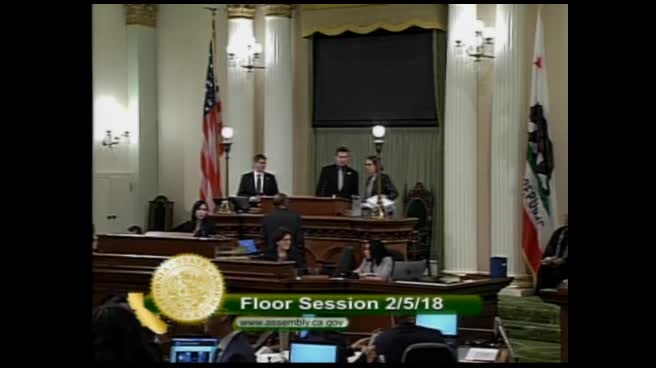




Bill Co-Author(s):