AB 448: Joint powers authorities: Orange County Housing Finance Trust.
- Session Year: 2017-2018
- House: Assembly
- Latest Version Date: 2018-09-11
Existing law authorizes 2 or more public agencies, by agreement, to form a joint powers authority to exercise any power common to the contracting parties, as specified. Existing law authorizes the agreement to set forth the manner by which the joint powers authority will be governed.
This bill would authorize the creation of the Orange County Housing Finance Trust, a joint powers authority, for the purposes of funding housing specifically assisting the homeless population and persons and families of extremely low, very low, and low income within the County of Orange, as specified.
This bill would make legislative findings and declarations as to the necessity of a special statute for the County of Orange.
Existing law authorizes 2 or more public agencies, by agreement, to form a joint powers authority to exercise any power common to the contracting parties, as specified. Existing law authorizes the agreement to set forth the manner by which the joint powers authority will be governed.
This bill would authorize the creation of the Orange County Housing Trust, a joint powers authority, for the purposes of funding housing specifically assisting the homeless population and persons and families of extremely low, very low, and low income within the County of Orange, as specified.
This bill would make legislative findings and declarations as to the necessity of a special statute for the County of Orange.
Existing law requires the legislative body of a local agency, as defined, to provide notice of a new parcel tax to the owner of a parcel affected by the tax, if that owner does not reside within the jurisdictional boundaries of the taxing entity, as specified.This bill would instead require a local agency to provide notice of a new parcel tax to any owner of record of a parcel affected by the tax, if that owner of record does not reside within the jurisdictional boundaries of the taxing entity. The bill would also require the notice to be made within 30 days of the certification of the election approving the new parcel tax. The bill would, with regard to a school district or special district, require the city, county, or city and county in which the district is located, to prepare and mail the notice on behalf of the district. The bill would also require the district to reimburse the city, county, or city and county for the cost of preparing and mailing the notices.Because this bill would impose new requirements on local entities, it would impose a state-mandated local program.The California Constitution requires the state to reimburse local agencies and school districts for certain costs mandated by the state. Statutory provisions establish procedures for making that reimbursement.This bill would provide that no reimbursement is required by this act for a specified reason.Existing law requires the legislative body of a local agency, as defined, to provide notice of a new parcel tax to the owner of a parcel affected by the tax, if that owner does not reside within the jurisdictional boundaries of the taxing entity, as specified.
This bill would instead require a local agency to provide notice of a new parcel tax to any owner of record of a parcel affected by the tax, if that owner of record does not reside within the jurisdictional boundaries of the taxing entity. The bill would also require the notice to be made within 30 days of the certification of the election approving the new parcel tax. The bill would, with regard to a school district or special district, require the city, county, or city and county in which the district is located, to prepare and mail the notice on behalf of the district. The bill would also require the district to reimburse the city, county, or city and county for the cost of preparing and mailing the notices.
Because this bill would impose new requirements on local entities, it would impose a state-mandated local program.
The California Constitution requires the state to reimburse local agencies and school districts for certain costs mandated by the state. Statutory provisions establish procedures for making that reimbursement.
This bill would provide that no reimbursement is required by this act for a specified reason.
Existing law requires the legislative body of a local agency, as defined, to provide notice of a new parcel tax to the owner of a parcel affected by the tax, if that owner does not reside within the jurisdictional boundaries of the taxing entity, as specified.
This bill would instead require a local agency to provide notice of a new parcel tax to any owner of record of a parcel affected by the tax, if that owner of record does not reside within the jurisdictional boundaries of the taxing entity. The bill would also require the notice to be made within 30 days of the certification of the election approving the new parcel tax.
The California Constitution requires the state to reimburse local agencies and school districts for certain costs mandated by the state. Statutory provisions establish procedures for making that reimbursement.
This bill would provide that no reimbursement is required by this act for a specified reason.
The Legislature finds and declares all of the following:
(a)The County of Orange is in the midst of a fluid and worsening homelessness crisis. Since 2013, the county has experienced a 53-percent increase in the unsheltered homeless population, many of whom have sought shelter over the last five years on the Santa Ana riverbed and at the Orange County Civic Center in Santa Ana.
(b)There has been a lack of regional focus that continues to stymie the implementation of a long-term solution to homelessness in the County of Orange.
(c)The County of Orange and the cities within the county have worked together to develop an approach under the Joint Exercise of Powers Act (Article 1 (commencing with Section 6500) of Chapter 5 of Division 7 of Title 1 of the Government Code) to establish and authorize the use of an Orange County Housing Finance Trust that would not only be responsible for responding to the homelessness crisis with the development of capital projects and the acquisition of necessary funds for those projects, but also for helping the county respond to the low-income and affordable housing crisis that the region is experiencing in tandem with the homelessness crisis.
(d)Permanent supportive housing and other services provided to those within that form of housing is a nationally recognized model for ending chronic homelessness, and can assist the County of Orange in its response to the homelessness crisis.
(e)Neither the Orange County Housing Finance Trust nor the act authorizing the creation of the Orange County Housing Finance Trust do any of the following:(1)Regulate land use in cities or in the unincorporated area of the County of Orange.
(2)Authorize the Orange County Housing Finance Trust to serve as an owner or operator of housing units.
(3)Authorize the Orange County Housing Finance Trust to, in any manner, exercise any authority to levy, or advocate or incentivize the levying of, any fee, charge, dedication, reservation, tax assessment, or other exaction related to development projects.
(4)Authorize the Orange County Housing Finance Trust to require or incentivize inclusionary zoning requirements. It is the intent of the Legislature that the power to adopt inclusionary zoning ordinances remain with the entities that possess land use and planning authority.
SEC. 2.Section 6539.5 is added to the Government Code, to read:6539.5.(a)(1)Notwithstanding any other law, the County of Orange and any of the cities within the County of Orange may enter into a joint powers agreement pursuant to this chapter to create and operate a joint powers agency to fund housing to assist the homeless population and persons and families of extremely low, very low, and low income, as defined in Section 50093 of the Health and Safety Code, within the County of Orange.
(2)The joint powers agency created pursuant to this section shall be known as the Orange County Housing Finance Trust, and shall be created and operate in accordance with this section.
(b)The Orange County Housing Finance Trust shall be governed by a board of directors consisting of elected officials representing the County of Orange and representative cities that are party to the joint powers agreement.
(c)Notwithstanding any other law, the Orange County Housing Finance Trust may do any of the following:
(1)Fund the planning and construction of housing of all types and tenures for the homeless population and persons and families of extremely low, very low, and low income, as defined in Section 50093 of the Health and Safety Code, including, but not limited to, permanent supportive housing.
(2)Receive public and private financing and funds.
(3)Authorize and issue bonds, certificates of participation, or any other debt instrument repayable from funds and financing received pursuant to paragraph (2) and pledged by the Orange County Housing Finance Trust.
(d)The Orange County Housing Finance Trust shall incorporate into its joint powers agreement annual financial reporting and auditing requirements that shall maximize transparency and public information as to the receipt and use of funds by the agency. The annual financial report shall show how the funds have furthered the purposes of the Orange County Housing Finance Trust.
(e)The Orange County Housing Finance Trust shall comply with the regulatory guidelines of each specific state funding source received.
SEC. 3.The Legislature finds and declares that a special statute is necessary and that a general statute cannot be made applicable within the meaning of Section 16 of Article IV of the California Constitution because of the unique challenges faced by the County of Orange and the cities located within the county in addressing the housing needs of extremely low, very low, and low-income households and the homeless within the county.
The Legislature finds and declares all of the following:
(a)The County of Orange is in the midst of a fluid and worsening homelessness crisis. Since 2013, the county has experienced a 53-percent increase in the unsheltered homeless population, many of whom have sought shelter over the last five years on the Santa Ana riverbed and at the Orange County Civic Center in Santa Ana.
(b)There has been a lack of regional focus that continues to stymie the implementation of a long-term solution to homelessness in the County of Orange.
(c)The County of Orange and the cities within the county have worked together to develop an approach under the Joint Exercise of Powers Act (Article 1 (commencing with Section 6500) of Chapter 5 of Division 7 of Title 1 of the Government Code) to establish and authorize the use of an Orange County Housing Finance Trust that would not only be responsible for responding to the homelessness crisis with the development of capital projects and the acquisition of necessary funds for those projects, but also for helping the county respond to the low-income and affordable housing crisis that the region is experiencing in tandem with the homelessness crisis.
(d)Permanent supportive housing and other services provided to those within that form of housing is a nationally recognized model for ending chronic homelessness, and can assist the County of Orange in its response to the homelessness crisis.
(e)Neither the Orange County Housing Finance Trust nor the act authorizing the creation of the Orange County Housing Finance Trust do any of the following:(1)Regulate land use in cities or in the unincorporated area of the County of Orange.
(2)Authorize the Orange County Housing Finance Trust to serve as an owner or operator of housing units.
(3)Authorize the Orange County Housing Finance Trust to, in any manner, exercise any authority to levy, or advocate or incentivize the levying of, any fee, charge, dedication, reservation, tax assessment, or other exaction related to development projects.
(4)Authorize the Orange County Housing Finance Trust to require or incentivize inclusionary zoning requirements. It is the intent of the Legislature that the power to adopt inclusionary zoning ordinances remain with the entities that possess land use and planning authority.
SEC. 2.Section 6539.5 is added to the Government Code, to read:6539.5.(a)(1)Notwithstanding any other law, the County of Orange and any of the cities within the County of Orange may enter into a joint powers agreement pursuant to this chapter to create and operate a joint powers agency to fund housing to assist the homeless population and persons and families of extremely low, very low, and low income, as defined in Section 50093 of the Health and Safety Code, within the County of Orange.
(2)The joint powers agency created pursuant to this section shall be known as the Orange County Housing Finance Trust, and shall be created and operate in accordance with this section.
(b)The Orange County Housing Finance Trust shall be governed by a board of directors consisting of representation from elected officials representing the County of Orange, the cities within the county, and other community stakeholders. Orange and representative cities that are party to the joint powers agreement.
(c)Notwithstanding any other law, the Orange County Housing Finance Trust may do any of the following:
(1)Fund the planning and construction of housing of all types and tenures for the homeless population and persons and families of extremely low, very low, and low income, as defined in Section 50093 of the Health and Safety Code, including, but not limited to, permanent supportive housing.
(2)Receive public and private financing and funds.
(3)Authorize and issue bonds, certificates of participation, or any other debt instrument repayable from funds and financing received pursuant to paragraph (2) and pledged by the Orange County Housing Finance Trust.
(d)The Orange County Housing Finance Trust shall incorporate into its joint powers agreement annual financial reporting and auditing requirements that shall maximize transparency and public information as to the receipt and use of funds by the agency. The annual financial report shall show how the funds have furthered the purposes of the Orange County Housing Finance Trust.
(e)The Orange County Housing Finance Trust shall comply with the regulatory guidelines of each specific state funding source received.
SEC. 3.The Legislature finds and declares that a special statute is necessary and that a general statute cannot be made applicable within the meaning of Section 16 of Article IV of the California Constitution because of the unique challenges faced by the County of Orange and the cities located within the county in addressing the housing needs of extremely low, very low, and low-income households and the homeless within the county.
The Legislature finds and declares all of the following:
(a)The County of Orange is in the midst of a fluid and worsening homelessness crisis. Since 2013, the county has experienced a 53-percent increase in the unsheltered homeless population, many of whom have sought shelter over the last five years on the Santa Ana riverbed and at the Orange County Civic Center in Santa Ana.
(b)There has been a lack of regional focus that continues to stymie the implementation of a long-term solution to homelessness in the County of Orange.
(c)The County of Orange and the cities within the county have worked together to develop an approach under the Joint Exercise of Powers Act (Article 1 (commencing with Section 6500) of Chapter 5 of Division 7 of Title 1 of the Government Code) to establish and authorize the use of an Orange County Housing Trust that would not only be responsible for responding to the homelessness crisis with the development of capital projects and the acquisition of necessary funds for those projects, but also for helping the county respond to the low-income and affordable housing crisis that the region is experiencing in tandem with the homelessness crisis.
(d)Permanent supportive housing and other services provided to those within that form of housing is a nationally recognized model for ending chronic homelessness, and can assist the County of Orange in its response to the homelessness crisis.
(e)Neither the Orange County Housing Trust nor the act authorizing the creation of the Orange County Housing Trust do either any of the following:
(1)Regulate land use in cities or in the unincorporated area of the County of Orange.
(2)Authorize the Orange County Housing Trust to serve as an owner or operator of housing units.
(3)Authorize the Orange County Housing Trust to, in any manner, exercise any authority to levy, or advocate or incentivize the levying of, any fee, charge, dedication, reservation, tax assessment, or other exaction related to development projects.
(4)Authorize the Orange County Housing Trust to require or incentivize inclusionary zoning requirements. It is the intent of the Legislature that the power to adopt inclusionary zoning ordinances remain with the entities that possess land use and planning authority.
SEC. 2.Section 6539.5 is added to the Government Code, to read:6539.5.(a)(1)Notwithstanding any other law, the County of Orange and any of the cities within the County of Orange may enter into a joint powers agreement pursuant to this chapter to create and operate a joint powers agency to fund housing to assist the homeless population and persons and families of extremely low, very low, and low income, as defined in Section 50093 of the Health and Safety Code, within the County of Orange.
(2)The joint powers agency created pursuant to this section shall be known as the Orange County Housing Trust, and shall be created and operate in accordance with this section.
(3)The Orange County Housing Trust shall include the County of Orange and may include any, or all, of the incorporated cities within the County of Orange.(b)The Orange County Housing Trust shall be governed by a board of directors consisting of representation from the County of Orange, the cities within the county, and other community stakeholders.
(c)Notwithstanding any other law, the Orange County Housing Trust may do any of the following:
(1)Fund the planning and construction of housing of all types and tenures for the homeless population and persons and families of extremely low, very low, and low income, as defined in Section 50093 of the Health and Safety Code, including, but not limited to, permanent supportive housing.
(2)Receive public and private financing and funds, and use those funds to pledge repayment of debt instruments. funds.
(3)Authorize and issue bonds, certificates of participation, or any other debt instrument. instrument repayable from funds and financing received pursuant to paragraph (2) and pledged by the Orange County Housing Trust.
(4)(A)Form and govern an infrastructure financing district pursuant to Chapter 2.8 (commencing with Section 53395) of Part 1 of Division 2 of Title 5, or an enhanced infrastructure financing district pursuant to Chapter 2.99 (commencing with Section 53398.50) of Part 1 of Division 2 of Title 5. For purposes of an infrastructure financing district or enhanced infrastructure financing district formed by the Orange County Housing Trust, the Orange County Housing Trust shall constitute a city as that term is defined in Section 53395.1 or a county as that term is defined in Section 53398.51, and the board of directors shall be a legislative body as that term is defined in Sections 53395.1 and 53398.51.(B)An infrastructure financing plan adopted by the Orange County Housing Trust pursuant to Article 2 (commencing with Section 53395.10) of Chapter 2.8 or Article 2 (commencing with Section 53398.59) of Chapter 2.99 of Part 1 of Division 2 of Title 5 may provide for the authority to collect incremental property tax revenues, pursuant to Section 53396 or 53398.75, as applicable, from the County of Orange and any city participating in the Orange County Housing Trust, with the consent and agreement of the city from which the incremental property tax revenues are to be collected. An infrastructure financing plan adopted pursuant to this paragraph shall not include a provision for the receipt of incremental property tax revenues from any other affected taxing entity as that term is defined in Section 53395.1 or 53398.51.(d)The Orange County Housing Trust shall incorporate into its joint powers agreement annual financial reporting and auditing requirements that shall maximize transparency and public information as to the receipt and use of funds by the agency. The annual financial report shall show how the funds have furthered the purposes of the Orange County Housing Trust.
SEC. 3.The Legislature finds and declares that a special statute is necessary and that a general statute cannot be made applicable within the meaning of Section 16 of Article IV of the California Constitution because of the unique challenges faced by the County of Orange and the cities located within the county in addressing the housing needs of extremely low, very low, and low-income households and the homeless within the county.
The Legislature finds and declares all of the following:
(a)The County of Orange is in the midst of a fluid and worsening homelessness crisis. Since 2013, the county has experienced a 53-percent increase in the unsheltered homeless population, many of whom have sought shelter over the last five years on the Santa Ana riverbed and at the Orange County Civic Center in Santa Ana.
(b)There has been a lack of regional focus that continues to stymie the implementation of a long-term solution to homelessness in the County of Orange.
(c)The County of Orange and the cities within the county have worked together to develop an approach under the Joint Exercise of Powers Act (Article 1 (commencing with Section 6500) of Chapter 5 of Division 7 of Title 1 of the Government Code) to establish and authorize the use of an Orange County Housing Trust that would not only be responsible for responding to the homelessness crisis with the development of capital projects and the acquisition of necessary funds for those projects, but also for helping the county respond to the low-income and affordable housing crisis that the region is experiencing in tandem with the homelessness crisis.
(d)Permanent supportive housing and other services provided to those within that form of housing is a nationally recognized model for ending chronic homelessness, and can assist the County of Orange in its response to the homelessness crisis.
(e)Neither the Orange County Housing Trust nor the act authorizing the creation of the Orange County Housing Trust do either of the following:
(1)Regulate land use in cities or in the unincorporated area of the County of Orange.
(2)Authorize the Orange County Housing Trust to serve as an owner or operator of housing units.
SEC. 2.Section 6539.5 is added to the Government Code, to read:6539.5.(a)(1)Notwithstanding any other law, the County of Orange and any of the cities within the County of Orange may enter into a joint powers agreement pursuant to this chapter to create and operate a joint powers agency to fund housing to assist the homeless population and persons and families of extremely low, very low, and low income, as defined in Section 50093 of the Health and Safety Code, within the County of Orange.
(2)The joint powers agency created pursuant to this section shall be known as the Orange County Housing Trust, and shall be created and operate in accordance with this section.
(3)The Orange County Housing Trust shall include the County of Orange and may include any, or all, of the incorporated cities within the County of Orange.
(b)The Orange County Housing Trust shall be governed by a board of directors consisting of representation from the County of Orange, the cities within the county, and other community stakeholders.
(c)Notwithstanding any other law, the Orange County Housing Trust may do any of the following:
(1)Fund the planning and construction of housing of all types and tenures for the homeless population and persons and families of extremely low, very low, and low income, as defined in Section 50093 of the Health and Safety Code, including, but not limited to, permanent supportive housing.
(2)Receive public and private financing and funds, and use those funds to pledge repayment of debt instruments.
(3)Authorize and issue bonds, certificates of participation, or any other debt instrument.
(4)(A)Form and govern an infrastructure financing district pursuant to Chapter 2.8 (commencing with Section 53395) of Part 1 of Division 2 of Title 5, or an enhanced infrastructure financing district pursuant to Chapter 2.99 (commencing with Section 53398.50) of Part 1 of Division 2 of Title 5. For purposes of an infrastructure financing district or enhanced infrastructure financing district formed by the Orange County Housing Trust, the Orange County Housing Trust shall constitute a city as that term is defined in Section 53395.1 or a county as that term is defined in Section 53398.51, and the board of directors shall be a legislative body as that term is defined in Sections 53395.1 and 53398.51.
(B)An infrastructure financing plan adopted by the Orange County Housing Trust pursuant to Article 2 (commencing with Section 53395.10) of Chapter 2.8 or Article 2 (commencing with Section 53398.59) of Chapter 2.99 of Part 1 of Division 2 of Title 5 may provide for the authority to collect incremental property tax revenues, pursuant to Section 53396 or 53398.75, as applicable, from the County of Orange and any city participating in the Orange County Housing Trust, with the consent and agreement of the city from which the incremental property tax revenues are to be collected. An infrastructure financing plan adopted pursuant to this paragraph shall not include a provision for the receipt of incremental property tax revenues from any other affected taxing entity as that term is defined in Section 53395.1 or 53398.51.
(d)The Orange County Housing Trust shall incorporate into its joint powers agreement annual financial reporting and auditing requirements that shall maximize transparency and public information as to the receipt and use of funds by the agency.
SEC. 3.The Legislature finds and declares that a special statute is necessary and that a general statute cannot be made applicable within the meaning of Section 16 of Article IV of the California Constitution because of the unique challenges faced by the County of Orange and the cities located within the county in addressing the housing needs of extremely low, very low, and low-income households and the homeless within the county.
SECTION 1.Section 54930 of the Government Code is amended to read:54930.(a)A local agency shall provide notice of a new parcel tax to any owner of record of a parcel affected by the tax, if that owner of record does not reside within the jurisdictional boundaries of the taxing entity. The notice shall be made within 30 days of the certification of the election approving the new parcel tax. For school districts and special districts, the notice shall be prepared and mailed by the county or city or city and county in which the school district or special district is located.(b)For purposes of this section:(1)Local agency means any city, county, city and county, school district, or special district authorized to impose a parcel tax.(2)Parcel tax means a tax levied by a local agency and approved by the voters upon any parcel of property identified using the assessors parcel number system, or upon any person as an incident of property ownership pursuant to Section 4 of Article XIIIA of the California Constitution, that is collected via the annual property tax bill.(c)The notice shall include, but is not limited to, all of the following information:(1)The amount or rate of the parcel tax in sufficient detail to allow each property owner to calculate the amount of the tax to be levied against the owners property.(2)The method and frequency for collecting the parcel tax, and the duration of time during which the parcel tax will be imposed.(3)The telephone number and address of an individual, office, or organization that interested persons may contact to receive additional information about the parcel tax.(d)The notice shall be accomplished through a mailing, postage prepaid, in the United States mail and shall be deemed given when so deposited. The notice shall be mailed to a property owner, if that owner does not reside within the jurisdictional boundaries of the taxing entity subject to the new tax, whose name and address appears on the last equalized county assessment roll or the State Board of Equalization assessment roll, as applicable. The notice shall be in at least 10-point type, and shall be in one of the following forms:(1)An envelope or mailing which shall include the name of the local agency and the return address of the sender on the cover.(2)A postcard, which shall include the name of the local agency and the return address of the sender on the front, and include the following information on the back in this format:Dear Property Owner:The local agency named on the front of this postcard imposed a parcel tax.The parcel tax will be:1.Levied at a rate of[Amount or Rate of the Tax]2.Collected[Frequency and Method of Collection]3.Levied[Specify number of years or if indefinitely]If you have any questions about the tax, please contact:[Name and Telephone Number][Address][Email Address or Website Address](e)The local agency may recover the reasonable costs of the notice required by this section from the proceeds of the parcel tax. A school district or special district shall reimburse the county, city, or city and county that prepares and mails the notice for the cost of preparing and mailing the notice. The costs recovered for these purposes, whether recovered pursuant to this subdivision or any other provision of law, shall not exceed the reasonable costs of preparing and mailing the notice.SEC. 2.No reimbursement is required by this act pursuant to Section 6 of Article XIIIB of the California Constitution because a local agency or school district has the authority to levy service charges, fees, or assessments sufficient to pay for the program or level of service mandated by this act, within the meaning of Section 17556 of the Government Code.(a)A local agency shall provide notice of a new parcel tax to any owner of record of a parcel affected by the tax, if that owner of record does not reside within the jurisdictional boundaries of the taxing entity. The notice shall be made within 30 days of the certification of the election approving the new parcel tax. For school districts and special districts, the notice shall be prepared and mailed by the county or city or city and county in which the school district or special district is located.
(b)For purposes of this section:
(1)Local agency means any city, county, city and county, school district, or special district authorized to impose a parcel tax.
(2)Parcel tax means a tax levied by a local agency and approved by the voters upon any parcel of property identified using the assessors parcel number system, or upon any person as an incident of property ownership pursuant to Section 4 of Article XIIIA of the California Constitution, that is collected via the annual property tax bill.
(c)The notice shall include, but is not limited to, all of the following information:
(1)The amount or rate of the parcel tax in sufficient detail to allow each property owner to calculate the amount of the tax to be levied against the owners property.
(2)The method and frequency for collecting the parcel tax, and the duration of time during which the parcel tax will be imposed.
(3)The telephone number and address of an individual, office, or organization that interested persons may contact to receive additional information about the parcel tax.
(d)The notice shall be accomplished through a mailing, postage prepaid, in the United States mail and shall be deemed given when so deposited. The notice shall be mailed to a property owner, if that owner does not reside within the jurisdictional boundaries of the taxing entity subject to the new tax, whose name and address appears on the last equalized county assessment roll or the State Board of Equalization assessment roll, as applicable. The notice shall be in at least 10-point type, and shall be in one of the following forms:
(1)An envelope or mailing which shall include the name of the local agency and the return address of the sender on the cover.
(2)A postcard, which shall include the name of the local agency and the return address of the sender on the front, and include the following information on the back in this format:
Dear Property Owner: | ||
| 1.Levied at a rate of[Amount or Rate of the Tax] | ||
| 2.Collected[Frequency and Method of Collection] | ||
| 3.Levied[Specify number of years or if indefinitely] | ||
| If you have any questions about the tax, please contact: | ||
| [Name and Telephone Number] | ||
| [Address] | ||
| [Email Address or Website Address] |
(e)The local agency may recover the reasonable costs of the notice required by this section from the proceeds of the parcel tax. A school district or special district shall reimburse the county, city, or city and county that prepares and mails the notice for the cost of preparing and mailing the notice. The costs recovered for these purposes, whether recovered pursuant to this subdivision or any other provision of law, shall not exceed the reasonable costs of preparing and mailing the notice.
SEC. 2.No reimbursement is required by this act pursuant to Section 6 of Article XIIIB of the California Constitution because a local agency or school district has the authority to levy service charges, fees, or assessments sufficient to pay for the program or level of service mandated by this act, within the meaning of Section 17556 of the Government Code.
(a)The legislative body of a A local agency shall provide notice of a new parcel tax to an any owner of record of a parcel affected by the tax, if that owner of record does not reside within the jurisdictional boundaries of the taxing entity. The notice shall be made within 30 days of the certification of the election approving the new parcel tax.
(b)For purposes of this section:
(1)Local agency means any city, county, school district, or special district authorized to impose a parcel tax.
(2)Parcel tax means a tax levied by a local agency and approved by the voters upon any parcel of property identified using the assessors parcel number system, or upon any person as an incident of property ownership pursuant to Section 4 of Article XIIIA of the California Constitution, that is collected via the annual property tax bill.
(c)The notice shall include, but is not limited to, all of the following information:
(1)The amount or rate of the parcel tax in sufficient detail to allow each property owner to calculate the amount of the tax to be levied against the owners property.
(2)The method and frequency for collecting the parcel tax, and the duration of time during which the parcel tax will be imposed.
(3)The telephone number and address of an individual, office, or organization that interested persons may contact to receive additional information about the parcel tax.
(d)The notice shall be accomplished through a mailing, postage prepaid, in the United States mail and shall be deemed given when so deposited. The notice shall be mailed to a property owner, if that owner does not reside within the jurisdictional boundaries of the taxing entity subject to the new tax, whose name and address appears on the last equalized county assessment roll or the State Board of Equalization assessment roll, as applicable. The notice shall be in at least 10-point type, and shall be in one of the following forms:
(1)An envelope or mailing which shall include the name of the local agency and the return address of the sender on the cover.
(2)A postcard, which shall include the name of the local agency and the return address of the sender on the front, and include the following information on the back in this format:
Dear Property Owner: | ||
| 1.Levied at a rate of[Amount or Rate of the Tax] | ||
| 2.Collected[Frequency and Method of Collection] | ||
| 3.Levied[Specify number of years or if indefinitely] | ||
| If you have any questions about the tax, please contact: | ||
| [Name and Telephone Number] | ||
| [Address] | ||
| [Email Address or Website Address] |
(e)The local agency may recover the reasonable costs of the notice required by this section from the proceeds of the parcel tax. The costs recovered for these purposes, whether recovered pursuant to this subdivision or any other provision of law, shall not exceed the reasonable costs of preparing and mailing the notice.
SEC. 2.No reimbursement is required by this act pursuant to Section 6 of Article XIIIB of the California Constitution because a local agency or school district has the authority to levy service charges, fees, or assessments sufficient to pay for the program or level of service mandated by this act, within the meaning of Section 17556 of the Government Code.
|
Date
|
Status
|
|---|---|
| Sep 11, 2018 | Chaptered by Secretary of State - Chapter 336, Statutes of 2018. |
| Sep 11, 2018 | Approved by the Governor. |
| Aug 28, 2018 | Enrolled and presented to the Governor at 3 p.m. |
| Aug 23, 2018 | Senate amendments concurred in. To Engrossing and Enrolling. |
| Aug 20, 2018 | From committee: That the Senate amendments be concurred in. (Ayes 9. Noes 0.) (August 20). |
| Aug 9, 2018 | Re-referred to Com. on L. GOV. pursuant to Assembly Rule 77.2. |
| Aug 7, 2018 | In Assembly. Concurrence in Senate amendments pending. May be considered on or after August 9 pursuant to Assembly Rule 77. |
| Aug 6, 2018 | Read third time. Passed. Ordered to the Assembly. |
| Jun 28, 2018 | Read second time and amended. Ordered to third reading. |
| Jun 27, 2018 | From committee: Amend, and do pass as amended. (Ayes 12. Noes 0.) (June 26). |
| Jun 21, 2018 | Re-referred to Com. on T. & H. |
| Jun 20, 2018 | From committee: Do pass and re-refer to Com. on RLS. (Ayes 7. Noes 0.) (June 20). Re-referred to Com. on RLS. |
| Jun 14, 2018 | From committee chair, with author's amendments: Amend, and re-refer to committee. Read second time, amended, and re-referred to Com. on GOV. & F. |
| May 31, 2018 | From committee chair, with author's amendments: Amend, and re-refer to committee. Read second time, amended, and re-referred to Com. on GOV. & F. |
| Jul 11, 2017 | In committee: Set, second hearing. Hearing canceled at the request of author. |
| Jun 20, 2017 | In committee: Set, first hearing. Hearing canceled at the request of author. |
| Jun 8, 2017 | Referred to Com. on GOV. & F. |
| May 30, 2017 | In Senate. Read first time. To Com. on RLS. for assignment. |
| May 30, 2017 | Read third time. Passed. Ordered to the Senate. (Ayes 68. Noes 2. Page 1796.) |
| May 25, 2017 | Read second time. Ordered to third reading. |
| May 24, 2017 | From committee: Do pass. (Ayes 14. Noes 0.) (May 24). |
| May 22, 2017 | Re-referred to Com. on APPR. |
| May 18, 2017 | From committee chair, with author's amendments: Amend, and re-refer to Com. on APPR. Read second time and amended. |
| May 10, 2017 | In committee: Hearing postponed by committee. |
| Apr 27, 2017 | From committee: Do pass and re-refer to Com. on APPR. (Ayes 7. Noes 0.) (April 26). Re-referred to Com. on APPR. |
| Apr 4, 2017 | In committee: Set, first hearing. Hearing canceled at the request of author. |
| Feb 27, 2017 | Referred to Com. on L. GOV. |
| Feb 14, 2017 | From printer. May be heard in committee March 16. |
| Feb 13, 2017 | Read first time. To print. |
|
Date
|
Description
|
Location
|
Votes
|
|
|---|---|---|---|---|
| Aug 23, 2018 | AB 448 DALY Concurrence in Senate Amendments | Assembly Floor |
Passed |
|
| Aug 20, 2018 | With recommendation: That Senate amendments be concurred in. | Assembly Standing Committee on Local Government |
Passed |
|
| Aug 6, 2018 | Assembly 3rd Reading AB448 Daly et al. By Moorlach | Senate Floor |
Passed |
|
| Jun 26, 2018 | Do pass as amended | Senate Standing Committee on Transportation and Housing |
Passed |
|
| Jun 20, 2018 | Do pass, but first be re-referred to the Committee on [Rules] | Senate Standing Committee on Governance and Finance |
Passed |
|
| May 30, 2017 | AB 448 DALY Assembly Third Reading | Assembly Floor |
Passed |
|
| May 24, 2017 | Do pass. | Assembly Standing Committee on Appropriations |
Passed |
|
| Apr 26, 2017 | Do pass and be re-referred to the Committee on [Appropriations] | Assembly Standing Committee on Local Government |
Passed |
This list shows positions taken on this bill by organizations on the date displayed, which is linked to the original source.
Positions by individuals are not included.
|
Organization
|
Position
|
Date
|
|---|---|---|
| Anaheim City Council | * Support | Aug 20, 2018 |
| Association of California Cities | * Support | Aug 20, 2018 |
| Association Of Cities, Orange County | ** Support | Jun 21, 2018 |
| California Apartment Association | ** Support | Apr 25, 2017 |
| California Association Of Realtors | * Support | Apr 26, 2017 |
| California Association Of School Business Officials | ** Against | Apr 25, 2017 |
| California Building Industry Association | * Support | Aug 20, 2018 |
| California Central Valley Flood Control Association | ** Against | Apr 25, 2017 |
| California Chamber Of Commerce | ** Support | Apr 25, 2017 |
| California Coalition for Adequate School Housing | ** Against | Apr 25, 2017 |
| California Educational Technology Professional Association | ** Against | Apr 25, 2017 |
| California Taxpayers Association | ** Support | Apr 25, 2017 |
| Children'S Cause Orange County | ** Support | Jun 29, 2018 |
| City of Buena Park | ** Support | Jun 29, 2018 |
| City of Costa Mesa | ** Support | Jun 29, 2018 |
| City Of Huntington Beach | * Support | Jun 20, 2018 |
| City Of Tustin | ** Support | Jun 29, 2018 |
| Community Action Partnership of Orange County | ** Support | Jun 29, 2018 |
| Families Forward | ** Support | Jun 29, 2018 |
| Housing Is A Human Right-Oc | ** Support | Aug 17, 2018 |
| Jamboree Housing Corporation | * Support | Jun 20, 2018 |
| Junior League of Orange County | ** Support | Jun 29, 2018 |
| Kaiser Permanente | ** Support | Jun 29, 2018 |
| Mercy House Living Centers | ** Support | Jun 29, 2018 |
| Orange County Board of Supervisors | * Support | Aug 20, 2018 |
| Orange County Business Council | ** Support | Jun 29, 2018 |
| Orange County Communities Organized for Responsible Development | ** Support | Jun 29, 2018 |
| orange county realtors | ** Support | Jun 29, 2018 |
| Orange County United Way | ** Support | Jun 29, 2018 |
| Pathways Of Hope | ** Support | Jun 29, 2018 |
| People For Housing Orange County | ** Support | Jun 29, 2018 |
| San Bernardino County District Advocates for Better Schools | ** Against | Apr 25, 2017 |
| San Francisco Unified School District | ** Against | Apr 25, 2017 |
| Small School Districts Association | * Against | Apr 26, 2017 |
| UNITE HERE Local 11 | ** Support | Jun 29, 2018 |
| Unknown. | ** Against | Jun 18, 2018 |
| Women For: Orange County | ** Support | Jun 29, 2018 |
CONCURRENCE IN SENATE AMENDMENTS
CSA2 Bill Id:AB 448
Author:(Daly and Quirk-Silva)
As Amended Ver:June 28, 2018
Majority vote
ASSEMBLY: |
| (May 30, 2017) | SENATE: | 37-0 | (August 06, 2018) |
(vote not relevant)
COMMITTEE VOTE: | 9-0 | August 20, 2018 | RECOMMENDATION: | concur |
(L. Gov.)
Original Committee Reference: L. GOV.
SUMMARY: Allows Orange County and any city in Orange County to create the Orange County Housing Finance Trust.
The Senate amendments delete the Assembly version of this bill, and instead:
- Allow Orange County and any city in Orange County to create the Orange County Housing Finance Trust (Trust) to:
- Fund the planning and construction of housing of all types and tenures for the homeless population and persons and families of extremely low, very low, and low income, including permanent supportive housing;
- Receive public and private financing or funds; and,
- Authorize and issue bonds, certificates of participation, or other debt instruments repayable from public and private financing and funds it receives.
- Provide that the Trust will be governed by a board of directors consisting of elected officials representing Orange County or representative cities that are parties to the agreement.
- Require the Trust to incorporate into its joint powers agreement (JPA) annual financial reporting and auditing requirements that maximize transparency and public information as to the receipt of the Trust's use of funds. The report must show how the funds have furthered the Trust's purposes.
- Direct the Trust to comply with the regulatory guidelines of each specific state funding source received.
- Make legislative findings and declarations supporting its purposes, and justifying the need for special legislation that applies solely to Orange County.
EXISTING LAW:
- Enacts the Joint Exercise of Powers Act, which allows two or more public agencies to use their powers in common if they sign a JPA.
- Allows agencies that include federal agencies, state departments, counties, cities, special districts, school districts, federally recognized Indian tribes, and even other joint powers authorities to enter into JPAs.
- Permits public agencies to use the JPA law and the related Marks-Roos Local Bond Pooling Act to form bond pools to finance public works, working capital, insurance needs, and other public benefit projects.
AS PASSED BY THE ASSEMBLY, this bill required a local agency to provide notice of a new parcel tax to non-resident property owners, pursuant to existing law, within thirty days of the certification of the election approving the new parcel tax.
FISCAL EFFECT: None
COMMENTS:
- Bill Summary. This bill allows Orange County and any city in that County to create, through a JPA, the Orange County Housing Finance Trust. The purpose of the Trust is to fund the planning and construction of housing of all types and tenures for the homeless population and persons and families of extremely low, very low, and low income, including permanent supportive housing. The Trust can also receive public and private financing or funds and authorize and issue bonds, certificates of participation, or other debt instruments, as specified. The board of directors of the Trust will consist of elected officials representing Orange County or representative cities that are parties to the agreement.
This bill is sponsored by the Association of California Cities – Orange County.
- Author's Statement. According to the author, "This bill establishes the Orange County Housing Finance Trust, a public-private effort to reduce homelessness through the development of permanent supportive housing. In late May, the Orange County Grand Jury released a report based on a study of homelessness in the region. Entitled "Where There's a Will, There's a Way," the report highlights the effectiveness of permanent supportive housing in ending homelessness for individuals and families.
"In addition, a recent UC Irvine study found that Orange County government and cities, plus non-governmental organizations, could save $42 million a year on healthcare and law enforcement, among other expenses, by moving those homeless from the streets into permanent supportive housing. Currently, the County has a total of 2,546 units of permanent supportive housing, all of which are at full capacity. In order to ensure that sufficient numbers of permanent supportive housing units are built, the Orange County government and the 34 cities need a single purpose joint powers authority that will serve as a convener of all stakeholders and collaborators. The Trust will serve as a vehicle for accomplishing this objective, by acting as a financing and funding entity for the development of such housing."
- Arguments in Support. Supporters argue that the collaborative approach contained in the bill will ensure that local agencies are working together toward pragmatic solutions.
- Arguments in Opposition. None on file.
Analysis Prepared by: Debbie Michel / L. GOV. / (916) 319-3958 FN: 0004471
Date of Hearing: August 20, 2018
ASSEMBLY COMMITTEE ON LOCAL GOVERNMENT
Cecilia Aguiar-Curry, Chair
ABPCA Bill Id:AB 448 (
Author:Daly and Quirk-Silva) – As Amended Ver:June 28, 2018
SUBJECT: Joint powers authorities: Orange County Housing Finance Trust.
SUMMARY: Allows Orange County and any city in Orange County to create the Orange County Housing Finance Trust.
The Senate amendments delete the Assembly version of this bill, and instead:
- Allow Orange County and any city in Orange County to create the Orange County Housing Finance Trust (Trust) to:
- Fund the planning and construction of housing of all types and tenures for the homeless population and persons and families of extremely low, very low, and low income, including permanent supportive housing;
- Receive public and private financing or funds; and,
- Authorize and issue bonds, certificates of participation, or other debt instruments repayable from public and private financing and funds it receives.
- Provide that the Trust will be governed by a board of directors consisting of elected officials representing Orange County or representative cities that are parties to the agreement.
- Require the Trust to incorporate into its joint powers agreement (JPA) annual financial reporting and auditing requirements that maximize transparency and public information as to the receipt of the Trust's use of funds. The report must show how the funds have furthered the Trust's purposes.
- Direct the Trust to comply with the regulatory guidelines of each specific state funding source received.
- Make legislative findings and declarations supporting its purposes, and justifying the need for special legislation that applies solely to Orange County.
EXISTING LAW:
- Enacts the Joint Exercise of Powers Act, which allows two or more public agencies to use their powers in common if they sign a JPA.
- Allows agencies that include federal agencies, state departments, counties, cities, special districts, school districts, federally recognized Indian tribes, and even other joint powers authorities to enter into JPAs.
- Permits public agencies to use the JPA law and the related Marks-Roos Local Bond Pooling Act to form bond pools to finance public works, working capital, insurance needs, and other public benefit projects.
AS PASSED BY THE ASSEMBLY, this bill required a local agency to provide notice of a new parcel tax to non-resident property owners, pursuant to existing law, within thirty days of the certification of the election approving the new parcel tax.
FISCAL EFFECT: None
COMMENTS:
- Bill Summary. This bill allows Orange County and any city in that County to create, through a JPA, the Orange County Housing Finance Trust. The purpose of the Trust is to fund the planning and construction of housing of all types and tenures for the homeless population and persons and families of extremely low, very low, and low income, including permanent supportive housing. The Trust can also receive public and private financing or funds and authorize and issue bonds, certificates of participation, or other debt instruments, as specified. The board of directors of the Trust will consist of elected officials representing Orange County or representative cities that are parties to the agreement.
This bill is sponsored by the Association of California Cities – Orange County.
- Author's Statement. According to the author, "This bill establishes the Orange County Housing Finance Trust, a public-private effort to reduce homelessness through the development of permanent supportive housing. In late May, the Orange County Grand Jury released a report based on a study of homelessness in the region. Entitled "Where There's a Will, There's a Way," the report highlights the effectiveness of permanent supportive housing in ending homelessness for individuals and families.
"In addition, a recent UC Irvine study found that Orange County government and cities, plus non-governmental organizations, could save $42 million a year on healthcare and law enforcement, among other expenses, by moving those homeless from the streets into permanent supportive housing. Currently, the County has a total of 2,546 units of permanent supportive housing, all of which are at full capacity. In order to ensure that sufficient numbers of permanent supportive housing units are built, the Orange County government and the 34 cities need a single purpose joint powers authority that will serve as a convener of all stakeholders and collaborators. The Trust will serve as a vehicle for accomplishing this objective, by acting as a financing and funding entity for the development of such housing."
- Arguments in Support. Supporters argue that the collaborative approach contained in the bill will ensure that local agencies are working together toward pragmatic solutions.
- Arguments in Opposition. None on file.
- Substantially Amended. This bill was gutted-and-amended in the Senate, and its contents have not been heard by an Assembly committee this legislative session.
REGISTERED SUPPORT / OPPOSITION:
Support
Association of California Cities-Orange County [SPONSOR]
California Building Industry Association
Children’s Cause Orange County
Cities of Buena Park, Costa Mesa, Fullerton, and Tustin Community Action Partnership of Orange County
Families Forward
Gay and Lesbian Community Services Center of Orange County
Housing is a Human Right-OC
Junior League of Orange County Kaiser Permanente Mercy House Living Centers
Orange County Business Council Orange County Communities Organized for Responsible Development
Orange County Board of Supervisors
Orange County Food Access Coalition Orange County Realtors
Orange County United Way Pathways of Hope People for Housing Orange County UNITE-HERE
United to End Homelessness Women For: Orange County
Opposition
None on file
Analysis Prepared by: Debbie Michel / L. GOV. / (916) 319-3958
CONCURRENCE IN SENATE AMENDMENTS
CSA1 Bill Id:AB 448
Author:(Daly and Quirk-Silva)
As Amended Ver:June 28, 2018
Majority vote
ASSEMBLY: | 68-2 | (May 30, 2017) | SENATE: | 37-0 | (August 6, 2018) |
(Vote not relevant)
Original Committee Reference: L. GOV.
SUMMARY: Allows Orange County and any city in Orange County to create the Orange County Housing Finance Trust.
The Senate amendments delete the Assembly version of this bill, and instead:
- Allow Orange County and any city in Orange County to create the Orange County Housing Finance Trust (Trust) to:
- Fund the planning and construction of housing of all types and tenures for the homeless population and persons and families of extremely low, very low, and low income, including permanent supportive housing;
- Receive public and private financing or funds; and,
- Authorize and issue bonds, certificates of participation, or other debt instruments repayable from public and private financing and funds it receives.
- Provide that the Trust will be governed by a board of directors consisting of elected officials representing Orange County or representative cities that are parties to the agreement.
- Require the Trust to incorporate into its joint powers agreement (JPA) annual financial reporting and auditing requirements that maximize transparency and public information as to the receipt of the Trust's use of funds. The report must show how the funds have furthered the Trust's purposes.
- Direct the Trust to comply with the regulatory guidelines of each specific state funding source received.
- Make legislative findings and declarations supporting its purposes, and justifying the need for special legislation that applies solely to Orange County.
EXISTING LAW:
- Enacts the Joint Exercise of Powers Act, which allows two or more public agencies to use their powers in common if they sign a JPA.
- Allows agencies that include federal agencies, state departments, counties, cities, special districts, school districts, federally recognized Indian tribes, and even other joint powers authorities to enter into JPAs.
- Permits public agencies to use the JPA law and the related Marks-Roos Local Bond Pooling Act to form bond pools to finance public works, working capital, insurance needs, and other public benefit projects.
AS PASSED BY THE ASSEMBLY, this bill required a local agency to provide notice of a new parcel tax to non-resident property owners, pursuant to existing law, within thirty days of the certification of the election approving the new parcel tax.
FISCAL EFFECT: None
COMMENTS:
- Bill Summary. This bill allows Orange County and any city in that County to create, through a JPA, the Orange County Housing Finance Trust. The purpose of the Trust is to fund the planning and construction of housing of all types and tenures for the homeless population and persons and families of extremely low, very low, and low income, including permanent supportive housing. The Trust can also receive public and private financing or funds and authorize and issue bonds, certificates of participation, or other debt instruments, as specified. The board of directors of the Trust will consist of elected officials representing Orange County or representative cities that are parties to the agreement.
This bill is sponsored by the Association of California Cities – Orange County.
- Author's Statement. According to the author, "This bill establishes the Orange County Housing Finance Trust, a public-private effort to reduce homelessness through the development of permanent supportive housing. In late May, the Orange County Grand Jury released a report based on a study of homelessness in the region. Entitled "Where There's a Will, There's a Way," the report highlights the effectiveness of permanent supportive housing in ending homelessness for individuals and families.
"In addition, a recent UC Irvine study found that Orange County government and cities, plus non-governmental organizations, could save $42 million a year on healthcare and law enforcement, among other expenses, by moving those homeless from the streets into permanent supportive housing. Currently, the County has a total of 2,546 units of permanent supportive housing, all of which are at full capacity. In order to ensure that sufficient numbers of permanent supportive housing units are built, the Orange County government and the 34 cities need a single purpose joint powers authority that will serve as a convener of all stakeholders and collaborators. The Trust will serve as a vehicle for accomplishing this objective, by acting as a financing and funding entity for the development of such housing."
- Arguments in Support. Supporters argue that the collaborative approach contained in the bill will ensure that local agencies are working together toward pragmatic solutions.
- Arguments in Opposition. None on file.
- Gut-and-Amend. The provisions of this bill have not been heard in an Assembly policy committee this legislative session.
Analysis Prepared by: Debbie Michel / L. GOV. / (916) 319-3958 FN: 0003693
Office of Senate Floor Analyses (916) 651-1520 Fax: (916) 327-4478 | AB |
THIRD READING
Bill No: AB 448
Amended: 6/28/18 in Senate
SENATE GOVERNANCE & FIN. COMMITTEE: 7-0, 6/20/18
AYES: McGuire, Nguyen, Beall, Hernandez, Hertzberg, Lara, Moorlach
SENATE TRANS. & HOUSING COMMITTEE: 12-0, 6/26/18
AYES: Beall, Cannella, Allen, Dodd, Gaines, Galgiani, McGuire, Morrell, Roth, Skinner, Vidak, Wiener
NO VOTE RECORDED: Wieckowski
ASSEMBLY FLOOR: 68-2, 5/30/17 - See last page for vote
SOURCE: Association of California Cities of Orange County
DIGEST:
This bill creates the Orange County Housing Finance Trust.
Existing law:
- Enacts the Joint Exercise of Powers Act, which allows two or more public agencies to use their powers in common if they sign a joint powers agreement (JPA).
- Allows agencies that include federal agencies, state departments, counties, cities, special districts, school districts, federally recognized Indian tribes, and even other joint powers authorities to enter into joint powers agreements.
- Permits public agencies to use the JPA law and the related Marks-Roos Local Bond Pooling Act to form bond pools to finance public works, working capital, insurance needs, and other public benefit projects.
This bill:
- Allows Orange County and any city in Orange County to create the Orange County Housing Finance Trust (Trust) to:
- Fund the planning and construction of housing of all types and tenures for the homeless population and persons and families of extremely low, very low, and low income, including permanent supportive housing,
- Receive public and private financing or funds, and
- Authorize and issue bonds, certificates of participation or other debt instruments repayable from public and private financing and funds it receives
- Provides that the Trust will be governed by a board of directors consisting of elected officials representing Orange County or representative cities that are parties to the agreement.
- Requires the Trust to incorporate into its joint powers agreement annual financial reporting and auditing requirements that maximize transparency and public information as to the receipt of the Trust’s use of funds. The report must show how the funds have furthered the Trust’s purposes.
- Directs the Trust to comply with the regulatory guidelines of each specific state funding source received.
- Makes legislative findings and declarations supporting its purposes, and justifying the need for special legislation that applies solely to Orange County.
Background
Orange County in Southern California contains approximately 3.1 million people, with 34 incorporated cities. Like many areas in California, many individuals in Orange County are homeless, recently estimated using a point in time survey at 4,792, according to a report issued by the United States Department of Housing and Urban Development. Recently, advocates for homeless persons camping near the Santa Ana River filed suit in U.S. District Court against Orange County and the Cities of Anaheim, Costa Mesa, and Santa Ana, seeking to halt the ongoing effort to clear homeless encampments along the River. In response, U.S. District Court Judge David O. Carter held a hearing in April concentrated on getting the leaders in the county’s 34 cities to take on each’s fair share of housing and services for the homeless population.
FISCAL EFFECT: Appropriation: Fiscal Com.: Local:
Association of California Cities of Orange County (source)
Children’s Cause Orange County
City of Buena Park
City of Costa Mesa
City of Tustin
Community Action Partnership of Orange County
Families Forward
Gay and Lesbian Community Services Center of Orange County
Junior League of Orange County
Kaiser Permanente
Mercy House Living Centers
Orange County Board of Supervisors
Orange County Business Council
Orange County Communities Organized for Responsible Development
Orange County Realtors
Orange County United Way
Pathways of Hope
People for Housing Orange County
UNITE HERE Local 11
Women For: Orange County
OPPOSITION: (Verified 6/29/18)
None received
ARGUMENTS IN SUPPORT: According to the author, “Years of expert research shows that providing people with a stable, affordable place to live, along with services that promote housing stability, helps end homelessness. Supportive housing will help reduce public health costs, and move thousands of homeless persons off our streets. AB 448 establishes the Orange County Housing Trust, which will be a cooperative effort by public agencies and private philanthropists, who are united by the common goal of creating permanent supportive housing throughout Orange County.”
ASSEMBLY FLOOR: 68-2, 5/30/17
AYES: Acosta, Travis Allen, Arambula, Baker, Berman, Bigelow, Bloom, Bocanegra, Bonta, Brough, Burke, Caballero, Calderon, Cervantes, Chávez, Chu, Cooley, Cooper, Cunningham, Dababneh, Dahle, Daly, Flora, Fong, Frazier, Friedman, Gallagher, Cristina Garcia, Eduardo Garcia, Gipson, Gomez, Gray, Grayson, Harper, Holden, Irwin, Jones-Sawyer, Kalra, Kiley, Lackey, Levine, Low, Maienschein, Mathis, Mayes, McCarty, Medina, Melendez, Mullin, Nazarian, Obernolte, O'Donnell, Patterson, Quirk, Quirk-Silva, Reyes, Ridley-Thomas, Rodriguez, Rubio, Salas, Santiago, Steinorth, Thurmond, Voepel, Waldron, Weber, Wood, Rendon
NOES: Mark Stone, Ting
NO VOTE RECORDED: Aguiar-Curry, Chau, Chen, Chiu, Choi, Eggman, Gloria, Gonzalez Fletcher, Limón, Muratsuchi
6/29/18 12:03:05
**** END ****
SENATE COMMITTEE ON TRANSPORTATION AND HOUSING
Senator Jim Beall, Chair
2017 - 2018 Regular
Bill No: Hearing Date: 6/26/2018
Author: | Daly | ||
Version: | 6/14/2018 | ||
Urgency: | No | Fiscal: | No |
Consultant: | Erin Riches | ||
SUBJECT:
DIGEST: This bill authorizes Orange County, and cities within that county, to establish an Orange County Housing Trust (OCHT).
ANALYSIS:
Existing law:
- Authorizes, under the Joint Exercise of Powers Act, two or more public agencies to use their powers in common if they sign a joint powers agreement. Such an agreement may create a new, separate government called a joint powers agency or joint powers authority (JPA). Agencies that may exercise joint powers include federal agencies, state departments, counties, cities, special districts, school districts, federally recognized Indian tribes, and even other JPAs.
- Authorizes public agencies to use the JPA law and the related Marks-Roos Local Bond Pooling Act to form bond pools to finance public works, working capital, insurance needs, and other public benefit projects. Bond pooling saves money on interest rates and finance charges, and allows smaller local agencies to enter the bond market. Because a JPA is an entity separate from its members, bonds issued by JPAs do not have to be approved by voters.
- Establishes the Local Housing Trust Fund (LHTF) Program under the state Department of Housing and Community Development (HCD). The LHTF program provides matching grants (dollar for dollar) to local housing trust funds that are funded on an ongoing basis from private or public sources. Cities and counties with adopted, compliant housing elements, as well as charitable non-profit organizations, are eligible to apply for LHTF program funding. Eligible activities include loans for construction of rental housing projects with units restricted for at least 55 years to households earning less than 60% AMI and down payment assistance to qualified first-time homebuyers.
This bill:
- Authorizes Orange County, and any cities within Orange County, to enter into a joint powers agreement to create and operate a JPA to fund housing to assist the homeless population and persons and families of extremely low, very low, and low-income in Orange County.
- Requires this JPA, which shall be known as the Orange County Housing Trust (OCHT), to be governed by a board of directors made up of representatives from Orange County, the cities within Orange County, and other community stakeholders.
- Authorizes the OCHT to:
- Fund the planning and construction of housing of all types and tenures for the homeless population and persons and families of extremely low, very low, and low-income, including but not limited to permanent supportive housing.
- Receive public and private financing and funds.
- Authorize and issue bonds, certificates of participation, or any other debt instrument repayable from funds and financing received by and pledged by the OCHT.
- Requires the OCHT to incorporate into its joint powers agreement annual financial reporting and auditing requirements that shall maximize transparency and public information as to its receipt and use of funds.
- Requires the OCHT’s annual financial report to show how the funds have furthered the purposes of the OCHT.
COMMENTS
- Purpose. The author states that Orange County is in the midst of a worsening homelessness crisis. Since 2013, the county has experienced a 53% increase in the unsheltered homeless population, many of whom have sought shelter over the last five years on the Santa Ana riverbed trails and within the Orange County Civic Center in downtown Santa Ana. The official homeless population of the county, according to the US Department of Housing and Urban Development’s 2017 Point in Time Count, is approximately 4,800. In addition, a 2017 UC Irvine study commissioned by Orange County United Way found that 68% of the county’s homeless population had lived in the county for 10 years or longer. The UCI study concluded that the county could save $42 million per year on healthcare and law enforcement, among other expenses, by moving chronically homeless people from the streets into permanent supportive housing (PSH).
- Orange County Grand Jury report. The author points to a report recently issued by the Orange County Grand Jury, titled Where There’s Will, There’s a Way: Housing Orange County’s Chronically Homeless. The report notes that research indicates that placing the chronically homeless in PSH, which combines subsidized housing with access to supportive services, has proven particularly effective. The Grand Jury found, however, a number of “roadblocks” to developing additional PSH in Orange County, including a lack of leadership from, and collaboration between, county and city officials. The report states that each city is trying to address the homelessness problem on its own, without engaging with other cities to pool resources and knowledge. The report also notes the lack of a detailed and systemic strategic plan that lays out the number of types of housing options needed to create more housing for the homeless countywide. The Grand Jury recommended that the county and cities establish a regional body empowered to develop and implement a comprehensive business plan for siting and funding PSH development. This bill aims to implement those recommendations.
- Local housing trust funds. Housing trust funds are distinct funds established by city, county, or state governments that receive ongoing dedicated sources of public funding to support the preservation and production of affordable housing, as well as increasing opportunities for families and individuals to access decent affordable homes. Housing trust funds shift affordable housing funds from budget allocations to the commitment of dedicated public revenue. While housing trust funds can also accept private donations, they are not public/private partnerships, nor are they endowed funds operating from interest and other earnings. According to the Center for Community Change, there are more than 700 state and local housing trust funds in 47 states and the District of Columbia, including 40 in California (29 city and 11 county trust funds). Housing trust funds dedicate over $1 billion each year to help address critical housing needs throughout the country.
- LHTF program. In November 2006, California voters approved Proposition 1C, the Housing and Emergency Shelter Trust Fund of 2006. Proposition 1C authorized $2.85 billion in general obligation bonds for various housing programs, including $100 million for the Affordable Housing Innovation Fund. Subsequently, SB 586 (Dutton, 2007) allocated this $100 million to four separate programs, including $35 million for the LHTF program.
Under existing law, the LHTF program matches contributions to local housing trust funds. If an awardee fails to continue funding and operating the local housing trust fund for at least five years, then it must repay HCD’s award to the extent that the funds have not yet been legally encumbered to specific projects. Under SB 586, half of the $35 million allocated to the LHTF program from Proposition 1C is reserved for newly established housing trust funds. Within this set-aside is an additional 36-month set-aside for trust funds in counties with a population of less than 425,000 persons.
The most recent Notice of Funding Availability (NOFA) for the LHTF program, issued in 2014, resulted in $8.8 million in awards to 7 local housing trust funds, cities and counties. The NOFA was significantly oversubscribed, with requests totaling $19.3 million. The LHTF program is currently not funded, but funding is expected soon. Specifically, SB 3 (Beall, 2017), the Veterans and Affordable Housing Bond Act of 2018, if approved by voters in the November 6, 2018 election, will authorize the issuance of $4 billion in general obligation bonds for affordable housing programs and a veterans’ homeownership program. SB 3 includes $300 million for the LHTF program.
- Can’t they form a JPA on their own? Local agencies do not need legislative authority to form a JPA unless it requires powers not common to all its members, or when statutory certainty and specificity is preferable to the agreement’s details. The power the local agencies lack, in this case, is the ability to issue bonds repayable from public and private financing and funds received by the OCHT. The sponsor of this bill also envisions using the JPA authority to securitize Mental Health Services Act funds received annually by the county from the state (Proposition 63 of 2004), in addition to other, possibly private, revenue sources.
- Gut and amend. When it left the Assembly, this bill pertained to parcel tax notice requirements. It was amended on May 31, 2018 to establish the OCHT.
- Amendments. The author will amend this bill in this committee to change the name of the OCHT to the Orange County Housing Finance Trust (OCHFT) and to add language clarifying that the OCFHT must comply with the regulatory guidelines of any state funding it receives.
- Double referral. This bill passed out of the Governance and Finance Committee on June 20th.
Related Legislation:
AB 532 (Gordon, Chapter 769, Statutes of 2013) — deleted the requirement for funds in the LHTF program to revert to the Self-Help Housing Fund; makes a number of changes to the LHTF program; specified that LHTF funds will be continuously available for encumbrance and disbursement to housing trust funds; and required HCD to issue a NOFA for new housing trust funds by June 30, 2014.
SB 586 (Dutton, Chapter 652, Statutes of 2007) — programmed the $100 million available from the Proposition 1C Affordable Housing Innovation Fund as follows: $50 million for the Affordable Housing Revolving Development and Acquisition Program, $35 million for the LHTF program, $5 million for the Construction Liability Insurance Reform Pilot Program, and $10 million to the Innovative Homeownership Program.
Assembly Votes Not Relevant
FISCAL EFFECT: Appropriation: No Fiscal Com.: No Local: No
POSITIONS: (Communicated to the committee before noon on Wednesday,
June 20, 2018.)
SUPPORT:
Association of Cities, Orange County (sponsor)
Children’s Cause Orange County
Community Action Partnership of Orange County
Families Forward
Gay and Lesbian Community Services Center of Orange County
Junior League of Orange County
Kaiser Permanente
Mercy House Living Centers
Orange County Business Council
Orange County Communities Organized for Responsible Development
Orange County United Way
Pathways of Hope
People for Housing Orange County
UNITE HERE Local 11
Women For: Orange County
OPPOSITION:
None received.
-- END --
SENATE COMMITTEE ON GOVERNANCE AND FINANCE
Senator Mike McGuire, Chair
2017 - 2018 Regular
Bill No: | AB 448 | Hearing Date: | 6/20/18 |
Author: | Daly | Tax Levy: | No |
Version: | 6/14/18 Amended | Fiscal: | No |
Consultant: | Grinnell | ||
Joint powers authorities: Orange County Housing Trust
Creates the Orange County Housing Trust.
Background
The Joint Exercise of Powers Act allows two or more public agencies to use their powers in common if they sign a joint powers agreement. Sometimes an agreement creates a new, separate government called a joint powers agency or joint powers authority (JPA). Agencies that can exercise joint powers include federal agencies, state departments, counties, cities, special districts, school districts, federally recognized Indian tribes, and even other joint powers authorities.
Public agencies can also use the JPA law and the related Marks-Roos Local Bond Pooling Act to form bond pools to finance public works, working capital, insurance needs, and other public benefit projects. JPAs can issue one large Marks-Roos Act bond and then loan the capital to local agencies, thus creating a “bond pool.” Bond pooling saves money on interest rates and finance charges. It also lets smaller local agencies enter the bond market. Because JPAs are entities separate from its members, voters need not approve bonds issued by JPAs.
Orange County in Southern California contains approximately 3.1 million people, with 34 incorporated cities. Like many areas in California, many individuals in Orange County are homeless, recently estimated using a point in time survey at 4,792, according to a report issued by the United States Department of Housing and Urban Development. Recently, advocates for homeless persons camping near the Santa Ana River filed suit in U.S. District Court against Orange County and the Cities of Anaheim, Costa Mesa, and Santa Ana, seeking to halt the ongoing effort to clear homeless encampments along the River. In response, U.S. District Court Judge David O. Carter held a hearing in April concentrated on getting the leaders in the county’s 34 cities to take on each’s fair share of housing and services for the homeless population.
Seeking to create a regional entity to construct permanent supportive housing for its homeless population, the Association of California Cities of Orange County wants to create the Orange County Housing Trust as a joint powers agreement.
Proposed Law
Assembly Bill 448 creates the Orange County Housing Trust, which can:
- Fund the planning and construction of housing of all types and tenures for the homeless population and persons and families of extremely low, very low, and low income, including permanent supportive housing,
- Receive public and private financing or funds, and
- Authorize and issue bonds, certificates of participation or other debt instrument repayable from public and private financing and funds it receives.
The County of Orange and any of the cities in the County may enter into the agreement to create and operate the Trust, which must be governed by a board of directors consisting of representation from the County of Orange, the cities within the county, and other community stakeholders. The measure requires the rust to incorporate into its joint powers agreement annual financial reporting and auditing requirements that maximize transparency and public information as to the receipt of the Trust’s use of funds. The report must show how the funds have furthered the Trust’s purposes.
The bill also makes legislative findings and declarations supporting its purposes.
State Revenue Impact
No estimate.
Comments
1. Purpose of the bill. According to the author, “Years of expert research shows that providing people with a stable, affordable place to live, along with services that promote housing stability, helps end homelessness. Supportive housing will help reduce public health costs, and move thousands of homeless persons off our streets. AB 448 establishes the Orange County Housing Trust, which will be a cooperative effort by public agencies and private philanthropists, who are united by the common goal of creating permanent supportive housing throughout Orange County.”
2. Governance. The beauty of the Joint Exercise of Powers Act is its flexibility: local agencies can come together to form an agreement of its own design to carry out any power common to each of its members. Agreements specify a JPA’s mission, structure, governing board, each member’s financial obligations, and provisions for members to enter and exit the JPA, among other items. As such, local agencies do not need legislative authority for a JPA unless it requires powers not common to all its members, or when statutory certainty and specificity is preferable to the agreement’s details. Using a model in place in other counties, AB 448 creates a Trust as a JPA in statute that can hopefully finance the construction of housing for Orange County’s homeless population. The bill allows the County and any of its cities to participate, and provides that the Trust must be governed by a board that doesn’t have a specific structure, but must consist of representation of the County, its cities, as well as community stakeholders. While the measure does not authorize specific community stakeholders to be part of the JPA, there is precedent for allowing non-governmental entities to join a JPA. Specifically, the Legislature has made exceptions to JPA law by allowing nonprofit hospitals to join JPAs on five separate occasions to create efficiencies between the local agencies and relevant private entities: Contra Costa County (AB 3097, Campbell, 1996), Tulare, Kings and San Diego County (SB 850, Kelley, 1997), Tuolumne County (AB 2717, House, 2000), Fresno (AB 1785, Reyes, 2002), and El Dorado (AB 545, Bigelow, 2017). However, to the extent that individuals from non-government entities sit on the board and exercise public powers, such as issue bonds and managing funds, then the agreement will have to be carefully crafted to specify the fiduciary duties and responsibilities of these members.
3. Finance. As mentioned above, local agencies do not need legislative authority for a JPA unless it requires powers not common to all its members, or statutory certainty and specificity is preferable to the agreement’s provisions. The authority within AB 448 that its members lack is the ability to issue bonds repayable from public and private financing and funds received by the trust, which adds to the current authorities its members have to issue debt, such as general obligation bonds, or the specific Marks-Roos bond issuance authority only possessed by JPAs. The measure’s sponsors envision using this authority to securitize Mental Health Services Act funds received annually by the County from the State from its collection of Proposition 63 (2004), in addition to other revenue sources, some of which could be private. Such a bond issuance may be complex, so investors may demand a higher interest rate if they determine the security of future repayments is less certain than general obligation or Marks-Roos bonds.
4. Bonds. AB 448 doesn’t specify the specific debt instruments the JPA can issue, only that they be repaid from the public or private funds it receives. Supporters indicate that the JPA may want to issue social impact bonds, where lenders invest in securities that are repaid from reduced public agency costs. Rather than pay investors a specified return, repayment depends on certain milestones in public agency social program performance. However, social impact bonds are in their infancy, and public agency savings are not as secure as actual payments made to investors. Additionally, any savings resulting from reduced public spending on social services assume that these same cannot instead be used to serve additional persons in need.
5. Double-referred. The Senate Rules Committee ordered a double referral of AB 448, first to this Committee because it adds to the Joint Exercise of Powers Act, and second to the Committee on Transportation and Housing to consider its implications on housing policy.
6. Special legislation. Section 16 of Article Four of the California Constitution prohibits special legislation when a general law can apply. AB 448 contains findings and declarations explaining the need for legislation that applies only to Orange County.
Assembly Actions
Not relevant to this version of the bill.
Support and Opposition
(6/15/18)
Support: Association of California Cities of Orange County; California Apartment Association; California Association of Realtors; California Chamber of Commerce; California Taxpayers Association; Children’s Cause Orange County; Families Forward; Junior League of Orange County; Kaiser Permanente; Mercy House Living Centers; LGBT Center OC; Orange County Auditor-Controller; Orange County Communities Organized for Responsible Development; Orange County United Way; Pathways of Hope; People for Housing OC; Women for: Orange County
Opposition: Unknown.
-- END --
SENATE COMMITTEE ON GOVERNANCE AND FINANCE
Senator Mike McGuire, Chair
2017 - 2018 Regular
Bill No: | AB 448 | Hearing Date: | 7/12/17 |
Author: | Daly | Tax Levy: | No |
Version: | 5/18/17 | Fiscal: | Yes |
Consultant: | Grinnell | ||
Local governments: parcel taxes: notice
Modifies the parcel tax notice requirement enacted last year in AB 2476 (Daly).
Background
The California Constitution requires 2/3 voter approval when a local agency wants to impose or increase a special tax (Proposition 13, 1978). The Legislature allowed school and community college districts to impose qualified special taxes that applied uniformly to all taxpayers or real property within the district, and allowed districts to exempt persons over the age of 65 from the tax (AB 1440, Hannigan, 1988). Soon after, the Legislature also allowed 15 types of local agencies to impose similar taxes, but without a similar exemption (SB 158, Committee on Local Government, 1991). Subsequently, the Legislature allowed school districts to also exempt persons receiving Supplemental Security Income (SSI) regardless of age (AB 385, Lieber, 2006), and then income-eligible persons receiving Social Security Disability Insurance (SSDI) (SB 874, Hancock, 2012).
Thus far, all qualified special taxes imposed by local agencies have been parcel taxes, which are not assessed based on the value of a property like ad valorem property taxes. Instead, parcel taxes are generally measured as a flat rate assessed per parcel or per square foot of the parcel or its improvements, regardless of its size. Some include inflation adjustments. Districts can use revenues in almost any way that serves local needs, such as ongoing expenses, programs, or buildings. Property tax law generally guides parcel tax collection, where counties collect parcel taxes along with property taxes, and then remit funds to the agency imposing the tax.
A local agency seeking to impose a parcel tax must first adopt a resolution in a public meeting with 72 hours advance notice, which includes the type of tax and rate to be levied, the method of collection, and the date of the election. Special taxes, such as parcel taxes, are subject to additional accountability (SB 165, Alarcón, 2000), which requires local agencies to:
- Issue a statement indicating the specific purpose of the tax;
- Require that the proceeds be used only for the purpose in the statement;
- Create an account in which to deposit proceeds; and,
- Publish an annual report that includes the amount of funds collected and expended, along with the status of any project required or authorized by the tax measure.
After the local agency has voted to place a parcel tax measure on the ballot, the election must be held on "established election dates," which means March, April, or November of an even-numbered year, or March, June, or November in an odd-numbered year. A parcel tax measure levied by a local agency requires approval by two-thirds of the qualified electors, which Courts have interpreted to mean the registered voters voting in the election concerning the proposed tax in Neilson v. City of California City (2005), 133 Cal. App. 4th 1296, 1312. As such, non-resident property owners who are not registered voters are not included among the voters voting on a proposed parcel tax. However, renters and tenants who do not own real property, and therefore do not directly pay the tax, can vote on the ballot measure imposing the tax.
Currently, local agencies imposing parcel taxes must report specified information to the State Controller, who must add this information in her local government financial transaction reports (AB 2109, Daly, 2014). Last year, the Legislature imposed new requirements on public agencies seeking to levy parcel taxes by compelling them to provide a notice of a new parcel tax to the owner of the parcel if that owner does not reside within the jurisdiction of the public agency seeking to impose the tax (AB 2476, Daly). The notice must include:
- The amount or rate of the parcel tax in sufficient detail to allow each property owner to calculate the amount of the tax to be levied against the owner's property;
- The method and frequency for collecting the parcel tax, and the duration of time the parcel tax will be imposed;
- The telephone number and address of an individual, office, or organization that interested persons may contact to receive additional information about the parcel tax
The notice must be accomplished through prepaid postage mailing in United States Mail, which is deemed given when so deposited. The public agency must send the notice to the name and address which appears on the last equalized county or Board of Equalization assessment roll, and that the notice to be in at least 10-point type, either with an envelope or postcard which includes the name and return address of the sender and to include the specified information listed above. The bill allowed the agency levying the tax to recover its costs, not to exceed the reasonable cost of preparing and mailing the notice, from the proceeds of the parcel tax.
Currently, the notice must be sent after voters approve the tax, but no deadline exists for the local agency to send the notice. Realtors want to require public agencies seeking to impose parcel taxes do so within 30 days of the election, among other changes.
Proposed Law
Assembly Bill 448 modifies the notice required by AB 2476 in the following ways:
- Clarifies that the notice must be sent to a property’s owner of record,
- Requires that the notice be sent within 30 days of the date of certification of the election in which voters approve the parcel tax,
- Directs that for school and special district parcel tax elections, the notice must be sent by the county, city, or city and county in which the school or special district is located. The school or special district must reimburse the city, county, or city and county for any costs incurred in preparing or mailing the notice, and
- States that the local agency, not the legislative body of the local agency, is responsible for mailing the notice.
The measure also makes technical and conforming changes.
State Revenue Impact
No estimate.
Comments
1. Purpose of the bill. According to the author, "AB 2476 (Chapter 269 of the Statutes of 2016) requires that property owners who reside outside the jurisdiction of a local agency receive notice whenever a parcel tax has been approved by the voters. Currently, property owners are required to pay parcel taxes approved by the voters of a local jurisdiction. However, non-resident property owners – who own a parcel or parcels within a local jurisdiction but reside elsewhere – do not receive any notice whatsoever of a pending parcel tax vote. AB 2476 ensures that these property owners will now receive timely notice of increases to their property tax bill. While the parcel tax on any one single-family residential parcel may be relatively little, the same tax applied to a multi-family building can be extremely costly. One East Bay city, for example, has a parcel tax of $96 for single-family residential parcels and $72 per multi-family residential parcel. If a building has, for example, 100 multi-family units that translates to a parcel tax of over seven thousand dollars! Property owners deserve to know in a timely manner that their property tax bill is going to increase so they can plan their finances accordingly. AB 448 simply provides that the notice must be made within 30 days of approval of the parcel tax by the voters (once the results are official).”
2. Feasible? Current law requires agencies to send notices to “a property owner, if that owner does not reside within the jurisdictional boundaries of the taxing entity proposed to be subject to the new tax, whose name and address appears on the last equalized county assessment roll or the State Board of Equalization assessment roll, as applicable.” Agencies may have difficulty sending the notice to the correct property owner as voter rolls won’t identify non-resident landowners, and property tax records may not have sufficient information either. Determining residency is notoriously difficult in income tax cases, having led to extensive and costly disputes and litigation between taxpayers and the Franchise Tax Board (FTB). Agencies tasked with delivering these notices will likely have less information to do so than FTB. It’s unclear whether local agencies can comply with the current requirement, not to mention AB 448’s mandate to send the notice within 30 days of the election.
3. Practical? AB 448 requires that local agencies must send the notice required under current law be done within 30 days of the election. However, the measure’s benefit of enhancing the timeliness of pending taxes may be outweighed by its costs in administrative burden and unwanted notices Yuba County notes that one parcel has 76 recorded non-resident property owners, all of which must be sent the notice within 30 days of the election pursuant to the bill. The Committee may wish to consider if the 30 day requirement is practical in all cases.
4. One-two. In April, the Committee approved SB 348 (Leyva), which requires a specified notice in the county voter information guide informing taxpayers that the period to legally challenge a parcel tax election is within sixty days of voter approval, not four years which is the case for state taxes. The measure is currently pending in the Assembly Local Government Committee. While the notice that this bill alters is only sent to non-resident landowners, the measure could increase the potential for litigation by requiring the notice be sent within 30 days of voter approval. If the notice that makes the non-resident aware of the parcel tax doesn’t arrive until 60 days after voter approval, he or she may not have sufficient information to challenge the validity of the tax.
5. Parcel taxes in California. Between 1983 and November 2012, voters approved 322 parcel taxes in 584 elections. In the November 2016 election, there were 22 measures to increase or extend school parcel taxes, of which 17 passed. There were 39 city, county, and special district parcel taxes, five for street and road improvement measures, eight for parks and open space, 14 for fire and emergency medical response, four for hospitals and four for police, of which 23 passed. For many years, little aggregate information existed regarding parcel taxes, but a recent report from the Public Policy Institute of California (PPIC) collected a great deal of revealing data regarding the way in which local agencies use parcel taxes. Cities placed 124 parcel tax measures before voters between 2003 and 2012, with 54 receiving the required 2/3 vote, with almost all taxes imposed by cities in the San Francisco Bay Area and Los Angeles County. School districts placed 329 parcel tax measures before voters during the same period, with 60% passing, mostly concentrated in the Bay Area. The report argues that the higher frequency of parcel taxes in the Bay Area is partly explained by higher income levels. Special districts asked voters to enact parcel taxes 238 times from 2003 to 2012, with 3 out of 4 winning. PPIC argues that the use of the parcel tax is growing, and that it has many advantages over other taxes: it has no deadweight loss, and assigns taxes in line with benefits. However, PPIC cautions that the tax has a major shortcoming in that many large parcels have little value, and are limited in their capacity to support a parcel tax.
Assembly Actions
Assembly Local Government 7-0
Assembly Appropriations 14-0
Assembly Floor 68-2
Support and Opposition
(7/7/17)
Support: California Apartment Association, California Association of Realtors, California Chamber of Commerce, California Taxpayers Association.
Opposition: Association of California Water Agencies, California Association of School Business Officials, California Educational Technology Professionals Association, California State Association of Counties, San Bernardino County District Advocates for Better Schools, State Association of County Auditors.
-- END --
ASSEMBLY THIRD READING
ATR Bill Id:
Author:(Daly)
As Amended Ver:May 18, 2017
Majority vote
Committee | Votes | Ayes | Noes |
Local Government | 7-0 | Waldron, Bloom, Caballero, Grayson, Lackey, Ridley-Thomas, Voepel | |
Appropriations | 14-0 | Bigelow, Bloom, Bocanegra, Bonta, Brough, Gloria, Chau, Fong, Friedman, Gallagher, Eduardo Garcia, Jones-Sawyer, Obernolte, Reyes |
SUMMARY: Requires a local agency to provide notice of a new parcel tax to non-resident property owners, pursuant to existing law, within thirty days of the certification of the election approving the new parcel tax. Specifically, this bill:
- Requires a local agency, including a city, county, city and county, school district, or special district, to provide specified notice, pursuant to existing law, of a new parcel tax to non-resident property owners within thirty days of the certification of the election approving the new parcel tax.
- Requires a city, county, or city and county, where a school district or special district is located, to prepare and mail the notice.
- Requires a school district or special district to reimburse the city, county, or city and county, that prepares and mails the notice for the cost of preparing and mailing the notice.
- Makes technical changes.
- Provides that no reimbursement is required by this bill, pursuant to the California Constitution, because a local agency or school district has the authority to levy service charges, fees, or assessments sufficient to pay for the program or level of service mandated by this bill, pursuant to current law governing state-mandated local costs.
EXISTING LAW:
- Authorizes cities, counties, and special districts to impose a special tax for specified purposes with the approval of two-thirds of the voters.
- Authorizes school districts to impose qualified special taxes, in accordance with specified procedures, including the approval of two-thirds of the voters in the district.
- Authorizes a parcel tax to fund a variety of local government services subject to approval of two-thirds of the voters. Restricts parcel tax revenue to only fund the specified purpose and services that voters approved.
- Requires a local agency, city, county, special district, or school district, to provide specified notice of a new parcel tax to non-resident property owners.
- Requires the notice to include, but not be limited to, the following information:
- The amount or rate of the proposed parcel tax in sufficient detail to allow each property owner to calculate the amount of the tax to be levied against the owner's property;
- The method and frequency for collecting the proposed parcel tax, and the duration of time the parcel tax will be imposed; and,
- The telephone number and address of an individual, office, or organization that interested persons may contact to receive additional information about the proposed parcel tax.
- Requires the notice to be mailed to non-resident property owners, who are affected by the new parcel tax, and whose names and addresses appear on the last equalized county assessment roll or the State Board of Equalization assessment roll.
- Requires the notice to be accomplished through mailing, postage prepaid in the United States mail and to be deemed given when deposited.
- Requires the notice to be in at least 10-point type, and to be in one of the following forms:
- An envelope or mailing, which includes the name of the local agency and the return address of the sender on the cover; or,
- A postcard, which includes the name of the local agency and the return address of the sender on the front, and includes information in a prescribed format, as specified.
- Authorizes the local agency to recover the reasonable costs of the notice from the proceeds of the parcel tax. Prohibits the recovered costs from exceeding the reasonable costs of preparing and mailing the notice.
FISCAL EFFECT: According to the Assembly Appropriations Committee, this bill contains unknown, state mandated costs to local agencies to comply with the 30-day time frame. These costs will vary by jurisdiction depending on the frequency of successful parcel tax elections and the number of property owners affected. These costs are not reimbursable by the state because local agencies have the authority to levy service charges or fees to cover their costs.
COMMENTS:
- Parcel Taxes. California Constitution Article XIII, Section A, allows cities, counties, and special districts, by a two-thirds vote of the qualified electors in that jurisdiction, to impose special taxes, except ad valorem taxes on real property or a transaction tax or sales tax on the sale of real property within that city, county or special district. A parcel tax is a particular type of excise tax that is based on either a flat per-parcel rate or a rate that varies depending upon use, size, and/or number of units on each parcel. A parcel tax must be adopted as a special tax that is not based on the property's value.
To place a parcel tax measure on the ballot, a local agency must adopt a resolution, which includes the type of tax and rate to be levied, the method of collection, and the date of the election. To adopt an ordinance, local agencies must comply with the Ralph M. Brown Act, which includes public notification and hearing requirements. For example, a local agency must post an agenda at least 72 hours prior to its meeting. Additionally, current law requires publication of specific information 15 days after a local agency passes an ordinance. Special taxes, such as parcel taxes, are subject to additional accountability, pursuant to SB 165 (Alarcón), Chapter 535, Statutes of 2000. Current law requires local agencies to: a) issue a statement indicating the specific purpose of the tax and a requirement that the proceeds be used only for that purpose; b) create an account in which to deposit proceeds; and, c) issue an annual report that includes the amount of funds collected and expended, along with the status of any project required or authorized by the tax measure.
After the local agency has voted to place a parcel tax measure on the ballot, the election must be held on "established election dates," which means March, April, or November of an even-numbered year, or March, June, or November in an odd-numbered year. A parcel tax measure levied by a local agency requires approval by two-thirds of the qualified electors. The Court has interpreted the phrase "qualified electors of such district" to mean the registered voters voting in the election concerning the proposed tax [Neilson v. City of California City (2005) 133 Cal. App.4th 1296, 1312]. Non-resident property owners that are not registered voters are not included among the voters voting on a proposed parcel tax. On the other hand, voters who do not own real property, but are registered within the district's boundaries, like renters or tenants, are able to vote on a parcel tax even though they may not be paying the tax, except as passed through in rent.
Only 45% of the 396 parcel tax measures placed on the ballot from 2002 through November 2013 were approved. In the November 2016 election, there were 22 measures to increase or extend school parcel taxes, of which 17 passed. There were 39 city, county, and special district parcel taxes, five for street and road improvement measures, eight for parks and open space, 14 for fire and emergency medical response, four for hospitals and four for police, of which 23 passed.
- Bill Summary. AB 2476 (Daly), Chapter 269, Statutes of 2016, requires a local agency, city, county, special district, or school district to provide specified notice of a new parcel tax to non-resident parcel owners. Local agencies are required to provide the notification in one of two forms defined by AB 2476. AB 2476 outlined the specific information about the parcel tax to be included in the notice and authorized the local agency to recover reasonable costs of the notice from the proceeds of the parcel tax. This bill requires that the notice be made within 30 days of the certification of the election approving the new parcel tax. For school districts and special districts, this bill requires that the notice is prepared and mailed by the city or county in which the district is located. This bill also requires the school district or special district to reimburse the city or county that prepares and mails the notice. This bill is sponsored by the California Realtors Association.
- Author's Statement. According to the author, "Currently, property owners are required to pay parcel taxes approved by the voters of a local jurisdiction. However, non-resident property owners – who own a parcel or parcels within a local jurisdiction but reside elsewhere – do not receive any notice whatsoever of a pending parcel tax vote. AB 2476 ensures that these property owners will now receive timely notice of increases to their property tax bill. Property owners deserve to know in a timely manner that their property tax bill is going to increase so they can plan their finances accordingly. AB 448 simply provides that the notice must be made within 30 days of approval of the parcel tax by the voters (once the results are official)."
- Previous Legislation. The author has introduced several prior parcel tax measures. AB 237 (Daly) of 2015, which was held on suspense in the Assembly Appropriations Committee, was nearly identical to this bill. AB 892 (Daly) of 2013, which was held on suspense in the Assembly Appropriations Committee, would have required the Board of Equalization to report annually to the Governor on the imposition of each locally assessed parcel tax. AB 2109 (Daly), Chapter 781, Statutes of 2014, required the State Controller to report annually on the imposition of each locally assessed parcel tax, and required each county, city, and special district to provide any information required by the Controller in order to complete the report.
- Related Legislation. AB 1333 (Dababneh) of the current legislative session, pending in the Appropriations Committee, would require local government agencies that have an Internet Web site to prominently post on the homepage, as specified, a notice of any upcoming election in which the voters will vote on a tax measure or proposed bond issuance of the agency. AB 1333 would also require the notice to be included in any electronic newsletters published by a local agency.
- Policy Considerations. The Legislature may wish to consider the following:
- Implementation Challenges. AB 2476 requires agencies to send notices to "a property owner, if that owner does not reside within the jurisdictional boundaries of the taxing entity proposed to be subject to the new tax, whose name and address appears on the last equalized county assessment roll or the State Board of Equalization assessment roll, as applicable." Cities do not maintain the necessary records to comply with the requirement in existing law to determine where a property owner resides. Determining residency is notoriously difficult in income tax cases, having led to extensive and costly disputes and litigation between taxpayers and the Franchise Tax Board (FTB), and agencies tasked with delivering these notices will likely have less information than FTB.
The Legislature may wish to consider, given the challenges for local agencies to comply with existing requirements, if it is necessary and timely to add in a specified timeframe by which the notification must be provided.
- One Size Fits All? Under existing law, a local agency determines when to place a parcel tax before the voters, and the effective date that collection begins. Due to the timing of property tax bill (November 1st and February 1st), opposition argues that the requirement in this bill to send out the notice 30 days following the election may further confuse property owners. Additionally, the time and cost associated with the notification requirement under existing law may vary greatly depending on the volume of parcel taxes to be noticed and the number of non-resident owners, which could be more than just the recorded owner that receives the property tax bill. Yuba County noted one parcel that has 76 recorded non-resident property owners.
The Legislature may wish to consider if the timing of the notification provided to non-resident property owners should also be left to the local agencies to determine to ensure that the timing of the notification aligns with the placement of the parcel tax on the ballot and the effective date of collection.
- Who is Responsible? This bill requires a city or county in which a school district or special district is located to prepare and mail out the specified notice to non-resident property owners on behalf of that district. The Legislature may wish to consider that school districts and special districts do not always align with city and county boundaries. For example, a special district may cross several counties and cities. This bill is silent on how it will be determined which city or county is responsible for compiling and mailing the notice. The Legislature may wish to consider if this ambiguity will be exacerbated by the 30-day requirement contained in this bill.
- Arguments in Support. The California Chamber of Commerce states, "AB 448 provides a definitive period of 30 days from the certification of an election approving a new parcel tax in which a notice must be issued to a property owner outside the jurisdictional boundaries. This time period is important to achieve the intent and purpose of providing the property owner with timely notice of the parcel tax, especially if the property owner intends to timely challenge that new tax." The California Taxpayers Association argues, "AB 448 provides transparency by informing property owners that a tax will be appearing on their future tax bill. A 30-day window allows taxpayers time to understand the provisions of the new law, before the law takes effect – ensuring that the compliance process is seamless." The California Apartment Association states, "AB 448…helps localities comply with state law requiring them to notify non-resident property owners of a newly enacted local parcel tax. AB 448 is an important transparency measure that will help property owners better understand their local tax obligations. Rental property owners are significantly impacted by local parcel tax measure, but those living outside the boundaries of the tax are often unaware."
- Arguments in Opposition. The California Association of School Business Officials (CASBO) argues, "Last year, Assemblymember Daly introduced AB 2476, which was signed into law and took effect on January 1, 2017. We believe that it is premature to require additional changes to the statute as local agencies are still learning how to comply with the recent changes. CASBO is also concerned that the notice would confuse voters with information they might be receiving from their County Treasurer's office, since the tax payment may not take effect until the next collection cycle following the approval of the measure." The California State Association of Counties states, "AB 448 would establish a law that cannot be implemented as currently drafted. It is unclear which county or city would be responsible for providing the notices for a given special district or school district. Regarding the deadline for notification, the 30 days following certification of the election continues to be arbitrarily set and will create confusion with other tax billings." San Francisco Unified School District argues, "Passage of a parcel tax is one of the only means a school district has to raise revenue locally. The cost reimbursement payments required by this bill will be detrimental to that process. Requiring school districts to reimburse cities or counties for costs incurred in the preparation and mailing of these notices is inherently contradictory to the purposes behind proposing and passing a parcel tax – to raise revenue in direct support of classroom instruction."
Analysis Prepared by: Misa Lennox / L. GOV. / (916) 319-3958 FN: 0000498
Date of Hearing: May 24, 2017
ASSEMBLY COMMITTEE ON APPROPRIATIONS
Lorena Gonzalez Fletcher, Chair
ABPCA Bill Id:AB 448
Author:(Daly) – As Amended Ver:May 18, 2017
Policy Committee: | Local Government | Vote: | 7 - 0 |
|
| ||
|
|
Urgency: No State Mandated Local Program: Yes Reimbursable: No
SUMMARY:
This bill requires a local agency to provide notice of a new parcel tax to any non-resident property owner of record, pursuant to existing law, within thirty days of the certification of the election approving the new parcel tax. It also requires a county or city to prepare and mail this notice on behalf of a school district or special district within its boundaries. And finally, it requires a school district or special district to reimburse the county or city for the cost of preparing and mailing the notice.
FISCAL EFFECT:
Unknown, state mandated costs to local agencies to comply with the 30-day time frame. These costs will vary by jurisdiction depending on the frequency of successful parcel tax elections and the number of property owners affected. These costs are not reimbursable by the state because local agencies have the authority to levy service charges or fees to cover their costs.
COMMENTS:
- Purpose. According to the author, "Currently, property owners are required to pay parcel taxes approved by the voters of a local jurisdiction. However, non-resident property owners – who own a parcel or parcels within a local jurisdiction but reside elsewhere – do not receive any notice whatsoever of a pending parcel tax vote. AB 2476 ensures that these property owners will now receive timely notice of increases to their property tax bill. While the parcel tax on any one single-family residential parcel may be relatively little, the same tax applied to a multi-family building can be extremely costly. One East Bay city, for example, has a parcel tax of $96 for single-family residential parcels and $72 per multi-family residential parcel. If a building has, for example, 100 multi-family units that translates to a parcel tax of over seven thousand dollars! Property owners deserve to know in a timely manner that their property tax bill is going to increase so they can plan their finances accordingly. AB 448 simply provides that the notice must be made within 30 days of approval of the parcel tax by the voters (once the results are official)."
- Background. Effective January 1, 2017, a local agency, city, county, special district, or school district is required to provide notice of a new parcel tax to non-resident parcel owners. Local agencies are required to provide the notification by either a specified mailing or a postcard. Existing law outlines the specific information about the parcel tax to be included in the notice and authorizes the local agency to recover reasonable costs of the notice from the proceeds of the parcel tax.
This bill requires that the notice be made within 30 days of the certification of the election approving the new parcel tax.
- Related Legislation. AB 1333 (Dababneh), pending in this Committee on Suspense, requires local government agencies that have an Internet web site to prominently post on the homepage, as specified, a notice of any upcoming election in which the voters will vote on a tax measure or proposed bond issuance of the agency. AB 1333 also requires the notice to be included in any electronic newsletters published by a local agency.
- Previous Legislation. The author has introduced several prior parcel tax measures.
AB 2476 (Daly), Chapter 269, Statutes of 2016, requires a local agency, city, county, special district, or school district to provide specified notice of a new parcel tax to non-resident parcel owners. Early versions of that bill contained a 30 day notification timeframe, but those provisions were removed in the Senate.
AB 237 (Daly), of the 2015-16 Legislative Session, which was held in this Committee on Suspense, was similar to this bill.
AB 2109 (Daly), Chapter 781, Statutes of 2014, required the State Controller to report annually on the imposition of each locally assessed parcel tax, and required each county, city, and special district to provide any information required by the Controller in order to complete the report.
AB 892 (Daly), of 2013-14 Legislative Session, which was held in this Committee on Suspense, would have required the Board of Equalization to report annually to the Governor on the imposition of each locally assessed parcel tax.
Analysis Prepared by: Jennifer Swenson / APPR. / (916) 319-2081
Date of Hearing: April 26, 2017
ASSEMBLY COMMITTEE ON LOCAL GOVERNMENT
Cecilia Aguiar-Curry, Chair
ABPCA Bill Id:AB 448 (
Author:Daly) – As Introduced Ver:February 13, 2017
SUBJECT: Local governments: parcel taxes: notice.
SUMMARY: Requires a local agency to provide notice of a new parcel tax to non-resident property owners, pursuant to existing law, within thirty days of the certification of the election approving the new parcel tax. Specifically, this bill:
- Requires a local agency, city, county, special district, or school district, to provide a specified notice, pursuant to existing law, of a new parcel tax to non-resident property owners within thirty days of the certification of the election approving the new parcel tax.
- Requires a local agency, instead of the legislative body of a local agency, to provide the specified notice of a new parcel tax, pursuant to existing law.
- Clarifies the definition of "parcel tax" in existing law related to notifications to mean a tax levied by a local agency and approved by the voters.
- Provides that no reimbursement is required by this bill, pursuant to the California Constitution, because a local agency or school district has the authority to levy service charges, fees, or assessments sufficient to pay for the program or level of service mandated by this bill, pursuant to current law governing state-mandated local costs.
EXISTING LAW:
- Authorizes cities, counties, and special districts to impose a special tax for specified purposes with the approval of two-thirds of the voters.
- Authorizes school districts to impose qualified special taxes, in accordance with specified procedures, including the approval of two-thirds of the voters in the district.
- Authorizes a parcel tax to fund a variety of local government services subject to approval of two-thirds of the voters. Restricts parcel tax revenue to only fund the specified purpose and services that voters approved.
- Requires a local agency, city, county, special district, or school district, to provide specified notice of a new parcel tax to non-resident property owners.
- Requires the notice to include, but not be limited to, the following information:
- The amount or rate of the proposed parcel tax in sufficient detail to allow each property owner to calculate the amount of the tax to be levied against the owner's property;
- The method and frequency for collecting the proposed parcel tax, and the duration of time the parcel tax will be imposed; and,
- The telephone number and address of an individual, office, or organization that interested persons may contact to receive additional information about the proposed parcel tax.
- Requires the notice to be mailed to non-resident property owners, who are affected by the new parcel tax, and whose names and addresses appear on the last equalized county assessment roll or the State Board of Equalization assessment roll.
- Requires the notice to be accomplished through mailing, postage prepaid in the United States mail and to be deemed given when deposited.
- Requires the notice to be in at least 10-point type, and to be in one of the following forms:
- An envelope or mailing, which includes the name of the local agency and the return address of the sender on the cover; or,
- A postcard, which includes the name of the local agency and the return address of the sender on the front, and includes information in a prescribed format, as specified.
- Authorizes the local agency to recover the reasonable costs of the notice from the proceeds of the parcel tax. Prohibits the recovered costs from exceeding the reasonable costs of preparing and mailing the notice.
FISCAL EFFECT: This bill is keyed fiscal and contains a state mandated local program.
COMMENTS:
- Parcel Taxes. California Constitution Article XIII, Section A, allows cities, counties, and special districts, by a two-thirds vote of the qualified electors in that jurisdiction, to impose special taxes, except ad valorem taxes on real property or a transaction tax or sales tax on the sale of real property within that city, county or special district. A parcel tax is a particular type of excise tax that is based on either a flat per-parcel rate or a rate that varies depending upon use, size, and/or number of units on each parcel. Proposition 13 (1978) contained a 1% limit on ad valorem property tax; therefore, a parcel tax based upon the value of property would constitute a violation of Proposition 13. The California Constitution specifies that only two types of taxes may be imposed upon a parcel of property: first, an ad valorem property tax imposed, pursuant to Article VIII and Article XIIIA, and second, a special tax receiving two-thirds voter approval, pursuant to Section 4 of Article XIIIA. A parcel tax must be adopted as a special tax that is not based on the property's value.
To place a parcel tax measure on the ballot, a local agency must adopt a resolution, which includes the type of tax and rate to be levied, the method of collection, and the date of the election. To adopt an ordinance, local agencies must comply with the Ralph M. Brown Act, which includes public notification and hearing requirements. For example, a local agency must post an agenda at least 72 hours prior to its meeting. Additionally, current law requires publication of specific information 15 days after a local agency passes an ordinance. Special taxes, such as parcel taxes, are subject to additional accountability, pursuant to SB 165 (Alarcón), Chapter 535, Statutes of 2000. Current law requires local agencies to: a) issue a statement indicating the specific purpose of the tax and a requirement that the proceeds be used only for that purpose; b) create an account in which to deposit proceeds; and, c) issue an annual report that includes the amount of funds collected and expended, along with the status of any project required or authorized by the tax measure.
After the local agency has voted to place a parcel tax measure on the ballot, the election must be held on "established election dates," which means March, April, or November of an even-numbered year, or March, June, or November in an odd-numbered year. A parcel tax measure levied by a local agency requires approval by two-thirds of the qualified electors. The Court has interpreted the phrase "qualified electors of such district" to mean the registered voters voting in the election concerning the proposed tax [Neilson v. City of California City (2005) 133 Cal. App.4th 1296, 1312]. Non-resident property owners that are not registered voters are not included among the voters voting on a proposed parcel tax. On the other hand, voters who do not own real property, but are registered within the district's boundaries, like renters or tenants, are able to vote on a parcel tax even though they may not be paying the tax, except as passed through in rent.
Only 45% of the 396 parcel tax measures placed on the ballot from 2002 through November 2013 were approved. In the November 2016 election, there were 22 measures to increase or extend school parcel taxes, of which 17 passed. There were 39 city, county, and special district parcel taxes, five for street and road improvement measures, eight for parks and open space, 14 for fire and emergency medical response, four for hospitals and four for police, of which 23 passed.
- Bill Summary. AB 2476 (Daly), Chapter 269, Statutes of 2016, requires a local agency, city, county, special district, or school district to provide specified notice of a new parcel tax to non-resident parcel owners. Local agencies are required to provide the notification in one of two forms defined by AB 2476. AB 2476 outlined the specific information about the parcel tax to be included in the notice and authorized the local agency to recover reasonable costs of the notice from the proceeds of the parcel tax. This bill requires that the notice be made within 30 days of the certification of the election approving the new parcel tax. This bill is sponsored by the California Realtors Association.
- Author's Statement. According to the author, "Currently, property owners are required to pay parcel taxes approved by the voters of a local jurisdiction. However, non-resident property owners – who own a parcel or parcels within a local jurisdiction but reside elsewhere – do not receive any notice whatsoever of a pending parcel tax vote. AB 2476 ensures that these property owners will now receive timely notice of increases to their property tax bill. While the parcel tax on any one single-family residential parcel may be relatively little, the same tax applied to a multi-family building can be extremely costly. One East Bay city, for example, has a parcel tax of $96 for single-family residential parcels and $72 per multi-family residential parcel. If a building has, for example, 100 multi-family units that translates to a parcel tax of over seven thousand dollars! Property owners deserve to know in a timely manner that their property tax bill is going to increase so they can plan their finances accordingly. AB 448 simply provides that the notice must be made within 30 days of approval of the parcel tax by the voters (once the results are official)."
- Previous Legislation. The author has introduced several prior parcel tax measures. AB 237 (Daly) of 2015, which was held on suspense in the Assembly Appropriations Committee, was nearly identical to this bill. AB 892 (Daly) of 2013, which was held on suspense in the Assembly Appropriations Committee, would have required the Board of Equalization to report annually to the Governor on the imposition of each locally assessed parcel tax. AB 2109 (Daly), Chapter 781, Statutes of 2014, required the State Controller to report annually on the imposition of each locally assessed parcel tax, and required each county, city, and special district to provide any information required by the Controller in order to complete the report.
- Related Legislation. AB 1333 (Dababneh), pending in the Appropriations Committee, would require local government agencies that have an Internet web site to prominently post on the homepage, as specified, a notice of any upcoming election in which the voters will vote on a tax measure or proposed bond issuance of the agency. AB 1333 would also require the notice to be included in any electronic newsletters published by a local agency.
- Policy Considerations. The Legislature may wish to consider the following:
- Implementation Challenges. AB 2476 requires agencies to send notices to “a property owner, if that owner does not reside within the jurisdictional boundaries of the taxing entity proposed to be subject to the new tax, whose name and address appears on the last equalized county assessment roll or the State Board of Equalization assessment roll, as applicable.” Cities, special districts, and school districts do not maintain the necessary records to comply with the requirement in existing law to determine where a property owner resides. Determining residency is notoriously difficult in income tax cases, having led to extensive and costly disputes and litigation between taxpayers and the Franchise Tax Board (FTB), and agencies tasked with delivering these notices will likely have less information than FTB.
The Committee may wish to consider, given the challenges for local agencies to comply with existing requirements, if it is necessary and timely to add in a specified timeframe by which the notification must be provided.
- One Size Fits All? Under existing law, a local agency determines when to place a parcel tax before the voters, and the effective date that collection begins. Due to the timing of property tax bill (November 1st and February 1st), opposition argues that the requirement in this bill to send out the notice 30 days following the election may further confuse property owners. Additionally, the time and cost associated with the notification requirement under existing law may vary greatly depending on the volume of parcel taxes to be noticed and the number of non-resident owners, which could be more than just the recorded owner that receives the property tax bill. Yuba County noted one parcel that has 76 recorded non-resident property owners. The Committee may wish to consider if the timing of the notification provided to non-resident property owners should also be left to the local agencies to determine to ensure that the timing of the notification aligns with the placement of the parcel tax on the ballot and the effective date of collection.
- Arguments in Support. The California Chamber of Commerce states, "AB 448 provides a definitive period of 30 days from the certification of an election approving a new parcel tax in which a notice must be issued to a property owner outside the jurisdictional boundaries. This time period is important to achieve the intent and purpose of providing the property owner with timely notice of the parcel tax, especially if the property owner intends to timely challenge that new tax." The California Taxpayers Association states, "AB 448 provides transparency by informing property owners that a tax will be appearing on their future tax bill. A 30-day window allows taxpayers time to understand the provisions of the new law, before the law takes effect – ensuring that the compliance process is seamless." The California Apartment Association states, "AB 448…helps localities comply with state law requiring them to notify non-resident property owners of a newly enacted local parcel tax. AB 448 is an important transparency measure that will help property owners better understand their local tax obligations. Rental property owners are significantly impacted by local parcel tax measure, but those living outside the boundaries of the tax are often unaware."
- Arguments in Opposition. The California Association of School Business Officials argues, "We are concerned that the 30-day timeframe is not sufficient for a school district to place the request to the county assessor and recorder for mailing information, receive the information, draft the notices, print the notices, and mail the notices to each owner of a parcel affected by the tax within this restricted time allotted without removing staff from their educational responsibilities. CASBO is also concerned that the notice would confuse voters with information they might be receiving from their County Treasurer's office, since the tax payment may not take effect until the next collection cycle following the approval of the measure." The Small School Districts' Association states, "The new thirty-day notice requirement in AB 448 could open up school districts to costly litigation…Many of our schools are geographically isolated, and locating all non-resident property owners could be difficult. Additionally, small school districts simply do not have the resources or personnel available to dedicate towards completing these notices in such short order. Because of these issues, it is possible that some individuals could decide to take legal action against our schools if they felt the requirements of the bill were not fully met."
REGISTERED SUPPORT / OPPOSITION:
Support
California Realtors Association [SPONSOR]
California Apartment Association
California Chamber of Commerce
California Taxpayers Association
Opposition
California Association of School Business Officials
California Coalition for Adequate School Housing
California Central Valley Flood Control Association
California Educational Technology Professional Association
San Bernardino County District Advocates for Better Schools (SANDABS)
San Francisco Unified School District
Small School Districts Association
Analysis Prepared by: Misa Lennox / L. GOV. / (916) 319-3958
Discussed in Hearing
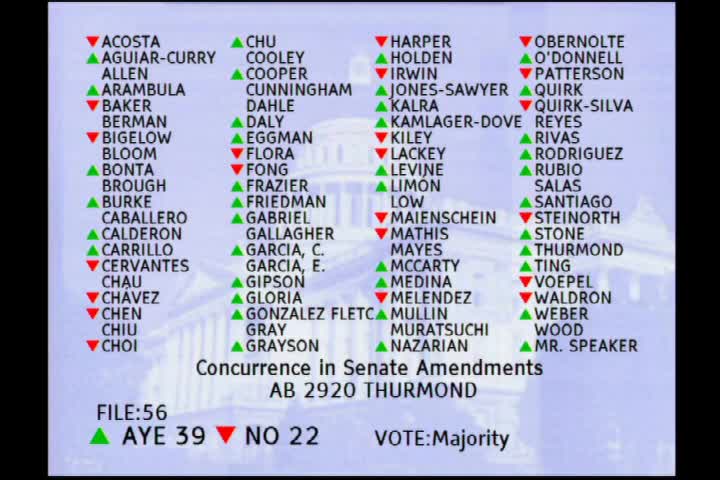 3MIN
Assembly Floor
 11MIN
Assembly Standing Committee on Local Government
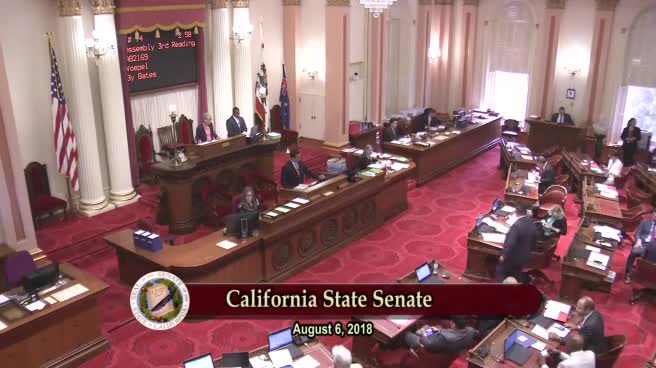 5MIN
Senate Floor
 19MIN
Senate Standing Committee on Governance and Finance
 1MIN
Assembly Floor
 1MIN
Assembly Standing Committee on Appropriations
 3MIN