AB 46: Employers: wage discrimination.
- Session Year: 2017-2018
- House: Assembly
- Latest Version Date: 2017-10-14
Existing law prohibits an employer from paying any of its employees at wage rates less than the rates paid to employees of the opposite sex for substantially similar work, when viewed as a composite of skill, effort, and responsibility, and performed under similar working conditions, unless the employer demonstrates that one or more specific factors, reasonably applied, account for the entire wage differential. Existing law also similarly prohibits an employer from paying any of its employees at wage rates less than the rates paid to employees of another race or ethnicity for substantially similar work.
Existing law authorizes an employee paid lesser wages in violation of these prohibitions to file a complaint with the Division of Labor Standards Enforcement, and authorizes the employee, the division, or the Department of Industrial Relations to commence a civil action for the wages the employee was deprived of because of the violation, interest on those wages, and liquidated damages. Under existing law, an employer or other person who violates or causes a violation of that prohibition, or who reduces the wages of any employee in order to comply with that prohibition, is guilty of a misdemeanor.
This bill would define employer for those purposes to include public and private employers. The bill would specify that a public employer is not subject to the misdemeanor provision.
(a)An employer shall not pay any of its employees at wage rates less than the rates paid to employees of the opposite sex for substantially similar work, when viewed as a composite of skill, effort, and responsibility, and performed under similar working conditions, except where the employer demonstrates:
(1)The wage differential is based upon one or more of the following factors:
(A)A seniority system.
(B)A merit system.
(C)A system that measures earnings by quantity or quality of production.
(D)A bona fide factor other than sex, such as education, training, or experience. This factor shall apply only if the employer demonstrates that the factor is not based on or derived from a sex-based differential in compensation, is job related with respect to the position in question, and is consistent with a business necessity. For purposes of this subparagraph, business necessity means an overriding legitimate business purpose such that the factor relied upon effectively fulfills the business purpose it is supposed to serve. This defense shall not apply if the employee demonstrates that an alternative business practice exists that would serve the same business purpose without producing the wage differential.
(2)Each factor relied upon is applied reasonably.
(3)The one or more factors relied upon account for the entire wage differential. Prior salary shall not, by itself, justify any disparity in compensation.
(b)An employer shall not pay any of its employees at wage rates less than the rates paid to employees of another race or ethnicity for substantially similar work, when viewed as a composite of skill, effort, and responsibility, and performed under similar working conditions, except where the employer demonstrates:
(1)The wage differential is based upon one or more of the following factors:
(A)A seniority system.
(B)A merit system.
(C)A system that measures earnings by quantity or quality of production.
(D)A bona fide factor other than race or ethnicity, such as education, training, or experience. This factor shall apply only if the employer demonstrates that the factor is not based on or derived from a race- or ethnicity-based differential in compensation, is job related with respect to the position in question, and is consistent with a business necessity. For purposes of this subparagraph, business necessity means an overriding legitimate business purpose such that the factor relied upon effectively fulfills the business purpose it is supposed to serve. This defense shall not apply if the employee demonstrates that an alternative business practice exists that would serve the same business purpose without producing the wage differential.
(2)Each factor relied upon is applied reasonably.
(3)The one or more factors relied upon account for the entire wage differential. Prior salary shall not, by itself, justify any disparity in compensation.
(c)Any employer who violates subdivision (a) or (b) is liable to the employee affected in the amount of the wages, and interest thereon, of which the employee is deprived by reason of the violation, and an additional equal amount as liquidated damages.
(d)The Division of Labor Standards Enforcement shall administer and enforce this section. If the division finds that an employer has violated this section, it may supervise the payment of wages and interest found to be due and unpaid to employees under subdivision (a) or (b). Acceptance of payment in full made by an employer and approved by the division shall constitute a waiver on the part of the employee of the employees cause of action under subdivision (h).
(e)Every employer shall maintain records of the wages and wage rates, job classifications, and other terms and conditions of employment of the persons employed by the employer. All of the records shall be kept on file for a period of three years.
(f)Any employee may file a complaint with the division that the wages paid are less than the wages to which the employee is entitled under subdivision (a) or (b) or that the employer is in violation of subdivision (k). The complaint shall be investigated as provided in subdivision (b) of Section 98.7. The division shall keep confidential the name of any employee who submits to the division a complaint regarding an alleged violation of subdivision (a), (b), or (k) until the division establishes the validity of the complaint, unless the division must abridge confidentiality to investigate the complaint. The name of the complaining employee shall remain confidential if the complaint is withdrawn before the confidentiality is abridged by the division. The division shall take all proceedings necessary to enforce the payment of any sums found to be due and unpaid to these employees.
(g)The department or division may commence and prosecute, unless otherwise requested by the employee or affected group of employees, a civil action on behalf of the employee and on behalf of a similarly affected group of employees to recover unpaid wages and liquidated damages under subdivision (a) or (b), and in addition shall be entitled to recover costs of suit. The consent of any employee to the bringing of any action shall constitute a waiver on the part of the employee of the employees cause of action under subdivision (h) unless the action is dismissed without prejudice by the department or the division, except that the employee may intervene in the suit or may initiate independent action if the suit has not been determined within 180 days from the date of the filing of the complaint.
(h)An employee receiving less than the wage to which the employee is entitled under this section may recover in a civil action the balance of the wages, including interest thereon, and an equal amount as liquidated damages, together with the costs of the suit and reasonable attorneys fees, notwithstanding any agreement to work for a lesser wage.
(i)A civil action to recover wages under subdivision (a) or (b) may be commenced no later than two years after the cause of action occurs, except that a cause of action arising out of a willful violation may be commenced no later than three years after the cause of action occurs.
(j)If an employee recovers amounts due the employee under subdivision (c), and also files a complaint or brings an action under subdivision (d) of Section 206 of Title 29 of the United States Code which results in an additional recovery under federal law for the same violation, the employee shall return to the employer the amounts recovered under subdivision (c), or the amounts recovered under federal law, whichever is less.
(k)(1)An employer shall not discharge, or in any manner discriminate or retaliate against, any employee by reason of any action taken by the employee to invoke or assist in any manner the enforcement of this section. An employer shall not prohibit an employee from disclosing the employees own wages, discussing the wages of others, inquiring about another employees wages, or aiding or encouraging any other employee to exercise his or her rights under this section. Nothing in this section creates an obligation to disclose wages.
(2)Any employee who has been discharged, discriminated or retaliated against, in the terms and conditions of his or her employment because the employee engaged in any conduct delineated in this section may recover in a civil action reinstatement and reimbursement for lost wages and work benefits caused by the acts of the employer, including interest thereon, as well as appropriate equitable relief.
(3)A civil action brought under this subdivision may be commenced no later than one year after the cause of action occurs.
(l)As used in this section, employer includes public and private employers. Section 1199.5 does not apply to a public employer.
REVISIONS: HeadingLine 2.|
Date
|
Status
|
|---|---|
| Oct 14, 2017 | Chaptered by Secretary of State - Chapter 776, Statutes of 2017. |
| Oct 14, 2017 | Approved by the Governor. |
| Sep 25, 2017 | Enrolled and presented to the Governor at 12 p.m. |
| Sep 14, 2017 | In Assembly. Ordered to Engrossing and Enrolling. |
| Sep 14, 2017 | Read third time. Passed. Ordered to the Assembly. |
| Sep 12, 2017 | Ordered to special consent calendar. |
| Sep 5, 2017 | Read second time. Ordered to third reading. |
| Sep 1, 2017 | From committee: Do pass. (Ayes 7. Noes 0.) (September 1). |
| Aug 21, 2017 | In committee: Referred to APPR. suspense file. |
| Jul 12, 2017 | From committee: Do pass and re-refer to Com. on APPR. (Ayes 7. Noes 0.) (July 11). Re-referred to Com. on APPR. |
| Jun 27, 2017 | From committee: Do pass and re-refer to Com. on JUD. (Ayes 5. Noes 0.) (June 26). Re-referred to Com. on JUD. |
| Jun 8, 2017 | Referred to Coms. on P.E. & R. and JUD. |
| May 30, 2017 | In Senate. Read first time. To Com. on RLS. for assignment. |
| May 30, 2017 | Read third time. Passed. Ordered to the Senate. (Ayes 71. Noes 2. Page 1789.) |
| May 11, 2017 | Read second time. Ordered to third reading. |
| May 10, 2017 | From committee: Do pass. (Ayes 15. Noes 0.) (May 10). |
| Apr 20, 2017 | From committee: Do pass and re-refer to Com. on APPR. (Ayes 6. Noes 1.) (April 19). Re-referred to Com. on APPR. |
| Apr 6, 2017 | Referred to Com. on L. & E. |
| Dec 6, 2016 | From printer. May be heard in committee January 5. |
| Dec 5, 2016 | Read first time. To print. |
|
Date
|
Description
|
Location
|
Votes
|
|
|---|---|---|---|---|
| Sep 14, 2017 | Special Consent Calendar # AB46 | Senate Floor |
Passed |
|
| Sep 1, 2017 | Do pass | Senate Standing Committee on Appropriations |
Passed |
|
| Aug 21, 2017 | Placed on suspense file | Senate Standing Committee on Appropriations |
Passed |
|
| Jul 11, 2017 | Do pass, but first be re-referred to the Committee on [Appropriations] | Senate Standing Committee on Judiciary |
Passed |
|
| Jun 26, 2017 | Do pass, but first be re-referred to the Committee on [Judiciary] | Senate Standing Committee on Public Employment and Retirement |
Passed |
|
| May 30, 2017 | AB 46 COOPER Assembly Third Reading | Assembly Floor |
Passed |
|
| May 10, 2017 | Do pass. | Assembly Standing Committee on Appropriations |
Passed |
|
| Apr 19, 2017 | Do pass and be re-referred to the Committee on [Appropriations] | Assembly Standing Committee on Labor and Employment |
Passed |
This list shows positions taken on this bill by organizations on the date displayed, which is linked to the original source.
Positions by individuals are not included.
|
Organization
|
Position
|
Date
|
|---|---|---|
| American Association Of University Women-Ca | * Support | Jul 11, 2017 |
| American Federation Of State, County & Municiple Employees (Afscme) | * Indeterminate | Apr 19, 2017 |
| California Association Of Psychiatric Technicians | * Support | Apr 19, 2017 |
| California Employment Lawyers Association | * Support | Jul 11, 2017 |
| California Federation of Teachers, AFL-CIO | ** Support | Sep 3, 2017 |
| California Professional Firefighters | * Support | Jul 11, 2017 |
| Council 36 | ** Support | Sep 3, 2017 |
| Fiona Ma, State Board of Equalization | ** Support | Sep 3, 2017 |
| Los Angeles County Professional Peace Officers Association | ** Support | Sep 3, 2017 |
| National Association Of Social Workers, California Chapter | ** Support | Sep 3, 2017 |
| Organization Of Smud Employees | ** Support | Sep 3, 2017 |
| San Diego County Court Employees Association | ** Support | Sep 3, 2017 |
| San Luis Obispo County Employees Association | ** Support | Sep 3, 2017 |
| sponsor) | ** Support | Jun 21, 2017 |
| United Public Employees | ** Support | Sep 3, 2017 |
Office of Senate Floor Analyses (916) 651-1520 Fax: (916) 327-4478 | AB |
THIRD READING
Bill No: AB 46
:
SENATE PUBLIC EMP. & RET. COMMITTEE: 5-0, 6/26/17
AYES: Pan, Morrell, Leyva, Moorlach, Portantino
SENATE JUDICIARY COMMITTEE: 7-0, 7/11/17
AYES: Jackson, Moorlach, Anderson, Hertzberg, Monning, Stern, Wieckowski
SENATE APPROPRIATIONS COMMITTEE: 7-0, 9/1/17
AYES: Lara, Bates, Beall, Bradford, Hill, Nielsen, Wiener
ASSEMBLY FLOOR: 71-2, 5/30/17 - See last page for vote
DIGEST:
This bill expands the California Equal Pay Act to public sector employers.
ANALYSIS:
Existing law:
- Prohibits, under the California Equal Pay Act, an employer from paying an employee wage rates less than the rates paid to employees of the opposite sex for substantially similar work requiring the same skills, effort, and responsibility when performed under similar working conditions.
- Prohibits employers from paying employees a wage rate less than the rate paid to employees of a different race or ethnicity for substantially similar work requiring the same skills, effort, and responsibility when performed under similar working conditions.
- Establishes exceptions to this prohibition when a wage differential is based on one or more of the following:
- A seniority system,
- A merit system,
- A system that measures earnings by quantity or quality of production,
- A bona fide factor other than sex, such as education, training, or experience.
- Specifies that prior salary by itself may not justify any disparity in compensation.
- Makes it a misdemeanor for any employer or person acting individually as an officer, agent, or employee of another person who willfully:
- Pays or causes to be paid to any employee a wage less than the rate paid to an employee of another sex, race, or ethnicity.
- Reduces the wages of any employee to comply with the California Equal Pay Act.
- Provides that no one shall be imprisoned for the above misdemeanor except for an offense committed after conviction of a prior California Equal Pay Act offence.
- States that any employer who violates the California Equal Pay Act is liable for the amount of the wages and interest that the employee is deprived of, in addition to liquidated damages.
- Provides that the Division of Labor Standards Enforcement (DLSE) shall administer and enforce the California Equal Pay Act, and may supervise the payment of wages and interest found to be due by an employer in violation of the Act.
- Requires every private sector employer to maintain records of the wages and wage rates, job classifications, and other terms and conditions of employment of the persons employed, to be kept on file for three years.
- Authorizes any employee to file a complaint with the DLSE that their wages are less than those owed to the employee under the California Equal Pay Act, and requires the DLSE to investigate these complaints, as specified.
- Authorizes the Department of Industrial Relations or the DLSE to commence and prosecute, unless otherwise requested by the employee or affected group of employees, a civil action on behalf of the employee and on behalf of a similarly affected group of employees to recover unpaid wages and liquidated damages for violations of the California Equal Pay Act, and to recover costs of suit.
- Requires the California Department of Human Resources (CalHR) to review information relevant to the setting of salaries for female-dominated occupations, with the intent of establishing a foundation for salaries based on comparability of the value of work to other civil service classifications.
- Requires, under the State Employee-Employer Relations Act (the Ralph C. Dills Act), that the State, represented by CalHR, collectively bargain with exclusive employee representatives over all aspects related to wages and working conditions, and that the parties form an agreement formalized in Memorandum of Understandings (MOUs).
- Charges the Public Employment Relations Board (PERB) with administering the eight collective bargaining statutes covering employees in California’s public schools, colleges, and universities; employees of the State of California; employees of local public agencies; trial court employees and interpreters; and supervisory employees of the Los Angeles County Metropolitan Transportation Authority.
This bill:
- Applies the Equal Pay Act within the Labor Code to public sector employers, which are generally governed by the Government Code, and thus, defines “employer” to include both public and private employers.
- Specifies that a misdemeanor for violations of the Equal Pay Act, as specified, does not apply to a public employer.
Background
Every year the United States Census Bureau and the United States Bureau of Labor Statistics provide an estimate of the wage gap using annual earnings data from the Current Population Survey Annual Social and Economic Supplement. Although the national gender wage gap has narrowed since the passage of the federal Equal Pay Act of 1963 (EPA), in 2015 women made 80 cents for every dollar earned by a male counterpart.
According to 2015 U.S. Census Bureau data, California women earn 84 cents on the dollar compared to men, although the wage gap can be larger for women of color, with African American woman earning 63 cents, Latinas 43 cents, and Asian American women 72 cents on every dollar a male earns. Together these pay disparities result in a $39 billion annual loss for full-time working women.
Women in State Civil Service
Generally, CalHR sets salaries and other terms and conditions of employment through the collective bargaining process. CalHR adjusts the salaries for employee classifications excluded from collective bargaining by taking into consideration a number of factors, including local market needs, recruitment and retention issues, the employer’s ability to pay, and the state salary structure.
Data from a 2014 CalHR report finds that the state civil workforce employs more women in management, legal, science, technology, engineering, and mathematics careers than the California and United States workforces. However, women in the state workforce also experience a larger gender pay gap compared to federal civil service, the rest of California, and the U.S. workforce due in part from a larger proportion of women in lower paying occupations. As of 2014, women in the state workforce earned approximately 79.5 cents on the dollar.
DLSE Jurisdiction Expanded to Public Employers
Currently the Division of Labor Standards Enforcement has jurisdiction over private sector employers as it pertains to administering, investigating, and enforcing the California Equal Pay Act. This bill would expand the provisions of the California Equal Pay Act, including DLSE enforcement and civil action, to public sector employers. As such, employees would have two to three years, as specified, to file an action in court or could file an administrative claim with the Labor Commissioner’s office alleging a violation of the California Equal Pay Act. Employers would have to prove the wage disparity is due to seniority, merit, a system the measures production, and/or a bona fide factor other than sex, as specified.
Currently, public sector employees alleging wage discrimination based on sex, race, ethnicity, or other protected categories may request a “right to sue” notice allowing them to file a claim in court or can file a complaint with the Department of Fair Employment and Housing (DFEH) within one year of the incident. Once the employee files an accepted complaint, DFEH begins an investigatory process to assess the merit of the claim, during which time parties may also negotiate an agreement. If DFEH finds merit, current law requires parties to go into mediation. If mediation fails, the Department of Fair Employment and Housing may file a lawsuit in court.
Related/Prior Legislation
AB 168 (Eggman, 2017), of the current legislative session prohibits an employer, including the Legislature, state, and local government employers, from seeking salary history from applicants for employment.
AB 1209 (Gonzalez Fletcher, 2017), of the current legislative session requires employers to collect specified information on gender pay differentials and for the employer to publish the information online.
AB 1676 (Campos, Chapter 856, Statutes of 2016), required that prior salary may not justify a disparity in compensation.
SB 1063 (Hall, Chapter 866, Statutes of 2016), expanded the prohibitions in the California Equal Pay Act related to gender to include discrimination based on race or ethnicity.
SB 358 (Jackson, Chapter 546, Statutes of 2015), strengthened the California Equal Pay Act by, among other provisions, clarifying the relative burdens of proof and prohibiting retaliation against employees for disclosing or discussing their wages with co-workers.
FISCAL EFFECT: Appropriation: Fiscal Com.: Local:
According to the Senate Appropriations Committee, the Department of Industrial Relations indicates that it would incur absorbable enforcement costs for its DLSE to enforce the provisions of this bill.
Additionally, by extending the Equal Pay Act to the public sector, it could result in increased labor costs for state employees, in particular exempt employees, over what would have occurred absent the bill (General Fund and special funds). The magnitude of this potential increase is unknown, but potentially over $150,000 in a given year.
American Federation of State, County and Municipal Employees, AFL-CIO
American Federation of State, County and Municipal Employees, District
Council 36
American Federation of State, County and Municipal Employees, Local 2620
California Federation of Teachers, AFL-CIO
Fiona Ma, State Board of Equalization
Los Angeles County Professional Peace Officers Association
National Association of Social Workers, California Chapter
Organization of SMUD Employees
San Diego County Court Employees Association
San Luis Obispo County Employees Association
United Public Employees
None received
ARGUMENTS IN SUPPORT: According to the author’s office, “A Sacramento Bee report found that women employees in the Assembly made just 92 cents on the dollar compared to their male counterparts. According to a recent report from the Institute for Women’s Policy Research, if progress continues at its current rate, the gender wage gap in the United States will not close until 2058…Racial and ethnic pay disparities remain an issue...California African American and Hispanic women earn just 64 and 44 cents, respectively, for every dollar a white man earns. Additionally, African American men earn 75 percent of the average salary of white men.”
AFSCME writes, “AB 46 provides stronger language to existing law by applying it to the public sector. This bill reinforces fair workplace policies to ensure that each person receives equal pay for their work. There is no doubt that workplace discrimination continues to exist.”
According to the California Federation of Teachers, “women are the primary or sole income earners in nearly 40 percent of families, and married women are the primary or co-earners in two-thirds of California households. The loss due to the wage gap results in $37 billion dollars lost annually. These findings are even worse when you factor in minority ethnicities.”
ASSEMBLY FLOOR: 71-2, 5/30/17
AYES: Acosta, Aguiar-Curry, Arambula, Baker, Berman, Bigelow, Bloom, Bocanegra, Bonta, Burke, Caballero, Calderon, Cervantes, Chávez, Chiu, Chu, Cooley, Cooper, Cunningham, Dababneh, Dahle, Daly, Flora, Fong, Frazier, Friedman, Gallagher, Cristina Garcia, Eduardo Garcia, Gipson, Gloria, Gomez, Gonzalez Fletcher, Gray, Grayson, Holden, Irwin, Jones-Sawyer, Kalra, Lackey, Levine, Limón, Low, Maienschein, Mathis, Mayes, McCarty, Medina, Melendez, Mullin, Muratsuchi, Nazarian, O'Donnell, Patterson, Quirk, Quirk-Silva, Reyes, Ridley-Thomas, Rodriguez, Rubio, Salas, Santiago, Steinorth, Mark Stone, Thurmond, Ting, Voepel, Waldron, Weber, Wood, Rendon
NOES: Brough, Harper
NO VOTE RECORDED: Travis Allen, Chau, Chen, Choi, Eggman, Kiley, Obernolte
9/3/17 18:11:09
**** END ****
SENATE COMMITTEE ON APPROPRIATIONS
Senator Ricardo Lara, Chair
2017 - 2018 Regular Session
AB 46 (Cooper) - Employers: wage discrimination
Version: December 5, 2016 | Policy Vote: P.E. & R. 5 - 0, JUD. 7 - 0 |
Urgency: No | Mandate: No |
Hearing Date: August 21, 2017 | Consultant: Robert Ingenito |
This bill may meet the criteria for referral to the Suspense File.
Bill Summary:
AB 46 would expand the California Equal Pay Act to public sector employers.
Fiscal Impact:
This Department of Industrial Relations (DIR) indicates that it would incur absorbable enforcement costs for its Division of Labor Standards Enforcement (DLSE) to enforce the provisions of this bill.
Additionally, by extending the Equal Pay Act to the public sector, it could result in increased labor costs for state employees, in particular exempt employees, over what would have occurred absent the bill (General Fund and special funds). The magnitude of this potential increase is unknown, but potentially over $150,000 in a given year.
Background:
First enacted in 1949, California’s Equal Pay Act originally required that employers give men and women equal pay for equal jobs at the same establishment. Over time, the Act has evolved to cover race and ethnicity. Most recently, Senate Bill 358 (Jackson, 2015) (1) removed the requirement that the jobs be at the same establishment, (2) placed the burden on the employer to provide a bona fide, non-discriminatory basis for wage differentials, and (3) strengthened the anti-retaliation provisions of the Act.
In spite of this, the discrepancy in pay between genders and among people of different racial and ethnic backgrounds persists, including in the State’s public sector. California Department of Human Resources data indicate that the gender pay gap in California’s overall workforce is about 16 percent; however, for state civil service employees, the discrepancy is nearly 21 percent. All statistical indicators suggest that there are similar or worse disparities between public sector employees of color and their white counterparts.
Proposed Law:
This bill would (1) apply the Equal Pay Act within the Labor Code to public sector employers, which are generally governed by the Government Code, and thus, define “employer” to include both public and private employers, and (2 ) specify that a misdemeanor for violations of the Equal Pay Act, as specified, does not apply to a public employer.
Related Legislation:
- AB 168 (Eggman, 2017) would prohibit an employer, including state and local government employers, from seeking salary history information about an applicant for employment, as provided. Would require an employer, upon reasonable request, to provide the pay scale for a position to an applicant for employment, exempts state and local government employers from this requirement. The bill is currently pending on the Senate Floor.
- AB 1209 (Gonzalez Fletcher, 2017) would require specified employers to collect specified information on gender pay differentials and for the employer to publish the information on its publicly accessible website, and submit it to the Secretary of State, among other provisions. The bill will be heard today in this Committee.
- SB 1063 (Hall, Chapter 866, Statutes of 2016) expanded the prohibitions in the California Equal Pay Act regarding gender, to include discrimination based on race or ethnicity.
- AB 1676 (Campos, Chapter 856, Statutes of 2016) required that prior salary shall not, by itself, justify any disparity in compensation.
- SB 358 (Jackson, Chapter 546, Statutes of 2015) addressed significant loopholes in the Equal Pay Act that had prevented meaningful enforcement by, among other things, requiring employers to justify any gender pay differential with a legitimate non-sex-based factor and prohibiting retaliation against employees for disclosing or discussing their wages with co-workers.
- AB 160 (Grunsky et al, Chapter 804, Statutes of 1949) enacted California’s original Equal Pay Act.
Staff Comments: This bill would expand DLSE’s enforcement and civil action authority to public sector employees. DIR indicates that the bill could potentially result in additional wage discrimination claims against state employers, thereby increasing administrative costs. However, the number of such cases is likely to be small.
The intent of the bill is to narrow the aforementioned wage disparities. Thus, the bill could result in increased labor costs for the State over what they would have been its absence (especially with respect to the salaries of agency secretaries and department directors). The magnitude of the impact is unknown.
-- END --
Senator Hannah-Beth Jackson, Chair
2017-2018 Regular Session
Bill No: AB 46 (Author:Cooper)
Version: December 5, 2016
Hearing Date: July 11, 2017
Fiscal: Yes
Urgency: No
Consultant: TSG
SUBJECT
Employers: wage discrimination
DESCRIPTION
The main thrust of the Equal Pay Act is to prohibit private sector employers from compensating their employees at different rates for substantially similar work unless the employer can demonstrate that a bona fide reason other than race, gender, or ethnicity justifies the differential. This bill would extend the Equal Pay Act to public sector employment as well.
BACKGROUND
First enacted in 1949, California’s Equal Pay Act originally required that employers give equal pay to men and women for equal jobs at the same establishment. Over time, the Act has evolved to cover race and ethnicity. Most recently, Senate Bill 358 (Jackson, Ch. 546, Stats. 2015) removed the requirement that the jobs be at the same establishment, placed the burden on the employer to provide a bona fide, non-discriminatory basis for wage differentials, and strengthened the anti-retaliation provisions of the Act.
Nevertheless, the discriminatory gap in pay between genders and among people of different racial and ethnic backgrounds persists. California’s private sector is a part of the problem, but evidence suggests that the public sector may be an even greater source of the disparity. According to data from CalHR, the gender pay gap in California’s overall workforce is about 16 percent; for California civil service employees, that figure is almost 21 percent. All statistical indicators suggest that there are similar or worse disparities between public sector employees of color and their white counterparts. (See Comment 4, below, for greater detail on the scope of the problem.)
One possible explanation for why California’s public sector lags behind the private sector in terms of compensation equity is the fact that the Equal Pay Act currently applies to the private sector, but not to the public sector. This bill would change that, and make the provisions of the Equal Pay Act equally applicable to California’s public sector employers.
AB 46 passed out of the Senate Committee on Public Employment and Retirement on a 5 to 0 vote.
CHANGES TO EXISTING LAW
Existing law prohibits, under the California Equal Pay Act, an employer from paying an employee wage rates less than the rates paid to employees of the opposite sex for substantially similar work requiring the same skills, effort, and responsibility when performed under similar working conditions. (Lab. Code Sec. 1197.5(a).)
Existing law prohibits employers from paying employees a wage rate less than the rate paid to employees of a different race or ethnicity for substantially similar work requiring the same skills, effort, and responsibility when performed under similar working conditions. (Lab. Code Sec. 1197.5(b).)
Existing law sets forth exceptions to these prohibitions when a wage differential is based on one or more of the following: (a) a seniority system; (b) a merit system; (c) a system that measures earnings by quantity or quality of production; or (d) a bona fide factor other than sex, such as education, training, or experience. (Lab. Code Secs. 1197.5(a)(1)(A-D) and 1197.5(b)(1)(A-D).)
Existing law specifies that prior salary by itself may not justify any disparity in compensation. (Lab. Code Secs. 1197.5(a)(3) and 1197.5(b)(3).)
Existing law makes it a misdemeanor punishable by fine or imprisonment for any employer or person acting individually as an officer, agent, or employee of another person who willfully: (a) pays or causes to be paid to any employee a wage less than the rate paid to an employee of another sex, race, or ethnicity; or (b) reduces the wages of any employee to comply with the California Equal Pay Act. (Lab. Code Sec. 1199.5.)
Existing law states that any employer who violates the California Equal Pay Act is liable for the amount of the wages and interest that the employee is deprived of, in addition to liquidated damages. (Lab. Code Sec. 1197.5(c).)
Existing law provides that the Division of Labor Standards Enforcement (DLSE) shall administer and enforce the California Equal Pay Act, and may supervise the payment of wages and interest found to be due by an employer in violation of the Act. (Lab. Code Sec. 1197.5(d).)
Existing law requires every private sector employer to maintain records of the wages and wage rates, job classifications, and other terms and conditions of employment of the persons employed, to be kept on file for three years. (Lab. Code Sec. 1197.5(e).)
Existing law authorizes any employee to file a complaint with the DLSE that their wages are less than those owed to the employee under the California Equal Pay Act, and the DLSE is required to investigate these complaints, as specified. (Lab. Code Sec. 1197.5(f).)
Existing law authorizes the Department of Industrial Relations or the DLSE to commence and prosecute, unless otherwise requested by the employee or affected group of employees, a civil action on behalf of the employee and on behalf of a similarly affected group of employees to recover unpaid wages and liquidated damages for violations of the California Equal Pay Act, and to recover costs of suit. (Lab. Code Sec. 1197.5(g).)
Existing law sets the statute of limitation to file a civil action for a violation of the Equal Pay Act at two years after the cause of action accrues generally, and three years after the cause of action accrues if the violation was willful. (Lab. Code Sec. 1197.5(i).)
Existing law makes it an unlawful employment practice, unless based upon a bona fide occupational qualification, or, except where based upon applicable security regulations established by the United States or the State of California, for an employer, because of the employee’s race or gender, to discriminate against an employee in compensation or in terms, conditions, or privileges of employment. (Gov. Code Sec. 12940(a).)
Existing law requires an employment discrimination complaint to be filed with the Department of Fair Employment and Housing within one year of the act of discrimination, with specified exceptions. (Gov. Code 12960(d).)
This bill would define “employers” to include both public and private sector employers, thus clarifying that the Equal Pay Act’s terms apply equally to public sector employers.
This bill would exempt public employers from criminal sanction for willful violations of the Equal Pay Act or for reducing an employee’s pay in order to comply with the Act.
COMMENT
1. Stated need for the bill
According to the author:
AB 46 expands California’s pay equity laws to be all-encompassing and include all public employers, including the Legislature. AB 46 eliminates wage disparities for public employees based on race, gender or ethnicity. AB 46 also prohibits the use of prior salary as the sole justification for any disparity in compensation, ensuring that workers’ salaries are based on the job requirements, expectations, and qualifications, not on an individual’s prior earnings. Last year, a Sacramento Bee report found that women in the California State Assembly made 92 cents on the dollar compared to their male counterparts. Racial and ethnic pay disparities also remain an issue. A 2013 study shows California African American and Hispanic women earn just 64 and 44 cents, respectively, for every dollar a white man earns. Additionally, African American men earn 75 percent of the average salary of white men. I believe it is critical that we lead by example and ensure all public employees are paid fairly and equitably.
In support, United Public Employees writes:
As California continues to grow and diversify, large segments of our minority population are facing devastating economic inequality. No employee should be denied an equal wage for an equal day of work whether they work in the public or private sector.
In further support of the bill, the American Federation of State, County and Municipal Employees, AFL-CIO, writes:
The State is strengthening equal pay laws yet holds the distinction of having a pay gap “greater than the pay gap for all workers in California and the federal civil service” (per 2014 gender pay gap study by CA Workforce Development). State workers Civil [sic] in female-dominated job classifications such as Adoptions Specialists, Child Nutrition Consultants and Individual Program Analysts continue to suffer earning wages far below “substantially similar” state job classifications that employ males. If AB 46 passes, it would afford state workers the same right to equal pay as workers in the private sector.
2. Labor Code provisions do not generally apply to the public sector
The current language of the Equal Pay Act refers only to “employers.” On the face of the text, therefore, the Act would appear to apply to all employers, whether in the public or private sectors.
According to California court decisions, however, the Labor Code is a general statute, and as such, does not apply to the government absent an explicit statement from the Legislature to the contrary: “traditionally, absent express words to the contrary, governmental agencies are not included within the general words of a statute. The Legislature has acknowledged that this rule applies to the Labor Code.” (Johnson v. Arvin-Edison Water Storage Dist. (Cal. App. 5th Dist. June 3, 2009) 174 Cal. App. 4th 729, 736. Internal citations omitted.) Though the Committee is unaware of any cases applying this rule of statutory construction to the Equal Pay Act specifically, it seems likely that a court ruling on the matter would find that the existing version of the Equal Pay Act applies only to private sector employers. By providing the requisite express language, this bill would extend the application of the Equal Pay Act to the public sector, as well.
3. Data on the gender, race, and ethnicity pay gaps
As evidence of the need for this bill, the author’s office cites a number of statistics showing substantial discrepancies in the earnings of men compared to women, and people of color as compared with their white counterparts.
According to the United States Census Bureau and the United States Bureau of Labor Statistics, for example, while the nationwide wage gap between men and women has shrunk since the 1960s, when the federal Equal Pay Act was enacted, by 2012, female workers earned just 78 cents for every dollar paid to a man. By 2015, the gap had only improved by two cents. According to the Institute for Women’s Policy Research, unless immediate action is taken, the wage gap will not close until 2058.
The good news is that California fairs a little better than the rest of the nation when it comes to pay equity. The bad news is that, according to CalHR, female Californians still earn about 16 percent less than men, taking both public and private employees into account. This adds up to an annual pay differential of approximately $37 billion.
Moreover, as the National Association of Social Workers – California Chapter points out in its letter supporting this bill, these disparities impact “not just these women’s daily lives, but also their retirement and their families.” Increasingly, children and families depend on their female wage earners to cover the household expenses. Today, women are the primary or sole earners in nearly 40 percent of families, and married women are the primary or co-earners in around two thirds of California families. Since retirement contributions, saving, and pensions are all a formula of earnings over time, the current wage gap now will almost certainly turn into a retirement benefits gap in the future.
As troubling as the gender pay gap is, disparities in earnings based on race and ethnicity are even larger. According to the Pew Research Center, in 2015, while the average white male earned $21 per hour, his black and Latino counterparts received just $15 and $14, respectively. These differences in pay cannot be fully explained by differences in the highest levels of education, either, even if that somehow made the inequity more acceptable. The Pew Research Center’s data shows that college-educated black and Latino men receive only about 80 percent of the pay that college-educated white men do. As with the gender pay gap, the difference in pay based on race and ethnicity compounds over time and is reproduced in retirement.
Finally, the intersection of race, ethnicity, and gender produce the greatest inequities of all. Writing about the gender pay gap in its letter supporting this bill, the California Federation of Teachers concluded:
These findings are even worse when you factor in minority[1] ethnicities, which shows that black and latino women earn 64 and 44 cents respectively, for every dollar a white man earns.
4. Impact on administrative agency jurisdiction and related statutes of limitation
The Fair Employment and Housing Act (FEHA) already prohibits an employer, including a public sector employer, from discriminating on the basis of gender. (Gov. Code Sec. 12940(a).) Under FEHA, however, an employee seeking redress for employment discrimination, such as unequal pay on the basis of gender, must exhaust administrative remedies before that employee can file a claim in civil court. (Gov. Code 12965(b).) Moreover, the employee is required to initiate that administrative process, which is handled through the Department of Fair Employment and Housing (DFEH), within a year of the moment the discriminatory action took place. (Gov. Code 12960(d).) In effect, therefore, unequal pay claims pursued under FEHA are subject to a one year statute of limitations.
By contrast, pay discrimination claims brought under the Equal Pay Act are not subject to an administrative remedy exhaustion requirement. There is an administrative body authorized to enforce the Act: it is the Division of Labor Standards Enforcement (DLSE, or, as it is also known, “The Labor Commission”). Aggrieved employees bringing claims under the Equal Pay Act have a choice however: make an administrative claim before the Labor Commission or proceed directly to civil court. Either way, the relevant statute of limitations is longer: two or three years, depending on whether the discriminatory pay was willful or not. (Lab. Code Sec. 1197.5(i).)
This bill would bring public sector employees under the protection of the Fair Pay Act. In the process, it would enable public sector employees to pursue unequal pay claims before the Labor Commission that they can only present before DFEH now. Since the statute of limitations for filing claims with DFEH is shorter, this bill would also have the practical effect of lengthening the amount of time a public sector employee has to bring an unequal pay claim.
5. Relevance of the omitting application of Labor Code Section 1199.5 to public employers
This bill specifies that Labor Code Section 1199.5 does not apply to a public employer. Labor Code Section 1199.5 states:
Every employer or other person acting either individually or as an officer, agent, or employee of another person is guilty of a misdemeanor and is punishable by a fine of not more than ten thousand dollars ($10,000), or by imprisonment for not more than six months, or by both, who willfully does any of the following:
(a) Pays or causes to be paid any employee a wage less than the rate paid to an employee of another sex, race, or ethnicity, as required by Section 1197.5.
(b) Reduces the wages of any employee in order to comply with Section 1197.5.
No person shall be imprisoned pursuant to this section except for an offense committed after the conviction of the person for a prior offense pursuant to this section.
Thus, while this bill subjects public employers to the possibility of civil liability for discrimination in pay, public employers would not face the prospect of any criminal penalties for such a violation.
Support: American Federation of State, County and Municipal Employees, AFL-CIO; American Federation of State, County and Municipal Employees, AFL-CIO – Local 2620; California Commission on the Status of Women; California Employment Lawyers Association; California Federation of Teachers, AFL-CIO; California Labor Federation, AFL-CIO; Los Angeles County Professional Peace Officers Association; Fiona Ma, State Board of Equalization Member; National Association of Social Workers – California Chapter; the Organization of SMUD Employees; Sacramento Central Labor Council; San Diego Court Employees Association; San Luis Obispo County Employees Association; United Public Employees
Opposition: None known
HISTORY
Source: Author
Related Pending Legislation:
AB 168 (Eggman, 2017) would prohibit an employer, including state and local government employers, from seeking salary history information about an applicant for employment, as provided. Would require an employer, upon reasonable request, to provide the pay scale for a position to an applicant for employment, exempts state and local government employers from this requirement. AB 168 is currently pending consideration before the Senate Committee on Public Employent and Retirement.
AB 1209 (Gonzalez Fletcher, 2017) would require specified employers to collect specified information on gender pay differentials and for the employer to publish the information on its publicly accessible website, and submit it to the Secretary of State, among other provisions. AB 1209 is currently pending consideration before the Senate Committee on Labor and Industrial Relations.
Prior Legislation:
SB 1063 (Hall, Chapter 866, Statutes of 2016) expanded the prohibitions in the California
Equal Pay Act regarding gender, to include discrimination based on race or ethnicity.
AB 1676 (Campos, Chapter 856, Statutes of 2016) required that prior salary shall not, by itself, justify any disparity in compensation.
SB 358 (Jackson, Chapter 546, Statutes of 2015) addressed significant loopholes in the Equal Pay Act that had prevented meaningful enforcement by, among other things, requiring employers to justify any gender pay differential with a legitimate non-sex-based factor and prohibiting retaliation against employees for disclosing or discussing their wages with co-workers.
AB 160 (Grunsky et al, Chapter 804, Statutes of 1949) enacted California’s original Equal Pay Act.
Prior Vote:
Senate Public Employment and Retirement Committee (Ayes 5, Noes 0)
Assembly Floor (Ayes 71, Noes 2)
Assembly Appropriations Committee (Ayes 15, Noes 0)
Assembly Labor and Employment Committee (Ayes 6, Noes 1)
**************
Committee staff notes that the term “minority” used as an adjective to describe non-white ethnicities is misleading, at least in the context of current California demographics. ↑
SENATE COMMITTEE ON
PUBLIC EMPLOYMENT AND RETIREMENT
Dr. Richard Pan, Chair
2017 - 2018 Regular
Bill No: AB 46 Hearing Date: 6/26/17
Author: | Cooper | ||
Version: | 12/5/16 As introduced | ||
Urgency: | No | Fiscal: | Yes |
Consultant: | Korinne Sugasawara | ||
Subject: Employers: wage discrimination
SOURCE: Author
ASSEMBLY VOTES:
Assembly Floor: | 71 - 2 |
Assembly Appropriations Committee: | 15 - 0 |
Assembly Labor and Employment Committee: | 6 - 1 |
DIGEST: This bill expands the California Equal Pay Act to public sector employers.
ANALYSIS:
Existing law:
- Prohibits, under the California Equal Pay Act, an employer from paying an employee wage rates less than the rates paid to employees of the opposite sex for substantially similar work requiring the same skills, effort, and responsibility when performed under similar working conditions.
- Prohibits employers from paying employees a wage rate less than the rate paid to employees of a different race or ethnicity for substantially similar work requiring the same skills, effort, and responsibility when performed under similar working conditions.
- Establishes exceptions to this prohibition when a wage differential is based on one or more of the following:
- A seniority system,
- A merit system,
- A system that measures earnings by quantity or quality of production,
- A bona fide factor other than sex, such as education, training, or experience.
- Specifies that prior salary by itself may not justify any disparity in compensation.
- Makes it a misdemeanor for any employer or person acting individually as an officer, agent, or employee of another person who willfully:
- Pays or causes to be paid to any employee a wage less than the rate paid to an employee of another sex, race, or ethnicity.
- Reduces the wages of any employee to comply with the California Equal Pay Act.
- Provides that no one shall be imprisoned for the above misdemeanor except for an offense committed after conviction of a prior California Equal Pay Act offence.
- States that any employer who violates the California Equal Pay Act is liable for the amount of the wages and interest that the employee is deprived of, in addition to liquidated damages.
- Provides that the Division of Labor Standards Enforcement (DLSE) shall administer and enforce the California Equal Pay Act, and may supervise the payment of wages and interest found to be due by an employer in violation of the Act.
- Requires every private sector employer to maintain records of the wages and wage rates, job classifications, and other terms and conditions of employment of the persons employed, to be kept on file for three years.
- Authorizes any employee to file a complaint with the DLSE that their wages are less than those owed to the employee under the California Equal Pay Act, and the DLSE is required to investigate these complaints, as specified.
- Authorizes the Department of Industrial Relations or the DLSE to commence and prosecute, unless otherwise requested by the employee or affected group of employees, a civil action on behalf of the employee and on behalf of a similarly affected group of employees to recover unpaid wages and liquidated damages for violations of the California Equal Pay Act, and to recover costs of suit.
- Requires the California Department of Human Resources (CalHR) to review information relevant to the setting of salaries for female-dominated occupations, with the intent of establishing a foundation for salaries based on comparability of the value of work to other civil service classifications.
- Requires, under the State Employee-Employer Relations Act (the Ralph C. Dills Act), that the State, represented by CalHR, collectively bargain with exclusive employee representatives over all aspects related to wages and working conditions, and that agreements be formalized in MOUs.
- Charges the Public Employment Relations Board (PERB) with administering the eight collective bargaining statutes covering employees in California’s public schools, colleges, and universities; employees of the State of California; employees of local public agencies; trial court employees and interpreters; and supervisory employees of the Los Angeles County Metropolitan Transportation Authority.
This bill:
- Applies the Equal Pay Act within the Labor Code to public sector employers, which are generally governed by the Government Code, and thus, defines “employer” to include both public and private employers.
- Specifies that a misdemeanor for violations of the Equal Pay Act, as specified, does not apply to a public employer.
Background
Every year the United States Census Bureau and the United States Bureau of Labor Statistics provide an estimate of the wage gap using annual earnings data from the Current Population Survey Annual Social and Economic Supplement. Although the national gender wage gap has narrowed since the passage of the federal Equal Pay Act of 1963 (EPA), in 2015 women made 80 cents for every dollar earned by a male counterpart.
According to 2015 U.S. Census Bureau data, California women earn 84 cents on the dollar compared to men, although the wage gap can be larger for women of color, with African American woman earning 63 cents, Latinas 43 cents, and Asian American women 72 cents on every dollar a male earns. Together these pay disparities result in a $39 billion annual loss for full-time working women.
Women in State Civil Service
Generally, CalHR sets salaries and other terms and conditions of employment through the collective bargaining process. CalHR adjusts the salaries for employee classifications excluded from collective bargaining by taking into consideration a number of factors, including local market needs, recruitment and retention issues, the employer’s ability to pay, and the state salary structure.
Data from a 2014 CalHR report finds that the state civil workforce employs more women in management, legal, science, technology, engineering, and mathematics careers than the California and United States workforces. However, women in the state workforce also experience a larger gender pay gap compared to federal civil service, the rest of California, and the U.S. workforce due in part from a larger proportion of women in lower paying occupations. As of 2014, women in the state workforce earned approximately 79.5 cents on the dollar.
DLSE Jurisdiction Expanded to Public Employers
Currently the Division of Labor Standards Enforcement has jurisdiction over private sector employers as it pertains to administering, investigating, and enforcing the California Equal Pay Act. This bill would expand the provisions of the California Equal Pay Act, including DLSE enforcement and civil action, to public sector employers. As such, employees would have two to three years, as specified, to file an action in court or could file an administrative claim with the Labor Commissioner’s office alleging a violation of the California Equal Pay Act. Employers would have to prove the wage disparity is due to seniority, merit, a system the measures production, and/or a bona fide factor other than sex, as specified.
Currently, public sector employees alleging wage discrimination based on sex, race, ethnicity, or other protected categories may request a “right to sue” notice allowing them to file a claim in court or can file a complaint with the Department of Fair Employment and Housing (DFEH) within one year of the incident. Once the employee files an accepted complaint, DFEH begins an investigatory process to assess the merit of the claim, during which time parties may also negotiate an agreement. IF DFEH finds merit, current law requires parties to go into mediation. If mediation fails, the Department of Fair Employment and Housing may file a lawsuit in court.
Related/Prior Legislation
AB 168 (Eggman, 2017), of the current legislative session prohibits an employer, including the Legislature, state, and local government employers, from seeking salary history from applicants for employment.
AB 1209 (Gonzalez Fletcher, 2017), of the current legislative session requires employers to collect specified information on gender pay differentials and for the employer to publish the information online.
AB 1676 (Campos, Chapter 856, Statutes of 2016), required that prior salary may not justify a disparity in compensation.
SB 1063 (Hall, Chapter 866, Statutes of 2016), expanded the prohibitions in the California Equal Pay Act related to gender to include discrimination based on race or ethnicity.
SB 358 (Jackson, Chapter 546, Statutes of 2015), strengthened the California Equal Pay Act by, among other provisions, clarifying the relative burdens of proof and prohibiting retaliation against employees for disclosing or discussing their wages with co-workers.
FISCAL EFFECT: Appropriation: No Fiscal Com.: Yes Local: No
According to the Assembly Appropriations Committee, the bill would result in:
- “Absorbable costs for the Division of Labor Standards Enforcement to enforce the provisions of this bill. While this bill could increase wage discrimination cases against state employers, and therefore lead to additional administrative costs, the number of these cases is expected to be small.”
- “Unknown impact on the wages of public sector employees, particularly those not part of the state civil service.”
SUPPORT:
American Federation of State, County and Municipal Employees, AFL-CIO (co-
sponsor)
Fiona Ma, State Board of Equalization
American Federation of State, County and Municipal Employees, District Council
36
American Federation of State, County and Municipal Employees, Local 2620
California Federation of Teachers, AFL-CIO
Los Angeles County Professional Peace Officers Association
National Association of Social Workers, California Chapter
Organization of SMUD Employees
San Diego County Court Employees Association
San Luis Obispo County Employees Association
United Public Employees
OPPOSITION:
None received.
ARGUMENTS IN SUPPORT:
According to the author’s office, “A Sacramento Bee report found that women employees in the Assembly made just 92 cents on the dollar compared to their male counterparts. According to a recent report from the Institute for Women’s Policy Research, if progress continues at its current rate, the gender wage gap in the United States will not close until 2058…Racial and ethnic pay disparities remain an issue...California African American and Hispanic women earn just 64 and 44 cents, respectively, for every dollar a white man earns. Additionally, African American men earn 75 percent of the average salary of white men.”
AFSCME writes, “AB 46 provides stronger language to existing law by applying it to the public sector. This bill reinforces fair workplace policies to ensure that each person receives equal pay for their work. There is no doubt that workplace discrimination continues to exist.”
According to the California Federation of Teachers, “women are the primary or sole income earners in nearly 40 percent of families, and married women are the primary or co-earners in two-thirds of California households. The loss due to the wage gap results in $37 billion dollars lost annually. These findings are even worse when you factor in minority ethnicities.”
ASSEMBLY THIRD READING
ATR Bill Id:AB 46
Author:(Cooper)
As Introduced Ver:December 5, 2016
Majority vote
Committee | Votes | Ayes | Noes |
Labor | 6-1 | Thurmond, Flora, Chiu, Jones-Sawyer, Kalra, McCarty | Harper |
Appropriations | 15-0 | Gonzalez Fletcher, Bigelow, Bloom, Bocanegra, Bonta, Calderon, Chau, Eggman, Fong, Friedman, Gallagher, Eduardo Garcia, Gray, Muratsuchi, Reyes |
|
SUMMARY: Expands California's pay equity laws for women and minorities to encompass all employees in both the public and private sectors.
EXISTING LAW:
- Provides that prior salary cannot, by itself, justify any disparity in compensation.
- Prohibits an employer from paying an employee at wage rates less than the rates paid to employees of the opposite sex in the same establishment for equal work on jobs the performance of which requires equal skill, effort, and responsibility, and which are performed under similar working conditions.
- Establishes exceptions to this prohibition where the payment is made pursuant to a seniority system, a merit system, a system which measures earnings by quantity or quality of production, or a differential based on any bona fide factor other than sex.
- Amends the Equal Pay Act to prohibit employers from paying employees a wage rate less than the rate paid to employees of a different race or ethnicity for substantially similar work.
- Makes it a misdemeanor for an employer or other person acting either individually or as an officer, agent, or employee of another person to pay or cause to be paid to any employee a wage less than the rate paid to an employee of the opposite sex as required by these provisions, or who reduces the wages of any employee in order to comply with these provisions.
FISCAL EFFECT: According to the Assembly Appropriations Committee, absorbable costs for the Division of Labor Standards Enforcement to enforce the provisions of this bill. While this bill could increase wage discrimination claims against state employers, and therefore lead to additional administrative costs, the number of these cases is expected to be small.
Unknown impact on the wages of public sector employees, particularly those not part of the state civil service, to the extent that this bill leads to higher wages for those employees because of increased protections against wage discrimination.
COMMENTS: California's Equal Pay Act (Act) was first enacted in 1949. The Act was amended in 2015 by SB 358 (Jackson), Chapter 546, Statutes of 2015, to address significant loopholes that had prevented meaningful enforcement. The newly enacted 2015 protections ensure that women are paid equally for performing work that is substantially similar to that of their male colleagues and requires employers to justify any gender pay differential with a legitimate non-sex-based factor.
According to information provided by the author's office, each year, the United States (U.S.) Census Bureau and the United States Bureau of Labor Statistics provide an estimate of the wage gap using annual earnings according to the Current Population Survey Annual Social and Economic Supplement data. Although, the gender wage gap has narrowed since the 1960s, after the passage of the federal Equal Pay Act of 1963 (EPA), female workers nationwide earned 78% of what male workers were paid as of 2013. According to the U.S. Census Bureau, in 2015 women made $0.80 for every dollar earned by men.
Additionally the author states that, in 2014 California's statewide gender gap both public and private was 15.9% meaning women earned $0.84 on the dollar compared to men. This resulted in $37 billion in annual income lost. This disparity impacts not just these women's daily lives but also their retirement.
Women are the primary or sole earners in nearly 40% of families, and married women are the primary or co-earners in 2/3 of California families.
Finally, the author points to a 2016, a report from the California Department of Human Resources found that women in the State workforce earn about $0.795 on the dollar compared to men.
Arguments in Support
American Federation of State, County and Municipal Employees (AFSCME) Local 2620 argues this bill would afford state workers the same right to equal pay as workers in the private sector.
The California Federation of Teachers supports this bill which seeks to end pay discrimination for public and private employees that is based on an immutable characteristic of the employee.
The California Employment Lawyers Association point out in support of this measure that our equal pay laws must protect not only private employees but public employees as well from unfair pay practices. They support this bill because it makes clear that public employers must comply with the requirements of Labor Code Section 1197.5.
There is no known opposition on file.
Previous and Related Legislation
AB 168 (Eggman) of the current legislative session, currently pending in this Committee, would prohibit an employer, including state and local government employers, from seeking salary history information about an applicant for employment, as provided. Would require an employer, upon reasonable request, to provide the pay scale for a position to an applicant for employment, exempts state and local government employers from this requirement.
AB 1209 (Gonzalez Fletcher) of the current legislative session, pending before this Committee would require specified employers to collect specified information on gender pay differentials and for the employer to publish the information on its publicly accessible Web site, and submit it to the Secretary of State, among other provisions.
AB 1676 (Campos), Chapter 856, Statutes of 2016 requires that prior salary shall not, by itself, justify any disparity in compensation.
SB 1063 (Hall), Chapter 866, Statutes of 2016 expands the prohibitions in the California Equal Pay Act regarding gender, to include discrimination based on race or ethnicity.
SB 358 (Jackson), Chapter 546, Statutes of 2015 strengthens the California Equal Pay Act by, among other things, clarifying the relative burdens of proof and prohibiting retaliation against employees for disclosing or discussing their wages with co-workers.
Analysis Prepared by: Lorie Alvarez / L. & E. / (916) 319-2091 FN: 0000289
Date of Hearing: May 10, 2017
ASSEMBLY COMMITTEE ON APPROPRIATIONS
Lorena Gonzalez Fletcher, Chair
ABPCA Bill Id:AB 46
Author:(Cooper) – As Introduced Ver:December 5, 2016
Policy Committee: | Labor and Employment | Vote: | 6 - 1 |
|
| ||
|
|
Urgency: No State Mandated Local Program: No Reimbursable: No
SUMMARY:
This bill expands provisions in current law, related to pay equity for women and minorities, to encompass all employees in both the public and private sectors.
FISCAL EFFECT:
- Absorbable costs for the Division of Labor Standards Enforcement (DLSE) to enforce the provisions of this bill. While this bill could increase wage discrimination claims against state employers, and therefore lead to additional administrative costs, the number of these cases is expected to be small.
- Unknown impact on the wages of public sector employees, particularly those not part of the state civil service, to the extent that this bill leads to higher wages for those employees because of increased protections against wage discrimination.
COMMENTS:
- Purpose and Background. According to supporters, AB 46 clarifies that public sector employers must comply with the requirements of California’s pay equity laws defined in current law, including that an employer cannot pay an employee at wage rates less than the rates paid to an employee of another sex, or of a different race or ethnicity, if those jobs meet certain conditions of similarity, as defined. There are also exceptions to this prohibition, including when wages are based on seniority, merit, or a differential based on any other bonafide factor other than one’s sex or race and ethnicity.
- Women in California’s State Workforce. According to the California Department of Human Resources (CalHR), the gender pay gap between state workers has been narrowed, but it still exists. CalHR notes:
“While the number of women in state civil service has increased in a variety of occupations and the gender pay gap has been reduced since 1989, women are still underrepresented relative to their presence in the population, and female employees have not yet reached pay parity. The state must close the gender pay gap by applying inclusive talent management strategies to recruitment, selection and hiring, retention, and professional development efforts focused on bringing more women into higher-paying civil service careers.”
CalHR also points out that the state wage-setting process does not include pay differentials based on gender. Existing state law requires any actions that adjust employee compensation must occur through the collective bargaining process following the meet-and-confer process. Rank and file and management classifications receive wage differentials based on merit and seniority.
- Related Legislation. AB 46 is related to a number of bills pending in this committee that strive to reduce the pay gap between workers. AB 168 (Eggman) prohibits an employer, including state and local government employers, from seeking salary history information from an applicant for employment. AB 1209 (Gonzalez Fletcher), requires employers to collect specified information on gender pay differentials and for the employer to publish the information on its publicly accessible website. Both AB 168 and AB 1209 will be heard today.
Analysis Prepared by: Luke Reidenbach / APPR. / (916) 319-2081
Date of Hearing: April 19, 2017
ASSEMBLY COMMITTEE ON LABOR AND EMPLOYMENT
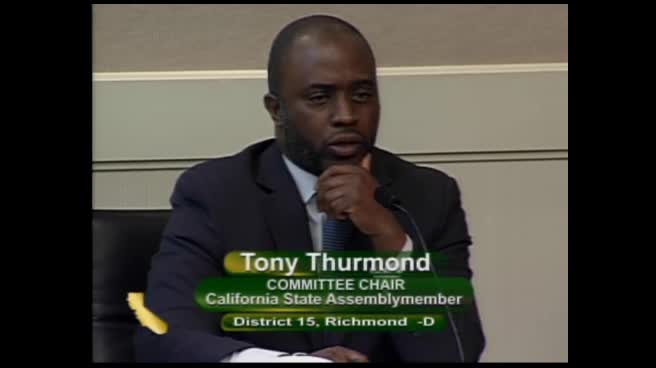
Tony Thurmond, Chair
ABPCA Bill Id:AB 46 (
Author:Cooper) – As Introduced Ver:December 5, 2016
SUBJECT: Employers: wage discrimination
SUMMARY: Expands California’s pay equity laws for women and minorities to encompass all employees in both the public and private sectors.
EXISTING LAW:
- Provides that prior salary cannot, by itself, justify any disparity in compensation.
- Prohibits an employer from paying an employee at wage rates less than the rates paid to employees of the opposite sex in the same establishment for equal work on jobs the performance of which requires equal skill, effort, and responsibility, and which are performed under similar working conditions.
- Establishes exceptions to this prohibition where the payment is made pursuant to a seniority system, a merit system, a system which measures earnings by quantity or quality of production, or a differential based on any bona fide factor other than sex.
- Amends the Equal Pay Act to prohibit employers from paying employees a wage rate less than the rate paid to employees of a different race or ethnicity for substantially similar work.
- Makes it a misdemeanor for an employer or other person acting either individually or as an officer, agent, or employee of another person to pay or cause to be paid to any employee a wage less than the rate paid to an employee of the opposite sex as required by these provisions, or who reduces the wages of any employee in order to comply with these provisions.
FISCAL EFFECT: Unknown
COMMENTS: California’s Equal Pay Act was first enacted in 1949. The Act was amended in
2015 by SB 358 (Jackson) to address significant loopholes that had prevented meaningful enforcement. The newly enacted 2015 protections ensure that women are paid equally for performing work that is substantially similar to that of their male colleagues and requires employers to justify any gender pay differential with a legitimate non-sex-based factor.
According to information provided by the author's office, each year, the United States Census Bureau and the United States Bureau of Labor Statistics provide an estimate of the wage gap using annual earnings according to the Current Population Survey Annual Social and Economic Supplement data. Although, the gender wage gap has narrowed since the 1960s, after the passage of the federal Equal Pay Act of 1963 (EPA), female workers nationwide earned 78 percent of what male workers were paid as of 2013. According to the US Census Bureau, in 2015 women made 80 cents for every dollar earned by men.
Additionally the author states that, in 2014 California’s statewide gender gap both public and private was 15.9 percent meaning women earned 84 cents on the dollar compared to men. This resulted in $37 billion in annual income lost. This disparity impacts not just these women’s daily lives but also their retirement.
Women are the primary or sole earners in nearly 40 percent of families, and married women are the primary or co-earners in 2/3 of California families.
Finally, the author points to a 2016, a report from the California Department of Human Resources found that women in the State workforce earn about 79.5 cent on the dollar compared to men.
Arguments in Support
AFSCME Local 2620 argues this bill would afford state workers the same right to equal pay as workers in the private sector.
The California Federation of Teachers supports this bill which seeks to end pay discrimination for public and private employees that is based on an immutable characteristic of the employee.
The California Employment Lawyers Association point out in support of this measure that our equal pay laws must protect not only private employees but public employees as well from unfair pay practices. The support this bill because it makes clear that public employers must comply with the requirements of Labor Code Section 1197.5.
Previous and Related Legislation
AB 168 (Eggman) of 2017, currently pending in this Committee, would prohibit an employer, including state and local government employers, from seeking salary history information about an applicant for employment, as provided. Would require an employer, upon reasonable request, to provide the pay scale for a position to an applicant for employment, exempts state and local government employers from this requirement.
AB 1209 (Gonzalez Fletcher) of 2017, pending before this Committee would require specified employers to collect specified information on gender pay differentials and for the employer to publish the information on its publicly accessible website, and submit it to the Secretary of State, among other provisions.
AB 1676 (Campos) Chapter 856, Statutes of 2016 requires that prior salary shall not, by itself, justify any disparity in compensation.
SB 1063 (Hall) Chapter 866, Statutes of 2016 expands the prohibitions in the California Equal Pay Act regarding gender, to include discrimination based on race or ethnicity.
SB 358 (Jackson) Chapter 546, Statutes of 2015 strengthens the California Equal Pay Act by, among other things, clarifying the relative burdens of proof and prohibiting retaliation against employees for disclosing or discussing their wages with co-workers.
REGISTERED SUPPORT / OPPOSITION:
Support
American Federation of State, County and Municipal Employees, Local 2620
California Employment Lawyers Association
California Federation of Teachers
Opposition
None on file.
Analysis Prepared by: Lorie Alvarez / L. & E. /
Discussed in Hearing
 1H
Senate Standing Committee on Appropriations
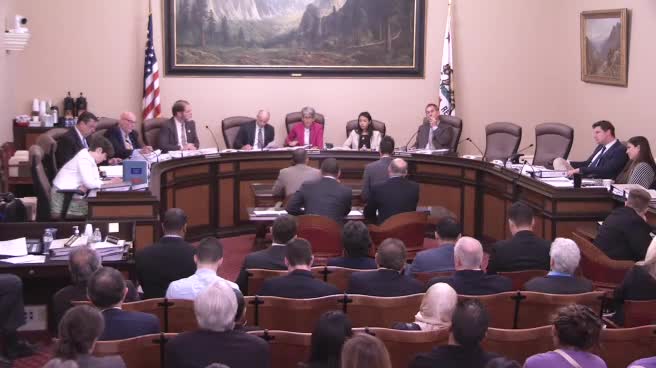 3MIN
Senate Standing Committee on Judiciary
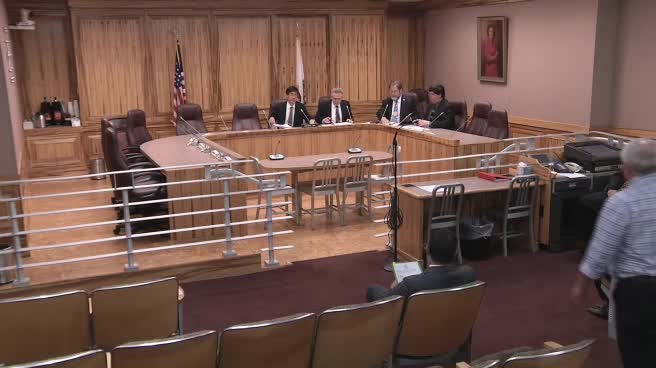 2MIN
Senate Standing Committee on Public Employment and Retirement
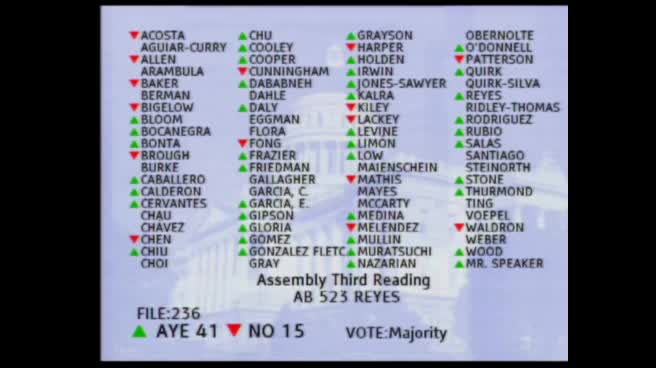 3MIN
Assembly Floor
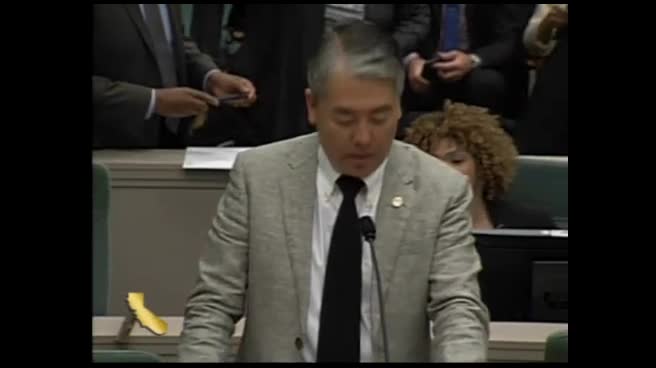 1MIN
Assembly Standing Committee on Appropriations
 4MIN
Assembly Standing Committee on Labor and Employment
Bill Author

Bill Co-Author(s):
