AB 469: Candidates: nomination documents.
- Session Year: 2017-2018
- House: Assembly
- Latest Version Date: 2017-10-15
Existing law requires a candidate for elective office to pay a prescribed filing fee or to submit, at least 15 days before the close of the nomination period, a petition containing signatures of registered voters in lieu of the filing fee. Existing law requires the Secretary of State or an elections official to make forms for securing signatures available 45 days before the first day for circulating nomination papers. Existing law requires the elections official, within 10 days after receiving the in-lieu-filing-fee petition, to notify a candidate of any deficiency with the petition. If a deficiency is found, existing law requires the candidate to either submit a supplemental in-lieu-filing-fee petition or pay a pro rata portion of the filing fee to cover the deficiency.
This bill would instead require a candidate to file an in-lieu-filing-fee petition at least 30 days before the close of the nomination period. The bill would decrease the number of required signatures on an in-lieu-filing-fee petition, as specified. The bill would also strike the authorization for a candidate to submit a supplemental petition to cover any deficiency, and it would instead only permit the candidate to pay a pro rata portion of the filing fee. The bill would require that the forms for securing signatures be made available 60 days before the first day for circulating nomination papers and would make a conforming change.
This bill would declare that it is to take effect immediately as an urgency statute.
Existing law requires a candidate for elective office to pay a prescribed filing fee or to submit, at least 15 days before the close of the nomination period, a petition containing signatures of registered voters in lieu of the filing fee. Existing law requires the elections official, within 10 days after receiving the in-lieu-filing-fee petition, to notify a candidate of any deficiency with the petition. If a deficiency is found, existing law requires the candidate to either submit a supplemental in-lieu-filing-fee petition or pay a pro rata portion of the filing fee to cover the deficiency.
This bill would instead require a candidate to file an in-lieu-filing-fee petition at least 30 days before the close of the nomination period. The bill would decrease the number of required signatures on an in-lieu-filing-fee petition, as specified. The bill would also strike the authorization for a candidate to submit a supplemental petition to cover any deficiency, and it would instead only permit the candidate to pay a pro rata portion of the filing fee.
Existing law requires a candidate for elective office to pay a prescribed filing fee or to submit, at least 15 days before the close of the nomination period, a petition containing signatures of registered voters in lieu of the filing fee. Existing law requires the elections official, within 10 days after receiving the in-lieu-filing-fee petition, to notify a candidate of any deficiency with the petition. If a deficiency is found, existing law requires the candidate to either submit a supplemental in-lieu-filing-fee petition or pay a pro rata portion of the filing fee to cover the deficiency.
This bill would instead require a candidate to file an in-lieu-filing-fee petition at least 30 days before the close of the nomination period. The bill would also strike the authorization for a candidate to submit a supplemental petition to cover any deficiency, and it would instead only permit the candidate to pay a pro rata portion of the filing fee.
Existing law requires a candidate for elective office at the direct primary to file nomination papers signed by a prescribed number of voters from the state. If a candidate submits an in-lieu-filing fee petition pursuant to existing law, any or all signatures on the petition are required to be counted towards the number of voters required to sign a nomination paper. If the petition contains the requisite number of valid signatures under existing law, the candidate is not required to file nomination papers and may require the elections official to accept the petition instead.This bill would specify that in order for signatures appearing on the in-lieu-filing-fee petition to be counted towards the number of voters required to sign a nomination paper, the candidate is required to submit the petition at least 15 days before the close of the nomination period. The bill would also make a conforming change with regard to the additional signatures needed on a nomination paper to supplement signatures appearing on an in-lieu-filing fee petition.Existing law requires a candidate for elective office at the direct primary to file nomination papers signed by a prescribed number of voters from the state. If a candidate submits an in-lieu-filing fee petition pursuant to existing law, any or all signatures on the petition are required to be counted towards the number of voters required to sign a nomination paper. If the petition contains the requisite number of valid signatures under existing law, the candidate is not required to file nomination papers and may require the elections official to accept the petition instead.
This bill would specify that in order for signatures appearing on the in-lieu-filing-fee petition to be counted towards the number of voters required to sign a nomination paper, the candidate is required to submit the petition at least 15 days before the close of the nomination period. The bill would also make a conforming change with regard to the additional signatures needed on a nomination paper to supplement signatures appearing on an in-lieu-filing fee petition.
(a)Notwithstanding any other provision of this article, a candidate may submit a petition containing signatures of registered voters in lieu of a filing fee as follows:
(1)For the office of California State Assembly, 1,000 signatures.
(2)For the office of California State Senate and the United States House of Representatives, 2,000 signatures.
(3)For candidates running for statewide office, 7,000 signatures.
(4)For all other offices for which a filing fee is required, if the number of registered voters in the district in which he or she seeks nomination is 2,000 or more, a candidate may submit a petition containing three signatures of registered voters for each dollar of the filing fee, or 7 percent of the total of registered voters in the district in which he or she seeks nomination, whichever is less.
(5)For all other offices for which a filing fee is required, if the number of registered voters in the district in which he or she seeks nomination is less than 2,000, a candidate may submit a petition containing three signatures of registered voters for each dollar of the filing fee, or 14 percent of the total of registered voters in the district in which he or she seeks nomination, whichever is less.
(6)A voter may sign both a candidates nomination papers and his or her in-lieu-filing-fee petition. However, if signatures appearing on the documents are counted towards both the nomination paper and the in-lieu-filing-fee petition signature requirements, a person may only sign one of the documents.
(b)The Secretary of State or an elections official shall furnish to each candidate, upon request, and without charge, forms for securing signatures. The number of forms that the elections official shall furnish a candidate shall be a quantity that provides the candidates with spaces for signatures sufficient in number to equal the number of signatures that the candidate is required to secure pursuant to subdivision (a) if the candidate desires that number of forms. However, the elections official, rather than provide the candidate with the number of forms set forth in the preceding sentence, or upon the request of a candidate, may provide the candidate with a master form that may be duplicated by the candidate at the candidates expense for the purpose of circulating additional petitions. The Secretary of State shall provide the master form. The elections official may provide candidates a form other than the master form provided by the Secretary of State. However, that form shall meet all statutory requirements, and the elections official shall also make available and accept the master form provided by the Secretary of State. All forms shall be made available commencing 60 days before the first day for circulating nomination papers. However, in cases of vacancies for which a special election is authorized or required to be held to fill the vacancy, and where the prescribed nomination period would commence less than 60 days after the creation of the vacancy, the forms shall be made available within five working days after the creation of the vacancy. No other form except the form furnished by the Secretary of State or the elections official or forms duplicated from a master form shall be used to secure signatures. Each petition section shall bear an affidavit signed by the circulator, in substantially the same form as set forth in Section 8041. The substitution of signatures for fees shall be subject to all of the following:
(1)Any registered voter may sign an in-lieu-filing-fee petition for any candidate for whom he or she is eligible to vote.
(2)If a voter signs more candidates petitions than there are offices to be filled, the voters signatures shall be valid only on those petitions that, taken in the order they were filed, do not exceed the number of offices to be filled.
(3)In-lieu-filing-fee petitions shall be filed at least 30 days before the close of the nomination period. Within 10 days after receipt of a petition, the elections official shall notify the candidate of any deficiency. The candidate shall then, at the time of obtaining nomination forms, pay a pro rata portion of the filing fee to cover the deficiency.
(4)If the petition is circulated for an office in more than one county, the candidate shall submit the signatures to the elections official in the county in which the petition was circulated. The elections official shall, at least two days after verifying the signatures on the petition, notify the Secretary of State of the total number of valid signatures. If the number of signatures is insufficient, the Secretary of State shall notify the candidate and the elections officials of the fact. The candidate may submit the necessary number of valid signatures at least 30 days before the close of the period for circulating nomination papers. Each circulator shall meet the requirements of Section 102.
(5)Each candidate may submit a greater number of signatures to allow for subsequent losses due to invalidity of some signatures. The elections official shall not be required to determine the validity of a greater number of signatures than that required by this section.
(c)For purposes of this section, the requisite number of signatures shall be computed from the latest registration figures forwarded to the Secretary of State pursuant to Section 2187 before the first day on which petitions are available.
(d)All valid signatures obtained pursuant to this section shall be counted toward the number of voters required to sign a nomination paper in accordance with Section 8061 or 8405.
SEC. 2.This act is an urgency statute necessary for the immediate preservation of the public peace, health, or safety within the meaning of Article IV of the California Constitution and shall go into immediate effect. The facts constituting the necessity are:
In order for the signature forms for in-lieu-filing-fee petitions to be available for use 60 days before the first day for circulating nomination papers for the June 2018 primary election, it is necessary that this act take effect immediately.
(a)Notwithstanding any other provision of this article, a candidate may submit a petition containing signatures of registered voters in lieu of a filing fee as follows:
(1)For the office of California State Assembly, 1,000 signatures.
(2)For the office of California State Senate and the United States House of Representatives, 2,000 signatures.
(3)For candidates running for statewide office, 7,000 signatures.
(4)For all other offices for which a filing fee is required, if the number of registered voters in the district in which he or she seeks nomination is 2,000 or more, a candidate may submit a petition containing three signatures of registered voters for each dollar of the filing fee, or 7 percent of the total of registered voters in the district in which he or she seeks nomination, whichever is less.
(5)For all other offices for which a filing fee is required, if the number of registered voters in the district in which he or she seeks nomination is less than 2,000, a candidate may submit a petition containing three signatures of registered voters for each dollar of the filing fee, or 14 percent of the total of registered voters in the district in which he or she seeks nomination, whichever is less.
(6)A voter may sign both a candidates nomination papers and his or her in-lieu-filing-fee petition. However, if signatures appearing on the documents are counted towards both the nomination paper and the in-lieu-filing-fee petition signature requirements, a person may only sign one of the documents.
(b)The Secretary of State or an elections official shall furnish to each candidate, upon request, and without charge, forms for securing signatures. The number of forms that the elections official shall furnish a candidate shall be a quantity that provides the candidates with spaces for signatures sufficient in number to equal the number of signatures that the candidate is required to secure pursuant to subdivision (a) if the candidate desires that number of forms. However, the elections official, rather than provide the candidate with the number of forms set forth in the preceding sentence, or upon the request of a candidate, may provide the candidate with a master form that may be duplicated by the candidate at the candidates expense for the purpose of circulating additional petitions. The Secretary of State shall provide the master form. The elections official may provide candidates a form other than the master form provided by the Secretary of State. However, that form shall meet all statutory requirements, and the elections official shall also make available and accept the master form provided by the Secretary of State. All forms shall be made available commencing 45 60 days before the first day for circulating nomination papers. However, in cases of vacancies for which a special election is authorized or required to be held to fill the vacancy, and where the prescribed nomination period would commence less than 45 60 days after the creation of the vacancy, the forms shall be made available within five working days after the creation of the vacancy. No other form except the form furnished by the Secretary of State or the elections official or forms duplicated from a master form shall be used to secure signatures. Each petition section shall bear an affidavit signed by the circulator, in substantially the same form as set forth in Section 8041. The substitution of signatures for fees shall be subject to all of the following:
(1)Any registered voter may sign an in-lieu-filing-fee petition for any candidate for whom he or she is eligible to vote.
(2)If a voter signs more candidates petitions than there are offices to be filled, the voters signatures shall be valid only on those petitions that, taken in the order they were filed, do not exceed the number of offices to be filled.
(3)In-lieu-filing-fee petitions shall be filed at least 30 days before the close of the nomination period. Within 10 days after receipt of a petition, the elections official shall notify the candidate of any deficiency. The candidate shall then, at the time of obtaining nomination forms, pay a pro rata portion of the filing fee to cover the deficiency.
(4)If the petition is circulated for an office in more than one county, the candidate shall submit the signatures to the elections official in the county in which the petition was circulated. The elections official shall, at least two days after verifying the signatures on the petition, notify the Secretary of State of the total number of valid signatures. If the number of signatures is insufficient, the Secretary of State shall notify the candidate and the elections officials of the fact. The candidate may submit the necessary number of valid signatures at least 30 days before the close of the period for circulating nomination papers. Each circulator shall meet the requirements of Section 102.
(5)Each candidate may submit a greater number of signatures to allow for subsequent losses due to invalidity of some signatures. The elections official shall not be required to determine the validity of a greater number of signatures than that required by this section.
(c)For purposes of this section, the requisite number of signatures shall be computed from the latest registration figures forwarded to the Secretary of State pursuant to Section 2187 before the first day on which petitions are available.
(d)All valid signatures obtained pursuant to this section shall be counted toward the number of voters required to sign a nomination paper in accordance with Section 8061 or 8405.
SEC. 2.This act is an urgency statute necessary for the immediate preservation of the public peace, health, or safety within the meaning of Article IV of the California Constitution and shall go into immediate effect. The facts constituting the necessity are:
In order for the signature forms for in-lieu-filing-fee petitions to be available for use 60 days before the first day for circulating nomination papers for the June 2018 primary election, it is necessary that this act take effect immediately.
(a)Notwithstanding any other provision of this article, a candidate may submit a petition containing signatures of registered voters in lieu of a filing fee as follows:
(1)For the office of California State Assembly, 1,500 1,000 signatures.
(2)For the office of California State Senate and the United States House of Representatives, 3,000 2,000 signatures.
(3)For candidates running for statewide office, 10,000 7,000 signatures.
(4)For all other offices for which a filing fee is required, if the number of registered voters in the district in which he or she seeks nomination is 2,000 or more, a candidate may submit a petition containing four three signatures of registered voters for each dollar of the filing fee, or 10 seven percent of the total of registered voters in the district in which he or she seeks nomination, whichever is less.
(5)For all other offices for which a filing fee is required, if the number of registered voters in the district in which he or she seeks nomination is less than 2,000, a candidate may submit a petition containing four three signatures of registered voters for each dollar of the filing fee, or 20 14 percent of the total of registered voters in the district in which he or she seeks nomination, whichever is less.
(6)A voter may sign both a candidates nomination papers and his or her in-lieu-filing-fee petition. However, if signatures appearing on the documents are counted towards both the nomination paper and the in-lieu-filing-fee petition signature requirements, a person may only sign one of the documents.
(b)The Secretary of State or an elections official shall furnish to each candidate, upon request, and without charge, forms for securing signatures. The number of forms that the elections official shall furnish a candidate shall be a quantity that provides the candidates with spaces for signatures sufficient in number to equal the number of signatures that the candidate is required to secure pursuant to subdivision (a) if the candidate desires that number of forms. However, the elections official, rather than provide the candidate with the number of forms set forth in the preceding sentence, or upon the request of a candidate, may provide the candidate with a master form that may be duplicated by the candidate at the candidates expense for the purpose of circulating additional petitions. The Secretary of State shall provide the master form. The elections official may provide candidates a form other than the master form provided by the Secretary of State. However, that form shall meet all statutory requirements, and the elections official shall also make available and accept the master form provided by the Secretary of State. All forms shall be made available commencing 45 days before the first day for circulating nomination papers. However, in cases of vacancies for which a special election is authorized or required to be held to fill the vacancy, and where the prescribed nomination period would commence less than 45 days after the creation of the vacancy, the forms shall be made available within five working days after the creation of the vacancy. No other form except the form furnished by the Secretary of State or the elections official or forms duplicated from a master form shall be used to secure signatures. Each petition section shall bear an affidavit signed by the circulator, in substantially the same form as set forth in Section 8041. The substitution of signatures for fees shall be subject to all of the following:
(1)Any registered voter may sign an in-lieu-filing-fee petition for any candidate for whom he or she is eligible to vote.
(2)If a voter signs more candidates petitions than there are offices to be filled, the voters signatures shall be valid only on those petitions that, taken in the order they were filed, do not exceed the number of offices to be filled.
(3)In-lieu-filing-fee petitions shall be filed at least 30 days before the close of the nomination period. Within 10 days after receipt of a petition, the elections official shall notify the candidate of any deficiency. The candidate shall then, at the time of obtaining nomination forms, pay a pro rata portion of the filing fee to cover the deficiency.
(4)If the petition is circulated for an office in more than one county, the candidate shall submit the signatures to the elections official in the county in which the petition was circulated. The elections official shall, at least two days after verifying the signatures on the petition, notify the Secretary of State of the total number of valid signatures. If the number of signatures is insufficient, the Secretary of State shall notify the candidate and the elections officials of the fact. The candidate may submit the necessary number of valid signatures at least 30 days before the close of the period for circulating nomination papers. Each circulator shall meet the requirements of Section 102.
(5)Each candidate may submit a greater number of signatures to allow for subsequent losses due to invalidity of some signatures. The elections official shall not be required to determine the validity of a greater number of signatures than that required by this section.
(c)For purposes of this section, the requisite number of signatures shall be computed from the latest registration figures forwarded to the Secretary of State pursuant to Section 2187 before the first day on which petitions are available.
(d)All valid signatures obtained pursuant to this section shall be counted toward the number of voters required to sign a nomination paper in accordance with Section 8061 or 8405.
(a)Notwithstanding any other provision of this article, a candidate may submit a petition containing signatures of registered voters in lieu of a filing fee as follows:
(1)For the office of California State Assembly, 1,500 signatures.
(2)For the office of California State Senate and the United States House of Representatives, 3,000 signatures.
(3)For candidates running for statewide office, 10,000 signatures.
(4)For all other offices for which a filing fee is required, if the number of registered voters in the district in which he or she seeks nomination is 2,000 or more, a candidate may submit a petition containing four signatures of registered voters for each dollar of the filing fee, or 10 percent of the total of registered voters in the district in which he or she seeks nomination, whichever is less.
(5)For all other offices for which a filing fee is required, if the number of registered voters in the district in which he or she seeks nomination is less than 2,000, a candidate may submit a petition containing four signatures of registered voters for each dollar of the filing fee, or 20 percent of the total of registered voters in the district in which he or she seeks nomination, whichever is less.
(6)A voter may sign both a candidates nomination papers and his or her in-lieu-filing-fee petition. However, if signatures appearing on the documents are counted towards both the nomination paper and the in-lieu-filing-fee petition signature requirements, a person may only sign one of the documents.
(b)The Secretary of State or an elections official shall furnish to each candidate, upon request, and without charge therefor, charge, forms for securing signatures. The number of forms which that the elections official shall furnish a candidate shall be a quantity that provides the candidates with spaces for signatures sufficient in number to equal the number of signatures that the candidate is required to secure pursuant to subdivision (a) if the candidate desires that number of forms. However, the elections official, rather than provide the candidate with the number of forms set forth in the preceding sentence, or upon the request of a candidate, may provide the candidate with a master form that may be duplicated by the candidate at the candidates expense for the purpose of circulating additional petitions. The Secretary of State shall provide the master form. The elections official may provide candidates a form other than the master form provided by the Secretary of State. However, that form shall meet all statutory requirements, and the elections official shall also make available and accept the master form provided by the Secretary of State. All forms shall be made available commencing 45 days before the first day for circulating nomination papers. However, in cases of vacancies for which a special election is authorized or required to be held to fill the vacancy, and where the prescribed nomination period would commence less than 45 days after the creation of the vacancy, the forms shall be made available within five working days after the creation of the vacancy. No other form except the form furnished by the Secretary of State or the elections official or forms duplicated from a master form shall be used to secure signatures. Each petition section shall bear an affidavit signed by the circulator, in substantially the same form as set forth in Section 8041. The substitution of signatures for fees shall be subject to all of the following provisions: following:
(1)Any registered voter may sign an in-lieu-filing-fee petition for any candidate for whom he or she is eligible to vote.
(2)If a voter signs more candidates petitions than there are offices to be filled, the voters signatures shall be valid only on those petitions which, that, taken in the order they were filed, do not exceed the number of offices to be filled.
(3)In-lieu-filing-fee petitions shall be filed at least 15 days prior to 30 days before the close of the nomination period. Upon receipt of the minimum number of in-lieu-filing-fee signatures required, or a sufficient combination of signatures and pro rata filing fee, the elections official shall issue nomination papers provisionally. Within 10 days after receipt of a petition, the elections official shall notify the candidate of any deficiency. The candidate shall then, prior to the close of at the time of obtaining nomination period, forms, either submit a supplemental petition, or pay a pro rata portion of the filing fee to cover the deficiency.
(4)If the petition is circulated for an office in more than one county, the candidate shall submit the signatures to the elections official in the county in which the petition was circulated. The elections official shall, at least two days after verifying the signatures on the petition, notify the Secretary of State of the total number of valid signatures. If the number of signatures is insufficient, the Secretary of State shall notify the candidate and the elections officials of the fact. The candidate may submit the necessary number of valid signatures at any time prior to least 30 days before the close of the period for circulating nomination papers. Each circulator shall meet the requirements of Section 102.
(5)Each candidate may submit a greater number of signatures to allow for subsequent losses due to invalidity of some signatures. The elections official shall not be required to determine the validity of a greater number of signatures than that required by this section.
(c)For the purposes of this section, the requisite number of signatures shall be computed from the latest registration figures forwarded to the Secretary of State pursuant to Section 2187 prior to before the first day on which petitions are available.
(d)All valid signatures obtained pursuant to this section shall be counted toward the number of voters required to sign a nomination paper in accordance with Section 8061 or 8405.
SECTION 1.Section 8061 of the Elections Code is amended to read:8061.(a)If a candidate submits an in-lieu-filing-fee petition pursuant to Section 8106 at least 15 days before the close of the nomination period, any or all signatures appearing on the petition, which would be valid under Section 8041, shall be counted towards the number of voters required to sign a nomination paper. If an in-lieu-filing-fee petition contains a requisite number of valid signatures under Section 8062, the candidate shall not be required to file nomination papers, but may request the elections official to accept the petition instead of filing nomination papers. Signatures appearing on an in-lieu-filing-fee petition after the 15th day prior to the close of the nomination period may not be counted towards the number of voters required to sign a nomination paper.(b)If an in-lieu-filing-fee petition does not contain the requisite number of valid signatures as set forth in Section 8062, the candidate shall be entitled to file, within the time period allowed for filing nomination papers, a nomination paper in order to obtain the requisite number of valid signatures required to be submitted to the elections official on a nomination paper. A candidate who submits a nomination paper pursuant to this subdivision shall only be required to obtain the number of signatures thereon needed to supplement the in-lieu-filing-fee petition that has been filed at least 15 days before the close of the nomination period so that the combination of signatures appearing on the in-lieu-filing-fee petition and the nomination paper equals or exceeds the requisite number of signatures set forth in Section 8062.(a)If a candidate submits an in-lieu-filing-fee petition pursuant to Section 8106, 8106 at least 15 days before the close of the nomination period, any or all signatures appearing on the petition, which would be valid under Section 8041, shall be counted towards the number of voters required to sign a nomination paper. If an in-lieu-filing-fee petition contains a requisite number of valid signatures under Section 8062, the candidate shall not be required to file nomination papers, but may request the elections official to accept the petition instead of filing nomination papers. Signatures appearing on an in-lieu-filing-fee petition after the 15th day prior to the close of the nomination period may not be counted towards the number of voters required to sign a nomination paper.
If(b)If an in-lieu-filing-fee petition does not contain the requisite number of valid signatures as set forth in Section 8062, the candidate shall be entitled to file, within the time period allowed for filing nomination papers, a nomination paper in order to obtain the requisite number of valid signatures required to be submitted to the elections official on a nomination paper. A candidate who submits a nomination paper pursuant to this paragraph subdivision shall only be required to obtain the number of signatures thereon needed to supplement the in-lieu-filing-fee petition that has been filed at least 15 days before the close of the nomination period so that the combination of signatures appearing on the in-lieu-filing-fee petition and the nomination paper equals or exceeds the requisite number of signatures set forth in Section 8062.
|
Date
|
Status
|
|---|---|
| Oct 15, 2017 | Chaptered by Secretary of State - Chapter 839, Statutes of 2017. |
| Oct 15, 2017 | Approved by the Governor. |
| Sep 19, 2017 | Enrolled and presented to the Governor at 3 p.m. |
| Sep 11, 2017 | Urgency clause adopted. Senate amendments concurred in. To Engrossing and Enrolling. |
| Sep 7, 2017 | In Assembly. Concurrence in Senate amendments pending. May be considered on or after September 9 pursuant to Assembly Rule 77. |
| Sep 7, 2017 | Read third time. Urgency clause adopted. Passed. Ordered to the Assembly. |
| Sep 5, 2017 | Read second time. Ordered to third reading. |
| Sep 1, 2017 | Read third time and amended. Ordered to second reading. |
| Jun 22, 2017 | Read second time. Ordered to third reading. |
| Jun 21, 2017 | From committee: Do pass. (Ayes 4. Noes 1.) (June 20). |
| Jun 1, 2017 | Referred to Com. on E. & C.A. |
| May 22, 2017 | In Senate. Read first time. To Com. on RLS. for assignment. |
| May 22, 2017 | Read third time. Passed. Ordered to the Senate. (Ayes 62. Noes 8. Page 1658.) |
| May 17, 2017 | Read second time. Ordered to third reading. |
| May 16, 2017 | Read second time and amended. Ordered returned to second reading. |
| May 15, 2017 | From committee: Amend, and do pass as amended. (Ayes 6. Noes 0.) (May 10). |
| Mar 27, 2017 | Re-referred to Com. on E. & R. |
| Mar 23, 2017 | From committee chair, with author's amendments: Amend, and re-refer to Com. on E. & R. Read second time and amended. |
| Feb 27, 2017 | Referred to Com. on E. & R. |
| Feb 14, 2017 | From printer. May be heard in committee March 16. |
| Feb 13, 2017 | Read first time. To print. |
|
Date
|
Description
|
Location
|
Votes
|
|
|---|---|---|---|---|
| Sep 11, 2017 | AB 469 COOPER Concurrence - Urgency Added | Assembly Floor |
Passed |
|
| Sep 7, 2017 | Assembly 3rd Reading AB469 Cooper By Allen Urgency Clause | Senate Floor |
Passed |
|
| Jun 20, 2017 | Do pass | Senate Standing Committee on Elections and Constitutional Amendments |
Passed |
|
| May 22, 2017 | AB 469 COOPER Assembly Third Reading | Assembly Floor |
Passed |
|
| May 10, 2017 | Do pass as amended. | Assembly Standing Committee on Elections and Redistricting |
Passed |
This list shows positions taken on this bill by organizations on the date displayed, which is linked to the original source.
Positions by individuals are not included.
|
Organization
|
Position
|
Date
|
|---|---|---|
| California Alliance For Retired Americans | ** Against | Sep 6, 2017 |
| California Association of Clerks and Election Officials | ** Support | Sep 6, 2017 |
| California Electoral Reform | ** Against | Jun 30, 2017 |
| California State Association Of Counties | ** Support | Sep 6, 2017 |
| Coalition Of Labor Union Women California Chapter | ** Against | Jun 30, 2017 |
| Coalition Of Labor Union Women- California Capital Chapter | ** Against | Sep 6, 2017 |
| Green Party of California | ** Against | Jun 30, 2017 |
| Peace and Freedom Party of California | ** Against | Jun 30, 2017 |
| Sacramento County | * Support | May 10, 2017 |
| Secretary of State, Alex Padilla | ** Support | Sep 6, 2017 |
CONCURRENCE IN SENATE AMENDMENTS
CSA1 Bill Id:AB 469
Author:(Cooper)
As Amended Ver:September 1, 2017
2/3 vote. Urgency
ASSEMBLY: | 62-8 | (May 22, 2017) | SENATE: | 30-10 | (September 7, 2017) |
Original Committee Reference: E. & R.
SUMMARY: Decreases the number of signatures required on an in-lieu-filing-fee petition. Deletes the authorization that allows a candidate to submit a supplemental petition to cover any deficiency, and instead only permits the candidate to pay a pro rata portion of the filing fee. Requires in-lieu-filing-fee petitions to be made available 60 days, instead of 45 days, before the first day for circulating nomination papers. Specifically, this bill:
- Moves the deadline for a candidate to submit a petition containing the signatures of registered voters in lieu of a filing fee, from 15 days before the close of the nomination period to 30 days before the close of the nomination period.
- Decreases the number of signatures of registered voters required on an in-lieu-filing-fee petition as follows:
- For the office of California State Assembly, decreases from 1,500 to 1,000 signatures.
- For the office of California State Senate and the United States House of Representatives, decreases from 3,000 to 2,000 signatures.
- For candidates running for statewide office, decreases from 10,000 to 7,000 signatures.
- For all other offices for which a filing fee is required, if the number of registered voters in the district in which he or she seeks nomination is 2,000 or more, decreases from four signatures per dollar of the filing fee of 10% of the total of registered voters in the district, whichever is less, to three signatures of registered voters for each dollar of the filing fee, or seven percent of the total of registered voters in the district in which he or she seeks nomination, whichever is less.
- For all other offices for which a filing fee is required, if the number of registered voters in the district in which he or she seeks nomination is less than 2,000, decreases from four signatures per dollar of the filing fee or 20% of the total of registered voters in the district, whichever is less, to three signatures of registered voters for each dollar of the filing fee, or 14& of the total of registered voters in the district in which he or she seeks nomination, whichever is less.
- Provides that in-lieu-filing-fee petitions shall be available 60 days, instead of 45 days, before the first day for circulating nomination papers.
The Senate amendments
- Add an urgency clause to allow for the signature forms for in-lieu-filing-fee petitions to be available for use 60 days before the first day for circulating nomination papers for the June 2018 primary elections.
- Require in-lieu-filing-fee petitions to be available 60 days, instead of 45 days, before the first day for circulating nomination papers.
FISCAL EFFECT: None. This bill is keyed non-fiscal by the Legislative Counsel.
COMMENTS: According to the author, "AB 469 would make clear the nomination process for candidates running for elected office. Currently, there is confusion whether signatures obtained for the in-lieu-filing petition can be used in place of qualifying signatures for nomination. Candidates who want to run for office can obtain a certain amount of signatures in place of paying a fee to submit nomination papers. During the last Assembly election cycle, there were three candidates who failed to submit by the deadline qualifying signatures for their nomination papers and instead submitted signatures they had obtained for their in-lieu-filing fee petition. The local election officials in each candidate's district originally refused the paperwork since the candidates had submitted the wrong forms and missed the deadline. The candidates took their case to court where the judge ruled in their favor and required two of the candidates' names to appear on the ballot. AB 469 will resolve future confusion and will ensure that county election officials can give clear instructions to candidates about the nomination process."
The Assembly version of the bill reduced the number of days in which a candidate may collect signatures on an in-lieu-filing-fee petition from 55 to 40 days and reduced the number of signatures required on the petition. The Senate amendments reinstated the number of days for a candidate to collect signatures, but maintained the reduction in the number of signatures required on the petition. Both the Assembly and the Senate versions of the bill eliminate the ability of a candidate to make up any deficiency on a signatures-in-lieu petition during a supplemental period. As amended in the Senate, this bill will make it easier for candidates to qualify for the ballot when collecting signatures in-lieu of a paying the filing fee.
Analysis Prepared by: Lori Barber / E. & R. / (916) 319-2094 FN: 0001780
Office of Senate Floor Analyses (916) 651-1520 Fax: (916) 327-4478 | AB |
THIRD READING
Bill No: AB 469
:
SENATE ELECTIONS & C.A. COMMITTEE: 4-1, 6/20/17
AYES: Stern, Allen, Hertzberg, Leyva
NOES: Anderson
ASSEMBLY FLOOR: 62-8, 5/22/17 - See last page for vote
SOURCE: California Association of Clerks and Election Officials
DIGEST:
This bill decreases the number of signatures required on an in-lieu-filing-fee petition and eliminates the option of submitting a supplemental petition requiring the candidate to pay a pro rata portion of the filing fee to cover any deficiency.
Senate Floor Amendments of 9/1/17 add an urgency clause and lengthen the circulation period for in-lieu petitions an additional 15 days.
Existing law:
- Requires candidates for specified offices, other than write-in candidates, to pay a filing fee or to submit, at least 15 days before the close of the nomination period, a petition containing signatures of registered voters in lieu of a filing fee. Candidates may submit signatures to cover all or any portion of the filing fee.
- Requires that in-lieu petition forms be made available commencing 45 days before the first day for circulating nomination papers.
- Requires the elections official to issue nomination papers provisionally upon receipt of the minimum number of in-lieu-filing-fee signatures required, or a sufficient combination of signatures and a pro rata filing fee.
- Requires the elections official, within 10 days after receiving the in-lieu-filing-fee petition, to notify a candidate of any deficiency with the petition. If a deficiency is found the candidate must either submit a supplemental in-lieu-filing-fee petition or pay a pro rata portion of the filing fee to cover the deficiency.
- Provides that a candidate may submit a petition containing signatures of registered voters in lieu of a filing fee as follows:
- For the office of California State Assembly, 1,500 signatures.
- For the office of California State Senate and the United States House of Representatives, 3,000 signatures.
- For candidates running for statewide office, 10,000 signatures.
- For all other offices for which a filing fee is required, if the number of registered voters in the district in which he or she seeks nomination is 2,000 or more, a candidate may submit a petition containing four signatures of registered voters for each dollar of the filing fee, or 10 percent of the total of registered voters in the district in which he or she seeks nomination, whichever is less.
- For all other offices for which a filing fee is required, if the number of registered voters in the district in which he or she seeks nomination is less than 2,000, a candidate may submit a petition containing four signatures of registered voters for each dollar of the filing fee, or 20 percent of the total of registered voters in the district in which he or she seeks nomination, whichever is less.
- Provides that any registered voter may sign an in-lieu-filing-fee petition for any candidate for whom he or she is eligible to vote.
- Requires that if an in-lieu-filing-fee petition is circulated for an office in more than one county, the candidate shall submit the signatures to the elections official in the county in which the petition was circulated. Requires the elections official, at least two days after verifying the signatures on the petition, to notify the Secretary of State (SOS) of the total number of valid signatures. Requires the SOS, if the number of signatures is insufficient, to notify the candidate and the elections officials of the fact. Permits the candidate to submit the necessary number of valid signatures at any time prior to the close of the period for circulating nomination papers.
- Provides that each candidate may submit a greater number of signatures to allow for subsequent losses due to invalidity of some signatures as specified.
- Specifies that no candidate's name shall be printed on the ballot to be used at the direct primary unless the following nomination documents are delivered for filing to the county elections official:
- Declaration of candidacy as specified; and,
- Nomination papers as specified.
- Permits signatures on an in-lieu-filing-fee petition to be counted towards the number of voters required to sign a nomination paper as specified.
This bill:
- Moves the deadline for a candidate to submit a petition containing the signatures of registered voters in lieu of a filing fee, from 15 days before the close of the nomination period to 30 days before the close of the nomination period.
- Requires that in-lieu petition forms be made available commencing 60 days before the first day for circulating nomination papers.
- Decreases the number of signatures of registered voters required on an in-lieu-filing-fee petition as follows:
- For the office of California State Assembly, decreases from 1,500 to 1,000 signatures.
- For the office of California State Senate and the United States House of Representatives, decreases from 3,000 to 2,000 signatures.
- For candidates running for statewide office, decreases from 10,000 to 7,000 signatures.
- For all other offices for which a filing fee is required, if the number of registered voters in the district in which he or she seeks nomination is 2,000 or more, decreases from four signatures per dollar of the filing fee of 10 percent of the total of registered voters in the district, whichever is less, to three signatures of registered voters for each dollar of the filing fee, or 7 percent of the total of registered voters in the district in which he or she seeks nomination, whichever is less.
- For all other offices for which a filing fee is required, if the number of registered voters in the district in which he or she seeks nomination is less than 2,000, decreases from four signatures per dollar of the filing fee or 20 percent of the total of registered voters in the district, whichever is less, to three signatures of registered voters for each dollar of the filing fee, or 14 percent of the total of registered voters in the district in which he or she seeks nomination, whichever is less.
- Deletes the authorization that allows a candidate to submit a supplemental petition to cover any deficiency in the number of signatures required on an in-lieu-filing-fee petition and instead requires the candidate to pay a pro rata portion of the filing fee to cover the deficiency when he or she obtains the nomination forms.
- Contains an urgency clause.
Background
Alternative to a filing fee. California law requires candidates for many elective offices to pay a filing fee at the time they obtain nomination papers from the elections official. Filing fees are intended, in part, to help cover the administrative costs of conducting the election, but also serve as a means of limiting the size of the ballot in order to reduce voter confusion, prevent overwhelming voting systems, and allow the electorate to focus attention on a smaller number of candidates in order that elections may better reflect the will of the majority. Courts have long recognized that states have a legitimate interest in regulating the number of candidates on the ballot for these reasons.
At the same time, courts have also found that a state cannot require candidates to pay a filing fee in order to appear on the ballot unless the state also provides a reasonable alternative means of ballot access. In Lubin v. Panish (1974) 415 U.S. 709, the United States Supreme Court found that a California law that required certain candidates for office to pay a filing fee in order to appear on the ballot was unconstitutional because the law did not provide an alternate means of qualifying for the ballot for indigent candidates who were unable to pay the fee. In finding California's filing fee law to be invalid, the court noted that there were other "obvious and well known means of testing the 'seriousness' of a candidacy which do not measure the probability of attracting significant voter support solely by the neutral fact of payment of a filing fee," including a requirement for a candidate who cannot pay the filing fee to "demonstrate the 'seriousness' of his candidacy by persuading a substantial number of voters to sign a petition in his behalf."
In response to the Supreme Court's decision in Lubin, the Legislature enacted and the Governor signed AB 914 (Ray Gonzales, Chapter 454, Statutes of 1974), a measure that permitted candidates to file petitions containing the signatures of a specified number of registered voters in lieu of paying a filing fee.
Comments
According to the author, AB 469 makes clear the nomination process for candidates running for elected office. Currently, there is confusion whether signatures obtained for the in-lieu-filing petition can be used in place of qualifying signatures for nomination. Candidates who want to run for office can obtain a certain amount of signatures in place of paying a fee to submit nomination papers.
During the last Assembly election cycle, there were three candidates who failed to submit by the deadline qualifying signatures for their nomination papers and instead submitted signatures they had obtained for their in-lieu-filing fee petition. The local election officials in each candidate’s district originally refused the paperwork since the candidates had submitted the wrong forms and missed the deadline.
AB 469 removes confusion by changing the date which in-lieu-filing-fee petitions can be filed so that it will no longer overlap with the dates that the qualifying signatures nomination can be filed. The elimination of the overlap will ensure that candidates know exactly when each form is due. This bill also removes the period for submitting supplemental in-lieu-filing-fee petition signatures. AB 469 will ensure that county election officials can give clear instructions to candidates about the nomination process.
FISCAL EFFECT: Appropriation: Fiscal Com.: Local:
California Association of Clerks and Election Officials (source)
Secretary of State, Alex Padilla
California State Association of Counties
California Alliance for Retired Americans
Coalition of Labor Union Women- California Capital Chapter
ARGUMENTS IN SUPPORT: In support of this bill, the California Association of Clerks and Elections Officials writes:
Under the current law candidates may obtain in-lieu petitions that can be circulated to obtain signatures to off-set all or part of the candidate’s filing fee. These in-lieu petitions can be obtained starting at E-158 and must be turned in by E-103. Also under current law, these in-lieu signatures can be also be applied toward the nomination signature requirement, but the candidate still must return the in-lieu petitions by E-103 and notify the election official of their intent to use these signatures for that purpose.
Current law also states that nomination papers can start being obtained at E-113 and must be filed by E-88. Filing fees are due when picking up the nomination papers. If a candidate is using in-lieu petitions, the election official has a period of time to determine their validity and adjust the filing fee. Presently there is an overlap of 11 days when in-lieu petitions are still able to be circulated and nomination papers are available to be filed. This overlap creates confusion and room for error for candidates and counties alike.
AB 469 offers clarity to this confusing process by changing the time periods for the in-lieu petitions and the nomination period to separate events that no longer overlap. Your proposal also eliminates the supplemental in-lieu petitions which creates another layer of confusion and an opportunity for error. This will provide a clear and concise calendar that will be easier for candidates to understand and easier for counties to explain.
ARGUMENTS IN OPPOSITION: In opposition to this bill, the Peace and Freedom Party of California writes:
This proposed legislation would amend California Election Code 8106, which certainly needs amending, but in our view AB 469 amends it in a way that makes it more difficult for candidates, especially poor and working class candidates, to participate in the electoral process. This bill reduces the number of days to collect signatures in lieu of filing fees, and it eliminates the supplemental signatures in lieu of filing fees.
Reducing the period from 55 days to 40 days would reduce the number of possible signatures gathered by approximately 27.3% (if signatures were collected at the same rate over the signature-gathering period). Further, eliminating the possibility of an additional 15 days in which to collect make-up signatures would reduce the number of valid signatures collected by up to approximately 21.4% (if signatures were collected at the same rate over the make-up signature-gathering period). Combining the effects of these two provisions, the number of signatures that could be collected, is greatly reduced.
The proposed changes in time frames and procedures for gathering signatures in lieu may make the verification process easier for elections officials, but if this were to be done without making it more difficult for candidates to collect signatures in lieu of filing fees, then the number of signatures required would need to be reduced by over 40%.
These signature requirements are most likely unconstitutional because they are not reasonable alternatives to California's filing fees are required by the U.S. Supreme Court decision in Lubin v Panush. We should encourage and expand participation in our electoral system not restrict it.
(It should be noted however, that this opposition argument does not reflect the most recent amendments which, among other things, restored 15 days to the in-lieu petition circulation period.)
ASSEMBLY FLOOR: 62-8, 5/22/17
AYES: Aguiar-Curry, Berman, Bloom, Bocanegra, Brough, Burke, Caballero, Calderon, Cervantes, Chau, Chiu, Choi, Chu, Cooley, Cooper, Cunningham, Dababneh, Dahle, Daly, Eggman, Flora, Frazier, Friedman, Gallagher, Cristina Garcia, Eduardo Garcia, Gipson, Gloria, Gomez, Gonzalez Fletcher, Grayson, Holden, Irwin, Jones-Sawyer, Kalra, Lackey, Levine, Limón, Low, Maienschein, Mathis, McCarty, Medina, Mullin, Muratsuchi, Obernolte, O'Donnell, Quirk, Quirk-Silva, Reyes, Ridley-Thomas, Rodriguez, Rubio, Salas, Santiago, Steinorth, Mark Stone, Thurmond, Ting, Weber, Wood, Rendon
NOES: Travis Allen, Baker, Chávez, Gray, Harper, Kiley, Melendez, Waldron
NO VOTE RECORDED: Acosta, Arambula, Bigelow, Bonta, Chen, Fong, Mayes, Nazarian, Patterson, Voepel
9/6/17 15:49:38
**** END ****
Office of Senate Floor Analyses (916) 651-1520 Fax: (916) 327-4478 | AB |
THIRD READING
Bill No: AB 469
:
SENATE ELECTIONS & C.A. COMMITTEE: 4-1, 6/20/17
AYES: Stern, Allen, Hertzberg, Leyva
NOES: Anderson
ASSEMBLY FLOOR: 62-8, 5/22/17 - See last page for vote
SOURCE: California Association of Clerks and Election Officials
DIGEST:
This bill reduces the number of days that a candidate may circulate an in-lieu-filing-fee petition; decreases the number of signatures required on an in-lieu-filing-fee petition; and eliminates the option of submitting a supplemental petition requiring the candidate to pay a pro rata portion of the filing fee to cover any deficiency.
Existing law:
- Requires candidates for specified offices, other than write-in candidates, to pay a filing fee or to submit, at least 15 days before the close of the nomination period, a petition containing signatures of registered voters in lieu of a filing fee. Candidates may submit signatures to cover all or any portion of the filing fee.
- Requires the elections official to issue nomination papers provisionally upon receipt of the minimum number of in-lieu-filing-fee signatures required, or a sufficient combination of signatures and a pro rata filing fee.
- Requires the elections official, within 10 days after receiving the in-lieu-filing-fee petition, to notify a candidate of any deficiency with the petition. If a deficiency is found the candidate must either submit a supplemental in-lieu-filing-fee petition or pay a pro rata portion of the filing fee to cover the deficiency.
- Provides that a candidate may submit a petition containing signatures of registered voters in lieu of a filing fee as follows:
- For the office of California State Assembly, 1,500 signatures.
- For the office of California State Senate and the United States House of Representatives, 3,000 signatures.
- For candidates running for statewide office, 10,000 signatures.
- For all other offices for which a filing fee is required, if the number of registered voters in the district in which he or she seeks nomination is 2,000 or more, a candidate may submit a petition containing four signatures of registered voters for each dollar of the filing fee, or 10 percent of the total of registered voters in the district in which he or she seeks nomination, whichever is less.
- For all other offices for which a filing fee is required, if the number of registered voters in the district in which he or she seeks nomination is less than 2,000, a candidate may submit a petition containing four signatures of registered voters for each dollar of the filing fee, or 20 percent of the total of registered voters in the district in which he or she seeks nomination, whichever is less.
- Provides that any registered voter may sign an in-lieu-filing-fee petition for any candidate for whom he or she is eligible to vote.
- Requires that if an in-lieu-filing-fee petition is circulated for an office in more than one county, the candidate shall submit the signatures to the elections official in the county in which the petition was circulated. Requires the elections official, at least two days after verifying the signatures on the petition, to notify the Secretary of State (SOS) of the total number of valid signatures. Requires the SOS, if the number of signatures is insufficient, to notify the candidate and the elections officials of the fact. Permits the candidate to submit the necessary number of valid signatures at any time prior to the close of the period for circulating nomination papers.
- Provides that each candidate may submit a greater number of signatures to allow for subsequent losses due to invalidity of some signatures as specified.
- Specifies that no candidate's name shall be printed on the ballot to be used at the direct primary unless the following nomination documents are delivered for filing to the county elections official:
- Declaration of candidacy as specified; and,
- Nomination papers as specified.
- Permits signatures on an in-lieu-filing-fee petition to be counted towards the number of voters required to sign a nomination paper as specified.
This bill:
- Moves the deadline for a candidate to submit a petition containing the signatures of registered voters in lieu of a filing fee, from 15 days before the close of the nomination period to 30 days before the close of the nomination period thereby reducing the number of days in which a candidate may collect signatures on an in-lieu-filing-fee petition from 55 to 40 days.
- Decreases the number of signatures of registered voters required on an in-lieu-filing-fee petition as follows:
- For the office of California State Assembly, decreases from 1,500 to 1,000 signatures.
- For the office of California State Senate and the United States House of Representatives, decreases from 3,000 to 2,000 signatures.
- For candidates running for statewide office, decreases from 10,000 to 7,000 signatures.
- For all other offices for which a filing fee is required, if the number of registered voters in the district in which he or she seeks nomination is 2,000 or more, decreases from four signatures per dollar of the filing fee of 10 percent of the total of registered voters in the district, whichever is less, to three signatures of registered voters for each dollar of the filing fee, or seven percent of the total of registered voters in the district in which he or she seeks nomination, whichever is less.
- For all other offices for which a filing fee is required, if the number of registered voters in the district in which he or she seeks nomination is less than 2,000, decreases from four signatures per dollar of the filing fee or 20 percent of the total of registered voters in the district, whichever is less, to three signatures of registered voters for each dollar of the filing fee, or 14 percent of the total of registered voters in the district in which he or she seeks nomination, whichever is less.
- Deletes the authorization that allows a candidate to submit a supplemental petition to cover any deficiency in the number of signatures required on an in-lieu-filing-fee petition and instead requires the candidate to pay a pro rata portion of the filing fee to cover the deficiency when he or she obtains the nomination forms.
Background
Alternative to a filing fee. California law requires candidates for many elective offices to pay a filing fee at the time they obtain nomination papers from the elections official. Filing fees are intended, in part, to help cover the administrative costs of conducting the election, but also serve as a means of limiting the size of the ballot in order to reduce voter confusion, prevent overwhelming voting systems, and allow the electorate to focus attention on a smaller number of candidates in order that elections may better reflect the will of the majority. Courts have long recognized that states have a legitimate interest in regulating the number of candidates on the ballot for these reasons.
At the same time, courts have also found that a state cannot require candidates to pay a filing fee in order to appear on the ballot unless the state also provides a reasonable alternative means of ballot access. In Lubin v. Panish (1974) 415 U.S. 709, the United States Supreme Court found that a California law that required certain candidates for office to pay a filing fee in order to appear on the ballot was unconstitutional because the law did not provide an alternate means of qualifying for the ballot for indigent candidates who were unable to pay the fee. In finding California's filing fee law to be invalid, the court noted that there were other "obvious and well known means of testing the 'seriousness' of a candidacy which do not measure the probability of attracting significant voter support solely by the neutral fact of payment of a filing fee," including a requirement for a candidate who cannot pay the filing fee to "demonstrate the 'seriousness' of his candidacy by persuading a substantial number of voters to sign a petition in his behalf."
In response to the Supreme Court's decision in Lubin, the Legislature enacted and the Governor signed AB 914 (Ray Gonzales, Chapter 454, Statutes of 1974), a measure that permitted candidates to file petitions containing the signatures of a specified number of registered voters in lieu of paying a filing fee.
Comments
According to the author, AB 469 makes clear the nomination process for candidates running for elected office. Currently, there is confusion whether signatures obtained for the in-lieu-filing petition can be used in place of qualifying signatures for nomination. Candidates who want to run for office can obtain a certain amount of signatures in place of paying a fee to submit nomination papers.
During the last Assembly election cycle, there were three candidates who failed to submit by the deadline qualifying signatures for their nomination papers and instead submitted signatures they had obtained for their in-lieu-filing fee petition. The local election officials in each candidate’s district originally refused the paperwork since the candidates had submitted the wrong forms and missed the deadline.
AB 469 removes confusion by changing the date which in-lieu-filing-fee petitions can be filed so that it will no longer overlap with the dates that the qualifying signatures nomination can be filed. The elimination of the overlap will ensure that candidates know exactly when each form is due. This bill also removes the period for submitting supplemental in-lieu-filing-fee petition signatures. AB 469 will ensure that county election officials can give clear instructions to candidates about the nomination process.
FISCAL EFFECT: Appropriation: Fiscal Com.: Local:
California Association of Clerks and Election Officials (source)
Secretary of State Alex Padilla
California State Association of Counties
OPPOSITION: (Verified 6/20/17)
California Alliance for Retired Americans
California Electoral Reform
Coalition of Labor Union Women California Chapter
Green Party of California
Peace and Freedom Party of California
ARGUMENTS IN SUPPORT: In support of this bill, the California Association of Clerks and Election Officials writes:
Under the current law candidates may obtain in-lieu petitions that can be circulated to obtain signatures to off-set all or part of the candidate’s filing fee. These in-lieu petitions can be obtained starting at E-158 and must be turned in by E-103. Also under current law, these in-lieu signatures can be also be applied toward the nomination signature requirement, but the candidate still must return the in-lieu petitions by E-103 and notify the election official of their intent to use these signatures for that purpose.
Current law also states that nomination papers can start being obtained at E-113 and must be filed by E-88. Filing fees are due when picking up the nomination papers. If a candidate is using in-lieu petitions, the election official has a period of time to determine their validity and adjust the filing fee. Presently there is an overlap of 11 days when in-lieu petitions are still able to be circulated and nomination papers are available to be filed. This overlap creates confusion and room for error for candidates and counties alike.
AB 469 offers clarity to this confusing process by changing the time periods for the in-lieu petitions and the nomination period to separate events that no longer overlap. Your proposal also eliminates the supplemental in-lieu petitions which creates another layer of confusion and an opportunity for error. This will provide a clear and concise calendar that will be easier for candidates to understand and easier for counties to explain.
ARGUMENTS IN OPPOSITION: In opposition to this bill, the Peace and Freedom Party of California writes:
This proposed legislation would amend California Election Code 8106, which certainly needs amending, but in our view AB 469 amends it in a way that makes it more difficult for candidates, especially poor and working class candidates, to participate in the electoral process. This bill reduces the number of days to collect signatures in lieu of filing fees, and it eliminates the supplemental signatures in lieu of filing fees.
Reducing the period from 55 days to 40 days would reduce the number of possible signatures gathered by approximately 27.3% (if signatures were collected at the same rate over the signature-gathering period). Further, eliminating the possibility of an additional 15 days in which to collect make-up signatures would reduce the number of valid signatures collected by up to approximately 21.4% (if signatures were collected at the same rate over the make-up signature-gathering period). Combining the effects of these two provisions, the number of signatures that could be collected, is greatly reduced.
The proposed changes in time frames and procedures for gathering signatures in lieu may make the verification process easier for elections officials, but if this were to be done without making it more difficult for candidates to collect signatures in lieu of filing fees, then the number of signatures required would need to be reduced by over 40%.
These signature requirements are most likely unconstitutional because they are not reasonable alternatives to California's filing fees are required by the U.S. Supreme Court decision in Lubin v Panush. We should encourage and expand participation in our electoral system not restrict it.
ASSEMBLY FLOOR: 62-8, 5/22/17
AYES: Aguiar-Curry, Berman, Bloom, Bocanegra, Brough, Burke, Caballero, Calderon, Cervantes, Chau, Chiu, Choi, Chu, Cooley, Cooper, Cunningham, Dababneh, Dahle, Daly, Eggman, Flora, Frazier, Friedman, Gallagher, Cristina Garcia, Eduardo Garcia, Gipson, Gloria, Gomez, Gonzalez Fletcher, Grayson, Holden, Irwin, Jones-Sawyer, Kalra, Lackey, Levine, Limón, Low, Maienschein, Mathis, McCarty, Medina, Mullin, Muratsuchi, Obernolte, O'Donnell, Quirk, Quirk-Silva, Reyes, Ridley-Thomas, Rodriguez, Rubio, Salas, Santiago, Steinorth, Mark Stone, Thurmond, Ting, Weber, Wood, Rendon
NOES: Travis Allen, Baker, Chávez, Gray, Harper, Kiley, Melendez, Waldron
NO VOTE RECORDED: Acosta, Arambula, Bigelow, Bonta, Chen, Fong, Mayes, Nazarian, Patterson, Voepel
6/30/17 13:25:04
**** END ****
SENATE COMMITTEE ON
ELECTIONS AND CONSTITUTIONAL AMENDMENTS
Senator Henry Stern, Chair
2017 - 2018 Regular
Bill No: AB Hearing Date: 6/20/17
Author: | |||
Version: | 5/16/17 | ||
Urgency: | No | Fiscal: | No |
Consultant: | Darren Chesin | ||
Subject: Candidates: nomination documents
DIGEST
This bill reduces the number of days that a candidate may circulate an in-lieu-filing fee petition; decreases the number of signatures required on an in-lieu-filing-fee petition; and eliminates the option of submitting a supplemental petition requiring the candidate to pay a pro rata portion of the filing fee to cover any deficiency.
ANALYSIS
Existing law:
- Requires candidates for specified offices, other than write-in candidates, to pay a filing fee or to submit, at least 15 days before the close of the nomination period, a petition containing signatures of registered voters in lieu of a filing fee. Candidates may submit signatures to cover all or any portion of the filing fee.
- Requires the elections official to issue nomination papers provisionally upon receipt of the minimum number of in-lieu-filing-fee signatures required, or a sufficient combination of signatures and a pro rata filing fee.
- Requires the elections official, within 10 days after receiving the in-lieu-filing-fee petition, to notify a candidate of any deficiency with the petition. If a deficiency is found the candidate must either submit a supplemental in-lieu-filing-fee petition or pay a pro rata portion of the filing fee to cover the deficiency.
- Provides that a candidate may submit a petition containing signatures of registered voters in lieu of a filing fee as follows:
- For the office of California State Assembly, 1,500 signatures.
- For the office of California State Senate and the United States House of Representatives, 3,000 signatures.
- For candidates running for statewide office, 10,000 signatures.
- For all other offices for which a filing fee is required, if the number of registered voters in the district in which he or she seeks nomination is 2,000 or more, a candidate may submit a petition containing four signatures of registered voters for each dollar of the filing fee, or 10 percent of the total of registered voters in the district in which he or she seeks nomination, whichever is less.
- For all other offices for which a filing fee is required, if the number of registered voters in the district in which he or she seeks nomination is less than 2,000, a candidate may submit a petition containing four signatures of registered voters for each dollar of the filing fee, or 20 percent of the total of registered voters in the district in which he or she seeks nomination, whichever is less.
- Provides that any registered voter may sign an in-lieu-filing-fee petition for any candidate for whom he or she is eligible to vote.
- Requires that if an in-lieu-filing-fee petition is circulated for an office in more than one county, the candidate shall submit the signatures to the elections official in the county in which the petition was circulated. Requires the elections official, at least two days after verifying the signatures on the petition, to notify the Secretary of State (SOS) of the total number of valid signatures. Requires the SOS, if the number of signatures is insufficient, to notify the candidate and the elections officials of the fact. Permits the candidate to submit the necessary number of valid signatures at any time prior to the close of the period for circulating nomination papers.
- Provides that each candidate may submit a greater number of signatures to allow for subsequent losses due to invalidity of some signatures as specified.
- Specifies that no candidate's name shall be printed on the ballot to be used at the direct primary unless the following nomination documents are delivered for filing to the county elections official:
- Declaration of candidacy as specified; and,
- Nomination papers as specified.
- Declaration of candidacy as specified; and,
- Permits signatures on an in-lieu-filing-fee petition to be counted towards the number of voters required to sign a nomination paper as specified.
This bill:
- Moves the deadline for a candidate to submit a petition containing the signatures of registered voters in lieu of a filing fee, from 15 days before the close of the nomination period to 30 days before the close of the nomination period thereby reducing the number of days in which a candidate may collect signatures on an in-lieu-filing-fee petition from 55 to 40 days.
- Decreases the number of signatures of registered voters required on an in-lieu-filing-fee petition as follows:
- For the office of California State Assembly, decreases from 1,500 to 1,000 signatures.
- For the office of California State Senate and the United States House of Representatives, decreases from 3,000 to 2,000 signatures.
- For candidates running for statewide office, decreases from 10,000 to 7,000 signatures.
- For all other offices for which a filing fee is required, if the number of registered voters in the district in which he or she seeks nomination is 2,000 or more, decreases from four signatures per dollar of the filing fee of 10 percent of the total of registered voters in the district, whichever is less, to three signatures of registered voters for each dollar of the filing fee, or 7 percent of the total of registered voters in the district in which he or she seeks nomination, whichever is less.
- For all other offices for which a filing fee is required, if the number of registered voters in the district in which he or she seeks nomination is less than 2,000, decreases from four signatures per dollar of the filing fee or 20 percent of the total of registered voters in the district, whichever is less, to three signatures of registered voters for each dollar of the filing fee, or 14 percent of the total of registered voters in the district in which he or she seeks nomination, whichever is less.
- For the office of California State Assembly, decreases from 1,500 to 1,000 signatures.
- Deletes the authorization that allows a candidate to submit a supplemental petition to cover any deficiency in the number of signatures required on an in-lieu-filing-fee petition and instead requires the candidate to pay a pro rata portion of the filing fee to cover the deficiency when he or she obtains the nomination forms.
BACKGROUND
Alternative to a Filing Fee. California law requires candidates for many elective offices to pay a filing fee at the time they obtain nomination papers from the elections official. Filing fees are intended, in part, to help cover the administrative costs of conducting the election, but also serve as a means of limiting the size of the ballot in order to reduce voter confusion, prevent overwhelming voting systems, and allow the electorate to focus attention on a smaller number of candidates in order that elections may better reflect the will of the majority. Courts have long recognized that states have a legitimate interest in regulating the number of candidates on the ballot for these reasons.
At the same time, courts have also found that a state cannot require candidates to pay a filing fee in order to appear on the ballot unless the state also provides a reasonable alternative means of ballot access. In Lubin v. Panish (1974) 415 U.S. 709, the United States Supreme Court found that a California law that required certain candidates for office to pay a filing fee in order to appear on the ballot was unconstitutional because the law did not provide an alternate means of qualifying for the ballot for indigent candidates who were unable to pay the fee. In finding California's filing fee law to be invalid, the court noted that there were other "obvious and well known means of testing the 'seriousness' of a candidacy which do not measure the probability of attracting significant voter support solely by the neutral fact of payment of a filing fee," including a requirement for a candidate who cannot pay the filing fee to "demonstrate the 'seriousness' of his candidacy by persuading a substantial number of voters to sign a petition in his behalf."
In response to the Supreme Court's decision in Lubin, the Legislature enacted and the Governor signed AB 914 (Ray Gonzales, Ch. 454, Statutes of 1974), a measure that permitted candidates to file petitions containing the signatures of a specified number of registered voters in lieu of paying a filing fee.
COMMENTS
- According to the author: AB 469 would make clear the nomination process for candidates running for elected office. Currently, there is confusion whether signatures obtained for the in-lieu-filing petition can be used in place of qualifying signatures for nomination. Candidates who want to run for office can obtain a certain amount of signatures in place of paying a fee to submit nomination papers.
During the last Assembly election cycle, there were three candidates who failed to submit by the deadline qualifying signatures for their nomination papers and instead submitted signatures they had obtained for their in-lieu-filing fee petition. The local election officials in each candidate’s district originally refused the paperwork since the candidates had submitted the wrong forms and missed the deadline.
AB 469 would remove confusion by changing the date which in-lieu-filing-fee petitions can be filed so that it will no longer overlap with the dates that the qualifying signatures nomination can be filed. The elimination of the overlap will ensure that candidates know exactly when each form is due. The bill also removes the period for submitting supplemental in-lieu-filing-fee petition signatures. AB 469 will ensure that county election officials can give clear instructions to candidates about the nomination process. - Argument in Support: In support of this bill, the California Association of Clerks and Elections Officials writes:
Under the current law candidates may obtain in-lieu petitions that can be circulated to obtain signatures to off-set all or part of the candidate’s filing fee. These in-lieu petitions can be obtained starting at E-158 and must be turned in by E-103. Also under current law, these in-lieu signatures can be also be applied toward the nomination signature requirement, but the candidate still must return the in-lieu petitions by E-103 and notify the election official of their intent to use these signatures for that purpose.
Current law also states that nomination papers can start being obtained at E-113 and must be filed by E-88. Filing fees are due when picking up the nomination papers. If a candidate is using in-lieu petitions, the election official has a period of time to determine their validity and adjust the filing fee. Presently there is an overlap of 11 days when in-lieu petitions are still able to be circulated and nomination papers are available to be filed. This overlap creates confusion and room for error for candidates and counties alike.
AB 469 offers clarity to this confusing process by changing the time periods for the in-lieu petitions and the nomination period to separate events that no longer overlap. Your proposal also eliminates the supplemental in-lieu petitions which creates another layer of confusion and an opportunity for error. This will provide a clear and concise calendar that will be easier for candidates to understand and easier for counties to explain.
- Argument in Opposition: In opposition to this bill, the Peace and Freedom Party writes:
This proposed legislation would amend California Election Code 8106, which certainly needs amending, but in our view AB 469 amends it in a way that makes it more difficult for candidates, especially poor and working class candidates, to participate in the electoral process. This bill reduces the number of days to collect signatures in lieu of filing fees, and it eliminates the supplemental signatures in lieu of filing fees.
Reducing the period from 55 days to 40 days would reduce the number of possible signatures gathered by approximately 27.3% (if signatures were collected at the same rate over the signature-gathering period). Further, eliminating the possibility of an additional 15 days in which to collect make-up signatures would reduce the number of valid signatures collected by up to approximately 21.4% (if signatures were collected at the same rate over the make-up signature-gathering period). Combining the effects of these two provisions, the number of signatures that could be collected, is greatly reduced.
The proposed changes in time frames and procedures for gathering signatures in lieu may make the verification process easier for elections officials, but if this were to be done without making it more difficult for candidates to collect signatures in lieu of filing fees, then the number of signatures required would need to be reduced by over 40%.
These signature requirements are most likely unconstitutional because they are not reasonable alternatives to California's filing fees are required by the U.S. Supreme Court decision in Lubin v Panush. We should encourage and expand participation in our electoral system not restrict it.
PRIOR ACTION
Assembly Floor: | |
Assembly Elections and Redistricting Committee: |
|
POSITIONS
Sponsor: California Association of Clerks and Election Officials
Support: Secretary of State, Alex Padilla
California State Association of Counties
Oppose: California Alliance for Retired Americans
Peace and Freedom Party of California
-- END –
ASSEMBLY THIRD READING
ATR Bill Id:AB 469
Author:(Cooper)
As Amended Ver:May 16, 2017
Majority vote
Committee | Votes | Ayes | Noes |
Elections | 6-0 | Berman, Calderon, Cunningham, Low, Mullin, Weber |
SUMMARY: Reduces the number of days in which a candidate may collect signatures on an in-lieu-filing fee petition from 55 to 40 days. Decreases the number of signatures required on an in-lieu-filing-fee petition. Deletes the authorization that allows a candidate to submit a supplemental petition to cover any deficiency, and instead only permits the candidate to pay a pro rata portion of the filing fee. Specifically, this bill:
- Moves the deadline for a candidate to submit a petition containing the signatures of registered voters in lieu of a filing fee, from 15 days before the close of the nomination period to 30 days before the close of the nomination period.
- Decreases the number of signatures of registered voters required on an in-lieu-filing-fee petition as follows:
- For the office of California State Assembly, decreases from 1,500 to 1,000 signatures.
- For the office of California State Senate and the United States House of Representatives, decreases from 3,000 to 2,000 signatures.
- For candidates running for statewide office, decreases from 10,000 to 7,000 signatures.
- For all other offices for which a filing fee is required, if the number of registered voters in the district in which he or she seeks nomination is 2,000 or more, decreases from four signatures per dollar of the filing fee of 10% of the total of registered voters in the district, whichever is less, to three signatures of registered voters for each dollar of the filing fee, or 7% of the total of registered voters in the district in which he or she seeks nomination, whichever is less.
- For all other offices for which a filing fee is required, if the number of registered voters in the district in which he or she seeks nomination is less than 2,000, decreases from four signatures per dollar of the filing fee or 20% of the total of registered voters in the district, whichever is less, to three signatures of registered voters for each dollar of the filing fee, or 14% of the total of registered voters in the district in which he or she seeks nomination, whichever is less.
- Deletes the authorization that allows a candidate to submit a supplemental petition to cover any deficiency in the number of signatures required on an in-lieu-filing-fee petition.
- Requires the candidate to pay a pro rata portion of the filing fee to cover the deficiency when he or she obtains the nomination forms.
EXISTING LAW:
- Requires candidates for specified offices, other than write-in candidates, to pay a filing fee or to submit, at least 15 days before the close of the nomination period, a petition containing signatures of registered voters in lieu of a filing fee. Permits candidates to submit signatures to cover all or any portion of the filing fee.
- Requires the elections official, within 10 days after receiving the in-lieu-filing-fee petition, to notify a candidate of any deficiency with the petition. Requires the candidate, if a deficiency is found, to either submit a supplemental in-lieu-filing-fee petition or pay a pro rata portion of the filing fee to cover the deficiency.
- Provides that a candidate may submit a petition containing signatures of registered voters in lieu of a filing fee as follows:
- For the office of California State Assembly, 1,500 signatures.
- For the office of California State Senate and the United States House of Representatives, 3,000 signatures.
- For candidates running for statewide office, 10,000 signatures.
- For all other offices for which a filing fee is required, if the number of registered voters in the district in which he or she seeks nomination is 2,000 or more, a candidate may submit a petition containing four signatures of registered voters for each dollar of the filing fee, or 10% of the total of registered voters in the district in which he or she seeks nomination, whichever is less.
- For all other offices for which a filing fee is required, if the number of registered voters in the district in which he or she seeks nomination is less than 2,000, a candidate may submit a petition containing four signatures of registered voters for each dollar of the filing fee, or 20% of the total of registered voters in the district in which he or she seeks nomination, whichever is less.
- Specifies that no candidate's name shall be printed on the ballot to be used at the direct primary unless the following nomination documents are delivered for filing to the county elections official:
- Declaration of candidacy as specified; and,
- Nomination papers as specified.
- Permits signatures on an in-lieu-filing-fee petition to be counted towards the number of voters required to sign a nomination paper as specified.
FISCAL EFFECT: None. This bill is keyed non-fiscal by the Legislative Counsel.
COMMENTS: According to the author, "AB 469 would make clear the nomination process for candidates running for elected office. Currently, there is confusion whether signatures obtained for the in-lieu-filing petition can be used in place of qualifying signatures for nomination. Candidates who want to run for office can obtain a certain amount of signatures in place of paying a fee to submit nomination papers. During the last Assembly election cycle, there were three candidates who failed to submit by the deadline qualifying signatures for their nomination papers and instead submitted signatures they had obtained for their in-lieu-filing fee petition. The local election officials in each candidate's district originally refused the paperwork since the candidates had submitted the wrong forms and missed the deadline. The candidates took their case to court where the judge ruled in their favor and required two of the candidates' names to appear on the ballot. AB 469 will resolve future confusion and will ensure that county election officials can give clear instructions to candidates about the nomination process."
Please see the policy committee analysis for a more complete discussion of this bill.
Analysis Prepared by: Lori Barber / E. & R. / (916) 319-2094 FN: 0000424
Date of Hearing: May 10, 2017
ASSEMBLY COMMITTEE ON ELECTIONS AND REDISTRICTING
Marc Berman, Chair
ABPCA Bill Id:AB 469 (
Author:Cooper) – As Amended Ver:March 23, 2017
SUBJECT: Candidates: nomination documents.
SUMMARY: Reduces the number of days in which a candidate may collect signatures on an in-lieu-filing fee petition from 55 to 40 days. Deletes the authorization that allows a candidate to submit a supplemental petition to cover any deficiency, and instead only permits the candidate to pay a pro rata portion of the filing fee. Specifically, this bill:
- Moves the deadline for a candidate to submit a petition containing the signatures of registered voters in lieu of a filing fee, from 15 days before the close of the nomination period to 30 days before the close of the nomination period.
- Deletes the authorization that allows a candidate to submit a supplemental petition to cover any deficiency in the number of signatures required on an in-lieu-filing-fee petition.
- Requires the candidate to pay a pro rata portion of the filing fee to cover the deficiency when he or she obtains the nomination forms.
EXISTING LAW:
- Requires candidates for specified offices, other than write-in candidates, to pay a filing fee or to submit, at least 15 days before the close of the nomination period, a petition containing signatures of registered voters in lieu of a filing fee. Permits candidates to submit signatures to cover all or any portion of the filing fee. Requires the elections official to issue nomination papers provisionally upon receipt of the minimum number of in-lieu-filing-fee signatures required, or a sufficient combination of signatures and a pro rata filing fee.
- Requires the elections official, within 10 days after receiving the in-lieu-filing-fee petition, to notify a candidate of any deficiency with the petition. Requires the candidate, if a deficiency is found, to either submit a supplemental in-lieu-filing-fee petition or pay a pro rata portion of the filing fee to cover the deficiency.
- Provides that a candidate may submit a petition containing signatures of registered voters in lieu of a filing fee as follows:
- For the office of California State Assembly, 1,500 signatures.
- For the office of California State Senate and the United States House of Representatives, 3,000 signatures.
- For candidates running for statewide office, 10,000 signatures.
- For all other offices for which a filing fee is required, if the number of registered voters in the district in which he or she seeks nomination is 2,000 or more, a candidate may submit a petition containing four signatures of registered voters for each dollar of the filing fee, or 10 percent of the total of registered voters in the district in which he or she seeks nomination, whichever is less.
- For all other offices for which a filing fee is required, if the number of registered voters in the district in which he or she seeks nomination is less than 2,000, a candidate may submit a petition containing four signatures of registered voters for each dollar of the filing fee, or 20 percent of the total of registered voters in the district in which he or she seeks nomination, whichever is less.
- Provides that any registered voter may sign an in-lieu-filing-fee petition for any candidate for whom he or she is eligible to vote.
- Requires that if an in-lieu-filing-fee petition is circulated for an office in more than one county, the candidate shall submit the signatures to the elections official in the county in which the petition was circulated. Requires the elections official, at least two days after verifying the signatures on the petition, to notify the Secretary of State (SOS) of the total number of valid signatures. Requires the SOS, if the number of signatures is insufficient, to notify the candidate and the elections officials of the fact. Permits the candidate to submit the necessary number of valid signatures at any time prior to the close of the period for circulating nomination papers.
- Provides that each candidate may submit a greater number of signatures to allow for subsequent losses due to invalidity of some signatures as specified.
- Requires every candidate for judicial office, except a candidate for the Supreme Court or for an appeals court, to file a declaration of his or her intention to become a candidate for that office not more than 14 or less than five days prior to the first day on which his or her nomination papers may be circulated. Requires the declaration of intention to include the specific judicial office which the candidate intends to seek.
- Specifies that no candidate's name shall be printed on the ballot to be used at the direct primary unless the following nomination documents are delivered for filing to the county elections official:
- Declaration of candidacy as specified; and,
- Nomination papers as specified.
- Permits signatures on an in-lieu-filing-fee petition to be counted towards the number of voters required to sign a nomination paper as specified.
FISCAL EFFECT: None. This bill is keyed non-fiscal by the Legislative Counsel.
COMMENTS:
- Purpose of the Bill: According to the author:
AB 469 would make clear the nomination process for candidates running for elected office. Currently, there is confusion whether signatures obtained for the in-lieu-filing petition can be used in place of qualifying signatures for nomination. Candidates who want to run for office can obtain a certain amount of signatures in place of paying a fee to submit nomination papers. During the last Assembly election cycle, there were three candidates who failed to submit by the deadline qualifying signatures for their nomination papers and instead submitted signatures they had obtained for their in-lieu-filing fee petition. The local election officials in each candidate’s district originally refused the paperwork since the candidates had submitted the wrong forms and missed the deadline. The candidates took their case to court where the judge ruled in their favor and required two of the candidates’ names to appear on the ballot. AB 469 will resolve future confusion and will ensure that county election officials can give clear instructions to candidates about the nomination process.
- Fifteen Fewer Days and No Supplemental Petition and Possible Amendment: Under existing law, a non-judicial candidate for elective office is required to pay a prescribed filing fee or to submit, at least 15 days before the close of the nomination period, a petition containing signatures of registered voters in lieu of the filing fee. Existing law requires the elections official, within 10 days after receiving the in-lieu-filing-fee petition, to notify the candidate of any deficiency with the petition. If a deficiency is found, the candidate is required to either submit a supplemental in-lieu-filing-fee petition or pay a pro rata portion of the filing fee to cover the deficiency.
Under existing law every candidate for a judicial office, except a candidate for Supreme Court or for appeals court, is required to file a written and signed declaration of his or her intention to become a candidate for that office, not more than 14 nor less than five days prior to the first day on which his or her nomination papers may be circulated. Filing fees are required to be paid when the candidate obtains his or her nomination documents however candidates for judicial office do not have a supplemental signature in lieu period.
If a candidate submits an in-lieu-filing-fee petition as specified, any or all signatures appearing on the petition, which would be valid on his or her nomination papers as specified, are eligible to be counted towards the number of voters required to sign a nomination paper. If an in-lieu-filing-fee petition contains a requisite number of valid signatures to satisfy signature requirements for nomination papers, the candidate is not required to file nomination papers, but may request the elections official to accept the petition instead of filing nomination papers.
Currently judicial candidates have 40 days to circulate signature in-lieu-filing-fee petitions with no supplemental period. The signature in-lieu period for non-judicial candidates is 55 days and provides that the candidate may submit a supplemental petition if the elections official determines there is a deficiency in the number of valid signatures.
This bill proposes to reduce the signature in lieu circulation period from 55 to 40 days for non-judicial candidates and eliminate the supplemental signature in lieu period.
In light of the proposed reduction in the number of days that candidates have to collect signatures on an in-lieu-filing-fee petition, and given that this bill would eliminate the ability of candidates to replace deficient signatures with a supplemental petition, the committee may want to consider reducing the number of signatures required accordingly.
- Alternative to a Filing Fee: California law requires candidates for many elective offices to pay a filing fee at the time they obtain nomination papers from the elections official. Filing fees are intended, in part, to help cover the administrative costs of conducting the election, but also serve as a means of limiting the size of the ballot in order to reduce voter confusion, prevent overwhelming voting systems, and allow the electorate to focus attention on a smaller number of candidates in order that elections may better reflect the will of the majority. Courts have long recognized that states have a legitimate interest in regulating the number of candidates on the ballot for these reasons.
At the same time, courts have also found that a state cannot require candidates to pay a filing fee in order to appear on the ballot unless the state also provides a reasonable alternative means of ballot access. In Lubin v. Panish (1974) 415 U.S. 709, the United States Supreme Court found that a California law that required certain candidates for office to pay a filing fee in order to appear on the ballot was unconstitutional because the law did not provide an alternate means of qualifying for the ballot for indigent candidates who were unable to pay the fee. In finding California's filing fee law to be invalid, the court noted that there were other "obvious and well known means of testing the 'seriousness' of a candidacy which do not measure the probability of attracting significant voter support solely by the neutral fact of payment of a filing fee," including a requirement for a candidate who cannot pay the filing fee to "demonstrate the 'seriousness' of his candidacy by persuading a substantial number of voters to sign a petition in his behalf."
In response to the Supreme Court's decision in Lubin, the Legislature enacted and the Governor signed AB 914 (Ray Gonzales), Chapter 454, Statutes of 1974, an urgency measure that permitted candidates to file petitions containing the signatures of a specified number of registered voters in lieu of paying a filing fee.
- Arguments in Support: In support of this bill, the California Association of Clerks and Elections Officials writes:
Under the current law candidates may obtain in-lieu petitions that can be circulated to obtain signatures to off-set all or part of the candidate’s filing fee. These in-lieu petitions can be obtained starting at E-158 and must be turned in by E-103. Also under current law, these in-lieu signatures can be also be applied toward the nomination signature requirement, but the candidate still must return the in-lieu petitions by E-103 and notify the election official of their intent to use these signatures for that purpose.
Current law also states that nomination papers can start being obtained at E-113 and must be filed by E-88. Filing fees are due when picking up the nomination papers. If a candidate is using in-lieu petitions, the election official has a period of time to determine their validity and adjust the filing fee. Presently there is an overlap of 11 days when in-lieu petitions are still able to be circulated and nomination papers are available to be filed. This overlap creates confusion and room for error for candidates and counties alike.
AB 469 offers clarity to this confusing process by changing the time periods for the in-lieu petitions and the nomination period to separate events that no longer overlap. Your proposal also eliminates the supplemental in-lieu petitions which creates another layer of confusion and an opportunity for error. This will provide a clear and concise calendar that will be easier for candidates to understand and easier for counties to explain.
- Argument in Opposition: In opposition to this bill, the Peace and Freedom Party writes:
This proposed legislation would amend California Election Code 8106, which certainly needs amending, but in our view AB 469 amends it in a way that makes it more difficult for candidates, especially poor and working class candidates, to participate in the electoral process. This bill reduces the number of days to collect signatures in lieu of filing fees, and it eliminates the supplemental signatures in lieu of filing fees.
Reducing the period from 55 days to 40 days would reduce the number of possible signatures gathered by approximately 27.3% (if signatures were collected at the same rate over the signature-gathering period). Further, eliminating the possibility of an additional 15 days in which to collect make-up signatures would reduce the number of valid signatures collected by up to approximately 21.4% (if signatures were collected at the same rate over the make-up signature-gathering period). Combining the effects of these two provisions, the number of signatures that could be collected, is greatly reduced.
The proposed changes in time frames and procedures for gathering signatures in lieu may make the verification process easier for elections officials, but if this were to be done without making it more difficult for candidates to collect signatures in lieu of filing fees, then the number of signatures required would need to be reduced by over 40%. . .
These signature requirements are most likely unconstitutional because they are not reasonable alternatives to California's filing fees are required by the U.S. Supreme Court decision in Lubin v Panush. We should encourage and expand participation in our electoral system not restrict it.
REGISTERED SUPPORT / OPPOSITION:
Support
California Association of Clerks and Elections Officials (sponsor)
California State Association of Counties
Secretary of State Alex Padilla
Opposition
Peace and Freedom Party
Analysis Prepared by: Lori Barber / E. & R. / (916) 319-2094
Discussed in Hearing
 2MIN
Assembly Floor
 4MIN
Senate Floor
 26MIN
Senate Standing Committee on Elections and Constitutional Amendments
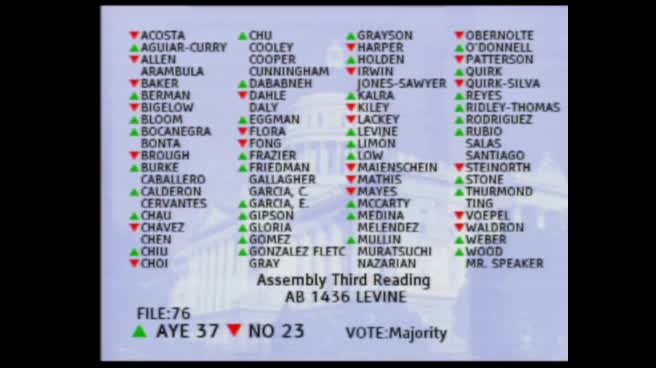 1MIN
Assembly Floor
 4MIN
Assembly Standing Committee on Elections and Redistricting
Bill Author

Bill Co-Author(s):