AB 512: Public employees’ retirement: safety members: industrial disability retirement.
- Session Year: 2017-2018
- House: Assembly
- Latest Version Date: 2017-10-15
The Public Employees Retirement Law, until January 1, 2018, provides a state safety member of the Public Employees Retirement System who retires for industrial disability a retirement benefit equal to the greatest amount resulting from 3 possible calculations. In this regard, the benefit amount is based on an actuarially reduced service retirement, a service retirement allowance, if the member is qualified, or 50% of his or her final compensation, plus an annuity purchased with his or her accumulated contributions, if any. Existing law establishes the Public Employees Retirement Fund, which is appropriated continuously for various purposes, including the payment of benefits.
This bill would extend the operation of these provisions until January 1, 2023. By providing that a continuously appropriated fund may be spent for a new purpose, this bill would make an appropriation. The bill would also make a statement of legislative findings.
The Public Employees Retirement Law, until January 1, 2018, provides a state safety member of the Public Employees Retirement System who retires for industrial disability a retirement benefit equal to the greatest amount resulting from 3 possible calculations. In this regard, the benefit amount is based on an actuarially reduced service retirement, a service retirement allowance, if the member is qualified, or 50% of his or her final compensation, plus an annuity purchased with his or her accumulated contributions, if any. Existing law establishes the Public Employees Retirement Fund, which is appropriated continuously for various purposes, including the payment of benefits.
This bill would delete the repeal of these provisions, thereby extending them indefinitely. extend the operation of these provisions until January 1, 2023. By providing that a continuously appropriated fund may be spent for a new purpose, this bill would make an appropriation. The bill would also make a statement of legislative findings.
The Public Employees Retirement Law, until January 1, 2018, provides a state safety member of the Public Employees Retirement System who retires for industrial disability a retirement benefit equal to the greatest amount resulting from 3 possible calculations. In this regard, the benefit amount is based on an actuarially reduced service retirement, a service retirement allowance, if the member is qualified, or 50% of his or her final compensation, plus an annuity purchased with his or her accumulated contributions, if any. Existing law establishes the Public Employees Retirement Fund, which is appropriated continuously for various purposes, including the payment of benefits.
This bill would delete the repeal of these provisions, thereby extending them indefinitely. By providing that a continuously appropriated fund may be spent for a new purpose, this bill would make an appropriation. The bill would also make a statement of legislative findings.
The Legislature finds and declares all of the following:
(a)A career in public safety is uniquely dangerous and includes repeated exposure to life-threatening or career-threatening risks and physical and mental demands well beyond those of most professions.
(b)Working as a public safety officer can take an incredible toll on the physical health of a firefighter or police officer in the form of injuries, shortened lives or shortened careers, all of which underlie the longstanding policy that all public safety officers should be afforded a secure, guaranteed retirement, including adequate occupational disability safeguards.
(c)Public safety officers view the need to preserve their retirement security as a profound and personal commitment, and they have invested heavily in it through substantial employee contributions and even forgoing salary increases at the collective bargaining table to protect this core benefit.
(d)According to a 2010 study conducted by the RAND Center for Health and Safety in the Workplace, firefighters today are 3.5 times more likely to suffer a workplace injury than nonsafety workers, and firefighters over 55 years of age have a nearly two-thirds greater risk of being injured than those under 45 years of age.
(e)Current law, due to be repealed at the end of 2017, provides an actuarially reduced industrial disability retirement (IDR) for public safety officers who work for a public agency contracting with the Public Employees Retirement System who are forced out of the usual duties of their current position because of a job-related illness or injury but who have not yet reached the minimum normal retirement age established by the retirement system, a benefit that is equivalent with that provided to public safety officers who retire from a retirement system organized under the County Employees Retirement Law of 1937.
(f)Some occupationally injured public safety officers, oftentimes severely disabled firefighters and law enforcement officers, are forced by these job-related injuries to sacrifice long careers of service begun at a very young age.
(g)These often severely injured public safety officers who have dedicated decades of service to their professions and their communities are forced to take the actuarially reduced disability retirement as the only alternative for providing for their families and the secure retirement they have earned.
(h)Without access to an IDR allowance that is equitable across all retirement systems, the retirement of some disabled public safety officers could be devastated, creating additional hardship for their families and imposing a potential additional burden on taxpayers and the social safety net.
(i)The equitable and consistent Public Employees Retirement System IDR safety calculation currently in law allows disabled firefighters or police officers to retire with dignity after a long and full career of service, without forfeiting the full secure retirement they have earned over decades of commitment.
(j)Since enactment in 2012, the Public Employees Retirement System IDR safety calculations have not resulted in an appreciable fiscal impact, confirming predictions offered when they were established.
(k)It is, therefore, the intent of the Legislature in enacting this measure to extend until January 1, 2023, the operation of Public Employees Retirement System IDR safety calculations so that Californias public safety officers and their families are not punished by a job-related illness or injury that forced them to forfeit the secure retirements that they spent decades earning on the job.
SEC. 2.Section 21400 of the Government Code is amended to read:21400.(a)A safety member who retires on or after January 1, 2013, for industrial disability shall receive a disability retirement benefit equal to the greater of the following:
(1)Fifty percent of his or her final compensation, plus an annuity purchased with his or her accumulated additional contributions, if any.
(2)A service retirement allowance, if he or she is qualified for service retirement.
(3)An actuarially reduced factor, as determined by the actuary, for each quarter year that his or her service age is less than 50 years, multiplied by the number of years of safety service subject to the applicable formula, if he or she is not qualified for service retirement.
(4)Nothing in this section shall require a member to receive a lower benefit than he or she would have received prior to January 1, 2013, as the law provided prior to that date.
(b)This section shall remain in effect only until January 1, 2023, and as of that date is repealed, unless a later enacted statute that is enacted before January 1, 2023, deletes or extends that date.
The Legislature finds and declares all of the following:
(a)A career in public safety is uniquely dangerous and includes repeated exposure to life-threatening or career-threatening risks and physical and mental demands well beyond those of most professions.
(b)Working as a public safety officer can take an incredible toll on the physical health of a firefighter or police officer in the form of injuries, shortened lives or shortened careers, all of which underlie the longstanding policy that all public safety officers should be afforded a secure, guaranteed retirement, including adequate occupational disability safeguards.
(c)Public safety officers view the need to preserve their retirement security as a profound and personal commitment, and they have invested heavily in it through substantial employee contributions and even forgoing salary increases at the collective bargaining table to protect this core benefit.
(d)According to a 2010 study conducted by the RAND Center for Health and Safety in the Workplace, firefighters today are 3.5 times more likely to suffer a workplace injury than nonsafety workers, and firefighters over 55 years of age have a nearly two-thirds greater risk of being injured than those under 45 years of age.
(e)Current law, due to be repealed at the end of 2017, provides an actuarially reduced industrial disability retirement (IDR) for public safety officers who work for a public agency contracting with the Public Employees Retirement System who are forced out of the usual duties of their current position because of a job-related illness or injury but who have not yet reached the minimum normal retirement age established by the retirement system, a benefit that is equivalent with that provided to public safety officers who retire from a retirement system organized under the County Employees Retirement Law of 1937.
(f)Some occupationally injured public safety officers, oftentimes severely disabled firefighters and law enforcement officers, are forced by these job-related injuries to sacrifice long careers of service begun at a very young age.
(g)These often severely injured public safety officers who have dedicated decades of service to their professions and their communities are forced to take the actuarially reduced disability retirement as the only alternative for providing for their families and the secure retirement they have earned.
(h)Without access to an IDR allowance that is equitable across all retirement systems, the retirement of some disabled public safety officers could be devastated, creating additional hardship for their families and imposing a potential additional burden on taxpayers and the social safety net.
(i)The equitable and consistent Public Employees Retirement System IDR safety calculation currently in law allows disabled firefighters or police officers to retire with dignity after a long and full career of service, without forfeiting the full secure retirement they have earned over decades of commitment.
(j)Since enactment in 2012, the Public Employees Retirement System IDR safety calculations have not resulted in an appreciable fiscal impact, confirming predictions offered when they were established.
(k)It is, therefore, the intent of the Legislature in enacting this measure to delete the January 1, 2018, repeal extend until January 1, 2023, the operation of Public Employees Retirement System IDR safety calculations so that Californias public safety officers and their families are not punished by a job-related illness or injury that forced them to forfeit the secure retirements that they spent decades earning on the job.
SEC. 2.Section 21400 of the Government Code is amended to read:21400.(a)A safety member who retires on or after January 1, 2013, for industrial disability shall receive a disability retirement benefit equal to the greater of the following:
(a)(1)Fifty percent of his or her final compensation, plus an annuity purchased with his or her accumulated additional contributions, if any.
(b)(2)A service retirement allowance, if he or she is qualified for service retirement.
(c)(3)An actuarially reduced factor, as determined by the actuary, for each quarter year that his or her service age is less than 50 years, multiplied by the number of years of safety service subject to the applicable formula, if he or she is not qualified for service retirement.
(d)(4)Nothing in this section shall require a member to receive a lower benefit than he or she would have received prior to January 1, 2013, as the law provided prior to that date.
(b)This section shall remain in effect only until January 1, 2023, and as of that date is repealed, unless a later enacted statute that is enacted before January 1, 2023, deletes or extends that date.
The Legislature finds and declares all of the following:
(a)A career in public safety is uniquely dangerous and includes repeated exposure to life-threatening or career-threatening risks and physical and mental demands well beyond those of most professions.
(b)Working as a public safety officer can take an incredible toll on the physical health of a firefighter or police officer in the form of injuries, shortened lives or shortened careers, all of which underlie the longstanding policy that all public safety officers should be afforded a secure, guaranteed retirement, including adequate occupational disability safeguards.
(c)Public safety officers view the need to preserve their retirement security as a profound and personal commitment, and they have invested heavily in it through substantial employee contributions and even forgoing salary increases at the collective bargaining table to protect this core benefit.
(d)According to a 2010 study conducted by the RAND Center for Health and Safety in the Workplace, firefighters today are 3.5 times more likely to suffer a workplace injury than nonsafety workers, and firefighters over 55 years of age have a nearly two-thirds greater risk of being injured than those under 45 years of age.
(e)Current law, due to be repealed at the end of 2017, provides an actuarially reduced industrial disability retirement (IDR) for public safety officers who work for a public agency contracting with the Public Employees Retirement System who are forced out of the usual duties of their current position because of a job-related illness or injury but who have not yet reached the minimum normal retirement age established by the retirement system, a benefit that is equivalent with that provided to public safety officers who retire from a retirement system organized under the County Employees Retirement Law of 1937.
(f)Some occupationally injured public safety officers, oftentimes severely disabled firefighters and law enforcement officers, are forced by these job-related injuries to sacrifice long careers of service begun at a very young age.
(g)These often severely injured public safety officers who have dedicated decades of service to their professions and their communities are forced to take the actuarially reduced disability retirement as the only alternative for providing for their families and the secure retirement they have earned.
(h)Without access to an IDR allowance that is equitable across all retirement systems, the retirement of some disabled public safety officers could be devastated, creating additional hardship for their families and imposing a potential additional burden on taxpayers and the social safety net.
(i)The equitable and consistent Public Employees Retirement System IDR safety calculation currently in law allows disabled firefighters or police officers to retire with dignity after a long and full career of service, without forfeiting the full secure retirement they have earned over decades of commitment.
(j)Since enactment in 2012, the Public Employees Retirement System IDR safety calculations have not resulted in an appreciable fiscal impact, confirming predictions offered when they were established.
(k)It is, therefore, the intent of the Legislature in enacting this measure to delete the January 1, 2018, repeal of Public Employees Retirement System IDR safety calculations so that Californias public safety officers and their families are not punished by a job-related illness or injury that forced them to forfeit the secure retirements that they spent decades earning on the job.
SEC. 2.Section 21400 of the Government Code is amended to read:21400.(a)A safety member who retires on or after January 1, 2013, for industrial disability shall receive a disability retirement benefit equal to the greater of the following:
(1)(a)Fifty percent of his or her final compensation, plus an annuity purchased with his or her accumulated additional contributions, if any.
(2)(b)A service retirement allowance, if he or she is qualified for service retirement.
(3)(c)An actuarially reduced factor, as determined by the actuary, for each quarter year that his or her service age is less than 50 years, multiplied by the number of years of safety service subject to the applicable formula, if he or she is not qualified for service retirement.
(4)(d)Nothing in this section shall require a member to receive a lower benefit than he or she would have received prior to January 1, 2013, as the law provided prior to that date.
(b)This section shall remain in effect only until January 1, 2018, and as of that date is repealed, unless a later enacted statute, that is enacted before January 1, 2018, deletes or extends that date.|
Date
|
Status
|
|---|---|
| Oct 15, 2017 | Chaptered by Secretary of State - Chapter 841, Statutes of 2017. |
| Oct 15, 2017 | Approved by the Governor. |
| Sep 25, 2017 | Enrolled and presented to the Governor at 12 p.m. |
| Sep 14, 2017 | Senate amendments concurred in. To Engrossing and Enrolling. |
| Sep 14, 2017 | In Assembly. Concurrence in Senate amendments pending. |
| Sep 14, 2017 | Read third time. Passed. Ordered to the Assembly. |
| Sep 12, 2017 | Ordered to special consent calendar. |
| Sep 11, 2017 | Read second time. Ordered to third reading. |
| Sep 8, 2017 | Read third time and amended. Ordered to second reading. |
| Sep 5, 2017 | Read second time. Ordered to third reading. |
| Sep 1, 2017 | From committee: Do pass. (Ayes 7. Noes 0.) (September 1). |
| Jul 10, 2017 | In committee: Referred to APPR. suspense file. |
| Jun 27, 2017 | From committee: Do pass and re-refer to Com. on APPR. with recommendation: To Consent Calendar. (Ayes 5. Noes 0.) (June 26). Re-referred to Com. on APPR. |
| Jun 8, 2017 | Referred to Com. on P.E. & R. |
| May 30, 2017 | In Senate. Read first time. To Com. on RLS. for assignment. |
| May 30, 2017 | Read third time. Passed. Ordered to the Senate. (Ayes 76. Noes 0. Page 1819.) |
| May 26, 2017 | From committee: Do pass. (Ayes 17. Noes 0.) (May 26). |
| Apr 26, 2017 | In committee: Set, first hearing. Referred to APPR. suspense file. |
| Mar 29, 2017 | From committee: Do pass and re-refer to Com. on APPR. (Ayes 7. Noes 0.) (March 29). Re-referred to Com. on APPR. |
| Feb 27, 2017 | Referred to Com. on P.E., R., & S.S. |
| Feb 14, 2017 | From printer. May be heard in committee March 16. |
| Feb 13, 2017 | Read first time. To print. |
|
Date
|
Description
|
Location
|
Votes
|
|
|---|---|---|---|---|
| Sep 14, 2017 | AB 512 Rodriguez Special Consent Calendar 1st Day Regular Session | Assembly Floor |
Passed |
|
| Sep 14, 2017 | Special Consent Calendar # AB512 | Senate Floor |
Passed |
|
| Sep 1, 2017 | Do pass | Senate Standing Committee on Appropriations |
Passed |
|
| Jul 10, 2017 | Placed on suspense file | Senate Standing Committee on Appropriations |
Passed |
|
| Jun 26, 2017 | Do pass, but first be re-referred to the Committee on [Appropriations] with the recommendation: To Consent Calendar | Senate Standing Committee on Public Employment and Retirement |
Passed |
|
| May 30, 2017 | AB 512 RODRIGUEZ Assembly Third Reading | Assembly Floor |
Passed |
|
| May 26, 2017 | Do pass. | Assembly Standing Committee on Appropriations |
Passed |
|
| Mar 29, 2017 | Do pass and be re-referred to the Committee on [Appropriations] | Assembly Standing Committee on Public Employees, Retirement, and Social Security |
Passed |
This list shows positions taken on this bill by organizations on the date displayed, which is linked to the original source.
Positions by individuals are not included.
|
Organization
|
Position
|
Date
|
|---|---|---|
| Cal Fire Local 2881 | ** Support | Sep 11, 2017 |
| California Association Of Highway Patrolmen | ** Support | Sep 11, 2017 |
| California Fire Chiefs Association | ** Support | Sep 11, 2017 |
| California Professional Firefighters | ** Support | Sep 11, 2017 |
| Fire Districts Association Of California | ** Support | Sep 11, 2017 |
| Laborers' International Union of North America, Local 777 | ** Support | Sep 11, 2017 |
| Laborers' International Union Of North America, Local 792 | ** Support | Sep 11, 2017 |
| Los Angeles County Professional Peace Officers Association | ** Support | Sep 11, 2017 |
| orange county professional fire fighters association, local 3631 | ** Support | Sep 11, 2017 |
| Peace Officers Research Association Of California | ** Support | Sep 11, 2017 |
| Riverside Sheriffs' Association | ** Support | Sep 11, 2017 |
CONCURRENCE IN SENATE AMENDMENTS
CSA1 Bill Id:AB 512
Author:(Rodriguez)
As Amended Ver:September 8, 2017
Majority vote
ASSEMBLY: | 76-0 | (May 30, 2017) | SENATE: | 40-0 | (September 14, 2017) |
Original Committee Reference: P.E.,R., & S.S.
SUMMARY: Extends the sunset date for the Industrial Disability Retirement (IDR) provided to safety members of the California Public Employee's Retirement System (CalPERS).
The Senate amendments delete the repeal of the prior sunset date of January 1, 2018, and instead, extend the sunset to January 1, 2023.
EXISTING LAW:
- Provides a safety member who retires on or after January 1, 2013, for an industrial disability, a disability retirement benefit equal to the greater of the following:
- Fifty percent of his or her final compensation, plus an annuity purchased with his or her accumulated additional contributions, if any.
- A service retirement allowance, if he or she is qualified for service retirement.
- An actuarially reduced factor, as determined by the actuary, for each quarter year that his or her service is less than 50 years, multiplied by the number of years of safety service subject to the applicable formula, if he or she is not qualified for service retirement.
- Provides that a member is not required to receive a lower benefit than he or she would have received prior to January 1, 2013, as the law provided prior to that date.
- Repeals these provisions effective January 1, 2018, unless a later enacted statute deletes or extends the date.
FISCAL EFFECT: According to the Senate Appropriations Committee, CalPERS estimates that the bill could result in annual industrial disability retirement benefit costs of approximately $6.3 million; roughly half of this amount would be for state safety members.
The Senate Appropriations Committee noted that 50% of the costs associated with the IDR benefit would be for state public safety members, and that the cost estimates are based on the impact of this policy on the total value of benefits between January 1, 2013, and June 30, 2015, and represented 0.1% of payroll for affected members. Future costs would depend on the number of disability retirements that could occur.
COMMENTS: Please see the policy committee analysis for a full discussion of this bill.
Analysis Prepared by: Michael Bolden / P.E.,R., & S.S. / (916) 319-3957 FN: 0002207
Office of Senate Floor Analyses (916) 651-1520 Fax: (916) 327-4478 | AB |
THIRD READING
Bill No: AB 512
Amended: 9/8/17 in Senate
SENATE PUBLIC EMP. & RET. COMMITTEE: 5-0, 6/26/17
AYES: Pan, Morrell, Leyva, Moorlach, Portantino
SENATE APPROPRIATIONS COMMITTEE: 7-0, 9/1/17
AYES: Lara, Bates, Beall, Bradford, Hill, Nielsen, Wiener
ASSEMBLY FLOOR: 76-0, 5/30/17 - See last page for vote
California Association of Highway Patrolmen
California Professional Firefighters
DIGEST:
This bill changes the sunset date from January 1, 2018, to January 1, 2023, for the Industrial Disability Retirement (IDR) benefit provided to safety members of the California Public Employees’ Retirement System (CalPERS) and thus, continues for five more years a program that allows certain disabled safety members who are not yet eligible to receive a service retirement to receive an actuarial adjusted industrial disability based on their years of service.
Senate Floor Amendments of 9/8/17 add a sunset date of January 1, 2023.
ANALYSIS:
Existing law:
- Provides a safety member who retires on or after January 1, 2013, for an industrial disability, a disability retirement benefit equal to the greater of the following:
- Fifty percent of his or her final compensation, plus an annuity purchased with his or her accumulated additional contributions, if any.
- A service retirement allowance, if he or she is qualified for service retirement.
- An actuarially reduced factor, as determined by the actuary, for each quarter year that his or her service is less than 50 years, multiplied by the number of years of safety service subject to the applicable formula, if he or she is not qualified for service retirement.
- Provides that a member is not required to receive a lower benefit than he or she would have received prior to January 1, 2013, as the law provided prior to that date.
- Repeals these provisions effective January 1, 2018, unless a later enacted statute deletes or extends the date.
This bill:
- Changes the sunset date of the program to January 1, 2023, and thus, continues for five additional years a program that authorizes a CalPERS industrial disability safety member who is less than 50 years old to receive an industrial disability benefit based on the member’s years of service if the benefit would be greater than 50 percent of the member’s final compensation and an annuity purchased with the member’s accumulated contributions.
- Makes findings and declarations related to a career in public safety, and CalPERS’ IDR benefit for the system’s safety members.
Background
CalPERS offers three types of retirement benefits to safety members: service or “normal” retirement, disability retirement, and IDR. IDR applies to those individuals who become disabled from a job-related injury or illness and can no longer perform the duties of the job.
There are no minimum age or service credit requirements in order to be eligible, but both age and years of service are potential factors in calculating the monthly allowance provided. The allowance provided is the highest monthly allowance calculated under various formulas. The first formula is 50 percent of final compensation, and the second formula is the monthly service retirement allowance, but this second option is only available to employees who have reached the minimum age required for service retirement.
The California Public Employees’ Pension Reform Act (PEPRA) added a third formula for workers under the age of 50 who retired after January 1, 2013.
Specifically, this formula is the actuarially reduced factor for each quarter that a member’s service age is less than 50 years, multiplied by the number of years of service. This new formula, which was designed to sunset after five years in order to gauge impact and costs, primarily benefits employees under the age of 50 with a “3% at age 50” service retirement benefit. In some cases, prior to PEPRA, these employees were receiving a lower industrial disability allowance than what they had earned through service credit, but they couldn’t receive this service retirement because they didn’t meet the minimum age requirement. This new IDR formula allows that member to receive an amount closer to what they had earned through service.
FISCAL EFFECT: Appropriation: Fiscal Com.: Local:
According to the Senate Appropriations Committee, CalPERS estimates that this bill could result in annual IDR benefit costs of approximately $6.3 million; roughly half of this amount would be for state safety members.
CAL FIRE Local 2881 (co-source)
California Association of Highway Patrolmen (co-source)
California Fire Chiefs Association
California Professional Firefighters (co-source)
Fire Districts Association of California
Laborers’ International Union of North America, Local 777
Laborers’ International Union of North America, Local 792
Los Angeles County Professional Peace Officers Association
Orange County Professional Fire Fighters Association, Local 3631
Peace Officers Research Association of California
Riverside Sheriffs’ Association
None received
ARGUMENTS IN SUPPORT: According to the California Professional Firefighters, one of the sponsors of this bill:
If the existing CalPERS’ IDR safety calculations are not retained and instead are allowed to sunset, CalPERS’ safety members who are occupationally-disabled later in their career may ultimately continue working through their job-caused illness or injury as a means to stave off what would otherwise be a dramatically-reduced retirement allowance. In such an instance, the safety of the injured public safety officer, his or her fellow firefighters and the public could be jeopardized. By keeping IDR parity, AB 512 enhances the public’s safety, while protecting public safety officers and their families by ensuring that they are not punished because a job-caused injury or illness required them to forfeit the secure retirement he or she spent decades contributing to and earning on the job.
ASSEMBLY FLOOR: 76-0, 5/30/17
AYES: Acosta, Aguiar-Curry, Travis Allen, Arambula, Baker, Berman, Bigelow, Bloom, Bocanegra, Bonta, Brough, Burke, Caballero, Calderon, Cervantes, Chávez, Chen, Chiu, Chu, Cooley, Cooper, Cunningham, Dababneh, Dahle, Daly, Flora, Fong, Frazier, Friedman, Gallagher, Cristina Garcia, Eduardo Garcia, Gipson, Gomez, Gonzalez Fletcher, Gray, Grayson, Harper, Holden, Irwin, Jones-Sawyer, Kalra, Kiley, Lackey, Levine, Limón, Low, Maienschein, Mathis, Mayes, McCarty, Medina, Melendez, Mullin, Muratsuchi, Nazarian, Obernolte, O'Donnell, Patterson, Quirk, Quirk-Silva, Reyes, Ridley-Thomas, Rodriguez, Rubio, Salas, Santiago, Steinorth, Mark Stone, Thurmond, Ting, Voepel, Waldron, Weber, Wood, Rendon
NO VOTE RECORDED: Chau, Choi, Eggman, Gloria
9/11/17 11:18:05
**** END ****
Office of Senate Floor Analyses (916) 651-1520 Fax: (916) 327-4478 | AB |
THIRD READING
Bill No: AB 512
:
SENATE PUBLIC EMP. & RET. COMMITTEE: 5-0, 6/26/17
AYES: Pan, Morrell, Leyva, Moorlach, Portantino
SENATE APPROPRIATIONS COMMITTEE: 7-0, 9/1/17
AYES: Lara, Bates, Beall, Bradford, Hill, Nielsen, Wiener
ASSEMBLY FLOOR: 76-0, 5/30/17 - See last page for vote
California Association of Highway Patrolmen
California Professional Firefighters
DIGEST:
This bill removes a sunset date for the Industrial Disability Retirement (IDR) benefit provided to safety members of the California Public Employees’ Retirement System (CalPERS) and thus, continues a program that allows certain disabled safety members who are not yet eligible to receive a service retirement to receive an actuarial adjusted industrial disability based on their years of service.
ANALYSIS:
Existing law:
- Provides a safety member who retires on or after January 1, 2013, for an industrial disability, a disability retirement benefit equal to the greater of the following:
- Fifty percent of his or her final compensation, plus an annuity purchased with his or her accumulated additional contributions, if any.
- A service retirement allowance, if he or she is qualified for service retirement.
- An actuarially reduced factor, as determined by the actuary, for each quarter year that his or her service is less than 50 years, multiplied by the number of years of safety service subject to the applicable formula, if he or she is not qualified for service retirement.
- Provides that a member is not required to receive a lower benefit than he or she would have received prior to January 1, 2013, as the law provided prior to that date.
- Repeals these provisions effective January 1, 2018, unless a later enacted statute deletes or extends the date.
This bill:
- Removes the sunset provision of January 1, 2018, from statute – and thus, continues a program - that authorizes a CalPERS industrial disability safety member who is less than 50 years old to receive an industrial disability benefit based on the member’s years of service if the benefit would be greater than fifty percent of the member’s final compensation and an annuity purchased with the member’s accumulated contributions.
- Makes findings and declarations related to a career in public safety, and CalPERS’ IDR benefit for the system’s safety members.
Background
CalPERS offers three types of retirement benefits to safety members: service or “normal” retirement, disability retirement, and IDR. IDR applies to those individuals who become disabled from a job-related injury or illness and can no longer perform the duties of the job.
There are no minimum age or service credit requirements in order to be eligible, but both age and years of service are potential factors in calculating the monthly allowance provided. The allowance provided is the highest monthly allowance calculated under various formulas. The first formula is 50 percent of final compensation, and the second formula is the monthly service retirement allowance, but this second option is only available to employees who have reached the minimum age required for service retirement.
The California Public Employees’ Pension Reform Act (PEPRA) added a third formula for workers under the age of 50 who retired after January 1, 2013.
Specifically, this formula is the actuarially reduced factor for each quarter that a member’s service age is less than 50 years, multiplied by the number of years of service. This new formula, which was designed to sunset after five years in order to gauge impact and costs, primarily benefits employees under the age of 50 with a “3% at age 50” service retirement benefit. In some cases, prior to PEPRA, these employees were receiving a lower industrial disability allowance than what they had earned through service credit, but they couldn’t receive this service retirement because they didn’t meet the minimum age requirement. This new IDR formula allows that member to receive an amount closer to what they had earned through service.
FISCAL EFFECT: Appropriation: Fiscal Com.: Local:
According to the Senate Appropriations Committee, CalPERS estimates that this bill could result in annual IDR benefit costs of approximately $6.3 million; roughly half of this amount would be for state safety members.
CAL FIRE Local 2881 (co-source)
California Association of Highway Patrolmen (co-source)
California Professional Firefighters (co-source)
California Fire Chiefs Association
Fire Districts Association of California
Laborers’ International Union of North America, Local 777
Laborers’ International Union of North America, Local 792
Los Angeles County Professional Peace Officers Association
Orange County Professional Fire Fighters Association, Local 3631
Peace Officers Research Association of California
Riverside Sheriffs’ Association
None received
ARGUMENTS IN SUPPORT: According to the California Professional Firefighters, one of the sponsors of this bill:
If the existing CalPERS’ IDR safety calculations are not retained and instead are allowed to sunset, CalPERS’ safety members who are occupationally-disabled later in their career may ultimately continue working through their job-caused illness or injury as a means to stave off what would otherwise be a dramatically-reduced retirement allowance. In such an instance, the safety of the injured public safety officer, his or her fellow firefighters and the public could be jeopardized. By keeping IDR parity, AB 512 enhances the public’s safety, while protecting public safety officers and their families by ensuring that they are not punished because a job-caused injury or illness required them to forfeit the secure retirement he or she spent decades contributing to and earning on the job.
ASSEMBLY FLOOR: 76-0, 5/30/17
AYES: Acosta, Aguiar-Curry, Travis Allen, Arambula, Baker, Berman, Bigelow, Bloom, Bocanegra, Bonta, Brough, Burke, Caballero, Calderon, Cervantes, Chávez, Chen, Chiu, Chu, Cooley, Cooper, Cunningham, Dababneh, Dahle, Daly, Flora, Fong, Frazier, Friedman, Gallagher, Cristina Garcia, Eduardo Garcia, Gipson, Gomez, Gonzalez Fletcher, Gray, Grayson, Harper, Holden, Irwin, Jones-Sawyer, Kalra, Kiley, Lackey, Levine, Limón, Low, Maienschein, Mathis, Mayes, McCarty, Medina, Melendez, Mullin, Muratsuchi, Nazarian, Obernolte, O'Donnell, Patterson, Quirk, Quirk-Silva, Reyes, Ridley-Thomas, Rodriguez, Rubio, Salas, Santiago, Steinorth, Mark Stone, Thurmond, Ting, Voepel, Waldron, Weber, Wood, Rendon
NO VOTE RECORDED: Chau, Choi, Eggman, Gloria
9/4/17 13:02:57
**** END ****
SENATE COMMITTEE ON APPROPRIATIONS
Senator Ricardo Lara, Chair
2017 - 2018 Regular Session
AB 512 (Rodriguez) - Public employees’ retirement: safety members: industrial disability retirement
Version: February 13, 2017 | Policy Vote: P.E. & R. 5 - 0 |
Urgency: No | Mandate: No |
Hearing Date: July 10, 2017 | Consultant: Robert Ingenito |
This bill meets the criteria for referral to the Suspense File.
Bill Summary:
AB 512 would remove a sunset date for the Industrial Disability Retirement (IDR) benefit provided to safety members of the California Public Employees’ Retirement System (CalPERS). Consequently, it would continue a program that allows certain disabled safety members who are not yet eligible to receive a service retirement to receive an actuarial adjusted industrial disability based on their years of service.
Fiscal Impact:
CalPERS estimates that the bill could result in annual industrial disability retirement benefit costs of approximately $6.3 million; roughly half of this amount would be for state safety members.
Background:
CalPERS offers three types of retirement benefits to safety members: service or “normal” retirement, disability retirement, and industrial disability retirement. Industrial disability retirement applies to those individuals who become disabled from a job-related injury or illness and can no longer perform its duties.
There are no minimum age or service credit requirements in order to be eligible, but both age and years of service are potential factors in calculating the monthly allowance provided. The allowance provided is the highest monthly allowance calculated under various formulas. The first formula is 50 percent of final compensation, and the second formula is the monthly service retirement allowance, but this second option is only available to employees who have reached the minimum age required for service retirement.
The California Public Employees’ Pension Reform Act (PEPRA) added a third formula for workers under the age of 50 who retired after January 1, 2013. Specifically, this formula is the actuarially reduced factor for each quarter that a member’s service age is less than 50 years, multiplied by the number of years of service. This new formula, which was designed to sunset after five years in order to gauge impact and costs, primarily benefits employees under the age of 50 with a “3% at age 50” service retirement benefit. In some cases, prior to PEPRA, these employees were receiving a lower industrial disability allowance than what they had earned through service credit, but they couldn’t receive this service retirement because they didn’t meet the minimum age requirement. This new industrial disability retirement formula allows that member to receive an amount closer to what they had earned through service.
Proposed Law:
This bill would delete the sunset provision of January 1, 2018, from statute that authorizes a CalPERS industrial disability safety member who is less than 50 years old to receive an industrial disability benefit based on the member’s years of service if the benefit would be greater than fifty percent of the member’s final compensation and an annuity purchased with the member’s accumulated contributions.
Staff Comments:
As noted above, the bill could result in annual industrial disability retirement benefit costs of approximately $6.3 million; 50 percent of which would be for state safety members. These cost estimates are based on the impact of this policy on the total value of benefits between January 1, 2013, and June 30, 2015, and represented 0.1 percent of payroll for affected members. Future costs would depend on the number of disability retirements that could occur.
-- END --
SENATE COMMITTEE ON
PUBLIC EMPLOYMENT AND RETIREMENT
Dr. Richard Pan, Chair
2017 - 2018 Regular
Bill No: AB 512 Hearing Date: 6/26/17
Author: | Rodriguez | ||
Version: | 2/13/17 As introduced | ||
Urgency: | No | Fiscal: | Yes |
Consultant: | Glenn Miles | ||
Subject: Public employees’ retirement: safety members: industrial disability retirement
SOURCE: CAL FIRE Local 2881(co-source)
California Association of Highway Patrolmen (co-source)
California Professional Firefighters (co-source)
ASSEMBLY VOTES:
Assembly Floor: | 76 - 0 |
Assembly Appropriations Committee: | 17 - 0 |
Assembly Public Employees, Retirement/Soc Sec Committee: | 7 - 0 |
DIGEST: This bill removes a sunset date for the Industrial Disability Retirement (IDR) benefit provided to safety members of the California Public Employees’ Retirement System (CalPERS) and thus, continues a program that allows certain disabled safety members who are not yet eligible to receive a service retirement to receive an actuarial adjusted industrial disability based on their years of service.
ANALYSIS:
Existing law:
- Provides a safety member who retires on or after January 1, 2013, for an industrial disability, a disability retirement benefit equal to the greater of the following:
- Fifty percent of his or her final compensation, plus an annuity purchased with his or her accumulated additional contributions, if any.
- A service retirement allowance, if he or she is qualified for service retirement.
- An actuarially reduced factor, as determined by the actuary, for each quarter year that his or her service is less than 50 years, multiplied by the number of years of safety service subject to the applicable formula, if he or she is not qualified for service retirement.
- Provides that a member is not required to receive a lower benefit than he or she would have received prior to January 1, 2013, as the law provided prior to that date.
- Repeals these provisions effective January 1, 2018, unless a later enacted statute deletes or extends the date.
This bill:
- Removes the sunset provision of January 1, 2018, from statute – and thus, continues a program - that authorizes a CalPERS industrial disability safety member who is less than 50 years old to receive an industrial disability benefit based on the member’s years of service if the benefit would be greater than fifty percent of the member’s final compensation and an annuity purchased with the member’s accumulated contributions.
- Makes findings and declarations related to a career in public safety, and CalPERS’ industrial disability retirement benefit for the system’s safety members.
Background
CalPERS offers three types of retirement benefits to safety members: service or “normal” retirement, disability retirement, and industrial disability retirement. Industrial disability retirement applies to those individuals who become disabled from a job-related injury or illness and can no longer perform the duties of the job.
There are no minimum age or service credit requirements in order to be eligible, but both age and years of service are potential factors in calculating the monthly allowance provided. The allowance provided is the highest monthly allowance calculated under various formulas. The first formula is 50 percent of final compensation, and the second formula is the monthly service retirement allowance, but this second option is only available to employees who have reached the minimum age required for service retirement.
The California Public Employees’ Pension Reform Act (PEPRA) added a third formula for workers under the age of 50 who retired after January 1, 2013.
Specifically, this formula is the actuarially reduced factor for each quarter that a member’s service age is less than 50 years, multiplied by the number of years of service. This new formula, which was designed to sunset after 5 years in order to gauge impact and costs, primarily benefits employees under the age of 50 with a “3% at age 50” service retirement benefit. In some cases, prior to PEPRA, these employees were receiving a lower industrial disability allowance than what they had earned through service credit, but they couldn’t receive this service retirement because they didn’t meet the minimum age requirement. This new industrial disability retirement formula allows that member to receive an amount closer to what they had earned through service.
Related/Prior Legislation
None known.
FISCAL EFFECT: Appropriation: Yes Fiscal Com.: Yes Local: No
According to the Assembly Appropriations committee this bill would result in:
Potential industrial disability retirement benefit costs of approximately $6.3 million per year, with around half of these costs being for state safety members. These cost estimates are based on the impact of this policy on the total value of benefits between January 1, 2013, and June 30, 2015, and these costs represented 0.1% of payroll for affected members. Future costs may be lower depending on the number of industrial disability retirements that occur.
SUPPORT:
CAL FIRE Local 2881(co-source)
California Association of Highway Patrolmen (co-source)
California Professional Firefighters (co-source)
California Fire Chiefs Association
Fire Districts Association of California
Laborers’ International Union of North America, Local 777
Laborers’ International Union of North America, Local 792
Los Angeles County Professional Peace Officers Association
Orange County Professional Fire Fighters Association, Local 3631
Peace Officers Research Association of California
Riverside Sheriffs’ Association
OPPOSITION:
None received.
ARGUMENTS IN SUPPORT: According to the sponsor,
If the existing CalPERS’ IDR safety calculations are not retained and instead are allowed to sunset, CalPERS’ safety members who are occupationally-disabled later in their career may ultimately continue working through their job-caused illness or injury as a means to stave off what would otherwise be a dramatically-reduced retirement allowance. In such an instance, the safety of the injured public safety officer, his or her fellow firefighters and the public could be jeopardized. By keeping IDR parity, AB 512 enhances the public’s safety, while protecting public safety officers and their families by ensuring that they are not punished because a job-caused injury or illness required them to forfeit the secure retirement he or she spent decades contributing to and earning on the job.
ASSEMBLY THIRD READING
ATR Bill Id:AB 512
Author:(Rodriguez)
As Introduced Ver:February 13, 2017
Majority vote
Committee | Votes | Ayes | Noes |
Public Employees | 7-0 | Rodriguez, Travis Allen, Brough, Cervantes, Bonta, Cooper, O'Donnell | |
Appropriations | 17-0 | Gonzalez Fletcher, Bigelow, Bloom, Bocanegra, Bonta, Brough, Calderon, McCarty, Quirk, Fong, Friedman, Gallagher, Eduardo Garcia, Gray, Muratsuchi, Obernolte, Reyes |
|
SUMMARY: Removes the sunset provision from existing law related to retirement calculations for a safety member of the California Public Employees Retirement System (CalPERS) who retires on or after January 1, 2013, for an industrial retirement disability benefit. Specifically, this bill:
- Makes findings and declarations related to a career in public safety, and CalPERS' industrial disability retirement benefit for the system's safety members.
- Removes the sunset of January 1, 2018, from the industrial disability retirement benefit calculations.
EXISTING LAW:
- Provides a safety member who retires on or after January 1, 2013, for an industrial disability, a disability retirement benefit equal to the greater of the following:
- Fifty percent of his or her final compensation, plus an annuity purchased with his or her accumulated additional contributions, if any.
- A service retirement allowance, if he or she is qualified for service retirement.
- An actuarially reduced factor, as determined by the actuary, for each quarter year that his or her service is less than 50 years, multiplied by the number of years of safety service subject to the applicable formula, if he or she is not qualified for service retirement.
- Provides that a member is not required to receive a lower benefit than he or she would have received prior to January 1, 2013, as the law provided prior to that date.
- Repeals these provisions effective January 1, 2018, unless a later enacted statute deletes or extends the date
FISCAL EFFECT: According to the Assembly Appropriations Committee, this bill will have potential industrial disability retirement benefit costs of approximately $6.3 million per year, with around half of these costs being for state safety members. These cost estimates are based on the impact of this policy on the total value of benefits between January 1, 2013, and June 30, 2015, and these costs represented 0.1% of payroll for affected members. Future costs may be lower depending on the number of industrial disability retirements that occur.
COMMENTS: The CalPERS offers three types of retirement benefits to safety members: service or "normal," disability, and industrial disability retirement. Industrial disability retirement applies to those individuals who become disabled from a job-related injury or illness and can no longer perform the duties of the job. There are no minimum age or service credit requirements to be eligible, but both age and years of service are potential factors in calculating the monthly allowance to be provided. The allowance provided is the highest monthly allowance calculated under various formulas. The first formula is 50% of final compensation and the second formula is the monthly service retirement allowance; however, this second option is only available to employees who have reached the minimum age required for service retirement.
The California Public Employees' Pension Reform Act (PEPRA) added a third formula for workers under the age of 50 who retired after January 1, 2013. Specifically, this formula is the actuarially reduced factor for each quarter that a member's service age is less than 50 years, multiplied by the number of years of service. This new formula, which was designed to sunset after five years to gauge impact and costs, primarily benefits employees under 50 years of age with a "3% at age 50" service retirement benefit. In some instances, and prior to enactment of the PEPRA, these employees were receiving a lower industrial disability allowance than what they had earned through service credit, but they couldn't receive this service retirement because they didn't meet the minimum age requirement. This new industrial disability retirement formula allows that member to receive an amount closer to what they had earned through service.
Analysis Prepared by: Michael Bolden / P.E.,R., & S.S. / (916) 319-3957 FN: 0000507
Date of Hearing: April 26, 2017
ASSEMBLY COMMITTEE ON APPROPRIATIONS
Lorena Gonzalez Fletcher, Chair
ABPCA Bill Id:AB 512
Author:(Rodriguez) – As Introduced Ver:February 13, 2017
Policy Committee: | Public Employees, Retirement/Soc Sec | Vote: | 7 - 0 |
|
| ||
|
|
Urgency: No State Mandated Local Program: No Reimbursable: No
SUMMARY:
This bill removes the sunset provision related to industrial disability retirement benefit calculations for safety members of the California Public Employees Retirement System (CalPERS), who retire on or after January 1, 2013.
FISCAL EFFECT:
Potential industrial disability retirement benefit costs of approximately $6.3 million per year, with around half of these costs being for state safety members. These cost estimates are based on the impact of this policy on the total value of benefits between January 1, 2013, and June 30, 2015, and these costs represented 0.1% of payroll for affected members. Future costs may be lower depending on the number of industrial disability retirements that occur.
COMMENTS:
- Industrial disability retirement. CalPERS offers three types of retirement benefits to safety members: service or “normal” retirement, disability retirement, and industrial disability retirement. Industrial disability retirement applies to those individuals who become disabled from a job-related injury or illness and can no longer perform the duties of the job. There are no minimum age or service credit requirements in order to be eligible, but both age and years of service are potential factors in calculating the monthly allowance provided. The allowance provided is the highest monthly allowance calculated under various formulas. The first formula is 50% of final compensation, and the second formula is the monthly service retirement allowance, but this second option is only available to employees who have reached the minimum age required for service retirement.
The California Public Employees’ Pension Reform Act (PEPRA) added a third formula for workers under the age of 50 who retired after January 1, 2013. Specifically, this formula is the actuarially reduced factor for each quarter that a member’s service age is less than 50 years, multiplied by the number of years of service. This new formula, which was designed to sunset after 5 years in order to gauge impact and costs, primarily benefits employees under the age of 50 with a “3% at age 50” service retirement benefit. In some cases, prior to PEPRA, these employees were receiving a lower industrial disability allowance than what they had earned through service credit, but they couldn’t receive this service retirement because they didn’t meet the minimum age requirement. This new industrial disability retirement formula allows that member to receive an amount closer to what they had earned through service.
- Purpose. According to the author, letting the new industrial disability retirement formula sunset will jeopardize the safety of CalPERS’ safety employees by forcing them to continue working through work-related injuries in order to prevent reduced retirement allowances. The California Professional Firefighters note that existing industrial disability retirement calculations are consistent with other provisions provided to firefighters who work for counties and special districts and are members of other retirement systems.
Analysis Prepared by: Luke Reidenbach / APPR. / (916) 319-2081
Discussed in Hearing
 1H
Senate Standing Committee on Appropriations
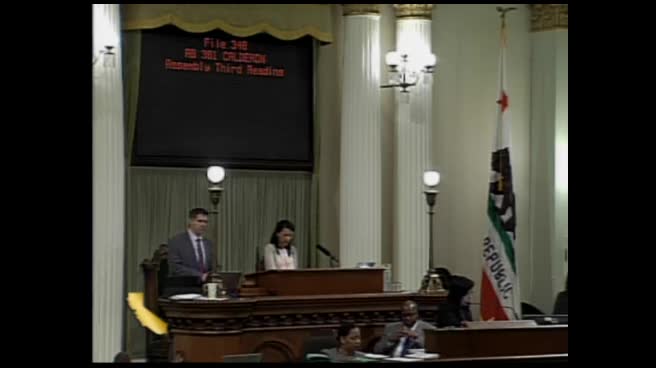 1MIN
Assembly Floor
 1H
Assembly Standing Committee on Appropriations
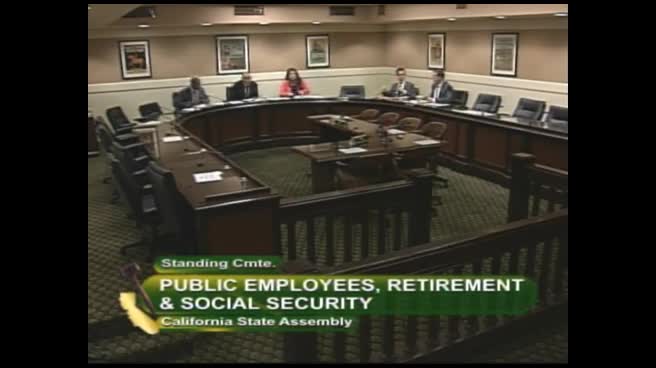 5MIN
Assembly Standing Committee on Public Employees, Retirement, and Social Security
Bill Author

Bill Co-Author(s):