AB 534: Common interest developments: mechanics liens.
- Session Year: 2017-2018
- House: Assembly
- Latest Version Date: 2017-07-10
The California Constitution establishes a lien upon the property upon which mechanics, persons furnishing materials, artisans, and laborers of every class have bestowed labor or furnished material for the value of the labor done and materials furnished. The Legislature is required to provide for the speedy and efficient enforcement of these liens.
The Davis-Sterling Common Interest Development Act and the Commercial and Industrial Common Interest Development Act provide for the creation and regulation of common interest developments. These acts define a common interest development to include a condominium project, planned development, and stock cooperative. The acts also define, for purposes of the acts, a separate interest in a condominium project, planned development, and stock cooperative.
These acts prohibit, in a condominium project, a mechanics lien from being filed against any other property of an owner in the condominium project unless that owner has expressly consented to or requested the performance of the labor or furnishing of the materials or services, except in the case of emergency repairs to the condominium.
This bill would instead prohibit, in a common interest development, a mechanics lien from being filed against another owner in the common interest development unless that consent was provided or that request was made, except in the case of emergency repairs.
Existing law authorizes the owner of a condominium to remove that owners condominium from a lien filed against 2 or more condominiums or any part thereof by payment to the holder of the lien the fraction of the total sum secured by lien that is attributable to the owners condominium. Existing law also provides that an owner of real property or an owner of any interest in real property subject to a recorded claim of lien, or a direct contractor or subcontractor affected by the claim of lien, that disputes the correctness or validity of the claim may obtain release of the real property from the claim of lien by recording a lien release bond.
This bill would authorize the owner of a separate interest in a common interest development to remove the separate interest from a lien against 2 or more separate interests by either paying to the holder of the lien the fraction of the total sum secured by lien that is attributable to the owners separate interest or recording a lien release bond, as specified.
This bill would also deem the governing association of a common interest development to be an agent of the owners of separate interests in the common interest development with respect to a work of improvement on a common area for all notices and claims required pursuant to existing law relating to works of improvement.
The California Constitution establishes a lien upon the property upon which mechanics, persons furnishing materials, artisans, and laborers of every class have bestowed labor or furnished material for the value of the labor done and materials furnished. The Legislature is required to provide for the speedy and efficient enforcement of these liens.
The Davis-Sterling Common Interest Development Act and the Commercial and Industrial Common Interest Development Act provide for the creation and regulation of common interest developments. These acts define a common interest development to include a condominium project, planned development, and stock cooperative. The acts also define, for purposes of the acts, a separate interest in a condominium project, planned development, and stock cooperative.
These acts prohibit, in a condominium project, a mechanics lien from being filed against any other property of an owner in the condominium project unless that owner has expressly consented to or requested the performance of the labor or furnishing of the materials or services, except in the case of emergency repairs to the condominium.
This bill would instead prohibit, in a common interest development, a mechanics lien from being filed against an other another owner in the common interest development unless that consent was provided or that request was made, except in the case of emergency repairs.
Existing law authorizes the owner of a condominium to remove that owners condominium from a lien filed against 2 or more condominiums or any part thereof by payment to the holder of the lien the fraction of the total sum secured by lien that is attributable to the owners condominium. Existing law also provides that an owner of real property or an owner of any interest in real property subject to a recorded claim of lien, or a direct contractor or subcontractor affected by the claim of lien, that disputes the correctness or validity of the claim may obtain release of the real property from the claim of lien by recording a lien release bond.
This bill would authorize the owner of a separate interest in a common interest development to remove the separate interest from a lien against 2 or more separate interests by either paying to the holder of the lien the fraction of the total sum secured by lien that is attributable to the owners separate interest or recording a lien release bond, as specified.
This bill would also deem the governing association of a common interest development to be an agent of the owners of separate interests in the common interest development with respect to a work of improvement on a common area for all notices and claims required pursuant to existing law relating to works of improvement.
The California Constitution establishes a lien upon the property upon which mechanics, persons furnishing materials, artisans, and laborers of every class have bestowed labor or furnished material for the value of the labor done and materials furnished. The Legislature is required to provide for the speedy and efficient enforcement of these liens.
The Davis-Sterling Common Interest Development Act and the Commercial and Industrial Common Interest Development Act provide for the creation and regulation of common interest developments. These acts define a common interest development to include a condominium project, planned development, and stock cooperative. The acts also define, for purposes of the acts, a separate interest in a condominium project, planned development, and stock cooperative.
These acts prohibit, in a condominium project, a mechanics lien from being filed against any other property of an owner in the condominium project unless that owner has expressly consented to or requested the performance of the labor or furnishing of the materials or services, except in the case of emergency repairs to the condominium.
This bill would instead prohibit, in a common interest development, a mechanics lien from being filed against an other owner in the common interest development unless that consent was provided or that request was made, except in the case of emergency repairs.
Existing law authorizes the owner of a condominium to remove that owners condominium from a lien filed against 2 or more condominiums or any part thereof by payment to the holder of the lien the fraction of the total sum secured by lien that is attributable to the owners condominium. Existing law also provides that an owner of real property or an owner of any interest in real property subject to a recorded claim of lien, or a direct contractor or subcontractor affected by the claim of lien, that disputes the correctness or validity of the claim may obtain release of the real property from the claim of lien by recording a lien release bond.
This bill would authorize the owner of a separate interest in a common interest development to remove the separate interest from a lien against 2 or more separate interests by either paying to the holder of the lien the fraction of the total sum secured by lien that is attributable to the owners separate interest or recording a lien release bond, as specified.
This bill would also deem the governing association of a common interest development to be an agent of the owners of separate interests in the common interest development with respect to a work of improvement on a common area for all notices and claims required pursuant to existing law relating to works of improvement.
(a)In a common interest development, no labor performed or services or materials furnished with the consent of, or at the request of, an owner in the common interest development or the owners agent or contractor shall be the basis for the filing of a lien against any other property of an other owner in the common interest development unless that other owner has expressly consented to or requested the performance of the labor or furnishing of the materials or services. However, express consent shall be deemed to have been given by the owner of any separate interest in the case of emergency repairs thereto.
(b)Labor performed or services or materials furnished for the common area, if duly authorized by the association, shall be deemed to be performed or furnished with the express consent of each separate interest owner.
(c)The owner of any separate interest may remove that owners separate interest from a lien against two or more separate interests or any part thereof by doing either of the following:
(1)Pay to the holder of the lien the fraction of the total sum secured by the lien that is attributable to the owners separate interest.
(2)Record a lien release bond, pursuant to Section 8424, in an amount equal to 125 percent of the sum secured by the lien that is attributable to the owners separate interest.
SEC. 2.Section 4620 is added to the Civil Code, to read:4620.If the association is served with a claim of lien pursuant to Part 6 (commencing with Section 8000) for a work of improvement on a common area, the association shall, within 60 days of service, give individual notice to the members, pursuant to Section 4040.
SEC. 3.Section 6658 of the Civil Code is amended to read:6658.(a)In a common interest development, no labor performed or services or materials furnished with the consent of, or at the request of, an owner in the common interest development or the owners agent or contractor shall be the basis for the filing of a lien against any other property of any other owner in the common interest development unless that other owner has expressly consented to or requested the performance of the labor or furnishing of the materials or services. However, express consent shall be deemed to have been given by the owner of any separate interest in the case of emergency repairs thereto.
(b)Labor performed or services or materials furnished for the common area, if duly authorized by the association, shall be deemed to be performed or furnished with the express consent of each separate interest owner.
(c)The owner of any separate interest may remove that owners separate interest from a lien against two or more separate interests or any part thereof by doing either of the following:
(1)Pay to the holder of the lien the fraction of the total sum secured by the lien that is attributable to the owners separate interest.
(2)Record a lien release bond, pursuant to Section 8424, in an amount equal to 125 percent of the sum secured by the lien that is attributable to the owners separate interest.
SEC. 4.Section 6660 is added to the Civil Code, to read:6660.If the association is served with a claim of lien pursuant to Part 6 (commencing with Section 8000) for a work of improvement on a common area, the association shall, within 60 days of service, give individual notice to the members, pursuant to Section 6514.
SEC. 5.Section 8119 is added to the Civil Code, to read:8119.(a)With respect to a work of improvement on a common area within a common interest development: (1) The association is deemed to be an agent of the owners of separate interests in the common interest development for all notices and claims required by this part. (2) If any provision of this part requires the delivery or service of a notice or claim to or on the owner of common area property, the notice or claim may be delivered to or served on the association.
(b)For the purposes of this section, the terms association, common area, common interest development, and separate interest have the meanings provided in Article 2 (commencing with Section 4075) of Chapter 1 of Part 5 and Article 2 (commencing with Section 6526) of Chapter 1 of Part 5.3.
(a)In a common interest development, no labor performed or services or materials furnished with the consent of, or at the request of, an owner in the common interest development or the owners agent or contractor shall be the basis for the filing of a lien against any other property of an other owner in the common interest development unless that other owner has expressly consented to or requested the performance of the labor or furnishing of the materials or services. However, express consent shall be deemed to have been given by the owner of any separate interest in the case of emergency repairs thereto.
(b)Labor performed or services or materials furnished for the common area, if duly authorized by the association, shall be deemed to be performed or furnished with the express consent of each separate interest owner.
(c)The owner of any separate interest may remove that owners separate interest from a lien against two or more separate interests or any part thereof by doing either of the following:
(1)Pay to the holder of the lien the fraction of the total sum secured by the lien that is attributable to the owners separate interest.
(2)Record a lien release bond, pursuant to Section 8424, in an amount equal to 125 percent of the sum secured by the lien that is attributable to the owners separate interest.
SEC. 2.Section 4620 is added to the Civil Code, to read:4620.If the association is served with a claim of lien pursuant to Part 6 (commencing with Section 8000) for a work of improvement on a common area, the association shall, within 60 days of service, give individual notice to the members, pursuant to Section 4040.
SEC. 3.Section 6658 of the Civil Code is amended to read:6658.(a)In a common interest development, no labor performed or services or materials furnished with the consent of, or at the request of, an owner in the common interest development or the owners agent or contractor shall be the basis for the filing of a lien against any other property of any other owner in the common interest development unless that other owner has expressly consented to or requested the performance of the labor or furnishing of the materials or services. However, express consent shall be deemed to have been given by the owner of any separate interest in the case of emergency repairs thereto.
(b)Labor performed or services or materials furnished for the common area, if duly authorized by the association, shall be deemed to be performed or furnished with the express consent of each separate interest owner.
(c)The owner of any separate interest may remove that owners separate interest from a lien against two or more separate interests or any part thereof by doing either of the following:
(1)Pay to the holder of the lien the fraction of the total sum secured by the lien that is attributable to the owners separate interest.
(2)Record a lien release bond, pursuant to Section 8424, in an amount equal to 125 percent of the sum secured by the lien that is attributable to the owners separate interest.
SEC. 4.Section 6660 is added to the Civil Code, to read:6660.If the association is served with a claim of lien pursuant to Part 6 (commencing with Section 8000) for a work of improvement on a common area, the association shall, within 60 days of service, give individual notice to the members, pursuant to Section 6514.
SEC. 5.Section 8119 is added to the Civil Code, to read:8119.(a)With respect to a work of improvement on a common area within a common interest development, the development: (1) The association is deemed to be an agent of the owners of separate interests in the common interest development for all notices and claims required by this part. (2) If any provision of this part requires the delivery or service of a notice or claim to or on the owner of common area property, the notice or claim may be delivered to or served on the association.
(b)For the purposes of this section, the terms association, common area, common interest development, and separate interest have the meanings provided in Article 2 (commencing with Section 4075) of Chapter 1 of Part 5 and Article 2 (commencing with Section 6526) of Chapter 1 of Part 5.3.
(a)In a common interest development, no labor performed or services or materials furnished with the consent of, or at the request of, an owner in the common interest development or the owners agent or contractor shall be the basis for the filing of a lien against any other property of an other owner in the common interest development unless that other owner has expressly consented to or requested the performance of the labor or furnishing of the materials or services. However, express consent shall be deemed to have been given by the owner of any separate interest in the case of emergency repairs thereto.
(b)Labor performed or services or materials furnished for the common area, if duly authorized by the association, shall be deemed to be performed or furnished with the express consent of each separate interest owner.
(c)The owner of any separate interest may remove that owners separate interest from a lien against two or more separate interests or any part thereof by doing either of the following:
(1)Pay to the holder of the lien the fraction of the total sum secured by the lien that is attributable to the owners separate interest.
(2)Record a lien release bond, pursuant to Section 8424, in an amount equal to 125 percent of the sum secured by the lien that is attributable to the owners separate interest.
SEC. 2.Section 4620 is added to the Civil Code, to read:4620.If the association is served with a claim of lien pursuant to Part 6 (commencing with Section 8000), 8000) for a work of improvement on a common area, the association shall, within 60 days of service, give individual notice to the members, pursuant to Section 4040.
SEC. 3.Section 6658 of the Civil Code is amended to read:6658.(a)In a common interest development, no labor performed or services or materials furnished with the consent of, or at the request of, an owner in the common interest development or the owners agent or contractor shall be the basis for the filing of a lien against any other property of any other owner in the common interest development unless that other owner has expressly consented to or requested the performance of the labor or furnishing of the materials or services. However, express consent shall be deemed to have been given by the owner of any separate interest in the case of emergency repairs thereto.
(b)Labor performed or services or materials furnished for the common area, if duly authorized by the association, shall be deemed to be performed or furnished with the express consent of each separate interest owner.
(c)The owner of any separate interest may remove that owners separate interest from a lien against two or more separate interests or any part thereof by doing either of the following:
(1)Pay to the holder of the lien the fraction of the total sum secured by the lien that is attributable to the owners separate interest.
(2)Record a lien release bond, pursuant to Section 8424, in an amount equal to 125 percent of the sum secured by the lien that is attributable to the owners separate interest.
SEC. 4.Section 6660 is added to the Civil Code, to read:6660.If the association is served with a claim of lien pursuant to Part 6 (commencing with Section 8000), 8000) for a work of improvement on a common area, the association shall, within 60 days of service, give individual notice to the members, pursuant to Section 6514.
SEC. 5.Section 8119 is added to the Civil Code, to read:8119.(a)With respect to a work of improvement on a common area within a common interest development, the association is deemed to be an agent of the owners of separate interests in the common interest development, development for all notices and claims required by this part. If any provision of this part requires the delivery or service of a notice or claim to or on the owner of common area property, the notice or claim may be delivered to or served on the association.
(b)For the purposes of this section, the terms association, common area, common interest development, and separate interest have the meanings provided in Article 2 (commencing with Section 4075) of Chapter 1 of Part 5 and Article 2 (commencing with Section 6526) of Chapter 1 of Part 5.3.
(a)In a condominium project, common interest development, no labor performed or services or materials furnished with the consent of, or at the request of, an owner in the condominium project common interest development or the owners agent or contractor shall be the basis for the filing of a lien against any other property of any an other owner in the condominium project common interest development unless that other owner has expressly consented to or requested the performance of the labor or furnishing of the materials or services. However, express consent shall be deemed to have been given by the owner of any condominium separate interest in the case of emergency repairs thereto.
(b)Labor performed or services or materials furnished for the common area, if duly authorized by the association, shall be deemed to be performed or furnished with the express consent of each condominium separate interest owner.
(c)The owner of any condominium separate interest may remove that owners condominium separate interest from a lien against two or more condominiums separate interests or any part thereof by payment doing either of the following:
(1)Pay to the holder of the lien of the fraction of the total sum secured by the lien that is attributable to the owners condominium. separate interest.
(2)Record a lien release bond, pursuant to Section 8424, in an amount equal to 125 percent of the sum secured by the lien that is attributable to the owners separate interest.
SEC. 2.Section 4620 is added to the Civil Code, to read:4620.If the association is served with a claim of lien pursuant to Part 6 (commencing with Section 8000), the association shall, within 60 days of service, give individual notice to the members, pursuant to Section 4040.
SEC. 3.Section 6658 of the Civil Code is amended to read:6658.(a)In a condominium project, common interest development, no labor performed or services or materials furnished with the consent of, or at the request of, an owner in the condominium project common interest development or the owners agent or contractor shall be the basis for the filing of a lien against any other property of any other owner in the condominium project common interest development unless that other owner has expressly consented to or requested the performance of the labor or furnishing of the materials or services. However, express consent shall be deemed to have been given by the owner of any condominium separate interest in the case of emergency repairs thereto.
(b)Labor performed or services or materials furnished for the common area, if duly authorized by the association, shall be deemed to be performed or furnished with the express consent of each condominium separate interest owner.
(c)The owner of any condominium separate interest may remove that owners condominium separate interest from a lien against two or more condominiums separate interests or any part thereof by payment doing either of the following:
(1)Pay to the holder of the lien of the fraction of the total sum secured by the lien that is attributable to the owners condominium. separate interest.
(2)Record a lien release bond, pursuant to Section 8424, in an amount equal to 125 percent of the sum secured by the lien that is attributable to the owners separate interest.
SEC. 4.Section 6660 is added to the Civil Code, to read:6660.If the association is served with a claim of lien pursuant to Part 6 (commencing with Section 8000), the association shall, within 60 days of service, give individual notice to the members, pursuant to Section 6514.
SEC. 5.Section 8119 is added to the Civil Code, to read:8119.(a)With respect to a work of improvement on a common area within a common interest development, the association is deemed to be an agent of the owners of separate interests in the common interest development, for all notices and claims required by this part. If any provision of this part requires the delivery or service of a notice or claim to or on the owner of common area property, the notice or claim may be delivered to or served on the association.
(b)For the purposes of this section, the terms association, common area, common interest development, and separate interest have the meanings provided in Article 2 (commencing with Section 4075) of Chapter 1 of Part 5 and Article 2 (commencing with Section 6526) of Chapter 1 of Part 5.3.
|
Date
|
Status
|
|---|---|
| Jul 10, 2017 | Chaptered by Secretary of State - Chapter 44, Statutes of 2017. |
| Jul 10, 2017 | Approved by the Governor. |
| Jun 26, 2017 | Enrolled and presented to the Governor at 2:30 p.m. |
| Jun 20, 2017 | In Assembly. Ordered to Engrossing and Enrolling. |
| Jun 19, 2017 | Read third time. Passed. Ordered to the Assembly. (Ayes 33. Noes 0. Page 1612.). |
| Jun 14, 2017 | Read second time. Ordered to Consent Calendar. |
| Jun 13, 2017 | From committee: Do pass. To Consent Calendar. (Ayes 7. Noes 0.) (June 13). |
| May 10, 2017 | Referred to Com. on JUD. |
| Apr 27, 2017 | In Senate. Read first time. To Com. on RLS. for assignment. |
| Apr 27, 2017 | Read third time. Passed. Ordered to the Senate. (Ayes 75. Noes 0. Page 1270.) |
| Apr 20, 2017 | Read second time. Ordered to Consent Calendar. |
| Apr 19, 2017 | Read second time and amended. Ordered returned to second reading. |
| Apr 18, 2017 | From committee: Amend, and do pass as amended. To Consent Calendar. (Ayes 11. Noes 0.) (April 18). |
| Apr 17, 2017 | Re-referred to Com. on JUD. |
| Apr 6, 2017 | Read second time and amended. |
| Apr 5, 2017 | From committee: Amend, and do pass as amended and re-refer to Com. on JUD. (Ayes 7. Noes 0.) (April 5). |
| Feb 27, 2017 | Referred to Coms. on H. & C.D. and JUD. |
| Feb 14, 2017 | From printer. May be heard in committee March 16. |
| Feb 13, 2017 | Read first time. To print. |
|
Date
|
Description
|
Location
|
Votes
|
|
|---|---|---|---|---|
| Jun 19, 2017 | Consent Calendar 2nd AB534 | Senate Floor |
Passed |
|
| Jun 13, 2017 | Do pass and be ordered to the Consent Calendar | Senate Standing Committee on Judiciary |
Passed |
|
| Apr 27, 2017 | AB 534 GALLAGHER Consent Calendar Second Day | Assembly Floor |
Passed |
|
| Apr 18, 2017 | Do pass as amended. To Consent Calendar. | Assembly Standing Committee on Judiciary |
Passed |
|
| Apr 5, 2017 | Do pass as amended and be re-referred to the Committee on [Judiciary] | Assembly Standing Committee on Housing and Community Development |
Passed |
This list shows positions taken on this bill by organizations on the date displayed, which is linked to the original source.
Positions by individuals are not included.
|
Organization
|
Position
|
Date
|
|---|---|---|
| california association realtors | ** Support | Jun 14, 2017 |
| California Law Revision Commission | ** Support | Apr 14, 2017 |
| UC Davis School of Law | * Support | Apr 5, 2017 |
Office of Senate Floor Analyses (916) 651-1520 Fax: (916) 327-4478 | AB |
CONSENT
Bill No: AB 534
:
SENATE JUDICIARY COMMITTEE: 7-0, 6/13/17
AYES: Jackson, Moorlach, Anderson, Hertzberg, Monning, Stern, Wieckowski
ASSEMBLY FLOOR: 75-0, 4/27/17 (Consent) - See last page for vote
DIGEST:
This bill makes three modifications to the law so as to clarify and facilitate the operation of mechanic’s liens in the context of work performed on the common areas of common interest developments (CIDs). Specifically, this bill: (1) imputes to all owners a CID association’s authorization to perform work on a common area; (2) allows the claimant on a mechanic’s lien to notify the association instead of every individual owner; and (3) clarifies that an individual property owner within a CID can remove a mechanic’s lien that applies to multiple units within a CID by obtaining and recording a lien release bond for that owner’s pro rata share of the overall claim.
Existing law:
- Provides that mechanics, persons furnishing materials, artisans, and laborers of every class shall have a lien upon the property upon which they have bestowed labor or furnished material for the value of such labor done and material furnished. The Legislature shall provide, by law, for the speedy and efficient enforcement of such liens. (Cal. Const., art. XIV, Sec. 3.)
- Establishes the rules for the liens of mechanics for materials and services upon real property. (Civ. Code Sec. 8400 et seq.)
- Establishes a lien right on behalf of any person who provides work authorized for a work of improvement. (Civ. Code Sec. 8400.)
- Requires a claimant to provide a preliminary notice to the owner of a property in order to enforce a lien. (Civ. Code Sec. 8410.)
- Establishes the Davis-Stirling Common Interest Development Act, which provides rules governing the operation of a CID and the respective rights and duties of owners and the association of a community apartment project, a condominium project, a planned development, and a stock cooperative. (Civ. Code Sec. 4000 et seq.)
- Establishes that unless the declaration provides otherwise, in a condominium project, or in a planned development in which the common area is owned by the owners of the separate interests, the common area is owned as tenants in common, in equal shares, one for each separate interest. (Civ. Code Sec. 4500.)
- Provides that in a condominium project, no labor performed or services or materials furnished with the consent of, or at the request of, an owner in the condominium project or the owners’ agent or contractor shall be the basis for the filing of a lien against any other property of any other owner in the condominium project unless that other owner has expressly consented to or requested the performance of the labor or furnishing of the materials or services. However, express consent shall be deemed to have been given by the owner of any condominium in the case of emergency repairs thereto. (Civ. Code Sec. 4615(a).)
- Declares that labor performed or services or materials furnished for the common area of a condominium project, if duly authorized by the association, are deemed to be performed or furnished with the express consent of each condominium owner. (Civ. Code Sec. 4615(b).)
- Permits the owner of any condominium to remove that owner’s condominium from a lien against two or more condominiums or any part thereof by paying to the holder of the lien that fraction of the total sum secured by the lien that is attributable to the owner’s condominium. (Civ. Code Sec. 4615(c).)
- Establishes the Commercial and Industrial Common Interest Development Act, which provides rules governing the operation of commercial and industrial CIDs. (Civ. Code Sec. 6500 et seq.)
- Specifies that, in a commercial condominium project, no labor performed or services or materials furnished with the consent of, or at the request of, an owner in the commercial condominium project or the owners’ agent or contractor shall be the basis for the filing of a lien against any other property of any other owner in the condominium project unless that other owner has expressly consented to or requested the performance of the labor or furnishing of the materials or services. However, express consent shall be deemed to have been given by the owner of any condominium in the case of emergency repairs thereto. (Civ. Code Sec. 6658(a).)
- Sets forth that labor performed or services or materials furnished for the common area of a commercial condominium project, if duly authorized by the association, shall be deemed to be performed or furnished with the express consent of each condominium owner. (Civ. Code Sec. 6658(b).)
- States that the owner of any commercial condominium may remove that owner’s condominium from a lien against two or more condominiums or any part thereof by payment to the holder of the lien of the fraction of the total sum secured by the lien that is attributable to the owner’s condominium. (Civ. Code Sec. 6658(c).)
- Provides that failure to serve a copy of a claim of mechanic’s lien as prescribed by law shall cause the claim of mechanics lien to be unenforceable as a matter of law. (Civ. Code Sec. 8416(e).)
- Permits the owner of real property subject to a recorded claim of lien who disputes the correctness or validity of the claim, to obtain release of the real property from the claim of lien by recording a lien release bond. The principal on the bond may be the owner of the property, the direct contractor, or the subcontractor. (Civ. Code Sec. 8424(a).)
This bill:
1) Allows an owner of a separate interest in a CID, to remove a lien against that owner’s property either by paying the holder of the lien that fraction of the claim attributable to the owner’s separate interest or by recording a lien release bond covering 125 percent of the claim attributable to that owner’s separate interest.
2) Deems the CID association to be the agent of the owners of all of the separate interests in the development for purposes of work of improvement on a common area so that if delivery or service of a notice or claim on the owner of common area property is required, the notice or claim may be delivered to or served on the association.
3) Establishes that if the association of a CID or a commercial and industrial CID is served with a claim of lien for a work of improvement on a common area, as provided, the association shall give individual notice to the members, as described.
Background
A mechanic’s lien is an encumbrance on property in favor of a person performing work or supplying materials to improve the property. The purpose of the encumbrance is to ensure that the person performing the work or supplying the materials receives compensation. The effect of the encumbrance is to make it difficult for the property owner to sell or refinance the property without satisfying the lien. A mechanic’s lien can also be used to force a foreclosure sale of the property, with the proceeds going to satisfy the lien.
The unique nature of property ownership within a CID complicates the usual operation of mechanic’s liens. CIDs are self-governing groups of dwellings that share common spaces and amenities. They come in a wide variety of physical formats: condominium complexes, apartment buildings, and neighborhoods of detached, single-family residences, for example. The owners of each individual dwelling within the CID are the members of it. They are entitled to vote for the leadership of the association that oversees operation of the CID and they are subject to annual assessments that pay for the communal expenses of the CID. In California, CIDs are governed by the Davis-Stirling Act. (Civ. Code Secs. 4000 – 6150.)
This bill is designed to address three complications that arise under existing law when mechanic’s liens are used in the CID context.
First, under existing law, if the entity making improvements to a property wants to have the option of imposing a mechanic’s lien to enforce payment later, that entity must obtain advance authorization for the work from the owner of the property. In CIDs, ownership of the common areas may take different forms. The common area might be owned by the CID’s managing association. Alternatively, it could be owned by all of the property owners jointly, as tenants in common. In order to obtain the necessary owner authorization to support the imposition of a mechanic’s lien, the entity undertaking the work has to figure out who the owner of the common area is. To make matters worse, if it turns out that all of the members of the CID own the common area jointly, the entity undertaking the work has to track down and obtain authorization from every member of the CID. This bill circumvents this problem by imputing the authorization of a CID association to all of its members for purposes of supporting a mechanic’s lien on work performed on a CID common area. Thus, the association’s authorization alone will always be legally sufficient to support the imposition of a mechanic’s lien.
Second, when an entity that made improvements to a property seeks to enforce its claim to payment through the imposition of a mechanic’s lien, existing law requires the entity to notify the owner of the property which will be subject to the lien. Once again, in the case of work performed on a CID common area, this can become complicated because ownership can take a variety of forms. When each of the CID members owns the common areas jointly, existing law requires the entity seeking to enforce the mechanic’s lien to notify each CID member individually. To resolve this problem, this bill makes the CID association the agent of each CID member for purposes of receiving notification of the imposition of a mechanic’s lien. In that way, notification to the association will constitute legal notice to all of the owners, facilitating the imposition of mechanic’s liens.
Finally, under existing law, a property owner usually has the option of removing a mechanic’s lien recorded against the property by obtaining and recording a lien removal bond for 125 percent of the amount claimed. Such a bond ensures that the claimant will get paid when and if the claim is confirmed, while allowing the property owner to remove the lien from the property. Where improvements relate to several properties at once, as frequently occurs in the CID context, it is not clear whether lien removal bonds can be used. This bill specifies that property owners subject to a mechanic’s lien covering several properties at once could remove the lien from their individual properties by securing and recording a lien removal bond for their pro rata share of 125 percent of the total amount claimed under the lien.
FISCAL EFFECT: Appropriation: Fiscal Com.: Local:
California Association Realtors
OPPOSITION: (Verified 6/14/17)
None received
ARGUMENTS IN SUPPORT: According to the author:
For a mechanics lien to be effective, the work of improvement must be authorized by the owner of the improved property. When work is performed on “common area” property in a common interest development, it may not be clear who is the owner for the purposes of authorizing the work. Ownership of the common area will vary depending on how the CID is organized. The common area could be owned by the CID’s managing association or it could be owned by all of the property owners jointly, as tenants in common. Determining who is the “owner” of common area would require a lien claimant to access title records and construe them. In addition, there can be hundreds or even thousands of property owners in a CID. Securing the authorization of every owner in a large CID could be unduly burdensome.
Existing law provides a remedy for these problems, providing that common area work approved by an association is deemed to have been approved by all owners. However, that rule only applies in a condominium. The problem remains unaddressed for all other kinds of CIDs (planned unit developments, stock cooperatives, and community apartment projects).
Mechanics lien law requires that a lien claimant deliver certain notices to the “owner” of the improved property. This presents all of the same problems described above. It may be difficult to determine who owns common area in a CID, or that property may have hundreds or thousands of joint owners.
Existing law allows a property owner to obtain a “lien release bond” in order to clear a disputed lien claim from the property’s title. The bond provides an alternative source of recovery if the lien claim is ultimately upheld and enforced. It is not entirely clear that a lien release bond can be used to clear title to property in a CID, when a lien attaches to more than one unit in the CID. That creates some confusion about a property owner’s rights in a CID.
This bill would address the three problems described above by making the following changes:
(1) Generalize the existing rule that an association may authorize work on common area property, so that it applies to all CIDs and not just condominiums.
(2) Provide that the association is the property owners’ agent for receipt of mechanics lien notices relating to the common area. If the association is served with a claim of lien (signaling the commencement of judicial action to enforce a lien), the association would be required to notify its membership.
(3) Make clear that a lien release bond can be used to clear a mechanics lien from the title of property in a CID, when the lien attaches to more than one unit.
In support, the California Association of Realtors writes:
A mechanic’s lien is a valuable tool to protect the interests of those who provide labor, material, or services, but it can also be abused to the detriment of property owners. However, AB 534 clarifies aspects of the mechanic’s lien law in relation to CIDs without harm to homeowner rights…. The bill should also make it easier for Homeowners’ Associations to contract for necessary improvements to the common area due to the changes in the mechanic’s lien procedure.
ASSEMBLY FLOOR: 75-0, 4/27/17
AYES: Acosta, Aguiar-Curry, Travis Allen, Arambula, Baker, Berman, Bigelow, Bloom, Bocanegra, Bonta, Brough, Burke, Caballero, Chau, Chávez, Chen, Chiu, Choi, Chu, Cooper, Cunningham, Dababneh, Dahle, Daly, Eggman, Flora, Fong, Frazier, Friedman, Gallagher, Cristina Garcia, Eduardo Garcia, Gipson, Gloria, Gonzalez Fletcher, Gray, Grayson, Harper, Holden, Irwin, Jones-Sawyer, Kalra, Kiley, Lackey, Levine, Limón, Low, Maienschein, Mathis, Mayes, McCarty, Medina, Melendez, Mullin, Muratsuchi, Nazarian, Obernolte, O'Donnell, Patterson, Quirk, Quirk-Silva, Reyes, Ridley-Thomas, Rodriguez, Rubio, Salas, Steinorth, Mark Stone, Thurmond, Ting, Voepel, Waldron, Weber, Wood, Rendon
NO VOTE RECORDED: Calderon, Cervantes, Cooley, Gomez, Santiago
6/14/17 16:12:28
**** END ****
Senator Hannah-Beth Jackson, Chair
2017-2018 Regular Session
Bill No: AB 534 (Author:Gallagher)
Version: April 19, 2017
Hearing Date: June 13, 2017
Fiscal: No
Urgency: No
Consultant: TSG
SUBJECT
Common interest developments: mechanics liens
DESCRIPTION
This bill would make three modifications to the law so as to clarify and facilitate the operation of mechanic’s liens in the context of work performed on the common areas of common interest developments (CIDs). Specifically, the bill would: (1) impute to all owners a CID association’s authorization to perform work on a common area; (2) allow the claimant on a mechanic’s lien to notify the association instead of every individual owner; and (3) clarify that an individual property owner within a CID can remove a mechanic’s lien that applies to multiple units within a CID by obtaining and recording a lien release bond for that owner’s pro rata share of the overall claim.
BACKGROUND
A mechanic’s lien is an encumbrance on property in favor of a person performing work or supplying materials to improve the property. The purpose of the encumbrance is to ensure that the person performing the work or supplying the materials receives compensation. The effect of the encumbrance is to make it difficult for the property owner to sell or refinance the property without satisfying the lien. A mechanic’s lien can also be used to force a foreclosure sale of the property, with the proceeds going to satisfy the lien.
The unique nature of property ownership within a CID complicates the usual operation of mechanic’s liens. CIDs are self-governing groups of dwellings that share common spaces and amenities. They come in a wide variety of physical formats: condominium complexes, apartment buildings, and neighborhoods of detached, single-family residences, for example. The owners of each individual dwelling within the CID are the members of it. They are entitled to vote for the leadership of the association that oversees operation of the CID and they are subject to annual assessments that pay for the communal expenses of the CID. In California, CIDs are governed by the Davis-Stirling Act. (Civ. Code Secs. 4000 – 6150.)
This bill is designed to address three complications that arise under existing law when mechanic’s liens are used in the CID context.
First, under existing law, if the entity making improvements to a property wants to have the option of imposing a mechanic’s lien to enforce payment later, that entity must obtain advance authorization for the work from the owner of the property. In CIDs, ownership of the common areas may take different forms. The common area might be owned by the CID’s managing association. Alternatively, it could be owned by all of the property owners jointly, as tenants in common. In order to obtain the necessary owner authorization to support the imposition of a mechanic’s lien, the entity undertaking the work has to figure out who the owner of the common area is. To make matters worse, if it turns out that all of the members of the CID own the common area jointly, the entity undertaking the work has to track down and obtain authorization from every member of the CID. This bill would circumvent this problem by imputing the authorization of a CID association to all of its members for purposes of supporting a mechanic’s lien on work performed on a CID common area. Thus, the association’s authorization alone will always be legally sufficient to support the imposition of a mechanic’s lien.
Second, when an entity that made improvements to a property seeks to enforce its claim to payment through the imposition of a mechanic’s lien, existing law requires the entity to notify the owner of the property which will be subject to the lien. Once again, in the case of work performed on a CID common area, this can become complicated because ownership can take a variety of forms. When each of the CID members owns the common areas jointly, existing law requires the entity seeking to enforce the mechanic’s lien to notify each CID member individually. To resolve this problem, this bill would make the CID association the agent of each CID member for purposes of receiving notification of the imposition of a mechanic’s lien. In that way, notification to the association will constitute legal notice to all of the owners, facilitating the imposition of mechanic’s liens.
Finally, under existing law, a property owner usually has the option of removing a mechanic’s lien recorded against the property by obtaining and recording a lien removal bond for 125 percent of the amount claimed. Such a bond ensures that the claimant will get paid when and if the claim is confirmed, while allowing the property owner to remove the lien from the property. Where improvements relate to several properties at once, as frequently occurs in the CID context, it is not clear whether lien removal bonds can be used. This bill would specify that property owners subject to a mechanic’s lien covering several properties at once could remove the lien from their individual properties by securing and recording a lien removal bond for their pro rata share of 125 percent of the total amount claimed under the lien.
CHANGES TO EXISTING LAW
Existing law provides that mechanics, persons furnishing materials, artisans, and laborers of every class shall have a lien upon the property upon which they have bestowed labor or furnished material for the value of such labor done and material furnished. The Legislature shall provide, by law, for the speedy and efficient enforcement of such liens. (Cal. Const., art. XIV, Sec. 3.)
Existing law establishes the rules for the liens of mechanics for materials and services upon real property. (Civ. Code Sec. 8400 et seq.)
Existing law establishes a lien right on behalf of any person who provides work authorized for a work of improvement. (Civ. Code Sec. 8400.)
Existing law requires a claimant to provide a preliminary notice to the owner of a property in order to enforce a lien. (Civ. Code Sec. 8410.)
Existing law establishes the Davis-Stirling Common Interest Development Act, which provides rules governing the operation of a common interest development and the respective rights and duties of owners and the association of a community apartment project, a condominium project, a planned development, and a stock cooperative. (Civ. Code Sec. 4000 et seq.)
Existing law establishes that unless the declaration provides otherwise, in a condominium project, or in a planned development in which the common area is owned by the owners of the separate interests, the common area is owned as tenants in common, in equal shares, one for each separate interest. (Civ. Code Sec. 4500.)
Existing law provides that in a condominium project, no labor performed or services or materials furnished with the consent of, or at the request of, an owner in the condominium project or the owners’ agent or contractor shall be the basis for the filing of a lien against any other property of any other owner in the condominium project unless that other owner has expressly consented to or requested the performance of the labor or furnishing of the materials or services. However, express consent shall be deemed to have been given by the owner of any condominium in the case of emergency repairs thereto. (Civ. Code Sec. 4615(a).)
Existing law declares that labor performed or services or materials furnished for the common area of a condominium project, if duly authorized by the association, are deemed to be performed or furnished with the express consent of each condominium owner. (Civ. Code Sec. 4615(b).)
Existing law permits the owner of any condominium to remove that owner’s condominium from a lien against two or more condominiums or any part thereof by paying to the holder of the lien that fraction of the total sum secured by the lien that is attributable to the owner’s condominium. (Civ. Code Sec. 4615(c).)
Existing law establishes the Commercial and Industrial Common Interest Development Act, which provides rules governing the operation of commercial and industrial common interest developments. (Civ. Code Sec. 6500 et seq.)
Existing law specifies that, in a commercial condominium project, no labor performed or services or materials furnished with the consent of, or at the request of, an owner in the commercial condominium project or the owners’ agent or contractor shall be the basis for the filing of a lien against any other property of any other owner in the condominium project unless that other owner has expressly consented to or requested the performance of the labor or furnishing of the materials or services. However, express consent shall be deemed to have been given by the owner of any condominium in the case of emergency repairs thereto. (Civ. Code Sec. 6658(a).)
Existing law sets forth that labor performed or services or materials furnished for the common area of a commercial condominium project, if duly authorized by the association, shall be deemed to be performed or furnished with the express consent of each condominium owner. (Civ. Code Sec. 6658(b).)
Existing law states that the owner of any commercial condominium may remove that owner’s condominium from a lien against two or more condominiums or any part thereof by payment to the holder of the lien of the fraction of the total sum secured by the lien that is attributable to the owner’s condominium. (Civ. Code Sec. 6658(c).)
Existing law provides that failure to serve a copy of a claim of mechanic’s lien as prescribed by law shall cause the claim of mechanics lien to be unenforceable as a matter of law. (Civ. Code Sec. 8416(e).)
Existing law permits the owner of real property subject to a recorded claim of lien who disputes the correctness or validity of the claim, to obtain release of the real property from the claim of lien by recording a lien release bond. The principal on the bond may be the owner of the property, the direct contractor, or the subcontractor. (Civ. Code Sec. 8424(a).)
This bill would allow an owner of a separate interest in a common interest development, to remove a lien against that owner’s property either by paying the holder of the lien that fraction of the claim attributable to the owner’s separate interest or by recording a lien release bond covering 125 percent of the claim attributable to that owner’s separate interest.
This bill would deem the CID association to be the agent of the owners of all of the separate interests in the development for purposes of work of improvement on a common area so that if delivery or service of a notice or claim on the owner of common area property is required, the notice or claim may be delivered to or served on the association.
This bill would establish that if the association of a common interest development or a commercial and industrial common interest development is served with a claim of lien for a work of improvement on a common area, as provided, the association shall give individual notice to the members, as described.
COMMENT
1. Stated need for the bill
According to the author:
For a mechanics lien to be effective, the work of improvement must be authorized by the owner of the improved property. When work is performed on “common area” property in a common interest development, it may not be clear who is the owner for the purposes of authorizing the work. Ownership of the common area will vary depending on how the CID is organized. The common area could be owned by the CID’s managing association or it could be owned by all of the property owners jointly, as tenants in common. Determining who is the “owner” of common area would require a lien claimant to access title records and construe them. In addition, there can be hundreds or even thousands of property owners in a CID. Securing the authorization of every owner in a large CID could be unduly burdensome.
Existing law provides a remedy for these problems, providing that common area work approved by an association is deemed to have been approved by all owners. However, that rule only applies in a condominium. The problem remains unaddressed for all other kinds of CIDs (planned unit developments, stock cooperatives, and community apartment projects).
Mechanics lien law requires that a lien claimant deliver certain notices to the “owner” of the improved property. This presents all of the same problems described above. It may be difficult to determine who owns common area in a CID, or that property may have hundreds or thousands of joint owners.
Existing law allows a property owner to obtain a “lien release bond” in order to clear a disputed lien claim from the property’s title. The bond provides an alternative source of recovery if the lien claim is ultimately upheld and enforced. It is not entirely clear that a lien release bond can be used to clear title to property in a CID, when a lien attaches to more than one unit in the CID. That creates some confusion about a property owner’s rights in a CID.
This bill would address the three problems described above by making the following changes:
(1) Generalize the existing rule that an association may authorize work on common area property, so that it applies to all CIDs and not just condominiums.
(2) Provide that the association is the property owners’ agent for receipt of mechanics lien notices relating to the common area. If the association is served with a claim of lien (signaling the commencement of judicial action to enforce a lien), the association would be required to notify its membership.
(3) Make clear that a lien release bond can be used to clear a mechanics lien from the title of property in a CID, when the lien attaches to more than one unit.
In support, the California Association of Realtors writes:
A mechanic’s lien is a valuable tool to protect the interests of those who provide labor, material, or services, but it can also be abused to the detriment of property owners. However, AB 534 clarifies aspects of the mechanic’s lien law in relation to CIDs without harm to homeowner rights…. The bill should also make it easier for Homeowners’ Associations to contract for necessary improvements to the common area due to the changes in the mechanic’s lien procedure.
Support: California Association Realtors
Opposition: None known
HISTORY
Source: California Law Revision Commission
Related Pending Legislation: None known
Prior Legislation: None known
Prior Vote:
Assembly Floor (Ayes 75, Noes 0)
Assembly Judiciary Committee (Ayes 11, Noes 0)
Assembly Housing and Community Development Committee (Ayes 7, Noes 0)
**************
Date of Hearing: April 18, 2017
ASSEMBLY COMMITTEE ON JUDICIARY
Mark Stone, Chair
ABPCA Bill Id:AB 534
Author:(Gallagher) – As Amended Ver:April 6, 2017
PROPOSED CONSENT (As Proposed to be Amended)
SUBJECT: COMMON INTEREST DEVELOPMENTS: MECHANICS LIENS
KEY ISSUE: IN ORDER TO PROMOTE UNIFORMITY IN THE RULES RELATING TO THE FILING OF MECHANICS LIENS ON COMMON AREA PROPERTY WITHIN A COMMON INTEREST DEVELOPMENT, AND TO ALLOW CLAIMANTS OF MECHANIC LIENS TO EASILY PROVIDE NOTICE, SHOULD THE RULE APPLIED TO CONDOMINIUM PROJECTS BE EXTENDED TO OTHER COMMON INTEREST DEVELOPMENTS?
SYNOPSIS
This non-controversial bill, sponsored by the California Law Revision Commission, takes the rules relating to mechanics liens for work performed in condominium projects and applies them to other common interest developments. Specifically, this bill extends the rules that prescribe when a lien may be filed on a separate interest owner for work performed in a common area. Additionally, this bill allows an association of common interest developments to receive the notice of a lien claim on behalf of separate interest owners for work performed on a common area. To provide additional clarity about when notices and claims may be delivered to an association for a work of improvement on a common area, the author will adopt a technical amendment reflected in this analysis. This bill previously passed out of Assembly Housing and Community Development with a 7-0 vote. There is no opposition on file.
SUMMARY: Extends the rules that prescribe when a lien may be filed on a separate interest owner for work performed in a condominium project to other common interest developments, and allows an association of common interest developments to receive the notice of a lien claim on behalf of separate interest owners for work performed on a common area. Specifically, this bill:
- Allows an owner of a separate interest, subject to a lien against two or more separate interests, to remove that interest from the lien either by paying the holder of the lien a fraction attributable to the owner’s separate interest or by recording a lien release bond as provided.
- States that with respect to a work of improvement on a common area within a common interest development or within a commercial and industrial common interest development, the association is deemed an agent of the owners of separate interests for all notices and claims, as provided. Specifies that if delivery or service of a notice or claim to or on the owner of common area property is required, the notice or claim may be delivered to or served on the association.
- Provides that if the association of a common interest development or a commercial and industrial common interest development is served with a claim of lien for a work of improvement on a common area, as provided, the association shall give individual notice to the members, as described.
EXISTING LAW:
- Provides that mechanics, persons furnishing materials, artisans, and laborers of every class shall have a lien upon the property upon which they have bestowed labor or furnished material for the value of such labor done and material furnished. The Legislature shall provide, by law, for the speedy and efficient enforcement of such liens. (Cal. Const., art. XIV, Section 3.)
- Establishes the rules for the liens of mechanics for materials and services upon real property. (Civil Code Section 8400 et seq. Unless stated otherwise, all further statutory references are to the Civil Code.)
- Allows that a person who provides work authorized for a work of improvement as described has a lien right as provided. (Section 8400.)
- Allows a claimant to enforce a lien only if the claimant has given preliminary notice and made proof of notice, as provided. (Section 8410.)
- Establishes the Davis-Stirling Common Interest Development Act, which provides rules governing the operation of a common interest development and the respective rights and duties of owners and the association of a community apartment project, a condominium project, a planned development, and a stock cooperative. (Section 4000 et seq.)
- Provides that unless the declaration provides otherwise, in a condominium project, or in a planned development in which the common area is owned by the owners of the separate interests, the common area is owned as tenants in common, in equal shares, one for each separate interest. (Section 4500.)
- Provides that in a condominium project, no labor performed or services or materials furnished with the consent of, or at the request of, an owner in the condominium project or the owners’ agent or contractor shall be the basis for the filing of a lien against any other property of any other owner in the condominium project unless that other owner has expressly consented to or requested the performance of the labor or furnishing of the materials or services. (Section 4615.)
- However, express consent shall be deemed to have been given by the owner of any condominium in the case of emergency repairs thereto. Labor performed or services or materials furnished for the common area, if duly authorized by the association, shall be deemed to be performed or furnished with the express consent of each condominium owner. (Section 4615 (b).)
- Allows the owner of any condominium to remove that owner’s condominium from a lien against two or more condominiums or any part thereof by payment to the holder of the lien of the fraction of the total sum secured by the lien that is attributable to the owner’s condominium. (Section 4615 (c).)
- Establishes the Commercial and Industrial Common Interest Development Act, which provides rules governing the operation of commercial and industrial common interest developments. (Section 6500 et seq.)
- In a condominium project, no labor performed or services or materials furnished with the consent of, or at the request of, an owner in the condominium project or the owners’ agent or contractor shall be the basis for the filing of a lien against any other property of any other owner in the condominium project unless that other owner has expressly consented to or requested the performance of the labor or furnishing of the materials or services. However, express consent shall be deemed to have been given by the owner of any condominium in the case of emergency repairs thereto. (Section 6658 (a).)
- Labor performed or services or materials furnished for the common area, if duly authorized by the association, shall be deemed to be performed or furnished with the express consent of each condominium owner. (Section 6658 (b).)
- The owner of any condominium may remove that owner’s condominium from a lien against two or more condominiums or any part thereof by payment to the holder of the lien of the fraction of the total sum secured by the lien that is attributable to the owner’s condominium. (Section 6658 (c).)
- Provides that failure to serve a copy of a claim of mechanics lien as prescribed by law shall cause the claim of mechanics lien to be unenforceable as a matter of law. (Section 8416 (e).)
- Allows an owner of real property subject to a recorded claim of lien, as provided, that disputes the correctness or validity of the claim may obtain release of the real property from the claim of lien by recording a lien release bond. The principal on the bond may be the owner of the property, the direct contractor, or the subcontractor. (Section 8424 (a).)
FISCAL EFFECT: As currently in print this bill is keyed non-fiscal.
COMMENTS: In explaining the need for the bill, the author writes the following:
For a mechanics lien to be effective, the work of improvement must be authorized by the owner of the improved property. When work is performed on “common area” property in a common interest development (CID), it may not be clear who is the owner for the purposes of authorizing the work. Ownership of the common area will vary depending on how the CID is organized. The common area could be owned by the CID’s managing association or it could be owned by all of the property owners jointly, as tenants in common. Determining who is the “owner” of common area would require a lien claimant to access title records and construe them. In addition, there can be hundreds or even thousands of property owners in a CID. Securing the authorization of every owner in a large CID could be unduly burdensome.
What is a mechanic’s lien? Our original state Constitution (and laws enacted during the first session of the Legislature in 1850) state that a person who provides a work of improvement on real property has a lien right—a form of a creditor’s remedy to allow laborers to secure payment for work performed. (Betancourt v. Storke Housing Investors (2003) 31 Cal.4th 1157, 1166.) In order for a laborer to enforce a mechanic’s lien, the laborer (or claimant) must provide preliminary notice to the owner of the property where the work was performed, and follow specific procedures established by law.
What is a common interest development? A common interest development (CID) is a real property development that has the following characteristics: (1) the owners in the CID have separate ownership of a lot or unit, coupled with an undivided interest in common area property; (2) the owners are subject to covenants, conditions, and restrictions that limit their use of both the common area and separate ownership interests, and (3) a community association manages the common area property (e.g., landscaping, building parking lots) and enforces restrictions imposed by the association. CIDs in California can be residential, commercial, or industrial, ranging in various types and sizes. The most common residential CIDs are residential condominium projects, planned developments, community apartment projects, and stock cooperatives.
Current law requires a claimant to provide a notice to a property owner before a mechanic’s lien may be recorded in a condominium project. Currently, there are rules that specify how a mechanic’s lien may be filed to secure payment for work performed on property in a condominium project. Generally speaking, the rule for separate property is intuitive. For example, if you have work performed on your condo and you fail to pay the laborer, the laborer cannot file a mechanic’s lien on your neighbor’s condo unless your neighbor requested the work on your condo. (Section 4615.) The rule for common area property is less intuitive, but is still logical. For example, if your condo association requests work to be performed on the common area property and it fails to pay the laborer, the laborer is allowed to file a mechanic’s lien on your separate condo to secure payment for the work performed on the common area. (Ibid.) This is allowed because each separate owner usually shares an undivided interest in the common area property, and work duly authorized by the condo association is deemed to have the express consent of each condo owner. (Ibid.) After all, the condo association is supposed to represent the voice of all separate owners. Under existing law, a condo owner can remove his or her separate property from the mechanic’s lien if the owner pays his or her fraction of the lien attributable to his or her ownership interest.
This bill extends the rules that prescribe when a lien may be filed on a separate interest owner for work performed in a condominium project to other common interest developments. Under existing law, the rules described above relating to mechanic’s liens apply only to condominium projects. According to the California Law Revision Commission—the sponsor of this bill—there is no policy reason as to why these rules should not apply to other CIDs. Staff believes existing law is a creature of history and therefore only applied to condominium projects because they were the first type of CIDs and because they existed before the emergence of other types of CIDs, such as planned unit developments, stock cooperatives, and community apartment projects. To maintain consistency of the law governing all CIDs, this bill applies the condominium rule for mechanic’s liens to all CIDs.
If a separate property owner disputes a mechanics lien filed against his or her separate property for work performed on a common area in a CID, this bill allows the separate property owner to obtain a release bond, consistent with existing law. Under existing law, when an owner of real property in a condominium project is subject to a mechanic’s lien claim, the owner may dispute the lien by obtaining a release bond. Currently, the rule relating to improvements on common area in condominium projects only allows an owner to remove the property from the lien by paying his or her fraction of the lien attributable to the condo. Consistent with existing law, this bill reasonably allows a separate property owner to obtain a release bond in order to remove his or her separate property from a lien filed for work performed in a common area property.
This bill allows an association of a common interest development to receive notice of a lien claim on behalf of separate interest owners for work performed on a common area. Under existing law, a mechanic’s lien claimant can enforce a lien only if the claimant has given preliminary notice to the property owner. If the improved property is common area property within a common interest development, it is often difficult for the claimant to provide notice to every property owner. Indeed, according to the bill’s sponsor, the California Law Revision Commission, determining the precise form of ownership of the common area may require reference to complex governing documents that are held in the county recorder’s office. Accordingly, this bill sensibly provides that with respect to a work of improvement on a common area within a CID, the association is deemed to be an agent of the separate owners for all notices and claims. Additionally, this bill reasonably requires the association to provide individual notice to each of its members within 60 days of receiving the claimant’s notice. Thus, this bill allows a mechanic’s lien claimant to provide notice to the association rather than to each of the separate owners for work performed on common area property. To provide additional clarity about notices on claims to a work of improvement within a common interest development, the author agrees to take the following technical amendments:
On page 4, line 15, replace the comma with a colon
On page 4, line 15, replace “the” with “(1) The”
On page 4, line 18, after the period, insert “(2)”
REGISTERED SUPPORT / OPPOSITION:
Support
California Law Revision Commission (sponsor)
Opposition
None on file
Analysis Prepared by: Eric Dang / JUD. / (916) 319-2334
Date of Hearing: April 5, 2017
ASSEMBLY COMMITTEE ON HOUSING AND COMMUNITY DEVELOPMENT
David Chiu, Chair
ABPCA Bill Id:AB 534 (
Author:Gallagher) – As Introduced Ver:February 13, 2017
SUBJECT: Common interest developments: mechanics liens
SUMMARY: Clarifies the authority of a common interest development (CID) to authorize work or improvement to the common area and allows a mechanics lien to be served to an association (HOA) in lieu of all separate interest owners. Specifically, this bill:
- Allows the HOA to authorize labor, services, or materials furnished for the common area in lieu of the express consent of each separate interest owner.
- Designates the association of a CID as the agent for the owners of the separate interests in the CID regarding work done for the improvement of the common area and for all notices and claims relating to the improvements.
- Clarifies an owner of a separate interest can remove their separate interest from a lien against two or more separate interests in a CID by:
- Paying the holder of the lien the fraction of the total sum of the lien that is attributable to the owner’s separate interest; and
- Recording a lien release bond equal to 125% of the sum secured by the lien that is attributable to the owner’s separate interest.
- Requires the association to notify its members within 60 days of receiving a claim of lien.
EXISTING LAW:
- Defines “association” as a nonprofit corporation or unincorporated association created for the purpose of managing a CID.
- Defines “common area” as the entire CID except for the separate interest areas.
- Defines “separate interest” as a separately owned unit, space, or the exclusive right to occupy a portion of the real property.
- Defines “CID” as a community apartment project, a condominium project, a planned development, or a stock cooperative.
- Requires that a lien filed against a separate interest owner for performed services or materials furnished can only be filed if the separate interest owner expressly consented to or requested the service or materials. Express consent is not required in emergency repairs.
- Enforcement of a mechanics lien claim is contingent on the claimant having given timely preliminary notice to the owner of the improved property.
- Requires that lien notices and claims be delivered to or served on the improved property’s owner or owners.
- Requires express authorization for the work or improvement by the owner before a claimant has a valid right to a mechanics lien.
- Allows an owner of real property in dispute of a recorded mechanics lien claim to release the property from the lien by obtaining a lien release bond for 125% of the claimed amount.
- Allows the owner of a condominium where a mechanics lien is recorded against two or more condominiums to remove their condominium from the lien by paying the lien claimant the fraction of the total sum secured by the lien that is attributable to the owner’s condominium.
FISCAL EFFECT: None
COMMENTS:
Background: A mechanics lien is a special type of creditor’s remedy which is established in the state Constitution. The procedures are provided in the Civil Code. It provides a lien right for those who have “bestowed labor or furnished material” on a work of improvement of real property. Under current law, when a mechanics lien is filed for work done on a CID common area, each separate property owner needs to be noticed. This makes it difficult to file a valid lien because it may be very difficult to identify who all of the separate property owners. This bill allows the notice to be served to the HOA in lieu of all of the separate property owners, making it easier for the valid lien to be filed.
This bill makes it easier for work to be done on common areas by allowing the HOA to authorize the work, instead of having to get express consent from every single separate interest owner, which could include hundreds or thousands of owners.
This bill also makes it easier for an owner of a separate property in a CID to remove the lien from their separate property title by allowing them the option to use a lien release bond or to pay the fraction of the total sum of the lien that is attributable to the owner’s separate interest.
Purpose of the bill: According to the author “This bill provides that a HOA may, for the purposes of mechanics lien law, authorize a work of improvement on common area property. It also provides that mechanics lien notices for a work of improvement on common area property may be given to the HOA, as the agent of the owners. If a claim of lien is served on the HOA, the HOA would be required to notify its members. This bill also makes clear that the CID property owner can use a lien release bond to clear a mechanics lien from title, when the lien applies to more than one use in a CID.”
This bill helps to clarify a few issues:
Notice to owner of common area: Enforcement of a mechanics lien claim is contingent on the claimant having given timely preliminary notice. The law also requires that the claims and notices be delivered on the improved property’s owner. In many situations it is difficult to determine who are the owners of a common area in a CID. These areas may be owned by a corporation such as a CID association or by all the separate interest owners as tenants in common and the number of separate interest owners could be in the hundreds or thousands. This uncertainty in identifying who is the owner can undermine the enforcement of an otherwise valid lien claim. Also if the number of separate interest owners is very high, then requiring notice to every owner could be unduly burdensome. Delivering notice to the association as the owner eliminates the uncertainty and burden.
Authorization of work in condominium projects: In order for a claimant to have a valid mechanics lien they must first be authorized to do the work by the owner. It can be difficult to establish who the owner is, and therefore difficult to secure the correct authorization. If the common area is owned by separate interests as a tenancy in common, then the owner could be all of the separate interest owners. Currently condominiums can delegate this authorization to their associations. This bill extends this ability to all CIDs.
Use of lien release bond in common interest development: An owner of real property can obtain a lien release bond if they are disputing the validity or correctness of the claim. This allows the property owner to clear the disputed lien from the title. Under current law if a lien is recorded against two or more condominiums an owner may remove their condominium from the lien by paying the fraction of the total sum secured against the owner’s condominium. It is not clear if an owner can remove a condominium from a lien by obtaining a release bond. This bill clarifies that a release bond can be used to remove all CIDs from a mechanics lien when a claim is recorded against two or more CIDs and all CIDs can pay a fraction of the total sum secured against the owners separate property to remove the lien.
Double-referred: This bill was also referred to the Judiciary Committee where it will be heard should it pass out of this committee.
Technical amendments:
On page 3, in line 20, strike out “8000),” and insert “8000) for a work of improvement on a common area,”
On page 4, in line 11, strike out “800),” and insert “”800) for a work of improvement on a common area,”
On page 4, in line 18, strike out “development,” and insert “development”
REGISTERED SUPPORT / OPPOSITION:
Support
California Law Revision Commission (Sponsor)
Opposition
None on file.
Analysis Prepared by: Lisa Engel and Peter Stevens / H. & C.D. /916-319-2085
Discussed in Hearing
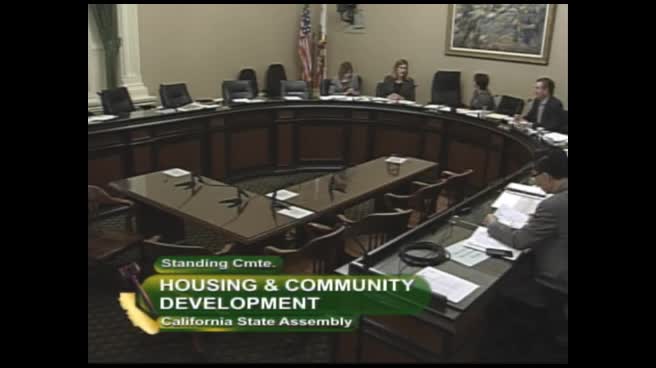 6MIN
Assembly Standing Committee on Housing and Community Development
Bill Author

Bill Co-Author(s):