AB 55: Hazardous materials management: stationary sources.
- Session Year: 2017-2018
- House: Assembly
- Latest Version Date: 2017-10-09
Existing law requires the Secretary for Environmental Protection to implement a unified hazardous waste and hazardous materials management regulatory program. Existing law requires every county to apply to the secretary to be certified to implement the unified program and allows a city or local agency to implement the unified program as a unified program agency. Existing law requires a stationary source, as defined, engaging in activities with certain substances present in more than a threshold quantity to prepare and submit a risk management plan, if the unified program agency makes a determination that there is a significant likelihood of a regulated substances accident risk.
Existing law requires owners and operators of certain stationary sources, when contracting for the performance of construction, alteration, demolition, installation, repair, or maintenance work at one of these stationary sources, to require that its contractors and any subcontractors use a skilled and trained workforce, including skilled journeypersons, to perform all onsite work within an apprenticeable occupation in the building and construction trades. Existing law exempts an owner or operator from that requirement if the contract was awarded before January 1, 2014, unless the contract is extended or renewed after that date. Existing law requires a worker, among other requirements, to have completed, within the prior 2 calendar years, at least 20 hours of approved advanced safety training for workers at high hazard facilities to qualify as a skilled journeyperson for purposes of performing this work on or after January 1, 2018.
This bill would instead require a worker to have completed, within the prior 3 calendar years, at least 20 hours of this approved advanced safety training to qualify as a skilled journeyperson for purposes of performing this work on or after July 1, 2018.
This bill would require, on or before February 1, 2018, an owner or operator who claims the exemption for a contract awarded before January 1, 2014, to file with the unified program agency a complete copy of the contract and a 2nd copy of the contract that has been redacted only to the extent necessary to protect sensitive information and that includes the identity of the contractor, the scope of the work covered by the contract, the date of execution of the contract, and the term of the contract. The bill would specify that the unredacted copy of the contract is not a public record and would require the unified program agency to keep that copy confidential. The bill would require the redacted copy to be a public record available for inspection from the unified program agency. Because the bill would add to the duties of a unified program agency and because a violation of the bills requirements would be a crime, the bill would impose a state-mandated local program.
Existing constitutional provisions require that a statute that limits the right of access to the meetings of public bodies or the writings of public officials and agencies be adopted with findings demonstrating the interest protected by the limitation and the need for protecting that interest.
This bill would make legislative findings to that effect.
The California Constitution requires the state to reimburse local agencies and school districts for certain costs mandated by the state. Statutory provisions establish procedures for making that reimbursement.
This bill would provide that no reimbursement is required by this act for specified reasons.
Existing law requires the Secretary for Environmental Protection to implement a unified hazardous waste and hazardous materials management regulatory program. Existing law requires every county to apply to the secretary to be certified to implement the unified program and allows a city or local agency to implement the unified program as a unified program agency. Existing law requires a stationary source, as defined, engaging in activities with certain substances present in more than a threshold quantity to prepare and submit a risk management plan, if the unified program agency makes a determination that there is a significant likelihood of a regulated substances accident risk.
Existing law requires certain owners and operators of stationary sources, when contracting for the performance of construction, alteration, demolition, installation, repair, or maintenance work at the stationary source, to require that its contractors and any subcontractors use a skilled and trained workforce, including skilled journeypersons, to perform all onsite work within an apprenticeable occupation in the building and construction trades. Existing law exempts an owner or operator from that requirement if the contract was awarded before January 1, 2014, unless the contract is extended or renewed after that date. Existing law requires a worker, among other requirements, to have completed, within the prior 2 calendar years, at least 20 hours of approved advanced safety training for workers at high hazard facilities to qualify as a skilled journeyperson for purposes of performing this work on or after January 1, 2018.
This bill would instead require a worker to have completed, within the prior 4 3 calendar years, at least 20 hours of this approved advanced safety training to qualify as a skilled journeyperson for purposes of performing this work on or after July 1, 2018.
This bill would require, on or before February 1, 2018, an owner or operator who claims that exception the exemption for a contract awarded before January 1, 2014, to file with the unified program agency a complete copy of the contract and a 2nd copy of the contract that has been redacted only to the extent necessary to protect sensitive information and that includes the identity of the contractor, the scope of the work covered by the contract, the date of execution of the contract, and the term of the contract. The bill would specify that the unredacted copy of the contract is not a public record and would require the unified program agency to keep that copy confidential. The bill would require the redacted copy to be a public record available for inspection from the unified program agency. Because the bill would add to the duties of a unified program agency and because a violation of the bills requirements would be a crime, the bill would impose a state-mandated local program.
Existing constitutional provisions require that a statute that limits the right of access to the meetings of public bodies or the writings of public officials and agencies be adopted with findings demonstrating the interest protected by the limitation and the need for protecting that interest.
This bill would make legislative findings to that effect.
The California Constitution requires the state to reimburse local agencies and school districts for certain costs mandated by the state. Statutory provisions establish procedures for making that reimbursement.
This bill would provide that no reimbursement is required by this act for specified reasons.
Existing law requires the Secretary for Environmental Protection to implement a unified hazardous waste and hazardous materials management regulatory program. Existing law requires every county to apply to the secretary to be certified to implement the unified program and allows a city or local agency to implement the unified program as a unified program agency. Existing law requires a stationary source, as defined, engaging in activities with certain substances present in more than a threshold quantity to prepare and submit a risk management plan, if the unified program agency makes a determination that there is a significant likelihood of a regulated substances accident risk.
Existing law requires certain owners and operators of stationary sources, when contracting for the performance of construction, alteration, demolition, installation, repair, or maintenance work at the stationary source, to require that its contractors and any subcontractors use a skilled and trained workforce workforce, including skilled journeypersons, to perform all onsite work within an apprenticeable occupation in the building and construction trades. Existing law exempts an owner or operator from that requirement if the contract was awarded before January 1, 2014, unless the contract is extended or renewed after that date. Existing law requires a worker, among other requirements, to have completed, within the prior 2 calendar years, at least 20 hours of approved advanced safety training for workers at high hazard facilities to qualify as a skilled journeyperson for purposes of performing this work on or after January 1, 2018.
This bill would instead require a worker to have completed, within the prior 4 calendar years, at least 20 hours of this approved advanced safety training to qualify as a skilled journeyperson for purposes of performing this work on or after July 1, 2018.
This bill would require, on or before February 1, 2018, an owner or operator who claims that exception to file with the unified program agency a complete copy of the contract and a 2nd copy of the contract that has been redacted only to the extent necessary to protect sensitive information and that includes the identity of the contractor, the scope of the work covered by the contract, the date of execution of the contract, and the term of the contract. The bill would specify that the unredacted copy of the contract is not a public record and would require the unified program agency to keep that copy confidential. The bill would require the redacted copy to be a public record available for inspection from the unified program agency. Because the bill would add to the duties of a unified program agency and because a violation of the bills requirements would be a crime, the bill would impose a state-mandated local program.
Existing constitutional provisions require that a statute that limits the right of access to the meetings of public bodies or the writings of public officials and agencies be adopted with findings demonstrating the interest protected by the limitation and the need for protecting that interest.
This bill would make legislative findings to that effect.
The California Constitution requires the state to reimburse local agencies and school districts for certain costs mandated by the state. Statutory provisions establish procedures for making that reimbursement.
This bill would provide that no reimbursement is required by this act for specified reasons.
Existing law requires the Secretary for Environmental Protection to implement a unified hazardous waste and hazardous materials management regulatory program. Existing law requires every county to apply to the secretary to be certified to implement the unified program and allows a city or local agency to implement the unified program as a unified program agency. Existing law requires a stationary source, as defined, engaging in activities with certain substances present in more than a threshold quantity to prepare and submit a risk management plan, if the unified program agency makes a determination that there is a significant likelihood of a regulated substances accident risk.
Existing law requires certain owners and operators of stationary sources, when contracting for the performance of construction, alteration, demolition, installation, repair, or maintenance work at the stationary source, to require that its contractors and any subcontractors use a skilled and trained workforce to perform all onsite work within an apprenticeable occupation in the building and construction trades. Existing law exempts an owner or operator from that requirement if the contract was awarded before January 1, 2014, unless the contract is extended or renewed after that date.
This bill would require, on or before February 1, 2018, an owner or operator who claims that exception to file with the unified program agency a complete copy of the contract and a 2nd copy of the contract that has been redacted only to the extent necessary to protect sensitive information and that includes the identity of the contractor, the scope of the work covered by the contract, the date of execution of the contract, and the term of the contract. The bill would require the redacted copy to be a public record available for inspection from the unified program agency. Because the bill would add to the duties of a unified program agency and because a violation of the bills requirements would be a crime, the bill would impose a state-mandated local program.
The California Constitution requires the state to reimburse local agencies and school districts for certain costs mandated by the state. Statutory provisions establish procedures for making that reimbursement.
This bill would provide that no reimbursement is required by this act for specified reasons.
Existing law requires certain owners or operators of a stationary source, when contracting for the performance of construction, alteration, demolition, installation, repair, or maintenance work at the stationary source, to require that its contractors and any subcontractors use a skilled and trained workforce to perform all onsite work within an apprenticeable occupation in the building and construction trades, including skilled journeypersons paid at least a rate equivalent to the applicable prevailing hourly wage rate.Existing law, the California Refinery and Chemical Plant Worker Safety Act of 1990, requires every petroleum refinery employer to, every September 15, submit to the Division of Occupational Safety and Health a full schedule for the following calendar year of planned turnarounds, meaning a planned, periodic shutdown of a refinery process unit or plant to perform maintenance, overhaul, and repair operations and to inspect, test, and replace process materials and equipment, as specified. The employer is also required, upon the request of the division, to provide the division with specified documentation relating to a planned turnaround within a certain period of time, as provided. Existing law prohibits, except as specified, the division from releasing to the public any information submitted to the division pursuant to these provisions that is designated as a trade secret, as defined. Existing law establishes misdemeanor penalties for a violation of the act and knowingly and willfully disclosing trade secrets.This bill would require that the documents to be provided to the division upon request also include all documentation necessary to demonstrate compliance with the above-described skilled and trained workforce requirements.Because a violation of the bills requirements would be a crime, the bill would impose a state-mandated local program.The California Constitution requires the state to reimburse local agencies and school districts for certain costs mandated by the state. Statutory provisions establish procedures for making that reimbursement.This bill would provide that no reimbursement is required by this act for a specified reason.Existing law requires certain owners or operators of a stationary source, when contracting for the performance of construction, alteration, demolition, installation, repair, or maintenance work at the stationary source, to require that its contractors and any subcontractors use a skilled and trained workforce to perform all onsite work within an apprenticeable occupation in the building and construction trades, including skilled journeypersons paid at least a rate equivalent to the applicable prevailing hourly wage rate.
Existing law, the California Refinery and Chemical Plant Worker Safety Act of 1990, requires every petroleum refinery employer to, every September 15, submit to the Division of Occupational Safety and Health a full schedule for the following calendar year of planned turnarounds, meaning a planned, periodic shutdown of a refinery process unit or plant to perform maintenance, overhaul, and repair operations and to inspect, test, and replace process materials and equipment, as specified. The employer is also required, upon the request of the division, to provide the division with specified documentation relating to a planned turnaround within a certain period of time, as provided. Existing law prohibits, except as specified, the division from releasing to the public any information submitted to the division pursuant to these provisions that is designated as a trade secret, as defined. Existing law establishes misdemeanor penalties for a violation of the act and knowingly and willfully disclosing trade secrets.
This bill would require that the documents to be provided to the division upon request also include all documentation necessary to demonstrate compliance with the above-described skilled and trained workforce requirements.
Because a violation of the bills requirements would be a crime, the bill would impose a state-mandated local program.
The California Constitution requires the state to reimburse local agencies and school districts for certain costs mandated by the state. Statutory provisions establish procedures for making that reimbursement.
This bill would provide that no reimbursement is required by this act for a specified reason.
(a)(1)An owner or operator of a stationary source that is engaged in activities described in Code 324110 or 325110 of the North American Industry Classification System (NAICS), as that code read on January 1, 2014, and with one or more covered processes that is required to prepare and submit an RMP pursuant to this article, when contracting for the performance of construction, alteration, demolition, installation, repair, or maintenance work at the stationary source, shall require that its contractors and any subcontractors use a skilled and trained workforce to perform all onsite work within an apprenticeable occupation in the building and construction trades. This section shall not apply to oil and gas extraction operations.
(2)The Chief of the Division of Apprenticeship Standards of the Department of Industrial Relations may approve a curriculum of in-person classroom and laboratory instruction for approved advanced safety training for workers at high hazard facilities. That safety training may be provided by an apprenticeship program approved by the chief or by instruction provided by the Chancellor of the California Community Colleges. The chief shall approve a curriculum in accordance with this paragraph by January 1, 2016, and shall periodically revise the curriculum to reflect current best practices. Upon receipt of certification from the apprenticeship program or community college, the chief shall issue a certificate to a worker who completes the approved curriculum.
(3)For purposes of paragraph (2) of subdivision (b) of Section 3075 of the Labor Code, a stationary source covered by this section shall be considered in determining whether existing apprenticeship programs do not have the capacity, or have neglected or refused, to dispatch sufficient apprentices to qualified employers who are willing to abide by the applicable apprenticeship standards.
(4)This section shall not apply to contracts awarded before January 1, 2014, unless the contract is extended or renewed after that date.
(5)(A)This section shall not apply to the employees of the owner or operator of the stationary source or prevent the owner or operator of the stationary source from using its own employees to perform any work that has not been assigned to contractors while the employees of the contractor are present and working.
(B)An apprenticeship program approved by the chief may enroll, with advanced standing, applicants with relevant prior work experience at a stationary source that is subject to this section, in accordance with the approved apprenticeship standards of the program.
(6)The criteria of subparagraph (A) of paragraph (10) of subdivision (b), subparagraph (C) of paragraph (10) of subdivision (b), and subparagraph (B) of paragraph (11) of subdivision (b) shall not apply to either of the following:
(A)To the extent that the contractor has requested qualified workers from the local hiring halls that dispatch workers in the apprenticeable occupation and, due to workforce shortages, the contractor is unable to obtain sufficient qualified workers within 48 hours of the request, Saturdays, Sundays, and holidays excepted. This section shall not prevent contractors from obtaining workers from any source.
(B)To the extent that compliance is impracticable because an emergency requires immediate action to prevent harm to public health or safety or to the environment, but the criteria shall apply as soon as the emergency is over or it becomes practicable for contractors to obtain a qualified workforce.
(7)The requirement specified in paragraph (1) for a skilled and trained workforce, as defined in paragraph (11) of subdivision (b), shall apply to each individual contractors and subcontractors onsite workforce.
(8)This section does not make the construction, alteration, demolition, installation, repair, or maintenance work at a stationary source that is subject to this section a public work, within the meaning of Chapter 1 (commencing with Section 1720) of Part 7 of Division 2 of the Labor Code. This section does not preclude the use of an alternative workweek schedule adopted pursuant to Section 511 or 514 of the Labor Code.
(b)As used in this section:
(1)Apprenticeable occupation means an occupation for which the chief has approved an apprenticeship program pursuant to Section 3075 of the Labor Code.
(2)Approved advanced safety training for workers at high hazard facilities means a curriculum approved by the chief pursuant to paragraph (2) of subdivision (a).
(3)Building and construction trades has the same meaning as in Section 3075.5 of the Labor Code.
(4)Chief means the Chief of the Division of the Apprenticeship Standards of the Department of Industrial Relations.
(5)Construction, alteration, demolition, installation, repair, and maintenance have the same meanings as in Sections 1720 and 1771 of the Labor Code.
(6)Graduate of an apprenticeship program means either of the following:
(A)An individual that has been issued a certificate of completion under the authority of the California Apprenticeship Council for completing an apprenticeship program approved by the chief pursuant to Section 3075 of the Labor Code.
(B)An individual that has completed an apprenticeship program located outside California and approved for federal purposes pursuant to the apprenticeship regulations adopted by the federal Secretary of Labor.
(7)Onsite work shall not include catalyst handling and loading, chemical cleaning, or inspection and testing that was not within the scope of a prevailing wage determination issued by the Director of Industrial Relations as of January 1, 2013.
(8)Prevailing hourly wage rate means the general prevailing rate of per diem wages, as determined by the Director of Industrial Relations pursuant to Sections 1773 and 1773.9 of the Labor Code, but does not include shift differentials, travel and subsistence, or holiday pay. Notwithstanding subdivision (c) of Section 1773.1 of the Labor Code, the requirement that employer payments not reduce the obligation to pay the hourly straight time or overtime wages found to be prevailing shall not apply if otherwise provided in a bona fide collective bargaining agreement covering the worker.
(9)Registered apprentice means an apprentice registered in an apprenticeship program approved by the chief pursuant to Section 3075 of the Labor Code who is performing work covered by the standards of that apprenticeship program and receiving the supervision required by the standards of that apprenticeship program.
(10)Skilled journeyperson means a worker who meets all of the following criteria:
(A)The worker either graduated from an apprenticeship program for the applicable occupation that was approved by the chief, or has at least as many hours of on-the-job experience in the applicable occupation that would be required to graduate from an apprenticeship program for the applicable occupation that is approved by the chief.
(B)The worker is being paid at least a rate equivalent to the prevailing hourly wage rate for a journeyperson in the applicable occupation and geographic area.
(C)The worker has completed within the prior three calendar years at least 20 hours of approved advanced safety training for workers at high hazard facilities. This requirement applies only to work performed on or after July 1, 2018.
(11)Skilled and trained workforce means a workforce that meets both of the following criteria:
(A)All the workers are either registered apprentices or skilled journeypersons.
(B)(i)As of January 1, 2014, at least 30 percent of the skilled journeypersons are graduates of an apprenticeship program for the applicable occupation.
(ii)As of January 1, 2015, at least 45 percent of the skilled journeypersons are graduates of an apprenticeship program for the applicable occupation.
(iii)As of January 1, 2016, at least 60 percent of the skilled journeypersons are graduates of an apprenticeship program for the applicable occupation.
SEC. 2.Section 25536.9 is added to the Health and Safety Code, to read:25536.9.On or before February 1, 2018, an owner or operator of a stationary source that claims that it is exempt from the requirement in paragraph (1) of subdivision (a) of Section 25536.7 pursuant to the exception in paragraph (4) of subdivision (a) of Section 25536.7 shall file with the administering agency a complete copy of the contract described in paragraph (4) of subdivision (a) of Section 25536.7 and a second copy of that contract that has been redacted only to the extent necessary to protect sensitive information and that shall include the identity of the contractor, the scope of the work covered by the contract, the date of execution of the contract, and the term of the contract. The complete copy of the contract that is not redacted is not a public record and shall be kept confidential by the administering agency. The redacted copy of the contract shall be a public record available for inspection from the administering agency.
SEC. 3.The Legislature finds and declares that Section 2 of this act, which adds Section 25536.9 to the Health and Safety Code, imposes a limitation on the publics right of access to the meetings of public bodies or the writings of public officials and agencies within the meaning of Section 3 of Article I of the California Constitution. Pursuant to that constitutional provision, the Legislature makes the following findings to demonstrate the interest protected by this limitation and the need for protecting that interest:
To protect sensitive information contained in complete and unredacted copies of contracts submitted to an administering agency pursuant to Section 25536.9 of the Health and Safety Code, it is necessary to maintain those copies as confidential information by the administering agency.
SEC. 4.No reimbursement is required by this act pursuant to Section 6 of Article XIIIB of the California Constitution because a local agency or school district has the authority to levy service charges, fees, or assessments sufficient to pay for the program or level of service mandated by this act or because costs that may be incurred by a local agency or school district will be incurred because this act creates a new crime or infraction, eliminates a crime or infraction, or changes the penalty for a crime or infraction, within the meaning of Section 17556 of the Government Code, or changes the definition of a crime within the meaning of Section 6 of Article XIIIB of the California Constitution.
(a)(1)An owner or operator of a stationary source that is engaged in activities described in Code 324110 or 325110 of the North American Industry Classification System (NAICS), as that code read on January 1, 2014, and with one or more covered processes that is required to prepare and submit an RMP pursuant to this article, when contracting for the performance of construction, alteration, demolition, installation, repair, or maintenance work at the stationary source, shall require that its contractors and any subcontractors use a skilled and trained workforce to perform all onsite work within an apprenticeable occupation in the building and construction trades. This section shall not apply to oil and gas extraction operations.
(2)The Chief of the Division of Apprenticeship Standards of the Department of Industrial Relations may approve a curriculum of in-person classroom and laboratory instruction for approved advanced safety training for workers at high hazard facilities. That safety training may be provided by an apprenticeship program approved by the chief or by instruction provided by the Chancellor of the California Community Colleges. The chief shall approve a curriculum in accordance with this paragraph by January 1, 2016, and shall periodically revise the curriculum to reflect current best practices. Upon receipt of certification from the apprenticeship program or community college, the chief shall issue a certificate to a worker who completes the approved curriculum.
(3)For purposes of paragraph (2) of subdivision (b) of Section 3075 of the Labor Code, a stationary source covered by this section shall be considered in determining whether existing apprenticeship programs do not have the capacity, or have neglected or refused, to dispatch sufficient apprentices to qualified employers who are willing to abide by the applicable apprenticeship standards.
(4)This section shall not apply to contracts awarded before January 1, 2014, unless the contract is extended or renewed after that date.
(5)(A)This section shall not apply to the employees of the owner or operator of the stationary source or prevent the owner or operator of the stationary source from using its own employees to perform any work that has not been assigned to contractors while the employees of the contractor are present and working.
(B)An apprenticeship program approved by the chief may enroll, with advanced standing, applicants with relevant prior work experience at a stationary source that is subject to this section, in accordance with the approved apprenticeship standards of the program.
(6)The criteria of subparagraph (A) of paragraph (10) of subdivision (b), subparagraph (C) of paragraph (10) of subdivision (b), and subparagraph (B) of paragraph (11) of subdivision (b) shall not apply to either of the following:
(A)To the extent that the contractor has requested qualified workers from the local hiring halls that dispatch workers in the apprenticeable occupation and, due to workforce shortages, the contractor is unable to obtain sufficient qualified workers within 48 hours of the request, Saturdays, Sundays, and holidays excepted. This section shall not prevent contractors from obtaining workers from any source.
(B)To the extent that compliance is impracticable because an emergency requires immediate action to prevent harm to public health or safety or to the environment, but the criteria shall apply as soon as the emergency is over or it becomes practicable for contractors to obtain a qualified workforce.
(7)The requirement specified in paragraph (1) for a skilled and trained workforce, as defined in paragraph (11) of subdivision (b), shall apply to each individual contractors and subcontractors onsite workforce.
(8)This section does not make the construction, alteration, demolition, installation, repair, or maintenance work at a stationary source that is subject to this section a public work, within the meaning of Chapter 1 (commencing with Section 1720) of Part 7 of Division 2 of the Labor Code. This section does not preclude the use of an alternative workweek schedule adopted pursuant to Section 511 or 514 of the Labor Code.
(b)As used in this section:
(1)Apprenticeable occupation means an occupation for which the chief has approved an apprenticeship program pursuant to Section 3075 of the Labor Code.
(2)Approved advanced safety training for workers at high hazard facilities means a curriculum approved by the chief pursuant to paragraph (2) of subdivision (a).
(3)Building and construction trades has the same meaning as in Section 3075.5 of the Labor Code.
(4)Chief means the Chief of the Division of the Apprenticeship Standards of the Department of Industrial Relations.
(5)Construction, alteration, demolition, installation, repair, and maintenance have the same meanings as in Sections 1720 and 1771 of the Labor Code.
(6)Graduate of an apprenticeship program means either of the following:
(A)An individual that has been issued a certificate of completion under the authority of the California Apprenticeship Council for completing an apprenticeship program approved by the chief pursuant to Section 3075 of the Labor Code.
(B)An individual that has completed an apprenticeship program located outside California and approved for federal purposes pursuant to the apprenticeship regulations adopted by the federal Secretary of Labor.
(7)Onsite work shall not include catalyst handling and loading, chemical cleaning, or inspection and testing that was not within the scope of a prevailing wage determination issued by the Director of Industrial Relations as of January 1, 2013.
(8)Prevailing hourly wage rate means the general prevailing rate of per diem wages, as determined by the Director of Industrial Relations pursuant to Sections 1773 and 1773.9 of the Labor Code, but does not include shift differentials, travel and subsistence, or holiday pay. Notwithstanding subdivision (c) of Section 1773.1 of the Labor Code, the requirement that employer payments not reduce the obligation to pay the hourly straight time or overtime wages found to be prevailing shall not apply if otherwise provided in a bona fide collective bargaining agreement covering the worker.
(9)Registered apprentice means an apprentice registered in an apprenticeship program approved by the chief pursuant to Section 3075 of the Labor Code who is performing work covered by the standards of that apprenticeship program and receiving the supervision required by the standards of that apprenticeship program.
(10)Skilled journeyperson means a worker who meets all of the following criteria:
(A)The worker either graduated from an apprenticeship program for the applicable occupation that was approved by the chief, or has at least as many hours of on-the-job experience in the applicable occupation that would be required to graduate from an apprenticeship program for the applicable occupation that is approved by the chief.
(B)The worker is being paid at least a rate equivalent to the prevailing hourly wage rate for a journeyperson in the applicable occupation and geographic area.
(C)The worker has completed within the prior four three calendar years at least 20 hours of approved advanced safety training for workers at high hazard facilities. This requirement applies only to work performed on or after July 1, 2018.
(11)Skilled and trained workforce means a workforce that meets both of the following criteria:
(A)All the workers are either registered apprentices or skilled journeypersons.
(B)(i)As of January 1, 2014, at least 30 percent of the skilled journeypersons are graduates of an apprenticeship program for the applicable occupation.
(ii)As of January 1, 2015, at least 45 percent of the skilled journeypersons are graduates of an apprenticeship program for the applicable occupation.
(iii)As of January 1, 2016, at least 60 percent of the skilled journeypersons are graduates of an apprenticeship program for the applicable occupation.
SEC. 2.Section 25536.9 is added to the Health and Safety Code, to read:25536.9.On or before February 1, 2018, an owner or operator of a stationary source that claims that it is exempt from the requirement in paragraph (1) of subdivision (a) of Section 25536.7 pursuant to the exception in paragraph (4) of subdivision (a) of Section 25536.7 shall file with the administering agency a complete copy of the contract described in paragraph (4) of subdivision (a) of Section 25536.7 and a second copy of that contract that has been redacted only to the extent necessary to protect sensitive information and that shall include the identity of the contractor, the scope of the work covered by the contract, the date of execution of the contract, and the term of the contract. The complete copy of the contract that is not redacted is not a public record and shall be kept confidential by the administering agency. The redacted copy of the contract shall be a public record available for inspection from the administering agency.
SEC. 3.The Legislature finds and declares that Section 2 of this act, which adds Section 25536.9 of to the Health and Safety Code, imposes a limitation on the publics right of access to the meetings of public bodies or the writings of public officials and agencies within the meaning of Section 3 of Article I of the California Constitution. Pursuant to that constitutional provision, the Legislature makes the following findings to demonstrate the interest protected by this limitation and the need for protecting that interest:
To protect sensitive information contained in complete and unredacted copies of contracts submitted to an administering agency pursuant to Section 25536.9 of the Health and Safety Code, it is necessary to maintain those copies as confidential information by the administering agency.
SEC. 4.No reimbursement is required by this act pursuant to Section 6 of Article XIIIB of the California Constitution because a local agency or school district has the authority to levy service charges, fees, or assessments sufficient to pay for the program or level of service mandated by this act or because costs that may be incurred by a local agency or school district will be incurred because this act creates a new crime or infraction, eliminates a crime or infraction, or changes the penalty for a crime or infraction, within the meaning of Section 17556 of the Government Code, or changes the definition of a crime within the meaning of Section 6 of Article XIIIB of the California Constitution.
(a)(1)An owner or operator of a stationary source that is engaged in activities described in Code 324110 or 325110 of the North American Industry Classification System (NAICS), as that code read on January 1, 2014, and with one or more covered processes that is required to prepare and submit an RMP pursuant to this article, when contracting for the performance of construction, alteration, demolition, installation, repair, or maintenance work at the stationary source, shall require that its contractors and any subcontractors use a skilled and trained workforce to perform all onsite work within an apprenticeable occupation in the building and construction trades. This section shall not apply to oil and gas extraction operations.
(2)The Chief of the Division of Apprenticeship Standards of the Department of Industrial Relations may approve a curriculum of in-person classroom and laboratory instruction for approved advanced safety training for workers at high hazard facilities. That safety training may be provided by an apprenticeship program approved by the chief or by instruction provided by the Chancellor of the California Community Colleges. The chief shall approve a curriculum in accordance with this paragraph by January 1, 2016, and shall periodically revise the curriculum to reflect current best practices. Upon receipt of certification from the apprenticeship program or community college, the chief shall issue a certificate to a worker who completes the approved curriculum.
(3)For purposes of paragraph (2) of subdivision (b) of Section 3075 of the Labor Code, a stationary source covered by this section shall be considered in determining whether existing apprenticeship programs do not have the capacity, or have neglected or refused, to dispatch sufficient apprentices to qualified employers who are willing to abide by the applicable apprenticeship standards.
(4)This section shall not apply to contracts awarded before January 1, 2014, unless the contract is extended or renewed after that date.
(5)(A)This section shall not apply to the employees of the owner or operator of the stationary source or prevent the owner or operator of the stationary source from using its own employees to perform any work that has not been assigned to contractors while the employees of the contractor are present and working.
(B)An apprenticeship program approved by the chief may enroll, with advanced standing, applicants with relevant prior work experience at a stationary source that is subject to this section, in accordance with the approved apprenticeship standards of the program.
(6)The criteria of subparagraph (A) of paragraph (10) of subdivision (b), subparagraph (C) of paragraph (10) of subdivision (b), and subparagraph (B) of paragraph (11) of subdivision (b) shall not apply to either of the following:
(A)To the extent that the contractor has requested qualified workers from the local hiring halls that dispatch workers in the apprenticeable occupation and, due to workforce shortages, the contractor is unable to obtain sufficient qualified workers within 48 hours of the request, Saturdays, Sundays, and holidays excepted. This section shall not prevent contractors from obtaining workers from any source.
(B)To the extent that compliance is impracticable because an emergency requires immediate action to prevent harm to public health or safety or to the environment, but the criteria shall apply as soon as the emergency is over or it becomes practicable for contractors to obtain a qualified workforce.
(7)The requirement specified in paragraph (1) for a skilled and trained workforce, as defined in paragraph (11) of subdivision (b), shall apply to each individual contractors and subcontractors onsite workforce.
(8)This section does not make the construction, alteration, demolition, installation, repair, or maintenance work at a stationary source that is subject to this section a public work, within the meaning of Chapter 1 (commencing with Section 1720) of Part 7 of Division 2 of the Labor Code. This section does not preclude the use of an alternative workweek schedule adopted pursuant to Section 511 or 514 of the Labor Code.
(b)As used in this section:
(1)Apprenticeable occupation means an occupation for which the chief has approved an apprenticeship program pursuant to Section 3075 of the Labor Code.
(2)Approved advanced safety training for workers at high hazard facilities means a curriculum approved by the chief pursuant to paragraph (2) of subdivision (a).
(3)Building and construction trades has the same meaning as in Section 3075.5 of the Labor Code.
(4)Chief means the Chief of the Division of the Apprenticeship Standards of the Department of Industrial Relations.
(5)Construction, alteration, demolition, installation, repair, and maintenance have the same meanings as in Sections 1720 and 1771 of the Labor Code.
(6)Graduate of an apprenticeship program means either of the following:
(A)An individual that has been issued a certificate of completion under the authority of the California Apprenticeship Council for completing an apprenticeship program approved by the chief pursuant to Section 3075 of the Labor Code.
(B)An individual that has completed an apprenticeship program located outside California and approved for federal purposes pursuant to the apprenticeship regulations adopted by the federal Secretary of Labor.
(7)Onsite work shall not include catalyst handling and loading, chemical cleaning, or inspection and testing that was not within the scope of a prevailing wage determination issued by the Director of Industrial Relations as of January 1, 2013.
(8)Prevailing hourly wage rate means the general prevailing rate of per diem wages, as determined by the Director of Industrial Relations pursuant to Sections 1773 and 1773.9 of the Labor Code, but does not include shift differentials, travel and subsistence, or holiday pay. Notwithstanding subdivision (c) of Section 1773.1 of the Labor Code, the requirement that employer payments not reduce the obligation to pay the hourly straight time or overtime wages found to be prevailing shall not apply if otherwise provided in a bona fide collective bargaining agreement covering the worker.
(9)Registered apprentice means an apprentice registered in an apprenticeship program approved by the chief pursuant to Section 3075 of the Labor Code who is performing work covered by the standards of that apprenticeship program and receiving the supervision required by the standards of that apprenticeship program.
(10)Skilled journeyperson means a worker who meets all of the following criteria:
(A)The worker either graduated from an apprenticeship program for the applicable occupation that was approved by the chief, or has at least as many hours of on-the-job experience in the applicable occupation that would be required to graduate from an apprenticeship program for the applicable occupation that is approved by the chief.
(B)The worker is being paid at least a rate equivalent to the prevailing hourly wage rate for a journeyperson in the applicable occupation and geographic area.
(C)The worker has completed within the prior two four calendar years at least 20 hours of approved advanced safety training for workers at high hazard facilities. This requirement applies only to work performed on or after January July 1, 2018.
(11)Skilled and trained workforce means a workforce that meets both of the following criteria:
(A)All the workers are either registered apprentices or skilled journeypersons.
(B)(i)As of January 1, 2014, at least 30 percent of the skilled journeypersons are graduates of an apprenticeship program for the applicable occupation.
(ii)As of January 1, 2015, at least 45 percent of the skilled journeypersons are graduates of an apprenticeship program for the applicable occupation.
(iii)As of January 1, 2016, at least 60 percent of the skilled journeypersons are graduates of an apprenticeship program for the applicable occupation.
SECTION 1.SEC. 2.Section 25536.9 is added to the Health and Safety Code, to read:25536.9.On or before February 1, 2018, an owner or operator of a stationary source that claims that it is exempt from the requirement in paragraph (1) of subdivision (a) of Section 25536.7 pursuant to the exception in paragraph (4) of subdivision (a) of Section 25536.7 shall file with the administering agency a complete copy of the contract described in paragraph (4) of subdivision (a) of Section 25536.7 and a second copy of that contract that has been redacted only to the extent necessary to protect sensitive information and that shall include the identity of the contractor, the scope of the work covered by the contract, the date of execution of the contract, and the term of the contract. The complete copy of the contract that is not redacted is not a public record and shall be kept confidential by the administering agency. The redacted copy of the contract shall be a public record available for inspection from the administering agency.
SEC. 3.The Legislature finds and declares that Section 2 of this act, which adds Section 25536.9 of the Health and Safety Code, imposes a limitation on the publics right of access to the meetings of public bodies or the writings of public officials and agencies within the meaning of Section 3 of Article I of the California Constitution. Pursuant to that constitutional provision, the Legislature makes the following findings to demonstrate the interest protected by this limitation and the need for protecting that interest:
To protect sensitive information contained in complete and unredacted copies of contracts submitted to an administering agency pursuant to Section 25536.9 of the Health and Safety Code, it is necessary to maintain those copies as confidential information by the administering agency.
SEC. 2.SEC. 4.No reimbursement is required by this act pursuant to Section 6 of Article XIIIB of the California Constitution because a local agency or school district has the authority to levy service charges, fees, or assessments sufficient to pay for the program or level of service mandated by this act or because costs that may be incurred by a local agency or school district will be incurred because this act creates a new crime or infraction, eliminates a crime or infraction, or changes the penalty for a crime or infraction, within the meaning of Section 17556 of the Government Code, or changes the definition of a crime within the meaning of Section 6 of Article XIIIB of the California Constitution.
On or before February 1, 2018, an owner or operator of a stationary source that claims that it is exempt from the requirement in paragraph (1) of subdivision (a) of Section 25536.7 pursuant to the exception in paragraph (4) of subdivision (a) of Section 25536.7 shall file with the administering agency a complete copy of the contract described in paragraph (4) of subdivision (a) of Section 25536.7 and a second copy of that contract that has been redacted only to the extent necessary to protect sensitive information and that shall include the identity of the contractor, the scope of the work covered by the contract, the date of execution of the contract, and the term of the contract. The redacted copy of the contract shall be a public record available for inspection from the administering agency.
SEC. 2.No reimbursement is required by this act pursuant to Section 6 of Article XIIIB of the California Constitution because a local agency or school district has the authority to levy service charges, fees, or assessments sufficient to pay for the program or level of service mandated by this act or because costs that may be incurred by a local agency or school district will be incurred because this act creates a new crime or infraction, eliminates a crime or infraction, or changes the penalty for a crime or infraction, within the meaning of Section 17556 of the Government Code, or changes the definition of a crime within the meaning of Section 6 of Article XIIIB of the California Constitution.
SECTION 1.Section 7872 of the Labor Code is amended to read:7872.(a)As used in this section and in Section 7873, turnaround means a planned, periodic shutdown, total or partial, of a refinery process unit or plant to perform maintenance, overhaul, and repair operations and to inspect, test, and replace process materials and equipment. Turnaround does not include unplanned shutdowns that occur due to emergencies or other unexpected maintenance matters in a process unit or plant. Turnaround also does not include routine maintenance, where routine maintenance consists of regular, periodic maintenance on one or more pieces of equipment at a refinery process unit or plant that may require shutdown of such equipment.(b)Every September 15, every petroleum refinery employer shall submit to the division a full schedule of planned turnarounds for all affected units for the following calendar year.(c)At the request of the division, at least 60 days prior to the shutdown of a process unit or plant as part of a planned turnaround, a petroleum refinery employer shall provide access onsite and allow the division to review the following documentation for the process unit or plant scheduled to be shut down for that turnaround:(1)All corrosion reports and risk-based inspection reports generated since the last turnaround.(2)Process hazard analyses generated since the last turnaround.(3)Boiler permit schedules.(4)All management of change records related to repairs, design modifications, and process changes implemented since the last turnaround or scheduled to be completed in the planned turnaround referenced in this subdivision and identified in subdivision (b).(5)Work orders scheduled to be completed in the planned turnaround referenced in this subdivision and identified in subdivision (b).(6)All temporary repairs made since the last turnaround, including, but not limited to, clamps and encapsulations. As used in this section, temporary repairs means repairs made to piping systems in order to restore sufficient integrity to continue safe operation until permanent repairs can be scheduled.(7)Notification and description of all repairs, design modifications, or process changes described in a corrosion report, risk-based inspection report, process hazard analysis, boiler permit schedule, management of change record, work order, or other document listed in paragraphs (1) to (6), inclusive, that the petroleum refinery employer has deferred to a subsequent operational period or turnaround.(8)All documentation necessary to demonstrate compliance with Section 25536.7 of the Health and Safety Code.(d)The division may request additional information as necessary to perform its responsibilities in this part pursuant to Section 6314.(e)At the request of the division, at least 30 days before the shutdown of a process unit or plant as part of a planned turnaround, a petroleum refinery employer shall provide access onsite and allow the division to review any changes to the information or documents reviewed by the division pursuant to subdivision (c) and relevant supporting documents.(f)At the divisions request, a petroleum refinery employer shall provide the division with physical copies, or, at the divisions discretion, electronic copies if available, of the documentation reviewed by the division pursuant to subdivisions (c), (d), and (e).(g)By agreement with a petroleum refinery employer, the division may modify the reporting period as to any individual item of information.(h)This section is not intended to limit or increase the divisions authority in Part 1 (commencing with Section 6300) to prohibit use of a place of employment, machine, device, apparatus, or equipment or any part thereof that constitutes an imminent hazard to employees.(i)The Legislature finds and declares that the purpose of this section is to improve the ability of the state to conduct inspections of petroleum refining operations.SEC. 2.No reimbursement is required by this act pursuant to Section 6 of Article XIIIB of the California Constitution because the only costs that may be incurred by a local agency or school district will be incurred because this act creates a new crime or infraction, eliminates a crime or infraction, or changes the penalty for a crime or infraction, within the meaning of Section 17556 of the Government Code, or changes the definition of a crime within the meaning of Section 6 of Article XIIIB of the California Constitution.(a)As used in this section and in Section 7873, turnaround means a planned, periodic shutdown, total or partial, of a refinery process unit or plant to perform maintenance, overhaul, and repair operations and to inspect, test, and replace process materials and equipment. Turnaround does not include unplanned shutdowns that occur due to emergencies or other unexpected maintenance matters in a process unit or plant. Turnaround also does not include routine maintenance, where routine maintenance consists of regular, periodic maintenance on one or more pieces of equipment at a refinery process unit or plant that may require shutdown of such equipment.
(b)Every September 15, every petroleum refinery employer shall submit to the division a full schedule of planned turnarounds for all affected units for the following calendar year.
(c)At the request of the division, at least 60 days prior to the shutdown of a process unit or plant as part of a planned turnaround, a petroleum refinery employer shall provide access onsite and allow the division to review the following documentation for the process unit or plant scheduled to be shut down for that turnaround:
(1)All corrosion reports and risk-based inspection reports generated since the last turnaround.
(2)Process hazard analyses generated since the last turnaround.
(3)Boiler permit schedules.
(4)All management of change records related to repairs, design modifications, and process changes implemented since the last turnaround or scheduled to be completed in the planned turnaround referenced in this subdivision and identified in subdivision (b).
(5)Work orders scheduled to be completed in the planned turnaround referenced in this subdivision and identified in subdivision (b).
(6)All temporary repairs made since the last turnaround, including, but not limited to, clamps and encapsulations. As used in this section, temporary repairs means repairs made to piping systems in order to restore sufficient integrity to continue safe operation until permanent repairs can be scheduled.
(7)Notification and description of all repairs, design modifications, or process changes described in a corrosion report, risk-based inspection report, process hazard analysis, boiler permit schedule, management of change record, work order, or other document listed in paragraphs (1) to (6), inclusive, that the petroleum refinery employer has deferred to a subsequent operational period or turnaround.
(8)All documentation necessary to demonstrate compliance with Section 25536.7 of the Health and Safety Code.
(d)The division may request additional information as necessary to perform its responsibilities in this part pursuant to Section 6314.
(e)At the request of the division, at least 30 days before the shutdown of a process unit or plant as part of a planned turnaround, a petroleum refinery employer shall provide access onsite and allow the division to review any changes to the information or documents reviewed by the division pursuant to subdivision (c) and relevant supporting documents.
(f)At the divisions request, a petroleum refinery employer shall provide the division with physical copies, or, at the divisions discretion, electronic copies if available, of the documentation reviewed by the division pursuant to subdivisions (c), (d), and (e).
(g)By agreement with a petroleum refinery employer, the division may modify the reporting period as to any individual item of information.
(h)This section is not intended to limit or increase the divisions authority in Part 1 (commencing with Section 6300) to prohibit use of a place of employment, machine, device, apparatus, or equipment or any part thereof that constitutes an imminent hazard to employees.
(i)The Legislature finds and declares that the purpose of this section is to improve the ability of the state to conduct inspections of petroleum refining operations.
SEC. 2.No reimbursement is required by this act pursuant to Section 6 of Article XIIIB of the California Constitution because the only costs that may be incurred by a local agency or school district will be incurred because this act creates a new crime or infraction, eliminates a crime or infraction, or changes the penalty for a crime or infraction, within the meaning of Section 17556 of the Government Code, or changes the definition of a crime within the meaning of Section 6 of Article XIIIB of the California Constitution.
|
Date
|
Status
|
|---|---|
| Oct 9, 2017 | Chaptered by Secretary of State - Chapter 608, Statutes of 2017. |
| Oct 9, 2017 | Approved by the Governor. |
| Sep 12, 2017 | Enrolled and presented to the Governor at 2:30 p.m. |
| Sep 5, 2017 | Senate amendments concurred in. To Engrossing and Enrolling. (Ayes 53. Noes 22.). |
| Aug 31, 2017 | In Assembly. Concurrence in Senate amendments pending. May be considered on or after September 2 pursuant to Assembly Rule 77. |
| Aug 31, 2017 | Read third time. Passed. Ordered to the Assembly. |
| Aug 28, 2017 | Read second time. Ordered to third reading. |
| Aug 24, 2017 | Read third time and amended. Ordered to second reading. |
| Jul 11, 2017 | Read second time. Ordered to third reading. |
| Jul 10, 2017 | From committee: Be ordered to second reading pursuant to Senate Rule 28.8. |
| Jun 28, 2017 | From committee: Do pass and re-refer to Com. on APPR. (Ayes 3. Noes 1.) (June 28). Re-referred to Com. on APPR. |
| Jun 20, 2017 | From committee chair, with author's amendments: Amend, and re-refer to committee. Read second time, amended, and re-referred to Com. on L. & I.R. |
| Jun 5, 2017 | In committee: Hearing postponed by committee. |
| May 24, 2017 | Referred to Com. on L. & I.R. |
| May 11, 2017 | In Senate. Read first time. To Com. on RLS. for assignment. |
| May 11, 2017 | Read third time. Passed. Ordered to the Senate. (Ayes 53. Noes 19. Page 1473.) |
| May 4, 2017 | Read second time. Ordered to third reading. |
| May 3, 2017 | From committee: Do pass. (Ayes 11. Noes 4.) (May 3). |
| Apr 20, 2017 | From committee: Do pass and re-refer to Com. on APPR. (Ayes 5. Noes 1.) (April 19). Re-referred to Com. on APPR. |
| Mar 20, 2017 | In committee: Hearing postponed by committee. |
| Mar 15, 2017 | Re-referred to Com. on L. & E. |
| Mar 14, 2017 | From committee chair, with author's amendments: Amend, and re-refer to Com. on L. & E. Read second time and amended. |
| Jan 19, 2017 | Referred to Com. on L. & E. |
| Dec 6, 2016 | From printer. May be heard in committee January 5. |
| Dec 5, 2016 | Read first time. To print. |
|
Date
|
Description
|
Location
|
Votes
|
|
|---|---|---|---|---|
| Sep 5, 2017 | AB 55 THURMOND Concurrence in Senate Amendments | Assembly Floor |
Passed |
|
| Aug 31, 2017 | Assembly 3rd Reading AB55 Thurmond By Bradford | Senate Floor |
Passed |
|
| Jun 28, 2017 | Do pass, but first be re-referred to the Committee on [Appropriations] | Senate Standing Committee on Labor and Industrial Relations |
Passed |
|
| May 11, 2017 | AB 55 THURMOND Assembly Third Reading | Assembly Floor |
Passed |
|
| May 3, 2017 | Do pass. | Assembly Standing Committee on Appropriations |
Passed |
|
| Apr 19, 2017 | Do pass and be re-referred to the Committee on [Appropriations] | Assembly Standing Committee on Labor and Employment |
Passed |
This list shows positions taken on this bill by organizations on the date displayed, which is linked to the original source.
Positions by individuals are not included.
|
Organization
|
Position
|
Date
|
|---|---|---|
| California Labor Federation, Afl-Cio | ** Support | Aug 29, 2017 |
| California Professional Firefighters | ** Support | Aug 29, 2017 |
| California State Association Of Electrical Workers | ** Support | Aug 29, 2017 |
| California State Pipe Trades Council | ** Support | Aug 29, 2017 |
| California-Nevada Conference Of Operating Engineers | ** Support | Aug 29, 2017 |
| District Council 16 Painters and Allied Trades | ** Support | Aug 29, 2017 |
| International Brotherhood of Boilermakers | ** Support | Aug 29, 2017 |
| State Building and Construction Trades Council of California | ** Support | Aug 29, 2017 |
| Western States Council Of Sheet Metal Workers | ** Support | Aug 29, 2017 |
| Western States Petroleum Association | * Support | May 3, 2017 |
CONCURRENCE IN SENATE AMENDMENTS
CSA1 Bill Id:AB 55
Author:(Thurmond)
As Amended Ver:August 24, 2017
Majority vote
ASSEMBLY: | 53-19 | (May 11, 2017) | SENATE: | 26-12 | (August 31, 2017) |
Original Committee Reference: L. & E.
SUMMARY: Requires refineries who claim an exemption to skilled and trained workforce requirements, to file with the administering agency a complete copy of the contract and a second copy of the contract that has been redacted only to the extent necessary to protect sensitive information and that includes the identity of the contractor, the scope of the work covered by the contracts, the date of execution of the contract, and the term of the contract. Also requires the redacted copy to be a public record.
The Senate amendments clarify further that the complete copy of the contract that is not redacted is not a public record and must be kept confidential by the administering agency. Amendments also extend the timeframe under which a worker must meet specified training hours to be classified as a "skilled journeyperson" from 20 hours in the prior two years, to 20 hours in the prior three years. Specify this requirement applies only to work performed on or after July 1, 2018 instead of the current start date of January 1, 2018. Make legislative findings and declarations related to this measure.
FISCAL EFFECT: According to the Senate Appropriations Committee, pursuant to Senate Rule 28.8, negligible state costs.
COMMENTS: According to the author, following a serious chemical release and fire at Chevron's Richmond oil refinery in August 2012, there was renewed Legislative and administrative action aimed at improving refinery safety for workers and those who live in the surrounding neighborhoods. Those efforts included legislation that required certain contracted and subcontracted work at refineries be performed by a "skilled and trained workforce." That legislation was enacted as Senate Bill 54 (Hancock) Chapter 795, Statutes of 2013. The author argues that the state has a mandate to protect the environment and the public, particularly those who live in the shadows of these refineries.
The author further argues that while SB 54 was crucial public health and safety legislation, there are some loopholes. Specifically that a refinery with a contract awarded before 2014 does not have to comply with the provisions of SB 54, until their contract comes up for renewal. This exemption has no enforcement or oversight mechanism, which means that refineries can claim they have a contract that qualifies them for the exemption, without having to provide any information to the general public or any government agency to prove that. The author states that this bill will close this loophole. The author argues that the purpose of SB 54 was to require contractors at these facilities to use a qualified workforce, not unskilled, low-wage workers hired off the street or brought in from other states to save money. Finally he says that ensuring refineries have properly trained workers through approved apprenticeship programs is proven good public policy that reduces health and safety risks.
Certified Unified Program Agencies
Certified Unified Program Agencies (CUPAs) are also known as the administering local government agencies. The California Environmental Protection Agency (CalEPA) oversees the 81 CUPA's which apply regulatory standards established by five different state agencies. They are intended to ensure consistency throughout the state in regard to administrative requirements, permits, inspections, and enforcement with the regulated businesses. CUPA's conduct facility inspections, and provide public access to most of the information they receive directly from businesses that handle more than a threshold quantity of a regulated substance as listed in state regulations. This includes but is not limited to safety information, a hazard review, operating procedures, maintenance requirements, and incident investigation.
Arguments in Support
The State Building and Construction Trades Council is the sponsor of this bill and writes in support, "This bill is an important bill to identify where there could be gaps and opportunities for improving refinery safety and employment opportunities for highly qualified and skilled California workers. The public policy supporting the law is to avoid having unqualified workers performing skilled work inside facilities that pose a high hazard to public health and safety. The contractors at these facilities should be using the most skilled and qualified workers to prevent accidents and strengthen risk management."
The Western States Petroleum Association removed their opposition to this measure and write, "The amendments taken on June 20th will ensure that the complete contract is protected from public disclosure. Complete contracts that would be submitted under this proposal are very detailed and may contain competitively sensitive information between private parties. Release of that information may unintentionally harm either party to the contract or give others in the market place an advantage during the contracting process. As a result, the protection of the complete contract is imperative. With the June 20, 2017 amendments, we remove our opposition to this bill."
Arguments in Opposition
The San Diego, Southern California, and Central Valley Chapters of Associated Builders and Contractors write in opposition, "As amended, this bill no longer requires the redacted copy to be a public record. While that is a beneficial change, it still sets what we believe is a bad precedent of requiring construction for private work be shared with public agencies. Furthermore, my clients believe the "problems" that this measure seeks to remedy with regards to Skilled and Trained Workforce were created by the sponsors themselves, who resorted to a gut and amend process in 2013 to force a bill through the Legislature with no evidence of a problem that SB 54 sought to correct and scant time for the Legislature to analyze or validate the legislation."
Analysis Prepared by: Taylor Jackson / L. & E. / 916-319-2091 FN: 0001426
Office of Senate Floor Analyses (916) 651-1520 Fax: (916) 327-4478 | AB |
THIRD READING
Bill No: AB 55
Amended: 8/24/17 in Senate
SENATE LABOR & IND. REL. COMMITTEE: 3-1, 6/28/17
AYES: Bradford, Atkins, Jackson
NOES: Stone
NO VOTE RECORDED: Mitchell
SENATE APPROPRIATIONS COMMITTEE: Senate Rule 28.8
ASSEMBLY FLOOR: 53-19, 5/11/17 - See last page for vote
SOURCE: California-Nevada Conference of Operating Engineers
State Building and Construction Trades Council
DIGEST:
This bill requires an owner or operator of a stationery source who claims an exemption for a “skilled and trained workforce” requirement in existing law, to file with the unified program agency a complete copy of the exempted contract and a 2nd copy of the contract that has been redacted only to the extent necessary to protect sensitive information, as specified, to be made available for public inspection. This bill also extends the timeframe under which a worker must meet specified training hours to be classified as a “skilled journeyperson.”
Senate Floor Amendments of 8/24/17 modify the timeframe under which a worker must meet the 20 hours of training needed to be classified as a “skilled journeyperson” from within the prior four years down to three years – one year more than currently provided in existing law, but one year less than the previous version of this bill.
ANALYSIS: Existing federal law defines a stationary source as unmoving structures or activities that are capable of releasing a regulated substance or other extremely hazardous substance into the ambient air, and requires specified entities to prepare a risk management plan (RMP). (Federal Regulations Title 40 §68.3)
Existing state law:
- Requires certain owners and operators of stationary sources, when contracting for the performance of construction, alteration, demolition, installation, repair, or maintenance work at the stationary source, to require that its contractors and any subcontractors use a skilled and trained workforce to perform all onsite work within an apprenticeable occupation in the building and construction trades. (Health and Safety Code §25536.7)
- Provides the above requirements do not apply to contracts awarded before January 1, 2014, unless the contract is extended or renewed after this date.
- Specifies that these provisions do not apply to the employees of the owner or operator of the stationary source nor do they prevent the owner or operator from using its own employees to perform any work not assigned to contractors.
- Specifies that the above requirements do not apply if the contractor has requested qualified workers from local hiring halls but is unable to obtain sufficient workers within 48 hours of the request, or compliance is impracticable because an emergency requires immediate action to prevent harm to public health or safety, or to the environment. [Health and Safety Code §25536.7(a)(6)]
- Defines “skilled journeyperson” as a worker who meets all of the following:
- The worker either graduated from an apprenticeship program in the approved applicable occupation, or has at least as many hours of on-the-job experience that would be required to graduate from the applicable apprenticeship program.
- The worker is being paid at least a rate equivalent to the prevailing hourly wage rate for a journeyperson in the applicable occupation and geographic area.
- The worker has completed within the prior two calendar years at least 20 hours of approved advanced safety training for workers at high hazard facilities. This requirement applies only to work performed on or after January 1, 2018.
- Defines “skilled and trained workforce” as a workforce that meets both of the following:
- All the workers are either registered apprentices or skilled journeypersons.
- (i) As of January 1, 2014, at least 30 percent of the skilled journeypersons are graduates of an apprenticeship program for the applicable occupation (ii) As of January 1, 2015, at least 45 percent of the skilled journeypersons are graduates of an apprenticeship program for the applicable occupation. (iii) As of January 1, 2016, at least 60 percent of the skilled journeypersons are graduates of an apprenticeship program for the applicable occupation.
This bill:
- Requires, on or before February 1, 2018, an owner or operator of a stationery source that claims an exemption from the “skilled and trained workforce” requirement in existing law, to:
- File with the administering agency a complete copy of the exempted contract.
- File a second copy of the contract that has been redacted only to the extent necessary to protect sensitive information and that includes the identity of the contractor, the scope of the work covered by the contract, the date of execution of the contract, and the term of the contract.
- Specifies that the redacted copy of the contract shall be a public record available for inspection from the administering agency.
- Specifies that the complete copy of the contract that is not redacted is not a public record and must be kept confidential by the administering agency.
- Makes findings and declarations stating that in order to protect sensitive information contained in complete and unredacted copies of contracts submitted to an administering agency pursuant to this bill, it is necessary to maintain those copies as confidential information by the administering agency.
- Extends the timeframe under which a worker must meet specified training hours to be classified as a “skilled journeyperson” from 20 hours in the prior two years to 20 hours in the prior three years. As well as specify that this requirement applies only to work performed on or after July 1, 2018 instead of the current start date of January 1, 2018.
Background
2012 Fire at Chevron Oil Refinery. On August 6, 2012, a fire broke out at the Chevron U.S.A. Inc. Refinery in Richmond, California when a severely corroded pipe began leaking. According to a 2013 Division of Occupational Safety & Health (Cal/OSHA) press release on the subject, Chevron managers did not shut down the unit but instructed workers to remove insulation, which led to the pipe’s rupture and a massive fire. The fire took approximately four and a half hours to contain, with a shelter-in-place order continuing in the surrounding neighborhoods until an hour after containment. While there were no serious worker injuries, a reported 15,000 residents of surrounding communities sought medical treatment primarily for respiratory and skin issues at area hospitals.
The fire raised public questions and concerns about refinery safety for workers and the public as well as emergency response in California. Multiple agencies opened investigations in response to the incident including Cal/OSHA, the U.S. Chemical Safety and Hazard Investigation Board (CSB), and the U.S. Environmental Protection Agency (U.S. EPA). Please see Senate Labor and Industrial Relations Committee analysis for more background information.
Governor’s Interagency Working Group and Responses to the 2012 Chevron Fire.
Following the 2012 Chevron fire and chemical release, Governor Brown formed an Interagency Working Group to examine ways to improve public and worker safety through enhanced oversight of refineries, and strengthen emergency preparedness. The Working Group consisted of participants from 13 agencies and departments, as well as the Governor’s Office. Over an eight-month period the Working Group met internally and with labor, community, environmental, academic, local emergency response and other stakeholders.
They issued a draft report in July of 2013 and a final report in February of 2014, raising concerns and recommendations about the safety of California’s oil refineries. Among other things, the report recommended the establishment of an Interagency Refinery Task Force to: coordinate revisions to the state’s Process Safety Management regulations and California Accidental Release Program regulations; strengthen regulatory enforcement; and improve emergency preparedness and response procedures. Please see Senate Labor and Industrial Relations Committee analysis for more background information.
Certified Unified Program Agencies (CUPAs). Californians are protected from hazardous waste and hazardous materials by a Unified Program that ensures consistency throughout the state in regard to administrative requirements, permits, inspections, and enforcement. CalEPA oversees the statewide implementation of the Unified Program and its 81 certified local government agencies, known as Certified Unified Program Agencies (CUPAs, also known as Administering Agencies), which apply regulatory standards established by five different state agencies. The following state agencies are involved with the Unified Program: CalEPA, Department of Toxic Substances Control (DTSC), Governor’s Office of Emergency Services (Cal OES), CAL FIRE- Office of the State Fire Marshal (CAL FIRE-OSFM), and the State Water Resources Control Board.
Need for this bill? Following the serious chemical release and fire at Chevron’s Richmond oil refinery in 2012, there was renewed Legislative and administrative action (as noted above) aimed at improving refinery safety. Legislatively, efforts included SB 54 (Hancock, Chapter 795, Statutes of 2013) which, among other things, requires certain contracted and subcontracted work at refineries to be performed using a “skilled and trained workforce,” as defined. (Health and Safety Code §25536.7) Proponents of SB 54 argued that ensuring that refineries have properly trained workers reduced health and safety risks. However, SB 54 exempted contracts awarded before January 1, 2014, unless the contract is extended or renewed after this date.
In February of 2017, the Assembly Committee on Labor and Employment held an Oversight Hearing to examine the progress made since the enactment of SB 54 and determine whether the implementation and enforcement of SB 54 has been adequate, and whether further Legislative or administrative action should be taken. According to the author, the way SB 54 was written left a loophole for refineries. It contained no oversight mechanism to the exemptions listed above which, the author argues, has allowed refineries to claim the exemption without any requirement that they prove to the state, or even maintain any records, to prove that they actually meet the qualifications for these exemptions.
The author argues that the exemption makes policy sense, but an exemption without any oversight at all, is problematic. This bill requires refineries who claim the exemption to the skilled and trained workforce requirements to file with the administering agency a complete copy of the contract, and a 2nd copy of the contract that has been redacted only to the extent necessary to protect sensitive information. This bill would also require the redacted copy to be a public record, available for inspection from the administering agency, but specifies that the complete copy of the contract must be kept confidential.
Related/Prior Legislation
SB 418 (Hernandez, 2017) revises the definition of “skilled and trained workforce,” for purposes of the training mandate, to exclude work performed in the following occupations: acoustical installer, bricklayer, carpenter, cement mason, drywall installer or lather, marble mason, finisher, or setter, modular furniture or systems installer, operating engineer, pile driver, plasterer, roofer or waterproofer, stone mason, surveyor, teamster, terrazzo worker or finisher, and tile layer, setter, or finisher. SB 418 is pending in Senate Labor Committee.
SB 54 (Hancock, Chapter 795, Statutes of 2013), among other things, required an owner or operator of stationary sources when contracting for specified work, to require that its contractors and any subcontractors use a “skilled and trained workforce” to perform all onsite work within an apprenticeable occupation in the building and construction trades.
FISCAL EFFECT: Appropriation: Fiscal Com.: Local:
California-Nevada Conference of Operating Engineers (co-source)
State Building and Construction Trades Council of California (co-source)
California Labor Federation, AFL-CIO
California Professional Firefighters
California State Association of Electrical Workers
California State Pipe Trades Council
District Council 16 Painters and Allied Trades
International Brotherhood of Boilermakers
Western States Council of Sheet Metal Workers
OPPOSITION: (Verified 8/24/17)
Associated Builders and Contractors, San Diego, Southern California and Central Valley Chapters
ARGUMENTS IN SUPPORT: According to the author, by all accounts, SB 54
(Hancock) from 2013 has been successfully implemented, except for when it comes to the exemption of contracts awarded before January 1, 2014. The author argues that if a refinery claims this exemption, there is no information provided as to why or how they are eligible to either the workers or the departments that oversee the refineries. This lack of information on a basic worker and public safety requirement is particularly dangerous in such a volatile workplace.
Proponents further argue that this bill is important to identify where there could be gaps and opportunities for improving refinery safety and employment opportunities for highly qualified and skilled California workers. According to the sponsors, the
State Building and Construction Trades Council, they have established key partnerships with refinery owners to improve compliance with the skilled workforce requirements and believe most in the industry are in compliance or moving towards compliance.
ARGUMENTS IN OPPOSITION: According to opposition from the Associated Builders and Contractors, while recent amendments offer a beneficial change, this bill still sets a bad precedent of requiring construction for private work be shared with public agencies. Furthermore, they argue that the “problems” that this bill seeks to remedy with regards to Skilled and Trained Workforce were created by the sponsors themselves, who resorted to a gut and amend process in 2013 to force a bill through the Legislature with no evidence of a problem. They direct notice to the time extension in this bill and the crafts that are now excluded by SB 418.
ASSEMBLY FLOOR: 53-19, 5/11/17
AYES: Aguiar-Curry, Arambula, Berman, Bloom, Bocanegra, Bonta, Burke, Caballero, Calderon, Cervantes, Chau, Chiu, Chu, Cooley, Dababneh, Daly, Eggman, Frazier, Friedman, Cristina Garcia, Eduardo Garcia, Gipson, Gloria, Gomez, Gonzalez Fletcher, Gray, Grayson, Holden, Irwin, Jones-Sawyer, Kalra, Levine, Limón, Low, Maienschein, McCarty, Medina, Mullin, Muratsuchi, Nazarian, Quirk, Quirk-Silva, Reyes, Ridley-Thomas, Rodriguez, Salas, Santiago, Mark Stone, Thurmond, Ting, Weber, Wood, Rendon
NOES: Acosta, Travis Allen, Baker, Bigelow, Brough, Chen, Choi, Cunningham, Fong, Harper, Kiley, Lackey, Mathis, Mayes, Melendez, Obernolte, Steinorth, Voepel, Waldron
NO VOTE RECORDED: Chávez, Cooper, Dahle, Flora, Gallagher, O'Donnell, Patterson, Rubio
8/29/17 15:04:20
**** END ****
Office of Senate Floor Analyses (916) 651-1520 Fax: (916) 327-4478 | AB |
THIRD READING
Bill No: AB 55
:
SENATE LABOR & IND. REL. COMMITTEE: 3-1, 6/28/17
AYES: Bradford, Atkins, Jackson
NOES: Stone
NO VOTE RECORDED: Mitchell
SENATE APPROPRIATIONS COMMITTEE: Senate Rule 28.8
ASSEMBLY FLOOR: 53-19, 5/11/17 - See last page for vote
SOURCE: California-Nevada Conference of Operating Engineers
State Building and Construction Trades Council
DIGEST:
This bill requires an owner or operator of a stationery source who claims an exemption for a “skilled and trained workforce” requirement in existing law, to file with the unified program agency a complete copy of the exempted contract and a 2nd copy of the contract that has been redacted only to the extent necessary to protect sensitive information, as specified, to be made available for public inspection. This bill extends the timeframe under which a worker must meet specified training hours to be classified as a “skilled journeyperson.”
ANALYSIS: Existing federal law defines a stationary source as unmoving structures or activities that are capable of releasing a regulated substance or other extremely hazardous substance into the ambient air, and requires specified entities to prepare a risk management plan (RMP). (Code of Federal Regulations Title 40 §68.3)
Existing state law:
- Requires certain owners and operators of stationary sources, when contracting for the performance of construction, alteration, demolition, installation, repair, or maintenance work at the stationary source, to require that its contractors and any subcontractors use a skilled and trained workforce to perform all onsite work within an apprenticeable occupation in the building and construction trades. (Health and Safety Code §25536.7)
- Provides the above requirements do not apply to contracts awarded before January 1, 2014, unless the contract is extended or renewed after this date.
- Specifies that these provisions do not apply to the employees of the owner or operator of the stationary source nor do they prevent the owner or operator from using its own employees to perform any work that has not been assigned to contractors.
- Specifies that the above requirements do not apply if the contractor has requested qualified workers from local hiring halls but is unable to obtain sufficient workers within 48 hours of the request, or compliance is impracticable because an emergency requires immediate action to prevent harm to public health or safety, or to the environment. [Health and Safety Code §25536.7(a)(6)]
- Defines “skilled journeyperson” as a worker who meets all of the following criteria:
- The worker either graduated from an apprenticeship program in the approved applicable occupation, or has at least as many hours of on-the-job experience that would be required to graduate from the applicable apprenticeship program.
- The worker is being paid at least a rate equivalent to the prevailing hourly wage rate for a journeyperson in the applicable occupation and geographic area.
- The worker has completed within the prior two calendar years at least 20 hours of approved advanced safety training for workers at high hazard facilities. This requirement applies only to work performed on or after January 1, 2018.
- Defines “skilled and trained workforce” as a workforce that meets both of the following:
- All the workers are either registered apprentices or skilled journeypersons.
- (i) As of January 1, 2014, at least 30 percent of the skilled journeypersons are graduates of an apprenticeship program for the applicable occupation (ii) As of January 1, 2015, at least 45 percent of the skilled journeypersons are graduates of an apprenticeship program for the applicable occupation. (iii) As of January 1, 2016, at least 60 percent of the skilled journeypersons are graduates of an apprenticeship program for the applicable occupation.
This bill:
- Requires, on or before February 1, 2018, an owner or operator of a stationery source that claims an exemption from the “skilled and trained workforce” requirement in existing law, to:
- File with the administering agency a complete copy of the exempted contract.
- File a second copy of the contract that has been redacted only to the extent necessary to protect sensitive information and that includes the identity of the contractor, the scope of the work covered by the contract, the date of execution of the contract, and the term of the contract.
- Specifies that the redacted copy of the contract shall be a public record available for inspection from the administering agency.
- Specifies that the complete copy of the contract that is not redacted is not a public record and must be kept confidential by the administering agency.
- Makes findings and declarations stating that in order to protect sensitive information contained in complete and unredacted copies of contracts submitted to an administering agency pursuant to this bill, it is necessary to maintain those copies as confidential information by the administering agency.
- Extends the timeframe under which a worker must meet specified training hours to be classified as a “skilled journeyperson” from 20 hours in the prior two years to 20 hours in the prior four years. As well as specify that this requirement applies only to work performed on or after July 1, 2018 instead of the current start date of January 1, 2018.
Background
2012 Fire at Chevron Oil Refinery. On August 6, 2012, a fire broke out at the Chevron U.S.A. Inc. Refinery in Richmond, California when a severely corroded pipe began leaking. According to a 2013 Division of Occupational Safety & Health (Cal/OSHA, within the Department of Industrial Relations) press release on the subject, Chevron managers did not shut down the unit but instructed workers to remove insulation, which led to the pipe’s rupture and a massive fire. The fire took approximately four and a half hours to contain, with a shelter-in-place order continuing in the surrounding neighborhoods until an hour after containment. While there were no serious worker injuries, a reported 15,000 residents of surrounding communities sought medical treatment primarily for respiratory and skin issues at area hospitals.
The fire raised public questions and concerns about refinery safety for workers and the public as well as emergency response in California. Multiple agencies opened investigations in response to the incident including Cal/OSHA, the U.S. Chemical Safety and Hazard Investigation Board (CSB), and the U.S. Environmental Protection Agency (U.S. EPA). Additionally, Chevron also completed its own internal investigation. Please see Senate Labor and Industrial Relations Committee analysis for more background information.
Governor’s Interagency Working Group and Responses to the 2012 Chevron Fire.
Following the 2012 Chevron fire and chemical release, Governor Brown formed an Interagency Working Group to examine ways to improve public and worker safety through enhanced oversight of refineries, and to strengthen emergency preparedness in anticipation of any future incident. The Working Group consisted of participants from 13 agencies and departments, as well as the Governor’s Office. Over an eight-month period, the Working Group met internally and with industry, labor, community, environmental, academic, local emergency response and other stakeholders.
They issued a draft report in July of 2013 and a final report in February of 2014, raising concerns and recommendations about the safety of California’s oil refineries. Among other things, the report recommended the establishment of an Interagency Refinery Task Force to: coordinate revisions to the state’s Process Safety Management (PSM) regulations and California Accidental Release Program (Cal/ARP) regulations; strengthen regulatory enforcement; and improve emergency preparedness and response procedures. The report also laid out what they believed will need to be a multi-year process of continual improvement of refinery safety in California. Please see Senate Labor and Industrial Relations Committee analysis for more background information.
Certified Unified Program Agencies (CUPAs). Californians are protected from hazardous waste and hazardous materials by a Unified Program that ensures consistency throughout the state in regard to administrative requirements, permits, inspections, and enforcement. CalEPA oversees the statewide implementation of the Unified Program and its 81 certified local government agencies, known as Certified Unified Program Agencies (CUPAs, also known as Administering Agencies), which apply regulatory standards established by five different state agencies. The following state agencies are involved with the Unified Program: CalEPA, Department of Toxic Substances Control (DTSC), Governor’s Office of Emergency Services (Cal OES), CAL FIRE- Office of the State Fire Marshal (CAL FIRE-OSFM), and the State Water Resources Control Board (State Water Board).
Need for this bill? Following the serious chemical release and fire at Chevron’s Richmond oil refinery in 2012, there was renewed Legislative and administrative action (as noted above) aimed at improving refinery safety. Legislatively, efforts included SB 54 (Hancock, Chapter 795, Statutes of 2013) which, among other things, requires certain contracted and subcontracted work at refineries to be performed using a “skilled and trained workforce,” as defined. (Health and Safety Code §25536.7) Proponents of SB 54 argued that ensuring that refineries have properly trained workers reduced health and safety risks. However, SB 54 exempted contracts awarded before January 1, 2014, unless the contract is extended or renewed after this date.
In February of 2017, the Assembly Committee on Labor and Employment held an Oversight Hearing to examine the progress made since the enactment of SB 54 and determine whether the implementation and enforcement of SB 54 has been adequate, and whether further Legislative or administrative action should be taken. According to the author, the way SB 54 was written left a loophole for refineries. It contained no oversight mechanism to the exemptions listed above which, the author argues, has allowed refineries to claim the exemption without any requirement that they prove to the state, or even maintain any records, to prove that they actually meet the qualifications for these exemptions.
The author argues that the exemption makes policy sense, but an exemption without any oversight at all, is problematic. This bill requires refineries who claim the exemption to the skilled and trained workforce requirements to file with the administering agency a complete copy of the contract, and a 2nd copy of the contract that has been redacted only to the extent necessary to protect sensitive information. This bill would also require the redacted copy to be a public record, available for inspection from the administering agency, but specifies that the complete copy of the contract must be kept confidential.
Related/Prior Legislation
SB 418 (Hernandez, 2017) revises the definition of “skilled and trained workforce,” for purposes of the existing training mandate at refineries, to exclude work performed in the following occupations: acoustical installer, bricklayer, carpenter, cement mason, drywall installer or lather, hod carrier, inspector, marble mason, finisher, or setter, modular furniture or systems installer, operating engineer, pile driver, plasterer or plasterer tender, roofer or waterproofer, stone mason, surveyor, teamster, terrazzo worker or finisher, and tile layer, setter, or finisher. SB 418 is pending in Assembly Labor and Employment.
SB 54 (Hancock, Chapter 795, Statutes of 2013), among other things, required an owner or operator of specified stationary sources (petroleum refineries and petrochemical manufacturing facilities), when contracting for the performance of construction, maintenance and related work, to require that its contractors and any subcontractors use a “skilled and trained workforce” to perform all onsite work within an apprenticeable occupation in the building and construction trades.
FISCAL EFFECT: Appropriation: Fiscal Com.: Local:
California-Nevada Conference of Operating Engineers (co-source)
State Building and Construction Trades Council of California (co-source)
California Labor Federation, AFL-CIO
California Professional Firefighters
California State Association of Electrical Workers
California State Pipe Trades Council
District Council 16 Painters and Allied Trades
International Brotherhood of Boilermakers
Western States Council of Sheet Metal Workers
OPPOSITION: (Verified 7/11/17)
Associated Builders and Contractors, San Diego, Southern California and Central Valley Chapters
ARGUMENTS IN SUPPORT: According to the author, by all accounts, SB 54
(Hancock) from 2013 has been successfully implemented, except for when it comes to the exemption of contracts awarded before January 1, 2014. The author argues that if a refinery claims this exemption, there is no information provided as to why or how they are eligible to either the workers or the departments that oversee the refineries. The author further states that this lack of information on a basic worker and public safety requirement is particularly dangerous in such a volatile workplace.
Proponents further argue that this bill is important to identify where there could be gaps and opportunities for improving refinery safety and employment opportunities for highly qualified and skilled California workers. According to the sponsors, the
State Building and Construction Trades Council, they have established key partnerships with refinery owners to improve compliance with the skilled workforce requirements and believe most in the industry are in compliance or moving towards compliance. They argue that the public policy supporting the measure is to avoid having unqualified workers performing skilled work inside facilities that pose a high hazard to public health and safety.
ARGUMENTS IN OPPOSITION: According to opposition from the Associated Builders and Contractors, while recent amendments offer a beneficial change, this bill still sets a bad precedent of requiring construction for private work be shared with public agencies. Furthermore, they argue that the “problems” that this bill seeks to remedy with regards to Skilled and Trained Workforce were created by the sponsors themselves, who resorted to a gut and amend process in 2013 to force a bill through the Legislature with no evidence of a problem. They direct notice to the time extension in this bill and the crafts that are now excluded by SB 418 (Hernandez).
ASSEMBLY FLOOR: 53-19, 5/11/17
AYES: Aguiar-Curry, Arambula, Berman, Bloom, Bocanegra, Bonta, Burke, Caballero, Calderon, Cervantes, Chau, Chiu, Chu, Cooley, Dababneh, Daly, Eggman, Frazier, Friedman, Cristina Garcia, Eduardo Garcia, Gipson, Gloria, Gomez, Gonzalez Fletcher, Gray, Grayson, Holden, Irwin, Jones-Sawyer, Kalra, Levine, Limón, Low, Maienschein, McCarty, Medina, Mullin, Muratsuchi, Nazarian, Quirk, Quirk-Silva, Reyes, Ridley-Thomas, Rodriguez, Salas, Santiago, Mark Stone, Thurmond, Ting, Weber, Wood, Rendon
NOES: Acosta, Travis Allen, Baker, Bigelow, Brough, Chen, Choi, Cunningham, Fong, Harper, Kiley, Lackey, Mathis, Mayes, Melendez, Obernolte, Steinorth, Voepel, Waldron
NO VOTE RECORDED: Chávez, Cooper, Dahle, Flora, Gallagher, O'Donnell, Patterson, Rubio
7/12/17 11:28:47
**** END ****
SENATE COMMITTEE ON LABOR AND INDUSTRIAL RELATIONS
Senator Steven Bradford, Chair
2017 - 2018 Regular
Bill No: AB 55 Hearing Date: June 28, 2017
Author: | Thurmond | ||
Version: | June 20, 2017 | ||
Urgency: | No | Fiscal: | Yes |
Consultant: | Alma Perez-Schwab | ||
Subject: Hazardous materials management: stationary sources
KEY ISSUES
Should the Legislature require owners or operators of a refinery who are claiming an exemption under existing law, from a currently required skilled and trained workforce mandate, to file with the administering agency a complete copy of the exempted contract?
Should a second copy of the contract, with redacted information necessary to protect sensitive information, be made available for public inspection from the administering agency?
ANALYSIS
Existing federal law:
- Defines a stationary source as unmoving structures or activities that are capable of releasing a regulated substance or other extremely hazardous substance into the ambient air, and requires specified entities to prepare a risk management plan (RMP).
(Code of Federal Regulations Title 40 §68.3)
Existing state law:
- Requires certain owners and operators of stationary sources, when contracting for the performance of construction, alteration, demolition, installation, repair, or maintenance work at the stationary source, to require that its contractors and any subcontractors use a skilled and trained workforce to perform all onsite work within an apprenticeable occupation in the building and construction trades. (Health and Safety Code §25536.7)
- Provides the above requirements do not apply to contracts awarded before January 1, 2014, unless the contract is extended or renewed after this date.
- Specifies that these provisions do not apply to the employees of the owner or operator of the stationary source nor do they prevent the owner or operator from using its own employees to perform any work that has not been assigned to contractors.
- Specifies that the above requirements do not apply if the contractor has requested qualified workers from local hiring halls but is unable to obtain sufficient workers within 48 hours of the request, or compliance is impracticable because an emergency requires immediate action to prevent harm to public health or safety, or to the environment. [Health and Safety Code §25536.7(a)(6)]
- Defines “skilled journeyperson” as a worker who meets all of the following criteria:
- The worker either graduated from an apprenticeship program in the approved applicable occupation, or has at least as many hours of on-the-job experience that would be required to graduate from the applicable apprenticeship program.
- The worker is being paid at least a rate equivalent to the prevailing hourly wage rate for a journeyperson in the applicable occupation and geographic area.
- The worker has completed within the prior two calendar years at least 20 hours of approved advanced safety training for workers at high hazard facilities. This requirement applies only to work performed on or after January 1, 2018.
- Defines “skilled and trained workforce” as a workforce that meets both of the following:
- All the workers are either registered apprentices or skilled journeypersons.
- (i) As of January 1, 2014, at least 30 percent of the skilled journeypersons are graduates of an apprenticeship program for the applicable occupation
(ii) As of January 1, 2015, at least 45 percent of the skilled journeypersons are graduates of an apprenticeship program for the applicable occupation.
(iii) As of January 1, 2016, at least 60 percent of the skilled journeypersons are graduates of an apprenticeship program for the applicable occupation.
This Bill:
- Requires, on or before February 1, 2018, an owner or operator of a stationery source that claims an exemption from the “skilled and trained workforce” requirement in existing law, to:
- File with the administering agency a complete copy of the exempted contract.
- File a second copy of the contract that has been redacted only to the extent necessary to protect sensitive information and that includes the identity of the contractor, the scope of the work covered by the contract, the date of execution of the contract, and the term of the contract.
- Specifies that the redacted copy of the contract shall be a public record available for inspection from the administering agency.
- Specifies that the complete copy of the contract that is not redacted is not a public record and must be kept confidential by the administering agency.
- Makes findings and declarations stating that in order to protect sensitive information contained in complete and unredacted copies of contracts submitted to an administering agency pursuant to this bill, it is necessary to maintain those copies as confidential information by the administering agency.
- Extends the timeframe under which a worker must meet specified training hours to be classified as a “skilled journeyperson” from 20 hours in the prior two years to 20 hours in the prior four years. As well as specify that this requirement applies only to work performed on or after July 1, 2018 instead of the current start date of January 1, 2018.
COMMENTS
1. Background: 2012 Fire at Chevron Oil Refinery
On August 6, 2012, a fire broke out at the Chevron U.S.A. Inc. Refinery in Richmond, California when a severely corroded pipe began leaking. According to a 2013 Division of Occupational Safety & Health (Cal/OSHA, within the Department of Industrial Relations) press release on the subject, Chevron managers did not shut down the unit but instructed workers to remove insulation, which led to the pipe’s rupture and a massive fire. The fire took approximately four and a half hours to contain, with a shelter-in-place order continuing in the surrounding neighborhoods until an hour after containment. While there were no serious worker injuries, a reported 15,000 residents of surrounding communities sought medical treatment primarily for respiratory and skin issues at area hospitals.
The fire raised public questions and concerns about refinery safety for workers and the public as well as emergency response in California. Multiple agencies opened investigations in response to the incident including Cal/OSHA, the U.S. Chemical Safety and Hazard Investigation Board (CSB), and the U.S. Environmental Protection Agency (U.S. EPA). Additionally, Chevron also completed its own internal investigation.
Cal/OSHA’s investigation found that Chevron did not follow the recommendations of its own inspectors and metallurgical scientists to replace the corroded pipe that ultimately ruptured and caused the fire. Additionally, Cal/OSHA found that Chevron did not follow its own emergency shutdown procedures. Twenty-three violations were classified as “serious” due to the realistic possibility of worker injuries. Eleven were also classified as “willful” because Chevron did not take reasonable actions to eliminate conditions that it knew posed hazards to employees, and because it intentionally and knowingly failed to comply with state safety standards. Chevron was fined $963,200 for violations leading to the incident.
2. Governor’s Interagency Working Group and Responses to the 2012 Chevron Fire
Following the 2012 Chevron fire and chemical release, Governor Brown formed an Interagency Working Group to examine ways to improve public and worker safety through enhanced oversight of refineries, and to strengthen emergency preparedness in anticipation of any future incident. The Working Group consisted of participants from 13 agencies and departments, as well as the Governor’s Office. Over an eight-month period, the Working Group met internally and with industry, labor, community, environmental, academic, local emergency response and other stakeholders.
They issued a draft report in July of 2013 and a final report in February of 2014, raising concerns and recommendations about the safety of California’s oil refineries. Among other things, the report recommended the establishment of an Interagency Refinery Task Force to: coordinate revisions to the state’s Process Safety Management (PSM) regulations and California Accidental Release Program (Cal/ARP) regulations; strengthen regulatory enforcement; and improve emergency preparedness and response procedures. The report also laid out what they believed will need to be a multi-year process of continual improvement of refinery safety in California.
On April 15, 2013, the US Chemical Safety Board released their report citing Chevron for a chronic failure to replace aging equipment and called for an overhaul of regulatory oversight of the industry to prevent such accidents from happening again. In 2013, the company pleaded no contest to six charges in connection with the fire, and agreed to pay $2 million in fines and restitution. On the first anniversary of the fire, 210 people were arrested while marching to protest safety issues at the refinery. Around the same time the settlement was announced, the Richmond City Council voted to file suit against Chevron. The reasons for the suit included "a continuation of years of neglect, lax oversight and corporate indifference to necessary safety inspection and repairs.
The final report issued by the Interagency Working Group Force on Refinery Safety in February 2014 stated the following:
"Workers involved in maintenance, represented by building and construction trades unions, reported that training of most maintenance workers is inadequate. They reported that refineries use mostly contract workers, including out-of-state workers, to conduct maintenance during planned shutdowns of a refinery process (also referred to as turnarounds), and that contract workers have less training and experience and are therefore less capable of performing work safely. The construction trades workers recommended that refineries be required to train maintenance workers through state-approved apprenticeship programs and pay them the prevailing wage."
California’s Environmental Protection Agency (CalEPA) then went on to form the permanent Task Force on Refinery Safety that includes, ten state agencies, the federal EPA, and local agencies from areas of the state that contain refineries. They meet quarterly to discuss safety for refinery workers and local communities, and preparedness and response to emergencies.
3. Certified Unified Program Agencies (CUPAs)
Californians are protected from hazardous waste and hazardous materials by a Unified Program that ensures consistency throughout the state in regard to administrative requirements, permits, inspections, and enforcement. CalEPA oversees the statewide implementation of the Unified Program and its 81 certified local government agencies, known as Certified Unified Program Agencies (CUPAs, also known as Administering Agencies), which apply regulatory standards established by five different state agencies. The following state agencies are involved with the Unified Program: CalEPA, Department of Toxic Substances Control (DTSC), Governor’s Office of Emergency Services (Cal OES), CAL FIRE- Office of the State Fire Marshal (CAL FIRE-OSFM), and the State Water Resources Control Board (State Water Board).
4. Need for this bill?
Following the serious chemical release and fire at Chevron’s Richmond oil refinery in 2012, there was renewed Legislative and administrative action (as noted above) aimed at improving refinery safety. Legislatively, efforts included SB 54 (Hancock) from 2013 which, among other things, requires certain contracted and subcontracted work at refineries to be performed using a “skilled and trained workforce,” as defined. (Health and Safety Code §25536.7) Proponents of SB 54 argued that ensuring that refineries have properly trained workers reduced health and safety risks. However, SB 54 exempted contracts awarded before January 1, 2014, unless the contract is extended or renewed after this date.
In February of 2017, the Assembly Committee on Labor and Employment held an Oversight Hearing to examine the progress made since the enactment of SB 54 and determine whether the implementation and enforcement of SB 54 has been adequate, and whether further Legislative or administrative action should be taken. According to the author, the way SB 54 was written left a loophole for refineries. It contained no oversight mechanism to the exemptions listed above which, the author argues, has allowed refineries to claim the exemption without any requirement that they prove to the state, or even maintain any records, to prove that they actually meet the qualifications for these exemptions.
The author argues that the exemption makes policy sense, but an exemption without any oversight at all, is problematic. This bill requires refineries who claim the exemption to the skilled and trained workforce requirements to file with the administering agency a complete copy of the contract, and a 2nd copy of the contract that has been redacted only to the extent necessary to protect sensitive information. This bill would also require the redacted copy to be a public record, available for inspection from the administering agency, but specifies that the complete copy of the contract must be kept confidential.
5. Proponent Arguments:
According to the author, by all accounts, SB 54 (Hancock) from 2013 has been successfully implemented, except for when it comes to the exemption of contracts awarded before January 1, 2014. The author argues that if a refinery claims this exemption, there is no information provided as to why or how they are eligible to either the workers or the departments that oversee the refineries. The author further states that this lack of information on a basic worker and public safety requirement is particularly dangerous in such a volatile workplace.
Proponents further argue that this bill is important to identify where there could be gaps and opportunities for improving refinery safety and employment opportunities for highly qualified and skilled California workers. According to the sponsors, the State Building and Construction Trades Council, they have established key partnerships with refinery owners to improve compliance with the skilled workforce requirements and believe most in the industry are in compliance or moving towards compliance. They argue that the public policy supporting the measure is to avoid having unqualified workers performing skilled work inside facilities that pose a high hazard to public health and safety.
6. Opponent Arguments:
According to opposition from the Associated Builders and Contractors, while recent amendments offer a beneficial change, this bill still sets a bad precedent of requiring construction for private work be shared with public agencies. Furthermore, they argue that the “problems” that this bill seeks to remedy with regards to Skilled and Trained Workforce were created by the sponsors themselves, who resorted to a gut and amend process in 2013 to force a bill through the Legislature with no evidence of a problem. They direct notice to the time extension in this bill and the crafts that are now excluded by SB 418 (Hernandez).
7. Prior and Related Legislation:
SB 418 (Hernandez) of 2017: This bill would revise the definition of “skilled and trained workforce,” for purposes of the existing training mandate at refineries, to exclude work performed in the following occupations: acoustical installer, bricklayer, carpenter, cement mason, drywall installer or lather, hod carrier, inspector, marble mason, finisher, or setter, modular furniture or systems installer, operating engineer, pile driver, plasterer or plasterer tender, roofer or waterproofer, stone mason, surveyor, teamster, terrazzo worker or finisher, and tile layer, setter, or finisher. SB 418 is pending in Assembly Labor and Employment.
SB 54 (Hancock), Chapter 795, Statutes of 2013: Among other things, SB 54 requires an owner or operator of specified stationary sources (petroleum refineries and petrochemical manufacturing facilities), when contracting for the performance of construction, maintenance and related work, to require that its contractors and any subcontractors use a “skilled and trained workforce” to perform all onsite work within an apprenticeable occupation in the building and construction trades.
SB 1300 (Hancock) Chapter 519, Statutes of 2014: Among other things, requires refinery employers to annually report their schedule for “turnarounds” to the Division of Occupational Safety and Health (Cal/OSHA). This bill also requires refineries to submit specific documents and reports detailing the current maintenance and structural issues of the refinery unit where a turnaround will be conducted.
SUPPORT
State Building and Construction Trades Council (Co-Sponsor)
California-Nevada Conference of Operating Engineers (Co-Sponsor)
California Labor Federation, AFL-CIO
California Professional Firefighters
California State Association of Electrical Workers
California State Pipe Trades Council
International Brotherhood of Boilermakers
International Union of Painters and Allied Trades, District Council 16
Western States Council of Sheet Metal Workers
OPPOSITION
Associated Builders and Contractors, San Diego, Southern CA and Central Valley Chapters
-- END --
ASSEMBLY THIRD READING
ATR Bill Id:AB 55
Author:(Thurmond)
As Amended Ver:March 14, 2017
Majority vote
Committee | Votes | Ayes | Noes |
Labor | 5-1 | Thurmond, Chiu, Jones-Sawyer, Kalra, McCarty | Harper |
Appropriations | 11-4 | Gonzalez Fletcher, Bloom, Bocanegra, Bonta, Calderon, Chau, Eggman, Friedman, Eduardo Garcia, Muratsuchi, Reyes | Bigelow, Brough, Fong, Obernolte |
SUMMARY: Requires refineries who claim an exemption to skilled and trained workforce requirements, to file with the administering agency a complete copy of the contract and a 2nd copy of the contract that has been redacted only to the extent necessary to protect sensitive information and that includes the identity of the contractor, the scope of the work covered by the contracts, the date of execution of the contract, and the term of the contract. This bill would also require the redacted copy to be a public record.
EXISTING LAW:
- Requires certain owners and operators of stationary sources, when contracting for the performance of construction, alteration, demolition, installation, repair, or maintenance work at the stationary source, to require that its contractors and any subcontractors use a skilled and trained workforce to perform all onsite work within an apprenticeable occupation in the building and construction trades.
- Specifies the above requirements do not apply to contracts awarded before January 1, 2014, unless the contract is extended or renewed after this date.
- Specifies the above requirements do not apply if the contractor has requested qualified workers from local hiring halls but is unable to obtain sufficient workers within 48 hours of the request, or compliance is impracticable because an emergency requires immediate action to prevent harm to public health or safety, or to the environment.
- Requires the Secretary for Environmental Protection to implement a unified hazardous waste and hazardous materials management regulatory program.
- Requires every county to apply to the secretary to be certified, to implement the unified program and allows a city or local agency to implement the unified program as a unified program agency.
FISCAL EFFECT: According to the Assembly Appropriations Committee, the bill has no direct state costs.
COMMENTS: According to the author, following a serious chemical release and fire at Chevron's Richmond oil refinery in August 2012, there was renewed Legislative and administrative action aimed at improving refinery safety for the benefit of refinery workers. The state has a mandate to protect the environment and the public, particularly those who live in the shadows of these refineries. Contractors at these facilities should be using a qualified workforce, not unskilled, low-wage workers hired off the street or brought in from other states to save money. Ensuring refineries have properly trained workers through approved apprenticeship programs reduces health and safety risks.
Certified Unified Program Agencies
Certified Unified Program Agencies (CUPAs) are also known as the administering local government agencies. The California Environmental Protection Agency (CalEPA) oversees the 81 CUPA's which apply regulatory standards established by five different state agencies. They are intended to ensure consistency throughout the state in regard to administrative requirements, permits, inspections, and enforcement with the regulated businesses.
CUPA's conduct facility inspections, and provide public access to most of the information they receive directly from businesses that handle more than a threshold quantity of a regulated substance as listed in state regulations. This includes but is not limited to safety information, a hazard review, operating procedures, maintenance requirements, and incident investigation. Confidential or trade secret information may be restricted.
Arguments in Support
The State Building and Construction Trades Council is the sponsor of this bill and writes in support that, "AB 55 is an important bill to identify where there could be gaps and opportunities for improving refinery safety and employment opportunities for highly qualified and skilled California workers. The public policy supporting the law is to avoid having unqualified workers performing skilled work inside facilities that pose a high hazard to public health and safety. The contractors at these facilities should be using the most skilled and qualified workers to prevent accidents and strengthen risk management."
Arguments in Opposition
The Western State Petroleum Association writes in opposition that, "These contracts are incredibly detailed and contain a significant amount of information, much of which is competitively sensitive…. While the measure indicates that a second, redacted copy of the contract is a public record, there are no clearly delineated protections for the complete version of the contract submitted to the unified program agency. Contracts that would be submitted under this proposal are very detailed and may contain competitively sensitive information between private parties. Release of that information may unintentionally harm either party to the contract or give others in the market place an advantage during the contracting process."
Analysis Prepared by: Taylor Jackson / L. & E. / 916-319-2091 FN: 0000230
Date of Hearing: May 3, 2017
ASSEMBLY COMMITTEE ON APPROPRIATIONS
Lorena Gonzalez Fletcher, Chair
ABPCA Bill Id:AB 55
Author:(Thurmond) – As Amended Ver:March 14, 2017
Policy Committee: | Labor and Employment | Vote: | 5 - 1 |
|
| ||
|
|
Urgency: No State Mandated Local Program: Yes Reimbursable: No
SUMMARY:
This bill requires refineries, who claim an exception to certain skilled and trained workforce requirements for contractors and subcontractors, to file with the administering agency a complete copy of the exempted contract and a second copy of that contract with redacted information, as specified.
FISCAL EFFECT:
No direct state costs.
COMMENTS:
- Background and Purpose. Following a serious chemical release and fire at Chevron’s Richmond oil refinery in August 2012, there was renewed Legislative and administrative action aimed at improving refinery safety for the benefit of refinery workers. SB 54 (Hancock), Chapter 795, Statutes of 2013, requires certain contracted and subcontracted maintenance work at refineries be performed by a “skilled and trained workforce.” However, long-term contracts – those contracts awarded before January 1, 2014 – are not covered by these new workforce requirements.
According to the bill’s sponsor, the State Building and Construction Trades Council, AB 55 will close gaps and identify opportunities for improving refinery safety and employment opportunities for skilled California workers. By requiring refineries to submit copies of the contracts that are currently exempt from the skilled and trained workforce provisions of SB 54, AB 55 aims to improve accountability and oversight over refinery safety.
- Certified Unified Program Agencies (CUPAs). CUPAS aim to ensure consistency in the regulation of hazardous waste and hazardous materials throughout the state. CalEPA oversees the statewide implementation of the Unified Program and its 81 certified local government agencies, known as Certified Unified Program Agencies (CUPAs), which apply regulatory standards established by five different state agencies.
Analysis Prepared by: Luke Reidenbach / APPR. / (916) 319-2081
Date of Hearing: April 19, 2017
ASSEMBLY COMMITTEE ON LABOR AND EMPLOYMENT
Tony Thurmond, Chair
ABPCA Bill Id:AB 55 (
Author:Thurmond) – As Amended Ver:March 14, 2017
SUBJECT: Hazardous materials management: stationary sources: contracts
SUMMARY: Requires refineries who claim an exception to skilled and trained workforce requirements, to file with the administering agency a complete copy of the contract and a 2nd copy of the contract that has been redacted only to the extent necessary to protect sensitive information and that includes the identity of the contractor, the scope of the work covered by the contracts, the date of execution of the contract, and the term of the contract. This bill would also require the redacted copy to be a public record, available for inspection from the administering agency.
EXISTING LAW:
- Requires certain owners and operators of stationary sources, when contracting for the performance of construction, alteration, demolition, installation, repair, or maintenance work at the stationary source, to require that its contractors and any subcontractors use a skilled and trained workforce to perform all onsite work within an apprenticeable occupation in the building and construction trades.
- Provides the above requirements do not apply to contracts awarded before January 1, 2014, unless the contract is extended or renewed after this date.
- Specifies that the above requirements do not apply if the contractor has requested qualified workers from local hiring halls but is unable to obtain sufficient workers within 48 hours of the request, or compliance is impracticable because an emergency requires immediate action to prevent harm to public health or safety, or to the environment.
- Requires a stationary source, as defined, engaging in activities with certain substances present in more than a threshold quantity to prepare and submit a risk management plan, if the unified program agency makes a determination that there is a significant likelihood of a regulated substances accident risk.
- Requires the Secretary for Environmental Protection to implement a unified hazardous waste and hazardous materials management regulatory program.
- Requires every county to apply to the secretary to be certified, to implement the unified program and allows a city or local agency to implement the unified program as a unified program agency.
FISCAL EFFECT: Unknown
COMMENTS: The author states, following a serious chemical release and fire at Chevron’s Richmond oil refinery in August 2012, there was renewed Legislative and administrative action aimed at improving refinery safety for the benefit of refinery workers, and the health of surrounding communities.
Those efforts included, but were not limited to, legislation that required certain contracted and subcontracted maintenance work at refineries be performed by a “skilled and trained workforce.” That legislation was enacted as Senate Bill 54 (Hancock) Chapter 795, Statutes of 2013.
As of January 2015, three states dominate United States oil refining; Texas (47 operating refineries), Louisiana (19), and California[1] (18). These three states contain 45% of all United States refineries and 59% of all United States refining capacity. The magnitude of California’s refinery industry requires extreme diligence by the state when it comes to public health and worker safety.
Supporters of SB 54 argued it was necessary because the state has a mandate to protect the environment and the public, particularly those who live in the shadows of these refineries. They also argued contractors at these facilities should be using a qualified workforce, not unskilled, low-wage workers hired off the street or brought in from other states to save money. Ensuring refineries have properly trained workers through approved apprenticeship programs reduces health and safety risks.
It is important to note that, California processes approximately two million barrels of crude oil per day into gasoline, diesel fuel, jet fuel, and chemical feedstocks.
A reassessment of the status of SB 54 was called for, in part due to a violent incident involving subcontracted Chevron Richmond Refinery workers who targeted a local Sikh man[2], in September of 2016. The two male assailants, who violently attacked a member of the East Bay’s Sikh community, live in Texas. They were in the region doing contract work for Chevron’s Richmond refinery. The Richmond refinery is Northern California's largest refinery and the third-largest in the state. Contra Costa County prosecutors have filed felony assault and hate crime charges against the men. The men were employed by Koch Specialty Plant Services, an affiliate of Koch Industries. A spokesman for Koch Communications said the two men were fired in October.
There have also been louder calls for refinery oversight in California due to incidents at the Torrance Refinery, who PBF Energy recently purchased from ExxonMobil. There have been shutdowns, flaring incidents, an explosion, and in November of 2016 a fire,[3] which continues to bring the issues of worker safety to the forefront of discussions on regulation at refineries. The Torrance refinery supplies 10% of the state’s refined gasoline capacity and 20% in Southern California. The Richmond refinery is Northern California's largest refinery and the third-largest in the state.
Governor’s Interagency Working Group and responses to the 2012 Chevron Fire
The 2012 Chevron fire took approximately four and a half hours to contain, with a shelter-in-place order continuing in the surrounding neighborhoods until an hour after containment. An inspection crew discovered that there was a diesel leak in a line in the crude distillation unit, (CDU), and that the leak was growing. The crew evacuated the area just before the diesel ignited. Three refinery workers were given first aid at the refinery. BART shut down local service and reports[4] estimated that more than 15,000 people sought medical treatment primarily for respiratory and skin issues at area hospitals. The fire raised public questions and concerns about refinery safety for workers and the public as well as emergency response in California.
Governor Brown formed an Interagency Working Group after the Richmond oil refinery fire and chemical release in August of 2012. The Working Group consisted of participants from 13 agencies and departments, as well as the Governor’s Office. They issued a draft report[5] in July of 2013 and a final report[6] in February of 2014, raising concerns and recommendations about the safety of California’s oil refineries. The report recommended the establishment of an Interagency Refinery Task Force to: coordinate revisions to the state’s Process Safety Management (PSM) regulations and California Accidental Release Program (Cal/ARP) regulations; strengthen regulatory enforcement; and improve emergency preparedness and response procedures. The report also laid out what they believed will need to be a multi-year process of continual improvement of refinery safety in California.
On April 15, 2013, the US Chemical Safety Board released their report citing Chevron for a chronic failure[7] to replace aging equipment and called for an overhaul of regulatory oversight of the industry to prevent such accidents from happening again. In 2013, the company pleaded no contest to six charges in connection with the fire, and agreed to pay $2 million in fines and restitution. On the first anniversary of the fire, 210 people were arrested while marching to protest safety issues at the refinery. Around the same time the settlement was announced, the Richmond City Council voted to file suit against Chevron. The reasons for the suit included "a continuation of years of neglect, lax oversight and corporate indifference to necessary safety inspection and repairs.
The final report issued by the Interagency Working Group Force on Refinery Safety in February 2014 stated the following:
"Workers involved in maintenance, represented by building and construction trades unions, reported that training of most maintenance workers is inadequate. They reported that refineries use mostly contract workers, including out-of-state workers, to conduct maintenance during planned shutdowns of a refinery process (also referred to as turnarounds), and that contract workers have less training and experience and are therefore less capable of performing work safely. The construction trades workers recommended that refineries be required to train maintenance workers through state-approved apprenticeship programs and pay them the prevailing wage."
CalEPA then went on to form the permanent Task Force[8] on Refinery Safety that includes, ten state agencies, the federal EPA, and local agencies from areas of the state that contain refineries. They meet quarterly to discuss safety for refinery workers and local communities, and preparedness and response to emergencies if they occur. In July of 2016 the Task Force released a report that proposed two amendments to existing regulations on oil refinery safety. The Process Safety Management (PSM) regulation, (GISO Section 5189.1) proposed by Cal/OSHA,[9] within the Department of Industrial Relations (DIR) is focused on minimizing risks to employees at oil refineries.
The proposal implements some of the recommendations of the Task Force report and other PSM elements that safety experts have learned over the past two decades are essential to the safe operation of a refinery. These beneficial elements include: applying a hierarchy of controls to implement first- and second-order inherent safety measures; conducting damage mechanism reviews; applying safeguard protection analyses; integrating human factors and safety culture assessments into safety planning; involving front-line employees in decision-making; conducting root- cause analysis following significant incidents; and performing comprehensive process hazard analyses. The refineries operating in California have adopted many of these practices over the past decade, with improvements in safety performance; however, the industry continues to experience significant upset events.[10] The regulatory proposal sets safety performance standards for refinery employers and requires that those standards are met through improvements in transparency, accountability, worker participation, and enforcement. Mixed feedback was received on the strength of these regulations, and what they may or may not actually change in the industry. The public comment period ended September 15, 2016 for the proposal.
California Accidental Release Prevention Program
The California Accidental Release Prevention (CalARP) Program was implemented on January 1, 1997 and replaced the California Risk Management and Prevention Program (RMPP). The purpose of the CalARP program is to prevent accidental releases of substances that can cause serious harm to the public and the environment, to minimize the damage if releases do occur, and to satisfy community right-to-know laws. This is accomplished by requiring businesses that handle more than a threshold quantity of a regulated substance listed in the regulations to develop a Risk Management Plan (RMP). An RMP is a detailed engineering analysis of the potential accident factors present at a business and the mitigation measures that can be implemented to reduce this accident potential. Among other things, the RMP contains safety information, a hazard review, operating procedures, training requirements, maintenance requirements, compliance audits, and incident investigation procedures.
The CalARP program is implemented at the local government level by Certified Unified Program Agencies (CUPAs) also known as Administering Agencies (AAs). The CalARP program is designed so these agencies work directly with the regulated businesses. The CUPAs determine the level of detail in the RMPs, review the RMPs, conduct facility inspections, and provide public access to most of the information. Confidential or trade secret information may be restricted.
Certified Unified Program Agencies
Californians are protected from hazardous waste and hazardous materials by a Unified Program that ensures consistency throughout the state in regard to administrative requirements, permits, inspections, and enforcement. CalEPA oversees the statewide implementation of the Unified Program and its 81 certified local government agencies, known as Certified Unified Program Agencies (CUPAs), which apply regulatory standards established by five different state agencies.
Turnarounds
During a turnaround, a unit is brought offline for maintenance and repair work. It has been reported that refineries often have over a thousand workers (including refinery employees and contractors) performing multiple work activities simultaneously in limited spaces and on intensive work schedules, potentially creating unsafe conditions and work practices. Some of the most serious worker and process safety risks at refineries occur during turnarounds, particularly during the process of shutting down and restarting the unit.
Legislative Oversight
This committee convened an oversight hearing in February of 2017, which solicited testimony from stakeholders to determine whether the implementation and enforcement of SB 54 has been adequate, and whether further Legislative or administrative action should be taken.
Arguments in Support
The State Building and Construction Trades Council is the sponsor of this bill and writes in support that, “By requiring a skilled and trained workforce for industrial construction and maintenance of refineries, the law (SB 54 of 2013) also encourages contractors to hire California’s skilled workers. Due to growing concerns and recent incidents risking the public’s health, Governor Brown, along with members of the Legislature, adopted SB 54 to improve safety at these facilities. In fact, prior to its passage an interagency group was formed to study this issue through various methods, including meetings with stakeholders. The Labor Occupational Health Program at UC Berkeley, which helped facilitate both the labor and community stakeholder meetings, published a report, “Refinery Safety in California: Labor, Community and Fire Agency Views”. The Administration’s Interagency Working Group on Refinery Safety followed up with their own report issued in July 2013, titled “Improving Public and Worker Safety at Oil Refineries.”
The Interagency Working Group report provided various recommendations and included the following statement, “Workers involved in maintenance, represented by building and construction trades unions, reported that training of most maintenance workers (non-refinery employees) is inadequate”. The UC Berkeley study also reported that “refineries use mostly contract workers, including out-of-state workers, to conduct maintenance during planned shutdowns of a refinery process (also referred to as turnarounds), and that contract workers have less training and experience and, therefore, are less safe.”
AB 55 would require an owner or operator to file with the unified program agency any contract(s) the refinery claims are exempt from the skilled workforce standards. In addition, the bill will allow the contract to be made available to the public to ensure proper accountability. The bill protects non-related information by specifically allowing refinery owners or operators to redact sensitive information and only focuses on the identity of the contractor(s), the scope of work covered by the exempt contract, the date of execution of the contract, and the term of the contract.
The State Building Trades have established key partnerships with refinery owners to improve compliance with the skilled workforce requirements and believe most in the industry are in compliance or moving towards compliance. AB 55 is an important bill to identify where there could be gaps and opportunities for improving refinery safety and employment opportunities for highly qualified and skilled California workers. The public policy supporting the law is to avoid having unqualified workers performing skilled work inside facilities that pose a high hazard to public health and safety. The contractors at these facilities should be using the most skilled and qualified workers to prevent accidents and strengthen risk management.”
Arguments in Opposition
The Western State Petroleum Association writes in opposition that, “AB 55 proposes that the redacted contract contain the following information, “… the identity of the contractor, the scope of the work covered by the contract, the date of execution of the contract, and the term of the contract.” If this is the information desired by the agency and involved parties is it necessary to submit the complete contract? These contracts are incredibly detailed and contain a significant amount of information, much of which, as detailed below, is competitively sensitive. If the desired information is limited to the information that is sought by the redacted copy of the contract, we would like to work with you to see if there is a streamlined way to require submission of that information to an appropriate agency.
While the measure indicates that a second, redacted copy of the contract is a public record, there are no clearly delineated protections for the complete version of the contract submitted to the unified program agency. Contracts that would be submitted under this proposal are very detailed and may contain competitively sensitive information between private parties. Release of that information may unintentionally harm either party to the contract or give others in the market place an advantage during the contracting process.
It is unclear if there is precedent for contracts between two private parties to be submitted to a unified program agency. There are several different unified program agencies that oversee stationary sources covered under Health and Safety Code 25536.7. It is unclear if these unified program agencies have the procedures in place to protect competitively sensitive data. Further, it is unclear if the unified program agencies have staff experienced in the review of the detailed contracts required to be submitted pursuant to AB 55.
In addition to the existing oversight authority by local District Attorneys and the Department of Industrial Relations, Health and Safety Code Section 25537 requires that the administering agency of the entire article inspect every stationary source subject to the article at least once every three years to ensure compliance with the article. This inspection and oversight requirement would ensure that stationary sources are in compliance with HSC 25536.7, and thus, the submission of complete contracts is unnecessary.”
Previous Related Legislation
SB 54 (Hancock) Chapter 795, Statutes of 2013. Among other things, SB 54 requires an owner or operator of specified stationary sources (petroleum refineries and petrochemical manufacturing facilities), when contracting for the performance of construction, maintenance and related work, to require that its contractors and any subcontractors use a “skilled and trained workforce” to perform all onsite work within an apprenticeable occupation in the building and construction trades.
SB 1300 (Hancock) Chapter 519, Statutes of 2014. This law requires refinery employers in California to report to Cal/OSHA annually a schedule of “turnaround” maintenance periods planned for the following calendar year, among other things. In addition to the calendar of scheduled turnarounds, SB 1300 requires refineries to submit specific documents and reports detailing the current maintenance and structural issues of the refinery unit where a turnaround will be conducted. It also requires refineries to flag any scheduled maintenance and repairs of equipment being deferred to a later turnaround period.
REGISTERED SUPPORT / OPPOSITION:
Support
California Labor Federation, AFL-CIO
California State Association of Electrical Workers
California State Pipe Trades Council
District Council 16, Painters and Allied Trades
International Brotherhood of Boilermakers
State Building and Construction Trades Council (sponsor)
Western States Council of Sheet Metal Workers
Opposition
Western States Petroleum Association
Analysis Prepared by: Taylor Jackson / L. & E. / 916-319-2091
California Energy Commission’s List of California Oil Refinery Locations and Capacities http://www.energy.ca.gov/almanac/petroleum_data/refineries.html ↑
The New York Times, 2 Face Hate Crime Charges in Attack on Sikh Man in California. https://www.nytimes.com/2016/10/15/us/hate-crime-charges-in-attack-on-sikh-man-in-california.html?_r=0 ↑
The LA Times, Fires, explosions at Torrance refinery have neighborhood on edge http://www.latimes.com/local/lanow/la-me-ln-torrance-refinery-20161116-story.html ↑
Democracy NOW! Chevron to Pay $2 Million for 2012 Refinery Fire in Richmond, CA; 200 Arrested at Protest https://www.democracynow.org/2013/8/6/chevron_to_pay_2_million_for SFGate Fire at Chevron refinery in Richmond http://www.sfgate.com/bayarea/article/Fire-at-Chevron-refinery-in-Richmond-3767221.php ↑
Draft Report of Governor Brown’s Interagency Working Group on Refinery Safety http://www.calepa.ca.gov/Publications/Reports/2013/Refineries.pdf ↑
Report of Governor Brown’s Interagency Working Group on Refinery Safety. http://www.calepa.ca.gov/Publications/Reports/2014/RefineryRpt.pdf ↑
East Bay Express, Chevron Management Failures Led to Massive August 2012 Explosion in Richmond http://www.eastbayexpress.com/SevenDays/archives/2015/01/29/chevron-management-failures-led-to-massive-august-2012-explosion-in-richmond ↑
State of California, Department of Industrial Relations and the Governor’s Interagency Task Force. http://www.dir.ca.gov/dosh/interagency-refinery-task-force.html ↑
Cal-SHA Proposed Regulations on Process Safety Management for Petroleum Refineries. http://www.dir.ca.gov/OSHSB/documents/noticeSep2016-Process-Safety-Management-for-Petroleum-Refineriess.pdf ↑
1 U.S. Department of Energy, Office of Electricity Delivery and Energy Reliability, Energy Assurance Daily. http://www.oe.netl.doe.gov/ead.aspx ↑
Discussed in Hearing
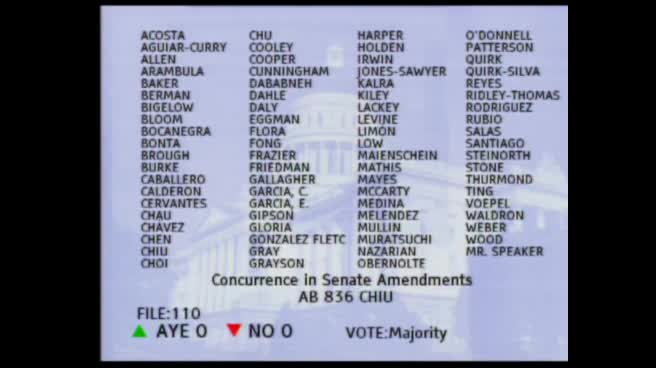 1MIN
Assembly Floor
 3MIN
Senate Floor
 3MIN
Senate Standing Committee on Labor and Industrial Relations
 3MIN
Assembly Floor
 3MIN
Assembly Standing Committee on Appropriations
 10MIN
Assembly Standing Committee on Labor and Employment
Bill Author

Bill Co-Author(s):